OpenAI has shattered the record for private capital raises, reportedly entering the final stages of a monumental $100 billion funding round that values the artificial intelligence leader at a staggering $830 billion. This capital injection, led by a surprising alliance between Amazon (NASDAQ: AMZN), SoftBank (TYO: 9984), and existing partners like Microsoft (NASDAQ: MSFT), marks a pivotal moment in the global AI arms race. The sheer scale of the investment underscores a fundamental shift in the industry: the transition from software optimization to the massive, physical infrastructure required to sustain the next generation of artificial general intelligence (AGI).
This unprecedented infusion of cash is not merely a balance sheet expansion; it is the fuel for "Project Stargate," OpenAI’s ambitious multi-year initiative to build a global network of AI supercomputing clusters. As the company moves toward a highly anticipated initial public offering (IPO) expected in late 2026, the $830 billion valuation positions OpenAI not just as a startup, but as a systemic pillar of the global economy, rivaling the market caps of the world's most established tech giants.
The Architecture of AGI: Project Stargate and Technical Scaling
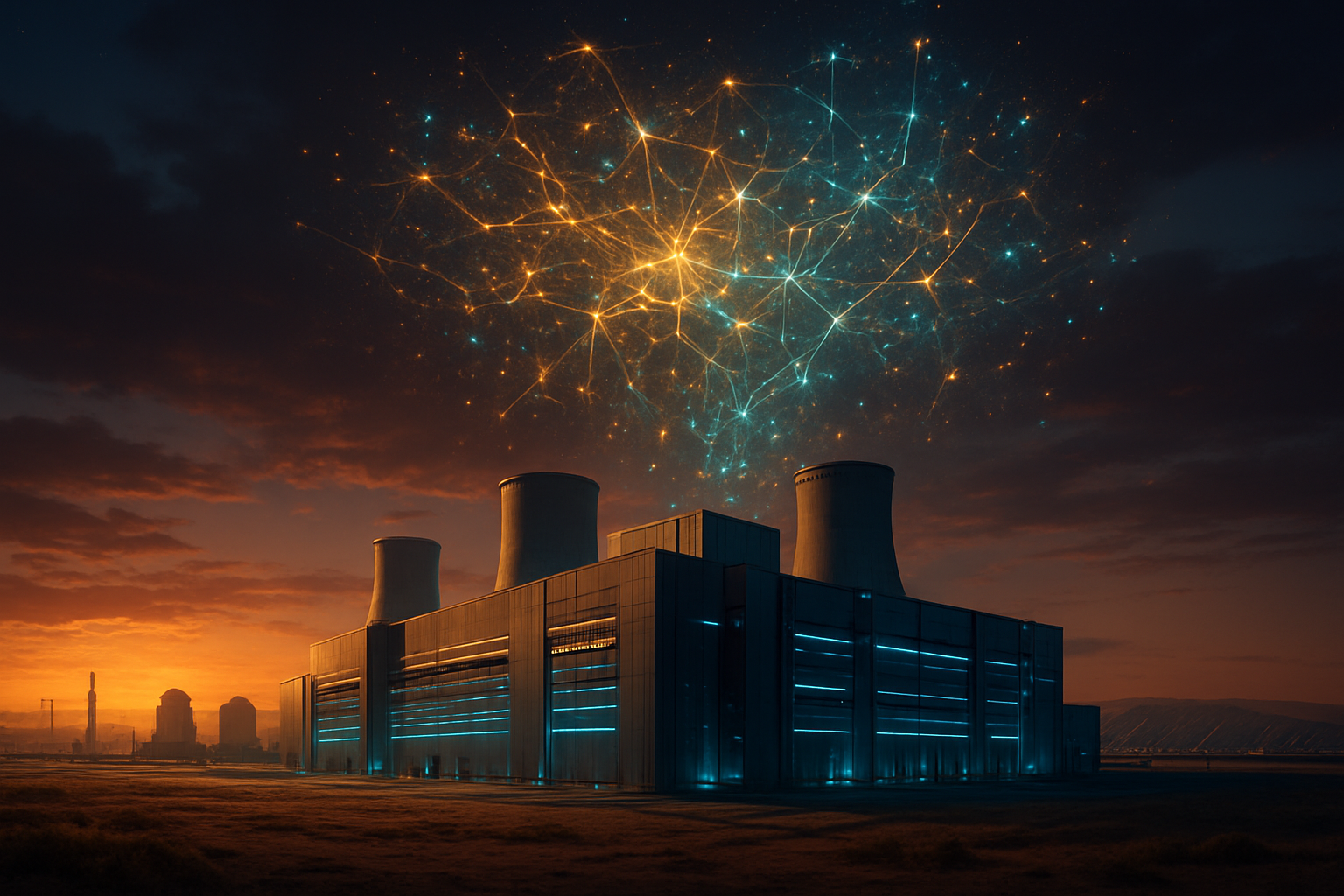
At the heart of this funding round is the "Stargate" project, a joint infrastructure venture between OpenAI and its primary backers. As of February 2026, construction is already well underway at "Stargate One," a 4-million-square-foot flagship campus in Abilene, Texas. Unlike previous data centers, Stargate One is designed to operate on a scale previously thought impossible, utilizing the latest NVIDIA (NASDAQ: NVDA) Blackwell and "Rubin" GPU architectures alongside custom silicon developed in partnership with Amazon. The facility is pioneering the use of "behind-the-meter" nuclear power, aiming to bypass the strained public electrical grid by tapping directly into small modular reactors (SMRs).
Technical specifications for the Stargate network are breathtaking. The roadmap aims to secure 10 gigawatts of power capacity by 2029, with international nodes already breaking ground in Abu Dhabi, Norway, and the United Kingdom. This differs from previous approaches by treating compute as a sovereign resource; rather than relying on distributed cloud instances, OpenAI is building a centralized, high-density compute monolith designed specifically for training "Orion," the rumored successor to its current frontier models. The industry consensus is that this level of dedicated hardware is necessary to overcome the "scaling laws" plateau, providing the raw FLOPS required for reasoning capabilities that mimic human intuition.
Initial reactions from the AI research community have been a mixture of awe and caution. Dr. Elena Rossi, a senior researcher at the AI Ethics Lab, noted that "OpenAI is no longer just a research lab; they are becoming a global utility provider for intelligence." While some experts worry about the environmental impact of such massive energy consumption, others argue that the efficiency gains from custom-designed Stargate hardware could eventually lower the carbon footprint per inference compared to today’s fragmented infrastructure.
A New Power Dynamic: Competitive Implications for the Tech Titan Hierarchy
The participation of Amazon in this round is perhaps the most significant strategic shift of the year. Historically, Amazon had placed its primary bets on OpenAI’s rival, Anthropic. By contributing a reported $50 billion to this round—partly in the form of compute credits and custom "Trainium" chip integration—Amazon has effectively hedged its position in the AI landscape. This move places Amazon in a unique dual-partnership role, ensuring its AWS infrastructure remains the backbone for the world’s most dominant AI models while gaining a seat at the table of OpenAI's board as an observer.
For other major players like Alphabet (NASDAQ: GOOGL) and Meta (NASDAQ: META), the $830 billion valuation raises the stakes for their own internal AI investments. The capital allows OpenAI to outbid any competitor for top-tier engineering talent and secure long-term supply chain priority for specialized chips. Startups, meanwhile, face an increasingly bifurcated market. While the "Big Three" (OpenAI, Anthropic, and Google) consolidate the foundation model space with massive capital moats, smaller labs are being pushed toward niche, vertical-specific AI applications where they can compete on efficiency rather than raw power.
The strategic advantage for OpenAI also extends to its upcoming IPO. By securing $100 billion in private capital now, the company has removed the immediate pressure to go public in a volatile market, allowing it to complete its transition into a Public Benefit Corporation (PBC) without the quarterly scrutiny of public shareholders. This restructuring, finalized in late 2025, removed the profit caps that previously limited investor returns, clearing a path for a potential $1 trillion valuation once the company eventually lists on the Nasdaq.
The $830 Billion Question: Wider Significance and Global Implications
The massive valuation and the "Stargate" project represent more than just a corporate milestone; they signal the beginning of the "Sovereign AI" era. With sovereign wealth funds like Abu Dhabi’s MGX participating in the infrastructure build-out, AI is being treated with the same geopolitical importance as oil or semiconductor manufacturing. The move toward 10 gigawatts of power capacity also places OpenAI at the center of the global energy transition, forcing a rapid acceleration in nuclear and renewable energy policy to meet the insatiable demands of high-density compute.
However, the $830 billion valuation has also drawn intense scrutiny from regulators and economists. Concerns regarding "AI hyper-concentration" are mounting in both Washington and Brussels, with some lawmakers arguing that the capital requirements for AGI are creating a natural monopoly that no new entrant could ever challenge. Comparisons are being drawn to the early 20th-century build-out of the electrical grid or the telecommunications boom of the 1990s, where the entities that controlled the physical infrastructure held immense power over the digital economy.
Furthermore, the sheer size of the "Stargate" project has sparked a debate about the "intelligence-to-power" ratio. As OpenAI pushes the limits of physical scaling, the industry is watching closely to see if doubling the compute will continue to yield proportional improvements in model capability. If the scaling laws begin to show diminishing returns, the $100 billion investment could represent one of the most expensive experiments in human history.
Looking Ahead: The Road to the $1 Trillion IPO
In the near term, the focus remains on "steel in the ground." Over the next 12 to 18 months, OpenAI is expected to activate the first phase of the Texas Stargate facility, which will reportedly host the training run for its first truly multimodal, agentic system capable of autonomous software engineering and complex scientific discovery. These "Agentic Workflows" are predicted to be the primary revenue driver leading into the 2026 IPO, shifting ChatGPT from a chatbot into a comprehensive productivity operating system.
The primary challenges ahead are logistical and regulatory. Securing the necessary permits for nuclear-powered data centers and navigating antitrust inquiries from the FTC and European Commission will be the main hurdles for OpenAI’s leadership team, led by CEO Sam Altman and CFO Sarah Friar. Market analysts predict that if OpenAI can demonstrate a clear path to $50 billion in annual recurring revenue (ARR) through its enterprise and infrastructure services, a 2026 IPO could see the company debut at a valuation exceeding $1.2 trillion, making it one of the most valuable entities on the planet.
Summary: A Defining Chapter in AI History
The $100 billion funding round and the $830 billion valuation mark the end of the "startup" era for OpenAI. By securing the capital necessary to build the world’s most advanced physical infrastructure, the company has effectively declared its intention to lead the transition to AGI. The involvement of tech giants like Amazon and SoftBank signals a consolidation of power, where the line between cloud providers, chip makers, and AI researchers is becoming increasingly blurred.
As we watch the development of the Stargate network over the coming months, the key indicators of success will be the successful activation of new power sources and the deployment of models that can justify this historic level of investment. For now, OpenAI has set a new high-water mark for what it means to be a "tech company" in the age of artificial intelligence, turning the world’s eyes toward a future where intelligence is as ubiquitous and essential as electricity.
This content is intended for informational purposes only and represents analysis of current AI developments.
TokenRing AI delivers enterprise-grade solutions for multi-agent AI workflow orchestration, AI-powered development tools, and seamless remote collaboration platforms.
For more information, visit https://www.tokenring.ai/.