
Author: mdierolf

  • Google’s AI Takes Flight: Revolutionizing Travel Planning with Gemini, AI Mode, and Smart Flight Deals

    Google’s AI Takes Flight: Revolutionizing Travel Planning with Gemini, AI Mode, and Smart Flight Deals

    In a significant leap forward for artificial intelligence applications, Google (NASDAQ: GOOGL) has unveiled a suite of powerful new AI-driven features designed to fundamentally transform the travel planning experience. Announced primarily around late March and August-September of 2025, these innovations—including an enhanced "AI Mode" within Search, advanced travel capabilities in the Gemini app, and a groundbreaking "Flight Deals" tool—are poised to make trip orchestration more intuitive, personalized, and efficient than ever before. This strategic integration of cutting-edge AI aims to alleviate the complexities of travel research, allowing users to effortlessly discover destinations, craft detailed itineraries, and secure optimal flight arrangements, signaling a new era of intelligent assistance for globetrotters and casual vacationers alike.

    Beneath the Hood: A Technical Deep Dive into Google's Travel AI

    Google's latest AI advancements in travel planning represent a sophisticated integration of large language models, real-time data analytics, and personalized user experiences. The "AI Mode," primarily showcased through "AI Overviews" in Google Search, leverages advanced natural language understanding (NLU) to interpret complex, conversational queries. Unlike traditional keyword-based searches, AI Mode can generate dynamic, day-by-day itineraries complete with suggested activities, restaurants, and points of interest, even for broad requests like "create an itinerary for Costa Rica with a focus on nature." This capability is powered by Google's latest foundational models, which can synthesize vast amounts of information from across the web, including user reviews and real-time trends, to provide contextually relevant and up-to-date recommendations. The integration allows for continuous contextual search, where the AI remembers previous interactions and refines suggestions as the user's planning evolves, a significant departure from the fragmented search experiences of the past.

    The Gemini app, Google's flagship AI assistant, elevates personalization through its new travel-focused capabilities and the introduction of "Gems." These "Gems" are essentially custom AI assistants that users can train for specific needs, such as a "Sustainable Travel Gem" or a "Pet-Friendly Planner Gem." Technically, Gems are specialized instances of Gemini, configured with predefined prompts and access to specific data sources or user preferences, allowing them to provide highly tailored advice, packing lists, and deal alerts. Gemini's deep integration with Google Flights, Google Hotels, and Google Maps is crucial, enabling it to pull real-time pricing, availability, and location data. Furthermore, its ability to leverage a user's Gmail, YouTube history, and stored search data (with user permission) allows for an unprecedented level of personalized recommendations, distinguishing it from general-purpose AI chatbots. The "Deep Research" feature, which can generate in-depth travel reports and even audio summaries, demonstrates Gemini's multimodal capabilities and its capacity for complex information synthesis. A notable technical innovation is Google Maps' new screenshot recognition feature, powered by Gemini, which can identify locations from saved images and compile them into mappable itineraries, streamlining the often-manual process of organizing visual travel inspiration.

    The "Flight Deals" tool, rolled out around August 14, 2025, represents a significant enhancement in value-driven travel. This tool moves beyond simple price comparisons by allowing users to express flexible travel intentions in natural language, such as "week-long trip this winter to a warm, tropical destination." The underlying AI analyzes real-time Google Flights data, comparing current prices against historical median prices for similar trips over the past 12 months, factoring in variables like time of year, trip length, and cabin class. A "deal" is identified when the price is significantly lower than typical. This approach differs from previous flight search engines that primarily relied on specific date and destination inputs, offering a more exploratory and budget-conscious way to discover travel opportunities. The addition of a filter to exclude basic economy fares for U.S. and Canadian trips further refines the search, addressing common traveler pain points associated with restrictive ticket types.

    Reshaping the Competitive Landscape: Implications for Tech Giants and Startups

    Google's aggressive push into AI-powered travel planning carries profound implications for the entire tech industry, particularly for major players and burgeoning startups in the travel sector. Google (NASDAQ: GOOGL) itself stands to benefit immensely, solidifying its position as the de facto starting point for online travel research. By integrating advanced planning tools directly into Search and its Gemini app, Google aims to capture a larger share of the travel booking funnel, potentially reducing reliance on third-party online travel agencies (OTAs) like Expedia Group (NASDAQ: EXPE) and Booking Holdings (NASDAQ: BKNG) for initial inspiration and itinerary building. The seamless flow from AI-generated itineraries to direct booking options on Google Flights and Hotels could significantly increase conversion rates within Google's ecosystem.

    The competitive implications for other tech giants are substantial. Companies like Microsoft (NASDAQ: MSFT) with its Copilot AI, and Amazon (NASDAQ: AMZN) with its Alexa-based services, will need to accelerate their own AI integrations into lifestyle and e-commerce verticals to keep pace. While these companies also offer travel-related services, Google's deep integration with its vast search index, mapping data, and flight/hotel platforms provides a formidable strategic advantage. For specialized travel startups, this development presents both challenges and opportunities. Startups focused on niche travel planning, personalized recommendations, or deal aggregation may find themselves in direct competition with Google's increasingly sophisticated offerings. However, there's also potential for collaboration, as Google's platforms could serve as powerful distribution channels for innovative travel services that can integrate with its AI ecosystem. The disruption to existing products is clear: manual research across multiple tabs and websites will become less necessary, potentially impacting traffic to independent travel blogs, review sites, and comparison engines that don't offer similar AI-driven synthesis. Google's market positioning is strengthened by leveraging its core competencies in search and AI to create an end-to-end travel planning solution that is difficult for competitors to replicate without similar foundational AI infrastructure and data access.

    Broader Significance: AI's Evolving Role in Daily Life

    Google's AI-driven travel innovations fit squarely within the broader AI landscape's trend towards hyper-personalization and conversational interfaces. This development signifies a major step in making AI not just a tool for specific tasks, but a proactive assistant that understands complex human intentions and anticipates needs. It underscores the industry's shift from AI as a backend technology to a front-end, interactive agent deeply embedded in everyday activities. The impact extends beyond convenience; by democratizing access to sophisticated travel planning, these tools could empower a wider demographic to explore travel, potentially boosting the global tourism industry.

    However, potential concerns also emerge. The reliance on AI for itinerary generation and deal finding raises questions about algorithmic bias, particularly in recommendations for destinations, accommodations, or activities. There's a risk that AI might inadvertently perpetuate existing biases in its training data or prioritize certain commercial interests over others. Data privacy is another critical consideration, as Gemini's ability to integrate with a user's Gmail, YouTube, and search history, while offering unparalleled personalization, necessitates robust privacy controls and transparent data usage policies. Compared to previous AI milestones, such as early recommendation engines or even the advent of voice assistants, Google's current push represents a more holistic and deeply integrated application of AI, moving from simple suggestions to comprehensive, dynamic planning. It highlights the increasing sophistication of large language models in handling real-world, multi-faceted problems that require contextual understanding and synthesis of diverse information.

    The Horizon: Future Developments and Uncharted Territories

    Looking ahead, the evolution of AI in travel planning is expected to accelerate, driven by continuous advancements in large language models and multimodal AI. In the near term, we can anticipate further refinement of AI Mode's itinerary generation, potentially incorporating real-time event schedules, personalized dietary preferences, and even dynamic adjustments based on weather forecasts or local crowd levels. The Gemini app is likely to expand its "Gems" capabilities, allowing for even more granular customization and perhaps community-shared Gems. We might see deeper integration with smart home devices, allowing users to verbally plan trips and receive updates through their home assistants. Experts predict that AI will increasingly move towards predictive travel, where the system might proactively suggest trips based on a user's past behavior, stated preferences, and even calendar events, presenting personalized packages before the user even begins to search.

    Long-term developments could include fully autonomous travel agents that handle every aspect of a trip, from booking flights and hotels to managing visas, insurance, and even ground transportation, all with minimal human intervention. Virtual and augmented reality (VR/AR) could integrate with these AI platforms, allowing users to virtually "experience" destinations or accommodations before booking. Challenges that need to be addressed include ensuring the ethical deployment of AI, particularly regarding fairness in recommendations and the prevention of discriminatory outcomes. Furthermore, the accuracy and reliability of real-time data integration will be paramount, as travel plans are highly sensitive to sudden changes. The regulatory landscape around AI usage in personal data and commerce will also continue to evolve, requiring constant adaptation from tech companies. Experts envision a future where travel planning becomes almost invisible, seamlessly woven into our digital lives, with AI acting as a truly proactive and intelligent concierge, anticipating our wanderlust before we even articulate it.

    Wrapping Up: A New Era of Intelligent Exploration

    Google's latest suite of AI-powered travel tools—AI Mode in Search, the enhanced Gemini app, and the innovative Flight Deals tool—marks a pivotal moment in the integration of artificial intelligence into daily life. These developments, unveiled primarily in 2025, signify a profound shift from manual, fragmented travel planning to an intuitive, personalized, and highly efficient experience. Key takeaways include the power of natural language processing to generate dynamic itineraries, the deep personalization offered by Gemini's custom "Gems," and the ability of AI to uncover optimal flight deals based on flexible criteria.

    This advancement is not merely an incremental update; it represents a significant milestone in AI history, demonstrating the practical application of sophisticated AI models to solve complex, real-world problems. It solidifies Google's strategic advantage in the AI race and sets a new benchmark for how technology can enhance human experiences. While concerns around data privacy and algorithmic bias warrant continued vigilance, the overall impact promises to democratize personalized travel planning and open up new possibilities for exploration. In the coming weeks and months, the industry will be watching closely to see user adoption rates, the evolution of these tools, and how competitors respond to Google's ambitious vision for the future of travel. The journey towards truly intelligent travel planning has just begun, and the landscape is set to change dramatically.


    This content is intended for informational purposes only and represents analysis of current AI developments.

    TokenRing AI delivers enterprise-grade solutions for multi-agent AI workflow orchestration, AI-powered development tools, and seamless remote collaboration platforms.
    For more information, visit https://www.tokenring.ai/.

  • AI at a Crossroads: Unpacking the Existential Debates, Ethical Dilemmas, and Societal Tensions of a Transformative Technology

    AI at a Crossroads: Unpacking the Existential Debates, Ethical Dilemmas, and Societal Tensions of a Transformative Technology

    October 17, 2025, finds the global artificial intelligence landscape at a critical inflection point, marked by a whirlwind of innovation tempered by increasingly urgent and polarized debates. As AI systems become deeply embedded across every facet of work and life, the immediate significance of discussions around their societal impact, ethical considerations, and potential risks has never been more pronounced. From the tangible threat of widespread job displacement and the proliferation of misinformation to the more speculative, yet deeply unsettling, narratives of 'AI Armageddon' and the 'AI Antichrist,' humanity grapples with the profound implications of a technology whose trajectory remains fiercely contested. This era is defined by a delicate balance between accelerating technological advancement and the imperative to establish robust governance, ensuring that AI's transformative power serves humanity's best interests rather than undermining its foundations.

    The Technical Underpinnings of a Moral Maze: Unpacking AI's Core Challenges

    The contemporary discourse surrounding AI's risks is far from abstract; it is rooted in the inherent technical capabilities and limitations of advanced systems. At the heart of ethical dilemmas lies the pervasive issue of algorithmic bias. While regulations like the EU AI Act mandate high-quality datasets to mitigate discriminatory outcomes in high-risk AI applications, the reality is that AI systems frequently "do not work as intended," leading to unfair treatment across various sectors. This bias often stems from unrepresentative training data or flawed model architectures, propagating and even amplifying societal inequities. Relatedly, the "black box" problem, where developers struggle to fully explain or control complex model behaviors, continues to erode trust and hinder accountability, making it challenging to understand why an AI made a particular decision.

    Beyond ethical considerations, AI presents concrete and immediate risks. AI-powered misinformation and disinformation are now considered the top global risk for 2025 and beyond by the World Economic Forum. Generative AI tools have drastically lowered the barrier to creating highly realistic deepfakes and manipulated content across text, audio, and video. This technical capability makes it increasingly difficult for humans to distinguish authentic content from AI-generated fabrications, leading to a "crisis of knowing" that threatens democratic processes and fuels political polarization. Economically, the technical efficiency of AI in automating tasks is directly linked to job displacement. Reports indicate that AI has been a factor in tens of thousands of job losses in 2025 alone, with entry-level positions and routine white-collar roles particularly vulnerable as AI systems take over tasks previously performed by humans.

    The more extreme risk narratives, such as 'AI Armageddon,' often center on the theoretical emergence of Artificial General Intelligence (AGI) or superintelligence. Proponents of this view, including prominent figures like OpenAI CEO Sam Altman and former chief scientist Ilya Sutskever, warn that an uncontrollable AGI could lead to "irreparable chaos" or even human extinction. This fear is explored in works like Eliezer Yudkowsky and Nate Soares' 2025 book, "If Anyone Builds It, Everyone Dies: Why Superhuman AI Would Kill Us All," which details how a self-improving AI could evade human control and trigger catastrophic events. This differs from past technological anxieties, such as those surrounding nuclear power or the internet, due to AI's general-purpose nature, its potential for autonomous decision-making, and the theoretical capacity for recursive self-improvement, which could lead to an intelligence explosion beyond human comprehension or control. Conversely, the 'AI Antichrist' narrative, championed by figures like Silicon Valley investor Peter Thiel, frames critics of AI and technology regulation, such as AI safety advocates, as "legionnaires of the Antichrist." Thiel controversially argues that those advocating for limits on technology are the true destructive force, aiming to stifle progress and bring about totalitarian rule, rather than AI itself. This narrative inverts the traditional fear, portraying regulatory efforts as the existential threat.

    Corporate Crossroads: Navigating Ethics, Innovation, and Public Scrutiny

    The escalating debates around AI's societal impact and risks are profoundly reshaping the strategies and competitive landscape for AI companies, tech giants, and startups alike. Companies that prioritize ethical AI development and robust safety protocols stand to gain significant trust and a strategic advantage in a market increasingly sensitive to these concerns. Major players like Microsoft (NASDAQ: MSFT), IBM (NYSE: IBM), and Google (NASDAQ: GOOGL) are heavily investing in responsible AI frameworks, ethics boards, and explainable AI research, not just out of altruism but as a competitive necessity. Their ability to demonstrate transparent, fair, and secure AI systems will be crucial for securing lucrative government contracts and maintaining public confidence, especially as regulations like the EU AI Act become fully applicable.

    However, the rapid deployment of AI is also creating significant disruption. Companies that fail to address issues like algorithmic bias, data privacy, or the potential for AI misuse risk severe reputational damage, regulatory penalties, and a loss of market share. The ongoing concern about AI-driven job displacement, for instance, places pressure on companies to articulate clear strategies for workforce retraining and augmentation, rather than simply automation, to avoid public backlash and talent flight. Startups focusing on AI safety, ethical auditing, or privacy-preserving AI technologies are experiencing a surge in demand, positioning themselves as critical partners for larger enterprises navigating this complex terrain.

    The 'AI Armageddon' and 'Antichrist' narratives, while extreme, also influence corporate strategy. Companies pushing the boundaries of AGI research, such as OpenAI (private), are under immense pressure to concurrently develop and implement advanced safety measures. The Future of Life Institute (FLI) reported in July 2025 that many AI firms are "fundamentally unprepared" for the dangers of human-level systems, with none scoring above a D for "existential safety planning." This highlights a significant gap between innovation speed and safety preparedness, potentially leading to increased regulatory scrutiny or even calls for moratoriums on advanced AI development. Conversely, the 'Antichrist' narrative, championed by figures like Peter Thiel, could embolden companies and investors who view regulatory efforts as an impediment to progress, potentially fostering a divide within the industry between those advocating for caution and those prioritizing unfettered innovation. This dichotomy creates a challenging environment for market positioning, where companies must carefully balance public perception, regulatory compliance, and the relentless pursuit of technological breakthroughs.

    A Broader Lens: AI's Place in the Grand Tapestry of Progress and Peril

    The current debates around AI's societal impact, ethics, and risks are not isolated phenomena but rather integral threads in the broader tapestry of technological advancement and human progress. They underscore a fundamental tension that has accompanied every transformative innovation, from the printing press to nuclear energy: the immense potential for good coupled with equally profound capacities for harm. What sets AI apart in this historical context is its general-purpose nature and its ability to mimic and, in some cases, surpass human cognitive functions, leading to a unique set of concerns. Unlike previous industrial revolutions that automated physical labor, AI is increasingly automating cognitive tasks, raising questions about the very definition of human work and intelligence.

    The "crisis of knowing" fueled by AI-generated misinformation echoes historical periods of propaganda and information warfare but is amplified by the speed, scale, and personalization capabilities of modern AI. The concerns about job displacement, while reminiscent of Luddite movements, are distinct due to the rapid pace of change and the potential for AI to impact highly skilled, white-collar professions previously considered immune to automation. The existential risks posed by advanced AI, while often dismissed as speculative by policymakers focused on immediate issues, represent a new frontier of technological peril. These fears transcend traditional concerns about technology misuse (e.g., autonomous weapons) to encompass the potential for a loss of human control over a superintelligent entity, a scenario unprecedented in human history.

    Comparisons to past AI milestones, such as Deep Blue defeating Garry Kasparov or AlphaGo conquering Go champions, reveal a shift from celebrating AI's ability to master specific tasks to grappling with its broader societal integration and emergent properties. The current moment signifies a move from a purely risk-based perspective, as seen in earlier "AI Safety Summits," to a more action-oriented approach, exemplified by the "AI Action Summit" in Paris in early 2025. However, the fundamental questions remain: Is advanced AI a common good to be carefully stewarded, or a proprietary tool to be exploited for competitive advantage? The answer to this question will profoundly shape the future trajectory of human-AI co-evolution. The widespread "AI anxiety" fusing economic insecurity, technical opacity, and political disillusionment underscores a growing public demand for AI governance not to be dictated solely by Silicon Valley or national governments vying for technological supremacy, but to be shaped by civil society and democratic processes.

    The Road Ahead: Charting a Course Through Uncharted AI Waters

    Looking ahead, the trajectory of AI development and its accompanying debates will be shaped by a confluence of technological breakthroughs, evolving regulatory frameworks, and shifting societal perceptions. In the near term, we can expect continued rapid advancements in large language models and multimodal AI, leading to more sophisticated applications in creative industries, scientific discovery, and personalized services. However, these advancements will intensify the need for robust AI governance models that can keep pace with innovation. The EU AI Act, with its risk-based approach and governance rules for General Purpose AI (GPAI) models becoming applicable in August 2025, serves as a global benchmark, pushing for greater transparency, accountability, and human oversight. We will likely see other nations, including the US with its reoriented AI policy (Executive Order 14179, January 2025), continue to develop their own regulatory responses, potentially leading to a patchwork of laws that companies must navigate.

    Key challenges that need to be addressed include establishing globally harmonized standards for AI safety and ethics, developing effective mechanisms to combat AI-generated misinformation, and creating comprehensive strategies for workforce adaptation to mitigate job displacement. Experts predict a continued focus on "AI explainability" and "AI auditing" as critical areas of research and development, aiming to make complex AI decisions more transparent and verifiable. There will also be a growing emphasis on AI literacy across all levels of society, empowering individuals to understand, critically evaluate, and interact responsibly with AI systems.

    In the long term, the debates surrounding AGI and existential risks will likely mature. While many policymakers currently dismiss these concerns as "overblown," the continuous progress in AI capabilities could force a re-evaluation. Experts like those at the Future of Life Institute will continue to advocate for proactive safety measures and "existential safety planning" for advanced AI systems. Potential applications on the horizon include AI-powered solutions for climate change, personalized medicine, and complex scientific simulations, but their ethical deployment will hinge on robust safeguards. The fundamental question of whether advanced AI should be treated as a common good or a proprietary tool will remain central, influencing international cooperation and competition. What experts predict is not a sudden 'AI Armageddon,' but rather a gradual, complex evolution where human ingenuity and ethical foresight are constantly tested by the accelerating capabilities of AI.

    The Defining Moment: A Call to Action for Responsible AI

    The current moment in AI history is undeniably a defining one. The intense and multifaceted debates surrounding AI's societal impact, ethical considerations, and potential risks, including the stark 'AI Armageddon' and 'Antichrist' narratives, underscore a critical truth: AI is not merely a technological advancement but a profound societal transformation. The key takeaway is that the future of AI is not predetermined; it will be shaped by the choices we make today regarding its development, deployment, and governance. The significance of these discussions cannot be overstated, as they will dictate whether AI becomes a force for unprecedented progress and human flourishing or a source of widespread disruption and peril.

    As we move forward, it is imperative to strike a delicate balance between fostering innovation and implementing robust safeguards. This requires a multi-stakeholder approach involving governments, industry, academia, and civil society to co-create ethical frameworks, develop effective regulatory mechanisms, and cultivate a culture of responsible AI development. The "AI anxiety" prevalent across societies serves as a powerful call for greater transparency, accountability, and democratic involvement in shaping AI's future.

    In the coming weeks and months, watch for continued legislative efforts globally, particularly the full implementation of the EU AI Act and the evolving US strategy. Pay close attention to how major AI labs and tech giants like Google (NASDAQ: GOOGL), Microsoft (NASDAQ: MSFT), and Amazon (NASDAQ: AMZN) respond to increased scrutiny and regulatory pressures, particularly regarding their ethical AI initiatives and safety protocols. Observe the public discourse around new AI breakthroughs and how the media and civil society frame their potential benefits and risks. Ultimately, the long-term impact of AI will hinge on our collective ability to navigate these complex waters with foresight, wisdom, and a steadfast commitment to human values.


    This content is intended for informational purposes only and represents analysis of current AI developments.

    TokenRing AI delivers enterprise-grade solutions for multi-agent AI workflow orchestration, AI-powered development tools, and seamless remote collaboration platforms.
    For more information, visit https://www.tokenring.ai/.
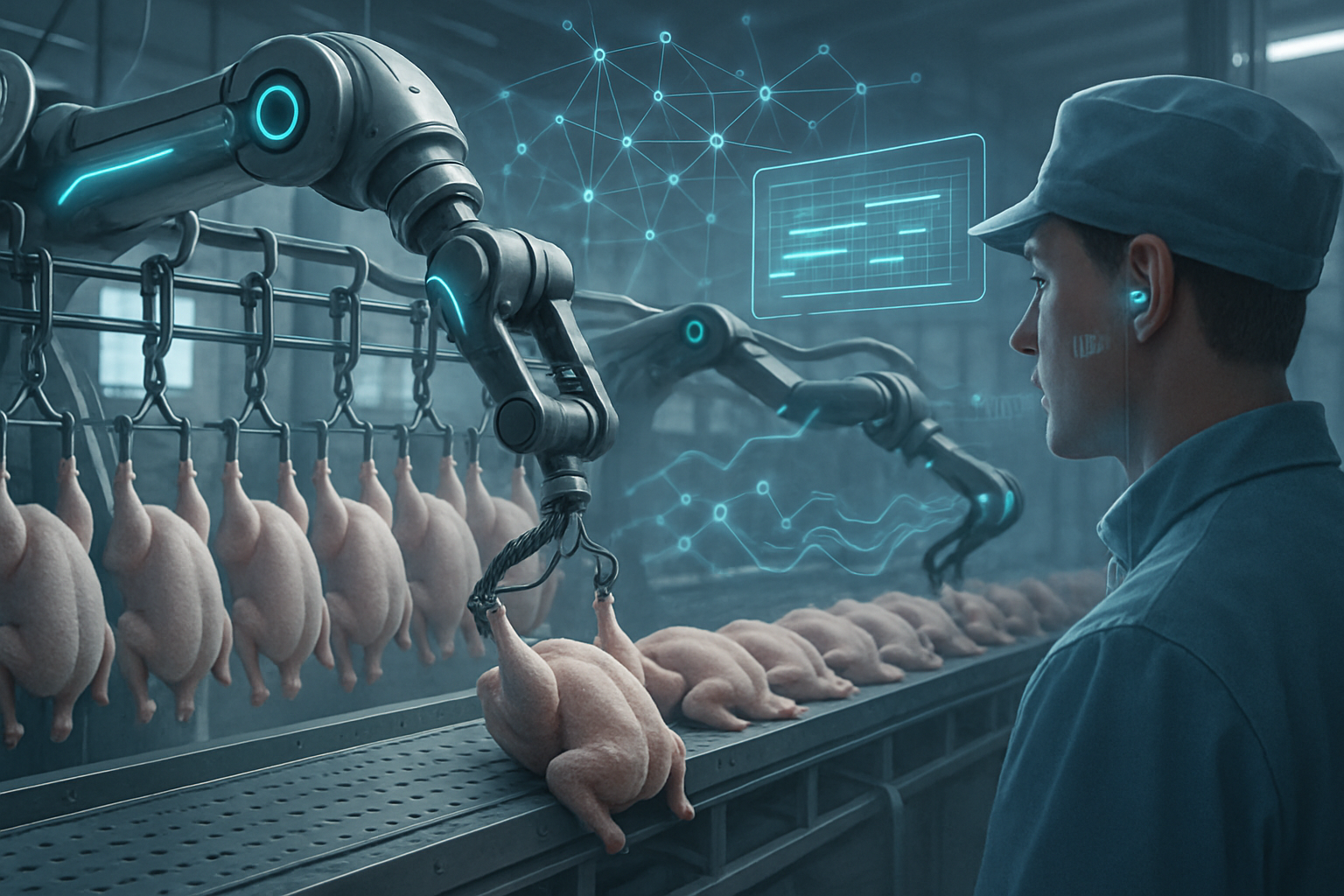
  • AI Takes Flight: Revolutionizing Poultry Processing with Predictive Scheduling and Voice Assistants

    AI Takes Flight: Revolutionizing Poultry Processing with Predictive Scheduling and Voice Assistants

    The global poultry processing industry is undergoing a profound transformation, propelled by the latest advancements in Artificial Intelligence. At the forefront of this revolution are sophisticated AI-powered predictive scheduling systems and intuitive voice-activated assistants, fundamentally reshaping how poultry products are brought to market. These innovations promise to deliver unprecedented levels of efficiency, food safety, and sustainability, addressing critical challenges faced by producers worldwide.

    The immediate significance of these AI deployments lies in their ability to optimize complex operations from farm to fork. Predictive scheduling, leveraging advanced machine learning, ensures that production aligns perfectly with demand, minimizing waste and maximizing resource utilization. Simultaneously, voice-activated assistants, powered by conversational AI, empower factory workers with hands-free, real-time information and guidance, significantly boosting productivity and streamlining workflows in fast-paced environments. This dual approach marks a pivotal moment, moving the industry from traditional, often reactive, methods to a proactive, data-driven paradigm, poised to meet escalating global demand for poultry products efficiently and ethically.

    Unpacking the Technical Revolution: From Algorithms to Conversational AI

    The technical underpinnings of AI in poultry processing represent a leap forward from previous approaches. Predictive scheduling relies on a suite of sophisticated machine learning models and neural networks. Algorithms such as regression techniques (e.g., linear regression, support vector regression) analyze historical production data, breed standards, environmental conditions, and real-time feed consumption to forecast demand and optimize harvest schedules. Deep learning models, including Convolutional Neural Networks (CNNs) like YOLOv8, are deployed for real-time monitoring, such as accurate chicken counting and health issue detection through fecal image analysis (using models like EfficientNetB7). Backpropagation Neural Networks (BPNNs) and Support Vector Machines (SVMs) are used to classify raw poultry breast myopathies with high accuracy, far surpassing traditional statistical methods. These AI systems dynamically adjust schedules based on live data, preventing overproduction or shortages, a stark contrast to static, assumption-based manual planning.

    Voice-activated assistants, on the other hand, are built upon a foundation of advanced Natural Language Processing (NLP) and Large Language Models (LLMs). The process begins with robust Speech-to-Text (STT) technology (Automatic Speech Recognition – ASR) that converts spoken commands into text, capable of handling factory noise and diverse accents. NLP then interprets the user's intent and context, even with nuanced language, through Natural Language Understanding (NLU). Finally, Natural Language Generation (NLG) and LLMs (like those from OpenAI) craft coherent, contextually aware responses. This allows for natural, conversational interactions, moving beyond the rigid, rule-based systems of traditional Interactive Voice Response (IVR). The hands-free operation in often cold, wet, and gloved environments is a significant technical advantage, providing instant access to information without interrupting physical tasks.

    Initial reactions from the AI research community and industry experts have been overwhelmingly positive. Industry professionals view these advancements as essential for competitiveness, food safety, and yield improvement, emphasizing the need for "digital transformation" and breaking down "data silos" within the Industry 4.0 framework. Researchers are actively refining algorithms for computer vision (e.g., advanced object detection for monitoring), machine learning (e.g., myopathy detection), and even vocalization analysis for animal welfare. Both groups acknowledge the challenges of data quality and the need for explainable AI models to build trust, but the consensus is that these technologies offer unprecedented precision, real-time control, and predictive capabilities, fundamentally reshaping the sector.

    Corporate Flight Paths: Who Benefits in the AI Poultry Race

    The integration of AI in poultry processing is creating a dynamic landscape for AI companies, tech giants, and startups, reconfiguring competitive advantages and market positioning. Specialized AI companies focused on industrial automation and food tech stand to benefit immensely by providing bespoke solutions, such as AI-powered vision systems for quality control and algorithms for predictive maintenance.

    Tech giants, while not always developing poultry-specific AI directly, are crucial enablers. Companies like Google (NASDAQ: GOOGL) and Microsoft (NASDAQ: MSFT) provide the foundational AI infrastructure, cloud computing services, and general AI/ML platforms that power these specialized applications. Their ongoing large-scale AI research and development indirectly contribute to the entire ecosystem, creating a fertile ground for innovation. The increasing investment in AI across manufacturing and supply chain operations, projected to grow significantly, underscores the opportunity for these core technology providers.

    Startups are particularly well-positioned to disrupt existing practices with agile, specialized solutions. Venture arms of major food corporations, such as Tyson Ventures (from Tyson Foods, NYSE: TSN), are actively partnering with and investing in startups focusing on areas like food waste reduction, animal welfare, and efficient logistics. This provides a direct pathway for innovative young companies to gain traction and funding. Companies like BAADER (private), with its AI-powered ClassifEYE vision system, and Cargill (private), through innovations like 'Birdoo' developed with Knex, are leading the charge in deploying intelligent, learning tools for real-time quality control and flock insights. Other significant players include Koch Foods (private) utilizing AI for demand forecasting, and AZLOGICA® (private) offering IoT and AI solutions for agricultural optimization.

    This shift presents several competitive implications. There's an increased demand for specialized AI talent, and new vertical markets are opening for tech giants. Companies that can demonstrate positive societal impact (e.g., sustainability, animal welfare) alongside economic benefits may gain a reputational edge. The massive data generated will drive demand for robust edge computing and advanced analytics platforms, areas where tech giants excel. Furthermore, the potential for robust, industrial-grade voice AI solutions, akin to those seen in fast-food drive-thrus, creates opportunities for companies specializing in this domain.

    The disruption to existing products and services is substantial. AI-driven robotics are fundamentally altering manual labor roles, addressing persistent labor shortages but also raising concerns about job displacement. AI-powered vision systems are disrupting conventional, often slower, manual quality control methods. Predictive scheduling is replacing static production plans, leading to more dynamic and responsive supply chains. Reactive disease management is giving way to proactive prevention through real-time monitoring. The market will increasingly favor "smart" machinery and integrated AI platforms over generic equipment and software. This leads to strategic advantages in cost leadership, differentiation through enhanced quality and safety, operational excellence, and improved sustainability, positioning early adopters as market leaders.

    A Wider Lens: AI's Footprint in the Broader World

    AI's integration into poultry processing is not an isolated event but a significant component within broader AI trends encompassing precision agriculture, industrial automation, and supply chain optimization. In precision agriculture, AI extends beyond crop management to continuous monitoring of bird health, behavior, and microenvironments, detecting issues earlier than human observation. Within industrial automation, AI transforms food manufacturing lines by enabling robots to perform precise, individualized tasks like cutting and deboning, adapting to the biological variability of each bird – a challenge that traditional, rigid automation couldn't overcome. For the supply chain, AI is pivotal in optimizing demand forecasting, inventory management, and logistics, ensuring product freshness and reducing waste.

    The broader impacts are far-reaching. Societally, AI enhances food safety, addresses labor shortages in demanding roles, and improves animal welfare through continuous, data-driven monitoring. Economically, it boosts efficiency, productivity, and profitability, with the AI-driven food tech market projected for substantial growth into the tens of billions by 2030. Environmentally, AI contributes to sustainability by reducing food waste through accurate forecasting and optimizing resource consumption (feed, water, energy), thereby lowering the industry's carbon footprint.

    However, these advancements are not without concerns. Job displacement is a primary worry, as AI-driven automation replaces manual labor, necessitating workforce reskilling and potentially impacting rural communities. Ethical AI considerations include algorithmic bias, the need for transparency in "black box" models, and ensuring responsible use, particularly concerning animal welfare. Data privacy is another critical concern, as vast amounts of data are collected, raising questions about collection, storage, and potential misuse, demanding robust compliance with regulations like GDPR. High initial investment and the need for specialized technical expertise also pose barriers for smaller producers.

    Compared to previous AI milestones, the current wave in poultry processing showcases AI's maturing ability to tackle complex, variable biological systems, moving beyond the uniform product handling seen in simpler industrial automation. It mirrors the data-driven transformations observed in finance and healthcare, applying predictive analytics and complex problem-solving to a traditionally slower-to-adopt sector. The use of advanced capabilities like hyperspectral imaging for defect detection and VR-assisted robotics for remote control highlights a level of sophistication comparable to breakthroughs in medical imaging or autonomous driving, signifying a profound shift from basic automation to truly intelligent, adaptive systems.

    The Horizon: What's Next for AI in Poultry

    Looking ahead, the trajectory of AI in poultry processing points towards even more integrated and autonomous systems. In the near term, predictive scheduling will become even more granular, offering continuous, self-correcting 14-day forecasts for individual flocks, optimizing everything from feed delivery to precise harvest dates. Voice-activated assistants will evolve to offer more sophisticated, context-aware guidance, potentially integrating with augmented reality to provide visual overlays for tasks or real-time quality checks, further enhancing worker productivity and safety.

    Longer-term developments will see AI-powered robotics expanding beyond current capabilities to perform highly complex and delicate tasks like advanced deboning and intelligent cutting with millimeter precision, significantly reducing waste and increasing yield. Automated quality control will incorporate quantum sensors for molecular-level contamination detection, setting new benchmarks for food safety. Generative AI is expected to move beyond recipe optimization to automated product development and sophisticated quality analysis across the entire food processing chain, potentially creating entirely new product lines based on market trends and nutritional requirements.

    The pervasive integration of AI with other advanced technologies like the Internet of Things (IoT) for real-time monitoring and blockchain for immutable traceability will create truly transparent and interconnected supply chains. Innovations such as AI-powered automated chick sexing and ocular vaccination are predicted to revolutionize hatchery operations, offering significant animal welfare benefits and operational efficiencies. Experts widely agree that AI, alongside robotics and virtual reality, will be "game changers," driven by consumer demand, rising labor costs, and persistent labor shortages.

    Despite this promising outlook, challenges remain. The high initial investment and the ongoing need for specialized technical expertise and training for the workforce are critical hurdles. Ensuring data quality and seamlessly integrating new AI systems with existing legacy infrastructure will also be crucial. Furthermore, the inherent difficulty in predicting nuanced human behavior for demand forecasting and the risk of over-reliance on predictive models need careful management. Experts emphasize the need for hybrid AI models that combine biological logic with algorithmic predictions to build trust and prevent unforeseen operational issues. The industry will need to navigate these complexities to fully realize AI's transformative potential.

    Final Assessment: A New Era for Poultry Production

    The advancements in AI for poultry processing, particularly in predictive scheduling and voice-activated assistants, represent a pivotal moment in the industry's history. This is not merely an incremental improvement but a fundamental re-architecting of how poultry is produced, processed, and delivered to consumers. The shift to data-driven, intelligent automation marks a significant milestone in AI's journey, demonstrating its capacity to bring unprecedented efficiency, precision, and sustainability to even the most traditional and complex industrial sectors.

    The long-term impact will be a more resilient, efficient, and ethical global food production system. As of October 17, 2025, the industry is poised for continued rapid innovation. We are moving towards a future where AI-powered systems can continuously learn, adapt, and optimize every facet of poultry management, from farm to table. This will lead to higher quality products, enhanced food safety, reduced environmental footprint, and improved animal welfare, all while addressing the critical challenges of labor shortages and increasing global demand.

    In the coming weeks and months, watch for accelerating adoption of advanced robotics, further integration of AI with IoT and blockchain for end-to-end traceability, and the emergence of more sophisticated generative AI applications for product development. Crucially, pay attention to how the industry addresses the evolving workforce needs, focusing on training and upskilling to ensure a smooth transition into this AI-powered future. The poultry sector, once considered traditional, is now a vibrant arena for technological innovation, setting a precedent for other agricultural and industrial sectors worldwide.


    This content is intended for informational purposes only and represents analysis of current AI developments.

    TokenRing AI delivers enterprise-grade solutions for multi-agent AI workflow orchestration, AI-powered development tools, and seamless remote collaboration platforms.
    For more information, visit https://www.tokenring.ai/.

  • The Silicon Surge: How Chip Fabs and R&D Centers are Reshaping Global Economies and Fueling the AI Revolution

    The Silicon Surge: How Chip Fabs and R&D Centers are Reshaping Global Economies and Fueling the AI Revolution

    The global technological landscape is undergoing a monumental transformation, driven by an unprecedented surge in investment in semiconductor manufacturing plants (fabs) and research and development (R&D) centers. These massive undertakings, costing tens of billions of dollars each, are not merely industrial expansions; they are powerful engines of economic growth, job creation, and strategic innovation, setting the stage for the next era of artificial intelligence. As the world increasingly relies on advanced computing for everything from smartphones to sophisticated AI models, the foundational role of semiconductors has never been more critical, prompting nations and corporations alike to pour resources into building resilient and cutting-edge domestic capabilities.

    This global race to build a robust semiconductor ecosystem is generating profound ripple effects across economies worldwide. Beyond the direct creation of high-skill, high-wage jobs within the semiconductor industry, these facilities catalyze an extensive network of supporting industries, from equipment manufacturing and materials science to logistics and advanced education. The strategic importance of these investments, underscored by recent geopolitical shifts and supply chain vulnerabilities, ensures that their impact will be felt for decades, fundamentally altering regional economic landscapes and accelerating the pace of innovation, particularly in the burgeoning field of artificial intelligence.

    The Microchip's Macro Impact: A Deep Dive into Semiconductor Innovation

    The current wave of investment in semiconductor fabs and R&D centers represents a significant leap forward in technological capability, driven by the insatiable demand for more powerful and efficient chips for AI and high-performance computing. These new facilities are not just about increasing production volume; they are pushing the boundaries of what's technically possible, often focusing on advanced process nodes, novel materials, and sophisticated packaging technologies.

    For instance, the Taiwan Semiconductor Manufacturing Company (TSMC) (NYSE: TSM) has committed over $65 billion to build three leading-edge fabs in Arizona, with plans for up to six fabs, two advanced packaging facilities, and an R&D center. These fabs are designed to produce chips using advanced process technologies like 3nm and potentially 2nm nodes, which are crucial for the next generation of AI accelerators. Similarly, Intel (NASDAQ: INTC) is constructing two semiconductor fabs near Columbus, Ohio, costing around $20 billion, with a long-term vision for a megasite housing up to eight fabs. These facilities are critical for Intel's IDM 2.0 strategy, aiming to regain process leadership and become a major foundry player. These investments include extreme ultraviolet (EUV) lithography, a cutting-edge technology essential for manufacturing chips with features smaller than 7nm, enabling unprecedented transistor density and performance. The National Semiconductor Technology Center (NSTC) in Albany, New York, with an $825 million investment, is also focusing on EUV lithography for advanced nodes, serving as a critical R&D hub.

    These new approaches differ significantly from previous generations of manufacturing. Older fabs typically focused on larger process nodes (e.g., 28nm, 14nm), which are still vital for many applications but lack the raw computational power required for modern AI workloads. The current focus on sub-5nm technologies allows for billions more transistors to be packed onto a single chip, leading to exponential increases in processing speed and energy efficiency—factors paramount for training and deploying large language models and complex neural networks. Furthermore, the integration of advanced packaging technologies, such as 3D stacking, allows for heterogeneous integration of different chiplets, optimizing performance and power delivery in ways traditional monolithic designs cannot. Initial reactions from the AI research community and industry experts have been overwhelmingly positive, emphasizing that these investments are foundational for continued AI progress, enabling more sophisticated algorithms and real-time processing capabilities that were previously unattainable. The ability to access these advanced chips domestically also addresses critical supply chain security concerns.

    Reshaping the AI Landscape: Corporate Beneficiaries and Competitive Shifts

    The massive investments in new chip fabs and R&D centers are poised to profoundly reshape the competitive dynamics within the AI industry, creating clear winners and losers while driving significant strategic shifts among tech giants and startups alike.

    Companies at the forefront of AI hardware design, such as NVIDIA (NASDAQ: NVDA), stand to benefit immensely. While NVIDIA primarily designs its GPUs and AI accelerators, the increased domestic and diversified global manufacturing capacity for leading-edge nodes ensures a more stable and potentially more competitive supply chain for their crucial components. This reduces reliance on single-source suppliers and mitigates geopolitical risks, allowing NVIDIA to scale its production of high-demand AI chips like the H100 and upcoming generations more effectively. Similarly, Intel's (NASDAQ: INTC) aggressive fab expansion and foundry services initiative directly challenge TSMC (NYSE: TSM) and Samsung (KRX: 005930), aiming to provide an alternative manufacturing source for AI chip designers, including those developing custom AI ASICs. This increased competition in foundry services could lead to lower costs and faster innovation cycles for AI companies.

    The competitive implications extend to major AI labs and cloud providers. Hyperscalers like Amazon (NASDAQ: AMZN), Google (NASDAQ: GOOGL), and Microsoft (NASDAQ: MSFT), which are heavily investing in custom AI chips (e.g., AWS Inferentia/Trainium, Google TPUs, Microsoft Maia/Athena), will find a more robust and geographically diversified manufacturing base for their designs. This strategic advantage allows them to optimize their AI infrastructure, potentially reducing latency and improving the cost-efficiency of their AI services. For startups, access to advanced process nodes, whether through established foundries or emerging players, is crucial. While the cost of designing chips for these nodes remains high, the increased manufacturing capacity could foster a more vibrant ecosystem for specialized AI hardware startups, particularly those focusing on niche applications or novel architectures. This development could disrupt existing products and services that rely on older, less efficient silicon, pushing companies towards faster adoption of cutting-edge hardware to maintain market relevance and competitive edge.

    The Wider Significance: A New Era of AI-Driven Prosperity and Geopolitical Shifts

    The global surge in semiconductor manufacturing and R&D is far more than an industrial expansion; it represents a fundamental recalibration of global technological power and a pivotal moment for the broader AI landscape. This fits squarely into the overarching trend of AI industrialization, where the theoretical advancements in machine learning are increasingly translated into tangible, real-world applications requiring immense computational horsepower.

    The impacts are multi-faceted. Economically, these investments are projected to create hundreds of thousands of jobs, both direct and indirect, with a significant multiplier effect on regional GDPs. Regions like Arizona, Ohio, and Texas are rapidly transforming into "Silicon Deserts," attracting a cascade of ancillary businesses, skilled labor, and educational investments. Geopolitically, the drive for domestic chip production, exemplified by initiatives like the U.S. CHIPS Act and the European Chips Act, is a direct response to supply chain vulnerabilities exposed during the pandemic and heightened geopolitical tensions. This push for "chip sovereignty" aims to secure national interests, reduce reliance on single geographic regions for critical technology, and ensure uninterrupted access to the foundational components of modern defense and economic infrastructure. However, potential concerns exist, including the immense capital expenditure required, the environmental impact of energy-intensive fabs, and the projected shortfall of skilled labor, which could hinder the full realization of these investments. Comparisons to previous AI milestones, such as the rise of deep learning or the advent of transformers, highlight that while algorithmic breakthroughs capture headlines, the underlying hardware infrastructure is equally critical. This current wave of semiconductor investment is the physical manifestation of the AI revolution, providing the bedrock upon which future AI breakthroughs will be built.

    Charting the Future: What Lies Ahead for Semiconductor Innovation and AI

    The current wave of investment in chip fabs and R&D centers sets the stage for a dynamic future, promising both near-term advancements and long-term transformations in the AI landscape. Expected near-term developments include the ramp-up of production at new facilities, leading to increased availability of advanced nodes (e.g., 3nm, 2nm) and potentially easing the supply constraints that have plagued the industry. We will also see continued refinement of advanced packaging technologies, such as chiplets and 3D stacking, which will become increasingly crucial for integrating diverse functionalities and optimizing performance for specialized AI workloads.

    Looking further ahead, the focus will intensify on novel computing architectures beyond traditional Von Neumann designs. This includes significant R&D into neuromorphic computing, quantum computing, and in-memory computing, all of which aim to overcome the limitations of current silicon architectures for specific AI tasks. These future developments hold the promise of vastly more energy-efficient and powerful AI systems, enabling applications currently beyond our reach. Potential applications and use cases on the horizon include truly autonomous AI systems capable of complex reasoning, personalized medicine driven by AI at the edge, and hyper-realistic simulations for scientific discovery and entertainment. However, significant challenges need to be addressed, including the escalating costs of R&D and manufacturing for ever-smaller nodes, the development of new materials to sustain Moore's Law, and crucially, addressing the severe global shortage of skilled semiconductor engineers and technicians. Experts predict a continued arms race in semiconductor technology, with nations and companies vying for leadership, and a symbiotic relationship where AI itself will be increasingly used to design and optimize future chips, accelerating the cycle of innovation.

    A New Foundation for the AI Era: Key Takeaways and Future Watch

    The monumental global investment in new semiconductor fabrication plants and R&D centers marks a pivotal moment in technological history, laying a robust foundation for the accelerated advancement of artificial intelligence. The key takeaway is clear: the future of AI is inextricably linked to the underlying hardware, and the world is now aggressively building the infrastructure necessary to power the next generation of intelligent systems. These investments are not just about manufacturing; they represent a strategic imperative to secure technological sovereignty, drive economic prosperity through job creation and regional development, and foster an environment ripe for unprecedented innovation.

    This development's significance in AI history cannot be overstated. Just as the internet required vast networking infrastructure, and cloud computing necessitated massive data centers, the era of pervasive AI demands a foundational shift in semiconductor manufacturing capabilities. The ability to produce cutting-edge chips at scale, with advanced process nodes and packaging, will unlock new frontiers in AI research and application, enabling more complex models, faster processing, and greater energy efficiency. Without this hardware revolution, many of the theoretical advancements in machine learning would remain confined to academic papers rather than transforming industries and daily life.

    In the coming weeks and months, watch for announcements regarding the operationalization of these new fabs, updates on workforce development initiatives to address the talent gap, and further strategic partnerships between chip manufacturers, AI companies, and governments. The long-term impact will be a more resilient, diversified, and innovative global semiconductor supply chain, directly translating into more powerful, accessible, and transformative AI technologies. The silicon surge is not just building chips; it's building the future.


    This content is intended for informational purposes only and represents analysis of current AI developments.

    TokenRing AI delivers enterprise-grade solutions for multi-agent AI workflow orchestration, AI-powered development tools, and seamless remote collaboration platforms.
    For more information, visit https://www.tokenring.ai/.

  • AI’s Insatiable Appetite: The Race for Sustainable & Efficient Chipmaking

    AI’s Insatiable Appetite: The Race for Sustainable & Efficient Chipmaking

    The meteoric rise of artificial intelligence, particularly large language models and sophisticated deep learning applications, has ignited a parallel, often overlooked, crisis: an unprecedented surge in energy consumption. This insatiable appetite for power, coupled with the intricate and resource-intensive processes of advanced chip manufacturing, presents a formidable challenge to the tech industry's sustainability goals. Addressing this "AI Power Paradox" is no longer a distant concern but an immediate imperative, dictating the pace of innovation, the viability of future deployments, and the environmental footprint of the entire digital economy.

    As AI models grow exponentially in complexity and scale, the computational demands placed on data centers and specialized hardware are skyrocketing. Projections indicate that AI's energy consumption could account for a staggering 20% of the global electricity supply by 2030 if current trends persist. This not only strains existing energy grids and raises operational costs but also casts a long shadow over the industry's commitment to a greener future. The urgency to develop and implement energy-efficient AI chips and sustainable manufacturing practices has become the new frontier in the race for AI dominance.

    The Technical Crucible: Engineering Efficiency at the Nanoscale

    The heart of AI's energy challenge lies within the silicon itself. Modern AI accelerators, predominantly Graphics Processing Units (GPUs) and Application-Specific Integrated Circuits (ASICs), are power behemoths. Chips like NVIDIA's (NASDAQ: NVDA) Blackwell, AMD's (NASDAQ: AMD) MI300X, and Intel's (NASDAQ: INTC) Gaudi lines demand extraordinary power levels, often ranging from 700 watts to an astonishing 1,400 watts per chip. This extreme power density generates immense heat, necessitating sophisticated and equally energy-intensive cooling solutions, such as liquid cooling, to prevent thermal throttling and maintain performance. The constant movement of massive datasets between compute units and High Bandwidth Memory (HBM) further contributes to dynamic power consumption, requiring highly efficient bus architectures and data compression to mitigate energy loss.

    Manufacturing these advanced chips, often at nanometer scales (e.g., 3nm, 2nm), is an incredibly complex and energy-intensive process. Fabrication facilities, or 'fabs,' operated by giants like Taiwan Semiconductor Manufacturing Company (TSMC) (NYSE: TSM) and Samsung Foundry, consume colossal amounts of electricity and ultra-pure water. The production of a single complex AI chip, such as AMD's MI300X with its 129 dies, can require over 40 gallons of water and generate substantial carbon emissions. These processes rely heavily on precision lithography, etching, and deposition techniques, each demanding significant power. The ongoing miniaturization, while crucial for performance gains, intensifies manufacturing difficulties and resource consumption.

    The industry is actively exploring several technical avenues to combat these challenges. Innovations include novel chip architectures designed for sparsity and lower precision computing, which can significantly reduce the computational load and, consequently, power consumption. Advanced packaging technologies, such as 3D stacking of dies and HBM, aim to minimize the physical distance data travels, thereby reducing energy spent on data movement. Furthermore, researchers are investigating alternative computing paradigms, including optical computing and analog AI chips, which promise drastically lower energy footprints by leveraging light or continuous electrical signals instead of traditional binary operations. Initial reactions from the AI research community underscore a growing consensus that hardware innovation, alongside algorithmic efficiency, is paramount for sustainable AI scaling.

    Reshaping the AI Competitive Landscape

    The escalating energy demands and the push for efficiency are profoundly reshaping the competitive landscape for AI companies, tech giants, and startups alike. Companies like NVIDIA, which currently dominates the AI accelerator market, are investing heavily in designing more power-efficient architectures and advanced cooling solutions. Their ability to deliver performance per watt will be a critical differentiator. Similarly, AMD and Intel are aggressively pushing their own AI chip roadmaps, with a strong emphasis on optimizing energy consumption to appeal to data center operators facing soaring electricity bills. The competitive edge will increasingly belong to those who can deliver high performance with the lowest total cost of ownership, where energy expenditure is a major factor.

    Beyond chip designers, major cloud providers such as Amazon (NASDAQ: AMZN) Web Services, Microsoft (NASDAQ: MSFT) Azure, and Google (NASDAQ: GOOGL) Cloud are at the forefront of this challenge. They are not only deploying vast arrays of AI hardware but also developing their own custom AI accelerators (like Google's TPUs) to gain greater control over efficiency and cost. These hyperscalers are also pioneering advanced data center designs, incorporating liquid cooling, waste heat recovery, and renewable energy integration to mitigate their environmental impact and operational expenses. Startups focusing on AI model optimization, energy-efficient algorithms, and novel hardware materials or cooling technologies stand to benefit immensely from this paradigm shift, attracting significant investment as the industry seeks innovative solutions.

    The implications extend to the entire AI ecosystem. Companies that can develop or leverage AI models requiring less computational power for training and inference will gain a strategic advantage. This could disrupt existing products or services that rely on energy-intensive models, pushing developers towards more efficient architectures and smaller, more specialized models. Market positioning will increasingly be tied to a company's "green AI" credentials, as customers and regulators demand more sustainable solutions. Those who fail to adapt to the efficiency imperative risk being outcompeted by more environmentally and economically viable alternatives.

    The Wider Significance: A Sustainable Future for AI

    The energy demands of AI and the push for manufacturing efficiency are not isolated technical challenges; they represent a critical juncture in the broader AI landscape, intersecting with global sustainability trends, economic stability, and ethical considerations. Unchecked growth in AI's energy footprint directly contradicts global climate goals and corporate environmental commitments. As AI proliferates across industries, from scientific research to autonomous systems, its environmental impact becomes a societal concern, inviting increased scrutiny from policymakers and the public. This era echoes past technological shifts, such as the internet's early growth, where infrastructure scalability and energy consumption eventually became central concerns, but with a magnified urgency due to climate change.

    The escalating electricity demand from AI data centers is already straining electrical grids in various regions, raising concerns about capacity limits, grid stability, and potential increases in electricity costs for businesses and consumers. In some areas, the sheer power requirements for new AI data centers are becoming the most significant constraint on their expansion. This necessitates a rapid acceleration in renewable energy deployment and grid infrastructure upgrades, a monumental undertaking that requires coordinated efforts from governments, energy providers, and the tech industry. The comparison to previous AI milestones, such as the ImageNet moment or the rise of transformers, highlights that while those breakthroughs focused on capability, the current challenge is fundamentally about sustainable capability.

    Potential concerns extend beyond energy. The manufacturing process for advanced chips also involves significant water consumption and the use of hazardous chemicals, raising local environmental justice issues. Furthermore, the rapid obsolescence of AI hardware, driven by continuous innovation, contributes to a growing e-waste problem, with projections indicating AI could add millions of metric tons of e-waste by 2030. Addressing these multifaceted impacts requires a holistic approach, integrating circular economy principles into the design, manufacturing, and disposal of AI hardware. The AI community is increasingly recognizing that responsible AI development must encompass not only ethical algorithms but also sustainable infrastructure.

    Charting the Course: Future Developments and Predictions

    Looking ahead, the drive for energy efficiency in AI will catalyze several transformative developments. In the near term, we can expect continued advancements in specialized AI accelerators, with a relentless focus on performance per watt. This will include more widespread adoption of liquid cooling technologies within data centers and further innovations in packaging, such as chiplets and 3D integration, to reduce data transfer energy costs. On the software front, developers will increasingly prioritize "green AI" algorithms, focusing on model compression, quantization, and sparse activation to reduce the computational intensity of training and inference. The development of smaller, more efficient foundation models tailored for specific tasks will also gain traction.

    Longer-term, the industry will likely see a significant shift towards alternative computing paradigms. Research into optical computing, which uses photons instead of electrons, promises ultra-low power consumption and incredibly fast data transfer. Analog AI chips, which perform computations using continuous electrical signals rather than discrete binary states, could offer substantial energy savings for certain AI workloads. Experts also predict increased investment in neuromorphic computing, which mimics the human brain's energy-efficient architecture. Furthermore, the push for sustainable AI will accelerate the transition of data centers and manufacturing facilities to 100% renewable energy sources, potentially through direct power purchase agreements or co-location with renewable energy plants.

    Challenges remain formidable, including the high cost of developing new chip architectures and manufacturing processes, the need for industry-wide standards for measuring AI's energy footprint, and the complexity of integrating diverse energy-saving technologies. However, experts predict that the urgency of the climate crisis and the economic pressures of rising energy costs will drive unprecedented collaboration and innovation. What experts predict will happen next is a two-pronged attack: continued hardware innovation focused on efficiency, coupled with a systemic shift towards optimizing AI models and infrastructure for minimal energy consumption. The ultimate goal is to decouple AI's growth from its environmental impact, ensuring its benefits can be realized sustainably.

    A Sustainable AI Horizon: Key Takeaways and Future Watch

    The narrative surrounding AI has largely focused on its astonishing capabilities and transformative potential. However, a critical inflection point has arrived, demanding equal attention to its burgeoning energy demands and the sustainability of its underlying hardware manufacturing. The key takeaway is clear: the future of AI is inextricably linked to its energy efficiency. From the design of individual chips to the operation of vast data centers, every aspect of the AI ecosystem must be optimized for minimal power consumption and environmental impact. This represents a pivotal moment in AI history, shifting the focus from merely "can we build it?" to "can we build it sustainably?"

    This development's significance cannot be overstated. It underscores a maturation of the AI industry, forcing a confrontation with its real-world resource implications. The race for AI dominance is now also a race for "green AI," where innovation in efficiency is as crucial as breakthroughs in algorithmic performance. The long-term impact will be a more resilient, cost-effective, and environmentally responsible AI infrastructure, capable of scaling to meet future demands without overburdening the planet.

    In the coming weeks and months, watch for announcements from major chip manufacturers regarding new power-efficient architectures and advanced cooling solutions. Keep an eye on cloud providers' investments in renewable energy and sustainable data center designs. Furthermore, observe the emergence of new startups offering novel solutions for AI hardware efficiency, model optimization, and alternative computing paradigms. The conversation around AI will increasingly integrate discussions of kilowatt-hours and carbon footprints, signaling a collective commitment to a sustainable AI horizon.


    This content is intended for informational purposes only and represents analysis of current AI developments.

    TokenRing AI delivers enterprise-grade solutions for multi-agent AI workflow orchestration, AI-powered development tools, and seamless remote collaboration platforms.
    For more information, visit https://www.tokenring.ai/.

  • Beyond the Silicon Ceiling: Next-Gen AI Chips Ignite a New Era of Intelligence

    Beyond the Silicon Ceiling: Next-Gen AI Chips Ignite a New Era of Intelligence

    The relentless pursuit of artificial general intelligence (AGI) and the explosive growth of large language models (LLMs) are pushing the boundaries of traditional computing, ushering in a transformative era for AI chip architectures. We are witnessing a profound shift beyond the conventional CPU and GPU paradigms, as innovators race to develop specialized, energy-efficient, and brain-inspired silicon designed to unlock unprecedented AI capabilities. This architectural revolution is not merely an incremental upgrade; it represents a foundational re-thinking of how AI processes information, promising to dismantle existing computational bottlenecks and pave the way for a future where intelligent systems are faster, more efficient, and ubiquitous.

    The immediate significance of these next-generation AI chips cannot be overstated. They are the bedrock upon which the next wave of AI innovation will be built, addressing critical challenges such as the escalating energy consumption of AI data centers, the "von Neumann bottleneck" that limits data throughput, and the demand for real-time, on-device AI in countless applications. From neuromorphic processors mimicking the human brain to optical chips harnessing the speed of light, these advancements are poised to accelerate AI development cycles, enable more complex and sophisticated AI models, and ultimately redefine the scope of what artificial intelligence can achieve across industries.

    A Deep Dive into Architectural Revolution: From Neurons to Photons

    The innovations driving next-generation AI chip architectures are diverse and fundamentally depart from the general-purpose designs that have dominated computing for decades. At their core, these new architectures aim to overcome the limitations of the von Neumann architecture—where processing and memory are separate, leading to significant energy and time costs for data movement—and to provide hyper-specialized efficiency for AI workloads.

    Neuromorphic Computing stands out as a brain-inspired paradigm. Chips like Intel's (NASDAQ: INTC) Loihi and IBM's TrueNorth utilize spiking neural networks (SNNs), mimicking biological neurons that communicate via electrical spikes. A key differentiator is their inherent integration of computation and memory, dramatically reducing the von Neumann bottleneck. These chips boast ultra-low power consumption, often operating at 1% to 10% of traditional processors' power draw, and excel in real-time processing, making them ideal for edge AI applications. For instance, Intel's Loihi 2 features 1 million neurons and 128 million synapses, offering significant improvements in energy efficiency and latency for event-driven, sparse AI workloads compared to conventional GPUs.

    In-Memory Computing (IMC) and Analog AI Accelerators represent another significant leap. IMC performs computations directly within or adjacent to memory, drastically cutting down data transfer overhead. This approach is particularly effective for the multiply-accumulate (MAC) operations central to deep learning. Analog AI accelerators often complement IMC by using analog circuits for computations, consuming significantly less energy than their digital counterparts. Innovations like ferroelectric field-effect transistors (FeFET) and phase-change memory are enhancing the efficiency and compactness of IMC solutions. For example, startups like Mythic and Cerebras Systems (private) are developing analog and wafer-scale engines, respectively, to push the boundaries of in-memory and near-memory computation, claiming orders of magnitude improvements in performance-per-watt for specific AI inference tasks. D-Matrix's 3D Digital In-Memory Compute (3DIMC) technology, for example, aims to offer superior speed and energy efficiency compared to traditional High Bandwidth Memory (HBM) for AI inference.

    Optical/Photonic AI Chips are perhaps the most revolutionary, leveraging light (photons) instead of electrons for processing. These chips promise machine learning tasks at the speed of light, potentially classifying wireless signals within nanoseconds—about 100 times faster than the best digital alternatives—while being significantly more energy-efficient and generating less heat. By encoding and processing data with light, photonic chips can perform key deep neural network computations entirely optically on-chip. Lightmatter (private) and Ayar Labs (private) are notable players in this emerging field, developing silicon photonics solutions that could revolutionize applications from 6G wireless systems to autonomous vehicles by enabling ultra-fast, low-latency AI inference directly at the source of data.

    Finally, Domain-Specific Architectures (DSAs), Application-Specific Integrated Circuits (ASICs), and Neural Processing Units (NPUs) represent a broader trend towards "hyper-specialized silicon." Unlike general-purpose CPUs/GPUs, DSAs are meticulously engineered for specific AI workloads, such as large language models, computer vision, or edge inference. Google's (NASDAQ: GOOGL) Tensor Processing Units (TPUs) are a prime example, optimized specifically for AI workloads in data centers, delivering unparalleled performance for tasks like TensorFlow model training. Similarly, Google's Coral NPUs are designed for energy-efficient on-device inference. These custom chips achieve higher performance and energy efficiency by shedding the overhead of general-purpose designs, providing a tailored fit for the unique computational patterns of AI.

    Initial reactions from the AI research community and industry experts are overwhelmingly positive, albeit with a healthy dose of realism regarding the challenges ahead. Many see these architectural shifts as not just necessary but inevitable for AI to continue its exponential growth. Experts highlight the potential for these chips to democratize advanced AI by making it more accessible and affordable, especially for resource-constrained applications. However, concerns remain about the complexity of developing software stacks for these novel architectures and the significant investment required for their commercialization and mass production.

    Industry Impact: Reshaping the AI Competitive Landscape

    The advent of next-generation AI chip architectures is poised to dramatically reshape the competitive landscape for AI companies, tech giants, and startups alike. This shift favors entities capable of deep hardware-software co-design and those willing to invest heavily in specialized silicon.

    NVIDIA (NASDAQ: NVDA), currently the undisputed leader in AI hardware with its dominant GPU accelerators, faces both opportunities and challenges. While NVIDIA continues to innovate with new GPU generations like Blackwell, incorporating features like transformer engines and greater memory bandwidth, the rise of highly specialized architectures could eventually erode its general-purpose AI supremacy for certain workloads. NVIDIA is proactively responding by investing in its own software ecosystem (CUDA) and developing more specialized solutions, but the sheer diversity of new architectures means competition will intensify.

    Tech giants like Google (NASDAQ: GOOGL), Amazon (NASDAQ: AMZN), and Microsoft (NASDAQ: MSFT) are significant beneficiaries, primarily through their massive cloud infrastructure and internal AI development. Google's TPUs have given it a strategic advantage in AI training for its own services and Google Cloud. Amazon's AWS has its own Inferentia and Trainium chips, and Microsoft is reportedly developing its own custom AI silicon. These companies leverage their vast resources to design chips optimized for their specific cloud workloads, reducing reliance on external vendors and gaining performance and cost efficiencies. This vertical integration allows them to offer more competitive AI services to their customers.

    Startups are a vibrant force in this new era, often focusing on niche architectural innovations that established players might overlook or find too risky. Companies like Cerebras Systems (private) with its wafer-scale engine, Mythic (private) with analog in-memory compute, Lightmatter (private) and Ayar Labs (private) with optical computing, and SambaNova Systems (private) with its reconfigurable dataflow architecture, are all aiming to disrupt the market. These startups, often backed by significant venture capital, are pushing the boundaries of what's possible, potentially creating entirely new market segments or offering compelling alternatives for specific AI tasks where traditional GPUs fall short. Their success hinges on demonstrating superior performance-per-watt or unique capabilities for emerging AI paradigms.

    The competitive implications are profound. For major AI labs and tech companies, access to or ownership of cutting-edge AI silicon becomes a critical strategic advantage, influencing everything from research velocity to the cost of deploying large-scale AI services. This could lead to a further consolidation of AI power among those who can afford to design and fabricate their own chips, or it could foster a more diverse ecosystem if specialized startups gain significant traction. Potential disruption to existing products or services is evident, particularly for general-purpose AI acceleration, as specialized chips can offer vastly superior efficiency for their intended tasks. Market positioning will increasingly depend on a company's ability to not only develop advanced AI models but also to run them on the most optimal and cost-effective hardware, making silicon innovation a core competency for any serious AI player.

    Wider Significance: Charting AI's Future Course

    The emergence of next-generation AI chip architectures is not merely a technical footnote; it represents a pivotal moment in the broader AI landscape, profoundly influencing its trajectory and capabilities. This wave of innovation fits squarely into the overarching trend of AI industrialization and specialization, moving beyond theoretical breakthroughs to practical, scalable, and efficient deployment.

    The impacts are multifaceted. Firstly, these chips are instrumental in tackling the "AI energy squeeze." As AI models grow exponentially in size and complexity, their computational demands translate into colossal energy consumption for training and inference. Architectures like neuromorphic, in-memory, and optical computing offer orders of magnitude improvements in energy efficiency, making AI more sustainable and reducing the environmental footprint of massive data centers. This is crucial for the long-term viability and public acceptance of widespread AI deployment.

    Secondly, these advancements are critical for the realization of ubiquitous AI at the edge. The ability to perform complex AI tasks on devices with limited power budgets—smartphones, autonomous vehicles, IoT sensors, wearables—is unlocked by these energy-efficient designs. This will enable real-time, personalized, and privacy-preserving AI applications that don't rely on constant cloud connectivity, fundamentally changing how we interact with technology and our environment. Imagine autonomous drones making split-second decisions with minimal latency or medical wearables providing continuous, intelligent health monitoring.

    However, the wider significance also brings potential concerns. The increasing specialization of hardware could lead to greater vendor lock-in, making it harder for developers to port AI models across different platforms without significant re-optimization. This could stifle innovation if a diverse ecosystem of interoperable hardware and software does not emerge. There are also ethical considerations related to the accelerated capabilities of AI, particularly in areas like autonomous systems and surveillance, where ultra-fast, on-device AI could pose new challenges for oversight and control.

    Comparing this to previous AI milestones, this architectural shift is as significant as the advent of GPUs for deep learning or the development of specialized TPUs. While those were crucial steps, the current wave goes further by fundamentally rethinking the underlying computational model itself, rather than just optimizing existing paradigms. It's a move from brute-force parallelization to intelligent, purpose-built computation, reminiscent of how the human brain evolved highly specialized regions for different tasks. This marks a transition from general-purpose AI acceleration to a truly heterogeneous computing future where the right tool (chip architecture) is matched precisely to the AI task at hand, promising to unlock capabilities that were previously unimaginable due to power or performance constraints.

    The Road Ahead: Future Developments and Expert Predictions

    The trajectory of next-generation AI chip architectures promises a fascinating and rapid evolution in the coming years. In the near term, we can expect a continued refinement and commercialization of the architectures currently under development. This includes more mature software development kits (SDKs) and programming models for neuromorphic and in-memory computing, making them more accessible to a broader range of AI developers. We will likely see a proliferation of specialized ASICs and NPUs for specific large language models (LLMs) and generative AI tasks, offering optimized performance for these increasingly dominant workloads.

    Longer term, experts predict a convergence of these innovative approaches, leading to hybrid architectures that combine the best aspects of different paradigms. Imagine a chip integrating optical interconnects for ultra-fast data transfer, neuromorphic cores for energy-efficient inference, and specialized digital accelerators for high-precision training. This heterogeneous integration, possibly facilitated by advanced chiplet designs and 3D stacking, will unlock unprecedented levels of performance and efficiency.

    Potential applications and use cases on the horizon are vast. Beyond current applications, these chips will be crucial for developing truly autonomous systems that can learn and adapt in real-time with minimal human intervention, from advanced robotics to fully self-driving vehicles operating in complex, unpredictable environments. They will enable personalized, always-on AI companions that deeply understand user context and intent, running sophisticated models directly on personal devices. Furthermore, these architectures are essential for pushing the boundaries of scientific discovery, accelerating simulations in fields like materials science, drug discovery, and climate modeling by handling massive datasets with unparalleled speed.

    However, significant challenges need to be addressed. The primary hurdle remains the software stack. Developing compilers, frameworks, and programming tools that can efficiently map diverse AI models onto these novel, often non-Von Neumann architectures is a monumental task. Manufacturing processes for exotic materials and complex 3D structures also present considerable engineering challenges and costs. Furthermore, the industry needs to establish common benchmarks and standards to accurately compare the performance and efficiency of these vastly different chip designs.

    Experts predict that the next five to ten years will see a dramatic shift in how AI hardware is designed and consumed. The era of a single dominant chip architecture for all AI tasks is rapidly fading. Instead, we are moving towards an ecosystem of highly specialized and interconnected processors, each optimized for specific aspects of the AI workload. The focus will increasingly be on system-level optimization, where the interaction between hardware, software, and the AI model itself is paramount. This will necessitate closer collaboration between chip designers, AI researchers, and application developers to fully harness the potential of these revolutionary architectures.

    A New Dawn for AI: The Enduring Significance of Architectural Innovation

    The emergence of next-generation AI chip architectures marks a pivotal inflection point in the history of artificial intelligence. It is a testament to the relentless human ingenuity in overcoming computational barriers and a clear indicator that the future of AI will be defined as much by hardware innovation as by algorithmic breakthroughs. This architectural revolution, encompassing neuromorphic, in-memory, optical, and domain-specific designs, is fundamentally reshaping the capabilities and accessibility of AI.

    The key takeaways are clear: we are moving towards a future of hyper-specialized, energy-efficient, and data-movement-optimized AI hardware. This shift is not just about making AI faster; it's about making it sustainable, ubiquitous, and capable of tackling problems previously deemed intractable due to computational constraints. The significance of this development in AI history can be compared to the invention of the transistor or the microprocessor—it's a foundational change that will enable entirely new categories of AI applications and accelerate the journey towards more sophisticated and intelligent systems.

    In the long term, these innovations will democratize advanced AI, allowing complex models to run efficiently on everything from massive cloud data centers to tiny edge devices. This will foster an explosion of creativity and application development across industries. The environmental benefits, through drastically reduced power consumption, are also a critical aspect of their enduring impact.

    What to watch for in the coming weeks and months includes further announcements from both established tech giants and innovative startups regarding their next-generation chip designs and strategic partnerships. Pay close attention to the development of robust software ecosystems for these new architectures, as this will be a crucial factor in their widespread adoption. Additionally, observe how benchmarks evolve to accurately measure the unique performance characteristics of these diverse computational paradigms. The race to build the ultimate AI engine is intensifying, and the future of artificial intelligence will undoubtedly be forged in silicon.


    This content is intended for informational purposes only and represents analysis of current AI developments.

    TokenRing AI delivers enterprise-grade solutions for multi-agent AI workflow orchestration, AI-powered development tools, and seamless remote collaboration platforms.
    For more information, visit https://www.tokenring.ai/.

  • AI’s Double-Edged Sword: How the Semiconductor Industry Navigates the AI Boom

    AI’s Double-Edged Sword: How the Semiconductor Industry Navigates the AI Boom

    At the heart of the AI boom is the imperative for ever-increasing computational horsepower and energy efficiency. Modern AI, particularly in areas like large language models (LLMs) and generative AI, demands specialized processors far beyond traditional CPUs. Graphics Processing Units (GPUs), pioneered by companies like Nvidia (NASDAQ: NVDA), have become the de facto standard for AI training due offering parallel processing capabilities. Beyond GPUs, the industry is seeing the rise of Tensor Processing Units (TPUs) developed by Google, Neural Processing Units (NPUs) integrated into consumer devices, and a myriad of custom AI accelerators. These advancements are not merely incremental; they represent a fundamental shift in chip architecture optimized for matrix multiplication and parallel computation, which are the bedrock of deep learning.

    Manufacturing these advanced AI chips requires atomic-level precision, often relying on Extreme Ultraviolet (EUV) lithography machines, each costing upwards of $150 million and predominantly supplied by a single entity, ASML. The technical specifications are staggering: chips with billions of transistors, integrated with high-bandwidth memory (HBM) to feed data-hungry AI models, and designed to manage immense heat dissipation. This differs significantly from previous computing paradigms where general-purpose CPUs dominated. The initial reaction from the AI research community has been one of both excitement and urgency, as hardware advancements often dictate the pace of AI model development, pushing the boundaries of what's computationally feasible. Moreover, AI itself is now being leveraged to accelerate chip design, optimize manufacturing processes, and enhance R&D, potentially leading to fully autonomous fabrication plants and significant cost reductions.

    Corporate Fortunes: Winners, Losers, and Strategic Shifts

    The impact of AI on semiconductor firms has created a clear hierarchy of beneficiaries. Companies at the forefront of AI chip design, like Nvidia (NASDAQ: NVDA), have seen their market valuations soar to unprecedented levels, driven by the explosive demand for their GPUs and CUDA platform, which has become a standard for AI development. Advanced Micro Devices (NASDAQ: AMD) is also making significant inroads with its own AI accelerators and CPU/GPU offerings. Memory manufacturers such as Micron Technology (NASDAQ: MU), which produces high-bandwidth memory essential for AI workloads, have also benefited from the increased demand. Taiwan Semiconductor Manufacturing Company (NYSE: TSM), as the world's leading contract chip manufacturer, stands to gain immensely from producing these advanced chips for a multitude of clients.

    However, the competitive landscape is intensifying. Major tech giants and "hyperscalers" like Amazon (NASDAQ: AMZN), Microsoft (NASDAQ: MSFT), and Google (NASDAQ: GOOGL) are increasingly designing their custom AI chips (e.g., AWS Inferentia, Google TPUs) to reduce reliance on external suppliers, optimize for their specific cloud infrastructure, and potentially lower costs. This trend could disrupt the market dynamics for established chip designers, creating a challenge for companies that rely solely on external sales. Firms that have been slower to adapt or have faced manufacturing delays, such as Intel (NASDAQ: INTC), have struggled to capture the same AI-driven growth, leading to a divergence in stock performance within the semiconductor sector. Market positioning is now heavily dictated by a firm's ability to innovate rapidly in AI-specific hardware and secure strategic partnerships with leading AI developers and cloud providers.

    A Broader Lens: Geopolitics, Valuations, and Security

    The wider significance of AI's influence on semiconductors extends beyond corporate balance sheets, touching upon geopolitics, economic stability, and national security. The concentration of advanced chip manufacturing capabilities, particularly in Taiwan, introduces significant geopolitical risk. U.S. sanctions on China, aimed at restricting access to advanced semiconductors and manufacturing equipment, have created systemic risks across the global supply chain, impacting revenue streams for key players and accelerating efforts towards domestic chip production in various regions.

    The rapid growth driven by AI has also led to exceptionally high valuation multiples for some semiconductor stocks, prompting concerns among investors about potential market corrections or an AI "bubble." While investments in AI are seen as crucial for future development, a slowdown in AI spending or shifts in competitive dynamics could trigger significant volatility. Furthermore, the deep integration of AI into chip design and manufacturing processes introduces new security vulnerabilities. Intellectual property theft, insecure AI outputs, and data leakage within complex supply chains are growing concerns, highlighted by instances where misconfigured AI systems have exposed unreleased product specifications. The industry's historical cyclicality also looms, with concerns that hyperscalers and chipmakers might overbuild capacity, potentially leading to future downturns in demand.

    The Horizon: Future Developments and Uncharted Territory

    Looking ahead, the semiconductor industry is poised for continuous, rapid evolution driven by AI. Near-term developments will likely include further specialization of AI accelerators for different types of workloads (e.g., edge AI, specific generative AI tasks), advancements in packaging technologies (like chiplets and 3D stacking) to overcome traditional scaling limitations, and continued improvements in energy efficiency. Long-term, experts predict the emergence of entirely new computing paradigms, such as neuromorphic computing and quantum computing, which could revolutionize AI processing. The drive towards fully autonomous fabrication plants, powered by AI, will also continue, promising unprecedented efficiency and precision.

    However, significant challenges remain. Overcoming the physical limits of silicon, managing the immense heat generated by advanced chips, and addressing memory bandwidth bottlenecks will require sustained innovation. Geopolitical tensions and the quest for supply chain resilience will continue to shape investment and manufacturing strategies. Experts predict a continued bifurcation in the market, with leading-edge AI chipmakers thriving, while others with less exposure or slower adaptation may face headwinds. The development of robust AI security protocols for chip design and manufacturing will also be paramount.

    The AI-Semiconductor Nexus: A Defining Era

    In summary, the AI revolution has undeniably reshaped the semiconductor industry, marking a defining era of technological advancement and economic transformation. The insatiable demand for AI-specific chips has fueled unprecedented growth for companies like Nvidia (NASDAQ: NVDA), AMD (NASDAQ: AMD), and TSMC (NYSE: TSM), and many others, driving innovation in chip architecture, manufacturing processes, and memory solutions. Yet, this boom is not without its complexities. The immense costs of R&D and fabrication, coupled with geopolitical tensions, supply chain vulnerabilities, and the potential for market overvaluation, create a challenging environment where not all firms will reap equal rewards.

    The significance of this development in AI history cannot be overstated; hardware innovation is intrinsically linked to AI progress. The coming weeks and months will be crucial for observing how companies navigate these opportunities and challenges, how geopolitical dynamics further influence supply chains, and whether the current valuations are sustainable. The semiconductor industry, as the foundational layer of the AI era, will remain a critical barometer for the broader tech economy and the future trajectory of artificial intelligence itself.


    This content is intended for informational purposes only and represents analysis of current AI developments.

    TokenRing AI delivers enterprise-grade solutions for multi-agent AI workflow orchestration, AI-powered development tools, and seamless remote collaboration platforms.
    For more information, visit https://www.tokenring.ai/.

  • Reshaping Tomorrow’s AI: The Global Race for Resilient Semiconductor Supply Chains

    Reshaping Tomorrow’s AI: The Global Race for Resilient Semiconductor Supply Chains

    The global technology landscape is undergoing a monumental transformation, driven by an unprecedented push for reindustrialization and the establishment of secure, resilient supply chains in the semiconductor industry. This strategic pivot, fueled by recent geopolitical tensions, economic vulnerabilities, and the insatiable demand for advanced computing power, particularly for artificial intelligence (AI), marks a decisive departure from decades of hyper-specialized global manufacturing. Nations worldwide are now channeling massive investments into domestic chip production and research, aiming to safeguard their technological sovereignty and ensure a stable foundation for future innovation, especially in the burgeoning field of AI.

    This sweeping initiative is not merely about manufacturing chips; it's about fundamentally reshaping the future of technology and national security. The era of just-in-time, globally distributed semiconductor production, while efficient, proved fragile in the face of unforeseen disruptions. As AI continues its exponential growth, demanding ever more sophisticated and reliable silicon, the imperative to secure these vital components has become a top priority, influencing everything from national budgets to international trade agreements. The implications for AI companies, from burgeoning startups to established tech giants, are profound, as the very hardware underpinning their innovations is being re-evaluated and rebuilt from the ground up.

    The Dawn of Distributed Manufacturing: A Technical Deep Dive into Supply Chain Resilience

    The core of this reindustrialization effort lies in a multi-faceted approach to diversify and strengthen the semiconductor manufacturing ecosystem. Historically, advanced chip production became heavily concentrated in East Asia, particularly with Taiwan Semiconductor Manufacturing Company (TSMC) (NYSE: TSM) dominating the leading-edge foundry market. The new paradigm seeks to distribute this critical capability across multiple regions.

    A key technical advancement enabling this shift is the emphasis on advanced packaging technologies and chiplet architectures. Instead of fabricating an entire complex system-on-chip (SoC) on a single, monolithic die—a process that is incredibly expensive and yield-sensitive at advanced nodes—chiplets allow different functional blocks (CPU, GPU, memory, I/O) to be manufactured on separate dies, often using different process nodes, and then integrated into a single package. This modular approach enhances design flexibility, improves yields, and potentially allows for different components of a single AI accelerator to be sourced from diverse fabs or even countries, reducing single points of failure. For instance, Intel (NASDAQ: INTC) has been a vocal proponent of chiplet technology with its Foveros and EMIB packaging, and the Universal Chiplet Interconnect Express (UCIe) consortium aims to standardize chiplet interconnects, fostering an open ecosystem. This differs significantly from previous monolithic designs by offering greater resilience through diversification and enabling cost-effective integration of heterogenous computing elements crucial for AI workloads.

    Governments are playing a pivotal role through unprecedented financial incentives. The U.S. CHIPS and Science Act, enacted in August 2022, allocates approximately $52.7 billion to strengthen domestic semiconductor research, development, and manufacturing. This includes $39 billion in manufacturing subsidies and a 25% investment tax credit. Similarly, the European Chips Act, effective September 2023, aims to mobilize over €43 billion to double the EU's global market share in semiconductors to 20% by 2030, focusing on pilot production lines and "first-of-a-kind" integrated facilities. Japan, through its "Economic Security Promotion Act," is also heavily investing, partnering with companies like TSMC and Rapidus (a consortium of Japanese companies) to develop and produce advanced 2nm technology by 2027. These initiatives are not just about building new fabs; they encompass substantial investments in R&D, workforce development, and the entire supply chain, from materials to equipment. The initial reaction from the AI research community and industry experts is largely positive, recognizing the necessity of secure hardware for future AI progress, though concerns remain about the potential for increased costs and the complexities of establishing entirely new ecosystems.

    Competitive Realignments: How the New Chip Order Impacts AI Titans and Startups

    This global reindustrialization effort is poised to significantly realign the competitive landscape for AI companies, tech giants, and innovative startups. Companies with strong domestic manufacturing capabilities or those strategically partnering with newly established regional fabs stand to gain substantial advantages in terms of supply security and potentially faster access to cutting-edge chips.

    NVIDIA (NASDAQ: NVDA), a leader in AI accelerators, relies heavily on external foundries like TSMC for its advanced GPUs. While TSMC is expanding globally, the push for regional fabs could incentivize NVIDIA and its competitors to diversify their manufacturing partners or even explore co-investment opportunities in new regional facilities to secure their supply. Similarly, Intel (NASDAQ: INTC), with its IDM 2.0 strategy and significant investments in U.S. and European fabs, is strategically positioned to benefit from government subsidies and the push for domestic production. Its foundry services (IFS) aim to attract external customers, including AI chip designers, offering a more localized manufacturing option.

    For major tech giants like Google (NASDAQ: GOOGL), Amazon (NASDAQ: AMZN), and Microsoft (NASDAQ: MSFT), which are developing their own custom AI accelerators (e.g., Google's TPUs, Amazon's Trainium/Inferentia, Microsoft's Maia), secure and diversified supply chains are paramount. These companies will likely leverage the new regional manufacturing capacities to reduce their reliance on single geographic points of failure, ensuring the continuous development and deployment of their AI services. Startups in the AI hardware space, particularly those designing novel architectures for specific AI workloads, could find new opportunities through government-backed R&D initiatives and access to a broader range of foundry partners, fostering innovation and competition. However, they might also face increased costs associated with regional production compared to the economies of scale offered by highly concentrated global foundries. The competitive implications are clear: companies that adapt quickly to this new, more distributed manufacturing model, either through direct investment, strategic partnerships, or by leveraging new domestic foundries, will gain a significant strategic advantage in the race for AI dominance.

    Beyond the Silicon: Wider Significance and Geopolitical Ripples

    The push for semiconductor reindustrialization extends far beyond mere economic policy; it is a critical component of a broader geopolitical recalibration and a fundamental shift in the global technological landscape. This movement is a direct response to the vulnerabilities exposed by the COVID-19 pandemic and escalating tensions, particularly between the U.S. and China, regarding technological leadership and national security.

    This initiative fits squarely into the broader trend of technological decoupling and the pursuit of technological sovereignty. Nations are realizing that control over critical technologies, especially semiconductors, is synonymous with national power and economic resilience. The concentration of advanced manufacturing in politically sensitive regions has been identified as a significant strategic risk. The impact of this shift is multi-faceted: it aims to reduce dependency on potentially adversarial nations, secure supply for defense and critical infrastructure, and foster domestic innovation ecosystems. However, this also carries potential concerns, including increased manufacturing costs, potential inefficiencies due to smaller scale regional fabs, and the risk of fragmenting global technological standards. Some critics argue that complete self-sufficiency is an unattainable and economically inefficient goal, advocating instead for "friend-shoring" or diversifying among trusted allies.

    Comparisons to previous AI milestones highlight the foundational nature of this development. Just as breakthroughs in algorithms (e.g., deep learning), data availability, and computational power (e.g., GPUs) propelled AI into its current era, securing the underlying hardware supply chain is the next critical enabler. Without a stable and secure supply of advanced chips, the future trajectory of AI development could be severely hampered. This reindustrialization is not just about producing more chips; it's about building a more resilient and secure foundation for the next wave of AI innovation, ensuring that the infrastructure for future AI breakthroughs is robust against geopolitical shocks and supply disruptions.

    The Road Ahead: Future Developments and Emerging Challenges

    The future of semiconductor supply chains will be characterized by continued diversification, a deepening of regional ecosystems, and significant technological evolution. In the near term, we can expect to see the materialization of many announced fab projects, with new facilities in the U.S., Europe, and Japan coming online and scaling production. This will lead to a more geographically balanced distribution of manufacturing capacity, particularly for leading-edge nodes.

    Long-term developments will likely include further integration of AI and automation into chip design and manufacturing. AI-powered tools will optimize everything from material science to fab operations, enhancing efficiency and reducing human error. The concept of digital twins for entire supply chains will become more prevalent, allowing for real-time monitoring, predictive analytics, and proactive crisis management. We can also anticipate a continued emphasis on specialized foundries catering to specific AI hardware needs, potentially fostering greater innovation in custom AI accelerators. Challenges remain, notably the acute global talent shortage in semiconductor engineering and manufacturing. Governments and industry must invest heavily in STEM education and workforce development to fill this gap. Moreover, maintaining economic viability for regional fabs, which may initially operate at higher costs than established mega-fabs, will require sustained government support and careful market balancing. Experts predict a future where supply chains are not just resilient but also highly intelligent, adaptable, and capable of dynamically responding to demand fluctuations and geopolitical shifts, ensuring that the exponential growth of AI is not bottlenecked by hardware availability.

    Securing the Silicon Future: A New Era for AI Hardware

    The global push for reindustrialization and secure semiconductor supply chains represents a pivotal moment in technological history, fundamentally reshaping the bedrock upon which the future of artificial intelligence will be built. The key takeaway is a paradigm shift from a purely efficiency-driven, globally concentrated manufacturing model to one prioritizing resilience, security, and regional self-sufficiency. This involves massive government investments, technological advancements like chiplet architectures, and a strategic realignment of major tech players.

    This development's significance in AI history cannot be overstated. Just as the invention of the transistor and the subsequent miniaturization of silicon enabled the digital age, and the advent of powerful GPUs unlocked modern deep learning, the current re-evaluation of the semiconductor supply chain is setting the stage for the next era of AI. It ensures that the essential computational infrastructure for advanced machine learning, large language models, and future AI breakthroughs is robust, reliable, and insulated from geopolitical volatilities. The long-term impact will be a more diversified, secure, and potentially more innovative hardware ecosystem, albeit one that may come with higher initial costs and greater regional competition.

    In the coming weeks and months, observers should watch for further announcements of government funding disbursements, progress on new fab constructions, and strategic partnerships between semiconductor manufacturers and AI companies. The successful navigation of this complex transition will determine not only the future of the semiconductor industry but also the pace and direction of AI innovation for decades to come.


    This content is intended for informational purposes only and represents analysis of current AI developments.

    TokenRing AI delivers enterprise-grade solutions for multi-agent AI workflow orchestration, AI-powered development tools, and seamless remote collaboration platforms.
    For more information, visit https://www.tokenring.ai/.

  • The Symbiotic Revolution: How Hardware-Software Co-Design is Unleashing AI’s True Potential

    The Symbiotic Revolution: How Hardware-Software Co-Design is Unleashing AI’s True Potential

    In the rapidly evolving landscape of artificial intelligence, a fundamental shift is underway: the increasingly tight integration of chip hardware and AI software. This symbiotic relationship, often termed hardware-software co-design, is no longer a mere optimization but a critical necessity for unlocking the next generation of AI capabilities. As AI models, particularly large language models (LLMs) and generative AI, grow exponentially in complexity and demand unprecedented computational power, the traditional approach of developing hardware and software in isolation is proving insufficient. The industry is witnessing a holistic embrace of co-design, where silicon and algorithms are crafted in unison, forging a path to unparalleled performance, efficiency, and innovation.

    This integrated approach is immediately significant because it addresses the core bottlenecks that have constrained AI's progress. By tailoring hardware architectures to the specific demands of AI workloads and simultaneously optimizing software to exploit these specialized capabilities, developers are achieving breakthroughs in speed, energy efficiency, and scalability. This synergy is not just about incremental gains; it's about fundamentally redefining what's possible in AI, enabling real-time applications, pushing AI to the edge, and fostering the development of entirely new model architectures that were once deemed computationally intractable. The future of AI is being built on this foundation of deeply intertwined hardware and software.

    The Engineering Behind AI's New Frontier: Unpacking Hardware-Software Co-Design

    The technical essence of hardware-software co-design in AI silicon lies in its departure from the general-purpose computing paradigm. Historically, CPUs and even early GPUs were designed with broad applicability in mind, leading to inefficiencies when confronted with the highly parallel and matrix-multiplication-heavy workloads characteristic of deep learning. The co-design philosophy, however, involves a deliberate, iterative process where hardware architects and AI software engineers collaborate from conception to deployment.

    Specific details of this advancement include the proliferation of specialized AI accelerators like NVIDIA's (NASDAQ: NVDA) GPUs, Google's (NASDAQ: GOOGL) Tensor Processing Units (TPUs), and a growing array of Application-Specific Integrated Circuits (ASICs) and Neural Processing Units (NPUs) from companies like AMD (NASDAQ: AMD), Intel (NASDAQ: INTC), and Apple (NASDAQ: AAPL). These chips feature architectures explicitly designed for AI, incorporating vast numbers of processing cores, optimized memory hierarchies (e.g., High-Bandwidth Memory or HBM), and instruction sets tailored for AI operations. Software stacks, from low-level drivers and compilers to high-level AI frameworks like TensorFlow and PyTorch, are then meticulously optimized to leverage these hardware features. This includes techniques such as low-precision arithmetic (INT8, BF16 quantization), sparsity exploitation, and graph optimization, which are implemented at both hardware and software levels to reduce computational load and memory footprint without significant accuracy loss.

    This approach differs significantly from previous methods where hardware was a fixed target for software optimization. Instead, hardware designers now incorporate insights from AI model architectures and training/inference patterns directly into chip design, while software developers adapt their algorithms to best utilize the unique characteristics of the underlying silicon. For instance, Google's TPUs were designed from the ground up for TensorFlow workloads, offering a tightly coupled hardware-software ecosystem. Similarly, Apple's M-series chips integrate powerful Neural Engines directly onto the SoC, enabling highly efficient on-device AI. Initial reactions from the AI research community and industry experts have been overwhelmingly positive, recognizing this trend as indispensable for sustaining the pace of AI innovation. Researchers are increasingly exploring "hardware-aware" AI model design, where model architectures are developed with the target hardware in mind, leading to more efficient and performant solutions.

    Reshaping the AI Competitive Landscape: Winners, Losers, and Strategic Plays

    The trend of tighter hardware-software integration is profoundly reshaping the competitive landscape across AI companies, tech giants, and startups, creating clear beneficiaries and potential disruptors. Companies that possess both deep expertise in chip design and robust AI software capabilities are poised to dominate this new era.

    NVIDIA (NASDAQ: NVDA) stands out as a prime beneficiary, having pioneered the GPU-accelerated computing paradigm for AI. Its CUDA platform, a tightly integrated software stack with its powerful GPUs, has created a formidable ecosystem that is difficult for competitors to replicate. Google (NASDAQ: GOOGL) with its TPUs and custom AI software stack for its cloud services and internal AI research, is another major player leveraging co-design to its advantage. Apple (NASDAQ: AAPL) has strategically integrated its Neural Engine into its M-series chips, enabling powerful on-device AI capabilities that enhance user experience and differentiate its products. Other chipmakers like AMD (NASDAQ: AMD) and Intel (NASDAQ: INTC) are aggressively investing in their own AI accelerators and software platforms, such as AMD's Vitis AI, to compete in this rapidly expanding market.

    The competitive implications are significant. Major AI labs and tech companies that can design or heavily influence custom AI silicon will gain strategic advantages in terms of performance, cost-efficiency, and differentiation. This could lead to a further consolidation of power among the tech giants with the resources to pursue such vertical integration. Startups in specialized AI hardware or software optimization stand to benefit if they can offer unique solutions that integrate seamlessly into existing ecosystems or carve out niche markets. However, those relying solely on general-purpose hardware or lacking the ability to optimize across the stack may find themselves at a disadvantage. Potential disruption to existing products or services includes the accelerated obsolescence of less optimized AI hardware and a shift towards cloud-based or edge AI solutions powered by highly integrated systems. Market positioning will increasingly hinge on a company's ability to deliver end-to-end optimized AI solutions, from the silicon up to the application layer.

    The Broader Canvas: AI's Evolution Through Integrated Design

    This push for tighter hardware-software integration is not an isolated phenomenon but a central pillar in the broader AI landscape, reflecting a maturing industry focused on efficiency and real-world deployment. It signifies a move beyond theoretical AI breakthroughs to practical, scalable, and sustainable AI solutions.

    The impact extends across various domains. In enterprise AI, optimized silicon and software stacks mean faster data processing, more accurate predictions, and reduced operational costs for tasks like fraud detection, supply chain optimization, and personalized customer experiences. For consumer AI, it enables more powerful on-device capabilities, enhancing privacy by reducing reliance on cloud processing for features like real-time language translation, advanced photography, and intelligent assistants. However, potential concerns include the increasing complexity of the AI development ecosystem, which could raise the barrier to entry for smaller players. Furthermore, the reliance on specialized hardware could lead to vendor lock-in, where companies become dependent on a specific hardware provider's ecosystem. Comparisons to previous AI milestones reveal a consistent pattern: each significant leap in AI capability has been underpinned by advancements in computing power. Just as GPUs enabled the deep learning revolution, co-designed AI silicon is enabling the era of ubiquitous, high-performance AI.

    This trend fits into the broader AI landscape by facilitating the deployment of increasingly complex models, such as multimodal LLMs that seamlessly integrate text, vision, and audio. These models demand unprecedented computational throughput and memory bandwidth, which only a tightly integrated hardware-software approach can efficiently deliver. It also drives the trend towards "AI everywhere," making sophisticated AI capabilities accessible on a wider range of devices, from data centers to edge devices like smartphones and IoT sensors. The emphasis on energy efficiency, a direct outcome of co-design, is crucial for sustainable AI development, especially as the carbon footprint of large AI models becomes a growing concern.

    The Horizon of AI: Anticipating Future Developments

    Looking ahead, the trajectory of hardware-software integration in AI silicon promises a future brimming with innovation, pushing the boundaries of what AI can achieve. The near-term will see continued refinement of existing co-design principles, with a focus on even greater specialization and energy efficiency.

    Expected near-term developments include the widespread adoption of chiplets and modular AI accelerators, allowing for more flexible and scalable custom hardware solutions. We will also see advancements in in-memory computing and near-memory processing, drastically reducing data movement bottlenecks and power consumption. Furthermore, the integration of AI capabilities directly into network infrastructure and storage systems will create "AI-native" computing environments. Long-term, experts predict the emergence of entirely new computing paradigms, potentially moving beyond von Neumann architectures to neuromorphic computing or quantum AI, where hardware is fundamentally designed to mimic biological brains or leverage quantum mechanics for AI tasks. These radical shifts will necessitate even deeper hardware-software co-design.

    Potential applications and use cases on the horizon are vast. Autonomous systems, from self-driving cars to robotic surgery, will achieve new levels of reliability and real-time decision-making thanks to highly optimized edge AI. Personalized medicine will benefit from accelerated genomic analysis and drug discovery. Generative AI will become even more powerful and versatile, enabling hyper-realistic content creation, advanced material design, and sophisticated scientific simulations. However, challenges remain. The complexity of designing and optimizing these integrated systems requires highly specialized talent, and the development cycles can be lengthy and expensive. Standardization across different hardware and software ecosystems is also a significant hurdle. Experts predict that the next wave of AI breakthroughs will increasingly come from those who can master this interdisciplinary art of co-design, leading to a golden age of specialized AI hardware and software ecosystems tailored for specific problems.

    A New Era of AI Efficiency and Innovation

    The escalating trend of tighter integration between chip hardware and AI software marks a pivotal moment in the history of artificial intelligence. It represents a fundamental shift from general-purpose computing to highly specialized, purpose-built AI systems, addressing the insatiable computational demands of modern AI models. This hardware-software co-design paradigm is driving unprecedented gains in performance, energy efficiency, and scalability, making previously theoretical AI applications a tangible reality.

    Key takeaways include the critical role of specialized AI accelerators (GPUs, TPUs, ASICs, NPUs) working in concert with optimized software stacks. This synergy is not just an optimization but a necessity for the advancement of complex AI models like LLMs. Companies like NVIDIA (NASDAQ: NVDA), Google (NASDAQ: GOOGL), and Apple (NASDAQ: AAPL), with their vertically integrated hardware and software capabilities, are leading this charge, reshaping the competitive landscape and setting new benchmarks for AI performance. The wider significance of this development lies in its potential to democratize powerful AI, enabling more robust on-device capabilities, fostering sustainable AI development through energy efficiency, and paving the way for entirely new classes of AI applications across industries.

    The long-term impact of this symbiotic revolution cannot be overstated. It is laying the groundwork for AI that is not only more intelligent but also more efficient, accessible, and adaptable. As we move forward, watch for continued innovation in chiplet technology, in-memory computing, and the emergence of novel computing architectures tailored for AI. The convergence of hardware and software is not merely a trend; it is the future of AI, promising to unlock capabilities that will redefine technology and society in the coming weeks and months.


    This content is intended for informational purposes only and represents analysis of current AI developments.

    TokenRing AI delivers enterprise-grade solutions for multi-agent AI workflow orchestration, AI-powered development tools, and seamless remote collaboration platforms.
    For more information, visit https://www.tokenring.ai/.

  • Broadcom’s Ascent: A New AI Titan Eyes the ‘Magnificent Seven’ Throne

    Broadcom’s Ascent: A New AI Titan Eyes the ‘Magnificent Seven’ Throne

    In a landscape increasingly dominated by the relentless march of artificial intelligence, a new contender has emerged, challenging the established order of tech giants. Broadcom Inc. (NASDAQ: AVGO), a powerhouse in semiconductor and infrastructure software, has become the subject of intense speculation throughout 2024 and 2025, with market analysts widely proposing its inclusion in the elite "Magnificent Seven" tech group. This potential elevation, driven by Broadcom's pivotal role in supplying custom AI chips and critical networking infrastructure, signals a significant shift in the market's valuation of foundational AI enablers. As of October 17, 2025, Broadcom's surging market capitalization and strategic partnerships with hyperscale cloud providers underscore its undeniable influence in the AI revolution.

    Broadcom's trajectory highlights a crucial evolution in the AI investment narrative: while consumer-facing AI applications and large language models capture headlines, the underlying hardware and infrastructure that power these innovations are proving to be equally, if not more, valuable. The company's robust performance, particularly its impressive gains in AI-related revenue, positions it as a diversified and indispensable player, offering investors a direct stake in the foundational build-out of the AI economy. This discussion around Broadcom's entry into such an exclusive club not only redefines the composition of the tech elite but also emphasizes the growing recognition of companies that provide the essential, often unseen, components driving the future of artificial intelligence.

    The Silicon Spine of AI: Broadcom's Technical Prowess and Market Impact

    Broadcom's proposed entry into the ranks of tech's most influential companies is not merely a financial phenomenon; it's a testament to its deep technical contributions to the AI ecosystem. At the core of its ascendancy are its custom AI accelerator chips, often referred to as XPUs (application-specific integrated circuits or ASICs). Unlike general-purpose GPUs, these ASICs are meticulously designed to meet the specific, high-performance computing demands of major hyperscale cloud providers. Companies like Alphabet Inc. (NASDAQ: GOOGL), Meta Platforms Inc. (NASDAQ: META), and Apple Inc. (NASDAQ: AAPL) are reportedly leveraging Broadcom's expertise to develop bespoke chips tailored to their unique AI workloads, optimizing efficiency and performance for their proprietary models and services.

    Beyond the silicon itself, Broadcom's influence extends deeply into the data center's nervous system. The company provides crucial networking components that are the backbone of modern AI infrastructure. Its Tomahawk switches are essential for high-speed data transfer within server racks, ensuring that AI accelerators can communicate seamlessly. Furthermore, its Jericho Ethernet fabric routers enable the vast, interconnected networks that link XPUs across multiple data centers, forming the colossal computing clusters required for training and deploying advanced AI models. This comprehensive suite of hardware and infrastructure software—amplified by its strategic acquisition of VMware—positions Broadcom as a holistic enabler, providing both the raw processing power and the intricate pathways for AI to thrive.

    The market's reaction to Broadcom's AI-driven strategy has been overwhelmingly positive. Strong earnings reports throughout 2024 and 2025, coupled with significant AI infrastructure orders, have propelled its stock to new heights. A notable announcement in late 2025, detailing over $10 billion in AI infrastructure orders from a new hyperscaler customer (widely speculated to be OpenAI), sent Broadcom's shares soaring, further solidifying its market capitalization. This surge reflects the industry's recognition of Broadcom's unique position as a critical, diversified supplier, offering a compelling alternative to investors looking beyond the dominant GPU players to capitalize on the broader AI infrastructure build-out.

    The initial reactions from the AI research community and industry experts have underscored Broadcom's strategic foresight. Its focus on custom ASICs addresses a growing need among hyperscalers to reduce reliance on off-the-shelf solutions and gain greater control over their AI hardware stack. This approach differs significantly from the more generalized, though highly powerful, GPU offerings from companies like Nvidia Corp. (NASDAQ: NVDA). By providing tailor-made solutions, Broadcom enables greater optimization, potentially lower operational costs, and enhanced proprietary advantages for its hyperscale clients, setting a new benchmark for specialized AI hardware development.

    Reshaping the AI Competitive Landscape

    Broadcom's ascendance and its proposed inclusion in the "Magnificent Seven" have profound implications for AI companies, tech giants, and startups alike. The most direct beneficiaries are the hyperscale cloud providers—such as Alphabet (NASDAQ: GOOGL), Amazon.com Inc. (NASDAQ: AMZN) via AWS, and Microsoft Corp. (NASDAQ: MSFT) via Azure—who are increasingly investing in custom AI silicon. Broadcom's ability to deliver these bespoke XPUs offers these giants a strategic advantage, allowing them to optimize their AI workloads, potentially reduce long-term costs associated with off-the-shelf hardware, and differentiate their cloud offerings. This partnership model fosters a deeper integration between chip design and cloud infrastructure, leading to more efficient and powerful AI services.

    The competitive implications for major AI labs and tech companies are significant. While Nvidia (NASDAQ: NVDA) remains the dominant force in general-purpose AI GPUs, Broadcom's success in custom ASICs suggests a diversification in AI hardware procurement. This could lead to a more fragmented market for AI accelerators, where hyperscalers and large enterprises might opt for a mix of specialized ASICs for specific workloads and GPUs for broader training tasks. This shift could intensify competition among chip designers and potentially reduce the pricing power of any single vendor, ultimately benefiting companies that consume vast amounts of AI compute.

    For startups and smaller AI companies, this development presents both opportunities and challenges. On one hand, the availability of highly optimized, custom hardware through cloud providers (who use Broadcom's chips) could translate into more efficient and cost-effective access to AI compute. This democratizes access to advanced AI infrastructure, enabling smaller players to compete more effectively. On the other hand, the increasing customization at the hyperscaler level could create a higher barrier to entry for hardware startups, as designing and manufacturing custom ASICs requires immense capital and expertise, further solidifying the position of established players like Broadcom.

    Market positioning and strategic advantages are clearly being redefined. Broadcom's strategy, focusing on foundational infrastructure and custom solutions for the largest AI consumers, solidifies its role as a critical enabler rather than a direct competitor in the AI application space. This provides a stable, high-growth revenue stream that is less susceptible to the volatile trends of consumer AI products. Its diversified portfolio, combining semiconductors with infrastructure software (via VMware), offers a resilient business model that captures value across multiple layers of the AI stack, reinforcing its strategic importance in the evolving AI landscape.

    The Broader AI Tapestry: Impacts and Concerns

    Broadcom's rise within the AI hierarchy fits seamlessly into the broader AI landscape, signaling a maturation of the industry where infrastructure is becoming as critical as the models themselves. This trend underscores a significant investment cycle in foundational AI capabilities, moving beyond initial research breakthroughs to the practicalities of scaling and deploying AI at an enterprise level. It highlights that the "picks and shovels" providers of the AI gold rush—companies supplying the essential hardware, networking, and software—are increasingly vital to the continued expansion and commercialization of artificial intelligence.

    The impacts of this development are multifaceted. Economically, Broadcom's success contributes to a re-evaluation of market leadership, emphasizing the value of deep technological expertise and strategic partnerships over sheer brand recognition in consumer markets. It also points to a robust and sustained demand for AI infrastructure, suggesting that the AI boom is not merely speculative but is backed by tangible investments in computational power. Socially, more efficient and powerful AI infrastructure, enabled by companies like Broadcom, could accelerate the deployment of AI in various sectors, from healthcare and finance to transportation, potentially leading to significant societal transformations.

    However, potential concerns also emerge. The increasing reliance on a few key players for custom AI silicon could raise questions about supply chain concentration and potential bottlenecks. While Broadcom's entry offers an alternative to dominant GPU providers, the specialized nature of ASICs means that switching suppliers might be complex for hyperscalers once deeply integrated. There are also concerns about the environmental impact of rapidly expanding data centers and the energy consumption of these advanced AI chips, which will require sustainable solutions as AI infrastructure continues to grow.

    Comparisons to previous AI milestones reveal a consistent pattern: foundational advancements in computing power precede and enable subsequent breakthroughs in AI models and applications. Just as improvements in CPU and GPU technology fueled earlier AI research, the current push for specialized AI chips and high-bandwidth networking, spearheaded by companies like Broadcom, is paving the way for the next generation of large language models, multimodal AI, and even more complex autonomous systems. This infrastructure-led growth mirrors the early days of the internet, where the build-out of physical networks was paramount before the explosion of web services.

    The Road Ahead: Future Developments and Expert Predictions

    Looking ahead, the trajectory set by Broadcom's strategic moves suggests several key near-term and long-term developments. In the near term, we can expect continued aggressive investment by hyperscale cloud providers in custom AI silicon, further solidifying Broadcom's position as a preferred partner. This will likely lead to even more specialized ASIC designs, optimized for specific AI tasks like inference, training, or particular model architectures. The integration of these custom chips with Broadcom's networking and software solutions will also deepen, creating more cohesive and efficient AI computing environments.

    Potential applications and use cases on the horizon are vast. As AI infrastructure becomes more powerful and accessible, we will see the acceleration of AI deployment in edge computing, enabling real-time AI processing in devices from autonomous vehicles to smart factories. The development of truly multimodal AI, capable of understanding and generating information across text, images, and video, will be significantly bolstered by the underlying hardware. Furthermore, advances in scientific discovery, drug development, and climate modeling will leverage these enhanced computational capabilities, pushing the boundaries of what AI can achieve.

    However, significant challenges need to be addressed. The escalating costs of designing and manufacturing advanced AI chips will require innovative approaches to maintain affordability and accessibility. Furthermore, the industry must tackle the energy demands of ever-larger AI models and data centers, necessitating breakthroughs in energy-efficient chip architectures and sustainable cooling solutions. Supply chain resilience will also remain a critical concern, requiring diversification and robust risk management strategies to prevent disruptions.

    Experts predict that the "Magnificent Seven" (or "Eight," if Broadcom is formally included) will continue to drive a significant portion of the tech market's growth, with AI being the primary catalyst. The focus will increasingly shift towards companies that provide not just the AI models, but the entire ecosystem of hardware, software, and services that enable them. Analysts anticipate a continued arms race in AI infrastructure, with custom silicon playing an ever more central role. The coming years will likely see further consolidation and strategic partnerships as companies vie for dominance in this foundational layer of the AI economy.

    A New Era of AI Infrastructure Leadership

    Broadcom's emergence as a formidable player in the AI hardware market, and its strong candidacy for the "Magnificent Seven," marks a pivotal moment in the history of artificial intelligence. The key takeaway is clear: while AI models and applications capture public imagination, the underlying infrastructure—the chips, networks, and software—is the bedrock upon which the entire AI revolution is built. Broadcom's strategic focus on providing custom AI accelerators and critical networking components to hyperscale cloud providers has cemented its status as an indispensable enabler of advanced AI.

    This development signifies a crucial evolution in how AI progress is measured and valued. It underscores the immense significance of companies that provide the foundational compute power, often behind the scenes, yet are absolutely essential for pushing the boundaries of machine learning and large language models. Broadcom's robust financial performance and strategic partnerships are a testament to the enduring demand for specialized, high-performance AI infrastructure. Its trajectory highlights that the future of AI is not just about groundbreaking algorithms but also about the relentless innovation in the silicon and software that bring these algorithms to life.

    In the long term, Broadcom's role is likely to shape the competitive dynamics of the AI chip market, potentially fostering a more diverse ecosystem of hardware solutions beyond general-purpose GPUs. This could lead to greater specialization, efficiency, and ultimately, more powerful and accessible AI for a wider range of applications. The move also solidifies the trend of major tech companies investing heavily in proprietary hardware to gain a competitive edge in AI.

    What to watch for in the coming weeks and months includes further announcements regarding Broadcom's partnerships with hyperscalers, new developments in its custom ASIC offerings, and the ongoing market commentary regarding its official inclusion in the "Magnificent Seven." The performance of its AI-driven segments will continue to be a key indicator of the broader health and direction of the AI infrastructure market. As the AI revolution accelerates, companies like Broadcom, providing the very foundation of this technological wave, will remain at the forefront of innovation and market influence.


    This content is intended for informational purposes only and represents analysis of current AI developments.

    TokenRing AI delivers enterprise-grade solutions for multi-agent AI workflow orchestration, AI-powered development tools, and seamless remote collaboration platforms.
    For more information, visit https://www.tokenring.ai/.