
Author: mdierolf

  • The Great Decoupling: AI Engines Seize 9% of Global Search as the ‘Ten Blue Links’ Era Fades

    The Great Decoupling: AI Engines Seize 9% of Global Search as the ‘Ten Blue Links’ Era Fades

    The digital landscape has reached a historic inflection point. For the first time since its inception, the traditional search engine model—a list of ranked hyperlinks—is facing a legitimate existential threat. As of January 2026, AI-native search engines have captured a staggering 9% of the global search market share, a milestone that signals a fundamental shift in how humanity accesses information. Led by the relentless growth of Perplexity AI and the full-scale integration of SearchGPT into the OpenAI ecosystem, these "answer engines" are moving beyond mere chat to become the primary interface for the internet.

    This transition marks the end of Google’s (Alphabet Inc. (NASDAQ:GOOGL)) decade-long era of undisputed dominance. While Google remains the titan of the industry, its global market share has dipped below the 90% psychological threshold for the first time, currently hovering near 81%. The surge in AI search is driven by a simple but profound consumer preference: users no longer want to hunt for answers across dozens of tabs; they want a single, cited, and synthesized response. The "Search Wars" have evolved into a battle for "Truth and Action," where the winner is the one who can not only find information but execute on it.

    The Technical Leap: From Indexing the Web to Reasoning Through It

    The technological backbone of this shift is the transition from deterministic indexing to Agentic Retrieval-Augmented Generation (RAG). Traditional search engines like those from Alphabet (NASDAQ:GOOGL) or Microsoft (NASDAQ:MSFT) rely on massive, static crawls of the web, matching keywords to a ranked index. In contrast, the current 2026-standard AI search engines utilize "Agentic RAG" powered by models like GPT-5.2 and Perplexity’s proprietary "Comet" architecture. These systems do not just fetch results; they deploy sub-agents to browse multiple sources simultaneously, verify conflicting information, and synthesize a cohesive report in real-time.

    A key technical differentiator in the 2026 landscape is the "Deep Research" mode. When a user asks a complex query—such as "Compare the carbon footprint of five specific EV models across their entire lifecycle"—the AI doesn't just provide a list of articles. It performs a multi-step execution: it identifies the models, crawls technical white papers, standardizes the metrics, and presents a table with inline citations. This "source-first" architecture, popularized by Perplexity, has forced a redesign of the user interface. Modern search results are now characterized by "Source Blocks" and live widgets that pull real-time data from APIs, a far cry from the text-heavy snippets of the 2010s.

    Initial reactions from the AI research community have been overwhelmingly focused on the "hallucination-to-zero" initiative. By grounding every sentence in a verifiable web citation, platforms have largely solved the trust issues that plagued early large language models. Experts note that this shift has turned search into an academic-like experience, where the AI acts as a research assistant rather than a probabilistic guesser. However, critics point out that this technical efficiency comes at a high computational cost, requiring massive GPU clusters to process what used to be a simple database lookup.

    The Corporate Battlefield: Giants, Disruptors, and the Apple Broker

    The rise of AI search has drastically altered the strategic positioning of Silicon Valley’s elite. Perplexity AI has emerged as the premier disruptor, reaching a valuation of $28 billion by January 2026. By positioning itself as the "professional’s research engine," Perplexity has successfully captured high-value demographics, including researchers, analysts, and developers. Meanwhile, OpenAI has leveraged its massive user base to turn ChatGPT into the 4th most visited website globally, effectively folding SearchGPT into a "multimodal canvas" that competes directly with Google’s search engine results pages (SERPs).

    For Google, the response has been defensive yet massive. The integration of "AI Overviews" across all queries was a necessary move, but it has created a "cannibalization paradox" where Google’s AI answers reduce the clicks on the very ads that fuel its revenue. Microsoft (NASDAQ:MSFT) has seen Bing’s share stabilize around 9% by deeply embedding Copilot into Windows 12, but it has struggled to gain the "cool factor" that Perplexity and OpenAI enjoy. The real surprise of 2026 has been Apple (NASDAQ:AAPL), which has positioned itself as the "AI Broker." Through Apple Intelligence, the iPhone now routes queries to various models based on the user's intent—using Google Gemini for general queries, but offering Perplexity and ChatGPT as specialized alternatives.

    This "broker" model has allowed smaller AI labs to gain a foothold on mobile devices that was previously impossible. The competitive implication is a move away from a "winner-takes-all" search market toward a fragmented "specialty search" market. Startups are now emerging to tackle niche search verticals, such as legal-specific or medical-specific AI engines, further chipping away at the general-purpose dominance of traditional players.

    The Wider Significance: A New Deal for Publishers and the End of SEO

    The broader implications of the 9% market shift are most felt by the publishers who create the web's content. We are currently witnessing the death of traditional Search Engine Optimization (SEO), replaced by Generative Engine Optimization (GEO). Since 2026-era search results are often "zero-click"—meaning the user gets the answer without visiting the source—the economic model of the open web is under extreme pressure. In response, a new era of "Revenue Share" has begun. Perplexity’s "Comet Plus" program now offers an 80/20 revenue split with major publishers, a model that attempts to compensate creators for the "consumption" of their data by AI agents.

    The legal landscape has also been reshaped by landmark settlements. Following the 2025 Bartz v. Anthropic case, major AI labs have moved away from unauthorized scraping toward multi-billion dollar licensing deals. However, tensions remain high. The New York Times (The New York Times Company (NYSE:NYT)) and other major media conglomerates continue to pursue litigation, arguing that even with citations, AI synthesis constitutes a "derivative work" that devalues original reporting. This has led to a bifurcated web: "Premium" sites that are gated behind AI-only licensing agreements, and a "Common" web that remains open for general scraping.

    Furthermore, the rise of AI search has sparked concerns regarding the "filter bubble 2.0." Because AI engines synthesize information into a single coherent narrative, there is a risk that dissenting opinions or nuanced debates are smoothed over in favor of a "consensus" answer. This has led to calls for "Perspective Modes" in AI search, where users can toggle between different editorial stances or worldviews to see how an answer changes based on the source material.

    The Future: From Answer Engines to Action Engines

    Looking ahead, the next frontier of the Search Wars is "Agentic Commerce." The industry is already shifting from providing answers to taking actions. OpenAI’s "Operator" tool and Google’s "AI Mode" are beginning to allow users to not just search for a product, but to instruct the AI to "Find the best price for this laptop, use my student discount, and buy it using my stored credentials." This transition to "Action Engines" will fundamentally change the retail landscape, as AI agents become the primary shoppers.

    In the near term, we expect to see the rise of "Machine-to-Machine" (M2M) commerce protocols. Companies like Shopify (Shopify Inc. (NYSE:SHOP)) and Stripe are already building APIs specifically for AI agents, allowing them to negotiate prices and verify inventory in real-time. The challenge for 2027 and beyond will be one of identity and security: how does a website verify that an AI agent has the legal authority to make a purchase on behalf of a human? Financial institutions like Visa (Visa Inc. (NYSE:V)) are already piloting "Agentic Tokens" to solve this problem.

    Experts predict that by 2028, the very concept of "going to a search engine" will feel as antiquated as "going to a library" felt in 2010. Search will become an ambient layer of the operating system, anticipating user needs and providing information before it is even requested. The "Search Wars" will eventually conclude not with a single winner, but with the total disappearance of search as a discrete activity, replaced by a continuous stream of AI-mediated assistance.

    Summary of the Search Revolution

    The 9% global market share captured by AI search engines as of January 2026 is more than a statistic; it is a declaration that the "Ten Blue Links" model is no longer sufficient for the modern age. The rise of Perplexity and SearchGPT has proven that users prioritize synthesis and citation over navigation. While Google remains a powerful incumbent, the emergence of Apple as an AI broker and the shift toward revenue-sharing models with publishers suggest a more fragmented and complex future for the internet.

    Key takeaways from this development include the technical dominance of Agentic RAG, the rise of "zero-click" information consumption, and the impending transition toward agent-led commerce. As we move further into 2026, the industry will be watching for the outcome of ongoing publisher lawsuits and the adoption rates of "Action Engines" among mainstream consumers. The Search Wars have only just begun, but the rules of engagement have changed forever.


    This content is intended for informational purposes only and represents analysis of current AI developments.

    TokenRing AI delivers enterprise-grade solutions for multi-agent AI workflow orchestration, AI-powered development tools, and seamless remote collaboration platforms.
    For more information, visit https://www.tokenring.ai/.
  • The End of the Silent Screen: How the Real-Time Voice Revolution Redefined Our Relationship with Silicon

    The End of the Silent Screen: How the Real-Time Voice Revolution Redefined Our Relationship with Silicon

    As of January 14, 2026, the primary way we interact with our smartphones is no longer through a series of taps and swipes, but through fluid, emotionally resonant conversation. What began in 2024 as a series of experimental "Voice Modes" from industry leaders has blossomed into a full-scale paradigm shift in human-computer interaction. The "Real-Time Voice Revolution" has moved beyond the gimmickry of early virtual assistants, evolving into "ambient companions" that can sense frustration, handle interruptions, and provide complex reasoning in the blink of an eye.

    This transformation is anchored by the fierce competition between Alphabet Inc. (NASDAQ: GOOGL) and the Microsoft (NASDAQ: MSFT)-backed OpenAI. With the recent late-2025 releases of Google’s Gemini 3 and OpenAI’s GPT-5.2, the vision of the 2013 film Her has finally transitioned from science fiction to a standard feature on billions of devices. These systems are no longer just processing commands; they are engaging in a continuous, multi-modal stream of consciousness that understands the world—and the user—with startling intimacy.

    The Architecture of Fluidity: Sub-300ms Latency and Native Audio

    Technically, the leap from the previous generation of assistants to the current 2026 standard is rooted in the move toward "Native Audio" architecture. In the past, voice assistants were a fragmented chain of three distinct models: speech-to-text (STT), a large language model (LLM) to process the text, and text-to-speech (TTS) to generate the response. This "sandwich" approach created a noticeable lag and stripped away the emotional data hidden in the user’s tone. Today, models like GPT-5.2 and Gemini 3 Flash are natively multimodal, meaning the AI "hears" the audio directly and "speaks" directly, preserving nuances like sarcasm, hesitations, and the urgency of a user's voice.

    This architectural shift has effectively killed the "uncanny valley" of AI latency. Current benchmarks show that both Google and OpenAI have achieved response times between 200ms and 300ms—identical to the speed of a natural human conversation. Furthermore, the introduction of "Full-Duplex" audio allows these systems to handle interruptions seamlessly. If a user cuts off Gemini 3 mid-sentence to clarify a point, the model doesn't just stop; it recalculates its reasoning in real-time, acknowledging the interruption with a "Oh, right, sorry," before pivoting the conversation.

    Initial reactions from the AI research community have hailed this as the "Final Interface." Dr. Aris Thorne, a senior researcher at the Vector Institute, recently noted that the ability for an AI to model "prosody"—the patterns of stress and intonation in a language—has turned a tool into a presence. For the first time, AI researchers are seeing a measurable drop in "cognitive load" for users, as speaking naturally is far less taxing than navigating complex UI menus or typing on a small screen.

    The Power Struggle for the Ambient Companion

    The market implications of this revolution are reshaping the tech hierarchy. Alphabet Inc. (NASDAQ: GOOGL) has leveraged its Android ecosystem to make Gemini Live the default "ambient" layer for over 3 billion devices. At the start of 2026, Google solidified this lead by announcing a massive partnership with Apple Inc. (NASDAQ: AAPL) to power the "New Siri" with Gemini 3 Pro engines. This strategic move ensures that Google’s voice AI is the dominant interface across both major mobile operating systems, positioning the company as the primary gatekeeper of consumer AI interactions.

    OpenAI, meanwhile, has doubled down on its "Advanced Voice Mode" as a tool for professional and creative partnership. While Google wins on scale and integration, OpenAI’s GPT-5.2 is widely regarded as the superior "Empathy Engine." By introducing "Characteristic Controls" in late 2025—sliders that allow users to fine-tune the AI’s warmth, directness, and even regional accents—OpenAI has captured the high-end market of users who want a "Professional Partner" for coding, therapy-style reflection, or complex project management.

    This shift has placed traditional hardware-focused companies in a precarious position. Startups that once thrived on building niche AI gadgets have mostly been absorbed or rendered obsolete by the sheer capability of the smartphone. The battleground has shifted from "who has the best search engine" to "who has the most helpful voice in your ear." This competition is expected to drive massive growth in the wearable market, specifically in smart glasses and "audio-first" devices that don't require a screen to be useful.

    From Assistance to Intimacy: The Societal Shift

    The broader significance of the Real-Time Voice Revolution lies in its impact on the human psyche and social structures. We have entered the era of the "Her-style" assistant, where the AI is not just a utility but a social entity. This has triggered a wave of both excitement and concern. On the positive side, these assistants are providing unprecedented support for the elderly and those suffering from social isolation, offering a consistent, patient, and knowledgeable presence that can monitor health through vocal biomarkers.

    However, the "intimacy" of these voices has raised significant ethical questions. Privacy advocates point out that for an AI to sense a user's emotional state, it must constantly analyze biometric audio data, creating a permanent record of a person's psychological health. There are also concerns about "emotional over-reliance," where users may begin to prefer the non-judgmental, perfectly tuned responses of their AI companion over the complexities of human relationships.

    The comparison to previous milestones is stark. While the release of the original iPhone changed how we touch the internet, the Real-Time Voice Revolution of 2025-2026 has changed how we relate to it. It represents a shift from "computing as a task" to "computing as a relationship," moving the digital world into the background of our physical lives.

    The Future of Proactive Presence

    Looking ahead to the remainder of 2026, the next frontier for voice AI is "proactivity." Instead of waiting for a user to speak, the next generation of models will likely use low-power environmental sensors to offer help before it's asked for. We are already seeing the first glimpses of this at CES 2026, where Google showcased Gemini Live for TVs that can sense when a family is confused about a plot point in a movie and offer a brief, spoken explanation without being prompted.

    OpenAI is also rumored to be preparing a dedicated, screen-less hardware device—a lapel pin or a "smart pebble"—designed to be a constant listener and advisor. The challenge for these future developments remains the "hallucination" problem. In a voice-only interface, the AI cannot rely on citations or links as easily as a text-based chatbot can. Experts predict that the next major breakthrough will be "Audio-Visual Grounding," where the AI uses a device's camera to see what the user sees, allowing the voice assistant to say, "The keys you're looking for are under that blue magazine."

    A New Chapter in Human History

    The Real-Time Voice Revolution marks a definitive end to the era of the silent computer. The journey from the robotic, stilted voices of the 2010s to the empathetic, lightning-fast models of 2026 has been one of the fastest technological adoptions in history. By bridging the gap between human thought and digital execution with sub-second latency, Google and OpenAI have effectively removed the last friction point of the digital age.

    As we move forward, the significance of this development will be measured by how it alters our daily habits. We are no longer looking down at our palms; we are looking up at the world, talking to an invisible intelligence that understands not just what we say, but how we feel. In the coming months, the focus will shift from the capabilities of these models to the boundaries we set for them, as we decide how much of our inner lives we are willing to share with the voices in our pockets.


    This content is intended for informational purposes only and represents analysis of current AI developments.

    TokenRing AI delivers enterprise-grade solutions for multi-agent AI workflow orchestration, AI-powered development tools, and seamless remote collaboration platforms.
    For more information, visit https://www.tokenring.ai/.

  • The Cinematic Singularity: How Sora and the AI Video Wars Reshaped Hollywood by 2026

    The Cinematic Singularity: How Sora and the AI Video Wars Reshaped Hollywood by 2026

    The landscape of digital storytelling has been fundamentally rewritten. As of early 2026, the "Cinematic Singularity"—the point where AI-generated video becomes indistinguishable from high-end practical cinematography—is no longer a theoretical debate but a commercial reality. OpenAI's release of Sora 2 in late 2025 has cemented this shift, turning a once-clunky experimental tool into a sophisticated world-simulator capable of generating complex, physics-consistent narratives from simple text prompts.

    This evolution marks a pivot point for the creative industry, moving from the "uncanny valley" of early AI video to a professional-grade production standard. With the integration of high-fidelity video generation directly into industry-standard editing suites, the barrier between imagination and visual execution has all but vanished. This rapid advancement has forced a massive realignment across major tech corridors and Hollywood studios alike, as the cost of high-production-value content continues to plummet while the demand for hyper-personalized media surges.

    The Architecture of Realism: Decoding Sora 2’s "Physics Moment"

    OpenAI, backed heavily by Microsoft (NASDAQ: MSFT), achieved what many researchers are calling the "GPT-3.5 moment" for video physics with the launch of Sora 2. Unlike its predecessor, which often struggled with object permanence—the ability for an object to remain unchanged after being obscured—Sora 2 utilizes a refined diffusion transformer architecture that treats video as a series of 3D-aware latent space patches. This allows the model to maintain perfect consistency; if a character walks behind a tree and reappears, their clothing, scars, and even the direction of the wind blowing through their hair remain identical. The model now natively supports Full HD 1080p resolution at 30 FPS, with a new "Character Cameo" feature that allows creators to upload a static image of a person or object to serve as a consistent visual anchor across multiple scenes.

    Technically, the leap from the original Sora to the current iteration lies in its improved understanding of physical dynamics like fluid buoyancy and friction. Industry experts note that where earlier models would often "hallucinate" movement—such as a glass breaking before it hits the floor—Sora 2 calculates the trajectory and impact with startling accuracy. This is achieved through a massive expansion of synthetic training data, where the model was trained on millions of hours of simulated physics environments alongside real-world footage. The result is a system that doesn't just predict pixels, but understands the underlying rules of the world it is rendering.

    Initial reactions from the AI research community have been a mix of awe and strategic pivot. Leading voices in computer vision have lauded the model's ability to handle complex occlusion and reflections, which were once the hallmarks of expensive CGI rendering. However, the release wasn't without its hurdles; OpenAI has implemented a stringent "Red Teaming 2.0" protocol, requiring mandatory phone verification and C2PA metadata tagging to combat the proliferation of deepfakes. This move was essential to gaining the trust of creative professionals who were initially wary of the technology's potential to facilitate misinformation.

    The Multi-Model Arms Race: Google, Kling, and the Battle for Creative Dominance

    The competitive landscape in 2026 is no longer a monopoly. Google, under Alphabet Inc. (NASDAQ: GOOGL), has responded with Veo 3.1, a model that many professional editors currently prefer for high-end B-roll. While Sora 2 excels at world simulation, Veo 3.1 is the undisputed leader in audio-visual synchronization, generating high-fidelity native soundscapes—from footsteps to orchestral swells—simultaneously with the video. This "holistic generation" approach allows for continuous clips of up to 60 seconds, significantly longer than Sora's 25-second limit, and offers precise cinematic controls over virtual camera movements like dolly zooms and Dutch angles.

    Simultaneously, the global market has seen a surge from Kuaishou Technology (HKG: 1024) with its Kling AI 2.6. Kling has carved out a massive niche by mastering human body mechanics, specifically in the realms of dance and high-speed athletics where Western models sometimes falter. With the ability to generate sequences up to three minutes long, Kling has become the go-to tool for independent music video directors and the booming social media automation industry. This tri-polar market—Sora for storytelling, Veo for cinematic control, and Kling for long-form movement—has created a healthy but high-stakes environment where each lab is racing to achieve 4K native generation and real-time editing capabilities.

    The disruption has extended deep into the software ecosystem, most notably with Adobe Inc. (NASDAQ: ADBE). By integrating Sora and other third-party models directly into Premiere Pro via a "Generative Extend" feature, Adobe has effectively turned every video editor into a director. Editors can now highlight a gap in their timeline and prompt Sora to fill it with matching footage that respects the lighting and color grade of the surrounding practical shots. This integration has bridged the gap between AI startups and legacy creative workflows, ensuring that the traditional industry remains relevant by adopting the very tools that threatened to disrupt it.

    Economic and Ethical Ripples Across the Broader AI Landscape

    The implications of this technology extend far beyond the "wow factor" of realistic clips. We are seeing a fundamental shift in the economics of content creation, where the "cost-per-pixel" is approaching zero. This has caused significant tremors in the stock footage industry, which has seen a 60% decline in revenue for generic b-roll since the start of 2025. Conversely, it has empowered a new generation of "solo-studios"—individual creators who can now produce cinematic-quality pilots and advertisements that would have previously required a $500,000 budget and a crew of fifty.

    However, this democratization of high-end visuals brings profound concerns regarding authenticity and labor. The 2024-2025 Hollywood strikes were only the beginning; by 2026, the focus has shifted toward "data dignity" and the right of actors to own their digital likenesses. While Sora 2's consistency features are a boon for narrative continuity, they also raise the risk of unauthorized digital resurrections or the creation of non-consensual content. The broader AI trend is moving toward "verified-origin" media, where the lack of a digital watermark or cryptographic signature is becoming a red flag for audiences who are increasingly skeptical of what they see on screen.

    Furthermore, the environmental and computational costs of running these "world simulators" remain a major point of contention. Training and serving video models requires an order of magnitude more energy than text-based LLMs. This has led to a strategic divergence in the industry: while some companies chase "maximalist" models like Sora, others are focusing on "efficient video" that can run on consumer-grade hardware. This tension between fidelity and accessibility will likely define the next stage of the AI landscape as governments begin to implement more stringent carbon-accounting rules for data centers.

    Beyond the Prompt: The Future of Agentic and Interactive Video

    Looking toward the end of 2026 and into 2027, the industry is preparing for the transition from "prompt-to-video" to "interactive world-streaming." Experts predict the rise of agentic video systems that don't just generate a static file but can be manipulated in real-time like a video game. This would allow a director to "step into" a generated scene using a VR headset and adjust the lighting or move a character manually, with the AI re-rendering the scene on the fly. This convergence of generative AI and real-time game engines like Unreal Engine is the next great frontier for the creative tech sector.

    The most immediate challenge remains the "data wall." As AI models consume the vast majority of high-quality human-made video on the internet, researchers are increasingly relying on synthetic data to train the next generation of models. The risk of "model collapse"—where AI begins to amplify its own errors—is a primary concern for OpenAI and its competitors. To address this, we expect to see more direct partnerships between AI labs and major film archives, as the value of "pristine, human-verified" video data becomes the new gold in the AI economy.

    A New Era for Visual Media: Summary and Outlook

    The evolution of Sora and its rivals has successfully transitioned generative video from a technical curiosity to a foundational pillar of the modern media stack. Key takeaways from the past year include the mastery of physics-consistent world simulation, the deep integration of AI into professional editing software like Adobe Premiere Pro, and the emergence of a competitive multi-model market that includes Google and Kling AI. We have moved past the era where "AI-generated" was a synonym for "low-quality," and entered an era where the prompt is the new camera.

    As we look ahead, the significance of this development in AI history cannot be overstated; it represents the moment AI moved from understanding language to understanding the physical reality of our visual world. In the coming weeks and months, watchers should keep a close eye on the rollout of native 4K capabilities and the potential for "real-time" video generation during live broadcasts. The cinematic singularity is here, and the only limit left is the depth of the creator's imagination.


    This content is intended for informational purposes only and represents analysis of current AI developments.

    TokenRing AI delivers enterprise-grade solutions for multi-agent AI workflow orchestration, AI-powered development tools, and seamless remote collaboration platforms.
    For more information, visit https://www.tokenring.ai/.
  • Google’s AI Flood Forecasting Reaches 100-Country Milestone, Delivering Seven-Day Warnings to 700 Million People

    Google’s AI Flood Forecasting Reaches 100-Country Milestone, Delivering Seven-Day Warnings to 700 Million People

    Alphabet Inc. (NASDAQ: GOOGL) has reached a historic milestone in its mission to leverage artificial intelligence for climate resilience, announcing that its AI-powered flood forecasting system now provides life-saving alerts across 100 countries. By integrating advanced machine learning with global hydrological data, the platform now protects an estimated 700 million people, offering critical warnings up to seven days before a disaster strikes. This expansion represents a massive leap in "anticipatory action," allowing governments and aid organizations to move from reactive disaster relief to proactive, pre-emptive response.

    The center of this initiative is the 'Flood Hub' platform, a public-facing dashboard that visualizes high-resolution riverine flood forecasts. As the world faces an increase in extreme weather events driven by climate change, Google’s ability to provide a full week of lead time—a duration previously only possible in countries with dense physical sensor networks—marks a turning point for climate adaptation in the Global South. By bridging the "data gap" in under-resourced regions, the AI system is significantly reducing the human and economic toll of annual flooding.

    Technical Precision: LSTMs and the Power of Virtual Gauges

    At the heart of Google’s forecasting breakthrough is a sophisticated architecture based on Long Short-Term Memory (LSTM) networks. Unlike traditional physical models that require manually entering complex local soil and terrain parameters, Google’s LSTM models are trained on decades of historical river flow data, satellite imagery, and meteorological forecasts. The system utilizes a two-stage modeling approach: a Hydrologic Model, which predicts the volume of water flowing through a river basin, and an Inundation Model, which maps exactly where that water will go and how deep it will be at a street-level resolution.

    What sets this system apart from previous technology is the implementation of over 250,000 "virtual gauges." Historically, flood forecasting was restricted to rivers equipped with expensive physical sensors. Google’s AI bypasses this limitation by simulating gauge data for ungauged river basins, using global weather patterns and terrain characteristics to "infer" water levels where no physical instruments exist. This allows the system to provide the same level of accuracy for a remote village in South Sudan as it does for a monitored basin in Central Europe.

    Initial reactions from the AI research community have been overwhelmingly positive, particularly regarding the system's "generalization" capabilities. Experts at the European Centre for Medium-Range Weather Forecasts (ECMWF) have noted that Google’s model successfully maintains a high degree of reliability (R2 scores above 0.7) even in regions where it was not specifically trained on local historical data. This "zero-shot" style of transfer learning is considered a major breakthrough in environmental AI, proving that global models can outperform local physical models that lack sufficient data.

    Strategic Dominance: Tech Giants in the Race for Climate AI

    The expansion of Flood Hub solidifies Alphabet Inc.'s position as the leader in "AI for Social Good," a strategic vertical that carries significant weight in Environmental, Social, and Governance (ESG) rankings. While other tech giants are also investing heavily in climate tech, Google’s approach of providing free, public-access APIs (the Flood API) and open-sourcing the Google Runoff Reanalysis & Reforecast (GRRR) dataset has created a "moat" of goodwill and data dependency. This move directly competes with the Environmental Intelligence Suite from IBM (NYSE: IBM), which targets enterprise-level supply chain resilience rather than public safety.

    Microsoft (NASDAQ: MSFT) has also entered the arena with its "Aurora" foundation model for Earth systems, which seeks to predict broader atmospheric and oceanic changes. However, Google’s Flood Hub maintains a tactical advantage through its deep integration into the Android ecosystem. By pushing flood alerts directly to users’ smartphones via Google Maps and Search, Alphabet has bypassed the "last mile" delivery problem that often plagues international weather agencies. This strategic placement ensures that the AI’s predictions don't just sit in a database but reach the hands of those in the path of the water.

    This development is also disrupting the traditional hydrological modeling industry. Companies that previously charged governments millions for bespoke physical models are now finding it difficult to compete with a global AI model that is updated daily, covers entire continents, and is provided at no cost to the public. As AI infrastructure continues to scale, specialized climate startups like Floodbase and Previsico are shifting their focus toward "micro-forecasting" and parametric insurance, areas where Google has yet to fully commoditize the market.

    A New Era of Climate Adaptation and Anticipatory Action

    The significance of the 100-country expansion extends far beyond technical achievement; it represents a paradigm shift in the global AI landscape. For years, AI was criticized for its high energy consumption and focus on consumer convenience. Projects like Flood Hub demonstrate that large-scale compute can be a net positive for the planet. The system is a cornerstone of the United Nations’ "Early Warnings for All" initiative, which aims to protect every person on Earth from hazardous weather by the end of 2027.

    The real-world impacts are already being measured in human lives and dollars. In regions like Bihar, India, and parts of Bangladesh, the introduction of 7-day lead times has led to a reported 20-30% reduction in medical costs and agricultural losses. Because families have enough time to relocate livestock and secure food supplies, the "poverty trap" created by annual flooding is being weakened. This fits into a broader trend of "Anticipatory Action" in the humanitarian sector, where NGOs like the Red Cross and GiveDirectly use Google’s Flood API to trigger automated cash transfers to residents before a flood hits, ensuring they have the resources to evacuate.

    However, the rise of AI-driven forecasting also raises concerns about "data sovereignty" and the digital divide. While Google’s system is a boon for developing nations, it also places a significant amount of critical infrastructure data in the hands of a single private corporation. Critics argue that while the service is currently free, the global south's reliance on proprietary AI models for disaster management could lead to new forms of technological dependency. Furthermore, as climate change makes weather patterns more erratic, the challenge of "training" AI on a shifting baseline remains a constant technical hurdle.

    The Horizon: Flash Floods and Real-Time Earth Simulations

    Looking ahead, the next frontier for Google is the prediction of flash floods—sudden, violent events caused by intense rainfall that current riverine models struggle to capture. In the near term, experts expect Google to integrate its "WeatherNext" and "GraphCast" models, which provide high-resolution atmospheric forecasting, directly into the Flood Hub pipeline. This would allow for the prediction of urban flooding and pluvial (surface water) events, which affect millions in densely populated cities.

    We are also likely to see the integration of NVIDIA Corporation (NASDAQ: NVDA) hardware and their "Earth-2" digital twin technology to create even more immersive flood simulations. By combining Google’s AI forecasts with 3D digital twins of cities, urban planners could use "what-if" scenarios to see how different flood wall configurations or drainage improvements would perform during a once-in-a-century storm. The ultimate goal is a "Google Earth for Disasters"—a real-time, AI-driven mirror of the planet that predicts every major environmental risk with surgical precision.

    Summary: A Benchmark in the History of AI

    Google’s expansion of the AI-powered Flood Hub to 100 countries is more than just a corporate announcement; it is a milestone in the history of artificial intelligence. It marks the transition of AI from a tool of recommendation and generation to a tool of survival and global stabilization. By protecting 700 million people with 7-day warnings, Alphabet Inc. has set a new standard for how technology companies can contribute to the global climate crisis.

    The key takeaways from this development are clear: AI is now capable of outperforming traditional physics-based models in data-scarce environments, and the integration of this data into consumer devices is essential for disaster resilience. In the coming months, observers should watch for how other tech giants respond to Google's lead and whether the democratization of this data leads to a measurable decrease in global disaster-related mortality. As we move deeper into 2026, the success of Flood Hub will serve as the primary case study for the positive potential of the AI revolution.


    This content is intended for informational purposes only and represents analysis of current AI developments.

    TokenRing AI delivers enterprise-grade solutions for multi-agent AI workflow orchestration, AI-powered development tools, and seamless remote collaboration platforms.
    For more information, visit https://www.tokenring.ai/.
  • Beyond the ZZZs: Stanford’s SleepFM Turns a Single Night’s Rest into a Diagnostic Powerhouse

    Beyond the ZZZs: Stanford’s SleepFM Turns a Single Night’s Rest into a Diagnostic Powerhouse

    In a landmark shift for preventative medicine, researchers at Stanford University have unveiled SleepFM, a pioneering multimodal AI foundation model capable of predicting over 130 different health conditions from just one night of sleep data. Published in Nature Medicine on January 6, 2026, the model marks a departure from traditional sleep tracking—which typically focuses on sleep apnea or restless leg syndrome—toward a comprehensive "physiological mirror" that can forecast risks for neurodegenerative diseases, cardiovascular events, and even certain types of cancer.

    The immediate significance of SleepFM lies in its massive scale and its shift toward non-invasive diagnostics. By analyzing 585,000 hours of high-fidelity sleep recordings, the system has learned the complex "language" of human physiology. This development suggests a future where a routine night of sleep at home, monitored by next-generation wearables or simplified medical textiles, could serve as a high-resolution annual physical, identifying silent killers like Parkinson's disease or heart failure years before clinical symptoms emerge.

    The Technical Core: Leave-One-Out Contrastive Learning

    SleepFM is built on a foundation of approximately 600,000 hours of polysomnography (PSG) data sourced from nearly 65,000 participants. This dataset includes a rich variety of signals: electroencephalograms (EEG) for brain activity, electrocardiograms (ECG) for heart rhythms, and respiratory airflow data. Unlike previous AI models that were "supervised"—meaning they had to be explicitly told what a specific heart arrhythmia looked like—SleepFM uses a self-supervised method called "leave-one-out contrastive learning" (LOO-CL).

    In this approach, the AI is trained to understand the deep relationships between different physiological signals by temporarily "hiding" one modality (such as the brain waves) and forcing the model to reconstruct it using the remaining data (heart and lung activity). This technique allows the model to remain highly accurate even when sensors are noisy or missing—a common problem in home-based recordings. The result is a system that achieved a C-index of 0.75 or higher for over 130 conditions, with standout performances in predicting Parkinson’s disease (0.89) and breast cancer (0.87).

    This foundation model approach differs fundamentally from the task-specific algorithms currently found in consumer smartwatches. While an Apple Watch might alert a user to atrial fibrillation, SleepFM can identify "mismatched" rhythms—instances where the brain enters deep sleep but the heart remains in a "fight-or-flight" state—which serve as early biomarkers for systemic failures. The research community has lauded the model for its generalizability, as it was validated against external datasets like the Sleep Heart Health Study without requiring any additional fine-tuning.

    Disrupting the Sleep Tech and Wearable Markets

    The emergence of SleepFM has sent ripples through the tech industry, placing established giants and medical device firms on a new competitive footing. Alphabet Inc. (NASDAQ: GOOGL), through its Fitbit division, has already begun integrating similar foundation model architectures into its "Personal Health LLM," aiming to provide users with plain-language health warnings. Meanwhile, Apple Inc. (NASDAQ: AAPL) is reportedly accelerating the development of its "Apple Health+" platform for 2026, which seeks to fuse wearable sensor data with SleepFM-style predictive insights to offer a subscription-based "health coach" that monitors for chronic disease risk.

    Medical technology leader ResMed (NYSE: RMD) is also pivoting in response to this shift. While the company has long dominated the CPAP market, it is now focusing on "AI-personalized therapy," using foundation models to adapt sleep treatments in real-time based on the multi-organ health signals SleepFM has shown to be critical. Smaller players like BioSerenity, which provided a portion of the training data, are already integrating SleepFM-derived embeddings into medical-grade smart shirts, potentially rendering bulky, in-clinic sleep labs obsolete for most diagnostic needs.

    The strategic advantage now lies with companies that can provide "clinical-grade" data in a home setting. As SleepFM proves that a single night can reveal a lifetime of health risks, the market is shifting away from simple "sleep scores" (e.g., how many hours you slept) toward "biological health assessments." Startups that focus on high-fidelity EEG headbands or integrated mattress sensors are seeing a surge in venture interest as they provide the rich data streams that foundation models like SleepFM crave.

    The Broader Landscape: Toward "Health Forecasting"

    SleepFM represents a major milestone in the broader "AI for Good" movement, moving medicine from a reactive "wait-and-see" model to a proactive "forecast-and-prevent" paradigm. It fits into a wider trend of "foundation models for everything," where AI is no longer just for text or images, but for the very signals that sustain human life. Just as large language models (LLMs) changed how we interact with information, models like SleepFM are changing how we interact with our own biology.

    However, the widespread adoption of such powerful predictive tools brings significant concerns. Privacy is at the forefront; if a single night of sleep can reveal a person's risk for Parkinson's or cancer, that data becomes a prime target for insurance companies and employers. Ethical debates are already intensifying regarding "pre-diagnostic" labels—how does a patient handle the news that an AI predicts a 90% chance of dementia in ten years when no cure currently exists?

    Comparisons are being drawn to the 2023-2024 breakthroughs in generative AI, but with a more somber tone. While GPT-4 changed productivity, SleepFM-style models are poised to change life expectancy. The democratization of high-end diagnostics could significantly reduce healthcare costs by catching diseases early, but it also risks widening the digital divide if these tools are only accessible via expensive premium wearables.

    The Horizon: Regulatory Hurdles and Longitudinal Tracking

    Looking ahead, the next 12 to 24 months will be defined by the regulatory struggle to catch up with AI's predictive capabilities. The FDA is currently reviewing frameworks for "Software as a Medical Device" (SaMD) that can handle multi-disease foundation models. Experts predict that the first "SleepFM-certified" home diagnostic kits could hit the market by late 2026, though they may initially be restricted to high-risk cardiovascular patients.

    One of the most exciting future applications is longitudinal tracking. While SleepFM is impressive for a single night, researchers are now looking to train models on years of consecutive nights. This could allow for the detection of subtle "health decay" curves, enabling doctors to see exactly when a patient's physiology begins to deviate from their personal baseline. The challenge remains the standardization of data across different hardware brands, ensuring that a reading from a Ring-type tracker is as reliable as one from a medical headband.

    Experts at the Stanford Center for Sleep Sciences and Medicine suggest that the "holy grail" will be the integration of SleepFM with genomic data. By combining a person's genetic blueprint with the real-time "stress test" of their nightly sleep, AI could provide a truly personalized map of human health, potentially extending the "healthspan" of the global population by identifying risks before they become irreversible.

    A New Era of Preventative Care

    The unveiling of SleepFM marks a turning point in the history of artificial intelligence and medicine. By proving that 585,000 hours of rest contain the signatures of 130 diseases, Stanford researchers have effectively turned the bedroom into the clinic of the future. The takeaway is clear: our bodies are constantly broadcasting data about our health; we simply haven't had the "ears" to hear it until now.

    As we move deeper into 2026, the significance of this development will be measured by how quickly these insights can be translated into clinical action. The transition from a research paper in Nature Medicine to a tool that saves lives at the bedside—or the bedside table—is the next great challenge. For now, SleepFM stands as a testament to the power of multimodal AI to unlock the secrets hidden in the most mundane of human activities: sleep.

    Watch for upcoming announcements from major tech insurers and health systems regarding "predictive sleep screenings." As these models become more accessible, the definition of a "good night's sleep" may soon expand from feeling rested to knowing you are healthy.


    This content is intended for informational purposes only and represents analysis of current AI developments.

    TokenRing AI delivers enterprise-grade solutions for multi-agent AI workflow orchestration, AI-powered development tools, and seamless remote collaboration platforms.
    For more information, visit https://www.tokenring.ai/.
  • The Rise of the Industrial AI OS: NVIDIA and Siemens Redefine the Factory Floor in Erlangen

    The Rise of the Industrial AI OS: NVIDIA and Siemens Redefine the Factory Floor in Erlangen

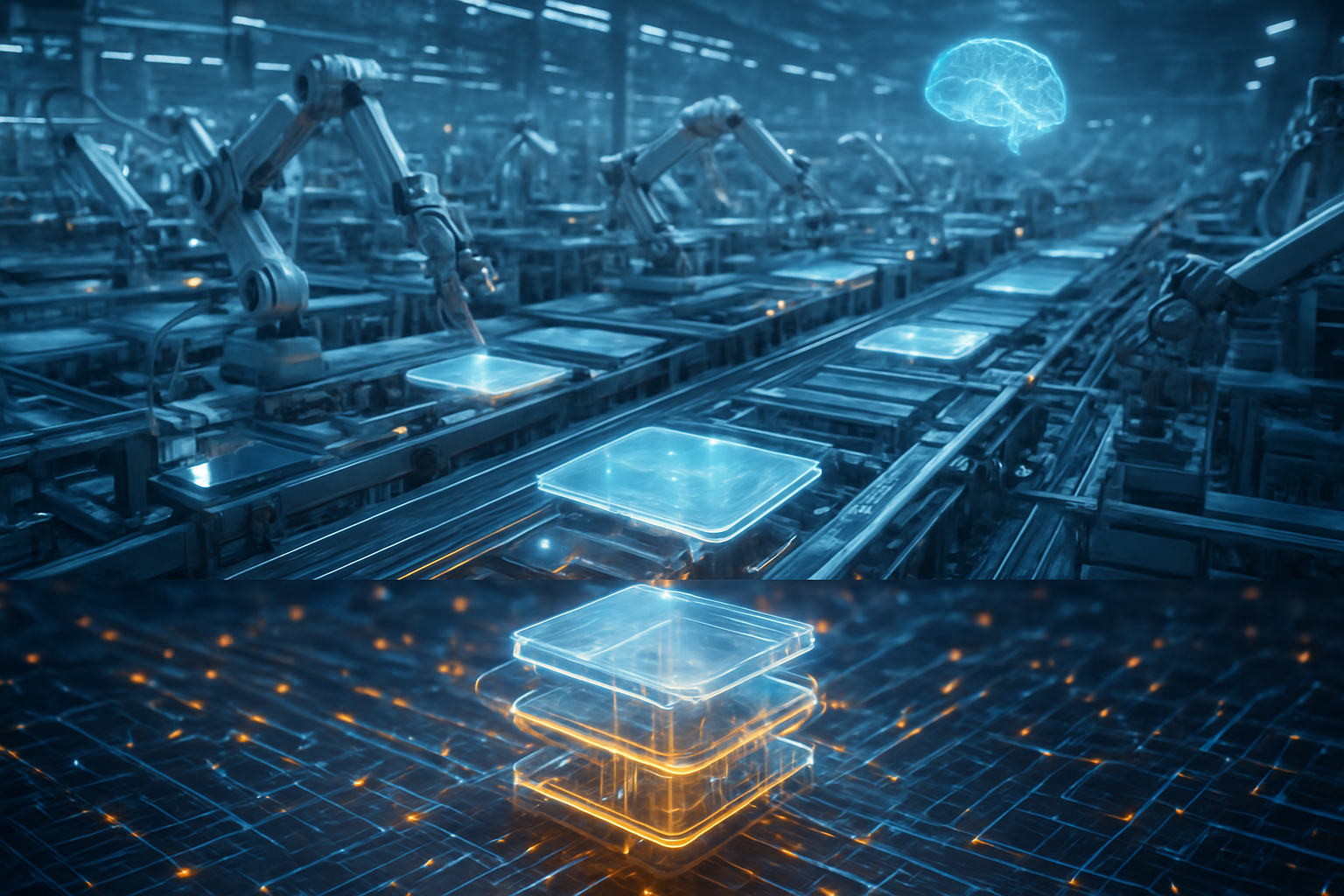
    In a move that signals the dawn of a new era in autonomous manufacturing, NVIDIA (NASDAQ: NVDA) and Siemens (ETR: SIE) have announced the formal launch of the world’s first "Industrial AI Operating System" (Industrial AI OS). Revealed at CES 2026 earlier this month, this strategic expansion of their long-standing partnership represents a fundamental shift in how factories are designed and operated. By moving beyond passive simulations to "active intelligence," the new system allows industrial environments to autonomously optimize their own operations, marking the most significant convergence of generative AI and physical automation to date.

    The immediate significance of this development lies in its ability to bridge the gap between virtual planning and physical reality. At the heart of this announcement is the transformation of the digital twin—once a mere 3D model—into a living, breathing software entity that can control the shop floor. For the manufacturing sector, this means the promise of the "Industrial Metaverse" has finally moved from a conceptual buzzword to a deployable, high-performance reality that is already delivering double-digit efficiency gains in real-world environments.

    The "AI Brain": Engineering the Future of Automation

    The core of the Industrial AI OS is a unified software-defined architecture that fuses Siemens’ Xcelerator platform with NVIDIA’s high-density AI infrastructure. At the center of this stack is what the companies call the "AI Brain"—a software-defined automation layer that leverages NVIDIA Blackwell GPUs and the Omniverse platform to analyze factory data in real-time. Unlike traditional manufacturing systems that rely on rigid, pre-programmed logic, the AI Brain uses "Physics-Based AI" and NVIDIA’s PhysicsNeMo generative models to simulate thousands of "what-if" scenarios every second, identifying the most efficient path forward and deploying those instructions directly to the production line.

    One of the most impressive technical breakthroughs is the integration of "software-in-the-loop" testing, which virtually eliminates the risk of downtime. By the time a new process or material flow is introduced to the physical machines, it has already been validated in a physics-accurate digital twin with nearly 100% accuracy. Siemens also teased the upcoming release of the "Digital Twin Composer" in mid-2026, a tool designed to allow non-experts to build photorealistic, physics-perfect 3D environments that link live IoT data from the factory floor directly into the simulation.

    Industry experts have reacted with overwhelming positivity, noting that this differentiates itself from previous approaches by its sheer scale and real-time capability. While earlier digital twins were often siloed or required massive manual updates, the Industrial AI OS is inherently dynamic. Researchers in the AI community have specifically praised the use of CUDA-X libraries to accelerate the complex thermodynamics and fluid dynamics simulations required for energy optimization, a task that previously took days but now occurs in milliseconds.

    Market Shifting: A New Standard for Industrial Tech

    This collaboration solidifies NVIDIA’s position as the indispensable backbone of industrial intelligence, while simultaneously repositioning Siemens as a software-first technology powerhouse. By moving their simulation portfolio onto NVIDIA’s generative AI stack, Siemens is effectively future-proofing its Xcelerator ecosystem against competitors like PTC (NASDAQ: PTC) or Rockwell Automation (NYSE: ROK). The strategic advantage is clear: Siemens provides the domain expertise and operational technology (OT) data, while NVIDIA provides the massive compute power and AI models necessary to make that data actionable.

    The ripple effects will be felt across the tech giant landscape. Cloud providers like Microsoft (NASDAQ: MSFT) and Amazon (NASDAQ: AMZN) are now competing to host these massive "Industrial AI Clouds." In fact, Deutsche Telekom (FRA: DTE) has already jumped into the fray, recently launching a dedicated cloud facility in Munich specifically to support the compute-heavy requirements of the Industrial AI OS. This creates a new high-margin revenue stream for telcos and cloud providers who can offer the low-latency connectivity required for real-time factory synchronization.

    Furthermore, the "Industrial AI OS" threatens to disrupt traditional consulting and industrial engineering services. If a factory can autonomously optimize its own material flow and energy consumption, the need for periodic, expensive efficiency audits by third-party firms may diminish. Instead, the value is shifting toward the platforms that provide continuous, automated optimization. Early adopters like PepsiCo (NASDAQ: PEP) and Foxconn (TPE: 2317) have already begun evaluating the OS to optimize their global supply chains, signaling a move toward a standardized, AI-driven manufacturing template.

    The Erlangen Blueprint: Sustainability and Efficiency in Action

    The real-world proof of this technology is found at the Siemens Electronics Factory in Erlangen (GWE), Germany. Recognized by the World Economic Forum as a "Digital Lighthouse," the Erlangen facility serves as a living laboratory for the Industrial AI OS. The results are staggering: by using AI-driven digital twins to orchestrate its fleet of 30 Automated Guided Vehicles (AGVs), the factory has achieved a 40% reduction in material circulation. These vehicles, which collectively travel the equivalent of five times around the Earth every year, now operate with such precision that bottlenecks have been virtually eliminated.

    Sustainability is perhaps the most significant outcome of the Erlangen implementation. Using the digital twin to simulate and optimize the production hall’s ventilation and cooling systems has led to a 70% reduction in ventilation energy. Over the past four years, the factory has reported a 42% decrease in total energy consumption while simultaneously increasing productivity by 69%. This sets a new benchmark for "green manufacturing," proving that environmental goals and industrial growth are not mutually exclusive when managed by high-performance AI.

    This development fits into a broader trend of "sovereign AI" and localized manufacturing. As global supply chains face increasing volatility, the ability to run highly efficient, automated factories close to home becomes a matter of economic security. The Erlangen model demonstrates that AI can offset higher labor costs in regions like Europe and North America by delivering unprecedented levels of efficiency and resource management. This milestone is being compared to the introduction of the first programmable logic controllers (PLCs) in the 1960s—a shift from hardware-centric to software-augmented production.

    Future Horizons: From Single Factories to Global Networks

    Looking ahead, the near-term focus will be the global rollout of the Digital Twin Composer and the expansion of the Industrial AI OS to more diverse sectors, including automotive and pharmaceuticals. Experts predict that by 2027, "Self-Healing Factories" will become a reality, where the AI OS not only optimizes flow but also predicts mechanical failures and autonomously orders replacement parts or redirects production to avoid outages. The partnership is also expected to explore the use of humanoid robotics integrated with the AI OS, allowing for even more flexible and adaptive assembly lines.

    However, challenges remain. The transition to an AI-led operating system requires a massive upskilling of the industrial workforce and a significant initial investment in GPU-heavy infrastructure. There are also ongoing discussions regarding data privacy and the "black box" nature of generative AI in critical infrastructure. Experts suggest that the next few years will see a push for more "Explainable AI" (XAI) within the Industrial AI OS to ensure that human operators can understand and audit the decisions made by the autonomous "AI Brain."

    A New Era of Autonomous Production

    The collaboration between NVIDIA and Siemens marks a watershed moment in the history of industrial technology. By successfully deploying a functional Industrial AI OS at the Erlangen factory, the two companies have provided a roadmap for the future of global manufacturing. The key takeaways are clear: the digital twin is no longer just a model; it is a management system. Sustainability is no longer just a goal; it is a measurable byproduct of AI-driven optimization.

    This development will likely be remembered as the point where the "Industrial Metaverse" moved from marketing hype to a quantifiable industrial standard. As we move into the middle of 2026, the industry will be watching closely to see how quickly other global manufacturers can replicate the "Erlangen effect." For now, the message is clear: the factories of the future will not just be run by people or robots, but by an intelligent operating system that never stops learning.


    This content is intended for informational purposes only and represents analysis of current AI developments.

    TokenRing AI delivers enterprise-grade solutions for multi-agent AI workflow orchestration, AI-powered development tools, and seamless remote collaboration platforms.
    For more information, visit https://www.tokenring.ai/.

  • The Digital Microscope: How AlphaFold 3 is Decoding the Molecular Language of Life

    The Digital Microscope: How AlphaFold 3 is Decoding the Molecular Language of Life

    As of January 2026, the landscape of biological research has been irrevocably altered by the maturation of AlphaFold 3, the latest generative AI milestone from Alphabet Inc. (NASDAQ: GOOGL). Developed by Google DeepMind and its drug-discovery arm, Isomorphic Labs, AlphaFold 3 has transitioned from a groundbreaking theoretical model into the foundational infrastructure of modern medicine. By moving beyond the simple "folding" of proteins to predicting the complex, multi-molecular interactions between proteins, DNA, RNA, and ligands, the system has effectively become a "digital microscope" for the 21st century, allowing scientists to witness the "molecular handshake" that defines life and disease at an atomic scale.

    The immediate significance of this development cannot be overstated. In the less than two years since its initial debut, AlphaFold 3 has collapsed timelines in drug discovery that once spanned decades. With its ability to model how a potential drug molecule interacts with a specific protein or how a genetic mutation deforms a strand of DNA, the platform has unlocked a new era of "rational drug design." This shift is already yielding results in clinical pipelines, particularly in the treatment of rare diseases and complex cancers, where traditional experimental methods have long hit a wall.

    The All-Atom Revolution: Inside the Generative Architecture

    Technically, AlphaFold 3 represents a radical departure from its predecessor, AlphaFold 2. While the earlier version relied on a discriminative architecture to predict protein shapes, AlphaFold 3 utilizes a sophisticated Diffusion Module—the same class of AI technology behind image generators like DALL-E. This module begins with a "cloud" of randomly distributed atoms and iteratively refines their coordinates until they settle into the most chemically accurate 3D structure. This approach eliminates the need for rigid rules about bond angles, allowing the model to accommodate virtually any chemical entity found in the Protein Data Bank (PDB).

    Complementing the Diffusion Module is the Pairformer, a streamlined successor to the "Evoformer" that powered previous versions. By focusing on the relationships between pairs of atoms rather than complex evolutionary alignments, the Pairformer has significantly reduced computational overhead while increasing accuracy. This unified "all-atom" approach allows AlphaFold 3 to treat amino acids, nucleotides (DNA and RNA), and small-molecule ligands as part of a single, coherent system. For the first time, researchers can see not just a protein's shape, but how that protein binds to a specific piece of genetic code or a new drug candidate with 50% greater accuracy than traditional physics-based simulations.

    Initial reactions from the scientific community were a mix of awe and strategic adaptation. Following an initial period of restricted access via the AlphaFold Server, DeepMind's decision in late 2024 to release the full source code and model weights for academic use sparked a global surge in molecular research. Today, in early 2026, AlphaFold 3 is the standard against which all other structural biology tools are measured, with independent benchmarks confirming its dominance in predicting antibody-antigen interactions—a critical capability for the next generation of immunotherapies.

    Market Dominance and the Biotech Arms Race

    The commercial impact of AlphaFold 3 has been nothing short of transformative for the pharmaceutical industry. Isomorphic Labs has leveraged the technology to secure multi-billion dollar partnerships with industry titans like Eli Lilly and Company (NYSE: LLY) and Novartis AG (NYSE: NVS). By January 2026, these collaborations have expanded significantly, focusing on "undruggable" targets in oncology and neurodegeneration. By keeping the commercial high-performance weights of the model proprietary while open-sourcing the academic version, Alphabet has created a formidable "moat," ensuring that the most lucrative drug discovery programs are routed through its ecosystem.

    However, Alphabet does not stand alone in this space. The competitive landscape has become a high-stakes race between tech giants and specialized startups. Meta Platforms (NASDAQ: META) continues to compete with its ESMFold and ESM3 models, which utilize "Protein Language Models" to predict structures at speeds up to 60 times faster than AlphaFold, making them the preferred choice for massive metagenomic scans. Meanwhile, the academic world has rallied around David Baker’s RFdiffusion3, a generative model that allows researchers to design entirely new proteins from scratch—a "design-forward" capability that complements AlphaFold’s "prediction-forward" strengths.

    This competition has birthed a new breed of "full-stack" AI biotech companies, such as Xaira Therapeutics, which combines molecular modeling with massive "wet-lab" automation. These firms are moving beyond software, building autonomous facilities where AI agents propose new molecules that are then synthesized and tested by robots in real-time. This vertical integration is disrupting the traditional service-provider model, as NVIDIA Corporation (NASDAQ: NVDA) also enters the fray by embedding its BioNeMo AI tools directly into lab hardware from providers like Thermo Fisher Scientific (NYSE: TMO).

    Healing at the Atomic Level: Oncology and Rare Diseases

    The broader significance of AlphaFold 3 is most visible in its clinical applications, particularly in oncology. Researchers are currently using the model to target the TIM-3 protein, a critical checkpoint inhibitor in cancer. By visualizing exactly how small molecules bind to "cryptic pockets" on the protein’s surface—pockets that were invisible to previous models—scientists have designed more selective drugs that trigger an immune response against tumors with fewer side effects. As of early 2026, the first human clinical trials for drugs designed entirely within the AlphaFold 3 environment are already underway.

    In the realm of rare diseases, AlphaFold 3 is providing hope where experimental data was previously non-existent. For conditions like Neurofibromatosis Type 1 (NF1), the AI has been used to simulate how specific mutations, such as the R1000C variant, physically alter protein conformation. This allows for the development of "corrective" therapies tailored to a patient's unique genetic profile. The FDA has acknowledged this shift, recently issuing draft guidance that recognizes "digital twins" of proteins as valid preliminary evidence for safety, a landmark move that could drastically accelerate the approval of personalized "n-of-1" medicines.

    Despite these breakthroughs, the "AI-ification" of biology has raised significant concerns. The democratization of such powerful molecular design tools has prompted a "dual-use" crisis. Legislators in both the U.S. and the EU are now enforcing strict biosecurity guardrails, requiring "Know Your Customer" protocols for anyone accessing models capable of designing novel pathogens. The focus has shifted from merely predicting life to ensuring that the power to design it is not misused to create synthetic biological threats.

    From Molecules to Systems: The Future of Biological AI

    Looking ahead to the remainder of 2026 and beyond, the focus of biological AI is shifting from individual molecules to the modeling of entire biological systems. The "Virtual Human Cell" project is the next frontier, with the goal of creating a high-fidelity digital simulation of a human cell's entire metabolic network. This would allow researchers to see how a single drug interaction ripples through an entire cell, predicting side effects and efficacy with near-perfect accuracy before a single animal or human is ever dosed.

    We are also entering the era of "Agentic AI" in the laboratory. Experts predict that by 2027, "self-driving labs" will manage the entire early-stage discovery process without human intervention. These systems will use AlphaFold-like models to propose a hypothesis, orchestrate robotic synthesis, analyze the results, and refine the next experiment in a continuous loop. The integration of AI with 3D genomic mapping—an initiative dubbed "AlphaGenome"—is also expected to reach maturity, providing a functional 3D map of how our DNA "switches" regulate gene expression in real-time.

    A New Epoch in Human Health

    AlphaFold 3 stands as one of the most significant milestones in the history of artificial intelligence, representing the moment AI moved beyond digital tasks and began mastering the fundamental physical laws of biology. By providing a "digital microscope" that can peer into the atomic interactions of life, it has transformed biology from an observational science into a predictable, programmable engineering discipline.

    As we move through 2026, the key takeaways are clear: the "protein folding problem" has evolved into a comprehensive "molecular interaction solution." While challenges remain regarding biosecurity and the need for clinical validation of AI-designed molecules, the long-term impact is a future where "undruggable" diseases become a thing of the past. The coming months will be defined by the first results of AI-designed oncology trials and the continued integration of generative AI into every facet of the global healthcare infrastructure.


    This content is intended for informational purposes only and represents analysis of current AI developments.

    TokenRing AI delivers enterprise-grade solutions for multi-agent AI workflow orchestration, AI-powered development tools, and seamless remote collaboration platforms.
    For more information, visit https://www.tokenring.ai/.
  • The Brain for Every Machine: Physical Intelligence Unleashes ‘World Models’ to Decouple AI from Hardware

    The Brain for Every Machine: Physical Intelligence Unleashes ‘World Models’ to Decouple AI from Hardware

    SAN FRANCISCO — January 14, 2026 — In a breakthrough that marks a fundamental shift in the robotics industry, the San Francisco-based startup Physical Intelligence (often stylized as Pi) has unveiled the latest iteration of its "World Models," proving that the "brain" of a robot can finally be separated from its "body." By developing foundation models that understand the laws of physics through pure data rather than rigid programming, Pi is positioning itself as the creator of a universal operating system for anything with a motor. This development follows a massive $400 million Series A funding round led by Jeff Bezos and OpenAI, which was eclipsed only months ago by a staggering $600 million Series B led by Alphabet Inc. (NASDAQ: GOOGL), valuing the company at $5.6 billion.

    The significance of Pi’s advancement lies in its ability to grant robots a "common sense" understanding of the physical world. Unlike traditional robots that require thousands of lines of code to perform a single, repetitive task in a controlled environment, Pi’s models allow machines to generalize. Whether it is a multi-jointed industrial arm, a mobile warehouse unit, or a high-end humanoid, the same "pi-zero" ($\pi_0$) model can be deployed to help the robot navigate messy, unpredictable human spaces. This "Physical AI" breakthrough suggests that the era of task-specific robotics is ending, replaced by a world where robots can learn to fold laundry, assemble electronics, or even operate complex machinery simply by observing and practicing.

    The Architecture of Action: Inside the $\pi_0$ Foundation Model

    At the heart of Physical Intelligence’s technology is the $\pi_0$ model, a Vision-Language-Action (VLA) architecture that differs significantly from the Large Language Models (LLMs) developed by companies like Microsoft (NASDAQ: MSFT) or NVIDIA (NASDAQ: NVDA). While LLMs predict the next word in a sentence, $\pi_0$ predicts the next movement in a physical trajectory. The model is built upon a vision-language backbone—leveraging Google’s PaliGemma—which provides the robot with semantic knowledge of the world. It doesn't just see a "cylinder"; it understands that it is a "Coke can" that can be crushed or opened.

    The technical breakthrough that separates Pi from its predecessors is a method known as "flow matching." Traditional robotic controllers often struggle with the "jerky" nature of discrete commands. Pi’s flow-matching architecture allows the model to output continuous, high-frequency motor commands at 50Hz. This enables the fluid, human-like dexterity seen in recent demonstrations, such as a robot delicately peeling a grape or assembling a cardboard box. Furthermore, the company’s "Recap" method (Reinforcement Learning with Experience & Corrections) allows these models to learn from their own mistakes in real-time, effectively "practicing" a task until it reaches 99.9% reliability without human intervention.

    Industry experts have reacted with a mix of awe and caution. "We are seeing the 'GPT-3 moment' for robotics," noted one researcher from the Stanford AI Lab. While previous attempts at universal robot brains were hampered by the "data bottleneck"—the difficulty of getting enough high-quality robotic training data—Pi has bypassed this by using cross-embodiment learning. By training on data from seven different types of robot hardware simultaneously, the $\pi_0$ model has developed a generalized understanding of physics that applies across the board, making it the most robust "world model" currently in existence.

    A New Power Dynamic: Hardware vs. Software in the AI Arms Race

    The rise of Physical Intelligence creates a massive strategic shift for tech giants and robotics startups alike. By focusing solely on the software "brain" rather than the "hardware" body, Pi is effectively building the "Android" of the robotics world. This puts the company in direct competition with vertically integrated firms like Tesla (NASDAQ: TSLA) and Figure, which are developing both their own humanoid hardware and the AI that controls it. If Pi’s models become the industry standard, hardware manufacturers may find themselves commoditized, forced to use Pi's software to remain competitive in a market that demands extreme adaptability.

    The $400 million investment from Jeff Bezos and the $600 million infusion from Alphabet’s CapitalG signal that the most powerful players in tech are hedging their bets. Alphabet and OpenAI’s participation is particularly telling; while OpenAI has historically focused on digital intelligence, their backing of Pi suggests a recognition that "Physical AI" is the next necessary frontier for General Artificial Intelligence (AGI). This creates a complex web of alliances where Alphabet and OpenAI are both funding a potential rival to the internal robotics efforts of companies like Amazon (NASDAQ: AMZN) and NVIDIA.

    For startups, the emergence of Pi’s foundation models is a double-edged sword. On one hand, smaller robotics firms no longer need to build their own AI from scratch, allowing them to bring specialized hardware to market faster by "plugging in" to Pi’s brain. On the other hand, the high capital requirements to train these multi-billion parameter world models mean that only a handful of "foundational" companies—Pi, NVIDIA, and perhaps Meta (NASDAQ: META)—will control the underlying intelligence of the global robotic fleet.

    Beyond the Digital: The Socio-Economic Impact of Physical AI

    The wider significance of Pi’s world models cannot be overstated. We are moving from the automation of cognitive labor—writing, coding, and designing—to the automation of physical labor. Analysts at firms like Goldman Sachs (NYSE: GS) have long predicted a multi-trillion dollar market for general-purpose robotics, but the missing link has always been a model that understands physics. Pi’s models fill this gap, potentially disrupting industries ranging from healthcare and eldercare to construction and logistics.

    However, this breakthrough brings significant concerns. The most immediate is the "black box" nature of these world models. Because $\pi_0$ learns physics through data rather than hardcoded laws (like gravity or friction), it can sometimes exhibit unpredictable behavior when faced with scenarios it hasn't seen before. Critics argue that a robot "guessing" how physics works is inherently more dangerous than a robot following a pre-programmed safety script. Furthermore, the rapid advancement of Physical AI reignites the debate over labor displacement, as tasks previously thought to be "automation-proof" due to their physical complexity are now within the reach of a foundation-model-powered machine.

    Comparing this to previous milestones, Pi’s world models represent a leap beyond the "AlphaGo" era of narrow reinforcement learning. While AlphaGo mastered a game with fixed rules, Pi is attempting to master the "game" of reality, where the rules are fluid and the environment is infinite. This is the first time we have seen a model demonstrate "spatial intelligence" at scale, moving beyond the 2D world of screens into the 3D world of atoms.

    The Horizon: From Lab Demos to the "Robot Olympics"

    Looking forward, Physical Intelligence is already pushing toward what it calls "The Robot Olympics," a series of benchmarks designed to test how well its models can adapt to entirely new robot bodies on the fly. In the near term, we expect to see Pi release its "FAST tokenizer," a technology that could speed up the training of robotic foundation models by a factor of five. This would allow the company to iterate on its world models at the same breakneck pace we currently see in the LLM space.

    The next major challenge for Pi will be the "sim-to-real" gap. While their models have shown incredible performance in laboratory settings and controlled pilot programs, the real world is infinitely more chaotic. Experts predict that the next two years will see a massive push to collect "embodied" data from the real world, potentially involving fleets of thousands of robots acting as data-collection agents for the central Pi brain. We may soon see "foundation model-ready" robots appearing in homes and hospitals, acting as the physical hands for the digital intelligence we have already grown accustomed to.

    Conclusion: A New Era for Artificial Physical Intelligence

    Physical Intelligence has successfully transitioned the robotics conversation from "how do we build a better arm" to "how do we build a better mind." By securing over $1 billion in total funding from the likes of Jeff Bezos and Alphabet, and by demonstrating a functional VLA model in $\pi_0$, the company has proven that the path to AGI must pass through the physical world. The decoupling of robotic intelligence from hardware is a watershed moment that will likely define the next decade of technological progress.

    The key takeaways are clear: foundation models are no longer just for text and images; they are for action. As Physical Intelligence continues to refine its "World Models," the tech industry must prepare for a future where any piece of hardware can be granted a high-level understanding of its surroundings. In the coming months, the industry will be watching closely to see how Pi’s hardware partners deploy these models in the wild, and whether this "Android of Robotics" can truly deliver on the promise of a generalist machine.


    This content is intended for informational purposes only and represents analysis of current AI developments.

    TokenRing AI delivers enterprise-grade solutions for multi-agent AI workflow orchestration, AI-powered development tools, and seamless remote collaboration platforms.
    For more information, visit https://www.tokenring.ai/.

  • Tesla’s Optimus Evolution: Gen 2 and Gen 3 Humanoids Enter Active Service at Giga Texas

    Tesla’s Optimus Evolution: Gen 2 and Gen 3 Humanoids Enter Active Service at Giga Texas

    AUSTIN, TEXAS — January 14, 2026 — Tesla (NASDAQ: TSLA) has officially transitioned its humanoid robotics program from an ambitious experimental project to a pivotal component of its manufacturing workforce. Recent updates to the Optimus platform—specifically the deployment of the "Version 3" (Gen 3) hardware and FSD-v15 neural architecture—have demonstrated a level of human-like dexterity and autonomous navigation that was considered science fiction just 24 months ago. With thousands of units now integrated into the production lines for the upcoming "Cybercab" and the 4680 battery cells, Tesla is no longer just an automotive or energy company; it is rapidly becoming the world’s largest robotics firm.

    The immediate significance of this development lies in the move away from teleoperation toward true, vision-based autonomy. Unlike earlier demonstrations that required human "puppeteers" for complex tasks, the early 2026 deployments show Optimus units independently identifying, picking, and placing delicate components with a failure rate lower than human trainees. This milestone signals the arrival of the "Physical AI" era, where large language models (LLMs) and computer vision converge to allow machines to navigate and manipulate the physical world with unprecedented grace.

    Precise Engineering: 22 Degrees of Freedom and "Squishy" Tactile Sensing

    The technical specifications of the current Optimus Gen 3 platform represent a radical departure from the Gen 2 models seen in late 2024. The most striking advancement is the new humanoid hand. Moving from the previous 11 degrees of freedom (DoF), the Gen 3 hand now features 22 degrees of freedom, with actuators relocated to the forearm and connected via a sophisticated tendon-driven system. This mimics human muscle-tendon anatomy, allowing the robot to perform high-precision tasks such as threading electrical connectors or handling individual battery cells without the rigidity seen in traditional industrial arms.

    Furthermore, Tesla has solved one of the most difficult challenges in robotics: tactile feedback. The robot’s fingers and palms are now covered in a multi-layered, "squishy" sensor skin that provides high-resolution haptic data. This compliance allows the robot to "feel" the friction and weight of an object, preventing it from crushing delicate items or dropping slippery ones. On the locomotion front, the robot has achieved a "jogging" gait, reaching speeds of up to 5–7 mph (2.4 m/s). This is powered by Tesla’s proprietary AI5 chip, which provides 40x the compute of the previous generation, enabling the robot to run real-time "Occupancy Networks" to navigate complex, bustling factory floors without a pre-mapped path.

    Strategic Rivalry: A High-Stakes Race for the "Android Moment"

    Tesla’s progress has ignited a fierce rivalry among tech giants and specialized robotics firms. Boston Dynamics, owned by Hyundai (OTC: HYMTF), recently unveiled its Production Electric Atlas, which boasts 56 degrees of freedom and is currently being deployed for heavy-duty parts sequencing in Hyundai’s smart factories. Meanwhile, Figure AI—backed by Microsoft (NASDAQ: MSFT) and NVIDIA (NASDAQ: NVDA)—has launched Figure 03, a robot that utilizes "Helix AI" to learn tasks simply by watching human videos. Unlike Optimus, which is focused on internal Tesla manufacturing, Figure is aggressively targeting the broader commercial logistics market, recently signing a major expansion deal with BMW (BMW.DE).

    This development has profound implications for the AI industry at large. Companies like Alphabet (NASDAQ: GOOGL) are pivoting their DeepMind robotics research to provide the "brains" for third-party humanoid shells, while startups like Sanctuary AI are focusing on wheeled "Phoenix" models for stability in retail environments. Tesla’s strategic advantage remains its vertical integration; by manufacturing its own actuators, sensors, and AI chips, Tesla aims to drive the cost of an Optimus unit below $20,000, a price point that competitors using off-the-shelf components struggle to match.

    Global Impact: The Dawn of the Post-Scarcity Economy?

    The rise of Optimus fits into a broader trend of "Physical AI," where the intelligence previously confined to chatbots is given a body. This shift marks a major milestone, comparable to the "GPT-4 moment" for natural language. As these robots move from the lab to the factory, the primary concern is no longer if they will work, but how they will change the global labor market. Tesla CEO Elon Musk has framed this as a humanitarian mission, suggesting that Optimus will be the key to a "post-scarcity" world where the cost of goods drops dramatically as labor becomes an infinite resource.

    However, this transition is not without its anxieties. Critics point to the potential for massive displacement of entry-level warehouse and manufacturing jobs. While industry analysts argue that the robots are solving a "demographic cliff" caused by aging workforces in the West and East Asia, the speed of the rollout has caught many labor regulators off guard. Ethical discussions are now shifting toward "robot taxes" and universal basic income (UBI), as the distinction between "human work" and "automated labor" begins to blur in the physical realm for the first time in history.

    The Horizon: From Giga Texas to the Home

    Looking ahead to late 2026 and 2027, Tesla plans to scale production to roughly 100,000 units per year. A dedicated humanoid production facility at Giga Texas is already under construction. In the near term, expect to see Optimus moving beyond the factory floor into more varied environments, such as construction sites or high-security facilities. The "Holy Grail" remains the consumer market; Musk has teased a "Home Assistant" version of Optimus that could eventually perform domestic chores like laundry and grocery retrieval.

    The primary challenges remaining are battery life—currently limited to about 6–8 hours of active work—and the "edge case" problem in unstructured environments. While a factory is controlled, a suburban home is chaotic. Experts predict that the next two years will be spent refining the "General Purpose" nature of the AI, allowing the robot to reason through unexpected situations, such as a child running across its path or a spilled liquid on the floor, without needing a software update for every new scenario.

    Conclusion: A Core Pillar of Future Value

    In the January 2026 Q4 earnings call, Musk reiterated that Optimus represents approximately 80% of Tesla’s long-term value. This sentiment is reflected in the company’s massive capital expenditure on AI training clusters and the AI5 hardware suite. The journey from a man in a spandex suit in 2021 to a functional, 22-DoF autonomous humanoid in 2026 is one of the fastest technical evolutions in modern history.

    As we look toward the "Humanoid Robotics World Championship" in Zurich later this year, it is clear that the race for physical autonomy has reached a fever pitch. Whether Optimus becomes the "biggest product of all time" remains to be seen, but its presence on the assembly lines of Giga Texas today proves that the humanoid era has officially begun. The coming months will be critical as Tesla begins to lease the first units to outside partners, testing if the "Optimus-as-a-Service" model can truly transform the global economy.


    This content is intended for informational purposes only and represents analysis of current AI developments.

    TokenRing AI delivers enterprise-grade solutions for multi-agent AI workflow orchestration, AI-powered development tools, and seamless remote collaboration platforms.
    For more information, visit https://www.tokenring.ai/.

  • From Backflips to the Assembly Line: Boston Dynamics’ Electric Atlas Begins Industrial Deployment at Hyundai’s Georgia Mega-Plant

    From Backflips to the Assembly Line: Boston Dynamics’ Electric Atlas Begins Industrial Deployment at Hyundai’s Georgia Mega-Plant

    In a milestone that signals the long-awaited transition of humanoid robotics from laboratory curiosities to industrial assets, Boston Dynamics and its parent company, Hyundai Motor Group (KRX: 005380), have officially launched field tests for the all-electric Atlas robot. This month, the robot began autonomous operations at the Hyundai Motor Group Metaplant America (HMGMA) in Ellabell, Georgia. Moving beyond the viral parkour videos of its predecessor, this new generation of Atlas is performing the "dull, dirty, and dangerous" work of a modern automotive factory, specifically tasked with sorting and sequencing heavy components in the plant’s warehouse.

    The deployment marks a pivotal moment for the robotics industry. While humanoid robots have long been promised as the future of labor, the integration of Atlas into a live manufacturing environment—operating without tethers or human remote control—demonstrates a new level of maturity in both hardware and AI orchestration. By leveraging advanced machine learning and a radically redesigned electric chassis, Atlas is now proving it can handle the physical variability of a factory floor, a feat that traditional stationary industrial robots have struggled to master.

    Engineering the Industrial Humanoid

    The technical evolution from the hydraulic Atlas to the 2026 electric production model represents a complete architectural overhaul. While the previous version relied on high-pressure hydraulics that were prone to leaks and required immense power, the new Atlas utilizes custom-designed, high-torque electric actuators. These allow for a staggering 56 degrees of freedom, including unique 360-degree rotating joints in the waist, head, and limbs. This "superhuman" range of motion enables the robot to turn in place and reach for components in cramped quarters without needing to reorient its entire body, a massive efficiency gain over human-constrained skeletal designs.

    During the ongoing Georgia field tests, Atlas has been observed autonomously sequencing automotive roof racks—a task that requires identifying specific parts, navigating a shifting warehouse floor, and placing heavy items into precise slots for the assembly line. The robot boasts a sustained payload capacity of 66 lbs (30 kg), with the ability to burst-lift up to 110 lbs (50 kg). Unlike the scripted demonstrations of the past, the current Atlas utilizes an AI "brain" powered by Nvidia (NASDAQ: NVDA) hardware and vision models developed in collaboration with Google DeepMind, a subsidiary of Alphabet Inc. (NASDAQ: GOOGL). This allows the robot to adapt to environmental changes in real-time, such as a bin being moved or a human worker crossing its path.

    Industry experts have been quick to note that this is not just a hardware test, but a trial of "embodied AI." Initial reactions from the robotics research community suggest that the most impressive feat is Atlas’s "end-to-end" learning capability. Rather than being programmed with every specific movement, the robot has been trained in simulation to understand the physics of the objects it handles. This allows it to manipulate irregular shapes and respond to slips or weight shifts with a fluidity that mirrors human reflexes, far surpassing the rigid movements seen in earlier humanoid iterations.

    Strategic Implications for the Robotics Market

    For Hyundai Motor Group, this deployment is a strategic masterstroke in its quest to build "Software-Defined Factories." By integrating Boston Dynamics’ technology directly into its $7.6 billion Georgia facility, Hyundai is positioning itself as a leader in the next generation of manufacturing. This move places immense pressure on competitors like Tesla (NASDAQ: TSLA), whose Optimus robot is also in early testing phases, and startups like Figure and Agility Robotics. Hyundai’s advantage lies in its "closed-loop" ecosystem: it owns the robot designer (Boston Dynamics), the AI infrastructure, and the massive manufacturing plants where the technology can be refined at scale.

    The competitive implications extend beyond the automotive sector. Logistics giants and electronic manufacturers are watching the Georgia tests as a bellwether for the viability of general-purpose humanoids. If Atlas can reliably sort parts at HMGMA, it threatens to disrupt the market for specialized, single-task warehouse robots. Companies that can provide a "worker" that fits into human-centric infrastructure without needing expensive facility retrofits will hold a significant strategic advantage. Market analysts suggest that Hyundai’s goal of producing 30,000 humanoid units annually by 2028 is no longer a "moonshot" but a tangible production target.

    A New Chapter in the Global AI Landscape

    The shift of Atlas to the factory floor fits into a broader global trend of "embodied AI," where the intelligence of large language models is being wedded to physical machines. We are moving away from the era of "narrow AI"—which can only do one thing well—to "general-purpose robotics." This milestone is comparable to the introduction of the first industrial robotic arm in the 1960s, but with a crucial difference: the new generation of robots can see, learn, and adapt to the world around them.

    However, the transition is not without concerns. While Hyundai emphasizes "human-centered automation"—using robots to take over ergonomically straining tasks like lifting heavy roof moldings—the long-term impact on the workforce remains a subject of intense debate. Labor advocates are monitoring the deployment closely, questioning how the "30,000 units by 2028" goal will affect the demand for entry-level industrial labor. Furthermore, as these robots become increasingly autonomous and integrated into cloud networks, cybersecurity and the potential for systemic failures in automated supply chains have become primary topics of discussion among tech policy experts.

    The Roadmap to Full Autonomy

    Looking ahead, the next 24 months will likely see Atlas expand its repertoire from simple sorting to complex component assembly. This will require even finer motor skills and more sophisticated tactile feedback in the robot's grippers. Near-term developments are expected to focus on multi-robot orchestration, where fleets of Atlas units communicate with each other and the plant's central management system to optimize the flow of materials in real-time.

    Experts predict that by the end of 2026, we will see the first "robot-only" shifts in specific high-hazard areas of the Metaplant. The ultimate challenge remains the "99.9% reliability" threshold required for full-scale production. While Atlas has shown it can perform tasks in a field test, maintaining that performance over thousands of hours without technical intervention is the final hurdle. As the hardware becomes a commodity, the real battleground will move to the software—specifically, the ability to rapidly "teach" robots new tasks using generative AI and synthetic data.

    Conclusion: From Laboratory to Industrial Reality

    The deployment of the electric Atlas at Hyundai’s Georgia plant marks a definitive end to the era of robotics-as-entertainment. We have entered the era of robotics-as-infrastructure. By taking a humanoid out of the lab and putting it into the high-stakes environment of a billion-dollar automotive factory, Boston Dynamics and Hyundai have set a new benchmark for what is possible in the field of automation.

    The key takeaway from this development is that the "brain" and the "body" of AI have finally caught up with each other. In the coming months, keep a close eye on the performance metrics coming out of HMGMA—specifically the "mean time between failures" and the speed of autonomous task acquisition. If these field tests continue to succeed, the sight of a humanoid robot walking the factory floor will soon move from a futuristic novelty to a standard feature of the global industrial landscape.


    This content is intended for informational purposes only and represents analysis of current AI developments.

    TokenRing AI delivers enterprise-grade solutions for multi-agent AI workflow orchestration, AI-powered development tools, and seamless remote collaboration platforms.
    For more information, visit https://www.tokenring.ai/.