
Category: Uncategorized

  • Silicon’s Golden Age: How AI is Propelling the Semiconductor Industry to Unprecedented Heights

    Silicon’s Golden Age: How AI is Propelling the Semiconductor Industry to Unprecedented Heights

    The global semiconductor industry is experiencing an unprecedented surge, positioning itself as a leading sector in current market trading. This remarkable growth is not merely a cyclical upturn but a fundamental shift driven by the relentless advancement and widespread adoption of Artificial Intelligence (AI) and Generative AI (Gen AI). Once heavily reliant on consumer electronics like smartphones and personal computers, the industry's new engine is the insatiable demand for specialized AI data center chips, marking a pivotal transformation in the digital economy.

    This AI-fueled momentum is propelling semiconductor revenues to new stratospheric levels, with projections indicating a global market nearing $800 billion in 2025 and potentially exceeding $1 trillion by 2030. The implications extend far beyond chip manufacturers, touching every facet of the tech industry and signaling a profound reorientation of technological priorities towards computational power tailored for intelligent systems.

    The Microscopic Engines of Intelligence: Decoding AI's Chip Demands

    At the heart of this semiconductor renaissance lies a paradigm shift in computational requirements. Traditional CPUs, while versatile, are increasingly inadequate for the parallel processing demands of modern AI, particularly deep learning and large language models. This has led to an explosive demand for specialized AI chips, such as high-performance Graphics Processing Units (GPUs), Neural Processing Units (NPUs), and Application-Specific Integrated Circuits (ASICs) like Alphabet (NASDAQ: GOOGL) Google's TPUs. These accelerators are meticulously designed to handle the massive datasets and complex calculations inherent in AI and machine learning tasks with unparalleled efficiency.

    The technical specifications of these chips are pushing the boundaries of silicon engineering. High Bandwidth Memory (HBM), for instance, has become a critical supporting technology, offering significantly faster data access compared to conventional DRAM, which is crucial for feeding the hungry AI processors. The memory segment alone is projected to surge by over 24% in 2025, driven by the increasing penetration of high-end products like HBM3 and HBM3e, with HBM4 on the horizon. Furthermore, networking semiconductors are experiencing a projected 13% growth as AI workloads shift the bottleneck from processing to data movement, necessitating advanced chips to overcome latency and throughput challenges within data centers. This specialized hardware differs significantly from previous approaches by integrating dedicated AI acceleration cores, optimized memory interfaces, and advanced packaging technologies to maximize performance per watt, a critical metric for power-intensive AI data centers.

    Initial reactions from the AI research community and industry experts confirm the transformative nature of these developments. Nina Turner, Research Director for Semiconductors at IDC, notes the long-term revenue resilience driven by increased semiconductor content per system and enhanced compute capabilities. Experts from McKinsey & Company (NYSE: MCD) view the surge in generative AI as pushing the industry to innovate faster, approaching a "new S-curve" of technological advancement. The consensus is clear: the semiconductor industry is not just recovering; it's undergoing a fundamental restructuring to meet the demands of an AI-first world.

    Corporate Colossus and Startup Scramble: Navigating the AI Chip Landscape

    The AI-driven semiconductor boom is creating a fierce competitive landscape, significantly impacting tech giants, specialized AI labs, and nimble startups alike. Companies at the forefront of this wave are primarily those designing and manufacturing these advanced chips. NVIDIA Corporation (NASDAQ: NVDA) stands as a monumental beneficiary, dominating the AI accelerator market with its powerful GPUs. Its strategic advantage lies in its CUDA ecosystem, which has become the de facto standard for AI development, making its hardware indispensable for many AI researchers and developers. Other major players like Advanced Micro Devices, Inc. (NASDAQ: AMD) are aggressively expanding their AI chip portfolios, challenging NVIDIA's dominance with their own high-performance offerings.

    Beyond the chip designers, foundries like Taiwan Semiconductor Manufacturing Company Limited (NYSE: TSM), or TSMC, are crucial, as they possess the advanced manufacturing capabilities required to produce these cutting-edge semiconductors. Their technological prowess and capacity are bottlenecks that dictate the pace of AI innovation. The competitive implications are profound: companies that can secure access to advanced fabrication will gain a significant strategic advantage, while those reliant on older technologies risk risking falling behind. This development also fosters a robust ecosystem for startups specializing in niche AI hardware, custom ASICs for specific AI tasks, or innovative cooling solutions for power-hungry AI data centers.

    The market positioning of major cloud providers like Amazon.com, Inc. (NASDAQ: AMZN) with AWS, Microsoft Corporation (NASDAQ: MSFT) with Azure, and Alphabet with Google Cloud is also heavily influenced. These companies are not only massive consumers of AI chips for their cloud infrastructure but are also developing their own custom AI accelerators (e.g., Google's TPUs, Amazon's Inferentia and Trainium) to optimize performance and reduce reliance on external suppliers. This vertical integration strategy aims to disrupt existing products and services by offering highly optimized, cost-effective AI compute. The sheer scale of investment in AI-specific hardware by these tech giants underscores the belief that future competitive advantage will be inextricably linked to superior AI infrastructure.

    A New Industrial Revolution: Broader Implications of the AI Chip Era

    The current surge in the semiconductor industry, driven by AI, fits squarely into the broader narrative of a new industrial revolution. It's not merely an incremental technological improvement but a foundational shift akin to the advent of electricity or the internet. The pervasive impact of AI, from automating complex tasks to enabling entirely new forms of human-computer interaction, hinges critically on the availability of powerful and efficient processing units. This development underscores a significant trend in the AI landscape: the increasing hardware-software co-design, where advancements in algorithms and models are tightly coupled with innovations in chip architecture.

    The impacts are far-reaching. Economically, it's fueling massive investment in R&D, manufacturing infrastructure, and specialized talent, creating new job markets and wealth. Socially, it promises to accelerate the deployment of AI across various sectors, from healthcare and finance to autonomous systems and personalized education, potentially leading to unprecedented productivity gains and new services. However, potential concerns also emerge, including the environmental footprint of energy-intensive AI data centers, the geopolitical implications of concentrated advanced chip manufacturing, and the ethical challenges posed by increasingly powerful AI systems. The US, for instance, has imposed export bans on certain advanced AI chips and manufacturing technologies to China, highlighting the strategic importance and national security implications of semiconductor leadership.

    Comparing this to previous AI milestones, such as the rise of expert systems in the 1980s or the deep learning breakthrough of the 2010s, the current era is distinct due to the sheer scale of computational resources being deployed. While earlier breakthroughs demonstrated AI's potential, the current phase is about operationalizing that potential at a global scale, making AI a ubiquitous utility. The investment in silicon infrastructure reflects a collective bet on AI as the next fundamental layer of technological progress, a bet that dwarfs previous commitments in its ambition and scope.

    The Horizon of Innovation: Future Developments in AI Silicon

    Looking ahead, the trajectory of AI-driven semiconductor innovation promises even more transformative developments. In the near term, experts predict continued advancements in chip architecture, focusing on greater energy efficiency and specialized designs for various AI tasks, from training large models to performing inference at the edge. We can expect to see further integration of AI accelerators directly into general-purpose CPUs and System-on-Chips (SoCs), making AI capabilities more ubiquitous in everyday devices. The ongoing evolution of HBM and other advanced memory technologies will be crucial, as memory bandwidth often becomes the bottleneck for increasingly complex AI models.

    Potential applications and use cases on the horizon are vast. Beyond current applications in cloud computing and autonomous vehicles, future developments could enable truly personalized AI assistants running locally on devices, advanced robotics with real-time decision-making capabilities, and breakthroughs in scientific discovery through accelerated simulations and data analysis. The concept of "Edge AI" will become even more prominent, with specialized, low-power chips enabling sophisticated AI processing directly on sensors, industrial equipment, and smart appliances, reducing latency and enhancing privacy.

    However, significant challenges need to be addressed. The escalating cost of designing and manufacturing cutting-edge chips, the immense power consumption of AI data centers, and the complexities of advanced packaging technologies are formidable hurdles. Geopolitical tensions surrounding semiconductor supply chains also pose a continuous challenge to global collaboration and innovation. Experts predict a future where materials science, quantum computing, and neuromorphic computing will converge with traditional silicon, pushing the boundaries of what's possible. The race for materials beyond silicon, such as carbon nanotubes or 2D materials, could unlock new paradigms for AI hardware.

    A Defining Moment: The Enduring Legacy of AI's Silicon Demand

    In summation, the semiconductor industry's emergence as a leading market sector is unequivocally driven by the surging demand for Artificial Intelligence. The shift from traditional consumer electronics to specialized AI data center chips marks a profound recalibration of the industry's core drivers. This era is characterized by relentless innovation in chip architecture, memory technologies, and networking solutions, all meticulously engineered to power the burgeoning world of AI and generative AI.

    This development holds immense significance in AI history, representing the crucial hardware foundation upon which the next generation of intelligent software will be built. It signifies that AI has moved beyond theoretical research into an era of massive practical deployment, demanding a commensurate leap in computational infrastructure. The long-term impact will be a world increasingly shaped by ubiquitous AI, where intelligent systems are seamlessly integrated into every aspect of daily life and industry, from smart cities to personalized medicine.

    As we move forward, the key takeaways are clear: AI is the primary catalyst, specialized hardware is essential, and the competitive landscape is intensely dynamic. What to watch for in the coming weeks and months includes further announcements from major chip manufacturers regarding next-generation AI accelerators, strategic partnerships between AI developers and foundries, and the ongoing geopolitical maneuvering around semiconductor supply chains. The silicon age, far from waning, is entering its most intelligent and impactful chapter yet, with AI as its guiding force.


    This content is intended for informational purposes only and represents analysis of current AI developments.

    TokenRing AI delivers enterprise-grade solutions for multi-agent AI workflow orchestration, AI-powered development tools, and seamless remote collaboration platforms.
    For more information, visit https://www.tokenring.ai/.

  • Semiconductor Titans Soar: MACOM and KLA Corporation Ride AI Wave on Analyst Optimism

    Semiconductor Titans Soar: MACOM and KLA Corporation Ride AI Wave on Analyst Optimism

    The semiconductor industry, a foundational pillar of the modern technological landscape, is currently experiencing a robust surge, significantly propelled by the insatiable demand for artificial intelligence (AI) infrastructure. Amidst this boom, two key players, MACOM Technology Solutions (NASDAQ: MTSI) and KLA Corporation (NASDAQ: KLAC), have captured the attention of Wall Street analysts, receiving multiple upgrades and price target increases that have translated into strong stock performance throughout late 2024 and mid-2025. These endorsements underscore a growing confidence in their pivotal roles in enabling the next generation of AI advancements, from high-speed data transfer to precision chip manufacturing.

    The positive analyst sentiment reflects the critical importance of these companies' technologies in supporting the expanding AI ecosystem. As of October 20, 2025, the market continues to react favorably to the strategic positioning and robust financial outlooks of MACOM and KLA, indicating that investors are increasingly recognizing the deep integration of their solutions within the AI supply chain. This period of significant upgrades highlights not just individual company strengths but also the broader market's optimistic trajectory for sectors directly contributing to AI development.

    Unpacking the Technical Drivers Behind Semiconductor Success

    The recent analyst upgrades for MACOM Technology Solutions (NASDAQ: MTSI) and KLA Corporation (NASDAQ: KLAC) are rooted in specific technical advancements and market dynamics that underscore their critical roles in the AI era. For MACOM, a key driver has been its strong performance in the Data Center sector, particularly with its solutions supporting 800G and 1.6T speeds. Needham & Company, in November 2024, raised its price target to $150, citing anticipated significant revenue increases from Data Center operations as these ultra-high speeds gain traction. Later, in July 2025, Truist Financial lifted its target to $154, and by October 2025, Wall Street Zen upgraded MTSI to a "buy" rating, reflecting sustained confidence. MACOM's new optical technologies are expected to contribute substantially to revenue, offering critical high-bandwidth, low-latency data transfer capabilities essential for the vast data processing demands of AI and machine learning workloads. These advancements represent a significant leap from previous generations, enabling data centers to handle exponentially larger volumes of information at unprecedented speeds, a non-negotiable requirement for scaling AI.

    KLA Corporation (NASDAQ: KLAC), on the other hand, has seen its upgrades driven by its indispensable role in semiconductor manufacturing process control and yield management. Needham & Company increased its price target for KLA to $1,100 in late 2024/early 2025. By May 2025, KLA was upgraded to a Zacks Rank #2 (Buy), propelled by an upward trend in earnings estimates. Following robust Q4 fiscal 2025 results in August 2025, Citi, Morgan Stanley, and Oppenheimer all raised their price targets, with Citi maintaining KLA as a 'Top Pick' with a $1,060 target. These upgrades are fueled by robust demand for leading-edge logic, high-bandwidth memory (HBM), and advanced packaging – all critical components for AI chips. KLA's differentiated process control solutions are vital for ensuring the quality, reliability, and yield of these complex AI-specific semiconductors, a task that becomes increasingly challenging with smaller nodes and more intricate designs. Unlike previous approaches that might have relied on less sophisticated inspection, KLA's AI-driven inspection and metrology tools are crucial for detecting minute defects in advanced manufacturing, ensuring the integrity of chips destined for demanding AI applications.

    Initial reactions from the AI research community and industry experts have largely validated these analyst perspectives. The consensus is that companies providing foundational hardware for data movement and chip manufacturing are paramount. MACOM's high-speed optical components are seen as enablers for the distributed computing architectures necessary for large language models and other complex AI systems, while KLA's precision tools are considered non-negotiable for producing the cutting-edge GPUs and specialized AI accelerators that power these systems. Without advancements in these areas, the theoretical breakthroughs in AI would be severely bottlenecked by physical infrastructure limitations.

    Competitive Implications and Strategic Advantages in the AI Arena

    The robust performance and analyst upgrades for MACOM Technology Solutions (NASDAQ: MTSI) and KLA Corporation (NASDAQ: KLAC) have significant implications across the AI industry, benefiting not only these companies but also shaping the competitive landscape for tech giants and innovative startups alike. Both MACOM and KLA stand to benefit immensely from the sustained, escalating demand for AI. MACOM, with its focus on high-speed optical components for data centers, is directly positioned to capitalize on the massive infrastructure build-out required to support AI training and inference. As tech giants like NVIDIA, Google (NASDAQ: GOOGL), Microsoft (NASDAQ: MSFT), and Amazon (NASDAQ: AMZN) continue to invest billions in AI compute and data storage, MACOM's 800G and 1.6T transceivers become indispensable for connecting servers and accelerating data flow within and between data centers.

    KLA Corporation, as a leader in process control and yield management, holds a unique and critical position. Every major semiconductor manufacturer, including Intel (NASDAQ: INTC), TSMC (NYSE: TSM), and Samsung, relies on KLA's advanced inspection and metrology equipment to produce the complex chips that power AI. This makes KLA an essential partner, ensuring the quality and efficiency of production for AI accelerators, CPUs, and memory. The competitive implication is that companies like KLA, which provide foundational tools for advanced manufacturing, create a bottleneck for competitors if they cannot match KLA's technological prowess in inspection and quality assurance. Their strategic advantage lies in their deep integration into the semiconductor fabrication process, making them exceptionally difficult to displace.

    This development could potentially disrupt existing products or services that rely on older, slower networking infrastructure or less precise manufacturing processes. Companies that cannot upgrade their data center connectivity to MACOM's high-speed solutions risk falling behind in AI workload processing, while chip designers and manufacturers unable to leverage KLA's cutting-edge inspection tools may struggle with yield rates and time-to-market for their AI chips. The market positioning of both MACOM and KLA is strengthened by their direct contribution to solving critical challenges in scaling AI – data throughput and chip manufacturing quality. Their strategic advantages are derived from providing essential, high-performance components and tools that are non-negotiable for the continued advancement and deployment of AI technologies.

    Wider Significance in the Evolving AI Landscape

    The strong performance of MACOM Technology Solutions (NASDAQ: MTSI) and KLA Corporation (NASDAQ: KLAC), driven by analyst upgrades and robust demand, is a clear indicator of how deeply specialized hardware is intertwined with the broader AI landscape. This trend fits perfectly within the current trajectory of AI, which is characterized by an escalating need for computational power and efficient data handling. As AI models grow larger and more complex, requiring immense datasets for training and sophisticated architectures for inference, the demand for high-performance semiconductors and the infrastructure to support them becomes paramount. MACOM's advancements in high-speed optical components directly address the data movement bottleneck, a critical challenge in distributed AI computing. KLA's sophisticated process control solutions are equally vital, ensuring that the increasingly intricate AI chips can be manufactured reliably and at scale.

    The impacts of these developments are multifaceted. On one hand, they signify a healthy and innovative semiconductor industry capable of meeting the unprecedented demands of AI. This creates a virtuous cycle: as AI advances, it drives demand for more sophisticated hardware, which in turn fuels innovation in companies like MACOM and KLA, leading to even more powerful AI capabilities. Potential concerns, however, include the concentration of critical technology in a few key players. While MACOM and KLA are leaders in their respective niches, over-reliance on a limited number of suppliers for foundational AI hardware could introduce supply chain vulnerabilities or cost pressures. Furthermore, the environmental impact of scaling semiconductor manufacturing and powering massive data centers, though often overlooked, remains a long-term concern.

    Comparing this to previous AI milestones, such as the rise of deep learning or the development of specialized AI accelerators like GPUs, the current situation underscores a maturation of the AI industry. Early milestones focused on algorithmic breakthroughs; now, the focus has shifted to industrializing and scaling these breakthroughs. The performance of MACOM and KLA is akin to the foundational infrastructure boom that supported the internet's expansion – without the underlying physical layer, the digital revolution could not have truly taken off. This period marks a critical phase where the physical enablers of AI are becoming as strategically important as the AI software itself, highlighting a holistic approach to AI development that encompasses both hardware and software innovation.

    The Road Ahead: Future Developments and Expert Predictions

    The trajectory for MACOM Technology Solutions (NASDAQ: MTSI) and KLA Corporation (NASDAQ: KLAC), as well as the broader semiconductor industry, appears robust, with experts predicting continued growth driven by the insatiable appetite for AI. In the near-term, we can expect MACOM to further solidify its position in the high-speed optical interconnect market. The transition from 800G to 1.6T and even higher speeds will be a critical development, with new optical technologies continually being introduced to meet the ever-increasing bandwidth demands of AI data centers. Similarly, KLA Corporation is poised to advance its inspection and metrology capabilities, introducing even more precise and AI-powered tools to tackle the challenges of sub-3nm chip manufacturing and advanced 3D packaging.

    Long-term, the potential applications and use cases on the horizon are vast. MACOM's technology will be crucial for enabling next-generation distributed AI architectures, including federated learning and edge AI, where data needs to be processed and moved with extreme efficiency across diverse geographical locations. KLA's innovations will be foundational for the development of entirely new types of AI hardware, such as neuromorphic chips or quantum computing components, which will require unprecedented levels of manufacturing precision. Experts predict that the semiconductor industry will continue to be a primary beneficiary of the AI revolution, with companies like MACOM and KLA at the forefront of providing the essential building blocks.

    However, challenges certainly lie ahead. Both companies will need to navigate complex global supply chains, geopolitical tensions, and the relentless pace of technological obsolescence. The intense competition in the semiconductor space also means continuous innovation is not an option but a necessity. Furthermore, as AI becomes more pervasive, the demand for energy-efficient solutions will grow, pushing companies to develop components that not only perform faster but also consume less power. Experts predict that the next wave of innovation will focus on integrating AI directly into manufacturing processes and component design, creating a self-optimizing ecosystem. What happens next will largely depend on sustained R&D investment, strategic partnerships, and the ability to adapt to rapidly evolving market demands, especially from the burgeoning AI sector.

    Comprehensive Wrap-Up: A New Era for Semiconductor Enablers

    The recent analyst upgrades and strong stock performances of MACOM Technology Solutions (NASDAQ: MTSI) and KLA Corporation (NASDAQ: KLAC) underscore a pivotal moment in the AI revolution. The key takeaway is that the foundational hardware components and manufacturing expertise provided by these semiconductor leaders are not merely supportive but absolutely essential to the continued advancement and scaling of artificial intelligence. MACOM's high-speed optical interconnects are breaking data bottlenecks in AI data centers, while KLA's precision process control tools are ensuring the quality and yield of the most advanced AI chips. Their success is a testament to the symbiotic relationship between cutting-edge AI software and the sophisticated hardware that brings it to life.

    This development holds significant historical importance in the context of AI. It signifies a transition from an era primarily focused on theoretical AI breakthroughs to one where the industrialization and efficient deployment of AI are paramount. The market's recognition of MACOM and KLA's value demonstrates that the infrastructure layer is now as critical as the algorithmic innovations themselves. This period marks a maturation of the AI industry, where foundational enablers are being rewarded for their indispensable contributions.

    Looking ahead, the long-term impact of these trends will likely solidify the positions of companies providing critical hardware and manufacturing support for AI. The demand for faster, more efficient data movement and increasingly complex, defect-free chips will only intensify. What to watch for in the coming weeks and months includes further announcements of strategic partnerships between these semiconductor firms and major AI developers, continued investment in next-generation optical and inspection technologies, and how these companies navigate the evolving geopolitical landscape impacting global supply chains. Their continued innovation will be a crucial barometer for the pace and direction of AI development worldwide.


    This content is intended for informational purposes only and represents analysis of current AI developments.

    TokenRing AI delivers enterprise-grade solutions for multi-agent AI workflow orchestration, AI-powered development tools, and seamless remote collaboration platforms.
    For more information, visit https://www.tokenring.ai/.
  • Semiconductor Titans Ride AI Wave to Record Q3 2025 Earnings, Signaling Robust Future

    Semiconductor Titans Ride AI Wave to Record Q3 2025 Earnings, Signaling Robust Future

    The global semiconductor industry is experiencing an unprecedented surge, largely propelled by the insatiable demand for Artificial Intelligence (AI) and high-performance computing (HPC) technologies. As of October 2025, major players in the sector have released their third-quarter earnings reports, painting a picture of exceptional financial health and an overwhelmingly bullish market outlook. These reports highlight not just a recovery, but a significant acceleration in growth, with companies consistently exceeding revenue expectations and forecasting continued expansion well into the next year.

    This period marks a pivotal moment for the semiconductor ecosystem, as AI's transformative power translates directly into tangible financial gains for the companies manufacturing its foundational hardware. From leading-edge foundries to memory producers and specialized AI chip developers, the industry's financial performance is now inextricably linked to the advancements and deployment of AI, setting new benchmarks for revenue, profitability, and strategic investment in future technologies.

    Robust Financial Health and Unprecedented Demand for AI Hardware

    The third quarter of 2025 has been a period of remarkable financial performance for key semiconductor companies, driven by a relentless demand for advanced process technologies and specialized AI components. The figures reveal not only substantial year-over-year growth but also a clear shift in revenue drivers compared to previous cycles.

    Taiwan Semiconductor Manufacturing Company (NYSE: TSM), the world's largest contract chipmaker, reported stellar Q3 2025 revenues of NT$989.92 billion (approximately US$33.1 billion), a robust 30.3% year-over-year increase. Its net income soared by 39.1%, reaching NT$452.30 billion, with advanced technologies (7-nanometer and more advanced) now comprising a dominant 74% of total wafer revenue. This performance underscores TSMC's critical role in supplying the cutting-edge chips that power AI accelerators and high-performance computing, particularly with 3-nanometer technology accounting for 23% of its total wafer revenue. The company has raised its full-year 2025 revenue growth expectation to close to mid-30% year-over-year, signaling sustained momentum.

    Similarly, ASML Holding N.V. (NASDAQ: ASML), a crucial supplier of lithography equipment, posted Q3 2025 net sales of €7.5 billion and net income of €2.1 billion. With net bookings of €5.4 billion, including €3.6 billion from its advanced EUV systems, ASML's results reflect the ongoing investment by chip manufacturers in expanding their production capabilities for next-generation chips. The company's recognition of revenue from its first High NA EUV system and a new partnership with Mistral AI further cement its position at the forefront of semiconductor manufacturing innovation. ASML projects a 15% increase in total net sales for the full year 2025, indicating strong confidence in future demand.

    Samsung Electronics Co., Ltd. (KRX: 005930), in its preliminary Q3 2025 guidance, reported an operating profit of KRW 12.1 trillion (approximately US$8.5 billion), a staggering 31.8% year-over-year increase and more than double the previous quarter's profit. This record-breaking performance, which exceeded market expectations, was primarily fueled by a significant rebound in memory chip prices and the booming demand for high-end semiconductors used in AI servers. Analysts at Goldman Sachs have attributed this earnings beat to higher-than-expected memory profit and a recovery in HBM (High Bandwidth Memory) market share, alongside reduced losses in its foundry division, painting a very optimistic picture for the South Korean giant.

    Broadcom Inc. (NASDAQ: AVGO) also showcased impressive growth in its fiscal Q3 2025 (ended July 2025), reporting $16 billion in revenue, up 22% year-over-year. Its AI semiconductor revenue surged by an astounding 63% year-over-year to $5.2 billion, with the company forecasting a further 66% growth in this segment for Q4 2025. This rapid acceleration in AI-related revenue highlights Broadcom's successful pivot and strong positioning in the AI infrastructure market. While non-AI segments are expected to recover by mid-2026, the current growth narrative is undeniably dominated by AI.

    Micron Technology, Inc. (NASDAQ: MU) delivered record fiscal Q3 2025 (ended May 29, 2025) revenue of $9.30 billion, driven by record DRAM revenue and nearly 50% sequential growth in HBM. Data center revenue more than doubled year-over-year, underscoring the critical role of advanced memory solutions in AI workloads. Micron projects continued sequential revenue growth into fiscal Q4 2025, reaching approximately $10.7 billion, driven by sustained AI-driven memory demand. Even Qualcomm Incorporated (NASDAQ: QCOM) reported robust fiscal Q3 2025 (ended June 2025) revenue of $10.37 billion, up 10.4% year-over-year, beating analyst estimates and anticipating continued earnings momentum.

    This quarter's results collectively demonstrate a robust and accelerating market, with AI serving as the primary catalyst. The emphasis on advanced process nodes, high-bandwidth memory, and specialized AI accelerators differentiates this growth cycle from previous ones, indicating a structural shift in demand rather than a cyclical rebound alone.

    Competitive Landscape and Strategic Implications for AI Innovators

    The unprecedented demand for AI-driven semiconductors is fundamentally reshaping the competitive landscape, creating immense opportunities for some while posing significant challenges for others. This development is not merely about increased sales; it's about strategic positioning, technological leadership, and the ability to innovate at an accelerated pace.

    Companies like NVIDIA Corporation (NASDAQ: NVDA), though its Q3 2026 fiscal report is due in November, has already demonstrated its dominance in the AI chip space with record revenues in fiscal Q2 2026. Its data center segment's 56% year-over-year growth and the commencement of production shipments for its GB300 platform underscore its critical role in AI infrastructure. NVIDIA's continued innovation in GPU architectures and its comprehensive software ecosystem (CUDA) make it an indispensable partner for major AI labs and tech giants, solidifying its competitive advantage. The company anticipates a staggering $3 to $4 trillion in AI infrastructure spending by the decade's end, signaling long-term growth.

    TSMC stands to benefit immensely as the sole foundry capable of producing the most advanced chips at scale, including those for NVIDIA, Apple Inc. (NASDAQ: AAPL), and other AI leaders. Its technological prowess in 3nm and 5nm nodes is a strategic bottleneck that gives it immense leverage. Any company seeking to develop cutting-edge AI hardware is largely reliant on TSMC's manufacturing capabilities, further entrenching its market position. This reliance also means that TSMC's capacity expansion and technological roadmap directly influence the pace of AI innovation across the industry.

    For memory specialists like Micron Technology and Samsung Electronics, the surge in AI demand has led to a significant recovery in the memory market, particularly for High Bandwidth Memory (HBM). HBM is crucial for AI accelerators, providing the massive bandwidth required for complex AI models. Companies that can scale HBM production and innovate in memory technologies will gain a substantial competitive edge. Samsung's reported HBM market share recovery and Micron's record HBM revenue are clear indicators of this trend. This demand also creates potential disruption for traditional, lower-performance memory markets, pushing a greater focus on specialized, high-value memory solutions.

    Conversely, companies that are slower to adapt their product portfolios to AI's specific demands risk falling behind. While Intel Corporation (NASDAQ: INTC) is making significant strides in its foundry services and AI chip development (e.g., Gaudi accelerators), its upcoming Q3 2025 report will be scrutinized for tangible progress in these areas. Advanced Micro Devices, Inc. (NASDAQ: AMD), with its strong presence in data center CPUs and growing AI GPU business (e.g., MI300X), is well-positioned to capitalize on the AI boom. Analysts are optimistic about AMD's data center business, believing the market may still underestimate its AI GPU potential, suggesting a significant upside.

    The competitive implications extend beyond chip design and manufacturing to software and platform development. Companies that can offer integrated hardware-software solutions, like NVIDIA, or provide foundational tools for AI development, will command greater market share. This environment fosters increased collaboration and strategic partnerships, as tech giants seek to secure their supply chains and accelerate AI deployment. The sheer scale of investment in AI infrastructure means that only companies with robust financial health and a clear strategic vision can effectively compete and innovate.

    Broader AI Landscape: Fueling Innovation and Addressing Concerns

    The current semiconductor boom, driven primarily by AI, is not just an isolated financial phenomenon; it represents a fundamental acceleration in the broader AI landscape, impacting technological trends, societal applications, and raising critical concerns. This surge in hardware capability is directly enabling the next generation of AI models and applications, pushing the boundaries of what's possible.

    The consistent demand for more powerful and efficient AI chips is fueling innovation across the entire AI ecosystem. It allows researchers to train larger, more complex models, leading to breakthroughs in areas like natural language processing, computer vision, and autonomous systems. The availability of high-bandwidth memory (HBM) and advanced logic chips means that AI models can process vast amounts of data at unprecedented speeds, making real-time AI applications more feasible. This fits into the broader trend of AI becoming increasingly pervasive, moving from specialized applications to integrated solutions across various industries.

    However, this rapid expansion also brings potential concerns. The immense energy consumption of AI data centers, powered by these advanced chips, raises environmental questions. The carbon footprint of training large AI models is substantial, necessitating continued innovation in energy-efficient chip designs and sustainable data center operations. There are also concerns about the concentration of power among a few dominant chip manufacturers and AI companies, potentially limiting competition and innovation in the long run. Geopolitical considerations, such as export controls and supply chain vulnerabilities, remain a significant factor, as highlighted by NVIDIA's discussions regarding H20 sales to China.

    Comparing this to previous AI milestones, such as the rise of deep learning in the early 2010s or the advent of transformer models, the current era is characterized by an unprecedented scale of investment in foundational hardware. While previous breakthroughs demonstrated AI's potential, the current wave is about industrializing and deploying AI at a global scale, making the semiconductor industry's role more critical than ever. The sheer financial commitments from governments and private enterprises worldwide underscore the belief that AI is not just a technological advancement but a strategic imperative. The impacts are far-reaching, from accelerating drug discovery and climate modeling to transforming entertainment and education.

    The ongoing chip race is not just about raw computational power; it's also about specialized architectures, efficient power consumption, and the integration of AI capabilities directly into hardware. This pushes the boundaries of materials science, chip design, and manufacturing processes, leading to innovations that will benefit not only AI but also other high-tech sectors.

    Future Developments and Expert Predictions

    The current trajectory of the semiconductor industry, heavily influenced by AI, suggests a future characterized by continued innovation, increasing specialization, and a relentless pursuit of efficiency. Experts predict several key developments in the near and long term.

    In the near term, we can expect a further acceleration in the development and adoption of custom AI accelerators. As AI models become more diverse and specialized, there will be a growing demand for chips optimized for specific workloads, moving beyond general-purpose GPUs. This will lead to more domain-specific architectures and potentially a greater fragmentation in the AI chip market, though a few dominant players are likely to emerge for foundational AI tasks. The ongoing push towards chiplet designs and advanced packaging technologies will also intensify, allowing for greater flexibility, performance, and yield in manufacturing complex AI processors. We should also see a strong emphasis on edge AI, with more processing power moving closer to the data source, requiring low-power, high-performance AI chips for devices ranging from smartphones to autonomous vehicles.

    Longer term, the industry is likely to explore novel computing paradigms beyond traditional Von Neumann architectures, such as neuromorphic computing and quantum computing, which hold the promise of vastly more efficient AI processing. While these are still in early stages, the foundational research and investment are accelerating, driven by the limitations of current silicon-based approaches for increasingly complex AI. Furthermore, the integration of AI directly into the design and manufacturing process of semiconductors themselves will become more prevalent, using AI to optimize chip layouts, predict defects, and accelerate R&D cycles.

    Challenges that need to be addressed include the escalating costs of developing and manufacturing cutting-edge chips, which could lead to further consolidation in the industry. The environmental impact of increased power consumption from AI data centers will also require sustainable solutions, from renewable energy sources to more energy-efficient algorithms and hardware. Geopolitical tensions and supply chain resilience will remain critical considerations, potentially leading to more localized manufacturing efforts and diversified supply chains. Experts predict that the semiconductor industry will continue to be a leading indicator of technological progress, with its innovations directly translating into the capabilities and applications of future AI systems.

    Comprehensive Wrap-up: A New Era for Semiconductors and AI

    The third-quarter 2025 earnings reports from key semiconductor companies unequivocally signal a new era for the industry, one where Artificial Intelligence serves as the primary engine of growth and innovation. The record revenues, robust profit margins, and optimistic forecasts from giants like TSMC, Samsung, Broadcom, and Micron underscore the profound and accelerating impact of AI on foundational hardware. The key takeaway is clear: the demand for advanced, AI-specific chips and high-bandwidth memory is not just a fleeting trend but a fundamental shift driving unprecedented financial health and strategic investment.

    This development is significant in AI history as it marks the transition of AI from a nascent technology to an industrial powerhouse, requiring massive computational resources. The ability of semiconductor companies to deliver increasingly powerful and efficient chips directly dictates the pace and scale of AI advancements across all sectors. It highlights the critical interdependence between hardware innovation and AI progress, demonstrating that breakthroughs in one area directly fuel the other.

    Looking ahead, the long-term impact will be transformative, enabling AI to permeate every aspect of technology and society, from autonomous systems and personalized medicine to intelligent infrastructure and advanced scientific research. What to watch for in the coming weeks and months includes the upcoming earnings reports from Intel, AMD, and NVIDIA, which will provide further clarity on market trends and competitive dynamics. Investors and industry observers will be keen to see continued strong guidance, updates on AI product roadmaps, and any new strategic partnerships or investments aimed at capitalizing on the AI boom. The relentless pursuit of more powerful and efficient AI hardware will continue to shape the technological landscape for years to come.


    This content is intended for informational purposes only and represents analysis of current AI developments.

    TokenRing AI delivers enterprise-grade solutions for multi-agent AI workflow orchestration, AI-powered development tools, and seamless remote collaboration platforms.
    For more information, visit https://www.tokenring.ai/.

  • Revolutionizing the Chip: Gold Deplating and Wide Bandgap Semiconductors Power AI’s Future

    Revolutionizing the Chip: Gold Deplating and Wide Bandgap Semiconductors Power AI’s Future

    October 20, 2025, marks a pivotal moment in semiconductor manufacturing, where a confluence of groundbreaking new tools and refined processes is propelling chip performance and efficiency to unprecedented levels. At the forefront of this revolution is the accelerated adoption of wide bandgap (WBG) compound semiconductors like Gallium Nitride (GaN) and Silicon Carbide (SiC). These materials are not merely incremental upgrades; they offer superior operating temperatures, higher breakdown voltages, and significantly faster switching speeds—up to ten times quicker than traditional silicon. This leap is critical for meeting the escalating demands of artificial intelligence (AI), high-performance computing (HPC), and electric vehicles (EVs), enabling vastly improved thermal management and drastically lower energy losses. Complementing these material innovations are sophisticated manufacturing techniques, including advanced lithography with High-NA EUV systems and revolutionary packaging solutions like die-to-wafer hybrid bonding and chiplet architectures, which integrate diverse functionalities into single, dense modules.

    Among the critical processes enabling these high-performance chips is the refinement of gold deplating, particularly relevant for the intricate fabrication of wide bandgap compound semiconductors. Gold remains an indispensable material in semiconductor devices due to its exceptional electrical conductivity, resistance to corrosion, and thermal properties, essential for contacts, vias, connectors, and bond pads. Electrolytic gold deplating has emerged as a cost-effective and precise method for "feature isolation"—the removal of the original gold seed layer after electrodeposition. This process offers significant advantages over traditional dry etch methods by producing a smoother gold surface with minimal critical dimension (CD) loss. Furthermore, innovations in gold etchant solutions, such as MacDermid Alpha's non-cyanide MICROFAB AU100 CT DEPLATE, provide precise and uniform gold seed etching on various barriers, optimizing cost efficiency and performance in compound semiconductor fabrication. These advancements in gold processing are crucial for ensuring the reliability and performance of next-generation WBG devices, directly contributing to the development of more powerful and energy-efficient electronic systems.

    The Technical Edge: Precision in a Nanometer World

    The technical advancements in semiconductor manufacturing, particularly concerning WBG compound semiconductors like GaN and SiC, are significantly enhancing efficiency and performance, driven by the insatiable demand for advanced AI and 5G technologies. A key development is the emergence of advanced gold deplating techniques, which offer superior alternatives to traditional methods for critical feature isolation in chip fabrication. These innovations are being met with strong positive reactions from both the AI research community and industry experts, who see them as foundational for the next generation of computing.

    Gold deplating is a process for precisely removing gold from specific areas of a semiconductor wafer, crucial for creating distinct electrical pathways and bond pads. Traditionally, this feature isolation was often performed using expensive dry etch processes in vacuum chambers, which could lead to roughened surfaces and less precise feature definition. In contrast, new electrolytic gold deplating tools, such as the ACM Research (NASDAQ: ACMR) Ultra ECDP and ClassOne Technology's Solstice platform with its proprietary Gen4 ECD reactor, utilize wet processing to achieve extremely uniform removal, minimal critical dimension (CD) loss, and exceptionally smooth gold surfaces. These systems are compatible with various wafer sizes (e.g., 75-200mm, configurable for non-standard sizes up to 200mm) and materials including Silicon, GaAs, GaN on Si, GaN on Sapphire, and Sapphire, supporting applications like microLED bond pads, VCSEL p- and n-contact plating, and gold bumps. The Ultra ECDP specifically targets electrochemical wafer-level gold etching outside the pattern area, ensuring improved uniformity, smaller undercuts, and enhanced gold line appearance. These advancements represent a shift towards more cost-effective and precise manufacturing, as gold is a vital material for its high conductivity, corrosion resistance, and malleability in WBG devices.

    The AI research community and industry experts have largely welcomed these advancements with enthusiasm, recognizing their pivotal role in enabling more powerful and efficient AI systems. Improved semiconductor manufacturing processes, including precise gold deplating, directly facilitate the creation of larger and more capable AI models by allowing for higher transistor density and faster memory access through advanced packaging. This creates a "virtuous cycle," where AI demands more powerful chips, and advanced manufacturing processes, sometimes even aided by AI, deliver them. Companies like Taiwan Semiconductor Manufacturing Company (TSMC) (NYSE: TSM), Intel (NASDAQ: INTC), and Samsung Electronics (KRX: 005930) are at the forefront of adopting these AI-driven innovations for yield optimization, predictive maintenance, and process control. Furthermore, the adoption of gold deplating in WBG compound semiconductors is critical for applications in electric vehicles, 5G/6G communication, RF, and various AI applications, which require superior performance in high-power, high-frequency, and high-temperature environments. The shift away from cyanide-based gold processes towards more environmentally conscious techniques also addresses growing sustainability concerns within the industry.

    Industry Shifts: Who Benefits from the Golden Age of Chips

    The latest advancements in semiconductor manufacturing, particularly focusing on new tools and processes like gold deplating for wide bandgap (WBG) compound semiconductors, are poised to significantly impact AI companies, tech giants, and startups. Gold is a crucial component in advanced semiconductor packaging due to its superior conductivity and corrosion resistance, and its demand is increasing with the rise of AI and premium smartphones. Processes like gold deplating, or electrochemical etching, are essential for precision in manufacturing, enhancing uniformity, minimizing undercuts, and improving the appearance of gold lines in advanced devices. These improvements are critical for wide bandgap semiconductors such as Silicon Carbide (SiC) and Gallium Nitride (GaN), which are vital for high-performance computing, electric vehicles, 5G/6G communication, and AI applications. Companies that successfully implement these AI-driven innovations stand to gain significant strategic advantages, influencing market positioning and potentially disrupting existing product and service offerings.

    AI companies and tech giants, constantly pushing the boundaries of computational power, stand to benefit immensely from these advancements. More efficient manufacturing processes for WBG semiconductors mean faster production of powerful and accessible AI accelerators, GPUs, and specialized processors. This allows companies like NVIDIA (NASDAQ: NVDA), Advanced Micro Devices (NASDAQ: AMD), and Qualcomm (NASDAQ: QCOM) to bring their innovative AI hardware to market more quickly and at a lower cost, fueling the development of even more sophisticated AI models and autonomous systems. Furthermore, AI itself is being integrated into semiconductor manufacturing to optimize design, streamline production, automate defect detection, and refine supply chain management, leading to higher efficiency, reduced costs, and accelerated innovation. Companies like Taiwan Semiconductor Manufacturing Company (TSMC) (NYSE: TSM), Intel (NASDAQ: INTC), and Samsung Electronics (KRX: 005930) are key players in this manufacturing evolution, leveraging AI to enhance their processes and meet the surging demand for AI chips.

    The competitive implications are substantial. Major AI labs and tech companies that can secure access to or develop these advanced manufacturing capabilities will gain a significant edge. The ability to produce more powerful and reliable WBG semiconductors more efficiently can lead to increased market share and strategic advantages. For instance, ACM Research (NASDAQ: ACMR), with its newly launched Ultra ECDP Electrochemical Deplating tool, is positioned as a key innovator in addressing challenges in the growing compound semiconductor market. Technic Inc. and MacDermid are also significant players in supplying high-performance gold plating solutions. Startups, while facing higher barriers to entry due to the capital-intensive nature of advanced semiconductor manufacturing, can still thrive by focusing on specialized niches or developing innovative AI applications that leverage these new, powerful chips. The potential disruption to existing products and services is evident: as WBG semiconductors become more widespread and cost-effective, they will enable entirely new categories of high-performance, energy-efficient AI products and services, potentially rendering older, less efficient silicon-based solutions obsolete in certain applications. This creates a virtuous cycle where advanced manufacturing fuels AI development, which in turn demands even more sophisticated chips.

    Broader Implications: Fueling AI's Exponential Growth

    The latest advancements in semiconductor manufacturing, particularly those focusing on new tools and processes like gold deplating for wide bandgap (WBG) compound semiconductors, are fundamentally reshaping the technological landscape as of October 2025. The insatiable demand for processing power, largely driven by the exponential growth of Artificial Intelligence (AI), is creating a symbiotic relationship where AI both consumes and enables the next generation of chip fabrication. Leading foundries like TSMC (NYSE: TSM) are spearheading massive expansion efforts to meet the escalating needs of AI, with 3nm and emerging 2nm process nodes at the forefront of current manufacturing capabilities. High-NA EUV lithography, capable of patterning features 1.7 times smaller and nearly tripling density, is becoming indispensable for these advanced nodes. Additionally, advancements in 3D stacking and hybrid bonding are allowing for greater integration and performance in smaller footprints. WBG semiconductors, such as GaN and SiC, are proving crucial for high-efficiency power converters, offering superior properties like higher operating temperatures, breakdown voltages, and significantly faster switching speeds—up to ten times quicker than silicon, translating to lower energy losses and improved thermal management for power-hungry AI data centers and electric vehicles.

    Gold deplating, a less conventional but significant process, plays a role in achieving precise feature isolation in semiconductor devices. While dry etch methods are available, electrolytic gold deplating offers a lower-cost alternative with minimal critical dimension (CD) loss and a smoother gold surface, integrating seamlessly with advanced plating tools. This technique is particularly valuable in applications requiring high reliability and performance, such as connectors and switches, where gold's excellent electrical conductivity, corrosion resistance, and thermal conductivity are essential. Gold plating also supports advancements in high-frequency operations and enhanced durability by protecting sensitive components from environmental factors. The ability to precisely control gold deposition and removal through deplating could optimize these connections, especially critical for the enhanced performance characteristics of WBG devices, where gold has historically been used for low inductance electrical connections and to handle high current densities in high-power circuits.

    The significance of these manufacturing advancements for the broader AI landscape is profound. The ability to produce faster, smaller, and more energy-efficient chips is directly fueling AI's exponential growth across diverse fields, including generative AI, edge computing, autonomous systems, and high-performance computing. AI models are becoming more complex and data-hungry, demanding ever-increasing computational power, and advanced semiconductor manufacturing creates a virtuous cycle where more powerful chips enable even more sophisticated AI. This has led to a projected AI chip market exceeding $150 billion in 2025. Compared to previous AI milestones, the current era is marked by AI enabling its own acceleration through more efficient hardware production. While past breakthroughs focused on algorithms and data, the current period emphasizes the crucial role of hardware in running increasingly complex AI models. The impact is far-reaching, enabling more realistic simulations, accelerating drug discovery, and advancing climate modeling. Potential concerns include the increasing cost of developing and manufacturing at advanced nodes, a persistent talent gap in semiconductor manufacturing, and geopolitical tensions that could disrupt supply chains. There are also environmental considerations, as chip manufacturing is highly energy and water intensive, and involves hazardous chemicals, though efforts are being made towards more sustainable practices, including recycling and renewable energy integration.

    The Road Ahead: What's Next for Chip Innovation

    Future developments in advanced semiconductor manufacturing are characterized by a relentless pursuit of higher performance, increased efficiency, and greater integration, particularly driven by the burgeoning demands of artificial intelligence (AI), high-performance computing (HPC), and electric vehicles (EVs). A significant trend is the move towards wide bandgap (WBG) compound semiconductors like Silicon Carbide (SiC) and Gallium Nitride (GaN), which offer superior thermal conductivity, breakdown voltage, and energy efficiency compared to traditional silicon. These materials are revolutionizing power electronics for EVs, renewable energy systems, and 5G/6G infrastructure. To meet these demands, new tools and processes are emerging, such as advanced packaging techniques, including 2.5D and 3D integration, which enable the combination of diverse chiplets into a single, high-density module, thus extending the "More than Moore" era. Furthermore, AI-driven manufacturing processes are becoming crucial for optimizing chip design and production, improving efficiency, and reducing errors in increasingly complex fabrication environments.

    A notable recent development in this landscape is the introduction of specialized tools for gold deplating, particularly for wide bandgap compound semiconductors. As of September 2025, ACM Research (NASDAQ: ACMR) launched its Ultra ECDP (Electrochemical Deplating) tool, specifically designed for wafer-level gold etching in the manufacturing of wide bandgap compound semiconductors like SiC and Gallium Arsenide (GaAs). This tool enhances electrochemical gold etching by improving uniformity, minimizing undercut, and refining the appearance of gold lines, addressing critical challenges associated with gold's use in these advanced devices. Gold is an advantageous material for these devices due to its high conductivity, corrosion resistance, and malleability, despite presenting etching and plating challenges. The Ultra ECDP tool supports processes like gold bump removal and thin film gold etching, integrating advanced features such as cleaning chambers and multi-anode technology for precise control and high surface finish. This innovation is vital for developing high-performance, energy-efficient chips that are essential for next-generation applications.

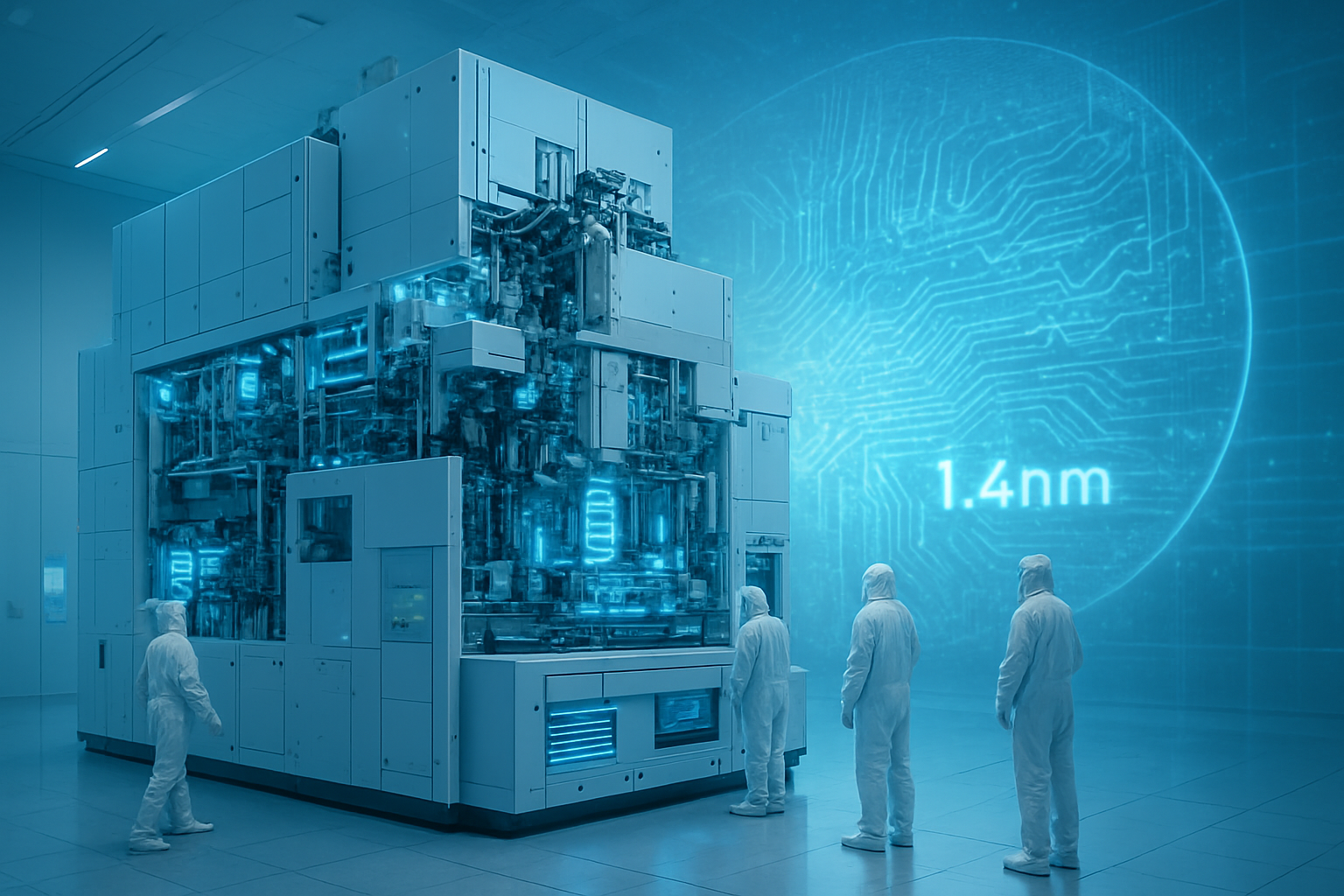
    Looking ahead, near-term developments (late 2025 into 2026) are expected to see widespread adoption of 2nm and 1.4nm process nodes, driven by Gate-All-Around (GAA) transistors and High-NA EUV lithography, yielding incredibly powerful AI accelerators and CPUs. Advanced packaging will become standard for high-performance chips, integrating diverse functionalities into single modules. Long-term, the semiconductor market is projected to reach a $1 trillion valuation by 2030, fueled by demand from high-performance computing, memory, and AI-driven technologies. Potential applications on the horizon include the accelerated commercialization of neuromorphic chips for embedded AI in IoT devices, smart sensors, and advanced robotics, benefiting from their low power consumption. Challenges that need addressing include the inherent complexity of designing and integrating diverse components in heterogeneous integration, the lack of industry-wide standardization, effective thermal management, and ensuring material compatibility. Additionally, the industry faces persistent talent gaps, supply chain vulnerabilities exacerbated by geopolitical tensions, and the critical need for sustainable manufacturing practices, including efficient gold recovery and recycling from waste. Experts predict continued growth, with a strong emphasis on innovations in materials, advanced packaging, and AI-driven manufacturing to overcome these hurdles and enable the next wave of technological breakthroughs.

    A New Era for AI Hardware: The Golden Standard

    The semiconductor manufacturing landscape is undergoing a rapid transformation driven by an insatiable demand for more powerful, efficient, and specialized chips, particularly for artificial intelligence (AI) applications. As of October 2025, several cutting-edge tools and processes are defining this new era. Extreme Ultraviolet (EUV) lithography continues to advance, enabling the creation of features as small as 7nm and below with fewer steps, boosting resolution and efficiency in wafer fabrication. Beyond traditional scaling, the industry is seeing a significant shift towards "more than Moore" approaches, emphasizing advanced packaging technologies like CoWoS, SoIC, hybrid bonding, and 3D stacking to integrate multiple components into compact, high-performance systems. Innovations such as Gate-All-Around (GAA) transistor designs are entering production, with TSMC (NYSE: TSM) and Intel (NASDAQ: INTC) slated to scale these in 2025, alongside backside power delivery networks that promise reduced heat and enhanced performance. AI itself is becoming an indispensable tool within manufacturing, optimizing quality control, defect detection, process optimization, and even chip design through AI-driven platforms that significantly reduce development cycles and improve wafer yields.

    A particularly noteworthy advancement for wide bandgap compound semiconductors, critical for electric vehicles, 5G/6G communication, RF, and AI applications, is the emergence of advanced gold deplating processes. In September 2025, ACM Research (NASDAQ: ACMR) launched its Ultra ECDP Electrochemical Deplating tool, specifically engineered for electrochemical wafer-level gold (Au) etching in the manufacturing of these specialized semiconductors. Gold, prized for its high conductivity, corrosion resistance, and malleability, presents unique etching and plating challenges. The Ultra ECDP tool tackles these by offering improved uniformity, smaller undercuts, enhanced gold line appearance, and specialized processes for Au bump removal, thin film Au etching, and deep-hole Au deplating. This precision technology is crucial for optimizing devices built on substrates like silicon carbide (SiC) and gallium arsenide (GaAs), ensuring superior electrical conductivity and reliability in increasingly miniaturized and high-performance components. The integration of such precise deplating techniques underscores the industry's commitment to overcoming material-specific challenges to unlock the full potential of advanced materials.

    The significance of these developments in AI history is profound, marking a defining moment where hardware innovation directly dictates the pace and scale of AI progress. These advancements are the fundamental enablers for the ever-increasing computational demands of large language models, advanced computer vision, and sophisticated reinforcement learning, propelling AI into truly ubiquitous applications from hyper-personalized edge devices to entirely new autonomous systems. The long-term impact points towards a global semiconductor market projected to exceed $1 trillion by 2030, potentially reaching $2 trillion by 2040, driven by this symbiotic relationship between AI and semiconductor technology. Key takeaways include the relentless push for miniaturization to sub-2nm nodes, the indispensable role of advanced packaging, and the critical need for energy-efficient designs as power consumption becomes a growing concern. In the coming weeks and months, industry observers should watch for the continued ramp-up of next-generation AI chip production, such as Nvidia's (NASDAQ: NVDA) Blackwell wafers in the US, the further progress of Intel's (NASDAQ: INTC) 18A process, and TSMC's (NYSE: TSM) accelerated capacity expansions driven by strong AI demand. Additionally, developments from emerging players in advanced lithography and the broader adoption of chiplet architectures, especially in demanding sectors like automotive, will be crucial indicators of the industry's trajectory.


    This content is intended for informational purposes only and represents analysis of current AI developments.

    TokenRing AI delivers enterprise-grade solutions for multi-agent AI workflow orchestration, AI-powered development tools, and seamless remote collaboration platforms.
    For more information, visit https://www.tokenring.ai/.

  • AI Supercycle Ignites Semiconductor and Tech Markets to All-Time Highs

    AI Supercycle Ignites Semiconductor and Tech Markets to All-Time Highs

    October 2025 has witnessed an unprecedented market rally in semiconductor stocks and the broader technology sector, fundamentally reshaped by the escalating demands of Artificial Intelligence (AI). This "AI Supercycle" has propelled major U.S. indices, including the S&P 500, Nasdaq Composite, and Dow Jones Industrial Average, to new all-time highs, reflecting an electrifying wave of investor optimism and a profound restructuring of the global tech landscape. The immediate significance of this rally is multifaceted, reinforcing the technology sector's leadership, signaling sustained investment in AI, and underscoring the market's conviction in AI's transformative power, even amidst geopolitical complexities.

    The robust performance is largely attributed to the "AI gold rush," with unprecedented growth and investment in the AI sector driving enormous demand for high-performance Graphics Processing Units (GPUs) and Central Processing Units (CPUs). Anticipated and reported strong earnings from sector leaders, coupled with positive analyst revisions, are fueling investor confidence. This rally is not merely a fleeting economic boom but a structural shift with trillion-dollar implications, positioning AI as the core component of future economic growth across nearly every sector.

    The AI Supercycle: Technical Underpinnings of the Rally

    The semiconductor market's unprecedented rally in October 2025 is fundamentally driven by the escalating demands of AI, particularly generative AI and large language models (LLMs). This "AI Supercycle" signifies a profound technological and economic transformation, positioning semiconductors as the "lifeblood of a global AI economy." The global semiconductor market is projected to reach approximately $697-701 billion in 2025, an 11-18% increase over 2024, with the AI chip market alone expected to exceed $150 billion.

    This surge is fueled by massive capital investments, with an estimated $185 billion projected for 2025 to expand global manufacturing capacity. Industry giants like Taiwan Semiconductor Manufacturing Company (TSMC) (TWSE: 2330) (NYSE: TSM), a primary beneficiary and bellwether of this trend, reported a record 39% jump in its third-quarter profit for 2025, with its high-performance computing (HPC) division, which fabricates AI and advanced data center silicon, contributing over 55% of its total revenues. The AI revolution is fundamentally reshaping chip architectures, moving beyond general-purpose computing to highly specialized designs optimized for AI workloads.

    The evolution of AI accelerators has seen a significant shift from CPUs to massively parallel GPUs, and now to dedicated AI accelerators like Application-Specific Integrated Circuits (ASICs) and Neural Processing Units (NPUs). Companies like Nvidia (NASDAQ: NVDA) continue to innovate with architectures such as the H100 and the newer H200 Tensor Core GPU, which achieves a 4.2x speedup on LLM inference tasks. Nvidia's upcoming Blackwell architecture boasts 208 billion transistors, supporting AI training and real-time inference for models scaling up to 10 trillion parameters. Google's (NASDAQ: GOOGL) Tensor Processing Units (TPUs) are prominent ASIC examples, with the TPU v5p showing a 30% improvement in throughput and 25% lower energy consumption than its previous generation in 2025. NPUs are crucial for edge computing in devices like smartphones and IoT.

    Enabling technologies such as advanced process nodes (TSMC's 7nm, 5nm, 3nm, and emerging 2nm and 1.4nm), High-Bandwidth Memory (HBM), and advanced packaging techniques (e.g., TSMC's CoWoS) are critical. The recently finalized HBM4 standard offers significant advancements over HBM3, targeting 2 TB/s of bandwidth per memory stack. AI itself is revolutionizing chip design through AI-powered Electronic Design Automation (EDA) tools, dramatically reducing design optimization cycles. The shift is towards specialization, hardware-software co-design, prioritizing memory bandwidth, and emphasizing energy efficiency—a "Green Chip Supercycle." Initial reactions from the AI research community and industry experts are overwhelmingly positive, acknowledging these advancements as indispensable for sustainable AI growth, while also highlighting concerns around energy consumption and supply chain stability.

    Corporate Fortunes: Winners and Challengers in the AI Gold Rush

    The AI-driven semiconductor and tech market rally in October 2025 is profoundly reshaping the competitive landscape, creating clear beneficiaries, intensifying strategic battles among major players, and disrupting existing product and service offerings. The primary beneficiaries are companies at the forefront of AI and semiconductor innovation.

    Nvidia (NASDAQ: NVDA) remains the undisputed market leader in AI GPUs, holding approximately 80-85% of the AI chip market. Its H100 and next-generation Blackwell architectures are crucial for training large language models (LLMs), ensuring sustained high demand. Taiwan Semiconductor Manufacturing Company (TSMC) (TWSE: 2330) (NYSE: TSM) is a crucial foundry, manufacturing the advanced chips that power virtually all AI applications, reporting record profits in October 2025. Advanced Micro Devices (AMD) (NASDAQ: AMD) is emerging as a strong challenger, with its Instinct MI300X and upcoming MI350 accelerators, securing significant multi-year agreements, including a deal with OpenAI. Broadcom (NASDAQ: AVGO) is recognized as a strong second player after Nvidia in AI-related revenue and has also inked a custom chip deal with OpenAI. Other key beneficiaries include Micron Technology (NASDAQ: MU) for HBM, Intel (NASDAQ: INTC) for its domestic manufacturing investments, and semiconductor ecosystem players like Marvell Technology (NASDAQ: MRVL), Cadence (NASDAQ: CDNS), Synopsys (NASDAQ: SNPS), and ASML (NASDAQ: ASML).

    Cloud hyperscalers like Microsoft (NASDAQ: MSFT), Amazon (NASDAQ: AMZN) (AWS), and Alphabet (NASDAQ: GOOGL) (Google) are considered the "backbone of today's AI boom," with unprecedented capital expenditure growth for data centers and AI infrastructure. These tech giants are leveraging their substantial cash flow to fund massive AI infrastructure projects and integrate AI deeply into their core services, actively developing their own AI chips and optimizing existing products for AI workloads.

    Major AI labs, such as OpenAI, are making colossal investments in infrastructure, with OpenAI's valuation surging to $500 billion and committing trillions through 2030 for AI build-out plans. To secure crucial chips and diversify supply chains, AI labs are entering into strategic partnerships with multiple chip manufacturers, challenging the dominance of single suppliers. Startups focused on specialized AI applications, edge computing, and novel semiconductor architectures are attracting multibillion-dollar investments, though they face significant challenges due to high R&D costs and intense competition. Companies not deeply invested in AI or advanced semiconductor manufacturing risk becoming marginalized, as AI is enabling the development of next-generation applications and optimizing existing products across industries.

    Beyond the Boom: Wider Implications and Market Concerns

    The AI-driven semiconductor and tech market rally in October 2025 signifies a pivotal, yet contentious, period in the ongoing technological revolution. This rally, characterized by soaring valuations and unprecedented investment, underscores the growing integration of AI across industries, while also raising concerns about market sustainability and broader societal impacts.

    The market rally is deeply embedded in several maturing and emerging AI trends, including the maturation of generative AI into practical enterprise applications, massive capital expenditure in advanced AI infrastructure, the convergence of AI with IoT for edge computing, and the rise of AI agents capable of autonomous decision-making. AI is widely regarded as a significant driver of productivity and economic growth, with projections indicating the global AI market could reach $1.3 trillion by 2025 and potentially $2.4 trillion by 2032. The semiconductor industry has cemented its role as the "indispensable backbone" of this revolution, with global chip sales projected to near $700 billion in 2025.

    However, despite the bullish sentiment, the AI-driven market rally is accompanied by notable concerns. Major financial institutions and prominent figures have expressed strong concerns about an "AI bubble," fearing that tech valuations have risen sharply to levels where earnings may never catch up to expectations. Investment in information processing and software has reached levels last seen during the dot-com bubble of 2000. The dominance of a few mega-cap tech firms means that even a modest correction in AI-related stocks could have a systemic impact on the broader market. Other concerns include the unequal distribution of wealth, potential bottlenecks in power or data supply, and geopolitical tensions influencing supply chains. While comparisons to the Dot-Com Bubble are frequent, today's leading AI companies often have established business models, proven profitability, and healthier balance sheets, suggesting stronger fundamentals. Some analysts even argue that current AI-related investment, as a percentage of GDP, remains modest compared to previous technological revolutions, implying the "AI Gold Rush" may still be in its early stages.

    The Road Ahead: Future Trajectories and Expert Outlooks

    The AI-driven market rally, particularly in the semiconductor and broader technology sectors, is poised for significant near-term and long-term developments beyond October 2025. In the immediate future (late 2025 – 2026), AI is expected to remain the primary revenue driver, with continued rapid growth in demand for specialized AI chips, including GPUs, ASICs, and HBM. The generative AI chip market alone is projected to exceed $150 billion in 2025. A key trend is the accelerating development and monetization of AI models, with major hyperscalers rapidly optimizing their AI compute strategies and carving out distinct AI business models. Investment focus is also broadening to AI software, and the proliferation of "Agentic AI" – intelligent systems capable of autonomous decision-making – is gaining traction.

    The long-term outlook (beyond 2026) for the AI-driven market is one of unprecedented growth and technological breakthroughs. The global AI chip market is projected to reach $194.9 billion by 2030, with some forecasts placing semiconductor sales approaching $1 trillion by 2027. The overall artificial intelligence market size is projected to reach $3,497.26 billion by 2033. AI model evolution will continue, with expectations for both powerful, large-scale models and more agile, smaller hybrid models. AI workloads are expected to expand beyond data centers to edge devices and consumer applications. PwC predicts that AI will fundamentally transform industry-level competitive landscapes, leading to significant productivity gains and new business models, potentially adding $14 trillion to the global economy by the decade's end.

    Potential applications are diverse and will permeate nearly every sector, from hyper-personalization and agentic commerce to healthcare (accelerating disease detection, drug design), finance (fraud detection, algorithmic trading), manufacturing (predictive maintenance, digital triplets), and transportation (autonomous vehicles). Challenges that need to be addressed include the immense costs of R&D and fabrication, overcoming the physical limits of silicon, managing heat, memory bandwidth bottlenecks, and supply chain vulnerabilities due to concentrated manufacturing. Ethical AI and governance concerns, such as job disruption, data privacy, deepfakes, and bias, also remain critical hurdles. Expert predictions generally view the current AI-driven market as a "supercycle" rather than a bubble, driven by fundamental restructuring and strong underlying earnings, with many anticipating continued growth, though some warn of potential volatility and overvaluation.

    A New Industrial Revolution: Wrapping Up the AI-Driven Rally

    October 2025's market rally marks a pivotal and transformative period in AI history, signifying a profound shift from a nascent technology to a foundational economic driver. This is not merely an economic boom but a "structural shift with trillion-dollar implications" and a "new industrial revolution" where AI is increasingly the core component of future economic growth across nearly every sector. The unprecedented scale of capital infusion is actively driving the next generation of AI capabilities, accelerating innovation in hardware, software, and cloud infrastructure. AI has definitively transitioned from "hype to infrastructure," fundamentally reshaping industries from chips to cloud and consumer platforms.

    The long-term impact of this AI-driven rally is projected to be widespread and enduring, characterized by a sustained "AI Supercycle" for at least the next five to ten years. AI is expected to become ubiquitous, permeating every facet of life, and will lead to enhanced productivity and economic growth, with projections of lifting U.S. productivity and GDP significantly in the coming decades. It will reshape competitive landscapes, favoring companies that effectively translate AI into measurable efficiencies. However, the immense energy and computational power requirements of AI mean that strategic deployment focusing on value rather than sheer volume will be crucial.

    In the coming weeks and months, several key indicators and developments warrant close attention. Continued robust corporate earnings from companies deeply embedded in the AI ecosystem, along with new chip innovation and product announcements from leaders like Nvidia (NASDAQ: NVDA) and AMD (NASDAQ: AMD), will be critical. The pace of enterprise AI adoption and the realization of productivity gains through AI copilots and workflow tools will demonstrate the technology's tangible impact. Capital expenditure from hyperscalers like Microsoft (NASDAQ: MSFT), Amazon (NASDAQ: AMZN), and Alphabet (NASDAQ: GOOGL) will signal long-term confidence in AI demand, alongside the rise of "Sovereign AI" initiatives by nations. Market volatility and valuations will require careful monitoring, as will the development of regulatory and geopolitical frameworks for AI, which could significantly influence the industry's trajectory.


    This content is intended for informational purposes only and represents analysis of current AI developments.

    TokenRing AI delivers enterprise-grade solutions for multi-agent AI workflow orchestration, AI-powered development tools, and seamless remote collaboration platforms.
    For more information, visit https://www.tokenring.ai/.

  • AI Regulation at a Crossroads: Federal Deregulation Push Meets State-Level Healthcare Guardrails

    AI Regulation at a Crossroads: Federal Deregulation Push Meets State-Level Healthcare Guardrails

    The landscape of Artificial Intelligence (AI) governance in late 2025 is a study in contrasts, with the U.S. federal government actively seeking to streamline regulations to foster innovation, while individual states like Pennsylvania are moving swiftly to establish concrete guardrails for AI's use in critical sectors. These parallel, yet distinct, approaches highlight the urgent and evolving global debate surrounding how best to manage the rapid advancement and deployment of AI technologies. As the Office of Science and Technology Policy (OSTP) solicits public input on removing perceived regulatory burdens, Pennsylvania lawmakers are pushing forward with bipartisan legislation aimed at ensuring transparency, human oversight, and bias mitigation for AI in healthcare.

    This bifurcated regulatory environment sets the stage for a complex period for AI developers, deployers, and end-users. With the federal government prioritizing American leadership through deregulation and states responding to immediate societal concerns, the coming months will be crucial in shaping the future of AI's integration into daily life, particularly in sensitive areas like medical care. The outcomes of these discussions and legislative efforts will undoubtedly influence innovation trajectories, market dynamics, and public trust in AI systems across the nation.

    Federal Deregulation vs. State-Specific Safeguards: A Deep Dive into Current AI Governance Efforts

    The current federal stance on AI regulation, spearheaded by the Biden-Harris administration's Office of Science and Technology Policy (OSTP), marks a significant pivot from previous frameworks. Following President Trump’s Executive Order 14179 on January 23, 2025, which superseded earlier directives and emphasized "removing barriers to American leadership in Artificial Intelligence," OSTP has been actively working to reduce what it terms "burdensome government requirements." This culminated in the release of "America's AI Action Plan" on July 10, 2025. Most recently, on September 26, 2025, OSTP launched a Request for Information (RFI), inviting stakeholders to identify existing federal statutes, regulations, or agency policies that impede the development, deployment, and adoption of AI technologies. This RFI, with comments due by October 27, 2025, specifically targets outdated assumptions, structural incompatibilities, lack of clarity, direct restrictions on AI use, and organizational barriers within current regulations. The intent is clear: to streamline the regulatory environment to accelerate U.S. AI dominance.

    In stark contrast to the federal government's deregulatory focus, Pennsylvania lawmakers are taking a proactive, sector-specific approach. On October 6, 2025, a bipartisan group introduced House Bill 1925 (H.B. 1925), a landmark piece of legislation designed to regulate AI's application by insurers, hospitals, and clinicians within the state’s healthcare system. The bill's core provisions mandate transparency regarding AI usage, require human decision-makers for ultimate determinations in patient care to prevent over-reliance on automated systems, and demand attestation to relevant state departments that any bias and discrimination have been minimized, supported by documented evidence. This initiative directly addresses growing concerns about potential biases in healthcare algorithms and unjust denials by insurance companies, aiming to establish concrete legal "guardrails" for AI in a highly sensitive domain.

    These approaches diverge significantly from previous regulatory paradigms. The OSTP's current RFI stands apart from the previous administration's "Blueprint for an AI Bill of Rights" (October 2022), which served as a non-binding ethical framework. The current focus is less on establishing new ethical guidelines and more on dismantling existing perceived obstacles to innovation. Similarly, Pennsylvania's H.B. 1925 represents a direct legislative intervention at the state level, a trend gaining momentum after the U.S. Senate opted against a federal ban on state-level AI regulations in July 2025. Initial reactions to the federal RFI are still forming as the deadline approaches, but industry groups generally welcome efforts to reduce regulatory friction. For H.B. 1925, the bipartisan support indicates a broad legislative consensus within Pennsylvania on the need for specific oversight in healthcare AI, reflecting public and professional anxieties about algorithmic decision-making in critical life-affecting contexts.

    Navigating the New Regulatory Currents: Implications for AI Companies and Tech Giants

    The evolving regulatory landscape presents a mixed bag of opportunities and challenges for AI companies, from nascent startups to established tech giants. The federal government's push, epitomized by the OSTP's RFI and the broader "America's AI Action Plan," is largely seen as a boon for companies like Google (NASDAQ: GOOGL), Microsoft (NASDAQ: MSFT), and Amazon (NASDAQ: AMZN) that are heavily invested in AI research and development. By seeking to remove "burdensome government requirements," the administration aims to accelerate innovation, potentially reducing compliance costs and fostering a more permissive environment for rapid deployment of new AI models and applications. This could give U.S. tech companies a competitive edge globally, allowing them to iterate faster and bring products to market more quickly without being bogged down by extensive federal oversight, thereby strengthening American leadership in AI.

    However, this deregulatory stance at the federal level contrasts sharply with the increasing scrutiny and specific requirements emerging from states like Pennsylvania. For AI developers and deployers in the healthcare sector, particularly those operating within Pennsylvania, H.B. 1925 introduces significant new compliance obligations. Companies like IBM (NYSE: IBM) Watson Health (though divested, its legacy and similar ventures by others are relevant), various health tech startups specializing in AI diagnostics, and even large insurance providers utilizing AI for claims processing will need to invest in robust transparency mechanisms, ensure human oversight protocols are in place, and rigorously test their algorithms for bias and discrimination. This could lead to increased operational costs and necessitate a re-evaluation of current AI deployment strategies in healthcare.

    The competitive implications are significant. Companies that proactively embed ethical AI principles and robust governance frameworks into their development lifecycle may find themselves better positioned to navigate a fragmented regulatory environment. While federal deregulation might benefit those prioritizing speed to market, state-level initiatives like Pennsylvania's could disrupt existing products or services that lack adequate transparency or human oversight. Startups, often lean and agile, might struggle with the compliance burden of diverse state regulations, while larger tech giants with more resources may be better equipped to adapt. Ultimately, the ability to demonstrate responsible and ethical AI use, particularly in sensitive sectors, will become a key differentiator and strategic advantage in a market increasingly shaped by public trust and regulatory demands.

    Wider Significance: Shaping the Future of AI's Societal Integration

    These divergent regulatory approaches—federal deregulation versus state-level sector-specific guardrails—underscore a critical juncture in AI's societal integration. The federal government's emphasis on fostering innovation by removing barriers fits into a broader global trend among some nations to prioritize economic competitiveness in AI. However, it also stands in contrast to more comprehensive, rights-based frameworks such as the European Union's AI Act, which aims for a horizontal regulation across all high-risk AI applications. This fragmented approach within the U.S. could lead to a patchwork of state-specific regulations, potentially complicating compliance for companies operating nationally, but also allowing states to respond more directly to local concerns and priorities.

    The impact on innovation is a central concern. While deregulation at the federal level could indeed accelerate development, particularly in areas like foundational models, critics argue that a lack of clear, consistent federal standards could lead to a "race to the bottom" in terms of safety and ethics. Conversely, targeted state legislation like Pennsylvania's H.B. 1925, while potentially increasing compliance costs in specific sectors, aims to build public trust by addressing tangible concerns about bias and discrimination in healthcare. This could paradoxically foster more responsible innovation in the long run, as companies are compelled to develop safer and more transparent systems.

    Potential concerns abound. Without a cohesive federal strategy, the U.S. risks both stifling innovation through inconsistent state demands and failing to adequately protect citizens from potential AI harms. The rapid pace of AI advancement means that regulatory frameworks often lag behind technological capabilities. Comparisons to previous technological milestones, such as the early days of the internet or biotechnology, reveal that periods of rapid growth often precede calls for greater oversight. The current regulatory discussions reflect a societal awakening to AI's profound implications, demanding a delicate balance between encouraging innovation and safeguarding fundamental rights and public welfare. The challenge lies in creating agile regulatory mechanisms that can adapt to AI's dynamic evolution.

    The Road Ahead: Anticipating Future AI Regulatory Developments

    The coming months and years promise a dynamic and potentially turbulent period for AI regulation. Following the October 27, 2025, deadline for comments on its RFI, the OSTP is expected to analyze the feedback and propose specific federal actions aimed at implementing the "America's AI Action Plan." This could involve identifying existing regulations for modification or repeal, issuing new guidelines for federal agencies, or even proposing new legislation, though the current administration's preference appears to be on reducing existing burdens rather than creating new ones. The focus will likely remain on fostering an environment conducive to private sector AI growth and U.S. competitiveness.

    In Pennsylvania, H.B. 1925 will proceed through the legislative process, starting with the Communications & Technology Committee. Given its bipartisan support, the bill has a strong chance of advancing, though it may undergo amendments. If enacted, it will set a precedent for how states can directly regulate AI in specific high-stakes sectors, potentially inspiring similar initiatives in other states. Expected near-term developments include intense lobbying efforts from healthcare providers, insurers, and AI developers to shape the final language of the bill, particularly around the specifics of "human oversight" and "bias mitigation" attestations.

    Long-term, experts predict a continued proliferation of state-level AI regulations in the absence of comprehensive federal action. This could lead to a complex compliance environment for national companies, necessitating sophisticated legal and technical strategies to navigate diverse requirements. Potential applications and use cases on the horizon, from personalized medicine to autonomous vehicles, will face scrutiny under these evolving frameworks. Challenges will include harmonizing state regulations where possible, ensuring that regulatory burdens do not disproportionately affect smaller innovators, and developing technical standards that can effectively measure and mitigate AI risks. What experts predict is a sustained tension between the desire for rapid technological advancement and the imperative for ethical and safe deployment, with a growing emphasis on accountability and transparency across all AI applications.

    A Defining Moment for AI Governance: Balancing Innovation and Responsibility

    The current regulatory discussions and proposals in the U.S. represent a defining moment in the history of Artificial Intelligence governance. The federal government's strategic shift towards deregulation, aimed at bolstering American AI leadership, stands in sharp contrast to the proactive, sector-specific legislative efforts at the state level, exemplified by Pennsylvania's H.B. 1925 targeting AI in healthcare. This duality underscores a fundamental challenge: how to simultaneously foster groundbreaking innovation and ensure the responsible, ethical, and safe deployment of AI technologies that increasingly impact every facet of society.

    The significance of these developments cannot be overstated. The OSTP's RFI, closing this month, will directly inform federal policy, potentially reshaping the regulatory landscape for all AI developers. Meanwhile, Pennsylvania's initiative sets a critical precedent for state-level action, particularly in sensitive domains like healthcare, where the stakes for algorithmic bias and lack of human oversight are exceptionally high. This period marks a departure from purely aspirational ethical guidelines, moving towards concrete, legally binding requirements that will compel companies to embed principles of transparency, accountability, and fairness into their AI systems.

    As we look ahead, stakeholders must closely watch the outcomes of the OSTP's review and the legislative progress of H.B. 1925. The interplay between federal efforts to remove barriers and state-led initiatives to establish safeguards will dictate the operational realities for AI companies and shape public perception of AI's trustworthiness. The long-term impact will hinge on whether this fragmented approach can effectively balance the imperative for technological advancement with the critical need to protect citizens from potential harms. The coming weeks and months will reveal the initial contours of this new regulatory era, demanding vigilance and adaptability from all involved in the AI ecosystem.


    This content is intended for informational purposes only and represents analysis of current AI developments.

    TokenRing AI delivers enterprise-grade solutions for multi-agent AI workflow orchestration, AI-powered development tools, and seamless remote collaboration platforms.
    For more information, visit https://www.tokenring.ai/.
  • AI’s Creative Revolution: Kojima’s Vision for Gaming and WWE’s Bold Leap into AI Storylines

    AI’s Creative Revolution: Kojima’s Vision for Gaming and WWE’s Bold Leap into AI Storylines

    The creative industries stand on the precipice of a monumental transformation, driven by the relentless march of artificial intelligence. From the visionary predictions of legendary game designer Hideo Kojima regarding AI's role in crafting future remakes and sequels, to World Wrestling Entertainment's (NYSE: TKO) reported ventures into AI-generated storylines, the landscape of artistic creation is undergoing a profound redefinition. These developments signal a dual narrative: one of unprecedented efficiency and innovation, and another fraught with ethical dilemmas and the potential for creative commodification.

    The Technical Canvas: AI as Co-Creator and Story Engine

    Hideo Kojima, the acclaimed mind behind Metal Gear Solid and Death Stranding, envisions AI as a supportive "friend" in game development, not a replacement for human ingenuity. He posits that AI will primarily tackle "tedious tasks" – the repetitive, labor-intensive aspects of game creation – thereby significantly boosting efficiency and reducing development costs and timelines. This liberation of human talent, Kojima argues, will allow creators to focus on pioneering entirely new intellectual properties and pushing the boundaries of interactive storytelling. He explicitly predicts a future where "remakes and sequels will be made by AI," leveraging existing game data and structures to streamline their production. AI's capabilities in this context would include advanced procedural content generation for environments and assets, character likeness generation and refinement (as seen in early experiments for Death Stranding 2), and optimizing various workflow processes. This approach starkly contrasts traditional game development, where remakes and sequels demand extensive human effort for asset recreation and narrative adaptation.

    Meanwhile, World Wrestling Entertainment (NYSE: TKO) is reportedly experimenting with an AI platform, identified as "Writer AI" or Writer Inc., to generate wrestling storylines. This initiative, spearheaded by Senior Director of Creative Strategy Cyrus Kowsari under the direction of Chief Content Officer Paul "Triple H" Levesque, aims to integrate AI into storytelling, video production, and graphics. The reported capabilities of this AI include generating basic narrative outlines, suggesting match scenarios, and even bullet points for character promos. However, initial results have been famously described as "absurdly bad," with one notable pitch involving former WWE star Bobby Lashley returning as a character obsessed with Japanese culture and history. This highlights the AI's current limitations: a struggle with nuance, emotional depth, established character continuity, and the inherent improvisational nature crucial to compelling professional wrestling. Unlike traditional wrestling creative teams who deeply understand character psychology, long-term booking, and audience reactions, current AI output often lacks the human touch required for truly engaging, emotionally resonant narratives.

    Corporate Playbook: Shifting Sands for Tech Giants and Startups

    The embrace of AI by figures like Kojima and entities like WWE presents a massive opportunity for various players in the AI ecosystem. Generative AI model developers, such as those creating foundational text-to-image, text-to-video, and large language models, will become crucial suppliers. Companies offering AI-powered development tools, like PrometheanAI Inc. and Inworld AI, which integrate AI for game design and asset creation, are poised for increased adoption. Furthermore, providers of personalization and adaptive content platforms will be highly sought after as the demand for dynamic, tailored user experiences grows. Cloud infrastructure giants like Amazon (NASDAQ: AMZN) AWS, Microsoft (NASDAQ: MSFT) Azure, and Alphabet's (NASDAQ: GOOGL) Google Cloud will also see significant benefits from the increased computational demands of training and deploying these large AI models.

    Competitive implications for major AI labs and tech companies are intensifying. Access to vast, diverse, and ethically sourced datasets of creative content will become a critical competitive advantage, although this raises significant intellectual property (IP) and copyright concerns. The demand for AI research talent and engineers specializing in creative applications will surge, leading to a "talent war." Tech giants may strategically acquire promising AI startups to integrate innovative tools and expand their market reach. Companies prioritizing ethical AI development and offering "human-in-the-loop" solutions that augment, rather than replace, human creativity are likely to build stronger relationships with creators and gain a strategic edge. This disruption could redefine existing products and services, as traditional software for 3D modeling, animation, and even entry-level scriptwriting may need to integrate AI features or risk obsolescence.

    Wider Resonance: Societal Impacts and Ethical Crossroads

    These developments fit into a broader AI landscape characterized by the proliferation of generative AI tools that are democratizing content creation. AI is no longer merely automating tasks but actively reshaping how professionals ideate, produce, and distribute content across design, photography, video, music, and writing. The conversation is increasingly focused on balancing innovation with ethical responsibility.

    However, this rapid integration brings forth a complex array of societal impacts and concerns. A significant fear among creative professionals is job displacement, with AI tools being cheaper, faster, and increasingly sophisticated. This can lead to a reduction in the financial value attributed to creative work, particularly affecting freelancers and self-employed individuals. Ethical considerations are paramount, especially regarding copyright infringement from AI models trained on unauthorized works, and the ownership of AI-generated content. Bias within training data can also lead to AI-generated content that perpetuates stereotypes. Furthermore, concerns about creative integrity and authenticity arise, as AI-generated content, while technically proficient, can often lack the emotional depth, unique voice, and cultural nuances that human creators bring. The proliferation of AI-generated content could "flood" the market, making it harder for emerging artists to stand out.

    Historically, technological advancements in art, such as the advent of photography, initially sparked fears of displacement but ultimately led to new art forms. Today, AI presents a similar paradigm shift, pushing the boundaries of what is considered "art" and redefining the roles of human creators. The challenge lies in harnessing AI's potential to augment creativity while establishing robust ethical frameworks and legal protections.

    The Horizon: Future Developments and Expert Predictions

    In the near term (1-3 years), expect to see enhanced human-AI collaboration, with creatives using AI as a "co-pilot" for brainstorming, rapid prototyping, and automating mundane tasks like initial asset generation and basic editing. This will lead to increased efficiency and cost reduction, with niche AI tools becoming more stable and seamlessly integrated into workflows. Personalization will continue to advance, offering increasingly tailored content experiences.

    Longer term (3+ years), the line between human and AI creativity may blur further, with the potential for entirely AI-produced films, music albums, or games becoming more mainstream. AI could handle up to 90% of the work for game remakes and sequels, including retexturing assets, composing new music, and redoing voice work. New art forms and interactive experiences will emerge, with AI enabling dynamic, adaptive content that changes in real-time based on user interaction or emotional response. Creative roles will evolve, with "creative orchestration" – directing multiple AI agents – becoming a fundamental skill.

    Challenges will persist, particularly around authorship and copyright, job displacement, and ensuring AI-generated content maintains human nuance and originality. Quality control will remain crucial, as current AI models can "hallucinate" or fabricate information, leading to absurd outputs. Experts predict a future where AI augments human capabilities, leading to hybrid workflows and a demand for "AI orchestrators." The World Economic Forum suggests AI will augment existing jobs and create new ones, though some foresee a polarization within the creative industry.

    The Final Act: A Transformative Era Unfolds

    The ventures of Hideo Kojima and WWE into AI-driven creation represent a pivotal moment in AI history, moving beyond theoretical discussions to practical, albeit sometimes flawed, integration into highly subjective creative domains. Kojima's nuanced perspective advocates for a symbiotic relationship, where AI enhances efficiency and frees human ingenuity for innovation. WWE's aggressive push, despite early "absurdly bad" results, highlights a willingness of major entertainment entities to strategically embrace AI, even for core creative functions. This marks a shift from AI as a mere backend utility to a front-facing content-generating force, fundamentally testing the boundaries of "creativity" and "authorship."

    The long-term impact will likely see AI excel at generating vast volumes of derivative, optimized, or "tedious" content, allowing human creators to focus on original concepts and deeply emotional storytelling. The "democratization" of creative tools will continue, leading to an explosion of diverse content, but also a potential flood of low-quality, AI-generated material. Ethical and legal frameworks around AI, especially concerning intellectual property and fair compensation for creators whose work trains AI models, will be critical. The emergence of "walled garden" LLMs, trained on proprietary, cleared content, is a significant trend to watch for mitigating legal risks. Job roles will undoubtedly evolve; with new positions focused on AI prompt engineering, supervision, and innovative human-AI collaboration emerging. The ultimate goal should be to leverage AI to enhance human expression and experience, rather than diminish it, ensuring that technology remains in service to meaningful storytelling and artistic vision.

    What to watch for in the coming weeks and months:

    1. WWE's AI Storyline Evolution: Keep an eye on how WWE refines its "Writer AI" platform. Will the quality of AI-generated pitches improve? Will there be specific segments or characters overtly attributed to AI influence (even subtly)? How will this impact audience reception and talent morale?
    2. Legal Precedents: Look for ongoing discussions, new legislation (like the EU's AI Act), and court cases addressing AI copyright, authorship, and fair use.
    3. "Walled Garden" LLMs: Observe the development and adoption of proprietary AI models by major studios and entertainment companies, such as Lionsgate's partnership with Runway AI.
    4. Specialized AI Tools: Expect to see further development and increased stability in niche, use-case-specific AI tools for various creative tasks, becoming more integrated into standard production pipelines.
    5. New Collaborative Roles: Watch for the emergence of new job titles and skill sets that bridge human creativity with AI capabilities.
    6. Public and Creator Sentiment: Monitor public and creator sentiment towards AI-generated content. Continued instances of "poorly rendered" or "creatively bankrupt" AI output could lead to stronger calls for human-led creative integrity.

    This content is intended for informational purposes only and represents analysis of current AI developments.

    TokenRing AI delivers enterprise-grade solutions for multi-agent AI workflow orchestration, AI-powered development tools, and seamless remote collaboration platforms.
    For more information, visit https://www.tokenring.ai/.

  • Healthcare’s AI Revolution: Generative Intelligence Delivers Real Returns as Agentic Systems Drive Measurable Outcomes

    Healthcare’s AI Revolution: Generative Intelligence Delivers Real Returns as Agentic Systems Drive Measurable Outcomes

    The healthcare industry is experiencing a profound transformation, propelled by the accelerating adoption of artificial intelligence. While AI's potential has long been discussed, recent advancements in generative AI are now yielding tangible benefits, delivering measurable returns across clinical and administrative domains. This shift is further amplified by the emerging paradigm of 'agentic AI,' which promises to move beyond mere insights to autonomous, goal-oriented actions, fundamentally reshaping patient care, drug discovery, and operational efficiency. As of October 17, 2025, the sector is witnessing a decisive pivot towards these advanced AI forms, signaling a new era of intelligent healthcare.

    This evolution is not merely incremental; it represents a strategic reorientation, with healthcare providers, pharmaceutical companies, and tech innovators recognizing the imperative to integrate sophisticated AI. From automating mundane tasks to powering hyper-personalized medicine, generative and agentic AI are proving to be indispensable tools, driving unprecedented levels of productivity and precision that were once confined to the realm of science fiction.

    The Technical Core: How Generative and Agentic AI Are Reshaping Medicine

    Generative AI, a class of machine learning models capable of producing novel data, operates fundamentally differently from traditional AI, which primarily focuses on discrimination and prediction from existing datasets. At its technical core, generative AI in healthcare leverages deep learning architectures like Generative Adversarial Networks (GANs), Variational Autoencoders (VAEs), Diffusion Models, and Transformer-based Large Language Models (LLMs). GANs, for instance, employ a generator-discriminator rivalry to create highly realistic synthetic medical images or molecular structures. VAEs learn compressed data representations to generate new samples, while Diffusion Models iteratively refine noisy data into high-quality outputs. LLMs, prominent in text analysis, learn contextual relationships to generate clinical notes, patient education materials, or assist in understanding complex biological data for drug discovery. These models enable tasks such as de novo molecule design, synthetic medical data generation for training, image enhancement, and personalized treatment plan creation by synthesizing vast, heterogeneous datasets.

    Agentic AI, by contrast, refers to autonomous systems designed to independently perceive, plan, decide, act, and adapt to achieve predefined goals with minimal human intervention. These systems move beyond generating content or insights to actively orchestrating and executing complex, multi-step tasks. Technically, agentic AI is characterized by a multi-layered architecture comprising a perception layer for real-time data ingestion (EHRs, imaging, wearables), a planning and reasoning engine that translates goals into actionable plans using "plan-evaluate-act" loops, a persistent memory module for continuous learning, and an action interface (APIs) to interact with external systems. This allows for autonomous clinical decision support, continuous patient monitoring, intelligent drug discovery, and automated resource management, demonstrating a leap from passive analysis to proactive, goal-driven execution.

    The distinction from previous AI approaches is crucial. Traditional AI excelled at specific, predefined tasks like classifying tumors or predicting patient outcomes, relying heavily on structured data. Generative AI, however, creates new content, augmenting limited datasets and exploring novel solutions. Agentic AI takes this further by acting autonomously, managing complex workflows and adapting to dynamic environments, transforming AI from a reactive tool to a proactive, intelligent partner. Initial reactions from the AI research community and industry experts are largely optimistic, hailing these advancements as "revolutionary" and "transformative," capable of unlocking "unprecedented efficiencies." However, there is also cautious apprehension regarding ethical implications, data privacy, the potential for "hallucinations" in generative models, and the critical need for robust validation and regulatory frameworks to ensure safe and responsible deployment.

    Shifting Sands: Impact on AI Companies, Tech Giants, and Startups

    The increasing adoption of generative and agentic AI in healthcare is reshaping the competitive landscape, creating immense opportunities for major AI companies, tech giants, and agile startups. Companies that can effectively integrate AI across multiple operational areas, focus on high-impact use cases, and forge strategic partnerships are poised for significant gains.

    Alphabet (NASDAQ: GOOGL), through its Google Health and DeepMind Health initiatives, is a key player, developing AI-based solutions for diagnostics (e.g., breast cancer detection outperforming human radiologists) and collaborating with pharmaceutical giants like Bayer AG (ETR: BAYN) to automate clinical trial communications. Their Vertex AI Search for healthcare leverages medically tuned generative AI to streamline information retrieval for clinicians. Microsoft (NASDAQ: MSFT) has made strategic moves by integrating generative AI (specifically GPT-4) into its Nuance Communications clinical transcription software, significantly reducing documentation time for clinicians. Their Cloud for Healthcare platform offers an AI Agent service, and partnerships with NVIDIA (NASDAQ: NVDA) are accelerating advancements in clinical research and drug discovery. Amazon Web Services (NASDAQ: AMZN) is exploring generative AI for social health determinant analysis and has launched HealthScribe for automatic clinical note creation. IBM (NYSE: IBM) with its Watson Health legacy, continues to focus on genomic sequencing and leveraging AI to analyze complex medical records. NVIDIA, as a foundational technology provider, benefits immensely by supplying the underlying computing power (DGX AI, GPUs) essential for training and deploying these advanced deep learning models.

    The competitive implications are profound. Tech giants are leveraging their cloud infrastructure and vast resources to offer broad AI platforms, often through partnerships with healthcare institutions and specialized startups. This leads to a "race to acquire or partner" with innovative startups. For instance, Mayo Clinic has partnered with Cerebras Systems and Google Cloud for genomic data analysis and generative AI search tools. Pharmaceutical companies like Merck & Co. (NYSE: MRK) and GlaxoSmithKline (NYSE: GSK) are actively embracing AI for novel small molecule discovery and accelerated drug development. Moderna (NASDAQ: MRNA) is leveraging AI for mRNA sequence design. Medical device leaders like Medtronic (NYSE: MDT) and Intuitive Surgical (NASDAQ: ISRG) are integrating AI into robotic-assisted surgery platforms and automated systems.

    Startups are flourishing by specializing in niche applications. Companies like Insilico Medicine, BenevolentAI (AMS: BAI), Exscientia (NASDAQ: EXAI), and Atomwise are pioneering AI for drug discovery, aiming to compress timelines and reduce costs. In medical imaging and diagnostics, Aidoc, Lunit (KOSDAQ: 328130), Qure.ai, Butterfly Network (NYSE: BFLY), and Arterys are developing algorithms for enhanced diagnostic accuracy and efficiency. For clinical workflow and patient engagement, startups such as Hippocratic AI, Nabla, and Ambience Healthcare are deploying generative AI "agents" to handle non-diagnostic tasks, streamline documentation, and improve patient communication. These startups, while agile, face challenges in navigating a highly regulated industry and ensuring their models are accurate, ethical, and bias-free, especially given the "black box" nature of some generative AI. The market is also seeing a shift towards "vertical AI solutions" purpose-built for specific workflows, rather than generic AI models, as companies seek demonstrable returns on investment.

    A New Horizon: Wider Significance and Ethical Imperatives

    The increasing adoption of generative and agentic AI in healthcare marks a pivotal moment, aligning with a broader global digital transformation towards more personalized, precise, predictive, and portable medicine. This represents a significant evolution from earlier AI systems, which primarily offered insights and predictions. Generative AI actively creates new content and data, while agentic AI acts autonomously, managing multi-step processes with minimal human intervention. This fundamental shift from passive analysis to active creation and execution is enabling a more cohesive and intelligent healthcare ecosystem, breaking down traditional silos.

    The societal impacts are overwhelmingly positive, promising improved health outcomes through earlier disease detection, more accurate diagnoses, and highly personalized treatment plans. AI can increase access to care, particularly in underserved regions, and significantly reduce healthcare costs by optimizing resource allocation and automating administrative burdens. Critically, by freeing healthcare professionals from routine tasks, AI empowers them to focus on complex patient needs, direct care, and empathetic interaction, potentially reducing the pervasive issue of clinician burnout.

    However, this transformative potential is accompanied by significant ethical and practical concerns. Bias and fairness remain paramount, as AI models trained on unrepresentative datasets can perpetuate and amplify existing health disparities, leading to inaccurate diagnoses for certain demographic groups. Data privacy and security are critical, given the vast amounts of sensitive personal health information processed by AI systems, necessitating robust cybersecurity and strict adherence to regulations like HIPAA and GDPR. The "black box" problem of many advanced AI algorithms poses challenges to transparency and explainability, hindering trust from clinicians and patients who need to understand the reasoning behind AI-generated recommendations. Furthermore, the risk of "hallucinations" in generative AI, where plausible but false information is produced, carries severe consequences in a medical setting. Questions of accountability and legal responsibility in cases of AI-induced medical errors remain complex and require urgent regulatory clarification. While AI is expected to augment human roles, concerns about job displacement for certain administrative and clinical roles necessitate proactive workforce management and retraining programs. This new frontier requires a delicate balance between innovation and responsible deployment, ensuring that human oversight and patient well-being remain at the core of AI integration.

    The Road Ahead: Future Developments and Expert Predictions

    The future of AI in healthcare, driven by generative and agentic capabilities, promises a landscape of hyper-personalized, proactive, and efficient medical care. In the near term (1-3 years), generative AI will see widespread adoption, moving beyond pilot programs. We can expect the proliferation of multimodal AI models capable of simultaneously analyzing text, images, genomics, and real-time patient vitals, leading to superior diagnostics and clinical decision support. Synthetic data generation will become a critical tool for research and training, addressing privacy concerns while accelerating drug development. Agentic AI systems will rapidly escalate in adoption, particularly in optimizing back-office operations, managing staffing, bed utilization, and inventory, and enhancing real-time care orchestration through continuous patient monitoring via AI-enabled wearables.

    Longer term (beyond 3 years), the integration will deepen, fundamentally shifting healthcare from reactive "sick care" to proactive "well care." Hyper-personalized medicine, driven by AI analysis of genetic, lifestyle, and environmental factors, will become the norm. "Smart hospitals" will emerge, integrating IoT devices with AI agents for predictive maintenance, optimized resource allocation, and seamless communication. Autonomous multi-agent systems will collaborate on complex workflows, coordinating care transitions across fragmented systems, acting as tireless virtual teammates. Experts predict that generative AI will move to full-scale adoption by 2025, with agentic AI included in 33% of enterprise software applications by 2028, a significant jump from less than 1% in 2024 (Gartner). The market value for agentic AI is projected to exceed $47 billion by 2030. These advancements are expected to generate an estimated $150 billion in annual savings for the U.S. healthcare economy by 2026, primarily through automation.

    Challenges remain, particularly in regulatory, ethical, and technical domains. Evolving regulatory frameworks are needed from bodies like the FDA to keep pace with rapid AI development, addressing accountability and liability for AI-driven decisions. Ethical concerns around bias, privacy, and the "black box" problem necessitate diverse training data, robust cybersecurity, and explainable AI (XAI) to build trust. Technically, integrating AI with often outdated legacy EHR systems, ensuring data quality, and managing AI "hallucinations" are ongoing hurdles. Experts predict stricter, AI-specific laws within the next 3-5 years, alongside global ethics guidelines from organizations like the WHO and OECD. Despite these challenges, the consensus is that AI will become an indispensable clinical partner, acting as a "second brain" that augments, rather than replaces, human judgment, allowing healthcare professionals to focus on higher-value tasks and human interaction.

    A New Era of Intelligent Healthcare: The Path Forward

    The increasing adoption of AI in healthcare, particularly the rise of generative and agentic intelligence, marks a transformative period in medical history. The key takeaway is clear: AI is no longer a theoretical concept but a practical, value-generating force. Generative AI is already delivering real returns by automating administrative tasks, enhancing diagnostics, accelerating drug discovery, and personalizing treatment plans. The advent of agentic AI represents the next frontier, promising autonomous, goal-oriented systems that can orchestrate complex workflows, optimize operations, and provide proactive, continuous patient care, leading to truly measurable outcomes.

    This development is comparable to previous milestones such as the widespread adoption of EHRs or the advent of targeted therapies, but with a far broader and more integrated impact. Its significance lies in shifting AI from a tool for analysis to a partner for creation and action. The long-term impact will be a healthcare system that is more efficient, precise, accessible, and fundamentally proactive, moving away from reactive "sick care" to preventative "well care." However, this future hinges on addressing critical challenges related to data privacy, algorithmic bias, regulatory clarity, and ensuring human oversight to maintain trust and ethical standards.

    In the coming weeks and months, we should watch for continued strategic partnerships between tech giants and healthcare providers, further integration of AI into existing EHR systems, and the emergence of more specialized, clinically validated AI solutions from innovative startups. Regulatory bodies will intensify efforts to establish clear guidelines for AI deployment, and the focus on explainable AI and robust validation will only grow. The journey towards fully intelligent healthcare is well underway, promising a future where AI empowers clinicians and patients alike, but careful stewardship will be paramount.


    This content is intended for informational purposes only and represents analysis of current AI developments.

    TokenRing AI delivers enterprise-grade solutions for multi-agent AI workflow orchestration, AI-powered development tools, and seamless remote collaboration platforms.
    For more information, visit https://www.tokenring.ai/.

  • The AI Bubble: A Looming Specter Over the Stock Market, Nebius Group in the Spotlight

    The AI Bubble: A Looming Specter Over the Stock Market, Nebius Group in the Spotlight

    The artificial intelligence revolution, while promising unprecedented technological advancements, is simultaneously fanning fears of an economic phenomenon reminiscent of the dot-com bust: an "AI bubble." As of October 17, 2025, a growing chorus of financial experts, including the Bank of America, UBS, and JPMorgan CEO Jamie Dimon, are sounding alarms over the soaring valuations of AI-centric companies, questioning the sustainability of current market exuberance. This fervent investor enthusiasm, driven by the transformative potential of AI, has propelled the tech sector to dizzying heights, sparking debates about whether the market is experiencing genuine growth or an unsustainable speculative frenzy.

    The implications of a potential AI bubble bursting could reverberate throughout the global economy, impacting everything from tech giants and burgeoning startups to individual investors. The rapid influx of capital into the AI sector, often outpacing tangible revenue and proven business models, draws unsettling parallels to historical market bubbles. This article delves into the specifics of these concerns, examining the market dynamics, the role of key players like Nebius Group, and the broader significance for the future of AI and the global financial landscape.

    Unpacking the Market's AI Obsession: Valuations vs. Reality

    The current AI boom is characterized by an extraordinary surge in company valuations, particularly within the U.S. tech sector. Aggregate price-to-earnings (P/E) ratios for these companies have climbed above 35 times, a level not seen since the aftermath of the dot-com bubble. Individual AI players, such as Palantir (NYSE: PLTR) and CrowdStrike (NASDAQ: CRWD), exhibit even more extreme P/E ratios, reaching 501 and 401 respectively. This indicates that a substantial portion of their market value is predicated on highly optimistic future earnings projections rather than current financial performance, leaving little margin for error or disappointment.

    A significant red flag for analysts is the prevalence of unproven business models and a noticeable disconnect between massive capital expenditure and immediate profitability. An MIT study highlighted that a staggering 95% of current generative AI pilot projects are failing to generate immediate revenue growth. Even industry leader OpenAI, despite its multi-billion-dollar valuation, is projected to incur cumulative losses for several years, with profitability not expected until 2029. This scenario echoes the dot-com era, where many internet startups, despite high valuations, lacked viable paths to profitability. Concerns also extend to "circular deals" or "vendor financing," where AI developers and chip manufacturers engage in cross-shareholdings and strategic investments, which critics argue could artificially inflate valuations and create an illusion of robust market activity.

    While similarities to the dot-com bubble are striking—including exuberant valuations, speculative investment, and a concentration of market value in a few dominant players like the "Magnificent Seven"—crucial differences exist. Many of the companies driving the AI boom are established mega-caps with strong fundamentals and existing revenue streams, unlike many nascent dot-com startups. Furthermore, AI is seen as a "general-purpose technology" with the potential for profound productivity gains across all industries, suggesting a more fundamental and pervasive economic impact than the internet's initial commercialization. Nevertheless, the sheer volume of capital expenditure—with an estimated $400 billion in annual AI-related data center spending in 2025 against only $60 billion in AI revenue—presents a worrying 6x-7x gap, significantly higher than previous technology build-outs.

    Nebius Group: A Bellwether in the AI Infrastructure Gold Rush

    Nebius Group (Nasdaq: NBIS), which resumed trading on Nasdaq in October 2024 after divesting its Russian operations in July 2024, stands as a prime example of the intense investor interest and high valuations within the AI sector. The company's market capitalization has soared to approximately $28.5 billion as of October 2025, with its stock experiencing a remarkable 618% growth over the past year. Nebius positions itself as a "neocloud" provider, specializing in vertically integrated AI infrastructure, including large-scale GPU clusters and cloud platforms optimized for demanding AI workloads.

    A pivotal development for Nebius Group is its multi-year AI cloud infrastructure agreement with Microsoft (NASDAQ: MSFT), announced in September 2025. This deal, valued at $17.4 billion with potential for an additional $2 billion, will see Nebius supply dedicated GPU capacity to Microsoft from a new data center in Vineland, New Jersey, starting in 2025. This partnership is a significant validation of Nebius's business model and its ability to serve hyperscalers grappling with immense compute demand. Furthermore, Nebius maintains a strategic alliance with Nvidia (NASDAQ: NVDA), which is both an investor and a key technology partner, providing early access to cutting-edge GPUs like the Blackwell chips. In December 2024, Nebius secured $700 million in private equity financing led by Accel and Nvidia, valuing the company at $3.5 billion, specifically to accelerate its AI infrastructure rollout.

    Despite impressive revenue growth—Q2 2025 revenue surged 625% year-over-year to $105.1 million, with an annualized run rate guidance for 2025 between $900 million and $1.1 billion—Nebius Group is currently unprofitable. Its losses are attributed to substantial reinvestment in R&D and aggressive data center expansion. This lack of profitability, coupled with a high price-to-sales ratio (around 28) and a P/E ratio of 123.35, fuels concerns about its valuation. Nebius's rapid stock appreciation and high valuation are frequently cited in the "AI bubble" discussion, with some analysts issuing "Sell" ratings, suggesting that the stock may be overvalued based on near-term fundamentals and driven by speculative hype. The substantial capital expenditure, projected at $2 billion for 2025, highlights execution risks and dependencies on the supply chain, while a potential market downturn could leave its massive AI infrastructure underutilized.

    Broader Implications: Navigating the AI Landscape's Perils and Promises

    The growing concerns about an AI bubble fit into a broader narrative of technological disruption and financial speculation that has historically accompanied transformative innovations. The sheer scale of investment, particularly in generative AI, is unprecedented, but questions linger about the immediate returns on this capital. While AI's potential to drive productivity and create new industries is undeniable, the current market dynamics raise concerns about misallocation of capital and unsustainable growth.

    One significant concern is the potential for systemic risk. Equity indexes are becoming increasingly dominated by a small cluster of mega-cap tech names heavily invested in AI. This concentration means that a significant correction in AI-related stocks could have a cascading effect on the broader market and global economic stability. Furthermore, the opacity of some "circular financing" deals and the extensive use of debt by big tech companies add layers of complexity and potential fragility to the market. The high technological threshold for AI development also creates a barrier to entry, potentially consolidating power and wealth within a few dominant players, rather than fostering a truly decentralized innovation ecosystem.

    Comparisons to previous AI milestones, such as the initial excitement around expert systems in the 1980s or the machine learning boom of the 2010s, highlight a recurring pattern of hype followed by periods of more measured progress. However, the current wave of generative AI, particularly large language models, represents a more fundamental shift in capability. The challenge lies in distinguishing between genuine, long-term value creation and speculative excess. The current environment demands a critical eye on company fundamentals, a clear understanding of revenue generation pathways, and a cautious approach to investment in the face of overwhelming market euphoria.

    The Road Ahead: What Experts Predict for AI's Future

    Experts predict a bifurcated future for AI. In the near term, the aggressive build-out of AI infrastructure, exemplified by companies like Nebius Group, is expected to continue as demand for compute power remains high. However, by 2026, some analysts, like Forrester's Sudha Maheshwari, anticipate that AI "will lose its sheen" as businesses begin to scrutinize the return on their substantial investments more closely. This period of reckoning will likely separate companies with viable, revenue-generating AI applications from those built on hype.

    Potential applications on the horizon are vast, ranging from personalized medicine and advanced robotics to intelligent automation across all industries. However, significant challenges remain. The ethical implications of powerful AI, the need for robust regulatory frameworks, and the environmental impact of massive data centers require urgent attention. Furthermore, the talent gap in AI research and development continues to be a bottleneck. Experts predict that the market will mature, with a consolidation of players and a greater emphasis on practical, deployable AI solutions that demonstrate clear economic value. The development of more efficient AI models and hardware will also be crucial in addressing the current capital expenditure-to-revenue imbalance.

    In the long term, AI is expected to become an embedded utility, seamlessly integrated into various aspects of daily life and business operations. However, the path to this future is unlikely to be linear. Volatility in the stock market, driven by both genuine breakthroughs and speculative corrections, is anticipated. Investors and industry watchers will need to closely monitor key indicators such as profitability, tangible product adoption, and the actual productivity gains delivered by AI technologies.

    A Critical Juncture for AI and the Global Economy

    The current discourse surrounding an "AI bubble" marks a critical juncture in the history of artificial intelligence and its integration into the global economy. While the transformative potential of AI is undeniable, the rapid escalation of valuations, coupled with the speculative fervor, demands careful consideration. Companies like Nebius Group, with their strategic partnerships and aggressive infrastructure expansion, represent both the promise and the peril of this era. Their ability to convert massive investments into sustainable, profitable growth will be a key determinant of whether the AI boom leads to a lasting technological revolution or a painful market correction.

    The significance of this development in AI history cannot be overstated. It underscores the profound impact that technological breakthroughs can have on financial markets, often leading to periods of irrational exuberance. The lessons from the dot-com bubble serve as a potent reminder that even revolutionary technologies can be subject to unsustainable market dynamics. What to watch for in the coming weeks and months includes further earnings reports from AI companies, shifts in venture capital funding patterns, regulatory discussions around AI governance, and, critically, the tangible adoption and measurable ROI of AI solutions across industries. The ability of AI to deliver on its colossal promise, rather than just its hype, will ultimately define this era.


    This content is intended for informational purposes only and represents analysis of current AI developments.

    TokenRing AI delivers enterprise-grade solutions for multi-agent AI workflow orchestration, AI-powered development tools, and seamless remote collaboration platforms.
    For more information, visit https://www.tokenring.ai/.

  • The Dawn of Autonomy: Agentic AI and Qualcomm’s Vision for a Post-Typing World

    The Dawn of Autonomy: Agentic AI and Qualcomm’s Vision for a Post-Typing World

    The landscape of human-device interaction is on the cusp of a profound transformation, moving beyond the familiar realm of taps, swipes, and typed commands. At the heart of this revolution is the emergence of 'agentic AI' – a paradigm shift from reactive tools to proactive, autonomous partners. Leading this charge is Qualcomm (NASDAQ: QCOM), which envisions a future where artificial intelligence fundamentally reshapes how we engage with our technology, promising a world where devices anticipate our needs, understand our intent, and act on our behalf through natural, intuitive multimodal interactions. This immediate paradigm shift signals a future where our digital companions are less about explicit commands and more about seamless, intelligent collaboration.

    Agentic AI represents a significant evolution in artificial intelligence, building upon the capabilities of generative AI. While generative models excel at creating content, agentic AI extends this by enabling systems to autonomously set goals, plan, and execute complex tasks with minimal human supervision. These intelligent systems act with a sense "agency," collecting data from their environment, processing it to derive insights, making decisions, and adapting their behavior over time through continuous learning. Unlike traditional AI that follows predefined rules or generative AI that primarily creates, agentic AI uses large language models (LLMs) as a "brain" to orchestrate and execute actions across various tools and underlying systems, allowing it to complete multi-step tasks dynamically. This capability is set to revolutionize human-machine communication, making interactions far more intuitive and accessible through advanced natural language processing.

    Unpacking the Technical Blueprint: How Agentic AI Reimagines Interaction

    Agentic AI systems are autonomous and goal-driven, designed to operate with limited human supervision. Their core functionality involves a sophisticated interplay of perception, reasoning, goal setting, decision-making, execution, and continuous learning. These systems gather data from diverse inputs—sensors, APIs, user interactions, and multimodal feeds—and leverage LLMs and machine learning algorithms for natural language processing and knowledge representation. Crucially, agentic AI makes its own decisions and takes action to keep a process going, constantly adapting its behavior by evaluating outcomes and refining strategies. This orchestration of diverse AI functionalities, often across multiple collaborating agents, allows for the achievement of complex, overarching goals.

    Qualcomm's vision for agentic AI is intrinsically linked to its "AI is the new UI" philosophy, emphasizing pervasive, on-device intelligence across a vast ecosystem of connected devices. Their approach is powered by advanced processors like the Snapdragon 8 Elite Gen 5, featuring custom Oryon CPUs and Hexagon Neural Processing Units (NPUs). The Hexagon NPU in the Snapdragon 8 Elite Gen 5, for instance, is claimed to be 37% faster and 16% more power-efficient than its predecessor, delivering up to 45 TOPS (Tera Operations Per Second) on its own, and up to 75 TOPS when combined with the CPU and GPU. This hardware is designed to handle enhanced multi-modal inputs, allowing direct NPU access to image sensor feeds, effectively turning cameras into real-time contextual sensors beyond basic object detection.

    A cornerstone of Qualcomm's strategy is running sophisticated generative AI models and agentic AI directly on the device. This local processing offers significant advantages in privacy, reduced latency, and reliable operation without constant internet connectivity. For example, generative AI models with 1 to 10 billion parameters can run on smartphones, 20 to 30 billion on laptops, and up to 70 billion in automotive systems. To facilitate this, Qualcomm has launched the Qualcomm AI Hub, a platform providing developers with a library of over 75 pre-optimized AI models for various applications, supporting automatic model conversion and promising up to a quadrupling in inference performance. This on-device multimodal AI capability, exemplified by models like LLaVA (Large Language and Vision Assistant) running locally, allows devices to understand intent through text, vision, and speech, making interactions more natural and personal.

    This agentic approach fundamentally differs from previous AI. Unlike traditional AI, which operates within predefined rules, agentic AI makes its own decisions and performs sequences of actions without continuous human guidance. It moves past basic rules-based automation to "think and act with intent." It also goes beyond generative AI; while generative AI creates content reactively, agentic AI is a proactive system that can independently plan and execute multi-step processes to achieve a larger objective. It leverages generative AI (e.g., to draft an email) but then independently decides when and how to deploy it based on strategic goals. Initial reactions from the AI research community and industry experts have been largely positive, recognizing the transformative potential of running AI closer to the data source for benefits like privacy, speed, and energy efficiency. While the full realization of a "dynamically different" user interface is still evolving, the foundational building blocks laid by Qualcomm and others are widely acknowledged as crucial.

    Industry Tremors: Reshaping the AI Competitive Landscape

    The emergence of agentic AI, particularly Qualcomm's aggressive push for on-device implementation, is poised to trigger significant shifts across the tech industry, impacting AI companies, tech giants, and startups alike. Chip manufacturers and hardware providers, such as Qualcomm (NASDAQ: QCOM), NVIDIA (NASDAQ: NVDA), Apple (NASDAQ: AAPL), Google (NASDAQ: GOOGL), Samsung (KRX: 005930), and MediaTek (TPE: 2454), stand to benefit immensely as the demand for AI-enabled processors capable of efficient edge inference skyrockets. Qualcomm's deep integration into billions of edge devices globally provides a massive install base, offering a strategic advantage in this new era.

    This shift challenges the traditional cloud-heavy AI paradigm championed by many tech giants, requiring them to invest more in optimizing models for edge deployment and integrating with edge hardware. The new competitive battleground is moving beyond foundational models to robust orchestration layers that enable agents to work together, integrate with various tools, and manage complex workflows. Companies like OpenAI, Google (NASDAQ: GOOGL) (with its Gemini models), and Microsoft (NASDAQ: MSFT) (with Copilot Studio and Autogen Studio) are actively competing to build these full-stack AI platforms. Qualcomm's expansion from edge semiconductors into a comprehensive edge AI platform, fusing hardware, software, and a developer community, allows it to offer a complete ecosystem for creating and deploying AI agents, potentially creating a strong moat.

    Agentic AI also promises to disrupt existing products and services across various sectors. In financial services, AI agents could make sophisticated money decisions for customers, potentially threatening traditional business models of banks and wealth management. Customer service will move from reactive chatbots to proactive, end-to-end AI agents capable of handling complex queries autonomously. Marketing and sales automation will evolve beyond predictive AI to agents that autonomously analyze market data, adapt to changes, and execute campaigns in real-time. Software development stands to be streamlined by AI agents automating code generation, review, and deployment. Gartner predicts that over 40% of agentic AI projects might be cancelled due to unclear business value or inadequate risk controls, highlighting the need for genuine autonomous capabilities beyond mere rebranding of existing AI assistants.

    To succeed, companies must adopt strategic market positioning. Qualcomm's advantage lies in its pervasive hardware footprint and its "full-stack edge AI platform." Specialization, proprietary data, and strong network effects will be crucial for sustainable leadership. Organizations must reengineer entire business domains and core workflows around agentic AI, moving beyond simply optimizing existing tasks. Developer ecosystems, like Qualcomm's AI Hub, will be vital for attracting talent and accelerating application creation. Furthermore, companies that can effectively integrate cloud-based AI training with on-device inference, leveraging the strengths of both, will gain a competitive edge. As AI agents become more autonomous, building trust through transparency, real-time alerts, human override capabilities, and audit trails will be paramount, especially in regulated industries.

    A New Frontier: Wider Significance and Societal Implications

    Agentic AI marks the "next step in the evolution of artificial intelligence," moving beyond the generative AI trend of content creation to systems that can initiate decisions, plan actions, and execute autonomously. This shift means AI is becoming more proactive and less reliant on constant human prompting. Qualcomm's vision, centered on democratizing agentic AI by bringing robust "on-device AI" to a vast array of devices, aligns perfectly with broader AI landscape trends such as the democratization of AI, the rise of hybrid AI architectures, hyper-personalization, and multi-modal AI capabilities. Gartner predicts that by 2028, one-third of enterprise software solutions will include agentic AI, with these systems making up to 15% of day-to-day decisions autonomously, indicating rapid and widespread enterprise adoption.

    The impacts of this shift are profound. Agentic AI promises enhanced efficiency and productivity by automating complex, multi-step tasks across industries, freeing human workers for creative and strategic endeavors. Devices and services will become more intuitive, anticipating needs and offering personalized assistance. This will also enable new business models built around automated workflows and continuous operation. However, the autonomous nature of agentic AI also introduces significant concerns. Job displacement due to automation of roles, ethical and bias issues stemming from training data, and a lack of transparency and explainability in decision-making are critical challenges. Accountability gaps when autonomous AI makes unintended decisions, new security vulnerabilities, and the potential for unintended consequences if fully independent agents act outside their boundaries also demand careful consideration. The rapid advancement of agentic AI often outpaces the development of appropriate governance frameworks and regulations, creating a regulatory lag.

    Comparing agentic AI to previous AI milestones reveals its distinct advancement. Unlike traditional AI systems (e.g., expert systems) that followed predefined rules, agentic AI can interpret intent, evaluate options, plan, and execute autonomously in complex, unpredictable environments. While machine learning and deep learning models excel at pattern recognition and content generation (generative AI), agentic AI builds upon these by incorporating them as components within a broader, action-oriented, and goal-driven architecture. This makes agentic AI a step towards AI systems that actively pursue goals and make decisions, positioning AI as a proactive teammate rather than a passive tool. This is a foundational breakthrough, redefining workflows and automating tasks that traditionally required significant human judgment, driving a revolution beyond just the tech sector.

    The Horizon: Future Developments and Expert Predictions

    The trajectory of agentic AI, particularly with Qualcomm's emphasis on on-device capabilities, points towards a future where intelligence is deeply embedded and highly personalized. In the near term (1-3 years), agentic AI is expected to become more prevalent in enterprise software and customer service, with predictions that by 2028, 33% of enterprise software applications will incorporate it. Experts anticipate that by 2029, agentic AI will autonomously resolve 80% of common customer service issues. The rise of multi-agent systems, where AI agents collaborate, will also become more common, especially in delivering "service as a software."

    Longer term (5+ years), agentic AI systems will possess even more advanced reasoning and planning, tackling complex and ambiguous tasks. Explainable AI (XAI) will become crucial, enabling agents to articulate their reasoning for transparency and trust. We can also expect greater self-improvement and self-healing abilities, with agents monitoring performance and even updating their own models. The convergence of agentic AI with advanced robotics will lead to more capable and autonomous physical agents in various industries. The market value of agentic AI is projected to reach $47.1 billion by the end of 2030, underscoring its transformative potential.

    Potential applications span customer service (autonomous issue resolution), software development (automating code generation and deployment), healthcare (personalized patient monitoring and administrative tasks), financial services (autonomous portfolio management), and supply chain management (proactive risk management). Qualcomm is already shipping its Snapdragon 8 Gen 3 and Snapdragon X Elite for mobile and PC devices, enabling on-device AI, and is expected to introduce AI PC SoCs with speeds of 45 TOPS. They are also heavily invested in automotive, collaborating with Google Cloud (NASDAQ: GOOGL) to bring multimodal, hybrid edge-to-cloud AI agents using Google's Gemini models to vehicles.

    However, significant challenges remain. Defining clear objectives, handling uncertainty in real-world environments, debugging complex autonomous systems, and ensuring ethical and safe decision-making are paramount. The lack of transparency in AI's decision-making and accountability gaps when things go wrong require robust solutions. Scaling for real-world applications, managing multi-agent system complexity, and balancing autonomy with human oversight are also critical hurdles. Data quality, privacy, and security are top concerns, especially as agents interact with sensitive information. Finally, the talent gap in AI expertise and the need for workforce adaptation pose significant challenges to widespread adoption. Experts predict a proliferation of agents, with one billion AI agents in service by the end of fiscal year 2026, and a shift in business models towards outcome-based licensing for AI agents.

    The Autonomous Future: A Comprehensive Wrap-up

    The emergence of agentic AI, championed by Qualcomm's vision for on-device intelligence, marks a foundational breakthrough in artificial intelligence. This shift moves AI beyond reactive content generation to autonomous, goal-oriented systems capable of complex decision-making and multi-step problem-solving with minimal human intervention. Qualcomm's "AI is the new UI" philosophy, powered by its advanced Snapdragon platforms and AI Hub, aims to embed these intelligent agents directly into our personal devices, fostering a "hybrid cloud-to-edge" ecosystem where AI is deeply personalized, private, and always available.

    This development is poised to redefine human-device interaction, making technology more intuitive and proactive. Its significance in AI history is profound, representing an evolution from rule-based systems and even generative AI to truly autonomous entities that mimic human decision-making and operate with unprecedented agency. The long-term impact promises hyper-personalization, revolutionizing industries from software development to healthcare, and driving unprecedented efficiency. However, this transformative potential comes with critical concerns, including job displacement, ethical biases, transparency issues, and security vulnerabilities, all of which necessitate robust responsible AI practices and regulatory frameworks.

    In the coming weeks and months, watch for new device launches featuring Qualcomm's Snapdragon 8 Elite Gen 5, which will showcase initial agentic AI capabilities. Monitor Qualcomm's expanding partnerships, particularly in the automotive sector with Google Cloud, and their diversification into industrial IoT, as these collaborations will demonstrate practical applications of edge AI. Pay close attention to compelling application developments that move beyond simple conversational AI to truly autonomous task execution. Discussions around data security, privacy protocols, and regulatory frameworks will intensify as agentic AI gains traction. Finally, keep an eye on advancements in 6G technology, which Qualcomm positions as a vital link for hybrid cloud-to-edge AI workloads, setting the stage for a truly autonomous and interconnected future.


    This content is intended for informational purposes only and represents analysis of current AI developments.

    TokenRing AI delivers enterprise-grade solutions for multi-agent AI workflow orchestration, AI-powered development tools, and seamless remote collaboration platforms.
    For more information, visit https://www.tokenring.ai/.