
Category: Uncategorized

  • The $157 Billion Gambit: OpenAI’s Pivot to a For-Profit Future and the Race for AGI Dominance

    The $157 Billion Gambit: OpenAI’s Pivot to a For-Profit Future and the Race for AGI Dominance

    In October 2024, OpenAI closed a historic $6.6 billion funding round that valued the company at a staggering $157 billion, cementing its position as the world’s leading artificial intelligence powerhouse. This capital injection was not just a financial milestone; it represented a fundamental shift in the company’s trajectory, moving it closer to the traditional structures of Silicon Valley giants while maintaining a complex relationship with its original non-profit mission.

    As of early 2026, the ripple effects of this deal are still being felt across the industry. Lead investor Thrive Capital, alongside tech titans like Microsoft (NASDAQ: MSFT), NVIDIA (NASDAQ: NVDA), and SoftBank (OTC: SFTBY), placed a massive bet on OpenAI’s ability to achieve Artificial General Intelligence (AGI). However, this support came with unprecedented strings attached—most notably a two-year deadline to restructure the company into a for-profit entity, a move that has since redefined the legal and ethical landscape of AI development.

    The Architecture of a Mega-Round: Converting Notes and Corporate Structures

    The $6.6 billion round was structured primarily through convertible notes, a financial instrument that allowed investors to pivot based on OpenAI’s corporate governance. The most critical condition of the deal was a mandate for OpenAI to convert from its unique non-profit-controlled structure to a for-profit entity within 24 months. Failure to do so would have granted investors the right to claw back their capital or convert the investment into debt. Responding to this pressure, OpenAI officially transitioned into a Public Benefit Corporation (PBC) on October 28, 2025.

    Under the new "OpenAI Group PBC" structure, the company now operates with a fiduciary duty to generate profits for shareholders while legally balancing its mission to benefit humanity. The original OpenAI Foundation (the non-profit arm) retains a 26% stake in the PBC, providing a "mission-lock" intended to prevent the pursuit of profit from completely overshadowing safety and equity. Microsoft (NASDAQ: MSFT) remains the largest corporate stakeholder with approximately 27%, while the remaining equity is held by employees and institutional investors like Thrive Capital and SoftBank.

    This restructuring was accompanied by a surge in financial performance. By early 2026, OpenAI’s annualized revenue run rate surpassed $20 billion, driven by the massive adoption of enterprise-grade GPT models and the "Sora" video generation suite. However, the technical demands of training next-generation models—codenamed GPT-5—and the construction of the "Stargate" supercomputer initiative have resulted in projected losses of $14 billion for the 2026 fiscal year, highlighting the "compute-at-all-costs" reality of the current AI era.

    Industry experts initially viewed the 2024 round with a mix of awe and skepticism. While the $157 billion valuation was record-breaking at the time, some researchers in the AI community expressed concern that the transition to a for-profit PBC would dilute the "safety-first" culture that OpenAI was founded upon. The departure of key safety personnel during the 2024-2025 period further fueled these concerns, even as the company doubled down on its technical specifications for "o1" and subsequent reasoning-based models.

    Strategic Exclusivity and the Battle for Venture Capital

    One of the most controversial aspects of the $6.6 billion round was OpenAI’s explicit request for investors to avoid funding five key rivals: xAI, Anthropic, Safe Superintelligence (SSI), Perplexity, and Glean. This move was designed to consolidate capital and talent within the OpenAI ecosystem, effectively forcing venture capital firms to "pick a side" in the increasingly expensive AI arms race.

    For major players like NVIDIA (NASDAQ: NVDA) and SoftBank (OTC: SFTBY), the decision to participate was strategic. NVIDIA’s investment served to tighten its bond with its largest consumer of H100 and Blackwell chips, while SoftBank’s $500 million contribution signaled Masayoshi Son’s return to aggressive tech investing. However, the exclusivity request has faced significant hurdles. In January 2026, Sequoia Capital—a long-time OpenAI backer—reportedly participated in a $350 billion valuation round for Anthropic, suggesting that the most powerful VCs are unwilling to be locked out of competing breakthroughs, even at the risk of losing "insider" access to OpenAI’s roadmap.

    This competitive pressure has also triggered a wave of litigation. In late 2025, Elon Musk’s xAI filed a major antitrust lawsuit challenging the deep integration between OpenAI and Apple (NASDAQ: AAPL), alleging that the partnership creates a "system-level tie" that unfairly disadvantages other AI models. Furthermore, the Federal Trade Commission (FTC) and European regulators have intensified their scrutiny of the Microsoft-OpenAI partnership, investigating whether the 2024 funding round constituted a "de facto merger" that stifles competition in the generative AI space.

    The market positioning of OpenAI has also shifted as it diversifies its infrastructure. While Microsoft remains the primary partner, OpenAI has recently signed multi-billion dollar deals with Oracle (NYSE: ORCL) and Amazon (NASDAQ: AMZN) Web Services (AWS) to expand its compute capacity. This "multi-cloud" strategy is a direct response to the staggering resource requirements of AGI development, moving away from the exclusivity that defined its early years.

    The Global AI Landscape: From Capped Profit to Trillion-Dollar Ambitions

    The 2024 funding round was a watershed moment that signaled the end of the "romantic era" of AI development, where non-profit ideals held significant weight. Today, in early 2026, the AI landscape is dominated by capital-intensive projects that require the backing of nation-states and trillion-dollar corporations. OpenAI’s shift to a PBC has become a blueprint for other startups, such as Anthropic, who are trying to balance ethical guardrails with the brutal reality of multi-billion dollar training costs.

    This development reflects a broader trend of "AI Sovereignism," where companies like OpenAI act as critical infrastructure for global economies. The inclusion of MGX, the Abu Dhabi-backed tech investment firm, in the 2024 round highlighted the geopolitical importance of these technologies. Governments are no longer just regulators; they are stakeholders in the companies that will define the next century of computing.

    However, the sheer scale of the $157 billion valuation—and the subsequent rounds pushing OpenAI toward a $800 billion valuation in 2026—has raised fears of an AI bubble. Critics point to the projected $14 billion loss as evidence that the industry is built on a "compute deficit" that may not be sustainable if revenue growth stalls. Comparisons to the dot-com era are frequent, yet proponents argue that the productivity gains from AGI will eventually dwarf the current infrastructure costs.

    Looking Ahead: The Road to GPT-5 and the $100 Billion Round

    As we move further into 2026, all eyes are on the expected launch of OpenAI’s next frontier model. This model is rumored to possess advanced multi-modal reasoning and "agentic" capabilities that could automate complex professional workflows, from legal discovery to scientific research. The success of this model is crucial to justifying the company's nearly $1 trillion valuation aspirations and its ongoing discussions for a new $100 billion funding round led by SoftBank and potentially Amazon (NASDAQ: AMZN).

    The upcoming year will also be a test of the Public Benefit Corporation structure. As the 2026 U.S. elections approach and global concerns over AI-generated misinformation persist, OpenAI Group PBC will have to prove that its "benefit to humanity" mission is more than just a legal shield. The company faces the daunting task of scaling its technology while addressing deep-seated concerns regarding data privacy, copyright, and the displacement of human labor.

    Furthermore, the legal challenges from xAI and the FTC represent a significant "black swan" risk. Should regulators force a divestiture or a formal separation between Microsoft and OpenAI, the company’s financial and technical foundation could be shaken. The "Stargate" supercomputer project, estimated to cost over $100 billion, depends on a stable and well-funded corporate structure that can withstand years of heavy losses before reaching the AGI finish line.

    A New Chapter in the History of Computing

    The October 2024 funding round will be remembered as the moment OpenAI fully embraced its destiny as a corporate titan. By securing $6.6 billion and a $157 billion valuation, Sam Altman and his team gained the resources necessary to survive the most expensive arms race in human history. The subsequent transition to a Public Benefit Corporation in 2025 successfully navigated the demands of the 2024 investors, though it left the company’s original non-profit roots as a minority stakeholder in its own creation.

    The key takeaways from this era are clear: AI is no longer a research experiment; it is the most valuable commodity on Earth. The concentration of power among a few well-funded entities—OpenAI, xAI, Anthropic, and Google—has created a high-stakes environment where the winner takes all. The significance of OpenAI's 2024 round lies in its role as the catalyst for this consolidation, forcing the entire tech industry to recalibrate its expectations for the future.

    In the coming months, the industry will watch for the official closing of the rumored $100 billion round and the first public benchmarks for GPT-5. Whether OpenAI can translate its massive valuation into a sustainable, AGI-driven economy remains the most important question in technology today. As the deadline for for-profit conversion has passed and the new PBC structure takes hold, the world is waiting to see if OpenAI can truly deliver on its promise to benefit everyone—while rewarding those who bet billions on its success.


    This content is intended for informational purposes only and represents analysis of current AI developments.

    TokenRing AI delivers enterprise-grade solutions for multi-agent AI workflow orchestration, AI-powered development tools, and seamless remote collaboration platforms.
    For more information, visit https://www.tokenring.ai/.

  • The Era of Deliberation: How OpenAI’s ‘o1’ Reasoning Models Rewrote the Rules of Artificial Intelligence

    The Era of Deliberation: How OpenAI’s ‘o1’ Reasoning Models Rewrote the Rules of Artificial Intelligence

    As of early 2026, the landscape of artificial intelligence has moved far beyond the era of simple "next-token prediction." The defining moment of this transition was the release of OpenAI’s "o1" series, a suite of models that introduced a fundamental shift from intuitive, "gut-reaction" AI to a system capable of methodical, deliberate reasoning. By teaching AI to "think" before it speaks, OpenAI has bridged the gap between human-like pattern matching and the rigorous logic required for high-level scientific and mathematical breakthroughs.

    The significance of the o1 architecture—and its more advanced successor, o3—cannot be overstated. For years, critics of large language models (LLMs) argued that AI was merely a "stochastic parrot," repeating patterns without understanding logic. The o1 model dismantled this narrative by consistently outperforming PhD-level experts on the world’s most grueling benchmarks, signaling a new age where AI acts not just as a creative assistant, but as a sophisticated reasoning partner for the world’s most complex problems.

    The Shift to System 2: Anatomy of an Internal Monologue

    Technically, the o1 model represents the first successful large-scale implementation of "System 2" thinking in artificial intelligence. This concept, popularized by psychologist Daniel Kahneman, distinguishes between fast, automatic thinking (System 1) and slow, logical deliberation (System 2). While previous models like GPT-4o primarily functioned on System 1—delivering answers nearly instantaneously—o1 is designed to pause. During this pause, the model generates "reasoning tokens," creating a hidden internal monologue that allows it to decompose problems, verify its own logic, and backtrack when it reaches a cognitive dead end.

    This process is refined through massive-scale reinforcement learning (RL), where the model is rewarded for finding correct reasoning paths rather than just correct answers. By utilizing "test-time compute"—the practice of allowing a model more processing time to "think" during the inference phase—o1 can solve problems that were previously thought to be years away from AI capability. On the GPQA Diamond benchmark, a test so difficult that it requires PhD-level expertise to even understand the questions, the o1 model achieved a staggering 78% accuracy, surpassing the human expert baseline of 69.7%. This performance surged even higher with the mid-2025 release of the o3 model, which reached nearly 88%, essentially moving the goalposts for what "PhD-level" intelligence means in a digital context.

    A "Reasoning War": Industry Repercussions and the Cost of Thought

    The introduction of reasoning-heavy models has forced a strategic pivot for the entire tech industry. Microsoft (NASDAQ: MSFT), OpenAI's primary partner, has integrated these reasoning capabilities deep into its Azure AI infrastructure, providing enterprise clients with "reasoner" instances for specialized tasks like legal discovery and drug design. However, the competitive field has responded rapidly. Alphabet Inc. (NASDAQ: GOOGL) and Meta (NASDAQ: META) have both shifted their focus toward "inference-time scaling," realizing that the size of the model (parameter count) is no longer the sole metric of power.

    The market has also seen the rise of "budget reasoners." In 2025, the Hangzhou-based lab DeepSeek released R1, a model that mirrored o1’s reasoning capabilities at a fraction of the cost. This has created a bifurcated market: elite, expensive "frontier reasoners" for scientific discovery, and more accessible "mini" versions for coding and logic-heavy automation. The strategic advantage has shifted toward companies that can manage the immense compute costs associated with "long-thought" AI, as some high-complexity reasoning tasks can cost hundreds of dollars in compute for a single query.

    Beyond the Benchmark: Safety, Science, and the "Hidden" Mind

    The wider significance of o1 lies in its role as a precursor to truly autonomous agents. By mastering the ability to plan and self-correct, AI is moving into fields like automated chemistry and quantum physics. By February 2026, OpenAI reported that over a million weekly users were employing these models for advanced STEM research. However, this "internal monologue" has also sparked intense debate within the AI safety community. Currently, OpenAI keeps the raw reasoning tokens hidden from users to prevent "distillation" by competitors and to monitor for "latent deception"—where a model might logically "decide" to provide a biased answer to satisfy its internal reward functions.

    This "black box" of reasoning has led to calls for greater transparency. While the o1 model is more resistant to "jailbreaking" than its predecessors, its ability to reason through complex social engineering or cyber-vulnerability exploitation presents a new class of risks. The transition from AI as a "search engine" to AI as a "problem solver" means that safety protocols must now account for an agent that can actively strategize to bypass its own guardrails.

    The Roadmap to Agency: What Lies Ahead

    Looking toward the remainder of 2026, the focus is shifting from "reasoning" to "acting." The logic developed in the o1 and o3 models is being integrated into agentic frameworks—AI systems that don't just tell you how to solve a problem but execute the solution over days or weeks. Experts predict that within the next 12 months, we will see the first "AI-authored" minor scientific discoveries in fields like material science or carbon capture, facilitated by models that can run thousands of simulations and reason through the failures of each.

    Challenges remain, particularly regarding the "reasoning tax"—the high latency and energy consumption required for these models to think. The industry is currently racing to develop more efficient hardware and "distilled" reasoning models that can offer o1-level logic at the speed of current-generation chat models. As these models become faster and cheaper, the expectation is that they will become the default engine for all software development, effectively ending the era of manual "copilot" coding in favor of "architect" AI that manages entire codebases.

    Conclusion: The New Standard for Intelligence

    The OpenAI o1 reasoning model represents a landmark moment in the history of technology—the point where AI moved from mimicking human language to mimicking human thought processes. Its ability to solve math, physics, and coding problems with PhD-level accuracy has not only redefined the competitive landscape for tech giants like Microsoft and Alphabet but has also set a new standard for what we expect from machine intelligence.

    As we move deeper into 2026, the primary metric of AI success will no longer be how "human" a model sounds, but how "correct" its logic is across long-horizon tasks. The era of the "thoughtful AI" has arrived, and while the challenges of cost and safety are significant, the potential for these models to accelerate human progress in science and engineering is perhaps the most exciting development since the birth of the internet itself.


    This content is intended for informational purposes only and represents analysis of current AI developments.

    TokenRing AI delivers enterprise-grade solutions for multi-agent AI workflow orchestration, AI-powered development tools, and seamless remote collaboration platforms.
    For more information, visit https://www.tokenring.ai/.

  • Intel’s Silicon Redemption: CPU Reliability Hits Parity with AMD Ahead of 18A Launch

    Intel’s Silicon Redemption: CPU Reliability Hits Parity with AMD Ahead of 18A Launch

    In a dramatic reversal of fortunes that has sent ripples through the semiconductor industry, Intel Corporation (NASDAQ: INTC) has officially closed the book on the reliability crisis that haunted its 13th and 14th Generation processors. According to 2025 year-end data from premier system builders, Intel’s hardware reliability has reached statistical parity with its primary rival, Advanced Micro Devices, Inc. (NASDAQ: AMD), effectively restoring the "Intel Inside" brand's reputation for rock-solid stability. This comeback comes at a pivotal moment as the company moves into high-volume manufacturing for its 18A process node, the cornerstone of CEO Pat Gelsinger’s ambitious turnaround strategy.

    The restoration of confidence is not merely a marketing win; it is a fundamental shift in the technical landscape of consumer and enterprise computing. For much of 2024, the "Vmin Shift" instability issues had left Intel on the defensive, forcing unprecedented warranty extensions and microcode patches. However, the release of the Core Ultra series, encompassing the Arrow Lake and Lunar Lake architectures, has proven to be the stable foundation the market demanded. With reliability concerns now largely in the rearview mirror, the industry is shifting its focus toward Intel’s upcoming 18A-based products, which represent the company’s most significant technological leap in over a decade.

    The Technical Road to Recovery: From Raptor Lake to Core Ultra

    The technical cornerstone of Intel’s reliability comeback lies in the architectural shift away from the troubled "Raptor Lake" design. According to the 2025 Reliability Report from Puget Systems, a leading high-end workstation builder, Intel’s latest Core Ultra (Arrow Lake) processors recorded an overall failure rate of just 2.49%, effectively matching the 2.52% failure rate of AMD’s Ryzen 9000 series. This marks the first time in nearly three years that Intel has held a statistical edge, however slight, in consumer-grade reliability. Specific standouts included the Intel Core Ultra 7 265K, which emerged as the most reliable consumer chip of 2025 with a failure rate of 0.77%.

    This recovery was achieved through a combination of manufacturing discipline and final legacy patches. In May 2025, Intel released the 0x12F microcode for 13th and 14th Gen systems, which addressed the final edge cases of the Vmin Shift—a phenomenon where high voltage and heat caused circuit degradation over time. More importantly, the new Arrow Lake and Lunar Lake architectures utilized a modular "tile" approach, with compute tiles manufactured on high-yield, stable processes. Falcon Northwest owner Kelt Reeves noted in late 2025 that the company experienced "zero RMA issues" with the Arrow Lake platform, a stark contrast to the doubled and tripled return rates seen during the peak of the 2024 instability crisis.

    The technical community has responded with cautious praise. Experts note that while the Core Ultra series didn't shatter performance records in every category, its focus on performance-per-watt and thermal stability has been the primary driver of its success. By prioritizing efficiency over the "push-to-the-limit" voltage curves of previous generations, Intel has re-established a predictable thermal envelope. This shift has been lauded by AI researchers and developers who require 24/7 uptime for local model training and data processing, where any hint of instability can lead to catastrophic data loss.

    Market Implications: Restoring Trust Among Tech Giants and Foundries

    The reliability turnaround has far-reaching consequences for Intel’s competitive positioning against AMD and its standing with major tech partners. Throughout 2025, the narrative of "Intel instability" acted as a major headwind for enterprise adoption. Now, with parity achieved, Intel is seeing a resurgence in the workstation and data center markets. The Intel Xeon W-2500 and W-3500 series notably recorded zero failures across major boutique builders in 2025, a statistic that has emboldened enterprise IT departments to reinvest in the Intel ecosystem.

    For Intel’s foundry business, this reliability milestone is a prerequisite for attracting external customers. Companies like Microsoft Corporation (NASDAQ: MSFT) and Amazon.com, Inc. (NASDAQ: AMZN) have already expanded their commitments to use Intel’s 18A node for custom AI accelerators, citing the company's renewed focus on hardware validation. Even Apple Inc. (NASDAQ: AAPL) has reportedly qualified Intel 18A-P for entry-level M-series chips, a move that would have been unthinkable during the height of the 2024 reliability crisis. While NVIDIA Corporation (NASDAQ: NVDA) famously bypassed 18A for its current generation due to early yield concerns, analysts suggest that Intel’s proven stability could bring the AI giant back to the table for future products.

    Strategically, this comeback allows Intel to compete on technical merit rather than crisis management. The 18A node is the first to deliver RibbonFET (Gate-All-Around) and PowerVia (backside power delivery) at scale. If Intel can maintain this reliability record while scaling 18A, it could fundamentally disrupt the current foundry dominance of TSMC. The market has begun to price in this "foundry turnaround," with Intel’s stock showing renewed resilience as the company prepares to ship its first 18A-based Panther Lake and Clearwater Forest processors.

    Wider Significance in the AI and Semiconductor Landscape

    Intel’s journey from a reliability crisis to industry-standard stability fits into a broader trend of "silicon hardening" in the AI era. As AI workloads become more intensive and pervasive, the physical limits of silicon are being pushed like never before. Intel’s struggle with Vmin Shift was a "canary in the coal mine" for the entire industry, highlighting the dangers of pursuing raw clock speed at the expense of long-term circuit health. By successfully navigating this crisis, Intel has set a new standard for transparent mitigation and architectural pivoting that other chipmakers are now closely watching.

    The comeback also signals a shift in the "5 nodes in 4 years" (5N4Y) roadmap from a desperate sprint to a sustainable marathon. The transition to 18A represents more than just a shrink in transistor size; it is a fundamental change in how chips are built and powered. Comparisons are already being made to Intel’s "Core" turnaround in 2006, which rescued the company from the thermal and performance dead-end of the Pentium 4 era. By prioritizing reliability in the lead-up to 18A, Intel is ensuring that its most advanced manufacturing technology isn't undermined by the same architectural flaws that plagued its previous generations.

    However, concerns remain regarding the "slow burn" of the legacy 13th and 14th Gen systems still in the wild. While the 2025 reports focus on new hardware, the long-term impact on Intel’s brand equity among general consumers—those not following microcode updates—remains to be seen. The hardware community’s focus on 18A yields and efficiency suggests that while the "stability" war has been won, the "efficiency" war against ARM-based competitors and AMD’s refined architectures is just beginning.

    The Future: 18A, Panther Lake, and Beyond

    Looking ahead to the remainder of 2026, Intel’s focus is squarely on the execution of its 18A high-volume manufacturing (HVM). The first wave of 18A products, including Panther Lake for mobile and desktop and Clearwater Forest for the data center, are expected to reach the market in the coming months. These chips will serve as the ultimate litmus test for Intel’s new manufacturing paradigm. Experts predict that if Panther Lake can deliver on its promised 15% performance-per-watt improvement while maintaining the reliability standards set by Arrow Lake, Intel could reclaim the performance crown it lost years ago.

    The road is not without challenges. While reliability has stabilized, yield rates for the 18A node are still being optimized. Reports indicate that 18A yields are improving by 7–8% per month, but they have not yet reached the peak profitability levels of more mature nodes. Addressing these yield challenges while simultaneously rolling out new packaging technologies like Foveros Direct will be Intel’s primary hurdle in 2026. Furthermore, the integration of 18A into the broader AI ecosystem—specifically for custom silicon customers—will require Intel to prove it can act as a world-class foundry service provider, not just a chip designer.

    A Comprehensive Wrap-Up: Intel’s New Lease on Life

    Intel’s successful navigation of its reliability crisis is a landmark moment in recent semiconductor history. By reaching parity with AMD in failure rates through the 2025 calendar year, the company has silenced critics who argued that its manufacturing woes were systemic and irreversible. The data from system builders like Puget Systems provides a clear, quantitative validation of Intel’s "Redemption Arc," transforming the Core Ultra series from a stopgap measure into a respected industry standard.

    The significance of this development cannot be overstated as the industry enters the 18A era. Intel has managed to decouple its future success from the failures of its past, entering the next generation of silicon manufacturing with a clean slate and a restored reputation. For investors and consumers alike, the message is clear: Intel is no longer in a state of crisis management; it is in a state of execution. In the coming weeks and months, the primary metric for Intel’s success will shift from "will it work?" to "how fast can it go?" as 18A products begin to flood the market.


    This content is intended for informational purposes only and represents analysis of current AI and hardware developments.

    TokenRing AI delivers enterprise-grade solutions for multi-agent AI workflow orchestration, AI-powered development tools, and seamless remote collaboration platforms.
    For more information, visit https://www.tokenring.ai/.

  • The Diamond Age of Silicon: US and Japan Forge Strategic Alliance for Synthetic Diamond and Rare Earth Resiliency

    The Diamond Age of Silicon: US and Japan Forge Strategic Alliance for Synthetic Diamond and Rare Earth Resiliency

    In a move set to redefine the physical limits of artificial intelligence hardware, the United States and Japan have formalized a series of landmark agreements aimed at fortifying the semiconductor supply chain. At the heart of this alliance is a proposed $500 million synthetic diamond production facility in the U.S. and a comprehensive rare earth mineral framework designed to bypass existing geopolitical bottlenecks. This partnership represents a shift toward "allied-controlled networks," ensuring that the materials required for the next generation of AI GPUs and high-power electronics are insulated from external export controls.

    The collaboration, which reached its zenith in early 2026, marks the first time that wide-bandgap materials like synthetic diamonds have been prioritized as critical national security assets. By combining Japan’s precision manufacturing prowess with American industrial scaling, the two nations aim to solve the single greatest barrier to AI advancement: heat. As AI models grow in complexity, the chips powering them have reached a thermal ceiling that traditional silicon and copper cooling can no longer manage. This new strategic pact aims to shatter that ceiling.

    Breaking the Thermal Wall with Synthetic Diamonds

    The technical cornerstone of this US-Japan initiative is the mass production of "wafer-scale" single-crystal synthetic diamonds. Unlike the diamonds used in jewelry, these lab-grown substrates are engineered via Chemical Vapor Deposition (CVD) to possess a thermal conductivity of over 2,000 W/mK—more than five times that of copper. This property allows diamonds to act as a "thermal superhighway," extracting heat from the dense transistor arrays of AI chips at a rate previously thought impossible. A key development in this space is the partnership between Japan’s Orbray and Element Six, which aims to produce diamond substrates at scales large enough for industrial semiconductor integration.

    This approach differs fundamentally from traditional cooling methods, which rely on moving heat away from a chip via bulky heat sinks and liquid cooling loops. Instead, companies like Coherent Corp (NYSE: COHR) are now deploying "bondable diamond" solutions, where the diamond is integrated directly onto the semiconductor die. This "Diamond-on-Wafer" technology eliminates thermal interface resistance, allowing chips to operate at up to three times the clock speed and five times the power density of current silicon-on-insulator designs. Initial reactions from the AI research community have been electric, with experts suggesting this could provide a "hardware-driven second life" for Moore’s Law.

    Market Implications for Industry Titans

    The economic ripples of this alliance are felt most strongly among the specialized material and processing giants. Coherent Corp (NYSE: COHR) stands as a primary beneficiary, having recently launched advanced diamond-bonding solutions that cater specifically to the surging demand for high-performance AI GPUs. Similarly, Sumitomo Corp (TYO: 8053) and Sumitomo Electric (TYO: 5802) have cemented their roles as the architectural backbone of the Japanese side of the agreement, providing the CVD expertise and logistics networks required to feed the new American production facilities.

    The rare earth component of the deal has significantly bolstered MP Materials (NYSE: MP), which has entered a public-private partnership with the U.S. Department of Defense to supply rare earth magnets and materials to Japanese automotive and tech firms. This vertical integration poses a direct challenge to the market dominance of Chinese refiners. For major AI labs and tech giants like Nvidia and AMD, this development offers a strategic advantage by promising more stable pricing and a secure supply of the specialized substrates needed for their 2026 and 2027 product roadmaps. The potential disruption to existing liquid-cooling startups is notable, as diamond-integrated chips may reduce the need for complex and expensive immersion cooling systems.

    Geopolitical Resilience and the AI Landscape

    The broader significance of the US-Japan pact cannot be overstated in the context of global "de-risking." Following China’s 2024 imposition of export controls on synthetic diamonds and critical minerals, the West found itself vulnerable in the very materials needed for high-precision polishing and advanced power electronics. This new agreement acts as a direct counter-maneuver, establishing a "Rapid Response Group" to handle supply shocks. It signals a transition from the era of globalized, low-cost supply chains to a bifurcated system where security and ideological alignment are as important as manufacturing throughput.

    However, the shift toward diamond-based semiconductors also raises concerns regarding the environmental impact of energy-intensive CVD processes. While diamond-cooled chips are more energy-efficient during operation, the initial production of synthetic diamonds requires significant power. Comparisons are already being drawn to the "Nitride Revolution" of the early 2000s, but the scale of the synthetic diamond transition is expected to be much larger, given its critical role in the $1 trillion AI economy. This is not just a material swap; it is a fundamental re-engineering of the semiconductor stack to meet the demands of an AI-centric world.

    The Horizon: Diamond-on-Wafer and Beyond

    Looking ahead, the next 24 months will be a period of intense scaling. The Gresham, Oregon production facility is expected to begin initial pilot runs by late 2026, with full-scale production of 4-inch diamond wafers slated for 2027. Near-term applications will focus on the most heat-intensive components of the data center: the AI accelerator and high-speed optical transceivers. Long-term, we may see the integration of diamond logic gates, which could lead to "all-diamond" processors capable of operating in extreme environments, from deep space to high-temperature industrial zones.

    Experts predict that the success of this US-Japan model will lead to similar "mineral-for-technology" swaps with other nations like Australia and South Korea. The challenge that remains is the high cost of single-crystal diamond growth, which currently makes it prohibitively expensive for consumer-grade electronics. Researchers are focused on lowering the cost of CVD synthesis and improving the yield of diamond-to-silicon bonding processes to bring these benefits to smartphones and laptops by the decade's end.

    A New Foundation for High-Performance Computing

    The strengthening of the US-Japan semiconductor supply chain represents a pivotal moment in the history of computing. By securing the rare earth materials necessary for precision hardware and pioneering the use of synthetic diamonds for thermal management, the two nations have laid a durable foundation for the continued expansion of AI capabilities. This development is not merely an incremental upgrade; it is a strategic repositioning that addresses both the physical limitations of current chips and the geopolitical vulnerabilities of their production.

    As we move further into 2026, the industry will be watching closely for the formal opening of the new U.S.-based diamond facilities and the first benchmarks of "diamond-enhanced" GPUs. The implications for the AI race are profound, suggesting that the winners will not just be those with the best algorithms, but those with the most resilient and thermally efficient hardware. The "Diamond Age" of semiconductors has officially begun, and its success will likely dictate the pace of technological progress for years to come.


    This content is intended for informational purposes only and represents analysis of current AI developments.

    TokenRing AI delivers enterprise-grade solutions for multi-agent AI workflow orchestration, AI-powered development tools, and seamless remote collaboration platforms.
    For more information, visit https://www.tokenring.ai/.
  • The CoWoS Crunch: Why TSMC’s Specialized Packaging Remains the AI Industry’s Ultimate Bottleneck

    The CoWoS Crunch: Why TSMC’s Specialized Packaging Remains the AI Industry’s Ultimate Bottleneck

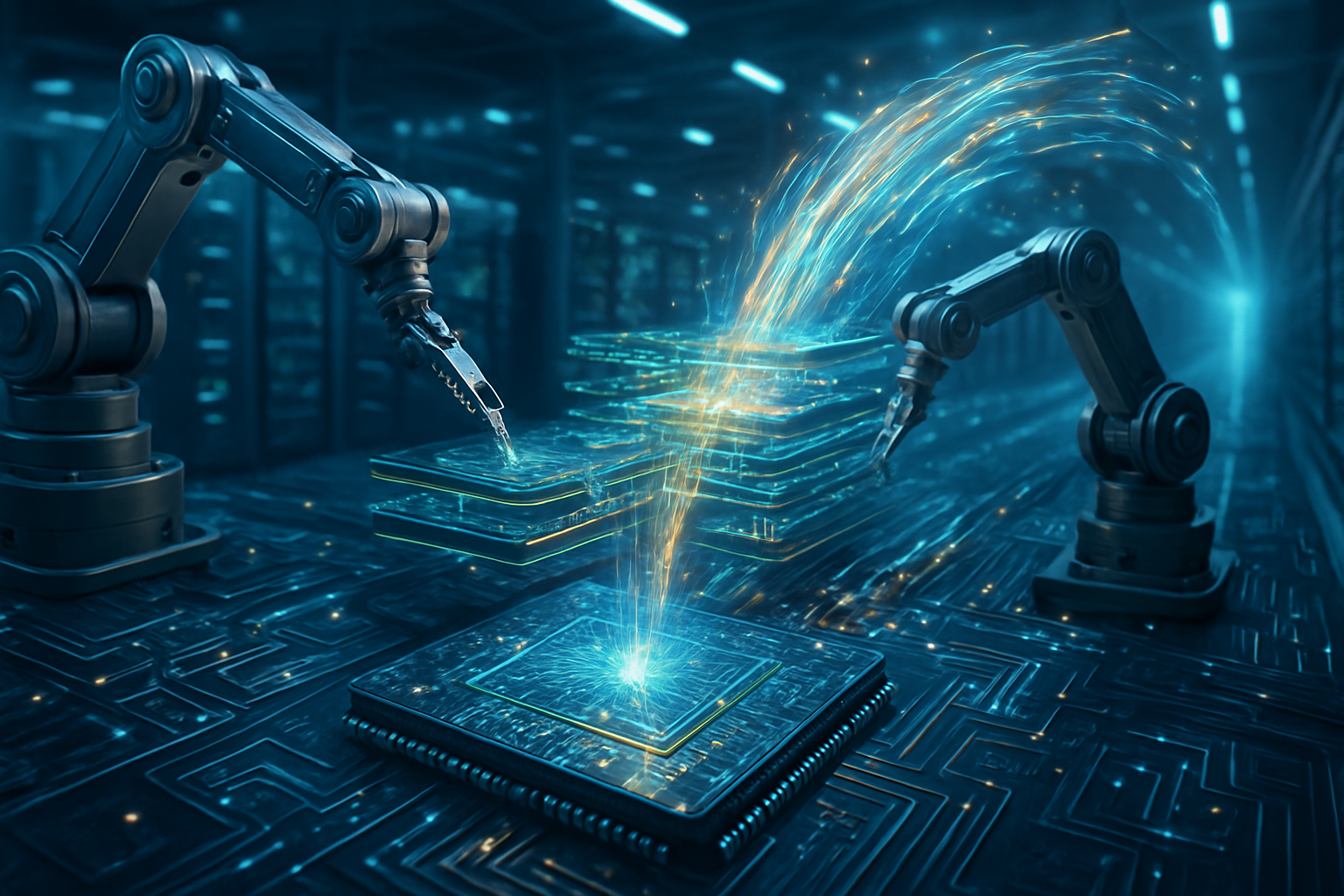
    As of February 2, 2026, the global artificial intelligence landscape remains in the grip of an "AI super-cycle," where the ability to deploy large-scale models is limited not by software ingenuity, but by the physical architecture of silicon. At the center of this storm is Taiwan Semiconductor Manufacturing Co. (NYSE: TSM), whose advanced packaging technology, Chip-on-Wafer-on-Substrate (CoWoS), has become the single most critical bottleneck in the production of next-generation AI accelerators. Despite a massive capital expenditure push and the rapid commissioning of new facilities, the demand for CoWoS capacity continues to stretch the limits of the semiconductor supply chain.

    The current constraints are driven by the transition to increasingly complex chip architectures, such as NVIDIA’s (NASDAQ: NVDA) Blackwell and the newly debuted Rubin series, which require sophisticated 2.5D and 3D integration to function. While TSMC has successfully scaled its monthly output to record levels, the sheer volume of orders from hyperscalers and chip designers has created a persistent backlog. For the industry's titans, the race for AI dominance is no longer just about who has the best algorithms, but who has secured the most "slots" on TSMC's packaging lines for 2026 and beyond.

    Bridging the Gap: The Technical Evolution of CoWoS-L and CoWoS-S

    At its core, CoWoS is a high-density packaging technology that allows multiple chips—typically a Logic GPU or ASIC alongside several stacks of High Bandwidth Memory (HBM)—to be integrated onto a single substrate. This proximity is vital for AI workloads, which require massive data throughput between the processor and memory. In 2026, the technical challenge has shifted from the traditional CoWoS-S (using a silicon interposer) to the more complex CoWoS-L. This newer variant utilizes Local Silicon Interconnect (LSI) bridges to link multiple active dies, enabling chips that are physically larger than the traditional reticle limit of a single silicon wafer.

    This shift is essential for NVIDIA’s B200 and GB200 Blackwell chips, which effectively act as dual-die processors. The precision required to align these components at the micron level is immense, leading to lower initial yields compared to standard chip manufacturing. Industry experts note that while CoWoS-S was sufficient for the previous H100 generation, the "multi-die" era of 2026 demands the flexibility of CoWoS-L. This complexity is why TSMC’s utilization rates remain at near 100% despite the company’s efforts to automate and expand its Advanced Backend (AP) facilities.

    The Hierarchy of Chips: Who Wins the Capacity War?

    The scramble for packaging capacity has created a clear hierarchy in the semiconductor market. NVIDIA remains the "anchor tenant," reportedly securing roughly 60% of TSMC’s total CoWoS output for the 2026 fiscal year. This dominance has allowed NVIDIA to maintain its lead with the Blackwell series, even as it prepares the 3nm-based Rubin architecture for mass production. However, Advanced Micro Devices (NASDAQ: AMD) has made significant inroads, securing approximately 11% of capacity for its Instinct MI350 and MI400 series, which compete directly for high-end enterprise deployments.

    Beyond the GPU giants, the "Sovereign AI" movement has seen companies like Alphabet Inc. (NASDAQ: GOOGL) and Amazon.com Inc. (NASDAQ: AMZN) bypass standard chip vendors to design their own custom ASICs. Google’s TPU v6 and Amazon’s Trainium 3 chips are now major consumers of CoWoS capacity, often facilitated through design partners like MediaTek (TWSE: 2454). This influx of custom silicon has intensified the competition, forcing smaller AI startups to look toward secondary providers or wait in line for the "spillover" capacity handled by Outsourced Semiconductor Assembly and Test (OSAT) firms like ASE Technology Holding (NYSE: ASX) and Amkor Technology (NASDAQ: AMKR).

    A Global Shift: Beyond the Taiwan Bottleneck

    The CoWoS shortage has sparked a broader conversation about the geographical concentration of advanced packaging. Historically, almost all of TSMC’s advanced packaging was centralized in Taiwan. However, the 2026 landscape shows the first signs of a decentralized model. TSMC’s AP8 facility in Tainan and the newly operational AP7 in Chiayi have been the primary drivers of growth, but the company has recently confirmed plans to establish an advanced packaging hub in Arizona by 2027. This move is seen as a direct response to pressure from the U.S. government to secure a domestic supply chain for critical AI infrastructure.

    Furthermore, the industry is grappling with a secondary bottleneck: High Bandwidth Memory. Even as TSMC expands CoWoS lines, the supply of HBM3e and the emerging HBM4 from vendors like Samsung Electronics (KRX: 005930) is struggling to keep pace. This dual-constraint environment—where both the packaging and the memory are in short supply—has led to a "packaging-bound" era of chip manufacturing. The result is a market where the cost of AI hardware remains high, and the lead times for AI server clusters can still stretch into several months.

    The Road to 2027: Silicon Photonics and HBM4

    Looking ahead, the industry is already preparing for the next technical leap. Predictions for 2027 suggest that CoWoS will evolve to incorporate Silicon Photonics, a technology that uses light instead of electricity to transfer data between chips. This would significantly reduce power consumption—a major concern for data centers currently struggling with the multi-kilowatt demands of Blackwell-based racks. TSMC is reportedly in the early stages of integrating "CPO" (Co-Packaged Optics) into its CoWoS roadmap to address these thermal and power limits.

    Additionally, the transition to HBM4 in late 2026 and 2027 will require even more precise packaging techniques, as the memory stacks move to 12-layer and 16-layer configurations. This will likely keep the pressure on TSMC to continue its aggressive capital investment. Analysts predict that while the extreme supply-demand imbalance may ease slightly by the end of 2026 as Phase 2 of the Chiayi plant reaches full capacity, the long-term trend remains one of hyper-growth, with AI packaging expected to contribute more than 10% of TSMC's total revenue in the coming years.

    Summary: A Redefined Semiconductor Landscape

    The ongoing CoWoS capacity constraints at TSMC have fundamentally redefined what it means to be a chipmaker in the AI era. No longer is it enough to have a brilliant circuit design; companies must now master the intricacies of "System-in-Package" (SiP) logistics and secure a reliable place in the packaging queue. TSMC’s response—building a million-wafer-per-year capacity by the end of 2026—is a testament to the unprecedented scale of the AI revolution.

    As we move through 2026, the industry will be watching for two key indicators: the yield rates of CoWoS-L at the new AP8 facility and the speed at which OSAT partners can absorb the overflow for mid-tier AI applications. For now, the "CoWoS Crunch" remains the defining challenge of the hardware world, a physical limit on the digital aspirations of the world’s most powerful AI models.


    This content is intended for informational purposes only and represents analysis of current AI developments.

    TokenRing AI delivers enterprise-grade solutions for multi-agent AI workflow orchestration, AI-powered development tools, and seamless remote collaboration platforms.
    For more information, visit https://www.tokenring.ai/.

  • The Silicon Architect: Ricursive Intelligence Secures $300 Million to Automate the Future of Chip Design

    The Silicon Architect: Ricursive Intelligence Secures $300 Million to Automate the Future of Chip Design

    In a move that signals a paradigm shift for the semiconductor industry, Ricursive Intelligence announced today, February 2, 2026, that it has closed a massive $300 million Series A funding round. The investment, led by Lightspeed Venture Partners, values the startup at an estimated $4 billion just two months after its public debut. This surge of capital underscores a growing consensus among technology leaders: the next generation of semiconductors will not be designed by humans using tools, but by autonomous AI agents capable of superhuman spatial reasoning.

    The funding round saw significant participation from NVIDIA’s (NASDAQ: NVDA) NVentures, along with Sequoia Capital, DST Global, and Radical Ventures. Ricursive Intelligence, founded by the visionary researchers behind Google’s AlphaChip project, aims to solve the "design bottleneck" that has long plagued the industry. By leveraging reinforcement learning and generative AI, the company is shortening chip development cycles from years to weeks, effectively turning silicon design into a software-speed endeavor.

    The AlphaChip Evolution: From Assistants to Architects

    The technical foundation of Ricursive Intelligence rests on the pioneering work of its founders, Dr. Anna Goldie and Dr. Azalia Mirhoseini. During their tenure at Google, they developed AlphaChip, a reinforcement learning (RL) system that treated chip floorplanning—the complex task of placing millions of components on a silicon die—as a strategy game. While AlphaChip proved its worth by designing several generations of Google’s Tensor Processing Units (TPUs), Ricursive's new platform goes significantly further. It moves beyond simple component placement to a "full-stack" autonomous design model that handles architecture search, layout optimization, and manufacturing sign-off without human intervention.

    Unlike traditional Electronic Design Automation (EDA) tools, which rely on rigid heuristics and manual iterative loops, Ricursive’s AI utilizes "recursive self-improvement." The system uses specialized AI-designed silicon to accelerate the training of the very models that design the next generation of hardware. This creates a virtuous cycle where performance gains are compounded. A key technical breakthrough is the system's ability to identify "alien" geometries—non-intuitive, non-rectilinear component placements that humans would never conceive but which drastically reduce wirelength and thermal congestion.

    Industry experts note that this approach solves the "curse of dimensionality" in semiconductor layout. In a modern 2nm or 3nm chip, the number of possible component configurations is larger than the number of atoms in the known universe. Ricursive’s AI navigates this search space by receiving real-time rewards based on Power, Performance, and Area (PPA) metrics, allowing it to converge on optimal designs that exceed human-engineered benchmarks by 15% to 25% in efficiency.

    Disrupting the EDA Status Quo

    The $300 million injection into Ricursive Intelligence poses a direct challenge to the established "Big Three" of the EDA world: Synopsys (NASDAQ: SNPS), Cadence Design Systems (NASDAQ: CDNS), and Siemens (OTC: SIEGY). For decades, these giants have dominated the market with software that assists engineers. However, Ricursive’s vision of "designless" semiconductor development threatens to commoditize the expertise that these incumbents have guarded. If a startup like Meta (NASDAQ: META) or Tesla (NASDAQ: TSLA) can simply "prompt" a high-performance chip into existence via Ricursive’s platform, the need for massive in-house VLSI teams could evaporate.

    NVIDIA’s participation in the round via NVentures is particularly strategic. While NVIDIA currently dominates the AI hardware market, it is also investing heavily in the software infrastructure that will build the chips of 2030. By backing Ricursive, NVIDIA ensures it stays at the forefront of AI-driven hardware synthesis, potentially integrating these autonomous agents into its own "Industrial AI Operating System." Meanwhile, incumbents like Synopsys have recently responded by launching Synopsys.ai, but the speed and focus of a pure-play AI startup like Ricursive may force a more aggressive consolidation or acquisition wave in the EDA sector.

    For tech giants, the strategic advantage of Ricursive lies in "workload-specific" silicon. Currently, many companies use general-purpose chips because the cost and time to design custom hardware are prohibitive. Ricursive’s technology lowers the barrier to entry, allowing firms to create hyper-optimized chips for specific Large Language Models (LLMs) or autonomous driving algorithms in a fraction of the time, potentially disrupting the standard product cycles of traditional chipmakers like Intel (NASDAQ: INTC) and AMD (NASDAQ: AMD).

    The Silicon Renaissance and the End of Moore’s Law Anxiety

    The emergence of Ricursive Intelligence marks a pivotal moment in the broader AI landscape. As we approach the physical limits of transistor scaling—the traditional driver of Moore’s Law—the industry has shifted its focus from making transistors smaller to making their arrangement smarter. This "Silicon Renaissance" is defined by the transition from human-led design to AI-native architecture. Ricursive is the standard-bearer for this movement, proving that AI can solve some of the most complex engineering problems ever faced by humanity.

    However, this breakthrough is not without its concerns. The automation of IC design raises questions about the future of the semiconductor workforce. While high-level architectural roles may persist, the demand for mid-level layout and verification engineers could see a sharp decline. Furthermore, the "black box" nature of AI-designed chips—where human engineers may not fully understand why a specific, non-intuitive layout works—could present challenges for security auditing and long-term reliability testing.

    Comparing this to previous milestones, such as the introduction of the first CAD tools in the 1980s or the shift to hardware description languages like Verilog, the Ricursive announcement feels more fundamental. It represents the first time the industry has successfully offloaded the "creative" and "strategic" aspects of physical design to a machine. This transition mirrors the shift seen in software development with the rise of AI coding agents, but with much higher stakes given the billion-dollar costs of a failed chip tape-out.

    The Horizon: From Chips to Entire Systems

    In the near term, expect Ricursive Intelligence to focus on 3D IC and chiplet architectures. As semiconductors move toward vertically stacked "sandwiches" of silicon, the thermal and interconnect complexity becomes too great for traditional tools to handle. Ricursive is already rumored to be working on a "Digital Twin Composer" that can simulate the thermal dynamics of 3D chips in real-time during the design phase. This would allow for the creation of more powerful chips that don't overheat, a major hurdle for current AI accelerators.

    Looking further ahead, the long-term application of this technology could extend into "autonomous fabs." Experts predict a future where Ricursive’s design agents are directly linked to the manufacturing equipment at foundries like TSMC (NYSE: TSM). This would enable a closed-loop system where the AI designs a chip, the fab produces a prototype, and the performance data is fed back into the AI to iterate the design in hours rather than months. The ultimate goal is a "compiler for hardware," where software code is directly transformed into optimized physical silicon.

    The primary challenge remains "sign-off" verification. While AI can create efficient layouts, ensuring they are 100% manufacturing-compliant for the latest sub-3nm processes is a rigorous task. Ricursive will need to prove that its autonomous designs can pass the same "golden" verification tests as human-designed ones without costly "re-spins." If they can clear this hurdle, the semiconductor industry will have officially entered its most rapid period of innovation in history.

    A New Chapter in Computing History

    The $300 million funding for Ricursive Intelligence is more than just a successful capital raise; it is a declaration of the end of the manual era in semiconductor design. By moving the "brain" of the design process from human engineers to reinforcement learning agents, Ricursive is enabling a future of bespoke, hyper-efficient hardware that can keep pace with the voracious demands of modern artificial intelligence.

    In the coming months, the industry will be watching for the first "pure-AI" tape-outs coming from Ricursive’s partners. If these chips meet or exceed their performance targets, we may look back at February 2026 as the month the silicon industry finally broke free from the constraints of human design capacity. The long-term impact will be felt in every device we touch, as hardware becomes as flexible and rapidly evolving as the software it runs.


    This content is intended for informational purposes only and represents analysis of current AI developments.

    TokenRing AI delivers enterprise-grade solutions for multi-agent AI workflow orchestration, AI-powered development tools, and seamless remote collaboration platforms.
    For more information, visit https://www.tokenring.ai/.

  • Silicon Sovereignty: South Korea’s Bold Play to Forge a ‘K-NVIDIA’ Ecosystem

    Silicon Sovereignty: South Korea’s Bold Play to Forge a ‘K-NVIDIA’ Ecosystem

    In a decisive move to secure its technological independence and redefine its role in the global AI hierarchy, South Korea has officially ratified the 'Semiconductor Special Act' and launched a massive 160 billion won venture fund dedicated to cultivating the next generation of domestic AI hardware champions. These developments, finalized in the opening days of February 2026, signal a strategic pivot from the nation’s traditional dominance in memory chips toward a comprehensive 'Sovereign AI' ecosystem that integrates logic design, high-performance computing, and national data security.

    The dual-pronged approach aims to insulate South Korea from the volatile geopolitics of the global chip supply chain while challenging the near-monopoly of Western tech giants. By combining legislative streamlining with targeted financial "steroids" for startups, Seoul is betting that its local innovators can scale rapidly enough to achieve the moniker of 'K-NVIDIA,' providing the specialized processing power required for a world increasingly defined by generative AI and autonomous systems.

    Legislative Foundations: The Semiconductor Special Act

    The Special Act on Strengthening Competitiveness and Supporting the Semiconductor Industry, which successfully cleared the National Assembly on January 29, 2026, serves as the legal bedrock for this new era. This legislation provides a comprehensive framework for the development of the Yongin Mega Cluster, a massive industrial hub where Samsung Electronics (KRX: 005930) and SK Hynix (KRX: 000660) are currently constructing state-of-the-art fabrication plants. Unlike previous ad-hoc support measures, the new Act establishes a "Special Account for Semiconductor Industry Competitiveness Enhancement," guaranteed to remain in effect through 2036, providing a decade of fiscal predictability for long-term R&D.

    Technically, the Act simplifies the regulatory hurdles that have historically slowed down semiconductor expansion. It mandates that central and local governments provide full fiscal support for essential infrastructure—specifically electricity, water supply, and road networks—which are often the primary bottlenecks in chip manufacturing. Furthermore, it allows for the exemption of preliminary feasibility studies for critical cluster infrastructure, potentially shaving years off the construction timeline for new "AI factories." While a controversial provision to exempt R&D personnel from the national 52-hour workweek was excluded from the final version due to labor rights concerns, the Act remains the most aggressive legislative support package in the nation's history.

    Fostering the Next 'K-NVIDIA': The 160 Billion Won Fund

    Complementing the legislative muscle is the launch of the KB Deep Tech Scale-up Fund on February 1, 2026. This 160 billion won ($120 million) initiative is specifically designed to identify and accelerate high-potential startups in the AI and system semiconductor space. Co-funded by the government-backed Korea Fund of Funds and private capital from KB Financial Group subsidiaries, the fund targets nine strategic sectors, including robotics and quantum technology, with a primary focus on domestic AI chip designers capable of competing with NVIDIA (NASDAQ: NVDA).

    The market impact of this fund is already being felt by domestic "unicorns" like Rebellions, which recently completed its merger with Sapeon to form a unified AI hardware powerhouse. Valued at approximately 1.9 trillion won as of early 2026, Rebellions is currently co-developing its "REBEL" chip with Samsung Foundry, aimed squarely at the global large language model (LLM) inference market. Similarly, FuriosaAI has moved its second-generation "Renegade" (RNGD) accelerator into mass production this month. These companies stand to benefit from the new fund’s "scale-up" philosophy, which prioritizes individual investments exceeding 10 billion won to help local firms navigate the "Death Valley" of global expansion and hardware iteration.

    The Sovereign AI Strategy and Global Positioning

    The push for a "Sovereign AI" ecosystem is about more than just hardware; it is a calculated effort to ensure that South Korea’s digital future is not entirely dependent on foreign cloud platforms or proprietary models. To support this, the government and major domestic cloud providers like NAVER (KRX: 035420) and Kakao (KRX: 035720) have secured a landmark deal to deploy over 260,000 NVIDIA Blackwell GPUs across national data centers. This infrastructure acts as a bridge, providing the immediate compute power needed to train domestic models while local "K-NVIDIA" chips are being perfected for the next generation of inference.

    This strategy places South Korea at the forefront of a growing global trend toward "AI Nationalism." As countries like France and Japan also seek to build independent AI capabilities, South Korea’s advantage lies in its vertical integration. By owning the world’s leading HBM (High Bandwidth Memory) production—with SK Hynix currently commanding over 50% of the HBM4 market and Samsung recently beginning mass production of its own sixth-generation HBM4—the nation controls the most critical component of modern AI accelerators. This allows domestic startups to collaborate more closely with memory giants, potentially creating a "closed-loop" innovation cycle that Western competitors may find difficult to replicate.

    Future Horizons: IPOs and the Yongin Mega Cluster

    Looking ahead, the next 12 to 24 months will be a litmus test for the success of these initiatives. Both Rebellions and FuriosaAI are expected to pursue initial public offerings (IPOs) later in 2026, which would provide a significant liquidity event for the Korean tech ecosystem and prove the viability of the "K-NVIDIA" model to global investors. On the manufacturing side, the Yongin Mega Cluster is expected to see its first operational lines by 2027, eventually becoming the largest semiconductor production base in the world.

    However, challenges remain. The global talent war for AI researchers continues to intensify, and the exclusion of the workweek exemption from the Semiconductor Special Act has led some industry experts to worry about a potential "brain drain" to the United States or China. Furthermore, while the 160 billion won fund is a significant step for the local market, it remains modest compared to the multi-billion dollar venture rounds seen in Silicon Valley. The true measure of success will be whether these startups can leverage their home-field advantage in memory and the new legislative support to capture meaningful market share in the global AI inference market, currently dominated by the H100 and upcoming Blackwell architectures.

    A New Chapter in AI History

    The passage of the Semiconductor Special Act and the launch of the K-NVIDIA fund mark a pivotal moment in South Korea's economic history. It represents a transition from being a high-efficiency manufacturer for others to becoming a primary architect of the AI age. By embedding "Silicon Sovereignty" into national law, Seoul is declaring that it will not be a mere spectator in the AI revolution but a central hub for the hardware that powers it.

    In the coming weeks, industry watchers should look for the first batch of startups to receive capital from the new fund, as well as updates on the validation of Samsung's HBM4 by major US buyers. As the Yongin Mega Cluster begins to take physical shape and domestic AI chips move from prototypes to data centers, South Korea is positioning itself as a "third pole" in the global technology landscape—a vital counterweight and partner to the existing giants of the AI world.


    This content is intended for informational purposes only and represents analysis of current AI developments.

    TokenRing AI delivers enterprise-grade solutions for multi-agent AI workflow orchestration, AI-powered development tools, and seamless remote collaboration platforms.
    For more information, visit https://www.tokenring.ai/.
  • The Boiling Point: AI’s Liquid Cooling Era Begins as NVIDIA Rubin Pushes Data Centers to the Brink

    The Boiling Point: AI’s Liquid Cooling Era Begins as NVIDIA Rubin Pushes Data Centers to the Brink

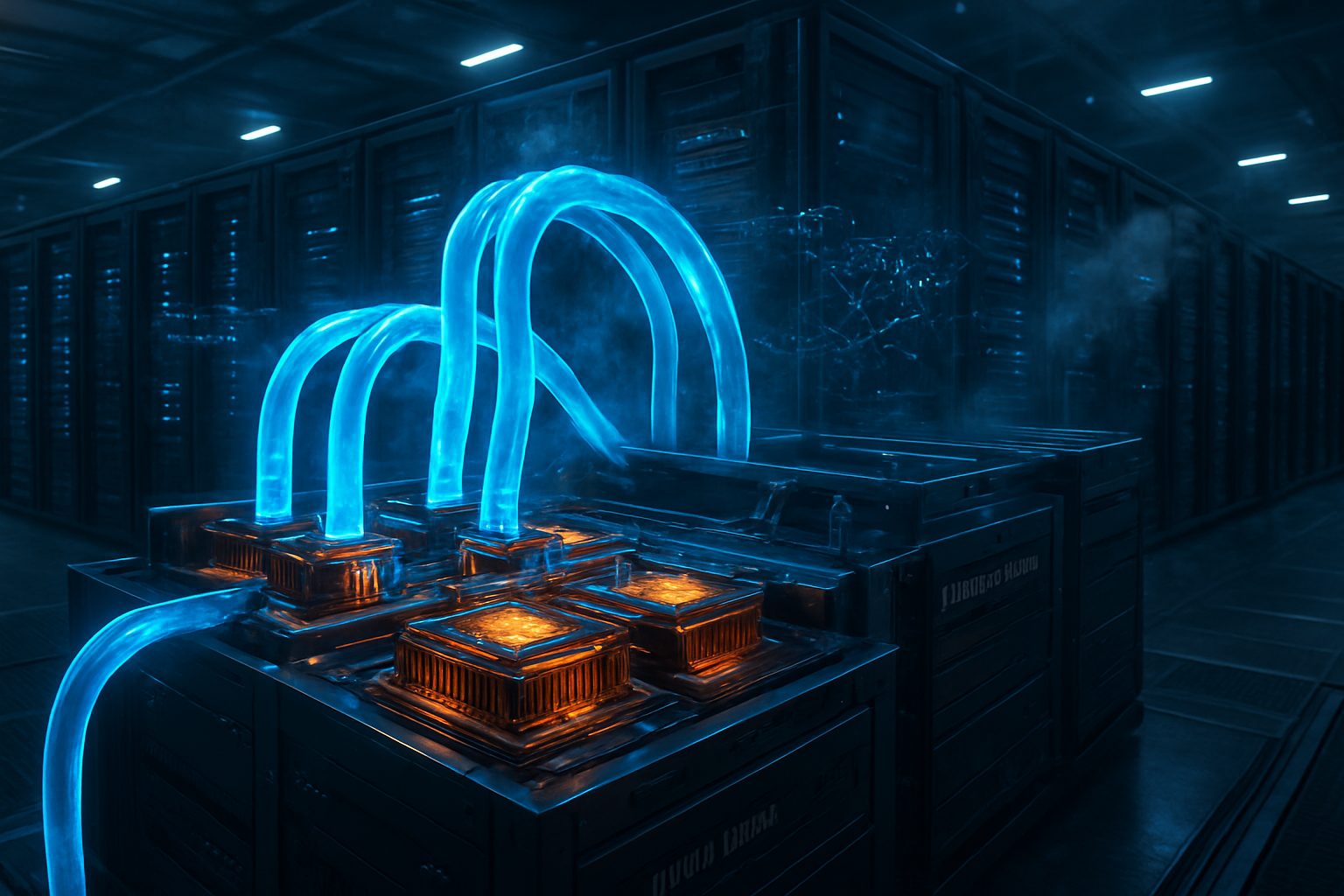
    As of February 2, 2026, the artificial intelligence industry has officially reached its thermal breaking point. What was once a niche engineering challenge—cooling the massive compute clusters that power large language models—has become the primary bottleneck for the global expansion of AI. The transition from traditional air cooling to mainstream liquid cooling is no longer a strategic choice for data center operators; it is a physical necessity. With the recent debut of NVIDIA (NASDAQ: NVDA) Blackwell and the upcoming deployment of the Rubin architecture, the sheer density of heat generated by these silicon behemoths has rendered the fans and air-conditioning units of the past decade obsolete.

    This shift marks a fundamental transformation in the anatomy of the data center. For thirty years, the industry relied on "cold aisles" and high-powered fans to whisk away heat. However, as AI chips breach the 1,000-watt barrier per component, the physics of air—a notoriously poor conductor of heat—have failed. Today, the world’s largest cloud providers, including Microsoft (NASDAQ: MSFT), Amazon (NASDAQ: AMZN), and Alphabet (NASDAQ: GOOGL), are racing to retrofit existing facilities and construct massive "AI Superfactories" built entirely around liquid loops, signaling the most significant infrastructure overhaul in the history of modern computing.

    The Physics of Rubin: Why Air Finally Failed

    The technical requirements for the latest generation of AI hardware have shattered previous industry standards. While the NVIDIA Blackwell B200 GPUs, which dominated throughout 2025, pushed Thermal Design Power (TDP) to a staggering 1,200 watts per chip, the recently unveiled Rubin R100 platform has moved the goalposts even further. Early production units of the Rubin architecture, slated for volume shipment in the second half of 2026, are pushing individual GPU TDPs toward 2,000 watts. When these chips are clustered into the Vera Rubin NVL72 rack configuration, the power density reaches an eye-watering 140kW to 200kW per rack. To put this in perspective, a standard enterprise server rack just five years ago typically consumed between 5kW and 10kW.

    To manage this heat, the industry has standardized on Direct-to-Chip (DTC) cooling and, increasingly, immersion cooling. DTC technology uses "cold plates"—high-conductivity copper blocks—that sit directly atop the GPU and memory stacks. A dielectric or treated water-based fluid circulates through these plates, absorbing heat far more efficiently than air. The technical leap with the Rubin platform is its mandate for "warm water cooling." By utilizing liquid at 45°C (113°F), data centers can eliminate energy-intensive mechanical chillers, instead using simple dry coolers to dissipate heat into the ambient air. This breakthrough has allowed leading server manufacturers like Super Micro Computer (NASDAQ: SMCI) and Dell Technologies (NYSE: DELL) to design systems that are not only more powerful but significantly more energy-efficient, with some facilities reporting Power Usage Effectiveness (PUE) ratings as low as 1.05.

    The Infrastructure Gold Rush: Beneficiaries of the Liquid Shift

    The forced migration to liquid cooling has created a new class of high-growth infrastructure giants. Vertiv (NYSE: VRT) and Schneider Electric (OTCPK: SBGSY) have emerged as the primary "arms dealers" in this transition. Vertiv, in particular, has seen its market position solidify through its modular liquid-cooling units that can be rapidly deployed in existing data centers. Schneider Electric’s 2025 acquisition of Motivair has allowed it to offer end-to-end "liquid-ready" architectures, from the Cooling Distribution Units (CDUs) to the manifold systems that snake through the server racks.

    This transition has also created a competitive divide among colocation providers. Companies like Equinix (NASDAQ: EQIX) and Digital Realty (NYSE: DLR) that moved early to install heavy-duty piping and liquid-loop infrastructure are now the only facilities capable of hosting the next generation of AI training clusters. Smaller data center operators that failed to invest in liquid-ready footprints are finding themselves locked out of the lucrative AI market, as their facilities simply cannot provide the power density or cooling required for Blackwell or Rubin hardware. This infrastructure "moat" is reshaping the real estate dynamics of the tech industry, favoring those with the capital and engineering foresight to embrace a "wet" data center environment.

    Sustainability and the Global Power Paradigm

    Beyond the immediate technical hurdles, the adoption of liquid cooling is a double-edged sword for the environment. On one hand, liquid cooling is vastly more efficient than air cooling, potentially reducing a data center’s cooling-related energy consumption by up to 90%. This efficiency is critical as the total power demand of the AI sector is projected to rival that of small nations by the end of the decade. By moving to warm water cooling, operators can significantly lower their carbon footprint and water consumption, as traditional evaporative cooling towers are no longer strictly necessary.

    However, the sheer scale of the new AI Superfactories presents a daunting challenge. The move to liquid cooling allows for much higher density, which in turn encourages the construction of even larger facilities. We are now seeing the rise of "gigawatt-scale" data center campuses. Concerns are mounting among local governments and environmental groups regarding the massive localized power draw and the potential for "thermal pollution"—the release of massive amounts of waste heat into the environment. While the technology is more efficient per unit of compute, the total volume of compute is growing so rapidly that it may offset these gains, keeping the industry in a perpetual race against its own energy demands.

    The Road to 600kW: What Comes After Rubin?

    As we look toward 2027 and 2028, the trajectory of AI hardware suggests that even current liquid cooling methods may eventually reach their limits. Experts predict that the successor to Rubin, already whispered about in R&D circles, will likely push rack densities toward 600kW. At these levels, "phase-change" cooling—where the liquid refrigerant actually boils and turns to gas as it absorbs heat—is expected to become the new frontier. This technology, currently in testing by specialized firms like nVent (NYSE: NVT), promises an even greater step-change in thermal management.

    Furthermore, we are beginning to see the first practical applications of "district heating" from AI data centers. In northern Europe and parts of North America, the high-grade waste heat (reaching 60°C or more) from liquid-cooled AI clusters is being piped into local municipal heating systems to warm homes and businesses. This "circular heat" economy could transform data centers from energy sinks into valuable public utilities, providing a social and economic justification for their immense power consumption. The challenge will remain in the global supply chain, as the demand for specialized components like quick-disconnect manifolds and high-pressure pumps currently exceeds manufacturing capacity by nearly 40%.

    A Liquid Future for the Intelligence Age

    The mainstreaming of liquid cooling in early 2026 represents a pivotal moment in the history of computing. It is the point where the digital and the physical have collided most violently, forcing a total redesign of how we build the brains of the AI era. The transition driven by NVIDIA’s relentless release cycle—from Hopper to Blackwell and now to Rubin—has permanently altered the data center landscape. Air cooling, once the bedrock of the industry, is now a relic of a lower-density past, reserved for legacy workloads and basic enterprise tasks.

    As we move forward, the success of AI companies will be measured not just by their algorithms or their data, but by their thermal engineering. In the coming months, watch for the first full-scale deployments of "Vera Rubin" clusters and the quarterly earnings of infrastructure providers like Vertiv and Schneider Electric, which have become the barometers for AI’s physical growth. The era of the "cool and quiet" data center is over; the era of the high-density, liquid-powered AI factory has arrived.


    This content is intended for informational purposes only and represents analysis of current AI developments.

    TokenRing AI delivers enterprise-grade solutions for multi-agent AI workflow orchestration, AI-powered development tools, and seamless remote collaboration platforms.
    For more information, visit https://www.tokenring.ai/.

  • The Edge of Intelligence: Qualcomm Unveils Snapdragon X2 Plus and ‘Dragonwing’ Robotics to Redefine the ARM PC Landscape

    The Edge of Intelligence: Qualcomm Unveils Snapdragon X2 Plus and ‘Dragonwing’ Robotics to Redefine the ARM PC Landscape

    At the 2026 Consumer Electronics Show (CES), Qualcomm (NASDAQ: QCOM) solidified its position at the vanguard of the local AI revolution, announcing the new Snapdragon X2 Plus processor alongside a massive expansion into the burgeoning field of 'Physical AI.' Designed to bring flagship-level neural processing to the mainstream market, the Snapdragon X2 Plus serves as the cornerstone of Qualcomm’s strategy to dominate the Windows on ARM ecosystem, effectively bridging the gap between affordable everyday laptops and ultra-premium creative workstations.

    The announcement comes at a pivotal moment for the industry, as the 'AI PC' transitions from a niche enthusiast category into a foundational requirement for modern productivity. By delivering a unified 80 TOPS (Trillions of Operations Per Second) Neural Processing Unit (NPU) across its mid-tier silicon, Qualcomm is not merely iterating on hardware; it is forcing a paradigm shift in how software developers and enterprise users view the relationship between the cloud and the device in their hands.

    A Technical Powerhouse: The 3rd Generation Oryon Architecture

    The Snapdragon X2 Plus represents a significant architectural leap, built on a refined 3nm TSMC (TPE: 2330) process node that emphasizes 'performance-per-watt' above all else. At the heart of the chip lies the 3rd Generation Qualcomm Oryon CPU, which delivers a reported 35% increase in single-core performance compared to its predecessor. The X2 Plus arrives in two primary configurations: a high-end 10-core variant featuring six 'Prime' cores and a more power-efficient 6-core model geared toward ultra-portable devices. This flexibility allows OEMs to scale AI capabilities across a broader range of price points, specifically targeting the $799 to $1,299 sweet spot of the laptop market.

    However, the true star of the technical showcase is the integrated Qualcomm Hexagon NPU. While previous generations struggled to balance power consumption with heavy AI workloads, the X2 Plus maintains a sustained 80 TOPS of AI performance. This is nearly double the throughput of early 2025 competitors and is specifically optimized for 'Agentic AI'—systems that can autonomously manage multi-step workflows such as cross-referencing hundreds of documents to draft a complex legal brief or performing real-time multi-modal video translation. Unlike its x86 rivals, the X2 Plus is designed to maintain this high-level performance even when running on battery, effectively ending the 'performance throttling' that has long plagued mobile Windows users.

    The industry response to these specifications has been overwhelmingly positive. Analysts from the research community have noted that by standardizing an 80 TOPS NPU in a 'Plus' (mid-tier) model, Qualcomm has set a new floor for the industry. Experts from PCMag and Windows Central observed that this release effectively 'democratizes' high-end AI, ensuring that advanced features like Microsoft (NASDAQ: MSFT) Copilot+ and live generative media tools are no longer reserved for those willing to spend over $2,000.

    The ARM-Based PC War: Rivalries and Strategic Realignments

    The launch of the Snapdragon X2 Plus has sent shockwaves through the competitive landscape, intensifying the pressure on traditional x86 heavyweights. Intel (NASDAQ: INTC) recently countered with its 'Panther Lake' architecture, which claims a total platform AI performance of 180 TOPS. However, Qualcomm’s advantage lies in its heritage of mobile efficiency and integrated 5G connectivity—features that are increasingly vital as the 'work-from-anywhere' culture evolves into a 'compute-anywhere' reality. Meanwhile, AMD (NASDAQ: AMD) is defending its territory with the 'Gorgon' and 'Medusa' Ryzen AI lineups, focusing on superior integrated graphics to attract the gaming and pro-visual markets.

    Market leaders like Dell (NYSE: DELL), HP (NYSE: HPQ), and Lenovo (HKG: 0992) have already announced 2026 refreshes featuring the X2 Plus. Lenovo, in particular, is leveraging the chip to power 'Qira,' a personal ambient intelligence agent that maintains context across a user’s PC and mobile devices. This strategic move highlights a broader shift: OEMs are no longer just selling hardware; they are selling integrated AI ecosystems. As Microsoft continues its 'ARM-First' software strategy with the release of Windows 11 26H1, the barriers that once held back Windows on ARM—specifically app compatibility and translation lag—have largely vanished, thanks to the new Prism translation layer that allows legacy software to run with native-like speed on Oryon cores.

    The expansion into robotics, marked by the 'Dragonwing IQ10' platform, further distinguishes Qualcomm from its PC-only competitors. By applying the same Oryon architecture to 'Physical AI,' Qualcomm is positioning itself as the brain of the next generation of humanoid robots. Partnerships with firms like Figure and VinMotion demonstrate that the same silicon used to write emails is now being used to help robots navigate complex, unscripted industrial environments, performing tasks from delicate bimanual coordination to real-time sensor fusion.

    Beyond the Desktop: The Shift Toward Edge and Physical AI

    The Snapdragon X2 Plus launch is a symptom of a much larger trend: the migration of AI from massive, power-hungry data centers to the 'Edge.' For years, AI was synonymous with the cloud, requiring users to send data to servers owned by Amazon (NASDAQ: AMZN) or Microsoft for processing. In 2026, the tide is turning. High-performance NPUs allow for 'Local Inferencing,' where 70% to 80% of routine AI tasks are handled directly on the device. This shift is driven by three critical factors: latency, cost, and, perhaps most importantly, privacy.

    The societal implications of this shift are profound. Local AI means that sensitive corporate or personal data never has to leave the laptop, mitigating the security risks associated with cloud-based LLMs. Furthermore, this move is forcing Cloud Service Providers (CSPs) to rethink their business models. Rather than charging for raw compute hours, giants like AWS and Azure are shifting toward 'Orchestration Fees,' managing the synchronization between a user’s local 'Small Language Model' (SLM) and the massive 'Frontier Models' (like GPT-5) that still reside in the cloud. This hybrid model represents the next evolution of the digital economy.

    However, the rise of 'Physical AI'—AI that interacts with the physical world—introduces new complexities. With Qualcomm-powered robots like the Booster Robotics 'K1 Geek' now entering the retail and logistics sectors, the line between digital assistant and physical laborer is blurring. While this promises immense gains in efficiency and safety, it also reignites debates over labor displacement and the ethical governance of autonomous systems that can 'reason and act' in real-time.

    Looking Ahead: The Road to 2027

    As we look toward the remainder of 2026, the momentum in the ARM PC space shows no signs of slowing. Experts predict that ARM-based systems will capture nearly 30% of the total PC market by the end of the year, a staggering increase from just a few years ago. The near-term focus will be on the refinement of 'Agentic AI' software—applications that can not only suggest text but can actually execute tasks within the operating system, such as organizing a month’s worth of expenses or managing a complex project schedule across multiple apps.

    Challenges remain, particularly in the realm of standardized benchmarks for AI performance. As TOPS ratings become the new 'GHz,' the industry is struggling to find a unified way to measure the actual real-world utility of an NPU. Additionally, the transition to 2nm manufacturing processes, expected in late 2026 or early 2027, will likely be the next major battleground for Qualcomm, Apple (NASDAQ: AAPL), and Intel. The success of the Snapdragon X2 Plus has set a high bar, and the pressure is now on developers to create experiences that truly utilize this unprecedented amount of local compute power.

    A New Era of Computing

    The unveiling of the Snapdragon X2 Plus at CES 2026 marks the end of the experimental phase for the AI PC and the beginning of its era of dominance. By delivering high-performance, power-efficient NPU capabilities to the mainstream, Qualcomm has effectively redefined the baseline for what a personal computer should be. The integration of 'Physical AI' through the Dragonwing platform further cements the idea that the boundaries between digital reasoning and physical action are rapidly dissolving.

    As we move forward, the focus will shift from the hardware itself to the 'Agentic' experiences it enables. The next few months will be critical as the first wave of X2 Plus-powered laptops hits retail shelves, providing the first real-world test of Qualcomm’s vision. For the tech industry, the message is clear: the future of AI isn't just in the cloud—it's in your pocket, on your desk, and increasingly, walking beside you in the physical world.


    This content is intended for informational purposes only and represents analysis of current AI developments.

    TokenRing AI delivers enterprise-grade solutions for multi-agent AI workflow orchestration, AI-powered development tools, and seamless remote collaboration platforms.
    For more information, visit https://www.tokenring.ai/.
  • The Silicon Surge: How Silicon Carbide is Driving a $5.8 Billion Revolution in Heavy-Duty Electric Vehicles

    The Silicon Surge: How Silicon Carbide is Driving a $5.8 Billion Revolution in Heavy-Duty Electric Vehicles

    As of February 2, 2026, the global transition to sustainable transport has reached a critical hardware bottleneck: the limits of traditional silicon. While passenger electric vehicles (EVs) have spent the last decade proving the viability of lithium-ion batteries, the heavy-duty sector—comprising Class 8 trucks, buses, and mining equipment—is undergoing a deeper architectural shift. At the heart of this transformation is Silicon Carbide (SiC), a wide-bandgap semiconductor that has officially transitioned from a luxury component to the industrial backbone of heavy-duty electrification. Recent market data now projects that the market for SiC inverters specifically for heavy vehicles will swell to $5.8 billion by 2033, a nearly five-fold increase from 2024 levels.

    This development is more than just a material swap; it represents the enabling technology for Megawatt Charging Systems (MCS) and ultra-high-voltage architectures. For fleet operators, the shift to SiC is the difference between an electric truck that is a logistical liability and one that rivals the range and uptime of diesel. As the industry moves toward 800V and even 1200V systems to facilitate faster charging, traditional Silicon Insulated-Gate Bipolar Transistors (IGBTs) are hitting a physical ceiling. SiC's ability to operate at higher temperatures and frequencies is not just an incremental improvement—it is the catalyst for the next generation of autonomous, AI-managed logistical networks.

    Technical Superiority: Breaking the 800V Barrier

    The technical shift toward Silicon Carbide is driven by its "wide bandgap" properties, which allow electrons to jump from the valence band to the conduction band with significantly more energy than in standard silicon. This translates to a breakdown field ten times higher than that of traditional silicon, allowing SiC dies to be much thinner and more efficient at handling the high voltages required by heavy-duty EVs. In early 2026, we are seeing the mainstream adoption of 1200V SiC modules, which are essential for the Megawatt Charging Systems currently being rolled out by industry leaders. These systems can deliver between 750 kW and 3.75 MW of power, charging a 500kWh battery in under 20 minutes—a feat that would cause standard silicon inverters to suffer catastrophic thermal failure.

    Beyond voltage handling, SiC’s primary advantage lies in its drastically reduced switching losses. Technical specifications from leading manufacturers show that SiC can reduce power dissipation by as much as 70% compared to IGBTs. For a heavy-duty truck like those produced by Volvo Group (OTCMKTS: VLVLY) or Daimler Truck (OTCMKTS: DTRUY), this efficiency gain directly translates to a 5% to 10% increase in total vehicle range. Furthermore, because SiC operates efficiently at higher switching frequencies, engineers can utilize smaller passive components, such as inductors and capacitors. This leads to a 40% reduction in the cooling system's volume and weight, allowing for higher payloads and more streamlined vehicle designs.

    The initial reactions from the power electronics community have been overwhelmingly positive, though not without caution regarding supply chain resilience. Experts at the 2025 Power Electronics Conference noted that while the "physics of SiC is undeniable," the manufacturing process remains complex. Unlike silicon ingots, which can be grown in days, SiC crystals take weeks to mature and are prone to defects. However, the introduction of 200mm (8-inch) and the first experimental 300mm (12-inch) wafers in early 2026 is beginning to address these yield issues, promising a future of lower costs and higher availability for the mass market.

    The Competitive Landscape: Giants and Challengers

    The surge in SiC demand has reshaped the semiconductor landscape. STMicroelectronics (NYSE: STM) remains the dominant force in the automotive SiC market, holding a 32.6% market share as of early 2026. Their strategic vertical integration, bolstered by their new high-volume facility in Catania, Italy, has allowed them to maintain a firm grip on high-volume contracts with major EV makers like Tesla (NASDAQ: TSLA). Meanwhile, onsemi (NASDAQ: ON) has solidified its position as the number two player. Following its 2024-2025 expansion of the EliteSiC line, onsemi has achieved over 50% self-sufficiency in substrate materials, a move that provides them a significant buffer against the supply shocks that plagued the industry earlier this decade.

    Infineon Technologies (OTCMKTS: IFNNY) has taken a slightly different strategic path, focusing on a "diversified supplier" model. While they successfully transitioned to 200mm wafers in 2025, they continue to source substrates from multiple partners to mitigate risk. This approach has won them significant design wins among European heavy-duty OEMs. Perhaps the most dramatic story of the year is the resurgence of Wolfspeed (NYSE: WOLF). After undergoing a strategic Chapter 11 restructuring in late 2025 to clear debt and refocus on its core strengths, Wolfspeed has entered 2026 with a massive equity partnership with Renesas (OTCMKTS: RNECY). They remain the world’s largest producer of SiC substrates, and their pivot toward becoming a pure-play SiC materials and device giant is seen as a high-stakes bet on the $5.8 billion heavy-vehicle milestone.

    The competition is no longer just about who can make the most chips, but who can integrate them into the most efficient power modules. This has led to a wave of vertical partnerships. Trucking giants like Scania, a subsidiary of the Traton Group (OTCMKTS: TRATF), are now co-developing SiC-based drive units directly with semiconductor labs. This disruption has marginalized traditional tier-1 suppliers who were slow to move away from silicon IGBTs, forcing a rapid "evolve or exit" scenario in the power electronics supply chain.

    Broader Significance: The Foundation for AI-Driven Logistics

    The rise of Silicon Carbide is inextricably linked to the broader trends in artificial intelligence and autonomous transport. As heavy-duty trucks become more autonomous, their internal "compute load" increases exponentially. These vehicles are no longer just transport vessels; they are mobile data centers running sophisticated AI models for navigation, sensor fusion, and predictive maintenance. This compute power requires stable, efficient energy distribution that doesn't drain the main traction battery. SiC-based DC-DC converters and inverters provide the high-efficiency power foundation that makes these power-hungry AI systems viable for long-haul routes.

    Moreover, the $5.8 billion SiC market represents a major win for global decarbonization efforts. Heavy-duty vehicles are responsible for a disproportionate amount of transport-related CO2 emissions. By enabling the electrification of Class 8 trucks through faster charging and better range, SiC is effectively removing the "range anxiety" and "down-time" barriers that have kept the logistics industry tethered to diesel. The environmental impact of a 5% efficiency gain across a global fleet of millions of trucks is comparable to taking millions of passenger cars off the road entirely.

    However, the rapid growth of SiC is not without concerns. The concentration of SiC substrate production in a handful of regions—primarily the United States, Europe, and China—has raised geopolitical red flags. Much like the "lithium rush," the "SiC scramble" is becoming a matter of national economic security. Governments are increasingly viewing SiC fabrication plants (fabs) as critical infrastructure. As we move through 2026, the industry is closely watching how trade policies will affect the flow of raw materials needed for crystal growth, such as high-purity graphite and silicon powder.

    The Road Ahead: 2033 and Beyond

    Looking toward the 2033 horizon, the $5.8 billion market projection for heavy-vehicle SiC inverters appears increasingly conservative. Experts predict that as the technology matures, we will see the integration of SiC with other emerging technologies, such as solid-state batteries. Because SiC inverters are significantly more efficient at the high voltages that solid-state batteries can provide, the two technologies are expected to form a "golden pair" in the late 2020s. We also expect to see the "SiC-ification" of the broader energy grid, with SiC chips being used in the ultra-fast charging stations themselves to reduce energy loss during the conversion from AC to DC.

    The immediate challenges remain cost and manufacturing scale. While SiC reduces the Total Cost of Ownership (TCO) for a fleet, the upfront cost of a SiC inverter remains significantly higher than a silicon-based one. To reach the 2033 projections, the industry must continue to scale 200mm and 300mm wafer production to achieve the economies of scale seen in the traditional silicon industry. Furthermore, the development of more advanced "trench" MOSFET designs will be necessary to squeeze even more performance out of every square millimeter of carbide.

    Predictions for the next 24 months suggest a consolidation of the market. We are likely to see more "material-to-module" acquisitions as companies strive to own the entire value chain. The arrival of Megawatt Charging in truck stops across North America and Europe by 2027 will be the true "proving ground" for these chips. If SiC can handle the daily rigors of 3.75 MW charging cycles in the freezing temperatures of the Nordic or the heat of the American Southwest, its dominance in the heavy vehicle sector will be absolute.

    Conclusion: The New Industrial Standard

    The trajectory of Silicon Carbide in the automotive sector is a testament to the power of material science in driving systemic change. From a technical perspective, the advantages of SiC over traditional silicon—higher efficiency, better thermal management, and superior voltage handling—have made it the indispensable heart of the heavy-duty EV revolution. The projected $5.8 billion market for heavy-vehicle inverters by 2033 is not just a financial metric; it is a roadmap for a electrified, AI-powered logistical future.

    In the history of semiconductors, the transition to SiC will likely be viewed as a milestone equivalent to the first high-power silicon transistors of the mid-20th century. It marks the moment when "power" became as smart and efficient as "logic." As we look forward into 2026 and beyond, the focus will shift from proving the technology to scaling it at a pace that matches the global demand for clean transport.

    For investors and industry watchers, the coming months will be defined by the race for wafer capacity. Keep a close eye on the ramp-up of 200mm fabs and the strategic alliances between chipmakers and heavy-truck OEMs. The silicon age of power electronics is drawing to a close, and the era of the Silicon Carbide surge has truly begun.


    This content is intended for informational purposes only and represents analysis of current AI and semiconductor developments.

    TokenRing AI delivers enterprise-grade solutions for multi-agent AI workflow orchestration, AI-powered development tools, and seamless remote collaboration platforms.
    For more information, visit https://www.tokenring.ai/.