
Category: Uncategorized

  • AI-Powered Wearables Revolutionize Blood Pressure Monitoring: A New Era in Cardiovascular Health

    AI-Powered Wearables Revolutionize Blood Pressure Monitoring: A New Era in Cardiovascular Health

    The landscape of healthcare is undergoing a profound transformation with the advent of AI-powered wearable devices designed for continuous blood pressure monitoring. These innovative gadgets represent a monumental leap forward, moving beyond the limitations of traditional, intermittent cuff-based measurements to offer real-time, uninterrupted insights into an individual's cardiovascular health. This shift from reactive to proactive health management promises to redefine how hypertension and other related conditions are detected, monitored, and ultimately, prevented.

    The immediate significance of these AI-driven wearables lies in their ability to provide continuous, accurate, and personalized blood pressure data, addressing critical gaps in conventional monitoring methods. By capturing dynamic fluctuations throughout the day and night, these devices can detect subtle trends and anomalies often missed by sporadic readings, such as "white coat hypertension" or "masked hypertension." This capability empowers both patients and clinicians with unprecedented data, paving the way for earlier detection of potential health risks, more precise diagnoses, and highly personalized intervention strategies, ultimately leading to improved patient outcomes and a reduction in serious cardiovascular events.

    The Technical Marvel: AI's Role in Unlocking Continuous BP Monitoring

    The core of these revolutionary devices lies in the sophisticated integration of advanced sensing mechanisms with powerful Artificial Intelligence and Machine Learning (AI/ML) algorithms. Unlike rudimentary wearables, these new devices employ a multi-sensor approach, typically combining Photoplethysmography (PPG) sensors, which use light to detect changes in blood volume, with Electrocardiogram (ECG) sensors that measure the heart's electrical signals. Some even incorporate Pulse Transit Time (PTT) measurements or Diffuse Correlation Spectroscopy (DCS) for enhanced accuracy. This multi-modal data input is crucial for capturing the complex physiological signals required for reliable blood pressure estimation.

    What truly differentiates these devices is the AI/ML engine. These algorithms are trained on vast datasets to process complex physiological signals, filtering out "noise" caused by motion artifacts, variations in skin tone, and body habitus. They recognize intricate patterns in PPG and ECG waveforms that correlate with blood pressure, continuously learning and adapting to individual user profiles. This advanced processing allows for continuous, beat-to-beat, non-invasive blood pressure measurements 24/7, providing a comprehensive profile of a patient's BP variability throughout their daily activities, stress, rest, and sleep, something traditional methods could never achieve. Clinical trials have shown promising accuracy, with some cuffless devices demonstrating mean differences in systolic and diastolic measurements of less than 5.0 mmHg compared to standard cuff-based monitors, and high correlation with invasive arterial line measurements in advanced prototypes.

    This approach marks a significant departure from previous blood pressure monitoring technologies. Traditional cuff-based sphygmomanometers offer only intermittent "snapshot" readings, often missing critical fluctuations or patterns like nocturnal hypertension. Early wearable attempts at cuffless monitoring often struggled with accuracy and reliability due to the dynamic nature of blood pressure and the influence of various factors like motion and temperature. AI-powered wearables overcome these limitations by providing continuous, passive data collection and applying intelligent algorithms to contextualize and refine readings. This not only enhances accuracy but also promotes greater user comfort and compliance, as the cumbersome, inflatable cuff is often eliminated or miniaturized for occasional calibration.

    Initial reactions from the AI research community and industry experts are largely optimistic, yet tempered with a healthy dose of caution. While recognizing the immense potential to revolutionize hypertension management and preventive care, experts emphasize the need for rigorous, standardized validation protocols for cuffless BP devices. Concerns persist regarding consistent accuracy across diverse populations, the need for regular calibration in many current models, and the ethical implications of continuous data collection regarding privacy and security. Building clinician trust through explainable AI models and ensuring equitable access and generalizability across various demographics remain critical challenges for widespread adoption.

    Shifting Tides: Corporate Winners and Market Disruptions

    The emergence of AI-powered continuous blood pressure monitoring wearables is poised to trigger a significant reordering of the healthcare technology landscape, creating both immense opportunities and formidable challenges for established players and nimble startups alike. The global AI in blood pressure monitoring market is projected to reach an estimated USD 7,587.48 million by 2032, a substantial increase from USD 928.55 million in 2024, signaling a lucrative, yet highly competitive, future.

    Leading wearable device manufacturers stand to benefit most immediately. Tech giants like Apple Inc. (NASDAQ: AAPL), Samsung Electronics (KRX: 005930), and Alphabet Inc. (NASDAQ: GOOGL) through its Fitbit acquisition, are already integrating advanced health monitoring into their ecosystems, leveraging their vast user bases and R&D capabilities. Specialized health tech companies such as Omron Healthcare, Withings, Aktiia SA, and Biofourmis are also key players, focusing specifically on medical-grade accuracy and regulatory approvals. These companies are investing heavily in sophisticated AI and machine learning algorithms, which are the backbone of accurate, personalized, and predictive health insights, offering a distinct advantage in a market where algorithmic superiority is paramount.

    The competitive implications for major AI labs and tech companies revolve around ecosystem integration, algorithmic prowess, and regulatory navigation. Companies capable of seamlessly embedding continuous BP monitoring into comprehensive health platforms, while also demonstrating robust clinical validation and adherence to stringent data privacy regulations (like GDPR and HIPAA), will gain a significant edge. This creates a challenging environment for smaller players who may struggle with the resources required for extensive R&D, clinical trials, and regulatory clearances. The shift also disrupts traditional cuff-based blood pressure monitor manufacturers, whose intermittent devices may become secondary to the continuous, passive monitoring offered by AI wearables.

    This technological wave threatens to disrupt episodic healthcare models, moving away from reactive care to proactive, preventive health management. This could reduce the reliance on frequent in-person doctor visits for routine checks, potentially freeing up healthcare resources but also requiring existing healthcare providers and systems to adapt rapidly to remote patient monitoring (RPM) platforms. Companies that offer integrated solutions for telehealth and RPM, enabling seamless data flow between patients and clinicians, will find strategic advantages. Furthermore, the ability of AI to identify subtle physiological changes earlier than traditional methods could redefine diagnostic pathways and risk assessment services, pushing the industry towards more personalized and predictive medicine.

    A New Frontier in Health: Broader Implications and Ethical Crossroads

    The advent of AI-powered continuous blood pressure monitoring wearables is more than just a product innovation; it signifies a profound shift in the broader AI landscape and its application in healthcare. This technology perfectly embodies the trend towards proactive, personalized medicine, moving beyond reactive interventions to predictive and preventive care. By continuously tracking not only blood pressure but often other vital signs like heart rate, oxygen levels, and sleep patterns, AI algorithms on these devices perform real-time processing and predictive analytics, identifying subtle health shifts before they escalate into serious conditions. This aligns with the increasing emphasis on edge AI, where data processing occurs closer to the source, enabling immediate feedback and alerts crucial for timely health interventions.

    The impact of these devices is multifaceted and largely positive. They promise early detection and prevention of cardiovascular diseases, significantly improving chronic disease management for existing patients by offering continuous tracking and personalized medication adherence reminders. Patients are empowered with actionable, real-time insights, fostering greater engagement in their health. Furthermore, these wearables enhance accessibility and convenience, democratizing sophisticated health monitoring beyond clinical settings and potentially reducing healthcare costs by minimizing the need for frequent in-person visits and preventing costly complications. The ability to detect conditions like hypertension and diabetes from non-contact video imaging, as explored in some research, further highlights the potential for widespread, effortless screening.

    However, this transformative potential is accompanied by significant concerns. Foremost among these are data privacy and security, as continuous collection of highly sensitive personal health data necessitates robust safeguards against breaches and misuse. The accuracy and reliability of cuffless devices, especially across diverse populations with varying skin tones or body types, remain areas of intense scrutiny, requiring rigorous validation and standardization. Algorithmic bias is another critical consideration; if trained on unrepresentative datasets, AI models could perpetuate health disparities, leading to inaccurate diagnoses for underserved groups. Concerns about the "black box" nature of some AI algorithms, transparency, over-reliance, and the challenges of integrating this data seamlessly into existing healthcare systems also need to be addressed.

    Comparing this to previous AI milestones, these wearables represent a significant leap from basic fitness trackers to intelligent, predictive health tools. While earlier AI applications in medicine often focused on assisting diagnosis after symptoms appeared, these devices embody a shift towards proactive AI, aiming to predict and prevent. They move beyond processing static datasets to interpreting continuous, real-time physiological data streams, offering personalized micro-interventions that directly influence health outcomes. This democratization of sophisticated health monitoring, bringing advanced capabilities from the hospital to the home, stands as a testament to AI's evolving role in making healthcare more accessible and personalized than ever before.

    The Horizon of Health: What's Next for AI-Powered BP Monitoring

    The trajectory of AI-powered continuous blood pressure monitoring wearables points towards a future where health management is seamlessly integrated into daily life, offering unprecedented levels of personalization and proactive care. In the near term (1-3 years), we can expect to see widespread adoption of truly cuffless monitoring solutions in smartwatches, rings, and adhesive patches, with AI algorithms achieving even greater accuracy by meticulously analyzing complex physiological signals and adapting to individual variations. These devices will offer real-time monitoring and alerts, immediately notifying users of abnormal fluctuations, and providing increasingly personalized insights and recommendations based on a holistic view of lifestyle, stress, and sleep patterns. Enhanced interoperability with smartphone apps, telehealth platforms, and Electronic Health Record (EHR) systems will also become standard, facilitating seamless data sharing with healthcare providers.

    Looking further ahead (beyond 3 years), the long-term vision includes AI blood pressure wearables evolving into sophisticated diagnostic companions. This will involve continuous cuffless BP monitoring driven by highly advanced AI-modeled waveform interpretation, offering uninterrupted data streams. Experts predict highly personalized hypertension risk prediction, with AI analyzing long-term trends to identify individuals at risk well before symptoms manifest. Automated lifestyle recommendations, dynamically adapting to an individual's evolving health profile, will become commonplace. The "Dr. PAI" system from CUHK, focusing on lightweight AI architectures for low-computation devices, exemplifies the drive towards democratizing access to advanced blood pressure management, making it available to a wider population, including those in rural and remote areas.

    The potential applications and use cases on the horizon are vast. Beyond early detection and personalized health management for hypertension, these wearables will be invaluable for individuals managing other chronic conditions like diabetes and heart problems, providing a more comprehensive view of patient health than periodic clinic visits. They will play a crucial role in stroke prevention and recovery by identifying irregular heartbeats and blood pressure fluctuations. Remote Patient Monitoring (RPM) will be streamlined, benefiting individuals with limited mobility or access to care, and fostering improved patient-provider communication through real-time data and AI-generated summary reports.

    Despite the immense promise, several challenges remain. Achieving consistent medical-grade accuracy and reliability across diverse populations, especially for cuffless devices, requires continued breakthroughs in high-sensitivity sensors and sophisticated AI-driven signal processing. Data security and patient privacy will remain paramount, demanding robust measures to prevent misuse. Battery life, cost, and accessibility are also critical considerations to ensure equitable adoption. Furthermore, rigorous clinical validation and regulatory oversight, coupled with seamless interoperability and data standardization across various devices and healthcare systems, are essential for these technologies to be fully integrated into mainstream medical practice. Experts like Professor Keon Jae Lee of KAIST anticipate that ongoing advancements will soon lead to the commercialization of these trusted medical devices, transforming them from lifestyle accessories into clinically relevant diagnostic and monitoring tools.

    The Pulse of the Future: A Concluding Outlook

    The journey of AI-powered continuous blood pressure monitoring wearables from concept to clinical relevance marks a significant inflection point in healthcare technology. The key takeaway is the profound shift from episodic, reactive health monitoring to a continuous, proactive, and personalized approach. These devices, leveraging sophisticated sensors and advanced AI/ML algorithms, are not merely collecting data; they are interpreting complex physiological signals, identifying subtle patterns, and delivering actionable insights that were previously unattainable. This capability promises earlier detection of hypertension and other cardiovascular risks, personalized health management, and enhanced remote patient monitoring, ultimately empowering individuals and improving the efficiency of healthcare delivery.

    In the grand tapestry of AI history, this development stands as a testament to the technology's evolving role beyond automation to mimic and augment human analytical thought processes in diagnostics and personalized interventions. It signifies AI's maturation from basic data processing to intelligent systems that learn, predict, and offer tailored recommendations, fundamentally transforming wearables from passive trackers into active health companions. This move towards proactive AI in medicine, bringing sophisticated monitoring directly to the consumer, is a major breakthrough, democratizing access to critical health insights.

    The long-term impact of these AI wearables is poised to be transformative. They will drive a paradigm shift in cardiovascular risk management, leading to earlier detection of critical conditions, reduced hospitalizations, and improved quality of life for millions. The increasing accessibility, potentially even through contactless methods like smartphone camera analysis, could extend sophisticated blood pressure monitoring to underserved communities globally. For healthcare providers, continuous, real-time patient data will enable more informed clinical decisions, truly personalized treatment plans, and a more efficient, preventive healthcare system. This technology is creating a more connected health ecosystem, where personal devices seamlessly interact with telehealth services and electronic health records, fostering a healthier, more engaged populace.

    As we look to the coming weeks and months, several key areas warrant close attention. Expect continued breakthroughs in high-sensitivity sensor technology and even more sophisticated AI-driven signal processing algorithms, pushing towards consistent medical-grade accuracy and reliability in everyday settings. The evolving regulatory landscape, particularly with bodies like the EU AI Act and the US FDA, will be crucial in shaping the commercialization and clinical integration of these devices. Watch for further development and widespread adoption of truly cuffless and potentially contactless monitoring technologies. Furthermore, the expansion of these wearables to integrate a broader range of health metrics, coupled with advancements in personalized predictive analytics and enhanced interoperability across health ecosystems, will continue to redefine the boundaries of personal health management. Addressing persistent challenges around data privacy, cybersecurity, and algorithmic bias will be paramount to building trust and ensuring equitable healthcare outcomes for all.


    This content is intended for informational purposes only and represents analysis of current AI developments.

    TokenRing AI delivers enterprise-grade solutions for multi-agent AI workflow orchestration, AI-powered development tools, and seamless remote collaboration platforms.
    For more information, visit https://www.tokenring.ai/.

  • Aramco Ventures Establishes European AI Hub in Paris, Signaling Major Investment Push

    Aramco Ventures Establishes European AI Hub in Paris, Signaling Major Investment Push

    Paris, France – November 25, 2025 – Aramco Ventures, the corporate venturing arm of Saudi national oil company Aramco (TADAWUL: 2222), today announced a significant strategic move with the planned opening of a new office in Paris, France, in 2026. This dedicated European outpost will spearhead the firm's Artificial Intelligence (AI) investment strategy across the continent, with an anticipated allocation of hundreds of millions of euros. The announcement underscores Aramco's accelerating commitment to global innovation and its proactive role in shaping the future of AI.

    The establishment of a Paris office marks a pivotal moment for Aramco Ventures, positioning it at the heart of Europe's burgeoning AI ecosystem. France, recognized for its robust government initiatives, a thriving startup landscape, and a strong talent pool in AI, digital, and quantum innovation, has been strategically chosen as the entry point for this ambitious investment drive. This move is set to foster deeper collaboration with European founders, institutions, and investors, accelerating the deployment of advanced technologies that align with Aramco's long-term goals of business diversification and energy transformation.

    Strategic Precision: Aramco Ventures' Targeted AI Investment Play in Europe

    Aramco Ventures' foray into the European AI landscape is characterized by a precise and strategically aligned investment thesis, focusing on areas critical to both its parent company's operational excellence and broader technological advancement. With an anticipated commitment of hundreds of millions of euros, managed from its new Paris hub, the firm is not merely participating in the AI boom but is actively curating a portfolio designed for tangible impact. The core technical areas of interest span the full spectrum of advanced computing: Artificial Intelligence, cybersecurity, and quantum computing, with a strong emphasis on industrial applications and the underlying infrastructure.

    Within AI, Aramco Ventures is particularly keen on solutions that promise to enhance operational efficiency, safety, and cost-effectiveness across industrial sectors. This includes advanced analytics, predictive maintenance, and AI-driven optimization for complex industrial processes. Investments such as that in UK-based Ori, a specialist in cloud infrastructure for large-scale AI model training and deployment, underscore a foundational approach, recognizing that robust AI applications require equally robust infrastructure. Similarly, the investment in Alteia, a European industrial AI software company, highlights a direct interest in AI solutions tailored for real-world industrial use cases. While Aramco's broader strategy includes developing sophisticated AI models like ALLAM, a powerful multimodal Arabic large language model, its European focus appears to be on leveraging and integrating advanced AI rather than exclusively developing foundational models within the continent.

    This strategy distinguishes Aramco Ventures from some other corporate venture capital (CVC) firms by its sheer scale of dedicated capital for European AI, as well as its pronounced specialization in industrial AI. While many CVCs invest broadly, Aramco Ventures' deep alignment with Aramco's core energy and chemicals operations, and its net-zero operational emissions by 2050 target, provides a unique lens. This allows for investments that deliver both financial returns and strategic value, such as AI applications in sustainability, smart grids, and renewable energy forecasting. Furthermore, its "global-to-local" strategy, exemplified by a strategic Memorandum of Understanding (MoU) with Bpifrance, France’s public investment bank, facilitates co-investment in French technology companies, blending global vision with local expertise and network leverage.

    Initial reactions from the AI research community and industry experts, though not widely publicized, suggest a positive outlook. The commitment of substantial capital and the establishment of a dedicated European office signal strong confidence in the continent's AI ecosystem. Mahdi Aladel, CEO of Aramco Ventures, has expressed a cautious yet strategic approach, emphasizing the importance of identifying truly differentiated companies beyond the "generative AI hype bubble." This discerning perspective, coupled with a focus on impactful industrial AI applications, is likely to resonate with researchers and industry professionals who prioritize substantive innovation and strategic fit over speculative ventures.

    Shifting Sands: The Impact on Europe's AI Ecosystem

    The arrival of Aramco Ventures as a major AI investor in Europe, anchored by its new Paris office, is poised to send ripples across the continent's vibrant technology landscape, profoundly affecting startups, established tech giants, and the overall competitive dynamics. With hundreds of millions of euros earmarked for AI investments, the influx of capital and strategic guidance will undoubtedly reshape trajectories and accelerate innovation.

    European AI startups stand to be the most immediate beneficiaries. Aramco Ventures explicitly targets early-stage to high-growth companies, particularly those within France's burgeoning AI scene, including successful ventures like Mistral AI. This infusion of capital will be critical for accelerating product development, scaling operations, and attracting top-tier talent in a highly competitive global market. Beyond mere funding, portfolio companies gain access to Aramco's vast operational expertise, global network, and strategic entry points into the Saudi Arabian and wider MENA markets, offering a unique value proposition that extends far beyond financial investment.

    The competitive implications for major AI labs and tech companies already established in Europe are significant. While direct competition might intensify for talent and promising deals, there are also substantial opportunities for collaboration. European tech giants specializing in AI infrastructure, cloud computing, and specialized services may find new avenues for partnership as Aramco seeks to build out its "AI Factories" and foundational AI infrastructure, both internally and through its portfolio companies. This could lead to increased demand for advanced computing power and data center solutions. However, it also means existing players will need to adapt their strategies to either compete with or strategically align with Aramco-backed ventures, potentially accelerating their own AI development efforts.

    Aramco Ventures' focus on "disruptive technologies and business models" signals a clear intent to challenge existing norms. Investments in industrial AI, particularly for energy management, operational efficiency, and sustainability, are likely to disrupt traditional service providers and established practices. For instance, the widespread adoption of AI-powered predictive maintenance, a technology Aramco already leverages internally, could significantly alter the landscape for conventional industrial maintenance services. Similarly, advancements in AI-driven carbon capture or renewable energy optimization, fueled by these investments, could fundamentally reshape established energy solutions and markets. Companies within Aramco Ventures' portfolio will gain a distinct strategic advantage, leveraging Aramco's industrial scale as a testing ground and its financial backing to carve out new market leadership positions in various AI-driven sectors.

    A New Global Player: Aramco Ventures' Role in the Broader AI Landscape

    Aramco Ventures' strategic expansion into Europe, spearheaded by its Paris office, is far more than a simple corporate investment; it represents a pivotal development within the broader global AI landscape, carrying significant economic, geopolitical, and societal implications. This move aligns Saudi Arabia, through its state-owned entities, with a global race for technological supremacy, fundamentally altering the dynamics of AI development and adoption.

    Globally, the AI sector is witnessing unprecedented capital inflow, driven by both national strategies and corporate ambitions. Saudi Arabia's Vision 2030, with its National Strategy for Data and AI (NSDAI) aiming for over $20 billion in AI investments and a top 15 global ranking by 2030, underscores a clear intent to diversify its economy beyond hydrocarbons. Aramco's role, through ventures like this Paris office, is central to this diversification, leveraging its substantial resources to foster a knowledge-based economy. This positions Saudi Arabia as a serious contender alongside established AI powerhouses like the United States and China, particularly by offering the allure of cheap energy, albeit fossil-fuel derived, for the energy-intensive AI data centers. Europe, simultaneously striving for "AI sovereignty" and reducing reliance on external tech, finds itself in a complex yet potentially beneficial position, as Aramco Ventures' investments provide much-needed capital to its deeptech ecosystem, complementing initiatives like the EU AI Act.

    Beyond the immediate tech sector, the economic implications are profound. For Saudi Arabia, AI is projected to contribute an estimated $135 billion to its economy by 2030, highlighting its role as a primary engine for economic transformation. For Europe, Aramco's investments provide a significant boost, fostering innovation, job creation, and technological advancement, particularly in France. Geopolitically, this move enhances Saudi Arabia's global technological standing and influence, challenging existing power dynamics. However, it also interacts with the EU's concerns about AI sovereignty and potential reliance on foreign technology. Previous instances, such as the US compelling Saudi Aramco to divest from US AI chip startups due to national security concerns, underscore the intricate geopolitical sensitivities surrounding investments in critical AI infrastructure and intellectual property.

    Potential concerns and criticisms inevitably arise. The substantial AI investments by a state-owned oil company, particularly those framed around "sustainability" and "energy transition," could invite accusations of "greenwashing." While Aramco commits to net-zero operational emissions by 2050, the reliance on fossil fuels for powering AI data centers in Saudi Arabia might be seen as contradictory to broader global decarbonization efforts. Furthermore, national security and data control remain paramount concerns. European regulators, with robust frameworks like GDPR and the EU AI Act, will need to carefully navigate these investments to safeguard strategic interests and citizen data. Ethical alignment, despite stated commitments from both sides, also presents a nuanced challenge given differing governance models and human rights records.

    In comparison to previous AI milestones, Aramco Ventures' current strategy signifies a shift from incremental research funding to large-scale, strategic capital deployment aimed at building entire AI ecosystems. AI is no longer merely a technological advancement but a primary driver for economic diversification, industrial-scale integration, and a central pillar in a geopolitical race for dominance. This elevates AI to a matter of national strategic importance, moving it beyond scientific or commercial competition to a critical element of national sovereignty and future economic resilience.

    The Road Ahead: Future Developments and AI's Evolving Frontier

    Aramco Ventures' strategic pivot into the European AI ecosystem, spearheaded by its Paris office, heralds a new phase of development for both the corporate venture firm and the broader AI landscape. This substantial commitment, backed by hundreds of millions of euros, is set to drive significant near-term and long-term changes, shaping the future of industrial AI and beyond.

    In the near term, commencing in 2026, the Paris office will become a crucial nexus for identifying and nurturing innovative startups and technological solutions across Europe. The initial focus will gravitate towards French companies and funds, gradually extending its reach across the continent. Key areas of investment will remain centered on cutting-edge Artificial Intelligence, robust cybersecurity, and transformative quantum computing. This strategic expansion builds upon Aramco Ventures' existing investments in French trailblazers like Pasqal and Prophesee, signaling a clear intent to deepen collaborations with European founders, institutions, and investors. The goal is not just to invest, but to actively integrate these advanced technologies into Aramco's operations and potentially commercialize them externally.

    Looking further ahead, these investments are integral to Aramco's ambitious long-term strategy of business diversification and energy transformation. The company envisions itself as a leading digitalized energy enterprise, leveraging advanced technologies to build a more sustainable and connected future. This involves a strategic shift from merely targeted investments to a foundational, large-scale capital deployment aimed at building sovereign AI infrastructure and establishing Aramco as a core technology provider for the energy transition. The creation of "AI Factories" and the development of commercial industrial AI solutions via its subsidiary, Aramco Digital, are clear indicators of this expansive vision.

    The potential applications and use cases stemming from these AI investments are vast and transformative. Within Aramco's core operations, AI is expected to further enhance efficiency, reduce costs, and cut emissions through advanced predictive maintenance, optimizing everything from pipeline corrosion to drilling operations, and autonomously driving production processes. AI will also be critical in managing unwanted water production and reprocessing old seismic data for new insights. Beyond internal optimization, the investments will fuel industrial digitalization, with AI solutions for facility monitoring, predictive maintenance using autonomous drones, and the development of specialized industrial Large Language Models. In sustainability, AI will be a key enabler for achieving Aramco's 2050 net-zero goal, from monitoring flares to predicting emission exceedances, and exploring innovative applications like converting captured CO2 into valuable products.

    However, this ambitious strategy is not without its challenges. Regulatory and permitting hurdles in Europe, often slower than in other global tech hubs, could impact the pace of investment and deployment. The sheer complexity of executing a strategy aimed at becoming a global vendor of industrial AI solutions will require meticulous management and seamless stakeholder alignment in numerous high-stakes collaborations. Furthermore, a critical balance must be struck between rapid technology adoption and effectively addressing core business challenges. Experts widely predict that Aramco's substantial capital will allow it to take "hugely risky bets on AI," positioning it as a major player in realizing broader AI ambitions. The company's self-perception as a "technology company delivering energy" underscores its commitment to becoming the world's leading digitalized energy company. The success of its European AI strategy will be most tangibly demonstrated by the commercial deployment and scaling of its industrial cloud platform, and the acquisition of its first non-Aramco customer for this platform.

    A New Chapter in AI: The Long-Term Vision Unfolds

    Aramco Ventures' strategic establishment of a new office in Paris, set to open in 2026, marks a watershed moment in the global Artificial Intelligence landscape. This move, backed by hundreds of millions of euros in anticipated investments, signifies a profound commitment by the corporate venturing arm of Saudi Aramco (TADAWUL: 2222) to diversify its portfolio, accelerate its energy transformation, and solidify its position at the forefront of industrial AI innovation.

    The key takeaways from this development are manifold. The choice of Paris underscores France's ascendance as a premier European AI hub, driven by a vibrant startup ecosystem, a robust talent pool, and proactive government support for AI and quantum computing. Aramco Ventures' strategy is sharply focused on AI, cybersecurity, and quantum computing, with an initial emphasis on French deep tech companies, exemplified by existing investments in Pasqal and Prophesee, and a strategic MoU with Bpifrance. This approach is deeply intertwined with Aramco's internal digital transformation, aiming to leverage AI for operational efficiency, decarbonization, and the development of new lower-carbon energy solutions, having already recorded $1.8 billion in AI-driven Technology Realized Value in 2024.

    In the annals of AI history, this development is significant for several reasons. It symbolizes a clear pivot by traditional energy giants towards AI as a core component of their future business models and sustainability strategies, moving beyond incremental improvements to fundamental transformation. It also validates Europe's growing influence in the global AI arena, particularly in deep tech and specialized applications, attracting substantial foreign direct investment. Furthermore, it highlights the increasingly strategic and geopolitical dimensions of AI investments, as nations and corporations vie for technological leadership and mitigate risks associated with concentrated tech dependencies. The explicit focus on industrial AI and its application in energy transition underscores a maturing AI market where the technology is tackling complex, real-world industrial challenges.

    The long-term impact promises to be far-reaching. Expect an accelerated growth trajectory for the European AI ecosystem, particularly in France, fueled by significant financial backing and strategic partnerships. This will undoubtedly foster innovation and create new job opportunities. Crucially, by funding AI solutions for sustainability and decarbonization, Aramco Ventures could play a pivotal role in advancing technologies vital for the global energy transition, leading to more efficient energy systems and advanced carbon management. The collaboration with French entities will likely forge deeper Franco-Saudi tech ties, while these investments will be instrumental in Aramco's own ambitious digital transformation, reinforcing its goal of becoming a leading digitalized energy company. Aramco Ventures is setting a precedent for how large incumbents can effectively engage with the startup ecosystem to drive both internal innovation and broader industry transformation.

    In the coming weeks and months, several key indicators will be worth watching. Pay close attention to the specific investment announcements made from the Paris office, as these will reveal Aramco Ventures' immediate priorities and strategic areas of interest. Details regarding the operationalization of the Paris office in 2026, including its leadership and structure, will provide further insights. The first co-investments resulting from the MoU with Bpifrance will signal the types of French deep tech and industrial AI companies receiving support. Furthermore, observe Aramco Ventures' efforts in talent acquisition in Europe, its broader European reach beyond France, and how these external investments integrate with Aramco's internal AI projects. The impact on European AI policy, particularly regarding deep tech funding and international collaborations, will also be a crucial development to monitor.


    This content is intended for informational purposes only and represents analysis of current AI developments.

    TokenRing AI delivers enterprise-grade solutions for multi-agent AI workflow orchestration, AI-powered development tools, and seamless remote collaboration platforms.
    For more information, visit https://www.tokenring.ai/.
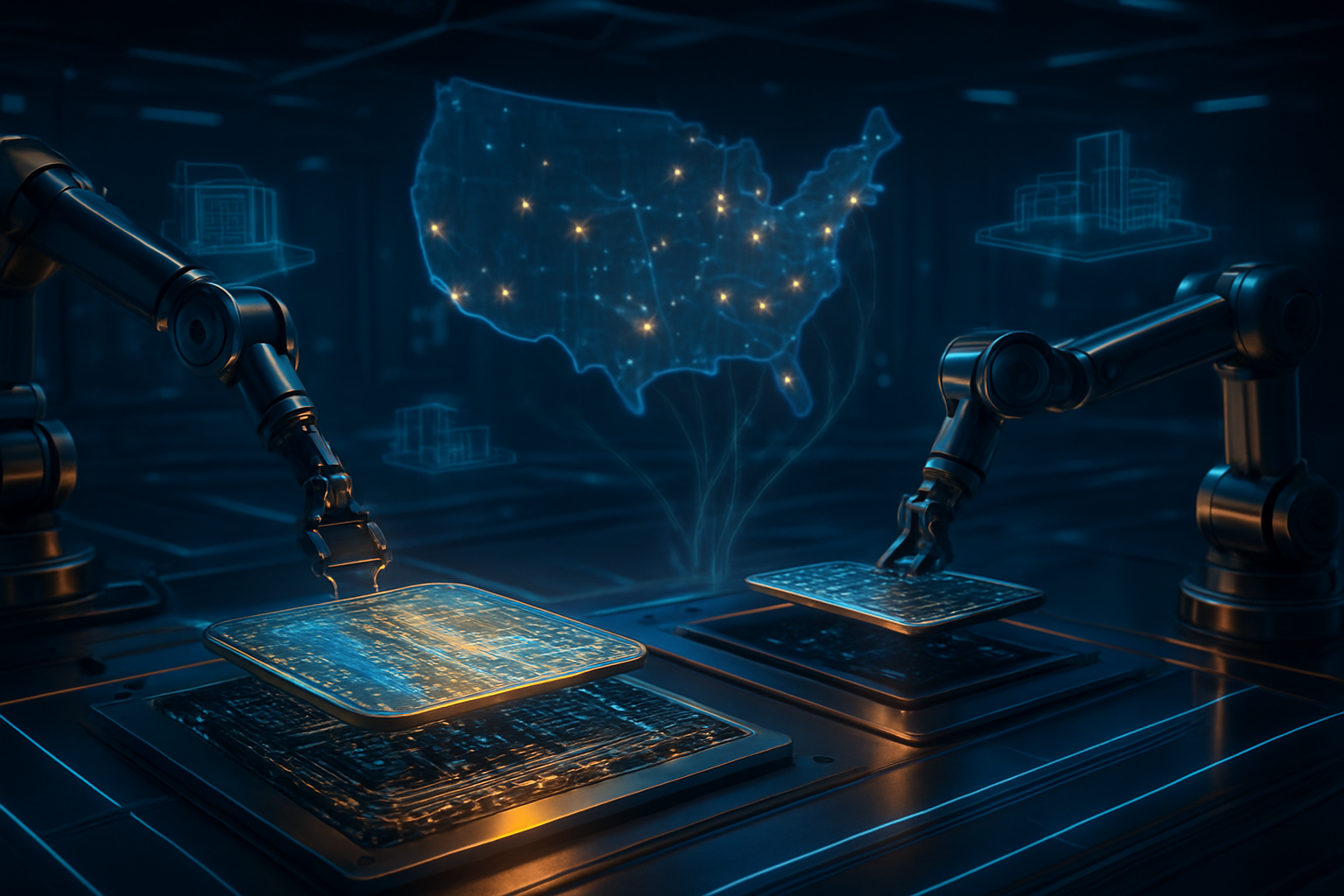
  • The Unpassed Guardrail: Examining the AI Fraud Deterrence Act and the Ongoing Battle Against Deepfake Deception

    The Unpassed Guardrail: Examining the AI Fraud Deterrence Act and the Ongoing Battle Against Deepfake Deception

    In a rapidly evolving digital landscape increasingly shaped by artificial intelligence, legislative bodies worldwide are grappling with the urgent need to establish guardrails against the technology's malicious misuse. One such effort, the AI Fraud Deterrence Act (H.R. 10125), introduced in the U.S. House of Representatives in November 2024, aimed to significantly enhance penalties for financial crimes facilitated by AI, including those leveraging sophisticated deepfake technologies. While this specific bill ultimately did not advance through the 118th Congress, its introduction underscored a critical and ongoing legislative push to modernize fraud laws and protect citizens from the escalating threat of AI-enabled deception.

    The proposed Act, spearheaded by Representatives Ted Lieu (D-CA) and Kevin Kiley (R-CA), was a bipartisan attempt to address the growing sophistication and scale of financial fraud amplified by AI. Its core philosophy was to deter criminals by imposing harsher punishments for offenses where AI played a role, thereby safeguarding digital ecosystems and fostering trust in legitimate AI applications. Although H.R. 10125 has passed into history, the legislative discourse it sparked continues to shape current efforts to regulate AI and combat its darker applications, particularly as deepfakes become more convincing and accessible.

    Modernizing Fraud Laws for the AI Age: The Act's Provisions and Its Legacy

    The AI Fraud Deterrence Act (H.R. 10125) did not seek to create entirely new deepfake-specific crimes. Instead, its innovative approach lay in amending Title 18 of the U.S. Code to substantially increase penalties for existing federal financial crimes—such as mail fraud, wire fraud, bank fraud, and money laundering—when these offenses were committed with the "assistance of artificial intelligence." This mechanism was designed to directly address the amplified threat posed by AI by ensuring that perpetrators leveraging advanced technology faced consequences commensurate with the potential damage inflicted.

    Key provisions of the bill included a proposal to double fines for mail and wire fraud committed with AI to $1 million (or $2 million if affecting disaster aid or a financial institution) and increase prison terms to up to 20 years. Bank fraud penalties, when AI-assisted, could have risen to $2 million and up to 30 years' imprisonment, while money laundering punishments would have been strengthened to the greater of $1 million or three times the funds involved, alongside up to 20 years in prison. The legislation also sought to prevent offenders from evading liability by claiming ignorance of AI's role in their fraudulent activities, thereby establishing a clear line of accountability. To ensure clarity, the bill adopted the definition of "artificial intelligence" as provided in the National Artificial Intelligence Initiative Act of 2020.

    Crucially, while the original prompt hinted at criminalizing deepfakes of federal officials, H.R. 10125's scope was broader. Its sponsors explicitly highlighted the intent to impose "harsh punishments for using this technology to clone voices, create fake videos, doctor documents, and cull information rapidly in the commission of a crime." This language directly encompassed the types of fraudulent activities facilitated by deepfakes—such as voice cloning and synthetic video creation—regardless of the identity of the person being impersonated. The focus was on the tool (AI, including deepfakes) used to commit financial fraud, rather than specifically targeting the impersonation of government figures, although such impersonations could certainly fall under its purview if used in a financial scam.

    Initial reactions to the bill were largely supportive of its intent to address the escalating threat of AI in financial crime. Cybersecurity experts acknowledged that AI "amplifies the scale and complexity of fraud, making it harder to detect and prosecute offenders under traditional legal frameworks." Lawmakers emphasized the need for "consequences commensurate with the damage they inflict" for those who "weaponize AI for financial gain," seeing the bill as a "critical step in safeguarding our digital ecosystems." While H.R. 10125 ultimately did not pass, its spirit lives on in ongoing congressional discussions and other proposed legislation aimed at creating robust "AI guardrails" and modernizing financial fraud statutes.

    Navigating the New Regulatory Landscape: Impacts on the AI Industry

    The legislative momentum, exemplified by efforts like the AI Fraud Deterrence Act, signals a profound shift in how AI companies, tech giants, and startups operate. While H.R. 10125 itself expired, the broader trend toward regulating AI misuse for fraud and deepfakes presents both significant challenges and opportunities across the industry.

    For tech giants like Alphabet (NASDAQ: GOOGL), Microsoft (NASDAQ: MSFT), and Meta Platforms (NASDAQ: META), which are at the forefront of AI development and deployment, the evolving regulatory environment demands substantial investment in compliance and responsible AI practices. These companies often possess the resources—legal teams, compliance departments, and financial capital—to navigate complex regulatory landscapes, implement robust fraud detection systems, and develop necessary safeguards. This could give them a competitive advantage in complying with new legislation and maintaining public trust, potentially widening the gap with smaller players.

    AI startups, however, may face greater hurdles. With limited resources, meeting stringent compliance requirements, implementing sophisticated fraud detection mechanisms, or handling potential litigation related to AI-generated content could become significant barriers to entry and growth. This could stifle innovation if the cost of compliance outweighs the benefits of developing novel AI solutions. Nevertheless, this environment also creates new market opportunities for startups specializing in "secure AI," offering tools for deepfake detection, content authentication, and ethical AI development. Companies that proactively integrate ethical AI principles and robust security measures from the outset may gain a competitive advantage.

    The legislative push also necessitates potential disruptions to existing products and services. Platforms hosting user-generated content will face increased pressure and potential liability for AI-generated deepfakes and fraudulent content. This will likely lead to significant investments in AI detection tools and more aggressive content moderation, potentially altering existing content policies and user experiences. Any AI product or service that facilitates voice cloning, image manipulation, or synthetic media generation will face intense scrutiny, requiring robust consent mechanisms and clear safeguards against misuse. Companies that develop advanced AI-driven solutions for fraud detection, deepfake identification, and identity verification will gain a strategic advantage, making "responsible AI" a key differentiator and a core competency for market positioning.

    A Broader Canvas: AI Fraud Legislation in the Global Context

    The efforts embodied by the AI Fraud Deterrence Act are not isolated but fit into a broader global landscape of AI regulation, reflecting a critical juncture in the integration of AI into society. The primary significance is the direct response to the escalating threat of AI-powered fraud, which can facilitate sophisticated scams at scale, including deepfakes used for identity theft, financial fraud, and impersonation. Such legislation aims to deter "bad actors" and restore "epistemic trust" in digital media, which is being eroded by the proliferation of AI-generated content.

    However, these legislative endeavors also raise significant concerns. A major challenge is balancing the need for regulation with the protection of free speech. Critics worry that overly broad or vaguely worded AI legislation could inadvertently infringe upon First Amendment rights, particularly regarding satire, parody, and political commentary. The "chilling effect" of potential lawsuits might lead to self-censorship, even when speech is constitutionally protected. There are also concerns that a "panicked rush" to regulate could lead to "regulatory overreach" that stifles innovation and prevents new companies from entering the market, especially given the rapid pace of AI development.

    Comparisons to previous technological shifts are relevant. The current "moral panic" surrounding AI's potential for harm echoes fears that accompanied the introduction of other disruptive technologies, from the printing press to the internet. Globally, different approaches are emerging: the European Union's comprehensive, top-down, risk-based EU AI Act, which came into force in August 2024, aims to be a global benchmark, similar to the GDPR's impact on data privacy. China has adopted strict, sector-specific regulations, while the U.S. has pursued a more fragmented, market-driven approach relying on executive orders, existing regulatory bodies, and significant state-level activity. This divergence highlights the challenge of creating regulations that are both effective and future-proof in a fast-evolving technological landscape, especially with the rapid proliferation of "foundation models" and large language models (LLMs) that have broad and often unpredictable uses.

    The Road Ahead: Future Developments in AI Fraud Deterrence

    Looking ahead, the landscape of AI fraud legislation and deepfake regulation is poised for continuous, dynamic evolution. In the near term (2024-2026), expect to see increased enforcement of existing laws by regulatory bodies like the U.S. Federal Trade Commission (FTC), which launched "Operation AI Comply" in September 2024 to target deceptive AI practices. State-level legislation will continue to fill the federal vacuum, with states like Colorado and California enacting comprehensive AI acts covering algorithmic discrimination and disclosure requirements. There will also be a growing focus on content authentication techniques, such as watermarks and disclosures, to distinguish AI-generated content, with the National Institute of Standards and Technology (NIST) finalizing guidance by late 2024.

    Longer term (beyond 2026), the push for international harmonization will likely intensify, with the EU AI Act potentially serving as an international benchmark. Experts predict a "deepfake arms race," where AI is used both to create and detect deepfakes, necessitating continuous innovation in countermeasures. Mandatory transparency and explainability for AI systems, particularly in high-risk applications like fraud detection, are also anticipated. Regulatory frameworks will need to become more flexible and adaptive, moving beyond rigid rules to incorporate continuous revisions and risk management.

    Potential applications of these legislative efforts include more robust financial fraud prevention, comprehensive measures against deepfake misinformation in political discourse and public trust, and enhanced protection of individual rights against AI-driven impersonation. However, significant challenges remain, including the rapid pace of technological advancement, the difficulty in defining "AI" and the scope of legislation without stifling innovation or infringing on free speech, and the complexities of cross-border enforcement. Proving intent and harm with deepfakes also presents legal hurdles, while concerns about algorithmic bias and data privacy will continue to shape regulatory debates.

    Experts predict an escalation in AI-driven fraud, with hyper-realistic phishing and social engineering attacks leveraging deepfake technology for voice and video becoming increasingly common. Scams are projected to be a defining challenge in finance, with AI agents transforming risk operations and enabling predictive fraud prevention. Consequently, a continued regulatory clampdown on scams is expected. AI will serve as both a primary force multiplier for attackers and a powerful solution for detecting and preventing crimes. Ultimately, AI regulation and transparency will become mandatory security standards, demanding auditable AI decision logs and explainability reports from developers and deployers.

    A Continuous Evolution: The Unfolding Narrative of AI Regulation

    The AI Fraud Deterrence Act (H.R. 10125), though not passed into law, stands as a significant marker in the history of AI regulation. It represented an early, bipartisan recognition of the urgent need to address AI's capacity for sophisticated financial fraud and the pervasive threat of deepfakes. Its non-passage highlighted the complexities of legislating rapidly evolving technology and the ongoing debate over balancing innovation with robust legal protections.

    The key takeaway is that the battle against AI-enabled fraud and deepfake deception is far from over; it is continuously evolving. While H.R. 10125's specific provisions did not become law, the broader legislative and regulatory environment is actively responding. The focus has shifted to a multi-pronged approach involving enhanced enforcement of existing laws, a patchwork of state-level initiatives, and comprehensive federal proposals aimed at establishing property rights over likeness and voice, combating misinformation, and mandating transparency in AI systems.

    The significance of this development lies in its contribution to the ongoing global discourse on AI governance. It underscores that governments and industries worldwide are committed to establishing guardrails for AI, pushing companies toward greater accountability, demanding investments in robust ethical frameworks, security measures, and transparent practices. As AI continues to integrate into every facet of society, the long-term impact will be a progressively regulated landscape where responsible AI development and deployment are not just best practices, but legal imperatives. In the coming weeks and months, watch for continued legislative activity at both federal and state levels, further actions from regulatory bodies, and ongoing industry efforts to develop and adopt AI safety standards and content authentication technologies. The digital frontier is being redrawn, and the rules of engagement for AI are still being written.


    This content is intended for informational purposes only and represents analysis of current AI developments.

    TokenRing AI delivers enterprise-grade solutions for multi-agent AI workflow orchestration, AI-powered development tools, and seamless remote collaboration platforms.
    For more information, visit https://www.tokenring.ai/.

  • AI Transforms Holiday Shopping 2025: A New Era of Personalized Gifting and Streamlined Decisions

    AI Transforms Holiday Shopping 2025: A New Era of Personalized Gifting and Streamlined Decisions

    The 2025 holiday season stands as a landmark moment in the evolution of retail, marking a profound shift where Artificial Intelligence (AI) has transitioned from a supporting technology to an indispensable architect of the consumer shopping experience. This year, AI is not merely enhancing but fundamentally reshaping how individuals discover, evaluate, and purchase gifts, driven by an increasing consumer reliance on intelligent tools for convenience, confidence, and control in their purchasing decisions. From hyper-personalized gift recommendations to autonomous shopping agents, AI is redefining the festive retail landscape, making the search for the perfect present less daunting and more tailored than ever before.

    This transformative integration of AI is particularly evident in personalized gift-giving and streamlined decision-making. Consumers are increasingly turning to AI chatbots as sophisticated personal shoppers, engaging in natural language conversations to uncover recipient preferences and generate highly relevant suggestions based on vast datasets of interests, past purchases, and browsing history. Beyond mere recommendations, generative AI is enabling the creation of truly unique and customized gifts, from AI-powered artworks to personalized content for gift cards. Simultaneously, AI is empowering shoppers to navigate the holiday rush with unprecedented ease, offering efficient product research, comparison tools, and immersive experiences like virtual try-ons, all while mitigating decision fatigue. For retailers, this means leveraging AI for everything from demand forecasting and inventory management to dynamic pricing, ensuring products are available and delivered efficiently, thereby indirectly streamlining the consumer journey.

    The Invisible Engine: Technical Deep Dive into AI's Retail Revolution

    The 2025 holiday retail season showcases a significant leap in AI capabilities, with advanced solutions delivering real-time, context-aware, and emotionally intelligent personalization across all customer touchpoints. These advancements move far beyond previous approaches, generating considerable excitement within both the AI research community and the industry.

    Modern Natural Language Processing (NLP) models, often powered by large language models (LLMs), are at the forefront, enabling AI shopping assistants and virtual agents to engage in sophisticated, human-like conversations. These agents, unlike earlier rule-based chatbots, understand context, predict user intent, and deliver adaptive responses by integrating deeply with Customer Data Platforms (CDPs) and recommendation engines. For instance, OpenAI’s new ChatGPT Shopping Research tool, launched on November 24, 2025, exemplifies this by offering comprehensive, contextually rich buying guides and product comparisons. Voice commerce, driven by advanced NLP, is also reshaping interactions, allowing customers to use voice assistants to find products and complete purchases.

    Computer Vision (CV) is enhancing product discovery and customer engagement. Visual search tools allow customers to upload images to find similar products across various retailers. Augmented Reality (AR) experiences, particularly virtual try-on features for fashion and beauty, have matured significantly, allowing shoppers to visualize products in their own environment, boosting confidence and reportedly reducing returns by as much as 40% for size-sensitive items. This differs from previous, less accurate visual search and nascent AR applications.

    Recommendation Engines in 2025 are driven by advanced machine learning and predictive analytics, moving beyond basic collaborative filtering. They leverage behavioral, transactional, and contextual data, including real-time browsing and seasonal patterns, to deliver hyper-personalized, dynamic product recommendations. These engines employ deep learning algorithms that understand individual preferences at a much deeper level than older systems, adapting recommendations instantly to changing user behavior or market signals.

    Crucially, Generative AI is a cornerstone of this year's personalization. It's used to create unique marketing messages, hyper-personalized product descriptions, and dynamic website content that adapts in real-time to shopper preferences. Unlike traditional AI that predicts outcomes, generative AI creates new and original content, allowing for unprecedented levels of customization and creativity in retail experiences, enabling brands to move beyond generic automation to craft emotional, data-driven interactions.

    Behind the scenes, Predictive Analytics for inventory and demand forecasting, powered by AI, analyzes historical sales data, market trends, and even external factors like weather to forecast demand with remarkable accuracy. This allows retailers to optimize stock levels and anticipate disruptions, reducing waste and lost sales—a significant improvement over manual forecasting methods. AI also drives Dynamic Pricing and Promotions, adjusting prices in real-time based on market conditions, competitor pricing, and demand fluctuations, optimizing profit margins while maintaining competitiveness.

    Initial reactions from the AI research community are a mix of excitement and caution. While acknowledging the potential of foundation models and agentic AI, researchers emphasize concerns regarding algorithmic bias, data privacy, and the need for Explainable AI (XAI) to foster trust. Industry experts, on the other hand, express high expectations for ROI, with hyper-personalization expected to increase conversion rates by 15-25% and average order values by 20-35% during holiday periods. However, they also highlight implementation challenges, particularly regarding data quality and integration, and stress the importance of ethical AI practices to build consumer trust, which is now considered the "new currency" in AI-driven retail.

    Reshaping the Retail Powerhouses: Company Implications and Competitive Edge

    The pervasive integration of AI into holiday retail is profoundly impacting AI companies, tech giants, and startups, reshaping the competitive landscape and consumer experience. This season, AI is not just a tool but a central engine for personalized shopping and streamlined decision-making.

    Specialized AI firms are experiencing a boom, providing the foundational technologies and customized solutions that power the retail sector's AI transformation. Companies offering advanced algorithms for hyper-personalization, predictive analytics, computer vision, natural language processing, and generative AI tools are in high demand. Those that can create "retail-specific AI personas" or "Personal Language Models" tailored to a retailer's unique data stand to gain significant market share by offering precise, contextual responses while ensuring enterprise-grade security.

    Major tech companies like Amazon (NASDAQ: AMZN), Google (NASDAQ: GOOGL), Microsoft (NASDAQ: MSFT), Salesforce (NYSE: CRM), and Shopify (NYSE: SHOP) are leveraging their extensive resources, cloud infrastructure, and existing customer bases to deeply integrate AI into their commerce platforms. Amazon continues to lead with innovations like "Just Walk Out" technology and AI agents that monitor prices and execute purchases based on user budgets. Google has enhanced its search capabilities with "Shop with AI Mode" features, including virtual try-on and AI agents, and offers AI-driven insights for retailers. Salesforce predicts AI-driven product discovery will account for $260 billion in online sales and $1.6 trillion in in-store sales this holiday season, with 35% of retailers using agentic AI to boost productivity through tools like Einstein AI Commerce and Einstein Copilot. Shopify integrates AI through tools like Sidekick, an AI-powered commerce assistant. These giants benefit from their ability to offer end-to-end AI solutions, reinforcing their positions as indispensable partners for retailers.

    Innovative startups specializing in niche AI applications for retail are finding fertile ground for rapid growth. This includes companies focused on AI-driven inventory optimization, store automation, customer analytics, visual search, and agentic shopping platforms. Startups that can quickly develop and deploy specialized AI tools for specific retail challenges, such as those creating "AI Twins" for personalized try-ons, are attracting significant investment. However, they face challenges in marketing visibility against tech giants, with many e-commerce companies worrying AI search could make it harder for new customers to find their products.

    AI advancements are fundamentally disrupting traditional retail paradigms. AI-powered search engines, visual search, and conversational AI assistants are replacing traditional search methods, challenging conventional SEO strategies and pushing businesses towards "generative engine optimization" (GEO). Generic marketing campaigns are becoming less effective as hyper-personalization takes center stage. Basic chatbots are evolving into sophisticated "agentic AI" shopping assistants, reducing the need for human intervention in routine customer interactions. Operationally, AI is disrupting manual processes in demand forecasting, inventory management, and supply chain optimization.

    Companies that strategically embrace AI gain significant market positioning. Delivering hyper-personalized shopping experiences is now a baseline expectation, fostering customer loyalty and driving conversions, with retailers excelling in AI-driven personalization seeing up to 40% more revenue growth. AI also enables operational efficiency and cost reduction through automation and predictive analytics, making companies extensively using AI more than twice as likely to report increased profitability. Enhanced Customer Experience (CX) through seamless, intuitive, and emotionally intelligent shopping journeys is another key advantage. Ultimately, AI has become a "competitive necessity" for retailers to meet evolving consumer expectations and navigate fierce e-commerce competition.

    A New Baseline: Wider Significance and Societal Implications

    The 2025 holiday shopping season solidifies AI's role as an "invisible engine" within the retail sector, marking a significant evolution from earlier AI applications and deeply integrating it into the broader AI landscape. This pervasive influence, however, also raises crucial societal questions.

    The shift signifies that AI is no longer a novelty but a baseline expectation for customers, fostering feelings of happiness, less anxiety, and more control during the shopping journey. This is a critical component of the rapidly expanding global AI landscape, with the AI in retail market projected for significant growth. Generative AI's dominance, particularly LLMs, is central to this wave, enabling automated content creation, hyper-personalized marketing, and sophisticated conversational interfaces. Beyond the consumer front-end, AI is transforming back-end operations through smart inventory and demand forecasting, dynamic pricing, and supply chain optimization, leading to reduced costs and improved efficiency. AI is also enhancing fraud detection and even being leveraged for sustainability initiatives in retail.

    However, the pervasive integration of AI into holiday retail raises significant societal impacts and concerns. Privacy Concerns are paramount, as the extensive collection and analysis of customer data necessary for AI-driven personalization pose considerable risks. Opaque algorithms make it difficult for consumers to understand how decisions are made, and the sheer volume of data increases the risk of breaches. Retailers face the challenge of balancing personalization with ethical data use, requiring transparency, clear consent mechanisms, and robust data protection.

    Algorithmic Bias remains a significant concern. If trained on unrepresentative or historically biased data, AI systems can perpetuate and amplify existing societal biases, leading to biased product recommendations or discriminatory dynamic pricing. Such biases can limit consumer choice, create unfair systems, and erode trust.

    Furthermore, Job Displacement is a looming concern. AI's increasing capabilities, particularly in automation, are expected to lead to significant job displacement in the retail sector and beyond. Estimates suggest that AI could automate a large percentage of retail jobs, especially those involving routine tasks. The World Economic Forum estimates AI could replace 85 million jobs by 2026, with 65% of retail jobs potentially automated by that year. This requires a focus on reskilling and upskilling the workforce to adapt to new roles created by AI.

    The current state of AI in holiday retail represents a significant leap compared to earlier milestones. Over two decades ago, Amazon was an early adopter, using rudimentary AI for basic product recommendations. Today's breakthroughs, particularly in generative AI and LLMs, have transformed this landscape from simple "customers who bought this also bought…" suggestions to sophisticated, real-time hyper-personalization that anticipates needs. The evolution has moved from static interactions to human-like conversational commerce and agentic AI that can autonomously act on behalf of the user. AI has transitioned from a supporting backend tool to a central, front-end driver, integral to product discovery and decision-making, creating a new baseline for discovery, trust, and retail success.

    The Horizon of Hyper-Personalization: Future Developments in AI Retail

    As of November 25, 2025, AI is not merely a futuristic concept but a tangible force actively reshaping how shoppers discover, evaluate, and purchase gifts. This shift encompasses both immediate changes visible in the upcoming holiday seasons and long-term developments that will fundamentally alter the retail landscape.

    In the near-term (2025-2026 holiday seasons), consumers can expect an even more personalized and efficient shopping journey. Widespread generative AI-powered chatbots and virtual assistants will become the primary direct interaction, handling customer service, product questions, and order statuses 24/7. Hyper-personalized recommendations will move beyond basic browsing history, leveraging deep learning to understand individual preferences, seasonal trends, and gift-giving contexts. AI-powered search and discovery will see consumers increasingly using LLMs to kickstart their holiday shopping, while enhanced virtual try-ons and 3D product experiences will boost purchase confidence. Behind the scenes, AI will continue to optimize supply chains and logistics through accurate demand forecasting and streamlined warehouse operations, mitigating disruptions.

    Looking further ahead (3-5+ years), AI is poised to integrate even more deeply. The long-term vision includes Autonomous Shopping Agents capable of acting semi- or fully autonomously across the entire shopping journey, potentially outsourcing holiday shopping almost entirely. Seamless Omnichannel Integration will ensure a consistent and personalized customer journey whether shopping online, on mobile, or in a physical store, with AI systems capturing interactions across all touchpoints. Intelligent in-store environments will feature AI-powered displays and smart kiosks. Experts predict AI will transition from a mere tool to an emotional companion, reducing stress and enhancing happiness by simplifying complex decisions.

    Potential applications on the horizon include dynamic pricing and promotions adjusting in real-time, AI-driven gift inspiration that generates creative ideas beyond simple recommendations, and agent-assisted local shopping, where AI calls local stores to verify product availability. Automated price tracking and purchase by AI agents will become more common, and generative AI will be used by retailers for highly personalized marketing content at scale. AI will also augment retail staff with tools for optimized scheduling and personalized onboarding.

    Despite this immense potential, several challenges need to be addressed. Data Quality and Integration remain paramount, as poor data can lead to inaccurate predictions. The Complexity of Implementation requires specialized expertise and ongoing support. Consumer Trust and Privacy Concerns are crucial, demanding transparency and responsible data practices. Retailers must avoid "gimmicky" AI and ensure tools genuinely enhance the shopping experience. The "Attribution Gap" for marketers, where AI agents influence discovery, makes measuring ROI difficult. Finally, maintaining the Human Element is vital, balancing AI efficiency with the irreplaceable value of human interaction, especially for complex issues or emotional aspects of gift-giving.

    Experts unanimously agree that AI will be a dominant force, with Salesforce projecting AI to influence $260 billion in online sales and $1.6 trillion in in-store sales during the 2025 holiday season. Rapid consumer adoption and retailer prioritization of AI are expected, with nearly all large U.S. retailers (97%) planning to use AI to enhance the shopping experience. Some experts predict AI could shift customer loyalty from specific brands to the "outcomes" delivered by AI agents, necessitating that retailers articulate their unique value propositions clearly. The advice for retailers is to adopt AI methodically, focusing on trust and empathy, ensuring AI experiences are seamless, reliable, and truly add value over the long term.

    The AI-Fueled Holiday: A Comprehensive Wrap-Up

    The 2025 holiday retail season has undeniably cemented Artificial Intelligence as an indispensable co-pilot for both consumers and retailers. It marks a pivotal moment where AI has moved from niche utility to mainstream adoption, from experimental applications to deeply embedded, mission-critical functions. This year, AI has solidified its role as the "invisible engine of retail," powering how consumers discover value, make choices, and build trust.

    Key takeaways from this holiday season include the widespread consumer adoption of AI for gift ideas, price comparisons, and even direct purchases, with a significant majority of shoppers trusting AI recommendations. Hyper-personalization has become the new standard, driven by AI's ability to understand individual preferences and contexts. Conversational and agentic AI are transforming customer interactions, offering 24/7 support and even autonomous purchasing capabilities. Operationally, AI is optimizing dynamic pricing, inventory management, and supply chains, leading to enhanced discovery and trust for consumers. Retailers are also seeing higher returns on ad spend through AI-powered marketing.

    In AI history, the 2025 holiday season is a watershed moment, described as the "first truly AI-fueled holiday shopping season." AI is no longer an optional add-on but "the new baseline for discovery, trust, and holiday retail success." The rapid, intuitive acceptance of AI to alleviate shopping stress and decision fatigue highlights its maturity and consumer readiness, signifying a profound evolution from earlier, rudimentary AI applications.

    The long-term impact of AI on retail will be transformative and enduring. Expect ubiquitous hyper-personalization, where AI anticipates individual shopper needs in real-time across every touchpoint. The rise of agentic commerce and "neural shopping" will see AI agents managing workflows and making purchases autonomously, integrating shopping seamlessly into everyday life. AI will continue to drive unprecedented operational efficiency and profitability while evolving consumer expectations for smarter, faster, and more ethical AI-driven interactions. Addressing concerns around data privacy, potential job displacement, and ensuring transparent and ethical AI practices will be paramount for maintaining consumer trust.

    What to watch for in the coming weeks and months includes the further evolution and uptake of agentic AI, particularly regarding consumer comfort levels with autonomous spending. The necessity for retailers to maintain dynamic, high-quality product feeds optimized for AI workflows will intensify. Look for the refinement of predictive intent engines that anticipate customer wants based on contextual data, and the further integration of AI copilots to empower retail associates. Monitoring the "say-do gap" in consumer spending against stated intentions will provide insights into the true economic landscape. Finally, the emergence of real-time sustainability scores and enhanced traceability in supply chains, driven by AI, will be crucial as consumers demand ethical options. The 2025 holiday season has set a new precedent for how technology enhances the consumer shopping journey, laying the groundwork for an even more AI-driven future in retail.


    This content is intended for informational purposes only and represents analysis of current AI developments.

    TokenRing AI delivers enterprise-grade solutions for multi-agent AI workflow orchestration, AI-powered development tools, and seamless remote collaboration platforms.
    For more information, visit https://www.tokenring.ai/.

  • China’s Tech Titans Unleash AI Agents: The Next Frontier in the Global Innovation Battle

    China’s Tech Titans Unleash AI Agents: The Next Frontier in the Global Innovation Battle

    China's leading technology companies are aggressively pivoting towards the development and deployment of AI agents, signaling a monumental shift in the nation's artificial intelligence strategy. This intensified focus marks AI agents as the next major battleground for innovation and market dominance, driven by a desire for practical AI applications, significant economic benefits, and a strategic push for technological independence. Major players like Tencent Holdings (HKG: 0700), Alibaba Group Holding (NYSE: BABA), ByteDance, and Baidu (NASDAQ: BIDU) are at the forefront, unveiling a flurry of advancements and platforms designed to usher in an era of autonomous digital assistance.

    This strategic pivot moves beyond the foundational large language models (LLMs) to creating intelligent agents capable of solving specific business problems, automating complex workflows, and revolutionizing user interaction across diverse sectors. Industry experts anticipate that AI agents will handle a significant percentage of daily workplace decisions by 2028, underscoring the transformative potential that has galvanized China's tech giants into a fierce race for leadership in this burgeoning field. The immediate significance lies in the strategic restructuring of China's AI industry, emphasizing tools that deliver immediate commercial value and address real-world challenges, thereby creating widespread automation and the emergence of "digital employees."

    Unpacking the Technical Revolution: How Chinese AI Agents Are Redefining Autonomy

    The technical advancements by Chinese tech companies in the realm of AI agents are pushing the boundaries of what was previously possible with standalone large language models (LLMs). These sophisticated systems are designed for autonomous, multi-step task execution, leveraging innovative frameworks, integrated models, and enhanced functionalities.

    A key differentiator from previous AI approaches is the shift from passive, conversational LLMs to goal-oriented AI agents that can independently plan, invoke external tools, and execute actions with minimal human intervention. For instance, Tencent has not only integrated its proprietary Hunyuan LLM into products like WeChat and QQ but also open-sourced its Youtu-Agent framework and launched the Agent Development Platform 3.0 (ADP). This platform enables enterprises to build autonomous agents for customer service, marketing, and inventory management, utilizing multi-modal capabilities like T1-Vision for visual reasoning and Hunyuan Voice for low-latency interactions. Tencent-backed startup, Butterfly Effect, developed Manus, hailed as the "world's first general-purpose AI agent," which operates in a virtual cloud environment to perform complex tasks like website creation or resume screening autonomously, notifying users upon completion—a stark contrast to traditional AI assistants requiring active engagement.

    Alibaba has similarly made significant strides with its Qwen-Agent framework, designed for robust instruction-following, tool use, and multi-turn planning. Its Qwen model family, pre-trained on trillions of multilingual tokens, is built with agentic behavior and effective tool-use in mind, with Qwen-1.5 achieving GPT-4 level agentic capability in benchmarks. Alibaba's Mobile-Agent-v3, powered by the GUI-Owl model, is a groundbreaking open-source framework that allows agents to "see, understand, and interact" with graphical user interfaces, solving the "last mile" problem of AI by enabling agents to generate their own training data through a "Self-Evolving" pipeline. Furthermore, its QwQ-32B reasoning model reportedly rivals OpenAI's o1-mini and DeepSeek's R1 model with significantly fewer parameters, indicating a focus on efficiency.

    ByteDance, known for TikTok, has open-sourced its Trae Agent, an LLM-based software engineering agent framework, and UI-TARS, an open-source AI agent for computer automation capable of interacting with the entire computer system, not just the browser. Its Coze Studio platform supports millions of developers, and the recent launch of Coze Space makes its AI agent product directly available to consumers. ByteDance's Doubao-1.5-pro model reportedly outperforms OpenAI's offerings in reasoning benchmarks at a significantly lower cost. Baidu CEO Robin Li has declared AI agent development a top strategic focus, with its ERNIE AI Agent platform attracting over 150,000 enterprises. Baidu's AgentBuilder tool allows for no-code and low-code agent creation, deployable across its flagship products, while its Famou AI agent is a self-evolving system for optimizing complex logistics and energy systems. Huawei (SHE: 002502) is developing the HarmonyOS Agent Framework and CloudMatrix 384 AI Rack Architecture, focusing on enterprise AI agents and leveraging its Pangu AI models for industrial applications.

    Initial reactions from the AI research community and industry experts have been a mix of awe and concern. The "mind-blowing" capabilities of agents like Manus have been described as "redefining what's possible," triggering "a wave of unease in Silicon Valley" and fueling intense competition. While Chinese firms are rapidly closing the gap with Western counterparts, some early Chinese AI agents have faced technical hurdles like system crashes and context window limitations, indicating ongoing challenges in stability and scalability. Experts note that Chinese companies are engaging in "parallel innovation," building on foundational advances while taking distinct approaches to implementation, potentially leading to a more diverse global AI landscape.

    Reshaping the Competitive Landscape: Winners, Losers, and Market Disruption

    The escalating focus on AI agents is profoundly reshaping the competitive landscape for Chinese AI companies, tech giants, and startups alike. This strategic pivot, heavily supported by the Chinese government's "AI Plus" initiative, aims for over 70% AI technology adoption across the economy by 2027, positioning AI agents as a critical driver of economic growth and modernization.

    Tech Giants like Tencent, Alibaba, Baidu, and Huawei are exceptionally well-positioned to capitalize on the AI agent surge due to their existing cloud infrastructure, vast user data, and substantial R&D investments. The increased demand for multi-step reasoning by AI agents directly boosts the need for cloud services and computing power, core offerings of these giants. Companies with extensive ecosystems, such as Tencent (HKG: 0700) and Alibaba (NYSE: BABA), can seamlessly integrate AI agents across their consumer and enterprise platforms, enhancing existing services and creating entirely new ones. Alibaba Cloud and Tencent Cloud are already witnessing tangible revenue growth from the surging demand for AI services.

    Startups like DeepSeek and Butterfly Effect (developers of Manus AI) are also making significant waves. DeepSeek is positioned as a strong contender, aiming to compete with US firms by focusing on lightweight, cost-efficient models with strong reasoning and coding skills, appealing to developers and businesses seeking alternatives to more expensive proprietary models. Butterfly Effect's Manus AI gained significant traction for its general-purpose AI agent capable of autonomously performing complex multi-step tasks, highlighting the market's demand for truly autonomous digital assistants. However, the company has reportedly relocated overseas due to geopolitical factors, a notable competitive dynamic.

    The competitive implications are fierce. Chinese tech giants are pursuing aggressive open-source strategies, with Tencent open-sourcing Youtu-Agent, Alibaba releasing Qwen-Agent, and ByteDance launching Coze Studio, to foster developer ecosystems and accelerate innovation. While Chinese firms may currently lag behind US counterparts in the commercial adoption of AI agents, they are rapidly closing the gap through competitive performance metrics and strategic moves. Tencent, for instance, adopts a "dual-track" strategy, investing in self-developed models while also embracing advanced open-source models.

    AI agents are poised to disrupt a wide array of existing products and services. In software development, companies like Guangdong Create Science and Technology are seeing AI agents automate entire workflows, dramatically increasing efficiency and reducing costs. In e-commerce, Alibaba's Accio Agent aims to automate 70% of traditional market research, product ideation, and supplier sourcing for merchants, potentially revolutionizing online search and advertising models. Customer service, internal operations, and even network management (as envisioned by Huawei for telecom operators) are all ripe for transformation. The widespread adoption of AI agents, while enhancing productivity, also raises questions about potential job displacement in various sectors.

    Chinese tech companies leverage several strategic advantages, including robust government support, a unified digital ecosystem, a pragmatic focus on practical applications, and vast amounts of user data for training and refining their AI agents. These factors, combined with significant investments in AI infrastructure, position China to be a dominant force in the AI agent era.

    The Wider Significance: A New Era in Global AI and Geopolitical Contestation

    China's intensifying focus on AI agents transcends mere technological advancement; it represents a profound shift with wider significance for the global AI landscape, societal structures, economic models, and geopolitical power dynamics. This strategic push is deeply intertwined with China's ambition for technological self-reliance and economic modernization.

    Within the broader global AI landscape, China views AI as a critical engine for economic growth, aiming for over 90% AI technology adoption by 2030. While the US currently leads in advanced AI agent research and commercialization, China is rapidly closing the gap, with its tech giants building comprehensive AI ecosystems based on their foundational models and computing power. The emergence of highly capable Chinese AI agents like Manus and DeepSeek challenges the long-held assumption of Western dominance in certain AI capabilities, signaling a diversifying global AI landscape with distinct approaches to implementation and user experience.

    Economically, AI agents are projected to significantly boost aggregate social output and productivity. McKinsey estimates suggest generative AI could add between $2.6 trillion and $4.4 trillion annually to global GDP by the end of the decade, with China anticipating a substantial contribution to its GDP by 2030. This transformation is expected across industries, from manufacturing to healthcare, driving innovation and revolutionizing business operations. Societally, AI agents are set to transform daily tasks, integrating seamlessly into various aspects of life, from enhancing transportation efficiency (Baidu's Famou AI agent) to becoming "digital colleagues" within five years (Alibaba Cloud).

    However, this rapid development also brings significant concerns. Ethical and regulatory challenges are paramount, prompting China to proactively introduce a robust regulatory framework, including the "AI Plus" initiative and draft Administrative Measures for the Ethical Management of Artificial Intelligence Technology. These measures emphasize fairness, non-discrimination, transparency, and accountability, with mandates for ethics committees to review AI projects. Job displacement is another major concern, with PwC estimating AI could displace around 26% of jobs in China over the next two decades, particularly in repetitive and increasingly knowledge-intensive tasks. This has led to calls for dedicated AI-unemployment insurance programs and enhanced AI skills training. Furthermore, technical hurdles like system crashes and limitations in computational infrastructure, along with fundamental AI limitations in explainability and reasoning, continue to pose challenges.

    Comparing this to previous AI milestones, the current focus on AI agents represents a significant evolution. Unlike earlier AI models that primarily answered questions, AI agents are designed to autonomously plan and execute complex multi-step tasks, interacting with external tools with minimal human guidance. The launch of agents capable of independent thought and action is seen by some as a meaningful step toward Artificial General Intelligence (AGI) and a fundamental change in human-computer interaction, marking a new category of intelligence.

    Geopolitically, China's drive in AI agents has profound implications. Facing technology export controls from the US, China is intensifying its pursuit of "high-level scientific and technological self-reliance." Beijing views AI as strategic for national and economic security, aiming to build an "independent and controllable" AI ecosystem across hardware and software. This involves massive government support, significant investments from tech giants, and cultivating a large talent pool. This techno-nationalist approach prioritizes domestic development to establish China as a new model for global technological development, not merely to catch up but to lead in "emerging industries and industries of the future," including AI.

    The Road Ahead: Future Trajectories and Expert Predictions

    The trajectory of China's AI agent development promises continued rapid evolution in both the near and long term, with profound implications for technology and society. The nation's strategic push, backed by robust government support and a thriving tech ecosystem, positions it as a major player in shaping the global AI landscape.

    In the near term (next 1-3 years), China is expected to continue aggressively closing the gap with leading US AI agent frameworks. Tech giants like Tencent (HKG: 0700), Alibaba (NYSE: BABA), and ByteDance are heavily investing in open-source strategies and competitive AI agent frameworks. The "AI Plus" initiative aims for AI-powered "intelligent terminals" and AI agents to exceed 70% penetration in key sectors by 2027. Commercialization and revenue generation from Chinese AI agents are anticipated to begin as early as 2026, with the market projected to quadruple by 2025 from its current value. Innovations like Zhipu AI's free AI agent, AutoGLM Rumination, are already being released, claiming faster performance and lower resource usage.

    Long-term developments (beyond 3 years) predict Chinese AI agents evolving into "digital colleagues" seamlessly integrated into daily life. This will involve deeper integration into existing digital platforms and expansion into new markets as developers refine models and discover novel opportunities for AI-powered automation. Some experts even suggest a potential shift in the global center of gravity for AI from Silicon Valley to Chinese cities like Shenzhen or Beijing, signifying a fundamental transformation in human-technology interaction, moving from passive engagement to autonomous task execution.

    The potential applications and use cases are vast and diverse. In business automation, AI agents will handle everything from automated marketing workflows and recruiting to financial projections. In industrial sectors, they will integrate into manufacturing through robotic arms and smart city solutions. Healthcare will see applications in scheduling, intelligent diagnosis, and medical research. For consumer products and services, AI agents will power next-generation smartphones, smart home appliances, and connected cars, enhancing e-commerce, transportation, and elderly care. Agents like ByteDance's UITARS 2, an "all-in-one agent model" that can see and control a computer screen, exemplify the move towards handling complex GUI tasks, gaming, and coding in a unified system. Near-term predictions also include the emergence of specialized agents for various industries, integrated into existing tools for automated background research and intelligent content planning.

    However, significant challenges remain. Technical hurdles include lagging commercialization compared to the US, relatively weak digital infrastructure, and macroeconomic impacts on digitalization budgets. Early AI agents can suffer from speed issues, context window limitations, and debatable accuracy. Securing high-quality AI chips also remains a hurdle. Ethical challenges involve privacy, potential misuse of personal information, risks of AI "awakening," bias, and the potential for malicious use. Regulatory challenges revolve around creating a governance framework that balances technological advancement with legal and ethical requirements, especially as Chinese regulators have yet to outline clear guardrails for AI autonomy.

    Expert predictions indicate that AI agents will become a significant market force, with some forecasting a $10 trillion global market by 2030. The competitive landscape is intense, with Chinese tech giants vying with US leaders. China's open-source strategies and focus on performance-per-watt optimization could offer significant cost advantages. Despite some experts suggesting Chinese AI companies are behind their US counterparts in foundational models, China shows a stronger inclination towards practical applications. This focus on diverse applications, coupled with a vast user base, positions China to potentially lead in AI application development even if it trails in raw model capacity.

    The Dawn of Autonomous Intelligence: A Comprehensive Wrap-up

    China's increasing focus on AI agents is not merely a technological trend but a strategic national endeavor with profound implications for its economy, global power dynamics, and the future of AI itself. This movement represents a pivotal moment, shifting the paradigm from large language models as mere assistants to intelligent agents capable of autonomous thought and action.

    Key takeaways highlight the strategic motivations behind this push: a desire for technological self-reliance, massive economic opportunities, and a pragmatic drive towards deploying AI in real-world applications. Leading tech companies like Tencent (HKG: 0700), Alibaba (NYSE: BABA), ByteDance, and Baidu (NASDAQ: BIDU) are investing heavily in AI agent development platforms, fostering a vibrant ecosystem that includes innovative startups like DeepSeek. The technical advancements, particularly in multi-step planning, extensive tool use, and autonomous execution, distinguish these agents from previous AI approaches, creating "digital employees" capable of revolutionizing industries.

    The significance of this development in AI history cannot be overstated. The emergence of autonomous systems like Manus AI, capable of independently handling complex tasks, is seen by many as a "second DeepSeek moment" or even a "Sputnik moment" for China, challenging the long-held assumption of Silicon Valley's sole leadership in foundational AI research. This shift towards industrialized intelligence marks a new category of AI, fundamentally altering human-computer interaction and opening critical discussions about the ethical implications of AI systems making independent decisions.

    The long-term impact will be transformative. Economically, AI agents are expected to significantly boost productivity and GDP growth, while inevitably reshaping global labor markets. Geopolitically, China aims to use AI to enhance national competitiveness and security, positioning itself as a normative power in shaping the global technology landscape, though this also raises concerns about potential misuse. China's pragmatic and state-oriented AI model may challenge Western models, leading to a potential shift in international alliances and strategies.

    In the coming weeks and months, several key areas will be crucial to watch. Expect further technical breakthroughs from Chinese startups and tech giants, particularly in multi-agent architectures and efficient model design. Monitor the actual market adoption and commercial success of AI agents across various sectors, as China's vast user base presents significant untapped potential. The dynamics of global competition, especially how Chinese companies continue to compete with US leaders through open-source strategies and cost advantages, will be telling. Finally, the development of regulatory frameworks in China and the ethical questions surrounding AI autonomy and accountability will be critical, as will the impact of geopolitical tensions on China's push for self-sufficiency in AI chip production. The objective is to observe if AI agents become seamless "digital colleagues" or integral parts of societal infrastructure, fundamentally altering how we live and work.


    This content is intended for informational purposes only and represents analysis of current AI developments.

    TokenRing AI delivers enterprise-grade solutions for multi-agent AI workflow orchestration, AI-powered development tools, and seamless remote collaboration platforms.
    For more information, visit https://www.tokenring.ai/.

  • UTSA Inaugurates Pioneering College of AI, Cyber and Computing, Appoints Visionary Jinjun Xiong as Founding Dean

    UTSA Inaugurates Pioneering College of AI, Cyber and Computing, Appoints Visionary Jinjun Xiong as Founding Dean

    SAN ANTONIO, TX – November 25, 2025 – The University of Texas at San Antonio (UTSA) today announced a landmark appointment that solidifies its position at the forefront of technological innovation: Dr. Jinjun Xiong has been named the inaugural dean of its newly established College of AI, Cyber and Computing. This pivotal announcement, made on the very day of November 25, 2025, marks a significant milestone following the college's formal launch on September 1, 2025, with classes having commenced this Fall. The new college represents a strategic and forward-thinking integration of artificial intelligence, cybersecurity, computing, and data science into a unified academic powerhouse.

    The establishment of this "first-of-its-kind" college, coupled with Dr. Xiong's leadership, signals UTSA's unwavering commitment to addressing the escalating global demand for a skilled workforce in these critical sectors. With projections anticipating over 5,000 undergraduate and graduate students, the college is poised to become a vital pipeline for talent and a hub for groundbreaking research, further cementing San Antonio's reputation as a burgeoning technology and security center.

    A Unified Vision for the Digital Frontier

    The College of AI, Cyber and Computing is engineered to be a comprehensive academic entity, uniquely integrating disciplines that are often siloed. Its foundation rests on four specialized departments: Computer Science, Computer Engineering, Information Systems and Cybersecurity, and Data Science and Statistics. This integrated approach aims to cultivate a new generation of professionals equipped with interdisciplinary expertise, capable of navigating and innovating within the complex digital landscape. UTSA President Taylor Eighmy has lauded the college as being "at the epicenter of the digital convergence that will shape the future," underscoring its focus on thought leadership and transdisciplinary collaboration.

    Dr. Jinjun Xiong, who is set to assume his role on March 1, 2026, brings a wealth of experience and a distinguished track record to UTSA. Prior to this appointment, Dr. Xiong served as the SUNY Empire Innovation Professor and director of the Institute for Artificial Intelligence and Data Science at the University at Buffalo (UB). He also held the position of scientific director for the National AI Institute for Exceptional Education, a testament to his expertise in leveraging AI for societal benefit. His extensive background includes fostering strategic partnerships between academia, industry, and government agencies, which is crucial for advancing multidisciplinary research and curriculum development in AI and data science—a perfect alignment with the new college's ambitious vision. This holistic design differentiates it from more traditional, separate departments, promising a more cohesive and future-ready educational experience.

    Reshaping the Landscape for AI Companies and Tech Giants

    The advent of the College of AI, Cyber and Computing, under Dr. Xiong's guidance, is expected to have a profound impact on AI companies, established tech giants, and burgeoning startups alike. By producing a highly skilled and interdisciplinary workforce, the college directly addresses a critical talent shortage that many companies face. The U.S. Bureau of Labor Statistics anticipates job growth in data science and cybersecurity to exceed 35% by 2031, highlighting the immense demand this college is designed to meet. Companies looking to innovate in AI, enhance their cybersecurity posture, or leverage advanced data analytics will find a rich talent pool emerging from UTSA.

    Furthermore, the college's strategic location at UTSA’s Downtown Campus in San Pedro I and the under-construction San Pedro II facilities promotes closer collaboration with industry and government partners in San Antonio's urban core. This proximity fosters opportunities for sponsored research, internships, and joint ventures, allowing companies to tap directly into cutting-edge academic research and student innovation. For major AI labs and tech companies, this presents a competitive advantage by providing access to fresh perspectives and advanced research that can drive product development and service enhancement. Startups, in particular, stand to benefit from the availability of skilled graduates and potential partnerships that could accelerate their growth and disruptive potential in the market.

    A Beacon in the Broader AI Landscape

    The establishment of UTSA's College of AI, Cyber and Computing is a significant development within the broader AI landscape, reflecting a growing trend towards integrated and applied AI education. It underscores the recognition that AI, cybersecurity, and computing are no longer disparate fields but intrinsically linked, forming the backbone of modern technological advancement. This initiative aligns with the global push to democratize AI knowledge and skill development, ensuring that a wider array of professionals are equipped to contribute to the AI-driven economy.

    The college's focus on transdisciplinary research promises to yield innovations that transcend traditional boundaries, potentially leading to breakthroughs in areas such as secure AI, ethical AI, and data-driven solutions for complex societal challenges. While the immediate impact is positive, potential concerns might include the rapid evolution of these fields, necessitating continuous curriculum updates and faculty development to remain at the cutting edge. However, by building on the success of UTSA's School of Data Science, launched in 2018, which has already grown to over 1,000 students and researchers, the new college is well-positioned to adapt and thrive, setting a new standard for integrated technology education.

    Charting the Course for Future Innovations

    Looking ahead, the College of AI, Cyber and Computing is poised for rapid evolution and expansion. In the near term, we can expect to see the full rollout of its diverse degree programs and the establishment of robust research centers focused on key areas within AI, cybersecurity, and computing. The integration of Dr. Xiong's leadership will undoubtedly catalyze new strategic partnerships and research initiatives, particularly given his background in leading large-scale, multidisciplinary projects. The physical expansion into the under-construction San Pedro II facility will further enhance its capacity for research and collaboration.

    Potential applications and use cases on the horizon are vast, ranging from developing next-generation secure AI systems for critical infrastructure to pioneering data-driven solutions for healthcare, smart cities, and national security. Challenges will include attracting top-tier faculty in a highly competitive market and ensuring the curriculum remains agile enough to adapt to the rapid pace of technological change. Experts predict that this integrated model will become a blueprint for other institutions, as the demand for professionals with a holistic understanding of AI, cyber, and computing continues to surge, making UTSA a key player in shaping the future of technological education and innovation.

    A New Era for Technology Education

    The establishment of the College of AI, Cyber and Computing at UTSA and the appointment of Dr. Jinjun Xiong as its founding dean represent a monumental stride forward in technology education and research. The key takeaway is the strategic foresight demonstrated by UTSA in creating a truly integrated academic unit that mirrors the convergent nature of modern technology. This development is not merely an expansion but a redefinition of how universities can prepare students for the complexities of the digital age.

    Its significance in AI history lies in pioneering a comprehensive, interdisciplinary approach that is likely to become a model for institutions worldwide. The long-term impact will be felt across industries, as a new generation of skilled professionals and innovative research emerges from San Antonio. In the coming weeks and months, observers should watch for announcements regarding specific research initiatives, industry partnerships, and the continued growth of its student body. UTSA's bold move positions it as a critical node in the global network of AI and cybersecurity advancement, promising a future rich with innovation and opportunity.


    This content is intended for informational purposes only and represents analysis of current AI developments.

    TokenRing AI delivers enterprise-grade solutions for multi-agent AI workflow orchestration, AI-powered development tools, and seamless remote collaboration platforms.
    For more information, visit https://www.tokenring.ai/.

  • Jensen Huang Declares the Era of Ubiquitous AI: Every Task, Every Industry Transformed

    Jensen Huang Declares the Era of Ubiquitous AI: Every Task, Every Industry Transformed

    NVIDIA (NASDAQ: NVDA) CEO Jensen Huang has once again captivated the tech world with his emphatic declaration: artificial intelligence must be integrated into every conceivable task. Speaking on multiple occasions throughout late 2024 and 2025, Huang has painted a vivid picture of a future where AI is not merely a tool but the fundamental infrastructure underpinning all work, driving an unprecedented surge in productivity and fundamentally reshaping industries globally. His vision casts AI as the next foundational technology, on par with electricity and the internet, destined to revolutionize how businesses operate and how individuals approach their daily responsibilities.

    Huang's pronouncements underscore a critical shift in the AI landscape, moving beyond specialized applications to a comprehensive, pervasive integration. This imperative, he argues, is not just about efficiency but about unlocking new frontiers of innovation and solving complex global challenges. NVIDIA, under Huang's leadership, is positioning itself at the very heart of this transformation, providing the foundational hardware and software ecosystem necessary to power this new era of intelligent automation and augmentation.

    The Technical Core: AI Agents, Digital Factories, and Accelerated Computing

    At the heart of Huang's vision lies the concept of AI Agents—intelligent digital workers capable of understanding complex tasks, planning their execution, and taking action autonomously. Huang has famously dubbed 2025 as the "year of AI Agents," anticipating a rapid proliferation of these digital employees across various sectors. These agents, he explains, are designed not to replace humans entirely but to augment them, potentially handling 50% of the workload for 100% of people, thereby creating a new class of "super employees." They are envisioned performing roles from customer service and marketing campaign execution to software development and supply chain optimization, essentially serving as research assistants, tutors, and even designers of future AI hardware.

    NVIDIA's contributions to realizing this vision are deeply technical and multifaceted. The company is actively building the infrastructure for what Huang terms "AI Factories," which are replacing traditional data centers. These factories leverage NVIDIA's accelerated computing platforms, powered by cutting-edge GPUs such as the upcoming GeForce RTX 5060 and next-generation DGX systems, alongside Grace Blackwell NVL72 systems. These powerful platforms are designed to overcome the limitations of conventional CPUs, transforming raw energy and vast datasets into valuable "tokens"—the building blocks of intelligence that enable content generation, scientific discovery, and digital reasoning. The CUDA-X platform, a comprehensive AI software stack, further enables this, providing the libraries and tools essential for AI development across a vast ecosystem.

    Beyond digital agents, Huang also emphasizes Physical AI, where intelligent robots equipped with NVIDIA's AGX Jetson and Isaac GR00T platforms can understand and interact with the real world intuitively, bridging the gap between digital intelligence and physical execution. This includes advancements in autonomous vehicles with the DRIVE AGX platform and robotics in manufacturing and logistics. Initial reactions from the AI research community and industry experts have largely validated Huang's forward-thinking approach, recognizing the critical need for robust, scalable infrastructure and agentic AI capabilities to move beyond current AI limitations. The focus on making AI accessible through tools like Project DIGITS, NEMO, Omniverse, and Cosmos, powered by Blackwell GPUs, also signifies a departure from previous, more siloed approaches to AI development, aiming to democratize its creation and application.

    Reshaping the AI Industry Landscape

    Jensen Huang's aggressive push for pervasive AI integration has profound implications for AI companies, tech giants, and startups alike. Foremost among the beneficiaries is NVIDIA (NASDAQ: NVDA) itself, which stands to solidify its position as the undisputed leader in AI infrastructure. As the demand for AI factories and accelerated computing grows, NVIDIA's GPU technologies, CUDA software ecosystem, and specialized platforms for AI agents and physical AI will become even more indispensable. This strategic advantage places NVIDIA at the center of the AI revolution, driving significant revenue growth and market share expansion.

    Major cloud providers such as CoreWeave, Oracle (NYSE: ORCL), and Microsoft (NASDAQ: MSFT) are also poised to benefit immensely, as they are key partners in building and hosting these large-scale AI factories. Their investments in NVIDIA-powered infrastructure will enable them to offer advanced AI capabilities as a service, attracting a new wave of enterprise customers seeking to integrate AI into their operations. This creates a symbiotic relationship where NVIDIA provides the core technology, and cloud providers offer the scalable, accessible deployment environments.

    However, this vision also presents competitive challenges and potential disruptions. Traditional IT departments, for instance, are predicted to transform into "HR departments for AI agents," shifting their focus from managing hardware and software to hiring, training, and supervising fleets of digital workers. This necessitates a significant re-skilling of the workforce and a re-evaluation of IT strategies. Startups specializing in agentic AI development, AI orchestration, and industry-specific AI solutions will find fertile ground for innovation, potentially disrupting established software vendors that are slow to adapt. The competitive landscape will intensify as companies race to develop and deploy effective AI agents and integrate them into their core offerings, with market positioning increasingly determined by the ability to leverage NVIDIA's foundational technologies effectively.

    Wider Significance and Societal Impacts

    Huang's vision of integrating AI into every task fits perfectly into the broader AI landscape and current trends, particularly the accelerating move towards agentic AI and autonomous systems. It signifies a maturation of AI from a predictive tool to an active participant in workflows, marking a significant step beyond previous milestones focused primarily on large language models (LLMs) and image generation. This evolution positions "intelligence" as a new industrial output, created by AI factories that process data and energy into valuable "tokens" of knowledge and action.

    The impacts are far-reaching. On the economic front, the promised productivity surge from AI augmentation could lead to unprecedented growth, potentially even fostering a shift towards four-day workweeks as mundane tasks are automated. However, Huang also acknowledges that increased productivity might lead to workers being "busier" as they are freed to pursue more ambitious goals and tackle a wave of new ideas. Societally, the concept of "super employees" raises questions about the future of work, job displacement, and the imperative for continuous learning and adaptation. Huang's famous assertion, "You're not going to lose your job to an AI, but you're going to lose your job to someone who uses AI," serves as a stark warning and a call to action for individuals and organizations.

    Potential concerns include the ethical implications of autonomous AI agents, the need for robust regulatory frameworks, and the equitable distribution of AI's benefits. The sheer power required for AI factories also brings environmental considerations to the forefront, necessitating continued innovation in energy efficiency. Compared to previous AI milestones, such as the rise of deep learning or the breakthrough of transformer models, Huang's vision emphasizes deployment and integration on a scale never before contemplated, aiming to make AI a pervasive, active force in the global economy rather than a specialized technology.

    The Horizon: Future Developments and Predictions

    Looking ahead, the near-term will undoubtedly see a rapid acceleration in the development and deployment of AI agents, solidifying 2025 as their "year." We can expect to see these digital workers becoming increasingly sophisticated, capable of handling more complex and nuanced tasks across various industries. Enterprises will focus on leveraging NVIDIA NeMo and NIM microservices to build and integrate industry-specific AI agents into their existing workflows, driving immediate productivity gains. The transformation of IT departments into "HR departments for AI agents" will begin in earnest, requiring new skill sets and organizational structures.

    Longer-term developments will likely include the continued advancement of Physical AI, with robots becoming more adept at navigating and interacting with unstructured real-world environments. NVIDIA's Omniverse platform will play a crucial role in simulating these environments and training intelligent machines. The concept of "vibe coding," where users interact with AI tools through natural language, sketches, and speech, will democratize AI development, making it accessible to a broader audience beyond traditional programmers. Experts predict that this will unleash a wave of innovation from individuals and small businesses previously excluded from AI creation.

    Challenges that need to be addressed include ensuring the explainability and trustworthiness of AI agents, developing robust security measures against potential misuse, and navigating the complex legal and ethical landscape surrounding autonomous decision-making. Furthermore, the immense computational demands of AI factories will drive continued innovation in chip design, energy efficiency, and cooling technologies. What experts predict next is a continuous cycle of innovation, where AI agents themselves will contribute to designing better AI hardware and software, creating a self-improving ecosystem that accelerates the pace of technological advancement.

    A New Era of Intelligence: The Pervasive AI Imperative

    Jensen Huang's fervent advocacy for integrating AI into every possible task marks a pivotal moment in the history of artificial intelligence. His vision is not just about technological advancement but about a fundamental restructuring of work, productivity, and societal interaction. The key takeaway is clear: AI is no longer an optional add-on but an essential, foundational layer that will redefine success for businesses and individuals alike. NVIDIA's (NASDAQ: NVDA) comprehensive ecosystem of hardware (Blackwell GPUs, DGX systems), software (CUDA-X, NeMo, NIM), and platforms (Omniverse, AGX Jetson) positions it as the central enabler of this transformation, providing the "AI factories" and "digital employees" that will power this new era.

    The significance of this development cannot be overstated. It represents a paradigm shift from AI as a specialized tool to AI as a ubiquitous, intelligent co-worker and infrastructure. The long-term impact will be a world where human potential is massively augmented, allowing for greater creativity, scientific discovery, and problem-solving at an unprecedented scale. However, it also necessitates a proactive approach to adaptation, education, and ethical governance to ensure that the benefits of pervasive AI are shared broadly and responsibly.

    In the coming weeks and months, the tech world will be watching closely for further announcements from NVIDIA regarding its AI agent initiatives, advancements in physical AI, and strategic partnerships that accelerate the deployment of AI factories. The race to integrate AI into every task has officially begun, and the companies and individuals who embrace this imperative will be the ones to shape the future.


    This content is intended for informational purposes only and represents analysis of current AI developments.

    TokenRing AI delivers enterprise-grade solutions for multi-agent AI workflow orchestration, AI-powered development tools, and seamless remote collaboration platforms.
    For more information, visit https://www.tokenring.ai/.

  • Navitas Electrifies NVIDIA’s AI Factories with 800-Volt Power Revolution

    Navitas Electrifies NVIDIA’s AI Factories with 800-Volt Power Revolution

    In a landmark collaboration poised to redefine the power backbone of artificial intelligence, Navitas Semiconductor (NASDAQ: NVTS) is strategically integrating its cutting-edge gallium nitride (GaN) and silicon carbide (SiC) power technologies into NVIDIA's (NASDAQ: NVDA) visionary 800-volt (VDC) AI factory ecosystem. This pivotal alliance is not merely an incremental upgrade but a fundamental architectural shift, directly addressing the escalating power demands of AI and promising unprecedented gains in energy efficiency, performance, and scalability for data centers worldwide. By supplying the high-power, high-efficiency chips essential for fueling the next generation of AI supercomputing platforms, including NVIDIA's upcoming Rubin Ultra GPUs and Kyber rack-scale systems, Navitas is set to unlock the full potential of AI.

    As AI models grow exponentially in complexity and computational intensity, traditional 54-volt power distribution systems in data centers are proving increasingly insufficient for the multi-megawatt rack densities required by cutting-edge AI factories. Navitas's wide-bandgap semiconductors are purpose-built to navigate these extreme power challenges. This integration facilitates direct power conversion from the utility grid to 800 VDC within data centers, eliminating multiple lossy conversion stages and delivering up to a 5% improvement in overall power efficiency for NVIDIA's infrastructure. This translates into substantial energy savings, reduced operational costs, and a significantly smaller carbon footprint, while simultaneously unlocking the higher power density and superior thermal management crucial for maximizing the performance of power-hungry AI processors that now demand 1,000 watts or more per chip.

    The Technical Core: Powering the AI Future with GaN and SiC

    Navitas Semiconductor's strategic integration into NVIDIA's 800-volt AI factory ecosystem is rooted in a profound technical transformation of power delivery. The collaboration centers on enabling NVIDIA's advanced 800-volt High-Voltage Direct Current (HVDC) architecture, a significant departure from the conventional 54V in-rack power distribution. This shift is critical for future AI systems like NVIDIA's Rubin Ultra and Kyber rack-scale platforms, which demand unprecedented levels of power and efficiency.

    Navitas's contribution is built upon its expertise in wide-bandgap semiconductors, specifically its GaNFast™ (gallium nitride) and GeneSiC™ (silicon carbide) power semiconductor technologies. These materials inherently offer superior switching speeds, lower resistance, and higher thermal conductivity compared to traditional silicon, making them ideal for the extreme power requirements of modern AI. The company is developing a comprehensive portfolio of GaN and SiC devices tailored for the entire power delivery chain within the 800VDC architecture, from the utility grid down to the GPU.

    Key technical offerings include 100V GaN FETs optimized for the lower-voltage DC-DC stages on GPU power boards. These devices feature advanced dual-sided cooled packages, enabling ultra-high power density and superior thermal management—critical for next-generation AI compute platforms. These 100V GaN FETs are manufactured using a 200mm GaN-on-Si process through a strategic partnership with Power Chip, ensuring scalable, high-volume production. Additionally, Navitas's 650V GaN portfolio includes new high-power GaN FETs and advanced GaNSafe™ power ICs, which integrate control, drive, sensing, and built-in protection features to enhance robustness and reliability for demanding AI infrastructure. The company also provides high-voltage SiC devices, ranging from 650V to 6,500V, designed for various stages of the data center power chain, as well as grid infrastructure and energy storage applications.

    This 800VDC approach fundamentally improves energy efficiency by enabling direct conversion from 13.8 kVAC utility power to 800 VDC within the data center, eliminating multiple traditional AC/DC and DC/DC conversion stages that introduce significant power losses. NVIDIA anticipates up to a 5% improvement in overall power efficiency by adopting this 800V HVDC architecture. Navitas's solutions contribute to this by achieving Power Factor Correction (PFC) peak efficiencies of up to 99.3% and reducing power losses by 30% compared to existing silicon-based solutions. Initial reactions from the AI research community and industry experts have been overwhelmingly positive, recognizing this as a crucial step in overcoming the power delivery bottlenecks that have begun to limit AI scaling. The ability to support AI processors demanding over 1,000W each, while reducing copper usage by an estimated 45% and lowering cooling expenses, marks a significant departure from previous power architectures.

    Competitive Implications and Market Dynamics

    Navitas Semiconductor's integration into NVIDIA's 800-volt AI factory ecosystem carries profound competitive implications, poised to reshape market dynamics for AI companies, tech giants, and startups alike. NVIDIA, as a dominant force in AI hardware, stands to significantly benefit from this development. The enhanced energy efficiency and power density enabled by Navitas's GaN and SiC technologies will allow NVIDIA to push the boundaries of its GPU performance even further, accommodating the insatiable power demands of future AI accelerators like the Rubin Ultra. This strengthens NVIDIA's market leadership by offering a more sustainable, cost-effective, and higher-performing platform for AI development and deployment.

    Other major AI labs and tech companies heavily invested in large-scale AI infrastructure, such as Alphabet (NASDAQ: GOOGL), Meta Platforms (NASDAQ: META), Amazon (NASDAQ: AMZN), and Microsoft (NASDAQ: MSFT), which operate massive data centers, will also benefit indirectly. As NVIDIA's platforms become more efficient and scalable, these companies can deploy more powerful AI models with reduced operational expenditures related to energy consumption and cooling. This development could potentially disrupt existing products or services that rely on less efficient power delivery systems, accelerating the transition to wide-bandgap semiconductor solutions across the data center industry.

    For Navitas Semiconductor, this partnership represents a significant strategic advantage and market positioning. By becoming a core enabler for NVIDIA's next-generation AI factories, Navitas solidifies its position as a critical supplier in the burgeoning high-power AI chip market. This moves Navitas beyond its traditional mobile and consumer electronics segments into the high-growth, high-margin data center and enterprise AI space. The validation from a tech giant like NVIDIA provides Navitas with immense credibility and a competitive edge over other power semiconductor manufacturers still heavily reliant on older silicon technologies.

    Furthermore, this collaboration could catalyze a broader industry shift, prompting other AI hardware developers and data center operators to explore similar 800-volt architectures and wide-bandgap power solutions. This could create new market opportunities for Navitas and other companies specializing in GaN and SiC, while potentially challenging traditional power component suppliers to innovate rapidly or risk losing market share. Startups in the AI space that require access to cutting-edge, efficient compute infrastructure will find NVIDIA's enhanced offerings more attractive, potentially fostering innovation by lowering the total cost of ownership for powerful AI training and inference.

    Broader Significance in the AI Landscape

    Navitas's integration into NVIDIA's 800-volt AI factory ecosystem represents more than just a technical upgrade; it's a critical inflection point in the broader AI landscape, addressing one of the most pressing challenges facing the industry: sustainable power. As AI models like large language models and advanced generative AI continue to scale in complexity and parameter count, their energy footprint has become a significant concern. This development fits perfectly into the overarching trend of "green AI" and the drive towards more energy-efficient computing, recognizing that the future of AI growth is inextricably linked to its power consumption.

    The impacts of this shift are multi-faceted. Environmentally, the projected 5% improvement in power efficiency for NVIDIA's infrastructure, coupled with reduced copper usage and cooling demands, translates into substantial reductions in carbon emissions and resource consumption. Economically, lower operational costs for data centers will enable greater investment in AI research and deployment, potentially democratizing access to high-performance computing by making it more affordable. Societally, a more energy-efficient AI infrastructure can help mitigate concerns about the environmental impact of AI, fostering greater public acceptance and support for its continued development.

    Potential concerns, however, include the initial investment required for data centers to transition to the new 800-volt architecture, as well as the need for skilled professionals to manage and maintain these advanced power systems. Supply chain robustness for GaN and SiC components will also be crucial as demand escalates. Nevertheless, these challenges are largely outweighed by the benefits. This milestone can be compared to previous AI breakthroughs that addressed fundamental bottlenecks, such as the development of specialized AI accelerators (like GPUs themselves) or the advent of efficient deep learning frameworks. Just as these innovations unlocked new levels of computational capability, Navitas's power solutions are now addressing the energy bottleneck, enabling the next wave of AI scaling.

    This initiative underscores a growing awareness across the tech industry that hardware innovation must keep pace with algorithmic advancements. Without efficient power delivery, even the most powerful AI chips would be constrained. The move to 800VDC and wide-bandgap semiconductors signals a maturation of the AI industry, where foundational infrastructure is now receiving as much strategic attention as the AI models themselves. It sets a new standard for power efficiency in AI computing, influencing future data center designs and energy policies globally.

    Future Developments and Expert Predictions

    The strategic integration of Navitas Semiconductor into NVIDIA's 800-volt AI factory ecosystem heralds a new era for AI infrastructure, with significant near-term and long-term developments on the horizon. In the near term, we can expect to see the rapid deployment of NVIDIA's next-generation AI platforms, such as the Rubin Ultra GPUs and Kyber rack-scale systems, leveraging these advanced power technologies. This will likely lead to a noticeable increase in the energy efficiency benchmarks for AI data centers, setting new industry standards. We will also see Navitas continue to expand its portfolio of GaN and SiC devices, specifically tailored for high-power AI applications, with a focus on higher voltage ratings, increased power density, and enhanced integration features.

    Long-term developments will likely involve a broader adoption of 800-volt (or even higher) HVDC architectures across the entire data center industry, extending beyond just AI factories to general-purpose computing. This paradigm shift will drive innovation in related fields, such as advanced cooling solutions and energy storage systems, to complement the ultra-efficient power delivery. Potential applications and use cases on the horizon include the development of "lights-out" data centers with minimal human intervention, powered by highly resilient and efficient GaN/SiC-based systems. We could also see the technology extend to edge AI deployments, where compact, high-efficiency power solutions are crucial for deploying powerful AI inference capabilities in constrained environments.

    However, several challenges need to be addressed. The standardization of 800-volt infrastructure across different vendors will be critical to ensure interoperability and ease of adoption. The supply chain for wide-bandgap materials, while growing, will need to scale significantly to meet the anticipated demand from a rapidly expanding AI industry. Furthermore, the industry will need to invest in training the workforce to design, install, and maintain these advanced power systems.

    Experts predict that this collaboration is just the beginning of a larger trend towards specialized power electronics for AI. They foresee a future where power delivery is as optimized and customized for specific AI workloads as the processors themselves. "This move by NVIDIA and Navitas is a clear signal that power efficiency is no longer a secondary consideration but a primary design constraint for next-generation AI," says Dr. Anya Sharma, a leading analyst in AI infrastructure. "We will see other chip manufacturers and data center operators follow suit, leading to a complete overhaul of how we power our digital future." The expectation is that this will not only make AI more sustainable but also enable even more powerful and complex AI models that are currently constrained by power limitations.

    Comprehensive Wrap-up: A New Era for AI Power

    Navitas Semiconductor's strategic integration into NVIDIA's 800-volt AI factory ecosystem marks a monumental step in the evolution of artificial intelligence infrastructure. The key takeaway is clear: power efficiency and density are now paramount to unlocking the next generation of AI performance. By leveraging Navitas's advanced GaN and SiC technologies, NVIDIA's future AI platforms will benefit from significantly improved energy efficiency, reduced operational costs, and enhanced scalability, directly addressing the burgeoning power demands of increasingly complex AI models.

    This development's significance in AI history cannot be overstated. It represents a proactive and innovative solution to a critical bottleneck that threatened to impede AI's rapid progress. Much like the advent of GPUs revolutionized parallel processing for AI, this power architecture revolutionizes how that processing is efficiently fueled. It underscores a fundamental shift in industry focus, where the foundational infrastructure supporting AI is receiving as much attention and innovation as the algorithms and models themselves.

    Looking ahead, the long-term impact will be a more sustainable, powerful, and economically viable AI landscape. Data centers will become greener, capable of handling multi-megawatt rack densities with unprecedented efficiency. This will, in turn, accelerate the development and deployment of more sophisticated AI applications across various sectors, from scientific research to autonomous systems.

    In the coming weeks and months, the industry will be closely watching for several key indicators. We should anticipate further announcements from NVIDIA regarding the specific performance and efficiency gains achieved with the Rubin Ultra and Kyber systems. We will also monitor Navitas's product roadmap for new GaN and SiC solutions tailored for high-power AI, as well as any similar strategic partnerships that may emerge from other major tech companies. The success of this 800-volt architecture will undoubtedly set a precedent for future data center designs, making it a critical development to track in the ongoing story of AI innovation.


    This content is intended for informational purposes only and represents analysis of current AI developments.

    TokenRing AI delivers enterprise-grade solutions for multi-agent AI workflow orchestration, AI-powered development tools, and seamless remote collaboration platforms.
    For more information, visit https://www.tokenring.ai/.

  • Karnataka’s Ambitious Drive: Securing Billions in Semiconductor and AI Investments

    Karnataka’s Ambitious Drive: Securing Billions in Semiconductor and AI Investments

    Karnataka, India's tech powerhouse, is aggressively cementing its position as a global leader in the semiconductor and Artificial Intelligence (AI) sectors. Through a series of strategic roadshows, progressive policy frameworks, and attractive incentives, the state has successfully drawn significant investment commitments from leading technology companies worldwide. These efforts underscore Karnataka's vision to not only foster a robust tech ecosystem but also to drive innovation and create substantial employment opportunities, particularly as the state looks to decentralize growth beyond its capital, Bengaluru.

    The recent Bengaluru Tech Summit (BTS) 2025, held from November 18-20, 2025, served as a critical platform for showcasing Karnataka's burgeoning potential and announcing pivotal policy approvals. This summit, alongside the earlier Karnataka Global Investor Meet 2025 in February, has been instrumental in attracting a deluge of investment proposals, signaling a new era of technological advancement and economic prosperity for the state.

    Strategic Policies and Groundbreaking Investments Power Karnataka's Tech Future

    Karnataka's strategy for dominating the semiconductor and AI landscape is built on a foundation of meticulously crafted policies and substantial government backing. A major highlight is the Karnataka Information Technology Policy 2025-2030, approved on November 13, 2025, with an impressive outlay of ₹967 crore. This policy is designed to elevate Karnataka as an "AI-native destination" and actively promote IT growth in Tier-2 and Tier-3 cities, moving beyond the traditional Bengaluru-centric model. Complementing this is the Startup Policy 2025-2030, backed by ₹518.27 crore, aiming to incubate 25,000 startups within five years, with a significant push for 10,000 outside Bengaluru.

    The Karnataka Semiconductor Policy is another cornerstone, targeting over ₹80,000 crore in investment, enabling 2-3 fabrication units, and supporting more than 100 design and manufacturing units. This policy aligns seamlessly with India's national Design Linked Incentive (DLI) and Production Linked Incentive (PLI) schemes, providing a robust framework for semiconductor manufacturing. Furthermore, the state is developing an AI-powered Single Window Clearance System in collaboration with Microsoft (NASDAQ: MSFT) to streamline investment processes, promising unprecedented ease of doing business. Plans for a 5,000-acre KWIN (Knowledge, Wellbeing and Innovation) City, including a 200-acre Semiconductor Park, and a 9,000-acre AI City near Bengaluru, highlight the ambitious scale of these initiatives.

    These policies are bolstered by a comprehensive suite of incentives. Semiconductor-specific benefits include a 25% reimbursement of fixed capital investment, interest subsidies up to 6%, 100% exemption from stamp duty, and power tariff subsidies. For the IT sector, especially "Beyond Bengaluru," the new policy offers 16 incentives, including R&D reimbursement up to 40% of eligible spending (capped at ₹50 crore), 50% reimbursement on office rent, and a 100% electricity duty waiver. These attractive packages have already translated into significant commitments. Applied Materials India is establishing India's first R&D Fabrication – Innovation Center for Semiconductor Manufacturing (ICSM) in Bengaluru with a ₹4,851 crore investment. Lam Research has committed over ₹10,000 crore for an advanced R&D lab and a semiconductor silicon component manufacturing facility focusing on 2nm technology. Other major players like ISMC (International Semiconductor Consortium), Bharat Semi Systems, and Kyndryl India have also announced multi-billion rupee investments, signaling strong confidence in Karnataka's burgeoning tech ecosystem.

    Reshaping the Competitive Landscape for Tech Giants and Startups

    Karnataka's aggressive push is set to significantly reshape the competitive landscape for AI companies, tech giants, and startups alike. Companies like Applied Materials India and Lam Research, by establishing advanced R&D and manufacturing facilities, are not only benefiting from the state's incentives but also contributing to a localized, robust supply chain for critical semiconductor components. This move could reduce reliance on global supply chains, offering a strategic advantage in an increasingly volatile geopolitical climate.

    The emphasis on creating an "AI-native destination" and fostering a vibrant startup ecosystem through the ₹1,000 crore joint fund (with the Karnataka government contributing ₹600-₹663 crore and 16 venture capital firms like Rainmatter by Zerodha, Speciale Invest, and Accel adding ₹430 crore) means that both established tech giants and nascent startups stand to gain. Startups in deeptech and AI, particularly those willing to establish operations outside Bengaluru, will find unprecedented support, potentially disrupting existing market structures by bringing innovative solutions to the forefront from new geographical hubs.

    This development also has significant competitive implications for major AI labs and tech companies globally. Karnataka's attractive environment could draw talent and investment away from other established tech hubs, fostering a new center of gravity for AI and semiconductor innovation. The state's focus on 2nm technology by Lam Research, for instance, positions it at the cutting edge of semiconductor manufacturing, potentially leapfrogging competitors who are still catching up with older nodes. This strategic advantage could translate into faster product development cycles and more cost-effective manufacturing for companies operating within Karnataka, leading to a competitive edge in the global market.

    Karnataka's Role in the Broader AI and Semiconductor Landscape

    Karnataka's proactive measures fit perfectly into the broader national and global AI and semiconductor landscape. Nationally, these efforts are a strong testament to India's "Atmanirbhar Bharat" (self-reliant India) initiative, aiming to build indigenous capabilities in critical technologies. By attracting global leaders and fostering local innovation, Karnataka is directly contributing to India's ambition of becoming a global manufacturing and R&D hub, reducing dependency on imports and strengthening economic sovereignty.

    The impacts of these developments are multifaceted. Economically, the billions in investments are projected to create tens of thousands of direct and indirect jobs, driving significant economic growth and improving living standards across the state. Socially, the focus on "Beyond Bengaluru" initiatives promises more equitable development, spreading economic opportunities to Tier-2 and Tier-3 cities. Environmentally, incentives for Effluent Treatment Plants (ETPs) in semiconductor manufacturing demonstrate a commitment to sustainable industrial growth, albeit with the inherent challenges of high-tech manufacturing.

    Potential concerns include ensuring adequate infrastructure development to support rapid industrial expansion, managing the environmental footprint of new manufacturing units, and retaining top talent in a highly competitive global market. However, Karnataka's comprehensive policy approach, which includes skill development programs and the planned KWIN City and AI City, suggests a thoughtful strategy to mitigate these challenges. This current wave of investment and policy reform can be compared to the early stages of Silicon Valley's growth or the rise of other global tech hubs, indicating a potentially transformative period for Karnataka and India's technological future.

    The Road Ahead: Future Developments and Expert Predictions

    The coming years are poised to witness significant advancements stemming from Karnataka's current initiatives. In the near term, the focus will be on the operationalization of the announced fabrication units and R&D centers, such as those by Applied Materials India and Lam Research. The "Beyond Bengaluru" strategy is expected to gain momentum, with more companies establishing operations in cities like Mysuru, Hubballi-Dharwad, and Mangaluru, further decentralizing economic growth. The AI-powered Single Window Clearance System, developed with Microsoft, will also become fully operational, significantly reducing bureaucratic hurdles for investors.

    Long-term developments include the full realization of the KWIN City and AI City projects, which are envisioned as integrated ecosystems for advanced manufacturing, research, and urban living. These mega-projects will serve as anchor points for future technological growth and innovation. The state's continuous investment in talent development, through collaborations with educational institutions and industry, will ensure a steady supply of skilled professionals for the burgeoning semiconductor and AI sectors.

    Challenges that need to be addressed include maintaining the pace of infrastructure development, ensuring a sustainable energy supply for energy-intensive manufacturing, and adapting to rapidly evolving global technological landscapes. Experts predict that if Karnataka successfully navigates these challenges, it could emerge as a leading global player in advanced semiconductor manufacturing and AI innovation, potentially becoming the "Silicon State" of the 21st century. The state's consistent policy support and strong industry engagement are key factors that could drive this sustained growth.

    A Pivotal Moment for India's Tech Ambition

    In conclusion, Karnataka's concerted efforts to attract investments in the semiconductor and AI sectors mark a pivotal moment in India's technological journey. The strategic blend of forward-thinking policies, attractive fiscal incentives, and proactive global engagement through roadshows has positioned the state at the forefront of the global tech revolution. The recent Bengaluru Tech Summit 2025 and the approval of the Karnataka IT Policy 2025-2030 underscore the state's unwavering commitment to fostering a dynamic and innovative ecosystem.

    The scale of investment commitments from industry giants like Applied Materials India and Lam Research, alongside the robust support for deeptech and AI startups, highlights the immense potential Karnataka holds. This development is not merely about economic growth; it's about building indigenous capabilities, creating high-value jobs, and establishing India as a self-reliant powerhouse in critical technologies. The focus on decentralizing growth "Beyond Bengaluru" also promises a more inclusive and equitable distribution of technological prosperity across the state.

    As the world watches, the coming weeks and months will be crucial for the implementation of these ambitious projects. The successful execution of these plans will solidify Karnataka's reputation as a premier destination for high-tech investments and a true leader in shaping the future of AI and semiconductors.


    This content is intended for informational purposes only and represents analysis of current AI developments.

    TokenRing AI delivers enterprise-grade solutions for multi-agent AI workflow orchestration, AI-powered development tools, and seamless remote collaboration platforms.
    For more information, visit https://www.tokenring.ai/.

  • Investigating SCI Semiconductors’ Bengaluru GCC: A Deep Dive into India’s Ambitious Semiconductor Future

    Investigating SCI Semiconductors’ Bengaluru GCC: A Deep Dive into India’s Ambitious Semiconductor Future

    Reports have circulated regarding SCI Semiconductors' plans to establish a Global Capability Centre (GCC) in Bengaluru, a move that, if realized, would undoubtedly mark a significant milestone for India's burgeoning microprocessor manufacturing ambitions and its broader tech sector. Such a development would align perfectly with the nation's aggressive push to become a global semiconductor hub, attracting substantial investment and fostering an advanced technology ecosystem. However, extensive research into these specific claims has yielded no verifiable public information regarding a company named "SCI Semiconductors" (plural) and its proposed GCC in Bengaluru. Furthermore, a closely named entity, "SCI Semiconductor" (singular), a UK-based firm focused on semiconductor IP, has been reported as "Deadpooled" as of October 16, 2025, casting further doubt on the initial premise.

    Despite the unverified nature of this particular announcement, the underlying sentiment reflects a very real and dynamic landscape in India. The nation is indeed positioning itself as a critical player in the global semiconductor supply chain, driven by both government initiatives and the strategic interests of numerous international tech giants. Bengaluru, in particular, remains a focal point for design, research, and development in the semiconductor space, making any potential GCC announcement, even a hypothetical one, a topic of immense interest and speculation within the industry.

    The Unverified Specifics: A Broader Look at India's Semiconductor Design and Development Hub

    While concrete details regarding a "SCI Semiconductors" GCC remain elusive, the general objectives and potential impact of such a center can be extrapolated from the established trends of Global Capability Centres in Bengaluru. Typically, semiconductor GCCs in India are not geared towards large-scale wafer fabrication but rather serve as vital hubs for advanced design, research and development (R&D), testing, and system integration. Their primary goal is to tap into India's vast pool of highly skilled engineering talent, leveraging expertise in areas such as front-end chip design, performance testing, post-silicon validation, functional testing, simulation, emulation, physical verification, firmware integration, and driver development.

    These centers are crucial for creating cutting-edge semiconductor solutions, especially for rapidly evolving technologies like Artificial Intelligence (AI) and the Internet of Things (IoT). They represent a strategic shift from merely consuming technology to actively contributing to its creation. The absence of specific technical specifications for a "SCI Semiconductors" GCC means we cannot detail its unique approach or how it would differ from existing technology. However, if such a center were to materialize, it would likely focus on developing next-generation microprocessor architectures, potentially emphasizing specialized AI accelerators or memory-safe computing, given the prior focus of the now-defunct "SCI Semiconductor" (singular) on memory safety and CHERIoT Ibex core-based microcontrollers. The initial reaction from the AI research community and industry experts, in the absence of a verifiable announcement, remains one of cautious observation, with a strong interest in any legitimate new investments in India's semiconductor design capabilities.

    Competitive Landscape and Strategic Implications for India's Tech Sector

    The hypothetical establishment of a significant GCC by a semiconductor player, even one whose specific identity remains unconfirmed, underscores the profound competitive implications for India's tech ecosystem. If a company like the envisioned SCI Semiconductors were to truly invest in a major Bengaluru operation, it would stand to benefit immensely from India's cost-effective talent pool and supportive regulatory environment. This would naturally intensify competition for skilled engineers, potentially driving up wages and fostering a more dynamic, albeit challenging, recruitment landscape for both established tech giants and emerging startups.

    Major AI labs and tech companies with existing semiconductor design operations in India, such as Intel (NASDAQ: INTC), Qualcomm (NASDAQ: QCOM), and NVIDIA (NASDAQ: NVDA), would face increased competition for talent and potentially new design partnerships. A new entrant, particularly one focused on microprocessor manufacturing or advanced IP, could disrupt existing products or services by introducing novel architectures or specialized components. This could lead to a wave of innovation, forcing incumbents to accelerate their R&D efforts. From a market positioning perspective, any company establishing a significant GCC in Bengaluru would gain a strategic advantage by being closer to a rapidly growing market and a critical talent hub, enhancing its ability to influence regional technological development and potentially secure early-mover advantages in emerging Indian tech sectors.

    Wider Significance: India's Semiconductor Ambitions and Global Trends

    The broader significance of any major semiconductor investment in India, even in the context of unverified reports, cannot be overstated. It fits squarely within India's ambitious drive to establish itself as a global semiconductor powerhouse, a vision actively supported by the Indian government through initiatives like the India Semiconductor Mission (ISM). The ISM offers substantial fiscal support for fabrication facilities and design-linked incentive schemes, aiming to attract both manufacturing and design investments. This national push is not merely about economic growth; it's about technological sovereignty and securing a critical position in the global supply chain, especially in an era of geopolitical uncertainties and supply chain vulnerabilities.

    The impacts of such investments are multifaceted: they create high-quality, specialized jobs, accelerate technology adoption across various industries, and integrate India more deeply into global value chains. While India's semiconductor ecosystem has historically been design-oriented, there is a clear and growing push towards manufacturing, with the first "Made-in-India" chip from a commercial fab anticipated by September-October 2025. This marks a significant milestone, comparable to early breakthroughs in other major semiconductor-producing nations. Potential concerns, however, include the immense capital requirements for fabrication, the need for sustained government support, and the challenge of developing a complete ecosystem, from raw materials to advanced packaging. Nevertheless, the current trend of increasing GCCs, with approximately 30% of new GCCs in Q4 CY2023 being in the semiconductor vertical, highlights the sector's robust growth and investor confidence in India's potential.

    Future Developments and India's Semiconductor Horizon

    Looking ahead, the trajectory of India's semiconductor sector, irrespective of specific unverified announcements, promises a dynamic future. Near-term developments are expected to include the continued expansion of existing semiconductor GCCs and the establishment of new ones by global players, further solidifying Bengaluru and Hyderabad as key design and R&D hubs. The anticipated rollout of the first "Made-in-India" chip later in 2025 will be a pivotal moment, validating the government's manufacturing push. In the long term, India aims to move beyond design and assembly to become a significant player in advanced wafer fabrication, attracting substantial investments from companies like Tata Electronics, which has partnered with Powerchip Semiconductor Manufacturing Corporation (PSMC) for a fabrication plant in Gujarat.

    Potential applications and use cases on the horizon are vast, ranging from next-generation AI processors for data centers and edge devices to specialized chips for electric vehicles, 5G/6G communication, and advanced consumer electronics. India's burgeoning digital economy will serve as a massive internal market for these innovations. Challenges that need to be addressed include developing a deeper talent pool in advanced manufacturing, securing access to critical raw materials, and fostering a robust ecosystem of ancillary industries. Experts predict that India's semiconductor market could reach $100-110 billion by 2030, driven by sustained policy support, increasing domestic demand, and its strategic position in global technology. The Karnataka government's plan for a 200-acre semiconductor park within the upcoming KWIN City near Bengaluru, announced in November 2025, further underscores the commitment to this future.

    A Comprehensive Wrap-Up: India's Unfolding Semiconductor Narrative

    In summary, while the specific reports concerning SCI Semiconductors' Global Capability Centre in Bengaluru remain unverified, the narrative surrounding them powerfully illustrates India's undeniable ascent in the global semiconductor landscape. The key takeaway is not the confirmation of a single company's plans, but rather the broader, irreversible trend of India transforming into a critical hub for semiconductor design, development, and increasingly, manufacturing. This development's significance in AI history and global technology cannot be overstated, as India's contributions will be vital for future innovations in AI, IoT, and other advanced computing fields.

    The long-term impact will see India solidify its position as a strategic partner in the global semiconductor supply chain, reducing reliance on concentrated manufacturing bases and fostering a more resilient global tech ecosystem. This journey, marked by significant government incentives, a vast talent pool, and a growing domestic market, is poised to reshape not just India's economy but also the global technological order. What to watch for in the coming weeks and months includes further announcements from established semiconductor companies expanding their Indian operations, the progress of fabrication plants like the one in Gujarat, and the continuous evolution of government policies aimed at nurturing this vital industry. The dream of "Made-in-India" chips powering the world's innovations is rapidly moving from aspiration to reality.


    This content is intended for informational purposes only and represents analysis of current AI developments.

    TokenRing AI delivers enterprise-grade solutions for multi-agent AI workflow orchestration, AI-powered development tools, and seamless remote collaboration platforms.
    For more information, visit https://www.tokenring.ai/.