
Category: Uncategorized

  • The 3nm Silicon Hunger Games: Tech Titans Clash Over TSMC’s Finite 2026 Capacity

    The 3nm Silicon Hunger Games: Tech Titans Clash Over TSMC’s Finite 2026 Capacity

    TAIPEI, TAIWAN – As of January 22, 2026, the global artificial intelligence race has reached a fever pitch, shifting from a battle over software algorithms to a brutal competition for physical silicon. At the center of this storm is Taiwan Semiconductor Manufacturing Company (TSMC) (NYSE: TSM), whose 3-nanometer (3nm) production lines are currently operating at a staggering 100% capacity. With high-performance computing (HPC) and generative AI demand scaling exponentially, industry leaders like NVIDIA, AMD, and Tesla are engaged in a high-stakes "Silicon Hunger Games," jockeying for priority as the N3P process node becomes the de facto standard for the world’s most powerful chips.

    The significance of this bottleneck cannot be overstated. In early 2026, wafer starts have replaced venture capital as the primary currency of the AI industry. For the first time in history, NVIDIA (NASDAQ: NVDA) has officially surpassed Apple Inc. (NASDAQ: AAPL) as TSMC’s largest customer by revenue, a symbolic passing of the torch from the mobile era to the age of the AI data center. As the industry grapples with the physical limits of Moore’s Law, the competition for 3nm supply is no longer just about who has the best design, but who has secured the most floor space in the world’s most advanced cleanrooms.

    Engineering the 2026 AI Infrastructure

    The 3nm family of nodes, specifically the N3P (Performance) and N3X (Extreme) variants, represents a monumental leap over the 5nm nodes that powered the first wave of the generative AI boom. In 2026, the N3P node has emerged as the industry’s "workhorse," offering a 5% performance increase or a 10% reduction in power consumption compared to the earlier N3E process. More importantly, it provides the transistor density required to integrate the next generation of High Bandwidth Memory, HBM4, which is essential for training the trillion-parameter models now entering the market.

    NVIDIA’s new Rubin architecture, spearheaded by the R100 GPU, is the primary driver of this technical shift. Unlike its predecessor, Blackwell, the Rubin series is the first to fully embrace a modular "chiplet" design on 3nm, integrating eight stacks of HBM4 to achieve a record-breaking 22.2 TB/s of memory bandwidth. Meanwhile, the specialized N3X node is catering to the "Ultra-HPC" segment, allowing for higher voltage tolerances that enable chips to reach peak clock speeds previously thought impossible at such small scales. Industry experts note that while the shift to 3nm has been technically grueling, the stabilization of yield rates at roughly 70% for these complex designs has allowed mass production to finally keep pace—barely—with global demand.

    A Four-Way Battle for Dominance

    The competitive landscape of 2026 is defined by four distinct strategies. NVIDIA (NASDAQ: NVDA) has secured the lion's share of TSMC's N3P capacity through massive pre-payments, ensuring that its Rubin-based systems dominate the enterprise sector. However, Advanced Micro Devices (NASDAQ: AMD) is not backing down. AMD is reportedly utilizing a "leapfrog" strategy, employing a mix of 3nm and early 2nm (N2) chiplets for its Instinct MI450 series. This hybrid approach allows AMD to offer higher memory capacities—up to 432GB of HBM4—challenging NVIDIA’s dominance in large-scale inference tasks.

    Tesla, Inc. (NASDAQ: TSLA) has also emerged as a top-tier silicon player. CEO Elon Musk confirmed this month that Tesla's AI-5 (Hardware 5) chip has entered mass production on the N3P node. Designed specifically for the rigorous demands of unsupervised Full Self-Driving (FSD) and the Optimus robotics line, the AI-5 delivers 2,500 TOPS (Tera Operations Per Second), a 5x increase over previous 5nm iterations. Simultaneously, Apple Inc. (NASDAQ: AAPL) continues to consume significant 3nm volume for its M5-series chips, though it has begun shifting its flagship iPhone processors to 2nm to maintain a consumer-side advantage. This multi-front demand has created a "sold-out" status for TSMC through at least the third quarter of 2026.

    The Chiplet Revolution and the Death of the Monolithic Die

    The intensity of the 3nm competition is inextricably linked to the 'Chiplet Revolution.' As transistors approach atomic scales, manufacturing a single, massive "monolithic" chip has become economically and physically unviable. In 2026, the industry has hit the "Reticle Limit"—the maximum size a single chip can be printed—forcing a shift toward Advanced Packaging. Technologies like TSMC’s CoWoS-L (Chip-on-Wafer-on-Substrate with Local Interconnect) have become the bottleneck of 2026, with packaging capacity being just as scarce as the 3nm wafers themselves.

    This shift has been standardized by the widespread adoption of UCIe 3.0 (Universal Chiplet Interconnect Express). This protocol allows chiplets from different vendors to communicate with the same speed as if they were on the same piece of silicon. This modularity is a strategic advantage for companies like Intel Corporation (NASDAQ: INTC), which is now using its Foveros Direct 3D packaging to stack 3nm compute tiles from TSMC on top of its own power-delivery base layers. By breaking one large chip into several smaller chiplets, manufacturers have significantly improved yields, as a single defect now only ruins a small fraction of the total silicon rather than the entire processor.

    The Road to 2nm and Backside Power

    Looking toward the horizon of late 2026 and 2027, the focus is already shifting to the next frontier: the N2 (2-nanometer) node and the introduction of Backside Power Delivery (BSPD). Experts predict that while 3nm will remain the high-volume standard for the next 18 months, the elite "Tier-1" AI players are already bidding for 2nm pilot lines. The transition to Nano-sheet transistors at 2nm will offer another 15% performance jump, but at a cost that may exclude all but the largest tech conglomerates.

    Furthermore, the emergence of OpenAI as a custom silicon designer is a trend to watch. Rumors of their "Titan" chip, slated for late 2026 on a mix of 3nm and 2nm nodes, suggest that the software-hardware vertical integration seen at Apple and Tesla is becoming the blueprint for all major AI labs. The primary challenge moving forward will be the "Power Wall"—as chips become denser and more powerful, the energy required to run and cool them is exceeding the capacity of traditional data center infrastructure, necessitating a mandatory shift to liquid-to-chip cooling.

    TSMC as the Global Kingmaker

    As we move further into 2026, it is clear that TSMC (NYSE: TSM) has cemented its position as the ultimate kingmaker of the AI era. The intense competition for 3nm wafer supply between NVIDIA, AMD, and Tesla highlights a fundamental truth: in the world of artificial intelligence, physical manufacturing capacity is the ultimate constraint. The successful transition to chiplet-based architectures has saved Moore’s Law from a premature end, but it has also added a new layer of complexity to the supply chain through advanced packaging requirements.

    The key takeaways for the coming months are the stabilization of Rubin-class GPU shipments and the potential entry of "commercial chiplets," where companies may begin selling specialized AI accelerators that can be integrated into custom third-party packages. For investors and industry watchers, the metrics to follow are no longer just quarterly earnings, but TSMC’s monthly CoWoS output and the progress of the N2 ramp-up. The silicon war is far from over, but in early 2026, the 3nm node is the hill that every tech giant is fighting to occupy.


    This content is intended for informational purposes only and represents analysis of current AI developments.

    TokenRing AI delivers enterprise-grade solutions for multi-agent AI workflow orchestration, AI-powered development tools, and seamless remote collaboration platforms.
    For more information, visit https://www.tokenring.ai/.

  • Micron’s $1.8 Billion Strategic Acquisition: Securing the Future of AI Memory with Taiwan’s P5 Fab

    Micron’s $1.8 Billion Strategic Acquisition: Securing the Future of AI Memory with Taiwan’s P5 Fab

    In a definitive move to cement its leadership in the artificial intelligence hardware race, Micron Technology (NASDAQ: MU) announced on January 17, 2026, a $1.8 billion agreement to acquire the P5 manufacturing facility in Taiwan from Powerchip Semiconductor Manufacturing Corp (PSMC) (TWSE: 6770). This strategic acquisition, an all-cash transaction, marks a pivotal expansion of Micron’s manufacturing footprint in the Tongluo Science Park, Miaoli County. By securing this ready-to-use infrastructure, Micron is positioning itself to meet the insatiable global demand for High Bandwidth Memory (HBM) and next-generation Dynamic Random-Access Memory (DRAM).

    The significance of this deal cannot be overstated as the tech industry navigates the "AI Supercycle." With the transaction expected to close by the second quarter of 2026, Micron is bypassing the lengthy five-to-seven-year lead times typically required for "greenfield" semiconductor plant construction. The move ensures that the company can rapidly scale its output of HBM4—the upcoming industry standard for AI accelerators—at a time when capacity constraints have become the primary bottleneck for the world’s leading AI chip designers.

    Technical Specifications and the Shift to HBM4

    The P5 facility is a state-of-the-art 300mm wafer fab that includes a massive 300,000-square-foot cleanroom, providing the physical "white space" necessary for advanced lithography and packaging equipment. Micron plans to utilize this space to deploy its cutting-edge 1-gamma (1γ) and 1-delta (1δ) DRAM process nodes. Unlike standard DDR5 memory used in consumer PCs, HBM4 requires a significantly more complex manufacturing process, involving 3D stacking of memory dies and Through-Silicon Via (TSV) technology. This complexity introduces a "wafer penalty," where producing one HBM4 stack requires roughly three times the wafer capacity of standard DRAM, making large-scale facilities like P5 essential for maintaining volume.

    Initial reactions from the semiconductor research community have highlighted the facility's proximity to Micron's existing "megafab" in Taichung. This geographic synergy allows for a streamlined logistics chain, where front-end wafer fabrication can transition seamlessly to back-end assembly and testing. Industry experts note that the acquisition price of $1.8 billion is a "bargain" compared to the estimated $9.5 billion PSMC originally invested in the site. By retooling an existing plant rather than building from scratch, Micron is effectively "speedrunning" its capacity expansion to keep pace with the rapid evolution of AI models that require ever-increasing memory bandwidth.

    Market Positioning and the Competitive Landscape

    This acquisition places Micron in a formidable position against its primary rivals, SK Hynix (KRX: 000660) and Samsung Electronics (KRX: 005930). While SK Hynix currently holds a significant lead in the HBM3E market, Micron’s aggressive expansion in Taiwan signals a bid to capture at least 25% of the global HBM market share by 2027. Major AI players like Nvidia (NASDAQ: NVDA) and Advanced Micro Devices (NASDAQ: AMD) stand to benefit directly from this deal, as it provides a more diversified and resilient supply chain for the high-speed memory required by their flagship H100, B200, and future-generation AI GPUs.

    For PSMC, the sale represents a strategic retreat from the mature-node logic market (28nm and 40nm), which has faced intense pricing pressure from state-subsidized foundries in mainland China. By offloading the P5 fab, PSMC is transitioning to an "asset-light" model, focusing on high-value specialty services such as Wafer-on-Wafer (WoW) stacking and silicon interposers. This realignment allows both companies to specialize: Micron focuses on the high-volume memory chips that power AI training, while PSMC provides the niche integration services required for advanced chiplet architectures.

    The Geopolitical and Industrial Significance

    The acquisition reinforces the critical importance of Taiwan as the epicenter of the global AI supply chain. By doubling down on its Taiwanese operations, Micron is strengthening the "US-Taiwan manufacturing axis," a move that carries significant geopolitical weight in an era of semiconductor sovereignty. This development fits into a broader trend of global capacity expansion, where memory manufacturers are racing to build "AI-ready" fabs to avoid the shortages that plagued the industry in late 2024.

    Comparatively, this milestone is being viewed by analysts as the "hardware equivalent" of the GPT-4 release. Just as software breakthroughs expanded the possibilities of AI, Micron’s acquisition of the P5 fab represents the physical infrastructure necessary to realize those possibilities. The "wafer penalty" associated with HBM has created a new reality where memory capacity, not just compute power, is the true currency of the AI era. Concerns regarding oversupply, which haunted the industry in previous cycles, have been largely overshadowed by the sheer scale of demand from hyperscale data center operators like Microsoft (NASDAQ: MSFT) and Google (NASDAQ: GOOGL).

    Future Developments and the HBM4 Roadmap

    Looking ahead, the P5 facility is expected to begin "meaningful DRAM wafer output" in the second half of 2027. This timeline aligns perfectly with the projected mass adoption of HBM4, which will feature 12-layer and 16-layer stacks to provide the massive throughput required for next-generation Large Language Models (LLMs) and autonomous systems. Experts predict that the next two years will see a flurry of equipment installations at the Miaoli site, including advanced Extreme Ultraviolet (EUV) lithography tools that are essential for the 1-gamma node.

    However, challenges remain. Integrating a logic-centric fab into a memory-centric production line requires significant retooling, and the global shortage of skilled semiconductor engineers could impact the ramp-up speed. Furthermore, the industry will be watching closely to see if Micron’s expansion in Taiwan is balanced by similar investments in the United States, potentially leveraging the CHIPS and Science Act to build domestic HBM capacity in states like Idaho or New York.

    Wrap-up: A New Chapter in the Memory Wars

    Micron’s $1.8 billion acquisition of the PSMC P5 facility is a clear signal that the company is playing for keeps in the AI era. By securing a massive, modern facility at a fraction of its replacement cost, Micron has effectively leapfrogged years of development time. This move not only stabilizes its long-term supply of HBM and DRAM but also provides the necessary room to innovate on HBM4 and beyond.

    In the history of AI, this acquisition may be remembered as the moment the memory industry shifted from being a cyclical commodity business to a strategic, high-tech cornerstone of global infrastructure. In the coming months, investors and industry watchers should keep a close eye on regulatory approvals and the first phase of equipment moving into the Miaoli site. As the AI memory boom continues, the P5 fab is set to become one of the most important nodes in the global technology ecosystem.


    This content is intended for informational purposes only and represents analysis of current AI developments.

    TokenRing AI delivers enterprise-grade solutions for multi-agent AI workflow orchestration, AI-powered development tools, and seamless remote collaboration platforms.
    For more information, visit https://www.tokenring.ai/.

  • The Custom Silicon Gold Rush: How Broadcom and the ‘Cloud Titans’ are Challenging Nvidia’s AI Dominance

    The Custom Silicon Gold Rush: How Broadcom and the ‘Cloud Titans’ are Challenging Nvidia’s AI Dominance

    As of January 22, 2026, the artificial intelligence industry has reached a pivotal inflection point, shifting from a mad scramble for general-purpose hardware to a sophisticated era of architectural vertical integration. Broadcom (NASDAQ: AVGO), long the silent architect of the internet’s backbone, has emerged as the primary beneficiary of this transition. In its latest fiscal report, the company revealed a staggering $73 billion AI-specific order backlog, signaling that the world’s largest tech companies—Google (NASDAQ: GOOGL), Meta (NASDAQ: META), and now OpenAI—are increasingly bypassing traditional GPU vendors in favor of custom-tailored silicon.

    This surge in custom "XPUs" (AI accelerators) marks a fundamental change in the economics of the cloud. By partnering with Broadcom to design application-specific integrated circuits (ASICs), the "Cloud Titans" are achieving performance-per-dollar metrics that were previously unthinkable. This development not only threatens the absolute dominance of the general-purpose GPU but also suggests that the next phase of the AI race will be won by those who own their entire hardware and software stack.

    Custom XPUs: The Technical Blueprint of the Million-Accelerator Era

    The technical centerpiece of this shift is the arrival of seventh and eighth-generation custom accelerators. Google’s TPU v7, codenamed "Ironwood," which entered mass deployment in late 2025, has set a new benchmark for efficiency. By optimizing the silicon specifically for Google’s internal software frameworks like JAX and XLA, Broadcom and Google have achieved a 70% reduction in cost-per-token compared to the previous generation. This leap puts custom silicon at parity with, and in some specific training workloads, ahead of Nvidia’s (NASDAQ: NVDA) Blackwell architecture.

    Beyond the compute cores themselves, Broadcom is solving the "interconnect bottleneck" that has historically limited AI scaling. The introduction of the Tomahawk 6 (Davisson) switch—the industry’s first 102.4 Terabits per second (Tbps) single-chip Ethernet switch—allows for the creation of "flat" network topologies. This enables hyperscalers to link up to one million XPUs in a single, cohesive fabric. In early 2026, this "Million-XPU" cluster capability has become the new standard for training the next generation of Frontier Models, which now require compute power measured in gigawatts rather than megawatts.

    A critical technical differentiator for Broadcom is its 3rd-generation Co-Packaged Optics (CPO) technology. As AI power demands reach nearly 200kW per server rack, traditional pluggable optical modules have become a primary source of heat and energy waste. Broadcom’s CPO integrates optical interconnects directly onto the chip package, reducing power consumption for data movement by 30-40%. This integration is essential for the 3nm and upcoming 2nm production nodes, where thermal management is as much of a constraint as transistor density.

    Industry experts note that this move toward ASICs represents a "de-generalization" of AI hardware. While Nvidia’s H100 and B200 series are designed to run any model for any customer, custom silicon like Meta’s MTIA (Meta Training and Inference Accelerator) is stripped of unnecessary components. This leaner design allows for more area on the die to be dedicated to high-bandwidth memory (HBM3e and HBM4) and specialized matrix-math units, specifically tuned for the recommendation algorithms and Large Language Models (LLMs) that drive Meta’s core business.

    Market Shift: The Rise of the ASIC Alliances

    The financial implications of this shift are profound. Broadcom’s AI-related semiconductor revenue hit $6.5 billion in the final quarter of 2025, a 74% year-over-year increase, with guidance for Q1 2026 suggesting a jump to $8.2 billion. This trajectory has repositioned Broadcom not just as a component supplier, but as a strategic peer to the world's most valuable companies. The company’s shift toward selling complete "AI server racks"—inclusive of custom silicon, high-speed switches, and integrated optics—has increased the total dollar value of its customer engagements ten-fold.

    Meta has particularly leaned into this strategy through its "Project Santa Barbara" rollout in early 2026. By doubling its in-house chip capacity using Broadcom-designed silicon, Meta is significantly reducing its "Nvidia tax"—the premium paid for general-purpose flexibility. For Meta and Google, every dollar saved on hardware procurement is a dollar that can be reinvested into data acquisition and model training. This vertical integration provides a massive strategic advantage, allowing these giants to offer AI services at lower price points than competitors who rely solely on off-the-shelf components.

    Nvidia, while still the undisputed leader in the broader enterprise and startup markets due to its dominant CUDA software ecosystem, is facing a narrowing "moat" at the very top of the market. The "Big 5" hyperscalers, which account for a massive portion of Nvidia's revenue, are bifurcating their fleets: using Nvidia for third-party cloud customers who require the flexibility of CUDA, while shifting their own massive internal workloads to custom Broadcom-assisted silicon. This trend is further evidenced by Amazon (NASDAQ: AMZN), which continues to iterate on its Trainium and Inferentia lines, and Microsoft (NASDAQ: MSFT), which is now deploying its Maia 200 series across its Azure Copilot services.

    Perhaps the most disruptive announcement of the current cycle is the tripartite alliance between Broadcom, OpenAI, and various infrastructure partners to develop "Titan," a custom AI accelerator designed to power a 10-gigawatt computing initiative. This move by OpenAI signals that even the premier AI research labs now view custom silicon as a prerequisite for achieving Artificial General Intelligence (AGI). By moving away from general-purpose hardware, OpenAI aims to gain direct control over the hardware-software interface, optimizing for the unique inference requirements of its most advanced models.

    The Broader AI Landscape: Verticalization as the New Standard

    The boom in custom silicon reflects a broader trend in the AI landscape: the transition from the "exploration phase" to the "optimization phase." In 2023 and 2024, the goal was simply to acquire as much compute as possible, regardless of cost. In 2026, the focus has shifted to efficiency, sustainability, and total cost of ownership (TCO). This move toward verticalization mirrors the historical evolution of the smartphone industry, where Apple’s move to its own A-series and M-series silicon allowed it to outpace competitors who relied on generic chips.

    However, this trend also raises concerns about market fragmentation. As each tech giant develops its own proprietary hardware and optimized software stack (such as Google’s XLA or Meta’s PyTorch-on-MTIA), the AI ecosystem could become increasingly siloed. For developers, this means that a model optimized for AWS’s Trainium may not perform identically on Google’s TPU or Microsoft’s Maia, potentially complicating the landscape for multi-cloud AI deployments.

    Despite these concerns, the environmental impact of custom silicon cannot be overlooked. General-purpose GPUs are, by definition, less efficient than specialized ASICs for specific tasks. By stripping away the "dark silicon" that isn't used for AI training and inference, and by utilizing Broadcom's co-packaged optics, the industry is finding a path toward scaling AI without a linear increase in carbon footprint. The "performance-per-watt" metric has replaced raw TFLOPS as the most critical KPI for data center operators in 2026.

    This milestone also highlights the critical role of the semiconductor supply chain. While Broadcom designs the architecture, the entire ecosystem remains dependent on TSMC’s advanced nodes. The fierce competition for 3nm and 2nm capacity has turned the semiconductor foundry into the ultimate geopolitical and economic chokepoint. Broadcom’s success is largely due to its ability to secure massive capacity at TSMC, effectively acting as an aggregator of demand for the world’s largest tech companies.

    Future Horizons: The 2nm Era and Beyond

    Looking ahead, the roadmap for custom silicon is increasingly ambitious. Broadcom has already secured significant capacity for the 2nm production node, with initial designs for "TPU v9" and "Titan 2" expected to tape out in late 2026. These next-generation chips will likely integrate even more advanced memory technologies, such as HBM4, and move toward "chiplet" architectures that allow for even greater customization and yield efficiency.

    In the near term, we expect to see the "Million-XPU" clusters move from experimental projects to the backbone of global AI infrastructure. The challenge will shift from designing the chips to managing the staggering power and cooling requirements of these mega-facilities. Liquid cooling and on-chip thermal management will become standard features of any Broadcom-designed system by 2027. We may also see the rise of "Edge-ASICs," as companies like Meta and Google look to bring custom AI acceleration to consumer devices, further integrating Broadcom's IP into the daily lives of billions.

    Experts predict that the next major hurdle will be the "IO Wall"—the speed at which data can be moved between chips. While Tomahawk 6 and CPO have provided a temporary reprieve, the industry is already looking toward all-optical computing and neural-inspired architectures. Broadcom’s role as the intermediary between the hyperscalers and the foundries ensures it will remain at the center of these developments for the foreseeable future.

    Conclusion: The Era of the Silent Giant

    The current surge in Broadcom’s fortunes is more than just a successful earnings cycle; it is a testament to the company’s role as the indispensable architect of the AI age. By enabling Google, Meta, and OpenAI to build their own "digital brains," Broadcom has fundamentally altered the competitive dynamics of the technology sector. The company's $73 billion backlog serves as a leading indicator of a multi-year investment cycle that shows no signs of slowing.

    As we move through 2026, the key takeaway is that the AI revolution is moving "south" on the stack—away from the applications and toward the very atoms of the silicon itself. The success of this transition will determine which companies survive the high-cost "arms race" of AI and which are left behind. For now, the path to the future of AI is being paved by custom ASICs, with Broadcom holding the master blueprint.

    Watch for further announcements regarding the deployment of OpenAI’s "Titan" and the first production benchmarks of TPU v8 later this year. These milestones will likely confirm whether the ASIC-led strategy can truly displace the general-purpose GPU as the primary engine of intelligence.


    This content is intended for informational purposes only and represents analysis of current AI developments.

    TokenRing AI delivers enterprise-grade solutions for multi-agent AI workflow orchestration, AI-powered development tools, and seamless remote collaboration platforms.
    For more information, visit https://www.tokenring.ai/.

  • Arm’s Strategic Pivot: Acquiring DreamBig Semiconductor to Lead the AI Networking Era

    Arm’s Strategic Pivot: Acquiring DreamBig Semiconductor to Lead the AI Networking Era

    In a move that signals a fundamental shift in the architecture of artificial intelligence infrastructure, Arm Holdings plc (NASDAQ: ARM) has moved to acquire DreamBig Semiconductor, a specialized startup at the forefront of high-performance AI networking and chiplet-based interconnects. Announced in late 2025 and currently moving toward a final close in March 2026, the $265 million deal marks Arm’s transition from a provider of general-purpose CPU "blueprints" to a holistic architect of the data center. By integrating DreamBig’s advanced Data Processing Unit (DPU) and SmartNIC technology, Arm is positioning itself to own the "connective tissue" that binds thousands of processors into the massive AI clusters required for the next generation of generative models.

    The acquisition comes at a pivotal moment as the industry moves away from a CPU-centric model toward a data-centric one. As the parent company SoftBank Group Corp (TYO: 9984) continues to push Arm toward higher-margin system-level offerings, the integration of DreamBig provides the essential networking fabric needed to compete with vertical giants. This move is not merely a product expansion; it is a defensive and offensive masterstroke aimed at securing Arm’s dominance in the custom silicon era, where the ability to move data efficiently is becoming more valuable than the raw speed of the processor itself.

    The Technical Core: Mercury SuperNICs and the MARS Chiplet Hub

    The technical centerpiece of this acquisition is DreamBig’s Mercury AI-SuperNIC. Unlike traditional network interface cards designed for general web traffic, the Mercury platform is purpose-built for the brutal demands of GPU-to-GPU communication. It supports bandwidths up to 800 Gbps and utilizes a hardware-accelerated Remote Direct Memory Access (RDMA) engine. This allows AI accelerators to exchange data directly across a network without involving the host CPU, eliminating a massive source of latency that has historically plagued large-scale training clusters. By bringing this IP in-house, Arm can now offer its partners a "Total Design" package that includes both the Neoverse compute cores and the high-speed networking required to link them.

    Beyond the NIC, DreamBig’s MARS Chiplet Platform offers a groundbreaking approach to memory bottlenecks. The platform features the "Deimos Chiplet Hub," which enables the 3D stacking of High Bandwidth Memory (HBM) directly onto the networking or compute die. This architecture can support a staggering 12.8 Tbps of total bandwidth. In the context of previous technology, this represents a significant departure from monolithic chip designs, allowing for a modular, "mix-and-match" approach to silicon. This modularity is essential for AI inference, where the ability to feed data to the processor quickly is often the primary limiting factor in performance.

    Industry experts have noted that this acquisition effectively fills the largest gap in Arm’s portfolio. While Arm has long dominated the power-efficiency side of the equation, it lacked the proprietary interconnect technology held by rivals like NVIDIA Corporation (NASDAQ: NVDA) with its Mellanox/ConnectX line or Marvell Technology, Inc. (NASDAQ: MRVL). Initial reactions from the research community suggest that Arm’s new "Networking-on-a-Chip" capabilities could reduce the energy overhead of data movement in AI clusters by as much as 30% to 50%, a critical improvement as data centers face increasingly stringent power limits.

    Shifting the Competitive Landscape: Hyperscalers and the RISC-V Threat

    The strategic implications of this deal extend directly into the boardrooms of the "Cloud Titans." Companies like Amazon.com, Inc. (NASDAQ: AMZN), Alphabet Inc. (NASDAQ: GOOGL), and Microsoft Corp. (NASDAQ: MSFT) have already moved toward designing their own custom silicon—such as AWS Graviton, Google Axion, and Azure Cobalt—to reduce their reliance on expensive merchant silicon. By acquiring DreamBig, Arm is essentially providing a "starter kit" for these hyperscalers to build their own DPUs and networking stacks, similar to the specialized Nitro system developed by AWS. This levels the playing field, allowing smaller cloud providers and enterprise data centers to deploy custom, high-performance AI infrastructure that was previously the sole domain of the world’s largest tech companies.

    Furthermore, this acquisition is a direct response to the rising challenge of RISC-V architecture. The open-standard RISC-V has gained significant momentum due to its modularity and lack of licensing fees, recently punctuated by Qualcomm Inc. (NASDAQ: QCOM) acquiring the RISC-V leader Ventana Micro Systems in late 2025. By offering DreamBig’s chiplet-based interconnects alongside its CPU IP, Arm is neutralizing one of RISC-V’s biggest advantages: the ease of customization. Arm is telling its customers that they no longer need to switch to RISC-V to get modular, specialized networking; they can get it within the mature, software-rich Arm ecosystem.

    The market positioning here is clear: Arm is evolving from a component vendor into a systems company. This puts them on a collision course with NVIDIA, which has used its proprietary NVLink interconnect to maintain a "moat" around its GPUs. By providing an open yet high-performance alternative through the DreamBig technology, Arm is enabling a more heterogeneous AI ecosystem where chips from different vendors can talk to each other as efficiently as if they were on the same piece of silicon.

    The Broader AI Landscape: The End of the Standalone CPU

    This development fits into a broader trend where the "system is the new chip." In the early days of the AI boom, the industry focused almost exclusively on the GPU. However, as models have grown to trillions of parameters, the bottleneck has shifted from computation to communication. Arm’s acquisition of DreamBig highlights the reality that in 2026, an AI strategy is only as good as its networking fabric. This mirrors previous industry milestones, such as NVIDIA’s acquisition of Mellanox in 2019, but with a focus on the custom silicon market rather than off-the-shelf hardware.

    The environmental impact of this shift cannot be overstated. As AI data centers begin to consume a double-digit percentage of global electricity, the efficiency gains promised by integrated Arm-plus-Networking architectures are a necessity, not a luxury. By reducing the distance and the energy required to move a bit of data from memory to the processor, Arm is addressing the primary sustainability concern of the AI era. However, this consolidation also raises concerns about market power. As Arm moves deeper into the system stack, the barriers to entry for new silicon startups may become even higher, as they will now have to compete with a fully integrated Arm ecosystem.

    Future Horizons: 1.6 Terabit Networking and Beyond

    Looking ahead, the integration of DreamBig technology is expected to accelerate the roadmap for 1.6 Tbps networking, which experts predict will become the standard for ultra-large-scale training by 2027. We can expect to see Arm-branded "compute-and-connect" chiplets appearing in the market by late 2026, allowing companies to assemble AI servers with the same ease as building a PC. There is also significant potential for this technology to migrate into "Edge AI" applications, where low-power, high-bandwidth interconnects could enable sophisticated autonomous systems and private AI clouds.

    The next major challenge for Arm will be the software layer. While the hardware specifications of the Mercury and MARS platforms are impressive, their success will depend on how well they integrate with existing AI frameworks like PyTorch and JAX. We should expect Arm to launch a massive software initiative in the coming months to ensure that developers can take full advantage of the RDMA and memory-stacking features without having to rewrite their codebases. If successful, this could create a "virtuous cycle" of adoption that cements Arm’s place at the heart of the AI data center for the next decade.

    Conclusion: A New Chapter for the Silicon Ecosystem

    The acquisition of DreamBig Semiconductor is a watershed moment for Arm Holdings. It represents the completion of its transition from a mobile-centric IP designer to a foundational architect of the global AI infrastructure. By securing the technology to link processors at extreme speeds and with record efficiency, Arm has effectively shielded itself from the modular threat of RISC-V while providing its largest customers with the tools they need to break free from proprietary hardware silos.

    As we move through 2026, the key metric to watch will be the adoption rate of the Arm Total Design program. If major hyperscalers and emerging AI labs begin to standardize on Arm’s networking IP, the company will have successfully transformed the data center into an Arm-first environment. This development doesn't just change how chips are built; it changes how the world’s most powerful AI models are trained and deployed, making the "AI-on-Arm" vision an inevitable reality.


    This content is intended for informational purposes only and represents analysis of current AI developments.

    TokenRing AI delivers enterprise-grade solutions for multi-agent AI workflow orchestration, AI-powered development tools, and seamless remote collaboration platforms.
    For more information, visit https://www.tokenring.ai/.

  • ASML Enters the “Angstrom Era”: How Intel and TSMC’s Record Capex is Fueling the High-NA EUV Revolution

    ASML Enters the “Angstrom Era”: How Intel and TSMC’s Record Capex is Fueling the High-NA EUV Revolution

    As the global technology industry crosses into 2026, ASML (NASDAQ:ASML) has officially cemented its role as the ultimate gatekeeper of the artificial intelligence revolution. Following a fiscal 2025 that saw unprecedented demand for AI-specific silicon, ASML’s 2026 outlook points to a historic revenue target of €36.5 billion. This growth is being propelled by a massive capital expenditure surge from industry titans Intel (NASDAQ:INTC) and TSMC (NYSE:TSM), who are locked in a high-stakes "Race to 2nm" and beyond. The centerpiece of this transformation is the transition of High-NA (Numerical Aperture) Extreme Ultraviolet (EUV) lithography from experimental pilot lines into high-volume manufacturing (HVM).

    The immediate significance of this development cannot be overstated. With Big Tech projected to invest over $400 billion in AI infrastructure in 2026 alone, the bottleneck has shifted from software algorithms to the physical limits of silicon. ASML’s delivery of the Twinscan EXE:5200 systems represents the first time the semiconductor industry can reliably print features at the angstrom scale in a commercial environment. This technological leap is the primary engine allowing chipmakers to keep pace with the exponential compute requirements of next-generation Large Language Models (LLMs) and autonomous AI agents.

    The Technical Edge: Twinscan EXE:5200 and the 8nm Resolution Frontier

    At the heart of the 2026 roadmap is the Twinscan EXE:5200, ASML’s flagship High-NA EUV system. Unlike the previous generation of standard (Low-NA) EUV tools that utilized a 0.33 numerical aperture, the High-NA systems utilize a 0.55 NA lens system. This allows for a resolution of 8nm, enabling the printing of features that are 1.7 times smaller than what was previously possible. For engineers, this means the ability to achieve a 2.9x increase in transistor density without the need for complex, yield-killing multi-patterning techniques.

    The EXE:5200 is a significant upgrade over the R&D-focused EXE:5000 models delivered in 2024 and 2025. It boasts a productivity throughput of over 200 wafers per hour (WPH), matching the efficiency of standard EUV tools while operating at a far tighter resolution. This throughput is critical for the commercial viability of 2nm and 1.4nm (14A) nodes. By moving to a single-exposure process for the most critical metal layers of a chip, manufacturers can reduce cycle times and minimize the cumulative defects that occur when a single layer must be passed through a scanner multiple times.

    Initial reactions from the industry have been polarized along strategic lines. Intel, which received the world’s first commercial-grade EXE:5200B in late 2025, has championed the tool as the "holy grail" of process leadership. Conversely, experts at TSMC initially expressed caution regarding the system's $400 million price tag, preferring to push standard EUV to its absolute limits. However, as of early 2026, the sheer complexity of 1.6nm (A16) and 1.4nm designs has forced a universal consensus: High-NA is no longer an optional luxury but a fundamental requirement for the "Angstrom Era."

    Strategic Warfare: Intel’s First-Mover Gamble vs. TSMC’s Efficiency Engine

    The competitive landscape of 2026 is defined by a sharp divergence in how the world’s two largest foundries are deploying ASML’s technology. Intel has adopted an aggressive "first-mover" strategy, utilizing High-NA EUV to accelerate its 14A (1.4nm) node. By integrating these tools earlier than its rivals, Intel aims to reclaim the process leadership it lost a decade ago. For Intel, 2026 is the "prove-it" year; if the EXE:5200 can deliver superior yields for its Panther Lake and Clearwater Forest processors, the company will have a strategic advantage in attracting external foundry customers like Microsoft (NASDAQ:MSFT) and Nvidia (NASDAQ:NVDA).

    TSMC, meanwhile, is operating with a massive 2026 capex budget of $52 billion to $56 billion, much of which is dedicated to the high-volume ramp of its N2 (2nm) and N2P nodes. While TSMC has been more conservative with High-NA adoption—relying on standard EUV with advanced multi-patterning for its A16 (1.6nm) process—the company has begun installing High-NA evaluation tools in early 2026 to de-risk its future A10 node. TSMC’s strategy focuses on maximizing the ROI of its existing EUV fleet while maintaining its dominant 90% market share in high-end AI accelerators.

    This shift has profound implications for chip designers. Nvidia’s "Rubin" R100 architecture and AMD’s (NASDAQ:AMD) MI400 series, both expected to dominate 2026 data center sales, are being optimized for these new nodes. While Nvidia is currently leveraging TSMC’s 3nm N3P process, rumors suggest a split-foundry strategy may emerge by the end of 2026, with some high-performance components being shifted to Intel’s 18A or 14A lines to ensure supply chain resiliency.

    The Triple Threat: 2nm, Advanced Packaging, and the Memory Supercycle

    The 2026 outlook is not merely about smaller transistors; it is about "System-on-Package" (SoP) innovation. Advanced packaging has become a third growth lever for ASML. Techniques like TSMC’s CoWoS-L (Chip-on-Wafer-on-Substrate with Local Silicon Interconnect) are now scaling to 5.5x the reticle limit, allowing for massive AI "Super-Chips" that combine logic, cache, and HBM4 (High Bandwidth Memory) in a single massive footprint. ASML has responded by launching specialized scanners like the Twinscan XT:260, designed specifically for the high-precision alignment required in 3D stacking and hybrid bonding.

    The memory sector is also becoming an "EUV-intensive" business. SK Hynix (KRX:000660) and Samsung (KRX:005930) are in the midst of an HBM-led supercycle, where the logic base dies for HBM4 are being manufactured on advanced logic nodes (5nm and 12nm). This has created a secondary surge in orders for ASML’s standard EUV systems. For the first time in history, the demand for lithography tools is being driven equally by memory density and logic performance, creating a diversified revenue stream that insulates ASML from downturns in the consumer smartphone or PC markets.

    However, this transition is not without concerns. The extreme cost of High-NA systems and the energy required to run them are putting pressure on the margins of smaller players. Industry analysts worry that the "Angstrom Era" may lead to further consolidation, as only a handful of companies can afford the $20+ billion price tag of a modern "Mega-Fab." Geopolitical tensions also remain a factor, as ASML continues to navigate strict export controls that have drastically reduced its revenue from China, forcing the company to rely even more heavily on the U.S., Taiwan, and South Korea.

    Future Horizons: The Path to 1nm and the Glass Substrate Pivot

    Looking beyond 2026, the trajectory for lithography points toward the sub-1nm frontier. ASML is already in the early R&D phases for "Hyper-NA" systems, which would push the numerical aperture to 0.75. Near-term, we expect to see the full stabilization of High-NA yields by the third quarter of 2026, followed by the first 1.4nm (14A) risk production runs. These developments will be essential for the next generation of AI hardware capable of on-device "reasoning" and real-time multimodal processing.

    Another development to watch is the shift toward glass substrates. Led by Intel, the industry is beginning to replace organic packaging materials with glass to provide the structural integrity needed for the increasingly heavy and hot AI chip stacks. ASML’s packaging-specific lithography tools will play a vital role here, ensuring that the interconnects on these glass substrates can meet the nanometer-perfect alignment required for copper-to-copper hybrid bonding. Experts predict that by 2028, the distinction between "front-end" wafer fabrication and "back-end" packaging will have blurred entirely into a single, continuous manufacturing flow.

    Conclusion: ASML’s Indispensable Decade

    As we move through 2026, ASML stands at the center of the most aggressive capital expansion in industrial history. The transition to High-NA EUV with the Twinscan EXE:5200 is more than just a technical milestone; it is the physical foundation upon which the next decade of artificial intelligence will be built. With a €33 billion order backlog and a dominant position in both logic and memory lithography, ASML is uniquely positioned to benefit from the "AI Infrastructure Supercycle."

    The key takeaway for 2026 is that the industry has successfully navigated the "air pocket" of the early 2020s and is now entering a period of normalized, high-volume growth. While the "Race to 2nm" will produce clear winners and losers among foundries, the collective surge in capex ensures that the compute bottleneck will continue to widen, making way for AI models of unprecedented scale. In the coming months, the industry will be watching Intel’s 18A yield reports and TSMC’s A16 progress as the definitive indicators of who will lead the angstrom-scale future.


    This content is intended for informational purposes only and represents analysis of current AI developments.

    TokenRing AI delivers enterprise-grade solutions for multi-agent AI workflow orchestration, AI-powered development tools, and seamless remote collaboration platforms.
    For more information, visit https://www.tokenring.ai/.
  • The Silicon Renaissance: How Generative AI Matured to Master the 2nm Frontier in 2026

    The Silicon Renaissance: How Generative AI Matured to Master the 2nm Frontier in 2026

    As of January 2026, the semiconductor industry has officially crossed a Rubicon that many thought would take decades to reach: the full maturity of AI-driven chip design. The era of manual "trial and error" in transistor layout has effectively ended, replaced by an autonomous, generative design paradigm that has made the mass production of 2nm process nodes not only possible but commercially viable. Leading the charge are Electronic Design Automation (EDA) titans Synopsys (NASDAQ: SNPS) and Cadence Design Systems (NASDAQ: CDNS), which have successfully transitioned from providing "AI-assisted" tools to deploying fully "agentic" AI systems that reason, plan, and execute complex chip architectures with minimal human intervention.

    This transition marks a pivotal moment for the global tech economy. In early 2026, the integration of generative AI into EDA workflows has slashed design cycles for flagship processors from years to months. With the 2nm node introducing radical physical complexities—such as Gate-All-Around (GAA) transistors and Backside Power Delivery Networks (BSPDN)—the sheer mathematical density of modern chips had reached a "complexity wall." Without the generative breakthroughs seen this year, the industry likely would have faced a multi-year stagnation in Moore’s Law; instead, AI has unlocked a new trajectory of performance and energy efficiency.

    Autonomous Agents and Generative Migration: The Technical Breakthroughs

    The technical centerpiece of 2026 is the emergence of "Agentic Design." Synopsys (NASDAQ: SNPS) recently unveiled AgentEngineer™, a flagship advancement within its Synopsys.ai suite. Unlike previous generative AI that merely suggested code snippets, AgentEngineer utilizes autonomous AI agents capable of high-level reasoning. These agents can independently handle "high-toil" tasks such as complex Design Rule Checking (DRC) and layout optimization for the ultra-sensitive 2nm GAA architectures. By simulating billions of layout permutations in a fraction of the time required by human engineers, Synopsys reports that these tools can compress 2nm development cycles by an estimated 12 months, effectively allowing a three-year R&D roadmap to be completed in just two.

    Simultaneously, Cadence Design Systems (NASDAQ: CDNS) has revolutionized the industry with its JedAI (Joint Enterprise Data and AI) platform and its generative node-to-node migration tools. In the 2026 landscape, a major bottleneck for chip designers was moving legacy 5nm or 3nm intellectual property (IP) to the new 2nm and A16 (1.6nm) nodes. Cadence's generative AI now allows for the automatic migration of these designs while preserving performance integrity, reducing the time required for such transitions by up to 4x. This is further bolstered by their reinforcement-learning engine, Cerebrus, which Samsung (OTC: SSNLF) recently credited with achieving a 22% power reduction on its latest 2nm-class AI accelerators.

    The technical specifications of these systems are staggering. The 2026 versions of these EDA tools now incorporate "Multiphysics AI" through integrations like the Synopsys-Ansys (NASDAQ: ANSS) merger, allowing for real-time analysis of heat, stress, and electromagnetic interference as the AI draws the chip. This holistic approach is critical for the 3D-stacked chips that have become standard in 2026, where traditional 2D routing no longer suffices. The AI doesn't just place transistors; it predicts how they will warp under thermal load before a single atom of silicon is ever etched.

    The Competitive Landscape: Winners in the 2nm Arms Race

    The primary beneficiaries of this AI maturity are the major foundries and the hyperscale "fabless" giants. TSMC (NYSE: TSM), Samsung, and Intel (NASDAQ: INTC) have all integrated these AI-agentic flows into their reference designs for 2026. For tech giants like Nvidia (NASDAQ: NVDA), Apple (NASDAQ: AAPL), and Advanced Micro Devices (NASDAQ: AMD), the ability to iterate on 2nm designs every six months rather than every two years has fundamentally altered their product release cadences. We are now seeing a shift toward more specialized, application-specific silicon (ASICs) because the cost and time of designing a custom chip have plummeted thanks to AI automation.

    The competitive implications are stark. Smaller startups that previously could not afford the multi-hundred-million-dollar design costs associated with leading-edge nodes are now finding a foothold. AI-driven EDA tools have effectively democratized high-end silicon design, allowing a lean team of engineers to produce chips that would have required a thousand-person department in 2022. This disruption is forcing traditional semiconductor giants to pivot toward "AI-first" internal workflows to maintain their strategic advantage.

    Furthermore, the rise of Japan’s Rapidus—which in 2026 is using specialized AI-agentic design solutions to bypass legacy manufacturing hurdles—highlights how AI is redrawing the geopolitical map of silicon. By leveraging the automated DRC fixing and PPA (Power, Performance, Area) prediction tools provided by the Big Two EDA firms, Rapidus has managed to enter the 2nm market with unprecedented speed, challenging the traditional hegemony of East Asian foundries.

    Wider Significance: Extending Moore’s Law into the AI Era

    The broader significance of AI-driven chip design cannot be overstated. We are witnessing the first instance of "Recursive AI Improvement," where AI systems are being used to design the very hardware (GPUs and TPUs) that will train the next generation of AI. This creates a virtuous cycle: better AI leads to better chips, which in turn lead to even more powerful AI. This milestone is being compared to the transition from manual drafting to CAD in the 1980s, though the scale and speed of the current transformation are exponentially greater.

    However, this transition is not without its concerns. The automation of chip design raises questions about the long-term role of human electrical engineers. While productivity has surged by 35% in verification workflows, the industry is seeing a shift in the workforce toward "prompt engineering" for silicon and higher-level system architecture, rather than low-level transistor routing. There is also the potential for "black box" designs—chips created by AI that are so complex and optimized that human engineers may struggle to debug or reverse-engineer them in the event of a systemic failure.

    Geopolitically, the mastery of 2nm design through AI has become a matter of national security. As these tools become more powerful, access to high-end EDA software from Synopsys and Cadence is as strictly controlled as the physical lithography machines from ASML (NASDAQ: ASML). The ability to "self-design" high-efficiency silicon is now the benchmark for a nation's technological sovereignty in 2026.

    Looking Ahead: The Path to 1.4nm and Self-Correcting Silicon

    Looking toward the late 2020s, the next frontier is already visible: the 1.4nm (A14) node and the concept of "Self-Correcting Silicon." Experts predict that within the next 24 months, EDA tools will evolve from designing chips to monitoring them in real-time. We are seeing the first prototypes of chips that contain "AI Monitors" designed by Synopsys.ai, which can dynamically adjust clock speeds and voltages based on AI-predicted aging of the transistors, extending the lifespan of data center hardware.

    The challenges remaining are significant, particularly in the realm of data privacy. As EDA tools become more cloud-integrated and AI-driven, foundries and chip designers must find ways to train their generative models without exposing sensitive proprietary IP. In the near term, we expect to see the rise of "Federated Learning" for EDA, where companies can benefit from shared AI insights without ever sharing their actual chip designs.

    Summary and Final Thoughts

    The maturity of AI-driven chip design in early 2026 represents a landmark achievement in the history of technology. By integrating generative AI and autonomous agents into the heart of the design process, Synopsys and Cadence have effectively bridged the gap between the physical limits of silicon and the increasing demands of the AI era. The successful deployment of 2nm chips with GAA and Backside Power Delivery stands as a testament to the power of AI to solve the world’s most complex engineering challenges.

    As we move forward, the focus will shift from how we design chips to what we can do with the nearly infinite compute power they provide. The "Silicon Renaissance" is well underway, and in the coming weeks and months, all eyes will be on the first consumer devices powered by these AI-perfected 2nm processors. The world is about to see just how fast silicon can move when it has an AI at the drafting table.


    This content is intended for informational purposes only and represents analysis of current AI developments.

    TokenRing AI delivers enterprise-grade solutions for multi-agent AI workflow orchestration, AI-powered development tools, and seamless remote collaboration platforms.
    For more information, visit https://www.tokenring.ai/.
  • The 800V Revolution: Silicon Carbide Demand Skyrockets as 2026 Becomes the ‘Year of the High-Voltage EV’

    The 800V Revolution: Silicon Carbide Demand Skyrockets as 2026 Becomes the ‘Year of the High-Voltage EV’

    As of January 2026, the automotive industry has reached a decisive turning point in the electrification race. The shift toward 800-volt (800V) architectures is no longer a luxury hallmark of high-end sports cars but has become the benchmark for the next generation of mass-market electric vehicles (EVs). At the center of this tectonic shift is a surge in demand for Silicon Carbide (SiC) power semiconductors—chips that are more efficient, smaller, and more heat-tolerant than the traditional silicon that powered the first decade of EVs.

    This demand surge has triggered a massive capacity race among global semiconductor leaders. Giants like STMicroelectronics (NYSE: STM) and Infineon Technologies (OTC: IFNNY) are ramping up 200mm (8-inch) wafer production at a record pace to meet the requirements of automotive leaders. These chips are not merely hardware components; they are the critical enabler for the "software-defined vehicle" (SDV), allowing carmakers to offset the massive power consumption of modern AI-driven autonomous driving systems with unprecedented powertrain efficiency.

    The Technical Edge: Efficiency, 200mm Wafers, and AI-Enhanced Yields

    The move to 800V systems is fundamentally a physics solution to the problems of charging speed and range. By doubling the voltage from the traditional 400V standard, automakers can reduce current for the same power delivery, which in turn allows for thinner, lighter copper wiring and significantly faster DC charging. However, traditional silicon IGBTs (Insulated-Gate Bipolar Transistors) struggle at these higher voltages due to energy loss and heat. SiC MOSFETs, with their wider bandgap, achieve inverter efficiencies exceeding 99% and generate up to 50% less heat, permitting 10% smaller and lighter cooling systems.

    The breakthrough for 2026, however, is not just the material but the manufacturing process. The industry is currently in the middle of a high-stakes transition from 150mm to 200mm (8-inch) wafers. This transition increases chip output per substrate by nearly 85%, which is vital for bringing SiC costs down to a level where mid-range EVs can compete with internal combustion engines. Furthermore, manufacturers have integrated advanced AI vision models and deep learning into their fabrication plants. By using Transformer-based vision systems to detect crystal defects during growth, companies like Wolfspeed (NYSE: WOLF) have increased yields to levels once thought impossible for this notoriously difficult material.

    Initial reactions from the semiconductor research community suggest that the 2026 ramp-up of 200mm SiC marks the end of the "supply constraint era" for wide-bandgap materials. Experts note that the ability to grow high-quality SiC crystals at scale—once a bottleneck that held back the entire EV industry—has finally caught up with the aggressive production schedules of the world’s largest automakers.

    Scaling for the Titans: STMicro and Infineon Lead the Capacity Charge

    The competitive landscape for power semiconductors has reshaped itself around massive "mega-fabs." STMicroelectronics is currently leading the charge with its fully integrated Silicon Carbide Campus in Catania, Italy. This €5 billion facility, supported by the EU Chips Act, has officially reached high-volume 200mm production this month. ST’s vertical integration—controlling the process from raw SiC powder to finished power modules—gives it a strategic advantage in supply security for its anchor partners, including Tesla and Geely Auto.

    Infineon Technologies is countering with its "Kulim 3" facility in Malaysia, which has been inaugurated as the world’s largest 200mm SiC power fab. Infineon’s "CoolSiC" technology is currently being deployed in the high-stakes launch of the Rivian (NASDAQ: RIVN) R2 platform and the continued expansion of Xiaomi’s EV lineup. By leveraging a "one virtual fab" strategy across its Malaysia and Villach, Austria locations, Infineon is positioning itself to capture a projected 30% of the global SiC market by the end of the decade.

    Other major players, such as Onsemi (NASDAQ: ON), have focused on the 800V ecosystem through their EliteSiC platform. Onsemi has secured massive multi-year deals with Tier-1 suppliers like Magna, positioning itself as the "energy bridge" between the powertrain and the digital cockpit. Meanwhile, Wolfspeed remains a wildcard; after a 2025 financial restructuring, it has emerged as a leaner, substrate-focused powerhouse, recently announcing a 300mm wafer breakthrough that could leapfrog current 200mm standards by 2028.

    The AI Synergy: Offsetting the 'Energy Tax' of Autonomy

    Perhaps the most significant development in 2026 is the realization that SiC is the "secret weapon" for AI-driven autonomous driving. As vehicles move toward Level 3 and Level 4 autonomy, the power consumption of on-board AI processors—like NVIDIA (NASDAQ: NVDA) DRIVE Thor—and their associated sensors has reached critical levels, often consuming between 1kW and 2.5kW of continuous power. This "energy tax" could historically reduce an EV's range by as much as 20%.

    The efficiency gains of SiC-based 800V powertrains provide a direct solution to this problem. By reclaiming energy typically lost as heat in the inverter, SiC can boost a vehicle's range by roughly 7% to 10% without increasing battery size. In effect, the energy saved by the SiC hardware is what "powers" the AI brains of the car. This synergy has made SiC a non-negotiable component for Software-Defined Vehicles (SDVs), where the cooling budget is increasingly allocated to the high-heat AI computers rather than the motor.

    This trend mirrors the broader evolution of the technology landscape, where hardware efficiency is becoming the primary bottleneck for AI deployment. Just as data centers are turning to liquid cooling and specialized power delivery, the automotive world is using SiC to ensure that "smart" cars do not become "short-range" cars.

    Future Horizons: 300mm Wafers and the Rise of GaN

    Looking toward 2027 and beyond, the industry is already eyeing the next frontier. While 200mm SiC is the standard for 2026, the first pilot lines for 300mm (12-inch) SiC wafers are expected to be announced by year-end. This shift would provide even more dramatic cost reductions, potentially bringing SiC to the $25,000 EV segment. Additionally, researchers are exploring "hybrid" systems that combine SiC for the main traction inverter with Gallium Nitride (GaN) for on-board chargers and DC-DC converters, maximizing efficiency across the entire electrical architecture.

    Experts predict that by 2030, the traditional silicon-based inverter will be entirely phased out of the passenger car market. The primary challenge remains the geopolitical concentration of the SiC supply chain, as both Europe and North America race to reduce reliance on Chinese raw material processing. The coming months will likely see more announcements regarding domestic substrate manufacturing as governments view SiC as a matter of national economic security.

    A New Foundation for Mobility

    The surge in Silicon Carbide demand in 2026 represents more than a simple supply chain update; it is the foundation for the next fifty years of transportation. By solving the dual challenges of charging speed and the energy demands of AI, SiC has cemented its status as the "silicon of the 21st century." The successful scale-up by STMicroelectronics, Infineon, and their peers has effectively decoupled EV performance from its previous limitations.

    As we look toward the remainder of 2026, the focus will shift from capacity to integration. Watch for how carmakers utilize the "weight credit" provided by 800V systems to add more advanced AI features, larger interior displays, and more robust safety systems. The high-voltage era has officially arrived, and it is paved with Silicon Carbide.


    This content is intended for informational purposes only and represents analysis of current AI and semiconductor developments.

    TokenRing AI delivers enterprise-grade solutions for multi-agent AI workflow orchestration, AI-powered development tools, and seamless remote collaboration platforms.
    For more information, visit https://www.tokenring.ai/.
  • Silicon Sovereignty: India’s Semiconductor Mission Hits Commercial Milestone as 2032 Global Ambition Comes into Focus

    Silicon Sovereignty: India’s Semiconductor Mission Hits Commercial Milestone as 2032 Global Ambition Comes into Focus

    As of January 22, 2026, the India Semiconductor Mission (ISM) has officially transitioned from a series of ambitious policy blueprints and groundbreaking ceremonies into a functional, revenue-generating engine of national industry. With the nation’s first commercial-grade chips beginning to roll out from state-of-the-art facilities in Gujarat, India is no longer just a global hub for chip design and software; it has established its first physical footprints in the high-stakes world of semiconductor fabrication and advanced packaging. This momentum is a critical step toward the government’s stated goal of becoming one of the top four semiconductor manufacturing nations globally by 2032.

    The significance of this development cannot be overstated. By moving into pilot and full-scale production, India is actively challenging the established order of the global electronics supply chain. In a world increasingly defined by "Silicon Sovereignty," the ability to manufacture hardware domestically is seen as a prerequisite for national security and economic independence. The successful activation of facilities by Micron Technology and Kaynes Technology marks the beginning of a decade-long journey to capture a significant portion of the projected $1 trillion global semiconductor market.

    From Groundbreaking to Silicon: The Technical Evolution of India’s Fabs

    The flagship of this mission, Micron Technology’s (NASDAQ: MU) Assembly, Test, Marking, and Packaging (ATMP) facility in Sanand, Gujarat, has officially moved beyond its pilot phase. As of January 2026, the 500,000-square-foot cleanroom is scaling up for commercial-grade output of DRAM and NAND flash memory chips. Unlike traditional labor-intensive assembly, this facility utilizes high-end AI-driven automation for defect analytics and thermal testing, ensuring that the "Made in India" memory modules meet the rigorous standards of global data centers and consumer electronics. This is the first time a major American memory manufacturer has operationalized a primary backend facility of this scale within the subcontinent.

    Simultaneously, the Dholera Special Investment Region has become a hive of high-tech activity as Tata Electronics, in partnership with Powerchip Semiconductor Manufacturing Corp (TPE: 6770), begins high-volume trial runs for 300mm wafers. The Tata-PSMC fab is initially focusing on "mature nodes" ranging from 28nm to 110nm. While these nodes are not the sub-5nm processes used in the latest smartphones, they represent the "workhorse" of the global economy, powering everything from automotive engine control units (ECUs) to power management integrated circuits (PMICs) and industrial IoT devices. The technical strategy here is clear: target high-volume, high-demand sectors where global supply has historically been volatile.

    The industrial landscape is further bolstered by Kaynes Technology (NSE: KAYNES), which has inaugurated full-scale commercial operations at its OSAT (Outsourced Semiconductor Assembly and Test) facility. Kaynes is leading the way in producing Multi-Chip Modules (MCM), which are essential for edge AI applications. Furthermore, the joint venture between CG Power and Industrial Solutions (NSE: CGPOWER) and Renesas Electronics (TSE: 6723) has launched its pilot production line for specialty power semiconductors. These technical milestones signify that India is building a diversified ecosystem, covering both the logic and power components necessary for a modern digital economy.

    Market Disruptors and Strategic Beneficiaries

    The progress of the ISM is creating a new hierarchy among technology giants and domestic startups. For Micron, the Sanand plant serves as a strategic hedge against geographic concentration in East Asia, providing a resilient supply chain node that benefits from India’s massive domestic consumption. For the Tata Group, whose parent company Tata Motors (NYSE: TTM) is a major automotive player, the Dholera fab provides a captive supply of semiconductors, reducing the risk of the crippling shortages that slowed vehicle production earlier this decade.

    The competitive landscape for major AI labs and tech companies is also shifting. With 24 Indian startups now designing chips under the Design Linked Incentive (DLI) scheme—many focused on Edge AI—there is a growing domestic market for the very chips the Tata and Kaynes facilities are designed to produce. This vertical integration—from design to fabrication to assembly—gives Indian tech companies a strategic advantage in pricing and speed-to-market. Established giants like Intel (NASDAQ: INTC) and Taiwan Semiconductor Manufacturing Company (NYSE: TSM) are watching closely as India positions itself as a "third pillar" for "friend-shoring," attracting companies looking to diversify away from traditional manufacturing hubs.

    The Global "Silicon Shield" and Geopolitical Sovereignty

    India’s semiconductor surge is part of a broader global trend: the $100 billion plus fab build-out. As nations like the United States, through the CHIPS Act, and the European Union pour hundreds of billions into domestic manufacturing, India has carved out a niche as the democratic alternative to China. This "Silicon Sovereignty" movement is driven by the realization that chips are the new oil; they are the foundation of artificial intelligence, telecommunications, and military hardware. By securing its own supply chain, India is insulating itself from the geopolitical tremors that often disrupt global trade.

    However, the path is not without its challenges. The investment required to reach the "Top Four" goal by 2032 is staggering, estimated at well over $100 billion in total capital expenditure over the next several years. While the initial ₹1.6 lakh crore ($19.2 billion) commitment has been a successful catalyst, the next phase of the mission (ISM 2.0) will need to address the high costs of electricity, water, and specialized material supply chains (such as photoresists and high-purity gases). Compared to previous AI and hardware milestones, the ISM represents a shift from "software-first" to "hardware-essential" development, mirroring the foundational shifts seen during the industrialization of South Korea and Taiwan.

    The Horizon: ISM 2.0 and the Road to 2032

    Looking ahead to the remainder of 2026 and beyond, the Indian government is expected to pivot toward "ISM 2.0." This next phase will likely focus on attracting "bleeding-edge" logic fabs (sub-7nm) and expanding the ecosystem to include compound semiconductors and advanced sensors. The upcoming Union Budget is anticipated to include incentives for the local manufacturing of semiconductor chemicals and gases, reducing the mission's reliance on imports for its day-to-day operations.

    The potential applications on the horizon are vast. With the IndiaAI Mission deploying 38,000 GPUs to boost domestic computing power, the synergy between Indian-made AI hardware and Indian-designed AI software is expected to accelerate. Experts predict that by 2028, India will not only be assembling chips but will also be home to at least one facility capable of manufacturing high-end server processors. The primary challenge remains the talent pipeline; while India has a surplus of design engineers, the "fab-floor" expertise required to manage multi-billion dollar cleanrooms is a skill set that is still being cultivated through intensive international partnerships and specialized university programs.

    Conclusion: A New Era for Indian Technology

    The status of the India Semiconductor Mission in January 2026 is one of tangible, industrial-scale progress. From Micron’s first commercial memory modules to the high-volume trial runs at the Tata-PSMC fab, the "dream" of an Indian semiconductor ecosystem has become a physical reality. This development is a landmark in AI history, as it provides the physical infrastructure necessary for India to move from being a consumer of AI to a primary producer of the hardware that makes AI possible.

    As we look toward the coming months, the focus will shift to yield optimization and the expansion of these facilities into their second and third phases. The significance of this moment lies in its long-term impact: India has successfully entered the most exclusive club in the global economy. For the tech industry, the message is clear: the global semiconductor map has been permanently redrawn, and New Delhi is now a central coordinate in the future of silicon.


    This content is intended for informational purposes only and represents analysis of current AI and semiconductor developments as of January 2026.

    TokenRing AI delivers enterprise-grade solutions for multi-agent AI workflow orchestration, AI-powered development tools, and seamless remote collaboration platforms.
    For more information, visit https://www.tokenring.ai/.
  • Qualcomm’s Liquid-Cooled Power Play: Challenging Nvidia’s Throne with the AI200 and AI250 Roadmap

    Qualcomm’s Liquid-Cooled Power Play: Challenging Nvidia’s Throne with the AI200 and AI250 Roadmap

    As the artificial intelligence landscape shifts from the initial frenzy of model training toward the long-term sustainability of large-scale inference, Qualcomm (NASDAQ: QCOM) has officially signaled its intent to become a dominant force in the data center. With the unveiling of its 2026 and 2027 roadmap, the San Diego-based chipmaker is pivoting from its mobile-centric roots to introduce the AI200 and AI250—high-performance, liquid-cooled server chips designed specifically to handle the world’s most demanding AI workloads at a fraction of the traditional power cost.

    This move marks a strategic gamble for Qualcomm, which is betting that the future of AI infrastructure will be defined not just by raw compute, but by memory capacity and thermal efficiency. By moving into the "rack-scale" infrastructure business, Qualcomm is positioning itself to compete directly with the likes of Nvidia (NASDAQ: NVDA) and Advanced Micro Devices (NASDAQ: AMD), offering a unique architecture that swaps expensive, supply-constrained High Bandwidth Memory (HBM) for ultra-dense LPDDR configurations.

    The Architecture of Efficiency: Hexagon Goes Massive

    The centerpiece of Qualcomm’s new data center strategy is the AI200, slated for release in late 2026, followed by the AI250 in 2027. Both chips leverage a scaled-up version of the Hexagon NPU architecture found in Snapdragon processors, but re-engineered for the data center. The AI200 features a staggering 768 GB of LPDDR memory per card. While competitors like Nvidia and AMD rely on HBM, Qualcomm’s use of LPDDR allows it to host massive Large Language Models (LLMs) on a single accelerator, eliminating the latency and complexity associated with sharding models across multiple GPUs.

    The AI250, arriving in 2027, aims to push the envelope even further with "Near-Memory Computing." This revolutionary architecture places processing logic directly adjacent to memory cells, effectively bypassing the traditional "memory wall" that limits performance in current-generation AI chips. Early projections suggest the AI250 will deliver a tenfold increase in effective bandwidth compared to the AI200, making it a prime candidate for real-time video generation and autonomous agent orchestration. To manage the immense heat generated by these high-density chips, Qualcomm has designed an integrated 160 kW rack-scale system that utilizes Direct Liquid Cooling (DLC), ensuring that the hardware can maintain peak performance without thermal throttling.

    Disrupting the Inference Economy

    Qualcomm’s "inference-first" strategy is a direct challenge to Nvidia’s dominance. While Nvidia remains the undisputed king of AI training, the industry is increasingly focused on the cost-per-token of running those models. Qualcomm’s decision to use LPDDR instead of HBM provides a significant Total Cost of Ownership (TCO) advantage, allowing cloud service providers to deploy four times the memory capacity of an Nvidia B100 at a lower price point. This makes Qualcomm an attractive partner for hyperscalers like Microsoft (NASDAQ: MSFT), Amazon (NASDAQ: AMZN), and Meta (NASDAQ: META), all of whom are seeking to diversify their hardware supply chains.

    The competitive landscape is also being reshaped by Qualcomm’s flexible business model. Unlike competitors that often require proprietary ecosystem lock-in, Qualcomm is offering its technology as individual chips, PCIe accelerator cards, or fully integrated liquid-cooled racks. This "mix and match" approach allows companies to integrate Qualcomm’s silicon into their own custom server designs. Already, the Saudi Arabian AI firm Humain has committed to a 200-megawatt deployment of Qualcomm AI racks starting in 2026, signaling a growing appetite for sovereign AI clouds built on energy-efficient infrastructure.

    The Liquid Cooling Era and the Memory Wall

    The AI200 and AI250 roadmap arrives at a critical juncture for the tech industry. As AI models grow in complexity, the power requirements for data centers are skyrocketing toward a breaking point. Qualcomm’s focus on 160 kW liquid-cooled racks reflects a broader industry trend where traditional air cooling is no longer sufficient. By integrating DLC at the design stage, Qualcomm is ensuring its hardware is "future-proofed" for the next generation of hyper-dense data centers.

    Furthermore, Qualcomm’s approach addresses the "memory wall"—the performance gap between how fast a processor can compute and how fast it can access data. By opting for massive LPDDR pools and Near-Memory Computing, Qualcomm is prioritizing the movement of data, which is often the primary bottleneck for AI inference. This shift mirrors earlier breakthroughs in mobile computing where power efficiency was the primary design constraint, a domain where Qualcomm has decades of experience compared to its data center rivals.

    The Horizon: Oryon CPUs and Sovereign AI

    Looking beyond 2027, Qualcomm’s roadmap hints at an even deeper integration of its proprietary technologies. While early AI200 systems will likely pair with third-party x86 or Arm CPUs, Qualcomm is expected to debut server-grade versions of its Oryon CPU cores by 2028. This would allow the company to offer a completely vertically integrated "Superchip," rivaling Nvidia’s Grace-Hopper and Grace-Blackwell platforms.

    The most significant near-term challenge for Qualcomm will be software. To truly compete with Nvidia’s CUDA ecosystem, the Qualcomm AI Stack must provide a seamless experience for developers. The company is currently working with partners like Hugging Face and vLLM to ensure "one-click" model onboarding, a move that experts predict will be crucial for capturing market share from smaller AI labs and startups that lack the resources to optimize code for multiple hardware architectures.

    A New Contender in the AI Arms Race

    Qualcomm’s entry into the high-performance AI infrastructure market represents one of the most significant shifts in the company’s history. By leveraging its expertise in power efficiency and NPU design, the AI200 and AI250 roadmap offers a compelling alternative to the power-hungry HBM-based systems currently dominating the market. If Qualcomm can successfully execute its rack-scale vision and build a robust software ecosystem, it could emerge as the "efficiency king" of the inference era.

    In the coming months, all eyes will be on the first pilot deployments of the AI200. The success of these systems will determine whether Qualcomm can truly break Nvidia’s stranglehold on the data center or if it will remain a specialized player in the broader AI arms race. For now, the message from San Diego is clear: the future of AI is liquid-cooled, memory-dense, and highly efficient.


    This content is intended for informational purposes only and represents analysis of current AI developments.

    TokenRing AI delivers enterprise-grade solutions for multi-agent AI workflow orchestration, AI-powered development tools, and seamless remote collaboration platforms.
    For more information, visit https://www.tokenring.ai/.
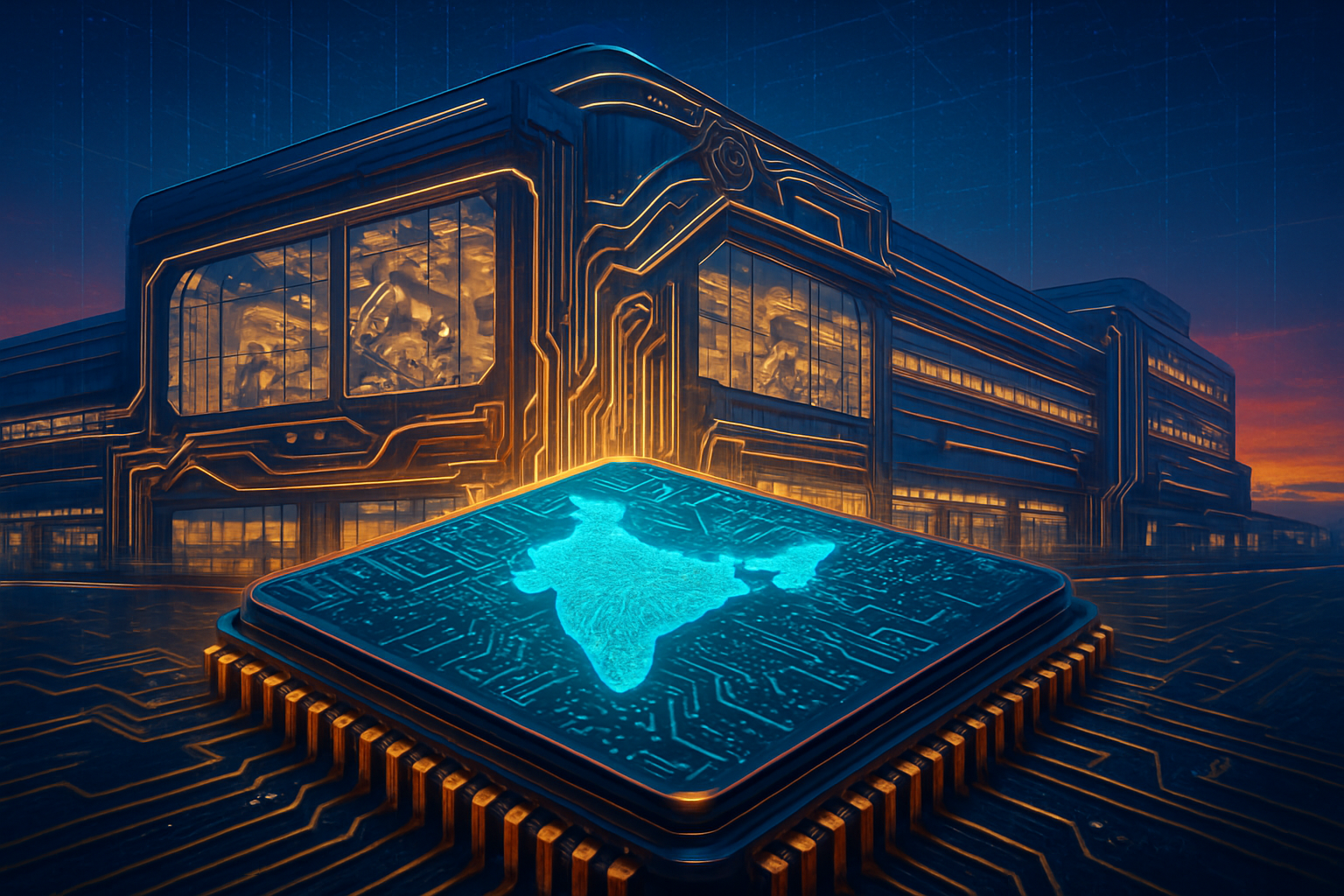
  • The Road to $1 Trillion: Semiconductor Industry Hits Historic Milestone in 2026

    The Road to $1 Trillion: Semiconductor Industry Hits Historic Milestone in 2026

    The global semiconductor industry has officially crossed the $1 trillion revenue threshold in 2026, marking a monumental shift in the global economy. What was once a distant goal for the year 2030 has been pulled forward by nearly half a decade, fueled by an insatiable demand for generative AI and the emergence of "Sovereign AI" infrastructure. According to the latest data from Omdia and PwC, the industry is no longer just a component of the tech sector; it has become the bedrock upon which the entire digital world is built.

    This acceleration represents more than just a fiscal milestone; it is the culmination of a "super-cycle" that has fundamentally restructured the global supply chain. With the industry reaching this valuation four years ahead of schedule, the focus has shifted from "can we build it?" to "how fast can we power it?" As of late January 2026, the semiconductor market is defined by massive capital deployment, technical breakthroughs in 3D stacking, and a high-stakes foundry war that is redrawing the map of global manufacturing.

    The Computing and Data Storage Boom: A 41.4% Surge

    The engine of this trillion-dollar valuation is the Computing and Data Storage segment. Omdia’s January 2026 market analysis confirms that this sector alone is experiencing a staggering 41.4% year-over-year (YoY) growth. This explosive expansion is driven by the transition from traditional general-purpose computing to accelerated computing. AI servers now account for more than 25% of all server shipments, with their average selling price (ASP) continuing to climb as they integrate more expensive logic and memory.

    Technically, this growth is being sustained by a radical shift in how chips are designed. We have moved beyond the "monolithic" era into the "chiplet" era, where different components are stitched together using advanced packaging. The industry research indicates that the "memory wall"—the bottleneck where processor speed outpaces data delivery—is finally being dismantled. Initial reactions from the research community suggest that the 41.4% growth is not a bubble but a fundamental re-platforming of the enterprise, as every major corporation pivots to a "compute-first" strategy.

    The shift is most evident in the memory market. SK Hynix and Samsung (KRX: 005930) have ramped up production of HBM4 (High Bandwidth Memory), featuring 16-layer stacks. These stacks, which utilize hybrid bonding to maintain a thin profile, offer bandwidth exceeding 2.0 TB/s. This technical leap allows for the massive parameter counts required by 2026-era Agentic AI models, ensuring that the hardware can keep pace with increasingly complex algorithmic demands.

    Hyperscaler Dominance and the $500 Billion CapEx

    The primary catalysts for this $1 trillion milestone are the "Top Four" hyperscalers: Microsoft (NASDAQ: MSFT), Amazon (NASDAQ: AMZN), Alphabet (NASDAQ: GOOGL), and Meta (NASDAQ: META). These tech giants have collectively committed to a $500 billion capital expenditure (CapEx) budget for 2026. This sum, roughly equivalent to the GDP of a mid-sized nation, is being funneled almost exclusively into AI infrastructure, including data centers, energy procurement, and bespoke silicon.

    This level of spending has created a "kingmaker" dynamic in the industry. While Nvidia (NASDAQ: NVDA) remains the dominant provider of AI accelerators with its recently launched Rubin architecture, the hyperscalers are increasingly diversifying their bets. Meta’s MTIA and Google’s TPU v6 are now handling a significant portion of internal inference workloads, putting pressure on third-party silicon providers to innovate faster. The strategic advantage has shifted to companies that can offer "full-stack" optimization—integrating custom silicon with proprietary software and massive-scale data centers.

    Market positioning is also being redefined by geographic resilience. The "Sovereign AI" movement has seen nations like the UK, France, and Japan investing billions in domestic compute clusters. This has created a secondary market for semiconductors that is less dependent on the shifting priorities of Silicon Valley, providing a buffer that analysts believe will help sustain the $1 trillion market through any potential cyclical downturns in the consumer electronics space.

    Advanced Packaging and the New Physics of Computing

    The wider significance of the $1 trillion milestone lies in the industry's mastery of advanced packaging. As Moore’s Law slows down in terms of traditional transistor scaling, TSMC (NYSE: TSM) and Intel (NASDAQ: INTC) have pivoted to "System-in-Package" (SiP) technologies. TSMC’s CoWoS (Chip-on-Wafer-on-Substrate) has become the gold standard, effectively becoming a sold-out commodity through the end of 2026.

    However, the most significant disruption in early 2026 has been the "Silicon Renaissance" of Intel. After years of trailing, Intel’s 18A (1.8nm) process node reached high-volume manufacturing this month with yields exceeding 60%. In a move that shocked the industry, Apple (NASDAQ: AAPL) has officially qualified the 18A node for its next-generation M-series chips, diversifying its supply chain away from its exclusive multi-year reliance on TSMC. This development re-establishes the United States as a Tier-1 logic manufacturer and introduces a level of foundry competition not seen in over a decade.

    There are, however, concerns regarding the environmental and energy costs of this trillion-dollar expansion. Data center power consumption is now a primary bottleneck for growth. To address this, we are seeing the first large-scale deployments of liquid cooling—which has reached 50% penetration in new data centers as of 2026—and Co-Packaged Optics (CPO), which reduces the power needed for networking chips by up to 30%. These "green-chip" technologies are becoming as critical to market value as raw FLOPS.

    The Horizon: 2nm and the Rise of On-Device AI

    Looking forward, the industry is already preparing for its next phase: the 2nm era. TSMC has begun mass production on its N2 node, which utilizes Gate-All-Around (GAA) transistors to provide a significant performance-per-watt boost. Meanwhile, the focus is shifting from the data center to the edge. The "AI-PC" and "AI-Smartphone" refresh cycles are expected to hit their peak in late 2026, as software ecosystems finally catch up to the NPU (Neural Processing Unit) capabilities of modern hardware.

    Near-term developments include the wider adoption of "Universal Chiplet Interconnect Express" (UCIe), which will allow different manufacturers to mix and match chiplets on a single substrate more easily. This could lead to a democratization of custom silicon, where smaller startups can design specialized AI accelerators without the multi-billion dollar cost of a full SoC (System on Chip) design. The challenge remains the talent shortage; the demand for semiconductor engineers continues to outstrip supply, leading to a global "war for talent" that may be the only thing capable of slowing down the industry's momentum.

    A New Era for Global Technology

    The semiconductor industry’s path to $1 trillion in 2026 is a defining moment in industrial history. It confirms that compute power has become the most valuable commodity in the world, more essential than oil and more transformative than any previous infrastructure. The 41.4% growth in computing and storage is a testament to the fact that we are in the midst of a fundamental shift in how human intelligence and machine capability interact.

    As we move through the remainder of 2026, the key metrics to watch will be the yields of the 1.8nm and 2nm nodes, the stability of the HBM4 supply chain, and whether the $500 billion CapEx from hyperscalers begins to show the expected returns in the form of Agentic AI revenue. The road to $1 trillion was paved with unprecedented investment and technical genius; the road to $2 trillion likely begins tomorrow.


    This content is intended for informational purposes only and represents analysis of current AI developments.

    TokenRing AI delivers enterprise-grade solutions for multi-agent AI workflow orchestration, AI-powered development tools, and seamless remote collaboration platforms.
    For more information, visit https://www.tokenring.ai/.