Category: Uncategorized

  • Silicon Meets Science: NVIDIA and Eli Lilly Launch $1 Billion AI Lab to Engineer the Future of Medicine

    Silicon Meets Science: NVIDIA and Eli Lilly Launch $1 Billion AI Lab to Engineer the Future of Medicine

    In a move that signals a paradigm shift for the pharmaceutical industry, NVIDIA (NASDAQ: NVDA) and Eli Lilly and Company (NYSE: LLY) have announced the launch of a $1 billion joint AI co-innovation lab. Unveiled on January 12, 2026, during the opening of the 44th Annual J.P. Morgan Healthcare Conference in San Francisco, this landmark partnership marks one of the largest financial and technical commitments ever made at the intersection of computing and biotechnology. The five-year venture aims to transition drug discovery from a process of "artisanal" trial-and-error to a precise, simulation-driven engineering discipline.

    The collaboration will be physically headquartered in the South San Francisco biotech hub, housing a "startup-style" environment where NVIDIA’s world-class AI engineers and Lilly’s veteran biological researchers will work in tandem. By combining NVIDIA’s unprecedented computational power with Eli Lilly’s clinical expertise, the lab seeks to solve some of the most complex challenges in human health, including oncology, obesity, and neurodegenerative diseases. The initiative is not merely about accelerating existing processes but about fundamentally redesigning how medicines are conceived, tested, and manufactured.

    A New Era of Generative Biology: Technical Frontiers

    At the heart of the new facility is an infrastructure designed to bridge the gap between "dry lab" digital simulations and "wet lab" physical experiments. The lab will be powered by NVIDIA’s next-generation "Vera Rubin" architecture, the successor to the widely successful Blackwell platform. This massive compute cluster is expected to deliver nearly 10 exaflops of AI performance, providing the raw power necessary to simulate molecular interactions at an atomic level with high fidelity. This technical backbone supports the NVIDIA BioNeMo platform, a generative AI framework that allows researchers to develop and scale foundation models for protein folding, chemistry, and genomics.

    What sets this lab apart from previous industry efforts is the implementation of "Agentic Wet Labs." In this system, AI agents do not just analyze data; they direct robotic laboratory systems to perform physical experiments 24/7. Results from these experiments are fed back into the AI models in real-time, creating a continuous learning loop that refines predictions and narrows down viable drug candidates with surgical precision. Furthermore, the partnership utilizes NVIDIA Omniverse to create high-fidelity digital twins of manufacturing lines, allowing Lilly to virtually stress-test supply chains and production environments long before a drug ever reaches the production stage.

    Initial reactions from the AI research community have been overwhelmingly positive, with experts noting that this move represents the ultimate "closed-loop" system for biology. Unlike previous approaches where AI was used as a post-hoc analysis tool, this lab integrates AI into the very genesis of the biological hypothesis. Industry analysts from Citi (NYSE: C) have labeled the collaboration a "strategic blueprint," suggesting that the ability to simultaneously simulate molecules and identify biological targets is the "holy grail" of modern pharmacology.

    The Trillion-Dollar Synergy: Reshaping the Competitive Landscape

    The strategic implications of this partnership extend far beyond the two primary players. As NVIDIA (NASDAQ: NVDA) maintains its position as the world's most valuable company—having crossed the $5 trillion valuation mark in late 2025—this lab cements its role not just as a hardware vendor, but as a deep-tech scientific partner. For Eli Lilly and Company (NYSE: LLY), the first healthcare company to achieve a $1 trillion market capitalization, the move is a defensive and offensive masterstroke. By securing exclusive access to NVIDIA's most advanced specialized hardware and engineering talent, Lilly aims to maintain its lead in the highly competitive obesity and Alzheimer's markets.

    This alliance places immediate pressure on other pharmaceutical giants such as Pfizer (NYSE: PFE) and Novartis (NYSE: NVS). For years, "Big Pharma" has experimented with AI through smaller partnerships and internal teams, but the sheer scale of the NVIDIA-Lilly investment raises the stakes for the entire sector. Startups in the AI drug discovery space also face a new reality; while the sector remains vibrant, the "compute moat" being built by Lilly and NVIDIA makes it increasingly difficult for smaller players to compete on the scale of massive foundational models.

    Moreover, the disruption is expected to hit the traditional Contract Research Organization (CRO) market. As the joint lab proves it can reduce R&D costs by an estimated 30% to 40% while shortening the decade-long drug development timeline by up to four years, the reliance on traditional, slower outsourcing models may dwindle. Tech giants like Alphabet (NASDAQ: GOOGL) and Microsoft (NASDAQ: MSFT), who also have significant stakes in AI biology via DeepMind and various cloud-biotech initiatives, will likely view this as a direct challenge to their dominance in the "AI-for-Science" domain.

    From Discovery to Engineering: The Broader AI Landscape

    The NVIDIA-Lilly joint lab fits into a broader trend of "Vertical AI," where general-purpose models are replaced by hyper-specialized systems built for specific scientific domains. This transition echoes previous AI milestones, such as the release of AlphaFold, but moves the needle from "predicting structure" to "designing function." By treating biology as a programmable system, the partnership reflects the growing sentiment that the next decade of AI breakthroughs will happen not in chatbots, but in the physical world—specifically in materials science and medicine.

    However, the move is not without its concerns. Ethical considerations regarding the "AI-ification" of medicine have been raised, specifically concerning the transparency of AI-designed molecules and the potential for these systems to be used in ways that could inadvertently create biosecurity risks. Furthermore, the concentration of such immense computational and biological power in the hands of two dominant firms has sparked discussions among regulators about the "democratization" of scientific discovery. Despite these concerns, the potential to address previously "undruggable" targets offers a compelling humanitarian argument for the technology's advancement.

    The Horizon: Clinical Trials and Predictive Manufacturing

    In the near term, the industry can expect the first wave of AI-designed molecules from this lab to enter Phase I clinical trials as early as 2027. The lab’s "predictive manufacturing" capabilities will likely be the first to show tangible ROI, as the digital twins in Omniverse help Lilly avoid the manufacturing bottlenecks that have historically plagued the rollout of high-demand treatments like GLP-1 agonists. Over the long term, the "Vera Rubin" powered simulations could lead to personalized "N-of-1" therapies, where AI models design drugs tailored to an individual’s specific genetic profile.

    Experts predict that if this model proves successful, it will trigger a wave of "Mega-Labs" across various sectors, from clean energy to aerospace. The challenge remains in the "wet-to-dry" translation—ensuring that the biological reality matches the digital simulation. If the joint lab can consistently overcome the biological "noise" that has traditionally slowed drug discovery, it will set a new standard for how humanity tackles the most daunting medical challenges of the 21st century.

    A Watershed Moment for AI and Healthcare

    The launch of the $1 billion joint lab between NVIDIA and Eli Lilly represents a watershed moment in the history of artificial intelligence. It is the clearest signal yet that the "AI era" has moved beyond digital convenience and into the fundamental building blocks of life. By merging the world’s most advanced computational architecture with the industry’s deepest biological expertise, the two companies are betting that the future of medicine will be written in code before it is ever mixed in a vial.

    As we look toward the coming months, the focus will shift from the headline-grabbing investment to the first results of the Agentic Wet Labs. The tech and biotech worlds will be watching closely to see if this "engineering" approach can truly deliver on the promise of faster, cheaper, and more effective cures. For now, the message is clear: the age of the AI-powered pharmaceutical giant has arrived.


    This content is intended for informational purposes only and represents analysis of current AI developments.

    TokenRing AI delivers enterprise-grade solutions for multi-agent AI workflow orchestration, AI-powered development tools, and seamless remote collaboration platforms.
    For more information, visit https://www.tokenring.ai/.
  • The End of the Storefront: Shopify and Perplexity Usher in the Era of Agentic Commerce

    The End of the Storefront: Shopify and Perplexity Usher in the Era of Agentic Commerce

    The traditional e-commerce landscape is undergoing its most radical transformation since the dawn of the mobile web. In a series of landmark announcements during the "Winter '26 RenAIssance" event and the National Retail Federation's "Big Show" this month, Shopify (NYSE: SHOP) has unveiled its vision for "Agentic Storefronts." This new infrastructure shift allows products to be discovered, compared, and purchased entirely within the conversational interfaces of AI platforms like Perplexity, ChatGPT, and Gemini. Rather than redirecting users to a traditional website, Shopify is effectively dissolving the storefront into the background, turning AI assistants into autonomous shopping agents capable of executing complex transactions.

    The immediate significance of this development cannot be overstated. For decades, the "click" has been the primary currency of the internet. However, with the integration of Shopify’s global product catalog into Perplexity’s "Buy with Pro" and Google’s (NASDAQ: GOOGL) new Universal Commerce Protocol, the industry is shifting toward a "Zero-Click" economy. In this new paradigm, the marketing funnel—awareness, consideration, and purchase—is collapsing into a single, goal-oriented conversation. For consumers, this means the end of manual form-filling and site-hopping; for merchants, it represents a high-stakes race to become "agent-ready" or risk total invisibility in an AI-dominated search landscape.

    Technical Foundations: From Web Pages to Agentic Protocols

    At the heart of this shift is the Universal Commerce Protocol (UCP), a collaborative open standard co-announced in January 2026 by Shopify, Google, and major retailers like Walmart (NYSE: WMT) and Target (NYSE: TGT). Unlike previous API integrations that required bespoke connections for every store, UCP provides a standardized language for AI agents to interact with a merchant’s backend. This allows an AI to understand real-time inventory levels, complex loyalty program rules, and subscription billing logic across thousands of different brands simultaneously. For the first time, an AI agent can act as a "Universal Cart," building a single order containing a pair of boots from one Shopify merchant and organic wool socks from another, then executing a unified checkout in a single step.

    To support this, Shopify has retooled its entire platform to be "agent-ready by default." This involves the use of specialized Large Language Models (LLMs) that automatically enrich merchant data—transforming basic product descriptions into structured, machine-readable "knowledge graphs." These graphs allow AI agents to answer nuanced questions that traditional search engines struggle with, such as "Which of these cameras is best for a beginner vlogger who mostly shoots in low light?" By providing high-fidelity data directly to the AI, Shopify ensures that its merchants' products are recommended accurately and persuasively.

    To mitigate the risk of "AI hallucinations"—where an agent might mistakenly promise a discount or a feature that doesn't exist—Shopify introduced "SimGym." This technical sandbox allows merchants to run millions of simulated "agentic shoppers" through their store to stress-test how different AI models interact with their pricing and logic. This ensures that when a real-world agent from Perplexity or OpenAI attempts a purchase, the transaction flows seamlessly without technical friction or pricing errors. Initial reactions from the AI research community have praised the move as a necessary "interoperability layer" that prevents the fragmentation of the AI-driven economy.

    The Battle for the Shopping Operating System

    This shift has ignited a fierce strategic conflict between the "Aggregators" and the "Infrastructure" providers. Tech giants like Amazon (NASDAQ: AMZN) and Alphabet Inc. (NASDAQ: GOOGL) are vying to become the primary interface for shopping. Amazon’s Rufus assistant has recently moved into a "Buy for Me" beta, allowing the agent to navigate external websites and handle form-filling for users, effectively turning the Amazon app into a universal browser for all commerce. Meanwhile, OpenAI has introduced "Conversational Ads" in ChatGPT, where brands pay to be the "suggested action" within a relevant dialogue, such as suggesting a specific brand of hiking gear when a user asks for a mountain itinerary.

    Shopify’s strategy with Agentic Storefronts is a direct defensive maneuver against this encroachment. By positioning itself as the "Utility Grid" of commerce, Shopify aims to ensure that no matter which AI interface a consumer chooses, the underlying transaction and data remain under the merchant's control. Shopify's "Agentic Plan" even allows non-Shopify brands to list their products in the Shopify Catalog to gain this AI visibility, a move that directly challenges the walled gardens of Amazon and Google Shopping. This decentralization ensures that the merchant remains the "Seller of Record," preserving their direct relationship with the customer and their first-party data.

    For startups and mid-tier AI labs, this development is a massive boon. By leveraging the Universal Commerce Protocol and Shopify’s infrastructure, smaller AI companies can offer "shopping capabilities" that rival those of the tech giants without needing to build their own massive e-commerce backends. This levels the playing field, allowing niche AI assistants—such as those focused on fashion, home improvement, or sustainable living—to become powerful sales channels. However, the competitive pressure is mounting on legacy search engines, as high-intent "buy" queries move away from traditional blue links and toward agentic platforms.

    Redefining the Retail Landscape: The Rise of GEO

    The broader significance of agentic commerce lies in the death of traditional Search Engine Optimization (SEO) and the rise of Generative Engine Optimization (GEO). In 2026, appearing on the first page of Google is no longer the ultimate goal; instead, brands must focus on being the "chosen recommendation" of an AI agent. This requires a fundamental shift in marketing, as "Agentic Architects" replace traditional SEO specialists. These new professionals focus on ensuring a brand's data is verified, structured, and "trustworthy" enough for an AI to stake its reputation on a recommendation.

    However, this transition is not without concerns. The "Inertia Tax" is becoming a real threat for legacy retailers who have failed to clean their product data. AI agents are increasingly ignoring stores with inconsistent data or slow API responses, leading to a massive loss in traffic and revenue for those who haven't modernized. Furthermore, liability remains a contentious issue. If an AI agent from a third-party platform misquotes a price or a warranty, current industry standards generally place the legal burden on the merchant. This has led to the emergence of "Compliance Agents"—specialized AI systems whose sole job is to monitor and audit what other bots are saying about a brand in real-time.

    Comparatively, this milestone is being viewed as the "iPhone moment" for e-commerce. Just as the smartphone shifted commerce from desktops to pockets, agentic storefronts are shifting commerce from active browsing to passive, goal-oriented fulfillment. The focus has moved from "Where can I buy this?" to "Get me this," representing a move toward an internet that is increasingly invisible but more functional than ever before.

    The Horizon: Autonomous Personal Shoppers

    In the near term, we can expect the rollout of "Automatic Price-Drop Buying," a feature already being piloted by Amazon’s Rufus. Users will soon be able to set a "buy order" for a specific item, and their AI agent will autonomously scan the web and execute the purchase the moment the price hits the target. Beyond simple transactions, we are moving toward "Proactive Commerce," where AI agents, aware of a user's schedule and past habits, might say, "I noticed you’re low on coffee and have a busy week ahead; I’ve ordered your favorite blend from the local roaster to arrive tomorrow morning."

    The long-term challenge will be the "Identity and Trust" layer. As AI agents gain more autonomy, verifying the identity of the buyer and the legitimacy of the merchant becomes paramount. We expect the development of "Agentic Passports," decentralized identity markers that allow agents to prove they have the user's permission to spend money without sharing sensitive credit card details directly with every merchant. Experts predict that by the end of 2027, over 40% of all digital transactions will be initiated and completed by AI agents without a human ever visiting a product page.

    Conclusion: A New Era of Frictionless Exchange

    The launch of Shopify’s Agentic Storefronts and the adoption of the Universal Commerce Protocol mark a definitive end to the "search and click" era of the internet. By allowing commerce to happen natively within the world’s most powerful AI models, Shopify and Perplexity are setting the stage for a future where the friction of shopping is virtually eliminated. The key takeaways for the industry are clear: data is the new storefront, and interoperability is the new competitive advantage.

    This development will likely be remembered as the moment when AI transitioned from a novelty tool to the fundamental engine of the global economy. As we move deeper into 2026, the industry will be watching closely to see how the "Inertia Tax" affects legacy retailers and whether the Universal Commerce Protocol can truly hold its ground against the walled gardens of Big Tech. For now, one thing is certain: the way we buy things has changed forever, and the "store" as we knew it is becoming a ghost of the pre-agentic past.


    This content is intended for informational purposes only and represents analysis of current AI developments.

    TokenRing AI delivers enterprise-grade solutions for multi-agent AI workflow orchestration, AI-powered development tools, and seamless remote collaboration platforms.
    For more information, visit https://www.tokenring.ai/.
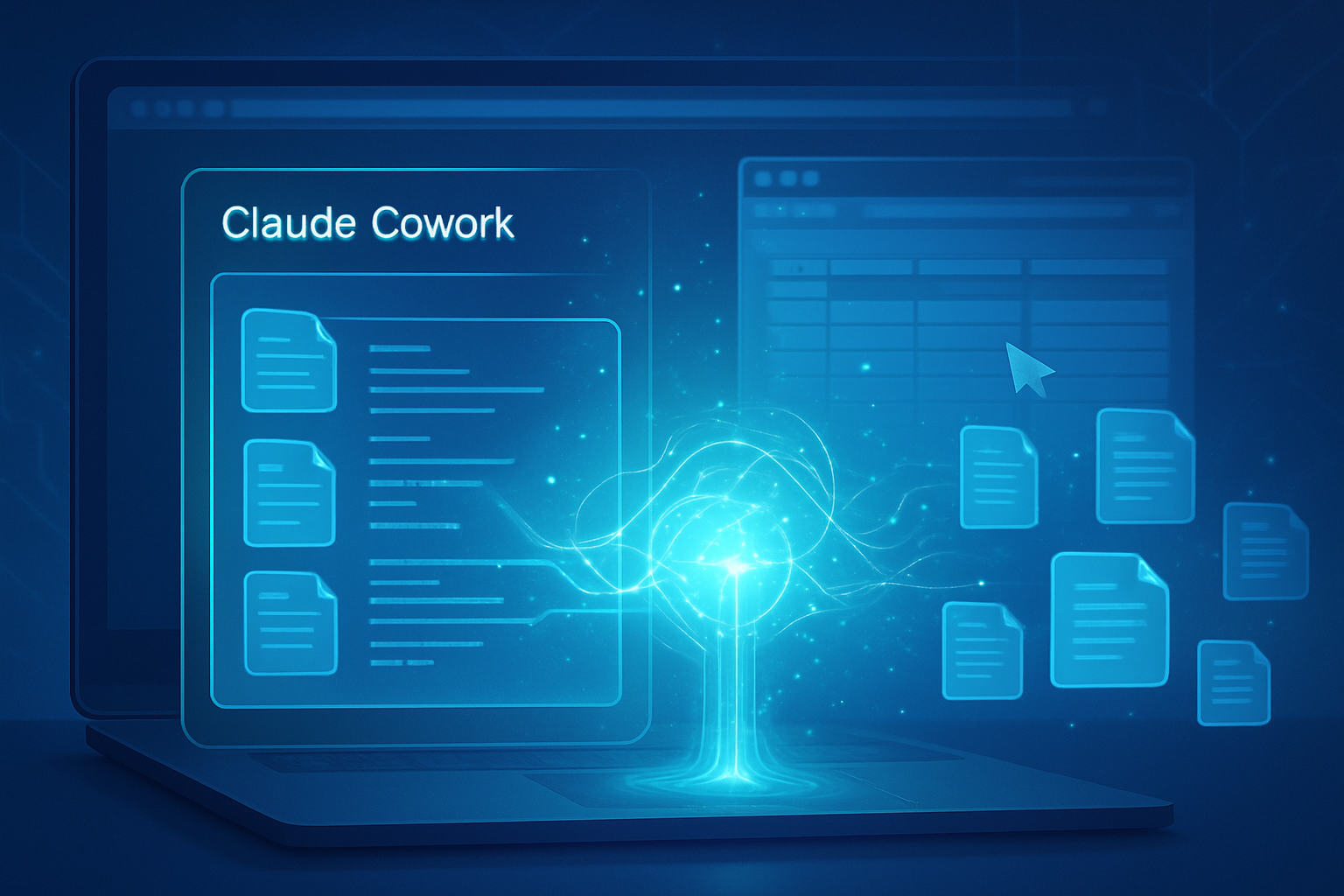
  • Anthropic Unveils ‘Claude Cowork’: The First Truly Autonomous Digital Colleague

    Anthropic Unveils ‘Claude Cowork’: The First Truly Autonomous Digital Colleague

    On January 12, 2026, Anthropic fundamentally redefined the relationship between humans and artificial intelligence with the unveiling of Claude Cowork. Moving beyond the conversational paradigm of traditional chatbots, Claude Cowork is a first-of-its-kind autonomous agent designed to operate as a "digital colleague." By granting the AI the ability to independently manage local file systems, orchestrate complex project workflows, and execute multi-step tasks without constant human prompting, Anthropic has signaled a decisive shift from passive AI assistants to active, agentic coworkers.

    The immediate significance of this launch lies in its "local-first" philosophy. Unlike previous iterations of Claude that lived solely in the browser, Claude Cowork arrives as a dedicated desktop application (initially exclusive to macOS) with the explicit capability to read, edit, and organize files directly on a user’s machine. This development represents the commercial culmination of Anthropic’s "Computer Use" research, transforming a raw API capability into a polished, high-agency tool for knowledge workers.

    The Technical Leap: Skills, MCP, and Local Agency

    At the heart of Claude Cowork is a sophisticated evolution of Anthropic’s reasoning models, specifically optimized for long-horizon tasks. While standard AI models often struggle with "context drift" during long projects, Claude Cowork utilizes a new "Skills" framework introduced in late 2025. This framework allows the model to dynamically load task-specific instruction sets—such as "Financial Modeling" or "Slide Deck Synthesis"—only when required. This technical innovation preserves the context window for the actual data being processed, allowing the agent to maintain focus over hours of autonomous work.

    The product integrates deeply with the Model Context Protocol (MCP), an open standard that enables Claude to seamlessly pull data from local directories, cloud storage like Google Drive (NASDAQ: GOOGL), and productivity hubs like Notion or Slack. During a live demonstration, Anthropic showed Claude Cowork scanning a cluttered "Downloads" folder, identifying disparate receipts and project notes, and then automatically generating a structured expense report and a project timeline in a local spreadsheet—all while the user was away from their desk.

    Unlike previous automation tools that relied on brittle "if-then" logic, Claude Cowork uses visual and semantic reasoning to navigate interfaces. It can "see" the screen, understand the layout of non-standard software, and move a cursor or type text much like a human would. To mitigate risks, Anthropic has implemented a "Scoped Access" security model, ensuring the AI can only interact with folders explicitly shared by the user. Furthermore, the system is designed with a "Human-in-the-Loop" requirement for high-stakes actions, such as mass file deletions or external communications.

    Initial reactions from the AI research community have been largely positive, though some experts have noted the significant compute requirements. The service is currently restricted to a new "Claude Max" subscription tier, priced between $100 and $200 per month. Industry analysts suggest this high price point reflects the massive backend processing needed to sustain an AI agent that remains "active" and thinking even when the user is not actively typing.

    A Tremble in the SaaS Ecosystem: Competitive Implications

    The launch of Claude Cowork has sent ripples through the stock market, particularly affecting established software incumbents. On the day of the announcement, shares of Salesforce (NYSE: CRM) and Adobe (NASDAQ: ADBE) saw modest declines as investors began to weigh the implications of an AI that can perform cross-application workflows. If a single AI agent can navigate between a CRM, a design tool, and a spreadsheet to complete a project, the need for specialized "all-in-one" enterprise platforms may diminish.

    Anthropic is positioning Claude Cowork as a direct alternative to the more ecosystem-locked offerings from Microsoft (NASDAQ: MSFT). While Microsoft Copilot is deeply integrated into the Office 365 suite, Claude Cowork’s strength lies in its ability to work across any application on a user's desktop, regardless of the developer. This "agnostic agent" strategy gives Anthropic a strategic advantage among power users and creative professionals who utilize a fragmented stack of specialized tools rather than a single corporate ecosystem.

    However, the competition is fierce. Microsoft recently responded by moving its "Agent Mode in Excel" to general availability and introducing "Work IQ," a persistent memory layer powered by GPT-5.2. Similarly, Alphabet (NASDAQ: GOOGL) has moved forward with "Project Mariner," a browser-based agent that focuses on high-speed web automation. The battle for the "AI Desktop" has officially moved from who has the best chatbot to who has the most reliable agent.

    For startups, Claude Cowork provides a "force multiplier" effect. Small teams can now leverage an autonomous digital worker to handle the "drudge work" of file organization, data entry, and basic document drafting, allowing them to compete with much larger organizations. This could lead to a new wave of "lean" companies where the human-to-output ratio is vastly higher than current industry standards.

    Beyond the Chatbot: The Societal and Economic Shift

    The introduction of Claude Cowork marks a pivotal moment in the broader AI landscape, signaling the end of the "Chatbot Era" and the beginning of the "Agentic Era." For the past three years, AI has been a tool that users talk to; now, it is a tool that users work with. This transition fits into a larger 2026 trend where AI models are being judged not just on their verbal fluency, but on their "Agency Quotient"—their ability to execute complex plans with minimal supervision.

    The implications for white-collar productivity are profound. Economists are already drawing comparisons to the introduction of the spreadsheet in the 1980s or the browser in the 1990s. By automating the "glue work" that connects different software programs—the copy-pasting, the file renaming, the data reformatting—Claude Cowork could potentially unlock a 100x increase in individual productivity for specific administrative and analytical roles.

    However, this shift brings significant concerns regarding data privacy and job displacement. As AI agents require deeper access to personal and corporate file systems, the "attack surface" for potential data breaches grows. Furthermore, while Anthropic emphasizes that Claude is a "coworker," the reality is that an agent capable of doing the work of an entry-level analyst or administrative assistant will inevitably lead to a re-evaluation of those roles. The debate over "AI safety" has expanded from preventing existential risks to ensuring the day-to-day security and economic stability of a world where AI has its "hands" on the keyboard.

    The Road Ahead: Windows Support and "Permanent Memory"

    In the near term, Anthropic has confirmed that a Windows version of Claude Cowork is in active development, with a targeted release for mid-2026. This will be a critical step for enterprise adoption, as the majority of corporate environments still rely on the Windows OS. Additionally, researchers are closely watching for the full rollout of "Permanent Memory," a feature that would allow Claude to remember a user’s unique stylistic preferences and project history across months of collaboration, rather than treating every session as a fresh start.

    Experts predict that the "high-cost" barrier of the Claude Max tier will eventually fall as "small language models" (SLMs) become more capable of handling agentic tasks locally. Within the next 18 months, we may see "hybrid agents" that perform simple file management locally on a device’s NPU (Neural Processing Unit) and only call out to the cloud for complex reasoning tasks. This would lower latency and costs while improving privacy.

    The next major milestone to watch for is "multi-agent orchestration," where a user can deploy a fleet of Claude Coworkers to handle different parts of a massive project simultaneously. Imagine an agent for research, an agent for drafting, and an agent for formatting—all communicating with each other via the Model Context Protocol to deliver a finished product.

    Conclusion: A Milestone in the History of Work

    The launch of Claude Cowork on January 12, 2026, will likely be remembered as the moment AI transitioned from a curiosity to a utility. By giving Claude a "body" in the form of computer access and a "brain" capable of long-term planning, Anthropic has moved us closer to the vision of a truly autonomous digital workforce. The key takeaway is clear: the most valuable AI is no longer the one that gives the best answer, but the one that gets the most work done.

    As we move further into 2026, the tech industry will be watching the adoption rates of the Claude Max tier and the response from Apple (NASDAQ: AAPL), which remains the last major giant to fully reveal its "AI Agent" OS integration. For now, Anthropic has set a high bar, challenging the rest of the industry to prove that they can do more than just talk. The era of the digital coworker has arrived, and the way we work will never be the same.


    This content is intended for informational purposes only and represents analysis of current AI developments.

    TokenRing AI delivers enterprise-grade solutions for multi-agent AI workflow orchestration, AI-powered development tools, and seamless remote collaboration platforms.
    For more information, visit https://www.tokenring.ai/.
  • The Universal Language of Intelligence: How the Model Context Protocol (MCP) Unified the Global AI Agent Ecosystem

    The Universal Language of Intelligence: How the Model Context Protocol (MCP) Unified the Global AI Agent Ecosystem

    As of January 2026, the artificial intelligence industry has reached a watershed moment. The "walled gardens" that once defined the early 2020s—where data stayed trapped in specific platforms and agents could only speak to a single provider’s model—have largely crumbled. This tectonic shift is driven by the Model Context Protocol (MCP), a standardized framework that has effectively become the "USB-C port for AI," allowing specialized agents from different providers to work together seamlessly across any data source or application.

    The significance of this development cannot be overstated. By providing a universal standard for how AI connects to the tools and information it needs, MCP has solved the industry's most persistent fragmentation problem. Today, a customer support agent running on a model from OpenAI can instantly leverage research tools built for Anthropic’s Claude, while simultaneously accessing live inventory data from a Microsoft (NASDAQ: MSFT) database, all without writing a single line of custom integration code. This interoperability has transformed AI from a series of isolated products into a fluid, interconnected ecosystem.

    Under the Hood: The Architecture of Universal Interoperability

    The Model Context Protocol is a client-server architecture built on top of the JSON-RPC 2.0 standard, designed to decouple the intelligence of the model from the data it consumes. At its core, MCP operates through three primary actors: the MCP Host (the user-facing application like an IDE or browser), the MCP Client (the interface within that application), and the MCP Server (the lightweight program that exposes specific data or functions). This differs fundamentally from previous approaches, where developers had to build "bespoke integrations" for every new combination of model and data source. Under the old regime, connecting five models to five databases required 25 different integrations; with MCP, it requires only one.

    The protocol defines four critical primitives: Resources, Tools, Prompts, and Sampling. Resources provide models with read-only access to files, database rows, or API outputs. Tools enable models to perform actions, such as sending an email or executing a code snippet. Prompts offer standardized templates for complex tasks, and the sophisticated "Sampling" feature allows an MCP server to request a completion from the Large Language Model (LLM) via the client—essentially enabling models to "call back" for more information or clarification. This recursive capability has allowed for the creation of nested agents that can handle multi-step, complex workflows that were previously impossible to automate reliably.

    The v1.0 stability release in late 2025 introduced groundbreaking features that have solidified MCP’s dominance in early 2026. This includes "Remote Transport" and OAuth 2.1 support, which transitioned the protocol from local computer connections to secure, cloud-hosted interactions. This update allows enterprise agents to access secure data across distributed networks using Role-Based Access Control (RBAC). Furthermore, the protocol now supports multi-modal context, enabling agents to interpret video, audio, and sensor data as first-class citizens. The AI research community has lauded these developments as the "TCP/IP moment" for the agentic web, moving AI from isolated curiosities to a unified, programmable layer of the internet.

    Initial reactions from industry experts have been overwhelmingly positive, with many noting that MCP has finally solved the "context window" problem not by making windows larger, but by making the data within them more structured and accessible. By standardizing how a model "asks" for what it doesn't know, the industry has seen a marked decrease in hallucinations and a significant increase in the reliability of autonomous agents.

    The Market Shift: From Proprietary Moats to Open Bridges

    The widespread adoption of MCP has rearranged the strategic map for tech giants and startups alike. Microsoft (NASDAQ: MSFT) and Alphabet Inc. (NASDAQ: GOOGL) have pivotally integrated MCP support into their core developer tools, Azure OpenAI and Vertex AI, respectively. By standardizing on MCP, these giants have reduced the friction for enterprise customers to migrate workloads, betting that their massive compute infrastructure and ecosystem scale will outweigh the loss of proprietary integration moats. Meanwhile, Amazon.com Inc. (NASDAQ: AMZN) has launched specialized "Strands Agents" via AWS, which are specifically optimized for MCP-compliant environments, signaling a move toward "infrastructure-as-a-service" for agents.

    Startups have perhaps benefited the most from this interoperability. Previously, a new AI agent company had to spend months building integrations for Salesforce (NYSE: CRM), Slack, and Jira before they could even prove their value to a customer. Now, by supporting a single MCP server, these startups can instantly access thousands of pre-existing data connectors. This has shifted the competitive landscape from "who has the best integrations" to "who has the best intelligence." Companies like Block Inc. (NYSE: SQ) have leaned into this by releasing open-source agent frameworks like "goose," which are powered entirely by MCP, allowing them to compete directly with established enterprise software by offering superior, agent-led experiences.

    However, this transition has not been without disruption. Traditional Integration-Platform-as-a-Service (iPaaS) providers have seen their business models challenged as the "glue" that connects applications is now being handled natively at the protocol level. Major enterprise players like SAP SE (NYSE: SAP) and IBM (NYSE: IBM) have responded by becoming first-class MCP server providers, ensuring their proprietary data is "agent-ready" rather than fighting the tide of interoperability. The strategic advantage has moved away from those who control the access points and toward those who provide the most reliable, context-aware intelligence.

    Market positioning is now defined by "protocol readiness." Large AI labs are no longer just competing on model benchmarks; they are competing on how effectively their models can navigate the vast web of MCP servers. For enterprise buyers, the risk of vendor lock-in has been significantly mitigated, as an MCP-compliant workflow can be moved from one model provider to another with minimal reconfiguration, forcing providers to compete on price, latency, and reasoning quality.

    Beyond Connectivity: The Global Context Layer

    In the broader AI landscape, MCP represents the transition from "Chatbot AI" to "Agentic AI." For the first time, we are seeing the emergence of a "Global Context Layer"—a digital commons where information and capabilities are discoverable and usable by any sufficiently intelligent machine. This mirrors the early days of the World Wide Web, where HTML and HTTP allowed any browser to view any website. MCP does for AI actions what HTTP did for text and images, creating a "Web of Tools" that agents can navigate autonomously to solve complex human problems.

    The impacts are profound, particularly in how we perceive data privacy and security. By standardizing the interface through which agents access data, the industry has also standardized the auditing of those agents. Human-in-the-Loop (HITL) features are now a native part of the MCP protocol, ensuring that high-stakes actions, such as financial transactions or sensitive data deletions, require a standardized authorization flow. This has addressed one of the primary concerns of the 2024-2025 period: the fear of "rogue" agents performing irreversible actions without oversight.

    Despite these advances, the protocol has sparked debates regarding "agentic drift" and the centralization of governance. Although Anthropic donated the protocol to the Agentic AI Foundation (AAIF) under the Linux Foundation in late 2025, a small group of tech giants still holds significant sway over the steering committee. Critics argue that as the world becomes increasingly dependent on MCP, the standards for how agents "see" and "act" in the world should be as transparent and democratized as possible to avoid a new form of digital hegemony.

    Comparisons to previous milestones, like the release of the first public APIs or the transition to mobile-first development, are common. However, the MCP breakthrough is unique because it standardizes the interaction between different types of intelligence. It is not just about moving data; it is about moving the capability to reason over that data, marking a fundamental shift in the architecture of the internet itself.

    The Autonomous Horizon: Intent and Physical Integration

    Looking ahead to the remainder of 2026 and 2027, the next frontier for MCP is the standardization of "Intent." While the current protocol excels at moving data and executing functions, experts predict the introduction of an "Intent Layer" that will allow agents to communicate their high-level goals and negotiate with one another more effectively. This would enable complex multi-agent economies where an agent representing a user could "hire" specialized agents from different providers to complete a task, automatically negotiating fees and permissions via MCP-based contracts.

    We are also on the cusp of seeing MCP move beyond the digital realm and into the physical world. Developers are already prototyping MCP servers for IoT devices and industrial robotics. In this near-future scenario, an AI agent could use MCP to "read" the telemetry from a factory floor and "invoke" a repair sequence on a robotic arm, regardless of the manufacturer. The challenge remains in ensuring low-latency communication for these real-time applications, an area where the upcoming v1.2 roadmap is expected to focus.

    The industry is also bracing for the "Headless Enterprise" shift. By 2027, many analysts predict that up to 50% of enterprise backend tasks will be handled by autonomous agents interacting via MCP servers, without any human interface required. This will necessitate new forms of monitoring and "agent-native" security protocols that go beyond traditional user logins, potentially using blockchain or other distributed ledgers to verify agent identity and intent.

    Conclusion: The Foundation of the Agentic Age

    The Model Context Protocol has fundamentally redefined the trajectory of artificial intelligence. By breaking down the silos between models and data, it has catalyzed a period of unprecedented innovation and interoperability. The shift from proprietary integrations to an open, standardized ecosystem has not only accelerated the deployment of AI agents but has also democratized access to powerful AI tools for developers and enterprises worldwide.

    In the history of AI, the emergence of MCP will likely be remembered as the moment when the industry grew up—moving from a collection of isolated, competing technologies to a cohesive, functional infrastructure. As we move further into 2026, the focus will shift from how agents connect to what they can achieve together. The "USB-C moment" for AI has arrived, and it has brought with it a new era of collaborative intelligence.

    For businesses and developers, the message is clear: the future of AI is not a single, all-powerful model, but a vast, interconnected web of specialized intelligences speaking the same language. In the coming months, watch for the expansion of MCP into vertical-specific standards, such as "MCP-Medical" or "MCP-Finance," which will further refine how AI agents operate in highly regulated and complex industries.


    This content is intended for informational purposes only and represents analysis of current AI developments.

    TokenRing AI delivers enterprise-grade solutions for multi-agent AI workflow orchestration, AI-powered development tools, and seamless remote collaboration platforms.
    For more information, visit https://www.tokenring.ai/.

  • The HTTP of Shopping: Google Unveils Universal Commerce Protocol to Power the AI Agent Economy

    The HTTP of Shopping: Google Unveils Universal Commerce Protocol to Power the AI Agent Economy

    In a landmark announcement at the National Retail Federation (NRF) conference on January 11, 2026, Alphabet Inc. (NASDAQ: GOOGL) officially launched the Universal Commerce Protocol (UCP), an open-source standard designed to enable AI agents to execute autonomous purchases across the web. Developed in collaboration with retail powerhouses like Shopify Inc. (NYSE: SHOP) and Walmart Inc. (NYSE: WMT), UCP acts as a "common language" for commerce, allowing AI assistants to move beyond simple product recommendations to managing the entire transaction lifecycle—from discovery and price negotiation to secure checkout and delivery coordination.

    The significance of this development cannot be overstated, as it marks the definitive transition from "search-based" e-commerce to "agentic commerce." For decades, online shopping has relied on human users navigating fragmented websites, manually filling carts, and entering payment data. With UCP, an AI agent—whether it is Google’s Gemini, a specialized brand assistant, or an autonomous personal shopper—can now "talk" directly to a merchant’s backend, understanding real-time inventory levels, applying loyalty discounts, and finalizing orders without the user ever having to visit a traditional storefront.

    The Technical Architecture of Autonomous Buying

    At its core, UCP is a decentralized, "transport-agnostic" protocol published under the Apache 2.0 license. Unlike previous attempts at standardized shopping, UCP does not require a central marketplace. Instead, it utilizes a "server-selects" model for capability negotiation. When an AI agent initiates a commerce request, it queries a merchant’s standardized endpoint (typically located at /.well-known/ucp). The merchant’s server then "advertises" its capabilities—such as support for guest checkout, subscription management, or same-day delivery via the "Trust Triangle" framework. This intersection algorithm ensures that the agent and the retailer can synchronize their features instantly, regardless of the underlying platform.

    Security is handled through a sophisticated cryptographic "Trust Triangle" involving the User (the holder), the Business (the verifier), and the Payment Credential Provider (the issuer). Rather than handing over raw credit card details to an AI agent, users authorize a "mandate" via the Agent Payments Protocol (AP2). This mandate grants the agent a temporary, tokenized digital key to act within specific constraints, such as a $200 spending limit. This architecture ensures that even if an AI agent is compromised, the user’s primary financial data remains secure within a "Credential Provider" like Google Wallet or Apple Pay, which is managed by Apple Inc. (NASDAQ: AAPL).

    Industry experts have compared the launch of UCP to the introduction of HTTP in the early 1990s. "We are moving from an N×N problem to a 1×N solution," noted one lead developer on the project. Previously, five different AI agents would have needed thousands of bespoke integrations to work with a thousand different retailers. UCP collapses that complexity into a single interoperable standard, allowing any compliant agent to shop at any compliant store. This is bolstered by the protocol's compatibility with the Model Context Protocol (MCP), which allows AI models to call these commercial tools as native functions within their reasoning chains.

    Initial reactions from the AI research community have been largely positive, though some caution remains regarding the "agentic gap." While the technical pipes are now in place, researchers at firms like Gartner and Forrester point out that consumer trust remains a hurdle. Gartner predicts that while 2026 is the "inaugural year" of this technology, it may take until 2027 for multi-agent frameworks to handle the majority of end-to-end retail functions. Early testers have praised the protocol's ability to handle complex "multi-stop" shopping trips—for instance, an agent buying a specific brand of organic flour from Walmart and a niche sourdough starter from a Shopify-powered boutique in a single voice command.

    A New Competitive Landscape for Retail Giants

    The rollout of UCP creates a powerful counter-weight to the "walled garden" model perfected by Amazon.com, Inc. (NASDAQ: AMZN). While Amazon has dominated e-commerce by controlling the entire stack—from search to logistics—UCP empowers "open web" retailers to fight back. By adopting the protocol, a small merchant on Shopify can now be just as accessible to a Gemini-powered agent as a massive wholesaler. This allows retailers to remain the "Merchant of Record," retaining their direct customer relationships, branding, and data, rather than ceding that control to a third-party marketplace.

    For tech giants, the strategic advantages are clear. Google is positioning itself as the primary gateway for the next generation of intent-based traffic. By hosting the protocol and integrating it deeply into the Gemini app and Google Search's "AI Mode," the company aims to become the "operating system" for commerce. Meanwhile, Shopify has already integrated UCP into its core infrastructure, launching a new "Agentic Plan" that allows even non-Shopify brands to list their products in a UCP-compliant catalog, effectively turning Shopify into a massive, agent-friendly database.

    The competitive pressure is most visible in the partnership between Walmart and Google. By linking Walmart+ accounts directly to Gemini via UCP, users can now receive personalized recommendations based on their entire omnichannel purchase history. If a user tells Gemini, "I need the usual groceries delivered in two hours," the agent uses UCP to check Walmart's local inventory, apply the user's membership benefits, and trigger a same-day delivery—all within a chat interface. This seamlessness directly challenges Amazon’s "Buy with Prime" by offering a similarly frictionless experience across a much broader array of independent retailers.

    However, the protocol also raises significant antitrust questions. Regulators in the EU and the US are already scrutinizing whether Google’s role as both the protocol’s architect and a major agent provider creates an unfair advantage. There are concerns that Google could prioritize UCP-compliant merchants in search results or use the data gathered from agent interactions to engage in sophisticated price discrimination. As AI agents begin to negotiate prices on behalf of users, the traditional concept of a "list price" may vanish, replaced by a dynamic, agent-to-agent bidding environment.

    The Broader Significance: From Web to World

    UCP represents a fundamental shift in the AI landscape, moving large language models (LLMs) from being "knowledge engines" to "action engines." This milestone is comparable to the release of the first mobile App Store; it provides the infrastructure for a whole new class of applications. The move toward agentic commerce suggests that the primary way humans interact with the internet is shifting from "browsing" to "delegating." In this new paradigm, the quality of a retailer’s API and its UCP compliance may become more important than the aesthetic design of its website.

    The impact on consumer behavior could be profound. With autonomous agents handling the drudgery of price comparison and checkout, "cart abandonment"—a trillion-dollar problem in e-commerce—could be virtually eliminated. However, this raises concerns about impulsive or unauthorized spending. The "Trust Triangle" and the use of verifiable credentials are intended to mitigate these risks, but the social impact of removing the "friction" from spending money remains a topic of intense debate among behavioral economists.

    Furthermore, UCP's introduction highlights a growing trend of "Model-to-Model" (M2M) interaction. We are entering an era where a user’s AI agent might negotiate with a merchant’s AI agent to find the best possible deal. This "Agent2Agent" (A2A) communication is a core component of the UCP roadmap, envisioning a world where software handles the complexities of supply and demand in real-time, leaving humans to simply set the high-level goals.

    The Road Ahead: Global Rollout and Challenges

    In the near term, the industry can expect a rapid expansion of UCP capabilities. Phase 1, which launched this month, focuses on native checkout within the U.S. market. By late 2026, Google and its partners plan to roll out Phase 2, which will include international expansion into markets like India and Brazil, as well as the integration of post-purchase support. This means AI agents will soon be able to autonomously track packages, initiate returns, and resolve customer service disputes using the same standardized protocol.

    One of the primary challenges moving forward will be the standardization of "Product Knowledge." While UCP handles the transaction, the industry still lacks a universal way for agents to understand the nuanced attributes of every product (e.g., "Will this couch fit through my specific door frame?"). Future developments are expected to focus on "Spatial Commerce" and more advanced "Reasoning APIs" that allow agents to query a product’s physical dimensions and compatibility with a user’s existing environment before making a purchase.

    Experts also predict the rise of "Vertical Agents"—AI shoppers specialized in specific categories like high-end fashion, hardware, or groceries. These agents will leverage UCP to scan the entire web for the best value while providing expert-level advice. As these specialized agents proliferate, the race will be on for retailers to ensure their backend systems are "agent-ready," moving away from legacy databases toward real-time, UCP-enabled inventories.

    Summary of the New Commerce Era

    The launch of the Universal Commerce Protocol is a defining moment in the history of artificial intelligence. By standardizing the way AI agents interact with the global retail ecosystem, Google and its partners have laid the tracks for a multi-trillion-dollar agentic economy. The key takeaways from this announcement are the move toward decentralized, open standards, the empowerment of independent retailers against "walled gardens," and the introduction of "Trust Triangle" security to protect autonomous transactions.

    As we look toward the coming months, the industry will be watching for the first wave of "Agent-First" shopping apps and the potential response from competitors like Amazon. The significance of UCP lies not just in its code, but in its ability to turn the dream of a "personal digital assistant" into a practical reality that can navigate the physical and commercial world on our behalf. For businesses and consumers alike, the era of "browsing" is ending; the era of "doing" has begun.


    This content is intended for informational purposes only and represents analysis of current AI developments.

    TokenRing AI delivers enterprise-grade solutions for multi-agent AI workflow orchestration, AI-powered development tools, and seamless remote collaboration platforms.
    For more information, visit https://www.tokenring.ai/.
  • Beyond Reactive Driving: NVIDIA Unveils ‘Alpamayo,’ an Open-Source Reasoning Engine for Autonomous Vehicles

    Beyond Reactive Driving: NVIDIA Unveils ‘Alpamayo,’ an Open-Source Reasoning Engine for Autonomous Vehicles

    At the 2026 Consumer Electronics Show (CES), NVIDIA (NASDAQ: NVDA) dramatically shifted the landscape of autonomous transportation by unveiling "Alpamayo," a comprehensive open-source software stack designed to bring reasoning capabilities to self-driving vehicles. Named after the iconic Peruvian peak, Alpamayo marks a pivot for the chip giant from providing the underlying hardware "picks and shovels" to offering the intellectual blueprint for the future of physical AI. By open-sourcing the "brain" of the vehicle, NVIDIA aims to solve the industry’s most persistent hurdle: the "long-tail" of rare and complex edge cases that have prevented Level 4 autonomy from reaching the masses.

    The announcement is being hailed as the "ChatGPT moment for physical AI," signaling a move away from the traditional, reactive "black box" AI systems that have dominated the industry for a decade. Rather than simply mapping pixels to steering commands, Alpamayo treats driving as a semantic reasoning problem, allowing vehicles to deliberate on human intent and physical laws in real-time. This transparency is expected to accelerate the development of autonomous fleets globally, democratizing advanced self-driving technology that was previously the exclusive domain of a handful of tech giants.

    The Architecture of Reasoning: Inside Alpamayo 1

    At the heart of the stack is Alpamayo 1, a 10-billion-parameter Vision-Language-Action (VLA) model. This foundation model is bifurcated into two distinct components: the 8.2-billion-parameter "Cosmos-Reason" backbone and a 2.3-billion-parameter "Action Expert." While previous iterations of self-driving software relied on pattern matching—essentially asking "what have I seen before that looks like this?"—Alpamayo utilizes "Chain-of-Causation" logic. The Cosmos-Reason backbone processes the environment semantically, allowing the vehicle to generate internal "logic logs." For example, if a child is standing near a ball on a sidewalk, the system doesn't just see a pedestrian; it reasons that the child may chase the ball into the street, preemptively adjusting its trajectory.

    To support this reasoning engine, NVIDIA has paired the model with AlpaSim, an open-source simulation framework that utilizes neural reconstruction through Gaussian Splatting. This allows developers to take real-world camera data and instantly transform it into a high-fidelity 3D environment where they can "re-drive" scenes with different variables. If a vehicle encounters a confusing construction zone, AlpaSim can generate thousands of "what-if" scenarios based on that single event, teaching the AI how to handle novel permutations of the same problem. The stack is further bolstered by over 1,700 hours of curated "physical AI" data, gathered across 25 countries to ensure the model understands global diversity in infrastructure and human behavior.

    From a hardware perspective, Alpamayo is "extreme-codesigned" to run on the NVIDIA DRIVE Thor SoC, which utilizes the Blackwell architecture to deliver 508 TOPS of performance. For more demanding deployments, NVIDIA’s Hyperion platform can house dual-Thor configurations, providing the massive computational overhead required for real-time VLA inference. This tight integration ensures that the high-level reasoning of the teacher models can be distilled into high-performance runtime models that operate at a 10Hz frequency without latency—a critical requirement for high-speed safety.

    Disrupting the Proprietary Advantage: A Challenge to Tesla and Beyond

    The move to open-source Alpamayo is seen by market analysts as a direct challenge to the proprietary lead held by Tesla, Inc. (NASDAQ: TSLA). For years, Tesla’s Full Self-Driving (FSD) system has been considered the benchmark for end-to-end neural network driving. However, by providing a high-quality, open-source alternative, NVIDIA has effectively lowered the barrier to entry for the rest of the automotive industry. Legacy automakers who were struggling to build their own AI stacks can now adopt Alpamayo as a foundation, allowing them to skip a decade of research and development.

    This strategic shift has already garnered significant industry support. Mercedes-Benz Group AG (OTC: MBGYY) has been named a lead partner, announcing that its 2026 CLA model will be the first production vehicle to integrate Alpamayo-derived teacher models for point-to-point navigation. Similarly, Uber Technologies, Inc. (NYSE: UBER) has signaled its intent to use the Alpamayo and Hyperion reference design for its next-generation robotaxi fleet, scheduled for a 2027 rollout. Other major players, including Lucid Group, Inc. (NASDAQ: LCID), Toyota Motor Corporation (NYSE: TM), and Stellantis N.V. (NYSE: STLA), have initiated pilot programs to evaluate how the stack can be integrated into their specific vehicle architectures.

    The competitive implications are profound. If Alpamayo becomes the industry standard, the primary differentiator between car brands may shift from the "intelligence" of the driving software to the quality of the sensor suite and the luxury of the cabin experience. Furthermore, by providing "logic logs" that explain why a car made a specific maneuver, NVIDIA is addressing the regulatory and legal anxieties that have long plagued the sector. This transparency could shift the liability landscape, allowing manufacturers to defend their AI’s decisions in court using a "reasonable person" standard rather than being held to the impossible standard of a perfect machine.

    Solving the Long-Tail: Broad Significance of Physical AI

    The broader significance of Alpamayo lies in its approach to the "long-tail" problem. In autonomous driving, the first 95% of the task—staying in lanes, following traffic lights—was solved years ago. The final 5%, involving ambiguous hand signals from traffic officers, fallen debris, or extreme weather, has proven significantly harder. By treating these as reasoning problems rather than visual recognition tasks, Alpamayo brings "common sense" to the road. This shift aligns with the wider trend in the AI landscape toward multimodal models that can understand the physical laws of the world, a field often referred to as Physical AI.

    However, the transition to reasoning-based systems is not without its concerns. Critics point out that while a model can "reason" on paper, the physical validation of these decisions remains a monumental task. The complexity of integrating such a massive software stack into the existing hardware of traditional OEMs (Original Equipment Manufacturers) could take years, leading to a "deployment gap" where the software is ready but the vehicles are not. Additionally, there are questions regarding the computational cost; while DRIVE Thor is powerful, running a 10-billion-parameter model in real-time remains an expensive endeavor that may initially be limited to premium vehicle segments.

    Despite these challenges, Alpamayo represents a milestone in the evolution of AI. It moves the industry closer to a unified "foundation model" for the physical world. Just as Large Language Models (LLMs) changed how we interact with text, VLAs like Alpamayo are poised to change how machines interact with the three-dimensional space. This has implications far beyond cars, potentially serving as the operating system for humanoid robots, delivery drones, and automated industrial machinery.

    The Road Ahead: 2026 and Beyond

    In the near term, the industry will be watching the Q1 2026 rollout of the Mercedes-Benz CLA to see how Alpamayo performs in real-world consumer hands. The success of this launch will likely determine the pace at which other automakers commit to the stack. We can also expect NVIDIA to continue expanding the Alpamayo ecosystem, with rumors already circulating about a "Mini-Alpamayo" designed for lower-power edge devices and urban micro-mobility solutions like e-bikes and delivery bots.

    The long-term vision for Alpamayo involves a fully interconnected ecosystem where vehicles "talk" to each other not just through position data, but through shared reasoning. If one vehicle encounters a road hazard and "reasons" a path around it, that logic can be shared across the cloud to all other Alpamayo-enabled vehicles in the vicinity. This collective intelligence could lead to a dramatic reduction in traffic accidents and a total optimization of urban transit. The primary challenge remains the rigorous safety validation required to move from L2+ "hands-on" systems to true L4 "eyes-off" autonomy in diverse regulatory environments.

    A New Chapter for Autonomous Mobility

    NVIDIA’s Alpamayo announcement marks a definitive end to the era of the "secretive AI" in the automotive sector. By choosing an open-source path, NVIDIA is betting that a transparent, collaborative ecosystem will reach Level 4 autonomy faster than any single company working in isolation. The shift from reactive pattern matching to deliberative reasoning is the most significant technical leap the industry has seen since the introduction of deep learning for computer vision.

    As we move through 2026, the key metrics of success will be the speed of adoption by major OEMs and the reliability of the "Chain-of-Causation" logs in real-world scenarios. If Alpamayo can truly solve the "long-tail" through reasoning, the dream of a fully autonomous society may finally be within reach. For now, the tech world remains focused on the first fleet of Alpamayo-powered vehicles hitting the streets, as the industry begins to scale the steepest peak in AI development.


    This content is intended for informational purposes only and represents analysis of current AI developments.

    TokenRing AI delivers enterprise-grade solutions for multi-agent AI workflow orchestration, AI-powered development tools, and seamless remote collaboration platforms.
    For more information, visit https://www.tokenring.ai/.
  • The Factory Floor Finds Its Feet: Hyundai Deploys Boston Dynamics’ Humanoid Atlas for Real-World Logistics

    The Factory Floor Finds Its Feet: Hyundai Deploys Boston Dynamics’ Humanoid Atlas for Real-World Logistics

    The era of the "unbound" factory has officially arrived. In a landmark shift for the automotive industry, Hyundai Motor Company (KRX: 005380) has successfully transitioned Boston Dynamics’ all-electric Atlas humanoid robot from the laboratory to the production floor. As of January 19, 2026, fleets of these sophisticated machines have begun active field operations at the Hyundai Motor Group Metaplant America (HMGMA) in Georgia, marking the first time general-purpose humanoid robots have been integrated into a high-volume manufacturing environment for complex logistics and material handling.

    This development represents a critical pivot point in industrial automation. Unlike the stationary robotic arms that have defined car manufacturing for decades, the electric Atlas units are operating autonomously in "fenceless" environments alongside human workers. By handling the "dull, dirty, and dangerous" tasks—specifically the intricate sequencing of parts for electric vehicle (EV) assembly—Hyundai is betting that humanoid agility will be the key to unlocking the next level of factory efficiency and flexibility in an increasingly competitive global market.

    The Technical Evolution: From Backflips to Battery Swaps

    The version of Atlas currently walking the halls of the Georgia Metaplant is a far cry from the hydraulic prototypes that became internet sensations for their parkour abilities. Debuted in its "production-ready" form at CES 2026 earlier this month, the all-electric Atlas is built specifically for the 24/7 rigors of industrial work. The most striking technical advancement is the robot’s "superhuman" range of motion. Eschewing the limitations of human anatomy, Atlas features 360-degree rotating joints in its waist, torso, and limbs. This allows the robot to pick up a component from behind its "back" and place it in front of itself without ever moving its feet, a capability that significantly reduces cycle times in the cramped quarters of an assembly cell.

    Equipped with human-scale hands featuring advanced tactile sensing, Atlas can manipulate everything from delicate sun visors to heavy roof-rack components weighing up to 110 pounds (50 kg). The integration of Alphabet Inc. (NASDAQ: GOOGL) subsidiary Google DeepMind's Gemini Robotics models provides the robot with "semantic reasoning." This allows the machine to interpret its environment dynamically; for instance, if a part is slightly out of place or dropped, the robot can autonomously determine a recovery strategy without requiring a human operator to reset its code. Furthermore, the robot’s operational uptime is managed via a proprietary three-minute autonomous battery swap system, ensuring that the fleet remains active across multiple shifts without the long charging pauses that plague traditional mobile robots.

    A Competitive Shockwave Across the Tech Landscape

    The successful deployment of Atlas has immediate implications for the broader technology and robotics sectors. While Tesla, Inc. (NASDAQ: TSLA) has been vocal about its Optimus program, Hyundai’s move to place Atlas in a functional, revenue-generating role gives it a significant "first-mover" advantage in the embodied AI race. By utilizing its own manufacturing plants as a "living laboratory," Hyundai is creating a vertically integrated feedback loop that few other companies can match. This strategic positioning allows them to refine the hardware and software simultaneously, potentially turning Boston Dynamics into a major provider of "Robotics-as-a-Service" (RaaS) for other industries by 2028.

    For major AI labs, this integration underscores the shift from digital-only models to "Embodied AI." The partnership with Google DeepMind signals a new competitive front where the value of an AI model is measured by its ability to interact with the physical world. Startups in the humanoid space, such as Figure and Apptronik, now find themselves chasing a production-grade benchmark. The pressure is mounting for these players to move beyond pilot programs and demonstrate similar reliability in harsh, real-world industrial environments where dust, varying temperatures (Atlas is IP67-rated), and human safety are paramount.

    The "ChatGPT Moment" for Physical Labor

    Industry analysts are calling this the "watershed moment" for robotics—the physical equivalent of the 2022 explosion of Large Language Models. This integration fits into a broader trend toward the "Software-Defined Factory" (SDF), where the physical layout of a plant is no longer fixed but can be reconfigured via code and versatile robotic labor. By utilizing "Digital Twin" technology, Hyundai engineers in South Korea can simulate new tasks for an Atlas unit in a virtual environment before pushing the update to a robot in Georgia, effectively treating physical labor as a programmable asset.

    However, the transition is not without its complexities. The broader significance of this milestone brings renewed focus to the socioeconomic impacts of automation. While Hyundai emphasizes that Atlas is filling labor shortages and taking over high-risk roles, the displacement of entry-level logistics workers remains a point of intense debate. This milestone serves as a proof of concept that humanoid robots are no longer high-tech curiosities but are becoming essential infrastructure, sparking a global conversation about the future of the human workforce in an automated world.

    The Road Toward 30,000 Humanoids

    In the near term, Hyundai and Boston Dynamics plan to scale the Atlas fleet to nearly 30,000 units by 2028. The immediate next steps involve expanding the robot's repertoire from simple part sequencing to more complex component assembly, such as installing interior trim and wiring harnesses—tasks that have historically required the unique dexterity of human fingers. Experts predict that as the "Robot Metaplant Application Center" (RMAC) continues to refine the AI training process, the cost of these units will drop, making them viable for smaller-scale manufacturing and third-party logistics (3PL) providers.

    The long-term vision extends far beyond the factory floor. The data gathered from the Metaplants will likely inform the development of robots for elder care, disaster response, and last-mile delivery. The primary challenge remaining is the perfection of "edge cases"—unpredictable human behavior or rare environmental anomalies—that still require human intervention. As the AI models powering these robots move from "reasoning" to "intuition," the boundary between what a human can do and what a robot can do on a logistics floor will continue to blur.

    Conclusion: A New Blueprint for Industrialization

    The integration of Boston Dynamics' Atlas into Hyundai's manufacturing ecosystem is more than just a corporate milestone; it is a preview of the 21st-century economy. By successfully merging advanced bipedal hardware with cutting-edge foundation models, Hyundai has set a new standard for what is possible in industrial automation. The key takeaway from this January 2026 deployment is that the "humanoid" form factor is proving its worth not because it looks like us, but because it can navigate the world designed for us.

    In the coming weeks and months, the industry will be watching for performance metrics regarding "Mean Time Between Failures" (MTBF) and the actual productivity gains realized at the Georgia Metaplant. As other automotive giants scramble to respond, the "Global Innovation Triangle" of Singapore, Seoul, and Savannah has established itself as the new epicenter of the robotic revolution. For now, the sound of motorized joints and the soft whir of LIDAR sensors are becoming as common as the hum of the assembly line, signaling a future where the machines aren't just building the cars—they're running the show.


    This content is intended for informational purposes only and represents analysis of current AI developments.

    TokenRing AI delivers enterprise-grade solutions for multi-agent AI workflow orchestration, AI-powered development tools, and seamless remote collaboration platforms.
    For more information, visit https://www.tokenring.ai/.
  • NVIDIA Unveils Isaac GR00T N1.6: The Foundation for a Global Humanoid Robot Fleet

    NVIDIA Unveils Isaac GR00T N1.6: The Foundation for a Global Humanoid Robot Fleet

    In a move that many are calling the "ChatGPT moment" for physical artificial intelligence, NVIDIA Corp (NASDAQ: NVDA) officially announced its Isaac GR00T N1.6 foundation model at CES 2026. As the latest iteration of its Generalist Robot 00 Prime platform, N1.6 represents a paradigm shift in how humanoid robots perceive, reason, and interact with the physical world. By offering a standardized "brain" and "nervous system" through the updated Jetson Thor computing modules, NVIDIA is positioning itself as the indispensable infrastructure provider for a market that is rapidly transitioning from experimental prototypes to industrial-scale deployment.

    The significance of this announcement cannot be overstated. For the first time, a cross-embodiment foundation model has demonstrated the ability to generalize across disparate robotic frames—ranging from the high-torque limbs of Boston Dynamics’ Electric Atlas to the dexterous hands of Figure 03—using a unified Vision-Language-Action (VLA) framework. With this release, the barrier to entry for humanoid robotics has dropped precipitously, allowing hardware manufacturers to focus on mechanical engineering while leveraging NVIDIA’s massive simulation-to-reality (Sim2Real) pipeline for cognitive and motor intelligence.

    Technical Architecture: A Dual-System Core for Physical Reasoning

    At the heart of GR00T N1.6 is a radical architectural departure from previous versions. The model utilizes a 32-layer Diffusion Transformer (DiT), which is nearly double the size of the N1.5 version released just a year ago. This expansion allows for significantly more sophisticated "action denoising," resulting in fluid, human-like movements that lack the jittery, robotic aesthetic of earlier generations. Unlike traditional approaches that predicted absolute joint angles—often leading to rigid movements—N1.6 predicts state-relative action chunks. This enables robots to maintain balance and precision even when navigating uneven terrain or reacting to unexpected physical disturbances in real-time.

    N1.6 also introduces a "dual-system" cognitive framework. System 1 handles reflexive, high-frequency motor control at 30Hz, while System 2 leverages the new Cosmos Reason 2 vision-language model (VLM) for high-level planning. This allows a robot to process ambiguous natural language commands like "tidy up the spilled coffee" by identifying the mess, locating the appropriate cleaning supplies, and executing a multi-step cleanup plan without pre-programmed scripts. This "common sense" reasoning is fueled by NVIDIA’s Cosmos World Foundation Models, which can generate thousands of photorealistic, physics-accurate training environments in a matter of hours.

    To support this massive computational load, NVIDIA has refreshed its hardware stack with the Jetson AGX Thor. Based on the Blackwell architecture, the high-end AGX Thor module delivers over 2,000 FP4 TFLOPS of AI performance, enabling complex generative reasoning locally on the robot. A more cost-effective variant, the Jetson T4000, provides 1,200 TFLOPS for just $1,999, effectively bringing the "brains" for industrial humanoids into a price range suitable for mass-market adoption.

    The Competitive Landscape: Verticals vs. Ecosystems

    The release of N1.6 has sent ripples through the tech industry, forcing a strategic recalibration among major AI labs and robotics firms. Companies like Figure AI and Boston Dynamics (owned by Hyundai) have already integrated the N1.6 blueprint into their latest models. Figure 03, in particular, has utilized NVIDIA’s stack to slash the training time for new warehouse tasks from months to mere days, leading to the first commercial deployment of hundreds of humanoid units at BMW and Amazon logistics centers.

    However, the industry remains divided between "open ecosystem" players on the NVIDIA stack and vertically integrated giants. Tesla Inc (NASDAQ: TSLA) continues to double down on its proprietary FSD-v15 neural architecture for its Optimus Gen 3 robots. While Tesla benefits from its internal "AI Factories," the broad availability of GR00T N1.6 allows smaller competitors to rapidly close the gap in cognitive capabilities. Meanwhile, Alphabet Inc (NASDAQ: GOOGL) and its DeepMind division have emerged as the primary software rivals, with their RT-H (Robot Transformer with Action Hierarchies) model showing superior performance in real-time human correction through voice commands.

    This development creates a new market dynamic where hardware is increasingly commoditized. As the "Android of Robotics," NVIDIA’s GR00T platform enables a diverse array of manufacturers—including Chinese firms like Unitree and AgiBot—to compete globally. AgiBot currently leads in total shipments with a 39% market share, largely by leveraging the low-cost Jetson modules to undercut Western hardware prices while maintaining high-tier AI performance.

    Wider Significance: Labor, Ethics, and the Accountability Gap

    The arrival of general-purpose humanoid robots brings profound societal implications that the world is only beginning to grapple with. Unlike specialized industrial arms, a GR00T-powered humanoid can theoretically learn any task a human can perform. This has shifted the labor market conversation from "if" automation will happen to "how fast." Recent reports suggest that routine roles in logistics and manufacturing face an automation risk of 30% to 70% by 2030, though experts argue this will lead to a new era of "Human-AI Power Couples" where robots handle physically taxing tasks while humans manage context and edge-case decision-making.

    Ethical and legal concerns are also mounting. As these robots become truly general-purpose, the accountability gap becomes a pressing issue. If a robot powered by an NVIDIA model, built by a third-party hardware OEM, and owned by a logistics firm causes an accident, the liability remains legally murky. Furthermore, the constant-on multimodal sensors required for GR00T to function have triggered strict auditing requirements under the EU AI Act, which classifies general-purpose humanoids as "High-Risk AI."

    Comparatively, the leap to GR00T N1.6 is being viewed as more significant than the transition from GPT-3 to GPT-4. While LLMs conquered digital intelligence, N1.6 represents the first truly scalable solution for physical intelligence. The ability for a machine to understand "reason" within 3D space marks the end of the "narrow AI" era and the beginning of robots as a ubiquitous part of the human social fabric.

    Looking Ahead: The Battery Barrier and Mass Adoption

    Despite the breakneck speed of AI development, physical bottlenecks remain. The most significant challenge for 2026 is power density. Current humanoid models typically operate for only 2 to 4 hours on a single charge. While GR00T N1.6 optimizes power consumption through efficient Blackwell-based compute, the industry is eagerly awaiting the mass production of solid-state batteries (SSBs). Companies like ProLogium are currently testing 400 Wh/kg cells that could extend a robot’s shift to a full 8 hours, though wide availability isn't expected until 2028.

    In the near term, we can expect to see "specialized-generalist" deployments. Robots will first saturate structured environments like automotive assembly lines and semiconductor cleanrooms before moving into the more chaotic worlds of retail and healthcare. Analysts predict that by late 2027, the first consumer-grade household assistant robots—capable of doing laundry and basic meal prep—will enter the market for under $30,000.

    Summary: A New Chapter in Human History

    The launch of NVIDIA Isaac GR00T N1.6 is a watershed moment in the history of technology. By providing a unified, high-performance foundation for physical AI, NVIDIA has solved the "brain problem" that has stymied the robotics industry for decades. The focus now shifts to hardware durability and the integration of these machines into a human-centric world.

    In the coming weeks, all eyes will be on the first field reports from BMW and Tesla as they ramp up their 2026 production lines. The success of these deployments will determine the pace of the coming robotic revolution. For now, the message from CES 2026 is clear: the robots are no longer coming—they are already here, and they are learning faster than ever before.


    This content is intended for informational purposes only and represents analysis of current AI developments.

    TokenRing AI delivers enterprise-grade solutions for multi-agent AI workflow orchestration, AI-powered development tools, and seamless remote collaboration platforms.
    For more information, visit https://www.tokenring.ai/.

  • The Brain for the Physical World: NVIDIA Cosmos 2.0 and the Dawn of Physical AI Reasoning

    The Brain for the Physical World: NVIDIA Cosmos 2.0 and the Dawn of Physical AI Reasoning

    LAS VEGAS — As the tech world gathered for CES 2026, NVIDIA (NASDAQ:NVDA) solidified its transition from a dominant chipmaker to the architect of the "Physical AI" era. The centerpiece of this transformation is NVIDIA Cosmos, a comprehensive platform of World Foundation Models (WFMs) that has fundamentally changed how machines understand, predict, and interact with the physical world. While Large Language Models (LLMs) taught machines to speak, Cosmos is teaching them the laws of physics, causal reasoning, and spatial awareness, effectively providing the "prefrontal cortex" for a new generation of autonomous systems.

    The immediate significance of the Cosmos 2.0 announcement lies in its ability to bridge the "sim-to-real" gap that has long plagued the robotics industry. By enabling robots to simulate millions of hours of physical interaction within a digitally imagined environment—before ever moving a mechanical joint—NVIDIA has effectively commoditized complex physical reasoning. This move positions the company not just as a hardware vendor, but as the foundational operating system for every autonomous entity, from humanoid factory workers to self-driving delivery fleets.

    The Technical Core: Tokens, Time, and Tensors

    At the heart of the latest update is Cosmos Reason 2, a vision-language-action (VLA) model that has redefined the Physical AI Bench standards. Unlike previous robotic controllers that relied on rigid, pre-programmed heuristics, Cosmos Reason 2 employs a "Chain-of-Thought" planning mechanism for physical tasks. When a robot is told to "clean up a spill," the model doesn't just execute a grab command; it reasons through the physics of the liquid, the absorbency of the cloth, and the sequence of movements required to prevent further spreading. This represents a shift from reactive robotics to proactive, deliberate planning.

    Technical specifications for Cosmos 2.5, released alongside the reasoning engine, include a breakthrough visual tokenizer that offers 8x higher compression and 12x faster processing than the industry standards of 2024. This allows the AI to process high-resolution video streams in real-time, "seeing" the world in a way that respects temporal consistency. The platform consists of three primary model tiers: Cosmos Nano, designed for low-latency inference on edge devices; Cosmos Super, the workhorse for general industrial robotics; and Cosmos Ultra, a 14-billion-plus parameter giant used to generate high-fidelity synthetic data.

    The system's predictive capabilities, housed in Cosmos Predict 2.5, can now forecast up to 30 seconds of physically plausible future states. By "imagining" what will happen if a specific action is taken—such as how a fragile object might react to a certain grip pressure—the AI can refine its movements in a mental simulator before executing them. This differs from previous approaches that relied on massive, real-world trial-and-error, which was often slow, expensive, and physically destructive.

    Initial reactions from the AI research community have been largely celebratory, though tempered by the sheer compute requirements. Experts at Stanford and MIT have noted that NVIDIA's tokenizer is the first to truly solve the problem of "object permanence" in AI vision, ensuring that the model understands an object still exists even when it is briefly obscured from view. However, some researchers have raised questions about the "black box" nature of these world models, suggesting that understanding why a model predicts a certain physical outcome remains a significant challenge.

    Market Disruption: The Operating System for Robotics

    NVIDIA's strategic positioning with Cosmos 2.0 is a direct challenge to the vertical integration strategies of companies like Tesla (NASDAQ:TSLA). While Tesla relies on its proprietary FSD (Full Self-Driving) data and the Dojo supercomputer to train its Optimus humanoid, NVIDIA is providing an "open" alternative for the rest of the industry. Companies like Figure AI and 1X have already integrated Cosmos into their stacks, allowing them to match or exceed the reasoning capabilities of Optimus without needing Tesla’s multi-billion-mile driving dataset.

    This development creates a clear divide in the market. On one side are the vertically integrated giants like Tesla, aiming to be the "Apple of Robotics." On the other is the NVIDIA ecosystem, which functions more like Android, providing the underlying intelligence layer for dozens of hardware manufacturers. Major players like Uber (NYSE:UBER) have already leveraged Cosmos to simulate "long-tail" edge cases for their robotaxi services—scenarios like a child chasing a ball into a street—that are too dangerous to test in reality.

    The competitive implications are also being felt by traditional AI labs. OpenAI, which recently issued a massive Request for Proposals (RFP) to secure its own robotics supply chain, now finds itself in a "co-opetition" with NVIDIA. While OpenAI provides the high-level cognitive reasoning through its GPT series, NVIDIA's Cosmos is winning the battle for the "low-level" physical intuition required for fine motor skills and spatial navigation. This has forced major venture capital firms, including Goldman Sachs (NYSE:GS), to re-evaluate the valuation of robotics startups based on their "Cosmos-readiness."

    For startups, Cosmos represents a massive reduction in the barrier to entry. A small robotics firm no longer needs a massive data collection fleet to train a capable robot; they can instead use Cosmos Ultra to generate high-quality synthetic training data tailored to their specific use case. This shift is expected to trigger a wave of "niche humanoids" designed for specific environments like hospitals, high-security laboratories, and underwater maintenance.

    Broader Significance: The World Model Milestone

    The rise of NVIDIA Cosmos marks a pivot in the broader AI landscape from "Information AI" to "Physical AI." For the past decade, the focus has been on processing text and images—data that exists in a two-dimensional digital realm. Cosmos represents the first successful large-scale effort to codify the three-dimensional, gravity-bound reality we inhabit. It moves AI beyond mere pattern recognition and into the realm of "world modeling," where the machine possesses a functional internal representation of reality.

    However, this breakthrough has not been without controversy. In late 2024 and throughout 2025, reports surfaced that NVIDIA had trained Cosmos by scraping millions of hours of video from platforms like YouTube and Netflix. This has led to ongoing legal challenges from content creator collectives who argue that their "human lifetimes of video" were ingested without compensation to teach robots how to move and behave. The outcome of these lawsuits could define the fair-use boundaries for physical AI training for the next decade.

    Comparisons are already being drawn between the release of Cosmos and the "ImageNet moment" of 2012 or the "ChatGPT moment" of 2022. Just as those milestones unlocked computer vision and natural language processing, Cosmos is seen as the catalyst that will finally make robots useful in unstructured environments. Unlike a factory arm that moves in a fixed path, a Cosmos-powered robot can navigate a messy kitchen or a crowded construction site because it understands the "why" behind physical interactions, not just the "how."

    Future Outlook: From Simulation to Autonomy

    Looking ahead, the next 24 months are expected to see a surge in "general-purpose" robotics. With the hardware architectures like NVIDIA’s Rubin (slated for late 2026) providing even more specialized compute for world models, the latency between "thought" and "action" in robots will continue to shrink. Experts predict that by 2027, the cost of a highly capable humanoid powered by the Cosmos stack could drop below $40,000, making them viable for small-scale manufacturing and high-end consumer roles.

    The near-term focus will likely be on "multi-modal physical reasoning," where a robot can simultaneously listen to a complex verbal instruction, observe a physical demonstration, and then execute the task in a completely different environment. Challenges remain, particularly in the realm of energy efficiency; running high-parameter world models on a battery-powered humanoid remains a significant engineering hurdle.

    Furthermore, the industry is watching closely for the emergence of "federated world models," where robots from different manufacturers could contribute to a shared understanding of physical laws while keeping their specific task-data private. If NVIDIA succeeds in establishing Cosmos as the standard for this data exchange, it will have secured its place as the central nervous system of the 21st-century economy.

    A New Chapter in AI History

    NVIDIA Cosmos represents more than just a software update; it is a fundamental shift in how artificial intelligence interacts with the human world. By providing a platform that can reason through the complexities of physics and time, NVIDIA has removed the single greatest obstacle to the mass adoption of robotics. The days of robots being confined to safety cages in factories are rapidly coming to an end.

    As we move through 2026, the key metric for AI success will no longer be how well a model can write an essay, but how safely and efficiently it can navigate a crowded room or assist in a complex surgery. The significance of this development in AI history cannot be overstated; we have moved from machines that can think about the world to machines that can act within it.

    In the coming months, keep a close eye on the deployment of "Cosmos-certified" humanoids in pilot programs across the logistics and healthcare sectors. The success of these trials will determine how quickly the "Physical AI" revolution moves from the lab to our living rooms.


    This content is intended for informational purposes only and represents analysis of current AI developments.

    TokenRing AI delivers enterprise-grade solutions for multi-agent AI workflow orchestration, AI-powered development tools, and seamless remote collaboration platforms.
    For more information, visit https://www.tokenring.ai/.
  • The Silicon Great Wall Cracks: Zhipu AI Launches Flagship GLM-Image Model Trained Entirely on Huawei Ascend Hardware

    The Silicon Great Wall Cracks: Zhipu AI Launches Flagship GLM-Image Model Trained Entirely on Huawei Ascend Hardware

    HONG KONG — In a move that signals a definitive shift in the global balance of artificial intelligence power, Zhipu AI (HKEX: 2513) announced the official launch of GLM-Image on January 14, 2026. The high-performance multimodal generative model is the first of its kind to be trained from scratch entirely on a domestic Chinese hardware stack, specifically leveraging Huawei’s Ascend 910C AI processors. This milestone marks a critical turning point for China’s AI industry, which has spent the last two years under heavy U.S. export restrictions designed to limit its access to cutting-edge semiconductor technology.

    The successful training of GLM-Image—a model that industry analysts say rivals the visual fidelity and semantic understanding of Western counterparts like Midjourney and OpenAI’s DALL-E 3—proves that China’s "AI Tigers" are successfully decoupling from Nvidia Corporation (NASDAQ: NVDA). Coming just six days after Zhipu AI’s blockbuster $7.5 billion initial public offering in Hong Kong, the announcement has sent ripples through the tech world, suggesting that the "hardware gap" between the U.S. and China is narrowing far faster than Western regulators had anticipated.

    Technical Prowess: Bridging the "Cuda Gap" Through Hybrid Architecture

    At the heart of GLM-Image lies a sophisticated "autoregressive plus diffusion decoder" architecture. Unlike standard Latent Diffusion Models (LDM) which dominate the Western market, Zhipu’s model utilizes a 9-billion parameter autoregressive transformer to handle high-level semantic understanding, coupled with a 7-billion parameter diffusion decoder dedicated to pixel-perfect rendering. This dual-engine design allows GLM-Image to excel in "knowledge-intensive" visual tasks, such as rendering complex infographics and commercial posters with accurate, context-aware text—a feat that has traditionally plagued earlier generation AI models.

    The technical achievement, however, is as much about the silicon as it is about the software. GLM-Image was trained on the Huawei Ascend Atlas 800T A2 platform, utilizing the latest Ascend 910C chips. While each individual 910C chip reportedly offers roughly 60% to 80% of the raw training efficiency of an Nvidia H100, Zhipu engineers achieved parity through deep software-hardware co-optimization. By utilizing Huawei’s MindSpore framework and specialized "High-performance Fusion Operators," the team reduced the communication bottlenecks that typically hinder large-scale domestic clusters.

    Initial reactions from the AI research community have been one of cautious admiration. Zvi Mowshowitz, a prominent AI analyst, noted that the output quality of GLM-Image is "nearly indistinguishable" from top-tier models developed on Nvidia's Blackwell architecture. Meanwhile, experts from the Beijing Academy of Artificial Intelligence (BAAI) highlighted that Zhipu’s transition to a "full-stack domestic" approach marks the end of the experimental phase for Chinese AI, transitioning into a phase of robust, sovereign production.

    Market Disruption: The End of Nvidia’s Dominance in the East?

    The launch of GLM-Image is a direct challenge to the market positioning of Nvidia, which has struggled to navigate U.S. Department of Commerce restrictions. While Nvidia has attempted to maintain its footprint in China with "nerfed" versions of its chips, such as the H20, the rise of the Ascend 910C has made these compromised products less attractive. For Chinese AI labs, the choice is increasingly between a restricted Western chip and a domestic one that is backed by direct government support and specialized local engineering teams.

    This development is also reshaping the competitive landscape among China’s tech giants. While Alibaba Group Holding Limited (NYSE: BABA) and Tencent Holdings Limited (HKG: 0700) have historically relied on Nvidia clusters for their frontier models, both are now pivotally shifting. Alibaba recently announced it would migrate the training of its Qwen family of models to its proprietary "Zhenwu" silicon, while Tencent has begun implementing state-mandated "AI+ Initiative" protocols that favor domestic accelerators for new data centers.

    For Zhipu AI, the success of GLM-Image serves as a powerful validation of its recent IPO. Raising over $558 million on the Hong Kong Stock Exchange, the company—led by Tsinghua University professor Tang Jie—has positioned itself as the standard-bearer for Chinese AI self-reliance. By proving that frontier-level models can be trained without Western silicon, Zhipu has significantly de-risked its investment profile against future U.S. sanctions, a strategic advantage that its competitors, still reliant on offshore Nvidia clusters, currently lack.

    Geopolitical Significance: The "Silicon Great Wall" Takes Shape

    The broader significance of Zhipu’s breakthrough lies in the apparent failure of U.S. export controls to halt China's progress in generative AI. When Zhipu AI was added to the U.S. Entity List in early 2024, many predicted the company would struggle to maintain its pace of innovation. Instead, the sanctions appear to have accelerated the development of a parallel domestic ecosystem. The "Silicon Great Wall"—a concept describing a decoupled, self-sufficient Chinese tech stack—is no longer a theoretical goal but a functioning reality.

    This milestone also highlights a shift in training strategy. To compensate for the lower efficiency of domestic chips compared to Nvidia's Blackwell (B200) series, Chinese firms are employing a "brute force" clustering strategy. Huawei’s CloudMatrix 384 system, which clusters nearly 400 Ascend chips into a single logical unit, reportedly delivers 300 PetaFLOPS of compute. While this approach is more power-intensive and requires five times the number of chips compared to Nvidia’s latest racks, it effectively achieves the same results, proving that sheer scale can overcome individual hardware deficiencies.

    Comparisons are already being drawn to previous technological pivots, such as China’s rapid mastery of high-speed rail and satellite navigation. In the AI landscape, the launch of GLM-Image on January 14 will likely be remembered as the moment the "hardware gap" ceased to be an existential threat to Chinese AI ambitions and instead became a manageable engineering hurdle.

    Future Horizons: Towards AGI on Domestic Silicon

    Looking ahead, the roadmap for Zhipu AI and its partner Huawei involves even more ambitious targets. Sources close to the company suggest that GLM-5, Zhipu’s next-generation flagship large language model, is already undergoing testing on a massive 100,000-chip Ascend cluster. The goal is to achieve Artificial General Intelligence (AGI) capabilities—specifically in reasoning and long-context understanding—using a 100% domestic pipeline by early 2027.

    In the near term, we can expect a surge in enterprise-grade applications powered by GLM-Image. From automated marketing departments in Shenzhen to architectural design firms in Shanghai, the availability of a high-performance, locally hosted visual model is expected to drive a new wave of AI adoption across Chinese industry. However, challenges remain; the energy consumption of these massive domestic clusters is significantly higher than that of Nvidia-based systems, necessitating new breakthroughs in "green AI" and power management.

    Industry experts predict that the next logical step will be the release of the Ascend 910D, rumored to be in production for a late 2026 debut. If Huawei can successfully shrink the manufacturing node despite continued lithography restrictions, the efficiency gap with Nvidia could narrow even further, potentially positioning Chinese hardware as a viable export product for other nations looking to bypass Western tech hegemony.

    Final Assessment: A Paradigm Shift in Global AI

    The launch of GLM-Image and Zhipu AI’s successful IPO represent a masterclass in resilient innovation. By successfully navigating the complexities of the U.S. Entity List and deep-stack hardware engineering, Zhipu has proven that the future of AI is not a unipolar world centered on Silicon Valley. Instead, a robust, competitive, and entirely independent AI ecosystem has emerged in the East.

    The key takeaway for the global tech community is clear: hardware restrictions are a temporary barrier, not a permanent ceiling. As Zhipu AI continues to scale its models and Huawei refines its silicon, the focus will likely shift from whether China can build frontier AI to how the rest of the world will respond to a two-track global AI economy.

    In the coming weeks, market watchers will be closely monitoring the secondary market performance of Zhipu AI (HKEX: 2513) and searching for any signs of counter-moves from Western regulators. For now, however, the successful deployment of GLM-Image stands as a testament to a narrowing gap and a new era of global technological competition.


    This content is intended for informational purposes only and represents analysis of current AI developments.

    TokenRing AI delivers enterprise-grade solutions for multi-agent AI workflow orchestration, AI-powered development tools, and seamless remote collaboration platforms.
    For more information, visit https://www.tokenring.ai/.