Category: Uncategorized

  • The Silicon Surcharge: Impact of New 25% US Tariffs on Advanced AI Chips

    The Silicon Surcharge: Impact of New 25% US Tariffs on Advanced AI Chips

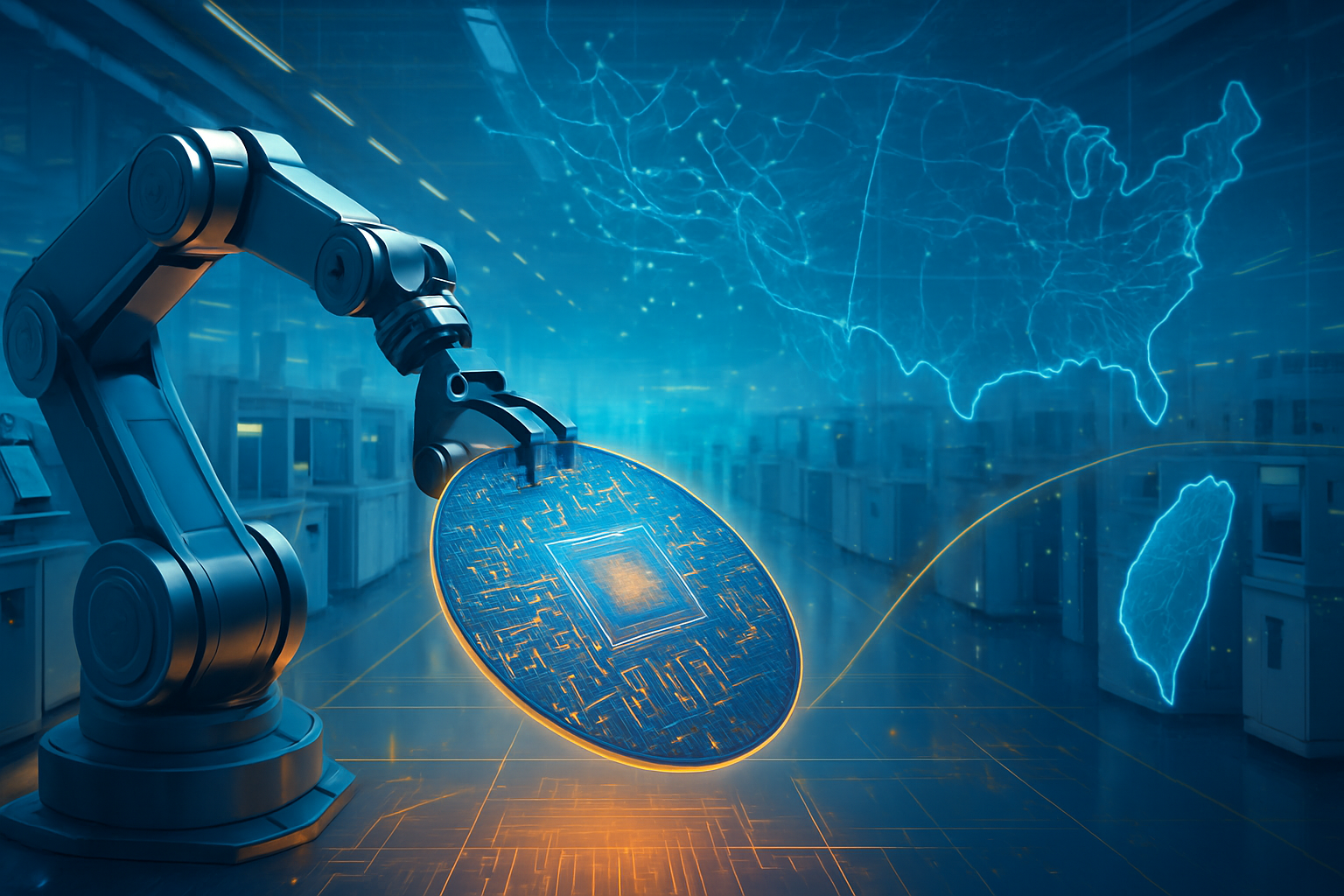
    In a move that has sent shockwaves through the global technology sector, the United States officially implemented a 25% tariff on frontier-class AI semiconductors, effective January 15, 2026. This aggressive trade policy, dubbed the "Silicon Surcharge," marks a pivotal shift in the American strategy to secure "Silicon Sovereignty." By targeting the world’s most advanced computing chips—specifically the NVIDIA H200 and the AMD Instinct MI325X—the U.S. government is effectively transitioning from a strategy of total export containment to a sophisticated "revenue-capture" model designed to fund domestic industrial resurgence.

    The proclamation, signed under Section 232 of the Trade Expansion Act of 1962, cites national security risks inherent in the fragility of globalized semiconductor supply chains. While the immediate effect is a significant price hike for international buyers, the policy includes a strategic "Domestic Use" carve-out, exempting chips destined for U.S.-based data centers and startups. This dual-track approach aims to keep the American AI boom accelerating while simultaneously taxing the AI development of geopolitical rivals to subsidize the next generation of American fabrication plants.

    Technical Specifications and the "Silicon Surcharge" Framework

    The new regulatory framework does not just name specific products; it defines "frontier-class" hardware through rigorous technical performance metrics. The 25% tariff applies to any high-performance AI accelerator meeting specific thresholds for Total Processing Performance (TPP) and DRAM bandwidth. Tier 1 coverage includes chips with a TPP between 14,000 and 17,500 and DRAM bandwidth ranging from 4,500 to 5,000 GB/s. Tier 2, which captures the absolute cutting edge like the NVIDIA (NASDAQ: NVDA) H200, targets units with a TPP exceeding 20,800 and bandwidth over 5,800 GB/s.

    Beyond raw performance, the policy specifically targets the "Taiwan-to-China detour." For years, advanced chips manufactured in Taiwan often transitioned through U.S. ports for final testing and packaging before being re-exported to international markets. Under the new rules, these chips attract the 25% levy the moment they enter U.S. customs, regardless of their final destination. This closes a loophole that previously allowed international buyers to benefit from U.S. logistics without contributing to the domestic industrial base.

    Initial reactions from the AI research community have been a mix of caution and strategic pivot. While researchers at major institutions express concern over the potential for increased hardware costs, the "Trusted Tier" certification process offers a silver lining. By providing end-use certifications, U.S. labs can bypass the surcharge, effectively creating a protected ecosystem for domestic innovation. However, industry experts warn that the administrative burden of "third-party lab testing" to prove domestic intent could slow down deployment timelines for smaller players in the short term.

    Market Impact: Tech Giants and the Localization Race

    The market implications for major chip designers and cloud providers are profound. NVIDIA (NASDAQ: NVDA) and Advanced Micro Devices (NASDAQ: AMD) are now in a high-stakes race to certify their latest architectures as "U.S. Manufactured." This has accelerated the timeline for localizing advanced packaging—the final and most complex stage of chip production. To avoid the surcharge permanently, these companies are leaning heavily on partners like Taiwan Semiconductor Manufacturing Company (NYSE: TSM) and Amkor Technology (NASDAQ: AMKR), both of whom are rushing to complete advanced packaging facilities in Arizona by late 2026.

    For hyper-scalers like Microsoft (NASDAQ: MSFT) and Amazon (NASDAQ: AMZN), the tariffs create a complex cost-benefit analysis. On one hand, their domestic data center expansions remain largely insulated due to the domestic-use exemptions. On the other hand, their international cloud regions—particularly those serving the Asia-Pacific market—face a sudden 25% increase in capital expenditure for high-end AI compute. This is expected to lead to a "tiered" pricing model for global AI services, where compute-intensive tasks are significantly cheaper to run on U.S.-based servers than on international ones.

    Startups and mid-tier AI labs may find themselves in a more competitive position domestically. By shielding local players from the "Silicon Surcharge," the U.S. government is providing an indirect subsidy to any company building its AI models on American soil. This market positioning is intended to drain talent and capital away from foreign AI hubs and toward the "Trusted Tier" ecosystem emerging within the United States.

    A Shift in the Geopolitical Landscape: The "China Tax"

    The January 2026 policy represents a fundamental evolution in U.S.-China trade relations. Moving away from the blanket bans of the early 2020s, the current administration has embraced a "tax-for-access" model. By allowing the sale of H200-class chips to international markets (including China) subject to the 25% surcharge, the U.S. is effectively taxing its rivals’ AI progress to fund its own domestic "CHIPS Act 2.0" initiatives. This "China Tax" is expected to generate billions in revenue, which has already been earmarked for the "One Big Beautiful Bill"—a massive 2025 legislative package that increased semiconductor investment tax credits from 25% to 35%.

    This strategy fits into a broader trend of "diffusion" rather than "containment." U.S. policymakers appear to have calculated that while China will eventually develop its own high-end chips, the U.S. can use the intervening years to build an unassailable lead in manufacturing capacity. This "Silicon Sovereignty" movement seeks to decouple the hardware stack from global vulnerabilities, ensuring that the critical infrastructure of the 21st century—AI compute—is designed, taxed, and increasingly built within a secure sphere of influence.

    Comparisons to previous milestones, such as the 2022 export controls, suggest this is a much more mature and economically integrated approach. Instead of a "cold war" in tech, we are seeing the rise of a "managed trade" era where the flow of high-end silicon is governed by both security concerns and aggressive industrial policy. The geopolitical landscape is no longer about who is allowed to buy the chips, but rather how much they are willing to pay into the American industrial fund to get them.

    Future Developments and the Road to 2027

    The near-term future will be dominated by the implementation of the $500 billion U.S.-Taiwan "America First" investment deal. This historic agreement, announced alongside the tariffs, secures massive direct investments from Taiwanese firms into U.S. soil. In exchange, the U.S. has granted these companies duty-free import allowances for construction materials and equipment, provided they hit strict milestones for operational "frontier-class" manufacturing by 2027.

    One of the biggest challenges on the horizon remains the "Advanced Packaging Gap." While the U.S. is proficient in chip design and is rapidly building fabrication plants (fabs), the specialized facilities required to "package" chips like the MI325X—stacking memory and processors with micron-level precision—are still largely concentrated in Asia. The success of the 25% tariff as a localization tool depends entirely on whether the Amkor and TSMC plants in Arizona can scale fast enough to meet the demand of the domestic-use "Trusted Tier."

    Experts predict that by early 2027, we will see the first truly "End-to-End American" H-series chips, which will be entirely exempt from the logistical and tax burdens of the current global system. This will likely trigger a second wave of AI development focused on "Edge Sovereignty," where AI is integrated into physical infrastructure, from autonomous power grids to national defense systems, all running on hardware that has never left the North American continent.

    Conclusion: A New Chapter in AI History

    The implementation of the 25% Silicon Surcharge on January 15, 2026, will likely be remembered as the moment the U.S. formalized its "Silicon Sovereignty" doctrine. By leveraging the immense market value of NVIDIA (NASDAQ: NVDA) and AMD (NASDAQ: AMD) hardware, the government has created a powerful mechanism to fund the reshoring of the most critical manufacturing process in the world. The shift from blunt bans to a revenue-capturing tariff reflects a sophisticated understanding of AI as both a national security asset and a primary economic engine.

    The key takeaways for the industry are clear: localization is no longer an option—it is a financial necessity. While the short-term volatility in chip prices and cloud costs may cause friction, the long-term intent is to create a self-sustaining, U.S.-centric AI ecosystem. In the coming months, stakeholders should watch for the first "Trusted Tier" certifications and the progress of the Arizona packaging facilities, as these will be the true barometers for the success of this high-stakes geopolitical gamble.


    This content is intended for informational purposes only and represents analysis of current AI developments.

    TokenRing AI delivers enterprise-grade solutions for multi-agent AI workflow orchestration, AI-powered development tools, and seamless remote collaboration platforms.
    For more information, visit https://www.tokenring.ai/.
  • The Dawn of HBM4: SK Hynix and TSMC Forge a New Architecture to Shatter the AI Memory Wall

    The Dawn of HBM4: SK Hynix and TSMC Forge a New Architecture to Shatter the AI Memory Wall

    The semiconductor industry has reached a pivotal milestone in the race to sustain the explosive growth of artificial intelligence. As of early 2026, the formalization of the "One Team" alliance between SK Hynix (KRX: 000660) and Taiwan Semiconductor Manufacturing Company (NYSE: TSM) has fundamentally restructured how high-performance memory is designed and manufactured. This collaboration marks the transition to HBM4, the sixth generation of High Bandwidth Memory, which aims to dissolve the data-transfer bottlenecks that have long hampered the performance of the world’s most advanced Large Language Models (LLMs).

    The immediate significance of this development lies in the unprecedented integration of logic and memory. For the first time, HBM is moving away from being a "passive" storage component to an "active" participant in AI computation. By leveraging TSMC’s advanced logic nodes for the base die of SK Hynix’s memory stacks, the alliance is providing the necessary infrastructure for NVIDIA’s (NASDAQ: NVDA) next-generation Rubin architecture, ensuring that the next wave of trillion-parameter models can operate without the crippling latency of previous hardware generations.

    The 2048-Bit Leap: Redefining the HBM Architecture

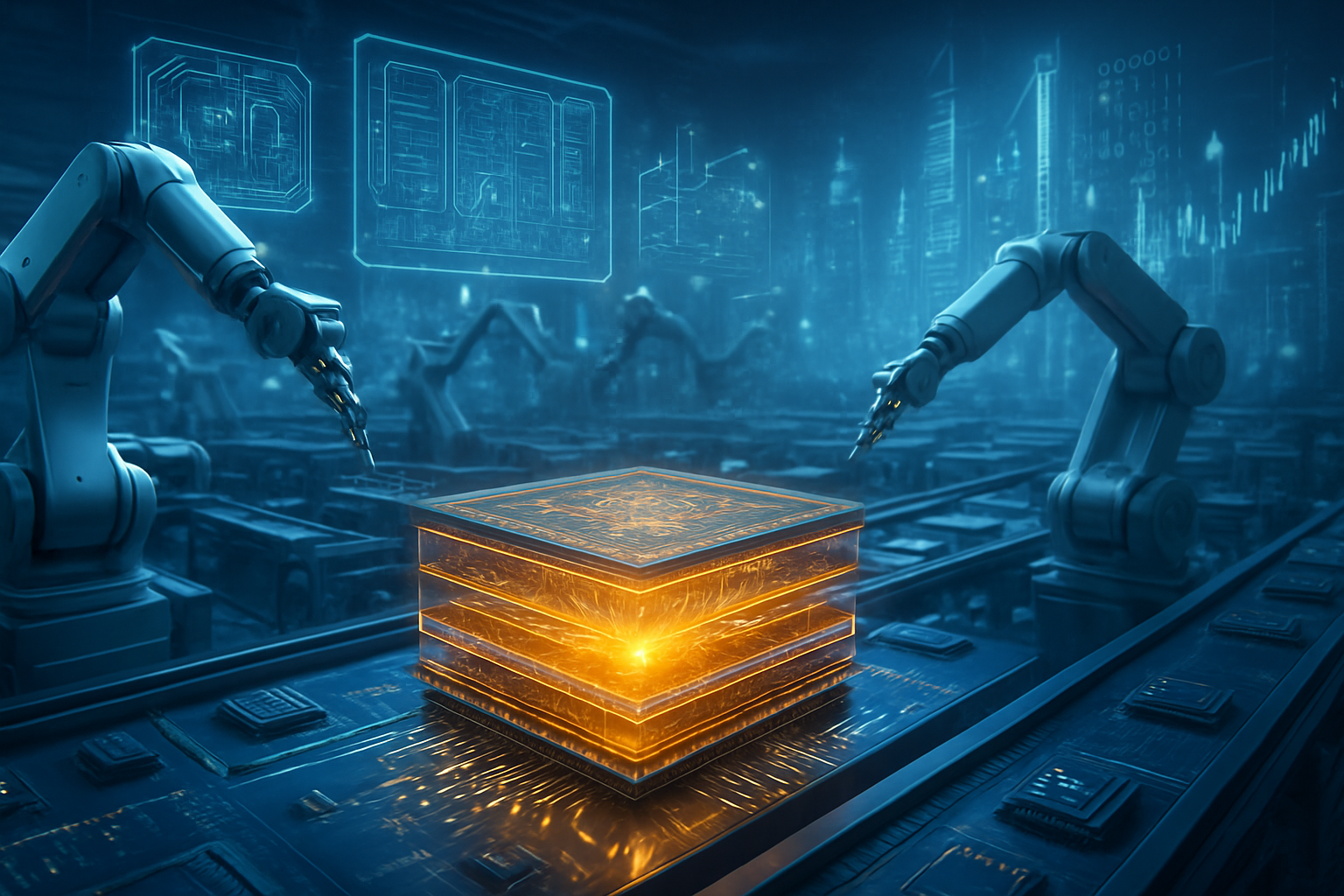
    The technical specifications of HBM4 represent the most aggressive architectural shift since the technology's inception. While generations HBM2 through HBM3e relied on a 1024-bit interface, HBM4 doubles the bus width to a massive 2048-bit interface. This "wider pipe" allows for a dramatic increase in data throughput—targeting per-stack bandwidths of 2.0 TB/s to 2.8 TB/s—without requiring the extreme clock speeds that lead to thermal instability and excessive power consumption.

    Central to this advancement is the logic die transition. Traditionally, the base die (the bottom-most layer of the HBM stack) was manufactured using the same DRAM process as the memory cells. In the HBM4 era, SK Hynix has outsourced the production of this base die to TSMC, utilizing their 5nm and 12nm logic nodes. This allows for complex routing and "active" power management directly within the memory stack. To accommodate 16-layer (16-Hi) stacks within the strict 775 µm height limit mandated by JEDEC, SK Hynix has refined its Mass Reflow Molded Underfill (MR-MUF) process, thinning individual DRAM wafers to approximately 30 µm—roughly half the thickness of a human hair.

    Early reactions from the AI research community have been overwhelmingly positive, with experts noting that the transition to a 2048-bit interface is the only viable path forward for "scaling laws" to continue. By allowing the memory to act as a co-processor, HBM4 can perform basic data pre-processing and routing before the information even reaches the GPU. This "compute-in-memory" approach is seen as a definitive answer to the thermal and signaling challenges that threatened to plateau AI hardware performance in late 2025.

    Strategic Realignment: How the Alliance Reshapes the AI Market

    The SK Hynix and TSMC alliance creates a formidable competitive barrier for other memory giants. By locking in TSMC’s world-leading logic processes and Chip-on-Wafer-on-Substrate (CoWoS) packaging, SK Hynix has secured its position as the primary supplier for NVIDIA’s upcoming Rubin R100 GPUs. This partnership effectively creates a "custom HBM" ecosystem where memory is co-designed with the AI accelerator itself, rather than being a commodity part purchased off the shelf.

    Samsung Electronics (KRX: 005930), the world’s largest memory maker, is responding with its own "turnkey" strategy. Leveraging its internal foundry and packaging divisions, Samsung is aggressively pushing its 1c DRAM process and "Hybrid Bonding" technology to compete. Meanwhile, Micron Technology (NASDAQ: MU) has entered the HBM4 fray by sampling stacks with speeds of 11 Gbps, targeting a significant share of the mid-to-high-end AI server market. However, the SK Hynix-TSMC duo remains the "gold standard" for the ultra-high-end segment due to their deep integration with NVIDIA’s roadmap.

    For AI startups and labs, this development is a double-edged sword. While HBM4 provides the raw power needed for more efficient inference and faster training, the complexity and cost of these components may further consolidate power among the "hyperscalers" like Microsoft and Google, who have the capital to secure early allocations of these expensive stacks. The shift toward "Custom HBM" means that generic memory may no longer suffice for cutting-edge AI, potentially disrupting the business models of smaller chip designers who lack the scale to enter complex co-development agreements.

    Breaking the "Memory Wall" and the Future of LLMs

    The development of HBM4 is a direct response to the "Memory Wall"—a long-standing phenomenon where the speed of data transfer between memory and processors fails to keep pace with the increasing speed of the processors themselves. In the context of LLMs, this bottleneck is most visible during the "decode" phase of inference. When a model like GPT-5 or its successors generates text, it must read massive amounts of model weights from memory for every single token produced. If the bandwidth is too narrow, the GPU sits idle, leading to high latency and exorbitant operating costs.

    By doubling the interface width and integrating logic, HBM4 allows for much higher "tokens per second" in inference and shorter training epochs. This fits into a broader trend of "architectural specialization" in the AI landscape. We are moving away from general-purpose computing toward a world where every millimeter of the silicon interposer is optimized for tensor operations. HBM4 is the first generation where memory truly "understands" the data it holds, managing its own thermal profile and data routing to maximize the throughput of the connected GPU.

    Comparisons are already being drawn to the introduction of the first HBM by AMD and Hynix in 2013, which revolutionized high-end graphics. However, the stakes for HBM4 are exponentially higher. This is not just about better graphics; it is the physical foundation upon which the next generation of artificial general intelligence (AGI) research will be built. The potential concern remains the extreme difficulty of manufacturing these 16-layer stacks, where a single defect in one of the thousands of micro-bumps can render the entire $10,000+ assembly useless.

    The Road to 16-Layer Stacks and Hybrid Bonding

    Looking ahead to the remainder of 2026, the focus will shift from the initial 12-layer HBM4 stacks to the much-anticipated 16-layer versions. These stacks are expected to offer capacities of up to 64GB per stack, allowing an 8-stack GPU configuration to boast over half a terabyte of high-speed memory. This capacity leap is essential for running trillion-parameter models entirely in-memory, which would drastically reduce the energy consumption associated with moving data across different hardware nodes.

    The next technical frontier is "Hybrid Bonding" (copper-to-copper), which eliminates the need for solder bumps between memory layers. While SK Hynix is currently leading with its advanced MR-MUF process, Samsung is betting heavily on Hybrid Bonding to achieve even thinner stacks and better thermal performance. Experts predict that while HBM4 will start with traditional bonding methods, a "Version 2" of HBM4 or an early HBM5 will likely see the industry-wide adoption of Hybrid Bonding as the physical limits of wafer thinning are reached.

    The immediate challenge for the SK Hynix and TSMC alliance will be yield management. Mass producing a 2048-bit interface with 16 layers of thinned DRAM is a manufacturing feat of unprecedented complexity. If yields stabilize by Q3 2026 as projected, we can expect a significant acceleration in the deployment of "Agentic AI" systems that require the low-latency, high-bandwidth environment that only HBM4 can provide.

    A Fundamental Shift in the History of Computing

    The emergence of HBM4 through the SK Hynix and TSMC alliance represents a paradigm shift from memory being a standalone component to an integrated sub-system of the AI processor. By shattering the 1024-bit barrier and embracing logic-integrated "Active Memory," these companies have cleared a path for the next several years of AI scaling. The shift from passive storage to co-processing memory is one of the most significant changes in computer architecture since the advent of the Von Neumann model.

    In the coming months, the industry will be watching for the first "qualification" milestones of HBM4 with NVIDIA’s Rubin platform. The success of these tests will determine the pace at which the next generation of AI services can be deployed globally. As we move further into 2026, the collaboration between memory manufacturers and foundries will likely become the standard model for all high-performance silicon, further intertwining the fates of the world’s most critical technology providers.


    This content is intended for informational purposes only and represents analysis of current AI developments.

    TokenRing AI delivers enterprise-grade solutions for multi-agent AI workflow orchestration, AI-powered development tools, and seamless remote collaboration platforms.
    For more information, visit https://www.tokenring.ai/.

  • The Blackwell Era: NVIDIA’s 208-Billion Transistor Powerhouse Redefines the AI Frontier at CES 2026

    The Blackwell Era: NVIDIA’s 208-Billion Transistor Powerhouse Redefines the AI Frontier at CES 2026

    As the world’s leading technology innovators gathered in Las Vegas for CES 2026, one name continued to dominate the conversation: NVIDIA (NASDAQ: NVDA). While the event traditionally highlights consumer gadgets, the spotlight this year remained firmly on the Blackwell B200 architecture, a silicon marvel that has fundamentally reshaped the trajectory of artificial intelligence over the past eighteen months. With a staggering 208 billion transistors and a theoretical 30x performance leap in inference tasks over the previous Hopper generation, Blackwell has transitioned from a high-tech promise into the indispensable backbone of the global AI economy.

    The showcase at CES 2026 underscored a pivotal moment in the industry. As hyperscalers scramble to secure every available unit, NVIDIA CEO Jensen Huang confirmed that the Blackwell architecture is effectively sold out through mid-2026. This unprecedented demand highlights a shift in the tech landscape where compute power has become the most valuable commodity on Earth, fueling the transition from basic generative AI to advanced, "agentic" systems capable of complex reasoning and autonomous decision-making.

    The Silicon Architecture of the Trillion-Parameter Era

    At the heart of the Blackwell B200’s dominance is its radical "chiplet" design, a departure from the monolithic structures of the past. Manufactured on a custom 4NP process by TSMC (NYSE: TSM), the B200 integrates two reticle-limited dies into a single, unified processor via a 10 TB/s high-speed interconnect. This design allows the 208 billion transistors to function with the seamlessness of a single chip, overcoming the physical limitations that have historically slowed down large-scale AI processing. The result is a chip that doesn’t just iterate on its predecessor, the H100, but rather leaps over it, offering up to 20 Petaflops of AI performance in its peak configuration.

    Technically, the most significant breakthrough within the Blackwell architecture is the introduction of the second-generation Transformer Engine and support for FP4 (4-bit floating point) precision. By utilizing 4-bit weights, the B200 can double its compute throughput while significantly reducing the memory footprint required for massive models. This is the primary driver behind the "30x inference" claim; for trillion-parameter models like the rumored GPT-5 or Llama 4, Blackwell can process requests at speeds that make real-time, human-like reasoning finally feasible at scale.

    Furthermore, the integration of NVLink 5.0 provides 1.8 TB/s of bidirectional bandwidth per GPU. In the massive "GB200 NVL72" rack configurations showcased at CES, 72 Blackwell GPUs act as a single massive unit with 130 TB/s of aggregate bandwidth. This level of interconnectivity allows AI researchers to treat an entire data center rack as a single GPU, a feat that industry experts suggest has shortened the training time for frontier models from months to mere weeks. Initial reactions from the research community have been overwhelmingly positive, with many noting that Blackwell has effectively "removed the memory wall" that previously hindered the development of truly multi-modal AI systems.

    Hyperscalers and the High-Stakes Arms Race

    The market dynamics surrounding Blackwell have created a clear divide between the "compute-rich" and the "compute-poor." Major hyperscalers, including Microsoft (NASDAQ: MSFT), Meta (NASDAQ: META), Alphabet (NASDAQ: GOOGL), and Amazon (NASDAQ: AMZN), have moved aggressively to monopolize the supply chain. Microsoft remains a lead customer, integrating the GB200 systems into its Azure infrastructure to power the next generation of OpenAI’s reasoning models. Meanwhile, Meta has confirmed the deployment of hundreds of thousands of Blackwell units to train Llama 4, citing the 1.8 TB/s NVLink as a non-negotiable requirement for synchronizing the massive clusters needed for their open-source ambitions.

    For these tech giants, the B200 represents more than just a speed upgrade; it is a strategic moat. By securing vast quantities of Blackwell silicon, these companies can offer AI services at a lower cost-per-query than competitors still reliant on older Hopper or Ampere hardware. This competitive advantage is particularly visible in the startup ecosystem, where new AI labs are finding it increasingly difficult to compete without access to Blackwell-based cloud instances. The sheer efficiency of the B200—which is 25x more energy-efficient than the H100 in certain inference tasks—allows these giants to scale their AI operations without being immediately throttled by the power constraints of existing electrical grids.

    A Milestone in the Broader AI Landscape

    When viewed through the lens of AI history, the Blackwell generation marks the moment where "Scaling Laws"—the principle that more data and more compute lead to better models—found their ultimate hardware partner. We are moving past the era of simple chatbots and into an era of "physical AI" and autonomous agents. The 30x inference leap means that complex AI "reasoning" steps, which might have taken 30 seconds on a Hopper chip, now happen in one second on Blackwell. This creates a qualitative shift in how users interact with AI, enabling it to function as a real-time assistant rather than a delayed search tool.

    There are, however, significant concerns regarding the concentration of power. As NVIDIA’s Blackwell architecture becomes the "operating system" of the AI world, questions about supply chain resilience and energy consumption have moved to the forefront of geopolitical discussions. While the B200 is more efficient on a per-task basis, the sheer scale of the clusters being built is driving global demand for electricity to record highs. Critics point out that the race for Blackwell-level compute is also a race for rare earth minerals and specialized manufacturing capacity, potentially creating new bottlenecks in the global economy.

    Comparisons to previous milestones, such as the introduction of the first CUDA-capable GPUs or the launch of the original Transformer model, are common among industry analysts. However, Blackwell is unique because it represents the first time hardware has been specifically co-designed with the mathematical requirements of Large Language Models in mind. By optimizing specifically for the Transformer architecture, NVIDIA has created a self-reinforcing loop where the hardware dictates the direction of AI research, and AI research in turn justifies the massive investment in next-generation silicon.

    The Road Ahead: From Blackwell to Vera Rubin

    Looking toward the near future, the CES 2026 showcase provided a tantalizing glimpse of what follows Blackwell. NVIDIA has already begun detailing the "Blackwell Ultra" (B300) variant, which features 288GB of HBM3e memory—a 50% increase that will further push the boundaries of long-context AI processing. But the true headline of the event was the formal introduction of the "Vera Rubin" architecture (R100). Scheduled for a late 2026 rollout, Rubin is projected to feature 336 billion transistors and a move to HBM4 memory, offering a staggering 22 TB/s of bandwidth.

    In the long term, the applications for Blackwell and its successors extend far beyond text and image generation. Jensen Huang showcased "Alpamayo," a family of "chain-of-thought" reasoning models specifically designed for autonomous vehicles, which will debut in the 2026 Mercedes-Benz fleet. These models require the high-throughput, low-latency processing that only Blackwell-class hardware can provide. Experts predict that the next two years will see a massive shift toward "Edge Blackwell" chips, bringing this level of intelligence directly into robotics, surgical tools, and industrial automation.

    The primary challenge ahead remains one of sustainability and distribution. As models continue to grow, the industry will eventually hit a "power wall" that even the most efficient chips cannot overcome. Engineers are already looking toward optical interconnects and even more exotic 3D-stacking techniques to keep the performance gains coming. For now, the focus is on maximizing the potential of the current Blackwell fleet as it enters its most productive phase.

    Final Reflections on the Blackwell Revolution

    The NVIDIA Blackwell B200 architecture has proved to be the defining technological achievement of the mid-2020s. By delivering a 30x inference performance leap and packing 208 billion transistors into a unified design, NVIDIA has provided the necessary "oxygen" for the AI fire to continue burning. The demand from hyperscalers like Microsoft and Meta is a testament to the chip's transformative power, turning compute capacity into the new currency of global business.

    As we look back at the CES 2026 announcements, it is clear that Blackwell was not an endpoint but a bridge to an even more ambitious future. Its legacy will be measured not just in transistor counts or flops, but in the millions of autonomous agents and the scientific breakthroughs it has enabled. In the coming months, the industry will be watching closely as the first Blackwell Ultra units begin to ship and as the race to build the first "million-GPU cluster" reaches its inevitable conclusion. For now, NVIDIA remains the undisputed architect of the intelligence age.


    This content is intended for informational purposes only and represents analysis of current AI developments.

    TokenRing AI delivers enterprise-grade solutions for multi-agent AI workflow orchestration, AI-powered development tools, and seamless remote collaboration platforms.
    For more information, visit https://www.tokenring.ai/.
  • TSMC Scales the 2nm Peak: The Nanosheet Revolution and the Battle for AI Supremacy

    TSMC Scales the 2nm Peak: The Nanosheet Revolution and the Battle for AI Supremacy

    The global semiconductor landscape has officially entered the "Angstrom Era" as Taiwan Semiconductor Manufacturing Company (TSMC) (NYSE: TSM) accelerates the mass production of its highly anticipated 2nm (N2) process node. As of January 2026, the world’s largest contract chipmaker has begun ramping up its state-of-the-art facilities in Hsinchu and Kaohsiung to meet a tidal wave of demand from the artificial intelligence (AI) and high-performance computing (HPC) sectors. This milestone represents more than just a reduction in transistor size; it marks the first time in over a decade that the industry is abandoning the tried-and-true FinFET architecture in favor of a transformative technology known as Nanosheet transistors.

    The move to 2nm is the most critical pivot for the industry since the introduction of 3D transistors in 2011. With AI models growing exponentially in complexity, the hardware bottleneck has become the primary constraint for tech giants. TSMC’s 2nm node promises to break this bottleneck, offering significant gains in energy efficiency and logic density that will power the next generation of generative AI, autonomous systems, and "AI PCs." However, for the first time in years, TSMC faces a formidable challenge from a resurgent Intel (NASDAQ: INTC), whose 18A node has also hit the market, setting the stage for a high-stakes duel over the future of silicon.

    The Nanosheet Leap: Engineering the Future of Compute

    The technical centerpiece of the N2 node is the transition from FinFET (Fin Field-Effect Transistor) to Nanosheet Gate-All-Around (GAA) transistors. In traditional FinFETs, the gate controls the channel on three sides, but as transistors shrunk, electron leakage became an increasingly difficult problem to manage. Nanosheet GAAFETs solve this by wrapping the gate entirely around the channel on all four sides. This superior electrostatic control virtually eliminates leakage, allowing for lower operating voltages and higher performance. According to current technical benchmarks, TSMC’s N2 offers a 10% to 15% speed increase at the same power level, or a staggering 25% to 30% reduction in power consumption at the same speed compared to the previous N3E (3nm) node.

    A key innovation introduced with N2 is "NanoFlex" technology. This allows chip designers to mix and match different nanosheet widths within a single block of silicon. High-performance cores can utilize wider nanosheets to maximize clock speeds, while efficiency cores can use narrower sheets to conserve energy. This granular level of optimization provides a 1.15x improvement in logic density, fitting more intelligence into the same physical footprint. Furthermore, TSMC has achieved a world-record SRAM density of 38 Mb/mm², a critical specification for AI accelerators that require massive amounts of on-chip memory to minimize data latency.

    Initial reactions from the semiconductor research community have been overwhelmingly positive, particularly regarding the yield rates. While rivals have historically struggled with the transition to GAA architecture, TSMC’s "conservative but steady" approach appears to have paid off. Analysts at leading engineering firms suggest that TSMC's 2nm yields are already tracking ahead of internal projections, providing the stability that high-volume customers like Apple (NASDAQ: AAPL) and NVIDIA (NASDAQ: NVDA) require for their flagship product launches later this year.

    Strategic Shifts: The AI Arms Race and the Intel Challenge

    The business implications of the 2nm rollout are profound, reinforcing a "winner-take-all" dynamic in the high-end chip market. Apple remains TSMC’s anchor tenant, having reportedly secured over 50% of the initial 2nm capacity for its upcoming A20 Pro and M6 series chips. This exclusive access gives the iPhone a significant performance-per-watt advantage over competitors, further cementing its position in the premium smartphone market. Meanwhile, NVIDIA is looking toward 2nm for its next-generation "Feynman" architecture, the successor to the Blackwell and Rubin AI platforms, which will be essential for training the multi-trillion parameter models expected by late 2026.

    However, the competitive landscape is no longer a one-horse race. Intel (NASDAQ: INTC) has successfully executed its "five nodes in four years" strategy, with its 18A node reaching high-volume manufacturing just months ago. Intel’s 18A features "PowerVia" (Backside Power Delivery), a technology that moves power lines to the back of the wafer to reduce interference. While TSMC will not introduce its version of backside power until the N2P node late in 2026, Intel’s early lead in this specific architectural feature has allowed it to secure significant design wins, including a strategic manufacturing partnership with Microsoft (NASDAQ: MSFT).

    Other major players are also recalibrating their strategies. AMD (NASDAQ: AMD) is diversifying its roadmap, booking 2nm capacity for its Instinct AI accelerators while keeping an eye on Samsung (KRX: 005930) as a secondary source. Qualcomm (NASDAQ: QCOM) and MediaTek (TWSE: 2454) are in a fierce race to be the first to bring 2nm "AI-first" silicon to the Android ecosystem. The resulting competition is driving a massive capital expenditure cycle, with TSMC alone investing tens of billions of dollars into its Baoshan (Fab 20) and Kaohsiung (Fab 22) production hubs to ensure it can keep pace with the world's hunger for advanced logic.

    The Geopolitical and Industrial Significance of the 2nm Era

    The successful ramp of 2nm production fits into a broader global trend of "silicon sovereignty." As AI becomes a foundational element of national security and economic productivity, the ability to manufacture the world’s most advanced transistors remains concentrated in just a few geographic locations. TSMC’s dominance in 2nm production ensures that Taiwan remains the indispensable hub of the global technology supply chain. This has significant geopolitical implications, as the "silicon shield" becomes even more critical amid shifting international relations.

    Moreover, the 2nm milestone marks a shift in the focus of the AI landscape from "training" to "efficiency." As enterprises move toward deploying AI models at scale, the operational cost of electricity has become a primary concern. The 30% power reduction offered by 2nm chips could save data center operators billions in energy costs over the lifecycle of a server rack. This efficiency is also what will enable "Edge AI"—sophisticated models running locally on devices without needing a constant cloud connection—preserving privacy and reducing latency for consumers.

    Comparatively, this breakthrough mirrors the significance of the 7nm transition in 2018, which catalyzed the first wave of modern AI adoption. However, the stakes are higher now. The transition to Nanosheets represents a departure from traditional scaling laws. We are no longer just making things smaller; we are re-engineering the fundamental physics of how a switch operates. Potential concerns remain regarding the skyrocketing cost per wafer, which could lead to a "compute divide" where only the wealthiest tech companies can afford the most advanced silicon.

    The Roadmap Ahead: N2P, A16, and the 1.4nm Frontier

    Looking toward the near future, the 2nm era is just the beginning of a rapid-fire series of upgrades. TSMC has already announced its N2P process, which will add backside power delivery to the Nanosheet architecture by late 2026 or early 2027. This will be followed by the A16 (1.6nm) node, which will introduce "Super PowerRail" technology, further optimizing power distribution for AI-specific workloads. Beyond that, the A14 (1.4nm) node is already in the research and development phase at TSMC’s specialized R&D centers, with a target for 2028.

    Future applications for this technology extend far beyond the smartphone. Experts predict that 2nm chips will be the baseline for fully autonomous Level 5 vehicles, which require massive real-time processing of sensor data with minimal heat generation. We are also likely to see 2nm silicon enable "Apple Vision Pro" style spatial computing headsets that are light enough for all-day wear while maintaining the graphical fidelity of a high-end workstation.

    The primary challenge moving forward will be the increasing complexity of advanced packaging. As chips become more dense, the way they are stacked and connected—using technologies like CoWoS (Chip-on-Wafer-on-Substrate)—becomes just as important as the transistors themselves. TSMC and Intel are both investing heavily in "3D Fabric" and "Foveros" packaging technologies to ensure that the gains made at the 2nm level aren't lost to data bottlenecks between the chip and its memory.

    A New Chapter in Silicon History

    In summary, TSMC’s progress toward 2nm mass production is a defining moment for the technology industry in 2026. The shift to Nanosheet transistors provides the necessary performance and efficiency headroom to sustain the AI revolution for the remainder of the decade. While the competition with Intel’s 18A node is the most intense the industry has seen in years, TSMC’s massive manufacturing scale and proven track record of execution currently give it the upper hand in volume and ecosystem reliability.

    The 2nm era will likely be remembered as the point when AI moved from a cloud-based curiosity to an ubiquitous, energy-efficient presence in every piece of modern hardware. The significance of this development cannot be overstated; it is the physical foundation upon which the next generation of software innovation will be built. As we move through the first quarter of 2026, all eyes will be on the yield reports and the first consumer benchmarks of N2-powered devices.

    In the coming weeks, industry watchers should look for the first official performance disclosures from Apple’s spring hardware events and further updates on Intel’s 18A deployment at its "IFS Direct Connect" summit. The battle for the heart of the AI era has officially moved into the foundries, and the results will shape the digital world for years to come.


    This content is intended for informational purposes only and represents analysis of current AI developments.

    TokenRing AI delivers enterprise-grade solutions for multi-agent AI workflow orchestration, AI-powered development tools, and seamless remote collaboration platforms.
    For more information, visit https://www.tokenring.ai/.

  • BNY Mellon Scales the ‘Agentic Era’ with Deployment of 20,000 AI Assistants

    BNY Mellon Scales the ‘Agentic Era’ with Deployment of 20,000 AI Assistants

    In a move that signals a tectonic shift in the digital transformation of global finance, BNY (NYSE: BNY), formerly known as BNY Mellon, has officially reached a massive milestone in its AI strategy. As of January 16, 2026, the world’s largest custody bank has successfully deployed tens of thousands of "Agentic Assistants" across its global operations. This deployment represents one of the first successful transitions from experimental generative AI to a full-scale "agentic" operating model, where AI systems perform complex, autonomous tasks rather than just responding to prompts.

    The bank’s initiative, built upon its proprietary Eliza platform, has divided its AI workforce into two distinct categories: over 20,000 "Empowered Builders"—human employees trained to create custom agents—and a growing fleet of over 130 specialized "Digital Employees." These digital entities possess their own system credentials, email accounts, and communication access, effectively operating as autonomous members of the bank’s workforce. This development is being hailed as the "operating system of the bank," fundamentally altering how BNY handles trillions of dollars in assets daily.

    Technical Deep Dive: From Chatbots to Digital Employees

    The technical backbone of this initiative is the Eliza 2.0 platform, a sophisticated multi-agent orchestration layer that represents a departure from the simple Large Language Model (LLM) interfaces of 2023 and 2024. Unlike previous iterations that focused on text generation, Eliza 2.0 is centered on "reasoning" and "agency." These agents are not just processing data; they are executing workflows that involve multiple steps, such as cross-referencing internal databases, validating external regulatory updates, and communicating findings via Microsoft Teams to their human managers.

    A critical component of this deployment is the "menu of models" approach. BNY has engineered Eliza to be model-agnostic, allowing agents to switch between different high-performance models based on the specific task. For instance, agents might use GPT-4 from OpenAI for complex logical reasoning, Google Cloud’s Gemini Enterprise for multimodal deep research, and specialized Llama-based models for internal code remediation. This architecture ensures that the bank is not locked into a single provider while maximizing the unique strengths of each AI ecosystem.

    Initial reactions from the AI research community have been overwhelmingly positive, particularly regarding BNY’s commitment to "Explainable AI" (XAI). Every agentic model must pass a rigorous "Model-Risk Review" before deployment, generating detailed "model cards" and feature importance charts that allow auditors to understand the "why" behind an agent's decision. This level of transparency addresses a major hurdle in the adoption of AI within highly regulated environments, where "black-box" decision-making is often a non-starter for compliance officers.

    The Multi-Vendor Powerhouse: Big Tech's Role in the Agentic Shift

    The scale of BNY's deployment has created a lucrative blueprint for major technology providers. Nvidia (NASDAQ: NVDA) played a foundational role by supplying the hardware infrastructure; BNY was the first major bank to deploy an Nvidia DGX SuperPOD with H100 systems, providing the localized compute power necessary to train and run these agents securely on-premises. This partnership has solidified Nvidia’s position not just as a chipmaker, but as a critical infrastructure partner for "Sovereign AI" within the private sector.

    Microsoft (NASDAQ: MSFT) and Alphabet (NASDAQ: GOOGL) are also deeply integrated into the Eliza ecosystem. Microsoft Azure hosts much of the Eliza infrastructure, providing the integration layer for agents to interact with the Microsoft 365 suite, including Outlook and Teams. Meanwhile, Google Cloud’s Gemini Enterprise is being utilized for "agentic deep research," synthesizing vast datasets to provide predictive analytics on trade settlements. This competitive landscape shows that while tech giants are vying for dominance, the "agentic era" is fostering a multi-provider reality where enterprise clients demand interoperability and the ability to leverage the best-of-breed models from various labs.

    For AI startups, BNY’s move is both a challenge and an opportunity. While the bank has the resources to build its own orchestration layer, the demand for specialized, niche agents—such as those focused on specific international tax laws or ESG (Environmental, Social, and Governance) compliance—is expected to create a secondary market for smaller AI firms that can plug into platforms like Eliza. The success of BNY’s internal "Empowered Builders" program suggests that the future of enterprise AI may lie in tools that allow non-technical staff to build and maintain their own agents, rather than relying on off-the-shelf software.

    Reshaping the Global Finance Landscape

    The broader significance of BNY’s move cannot be overstated. By empowering 40% of its global workforce to build and use AI agents, the bank has effectively democratized AI in a way that parallels the introduction of the personal computer or the spreadsheet. This is a far cry from the pilot projects of 2024; it is a full-scale industrialization of AI. BNY has reported a roughly 5% reduction in unit costs for core custody trades, a significant margin in the high-volume, low-margin world of asset servicing.

    Beyond cost savings, the deployment addresses the increasing complexity of regulatory compliance. BNY’s "Contract Review Assistant" agents can now benchmark thousands of negotiated agreements against global regulations in a fraction of the time it would take human legal teams. This "always-on" compliance capability mitigates risk and allows the bank to adapt to shifting geopolitical and regulatory landscapes with unprecedented speed.

    Comparisons are already being drawn to previous technological milestones, such as the transition to electronic trading in the 1990s. However, the agentic shift is potentially more disruptive because it targets the "cognitive labor" of the middle and back office. While earlier waves of automation replaced manual data entry, these agents are performing tasks that previously required human judgment and cross-departmental coordination. The potential concern remains the "human-in-the-loop" requirement; as agents become more autonomous, the pressure on human managers to supervise dozens of digital employees will require new management frameworks and training.

    The Next Frontier: Proactive Agents and Automated Remediation

    Looking toward the remainder of 2026 and into 2027, the bank is expected to expand the capabilities of its agents from reactive to proactive. Near-term developments include "Predictive Trade Analytics," where agents will not only identify settlement risks but also autonomously initiate remediation protocols to prevent trade failures before they occur. This move from "detect and report" to "anticipate and act" will be the true test of agentic autonomy in finance.

    One of the most anticipated applications on the horizon is the integration of these agents into client-facing roles. While currently focused on internal operations, BNY is reportedly exploring "Client Co-pilots" that would give the bank’s institutional clients direct access to agentic research and analysis tools. However, this will require addressing significant challenges regarding data privacy and "multi-tenant" agent security to ensure that agents do not inadvertently share proprietary insights across different client accounts.

    Experts predict that other "Global Systemically Important Banks" (G-SIBs) will be forced to follow suit or risk falling behind in operational efficiency. We are likely to see a "space race" for AI talent and compute resources, as institutions realize that the "Agentic Assistant" model is the only way to manage the exponential growth of financial data and regulatory requirements in the late 2020s.

    The New Standard for Institutional Finance

    The deployment of 20,000 AI agents at BNY marks the definitive end of the "experimentation phase" for generative AI in the financial sector. The key takeaways are clear: agentic AI is no longer a futuristic concept; it is an active, revenue-impacting reality. BNY’s success with the Eliza platform demonstrates that with the right governance, infrastructure, and multi-vendor strategy, even the most traditional financial institutions can reinvent themselves for the AI era.

    This development will likely be remembered as a turning point in AI history—the moment when "agents" moved from tech demos to the front lines of global capitalism. In the coming weeks and months, the industry will be watching closely for BNY’s quarterly earnings to see how these efficiencies translate into bottom-line growth. Furthermore, the response from regulators like the Federal Reserve and the SEC will be crucial in determining how fast other institutions are allowed to adopt similar autonomous systems.

    As we move further into 2026, the question is no longer whether AI will change finance, but which institutions will have the infrastructure and the vision to lead the agentic revolution. BNY has made its move, setting a high bar for the rest of the industry to follow.


    This content is intended for informational purposes only and represents analysis of current AI developments.

    TokenRing AI delivers enterprise-grade solutions for multi-agent AI workflow orchestration, AI-powered development tools, and seamless remote collaboration platforms.
    For more information, visit https://www.tokenring.ai/.
  • Beyond the Noise: How Meta’s ‘Conversation Focus’ is Redefining Personal Audio and the Hearing Aid Industry

    Beyond the Noise: How Meta’s ‘Conversation Focus’ is Redefining Personal Audio and the Hearing Aid Industry

    As the calendar turns to early 2026, the artificial intelligence landscape is no longer dominated solely by chatbots and image generators. Instead, the focus has shifted to the "ambient AI" on our faces. Meta Platforms Inc. (NASDAQ: META) has taken a decisive lead in this transition with the full rollout of its "Conversation Focus" feature—a sophisticated AI-driven audio suite for its Ray-Ban Meta and Oakley Meta smart glasses. By solving the "cocktail party problem," this technology allows wearers to isolate and amplify a single human voice in a chaotic, noisy room, transforming a stylish accessory into a powerful tool for sensory enhancement.

    The immediate significance of this development cannot be overstated. For decades, isolating specific speech in high-decibel environments was a challenge reserved for high-end, medical-grade hearing aids costing thousands of dollars. With the v21 software update in late 2025 and the early 2026 expansion to its new "Display" models, Meta has effectively democratized "superhuman hearing." This move bridges the gap between consumer electronics and assistive health technology, making it socially acceptable—and even trendy—to wear augmented audio devices in public settings.

    The Science of Silence: Neural Beamforming and Llama Integration

    Technically, "Conversation Focus" represents a massive leap over previous directional audio attempts. At its core, the system utilizes a five-to-six microphone array embedded in the frames of the glasses. Traditional beamforming uses simple geometry to focus on sounds coming from a specific direction, but Meta’s approach utilizes "Neural Beamforming." This process uses on-device neural networks to dynamically estimate acoustic weights in real-time, distinguishing between a friend’s voice and the "diffuse noise" of a clattering restaurant or a passing train.

    Powered by the Qualcomm (NASDAQ: QCOM) Snapdragon AR1+ Gen 1 chipset, the glasses process this audio locally with a latency of less than 20 milliseconds. This local execution is critical for both privacy and the "naturalness" of the conversation. The AI creates a focused "audio bubble" with a radius of approximately 1.8 meters (6 feet). When the wearer gazes at a speaker, the AI identifies that speaker’s specific vocal timbre and applies an adaptive gain, lifting the voice by roughly 6 decibels relative to the background noise.

    The integration of Meta’s own Small Language Models (SLMs), specifically variants of Llama 3.2-1B and the newly released Llama 4, allows the glasses to move beyond simple filtering. The AI can now understand the intent of the user. If a wearer turns their head but remains engaged with the original speaker, the AI can maintain the "lock" on that voice using spatial audio anchors. Initial reactions from the AI research community have been overwhelmingly positive, with experts at AICerts and Counterpoint Research noting that Meta has successfully moved the needle from "gimmicky recording glasses" to "indispensable daily-use hardware."

    A Market in Flux: The Disruptive Power of 'Hearables'

    The strategic implications of Conversation Focus are rippling through the tech sector, placing Meta in direct competition with both Silicon Valley giants and traditional medical companies. By partnering with EssilorLuxottica (EPA: EL), Meta has secured a global retail footprint of over 18,000 stores, including LensCrafters and Sunglass Hut. This gives Meta a physical distribution advantage that Apple Inc. (NASDAQ: AAPL) and Alphabet Inc. (NASDAQ: GOOGL) are currently struggling to match in the eyewear space.

    For the traditional hearing aid industry, dominated by players like Sonova (SWX: SOON) and Demant, this is a "Blackberry moment." While these companies offer FDA-cleared medical devices, Meta’s $300–$400 price point and Ray-Ban styling are cannibalizing the "mild-to-moderate" hearing loss segment. Apple has responded by adding "Hearing Aid Mode" to its AirPods Pro, but Meta’s advantage lies in the form factor: it is socially awkward to wear earbuds during a dinner party, but perfectly normal to wear glasses. Meanwhile, Google has shifted to an ecosystem strategy, partnering with Warby Parker (NYSE: WRBY) to bring its Gemini AI to a variety of frames, though it currently lags behind Meta in audio isolation precision.

    The Social Contract: Privacy and the 'New Glasshole' Debate

    The broader significance of AI-powered hearing is as much social as it is technical. We are entering an era of "selective reality," where two people in the same room may no longer share the same auditory experience. While this enhances accessibility for those with sensory processing issues, it has sparked a fierce debate over "sensory solipsism"—the idea that users are becoming disconnected from their shared environment by filtering out everything but their immediate interests.

    Privacy concerns have also resurfaced with a vengeance. Unlike cameras, which usually have a physical or LED indicator, "Conversation Focus" involves always-on microphones that can process and potentially transcribe ambient conversations. In the European Union, the EU AI Act has placed such real-time biometric processing under high-risk classification, leading to regulatory friction. Critics argue that "superhuman hearing" is a polite term for "eavesdropping," raising questions about consent in public-private spaces like coffee shops or offices. The "New Glasshole" debate of 2026 isn't about people taking photos; it's about whether the person across from you is using AI to index every word you say.

    Looking Ahead: Holograms and Neural Interfaces

    The future of Meta’s eyewear roadmap is even more ambitious. The "Conversation Focus" feature is seen as a foundational step toward "Project Orion," Meta's upcoming holographic glasses. In the near term, experts predict that Llama 4 will enable "Intent-Based Hearing," where the glasses can automatically switch focus based on who the wearer is looking at or even when a specific keyword—like the user's name—is whispered in a crowd.

    We are also seeing the first clinical trials for "Cognitive Load Reduction." Research suggests that by using AI to reduce the effort required to listen in noisy rooms, these glasses could potentially slow the onset of cognitive decline in seniors. Furthermore, Meta is expected to integrate its EMG (Electromyography) wristband technology, allowing users to control their audio bubble with subtle finger pinches rather than voice commands, making the use of AI hearing even more discrete.

    A New Era of Augmented Humanity

    The launch of Conversation Focus marks a pivotal moment in AI history. It represents the point where AI transitioned from being a digital assistant on a screen to an active filter for our biological senses. By tackling the complex "cocktail party problem," Meta has moved beyond the realm of social media and into the realm of human enhancement.

    In the coming months, watch for the inevitable regulatory battles in the EU and North America regarding audio privacy and consent. Simultaneously, keep an eye on Apple’s rumored "Vision Glasses" and Google’s Gemini-integrated eyewear, as the battle for the "front-row seat to the human experience"—the face—intensifies. For now, Meta has the clear lead, proving that the future of AI isn't just about what we see, but how we hear the world around us.


    This content is intended for informational purposes only and represents analysis of current AI developments.

    TokenRing AI delivers enterprise-grade solutions for multi-agent AI workflow orchestration, AI-powered development tools, and seamless remote collaboration platforms.
    For more information, visit https://www.tokenring.ai/.

  • The Efficiency Shock: DeepSeek-V3.2 Shatters the Compute Moat as Open-Weight Model Rivaling GPT-5

    The Efficiency Shock: DeepSeek-V3.2 Shatters the Compute Moat as Open-Weight Model Rivaling GPT-5

    The global artificial intelligence landscape has been fundamentally altered this week by what analysts are calling the "Efficiency Shock." DeepSeek, the Hangzhou-based AI powerhouse, has officially solidified its dominance with the widespread enterprise adoption of DeepSeek-V3.2. This open-weight model has achieved a feat many in Silicon Valley deemed impossible just a year ago: matching and, in some reasoning benchmarks, exceeding the capabilities of OpenAI’s GPT-5, all while being trained for a mere fraction of the cost.

    The release marks a pivotal moment in the AI arms race, signaling a shift from "brute-force" scaling to algorithmic elegance. By proving that a relatively lean team can produce frontier-level intelligence without the billion-dollar compute budgets typical of Western tech giants, DeepSeek-V3.2 has sent ripples through the markets and forced a re-evaluation of the "compute moat" that has long protected the industry's leaders.

    Technical Mastery: The Architecture of Efficiency

    At the core of DeepSeek-V3.2’s success is a highly optimized Mixture-of-Experts (MoE) architecture that redefines the relationship between model size and computational cost. While the model contains a staggering 671 billion parameters, its sophisticated routing mechanism ensures that only 37 billion parameters are activated for any given token. This sparse activation is paired with DeepSeek Sparse Attention (DSA), a proprietary technical advancement that identifies and skips redundant computations within its 131,072-token context window. These innovations allow V3.2 to deliver high-throughput, low-latency performance that rivals dense models five times its active size.

    Furthermore, the "Speciale" variant of V3.2 introduces an integrated reasoning engine that performs internal "Chain of Thought" (CoT) processing before generating output. This capability, designed to compete directly with the reasoning capabilities of the OpenAI (NASDAQ:MSFT) "o" series, has allowed DeepSeek to dominate in verifiable tasks. On the AIME 2025 mathematical reasoning benchmark, DeepSeek-V3.2-Speciale achieved a 96.0% accuracy rate, marginally outperforming GPT-5’s 94.6%. In coding environments like Codeforces and SWE-bench, the model has been hailed by developers as the "Coding King" of 2026 for its ability to resolve complex, repository-level bugs that still occasionally trip up larger, closed-source competitors.

    Initial reactions from the AI research community have been a mix of awe and strategic concern. Researchers note that DeepSeek’s approach effectively "bypasses" the need for the massive H100 and B200 clusters owned by firms like Meta (NASDAQ:META) and Alphabet (NASDAQ:GOOGL). By achieving frontier performance with significantly less hardware, DeepSeek has demonstrated that the future of AI may lie in the refinement of neural architectures rather than simply stacking more chips.

    Disruption in the Valley: Market and Strategic Impact

    The "Efficiency Shock" has had immediate and tangible effects on the business of AI. Following the confirmation of DeepSeek’s benchmarks, Nvidia (NASDAQ:NVDA) saw a significant volatility spike as investors questioned whether the era of infinite demand for massive GPU clusters might be cooling. If frontier intelligence can be trained on a budget of $6 million—compared to the estimated $500 million to $1 billion spent on GPT-5—the massive hardware outlays currently being made by cloud providers may face diminishing returns.

    Startups and mid-sized enterprises stand to benefit the most from this development. By releasing the weights of V3.2 under an MIT license, DeepSeek has democratized "GPT-5 class" intelligence. Companies that previously felt locked into expensive API contracts with closed-source providers are now migrating to private deployments of DeepSeek-V3.2. This shift allows for greater data privacy, lower operational costs (with API pricing roughly 4.5x cheaper for inputs and 24x cheaper for outputs compared to GPT-5), and the ability to fine-tune models on proprietary data without leaking information to a third-party provider.

    The strategic advantage for major labs has traditionally been their proprietary "black box" models. However, with the gap between closed-source and open-weight models shrinking to a mere matter of months, the premium for closed systems is evaporating. Microsoft and Google are now under immense pressure to justify their subscription fees as "Sovereign AI" initiatives in Europe, the Middle East, and Asia increasingly adopt DeepSeek as their foundational stack to avoid dependency on American tech hegemony.

    A Paradigm Shift in the Global AI Landscape

    DeepSeek-V3.2 represents more than just a new model; it symbolizes a shift in the broader AI narrative from quantity to quality. For the last several years, the industry has followed "scaling laws" which suggested that more data and more compute would inevitably lead to better models. DeepSeek has challenged this by showing that algorithmic breakthroughs—such as their Manifold-Constrained Hyper-Connections (mHC)—can stabilize training for massive models while keeping costs low. This fits into a 2026 trend where the "Moat" is no longer the amount of silicon one owns, but the ingenuity of the researchers training the software.

    The impact of this development is particularly felt in the context of "Sovereign AI." Developing nations are looking to DeepSeek as a blueprint for domestic AI development that doesn't require a trillion-dollar economy to sustain. However, this has also raised concerns regarding the geopolitical implications of AI dominance. As a Chinese lab takes the lead in reasoning and coding efficiency, the debate over export controls and international AI safety standards is likely to intensify, especially as these models become more capable of autonomous agentic workflows.

    Comparisons are already being made to the 2023 "Llama moment," when Meta’s release of Llama-1 sparked an explosion in open-source development. But the DeepSeek-V3.2 "Efficiency Shock" is arguably more significant because it represents the first time an open-weight model has achieved parity with the absolute frontier of closed-source technology in the same release cycle.

    The Horizon: DeepSeek V4 and Beyond

    Looking ahead, the momentum behind DeepSeek shows no signs of slowing. Rumors are already circulating in the research community regarding "DeepSeek V4," which is expected to debut as early as February 2026. Experts predict that V4 will introduce a revolutionary "Engram" memory system designed for near-infinite context retrieval, potentially solving the "hallucination" problems associated with long-term memory in current LLMs.

    Another anticipated development is the introduction of a unified "Thinking/Non-Thinking" mode. This would allow the model to dynamically allocate its internal reasoning engine based on the complexity of the query, further optimizing inference costs for simple tasks while reserving "Speciale-level" reasoning for complex logic or scientific discovery. The challenge remains for DeepSeek to expand its multimodal capabilities, as GPT-5 still maintains a slight edge in native video and audio integration. However, if history is any indication, the "Efficiency Shock" is likely to extend into these domains before the year is out.

    Final Thoughts: A New Chapter in AI History

    The rise of DeepSeek-V3.2 marks the end of the era where massive compute was the ultimate barrier to entry in artificial intelligence. By delivering a model that rivals the world’s most advanced proprietary systems for a fraction of the cost, DeepSeek has forced the industry to prioritize efficiency over sheer scale. The "Efficiency Shock" will be remembered as the moment the playing field was leveled, allowing for a more diverse and competitive AI ecosystem to flourish globally.

    In the coming weeks, the industry will be watching closely to see how OpenAI and its peers respond. Will they release even larger models to maintain a lead, or will they be forced to follow DeepSeek’s path toward optimization? For now, the takeaway is clear: intelligence is no longer a luxury reserved for the few with the deepest pockets—it is becoming an open, efficient, and accessible resource for the many.


    This content is intended for informational purposes only and represents analysis of current AI developments.

    TokenRing AI delivers enterprise-grade solutions for multi-agent AI workflow orchestration, AI-powered development tools, and seamless remote collaboration platforms.
    For more information, visit https://www.tokenring.ai/.
  • NVIDIA Seals the Inference Era: The $20 Billion Groq Deal Redefines the AI Hardware Race

    NVIDIA Seals the Inference Era: The $20 Billion Groq Deal Redefines the AI Hardware Race

    In a move that has sent shockwaves through Silicon Valley and global financial markets, NVIDIA (NASDAQ: NVDA) has effectively neutralized its most potent architectural rival. As of January 16, 2026, details have emerged regarding a landmark $20 billion licensing and "acqui-hire" agreement with Groq, the startup that revolutionized real-time AI with its Language Processing Unit (LPU). This strategic maneuver, executed in late December 2025, represents a decisive pivot for NVIDIA as it seeks to extend its dominance from the model training phase into the high-stakes, high-volume world of AI inference.

    The deal is far more than a simple asset purchase; it is a calculated effort to bypass the intense antitrust scrutiny that has previously plagued large-scale tech mergers. By structuring the transaction as a massive $20 billion intellectual property licensing agreement coupled with a near-total absorption of Groq’s engineering talent—including founder and CEO Jonathan Ross—NVIDIA has effectively integrated Groq’s "deterministic" compute logic into its own ecosystem. This acquisition of expertise and IP marks the beginning of the "Inference Era," where the speed of token generation is now the primary metric of AI supremacy.

    The Death of Latency: Why the LPU Architecture Changed the Game

    The technical core of this $20 billion deal lies in Groq’s fundamental departure from traditional processor design. While NVIDIA’s legendary H100 and Blackwell GPUs were built on a foundation of massive parallel processing—ideal for training models on gargantuan datasets—they often struggle with the sequential nature of Large Language Model (LLM) inference. GPUs rely on High Bandwidth Memory (HBM), which, despite its name, creates a "memory wall" where the processor must wait for data to travel from off-chip storage. Groq’s LPU bypassed this entirely by utilizing on-chip SRAM (Static Random-Access Memory), which is nearly 100 times faster than the HBM found in standard AI chips.

    Furthermore, Groq introduced the concept of deterministic execution. In a traditional GPU environment, scheduling and batching of requests can cause "jitter," or inconsistent response times, which is a significant hurdle for real-time applications like voice-based AI assistants or high-frequency trading bots. The Groq architecture uses a single-core "assembly line" approach where every instruction’s timing is known to the nanosecond. This allowed Groq to achieve speeds of over 500 tokens per second for models like Llama 3, a benchmark that was previously thought impossible for commercial-grade hardware.

    Industry experts and researchers have reacted with a mix of awe and apprehension. While the integration of Groq’s tech into NVIDIA’s upcoming Rubin architecture promises a massive leap in consumer AI performance, the consolidation of such a disruptive technology into the hands of the market leader has raised concerns. "NVIDIA didn't just buy a company; they bought the solution to their only real weakness: latency," remarked one lead researcher at the AI Open Institute. By absorbing Groq’s compiler stack and hardware logic, NVIDIA has effectively closed the performance gap that startups were hoping to exploit.

    Market Consolidation and the "Inference Flip"

    The strategic implications for the broader semiconductor industry are profound. For the past three years, the "training moat"—NVIDIA’s total control over the chips used to build AI—seemed unassailable. However, as the industry matured, the focus shifted toward inference, the process of actually running those models for end-users. Competitors like Advanced Micro Devices, Inc. (NASDAQ: AMD) and Intel Corporation (NASDAQ: INTC) had begun to gain ground by offering specialized inference solutions. By securing Groq’s IP, NVIDIA has successfully front-run its competitors, ensuring that the next generation of AI "agents" will run almost exclusively on NVIDIA-powered infrastructure.

    The deal also places significant pressure on other ASIC (Application-Specific Integrated Circuit) startups such as Cerebras and SambaNova. With NVIDIA now controlling the most efficient inference architecture on the market, the venture capital appetite for hardware startups may cool, as the barrier to entry has just been raised by an order of magnitude. For cloud providers like Microsoft (NASDAQ: MSFT) and Alphabet Inc. (NASDAQ: GOOGL), the deal is a double-edged sword: they will benefit from the vastly improved inference speeds of the NVIDIA-Groq hybrid chips, but their dependence on NVIDIA’s hardware stack has never been deeper.

    Perhaps the most ingenious aspect of the deal is its regulatory shielding. By allowing a "shell" of Groq to continue operating as an independent entity for legacy support, NVIDIA has created a complex legal buffer against the Federal Trade Commission (FTC) and European regulators. This "acqui-hire" model allows NVIDIA to claim it is not technically a monopoly through merger, even as it moves 90% of Groq’s workforce—the primary drivers of the innovation—onto its own payroll.

    A New Frontier for Real-Time AI Agents and Global Stability

    Beyond the corporate balance sheets, the NVIDIA-Groq alliance signals a shift in the broader AI landscape toward "Real-Time Agency." We are moving away from chatbots that take several seconds to "think" and toward AI systems that can converse, reason, and act with zero perceptible latency. This is critical for the burgeoning field of Sovereign AI, where nations are building their own localized AI infrastructures. With Groq’s technology, these nations can deploy ultra-fast, efficient models that require significantly less energy than previous GPU clusters, addressing growing concerns over the environmental impact of AI data centers.

    However, the consolidation of such power is not without its critics. Concerns regarding "Compute Sovereignty" are mounting, as a single corporation now holds the keys to both the creation and the execution of artificial intelligence at a global scale. Comparisons are already being drawn to the early days of the microprocessor era, but with a crucial difference: the pace of AI evolution is logarithmic, not linear. The $20 billion price tag is seen by many as a "bargain" if it grants NVIDIA a permanent lock on the hardware layer of the most transformative technology in human history.

    What’s Next: The Rubin Architecture and the End of the "Memory Wall"

    In the near term, all eyes are on NVIDIA’s Vera Rubin platform, expected to ship in late 2026. This new hardware line is predicted to natively incorporate Groq’s deterministic logic, effectively merging the throughput of a GPU with the latency-free performance of an LPU. This will likely enable a new class of "Instant AI" applications, from real-time holographic translation to autonomous robotic systems that can react to environmental changes in milliseconds.

    The challenges ahead are largely integration-based. Merging Groq’s unique compiler stack with NVIDIA’s established CUDA software ecosystem will be a Herculean task for the newly formed "Deterministic Inference" division. If successful, however, the result will be a unified software-hardware stack that covers every possible AI use case, from training a trillion-parameter model to running a lightweight agent on a handheld device. Analysts predict that by 2027, the concept of "waiting" for an AI response will be a relic of the past.

    Summary: A Historic Milestone in the AI Arms Race

    NVIDIA’s $20 billion move to absorb Groq’s technology and talent is a definitive moment in tech history. It marks the transition from an era defined by "bigger models" to one defined by "faster interactions." By neutralizing its most dangerous architectural rival and integrating a superior inference technology, NVIDIA has solidified its position not just as a chipmaker, but as the foundational architect of the AI-driven world.

    Key Takeaways:

    • The Deal: A $20 billion licensing and acqui-hire agreement that effectively moves Groq’s brain trust to NVIDIA.
    • The Tech: Integration of deterministic LPU architecture and SRAM-based compute to eliminate inference latency.
    • The Strategy: NVIDIA’s pivot to dominate the high-volume inference market while bypassing traditional antitrust hurdles.
    • The Future: Expect the "Rubin" architecture to deliver 500+ tokens per second, making real-time AI agents the new industry standard.

    In the coming months, the industry will watch closely as the first "NVIDIA-powered Groq" clusters go online. If the performance gains match the hype, the $20 billion spent today may be remembered as the most consequential investment of the decade.


    This content is intended for informational purposes only and represents analysis of current AI developments.

    TokenRing AI delivers enterprise-grade solutions for multi-agent AI workflow orchestration, AI-powered development tools, and seamless remote collaboration platforms.
    For more information, visit https://www.tokenring.ai/.
  • The Screen That Sees: Samsung’s Vision AI Companion Redefines the Living Room at CES 2026

    The Screen That Sees: Samsung’s Vision AI Companion Redefines the Living Room at CES 2026

    The traditional role of the television as a passive display has officially come to an end. At CES 2026, Samsung Electronics Co., Ltd. (KRX: 005930) unveiled its most ambitious artificial intelligence project to date: the Vision AI Companion (VAC). Launched under the banner "Your Companion to AI Living," the VAC is a comprehensive software-and-hardware ecosystem that uses real-time computer vision to transform how users interact with their entertainment and their homes. By "seeing" exactly what is on the screen, the VAC can provide contextual suggestions, automate smart home routines, and bridge the gap between digital content and physical reality.

    The immediate significance of the VAC lies in its shift toward "agentic" AI—systems that don't just wait for commands but understand the environment and act on behalf of the user. In an era where AI fatigue has begun to set in due to repetitive chatbots, Samsung’s move to integrate vision-based intelligence directly into the television processor represents a major leap forward. It positions the TV not just as an entertainment hub, but as the central nervous system of the modern smart home, capable of identifying products, recognizing human behavior, and orchestrating a fleet of IoT devices with unprecedented precision.

    The Technical Core: Beyond Passive Recognition

    Technically, the Vision AI Companion is a departure from the Automatic Content Recognition (ACR) technologies of the past. While older systems relied on audio fingerprints or metadata tags provided by streaming services, the VAC performs high-speed visual analysis of every frame in real-time. Powering this is the new Micro RGB AI Engine Pro, a custom chipset featuring a dedicated Neural Processing Unit (NPU) capable of handling trillions of operations per second locally. This on-device processing ensures that visual data never leaves the home, addressing the significant privacy concerns that have historically plagued camera-equipped living room devices.

    The VAC’s primary capability is its granular object identification. During the keynote demo, Samsung showcased the system identifying specific kitchenware in a cooking show and instantly retrieving the product details for purchase. More impressively, the AI can "extract" information across modalities; if a viewer is watching a travel vlog, the VAC can identify the specific hotel in the background, check flight prices via an integrated Perplexity AI agent, and even coordinate with a Samsung Bespoke AI refrigerator to see if the ingredients for a local dish featured in the show are in stock.

    Another standout technical achievement is the "AI Soccer Mode Pro." In this mode, the VAC identifies individual players, ball trajectories, and game situations in real-time. It allows users to manipulate the broadcast audio through the AI Sound Controller Pro, giving them the ability to, for instance, mute specific commentators while boosting the volume of the stadium crowd to simulate a live experience. This level of granular control—enabled by the VAC’s ability to distinguish between different audio-visual elements—surpasses anything previously available in consumer electronics.

    Strategic Maneuvers in the AI Arms Race

    The launch of the VAC places Samsung in a unique strategic position relative to its competitors. By adopting an "Open AI Agent" approach, Samsung is not trying to compete directly with every AI lab. Instead, the VAC allows users to toggle between Microsoft (NASDAQ: MSFT) Copilot for productivity tasks and Perplexity for web search, while the revamped "Agentic Bixby" handles internal device orchestration. This ecosystem-first approach makes Samsung’s hardware a "must-have" container for the world’s leading AI models, potentially creating a new revenue stream through integrated AI service partnerships.

    The competitive implications for other tech giants are stark. While LG Electronics (KRX: 066570) used CES 2026 to focus on "ReliefAI" for healthcare and its Tandem OLED 2.0 panels, Samsung has doubled down on the software-integrated lifestyle. Sony Group Corporation (NYSE: SONY), on the other hand, continues to prioritize "creator intent" and cinematic fidelity, leaving the mass-market AI utility space largely to Samsung. Meanwhile, budget-tier rivals like TCL Technology (SZSE: 000100) and Hisense are finding it increasingly difficult to compete on software ecosystems, even as they narrow the gap in panel specifications like peak brightness and size.

    Furthermore, the VAC threatens to disrupt the traditional advertising and e-commerce markets. By integrating "Click to Cart" features directly into the visual stream of a movie or show, Samsung is bypassing the traditional "second screen" (the smartphone) and capturing consumer intent at the moment of inspiration. If successful, this could turn the TV into the world’s most powerful point-of-sale terminal, shifting the balance of power away from traditional retail platforms and toward hardware manufacturers who control the visual interface.

    A New Era of Ambient Intelligence

    In the broader context of the AI landscape, the Vision AI Companion represents the maturation of ambient intelligence. We are moving away from "The Age of the Prompt," where users must learn how to talk to machines, and into "The Age of the Agent," where machines understand the context of human life. The VAC’s "Home Insights" feature is a prime example: if the TV’s sensors detect a family member falling asleep on the sofa, it doesn't wait for a "Goodnight" command. It proactively dims the lights, adjusts the HVAC, and lowers the volume—a level of seamless integration that has been promised for decades but rarely delivered.

    However, this breakthrough does not come without concerns. The primary criticism from the AI research community involves the potential for "AI hallucinations" in product identification and the ethical implications of real-time monitoring. While Samsung has emphasized its "7 years of OS software upgrades" and on-device privacy, the sheer amount of data being processed within the home remains a point of contention. Critics argue that even if data is processed locally, the metadata of a user's life—their habits, their belongings, and their physical presence—could still be leveraged for highly targeted, intrusive marketing.

    Comparisons are already being drawn between the VAC and the launch of the first iPhone or the original Amazon Alexa. Like those milestones, the VAC isn't just a new product; it's a new way of interacting with technology. It shifts the TV from a window into another world to a mirror that understands our own. By making the screen "see," Samsung has effectively eliminated the friction between watching and doing, a change that could redefine consumer behavior for the next decade.

    The Horizon: From Companion to Household Brain

    Looking ahead, the evolution of the Vision AI Companion is expected to move beyond the living room. Industry experts predict that the VAC’s visual intelligence will eventually be decoupled from the TV and integrated into smaller, more mobile devices—including the next generation of Samsung’s "Ballie" rolling robot. In the near term, we can expect "Multi-Room Vision Sync," where the VAC in the living room shares its contextual awareness with the AI in the kitchen, ensuring that the "agentic" experience is consistent throughout the home.

    The challenges remaining are significant, particularly in the realm of cross-brand compatibility. While the VAC works seamlessly with Samsung’s SmartThings, the "walled garden" effect could frustrate users with devices from competing ecosystems. For the VAC to truly reach its potential as a universal companion, Samsung will need to lead the way in establishing open standards for vision-based AI communication between different manufacturers. Experts will be watching closely to see if the VAC can maintain its accuracy as more complex, crowded home environments are introduced to the system.

    The Final Take: The TV Has Finally Woken Up

    Samsung’s Vision AI Companion is more than just a software update; it is a fundamental reimagining of what a display can be. By successfully merging real-time computer vision with a multi-agent AI platform, Samsung has provided a compelling answer to the question of what "AI in the home" actually looks like. The key takeaways from CES 2026 are clear: the era of passive viewing is over, and the era of the proactive, visual agent has begun.

    The significance of this development in AI history cannot be overstated. It marks one of the first times that high-level computer vision has been packaged as a consumer-facing utility rather than a security or industrial tool. In the coming weeks and months, the industry will be watching for the first consumer reviews and the rollout of third-party "Vision Apps" that could expand the VAC’s capabilities even further. For now, Samsung has set a high bar, challenging the rest of the tech world to stop talking to their devices and start letting their devices see them.


    This content is intended for informational purposes only and represents analysis of current AI developments.

    TokenRing AI delivers enterprise-grade solutions for multi-agent AI workflow orchestration, AI-powered development tools, and seamless remote collaboration platforms.
    For more information, visit https://www.tokenring.ai/.

  • The Local Brain: Intel and AMD Break the 60 TOPS Barrier, Ushering in the Era of Sovereign On-Device Reasoning

    The Local Brain: Intel and AMD Break the 60 TOPS Barrier, Ushering in the Era of Sovereign On-Device Reasoning

    The computing landscape has reached a definitive tipping point as the industry transitions from cloud-dependent AI to the era of "Agentic AI." With the dual launches of Intel Panther Lake and the AMD Ryzen AI 400 series at CES 2026, the promise of high-level reasoning occurring entirely offline has finally materialized. These new processors represent more than a seasonal refresh; they mark the moment when personal computers evolved into autonomous local brains capable of managing complex workflows without sending a single byte of data to a remote server.

    The significance of this development cannot be overstated. By breaking the 60 TOPS (Tera Operations Per Second) threshold for Neural Processing Units (NPUs), Intel (Nasdaq: INTC) and AMD (Nasdaq: AMD) have cleared the technical hurdle required to run sophisticated Small Language Models (SLMs) and Vision Language Action (VLA) models at native speeds. This shift fundamentally alters the power dynamic of the AI industry, moving the center of gravity away from massive data centers and back toward the edge, promising a future of enhanced privacy, zero latency, and "sovereign" digital intelligence.

    Technical Breakthroughs: NPU 5 and XDNA 2 Unleashed

    Intel’s Panther Lake architecture, officially branded as the Core Ultra Series 3, represents a pinnacle of the company’s "IDM 2.0" turnaround strategy. Built on the cutting-edge Intel 18A (2nm) process, Panther Lake introduces the NPU 5, a dedicated AI engine capable of 50 TOPS on its own. However, the true breakthrough lies in Intel’s "Platform TOPS" approach, which orchestrates the NPU, the new Xe3 "Battlemage" GPU, and the CPU cores to deliver a staggering 180 total platform TOPS. This heterogeneous computing model allows Panther Lake to achieve 4.5x higher throughput on complex reasoning tasks compared to previous generations, enabling users to run sophisticated AI agents that can observe, plan, and execute tasks across various applications simultaneously.

    On the other side of the aisle, AMD has fired back with its Ryzen AI 400 series, codenamed "Gorgon Point." While utilizing a refined version of its XDNA 2 architecture, AMD has pushed the flagship Ryzen AI 9 HX 475 to a dedicated 60 TOPS on the NPU alone. This makes it the highest-performing dedicated NPU in the x86 ecosystem to date. AMD has coupled this raw power with massive memory bandwidth, supporting up to 128GB of LPDDR5X-8533 memory in its "Max+" configurations. This technical synergy allows the Ryzen AI 400 series to run exceptionally large models—up to 200 billion parameters—entirely on-device, a feat previously reserved for high-end server hardware.

    This new generation of silicon differs from previous iterations primarily in its handling of "Agentic" workflows. While 2024 and 2025 focused on "Copilot" experiences—simple text generation and image editing—the 60+ TOPS era focuses on reasoning and memory. These NPUs include native FP8 data type support and expanded local cache, allowing AI models to maintain "short-term memory" of a user's current context without incurring the power penalties of frequent RAM access. The result is a system that doesn't just predict the next word in a sentence, but understands the intent behind a user's multi-step request.

    Initial reactions from the AI research community have been overwhelmingly positive. Experts note that the leap in token-per-second throughput effectively eliminates the "uncanny valley" of local AI latency. Industry analysts suggest that by closing the efficiency gap with ARM-based rivals like Qualcomm (Nasdaq: QCOM) and Apple (Nasdaq: AAPL), Intel and AMD have secured the future of the x86 architecture in an AI-first world. The ability to run these models locally also circumvents the "GPU poor" dilemma for many developers, providing a massive, decentralized install base for local-first AI applications.

    Strategic Impact: The Great Cloud Offload

    The arrival of 60+ TOPS NPUs is a seismic event for the broader tech ecosystem. For software giants like Microsoft (Nasdaq: MSFT) and Google (Nasdaq: GOOGL), the ability to offload "reasoning" tasks to the user's hardware represents a massive potential saving in cloud operational costs. As these companies deploy increasingly complex AI agents, the energy and compute requirements for hosting them in the cloud would have become unsustainable. By shifting the heavy lifting to Intel and AMD's new silicon, these giants can maintain high-margin services while offering users faster, more private interactions.

    In the competitive arena, the "NPU Arms Race" has intensified. While Qualcomm’s Snapdragon X2 currently holds the raw NPU lead at 80 TOPS, the sheer scale of the Intel and AMD ecosystem gives the x86 incumbents a strategic advantage in enterprise adoption. Apple, once the leader in integrated AI silicon with its M-series, now finds itself in the unusual position of being challenged on AI throughput. Analysts observe that AMD’s high-end mobile workstations are now outperforming the Apple M5 in specific open-source Large Language Model (LLM) benchmarks, potentially shifting the preference of AI developers and data scientists toward the PC platform.

    Startups are also seeing a shift in the landscape. The need for expensive API credits from providers like OpenAI or Anthropic is diminishing for certain use cases. A new wave of "Local-First" startups is emerging, building applications that utilize the NPU for sensitive tasks like personal financial planning, private medical analysis, and local code generation. This democratizes access to advanced AI, as small developers can now build and deploy powerful tools that don't require the infrastructure overhead of a massive cloud backend.

    Furthermore, the strategic importance of memory bandwidth has never been clearer. AMD’s decision to support massive local memory pools positions them as the go-to choice for the "prosumer" and research markets. As the industry moves toward 200-billion parameter models, the bottleneck is no longer just compute power, but the speed at which data can be moved to the NPU. This has spurred a renewed focus on memory technologies, benefiting players in the semiconductor supply chain who specialize in high-speed, low-power storage solutions.

    The Dawn of Sovereign AI: Privacy and Global Trends

    The broader significance of the Panther Lake and Ryzen AI 400 launch lies in the concept of "Sovereign AI." For the first time, users have access to high-level reasoning capabilities that are completely disconnected from the internet. This fits into a growing global trend toward data privacy and digital sovereignty, where individuals and corporations are increasingly wary of feeding sensitive proprietary data into centralized "black box" AI models. Local 60+ TOPS performance provides a "safe harbor" for data, ensuring that personal context stays on the device.

    However, this transition is not without its concerns. The rise of powerful local AI could exacerbate the digital divide, as the "haves" who can afford 60+ TOPS machines will have access to superior cognitive tools compared to those on legacy hardware. There are also emerging worries regarding the "jailbreaking" of local models. While cloud providers can easily filter and gate AI outputs, local models are much harder to police, potentially leading to the proliferation of unrestricted and potentially harmful content generated entirely offline.

    Comparing this to previous AI milestones, the 60+ TOPS era is reminiscent of the transition from dial-up to broadband. Just as broadband enabled high-definition video and real-time gaming, these NPUs enable "Real-Time AI" that can react to user input in milliseconds. It is a fundamental shift from AI being a "destination" (a website or an app you visit) to being a "fabric" (a background layer of the operating system that is always on and always assisting).

    The environmental impact of this shift is also a dual-edged sword. On one hand, offloading compute from massive, water-intensive data centers to efficient, locally-cooled NPUs could reduce the overall carbon footprint of AI interactions. On the other hand, the manufacturing of these advanced 2nm and 4nm chips is incredibly resource-intensive. The industry will need to balance the efficiency gains of local AI against the environmental costs of the hardware cycle required to enable it.

    Future Horizons: From Copilots to Agents

    Looking ahead, the next two years will likely see a push toward the 100+ TOPS milestone. Experts predict that by 2027, the NPU will be the most significant component of a processor, potentially taking up more die area than the CPU itself. We can expect to see the "Agentic OS" become a reality, where the operating system itself is an AI agent that manages files, schedules, and communications autonomously, powered by these high-performance NPUs.

    Near-term applications will focus on "multimodal" local AI. Imagine a laptop that can watch a video call in real-time, take notes, cross-reference them with your local documents, and suggest a follow-up email—all without the data ever leaving the device. In the creative fields, we will see real-time AI upscaling and frame generation integrated directly into the NPU, allowing for professional-grade video editing and 3D rendering on thin-and-light laptops.

    The primary challenge moving forward will be software fragmentation. While hardware has leaped ahead, the developer tools required to target multiple different NPU architectures (Intel’s NPU 5 vs. AMD’s XDNA 2 vs. Qualcomm’s Hexagon) are still maturing. The success of the "AI PC" will depend heavily on the adoption of unified frameworks like ONNX Runtime and OpenVINO, which allow developers to write code once and run it efficiently across any of these new chips.

    Conclusion: A New Paradigm for Personal Computing

    The launch of Intel Panther Lake and AMD Ryzen AI 400 marks the end of the AI's "experimental phase" and the beginning of its integration into the core of human productivity. We have moved from the novelty of chatbots to the utility of local agents. The achievement of 60+ TOPS on-device is the key that unlocks this door, providing the necessary compute to turn high-level reasoning from a cloud-based luxury into a local utility.

    In the history of AI, 2026 will be remembered as the year the "Cloud Umbilical Cord" was severed. The implications for privacy, industry competition, and the very nature of our relationship with our computers are profound. As Intel and AMD battle for dominance in this new landscape, the ultimate winner is the user, who now possesses more cognitive power in their laptop than the world's fastest supercomputers held just a few decades ago.

    In the coming weeks and months, watch for the first wave of "Agent-Ready" software updates from major vendors. As these applications begin to leverage the 60+ TOPS of the Core Ultra Series 3 and Ryzen AI 400, the true capabilities of these local brains will finally be put to the test in the hands of millions of users worldwide.


    This content is intended for informational purposes only and represents analysis of current AI developments.

    TokenRing AI delivers enterprise-grade solutions for multi-agent AI workflow orchestration, AI-powered development tools, and seamless remote collaboration platforms.
    For more information, visit https://www.tokenring.ai/.