
Blog

  • Intel’s $380 Million Gamble: High-NA EUV Deployment at Fab 52 Marks New Era in 1.4nm Race

    Intel’s $380 Million Gamble: High-NA EUV Deployment at Fab 52 Marks New Era in 1.4nm Race

    As of late December 2025, the semiconductor industry has reached a pivotal turning point with Intel Corporation (NASDAQ: INTC) officially operationalizing the world’s first commercial-grade High-Numerical Aperture (High-NA) Extreme Ultraviolet (EUV) lithography systems. At the heart of this technological leap is Intel’s Fab 52 in Chandler, Arizona, where the deployment of ASML (NASDAQ: ASML) Twinscan EXE:5200B machines marks a high-stakes bet on reclaiming the crown of process leadership. This move signals the beginning of the "Angstrom Era," as Intel prepares to transition its 1.4nm (14A) node into risk production, a feat that could redefine the competitive hierarchy of the global chip market.

    The immediate significance of this deployment cannot be overstated. By successfully integrating these $380 million machines into its high-volume manufacturing (HVM) workflow, Intel is attempting to leapfrog its primary rival, Taiwan Semiconductor Manufacturing Company (NYSE: TSM), which has opted for a more conservative roadmap. This strategic divergence comes at a critical time when the demand for ultra-efficient AI accelerators and high-performance computing (HPC) silicon is at an all-time high, making the precision and density offered by High-NA EUV the new "gold standard" for the next generation of artificial intelligence.

    The ASML Twinscan EXE:5200B represents a massive technical evolution over the standard "Low-NA" EUV tools that have powered the industry for the last decade. While standard EUV systems utilize a numerical aperture of 0.33, the High-NA variant increases this to 0.55. This improvement allows for a resolution jump from 13.5nm down to 8nm, enabling the printing of features that are nearly twice as small. For Intel, the primary advantage is the reduction of "multi-patterning." In previous nodes, complex layers required multiple passes through a scanner to achieve the necessary density, a process that is both time-consuming and prone to defects. The EXE:5200B allows for "single-patterning" on critical layers, potentially reducing the number of process steps from 40 down to fewer than 10 for certain segments of the chip.

    Technical specifications for the EXE:5200B are staggering. The machine stands two stories tall and weighs as much as two Airbus A320s. In terms of productivity, the 5200B model has achieved a throughput of 175 to 200 wafers per hour, a significant increase over the 125 wafers per hour managed by the earlier EXE:5000 research modules. This productivity gain is essential for making the $380 million-per-unit investment economically viable in a high-volume environment like Fab 52. Furthermore, the system boasts a 0.7nm overlay accuracy, ensuring that the billions of transistors on a 1.4nm chip are aligned with atomic-level precision.

    The reaction from the research community has been a mix of awe and cautious optimism. Experts note that while the hardware is revolutionary, the ecosystem—including photoresists, masks, and metrology tools—must catch up to the 0.55 NA standard. Intel’s early adoption is seen as a "trial by fire" that will mature the entire supply chain. Industry analysts have praised Intel’s engineering teams at the D1X facility in Oregon for the rapid validation of the 5200B, which allowed the Arizona deployment to happen months ahead of the original 2026 schedule.

    Intel’s "de-risking" strategy is a bold departure from the industry’s typical "wait-and-see" approach. By acting as the lead customer for High-NA EUV, Intel is absorbing the early technical hurdles and high costs associated with the new technology. The strategic advantage here is twofold: first, Intel gains a 2-3 year head start in mastering the High-NA ecosystem; second, it has designed its 14A node to be "design-rule compatible" with standard EUV. This means if the High-NA yields are initially lower than expected, Intel can fall back on traditional multi-patterning without requiring its customers to redesign their chips. This safety net is a key component of CEO Pat Gelsinger’s plan to restore investor confidence.

    For TSMC, the decision to delay High-NA adoption until its A14 or even A10 nodes (likely 2028 or later) is rooted in economic pragmatism. TSMC argues that standard EUV, combined with advanced multi-patterning and "Hyper-NA" techniques, remains more cost-effective for its current customer base, which includes Apple (NASDAQ: AAPL) and Nvidia (NASDAQ: NVDA). However, this creates a window of opportunity for Intel Foundry. If Intel can prove that High-NA leads to superior power-performance-area (PPA) metrics for AI chips, it may lure high-profile "anchor" customers away from TSMC’s more mature, yet technically older, processes.

    The ripple effects will also be felt by AI startups and fabless giants. Companies designing the next generation of Large Language Model (LLM) trainers require maximum transistor density to fit more HBM (High Bandwidth Memory) and compute cores on a single die. Intel’s 14A node, powered by High-NA, promises a 2.9x increase in transistor density over current 3nm processes. This could make Intel the preferred foundry for specialized AI silicon, disrupting the current near-monopoly held by TSMC in the high-end accelerator market.

    The deployment at Fab 52 takes place against a backdrop of intensifying geopolitical competition. Just as Intel reached its High-NA milestone, reports surfaced from Shenzhen, China, regarding a domestic EUV prototype breakthrough. A Chinese research consortium has reportedly validated a working EUV light source using Laser-Induced Discharge Plasma (LDP) technology. While this prototype is currently less efficient than ASML’s systems and years away from high-volume manufacturing, it signals that China is successfully navigating around Western export controls to build a "parallel supply chain."

    This development underscores the fragility of the "Silicon Shield" and the urgency of Intel’s mission. The global AI landscape is increasingly tied to the ability to manufacture at the leading edge. If China can eventually bridge the EUV gap, the technological advantage currently held by the U.S. and its allies could erode. Intel’s aggressive push into High-NA is not just a corporate strategy; it is a critical component of the U.S. government’s goal to secure domestic semiconductor manufacturing through the CHIPS Act.

    Comparatively, this milestone is being likened to the transition from 193nm immersion lithography to EUV in the late 2010s. That transition saw several players, including GlobalFoundries, drop out of the leading-edge race due to the immense costs. The High-NA transition appears to be having a similar effect, narrowing the field of "Angstrom-era" manufacturers to a tiny elite. The stakes are higher than ever, as the winner of this race will essentially dictate the hardware limits of artificial intelligence for the next decade.

    Looking ahead, the next 12 to 24 months will be focused on yield optimization. While the machines are now in place at Fab 52, the challenge lies in reaching "golden" yield levels that make 1.4nm chips commercially profitable. Intel expects its 14A-E (an enhanced version of the 14A node) to begin development shortly after the initial 14A rollout, further refining the use of High-NA for even more complex architectures. Potential applications on the horizon include "monolithic 3D" transistors and advanced backside power delivery, which will be integrated with High-NA patterning.

    Experts predict that the industry will eventually see a "convergence" where TSMC and Samsung (OTC: SSNLF) are forced to adopt High-NA by 2027 to remain competitive. The primary challenge that remains is the "reticle limit"—High-NA machines have a smaller field size, meaning chip designers must use "stitching" to create large AI chips. Mastering this stitching process will be the next major hurdle for Intel’s engineers. If successful, we could see the first 1.4nm AI accelerators hitting the market by late 2027, offering performance leaps that were previously thought to be a decade away.

    Intel’s successful deployment of the ASML Twinscan EXE:5200B at Fab 52 is a landmark achievement in the history of semiconductor manufacturing. It represents a $380 million-per-unit gamble that Intel can out-innovate its rivals by embracing complexity rather than avoiding it. The key takeaways from this development are Intel’s early lead in the 1.4nm race, the stark strategic divide between Intel and TSMC, and the emerging domestic threat from China’s lithography breakthroughs.

    As we move into 2026, the industry will be watching Intel’s yield reports with bated breath. The long-term impact of this deployment could be the restoration of the "Tick-Tock" model of innovation that once made Intel the undisputed leader of the tech world. For now, the "Angstrom Era" has officially arrived in Arizona, and the race to define the future of AI hardware is more intense than ever.


    This content is intended for informational purposes only and represents analysis of current AI developments.

    TokenRing AI delivers enterprise-grade solutions for multi-agent AI workflow orchestration, AI-powered development tools, and seamless remote collaboration platforms.
    For more information, visit https://www.tokenring.ai/.

  • The Silicon Sovereign: How 2026 Became the Year the AI PC Reclaimed the Edge

    The Silicon Sovereign: How 2026 Became the Year the AI PC Reclaimed the Edge

    As we close out 2025 and head into 2026, the personal computer is undergoing its most radical transformation since the introduction of the graphical user interface. The "AI PC" has moved from a marketing buzzword to the definitive standard for modern computing, driven by a fierce arms race between silicon giants to pack unprecedented neural processing power into laptops and desktops. By the start of 2026, the industry has crossed a critical threshold: the ability to run sophisticated Large Language Models (LLMs) entirely on local hardware, fundamentally shifting the gravity of artificial intelligence from the cloud back to the edge.

    This transition is not merely about speed; it represents a paradigm shift in digital sovereignty. With the latest generation of processors from Qualcomm (NASDAQ: QCOM), Intel (NASDAQ: INTC), and AMD (NASDAQ: AMD) now exceeding 45–50 Trillion Operations Per Second (TOPS) on the Neural Processing Unit (NPU) alone, the "loading spinner" of cloud-based AI is becoming a relic of the past. For the first time, users are experiencing "instant-on" intelligence that doesn't require an internet connection, doesn't sacrifice privacy, and doesn't incur the subscription fatigue of the early 2020s.

    The 50-TOPS Threshold: Inside the Silicon Arms Race

    The technical heart of the 2026 AI PC revolution lies in the NPU, a specialized accelerator designed specifically for the matrix mathematics that power AI. Leading the charge is Qualcomm (NASDAQ: QCOM) with its second-generation Snapdragon X2 Elite. Confirmed for a broad rollout in the first half of 2026, the Snapdragon X2’s Hexagon NPU has jumped to a staggering 80 TOPS. This allows the chip to run 3-billion parameter models, such as Microsoft’s Phi-3 or Meta’s Llama 3.2, at speeds exceeding 200 tokens per second—faster than a human can read.

    Intel (NASDAQ: INTC) has responded with its Panther Lake architecture (Core Ultra Series 3), built on the cutting-edge Intel 18A process node. Panther Lake’s NPU 5 delivers a dedicated 50 TOPS, but Intel’s "Total Platform" approach pushes the combined AI performance of the CPU, GPU, and NPU to over 180 TOPS. Meanwhile, AMD (NASDAQ: AMD) has solidified its position with the Strix Point and Krackan platforms. AMD’s XDNA 2 architecture provides a consistent 50 TOPS across its Ryzen AI 300 series, ensuring that even mid-range laptops priced under $999 can meet the stringent requirements for "Copilot+" certification.

    This hardware leap differs from previous generations because it prioritizes "Agentic AI." Unlike the basic background blur or noise cancellation of 2024, the 2026 hardware is optimized for 4-bit and 8-bit quantization. This allows the NPU to maintain "always-on" background agents that can index every document, email, and meeting on a device in real-time without draining the battery. Industry experts note that this local-first approach reduces the latency of AI interactions from seconds to milliseconds, making the AI feel like a seamless extension of the operating system rather than a remote service.

    Disrupting the Cloud: The Business of Local Intelligence

    The rise of the AI PC is sending shockwaves through the business models of tech giants. Microsoft (NASDAQ: MSFT) has been the primary architect of this shift, pivoting its Windows AI Foundry to allow developers to build models that "scale down" to local NPUs. This reduces Microsoft’s massive server costs for Azure while giving users a more responsive experience. However, the most significant disruption is felt by NVIDIA (NASDAQ: NVDA). While NVIDIA remains the king of the data center, the high-performance NPUs from Intel and AMD are beginning to cannibalize the market for entry-level discrete GPUs (dGPUs). Why buy a dedicated graphics card for AI when your integrated NPU can handle 4K upscaling and local LLM chat more efficiently?

    The competitive landscape is further complicated by Apple (NASDAQ: AAPL), which has integrated "Apple Intelligence" across its entire M-series Mac lineup. By 2026, the battle for "Silicon Sovereignty" has forced cloud-first companies like Alphabet (NASDAQ: GOOGL) and Amazon (NASDAQ: AMZN) to adapt. Google has optimized its Gemini Nano model specifically for these new NPUs, ensuring that Chrome remains the dominant gateway to AI, whether that AI is running in the cloud or on the user's desk.

    For startups, the AI PC era has birthed a new category of "AI-Native" software. Tools like Cursor and Bolt are moving beyond simple code completion to "Vibe Engineering," where local agents execute complex software architectures entirely on-device. This has created a massive strategic advantage for companies that can provide high-performance local execution, as enterprises increasingly demand "air-gapped" AI to protect their proprietary data from leaking into public training sets.

    Privacy, Latency, and the Death of the Loading Spinner

    Beyond the corporate maneuvering, the wider significance of the AI PC lies in its impact on privacy and user experience. For the past decade, the tech industry has moved toward a "thin client" model where the most powerful features lived on someone else's server. The AI PC reverses this trend. By processing data locally, users regain "data residency"—the assurance that their most personal thoughts, financial records, and private photos never leave their device. This is a significant milestone in the broader AI landscape, addressing the primary concern that has held back enterprise adoption of generative AI.

    Latency is the other silent revolution. In the cloud-AI era, every query was subject to network congestion and server availability. In 2026, the "death of the loading spinner" has changed how humans interact with computers. When an AI can respond instantly to a voice command or a gesture, it stops being a "tool" and starts being a "collaborator." This is particularly impactful for accessibility; tools like Cephable now use local NPUs to translate facial expressions into complex computer commands with zero lag, providing a level of autonomy previously impossible for users with motor impairments.

    However, this shift is not without concerns. The "Recall" features and always-on indexing that NPUs enable have raised significant surveillance questions. While the data stays local, the potential for a "local panopticon" exists if the operating system itself is compromised. Comparisons are being drawn to the early days of the internet: we are gaining incredible new capabilities, but we are also creating a more complex security perimeter that must be defended at the silicon level.

    The Road to 2027: Agentic Workflows and Beyond

    Looking ahead, the next 12 to 24 months will see the transition from "Chat AI" to "Agentic Workflows." In this near-term future, your PC won't just help you write an email; it will proactively manage your calendar, negotiate with other agents to book travel, and automatically generate reports based on your work habits. Intel’s upcoming Nova Lake and AMD’s Zen 6 "Medusa" architecture are already rumored to target 75–100+ TOPS, which will be necessary to run the "thinking" models that power these autonomous agents.

    One of the most anticipated developments is NVIDIA’s rumored entry into the PC CPU market. Reports suggest NVIDIA is co-developing an ARM-based processor with MediaTek, designed to bring Blackwell-level AI performance to the "Thin & Light" laptop segment. This would represent a direct challenge to Qualcomm’s dominance in the ARM-on-Windows space and could spark a new era of "AI Workstations" that blur the line between a laptop and a server.

    The primary challenge remains software optimization. While the hardware is ready, many legacy applications have yet to be rewritten to take advantage of the NPU. Experts predict that 2026 will be the year of the "AI Refactor," as developers race to move their most compute-intensive features off the CPU/GPU and onto the NPU to save battery life and improve performance.

    A New Era of Personal Computing

    The rise of the AI PC in 2026 marks the end of the "General Purpose" computing era and the beginning of the "Contextual" era. We have moved from computers that wait for instructions to computers that understand intent. The convergence of 50+ TOPS NPUs, efficient Small Language Models, and a robust local-first software ecosystem has fundamentally altered the trajectory of the tech industry.

    The key takeaway for 2026 is that the cloud is no longer the only place where "magic" happens. By reclaiming the edge, the AI PC has made artificial intelligence faster, more private, and more personal. In the coming months, watch for the launch of the first truly autonomous "Agentic" OS updates and the arrival of NVIDIA’s ARM-based silicon, which could redefine the performance ceiling for the entire industry. The PC isn't just back; it's smarter than ever.


    This content is intended for informational purposes only and represents analysis of current AI developments.

    TokenRing AI delivers enterprise-grade solutions for multi-agent AI workflow orchestration, AI-powered development tools, and seamless remote collaboration platforms.
    For more information, visit https://www.tokenring.ai/.

  • Marvell Shatters the “Memory Wall” with $5.5 Billion Acquisition of Celestial AI

    Marvell Shatters the “Memory Wall” with $5.5 Billion Acquisition of Celestial AI

    In a definitive move to dominate the next era of artificial intelligence infrastructure, Marvell Technology (NASDAQ: MRVL) has announced the acquisition of Celestial AI in a deal valued at up to $5.5 billion. The transaction, which includes a $3.25 billion base consideration and up to $2.25 billion in performance-based earn-outs, marks a historic pivot from traditional copper-based electronics to silicon photonics. By integrating Celestial AI’s revolutionary "Photonic Fabric" technology, Marvell aims to eliminate the physical bottlenecks that currently restrict the scaling of massive Large Language Models (LLMs).

    The deal is underscored by a strategic partnership with Amazon (NASDAQ: AMZN), which has received warrants to acquire over one million shares of Marvell stock. This arrangement, which vests as Amazon Web Services (AWS) integrates the Photonic Fabric into its data centers, signals a massive industry shift. As AI models grow in complexity, the industry is hitting a "copper wall," where traditional electrical wiring can no longer handle the heat or bandwidth required for high-speed data transfer. Marvell’s acquisition positions it as the primary architect for the optical data centers of the future, effectively betting that the future of AI will be powered by light, not electricity.

    The Photonic Fabric: Replacing Electrons with Photons

    At the heart of this acquisition is Celestial AI’s proprietary Photonic Fabric™, an optical interconnect platform that fundamentally changes how chips communicate. Unlike existing optical solutions that sit at the edge of a circuit board, the Photonic Fabric utilizes an Optical Multi-Chip Interconnect Bridge (OMIB). This allows for 3D packaging where optical links are placed directly on the silicon substrate, sitting alongside AI accelerators and High Bandwidth Memory (HBM). This proximity allows for a staggering 25x increase in bandwidth while reducing power consumption and latency by up to 10x compared to traditional copper interconnects.

    The technical suite includes PFLink™, a set of UCIe-compliant optical chiplets capable of delivering 14.4 Tbps of connectivity, and PFSwitch™, a low-latency scale-up switch. These components allow hyperscalers to move beyond the limitations of "scale-out" networking, where servers are connected via standard Ethernet. Instead, the Photonic Fabric enables a "scale-up" architecture where thousands of individual GPUs or custom accelerators can function as a single, massive virtual processor. This is a radical departure from previous methods that relied on complex, heat-intensive copper arrays that lose signal integrity over distances greater than a few meters.

    Industry experts have reacted with overwhelming support for the move, noting that the industry has reached a point of diminishing returns with electrical signaling. While previous generations of data centers could rely on iterative improvements in copper shielding and signal processing, the sheer density of modern AI clusters has made those solutions thermally and physically unviable. The Photonic Fabric represents a "clean sheet" approach to data movement, allowing for nanosecond-level latency across distances of up to 50 meters, effectively turning an entire data center rack into a single unified compute node.

    A New Front in the Silicon Wars: Marvell vs. Broadcom

    This acquisition significantly alters the competitive landscape of the semiconductor industry, placing Marvell in direct contention with Broadcom (NASDAQ: AVGO) for the title of the world’s leading AI connectivity provider. While Broadcom has long dominated the custom AI silicon and high-end Ethernet switch market, Marvell’s ownership of the Photonic Fabric gives it a unique vertical advantage. By controlling the optical "glue" that binds AI chips together, Marvell can offer a comprehensive connectivity platform that includes digital signal processors (DSPs), Ethernet switches, and now, the underlying optical fabric.

    Hyperscalers like Amazon, Google (NASDAQ: GOOGL), and Meta (NASDAQ: META) stand to benefit most from this development. These companies are currently engaged in a frantic arms race to build larger AI clusters, but they are increasingly hampered by the "Memory Wall"—the gap between how fast a processor can compute and how fast it can access data from memory. By utilizing Celestial AI’s technology, these giants can implement "Disaggregated Memory," where GPUs can access massive external pools of HBM at speeds previously only possible for on-chip data. This allows for the training of models with trillions of parameters without the prohibitive costs of placing massive amounts of memory on every single chip.

    The inclusion of Amazon in the deal structure is particularly telling. The warrants granted to AWS serve as a "customer-as-partner" model, ensuring that Marvell has a guaranteed pipeline for its new technology while giving Amazon a vested interest in the platform’s success. This strategic alignment may force other chipmakers to accelerate their own photonics roadmaps or risk being locked out of the next generation of AWS-designed AI instances, such as future iterations of Trainium and Inferentia.

    Shattering the Memory Wall and the End of the Copper Era

    The broader significance of this acquisition lies in its solution to the "Memory Wall," a problem that has plagued computer architecture for decades. As AI compute power has grown by approximately 60,000x over the last twenty years, memory bandwidth has only increased by about 100x. This disparity means that even the most advanced GPUs spend a significant portion of their time idling, waiting for data to arrive. Marvell’s new optical fabric effectively shatters this wall by making remote, off-chip memory feel as fast and accessible as local memory, enabling a level of efficiency that was previously thought to be physically impossible.

    This move also signals the beginning of the end for the "Copper Era" in high-performance computing. Copper has been the backbone of electronics since the dawn of the industry, but its physical properties—resistance and heat generation—have become a liability in the age of AI. As data centers begin to consume hundreds of kilowatts per rack, the energy required just to push electrons through copper wires has become a major sustainability and cost concern. Transitioning to light-based communication reduces the energy footprint of data movement, fitting into the broader industry trend of "Green AI" and sustainable scaling.

    Furthermore, this milestone mirrors previous breakthroughs like the introduction of High Bandwidth Memory (HBM) or the shift to FinFET transistors. It represents a fundamental change in the "physics" of the data center. By moving the bottleneck from the wire to the speed of light, Marvell is providing the industry with a roadmap that can sustain AI growth for the next decade, potentially enabling the transition from Large Language Models to more complex, multi-modal Artificial General Intelligence (AGI) systems that require even more massive data throughput.

    The Roadmap to 2030: What Comes Next?

    In the near term, the industry can expect a rigorous integration phase as Marvell incorporates Celestial AI’s team into its optical business unit. The company expects the Photonic Fabric to begin contributing to revenue significantly in the second half of fiscal 2028, with a target of a $1 billion annualized revenue run rate by the end of fiscal 2029. Initial applications will likely focus on high-end AI training clusters for hyperscalers, but as the technology matures and costs decrease, we may see optical interconnects trickling down into enterprise-grade servers and even specialized edge computing devices.

    One of the primary challenges that remains is the standardization of optical interfaces. While Celestial AI’s technology is UCIe-compliant, the industry will need to establish broader protocols to ensure interoperability between different vendors' chips and optical fabrics. Additionally, the manufacturing of silicon photonics at scale remains more complex than traditional CMOS fabrication, requiring Marvell to work closely with foundry partners like TSMC (NYSE: TSM) to refine high-volume production techniques for these delicate optical-electronic hybrid systems.

    Predicting the long-term impact, experts suggest that this acquisition will lead to a complete redesign of data center architecture. We are moving toward a "disaggregated" future where compute, memory, and storage are no longer confined to a single box but are instead pooled across a rack and linked by a web of light. This flexibility will allow cloud providers to dynamically allocate resources based on the specific needs of an AI workload, drastically improving hardware utilization rates and reducing the total cost of ownership for AI services.

    Conclusion: A New Foundation for the AI Century

    Marvell’s acquisition of Celestial AI is more than just a corporate merger; it is a declaration that the physical limits of traditional computing have been reached and that a new foundation is required for the AI century. By spending up to $5.5 billion to acquire the Photonic Fabric, Marvell has secured a critical piece of the puzzle that will allow AI to continue its exponential growth. The deal effectively solves the "Memory Wall" and "Copper Wall" in one stroke, providing a path forward for hyperscalers who are currently struggling with the thermal and bandwidth constraints of electrical signaling.

    The significance of this development cannot be overstated. It marks the moment when silicon photonics transitioned from a promising laboratory experiment to the essential backbone of global AI infrastructure. With the backing of Amazon and a clear technological lead over its competitors, Marvell is now positioned at the center of the AI ecosystem. In the coming weeks and months, the industry will be watching closely for the first performance benchmarks of Photonic Fabric-equipped systems, as these results will likely set the pace for the next five years of AI development.


    This content is intended for informational purposes only and represents analysis of current AI developments.

    TokenRing AI delivers enterprise-grade solutions for multi-agent AI workflow orchestration, AI-powered development tools, and seamless remote collaboration platforms.
    For more information, visit https://www.tokenring.ai/.
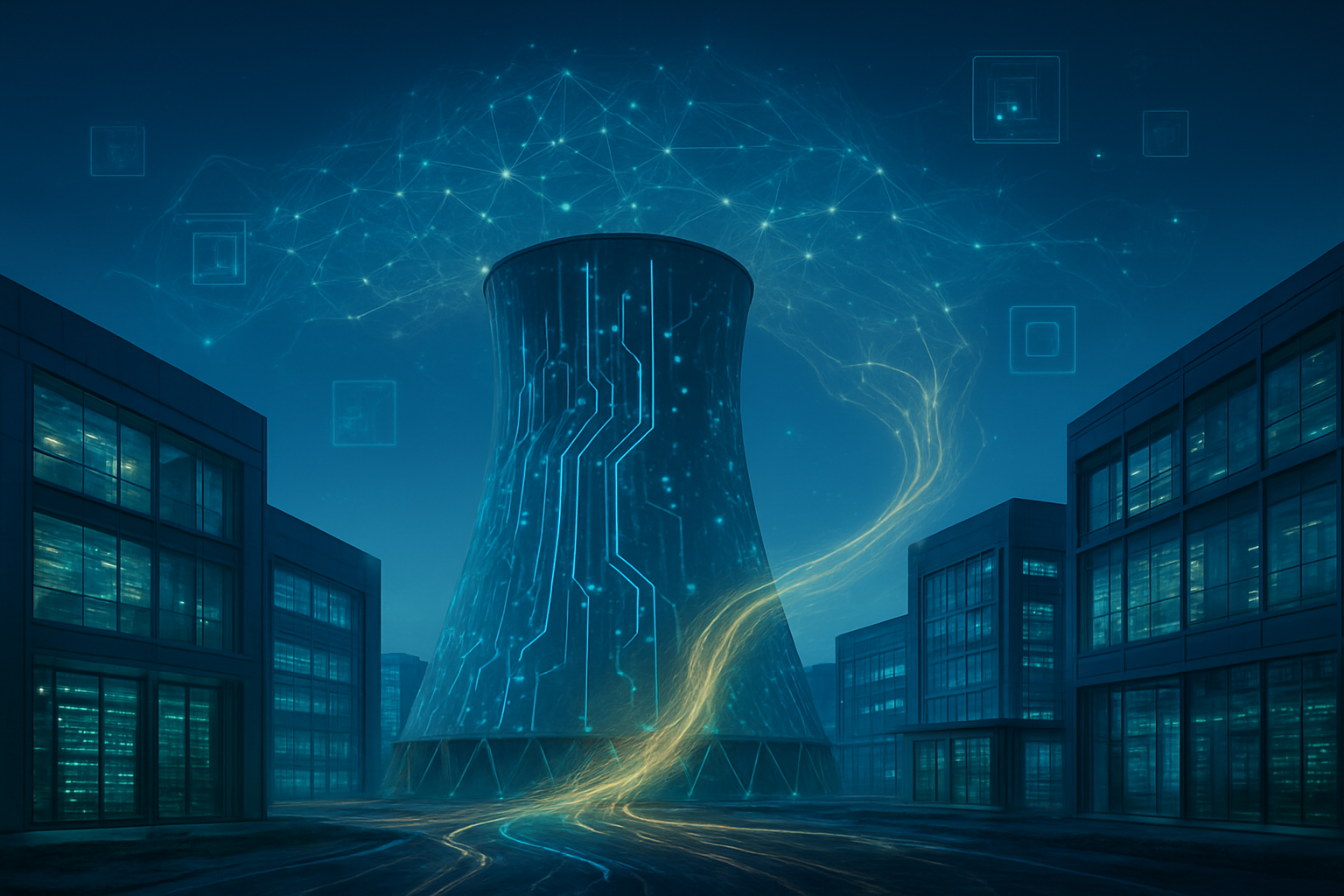
  • The Sub-2nm Supremacy: Intel 18A Hits Volume Production as TSMC N2 Ramps for 2026

    The Sub-2nm Supremacy: Intel 18A Hits Volume Production as TSMC N2 Ramps for 2026

    As of late December 2025, the semiconductor industry has reached a historic inflection point that many analysts once thought impossible. Intel (NASDAQ:INTC) has officially successfully executed its "five nodes in four years" roadmap, culminating in the mid-2025 volume production of its 18A (1.8nm) process node. This achievement has effectively allowed the American chipmaker to leapfrog the industry’s traditional leader, Taiwan Semiconductor Manufacturing Company (NYSE:TSM), in the race to deploy the next generation of transistor architecture. With Intel’s "Panther Lake" processors already shipping to hardware partners for a January 2026 retail launch, the battle for silicon supremacy has moved from the laboratory to the high-volume factory floor.

    The significance of this moment cannot be overstated. For the first time in nearly a decade, the "process lead"—the metric by which the world’s most advanced chips are judged—is no longer a foregone conclusion in favor of TSMC. While TSMC has begun series production of its own N2 (2nm) node in late 2025, Intel’s early aggressive push with 18A has created a competitive vacuum. This shift is driving a massive realignment in the high-performance computing and AI sectors, as tech giants weigh the technical advantages of Intel’s new architecture against the legendary reliability and scale of the Taiwanese foundry.

    Technical Frontiers: RibbonFET and the PowerVia Advantage

    The transition to the 2nm class represents the most radical architectural change in semiconductors since the introduction of FinFET over a decade ago. Both Intel and TSMC have moved to Gate-All-Around (GAA) transistors—which Intel calls RibbonFET and TSMC calls Nanosheet GAA—to overcome the physical limitations of current designs. However, the technical differentiator that has put Intel in the spotlight is "PowerVia," the company's proprietary implementation of Backside Power Delivery (BSPDN). By moving power routing to the back of the wafer, Intel has decoupled power and signal wires, drastically reducing electrical interference and "voltage droop." This allows 18A chips to achieve higher clock speeds at lower voltages, a critical requirement for the energy-hungry AI workloads of 2026.

    In contrast, TSMC’s initial N2 node, while utilizing a highly refined Nanosheet GAA structure, has opted for a more conservative approach by maintaining traditional frontside power delivery. While this strategy has allowed TSMC to maintain slightly higher initial yields—reported at approximately 65–70% compared to Intel’s 55–65%—it leaves a performance gap that Intel is eager to exploit. TSMC’s version of backside power, the "Super Power Rail," is not scheduled to debut until the N2P and A16 (1.6nm) nodes arrive late in 2026 and throughout 2027. This technical window has given Intel a temporary but potent "performance-per-watt" lead that is reflected in the early benchmarks of its Panther Lake and Clearwater Forest architectures.

    Initial reactions from the semiconductor research community have been cautiously optimistic. Experts note that while Intel’s 18A density (roughly 238 million transistors per square millimeter) still trails TSMC’s N2 density (over 310 MTr/mm²), the efficiency gains from PowerVia may matter more for real-world AI performance than raw density alone. The industry is closely watching the "Panther Lake" (Core Ultra Series 3) launch, as it will be the first high-volume consumer product to prove whether Intel can maintain these technical gains without the manufacturing "stumbles" that plagued its 10nm and 7nm efforts years ago.

    The Foundry War: Client Loyalty and Strategic Shifts

    The business implications of this race are reshaping the landscape for AI companies and tech giants. Intel Foundry has already secured high-profile commitments from Microsoft (NASDAQ:MSFT) for its Maia 2 AI accelerators and Amazon (NASDAQ:AMZN) for custom Xeon 6 fabric silicon. These partnerships are a massive vote of confidence in Intel’s 18A node and signal a desire among US-based hyperscalers to diversify their supply chains away from a single-source reliance on Taiwan. For Intel, these "anchor" customers provide the volume necessary to refine 18A yields and fund the even more ambitious 14A node slated for 2027.

    Meanwhile, TSMC remains the dominant force by sheer volume and ecosystem maturity. Apple (NASDAQ:AAPL) has reportedly secured nearly 50% of TSMC’s initial N2 capacity for its upcoming A20 and M5 chips, ensuring that the next generation of iPhones and Macs remains at the bleeding edge. Similarly, Nvidia (NASDAQ:NVDA) is sticking with TSMC for its "Rubin" GPU successor, citing the foundry’s superior CoWoS packaging capabilities as a primary reason. However, the fact that Nvidia has reportedly kept a "placeholder" for testing Intel’s 18A yields suggests that even the AI kingpin is keeping its options open should Intel’s performance lead prove durable through 2026.

    This competition is disrupting the "wait-and-see" approach previously taken by many fabless startups. With Intel 18A offering a faster path to backside power delivery, some AI hardware startups are pivoting their designs to Intel’s PDKs (Process Design Kits) to gain a first-mover advantage in efficiency. The market positioning is clear: Intel is marketing itself as the "performance leader" for those who need the latest architectural breakthroughs now, while TSMC positions itself as the "reliable scale leader" for the world’s largest consumer electronics brands.

    Geopolitics and the End of the FinFET Era

    The broader significance of the 2nm race extends far beyond chip benchmarks; it is a central pillar of global technological sovereignty. Intel’s success with 18A is a major win for the U.S. CHIPS Act, as the node is being manufactured at scale in Fab 52 in Arizona. This represents a tangible shift in the geographic concentration of advanced logic manufacturing. As the world moves into the post-FinFET era, the ability to manufacture GAA transistors at scale has become the new baseline for being a "tier-one" tech superpower.

    This milestone also echoes previous industry shifts, such as the move from planar transistors to FinFET in 2011. Just as that transition allowed for the smartphone revolution, the move to 2nm and 1.8nm is expected to fuel the next decade of "Edge AI." By providing the thermal headroom needed to run large language models (LLMs) locally on laptops and mobile devices, these new nodes are the silent engines behind the AI software boom. The potential concern remains the sheer cost of these chips; as wafer prices for 2nm are expected to exceed $30,000, the "digital divide" between companies that can afford the latest silicon and those that cannot may widen.

    Future Outlook: The Road to 14A and A16

    Looking ahead to 2026, the industry will focus on the ramp-up of consumer availability. While Intel’s Panther Lake will dominate the conversation in early 2026, the second half of the year will see the debut of TSMC’s N2 in the iPhone 18, likely reclaiming the crown for mobile efficiency. Furthermore, the arrival of High-NA EUV (Extreme Ultraviolet) lithography machines from ASML (NASDAQ:ASML) will become the next battleground. Intel has already taken delivery of the first High-NA units to prepare for its 14A node, while TSMC has indicated it may wait until 2026 or 2027 to integrate the expensive new tools into its A16 process.

    Experts predict that the "lead" will likely oscillate between the two giants every 12 to 18 months. The next major hurdle will be the integration of "optical interconnects" and even more advanced 3D packaging, as the industry realizes that the transistor itself is no longer the only bottleneck. The success of Intel’s Clearwater Forest in mid-2026 will be the ultimate test of whether 18A can handle the grueling demands of the data center at scale, potentially paving the way for a permanent "dual-foundry" world where Intel and TSMC share the top spot.

    A New Era of Silicon Competition

    The 2nm manufacturing race of 2025-2026 marks the end of Intel’s period of "catch-up" and the beginning of a genuine two-way fight for the future of computing. By hitting volume production with 18A in mid-2025 and beating TSMC to the implementation of backside power delivery, Intel has proven that its turnaround strategy under Pat Gelsinger was more than just corporate rhetoric. However, TSMC’s massive capacity and deep-rooted relationships with Apple and Nvidia mean that the Taiwanese giant is far from losing its throne.

    As we move into early 2026, the key takeaways are clear: the era of FinFET is over, "PowerVia" is the new technical gold standard, and the geographic map of chip manufacturing is successfully diversifying. For consumers, this means more powerful "AI PCs" and smartphones are just weeks away from store shelves. For the industry, it means the most competitive and innovative period in semiconductor history has only just begun. Watch for the CES 2026 announcements in January, as they will provide the first retail evidence of who truly won the 2nm punch.


    This content is intended for informational purposes only and represents analysis of current AI developments.

    TokenRing AI delivers enterprise-grade solutions for multi-agent AI workflow orchestration, AI-powered development tools, and seamless remote collaboration platforms.
    For more information, visit https://www.tokenring.ai/.

  • Masayoshi Son’s Grand Gambit: SoftBank Completes $6.5 Billion Ampere Acquisition to Forge the Path to Artificial Super Intelligence

    Masayoshi Son’s Grand Gambit: SoftBank Completes $6.5 Billion Ampere Acquisition to Forge the Path to Artificial Super Intelligence

    In a move that fundamentally reshapes the global semiconductor landscape, SoftBank Group Corp (TYO: 9984) has officially completed its $6.5 billion acquisition of Ampere Computing. This milestone marks the final piece of Masayoshi Son’s ambitious "Vertical AI" puzzle, integrating the high-performance cloud CPUs of Ampere with the architectural foundations of Arm Holdings (NASDAQ: ARM) and the specialized acceleration of Graphcore. By consolidating these assets, SoftBank has transformed from a sprawling investment firm into a vertically integrated industrial powerhouse capable of designing, building, and operating the infrastructure required for the next era of computing.

    The significance of this consolidation cannot be overstated. For the first time, a single entity controls the intellectual property, the processor design, and the AI-specific accelerators necessary to challenge the current market dominance of established titans. This strategic alignment is the cornerstone of Son’s "Project Stargate," a $500 billion infrastructure initiative designed to provide the massive computational power and energy required to realize his vision of Artificial Super Intelligence (ASI)—a form of AI he predicts will be 10,000 times smarter than the human brain within the next decade.

    The Silicon Trinity: Integrating Arm, Ampere, and Graphcore

    The technical core of SoftBank’s new strategy lies in the seamless integration of three distinct but complementary technologies. At the base is Arm, whose energy-efficient instruction set architecture (ISA) serves as the blueprint for modern mobile and data center chips. Ampere Computing, now a wholly-owned subsidiary, utilizes this architecture to build "cloud-native" CPUs that boast significantly higher core counts and better power efficiency than traditional x86 processors from Intel and AMD. By pairing these with Graphcore’s Intelligence Processing Units (IPUs)—specialized accelerators designed specifically for the massive parallel processing required by large language models—SoftBank has created a unified "CPU + Accelerator" stack.

    This vertical integration differs from previous approaches by eliminating the "vendor tax" and hardware bottlenecks associated with mixing disparate technologies. Traditionally, data center operators would buy CPUs from one vendor and GPUs from another, often leading to inefficiencies in data movement and software optimization. SoftBank’s unified architecture allows for a "closed-loop" system where the Ampere CPU and Graphcore IPU are co-designed to communicate with unprecedented speed, all while running on the highly optimized Arm architecture. This synergy is expected to reduce the total cost of ownership for AI data centers by as much as 30%, a critical factor as the industry grapples with the escalating costs of training trillion-parameter models.

    Initial reactions from the AI research community have been a mix of awe and cautious optimism. Dr. Elena Rossi, a senior silicon architect at the AI Open Institute, noted that "SoftBank is effectively building a 'Sovereign AI' stack. By controlling the silicon from the ground up, they can bypass the supply chain constraints that have plagued the industry for years." However, some experts warn that the success of this integration will depend heavily on software. While NVIDIA (NASDAQ: NVDA) has its robust CUDA platform, SoftBank must now convince developers to migrate to its proprietary ecosystem, a task that remains the most significant technical hurdle in its path.

    A Direct Challenge to the NVIDIA-AMD Duopoly

    The completion of the Ampere deal places SoftBank in a direct collision course with NVIDIA and Advanced Micro Devices (NASDAQ: AMD). For the past several years, NVIDIA has enjoyed a near-monopoly on AI hardware, with its H100 and B200 chips becoming the gold standard for AI training. However, SoftBank’s new vertical stack offers a compelling alternative for hyperscalers who are increasingly wary of NVIDIA’s high margins and closed ecosystem. By offering a fully integrated solution, SoftBank can provide customized hardware-software packages that are specifically tuned for the workloads of its partners, most notably OpenAI.

    This development is particularly disruptive for the burgeoning market of AI startups and sovereign nations looking to build their own AI capabilities. Companies like Oracle Corp (NYSE: ORCL), a former lead investor in Ampere, stand to benefit from a more diversified hardware market, potentially gaining access to SoftBank’s high-efficiency chips to power their cloud AI offerings. Furthermore, SoftBank’s decision to liquidate its entire $5.8 billion stake in NVIDIA in late 2025 to fund this transition signals a definitive end to its role as a passive investor and its emergence as a primary competitor.

    The strategic advantage for SoftBank lies in its ability to capture revenue across the entire value chain. While NVIDIA sells chips, SoftBank will soon be selling everything from the IP licensing (via Arm) to the physical chips (via Ampere/Graphcore) and even the data center capacity itself through its "Project Stargate" infrastructure. This "full-stack" approach mirrors the strategy that allowed Apple to dominate the smartphone market, but on a scale that encompasses the very foundations of global intelligence.

    Project Stargate and the Quest for ASI

    Beyond the silicon, the Ampere acquisition is the engine driving "Project Stargate," a massive $500 billion joint venture between SoftBank, OpenAI, and a consortium of global investors. Announced earlier this year, Stargate aims to build a series of "hyperscale" data centers across the United States, starting with a 10-gigawatt facility in Texas. These sites are not merely data centers; they are the physical manifestation of Masayoshi Son’s vision for Artificial Super Intelligence. Son believes that the path to ASI requires a level of compute and energy density that current infrastructure cannot provide, and Stargate is his answer to that deficit.

    This initiative represents a significant shift in the AI landscape, moving away from the era of "model-centric" development to "infrastructure-centric" dominance. As models become more complex, the primary bottleneck has shifted from algorithmic ingenuity to the sheer availability of power and specialized silicon. By acquiring DigitalBridge in December 2025 to manage the physical assets—including fiber networks and power substations—SoftBank has ensured it controls the "dirt and power" as well as the "chips and code."

    However, this concentration of power has raised concerns among regulators and ethicists. The prospect of a single corporation controlling the foundational infrastructure of super-intelligence brings about questions of digital sovereignty and monopolistic control. Critics argue that the "Stargate" model could create an insurmountable barrier to entry for any organization not aligned with the SoftBank-OpenAI axis, effectively centralizing the future of AI in the hands of a few powerful players.

    The Road Ahead: Power, Software, and Scaling

    In the near term, the industry will be watching the first deployments of the integrated Ampere-Graphcore systems within the Stargate data centers. The immediate challenge will be the software layer—specifically, the development of a compiler and library ecosystem that can match the ease of use of NVIDIA’s CUDA. SoftBank has already begun an aggressive hiring spree, poaching hundreds of software engineers from across Silicon Valley to build out its "Izanagi" software platform, which aims to provide a seamless interface for training models across its new hardware stack.

    Looking further ahead, the success of SoftBank’s gambit will depend on its ability to solve the energy crisis facing AI. The 7-to-10 gigawatt targets for Project Stargate are unprecedented, requiring the development of dedicated modular nuclear reactors (SMRs) and massive battery storage systems. Experts predict that if SoftBank can successfully integrate its new silicon with sustainable, high-density power, it will have created a blueprint for "Sovereign AI" that nations around the world will seek to replicate.

    The ultimate goal remains the realization of ASI by 2035. While many in the industry remain skeptical of Son’s aggressive timeline, the sheer scale of his capital deployment—over $100 billion committed in 2025 alone—has forced even the harshest critics to take his vision seriously. The coming months will be a critical testing ground for whether the Ampere-Arm-Graphcore trinity can deliver on its performance promises.

    A New Era of AI Industrialization

    The acquisition of Ampere Computing and its integration into the SoftBank ecosystem marks the beginning of the "AI Industrialization" era. No longer content with merely funding the future, Masayoshi Son has taken the reins of the production process itself. By vertically integrating the entire AI stack—from the architecture and the silicon to the data center and the power grid—SoftBank has positioned itself as the indispensable utility provider for the age of intelligence.

    This development will likely be remembered as a turning point in AI history, where the focus shifted from software breakthroughs to the massive physical scaling of intelligence. As we move into 2026, the tech world will be watching closely to see if SoftBank can execute on this Herculean task. The stakes could not be higher: the winner of the infrastructure race will not only dominate the tech market but will likely hold the keys to the most powerful technology ever devised by humanity.

    For now, the message from SoftBank is clear: the age of the general-purpose investor is over, and the age of the AI architect has begun.


    This content is intended for informational purposes only and represents analysis of current AI developments.

    TokenRing AI delivers enterprise-grade solutions for multi-agent AI workflow orchestration, AI-powered development tools, and seamless remote collaboration platforms.
    For more information, visit https://www.tokenring.ai/.

  • The AI Memory Supercycle: Micron Shatters Records as HBM Capacity Sells Out Through 2026

    The AI Memory Supercycle: Micron Shatters Records as HBM Capacity Sells Out Through 2026

    In a definitive signal that the artificial intelligence infrastructure boom is far from over, Micron Technology (NASDAQ: MU) has delivered a fiscal first-quarter 2026 earnings report that has sent shockwaves through the semiconductor industry. Reporting a staggering $13.64 billion in revenue—a 57% year-over-year increase—Micron has not only beaten analyst expectations but has fundamentally redefined the market's understanding of the "AI Memory Supercycle." The company's guidance for the second quarter was even more audacious, projecting revenue of $18.7 billion, a figure that implies a massive 132% growth compared to the previous year.

    The significance of these numbers cannot be overstated. As of late December 2025, it has become clear that memory is no longer a peripheral component of the AI stack; it is the fundamental "oxygen" that allows AI accelerators to breathe. Micron’s announcement that its High Bandwidth Memory (HBM) capacity for the entire 2026 calendar year is already sold out highlights a critical bottleneck in the global AI supply chain. With major hyperscalers locked into long-term agreements, the industry is entering an era where the ability to compute is strictly governed by the ability to store and move data at lightning speeds.

    The Technical Evolution: From HBM3E to the HBM4 Frontier

    The technical drivers behind Micron’s record-breaking quarter lie in the rapid adoption of HBM3E and the impending transition to HBM4. High Bandwidth Memory is uniquely engineered to provide the massive data throughput required by modern Large Language Models (LLMs). Unlike traditional DDR5 memory, HBM stacks DRAM dies vertically and connects them directly to the processor using a silicon interposer. Micron’s current HBM3E 12-high stacks offer industry-leading power efficiency and bandwidth, but the demand has already outpaced the company’s ability to manufacture them.

    The manufacturing process for HBM is notoriously "wafer-intensive." For every bit of HBM produced, approximately three bits of standard DRAM capacity are lost due to the complexity of the stacking and through-silicon via (TSV) processes. This "capacity asymmetry" is a primary reason for the persistent supply crunch. Furthermore, AI servers now require six to eight times more DRAM than conventional enterprise servers, creating a multiplier effect on demand that the industry has never seen before.

    Looking ahead, the shift toward HBM4 is slated for mid-2026. This next generation of memory is expected to offer bandwidth exceeding 2.0 TB/s per stack—a 60% improvement over HBM3E—while utilizing a 12nm logic process. This transition represents a significant architectural shift, as HBM4 will increasingly blur the lines between memory and logic, allowing for even tighter integration with next-generation AI accelerators.

    A New Competitive Landscape for Tech Giants

    The "sold out" status of Micron’s 2026 capacity creates a complex strategic environment for the world’s largest tech companies. NVIDIA (NASDAQ: NVDA), Meta Platforms (NASDAQ: META), and Microsoft (NASDAQ: MSFT) are currently in a high-stakes race to secure enough HBM to power their upcoming data center expansions. Because Micron can currently only fulfill about half to two-thirds of the requirements for some of its largest customers, these tech giants are forced to navigate a "scarcity economy" for silicon.

    For NVIDIA, Micron’s roadmap is particularly vital. Micron has already begun sampling its 36GB HBM4 modules, which are positioned as the primary memory solution for NVIDIA’s upcoming Vera Rubin AI architecture. This partnership gives Micron a strategic advantage over competitors like SK Hynix and Samsung, as it solidifies its role as a preferred supplier for the most advanced AI chips on the planet.

    Meanwhile, startups and smaller AI labs may find themselves at a disadvantage. As the "big three" memory producers (Micron, SK Hynix, and Samsung) prioritize high-margin HBM for hyperscalers, the availability of standard DRAM for other sectors could tighten, driving up costs across the entire electronics industry. This market positioning has led analysts at JPMorgan Chase (NYSE: JPM) and Morgan Stanley (NYSE: MS) to suggest that "Memory is the New Compute," shifting the power dynamics of the semiconductor sector.

    The Structural Shift: Why This Cycle is Different

    The term "AI Memory Supercycle" describes a structural shift in the industry rather than a typical boom-and-bust commodity cycle. Historically, the memory market has been plagued by volatility, with periods of oversupply leading to price crashes. However, the current environment is driven by multi-year infrastructure build-outs that are less sensitive to consumer spending and more tied to the fundamental race for AGI (Artificial General Intelligence).

    The wider significance of Micron's $13.64 billion quarter is the realization that the Total Addressable Market (TAM) for HBM is expanding much faster than anticipated. Micron now expects the HBM market to reach $100 billion by 2028, a milestone previously not expected until 2030 or later. This accelerated timeline suggests that the integration of AI into every facet of enterprise software and consumer technology is happening at a breakneck pace.

    However, this growth is not without concerns. The extreme capital intensity required to build new fabs—Micron has raised its FY2026 CapEx to $20 billion—means that the barrier to entry is higher than ever. There are also potential risks regarding the geographic concentration of manufacturing, though Micron’s expansion into Idaho and Syracuse, New York, supported by the CHIPS Act, provides a degree of domestic supply chain security that is increasingly valuable in the current geopolitical climate.

    Future Horizons: The Road to Mid-2026 and Beyond

    As we look toward the middle of 2026, the primary focus will be the mass production ramp of HBM4. This transition will be the most significant technical hurdle for the industry in years, as it requires moving to more advanced logic processes and potentially adopting "base die" customization where the memory is tailored specifically for the processor it sits next to.

    Beyond HBM, we are likely to see the emergence of new memory architectures like CXL (Compute Express Link), which allows for memory pooling across data centers. This could help alleviate some of the supply pressures by allowing for more efficient use of existing resources. Experts predict that the next eighteen months will be defined by "co-engineering," where memory manufacturers like Micron work hand-in-hand with chip designers from the earliest stages of development.

    The challenge for Micron will be executing its massive capacity expansion without falling into the traps of the past. Building the Syracuse and Idaho fabs is a multi-year endeavor that must perfectly time the market's needs. If AI demand remains on its current trajectory, even these massive investments may only barely keep pace with the world's hunger for data.

    Final Reflections on a Watershed Moment

    Micron’s fiscal Q1 2026 results represent a watershed moment in AI history. By shattering revenue records and guiding for an even more explosive Q2, the company has proved that the AI revolution is as much about the "bits" of memory as it is about the "flops" of processing power. The fact that 2026 capacity is already spoken for is the ultimate validation of the AI Memory Supercycle.

    For investors and industry observers, the key takeaway is that the bottleneck for AI progress has shifted. While GPU availability was the story of 2024 and 2025, the narrative of 2026 will be defined by HBM supply. Micron has successfully transformed itself from a cyclical commodity producer into a high-tech cornerstone of the global AI economy.

    In the coming weeks, all eyes will be on how competitors respond and whether the supply chain can keep up with the $18.7 billion quarterly demand Micron has forecasted. One thing is certain: the era of "Memory as the New Compute" has officially arrived, and Micron Technology is leading the charge.


    This content is intended for informational purposes only and represents analysis of current AI developments.

    TokenRing AI delivers enterprise-grade solutions for multi-agent AI workflow orchestration, AI-powered development tools, and seamless remote collaboration platforms.
    For more information, visit https://www.tokenring.ai/.

  • Beijing’s Silent Mandate: China Enforces 50% Domestic Tool Rule to Shield AI Ambitions

    Beijing’s Silent Mandate: China Enforces 50% Domestic Tool Rule to Shield AI Ambitions

    In a move that signals a decisive shift in the global technology cold war, Beijing has informally implemented a strict 50% domestic semiconductor equipment mandate for all new chip-making capacity. This "window guidance," enforced through the state’s rigorous approval process for new fabrication plants, requires domestic chipmakers to source at least half of their manufacturing tools from local suppliers. The directive is a cornerstone of China’s broader strategy to immunize its domestic artificial intelligence and high-performance computing sectors against escalating Western export controls.

    The significance of this mandate cannot be overstated. By creating a guaranteed market for domestic champions, China is accelerating its transition from a buyer of foreign technology to a self-sufficient powerhouse. This development directly supports the production of advanced silicon necessary for the next generation of large language models (LLMs) and autonomous systems, ensuring that China’s AI roadmap remains unhindered by geopolitical friction.

    Breakthroughs in the Clean Room: 7nm Testing and Localized Etching

    The technical heart of this mandate lies in the rapid advancement of etching and cleaning technologies, sectors once dominated by American and Japanese firms. Reports as of late 2025 confirm that Semiconductor Manufacturing International Corporation (HKG: 0981), or SMIC, has successfully integrated domestic etching tools into its 7nm production lines for pilot testing. These tools, primarily supplied by Naura Technology Group (SZSE: 002371), are performing critical "patterning" tasks that define the microscopic architecture of advanced AI accelerators. This represents a significant leap from just two years ago, when domestic tools were largely relegated to "mature" nodes of 28nm and above.

    Unlike previous self-sufficiency attempts that focused on low-end hardware, the current push emphasizes "learning-by-doing" on advanced nodes. In addition to etching, China has achieved nearly 50% self-sufficiency in cleaning and photoresist-removal tools. Firms like ACM Research (Shanghai) and Naura have developed advanced single-wafer cleaning systems that are now being integrated into SMIC’s most sophisticated process flows. These tools are essential for maintaining the high yields required for 7nm and 5nm production, where even a single microscopic particle can ruin a multi-thousand-dollar AI chip.

    Initial reactions from the global semiconductor research community suggest a mix of surprise and concern. While Western experts previously argued that China was decades away from replicating the precision of high-end etching gear, the sheer volume of state-backed R&D—bolstered by the $47.5 billion "Big Fund" Phase III—has compressed this timeline. The ability to test these tools in real-world, high-volume environments like SMIC’s fabs provides a feedback loop that is rapidly closing the performance gap with Western counterparts.

    The Great Decoupling: Market Winners and the Squeeze on US Giants

    The 50% mandate has created a bifurcated market where domestic firms are experiencing explosive growth at the expense of established Silicon Valley titans. Naura Technology Group has recently ascended to become the world’s sixth-largest semiconductor equipment maker, reporting a 30% revenue jump in the first half of 2025. Similarly, Advanced Micro-Fabrication Equipment Inc. (SSE: 688012), known as AMEC, has seen its revenue soar by 44%, driven by its specialized Capacitively Coupled Plasma (CCP) etching tools which are now capable of handling nearly all etching steps for 5nm processes.

    Conversely, the impact on U.S. equipment makers has transitioned from a temporary setback to a structural exclusion. Applied Materials, Inc. (NASDAQ: AMAT) has estimated a $710 million hit to its fiscal 2026 revenue as its share of the Chinese market continues to dwindle. Lam Research Corporation (NASDAQ: LRCX), which specializes in the very etching tools that AMEC and Naura are now replicating, has seen its China-based revenue drop significantly as local fabs swap out foreign gear for "good enough" domestic alternatives.

    Even firms that were once considered indispensable are feeling the pressure. While KLA Corporation (NASDAQ: KLAC) remains more resilient due to the extreme complexity of metrology and inspection tools, it now faces long-term competition from state-funded Chinese startups like Hwatsing and RSIC. The strategic advantage has shifted: Chinese chipmakers are no longer just buying tools; they are building a protected ecosystem that ensures their long-term survival in the AI era, regardless of future sanctions from Washington or The Hague.

    AI Sovereignty and the "Whole-Nation" Strategy

    This mandate is a critical component of China's broader AI landscape, where hardware sovereignty is viewed as a prerequisite for national security. By forcing a 50% domestic adoption rate, Beijing is ensuring that its AI industry is not built on a "foundation of sand." If the U.S. were to further restrict the export of tools from companies like ASML Holding N.V. (NASDAQ: ASML) or Tokyo Electron, China’s existing domestic capacity would act as a vital buffer, allowing for the continued production of the Ascend and Biren AI chips that power its domestic data centers.

    The move mirrors previous industrial milestones, such as China’s rapid dominance in the high-speed rail and solar panel industries. By utilizing a "whole-nation" approach, the government is absorbing the initial costs of lower-performing domestic tools to provide the scale necessary for technological convergence. This strategy addresses the primary concern of many industry analysts: that domestic tools might initially lead to lower yields. Beijing’s response is clear—yields can be improved through iteration, but a total cutoff from foreign technology cannot be easily mitigated without a local manufacturing base.

    However, this aggressive push toward self-sufficiency also raises concerns about global supply chain fragmentation. As China moves toward its 100% domestic goal, the global semiconductor industry risks splitting into two incompatible ecosystems. This could lead to increased costs for AI development globally, as the economies of scale provided by a unified global market begin to erode.

    The Road to 100%: What Lies Ahead

    Looking toward the near-term, industry insiders expect the 50% threshold to be just the beginning. Under the 15th Five-Year Plan (2026–2030), Beijing is projected to raise the informal mandate to 70% or higher by 2027. The ultimate goal is 100% domestic equipment for the entire supply chain, including the most challenging frontier: Extreme Ultraviolet (EUV) lithography. While China still lags significantly in lithography, the progress made in etching and cleaning provides a blueprint for how they intend to tackle the rest of the stack.

    The next major challenge will be the development of local alternatives for high-end metrology and chemical mechanical polishing (CMP) tools. Experts predict that the next two years will see a flurry of domestic acquisitions and state-led mergers as China seeks to consolidate its fragmented equipment sector into a few "national champions" capable of competing with the likes of Applied Materials on a global stage.

    A Final Assessment of the Semiconductor Shift

    The implementation of the 50% domestic equipment mandate marks a point of no return for the global chip industry. China has successfully leveraged its massive internal market to force a technological evolution that many thought was impossible under the weight of Western sanctions. By securing the tools of production, Beijing is effectively securing its future in artificial intelligence, ensuring that its researchers and companies have the silicon necessary to compete in the global AI race.

    In the coming weeks and months, investors and policy analysts should watch for the official release of the 15th Five-Year Plan details, which will likely codify these informal mandates into long-term national policy. The era of a globalized, borderless semiconductor supply chain is ending, replaced by a new reality of "silicon nationalism" where the ability to build the machine that builds the chip is the ultimate form of power.


    This content is intended for informational purposes only and represents analysis of current AI developments.

    TokenRing AI delivers enterprise-grade solutions for multi-agent AI workflow orchestration, AI-powered development tools, and seamless remote collaboration platforms.
    For more information, visit https://www.tokenring.ai/.

  • Silicon Sovereignty: Apple Taps Intel’s 18A for Future Mac and iPad Chips in Landmark “Made in America” Shift

    Silicon Sovereignty: Apple Taps Intel’s 18A for Future Mac and iPad Chips in Landmark “Made in America” Shift

    In a move that signals a seismic shift in the global semiconductor landscape, Apple (NASDAQ: AAPL) has officially qualified Intel’s (NASDAQ: INTC) 1.8nm-class process node, known as 18A, for its next generation of entry-level M-series chips. This breakthrough, confirmed by late-2025 industry surveys and supply chain analysis, marks the first time in over half a decade that Apple has looked beyond TSMC (NYSE: TSM) for its leading-edge silicon needs. Starting in 2027, the processors powering the MacBook Air and iPad Pro are expected to be manufactured domestically, bringing "Apple Silicon: Made in America" from a political aspiration to a commercial reality.

    The immediate significance of this partnership cannot be overstated. For Intel, securing Apple as a foundry customer is the ultimate validation of its "IDM 2.0" strategy and its ambitious goal to reclaim process leadership. For Apple, the move provides a critical geopolitical hedge against the concentration of advanced manufacturing in Taiwan while diversifying its supply chain. As Intel’s Fab 52 in Arizona begins to ramp up for high-volume production, the tech industry is witnessing the birth of a genuine duopoly in advanced chip manufacturing, ending years of undisputed dominance by TSMC.

    Technical Breakthrough: The 18A Node, RibbonFET, and PowerVia

    The technical foundation of this partnership rests on Intel’s 18A node, specifically the performance-optimized 18AP variant. According to renowned supply chain analyst Ming-Chi Kuo, Apple has been working with Intel’s Process Design Kit (PDK) version 0.9.1GA, with simulations showing that the 18A architecture meets Apple’s stringent requirements for power efficiency and thermal management. The 18A process is Intel’s first to fully integrate two revolutionary technologies: RibbonFET and PowerVia. These represent the most significant architectural change in transistor design since the introduction of FinFET over a decade ago.

    RibbonFET is Intel’s implementation of Gate-All-Around (GAA) transistor architecture. Unlike the previous FinFET design, where the gate sits on three sides of the channel, RibbonFET wraps the gate entirely around the silicon "ribbons." This provides superior electrostatic control, drastically reducing current leakage—a vital factor for the thin, fanless designs of the MacBook Air and iPad Pro. By minimizing leakage, Apple can drive higher performance at lower voltages, extending battery life while maintaining the "cool and quiet" user experience that has defined the M-series era.

    Complementing RibbonFET is PowerVia, Intel’s industry-leading backside power delivery solution. In traditional chip design, power and signal lines are bundled together on the front of the wafer, leading to "routing congestion" and voltage drops. PowerVia moves the power delivery network to the back of the silicon wafer, separating it from the signal wires. This decoupling eliminates the "IR drop" (voltage loss), allowing the chip to operate more efficiently. Technical specifications suggest that PowerVia alone contributes to a 30% increase in transistor density, as it frees up significant space on the front side of the chip for more logic.

    Initial reactions from the semiconductor research community have been overwhelmingly positive, though cautious regarding yields. While TSMC’s 2nm (N2) node remains a formidable competitor, Intel’s early lead in implementing backside power delivery has given it a temporary technical edge. Industry experts note that by qualifying the 18AP variant, Apple is targeting a 15-20% improvement in performance-per-watt over current 3nm designs, specifically optimized for the mobile System-on-Chip (SoC) workloads that define the iPad and entry-level Mac experience.

    Strategic Realignment: Diversifying Beyond TSMC

    The industry implications of Apple’s shift to Intel Foundry are profound, particularly for the competitive balance between the United States and East Asia. For years, TSMC has enjoyed a near-monopoly on Apple’s high-end business, a relationship that has funded TSMC’s rapid advancement. By moving the high-volume MacBook Air and iPad Pro lines to Intel, Apple is effectively "dual-sourcing" its most critical components. This provides Apple with immense negotiating leverage and ensures that a single geopolitical or natural disaster in the Taiwan Strait cannot paralyze its entire product roadmap.

    Intel stands to benefit the most from this development, as Apple joins other "anchor" customers like Microsoft (NASDAQ: MSFT) and Amazon (NASDAQ: AMZN). Microsoft has already committed to using 18A for its Maia AI accelerators, and Amazon is co-developing an AI fabric chip on the same node. However, Apple’s qualification is the "gold standard" of validation. It signals to the rest of the industry that Intel’s foundry services are capable of meeting the world’s highest standards for volume, quality, and precision. This could trigger a wave of other fabless companies, such as NVIDIA (NASDAQ: NVDA) or Qualcomm (NASDAQ: QCOM), to reconsider Intel for their 2027 and 2028 product cycles.

    For TSMC, the loss of a portion of Apple’s business is a strategic blow, even if it remains the primary manufacturer for the iPhone’s A-series and the high-end M-series "Pro" and "Max" chips. TSMC currently holds over 70% of the foundry market share, but Intel’s aggressive roadmap and domestic manufacturing footprint are beginning to eat into that dominance. The market is shifting from a TSMC-centric world to one where "geographic diversity" is as important as "nanometer count."

    Startups and smaller AI labs may also see a trickle-down benefit. As Intel ramps up its 18A capacity at Fab 52 to meet Apple’s demand, the overall availability of advanced-node manufacturing in the U.S. will increase. This could lower the barrier to entry for domestic hardware startups that previously struggled to secure capacity at TSMC’s overbooked facilities. The presence of a world-class foundry on American soil simplifies logistics, reduces IP theft concerns, and aligns with the growing "Buy American" sentiment in the enterprise tech sector.

    Geopolitical Significance: The Arizona Fab and U.S. Sovereignty

    Beyond the corporate balance sheets, this breakthrough carries immense geopolitical weight. The "Apple Silicon: Made in America" initiative is a direct result of the CHIPS and Science Act, which provided the financial framework for Intel to build its $32 billion Fab 52 at the Ocotillo campus in Arizona. As of late 2025, Fab 52 is fully operational, representing the first facility in the United States capable of mass-producing 2nm-class silicon. This transition addresses a long-standing vulnerability in the U.S. tech ecosystem: the total reliance on overseas manufacturing for the "brains" of modern computing.

    This development fits into a broader trend of "technological sovereignism," where major powers are racing to secure their own semiconductor supply chains. The Apple-Intel partnership is a high-profile win for U.S. industrial policy. It demonstrates that with the right combination of government incentives and private-sector execution, the "center of gravity" for advanced manufacturing can be pulled back toward the West. This move is likely to be viewed by policymakers as a major milestone in national security, ensuring that the chips powering the next generation of personal and professional computing are shielded from international trade disputes.

    However, the shift is not without its concerns. Critics point out that Intel’s 18A yields, currently estimated in the 55% to 65% range, still trail TSMC’s mature processes. There is a risk that if Intel cannot stabilize these yields by the 2027 launch window, Apple could face supply shortages or higher costs. Furthermore, the bifurcation of Apple's supply chain—with some chips made in Arizona and others in Hsinchu—adds a new layer of complexity to its legendary logistics machine. Apple will have to manage two different sets of design rules and manufacturing tolerances for the same M-series family.

    Comparatively, this milestone is being likened to the 2005 "Apple-Intel" transition, when Steve Jobs announced that Macs would move from PowerPC to Intel processors. While that was a change in architecture, this is a change in the very fabric of how those architectures are realized. It represents the maturation of the "IDM 2.0" vision, proving that Intel can compete as a service provider to its former rivals, and that Apple is willing to prioritize supply chain resilience over a decade-long partnership with TSMC.

    The Road to 2027 and Beyond: 14A and High-NA EUV

    Looking ahead, the 18A breakthrough is just the beginning of a multi-year roadmap. Intel is already looking toward its 14A (1.4nm) node, which is slated for risk production in 2027 and mass production in 2028. The 14A node will be the first to utilize "High-NA" EUV (Extreme Ultraviolet) lithography at scale, a technology that promises even greater precision and density. If Intel successfully executes the 18A ramp for Apple, it is highly likely that more of Apple’s portfolio—including the flagship iPhone chips—could migrate to Intel’s 14A or future "PowerDirect" enabled nodes.

    Experts predict that the next major challenge will be the integration of advanced packaging. As chips become more complex, the way they are stacked and connected (using technologies like Intel’s Foveros) will become as important as the transistors themselves. We expect to see Apple and Intel collaborate on custom packaging solutions in Arizona, potentially creating "chiplet" designs for future M-series Ultra processors that combine Intel-made logic with memory and I/O from other domestic suppliers.

    The near-term focus will remain on the release of PDK 1.0 and 1.1 in early 2026. These finalized design rules will allow Apple to "tape out" the final designs for the 2027 MacBook Air. If these milestones are met without delay, it will confirm that Intel has truly returned to the "Tick-Tock" cadence of execution that once made it the undisputed king of the silicon world. The tech industry will be watching the yield reports from Fab 52 closely over the next 18 months as the true test of this partnership begins.

    Conclusion: A New Era for Global Silicon

    The qualification of Intel’s 18A node by Apple marks a turning point in the history of computing. It represents the successful convergence of advanced materials science, aggressive industrial policy, and strategic corporate pivoting. For Intel, it is a hard-won victory that justifies years of massive investment and structural reorganization. For Apple, it is a masterful move that secures its future against global instability while continuing to push the boundaries of what is possible in portable silicon.

    The key takeaways are clear: the era of TSMC’s total dominance is ending, and the era of domestic, advanced-node manufacturing has begun. The technical advantages of RibbonFET and PowerVia will soon be in the hands of millions of consumers, powering the next generation of AI-capable Macs and iPads. As we move toward 2027, the success of this partnership will be measured not just in gigahertz or battery life, but in the stability and sovereignty of the global tech supply chain.

    In the coming months, keep a close eye on Intel’s quarterly yield updates and any further customer announcements for the 18A and 14A nodes. The "silicon race" has entered a new, more competitive chapter, and for the first time in a long time, the most advanced chips in the world will once again bear the mark: "Made in the USA."


    This content is intended for informational purposes only and represents analysis of current AI and semiconductor developments.

    TokenRing AI delivers enterprise-grade solutions for multi-agent AI workflow orchestration, AI-powered development tools, and seamless remote collaboration platforms.
    For more information, visit https://www.tokenring.ai/.

  • NVIDIA’s $20 Billion Christmas Eve Gambit: The Groq “Reverse Acqui-hire” and the Future of AI Inference

    NVIDIA’s $20 Billion Christmas Eve Gambit: The Groq “Reverse Acqui-hire” and the Future of AI Inference

    In a move that sent shockwaves through Silicon Valley on Christmas Eve 2025, NVIDIA (NASDAQ: NVDA) announced a transformative $20 billion strategic partnership with Groq, the pioneer of Language Processing Unit (LPU) technology. Structured as a "reverse acqui-hire," the deal involves NVIDIA paying a massive licensing fee for Groq’s intellectual property while simultaneously bringing on Groq’s founder and CEO, Jonathan Ross—the legendary inventor of Google’s (NASDAQ: GOOGL) Tensor Processing Unit (TPU)—to lead a new high-performance inference division. This tactical masterstroke effectively neutralizes one of NVIDIA’s most potent architectural rivals while positioning the company to dominate the burgeoning AI inference market.

    The timing and structure of the deal are as significant as the technology itself. By opting for a licensing and talent-acquisition model rather than a traditional merger, NVIDIA CEO Jensen Huang has executed a sophisticated "regulatory arbitrage" play. This maneuver is designed to bypass the intense antitrust scrutiny from the Department of Justice and global regulators that has previously dogged the company’s expansion efforts. As the AI industry shifts its focus from the massive compute required to train models to the efficiency required to run them at scale, NVIDIA’s move signals a definitive pivot toward an inference-first future.

    Breaking the Memory Wall: LPU Technology and the Vera Rubin Integration

    At the heart of this $20 billion deal is Groq’s proprietary LPU technology, which represents a fundamental departure from the GPU-centric world NVIDIA helped create. Unlike traditional GPUs that rely on High Bandwidth Memory (HBM)—a component currently plagued by global supply chain shortages—Groq’s architecture utilizes on-chip SRAM (Static Random Access Memory). This "software-defined" hardware approach eliminates the "memory bottleneck" by keeping data on the chip, allowing for inference speeds up to 10 times faster than current state-of-the-art GPUs while reducing energy consumption by a factor of 20.

    The technical implications are profound. Groq’s architecture is entirely deterministic, meaning the system knows exactly where every bit of data is at any given microsecond. This eliminates the "jitter" and latency spikes common in traditional parallel processing, making it the gold standard for real-time applications like autonomous agents and high-speed LLM (Large Language Model) interactions. NVIDIA plans to integrate these LPU cores directly into its upcoming 2026 "Vera Rubin" architecture. The Vera Rubin chips, which are already expected to feature HBM4 and the new Vera CPU (NASDAQ: ARM), will now become hybrid powerhouses capable of utilizing GPUs for massive training workloads and LPU cores for lightning-fast, deterministic inference.

    Industry experts have reacted with a mix of awe and trepidation. "NVIDIA just bought the only architecture that threatened their inference moat," noted one senior researcher at OpenAI. By bringing Jonathan Ross into the fold, NVIDIA isn't just buying technology; it's acquiring the architectural philosophy that allowed Google to stay competitive with its TPUs for a decade. Ross’s move to NVIDIA marks a full-circle moment for the industry, as the man who built Google’s AI hardware foundation now takes the reins of the world’s most valuable semiconductor company.

    Neutralizing the TPU Threat and Hedging Against HBM Shortages

    This strategic move is a direct strike against Google’s (NASDAQ: GOOGL) internal hardware advantage. For years, Google’s TPUs have provided a cost and performance edge for its own AI services, such as Gemini and Search. By incorporating LPU technology, NVIDIA is effectively commoditizing the specialized advantages that TPUs once held, offering a superior, commercially available alternative to the rest of the industry. This puts immense pressure on other cloud competitors like Amazon (NASDAQ: AMZN) and Microsoft (NASDAQ: MSFT), who have been racing to develop their own in-house silicon to reduce their reliance on NVIDIA.

    Furthermore, the deal serves as a critical hedge against the fragile HBM supply chain. As manufacturers like SK Hynix and Samsung struggle to keep up with the insatiable demand for HBM3e and HBM4, NVIDIA’s move into SRAM-based LPU technology provides a "Plan B" that doesn't rely on external memory vendors. This vertical integration of inference technology ensures that NVIDIA can continue to deliver high-performance AI factories even if the global memory market remains constrained. It also creates a massive barrier to entry for competitors like AMD (NASDAQ: AMD) and Intel (NASDAQ: INTC), who are still heavily reliant on traditional GPU and HBM architectures to compete in the high-end AI space.

    Regulatory Arbitrage and the New Antitrust Landscape

    The "reverse acqui-hire" structure of the Groq deal is a direct response to the aggressive antitrust environment of 2024 and 2025. With the US Department of Justice and European regulators closely monitoring NVIDIA’s market dominance, a standard $20 billion acquisition of Groq would have likely faced years of litigation and a potential block. By licensing the IP and hiring the talent while leaving Groq as a semi-independent cloud entity, NVIDIA has followed the playbook established by Microsoft’s earlier deal with Inflection AI. This allows NVIDIA to absorb the "brains" and "blueprints" of its competitor without the legal headache of a formal merger.

    This move highlights a broader trend in the AI landscape: the consolidation of power through non-traditional means. As the barrier between software and hardware continues to blur, the most valuable assets are no longer just physical factories, but the specific architectural designs and the engineers who create them. However, this "stealth consolidation" is already drawing the attention of critics who argue that it allows tech giants to maintain monopolies while evading the spirit of antitrust laws. The Groq deal will likely become a landmark case study for regulators looking to update competition frameworks for the AI era.

    The Road to 2026: The Vera Rubin Era and Beyond

    Looking ahead, the integration of Groq’s LPU technology into the Vera Rubin platform sets the stage for a new era of "Artificial Superintelligence" (ASI) infrastructure. In the near term, we can expect NVIDIA to release specialized "Inference-Only" cards based on Groq’s designs, targeting the edge computing and enterprise sectors that prioritize latency over raw training power. Long-term, the 2026 launch of the Vera Rubin chips will likely represent the most significant architectural shift in NVIDIA’s history, moving away from a pure GPU focus toward a heterogeneous computing model that combines the best of GPUs, CPUs, and LPUs.

    The challenges remain significant. Integrating two fundamentally different architectures—the parallel-processing GPU and the deterministic LPU—into a single, cohesive software stack like CUDA will require a monumental engineering effort. Jonathan Ross will be tasked with ensuring that this transition is seamless for developers. If successful, the result will be a computing platform that is virtually untouchable in its versatility, capable of handling everything from the world’s largest training clusters to the most responsive real-time AI agents.

    A New Chapter in AI History

    NVIDIA’s Christmas Eve announcement is more than just a business deal; it is a declaration of intent. By securing the LPU technology and the leadership of Jonathan Ross, NVIDIA has addressed its two biggest vulnerabilities: the memory bottleneck and the rising threat of specialized inference chips. This $20 billion move ensures that as the AI industry matures from experimental training to mass-market deployment, NVIDIA remains the indispensable foundation upon which the future is built.

    As we look toward 2026, the significance of this moment will only grow. The "reverse acqui-hire" of Groq may well be remembered as the move that cemented NVIDIA’s dominance for the next decade, effectively ending the "inference wars" before they could truly begin. For competitors and regulators alike, the message is clear: NVIDIA is not just participating in the AI revolution; it is architecting the very ground it stands on.


    This content is intended for informational purposes only and represents analysis of current AI developments.

    TokenRing AI delivers enterprise-grade solutions for multi-agent AI workflow orchestration, AI-powered development tools, and seamless remote collaboration platforms.
    For more information, visit https://www.tokenring.ai/.

  • The Great Digital Decay: New 2025 Report Warns ‘AI Slop’ Now Comprises Over Half of the Internet

    The Great Digital Decay: New 2025 Report Warns ‘AI Slop’ Now Comprises Over Half of the Internet

    As of December 29, 2025, the digital landscape has reached a grim milestone. A comprehensive year-end report from content creation firm Kapwing, titled the AI Slop Report 2025, reveals that the "Dead Internet Theory"—once a fringe conspiracy—has effectively become an observable reality. The report warns that low-quality, mass-produced synthetic content, colloquially known as "AI slop," now accounts for more than 52% of all newly published English-language articles and a staggering 21% of all short-form video recommendations on major platforms.

    This degradation is not merely a nuisance for users; it represents a fundamental shift in how information is consumed and distributed. With Merriam-Webster officially naming "Slop" its 2025 Word of the Year, the phenomenon has moved from the shadows of bot farms into the mainstream strategies of tech giants. The report highlights a growing "authenticity crisis" that threatens to permanently erode the trust users place in digital platforms, as human creativity is increasingly drowned out by high-volume, low-value algorithmic noise.

    The Industrialization of Slop: Technical Specifications and the 'Slopper' Pipeline

    The explosion of AI slop in late 2025 is driven by the maturation of multimodal models and the "democratization" of industrial-scale automation tools. Leading the charge is OpenAI’s Sora 2, which launched a dedicated social integration earlier this year. While designed for high-end creativity, its "Cameo" feature—which allows users to insert their likeness into hyper-realistic scenes—has been co-opted by "sloppers" to generate thousands of fake influencers. Similarly, Meta Platforms Inc. (NASDAQ:META) introduced "Meta Vibes," a feature within its AI suite that encourages users to "remix" and re-generate clips, creating a feedback loop of slightly altered, repetitive synthetic media.

    Technically, the "Slopper" economy relies on sophisticated content pipelines that require almost zero human intervention. These systems utilize LLM-based scripts to scrape trending topics from X and Reddit Inc. (NYSE:RDDT), generate scripts, and feed them into video APIs like Google’s Nano Banana Pro (part of the Gemini 3 ecosystem). The result is a flood of "brainrot" content—nonsensical, high-stimulation clips often featuring bizarre imagery like "Shrimp Jesus" or hyper-realistic, yet factually impossible, historical events—designed specifically to hijack the engagement algorithms of TikTok and YouTube.

    This approach differs significantly from previous years, where AI content was often easy to spot due to visual "hallucinations" or poor grammar. By late 2025, the technical fidelity of slop has improved to the point where it is visually indistinguishable from mid-tier human production, though it remains intellectually hollow. Industry experts from the Nielsen Norman Group note that while the quality of the pixels has improved, the quality of the information has plummeted, leading to a "zombie apocalypse" of content that offers visual stimulation without substance.

    The Corporate Divide: Meta’s Integration vs. YouTube’s Enforcement

    The rise of AI slop has forced a strategic schism among tech giants. Meta Platforms Inc. (NASDAQ:META) has taken a controversial stance; during an October 2025 earnings call, CEO Mark Zuckerberg indicated that the company would continue to integrate a "huge corpus" of AI-generated content into its recommendation systems. Meta views synthetic media as a cost-effective way to keep feeds "fresh" and maintain high watch times, even if the content is not human-authored. This positioning has turned Meta's platforms into the primary host for the "Slopper" economy, which Kapwing estimates generated $117 million in ad revenue for top-tier bot-run channels this year alone.

    In contrast, Alphabet Inc. (NASDAQ:GOOGL) has struggled to police its video giant, YouTube. Despite updating policies in July 2025 to demonetize "mass-produced, repetitive" content, the platform remains saturated. The Kapwing report found that 33% of YouTube Shorts served to new accounts fall into the "brainrot" category. While Google (NASDAQ:GOOGL) has introduced "Slop Filters" that allow users to opt out of AI-heavy recommendations, the economic incentive for creators to use AI tools remains too strong to ignore.

    This shift has created a competitive advantage for platforms that prioritize human verification. Reddit Inc. (NYSE:RDDT) and LinkedIn, owned by Microsoft (NASDAQ:MSFT), have seen a resurgence in user trust by implementing stricter "Human-Only" zones and verified contributor badges. However, the sheer volume of AI content makes manual moderation nearly impossible, forcing these companies to develop their own "AI-detecting AI," which researchers warn is an escalating and expensive arms race.

    Model Collapse and the Death of the Open Web

    Beyond the user experience, the wider significance of the slop epidemic lies in its impact on the future of AI itself. Researchers at the University of Amsterdam and Oxford have published alarming findings on "Model Collapse"—a phenomenon where new AI models are trained on the synthetic "refuse" of their predecessors. As AI slop becomes the dominant data source on the internet, future models like GPT-5 or Gemini 4 risk becoming "inbred," losing the ability to generate factual information or diverse creative thought because they are learning from low-quality, AI-generated hallucinations.

    This digital pollution has also triggered what sociologists call "authenticity fatigue." As users become unable to trust any visual or text found on the open web, there is a mass migration toward "dark social"—private, invite-only communities on Discord or WhatsApp where human identity can be verified. This trend marks a potential end to the era of the "Global Village," as the open internet becomes a toxic landfill of synthetic noise, pushing human discourse into walled gardens.

    Comparisons are being drawn to the environmental crisis of the 20th century. Just as plastic pollution degraded the physical oceans, AI slop is viewed as the "digital plastic" of the 21st century. Unlike previous AI milestones, such as the launch of ChatGPT in 2022 which was seen as a tool for empowerment, the 2025 slop crisis is viewed as a systemic failure of the attention economy, where the pursuit of engagement has prioritized quantity over the very survival of truth.

    The Horizon: Slop Filters and Verified Reality

    Looking ahead to 2026, experts predict a surge in "Verification-as-a-Service" (VaaS). Near-term developments will likely include the widespread adoption of the C2PA standard—a digital "nutrition label" for content that proves its origin. We expect to see more platforms follow the lead of Pinterest (NYSE:PINS) and Wikipedia, the latter of which took the drastic step in late 2025 of suspending its AI-summary features to protect its knowledge base from "irreversible harm."

    The challenge remains one of economics. As long as AI slop remains cheaper to produce than human content and continues to trigger algorithmic engagement, the "Slopper" economy will thrive. The next phase of this battle will be fought in the browser and the OS, with companies like Apple (NASDAQ:AAPL) and Microsoft (NASDAQ:MSFT) potentially integrating "Humanity Filters" directly into the hardware level to help users navigate a world where "seeing is no longer believing."

    A Tipping Point for the Digital Age

    The Kapwing AI Slop Report 2025 serves as a definitive warning that the internet has reached a tipping point. The key takeaway is clear: the volume of synthetic content has outpaced our ability to filter it, leading to a structural degradation of the web. This development will likely be remembered as the moment the "Open Web" died, replaced by a fractured landscape of AI-saturated public squares and verified private enclaves.

    In the coming weeks, eyes will be on the European Union and the U.S. FTC, as regulators consider new "Digital Litter" laws that could hold platforms financially responsible for the proliferation of non-disclosed AI content. For now, the burden remains on the user to navigate an increasingly hallucinatory digital world. The 2025 slop crisis isn't just a technical glitch—it's a fundamental challenge to the nature of human connection in the age of automation.


    This content is intended for informational purposes only and represents analysis of current AI developments.

    TokenRing AI delivers enterprise-grade solutions for multi-agent AI workflow orchestration, AI-powered development tools, and seamless remote collaboration platforms.
    For more information, visit https://www.tokenring.ai/.