
Blog

  • The Dawn of the Tera-Transistor Era: How Next-Gen Chip Manufacturing is Redefining AI’s Future

    The Dawn of the Tera-Transistor Era: How Next-Gen Chip Manufacturing is Redefining AI’s Future

    The semiconductor industry is on the cusp of a revolutionary transformation, driven by an insatiable global demand for artificial intelligence and high-performance computing. As the physical limits of traditional silicon scaling (Moore's Law) become increasingly apparent, a trio of groundbreaking advancements – High-Numerical Aperture Extreme Ultraviolet (High-NA EUV) lithography, novel 2D materials, and sophisticated 3D stacking/chiplet architectures – are converging to forge the next generation of semiconductors. These innovations promise to deliver unprecedented processing power, energy efficiency, and miniaturization, fundamentally reshaping the landscape of AI and the broader tech industry for decades to come.

    This shift marks a departure from solely relying on shrinking transistors on a flat plane. Instead, a holistic approach is emerging, combining ultra-precise patterning, entirely new materials, and modular, vertically integrated designs. The immediate significance lies in enabling the exponential growth of AI capabilities, from massive cloud-based language models to highly intelligent edge devices, while simultaneously addressing critical challenges like power consumption and design complexity.

    Unpacking the Technological Marvels: A Deep Dive into Next-Gen Silicon

    The foundational elements of future chip manufacturing represent significant departures from previous methodologies, each pushing the boundaries of physics and engineering.

    High-NA EUV Lithography: This is the direct successor to current EUV technology, designed to print features at 2nm nodes and beyond. While existing EUV systems operate with a 0.33 Numerical Aperture (NA), High-NA EUV elevates this to 0.55. This higher NA allows for an 8 nm resolution, a substantial improvement over the 13.5 nm of its predecessor, enabling transistors that are 1.7 times smaller and offering nearly triple the transistor density. The core innovation lies in its larger, anamorphic optics, which require mirrors manufactured to atomic precision over approximately a year. The ASML (AMS: ASML) TWINSCAN EXE:5000, the flagship High-NA EUV system, boasts faster wafer and reticle stages, allowing it to print over 185 wafers per hour. However, the anamorphic optics reduce the exposure field size, necessitating "stitching" for larger dies. This differs from previous DUV (Deep Ultraviolet) and even Low-NA EUV by achieving finer patterns with fewer complex multi-patterning steps, simplifying manufacturing but introducing challenges related to photoresist requirements, stochastic defects, and a reduced depth of focus. Initial industry reactions are mixed; Intel (NASDAQ: INTC) has been an early adopter, receiving the first High-NA EUV modules in December 2023 for its 14A process node, while Taiwan Semiconductor Manufacturing Company (TSMC) (NYSE: TSM) has adopted a more cautious approach, prioritizing cost-efficiency with existing 0.33-NA EUV tools for its A14 node, potentially delaying High-NA EUV implementation until 2030.

    2D Materials (e.g., Graphene, MoS2, InSe): These atomically thin materials, just a few atoms thick, offer unique electronic properties that could overcome silicon's physical limits. While graphene, despite high carrier mobility, lacks a bandgap necessary for switching, other 2D materials like Molybdenum Disulfide (MoS2) and Indium Selenide (InSe) are showing immense promise. Recent breakthroughs with wafer-scale 2D indium selenide semiconductors have demonstrated transistors with electron mobility up to 287 cm²/V·s and an average subthreshold swing of 67 mV/dec at room temperature – outperforming conventional silicon transistors and even surpassing the International Roadmap for Devices and Systems (IRDS) performance targets for silicon in 2037. The key difference from silicon is their atomic thinness, which offers superior electrostatic control and resistance to short-channel effects, crucial for sub-nanometer scaling. However, challenges remain in achieving low-resistance contacts, large-scale uniform growth, and integration into existing fabrication processes. The AI research community is cautiously optimistic, with major players like TSMC, Intel, and Samsung (KRX: 005930) investing heavily, recognizing their potential for ultra-high-performance, low-power chips, particularly for neuromorphic and in-sensor computing.

    3D Stacking/Chiplet Technology: This paradigm shift moves beyond 2D planar designs by vertically integrating multiple specialized dies (chiplets) into a single package. Chiplets are modular silicon dies, each performing a specific function (e.g., CPU, GPU, memory, I/O), which can be manufactured on different process nodes and then assembled. 3D stacking involves connecting these layers using Through-Silicon Vias (TSVs) or advanced hybrid bonding. This differs from monolithic System-on-Chips (SoCs) by improving manufacturing yield (defects in one chiplet don't ruin the whole chip), enhancing scalability and customization, and accelerating time-to-market. Key advancements include hybrid bonding for ultra-dense vertical interconnects and the Universal Chiplet Interconnect Express (UCIe) standard for efficient chiplet communication. For AI, this means significantly increased memory bandwidth and reduced latency, crucial for data-intensive workloads. Companies like Intel (NASDAQ: INTC) with Foveros and TSMC (NYSE: TSM) with CoWoS are leading the charge in advanced packaging. While offering superior performance and flexibility, challenges include thermal management in densely packed stacks, increased design complexity, and the need for robust industry standards for interoperability.

    Reshaping the Competitive Landscape: Who Wins in the New Chip Era?

    These profound shifts in chip manufacturing will have a cascading effect across the tech industry, creating new competitive dynamics and potentially disrupting established market positions.

    Foundries and IDMs (Integrated Device Manufacturers): Companies like TSMC (NYSE: TSM), Samsung (KRX: 005930), and Intel (NASDAQ: INTC) are at the forefront, directly investing billions in High-NA EUV tools and advanced packaging facilities. Intel's aggressive adoption of High-NA EUV for its 14A process is a strategic move to regain process leadership and attract foundry clients, creating fierce competition, especially against TSMC. Samsung is also rapidly advancing its High-NA EUV and 3D stacking capabilities, aiming for commercial implementation by 2027. Their ability to master these complex technologies will determine their market share and influence over the global semiconductor supply chain.

    AI Companies (NVIDIA, Google, Microsoft): These companies are the primary beneficiaries, as more advanced and efficient chips are the lifeblood of their AI ambitions. NVIDIA (NASDAQ: NVDA) already leverages 3D stacking with High-Bandwidth Memory (HBM) in its A100/H100 GPUs, and future generations will demand even greater integration and density. Google (NASDAQ: GOOGL) with its TPUs and Microsoft (NASDAQ: MSFT) with its custom Maia AI accelerators will directly benefit from the increased transistor density and power efficiency enabled by High-NA EUV, as well as the customization potential of chiplets. These advancements will allow them to train larger, more complex AI models faster and deploy them more efficiently in cloud data centers and edge devices.

    Tech Giants (Apple, Amazon): Companies like Apple (NASDAQ: AAPL) and Amazon (NASDAQ: AMZN), which design their own custom silicon, will also leverage these advancements. Apple's M1 Ultra processor already demonstrates the power of 3D stacking by combining two M1 Max chips, enhancing machine learning capabilities. Amazon's custom processors for its cloud infrastructure and edge devices will similarly benefit from chiplet designs, allowing for tailored optimization across its vast ecosystem. Their ability to integrate these cutting-edge technologies into their product lines will be a key differentiator.

    Startups: While the high cost of High-NA EUV and advanced packaging might seem to favor well-funded giants, chiplet technology offers a unique opportunity for startups. By allowing modular design and the assembly of pre-designed functional blocks, chiplets can lower the barrier to entry for developing specialized AI hardware. Startups focused on novel 2D materials or specific chiplet designs could carve out niche markets. However, access to advanced fabrication and packaging services will remain a critical challenge, potentially leading to consolidation or strategic partnerships.

    The competitive landscape will shift from pure process node leadership to a broader focus on packaging innovation, material science breakthroughs, and architectural flexibility. Companies that excel in heterogeneous integration and can foster robust chiplet ecosystems will gain a significant strategic advantage, potentially disrupting existing product lines and accelerating the development of highly specialized AI hardware.

    Wider Implications: AI's March Towards Ubiquity and Sustainability

    The ongoing revolution in chip manufacturing extends far beyond corporate balance sheets, touching upon the broader trajectory of AI, global economics, and environmental sustainability.

    Fueling the Broader AI Landscape: These advancements are foundational to the continued rapid evolution of AI. High-NA EUV enables the core miniaturization, 2D materials offer radical new avenues for ultra-low power and performance, and 3D stacking/chiplets provide the architectural flexibility to integrate these elements into highly specialized AI accelerators. This synergy will lead to:

    • More Powerful and Complex AI Models: The increased computational density and memory bandwidth will enable the training and deployment of even larger and more sophisticated AI models, pushing the boundaries of what AI can achieve in areas like generative AI, scientific discovery, and complex simulation.
    • Ubiquitous Edge AI: Smaller, more power-efficient chips are critical for pushing AI capabilities from centralized data centers to the "edge"—smartphones, autonomous vehicles, IoT devices, and wearables. This enables real-time decision-making, reduced latency, and enhanced privacy by processing data locally.
    • Specialized AI Hardware: The modularity of chiplets, combined with new materials, will accelerate the development of highly optimized AI accelerators (e.g., NPUs, ASICs, neuromorphic chips) tailored for specific workloads, moving beyond general-purpose GPUs.

    Societal Impacts and Potential Concerns:

    • Energy Consumption: This is a dual-edged sword. While more powerful AI systems inherently consume more energy (data center electricity usage is projected to surge), advancements like 2D materials offer the potential for dramatically more energy-efficient chips, which could mitigate this growth. The energy demands of High-NA EUV tools are significant, but they can simplify processes, potentially reducing overall emissions compared to multi-patterning with older EUV. The pursuit of sustainable AI is paramount.
    • Accessibility and Digital Divide: While the high cost of cutting-edge fabs and tools could exacerbate the digital divide, the modularity of chiplets might democratize access to specialized AI hardware by lowering design barriers for some developers. However, the concentration of manufacturing expertise in a few global players presents geopolitical risks and supply chain vulnerabilities, as seen during recent chip shortages.
    • Environmental Footprint: Semiconductor manufacturing is resource-intensive, requiring vast amounts of energy, ultra-pure water, and chemicals. While the industry is investing in sustainable practices, the transition to advanced nodes presents new environmental challenges that require ongoing innovation and regulation.

    Comparison to AI Milestones: These manufacturing advancements are as pivotal to the current AI revolution as past breakthroughs were to their respective eras:

    • Transistor Invention: Just as the transistor replaced vacuum tubes, enabling miniaturization, High-NA EUV and 2D materials are extending this trend to near-atomic scales.
    • GPU Development for Deep Learning: The advent of GPUs as parallel processors catalyzed the deep learning revolution. The current chip innovations are providing the next hardware foundation, pushing beyond traditional GPU limits for even more specialized and efficient AI.
    • Moore's Law: While traditional silicon scaling slows, High-NA EUV pushes its limits, and 2D materials/3D stacking offer "More than Moore" solutions, effectively continuing the spirit of exponential improvement through novel architectures and materials.

    The Horizon: What's Next for Chip Innovation

    The trajectory of chip manufacturing points towards an increasingly integrated, specialized, and efficient future, driven by relentless innovation and the insatiable demands of AI.

    Expected Near-Term Developments (1-3 years):
    High-NA EUV will move from R&D to mass production for 2nm-class nodes, with Intel (NASDAQ: INTC) leading the charge. We will see continued refinement of hybrid bonding techniques for 3D stacking, enabling finer interconnect pitches and broader adoption of chiplet-based designs beyond high-end CPUs and GPUs. The UCIe standard will mature, fostering a more robust ecosystem for chiplet interoperability. For 2D materials, early implementations in niche applications like thermal management and specialized sensors will become more common, with ongoing research focused on scalable, high-quality material growth and integration onto silicon.

    Long-Term Developments (5-10+ years):
    Beyond 2030, EUV systems with even higher NAs (≥ 0.75), termed "hyper-NA," are being explored to support further density increases. The industry is poised for fully modular semiconductor designs, with custom chiplets optimized for specific AI workloads dominating future architectures. We can expect the integration of optical interconnects within packages for ultra-high bandwidth and lower power inter-chiplet communication. Advanced thermal solutions, including liquid cooling directly within 3D packages, will become critical. 2D materials are projected to become standard components in high-performance and ultra-low-power devices, especially for neuromorphic computing and monolithic 3D heterogeneous integration, enhancing chip-level energy efficiency and functionality. Experts predict that the "system-in-package" will become the primary unit of innovation, rather than the monolithic chip.

    Potential Applications and Use Cases on the Horizon:
    These advancements will power:

    • Hyper-Intelligent AI: Enabling AI models with trillions of parameters, capable of real-time, context-aware reasoning and complex problem-solving.
    • Ubiquitous Edge Intelligence: Highly powerful yet energy-efficient AI in every device, from smart dust to fully autonomous robots and vehicles, leading to pervasive ambient intelligence.
    • Personalized Healthcare: Advanced wearables and implantable devices with AI capabilities for real-time diagnostics and personalized treatments.
    • Quantum-Inspired Computing: 2D materials could provide robust platforms for hosting qubits, while advanced packaging will be crucial for integrating quantum components.
    • Sustainable Computing: The focus on energy efficiency, particularly through 2D materials and optimized architectures, could lead to devices that charge weekly instead of daily and data centers with significantly reduced power footprints.

    Challenges That Need to Be Addressed:

    • Thermal Management: The increased density of 3D stacks creates significant heat dissipation challenges, requiring innovative cooling solutions.
    • Manufacturing Complexity and Cost: The sheer complexity and exorbitant cost of High-NA EUV, advanced materials, and sophisticated packaging demand massive R&D investment and could limit access to only a few global players.
    • Material Quality and Integration: For 2D materials, achieving consistent, high-quality material growth at scale and seamlessly integrating them into existing silicon fabs remains a major hurdle.
    • Design Tools and Standards: The industry needs more sophisticated Electronic Design Automation (EDA) tools capable of designing and verifying complex heterogeneous chiplet systems, along with robust industry standards for interoperability.
    • Supply Chain Resilience: The concentration of critical technologies (like ASML's EUV monopoly) creates vulnerabilities that need to be addressed through diversification and strategic investments.

    Comprehensive Wrap-Up: A New Era for AI Hardware

    The future of chip manufacturing is not merely an incremental step but a profound redefinition of how semiconductors are designed and produced. The confluence of High-NA EUV lithography, revolutionary 2D materials, and advanced 3D stacking/chiplet architectures represents the industry's collective answer to the slowing pace of traditional silicon scaling. These technologies are indispensable for sustaining the rapid growth of artificial intelligence, pushing the boundaries of computational power, energy efficiency, and form factor.

    The significance of this development in AI history cannot be overstated. Just as the invention of the transistor and the advent of GPUs for deep learning ushered in new eras of computing, these manufacturing advancements are laying the hardware foundation for the next wave of AI breakthroughs. They promise to enable AI systems of unprecedented complexity and capability, from exascale data centers to hyper-intelligent edge devices, making AI truly ubiquitous.

    However, this transformative journey is not without its challenges. The escalating costs of fabrication, the intricate complexities of integrating diverse technologies, and the critical need for sustainable manufacturing practices will require concerted efforts from industry leaders, academic institutions, and governments worldwide. The geopolitical implications of such concentrated technological power also warrant careful consideration.

    In the coming weeks and months, watch for announcements from leading foundries like TSMC (NYSE: TSM), Samsung (KRX: 005930), and Intel (NASDAQ: INTC) regarding their High-NA EUV deployments and advancements in hybrid bonding. Keep an eye on research breakthroughs in 2D materials, particularly regarding scalable manufacturing and integration. The evolution of chiplet ecosystems and the adoption of standards like UCIe will also be critical indicators of how quickly this new era of modular, high-performance computing unfolds. The dawn of the tera-transistor era is upon us, promising an exciting, albeit challenging, future for AI and technology as a whole.


    This content is intended for informational purposes only and represents analysis of current AI developments.

    TokenRing AI delivers enterprise-grade solutions for multi-agent AI workflow orchestration, AI-powered development tools, and seamless remote collaboration platforms.
    For more information, visit https://www.tokenring.ai/.

  • Europe’s Chip Ambitions Soar: GlobalFoundries’ €1.1 Billion Dresden Expansion Ignites Regional Semiconductor Strategy

    Europe’s Chip Ambitions Soar: GlobalFoundries’ €1.1 Billion Dresden Expansion Ignites Regional Semiconductor Strategy

    The European Union's ambitious semiconductor strategy, driven by the EU Chips Act, is gaining significant momentum, aiming to double the continent's global market share in chips to 20% by 2030. A cornerstone of this strategic push is the substantial €1.1 billion investment by GlobalFoundries (NASDAQ: GFS) to expand its manufacturing capabilities in Dresden, Germany. This move, announced as Project SPRINT, is poised to dramatically enhance Europe's production capacity and bolster its quest for technological sovereignty in a fiercely competitive global landscape. As of October 2025, this investment underscores Europe's determined effort to secure its digital future and reduce critical dependencies in an era defined by geopolitical chip rivalries and an insatiable demand for AI-enabling hardware.

    Engineering Europe's Chip Future: GlobalFoundries' Technical Prowess in Dresden

    GlobalFoundries' €1.1 billion expansion of its Dresden facility, often referred to as "Project SPRINT," is not merely an increase in capacity; it's a strategic enhancement of Europe's differentiated semiconductor manufacturing capabilities. This investment is set to make the Dresden site the largest of its kind in Europe by the end of 2028, with a projected annual production capacity exceeding one million wafers. Since 2009, GlobalFoundries has poured over €10 billion into its Dresden operations, cementing its role as a vital hub within "Silicon Saxony."

    The expanded facility will primarily focus on highly differentiated technologies across various mature process nodes, including 55nm, 40nm, 28nm, and notably, the 22nm 22FDX® (Fully Depleted Silicon-on-Insulator) platform. This 22FDX® technology is purpose-built for connected intelligence at the edge, offering ultra-low power consumption (as low as 0.4V with adaptive body-biasing, achieving up to 60% lower power at the same frequency), high performance (up to 50% higher performance and 70% less power compared to other planar CMOS technologies), and robust integration. It enables full System-on-Chip (SoC) integration of digital, analog, high-performance RF, power management, and non-volatile memory (eNVM) onto a single die, effectively combining up to five chips into one. Crucially, the 22FDX platform is qualified for Automotive Grade 1 and 2 applications, with temperature resistance up to 150°C, vital for the durability and safety of vehicle electronics.

    This strategic focus on feature-rich, differentiated technologies sets GlobalFoundries apart from the race for sub-10nm nodes dominated by Asian foundries. Instead, Dresden will churn out essential chips for critical applications such as automotive advanced driver assistance systems (ADAS), Internet of Things (IoT) devices, defense systems requiring stringent security, and essential components for the burgeoning field of physical AI. Furthermore, the investment supports innovation in next-generation compute architectures and quantum technologies, including the manufacturing of control chips for quantum computers and core quantum components like single-photon sources and detectors using standard CMOS processes. A key upgrade involves offering "end-to-end European processes and data flows for critical semiconductor security requirements," directly contributing to a more independent and secure digital future for the continent.

    Reshaping the Tech Landscape: Impact on AI Companies, Tech Giants, and Startups

    The European Semiconductor Strategy and GlobalFoundries' Dresden investment are poised to significantly reshape the competitive landscape for AI companies, tech giants, and startups operating within or engaging with Europe. The overarching goal of achieving technological sovereignty translates into tangible benefits and strategic shifts across the industry.

    European AI companies, particularly those specializing in embedded AI, neuromorphic computing, and physical AI applications, stand to benefit immensely. Localized production of specialized chips with low power, embedded secure memory, and robust connectivity will provide more secure and potentially faster access to critical components, reducing reliance on volatile external supply chains. Deep-tech startups like SpiNNcloud, based in Dresden and focused on neuromorphic computing, have already indicated that increased local capacity will accelerate the commercialization of their brain-inspired AI solutions. The "Chips for Europe Initiative" further supports these innovators through design platforms, pilot lines, and competence centers, fostering an environment ripe for AI hardware development.

    For major tech giants, both European and international, the impact is multifaceted. Companies with substantial European automotive operations, such as Infineon (ETR: IFX), NXP (NASDAQ: NXPI), and major car manufacturers like Volkswagen (FWB: VOW), BMW (FWB: BMW), and Mercedes-Benz (FWB: MBG), will gain from enhanced supply chain resilience and reduced exposure to geopolitical shocks. The emphasis on "end-to-end European processes and data flows for semiconductor security" also opens doors for strategic partnerships with tech firms prioritizing data and IP security. While GlobalFoundries' focus is not on the most advanced GPUs for large language models (LLMs) dominated by companies like NVIDIA (NASDAQ: NVDA) and AMD (NASDAQ: AMD), its specialized output complements the broader AI ecosystem, supporting the hardware foundation for Europe's ambitious plan to deploy 15 AI factories by 2026. This move encourages dual sourcing and diversification, subtly altering traditional sourcing strategies for global players.

    The potential for disruption lies in the development of more sophisticated, secure, and energy-efficient edge AI products and IoT devices by European companies leveraging these locally produced chips. This could challenge existing offerings that rely on less optimized, general-purpose components. Furthermore, the "Made in Europe" label for semiconductors could become a significant market advantage in highly regulated sectors like automotive and defense, where trust, security, and supply reliability are paramount. The strategy reinforces Europe's existing strengths in equipment (ASML, AMS: ASML), chemicals, sensors, and automotive chips, creating a unique competitive edge in specialized AI applications that prioritize power efficiency and real-time processing at the edge.

    A New Geopolitical Chessboard: Wider Significance and Global Implications

    The European Semiconductor Strategy, with GlobalFoundries' Dresden investment as a pivotal piece, transcends mere industrial policy; it represents a profound geopolitical statement in an era where semiconductors are the "new oil" driving global competition. This initiative is unfolding against a backdrop of the "AI Supercycle," where AI chips are forecasted to contribute over $150 billion to total semiconductor sales in 2025, and an unprecedented global surge in domestic chip production investments.

    Europe's strategy, aiming for 20% global market share by 2030, is a direct response to the vulnerabilities exposed by recent global chip shortages and the escalating "chip war" between the United States and China. By boosting domestic manufacturing, Europe seeks to reduce its dependence on non-EU supply chains and enhance its strategic autonomy. The Nexperia incident in October 2025, where the Dutch government seized control of a Chinese-owned chip firm amid retaliatory export restrictions, underscored Europe's precarious position and the urgent need for self-reliance from both superpowers. This push for localized production is part of a broader "Great Chip Reshuffle," with similar initiatives in the US (CHIPS and Science Act) and Asia, signaling a global shift from highly concentrated supply chains towards more resilient, regionalized ecosystems.

    However, concerns persist. An April 2025 report by the European Court of Auditors suggested Europe might fall short of its 20% target, projecting a more modest 11.7% by 2030, sparking calls for an "ambitious and forward-looking" Chips Act 2.0. Europe also faces an enduring dependence on critical elements of the supply chain, such as ASML's (AMS: ASML) near-monopoly on EUV lithography machines, which in turn rely on Chinese rare earth elements (REEs). China's increasing weaponization of its REE dominance, with export restrictions in April and October 2025, highlights a complex web of interdependencies. Experts predict an intensified geopolitical fragmentation, potentially leading to a "Silicon Curtain" where resilience is prioritized over efficiency, fostering collaboration among "like-minded" countries.

    In the broader AI landscape, this strategy is a foundational enabler. Just as the invention of the transistor laid the groundwork for modern computing, these investments in manufacturing infrastructure are creating the essential hardware that powers the current AI boom. While GlobalFoundries' Dresden fab focuses on mature nodes for edge AI and physical AI, it complements the high-end AI accelerators imported from the US. This period marks a systemic application of AI itself to optimize semiconductor manufacturing, creating a self-reinforcing cycle where AI drives better chip production, which in turn drives better AI. Unlike earlier, purely technological AI breakthroughs, the current semiconductor race is profoundly geopolitical, transforming chips into strategic national assets on par with aerospace and defense, and defining future innovation and power.

    The Road Ahead: Future Developments and Expert Predictions

    Looking beyond October 2025, the European Semiconductor Strategy and GlobalFoundries' Dresden investment are poised to drive significant near-term and long-term developments, though not without their challenges. The EU Chips Act continues to be the guiding framework, with a strong emphasis on scaling production capacity, securing raw materials, fostering R&D, and addressing critical talent shortages.

    In the near term, Europe will see the continued establishment of "Open EU Foundries" and "Integrated Production Facilities," with more projects receiving official status. Efforts to secure three-month reserves of rare earth elements by 2026 under the European Critical Raw Materials Act will intensify, alongside initiatives to boost domestic extraction and processing. The "Chips for Europe Initiative" will strategically reorient research towards sustainable manufacturing, neuromorphic computing, quantum technologies, and the automotive sector, supported by a new cloud-based Design Platform. Crucially, addressing the projected shortfall of 350,000 semiconductor professionals by 2030 through programs like the European Chips Skills Academy (ECSA) will be paramount. GlobalFoundries' Dresden expansion will steadily increase its production capacity, aiming for 1.5 million wafers per year, with the final EU approval for Project SPRINT expected later in 2025.

    Long-term, by 2030, Europe aims for technological leadership in niche areas like 6G, AI, quantum, and self-driving cars, maintaining its global strength in equipment, chemical inputs, and automotive chips. The vision is to build a more resilient and autonomous semiconductor ecosystem, characterized by enhanced internal integration among EU member states and a strong focus on sustainable manufacturing practices. The chips produced in Dresden and other European fabs will power advanced applications in autonomous driving, edge AI, neuromorphic computing, 5G/6G connectivity, and critical infrastructure, feeding into Europe's "AI factories" and "gigafactories."

    However, significant challenges loom. The persistent talent gap remains a critical bottleneck, requiring sustained investment in education and improved mobility for skilled workers. Geopolitical dependencies, particularly on Chinese REEs and US-designed advanced AI chips, necessitate a delicate balancing act between strategic autonomy and "smart interdependence" with allies. Competition from other global chip powerhouses and the risk of overcapacity from massive worldwide investments also pose threats. Experts predict continued growth in the global semiconductor market, exceeding $1 trillion by 2030, driven by AI and EVs, with a trend towards regionalization. Europe is expected to solidify its position in specialized, "More than Moore" components, but achieving full autonomy is widely considered unrealistic. The success of the strategy hinges on effective coordination of subsidies, strengthening regional ecosystems, and fostering international collaboration.

    Securing Europe's Digital Destiny: A Comprehensive Wrap-up

    As October 2025 draws to a close, Europe stands at a pivotal juncture in its semiconductor journey. The European Semiconductor Strategy, underpinned by the ambitious EU Chips Act, is a clear declaration of intent: to reclaim technological sovereignty, enhance supply chain resilience, and secure the continent's digital future in an increasingly fragmented world. GlobalFoundries' €1.1 billion "Project SPRINT" in Dresden is a tangible manifestation of this strategy, transforming a regional hub into Europe's largest wafer fabrication site and a cornerstone for critical, specialized chip production.

    The key takeaways from this monumental endeavor are clear: Europe is actively reinforcing its manufacturing base, particularly for the differentiated technologies essential for the automotive, IoT, defense, and emerging physical AI sectors. This public-private partnership model is vital for de-risking large-scale semiconductor investments and ensuring a stable, localized supply chain. For AI history, this strategy is profoundly significant. It is enabling the foundational hardware for "physical AI" and edge computing, building crucial infrastructure for Europe's AI ambitions, and actively addressing critical AI hardware dependencies. By fostering domestic production, Europe is moving towards digital sovereignty for AI, reducing its vulnerability to external geopolitical pressures and "chip wars."

    The long-term impact of these efforts is expected to be transformative. Enhanced resilience against global supply chain disruptions, greater geopolitical leverage, and robust economic growth driven by high-skilled jobs and innovation across the semiconductor value chain are within reach. A secure and accessible digital supply chain is the bedrock for Europe's broader digital transformation, including the development of advanced AI and quantum technologies. However, the path is fraught with challenges, including high energy costs, dependence on raw material imports, and a persistent talent shortage. The goal of 20% global market share by 2030 remains ambitious, requiring sustained commitment and strategic agility to navigate a complex global landscape.

    In the coming weeks and months, several developments will be crucial to watch. The formal EU approval for GlobalFoundries' Dresden expansion is highly anticipated, validating its alignment with EU strategic goals. The ongoing public consultation for a potential "Chips Act 2.0" will shape future policy and investment, offering insights into Europe's evolving approach. Further geopolitical tensions in the global "chip war," particularly concerning export restrictions and rare earth elements, will continue to impact supply chain stability. Additionally, progress on Europe's "AI Gigafactories" and new EU policy initiatives like the Digital Networks Act (DNA) and the Cloud and AI Development Act (CAIDA) will illustrate how semiconductor strategy integrates with broader AI development goals. The upcoming SEMICON Europa 2025 in Munich will also offer critical insights into industry trends and collaborations aimed at strengthening Europe's semiconductor resilience.


    This content is intended for informational purposes only and represents analysis of current AI developments.

    TokenRing AI delivers enterprise-grade solutions for multi-agent AI workflow orchestration, AI-powered development tools, and seamless remote collaboration platforms.
    For more information, visit https://www.tokenring.ai/.
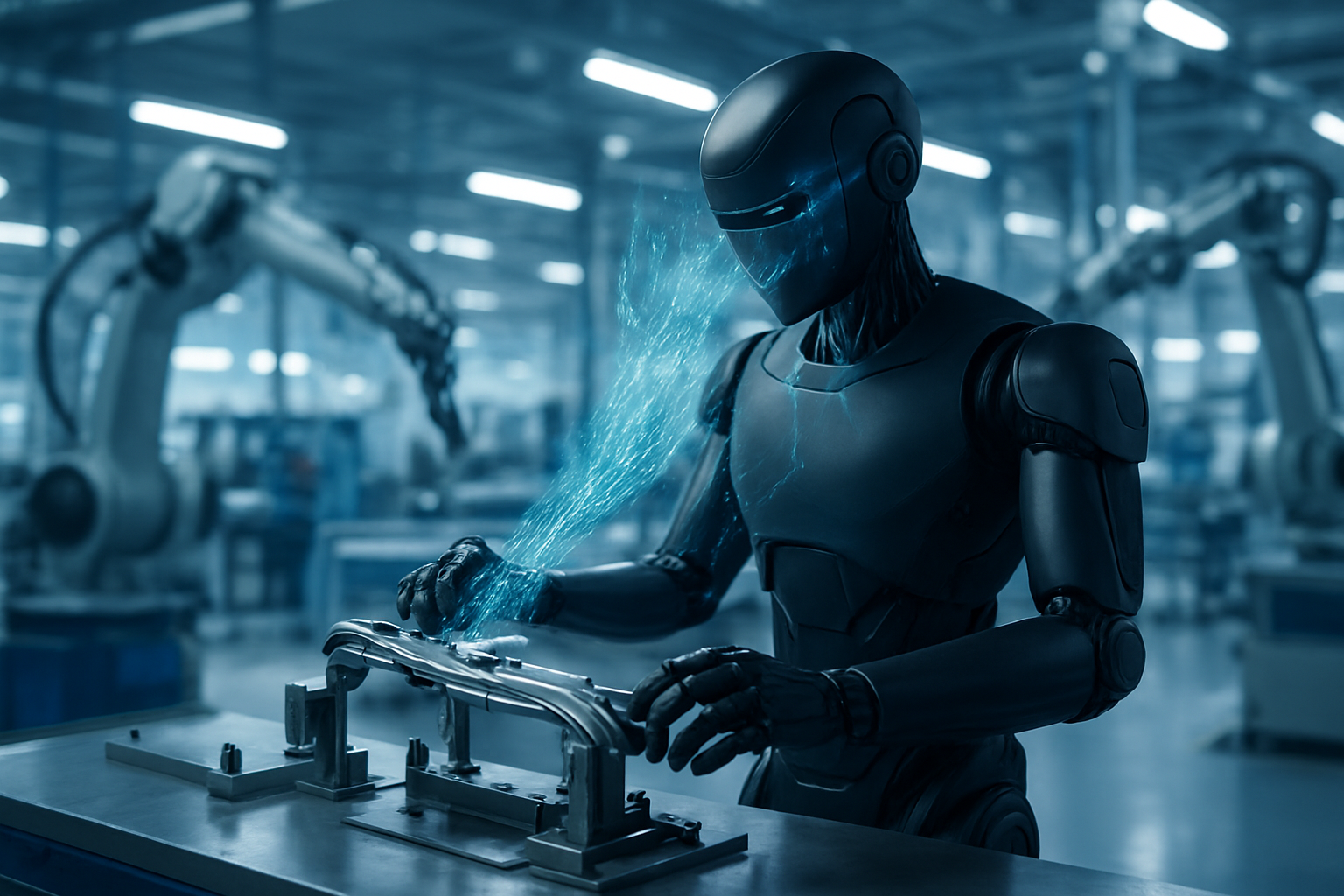
  • Silicon Dreams, American Hurdles: The Monumental Challenge of Building New Chip Fabs in the U.S.

    Silicon Dreams, American Hurdles: The Monumental Challenge of Building New Chip Fabs in the U.S.

    The ambition to revitalize domestic semiconductor manufacturing in the United States faces an arduous journey, particularly for new entrants like Substrate. While government initiatives aim to re-shore chip production, the path to establishing state-of-the-art fabrication facilities (fabs) is fraught with a formidable array of financial, operational, and human capital obstacles. These immediate and significant challenges threaten to derail even the most innovative ventures, highlighting the deep-seated complexities of the global semiconductor ecosystem and the immense difficulty of competing with established, decades-old supply chains.

    The vision of new companies bringing cutting-edge chip production to American soil is a potent one, promising economic growth, national security, and technological independence. However, the reality involves navigating colossal capital requirements, protracted construction timelines, a critical shortage of skilled labor, and intricate global supply chain dependencies. For a startup, these hurdles are amplified, demanding not just groundbreaking technology but also unprecedented resilience and access to vast resources to overcome the inherent inertia of an industry built on decades of specialized expertise and infrastructure concentrated overseas.

    The Technical Gauntlet: Unpacking Fab Establishment Complexities

    Establishing a modern semiconductor fab is a feat of engineering and logistical mastery, pushing the boundaries of precision manufacturing. For new companies, the technical challenges are multifaceted, starting with the sheer scale of investment required. A single, state-of-the-art fab can demand an investment upwards of $10 billion to $20 billion, encompassing not only vast cleanroom facilities but also highly specialized equipment. For instance, advanced lithography machines, critical for etching circuit patterns onto silicon wafers, can cost up to $130 million each. New players must contend with these astronomical costs, which are typically borne by established giants with deep pockets and existing revenue streams.

    The technical specifications for a new fab are incredibly stringent. Cleanrooms must maintain ISO Class 1 or lower standards, meaning fewer than 10 particles of 0.1 micrometers or larger per cubic meter of air – an environment thousands of times cleaner than a surgical operating room. Achieving and maintaining this level of purity requires sophisticated air filtration systems, specialized materials, and rigorous protocols. Moreover, the manufacturing process itself involves thousands of precise steps, from chemical vapor deposition and etching to ion implantation and metallization, each requiring absolute control over temperature, pressure, and chemical composition. Yield management, the process of maximizing the percentage of functional chips from each wafer, is an ongoing technical battle that can take years to optimize, directly impacting profitability.

    New companies like Substrate, reportedly exploring novel approaches such as particle acceleration for lithography, face an even steeper climb. While such innovations could theoretically disrupt the dominance of existing technologies (like ASML (AMS:ASML) Holding N.V.'s extreme ultraviolet (EUV) lithography), they introduce an entirely new set of technical risks and validation requirements. Unlike established players who incrementally refine proven processes, a new entrant with a revolutionary technology must not only build a fab but also simultaneously industrialize an unproven manufacturing paradigm. This requires developing an entirely new ecosystem of compatible materials, equipment, and expertise, a stark contrast to the existing, mature supply chains that support conventional chipmaking. Initial reactions from the broader AI research and semiconductor community to such radical departures are often a mix of cautious optimism and skepticism, given the immense capital and time historically required to bring any new fab technology to fruition.

    Competitive Pressures and Market Realities for Innovators

    The establishment of new semiconductor fabs in the U.S. carries significant implications for a wide array of companies, from burgeoning startups to entrenched tech giants. For new companies like Substrate, the ability to successfully navigate the immense hurdles of fab construction and operation could position them as critical players in a re-shored domestic supply chain. However, the competitive landscape is dominated by titans such as Intel (NASDAQ:INTC), Taiwan Semiconductor Manufacturing Company (TSMC) (NYSE:TSM), and Samsung (KRX:005930), all of whom are also investing heavily in U.S. fabrication capabilities, often with substantial government incentives. These established players benefit from decades of experience, existing intellectual property, vast financial resources, and deeply integrated global supply chains, making direct competition incredibly challenging for a newcomer.

    The competitive implications for major AI labs and tech companies are profound. A robust domestic chip manufacturing base could reduce reliance on overseas production, mitigating geopolitical risks and supply chain vulnerabilities that have plagued industries in recent years. Companies reliant on advanced semiconductors, from NVIDIA (NASDAQ:NVDA) and Advanced Micro Devices (NASDAQ:AMD) to Apple (NASDAQ:AAPL) and Google (NASDAQ:GOOGL), stand to benefit from more resilient and potentially faster access to cutting-edge chips. However, for new fab entrants, the challenge lies in attracting these major customers who typically prefer the reliability, proven yields, and cost-effectiveness offered by established foundries. Disrupting existing product or service supply chains requires not just a viable alternative, but one that offers a compelling advantage in performance, cost, or specialization.

    Market positioning for a new fab company in the U.S. necessitates a clear strategic advantage. This could involve specializing in niche technologies, high-security chips for defense, or developing processes that are uniquely suited for emerging AI hardware. However, without the scale of a TSMC or Intel, achieving cost parity is nearly impossible, as the semiconductor industry thrives on economies of scale. Strategic advantages might therefore hinge on superior performance for specific applications, faster turnaround times for prototyping, or a completely novel manufacturing approach that significantly reduces power consumption or increases chip density. The potential disruption to existing services would come if a new entrant could offer a truly differentiated product or a more secure supply chain, but the path to achieving such differentiation while simultaneously building a multi-billion-dollar facility is exceptionally arduous.

    The Broader AI Landscape and Geopolitical Imperatives

    The drive to establish new semiconductor factories in the United States, particularly by novel players, fits squarely within the broader AI landscape and ongoing geopolitical shifts. The insatiable demand for advanced AI chips, essential for everything from large language models to autonomous systems, has underscored the strategic importance of semiconductor manufacturing. The concentration of leading-edge fab capacity in East Asia has become a significant concern for Western nations, prompting initiatives like the U.S. CHIPS and Science Act. This act aims to incentivize domestic production, viewing it not just as an economic endeavor but as a matter of national security and technological sovereignty. The success or failure of new companies like Substrate in this environment will be a bellwether for the effectiveness of such policies.

    The impacts of successful new fab establishments would be far-reaching. A more diversified and resilient global semiconductor supply chain could alleviate future chip shortages, stabilize pricing, and foster greater innovation by providing more options for chip design companies. For the AI industry, this could translate into faster access to specialized AI accelerators, potentially accelerating research and development cycles. However, potential concerns abound. The sheer cost and complexity mean that even with government incentives, the total cost of ownership for U.S.-based fabs remains significantly higher than in regions like Taiwan. This could lead to higher chip prices, potentially impacting the affordability of AI hardware and the competitiveness of U.S.-based AI companies in the global market. There are also environmental concerns, given the immense water and energy demands of semiconductor manufacturing, which could strain local resources.

    Comparing this drive to previous AI milestones, the current push for domestic chip production is less about a single technological breakthrough and more about establishing the foundational infrastructure necessary for future AI advancements. While previous milestones focused on algorithmic improvements (e.g., deep learning, transformer architectures), this effort addresses the physical limitations of scaling AI. The ambition to develop entirely new manufacturing paradigms (like Substrate's potential particle acceleration lithography) echoes the disruptive potential seen in earlier AI breakthroughs, where novel approaches fundamentally changed what was possible. However, unlike software-based AI advancements that can scale rapidly with minimal capital, hardware innovation in semiconductors requires monumental investment and decades of refinement, making the path to widespread adoption much slower and more capital-intensive.

    Future Horizons: What Lies Ahead for Domestic Chip Production

    The coming years are expected to bring a dynamic interplay of government incentives, technological innovation, and market consolidation within the U.S. semiconductor manufacturing landscape. In the near term, we will likely see the ramp-up of existing projects by major players like Intel (NASDAQ:INTC) and TSMC (NYSE:TSM) in Arizona and Ohio, benefiting from CHIPS Act funding. For new companies like Substrate, the immediate future will involve securing substantial additional funding, navigating stringent regulatory processes, and attracting a highly specialized workforce. Experts predict a continued focus on workforce development programs and collaborations between industry and academia to address the critical talent shortage. Long-term developments could include the emergence of highly specialized fabs catering to specific AI hardware needs, or the successful commercialization of entirely new manufacturing technologies that promise greater efficiency or lower costs.

    Potential applications and use cases on the horizon for U.S.-made chips are vast. Beyond general-purpose CPUs and GPUs, there's a growing demand for custom AI accelerators, neuromorphic chips, and secure chips for defense and critical infrastructure. A robust domestic manufacturing base could enable rapid prototyping and iteration for these specialized components, giving U.S. companies a strategic edge in developing next-generation AI systems. Furthermore, advanced packaging technologies, which integrate multiple chiplets into a single, powerful package, are another area ripe for domestic investment and innovation, potentially reducing reliance on overseas back-end processes.

    However, significant challenges remain. The cost differential between U.S. and Asian manufacturing facilities is a persistent hurdle that needs to be addressed through sustained government support and technological advancements that improve efficiency. The environmental impact of large-scale fab operations, particularly concerning water consumption and energy use, will require innovative solutions in sustainable manufacturing. Experts predict that while the U.S. will likely increase its share of global semiconductor production, it is unlikely to fully decouple from the global supply chain, especially for specialized materials and equipment. The focus will remain on creating a more resilient, rather than entirely independent, ecosystem. What to watch for next includes the successful operationalization of new fabs, the effectiveness of workforce training initiatives, and any significant breakthroughs in novel manufacturing processes that could genuinely level the playing field for new entrants.

    A New Era for American Silicon: A Comprehensive Wrap-Up

    The endeavor to establish new semiconductor factories in the United States, particularly by innovative startups like Substrate, represents a pivotal moment in the nation's technological and economic trajectory. The key takeaways underscore the immense scale of the challenge: multi-billion-dollar investments, years-long construction timelines, a severe shortage of skilled labor, and the intricate web of global supply chains. Despite these formidable obstacles, the strategic imperative driven by national security and the burgeoning demands of artificial intelligence continues to fuel this ambitious re-shoring effort. The success of these ventures will not only reshape the domestic manufacturing landscape but also profoundly influence the future trajectory of AI development.

    This development's significance in AI history cannot be overstated. While AI breakthroughs often focus on software and algorithmic advancements, the underlying hardware—the chips themselves—are the bedrock upon which all AI progress is built. A resilient, domestically controlled semiconductor supply chain is critical for ensuring continuous innovation, mitigating geopolitical risks, and maintaining a competitive edge in the global AI race. The potential for new companies to introduce revolutionary manufacturing techniques, while highly challenging, could fundamentally alter how AI chips are designed and produced, marking a new chapter in the symbiotic relationship between hardware and artificial intelligence.

    Looking ahead, the long-term impact of these efforts will be measured not just in the number of fabs built, but in the creation of a sustainable, innovative ecosystem capable of attracting and retaining top talent, fostering R&D, and producing cutting-edge chips at scale. What to watch for in the coming weeks and months includes further announcements of CHIPS Act funding allocations, progress on existing fab construction projects, and any concrete developments from companies exploring novel manufacturing paradigms. The journey to re-establish America's leadership in semiconductor manufacturing is a marathon, not a sprint, demanding sustained commitment and ingenuity to overcome the formidable challenges that lie ahead.


    This content is intended for informational purposes only and represents analysis of current AI developments.

    TokenRing AI delivers enterprise-grade solutions for multi-agent AI workflow orchestration, AI-powered development tools, and seamless remote collaboration platforms.
    For more information, visit https://www.tokenring.ai/.

  • The Silicon Backbone of Intelligence: How Advanced Semiconductors Are Forging AI’s Future

    The Silicon Backbone of Intelligence: How Advanced Semiconductors Are Forging AI’s Future

    The relentless march of Artificial Intelligence (AI) is inextricably linked to the groundbreaking advancements in semiconductor technology. Far from being mere components, advanced chips—Graphics Processing Units (GPUs), Application-Specific Integrated Circuits (ASICs), and Tensor Processing Units (TPUs)—are the indispensable engine powering today's AI breakthroughs and accelerated computing. This symbiotic relationship has ignited an "AI Supercycle," where AI's insatiable demand for computational power drives chip innovation, and in turn, these cutting-edge semiconductors unlock even more sophisticated AI capabilities. The immediate significance is clear: without these specialized processors, the scale, complexity, and real-time responsiveness of modern AI, from colossal large language models to autonomous systems, would remain largely theoretical.

    The Technical Crucible: Forging Intelligence in Silicon

    The computational demands of modern AI, particularly deep learning, are astronomical. Training a large language model (LLM) involves adjusting billions of parameters through trillions of intensive calculations, requiring immense parallel processing power and high-bandwidth memory. Inference, while less compute-intensive, demands low latency and high throughput for real-time applications. This is where advanced semiconductor architectures shine, fundamentally differing from traditional computing paradigms.

    Graphics Processing Units (GPUs), pioneered by companies like NVIDIA (NASDAQ: NVDA) and AMD (NASDAQ: AMD), are the workhorses of modern AI. Originally designed for parallel graphics rendering, their architecture, featuring thousands of smaller, specialized cores, is perfectly suited for the matrix multiplications and linear algebra operations central to deep learning. Modern GPUs, such as NVIDIA's H100 and the upcoming H200 (Hopper Architecture), boast massive High Bandwidth Memory (HBM3e) capacities (up to 141 GB) and memory bandwidths reaching 4.8 TB/s. Crucially, they integrate Tensor Cores that accelerate deep learning tasks across various precision formats (FP8, FP16), enabling faster training and inference for LLMs with reduced memory usage. This parallel processing capability allows GPUs to slash AI model training times from weeks to hours, accelerating research and development.

    Application-Specific Integrated Circuits (ASICs) represent the pinnacle of specialization. These custom-designed chips are hardware-optimized for specific AI and Machine Learning (ML) tasks, offering unparalleled efficiency for predefined instruction sets. Examples include Google's (NASDAQ: GOOGL) Tensor Processing Units (TPUs), a prominent class of AI ASICs. TPUs are engineered for high-volume, low-precision tensor operations, fundamental to deep learning. Google's Trillium (v6e) offers 4.7x peak compute performance per chip compared to its predecessor, and the upcoming TPU v7, Ironwood, is specifically optimized for inference acceleration, capable of 4,614 TFLOPs per chip. ASICs achieve superior performance and energy efficiency—often orders of magnitude better than general-purpose CPUs—by trading broad applicability for extreme optimization in a narrow scope. This architectural shift from general-purpose CPUs to highly parallel and specialized processors is driven by the very nature of AI workloads.

    The AI research community and industry experts have met these advancements with immense excitement, describing the current landscape as an "AI Supercycle." They recognize that these specialized chips are driving unprecedented innovation across industries and accelerating AI's potential. However, concerns also exist regarding supply chain bottlenecks, the complexity of integrating sophisticated AI chips, the global talent shortage, and the significant cost of these cutting-edge technologies. Paradoxically, AI itself is playing a crucial role in mitigating some of these challenges by powering Electronic Design Automation (EDA) tools that compress chip design cycles and optimize performance.

    Reshaping the Corporate Landscape: Winners, Challengers, and Disruptions

    The AI Supercycle, fueled by advanced semiconductors, is dramatically reshaping the competitive landscape for AI companies, tech giants, and startups alike.

    NVIDIA (NASDAQ: NVDA) remains the undisputed market leader, particularly in data center GPUs, holding an estimated 92% market share in 2024. Its powerful hardware, coupled with the robust CUDA software platform, forms a formidable competitive moat. However, AMD (NASDAQ: AMD) is rapidly emerging as a strong challenger with its Instinct series (e.g., MI300X, MI350), offering competitive performance and building its ROCm software ecosystem. Intel (NASDAQ: INTC), a foundational player in semiconductor manufacturing, is also investing heavily in AI-driven process optimization and its own AI accelerators.

    Tech giants like Google (NASDAQ: GOOGL), Microsoft (NASDAQ: MSFT), Amazon (NASDAQ: AMZN), and Meta (NASDAQ: META) are increasingly pursuing vertical integration, designing their own custom AI chips (e.g., Google's TPUs, Microsoft's Maia and Cobalt chips, Amazon's Graviton and Trainium). This strategy aims to optimize chips for their specific AI workloads, reduce reliance on external suppliers, and gain greater strategic control over their AI infrastructure. Their vast financial resources also enable them to secure long-term contracts with leading foundries, mitigating supply chain vulnerabilities.

    For startups, accessing these advanced chips can be a challenge due to high costs and intense demand. However, the availability of versatile GPUs allows many to innovate across various AI applications. Strategic advantages now hinge on several factors: vertical integration for tech giants, robust software ecosystems (like NVIDIA's CUDA), energy efficiency as a differentiator, and continuous heavy investment in R&D. The mastery of advanced packaging technologies by foundries like Taiwan Semiconductor Manufacturing Company (TSMC) (NYSE: TSM) and Samsung (KRX: 005930) is also becoming a critical strategic advantage, giving them immense strategic importance and pricing power.

    Potential disruptions include severe supply chain vulnerabilities due to the concentration of advanced manufacturing in a few regions, particularly TSMC's dominance in leading-edge nodes and advanced packaging. This can lead to increased costs and delays. The booming demand for AI chips is also causing a shortage of everyday memory chips (DRAM and NAND), affecting other tech sectors. Furthermore, the immense costs of R&D and manufacturing could lead to a concentration of AI power among a few well-resourced players, potentially exacerbating a divide between "AI haves" and "AI have-nots."

    Wider Significance: A New Industrial Revolution with Global Implications

    The profound impact of advanced semiconductors on AI extends far beyond corporate balance sheets, touching upon global economics, national security, environmental sustainability, and ethical considerations. This synergy is not merely an incremental step but a foundational shift, akin to a new industrial revolution.

    In the broader AI landscape, advanced semiconductors are the linchpin for every major trend: the explosive growth of large language models, the proliferation of generative AI, and the burgeoning field of edge AI. The AI chip market is projected to exceed $150 billion in 2025 and reach $283.13 billion by 2032, underscoring its foundational role in economic growth and the creation of new industries.

    However, this technological acceleration is shadowed by significant concerns:

    • Geopolitical Tensions: The "chip wars," particularly between the United States and China, highlight the strategic importance of semiconductor dominance. Nations are investing billions in domestic chip production (e.g., U.S. CHIPS Act, European Chips Act) to secure supply chains and gain technological sovereignty. The concentration of advanced chip manufacturing in regions like Taiwan creates significant geopolitical vulnerability, with potential disruptions having cascading global effects. Export controls, like those imposed by the U.S. on China, further underscore this strategic rivalry and risk fragmenting the global technology ecosystem.
    • Environmental Impact: The manufacturing of advanced semiconductors is highly resource-intensive, demanding vast amounts of water, chemicals, and energy. AI-optimized hyperscale data centers, housing these chips, consume significantly more electricity than traditional data centers. Global AI chip manufacturing emissions quadrupled between 2023 and 2024, with electricity consumption for AI chip manufacturing alone potentially surpassing Ireland's total electricity consumption by 2030. This raises urgent concerns about energy consumption, water usage, and electronic waste.
    • Ethical Considerations: As AI systems become more powerful and are even used to design the chips themselves, concerns about inherent biases, workforce displacement due to automation, data privacy, cybersecurity vulnerabilities, and the potential misuse of AI (e.g., autonomous weapons, surveillance) become paramount.

    This era differs fundamentally from previous AI milestones. Unlike past breakthroughs focused on single algorithmic innovations, the current trend emphasizes the systemic application of AI to optimize foundational industries, particularly semiconductor manufacturing. Hardware is no longer just an enabler but the primary bottleneck and a geopolitical battleground. The unique symbiotic relationship, where AI both demands and helps create its hardware, marks a new chapter in technological evolution.

    The Horizon of Intelligence: Future Developments and Predictions

    The future of advanced semiconductor technology for AI promises a relentless pursuit of greater computational power, enhanced energy efficiency, and novel architectures.

    In the near term (2025-2030), expect continued advancements in process nodes (3nm, 2nm, utilizing Gate-All-Around architectures) and a significant expansion of advanced packaging and heterogeneous integration (3D chip stacking, larger interposers) to boost density and reduce latency. Specialized AI accelerators, particularly for energy-efficient inference at the edge, will proliferate. Companies like Qualcomm (NASDAQ: QCOM) are pushing into data center AI inference with new chips, while Meta (NASDAQ: META) is developing its own custom accelerators. A major focus will be on reducing the energy footprint of AI chips, driven by both technological imperative and regulatory pressure. Crucially, AI-driven Electronic Design Automation (EDA) tools will continue to accelerate chip design and manufacturing processes.

    Longer term (beyond 2030), transformative shifts are on the horizon. Neuromorphic computing, inspired by the human brain, promises drastically lower energy consumption for AI tasks, especially at the edge. Photonic computing, leveraging light for data transmission, could offer ultra-fast, low-heat data movement, potentially replacing traditional copper interconnects. While nascent, quantum accelerators hold the potential to revolutionize AI training times and solve problems currently intractable for classical computers. Research into new materials beyond silicon (e.g., graphene) will continue to overcome physical limitations. Experts even predict a future where AI systems will not just optimize existing designs but autonomously generate entirely new chip architectures, acting as "AI architects."

    These advancements will enable a vast array of applications: powering colossal LLMs and generative AI in hyperscale cloud data centers, deploying real-time AI inference on countless edge devices (autonomous vehicles, IoT sensors, AR/VR), revolutionizing healthcare (drug discovery, diagnostics), and building smart infrastructure.

    However, significant challenges remain. The physical limits of semiconductor scaling (Moore's Law) necessitate massive investment in alternative technologies. The high costs of R&D and manufacturing, coupled with the immense energy consumption of AI and chip production, demand sustainable solutions. Supply chain complexity and geopolitical risks will continue to shape the industry, fostering a "sovereign AI" movement as nations strive for self-reliance. Finally, persistent talent shortages and the need for robust hardware-software co-design are critical hurdles.

    The Unfolding Future: A Wrap-Up

    The critical dependence of AI development on advanced semiconductor technology is undeniable and forms the bedrock of the ongoing AI revolution. Key takeaways include the explosive demand for specialized AI chips, the continuous push for smaller process nodes and advanced packaging, the paradoxical role of AI in designing its own hardware, and the rapid expansion of edge AI.

    This era marks a pivotal moment in AI history, defined by a symbiotic relationship where AI both demands increasingly powerful silicon and actively contributes to its creation. This dynamic ensures that chip innovation directly dictates the pace and scale of AI progress. The long-term impact points towards a new industrial revolution, with continuous technological acceleration across all sectors, driven by advanced edge AI, neuromorphic, and eventually quantum computing. However, this future also brings significant challenges: market concentration, escalating geopolitical tensions over chip control, and the environmental footprint of this immense computational power.

    In the coming weeks and months, watch for continued announcements from major semiconductor players (NVIDIA, Intel, AMD, TSMC) regarding next-generation AI chip architectures and strategic partnerships. Keep an eye on advancements in AI-driven EDA tools and an intensified focus on energy-efficient designs. The proliferation of AI into PCs and a broader array of edge devices will accelerate, and geopolitical developments regarding export controls and domestic chip production initiatives will remain critical. The financial performance of AI-centric companies and the strategic adaptations of specialty foundries will be key indicators of the "AI Supercycle's" continued trajectory.


    This content is intended for informational purposes only and represents analysis of current AI developments.

    TokenRing AI delivers enterprise-grade solutions for multi-agent AI workflow orchestration, AI-powered development tools, and seamless remote collaboration platforms.
    For more information, visit https://www.tokenring.ai/.

  • Semiconductor Titans Unite: Skyworks Solutions and Qorvo Announce $22 Billion Merger, Reshaping RF Landscape

    Semiconductor Titans Unite: Skyworks Solutions and Qorvo Announce $22 Billion Merger, Reshaping RF Landscape

    Cupertino, CA & Greensboro, NC – October 28, 2025 – In a seismic shift poised to redefine the radio frequency (RF) semiconductor industry, Skyworks Solutions (NASDAQ: SWKS) and Qorvo (NASDAQ: QRVO) today announced a definitive agreement to merge in a cash-and-stock transaction valued at approximately $22 billion. This monumental deal, slated to close in early calendar year 2027 pending regulatory and shareholder approvals, is set to forge a U.S.-based global powerhouse in high-performance RF, analog, and mixed-signal semiconductors. The announcement sends immediate ripples through the market, with Qorvo's shares surging on the news of the premium offered, while Skyworks Solutions experienced a slight dip, a typical reaction for an acquiring entity as investors weigh integration challenges and execution risks.

    This strategic consolidation emerges as a decisive response to evolving market dynamics, including intensified competition and a softening demand landscape from key customers. By combining forces, Skyworks and Qorvo aim to create a more resilient, diversified, and innovative entity, capable of delivering comprehensive RF solutions across a broader spectrum of burgeoning markets.

    A New Era of RF Dominance: Technical Synergies and Market Consolidation

    The proposed merger between Skyworks Solutions and Qorvo represents a significant convergence of two industry titans, each bringing complementary strengths to the table. The combined entity is projected to boast an impressive $7.7 billion in revenue and $2.1 billion in Adjusted EBITDA, forming an RF powerhouse with a $5.1 billion mobile business and a $2.6 billion diversified Broad Markets platform. This integration is set to create a formidable competitor with an expansive product portfolio encompassing RF front-end modules, filters, power amplifiers, switches, and connectivity solutions, crucial for a wide array of applications from 5G infrastructure and mobile devices to defense, aerospace, edge IoT, AI data centers, and automotive systems.

    Technically, the merger promises to unlock substantial synergies by integrating Skyworks' expertise in highly integrated RF modules and power management with Qorvo's leadership in advanced filters, discrete components, and broader connectivity solutions. This combination is expected to foster greater research and development scale, leveraging approximately 8,000 engineers and over 12,000 patents. The goal is to accelerate the development of next-generation RF technologies, particularly critical for advancements in 5G-Advanced, 6G, and sophisticated IoT deployments. The ability to offer more integrated, end-to-end solutions will simplify design cycles for customers and potentially lead to more optimized performance and reduced bill-of-materials costs.

    This differs from previous approaches where semiconductor companies often focused on niche specializations. The Skyworks-Qorvo merger signifies a trend towards broader integration and solution-centric offerings, driven by the increasing complexity of modern communication systems and the need for seamless interoperability across diverse frequency bands and protocols. Initial reactions from the semiconductor research community and industry experts highlight the potential for enhanced innovation, particularly in areas requiring highly optimized RF performance and power efficiency. However, some analysts also point to the challenges of integrating two large corporate cultures and extensive product lines without disrupting ongoing development cycles.

    Competitive Implications: Shifting Tides for Tech Giants and Startups

    The merger between Skyworks Solutions and Qorvo is poised to significantly alter the competitive landscape for major AI companies, tech giants, and nascent startups operating within the semiconductor and broader technology ecosystems. The newly formed entity will stand to benefit immensely from an expanded market reach and a more diversified customer base, reducing its reliance on any single client, a vulnerability both companies have faced with their significant exposure to Apple (NASDAQ: AAPL). This diversification is crucial as Apple continues to explore in-house RF chip design, a move that could potentially impact external suppliers.

    For major tech giants like Apple, Samsung (KRX: 005930), and Google (NASDAQ: GOOGL), the combined Skyworks-Qorvo entity will represent a more formidable and potentially indispensable partner. With an integrated portfolio of advanced RF components, the merged company can offer more comprehensive solutions, streamlining procurement and design processes for these large-scale device manufacturers. This could strengthen the merged company's negotiation leverage, potentially leading to more favorable terms and deeper collaborations on future product roadmaps. Conversely, it might also prompt tech giants to double down on their internal chip development efforts to mitigate reliance on a single, dominant supplier.

    The competitive implications for other semiconductor players, such as Broadcom (NASDAQ: AVGO), Qualcomm (NASDAQ: QCOM), and Murata Manufacturing (TYO: 6981), are substantial. The Skyworks-Qorvo merger creates a direct, powerful competitor in the RF front-end market, forcing rivals to reassess their strategies, potentially accelerating their own M&A activities or intensifying R&D investments to keep pace. For smaller AI startups focusing on specialized RF applications or niche IoT connectivity, the presence of a super-sized RF player could present both challenges and opportunities. While it might increase barriers to entry in certain mass-market segments, it could also open doors for collaboration or acquisition by the larger entity looking to integrate cutting-edge, specialized technologies.

    Broader Significance: Navigating the AI and Connectivity Revolution

    The Skyworks Solutions and Qorvo merger is not merely a financial transaction; it is a profound strategic maneuver that resonates deeply within the broader AI landscape and ongoing technological trends. This consolidation reflects a fundamental shift in the semiconductor industry, driven by the insatiable demand for ubiquitous connectivity and the proliferation of AI at the edge. As AI applications become more sophisticated and pervasive, from autonomous vehicles to advanced robotics and smart infrastructure, the underlying RF and analog components become increasingly critical for seamless data transmission, low-latency communication, and efficient power management. The combined entity's enhanced capabilities in these areas directly support the foundational requirements of the AI revolution.

    The merger addresses several critical impacts and potential concerns within the industry. By creating a more robust and diversified supplier, it aims to stabilize supply chains and foster greater innovation in RF technologies, which are foundational for 5G-Advanced and future 6G networks—the very backbone of an AI-driven world. However, potential concerns include regulatory scrutiny over market concentration, particularly in key RF component segments. While the merger promises significant operational synergies and R&D scale, the integration process itself poses risks related to cultural clashes, talent retention, and the potential for temporary disruption in product roadmaps or customer support.

    Comparing this to previous AI milestones and breakthroughs, such as the development of advanced neural network architectures or the proliferation of AI-specific accelerators, this merger represents a crucial step in building the physical infrastructure necessary for AI to truly flourish. Just as advancements in computing power and data storage were pivotal for earlier AI developments, the ability to reliably and efficiently transmit vast amounts of data wirelessly is paramount for the next generation of distributed and edge AI. This merger underscores the increasing interdependence between software-centric AI innovations and the underlying hardware capabilities, highlighting that progress in one often necessitates breakthroughs and strategic realignments in the other.

    Future Developments: The Road Ahead for the RF Powerhouse

    Looking ahead, the Skyworks Solutions and Qorvo merger is expected to usher in a new wave of developments in the RF semiconductor landscape. In the near term, the primary focus will be on the arduous task of integration. Achieving the projected $500 million or more in annual cost synergies within 24-36 months post-close will require meticulous planning and execution across manufacturing, R&D, and sales operations. Experts predict an initial period of internal restructuring and consolidation, as the new entity works to streamline processes, rationalize product portfolios, and align corporate cultures. The successful navigation of regulatory approvals, anticipated to be a rigorous process given the combined entity's market share, will also be a critical near-term hurdle.

    Longer term, the combined company is poised to become a dominant force in several burgeoning markets. The enhanced R&D capabilities and broader product offerings are expected to accelerate innovation in areas like millimeter-wave (mmWave) technology for 5G and 6G, advanced Wi-Fi standards (e.g., Wi-Fi 7), and highly integrated solutions for automotive radar, industrial IoT, and AI data center connectivity. Potential applications on the horizon include more sophisticated RF sensing for autonomous systems, ultra-low power connectivity for pervasive edge AI devices, and highly secure communication modules for critical infrastructure.

    However, significant challenges remain. The aforementioned dependency on major smartphone manufacturers, particularly Apple, will continue to be a strategic consideration, prompting the combined company to further diversify its revenue streams into industrial, automotive, and infrastructure sectors. Furthermore, the rapid pace of technological change in the semiconductor industry demands continuous innovation, and the new entity will need to effectively leverage its increased scale to outpace competitors and anticipate emerging market needs. Experts predict that the success of this merger will largely depend on its ability to foster a unified vision, retain top talent from both organizations, and swiftly bring truly differentiated, integrated solutions to market that leverage the best of both Skyworks and Qorvo's technological prowess.

    A New Chapter for RF Semiconductors: A Comprehensive Wrap-up

    The announced merger between Skyworks Solutions and Qorvo marks a pivotal moment in the semiconductor industry, representing a strategic consolidation designed to create a global leader in high-performance RF, analog, and mixed-signal solutions. The key takeaways from this development include the formation of an RF powerhouse with enhanced scale, a diversified product portfolio, and significant operational synergies aimed at driving innovation and strengthening market position. This move is a direct response to evolving market pressures, including the need for greater resilience against customer concentration and intensified competition.

    In the annals of AI history and technological advancement, this merger signifies the increasing importance of robust underlying hardware infrastructure to support the proliferation of AI across all sectors. It underscores that while software and algorithms drive AI's intelligence, the physical components that enable seamless data flow and communication are equally critical. The combined entity's focus on next-generation RF technologies will directly impact the capabilities and reach of future AI applications, from edge computing to cloud infrastructure.

    As we look to the coming weeks and months, all eyes will be on the regulatory approval process and the initial steps taken by Skyworks and Qorvo towards integration. The successful melding of two large organizations, each with distinct cultures and operational frameworks, will be a monumental task. Investors, competitors, and customers alike will be watching for signs of how effectively the new leadership team navigates these challenges, leverages the combined intellectual property, and delivers on the promise of a more innovative and resilient RF semiconductor leader. The long-term impact of this merger could be a more streamlined, efficient, and technologically advanced RF ecosystem, crucial for powering the interconnected, AI-driven world of tomorrow.


    This content is intended for informational purposes only and represents analysis of current AI developments.

    TokenRing AI delivers enterprise-grade solutions for multi-agent AI workflow orchestration, AI-powered development tools, and seamless remote collaboration platforms.
    For more information, visit https://www.tokenring.ai/.

  • Nations Race for Chip Supremacy: A Global Surge in Domestic Semiconductor Investment

    Nations Race for Chip Supremacy: A Global Surge in Domestic Semiconductor Investment

    The world is witnessing an unprecedented surge in domestic semiconductor production investment, marking a pivotal strategic realignment driven by a complex interplay of economic imperatives, national security concerns, and the relentless pursuit of technological sovereignty. This global trend, rapidly accelerating in 2024 and beyond, signifies a fundamental shift away from a highly concentrated global supply chain towards more resilient, localized manufacturing ecosystems. Governments worldwide are pouring billions into incentives and subsidies, while corporations respond with massive capital commitments to build and expand state-of-the-art fabrication plants (fabs) within national borders. The immediate significance of this investment wave is a rapid acceleration in chip development and a strategic re-alignment of global supply chains, fostering a heightened competitive landscape as nations and corporations vie for technological supremacy in an increasingly AI-driven world.

    The Great Chip Reshuffle: Unpacking the Economic and Strategic Drivers

    This monumental shift is underpinned by a confluence of critical factors, primarily stemming from the vulnerabilities exposed by recent global crises and intensifying geopolitical tensions. Economically, the COVID-19 pandemic laid bare the fragility of a "just-in-time" global supply chain, with chip shortages crippling industries from automotive to consumer electronics, resulting in estimated losses of hundreds of billions of dollars. Domestic production aims to mitigate these risks by creating more robust and localized supply chains, ensuring stability and resilience against future disruptions. Furthermore, these investments are powerful engines for economic growth and high-tech job creation, stimulating ancillary industries and contributing significantly to national GDPs. Nations like India, for instance, anticipate creating over 130,000 direct and indirect jobs through their semiconductor initiatives. Reducing import dependence also strengthens national economies and improves trade balances, while fostering domestic technological leadership and innovation is seen as essential for maintaining a competitive edge in emerging technologies like AI, 5G, and quantum computing.

    Strategically, the motivations are even more profound, often intertwined with national security. Semiconductors are the foundational bedrock of modern society, powering critical infrastructure, advanced defense systems, telecommunications, and cutting-edge AI. Over-reliance on foreign manufacturing, particularly from potential adversaries, poses significant national security risks and vulnerabilities to strategic coercion. The U.S. government, for example, now views equity stakes in semiconductor companies as essential for maintaining control over critical infrastructure. This drive for "technological sovereignty" ensures nations have control over the production of essential technologies, thereby reducing vulnerability to external pressures and securing their positions in the nearly $630 billion semiconductor market. This is particularly critical in the context of geopolitical rivalries, such as the ongoing U.S.-China tech competition. Domestically produced semiconductors can also be tailored to meet stringent security standards for critical national infrastructures, and the push fosters crucial talent development, reducing reliance on foreign expertise.

    This global re-orientation is manifesting through massive financial commitments. The United States has committed $52.7 billion through the CHIPS and Science Act, alongside additional tax credits, aiming to increase its domestic semiconductor production from 12% to approximately 40% of its needs. The European Union has established a €43 billion Chips Act through 2030, while China launched its third "Big Fund" phase in May 2024 with $47.5 billion. South Korea unveiled a $450 billion K-Semiconductor strategy through 2030, and Japan established Rapidus Corporation with an estimated $11.46 billion in government support. India has entered the fray with its $10 billion Semiconductor Mission launched in 2021, allocating significant funds and approving major projects to strengthen domestic production and develop indigenous 7-nanometer processor architecture.

    Corporate giants are responding in kind. Taiwan Semiconductor Manufacturing Company (NYSE: TSM) announced a new $100 billion investment to build additional chip facilities, including in the U.S. Micron Technology (NASDAQ: MU) is constructing a $2.75 billion assembly and test facility in India. Intel Corporation (NASDAQ: INTC) is undertaking a $100 billion U.S. semiconductor expansion in Ohio and Arizona, supported by government grants and, notably, an equity stake from the U.S. government. GlobalFoundries (NASDAQ: GFS) will invest 1.1 billion euros to expand its German facility in Dresden, aiming to exceed one million wafers annually by the end of 2028, supported by the German government and the State of Saxony under the European Chips Act. New players are also emerging, such as the secretive American startup Substrate, backed by Peter Thiel's Founders Fund, which has raised over $100 million to develop new chipmaking machines and ultimately aims to build a U.S.-based foundry.

    Reshaping the Corporate Landscape: Winners, Losers, and New Contenders

    The global pivot towards domestic semiconductor production is fundamentally reshaping the competitive landscape for AI companies, tech giants, and startups alike. Established semiconductor manufacturers with the technological prowess and capital to build advanced fabs, such as Intel Corporation (NASDAQ: INTC), TSMC (NYSE: TSM), and Samsung Electronics Co., Ltd. (KRX: 005930), stand to benefit immensely from government incentives and the guaranteed demand from localized supply chains. Intel, in particular, is strategically positioning itself as a major foundry service provider in the U.S. and Europe, directly challenging TSMC's dominance. These companies gain significant market positioning and strategic advantages by becoming integral to national security and economic resilience strategies.

    However, the implications extend beyond the direct chip manufacturers. Companies reliant on a stable and diverse supply of advanced chips, including major AI labs, cloud providers, and automotive manufacturers, will experience greater supply chain stability and reduced vulnerability to geopolitical shocks. This could lead to more predictable product development cycles and reduced costs associated with shortages. Conversely, companies heavily reliant on single-source or geographically concentrated supply chains, particularly those in regions now deemed geopolitically sensitive, may face increased pressure to diversify or relocate production, incurring significant costs and potential disruptions. The increased domestic production could also foster regional innovation hubs, creating fertile ground for AI startups that can leverage locally produced, specialized chips for specific applications, potentially disrupting existing product or service offerings from tech giants. The rise of new entrants like Substrate, aiming to challenge established equipment manufacturers like ASML and even become a foundry, highlights the potential for significant disruption and the emergence of new contenders in the high-stakes semiconductor industry.

    A New Era of Geotech: Broader Implications and Potential Concerns

    This global trend of increased investment in domestic semiconductor production fits squarely into a broader "geotech" landscape, where technological leadership is inextricably linked to geopolitical power. It signifies a profound shift from an efficiency-driven, globally optimized supply chain to one prioritizing resilience, security, and national sovereignty. The impacts are far-reaching: it will likely lead to a more diversified and robust global chip supply, reducing the likelihood and severity of future shortages. It also fuels a new arms race in advanced manufacturing, pushing the boundaries of process technology and materials science as nations compete for the leading edge. For AI, this means a potentially more secure and abundant supply of the specialized processors (GPUs, TPUs, NPUs) essential for training and deploying advanced models, accelerating innovation and deployment across various sectors.

    However, this shift is not without potential concerns. The massive government subsidies and protectionist measures could lead to market distortions, potentially creating inefficient or overly expensive domestic industries. There's a risk of fragmentation in global technology standards and ecosystems if different regions develop distinct, walled-off supply chains. Furthermore, the sheer capital intensity and technical complexity of semiconductor manufacturing mean that success is not guaranteed, and some initiatives may struggle to achieve viability without sustained government support. Comparisons to previous AI milestones, such as the rise of deep learning, highlight how foundational technological shifts can redefine entire industries. This current push for semiconductor sovereignty is equally transformative, laying the hardware foundation for the next wave of AI breakthroughs and national strategic capabilities. The move towards domestic production is a direct response to the weaponization of technology and trade, making it a critical component of national security and economic resilience in the 21st century.

    The Road Ahead: Challenges and the Future of Chip Manufacturing

    Looking ahead, the near-term will see a continued flurry of announcements regarding new fab constructions, government funding disbursements, and strategic partnerships. We can expect significant advancements in manufacturing technologies, particularly in areas like advanced packaging, extreme ultraviolet (EUV) lithography, and novel materials, as domestic efforts push the boundaries of what's possible. The long-term vision includes highly integrated regional semiconductor ecosystems, encompassing R&D, design, manufacturing, and packaging, capable of meeting national demands for critical technologies. Potential applications and use cases on the horizon are vast, ranging from more secure AI hardware for defense and intelligence to specialized chips for next-generation electric vehicles, smart cities, and ubiquitous IoT devices, all benefiting from a resilient and trusted supply chain.

    However, significant challenges need to be addressed. The primary hurdle remains the immense cost and complexity of building and operating advanced fabs, requiring sustained political will and financial commitment. Talent development is another critical challenge; a highly skilled workforce of engineers, scientists, and technicians is essential, and many nations are facing shortages. Experts predict a continued era of strategic competition, where technological leadership in semiconductors will be a primary determinant of global influence. We can also expect increased collaboration among allied nations to create trusted supply chains, alongside continued efforts to restrict access to advanced chip technology for geopolitical rivals. The delicate balance between fostering domestic capabilities and maintaining global collaboration will be a defining feature of the coming decade in the semiconductor industry.

    Forging a New Silicon Future: A Concluding Assessment

    The global trend of increased investment in domestic semiconductor production represents a monumental pivot in industrial policy and geopolitical strategy. It is a decisive move away from a singular focus on cost efficiency towards prioritizing supply chain resilience, national security, and technological sovereignty. The key takeaways are clear: semiconductors are now firmly established as strategic national assets, governments are willing to commit unprecedented resources to secure their supply, and the global tech landscape is being fundamentally reshaped. This development's significance in AI history cannot be overstated; it provides the essential hardware foundation for the next generation of intelligent systems, ensuring their availability, security, and performance.

    The long-term impact will be a more diversified, resilient, and geopolitically fragmented semiconductor industry, with regional hubs gaining prominence. While this may lead to higher production costs in some instances, the benefits in terms of national security, economic stability, and technological independence are deemed far to outweigh them. In the coming weeks and months, we should watch for further government funding announcements, groundbreaking ceremonies for new fabs, and the formation of new strategic alliances and partnerships between nations and corporations. The race for chip supremacy is on, and its outcome will define the technological and geopolitical contours of the 21st century.


    This content is intended for informational purposes only and represents analysis of current AI developments.

    TokenRing AI delivers enterprise-grade solutions for multi-agent AI workflow orchestration, AI-powered development tools, and seamless remote collaboration platforms.
    For more information, visit https://www.tokenring.ai/.

  • Substrate’s X-Ray Lithography Breakthrough Ignites New Era for Semiconductor Manufacturing

    Substrate’s X-Ray Lithography Breakthrough Ignites New Era for Semiconductor Manufacturing

    Substrate, a San Francisco-based company, is poised to revolutionize semiconductor manufacturing with its innovative X-ray lithography system, a groundbreaking technology that leverages particle accelerators to produce chips with unprecedented precision and efficiency. Moving beyond conventional laser-based methods, this novel approach utilizes powerful X-ray light to etch intricate patterns onto silicon wafers, directly challenging the dominance of industry giants like ASML (AMS: ASML) and TSMC (NYSE: TSM) in high-end chip production. The immediate significance of Substrate's technology lies in its potential to dramatically reduce the cost of advanced chip fabrication, particularly for demanding applications such as artificial intelligence, while simultaneously aiming to re-establish the United States as a leader in semiconductor manufacturing.

    Technical Deep Dive: Unpacking Substrate's X-Ray Advantage

    Substrate's X-ray lithography system is founded on a novel method that harnesses particle accelerators to generate exceptionally bright X-ray beams, described as "billions of times brighter than the sun." This advanced light source is integrated into a new, vertically integrated foundry model, utilizing a "completely new optical and high-speed mechanical system." The company claims its system can achieve resolutions equivalent to the 2 nm semiconductor node, with capabilities to push "well beyond," having demonstrated the ability to print random vias with a 30 nm center-to-center pitch and high pattern fidelity for random logic contact arrays with 12 nm critical dimensions and 13 nm tip-to-tip spacing. These results are touted as comparable to, or even better than, those produced by ASML's most advanced High Numerical Aperture (NA) EUV machines.

    A key differentiator from existing Extreme Ultraviolet (EUV) lithography, currently dominated by ASML, is Substrate's approach to light source and wavelength. While EUV uses 13.5 nm extreme ultraviolet light generated from a laser-pulsed tin plasma, Substrate employs shorter-wavelength X-rays, enabling narrower beams. Critically, Substrate's technology eliminates the need for multi-patterning, a complex and costly technique often required in EUV to create features beyond optical limits. This simplification is central to Substrate's promise of a "lower cost, less complex, more capable, and faster to build" system, projecting an order of magnitude reduction in leading-edge silicon wafer costs, targeting $10,000 per wafer by the end of the decade compared to the current $100,000.

    The integration of machine learning into Substrate's design and operational processes further streamlines development, compressing problem-solving times from years to days. However, despite successful demonstrations at US National Laboratories, the semiconductor industry has met Substrate's ambitious claims with widespread skepticism. Experts question the feasibility of scaling this precision across large wafers at high speeds for high-volume manufacturing within the company's stated three-year timeframe for mass production by 2028. The immense capital intensity and the decades of perfected technology by incumbents like ASML and TSMC (NYSE: TSM) present formidable challenges.

    Industry Tremors: Reshaping the AI and Tech Landscape

    Substrate's emergence presents a potentially significant disruption to the semiconductor industry, with far-reaching implications for AI companies, tech giants, and startups. If successful, its X-ray lithography could drastically reduce the capital expenditure required to build advanced semiconductor manufacturing facilities, thereby lowering the barrier to entry for new chipmakers and potentially allowing smaller players to establish advanced fabrication capabilities currently monopolized by a few giants. This could lead to a more diversified and resilient global semiconductor manufacturing ecosystem, a goal that aligns with national security interests, particularly for the United States.

    For AI companies, such as OpenAI and DeepMind, and tech giants like Alphabet (NASDAQ: GOOGL), Microsoft (NASDAQ: MSFT), Amazon (NASDAQ: AMZN), Meta Platforms (NASDAQ: META), Apple (NASDAQ: AAPL), NVIDIA (NASDAQ: NVDA), Intel (NASDAQ: INTC), and Advanced Micro Devices (NASDAQ: AMD), the implications are transformative. More powerful and energy-efficient chips, enabled by smaller nodes, would directly translate to faster training of large language models and deep neural networks, and more efficient AI inference. This could accelerate AI research and development, reduce operational costs for AI accelerators, and unlock entirely new AI applications in areas like autonomous systems, advanced robotics, and highly localized edge AI. Companies already designing their own AI-specific chips, such as Google with its TPUs, could leverage Substrate's technology to produce these chips at lower costs and with even higher performance.

    The competitive landscape would be significantly altered. ASML's (AMS: ASML) dominant position in EUV lithography could be challenged, forcing them to accelerate innovation or reduce costs. Leading foundries like TSMC (NYSE: TSM) would face direct competition in advanced node manufacturing. Intel (NASDAQ: INTC), with its renewed foundry ambitions, could either partner with Substrate or see it as a direct competitor. Furthermore, the democratization of advanced nodes, if Substrate's technology makes them more accessible and affordable, could level the playing field for smaller AI labs and startups against resource-rich tech giants. Early adopters of Substrate's technology could gain a significant competitive edge in performance and cost for their AI hardware, potentially accelerating hardware refresh cycles and enabling entirely new product categories.

    Wider Significance: A New Dawn for Moore's Law and Geopolitics

    Substrate's X-ray lithography technology represents a significant potential shift in advanced semiconductor manufacturing, with profound implications for the artificial intelligence (AI) landscape, global supply chains, and geopolitical dynamics. The escalating cost of advanced chip fabrication, with projections of advanced fabs costing $50 billion by 2030 and single wafer production reaching $100,000, makes Substrate's promise of drastically reduced costs particularly appealing. This could effectively extend Moore's Law, pushing the limits of transistor density and efficiency.

    In the broader AI landscape, hardware capabilities increasingly bottleneck development. Substrate's ability to produce smaller, denser, and more energy-efficient transistors directly addresses the exponential demand for more powerful, efficient, and specialized AI chips. This foundational manufacturing capability could enable the next generation of AI chips, moving beyond current EUV limitations and accelerating the development and deployment of sophisticated AI systems across various industries. The technical advancements, including the use of particle accelerators and the elimination of multi-patterning, could lead to higher transistor density and improved power efficiency crucial for advanced AI chips.

    While the potential for economic impact – a drastic reduction in chip manufacturing costs – is immense, concerns persist regarding technical verification and scaling. ASML's (AMS: ASML) EUV technology took decades and billions of dollars to reach maturity; Substrate's ability to achieve comparable reliability, throughput, and yield rates in a relatively short timeframe remains a major hurdle. However, if successful, this could be seen as a breakthrough in manufacturing foundational AI hardware components, much like the development of powerful GPUs enabled deep learning. It aims to address the growing "hardware crisis" in AI, where the demand for silicon outstrips current efficient production capabilities.

    Geopolitically, Substrate's mission to "return the United States to dominance in semiconductor fabrication" and reduce reliance on foreign supply chains is highly strategic. This aligns with U.S. government initiatives like the CHIPS and Science Act. With investors including the Central Intelligence Agency-backed nonprofit firm In-Q-Tel, the strategic importance of advanced chip manufacturing for national security is clear. Success for Substrate would challenge the near-monopoly of ASML and TSMC (NYSE: TSM), diversifying the global semiconductor supply chain and serving as a critical component in the geopolitical competition for technological supremacy, particularly with China, which is also heavily investing in domestic semiconductor self-sufficiency.

    Future Horizons: Unlocking New AI Frontiers

    In the near-term, Substrate aims for mass production of advanced chips using its X-ray lithography technology by 2028, with a core objective to reduce the cost of leading-edge silicon wafers from an estimated $100,000 to approximately $10,000 by the end of the decade. This cost reduction is expected to make advanced chip design and manufacturing accessible to a broader range of companies. Long-term, Substrate envisions continuously pushing Moore's Law, with broader X-ray lithography advancements focusing on brighter and more stable X-ray sources, improved mask technology, and sophisticated alignment systems. Soft X-ray interference lithography, in particular, shows potential for achieving sub-10nm resolution and fabricating high aspect ratio 3D micro/nanostructures.

    The potential applications and use cases are vast. Beyond advanced semiconductor manufacturing for AI, high-performance computing, and robotics, XRL is highly suitable for Micro-Electro-Mechanical Systems (MEMS) and microfluidic systems. It could also be instrumental in creating next-generation displays, such as ultra-detailed, miniature displays for smart glasses and AR headsets. Advanced optics, medical imaging, and novel material synthesis and processing are also on the horizon.

    However, significant challenges remain for widespread adoption. Historically, high costs of X-ray lithography equipment and materials have been deterrents, though Substrate's business model directly addresses this. Mask technology limitations, the need for specialized X-ray sources (which Substrate aims to overcome with its particle accelerators), throughput issues, and the engineering challenge of maintaining a precise proximity gap between mask and wafer all need to be robustly addressed for commercial viability at scale.

    Experts predict a robust future for the X-ray lithography equipment market, projecting a compound annual growth rate (CAGR) of 8.5% from 2025 to 2033, with the market value exceeding $6.5 billion by 2033. Soft X-ray lithography is increasingly positioned as a "Beyond EUV" challenger to Hyper-NA EUV, with Substrate's strategy directly reflecting this. While XRL may not entirely replace EUV, its shorter wavelength provides a "resolution reserve" for future technological nodes, ensuring its relevance for developing advanced chip architectures and finding crucial applications in specific niches where its unique advantages are paramount.

    A New Chapter in Chipmaking: The Road Ahead

    Substrate's innovative laser-based technology for semiconductor manufacturing represents a pivotal moment in the ongoing quest for more powerful and efficient computing. By leveraging X-ray lithography and a vertically integrated foundry model, the company aims to drastically reduce the cost and complexity of advanced chip production, challenging the established order dominated by ASML (AMS: ASML) and TSMC (NYSE: TSM). If successful, this breakthrough promises to accelerate AI development, democratize access to cutting-edge hardware, and reshape global supply chains, with significant geopolitical implications for technological leadership.

    The significance of this development in AI history cannot be overstated. Just as GPUs enabled the deep learning revolution, and specialized AI accelerators further optimized compute, Substrate's technology could provide the foundational manufacturing leap needed for the next generation of AI. It addresses the critical hardware bottleneck and escalating costs that threaten to slow AI's progress. While skepticism abounds regarding the immense technical and scaling challenges, the potential rewards—cheaper, denser, and more efficient chips—are too substantial to ignore.

    In the coming weeks and months, industry observers will be watching for further independent verification of Substrate's capabilities at scale, details on its manufacturing partnerships, and the timeline for its projected mass production by 2028. The competition between this novel X-ray approach and the continued advancements in EUV lithography will define the future of advanced chipmaking, ultimately dictating the pace of innovation across the entire technology landscape, particularly in the rapidly evolving field of artificial intelligence. The race to build the next generation of AI is intrinsically linked to the ability to produce the chips that power it, and Substrate is betting on X-rays to lead the way.


    This content is intended for informational purposes only and represents analysis of current AI developments.

    TokenRing AI delivers enterprise-grade solutions for multi-agent AI workflow orchestration, AI-powered development tools, and seamless remote collaboration platforms.
    For more information, visit https://www.tokenring.ai/.

  • AI Unleashes a New Era: Revolutionizing Chip Design and Manufacturing

    AI Unleashes a New Era: Revolutionizing Chip Design and Manufacturing

    The semiconductor industry, the bedrock of modern technology, is experiencing a profound transformation, spearheaded by the pervasive integration of Artificial Intelligence (AI). This paradigm shift is not merely an incremental improvement but a fundamental re-engineering of how microchips are conceived, designed, and manufactured. With the escalating complexity of chip architectures and an insatiable global demand for ever more powerful and specialized semiconductors, AI has emerged as an indispensable catalyst, promising to accelerate innovation, drastically enhance efficiency, and unlock unprecedented capabilities in the digital realm.

    The immediate significance of AI's burgeoning role is multifold. It is dramatically shortening design cycles, allowing for the rapid iteration and optimization of complex chip layouts that previously consumed months or even years. Concurrently, AI is supercharging manufacturing processes, leading to higher yields, predictive maintenance, and unparalleled precision in defect detection. This symbiotic relationship, where AI not only drives the demand for more advanced chips but also actively participates in their creation, is ushering in what many industry experts are calling an "AI Supercycle." The implications are vast, promising to deliver the next generation of computing power required to fuel the continued explosion of generative AI, large language models, and countless other AI-driven applications.

    Technical Deep Dive: The AI-Powered Semiconductor Revolution

    The technical advancements underpinning AI's impact on chip design and manufacturing are both sophisticated and transformative. At the core of this revolution are advanced AI algorithms, particularly machine learning (ML) and generative AI, integrated into Electronic Design Automation (EDA) tools and factory operational systems.

    In chip design, generative AI is a game-changer. Companies like Synopsys (NASDAQ: SNPS) with its DSO.ai and Cadence (NASDAQ: CDNS) with Cerebrus AI Studio are leading the charge. These platforms leverage AI to automate highly complex and iterative design tasks, such as floor planning, power optimization, and routing. Unlike traditional, rule-based EDA tools that require extensive human intervention and adhere to predefined parameters, AI-driven tools can explore billions of possible transistor arrangements and routing topologies at speeds unattainable by human engineers. This allows for the rapid identification of optimal designs that balance performance, power consumption, and area (PPA) – the holy trinity of chip design. Furthermore, AI can generate unconventional yet highly efficient designs that often surpass human-engineered solutions, sometimes even creating architectures that human engineers might not intuitively conceive. This capability significantly reduces the time from concept to silicon, a critical factor in a rapidly evolving market. Verification and testing, traditionally consuming up to 70% of chip design time, are also being streamlined by multi-agent AI frameworks, which can reduce human effort by 50% to 80% with higher accuracy by detecting design flaws and enhancing design for testability (DFT). Recent research, such as that from Princeton Engineering and the Indian Institute of Technology, has demonstrated AI slashing wireless chip design times from weeks to mere hours, yielding superior, counter-intuitive designs. Even nations like China are investing heavily, with platforms like QiMeng aiming for autonomous processor generation to reduce reliance on foreign software.

    On the manufacturing front, AI is equally impactful. AI-powered solutions, often leveraging digital twins – virtual replicas of physical systems – analyze billions of data points from real-time factory operations. This enables precise process control and yield optimization. For instance, AI can identify subtle process variations in high-volume fabrication plants and recommend real-time adjustments to parameters like temperature, pressure, and chemical composition, thereby significantly enhancing yield rates. Predictive maintenance (PdM) is another critical application, where AI models analyze sensor data from manufacturing equipment to predict potential failures before they occur. This shifts maintenance from a reactive or scheduled approach to a proactive one, drastically reducing costly downtime by 10-20% and cutting maintenance planning time by up to 50%. Moreover, AI-driven automated optical inspection (AOI) systems, utilizing deep learning and computer vision, can detect microscopic defects on wafers and chips with unparalleled speed and accuracy, even identifying novel or unknown defects that might escape human inspection. These capabilities ensure only the highest quality products proceed to market, while also reducing waste and energy consumption, leading to substantial cost efficiencies.

    Initial reactions from the AI research community and industry experts have been overwhelmingly positive, albeit with a keen awareness of the ongoing challenges. Researchers are excited by the potential for AI to unlock entirely new design spaces and material properties that were previously intractable. Industry leaders recognize AI as essential for maintaining competitive advantage and addressing the increasing complexity and cost of advanced semiconductor development. While the promise of fully autonomous chip design is still some years away, the current advancements represent a significant leap forward, moving beyond mere automation to intelligent optimization and generation.

    Corporate Chessboard: Beneficiaries and Competitive Dynamics

    The integration of AI into chip design and manufacturing is reshaping the competitive landscape of the semiconductor industry, creating clear beneficiaries and posing strategic challenges for all players, from established tech giants to agile startups.

    Companies at the forefront of Electronic Design Automation (EDA), such as Synopsys (NASDAQ: SNPS) and Cadence Design Systems (NASDAQ: CDNS), stand to benefit immensely. Their deep investments in AI-driven EDA tools like DSO.ai and Cerebrus AI Studio are cementing their positions as indispensable partners for chip designers. By offering solutions that drastically cut design time and improve chip performance, these companies are becoming critical enablers of the AI era, effectively selling the shovels in the AI gold rush. Their market positioning is strengthened as chipmakers increasingly rely on these intelligent platforms to manage the escalating complexity of advanced node designs.

    Major semiconductor manufacturers and integrated device manufacturers (IDMs) like Intel (NASDAQ: INTC), Samsung (KRX: 005930), and TSMC (NYSE: TSM) are also significant beneficiaries. By adopting AI in their design workflows and integrating it into their fabrication plants, these giants can achieve higher yields, reduce manufacturing costs, and accelerate their time-to-market for next-generation chips. This translates into stronger competitive advantages, particularly in the race to produce the most powerful and efficient AI accelerators and general-purpose CPUs/GPUs. The ability to optimize production through AI-powered predictive maintenance and real-time process control directly impacts their bottom line and their capacity to meet surging demand for AI-specific hardware. Furthermore, companies like NVIDIA (NASDAQ: NVDA), which are both a major designer of AI chips and a proponent of AI-driven design, are in a unique position to leverage these advancements internally and through their ecosystem.

    For AI labs and tech giants like Google (NASDAQ: GOOGL), Amazon (NASDAQ: AMZN), and Microsoft (NASDAQ: MSFT), who are heavily investing in custom AI silicon for their cloud infrastructure and AI services, these developments are crucial. AI-optimized chip design allows them to create more efficient and powerful custom accelerators (e.g., Google's TPUs) tailored precisely to their workload needs, reducing their reliance on off-the-shelf solutions and providing a significant competitive edge in the cloud AI services market. This could potentially disrupt the traditional chip vendor-customer relationship, as more tech giants develop in-house chip design capabilities, albeit still relying on advanced foundries for manufacturing.

    Startups focused on specialized AI algorithms for specific design or manufacturing tasks, or those developing novel AI-driven EDA tools, also have a fertile ground for innovation. These smaller players can carve out niche markets by offering highly specialized solutions that address particular pain points in the semiconductor value chain. However, they face the challenge of scaling and competing with the established giants. The potential disruption to existing products or services lies in the obsolescence of less intelligent, manual, or rule-based design and manufacturing approaches. Companies that fail to integrate AI into their operations risk falling behind in efficiency, innovation, and cost-effectiveness. The strategic advantage ultimately lies with those who can most effectively harness AI to innovate faster, produce more efficiently, and deliver higher-performing chips.

    Wider Significance: AI's Broad Strokes on the Semiconductor Canvas

    The pervasive integration of AI into chip design and manufacturing transcends mere technical improvements; it represents a fundamental shift that reverberates across the broader AI landscape, impacting technological progress, economic structures, and even geopolitical dynamics.

    This development fits squarely into the overarching trend of AI becoming an indispensable tool for scientific discovery and engineering. Just as AI is revolutionizing drug discovery, materials science, and climate modeling, it is now proving its mettle in the intricate world of semiconductor engineering. It underscores the accelerating feedback loop in the AI ecosystem: advanced AI requires more powerful chips, and AI itself is becoming essential to design and produce those very chips. This virtuous cycle is driving an unprecedented pace of innovation, pushing the boundaries of what's possible in computing. The ability of AI to automate complex, iterative, and data-intensive tasks is not just about speed; it's about enabling human engineers to focus on higher-level conceptual challenges and explore design spaces that were previously too vast or complex to consider.

    The impacts are far-reaching. Economically, the integration of AI could lead to an increase in earnings before interest of $85-$95 billion annually for the semiconductor industry by 2025, with the global semiconductor market projected to reach $697.1 billion in the same year. This significant growth is driven by both the efficiency gains and the surging demand for AI-specific hardware. Societally, more efficient and powerful chips will accelerate advancements in every sector reliant on computing, from healthcare and autonomous vehicles to sustainable energy and scientific research. The development of neuromorphic computing chips, which mimic the human brain's architecture, driven by AI design, holds the promise of entirely new computing paradigms with unprecedented energy efficiency for AI workloads.

    However, potential concerns also accompany this rapid advancement. The increasing reliance on AI for critical design and manufacturing decisions raises questions about explainability and bias in AI algorithms. If an AI generates an optimal but unconventional chip design, understanding why it works and ensuring its reliability becomes paramount. There's also the risk of a widening technological gap between companies and nations that can heavily invest in AI-driven semiconductor technologies and those that cannot, potentially exacerbating existing digital divides. Furthermore, cybersecurity implications are significant; an AI-designed chip or an AI-managed fabrication plant could present new attack vectors if not secured rigorously.

    Comparing this to previous AI milestones, such as AlphaGo's victory over human champions or the rise of large language models, AI in chip design and manufacturing represents a shift from AI excelling in specific cognitive tasks to AI becoming a foundational tool for industrial innovation. It’s not just about AI doing things, but AI creating the very infrastructure upon which future AI (and all computing) will run. This self-improving aspect makes it a uniquely powerful and transformative development, akin to the invention of automated tooling in earlier industrial revolutions, but with an added layer of intelligence.

    Future Developments: The Horizon of AI-Driven Silicon

    The trajectory of AI's involvement in the semiconductor industry points towards an even more integrated and autonomous future, promising breakthroughs that will redefine computing capabilities.

    In the near term, we can expect continued refinement and expansion of AI's role in existing EDA tools and manufacturing processes. This includes more sophisticated generative AI models capable of handling even greater design complexity, leading to further reductions in design cycles and enhanced PPA optimization. The proliferation of digital twins, combined with advanced AI analytics, will create increasingly self-optimizing fabrication plants, where real-time adjustments are made autonomously to maximize yield and minimize waste. We will also see AI playing a larger role in the entire supply chain, from predicting demand fluctuations and optimizing inventory to identifying alternate suppliers and reconfiguring logistics in response to disruptions, thereby building greater resilience.

    Looking further ahead, the long-term developments are even more ambitious. Experts predict the emergence of truly autonomous chip design, where AI systems can conceptualize, design, verify, and even optimize chips with minimal human intervention. This could lead to the rapid development of highly specialized chips for niche applications, accelerating innovation across various industries. AI is also expected to accelerate material discovery, predicting how novel materials will behave at the atomic level, paving the way for revolutionary semiconductors using advanced substances like graphene or molybdenum disulfide, leading to even faster, smaller, and more energy-efficient chips. The development of neuromorphic and quantum computing architectures will heavily rely on AI for their complex design and optimization.

    However, several challenges need to be addressed. The computational demands of training and running advanced AI models for chip design are immense, requiring significant investment in computing infrastructure. The issue of AI explainability and trustworthiness in critical design decisions will need robust solutions to ensure reliability and safety. Furthermore, the industry faces a persistent talent shortage, and while AI tools can augment human capabilities, there is a crucial need to upskill the workforce to effectively collaborate with and manage these advanced AI systems. Ethical considerations, data privacy, and intellectual property rights related to AI-generated designs will also require careful navigation.

    Experts predict that the next decade will see a blurring of lines between chip designers and AI developers, with a new breed of "AI-native" engineers emerging. The focus will shift from simply automating existing tasks to using AI to discover entirely new ways of designing and manufacturing, potentially leading to a "lights-out" factory environment for certain aspects of chip production. The convergence of AI, advanced materials, and novel computing architectures is poised to unlock unprecedented computational power, fueling the next wave of technological innovation.

    Comprehensive Wrap-up: The Intelligent Core of Tomorrow's Tech

    The integration of Artificial Intelligence into chip design and manufacturing marks a pivotal moment in the history of technology, signaling a profound and irreversible shift in how the foundational components of our digital world are created. The key takeaways from this revolution are clear: AI is drastically accelerating design cycles, enhancing manufacturing precision and efficiency, and unlocking new frontiers in chip performance and specialization. It’s creating a virtuous cycle where AI powers chip development, and more advanced chips, in turn, power more sophisticated AI.

    This development's significance in AI history cannot be overstated. It represents AI moving beyond applications and into the very infrastructure of computing. It's not just about AI performing tasks but about AI enabling the creation of the hardware that will drive all future AI advancements. This deep integration makes the semiconductor industry a critical battleground for technological leadership and innovation. The immediate impact is already visible in faster product development, higher quality chips, and more resilient supply chains, translating into substantial economic gains for the industry.

    Looking at the long-term impact, AI-driven chip design and manufacturing will be instrumental in addressing the ever-increasing demands for computational power driven by emerging technologies like the metaverse, advanced autonomous systems, and pervasive smart environments. It promises to democratize access to advanced chip design by abstracting away some of the extreme complexities, potentially fostering innovation from a broader range of players. However, it also necessitates a continuous focus on responsible AI development, ensuring explainability, fairness, and security in these critical systems.

    In the coming weeks and months, watch for further announcements from leading EDA companies and semiconductor manufacturers regarding new AI-powered tools and successful implementations in their design and fabrication processes. Pay close attention to the performance benchmarks of newly released chips, particularly those designed with significant AI assistance, as these will be tangible indicators of this revolution's progress. The evolution of AI in silicon is not just a trend; it is the intelligent core shaping tomorrow's technological landscape.


    This content is intended for informational purposes only and represents analysis of current AI developments.

    TokenRing AI delivers enterprise-grade solutions for multi-agent AI workflow orchestration, AI-powered development tools, and seamless remote collaboration platforms.
    For more information, visit https://www.tokenring.ai/.

  • The Silicon Schism: US-China Chip Rivalry Ignites a New Global Tech Order

    The Silicon Schism: US-China Chip Rivalry Ignites a New Global Tech Order

    The United States and China are locked in an escalating semiconductor showdown, a geopolitical struggle that by late 2025 has profoundly reshaped global technology and supply chains. This intense competition, often dubbed an "AI Cold War," frames advanced semiconductors as the foundational assets for national security, economic dominance, and the future of artificial intelligence. The rivalry is accelerating technological decoupling, pushing nations towards self-sufficiency and creating a bifurcated global technology market where strategic resilience often trumps economic efficiency.

    This high-stakes contest is characterized by meticulously targeted US export controls designed to impede China's access to cutting-edge computing capabilities and sophisticated manufacturing equipment. Beijing, in turn, is responding with massive state-led investments and an aggressive drive for indigenous innovation, leveraging its own strategic advantages, such as dominance in rare earth elements. The immediate significance lies in the pronounced fragmentation of the global semiconductor ecosystem, leading to increased costs, supply chain vulnerabilities, and a fundamental reorientation of the tech industry worldwide.

    The Technical Frontline: Export Controls, Indigenous Innovation, and the Quest for Nano-Supremacy

    The US-China chip rivalry is a deeply technical battleground, where advancements and restrictions are measured in nanometers and teraFLOPS. As of late 2025, the United States has progressively tightened its export controls on advanced AI chips and manufacturing equipment, aiming to limit China's ability to develop cutting-edge AI applications and military technologies. The US Department of Commerce's Bureau of Industry and Security (BIS) has established specific technical thresholds for these restrictions, targeting logic chips below 16/14nm, DRAM memory chips below 18nm half-pitch, and NAND flash memory chips with 128 layers or more. Crucially, AI chips with a Total Processing Performance (TPP) exceeding 4800, or a TPP over 2400 and a performance density greater than 1.6, are blocked, directly impacting advanced AI accelerators like Nvidia Corporation (NASDAQ: NVDA)'s H100/H200. These regulations also encompass 24 types of chip manufacturing equipment and three software programs, with the Foreign Direct Product Rule (FDP) now applying regardless of the percentage of US components, potentially halting expansion and operations at Chinese chip factories. In January 2025, a global AI Diffusion Rule was introduced to prevent China from accessing advanced AI chips and computing power via third countries.

    China, viewing restricted access as a vulnerability, is aggressively pursuing an all-Chinese supply chain under initiatives like "Made in China 2025." Huawei's HiSilicon division has emerged as a significant player with its Ascend series of AI accelerators. The Ascend 910C, fabricated using SMIC (HKEX: 0981)'s 7nm N+2 process, reportedly achieves around 800 TFLOP/s at FP16 and delivers approximately 60% of Nvidia H100's inference performance, especially with manual optimizations. It features 128GB of HBM3 memory with about 3.2 TB/s bandwidth. Huawei is also reportedly trialing its newest Ascend 910D chip, expected in late 2025, aiming to rival Nvidia's H100 with an anticipated 1200 TFLOPS. China plans to triple AI chip output, with Huawei-dedicated fabrication facilities beginning production by year-end 2025.

    The gold standard for advanced chip manufacturing remains Extreme Ultraviolet (EUV) lithography, monopolized by Dutch firm ASML Holding N.V. (NASDAQ: ASML), which has been banned from selling these machines to China since 2019. China is investing heavily in indigenous EUV development through companies like Shanghai Micro Electronics Equipment (SMEE), reportedly building its first EUV tool, "Hyperion-1," for trial use by Q3 2025, though with significantly lower throughput than ASML's machines. Chinese researchers are also exploring Laser-induced Discharge Plasma (LDP) as an alternative to ASML's light source. Furthermore, SiCarrier, a Huawei-linked startup, has developed Deep Ultraviolet (DUV)-based techniques like self-aligned quadruple patterning (SAQP) to extend older DUV machines into the 7nm range, a method validated by the domestically manufactured 7nm chip in Huawei's Mate 60 Pro smartphone in 2023. This ingenuity, while impressive, generally results in lower yields and higher costs compared to EUV.

    This current rivalry differs from previous tech competitions in its strategic focus on semiconductors as a "choke point" for national security and AI leadership, leading to a "weaponization" of technology. The comprehensive nature of US controls, targeting not just products but also equipment, software, and human capital, is unprecedented. Initial reactions from the AI research community and industry experts, as of late 2025, are mixed, with concerns about market fragmentation, increased costs, and potential slowdowns in global innovation. However, there is also an acknowledgment of China's rapid progress in domestic chip production and AI accelerators, with companies already developing "China-compliant" versions of AI chips, further fragmenting the market.

    Corporate Crossroads: Navigating a Bifurcated Tech Landscape

    The US-China chip rivalry has created a complex and often contradictory landscape for AI companies, tech giants, and startups globally, forcing strategic re-evaluations and significant market adjustments by late 2025.

    On the Chinese side, domestic firms are clear beneficiaries of Beijing's aggressive self-sufficiency drive. AI chipmakers like Huawei Technologies Co., Ltd. (SHE: 002502) (through its HiSilicon division), Semiconductor Manufacturing International Corporation (HKEX: 0981), Cambricon Technology Corporation (SSE: 688256), and startups like DeepSeek and Moore Threads are receiving substantial government support and experiencing surging demand. Huawei, for instance, aims to double its computing power each year through its Ascend chips, with targets of 1.6 million dies by 2026. Chinese tech giants such as Tencent Holdings Ltd. (HKEX: 0700), Alibaba Group Holding Limited (NYSE: BABA), and Baidu, Inc. (NASDAQ: BIDU) are actively integrating these domestically produced chips into their AI infrastructure, fostering a burgeoning local ecosystem around platforms like Huawei's CANN.

    Conversely, US and allied semiconductor companies face a dual challenge. While they dominate outside China, they grapple with restricted access to the lucrative Chinese market. Nvidia Corporation (NASDAQ: NVDA), despite its global leadership in AI accelerators, has seen its market share in China drop from 95% to 50% due to export controls. Advanced Micro Devices, Inc. (NASDAQ: AMD) is gaining traction with AI accelerator orders, and Broadcom Inc. (NASDAQ: AVGO) benefits from AI-driven networking demand and custom ASICs. Major US tech players like OpenAI, Microsoft Corporation (NASDAQ: MSFT), Google (NASDAQ: GOOGL), and Amazon.com, Inc. (NASDAQ: AMZN) are making massive capital expenditures on AI infrastructure, driving immense demand for advanced chips. Foundries like Taiwan Semiconductor Manufacturing Company Limited (NYSE: TSM) remain critical, expanding globally to meet demand and de-risk operations, while Intel Corporation (NASDAQ: INTC) is re-emerging as a foundry player, leveraging CHIPS Act funding.

    The competitive implications are stark. US AI labs and tech giants maintain a lead in breakthrough AI model innovation, backed by private AI investment reaching $109.1 billion in the US in 2025, far outstripping China's. However, scaling AI infrastructure can face delays and higher costs. Chinese AI labs, while facing hardware limitations, have demonstrated remarkable "innovation under pressure," optimizing algorithms for less powerful chips and developing advanced AI models with lower computational costs, such as DeepSeek's R1 model, which rivaled top US open-source models at a fraction of the training cost.

    The rivalry disrupts existing products and services through increased costs, supply chain inefficiencies, and potential performance compromises for Chinese companies forced to use less advanced solutions. US chip designers face significant revenue losses, and even when allowed to sell modified chips (like Nvidia's H20), Chinese officials discourage their procurement. The weaponization of critical technologies and rare earth elements, as seen with China's October 2025 export restrictions, introduces significant vulnerabilities and delays in global supply chains.

    Strategically, US firms leverage technological leadership, private sector dynamism, and government support like the CHIPS Act. Chinese firms benefit from state-backed self-sufficiency initiatives, a focus on "AI sovereignty" with domestically trained models, and algorithm optimization. Global players like TSMC and Samsung Electronics Co., Ltd. (KRX: 005930) are strategically diversifying their manufacturing footprint, navigating the complex challenge of operating in two increasingly distinct technological ecosystems. The outcome is a fragmented global technology landscape, characterized by increased costs and a strategic reorientation for companies worldwide.

    A New Global Order: Beyond Bits and Bytes

    The US-China chip rivalry transcends mere technological competition, evolving by late 2025 into a full-spectrum geopolitical struggle that fundamentally reorders the global landscape. This "AI Cold War" is not just about microchips; it's about control over the very infrastructure that powers the 21st-century economy, defense, and future industries.

    This contest defines the broader AI landscape, where control over computing power is the new strategic oil. The US aims to maintain its lead in advanced AI chip design and manufacturing, while China aggressively pursues technological self-sufficiency, making significant strides in indigenous AI accelerators and optimizing algorithms for less powerful hardware. The increasing demand for computational power to train ever-larger AI models makes access to high-performance chips a critical determinant of AI leadership. US export controls are designed to keep China behind in high-end chip production, impacting its ability to keep pace in future AI development, despite China's rapid progress in model development.

    The impacts on global supply chains are profound, leading to accelerated "decoupling" and "technonationalism." Companies are implementing "China +1" strategies, diversifying sourcing away from China to countries like Vietnam and India. Both nations are weaponizing their strategic advantages: the US with sanctions and export bans, and China with its dominance in rare earth elements, critical for semiconductors. China's expanded export controls on rare earths in October 2025 underscore its willingness to disrupt global supply chains, leading to higher costs and potential production slowdowns for chipmakers. Europe, dependent on US chips and Chinese rare earths, faces significant vulnerabilities in its own AI ambitions.

    Concerns span security, economics, and ethics. National security drives US export controls, aiming to curb China's military modernization. China, in turn, harbors security concerns about US chips potentially containing tracking systems, reinforcing its push for indigenous alternatives. Economically, US sanctions have caused revenue losses for American chipmakers, while the bifurcated market leads to increased costs and inefficiencies globally. The controversial 15% revenue cut for the US government on certain AI chip sales to China, allowed in August 2025, raises legal and ethical questions about national security versus financial gain. Ethically, the underlying AI competition raises concerns about the potential for AI to be used for surveillance, repression, and autonomous weapons.

    This rivalry is viewed in "epochal terms," akin to a new Sputnik moment, but focused on silicon and algorithms rather than nuclear arms. It's a pivotal moment where critical technologies are explicitly weaponized as instruments of national power. Geopolitically, the competition for AI sovereignty is a battle for the future of innovation and global influence. Taiwan, home to TSMC (NYSE: TSM), remains a critical flashpoint, manufacturing 90% of advanced AI chips, making its stability paramount. The rivalry reshapes alliances, with nations aligning with one tech bloc, and China's "Made in China 2025" initiative aiming to reshape the international order. The long-term impact is a deeply fragmented global semiconductor market, where strategic resilience and national security override economic efficiency, leading to higher costs and profound challenges for global companies.

    The Road Ahead: Forecasts for a Fractured Future

    Looking ahead, the US-China chip rivalry is set to intensify further, with both nations continuing to pursue aggressive strategies that will profoundly shape the future of technology and global relations. As of late 2025, the trajectory points towards a sustained period of competition and strategic maneuvering.

    In the near term, the US is expected to continue refining and expanding its export controls, aiming to close loopholes and broaden the scope of restricted technologies and entities. This could include targeting new categories of chips, manufacturing equipment, or even considering tariffs on imported semiconductors. The controversial revenue-sharing model for certain AI chip sales to China, introduced in August 2025, may be further refined or challenged. Simultaneously, China will undoubtedly redouble its efforts to bolster its domestic semiconductor industry through massive state investments, talent development, and incentivizing the adoption of indigenous hardware and software. We can expect continued progress from Chinese firms like Huawei and SMIC in their respective areas of AI accelerators and advanced fabrication processes, even if they lag the absolute cutting edge. China's use of export controls on critical minerals, like rare earth elements, will likely continue as a retaliatory and strategic measure.

    Long-term developments foresee the clear emergence of parallel technology ecosystems. China is committed to building a fully self-reliant tech stack, from materials and equipment to design and applications, aiming to reduce its dependency on imports significantly. While US restrictions will slow China's progress in the short to medium term, they are widely predicted to accelerate its long-term drive towards technological independence. For US firms, the long-term risk is that Chinese companies will eventually "design out" US technology entirely, leading to diminished market share. The US, through initiatives like the CHIPS Act, aims to control nearly 30% of the overall chip market by 2032.

    Potential applications and use cases will be heavily influenced by this rivalry. Both nations are vying for AI supremacy, with high-performance chips being crucial for training and deploying complex AI models. The competition will extend to quantum computing, next-generation AI chips, and 5G/6G technologies, with China pushing for global agreement on 6G standards to gain a strategic advantage. Advanced semiconductors are also critical for military applications, digital infrastructure, and edge computing, making these areas key battlegrounds.

    Challenges abound for both sides. The US must maintain its technological edge while managing economic fallout on its companies and preventing Chinese retaliation. China faces immense technical hurdles in advanced chip manufacturing without access to critical Western tools and IP. Globally, the rivalry disrupts supply chains, increases costs, and pressures allied nations to balance competing demands. Experts predict a continued technological decoupling, intensified competition, and a relentless pursuit of self-sufficiency. While China will likely lag the absolute cutting edge for several years, its capacity for rapid advancement under pressure should not be underestimated. The "chip war" is embedded in a broader techno-economic rivalry, with 2027 often cited as a pivotal year for potential increased tensions, particularly concerning Taiwan.

    The Unfolding Narrative: A Summary and Forward Look

    As of late October 2025, the US-China chip rivalry stands as a monumental force reshaping the global technological and geopolitical landscape. The key takeaway is a fundamental shift from a globally integrated, efficiency-driven semiconductor industry to one increasingly fragmented by national security imperatives and strategic competition. The US has weaponized export controls, while China has responded with a relentless, state-backed pursuit of technological self-reliance, demonstrating remarkable ingenuity in developing indigenous AI accelerators and optimizing existing hardware.

    This development is of paramount significance in AI history, defining the contours of an "AI Cold War." It directly impacts which nation will lead in the next generation of AI innovation, influencing everything from economic prosperity to military capabilities. The long-term impact points towards a bifurcated global technology ecosystem, where resilience and strategic control supersede pure economic efficiency, leading to higher costs and duplicated efforts. This means that for the foreseeable future, companies and nations worldwide will navigate two distinct, and potentially incompatible, technological stacks.

    In the coming weeks and months, several critical indicators bear watching. Any new US policy directives on chip exports, particularly concerning advanced AI chips and potentially new tariffs, will be closely scrutinized. China's progress in scaling its domestic AI accelerator production and achieving breakthroughs in advanced chip manufacturing (e.g., SMIC's 5nm-class chips) will be vital benchmarks. The ongoing impact of China's rare earth export controls on global supply chains and the continued adjustments by multinational companies to de-risk their operations will also provide insights into the evolving dynamics. Finally, the degree of cooperation and alignment among US allies in semiconductor policy will be crucial in determining the future trajectory of this enduring strategic competition. The silicon schism is far from over, and its reverberations will continue to shape the global order for years to come.


    This content is intended for informational purposes only and represents analysis of current AI developments.

    TokenRing AI delivers enterprise-grade solutions for multi-agent AI workflow orchestration, AI-powered development tools, and seamless remote collaboration platforms.
    For more information, visit https://www.tokenring.ai/.

  • Synopsys and NVIDIA Unleash Agentic AI and Accelerated Computing to Redefine Chipmaking

    Synopsys and NVIDIA Unleash Agentic AI and Accelerated Computing to Redefine Chipmaking

    San Jose, CA & Santa Clara, CA – October 28, 2025 – In a landmark collaboration poised to revolutionize the semiconductor industry, Synopsys (NASDAQ: SNPS) and NVIDIA (NASDAQ: NVDA) have unveiled a multi-year strategic partnership focused on integrating Agentic AI, accelerated computing, and AI physics across the entire chip design and manufacturing lifecycle. This alliance aims to dramatically accelerate electronic design automation (EDA) workloads, enhance engineering productivity, and fundamentally redefine how advanced semiconductors are conceived, designed, verified, and produced, propelling the industry into a new era of innovation.

    The immediate significance of this collaboration lies in its promise to tackle the escalating complexity of advanced chip development, particularly at angstrom-level scaling. By infusing AI at every stage, from circuit simulation to computational lithography and materials engineering, Synopsys and NVIDIA are setting a new standard for efficiency and speed. This partnership is not just an incremental upgrade; it represents a foundational shift towards autonomous, AI-driven workflows that are indispensable for navigating the demands of the burgeoning "AI Supercycle."

    The Technical Core: Agentic AI, Accelerated Computing, and AI Physics Unpacked

    The heart of the Synopsys-NVIDIA collaboration lies in combining Synopsys's deep expertise in Electronic Design Automation (EDA) with NVIDIA's cutting-edge AI and accelerated computing platforms. A pivotal initiative involves integrating Synopsys AgentEngineer™ technology with the NVIDIA NeMo Agent Toolkit, which includes NVIDIA Nemotron open models and data. This powerful combination is designed to forge autonomous design flows for chip development, fundamentally changing how engineers interact with complex design processes.

    Specific technical advancements highlight this paradigm shift:

    • Agentic AI for Chip Design: Synopsys is actively developing "chip design agents" for formal verification flows. These agents are engineered to boost signoff depth and efficiency, critically identifying complex bugs that might elude traditional manual review processes. NVIDIA is already piloting this Synopsys AgentEngineer technology for AI-enabled formal verification, showcasing its immediate utility. This moves beyond static algorithms to dynamic, learning AI agents that can autonomously complete tasks, interact with designers, and continuously refine their approach. Synopsys.ai Copilot, leveraging NVIDIA NIM (Neural Inference Model) inference microservices, is projected to deliver an additional 2x speedup in "time-to-information," further enhancing designer productivity.
    • Accelerated Computing for Unprecedented Speed: The collaboration leverages NVIDIA's advanced GPU architectures, including the Grace Blackwell platform and Blackwell GPUs, to deliver staggering performance gains. For instance, circuit simulation using Synopsys PrimeSim SPICE is projected to achieve a 30x speedup on the NVIDIA Grace Blackwell platform, compressing simulation times from days to mere hours. Computational lithography simulations with Synopsys Proteus software are expected to accelerate by up to 20x with the NVIDIA B200 Blackwell architecture, a critical advancement for a historically compute-intensive process. This partnership, which also involves TSMC (NYSE: TSM), has already seen NVIDIA's cuLitho platform integrated with Synopsys Proteus delivering a 15x speedup for Optical Proximity Correction (OPC), with further enhancements anticipated. TCAD (Technology Computer-Aided Design) simulations using Synopsys Sentaurus are anticipated to be up to 10x faster, and materials engineering with Synopsys QuantumATK, utilizing CUDA-X libraries on the NVIDIA Hopper architecture, can achieve up to a 100x acceleration in time to results for atomic-scale modeling. More than 15 Synopsys solutions are slated for optimization for the NVIDIA Grace CPU platform in 2025.
    • AI Physics for Realistic Simulation: The integration of NVIDIA AI physics technologies and agentic AI within Synopsys tools empowers engineers to simulate complex real-world scenarios with "extraordinary fidelity and speed." This includes advancements in computational materials simulation, where Synopsys QuantumATK with NVIDIA CUDA-X libraries and Blackwell architecture can deliver up to a 15x improvement in processing time for complex density functional theory and Non-equilibrium Green's Function methods. Synopsys is also expanding its automotive virtual prototyping solutions with NVIDIA Omniverse, aiming to create next-generation digital twin technology for vehicle development.

    This approach fundamentally differs from previous methodologies that relied heavily on human-intensive manual reviews and static algorithms. The shift towards autonomous design flows and AI-enabled verification promises to significantly reduce human error and accelerate decision-making. Initial reactions from industry experts have been overwhelmingly positive, with Synopsys CFO Shelagh Glaser emphasizing the indispensable role of their software in building leading-edge chips, and NVIDIA's Timothy Costa highlighting the "two trillion opportunities" arising from "AI factories" and "physical AI." The collaboration has already garnered recognition, including a project on AI agents winning best paper at the IEEE International Workshop on LLM-Aided Design, underscoring the innovative nature of these advancements.

    Market Shake-Up: Who Benefits and Who Faces Disruption

    The Synopsys-NVIDIA collaboration is set to send ripples across the AI and semiconductor landscape, creating clear beneficiaries and potential disruptors.

    Synopsys (NASDAQ: SNPS) itself stands to gain immensely, solidifying its market leadership in EDA by pioneering the integration of Agentic AI and Generative AI with NVIDIA’s accelerated computing platforms. Its "AgentEngineer™ technology" for autonomous design flows offers a differentiated and advanced solution, setting it apart from competitors like Cadence (NASDAQ: CDNS). Strategic collaborations with NVIDIA and Microsoft (NASDAQ: MSFT) position Synopsys at the nexus of the AI and semiconductor ecosystem, influencing both the design and deployment layers of the AI stack.

    NVIDIA (NASDAQ: NVDA) further entrenches its market dominance in AI GPUs and accelerated computing. This partnership expands the reach of its platforms (Blackwell, cuLitho, CUDA-X libraries, NIM microservices) and positions NVIDIA as an indispensable partner for advanced chip design and manufacturing. By applying its technologies to complex industrial processes like chip manufacturing, NVIDIA significantly expands its addressable market beyond traditional AI training and inference.

    Major semiconductor manufacturers and foundries like TSMC (NYSE: TSM), Intel (NASDAQ: INTC), and Samsung (KRX: 005930) are poised for immense benefits. TSMC, in particular, is directly integrating NVIDIA's cuLitho platform into its production processes, which is projected to deliver significant performance improvements, dramatic throughput increases, shorter cycle times, and reduced power requirements, maintaining its leadership in advanced process nodes. Hyperscalers and cloud providers such as Google (NASDAQ: GOOGL), Amazon (NASDAQ: AMZN), and Microsoft (NASDAQ: MSFT), increasingly designing their own custom AI chips, will leverage these advanced EDA tools to accelerate their internal silicon development, gaining strategic independence and optimized hardware.

    For startups, the impact is two-fold. While those specializing in AI for industrial automation, computer vision for quality control, and predictive analytics for factory operations might find new avenues, chip design startups could face intensified competition from well-established players. However, access to more efficient, AI-powered design tools could also lower the barrier to entry for highly innovative chip designs, enabling smaller players to develop advanced silicon with greater agility.

    The competitive implications are significant. NVIDIA's position as the leading provider of AI infrastructure is further solidified, intensifying the "AI arms race" where access to advanced custom hardware provides a crucial edge. Companies that fail to adopt these AI-driven EDA tools risk lagging in cost-efficiency, quality, and time-to-market. The shift towards "agent engineers" and autonomous design flows will fundamentally disrupt traditional, manual, and iterative chip design and manufacturing processes, rendering older, slower methodologies obsolete and establishing new industry benchmarks. This could necessitate a significant reskilling of the workforce and a strategic re-evaluation of product roadmaps across the industry.

    A Broader Canvas: AI's Self-Improving Loop

    The Synopsys-NVIDIA collaboration transcends mere technological advancement; it signifies a profound shift in the broader AI landscape. By infusing AI into the very foundation of hardware creation, this partnership is not just improving existing processes but fundamentally reshaping the very foundation upon which our digital world is built. This is a critical enabler for the "AI Supercycle," where AI designs smarter chips, which in turn accelerate AI development, creating a powerful, self-reinforcing feedback loop.

    This systemic application of AI to optimize a foundational industry is often likened to an industrial revolution, but one driven by intelligence rather than mechanization. It represents AI applying its intelligence to its own physical infrastructure, a meta-development with the potential to accelerate technological progress at an unprecedented rate. Unlike earlier AI milestones focused on algorithmic breakthroughs, this trend emphasizes the pervasive, systemic integration of AI to optimize an entire industry value chain.

    The impacts will be far-reaching across numerous sectors:

    • Semiconductors: Direct revolution in design, verification, and manufacturing, leading to higher quality, more reliable chips, and increased productivity.
    • High-Performance Computing (HPC): Direct benefits for scientific research, weather forecasting, and complex simulations.
    • Autonomous Systems: More powerful and efficient AI chips for self-driving cars, aerospace, and robotics, enabling faster processing and decision-making.
    • Healthcare and Life Sciences: Accelerated drug discovery, medical imaging, and personalized medicine through sophisticated AI processing.
    • Data Centers: The ability to produce more efficient AI accelerators at scale will address the massive and growing demand for compute power, with data centers transforming into "AI factories."
    • Consumer Electronics: More intelligent, efficient, and interconnected devices.

    However, this increased reliance on AI also introduces potential concerns. Explainability and bias in AI models making critical design decisions could lead to costly errors or suboptimal chip performance. Data scarcity and intellectual property (IP) theft risks are heightened as proprietary algorithms and sensitive code become central to AI-driven processes. The workforce implications suggest a need for reskilling as Agentic AI reshapes engineering roles, shifting human focus to high-level architectural decisions. Furthermore, the computational and environmental costs of deploying advanced AI and manufacturing high-end AI chips raise concerns about energy consumption and CO2 emissions, projecting a substantial increase in energy demand from AI accelerators alone.

    This collaboration is a pivotal moment, pushing beyond previous AI milestones by integrating AI into the very fabric of its own physical infrastructure. It signals a shift from "optimization AI" to dynamic, autonomous "Agentic AI" that can operate within complex engineering contexts and continuously learn, paving the way for unprecedented innovation while demanding careful consideration of its ethical, security, and environmental ramifications.

    The Road Ahead: Autonomous Engineering and New Frontiers

    The future stemming from the Synopsys-NVIDIA collaboration paints a picture of increasingly autonomous and hyper-efficient chip development. Near-term and long-term developments will see a significant evolution in design methodologies.

    In the near term, Synopsys is actively developing its "AgentEngineer" technology, integrated with the NVIDIA NeMo Agent Toolkit, to "supercharge" autonomous design flows. NVIDIA is already piloting this for AI-enabled formal verification, demonstrating immediate practical application. Synopsys.ai Copilot, powered by NVIDIA NIM microservices, is expected to deliver an additional 2x speedup in providing "time-to-answers" for engineers. On the accelerated computing front, Synopsys PrimeSim SPICE is projected for a 30x speedup, computational lithography with Synopsys Proteus up to 20x with Blackwell, and TCAD simulations with Synopsys Sentaurus are expected to be 10x faster later in 2025.

    Looking further ahead, Synopsys CEO Sassine Ghazi envisions a progression from current assistive generative AI to fully autonomous multi-agent systems. These "agent engineers" will collaborate with human engineers, allowing human talent to focus on high-level architectural and strategic decisions while AI handles the intricate implementation details. This roadmap aims to evolve workflows from co-pilot to auto-pilot systems, effectively "re-engineering" engineering itself. NVIDIA CEO Jensen Huang emphasizes that applying accelerated computing and generative AI through platforms like cuLitho will "open new frontiers for semiconductor scaling," enabling the development of next-generation advanced chips at angstrom levels.

    Potential applications and use cases on the horizon are vast:

    • Hyper-Efficient Design Optimization: AI-driven tools like Synopsys DSO.ai will autonomously optimize for power, performance, and area (PPA) across design spaces previously unimaginable.
    • Accelerated Verification: Agentic AI and generative AI copilots will significantly streamline functional testing and formal verification, automatically generating test benches and identifying flaws.
    • Advanced Manufacturing Processes: AI will be critical for predictive maintenance, real-time monitoring, and advanced defect detection in fabrication plants, improving yield rates.
    • Next-Generation Materials Discovery: Accelerated atomic-scale modeling will speed up the research and development of novel materials, crucial for overcoming the physical limits of silicon technology.
    • Multi-Die and 3D Chip Design: AI will become indispensable for the intricate design, assembly, and thermal management challenges of complex multi-die and 3D chip designs, particularly for high-performance computing (HPC) applications. Synopsys predicts that by 2025, 50% of new HPC chip designs will be 2.5D or 3D multi-die.
    • Automotive Virtual Prototyping: Integration with NVIDIA Omniverse will deliver next-generation digital twins for automotive development, reducing costs and time to market for software-defined autonomous vehicles.

    Challenges remain, including managing the increasing complexity of advanced chip design, the substantial cost of implementing and maintaining these AI systems, ensuring data privacy and security in highly sensitive environments, and addressing the "explainability" of AI decisions. Experts predict an explosive market growth, with the global AI chip market projected to exceed $150 billion in 2025 and reach $400 billion by 2027, driven by these advancements. The long-term outlook anticipates revolutionary changes, including new computing paradigms like neuromorphic architectures and a continued emphasis on specialized, energy-efficient AI hardware.

    A New Era of Silicon: The AI-Powered Future

    The collaboration between Synopsys and NVIDIA represents a watershed moment in the history of artificial intelligence and semiconductor manufacturing. By seamlessly integrating Agentic AI, accelerated computing, and AI physics, this partnership is not merely enhancing existing processes but fundamentally reshaping the very foundation upon which our digital world is built. The key takeaways are clear: AI is no longer just a consumer of advanced chips; it is now the indispensable architect and accelerator of their creation.

    This development holds immense significance in AI history as it embodies the maturation of AI into a self-improving loop, where intelligence is applied to optimize its own physical infrastructure. It’s a meta-development that promises to unlock unprecedented innovation, accelerate technological progress at an exponential rate, and continuously push the boundaries of Moore’s Law. The ability to achieve "right the first time" chip designs, drastically reducing costly re-spins and development cycles, will have a profound long-term impact on global technological competitiveness and the pace of scientific discovery.

    In the coming weeks and months, the industry will be closely watching for further announcements regarding the optimization of additional Synopsys solutions for NVIDIA's Grace Blackwell platform and Grace CPU architecture, particularly as more than 15 solutions are slated for optimization in 2025. The practical application and wider adoption of AgentEngineer technology and NVIDIA NeMo Agent Toolkit for autonomous chip design processes, especially in formal verification, will be critical indicators of progress. Furthermore, the commercial availability and customer adoption of GPU-enabled capabilities for Synopsys Sentaurus TCAD, expected later this year (2025), will mark a significant step in AI physics simulation. Beyond these immediate milestones, the broader ecosystem's response to these accelerated design and manufacturing paradigms will dictate the pace of the industry's shift towards an AI-driven future.


    This content is intended for informational purposes only and represents analysis of current AI developments.

    TokenRing AI delivers enterprise-grade solutions for multi-agent AI workflow orchestration, AI-powered development tools, and seamless remote collaboration platforms.
    For more information, visit https://www.tokenring.ai/.