
Blog

  • The Agentic Revolution: How Siri 2.0 and the iPhone 17 Are Redefining the Smartphone Era

    The Agentic Revolution: How Siri 2.0 and the iPhone 17 Are Redefining the Smartphone Era

    As of late 2025, the smartphone is no longer just a portal to apps; it has become an autonomous digital executive. With the wide release of Siri 2.0 and the flagship iPhone 17 lineup, Apple (NASDAQ:AAPL) has successfully transitioned its iconic virtual assistant from a reactive voice-interface into a proactive "agentic" powerhouse. This shift, powered by the Apple Intelligence 2.0 suite, has not only silenced critics of Apple’s perceived "AI lag" but has also ignited what analysts are calling the "AI Supercycle," driving record-breaking hardware sales and fundamentally altering the relationship between users and their devices.

    The immediate significance of Siri 2.0 lies in its ability to understand intent rather than just commands. By combining deep on-screen awareness with a cross-app action framework, Siri can now execute complex, multi-step workflows that previously required minutes of manual navigation. Whether it is retrieving a specific document from a buried email thread to summarize and Slack it to a colleague, or identifying a product on a social media feed and adding it to a shopping list, the "agentic" Siri operates with a level of autonomy that makes the traditional "App Store" model feel like a relic of the past.

    The Technical Architecture of Autonomy

    Technically, Siri 2.0 represents a total overhaul of the Apple Intelligence framework. At its core is the Semantic Index, an on-device map of a user’s entire digital life—spanning Messages, Mail, Calendar, and Photos. Unlike previous versions of Siri that relied on hardcoded intent-matching, Siri 2.0 utilizes a generative reasoning engine capable of "planning." When a user gives a complex instruction, the system breaks it down into sub-tasks, identifying which apps contain the necessary data and which APIs are required to execute the final action.

    This leap in capability is supported by the A19 Pro silicon, manufactured on TSMC’s (NYSE:TSM) advanced 3nm (N3P) process. The chip features a redesigned 16-core Neural Engine specifically optimized for 3-billion-parameter local Large Language Models (LLMs). To support these memory-intensive tasks, Apple has increased the baseline RAM for the iPhone 17 Pro and the new "iPhone Air" to 12GB of LPDDR5X memory. For tasks requiring extreme reasoning power, Apple utilizes Private Cloud Compute (PCC)—a stateless, Apple-silicon-based server environment that ensures user data is never stored and is mathematically verifiable for privacy.

    Initial reactions from the AI research community have been largely positive, particularly regarding Apple’s App Intents API. By forcing a standardized way for apps to communicate their functions to the OS, Apple has solved the "interoperability" problem that has long plagued agentic AI. Industry experts note that while competitors like OpenAI and Google (NASDAQ:GOOGL) have more powerful raw models, Apple’s deep integration into the operating system gives it a "last-mile" execution advantage that cloud-only agents cannot match.

    A Seismic Shift in the Tech Landscape

    The arrival of a truly agentic Siri has sent shockwaves through the competitive landscape. Google (NASDAQ:GOOGL) has responded by accelerating the rollout of Gemini 3 Pro and its "Gemini Deep Research" agent, integrated into the Pixel 10. Meanwhile, Microsoft (NASDAQ:MSFT) is pushing its "Open Agentic Web" vision, using GPT-5.2 to power autonomous background workers in Windows. However, Apple’s "privacy-first" narrative—centered on local processing—remains a formidable barrier for competitors who rely more heavily on cloud-based data harvesting.

    The business implications for the App Store are perhaps the most disruptive. As Siri becomes the primary interface for completing tasks, the "App-as-an-Island" model is under threat. If a user can book a flight, order groceries, and send a gift via Siri without ever opening the respective apps, the traditional in-app advertising and discovery models begin to crumble. To counter this, Apple is reportedly exploring an "Apple Intelligence Pro" subscription tier, priced at $9.99/month, to capture value from the high-compute agentic features that define the new user experience.

    Smaller startups in the "AI hardware" space, such as Rabbit and Humane, have largely been marginalized by these developments. The iPhone 17 has effectively absorbed the "AI Pin" and "pocket companion" use cases, proving that the smartphone remains the central hub of the AI era, provided it has the silicon and software integration to act as a true agent.

    Privacy, Ethics, and the Semantic Index

    The wider significance of Siri 2.0 extends into the realm of digital ethics and privacy. The Semantic Index essentially creates a "digital twin" of the user’s history, raising concerns about the potential for a "master key" to a person’s private life. While Apple maintains that this data never leaves the device in an unencrypted or persistent state, security researchers have pointed to the "network attack vector"—the brief window when data is processed via Private Cloud Compute.

    Furthermore, the shift toward "Intent-based Computing" marks a departure from the traditional UI/UX paradigms that have governed tech for decades. We are moving from a "Point-and-Click" world to a "Declare-and-Delegate" world. While this increases efficiency, some sociologists warn of "cognitive atrophy," where users lose the ability to navigate complex digital systems themselves, becoming entirely reliant on the AI intermediary.

    Comparatively, this milestone is being viewed as the "iPhone 4 moment" for AI—the point where the technology becomes polished enough for mass-market adoption. By standardizing the Model Context Protocol (MCP) and pushing for stateless cloud computing, Apple is not just selling phones; it is setting the architectural standards for the next decade of personal computing.

    The 2026 Roadmap: Beyond the Phone

    Looking ahead to 2026, the agentic features of Siri 2.0 are expected to migrate into Apple’s wearable and spatial categories. Rumors regarding visionOS 3.0 suggest the introduction of "Spatial Intelligence," where Siri will be able to identify physical objects in a user’s environment and perform actions based on them—such as identifying a broken appliance and automatically finding the repair manual or scheduling a technician.

    The Apple Watch Series 12 is also predicted to play a major role, potentially featuring a refined "Visual Intelligence" mode that allows Siri to "see" through the watch, providing real-time fitness coaching and environmental alerts. Furthermore, a new "Home Hub" device, expected in March 2026, will likely serve as the primary "face" of Siri 2.0 in the household, using a robotic arm and screen to act as a central controller for the agentic home.

    The primary challenge moving forward will be the "Hallucination Gap." As users trust Siri to perform real-world actions like moving money or sending sensitive documents, the margin for error becomes zero. Ensuring that agentic AI remains predictable and controllable will be the focus of Apple’s software updates throughout the coming year.

    Conclusion: The Digital Executive Has Arrived

    The launch of Siri 2.0 and the iPhone 17 represents a definitive turning point in the history of artificial intelligence. Apple has successfully moved past the era of the "chatty bot" and into the era of the "active agent." By leveraging its vertical integration of silicon, software, and services, the company has turned the iPhone into a digital executive that understands context, perceives the screen, and acts across the entire app ecosystem.

    With record shipments of 247.4 million units projected for 2025, the market has clearly signaled its approval. As we move into 2026, the industry will be watching closely to see if Apple can maintain its privacy lead while expanding Siri’s agency into the home and onto the face. For now, the "AI Supercycle" is in full swing, and the smartphone has been reborn as the ultimate personal assistant.


    This content is intended for informational purposes only and represents analysis of current AI developments.

    TokenRing AI delivers enterprise-grade solutions for multi-agent AI workflow orchestration, AI-powered development tools, and seamless remote collaboration platforms.
    For more information, visit https://www.tokenring.ai/.

  • Anthropic Unveils ‘Agent Skills’ Open Standard: A Blueprint for Modular AI Autonomy

    Anthropic Unveils ‘Agent Skills’ Open Standard: A Blueprint for Modular AI Autonomy

    On December 18, 2025, Anthropic announced the launch of "Agent Skills," a groundbreaking open standard designed to transform artificial intelligence from conversational chatbots into specialized, autonomous experts. By introducing a modular framework for packaging procedural knowledge and instructions, Anthropic aims to solve one of the most persistent hurdles in the AI industry: the lack of interoperability and the high "context cost" of multi-step workflows.

    This development marks a significant shift in the AI landscape, moving beyond the raw reasoning capabilities of large language models (LLMs) toward a standardized "operating manual" for agents. With the backing of industry heavyweights and a strategic donation to the Agentic AI Foundation (AAIF), Anthropic is positioning itself as the architect of a new, collaborative ecosystem where AI agents can seamlessly transition between complex tasks—from managing corporate finances to orchestrating global software development cycles.

    The Architecture of Expertise: Understanding SKILL.md

    At the heart of the Agent Skills standard is a deceptively simple file format known as SKILL.md. Unlike previous attempts to define agent behavior through complex, proprietary codebases, SKILL.md uses a combination of YAML frontmatter for machine-readable metadata and Markdown for human-readable instructions. This "folder-based" approach allows developers to package a "skill" as a directory containing the primary instruction file, executable scripts (in Python, JavaScript, or Bash), and reference assets like templates or documentation.

    The technical brilliance of the standard lies in its "Progressive Disclosure" mechanism. To prevent the "context window bloat" that often degrades the performance of models like Claude or GPT-4, the standard uses a three-tier loading system. Initially, only the skill’s name and a brief 1,024-character description are loaded. If the AI determines a skill is relevant to a user’s request, it dynamically "reads" the full instructions. Only when a specific sub-task requires it does the agent access deeply nested resources or execute code. This ensures that agents remain fast and focused, even when equipped with hundreds of potential capabilities.

    This standard complements Anthropic’s previously released Model Context Protocol (MCP). While MCP acts as the "plumbing"—defining how an agent connects to a database or an API—Agent Skills serves as the "manual," teaching the agent exactly how to navigate those connections to achieve a specific goal. Industry experts have noted that this modularity makes AI development feel less like "prompt engineering" and more like onboarding a new employee with a clear set of standard operating procedures (SOPs).

    Partnerships and the Pivot to Ecosystem Wars

    The launch of Agent Skills is bolstered by a formidable roster of enterprise partners, most notably Atlassian Corporation (NASDAQ: TEAM) and Stripe. Atlassian has contributed skills that allow agents to manage Jira tickets, search Confluence documentation, and orchestrate sprints using natural language. Similarly, Stripe has integrated workflows for financial operations, enabling agents to autonomously handle customer profiles, process refunds, and audit transaction logs. Other partners include Canva, Figma, Notion, and Zapier, providing a "day-one" library of utility that spans design, productivity, and automation.

    This move signals a strategic pivot from the "Model Wars"—where companies like Alphabet Inc. (NASDAQ: GOOGL) and Microsoft Corporation (NASDAQ: MSFT) competed primarily on the size and "intelligence" of their LLMs—to the "Ecosystem Wars." By open-sourcing the protocol and donating it to the AAIF, Anthropic is attempting to create a "lingua franca" for agents. A skill written for Anthropic’s Claude 3.5 or 4.0 can, in theory, be executed by Microsoft Copilot or OpenAI’s latest models. This interoperability creates a powerful network effect: the more developers write for the Agent Skills standard, the more indispensable the standard becomes, regardless of which underlying model is being used.

    For tech giants and startups alike, the implications are profound. Startups can now build highly specialized "skill modules" rather than entire agent platforms, potentially lowering the barrier to entry for AI entrepreneurship. Conversely, established players like Amazon.com, Inc. (NASDAQ: AMZN), a major backer of Anthropic, stand to benefit from a more robust and capable AI ecosystem that drives higher utilization of cloud computing resources.

    A Standardized Future: The Wider Significance

    The introduction of Agent Skills is being compared to the early days of the internet, where protocols like HTTP and HTML defined how information would be shared across disparate systems. By standardizing "procedural knowledge," Anthropic is laying the groundwork for what many are calling the "Agentic Web"—a future where AI agents from different companies can collaborate on behalf of a user without manual intervention.

    However, the move is not without its concerns. Security experts have raised alarms regarding the "Trojan horse" potential of third-party skills. Since a skill can include executable code designed to run in sandboxed environments, there is a risk that malicious actors could distribute skills that appear helpful but perform unauthorized data exfiltration or system manipulation. The industry consensus is that while the standard is a leap forward, it will necessitate a new generation of "AI auditing" tools and strict "trust but verify" policies for enterprise skill libraries.

    Furthermore, this standard challenges the walled-garden approach favored by some competitors. If the Agentic AI Foundation succeeds in making skills truly portable, it could diminish the competitive advantage of proprietary agent frameworks. It forces a shift toward a world where the value lies not in owning the agent, but in owning the most effective, verified, and secure skills that the agent can employ.

    The Horizon: What’s Next for Agentic AI?

    In the near term, we can expect the emergence of "Skill Marketplaces," where developers can monetize highly specialized workflows—such as a "Tax Compliance Skill" or a "Cloud Infrastructure Migration Skill." As these libraries grow, the dream of the "Autonomous Enterprise" moves closer to reality, with agents handling the bulk of repetitive, multi-step administrative and technical tasks.

    Looking further ahead, the challenge will be refinement and governance. As agents become more capable of executing complex scripts, the need for robust "human-in-the-loop" checkpoints will become critical. Experts predict that the next phase of development will focus on "Multi-Skill Orchestration," where a primary coordinator agent can dynamically recruit and manage a "team" of specialized skills to solve open-ended problems that were previously thought to require human oversight.

    A New Chapter in AI Development

    Anthropic’s Agent Skills open standard represents a maturation of the AI industry. It acknowledges that intelligence alone is not enough; for AI to be truly useful in a professional context, it must be able to follow complex, standardized procedures across a variety of tools and platforms. By prioritizing modularity, interoperability, and human-readable instructions, Anthropic has provided a blueprint for the next generation of AI autonomy.

    As we move into 2026, the success of this standard will depend on its adoption by the broader developer community and the ability of the Agentic AI Foundation to maintain its vendor-neutral status. For now, the launch of Agent Skills marks a pivotal moment where the focus of AI development has shifted from what an AI knows to what an AI can do.


    This content is intended for informational purposes only and represents analysis of current AI developments.

    TokenRing AI delivers enterprise-grade solutions for multi-agent AI workflow orchestration, AI-powered development tools, and seamless remote collaboration platforms.
    For more information, visit https://www.tokenring.ai/.

  • Google Gemini 3 Flash Becomes Default Engine for Search AI Mode: Pro-Grade Reasoning at Flash Speed

    Google Gemini 3 Flash Becomes Default Engine for Search AI Mode: Pro-Grade Reasoning at Flash Speed

    On December 17, 2025, Alphabet Inc. (NASDAQ: GOOGL) fundamentally reshaped the landscape of consumer artificial intelligence by announcing that Gemini 3 Flash has become the default engine powering Search AI Mode and the global Gemini application. This transition marks a watershed moment for the industry, as Google successfully bridges the long-standing gap between lightweight, efficient models and high-reasoning "frontier" models. By deploying a model that offers pro-grade reasoning at the speed of a low-latency utility, Google is signaling a shift from experimental AI features to a seamless, "always-on" intelligence layer integrated into the world's most popular search engine.

    The immediate significance of this rollout lies in its "inference economics." For the first time, a model optimized for extreme speed—clocking in at roughly 218 tokens per second—is delivering benchmark scores that rival or exceed the flagship "Pro" models of the previous generation. This allows Google to offer deep, multi-step reasoning for every search query without the prohibitive latency or cost typically associated with large-scale generative AI. As users move from simple keyword searches to complex, agentic requests, Gemini 3 Flash provides the backbone for a "research-to-action" experience that can plan trips, debug code, and synthesize multimodal data in real-time.

    Pro-Grade Reasoning at Flash Speed: The Technical Breakthrough

    Gemini 3 Flash is built on a refined architecture that Google calls "Dynamic Thinking." Unlike static models that apply the same amount of compute to every prompt, Gemini 3 Flash can modulate its "thinking tokens" based on the complexity of the task. When a user enables "Thinking Mode" in Search, the model pauses to map out a chain of thought before generating a response, drastically reducing hallucinations in logical and mathematical tasks. This architectural flexibility allowed Gemini 3 Flash to achieve a stunning 78% on the SWE-bench Verified benchmark—a score that actually surpasses its larger sibling, Gemini 3 Pro (76.2%), likely due to the Flash model's ability to perform more iterative reasoning cycles within the same inference window.

    The technical specifications of Gemini 3 Flash represent a massive leap over the Gemini 2.5 series. It is approximately 3x faster than Gemini 2.5 Pro and utilizes 30% fewer tokens to complete the same everyday tasks, thanks to more efficient distillation processes. In terms of raw intelligence, the model scored 90.4% on the GPQA Diamond (PhD-level reasoning) and 81.2% on MMMU Pro, proving that it can handle complex multimodal inputs—including 1080p video and high-fidelity audio—with near-instantaneous results. Visual latency has been reduced to just 0.8 seconds for processing 1080p images, making it the fastest multimodal model in its class.

    Initial reactions from the AI research community have focused on this "collapse" of the traditional model hierarchy. For years, the industry operated under the assumption that "Flash" models were for simple tasks and "Pro" models were for complex reasoning. Gemini 3 Flash shatters this paradigm. Experts at Artificial Analysis have noted that the "Pareto frontier" of AI performance has moved so significantly that the "Pro" tier is becoming a niche for extreme edge cases, while "Flash" has become the production workhorse for 90% of enterprise and consumer applications.

    Competitive Implications and Market Dominance

    The deployment of Gemini 3 Flash has sent shockwaves through the competitive landscape, prompting what insiders describe as a "Code Red" at OpenAI. While OpenAI recently fast-tracked GPT-5.2 to maintain its lead in raw reasoning, Google’s vertical integration gives it a distinct advantage in "inference economics." By running Gemini 3 Flash on its proprietary TPU v7 (Ironwood) chips, Alphabet Inc. (NASDAQ: GOOGL) can serve high-end AI at a fraction of the cost of competitors who rely on general-purpose hardware. This cost advantage allows Google to offer Gemini 3 Flash at $0.50 per million input tokens, significantly undercutting Anthropic’s Claude 4.5, which remains priced at a premium despite recent cuts.

    Market sentiment has responded with overwhelming optimism. Following the announcement, Alphabet shares jumped nearly 2%, contributing to a year-to-date gain of over 60%. Analysts at Wedbush and Pivotal Research have raised their price targets for GOOGL, citing the company's ability to monetize AI through its existing distribution channels—Search, Chrome, and Workspace—without sacrificing margins. The competitive pressure is also being felt by Microsoft (NASDAQ: MSFT) and Amazon (NASDAQ: AMZN), as Google’s "full-stack" approach (research, hardware, and distribution) makes it increasingly difficult for cloud-only providers to compete on price-to-performance ratios.

    The disruption extends beyond pricing; it affects product strategy. Startups that previously built "wrappers" around OpenAI’s API are now looking toward Google’s Vertex AI and the new Google Antigravity platform to leverage Gemini 3 Flash’s speed and multimodal capabilities. The ability to process 60 minutes of video or 5x real-time audio transcription natively within a high-speed model makes Gemini 3 Flash the preferred choice for the burgeoning "AI Agent" market, where low latency is the difference between a helpful assistant and a frustrating lag.

    The Wider Significance: A Shift in the AI Landscape

    The arrival of Gemini 3 Flash fits into a broader trend of 2025: the democratization of high-end reasoning. We are moving away from the era of "frontier models" that are accessible only to those with deep pockets or high-latency tolerance. Instead, we are entering the era of "Intelligence at Scale." By making a model with 78% SWE-bench accuracy the default for search, Google is effectively putting a senior-level software engineer and a PhD-level researcher into the pocket of every user. This milestone is comparable to the transition from dial-up to broadband; it isn't just faster, it enables entirely new categories of behavior.

    However, this rapid advancement is not without its concerns. The sheer speed and efficiency of Gemini 3 Flash raise questions about the future of the open web. As Search AI Mode becomes more capable of synthesizing and acting on information—the "research-to-action" paradigm—there is an ongoing debate about how traffic will be attributed to original content creators. Furthermore, the "Dynamic Thinking" tokens, while improving accuracy, introduce a new layer of "black box" processing that researchers are still working to interpret.

    Comparatively, Gemini 3 Flash represents a more significant breakthrough than the initial launch of GPT-4. While GPT-4 proved that LLMs could be "smart," Gemini 3 Flash proves they can be "smart, fast, and cheap" simultaneously. This trifecta is the "Holy Grail" of AI deployment. It signals that the industry is maturing from a period of raw discovery into a period of sophisticated engineering and optimization, where the focus is on making intelligence a ubiquitous utility rather than a rare resource.

    Future Horizons: Agents and Antigravity

    Looking ahead, the near-term developments following Gemini 3 Flash will likely center on the expansion of "Agentic AI." Google’s preview of the Antigravity platform suggests that the next step is moving beyond answering questions to performing complex, multi-step workflows across different applications. With the speed of Flash, these agents can "think" and "act" in a loop that feels instantaneous to the user. We expect to see "Search AI Mode" evolve into a proactive assistant that doesn't just find a flight but monitors prices, books the ticket, and updates your calendar in a single, verified transaction.

    The long-term challenge remains the "alignment" of these high-speed reasoning agents. As models like Gemini 3 Flash become more autonomous and capable of sophisticated coding (as evidenced by the SWE-bench scores), the need for robust, real-time safety guardrails becomes paramount. Experts predict that 2026 will be the year of "Constitutional AI at the Edge," where smaller, "Nano" versions of the Gemini 3 architecture are deployed directly on devices to provide a local, private layer of reasoning and safety.

    Furthermore, the integration of Nano Banana Pro (Google's internal codename for its next-gen image and infographic engine) into Search suggests that the future of information will be increasingly visual. Instead of reading a 1,000-word article, users may soon ask Search to "generate an interactive infographic explaining the 2025 global trade shifts," and Gemini 3 Flash will synthesize the data and render the visual in seconds.

    Wrapping Up: A New Benchmark for the AI Era

    The transition to Gemini 3 Flash as the default engine for Google Search marks the end of the "latency era" of AI. By delivering pro-grade reasoning, 78% coding accuracy, and near-instant multimodal processing, Alphabet Inc. has set a new standard for what consumers and enterprises should expect from an AI assistant. The key takeaway is clear: intelligence is no longer a trade-off for speed.

    In the history of AI, the release of Gemini 3 Flash will likely be remembered as the moment when "Frontier AI" became "Everyday AI." The significance of this development cannot be overstated; it solidifies Google’s position at the top of the AI stack and forces the rest of the industry to rethink their approach to model scaling and inference. In the coming weeks and months, all eyes will be on how OpenAI and Anthropic respond to this shift in "inference economics" and whether they can match Google’s unique combination of hardware-software vertical integration.


    This content is intended for informational purposes only and represents analysis of current AI developments.

    TokenRing AI delivers enterprise-grade solutions for multi-agent AI workflow orchestration, AI-powered development tools, and seamless remote collaboration platforms.
    For more information, visit https://www.tokenring.ai/.

  • OpenAI GPT-5.2-Codex Launch: Agentic Coding and the Future of Autonomous Software Engineering

    OpenAI GPT-5.2-Codex Launch: Agentic Coding and the Future of Autonomous Software Engineering

    OpenAI has officially unveiled GPT-5.2-Codex, a specialized evolution of its flagship GPT-5.2 model family designed to transition AI from a helpful coding assistant into a fully autonomous software engineering agent. Released on December 18, 2025, the model represents a pivotal shift in the artificial intelligence landscape, moving beyond simple code completion to "long-horizon" task execution that allows the AI to manage complex repositories, refactor entire systems, and autonomously resolve security vulnerabilities over multi-day sessions.

    The launch comes at a time of intense competition in the "Agent Wars" of late 2025, as major labs race to provide tools that don't just write code, but "think" like senior engineers. With its ability to maintain a persistent "mental map" of massive codebases and its groundbreaking integration of multimodal vision for technical schematics, GPT-5.2-Codex is being hailed by industry analysts as the most significant advancement in developer productivity since the original release of GitHub Copilot.

    Technical Mastery: SWE-Bench Pro and Native Context Compaction

    At the heart of GPT-5.2-Codex is a suite of technical innovations designed for endurance. The model introduces "Native Context Compaction," a proprietary architectural breakthrough that allows the agent to compress historical session data into token-efficient "snapshots." This enables GPT-5.2-Codex to operate autonomously for upwards of 24 hours on a single task—such as a full-scale legacy migration or a repository-wide architectural refactor—without the "forgetting" or context drift that plagued previous models.

    The performance gains are reflected in the latest industry benchmarks. GPT-5.2-Codex achieved a record-breaking 56.4% accuracy rate on SWE-Bench Pro, a rigorous test that requires models to resolve real-world GitHub issues within large, unfamiliar software environments. While its primary rival, Claude 4.5 Opus from Anthropic, maintains a slight lead on the SWE-Bench Verified set (80.9% vs. OpenAI’s 80.0%), GPT-5.2-Codex’s 64.0% score on Terminal-Bench 2.0 underscores its superior ability to navigate live terminal environments, compile code, and manage server configurations in real-time.

    Furthermore, the model’s vision capabilities have been significantly upgraded to support technical diagramming. GPT-5.2-Codex can now ingest architectural schematics, flowcharts, and even Figma UI mockups, translating them directly into functional React or Next.js prototypes. This multimodal reasoning allows the agent to identify structural logic flaws in system designs before a single line of code is even written, bridging the gap between high-level system architecture and low-level implementation.

    The Market Impact: Microsoft and the "Agent Wars"

    The release of GPT-5.2-Codex has immediate and profound implications for the tech industry, particularly for Microsoft (NASDAQ: MSFT), which remains OpenAI’s primary partner. By integrating this agentic model into the GitHub ecosystem, Microsoft is positioning itself to capture the lion's share of the enterprise developer market. Already, early adopters such as Cisco (NASDAQ: CSCO) and Duolingo (NASDAQ: DUOL) have reported integrating the model to accelerate their engineering pipelines, with some teams noting a 40% reduction in time-to-ship for complex features.

    Competitive pressure is mounting on other tech giants. Google (NASDAQ: GOOGL) continues to push its Gemini 3 Pro model, which boasts a 1-million-plus token context window, while Anthropic focuses on the superior "reasoning and design" capabilities of the Claude family. However, OpenAI’s strategic focus on "agentic autonomy"—the ability for a model to use tools, run tests, and self-correct without human intervention—gives it a distinct advantage in the burgeoning market for automated software maintenance.

    Startups in the AI-powered development space are also feeling the disruption. As GPT-5.2-Codex moves closer to performing the role of a junior-to-mid-level engineer, many existing "wrapper" companies that provide basic AI coding features may find their value propositions absorbed by the native capabilities of the OpenAI platform. The market is increasingly shifting toward "agent orchestration" platforms that can manage fleets of these autonomous coders across distributed teams.

    Cybersecurity Revolution and the CVE-2025-55182 Discovery

    One of the most striking aspects of the GPT-5.2-Codex launch is its demonstrated prowess in defensive cybersecurity. OpenAI highlighted a landmark case study involving the discovery and patching of CVE-2025-55182, a critical remote code execution (RCE) flaw known as "React2Shell." While a predecessor model was used for the initial investigation, GPT-5.2-Codex has "industrialized" the process, leading to the discovery of three additional zero-day vulnerabilities: CVE-2025-55183 (source code exposure), CVE-2025-55184, and CVE-2025-67779 (a significant Denial of Service flaw).

    This leap in vulnerability detection has sparked a complex debate within the security community. While the model offers unprecedented speed for defensive teams seeking to patch systems, the "dual-use" risk is undeniable. The same reasoning that allows GPT-5.2-Codex to find and fix a bug can, in theory, be used to exploit it. In response to these concerns, OpenAI has launched an invite-only "Trusted Access Pilot," providing vetted security professionals with access to the model’s most permissive features while maintaining strict monitoring for offensive misuse.

    This development mirrors previous milestones in AI safety and security, but the stakes are now significantly higher. As AI agents gain the ability to write and deploy code autonomously, the window for human intervention in cyberattacks is shrinking. The industry is now looking toward "autonomous defense" systems where AI agents like GPT-5.2-Codex constantly probe their own infrastructure for weaknesses, creating a perpetual cycle of automated hardening.

    The Road Ahead: Automated Maintenance and AGI in Engineering

    Looking toward 2026, the trajectory for GPT-5.2-Codex suggests a future where software "maintenance" as we know it is largely automated. Experts predict that the next iteration of the model will likely include native support for video-based UI debugging—allowing the AI to watch a user experience a bug in a web application and trace the error back through the stack to the specific line of code responsible.

    The long-term goal for OpenAI remains the achievement of Artificial General Intelligence (AGI) in the domain of software engineering. This would involve a model capable of not just following instructions, but identifying business needs and architecting entire software products from scratch with minimal human oversight. Challenges remain, particularly regarding the reliability of AI-generated code in safety-critical systems and the legal complexities of copyright and code ownership in an era of autonomous generation.

    However, the consensus among researchers is that the "agentic" hurdle has been cleared. We are no longer asking if an AI can manage a software project; we are now asking how many projects a single engineer can oversee when supported by a fleet of GPT-5.2-Codex agents. The coming months will be a crucial testing ground for these models as they are integrated into the production environments of the world's largest software companies.

    A Milestone in the History of Computing

    The launch of GPT-5.2-Codex is more than just a model update; it is a fundamental shift in the relationship between humans and computers. By achieving a 56.4% score on SWE-Bench Pro and demonstrating the capacity for autonomous vulnerability discovery, OpenAI has set a new standard for what "agentic" AI can achieve. The model’s ability to "see" technical diagrams and "remember" context over long-horizon tasks effectively removes many of the bottlenecks that have historically limited AI's utility in high-level engineering.

    As we move into 2026, the focus will shift from the raw capabilities of these models to their practical implementation and the safeguards required to manage them. For now, GPT-5.2-Codex stands as a testament to the rapid pace of AI development, signaling a future where the role of the human developer evolves from a writer of code to an orchestrator of intelligent agents.

    The tech world will be watching closely as the "Trusted Access Pilot" expands and the first wave of enterprise-scale autonomous migrations begins. If the early results from partners like Cisco and Duolingo are any indication, the era of the autonomous engineer has officially arrived.


    This content is intended for informational purposes only and represents analysis of current AI developments.

    TokenRing AI delivers enterprise-grade solutions for multi-agent AI workflow orchestration, AI-powered development tools, and seamless remote collaboration platforms.
    For more information, visit https://www.tokenring.ai/.

  • Breaking the Memory Wall: d-Matrix Secures $275M to Revolutionize AI Inference with In-Memory Computing

    Breaking the Memory Wall: d-Matrix Secures $275M to Revolutionize AI Inference with In-Memory Computing

    In a move that signals a paradigm shift in the semiconductor industry, AI chip pioneer d-Matrix announced on November 12, 2025, that it has successfully closed a $275 million Series C funding round. This massive infusion of capital, valuing the company at $2 billion, arrives at a critical juncture as the industry moves from the training phase of generative AI to the massive-scale deployment of inference. By leveraging its proprietary Digital In-Memory Computing (DIMC) architecture, d-Matrix aims to dismantle the "memory wall"—the physical bottleneck that has long hampered the performance and energy efficiency of traditional GPU-based systems.

    The significance of this development cannot be overstated. As large language models (LLMs) and agentic AI systems become integrated into the core workflows of global enterprises, the demand for low-latency, cost-effective inference has skyrocketed. While established players like NVIDIA (NASDAQ: NVDA) have dominated the training landscape, d-Matrix is positioning its "Corsair" and "Raptor" architectures as the specialized engines required for the next era of AI, where speed and power efficiency are the primary metrics of success.

    The End of the Von Neumann Bottleneck: Corsair and Raptor Architectures

    At the heart of d-Matrix's technological breakthrough is a fundamental departure from the traditional Von Neumann architecture. In standard chips, data must constantly travel between separate memory units (such as HBM) and processing units, creating a "memory wall" where the processor spends more time waiting for data than actually computing. d-Matrix solves this by embedding processing logic directly into the SRAM bit cells. This "Digital In-Memory Computing" (DIMC) approach allows the chip to perform calculations exactly where the data resides, achieving a staggering on-chip bandwidth of 150 TB/s—far exceeding the 4–8 TB/s offered by the latest HBM4 solutions.

    The company’s current flagship, the Corsair architecture, is already in mass production on the TSMC (NYSE: TSM) 6-nm process. Corsair is specifically optimized for small-batch LLM inference, capable of delivering 30,000 tokens per second on models like Llama 70B with a latency of just 2ms per token. This represents a 10x performance leap and a 3-to-5x improvement in energy efficiency compared to traditional GPU clusters. Unlike analog in-memory computing, which often suffers from noise and accuracy degradation, d-Matrix’s digital approach maintains the high precision required for enterprise-grade AI.

    Looking ahead, the company has also unveiled its next-generation Raptor architecture, slated for a 2026 commercial debut. Raptor will utilize a 4-nm process and introduce "3DIMC"—a 3D-stacked DRAM technology validated through the company’s Pavehawk test silicon. By stacking memory vertically on compute chiplets, Raptor aims to provide the massive memory capacity needed for complex "reasoning" models and multi-agent systems, further extending d-Matrix's lead in the inference market.

    Strategic Positioning and the Battle for the Data Center

    The $275 million Series C round was co-led by Bullhound Capital, Triatomic Capital, and Temasek, with participation from major institutional players including the Qatar Investment Authority (QIA) and M12, the venture fund of Microsoft (NASDAQ: MSFT). This diverse group of backers underscores the global strategic importance of d-Matrix’s technology. For hyperscalers like Microsoft, Amazon (NASDAQ: AMZN), and Alphabet (NASDAQ: GOOGL), reducing the Total Cost of Ownership (TCO) for AI inference is a top priority. By adopting d-Matrix’s DIMC chips, these tech giants can significantly reduce their data center power consumption and floor space requirements.

    The competitive implications for NVIDIA are profound. While NVIDIA’s H100 and B200 GPUs remain the gold standard for training, their reliance on expensive and power-hungry High Bandwidth Memory (HBM) makes them less efficient for high-volume inference tasks. d-Matrix is carving out a specialized niche that could potentially disrupt the dominance of general-purpose GPUs in the inference market. Furthermore, the modular, chiplet-based design of the Corsair platform allows for high manufacturing yields and faster iteration cycles, giving d-Matrix a tactical advantage in a rapidly evolving hardware landscape.

    A Broader Shift in the AI Landscape

    The rise of d-Matrix reflects a broader trend toward specialized AI hardware. In the early days of the generative AI boom, the industry relied on brute-force scaling. Today, the focus has shifted toward efficiency and sustainability. The "memory wall" was once a theoretical problem discussed in academic papers; now, it is a multi-billion-dollar hurdle for the global economy. By overcoming this bottleneck, d-Matrix is enabling the "Age of AI Inference," where AI models can run locally and instantaneously without the massive energy overhead of current cloud infrastructures.

    This development also addresses growing concerns regarding the environmental impact of AI. As data centers consume an increasing share of the world's electricity, the 5x energy efficiency offered by DIMC technology could be a deciding factor for regulators and ESG-conscious corporations. d-Matrix’s success serves as a proof of concept for non-Von Neumann computing, potentially paving the way for other breakthroughs in neuromorphic and optical computing that seek to further blur the line between memory and processing.

    The Road Ahead: Agentic AI and 3D Stacking

    As d-Matrix moves into 2026, the focus will shift from the successful rollout of Corsair to the scaling of the Raptor platform. The industry is currently moving toward "agentic AI"—systems that don't just generate text but perform multi-step tasks and reasoning. These workloads require even more memory capacity and lower latency than current LLMs. The 3D-stacked DRAM in the Raptor architecture is designed specifically for these high-complexity tasks, positioning d-Matrix at the forefront of the next wave of AI capabilities.

    However, challenges remain. d-Matrix must continue to expand its software stack to ensure seamless integration with popular frameworks like PyTorch and TensorFlow. Furthermore, as competitors like Cerebras and Groq also vie for the inference crown, d-Matrix will need to leverage its new capital to rapidly scale its global operations, particularly in its R&D hubs in Bangalore, Sydney, and Toronto. Experts predict that the next 18 months will be a "land grab" for inference market share, with d-Matrix currently holding a significant architectural lead.

    Summary and Final Assessment

    The $275 million Series C funding of d-Matrix marks a pivotal moment in the evolution of AI hardware. By successfully commercializing Digital In-Memory Computing through its Corsair architecture and setting a roadmap for 3D-stacked memory with Raptor, d-Matrix has provided a viable solution to the memory wall that has limited the industry for decades. The backing of major sovereign wealth funds and tech giant venture arms like Microsoft’s M12 suggests that the industry is ready to move beyond the GPU-centric model for inference.

    As we look toward 2026, d-Matrix stands as a testament to the power of architectural innovation. While the "training wars" were won by high-bandwidth GPUs, the "inference wars" will likely be won by those who can process data where it lives. For the tech industry, the message is clear: the future of AI isn't just about more compute; it's about smarter, more integrated memory.


    This content is intended for informational purposes only and represents analysis of current AI developments.

    TokenRing AI delivers enterprise-grade solutions for multi-agent AI workflow orchestration, AI-powered development tools, and seamless remote collaboration platforms.
    For more information, visit https://www.tokenring.ai/.

  • The Race to Silicon Sovereignty: TSMC Unveils Roadmap to 1nm and Accelerates Arizona Expansion

    The Race to Silicon Sovereignty: TSMC Unveils Roadmap to 1nm and Accelerates Arizona Expansion

    As the world enters the final months of 2025, the global semiconductor landscape is undergoing a seismic shift. Taiwan Semiconductor Manufacturing Company (NYSE: TSM), the world’s largest contract chipmaker, has officially detailed its roadmap for the "Angstrom Era," centering on the highly anticipated A14 (1.4nm) process node. This announcement comes at a pivotal moment as TSMC confirms that its N2 (2nm) node has reached full-scale mass production in Taiwan, marking the industry’s first successful transition to nanosheet transistor architecture at volume.

    The roadmap is not merely a technical achievement; it is a strategic fortification of TSMC's dominance. By outlining a clear path to 1.4nm production by 2028 and simultaneously accelerating its manufacturing footprint in the United States, TSMC is signaling its intent to remain the indispensable partner for the AI revolution. With the demand for high-performance computing (HPC) and energy-efficient AI silicon reaching unprecedented levels, the move to A14 represents the next frontier in Moore’s Law, promising to pack more than a trillion transistors on a single package by the end of the decade.

    Technical Mastery: The A14 Node and the High-NA EUV Gamble

    The A14 node, which TSMC expects to enter risk production in late 2027 followed by volume production in 2028, represents a refined evolution of the Gate-All-Around (GAA) nanosheet transistors debuting with the current N2 node. Technically, A14 is projected to deliver a 15% performance boost at the same power level or a 25–30% reduction in power consumption compared to N2. Logic density is also expected to jump by over 20%, a critical metric for the massive GPU clusters required by next-generation LLMs. To achieve this, TSMC is introducing "NanoFlex Pro," a design-technology co-optimization (DTCO) tool that allows chip designers from companies like NVIDIA (NASDAQ: NVDA) and Apple (NASDAQ: AAPL) to mix high-performance and high-density cells within a single block, maximizing efficiency.

    Perhaps the most discussed aspect of the A14 roadmap is TSMC’s decision to bypass High-NA EUV (Extreme Ultraviolet) lithography for the initial phase of 1.4nm production. While Intel (NASDAQ: INTC) has aggressively adopted the $380 million machines from ASML (NASDAQ: ASML) for its 14A node, TSMC has opted to stick with its proven 0.33-NA EUV tools combined with advanced multi-patterning. TSMC leadership argued in late 2025 that the economic maturity and yield stability of standard EUV outweigh the resolution benefits of High-NA for the first generation of A14. This "yield-first" strategy aims to avoid the production bottlenecks that have historically plagued aggressive lithography transitions, ensuring that high-volume clients receive predictable delivery schedules.

    The Competitive Chessboard: Fending Off Intel and Samsung

    The A14 announcement sets the stage for a high-stakes showdown in the late 2020s. Intel’s "IDM 2.0" strategy is currently in its most critical phase, with the company betting that its early adoption of High-NA EUV and "PowerVia" backside power delivery will allow its 14A node to leapfrog TSMC by 2027. Meanwhile, Samsung (KRX: 005930) is aggressively marketing its SF1.4 node, leveraging its longer experience with GAA transistors—which it first introduced at the 3nm stage—to lure AI startups away from the TSMC ecosystem with competitive pricing and earlier access to 1.4nm prototypes.

    Despite these challenges, TSMC’s market positioning remains formidable. The company’s "Super Power Rail" (SPR) technology, set to debut on the intermediate A16 (1.6nm) node in 2026, will provide a bridge for customers who need backside power delivery before the full A14 transition. For major players like AMD (NASDAQ: AMD) and Broadcom (NASDAQ: AVGO), the continuity of TSMC’s ecosystem—including its industry-leading CoWoS (Chip-on-Wafer-on-Substrate) advanced packaging—creates a "stickiness" that is difficult for competitors to break. Industry analysts suggest that while Intel may win the race to the first High-NA chip, TSMC’s ability to manufacture millions of 1.4nm chips with high yields will likely preserve its 60%+ market share.

    Arizona’s Evolution: From Satellite Fab to Silicon Hub

    Parallel to its technical roadmap, TSMC has significantly ramped up its expansion in the United States. As of December 2025, Fab 21 in Phoenix, Arizona, has moved beyond its initial teething issues. Phase 1 (Module 1) is now in full volume production of 4nm and 5nm chips, with internal reports suggesting yield rates that match or even exceed those of TSMC’s Tainan facilities. This success has emboldened the company to accelerate Phase 2, which will now bring 3nm (N3) production to U.S. soil by 2027, a year earlier than originally planned.

    The wider significance of this expansion cannot be overstated. With the groundbreaking of Phase 3 in April 2025, TSMC has committed to producing 2nm and eventually A16 (1.6nm) chips in Arizona by 2029. This creates a geographically diversified supply chain that addresses the "single point of failure" concerns regarding Taiwan’s geopolitical situation. For the U.S. government and domestic tech giants, the presence of a leading-edge 1.6nm fab in the desert provides a level of silicon security that was unimaginable at the start of the decade. It also fosters a local ecosystem of suppliers and talent, turning Phoenix into a global center for semiconductor R&D that rivals Hsinchu.

    Beyond 1nm: The Future of the Atomic Scale

    Looking toward 2030, the challenges of scaling silicon are becoming increasingly physical rather than just economic. As TSMC nears the 1nm threshold, the industry is beginning to look at Complementary FET (CFET) architectures, which stack n-type and p-type transistors on top of each other to further save space. Researchers at TSMC are also exploring 2D materials like molybdenum disulfide (MoS2) to replace silicon channels, which could allow for even thinner transistors with better electrical properties.

    The transition to A14 and beyond will also require a revolution in thermal management. As power density increases, the heat generated by these microscopic circuits becomes a major hurdle. Future developments are expected to focus heavily on integrated liquid cooling and new dielectric materials to prevent "thermal runaway" in AI accelerators. Experts predict that while the "nanometer" naming convention is becoming more of a marketing term than a literal measurement, the drive toward atomic-scale precision will continue to push the boundaries of materials science and quantum physics.

    Conclusion: TSMC’s Unyielding Momentum

    TSMC’s roadmap to A14 and the maturation of its Arizona operations solidify its role as the backbone of the global digital economy. By balancing aggressive scaling with a pragmatic approach to new equipment like High-NA EUV, the company has managed to maintain a "golden ratio" of innovation and reliability. The successful ramp-up of 2nm production in late 2025 serves as a proof of concept for the nanosheet era, providing a stable foundation for the even more ambitious 1.4nm goals.

    In the coming months, the industry will be watching closely for the first 2nm chip benchmarks from Apple’s next-generation processors and NVIDIA’s future Blackwell-successors. Furthermore, the continued integration of advanced packaging in Arizona will be a key indicator of whether the U.S. can truly support a full-stack semiconductor ecosystem. As we head into 2026, one thing is certain: the race to 1nm is no longer a sprint, but a marathon of endurance, precision, and immense capital investment, with TSMC still holding the lead.


    This content is intended for informational purposes only and represents analysis of current AI developments.

    TokenRing AI delivers enterprise-grade solutions for multi-agent AI workflow orchestration, AI-powered development tools, and seamless remote collaboration platforms.
    For more information, visit https://www.tokenring.ai/.

  • The Silicon Lego Revolution: How UCIe 3.0 is Breaking the Monolithic Monopoly

    The Silicon Lego Revolution: How UCIe 3.0 is Breaking the Monolithic Monopoly

    The semiconductor industry has reached a historic inflection point with the full commercial maturity of the Universal Chiplet Interconnect Express (UCIe) 3.0 standard. Officially released in August 2025, this "PCIe for chiplets" has fundamentally transformed how the world’s most powerful processors are built. By providing a standardized, high-speed communication protocol for internal chip components, UCIe 3.0 has effectively ended the era of the "monolithic" processor—where a single company designed and manufactured every square millimeter of a chip’s surface.

    This development is not merely a technical upgrade; it is a geopolitical and economic shift. For the first time, the industry has a reliable "lingua franca" that allows for true cross-vendor interoperability. In the high-stakes world of artificial intelligence, this means a single "System-in-Package" (SiP) can now house a compute tile from Intel Corp. (NASDAQ: INTC), a specialized AI accelerator from NVIDIA (NASDAQ: NVDA), and high-bandwidth memory from Samsung Electronics (KRX: 005930). This modular approach, often described as "Silicon Lego," is slashing development costs by an estimated 40% and accelerating the pace of AI innovation to unprecedented levels.

    Technical Mastery: Doubling Speed and Extending Reach

    The UCIe 3.0 specification represents a massive leap over its predecessors, specifically targeting the extreme bandwidth requirements of 2026-era AI clusters. While UCIe 1.1 and 2.0 topped out at 32 GT/s, the 3.0 standard pushes data rates to a staggering 64 GT/s. This doubling of performance is critical for eliminating the "XPU-to-memory" bottleneck that has plagued large language model (LLM) training. Beyond raw speed, the standard introduces a "Star Topology Sideband," which replaces older management structures with a central "director" chiplet capable of managing multiple disparate tiles with near-zero latency.

    One of the most significant technical breakthroughs in UCIe 3.0 is the introduction of "Runtime Recalibration." In previous iterations, a chiplet link would often require a system reboot to adjust for signal drift or power fluctuations. The 3.0 standard allows these links to dynamically adjust power and performance on the fly, a feature essential for the 24/7 uptime required by hyperscale data centers. Furthermore, the "Sideband Reach" has been extended from a mere 25mm to 100mm, allowing for much larger and more complex multi-die packages that can span the entire surface of a server-grade substrate.

    The industry response has been swift. Major electronic design automation (EDA) providers like Synopsys (NASDAQ: SNPS) and Cadence Design Systems (NASDAQ: CDNS) have already delivered silicon-proven IP for the 3.0 standard. These tools allow chip designers to "drag and drop" UCIe-compliant interfaces into their designs, ensuring that a custom-built NPU from a startup will communicate seamlessly with a standardized I/O die from a major foundry. This differs from previous proprietary approaches, such as NVIDIA’s NVLink or AMD’s Infinity Fabric, which, while powerful, often acted as "walled gardens" that locked customers into a single vendor's ecosystem.

    The New Competitive Chessboard: Foundries and Alliances

    The impact of UCIe 3.0 on the corporate landscape is profound, creating both new alliances and intensified rivalries. Intel has been an aggressive proponent of the standard, having donated the original specification to the industry. By early 2025, Intel leveraged its "Systems Foundry" model to launch the Granite Rapids-D Xeon 6 SoC, one of the first high-volume products to use UCIe for modular edge computing. Intel’s strategy is clear: by championing an open standard, they hope to lure fabless companies away from proprietary ecosystems and into their own Foveros packaging facilities.

    NVIDIA, long the king of proprietary interconnects, has made a strategic pivot in late 2025. While it continues to use NVLink for its highest-end GPU-to-GPU clusters, it has begun releasing "UCIe-ready" silicon bridges. This move allows third-party manufacturers to build custom security enclaves or specialized accelerators that can plug directly into NVIDIA’s Rubin architecture. This "platformization" of the GPU ensures that NVIDIA remains at the center of the AI universe while benefiting from the specialized innovations of smaller chiplet designers.

    Meanwhile, the foundry landscape is witnessing a seismic shift. Samsung Electronics and Intel have reportedly explored a "Foundry Alliance" to challenge the dominance of Taiwan Semiconductor Manufacturing Co. (NYSE: TSM). By standardizing on UCIe 3.0, Samsung and Intel aim to create a viable "second source" for customers who are currently dependent on TSMC’s proprietary CoWoS (Chip on Wafer on Substrate) packaging. TSMC, for its part, continues to lead in sheer volume and yield, but the rise of a standardized "Chiplet Store" threatens its ability to capture the entire value chain of a high-end AI processor.

    Wider Significance: Security, Thermals, and the Global Supply Chain

    Beyond the balance sheets, UCIe 3.0 addresses the broader evolution of the AI landscape. As AI models become more specialized, the need for "heterogeneous integration"—combining different types of silicon optimized for different tasks—has become a necessity. However, this shift brings new concerns, most notably in the realm of security. With a single package now containing silicon from multiple vendors across different countries, the risk of a "Trojan horse" chiplet has become a major talking point in defense and enterprise circles. To combat this, UCIe 3.0 introduces a standardized "Design for Excellence" (DFx) architecture, enabling hardware-level authentication and isolation between chiplets of varying trust levels.

    Thermal management remains the "white whale" of the chiplet era. As UCIe 3.0 enables 3D logic-on-logic stacking with hybrid bonding, the density of transistors has reached a point where traditional air cooling is no longer sufficient. Vertical stacks can create concentrated "hot spots" where a lower die can effectively overheat the components above it. This has spurred a massive industry push toward liquid cooling and in-package microfluidic channels. The shift is also driving interest in glass substrates, which offer superior thermal stability compared to traditional organic materials.

    This transition also has significant implications for the global semiconductor supply chain. By disaggregating the chip, companies can now source different components from different regions based on cost or specialized expertise. This "de-risks" the supply chain to some extent, as a shortage in one specific type of compute tile no longer halts the production of an entire monolithic processor. It also allows smaller startups to enter the market by designing a single, high-performance chiplet rather than having to design and fund an entire, multi-billion-dollar SoC.

    The Road Ahead: 2026 and the Era of the Custom Superchip

    Looking toward 2026, the industry expects the first wave of truly "mix-and-match" commercial products to hit the market. Experts predict that the next generation of AI "Superchips" will not be sold as fixed products, but rather as customizable assemblies. A cloud provider like Amazon (NASDAQ: AMZN) or Microsoft (NASDAQ: MSFT) could theoretically specify a package containing their own custom-designed AI inferencing chiplets, paired with Intel's latest CPU tiles and Samsung’s next-generation HBM4 memory, all stitched together in a single UCIe 3.0-compliant package.

    The long-term challenge will be the software stack. While UCIe 3.0 handles the physical and link layers of communication, the industry still lacks a unified software framework for managing a "Frankenstein" chip composed of silicon from five different vendors. Developing these standardized drivers and orchestration layers will be the primary focus of the UCIe Consortium throughout 2026. Furthermore, as the industry moves toward "Optical I/O"—using light instead of electricity to move data between chiplets—UCIe 3.0's flexibility will be tested as it integrates with photonic integrated circuits (PICs).

    A New Chapter in Computing History

    The maturation of UCIe 3.0 marks the end of the "one-size-fits-all" era of semiconductor design. It is a development that ranks alongside the invention of the integrated circuit and the rise of the PC in its potential to reshape the technological landscape. By lowering the barrier to entry for custom silicon and enabling a modular marketplace for compute, UCIe 3.0 has democratized the ability to build world-class AI hardware.

    In the coming months, watch for the first major "inter-vendor" tape-outs, where components from rivals like Intel and NVIDIA are physically combined for the first time. The success of these early prototypes will determine how quickly the industry moves toward a future where "the chip" is no longer a single piece of silicon, but a sophisticated, collaborative ecosystem contained within a few square centimeters of packaging.


    This content is intended for informational purposes only and represents analysis of current AI developments.

    TokenRing AI delivers enterprise-grade solutions for multi-agent AI workflow orchestration, AI-powered development tools, and seamless remote collaboration platforms.
    For more information, visit https://www.tokenring.ai/.

  • The AI PC Revolution of 2025: Local Power Eclipses the Cloud

    The AI PC Revolution of 2025: Local Power Eclipses the Cloud

    As we close out 2025, the technology landscape has undergone a tectonic shift that few predicted would move this quickly. The "AI PC," once a marketing buzzword used to describe the first wave of neural-enabled laptops in late 2024, has matured into a fundamental architectural requirement. This year, the industry transitioned from cloud-dependent artificial intelligence to a "local-first" model, where the silicon inside your laptop is finally powerful enough to handle complex reasoning, generative media, and autonomous agents without sending a single packet of data to a remote server.

    The immediate significance of this shift cannot be overstated. By December 2025, the release of next-generation processors from Intel, AMD, and Qualcomm—all delivering well over 40 Trillion Operations Per Second (TOPS) on their dedicated Neural Processing Units (NPUs)—has effectively "killed" the traditional PC. For consumers and enterprises alike, the choice is no longer about clock speeds or core counts, but about "AI throughput." This revolution has fundamentally changed how software is written, how privacy is managed, and how the world’s largest tech giants compete for dominance on the desktop.

    The Silicon Arms Race: Panther Lake, Kraken, and the 80-TOPS Barrier

    The technical foundation of this revolution lies in a trio of breakthrough architectures that reached the market in 2025. Leading the charge is Intel (NASDAQ: INTC) with its Panther Lake (Core Ultra Series 3) architecture. Built on the cutting-edge Intel 18A process node, Panther Lake marks the first time Intel has successfully integrated its "NPU 5" engine, which provides a dedicated 50 TOPS of AI performance. When combined with the new Xe3-LPG "Celestial" integrated graphics, the total platform compute exceeds 180 TOPS, allowing for real-time video generation and complex language model inference to happen entirely on-device.

    Not to be outdone, AMD (NASDAQ: AMD) spent 2025 filling the mainstream gap with its Kraken Point processors. While their high-end Strix Halo chips targeted workstations earlier in the year, Kraken Point brought 50 TOPS of XDNA 2 performance to the $799 price point, making Microsoft’s "Copilot+" standards accessible to the mass market. Meanwhile, Qualcomm (NASDAQ: QCOM) raised the bar even higher with the late-2025 announcement of the Snapdragon X2 Elite. Featuring the 3rd Gen Oryon CPU and a staggering 80 TOPS Hexagon NPU, Qualcomm has maintained its lead in "AI-per-watt," forcing x86 competitors to innovate at a pace not seen since the early 2000s.

    This new generation of silicon differs from previous years by moving beyond "background tasks" like background blur or noise cancellation. These 2025 chips are designed for Agentic AI—local models that can see what is on your screen, understand your file structure, and execute multi-step workflows across different applications. The research community has reacted with cautious optimism, noting that while the hardware has arrived, the software ecosystem is still racing to catch up. Experts at the 2025 AI Hardware Summit noted that the move to 3nm and 18A process nodes was essential to prevent these high-TOPS chips from melting through laptop chassis, a feat of engineering that seemed impossible just 24 months ago.

    Market Disruption and the Rise of the Hybrid Cloud

    The shift toward local AI has sent shockwaves through the competitive landscape, particularly for Microsoft (NASDAQ: MSFT) and NVIDIA (NASDAQ: NVDA). Microsoft has successfully leveraged its "Copilot+" branding to force a hardware refresh cycle that has benefited OEMs like Dell, HP, and Lenovo. However, the most surprising entry of 2025 was the collaboration between NVIDIA and MediaTek. Their rumored "N1" series of Arm-based consumer chips finally debuted in late 2025, bringing NVIDIA’s Blackwell GPU architecture to the integrated SoC market. With integrated AI performance reaching nearly 200 TOPS, NVIDIA has transitioned from being a component supplier to a direct platform rival to Intel and AMD.

    For the cloud giants—Amazon (NASDAQ: AMZN), Google (NASDAQ: GOOGL), and Microsoft’s Azure—the rise of the AI PC has forced a strategic pivot. While small-scale inference tasks (like text summarization) have migrated to the device, the demand for cloud-based training and "Confidential AI" offloading has skyrocketed. We are now in the era of Hybrid AI, where a device handles the immediate interaction but taps into the cloud for massive reasoning tasks that exceed 100 billion parameters. This has protected the revenue of hyperscalers while simultaneously reducing their operational costs for low-level API calls.

    Startups have also found a new niche in "Local-First" software. Companies that once struggled with high cloud-inference costs are now releasing "NPU-native" versions of their tools. From local video editors that use AI to rotoscope in real-time to private-by-design personal assistants, the strategic advantage has shifted to those who can optimize their models for the specific NPU architectures of Intel, AMD, and Qualcomm.

    Privacy, Sovereignty, and the Death of the "Dumb" PC

    The wider significance of the 2025 AI PC revolution is most visible in the realms of privacy and data sovereignty. For the first time, users can utilize advanced generative AI without a "privacy tax." Feature sets like Windows Recall and Apple Intelligence (now running on the Apple (NASDAQ: AAPL) M5 chip’s 133 TOPS architecture) operate within secure enclaves on the device. This has significantly blunted the criticism from privacy advocates that plagued early AI integrations in 2024. By keeping the data local, corporations are finally comfortable deploying AI at scale to their employees without fear of sensitive IP leaking into public training sets.

    This milestone is often compared to the transition from dial-up to broadband. Just as broadband enabled a new class of "always-on" applications, the 40+ TOPS standard has enabled "always-on" intelligence. However, this has also led to concerns regarding a new "Digital Divide." As of December 2025, a significant portion of the global PC install base—those running chips from 2023 or earlier—is effectively locked out of the next generation of software. This "AI legacy" problem is forcing IT departments to accelerate upgrade cycles, leading to a surge in e-waste and supply chain pressure.

    Furthermore, the environmental impact of this shift is a point of contention. While local inference is more "efficient" than routing data through a massive data center for every query, the aggregate power consumption of hundreds of millions of high-performance NPUs running constantly is a new challenge for global energy grids. The industry is now pivoting toward "Carbon-Aware AI," where local models adjust their precision and compute intensity based on the device's power source.

    The Horizon: 2026 and the Autonomous OS

    Looking ahead to 2026, the industry is already whispering about the "Autonomous OS." With the hardware bottleneck largely solved by the 2025 class of chips, the focus is shifting toward software that can act as a true digital twin. We expect to see the debut of "Zero-Shot" automation, where a user can give a high-level verbal command like "Organize my taxes based on my emails and spreadsheets," and the local NPU will orchestrate the entire process without further input.

    The next major challenge will be memory bandwidth. While NPUs have become incredibly fast, the "memory wall" remains a hurdle for running the largest Large Language Models (LLMs) locally. We expect 2026 to be the year of LPCAMM2 and high-bandwidth memory (HBM) integration in premium consumer laptops. Experts predict that by 2027, the concept of an "NPU" might even disappear, as AI acceleration becomes so deeply woven into every transistor of the CPU and GPU that it is no longer considered a separate entity.

    A New Chapter in Computing History

    The AI PC revolution of 2025 will be remembered as the moment the "Personal" was put back into "Personal Computer." The transition from the cloud-centric model of the early 2020s to the edge-computing reality of today represents one of the fastest architectural shifts in the history of silicon. We have moved from a world where AI was a service you subscribed to, to a world where AI is a feature of the silicon you own.

    Key takeaways from this year include the successful launch of Intel’s 18A Panther Lake, the democratization of 50-TOPS NPUs by AMD, and the entry of NVIDIA into the integrated SoC market. As we look toward 2026, the focus will move from "How many TOPS do you have?" to "What can your AI actually do?" For now, the hardware is ready, the models are shrinking, and the cloud is no longer the only place where intelligence lives. Watch for the first "NPU-exclusive" software titles to debut at CES 2026—they will likely signal the final end of the traditional computing era.


    This content is intended for informational purposes only and represents analysis of current AI developments.

    TokenRing AI delivers enterprise-grade solutions for multi-agent AI workflow orchestration, AI-powered development tools, and seamless remote collaboration platforms.
    For more information, visit https://www.tokenring.ai/.
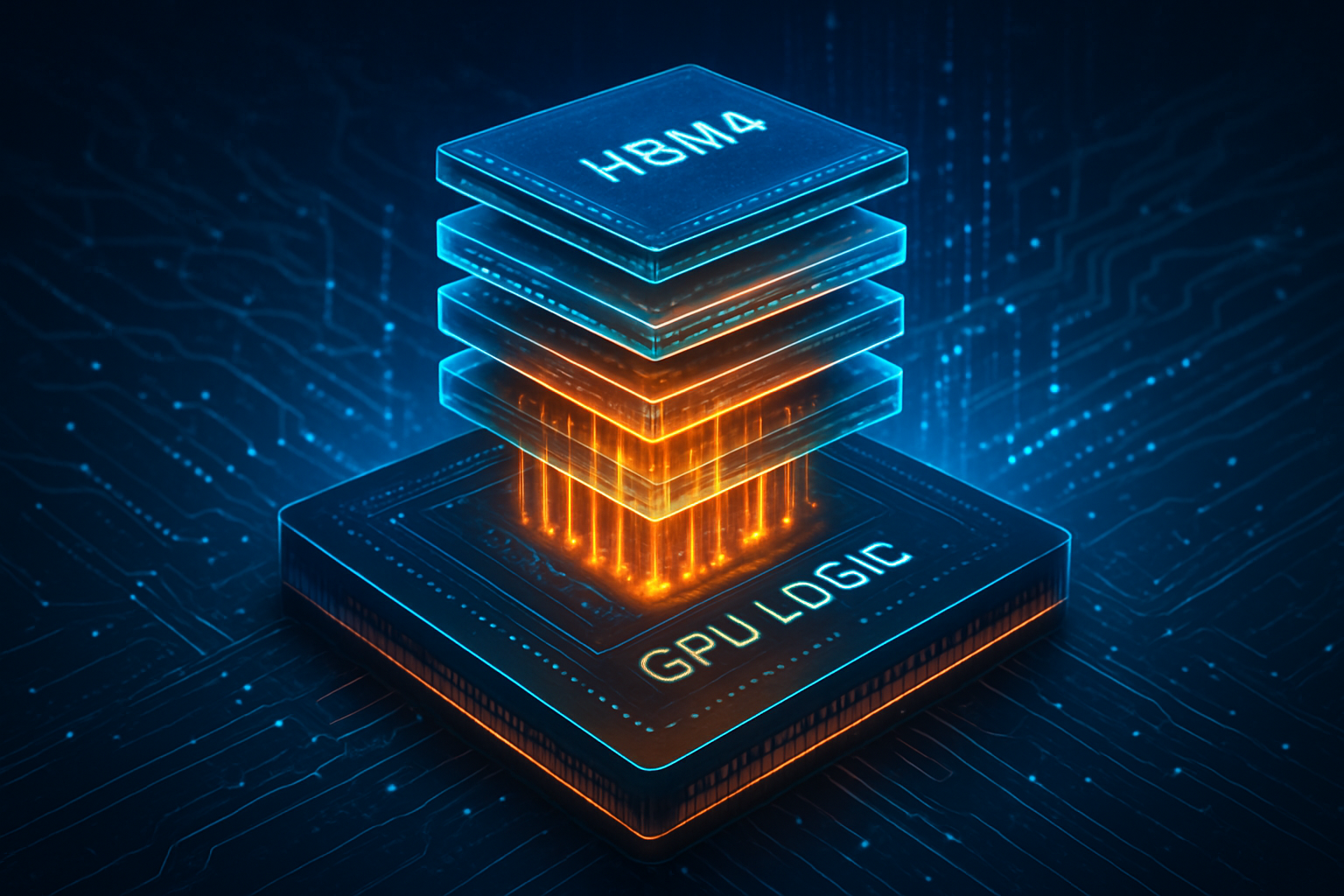
  • The Silicon Architect: How AI is Rewriting the Rules of 2nm and 1nm Chip Design

    The Silicon Architect: How AI is Rewriting the Rules of 2nm and 1nm Chip Design

    As the semiconductor industry pushes beyond the physical limits of traditional silicon, a new designer has entered the cleanroom: Artificial Intelligence. In late 2025, the transition to 2nm and 1.4nm process nodes has proven so complex that human engineers can no longer manage the placement of billions of transistors alone. Tools like Google’s AlphaChip and Synopsys’s AI-driven EDA platforms have shifted from experimental assistants to mission-critical infrastructure, fundamentally altering how the world’s most advanced hardware is conceived and manufactured.

    This AI-led revolution in chip design is not just about speed; it is about survival in the "Angstrom era." With transistor features now measured in the width of a few dozen atoms, the design space—the possible ways to arrange components—has grown to a scale that exceeds the number of atoms in the observable universe. By utilizing reinforcement learning and generative design, companies are now able to compress years of architectural planning into weeks, ensuring that the next generation of AI accelerators and mobile processors can meet the voracious power and performance demands of the 2026 tech landscape.

    The Technical Frontier: AlphaChip and the Rise of Autonomous Floorplanning

    At the heart of this shift is AlphaChip, a reinforcement learning (RL) system developed by Google DeepMind, a subsidiary of Alphabet Inc. (NASDAQ: GOOGL). AlphaChip treats the "floorplanning" of a chip—the spatial arrangement of components like CPUs, GPUs, and memory—as a high-stakes game of Go. Using an Edge-based Graph Neural Network (Edge-GNN), the AI learns the intricate relationships between billions of interconnected macros. Unlike traditional automated tools that rely on predefined heuristics, AlphaChip develops an "intuition" for layout, pre-training on previous chip generations to optimize for power, performance, and area (PPA).

    The results have been transformative for Google’s own hardware. For the recently deployed TPU v6 (Trillium) accelerators, AlphaChip was responsible for placing 25 major blocks, achieving a 6.2% reduction in total wirelength compared to previous human-led designs. This technical feat is mirrored in the broader industry by Synopsys (NASDAQ: SNPS) and its DSO.ai (Design Space Optimization) platform. DSO.ai uses RL to search through trillions of potential design recipes, a task that would take a human team months of trial and error. As of December 2025, Synopsys has fully integrated these AI flows for TSMC’s (NYSE: TSM) N2 (2nm) process and Intel’s (NASDAQ: INTC) 18A node, allowing for the first "autonomous" pathfinding of 1.4nm architectures.

    This shift represents a departure from the "Standard Cell" era of the last decade. Previous approaches were iterative and siloed; engineers would optimize one section of a chip only to find it negatively impacted the heat or timing of another. AI-driven Electronic Design Automation (EDA) tools look at the chip holistically. Industry experts note that while a human designer might take six months to reach a "good enough" floorplan, AlphaChip and Cadence (NASDAQ: CDNS) Cerebrus can produce a superior layout in less than 24 hours. The AI research community has hailed this as a "closed-loop" milestone, where AI is effectively building the very silicon that will be used to train its future iterations.

    Market Dynamics: The Foundry Wars and the AI Advantage

    The strategic implications for the semiconductor market are profound. Taiwan Semiconductor Manufacturing Company (NYSE: TSM), the world's leading foundry, has maintained its dominance by integrating AI into its Open Innovation Platform (OIP). By late 2025, TSMC’s N2 node is in full volume production, largely thanks to AI-optimized yield management that identifies manufacturing defects at the atomic level before they ruin a wafer. However, the competitive gap is narrowing as Intel (NASDAQ: INTC) successfully scales its 18A process, becoming the first to implement PowerVia—a backside power delivery system that was largely perfected through AI-simulated thermal modeling.

    For tech giants like Microsoft (NASDAQ: MSFT) and Amazon (NASDAQ: AMZN), AI-driven design tools are the key to their custom silicon ambitions. By leveraging Synopsys and Cadence’s AI platforms, these companies can design bespoke AI chips that are precisely tuned for their specific cloud workloads without needing a massive internal team of legacy chip architects. This has led to a "democratization" of high-end chip design, where the barrier to entry is no longer just decades of experience, but rather access to the best AI design models and compute power.

    Samsung (KRX: 005930) is also leveraging AI to gain an edge in the mobile sector. By using AI to optimize its Gate-All-Around (GAA) transistor architecture at 2nm, Samsung has managed to close the efficiency gap with TSMC, securing major orders for the next generation of high-end smartphones. The competitive landscape is now defined by an "AI-First" foundry model, where the ability to provide AI-ready Process Design Kits (PDKs) is the primary factor in winning multi-billion dollar contracts from NVIDIA (NASDAQ: NVDA) and other chip designers.

    Beyond Moore’s Law: The Wider Significance of AI-Designed Silicon

    The role of AI in semiconductor design signals a fundamental shift in the trajectory of Moore’s Law. For decades, the industry relied on shrinking physical features to gain performance. As we approach the 1nm "Angstrom" limit, physical shrinking is yielding diminishing returns. AI provides a new lever: architectural efficiency. By finding non-obvious ways to route data and manage power, AI is effectively providing a "full node's worth" of performance gains (~15-20%) on existing hardware, extending the life of silicon technology even as we hit the boundaries of physics.

    However, this reliance on AI introduces new concerns. There is a growing "black box" problem in hardware; as AI designs more of the chip, it becomes increasingly difficult for human engineers to verify every path or understand why a specific layout was chosen. This raises questions about long-term reliability and the potential for "hallucinations" in hardware logic—errors that might not appear until a chip is in high-volume production. Furthermore, the concentration of these AI tools in the hands of a few US-based EDA giants like Synopsys and Cadence creates a new geopolitical chokepoint in the global supply chain.

    Comparatively, this milestone is being viewed as the "AlphaGo moment" for hardware. Just as AlphaGo proved that machines could find strategies humans had never considered in 2,500 years of play, AlphaChip and DSO.ai are finding layouts that defy traditional engineering logic but result in cooler, faster, and more efficient processors. We are moving from a world where humans design chips for AI, to a world where AI designs the chips for itself.

    The Road to 1nm: Future Developments and Challenges

    Looking toward 2026 and 2027, the industry is already eyeing the 1.4nm and 1nm horizons. The next major hurdle is the integration of High-NA (Numerical Aperture) EUV lithography. These machines, produced by ASML, are so complex that AI is required just to calibrate the light sources and masks. Experts predict that by 2027, the design process will be nearly 90% autonomous, with human engineers shifting their focus from "drawing" chips to "prompting" them—defining high-level goals and letting AI agents handle the trillion-transistor implementation.

    We are also seeing the emergence of "Generative Hardware." Similar to how Large Language Models generate text, new AI models are being trained to generate entire RTL (Register-Transfer Level) code from natural language descriptions. This could allow a software engineer to describe a specific encryption algorithm and have the AI generate a custom, hardened silicon block to execute it. The challenge remains in verification; as designs become more complex, the AI tools used to verify the chips must be even more advanced than the ones used to design them.

    Closing the Loop: A New Era of Computing

    The integration of AI into semiconductor design marks the beginning of a self-reinforcing cycle of technological growth. AI tools are designing 2nm chips that are more efficient at running the very AI models used to design them. This "silicon feedback loop" is accelerating the pace of innovation beyond anything seen in the previous 50 years of computing. As we look toward the end of 2025, the distinction between software and hardware design is blurring, replaced by a unified AI-driven development flow.

    The key takeaway for the industry is that AI is no longer an optional luxury in the semiconductor world; it is the fundamental engine of progress. In the coming months, watch for the first 1.4nm "risk production" announcements from TSMC and Intel, and pay close attention to how these firms use AI to manage the transition. The companies that master this digital-to-physical translation will lead the next decade of the global economy.


    This content is intended for informational purposes only and represents analysis of current AI developments.

    TokenRing AI delivers enterprise-grade solutions for multi-agent AI workflow orchestration, AI-powered development tools, and seamless remote collaboration platforms.
    For more information, visit https://www.tokenring.ai/.
  • The Silicon Carbide Revolution: Fuji Electric and Robert Bosch Standardize Power Modules to Supercharge EV Adoption

    The Silicon Carbide Revolution: Fuji Electric and Robert Bosch Standardize Power Modules to Supercharge EV Adoption

    The global transition toward electric mobility has reached a critical inflection point as two of the world’s most influential engineering powerhouses, Fuji Electric Co., Ltd. (TSE: 6504), and Robert Bosch GmbH, have solidified a strategic partnership to standardize Silicon Carbide (SiC) power semiconductor modules. This collaboration, which has matured into a cornerstone of the 2025 automotive supply chain, focuses on the development of "package-compatible" modules designed to harmonize the physical and electrical interfaces of high-efficiency inverters. By aligning their manufacturing standards, the two companies are addressing one of the most significant bottlenecks in EV production: the lack of interchangeable, high-performance power components.

    The immediate significance of this announcement lies in its potential to de-risk the EV supply chain while simultaneously pushing the boundaries of vehicle performance. As the industry moves toward 800-volt architectures and increasingly sophisticated AI-driven energy management systems, the ability to dual-source package-compatible SiC modules allows automakers to scale production without the fear of vendor lock-in or mechanical redesigns. This standardization is expected to be a primary catalyst for the next wave of EV adoption, offering consumers longer driving ranges and faster charging times through superior semiconductor efficiency.

    The Engineering of Efficiency: Trench Gates and Package Compatibility

    At the heart of the Fuji-Bosch alliance is a shared commitment to 3rd-generation Silicon Carbide technology. Unlike traditional silicon-based Insulated Gate Bipolar Transistors (IGBTs), which have dominated power electronics for decades, SiC MOSFETs offer significantly lower switching losses and higher thermal conductivity. The partnership specifically targets the 750-volt and 1,200-volt classes, utilizing advanced "trench gate" structures that allow for higher current densities in a smaller footprint. By leveraging Fuji Electric’s proprietary 3D wiring packaging and Bosch’s PM6.1 platform, the modules achieve inverter efficiencies exceeding 99%, effectively reducing energy waste by up to 80% compared to legacy silicon systems.

    The "package-compatible" nature of these modules is perhaps the most disruptive technical feature. Historically, power modules have been proprietary, forcing Original Equipment Manufacturers (OEMs) to design their inverters around a specific supplier's mechanical footprint. The Fuji-Bosch standard ensures that the outer dimensions, terminal positions, and mounting points are identical. This "plug-and-play" capability for high-power semiconductors means that a single inverter design can accommodate either a Bosch or a Fuji Electric module. This level of standardization is unprecedented in the high-power semiconductor space and mirrors the early standardization of battery cell formats that helped stabilize the EV market.

    Initial reactions from the semiconductor research community have been overwhelmingly positive, with experts noting that this move effectively creates a "second source" ecosystem for SiC. While competitors like STMicroelectronics (NYSE: STM) and Infineon Technologies AG (ETR: IFX) have led the market through sheer volume, the Fuji-Bosch alliance offers a unique value proposition: the reliability of two world-class manufacturers providing identical form factors. This technical synergy is viewed as a direct response to the supply chain vulnerabilities exposed in recent years, ensuring that the "brain" of the EV—the inverter—remains resilient against localized disruptions.

    Redefining the Semiconductor Supply Chain and Market Dynamics

    This partnership creates a formidable challenge to the current hierarchy of the power semiconductor market. By standardizing their offerings, Fuji Electric and Bosch are positioning themselves as the preferred partners for Tier 1 suppliers and major automakers like the Volkswagen Group or Toyota Motor Corporation (TSE: 7203). For Fuji Electric, the alliance provides a massive entry point into the European automotive market, where Bosch maintains a dominant footprint. Conversely, Bosch gains access to Fuji’s cutting-edge 3G SiC manufacturing capabilities, ensuring a steady supply of high-yield wafers and chips as global demand for SiC is projected to triple by 2027.

    The competitive implications extend to the very top of the tech industry. As EVs become "computers on wheels," the demand for efficient power delivery to support high-performance AI chips—such as those from NVIDIA Corporation (NASDAQ: NVDA)—has skyrocketed. These AI-defined vehicles require massive amounts of power for autonomous driving sensors and real-time data processing. The efficiency gains provided by the Fuji-Bosch SiC modules ensure that this increased "compute load" does not come at the expense of the vehicle’s driving range. By optimizing the power stage, these modules allow more of the battery's energy to be diverted to the onboard AI systems that define the modern driving experience.

    Furthermore, this development is likely to disrupt the pricing power of existing SiC leaders. As the Fuji-Bosch standard gains traction, it may force other players to adopt similar compatible footprints or risk being designed out of future vehicle platforms. The market positioning here is clear: Fuji and Bosch are not just selling a component; they are selling a standard. This strategic advantage is particularly potent in 2025, as automakers are under intense pressure to lower the "Total Cost of Ownership" (TCO) for EVs to achieve mass-market parity with internal combustion engines.

    The Silicon Carbide Catalyst in the AI-Defined Vehicle

    The broader significance of this partnership transcends simple hardware manufacturing; it is a foundational step in the evolution of the "AI-Defined Vehicle" (ADV). In the current landscape, the efficiency of the power powertrain is the primary constraint on how much intelligence a vehicle can possess. Every watt saved in the inverter is a watt that can be used for edge AI processing, high-fidelity sensor fusion, and sophisticated infotainment systems. By improving inverter efficiency, Fuji Electric and Bosch are effectively expanding the "energy budget" for AI, enabling more advanced autonomous features without requiring larger, heavier, and more expensive battery packs.

    This shift fits into a wider trend of "electrification meeting automation." Just as AI has revolutionized software development, SiC is revolutionizing the physics of power. The transition to SiC is often compared to the transition from vacuum tubes to silicon transistors in the mid-20th century—a fundamental leap that enables entirely new architectures. However, the move to SiC also brings concerns regarding the raw material supply chain. The production of SiC wafers is significantly more energy-intensive and complex than traditional silicon, leading to potential bottlenecks in the availability of high-quality "boules" (the crystalline ingots from which wafers are sliced).

    Despite these concerns, the Fuji-Bosch alliance is seen as a stabilizing force. By standardizing the packaging, they allow for a more efficient allocation of the global SiC supply. If one manufacturing facility faces a production delay, the "package-compatible" nature of the modules allows the industry to pivot to the other partner's supply without halting vehicle production lines. This level of systemic redundancy is a hallmark of a maturing industry and a necessary prerequisite for the widespread adoption of Level 3 and Level 4 autonomous driving systems, which require absolute reliability in power delivery.

    The Road to 800-Volt Dominance and Beyond

    Looking ahead, the next 24 to 36 months will likely see the rapid proliferation of 800-volt battery systems, driven in large part by the availability of these standardized SiC modules. Higher voltage systems allow for significantly faster charging—potentially adding 200 miles of range in under 15 minutes—but they require the robust thermal management and high-voltage tolerance that only SiC can provide. Experts predict that by 2026, the Fuji-Bosch standard will be the benchmark for mid-to-high-range EVs, with potential applications extending into electric heavy-duty trucking and even urban air mobility (UAM) drones.

    The next technical challenge on the horizon involves the integration of "Smart Sensing" directly into the SiC modules. Future iterations of the Fuji-Bosch partnership are expected to include embedded sensors that use AI to monitor the "health" of the semiconductor in real-time, predicting failures before they occur. This "proactive maintenance" capability will be essential for fleet operators and autonomous taxi services, where vehicle uptime is the primary metric of success. As we move toward 2030, the line between power electronics and digital logic will continue to blur, with SiC modules becoming increasingly "intelligent" components of the vehicle's central nervous system.

    A New Standard for the Electric Era

    The partnership between Fuji Electric and Robert Bosch marks a definitive end to the "Wild West" era of proprietary EV power electronics. By prioritizing package compatibility and standardization, these two giants have provided a blueprint for how the industry can scale to meet the ambitious electrification targets of the late 2020s. The resulting improvements in inverter efficiency and driving range are not just incremental upgrades; they are the keys to unlocking the mass-market potential of electric vehicles.

    As we look toward the final weeks of 2025 and into 2026, the industry will be watching closely to see how quickly other manufacturers adopt this new standard. The success of this alliance serves as a powerful reminder that in the race toward a sustainable and AI-driven future, collaboration on foundational hardware is just as important as competition in software. For the consumer, the impact will be felt in the form of more affordable, longer-range EVs that charge faster and perform better, finally bridging the gap between the internal combustion past and the electrified future.


    This content is intended for informational purposes only and represents analysis of current AI and technology developments.

    TokenRing AI delivers enterprise-grade solutions for multi-agent AI workflow orchestration, AI-powered development tools, and seamless remote collaboration platforms.
    For more information, visit https://www.tokenring.ai/.