Blog

  • The Invisible Backbone of AI: Why Advanced Packaging is the New Battleground for Semiconductor Dominance

    The Invisible Backbone of AI: Why Advanced Packaging is the New Battleground for Semiconductor Dominance

    As the artificial intelligence revolution accelerates into late 2025, the industry’s focus has shifted from the raw transistor counts of chips to the sophisticated architecture that holds them together. While massive Large Language Models (LLMs) continue to demand unprecedented compute power, the primary bottleneck is no longer just the speed of the processor, but the "memory wall"—the physical limit of how fast data can travel between memory and logic. Advanced packaging has emerged as the critical solution to this crisis, transforming from a secondary manufacturing step into the primary frontier of semiconductor innovation.

    At the heart of this transition is Kulicke and Soffa Industries (NASDAQ: KLIC), a company that has successfully pivoted from its legacy as a leader in traditional wire bonding to becoming a pivotal player in the high-stakes world of AI advanced packaging. By enabling the complex stacking and interconnectivity required for High Bandwidth Memory (HBM) and chiplet architectures, KLIC is proving that the future of AI performance will be won not just by the designers of chips, but by the masters of assembly.

    The Technical Leap: Solving the Memory Wall with Fluxless TCB

    The technical challenge of 2025 AI hardware lies in the transition from 2D layouts to 2.5D and 3D heterogeneous architectures. Traditional wire bonding, which uses thin gold or copper wires to connect chips to their packages, is increasingly insufficient for the ultra-high-speed requirements of AI GPUs like the Blackwell series from NVIDIA (NASDAQ: NVDA). These modern accelerators require thousands of microscopic connections, known as micro-bumps, to be placed with sub-10-micron precision. This is where KLIC’s Advanced Solutions segment, specifically its APTURA™ series, has become indispensable.

    KLIC’s breakthrough technology is Fluxless Thermo-Compression Bonding (FTC). Unlike traditional methods that use chemical flux to remove oxidation—a process that leaves behind residues difficult to clean at the fine pitches required for HBM4—KLIC’s FTC uses a formic acid vapor in-situ. This "dry" process ensures a cleaner, more reliable bond, allowing for an interconnect pitch as small as 8 micrometers. This level of precision is vital for the 12- and 16-layer HBM stacks that provide the 4TB/s+ bandwidth necessary for next-generation AI training.

    Furthermore, KLIC has introduced the CuFirst™ Hybrid Bonding technology. While traditional bonding relies on heat and pressure to melt solder bumps, hybrid bonding allows copper-to-copper interconnects at room temperature, followed by a dielectric seal. This "bumpless" approach significantly reduces the distance data must travel, cutting latency and reducing power consumption by up to 40% compared to previous generations. By providing these tools, KLIC is enabling the industry to move beyond the physical limits of traditional silicon scaling, a trend often referred to as "More than Moore."

    Market Impact: Navigating the CoWoS Supply Chain

    The strategic importance of advanced packaging is best reflected in the supply chain of Taiwan Semiconductor Manufacturing Company (NYSE: TSM), the world’s leading foundry. In late 2025, TSMC’s Chip-on-Wafer-on-Substrate (CoWoS) capacity has become the most valuable real estate in the tech world. As TSMC doubled its CoWoS capacity to roughly 80,000 wafers per month to meet the demands of NVIDIA and Advanced Micro Devices (NASDAQ: AMD), the equipment providers that qualify for these lines have seen their market positions solidify.

    KLIC has successfully broken into this elite circle, qualifying its fluxless TCB systems for TSMC’s CoWoS-L process. This has placed KLIC in direct competition with incumbents like ASMPT (HKG: 0522) and BE Semiconductor Industries (AMS: BESI). While ASMPT remains a high-volume leader in the broader market, KLIC’s specialized focus on fluxless technology has made it a preferred partner for the high-yield, high-reliability requirements of AI server modules. For companies like NVIDIA, having multiple qualified equipment vendors like KLIC ensures a more resilient supply chain and helps mitigate the chronic shortages that plagued the industry in 2023 and 2024.

    The shift also benefits AMD, which has been more aggressive in adopting 3D chiplet architectures. AMD’s MI350 series, launched earlier this year, utilizes 3D hybrid bonding to stack compute chiplets directly onto I/O dies. This architectural choice gives AMD a competitive edge in power efficiency, a metric that has become as important as raw speed for data center operators. As these tech giants battle for AI supremacy, their reliance on advanced packaging equipment providers has effectively turned companies like KLIC into the "arms dealers" of the AI era.

    The Wider Significance: Beyond Moore's Law

    The rise of advanced packaging marks a fundamental shift in the semiconductor landscape. For decades, the industry followed Moore’s Law, doubling transistor density every two years by shrinking the size of individual transistors. However, as transistors approach the atomic scale, the cost and complexity of further shrinking have skyrocketed. Advanced packaging offers a way out of this economic trap by allowing engineers to "disaggregate" the chip into smaller, specialized chiplets that can be manufactured on different process nodes and then stitched together.

    This trend has profound geopolitical implications. Under the U.S. CHIPS Act and similar initiatives in Europe and Japan, there is a renewed focus on bringing packaging capabilities back to Western shores. Historically, packaging was seen as a low-margin, labor-intensive "back-end" process that was outsourced to Southeast Asia. In 2025, it is recognized as a high-tech, high-margin "mid-end" process essential for national security and technological sovereignty. KLIC, as a U.S.-headquartered company with a deep global footprint, is uniquely positioned to benefit from this reshoring trend.

    Furthermore, the environmental impact of AI is under intense scrutiny. The energy required to move data between a processor and its memory can often exceed the energy used for the actual computation. By using KLIC’s advanced bonding technologies to place memory closer to the logic, the industry is making significant strides in "Green AI." Reducing the parasitic capacitance of interconnects is no longer just a technical goal; it is a sustainability mandate for the world's largest data center operators.

    Future Outlook: The Road to Glass Substrates and CPO

    Looking toward 2026 and 2027, the roadmap for advanced packaging includes even more radical shifts. One of the most anticipated developments is the move from organic substrates to glass substrates. Glass offers superior flatness and thermal stability, which will be necessary as AI chips grow larger and hotter. Companies like KLIC are already in R&D phases for equipment that can handle the unique handling and bonding requirements of glass, which is far more brittle than the materials used today.

    Another major horizon is Co-Packaged Optics (CPO). As electrical signals struggle to maintain integrity over longer distances, the industry is looking to integrate optical fibers directly into the chip package. This would allow data to be transmitted via light rather than electricity, virtually eliminating the "memory wall" and enabling massive clusters of GPUs to act as a single, giant processor. The precision required to align these optical fibers is an order of magnitude higher than even today’s most advanced TCB, representing the next great challenge for KLIC’s engineering teams.

    Experts predict that by 2027, the "Year of HBM4," hybrid bonding will move from niche applications into high-volume manufacturing. While TCB remains the workhorse for today's Blackwell and MI350 chips, the transition to hybrid bonding will require a massive new cycle of capital expenditure. The winners will be those who can provide high-throughput machines that maintain sub-micron accuracy in a high-volume factory environment.

    A New Era of Semiconductor Assembly

    The transformation of Kulicke and Soffa from a wire-bonding specialist into an advanced packaging powerhouse is a microcosm of the broader shift in the semiconductor industry. As AI models grow in complexity, the "package" has become as vital as the "chip." The ability to stack, connect, and cool these massive silicon systems is now the primary determinant of who leads the AI race.

    Key takeaways from this development include the critical role of fluxless bonding in improving yields for HBM4 and the strategic importance of being qualified in the TSMC CoWoS supply chain. As we move further into 2026, the industry will be watching for the first high-volume applications of glass substrates and the continued adoption of hybrid bonding.

    For investors and industry observers, the message is clear: the next decade of AI breakthroughs will not just be written in code or silicon, but in the microscopic copper interconnects that bind them together. Advanced packaging is no longer the final step in the process; it is the foundation upon which the future of artificial intelligence is being built.


    This content is intended for informational purposes only and represents analysis of current AI developments.

    TokenRing AI delivers enterprise-grade solutions for multi-agent AI workflow orchestration, AI-powered development tools, and seamless remote collaboration platforms.
    For more information, visit https://www.tokenring.ai/.

  • The HBM Supercycle: How the AI Memory Boom is Redefining Silicon Architecture and Lifting Equipment Giants

    The HBM Supercycle: How the AI Memory Boom is Redefining Silicon Architecture and Lifting Equipment Giants

    As the artificial intelligence revolution enters its most capital-intensive phase, the industry's focus has shifted from the raw processing power of GPUs to the critical bottleneck of data movement. High Bandwidth Memory (HBM) has emerged as the "fuel" of the AI era, transforming from a niche specialized component into the single most influential driver of the semiconductor supply chain. By late 2025, the demand for these dense, vertically stacked memory chips has reached a fever pitch, creating a massive windfall for the equipment manufacturers that provide the precision tools necessary to build them.

    Leading this charge is Lam Research (NASDAQ: LRCX), which has seen its valuation and order books swell as chipmakers race to solve the "memory wall." The current transition from HBM3E to the next-generation HBM4 standard represents more than just a capacity upgrade; it is a fundamental shift in how memory and logic are integrated. As AI models grow to trillions of parameters, the ability to feed data to processors like NVIDIA (NASDAQ: NVDA) Blackwell and Rubin chips has become the primary differentiator in the race for AI supremacy, making the equipment used to etch and plate these chips more valuable than ever.

    The Architecture War: From HBM3E to HBM4

    The technical landscape of AI memory in late 2025 is defined by the transition from the "capacity war" of HBM3E to the "architecture war" of HBM4. While 12-layer HBM3E remains the current workhorse for data center deployments, the industry has begun the shift toward 16-layer HBM4, which was standardized by JEDEC earlier this year. HBM4 is a landmark development because it doubles the interface width to 2048-bit, allowing for bandwidths exceeding 1.5 TB/s per stack. This leap is necessitated by the massive data throughput requirements of next-generation AI training clusters, which are increasingly limited by the energy and time required to move data between the processor and memory.

    To achieve these specifications, manufacturers are relying on advanced Through-Silicon Via (TSV) technology, where thousands of microscopic holes are drilled through silicon layers to create vertical electrical connections. Lam Research has solidified its position as the gatekeeper of this process with its new Akara™ etching system. Unlike previous generations, HBM4 requires deeper, narrower vias with virtually zero "scalloping" or roughness on the interior walls. Lam’s Syndion and Akara tools provide the high-aspect-ratio etching needed to stack 16 or even 20 layers of DRAM while maintaining electrical integrity. This is complemented by the SABRE 3D® deposition system, which handles the copper electrofilling of these vias, ensuring void-free connections that are essential for high-yield production.

    Initial reactions from the AI research community have been overwhelmingly positive, though tempered by the sheer complexity of the manufacturing process. Experts note that HBM4 marks the first time the "base die"—the bottom layer of the memory stack—is being manufactured on advanced logic nodes (such as 5nm or 12nm) rather than traditional memory processes. This allows the memory stack to handle more complex logic functions, such as error correction and power management, directly on the chip. However, this integration has introduced significant thermal challenges, as stacking logic and memory together creates "hot spots" that can lead to performance throttling if not managed by advanced packaging techniques.

    Market Dynamics and the Rise of the Equipment Giants

    The financial implications of this memory boom are most visible in the balance sheets of wafer fabrication equipment (WFE) providers. In its October 2025 earnings report, Lam Research posted record Q3 revenue of $5.32 billion, a nearly 28% increase year-over-year. Management highlighted that HBM-related revenue grew by 50% during the same period, far outstripping the growth of the broader semiconductor market. For every dollar invested in AI data centers, a growing percentage is now flowing directly into the specialized etching and deposition tools required for 3D stacking. This has placed Lam Research, along with competitors like Applied Materials (NASDAQ: AMAT) and Tokyo Electron (TYO: 8035), at the center of the AI investment thesis.

    In the competitive landscape of memory producers, SK Hynix (KRX: 000660) continues to hold the lion's share of the HBM market, estimated at over 60% as of late 2025. Their "trilateral alliance" with NVIDIA and TSMC (NYSE: TSM) has become the gold standard for AI hardware, utilizing TSMC’s logic process for the HBM4 base die. Meanwhile, Micron (NASDAQ: MU) has successfully climbed to the number two spot, capturing roughly 22% of the market by aggressively scaling its HBM3E production. Samsung (KRX: 005930), while trailing in market share at 16%, is betting heavily on its "all-in-one" capability—acting as the memory maker, foundry, and packager—to regain ground as HBM4 moves into mass production in 2026.

    This shift is disrupting the traditional "commodity" nature of the memory market. HBM is no longer a generic part bought in bulk; it is a highly customized, co-designed component that requires deep collaboration between the memory maker and the logic designer (like NVIDIA or AMD). This strategic advantage favors companies that can master the complex packaging and integration steps, effectively raising the barrier to entry and securing long-term supply agreements that were previously unheard of in the volatile DRAM industry.

    The Wider Significance: Breaking the Memory Wall

    The HBM boom represents a pivotal moment in the history of computing, signaling a move from "compute-centric" to "data-centric" architecture. For decades, processor speeds increased much faster than memory bandwidth, leading to the "memory wall" where CPUs and GPUs spent most of their time waiting for data. By bringing memory physically closer to the logic and stacking it vertically, the industry is effectively trying to collapse the distance data must travel. This is not just about speed; it is about power efficiency. In 2025, data movement accounts for a significant portion of the energy consumed by AI models, and HBM4’s wider interface allows for lower clock speeds at higher bandwidths, significantly reducing the energy-per-bit transferred.

    However, this advancement comes with concerns regarding supply chain concentration and cost. The extreme precision required by Lam Research's tools and the low yields associated with 16-layer stacking have kept HBM prices high. This has led to a "compute divide," where only the largest tech giants—the so-called "Hyperscalers"—can afford the massive HBM-laden clusters required to train the next generation of frontier models. Critics argue that this concentration of hardware power could stifle innovation among smaller startups and academic institutions that cannot compete with the capital expenditures of companies like Microsoft (NASDAQ: MSFT) or Meta (NASDAQ: META).

    Furthermore, the integration of memory and logic via HBM4 is a precursor to "Processing-in-Memory" (PIM), where simple calculations are performed within the memory stack itself. This would represent the most significant change in computer architecture since the von Neumann model, potentially allowing AI models to run with orders of magnitude less power. The success of HBM today is the foundational step toward this more radical future.

    Future Horizons: Hybrid Bonding and Beyond

    Looking ahead to 2026 and 2027, the industry is preparing for the next major technical hurdle: the transition to hybrid bonding. Currently, most HBM4 stacks use advanced micro-bumping (solder balls) to connect layers. However, as stacks move toward 20 layers and beyond, these bumps become too large and introduce too much thermal resistance. Hybrid bonding—a process that bonds copper pads directly to copper pads without solder—is expected to be the key to HBM5. This will require even more sophisticated equipment from Lam Research and its peers, as the surfaces must be perfectly flat and clean at an atomic level to bond successfully.

    We also expect to see the emergence of "custom HBM," where major AI players like Google (NASDAQ: GOOGL) or Amazon (NASDAQ: AMZN) design their own proprietary base dies for HBM stacks to optimize for their specific AI workloads. This would further entrench the relationship between foundries like TSMC and memory makers, while simultaneously increasing the demand for the specialized WFE tools that enable such high-level customization. The primary challenge will remain thermal management; as stacks get taller and more integrated, cooling the middle layers of the "silicon sandwich" will require innovations in liquid cooling and new thermal interface materials.

    A New Era for Semiconductors

    The AI memory boom has fundamentally rewritten the rules of the semiconductor industry. What was once a cyclical commodity business has transformed into a high-margin, high-tech arms race. Lam Research’s emergence as a central player in this narrative underscores the reality that the future of AI is as much a feat of mechanical and chemical engineering as it is of software and algorithms. The ability to etch vias and plate copper at the nanometer scale is now just as critical to the development of AGI as the neural network architectures themselves.

    In summary, the transition to HBM4 and the massive expansion of 3D stacking are the primary drivers of the current semiconductor supercycle. As we move into 2026, the industry will be watching for the first successful mass-production runs of 16-layer stacks and the initial implementation of hybrid bonding. For investors and tech enthusiasts alike, the "memory wall" is no longer just a theoretical hurdle—it is the most lucrative and technically challenging frontier in modern technology.


    This content is intended for informational purposes only and represents analysis of current AI developments.

    TokenRing AI delivers enterprise-grade solutions for multi-agent AI workflow orchestration, AI-powered development tools, and seamless remote collaboration platforms.
    For more information, visit https://www.tokenring.ai/.
  • The H200 Pivot: Nvidia Navigates a $30 Billion Opening Amid Impending 2026 Tariff Wall

    The H200 Pivot: Nvidia Navigates a $30 Billion Opening Amid Impending 2026 Tariff Wall

    In a move that has sent shockwaves through both Silicon Valley and Beijing, the geopolitical landscape for artificial intelligence has shifted dramatically as of December 2025. Following a surprise one-year waiver announced by the U.S. administration on December 8, 2025, Nvidia (NASDAQ: NVDA) has been granted permission to resume sales of its high-performance H200 Tensor Core GPUs to "approved customers" in China. This reversal marks a pivotal moment in the U.S.-China "chip war," transitioning from a strategy of total containment to a "transactional diffusion" model that allows the flow of high-end hardware in exchange for direct revenue sharing with the U.S. Treasury.

    The immediate significance of this development cannot be overstated. For the past year, Chinese tech giants have been forced to rely on "crippled" versions of Nvidia hardware, such as the H20, which were intentionally slowed to meet strict export controls. The lifting of these restrictions for the H200—the flagship of Nvidia’s Hopper architecture—grants Chinese firms the raw computational power required to train frontier-level large language models (LLMs) that were previously out of reach. However, this opportunity comes with a massive caveat: a looming "tariff cliff" in November 2026 and a mandatory 25% revenue-sharing fee that threatens to squeeze Nvidia’s legendary profit margins.

    Technical Rebirth: From the Crippled H20 to the Flagship H200

    The technical disparity between what Nvidia was allowed to sell in China and what it can sell now is staggering. The previous China-specific chip, the H20, was engineered to fall below the U.S. government’s "Total Processing Performance" (TPP) threshold, resulting in an AI performance of approximately 148 TFLOPS (FP8). In contrast, the H200 delivers a massive 1,979 TFLOPS—nearly 13 times the performance of its predecessor. This jump is critical because while the H20 was capable of "inference" (running existing AI models), it lacked the brute force necessary for "training" the next generation of generative AI models from scratch.

    Beyond raw compute, the H200 features 141GB of HBM3e memory and 4.8 TB/s of bandwidth, providing a 20% increase in data throughput over the standard H100. This specification is particularly vital for the massive datasets used by companies like Alibaba (NYSE: BABA) and Baidu (NASDAQ: BIDU). Industry experts note that the H200 is the first "frontier-class" chip to enter the Chinese market legally since the 2023 lockdowns. While Nvidia’s newer Blackwell (B200) and upcoming Rubin architectures remain strictly prohibited, the H200 provides a "Goldilocks" solution: powerful enough to keep Chinese firms dependent on the Nvidia ecosystem, but one generation behind the absolute cutting edge reserved for U.S. and allied interests.

    Market Dynamics: A High-Stakes Game for Tech Giants

    The reopening of the Chinese market for H200s is expected to be a massive revenue driver for Nvidia, with analysts at Wells Fargo (NYSE: WFC) estimating a $25 billion to $30 billion annual opportunity. This development puts immediate pressure on domestic Chinese chipmakers like Huawei, whose Ascend 910C had been gaining significant traction as the only viable alternative for Chinese firms. With the H200 back on the table, many Chinese cloud providers may pivot back to Nvidia’s superior software stack, CUDA, potentially stalling the momentum of China's domestic semiconductor self-sufficiency.

    However, the competitive landscape is complicated by the "25% revenue-sharing fee" imposed by the U.S. government. For every H200 sold in China, Nvidia must pay a quarter of the revenue directly to the U.S. Treasury. This creates a strategic dilemma for Nvidia: if they pass the cost entirely to customers, the chips may become too expensive compared to Huawei’s offerings; if they absorb the cost, their industry-leading margins will take a significant hit. Competitors like Advanced Micro Devices (NASDAQ: AMD) are also expected to seek similar waivers for their MI300 series, potentially leading to a renewed price war within the restricted Chinese market.

    The Geopolitical Gamble: Transactional Diffusion and the 2026 Cliff

    This policy shift represents a new phase in global AI governance. By allowing H200 sales, the U.S. is betting that it can maintain a "strategic lead" through software and architecture (keeping Blackwell and Rubin exclusive) while simultaneously draining capital from Chinese tech firms. This "transactional diffusion" strategy uses Nvidia’s hardware as a diplomatic and economic tool. Yet, the broader AI landscape remains volatile due to the "Chip-for-Chip" tariff policy slated for full implementation on November 10, 2026.

    The 2026 tariffs act as a sword of Damocles hanging over the industry. If China does not meet specific purchase quotas for U.S. goods by late 2026, reciprocal tariffs could rise by another 10% to 20%. This creates a "revenue cliff" where Chinese firms are currently incentivized to aggressively stockpile H200s throughout the first three quarters of 2026 before the trade barriers potentially snap shut. Concerns remain that this "boom and bust" cycle could lead to significant market volatility and a repeat of the inventory write-downs Nvidia faced in early 2025.

    Future Outlook: The Race to November 2026

    In the near term, expect a massive surge in Nvidia’s Data Center revenue as Chinese hyperscalers rush to secure H200 allocations. This "pre-tariff pull-forward" will likely inflate Nvidia's earnings throughout the first half of 2026. However, the long-term challenge remains the development of "sovereign AI" in China. Experts predict that Chinese firms will use the H200 window to accelerate their software optimization, making their models less dependent on specific hardware architectures in preparation for a potential total ban in 2027.

    The next twelve months will also see a focus on supply chain resilience. As 2026 approaches, Nvidia and its manufacturing partner Taiwan Semiconductor Manufacturing Company (NYSE: TSM) will likely face increased pressure to diversify assembly and packaging outside of the immediate conflict zones in the Taiwan Strait. The success of the H200 waiver program will serve as a litmus test for whether "managed competition" can coexist with the intense national security concerns surrounding artificial intelligence.

    Conclusion: A Delicate Balance in the AI Age

    The lifting of the H200 ban is a calculated risk that underscores Nvidia’s central role in the global economy. By navigating the dual pressures of U.S. regulatory fees and the impending 2026 tariff wall, Nvidia is attempting to maintain its dominance in the world’s second-largest AI market while adhering to an increasingly complex set of geopolitical rules. The H200 provides a temporary bridge for Chinese AI development, but the high costs and looming deadlines ensure that the "chip war" is far from over.

    As we move through 2026, the key indicators to watch will be the adoption rate of the H200 among Chinese state-owned enterprises and the progress of the U.S. Treasury's revenue-collection mechanism. This development is a landmark in AI history, representing the first time high-end AI compute has been used as a direct instrument of fiscal and trade policy. For Nvidia, the path forward is a narrow one, balanced between unprecedented opportunity and the very real threat of a geopolitical "cliff" just over the horizon.


    This content is intended for informational purposes only and represents analysis of current AI developments.

    TokenRing AI delivers enterprise-grade solutions for multi-agent AI workflow orchestration, AI-powered development tools, and seamless remote collaboration platforms.
    For more information, visit https://www.tokenring.ai/.
  • The High-NA Frontier: ASML Solidifies the Sub-2nm Era as EUV Adoption Hits Critical Mass

    The High-NA Frontier: ASML Solidifies the Sub-2nm Era as EUV Adoption Hits Critical Mass

    As of late 2025, the semiconductor industry has reached a historic inflection point, driven by the successful transition of High-Numerical Aperture (High-NA) Extreme Ultraviolet (EUV) lithography from experimental labs to the factory floor. ASML (NASDAQ: ASML), the world’s sole provider of the machinery required to print the world’s most advanced chips, has officially entered the high-volume manufacturing (HVM) phase for its next-generation systems. This milestone marks the beginning of the sub-2nm era, providing the essential infrastructure for the next decade of artificial intelligence, high-performance computing, and mobile technology.

    The immediate significance of this development cannot be overstated. With the shipment of the Twinscan EXE:5200B to major foundries, the industry has solved the "stitching" and throughput challenges that once threatened to stall Moore’s Law. For ASML, the successful ramp of these multi-hundred-million-dollar machines is the primary engine behind its projected 2030 revenue targets of up to €60 billion. As logic and DRAM manufacturers race to integrate these tools, the gap between those who can afford the "bleeding edge" and those who cannot has never been wider.

    Breaking the Sub-2nm Barrier: The Technical Triumph of High-NA

    The technical centerpiece of ASML’s 2025 success is the EXE:5200B, a machine that represents the pinnacle of human engineering. Unlike standard EUV tools, which use a 0.33 Numerical Aperture (NA) lens, High-NA systems utilize a 0.55 NA anamorphic lens system. This allows for a significantly higher resolution, enabling chipmakers to print features as small as 8nm—a requirement for the 1.4nm (A14) and 1nm nodes. By late 2025, ASML has successfully boosted the throughput of these systems to 175–200 wafers per hour (wph), matching the productivity of previous generations while drastically reducing the need for "multi-patterning."

    One of the most significant technical hurdles overcome this year was "reticle stitching." Because High-NA lenses are anamorphic (magnifying differently in the X and Y directions), the field size is halved compared to standard EUV. This required engineers to "stitch" two halves of a chip design together with nanometer precision. Reports from IMEC and Intel (NASDAQ: INTC) in mid-2025 confirmed that this process has stabilized, allowing for the production of massive AI accelerators that exceed traditional size limits. Furthermore, the industry has begun transitioning to Metal Oxide Resists (MOR), which are thinner and more sensitive than traditional chemically amplified resists, allowing the High-NA light to be captured more effectively.

    Initial reactions from the research community have been overwhelmingly positive, with experts noting that High-NA reduces the number of process steps by over 40 on critical layers. This reduction in complexity is vital for yield management at the 1.4nm node. While the sheer cost of the machines—estimated at over $380 million each—initially caused hesitation, the data from 2025 pilot lines has proven that the reduction in mask sets and processing time makes High-NA a cost-effective solution for the highest-volume, highest-performance chips.

    The Foundry Arms Race: Intel, TSMC, and Samsung Diverge

    The adoption of High-NA has created a strategic divide among the "Big Three" chipmakers. Intel has emerged as the most aggressive pioneer, having fully installed two production-grade EXE:5200 units at its Oregon facility by late 2025. Intel is betting its entire "Intel 14A" roadmap on being the first to market with High-NA, aiming to reclaim the crown of process leadership from TSMC (NYSE: TSM). For Intel, the strategic advantage lies in early mastery of the tool’s quirks, potentially allowing them to offer 1.4nm capacity to external foundry customers before their rivals.

    TSMC, conversely, has maintained a pragmatic stance for much of 2025, focusing on its N2 and A16 nodes using standard EUV with multi-patterning. However, the tide shifted in late 2025 when reports surfaced that TSMC had placed significant orders for High-NA machines to support its A14P node, expected to ramp in 2027-2028. This move signals that even the most cost-conscious foundry leader recognizes that standard EUV cannot scale indefinitely. Samsung (KRX: 005930) also took delivery of its first production High-NA unit in Q4 2025, intending to use the technology for its SF1.4 node to close the performance gap in the mobile and AI markets.

    The implications for the broader market are profound. Companies like NVIDIA (NASDAQ: NVDA) and Apple (NASDAQ: AAPL) are now forced to navigate this fragmented landscape, deciding whether to stick with TSMC’s proven 0.33 NA methods or pivot to Intel’s High-NA-first approach for their next-generation AI GPUs and silicon. This competition is driving a "supercycle" for ASML, as every major player is forced to buy the most expensive equipment just to stay in the race, further cementing ASML’s monopoly at the top of the supply chain.

    Beyond Logic: EUV’s Critical Role in DRAM and Global Trends

    While logic manufacturing often grabs the headlines, 2025 has been the year EUV became indispensable for memory. The mass production of "1c" (12nm-class) DRAM is now in full swing, with SK Hynix (KRX: 000660) leading the charge by utilizing five to six EUV layers for its HBM4 (High Bandwidth Memory) products. Even Micron (NASDAQ: MU), which was famously the last major holdout for EUV technology, has successfully ramped its 1-gamma node using EUV at its Hiroshima plant this year. The integration of EUV in DRAM is critical for ASML’s long-term margins, as memory manufacturers typically purchase tools in higher volumes than logic foundries.

    This shift fits into a broader global trend: the AI Supercycle. The explosion in demand for generative AI has created a bottomless appetite for high-density memory and high-performance logic, both of which now require EUV. However, this growth is occurring against a backdrop of geopolitical complexity. ASML has reported that while demand from China has normalized—dropping to roughly 20% of revenue from nearly 50% in 2024 due to export restrictions—the global demand for advanced tools has more than compensated. ASML’s gross margin targets of 56% to 60% by 2030 are predicated on this shift toward higher-value High-NA systems and the expansion of EUV into the memory sector.

    Comparisons to previous milestones, such as the initial move from DUV to EUV in 2018, suggest that we are entering a "harvesting" phase. The foundational science is settled, and the focus has shifted to industrialization and yield optimization. The potential concern remains the "cost wall"—the risk that only a handful of companies can afford to design chips at the 1.4nm level, potentially centralizing the AI industry even further into the hands of a few tech giants.

    The Roadmap to 2030: From High-NA to Hyper-NA

    Looking ahead, ASML is already laying the groundwork for the next decade with "Hyper-NA" lithography. As High-NA carries the industry through the 1.4nm and 1nm eras, the subsequent generation of transistors—likely based on Complementary FET (CFET) architectures—will require even higher resolution. ASML’s roadmap for the HXE series targets a 0.75 NA, which would be the most significant jump in optical capability in the company's history. Pilot systems for Hyper-NA are currently projected for introduction around 2030.

    The challenges for Hyper-NA are daunting. At 0.75 NA, the depth of focus becomes extremely shallow, and light polarization effects can degrade image contrast. ASML is currently researching specialized polarization filters and even more advanced photoresist materials to combat these physics-based limitations. Experts predict that the move to Hyper-NA will be as difficult as the original transition to EUV, requiring a complete overhaul of the mask and pellicle ecosystem. However, if successful, it will extend the life of silicon-based computing well into the 2030s.

    In the near term, the industry will focus on the "A14" ramp. We expect to see the first silicon samples from Intel’s High-NA lines by mid-2026, which will be the ultimate test of whether the technology can deliver on its promise of superior power, performance, and area (PPA). If Intel succeeds in hitting its yield targets, it could trigger a massive wave of "FOMO" (fear of missing out) among other chipmakers, leading to an even faster adoption rate for ASML’s most advanced tools.

    Conclusion: The Indispensable Backbone of AI

    The status of ASML and EUV lithography at the end of 2025 confirms one undeniable truth: the future of artificial intelligence is physically etched by a single company in Veldhoven. The successful deployment of High-NA lithography has effectively moved the goalposts for Moore’s Law, ensuring that the roadmap to sub-2nm chips is not just a theoretical possibility but a manufacturing reality. ASML’s ability to maintain its technological lead while expanding its margins through logic and DRAM adoption has solidified its position as the most critical node in the global technology supply chain.

    As we move into 2026, the industry will be watching for the first "High-NA chips" to enter the market. The success of these products will determine the pace of the next decade of computing. For now, ASML has proven that it can meet the moment, providing the tools necessary to build the increasingly complex brains of the AI era. The "High-NA Era" has officially arrived, and with it, a new chapter in the history of human innovation.


    This content is intended for informational purposes only and represents analysis of current AI developments.

    TokenRing AI delivers enterprise-grade solutions for multi-agent AI workflow orchestration, AI-powered development tools, and seamless remote collaboration platforms.
    For more information, visit https://www.tokenring.ai/.
  • The Silicon Bedrock: Strengthening Forecasts for AI Chip Equipment Signal a Multi-Year Infrastructure Supercycle

    The Silicon Bedrock: Strengthening Forecasts for AI Chip Equipment Signal a Multi-Year Infrastructure Supercycle

    As 2025 draws to a close, the semiconductor industry is witnessing a historic shift in capital allocation, driven by a "giga-cycle" of investment in artificial intelligence infrastructure. According to the latest year-end reports from industry authority SEMI and leading equipment manufacturers, global Wafer Fab Equipment (WFE) spending is forecast to hit a record-breaking $145 billion in 2026. This surge is underpinned by an insatiable demand for next-generation AI processors and high-bandwidth memory, forcing a radical retooling of the world’s most advanced fabrication facilities.

    The immediate significance of this development cannot be overstated. We are moving past the era of "AI experimentation" into a phase of "AI industrialization," where the physical limits of silicon are being pushed by revolutionary new architectures. Leaders in the space, most notably Applied Materials (NASDAQ: AMAT), have reported record annual revenues of over $28 billion for fiscal 2025, with visibility into customer factory plans extending well into 2027. This strengthening forecast suggests that the "pick and shovel" providers of the AI gold rush are entering their most profitable era yet, as the industry races toward a $1 trillion total market valuation by 2026.

    The Architecture of Intelligence: GAA, High-NA, and Backside Power

    The technical backbone of this 2026 supercycle rests on three primary architectural inflections: Gate-All-Around (GAA) transistors, Backside Power Delivery (BSPDN), and High-NA EUV lithography. Unlike the FinFET transistors that dominated the last decade, GAA nanosheets wrap the gate around all four sides of the channel, providing superior control over current leakage and enabling the jump to 2nm and 1.4nm process nodes. Applied Materials has positioned itself as the dominant force here, capturing over 50% market share in GAA-specific equipment, including the newly unveiled Centura Xtera Epi system, which is critical for the epitaxial growth required in these complex 3D structures.

    Simultaneously, the industry is adopting Backside Power Delivery, a radical redesign that moves the power distribution network to the rear of the silicon wafer. This decoupling of power and signal routing significantly reduces voltage drop and clears "routing congestion" on the front side, allowing for denser, more energy-efficient AI chips. To inspect these buried structures, the industry has turned to advanced metrology tools like the PROVision 10 eBeam from Applied Materials, which can "see" through multiple layers of silicon to ensure alignment at the atomic scale.

    Furthermore, the long-awaited era of High-NA (Numerical Aperture) EUV lithography has officially transitioned from the lab to the fab. As of December 2025, ASML (NASDAQ: ASML) has confirmed that its EXE:5200 series machines have completed acceptance testing at Intel (NASDAQ: INTC) and are being delivered to Samsung (KRX: 005930) for 2nm mass production. These €350 million machines allow for finer resolution than ever before, eliminating the need for complex multi-patterning steps and streamlining the production of the massive die sizes required for next-gen AI accelerators like Nvidia’s upcoming Rubin architecture.

    The Equipment Giants: Strategic Advantages and Market Positioning

    The strengthening forecasts have created a clear hierarchy of beneficiaries among the "Big Five" equipment makers. Applied Materials (NASDAQ: AMAT) has successfully pivoted its business model, reducing its exposure to the volatile Chinese market while doubling down on materials engineering for advanced packaging. By dominating the "die-to-wafer" hybrid bonding market with its Kinex system, AMAT is now essential for the production of High-Bandwidth Memory (HBM4), which is expected to see a massive ramp-up in the second half of 2026.

    Lam Research (NASDAQ: LRCX) has similarly fortified its position through its Cryo 3.0 cryogenic etching technology. Originally designed for 3D NAND, this technology has become a bottleneck-breaker for HBM4 production. By etching through-silicon vias (TSVs) at temperatures as low as -80°C, Lam’s tools can achieve near-perfect vertical profiles at 2.5 times the speed of traditional methods. This efficiency is vital as memory makers like SK Hynix (KRX: 000660) report that their 2026 HBM4 capacity is already fully committed to major AI clients.

    For the fabless giants and foundries, these developments represent both an opportunity and a strategic risk. While Nvidia (NASDAQ: NVDA) and Advanced Micro Devices (NASDAQ: AMD) stand to benefit from the higher performance of 2nm GAA chips, they are increasingly dependent on the production yields of TSMC (NYSE: TSM). The market is closely watching whether the equipment providers can deliver enough tools to meet TSMC’s projected 60% expansion in CoWoS (Chip-on-Wafer-on-Substrate) packaging capacity. Any delay in tool delivery could create a multi-billion dollar revenue gap for the entire AI ecosystem.

    Geopolitics, Energy, and the $1 Trillion Milestone

    The wider significance of this equipment boom extends into the realms of global energy and geopolitics. The shift toward "Sovereign AI"—where nations build their own domestic compute clusters—has decentralized demand. Equipment that was once destined for a few mega-fabs in Taiwan and Korea is now being shipped to new "greenfield" projects in the United States, Japan, and Europe, funded by initiatives like the U.S. CHIPS Act. This geographic diversification is acting as a hedge against regional instability, though it introduces new logistical complexities for equipment maintenance and talent.

    Energy efficiency has also emerged as a primary driver for hardware upgrades. As data center power consumption becomes a political and environmental flashpoint, the transition to Backside Power and GAA transistors is being framed as a "green" necessity. Analysts from Gartner and IDC suggest that while generative AI software may face a "trough of disillusionment" in 2026, the demand for the underlying hardware will remain robust because these newer, more efficient chips are required to make AI economically viable at scale.

    However, the industry is not without its concerns. Experts point to a potential "HBM4 capacity crunch" and the massive power requirements of the 2026 data center build-outs as major friction points. If the electrical grid cannot support the 1GW+ data centers currently on the drawing board, the demand for the chips produced by these expensive new machines could soften. Furthermore, the "small yard, high fence" trade policies of late 2025 continue to cast a shadow over the global supply chain, with new export controls on metrology and lithography components remaining a top-tier risk for CEOs.

    Looking Ahead: The Road to 1.4nm and Optical Interconnects

    Looking beyond 2026, the roadmap for AI chip equipment is already focusing on the 1.4nm node (often referred to as A14). This will likely involve even more exotic materials and the potential integration of optical interconnects directly onto the silicon die. Companies are already prototyping "Silicon Photonics" equipment that would allow chips to communicate via light rather than electricity, potentially solving the "memory wall" that currently limits AI training speeds.

    In the near term, the industry will focus on perfecting "heterogeneous integration"—the art of stacking disparate chips (logic, memory, and I/O) into a single package. We expect to see a surge in demand for specialized "bond alignment" tools and advanced cleaning systems that can handle the delicate 3D structures of HBM4. The challenge for 2026 will be scaling these laboratory-proven techniques to the millions of units required by the hyperscale cloud providers.

    A New Era of Silicon Supremacy

    The strengthening forecasts for AI chip equipment signal that we are in the midst of the most significant technological infrastructure build-out since the dawn of the internet. The transition to GAA transistors, High-NA EUV, and advanced packaging represents a total reimagining of how computing hardware is designed and manufactured. As Applied Materials and its peers report record bookings and expanded margins, it is clear that the "silicon bedrock" of the AI era is being laid with unprecedented speed and capital.

    The key takeaways for the coming year are clear: the 2026 "Giga-cycle" is real, it is materials-intensive, and it is geographically diverse. While geopolitical and energy-related risks remain, the structural shift toward AI-centric compute is providing a multi-year tailwind for the equipment sector. In the coming weeks and months, investors and industry watchers should pay close attention to the delivery schedules of High-NA EUV tools and the yield rates of the first 2nm test chips. These will be the ultimate indicators of whether the ambitious forecasts for 2026 will translate into a new era of silicon supremacy.


    This content is intended for informational purposes only and represents analysis of current AI developments.

    TokenRing AI delivers enterprise-grade solutions for multi-agent AI workflow orchestration, AI-powered development tools, and seamless remote collaboration platforms.
    For more information, visit https://www.tokenring.ai/.

  • The Silicon Engine: How SDV Chips are Turning the Modern Car into a High-Performance Data Center

    The Silicon Engine: How SDV Chips are Turning the Modern Car into a High-Performance Data Center

    The automotive industry has reached a definitive tipping point as of late 2025. The era of the internal combustion engine’s mechanical complexity has been superseded by a new era of silicon-driven sophistication. We are no longer witnessing the evolution of the car; we are witnessing the birth of the "Software-Defined Vehicle" (SDV), where the value of a vehicle is determined more by its lines of code and its central processor than by its horsepower or torque. This shift toward centralized compute architectures is fundamentally redesigning the anatomy of the automobile, effectively turning every new vehicle into a high-performance computer on wheels.

    The immediate significance of this transition cannot be overstated. By consolidating the dozens of disparate electronic control units (ECUs) that once governed individual functions—like windows, brakes, and infotainment—into a single, powerful "brain," automakers can now deliver over-the-air (OTA) updates that improve vehicle safety and performance overnight. For consumers, this means a car that gets better with age; for manufacturers, it represents a radical shift in business models, moving away from one-time hardware sales toward recurring software-driven revenue.

    The Rise of the Superchip: 2,000 TOPS and the Death of the ECU

    The technical backbone of this revolution is a new generation of "superchips" designed specifically for the rigors of automotive AI. Leading the charge is NVIDIA (NASDAQ:NVDA) with its DRIVE Thor platform, which entered mass production earlier this year. Built on the Blackwell GPU architecture, Thor delivers a staggering 2,000 TOPS (Trillion Operations Per Second)—an eightfold increase over its predecessor, Orin. What sets Thor apart is its ability to handle "multi-domain isolation." This allows the chip to simultaneously run the vehicle’s safety-critical autonomous driving systems, the digital instrument cluster, and the AI-powered infotainment system on a single piece of silicon without any risk of one process interfering with another.

    Meanwhile, Qualcomm (NASDAQ:QCOM) has solidified its position with the Snapdragon Ride Elite and Snapdragon Cockpit Elite platforms. Utilizing the custom-built Oryon CPU and an enhanced Hexagon NPU, Qualcomm’s latest offerings have seen a 12x increase in AI performance compared to previous generations. This hardware is already being integrated into 2026 models for brands like Mercedes-Benz (OTC:MBGYY) and Li Auto (NASDAQ:LI). Unlike previous iterations that required separate chips for the dashboard and the driving assists, these new platforms enable a "zonal architecture." In this setup, regional controllers (Front, Rear, Left, Right) aggregate data and power locally before sending it to the central brain, a move that BMW (OTC:BMWYY) claims has reduced wiring weight by 30% in its new "Neue Klasse" vehicles.

    This architecture differs sharply from the legacy "distributed" model. In older cars, if a sensor failed or a feature needed an update, it often required physical access to a specific, isolated ECU. Today’s centralized systems allow for "end-to-end" AI training. Instead of engineers writing thousands of "if-then" rules for every possible driving scenario, the car uses Transformer-based neural networks—similar to those powering Large Language Models (LLMs)—to "reason" through traffic by analyzing millions of hours of driving video. This leap in capability has moved the industry from basic lane-keeping to sophisticated, human-like autonomous navigation.

    The New Power Players: Silicon Giants vs. Traditional Giants

    The shift to SDVs has caused a massive seismic shift in the automotive supply chain. Traditional "Tier 1" suppliers like Bosch and Continental are finding themselves in a fierce battle for relevance as NVIDIA and Qualcomm emerge as the new primary partners for automakers. These silicon giants now command the most critical part of the vehicle's bill of materials, giving them unprecedented leverage over the future of transportation. For Tesla (NASDAQ:TSLA), the strategy remains one of fierce vertical integration. While Tesla’s AI5 (Hardware 5) chip has faced production delays—now expected in mid-2027—the company continues to push the limits of its existing AI4 hardware, proving that software optimization is just as critical as raw hardware power.

    The competitive landscape is also forcing traditional automakers into unexpected alliances. Volkswagen (OTC:VWAGY) made headlines this year with its $5 billion investment in Rivian (NASDAQ:RIVN), a move specifically designed to license Rivian’s advanced zonal architecture and software stack. This highlights a growing divide: companies that can build software in-house, and those that must buy it to survive. Startups like Zeekr (NYSE:ZK) are taking the middle ground, leveraging NVIDIA’s Thor to leapfrog established players and deliver Level 3 autonomous features to the mass market faster than their European and American counterparts.

    This disruption extends to the consumer experience. As cars become software platforms, tech giants like Google and Apple are looking to move beyond simple screen mirroring (like CarPlay) to deeper integration with the vehicle’s operating system. The strategic advantage now lies with whoever controls the "Digital Cockpit." With Qualcomm currently holding a dominant market share in cockpit silicon, they are well-positioned to dictate the future of the in-car user interface, potentially sidelining traditional infotainment developers.

    The "iPhone Moment" for the Automobile

    The broader significance of the SDV chip revolution is often compared to the "iPhone moment" for the mobile industry. Just as the smartphone transitioned from a communication device to a general-purpose computing platform, the car is transitioning from a transportation tool to a mobile living space. The integration of on-device LLMs means that AI assistants—powered by technologies like ChatGPT-4o or Google Gemini—can now handle complex, natural-language commands locally on the car’s chip. This ensures driver privacy and reduces latency, allowing the car to act as a proactive personal assistant that can adjust climate, suggest routes, and even manage the driver’s schedule.

    However, this transition is not without its concerns. The move to centralized compute creates a "single point of failure" risk that engineers are working tirelessly to mitigate through hardware redundancy. There are also significant questions regarding data privacy; as cars collect petabytes of video and sensor data to train their AI models, the question of who owns that data becomes a legal minefield. Furthermore, the environmental impact of manufacturing these advanced 3nm and 5nm chips, and the energy required to power 2,000 TOPS processors in an EV, are challenges that the industry must address to remain truly "green."

    Despite these hurdles, the milestone is clear: we have moved past the era of "assisted driving" into the era of "autonomous reasoning." The use of "Digital Twins" through platforms like NVIDIA Omniverse allows manufacturers to simulate billions of miles of driving in virtual worlds before a car ever touches asphalt. This has compressed development cycles from seven years down to less than three, fundamentally changing the pace of innovation in a century-old industry.

    The Road Ahead: 2nm Silicon and Level 4 Autonomy

    Looking toward the near future, the focus is shifting toward even more efficient silicon. Experts predict that by 2027, we will see the first automotive chips built on 2nm process nodes, offering even higher performance-per-watt. This will be crucial for the widespread rollout of Level 4 autonomy—where the car can handle all driving tasks in specific conditions without human intervention. While Tesla’s upcoming Cybercab is expected to launch on older hardware, the true "unsupervised" future will likely depend on the next generation of AI5 and Thor-class processors.

    We are also on the horizon of "Vehicle-to-Everything" (V2X) communication becoming standard. With the compute power now available on-board, cars will not only "see" the road with their own sensors but will also "talk" to smart city infrastructure and other vehicles to coordinate traffic flow and prevent accidents before they are even visible. The challenge remains the regulatory environment, which has struggled to keep pace with the rapid advancement of AI. Experts predict that 2026 will be a "year of reckoning" for global autonomous driving standards as governments scramble to certify these software-defined brains.

    A New Chapter in AI History

    The rise of SDV chips represents one of the most significant chapters in the history of applied artificial intelligence. We have moved from AI as a digital curiosity to AI as a mission-critical safety system responsible for human lives at 70 miles per hour. The key takeaway is that the car is no longer a static product; it is a dynamic, evolving entity. The successful automakers of the next decade will be those who view themselves as software companies first and hardware manufacturers second.

    As we look toward 2026, watch for the first production vehicles featuring NVIDIA Thor to hit the streets and for the further expansion of "End-to-End" AI models in consumer cars. The competition between the proprietary "walled gardens" of Tesla and the open merchant silicon of NVIDIA and Qualcomm will define the next era of mobility. One thing is certain: the silicon engine has officially replaced the internal combustion engine as the heart of the modern vehicle.


    This content is intended for informational purposes only and represents analysis of current AI developments.

    TokenRing AI delivers enterprise-grade solutions for multi-agent AI workflow orchestration, AI-powered development tools, and seamless remote collaboration platforms.
    For more information, visit https://www.tokenring.ai/.
  • The Great Unbundling of Silicon: How UCIe 3.0 is Powering a New Era of ‘Mix-and-Match’ AI Hardware

    The Great Unbundling of Silicon: How UCIe 3.0 is Powering a New Era of ‘Mix-and-Match’ AI Hardware

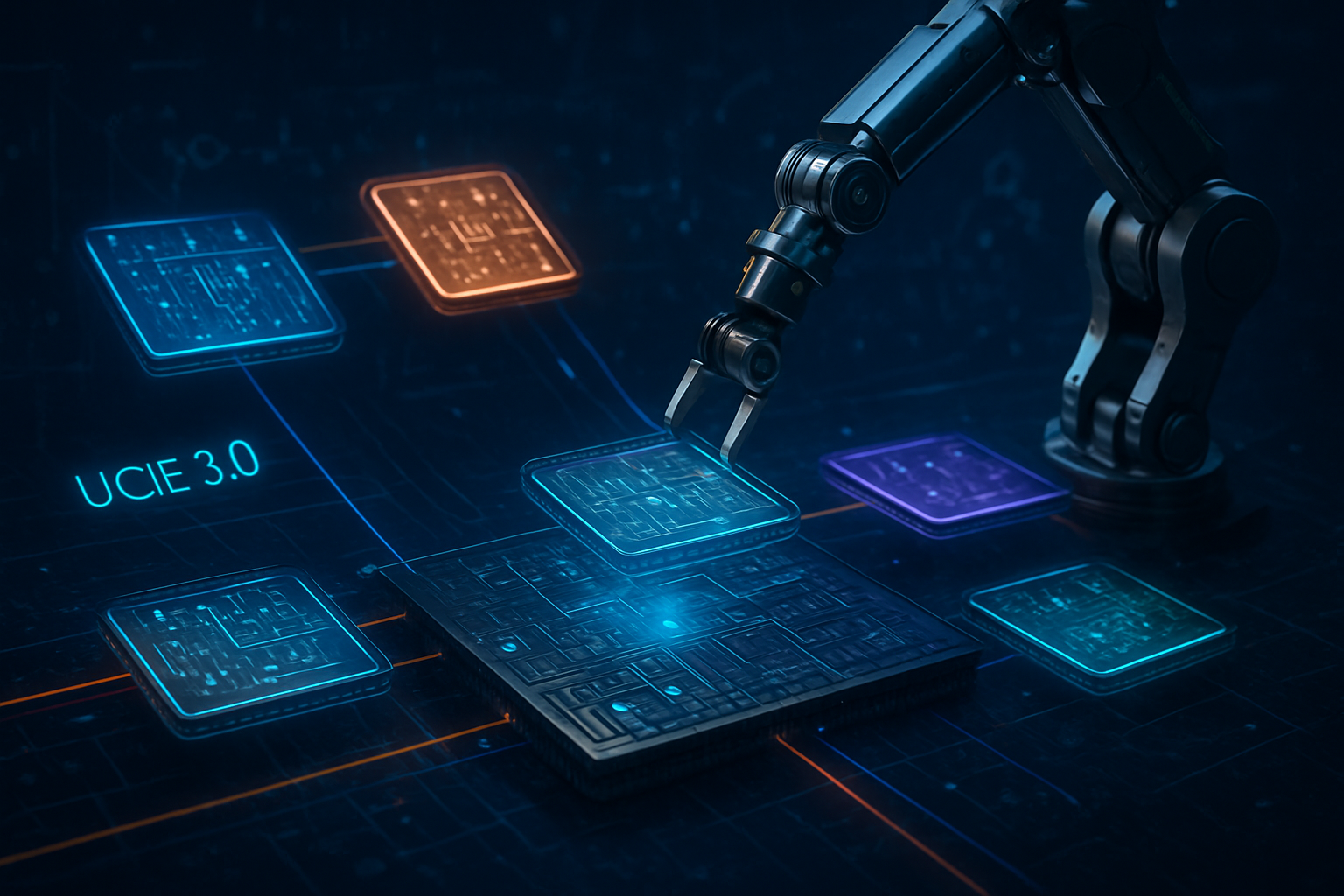
    The semiconductor industry has reached a pivotal turning point as the Universal Chiplet Interconnect Express (UCIe) standard enters full commercial maturity. As of late 2025, the release of the UCIe 3.0 specification has effectively dismantled the era of monolithic, "black box" processors, replacing it with a modular "mix and match" ecosystem. This development allows specialized silicon components—known as chiplets—from different manufacturers to be housed within a single package, communicating at speeds that were previously only possible within a single piece of silicon. For the artificial intelligence sector, this represents a massive leap forward, enabling the construction of hyper-specialized AI accelerators that can scale to meet the insatiable compute demands of next-generation large language models (LLMs).

    The immediate significance of this transition cannot be overstated. By standardizing how these chiplets communicate, the industry is moving away from proprietary, vendor-locked architectures toward an open marketplace. This shift is expected to slash development costs for custom AI silicon by up to 40% and reduce time-to-market by nearly a year for many fabless design firms. As the AI hardware race intensifies, UCIe 3.0 provides the "lingua franca" that ensures an I/O die from one vendor can work seamlessly with a compute engine from another, all while maintaining the ultra-low latency required for real-time AI inference and training.

    The Technical Backbone: From UCIe 1.1 to the 64 GT/s Breakthrough

    The technical evolution of the UCIe standard has been rapid, culminating in the August 2025 release of the UCIe 3.0 specification. While UCIe 1.1 focused on basic reliability and health monitoring for automotive and data center applications, and UCIe 2.0 introduced standardized manageability and 3D packaging support, the 3.0 update is a game-changer for high-performance computing. It doubles the data rate to 64 GT/s per lane, providing the massive throughput necessary for the "XPU-to-memory" bottlenecks that have plagued AI clusters. A key innovation in the 3.0 spec is "Runtime Recalibration," which allows links to dynamically adjust power and performance without requiring a system reboot—a critical feature for massive AI data centers that must remain operational 24/7.

    This new standard differs fundamentally from previous approaches like Intel Corporation (NASDAQ: INTC)’s proprietary Advanced Interface Bus (AIB) or Advanced Micro Devices, Inc. (NASDAQ: AMD)’s early Infinity Fabric. While those technologies proved the viability of chiplets, they were "closed loops" that prevented cross-vendor interoperability. UCIe 3.0, by contrast, defines everything from the physical layer (the actual wires and bumps) to the protocol layer, ensuring that a chiplet designed by a startup can be integrated into a larger system-on-chip (SoC) manufactured by a giant like NVIDIA Corporation (NASDAQ: NVDA). Initial reactions from the research community have been overwhelmingly positive, with engineers at the Open Compute Project (OCP) hailing it as the "PCIe moment" for internal chip communication.

    The Competitive Landscape: Giants and Challengers Align

    The shift toward a standardized chiplet ecosystem is creating a new hierarchy among tech giants. Intel Corporation (NASDAQ: INTC) has been the most aggressive proponent, having donated the initial specification to the consortium. Their recent launch of the Granite Rapids-D (Xeon 6 SoC) in early 2025 stands as one of the first high-volume products to fully leverage UCIe for modularity at the edge. Meanwhile, NVIDIA Corporation (NASDAQ: NVDA) has adapted its strategy; while it still champions its proprietary NVLink for high-end GPU clusters, it recently released "UCIe-ready" silicon bridges. These bridges allow customers to build custom AI accelerators that can talk directly to NVIDIA’s Blackwell and upcoming Rubin architectures, effectively turning NVIDIA’s hardware into a platform for third-party innovation.

    Taiwan Semiconductor Manufacturing Company (NYSE: TSM) and Samsung Electronics (KRX: 005930) are currently locked in a "foundry race" to provide the packaging technology that makes UCIe possible. TSMC’s 3DFabric and Samsung’s I-Cube/X-Cube technologies are the physical stages where these mix-and-match chiplets perform. In mid-2025, Samsung successfully demonstrated a 4nm chiplet prototype using IP from Synopsys, Inc. (NASDAQ: SNPS), proving that the "mix and match" dream is now a physical reality. This benefits smaller AI startups and fabless companies, who can now purchase "silicon-proven" UCIe blocks from providers like Cadence Design Systems, Inc. (NASDAQ: CDNS) instead of spending millions to design proprietary interconnect logic from scratch.

    Scaling AI: Efficiency, Cost, and the End of the "Reticle Limit"

    The broader significance of UCIe 3.0 lies in its ability to bypass the "reticle limit"—the physical size limit of a single silicon wafer die. As AI models grow, the chips needed to train them have become so large they are physically impossible to manufacture as a single piece of silicon without massive defects. By breaking the processor into smaller chiplets, manufacturers can achieve much higher yields and lower costs. This fits into the broader AI trend of "heterogeneous computing," where different parts of an AI task are handled by specialized hardware—such as a dedicated matrix multiplication die paired with a high-bandwidth memory (HBM) die and a low-power I/O die.

    However, this transition is not without concerns. The primary challenge remains "Standardized Manageability"—the difficulty of debugging a system when the components come from five different companies. If an AI server fails, determining which vendor’s chiplet caused the error becomes a complex legal and technical nightmare. Furthermore, while UCIe 3.0 provides the physical connection, the software stack required to manage these disparate components is still in its infancy. Despite these hurdles, the move toward UCIe is being compared to the transition from mainframe computers to modular PCs; it is an "unbundling" that democratizes high-performance silicon.

    The Horizon: Optical I/O and the 'Chiplet Store'

    Looking ahead, the near-term focus will be on the integration of Optical Compute Interconnects (OCI). Intel has already demonstrated a fully integrated optical I/O chiplet using UCIe that allows chiplets to communicate via fiber optics at 4TBps over distances up to 100 meters. This effectively turns an entire data center rack into a single, giant "virtual chip." In the long term, experts predict the rise of the "Chiplet Store"—a commercial marketplace where companies can buy pre-manufactured, specialized AI chiplets (like a dedicated "Transformer Engine" or a "Security Enclave") and have them assembled by a third-party packaging house.

    The challenges that remain are primarily thermal and structural. Stacking chiplets in 3D (as supported by UCIe 2.0 and 3.0) creates intense heat pockets that require advanced liquid cooling or new materials like glass substrates. Industry analysts predict that by 2027, more than 80% of all high-end AI processors will be UCIe-compliant, as the cost of maintaining proprietary interconnects becomes unsustainable even for the largest tech companies.

    A New Blueprint for the AI Age

    The maturation of the UCIe standard represents one of the most significant architectural shifts in the history of computing. By providing a standardized, high-speed interface for chiplets, the industry has unlocked a modular future that balances the need for extreme performance with the economic realities of semiconductor manufacturing. The "mix and match" ecosystem is no longer a theoretical concept; it is the foundation upon which the next decade of AI progress will be built.

    As we move into 2026, the industry will be watching for the first "multi-vendor" AI chips to hit the market—processors where the compute, memory, and I/O are sourced from entirely different companies. This development marks the end of the monolithic era and the beginning of a more collaborative, efficient, and innovative period in silicon design. For AI companies and investors alike, the message is clear: the future of hardware is no longer about who can build the biggest chip, but who can best orchestrate the most efficient ecosystem of chiplets.


    This content is intended for informational purposes only and represents analysis of current AI developments.

    TokenRing AI delivers enterprise-grade solutions for multi-agent AI workflow orchestration, AI-powered development tools, and seamless remote collaboration platforms.
    For more information, visit https://www.tokenring.ai/.
  • The Silent Revolution: How the AI PC Redefined Computing in 2025

    The Silent Revolution: How the AI PC Redefined Computing in 2025

    As we close out 2025, the personal computer is undergoing its most radical transformation since the introduction of the graphical user interface. What began as a buzzword in early 2024 has matured into a fundamental shift in computing architecture: the "AI PC" Revolution. By December 2025, AI-capable machines have moved from niche enthusiast hardware to a market standard, now accounting for over 40% of all global PC shipments. This shift represents a pivot away from the cloud-centric model that defined the last decade, bringing the power of massive neural networks directly onto the silicon sitting on our desks.

    The mainstreaming of Copilot+ PCs has fundamentally altered the relationship between users and their data. By integrating dedicated Neural Processing Units (NPUs) directly into the processor die, manufacturers have enabled a "local-first" AI strategy. This evolution is not merely about faster chatbots; it is about a new era of "Edge AI" where privacy, latency, and cost-efficiency are no longer traded off for intelligence. As the industry moves into 2026, the AI PC is no longer a luxury—it is the baseline for the modern digital experience.

    The Silicon Shift: Inside the 40 TOPS Standard

    The technical backbone of the AI PC revolution is the Neural Processing Unit (NPU), a specialized accelerator designed specifically for the mathematical workloads of deep learning. As of late 2025, the industry has coalesced around a strict performance floor: to earn the "Copilot+ PC" badge from Microsoft (NASDAQ: MSFT), a device must deliver at least 40 Trillion Operations Per Second (TOPS) on the NPU alone. This requirement has sparked an unprecedented "TOPS war" among silicon giants. Intel (NASDAQ: INTC) has responded with its Panther Lake (Core Ultra Series 3) architecture, which boasts a 5th-generation NPU targeting 50 TOPS and a total system output of nearly 180 TOPS when combining CPU and GPU resources.

    AMD (NASDAQ: AMD) has carved out a dominant position in the high-end workstation market with its Ryzen AI Max series, code-named "Strix Halo." These chips utilize a massive integrated memory architecture that allows them to run local models previously reserved for discrete, power-hungry GPUs. Meanwhile, Qualcomm (NASDAQ: QCOM) has disrupted the traditional x86 duopoly with its Snapdragon X2 Elite, which has pushed NPU performance to a staggering 80 TOPS. This leap in performance allows for the simultaneous execution of multiple Small Language Models (SLMs) like Microsoft’s Phi-3 or Google’s Gemini Nano, enabling the PC to interpret screen content, transcribe audio, and generate code in real-time without ever sending a packet of data to an external server.

    Disrupting the Status Quo: The Business of Local Intelligence

    The business implications of the AI PC shift are profound, particularly for the enterprise sector. For years, companies have been wary of the recurring "token costs" associated with cloud-based AI services. The transition to Edge AI allows organizations to shift from an OpEx (Operating Expense) model to a CapEx (Capital Expenditure) model. By investing in AI-capable hardware from vendors like Apple (NASDAQ: AAPL), whose M5 series chips have set new benchmarks for AI efficiency per watt, businesses can run high-volume inference tasks locally. This is estimated to reduce long-term AI deployment costs by as much as 60%, as the "per-query" billing of the cloud era is replaced by the one-time purchase of the device.

    Furthermore, the competitive landscape of the semiconductor industry has been reordered. Qualcomm's aggressive entry into the Windows ecosystem has forced Intel and AMD to prioritize power efficiency alongside raw performance. This competition has benefited the consumer, leading to a new class of "all-day" laptops that do not sacrifice AI performance when unplugged. Microsoft’s role has also evolved; the company is no longer just a software provider but a platform architect, dictating hardware specifications that ensure Windows remains the primary interface for the "Agentic AI" era.

    Data Sovereignty and the End of the Latency Tax

    Beyond the technical specs, the AI PC revolution is driven by the growing demand for data sovereignty. In an era of heightened regulatory scrutiny, including the full implementation of the EU AI Act and updated GDPR guidelines, the ability to process sensitive information locally is a game-changer. Edge AI ensures that medical records, legal briefs, and proprietary corporate data never leave the local SSD. This "Privacy by Design" approach has cleared the path for AI adoption in sectors like healthcare and finance, which were previously hamstrung by the security risks of cloud-based LLMs.

    Latency is the other silent killer that Edge AI has successfully neutralized. While cloud-based AI typically suffers from a 100-200ms "round-trip" delay, local NPU processing brings response times down to a near-instantaneous 5-20ms. This enables "Copilot Vision"—a feature where the AI can watch a user’s screen and provide contextual help in real-time—to feel like a natural extension of the operating system rather than a lagging add-on. This milestone in human-computer interaction is comparable to the shift from dial-up to broadband; once users experience zero-latency AI, there is no going back to the cloud-dependent past.

    Beyond the Chatbot: The Rise of Autonomous PC Agents

    Looking toward 2026, the focus is shifting from reactive AI to proactive, autonomous agents. The latest updates to the Windows Copilot Runtime have introduced "Agent Mode," where the AI PC can execute multi-step workflows across different applications. For example, a user can command their PC to "find the latest sales data, cross-reference it with the Q4 goals, and draft a summary email," and the NPU will orchestrate these tasks locally. Experts predict that the next generation of AI PCs will cross the 100 TOPS threshold, enabling devices to not only run models but also "fine-tune" them based on the user’s specific habits and data.

    The challenges remaining are largely centered on software optimization and battery life under sustained AI loads. While hardware has leaped forward, developers are still catching up, porting their applications to take full advantage of the NPU rather than defaulting to the CPU. However, with the emergence of standardized cross-platform libraries, the "AI-native" app ecosystem is expected to explode in the coming year. We are moving toward a future where the OS is no longer a file manager, but a personal coordinator that understands the context of every action the user takes.

    A New Era of Personal Computing

    The AI PC revolution of 2025 marks a definitive end to the "thin client" era of AI. We have moved from a world where intelligence was a distant service to one where it is a local utility, as essential and ubiquitous as electricity. The combination of high-TOPS NPUs, local Small Language Models, and a renewed focus on privacy has redefined what we expect from our devices. The PC is no longer just a tool for creation; it has become a cognitive partner that learns and grows with the user.

    As we look ahead, the significance of this development in AI history cannot be overstated. It represents the democratization of high-performance computing, putting the power of a 2023-era data center into a two-pound laptop. In the coming months, watch for the release of "Wave 3" AI PCs and the further integration of AI agents into the core of the operating system. The revolution is here, and it is running locally.


    This content is intended for informational purposes only and represents analysis of current AI developments.

    TokenRing AI delivers enterprise-grade solutions for multi-agent AI workflow orchestration, AI-powered development tools, and seamless remote collaboration platforms.
    For more information, visit https://www.tokenring.ai/.

  • The Silent Powerhouse: How GaN and SiC Semiconductors are Breaking the AI Energy Wall and Revolutionizing EVs

    The Silent Powerhouse: How GaN and SiC Semiconductors are Breaking the AI Energy Wall and Revolutionizing EVs

    As of late 2025, the artificial intelligence boom has hit a literal physical limit: the "energy wall." With large language models (LLMs) like GPT-5 and Llama 4 demanding multi-megawatt power clusters, traditional silicon-based power systems have reached their thermal and efficiency ceilings. To keep the AI revolution and the electric vehicle (EV) transition on track, the industry has turned to a pair of "miracle" materials—Gallium Nitride (GaN) and Silicon Carbide (SiC)—known collectively as Wide-Bandgap (WBG) semiconductors.

    These materials are no longer niche laboratory experiments; they have become the foundational infrastructure of the modern high-compute economy. By allowing power supply units (PSUs) to operate at higher voltages, faster switching speeds, and significantly higher temperatures than silicon, WBG semiconductors are enabling the next generation of 800V AI data centers and megawatt-scale EV charging stations. This shift represents one of the most significant hardware pivots in the history of power electronics, moving the needle from "incremental improvement" to "foundational transformation."

    The Physics of Efficiency: WBG Technical Breakthroughs

    The technical superiority of WBG semiconductors stems from their atomic structure. Unlike traditional silicon, which has a narrow "bandgap" (the energy required for electrons to jump into a conductive state), GaN and SiC possess a bandgap roughly three times wider. This physical property allows these chips to withstand much higher electric fields, enabling them to handle higher voltages in a smaller physical footprint. In the world of AI data centers, this has manifested in the jump from 3.3 kW silicon-based power supplies to staggering 12 kW modules from leaders like Infineon Technologies AG (OTCMKTS: IFNNY). These new units achieve up to 98% efficiency, a critical benchmark that reduces heat waste by nearly half compared to the previous generation.

    Perhaps the most significant technical milestone of 2025 is the transition to 300mm (12-inch) GaN-on-Silicon wafers. Pioneered by Infineon, this scaling breakthrough yields 2.3 times more chips per wafer than the 200mm standard, finally bringing the cost of GaN closer to parity with legacy silicon. Simultaneously, onsemi (NASDAQ: ON) has unveiled "Vertical GaN" (vGaN) technology, which conducts current through the substrate rather than the surface. This enables GaN to operate at 1,200V and above—territory previously reserved for SiC—while maintaining a package size three times smaller than traditional alternatives.

    For the electric vehicle sector, Silicon Carbide remains the king of high-voltage traction. Wolfspeed (NYSE: WOLF) and STMicroelectronics (NYSE: STM) have successfully transitioned to 200mm (8-inch) SiC wafer production in 2025, significantly improving yields for the automotive industry. These SiC MOSFETs (Metal-Oxide-Semiconductor Field-Effect Transistors) are the "secret sauce" inside the inverters of 800V vehicle architectures, allowing cars to charge faster and travel further on a single charge by reducing energy loss during the DC-to-AC conversion that powers the motor.

    A High-Stakes Market: The WBG Corporate Landscape

    The shift to WBG has created a new hierarchy among semiconductor giants. Companies that moved early to secure raw material supplies and internal manufacturing capacity are now reaping the rewards. Wolfspeed, despite early scaling challenges, has ramped up the world’s first fully automated 200mm SiC fab in Mohawk Valley, positioning itself as a primary supplier for the next generation of Western EV fleets. Meanwhile, STMicroelectronics has established a vertically integrated SiC campus in Italy, ensuring they control the process from raw crystal growth to finished power modules—a strategic advantage in a world of volatile supply chains.

    In the AI sector, the competitive landscape is being redefined by how efficiently a company can deliver power to the rack. NVIDIA (NASDAQ: NVDA) has increasingly collaborated with WBG specialists to standardize 800V DC power architectures for its AI "factories." By eliminating multiple AC-to-DC conversion steps and using GaN-based PSUs at the rack level, hyperscalers like Microsoft and Google are able to pack more GPUs into the same physical space without overwhelming their cooling systems. Navitas Semiconductor (NASDAQ: NVTS) has emerged as a disruptive force here, recently releasing an 8.5 kW AI PSU that is specifically optimized for the transient load demands of LLM inference and training.

    This development is also disrupting the traditional power management market. Legacy silicon players who failed to pivot to WBG are finding their products squeezed out of the high-margin data center and EV markets. The strategic advantage now lies with those who can offer "hybrid" modules—combining the high-frequency switching of GaN with the high-voltage robustness of SiC—to maximize efficiency across the entire power delivery path.

    The Global Impact: Sustainability and the Energy Grid

    The implications of WBG adoption extend far beyond the balance sheets of tech companies. As AI data centers threaten to consume an ever-larger percentage of the global energy supply, the efficiency gains provided by GaN and SiC are becoming a matter of environmental necessity. By reducing energy loss in the power delivery chain by up to 50%, these materials directly lower the Power Usage Effectiveness (PUE) of data centers. More importantly, because they generate less heat, they reduce the power demand of cooling systems—chillers and fans—by an estimated 40%. This allows grid operators to support larger AI clusters without requiring immediate, massive upgrades to local energy infrastructure.

    In the automotive world, WBG is the catalyst for "Megawatt Charging." In early 2025, BYD (OTCMKTS: BYDDY) launched its Super e-Platform, utilizing internal SiC production to enable 1 MW charging power. This allows an EV to gain 400km of range in just five minutes, effectively matching the "refueling" experience of internal combustion engines. Furthermore, the rise of bi-directional GaN switches is enabling Vehicle-to-Grid (V2G) technology. This allows EVs to act as distributed battery storage for the grid, discharging power during peak demand with minimal energy loss, thus stabilizing renewable energy sources like wind and solar.

    However, the rapid shift to WBG is not without concerns. The manufacturing process for SiC, in particular, remains energy-intensive and technically difficult, leading to a concentrated supply chain. Experts have raised questions about the geopolitical reliance on a handful of high-tech fabs for these critical components, mirroring the concerns previously seen in the leading-edge logic chip market.

    The Horizon: Vertical GaN and On-Package Power

    Looking toward 2026 and beyond, the next frontier for WBG is integration. We are moving away from discrete power components toward "Power-on-Package." Researchers are exploring ways to integrate GaN power delivery directly onto the same substrate as the AI processor. This would eliminate the "last inch" of power delivery losses, which are significant when dealing with the hundreds of amps required by modern GPUs.

    We also expect to see the rise of "Vertical GaN" challenging SiC in the 1,200V+ space. If vGaN can achieve the same reliability as SiC at a lower cost, it could trigger another massive shift in the EV inverter market. Additionally, the development of "smart" power modules—where GaN switches are integrated with AI-driven sensors to predict failures and optimize switching frequencies in real-time—is on the horizon. These "self-healing" power systems will be essential for the mission-critical reliability required by autonomous driving and global AI infrastructure.

    Conclusion: The New Foundation of the Digital Age

    The transition to Wide-Bandgap semiconductors marks a pivotal moment in the history of technology. As of December 2025, it is clear that the limits of silicon were the only thing standing between the current state of AI and its next great leap. By breaking the "energy wall," GaN and SiC have provided the breathing room necessary for the continued scaling of LLMs and the mass adoption of ultra-fast charging EVs.

    Key takeaways for the coming months include the ramp-up of 300mm GaN production and the competitive battle between SiC and Vertical GaN for 800V automotive dominance. This is no longer just a story about hardware; it is a story about the energy efficiency required to sustain a digital civilization. Investors and industry watchers should keep a close eye on the quarterly yields of the major WBG fabs, as these numbers will ultimately dictate the speed at which the AI and EV revolutions can proceed.


    This content is intended for informational purposes only and represents analysis of current AI developments.

    TokenRing AI delivers enterprise-grade solutions for multi-agent AI workflow orchestration, AI-powered development tools, and seamless remote collaboration platforms.
    For more information, visit https://www.tokenring.ai/.

  • The 2nm Frontier: Intel’s 18A and TSMC’s N2 Clash in the Battle for Silicon Supremacy

    The 2nm Frontier: Intel’s 18A and TSMC’s N2 Clash in the Battle for Silicon Supremacy

    As of December 18, 2025, the global semiconductor landscape has reached its most pivotal moment in a decade. The long-anticipated "2nm Foundry Battle" has moved from the laboratory to the factory floor, as Intel (NASDAQ: INTC) and Taiwan Semiconductor Manufacturing Company (TSMC) (NYSE: TSM) race to dominate the next era of high-performance computing. This transition marks the definitive end of the FinFET transistor era, which powered the digital age for over ten years, ushering in a new regime of Gate-All-Around (GAA) architectures designed specifically to meet the insatiable power and thermal demands of generative artificial intelligence.

    The stakes could not be higher for the two titans. For Intel, the successful high-volume manufacturing of its 18A node represents the culmination of CEO Pat Gelsinger’s "five nodes in four years" strategy, a daring bet intended to reclaim the manufacturing crown from Asia. For TSMC, the rollout of its N2 process is a defensive masterstroke, aimed at maintaining its 90% market share in advanced foundry services while transitioning its most prestigious clients—including Apple (NASDAQ: AAPL) and Nvidia (NASDAQ: NVDA)—to a more efficient, albeit more complex, transistor geometry.

    The Technical Leap: GAAFETs and the Backside Power Revolution

    At the heart of this conflict is the transition to Gate-All-Around (GAA) transistors, which both companies have now implemented at scale. Intel refers to its version as "RibbonFET," while TSMC utilizes a "Nanosheet" architecture. Unlike the previous FinFET design, where the gate surrounded the channel on three sides, GAA wraps the gate entirely around the channel, drastically reducing current leakage and allowing for finer control over the transistor's switching. Early data from December 2025 indicates that TSMC’s N2 node is delivering a 15% performance boost or a 30% reduction in power consumption compared to its 3nm predecessor. Intel’s 18A is showing similar gains, claiming a 15% performance-per-watt lead over its own Intel 3 node, positioning both companies at the absolute limit of physics.

    The true technical differentiator in late 2025, however, is the implementation of Backside Power Delivery (BSPDN). Intel has taken an early lead here with its "PowerVia" technology, which is fully integrated into the 18A node. By moving the power delivery lines to the back of the wafer and away from the signal lines on the front, Intel has successfully reduced "voltage droop" and increased transistor density by nearly 30%. TSMC has opted for a more conservative path, launching its base N2 node without backside power to ensure higher initial yields. TSMC’s answer, the "Super Power Rail," is not expected to enter volume production until the A16 (1.6nm) node in late 2026, giving Intel a temporary architectural advantage in power efficiency for AI data center applications.

    Furthermore, the role of ASML (NASDAQ: ASML) has become a focal point of the 2nm era. Intel has aggressively adopted the new High-NA (0.55 NA) EUV lithography machines, being the first to use them for volume production on its R&D-heavy 18A and upcoming 14A lines. TSMC, conversely, has continued to rely on standard 0.33 NA EUV multi-patterning for its N2 node, arguing that the $380 million price tag per High-NA unit is not yet economically viable for its customers. This divergence in lithography strategy is the industry's biggest gamble: Intel is betting on hardware-led precision, while TSMC is betting on process-led cost efficiency.

    The Customer Tug-of-War: Microsoft, Nvidia, and the Apple Standard

    The market implications of these technical milestones are already reshaping the tech industry's power structures. Intel Foundry has secured a massive victory by signing Microsoft (NASDAQ: MSFT) as a lead customer for 18A. Microsoft is currently utilizing the node to manufacture its "Maia 3" AI accelerators, a move that reduces its dependence on external chip designers and solidifies Intel’s position as a viable alternative to TSMC for custom silicon. Additionally, Amazon (NASDAQ: AMZN) has deepened its partnership with Intel, leveraging 18A for its next-generation AWS Graviton processors, signaling that the "Intel Foundry" dream is no longer just a PowerPoint projection but a revenue-generating reality.

    Despite Intel’s gains, TSMC remains the "safe harbor" for the world’s most valuable tech companies. Apple has once again secured the lion's share of TSMC’s initial 2nm capacity for its upcoming A20 and M5 chips, ensuring that the iPhone 18 will likely be the most power-efficient consumer device on the market in 2026. Nvidia also remains firmly in the TSMC camp for its "Rubin" GPU architecture, citing TSMC’s superior CoWoS (Chip-on-Wafer-on-Substrate) advanced packaging as the critical factor for AI performance. The competitive implication is clear: while Intel is winning "bespoke" AI contracts, TSMC still owns the high-volume consumer and enterprise GPU markets.

    This shift is creating a dual-track ecosystem. Startups and mid-sized chip designers are finding themselves caught between the two. Intel is offering aggressive pricing and "sovereign supply chain" guarantees to lure companies away from Taiwan, while TSMC is leveraging its unparalleled yield rates—currently reported at 65-70% for N2—to maintain customer loyalty. For the first time in a decade, chip designers have a legitimate choice between two world-class foundries, a dynamic that is likely to drive down fabrication costs in the long run but creates short-term strategic headaches for procurement teams.

    Geopolitics and the AI Supercycle

    The 2nm battle is not occurring in a vacuum; it is the centerpiece of a broader geopolitical and technological shift. As of late 2025, the "AI Supercycle" has moved from training massive models to deploying them at the edge, requiring chips that are not just faster, but significantly cooler and more power-efficient. The 2nm node is the first "AI-native" manufacturing process, designed specifically to handle the thermal envelopes of high-density neural processing units (NPUs). Without the efficiency gains of GAA and backside power, the scaling of AI in mobile devices and localized servers would likely have hit a "thermal wall."

    Beyond the technology, the geographical distribution of these nodes is a matter of national security. Intel’s 18A production at its Fab 52 in Arizona is a cornerstone of the U.S. CHIPS Act's success, providing a domestic source for the world's most advanced semiconductors. TSMC’s expansion into Arizona and Japan has also progressed, but its most advanced 2nm production remains concentrated in Hsinchu and Kaohsiung, Taiwan. The ongoing tension in the Taiwan Strait continues to drive Western tech giants toward "China +1" manufacturing strategies, providing Intel with a competitive "geopolitical premium" that TSMC is working hard to neutralize through its own global expansion.

    This milestone is comparable to the transition from planar transistors to FinFETs in 2011. Just as FinFETs enabled the smartphone revolution, GAA and 2nm processes are enabling the "Agentic AI" era, where autonomous AI systems require constant, low-latency processing. The concerns, however, remain centered on cost. The price of a 2nm wafer is estimated to be over $30,000, a staggering figure that could limit the most advanced silicon to only the wealthiest tech companies, potentially widening the gap between "AI haves" and "AI have-nots."

    The Road to 1.4nm and Sub-Angstrom Silicon

    Looking ahead, the 2nm battle is merely the opening salvo in a decade-long war for sub-nanometer dominance. Both Intel and TSMC have already teased their roadmaps for 2027 and beyond. Intel’s "14A" (1.4nm) node is already in the early stages of R&D, with the company aiming to be the first to fully utilize High-NA EUV for every critical layer of the chip. TSMC is countering with its "A14" process, which will integrate the Super Power Rail and refined Nanosheet designs to reclaim the efficiency lead.

    The next major challenge for both companies will be the integration of new materials, such as two-dimensional (2D) semiconductors like molybdenum disulfide (MoS2) for the transistor channel, which could allow for scaling down to the "Angstrom" level (sub-1nm). Experts predict that by 2028, the industry will move toward "3D stacked" transistors, where Nanosheets are piled vertically to maximize density. The primary hurdle remains the "heat density" problem—as chips get smaller and more powerful, removing the heat generated in such a tiny area becomes a problem that even the most advanced liquid cooling may struggle to solve.

    A New Era for Silicon

    As 2025 draws to a close, the verdict on the 2nm battle is a split decision. Intel has successfully executed its technical roadmap, proving that it can manufacture world-class silicon with its 18A node and securing critical "sovereign" contracts from Microsoft and the U.S. Department of Defense. It has officially returned to the leading edge, ending years of stagnation. However, TSMC remains the undisputed king of volume and yield. Its N2 node, while more conservative in its initial power delivery design, offers the reliability and scale that the world’s largest consumer electronics companies require.

    The significance of this development in AI history cannot be overstated. The 2nm node provides the physical substrate upon which the next generation of artificial intelligence will be built. In the coming weeks and months, the industry will be watching the first independent benchmarks of Intel’s "Panther Lake" and the initial yield reports from TSMC’s N2 ramp-up. The race for 2025 dominance has ended in a high-speed draw, but the race for 2030 has only just begun.


    This content is intended for informational purposes only and represents analysis of current AI developments.

    TokenRing AI delivers enterprise-grade solutions for multi-agent AI workflow orchestration, AI-powered development tools, and seamless remote collaboration platforms.
    For more information, visit https://www.tokenring.ai/.