Blog

  • The Glass Revolution: 2026 Marks the Era of Glass Substrates for AI Super-Chips

    The Glass Revolution: 2026 Marks the Era of Glass Substrates for AI Super-Chips

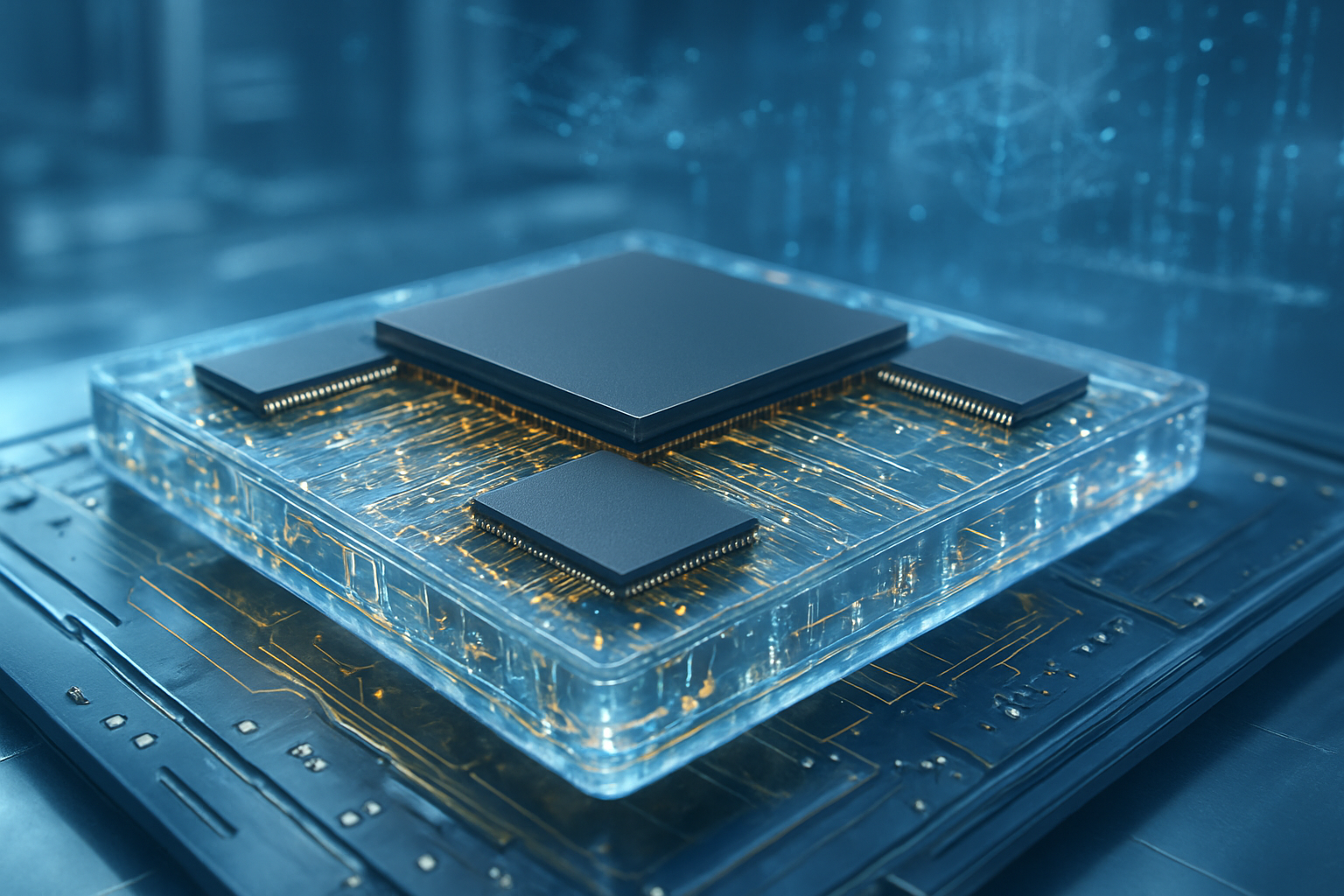
    As of February 2, 2026, the semiconductor industry has reached a pivotal turning point, officially transitioning from the "Plastic Age" of chip packaging to the "Glass Age." For decades, organic materials like Ajinomoto Build-up Film (ABF) served as the foundation for the world’s processors, but the relentless thermal and density demands of generative AI have finally pushed these materials to their physical limits. In a historic shift, the first wave of mass-produced AI accelerators and high-performance CPUs featuring glass substrates has hit the market, promising a new era of efficiency and scale for data centers worldwide.

    This transition is not merely a material change; it is a fundamental architectural evolution required to sustain the growth of AI. As chips grow larger and consume more power—frequently exceeding 1,000 watts per package—traditional organic substrates have begun to warp and flex, a phenomenon known as the "Warpage Wall." By adopting glass, manufacturers are overcoming these mechanical failures, allowing for larger, more powerful chiplet-based designs that were previously impossible to manufacture reliably.

    The Technical Leap from Organic to Glass

    The shift to glass substrates represents a massive leap in material science, primarily driven by the need for superior thermal stability and interconnect density. Unlike traditional organic resin cores, glass possesses a Coefficient of Thermal Expansion (CTE) that closely matches that of silicon. In the high-heat environment of a modern AI data center, organic materials expand at a different rate than the silicon chips they support, leading to mechanical stress, "potato chip" warping, and broken connections. Glass, however, remains rigid and flat even under extreme thermal loads, reducing warpage by more than 50% compared to previous standards.

    Beyond thermal stability, glass enables a staggering 10x increase in interconnect density through the use of Through-Glass Vias (TGVs). These laser-etched pathways allow for thousands of additional input/output (I/O) connections between chiplets. Intel (NASDAQ: INTC) recently showcased its "10-2-10" thick-core glass architecture, which utilizes a dual-layer glass core to support packages that are twice the size of current lithography limits. This allows for more High Bandwidth Memory (HBM) modules to be placed in closer proximity to the GPU or CPU, drastically reducing latency and increasing data throughput.

    Initial reactions from the AI research community have been overwhelmingly positive, with experts noting that glass substrates provide a 40% improvement in signal integrity. By reducing dielectric loss and signal attenuation, glass-core packages can reduce the overall power consumption of a chip by up to 50% in some workloads. This efficiency gain is critical as the industry struggles to find enough power to sustain the massive server farms required for the latest Large Language Models (LLMs).

    Industry Titans and the Race for Production Dominance

    The race to dominate the glass substrate market has created a new competitive landscape among semiconductor giants. Intel (NASDAQ: INTC) has emerged as the early leader, having successfully moved its Arizona-based glass production lines into high-volume manufacturing (HVM). Their Xeon 6+ "Clearwater Forest" processors are the first to ship with glass cores, giving them a significant first-mover advantage in the enterprise server market. Meanwhile, SK Hynix (KRX: 000660), through its subsidiary Absolics, has officially opened its $600 million facility in Covington, Georgia, which is now supplying glass substrates to key partners like Advanced Micro Devices (NASDAQ: AMD) and Amazon (NASDAQ: AMZN).

    Samsung (KRX: 005930) is also a major player, leveraging its deep expertise in glass processing from its display division. The company has formed a "Triple Alliance" between its electronics, display, and electro-mechanics divisions to fast-track a System-in-Package (SiP) glass solution, which is expected to reach mass production later this year. Not to be outdone, Taiwan Semiconductor Manufacturing Company (NYSE: TSM) has accelerated its Fan-Out Panel-Level Packaging (FOPLP) efforts, establishing a mini-production line in Taiwan to refine its "CoPoS" (Chip-on-Panel-on-Substrate) technology before a wider rollout in 2027.

    This shift poses a major challenge to traditional substrate manufacturers who have relied on organic ABF materials. Companies that cannot pivot to glass risk being left out of the most lucrative segment of the hardware market: the AI accelerator tier dominated by Nvidia (NASDAQ: NVDA). As Nvidia prepares to integrate glass substrates into its next-generation "Rubin" architecture, the ability to supply high-quality glass panels has become the new benchmark for strategic relevance in the global supply chain.

    Breaking the 'Warpage Wall' and Sustaining Moore's Law

    The emergence of glass substrates is widely viewed as a "Moore’s Law savior" by industry analysts. For years, the physical limits of organic packaging threatened to stall the progress of multi-chiplet designs. As AI chips expanded beyond the size of a single reticle (the maximum area a lithography machine can print), they required complex interposers and substrates to stitch multiple pieces of silicon together. Organic substrates simply could not stay flat enough at these massive scales, leading to low manufacturing yields and high costs.

    By breaking through this "Warpage Wall," glass substrates allow for the creation of massive "super-chips" that can exceed 100mm x 100mm in size. This fits perfectly into the broader AI landscape, where the demand for compute power is growing exponentially. The impact of this technology extends beyond mere performance; it also affects the physical footprint of data centers. Because glass enables higher chip density and better cooling efficiency, providers can pack more compute power into the same rack space, helping to alleviate the current global shortage of data center capacity.

    However, the transition is not without concerns. A new bottleneck has emerged in early 2026: a shortage of high-quality "T-glass" and specialized laser-drilling equipment required to create TGVs. Similar to the HBM shortages of 2024, the glass substrate supply chain is struggling to keep pace with the voracious appetite of the AI sector. Comparisons are already being made to the 2010s shift from aluminum to copper interconnects—a fundamental material change that redefined the limits of silicon performance.

    The Roadmap Beyond 2026: Photonics and 3D Stacking

    Looking toward the late 2020s, the adoption of glass substrates is expected to unlock even more radical innovations. One of the most anticipated developments is the integration of Co-Packaged Optics (CPO). Because glass is transparent and can be manufactured with extremely precise optical properties, it serves as the perfect platform for routing light directly to the chip. This could lead to the replacement of traditional electrical I/O with ultra-fast optical interconnects, virtually eliminating data bottlenecks between chips.

    Experts predict that the next phase will involve 3D stacking directly on glass, where memory and logic are layered in a vertical sandwich to maximize space and speed. This will require new breakthroughs in thermal management, as heat will need to be dissipated through multiple layers of glass. Challenges also remain in the area of cost; while glass substrates offer superior performance, the initial manufacturing costs are higher than organic alternatives. However, as yields improve and production scales, the industry expects prices to normalize, eventually making glass the standard for mid-range consumer electronics as well.

    In the near term, we expect to see more partnerships between glass manufacturers (like Corning and Schott) and semiconductor firms. The ability to customize the chemical composition of the glass to match specific chip designs will become a key competitive advantage. As one industry expert noted, "We are no longer just designing circuits; we are designing the very atoms of the material they sit on."

    A New Foundation for the Generative AI Era

    In summary, the mass production of glass substrates in 2026 represents one of the most significant shifts in the history of semiconductor packaging. By solving the critical issues of thermal instability and warpage, glass has cleared the path for the next generation of AI super-chips, ensuring that the progress of generative AI is not held back by the limitations of 20th-century materials. The leadership of companies like Intel and SK Hynix in this space has set a new standard for the industry, while others like TSMC and Samsung are racing to close the gap.

    The long-term impact of this development will be felt across every sector touched by AI, from autonomous vehicles to real-time drug discovery. As we look toward the coming months, the industry will be closely watching the yield rates of these new glass lines and the first real-world performance benchmarks of glass-core processors in the field. The transition to glass is not just a trend; it is the new foundation upon which the future of intelligence will be built.


    This content is intended for informational purposes only and represents analysis of current AI developments.

    TokenRing AI delivers enterprise-grade solutions for multi-agent AI workflow orchestration, AI-powered development tools, and seamless remote collaboration platforms.
    For more information, visit https://www.tokenring.ai/.

  • Beyond the Copper Wall: Lightmatter’s 3D CPO Breakthroughs and the Dawn of the Photonic AI Factory

    Beyond the Copper Wall: Lightmatter’s 3D CPO Breakthroughs and the Dawn of the Photonic AI Factory

    As of early February 2026, the artificial intelligence industry has reached a critical inflection point where the sheer physical limits of electrical signaling are threatening to stall the progress of next-generation foundation models. Lightmatter, a pioneer in silicon photonics, has officially moved to dismantle this "Copper Wall" with the commercial rollout of its Passage™ 3D Co-Packaged Optics (CPO) platform. In a landmark series of announcements finalized in January 2026, Lightmatter revealed strategic deep-dive collaborations with EDA giants Synopsys (NASDAQ: SNPS) and Cadence Design Systems (NASDAQ: CDNS), signaling that the era of optical interconnects has transitioned from experimental laboratory success to the backbone of hyperscale AI production.

    The significance of this development cannot be overstated. By integrating 3D-stacked silicon photonics directly into the chip package, Lightmatter is providing a solution to the "I/O tax"—the staggering amount of energy and latency wasted simply moving data between GPUs and memory. With the support of Synopsys and Cadence, Lightmatter has standardized the design and verification workflows for 3D CPO, ensuring that the world’s leading chipmakers can now integrate light-based communication into their 3nm and 2nm AI accelerators with the same precision once reserved for traditional copper-based circuits.

    The Engineering of Edgeless I/O: Passage and the Guide Light Engine

    At the heart of Lightmatter’s breakthrough is the Passage™ platform, a "Photonic Superchip" interposer that fundamentally changes how chips communicate. Traditional interconnects are restricted by "shoreline" limitations—the physical perimeter of a chip where copper pins must reside. As AI models scale, the demand for bandwidth has outstripped the available space at the chip’s edge. Passage solves this by using 3D integration to stack AI accelerators (XPUs) directly on top of a photonic layer. This enables "Edgeless I/O," where data can escape the chip from its entire surface area rather than just its borders. The flagship Passage M1000 delivers an unprecedented aggregate bandwidth of 114 Tbps with a density of 1.4 Tbps/mm², a 10x improvement over the highest-performance pluggable optical transceivers available in 2024.

    Complementing this is Lightmatter’s Guide™ light engine, the industry’s first implementation of Very Large Scale Photonics (VLSP). Historically, Co-Packaged Optics were hampered by the need for external "laser farms"—bulky arrays of light sources that consumed significant rack space. Guide integrates hundreds of light sources into a single, compact footprint that can scale from 1 to 64 wavelengths per fiber. A single 1RU chassis powered by Guide can now support 100 Tbps of switch bandwidth, effectively replacing what previously required 4RU of space and massive external cooling. This consolidation drastically reduces the physical footprint and power consumption of the optical subsystem.

    The collaboration with Synopsys has been instrumental in making this hardware viable. Lightmatter has integrated Synopsys’ silicon-proven 224G SerDes and UCIe (Universal Chiplet Interconnect Express) IP into the Passage platform. This ensures that the electrical signals moving from the GPU to the photonic layer do so with near-zero latency and maximum efficiency. Meanwhile, the partnership with Cadence focuses on the analog and digital design implementation. Using Cadence’s Virtuoso and Innovus systems, Lightmatter has created a seamless co-design environment where photonics and electronics are designed simultaneously, preventing the signal integrity issues that have historically plagued high-speed optical transitions.

    Reshaping the AI Supply Chain: Winners and Disrupted Markets

    The commercialization of Lightmatter’s 3D CPO platform creates a new hierarchy in the semiconductor and AI infrastructure markets. NVIDIA (NASDAQ: NVDA), while a dominant force in AI hardware, now faces a dual reality: it is both a primary potential customer for Lightmatter’s interposers and a competitor in the race to define the next generation of NVLink-style interconnects. By providing an "open" photonic interposer platform, Lightmatter enables other hyperscalers like Google, Meta, and Amazon to build custom AI accelerators that can match or exceed the interconnect density of NVIDIA’s proprietary systems. This levels the playing field for custom silicon, potentially reducing the total cost of ownership for "AI Factories."

    EDA leaders Synopsys and Cadence stand as major beneficiaries of this shift. As the industry moves away from pure-play electronic design toward co-packaged electronic-photonic design, the demand for their specialized 3DIC and photonic design tools has surged. Furthermore, the partnership with Global Unichip Corp (TWSE: 3443) and packaging giants like Amkor Technology (NASDAQ: AMKR) ensures that the manufacturing pipeline is ready for high-volume production. This ecosystem approach moves CPO from a boutique solution to a standard architectural choice for any company building a chip larger than a reticle limit.

    Conversely, traditional pluggable optical module manufacturers face significant disruption. While pluggable transceivers will remain relevant for long-haul data center networking, the "inside-the-rack" communication market is rapidly shifting toward CPO. Companies that fail to pivot to co-packaged solutions risk being designed out of the high-growth AI cluster market, where the efficiency gains of CPO—reducing power consumption by up to 30%—are too significant for hyperscalers to ignore.

    The Photonic Era: Solving the Sustainability Crisis in AI

    The broader significance of Lightmatter’s breakthroughs lies in their impact on the sustainability of the AI revolution. As of 2026, the energy consumption of data centers has become a global concern, with training runs for trillion-parameter models consuming gigawatts of power. A significant portion of this energy is "wasted" on overcoming the resistance of copper wires. Lightmatter’s optical interconnects effectively eliminate this "I/O tax," allowing data to move via light with negligible heat generation compared to copper. This efficiency is the only viable path forward for scaling AI clusters to one million nodes, a milestone that many experts believe is necessary for achieving Artificial General Intelligence (AGI).

    This transition is often compared to the move from copper to fiber optics in the telecommunications industry in the 1980s. However, the stakes are higher and the pace is faster. In the AI landscape, bandwidth is the primary currency. By "shattering the shoreline," Lightmatter is not just making chips faster; it is enabling a new class of distributed computing where the entire data center acts as a single, cohesive supercomputer. This architectural shift allows for near-instantaneous memory access across thousands of nodes, a capability that was previously a theoretical dream.

    However, the shift to CPO also brings concerns regarding serviceability and yield. Unlike pluggable modules, which can be easily replaced if they fail, CPO components are bonded directly to the processor. If the photonic layer fails, the entire GPU might be lost. Lightmatter and its partners have addressed this through the Guide light engine’s modularity and advanced testing protocols, but the industry will be watching closely to see how these integrated systems perform under the 24/7 thermal stress of a modern AI training facility.

    Future Horizons: From Training Clusters to Edge Intelligence

    In the near term, we expect to see Lightmatter’s Passage platform integrated into post-Blackwell GPU architectures and custom hyperscale TPUs arriving in late 2026 and 2027. These systems will likely push training speeds for foundation models to 8X the current benchmarks, significantly shortening the development cycles for new AI capabilities. Looking further out, the modular nature of the Passage L200 suggests that 3D CPO could eventually scale down from massive data centers to smaller, edge-based AI clusters, bringing high-performance inference to regional hubs and private enterprise clouds.

    The primary challenge remaining is the high-volume manufacturing (HVM) yield of 3D-stacked silicon. While the Jan 2026 alliance with GUC and Synopsys provides the roadmap, the actual execution at TSMC’s advanced packaging facilities will be the ultimate test. Industry experts predict that as yields stabilize, we will see a "Photonic-First" design philosophy become the default for all high-performance computing (HPC) tasks, extending beyond AI into weather modeling, genomic sequencing, and cryptanalysis.

    A New Chapter in Computing History

    Lightmatter’s breakthroughs with 3D CPO and its strategic alliances with Synopsys and Cadence represent one of the most significant architectural shifts in computing since the invention of the integrated circuit. By successfully merging the worlds of light and electronics at the chip level, the company has provided a solution to the most pressing bottleneck in modern technology: the physical limitation of the copper wire.

    In the coming months, the focus will shift from these technical announcements to the first deployment data from major hyperscale customers. As the first 114 Tbps Passage-equipped clusters go online, the performance delta between optical and electrical interconnects will become undeniable. This development marks the end of the "Copper Era" for high-end AI and the beginning of a future where light is the primary medium for human and machine intelligence.


    This content is intended for informational purposes only and represents analysis of current AI developments.

    TokenRing AI delivers enterprise-grade solutions for multi-agent AI workflow orchestration, AI-powered development tools, and seamless remote collaboration platforms.
    For more information, visit https://www.tokenring.ai/.
  • Silicon Sovereignty: 2026 Policy Pivot Cementing America’s AI Foundry Future

    Silicon Sovereignty: 2026 Policy Pivot Cementing America’s AI Foundry Future

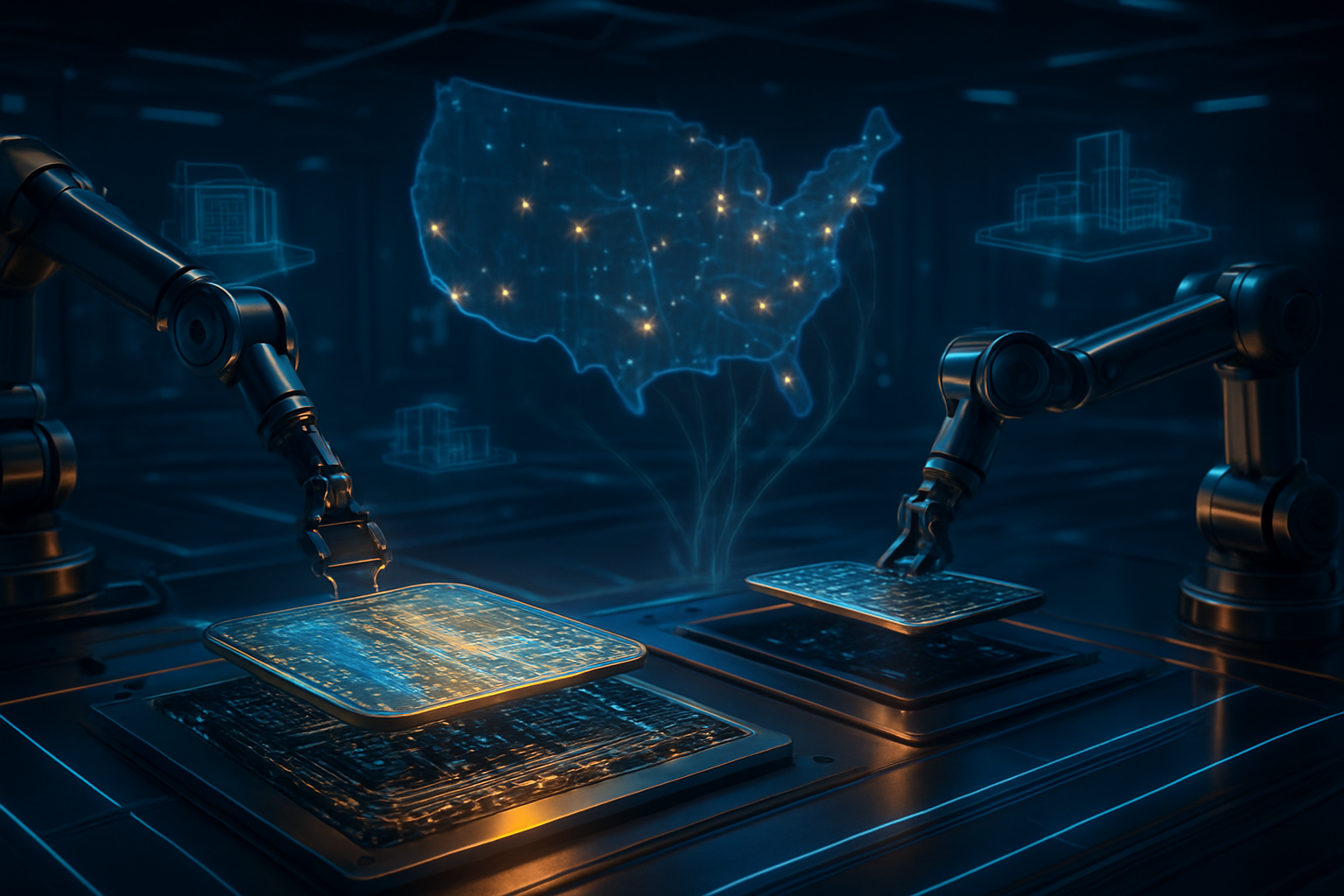
    As of early February 2026, the United States has officially entered what industry leaders are calling the "Production Era" of semiconductor manufacturing. This transition, marked by the first high-volume output of sub-2nm chips on American soil, represents the culmination of a multi-year effort to reshore the critical hardware necessary for artificial intelligence. The recent unveiling of the SEMI "Securing the Semiconductor Supply Chain" strategy, combined with the mature execution of the CHIPS and Science Act, has shifted the national focus from subsidizing construction to optimizing the high-tech value chain that powers the global AI economy.

    The immediate significance of this development cannot be overstated. With the Biden-era incentives now transitioning into operational reality and the current administration’s aggressive "Silicon Sovereignty" trade policies taking effect, the U.S. is no longer just a designer of chips, but a primary manufacturer of the world's most advanced logic. This shift provides a domestic hedge against geopolitical volatility in the Taiwan Strait and ensures that American AI firms have a direct, tariff-advantaged line to the cutting-edge silicon required for next-generation large language models and autonomous systems.

    The Dawn of the Angstrom Era: Technical Milestones and Policy Pillars

    Technically, the landscape has been redefined by Intel (NASDAQ: INTC) achieving high-volume manufacturing (HVM) at its Fab 52 in Ocotillo, Arizona. Utilizing the Intel 18A (1.8nm) process, this facility is the first in the United States to break the 2nm barrier, effectively reclaiming the process leadership crown for a domestic firm. Simultaneously, TSMC (NYSE: TSM) has confirmed that its Fab 1 in Phoenix is operating at full capacity with yields exceeding 92% for 4nm and 5nm nodes—matching the performance of its "mother fabs" in Taiwan. These milestones demonstrate that the "yield gap" once feared by critics of American manufacturing has been successfully bridged through rigorous engineering and local talent development.

    The 2026 policy landscape is anchored by the SEMI "Securing the Semiconductor Supply Chain" strategy, which outlines five strategic pillars for the year. Beyond mere manufacturing, the strategy emphasizes "R&D and Tax Certainty," advocating for the permanency of the Section 174 R&D tax credit. This is viewed as essential for sustaining the momentum of the CHIPS Act, which has now allocated approximately 95% of its $39 billion in manufacturing incentives. The focus has moved toward "National Workforce Pipeline" development, as the industry faces a projected shortage of 67,000 skilled workers by 2030.

    Reactions from the AI research community have been overwhelmingly positive, particularly regarding the increased availability of specialized silicon. Dr. Aris Thompson, a lead researcher at the National Semiconductor Technology Center (NSTC), noted that having 1.8nm capacity within the U.S. borders reduces the latency in the "design-to-wafer" cycle for custom AI accelerators. Industry experts point out that this domestic capability differs from previous decades because it integrates advanced gate-all-around (GAA) transistor architecture and backside power delivery, technologies that were considered experimental just three years ago but are now the standard for AI-optimized hardware.

    Market Disruption and the Rise of the "Silicon Tariff"

    The strategic implications for technology giants are profound. In mid-January 2026, the U.S. government implemented a 25% global tariff on advanced computing chips manufactured outside of North America. This move has created a massive competitive advantage for companies that secured early capacity in domestic fabs. NVIDIA (NASDAQ: NVDA) and AMD (NASDAQ: AMD) are currently racing to transition their flagship AI GPU production—such as the successors to the H200 and MI325X—to TSMC’s Arizona facilities and Samsung (OTCMKTS: SSNLF) in Taylor, Texas, to avoid these steep duties.

    While the "Silicon Tariff" aims to incentivize reshoring, it has caused temporary market turbulence. Startups and mid-tier AI labs that rely on imported hardware are facing a sudden spike in capital expenditures. However, major cloud providers like Amazon (NASDAQ: AMZN) and Microsoft (NASDAQ: MSFT) are benefiting from long-term supply agreements with Intel and TSMC, positioning them to offer "Made in USA" AI compute clusters at a premium to government and defense clients who prioritize supply chain security and national sovereignty.

    Samsung’s pivot in Taylor, Texas, has also shaken the competitive landscape. By skipping the 4nm node and moving directly to 2nm GAA production in early 2026, Samsung has successfully attracted several high-profile AI chip design firms as anchor clients. This "leapfrog" strategy has intensified the rivalry between the three major foundries on American soil, driving down costs for advanced packaging and fostering a more robust ecosystem for "chiplets"—modular components that can be mixed and matched to create highly specialized AI processors.

    Global Significance and the "Packaging Gap"

    The current policy shift represents a broader trend toward "Silicon Sovereignty," where nations view semiconductor capacity as a foundational element of national security, akin to energy or food supplies. The U.S. approach in 2026 is no longer just about competing with China; it is about ensuring that the entire AI value chain—from silicon wafers to final assembly—is insulated from global shocks. This is exemplified by the historic US-Taiwan trade deal signed on January 15, 2026, which grants Taiwanese firms Section 232 exemptions for chips bound for U.S. construction projects, ensuring a stable transition as domestic capacity ramps up.

    Despite these successes, a critical "packaging gap" remains a primary concern for 2026. While the U.S. is now producing the world's most advanced wafers, many of those chips must still be sent to Asia for advanced packaging and assembly. To address this, current policy priorities are funneling billions into projects like Amkor’s (NASDAQ: AMKR) Arizona facility and SK hynix’s (KRX: 000660) High Bandwidth Memory (HBM) packaging plant in Indiana. The goal is to move the U.S. from 3% to 15% of global advanced packaging capacity by 2030, a move essential for the "heterogeneous integration" required by next-generation AI models.

    Comparing this to previous milestones, the 2026 shift is more significant than the initial passage of the CHIPS Act in 2022. While the 2022 legislation provided the capital, the 2026 policies provide the structural framework—including the "Silicon Tariff" and the National Apprenticeship System—to ensure that the industry is sustainable without perpetual government subsidies. This represents a transition from a "rescue mission" for American manufacturing to a dominant "industrial policy" that other Western nations are now attempting to emulate.

    Future Horizons: 1.4nm and Beyond

    Looking toward the late 2020s, the roadmap is focused on the sub-1.4nm nodes and the integration of silicon photonics. Experts predict that by 2028, the first 1.4nm chips will enter pilot production in the U.S., further pushing the boundaries of Moore’s Law. The near-term challenge remains the environmental and regulatory hurdle; the SEMI strategy specifically calls for streamlining EPA reviews to prevent bureaucratic delays from stalling the startup of the "next wave" of fabs planned for the end of the decade.

    Potential applications on the horizon include "edge-native" AI chips produced in domestic fabs that will power autonomous vehicle fleets and medical robotics with unprecedented efficiency. As advanced packaging facilities come online in Arizona and Indiana over the next 24 months, we expect to see the first "fully domestic" high-performance computing modules. The ability to manufacture, package, and deploy these units within the U.S. will be a game-changer for sensitive industries like aerospace and national intelligence.

    The ultimate test for 2026 and beyond will be the ability to maintain this momentum through potential political shifts and economic cycles. Industry analysts predict that if the current "Silicon Sovereignty" policies hold, the U.S. will successfully reduce its reliance on foreign advanced logic from 90% in 2020 to less than 20% by 2032. The focus will then shift from capacity to innovation, as the NSTC begins to operationalize its "lab-to-fab" programs to ensure the next breakthrough in transistor design happens in an American lab.

    A New Era for American Technology

    The semiconductor landscape of early 2026 is a testament to the power of coordinated industrial policy and private-sector ingenuity. From Intel’s 1.8nm breakthroughs to the aggressive trade maneuvers designed to protect domestic investments, the United States has successfully repositioned itself at the center of the hardware world. The SEMI strategy has provided the necessary roadmap to ensure that this isn't just a temporary boom, but a permanent shift in how the world's most important technology is produced and governed.

    In summary, the 2026 policy priorities mark the moment when "American AI" stopped being just a software story and became a hardware reality. The significance of this development in AI history cannot be overstated; by securing the supply chain, the U.S. has effectively secured its leadership in the intelligence age. As we look ahead to the coming months, the focus will be on the first "Silicon Tariff" quarterly reports and the progress of advanced packaging facilities, which remain the final piece of the puzzle for true domestic autonomy.


    This content is intended for informational purposes only and represents analysis of current AI developments.

    TokenRing AI delivers enterprise-grade solutions for multi-agent AI workflow orchestration, AI-powered development tools, and seamless remote collaboration platforms.
    For more information, visit https://www.tokenring.ai/.

  • The HBM Tax: How AI’s Memory Appetite Triggered a Global ‘Chipflation’ Crisis

    The HBM Tax: How AI’s Memory Appetite Triggered a Global ‘Chipflation’ Crisis

    As of early February 2026, the semiconductor industry is witnessing a radical transformation, one where the insatiable hunger of artificial intelligence for High Bandwidth Memory (HBM) has fundamentally rewritten the rules of the silicon economy. While the world’s most advanced foundries and memory makers are reporting record-breaking revenues, a darker trend has emerged: "chipflation." This phenomenon, driven by the redirection of manufacturing capacity toward high-margin AI components, has sent ripples of financial distress through the broader electronics sector, most notably halving the profits of global smartphone leaders like Transsion (SHA: 688036).

    The immediate significance of this shift cannot be overstated. We are no longer in a generalized chip shortage; rather, we are in a period of selective scarcity. As AI giants like Nvidia (NASDAQ: NVDA) pre-book entire production cycles for the next two years, the "commodity" chips that power our phones, laptops, and household appliances have become collateral damage. The industry is now bifurcated between those who can afford the "AI tax" and those who are being squeezed out of the supply chain.

    The Engineering Pivot: Why HBM is Eating the World

    The technical catalyst for this market upheaval is the transition from HBM3E to the next-generation HBM4 standard. Unlike previous iterations, HBM4 is not just a faster version of its predecessor; it represents a total architectural overhaul. For the first time, the memory stack will feature a 2048-bit interface—doubling the width of HBM3E—and provide bandwidth exceeding 2.0 terabytes per second per stack. Industry leaders such as Samsung Electronics (KRX: 005930) and SK Hynix (KRX: 000660) are moving away from passive base dies to active "logic dies," effectively turning the memory stack into a co-processor that handles data operations before they even reach the GPU.

    This technical complexity comes at a massive cost to manufacturing efficiency. Producing HBM4 requires roughly three times the wafer capacity of standard DDR5 memory due to its intricate Through-Silicon Via (TSV) requirements and significantly lower yields. As manufacturers prioritize these high-margin stacks, which command operating margins near 70%, they have aggressively stripped production lines once dedicated to mobile and PC memory. This has led to a critical supply-demand imbalance for LPDDR5X and other standard components, causing contract prices for mobile-grade memory to double over the course of 2025.

    The Casualties of Success: Transsion and the Consumer Squeeze

    The financial fallout of this transition became clear in January 2026, when Transsion (SHA: 688036), the world’s leading smartphone seller in emerging markets, reported a preliminary 2025 net profit of $359 million—a staggering 54.1% decline from the previous year. For a company that operates on thin margins by providing high-value handsets to price-sensitive regions in Africa and South Asia, the $16-per-unit increase in memory costs proved fatal. Transsion’s inability to pass these costs on to its consumers without losing market share has forced a defensive pivot toward higher-end, more expensive models, effectively abandoning its core budget demographic.

    The competitive landscape is now defined by those who control the memory supply. Nvidia (NASDAQ: NVDA) remains the primary beneficiary, as its Blackwell and upcoming Rubin platforms rely exclusively on the HBM3E and HBM4 stacks that are currently being monopolized. Meanwhile, memory giants like Micron Technology (NASDAQ: MU) are enjoying a "memory supercycle," reporting that their production lines are essentially "sold out" through the end of 2026. This has created a strategic advantage for vertically integrated tech giants who can negotiate long-term supply agreements, leaving smaller players and consumer-facing startups to grapple with skyrocketing Bill-of-Materials (BOM) costs.

    Market Bifurcation and the Rise of Chipflation

    This era of "chipflation" marks a significant departure from previous semiconductor cycles. Historically, memory was a commodity prone to "boom and bust" cycles where oversupply eventually led to lower consumer prices. However, the AI-driven demand for HBM is so persistent that it has decoupled the memory market from the traditional PC and smartphone cycles. We are seeing a "cannibalization" effect where clean-room space and capital expenditure are focused almost entirely on HBM4 and its logic-die integration, leaving the rest of the market in a state of perpetual undersupply.

    The broader AI landscape is also feeling the strain. As memory costs rise, the "energy and data tax" of running large language models is being compounded by a "hardware tax." This is prompting a shift in how AI research is conducted, with some firms moving away from sheer model size in favor of efficiency-first architectures that require less bandwidth. The current situation echoes the GPU shortages of 2020 but with a more permanent structural shift in how memory fabs are designed and operated, potentially keeping consumer electronics prices elevated for the foreseeable future.

    Looking Ahead: The Road to HBM4 and Beyond

    The next 12 months will be a race for HBM4 dominance. Samsung Electronics (KRX: 005930) is slated to begin mass shipments this month, in February 2026, utilizing its 6th-generation 10nm (1c) DRAM. SK Hynix (KRX: 000660) is not far behind, with plans to launch its 16-layer HBM4 stacks—the densest ever created—in the third quarter of 2026. These advancements are expected to unlock new capabilities for on-device AI and massive-scale data centers, but they will also require even more specialized manufacturing equipment from providers like ASML (NASDAQ: ASML).

    Experts predict that the primary challenge moving forward will be heat dissipation and power efficiency. As the logic die is integrated into the memory stack, the thermal density of these chips will reach unprecedented levels. This will likely drive a secondary market for advanced liquid cooling and thermal management solutions. Long-term, we may see the emergence of "custom HBM," where cloud providers like Microsoft or Google design their own base dies to be manufactured by TSMC (NYSE: TSM) and then stacked by memory vendors, further blurring the lines between memory and logic.

    Final Reflections: A Pivotal Moment in AI History

    The HBM-induced chipflation of 2025 and 2026 will likely be remembered as the moment the AI revolution collided with the realities of physical manufacturing capacity. The halving of profits for companies like Transsion serves as a stark reminder that the gains of the AI era are not distributed equally; for every breakthrough in model performance, there is a corresponding cost in the consumer technology sector. This "memory supercycle" has proven that memory is no longer just a storage medium—it is the heartbeat of the AI era.

    As we look toward the remainder of 2026, the key indicators to watch will be the yield rates of HBM4 and whether the major memory manufacturers will reinvest their record profits into expanding capacity for standard DRAM. For now, the semiconductor market remains a tale of two cities: one where AI demand drives historic prosperity, and another where traditional electronics makers are fighting for survival in the shadow of the HBM boom.


    This content is intended for informational purposes only and represents analysis of current AI developments.

    TokenRing AI delivers enterprise-grade solutions for multi-agent AI workflow orchestration, AI-powered development tools, and seamless remote collaboration platforms.
    For more information, visit https://www.tokenring.ai/.

  • Intel’s 18A Node Secures Interest from Apple and NVIDIA, Reshaping Global Chip Foundries by 2028

    Intel’s 18A Node Secures Interest from Apple and NVIDIA, Reshaping Global Chip Foundries by 2028

    In a historic shift for the semiconductor industry, Intel Corporation (NASDAQ: INTC) has successfully positioned its 18A process node as a viable domestic alternative for the world’s most demanding chip designers. As of February 2, 2026, reports indicate that both Apple Inc. (NASDAQ: AAPL) and NVIDIA (NASDAQ: NVDA) have entered advanced discussions to utilize Intel’s U.S.-based foundries for high-volume production starting in 2028. This development marks a significant milestone in Intel’s "five nodes in four years" strategy, moving the company from a struggling manufacturer to a formidable competitor against the long-standing dominance of TSMC (NYSE: TSM).

    The immediate significance of this announcement cannot be overstated. For years, the global technology supply chain has been precariously reliant on Taiwanese manufacturing. The news that Apple is exploring Intel 18A for its entry-level M-series chips and that NVIDIA is eyeing the node for its next-generation "Feynman" GPU components suggests a major rebalancing of the silicon landscape. By securing interest from these industry titans, Intel Foundry has validated its technical roadmap and provided a strategic "pressure valve" for an industry currently constrained by limited advanced-node capacity.

    The Technical Edge: RibbonFET and PowerVia Come to Life

    Intel’s 18A (1.8nm) process node reached High-Volume Manufacturing (HVM) status in late January 2026, with Fab 52 in Arizona now operational and producing roughly 40,000 wafers per month. The technical superiority of 18A lies in two foundational innovations: RibbonFET and PowerVia. RibbonFET is Intel’s implementation of Gate-All-Around (GAA) transistor architecture, which allows for finer control over the channel current, reducing leakage and boosting performance-per-watt. PowerVia, the industry’s first backside power delivery solution, moves power routing to the back of the wafer. This reduces voltage droop and frees up the top layers for signal routing, a leap that analysts suggest gives Intel a six-to-twelve-month lead over TSMC’s implementation of similar technology.

    Initial yields for 18A are currently reported in the 55–65% range, a "predictable ramp" that is expected to hit world-class efficiency of over 75% by early 2027. Unlike previous Intel nodes that suffered from delays, the 18A transition has been buoyed by the successful deployment of internal products like the "Panther Lake" Core Ultra Series 3 and "Clearwater Forest" Xeon processors. Industry experts note that 18A's performance-to-density ratio is now competitive with TSMC’s N2 node, offering a compelling technical alternative for companies that have traditionally been "locked in" to the Taiwanese ecosystem.

    A Strategic Pivot for Apple and NVIDIA

    The interest from Apple and NVIDIA represents a calculated move to diversify supply chains and mitigate risk. Apple is reportedly eyeing the Intel 18A-P (performance-enhanced) variant for its 2028 lineup of entry-level M-series chips, intended for the MacBook Air and iPad. While the flagship "Pro" and "Max" chips will likely remain with TSMC for the time being, utilizing Intel for high-volume, cost-sensitive silicon allows Apple to secure more favorable pricing and guaranteed capacity. Similarly, Apple is exploring Intel’s 14A (1.4nm) node for non-Pro iPhone A-series chips, signaling a long-term commitment to Intel’s foundry services.

    NVIDIA’s engagement is even more transformative. Facing an insatiable demand for AI hardware, NVIDIA has reportedly taken a 5% stake in Intel Foundry, a $5 billion investment aimed at securing domestic capacity for its 2028 "Feynman" GPU architecture. While the primary compute dies may stay with TSMC, NVIDIA plans to outsource the I/O dies and a significant portion of its advanced packaging to Intel. Specifically, Intel’s EMIB (Embedded Multi-die Interconnect Bridge) technology is being positioned as a crucial alternative to TSMC’s CoWoS packaging, which has been a major bottleneck in the AI supply chain throughout 2024 and 2025.

    Geopolitics and the Reshoring Revolution

    The shift toward Intel is driven as much by geopolitics as by nanometers. As of 2026, the concentration of advanced semiconductor manufacturing in Taiwan is viewed as a "single point of failure" by both corporate boards and the U.S. government. The CHIPS Act and subsequent domestic policy initiatives have provided the financial scaffolding for Intel to build its "Silicon Heartland" in Arizona and Ohio. For Apple and NVIDIA, moving a portion of their production to U.S. soil is an insurance policy against regional instability and potential trade tariffs that could penalize offshore manufacturing.

    This movement also aligns with the broader AI boom, which has created a structural shortage of advanced fabrication capacity. As Microsoft (NASDAQ: MSFT) and Amazon (NASDAQ: AMZN) continue to scale their custom AI silicon on Intel’s 18A node, the foundry has proven it can handle the scale required by "hyperscalers." The entry of Apple and NVIDIA into the Intel ecosystem effectively ends the TSMC monopoly on leading-edge logic, creating a healthier, multi-polar foundry market that could accelerate the pace of innovation across the entire tech sector.

    The Roadmap to 14A and Beyond

    Looking forward, the partnership between Intel and these tech giants is expected to deepen as the industry moves toward the 14A (1.4nm) era. The primary challenge remains the "porting" of complex chip designs. Intel is currently rolling out Process Design Kits (PDKs) that are more compatible with industry-standard EDA tools, making it easier for Apple and NVIDIA engineers to transition their designs from TSMC’s libraries to Intel’s. Analysts predict that if the 18A production ramp continues without hitches, Intel could capture up to 20% of the external advanced foundry market by 2030.

    Beyond 2028, we expect to see Intel’s Arizona and Ohio fabs becoming the primary hubs for "secure silicon," with the U.S. Department of Defense and major Western enterprises prioritizing domestic production. The upcoming 14A node, scheduled for 2027-2028, will likely be the stage for the next great performance battle. If Intel can maintain its execution momentum, it may not just be a secondary source for Apple and NVIDIA, but a preferred partner for their most advanced, AI-integrated consumer and data center products.

    A New Era for Silicon

    The convergence of Intel’s technical resurgence and the strategic needs of Apple and NVIDIA marks the beginning of a new era in computing. For Intel, securing these customers is the ultimate validation of CEO Pat Gelsinger’s turnaround plan. It transforms the company from a legacy chipmaker into the cornerstone of a new, geographically diverse semiconductor supply chain. For the tech industry, it provides much-needed competition in a sector that has been dangerously centralized for over a decade.

    In the coming months, all eyes will be on the yield reports from Fab 52 and the finalization of the 2028 production contracts. While TSMC remains the undisputed leader in volume and ecosystem maturity, Intel’s 18A node has officially broken the glass ceiling. The "Silicon Renaissance" is no longer a marketing slogan—it is a $100 billion reality that will define the performance of the iPhones, MacBooks, and AI GPUs of the late 2020s.


    This content is intended for informational purposes only and represents analysis of current AI developments.

    TokenRing AI delivers enterprise-grade solutions for multi-agent AI workflow orchestration, AI-powered development tools, and seamless remote collaboration platforms.
    For more information, visit https://www.tokenring.ai/.

  • The Silicon Throne: TSMC’s Record $56B Bet on the Future of Artificial Intelligence

    The Silicon Throne: TSMC’s Record $56B Bet on the Future of Artificial Intelligence

    In a move that underscores the sheer scale of the ongoing generative artificial intelligence revolution, Taiwan Semiconductor Manufacturing Company (NYSE:TSM) has officially announced a record-breaking $56 billion capital expenditure plan for 2026. This historic investment, disclosed during the company’s recent Q1 earnings briefing, marks the largest single-year spending commitment in the history of the semiconductor industry. As the world’s leading foundry, TSMC is signaling its absolute confidence that the demand for high-performance computing (HPC) will continue to accelerate, fueled by the insatiable needs of AI hyperscalers and chip designers.

    The significance of this announcement extends far beyond simple infrastructure. TSMC has projected a massive 30% revenue growth for the fiscal year 2026, a figure that has sent shockwaves through global markets. By allocating over 80% of its budget to advanced nodes and specialized packaging, TSMC is not just building more factories; it is constructing the physical bedrock upon which the next decade of AI breakthroughs—including autonomous systems, massive-scale LLMs, and personalized digital agents—will be built.

    Scaling the Impossible: 2nm and the Rise of A16 Architecture

    The technical core of TSMC’s 2026 strategy lies in the aggressive ramp-up of its 2nm (N2) process and the introduction of the groundbreaking A16 (1.6nm) node. The N2 process, which is now hitting mass production across TSMC’s facilities in Baoshan and Kaohsiung, represents a paradigm shift in transistor design. For the first time, TSMC is utilizing Gate-All-Around (GAA) nanosheet transistors. Unlike the previous FinFET architecture, GAA allows for better electrostatic control, resulting in a 10-15% performance boost or a 25-30% reduction in power consumption compared to the 3nm node.

    Complementing the 2nm rollout is the A16 node, scheduled for volume production in the second half of 2026. The A16 is being hailed by industry experts as the "crown jewel" of TSMC’s roadmap because it introduces the "Super Power Rail." This backside power delivery system moves power distribution from the front of the wafer to the back, freeing up critical space on the top layers for signal routing. This technical leap effectively eliminates bottlenecks in power delivery that have plagued high-wattage AI accelerators, allowing for even higher clock speeds and more efficient thermal management.

    Initial reactions from the semiconductor research community suggest that TSMC has successfully widened its lead over rivals Intel (NASDAQ:INTC) and Samsung. While Intel has made strides with its 18A process, TSMC’s ability to achieve volume production with A16 while maintaining nearly 50% net margins is viewed as a masterstroke in manufacturing execution. "We are no longer just looking at incremental shrinks," said one senior analyst at the Semiconductor Industry Association. "TSMC is re-engineering the very physics of how electricity moves through a chip to meet the thermal demands of the AI era."

    The NVIDIA and Meta Connection: Powering the AI Super-Cycle

    This $56 billion investment is a direct response to the "AI Super-Cycle" led by tech giants like NVIDIA (NASDAQ:NVDA) and Meta (NASDAQ:META). NVIDIA, which has officially overtaken Apple (NASDAQ:AAPL) as TSMC’s largest customer, is the primary driver for the 2026 capacity surge. NVIDIA’s upcoming "Rubin" architecture, the successor to the Blackwell GPUs, is slated to transition to TSMC’s 3nm (N3P) and eventually 2nm nodes. To satisfy NVIDIA’s roadmap, TSMC is also doubling down on its CoWoS (Chip on Wafer on Substrate) advanced packaging capacity, which remains the primary bottleneck for shipping enough AI chips to meet global demand.

    Meta’s role in this expansion is equally pivotal. Mark Zuckerberg’s company has emerged as a top-tier TSMC client, securing massive allocations for its custom Meta Training and Inference Accelerator (MTIA) chips. As Meta continues its pivot toward "General AI" and integrates advanced intelligence across its social platforms, its reliance on bespoke silicon has made it a key strategic partner in TSMC’s long-term planning. For Meta, securing TSMC’s A16 capacity early is a competitive necessity to ensure its future models can out-compute rivals in a high-latency-sensitive environment.

    The market positioning here is clear: TSMC has created a "virtuous cycle" where the world’s most powerful software companies are effectively subsidizing the development of the world’s most advanced hardware. This creates a formidable barrier to entry for smaller firms and even legacy tech giants. Companies that do not have "priority access" to TSMC’s 2nm and A16 nodes in 2026 risk falling an entire generation behind in compute efficiency, which in the AI world translates directly to higher costs and slower innovation.

    Geopolitics and the Global Fab Cluster Strategy

    The $56 billion plan is not just about technology; it is about geographical resilience. TSMC is currently transforming its manufacturing footprint into "Megafab Clusters" located in the United States, Japan, and Germany. In Arizona, Fab 1 is now fully operational at the 4nm node, while the mass production timeline for Fab 2 has been accelerated to late 2027 to handle 3nm and 2nm chips. This expansion is critical for US-based partners like AMD (NASDAQ:AMD) and NVIDIA, who are increasingly under pressure to diversify their supply chains amidst ongoing geopolitical tensions in the Taiwan Strait.

    However, this global expansion brings its own set of challenges. Critics have pointed to the rising costs of manufacturing outside of Taiwan, where TSMC benefits from a highly specialized local ecosystem. To maintain its 30% revenue growth target, TSMC has had to implement "regional pricing" models, charging a premium for chips made in US-based fabs. Despite these costs, the "AI gold rush" has made customers willing to pay for the security of supply.

    Comparatively, this milestone echoes the early 2010s mobile revolution, but at a significantly larger scale. While the shift to smartphones redefined consumer tech, the current AI infrastructure build-out is fundamental to the entire global economy. The concern among some economists is the potential for an "over-investment" bubble; however, with TSMC’s order books for 2026 and 2027 already reported as "fully booked," the immediate threat appears to be a lack of capacity rather than a surplus.

    Looking Ahead: The Road to Sub-1nm

    As 2026 unfolds, the industry is already looking toward the next frontier. TSMC has hinted at a "1nm-class" node research phase, potentially designated as the A14 or A10, which will likely integrate even more exotic materials like carbon nanotubes or two-dimensional semiconductors. In the near term, the focus will remain on the successful integration of High-NA EUV (High Numerical Aperture Extreme Ultraviolet) lithography machines, which are essential for printing the incredibly fine features required for the A16 node.

    The primary challenges moving forward are no longer just about lithography. Power and water consumption for these mega-facilities have become significant political and environmental hurdles. In Taiwan, TSMC is investing heavily in water reclamation plants and renewable energy to ensure its 2nm ramp-up does not strain local resources. In Arizona, the focus is on building out a local talent pipeline of specialized engineers to staff the three planned facilities.

    Experts predict that by the end of 2026, the gap between TSMC and its competitors will be defined not just by transistor density, but by "system-level" integration. This involves 3D stacking of logic and memory (SoIC), which TSMC is rapidly scaling. The future of AI is moving toward "Silicon-as-a-Service," where TSMC provides the entire compute package—not just the chip.

    A New Era of Silicon Sovereignty

    TSMC’s $56 billion commitment for 2026 is a definitive statement that the AI era is still in its infancy. By betting nearly 30% of its projected revenue back into R&D and capital projects, the company is ensuring its role as the indispensable middleman of the digital age. The key takeaways for 2026 are clear: the transition to 2nm and A16 architecture is the new battlefield for AI supremacy, and NVIDIA and Meta have secured their positions at the front of the line.

    As we move through the coming months, the tech world will be watching the yield rates of the new A16 node and the progress of the Arizona Fab 2 construction. This investment represents more than just a business plan; it is the most expensive and complex engineering project in human history, designed to power the next generation of human intelligence. In the high-stakes game of semiconductor manufacturing, TSMC has just raised the stakes to an unprecedented level, and the rest of the world has no choice but to follow.


    This content is intended for informational purposes only and represents analysis of current AI developments.

    TokenRing AI delivers enterprise-grade solutions for multi-agent AI workflow orchestration, AI-powered development tools, and seamless remote collaboration platforms.
    For more information, visit https://www.tokenring.ai/.

  • Beyond the Blackwell Horizon: NVIDIA’s ‘Vera Rubin’ Platform Targets the $6 Trillion AI Frontier at CES 2026

    Beyond the Blackwell Horizon: NVIDIA’s ‘Vera Rubin’ Platform Targets the $6 Trillion AI Frontier at CES 2026

    The landscape of artificial intelligence underwent a tectonic shift this past month at CES 2026, as NVIDIA (NASDAQ: NVDA) officially unveiled its "Vera Rubin" architecture. Named after the visionary astronomer who provided the first evidence of dark matter, the Rubin platform is designed to illuminate the next era of "agentic AI"—autonomous systems capable of complex reasoning and multi-step execution. This launch marks the culmination of NVIDIA’s aggressive transition to a yearly R&D cycle, effectively doubling the pace of innovation that the industry had previously grown accustomed to.

    The Rubin architecture is not merely an incremental update; it represents a full-stack reimagining of the data center. By succeeding the highly successful Blackwell architecture, Rubin pushes the boundaries of what is possible in silicon and systems engineering. With the introduction of the new Vera CPU and the HBM4-powered Rubin GPU, NVIDIA is positioning itself not just as a chipmaker, but as the architect of the unified AI factory. The immediate significance is clear: as enterprises race to deploy trillion-parameter models, NVIDIA has provided the first hardware platform capable of running these workloads with five times the efficiency of its predecessor.

    The Architecture of the Infinite: Technical Mastery in the Rubin Era

    The technical specifications of the Vera Rubin platform are nothing short of staggering. At the heart of the system is the Rubin GPU, the first in the industry to fully embrace High Bandwidth Memory 4 (HBM4). Each GPU boasts 288GB of HBM4 memory, delivering a massive 22 TB/s of aggregate bandwidth. This leap is specifically engineered to overcome the "memory wall," a long-standing bottleneck where data movement speeds lagged behind processing power. By nearly tripling the bandwidth of the Blackwell generation, NVIDIA has enabled a 5x increase in inference performance, reaching up to 50 petaflops of NVFP4 compute.

    Perhaps the most significant architectural shift is the introduction of the Vera CPU, also referred to as the "Versa" platform. Built on 88 custom "Olympus" cores utilizing the Arm v9.2 architecture, the Vera CPU represents NVIDIA’s most ambitious foray into general-purpose compute. Unlike previous generations where CPUs were often a secondary consideration to the GPU, the Vera CPU is designed to handle the complex serial processing and orchestration required for modern AI agents. In a major strategic pivot, NVIDIA has announced that the Vera CPU will be available as a standalone product, a move that provides 1.2 TB/s of memory bandwidth and directly challenges traditional data center processors.

    The flagship implementation of this hardware is the NVL72 rack-scale system. Functioning as a single, liquid-cooled supercomputer, the NVL72 integrates 36 Vera CPUs and 72 Rubin GPUs into a unified fabric. Utilizing the new NVLink 6 Switch, the rack provides 260 TB/s of total bandwidth—a figure that NVIDIA CEO Jensen Huang noted is "greater than the traffic of the entire public internet." This high-density configuration allows for 3.6 exaFLOPS of inference performance in a single rack, making it the most power-dense AI infrastructure ever produced for the commercial market.

    Market Dominance and the Standalone CPU Play

    The announcement has sent shockwaves through the semiconductor industry, particularly impacting Intel (NASDAQ: INTC) and AMD (NASDAQ: AMD). By offering the Vera CPU as a standalone product, NVIDIA is moving into Intel’s historical stronghold: the general-purpose server market. Market analysts noted that Intel’s stock fell over 4% following the announcement, as the Vera CPU’s specialized AI capabilities and superior memory bandwidth make it an attractive alternative for data centers that are increasingly pivoting toward AI-first architectures.

    AMD, meanwhile, attempted to counter NVIDIA’s momentum at CES with its Instinct MI455X and the Helios rack platform. While AMD’s offering boasts a higher raw memory capacity of 432GB, it lags behind Rubin in bandwidth and integrated ecosystem support. The competitive landscape is now defined by NVIDIA’s "speed-of-light" execution; by moving to a yearly release cadence (Blackwell in 2024, Rubin in 2026, and the teased "Feynman" architecture for 2027), NVIDIA is forcing its rivals into a perpetual state of catch-up. This rapid-fire cycle creates a significant strategic advantage, as major cloud service providers (CSPs) like Amazon (NASDAQ: AMZN) and Microsoft (NASDAQ: MSFT) are likely to prioritize the hardware that offers the fastest path to lowering the "cost per token" in AI inference.

    The Broader Implications: Agentic AI and the Power Paradox

    The Rubin architecture arrives at a critical juncture in the AI landscape. We are moving away from simple chatbots and toward "Agentic AI"—systems that can manage their own workflows, use tools, and solve multi-part problems autonomously. These agents require massive amounts of "thinking time" (inference), and the Rubin platform’s 5x inference boost is tailor-made for this shift. By focusing on inference efficiency—offering up to 8x more compute per watt—NVIDIA is addressing one of the most pressing concerns in the industry: the soaring energy demands of global data centers.

    However, this advancement also brings potential concerns to the forefront. The sheer density of the NVL72 racks requires sophisticated liquid cooling and a power grid capable of supporting exascale workloads. Critics point out that while efficiency per watt is increasing, the total power draw of these massive AI clusters continues to climb. Comparisons are already being drawn to previous AI milestones, such as the introduction of the Transformer model or the launch of the original H100; however, Rubin feels different. It marks the transition of AI from a specialized research tool into the foundational infrastructure of the modern global economy.

    Looking Toward the Feynman Horizon

    As the industry digests the implications of the Rubin launch, eyes are already turning toward the future. NVIDIA’s roadmap suggests that the Rubin era will be followed by the "Feynman" architecture in 2027 or 2028. Near-term developments will likely focus on the widespread deployment of the NVL72 racks across global "AI Factories." We can expect to see new classes of autonomous software agents that were previously too computationally expensive to run, ranging from real-time scientific simulation to fully autonomous corporate operations.

    The challenges ahead are largely logistical and environmental. Addressing the heat dissipation of such high-density racks and ensuring a stable supply chain for HBM4 memory will be the primary hurdles for NVIDIA in the coming year. Furthermore, the industry will be watching closely to see how the software ecosystem evolves to take advantage of the Vera CPU’s custom Olympus cores. Predictions from industry experts suggest that by the time Rubin reaches full market penetration in late 2026, the concept of a "data center" will have been entirely redefined as a "liquid-cooled AI inference engine."

    A New Benchmark for the Silicon Age

    NVIDIA’s Vera Rubin architecture is more than just a faster chip; it is a declaration of intent. By integrating custom CPUs, next-generation HBM4 memory, and massive rack-scale networking into a yearly release cycle, NVIDIA has set a pace that defines the "Golden Age of AI." The key takeaways from CES 2026 are clear: inference is the new currency, and the ability to scale to 72 GPUs in a single rack is the new standard for enterprise readiness.

    As we look toward the coming months, the significance of the Rubin platform in AI history will likely be measured by the autonomy of the agents it powers. This development solidifies NVIDIA's position at the center of the technological universe, challenging competitors to reinvent themselves or risk obsolescence. For now, the "Vera Rubin" era has begun, and the search for the next breakthrough in the dark matter of artificial intelligence continues at an unprecedented speed.


    This content is intended for informational purposes only and represents analysis of current AI developments.

    TokenRing AI delivers enterprise-grade solutions for multi-agent AI workflow orchestration, AI-powered development tools, and seamless remote collaboration platforms.
    For more information, visit https://www.tokenring.ai/.
  • Broadcom’s Custom AI Silicon Boom: Beyond the Google TPU

    Broadcom’s Custom AI Silicon Boom: Beyond the Google TPU

    As of early 2026, the artificial intelligence landscape is witnessing a seismic shift in how the world’s most powerful models are powered. While the industry spent years in the shadow of general-purpose GPUs, a new era of "bespoke compute" has arrived, spearheaded by Broadcom Inc. (NASDAQ: AVGO). Once synonymous primarily with Google’s (NASDAQ: GOOGL) Tensor Processing Units (TPUs), Broadcom has successfully diversified its custom AI Application-Specific Integrated Circuit (ASIC) business into a multi-customer powerhouse, securing landmark deals with Meta (NASDAQ: META), OpenAI, and Anthropic.

    This transition marks a pivotal moment in the "Compute Wars." By co-designing specialized silicon and high-speed networking fabrics, Broadcom is enabling hyperscalers to break free from the supply constraints and high premiums associated with off-the-shelf hardware. With AI-related revenue projected to hit a staggering $46 billion in 2026—a 134% year-over-year increase—Broadcom has effectively positioned itself as the structural architect of the next generation of AI infrastructure.

    The Technical Edge: TPU v7, MTIA v4, and the 1.6T Networking Revolution

    The technical foundation of Broadcom’s dominance lies in its ability to integrate high-performance compute with industry-leading networking. In late 2025, Broadcom and Google debuted the TPU v7 (Ironwood), a 3nm marvel designed specifically for large-scale inference and reasoning. Featuring 192GB of HBM3e memory and a massive 9.6 Tbps Inter-Chip Interconnect (ICI) bandwidth, Ironwood is optimized for the multi-trillion parameter models that define the current AGI-frontier. Similarly, the partnership with Meta has moved into its next phase with the MTIA v4 (Santa Barbara), which introduces liquid-cooled rack integration to handle the unprecedented thermal demands of 180kW+ AI clusters.

    Perhaps most significant is Broadcom’s advancements in networking, which serve as the "connective tissue" for these custom chips. The Tomahawk 6 (TH6) switch ASIC, shipping in volume as of early 2026, is the world’s first 102.4 Tbps switch, enabling the transition to 1.6T Ethernet. This allows for the creation of clusters containing over one million XPUs (accelerated processing units) with minimal latency. By championing the Ethernet for Scale-Up Networking (ESUN) workstream, Broadcom is providing a viable, open-standard alternative to NVIDIA’s (NASDAQ: NVDA) proprietary NVLink, allowing customers to build "scale-up" fabrics within the rack using standard Ethernet protocols.

    Industry experts note that this "end-to-end" approach—where the AI chip and the network switch are co-designed—solves the "IO bottleneck" that has long plagued large-scale AI training. Initial reactions from the research community suggest that Broadcom’s custom silicon-plus-Ethernet strategy provides up to 50% better throughput for distributed training tasks compared to traditional InfiniBand-based setups.

    Reducing the "NVIDIA Tax" and Empowering the Hyperscale Elite

    The strategic implications of Broadcom’s custom silicon boom are profound. For years, the "NVIDIA tax"—the high margin paid for H100 and Blackwell GPUs—was the cost of doing business in AI. However, companies like Meta and Google have realized that at their scale, even a 10% efficiency gain in silicon can save billions in capital expenditure and energy costs. By partnering with Broadcom, these giants gain total control over the instruction set architecture (ISA), memory configurations, and power envelopes of their hardware, tailoring them specifically to their proprietary algorithms.

    The recent entry of OpenAI and Anthropic into Broadcom’s custom silicon stable has sent shockwaves through the industry. OpenAI’s landmark collaboration to co-develop custom accelerators for its 10-gigawatt data center projects signifies a long-term pivot toward hardware sovereignty. Anthropic, similarly, has committed to a $10 billion+ deal for custom silicon, aiming to optimize its Claude models on hardware that prioritizes safety-aligned "constitutional AI" features at the silicon level. This shift significantly dilutes NVIDIA’s market dominance, as the most valuable AI workloads move from general-purpose GPUs to specialized ASICs.

    For Broadcom, this diversification creates a "structural moat." Unlike competitors who may offer only the chip or only the switch, Broadcom’s portfolio includes the SerDes, the HBM controllers, the optical interconnects, and the networking silicon. This vertical integration makes them the indispensable partner for any company large enough to design its own chip but too small to manage the entire semiconductor manufacturing and networking stack alone.

    A New Global Standard: The Rise of Sovereign AI Compute

    Broadcom’s success fits into a broader trend of "Sovereign AI," where both corporations and nations seek to control their own compute destiny. The move toward custom ASICs is not just about cost; it is about performance ceilings. As LLMs evolve into "Large World Models" that incorporate video, audio, and real-time physical simulation, the data movement requirements are exceeding what general-purpose hardware can provide. Broadcom’s introduction of the Jericho4 ASIC, which enables Data Center Interconnects (DCI) across distances of up to 100km with lossless performance, is a direct response to the power and space constraints of single-site mega-datacenters.

    There are, however, concerns regarding the concentration of power. With Broadcom holding a nearly 60% market share in the custom AI ASIC space, the industry has effectively traded one gatekeeper (NVIDIA) for another. Furthermore, the reliance on high-end 3nm and 2nm manufacturing nodes at TSMC (NYSE: TSM) remains a potential geopolitical bottleneck. Despite these concerns, the shift to custom silicon is viewed as a necessary evolution for the industry to reach the next milestone in AI capability without collapsing the global energy grid.

    The Horizon: 2nm Processes and Co-Packaged Optics

    Looking ahead to 2027 and beyond, Broadcom is already laying the groundwork for the next jump in performance. The transition to 2nm process technology is expected to yield another 30% improvement in energy efficiency, a critical metric as AI power consumption becomes a global regulatory concern. Furthermore, the adoption of Co-Packaged Optics (CPO) will likely become the standard for 3.2T and 6.4T networking, replacing traditional copper and pluggable transceivers with silicon photonics integrated directly onto the chip package.

    Predictive models suggest that by late 2026, the majority of "Frontier Model" training will occur on custom ASICs rather than general-purpose GPUs. We may also see Broadcom expand its "silicon-as-a-service" model, potentially offering modular chiplet designs that allow smaller tech companies to "mix and match" Broadcom’s networking IP with their own proprietary logic.

    Conclusion: Broadcom's Indispensable Role in the AI Era

    Broadcom’s transformation from a diversified semiconductor firm into the primary architect of the world’s AI infrastructure is one of the most significant business stories of the mid-2020s. By moving "beyond the Google TPU" and securing the top tier of AI labs—Meta, OpenAI, and Anthropic—Broadcom has proven that the future of AI is bespoke. Its dual-threat mastery of both custom compute and high-speed Ethernet networking has created a feedback loop that will be difficult for any competitor, even NVIDIA, to break.

    As we move through 2026, the key developments to watch will be the first live silicon deployments from the OpenAI-Broadcom partnership and the industry-wide adoption of 1.6T Ethernet. Broadcom is no longer just a component supplier; it is the platform upon which the age of AGI is being built.


    This content is intended for informational purposes only and represents analysis of current AI developments.

    TokenRing AI delivers enterprise-grade solutions for multi-agent AI workflow orchestration, AI-powered development tools, and seamless remote collaboration platforms.
    For more information, visit https://www.tokenring.ai/.

  • NAND Flash Overtakes Mobile: Data Centers Drive New Storage Record

    NAND Flash Overtakes Mobile: Data Centers Drive New Storage Record

    In a seismic shift for the semiconductor industry, data center demand for high-performance NAND Flash memory has officially surpassed that of mobile devices for the first time in history. This milestone, reached in early 2026, marks the end of a fifteen-year era where the smartphone was the primary engine of the storage market. The "AI Supercycle" has fundamentally reconfigured the global supply chain, transforming NAND from a commodity component found in consumer gadgets into a high-stakes bottleneck for the world’s most powerful AI clusters.

    As hyperscale cloud providers and enterprise data centers race to scale their artificial intelligence capabilities, the demand for ultra-fast, high-capacity Solid State Drives (SSDs) has exploded. Reports from the first quarter of 2026 indicate that data center NAND consumption is now growing at a staggering compound annual rate of 40%. This surge is driven by the realization that massive GPU compute power is only as effective as the storage systems capable of feeding it data.

    The Technical Shift: Feeding the Beast

    The pivot toward data center dominance is rooted in the technical requirements of Large Language Model (LLM) training and "agentic" AI inference. While High Bandwidth Memory (HBM) handles the active processing within GPUs like those from NVIDIA (NASDAQ: NVDA), the sheer scale of modern datasets requires a massive secondary tier of fast storage. To prevent "starving" the GPUs, data centers are moving away from traditional Hard Disk Drives (HDDs) in favor of all-flash arrays.

    The current generation of AI-ready storage is defined by the commercial debut of PCIe 6.0 enterprise SSDs. These drives, such as the Samsung Electronics (KRX: 005930) PM1763, offer sequential read speeds of up to 32 GB/s—doubling the performance of the previous PCIe 5.0 standard. Furthermore, capacity limits are being shattered; SK Hynix (KRX: 000660) and its subsidiary Solidigm have begun high-volume shipping of 122TB and 128TB SSDs, providing the density required to house "data lakes" that span petabytes of information in a single server rack.

    Industry experts note that this shift is not just about raw speed but also about the "Memory Wall." In early 2026, NVIDIA introduced its Inference Context Memory Storage (ICMS) platform, which uses high-speed NAND as a dedicated layer to store and share "Key-Value" caches across GPU pods. This architecture allows AI models to handle context windows spanning millions of tokens by treating NAND as an extension of the GPU’s own memory, a feat previously thought impossible due to latency constraints.

    Market Impact and the "Sold-Out" Era

    The competitive landscape of the storage industry has been completely upended. Micron Technology (NASDAQ: MU) recently announced that its 2026 supply of enterprise-grade NAND is effectively "fully committed," meaning the company is sold out for the remainder of the year. This supply-demand imbalance has led to record-breaking price increases for enterprise SSDs, which have spiked over 50% in the last quarter alone.

    The recent structural reorganization of major players also reflects this new reality. Following its 2025 spinoff from its parent company, the newly independent SanDisk Corporation (NASDAQ: SNDK) has pivoted its entire strategy to prioritize "Ultra QLC" (Quad-Level Cell) storage for AI. By focusing on its "Stargate" controller architecture, SanDisk is targeting 512TB capacities by 2027, leaving the legacy HDD business to the remaining Western Digital Corporation (NASDAQ: WDC).

    For tech giants like Alphabet (NASDAQ: GOOGL) and Microsoft (NASDAQ: MSFT), securing a stable supply of NAND has become as critical as securing GPUs. The shift has forced a strategic advantage for companies with "captive" memory production, such as Samsung, which can prioritize its own high-margin enterprise SSDs over sales to external mobile manufacturers. This has left the smartphone market—once the "king" of NAND—scrambling for crumbs in a market now dominated by the needs of the cloud.

    Broader Significance: The Death of the HDD in the Data Center?

    This development signals a broader trend: the potential obsolescence of mechanical hard drives in high-end compute environments. While Western Digital continues to innovate in high-capacity HDDs for bulk "cold" storage, the "warm" and "hot" data layers required for AI are now almost exclusively flash-based. The energy efficiency of NAND is a major factor here; modern AI SSDs consume roughly 25 watts while delivering massive throughput, a 60% gain in efficiency over older models. For power-constrained data centers, this efficiency is the only way to scale without exceeding local grid capacities.

    Comparatively, this milestone is being likened to the transition from dial-up to broadband. In the same way that broadband enabled the modern internet, the move to a NAND-dominant data center infrastructure is enabling the shift from static AI models to dynamic, real-time AI agents. The ability to retrieve and process vast amounts of data in milliseconds is the foundation of the "Agentic Era" of 2026.

    Future Horizons: The Path to Petabyte Storage

    Looking ahead, the roadmap for NAND flash is focused on two fronts: capacity and integration. Researchers are already testing "3D NAND" stacks with over 400 layers, which will be necessary to reach the 1-petabyte SSD milestone by the end of the decade. Additionally, the integration of compute-in-storage—where the SSD itself performs basic data preprocessing before sending it to the GPU—is expected to become a standard feature by 2027.

    However, challenges remain. The intense heat generated by PCIe 6.0 drives requires advanced cooling solutions, and the industry is still grappling with the environmental impact of such rapid semiconductor turnover. Furthermore, as data center demand continues to outpace production capacity, the risk of a global "storage crunch" looms, which could potentially slow the rollout of new AI services if left unaddressed.

    Conclusion: A New Era of Infrastructure

    The transition of NAND Flash from a mobile-first to a data center-first market is a defining moment in the history of AI. It marks the point where the infrastructure for artificial intelligence moved beyond experimental clusters into the backbone of the global economy. The 40% annual growth in consumption is not just a statistic; it is a reflection of the sheer volume of data being harnessed to power the next generation of human-machine interaction.

    As we move through 2026, the industry will be watching closely for the first 256TB commercial deployments and the impact of PCIe 6.0 on real-world AI inference speeds. For now, one thing is clear: the era of the "smart" phone as the driver of innovation is over. We have entered the era of the "intelligent" data center.


    This content is intended for informational purposes only and represents analysis of current AI developments.

    TokenRing AI delivers enterprise-grade solutions for multi-agent AI workflow orchestration, AI-powered development tools, and seamless remote collaboration platforms.
    For more information, visit https://www.tokenring.ai/.

  • Liquid Cooling for AI Servers: The New Data Center Standard

    Liquid Cooling for AI Servers: The New Data Center Standard

    As of February 2, 2026, the data center industry has reached a historic tipping point. For the first time, liquid cooling penetration in new high-performance compute deployments has exceeded 50%, officially ending the multi-decade reign of traditional air cooling as the default infrastructure. This shift is not a matter of choice or marginal efficiency gains; it is a thermal necessity dictated by the sheer physics of the latest generation of artificial intelligence hardware.

    The transition, which analysts have dubbed "The Great Liquid Transition," has been accelerated by the deployment of massive AI clusters designed to run the world’s most advanced Large Language Models and autonomous agentic workflows. As power envelopes for individual chips cross the 1,000W threshold, the industry has fundamentally re-engineered how it handles heat, moving from cooling entire rooms with air to precision heat extraction at the silicon level.

    The Physics of Power: Why 1,000 Watts Broke the Fan

    The primary driver of this infrastructure overhaul is the unprecedented power density of NVIDIA (NASDAQ: NVDA) Blackwell and the newly debuted Rubin architectures. The NVIDIA B200 GPU, now the backbone of global AI training, operates with a Thermal Design Power (TDP) of up to 1,200W. Its successor, the Vera Rubin GPU, has pushed this even further, shattering previous records with a staggering TDP of 2,300W per unit. At these levels, traditional air-cooling—relying on Computer Room Air Conditioning (CRAC) units and high-velocity fans—reaches a point of physical failure.

    To cool a 1,000W+ chip using air, the volume and speed of airflow required are so immense that the fans themselves would consume nearly as much energy as the compute they are cooling. Furthermore, the noise levels generated by such high-RPM fans would exceed safety regulations for data center personnel. Direct Liquid Cooling (DLC) and immersion techniques solve this by utilizing the superior thermal conductivity of liquids, which can move heat up to 4,000 times more efficiently than air. In a modern liquid-cooled rack, such as the NVL72 configurations pulling over 120kW, cold plates are pressed directly against the GPUs, carrying heat away through a closed-loop system that operates in near-isothermal stability, preventing the thermal throttling that plagued earlier air-cooled AI clusters.

    The Liquid-Cooled Titan: A New Industrial Hierarchy

    The move toward liquid cooling has reshaped the competitive landscape for hardware providers. Super Micro Computer (NASDAQ: SMCI), often called the "Liquid Cooled Titan," has emerged as a dominant force in 2026, scaling its production of DLC-integrated racks to over 3,000 units per month. By adopting a "Building Block" architecture, SMCI has been able to integrate liquid manifolds and coolant distribution units (CDUs) into their servers faster than legacy competitors, capturing a massive share of the hyperscale market.

    Similarly, Dell Technologies (NYSE: DELL) has seen a resurgence in its data center business through its PowerEdge XE9780L series, which utilizes proprietary Rear Door Heat Exchanger (rRDHx) technology to capture 100% of the heat before it even enters the data hall. On the infrastructure side, Vertiv Holdings (NYSE: VRT) and Schneider Electric (OTC: SBGSY) have transitioned from being "box sellers" to providing entire "liquid-ready" modular pods. These companies now offer prefabricated, containerized data centers that arrive at a site fully plumbed and ready to plug into a liquid cooling loop, drastically reducing the deployment time for new AI capacity from years to months.

    Beyond the Rack: Sustainability and the Energy Crunch

    The significance of this transition extends far beyond server rack specifications; it is a critical component of global energy policy. With AI estimated to consume up to 6% of the total United States electricity supply in 2026, the efficiency of cooling has become a matter of national grid stability. Traditional air-cooled data centers often have a Power Usage Effectiveness (PUE) of 1.4 or higher, meaning 40% of their energy is spent on non-compute overhead like cooling. In contrast, the new liquid-cooled standard allows for PUEs as low as 1.05 to 1.15.

    This leap in efficiency has been mandated by increasingly strict environmental regulations in regions like Northern Europe and California, where "warm-water cooling" (operating at 45°C) has become the norm. By using warmer water, data centers can eliminate energy-intensive mechanical chillers entirely, relying on simple dry coolers to dissipate heat into the atmosphere. This not only saves electricity but also significantly reduces the water consumption of data centers—a major point of contention for local communities in drought-prone areas.

    The Roadmap to 600kW: What Comes After Rubin?

    Looking ahead, the demand for liquid cooling will only intensify as NVIDIA prepares its "Rubin Ultra" roadmap for late 2027. Industry insiders predict that the next generation of AI clusters will push rack power requirements toward a staggering 600kW—a level of density that was unthinkable just three years ago. To meet this challenge, researchers are already testing two-phase immersion cooling, where GPUs are submerged in a dielectric fluid that boils and condenses, providing even more efficient heat transfer than today's cold plates.

    The next frontier also involves the integration of AI agents directly into the cooling management software. These autonomous systems will dynamically adjust flow rates and pump speeds in real-time, anticipating "hot spots" before they occur by analyzing the specific neural network layers being processed by the GPUs. The challenge remains the aging electrical grid, which must now find ways to deliver multi-megawatt power loads to these hyper-dense, containerized pods that are popping up at the edge of networks and in urban centers.

    A Fundamental Shift in Computing History

    The coronation of liquid cooling as the data center standard marks one of the most significant architectural shifts in the history of the information age. We have moved from a world where cooling was an afterthought—a utility designed to keep rooms comfortable—to a world where cooling is an integral part of the compute engine itself. The ability to manage thermal loads is now as important to AI performance as the number of transistors on a chip.

    As we move through 2026, the success of AI companies will be measured not just by the sophistication of their algorithms, but by the efficiency of their plumbing. The data centers of the future will look less like traditional office spaces and more like high-tech industrial refineries, where the flow of liquid is just as vital as the flow of data. For investors and industry watchers, the coming months will be defined by how quickly legacy data center operators can retrofit their aging air-cooled facilities to keep pace with the liquid-cooled revolution.


    This content is intended for informational purposes only and represents analysis of current AI developments.

    TokenRing AI delivers enterprise-grade solutions for multi-agent AI workflow orchestration, AI-powered development tools, and seamless remote collaboration platforms.
    For more information, visit https://www.tokenring.ai/.