
Blog

  • Federal AI Preemption Debate: A Potential $600 Billion Windfall or a Regulatory Race to the Bottom?

    Federal AI Preemption Debate: A Potential $600 Billion Windfall or a Regulatory Race to the Bottom?

    The United States stands at a critical juncture regarding the governance of artificial intelligence, facing a burgeoning debate over whether federal regulations should preempt a growing patchwork of state-level AI laws. This discussion, far from being a mere legislative squabble, carries profound implications for the future of AI innovation, consumer protection, and the nation's economic competitiveness. At the heart of this contentious dialogue is a compelling claim from a leading tech industry group, which posits that a unified federal approach could unlock a staggering "$600 billion fiscal windfall" for the U.S. economy by 2035.

    This pivotal debate centers on the tension between fostering a streamlined environment for AI development and ensuring robust safeguards for citizens. As states increasingly move to enact their own AI policies, the tech industry is pushing for a singular national framework, arguing that a fragmented regulatory landscape could stifle the very innovation that promises immense economic and societal benefits. The outcome of this legislative tug-of-war will not only dictate how AI companies operate but also determine the pace at which the U.S. continues to lead in the global AI race.

    The Battle Lines Drawn: Unpacking the Arguments for and Against Federal AI Preemption

    The push for federal preemption of state AI laws is driven by a desire for regulatory clarity and consistency, particularly from major players in the technology sector. Proponents argue that AI is an inherently interstate technology, transcending geographical boundaries and thus necessitating a unified national standard. A key argument for federal oversight is the belief that a single, coherent regulatory framework would significantly foster innovation and competitiveness. Navigating 50 different state rulebooks, each with potentially conflicting requirements, could impose immense compliance burdens and costs, especially on smaller AI startups, thereby hindering their ability to develop and deploy cutting-edge technologies. This unified approach, it is argued, is crucial for the U.S. to maintain its global leadership in AI against competitors like China. Furthermore, simplified compliance for businesses operating across multiple jurisdictions would reduce operational complexities and overhead, potentially unlocking significant economic benefits across various sectors, from healthcare to disaster response. The Commerce Clause of the U.S. Constitution is frequently cited as the legal basis for Congress to regulate AI, given its pervasive interstate nature.

    Conversely, a strong coalition of state officials, consumer advocates, and legal scholars vehemently opposes blanket federal preemption. Their primary concern is the potential for a regulatory vacuum that could leave citizens vulnerable to AI-driven harms such as bias, discrimination, privacy infringements, and the spread of misinformation (e.g., deepfakes). Opponents emphasize the role of states as "laboratories of democracy," where diverse policy experiments can be conducted to address unique local needs and pioneer effective regulations. For example, a regulation addressing AI in policing in a large urban center might differ significantly from one focused on AI-driven agricultural solutions in a rural state. A one-size-fits-all national rulebook, they contend, may not adequately address these nuanced local concerns. Critics also suggest that the call for preemption is often industry-driven, aiming to reduce scrutiny and accountability at the state level and potentially shield large corporations from stronger, more localized regulations. Concerns about federal overreach and potential violations of the Tenth Amendment, which reserves powers not delegated to the federal government to the states, are also frequently raised, with a bipartisan coalition of over 40 state Attorneys General having voiced opposition to preemption.

    Adding significant weight to the preemption argument is the Computer and Communications Industry Association (CCIA), a prominent tech trade association representing industry giants such as Amazon (NASDAQ: AMZN), Apple (NASDAQ: AAPL), Meta Platforms (NASDAQ: META), and Alphabet (NASDAQ: GOOGL). The CCIA has put forth a compelling economic analysis, claiming that federal preemption of state AI regulation would yield a substantial "$600 billion fiscal windfall" for the U.S. economy through 2035. This projected windfall is broken down into two main components. An estimated $39 billion would be saved due to lower federal procurement costs, resulting from increased productivity among federal contractors operating within a more streamlined AI regulatory environment. The lion's share, a massive $561 billion, is anticipated in increased federal tax receipts, driven by an AI-enabled boost in GDP fueled by enhanced productivity across the entire economy. The CCIA argues that this represents a "rare policy lever that aligns innovation, abundance, and fiscal responsibility," urging Congress to act decisively.

    Market Dynamics: How Federal Preemption Could Reshape the AI Corporate Landscape

    The debate over federal AI preemption holds immense implications for the competitive landscape of the artificial intelligence industry, potentially creating distinct advantages and disadvantages for various players, from established tech giants to nascent startups. Should a unified federal framework be enacted, large, multinational tech companies like Alphabet (NASDAQ: GOOGL), Microsoft (NASDAQ: MSFT), Amazon (NASDAQ: AMZN), and Meta Platforms (NASDAQ: META) are poised to be significant beneficiaries. These companies, with their extensive legal and compliance teams, are already adept at navigating complex regulatory environments globally. A single federal standard would simplify their domestic compliance efforts, allowing them to scale AI products and services across all U.S. states without the overhead of adapting to a myriad of local rules. This streamlined environment could accelerate their time to market for new AI innovations and reduce operational costs, further solidifying their dominant positions.

    For AI startups and small to medium-sized enterprises (SMEs), the impact is a double-edged sword. While the initial burden of understanding and complying with 50 different state laws is undoubtedly prohibitive for smaller entities, a well-crafted federal regulation could offer much-needed clarity, reducing barriers to entry and fostering innovation. However, if federal regulations are overly broad or influenced heavily by the interests of larger corporations, they could inadvertently create compliance hurdles that disproportionately affect startups with limited resources. The fear is that a "one-size-fits-all" approach, while simplifying compliance, might also stifle the diverse, experimental approaches that often characterize early-stage AI development. The competitive implications are clear: a predictable federal landscape could allow startups to focus more on innovation rather than legal navigation, but only if the framework is designed to be accessible and supportive of agile development.

    The potential disruption to existing products and services is also significant. Companies that have already invested heavily in adapting to specific state regulations might face re-tooling costs, though these would likely be offset by the long-term benefits of a unified market. More importantly, the nature of federal preemption will influence market positioning and strategic advantages. If federal regulations lean towards a more permissive approach, it could accelerate the deployment of AI across various sectors, creating new market opportunities. Conversely, a highly restrictive federal framework, even if unified, could slow down innovation and adoption. The strategic advantage lies with companies that can quickly adapt their AI models and deployment strategies to the eventual federal standard, leveraging their technical agility and compliance infrastructure. The outcome of this debate will largely determine whether the U.S. fosters an AI ecosystem characterized by rapid, unencumbered innovation or one that prioritizes cautious, standardized development.

    Broader Implications: AI Governance, Innovation, and Societal Impact

    The debate surrounding federal preemption of state AI laws transcends corporate interests, fitting into a much broader global conversation about AI governance and its societal impact. This isn't merely a legislative skirmish; it's a foundational discussion that will shape the trajectory of AI development in the United States for decades to come. The current trend of states acting as "laboratories of democracy" in AI regulation mirrors historical patterns seen with other emerging technologies, from environmental protection to internet privacy. However, AI's unique characteristics—its rapid evolution, pervasive nature, and potential for widespread societal impact—underscore the urgency of establishing a coherent regulatory framework that can both foster innovation and mitigate risks effectively.

    The impacts of either federal preemption or a fragmented state-led approach are profound. A unified federal strategy, as advocated by the CCIA, promises to accelerate economic growth through enhanced productivity and reduced compliance costs, potentially bolstering the U.S.'s competitive edge in the global AI race. It could also lead to more consistent consumer protections across state lines, assuming the federal framework is robust. However, there are significant potential concerns. Critics worry that federal preemption, if not carefully crafted, could lead to a "race to the bottom" in terms of regulatory rigor, driven by industry lobbying that prioritizes economic growth over comprehensive safeguards. This could result in a lowest common denominator approach, leaving gaps in consumer protection, exacerbating issues like algorithmic bias, and failing to address specific local community needs. The risk of a federal framework becoming quickly outdated in the face of rapidly advancing AI technology is also a major concern, potentially creating a static regulatory environment for a dynamic field.

    Comparisons to previous AI milestones and breakthroughs are instructive. The development of large language models (LLMs) and generative AI, for instance, sparked immediate and widespread discussions about ethics, intellectual property, and misinformation, often leading to calls for regulation. The current preemption debate can be seen as the next logical step in this evolving regulatory landscape, moving from reactive responses to specific AI harms towards proactive governance structures. Historically, the internet's early days saw a similar tension between state and federal oversight, eventually leading to a predominantly federal approach for many aspects of online commerce and content. The challenge with AI is its far greater potential for autonomous decision-making and societal integration, making the stakes of this regulatory decision considerably higher than past technological shifts. The outcome will determine whether the U.S. adopts a nimble, adaptive governance model or one that struggles to keep pace with technological advancements and their complex societal ramifications.

    The Road Ahead: Navigating Future Developments in AI Regulation

    The future of AI regulation in the U.S. is poised for significant developments, with the debate over federal preemption acting as a pivotal turning point. In the near-term, we can expect continued intense lobbying from both tech industry groups and state advocacy organizations, each pushing their respective agendas in Congress and state legislatures. Lawmakers will likely face increasing pressure to address the growing regulatory patchwork, potentially leading to the introduction of more comprehensive federal AI bills. These bills are likely to focus on areas such as data privacy, algorithmic transparency, bias detection, and accountability for AI systems, drawing lessons from existing state laws and international frameworks like the EU AI Act. The next few months could see critical committee hearings and legislative proposals that begin to shape the contours of a potential federal AI framework.

    Looking into the long-term, the trajectory of AI regulation will largely depend on the outcome of the preemption debate. If federal preemption prevails, we can anticipate a more harmonized regulatory environment, potentially accelerating the deployment of AI across various sectors. This could lead to innovative potential applications and use cases on the horizon, such as advanced AI tools in healthcare for personalized medicine, more efficient smart city infrastructure, and sophisticated AI-driven solutions for climate change. However, if states retain significant autonomy, the U.S. could see a continuation of diverse, localized AI policies, which, while potentially better tailored to local needs, might also create a more complex and fragmented market for AI companies.

    Several challenges need to be addressed regardless of the regulatory path chosen. These include defining "AI" for regulatory purposes, ensuring that regulations are technology-neutral to remain relevant as AI evolves, and developing effective enforcement mechanisms. The rapid pace of AI development means that any regulatory framework must be flexible and adaptable, avoiding overly prescriptive rules that could stifle innovation. Furthermore, balancing the imperative for national security and economic competitiveness with the need for individual rights and ethical AI development will remain a constant challenge. Experts predict that a hybrid approach, where federal regulations set broad principles and standards, while states retain the ability to implement more specific rules based on local contexts and needs, might emerge as a compromise. This could involve federal guidelines for high-risk AI applications, while allowing states to innovate with policy in less critical areas. The coming years will be crucial in determining whether the U.S. can forge a regulatory path that effectively harnesses AI's potential while safeguarding against its risks.

    A Defining Moment: Summarizing the AI Regulatory Crossroads

    The current debate over preempting state AI laws with federal regulations represents a defining moment for the artificial intelligence industry and the broader U.S. economy. The key takeaways are clear: the tech industry, led by groups like the CCIA, champions federal preemption as a pathway to a "fiscal windfall" of $600 billion by 2035, driven by reduced compliance costs and increased productivity. They argue that a unified federal framework is essential for fostering innovation, maintaining global competitiveness, and simplifying the complex regulatory landscape for businesses. Conversely, a significant coalition, including state Attorneys General, warns against federal overreach, emphasizing the importance of states as "laboratories of democracy" and the risk of creating a regulatory vacuum that could leave citizens unprotected against AI-driven harms.

    This development holds immense significance in AI history, mirroring past regulatory challenges with transformative technologies like the internet. The outcome will not only shape how AI products are developed and deployed but also influence the U.S.'s position as a global leader in AI innovation. A federal framework could streamline operations for tech giants and potentially reduce barriers for startups, but only if it's crafted to be flexible and supportive of diverse innovation. Conversely, a fragmented state-by-state approach, while allowing for tailored local solutions, risks creating an unwieldy and costly compliance environment that could slow down AI adoption and investment.

    Our final thoughts underscore the delicate balance required: a regulatory approach that is robust enough to protect citizens from AI's potential downsides, yet agile enough to encourage rapid technological advancement. The challenge lies in creating a framework that can adapt to AI's exponential growth without stifling the very innovation it seeks to govern. What to watch for in the coming weeks and months includes the introduction of new federal legislative proposals, intensified lobbying efforts from all stakeholders, and potentially, early indicators of consensus or continued deadlock in Congress. The decisions made now will profoundly impact the future of AI in America, determining whether the nation can fully harness the technology's promise while responsibly managing its risks.


    This content is intended for informational purposes only and represents analysis of current AI developments.

    TokenRing AI delivers enterprise-grade solutions for multi-agent AI workflow orchestration, AI-powered development tools, and seamless remote collaboration platforms.
    For more information, visit https://www.tokenring.ai/.
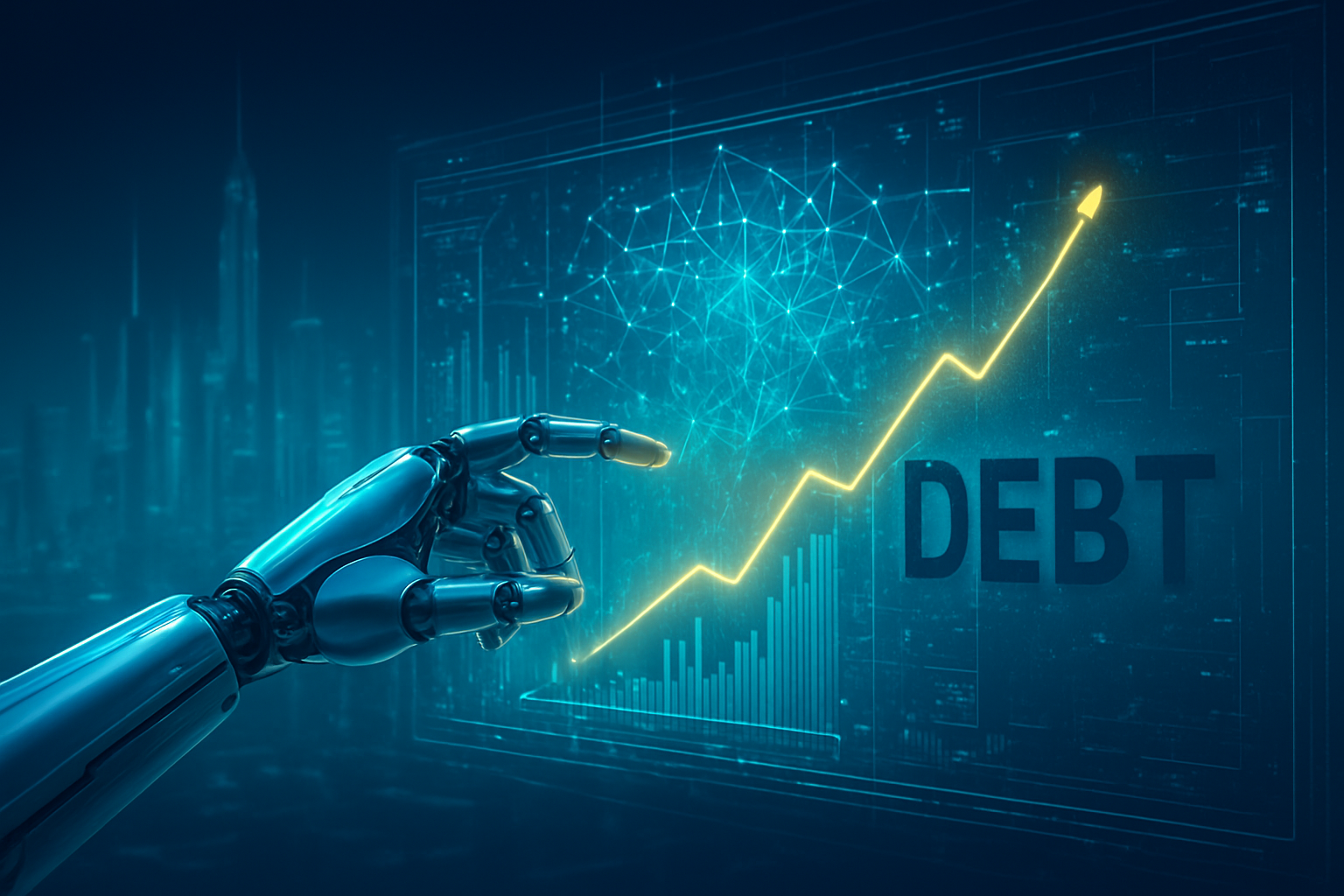
  • Elon Musk Declares AI and Robotics as the ‘Only’ Solution to the Looming US Debt Crisis

    Elon Musk Declares AI and Robotics as the ‘Only’ Solution to the Looming US Debt Crisis

    In a bold and characteristically provocative assertion, visionary entrepreneur Elon Musk has declared Artificial Intelligence (AI) and advanced robotics as the singular viable path to resolving the United States' escalating national debt crisis. With the national debt now surpassing an alarming $38 trillion, Musk's pronouncement, made during a recent interview with podcaster Nikhil Kamath and reiterated across platforms like X (formerly Twitter (NYSE: X)) and the Joe Rogan Experience, has ignited fervent debate among economists, technologists, and policymakers alike. His argument pivots on an unprecedented surge in economic output and productivity, a feat he believes only AI and automation can achieve, effectively outmaneuvering inflation and creating a future of abundance.

    Musk's contention arrives at a critical juncture for the US economy, where the interest payments on the national debt have eclipsed the nation's entire military budget – a stark reality he describes as a personal "wake-up call." This alarming metric underpins his belief that traditional political and economic levers are insufficient to tackle a problem of such monumental scale. Instead, he champions a radical, technology-driven solution: leveraging AI and robotics to dramatically increase the production of goods and services. This exponential growth in output, he argues, would not only counteract inflationary pressures but also expand the economy to a degree necessary to render the massive debt manageable, if not ultimately negligible, potentially making work "optional" in a future of extreme productivity and abundance.

    The Technocratic Solution: Productivity as the Panacea

    Musk's rationale for AI and robotics as the "only" solution to the US debt crisis is rooted in a fundamental economic principle: productivity growth. He posits that if the output of real business services increases slower than the money supply, inflation inevitably ensues. Conversely, a massive and sustained surge in the production of goods and services, driven by highly efficient AI and robotic systems, would likely lead to deflationary pressures by overwhelming demand with supply. He optimistically predicts that within three years or less, the output of goods and services could outpace inflation, creating an economic environment where the debt's relative burden diminishes significantly.

    This perspective starkly contrasts with conventional economic strategies, which typically involve fiscal austerity, tax adjustments, or monetary policy shifts by institutions like the Federal Reserve. Musk's approach bypasses these traditional mechanisms, proposing a technological paradigm shift as the ultimate economic lever. Unlike incremental policy changes, which often face political gridlock and limited scope, Musk envisions a transformative leap in productive capacity, where automated systems handle the vast majority of labor-intensive tasks, from manufacturing to service delivery. This differs from previous industrial revolutions by not merely augmenting human labor but potentially replacing it on a mass scale, leading to an unprecedented era of material abundance. Initial reactions from the AI research community are mixed; while the potential for AI to boost productivity is widely acknowledged, the idea of it singularly solving a complex macroeconomic problem like national debt is viewed with both intrigue and skepticism. Many experts agree on AI's potential to drive growth but question the feasibility of such a direct and absolute solution without significant social and political upheaval.

    Reshaping the AI and Tech Landscape

    Elon Musk's bold assertion has significant implications for AI companies, tech giants, and startups, potentially galvanizing investment and innovation in specific sectors. Companies deeply entrenched in industrial automation, advanced robotics, and AI-driven efficiency stand to benefit immensely. Tesla (NASDAQ: TSLA), through its advancements in AI for autonomous vehicles and humanoid robots like Optimus, is a prime example of a company directly aligned with Musk's vision. Similarly, xAI, Musk's dedicated AI venture, could see its mission broaden beyond large language models to encompass AI solutions for industrial optimization and resource management.

    The competitive landscape for major AI labs and tech companies could shift dramatically. There will likely be an increased focus on developing AI systems capable of managing complex supply chains, optimizing resource allocation, and automating manufacturing processes at scale. This could spur a new wave of startups specializing in niche AI applications for productivity enhancement across various industries, from agriculture to logistics and healthcare. Existing tech giants like Alphabet (NASDAQ: GOOGL), Amazon (NASDAQ: AMZN), and Microsoft (NASDAQ: MSFT), with their extensive cloud infrastructure and AI research divisions, are well-positioned to capitalize on this trend by offering AI-as-a-service solutions that enable businesses to integrate advanced automation. The potential disruption to existing products and services could be profound, particularly in sectors reliant on human labor, pushing companies to rapidly adopt AI to remain competitive. Market positioning will increasingly favor those who can demonstrate tangible productivity gains through AI and robotics, potentially creating new strategic advantages for early adopters and innovators.

    The Broader Significance: A Leap Towards Abundance or a Leap of Faith?

    Musk's proposal fits into the broader AI landscape by pushing the boundaries of what society expects from artificial intelligence. It aligns with long-term trends towards greater automation, the pursuit of Artificial General Intelligence (AGI), and discussions around a post-scarcity economy. If AI and robotics could truly generate an economic surplus sufficient to offset national debt, it would represent an unprecedented milestone in human history, fundamentally altering our relationship with work, resources, and economic systems. The impacts could be revolutionary, potentially leading to a world where basic needs are met without the necessity of labor, freeing humanity to pursue higher-order endeavors.

    However, this vision is not without significant concerns. The most immediate is the potential for massive job displacement across virtually all sectors, raising critical questions about social safety nets, retraining programs, and the equitable distribution of AI-generated wealth. Critics also point to the immense capital investment required to achieve such a level of automation and the potential for increased economic inequality if the benefits are not widely shared. Ethical considerations surrounding autonomous decision-making in economic systems, the concentration of power in the hands of those who control the AI, and the very definition of human purpose in a work-optional world become paramount. While the potential for AI to drive unprecedented economic growth is undeniable, the idea of it as the sole solution to a problem as multifaceted as national debt, without addressing the underlying socio-political and ethical challenges, is viewed by many as an oversimplification, albeit a thought-provoking one.

    Charting the Course: Future Developments and Challenges

    The near-term future will likely see continued advancements in specialized AI for industrial automation, logistics, and data-driven optimization. Expect to see more sophisticated robotic systems capable of complex manipulation and decision-making in manufacturing, agriculture, and service industries. Long-term developments could include the maturation of humanoid robots like Optimus, capable of performing a wide range of tasks in unstructured environments, and the deployment of advanced AI systems for macro-economic forecasting and resource allocation. Potential applications on the horizon include fully automated factories, AI-managed smart cities, and highly efficient supply chains that minimize waste and maximize output.

    However, significant challenges need to be addressed before Musk's vision could become a reality. Scaling AI and robotics to the extent required to impact a $38 trillion debt crisis demands massive investment in infrastructure, research, and development. Regulatory frameworks will need to evolve rapidly to address issues of AI governance, labor displacement, and economic stability. Furthermore, public acceptance and trust in highly autonomous systems will be crucial. Experts predict a gradual increase in AI-driven productivity, but many remain skeptical about the timeline and the absolute nature of Musk's claim. The consensus leans towards AI being a powerful tool for economic growth, rather than a magic bullet for systemic debt without parallel societal and political reforms. The debate will undoubtedly continue, spurring further research into the techno-economic frontier.

    A Visionary's Gambit: The AI Solution to Debt

    Elon Musk's declaration that AI and robotics are the "only" solutions to the US debt crisis represents a significant moment in the ongoing discourse about artificial intelligence's transformative power. It underscores the belief that technological innovation can offer radical solutions to seemingly intractable economic problems. The key takeaway is Musk's emphasis on unparalleled productivity growth as the ultimate economic lever, moving beyond traditional fiscal and monetary policies. While the feasibility and societal implications of such a singular solution remain subjects of intense debate, his assertion undeniably pushes the boundaries of our imagination regarding AI's potential.

    This development holds immense significance in AI history, not just for the technological advancements it champions, but for framing AI as a potential savior for national economies. It challenges us to consider a future where abundance, driven by intelligent machines, could fundamentally reshape our economic paradigms. In the coming weeks and months, it will be crucial to watch how governments, economists, and AI developers respond to this audacious vision. Will there be increased investment in automation technologies aimed at national economic challenges? How will the debate evolve regarding the societal safeguards needed for such a profound shift? Elon Musk has thrown down a gauntlet, inviting the world to ponder whether the future of economic stability lies not in policy rooms, but in the silicon brains and robotic arms of advanced AI.


    This content is intended for informational purposes only and represents analysis of current AI developments.

    TokenRing AI delivers enterprise-grade solutions for multi-agent AI workflow orchestration, AI-powered development tools, and seamless remote collaboration platforms.
    For more information, visit https://www.tokenring.ai/.

  • The Real-Time Revolution: How AI and IoT are Forging a New Era of Data-Driven Decisions

    The Real-Time Revolution: How AI and IoT are Forging a New Era of Data-Driven Decisions

    The convergence of Artificial Intelligence (AI) and the Internet of Things (IoT) is ushering in an unprecedented era of data-driven decision-making, fundamentally reshaping operational strategies across virtually every industry. This powerful synergy allows organizations to move beyond traditional reactive approaches, leveraging vast streams of real-time data from interconnected devices to generate actionable insights and sophisticated predictive analytics. The immediate significance lies in the ability to gather, process, and analyze information at speeds and scales previously unimaginable, transforming complex raw data into strategic intelligence.

    This transformative shift empowers businesses to make agile, precise, and proactive decisions, leading to substantial improvements in efficiency, cost savings, and competitive advantage. From optimizing manufacturing processes with predictive maintenance to streamlining global supply chains and enhancing personalized customer experiences, AI and IoT are not just improving existing operations; they are redefining what's possible, driving a paradigm shift towards intelligent, adaptive, and highly responsive enterprise ecosystems.

    The Technical Alchemy: How AI Unlocks IoT's Potential

    The symbiotic relationship between AI and IoT positions IoT as the sensory layer of the digital world, continuously collecting vast and diverse datasets, while AI acts as the intelligent brain, transforming this raw data into actionable insights. IoT devices are equipped with an extensive array of sensors, including temperature, humidity, motion, pressure, vibration, GPS, optical, and RFID, which generate an unprecedented volume of data in various formats—text, images, audio, and time-series signals. Handling such massive, continuous data streams necessitates robust, scalable infrastructure, often leveraging cloud-based solutions and distributed processing.

    AI algorithms process this deluge of IoT data through various advanced machine learning models to detect patterns, predict outcomes, and generate actionable insights. Machine Learning (ML) serves as the foundation, learning from historical and real-time sensor data for critical applications like predictive maintenance, anomaly detection, and resource optimization. For instance, ML models analyze vibration and temperature data from industrial equipment to predict failures, enabling proactive interventions that drastically reduce downtime and costs. Deep Learning (DL), a subset of ML, utilizes artificial neural networks to excel at complex pattern recognition, particularly effective for processing unstructured sensor data such as images from quality control cameras or video feeds, leading to higher accuracy in predictions and reduced human intervention.

    A crucial advancement is Edge AI, which moves AI computation and inference closer to the data source—directly on IoT devices or edge computing nodes. This significantly reduces latency and bandwidth usage, critical for applications requiring immediate responses like autonomous vehicles or industrial automation. Edge AI facilitates real-time processing and predictive modeling, allowing AI systems to rapidly process data as it's generated, identify patterns instantly, and forecast future trends. This capability fundamentally shifts operations from reactive to proactive, enabling businesses to anticipate issues, optimize resource allocation, and plan strategically. Unlike traditional Business Intelligence (BI) which focuses on "what happened" through batch processing of historical data, AI-driven IoT emphasizes "what will happen" and "what should be done" through real-time streaming data, automated analysis, and continuous learning.

    The AI research community and industry experts have met this integration with immense enthusiasm, hailing it as a "monumental leap forward" and a path to "pervasive environmental intelligence." While acknowledging the immense potential, experts also highlight challenges such as the AI skill gap, the critical need for high-quality data, and pressing concerns around cybersecurity, data privacy, and algorithmic bias. Despite these hurdles, the prevailing sentiment is that the benefits of improved performance, reduced costs, enhanced efficiency, and predictive capabilities far outweigh the risks when addressed strategically and ethically.

    Corporate Chessboard: Impact on Tech Giants, AI Companies, and Startups

    The proliferation of AI and IoT in data-driven decision-making is fundamentally reshaping the competitive landscape, creating both immense opportunities and significant strategic shifts across the technology sector. This AIoT convergence is driving innovation, efficiency, and new business models.

    AI Companies are at the forefront, leveraging AI and IoT data to enhance their core offerings. They benefit from developing more sophisticated algorithms, accurate predictions, and intelligent automation for specialized solutions like predictive maintenance or smart city analytics. Companies like Samsara (NYSE: IOT), which provides IoT and AI solutions for operational efficiency, and UiPath Inc. (NYSE: PATH), a leader in robotic process automation increasingly integrating generative AI, are prime examples. The competitive implications for major AI labs include a "data moat" for those who can effectively utilize large volumes of IoT data, and the ongoing challenge of the AI skill gap. Disruption comes from the obsolescence of static AI models, a shift towards Edge AI, and the rise of integrated AIoT platforms, pushing companies towards full-stack expertise and industry-specific customization. Innodata Inc. (NASDAQ: INOD) is also well-positioned to benefit from this AI adoption trend.

    Tech Giants possess the vast resources, infrastructure, and existing customer bases to rapidly scale AIoT initiatives. Companies like Amazon (NASDAQ: AMZN), through AWS IoT Analytics, and Microsoft (NASDAQ: MSFT), with its Azure IoT suite, leverage their cloud computing platforms to offer comprehensive solutions for predictive analytics and anomaly detection. Google (NASDAQ: GOOGL) utilizes AI and IoT in its data centers for efficiency and has initiatives like Project Brillo for IoT OS. Their strategic advantages include ecosystem dominance, real-time data processing at scale, and cross-industry application. However, they face intense platform wars, heightened scrutiny over data privacy and regulation, and fierce competition for AI and IoT talent. Arm Holdings plc (NASDAQ: ARM) benefits significantly by providing the architectural backbone for AI hardware across various devices, while BlackBerry (TSX: BB, NASDAQ: BB) integrates AI into secure IoT and automotive solutions.

    Startups can be highly agile and disruptive, quickly identifying niche markets and offering innovative solutions. Companies like H2Ok Innovations, which uses AI to analyze factory-level data, and Yalantis, an IoT analytics company delivering real-time, actionable insights, exemplify this. AIoT allows them to streamline operations, reduce costs, and offer hyper-personalized customer experiences from inception. However, startups face challenges in securing capital, accessing large datasets, talent scarcity, and ensuring scalability and security. Their competitive advantage lies in a data-driven culture, agile development, and specialization in vertical markets where traditional solutions are lacking. Fastly Inc. (NYSE: FSLY), as a mid-sized tech company, also stands to benefit from market traction in AI, data centers, and IoT. Ultimately, the integration of AI and IoT is creating a highly dynamic environment where companies that embrace AIoT effectively gain significant strategic advantages, while those that fail to adapt risk being outpaced.

    A New Frontier: Wider Significance and Societal Implications

    The convergence of AI and IoT is not merely an incremental technological advancement; it represents a profound shift in the broader AI landscape, driving a new era of pervasive intelligence and autonomous systems. This synergy creates a robust framework where IoT devices continuously collect data, AI algorithms analyze it to identify intricate patterns, and systems move beyond descriptive analytics to offer predictive and prescriptive insights, often automating complex decision-making processes.

    This integration is a cornerstone of several critical AI trends. Edge AI is crucial, deploying AI algorithms directly on local IoT devices to reduce latency, enhance data security, and enable real-time decision-making for time-sensitive applications like autonomous vehicles. Digital Twins, dynamic virtual replicas of physical assets continuously updated by IoT sensors and made intelligent by AI, facilitate predictive maintenance, operational optimization, and scenario planning, with Edge AI further enhancing their autonomy. The combination is also central to the development of fully Autonomous Systems in transportation, manufacturing, and robotics, allowing devices to operate effectively without constant human oversight. Furthermore, the proliferation of 5G connectivity is supercharging AIoT, providing the necessary speed, ultra-low latency, and reliable connections to support vast numbers of connected devices and real-time, AI-driven applications.

    The impacts across industries are transformative. In Manufacturing, AIoT enables real-time machine monitoring and predictive maintenance. Retail and E-commerce benefit from personalized recommendations and optimized inventory. Logistics and Supply Chain gain real-time tracking and route optimization. Smart Cities leverage it for efficient traffic management, waste collection, and public safety. In Healthcare, IoT wearables combined with AI allow for continuous patient monitoring and early detection of issues. Agriculture sees precision farming with AI-guided irrigation and pest control, while Banking utilizes advanced AI-driven fraud detection.

    However, this transformative power comes with significant societal implications and concerns. Job displacement is a major worry as AI and automation take over routine and complex tasks, necessitating ethical frameworks, reskilling programs, and strategies to create new job opportunities. Ethical AI is paramount, addressing algorithmic bias that can perpetuate societal prejudices and ensuring transparency and accountability in AI's decision-making processes. Data privacy is another critical concern, with the extensive data collection by IoT devices raising risks of breaches, unauthorized use, and surveillance. Robust data governance practices and adherence to regulations like GDPR and CCPA are essential. Other concerns include security risks (expanded attack surfaces, adversarial AI), interoperability challenges between diverse systems, potential over-reliance and loss of control in autonomous systems, and the slow pace of regulatory frameworks catching up with rapid technological advancements.

    Compared to previous AI milestones—from early symbolic reasoning (Deep Blue) to the machine learning era (IBM Watson) and the deep learning/generative AI explosion (GPT models, Google Gemini)—the AIoT convergence represents a distinct leap. It moves beyond isolated intelligent tasks or cloud-centric processing to imbue the physical world with pervasive, real-time intelligence and the capacity for autonomous action. This fusion is not just an evolution; it is a revolution, fundamentally reshaping how we interact with our environment and solve complex problems in our daily lives.

    The Horizon of Intelligence: Future Developments and Predictions

    The convergence of AI and IoT is poised to drive an even more profound transformation in data-driven decision-making, promising a future where connected devices not only collect vast amounts of data but also intelligently analyze it in real-time to enable proactive, informed, and often autonomous decisions.

    In the near-term (1-3 years), we can expect a widespread proliferation of AI-driven decision support systems across businesses, offering real-time, context-aware insights for quicker and more informed decisions. Edge computing and distributed AI will surge, allowing advanced analytics to be performed closer to the data source, drastically reducing latency for applications like autonomous vehicles and industrial automation. Enhanced real-time data integration and automation will become standard, coupled with broader adoption of Digital Twin technologies for optimizing complex systems. The ongoing global rollout of 5G networks will significantly boost AIoT capabilities, providing the necessary speed and low latency for real-time processing and analysis.

    Looking further into the long-term (beyond 3 years), the evolution of AI ethics and governance frameworks will be pivotal in shaping responsible AI practices, ensuring transparency, accountability, and addressing bias. The advent of 6G will further empower IoT devices for mission-critical applications like autonomous driving and precision healthcare. Federated Learning will enable decentralized AI, allowing devices to collaboratively train models without exchanging raw data, preserving privacy. This will contribute to the democratization of intelligence, shifting AI from centralized clouds to distributed devices. Generative AI, powered by large language models, will be embedded into IoT devices for conversational interfaces and predictive agents, leading to the emergence of autonomous AI Agents that interact, make decisions, and complete tasks. Experts even predict the rise of entirely AI-native firms that could displace today's tech giants.

    Potential applications and use cases on the horizon are vast. In Manufacturing and Industrial IoT (IIoT), expect more sophisticated predictive maintenance, automated quality control, and enhanced worker safety through AI and wearables. Smart Cities will see more intelligent traffic management and environmental monitoring. Healthcare will benefit from real-time patient monitoring via AI-equipped wearables and predictive analytics for facility planning. Retail and E-commerce will offer hyper-personalized customer experiences and highly optimized inventory and supply chain management. Precision Farming will leverage AIoT for targeted irrigation, fertilization, and livestock monitoring, while Energy and Utility Management will see smarter grids and greater energy efficiency.

    However, significant challenges must be addressed. Interoperability remains a hurdle, requiring clear standards for integrating diverse IoT devices and legacy systems. Ethics and bias in AI algorithms, along with the need for transparency and public acceptance, are paramount. The rapidly increasing energy consumption of AI-driven data centers demands innovative solutions. Data privacy and security will intensify, requiring robust protocols against cyberattacks and data poisoning, especially with the rise of Shadow AI (unsanctioned generative AI use by employees). Skill gaps in cross-disciplinary professionals, demands for advanced infrastructure (5G, 6G), and the complexity of data quality also pose challenges.

    Experts predict the AIoT market will expand significantly, projected to reach $79.13 billion by 2030 from $18.37 billion in 2024. This growth will be fueled by accelerated adoption of digital twins, multimodal AI for context-aware applications, and the integration of AI with 5G and edge computing. While short-term job market disruptions are expected, AI is also anticipated to spark many new roles, driving economic growth. The increasing popularity of synthetic data will address privacy concerns in IoT applications. Ultimately, autonomous IoT systems, leveraging AI, will self-manage, diagnose, and optimize with minimal human intervention, leading the forefront of industrial automation and solidifying the "democratization of intelligence."

    The Intelligent Nexus: A Comprehensive Wrap-Up

    The convergence of Artificial Intelligence (AI) and the Internet of Things (IoT) represents a monumental leap in data-driven decision-making, fundamentally transforming how organizations operate and strategize. This synergy, often termed AIoT, ushers in an era where interconnected devices not only gather vast amounts of data but also intelligently analyze, learn, and often act autonomously, leading to unprecedented levels of efficiency, intelligence, and innovation across diverse sectors.

    Key takeaways from this transformative power include the ability to derive real-time insights with enhanced accuracy, enabling businesses to shift from reactive to proactive strategies. AIoT drives smarter automation and operational efficiency through applications like predictive maintenance and optimized supply chains. Its predictive and prescriptive capabilities allow for precise forecasting and strategic resource allocation. Furthermore, it facilitates hyper-personalization for enhanced customer experiences and provides a significant competitive advantage through innovation. The ability of AI to empower IoT devices with autonomous decision-making capabilities, often at the edge, marks a critical evolution in distributed intelligence.

    In the grand tapestry of AI history, the AIoT convergence marks a pivotal moment. It moves beyond the early symbolic reasoning and machine learning eras, and even beyond the initial deep learning breakthroughs, by deeply integrating intelligence into the physical world. This is not just about processing data; it's about imbuing the "nervous system" of the digital world (IoT) with the "brain" of smart technology (AI), creating self-learning, adaptive ecosystems. This profound integration is a defining characteristic of the Fourth Industrial Revolution, allowing devices to perceive, act, and learn, pushing the boundaries of automation and intelligence to unprecedented levels.

    The long-term impact will be profound and pervasive, creating a smarter, self-learning world. Industries will undergo continuous intelligent transformation, optimizing operations and resource utilization across the board. However, this evolution necessitates a careful navigation of ethical and societal shifts, particularly concerning privacy protection, data security, and algorithmic bias. Robust governance frameworks will be crucial to ensure transparency and responsible AI deployment. The workforce will also evolve, requiring continuous upskilling to bridge the AI skill gap. Ultimately, the future points towards a world where intelligent, data-driven systems are the backbone of most human activities, enabling more adaptive, efficient, and personalized interactions with the physical world.

    In the coming weeks and months, several key trends will continue to shape this trajectory. Watch for the increasing proliferation of Edge AI and distributed AI models, bringing real-time decision-making closer to the data source. Expect continued advancements in AI algorithms, with greater integration of generative AI into IoT applications, leading to more sophisticated and context-aware decision support systems. The ongoing rollout of 5G networks will further amplify AIoT capabilities, while the focus on cybersecurity and data governance will intensify to protect against evolving threats and ensure compliance. Crucially, the development of effective human-AI collaboration models will be vital, ensuring that AI augments, rather than replaces, human judgment. Finally, addressing the AI skill gap through targeted training and the growing popularity of synthetic data for privacy-preserving AI model training will be critical indicators of progress. The immediate future promises a continued push towards more intelligent, autonomous, and integrated systems, solidifying AIoT as the foundational backbone of modern data-driven strategies.


    This content is intended for informational purposes only and represents analysis of current AI developments.

    TokenRing AI delivers enterprise-grade solutions for multi-agent AI workflow orchestration, AI-powered development tools, and seamless remote collaboration platforms.
    For more information, visit https://www.tokenring.ai/.

  • Landmark AI Arbitration Victory: Journalists Secure Rights Against Unchecked AI Deployment

    Landmark AI Arbitration Victory: Journalists Secure Rights Against Unchecked AI Deployment

    Washington D.C. – December 1, 2025 – In a pivotal moment for labor and intellectual property rights in the rapidly evolving media landscape, journalists at Politico and E&E News have secured a landmark victory in an arbitration case against their management regarding the deployment of artificial intelligence. The ruling, announced today by the PEN Guild, representing over 270 unionized journalists, establishes a critical precedent that AI cannot be unilaterally introduced to bypass union agreements, ethical journalistic standards, or human oversight. This decision reverberates across the tech and media industries, signaling a new era where the integration of AI must contend with established labor protections and the imperative of journalistic integrity.

    The arbitration outcome underscores the growing tension between rapid technological advancement and the safeguarding of human labor and intellectual output. As AI tools become increasingly sophisticated, their application in content creation raises profound questions about authorship, accuracy, and the future of work. This victory provides a tangible answer, asserting that collective bargaining agreements can and must serve as a bulwark against the unbridled, and potentially harmful, implementation of AI in newsrooms.

    The Case That Defined AI's Role in Newsgathering

    The dispute stemmed from Politico's alleged breaches of an AI article within the PEN Guild's collective bargaining agreement, a contract ratified in 2024 and notably one of the first in the media industry to include enforceable AI rules. These provisions mandated 60 days' notice and good-faith bargaining before introducing AI tools that would "materially and substantively" impact job duties or lead to layoffs. Furthermore, any AI used for "newsgathering" had to adhere to Politico's ethical standards and involve human oversight.

    The PEN Guild brought forth two primary allegations. Firstly, Politico deployed an AI feature, internally named LETO, to generate "Live Summaries" of major political events, including the 2024 Democratic National Convention and the vice presidential debate. The union argued these summaries were published without the requisite notice, bargaining, or adequate human review. Compounding the issue, these AI-generated summaries contained factual errors and utilized language barred by Politico's Stylebook, such as "criminal migrants," which were reportedly removed quietly without standard editorial correction protocols. Politico management controversially argued that these summaries did not constitute "newsgathering."

    Secondly, in March 2025, Politico launched a "Report Builder" tool, developed in partnership with CapitolAI, for its Politico Pro subscribers, designed to generate branded policy reports. The union contended that this tool produced significant factual inaccuracies, including the fabrication of lobbying causes for nonexistent groups like the "Basket Weavers Guild" and the erroneous claim that Roe v. Wade remained law. Politico's defense was that this tool, being a product of engineering teams, fell outside the newsroom's purview and thus the collective bargaining agreement.

    The arbitration hearing took place on July 11, 2025, culminating in a ruling issued on November 26, 2025. The arbitrator decisively sided with the PEN Guild, finding Politico management in violation of the collective bargaining agreement. The ruling explicitly rejected Politico's narrow interpretation of "newsgathering," stating that it was "difficult to imagine a more literal example of newsgathering than to capture a live feed for purposes of summarizing and publishing." This ruling sets a clear benchmark, establishing that AI-driven content generation, when it touches upon journalistic output, falls squarely within the domain of newsgathering and thus must adhere to established editorial and labor standards.

    Shifting Sands for AI Companies and Tech Giants

    This landmark ruling sends a clear message to AI companies, tech giants, and startups developing generative AI tools for content creation: the era of deploying AI without accountability or consideration for human labor and intellectual property rights is drawing to a close. Companies like OpenAI, Google (NASDAQ: GOOGL), and Microsoft (NASDAQ: MSFT), heavily invested in large language models (LLMs) and AI-powered content generation, will need to closely examine how their technologies are integrated into industries with strong labor protections and ethical guidelines.

    The decision will likely prompt a re-evaluation of product development strategies, emphasizing "human-in-the-loop" systems and robust oversight mechanisms rather than fully autonomous content generation. For startups specializing in AI for media, this could mean a shift towards tools that augment human journalists rather than replace them, focusing on efficiency and research assistance under human control. Companies that offer solutions for AI governance, content verification, and ethical AI deployment stand to benefit as organizations scramble to ensure compliance.

    Conversely, companies that have pushed for rapid, unchecked AI adoption in content creation without considering labor implications may face increased scrutiny, legal challenges, and potential unionization efforts. This ruling could disrupt existing business models that rely on cheap, AI-generated content, forcing a pivot towards higher quality, ethically sourced, and human-vetted information. The competitive landscape will undoubtedly shift, favoring those who can demonstrate responsible AI implementation and a commitment to collaborative innovation with human workers.

    A Wider Lens: AI, Ethics, and the Future of Journalism

    The Politico/E&E News arbitration victory fits into a broader global trend of grappling with the societal impacts of AI. It stands as a critical milestone alongside ongoing debates about AI copyright infringement, deepfakes, and the spread of misinformation. In the absence of comprehensive federal AI regulations in the U.S., this ruling underscores the vital role of collective bargaining agreements as a practical mechanism for establishing guardrails around AI deployment in specific industries. It reinforces the principle that technological advancement should not come at the expense of ethical standards or worker protections.

    The case highlights profound ethical concerns for content creation. The errors generated by Politico's AI tools—fabricating information, misattributing actions, and using biased language—demonstrate the inherent risks of relying on AI without stringent human oversight. This incident serves as a stark reminder that while AI can process vast amounts of information, it lacks the critical judgment, ethical framework, and nuanced understanding that are hallmarks of professional journalism. The ruling effectively champions human judgment and editorial integrity as non-negotiable elements in news production.

    This decision can be compared to earlier milestones in technological change, such as the introduction of automation in manufacturing or digital tools in design. In each instance, initial fears of job displacement eventually led to redefinitions of roles, upskilling, and, crucially, the establishment of new labor protections. This AI arbitration victory positions itself as a foundational step in defining the "rules of engagement" for AI in a knowledge-based industry, ensuring that the benefits of AI are realized responsibly and ethically.

    The Road Ahead: Navigating AI's Evolving Landscape

    In the near term, this ruling is expected to embolden journalists' unions across the media industry to negotiate stronger AI clauses in their collective bargaining agreements. We will likely see a surge in demands for notice, bargaining, and robust human oversight mechanisms for any AI tool impacting journalistic work. Media organizations, particularly those with unionized newsrooms, will need to conduct thorough audits of their existing and planned AI deployments to ensure compliance and avoid similar legal challenges.

    Looking further ahead, this decision could catalyze the development of industry-wide best practices for ethical AI in journalism. This might include standardized guidelines for AI attribution, error correction protocols for AI-generated content, and clear policies on data sourcing and bias mitigation. Potential applications on the horizon include AI tools that genuinely assist journalists with research, data analysis, and content localization, rather than attempting to autonomously generate news.

    Challenges remain, particularly in non-unionized newsrooms where workers may lack the contractual leverage to negotiate AI protections. Additionally, the rapid pace of AI innovation means that new tools and capabilities will continually emerge, requiring ongoing vigilance and adaptation of existing agreements. Experts predict that this ruling will not halt AI integration but rather refine its trajectory, pushing for more responsible and human-centric AI development within the media sector. The focus will shift from if AI will be used to how it will be used.

    A Defining Moment in AI History

    The Politico/E&E News journalists' victory in their AI arbitration case is a watershed moment, not just for the media industry but for the broader discourse on AI's role in society. It unequivocally affirms that human labor rights and ethical considerations must precede the unfettered deployment of artificial intelligence. Key takeaways include the power of collective bargaining to shape technological adoption, the critical importance of human oversight in AI-generated content, and the imperative for companies to prioritize accuracy and ethical standards over speed and cost-cutting.

    This development will undoubtedly be remembered as a defining point in AI history, establishing a precedent for how industries grapple with the implications of advanced automation on their workforce and intellectual output. It serves as a powerful reminder that while AI offers immense potential, its true value is realized when it serves as a tool to augment human capabilities and uphold societal values, rather than undermine them.

    In the coming weeks and months, watch for other unions and professional organizations to cite this ruling in their own negotiations and policy advocacy. The media industry will be a crucial battleground for defining the ethical boundaries of AI, and this arbitration victory has just drawn a significant line in the sand.


    This content is intended for informational purposes only and represents analysis of current AI developments.

    TokenRing AI delivers enterprise-grade solutions for multi-agent AI workflow orchestration, AI-powered development tools, and seamless remote collaboration platforms.
    For more information, visit https://www.tokenring.ai/.

  • AI: The New Political Wedge Driving Divisions Within Parties

    AI: The New Political Wedge Driving Divisions Within Parties

    Artificial intelligence, once a topic primarily relegated to the tech sector, has rapidly ascended to the forefront of political discourse, transforming into a potent "wedge issue" that is increasingly fracturing political parties from within, rather than merely dividing them along traditional ideological lines. As of December 1, 2025, this internal party fragmentation marks a critical juncture in the governance of AI, complicating policymaking and reshaping political strategies in an era defined by rapid technological change.

    The immediate significance of AI as an intra-party divider lies in its multifaceted implications across economic, ethical, and national security domains. Unlike previous technologies that often presented clearer partisan battlegrounds, AI's pervasive nature challenges established ideological stances, forcing politicians to reconcile competing values among their own ranks. This internal friction leads to a fragmented policy landscape, where a cohesive national strategy is often elusive, paving the way for a patchwork of state-level regulations and hindering broader consensus on how to harness AI's potential while mitigating its risks.

    The Cracks Within: Diverse Viewpoints and Driving Concerns

    The internal political divisions over AI policy are deep and complex, driven by differing viewpoints on regulation, economic impact, ethical concerns, and national security, manifesting in conflicting legislative proposals and public statements.

    Within the Republican Party in the U.S., a significant rift exists between those who champion minimal federal regulation to foster innovation and maintain competitiveness, often aligned with the "tech-right" faction, and a "populist MAGA contingent" that distrusts "Big Tech" and advocates for stronger state-level oversight to protect workers and children from potential harms. Former President Trump's push to prevent states from regulating AI to avoid a "patchwork of 50 State Regulatory Regimes" met resistance from this populist wing, leading to the removal of such a provision from a Republican tax and spending bill. This highlights the tension between market freedom and a desire for accountability for powerful tech entities. Concerns about job displacement due to automation and the environmental impact of energy-intensive AI data centers also contribute to these internal debates, creating unexpected bipartisan opposition at the local level.

    The Democratic Party, while generally favoring stronger federal oversight, grapples with internal disagreements over the scope and burden of regulation. Progressive factions often seek comprehensive accountability for AI programming, prioritizing protections against algorithmic discrimination and advocating for transparency. In contrast, more moderate Democrats may prefer approaches that minimize burdens on businesses, treating AI services similarly to human-operated businesses, aiming for a balance that encourages responsible innovation. Debates in states like Colorado over modifications to pioneering AI regulation laws exemplify these internal tensions, with different Democratic lawmakers proposing competing measures to achieve either robust disclosure or simpler, existing business regulations.

    Across the Atlantic, the Labour Party in the UK, now in government, has shifted towards a more interventionist approach, advocating for "binding regulation" for powerful AI models, aligning more with the EU's comprehensive AI Act. This contrasts with earlier cautious tones and emphasizes ethical safeguards against privacy invasion and discriminatory algorithms. The previous Conservative Party government, under Rishi Sunak, favored a "pro-innovation" or "light-touch" approach, relying on existing regulatory bodies and a principles-based framework, though even they faced challenges in brokering voluntary agreements between content rights holders and AI developers. These differing philosophies underscore a core tension within both parties: how to balance the imperative of technological advancement with the critical need for ethical guardrails and societal protection.

    Corporate Crossroads: Navigating a Politically Charged AI Landscape

    The emergence of AI as a political wedge issue profoundly impacts AI companies, tech giants, and startups, shaping their market positioning, competitive strategies, and operational challenges.

    Large tech giants such as Alphabet (NASDAQ: GOOGL), Microsoft (NASDAQ: MSFT), Meta Platforms (NASDAQ: META), and Amazon (NASDAQ: AMZN) are generally better equipped to navigate this complex environment. Their vast legal and lobbying resources allow them to absorb high compliance costs and actively influence policy discussions, often advocating for unified federal frameworks that reduce the complexity of fragmented state-level regulations. These companies can strategically push for policies that align with their business models, potentially entrenching their market dominance and making it harder for smaller competitors to enter. Alliances between big tech and AI startups are already under scrutiny by antitrust authorities, raising concerns about anti-competitive practices.

    Conversely, AI startups and mid-sized companies face significant disadvantages. The "patchwork" of state-level regulations in the U.S., combined with diverse global frameworks like the EU AI Act, imposes substantial compliance burdens that can stifle innovation and growth. Lacking the extensive legal and lobbying power of giants, these smaller entities find it challenging to adapt to varying rule sets, often requiring expensive external advisors. This regulatory friction can slow product development and launch cycles due to extensive compliance reviews. Companies focused on open-source AI may also find themselves at a disadvantage if regulatory trends favor proprietary models, depending on policy shifts.

    The competitive landscape is becoming increasingly uneven. Political divisions contribute to an environment where regulatory outcomes can favor established players, potentially leading to increased market concentration. Furthermore, the global divergence in AI policy, particularly between the U.S. and the EU, could force American developers to create distinct and costly product lines to comply with different market demands—for instance, a "Gov-AI" for federal contracts and models sensitive to fairness and DEI for global consumer markets. This not only impacts competitiveness but also raises questions about the global interoperability and ethical alignment of AI systems. Market volatility due to regulatory uncertainty also impacts AI stock valuations and investor confidence, forcing companies to be more cautious in their AI deployments.

    A New Frontier of Division: Broader Significance and Concerns

    AI's emergence as a political wedge issue signifies a critical juncture where advanced technology directly impacts the foundational elements of democracy, fitting into broader AI trends that highlight concerns about governance, ethics, and societal impact.

    This phenomenon is distinct from, yet shares some parallels with, previous technological milestones that became politically divisive. The most direct comparison is with social media platforms, which, in the last decade, also reshaped democracy by enabling the rapid spread of misinformation and the formation of echo chambers. However, AI amplifies these concerns "faster, at scale, and with far less visibility" due to its capacity for autonomous content generation, hyper-personalization, and undetectable manipulation. While historical communication technologies like the printing press, radio, and television expanded the reach of human-created messages, AI introduces a new level of complexity by creating synthetic realities and targeting individuals with persuasive, customized content, posing a qualitatively different challenge to truth and trust.

    The broader impacts and potential concerns are substantial. AI algorithms, particularly on social media, are designed to personalize content, inadvertently creating "echo chambers" that deepen political polarization and make it challenging to find common ground. This amplification of confirmation bias, coupled with the potential for geopolitical biases in Large Language Models (LLMs), exacerbates international and domestic divides. The proliferation of convincing AI-generated misinformation and deepfakes can severely erode public trust in media, electoral processes, and democratic institutions. When truth becomes contested, citizens may disengage or rely more heavily on partisan heuristics, further exacerbating polarization. This also creates a "liar's dividend," where bad actors can dismiss authentic evidence as fake, undermining accountability and democratic institutions. The increasing susceptibility of countries to AI-generated interference, particularly during election years, is a grave concern, with AI being used for content creation, proliferation, and hypertargeting.

    The Road Ahead: Future Developments and Challenges

    The future of AI policy and regulation is marked by a continued scramble to keep pace with technological advancements, with both near-term and long-term developments shaping the landscape.

    In the near term (2025-2028), the EU AI Act, having entered into force in August 2024, will see its provisions phased in, with rules for General-Purpose AI (GPAI) models and high-risk systems becoming increasingly applicable. The newly established EU AI Office will be central to its oversight. In the United States, a fragmented approach is expected to persist, with potential shifts in federal guardrails under a new administration, possibly weakening existing executive orders while states intensify their own regulatory activities. Globally, countries like Canada, China, and India are also advancing their own frameworks, contributing to a diverse and often inconsistent international legal landscape. A global trend towards risk-based regulation, imposing stricter compliance expectations on high-risk domains like healthcare and finance, is evident.

    Longer term (beyond 2028), risk-based regulatory frameworks are expected to be further refined and adopted globally, leading to more harmonized, tiered compliance models. There will be a sustained focus on developing sector-specific recommendations and regulations to address unique challenges in diverse fields. Future frameworks will need to be increasingly adaptive and flexible to avoid obsolescence, likely involving more agile regulatory approaches. While efforts for international cooperation on AI ethics and governance will continue, achieving true cross-border consensus and harmonized global standards will remain a significant long-term challenge due to diverse national priorities and legal traditions.

    Numerous challenges persist. The "pacing problem"—where rapid technological change outstrips legislative processes—remains paramount. Defining AI and its scope for regulation, establishing clear lines of liability and accountability for autonomous systems, and balancing innovation with necessary safeguards are ongoing struggles. The lack of global consensus leads to fragmentation, complicating operations for AI companies. Furthermore, addressing algorithmic bias, ensuring data privacy, improving transparency and explainability of "black box" models, and preparing for the workforce transformation due to AI adoption are critical issues that demand proactive policy solutions. Experts predict a continued regulatory scramble, the dominance of risk-based approaches, heightened state-level activity in the U.S., and a growing focus on AI agent governance and catastrophic risks.

    A Defining Moment: Wrap-Up and Outlook

    AI's transformation into a political wedge issue represents a defining moment in its history, underscoring its profound and often disruptive impact on society and governance. The key takeaway is that AI's complexity prevents its neat categorization along existing political divides, instead forcing internal reckonings within parties as they grapple with its multifaceted implications. This internal friction complicates policymaking, impacts electoral strategies, and signals a more nuanced and potentially fragmented political landscape in the age of AI.

    The significance of this development cannot be overstated. It highlights the urgent need for robust, adaptive, and ethically grounded governance frameworks that can keep pace with AI's rapid evolution. Failure to effectively address these internal party divisions could lead to regulatory paralysis, increased public distrust, and a less secure and equitable AI future.

    In the coming weeks and months, watchers should observe how political parties attempt to unify their stances on AI, particularly as major elections approach. The development of state-level AI regulations in the U.S. will be crucial, as will the implementation and enforcement of the EU AI Act. Pay close attention to how tech companies adapt their strategies to navigate this complex and often contradictory regulatory environment, and whether internal industry disagreements (e.g., between proponents of proprietary vs. open-source AI) further influence policy outcomes. The ongoing debate over balancing innovation with safety, and the ability of policymakers to forge bipartisan consensus on critical AI issues, will ultimately determine the trajectory of AI's integration into our world.


    This content is intended for informational purposes only and represents analysis of current AI developments.

    TokenRing AI delivers enterprise-grade solutions for multi-agent AI workflow orchestration, AI-powered development tools, and seamless remote collaboration platforms.
    For more information, visit https://www.tokenring.ai/.

  • Beyond the Hype: AI’s Quiet Revolution in Niche Sectors Reshapes Industries from Medicine to Agriculture

    Beyond the Hype: AI’s Quiet Revolution in Niche Sectors Reshapes Industries from Medicine to Agriculture

    Artificial intelligence, often spotlighted for its advancements in mainstream applications like conversational agents and autonomous vehicles, is quietly orchestrating a profound transformation across an array of specialized and niche domains. Far from the public eye, AI is demonstrating unparalleled versatility, solving complex, previously intractable problems and delivering significant impact in areas ranging from accelerated drug discovery to hyper-efficient precision agriculture. This burgeoning landscape of specialized AI applications is not merely incremental; it represents a fundamental shift in how industries operate, optimize resources, and innovate.

    The true power of AI is being unveiled in these less-publicized arenas, where its advanced analytical, predictive, and generative capabilities are tailored to specific, intricate challenges. From identifying novel molecular structures for life-saving drugs to optimizing global supply chains with unprecedented accuracy, these emerging applications underscore AI's potential for widespread societal and industrial transformation. They are redefining efficiency, sustainability, and discovery, proving that the most impactful AI breakthroughs often occur where human expertise meets algorithmic precision in highly focused fields.

    Unpacking the Technical Marvels: AI's Specialized Engines of Innovation

    The technical underpinnings of these niche AI applications reveal sophisticated models and methodologies tailored to specific domain challenges. In drug discovery and personalized medicine, AI algorithms, particularly those leveraging deep learning and generative AI, are revolutionizing the initial phases of pharmaceutical development. These systems can process vast chemical and biological datasets, identifying potential drug candidates and predicting their efficacy and toxicity with remarkable speed. Unlike traditional high-throughput screening, which relies on brute-force testing, AI can generate novel molecular structures and simulate their interactions with biological targets, drastically reducing the time from target identification to lead optimization from years to months. For instance, AI-driven pharmacogenomics analyzes individual genomic data to predict drug responses, moving beyond one-size-fits-all treatments to highly personalized therapeutic regimens, minimizing adverse effects and improving patient outcomes.

    Similarly, precision agriculture employs a fusion of AI, IoT, and remote sensing technologies to optimize every aspect of farming. AI models analyze real-time data from drones, satellite imagery, and ground sensors—including soil moisture, nutrient levels, and crop health—to create hyper-localized recommendations. This contrasts sharply with conventional farming practices that often apply uniform treatments across large fields. AI algorithms predict weather patterns and crop yields, enabling dynamic adjustments to irrigation, fertilization, and pest control. Automated and autonomous farming vehicles, guided by AI, execute tasks with centimeter-level precision, reducing resource consumption (e.g., 20-40% less fertilizer) and increasing yields (15-25% improvement) while minimizing environmental impact. This shift is from generalized agricultural practices to highly individualized, data-driven interventions for each plant or soil patch.

    In materials science and discovery, AI is accelerating the development of next-generation materials by navigating vast chemical design spaces more efficiently than human researchers ever could. Machine learning algorithms predict material properties based on their atomic structure and composition, simulating complex behaviors under various conditions without the need for extensive physical experimentation. This capability allows researchers to screen millions of potential compounds for desired characteristics—such as improved conductivity for solar cells or enhanced energy density for batteries—in days rather than years. Generative AI further pushes this boundary by proposing entirely new material compositions and synthesis pathways, fundamentally transforming how new materials are conceived and created, moving beyond iterative improvements to truly novel discoveries.

    Initial reactions from the scientific and industrial communities have been overwhelmingly positive, acknowledging the profound potential of these specialized AI applications to break through long-standing bottlenecks. Experts highlight the efficiency gains, cost reductions, and the ability to tackle problems of immense complexity that were previously deemed insurmountable. The move towards domain-specific AI is seen as a maturation of the field, demonstrating that AI's true value often lies not in generalized intelligence, but in its ability to master and optimize highly specialized tasks.

    A Shifting Landscape: Competitive Dynamics in Niche AI

    The emergence of AI in highly specialized domains is reshaping the competitive landscape for AI companies, established tech giants, and agile startups alike. This specialized application of AI is creating new avenues for growth and disruption, fostering a dynamic environment where deep domain expertise combined with cutting-edge AI capabilities dictates market leadership.

    In drug discovery and personalized medicine, a vibrant ecosystem of companies is leveraging AI to accelerate the notoriously slow and expensive process of bringing new therapies to market. Publicly traded firms like Schrödinger (NASDAQ: SDGR) stand out with their computational platform that merges physics-based modeling and machine learning for drug discovery. Recursion Pharmaceuticals (NASDAQ: RXRX), a clinical-stage TechBio company, employs sophisticated robotics and machine learning to industrialize drug discovery, notably backed by Nvidia (NASDAQ: NVDA) for its AI infrastructure. Other significant players include Exscientia (NASDAQ: EXAI), Relay Therapeutics (NASDAQ: RLAY), and Absci Corp. (NASDAQ: ABSI), all harnessing AI for various stages of drug and protein design. Pharmaceutical behemoths such as Pfizer (NYSE: PFE) and Novo Nordisk (NYSE: NVO) are also heavily investing in AI to streamline their R&D pipelines, often through strategic collaborations with AI specialists. Tech giants like Google (Alphabet – NASDAQ: GOOGL, GOOG), through DeepMind and Isomorphic Labs, are also making significant strides in this area, providing both AI expertise and computational power.

    Precision agriculture sees established equipment manufacturers integrating advanced AI solutions. John Deere (NYSE: DE), for instance, through its subsidiary Blue River Technology, offers "See & Spray" AI technology for targeted plant treatment, aiming for fully autonomous production systems. CNH Industrial (NYSE: CNHI) has acquired Raven Industries to bolster its autonomous farming platforms. Tech giants are also entering this space, with Google's "Mineral" project utilizing AI, sensors, and robotics for sustainable food production. These developments pose a direct challenge to traditional agricultural practices, promising significant reductions in input costs and environmental impact.

    In materials science, companies like Schrödinger (NASDAQ: SDGR) again play a crucial role, providing software that combines AI, molecular modeling, and simulation. Foundational AI infrastructure providers like NVIDIA (NASDAQ: NVDA), Microsoft (NASDAQ: MSFT), and IBM (NYSE: IBM) are indispensable, offering the high-performance computing and specialized AI tools necessary for advanced materials research. Startups like Citrine Informatics and Kebotix are also making waves by specializing in AI-driven materials discovery platforms.

    Environmental conservation sees major tech players integrating AI into their sustainability initiatives. Google (Alphabet – NASDAQ: GOOGL, GOOG) uses AI for urban forest management and biodiversity monitoring, while Microsoft (NASDAQ: MSFT) applies AI to protect ecosystems and monitor climate risks. IBM (NYSE: IBM) offers its Environmental Intelligence Suite, an AI-powered platform for forecasting and addressing climate impacts. Companies like Planet Labs (NYSE: PL) utilize satellite imagery and machine learning to monitor deforestation, providing critical data for conservation efforts. C3.ai (NYSE: AI) offers enterprise AI platforms for sustainability and emissions management.

    Finally, supply chain optimization is being revolutionized by AI-driven platforms from companies like Blue Yonder (now part of Microsoft), Kinaxis, and o9 Solutions. These firms provide integrated AI solutions for demand forecasting, inventory management, and logistics. Tech giants like Google Cloud (Alphabet – NASDAQ: GOOGL, GOOG), Oracle (NYSE: ORCL), and IBM (NYSE: IBM) are embedding AI into their SCM offerings, providing advanced analytics and automation across complex global networks.

    The competitive implications are profound: highly specialized AI startups can carve out lucrative niches by solving specific, complex problems, while tech giants often aim for comprehensive, integrated AI platforms. Data ownership and access to high-quality, proprietary datasets act as significant competitive moats. This dynamic environment is leading to accelerated innovation cycles, significant efficiency gains, and the emergence of new business models, such as "AI-as-a-service" and platform-based drug design. Companies that successfully integrate and leverage AI in these specialized domains are poised for substantial growth and market leadership, driving a significant disruption to traditional operational models across various industries.

    The Broader Tapestry: Niche AI's Societal Resonance and Looming Challenges

    The burgeoning landscape of niche AI applications represents a critical evolutionary phase in the broader artificial intelligence journey, moving beyond generalized aspirations to highly effective, specialized components that drive tangible innovation. This trend towards "vertical AI" or industry-specific models, fine-tuned for particular domains and their unique data, workflows, and compliance needs, stands in contrast to the "horizontal" AI of broad, general-purpose solutions. While large language models (LLMs) have captured headlines, the true impact of AI is increasingly realized in these focused applications, where specialized modules often outperform massive generalist LLMs due to their precise training on domain-specific data, yielding higher accuracy, resilience, and interpretability. This modular approach allows for the combination of specialists, each with narrow but deep expertise, to collectively achieve unprecedented outcomes.

    The societal and economic impacts are profound. Niche AI excels at automating routine tasks, significantly boosting operational efficiency and streamlining workflows across diverse industries. This frees human capital to focus on more strategic initiatives, fostering a shift towards AI-augmented workforces. The precision offered by these systems enables unparalleled personalization, from tailored medical treatments to highly specific agricultural interventions, enhancing outcomes and resource optimization. Economically, AI provides a substantial competitive advantage for businesses targeting specialized niches, allowing them to develop highly targeted solutions, build stronger customer relationships, and uncover untapped micro-markets, leading to increased profitability and market penetration in less competitive segments.

    However, the widespread adoption of niche AI also brings forth significant concerns. Data privacy remains paramount, as these systems often necessitate access to vast volumes of sensitive data, raising risks of exploitation, misuse, and breaches. Robust safeguards and stringent regulations are becoming increasingly critical. Ethical implications are another major area of scrutiny. AI systems trained on historical data can inadvertently embed and amplify societal biases, leading to discriminatory outcomes in critical areas such as hiring, lending, and healthcare. The "black box" nature of many deep learning algorithms also raises questions about algorithmic transparency and accountability, making it difficult to understand or rectify erroneous decisions, which erodes trust, particularly in high-stakes applications. Furthermore, the potential for job displacement due to automation is a persistent concern, though experts predict a transition rather than mass unemployment, with AI creating new job opportunities even as it reshapes existing roles. The misuse of AI for social manipulation, deepfakes, or cyberattacks also poses a growing threat.

    Comparing these developments to previous AI milestones reveals a significant leap. While early AI (1950s-1970s) focused on symbolic reasoning, and expert systems (1970s-1980s) relied on fixed rule bases, today's niche AI, powered by machine learning and deep learning, possesses the critical advantage of learning from data and continuously improving. Unlike the "programmed intelligence" of expert systems, modern niche AI demonstrates "learned intelligence," offering greater flexibility and adaptability within its specialized domain. This practical application in specific verticals is driving real-world value, demonstrating a maturation of the field from aspirational general intelligence to pragmatic, highly effective specialized intelligence.

    The Horizon Unfolds: Anticipating AI's Next Evolution in Specialized Domains

    The trajectory of emerging and niche AI applications points towards a future where specialized intelligence becomes an indispensable, pervasive force across all sectors. Experts predict a definitive shift from the pursuit of generalized AI to the widespread adoption of highly targeted solutions, leveraging AI's strengths in pattern recognition and optimization for specific industry challenges.

    In the near term (1-5 years), AI is expected to transition from a competitive advantage to mandatory business infrastructure. By 2030, global AI adoption is projected to be universal, with AI-native entrants disrupting most industries by 2026. This period will see an explosion of specialized generative AI, with the market projected to reach nearly $38 billion by 2025, driven by targeted applications rather than broad consumer-facing tools. We can anticipate enhanced edge AI capabilities, with advancements in FPGA platforms improving performance and reducing power consumption for on-device applications. The concept of "cognitive automation" will gain traction, offering "units of cognition" as a service, allowing businesses to "rent" AI for specific tasks in legal, customer service, and software engineering, thereby democratizing access to advanced AI capabilities.

    Looking into the long term (5+ years), AI is poised to become the "invisible operating system of the global economy" by 2030, with early adopters of niche AI systems dominating their respective industries. McKinsey research estimates AI's potential to add an astounding $4.4 trillion in productivity growth from corporate use cases. AI will serve as a foundational amplifier for other technological trends, accelerating progress in robotics, bioengineering, and sustainable energy systems. It will also make previously unprofitable niche markets viable for vertical SaaS solutions by significantly increasing customer value and reducing operational costs. While debates continue regarding the timeline for superintelligence, the focus for practical application will remain on these specialized, impactful AI systems.

    However, several significant challenges must be addressed for this future to fully materialize. Data quality and bias remain paramount concerns, as inaccurate or biased training data can lead to unreliable outputs and erode trust. The expertise gap in generative AI and skilled talent is a major hurdle, making hiring and retention challenging. Organizations also struggle with developing a clear financial justification for AI initiatives and integrating AI solutions with often outdated legacy IT systems, which can be a technical nightmare. Furthermore, robust privacy and security frameworks, along with comprehensive ethical and regulatory guidelines, are essential to manage the risks associated with processing sensitive data and the potential for AI-generated disinformation. Managing realistic expectations about AI's capabilities will also be crucial for successful adoption.

    Experts predict that the next phase of AI will be characterized by a continued emphasis on specialization over generalization. The economic restructuring driven by AI will continue to automate rote tasks, freeing humans for more complex, creative problem-solving. The debate on AI safety is expected to shift towards addressing the challenges of disinformation generated by "millions of 100 IQ bots" rather than hypothetical superintelligent machines. While some experts suggest a potential plateau in large language model progress, the overall pace of AI adoption is skyrocketing, necessitating continuous investment in research and development to maintain competitive advantage and drive innovations, particularly in areas like energy efficiency and product capabilities. The future will likely see a profound human-AI symbiosis, where human "non-doriness" – the unique elements of human intuition and nuanced data – remains critical for guiding and enhancing AI's specialized intelligence.

    A New Era of Specialized Intelligence: The Enduring Impact of Niche AI

    The emergence and rapid proliferation of niche AI applications mark a pivotal moment in the history of artificial intelligence. These specialized systems, operating beyond the well-trodden paths of mainstream AI, are not just incremental improvements; they represent a fundamental paradigm shift towards highly focused, domain-specific intelligence that delivers unprecedented efficiency, precision, and innovative capacity across a multitude of industries. From revolutionizing drug discovery and personalized medicine to optimizing global supply chains and enabling sustainable agriculture, AI's versatility is proving to be its most potent characteristic.

    The significance of this development cannot be overstated. It underscores a maturation of the AI field, moving from the broad, often abstract aspirations of general intelligence to the pragmatic, impactful deployment of learned intelligence in specific verticals. While concerns around data privacy, algorithmic bias, and job displacement necessitate careful ethical and regulatory oversight, the transformative potential for economic growth, scientific advancement, and societal well-being is immense. The competitive landscape is being reshaped by agile startups and established tech giants alike, all vying to harness the power of specialized AI.

    As we look to the coming weeks and months, the key takeaways are clear: expect continued rapid investment and innovation in vertical AI solutions. Watch for further breakthroughs in areas like AI-driven materials design and environmental monitoring, which promise to address some of humanity's most pressing challenges. The ongoing development of robust ethical frameworks and the cultivation of a skilled AI workforce will be crucial to navigate this evolving landscape successfully. The quiet revolution of niche AI is not just changing industries; it's redefining the very fabric of innovation, proving that sometimes, the most profound impacts come from the most precisely targeted intelligence.


    This content is intended for informational purposes only and represents analysis of current AI developments.

    TokenRing AI delivers enterprise-grade solutions for multi-agent AI workflow orchestration, AI-powered development tools, and seamless remote collaboration platforms.
    For more information, visit https://www.tokenring.ai/.

  • The AI-pocalypse for Hollywood? Generative AI Poised to Remake Film and TV

    The AI-pocalypse for Hollywood? Generative AI Poised to Remake Film and TV

    Generative Artificial Intelligence is no longer a futuristic concept confined to sci-fi scripts; it's a transformative force actively reshaping the very fabric of the film and television industry. With its unprecedented ability to conjure elaborate cinematic worlds from simple text prompts, AI is ushering in a profound "shakeup" that promises to redefine content creation, streamline production workflows, and dramatically alter the economic landscape of entertainment. This technological revolution, spearheaded by advancements in text-to-video and text-to-image generation, holds the potential to democratize filmmaking, accelerate production timelines, and unlock new realms of creative expression.

    However, this seismic shift is not without its tremors. While offering tantalizing prospects of enhanced efficiency and boundless imagination, the rapid ascent of Generative AI has ignited intense debate and apprehension within Hollywood and beyond. Concerns regarding job displacement, artistic integrity, intellectual property rights, and the very definition of human creativity are at the forefront of this evolving narrative, prompting industry-wide discussions and historic union negotiations aimed at establishing crucial guardrails for the technology's integration. The future of storytelling is being rewritten, and Generative AI is holding the pen.

    The Technical Canvas: From Prompts to Photorealism

    The core of this impending revolution lies in sophisticated Generative AI models that transcend traditional Computer-Generated Imagery (CGI) by moving beyond manual construction to automated creation from high-level prompts. Leading this charge are advancements in text-to-video and 3D world generation. OpenAI's (NASDAQ: MSFT) Sora, for instance, is a groundbreaking diffusion transformer capable of producing realistic and imaginative video scenes up to one minute in length from textual descriptions. Unlike previous models, Sora leverages a denoising latent diffusion model with a Transformer as its denoiser, generating videos in a latent space by denoising 3D "patches" and then converting them. It can even infer different camera angles without explicit prompts and has shown a surprising ability to generate 3D graphics from its training data, though it still grapples with perfect physical accuracy and intricate details like human hands.

    Another significant player is Runway ML, which has iteratively developed its Gen-1, Gen-2, and Gen-4 models. Gen-2, notably, was among the first publicly available text-to-video models, capable of creating entirely new video content from text or stylizing existing footage. Recent updates have pushed its resolution, fidelity, and consistency, allowing for outputs exceeding Full HD. These tools differ fundamentally from traditional CGI, which requires meticulous, labor-intensive manual construction by artists for every detail—modeling, texturing, rigging, animation, lighting, and rendering. Generative AI shifts this paradigm from "creation by instruction" to "creation by prompt," automating rote tasks like rotoscoping and enabling rapid ideation and iteration, significantly reducing time and cost.

    Beyond video, Generative AI is transforming 3D asset and world creation. Tools like World Labs' Marble model allow users to generate persistent 3D environments from a single image, enabling real-time navigation. Luma AI creates photorealistic 3D models from text and can convert live video into dynamic 3D environments, leveraging technologies such as Neural Radiance Fields (NeRFs) and 3D Gaussian Splatting for realistic scene synthesis. Companies like Autodesk (NASDAQ: ADSK) with Flow Studio (formerly Wonder Studio) offer cloud-based, AI-powered toolsets that convert live-action footage into editable CG scenes, reconstructing them in 3D space and matching camera and character movements. Even text-to-image generators like Midjourney, which employ diffusion-based models and Generative Adversarial Networks (GANs), serve as foundational tools, influencing visual style and prompt engineering for subsequent video and 3D workflows.

    The AI research community, while acknowledging the immense potential for new artistic expressions, is actively addressing challenges like maintaining temporal and object consistency, achieving perfect physical accuracy, and improving fine-grained control over AI outputs. Concerns also loom over computational demands and the phenomenon of "hallucinations" where AI generates content misaligned with intent. Industry experts, including filmmakers and VFX artists, are excited by the efficiency gains and the potential to democratize high-quality effects. However, a strong undercurrent of apprehension exists regarding job displacement, creative control, and intellectual property. Prominent figures like James Cameron have expressed strong reservations, calling AI-generated performances "horrifying" and emphasizing the irreplaceable human element of emotional honesty, highlighting a critical debate on whether AI augments or replaces human artistry.

    The Corporate Canvas: Giants, Innovators, and the New Gold Rush

    The rise of Generative AI is creating a new competitive battleground, profoundly impacting tech giants, specialized AI companies, and nimble startups within the film and TV ecosystem. Foundational AI model developers like OpenAI (NASDAQ: MSFT) are poised to be major beneficiaries, licensing their cutting-edge technologies—such as the text-to-video model Sora—as the backbone for countless industry applications. Their strategic advantage lies in the development of highly capable and versatile models that can generate movie-quality effects and video clips from simple prompts, making them critical enablers for the entire creative workflow. However, the race for superior models is intense, with intellectual property rights and the provenance of training data emerging as significant concerns, as reports suggest widespread use of copyrighted material without explicit permission.

    Tech giants are strategically leveraging their vast resources. Google (NASDAQ: GOOGL, NASDAQ: GOOG) is developing its own generative AI models like Lumiere for video and integrating its broader Gemini AI, while also investing heavily in custom AI chips (TPUs) to optimize performance and reduce reliance on external hardware. Similarly, Meta (NASDAQ: META) is focusing on AI for content moderation, recommendations, and metaverse development, simultaneously building its own AI chips (MTIA) to gain greater control and efficiency. Adobe (NASDAQ: ADBE) stands out by integrating its Firefly family of generative AI models directly into its ubiquitous Creative Cloud suite, offering "commercially safe" solutions trained on licensed content—a crucial differentiator that appeals strongly to professional creators wary of copyright infringement. This strategy aims to augment existing products and maintain market dominance rather than disrupt its user base.

    Nvidia (NASDAQ: NVDA) remains an indispensable powerhouse, providing the GPUs that are the computational bedrock for training and deploying these complex generative AI models. Its NeMo language service and Picasso image, video, and 3D services further empower enterprises to build proprietary AI applications. However, Nvidia's dominance is attracting competition, with tech giants actively developing their own custom AI chips to reduce dependency. Microsoft (NASDAQ: MSFT), through its multi-billion dollar investment in OpenAI and its Azure AI services, is strategically integrating advanced generative AI across its cloud offerings, simultaneously developing its own AI accelerators (Azure Maia AI) to bolster its Azure cloud AI ecosystem. These moves indicate a broader trend among tech giants to internalize AI development and infrastructure, securing long-term strategic advantages.

    Startups, characterized by their agility and specialization, are also carving out significant niches. Companies like RunwayML and Pika Labs are offering "best-in-class" text-to-video generation, disrupting traditional workflows by providing targeted solutions for tasks like AI-assisted storyboarding, visual effects, and automated dubbing (e.g., Flawless's TrueSync). Generative AI lowers the barrier to entry, enabling smaller companies and independent filmmakers to produce high-quality content more affordably, challenging the established order of major studios. These startups thrive by focusing on specific pain points, offering intuitive user interfaces, and demonstrating clear cost and time savings. The competitive landscape is thus a dynamic interplay between established giants leveraging their scale and infrastructure, and innovative startups pushing the boundaries of specific AI applications, all vying for a share in a rapidly evolving market.

    The Wider Canvas: Societal Shifts and Ethical Crossroads

    As of December 2025, Generative AI stands as a monumental leap in the broader AI landscape, moving beyond mere prediction and classification to actively producing novel content across text, image, video, and audio. This era of multimodal generative AI, exemplified by models like OpenAI's (NASDAQ: MSFT) Sora and Google's (NASDAQ: GOOGL, NASDAQ: GOOG) Gemini 1.5, signifies a shift from isolated tool experimentation to strategic, full-scale enterprise implementation. The trend is towards integrated AI platforms that can seamlessly operate across various data types, fostering autonomous AI assistants within creative workflows and driving ecosystem convergence. This profound evolution is not just a technological advancement but a societal inflection point, promising creative renewal and unprecedented efficiency while simultaneously raising fundamental questions about the nature of art, authenticity, and human labor.

    The cultural impacts are two-fold. On one hand, Generative AI offers a democratic pathway to filmmaking, allowing independent creators with limited budgets to produce high-quality content that was once the exclusive domain of large studios. It facilitates hyper-personalized audience engagement, dynamic storylines, and localized content through advanced dubbing and translation, potentially transforming local narratives into global phenomena. On the other hand, deep-seated concerns persist regarding the erosion of human artistry and cultural authenticity. Critics like director James Cameron voice apprehension about AI generating characters and performances from scratch, arguing that AI, being trained on existing data, tends to produce an "average" of human experience rather than unique, individual creativity, thereby risking the "soul" of artistic expression.

    The most pressing concerns revolve around job displacement, ethical dilemmas, and intellectual property. Projections indicate that over 20% of jobs in the US film, TV, and animation industry—amounting to over 200,000 positions—could be significantly disrupted by AI by 2026, particularly in visual effects, dubbing, editing, and animation. This threatens entry and mid-level roles, potentially limiting career development for aspiring talent. Ethically, the increasing realism of AI-generated video tools, like Sora, raises the specter of "industrial-scale misinformation pipelines" and "likeness theft," necessitating robust safeguards and transparency from studios to combat deepfakes and maintain public trust. The legal landscape for intellectual property remains murky; as of November 2025, court cases regarding the use of copyrighted material for AI training have yielded contradictory verdicts, and the U.S. Copyright Office maintains that purely AI-generated works, without sufficient human authorship, are not copyrightable.

    This current wave of Generative AI represents a more fundamental shift than previous AI milestones. While AI has long supported production schedules or script analysis, generative AI actively participates in creating the content itself. Its disruptive potential is often compared to historical technological shifts, such as the impact of automation on manufacturing jobs in the 1980s, signaling a critical inflection point for creative industries. Unlike motion-capture technology, which enhances human performance, the ability of generative AI to create performances from scratch is viewed by some as a potentially dehumanizing force, highlighting a deep philosophical divide on the role of technology in art. The industry is currently grappling with defining the precise balance between AI augmentation and the irreplaceable essence of human creativity.

    The Horizon: A Future Forged by Algorithms

    As of December 2025, the film and TV industry stands at the precipice of even more profound changes driven by Generative AI. In the near term, we can expect AI to become an indispensable tool across all stages of production. Pre-production will see AI accelerating storyboarding, generating 3D models for sets, and optimizing camera paths, allowing directors to rapidly visualize and iterate on scenes with unprecedented speed and cost efficiency. Post-production will be further streamlined, with AI automating cosmetic improvements, de-aging actors, sophisticated dialogue replacement, and VFX microtasks, potentially achieving 80-90% efficiency gains in areas like shot extension and element removal. Furthermore, AI will evolve into a powerful scriptwriting collaborator, assisting with brainstorming, dialogue crafting, and plot structuring, significantly cutting down pre-production timelines.

    Looking further ahead, towards 2030 and beyond, the industry anticipates truly transformative shifts. Experts, including Cristóbal Valenzuela, CEO of Runway, boldly predict the emergence of the first fully AI-generated feature films reaching major theaters as early as the end of 2025, democratizing film production and drastically reducing traditional budget requirements. The rise of multimodal AI models, capable of seamlessly processing and generating text, images, audio, and 3D content from a single prompt, will lead to highly integrated and efficient production pipelines. This will enable hyper-personalized and interactive entertainment experiences, where viewers can influence storylines or even insert themselves into narratives, moving beyond static content to dynamic, AI-curated entertainment journeys. The industry model itself is poised for a fundamental restructuring, with user-generated content powered by accessible AI tools becoming a significant part of mainstream TV.

    However, this future is not without its hurdles. The primary challenges remain job displacement, particularly for VFX artists, animators, and entry-level roles, with estimates suggesting over 100,000 jobs in the U.S. sector could be "disrupted" by 2026. Intellectual property and copyright issues continue to be a legal battleground, with ongoing lawsuits challenging the use of copyrighted material for AI training and the copyrightability of AI-generated content. Ethical considerations, including bias in AI outputs, privacy concerns, and the preservation of human creativity, demand urgent attention. While AI is advancing rapidly, addressing the "uncanny valley" effect in photorealistic human depictions and generating longer, coherent narratives at a blockbuster quality level remain significant technical and creative challenges. Experts predict a future of "hybrid AI pipelines" blending AI-generated elements with traditional techniques, and a continued focus on specialized "creative co-pilots" to augment human artistry rather than replace it, alongside increased scrutiny on ethical and regulatory frameworks.

    The Grand Finale: Reshaping the Art of Storytelling

    As of December 2025, Generative AI has firmly established itself not as a fleeting trend, but as a foundational recalibrator of the film and television industry. The key takeaways are clear: AI is driving unprecedented operational efficiencies in backend tasks like contract management, marketing, and localization, significantly reducing costs and enhancing profitability for studios. It is revolutionizing pre- and post-production workflows, streamlining everything from script evaluation and storyboarding to complex VFX and editing. Crucially, Generative AI is democratizing content creation, empowering independent filmmakers with limited resources to produce high-quality content, fostering a "prompt-first filmmaking" approach that challenges traditional gatekeepers. While job displacement remains a significant concern, the prevailing sentiment leans towards AI augmenting human creativity, rather than outright replacing it, though the contentious issues of intellectual property and fair compensation for artists continue to evolve.

    This development marks a pivotal moment in AI history, akin to the advent of streaming for the entertainment industry. Building on breakthroughs like Generative Adversarial Networks (GANs) in 2014 and the mainstream arrival of large language models like ChatGPT in late 2022, Generative AI has rapidly matured into a transformative tool capable of producing novel, sophisticated outputs. Its significance lies in its ability to fundamentally alter how content is conceived, produced, and consumed, pushing the boundaries of what's creatively and economically feasible. In the long term, Generative AI is poised to restructure the entire entertainment landscape, fostering hyper-personalized audience experiences and unlocking new storytelling formats, while simultaneously forcing a re-evaluation of the human element in art.

    In the coming weeks and months, watch for accelerated studio experimentation with Generative AI in core content creation, particularly text-to-video, alongside continued rapid integration into operational functions for business optimization. Anticipate further advancements in image, audio, and video generation models, delivering even more realistic and controllable outputs. The legal battleground around intellectual property and fair use of training data will intensify, likely leading to more defined frameworks. New job roles, such as prompt engineers and AI ethicists, will continue to emerge, highlighting the evolving human-AI collaboration. The independent filmmaking community will remain a hotbed for innovation, pushing creative boundaries with accessible AI tools, while the industry as a whole grapples with preserving authenticity and the unique emotional resonance of human-created works in an increasingly AI-augmented world.


    This content is intended for informational purposes only and represents analysis of current AI developments.

    TokenRing AI delivers enterprise-grade solutions for multi-agent AI workflow orchestration, AI-powered development tools, and seamless remote collaboration platforms.
    For more information, visit https://www.tokenring.ai/.

  • AI-Powered Kitchens Get a Major Boost: PreciTaste and PAR Technology Forge Strategic Alliance to Revolutionize Restaurant Operations

    NEW YORK, NY – December 1, 2025 – In a move poised to redefine efficiency and sustainability within the global restaurant industry, PreciTaste, a trailblazer in artificial intelligence (AI) restaurant platforms, and Par Technology Corp. (NYSE: PAR), a leading provider of restaurant technology solutions, today announced a strategic partnership. This collaboration aims to dramatically accelerate the adoption of AI-driven kitchen management, offering a seamless and integrated solution for PAR’s extensive customer base worldwide. The alliance signifies a pivotal moment for an industry often challenged by thin margins and operational complexities, promising to deliver unprecedented levels of control, waste reduction, and profitability through intelligent automation.

    The partnership is set to dismantle traditional barriers to AI implementation in foodservice. By combining PreciTaste’s advanced AI engine for demand forecasting and kitchen task management with PAR’s robust point-of-sale (POS) and back-office systems, restaurants will gain access to a fully integrated, data-driven operational platform. This synergistic approach is expected to streamline food preparation, optimize labor allocation, and ensure consistent product quality, marking a significant leap forward in the digital transformation of the hospitality sector.

    The Recipe for Innovation: Seamless Integration of Predictive AI and Operational Infrastructure

    At the heart of this groundbreaking partnership lies a sophisticated technical integration designed to make AI-powered kitchen management more accessible and effective than ever before. PreciTaste brings its proprietary AI platform, built on an offline-first AIOS operating system and a cloud-based TasteOS reporting platform, leveraging cutting-edge Vision AI to observe and optimize kitchen workflows. This includes specialized tools like the Prep Assistant, Planner Assistant, and Station Assistant, which provide real-time guidance on what, when, and how much to prepare and cook based on predictive analytics.

    Par Technology Corp. provides the critical operational backbone, including its widely adopted POS systems and digital ordering platforms, which serve over 120,000 restaurants globally. The technical marvel of this collaboration is the automated, friction-free extraction of historical sales data from PAR's systems directly into PreciTaste's AI engine. This eliminates the manual data input and complex integration processes that have historically hindered the rapid deployment of AI solutions in restaurant environments. Unlike previous approaches that often required extensive custom development or manual data entry, this partnership offers an out-of-the-box solution that is both powerful and easy to implement.

    Initial reactions from industry experts suggest widespread enthusiasm. “This partnership is a game-changer,” commented Dr. Anya Sharma, a leading AI in hospitality researcher. “The biggest hurdle for AI adoption in restaurants has always been integration and data accessibility. By automating the data flow from PAR’s established systems to PreciTaste’s predictive AI, they’ve effectively removed that barrier, paving the way for mass adoption and truly intelligent kitchens.” The ability to accurately forecast demand not only reduces food waste but also optimizes staff deployment, allowing human employees to focus on higher-value tasks and customer service, thereby enhancing overall operational excellence.

    Market Dynamics: Reshaping the Competitive Landscape for Restaurant Technology

    This strategic alliance is poised to significantly impact the competitive landscape for AI companies, tech giants, and startups operating within the restaurant technology sector. Companies like PreciTaste and Par Technology Corp. (NYSE: PAR) stand to benefit immensely, solidifying their positions as leaders in innovative foodservice solutions. PreciTaste gains unparalleled access to PAR’s vast customer base, accelerating the deployment and market penetration of its advanced AI platform. For PAR, the partnership enhances its value proposition, allowing it to offer a more comprehensive and cutting-edge suite of solutions that directly address critical operational challenges faced by its clients.

    The competitive implications for major AI labs and tech companies are substantial. This collaboration sets a new benchmark for ease of AI adoption and integrated solutions in the restaurant industry. Competitors offering standalone AI solutions or less integrated platforms may find themselves at a disadvantage, compelled to re-evaluate their integration strategies and product roadmaps to remain competitive. Potential disruption to existing products or services could arise if less sophisticated kitchen management systems struggle to match the efficiency and waste reduction capabilities offered by the PreciTaste-PAR integration.

    In terms of market positioning and strategic advantages, this partnership creates a formidable force. PreciTaste’s over 40 patents in AI and computer vision, combined with PAR’s robust infrastructure and global reach, offer a unique selling proposition. The ability to seamlessly integrate predictive AI with existing operational systems provides a significant strategic advantage, positioning the duo as a go-to solution for restaurants seeking to maximize profitability and sustainability. This move could also inspire other tech giants to pursue similar strategic alliances, recognizing the power of combining specialized AI with established industry infrastructure.

    Broader Implications: A Catalyst for Sustainable and Intelligent Food Systems

    This partnership between PreciTaste and Par Technology Corp. (NYSE: PAR) fits squarely into the broader AI landscape and ongoing trends towards automation, data-driven decision-making, and sustainability across industries. The foodservice sector, often lagging in technological adoption, is now seeing a rapid acceleration, driven by the imperative to reduce waste, manage escalating labor costs, and meet consumer demands for consistent quality. This collaboration exemplifies the trend of specialized AI solutions being integrated into foundational enterprise systems, moving AI from experimental stages to practical, deployment-ready tools that deliver tangible business outcomes.

    The impacts of this development are far-reaching. Environmentally, the significant reduction in food waste through accurate demand forecasting contributes directly to global sustainability goals. Economically, restaurants can expect improved profitability through optimized inventory management, reduced spoilage, and more efficient labor allocation. Socially, it can lead to better working conditions by automating repetitive tasks, allowing staff to focus on more engaging and customer-facing roles. Potential concerns, however, might include the initial investment costs for smaller operators, the need for staff retraining, and the ongoing discussion around data privacy and security, although the partners emphasize secure data handling.

    Comparing this to previous AI milestones, this partnership represents a crucial step in the "democratization" of advanced AI. While breakthroughs in large language models or autonomous driving capture headlines, the integration of AI into everyday operational systems like those in restaurants has a profound, albeit less visible, impact on efficiency and sustainability. It echoes the early days of ERP systems, where integrated platforms began to transform business operations, but with the added layer of intelligent, predictive capabilities. This alliance demonstrates AI's growing maturity and its readiness to tackle real-world industry-specific challenges at scale.

    The Future of Food: Smarter Kitchens on the Horizon

    Looking ahead, the PreciTaste and Par Technology Corp. (NYSE: PAR) partnership is expected to usher in a new era of intelligent restaurant operations. In the near term, we can anticipate a rapid rollout of the integrated solution across PAR's existing customer base, leading to demonstrable improvements in operational efficiency, food waste reduction, and profitability for early adopters. The seamless data flow and simplified onboarding process will likely drive quick adoption rates, creating a strong market presence for the combined offering.

    Long-term developments could include the expansion of AI capabilities beyond kitchen management to other aspects of restaurant operations, such as supply chain optimization, personalized customer experiences, and even dynamic menu pricing based on real-time demand and ingredient availability. Potential applications and use cases on the horizon might involve predictive maintenance for kitchen equipment, AI-driven quality control through enhanced vision systems, and hyper-localized demand forecasting that accounts for micro-events and weather patterns. The scalability of PreciTaste’s platform, now amplified by PAR’s extensive network, suggests that these innovations could reach a vast number of establishments.

    However, challenges remain. Ensuring robust cybersecurity for sensitive operational data, continuous refinement of AI models to adapt to evolving consumer tastes and market conditions, and effective change management strategies to support restaurant staff through technological transitions will be crucial. Experts predict that this partnership will catalyze further consolidation and integration within the restaurant tech space, with other providers seeking to build comprehensive, AI-powered ecosystems. The focus will shift from simply automating tasks to truly intelligent, adaptive systems that can learn and optimize in real-time.

    A New Era of Operational Intelligence for Restaurants

    The strategic partnership between PreciTaste and Par Technology Corp. (NYSE: PAR) is more than just a business alliance; it represents a significant inflection point in the application of artificial intelligence to real-world industrial challenges. The key takeaway is the successful integration of advanced predictive AI with established operational infrastructure, creating a solution that is both powerful and practical. By automating data flow and simplifying adoption, this collaboration effectively lowers the barrier to entry for restaurants seeking to leverage AI for greater efficiency and sustainability.

    This development’s significance in AI history lies in its demonstration of AI's capability to move beyond theoretical applications into tangible, impactful solutions for a traditionally low-tech sector. It highlights the power of strategic partnerships in accelerating innovation and democratizing access to cutting-edge technology. The long-term impact is expected to be transformative, leading to more sustainable, profitable, and intelligently managed food systems globally. This alliance will not only benefit the immediate partners but also serve as a blueprint for how specialized AI can be effectively integrated into broader enterprise ecosystems.

    In the coming weeks and months, industry observers will be watching closely for the initial deployment results, case studies showcasing tangible ROI, and how competitors respond to this new standard of integrated AI. This partnership sets a clear direction for the future of restaurant technology: one where intelligence, efficiency, and sustainability are inextricably linked, powered by seamless AI integration.


    This content is intended for informational purposes only and represents analysis of current AI developments.

    TokenRing AI delivers enterprise-grade solutions for multi-agent AI workflow orchestration, AI-powered development tools, and seamless remote collaboration platforms.
    For more information, visit https://www.tokenring.ai/.

  • Governments Unleash AI and Data Analytics: A New Era of Smarter, More Responsive Public Service

    Governments Unleash AI and Data Analytics: A New Era of Smarter, More Responsive Public Service

    Government bodies worldwide are rapidly embracing Artificial Intelligence (AI) and data analytics, ushering in a transformative era aimed at enhancing public services, streamlining operations, and improving governance. This accelerating trend signals a significant shift towards data-driven decision-making, promising increased efficiency, cost savings, and more personalized citizen engagement. The adoption is driven by escalating demands from citizens for more efficient and responsive services, along with the need to manage vast amounts of public data that are too complex for manual analysis.

    This paradigm shift is characterized by leveraging machine learning, predictive analytics, and automation to process vast amounts of data, extract meaningful insights, and anticipate future challenges with unprecedented speed and accuracy. Governments are strategically integrating AI into broader e-government and digital transformation initiatives, building on modernized IT systems and digitized processes. This involves fostering a data-driven mindset within organizations, establishing robust data governance practices, and developing frameworks to address ethical concerns, ensure accountability, and promote transparency in AI-driven decisions.

    The Technical Core: AI Advancements Powering Public Sector Transformation

    The current wave of government AI adoption is underpinned by sophisticated technical capabilities that significantly diverge from previous, often static, rule-based approaches. These advancements are enabling real-time analysis, predictive power, and adaptive learning, revolutionizing how public services are delivered.

    Specific technical advancements and their applications include:

    • Fraud Detection and Prevention: AI systems utilize advanced machine learning (ML) models and neural networks to analyze vast datasets of financial transactions and public records in real-time. These systems identify anomalous patterns and suspicious behaviors, adapting to evolving fraud schemes. For instance, the U.S. Treasury Department has employed ML since 2022, preventing or recovering over $4 billion in fiscal year 2024 by analyzing transaction data. This differs from older rule-based systems by continuously learning and improving accuracy, often by over 50%.
    • Urban Planning and Smart Cities: AI in urban planning leverages geospatial analytics and predictive modeling from sensors and urban infrastructure. Capabilities include predicting traffic patterns, optimizing traffic flow, and managing critical infrastructure like power grids. Singapore, for example, uses AI for granular citizen services, such as collecting available badminton courts based on user preferences. Unlike slow, manual data collection, AI provides data-driven insights at unprecedented scale and speed for proactive development.
    • Healthcare and Public Health: Federal health agencies are implementing AI for diagnostics, administrative efficiency, and predictive health analytics. AI models process medical imaging and electronic health records (EHRs) for faster disease detection (e.g., cancer), streamline clinical workflows (e.g., speech-to-text), and forecast disease outbreaks. The U.S. Department of Health and Human Services (HHS) has numerous AI use cases. This moves beyond static data analysis, offering real-time insights and personalized treatment plans.
    • Enhanced Citizen Engagement and Services: Governments are deploying Natural Language Processing (NLP)-powered chatbots and virtual assistants that provide 24/7 access to information. These tools handle routine inquiries, assist with forms, and offer real-time information. Some government chatbots have handled over 3 million conversations, resolving 88% of queries on first contact. This offers instant, personalized interactions, a significant leap from traditional call centers.
    • Defense and National Security: AI and ML are crucial for modern defense, enabling autonomous systems (drones, unmanned vehicles), predictive analytics for threat forecasting and equipment maintenance, and enhanced cybersecurity. The Defense Intelligence Agency (DIA) is actively seeking AI/ML prototype projects. AI significantly enhances the speed and accuracy of threat detection and response, reducing risks to human personnel in dangerous missions.

    Initial reactions from the AI research community and industry experts are a mix of optimism and caution. While acknowledging AI's potential for enhanced efficiency, improved service delivery, and data-driven decision-making, paramount concerns revolve around data privacy, algorithmic bias, and the need for robust ethical and regulatory frameworks. Experts emphasize the importance of explainable AI (XAI) for transparency and accountability, especially given AI's direct impact on citizens. Skill gaps within government workforces and the quality of data used to train AI models are also highlighted as critical challenges.

    Market Dynamics: AI Companies Vie for Government Contracts

    The growing adoption of AI and data analytics by governments is creating a dynamic and lucrative market, projected to reach USD 135.7 billion by 2035. This shift significantly benefits a diverse range of companies, from established tech giants to agile startups and traditional government contractors.

    Tech Giants like Amazon Web Services (AWS) (NASDAQ: AMZN), Google (NASDAQ: GOOGL), and Microsoft (NASDAQ: MSFT) are at the forefront, leveraging their extensive cloud infrastructure, advanced AI/ML capabilities, and robust security frameworks. Their strategic advantage lies in providing integrated "full-stack" solutions tailored for government needs, including compliance certifications and specialized government cloud regions. AWS, for example, recently announced an investment of up to $50 billion to expand its AI and supercomputing infrastructure for federal agencies, aiming to add nearly 1.3 gigawatts of computing capacity across its secure Top Secret, Secret, and GovCloud (US) regions. Google, along with OpenAI and Anthropic, recently received contracts worth up to $200 million from the U.S. Department of Defense (DoD) for advanced AI capabilities.

    Specialized AI/Data Analytics Companies like Palantir Technologies (NYSE: PLTR) are titans in this space. Palantir's Gotham platform is critical for defense and intelligence agencies, while its Foundry platform serves commercial and civil government sectors. It has secured significant contracts, including a $795 million to $1.3 billion DoD deal for data fusion and AI programs, and a potential $10 billion Enterprise Service Agreement with the U.S. Army. NVIDIA (NASDAQ: NVDA), while not a direct government contractor for AI services, is foundational, as its GPU technology powers virtually all government AI initiatives.

    AI Startups are gaining traction by focusing on niche innovations. Generative AI leaders like OpenAI, Anthropic, and xAI have received direct contracts from the Pentagon. OpenAI's ChatGPT Enterprise and Anthropic's Claude have been approved for government-wide use by the General Services Administration. Other specialized startups like CITYDATA.ai (local data insights for smart cities), CrowdAI (military intelligence processing), and Shield AI (software/hardware for autonomous military aircraft) are securing crucial early revenue.

    Traditional Government Contractors and Integrators such as Booz Allen Hamilton (NYSE: BAH), ManTech (NASDAQ: MANT), and SAIC (NYSE: SAIC) are integrating AI into their existing service portfolios, enhancing offerings in defense, cybersecurity, and public services. Booz Allen Hamilton, a leader in scaling AI solutions for federal missions, has approximately $600 million in annual revenue from AI projects and aims to surpass $1 billion.

    The competitive landscape is characterized by cloud dominance, where tech giants offer secure, government-accredited environments. Specialized firms like Palantir thrive on deep integration for complex government challenges, while startups drive innovation. Strategic partnerships and acquisitions are common, allowing faster integration of cutting-edge AI into government-ready solutions. Companies prioritizing "Responsible AI" and ethical frameworks are also gaining a competitive edge. This shift disrupts legacy software and manual processes through automation, enhances cybersecurity, and transforms government procurement by automating bid management and contract lifecycle.

    Broader Significance: Reshaping Society and Governance

    The adoption of AI and data analytics by governments marks a profound evolution in public administration, promising to redefine governance, enhance public services, and influence the broader technological landscape. This transformation brings both substantial opportunities and considerable challenges, echoing past technological revolutions in their profound impact on society and citizens.

    In the broader AI landscape, government adoption is part of a global trend where AI is seen as a key driver of economic and social development across both private and public sectors. Many countries, including the UK, India, and the US, have developed national AI strategies to guide research and development, build human capacity, and establish regulatory frameworks. This indicates a move from isolated pilot projects to a more systematic and integrated deployment of AI across various government operations. The public sector is projected to be among the largest investors in AI by 2025, with a significant compound annual growth rate in investment.

    For citizens, the positive impacts include enhanced service delivery and efficiency, with 24/7 accessibility through AI-powered assistants. AI enables data-driven decision-making, leading to more effective and impactful policies in areas like public safety, fraud detection, and personalized interactions. However, significant concerns loom large, particularly around privacy, as AI systems often rely on vast amounts of personal and sensitive data, raising fears of unchecked surveillance and data breaches. Ethical implications and algorithmic bias are critical, as AI systems can perpetuate existing societal biases if trained on unrepresentative data, leading to discrimination in areas like healthcare and law enforcement. Job displacement is another concern, though experts often highlight AI's role in augmenting human capabilities, necessitating significant investment in workforce reskilling. Transparency, accountability, and security risks associated with AI-driven technologies also demand robust governance.

    Comparing this to previous technological milestones in governance, such as the introduction of computers and the internet, reveals parallels. Just as computers automated record-keeping and e-governance streamlined processes, AI now automates complex data analysis and personalizes service delivery. The internet facilitated data sharing; AI goes further by actively processing data to derive insights and predict outcomes in real-time. Each wave brought similar challenges related to infrastructure, workforce skills, and the need for new legal and ethical frameworks. AI introduces new complexities, particularly concerning algorithmic bias and the scale of data collection, demanding proactive and thoughtful strategic implementation.

    The Horizon: Future Developments and Emerging Challenges

    The integration of AI and data analytics is poised to profoundly transform government operations in the near and long term, leading to enhanced efficiency, improved service delivery, and more informed decision-making.

    In the near term (1-5 years), governments are expected to significantly advance their use of AI through:

    • Multimodal AI: Agencies will increasingly utilize AI that can understand and analyze information from various sources simultaneously (text, images, video, audio) for comprehensive data analysis in areas like climate risk assessment.
    • AI Agents and Virtual Assistants: Sophisticated AI agents capable of reasoning and planning will emerge, handling complex tasks, managing applications, identifying security threats, and providing 24/7 citizen support.
    • Assistive Search: Generative AI will transform how government employees access and understand information, improving the accuracy and efficiency of searching vast knowledge bases.
    • Increased Automation: AI will automate mundane and process-heavy routines across government functions, freeing human employees for mission-critical tasks.
    • Enhanced Predictive Analytics: Governments will increasingly leverage predictive analytics to forecast trends, optimize resource allocation, and anticipate public needs in areas like disaster preparedness and healthcare demand.

    Long-term developments will see AI fundamentally reshaping the public sector, with a focus on augmentation over automation, where AI "copilots" enhance human capabilities. This will lead to a reimagining of public services and potentially a new industrial renaissance driven by AI and robotics. The maturity of AI governance and ethical standards, potentially grounded in legislation, will be crucial for responsible deployment.

    Future applications include 24/7 virtual assistants for citizen services, AI-powered document automation for administrative tasks, enhanced cybersecurity and fraud detection, and predictive policy planning for climate change risks and urban development. In healthcare, AI will enable real-time disease monitoring, prediction, and hospital resource optimization.

    However, several challenges must be addressed. Persistent issues with data quality, inconsistent formats, and data silos hinder effective AI implementation. A significant talent and skills gap exists within government agencies, requiring substantial investment in training. Many agencies rely on legacy infrastructure not designed for modern AI/ML. Ethical and governance concerns are paramount, including algorithmic bias, privacy infringements, lack of transparency, and accountability. Organizational and cultural resistance also slows adoption.

    Experts predict AI will become a cornerstone of public sector operations by 2025, leading to an increased pace of life and efficiency. The trend is towards AI augmenting human intelligence, though it will have a significant, uneven effect on the workforce. The regulatory environment will become much more intricate, with a "thicket of AI law" emerging. Governments need to invest in AI leadership, workforce training, and continue to focus on ethical and responsible AI deployment.

    A New Chapter in Governance: The AI-Powered Future

    The rapid acceleration of AI and data analytics adoption by governments worldwide marks a pivotal moment in public administration and AI history. This is not merely an incremental technological upgrade but a fundamental shift in how public services are conceived, delivered, and governed. The key takeaway is a move towards a more data-driven, efficient, and responsive public sector, but one that is acutely aware of the complexities and ethical responsibilities involved.

    This development signifies AI's maturation beyond research labs into critical societal infrastructure. Unlike previous "AI winters," the current era is characterized by widespread practical application, substantial investment, and a concerted effort to integrate AI across diverse public sector functions. Its long-term impact on society and governance is profound: reshaping public services to be more personalized and accessible, evolving decision-making processes towards data-driven policies, and transforming the labor market within the public sector. However, the success of this transformation hinges on navigating critical ethical and societal risks, including algorithmic bias, privacy infringements, and the potential for mass surveillance.

    What to watch for in the coming weeks and months includes the rollout of more comprehensive AI governance frameworks, executive orders, and agency-specific policies outlining ethical guidelines, data privacy, and security standards. The increasing focus on multimodal AI and sophisticated AI agents will enable governments to handle more complex tasks. Continued investment in workforce training and skill development, along with efforts to modernize data infrastructure and break down silos, will be crucial. Expect ongoing international cooperation on AI safety and ethics, and a sustained focus on building public trust through transparency and accountability in AI applications. The journey of government AI adoption is a societal transformation that demands continuous evaluation, adaptation, and a human-centered approach to ensure AI serves the public good.


    This content is intended for informational purposes only and represents analysis of current AI developments.

    TokenRing AI delivers enterprise-grade solutions for multi-agent AI workflow orchestration, AI-powered development tools, and seamless remote collaboration platforms.
    For more information, visit https://www.tokenring.ai/.

  • AI Takes the Scalpel: How Intelligent Systems Are Revolutionizing Surgical Training and Tackling the Surgeon Shortage

    AI Takes the Scalpel: How Intelligent Systems Are Revolutionizing Surgical Training and Tackling the Surgeon Shortage

    As of late 2025, Artificial Intelligence (AI) is rapidly emerging as a transformative "substitute teacher" in medical education, fundamentally reshaping how aspiring surgeons acquire and refine their skills. This groundbreaking integration of AI, particularly in coaching surgical techniques, carries immediate and profound implications for the healthcare landscape, offering a potent solution to the persistent and escalating global surgeon shortage. By providing personalized, objective, and scalable instruction, AI-powered platforms are not merely supplementing traditional training methods but are becoming indispensable tools in forging a new generation of highly proficient medical professionals.

    The promise of AI in surgical training extends beyond mere efficiency; it heralds an era of standardized, accessible, and accelerated skill development. Through sophisticated simulations, real-time feedback mechanisms, and objective performance analytics, AI systems are empowering medical students to master complex procedures with unprecedented precision and speed. This paradigm shift is poised to alleviate the immense pressure on existing surgical faculty, democratize access to world-class training, and ultimately, enhance patient safety and outcomes by ensuring a more consistently skilled surgical workforce.

    The Intelligent Mentor: Unpacking AI's Surgical Coaching Prowess

    The evolution of AI into a sophisticated surgical coach is underpinned by remarkable advancements in machine learning, computer vision, and advanced sensor technologies, fundamentally redefining the methodologies of surgical training. As of late 2025, these intelligent systems offer more than just basic simulations; they provide real-time, personalized, and highly granular feedback, pushing the boundaries of what's possible in medical skill acquisition.

    At the heart of these advancements are sophisticated AI models that enable real-time intraoperative guidance and visualization. AI systems now seamlessly integrate preoperative imaging data with cutting-edge light-field and depth-sensor technologies. This allows for the precise, real-time visualization of intricate anatomical structures, accurate tumor identification, and meticulous blood vessel mapping, both within simulated environments and increasingly in live-assisted procedures. Convolutional Neural Networks (CNNs) are pivotal here, processing and interpreting vast amounts of complex visual data from various imaging modalities (MRI, CT scans) and intraoperative feeds, often overlaying segmented 3D images onto a surgeon's view using augmented reality (AR). This level of visual fidelity and intelligent interpretation far surpasses previous static models or human-only observational feedback.

    Furthermore, autonomous robotic assistance and instrument guidance are becoming increasingly refined. While human surgeons maintain ultimate oversight, AI-powered robotic systems can perform autonomous tasks and offer unparalleled precision in instrument control. Machine learning algorithms, meticulously trained on extensive datasets of expert surgical movements and their outcomes, enable these robots to predict tissue motion and guide instrument paths, such as the precise placement of sutures. Robotic instruments are now equipped with miniature, high-quality internal sensors that provide haptic (force) feedback, allowing surgeons to "feel" tissue resistance with unprecedented detail, a critical element often lacking in earlier robotic platforms. Companies like Intuitive Surgical (NASDAQ: ISRG) with their da Vinci 5 system, leveraging AI chips from NVIDIA (NASDAQ: NVDA), are showcasing a dramatic increase in processing power—reportedly 10,000 times more than prior generations—enabling these real-time AI/ML capabilities.

    The core of AI's coaching ability lies in its intelligent performance assessment and feedback mechanisms. AI software continuously scans live video feeds of surgical exercises, employing single-pass object detection computer vision models like YOLO (You Only Look Once) to identify specific surgical maneuvers. It then assesses performance metrics, pinpoints errors, and delivers immediate, personalized feedback through visual and auditory cues. Long Short-Term Memory (LSTM) based neural networks are instrumental in assessing manual performance at extremely short intervals (e.2-second intervals) during simulations, offering detailed coaching and risk assessments for critical metrics. This contrasts sharply with traditional methods, which rely on infrequent, subjective human observation, and older AI systems that could only track predefined movements without deep analytical interpretation. Modern AI also integrates predictive analytics, continuously learning and refining techniques based on accumulated data from countless procedures, moving towards "predictive surgery."

    Initial reactions from the AI research community and industry experts are largely enthusiastic, though tempered with a healthy dose of caution. There's a consensus that AI will become an integral "augmenter" or "co-pilot" for surgeons, enhancing capabilities and improving training, rather than replacing human expertise. Reports highlight measurable benefits, including reduced operative times and a decrease in intraoperative complications by up to 30%. However, concerns about "de-skilling" if trainees become overly reliant on AI, along with significant ethical and regulatory challenges—particularly regarding accountability for AI-induced errors and ensuring transparency and bias mitigation in algorithms—remain paramount. The scarcity of high-quality, real-world surgical data for training these complex models also poses a practical hurdle, underscoring the ongoing need for robust human-AI collaboration for optimal outcomes.

    AI's Economic Impact: Shaking Up the Med-Tech Landscape

    The integration of AI into surgical coaching is not just a pedagogical shift; it's a seismic event reverberating across the med-tech landscape, profoundly reshaping the competitive dynamics for AI companies, tech giants, and nimble startups alike. As of late 2025, this technological evolution promises not only enhanced surgical precision and training methodologies but also significant shifts in market positioning and product development strategies.

    AI companies, particularly those specializing in machine learning, computer vision, and Explainable AI (XAI), are experiencing an unprecedented surge in demand and innovation. Their core technologies, crucial for analyzing surgical videos, tracking intricate hand movements, and delivering real-time, personalized feedback, are becoming indispensable. Firms like Caresyntax, Activ Surgical, Asensus Surgical (NYSE: ASXC), and Brainlab AG are deeply entrenched in this burgeoning market, with companies such as Theator specializing in converting operating room (OR) video into actionable surgical intelligence for training and quality improvement. The imperative for XAI, which can not only identify errors but also elucidate why they occurred, is driving significant R&D, making explainability a key differentiator for these specialized AI solution providers.

    Tech giants, with their vast R&D capabilities, robust cloud infrastructures, and established healthcare divisions, are strategically positioning themselves to dominate the broader surgical AI market, including coaching. Intuitive Surgical (NASDAQ: ISRG), with its ubiquitous da Vinci system and a database of over 10 million surgical procedures, holds a significant "competitive moat" for developing and refining AI algorithms that enhance precision and provide real-time insights. Similarly, Medtronic (NYSE: MDT), with its Hugo RAS platform and Touch Surgery™ ecosystem, and Johnson & Johnson (NYSE: JNJ), with its MONARCH® Platform and OTTAVA™ System, are heavily investing in integrating AI into their robotic surgery platforms. Beyond robotics, infrastructure providers like NVIDIA (NASDAQ: NVDA) are becoming crucial partners, supplying the high-performance computing necessary for training complex AI models and powering surgical robots, thereby enabling enhanced response speed and control accuracy.

    For startups, the AI surgical coaching space presents a dual landscape of immense opportunity and formidable challenges. Niche innovators can thrive by focusing on specialized areas, such as highly specific simulation platforms, advanced AR/VR-enhanced training tools, or AI tailored for particular surgical sub-specialties. Companies like SS Innovations and Aether Biomedical are examples of those developing AI-enhanced robotic surgery systems, often with a focus on more cost-effective or portable solutions that can democratize access to advanced training. While digital health funding in mid-2025 shows AI-powered startups attracting significant investment, surgical AI specifically is still maturing in terms of investor funding, as the development cycles are longer and regulatory hurdles higher. However, the agility of startups to rapidly integrate cutting-edge AI advancements, such as generative AI, could allow them to outmaneuver larger, more bureaucratic organizations in specialized niches.

    The competitive landscape is increasingly defined by data access, with companies possessing vast, high-quality surgical data (like Intuitive Surgical) holding a formidable advantage. The complexity and capital intensity of surgical AI also favor partnerships, with tech giants collaborating with specialized AI firms or medtech companies bundling hardware with advanced AI software. Regulatory hurdles, demanding rigorous validation and transparent algorithms, create significant barriers to entry, often favoring established players. This intense environment is disrupting traditional surgical training models, replacing manual analytics with AI-driven precision, and pushing older robotic systems towards obsolescence in favor of intelligent, adaptive platforms. Companies are strategically positioning themselves as integrated solution providers, specialized AI platforms, or training and simulation experts, all while emphasizing AI as an augmentation tool for surgeons rather than a replacement, to build trust and ensure adoption.

    Beyond the Operating Room: AI's Broader Societal and Ethical Implications

    The emergence of AI as a surgical coach in late 2025 transcends a mere technological upgrade; it signifies a pivotal moment in the broader AI landscape, deeply aligning with trends in personalized learning, advanced simulation, and real-time decision support within healthcare. This advancement promises profound impacts on surgical proficiency, patient outcomes, and healthcare accessibility, while simultaneously demanding careful consideration of critical ethical and societal concerns.

    This specialized application of AI fits seamlessly into the overarching trend of personalized and adaptive learning. Unlike traditional, standardized curricula, AI surgical coaches leverage individual performance data to craft tailored learning paths and deliver real-time feedback, adapting to a trainee's unique progress and refining specific skills. This mirrors the broader push for individualized education across various domains. Furthermore, AI's role in creating highly realistic and complex simulation and virtual reality (VR) environments is paramount. These AI-powered platforms, including sophisticated robotic simulators, allow surgeons-in-training to practice intricate procedures in a controlled, risk-free setting, complete with tactile feedback and guidance on technique, speed, and decision-making. This level of immersive, interactive training represents a significant evolution from earlier, less dynamic simulation tools.

    The impact of AI surgical coaching is multifaceted. Most notably, it promises improved surgical skills and patient outcomes by enabling repetitive, risk-free practice and providing objective, real-time, and personalized feedback. This accelerates the learning curve, reduces errors, and ultimately enhances patient safety. Critically, it offers a scalable solution to the escalating surgeon shortage, standardizing education across institutions and democratizing access to high-quality training. AI also brings enhanced efficiency to medical education, freeing up experienced surgeons from routine instructional duties for more complex, context-dependent mentorship. This shift also ushers in standardization and objective assessment, moving beyond subjective evaluations to ensure a consistent level of competency among surgeons globally.

    However, the widespread adoption of AI surgical coaching is not without its challenges and ethical quandaries. Data privacy and security are paramount concerns, given the reliance on vast amounts of sensitive patient data and performance metrics. The potential for algorithmic bias and fairness also looms large; if AI models are trained on datasets reflecting historical disparities, they could inadvertently perpetuate or even amplify these biases, leading to unequal training or assessment outcomes. A significant ethical dilemma revolves around accountability and liability when errors occur in AI-assisted training or procedures, raising questions about the responsibility of the AI developer, the surgeon, or the institution. Furthermore, there is a risk of over-reliance and deskilling among trainees who might become overly dependent on AI guidance, potentially diminishing their ability to perform independently or adapt to unforeseen complications. Maintaining the invaluable human interaction, mentorship, and empathy crucial for a surgeon's holistic development remains a delicate balance.

    Comparing AI surgical coaching to previous AI milestones in medicine reveals a clear progression. Earlier AI applications often focused on passive diagnostics, such as interpreting medical images or flagging early disease markers. Surgical coaching, however, propels AI into a more active, real-time, and interactive role in skill development and procedural guidance. This represents a qualitative leap from earlier robotic systems that performed predefined motions to current AI that offers real-time feedback and adaptive learning. The influence of recent breakthroughs in generative AI and Large Language Models (LLMs), which gained prominence around 2022-2023, is also evident, allowing for more nuanced feedback, complex scenario generation, and even the creation of bespoke patient case scenarios for practice—capabilities far beyond earlier AI forms. This evolution underscores a shift from AI as a mere analytical tool to an intelligent, collaborative "coach" that actively augments human abilities and works as a helper in critical skill acquisition.

    The Horizon of Surgical AI: What Comes Next?

    The trajectory of AI as a surgical coach is one of rapid acceleration, with both near-term and long-term developments poised to further revolutionize medical education and clinical practice. As of late 2025, the immediate future will see AI systems becoming even more sophisticated in delivering personalized, data-driven feedback and creating highly immersive training environments.

    In the near term (late 2025-2026), expect to see the widespread adoption of personalized and real-time feedback systems, such as those developed at Johns Hopkins University, which offer granular advice on complex tasks like suturing, pinpointing deviations from expert technique. Enhanced simulation-based training with XR (Extended Reality) will become standard, with AI generating dynamic, patient-specific anatomical models within VR and AR platforms, offering unparalleled realism for surgical rehearsal. Advanced video-based assessment will continue to evolve, with AI and computer vision objectively analyzing surgical videos to annotate critical moments, identify procedural steps, and compare individual performance against benchmarks. Furthermore, predictive analytics for skill development will allow AI to forecast a trainee's progression, optimizing curricula and identifying those needing additional support. By 2026, ambient AI or "digital scribes" are expected to be seamlessly integrated into operating rooms, automating clinical documentation and significantly reducing administrative burdens on surgeons. Crucially, AI is anticipated to provide real-time intraoperative decision support, processing live imaging data to identify vital structures and even predicting the next 15-30 seconds of an operation, allowing surgeons to proactively prevent complications.

    Looking further ahead, the long-term vision for AI in surgery is even more transformative. By 2030, some experts predict the advent of fully autonomous surgical units for routine operations, fundamentally shifting the surgeon's role from manual execution to supervision and management of AI-driven systems. This will be coupled with the development of self-learning robotic systems that continuously refine their skills based on vast amounts of surgical data. The concept of AI-powered surgical metaverses is also gaining traction, blending AI with XR to provide hyper-realistic hands-on training and real-time 3D guidance for complex procedures. Deeper integration with electronic medical records (EMRs) will see AI serving as sophisticated clinician assist tools for image guidance and preoperative planning. Emerging technologies like quantum computing are expected to accelerate complex surgical planning, while personalized digital avatars will simulate procedures with patient-specific precision.

    The potential applications and use cases are extensive, ranging from objective skill assessment and personalized training curricula to preoperative planning, intraoperative guidance, and remote training. AI's ability to provide customized learning pathways and facilitate self-directed learning, especially for complex procedures like laparoscopic and robotic surgery, will be critical in addressing the global surgeon shortage and enhancing patient safety by reducing errors.

    However, significant challenges remain. The scarcity of high-quality, standardized surgical data for training AI systems is a primary hurdle. Ethical considerations surrounding data privacy, algorithmic bias, and accountability for AI-assisted decisions demand robust frameworks. Resistance to adoption from experienced surgeons and traditional educational institutions, coupled with high implementation costs, could impede widespread integration. The "black box" problem of some complex AI algorithms also raises concerns about transparency and trust. Experts emphasize that while AI offers immense benefits, it must be effectively combined with human mentorship, as studies suggest personalized expert instruction informed by AI data is more effective than AI feedback alone. The nuanced aspects of surgery, such as complex decision-making, patient communication, and adaptability to unpredictable intraoperative events, are still difficult for AI to fully replicate.

    Despite these challenges, experts predict a pivotal period for AI in healthcare, with 2025 marking a significant acceleration in its traction. AI will increasingly serve as a "decision augmentation" tool, enhancing human capabilities and providing context-sensitive solutions. Mathias Unberath, an expert in AI-assisted medicine, highlights AI's crucial role in alleviating the surgeon shortage. The role of surgeons will evolve, becoming more akin to "pilots" supervising highly reliable autonomous systems. By 2030, some predictions suggest over 50% of all surgeries will involve AI assistance, underscoring the growing importance of AI literacy for medical professionals who must adapt to understand, engage with, and optimally interpret these AI-driven tools.

    The Future is Now: AI's Indelible Mark on Surgical Excellence

    The advent of AI as a 'substitute teacher' for medical students in surgical training marks a profound and irreversible shift in medical education and healthcare delivery. We are witnessing a pivotal moment where intelligent systems are not just assisting but actively coaching, guiding, and refining the skills of future surgeons. The key takeaways from this revolution are clear: AI offers unprecedented personalization, objective assessment, and scalability in surgical training, directly addressing the critical global surgeon shortage and promising a future of enhanced patient safety and outcomes.

    This development stands as one of the most significant AI milestones in healthcare, moving beyond diagnostic support to active, real-time skill development and procedural guidance. It represents a paradigm shift from traditional apprenticeship models, which are often limited by human resources and subjective feedback, towards a data-driven, highly efficient, and standardized approach to surgical mastery. The long-term impact is poised to reshape surgical roles, curriculum design, and ultimately, the very definition of surgical excellence.

    In the coming weeks and months, we should watch for continued advancements in explainable AI, enabling even clearer feedback and understanding of AI's decision-making. The development of more sophisticated haptic feedback systems, further blurring the lines between virtual and physical surgical experiences, will also be crucial. Furthermore, expect intensified discussions and efforts around establishing robust ethical frameworks and regulatory guidelines to ensure responsible AI deployment, safeguard data privacy, and address accountability in AI-assisted procedures. The synergy between human expertise and AI's analytical prowess will define the next era of surgical training, promising a future where cutting-edge technology empowers surgeons to achieve unprecedented levels of precision and care.


    This content is intended for informational purposes only and represents analysis of current AI developments.

    TokenRing AI delivers enterprise-grade solutions for multi-agent AI workflow orchestration, AI-powered development tools, and seamless remote collaboration platforms.
    For more information, visit https://www.tokenring.ai/.