
Blog

  • The Unproven Foundation: Is AI’s Scaling Hypothesis a House of Cards?

    The Unproven Foundation: Is AI’s Scaling Hypothesis a House of Cards?

    The artificial intelligence industry, a sector currently experiencing unprecedented growth and investment, is largely built upon a "big unproven assumption" known as the Scaling Hypothesis. This foundational belief posits that by simply increasing the size of AI models, the volume of training data, and the computational power applied, AI systems will continuously and predictably improve in performance, eventually leading to the emergence of advanced intelligence, potentially even Artificial General Intelligence (AGI). While this approach has undeniably driven many of the recent breakthroughs in large language models (LLMs) and other AI domains, a growing chorus of experts and industry leaders are questioning its long-term viability, economic sustainability, and ultimate capacity to deliver truly robust and reliable AI.

    This hypothesis has been the engine behind the current AI boom, justifying billions in investment and shaping the research trajectories of major tech players. However, its limitations are becoming increasingly apparent, sparking critical discussions about whether the industry is relying too heavily on brute-force scaling rather than fundamental architectural innovations or more nuanced approaches to intelligence. The implications of this unproven assumption are profound, touching upon everything from corporate strategy and investment decisions to the very definition of AI progress and the ethical considerations of developing increasingly powerful, yet potentially flawed, systems.

    The Brute-Force Path to Intelligence: Technical Underpinnings and Emerging Doubts

    At its heart, the Scaling Hypothesis champions a quantitative approach to AI development. It suggests that intelligence is primarily an emergent property of sufficiently large neural networks trained on vast datasets with immense computational resources. The technical specifications and capabilities derived from this approach are evident in the exponential growth of model parameters, from millions to hundreds of billions, and even trillions in some experimental models. This scaling has led to remarkable advancements in tasks like natural language understanding, generation, image recognition, and even code synthesis, often showcasing "emergent abilities" that were not explicitly programmed or anticipated.

    This differs significantly from earlier AI paradigms that focused more on symbolic AI, expert systems, or more constrained, rule-based machine learning models. Previous approaches often sought to encode human knowledge or design intricate architectures for specific problems. In contrast, the scaling paradigm, particularly with the advent of transformer architectures, leverages massive parallelism and self-supervised learning on raw, unstructured data, allowing models to discover patterns and representations autonomously. The initial reactions from the AI research community were largely enthusiastic, with researchers at companies like OpenAI and Google (NASDAQ: GOOGL) demonstrating the predictable performance gains that accompanied increased scale. Figures like Ilya Sutskever and Jeff Dean have been prominent advocates, showcasing how larger models could tackle more complex tasks with greater fluency and accuracy. However, as models have grown, so too have the criticisms. Issues like "hallucinations," lack of genuine common-sense reasoning, and difficulties with complex multi-step logical tasks persist, leading many to question if scaling merely amplifies pattern recognition without fostering true understanding or robust intelligence. Some experts now argue that a plateau in performance-per-parameter might be on the horizon, or that the marginal gains from further scaling are diminishing relative to the astronomical costs.

    Corporate Crossroads: Navigating the Scaling Paradigm's Impact on AI Giants and Startups

    The embrace of the Scaling Hypothesis has created distinct competitive landscapes and strategic advantages within the AI industry, primarily benefiting tech giants while posing significant challenges for smaller players and startups. Companies like Microsoft (NASDAQ: MSFT), Google (NASDAQ: GOOGL), Meta Platforms (NASDAQ: META), and Amazon (NASDAQ: AMZN) stand to benefit most directly. Their immense capital reserves allow them to invest billions in the necessary infrastructure – vast data centers, powerful GPU clusters, and access to colossal datasets – to train and deploy these large-scale models. This creates a formidable barrier to entry, consolidating power and innovation within a few dominant entities. These companies leverage their scaled models to enhance existing products (e.g., search, cloud services, productivity tools) and develop new AI-powered offerings, strengthening their market positioning and potentially disrupting traditional software and service industries.

    For major AI labs like OpenAI, Anthropic, and DeepMind (a subsidiary of Google), the ability to continuously scale their models is paramount to maintaining their leadership in frontier AI research. The race to build the "biggest" and "best" model drives intense competition for talent, compute resources, and unique datasets. However, this also leads to significant operational costs, making profitability a long-term challenge for even well-funded startups. Potential disruption extends to various sectors, as scaled AI models can automate tasks previously requiring human expertise, from content creation to customer service. Yet, the unproven nature of the assumption means these investments carry substantial risk. If scaling alone proves insufficient for achieving reliable, robust, and truly intelligent systems, companies heavily reliant on this paradigm might face diminishing returns, increased costs, and a need for a radical shift in strategy. Smaller startups, often unable to compete on compute power, are forced to differentiate through niche applications, superior fine-tuning, or innovative model architectures that prioritize efficiency and specialized intelligence over raw scale, though this is an uphill battle against the incumbents' resource advantage.

    A Broader Lens: AI's Trajectory, Ethical Quandaries, and the Search for True Intelligence

    The Scaling Hypothesis fits squarely within the broader AI trend of "more is better," echoing a similar trajectory seen in other technological advancements like semiconductor manufacturing (Moore's Law). Its impact on the AI landscape is undeniable, leading to a rapid acceleration of capabilities in areas like natural language processing and computer vision. However, this relentless pursuit of scale also brings significant concerns. The environmental footprint of training these massive models, requiring enormous amounts of energy for computation and cooling, is a growing ethical issue. Furthermore, the "black box" nature of increasingly complex models, coupled with their propensity for generating biased or factually incorrect information (hallucinations), raises serious questions about trustworthiness, accountability, and safety.

    Comparisons to previous AI milestones reveal a nuanced picture. While the scaling breakthroughs of the last decade are as significant as the development of expert systems in the 1980s or the deep learning revolution in the 2010s, the current challenges suggest a potential ceiling for the scaling-only approach. Unlike earlier breakthroughs which often involved novel algorithmic insights, the Scaling Hypothesis relies more on engineering prowess and resource allocation. Critics argue that while models can mimic human-like language and creativity, they often lack genuine understanding, common sense, or the ability to perform complex reasoning reliably. This gap between impressive performance and true cognitive ability is a central point of contention. The concern is that without fundamental architectural innovations or a deeper understanding of intelligence itself, simply making models larger might lead to diminishing returns in terms of actual intelligence and increasing risks related to control and alignment.

    The Road Ahead: Navigating Challenges and Pioneering New Horizons

    Looking ahead, the AI industry is poised for both continued scaling efforts and a significant pivot towards more nuanced and innovative approaches. In the near term, we can expect further attempts to push the boundaries of model size and data volume, as companies strive to extract every last drop of performance from the current paradigm. However, the long-term developments will likely involve a more diversified research agenda. Experts predict a growing emphasis on "smarter" AI rather than just "bigger" AI. This includes research into more efficient architectures, novel learning algorithms that require less data, and approaches that integrate symbolic reasoning with neural networks to achieve greater robustness and interpretability.

    Potential applications and use cases on the horizon will likely benefit from hybrid approaches, combining scaled models with specialized agents or symbolic knowledge bases to address current limitations. For instance, AI systems could be designed with "test-time compute," allowing them to deliberate and refine their outputs, moving beyond instantaneous, often superficial, responses. Challenges that need to be addressed include the aforementioned issues of hallucination, bias, and the sheer cost of training and deploying these models. Furthermore, the industry must grapple with the ethical implications of increasingly powerful AI, ensuring alignment with human values and robust safety mechanisms. Experts like Microsoft (NASDAQ: MSFT) CEO Satya Nadella have hinted at the need to move beyond raw scaling, emphasizing the importance of bold research and novel solutions that transcend mere data and power expansion to achieve more reliable and truly intelligent AI systems. The next frontier may not be about making models larger, but making them profoundly more intelligent and trustworthy.

    Charting the Future of AI: Beyond Brute Force

    In summary, the "big unproven assumption" of the Scaling Hypothesis has been a powerful, yet increasingly scrutinized, driver of the modern AI industry. It has propelled remarkable advancements in model capabilities, particularly in areas like natural language processing, but its limitations regarding genuine comprehension, economic sustainability, and ethical implications are becoming stark. The industry's reliance on simply expanding model size, data, and compute power has created a landscape dominated by resource-rich tech giants, while simultaneously raising critical questions about the true path to advanced intelligence.

    The significance of this development in AI history lies in its dual nature: it represents both a period of unprecedented progress and a critical juncture demanding introspection and diversification. While scaling has delivered impressive results, the growing consensus suggests that it is not a complete solution for achieving robust, reliable, and truly intelligent AI. What to watch for in the coming weeks and months includes continued debates on the efficacy of scaling, increased investment in alternative AI architectures, and a potential shift towards hybrid models that combine the strengths of large-scale learning with more structured reasoning and knowledge representation. The future of AI may well depend on whether the industry can transcend the allure of brute-force scaling and embrace a more holistic, innovative, and ethically grounded approach to intelligence.


    This content is intended for informational purposes only and represents analysis of current AI developments.

    TokenRing AI delivers enterprise-grade solutions for multi-agent AI workflow orchestration, AI-powered development tools, and seamless remote collaboration platforms.
    For more information, visit https://www.tokenring.ai/.

  • AI Takes the Reins: How Smart Tools Are Revolutionizing Holiday Savings for Consumers

    AI Takes the Reins: How Smart Tools Are Revolutionizing Holiday Savings for Consumers

    As the 2025 holiday shopping season kicks into full gear, artificial intelligence (AI) is emerging as an indispensable ally for consumers navigating the often-stressful quest for the best deals and maximum savings. With a significant portion of shoppers, particularly Gen Z, planning to leverage AI tools, this year marks a pivotal shift where intelligent algorithms are becoming the central engine of the shopping experience, moving far beyond mere product discovery to actively optimize spending and unearth unparalleled value. This widespread adoption underscores a growing consumer reliance on AI to stretch budgets and find the perfect gifts without breaking the bank.

    The Technical Edge: AI's Arsenal for Smart Shopping

    The array of AI tools at consumers' fingertips this holiday season is both sophisticated and diverse, offering a powerful suite of functionalities that dramatically alter traditional shopping methods. At the forefront are personalized recommendation engines. These advanced AI algorithms meticulously analyze a shopper's past purchases, browsing history, wish lists, and even seasonal preferences to suggest highly relevant products and gift ideas. Companies like Amazon (NASDAQ: AMZN), with its AI assistant Rufus, exemplify this by tailoring experiences based on individual shopping activity, ensuring that money is spent on genuinely desired goods rather than impulsive buys. This personalized approach significantly reduces decision fatigue and improves the efficiency of gift-finding.

    Beyond recommendations, AI-powered price comparison and deal aggregators have become exceptionally adept at scouring the vast digital marketplace. Platforms such as Klarna AI and PayPal (NASDAQ: PYPL) Honey, which is increasingly integrating into AI conversational interfaces, can compare prices across countless retailers in real-time, track price fluctuations over time, and even predict optimal buying windows for specific items. These tools go a step further by identifying obscure deals and automatically applying available coupons or promo codes at checkout, guaranteeing that shoppers capitalize on every possible discount. Microsoft (NASDAQ: MSFT) Copilot also offers robust features for price comparison and deal discovery, providing a seamless experience within existing digital ecosystems.

    Furthermore, smart shopping assistants and generative AI chatbots like ChatGPT, Google's (NASDAQ: GOOGL) Gemini, and Microsoft Copilot are transforming into highly capable personal shopping concierges. These tools can answer detailed product questions, summarize extensive customer reviews, generate tailored gift ideas based on specific criteria (e.g., "eco-friendly gifts for a gardener under $75"), and facilitate side-by-side comparisons of product features. Their conversational interfaces make complex research accessible, and some are even evolving to facilitate direct purchases, aiming to become a 'one-stop-shop' for both discovery and transaction. An emerging and particularly powerful application for 2025 is agentic AI, where these intelligent agents can manage entire shopping tasks, from tracking prices and comparing models to autonomously executing a purchase when the best deal materializes, freeing consumers from constant vigilance. Lastly, visual search and image recognition tools, such such as those integrated into Klarna AI, allow users to upload photos or screenshots of desired items to instantly locate identical or similar products across various retailers, streamlining the price comparison process for visually discovered goods.

    Corporate Playbook: How AI Shapes the Retail Landscape

    The pervasive integration of AI into holiday shopping has profound implications for AI companies, tech giants, and innovative startups alike. Nearly all major U.S. retailers (a staggering 97%) are strategically deploying AI to enhance various aspects of the shopping experience this holiday season. While much of this AI operates behind the scenes—improving customer service, optimizing audience targeting, and streamlining inventory management—it directly benefits consumers through better pricing, improved product availability, and more relevant offers.

    Tech behemoths like Amazon (NASDAQ: AMZN), Microsoft (NASDAQ: MSFT), Google (NASDAQ: GOOGL), and PayPal (NASDAQ: PYPL) are at the forefront, leveraging their vast resources and data to develop sophisticated AI-powered shopping tools. Amazon's Rufus, Microsoft Copilot, Google Gemini, and PayPal Honey are prime examples of how these companies are embedding AI directly into consumer-facing platforms, aiming to capture a larger share of the holiday spending by offering unparalleled convenience and savings. Startups focusing on niche AI applications, such as advanced coupon aggregators or hyper-personalized gift recommendation engines, also stand to benefit by either being acquired by larger players or carving out their own market share through specialized, highly effective solutions. The competitive landscape is intensifying, with companies vying to offer the most intuitive, comprehensive, and money-saving AI tools. This shift also represents a significant disruption to traditional search engine reliance for product discovery; a late 2024 survey indicated that 58% of global consumers now prefer generative AI over traditional search for product recommendations, signaling a major paradigm shift in how consumers initiate their shopping journeys.

    Broader Implications: AI's Expanding Footprint in Commerce

    The widespread embrace of AI in holiday shopping is a clear indicator of its rapidly expanding footprint across the broader AI landscape and consumer commerce. This trend highlights a growing trust and reliance on intelligent systems to navigate complex decisions, especially in economically sensitive periods. The impact on consumer behavior is substantial: data from 2024 revealed that AI-powered recommendations influenced 19% of purchases, a figure expected to rise significantly in 2025. This year, between 39% and 75% of consumers are planning to actively use AI for tasks like deal-finding and price comparison, driven by a collective desire to spend smarter, with 74% anticipating spending the same or less than last year and many requiring at least a 15% discount to make a purchase.

    The growth in traffic from generative AI tools to U.S. retail sites, which saw an "incredible 1,300%" increase during the 2024 holiday season and continued to surge into 2025, underscores AI's escalating influence on shopping journeys. This isn't just about saving money; it's also about convenience and personalization. Consumers are increasingly looking to AI to make holiday shopping less stressful and more enjoyable, with 50% of global consumers anticipating these benefits from AI agents. While the advantages are clear, potential concerns around data privacy and security remain. As AI tools collect more personal shopping data to offer tailored recommendations and deals, ensuring the ethical handling and protection of this information will be paramount. This current wave of AI integration can be compared to the advent of e-commerce itself, representing a foundational shift in how transactions occur and how value is perceived and delivered to the consumer.

    The Horizon: What's Next for AI in Retail

    Looking ahead, the evolution of AI in consumer savings and retail is poised for even more transformative developments. The concept of agentic checkout, where AI agents autonomously manage and execute shopping tasks from start to finish, is expected to become more prevalent. These agents could monitor desired products, wait for optimal price drops, and complete purchases without direct user intervention, offering unparalleled convenience. We can anticipate the continued sophistication of personalized shopping assistants, moving beyond recommendations to proactive planning, managing gift lists across multiple recipients, and even coordinating deliveries.

    However, challenges remain. Building and maintaining consumer trust in these autonomous systems, especially concerning sensitive financial transactions and personal data, will be crucial. Ensuring transparency in how AI makes decisions and provides recommendations will also be vital to widespread adoption. Experts predict that the lines between traditional shopping, online retail, and AI-driven commerce will continue to blur, leading to a hyper-personalized and hyper-efficient shopping ecosystem. The integration of AI with augmented reality (AR) and virtual reality (VR) could also offer immersive shopping experiences that allow consumers to "try on" or visualize products before purchase, further optimizing spending by reducing returns and buyer's remorse. The next few years will likely see AI becoming an even more embedded and indispensable part of the entire consumer purchasing lifecycle.

    Wrapping Up: AI's Enduring Impact on Holiday Spending

    In summary, the 2025 holiday shopping season marks a significant milestone in the integration of artificial intelligence into daily consumer life, particularly as a powerful tool for saving money and finding deals. From personalized recommendation engines and sophisticated price comparison tools to intelligent shopping assistants and the nascent rise of agentic AI, these technologies are fundamentally reshaping how consumers approach their holiday spending. The key takeaways are clear: AI is empowering shoppers with unprecedented control over their budgets, offering convenience, personalization, and efficiency that traditional methods simply cannot match.

    This development is not just a seasonal trend; it represents a critical juncture in AI history, underscoring its practical utility beyond enterprise applications to directly benefit individual consumers. The widespread adoption by both retailers and shoppers signals a permanent shift in the retail landscape, where AI is no longer a novelty but a core component of the purchasing journey. In the coming weeks and months, we should watch for continued advancements in agentic AI capabilities, further integration of AI into existing financial and shopping platforms, and ongoing discussions around data privacy and ethical AI use. As consumers become more adept at leveraging these smart tools, AI will continue to solidify its position as an essential guide through the complexities of modern commerce, making every holiday season smarter and more budget-friendly.


    This content is intended for informational purposes only and represents analysis of current AI developments.

    TokenRing AI delivers enterprise-grade solutions for multi-agent AI workflow orchestration, AI-powered development tools, and seamless remote collaboration platforms.
    For more information, visit https://www.tokenring.ai/.

  • AI’s Silicon Supercycle: How Insatiable Demand is Reshaping the Semiconductor Industry

    AI’s Silicon Supercycle: How Insatiable Demand is Reshaping the Semiconductor Industry

    As of November 2025, the semiconductor industry is in the throes of a transformative supercycle, driven almost entirely by the insatiable and escalating demand for Artificial Intelligence (AI) technologies. This surge is not merely a fleeting market trend but a fundamental reordering of priorities, investments, and technological roadmaps across the entire value chain. Projections for 2025 indicate a robust 11% to 18% year-over-year growth, pushing industry revenues to an estimated $697 billion to $800 billion, firmly setting the course for an aspirational $1 trillion in sales by 2030. The immediate significance is clear: AI has become the primary engine of growth, fundamentally rewriting the rules for semiconductor demand, shifting focus from traditional consumer electronics to specialized AI data center chips.

    The industry is adapting to a "new normal" where AI-driven growth is the dominant narrative, reflected in strong investor optimism despite ongoing scrutiny of valuations. This pivotal moment is characterized by accelerated technological innovation, an intensified capital expenditure race, and a strategic restructuring of global supply chains to meet the relentless appetite for more powerful, energy-efficient, and specialized chips.

    The Technical Core: Architectures Engineered for Intelligence

    The current wave of AI advancements is underpinned by an intense race to develop semiconductors purpose-built for the unique computational demands of complex AI models, particularly large language models (LLMs) and generative AI. This involves a fundamental shift from general-purpose computing to highly specialized architectures.

    Specific details of these advancements include a pronounced move towards domain-specific accelerators (DSAs), meticulously crafted for particular AI workloads like transformer and diffusion models. This contrasts sharply with earlier, more general-purpose computing approaches. Modular and integrated designs are also becoming prevalent, with chiplet-based architectures enabling flexible scaling and reduced fabrication costs. Crucially, advanced packaging technologies, such as 3D chip stacking and TSMC's (NYSE: TSM) CoWoS (chip-on-wafer-on-substrate) 2.5D, are vital for enhancing chip density, performance, and power efficiency, pushing beyond the physical limits of traditional transistor scaling. TSMC's CoWoS capacity is projected to double in 2025, potentially reaching 70,000 wafers per month.

    Innovations in interconnect and memory are equally critical. Silicon Photonics (SiPho) is emerging as a cornerstone, using light for data transmission to significantly boost speeds and lower power consumption, directly addressing bandwidth bottlenecks within and between AI accelerators. High-Bandwidth Memory (HBM) continues to evolve, with HBM3 offering up to 819 GB/s per stack and HBM4, finalized in April 2025, anticipated to push bandwidth beyond 1 TB/s per stack. Compute Express Link (CXL) is also improving communication between CPUs, GPUs, and memory.

    Leading the charge in AI accelerators are NVIDIA (NASDAQ: NVDA) with its Blackwell architecture (including the GB10 Grace Blackwell Superchip) and anticipated Rubin accelerators, AMD (NASDAQ: AMD) with its Instinct MI300 series, and Google's (NASDAQ: GOOGL) Tensor Processing Units (TPUs) like the seventh-generation Ironwood TPUs. These TPUs, designed with systolic arrays, excel in dense matrix operations, offering superior throughput and energy efficiency. Neural Processing Units (NPUs) are also gaining traction for edge computing, optimizing inference tasks with low power consumption. Hyperscale cloud providers like Google, Amazon (NASDAQ: AMZN), and Microsoft (NASDAQ: MSFT) are increasingly developing custom Application-Specific Integrated Circuits (ASICs), such as Google's Trainium and Inferentia, and Microsoft's Azure Maia 100, for extreme specialization. Tesla (NASDAQ: TSLA) has also announced plans for its custom AI5 chip, engineered for autonomous driving and robotics.

    These advancements represent a significant departure from older methodologies, moving "beyond Moore's Law" by focusing on architectural and packaging innovations. The shift is from general-purpose computing to highly specialized, heterogeneous ecosystems designed to directly address the memory bandwidth, data movement, and power consumption bottlenecks that plagued previous AI systems. Initial reactions from the AI research community are overwhelmingly positive, viewing these breakthroughs as a "pivotal moment" enabling the current generative AI revolution and fundamentally reshaping the future of computing. There's particular excitement for optical computing as a potential foundational hardware for achieving Artificial General Intelligence (AGI).

    Corporate Chessboard: Beneficiaries and Battlegrounds

    The escalating demand for AI has ignited an "AI infrastructure arms race," creating clear winners and intense competitive pressures across the tech landscape.

    NVIDIA (NASDAQ: NVDA) remains the undisputed leader, with its GPUs and the pervasive CUDA software ecosystem creating significant lock-in for developers. Long-term contracts with tech giants like Amazon, Microsoft, Google, and Tesla solidify its market dominance. AMD (NASDAQ: AMD) is rapidly gaining ground, challenging NVIDIA with its Instinct MI300 series, supported by partnerships with companies like Meta (NASDAQ: META) and Oracle (NYSE: ORCL). Intel (NASDAQ: INTC) is also actively competing with its Gaudi3 accelerators and AI-optimized Xeon CPUs, while its Intel Foundry Services (IFS) expands its presence in contract manufacturing.

    Memory manufacturers like Micron Technology (NASDAQ: MU) and SK Hynix (KRX: 000660) are experiencing unprecedented demand for High-Bandwidth Memory (HBM), with HBM revenue projected to surge by up to 70% in 2025. SK Hynix's HBM output is fully booked until at least late 2026. Foundries such as Taiwan Semiconductor Manufacturing Company (TSMC) (NYSE: TSM), Samsung Foundry (KRX: 005930), and GlobalFoundries (NASDAQ: GFS) are critical beneficiaries, manufacturing the advanced chips designed by others. Broadcom (NASDAQ: AVGO) specializes in the crucial networking chips and AI connectivity infrastructure.

    Cloud Service Providers (CSPs) are heavily investing in AI infrastructure, developing their own custom AI accelerators (e.g., Google's TPUs, Amazon AWS's Inferentia and Trainium, Microsoft's Azure Maia 100). They offer comprehensive AI platforms, allowing them to capture significant value across the entire AI stack. This "full-stack" approach reduces vendor lock-in for customers and provides comprehensive solutions. The competitive landscape is also seeing a "model layer squeeze," where AI labs focusing solely on developing models face rapid commoditization, while infrastructure and application owners capture more value. Strategic partnerships, such as OpenAI's diversification beyond Microsoft to include Google Cloud, and Anthropic's significant compute deals with both Azure and Google, highlight the intense competition for AI infrastructure. The "AI chip war" also reflects geopolitical tensions, with U.S. export controls on China spurring domestic AI chip development in China (e.g., Huawei's Ascend series).

    Broader Implications: A New Era for AI and Society

    The symbiotic relationship between AI and semiconductors extends far beyond market dynamics, fitting into a broader AI landscape characterized by rapid integration across industries, significant societal impacts, and growing concerns.

    AI's demand for semiconductors is pushing the industry towards smaller, more energy-efficient processors at advanced manufacturing nodes like 3nm and 2nm. This is not just about faster chips; it's about fundamentally transforming chip design and manufacturing itself. AI-powered Electronic Design Automation (EDA) tools are drastically compressing design timelines, while AI in manufacturing enhances efficiency through predictive maintenance and real-time process optimization.

    The wider impacts are profound. Economically, the semiconductor market's robust growth, driven primarily by AI, is shifting market dynamics and attracting massive investment, with companies planning to invest about $1 trillion in fabs through 2030. Technologically, the focus on specialized architectures mimicking neural networks and advancements in packaging is redefining performance and power efficiency. Geopolitically, the "AI chip war" is intensifying, with AI chips considered dual-use technology, leading to export controls, supply chain restrictions, and a strategic rivalry, particularly between the U.S. and China. Taiwan's dominance in advanced chip manufacturing remains a critical geopolitical factor. Societally, AI is driving automation and efficiency across sectors, leading to a projected 70% change in job skills by 2030, creating new roles while displacing others.

    However, this growth is not without concerns. Supply chain vulnerabilities persist, with demand for AI chips, especially HBM, outpacing supply. Energy consumption is a major issue; AI systems could account for up to 49% of total data center power consumption by the end of 2025, reaching 23 gigawatts. The manufacturing of these chips is also incredibly energy and water-intensive. Concerns about concentration of power among a few dominant companies like NVIDIA, coupled with "AI bubble" fears, add to market volatility. Ethical considerations regarding the dual-use nature of AI chips in military and surveillance applications are also growing.

    Compared to previous AI milestones, this era is unique. While early AI adapted to general-purpose hardware, and the GPU revolution (mid-2000s onward) provided parallel processing, the current period is defined by highly specialized AI accelerators like TPUs and ASICs. AI is no longer just an application; its needs are actively shaping computer architecture development, driving demand for unprecedented levels of performance, efficiency, and specialization.

    The Horizon: Future Developments and Challenges

    The intertwined future of AI and the semiconductor industry promises continued rapid evolution, with both near-term and long-term developments poised to redefine technology and society.

    In the near term, AI will see increasingly sophisticated generative models becoming more accessible, enabling personalized education, advanced medical imaging, and automated software development. AI agents are expected to move beyond experimentation into production, automating complex tasks in customer service, cybersecurity, and project management. The emergence of "AI observability" will become mainstream, offering critical insights into AI system performance and ethics. For semiconductors, breakthroughs in power components, advanced packaging (chiplets, 3D stacking), and HBM will continue, with a relentless push towards smaller process nodes like 2nm.

    Longer term, experts predict a "fourth wave" of AI: physical AI applications encompassing robotics at scale and advanced self-driving cars, necessitating every industry to develop its own "intelligence factory." This will significantly increase energy demand. Multimodal AI will advance, allowing AI to process and understand diverse data types simultaneously. The semiconductor industry will explore new materials beyond silicon and develop neuromorphic designs that mimic the human brain for more energy-efficient and powerful AI-optimized chips.

    Potential applications span healthcare (drug discovery, diagnostics), financial services (fraud detection, lending), retail (personalized shopping), manufacturing (automation, energy optimization), content creation (high-quality video, 3D scenes), and automotive (EVs, autonomous driving). AI will also be critical for enhancing data centers, IoT, edge computing, cybersecurity, and IT.

    However, significant challenges remain. In AI, these include data availability and quality, ethical issues (bias, privacy), high development costs, security vulnerabilities, and integration complexities. The potential for job displacement and the immense energy consumption of AI are also major concerns. For semiconductors, supply chain disruptions from geopolitical tensions, the extreme technological complexity of miniaturization, persistent talent acquisition challenges, and the environmental impact of energy and water-intensive production are critical hurdles. The rising cost of fabs also makes investment difficult.

    Experts predict continued market growth, with the semiconductor industry reaching $800 billion in 2025. AI-driven workloads will continue to dominate demand, particularly for HBM, leading to surging prices. 2025 is seen as a year when "agentic systems" begin to yield tangible results. The unprecedented energy demands of AI will strain electric utilities, forcing a rethink of energy infrastructure. Geopolitical influence on chip production and supply chains will persist, potentially leading to market fragmentation.

    The AI-Silicon Nexus: A Transformative Future

    The current era marks a profound and sustained transformation where Artificial Intelligence has become the central orchestrator of the semiconductor industry's evolution. This is not merely a transient boom but a structural shift that will reshape global technology and economic landscapes for decades to come.

    Key takeaways highlight AI's pervasive impact: from drastically compressing chip design timelines through AI-driven EDA tools to enhancing manufacturing efficiency and optimizing complex global supply chains with predictive analytics. AI is the primary catalyst behind the semiconductor market's robust growth, driving demand for high-end logic, HBM, and advanced node ICs. This symbiotic relationship signifies a pivotal moment in AI history, where AI's advancements are increasingly dependent on semiconductor innovation, and vice versa. Semiconductor companies are capturing an unprecedented share of the total value in the AI technology stack, underscoring their critical role.

    The long-term impact will see continued market expansion, with the semiconductor industry on track for $1 trillion by 2030 and potentially $2 trillion by 2040, fueled by AI's integration into an ever-wider array of devices. Expect relentless technological evolution, including custom HBM solutions, sub-2nm process nodes, and novel packaging. The industry will move towards higher performance, greater integration, and material innovation, potentially leading to fully autonomous fabs. Adopting AI in semiconductors is no longer optional but a strategic imperative for competitiveness.

    In the coming weeks and months, watch for continued market volatility and "AI bubble" concerns, even amidst robust underlying demand. The memory market dynamics, particularly for HBM, will remain critical, with potential price surges and shortages. Advancements in 2nm technology and next-generation packaging (CoWoS, silicon photonics, glass substrates) will be closely monitored. Geopolitical and trade policies, especially between the US and China, will continue to shape global supply chains. Earnings reports from major players like NVIDIA, AMD, Intel, and TSMC will provide crucial insights into company performance and strategic shifts. Finally, the surge in generative AI applications will drive substantial investment in data center infrastructure and semiconductor fabs, with initiatives like the CHIPS and Science Act playing a pivotal role in strengthening supply chain resilience. The persistent talent gap in the semiconductor industry also demands ongoing attention.


    This content is intended for informational purposes only and represents analysis of current AI developments.

    TokenRing AI delivers enterprise-grade solutions for multi-agent AI workflow orchestration, AI-powered development tools, and seamless remote collaboration platforms.
    For more information, visit https://www.tokenring.ai/.

  • Semiconductor Titans Ride AI Wave: A Financial Deep Dive into a Trillion-Dollar Horizon

    Semiconductor Titans Ride AI Wave: A Financial Deep Dive into a Trillion-Dollar Horizon

    The global semiconductor industry is experiencing an unprecedented boom in late 2025, largely propelled by the insatiable demand for Artificial Intelligence (AI) and High-Performance Computing (HPC). This surge is not merely a fleeting trend but a fundamental shift, positioning the sector on a trajectory to achieve an ambitious $1 trillion in annual chip sales by 2030. Companies at the forefront of this revolution are reporting record revenues and outlining aggressive expansion strategies, signaling a pivotal era for technological advancement and economic growth.

    This period marks a significant inflection point, as the foundational components of the digital age become increasingly sophisticated and indispensable. The immediate significance lies in the acceleration of AI development across all sectors, from data centers and cloud computing to advanced consumer electronics and autonomous vehicles. The financial performance of leading semiconductor firms reflects this robust demand, with projections indicating sustained double-digit growth for the foreseeable future.

    Unpacking the Engine of Innovation: Technical Prowess and Market Dynamics

    The semiconductor market is projected to expand significantly in 2025, with forecasts ranging from an 11% to 15% year-over-year increase, pushing the market size to approximately $697 billion to $700.9 billion. This momentum is set to continue into 2026, with an estimated 8.5% growth to $760.7 billion. Generative AI and data centers are the primary catalysts, with AI-related chips (GPUs, CPUs, HBM, DRAM, and advanced packaging) expected to generate a staggering $150 billion in sales in 2025. The Logic and Memory segments are leading this expansion, both projected for robust double-digit increases, while High-Bandwidth Memory (HBM) demand is particularly strong, with revenue expected to reach $21 billion in 2025, a 70% year-over-year increase.

    Technological advancements are at the heart of this growth. NVIDIA (NASDAQ: NVDA) continues to innovate with its Blackwell architecture and the upcoming Rubin platform, critical for driving future AI revenue streams. TSMC (NYSE: TSM) remains the undisputed leader in advanced process technology, mastering 3nm and 5nm production and rapidly expanding its CoWoS (chip-on-wafer-on-substrate) advanced packaging capacity, which is crucial for high-performance AI chips. Intel (NASDAQ: INTC), through its IDM 2.0 strategy, is aggressively pursuing process leadership with its Intel 18A and 14A processes, featuring innovations like RibbonFET (gate-all-around transistors) and PowerVia (backside power delivery), aiming to compete directly with leading foundries. AMD (NASDAQ: AMD) has launched an ambitious AI roadmap through 2027, introducing the MI350 GPU series with a 4x generational increase in AI compute and the forthcoming Helios rack-scale AI solution, promising up to 10x more AI performance.

    These advancements represent a significant departure from previous industry cycles, which were often driven by incremental improvements in general-purpose computing. Today's focus is on specialized AI accelerators, advanced packaging techniques, and a strategic diversification of foundry capabilities. The initial reaction from the AI research community and industry experts has been overwhelmingly positive, with reports of "Blackwell sales off the charts" and "cloud GPUs sold out," underscoring the intense demand for these cutting-edge solutions.

    The AI Arms Race: Competitive Implications and Market Positioning

    NVIDIA (NASDAQ: NVDA) stands as the undeniable titan in the AI hardware market. As of late 2025, it maintains a formidable lead, commanding over 80% of the AI accelerator market and powering more than 75% of the world's top supercomputers. Its dominance is fueled by relentless innovation in GPU architecture, such as the Blackwell series, and its comprehensive CUDA software ecosystem, which has become the de facto standard for AI development. NVIDIA's market capitalization hit $5 trillion in October 2025, at times making it the world's most valuable company, a testament to its strategic advantages and market positioning.

    TSMC (NYSE: TSM) plays an equally critical, albeit different, role. As the world's largest pure-play wafer foundry, TSMC captured 71% of the pure-foundry market in Q2 2025, driven by strong demand for AI and new smartphones. It is responsible for an estimated 90% of 3nm/5nm AI chip production, making it an indispensable partner for virtually all leading AI chip designers, including NVIDIA. TSMC's commitment to advanced packaging and geopolitical diversification, with new fabs being built in the U.S., further solidifies its strategic importance.

    Intel (NASDAQ: INTC), while playing catch-up in the discrete GPU market, is making a significant strategic pivot with its Intel Foundry Services (IFS) under the IDM 2.0 strategy. By aiming for process performance leadership by 2025 with its 18A process, Intel seeks to become a major foundry player, competing directly with TSMC and Samsung. This move could disrupt the existing foundry landscape and provide alternative supply chain options for AI companies. AMD (NASDAQ: AMD), with its aggressive AI roadmap, is directly challenging NVIDIA in the AI GPU space with its Instinct MI350 series and upcoming Helios rack solutions. While still holding a smaller share of the discrete GPU market (6% in Q2 2025), AMD's focus on high-performance AI compute positions it as a strong contender, potentially eroding some of NVIDIA's market dominance over time.

    A New Era: Wider Significance and Societal Impacts

    The current semiconductor boom, driven by AI, is more than just a financial success story; it represents a fundamental shift in the broader AI landscape and technological trends. The proliferation of AI-powered PCs, the expansion of data centers, and the rapid advancements in autonomous driving all hinge on the availability of increasingly powerful and efficient chips. This era is characterized by an unprecedented level of integration between hardware and software, where specialized silicon is designed specifically to accelerate AI workloads.

    The impacts are far-reaching, encompassing economic growth, job creation, and the acceleration of scientific discovery. However, this rapid expansion also brings potential concerns. Geopolitical tensions, particularly between the U.S. and China, and Taiwan's pivotal role in advanced chip production, introduce significant supply chain vulnerabilities. Export controls and tariffs are already impacting market dynamics, revenue, and production costs. In response, governments and industry stakeholders are investing heavily in domestic production capabilities and regional partnerships, such as the U.S. CHIPS and Science Act, to bolster resilience and diversify supply chains.

    Comparisons to previous AI milestones, such as the early days of deep learning or the rise of large language models, highlight the current period as a critical inflection point. The ability to efficiently train and deploy increasingly complex AI models is directly tied to the advancements in semiconductor technology. This symbiotic relationship ensures that progress in one area directly fuels the other, setting the stage for transformative changes across industries and society.

    The Road Ahead: Future Developments and Expert Predictions

    Looking ahead, the semiconductor industry is poised for continued innovation and expansion. Near-term developments will likely focus on further advancements in process nodes, with companies like Intel pushing the boundaries of 14A and beyond, and TSMC refining its next-generation technologies. The expansion of advanced packaging techniques, such as TSMC's CoWoS, will be crucial for integrating more powerful and efficient AI accelerators. The rise of AI PCs, expected to constitute 50% of PC shipments in 2025, signals a broad integration of AI capabilities into everyday computing, opening up new market segments.

    Long-term developments will likely include the proliferation of edge AI, where AI processing moves closer to the data source, reducing latency and enhancing privacy. This will necessitate the development of even more power-efficient and specialized chips. Potential applications on the horizon are vast, ranging from highly personalized AI assistants and fully autonomous systems to groundbreaking discoveries in medicine and materials science.

    However, significant challenges remain. Scaling production to meet ever-increasing demand, especially for advanced nodes and packaging, will require massive capital expenditures and skilled labor. Geopolitical stability will continue to be a critical factor, influencing supply chain strategies and international collaborations. Experts predict a continued period of intense competition and innovation, with a strong emphasis on full-stack solutions that combine cutting-edge hardware with robust software ecosystems. The industry will also need to address the environmental impact of chip manufacturing and the energy consumption of large-scale AI operations.

    A Pivotal Moment: Comprehensive Wrap-up and Future Watch

    The semiconductor industry in late 2025 is undergoing a profound transformation, driven by the relentless march of Artificial Intelligence. The key takeaways are clear: AI is the dominant force shaping market growth, leading companies like NVIDIA, TSMC, Intel, and AMD are making strategic investments and technological breakthroughs, and the global supply chain is adapting to new geopolitical realities.

    This period represents a pivotal moment in AI history, where the theoretical promises of artificial intelligence are being rapidly translated into tangible hardware capabilities. The current wave of innovation, marked by specialized AI accelerators and advanced manufacturing techniques, is setting the stage for the next generation of intelligent systems. The long-term impact will be nothing short of revolutionary, fundamentally altering how we interact with technology and how industries operate.

    In the coming weeks and months, market watchers should pay close attention to several key indicators. These include the financial reports of leading semiconductor companies, particularly their guidance on AI-related revenue; any new announcements regarding process technology advancements or advanced packaging solutions; and, crucially, developments in geopolitical relations that could impact supply chain stability. The race to power the AI future is in full swing, and the semiconductor titans are leading the charge.


    This content is intended for informational purposes only and represents analysis of current AI developments.

    TokenRing AI delivers enterprise-grade solutions for multi-agent AI workflow orchestration, AI-powered development tools, and seamless remote collaboration platforms.
    For more information, visit https://www.tokenring.ai/.

  • Forging the Future: How UD-IBM Collaboration Illuminates the Path for Semiconductor Workforce Development

    Forging the Future: How UD-IBM Collaboration Illuminates the Path for Semiconductor Workforce Development

    Dayton, OH – November 24, 2025 – As the global semiconductor industry surges towards a projected US$1 trillion market by 2030, driven by an insatiable demand for Artificial Intelligence (AI) and high-performance computing, a critical challenge looms large: a severe and intensifying talent gap. Experts predict a global shortfall of over one million skilled workers by 2030. In response to this pressing need, a groundbreaking collaboration between the University of Dayton (UD) and International Business Machines Corporation (NYSE: IBM) is emerging as a beacon, demonstrating a potent model for cultivating the next generation of semiconductor professionals and safeguarding the future of advanced chip manufacturing.

    This strategic partnership, an expansion of an existing relationship, is not merely an academic exercise; it's a direct investment in the future of U.S. semiconductor leadership. By combining academic rigor with cutting-edge industrial expertise, the UD-IBM initiative aims to create a robust pipeline of talent equipped with the practical skills necessary to innovate and operate in the complex world of advanced chip technologies. This proactive approach is vital for national security, economic competitiveness, and maintaining the pace of innovation in an era increasingly defined by silicon.

    Bridging the "Lab-to-Fab" Gap: A Deep Dive into the UD-IBM Model

    At the heart of the UD-IBM collaboration is a significant commitment to hands-on, industry-aligned education. The partnership, which represents a combined investment of over $20 million over a decade, centers on the establishment of a new semiconductor nanofabrication facility on the University of Dayton’s campus, slated to open in early 2027. This state-of-the-art facility will be bolstered by IBM’s contribution of over $10 million in advanced semiconductor equipment, providing students and researchers with unparalleled access to the tools and processes used in real-world chip manufacturing.

    This initiative is designed to offer "lab-to-fab" learning opportunities, directly addressing the gap between theoretical knowledge and practical application. Undergraduate and graduate students will engage in hands-on work with the new equipment, guided by both a dedicated University of Dayton faculty member and an IBM Technical Leader. This joint mentorship ensures that research and curriculum are tightly aligned with current industry demands, covering critical areas such as AI hardware, advanced packaging, and photonics. Furthermore, the University of Dayton is launching a co-major in semiconductor manufacturing engineering, specifically tailored to equip students with the specialized skills required for the modern semiconductor economy. This integrated approach stands in stark contrast to traditional academic programs that often lack direct access to industrial-grade fabrication facilities and real-time industry input, positioning UD as a leader in cultivating directly employable talent.

    Reshaping the Competitive Landscape: Implications for Tech Giants and Startups

    The UD-IBM collaboration holds significant implications for the competitive landscape of the semiconductor industry. For International Business Machines Corporation (NYSE: IBM), this partnership secures a vital talent pipeline, ensuring access to skilled engineers and technicians from Dayton who are already familiar with advanced fabrication processes and AI-era technologies. In an industry grappling with a 67,000-worker shortfall in the U.S. alone by 2030, such a strategic recruitment channel provides a distinct competitive advantage.

    Beyond IBM, this model could serve as a blueprint for other tech giants and semiconductor manufacturers. Companies like Taiwan Semiconductor Manufacturing Company (NYSE: TSM) and Intel Corporation (NASDAQ: INTC), both making massive investments in U.S. fab construction, desperately need a trained workforce. The success of the UD-IBM initiative could spur similar academic-industry partnerships across the nation, fostering regional technology ecosystems and potentially disrupting traditional talent acquisition strategies. Startups in the AI hardware and specialized chip design space also stand to benefit indirectly from a larger pool of skilled professionals, accelerating innovation and reducing the time-to-market for novel semiconductor solutions. Ultimately, robust workforce development is not just about filling jobs; it's about sustaining the innovation engine that drives the entire tech industry forward.

    A Crucial Pillar in the Broader AI and Semiconductor Landscape

    The importance of workforce development, exemplified by the UD-IBM partnership, cannot be overstated in the broader context of the AI and semiconductor landscape. The global talent crisis, with Deloitte estimating over one million additional skilled workers needed by 2030, directly threatens the ambitious growth projections for the semiconductor market. Initiatives like the UD-IBM collaboration are critical enablers for the U.S. CHIPS and Science Act, which allocates substantial funding for domestic manufacturing and workforce training, aiming to reduce reliance on overseas production and enhance national security.

    This partnership fits into a broader trend of increased onshoring and regional ecosystem development, driven by geopolitical considerations and the desire for resilient supply chains, especially for cutting-edge AI chips. The demand for expertise in advanced packaging, High-Bandwidth Memory (HBM), and specialized AI accelerators is soaring, with the generative AI chip market alone exceeding US$125 billion in 2024. Without a skilled workforce, investments in new fabs and technological breakthroughs, such as Intel's 2nm prototype chips, cannot be fully realized. The UD-IBM model represents a vital step in ensuring that the human capital is in place to translate technological potential into economic reality, preventing a talent bottleneck from stifling the AI revolution.

    Charting the Course: Future Developments and Expert Predictions

    Looking ahead, the UD-IBM collaboration is expected to serve as a powerful catalyst for further developments in semiconductor workforce training. The nanofabrication facility, once operational in early 2027, will undoubtedly attract more research grants and industry collaborations, solidifying Dayton's role as a hub for advanced manufacturing and technology. Experts predict a proliferation of similar academic-industry partnerships across regions with burgeoning semiconductor investments, focusing on practical, hands-on training and specialized curricula.

    The near-term will likely see an increased emphasis on apprenticeships and certificate programs alongside traditional degrees, catering to the diverse skill sets required, from technicians to engineers. Long-term, the integration of AI and automation into chip design and manufacturing processes will necessitate a workforce adept at managing these advanced systems, requiring continuous upskilling and reskilling. Challenges remain, particularly in scaling these programs to meet the sheer magnitude of the talent deficit and attracting a diverse pool of students to STEM fields. However, the success of models like UD-IBM suggests a promising path forward, with experts anticipating a more robust and responsive educational ecosystem that is intrinsically linked to industrial needs.

    A Foundational Step for the AI Era

    The UD-IBM collaboration stands as a seminal development in the ongoing narrative of the AI era, underscoring the indispensable role of workforce development in achieving technological supremacy. As the semiconductor industry hurtles towards unprecedented growth, fueled by AI, the partnership between the University of Dayton and IBM provides a crucial blueprint for addressing the looming talent crisis. By fostering a "lab-to-fab" learning environment, investing in cutting-edge facilities, and developing specialized curricula, this initiative is directly cultivating the skilled professionals vital for innovation, manufacturing, and ultimately, the sustained leadership of the U.S. in advanced chip technologies.

    This model not only benefits IBM by securing a talent pipeline but also offers a scalable solution for the broader industry, demonstrating how strategic academic-industrial alliances can mitigate competitive risks and bolster national technological resilience. The significance of this development in AI history lies in its recognition that hardware innovation is inextricably linked to human capital. As we move into the coming weeks and months, the tech world will be watching closely for the initial impacts of this collaboration, seeking to replicate its success and hoping that it marks the beginning of a sustained effort to build the workforce that will power the next generation of AI breakthroughs.


    This content is intended for informational purposes only and represents analysis of current AI developments.

    TokenRing AI delivers enterprise-grade solutions for multi-agent AI workflow orchestration, AI-powered development tools, and seamless remote collaboration platforms.
    For more information, visit https://www.tokenring.ai/.

  • The Memory Revolution: DDR5 and LPDDR5X Fuel the AI Era Amidst Soaring Demand

    The Memory Revolution: DDR5 and LPDDR5X Fuel the AI Era Amidst Soaring Demand

    The semiconductor landscape is undergoing a profound transformation, driven by the relentless march of artificial intelligence and the critical advancements in memory technologies. At the forefront of this evolution are DDR5 and LPDDR5X, next-generation memory standards that are not merely incremental upgrades but foundational shifts, enabling unprecedented speeds, capacities, and power efficiencies. As of late 2025, these innovations are reshaping market dynamics, intensifying competition, and grappling with a surge in demand that is leading to significant price volatility and strategic reallocations within the global semiconductor industry.

    These cutting-edge memory solutions are proving indispensable in powering the increasingly complex and data-intensive workloads of modern AI, from sophisticated large language models in data centers to on-device AI in the palm of our hands. Their immediate significance lies in their ability to overcome previous computational bottlenecks, paving the way for more powerful, efficient, and ubiquitous AI applications across a wide spectrum of devices and infrastructures, while simultaneously creating new challenges and opportunities for memory manufacturers and AI developers alike.

    Technical Prowess: Unpacking the Innovations in DDR5 and LPDDR5X

    DDR5 (Double Data Rate 5) and LPDDR5X (Low Power Double Data Rate 5X) represent the pinnacle of current memory technology, each tailored for specific computing environments but both contributing significantly to the AI revolution. DDR5, primarily targeting high-performance computing, servers, and desktop PCs, has seen speeds escalate dramatically, with modules from manufacturers like CXMT now reaching up to 8000 MT/s (Megatransfers per second). This marks a substantial leap from earlier benchmarks, providing the immense bandwidth required to feed data-hungry AI processors. Capacities have also expanded, with 16 Gb and 24 Gb densities enabling individual DIMMs (Dual In-line Memory Modules) to reach an impressive 128 GB. Innovations extend to manufacturing, with Chinese memory maker CXMT progressing to a 16-nanometer process, yielding G4 DRAM cells that are 20% smaller. Furthermore, Renesas has developed the first DDR5 RCD (Registering Clock Driver) to support even higher speeds of 9600 MT/s on RDIMM modules, crucial for enterprise applications.

    LPDDR5X, on the other hand, is engineered for mobile and power-sensitive applications, where energy efficiency is paramount. It has shattered previous speed records, with companies like Samsung (KRX: 005930) and CXMT achieving speeds up to 10,667 MT/s (or 10.7 Gbps), establishing it as the world's fastest mobile memory. CXMT began mass production of 8533 Mbps and 9600 Mbps LPDDR5X in May 2025, with the even faster 10667 Mbps version undergoing customer sampling. These chips come in 12 Gb and 16 Gb densities, supporting module capacities from 12 GB to 32 GB. A standout feature of LPDDR5X is its superior power efficiency, operating at an ultra-low voltage of 0.5 V to 0.6 V, significantly less than DDR5's 1.1 V, resulting in approximately 20% less power consumption than prior LPDDR5 generations. Samsung (KRX: 005930) has also achieved an industry-leading thinness of 0.65mm for its LPDDR5X, vital for slim mobile devices. Emerging form factors like LPCAMM2, which combine power efficiency, high performance, and space savings, are further pushing the boundaries of LPDDR5X applications, with performance comparable to two DDR5 SODIMMs.

    These advancements differ significantly from previous memory generations by not only offering raw speed and capacity increases but also by introducing more sophisticated architectures and power management techniques. The shift from DDR4 to DDR5, for instance, involves higher burst lengths, improved channel efficiency, and on-die ECC (Error-Correcting Code) for enhanced reliability. LPDDR5X builds on LPDDR5 by pushing clock speeds and optimizing power further, making it ideal for the burgeoning edge AI market. Initial reactions from the AI research community and industry experts have been overwhelmingly positive, highlighting these technologies as critical enablers for the next wave of AI innovation, particularly in areas requiring real-time processing and efficient power consumption. However, the rapid increase in demand has also sparked concerns about supply chain stability and escalating costs.

    Market Dynamics: Reshaping the AI Landscape

    The advent of DDR5 and LPDDR5X is profoundly reshaping the competitive landscape for AI companies, tech giants, and startups alike. Companies that stand to benefit most are those at the forefront of AI development and deployment, requiring vast amounts of high-speed memory. This includes major cloud providers, AI hardware manufacturers, and developers of advanced AI models.

    The competitive implications are significant. Traditionally dominant memory manufacturers like Samsung (KRX: 005930), SK Hynix (KRX: 000660), and Micron Technology (NASDAQ: MU) are facing new competition, particularly from China's CXMT, which has rapidly emerged as a key player in high-performance DDR5 and LPDDR5X production. This push for domestic production in China is driven by geopolitical considerations and a desire to reduce reliance on foreign suppliers, potentially leading to a more fragmented and competitive global memory market. This intensified competition could drive further innovation but also introduce complexities in supply chain management.

    The demand surge, largely fueled by AI applications, has led to widespread DRAM shortages and significant price hikes. DRAM prices have reportedly increased by about 50% year-to-date (as of November 2025) and are projected to rise by another 30% in Q4 2025 and 20% in early 2026. Server-grade DDR5 prices are even expected to double year-over-year by late 2026. Samsung (KRX: 005930), for instance, has reportedly increased DDR5 chip prices by up to 60% since September 2025. This volatility impacts the cost structure of AI companies, potentially favoring those with larger capital reserves or strategic partnerships for memory procurement.

    A "seismic shift" in the supply chain has been triggered by Nvidia's (NASDAQ: NVDA) decision to utilize LPDDR5X in some of its AI servers, such as the Grace and Vera CPUs. This move, aimed at reducing power consumption in AI data centers, is creating unprecedented demand for LPDDR5X, a memory type traditionally used in mobile devices. This strategic adoption by a major AI hardware innovator like Nvidia (NASDAQ: NVDA) underscores the strategic advantages offered by LPDDR5X's power efficiency for large-scale AI operations and is expected to further drive up server memory prices by late 2026. Memory manufacturers are increasingly reallocating production capacity towards High-Bandwidth Memory (HBM) and other AI-accelerator memory segments, further contributing to the scarcity and rising prices of more conventional DRAM types like DDR5 and LPDDR5X, albeit with the latter also seeing increased AI server adoption.

    Wider Significance: Powering the AI Frontier

    The advancements in DDR5 and LPDDR5X fit perfectly into the broader AI landscape, serving as critical enablers for the next generation of intelligent systems. These memory technologies are instrumental in addressing the "memory wall," a long-standing bottleneck where the speed of data transfer between the processor and memory limits the overall performance of ultra-high-speed computations, especially prevalent in AI workloads. By offering significantly higher bandwidth and lower latency, DDR5 and LPDDR5X allow AI processors to access and process vast datasets more efficiently, accelerating both the training of complex AI models and the real-time inference required for applications like autonomous driving, natural language processing, and advanced robotics.

    The impact of these memory innovations is far-reaching. They are not only driving the performance of high-end AI data centers but are also crucial for the proliferation of on-device AI and edge computing. LPDDR5X, with its superior power efficiency and compact design, is particularly vital for integrating sophisticated AI capabilities into smartphones, tablets, laptops, and IoT devices, enabling more intelligent and responsive user experiences without relying solely on cloud connectivity. This shift towards edge AI has implications for data privacy, security, and the development of more personalized AI applications.

    Potential concerns, however, accompany this rapid progress. The escalating demand for these advanced memory types, particularly from the AI sector, has led to significant supply chain pressures and price increases. This could create barriers for smaller AI startups or research labs with limited budgets, potentially exacerbating the resource gap between well-funded tech giants and emerging innovators. Furthermore, the geopolitical dimension, exemplified by China's push for domestic DDR5 production to circumvent export restrictions and reduce reliance on foreign HBM for its AI chips (like Huawei's Ascend 910B), highlights the strategic importance of memory technology in national AI ambitions and could lead to further fragmentation or regionalization of the memory market.

    Comparing these developments to previous AI milestones, the current memory revolution is akin to the advancements in GPU technology that initially democratized deep learning. Just as powerful GPUs made complex neural networks trainable, high-speed, high-capacity, and power-efficient memory like DDR5 and LPDDR5X are now enabling these models to run faster, handle larger datasets, and be deployed in a wider array of environments, pushing the boundaries of what AI can achieve.

    Future Developments: The Road Ahead for AI Memory

    Looking ahead, the trajectory for DDR5 and LPDDR5X, and memory technologies in general, is one of continued innovation and specialization, driven by the insatiable demands of AI. In the near-term, we can expect further incremental improvements in speed and density for both standards. Manufacturers will likely push DDR5 beyond 8000 MT/s and LPDDR5X beyond 10,667 MT/s, alongside efforts to optimize power consumption even further, especially for server-grade LPDDR5X deployments. The mass production of emerging form factors like LPCAMM2, offering modular and upgradeable LPDDR5X solutions, is also anticipated to gain traction, particularly in laptops and compact workstations, blurring the lines between traditional mobile and desktop memory.

    Long-term developments will likely see the integration of more sophisticated memory architectures designed specifically for AI. Concepts like Processing-in-Memory (PIM) and Near-Memory Computing (NMC), where some computational tasks are offloaded directly to the memory modules, are expected to move from research labs to commercial products. Memory developers like SK Hynix (KRX: 000660) are already exploring AI-D (AI-segmented DRAM) products, including LPDDR5R, MRDIMM, and SOCAMM2, alongside advanced solutions like CXL Memory Module (CMM) to directly address the "memory wall" by reducing data movement bottlenecks. These innovations promise to significantly enhance the efficiency of AI workloads by minimizing the need to constantly shuttle data between the CPU/GPU and main memory.

    Potential applications and use cases on the horizon are vast. Beyond current AI applications, these memory advancements will enable more complex multi-modal AI models, real-time edge analytics for smart cities and industrial IoT, and highly realistic virtual and augmented reality experiences. Autonomous systems will benefit immensely from faster on-board processing capabilities, allowing for quicker decision-making and enhanced safety. The medical field could see breakthroughs in real-time diagnostic imaging and personalized treatment plans powered by localized AI.

    However, several challenges need to be addressed. The escalating cost of advanced DRAM, driven by demand and geopolitical factors, remains a concern. Scaling manufacturing to meet the exploding demand without compromising quality or increasing prices excessively will be a continuous balancing act for memory makers. Furthermore, the complexity of integrating these new memory technologies with existing and future processor architectures will require close collaboration across the semiconductor ecosystem. Experts predict a continued focus on energy efficiency, not just raw performance, as AI data centers grapple with immense power consumption. The development of open standards for advanced memory interfaces will also be crucial to foster innovation and avoid vendor lock-in.

    Comprehensive Wrap-up: A New Era for AI Performance

    In summary, the rapid advancements in DDR5 and LPDDR5X memory technologies are not just technical feats but pivotal enablers for the current and future generations of artificial intelligence. Key takeaways include their unprecedented speeds and capacities, significant strides in power efficiency, and their critical role in overcoming data transfer bottlenecks that have historically limited AI performance. The emergence of new players like CXMT and the strategic adoption by tech giants like Nvidia (NASDAQ: NVDA) highlight a dynamic and competitive market, albeit one currently grappling with supply shortages and escalating prices.

    This development marks a significant milestone in AI history, akin to the foundational breakthroughs in processing power that preceded it. It underscores the fact that AI progress is not solely about algorithms or processing units but also critically dependent on the underlying hardware infrastructure, with memory playing an increasingly central role. The ability to efficiently store and retrieve vast amounts of data at high speeds is fundamental to scaling AI models and deploying them effectively across diverse platforms.

    The long-term impact of these memory innovations will be a more pervasive, powerful, and efficient AI ecosystem. From enhancing the capabilities of cloud-based supercomputers to embedding sophisticated intelligence directly into everyday devices, DDR5 and LPDDR5X are laying the groundwork for a future where AI is seamlessly integrated into every facet of technology and society.

    In the coming weeks and months, industry observers should watch for continued announcements regarding even faster memory modules, further advancements in manufacturing processes, and the wider adoption of novel memory architectures like PIM and CXL. The ongoing dance between supply and demand, and its impact on memory pricing, will also be a critical indicator of market health and the pace of AI innovation. As AI continues its exponential growth, the evolution of memory technology will remain a cornerstone of its progress.


    This content is intended for informational purposes only and represents analysis of current AI developments.

    TokenRing AI delivers enterprise-grade solutions for multi-agent AI workflow orchestration, AI-powered development tools, and seamless remote collaboration platforms.
    For more information, visit https://www.tokenring.ai/.

  • Geopolitics Forges a New Era for Semiconductors: US-China Rivalry Fractures Global Supply Chains

    Geopolitics Forges a New Era for Semiconductors: US-China Rivalry Fractures Global Supply Chains

    The global semiconductor industry, the bedrock of modern technology and the engine of artificial intelligence, is undergoing a profound and unprecedented transformation driven by escalating geopolitical tensions between the United States and China. As of late 2025, a "chip war" rooted in national security, economic dominance, and technological supremacy is fundamentally redrawing the industry's map, forcing a shift from an efficiency-first globalized model to one prioritized by resilience and regionalized control. This strategic realignment has immediate and far-reaching implications, creating bifurcated markets and signaling the advent of "techno-nationalism" where geopolitical alignment increasingly dictates technological access and economic viability.

    The immediate significance of this tectonic shift is a global scramble for technological self-sufficiency and supply chain de-risking. Nations are actively seeking to secure critical chip manufacturing capabilities within their borders or among trusted allies, leading to massive investments in domestic production and a re-evaluation of international partnerships. This geopolitical chess match is not merely about trade; it's about controlling the very infrastructure of the digital age, with profound consequences for innovation, economic growth, and the future trajectory of AI development worldwide.

    The Silicon Curtain Descends: Technical Specifications and Strategic Shifts

    The core of the US-China semiconductor struggle manifests through a complex web of export controls, investment restrictions, and retaliatory measures designed to either constrain or bolster national technological capabilities. The United States has aggressively deployed tools such as the CHIPS and Science Act of 2022, allocating over $52 billion to incentivize domestic manufacturing and R&D. This has spurred major semiconductor players like Taiwan Semiconductor Manufacturing Company (TSMC) (NYSE: TSM), Intel (NASDAQ: INTC), and Micron Technology (NASDAQ: MU) to expand operations in the US, notably with TSMC's commitment to building two advanced 2nm chip manufacturing plants in Arizona by 2030, representing a $65 billion investment. Furthermore, recent legislative efforts like the bipartisan Semiconductor Technology Resilience, Integrity, and Defense Enhancement (STRIDE) Act, introduced in November 2025, aim to bar CHIPS Act recipients from purchasing Chinese chipmaking equipment for a decade, tightening the noose on China's access to crucial technology.

    These US-led restrictions specifically target China's ability to produce or acquire advanced semiconductors (7nm or below) and the sophisticated equipment and software required for their fabrication. Expanded controls in December 2024 on 24 types of chip-making equipment and three critical software tools underscore the technical specificity of these measures. In response, China, under its "Made in China 2025" policy and backed by substantial state funding through "The Big Fund," is relentlessly pursuing self-sufficiency, particularly in logic chip production (targeting 10-22nm and >28nm nodes) and semiconductor equipment. By late 2025, China projects a significant rise in domestic chip self-sufficiency, with an ambitious goal of 50% for semiconductor equipment.

    This current geopolitical landscape starkly contrasts with the previous era of hyper-globalization, where efficiency and cost-effectiveness drove a highly interconnected and interdependent supply chain. The new paradigm emphasizes "friend-shoring" and "reshoring," prioritizing national security and resilience over pure economic optimization. Initial reactions from the AI research community and industry experts reveal a mix of concern and adaptation. While some acknowledge the necessity of securing critical technologies, there are widespread worries about increased costs, potential delays in innovation due to reduced global collaboration, and the risk of market fragmentation. Executives from companies like TSMC and Nvidia (NASDAQ: NVDA) have navigated these complex restrictions, with Nvidia notably developing specialized AI chips (like the H200) for the Chinese market, though even these face potential US export restrictions, highlighting the tightrope walk companies must perform. The rare "tech truce" observed in late 2025, where the Trump administration reportedly considered easing some Nvidia H200 restrictions in exchange for China's relaxation of rare earth export limits, signals the dynamic and often unpredictable nature of this ongoing geopolitical saga.

    Geopolitical Fault Lines Reshape the Tech Industry: Impact on Companies

    The escalating US-China semiconductor tensions have profoundly reshaped the landscape for AI companies, tech giants, and startups as of late 2025, leading to significant challenges, strategic realignments, and competitive shifts across the global technology ecosystem. For American semiconductor giants, the impact has been immediate and substantial. Companies like Nvidia (NASDAQ: NVDA) have seen their market share in China, a once-booming region for AI chip demand, plummet from 95% to 50%, with CEO Jensen Huang forecasting potential zero sales if restrictions persist, representing a staggering $15 billion potential revenue loss from the H20 export ban alone. Other major players such as Micron Technology (NASDAQ: MU), Intel (NASDAQ: INTC), and QUALCOMM Incorporated (NASDAQ: QCOM) also face considerable revenue and market access challenges due to stringent export controls and China's retaliatory measures, with Qualcomm, in particular, seeing export licenses for certain technologies to Huawei revoked.

    Conversely, these restrictions have inadvertently catalyzed an aggressive push for self-reliance within China. Chinese AI companies, while initially forced to innovate with older technologies or seek less advanced domestic solutions, are now beneficiaries of massive state-backed investments through initiatives like "Made in China 2025." This has led to rapid advancements in domestic chip production, with companies like ChangXin Memory Technologies (CXMT) and Yangtze Memory Technologies Corp (YMTC) making significant strides in commercializing DDR5 and pushing into high-bandwidth memory (HBM3), directly challenging global leaders. Huawei, with its Ascend 910C chip, is increasingly rivaling Nvidia's offerings for AI inference tasks within China, demonstrating the potent effect of national industrial policy under duress.

    The competitive implications are leading to a "Great Chip Divide," fostering the emergence of two parallel AI systems globally, each with potentially different technical standards, supply chains, and software stacks. This bifurcation hinders global interoperability and collaboration, creating a more fragmented and complex market. While the US aims to maintain its technological lead, its export controls have inadvertently spurred China's drive for technological independence, accelerating its ambition for a complete, vertically integrated semiconductor supply chain. This strategic pivot has resulted in projections that Chinese domestic AI chips could capture 55% of their market by 2027, eroding the market share of American chipmakers and disrupting their scale-driven business models, which could, in turn, reduce their capacity for reinvestment in R&D and weaken long-term competitiveness.

    The volatility extends beyond direct sales, impacting the broader investment landscape. The increasing cost of reshoring and nearshoring semiconductor manufacturing, coupled with tightened export controls, creates funding challenges for tech startups, particularly those in the US. This could stifle the emergence of groundbreaking technologies from smaller, less capitalized players, potentially leading to an innovation bottleneck. Meanwhile, countries like Saudi Arabia and the UAE are strategically positioning themselves as neutral AI hubs, gaining access to advanced American AI systems like Nvidia's Blackwell chips while also cultivating tech ties with Chinese firms, diversifying their access and potentially cushioning the impact of US-China tech tensions.

    Wider Significance: A Bifurcated Future for Global AI

    The US-China semiconductor tensions, often dubbed the "chip war," have far-reaching implications that extend beyond mere trade disputes, fundamentally reshaping the global technological and geopolitical landscape as of late 2025. This conflict is rooted in the recognition by both nations that semiconductors are critical assets in a global tech arms race, essential for everything from consumer electronics to advanced military systems and, crucially, artificial intelligence. The US strategy, focused on restricting China's access to advanced chip technologies, particularly high-performance GPUs vital for training sophisticated AI systems, reflects a "technology defense logic" where national security imperatives now supersede market access concerns.

    This has led to a profound transformation in the broader AI landscape, creating a bifurcated global ecosystem. The world is increasingly splitting into separate tech stacks, with different countries developing their own standards, supply chains, and software ecosystems. While this could lead to a less efficient system, proponents argue it fosters greater resilience. The US aims to maintain its lead in sub-3nm high-end chips and the CUDA-based ecosystem, while China is pouring massive state funding into its domestic semiconductor industry to achieve self-reliance. This drive has led to remarkable advancements, with Semiconductor Manufacturing International Corporation (SMIC) (HKG: 0981) reportedly achieving 7-nanometer process technology using existing Deep Ultraviolet (DUV) lithography equipment and even trialing 5-nanometer-class chips, showcasing China's "ingenuity under pressure."

    The impacts on innovation and costs are complex and often contradictory. On one hand, the fragmentation of traditional global collaboration threatens to slow overall technological progress due to duplication of efforts and loss of scale. Broad market access barriers and restrictions on technology transfers could disrupt beneficial feedback loops that have driven innovation for decades. On the other hand, US restrictions have paradoxically galvanized China's efforts to innovate domestically, pushing it to develop new AI approaches, optimize software for existing hardware, and accelerate research in AI and quantum computing. However, this comes at a significant financial cost, with companies worldwide facing higher production expenses due to disrupted supply chains and the increased price of diversifying manufacturing. A full US-China semiconductor split could cost US companies billions in lost revenues and R&D annually, with these increased costs ultimately likely to be passed on to global consumers.

    The potential concerns arising from this "chip war" are substantial, ranging from increased geopolitical instability and the risk of an "AI Cold War" to deeper economic decoupling and deglobalization. Taiwan, home to TSMC, remains a crucial geopolitical flashpoint. The accelerating AI race, fueled by demand for powerful chips and data centers, also poses significant environmental risks, as energy-hungry data centers and water-intensive cooling outpace environmental safeguards. This techno-economic rivalry is often compared to a modern-day arms race, akin to the space race during the Cold War, where technological superiority directly translates into military and economic power. The focus on controlling "compute"—the raw amount of digital information a country can process—is now a key ingredient for powering AI, making this conflict a defining moment in the history of technology and international relations.

    Future Developments: An Accelerating Tech War and Bifurcated Ecosystems

    The US-China semiconductor tensions are expected to intensify in the near term and continue to fundamentally reshape the global technology landscape, with significant implications for both nations and the broader international community. As of late 2025, these tensions are characterized by escalating restrictions, retaliatory measures, and a determined push by China for self-sufficiency. In the immediate future (late 2025 – 2026), the United States is poised to further expand its export controls on advanced semiconductors, manufacturing equipment, and design software directed at China. Proposed legislation like the Semiconductor Technology Resilience, Integrity, and Defense Enhancement (STRIDE) Act, introduced in November 2025, aims to prevent CHIPS Act recipients from acquiring Chinese chipmaking equipment for a decade, signaling a tightening of controls on advanced AI chips and high-bandwidth memory (HBM) technologies.

    In response, China will undoubtedly accelerate its ambition for technological self-reliance across the entire semiconductor supply chain. Beijing's "Made in China 2025" and subsequent strategic plans emphasize domestic development, backed by substantial government investments through initiatives like the "Big Fund," to bolster indigenous capabilities in chip design software, manufacturing processes, and advanced packaging. This dynamic is also driving a global realignment of semiconductor supply chains, with companies increasingly adopting "friend-shoring" strategies and diversifying manufacturing bases to countries like Vietnam, India, and Mexico. Major players such as Intel (NASDAQ: INTC) and TSMC (NYSE: TSM) are expanding operations in the US and Europe to mitigate geopolitical risks, while China has already demonstrated its capacity for retaliation by restricting exports of critical rare earth metals like gallium and germanium.

    Looking further ahead (beyond 2026), the rivalry is predicted to foster the development of increasingly bifurcated and parallel technological ecosystems. China aims to establish a largely self-sufficient semiconductor industry for strategic sectors like autonomous vehicles and smart devices, particularly in mature-node (28nm and above) chips. This intense competition is expected to fuel significant R&D investment and innovation in both countries, especially in emerging fields like AI and quantum computing. China's 15th five-year plan (2026-2030) specifically targets increased self-reliance and strength in science and technology, with a strong focus on semiconductors and AI. The US will continue to strengthen alliances like the "Chip-4 alliance" (comprising Japan, South Korea, and Taiwan) to build a "democratic semiconductor supply chain," although stringent US controls could strain relationships with allies, potentially prompting them to seek alternatives and inadvertently bolstering Chinese competitors. Despite China's significant strides, achieving full self-sufficiency in cutting-edge logic foundry processes (below 7nm) is expected to remain a substantial long-term challenge due to its reliance on international expertise, advanced manufacturing equipment (like ASML's EUV lithography machines), and specialized materials.

    The primary application of these US policies is national security, aiming to curb China's ability to leverage advanced semiconductors for military modernization and to preserve US leadership in critical technologies like AI and advanced computing. Restrictions on high-performance chips directly hinder China's ability to develop and scale advanced AI applications and train large language models, impacting AI development in military, surveillance, and other strategic sectors. However, both nations face significant challenges. US chip companies risk substantial revenue losses due to diminished access to the large Chinese market, impacting R&D and job creation. China, despite massive investment, continues to face a technological lag in cutting-edge chip design and manufacturing, coupled with talent shortages and the high costs of self-sufficiency. Experts widely predict a sustained and accelerating tech war, defining the geopolitical and economic landscape of the next decade, with no easy resolution in sight.

    The Silicon Curtain: A Defining Moment in AI History

    The US-China semiconductor tensions have dramatically reshaped the global technological and geopolitical landscape, evolving into a high-stakes competition for dominance over the foundational technology powering modern economies and future innovations like Artificial Intelligence (AI). As of late 2025, this rivalry is characterized by a complex interplay of export controls, retaliatory measures, and strategic reorientations, marking a pivotal moment in AI history.

    The key takeaway is that the United States' sustained efforts to restrict China's access to advanced semiconductor technology, particularly those critical for cutting-edge AI and military applications, have led to a significant "technological decoupling." This strategy, which began escalating in 2022 with sweeping export controls and has seen multiple expansions through 2023, 2024, and 2025, aims to limit China's ability to develop advanced computing technologies. In response, China has weaponized its supply chains, notably restricting exports of critical minerals like gallium and germanium, forcing countries and companies globally to reassess their strategies and align with one of the two emerging technological ecosystems. This has fundamentally altered the trajectory of AI development, creating two parallel AI paradigms and potentially leading to divergent technological standards and reduced global collaboration.

    The long-term impacts are profound and multifaceted. We are witnessing an acceleration towards technological decoupling and fragmentation, which could lead to inefficiencies, increased costs, and a slowdown in overall technological progress due to reduced international collaboration. China is relentlessly pursuing technological sovereignty, significantly expanding its foundational chipmaking capabilities and aiming to achieve breakthroughs in advanced nodes and dominate mature-node production by 2030. Chinese firms like Semiconductor Manufacturing International Corporation (SMIC) (HKG: 0981) are actively adding advanced node capacity, suggesting that US export controls have been "less than effective" in fully thwarting China's progress. This has also triggered a global restructuring of supply chains, with companies diversifying manufacturing to mitigate risks, albeit at increased production costs that will likely translate to higher prices for electronic products worldwide.

    In the coming weeks and months of late 2025, several critical developments bear close watching. There are ongoing discussions within the US government regarding the potential easing of export controls on advanced Nvidia (NASDAQ: NVDA) AI chips, such as the H200, to China. This potential loosening of restrictions, reportedly influenced by a "Busan Declaration" diplomatic truce, could signal a thaw in trade disputes, though a final decision remains uncertain. Concurrently, the Trump administration is reportedly considering delaying promised tariffs on semiconductor imports to avoid further escalating tensions and disrupting critical mineral flows. China, in a reciprocal move, recently deferred its October 2025 export controls on critical minerals for one year, hinting at a transactional approach to the ongoing conflict. Furthermore, new US legislation seeking to prohibit CHIPS Act grant recipients from purchasing Chinese chipmaking equipment for a decade will significantly impact the domestic semiconductor industry. Simultaneously, China's domestic semiconductor industry progress, including an upcoming upgraded "Made in China" plan expected around March 2026 and recent advancements in photonic quantum chips, will be key indicators of the effectiveness of these geopolitical maneuvers. The debate continues among experts: are US controls crippling China's ambitions or merely accelerating its indigenous innovation? The coming months will reveal whether conciliatory gestures lead to a more stable, albeit still competitive, relationship, or if they are temporary pauses in an escalating "chip war."


    This content is intended for informational purposes only and represents analysis of current AI developments.

    TokenRing AI delivers enterprise-grade solutions for multi-agent AI workflow orchestration, AI-powered development tools, and seamless remote collaboration platforms.
    For more information, visit https://www.tokenring.ai/.

  • The Global Chip Renaissance: Billions Poured into New Fabs as Manufacturing Shifts Reshape Tech Landscape

    The Global Chip Renaissance: Billions Poured into New Fabs as Manufacturing Shifts Reshape Tech Landscape

    The global semiconductor industry is in the midst of an unprecedented building boom, with chipmakers and governments worldwide committing trillions of dollars to construct new fabrication plants (fabs) and expand existing facilities. This massive wave of investment, projected to exceed $1.5 trillion between 2024 and 2030, is not merely about increasing capacity; it represents a fundamental restructuring of the global supply chain, driven by escalating demand for advanced chips in artificial intelligence (AI), 5G, high-performance computing (HPC), and the burgeoning automotive sector. The immediate significance lies in a concerted effort to enhance supply chain resilience, accelerate technological advancement, and secure national economic and technological leadership.

    This transformative period, heavily influenced by geopolitical considerations and robust government incentives like the U.S. CHIPS and Science Act, is seeing a strategic rebalancing of manufacturing hubs. While Asia remains dominant, North America and Europe are experiencing a significant resurgence, with major players like Taiwan Semiconductor Manufacturing Company (TSMC) (NYSE: TSM), Intel (NASDAQ: INTC), and Samsung (KRX: 005930) leading the charge in establishing state-of-the-art facilities across multiple continents. The scale and speed of these investments underscore a global recognition of semiconductors as the bedrock of modern economies and future innovation.

    The Technical Crucible: Forging the Next Generation of Silicon

    The heart of this global expansion lies in the relentless pursuit of advanced process technologies and specialized manufacturing capabilities. Companies are not just building more fabs; they are building highly sophisticated facilities designed to produce the most cutting-edge chips, often pushing the boundaries of physics and engineering. This includes the development of 2nm, 1.8nm, and even future 1.6nm nodes, alongside significant advancements in High-Bandwidth Memory (HBM) and advanced packaging solutions like CoWoS and SoIC, which are crucial for AI accelerators and other high-performance applications.

    TSMC, the undisputed leader in contract chip manufacturing, is at the forefront, with plans for 10 new and ongoing fab projects globally by 2025. This includes four 2nm production sites in Taiwan and significant expansion of advanced packaging capacity, expected to double in 2024 and increase by another 30% in 2025. Their $165 billion commitment in the U.S. for three new fabs, two advanced packaging facilities, and an R&D center, and new fabs in Japan and Germany, highlight a multi-pronged approach to global leadership. Intel, aiming to reclaim its process technology crown, is investing over $100 billion over five years in the U.S., with new fabs in Arizona and Ohio targeting 2nm and 1.8nm technologies by 2025-2026. Samsung, not to be outdone, is pouring approximately $309-$310 billion into South Korea over the next five years for advanced R&D and manufacturing, including its fifth plant at Pyeongtaek Campus and a new R&D complex, alongside a $40 billion investment in Central Texas for a new fab.

    These new facilities often incorporate extreme ultraviolet (EUV) lithography, a technology critical for manufacturing advanced nodes, representing a significant technical leap from previous approaches. The investment in EUV machines alone runs into hundreds of millions of dollars per unit, showcasing the immense capital intensity of modern chipmaking. The industry is also seeing a surge in specialized technologies, such as silicon-carbide (SiC) and gallium-nitride (GaN) semiconductors for electric vehicles and power electronics, reflecting a diversification beyond general-purpose logic and memory. Initial reactions from the AI research community and industry experts emphasize that these investments are vital for sustaining the exponential growth of AI and other data-intensive applications, providing the foundational hardware necessary for future breakthroughs. The scale and complexity of these projects are unprecedented, requiring massive collaboration between governments, chipmakers, and equipment suppliers.

    Shifting Sands: Corporate Strategies and Competitive Implications

    The global semiconductor manufacturing expansion is profoundly reshaping the competitive landscape, creating both immense opportunities and significant challenges for AI companies, tech giants, and startups alike. Companies with strong balance sheets and strategic government partnerships are best positioned to capitalize on this boom. TSMC, Intel, and Samsung are clearly the primary beneficiaries, as their aggressive expansion plans are cementing their roles as foundational suppliers of advanced chips.

    For AI companies and tech giants like Nvidia (NASDAQ: NVDA), Google (NASDAQ: GOOGL), Microsoft (NASDAQ: MSFT), and Amazon (NASDAQ: AMZN), these investments translate into a more robust and geographically diversified supply of the high-performance chips essential for their AI models and data centers. A more resilient supply chain reduces the risk of future shortages and allows for greater innovation in AI hardware. However, it also means potentially higher costs for advanced nodes as manufacturing shifts to higher-cost regions like the U.S. and Europe. Startups in AI and specialized hardware may face increased competition for fab access, but could also benefit from new foundry services and specialized process technologies becoming available closer to home.

    The competitive implications are stark. Intel's ambitious "IDM 2.0" strategy, focusing on both internal product manufacturing and external foundry services, directly challenges TSMC and Samsung's dominance in contract manufacturing. If successful, Intel Foundry Services could disrupt the existing foundry market, offering an alternative for companies seeking to diversify their chip production. Similarly, Samsung's aggressive push into advanced packaging and memory, alongside its foundry business, intensifies the rivalry across multiple segments. The focus on regional self-sufficiency could also lead to fragmentation, with different fabs specializing in certain types of chips or serving specific regional markets, potentially impacting global standardization and economies of scale.

    A New Era of Geopolitical Chipmaking

    The current wave of semiconductor manufacturing expansion is more than just an industrial phenomenon; it's a geopolitical imperative. This massive investment cycle fits squarely into the broader AI landscape and global trends of technological nationalism and supply chain de-risking. Nations worldwide recognize that control over advanced semiconductor manufacturing is tantamount to national security and economic sovereignty in the 21st century. The U.S. CHIPS Act, along with similar initiatives in Europe and Japan, explicitly aims to reduce reliance on concentrated manufacturing in Asia, particularly Taiwan, which produces the vast majority of advanced logic chips.

    The impacts are wide-ranging. Economically, these investments are creating tens of thousands of high-paying jobs in construction, manufacturing, and R&D across various regions, fostering local semiconductor ecosystems. Strategically, they aim to enhance supply chain resilience against disruptions, whether from natural disasters, pandemics, or geopolitical tensions. However, potential concerns include the immense cost of these endeavors, the risk of overcapacity in the long term, and the challenge of securing enough skilled labor to staff these advanced fabs. The environmental impact of building and operating such energy-intensive facilities also remains a significant consideration.

    Comparisons to previous AI milestones highlight the foundational nature of this development. While breakthroughs in AI algorithms and software often capture headlines, the ability to physically produce the hardware capable of running these advanced algorithms is equally, if not more, critical. This manufacturing expansion is akin to building the superhighways and power grids necessary for the digital economy, enabling the next generation of AI to scale beyond current limitations. It represents a global race not just for technological leadership, but for industrial capacity itself, reminiscent of historical industrial revolutions.

    The Road Ahead: Challenges and Opportunities

    Looking ahead, the semiconductor industry is poised for continued rapid evolution, with several key developments on the horizon. Near-term, the focus will remain on bringing the multitude of new fabs online and ramping up production of 2nm and 1.8nm chips. We can expect further advancements in advanced packaging technologies, which are becoming increasingly critical for extracting maximum performance from individual chiplets. The integration of AI directly into the chip design and manufacturing process itself will also accelerate, leading to more efficient and powerful chip architectures.

    Potential applications and use cases on the horizon are vast. Beyond current AI accelerators, these advanced chips will power truly ubiquitous AI, enabling more sophisticated autonomous systems, hyper-realistic metaverse experiences, advanced medical diagnostics, and breakthroughs in scientific computing. The automotive sector, in particular, will see a dramatic increase in chip content as vehicles become software-defined and increasingly autonomous. Challenges that need to be addressed include the persistent talent gap in semiconductor engineering and manufacturing, the escalating costs of R&D and equipment, and the complexities of managing a geographically diversified but interconnected supply chain. Geopolitical tensions, particularly concerning access to advanced lithography tools and intellectual property, will also continue to shape investment decisions.

    Experts predict that the drive for specialization will intensify, with different regions potentially focusing on specific types of chips – for instance, the U.S. on leading-edge logic, Europe on power semiconductors, and Asia maintaining its dominance in memory and certain logic segments. The "fabless" model, where companies design chips but outsource manufacturing, will continue, but with more options for where to fabricate, potentially leading to more customized supply chain strategies. The coming years will be defined by the industry's ability to balance rapid innovation with sustainable, resilient manufacturing.

    Concluding Thoughts: A Foundation for the Future

    The global semiconductor manufacturing expansion is arguably one of the most significant industrial undertakings of the 21st century. The sheer scale of investment, the ambitious technological goals, and the profound geopolitical implications underscore its importance. This isn't merely a cyclical upturn; it's a fundamental re-architecture of a critical global industry, driven by the insatiable demand for processing power, especially from the burgeoning field of artificial intelligence.

    The key takeaways are clear: a massive global capital expenditure spree is underway, leading to significant regional shifts in manufacturing capacity. This aims to enhance supply chain resilience, fuel technological advancement, and secure national economic leadership. While Asia retains its dominance, North America and Europe are making substantial inroads, creating a more distributed, albeit potentially more complex, global chip ecosystem. The significance of this development in AI history cannot be overstated; it is the physical manifestation of the infrastructure required for the next generation of intelligent machines.

    In the coming weeks and months, watch for announcements regarding the operational status of new fabs, further government incentives, and how companies navigate the intricate balance between global collaboration and national self-sufficiency. The long-term impact will be a more robust and diversified semiconductor supply chain, but one that will also be characterized by intense competition and ongoing geopolitical maneuvering. The future of AI, and indeed the entire digital economy, is being forged in these new, advanced fabrication plants around the world.


    This content is intended for informational purposes only and represents analysis of current AI developments.

    TokenRing AI delivers enterprise-grade solutions for multi-agent AI workflow orchestration, AI-powered development tools, and seamless remote collaboration platforms.
    For more information, visit https://www.tokenring.ai/.
  • ZJK Industrial and Chaince Digital Forge U.S. Gigafactory Alliance to Power AI and Semiconductor Future

    ZJK Industrial and Chaince Digital Forge U.S. Gigafactory Alliance to Power AI and Semiconductor Future

    In a landmark announcement poised to significantly bolster the "Made in America" initiative and the nation's high-end manufacturing capabilities, ZJK Industrial Co., Ltd. (NASDAQ: ZJK) and Chaince Digital Holdings Inc. (NASDAQ: CD) have unveiled a strategic partnership. This collaboration, revealed today, November 24, 2025, centers on establishing a state-of-the-art, U.S.-based Gigafactory dedicated to the research, development, and manufacturing of precision components crucial for the burgeoning AI and semiconductor industries. With an anticipated investment of up to US$200 million, this venture signals a robust commitment to localizing critical supply chains and meeting the escalating demand for advanced hardware in an AI-driven world.

    The immediate significance of this partnership lies in its direct response to global supply chain vulnerabilities and the strategic imperative to secure domestic production of high-value components. By focusing on precision parts for AI hardware, semiconductor equipment, electric vehicles (EVs), and consumer electronics, the joint venture aims to create a resilient ecosystem capable of supporting next-generation technological advancements. This move is expected to have a ripple effect, strengthening the U.S. manufacturing landscape and fostering innovation in sectors vital to economic growth and national security.

    Precision Engineering Meets Digital Acumen: A Deep Dive into the Gigafactory's Technical Vision

    The newly announced Gigafactory will be operated by a Delaware-based joint venture, bringing together ZJK Industrial's formidable expertise in precision metal parts and advanced manufacturing with Chaince Digital's strengths in capital markets, digital technologies, and industrial networks. The facility's technical focus will be on producing high-value precision and hardware components essential for the AI and semiconductor industries. This includes, but is not limited to, AI end-device and intelligent hardware components, critical semiconductor equipment parts, and structural/thermal components. Notably, the partnership will strategically exclude restricted semiconductor segments such as wafer fabrication, chip design, or advanced packaging, aligning with broader industry trends towards specialized manufacturing.

    ZJK Industrial, a recognized leader in precision fasteners and metal parts, brings to the table a wealth of experience in producing components for intelligent electronic equipment, new energy vehicles, aerospace, energy storage systems, medical devices, and, crucially, liquid cooling systems used in artificial intelligence supercomputers. The company has already been scaling up production for components directly related to AI accelerator chips, such as Nvidia's B40, demonstrating its readiness for the demands of advanced AI hardware. Their existing capabilities in liquid cooling and advanced chuck technology for machining irregular components for AI servers and robotics will be pivotal in the Gigafactory's offerings, addressing the intense thermal management requirements of modern AI systems.

    This collaborative approach differs significantly from previous manufacturing strategies that often relied heavily on fragmented global supply chains. By establishing an integrated R&D and manufacturing hub in the U.S., the partners aim to achieve greater control over quality, accelerate innovation cycles, and enhance supply chain resilience. Initial reactions from the AI research community and industry experts have been largely positive, viewing the partnership as a strategic step towards de-risking critical technology supply chains and fostering domestic innovation in a highly competitive global arena. The emphasis on precision components rather than core chip fabrication allows the venture to carve out a vital niche, supporting the broader semiconductor ecosystem.

    Reshaping the Competitive Landscape for AI and Tech Giants

    This strategic partnership is poised to significantly impact a wide array of AI companies, tech giants, and startups by providing a localized, high-quality source for essential precision components. Companies heavily invested in AI hardware development, such as those building AI servers, edge AI devices, and advanced robotics, stand to benefit immensely from a more reliable and geographically proximate supply chain. Tech giants like NVIDIA, Intel, and AMD, which rely on a vast network of suppliers for their AI accelerator platforms, could see improved component availability and potentially faster iteration cycles for their next-generation products.

    The competitive implications for major AI labs and tech companies are substantial. While the Gigafactory won't produce the chips themselves, its focus on precision components – from advanced thermal management solutions to intricate structural parts for semiconductor manufacturing equipment – addresses a critical bottleneck in the AI hardware pipeline. This could lead to a competitive advantage for companies that leverage these domestically produced components, potentially enabling faster time-to-market for new AI products and systems. For startups in the AI hardware space, access to a U.S.-based precision manufacturing partner could lower entry barriers and accelerate their development timelines.

    Potential disruption to existing products or services could arise from a shift in supply chain dynamics. Companies currently reliant on overseas suppliers for similar components might face pressure to diversify their sourcing to include domestic options, especially given the ongoing geopolitical uncertainties surrounding semiconductor supply. The partnership's market positioning is strong, capitalizing on the "Made in America" trend and the urgent need for supply chain localization. By specializing in high-value, precision components, ZJK Industrial and Chaince Digital are carving out a strategic advantage, positioning themselves as key enablers for the next wave of AI innovation within the U.S.

    Broader Implications: A Cornerstone in the Evolving AI Landscape

    This partnership fits squarely into the broader AI landscape and current trends emphasizing supply chain resilience, domestic manufacturing, and the exponential growth of AI hardware demand. As of November 2025, the semiconductor industry is experiencing a transformative phase, with AI and cloud computing driving unprecedented demand for advanced chips. The global semiconductor market is projected to grow by 15% in 2025, fueled significantly by AI, with high-bandwidth memory (HBM) revenue alone expected to surge by up to 70%. This Gigafactory directly addresses the need for the foundational components that enable such advanced chips and the systems they power.

    The impacts of this collaboration extend beyond mere component production; it represents a significant step towards strengthening the entire U.S. high-end manufacturing ecosystem. It will foster job creation, stimulate local economies, and cultivate a skilled workforce in advanced manufacturing techniques. While the partnership wisely avoids restricted semiconductor segments, potential concerns could include the scale of the initial investment relative to the vast needs of the industry and the speed at which the Gigafactory can become fully operational and meet the immense demand. However, the focused approach on precision components minimizes some of the capital-intensive risks associated with full-scale chip fabrication.

    Comparisons to previous AI milestones and breakthroughs highlight the shift from purely software-centric advancements to a recognition of the critical importance of underlying hardware infrastructure. Just as early AI advancements were limited by computational power, today's sophisticated AI models demand increasingly powerful and efficiently cooled hardware. This partnership, by focusing on the "nuts and bolts" of AI infrastructure, is a testament to the industry's maturation, where physical manufacturing capabilities are becoming as crucial as algorithmic innovations. It echoes broader global trends, with nations like Japan also making significant investments to revitalize their domestic semiconductor industries.

    The Road Ahead: Anticipated Developments and Future Applications

    Looking ahead, the ZJK Industrial and Chaince Digital partnership is expected to drive several key developments in the near and long term. In the immediate future, the focus will be on the swift establishment of the Delaware-based joint venture, the deployment of the initial US$200 million investment, and the commencement of Gigafactory construction. The appointment of a U.S.-based management team with a five-year localization goal signals a commitment to embedding the operation deeply within the domestic industrial fabric. Chaince Securities' role as a five-year capital markets strategic advisor will be crucial in securing further financing and supporting ZJK's U.S. operational growth.

    Potential applications and use cases on the horizon are vast. Beyond current AI hardware and semiconductor equipment, the Gigafactory's precision components could become integral to emerging technologies such as advanced robotics, autonomous systems, quantum computing hardware, and next-generation medical devices that increasingly leverage AI at the edge. The expertise in liquid cooling systems, in particular, will be critical as AI supercomputers continue to push the boundaries of power consumption and heat generation. Experts predict that as AI models grow in complexity, the demand for highly specialized and efficient cooling and structural components will only intensify, positioning this Gigafactory at the forefront of future innovation.

    However, challenges will undoubtedly need to be addressed. Scaling production to meet the aggressive growth projections of the AI and semiconductor markets will require continuous innovation in manufacturing processes and a steady supply of skilled labor. Navigating potential supply chain imbalances and geopolitical shifts will also remain a constant consideration. Experts predict that the success of this venture will not only depend on its technical capabilities but also on its ability to adapt rapidly to evolving market demands and technological shifts, making strategic resource allocation and adaptive production planning paramount.

    A New Chapter for U.S. High-End Manufacturing

    The strategic partnership between ZJK Industrial and Chaince Digital marks a significant chapter in the ongoing narrative of U.S. high-end manufacturing and its critical role in the global AI revolution. The establishment of a U.S.-based Gigafactory for precision components represents a powerful summary of key takeaways: a proactive response to supply chain vulnerabilities, a deep commitment to domestic innovation, and a strategic investment in the foundational hardware that underpins the future of artificial intelligence.

    This development's significance in AI history cannot be overstated. It underscores the realization that true AI leadership requires not only groundbreaking algorithms and software but also robust, resilient, and localized manufacturing capabilities for the physical infrastructure. It represents a tangible step towards securing the technological sovereignty of the U.S. in critical sectors. The long-term impact is expected to be profound, fostering a more integrated and self-reliant domestic technology ecosystem, attracting further investment, and creating a new benchmark for strategic partnerships in the advanced manufacturing space.

    In the coming weeks and months, all eyes will be on the progress of the joint venture: the finalization of the Gigafactory's location, the initial stages of construction, and the formation of the U.S. management team. The ability of ZJK Industrial and Chaince Digital to execute on this ambitious vision will serve as a crucial indicator of the future trajectory of "Made in America" in the high-tech arena. This collaboration is more than just a business deal; it's a strategic imperative that could redefine the landscape of AI and semiconductor manufacturing for decades to come.


    This content is intended for informational purposes only and represents analysis of current AI developments.

    TokenRing AI delivers enterprise-grade solutions for multi-agent AI workflow orchestration, AI-powered development tools, and seamless remote collaboration platforms.
    For more information, visit https://www.tokenring.ai/.
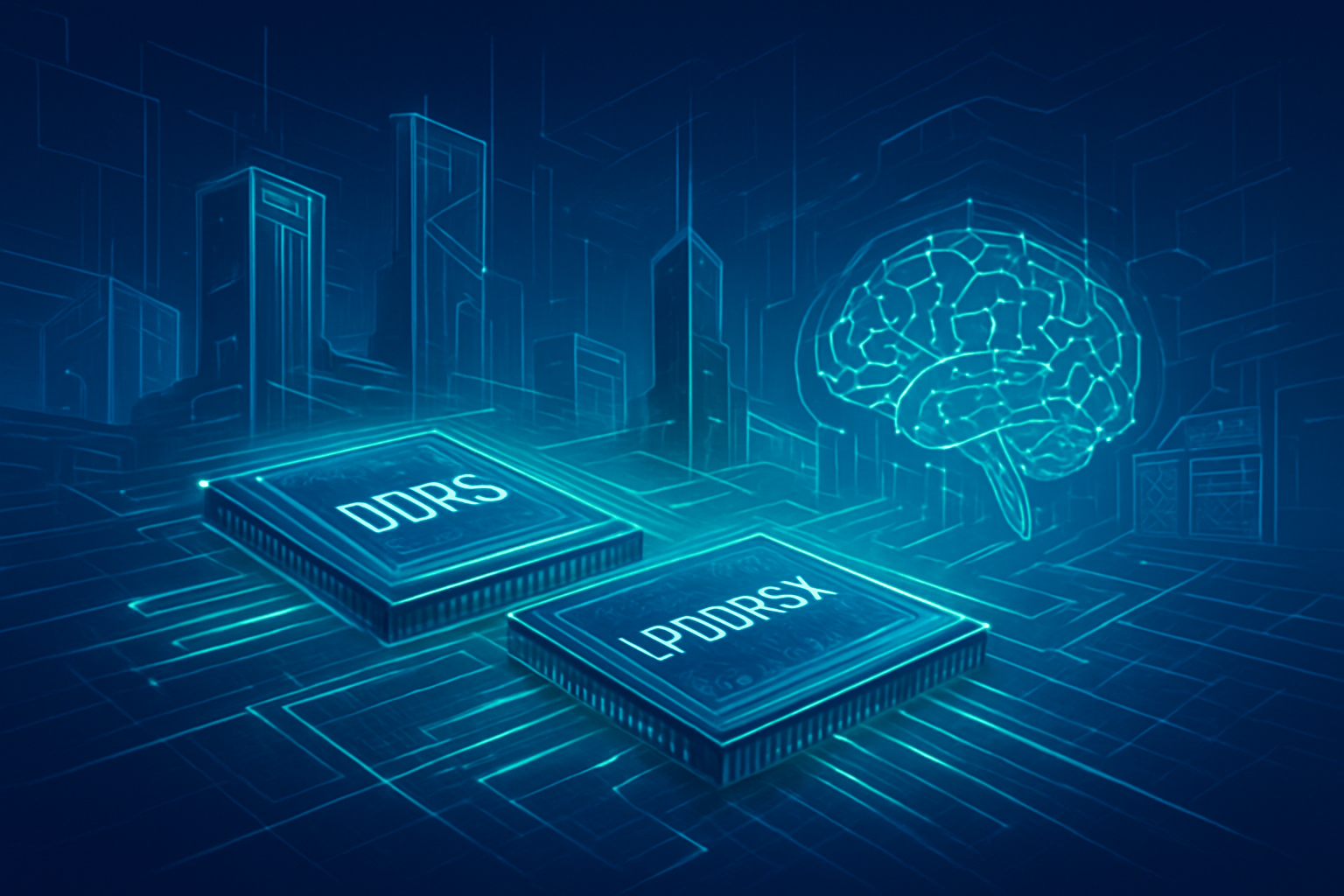
  • China’s CXMT Unleashes High-Speed DDR5 and LPDDR5X, Shaking Up Global Memory Markets

    China’s CXMT Unleashes High-Speed DDR5 and LPDDR5X, Shaking Up Global Memory Markets

    In a monumental stride for China's semiconductor industry, ChangXin Memory Technologies (CXMT) has officially announced its aggressive entry into the high-speed DDR5 and LPDDR5X memory markets. The company made a significant public debut at the 'IC (Integrated Circuit) China 2025' exhibition in Beijing on November 23-24, 2025, unveiling its cutting-edge memory products. This move is not merely a product launch; it signifies China's burgeoning ambition in advanced semiconductor manufacturing and poses a direct challenge to established global memory giants, potentially reshaping the competitive landscape and offering new dynamics to the global supply chain, especially amidst the ongoing AI-driven demand surge.

    CXMT's foray into these advanced memory technologies introduces a new generation of high-speed modules designed to meet the escalating demands of modern computing, from data centers and high-performance desktops to mobile devices and AI applications. This development, coming at a time when the world grapples with semiconductor shortages and geopolitical tensions, underscores China's strategic push for technological self-sufficiency and its intent to become a formidable player in the global memory market.

    Technical Prowess: CXMT's New High-Speed Memory Modules

    CXMT's new offerings in both DDR5 and LPDDR5X memory showcase impressive technical specifications, positioning them as competitive alternatives to products from industry leaders.

    For DDR5 memory modules, CXMT has achieved speeds of up to 8,000 Mbps (or MT/s), representing a significant 25% improvement over their previous generation products. These modules are available in 16 Gb and 24 Gb die capacities, catering to a wide array of applications. The company has announced a full spectrum of DDR5 products, including UDIMM, SODIMM, RDIMM, CSODIMM, CUDIMM, and TFF MRDIMM, targeting diverse market segments such as data centers, mainstream desktops, laptops, and high-end workstations. Utilizing a 16 nm process technology, CXMT's G4 DRAM cells are reportedly 20% smaller than their G3 predecessors, demonstrating a clear progression in process node advancements.

    In the LPDDR5X memory lineup, CXMT is pushing the boundaries with support for speeds ranging from 8,533 Mbps to an impressive 10,667 Mbps. Die options include 12Gb and 16Gb capacities, with chip-level solutions covering 12GB, 16GB, and 24GB. LPCAMM modules are also offered in 16GB and 32GB variants. Notably, CXMT's LPDDR5X boasts full backward compatibility with LPDDR5, offers up to a 30% reduction in power consumption, and a substantial 66% improvement in speed compared to LPDDR5. The adoption of uPoP® packaging further enables slimmer designs and enhanced performance, making these modules ideal for mobile devices like smartphones, wearables, and laptops, as well as embedded platforms and emerging AI markets.

    The industry's initial reactions are a mix of recognition and caution. Observers generally acknowledge CXMT's significant technological catch-up, evaluating their new products as having performance comparable to the latest DRAM offerings from major South Korean manufacturers like Samsung Electronics (KRX: 005930) and SK Hynix (KRX: 000660), and U.S.-based Micron Technology (NASDAQ: MU). However, some industry officials maintain a cautious stance, suggesting that while the specifications are impressive, the actual technological capabilities, particularly yield rates and sustained mass production, still require real-world validation beyond exhibition samples.

    Reshaping the AI and Tech Landscape

    CXMT's aggressive entry into the high-speed memory market carries profound implications for AI companies, tech giants, and startups globally.

    Chinese tech companies stand to benefit immensely, gaining access to domestically produced, high-performance memory crucial for their AI development and deployment. This could reduce their reliance on foreign suppliers, offering greater supply chain security and potentially more competitive pricing in the long run. For global customers, CXMT's emergence presents a "new option," fostering diversification in a market historically dominated by a few key players.

    The competitive implications for major AI labs and tech companies are significant. CXMT's full-scale market entry could intensify competition, potentially tempering the "semiconductor super boom" and influencing pricing strategies of incumbents. Samsung, SK Hynix, and Micron Technology, in particular, will face increased pressure in key markets, especially within China. This could lead to a re-evaluation of market positioning and strategic advantages as companies vie for market share in the rapidly expanding AI memory segment.

    Potential disruptions to existing products or services are also on the horizon. With a new, domestically-backed player offering competitive specifications, there's a possibility of shifts in procurement patterns and design choices, particularly for products targeting the Chinese market. CXMT is strategically leveraging the current AI-driven DRAM shortage and rising prices to position itself as a viable alternative, further underscored by its preparation for an IPO in Shanghai, which is expected to attract strong domestic investor interest.

    Wider Significance and Geopolitical Undercurrents

    CXMT's advancements fit squarely into the broader AI landscape and global technology trends, highlighting the critical role of high-speed memory in powering the next generation of artificial intelligence.

    High-bandwidth, low-latency memory like DDR5 and LPDDR5X are indispensable for AI applications, from accelerating large language models in data centers to enabling sophisticated AI processing at the edge in mobile devices and autonomous systems. CXMT's capabilities will directly contribute to the computational backbone required for more powerful and efficient AI, driving innovation across various sectors.

    Beyond technical specifications, this development carries significant geopolitical weight. It marks a substantial step towards China's goal of semiconductor self-sufficiency, a strategic imperative in the face of ongoing trade tensions and technology restrictions imposed by countries like the United States. While boosting national technological resilience, it also intensifies the global tech rivalry, raising questions about fair competition, intellectual property, and supply chain security. The entry of a major Chinese player could influence global technology standards and potentially lead to a more fragmented, yet diversified, memory market.

    Comparisons to previous AI milestones underscore the foundational nature of this development. Just as advancements in GPU technology or specialized AI accelerators have enabled new AI paradigms, breakthroughs in memory technology are equally crucial. CXMT's progress is a testament to the sustained, massive investment China has poured into its domestic semiconductor industry, aiming to replicate past successes seen in other national tech champions.

    The Road Ahead: Future Developments and Challenges

    The unveiling of CXMT's DDR5 and LPDDR5X modules sets the stage for several expected near-term and long-term developments in the memory market.

    In the near term, CXMT is expected to aggressively expand its market presence, with customer trials for its highest-speed 10,667 Mbps LPDDR5X variants already underway. The company's impending IPO in Shanghai will likely provide significant capital for further research, development, and capacity expansion. We can anticipate more detailed announcements regarding partnerships and customer adoption in the coming months.

    Longer-term, CXMT will likely pursue further advancements in process node technology, aiming for even higher speeds and greater power efficiency to remain competitive. The potential applications and use cases are vast, extending into next-generation data centers, advanced mobile computing, automotive AI, and emerging IoT devices that demand robust memory solutions.

    However, significant challenges remain. CXMT must prove its ability to achieve high yield rates and consistent quality in mass production, overcoming the skepticism expressed by some industry experts. Navigating the complex geopolitical landscape and potential trade barriers will also be crucial for its global market penetration. Experts predict a continued narrowing of the technology gap between Chinese and international memory manufacturers, leading to increased competition and potentially more dynamic pricing in the global memory market.

    A New Era for Global Memory

    CXMT's official entry into the high-speed DDR5 and LPDDR5X memory market represents a pivotal moment in the global semiconductor industry. The key takeaways are clear: China has made a significant technological leap, challenging the long-standing dominance of established memory giants and strategically positioning itself to capitalize on the insatiable demand for high-performance memory driven by AI.

    This development holds immense significance in AI history, as robust and efficient memory is the bedrock upon which advanced AI models are built and executed. It contributes to a more diversified global supply chain, which, while potentially introducing new competitive pressures, also offers greater resilience and choice for consumers and businesses worldwide. The long-term impact could reshape the global memory market, accelerate China's technological ambitions, and potentially lead to a more balanced and competitive landscape.

    As we move into the coming weeks and months, the industry will be closely watching CXMT's production ramp-up, the actual market adoption of its new modules, and the strategic responses from incumbent memory manufacturers. This is not just about memory chips; it's about national technological prowess, global competition, and the future infrastructure of artificial intelligence.


    This content is intended for informational purposes only and represents analysis of current AI developments.

    TokenRing AI delivers enterprise-grade solutions for multi-agent AI workflow orchestration, AI-powered development tools, and seamless remote collaboration platforms.
    For more information, visit https://www.tokenring.ai/.