
Blog

  • The End of the Search Bar: OpenAI’s ‘Operator’ and the Dawn of the Action-Oriented Web

    The End of the Search Bar: OpenAI’s ‘Operator’ and the Dawn of the Action-Oriented Web

    Since the debut of ChatGPT, the world has viewed artificial intelligence primarily as a conversationalist—a digital librarian capable of synthesizing vast amounts of information into a coherent chat window. However, the release and subsequent integration of OpenAI’s "Operator" (now officially known as "Agent Mode") has shattered that paradigm. By moving beyond text generation and into direct browser manipulation, OpenAI has signaled the official transition from "Chat AI" to "Agentic AI," where the primary value is no longer what the AI can tell you, but what it can do for you.

    As of January 2026, Agent Mode has become a cornerstone of the ChatGPT ecosystem, fundamentally altering how millions of users interact with the internet. Rather than navigating a maze of tabs, filters, and checkout screens, users now delegate entire workflows—from booking multi-city international travel to managing complex retail returns—to an agent that "sees" and interacts with the web exactly like a human would. This development marks a pivotal moment in tech history, effectively turning the web browser into an operating system for autonomous digital workers.

    The Technical Leap: From Pixels to Performance

    At the heart of Operator is OpenAI’s Computer-Using Agent (CUA) model, a multimodal powerhouse that represents a significant departure from traditional web-scraping or API-based automation. Unlike previous iterations of "browsing" tools that relied on reading simplified text versions of a website, Operator operates within a managed virtual browser environment. It utilizes advanced vision-based perception to interpret the layout of a page, identifying buttons, text fields, and dropdown menus by analyzing the raw pixels of the screen. This allows it to navigate even the most modern, Javascript-heavy websites that typically break standard automation scripts.

    The technical sophistication of Operator is best demonstrated in its "human-like" interaction patterns. It doesn't just jump to a URL; it scrolls through pages to find information, handles pop-ups, and can even self-correct when a website’s layout changes unexpectedly. In benchmark tests conducted throughout 2025, OpenAI reported that the agent achieved an 87% success rate on the WebVoyager benchmark, a standard for complex browser tasks. This is a massive leap over the 30-40% success rates seen in early 2024 models. This leap is attributed to a combination of reinforcement learning and a "Thinking" architecture that allows the agent to pause and reason through a task before executing a click.

    Industry experts have been particularly impressed by the agent's "Human-in-the-Loop" safety architecture. To mitigate the risks of unauthorized transactions or data breaches, OpenAI implemented a "Takeover Mode." When the agent encounters a sensitive field—such as a credit card entry or a login screen—it automatically pauses and hands control back to the user. This hybrid approach has allowed OpenAI to navigate the murky waters of security and trust, providing a "Watch Mode" for high-stakes interactions where users can monitor every click in real-time.

    The Battle for the Agentic Desktop

    The emergence of Operator has ignited a fierce strategic rivalry among tech giants, most notably between OpenAI and its primary benefactor, Microsoft (NASDAQ: MSFT). While the two remain deeply linked through Azure's infrastructure, they are increasingly competing for the "agentic" crown. Microsoft has positioned its Copilot agents as structured, enterprise-grade tools built within the guardrails of Microsoft 365. While OpenAI’s Operator is a "generalist" that thrives in the messy, open web, Microsoft’s agents are designed for precision within corporate data silos—handling HR requests, IT tickets, and supply chain logistics with a focus on data governance.

    This "coopetition" is forcing a reorganization of the broader tech landscape. Google (NASDAQ: GOOGL) has responded with "Project Jarvis" (part of the Gemini ecosystem), which offers deep integration with the Chrome browser and Android OS, aiming for a "zero-latency" experience that rivals OpenAI's standalone virtual environment. Meanwhile, Anthropic has focused its "Computer Use" capabilities on developers and technical power users, prioritizing full OS control over the consumer-friendly browser focus of OpenAI.

    The impact on consumer-facing platforms has been equally transformative. Companies like Expedia (NASDAQ: EXPE) and Booking.com (NASDAQ: BKNG) were initially feared to be at risk of "disintermediation" by AI agents. However, by 2026, these companies have largely pivoted to become the essential back-end infrastructure for agents. Both Expedia and Booking.com have integrated deeply with OpenAI's agent protocols, ensuring that when an agent searches for a hotel, it is pulling from their verified inventories. This has shifted the battleground from SEO (Search Engine Optimization) to "AEO" (Agent Engine Optimization), where companies pay to be the preferred choice of the autonomous digital shopper.

    A Broader Shift: The End of the "Click-Heavy" Web

    The wider significance of Operator lies in its potential to render the traditional web interface obsolete. For decades, the internet has been designed for human eyes and fingers—designed to be "sticky" and encourage clicks to drive ad revenue. Agentic AI flips this model on its head. If an agent is doing the "clicking," the visual layout of a website becomes secondary to its functional utility. This poses a fundamental threat to the ad-supported "attention economy." If a user never sees a banner ad because their agent handled the transaction in a background tab, the primary revenue model for much of the internet begins to crumble.

    This transition has not been without its concerns. Privacy advocates have raised alarms about the "agentic risk" associated with giving AI models the ability to act on a user's behalf. In early 2025, several high-profile incidents involving "hallucinated transactions"—where an agent booked a non-refundable flight to the wrong city—highlighted the dangers of over-reliance. Furthermore, the ethical implications of agents being used to bypass CAPTCHAs or automate social media interactions have forced platforms like Amazon (NASDAQ: AMZN) and Meta (NASDAQ: META) to deploy "anti-agent" shields, creating a digital arms race between autonomous tools and the platforms they inhabit.

    Despite these hurdles, the consensus among AI researchers is that Operator represents the most significant milestone since the release of GPT-4. It marks the moment AI stopped being a passive advisor and became an active participant in the economy. This shift mirrors the transition from the mainframe era to the personal computer era; just as the PC put computing power in the hands of individuals, the agentic era is putting "doing power" in the hands of anyone with a ChatGPT subscription.

    The Road to Full Autonomy

    Looking ahead, the next 12 to 18 months are expected to focus on the evolution from browser-based agents to full "cross-platform" autonomy. Researchers predict that by late 2026, agents will not be confined to a virtual browser window but will have the ability to move seamlessly between desktop applications, mobile apps, and web services. Imagine an agent that can take a brief from a Zoom (NASDAQ: ZM) meeting, draft a proposal in Microsoft Word, research competitors in a browser, and then send a final invoice via QuickBooks without a single human click.

    The primary challenge remains "long-horizon reasoning." While Operator can book a flight today, it still struggles with tasks that require weeks of context or multiple "check-ins" (e.g., "Plan a wedding and manage the RSVPs over the next six months"). Addressing this will require a new generation of models capable of persistent memory and proactive notification—agents that don't just wait for a prompt but "wake up" to check on the status of a task and report back to the user.

    Furthermore, we are likely to see the rise of "Multi-Agent Systems," where a user's personal agent coordinates with a travel agent, a banking agent, and a retail agent to settle complex disputes or coordinate large-scale events. The "Agent Protocol" standard, currently under discussion by major tech firms, aims to create a universal language for these digital workers to communicate, potentially leading to a fully automated service economy.

    A New Era of Digital Labor

    OpenAI’s Operator has done more than just automate a few clicks; it has redefined the relationship between humans and computers. We are moving toward a future where "interacting with a computer" no longer means learning how to navigate software, but rather learning how to delegate intent. The success of this development suggests that the most valuable skill in the coming decade will not be technical proficiency, but the ability to manage and orchestrate a fleet of AI agents.

    As we move through 2026, the industry will be watching closely for how these agents handle increasingly complex financial and legal tasks. The regulatory response—particularly in the EU, where Agent Mode faced initial delays—will determine how quickly this technology becomes a global standard. For now, the "Action Era" is officially here, and the web as we know it—a place of links, tabs, and manual labor—is slowly fading into the background of an automated world.


    This content is intended for informational purposes only and represents analysis of current AI developments.

    TokenRing AI delivers enterprise-grade solutions for multi-agent AI workflow orchestration, AI-powered development tools, and seamless remote collaboration platforms.
    For more information, visit https://www.tokenring.ai/.
  • Silicon Sovereignty: Apple and Amazon Anchor Intel’s 18A Era

    Silicon Sovereignty: Apple and Amazon Anchor Intel’s 18A Era

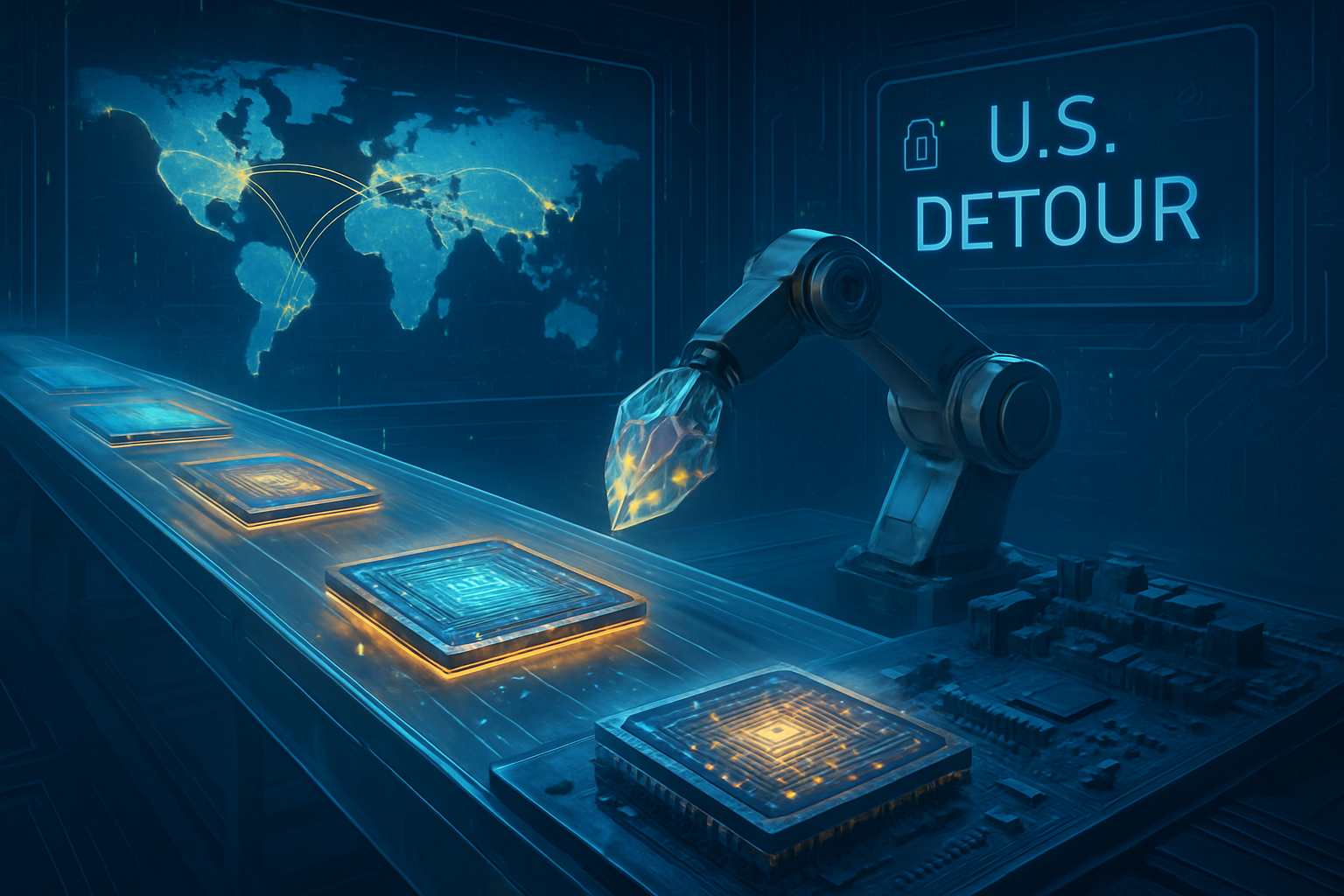
    The global semiconductor landscape has reached a historic inflection point as reports emerge that Apple Inc. (NASDAQ: AAPL) and Amazon.com, Inc. (NASDAQ: AMZN) have officially solidified their positions as anchor customers for Intel Corporation’s (NASDAQ: INTC) 18A (1.8nm-class) foundry services. This development marks the most significant validation to date of Intel’s ambitious "IDM 2.0" strategy, positioning the American chipmaker as a formidable rival to the Taiwan Semiconductor Manufacturing Company (NYSE: TSM), commonly known as TSMC.

    For the first time in over a decade, the leading edge of chip manufacturing is no longer the exclusive domain of Asian foundries. Amazon’s commitment involves a multi-billion-dollar expansion to produce custom AI fabric chips, while Apple has reportedly qualified the 18A process for its next generation of entry-level M-series processors. These partnerships represent more than just business contracts; they signify a strategic realignment of the world’s most powerful tech giants toward a more diversified and geographically resilient supply chain.

    The 18A Breakthrough: PowerVia and RibbonFET Redefine Efficiency

    Technically, Intel’s 18A node is not merely an incremental upgrade but a radical shift in transistor architecture. It introduces two industry-first technologies: RibbonFET and PowerVia. RibbonFET is Intel’s implementation of Gate-All-Around (GAA) transistors, which provide better electrostatic control and higher drive current at lower voltages. However, the real "secret sauce" is PowerVia—a backside power delivery system that separates power routing from signal routing. By moving power lines to the back of the wafer, Intel has eliminated the "congestion" that typically plagues advanced nodes, leading to a projected 10-15% improvement in performance-per-watt over existing technologies.

    As of January 2026, Intel’s 18A has entered high-volume manufacturing (HVM) at its Fab 52 facility in Arizona. While TSMC’s N2 node currently maintains a slight lead in raw transistor density, Intel’s 18A has claimed the performance crown for the first half of 2026 due to its early adoption of backside power delivery—a feature TSMC is not expected to integrate until its N2P or A16 nodes later this year. Initial reactions from the AI research community have been overwhelmingly positive, with experts noting that the 18A process is uniquely suited for the high-bandwidth, low-latency requirements of modern AI accelerators.

    A New Global Order: The Strategic Realignment of Big Tech

    The implications for the competitive landscape are profound. Amazon’s decision to fab its "AI fabric chip" on 18A is a direct play to scale its internal AI infrastructure. These chips are designed to optimize NeuronLink technology, the high-speed interconnect used in Amazon’s Trainium and Inferentia AI chips. By bringing this production to Intel’s domestic foundries, Amazon (NASDAQ: AMZN) reduces its reliance on the strained global supply chain while gaining access to Intel’s advanced packaging capabilities.

    Apple’s move is arguably more seismic. Long considered TSMC’s most loyal and important customer, Apple (NASDAQ: AAPL) is reportedly using Intel’s 18AP (a performance-enhanced version of 18A) for its entry-level M-series SoCs found in the MacBook Air and iPad Pro. While Apple’s flagship iPhone chips remain on TSMC’s roadmap for now, the diversification into Intel Foundry suggests a "Taiwan+1" strategy designed to hedge against geopolitical risks in the Taiwan Strait. This move puts immense pressure on TSMC (NYSE: TSM) to maintain its pricing power and technological lead, while offering Intel the "VIP" validation it needs to attract other major fabless firms like Nvidia (NASDAQ: NVDA) and Advanced Micro Devices, Inc. (NASDAQ: AMD).

    De-risking the Digital Frontier: Geopolitics and the AI Hardware Boom

    The broader significance of these agreements lies in the concept of silicon sovereignty. Supported by the U.S. CHIPS and Science Act, Intel has positioned itself as a "National Strategic Asset." The successful ramp-up of 18A in Arizona provides the United States with a domestic 2nm-class manufacturing capability, a milestone that seemed impossible during Intel’s manufacturing stumbles in the late 2010s. This shift is occurring just as the "AI PC" market explodes; by late 2026, half of all PC shipments are expected to feature high-TOPS NPUs capable of running generative AI models locally.

    Furthermore, this development challenges the status of Samsung Electronics (KRX: 005930), which has struggled with yield issues on its own 2nm GAA process. With Intel proving its ability to hit a 60-70% yield threshold on 18A, the market is effectively consolidating into a duopoly at the leading edge. The move toward onshoring and domestic manufacturing is no longer a political talking point but a commercial reality, as tech giants prioritize supply chain certainty over marginal cost savings.

    The Road to 14A: What’s Next for the Silicon Renaissance

    Looking ahead, the industry is already shifting its focus to the next frontier: Intel’s 14A node. Expected to enter production by 2027, 14A will be the world’s first process to utilize High-NA EUV (Extreme Ultraviolet) lithography at scale. Analyst reports suggest that Apple is already eyeing the 14A node for its 2028 iPhone "A22" chips, which could represent a total migration of Apple’s most valuable silicon to American soil.

    Near-term challenges remain, however. Intel must prove it can manage the massive volume requirements of both Apple and Amazon simultaneously without compromising the yields of its internal products, such as the newly launched Panther Lake processors. Additionally, the integration of advanced packaging—specifically Intel’s Foveros technology—will be critical for the multi-die architectures that Amazon’s AI fabric chips require.

    A Turning Point in Semiconductor History

    The reports of Apple and Amazon joining Intel 18A represent the most significant shift in the semiconductor industry in twenty years. It marks the end of the era where leading-edge manufacturing was synonymous with a single geographic region and a single company. Intel has successfully navigated its "Five Nodes in Four Years" roadmap, culminating in a product that has attracted the world’s most demanding silicon customers.

    As we move through 2026, the key metrics to watch will be the final yield rates of the 18A process and the performance benchmarks of the first consumer products powered by these chips. If Intel can deliver on its promises, the 18A era will be remembered as the moment the silicon balance of power shifted back to the West, fueled by the insatiable demand for AI and the strategic necessity of supply chain resilience.


    This content is intended for informational purposes only and represents analysis of current AI developments.

    TokenRing AI delivers enterprise-grade solutions for multi-agent AI workflow orchestration, AI-powered development tools, and seamless remote collaboration platforms.
    For more information, visit https://www.tokenring.ai/.

  • The Power Revolution: How GaN and SiC Semiconductors are Electrifying the AI and EV Era

    The Power Revolution: How GaN and SiC Semiconductors are Electrifying the AI and EV Era

    The global technology landscape is currently undergoing its most significant hardware transformation since the invention of the silicon transistor. As of January 21, 2026, the transition from traditional silicon to Wide-Bandgap (WBG) semiconductors—specifically Gallium Nitride (GaN) and Silicon Carbide (SiC)—has reached a fever pitch. This "Power Revolution" is no longer a niche upgrade; it has become the fundamental backbone of the artificial intelligence boom and the mass adoption of 800V electric vehicle (EV) architectures. Without these advanced materials, the massive power demands of next-generation AI data centers and the range requirements of modern EVs would be virtually impossible to sustain.

    The immediate significance of this shift is measurable in raw efficiency and physical scale. In the first few weeks of 2026, we have seen the industry move from 200mm (8-inch) production standards to the long-awaited 300mm (12-inch) wafer milestone. This evolution is slashing the cost of high-performance power chips, bringing them toward price parity with silicon while delivering up to 99% system efficiency. As AI chips like NVIDIA’s latest "Rubin" architecture push past the 1,000-watt-per-chip threshold, the ability of GaN and SiC to handle extreme heat and high voltages in a fraction of the space is the only factor preventing a total energy grid crisis.

    Technical Milestones: Breaking the Silicon Ceiling

    The technical superiority of WBG semiconductors stems from their ability to operate at much higher voltages, temperatures, and frequencies than traditional silicon. Silicon Carbide (SiC) has established itself as the "muscle" for high-voltage traction in EVs, while Gallium Nitride (GaN) has emerged as the high-speed engine for data center power supplies. A major breakthrough announced in early January 2026 involves the widespread commercialization of Vertical GaN architecture. Unlike traditional lateral GaN, vertical structures allow devices to operate at 1200V and above, enabling a 30% increase in efficiency and a 50% reduction in the physical footprint of power supply units (PSUs).

    In the data center, these advancements have manifested in the move toward 800V High-Voltage Direct Current (HVDC) power stacks. By switching from AC to 800V DC, data center operators are minimizing conversion losses that previously plagued large-scale AI clusters. Modern GaN-based PSUs are now achieving record-breaking 97.5% peak efficiency, allowing a standard server rack to quadruple its power density. Where a legacy 3kW module once sat, engineers can now fit a 12kW unit in the same physical space. This miniaturization is further supported by "wire-bondless" packaging and silver sintering techniques that replace old-fashioned copper wiring with high-performance thermal interfaces.

    Initial reactions from the semiconductor research community have been overwhelmingly positive, with experts noting that the transition to 300mm single-crystal SiC wafers—first demonstrated by Wolfspeed early this month—is a "Moore's Law moment" for power electronics. The ability to produce 2.3 times more chips per wafer is expected to drive down costs by nearly 40% over the next 18 months. This technical leap effectively ends the era of silicon dominance in power applications, as the performance-to-cost ratio finally tips in favor of WBG materials.

    Market Impact: The New Power Players

    The shift to WBG semiconductors has sparked a massive realignment among chipmakers and tech giants. Wolfspeed (NYSE: WOLF), having successfully navigated a strategic restructuring in late 2025, has emerged as a vertically integrated leader in 200mm and 300mm SiC production. Their ability to control the supply chain from raw crystal growth to finished chips has given them a significant edge in the EV market. Similarly, STMicroelectronics (NYSE: STM) has ramped up production at its Catania campus to 15,000 wafers per week, securing its position as a primary supplier for European and American automakers.

    Other major beneficiaries include Infineon Technologies (OTC: IFNNY) and ON Semiconductor (NASDAQ: ON), both of whom have forged deep collaborations with NVIDIA (NASDAQ: NVDA). As AI "factories" require unprecedented amounts of electricity, NVIDIA has integrated these WBG-enabled power stacks directly into its reference designs. This "Grid-to-Processor" strategy ensures that the power delivery is as efficient as the computation itself. Startups in the GaN space, such as Navitas Semiconductor, are also seeing increased valuation as they disrupt the consumer electronics and onboard charger (OBC) markets with ultra-compact, high-speed switching solutions.

    This development is creating a strategic disadvantage for companies that have been slow to pivot away from silicon-based Insulated Gate Bipolar Transistors (IGBTs). While legacy silicon still holds the low-end consumer market, the high-margin sectors of AI and EVs are now firmly WBG-territory. Major tech companies are increasingly viewing power efficiency as a competitive "moat"—if a data center can run 20% more AI chips on the same power budget because of SiC and GaN, that company gains a massive lead in the ongoing AI arms race.

    Broader Significance: Sustaining the AI Boom

    The wider significance of the WBG revolution cannot be overstated; it is the "green" solution to a brown-energy problem. The AI industry has faced intense scrutiny over its massive electricity consumption, but the deployment of WBG semiconductors offers a tangible way to mitigate environmental impact. By reducing power conversion losses, these materials could save hundreds of terawatt-hours of electricity globally by the end of the decade. This aligns with the aggressive ESG (Environmental, Social, and Governance) targets set by tech giants who are struggling to balance their AI ambitions with carbon-neutrality goals.

    Historically, this transition is being compared to the shift from vacuum tubes to transistors. While the transistor allowed for the miniaturization of logic, WBG materials are allowing for the miniaturization and "greening" of power. However, concerns remain regarding the supply of raw materials like high-purity carbon and gallium, as well as the geopolitical tensions surrounding the semiconductor supply chain. Ensuring a stable supply of these "power minerals" is now a matter of national security for major economies.

    Furthermore, the impact on the EV industry is transformative. By making 800V architectures the standard, the "range anxiety" that has plagued EV adoption is rapidly disappearing. With SiC-enabled 500kW chargers, vehicles can now add 400km of range in just five minutes—the same time it takes to fill a gas tank. This parity with internal combustion engines is the final hurdle for mass-market EV transition, and it is being cleared by the physical properties of Silicon Carbide.

    The Horizon: From 1200V to Gallium Oxide

    Looking toward the near-term future, we expect the vertical GaN market to mature, potentially displacing SiC in certain mid-voltage EV applications. Researchers are also beginning to look beyond SiC and GaN toward Gallium Oxide (Ga2O3), an Ultra-Wide-Bandgap (UWBG) material that promises even higher breakdown voltages and lower losses. While Ga2O3 is still in the experimental phase, early prototypes suggest it could be the key to 3000V+ industrial power systems and future-generation electric aviation.

    In the long term, we anticipate a complete "power integration" where the power supply is no longer a separate brick but is integrated directly onto the same package as the processor. This "Power-on-Chip" concept, enabled by the high-frequency capabilities of GaN, could eliminate even more efficiency losses and lead to even smaller, more powerful AI devices. The primary challenge remains the cost of manufacturing and the complexity of thermal management at such extreme power densities, but experts predict that the 300mm wafer transition will solve the economics of this problem by 2027.

    Conclusion: A New Era of Efficiency

    The revolution in Wide-Bandgap semiconductors represents a fundamental shift in how the world manages and consumes energy. From the high-voltage demands of a Tesla or BYD to the massive computational clusters of an NVIDIA AI factory, GaN and SiC are the invisible heroes of the modern tech era. The milestones achieved in early 2026—specifically the transition to 300mm wafers and the rise of 800V HVDC data centers—mark the point of no return for traditional silicon in high-performance power applications.

    As we look ahead, the significance of this development in AI history will be seen as the moment hardware efficiency finally began to catch up with algorithmic demand. The "Power Revolution" has provided a lifeline to an industry that was beginning to hit a physical wall. In the coming weeks and months, watch for more automotive OEMs to announce the phase-out of 400V systems in favor of WBG-powered 800V platforms, and for data center operators to report significant energy savings as they upgrade to these next-generation power stacks.


    This content is intended for informational purposes only and represents analysis of current AI and semiconductor developments.

    TokenRing AI delivers enterprise-grade solutions for multi-agent AI workflow orchestration, AI-powered development tools, and seamless remote collaboration platforms.
    For more information, visit https://www.tokenring.ai/.

  • The Dawn of the Glass Age: How Glass Substrates and 3D Transistors Are Shattering the AI Performance Ceiling

    The Dawn of the Glass Age: How Glass Substrates and 3D Transistors Are Shattering the AI Performance Ceiling

    CHANDLER, AZ – In a move that marks the most significant architectural shift in semiconductor manufacturing in over a decade, the industry has officially transitioned into what experts are calling the "Glass Age." As of January 21, 2026, the transition from traditional organic substrates to glass-core technology, coupled with the arrival of the first circuit-ready 3D Complementary Field-Effect Transistors (CFET), has effectively dismantled the physical barriers that threatened to stall the progress of generative AI.

    This development is not merely an incremental upgrade; it is a foundational reset. By replacing the resin-based materials that have housed chips for forty years with ultra-flat, thermally stable glass, manufacturers are now able to build "super-packages" of unprecedented scale. These advancements arrive just in time to power the next generation of trillion-parameter AI models, which have outgrown the electrical and thermal limits of 2024-era hardware.

    Shattering the "Warpage Wall": The Tech Behind the Transition

    The technical shift centers on the transition from Ajinomoto Build-up Film (ABF) organic substrates to glass-core substrates. For years, the industry struggled with the "warpage wall"—a phenomenon where the heat generated by massive AI chips caused traditional organic substrates to expand and contract at different rates than the silicon they supported, leading to microscopic cracks and connection failures. Glass, by contrast, possesses a Coefficient of Thermal Expansion (CTE) that nearly matches silicon. This allows companies like Intel (NASDAQ: INTC) and Samsung (OTC: SSNLF) to manufacture packages exceeding 100mm x 100mm, integrating dozens of chiplets and HBM4 (High Bandwidth Memory) stacks into a single, cohesive unit.

    Beyond the substrate, the industry has reached a milestone in transistor architecture with the successful demonstration of the first fully functional 101-stage monolithic CFET Ring Oscillator by TSMC (NYSE: TSM). While the previous Gate-All-Around (GAA) nanosheets allowed for greater control over current, CFET takes scaling into the third dimension by vertically stacking n-type and p-type transistors directly on top of one another. This 3D stacking effectively halves the footprint of logic gates, allowing for a 10x increase in interconnect density through the use of Through-Glass Vias (TGVs). These TGVs enable microscopic electrical paths with pitches of less than 10μm, reducing signal loss by 40% compared to traditional organic routing.

    The New Hierarchy: Intel, Samsung, and the Race for HVM

    The competitive landscape of the semiconductor industry has been radically reordered by this transition. Intel (NASDAQ: INTC) has seized an early lead, announcing this month that its facility in Chandler, Arizona, has officially moved glass substrate technology into High-Volume Manufacturing (HVM). Its first commercial product utilizing this technology, the Xeon 6+ "Clearwater Forest," is already shipping to major cloud providers. Intel’s early move positions its Foundry Services as a critical partner for US-based AI giants like Amazon (NASDAQ: AMZN) and Google (NASDAQ: GOOGL), who are seeking to insulate their supply chains from geopolitical volatility.

    Samsung (KRX: 005930), meanwhile, has leveraged its "Triple Alliance"—a collaboration between its Foundry, Display, and Electro-Mechanics divisions—to fast-track its "Dream Substrate" program. Samsung is targeting the second half of 2026 for mass production, specifically aiming for the high-end AI ASIC market. Not to be outdone, TSMC (NYSE: TSM) has begun sampling its Chip-on-Panel-on-Substrate (CoPoS) glass solution for Nvidia (NASDAQ: NVDA). Nvidia’s newly announced "Vera Rubin" R100 platform is expected to be the primary beneficiary of this tech, aiming for a 5x boost in AI inference capabilities by utilizing the superior signal integrity of glass to manage its staggering 19.6 TB/s HBM4 bandwidth.

    Geopolitics and Sustainability: The High Stakes of High Tech

    The shift to glass has created a new geopolitical "moat" around the Western-Korean semiconductor axis. As the manufacturing of these advanced substrates requires high-precision equipment and specialized raw materials—such as the low-CTE glass cloth produced almost exclusively by Japan’s Nitto Boseki—a new bottleneck has emerged. US and South Korean firms have secured long-term contracts for these materials, creating a 12-to-18-month lead over Chinese rivals like BOE and Visionox, who are currently struggling with high-volume yields. This technological gap has become a cornerstone of the US strategy to maintain leadership in high-performance computing (HPC).

    From a sustainability perspective, the move is a double-edged sword. The manufacturing of glass substrates is more energy-intensive than organic ones, requiring high-temperature furnaces and complex water-reclamation protocols. However, the operational benefits are transformative. By reducing power loss during data movement by 50%, glass-packaged chips are significantly more energy-efficient once deployed in data centers. In an era where AI power consumption is measured in gigawatts, the "Performance per Watt" advantage of glass is increasingly seen as the only viable path to sustainable AI scaling.

    Future Horizons: From Electrical to Optical

    Looking toward 2027 and beyond, the transition to glass substrates paves the way for the "holy grail" of chip design: integrated co-packaged optics (CPO). Because glass is transparent and ultra-flat, it serves as a perfect medium for routing light instead of electricity. Experts predict that within the next 24 months, we will see the first AI chips that use optical interconnects directly on the glass substrate, virtually eliminating the "power wall" that currently limits how fast data can move between the processor and memory.

    However, challenges remain. The brittleness of glass continues to pose yield risks, with current manufacturing lines reporting breakage rates roughly 5-10% higher than organic counterparts. Additionally, the industry must develop new standardized testing protocols for 3D-stacked CFET architectures, as traditional "probing" methods are difficult to apply to vertically stacked transistors. Industry consortiums are currently working to harmonize these standards to ensure that the "Glass Age" doesn't suffer from a lack of interoperability.

    A Decisive Moment in AI History

    The transition to glass substrates and 3D transistors marks a definitive moment in the history of computing. By moving beyond the physical limitations of 20th-century materials, the semiconductor industry has provided AI developers with the "infinite" canvas required to build the first truly agentic, world-scale AI systems. The ability to stitch together dozens of chiplets into a single, thermally stable package means that the 1,000-watt AI accelerator is no longer a thermal nightmare, but a manageable reality.

    As we move into the spring of 2026, all eyes will be on the yield rates of Intel's Arizona lines and the first performance benchmarks of AMD’s (NASDAQ: AMD) Instinct MI400 series, which is slated to utilize glass substrates from merchant supplier Absolics later this year. The "Silicon Valley" of the future may very well be built on a foundation of glass, and the companies that master this transition first will likely dictate the pace of AI innovation for the remainder of the decade.


    This content is intended for informational purposes only and represents analysis of current AI developments.

    TokenRing AI delivers enterprise-grade solutions for multi-agent AI workflow orchestration, AI-powered development tools, and seamless remote collaboration platforms.
    For more information, visit https://www.tokenring.ai/.

  • The Power War: Satya Nadella Warns Energy and Cooling are the Final Frontiers of AI

    The Power War: Satya Nadella Warns Energy and Cooling are the Final Frontiers of AI

    In a series of candid remarks delivered between the late 2025 earnings cycle and the recent 2026 World Economic Forum in Davos, Microsoft (NASDAQ:MSFT) CEO Satya Nadella has signaled a fundamental shift in the artificial intelligence arms race. The era of the "chip shortage" has officially ended, replaced by a much more physical and daunting obstacle: the "Energy Wall." Nadella warned that the primary bottlenecks for AI scaling are no longer the availability of high-end silicon, but the skyrocketing costs of electricity and the lack of advanced liquid cooling infrastructure required to keep next-generation data centers from melting down.

    The significance of these comments cannot be overstated. For the past three years, the tech industry has focused almost exclusively on securing NVIDIA (NASDAQ:NVDA) H100 and Blackwell GPUs. However, Nadella’s admission that Microsoft currently holds a vast inventory of unutilized chips—simply because there isn't enough power to plug them in—marks a pivot from digital constraints to the limitations of 20th-century physical infrastructure. As the industry moves toward trillion-parameter models, the struggle for dominance has moved from the laboratory to the power grid.

    From Silicon Shortage to the "Warm Shell" Crisis

    Nadella’s technical diagnosis of the current AI landscape centers on the concept of the "warm shell"—a data center building that is fully permitted, connected to a high-voltage grid, and equipped with the specialized thermal management systems needed for modern compute densities. During a recent appearance on the BG2 Podcast, Nadella noted that Microsoft’s biggest challenge is no longer compute glut, but the "linear world" of utility permitting and power plant construction. While software can be iterated in weeks and chips can be fabricated in months, building a new substation or a high-voltage transmission line can take a decade.

    To circumvent these physical limits, Microsoft has begun a massive architectural overhaul of its global data center fleet. At the heart of this transition is the newly unveiled "Fairwater" architecture. Unlike traditional cloud data centers designed for 10-15 kW racks, Fairwater is built to support a staggering 140 kW per rack. This 10x increase in power density is necessitated by the latest AI chips, which generate heat far beyond the capabilities of traditional air-conditioning systems.

    To manage this thermal load, Microsoft is moving toward standardized, closed-loop liquid cooling. This system utilizes direct-to-chip microfluidics—a technology co-developed with Corintis that etches cooling channels directly onto the silicon. This approach reduces peak operating temperatures by as much as 65% while operating as a "zero-water" system. Once the initial coolant is loaded, the system recirculates indefinitely, addressing both the energy bottleneck and the growing public scrutiny over data center water consumption.

    The Competitive Shift: Vertical Integration or Gridlock

    This infrastructure bottleneck has forced a strategic recalibration among the "Big Five" hyperscalers. While Microsoft is doubling down on "Fairwater," its rivals are pursuing their own paths to energy independence. Alphabet (NASDAQ:GOOGL), for instance, recently closed a $4.75 billion acquisition of Intersect Power, allowing it to bypass the public grid by co-locating data centers directly with its own solar and battery farms. Meanwhile, Amazon (NASDAQ:AMZN) has pivoted toward a "nuclear renaissance," committing hundreds of millions of dollars to Small Modular Reactors (SMRs) through partnerships with X-energy.

    The competitive advantage in 2026 is no longer held by the company with the best model, but by the company that can actually power it. This shift favors legacy giants with the capital to fund multi-billion dollar grid upgrades. Microsoft’s "Community-First AI Infrastructure" initiative is a direct response to this, where the company effectively acts as a private utility, funding local substations and grid modernizations to secure the "social license" to operate.

    Startups and smaller AI labs face a growing disadvantage. While a boutique lab might raise the funds to buy a cluster of Blackwell chips, they lack the leverage to negotiate for 500 megawatts of power from local utilities. We are seeing a "land grab" for energized real estate, where the valuation of a data center site is now determined more by its proximity to a high-voltage line than by its proximity to a fiber-optic hub.

    Redefining the AI Landscape: The Energy-GDP Correlation

    Nadella’s comments fit into a broader trend where AI is increasingly viewed through the lens of national security and energy policy. At Davos 2026, Nadella argued that future GDP growth would be directly correlated to a nation’s energy costs associated with AI. If the "energy wall" remains unbreached, the cost of running an AI query could become prohibitively expensive, potentially stalling the much-hyped "AI-led productivity boom."

    The environmental implications are also coming to a head. The shift to liquid cooling is not just a technical necessity but a political one. By moving to closed-loop systems, Microsoft and Meta (NASDAQ:META) are attempting to mitigate the "water wall"—the local pushback against data centers that consume millions of gallons of water in drought-prone regions. However, the sheer electrical demand remains. Estimates suggest that by 2030, AI could consume upwards of 4% of total global electricity, a figure that has prompted some experts to compare the current AI infrastructure build-out to the expansion of the interstate highway system or the electrification of the rural South.

    The Road Ahead: Fusion, Fission, and Efficiency

    Looking toward late 2026 and 2027, the industry is betting on radical new energy sources to break the bottleneck. Microsoft has already signed a power purchase agreement with Helion Energy for fusion power, a move that was once seen as science fiction but is now viewed as a strategic necessity. In the near term, we expect to see more "behind-the-meter" deployments where data centers are built on the sites of retired coal or nuclear plants, utilizing existing transmission infrastructure to shave years off deployment timelines.

    On the cooling front, the next frontier is "immersion cooling," where entire server racks are submerged in non-conductive dielectric fluid. While Microsoft’s current Fairwater design uses direct-to-chip liquid cooling, industry experts predict that the 200 kW racks of the late 2020s will require full immersion. This will necessitate an even deeper partnership with cooling specialized firms like LG Electronics (KRX:066570), which recently signed a multi-billion dollar deal to supply Microsoft’s global cooling stack.

    Summary: The Physical Reality of Intelligence

    Satya Nadella’s recent warnings serve as a reality check for an industry that has long lived in the realm of virtual bits and bytes. The realization that thousands of world-class GPUs are sitting idle in warehouses for lack of a "warm shell" is a sobering milestone in AI history. It signals that the easy gains from software optimization are being met by the hard realities of thermodynamics and aging electrical grids.

    As we move deeper into 2026, the key metrics to watch will not be benchmark scores or parameter counts, but "megawatts under management" and "coolant efficiency ratios." The companies that successfully bridge the gap between AI's infinite digital potential and the Earth's finite physical resources will be the ones that define the next decade of technology.


    This content is intended for informational purposes only and represents analysis of current AI developments.

    TokenRing AI delivers enterprise-grade solutions for multi-agent AI workflow orchestration, AI-powered development tools, and seamless remote collaboration platforms.
    For more information, visit https://www.tokenring.ai/.
  • The Era of Light: Silicon Photonics Shatters the ‘Memory Wall’ as AI Scaling Hits the Copper Ceiling

    The Era of Light: Silicon Photonics Shatters the ‘Memory Wall’ as AI Scaling Hits the Copper Ceiling

    As of January 2026, the artificial intelligence industry has officially entered what architects are calling the "Era of Light." For years, the rapid advancement of Large Language Models (LLMs) was threatened by two looming physical barriers: the "memory wall"—the bottleneck where data cannot move fast enough between processors and memory—and the "copper wall," where traditional electrical wiring began to fail under the sheer volume of data required for trillion-parameter models. This week, a series of breakthroughs in Silicon Photonics (SiPh) and Optical I/O (Input/Output) have signaled the end of these constraints, effectively decoupling the physical location of hardware from its computational performance.

    The shift is represented most poignantly by the mass commercialization of Co-Packaged Optics (CPO) and optical memory pooling. By replacing copper wires with laser-driven light signals directly on the chip package, industry giants have managed to reduce interconnect power consumption by over 70% while simultaneously increasing bandwidth density by a factor of ten. This transition is not merely an incremental upgrade; it is a fundamental architectural reset that allows data centers to operate as a single, massive "planet-scale" computer rather than a collection of isolated server racks.

    The Technical Breakdown: Moving Beyond Electrons

    The core of this advancement lies in the transition from pluggable optics to integrated optical engines. In the previous era, data was moved via copper traces on a circuit board to an optical transceiver at the edge of the rack. At the current 224 Gbps signaling speeds, copper loses its integrity after less than a meter, and the heat generated by electrical resistance becomes unmanageable. The latest technical specifications for January 2026 show that Optical I/O, pioneered by firms like Ayar Labs and Celestial AI (recently acquired by Marvell (NASDAQ: MRVL)), has achieved energy efficiencies of 2.4 to 5 picojoules per bit (pJ/bit), a staggering improvement over the 12–15 pJ/bit required by 2024-era copper systems.

    Central to this breakthrough is the "Optical Compute Interconnect" (OCI) chiplet. Intel (NASDAQ: INTC) has begun high-volume manufacturing of these chiplets using its new glass substrate technology in Arizona. These glass substrates provide the thermal and physical stability necessary to bond photonic engines directly to high-power AI accelerators. Unlike previous approaches that relied on external lasers, these new systems feature "multi-wavelength" light sources that can carry terabits of data across a single fiber-optic strand with latencies below 10 nanoseconds.

    Initial reactions from the AI research community have been electric. Dr. Arati Prabhakar, leading a consortium of high-performance computing (HPC) experts, noted that the move to optical fabrics has "effectively dissolved the physical boundaries of the server." By achieving sub-300ns latency for cross-rack communication, researchers can now train models with tens of trillions of parameters across "million-GPU" clusters without the catastrophic performance degradation that previously plagued large-scale distributed training.

    The Market Landscape: A New Hierarchy of Power

    This shift has created clear winners and losers in the semiconductor space. NVIDIA (NASDAQ: NVDA) has solidified its dominance with the unveiling of the Vera Rubin platform. The Rubin architecture utilizes NVLink 6 and the Spectrum-6 Ethernet switch, the latter of which is the world’s first to fully integrate Spectrum-X Ethernet Photonics. By moving to an all-optical backplane, NVIDIA has managed to double GPU-to-GPU bandwidth to 3.6 TB/s while significantly lowering the total cost of ownership for cloud providers by slashing cooling requirements.

    Broadcom (NASDAQ: AVGO) remains the titan of the networking layer, now shipping its Tomahawk 6 "Davisson" switch in massive volumes. This 102.4 Tbps switch utilizes TSMC (NYSE: TSM) "COUPE" (Compact Universal Photonic Engine) technology, which heterogeneously integrates optical engines and silicon into a single 3D package. This integration has forced traditional networking companies like Cisco (NASDAQ: CSCO) to pivot aggressively toward silicon-proven optical solutions to avoid being marginalized in the AI-native data center.

    The strategic advantage now belongs to those who control the "Scale-Up" fabric—the interconnects that allow thousands of GPUs to work as one. Marvell’s (NASDAQ: MRVL) acquisition of Celestial AI has positioned them as the primary provider of optical memory appliances. These devices provide up to 33TB of shared HBM4 capacity, allowing any GPU in a data center to access a massive pool of memory as if it were on its own local bus. This "disaggregated" approach is a nightmare for legacy server manufacturers but a boon for hyperscalers like Amazon and Google, who are desperate to maximize the utilization of their expensive silicon.

    Wider Significance: Environmental and Architectural Rebirth

    The rise of Silicon Photonics is about more than just speed; it is the industry’s most viable answer to the environmental crisis of AI energy consumption. Data centers were on a trajectory to consume an unsustainable percentage of global electricity by 2030. However, the 70% reduction in interconnect power offered by optical I/O provides a necessary "reset" for the industry’s carbon footprint. By moving data with light instead of heat-generating electrons, the energy required for data movement—which once accounted for 30% of a cluster’s power—has been drastically curtailed.

    Historically, this milestone is being compared to the transition from vacuum tubes to transistors. Just as the transistor allowed for a scale of complexity that was previously impossible, Silicon Photonics allows for a scale of data movement that finally matches the computational potential of modern neural networks. The "Memory Wall," a term coined in the mid-1990s, has been the single greatest hurdle in computer architecture for thirty years. To see it finally "shattered" by light-based memory pooling is a moment that will likely define the next decade of computing history.

    However, concerns remain regarding the "Yield Wars." The 3D stacking of silicon, lasers, and optical fibers is incredibly complex. As TSMC, Samsung (KOSPI: 005930), and Intel compete for dominance in these advanced packaging techniques, any slip in manufacturing yields could cause massive supply chain disruptions for the world's most critical AI infrastructure.

    The Road Ahead: Planet-Scale Compute and Beyond

    In the near term, we expect to see the "Optical-to-the-XPU" movement accelerate. Within the next 18 to 24 months, we anticipate the release of AI chips that have no electrical I/O whatsoever, relying entirely on fiber optic connections for both power delivery and data. This will enable "cold racks," where high-density compute can be submerged in dielectric fluid or specialized cooling environments without the interference caused by traditional copper cabling.

    Long-term, the implications for AI applications are profound. With the memory wall removed, we are likely to see a surge in "long-context" AI models that can process entire libraries of data in their active memory. Use cases in drug discovery, climate modeling, and real-time global economic simulation—which require massive, shared datasets—will become feasible for the first time. The challenge now shifts from moving the data to managing the sheer scale of information that can be accessed at light speed.

    Experts predict that the next major hurdle will be "Optical Computing" itself—using light not just to move data, but to perform the actual matrix multiplications required for AI. While still in the early research phases, the success of Silicon Photonics in I/O has proven that the industry is ready to embrace photonics as the primary medium of the information age.

    Conclusion: The Light at the End of the Tunnel

    The emergence of Silicon Photonics and Optical I/O represents a landmark achievement in the history of technology. By overcoming the twin barriers of the memory wall and the copper wall, the semiconductor industry has cleared the path for the next generation of artificial intelligence. Key takeaways include the dramatic shift toward energy-efficient, high-bandwidth optical fabrics and the rise of memory pooling as a standard for AI infrastructure.

    As we look toward the coming weeks and months, the focus will shift from these high-level announcements to the grueling reality of manufacturing scale. Investors and engineers alike should watch the quarterly yield reports from major foundries and the deployment rates of the first "Vera Rubin" clusters. The era of the "Copper Data Center" is ending, and in its place, a faster, cooler, and more capable future is being built on a foundation of light.


    This content is intended for informational purposes only and represents analysis of current AI developments.

    TokenRing AI delivers enterprise-grade solutions for multi-agent AI workflow orchestration, AI-powered development tools, and seamless remote collaboration platforms.
    For more information, visit https://www.tokenring.ai/.

  • Nvidia Secures Future of Inference with Massive $20 Billion “Strategic Absorption” of Groq

    Nvidia Secures Future of Inference with Massive $20 Billion “Strategic Absorption” of Groq

    The artificial intelligence landscape has undergone a seismic shift as NVIDIA (NASDAQ: NVDA) moves to solidify its dominance over the burgeoning "Inference Economy." Following months of intense speculation and market rumors, it has been confirmed that Nvidia finalized a $20 billion "strategic absorption" of Groq, the startup famed for its ultra-fast Language Processing Units (LPUs). The deal, which was completed in late December 2025, represents a massive $20 billion commitment to pivot Nvidia’s architecture from a focus on heavy-duty model training to the high-speed, real-time execution that now defines the generative AI market in early 2026.

    This acquisition is not a traditional merger; instead, Nvidia has structured the deal as a non-exclusive licensing agreement for Groq’s foundational intellectual property alongside a massive "acqui-hire" of nearly 90% of Groq’s engineering talent. This includes Groq’s founder, Jonathan Ross—the former Google engineer who helped create the original Tensor Processing Unit (TPU)—who now serves as Nvidia’s Senior Vice President of Inference Architecture. By integrating Groq’s deterministic compute model, Nvidia aims to eliminate the latency bottlenecks that have plagued its GPUs during the final "token generation" phase of large language model (LLM) serving.

    The LPU Advantage: SRAM and Deterministic Compute

    The core of the Groq acquisition lies in its radical departure from traditional GPU architecture. While Nvidia’s H100 and Blackwell chips have dominated the training of models like GPT-4, they rely heavily on High Bandwidth Memory (HBM). This dependence creates a "memory wall" where the chip’s processing speed far outpaces its ability to fetch data from external memory, leading to variable latency or "jitter." Groq’s LPU sidesteps this by utilizing massive on-chip Static Random Access Memory (SRAM), which is orders of magnitude faster than HBM. In recent benchmarks, this architecture allowed models to run at 10x the speed of standard GPU setups while consuming one-tenth the energy.

    Groq’s technology is "software-defined," meaning the data flow is scheduled by a compiler rather than managed by hardware-level schedulers during execution. This results in "deterministic compute," where the time it takes to process a token is consistent and predictable. Initial reactions from the AI research community suggest that this acquisition solves Nvidia’s greatest vulnerability: the high cost and inconsistent performance of real-time AI agents. Industry experts note that while GPUs are excellent for the parallel processing required to build a model, Groq’s LPUs are the superior tool for the sequential processing required to talk back to a user in real-time.

    Disrupting the Custom Silicon Wave

    Nvidia’s $20 billion move serves as a direct counter-offensive against the rise of custom silicon within Big Tech. Over the past two years, Alphabet (NASDAQ: GOOGL), Amazon (NASDAQ: AMZN), and Meta Platforms (NASDAQ: META) have increasingly turned to their own custom-built chips—such as TPUs, Inferentia, and MTIA—to reduce their reliance on Nvidia's expensive hardware for inference. By absorbing Groq’s IP, Nvidia is positioning itself to offer a "Total Compute" stack that is more efficient than the in-house solutions currently being developed by cloud providers.

    This deal also creates a strategic moat against rivals like Advanced Micro Devices (NASDAQ: AMD) and Intel (NASDAQ: INTC), who have been gaining ground by marketing their chips as more cost-effective inference alternatives. Analysts believe that by bringing Jonathan Ross and his team in-house, Nvidia has neutralized its most potent technical threat—the "CUDA-killer" architecture. With Groq’s talent integrated into Nvidia’s engineering core, the company can now offer hybrid chips that combine the training power of Blackwell with the inference speed of the LPU, making it nearly impossible for competitors to match their vertical integration.

    A Hedge Against the HBM Supply Chain

    Beyond performance, the acquisition of Groq’s SRAM-based architecture provides Nvidia with a critical strategic hedge. Throughout 2024 and 2025, the AI industry was frequently paralyzed by shortages of HBM, as producers like SK Hynix and Samsung struggled to meet the insatiable demand for GPU memory. Because Groq’s LPUs rely on SRAM—which can be manufactured using more standard, reliable processes—Nvidia can now diversify its hardware designs. This reduces its extreme exposure to the volatile HBM supply chain, ensuring that even in the face of memory shortages, Nvidia can continue to ship high-performance inference hardware.

    This shift mirrors a broader trend in the AI landscape: the transition from the "Training Era" to the "Inference Era." By early 2026, it is estimated that nearly two-thirds of all AI compute spending is dedicated to running existing models rather than building new ones. Concerns about the environmental impact of AI and the staggering electricity costs of data centers have also driven the demand for more efficient architectures. Groq’s energy efficiency provides Nvidia with a "green" narrative, aligning the company with global sustainability goals and reducing the total cost of ownership for enterprise customers.

    The Road to "Vera Rubin" and Beyond

    The first tangible results of this acquisition are expected to manifest in Nvidia’s upcoming "Vera Rubin" architecture, scheduled for a late 2026 release. Reports suggest that these next-generation chips will feature dedicated "LPU strips" on the die, specifically reserved for the final phases of LLM token generation. This hybrid approach would allow a single server rack to handle both the massive weights of a multi-trillion parameter model and the millisecond-latency requirements of a human-like voice interface.

    Looking further ahead, the integration of Groq’s deterministic compute will be essential for the next frontier of AI: autonomous agents and robotics. In these fields, variable latency is more than just an inconvenience—it can be a safety hazard. Experts predict that the fusion of Nvidia’s CUDA ecosystem with Groq’s high-speed inference will enable a new class of AI that can reason and respond in real-time environments, such as surgical robots or autonomous flight systems. The primary challenge remains the software integration; Nvidia must now map its vast library of AI tools onto Groq’s compiler-driven architecture.

    A New Chapter in AI History

    Nvidia’s absorption of Groq marks a definitive moment in AI history, signaling that the era of general-purpose compute dominance may be evolving into an era of specialized, architectural synergy. While the $20 billion price tag was viewed by some as a "dominance tax," the strategic value of securing the world’s leading inference talent cannot be overstated. Nvidia has not just bought a company; it has acquired the blueprint for how the world will interact with AI for the next decade.

    In the coming weeks and months, the industry will be watching closely to see how quickly Nvidia can deploy "GroqCloud" capabilities across its own DGX Cloud infrastructure. As the integration progresses, the focus will shift to whether Nvidia can maintain its market share against the growing "Sovereign AI" movements in Europe and Asia, where nations are increasingly seeking to build their own chip ecosystems. For now, however, Nvidia has once again demonstrated its ability to outmaneuver the market, turning a potential rival into the engine of its future growth.


    This content is intended for informational purposes only and represents analysis of current AI developments.

    TokenRing AI delivers enterprise-grade solutions for multi-agent AI workflow orchestration, AI-powered development tools, and seamless remote collaboration platforms.
    For more information, visit https://www.tokenring.ai/.
  • Micron Secures AI Future with $1.8 Billion Acquisition of PSMC’s P5 Fab in Taiwan

    Micron Secures AI Future with $1.8 Billion Acquisition of PSMC’s P5 Fab in Taiwan

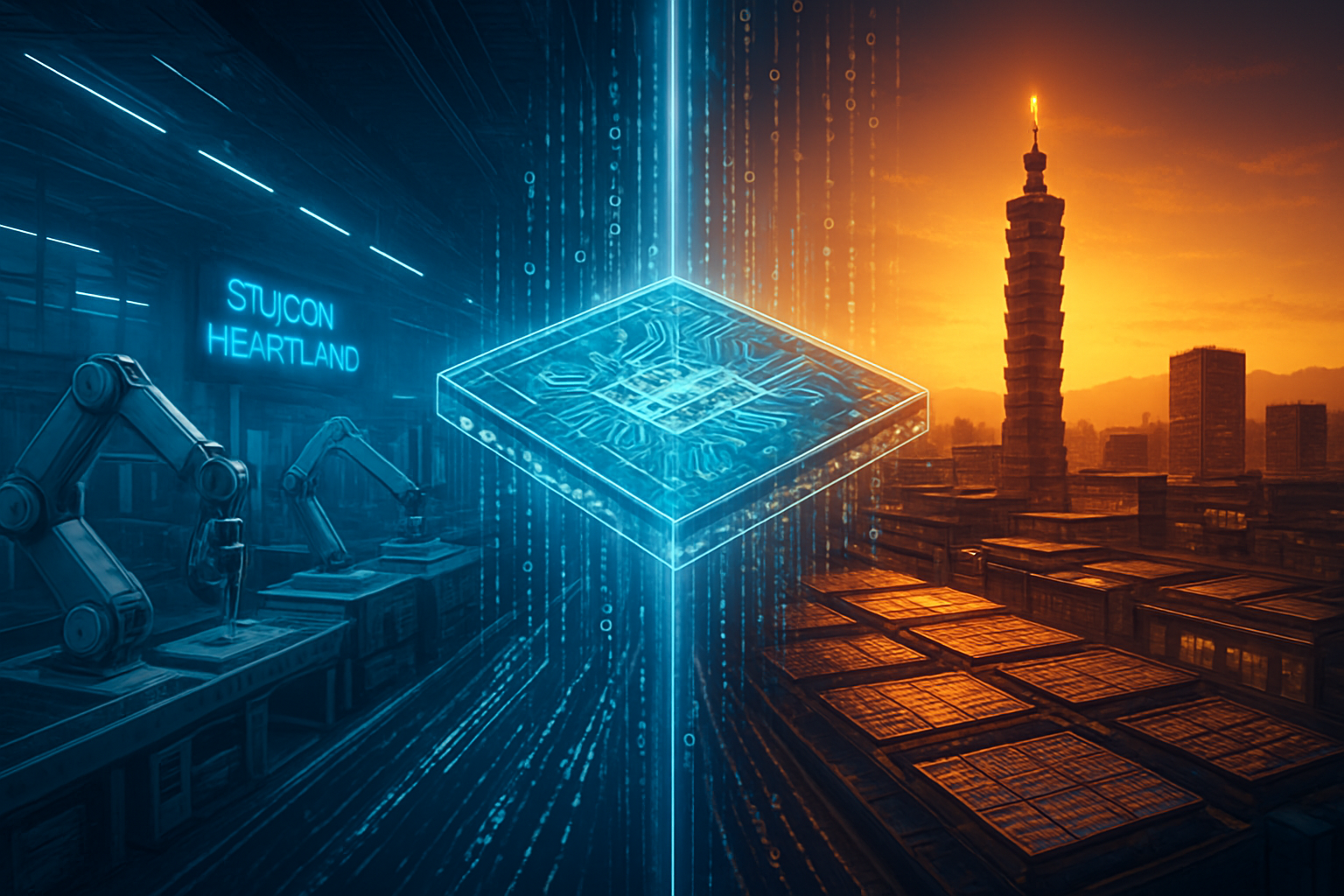
    In a bold move to cement its position in the high-stakes artificial intelligence hardware race, Micron Technology (NASDAQ: MU) has announced a definitive agreement to acquire the P5 fabrication facility in Tongluo, Taiwan, from Powerchip Semiconductor Manufacturing Corp (TWSE: 6770) for $1.8 billion. This strategic acquisition, finalized in January 2026, is designed to drastically scale Micron’s production of High Bandwidth Memory (HBM), the critical specialized DRAM that powers the world’s most advanced AI accelerators and large language model (LLM) clusters.

    The deal marks a pivotal shift for Micron as it transitions from a capacity-constrained challenger to a primary architect of the global AI supply chain. With the demand for HBM3E and the upcoming HBM4 standards reaching unprecedented levels, the acquisition of the 300,000-square-foot P5 cleanroom provides Micron with the immediate industrial footprint necessary to bypass the years-long lead times associated with greenfield factory construction. As the AI "supercycle" continues to accelerate, this $1.8 billion investment represents a foundational pillar in Micron’s quest to capture 25% of the HBM market share by the end of the year.

    The Technical Edge: Solving the "Wafer Penalty"

    The technical implications of the P5 acquisition center on the "wafer penalty" inherent to HBM production. Unlike standard DDR5 memory, HBM dies are significantly larger and require a more complex, multi-layered stacking process using Through-Silicon Vias (TSV). This architectural complexity means that producing HBM requires roughly three times the wafer capacity of traditional DRAM to achieve the same bit output. By taking over the P5 site—a facility that PSMC originally invested over $9 billion to develop—Micron gains a massive, ready-made environment to house its advanced "1-gamma" and "1-delta" manufacturing nodes.

    The P5 facility is expected to be integrated into Micron’s existing Taiwan-based production cluster, which already includes its massive Taichung "megafab." This proximity allows for a streamlined logistics chain for the delicate HBM stacking process. While the transaction is expected to close in the second quarter of 2026, Micron is already planning to retool the facility for HBM4 production. HBM4, the next generational leap in memory technology, is projected to offer a 60% increase in bandwidth over current HBM3E standards and will utilize 2048-bit interfaces, necessitating the ultra-precise lithography and cleanroom standards that the P5 fab provides.

    Initial reactions from the industry have been overwhelmingly positive, with analysts noting that the $1.8 billion price tag is exceptionally capital-efficient. Industry experts at TrendForce have pointed out that acquiring a "brownfield" site—an existing, modern facility—allows Micron to begin meaningful wafer output by the second half of 2027. This is significantly faster than the five-to-seven-year timeline required to build its planned $100 billion mega-site in New York from the ground up. Researchers within the semiconductor space view this as a necessary survival tactic in an era where HBM supply for 2026 is already reported as "sold out" across the entire industry.

    Market Disruptions: Chasing the HBM Crown

    The acquisition fundamentally redraws the competitive map for the memory industry, where Micron has historically trailed South Korean giants SK Hynix (KRX: 000660) and Samsung Electronics (KRX: 005930). Throughout 2024 and 2025, SK Hynix maintained a dominant lead, controlling nearly 57% of the HBM market due to its early and exclusive supply deals with NVIDIA (NASDAQ: NVDA). However, Micron’s aggressive expansion in Taiwan, which includes the 2024 purchase of AU Optronics (TWSE: 2409) facilities for advanced packaging, has seen its market share surge from a mere 5% to over 21% in just two years.

    For tech giants like NVIDIA and Advanced Micro Devices (NASDAQ: AMD), Micron’s increased capacity is a welcome development that may ease the chronic supply shortages of AI GPUs like the Blackwell B200 and the upcoming Vera Rubin architectures. By diversifying the HBM supply chain, these companies gain more leverage in pricing and reduce their reliance on a single geographic or corporate source. Conversely, for Samsung, which has struggled with yield issues on its 12-high HBM3E stacks, Micron’s rapid scaling represents a direct threat to its traditional second-place standing in the global memory rankings.

    The strategic advantage for Micron lies in its localized ecosystem in Taiwan. By centering its HBM production in the same geographic region as Taiwan Semiconductor Manufacturing Company (NYSE: TSM), the world’s leading chip foundry, Micron can more efficiently collaborate on CoWoS (Chip on Wafer on Substrate) packaging. This integration is vital because HBM is not a standalone component; it must be physically bonded to the AI processor. Micron’s move to own the manufacturing floor rather than leasing capacity ensures that it can maintain strict quality control and proprietary manufacturing techniques that are essential for the high-yield production of 12-layer and 16-layer HBM stacks.

    The Global AI Landscape: From Code to Carbon

    Looking at the broader AI landscape, the Micron-PSMC deal is a clear indicator that the "AI arms race" has moved from the software layer to the physical infrastructure layer. In the early 2020s, the focus was on model parameters and training algorithms; in 2026, the bottleneck is physical cleanroom space and the availability of high-purity silicon wafers. The acquisition fits into a larger trend of "reshoring" and "near-shoring" within the semiconductor industry, where proximity to downstream partners like TSMC and Foxconn (TWSE: 2317) is becoming a primary competitive advantage.

    However, this consolidation of manufacturing power is not without its concerns. The heavy concentration of HBM production in Taiwan continues to pose a geopolitical risk, as any regional instability could theoretically halt the global supply of AI-capable hardware. Furthermore, the sheer capital intensity required to compete in the HBM market is creating a "winner-take-all" dynamic. With Micron spending billions to secure capacity that is already sold out years in advance, smaller memory manufacturers are being effectively locked out of the most profitable segment of the industry, potentially stifling innovation in alternative memory architectures.

    In terms of historical milestones, this acquisition echoes the massive capital expenditures seen during the height of the mobile smartphone boom in the early 2010s, but on a significantly larger scale. The HBM market is no longer a niche segment of the DRAM industry; it is the primary engine of growth. Micron’s transformation into an AI-first company is now complete, as the company reallocates nearly all of its advanced research and development and capital expenditure toward supporting the demands of hyperscale data centers and generative AI workloads.

    Future Horizons: The Road to HBM4 and PIM

    In the near term, the industry will be watching for the successful closure of the deal in Q2 2026 and the subsequent retooling of the P5 facility. The next major milestone will be the transition to HBM4, which is expected to enter high-volume production later this year. This new standard will move the base logic die of the HBM stack from a memory process to a foundry process, requiring even closer collaboration between Micron and TSMC. If Micron can successfully navigate this technical transition while scaling the P5 fab, it could potentially overtake Samsung to become the world’s second-largest HBM supplier by 2027.

    Beyond the immediate horizon, the P5 fab may also serve as a testing ground for experimental technologies like HBM4E and the integration of optical interconnects directly into the memory stack. As AI models continue to grow in size, the "memory wall"—the gap between processor speed and memory bandwidth—remains the greatest challenge for the industry. Experts predict that the next decade of AI development will be defined by "processing-in-memory" (PIM) architectures, where the memory itself performs basic computational tasks. The vast cleanroom space of the P5 fab provides Micron with the playground necessary to develop these next-generation hybrid chips.

    Conclusion: A Definitive Stake in the AI Era

    The acquisition of the P5 fab for $1.8 billion is more than a simple real estate transaction; it is a declaration of intent by Micron Technology. By securing one of the most modern fabrication sites in Taiwan, Micron has effectively bought its way to the front of the AI hardware revolution. The deal addresses the critical need for wafer capacity, positions the company at the heart of the world’s most advanced semiconductor ecosystem, and provides a clear roadmap for the rollout of HBM4 and beyond.

    As the transaction moves toward its close in the coming months, the key takeaways are clear: the AI supercycle shows no signs of slowing down, and the battle for dominance is being fought in the cleanrooms of Taiwan. For investors and industry watchers, the focus will now shift to Micron’s ability to execute on its aggressive production targets and its capacity to maintain yields as HBM stacks become increasingly complex. In the historical narrative of artificial intelligence, the January 2026 acquisition of the P5 fab may well be remembered as the moment Micron secured its seat at the table of the AI elite.


    This content is intended for informational purposes only and represents analysis of current AI developments.

    TokenRing AI delivers enterprise-grade solutions for multi-agent AI workflow orchestration, AI-powered development tools, and seamless remote collaboration platforms.
    For more information, visit https://www.tokenring.ai/.

  • The Dawn of the Physical AI Era: Silicon Titans Redefine CES 2026

    The Dawn of the Physical AI Era: Silicon Titans Redefine CES 2026

    The recently concluded CES 2026 in Las Vegas will be remembered as the moment the artificial intelligence revolution stepped out of the chat box and into the physical world. Officially heralded as the "Year of Physical AI," the event marked a historic pivot from the generative text and image models of 2024–2025 toward embodied systems that can perceive, reason, and act within our three-dimensional environment. This shift was underscored by a massive coordinated push from the world’s leading semiconductor manufacturers, who unveiled a new generation of "Physical AI" processors designed to power everything from "Agentic PCs" to fully autonomous humanoid robots.

    The significance of this year’s show lies in the maturation of edge computing. For the first time, the industry demonstrated that the massive compute power required for complex reasoning no longer needs to reside exclusively in the cloud. With the launch of ultra-high-performance NPUs (Neural Processing Units) from the industry's "Four Horsemen"—Nvidia, Intel, AMD, and Qualcomm—the promise of low-latency, private, and physically capable AI has finally moved from research prototypes to mass-market production.

    The Silicon War: Specs of the 'Four Horsemen'

    The technological centerpiece of CES 2026 was the "four-way war" in AI silicon. Nvidia (NASDAQ:NVDA) set the pace early by putting its "Rubin" architecture into full production. CEO Jensen Huang declared a "ChatGPT moment for robotics" as he unveiled the Jetson T4000, a Blackwell-powered module delivering a staggering 1,200 FP4 TFLOPS. This processor is specifically designed to be the "brain" of humanoid robots, supported by Project GR00T and Cosmos, an "open world foundation model" that allows machines to learn motor tasks from video data rather than manual programming.

    Not to be outdone, Intel (NASDAQ:INTC) utilized the event to showcase the success of its turnaround strategy with the official launch of Panther Lake (Core Ultra Series 3). Manufactured on the cutting-edge Intel 18A process node, the chip features the new NPU 5, which delivers 50 TOPS locally. Intel’s focus is the "Agentic AI PC"—a machine capable of managing a user’s entire digital life and local file processing autonomously. Meanwhile, Qualcomm (NASDAQ:QCOM) flexed its efficiency muscles with the Snapdragon X2 Elite Extreme, boasting an 18-core Oryon 3 CPU and an 80 TOPS NPU. Qualcomm also introduced the Dragonwing IQ10, a dedicated platform for robotics that emphasizes power-per-watt, enabling longer battery life for mobile humanoids like the Vinmotion Motion 2.

    AMD (NASDAQ:AMD) rounded out the quartet by bridging the gap between the data center and the desktop. Their new Ryzen AI "Gorgon Point" series features an expanded matrix engine and the first native support for "Copilot+ Desktop" high-performance workloads. AMD also teased its Helios platform, a rack-scale solution powered by Zen 6 EPYC "Venice" processors, intended to train the very physical world models that the smaller Ryzen chips execute at the edge. Industry experts have noted that while previous years focused on software breakthroughs, 2026 is defined by the hardware's ability to handle "multimodal reasoning"—the ability for a device to see an object, understand its physical properties, and decide how to interact with it in real-time.

    Market Maneuvers: From Cloud Dominance to Edge Supremacy

    This shift toward Physical AI is fundamentally reshaping the competitive landscape of the tech industry. For years, the AI narrative was dominated by cloud providers and LLM developers. However, CES 2026 proved that the "edge"—the devices we carry and the robots that work alongside us—is the new battleground for strategic advantage. Nvidia is positioning itself as the "Infrastructure King," providing not just the chips but the entire software stack (Omniverse and Isaac) needed to simulate and train physical entities. By owning the simulation environment, Nvidia seeks to make its hardware the indispensable foundation for every robotics startup.

    In contrast, Qualcomm and Intel are targeting the "volume market." Qualcomm is leveraging its heritage in mobile connectivity to dominate "connected robotics," where 5G and 6G integration are vital for warehouse automation and consumer bots. Intel, through its 18A manufacturing breakthrough, is attempting to reclaim the crown of the "PC Brain" by making AI features so deeply integrated into the OS that a cloud connection becomes optional. Startups like Boston Dynamics (backed by Hyundai and Google DeepMind) and Vinmotion are the primary beneficiaries of this rivalry, as the sudden abundance of high-performance, low-power silicon allows them to transition from experimental models to production-ready units capable of "human-level" dexterity.

    The competitive implications extend beyond silicon. Tech giants are now forced to choose between "walled garden" AI ecosystems or open-source Physical AI frameworks. The move toward local processing also threatens the dominance of current subscription-based AI models; if a user’s Intel-powered laptop or Qualcomm-powered robot can perform complex reasoning locally, the strategic advantage of centralized AI labs like OpenAI or Anthropic could begin to erode in favor of hardware-software integrated giants.

    The Wider Significance: When AI Gets a Body

    The transition from "Digital AI" to "Physical AI" represents a profound milestone in human-computer interaction. For the first time, the "hallucinations" that plagued early generative AI have moved from being a nuisance in text to a safety critical engineering challenge. At CES 2026, panels featuring leaders from Siemens and Mercedes-Benz emphasized that "Physical AI" requires "error intolerance." A robot navigating a crowded home or a factory floor cannot afford a single reasoning error, leading to the introduction of "safety-grade" silicon architectures that partition AI logic from critical motor controls.

    This development also brings significant societal concerns to the forefront. As AI becomes embedded in physical infrastructure—from elevators that predict maintenance to autonomous industrial helpers—the question of accountability becomes paramount. Experts at the event raised alarms regarding "invisible AI," where autonomous systems become so pervasive that their decision-making processes are no longer transparent to the humans they serve. The industry is currently racing to establish "document trails" for AI reasoning to ensure that when a physical system fails, the cause can be diagnosed with the same precision as a mechanical failure.

    Comparatively, the 2023 generative AI boom was about "creation," while the 2026 Physical AI breakthrough is about "utility." We are moving away from AI as a toy or a creative partner and toward AI as a functional laborer. This has reignited debates over labor displacement, but with a new twist: the focus is no longer just on white-collar "knowledge work," but on blue-collar tasks in logistics, manufacturing, and elder care.

    Beyond the Horizon: The 2027 Roadmap

    Looking ahead, the momentum generated at CES 2026 shows no signs of slowing. Near-term developments will likely focus on the refinement of "Agentic AI PCs," where the operating system itself becomes a proactive assistant that performs tasks across different applications without user prompting. Long-term, the industry is already looking toward 2027, with Intel teasing its Nova Lake architecture (rumored to feature 52 cores) and AMD preparing its Medusa (Zen 6) chips based on TSMC’s 2nm process. These upcoming iterations aim to bring even more "brain-like" density to consumer hardware.

    The next major challenge for the industry will be the "sim-to-real" gap—the difficulty of taking an AI trained in a virtual simulation and making it function perfectly in the messy, unpredictable real world. Future applications on the horizon include "personalized robotics," where robots are not just general-purpose tools but are fine-tuned to the specific layout and needs of an individual's home. Predictably, experts believe the next 18 months will see a surge in M&A activity as silicon giants move to acquire robotics software startups to complete their "Physical AI" portfolios.

    The Wrap-Up: A Turning Point in Computing History

    CES 2026 has served as a definitive declaration that the "post-chat" era of artificial intelligence has arrived. The key takeaways from the event are clear: the hardware has finally caught up to the software, and the focus of innovation has shifted from virtual outputs to physical actions. The coordinated launches from Nvidia, Intel, AMD, and Qualcomm have provided the foundation for a world where AI is no longer a guest on our screens but a participant in our physical spaces.

    In the history of AI, 2026 will likely be viewed as the year the technology gained its "body." As we look toward the coming months, the industry will be watching closely to see how these new processors perform in real-world deployments and how consumers react to the first wave of truly autonomous "Agentic" devices. The silicon war is far from over, but the battlefield has officially moved into the real world.


    This content is intended for informational purposes only and represents analysis of current AI developments.

    TokenRing AI delivers enterprise-grade solutions for multi-agent AI workflow orchestration, AI-powered development tools, and seamless remote collaboration platforms.
    For more information, visit https://www.tokenring.ai/.

  • The Silicon Iron Curtain: How ‘Pax Silica’ and New Trade Taxes are Redrawing the AI Frontier

    The Silicon Iron Curtain: How ‘Pax Silica’ and New Trade Taxes are Redrawing the AI Frontier

    As of January 2026, the global semiconductor landscape has undergone a seismic shift, moving away from the era of "containment" toward a complex new reality of "monetized competition." The geopolitical tug-of-war between the United States and China has solidified into a permanent bifurcation of the technology world, marked by the formalization of the "Pax Silica" alliance—the strategic successor to the "Chip 4" coalition. This new diplomatic framework, which now includes the original Chip 4 nations plus the Netherlands, Singapore, and recent additions like the UAE and Qatar, seeks to insulate the most advanced AI hardware from geopolitical rivals while maintaining a controlled, heavily taxed economic bridge to the East.

    The immediate significance of this development cannot be overstated: the U.S. Department of Commerce has officially pivoted from a blanket "presumption of denial" for high-end chip exports to a "case-by-case review" system paired with a mandatory 25% "chip tax" on all advanced AI silicon bound for China. This policy allows Western titans like NVIDIA (NASDAQ:NVDA) to maintain market share while simultaneously generating billions in revenue for the U.S. government to reinvest in domestic sub-2nm fabrication and research. However, this bridge comes with strings attached, as the most cutting-edge "sovereign-grade" AI architectures remain strictly off-limits to any nation outside the Pax Silica security umbrella.

    The Architecture of Exclusion: GAA Transistors and HBM Chokepoints

    Technically, the new trade restrictions center on two critical pillars of next-generation computing: Gate-All-Around (GAA) transistor technology and High Bandwidth Memory (HBM). While the previous decade was defined by FinFET transistors, the leap to 2nm and 3nm nodes requires the adoption of GAA, which allows for finer control over current and significantly lower power consumption—essential for the massive energy demands of 2026-era Large Action Models (LAMs). New export rules, specifically ECCN 3A090.c, now strictly control the software, recipes, and hybrid bonding tools required to manufacture GAA-based chips, effectively stalling China’s progress at the 5nm ceiling.

    In the memory sector, HBM has become the "new oil" of the AI industry. The Pax Silica alliance has placed a firm stranglehold on the specialized stacking and bonding equipment required to produce HBM4, the current industry standard. This has forced Chinese firms like SMIC (HKG:0981) to attempt to localize the entire HBM supply chain—a monumental task that experts suggest is at least three to five years behind the state-of-the-art. Industry analysts note that while SMIC has managed to produce 5nm-class chips using older Deep Ultraviolet (DUV) lithography, their yields are reportedly hovering around a disastrous 33%, making their domestic AI accelerators nearly twice as expensive as their Western counterparts.

    Initial reactions from the AI research community have been polarized. While some argue that these restrictions prevent the proliferation of dual-use AI for military applications, others fear a "hardware apartheid" that could slow global scientific progress. The shift by ASML (NASDAQ:ASML) to fully align with U.S. policy, halting the export of even high-end immersion DUV tools to China, has further tightened the noose, forcing Chinese researchers to focus on algorithmic efficiency and "compute-light" AI models to compensate for their lack of raw hardware power.

    A Two-Tiered Market: Winners and Losers in the New Trade Regime

    For the corporate giants of Silicon Valley and East Asia, 2026 is a year of navigating "dual-track" product lines. NVIDIA (NASDAQ:NVDA) recently unveiled its "Rubin" platform, a successor to the Blackwell architecture featuring Vera CPUs. Crucially, the Rubin platform is classified as "Pax Silica Only," meaning it cannot be exported to China even with the 25% tax. Instead, NVIDIA is shipping the older H200 and specialized "H20" variants to the Chinese market, subject to a volume cap that prevents China-bound shipments from exceeding 50% of U.S. domestic sales. This strategy allows NVIDIA to keep its dominant position in the Chinese enterprise market while ensuring the U.S. maintains a "two-generation lead."

    The strategic positioning of TSMC (NYSE:TSM) has also evolved. Through a landmark $250 billion "Silicon Shield" agreement finalized in early 2026, TSMC has secured massive federal subsidies for its Arizona and Dresden facilities in exchange for prioritizing Pax Silica defense and AI infrastructure needs. This has mitigated fears of a "hollowing out" of Taiwan’s industrial base, as the island remains the exclusive home for the initial "N2" (2nm) mass production. Meanwhile, South Korean giants Samsung (KRX:005930) and SK Hynix (KRX:000660) are reaping the benefits of the HBM shortage, though they face the difficult task of phasing out their legacy manufacturing footprints in mainland China to comply with the new alliance standards.

    Startups in the AI space are feeling the squeeze of this bifurcation. New ventures in India and Singapore are benefiting from being inside the Pax Silica "trusted circle," gaining access to advanced compute that was previously reserved for U.S. and European firms. Conversely, Chinese AI startups are pivoting toward RISC-V architectures and domestic accelerators, creating a siloed ecosystem that is increasingly incompatible with Western software stacks like CUDA, potentially leading to a permanent divergence in AI development environments.

    The Geopolitical Gamble: Sovereignty vs. Globalization

    The wider significance of these trade restrictions marks the end of the "Global Village" era for high-technology. We are witnessing the birth of "Semiconductor Sovereignty," where the ability to design and manufacture silicon is viewed as being as vital to national security as a nuclear deterrent. This fits into a broader trend of "de-risking" rather than "de-coupling," where the U.S. and its allies seek to control the heights of the AI revolution while maintaining enough trade to prevent a total economic collapse.

    The Pax Silica alliance represents a sophisticated evolution of the Cold War-era COCOM (Coordinating Committee for Multilateral Export Controls). By including energy-rich nations like the UAE and Qatar, the U.S. is effectively trading access to high-end AI chips for long-term energy security and a commitment to Western data standards. However, this creates a potential "splinternet" of hardware, where the world is divided into those who can run 2026’s most advanced models and those who are stuck with the "legacy" AI of 2024.

    Comparisons to previous milestones, such as the 1986 U.S.-Japan Semiconductor Agreement, highlight the increased stakes. In the 1980s, the battle was over memory chips for PCs; today, it is over the foundational "intelligence" that will power autonomous economies, defense systems, and scientific discovery. The concern remains that by pushing China into a corner, the West is incentivizing a radical, independent breakthrough in areas like optical computing or carbon nanotube transistors—technologies that could eventually bypass the silicon-based chokepoints currently being exploited.

    The Horizon: Photonics, RISC-V, and the 2028 Deadline

    Looking ahead, the next 24 months will be a race against time. China has set a national goal for 2028 to achieve "EUV-equivalence" through alternative lithography techniques and advanced chiplet packaging. While Western experts remain skeptical, the massive influx of capital into China’s "Big Fund Phase 3" is accelerating the localization of ion implanters and etching equipment. We can expect to see the first "all-Chinese" 7nm AI chips hitting the market by late 2026, though their performance per watt will likely lag behind the West’s 2nm offerings.

    In the near term, the industry is closely watching the development of silicon photonics. This technology, which uses light instead of electricity to move data between chips, could be the key to overcoming the interconnect bottlenecks that currently plague AI clusters. Because photonics relies on different manufacturing processes than traditional logic chips, it could become a new "gray zone" for trade restrictions, as the Pax Silica framework struggles to categorize these hybrid devices.

    The long-term challenge will be the "talent drain." As the hardware divide grows, we may see a migration of researchers toward whichever ecosystem provides the best "compute-to-cost" ratio. If China can subsidize its inefficient 5nm chips enough to make them accessible to global researchers, it could create a gravity well for AI development that rivals the Western hubs, despite the technical inferiority of the underlying hardware.

    A New Equilibrium in the AI Era

    The geopolitical hardening of the semiconductor supply chain in early 2026 represents a definitive closing of the frontier. The transition from the "Chip 4" to "Pax Silica" and the implementation of the 25% "chip tax" signals that the U.S. has accepted the permanence of its rivalry with China and has moved to monetize it while protecting its technological lead. This development will be remembered as the moment the AI revolution was formally subsumed by the machinery of statecraft.

    Key takeaways for the coming months include the performance of NVIDIA's Rubin platform within the Pax Silica bloc and whether China can successfully scale its 5nm "inefficiency-node" production to meet domestic demand. The "Silicon Shield" around Taiwan appears stronger than ever, but the cost of that security is a more expensive, more fragmented global market.

    In the weeks ahead, watch for the first quarterly reports from ASML (NASDAQ:ASML) and TSMC (NYSE:TSM) to see the true impact of the Dutch export bans and the U.S. investment deals. As the "Silicon Iron Curtain" descends, the primary question remains: will this enforced lead protect Western interests, or will it merely accelerate the arrival of a competitor that the West no longer understands?


    This content is intended for informational purposes only and represents analysis of current AI developments.

    TokenRing AI delivers enterprise-grade solutions for multi-agent AI workflow orchestration, AI-powered development tools, and seamless remote collaboration platforms.
    For more information, visit https://www.tokenring.ai/.