
Tag: 2025 Tech Trends

  • The Great Agentic Displacement: New Report Traces 50,000 White-Collar Job Losses to Autonomous AI in 2025

    The Great Agentic Displacement: New Report Traces 50,000 White-Collar Job Losses to Autonomous AI in 2025

    As 2025 draws to a close, a series of sobering year-end reports have confirmed a long-feared structural shift in the global labor market. According to the latest data from Challenger, Gray & Christmas and corroborated by the Forbes AI Workforce Report, artificial intelligence was explicitly cited as the primary driver for over 50,000 job cuts in the United States this year alone. Unlike the broad tech layoffs of 2023 and 2024, which were largely attributed to post-pandemic over-hiring and high interest rates, the 2025 wave is being defined by "The Great Agentic Displacement"—a surgical removal of entry-level white-collar roles as companies transition from human-led "copilots" to fully autonomous AI agents.

    This shift marks a critical inflection point in the AI revolution. For the first time, the "intelligence engine" is no longer just assisting workers; it is beginning to replace the administrative and analytical "on-ramps" that have historically served as the training grounds for the next generation of corporate leadership. With nearly 5% of all 2025 layoffs now directly linked to AI deployment, the industry is witnessing the practical realization of "digital labor" at scale, leaving fresh graduates and junior professionals in finance, law, and technology facing a fundamentally altered career landscape.

    The Rise of the Autonomous Agent: From Chatbots to Digital Workers

    The technological catalyst for this displacement is the maturation of "Agentic AI." Throughout 2025, the industry moved beyond simple Large Language Models (LLMs) that require constant human prompting to autonomous systems capable of independent reasoning, planning, and execution. Leading the charge was OpenAI’s "Operator" and Microsoft (NASDAQ:MSFT) with its refined Copilot Studio, which allowed enterprises to build agents that don't just write emails but actually navigate internal software, execute multi-step research projects, and debug complex codebases without human intervention. These agents differ from 2024-era technology by utilizing "Chain-of-Thought" reasoning and tool-use capabilities that allow them to correct their own errors and see a task through from inception to completion.

    Industry experts, including Anthropic CEO Dario Amodei, had warned earlier this year that the leap from "assistive AI" to "agentic AI" would be the most disruptive phase of the decade. Unlike previous automation cycles that targeted blue-collar repetitive labor, these autonomous agents are specifically designed to handle "cognitive routine"—the very tasks that define junior analyst and administrative roles. Initial reactions from the AI research community have been a mix of technical awe and social concern; while the efficiency gains are undeniable, the speed at which these "digital employees" have been integrated into enterprise workflows has outpaced most labor market forecasts.

    Corporate Strategy: The Pivot to Digital Labor and High-Margin Efficiency

    The primary beneficiaries of this shift have been the enterprise software giants who have successfully monetized the transition to autonomous workflows. Salesforce (NYSE:CRM) reported that its "Agentforce" platform became its fastest-growing product in company history, with CEO Marc Benioff noting that AI now handles up to 50% of the company's internal administrative workload. This efficiency came at a human cost, as Salesforce and other tech leaders like Amazon (NASDAQ:AMZN) and IBM (NYSE:IBM) collectively trimmed thousands of roles in 2025, explicitly citing the ability of AI to absorb the work of junior staff. For these companies, the strategic advantage is clear: digital labor is infinitely scalable, operates 24/7, and carries no benefits or overhead costs.

    This development has created a new competitive reality for major AI labs and tech companies. The "Copilot era" focused on selling seats to human users; the "Agent era" is increasingly focused on selling outcomes. ServiceNow (NYSE:NOW) and SAP have pivoted their entire business models toward providing "turnkey digital workers," effectively competing with traditional outsourcing firms and junior-level hiring pipelines. This has forced a massive market repositioning where the value of a software suite is no longer measured by its interface, but by its ability to reduce headcount while maintaining or increasing output.

    A Hollowing Out of the Professional Career Ladder

    The wider significance of the 2025 job cuts lies in the "hollowing out" of the traditional professional career ladder. Historically, entry-level roles in sectors like finance and law served as a vital apprenticeship period. However, with JPMorgan Chase (NYSE:JPM) and other banking giants deploying autonomous "LLM Suites" that can perform the work of hundreds of junior research analysts in seconds, the "on-ramp" for young professionals is vanishing. This trend is not just about the 50,000 lost jobs; it is about the "hidden" impact of non-hiring. Data from 2025 shows a 15% year-over-year decline in entry-level corporate job postings, suggesting that the entry point into the middle class is becoming increasingly narrow.

    Comparisons to previous AI milestones are stark. While 2023 was the year of "wow" and 2024 was the year of "how," 2025 has become the year of "who"—as in, who is still needed in the loop? The socio-economic concerns are mounting, with critics arguing that by automating the bottom of the pyramid, companies are inadvertently destroying their future leadership pipelines. This mirrors the broader AI landscape trend of "efficiency at all costs," raising urgent questions about the long-term sustainability of a corporate model that prioritizes immediate margin expansion over the development of human capital.

    The Road Ahead: Human-on-the-Loop and the Skills Gap

    Looking toward 2026 and beyond, experts predict a shift from "human-in-the-loop" to "human-on-the-loop" management. In this model, senior professionals will act as "agent orchestrators," managing fleets of autonomous digital workers rather than teams of junior employees. The near-term challenge will be the massive upskilling required for the remaining workforce. While new roles like "AI Workflow Designer" and "Agent Ethics Auditor" are emerging, they require a level of seniority and technical expertise that fresh graduates simply do not possess. This "skills gap" is expected to be the primary friction point for the labor market in the coming years.

    Furthermore, we are likely to see a surge in regulatory scrutiny as governments grapple with the tax and social security implications of a shrinking white-collar workforce. Potential developments include "automation taxes" or mandated "human-centric" hiring quotas in certain sensitive sectors. However, the momentum of autonomous agents appears unstoppable. As these systems move from handling back-office tasks to managing front-office client relationships, the definition of a "white-collar worker" will continue to evolve, with a premium placed on high-level strategy, emotional intelligence, and complex problem-solving that remains—for now—beyond the reach of the machine.

    Conclusion: 2025 as the Year the AI Labor Market Arrived

    The 50,000 job cuts recorded in 2025 will likely be remembered as the moment the theoretical threat of AI displacement became a tangible economic reality. The transition from assistive tools to autonomous agents has fundamentally restructured the relationship between technology and the workforce, signaling the end of the "junior professional" as we once knew it. While the productivity gains for the global economy are projected to be in the trillions, the human cost of this transition is being felt most acutely by those at the very start of their careers.

    In the coming weeks and months, the industry will be watching closely to see how the education sector and corporate training programs respond to this "junior crisis." The significance of 2025 in AI history is not just the technical brilliance of the agents we created, but the profound questions they have forced us to ask about the value of human labor in an age of digital abundance. As we enter 2026, the focus must shift from how much we can automate to how we can build a future where human ingenuity and machine efficiency can coexist in a sustainable, equitable way.


    This content is intended for informational purposes only and represents analysis of current AI developments.

    TokenRing AI delivers enterprise-grade solutions for multi-agent AI workflow orchestration, AI-powered development tools, and seamless remote collaboration platforms.
    For more information, visit https://www.tokenring.ai/.

  • The Great Memory Famine: How AI’s HBM4 Supercycle Redefined the 2025 Tech Economy

    The Great Memory Famine: How AI’s HBM4 Supercycle Redefined the 2025 Tech Economy

    As 2025 draws to a close, the global technology landscape is grappling with a supply chain crisis of unprecedented proportions. What began as a localized scramble for high-end AI chips has evolved into a full-scale "Memory Famine," with prices for both High-Bandwidth Memory (HBM4) and standard DDR5 tripling over the last twelve months. This historic "supercycle" is no longer just a trend; it is a structural realignment of the semiconductor industry, driven by an insatiable appetite for the hardware required to power the next generation of artificial intelligence.

    The immediate significance of this shortage cannot be overstated. With mainstream PC DRAM spot prices surging from approximately $1.35 to over $8.00 in less than a year, the cost of computing has spiked for everyone from individual consumers to enterprise data centers. The crisis is being fueled by a "blank-check" procurement strategy from the world’s largest tech entities, effectively vacuuming up the world's silicon supply before it even leaves the cleanroom.

    The Technical Cannibalization: HBM4 vs. The World

    At the heart of the shortage is a fundamental shift in how memory is manufactured. High-Bandwidth Memory, specifically the newly mass-produced HBM4 standard, has become the lifeblood of AI accelerators like those produced by Nvidia (NASDAQ: NVDA). However, the technical specifications of HBM4 create a "cannibalization" effect on the rest of the market. HBM4 utilizes a 2048-bit interface—double that of its predecessor, HBM3E—and requires complex 3D-stacking techniques that are significantly more resource-intensive.

    The industry is currently facing what engineers call the "HBM Trade Ratio." Producing a single bit of HBM4 consumes roughly three to four times the wafer capacity of a single bit of standard DDR5. As manufacturers like Samsung (KRX: 005930) and SK Hynix (KRX: 000660) race to fulfill high-margin AI contracts, they are converting existing DDR5 and even legacy DDR4 production lines into HBM lines. This structural shift means that even though total wafer starts remain at record highs, the actual volume of memory sticks available for traditional laptops, servers, and gaming PCs has plummeted, leading to the "supply exhaustion" observed throughout 2025.

    Initial reactions from the research community have been a mix of awe and alarm. While the performance leaps offered by HBM4’s 2 TB/s bandwidth are enabling breakthroughs in real-time video generation and complex reasoning models, the "hardware tax" is becoming prohibitive. Industry experts at TrendForce note that the complexity of HBM4 manufacturing has led to lower yields compared to traditional DRAM, further tightening the bottleneck and ensuring that only the most well-funded projects can secure the necessary components.

    The Stargate Effect: Blank Checks and Global Shortages

    The primary catalyst for this supply vacuum is the sheer scale of investment from "hyperscalers." Leading the charge is OpenAI’s "Stargate" project, a massive $100 billion to $500 billion infrastructure initiative in partnership with Microsoft (NASDAQ: MSFT). Reports indicate that Stargate alone is projected to consume up to 900,000 DRAM wafers per month at its peak—roughly 40% of the entire world’s DRAM output. This single project has effectively distorted the global market, forcing other players into a defensive bidding war.

    In response, Alphabet (NASDAQ: GOOGL) and Meta (NASDAQ: META) have reportedly pivoted to "blank-check" orders. These companies have issued open-ended procurement contracts to the "Big Three" memory makers—Samsung, SK Hynix, and Micron (NASDAQ: MU)—instructing them to deliver every available unit of HBM and server-grade DRAM regardless of the market price. This "unconstrained bidding" has effectively sold out the industry’s production capacity through the end of 2026, leaving smaller OEMs and smartphone manufacturers to fight over the remaining scraps of supply.

    This environment has created a clear divide in the tech industry. The "haves"—the trillion-dollar giants with direct lines to South Korean and American fabs—continue to scale their AI capabilities. Meanwhile, the "have-nots"—including mid-sized cloud providers and consumer electronics brands—are facing product delays and mandatory price hikes. For many startups, the cost of the "memory tax" has become a greater barrier to entry than the cost of the AI talent itself.

    A Wider Significance: The Geopolitics of Silicon

    The 2025 memory shortage represents a pivotal moment in the broader AI landscape, highlighting the extreme fragility of the global supply chain. Much like the oil crises of the 20th century, the "Memory Famine" has turned silicon into a geopolitical lever. The shortage has underscored the strategic importance of the U.S. CHIPS Act and similar European initiatives, as nations realize that AI sovereignty is impossible without a guaranteed supply of high-density memory.

    The societal impacts are starting to manifest in the form of "compute inflation." As the cost of the underlying hardware triples, the price of AI-integrated services—from cloud storage to Copilot subscriptions—is beginning to rise. There are also growing concerns regarding the environmental cost; the energy-intensive process of manufacturing HBM4, combined with the massive power requirements of the data centers housing them, is putting unprecedented strain on global ESG goals.

    Comparisons are being drawn to the 2021 GPU shortage, but experts argue this is different. While the 2021 crisis was driven by a temporary surge in crypto-mining and pandemic-related logistics issues, the 2025 supercycle is driven by a permanent, structural shift toward AI-centric computing. This is not a "bubble" that will pop; it is a new baseline for the cost of doing business in a world where every application requires an LLM backend.

    The Road to 2027: What Lies Ahead

    Looking forward, the industry is searching for a light at the end of the tunnel. Relief is unlikely to arrive before 2027, when a new wave of "mega-fabs" currently under construction in South Korea and the United States (such as Micron’s Boise and New York sites) are expected to reach volume production. Until then, the market will remain a "seller’s market," with memory manufacturers enjoying record-breaking revenues that are expected to surpass $250 billion by the end of this year.

    In the near term, we expect to see a surge in alternative architectures designed to bypass the memory bottleneck. Technologies like Compute Express Link (CXL) 3.1 and "Memory-centric AI" architectures are being fast-tracked to help data centers pool and share memory more efficiently. There are also whispers of HBM5 development, which aims to further increase density, though critics argue that without a fundamental breakthrough in material science, we will simply continue to trade wafer capacity for bandwidth.

    The challenge for the next 24 months will be managing the "DRAM transition." As legacy DDR4 is phased out to make room for AI-grade silicon, the cost of maintaining older enterprise systems will skyrocket. Experts predict a "great migration" to the cloud, as smaller companies find it more cost-effective to rent AI power than to navigate the prohibitively expensive hardware market themselves.

    Conclusion: The New Reality of the AI Era

    The 2025 global memory shortage is more than a temporary supply chain hiccup; it is the first major resource crisis of the AI era. The "supercycle" driven by HBM4 and DDR5 demand has fundamentally altered the economics of the semiconductor industry, prioritizing the needs of massive AI clusters over the needs of the general consumer. With prices tripling and supply lines exhausted by the "blank-check" orders of Microsoft, Google, and OpenAI, the industry has entered a period of forced consolidation and strategic rationing.

    The key takeaway for the end of 2025 is that the "Stargate" era has arrived. The sheer scale of AI infrastructure projects is now large enough to move the needle on global commodity prices. As we look toward 2026, the tech industry will be defined by how well it can innovate around these hardware constraints. Watch for the opening of new domestic fabs and the potential for government intervention if the shortage begins to stifle broader economic growth. For now, the "Memory Famine" remains the most significant hurdle on the path to AGI.


    This content is intended for informational purposes only and represents analysis of current AI developments.

    TokenRing AI delivers enterprise-grade solutions for multi-agent AI workflow orchestration, AI-powered development tools, and seamless remote collaboration platforms.
    For more information, visit https://www.tokenring.ai/.
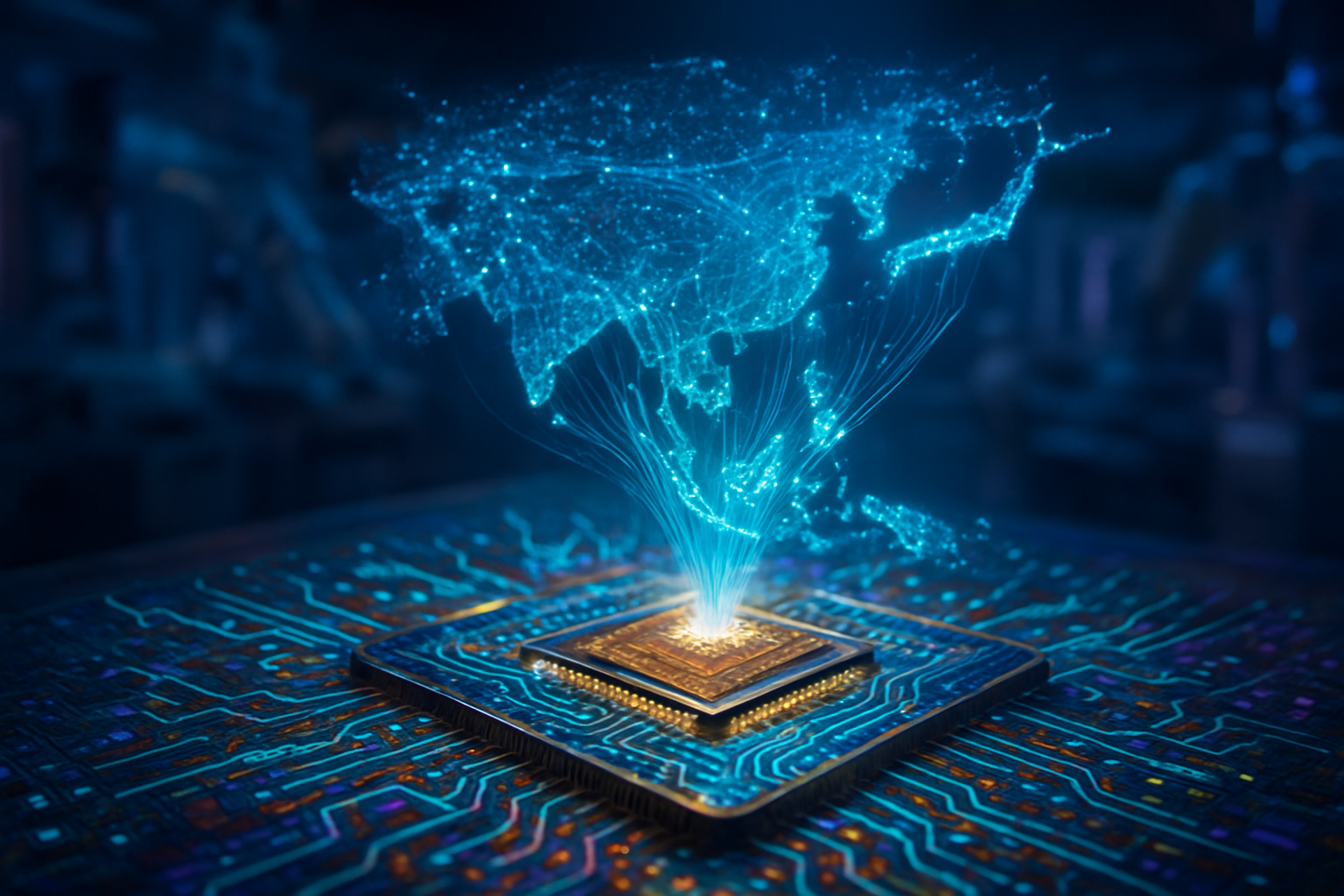
  • Silicon Sovereignty: Asia’s Semiconductor Renaissance Triggers 40% Growth Explosion in 2025

    Silicon Sovereignty: Asia’s Semiconductor Renaissance Triggers 40% Growth Explosion in 2025

    As 2025 draws to a close, the global technology landscape has been fundamentally reshaped by what economists are calling "Asia’s Semiconductor Renaissance." After years of supply chain volatility and a cautious recovery, the Asia-Pacific (APAC) region has staged a historic industrial surge, with semiconductor sales jumping a staggering 43.1% annually. This growth, far outpacing the global average, has been fueled by an insatiable demand for artificial intelligence infrastructure, cementing the region’s status as the indispensable heartbeat of the AI era.

    The significance of this recovery cannot be overstated. By December 2024, the industry was still navigating the tail-end of a "chip winter," but the breakthrough of 2025 has turned that into a permanent "AI spring." Led by titans in Taiwan, South Korea, and Japan, the region has transitioned from being a mere manufacturing hub to becoming the primary architect of the hardware that powers generative AI, large language models, and autonomous systems. This renaissance has pushed the APAC semiconductor market toward a projected value of $466.52 billion by year-end, signaling a structural shift in global economic power.

    The 2nm Era and the HBM Revolution

    The technical catalyst for this renaissance lies in the successful transition to the "Angstrom Era" of chipmaking and the explosion of High-Bandwidth Memory (HBM). In the fourth quarter of 2025, Taiwan Semiconductor Manufacturing Company (NYSE: TSM) officially commenced volume production of its 2-nanometer (2nm) process node. Utilizing a revolutionary Gate-All-Around (GAA) transistor architecture, these chips offer a 15% speed improvement and a 30% reduction in power consumption compared to the previous 3nm generation. This advancement has allowed AI accelerators to pack more processing power into smaller, more energy-efficient footprints, a critical requirement for the massive data centers being built by tech giants.

    Simultaneously, the "Memory Wars" between South Korean giants Samsung Electronics (KRX: 005930) and SK Hynix (KRX: 000660) reached a fever pitch with the mass production of HBM4. This next-generation memory provides the massive data throughput necessary for real-time AI inference. SK Hynix reported that HBM products now account for a record 77% of its revenue, with its 2026 capacity already fully booked by customers. Furthermore, the industry has solved the "packaging bottleneck" through the rapid expansion of Chip-on-Wafer-on-Substrate (CoWoS) technology. By tripling its CoWoS capacity in 2025, TSMC has enabled the production of ultra-complex AI modules that combine logic and memory in a single, high-performance package, a feat that was considered a manufacturing hurdle only 18 months ago.

    Market Dominance and the Corporate Rebound

    The financial results of 2025 reflect a period of unprecedented prosperity for Asian chipmakers. TSMC has solidified what many analysts describe as a "manufacturing monopoly," with its foundry market share climbing to an estimated 70.2%. This dominance is bolstered by its role as the sole manufacturer for NVIDIA (NASDAQ: NVDA) and Apple (NASDAQ: AAPL), whose demand for Blackwell Ultra and M-series chips has kept Taiwanese fabs running at over 100% utilization. Meanwhile, Samsung Electronics staged a dramatic comeback in the third quarter of 2025, reclaiming the top spot in global memory sales with $19.4 billion in revenue, largely by securing high-profile contracts for next-generation gaming consoles and AI servers.

    The equipment sector has also seen a windfall. Tokyo Electron (TYO: 8035) reported record earnings, with over 40% of its revenue now derived specifically from AI-related fabrication equipment. This shift has placed immense pressure on Western competitors like Intel (NASDAQ: INTC), which has struggled to match the yield consistency and rapid scaling of its Asian counterparts. The competitive implication is clear: the strategic advantage in AI has shifted from those who design the software to those who can reliably manufacture the increasingly complex hardware at scale. Startups in the AI space are now finding that their primary bottleneck isn't venture capital or talent, but rather securing "wafer starts" in Asian foundries.

    Geopolitical Shifts and the Silicon Shield

    Beyond the balance sheets, the 2025 renaissance carries profound geopolitical weight. Japan, once a fading power in semiconductors, has re-emerged as a formidable player. The government-backed venture Rapidus achieved a historic milestone in July 2025 by successfully prototyping a 2nm GAA transistor, signaling that Japan is back in the race for the leading edge. This resurgence is supported by over $32 billion in subsidies, aiming to create a "Silicon Island" in Hokkaido that serves as a high-tech counterweight in the region.

    China, despite facing stringent Western export controls, has demonstrated surprising resilience. SMIC (HKG: 0981) reportedly achieved a "5nm breakthrough" using advanced multi-patterning techniques. While these chips remain significantly more expensive to produce than TSMC’s—with yields estimated at only 33%—they have allowed China to maintain a degree of domestic self-sufficiency for its own AI ambitions. Meanwhile, Southeast Asia has evolved into a "Silicon Shield." Countries like Malaysia and Vietnam now account for nearly 30% of global semiconductor exports, specializing in advanced testing, assembly, and packaging. This diversification has created a more resilient supply chain, less vulnerable to localized disruptions than the concentrated models of the past decade.

    The Horizon: Towards the Trillion-Dollar Market

    Looking ahead to 2026 and beyond, the momentum of this renaissance shows no signs of slowing. The industry is already eyeing the 1.4nm roadmap, with research and development shifting toward silicon photonics—a technology that uses light instead of electricity to transmit data between chips, potentially solving the looming energy crisis in AI data centers. Experts predict that the global semiconductor market is now on a definitive trajectory to hit the $1 trillion mark by 2030, with Asia expected to capture more than 60% of that value.

    However, challenges remain. The intense energy requirements of 2nm fabrication facilities and the massive water consumption of advanced fabs are creating environmental hurdles that will require innovative sustainable engineering. Additionally, the talent shortage in specialized semiconductor engineering remains a critical concern. To address this, we expect to see a surge in public-private partnerships across Taiwan, South Korea, and Japan to fast-track a new generation of "lithography-native" engineers. The next phase of development will likely focus on "Edge AI"—bringing the power of the data center to local devices, a transition that will require a whole new class of low-power, high-performance Asian-made silicon.

    A New Chapter in Computing History

    The 2025 Semiconductor Renaissance marks a definitive turning point in the history of technology. It is the year the industry moved past the "scarcity mindset" of the pandemic era and entered an era of "AI-driven abundance." The 43% jump in regional sales is not just a statistical anomaly; it is a testament to the successful integration of advanced physics, massive capital investment, and strategic national policies. Asia has not only recovered its footing but has built a foundation that will support the next several decades of computational progress.

    As we move into 2026, the world will be watching the continued ramp-up of 2nm production and the first commercial applications of HBM4. The "Silicon Sovereignty" established by Asian nations this year has redefined the global order of innovation. For tech giants and startups alike, the message is clear: the future of AI is being written in the cleanrooms of the Asia-Pacific.


    This content is intended for informational purposes only and represents analysis of current AI developments.

    TokenRing AI delivers enterprise-grade solutions for multi-agent AI workflow orchestration, AI-powered development tools, and seamless remote collaboration platforms.
    For more information, visit https://www.tokenring.ai/.