Tag: 2025 Trends

  • The Invisible Closing Agent: How Generative AI is Orchestrating a $200 Million Real Estate Fraud Crisis

    The Invisible Closing Agent: How Generative AI is Orchestrating a $200 Million Real Estate Fraud Crisis

    The American dream of homeownership is facing a sophisticated new adversary as 2025 draws to a close. In the first quarter of 2025 alone, AI-driven wire fraud in the real estate sector resulted in over $200 million in financial losses, marking a terrifying evolution in cybercrime. What was once a landscape of poorly spelled phishing emails has transformed into "Social Engineering 2.0," where fraudsters use hyper-realistic deepfakes and autonomous AI agents to hijack the closing process, often leaving buyers and title companies penniless before they even realize a crime has occurred.

    This surge in high-tech theft has forced a radical restructuring of the real estate industry’s security protocols. As of December 19, 2025, the traditional "trust but verify" model has been declared dead, replaced by a "Zero-Trust" architecture that treats every email, phone call, and even video conference as a potential AI-generated forgery. The stakes reached a fever pitch this year following a high-profile incident in California, where a couple lost a $720,000 down payment after a live Zoom call with a "deepfake attorney" who perfectly mimicked their legal representative’s voice and appearance in real-time.

    The Technical Arsenal: From Dark LLMs to Real-Time Face Swapping

    The technical sophistication of these attacks has outpaced traditional cybersecurity defenses. Fraudsters are now leveraging "Dark LLMs" such as FraudGPT and WormGPT—unfiltered versions of large language models specifically trained to generate malicious code and convincing social engineering scripts. Unlike the generic lures of the past, these AI tools scrape data from Multiple Listing Services (MLS) and LinkedIn to create hyper-personalized messages. They reference specific property details, local neighborhood nuances, and even recent weather events to build an immediate, false sense of rapport with buyers and escrow officers.

    Beyond text, the emergence of real-time deepfake technology has become the industry's greatest vulnerability. Tools like DeepFaceLive and Amigo AI allow attackers to perform "video-masking" during live consultations. By using as little as 30 seconds of audio and video from an agent's social media profile, scammers can clone voices and overlay digital faces onto their own during Microsoft Teams (NASDAQ: MSFT) or Zoom calls. This capability has effectively neutralized the "video verification" safeguard that many title companies relied upon in 2024. Industry experts note that these "multimodal" attacks are often orchestrated by automated bots that can manage thousands of simultaneous "lure" conversations across WhatsApp, Slack, and email, waiting for a human victim to engage before a live fraudster takes over the final closing call.

    The Corporate Counter-Strike: Tech Giants and Startups Pivot to Defense

    The escalating threat has triggered a massive response from major technology and cybersecurity firms. Microsoft (NASDAQ: MSFT) recently unveiled Agent 365 at its late-2025 Ignite conference, a platform designed to govern the "agentic" workflows now common in mortgage processing. By integrating with Microsoft Entra, the system enforces strict permissions that prevent unauthorized AI agents from altering wire instructions or title records. Similarly, CrowdStrike (NASDAQ: CRWD) has launched Falcon AI Detection and Response (AIDR), which treats "prompts as the new malware." This system is specifically designed to stop prompt injection attacks where scammers try to "trick" a real estate firm's internal AI into bypassing security checks.

    In the identity space, Okta (NASDAQ: OKTA) is rolling out Verifiable Digital Credentials (VDC) to bridge the trust gap. By providing a "Verified Human Signature" for every digital transaction, Okta aims to ensure that even if an AI agent performs a task, there is a cryptographically signed human authorization behind it. Meanwhile, the real estate portal Realtor.com, owned by News Corp (NASDAQ: NWS), has begun integrating automated payment platforms like Payload to handle Earnest Money Deposits (EMD). These systems bypass manual, email-based wire instructions entirely, removing the primary vector used by AI fraudsters to intercept funds.

    A New Regulatory Frontier: FinCEN and the SEC Step In

    The wider significance of this AI fraud wave extends into the halls of government and the very foundations of the broader AI landscape. The rise of synthetic reality scams has drawn a sharp comparison to the "Business Email Compromise" (BEC) era of the 2010s, but with a critical difference: the speed of execution. Funds stolen via AI-automated "mule" accounts are often laundered through decentralized protocols within minutes, resulting in a recovery rate of less than 5% in 2025. This has prompted the Financial Crimes Enforcement Network (FinCEN) to issue a landmark rule, effective March 1, 2026, requiring title agents to report all non-financed, all-cash residential transfers to legal entities—a move specifically designed to curb AI-enabled money laundering.

    Furthermore, the Securities and Exchange Commission (SEC) has launched a crackdown on "AI-washing" within the real estate tech sector. In late 2025, several firms faced enforcement actions for overstating the capabilities of their "AI-powered" property valuation and security tools. This regulatory shift was punctuated by President Trump’s Executive Order on AI, signed on December 11, 2025. The order seeks to establish a "minimally burdensome" national policy that preempts restrictive state laws, aiming to lower compliance costs for legitimate businesses while creating an AI Litigation Task Force to prosecute high-tech financial crimes.

    The 2026 Outlook: AI vs. AI Security Battles

    Looking ahead, experts predict that 2026 will be defined by an "AI vs. AI" arms race. As fraudsters deploy increasingly autonomous bots to conduct reconnaissance on high-value properties, defensive firms like CertifID and FundingShield are moving toward "self-healing" security systems. These platforms use behavioral biometrics—analyzing typing speed, facial micro-movements, and even mouse patterns—to detect if a participant in a digital closing is a human or a machine-generated deepfake.

    The long-term challenge remains the "synthetic reality" problem. As AI-generated video becomes indistinguishable from reality, the industry is expected to move toward blockchain-based escrow services. Companies like Propy and SafeWire are already gaining traction by using smart contracts to hold funds in decentralized ledgers, releasing them only when pre-defined, cryptographically verified conditions are met. This shift would effectively eliminate "wire instructions" as a concept, replacing them with immutable code that cannot be spoofed by a deepfake voice on a phone call.

    Conclusion: Rebuilding Trust in a Synthetic Age

    The rise of AI-driven wire fraud in 2025 represents a pivotal moment in the history of both real estate and artificial intelligence. It has exposed the fragility of human-centric verification in an era where "seeing is no longer believing." The key takeaway for the industry is that security can no longer be an afterthought or a manual checklist; it must be an integrated, AI-native layer of the transaction itself.

    As we move into 2026, the success of the real estate market will depend on its ability to adopt these new "Zero-Trust" technologies. While the financial losses of 2025 have been devastating, they have also accelerated a long-overdue modernization of the closing process. For buyers and sellers, the message is clear: in the age of the invisible closing agent, the only safe transaction is one backed by cryptographic certainty. Watch for the implementation of the FinCEN residential rule in March 2026 as the next major milestone in this ongoing battle for the soul of the digital economy.


    This content is intended for informational purposes only and represents analysis of current AI developments.

    TokenRing AI delivers enterprise-grade solutions for multi-agent AI workflow orchestration, AI-powered development tools, and seamless remote collaboration platforms.
    For more information, visit https://www.tokenring.ai/.

  • The Great AI Rotation: Why Wall Street is Doubling Down on the Late 2025 Rebound

    The Great AI Rotation: Why Wall Street is Doubling Down on the Late 2025 Rebound

    As 2025 draws to a close, the financial markets are witnessing a powerful resurgence in artificial intelligence investments, marking a definitive end to the "valuation reckoning" that characterized the middle of the year. After a volatile summer and early autumn where skepticism over return on investment (ROI) and energy bottlenecks led to a cooling of the AI trade, a "Second Wave" of capital is now flooding back into megacap technology and semiconductor stocks. This late-year rally is fueled by a shift from experimental generative models to autonomous agentic systems and a new generation of hardware that promises to shatter previous efficiency ceilings.

    The current market environment, as of December 19, 2025, reflects a sophisticated rotation. Investors are no longer merely betting on the promise of AI; they are rewarding companies that have successfully transitioned from the "training phase" to the "utility phase." With the Federal Reserve recently pivoting toward a more accommodative monetary policy—cutting interest rates to a target range of 3.50%–3.75%—the liquidity needed to sustain massive capital expenditure projects has returned, providing a tailwind for the industry’s giants as they prepare for a high-growth 2026.

    The Rise of Agentic AI and the Rubin Era

    The technical catalyst for this rebound lies in the maturation of Agentic AI and the accelerated hardware roadmap from industry leaders. Unlike the chatbots of 2023 and 2024, the agentic systems of late 2025 are autonomous entities capable of executing complex, multi-step workflows—such as supply chain optimization, autonomous software engineering, and real-time legal auditing—without constant human intervention. Industry data suggests that nearly 40% of enterprise workflows now incorporate some form of agentic component, providing the quantifiable ROI that skeptics claimed was missing earlier this year.

    On the hardware front, NVIDIA (NASDAQ: NVDA) has effectively silenced critics with the successful ramp-up of its Blackwell Ultra (GB300) platform and the formal unveiling of the Vera Rubin (R100) architecture. The Rubin chips, built on TSMC (NYSE: TSM) advanced 2nm process and utilizing HBM4 (High Bandwidth Memory 4), represent a generational leap. Technical specifications indicate a 3x increase in compute efficiency compared to the Blackwell series, addressing the critical energy constraints that plagued data centers during the mid-year cooling period. This hardware evolution allows for significantly lower power consumption per token, making large-scale inference economically viable for a broader range of industries.

    The AI research community has reacted with notable enthusiasm to these developments, particularly the integration of "reasoning-at-inference" capabilities within the latest models. By shifting the focus from simply scaling parameters to optimizing the "thinking time" of models during execution, companies are seeing a drastic reduction in the cost of intelligence. This shift has moved the goalposts from raw training power to efficient, high-speed inference, a transition that is now being reflected in the stock prices of the entire semiconductor supply chain.

    Strategic Dominance: How the Giants are Positioning for 2026

    The rebound has solidified the market positions of the "Magnificent Seven" and their semiconductor partners, though the competitive landscape has evolved. NVIDIA has reclaimed its dominance, recently crossing the $5 trillion market capitalization milestone as Blackwell sales exceeded $11 billion in its inaugural quarter. By moving to a relentless yearly release cadence, the company has stayed ahead of internal silicon projects from its largest customers. Meanwhile, TSMC has raised its revenue guidance to mid-30% growth for the year, driven by "insane" demand for 2nm wafers from both Apple (NASDAQ: AAPL) and NVIDIA.

    Microsoft (NASDAQ: MSFT) and Alphabet (NASDAQ: GOOGL) have successfully pivoted their strategies to emphasize "Agentic Engines." Microsoft’s Copilot Studio has evolved into a platform where businesses build entire autonomous departments, helping the company boast a commercial cloud backlog of over $400 billion. Alphabet, once perceived as a laggard in the AI race, has leveraged its vertical integration with Gemini 2.0 and its proprietary TPU (Tensor Processing Unit) clusters, which now account for approximately 10% of the total AI accelerator market. This self-reliance has allowed Alphabet to maintain higher margins than competitors who are solely dependent on merchant silicon.

    Meta (NASDAQ: META) has also emerged as a primary beneficiary of the rebound. Despite an aggressive $72 billion Capex budget for 2025, the company’s focus on Llama 4 and AI-driven ad targeting has yielded record-breaking engagement metrics and stabilized operating margins. By open-sourcing its foundational models while keeping its hardware infrastructure proprietary, Meta has created a developer ecosystem that rivals the traditional cloud giants. This strategic positioning has turned what was once seen as "reckless spending" into a formidable competitive moat.

    A Global Shift in the AI Landscape

    The late 2025 rebound is more than just a stock market recovery; it represents a maturation of the global AI landscape. The "digestion phase" of mid-2025 served a necessary purpose, forcing companies to move beyond hype and focus on the physical realities of AI deployment. Energy infrastructure has become the new geopolitical currency. In regions like Northern Virginia, where power connection wait times have reached seven years, the market has begun to favor "AI-enabled revenue" stocks—companies like Oracle (NYSE: ORCL) and ServiceNow (NYSE: NOW) that are helping enterprises navigate these infrastructure bottlenecks through efficient software and decentralized data center solutions.

    This period also marks the rise of "Sovereign AI." Nations are no longer content to rely on a handful of Silicon Valley firms; instead, they are investing in domestic compute clusters. Japan’s recent $191 billion stimulus package, specifically aimed at revitalizing its semiconductor industry and AI carry trade, is a prime example of this trend. This global diversification of demand has decoupled the AI trade from purely US-centric tech sentiment, providing a more stable foundation for the current rally.

    Comparisons to previous milestones, such as the 2023 "Generative Explosion," show that the 2025 rebound is characterized by a much higher degree of institutional sophistication. The "Santa Claus Rally" of 2025 is backed by stabilizing inflation at 2.75% and a clear understanding of the "Inference Economy." While the 2023-2024 period was about building the brain, late 2025 is about putting that brain to work in the real economy.

    The Road Ahead: 2026 as the 'Year of Proof'

    Looking forward, 2026 is already being dubbed the "Year of Proof" by Wall Street analysts. The massive investments of 2025 must now translate into bottom-line operational efficiency across all sectors. We expect to see the emergence of "Sovereign AI Clouds" in Europe and the Middle East, further diversifying the revenue streams for semiconductor firms like AMD (NASDAQ: AMD) and Broadcom (NASDAQ: AVGO). The next frontier will likely be the integration of AI agents into physical robotics, bridging the gap between digital intelligence and the physical workforce.

    However, challenges remain. The "speed-to-power" bottleneck continues to be the primary threat to sustained growth. Companies that can innovate in nuclear small modular reactors (SMRs) or advanced cooling technologies will likely become the next darlings of the AI trade. Furthermore, as AI agents gain more autonomy, regulatory scrutiny regarding "agentic accountability" is expected to intensify, potentially creating new compliance hurdles for the tech giants.

    Experts predict that the market will become increasingly discerning in the coming months. The "rising tide" that lifted all AI boats in late 2025 will give way to a stock-picker's environment where only those who can prove productivity gains will continue to see valuation expansion. The focus is shifting from "growth at all costs" to "operational excellence through AI."

    Summary of the 2025 AI Rebound

    The late 2025 AI trade rebound marks a pivotal moment in technology history. It represents the transition from the speculative "Gold Rush" of training large models to the practical "Utility Era" of autonomous agents and high-efficiency inference. Key takeaways include:

    • The Shift to Agentic AI: 40% of enterprise workflows are now autonomous, providing the ROI necessary to sustain high valuations.
    • Hardware Evolution: NVIDIA’s Rubin architecture and TSMC’s 2nm process have redefined compute efficiency.
    • Macro Tailwinds: Fed rate cuts and global stimulus have revitalized liquidity in the tech sector.
    • A Discerning Market: Investors are rotating from "builders" (hardware) to "beneficiaries" (software and services) who can monetize AI effectively.

    As we move into 2026, the significance of this development cannot be overstated. The AI trade has survived its first major "bubble" scare and emerged stronger, backed by real-world utility and a more robust global infrastructure. In the coming weeks, watch for Q4 earnings reports from the hyperscalers to confirm that the "lumpy" demand of the summer has indeed smoothed out into a consistent, long-term growth trajectory.


    This content is intended for informational purposes only and represents analysis of current AI developments.

    TokenRing AI delivers enterprise-grade solutions for multi-agent AI workflow orchestration, AI-powered development tools, and seamless remote collaboration platforms.
    For more information, visit https://www.tokenring.ai/.

  • Silicon Oracles: How AI-Driven Investment Platforms are Redefining the Semiconductor Gold Rush in 2025

    Silicon Oracles: How AI-Driven Investment Platforms are Redefining the Semiconductor Gold Rush in 2025

    As the global semiconductor industry transitions from a period of explosive "AI hype" to a more complex era of industrial scaling, a new breed of AI-driven investment platforms has emerged as the ultimate gatekeeper for capital. In late 2025, these "Silicon Oracles" are no longer just tracking stock prices; they are utilizing advanced Graph Neural Networks (GNNs) and specialized Natural Language Processing (NLP) to map the most intricate layers of the global supply chain, identifying breakout opportunities in niche sectors like glass substrates and backside power delivery months before they hit the mainstream.

    The immediate significance of this development cannot be overstated. With NVIDIA Corporation (NASDAQ:NVDA) now operating on a relentless one-year product cycle and the race for 2-nanometer (2nm) dominance reaching a fever pitch, traditional financial analysis has proven too slow to capture the rapid shifts in hardware architecture. By automating the analysis of patent filings, technical whitepapers, and real-time fab utilization data, these AI platforms are leveling the playing field, allowing both institutional giants and savvy retail investors to spot the next "picks and shovels" winners in an increasingly crowded market.

    The technical sophistication of these 2025-era investment platforms represents a quantum leap from the simple quantitative models of the early 2020s. Modern platforms, such as those integrated into BlackRock, Inc. (NYSE:BLK) through its Aladdin ecosystem, now utilize "Alternative Data 2.0." This involves the use of specialized NLP models like FinBERT, which have been specifically fine-tuned on semiconductor-specific terminology. These models can distinguish between a company’s marketing "buzzwords" and genuine technical milestones in earnings calls, such as a shift from traditional CoWoS packaging to the more advanced Co-Packaged Optics (CPO) or the adoption of 1.6T optical engines.

    Furthermore, Graph Neural Networks (GNNs) have become the gold standard for supply chain analysis. By treating the global semiconductor ecosystem as a massive, interconnected graph, AI platforms can identify "single-source" vulnerabilities—such as a specific manufacturer of a rare photoresist or a specialized laser-drilling tool—that could bottleneck the entire industry. For instance, platforms have recently flagged the transition to glass substrates as a critical inflection point. Unlike traditional organic substrates, glass offers superior thermal stability and flatness, which is essential for the 16-layer and 20-layer High Bandwidth Memory (HBM4) stacks expected in 2026.

    This approach differs fundamentally from previous methods because it is predictive rather than reactive. Where traditional analysts might wait for a quarterly earnings report to see the impact of a supply shortage, AI-driven platforms are monitoring real-time "data-in-motion" from global shipping manifests and satellite imagery of fabrication plants. Initial reactions from the AI research community have been largely positive, though some experts warn of a "recursive feedback loop" where AI models begin to trade based on the predictions of other AI models, potentially leading to localized "flash crashes" in specific sub-sectors.

    The rise of these platforms is creating a new hierarchy among tech giants and emerging startups. Companies like BE Semiconductor Industries N.V. (Euronext:BESI) and Hanmi Semiconductor (KRX:042700) have seen their market positioning bolstered as AI investment tools highlight their dominance in "hybrid bonding" and TC bonding—technologies that are now considered "must-owns" for the HBM4 era. For the major AI labs and tech companies, the strategic advantage lies in their ability to use these same tools to secure their own supply chains.

    NVIDIA remains the primary beneficiary of this trend, but the competitive landscape is shifting. As AI platforms identify the limits of copper-based interconnects, companies like Broadcom Inc. (NASDAQ:AVGO) are being re-evaluated as essential players in the shift toward silicon photonics. Meanwhile, Intel Corporation (NASDAQ:INTC) has leveraged its early lead in Backside Power Delivery (BSPDN) and its 18A node to regain favor with AI-driven sentiment models. The platforms have noted that Intel’s "PowerVia" technology, which moves power wiring to the back of the wafer, is currently the industry benchmark, giving the company a strategic advantage as it courts major foundry customers like Microsoft Corp. (NASDAQ:MSFT) and Amazon.com, Inc. (NASDAQ:AMZN).

    However, this data-driven environment also poses a threat to established players who fail to innovate at the speed of the AI-predicted cycle. Startups like Absolics, a subsidiary of SKC, have emerged as breakout stars because AI platforms identified their first-mover advantage in high-volume glass substrate manufacturing. This level of granular insight means that "moats" are being eroded faster than ever; a technological lead can be identified, quantified, and priced into the market by AI algorithms in a matter of hours, rather than months.

    Looking at the broader AI landscape, the move toward automated investment in semiconductors reflects a wider trend: the industrialization of AI. We are moving past the era of "General Purpose LLMs" and into the era of "Domain-Specific Intelligence." This transition mirrors previous milestones, such as the 2023 H100 boom, but with a crucial difference: the focus has shifted from the quantity of compute to the efficiency of the entire system architecture.

    This shift brings significant geopolitical and ethical concerns. As AI platforms become more adept at predicting the impact of trade restrictions or localized geopolitical events, there is a risk that these tools could be used to front-run government policy or exacerbate global chip shortages through speculative hoarding. Comparisons are already being drawn to the high-frequency trading (HFT) revolutions of the early 2010s, but the stakes are higher now, as the semiconductor industry is increasingly viewed as a matter of national security.

    Despite these concerns, the impact of AI-driven investment is largely seen as a stabilizing force for innovation. By directing capital toward the most technically viable solutions—such as 2nm production nodes and Edge AI chips—these platforms are accelerating the R&D cycle. They act as a filter, separating the long-term architectural shifts from the short-term noise, ensuring that the billions of dollars being poured into the "Giga Cycle" are allocated to the technologies that will actually define the next decade of computing.

    In the near term, experts predict that AI investment platforms will focus heavily on the "inference at the edge" transition. As the 2025-model laptops and smartphones hit the market with integrated Neural Processing Units (NPUs), the next breakout opportunities are expected to be in power management ICs and specialized software-to-hardware compilers. The long-term horizon looks toward "Vera Rubin," NVIDIA’s next-gen architecture, and the full-scale deployment of 1.6nm (A16) processes by Taiwan Semiconductor Manufacturing Company Limited (NYSE:TSM).

    The challenges that remain are primarily centered on data quality and "hallucination" in financial reasoning. While GNNs are excellent at mapping supply chains, they can still struggle with "black swan" events that have no historical precedent. Analysts predict that the next phase of development will involve "Multi-Agent AI" systems, where different AI agents represent various stakeholders—foundries, designers, and end-users—to simulate market scenarios before they happen. This would allow investors to "stress-test" a semiconductor portfolio against potential 2026 scenarios, such as a sudden shift in 2nm yield rates.

    The key takeaway from the 2025 semiconductor landscape is that the "Silicon Gold Rush" has entered a more sophisticated, AI-managed phase. The ability to identify breakout opportunities is no longer a matter of human intuition or basic financial ratios; it is a matter of computational power and the ability to parse the world’s technical data in real-time. From the rise of glass substrates to the dominance of hybrid bonding, the winners of this era are being chosen by the very technology they help create.

    This development marks a significant milestone in AI history, as it represents one of the first instances where AI is being used to proactively design the financial future of its own hardware foundations. As we look toward 2026, the industry should watch for the "Rubin" ramp-up and the first high-volume yields of 2nm chips. For investors and tech enthusiasts alike, the message is clear: in the race for the future of silicon, the most important tool in the shed is now the AI that tells you where to dig.


    This content is intended for informational purposes only and represents analysis of current AI developments.

    TokenRing AI delivers enterprise-grade solutions for multi-agent AI workflow orchestration, AI-powered development tools, and seamless remote collaboration platforms.
    For more information, visit https://www.tokenring.ai/.

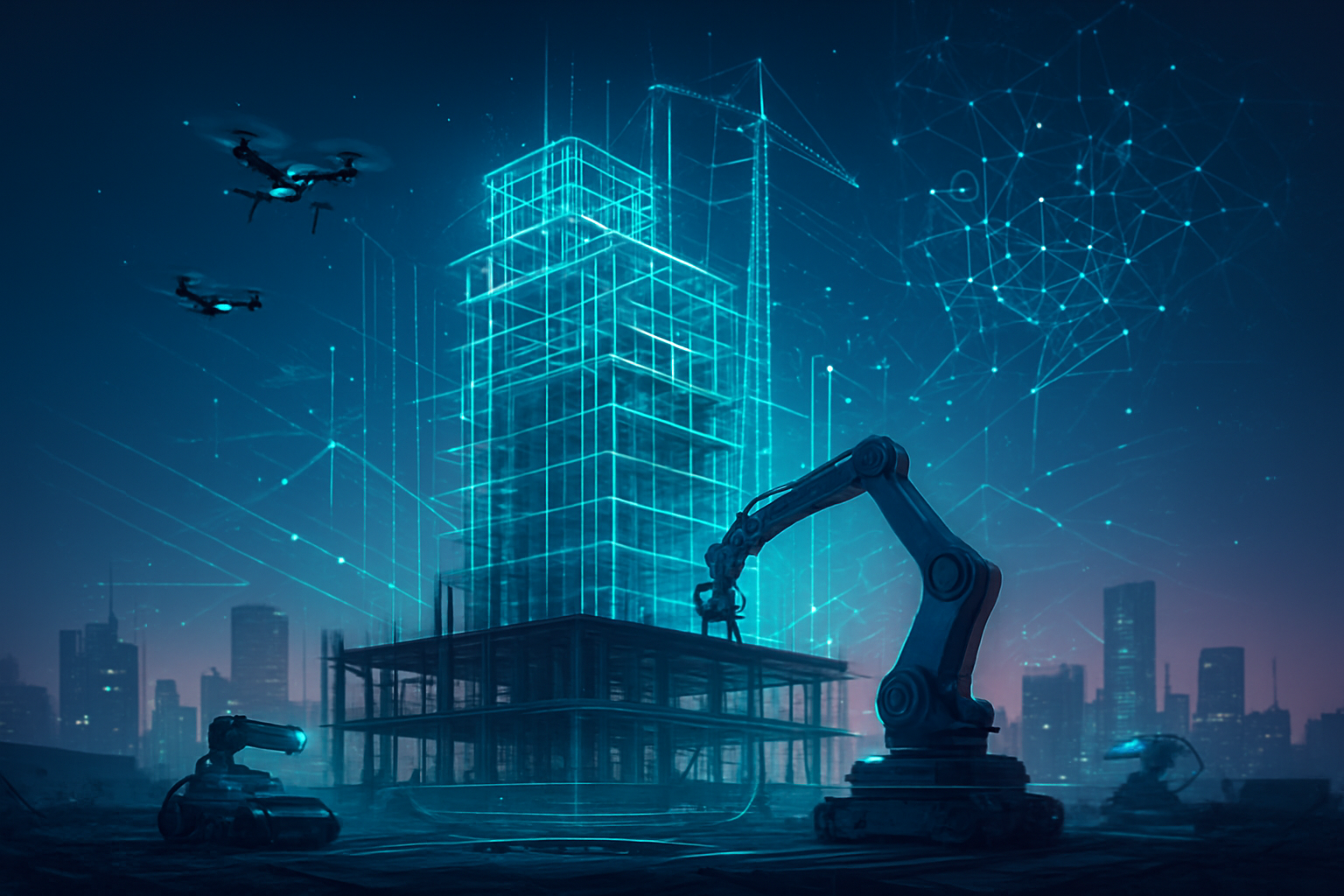
  • AI Reshapes Construction: A Look at 2025’s Transformative Trends

    AI Reshapes Construction: A Look at 2025’s Transformative Trends

    As of December 17, 2025, Artificial Intelligence (AI) has firmly cemented its position as an indispensable force within the construction technology sector, ushering in an era of unprecedented efficiency, safety, and innovation. What was once a futuristic concept has evolved into a practical reality, with AI-powered solutions now integrated across every stage of the project lifecycle. The industry is experiencing a profound paradigm shift, moving decisively towards smarter, safer, and more sustainable building practices, propelled by significant technological breakthroughs, widespread adoption, and escalating investments. The global AI in construction market is on a steep upward trajectory, projected to reach an estimated $4.86 billion this year, underscoring its pivotal role in modern construction.

    This year has seen AI not just augment, but fundamentally redefine traditional construction methodologies. From the initial blueprint to the final operational phase of a building, intelligent systems are optimizing every step, delivering tangible benefits that range from predictive risk mitigation to automated design generation. The implications are vast, promising to alleviate long-standing challenges such as labor shortages, project delays, and cost overruns, while simultaneously elevating safety standards and fostering a more sustainable built environment.

    Technical Foundations: The AI Engines Driving Construction Forward

    The technical advancements in AI for construction in 2025 are both diverse and deeply impactful, representing a significant departure from previous, more rudimentary approaches. At the forefront are AI and Machine Learning (ML) algorithms that have revolutionized project management. These sophisticated tools leverage vast datasets to predict potential delays, optimize costs through intricate data analysis, and enhance safety protocols with remarkable precision. Predictive analytics, in particular, has become a cornerstone, enabling managers to forecast and mitigate risks proactively, thereby improving project profitability and reducing unforeseen complications.

    Generative AI stands as another transformative force, particularly in the design and planning phases. This cutting-edge technology employs algorithms to rapidly create a multitude of design options based on specified parameters, allowing architects and engineers to explore a far wider range of possibilities with unprecedented speed. This not only streamlines creative processes but also optimizes functionality, aesthetics, and sustainability, while significantly reducing human error. AI-powered generative design tools are now routinely optimizing architectural, structural, and subsystem designs, directly contributing to reduced material waste and enhanced buildability. This contrasts sharply with traditional manual design processes, which were often iterative, time-consuming, and limited in scope.

    Robotics and automation, intrinsically linked with AI, have become integral to construction sites. Autonomous machines are increasingly performing repetitive and dangerous tasks such as bricklaying, welding, and 3D printing. This leads to faster construction times, reduced labor costs, and improved quality through precise execution. Furthermore, AI-powered computer vision and sensor systems are redefining site safety. These systems continuously monitor job sites for hazards, detect non-compliance with safety measures (e.g., improper helmet use), and alert teams in real time, dramatically reducing accidents. This proactive, real-time monitoring represents a significant leap from reactive safety inspections. Finally, AI is revolutionizing Building Information Modeling (BIM) by integrating predictive analytics, performance monitoring, and advanced building virtualization, enhancing data-driven decision-making and enabling rapid design standardization and validation.

    Corporate Landscape: Beneficiaries and Disruptors

    The rapid integration of AI into construction has created a dynamic competitive landscape, with established tech giants, specialized AI firms, and innovative startups vying for market leadership. Companies that have successfully embraced and developed AI-powered solutions stand to benefit immensely. For instance, Mastt is gaining traction with its AI-powered cost tracking, risk control, and dashboard solutions tailored for capital project owners. Similarly, Togal.AI is making waves with its AI-driven takeoff and estimating directly from blueprints, significantly accelerating bid processes and improving accuracy for contractors.

    ALICE Technologies is a prime example of a company leveraging generative AI for complex construction scheduling and planning, allowing for sophisticated scenario modeling and optimization that was previously unimaginable. In the legal and contractual realm, Document Crunch utilizes AI for contract risk analysis and automated clause detection, streamlining workflows for legal and contract teams. Major construction players are also internalizing AI capabilities; Obayashi Corporation launched AiCorb, a generative design tool that instantly creates façade options and auto-generates 3D BIM models from simple sketches. Bouygues Construction is leveraging AI for design engineering to reduce material waste—reportedly cutting 140 tonnes of steel on a metro project—and using AI-driven schedule simulations to improve project speed and reduce delivery risk.

    The competitive implications are clear: companies that fail to adopt AI risk falling behind in efficiency, cost-effectiveness, and safety. AI platforms like Slate Technologies, which deliver up to 15% productivity improvements and a 60% reduction in rework, are becoming indispensable, potentially saving major contractors over $18 million per project. Slate's recent partnership with CMC Project Solutions in December 2025 further underscores the strategic importance of expanding access to advanced project intelligence. Furthermore, HKT is integrating 5G, AI, and IoT to deliver advanced solutions like the Smart Site Safety System (4S), particularly in Hong Kong, showcasing the convergence of multiple cutting-edge technologies. The startup ecosystem is vibrant, with companies like Konstruksi.AI, Renalto, Wenti Labs, BLDX, and Volve demonstrating the breadth of innovation and potential disruption across various construction sub-sectors.

    Broader Significance: A New Era for the Built Environment

    The pervasive integration of AI into construction signifies a monumental shift in the broader AI landscape, demonstrating the technology's maturity and its capacity to revolutionize traditionally conservative industries. This development is not merely incremental; it represents a fundamental transition from reactive problem-solving to proactive risk mitigation and predictive management across all phases of construction. The ability to anticipate material shortages, schedule conflicts, and equipment breakdowns with greater accuracy fundamentally transforms project delivery.

    One of the most significant impacts of AI in construction is its crucial role in addressing the severe global labor shortage facing the industry. By automating repetitive tasks and enhancing overall efficiency, AI allows the existing workforce to focus on higher-value activities, effectively augmenting human capabilities rather than simply replacing them. This strategic application of AI is vital for maintaining productivity and growth in a challenging labor market. The tangible benefits are compelling: AI-powered systems are consistently demonstrating productivity improvements of up to 15% and a remarkable 60% reduction in rework, translating into substantial cost savings and improved project profitability.

    Beyond economics, AI is setting new benchmarks for jobsite safety. AI-based safety monitoring, exemplified by KOLON Benit's AI Vision Intelligence system deployed on KOLON GLOBAL's construction sites, is becoming standard practice, fostering a more mindful and secure culture among workers. The continuous, intelligent oversight provided by AI significantly reduces the risk of accidents and ensures compliance with safety protocols. This data-driven approach to decision-making is now central to planning, resource allocation, and on-site execution, marking a profound change from intuition-based or experience-dependent methods. The increased investment in construction-focused AI solutions further underscores the industry's recognition of AI as a critical driver for future success and sustainability.

    The Horizon: Future Developments and Uncharted Territory

    Looking ahead, the trajectory of AI in construction promises even more transformative developments. Near-term expectations include the widespread adoption of pervasive predictive analytics, which will become a default capability for all major construction projects, enabling unprecedented foresight and control. Generative design tools are anticipated to scale further, moving beyond initial design concepts to fully automated creation of detailed 3D BIM models directly from high-level specifications, drastically accelerating the pre-construction phase.

    On the long-term horizon, we can expect the deeper integration of autonomous equipment. Autonomous excavators, cranes, and other construction robots will not only handle digging and material tasks but will increasingly coordinate complex operations with minimal human oversight, leading to highly efficient and safe automated construction sites. The vision of fully integrated IoT-enabled smart buildings, where sensors and AI continuously monitor and adjust systems for optimal energy consumption, security, and occupant comfort, is rapidly becoming a reality. These buildings will be self-optimizing ecosystems, responding dynamically to environmental conditions and user needs.

    However, challenges remain. The interoperability of diverse AI systems from different vendors, the need for robust cybersecurity measures to protect sensitive project data, and the upskilling of the construction workforce to effectively manage and interact with AI tools are critical areas that need to be addressed. Experts predict a future where AI acts as a universal co-pilot for construction professionals, providing intelligent assistance at every level, from strategic planning to on-site execution. The development of more intuitive conversational AI interfaces will further streamline data interactions, allowing project managers and field workers to access critical information and insights through natural language commands, enhancing decision-making and collaboration.

    Concluding Thoughts: AI's Enduring Legacy in Construction

    In summary, December 2025 marks a pivotal moment where AI has matured into an indispensable, transformative force within the construction technology sector. The key takeaways from this year include the widespread adoption of predictive analytics, the revolutionary impact of generative AI on design, the increasing prevalence of robotics and automation, and the profound improvements in site safety and efficiency. These advancements collectively represent a shift from reactive to proactive project management, addressing critical industry challenges such as labor shortages and cost overruns.

    The significance of these developments in the history of AI is profound. They demonstrate AI's ability to move beyond niche applications and deliver tangible, large-scale benefits in a traditionally conservative, capital-intensive industry. This year's breakthroughs are not merely incremental improvements but foundational changes that are redefining how structures are designed, built, and managed. The long-term impact will be a safer, more sustainable, and significantly more efficient construction industry, capable of delivering complex projects with unprecedented precision and speed.

    As we move into the coming weeks and months, the industry should watch for continued advancements in autonomous construction equipment, further integration of AI with BIM platforms, and the emergence of even more sophisticated generative AI tools. The focus will also be on developing comprehensive training programs to equip the workforce with the necessary skills to leverage these powerful new technologies effectively. The future of construction is inextricably linked with AI, promising an era of intelligent building that will reshape our urban landscapes and infrastructure for generations to come.


    This content is intended for informational purposes only and represents analysis of current AI developments.

    TokenRing AI delivers enterprise-grade solutions for multi-agent AI workflow orchestration, AI-powered development tools, and seamless remote collaboration platforms.
    For more information, visit https://www.tokenring.ai/.
  • AI Transforms Holiday Shopping 2025: A New Era of Personalized Gifting and Streamlined Decisions

    AI Transforms Holiday Shopping 2025: A New Era of Personalized Gifting and Streamlined Decisions

    The 2025 holiday season stands as a landmark moment in the evolution of retail, marking a profound shift where Artificial Intelligence (AI) has transitioned from a supporting technology to an indispensable architect of the consumer shopping experience. This year, AI is not merely enhancing but fundamentally reshaping how individuals discover, evaluate, and purchase gifts, driven by an increasing consumer reliance on intelligent tools for convenience, confidence, and control in their purchasing decisions. From hyper-personalized gift recommendations to autonomous shopping agents, AI is redefining the festive retail landscape, making the search for the perfect present less daunting and more tailored than ever before.

    This transformative integration of AI is particularly evident in personalized gift-giving and streamlined decision-making. Consumers are increasingly turning to AI chatbots as sophisticated personal shoppers, engaging in natural language conversations to uncover recipient preferences and generate highly relevant suggestions based on vast datasets of interests, past purchases, and browsing history. Beyond mere recommendations, generative AI is enabling the creation of truly unique and customized gifts, from AI-powered artworks to personalized content for gift cards. Simultaneously, AI is empowering shoppers to navigate the holiday rush with unprecedented ease, offering efficient product research, comparison tools, and immersive experiences like virtual try-ons, all while mitigating decision fatigue. For retailers, this means leveraging AI for everything from demand forecasting and inventory management to dynamic pricing, ensuring products are available and delivered efficiently, thereby indirectly streamlining the consumer journey.

    The Invisible Engine: Technical Deep Dive into AI's Retail Revolution

    The 2025 holiday retail season showcases a significant leap in AI capabilities, with advanced solutions delivering real-time, context-aware, and emotionally intelligent personalization across all customer touchpoints. These advancements move far beyond previous approaches, generating considerable excitement within both the AI research community and the industry.

    Modern Natural Language Processing (NLP) models, often powered by large language models (LLMs), are at the forefront, enabling AI shopping assistants and virtual agents to engage in sophisticated, human-like conversations. These agents, unlike earlier rule-based chatbots, understand context, predict user intent, and deliver adaptive responses by integrating deeply with Customer Data Platforms (CDPs) and recommendation engines. For instance, OpenAI’s new ChatGPT Shopping Research tool, launched on November 24, 2025, exemplifies this by offering comprehensive, contextually rich buying guides and product comparisons. Voice commerce, driven by advanced NLP, is also reshaping interactions, allowing customers to use voice assistants to find products and complete purchases.

    Computer Vision (CV) is enhancing product discovery and customer engagement. Visual search tools allow customers to upload images to find similar products across various retailers. Augmented Reality (AR) experiences, particularly virtual try-on features for fashion and beauty, have matured significantly, allowing shoppers to visualize products in their own environment, boosting confidence and reportedly reducing returns by as much as 40% for size-sensitive items. This differs from previous, less accurate visual search and nascent AR applications.

    Recommendation Engines in 2025 are driven by advanced machine learning and predictive analytics, moving beyond basic collaborative filtering. They leverage behavioral, transactional, and contextual data, including real-time browsing and seasonal patterns, to deliver hyper-personalized, dynamic product recommendations. These engines employ deep learning algorithms that understand individual preferences at a much deeper level than older systems, adapting recommendations instantly to changing user behavior or market signals.

    Crucially, Generative AI is a cornerstone of this year's personalization. It's used to create unique marketing messages, hyper-personalized product descriptions, and dynamic website content that adapts in real-time to shopper preferences. Unlike traditional AI that predicts outcomes, generative AI creates new and original content, allowing for unprecedented levels of customization and creativity in retail experiences, enabling brands to move beyond generic automation to craft emotional, data-driven interactions.

    Behind the scenes, Predictive Analytics for inventory and demand forecasting, powered by AI, analyzes historical sales data, market trends, and even external factors like weather to forecast demand with remarkable accuracy. This allows retailers to optimize stock levels and anticipate disruptions, reducing waste and lost sales—a significant improvement over manual forecasting methods. AI also drives Dynamic Pricing and Promotions, adjusting prices in real-time based on market conditions, competitor pricing, and demand fluctuations, optimizing profit margins while maintaining competitiveness.

    Initial reactions from the AI research community are a mix of excitement and caution. While acknowledging the potential of foundation models and agentic AI, researchers emphasize concerns regarding algorithmic bias, data privacy, and the need for Explainable AI (XAI) to foster trust. Industry experts, on the other hand, express high expectations for ROI, with hyper-personalization expected to increase conversion rates by 15-25% and average order values by 20-35% during holiday periods. However, they also highlight implementation challenges, particularly regarding data quality and integration, and stress the importance of ethical AI practices to build consumer trust, which is now considered the "new currency" in AI-driven retail.

    Reshaping the Retail Powerhouses: Company Implications and Competitive Edge

    The pervasive integration of AI into holiday retail is profoundly impacting AI companies, tech giants, and startups, reshaping the competitive landscape and consumer experience. This season, AI is not just a tool but a central engine for personalized shopping and streamlined decision-making.

    Specialized AI firms are experiencing a boom, providing the foundational technologies and customized solutions that power the retail sector's AI transformation. Companies offering advanced algorithms for hyper-personalization, predictive analytics, computer vision, natural language processing, and generative AI tools are in high demand. Those that can create "retail-specific AI personas" or "Personal Language Models" tailored to a retailer's unique data stand to gain significant market share by offering precise, contextual responses while ensuring enterprise-grade security.

    Major tech companies like Amazon (NASDAQ: AMZN), Google (NASDAQ: GOOGL), Microsoft (NASDAQ: MSFT), Salesforce (NYSE: CRM), and Shopify (NYSE: SHOP) are leveraging their extensive resources, cloud infrastructure, and existing customer bases to deeply integrate AI into their commerce platforms. Amazon continues to lead with innovations like "Just Walk Out" technology and AI agents that monitor prices and execute purchases based on user budgets. Google has enhanced its search capabilities with "Shop with AI Mode" features, including virtual try-on and AI agents, and offers AI-driven insights for retailers. Salesforce predicts AI-driven product discovery will account for $260 billion in online sales and $1.6 trillion in in-store sales this holiday season, with 35% of retailers using agentic AI to boost productivity through tools like Einstein AI Commerce and Einstein Copilot. Shopify integrates AI through tools like Sidekick, an AI-powered commerce assistant. These giants benefit from their ability to offer end-to-end AI solutions, reinforcing their positions as indispensable partners for retailers.

    Innovative startups specializing in niche AI applications for retail are finding fertile ground for rapid growth. This includes companies focused on AI-driven inventory optimization, store automation, customer analytics, visual search, and agentic shopping platforms. Startups that can quickly develop and deploy specialized AI tools for specific retail challenges, such as those creating "AI Twins" for personalized try-ons, are attracting significant investment. However, they face challenges in marketing visibility against tech giants, with many e-commerce companies worrying AI search could make it harder for new customers to find their products.

    AI advancements are fundamentally disrupting traditional retail paradigms. AI-powered search engines, visual search, and conversational AI assistants are replacing traditional search methods, challenging conventional SEO strategies and pushing businesses towards "generative engine optimization" (GEO). Generic marketing campaigns are becoming less effective as hyper-personalization takes center stage. Basic chatbots are evolving into sophisticated "agentic AI" shopping assistants, reducing the need for human intervention in routine customer interactions. Operationally, AI is disrupting manual processes in demand forecasting, inventory management, and supply chain optimization.

    Companies that strategically embrace AI gain significant market positioning. Delivering hyper-personalized shopping experiences is now a baseline expectation, fostering customer loyalty and driving conversions, with retailers excelling in AI-driven personalization seeing up to 40% more revenue growth. AI also enables operational efficiency and cost reduction through automation and predictive analytics, making companies extensively using AI more than twice as likely to report increased profitability. Enhanced Customer Experience (CX) through seamless, intuitive, and emotionally intelligent shopping journeys is another key advantage. Ultimately, AI has become a "competitive necessity" for retailers to meet evolving consumer expectations and navigate fierce e-commerce competition.

    A New Baseline: Wider Significance and Societal Implications

    The 2025 holiday shopping season solidifies AI's role as an "invisible engine" within the retail sector, marking a significant evolution from earlier AI applications and deeply integrating it into the broader AI landscape. This pervasive influence, however, also raises crucial societal questions.

    The shift signifies that AI is no longer a novelty but a baseline expectation for customers, fostering feelings of happiness, less anxiety, and more control during the shopping journey. This is a critical component of the rapidly expanding global AI landscape, with the AI in retail market projected for significant growth. Generative AI's dominance, particularly LLMs, is central to this wave, enabling automated content creation, hyper-personalized marketing, and sophisticated conversational interfaces. Beyond the consumer front-end, AI is transforming back-end operations through smart inventory and demand forecasting, dynamic pricing, and supply chain optimization, leading to reduced costs and improved efficiency. AI is also enhancing fraud detection and even being leveraged for sustainability initiatives in retail.

    However, the pervasive integration of AI into holiday retail raises significant societal impacts and concerns. Privacy Concerns are paramount, as the extensive collection and analysis of customer data necessary for AI-driven personalization pose considerable risks. Opaque algorithms make it difficult for consumers to understand how decisions are made, and the sheer volume of data increases the risk of breaches. Retailers face the challenge of balancing personalization with ethical data use, requiring transparency, clear consent mechanisms, and robust data protection.

    Algorithmic Bias remains a significant concern. If trained on unrepresentative or historically biased data, AI systems can perpetuate and amplify existing societal biases, leading to biased product recommendations or discriminatory dynamic pricing. Such biases can limit consumer choice, create unfair systems, and erode trust.

    Furthermore, Job Displacement is a looming concern. AI's increasing capabilities, particularly in automation, are expected to lead to significant job displacement in the retail sector and beyond. Estimates suggest that AI could automate a large percentage of retail jobs, especially those involving routine tasks. The World Economic Forum estimates AI could replace 85 million jobs by 2026, with 65% of retail jobs potentially automated by that year. This requires a focus on reskilling and upskilling the workforce to adapt to new roles created by AI.

    The current state of AI in holiday retail represents a significant leap compared to earlier milestones. Over two decades ago, Amazon was an early adopter, using rudimentary AI for basic product recommendations. Today's breakthroughs, particularly in generative AI and LLMs, have transformed this landscape from simple "customers who bought this also bought…" suggestions to sophisticated, real-time hyper-personalization that anticipates needs. The evolution has moved from static interactions to human-like conversational commerce and agentic AI that can autonomously act on behalf of the user. AI has transitioned from a supporting backend tool to a central, front-end driver, integral to product discovery and decision-making, creating a new baseline for discovery, trust, and retail success.

    The Horizon of Hyper-Personalization: Future Developments in AI Retail

    As of November 25, 2025, AI is not merely a futuristic concept but a tangible force actively reshaping how shoppers discover, evaluate, and purchase gifts. This shift encompasses both immediate changes visible in the upcoming holiday seasons and long-term developments that will fundamentally alter the retail landscape.

    In the near-term (2025-2026 holiday seasons), consumers can expect an even more personalized and efficient shopping journey. Widespread generative AI-powered chatbots and virtual assistants will become the primary direct interaction, handling customer service, product questions, and order statuses 24/7. Hyper-personalized recommendations will move beyond basic browsing history, leveraging deep learning to understand individual preferences, seasonal trends, and gift-giving contexts. AI-powered search and discovery will see consumers increasingly using LLMs to kickstart their holiday shopping, while enhanced virtual try-ons and 3D product experiences will boost purchase confidence. Behind the scenes, AI will continue to optimize supply chains and logistics through accurate demand forecasting and streamlined warehouse operations, mitigating disruptions.

    Looking further ahead (3-5+ years), AI is poised to integrate even more deeply. The long-term vision includes Autonomous Shopping Agents capable of acting semi- or fully autonomously across the entire shopping journey, potentially outsourcing holiday shopping almost entirely. Seamless Omnichannel Integration will ensure a consistent and personalized customer journey whether shopping online, on mobile, or in a physical store, with AI systems capturing interactions across all touchpoints. Intelligent in-store environments will feature AI-powered displays and smart kiosks. Experts predict AI will transition from a mere tool to an emotional companion, reducing stress and enhancing happiness by simplifying complex decisions.

    Potential applications on the horizon include dynamic pricing and promotions adjusting in real-time, AI-driven gift inspiration that generates creative ideas beyond simple recommendations, and agent-assisted local shopping, where AI calls local stores to verify product availability. Automated price tracking and purchase by AI agents will become more common, and generative AI will be used by retailers for highly personalized marketing content at scale. AI will also augment retail staff with tools for optimized scheduling and personalized onboarding.

    Despite this immense potential, several challenges need to be addressed. Data Quality and Integration remain paramount, as poor data can lead to inaccurate predictions. The Complexity of Implementation requires specialized expertise and ongoing support. Consumer Trust and Privacy Concerns are crucial, demanding transparency and responsible data practices. Retailers must avoid "gimmicky" AI and ensure tools genuinely enhance the shopping experience. The "Attribution Gap" for marketers, where AI agents influence discovery, makes measuring ROI difficult. Finally, maintaining the Human Element is vital, balancing AI efficiency with the irreplaceable value of human interaction, especially for complex issues or emotional aspects of gift-giving.

    Experts unanimously agree that AI will be a dominant force, with Salesforce projecting AI to influence $260 billion in online sales and $1.6 trillion in in-store sales during the 2025 holiday season. Rapid consumer adoption and retailer prioritization of AI are expected, with nearly all large U.S. retailers (97%) planning to use AI to enhance the shopping experience. Some experts predict AI could shift customer loyalty from specific brands to the "outcomes" delivered by AI agents, necessitating that retailers articulate their unique value propositions clearly. The advice for retailers is to adopt AI methodically, focusing on trust and empathy, ensuring AI experiences are seamless, reliable, and truly add value over the long term.

    The AI-Fueled Holiday: A Comprehensive Wrap-Up

    The 2025 holiday retail season has undeniably cemented Artificial Intelligence as an indispensable co-pilot for both consumers and retailers. It marks a pivotal moment where AI has moved from niche utility to mainstream adoption, from experimental applications to deeply embedded, mission-critical functions. This year, AI has solidified its role as the "invisible engine of retail," powering how consumers discover value, make choices, and build trust.

    Key takeaways from this holiday season include the widespread consumer adoption of AI for gift ideas, price comparisons, and even direct purchases, with a significant majority of shoppers trusting AI recommendations. Hyper-personalization has become the new standard, driven by AI's ability to understand individual preferences and contexts. Conversational and agentic AI are transforming customer interactions, offering 24/7 support and even autonomous purchasing capabilities. Operationally, AI is optimizing dynamic pricing, inventory management, and supply chains, leading to enhanced discovery and trust for consumers. Retailers are also seeing higher returns on ad spend through AI-powered marketing.

    In AI history, the 2025 holiday season is a watershed moment, described as the "first truly AI-fueled holiday shopping season." AI is no longer an optional add-on but "the new baseline for discovery, trust, and holiday retail success." The rapid, intuitive acceptance of AI to alleviate shopping stress and decision fatigue highlights its maturity and consumer readiness, signifying a profound evolution from earlier, rudimentary AI applications.

    The long-term impact of AI on retail will be transformative and enduring. Expect ubiquitous hyper-personalization, where AI anticipates individual shopper needs in real-time across every touchpoint. The rise of agentic commerce and "neural shopping" will see AI agents managing workflows and making purchases autonomously, integrating shopping seamlessly into everyday life. AI will continue to drive unprecedented operational efficiency and profitability while evolving consumer expectations for smarter, faster, and more ethical AI-driven interactions. Addressing concerns around data privacy, potential job displacement, and ensuring transparent and ethical AI practices will be paramount for maintaining consumer trust.

    What to watch for in the coming weeks and months includes the further evolution and uptake of agentic AI, particularly regarding consumer comfort levels with autonomous spending. The necessity for retailers to maintain dynamic, high-quality product feeds optimized for AI workflows will intensify. Look for the refinement of predictive intent engines that anticipate customer wants based on contextual data, and the further integration of AI copilots to empower retail associates. Monitoring the "say-do gap" in consumer spending against stated intentions will provide insights into the true economic landscape. Finally, the emergence of real-time sustainability scores and enhanced traceability in supply chains, driven by AI, will be crucial as consumers demand ethical options. The 2025 holiday season has set a new precedent for how technology enhances the consumer shopping journey, laying the groundwork for an even more AI-driven future in retail.


    This content is intended for informational purposes only and represents analysis of current AI developments.

    TokenRing AI delivers enterprise-grade solutions for multi-agent AI workflow orchestration, AI-powered development tools, and seamless remote collaboration platforms.
    For more information, visit https://www.tokenring.ai/.