Tag: 2026 Forecast

  • The AI Tax: How High Bandwidth Memory Demand is Predicted to Reshape the 2026 PC Market

    The AI Tax: How High Bandwidth Memory Demand is Predicted to Reshape the 2026 PC Market

    The global technology landscape is currently grappling with a paradoxical crisis: the very innovation meant to revitalize the personal computing market—Artificial Intelligence—is now threatening to price it out of reach for millions. As we enter early 2026, a structural shift in semiconductor manufacturing is triggering a severe memory shortage that is fundamentally altering the economics of hardware. Driven by an insatiable demand for High Bandwidth Memory (HBM) required for AI data centers, the industry is bracing for a significant disruption that will see PC prices climb by 6-8%, while global shipments are forecasted to contract by as much as 9%.

    This "Great Memory Pivot" represents a strategic reallocation of global silicon wafer capacity. Manufacturers are increasingly prioritizing the high-margin HBM needed for AI accelerators over the standard DRAM used in laptops and desktops. This shift is not merely a temporary supply chain hiccup but a fundamental change in how the world’s most critical computing components are allocated, creating a "zero-sum game" where the growth of enterprise AI infrastructure comes at the direct expense of the consumer and corporate PC markets.

    The Technical Toll of the AI Boom

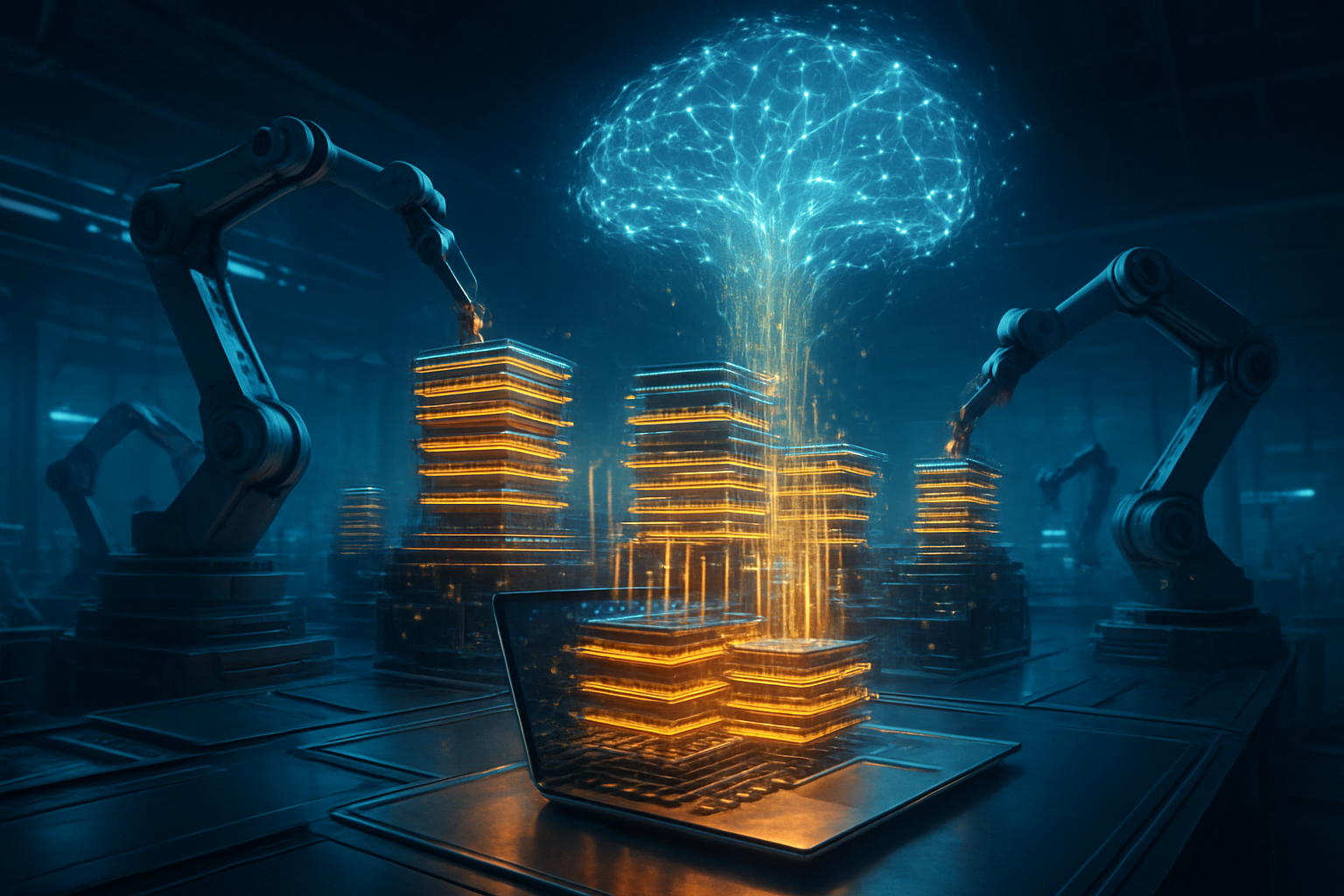
    At the heart of this shortage is the physical complexity of producing High Bandwidth Memory. Unlike standard DDR5 or LPDDR5 memory, which is laid out relatively flat on a motherboard, HBM uses advanced 3D stacking technology to layer memory dies vertically. This allows for massive data throughput—essential for the training and inference of Large Language Models (LLMs)—but it comes with a heavy manufacturing cost. According to data from TrendForce and Micron Technology (NASDAQ: MU), producing 1GB of the latest HBM3E or HBM4 standards consumes between three to four times the silicon wafer capacity of standard consumer RAM. This is due to larger die sizes, lower production yields, and the intricate "Through-Silicon Via" (TSV) processes required to connect the layers.

    The technical specifications of HBM4, which is beginning to ramp up in early 2026, further exacerbate the problem. These chips require even more precise manufacturing and higher-quality silicon, leading to a "cannibalization" effect where the world’s leading foundries are forced to choose between producing millions of standard 8GB RAM sticks or a few thousand HBM stacks for AI servers. Initial reactions from the research community suggest that while HBM is a marvel of engineering, its production inefficiency compared to traditional DRAM makes it a primary bottleneck for the entire electronics industry. Experts note that as AI accelerators from companies like NVIDIA (NASDAQ: NVDA) transition to even denser memory configurations, the pressure on global wafer starts will only intensify.

    A High-Stakes Game for Industry Giants

    The memory crunch is creating a clear divide between the "winners" of the AI era and the traditional hardware vendors caught in the crossfire. The "Big Three" memory producers—SK Hynix (KRX: 000660), Samsung Electronics (KRX: 005930), and Micron—are seeing record-high profit margins, often exceeding 75% for AI-grade memory. SK Hynix, currently the market leader in the HBM space, has already reported that its production capacity is effectively sold out through the end of 2026. This has forced major PC OEMs like Dell Technologies (NYSE: DELL), HP Inc. (NYSE: HPQ), and Lenovo (HKG: 0992) into a defensive posture, as they struggle to secure enough affordable components to keep their assembly lines moving.

    For companies like NVIDIA and AMD (NASDAQ: AMD), the priority remains securing every available bit of HBM to power their H200 and Blackwell-series GPUs. This competitive advantage for AI labs and tech giants comes at a cost for the broader market. As memory prices surge, PC manufacturers are left with two unappealing choices: absorb the costs and see their margins evaporate, or pass the "AI Tax" onto the consumer. Most analysts expect the latter, with retail prices for mid-range laptops expected to jump significantly. This creates a strategic advantage for larger vendors who have the capital to stockpile inventory, while smaller "white box" manufacturers and the DIY PC market face the brunt of spot-market price volatility.

    The Wider Significance: An AI Divide and the Windows 10 Legacy

    The timing of this shortage is particularly problematic for the global economy. It coincides with the long-anticipated refresh cycle triggered by the end of life for Microsoft (NASDAQ: MSFT) Windows 10. Millions of corporate and personal devices were slated for replacement in late 2025 and 2026, a cycle that was expected to provide a much-needed boost to the PC industry. Instead, the 9% contraction in shipments predicted by IDC suggests that many businesses and consumers will be forced to delay their upgrades due to the 6-8% price hike. This could lead to a "security debt" as older, unsupported systems remain in use because their replacements have become prohibitively expensive.

    Furthermore, the industry is witnessing the emergence of an "AI Divide." While the marketing push for "AI PCs"—devices equipped with dedicated Neural Processing Units (NPUs)—is in full swing, these machines typically require higher minimum RAM (16GB to 32GB) to function effectively. The rising cost of memory makes these "next-gen" machines luxury items rather than the new standard. This mirrors previous milestones in the semiconductor industry, such as the 2011 Thai floods or the 2020-2022 chip shortage, but with a crucial difference: this shortage is driven by a permanent shift in demand toward a new class of computing, rather than a temporary environmental or logistical disruption.

    Looking Toward a Strained Future

    Near-term developments offer little respite. While Samsung and Micron are aggressively expanding their fabrication plants in South Korea and the United States, these multi-billion-dollar facilities take years to reach full production capacity. Experts predict that the supply-demand imbalance will persist well into 2027. On the horizon, the transition to HBM4 and the potential for "HBM-on-Processor" designs could further shift the manufacturing landscape, potentially making standard, user-replaceable RAM a thing of the past in high-end systems.

    The challenge for the next two years will be one of optimization. We may see a rise in "shrinkflation" in the hardware world, where vendors attempt to keep price points stable by offering systems with less RAM or by utilizing slower, older memory standards that are less impacted by the HBM pivot. Software developers will also face pressure to optimize their applications to run on more modest hardware, reversing the recent trend of increasingly memory-intensive software.

    Navigating the 2026 Hardware Crunch

    In summary, the 2026 memory shortage is a landmark event in the history of computing. It marks the moment when the resource requirements of artificial intelligence began to tangibly impact the affordability and availability of general-purpose computing. For consumers, the takeaway is clear: the era of cheap, abundant memory has hit a significant roadblock. The predicted 6-8% price increase and 9% shipment contraction are not just numbers; they represent a cooling of the consumer technology market as the industry's focus shifts toward the data center.

    As we move forward, the tech world will be watching the quarterly reports of the "Big Three" memory makers and the shipment data from major PC vendors for any signs of relief. For now, the "AI Tax" is the new reality of the hardware market. Whether the industry can innovate its way out of this manufacturing bottleneck through new materials or more efficient stacking techniques remains to be seen, but for the duration of 2026, the cost of progress will be measured in the price of a new PC.


    This content is intended for informational purposes only and represents analysis of current AI developments.

    TokenRing AI delivers enterprise-grade solutions for multi-agent AI workflow orchestration, AI-powered development tools, and seamless remote collaboration platforms.
    For more information, visit https://www.tokenring.ai/.
  • Chip Stocks Set to Soar in 2026: A Deep Dive into the Semiconductor Boom

    Chip Stocks Set to Soar in 2026: A Deep Dive into the Semiconductor Boom

    The semiconductor industry is poised for an unprecedented boom in 2026, with investor confidence reaching new heights. Projections indicate the global semiconductor market is on track to approach or even exceed the trillion-dollar mark, driven by a confluence of transformative technological advancements and insatiable demand across diverse sectors. This robust outlook signals a highly attractive investment climate, with significant opportunities for growth in key areas like logic and memory chips.

    This bullish sentiment is not merely speculative; it's underpinned by fundamental shifts in technology and consumer behavior. The relentless rise of Artificial Intelligence (AI) and Generative AI (GenAI), the accelerating transformation of the automotive industry, and the pervasive expansion of 5G and the Internet of Things (IoT) are acting as powerful tailwinds. Governments worldwide are also pouring investments into domestic semiconductor manufacturing, further solidifying the industry's foundation and promising sustained growth well into the latter half of the decade.

    The Technological Bedrock: AI, Automotive, and Advanced Manufacturing

    The projected surge in the semiconductor market for 2026 is fundamentally rooted in groundbreaking technological advancements and their widespread adoption. At the forefront is the exponential growth of Artificial Intelligence (AI) and Generative AI (GenAI). These revolutionary technologies demand increasingly sophisticated and powerful chips, including advanced node processors, Graphics Processing Units (GPUs), Tensor Processing Units (TPUs), and Neural Processing Units (NPUs). This has led to a dramatic increase in demand for high-performance computing (HPC) chips and the expansion of data center infrastructure globally. Beyond simply powering AI applications, AI itself is transforming chip design, accelerating development cycles, and optimizing layouts for superior performance and energy efficiency. Sales of AI-specific chips are projected to exceed $150 billion in 2025, with continued upward momentum into 2026, marking a significant departure from previous chip cycles driven primarily by PCs and smartphones.

    Another critical driver is the profound transformation occurring within the automotive industry. The shift towards Electric Vehicles (EVs), Advanced Driver-Assistance Systems (ADAS), and fully Software-Defined Vehicles (SDVs) is dramatically increasing the semiconductor content in every new car. This fuels demand for high-voltage power semiconductors like Silicon Carbide (SiC) and Gallium Nitride (GaN) for EVs, alongside complex sensors and processors essential for autonomous driving technologies. The automotive sector is anticipated to be one of the fastest-growing segments, with an expected annual growth rate of 10.7%, far outpacing traditional automotive component growth. This represents a fundamental change from past automotive electronics, which were less complex and integrated.

    Furthermore, the global rollout of 5G connectivity and the pervasive expansion of Internet of Things (IoT) devices, coupled with the rise of edge computing, are creating substantial demand for high-performance, energy-efficient semiconductors. AI chips embedded directly into IoT devices enable real-time data processing, reducing latency and enhancing efficiency. This distributed intelligence paradigm is a significant evolution from centralized cloud processing, requiring a new generation of specialized, low-power AI-enabled chips. The AI research community and industry experts have largely reacted with enthusiasm, recognizing these trends as foundational for the next era of computing and connectivity. However, concerns about the sheer scale of investment required for cutting-edge fabrication and the increasing complexity of chip design remain pertinent discussion points.

    Corporate Beneficiaries and Competitive Dynamics

    The impending semiconductor boom of 2026 will undoubtedly reshape the competitive landscape, creating clear winners among AI companies, tech giants, and innovative startups. Companies specializing in Logic and Memory are positioned to be the primary beneficiaries, as these segments are forecast to expand by over 30% year-over-year in 2026, predominantly fueled by AI applications. This highlights substantial opportunities for companies like NVIDIA Corporation (NASDAQ: NVDA), which continues to dominate the AI accelerator market with its GPUs, and memory giants such as Micron Technology, Inc. (NASDAQ: MU) and Samsung Electronics Co., Ltd. (KRX: 005930), which are critical suppliers of high-bandwidth memory (HBM) and server DRAM. Their strategic advantages lie in their established R&D capabilities, manufacturing prowess, and deep integration into the AI supply chain.

    The competitive implications for major AI labs and tech companies are significant. Firms that can secure consistent access to advanced node chips and specialized AI hardware will maintain a distinct advantage in developing and deploying cutting-edge AI models. This creates a critical interdependence between hardware providers and AI developers. Tech giants like Alphabet Inc. (NASDAQ: GOOGL) and Amazon.com, Inc. (NASDAQ: AMZN), with their extensive cloud infrastructure and AI initiatives, will continue to invest heavily in custom AI silicon and securing supply from leading foundries like Taiwan Semiconductor Manufacturing Company Limited (NYSE: TSM). TSMC, as the world's largest dedicated independent semiconductor foundry, is uniquely positioned to benefit from the demand for leading-edge process technologies.

    Potential disruption to existing products or services is also on the horizon. Companies that fail to adapt to the demands of AI-driven computing or cannot secure adequate chip supply may find their offerings becoming less competitive. Startups innovating in niche areas such as neuromorphic computing, quantum computing components, or specialized AI accelerators for edge devices could carve out significant market positions, potentially challenging established players in specific segments. Market positioning will increasingly depend on a company's ability to innovate at the hardware-software interface, ensuring their chips are not only powerful but also optimized for the specific AI workloads of the future. The emphasis on financial health and sustainability, coupled with strong cash generation, will be crucial for companies to support the massive capital expenditures required to maintain technological leadership and investor trust.

    Broader Significance and Societal Impact

    The anticipated semiconductor surge in 2026 fits seamlessly into the broader AI landscape and reflects a pivotal moment in technological evolution. This isn't merely a cyclical upturn; it represents a foundational shift driven by the pervasive integration of AI into nearly every facet of technology and society. The demand for increasingly powerful and efficient chips underpins the continued advancement of generative AI, autonomous systems, advanced scientific computing, and hyper-connected environments. This era is marked by a transition from general-purpose computing to highly specialized, AI-optimized hardware, a trend that will define technological progress for the foreseeable future.

    The impacts of this growth are far-reaching. Economically, it will fuel job creation in high-tech manufacturing, R&D, and software development. Geopolitically, the strategic importance of semiconductor manufacturing and supply chain resilience will continue to intensify, as evidenced by global initiatives like the U.S. CHIPS Act and similar programs in Europe and Asia. These investments aim to reduce reliance on concentrated manufacturing hubs and bolster technological sovereignty, but they also introduce complexities related to international trade and technology transfer. Environmentally, there's an increasing focus on sustainable and green semiconductors, addressing the significant energy consumption associated with advanced manufacturing and large-scale data centers.

    Potential concerns, however, accompany this rapid expansion. Persistent supply chain volatility, particularly for advanced node chips and high-bandwidth memory (HBM), is expected to continue well into 2026, driven by insatiable AI demand. This could lead to targeted shortages and sustained pricing pressures. Geopolitical tensions and export controls further exacerbate these risks, compelling companies to adopt diversified supplier strategies and maintain strategic safety stocks. Comparisons to previous AI milestones, such as the deep learning revolution, suggest that while the current advancements are profound, the scale of hardware investment and the systemic integration of AI represent an unprecedented phase of technological transformation, with potential societal implications ranging from job displacement to ethical considerations in autonomous decision-making.

    The Horizon: Future Developments and Challenges

    Looking ahead, the semiconductor industry is set for a dynamic period of innovation and expansion, with several key developments on the horizon for 2026 and beyond. Near-term, we can expect continued advancements in 3D chip stacking and chiplet architectures, which allow for greater integration density and improved performance by combining multiple specialized dies into a single package. This modular approach is becoming crucial for overcoming the physical limitations of traditional monolithic chip designs. Further refinement in neuromorphic computing and quantum computing components will also gain traction, though their widespread commercial application may extend beyond 2026. Experts predict a relentless pursuit of higher power efficiency, particularly for AI accelerators, to manage the escalating energy demands of large-scale AI models.

    Potential applications and use cases are vast and continue to expand. Beyond data centers and autonomous vehicles, advanced semiconductors will power the next generation of augmented and virtual reality devices, sophisticated medical diagnostics, smart city infrastructure, and highly personalized AI assistants embedded in everyday objects. The integration of AI chips directly into edge devices will enable more intelligent, real-time processing closer to the data source, reducing latency and enhancing privacy. The proliferation of AI into industrial automation and robotics will also create new markets for specialized, ruggedized semiconductors.

    However, significant challenges need to be addressed. The escalating cost of developing and manufacturing leading-edge chips continues to be a major hurdle, requiring immense capital expenditure and fostering consolidation within the industry. The increasing complexity of chip design necessitates advanced Electronic Design Automation (EDA) tools and highly skilled engineers, creating a talent gap. Furthermore, managing the environmental footprint of semiconductor manufacturing and the power consumption of AI systems will require continuous innovation in materials science and energy efficiency. Experts predict that the interplay between hardware and software optimization will become even more critical, with co-design approaches becoming standard to unlock the full potential of next-generation AI. Geopolitical stability and securing resilient supply chains will remain paramount concerns for the foreseeable future.

    A New Era of Silicon Dominance

    In summary, the semiconductor industry is entering a transformative era, with 2026 poised to mark a significant milestone in its growth trajectory. The confluence of insatiable demand from Artificial Intelligence, the profound transformation of the automotive sector, and the pervasive expansion of 5G and IoT are driving unprecedented investor confidence and pushing global market revenues towards the trillion-dollar mark. Key takeaways include the critical importance of logic and memory chips, the strategic positioning of companies like NVIDIA, Micron, Samsung, and TSMC, and the ongoing shift towards specialized, AI-optimized hardware.

    This development's significance in AI history cannot be overstated; it represents the hardware backbone essential for realizing the full potential of the AI revolution. The industry is not merely recovering from past downturns but is fundamentally re-architecting itself to meet the demands of a future increasingly defined by intelligent systems. The massive capital investments, relentless innovation in areas like 3D stacking and chiplets, and the strategic governmental focus on supply chain resilience underscore the long-term impact of this boom.

    What to watch for in the coming weeks and months includes further announcements regarding new AI chip architectures, advancements in manufacturing processes, and the strategic partnerships formed between chip designers and foundries. Investors should also closely monitor geopolitical developments and their potential impact on supply chains, as well as the ongoing efforts to address the environmental footprint of this rapidly expanding industry. The semiconductor sector is not just a participant in the AI revolution; it is its very foundation, and its continued evolution will shape the technological landscape for decades to come.


    This content is intended for informational purposes only and represents analysis of current AI developments.

    TokenRing AI delivers enterprise-grade solutions for multi-agent AI workflow orchestration, AI-powered development tools, and seamless remote collaboration platforms.
    For more information, visit https://www.tokenring.ai/.

  • The AI Cyber Arms Race: Forecasting Cybersecurity’s AI-Driven Future in 2026

    The AI Cyber Arms Race: Forecasting Cybersecurity’s AI-Driven Future in 2026

    As the digital landscape rapidly evolves, the year 2026 is poised to mark a pivotal moment in cybersecurity, fundamentally reshaping how organizations defend against an ever-more sophisticated array of threats. At the heart of this transformation lies Artificial Intelligence (AI), which is no longer merely a supportive tool but the central battleground in an escalating cyber arms race. Both benevolent defenders and malicious actors are increasingly leveraging AI to enhance the speed, scale, and precision of their operations, moving the industry from a reactive stance to one dominated by predictive and proactive defense. This shift promises unprecedented levels of automation and insight but also introduces novel vulnerabilities and ethical dilemmas, demanding a complete re-evaluation of current security strategies.

    The immediate significance of these trends is profound. The cybersecurity market is bracing for an era where AI-driven attacks, including hyper-realistic social engineering and adaptive malware, become commonplace. Consequently, the integration of advanced AI into defensive mechanisms is no longer an option but an urgent necessity for survival. This will redefine the roles of security professionals, accelerate the demand for AI-skilled talent, and elevate cybersecurity from a mere IT concern to a critical macroeconomic imperative, directly impacting business continuity and national security.

    AI at the Forefront: Technical Innovations Redefining Cyber Defense

    By 2026, AI's technical advancements in cybersecurity will move far beyond traditional signature-based detection, embracing sophisticated machine learning models, behavioral analytics, and autonomous AI agents. In threat detection, AI systems will employ predictive threat intelligence, leveraging billions of threat signals to forecast potential attacks months in advance. These systems will offer real-time anomaly and behavioral detection, using deep learning to understand the "normal" behavior of every user and device, instantly flagging even subtle deviations indicative of zero-day exploits. Advanced Natural Language Processing (NLP) will become crucial for combating AI-generated phishing and deepfake attacks, analyzing tone and intent to identify manipulation across communications. Unlike previous approaches, which were often static and reactive, these AI-driven systems offer continuous learning and adaptation, responding in milliseconds to reduce the critical "dwell time" of attackers.

    In threat prevention, AI will enable a more proactive stance by focusing on anticipating vulnerabilities. Predictive threat modeling will analyze historical and real-time data to forecast potential attacks, allowing organizations to fortify defenses before exploitation. AI-driven Cloud Security Posture Management (CSPM) solutions will automatically monitor APIs, detect misconfigurations, and prevent data exfiltration across multi-cloud environments, protecting the "infinite perimeter" of modern infrastructure. Identity management will be bolstered by hardware-based certificates and decentralized Public Key Infrastructure (PKI) combined with AI, making identity hijacking significantly harder. This marks a departure from reliance on traditional perimeter defenses, allowing for adaptive security that constantly evaluates and adjusts to new threats.

    For threat response, the shift towards automation will be revolutionary. Autonomous incident response systems will contain, isolate, and neutralize threats within seconds, reducing human dependency. The emergence of "Agentic SOCs" (Security Operations Centers) will see AI agents automate data correlation, summarize alerts, and generate threat intelligence, freeing human analysts for strategic validation and complex investigations. AI will also develop and continuously evolve response playbooks based on real-time learning from ongoing incidents. This significantly accelerates response times from days or hours to minutes or seconds, dramatically limiting potential damage, a stark contrast to manual SOC operations and scripted responses of the past.

    Initial reactions from the AI research community and industry experts are a mix of enthusiasm and apprehension. There's widespread acknowledgment of AI's potential to process vast data, identify subtle patterns, and automate responses faster than humans. However, a major concern is the "mainstream weaponization of Agentic AI" by adversaries, leading to sophisticated prompt injection attacks, hyper-realistic social engineering, and AI-enabled malware. Experts from Google Cloud (NASDAQ: GOOGL) and ISACA warn of a critical lack of preparedness among organizations to manage these generative AI risks, emphasizing that traditional security architectures cannot simply be retrofitted. The consensus is that while AI will augment human capabilities, fostering "Human + AI Collaboration" is key, with a strong emphasis on ethical AI, governance, and transparency.

    Reshaping the Corporate Landscape: AI's Impact on Tech Giants and Startups

    The accelerating integration of AI into cybersecurity by 2026 will profoundly reshape the competitive landscape for AI companies, tech giants, and startups alike. Companies specializing in AI and cybersecurity solutions are poised for significant growth, with the global AI in cybersecurity market projected to reach $93 billion by 2030. Firms offering AI Security Platforms (AISPs) will become critical, as these comprehensive platforms are essential for defending against AI-native security risks that traditional tools cannot address. This creates a fertile ground for both established players and agile newcomers.

    Tech giants like Microsoft (NASDAQ: MSFT), Google (NASDAQ: GOOGL), Nvidia (NASDAQ: NVDA), IBM (NYSE: IBM), and Amazon Web Services (AWS) (NASDAQ: AMZN) are aggressively integrating AI into their security offerings, enhancing their existing product suites. Microsoft leverages AI extensively for cloud-integrated security and automated workflows, while Google's "Cybersecurity Forecast 2026" underscores AI's centrality in predictive threat intelligence and the development of "Agentic SOCs." Nvidia provides foundational full-stack AI solutions for improved threat identification, and IBM offers AI-based enterprise applications through its watsonx platform. AWS is doubling down on generative AI investments, providing the infrastructure for AI-driven security capabilities. These giants benefit from their vast resources, existing customer bases, and ability to offer end-to-end security solutions integrated across their ecosystems.

    Meanwhile, AI security startups are attracting substantial investment, focusing on specialized domains such as AI model evaluation, agentic systems, and on-device AI. These nimble players can rapidly innovate and develop niche solutions for emerging AI-driven threats like deepfake detection or prompt injection defense, carving out unique market positions. The competitive landscape will see intense rivalry between these specialized offerings and the more comprehensive platforms from tech giants. A significant disruption to existing products will be the increasing obsolescence of traditional, reactive security systems that rely on static rules and signature-based detection, forcing a pivot towards AI-aware security frameworks.

    Market positioning will be redefined by leadership in proactive security and "cyber resilience." Companies that can effectively pivot from reactive to predictive security using AI will gain a significant strategic advantage. Expertise in AI governance, ethics, and full-stack AI security offerings will become key differentiators. Furthermore, the ability to foster effective human-AI collaboration, where AI augments human capabilities rather than replacing them, will be crucial for building stronger security teams and more robust defenses. The talent war for AI-skilled cybersecurity professionals will intensify, making recruitment and training programs a critical competitive factor.

    The Broader Canvas: AI's Wider Significance in the Cyber Epoch

    The ascendance of AI in cybersecurity by 2026 is not an isolated phenomenon but an integral thread woven into the broader tapestry of AI's global evolution. It leverages and contributes to major AI trends, most notably the rise of "agentic AI"—autonomous systems capable of independent goal-setting, decision-making, and multi-step task execution. Both adversaries and defenders will deploy these agents, transforming operations from reconnaissance and lateral movement to real-time monitoring and containment. This widespread adoption of AI agents necessitates a paradigm shift in security methodologies, including an evolution of Identity and Access Management (IAM) to treat AI agents as distinct digital actors with managed identities.

    Generative AI, initially known for text and image creation, will expand its application to complex, industry-specific uses, including generating synthetic data for training security models and simulating sophisticated cyberattacks to expose vulnerabilities proactively. The maturation of MLOps (Machine Learning Operations) and AI governance frameworks will become paramount as AI embeds deeply into critical operations, ensuring streamlined development, deployment, and ethical oversight. The proliferation of Edge AI will extend security capabilities to devices like smartphones and IoT sensors, enabling faster, localized processing and response times. Globally, AI-driven geopolitical competition will further reshape trade relationships and supply chains, with advanced AI capabilities becoming a determinant of national and economic security.

    The overall impacts are profound. AI promises exponentially faster threat detection and response, capable of processing massive data volumes in milliseconds, drastically reducing attack windows. It will significantly increase the efficiency of security teams by automating time-consuming tasks, freeing human professionals for strategic management and complex investigations. Organizations that integrate AI into their cybersecurity strategies will achieve greater digital resilience, enhancing their ability to anticipate, withstand, and rapidly recover from attacks. With cybercrime projected to cost the world over $15 trillion annually by 2030, investing in AI-powered defense tools has become a macroeconomic imperative, directly impacting business continuity and national stability.

    However, these advancements come with significant concerns. The "AI-powered attacks" from adversaries are a primary worry, including hyper-realistic AI phishing and social engineering, adaptive AI-driven malware, and prompt injection vulnerabilities that manipulate AI systems. The emergence of autonomous agentic AI attacks could orchestrate multi-stage campaigns at machine speed, surpassing traditional cybersecurity models. Ethical concerns around algorithmic bias in AI security systems, accountability for autonomous decisions, and the balance between vigilant monitoring and intrusive surveillance will intensify. The issue of "Shadow AI"—unauthorized AI deployments by employees—creates invisible data pipelines and compliance risks. Furthermore, the long-term threat of quantum computing poses a cryptographic ticking clock, with concerns about "harvest now, decrypt later" attacks, underscoring the urgency for quantum-resistant solutions.

    Comparing this to previous AI milestones, 2026 represents a critical inflection point. Early cybersecurity relied on manual processes and basic rule-based systems. The first wave of AI adoption introduced machine learning for anomaly detection and behavioral analysis. Recent developments saw deep learning and LLMs enhancing threat detection and cloud security. Now, we are moving beyond pattern recognition to predictive analytics, autonomous response, and adaptive learning. AI is no longer merely supporting cybersecurity; it is leading it, defining the speed, scale, and complexity of cyber operations. This marks a paradigm shift where AI is not just a tool but the central battlefield, demanding a continuous evolution of defensive strategies.

    The Horizon Beyond 2026: Future Trajectories and Uncharted Territories

    Looking beyond 2026, the trajectory of AI in cybersecurity points towards increasingly autonomous and integrated security paradigms. In the near-term (2026-2028), the weaponization of agentic AI by malicious actors will become more sophisticated, enabling automated reconnaissance and hyper-realistic social engineering at machine speed. Defenders will counter with even smarter threat detection and automated response systems that continuously learn and adapt, executing complex playbooks within sub-minute response times. The attack surface will dramatically expand due to the proliferation of AI technologies, necessitating robust AI governance and regulatory frameworks that shift from patchwork to practical enforcement.

    Longer-term, experts predict a move towards fully autonomous security systems where AI independently defends against threats with minimal human intervention, allowing human experts to transition to strategic management. Quantum-resistant cryptography, potentially aided by AI, will become essential to combat future encryption-breaking techniques. Collaborative AI models for threat intelligence will enable organizations to securely share anonymized data, fostering a stronger collective defense. However, this could also lead to a "digital divide" between organizations capable of keeping pace with AI-enabled threats and those that lag, exacerbating vulnerabilities. Identity-first security models, focusing on the governance of non-human AI identities and continuous, context-aware authentication, will become the norm as traditional perimeters dissolve.

    Potential applications and use cases on the horizon are vast. AI will continue to enhance real-time monitoring for zero-day attacks and insider threats, improve malware analysis and phishing detection using advanced LLMs, and automate vulnerability management. Advanced Identity and Access Management (IAM) will leverage AI to analyze user behavior and manage access controls for both human and AI agents. Predictive threat intelligence will become more sophisticated, forecasting attack patterns and uncovering emerging threats from vast, unstructured data sources. AI will also be embedded in Next-Generation Firewalls (NGFWs) and Network Detection and Response (NDR) solutions, as well as securing cloud platforms and IoT/OT environments through edge AI and automated patch management.

    However, significant challenges must be addressed. The ongoing "adversarial AI" arms race demands continuous evolution of defensive AI to counter increasingly evasive and scalable attacks. The resource intensiveness of implementing and maintaining advanced AI solutions, including infrastructure and specialized expertise, will be a hurdle for many organizations. Ethical and regulatory dilemmas surrounding algorithmic bias, transparency, accountability, and data privacy will intensify, requiring robust AI governance frameworks. The "AI fragmentation" from uncoordinated agentic AI deployments could create a proliferation of attack vectors and "identity debt" from managing non-human AI identities. The chronic shortage of AI and ML cybersecurity professionals will also worsen, necessitating aggressive talent development.

    Experts universally agree that AI is a dual-edged sword, amplifying both offensive and defensive capabilities. The future will be characterized by a shift towards autonomous defense, where AI handles routine tasks and initial responses, freeing human experts for strategic threat hunting. Agentic AI systems are expected to dominate as mainstream attack vectors, driving a continuous erosion of traditional perimeters and making identity the new control plane. The sophistication of cybercrime will continue to rise, with ransomware and data theft leveraging AI to enhance their methods. New attack vectors from multi-agent systems and "agent swarms" will emerge, requiring novel security approaches. Ultimately, the focus will intensify on AI security and compliance, leading to industry-specific AI assurance frameworks and the integration of AI risk into core security programs.

    The AI Cyber Frontier: A Comprehensive Wrap-Up

    As we look towards 2026, the cybersecurity landscape is undergoing a profound metamorphosis, with Artificial Intelligence at its epicenter. The key takeaway is clear: AI is no longer just a tool but the fundamental driver of both cyber warfare and cyber defense. Organizations face an urgent imperative to integrate advanced AI into their security strategies, moving from reactive postures to predictive, proactive, and increasingly autonomous defense mechanisms. This shift promises unprecedented speed in threat detection, automated response capabilities, and a significant boost in efficiency for overstretched security teams.

    This development marks a pivotal moment in AI history, comparable to the advent of signature-based antivirus or the rise of network firewalls. However, its significance is arguably greater, as AI introduces an adaptive and learning dimension to security that can evolve at machine speed. The challenges are equally significant, with adversaries leveraging AI to craft more sophisticated, evasive, and scalable attacks. Ethical considerations, regulatory gaps, the talent shortage, and the inherent risks of autonomous systems demand careful navigation. The future will hinge on effective human-AI collaboration, where AI augments human expertise, allowing security professionals to focus on strategic oversight and complex problem-solving.

    In the coming weeks and months, watch for increased investment in AI Security Platforms (AISPs) and AI-driven Security Orchestration, Automation, and Response (SOAR) solutions. Expect more announcements from tech giants detailing their AI security roadmaps and a surge in specialized startups addressing niche AI-driven threats. The regulatory landscape will also begin to solidify, with new frameworks emerging to govern AI's ethical and secure deployment. Organizations that proactively embrace AI, invest in skilled talent, and prioritize robust AI governance will be best positioned to navigate this new cyber frontier, transforming a potential vulnerability into a powerful strategic advantage.


    This content is intended for informational purposes only and represents analysis of current AI developments.

    TokenRing AI delivers enterprise-grade solutions for multi-agent AI workflow orchestration, AI-powered development tools, and seamless remote collaboration platforms.
    For more information, visit https://www.tokenring.ai/.