Tag: 2026 Tech

  • The Silicon Carbide Surge: How STMicroelectronics and Infineon Are Powering the 2026 EV Revolution

    The Silicon Carbide Surge: How STMicroelectronics and Infineon Are Powering the 2026 EV Revolution

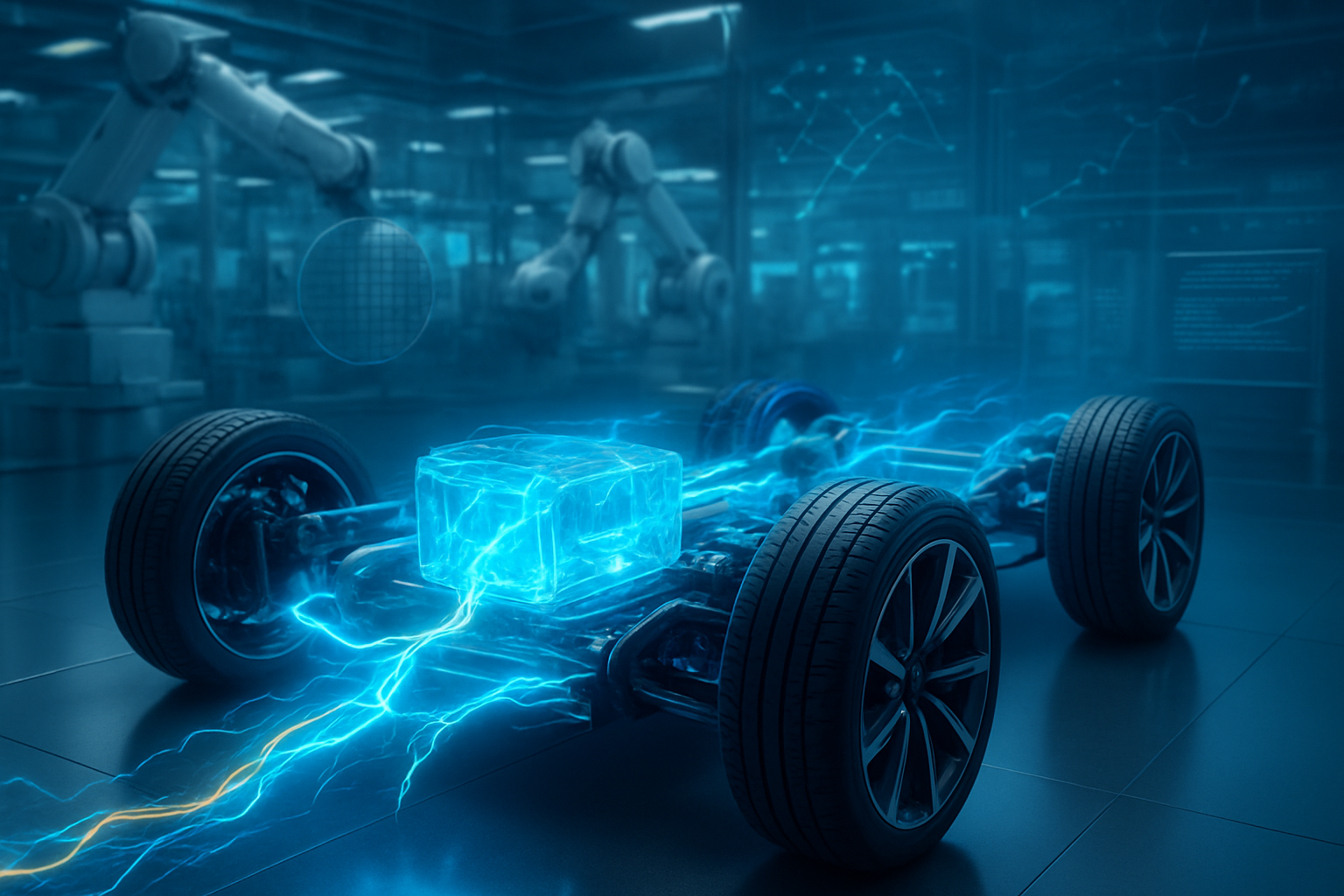
    The electric vehicle (EV) industry has reached a historic turning point this January 2026, as the "Silicon Carbide (SiC) Revolution" finally moves from luxury experimentation to mass-market reality. While traditional silicon has long been the workhorse of the electronics world, its physical limitations in high-voltage environments have created a bottleneck for EV range and charging speeds. Today, the massive scaling of SiC production by industry titans has effectively shattered those limits, enabling a new generation of vehicles that charge faster than a smartphone and travel further than their internal combustion predecessors.

    The immediate significance of this shift cannot be overstated. By transitioning to 200mm (8-inch) wafer production, leading semiconductor firms have slashed costs and boosted yields, allowing SiC-based power modules to be integrated into mid-market EVs priced under $40,000. This breakthrough is the "invisible engine" behind the 2026 model year's most impressive specs, including the first widespread rollout of 800-volt architectures that allow drivers to add 400 kilometers of range in less than five minutes.

    Technically, Silicon Carbide is a "wide-bandgap" (WBG) semiconductor, meaning it can operate at much higher voltages, temperatures, and frequencies than standard silicon. In the context of an EV, this allows for the creation of power inverters—the components that convert battery DC power to motor AC power—that are significantly more efficient. As of early 2026, the latest Generation-3 SiC MOSFETs from STMicroelectronics (NYSE: STM) and the CoolSiC Gen 2 line from Infineon Technologies (FWB: IFX) have achieved powertrain efficiencies exceeding 99%.

    This efficiency is not just a laboratory metric; it translates directly to thermal management. Because SiC generates up to 50% less heat during power switching than traditional silicon, the cooling systems in 2026 EVs are roughly 10% lighter and smaller. This creates a vicious cycle of weight reduction: a lighter cooling system allows for a lighter chassis, which in turn increases the vehicle's range. Current data shows that SiC-equipped vehicles are achieving an average 7% range increase over 2023 models without any increase in battery size.

    Furthermore, the transition to 200mm wafers has been the industry's "Holy Grail." Previously, most SiC was manufactured on 150mm (6-inch) wafers, which were prone to higher defect rates and lower output. The successful scaling to 200mm in late 2025 has increased usable chips per wafer by nearly 85%. This manufacturing milestone, supported by AI-driven defect detection and predictive fab management, has finally brought the price of SiC modules close to parity with high-end silicon components.

    The competitive landscape of 2026 is dominated by a few key players who moved early to secure their supply chains. STMicroelectronics has solidified its lead through a "Silicon Carbide Campus" in Catania, Italy, which handles the entire production cycle from raw powder to finished modules. Their joint venture with Sanan Optoelectronics in China has also reached full capacity, churning out 480,000 wafers annually to meet the insatiable demand of the Chinese EV market. ST’s early partnership with Tesla and recent major deals with Geely and Hyundai have positioned them as the primary backbone of the global EV fleet.

    Infineon Technologies has countered with its "One Virtual Fab" strategy, leveraging massive expansions in Villach, Austria, and Kulim, Malaysia. Their recent multi-billion dollar agreement with Stellantis (NYSE: STLA) to standardize power modules across 14 brands has effectively locked out smaller competitors from a significant portion of the European market. Infineon's focus on "CoolSiC" technology has also made them the preferred partner for high-performance entrants like Xiaomi (HKG: 1810), whose latest SU7 models utilize Infineon modules to achieve record-breaking acceleration and charging metrics.

    This production surge is causing significant disruption for traditional power semiconductor makers who were late to the SiC transition. Companies that relied on aging silicon-based Insulated-Gate Bipolar Transistors (IGBTs) are finding themselves relegated to the low-end, budget vehicle market. Meanwhile, the strategic advantage has shifted toward vertically integrated companies—those that own everything from the SiC crystal growth to the final module packaging—as they are better insulated from the supply shocks that plagued the industry earlier this decade.

    The broader significance of the SiC surge extends far beyond the driveway. This technology is a critical component of the global push for decarbonization and energy independence. As EV adoption accelerates thanks to SiC-enabled charging convenience, the demand for fossil fuels is seeing its most significant decline in history. Moreover, the high-frequency switching capabilities of SiC are being applied to the "Smart Grid," allowing for more efficient integration of renewable energy sources like solar and wind into the national electricity supply.

    However, the rapid shift has raised concerns regarding material sourcing. Silicon carbide requires high-purity carbon and silicon, and the manufacturing process is incredibly energy-intensive. There are also geopolitical implications, as the race for SiC dominance has led to "semiconductor nationalism," with the US, EU, and China all vying to subsidize local production hubs. This has mirrored previous milestones in the AI chip race, where control over manufacturing capacity has become a matter of national security.

    In terms of market impact, the democratization of 800-volt charging is the most visible breakthrough for the general public. It effectively addresses "range anxiety" and "wait-time anxiety," which were the two largest hurdles for EV adoption in the early 2020s. By early 2026, the infrastructure and the vehicle technology have finally synchronized, creating a user experience that is finally comparable—if not superior—to the traditional gas station model.

    Looking ahead, the next frontier for SiC is the potential transition to 300mm (12-inch) wafers, which would represent another massive leap in production efficiency. While currently in the pilot phase at firms like Infineon, full-scale 300mm production is expected by the late 2020s. We are also beginning to see the integration of SiC with Gallium Nitride (GaN) in "hybrid" power systems, which could lead to even smaller onboard chargers and DC-DC converters for the next generation of software-defined vehicles.

    Experts predict that the lessons learned from scaling SiC will be applied to other advanced materials, potentially accelerating the development of solid-state batteries. The primary challenge remaining is the recycling of these advanced power modules. As the first generation of SiC-heavy vehicles reaches the end of its life toward the end of this decade, the industry will need to develop robust methods for recovering and reusing these specialized materials.

    The Silicon Carbide revolution of 2026 is more than just an incremental upgrade; it is the fundamental technological shift that has made the electric vehicle a viable reality for the global majority. Through the aggressive scaling efforts of STMicroelectronics and Infineon, the industry has successfully moved past the "prototyping" phase of high-performance electrification and into a high-volume, high-efficiency era.

    The key takeaway for 2026 is that the powertrain is no longer a commodity—it is a sophisticated platform for innovation. As we watch the market evolve in the coming months, the focus will likely shift toward software-defined power management, where AI algorithms optimize SiC switching in real-time to squeeze every possible kilometer out of the battery. For now, the "SiC Surge" stands as one of the most significant engineering triumphs of the mid-2020s, forever changing how the world moves.


    This content is intended for informational purposes only and represents analysis of current AI and semiconductor developments.

    TokenRing AI delivers enterprise-grade solutions for multi-agent AI workflow orchestration, AI-powered development tools, and seamless remote collaboration platforms.
    For more information, visit https://www.tokenring.ai/.
  • The Silicon Sovereignty: How 2026 Became the Year LLMs Moved From the Cloud to Your Desk

    The Silicon Sovereignty: How 2026 Became the Year LLMs Moved From the Cloud to Your Desk

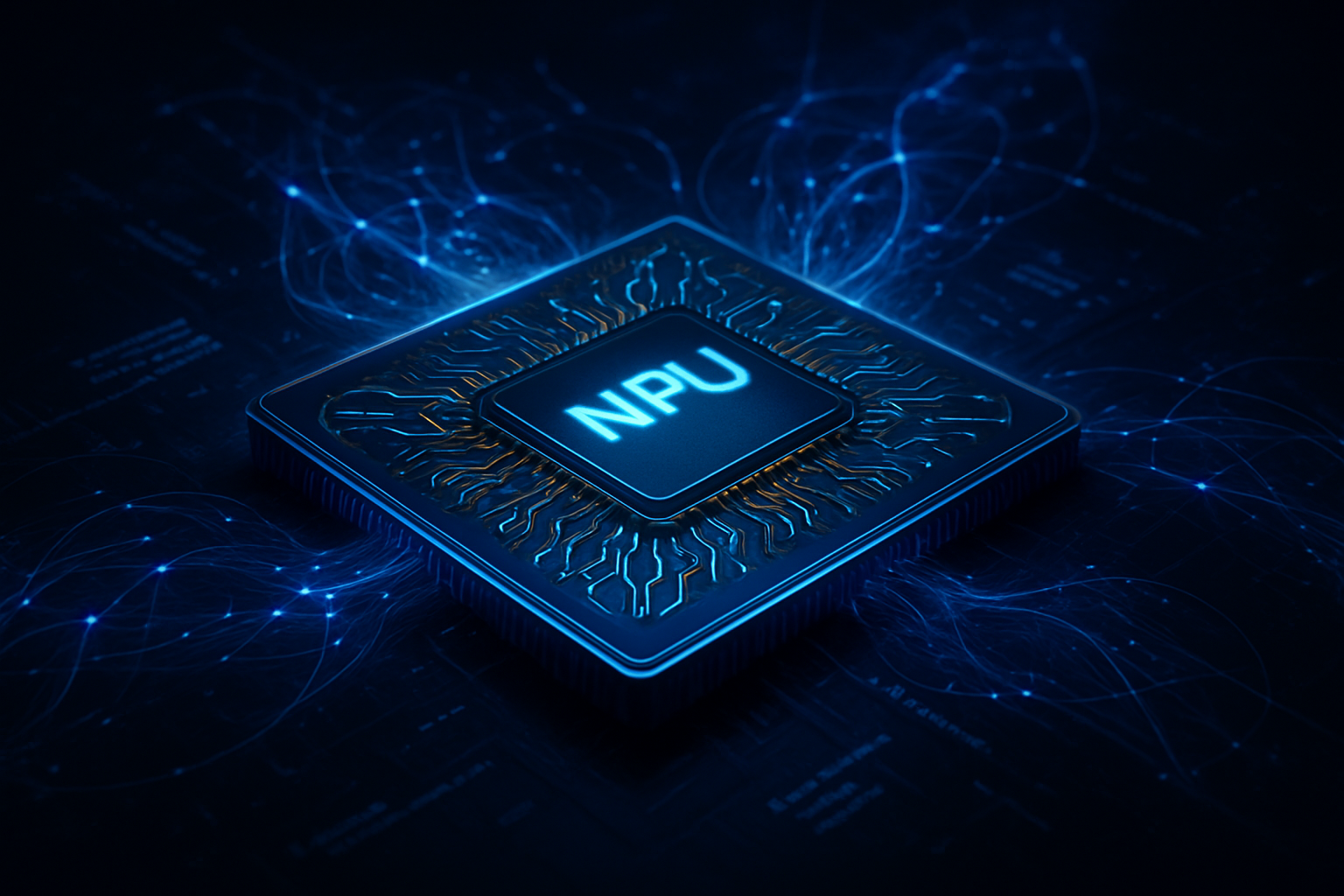
    The era of "AI as a Service" is rapidly giving way to "AI as a Feature," as 2026 marks the definitive shift where high-performance Large Language Models (LLMs) have migrated from massive data centers directly onto consumer hardware. As of January 2026, the "AI PC" is no longer a marketing buzzword but a hardware standard, with over 55% of all new PCs shipped globally featuring dedicated Neural Processing Units (NPUs) capable of handling complex generative tasks without an internet connection. This revolution, spearheaded by breakthroughs from Intel, AMD, and Qualcomm, has fundamentally altered the relationship between users and their data, prioritizing privacy and latency over cloud-dependency.

    The immediate significance of this shift is most visible in the "Copilot+ PC" ecosystem, which has evolved from a niche category in 2024 to the baseline for corporate and creative procurement. With the launch of next-generation silicon at CES 2026, the industry has crossed a critical performance threshold: the ability to run 7B and 14B parameter models locally with "interactive" speeds. This means that for the first time, users can engage in deep reasoning, complex coding assistance, and real-time video manipulation entirely on-device, effectively ending the era of "waiting for the cloud" for everyday AI interactions.

    The 100-TOPS Threshold: A New Era of Local Inference

    The technical landscape of early 2026 is defined by a fierce "TOPS arms race" among the big three silicon providers. Intel (NASDAQ: INTC) has officially taken the wraps off its Panther Lake architecture (Core Ultra Series 3), the first consumer chip built on the cutting-edge Intel 18A process. Panther Lake’s NPU 5.0 delivers a dedicated 50 TOPS (Tera Operations Per Second), but it is the platform’s "total AI throughput" that has stunned the industry. By leveraging the new Xe3 "Celestial" graphics architecture, the platform can achieve a combined 180 TOPS, enabling what Intel calls "Physical AI"—the ability for the PC to interpret complex human gestures and environment context in real-time through the webcam with zero lag.

    Not to be outdone, AMD (NASDAQ: AMD) has introduced the Ryzen AI 400 series, codenamed "Gorgon Point." While its XDNA 2 engine provides a robust 60 NPU TOPS, AMD’s strategic advantage in 2026 lies in its "Strix Halo" (Ryzen AI Max+) chips. These high-end units support up to 128GB of unified LPDDR5x-9600 memory, making them the only laptop platforms currently capable of running massive 70B parameter models—like the latest Llama 4 variants—at interactive speeds of 10-15 tokens per second entirely offline. This capability has effectively turned high-end laptops into portable AI research stations.

    Meanwhile, Qualcomm (NASDAQ: QCOM) has solidified its lead in efficiency with the Snapdragon X2 Elite. Utilizing a refined 3nm process, the X2 Elite features an industry-leading 85 TOPS NPU. The technical breakthrough here is throughput-per-watt; Qualcomm has demonstrated 3B parameter models running at a staggering 220 tokens per second, allowing for near-instantaneous text generation and real-time voice translation that feels indistinguishable from human conversation. This level of local performance differs from previous generations by moving past simple "background blur" effects and into the realm of "Agentic AI," where the chip can autonomously process entire file directories to find and summarize information.

    Market Disruption and the Rise of the ARM-Windows Alliance

    The business implications of this local AI surge are profound, particularly for the competitive balance of the PC market. Qualcomm’s dominance in NPU performance-per-watt has led to a significant shift in market share. As of early 2026, ARM-based Windows laptops now account for nearly 25% of the consumer market, a historic high that has forced x86 giants Intel and AMD to accelerate their roadmap transitions. The "Wintel" monopoly is facing its greatest challenge since the 1990s as Microsoft (NASDAQ: MSFT) continues to optimize Windows 11 (and the rumored modular Windows 12) to run equally well—if not better—on ARM architecture.

    Independent Software Vendors (ISVs) have followed the hardware. Giants like Adobe (NASDAQ: ADBE) and Blackmagic Design have released "NPU-Native" versions of their flagship suites, moving heavy workloads like generative fill and neural video denoising away from the GPU and onto the NPU. This transition benefits the consumer by significantly extending battery life—up to 30 hours in some Snapdragon-based models—while freeing up the GPU for high-end rendering or gaming. For startups, this creates a new "Edge AI" marketplace where developers can sell local-first AI tools that don't require expensive cloud credits, potentially disrupting the SaaS (Software as a Service) business models of the early 2020s.

    Privacy as the Ultimate Luxury Good

    Beyond the technical specifications, the AI PC revolution represents a pivot in the broader AI landscape toward "Sovereign Data." In 2024 and 2025, the primary concern for enterprise and individual users was the privacy of their data when interacting with cloud-based LLMs. In 2026, the hardware has finally caught up to these concerns. By processing data locally, companies can now deploy AI agents that have full access to sensitive internal documents without the risk of that data being used to train third-party models. This has led to a massive surge in enterprise adoption, with 75% of corporate buyers now citing NPU performance as their top priority for fleet refreshes.

    This shift mirrors previous milestones like the transition from mainframe computing to personal computing in the 1980s. Just as the PC democratized computing power, the AI PC is democratizing intelligence. However, this transition is not without its concerns. The rise of local LLMs has complicated the fight against deepfakes and misinformation, as high-quality generative tools are now available offline and are virtually impossible to regulate or "switch off." The industry is currently grappling with how to implement hardware-level watermarking that cannot be bypassed by local model modifications.

    The Road to Windows 12 and Beyond

    Looking toward the latter half of 2026, the industry is buzzing with the expected launch of a modular "Windows 12." Rumors suggest this OS will require a minimum of 16GB of RAM and a 40+ TOPS NPU for its core functions, effectively making AI a requirement for the modern operating system. We are also seeing the emergence of "Multi-Modal Edge AI," where the PC doesn't just process text or images, but simultaneously monitors audio, video, and biometric data to act as a proactive personal assistant.

    Experts predict that by 2027, the concept of a "non-AI PC" will be as obsolete as a PC without an internet connection. The next challenge for engineers will be the "Memory Wall"—the need for even faster and larger memory pools to accommodate the 100B+ parameter models that are currently the exclusive domain of data centers. Technologies like CAMM2 memory modules and on-package HBM (High Bandwidth Memory) are expected to migrate from servers to high-end consumer laptops by the end of the decade.

    Conclusion: The New Standard of Computing

    The AI PC revolution of 2026 has successfully moved artificial intelligence from the realm of "magic" into the realm of "utility." The breakthroughs from Intel, AMD, and Qualcomm have provided the silicon foundation for a world where our devices don't just execute commands, but understand context. The key takeaway from this development is the shift in power: intelligence is no longer a centralized resource controlled by a few cloud titans, but a local capability that resides in the hands of the user.

    As we move through the first quarter of 2026, the industry will be watching for the first "killer app" that truly justifies this local power—something that goes beyond simple chatbots and into the realm of autonomous agents that can manage our digital lives. For now, the "Silicon Sovereignty" has arrived, and the PC is once again the most exciting device in the tech ecosystem.


    This content is intended for informational purposes only and represents analysis of current AI developments.

    TokenRing AI delivers enterprise-grade solutions for multi-agent AI workflow orchestration, AI-powered development tools, and seamless remote collaboration platforms.
    For more information, visit https://www.tokenring.ai/.

  • The Trillion-Agent Engine: How 2026’s Hardware Revolution is Powering the Rise of Autonomous AI

    The Trillion-Agent Engine: How 2026’s Hardware Revolution is Powering the Rise of Autonomous AI

    As of early 2026, the artificial intelligence industry has undergone a seismic shift from "generative" models that merely produce content to "agentic" systems that plan, reason, and execute complex multi-step tasks. This transition has been catalyzed by a fundamental redesign of silicon architecture. We have moved past the era of the monolithic GPU; today, the tech world is witnessing the "Agentic AI" hardware revolution, where chipsets are no longer judged solely by raw FLOPS, but by their ability to orchestrate thousands of autonomous software agents simultaneously.

    This revolution is not just a software update—it is a total reimagining of the compute stack. With the mass production of NVIDIA’s Rubin architecture and Intel’s 18A process node reaching high-volume manufacturing, the hardware bottlenecks that once throttled AI agents—specifically CPU-to-GPU latency and memory bandwidth—are being systematically dismantled. The result is a new "Trillion-Agent Economy" where AI agents act as autonomous economic actors, requiring hardware that can handle the "bursty" and logic-heavy nature of real-time reasoning.

    The Architecture of Autonomy: Rubin, 18A, and the Death of the CPU Bottleneck

    At the heart of this hardware shift is the NVIDIA (NASDAQ: NVDA) Rubin architecture, which officially entered the market in early 2026. Unlike its predecessor, Blackwell, Rubin is built for the "managerial" logic of agentic AI. The platform features the Vera CPU—NVIDIA’s first fully custom Arm-compatible processor using "Olympus" cores—designed specifically to handle the "data shuffling" required by multi-agent workflows. In agentic AI, the CPU acts as the orchestrator, managing task planning and tool-calling logic while the GPU handles heavy inference. By utilizing a bidirectional NVLink-C2C (Chip-to-Chip) interconnect with 1.8 TB/s of bandwidth, NVIDIA has achieved total cache coherency, allowing the "thinking" and "doing" parts of the AI to share data without the latency penalties of previous generations.

    Simultaneously, Intel (NASDAQ: INTC) has successfully reached high-volume manufacturing on its 18A (1.8nm class) process node. This milestone is critical for agentic AI due to two key technologies: RibbonFET (Gate-All-Around transistors) and PowerVia (backside power delivery). Agentic workloads are notoriously "bursty"—they require sudden, intense power for a reasoning step followed by a pause during tool execution. Intel’s PowerVia reduces voltage drop by 30%, ensuring that these rapid transitions don't lead to "compute stalls." Intel’s Panther Lake (Core Ultra Series 3) chips are already leveraging 18A to deliver over 180 TOPS (Trillion Operations Per Second) of platform throughput, enabling "Physical AI" agents to run locally on devices with zero cloud latency.

    The third pillar of this revolution is the transition to HBM4 (High Bandwidth Memory 4). In early 2026, HBM4 has become the standard for AI accelerators, doubling the interface width to 2048-bit and reaching bandwidths exceeding 2.0 TB/s per stack. This is vital for managing the massive Key-Value (KV) caches required for long-context reasoning. For the first time, the "base die" of the HBM stack is manufactured using a 12nm logic process by TSMC (NYSE: TSM), allowing for "near-memory processing." This means certain agentic tasks, like data-routing or memory retrieval, can be offloaded to the memory stack itself, drastically reducing energy consumption and eliminating the "Memory Wall" that hindered 2024-era agents.

    The Battle for the Orchestration Layer: NVIDIA vs. AMD vs. Custom Silicon

    The shift to agentic AI has reshaped the competitive landscape. While NVIDIA remains the dominant force, AMD (NASDAQ: AMD) has mounted a significant challenge with its Instinct MI400 series and the "Helios" rack-scale strategy. AMD’s CDNA 5 architecture focuses on massive memory capacity—offering up to 432GB of HBM4—to appeal to hyperscalers like Meta (NASDAQ: META) and Microsoft (NASDAQ: MSFT). AMD is positioning itself as the "open" alternative, championing the Ultra Accelerator Link (UALink) to prevent the vendor lock-in associated with NVIDIA’s proprietary NVLink.

    Meanwhile, the major AI labs are moving toward vertical integration to lower the "Token-per-Dollar" cost of running agents. Google (NASDAQ: GOOGL) recently announced its TPU v7 (Ironwood), the first processor designed specifically for "test-time compute"—the ability for a chip to allocate more reasoning cycles to a single complex query. Google’s "SparseCore" technology in the TPU v7 is optimized for handling the ultra-large embeddings and reasoning steps common in multi-agent orchestration.

    OpenAI, in collaboration with Broadcom (NASDAQ: AVGO), has also begun deploying its own custom "XPU" in 2026. This internal silicon is designed to move OpenAI from a research lab to a vertically integrated platform, allowing them to run their most advanced agentic workflows—like those seen in the o1 model series—on proprietary hardware. This move is seen as a direct attempt to bypass the "NVIDIA tax" and secure the massive compute margins necessary for a trillion-agent ecosystem.

    Beyond Inference: State Management and the Energy Challenge

    The wider significance of this hardware revolution lies in the transition from "inference" to "state management." In 2024, the goal was simply to generate a fast response. In 2026, the goal is to maintain the "memory" and "state" of billions of active agent threads simultaneously. This requires hardware that can handle long-term memory retrieval from vector databases at scale. The introduction of HBM4 and low-latency interconnects has finally made it possible for agents to "remember" previous steps in a multi-day task without the system slowing to a crawl.

    However, this leap in capability brings significant concerns regarding energy consumption. While architectures like Intel 18A and NVIDIA Rubin are more efficient per-token, the sheer volume of "agentic thinking" is driving up total power demand. The industry is responding with "heterogeneous compute"—dynamically mapping tasks to the most efficient engine. For example, a "prefill" task (understanding a prompt) might run on an NPU, while the "reasoning" happens on the GPU, and the "tool-call" (executing code) is managed by the CPU. This zero-copy data sharing between "thinker" and "doer" is the only way to keep the energy costs of the Trillion-Agent Economy sustainable.

    Comparatively, this milestone is being viewed as the "Broadband Era" of AI. If the early 2020s were the "Dial-up" phase—characterized by slow, single-turn interactions—2026 is the year AI became "Always-On" and autonomous. The focus has moved from how large a model is to how effectively it can act within the world.

    The Horizon: Edge Agents and Physical AI

    Looking ahead to late 2026 and 2027, the next frontier is "Edge Agentic AI." With the success of Intel 18A and similar advancements from Apple (NASDAQ: AAPL), we expect to see autonomous agents move off the cloud and onto local devices. This will enable "Physical AI"—agents that can control robotics, manage smart cities, or act as high-fidelity personal assistants with total privacy and zero latency.

    The primary challenge remains the standardization of agent communication. While Anthropic has championed the Model Context Protocol (MCP) as the "USB-C of AI," the industry still lacks a universal hardware-level language for agent-to-agent negotiation. Experts predict that the next two years will see the emergence of "Orchestration Accelerators"—specialized silicon blocks dedicated entirely to the logic of agentic collaboration, further offloading these tasks from the general-purpose cores.

    A New Era of Computing

    The hardware revolution of 2026 marks the end of AI as a passive tool and its birth as an active partner. The combination of NVIDIA’s Rubin, Intel’s 18A, and the massive throughput of HBM4 has provided the physical foundation for agents that don't just talk, but act. Key takeaways from this development include the shift to heterogeneous compute, the elimination of CPU bottlenecks through custom orchestration cores, and the rise of custom silicon among AI labs.

    This development is perhaps the most significant in AI history since the introduction of the Transformer. It represents the move from "Artificial Intelligence" to "Artificial Agency." In the coming months, watch for the first wave of "Agent-Native" applications that leverage this hardware to perform tasks that were previously impossible, such as autonomous software engineering, real-time supply chain management, and complex scientific discovery.


    This content is intended for informational purposes only and represents analysis of current AI developments.

    TokenRing AI delivers enterprise-grade solutions for multi-agent AI workflow orchestration, AI-powered development tools, and seamless remote collaboration platforms.
    For more information, visit https://www.tokenring.ai/.