Tag: 800V Architecture

  • Beyond Silicon: How SiC, GaN, and AI are Fueling the 800V Electric Vehicle Revolution

    Beyond Silicon: How SiC, GaN, and AI are Fueling the 800V Electric Vehicle Revolution

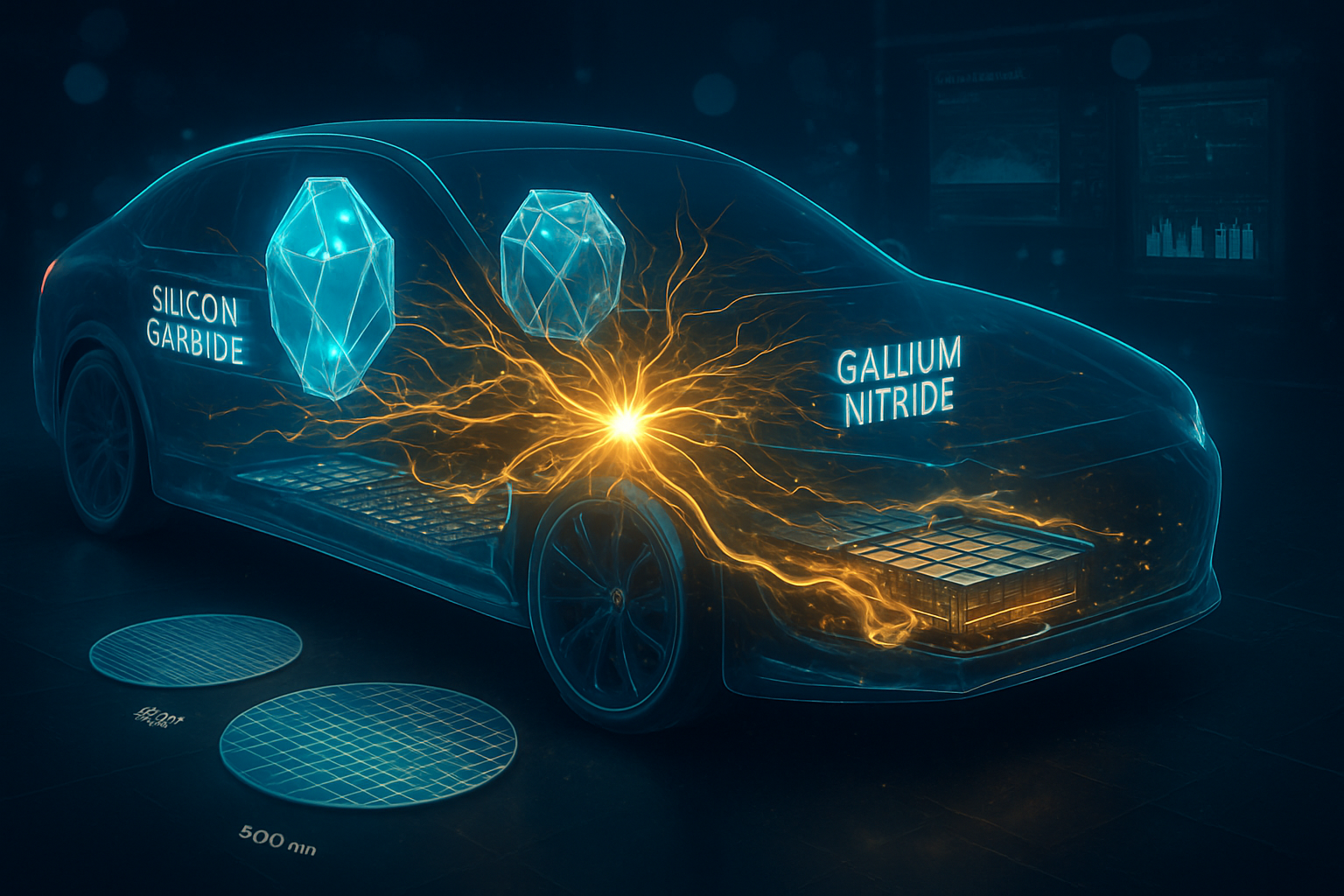
    As of January 2026, the electric vehicle (EV) industry has reached a definitive technological tipping point. The era of traditional silicon power electronics is rapidly drawing to a close, replaced by the ascent of Wide-Bandgap (WBG) semiconductors: Silicon Carbide (SiC) and Gallium Nitride (GaN). This transition, once reserved for high-end performance cars, has now moved into the mass market, fundamentally altering the economics of EV ownership by slashing charging times and extending driving ranges to levels previously thought impossible.

    The immediate significance of this shift is being amplified by the integration of artificial intelligence into the semiconductor manufacturing process. In early January 2026, the successful deployment of AI-driven predictive modeling in crystal growth furnaces has allowed manufacturers to scale production to unprecedented levels. These developments are not merely incremental; they represent a total reconfiguration of the EV powertrain, enabling 800-volt architectures to become the new global standard for vehicles priced under $40,000, effectively removing the "range anxiety" and "charging lag" that have historically hindered widespread adoption.

    The 300mm Revolution: Scaling the Wide-Bandgap Frontier

    The technical heart of this revolution lies in the physical properties of SiC and GaN. Unlike traditional silicon, these materials have a wider "energy gap," allowing them to operate at much higher voltages, temperatures, and frequencies. In the traction inverter—the part of the EV that converts DC battery power to AC for the motor—SiC MOSFETs have achieved a staggering 99% efficiency rating in 2026. This efficiency reduces energy loss as heat, allowing for smaller cooling systems and a direct 7% to 10% increase in vehicle range. Meanwhile, GaN has become the dominant material for onboard chargers and DC-DC converters, enabling power densities that allow these components to be reduced in size by nearly 50%.

    The most significant technical milestone of 2026 occurred on January 13, when Wolfspeed (NYSE: WOLF) announced the production of the world’s first 300mm (12-inch) single-crystal SiC wafer. Historically, SiC manufacturing was limited to 150mm or 200mm wafers due to the extreme difficulty of growing large, defect-free crystals. By utilizing AI-enhanced defect detection and thermal gradient control during the growth process, the industry has finally "scaled the yield wall." This 300mm breakthrough is expected to reduce die costs by up to 40%, finally bringing SiC to price parity with legacy silicon components.

    Initial reactions from the research community have been overwhelmingly positive. Analysts at Yole Group have described the 300mm achievement as the "Everest of power electronics," noting that the transition allows for nearly 2.3 times more chips per wafer than the 200mm standard. Industry experts at the Applied Power Electronics Conference (APEC) in January 2026 highlighted that these advancements are no longer just about hardware; they are about "Smart Power." Modern power stages now feature AI-integrated gate drivers that can predict component fatigue months before failure, allowing for predictive maintenance alerts to be delivered directly to the vehicle’s dashboard.

    Market Consolidation and the Strategic AI Pivot

    The semiconductor landscape has undergone significant consolidation to meet the demands of this 800V era. STMicroelectronics (NYSE: STM) has solidified its position as the volume leader, leveraging a fully vertically integrated supply chain. Their Gen-3 SiC MOSFETs are now the standard for mid-market EVs across Europe and Asia. Following a period of financial restructuring in late 2025, Wolfspeed has emerged as a specialized powerhouse, focusing on the high-yield 300mm production that competitors are now racing to emulate.

    The competitive implications are vast for tech giants and startups alike. ON Semiconductor (NASDAQ: ON) has pivoted its strategy toward "EliteSiC" Power Integrated Modules (PIMs), which combine SiC hardware with AI-driven sensing for self-protecting power stages. Meanwhile, Infineon Technologies (OTCMKTS: IFNNY) shocked the market this month by announcing the first high-volume 300mm power GaN production line, a move that positions them to dominate the infrastructure side of the industry, particularly high-speed DC chargers.

    This shift is disrupting the traditional automotive supply chain. Legacy Tier-1 suppliers who failed to pivot to WBG materials are seeing their market share eroded by semiconductor-first companies. Furthermore, the partnership between GaN pioneers and AI leaders like NVIDIA (NASDAQ: NVDA) has created a new category of "AI-Optimized Chargers" that can handle the massive power requirements of both EV fleets and AI data centers, creating a synergistic market that benefits companies at the intersection of energy and computation.

    The Decarbonization Catalyst: From Infrastructure to Grid Intelligence

    Beyond the vehicle itself, the move to SiC and GaN is a critical component of the broader global energy transition. The democratization of 800V systems has paved the way for "Ultra-Fast" charging networks. In 2025, BYD (OTCMKTS: BYDDF) released its Super e-Platform, and by January 2026, it has demonstrated the ability to add 400km of range in just five minutes using SiC-based megawatt chargers. This capability brings the EV refueling experience into direct competition with internal combustion engine (ICE) vehicles, removing the final psychological barrier for many consumers.

    However, this rapid charging capability places immense strain on local electrical grids. This is where AI-driven grid intelligence becomes essential. By using AI to orchestrate the "handshake" between the SiC power modules in the car and the GaN-based power stages in the charger, utility companies can balance loads in real-time. This "Smart Power" landscape allows for bidirectional charging (V2G), where EVs act as a distributed battery for the grid, discharging energy during peak demand and charging when renewable energy is most abundant.

    The impact of this development is comparable to the introduction of the lithium-ion battery itself. While the battery provides the storage, SiC and GaN provide the "vascular system" that allows that energy to flow efficiently. Some concerns remain regarding the environmental impact of SiC wafer production, which is energy-intensive. However, the 20% yield boost provided by AI manufacturing has already begun to lower the carbon footprint per chip, making the entire lifecycle of the EV significantly greener than models from just three years ago.

    The Roadmap to 2030: 1200V Architectures and Beyond

    Looking ahead, the next frontier is already visible on the horizon: 1200V architectures. While 800V is the current benchmark for 2026, high-performance trucks, delivery vans, and heavy-duty equipment are expected to migrate toward 1200V by 2028. This will require even more advanced SiC formulations and potentially the introduction of "Diamond" semiconductors, which offer even wider bandgaps than SiC.

    In the near term, expect to see the "miniaturization" of the drivetrain. As AI continues to optimize switching frequencies, we will likely see "all-in-one" drive units where the motor, inverter, and gearbox are integrated into a single, compact module no larger than a carry-on suitcase. Challenges remain in the global supply of raw materials like high-purity carbon and gallium, but experts predict that the opening of new domestic refining facilities in North America and Europe by 2027 will alleviate these bottlenecks.

    The integration of solid-state batteries, expected to hit the market in limited volumes by late 2027, will further benefit from SiC power electronics. The high thermal stability of SiC is a perfect match for the higher operating temperatures of some solid-state chemistries. Experts predict that the combination of SiC/GaN power stages and solid-state batteries will lead to "thousand-mile" EVs by the end of the decade.

    Conclusion: The New Standard of Electric Mobility

    The shift to Silicon Carbide and Gallium Nitride, supercharged by AI manufacturing and real-time power management, represents the most significant advancement in EV technology this decade. As of January 2026, we have moved past the "early adopter" phase and into an era where electric mobility is defined by efficiency, speed, and intelligence. The 300mm wafer breakthrough and the 800V standard have effectively leveled the playing field between electric and gasoline vehicles.

    For the tech industry and society at large, the key takeaway is that the "silicon" in Silicon Valley is no longer the only game in town. The future of energy is wide-bandgap. In the coming weeks, watch for further announcements from Tesla (NASDAQ: TSLA) regarding their next-generation "Unboxed" manufacturing process, which is rumored to rely heavily on the new AI-optimized SiC modules. The road to 2030 is electric, and it is being paved with SiC and GaN.


    This content is intended for informational purposes only and represents analysis of current AI developments.

    TokenRing AI delivers enterprise-grade solutions for multi-agent AI workflow orchestration, AI-powered development tools, and seamless remote collaboration platforms.
    For more information, visit https://www.tokenring.ai/.
  • The 800V Revolution: Silicon Carbide Chips Power the 2026 EV Explosion

    The 800V Revolution: Silicon Carbide Chips Power the 2026 EV Explosion

    As of late January 2026, the automotive landscape has reached a definitive turning point, moving away from the charging bottlenecks and range limitations of the early 2020s. The driving force behind this transformation is the rapid, global expansion of Silicon Carbide (SiC) semiconductors. These high-performance chips have officially supplanted traditional silicon as the backbone of the electric vehicle (EV) industry, enabling a widespread transition to 800V powertrain architectures that are redefining consumer expectations for mobility.

    The shift is no longer confined to luxury "halo" cars. In the first few weeks of 2026, major manufacturers have signaled that SiC-based 800V systems are now the standard for mid-range and premium models alike. This transition is crucial because it effectively doubles the voltage of the vehicle's electrical system, allowing for significantly faster charging times and higher efficiency. Industry data shows that SiC chips are now capturing over 80% of the 800V traction inverter market, a milestone that has fundamentally altered the competitive dynamics of the semiconductor industry.

    Technical Superiority and the 200mm Breakthrough

    At the heart of this revolution is the unique physical property of Silicon Carbide as a wide-bandgap (WBG) semiconductor. Unlike traditional Silicon (Si) IGBTs (Insulated-Gate Bipolar Transistors), SiC MOSFETs can operate at much higher temperatures, voltages, and switching frequencies. This allows for power inverters that are not only 10% to 15% smaller and lighter but also significantly more efficient. In 2026, these efficiency gains—typically ranging from 2% to 4%—are being leveraged to offset the massive power draw of the latest AI-driven autonomous driving suites, such as those powered by NVIDIA (NASDAQ: NVDA).

    The technical narrative of 2026 is dominated by the move to 200mm (8-inch) wafer production. For years, the industry struggled with 150mm wafers, which limited supply and kept costs high. However, the operational success of STMicroelectronics (NYSE: STM) and their new Catania "Silicon Carbide Campus" in Italy has changed the math. By achieving high-volume 200mm production this month, STMicroelectronics has drastically improved yields and reduced the cost-per-die, making SiC viable for mass-market vehicles. These chips allow the 2026 BMW (OTC: BMWYY) "Neue Klasse" models to achieve a 10% to 80% charge in just 21 minutes, while the Lucid (NASDAQ: LCID) Gravity is now clocking 200 miles of range in under 11 minutes.

    The Titans of Power: STMicroelectronics and Wolfspeed

    The expansion of SiC has created a new hierarchy among chipmakers. STMicroelectronics (NYSE: STM) has solidified its lead by becoming a vertically integrated powerhouse, controlling everything from raw SiC powder to finished power modules. Their recent expansion of a long-term supply agreement with Geely (OTC: GELYF) illustrates the strategic importance of this integration. By securing a guaranteed pipeline of 800V SiC components, Geely’s brands, including Volvo and Polestar, have gained a critical advantage in the race to offer the fastest-charging vehicles in the Chinese and European markets.

    Meanwhile, Wolfspeed (NYSE: WOLF) has pivoted to become the world's premier substrate supplier. Their John Palmour Manufacturing Center in North Carolina is now the largest SiC wafer fab on the planet, supplying the raw materials that other giants like Infineon and Onsemi (NASDAQ: ON) rely on. Wolfspeed's recent breakthrough in 300mm (12-inch) SiC wafer pilot lines, announced just last quarter, suggests that the cost of these advanced semiconductors will continue to plummet through 2028. This substrate dominance makes Wolfspeed an indispensable partner for nearly every major automotive player, including their ongoing development work with ZF Group to optimize e-axles for commercial trucking.

    Broader Implications for the AI and Energy Landscape

    The expansion of SiC is not just an automotive story; it is a critical component of the broader AI ecosystem. As vehicles transition into "Software-Defined Vehicles" (SDVs), the onboard AI processors required for Level 3 and Level 4 autonomy consume massive amounts of energy. The efficiency gains provided by SiC-based powertrains provide the necessary "power budget" to run these AI systems without sacrificing hundreds of miles of range. In early January 2026, NVIDIA (NASDAQ: NVDA) emphasized this synergy at CES, showcasing how their 800V power blueprints rely on SiC to manage the intense thermal and electrical loads of AI-driven navigation.

    Furthermore, the rise of SiC is easing the strain on global charging infrastructure. Because 800V SiC vehicles can charge at higher speeds (up to 350kW), they spend less time at charging stalls, effectively increasing the "throughput" of existing charging stations. This helps mitigate the "range anxiety" that has historically slowed EV adoption. However, this shift also brings concerns regarding the environmental impact of SiC manufacturing and the intense capital expenditure required to keep pace with the 300mm transition. Critics point out that while SiC makes vehicles more efficient, the energy-intensive process of growing SiC crystals remains a challenge for the industry’s carbon-neutral goals.

    The Horizon: 1200V Systems and Beyond

    Looking ahead to the remainder of 2026 and into 2027, the industry is already eyeing the next frontier: 1200V architectures. While 800V is currently the sweet spot for passenger cars, heavy-duty commercial vehicles and electric aerospace applications are demanding even higher voltages. Experts predict that the lessons learned from the 800V SiC rollout will accelerate the development of 1200V and even 1700V systems, potentially enabling electric long-haul trucking to become a reality by the end of the decade.

    The next 12 to 18 months will also see a push toward "Integrated Power Modules," where the SiC inverter, the motor, and the AI control unit are housed in a single, ultra-compact housing. Companies like Tesla (NASDAQ: TSLA) are expected to unveil further refinements to their proprietary SiC packaging, which could reduce the use of rare-earth materials and further lower the entry price for high-performance EVs. The challenge will remain supply chain resilience, as the world becomes increasingly dependent on a handful of high-tech fabs for its transport energy needs.

    Summary of the SiC Transformation

    The rapid expansion of Silicon Carbide in 2026 marks the end of the "early adopter" phase for high-voltage electric mobility. By solving the dual challenges of charging speed and energy efficiency, SiC has become the enabling technology for a new generation of vehicles that are as convenient as they are sustainable. The dominance of players like STMicroelectronics (NYSE: STM) and Wolfspeed (NYSE: WOLF) highlights the shift in value from traditional mechanical engineering to advanced power electronics.

    In the history of technology, the 2026 SiC boom will likely be viewed as the moment the electric vehicle finally overcame its last major hurdle. As we watch the first 200mm-native vehicle fleets hit the roads this spring, the focus will shift from "will EVs work?" to "how fast can we build them?" The 800V era is here, and it is paved with Silicon Carbide.


    This content is intended for informational purposes only and represents analysis of current AI and semiconductor developments.

    TokenRing AI delivers enterprise-grade solutions for multi-agent AI workflow orchestration, AI-powered development tools, and seamless remote collaboration platforms.
    For more information, visit https://www.tokenring.ai/.
  • Silicon Photonics Breakthroughs Reshape 800V EV Power Electronics

    Silicon Photonics Breakthroughs Reshape 800V EV Power Electronics

    As the global transition to sustainable transportation accelerates, a quiet revolution is taking place beneath the chassis of the world’s most advanced electric vehicles. Silicon photonics—a technology traditionally reserved for the high-speed data centers powering the AI boom—has officially made the leap into the automotive sector. This week’s series of breakthroughs in Photonic Integrated Circuits (PICs) marks a pivotal shift in how 800V EV architectures handle power, heat, and data, promising to solve the industry’s most persistent bottlenecks.

    By replacing traditional copper-based electrical interconnects with light-based communication, manufacturers are effectively insulating sensitive control electronics from the massive electromagnetic interference (EMI) generated by high-voltage powertrains. This integration is more than just an incremental upgrade; it is a fundamental architectural redesign that enables the next generation of ultra-fast charging and high-efficiency drive-trains, pushing the boundaries of what modern EVs can achieve in terms of performance and reliability.

    The Technical Leap: Optical Gate Drivers and EMI Immunity

    The technical cornerstone of this breakthrough lies in the commercialization of optical gate drivers for 800V and 1200V systems. In traditional architectures, the high-frequency switching of Silicon Carbide (SiC) and Gallium Nitride (GaN) power transistors creates a "noisy" electromagnetic environment that can disrupt data signals and damage low-voltage processors. New developments in PICs allow for "Optical Isolation," where light is used to transmit the "on/off" trigger to power transistors. This provides galvanic isolation of up to 23 kV, virtually eliminating the risk of high-voltage spikes entering the vehicle’s central nervous system.

    Furthermore, the implementation of Co-Packaged Optics (CPO) has redefined thermal management. By integrating optical engines directly onto the processor package, companies like Lightmatter and Ayar Labs have demonstrated a 70% reduction in signal-related power consumption. This drastically lowers the "thermal envelope" of the vehicle's compute modules, allowing for more compact designs and reducing the need for heavy, complex liquid cooling systems dedicated solely to electronics.

    The shift also introduces Photonic Battery Management Systems (BMS). Using Fiber Bragg Grating (FBG) sensors, these systems utilize light to monitor temperature and strain inside individual battery cells with unprecedented precision. Because these sensors are made of glass fiber rather than copper, they are immune to electrical arcing, allowing 800V systems to maintain peak charging speeds for significantly longer durations. Initial tests show 10-80% charge times dropping to under 12 minutes for 2026 premium models, a feat previously hampered by thermal-induced throttling.

    Industry Giants and the Photonics Arms Race

    The move toward silicon photonics has triggered a strategic realignment among major tech players. Tesla (NASDAQ: TSLA) has taken a commanding lead with its proprietary "FalconLink" interconnect. Integrated into the 2026 "AI Trunk" compute module, FalconLink provides 1 TB/s bi-directional links between the powertrain and the central AI, enabling real-time adjustments to torque and energy recuperation that were previously impossible due to latency. By stripping away kilograms of heavy copper shielding, Tesla has reportedly reduced vehicle weight by up to 8 kg, directly extending range.

    NVIDIA (NASDAQ: NVDA) is also leveraging its data-center dominance to reshape the automotive market. At the start of 2026, NVIDIA announced an expansion of its Spectrum-X Silicon Photonics platform into the NVIDIA DRIVE Thor ecosystem. This "800V DC Power Blueprint" treats the vehicle as a mobile AI factory, using light-speed interconnects to harmonize the flow between the drive-train and the autonomous driving stack. This move positions NVIDIA not just as a chip provider, but as the architect of the entire high-voltage data ecosystem.

    Marvell Technology (NASDAQ: MRVL) has similarly pivoted, following its strategic acquisitions of photonics startups in late 2025. Marvell is now deploying specialized PICs for "zonal architectures," where localized hubs manage data and power via optical fibers. This disruption is particularly challenging for legacy Tier-1 suppliers who have spent decades perfecting copper-based harnesses. The entry of Intel (NASDAQ: INTC) and Cisco (NASDAQ: CSCO) into the automotive photonics space further underscores that the future of the car is being dictated by the same technologies that built the cloud.

    The Convergence of AI and Physical Power

    This development is a significant milestone in the broader AI landscape, as it represents the first major "physical world" application of AI-scale interconnects. For years, the AI community has struggled with the "Energy Wall"—the point where moving data costs more energy than processing it. By solving this in the context of an 800V EV, engineers are proving that silicon photonics can handle the harshest environments on Earth, not just air-conditioned server rooms.

    The wider significance also touches on sustainability and resource management. The reduction in copper usage is a major win for supply chain ethics and environmental impact, as copper mining is increasingly scrutinized. However, the transition brings new concerns, primarily regarding the repairability of fiber-optic systems in local mechanic shops. Replacing a traditional wire is one thing; splicing a multi-channel photonic integrated circuit requires specialized tools and training that the current automotive workforce largely lacks.

    Comparing this to previous milestones, the adoption of silicon photonics in EVs is analogous to the shift from carburetors to Electronic Fuel Injection (EFI). It is the point where the hardware becomes fast enough to keep up with the software. This "optical era" allows the vehicle’s AI to sense and react to road conditions and battery states at the speed of light, making the dream of fully autonomous, ultra-efficient transport a tangible reality.

    Future Horizons: Toward 1200V and Beyond

    Looking ahead, the roadmap for silicon photonics extends into "Post-800V" architectures. Researchers are already testing 1200V systems that would allow for heavy-duty electric trucking and aviation, where the power requirements are an order of magnitude higher. In these extreme environments, copper is nearly non-viable due to the heat generated by electrical resistance; photonics will be the only way to manage the data flow.

    Near-term developments include the integration of LiDAR sensors directly into the same PICs that control the powertrain. This would create a "single-chip" automotive brain that handles perception, decision-making, and power distribution simultaneously. Experts predict that by 2028, the "all-optical" drive-train—where every sensor and actuator is connected via a photonic mesh—will become the gold standard for the industry.

    Challenges remain, particularly in the mass manufacturing of PICs at the scale required by the automotive industry. While data centers require thousands of chips, the car market requires millions. Scaling the precision manufacturing of silicon photonics without compromising the ruggedness needed for vehicle vibrations and temperature swings is the next great engineering hurdle.

    A New Era for Sustainable Transport

    The integration of silicon photonics into 800V EV architectures marks a defining moment in the history of both AI and automotive engineering. It represents the successful migration of high-performance computing technology into the consumer's daily life, solving the critical heat and EMI issues that have long limited the potential of high-voltage systems.

    As we move further into 2026, the key takeaway is that the "brain" and "muscle" of the electric vehicle are no longer separate entities. They are now fused together by light, enabling a level of efficiency and intelligence that was science fiction just a decade ago. Investors and consumers alike should watch for the first "FalconLink" enabled deliveries this spring, as they will likely set the benchmark for the next decade of transportation.


    This content is intended for informational purposes only and represents analysis of current AI and automotive developments.

    TokenRing AI delivers enterprise-grade solutions for multi-agent AI workflow orchestration, AI-powered development tools, and seamless remote collaboration platforms.
    For more information, visit https://www.tokenring.ai/.
  • The 800V Revolution: Silicon Carbide Demand Skyrockets as 2026 Becomes the ‘Year of the High-Voltage EV’

    The 800V Revolution: Silicon Carbide Demand Skyrockets as 2026 Becomes the ‘Year of the High-Voltage EV’

    As of January 2026, the automotive industry has reached a decisive turning point in the electrification race. The shift toward 800-volt (800V) architectures is no longer a luxury hallmark of high-end sports cars but has become the benchmark for the next generation of mass-market electric vehicles (EVs). At the center of this tectonic shift is a surge in demand for Silicon Carbide (SiC) power semiconductors—chips that are more efficient, smaller, and more heat-tolerant than the traditional silicon that powered the first decade of EVs.

    This demand surge has triggered a massive capacity race among global semiconductor leaders. Giants like STMicroelectronics (NYSE: STM) and Infineon Technologies (OTC: IFNNY) are ramping up 200mm (8-inch) wafer production at a record pace to meet the requirements of automotive leaders. These chips are not merely hardware components; they are the critical enabler for the "software-defined vehicle" (SDV), allowing carmakers to offset the massive power consumption of modern AI-driven autonomous driving systems with unprecedented powertrain efficiency.

    The Technical Edge: Efficiency, 200mm Wafers, and AI-Enhanced Yields

    The move to 800V systems is fundamentally a physics solution to the problems of charging speed and range. By doubling the voltage from the traditional 400V standard, automakers can reduce current for the same power delivery, which in turn allows for thinner, lighter copper wiring and significantly faster DC charging. However, traditional silicon IGBTs (Insulated-Gate Bipolar Transistors) struggle at these higher voltages due to energy loss and heat. SiC MOSFETs, with their wider bandgap, achieve inverter efficiencies exceeding 99% and generate up to 50% less heat, permitting 10% smaller and lighter cooling systems.

    The breakthrough for 2026, however, is not just the material but the manufacturing process. The industry is currently in the middle of a high-stakes transition from 150mm to 200mm (8-inch) wafers. This transition increases chip output per substrate by nearly 85%, which is vital for bringing SiC costs down to a level where mid-range EVs can compete with internal combustion engines. Furthermore, manufacturers have integrated advanced AI vision models and deep learning into their fabrication plants. By using Transformer-based vision systems to detect crystal defects during growth, companies like Wolfspeed (NYSE: WOLF) have increased yields to levels once thought impossible for this notoriously difficult material.

    Initial reactions from the semiconductor research community suggest that the 2026 ramp-up of 200mm SiC marks the end of the "supply constraint era" for wide-bandgap materials. Experts note that the ability to grow high-quality SiC crystals at scale—once a bottleneck that held back the entire EV industry—has finally caught up with the aggressive production schedules of the world’s largest automakers.

    Scaling for the Titans: STMicro and Infineon Lead the Capacity Charge

    The competitive landscape for power semiconductors has reshaped itself around massive "mega-fabs." STMicroelectronics is currently leading the charge with its fully integrated Silicon Carbide Campus in Catania, Italy. This €5 billion facility, supported by the EU Chips Act, has officially reached high-volume 200mm production this month. ST’s vertical integration—controlling the process from raw SiC powder to finished power modules—gives it a strategic advantage in supply security for its anchor partners, including Tesla and Geely Auto.

    Infineon Technologies is countering with its "Kulim 3" facility in Malaysia, which has been inaugurated as the world’s largest 200mm SiC power fab. Infineon’s "CoolSiC" technology is currently being deployed in the high-stakes launch of the Rivian (NASDAQ: RIVN) R2 platform and the continued expansion of Xiaomi’s EV lineup. By leveraging a "one virtual fab" strategy across its Malaysia and Villach, Austria locations, Infineon is positioning itself to capture a projected 30% of the global SiC market by the end of the decade.

    Other major players, such as Onsemi (NASDAQ: ON), have focused on the 800V ecosystem through their EliteSiC platform. Onsemi has secured massive multi-year deals with Tier-1 suppliers like Magna, positioning itself as the "energy bridge" between the powertrain and the digital cockpit. Meanwhile, Wolfspeed remains a wildcard; after a 2025 financial restructuring, it has emerged as a leaner, substrate-focused powerhouse, recently announcing a 300mm wafer breakthrough that could leapfrog current 200mm standards by 2028.

    The AI Synergy: Offsetting the 'Energy Tax' of Autonomy

    Perhaps the most significant development in 2026 is the realization that SiC is the "secret weapon" for AI-driven autonomous driving. As vehicles move toward Level 3 and Level 4 autonomy, the power consumption of on-board AI processors—like NVIDIA (NASDAQ: NVDA) DRIVE Thor—and their associated sensors has reached critical levels, often consuming between 1kW and 2.5kW of continuous power. This "energy tax" could historically reduce an EV's range by as much as 20%.

    The efficiency gains of SiC-based 800V powertrains provide a direct solution to this problem. By reclaiming energy typically lost as heat in the inverter, SiC can boost a vehicle's range by roughly 7% to 10% without increasing battery size. In effect, the energy saved by the SiC hardware is what "powers" the AI brains of the car. This synergy has made SiC a non-negotiable component for Software-Defined Vehicles (SDVs), where the cooling budget is increasingly allocated to the high-heat AI computers rather than the motor.

    This trend mirrors the broader evolution of the technology landscape, where hardware efficiency is becoming the primary bottleneck for AI deployment. Just as data centers are turning to liquid cooling and specialized power delivery, the automotive world is using SiC to ensure that "smart" cars do not become "short-range" cars.

    Future Horizons: 300mm Wafers and the Rise of GaN

    Looking toward 2027 and beyond, the industry is already eyeing the next frontier. While 200mm SiC is the standard for 2026, the first pilot lines for 300mm (12-inch) SiC wafers are expected to be announced by year-end. This shift would provide even more dramatic cost reductions, potentially bringing SiC to the $25,000 EV segment. Additionally, researchers are exploring "hybrid" systems that combine SiC for the main traction inverter with Gallium Nitride (GaN) for on-board chargers and DC-DC converters, maximizing efficiency across the entire electrical architecture.

    Experts predict that by 2030, the traditional silicon-based inverter will be entirely phased out of the passenger car market. The primary challenge remains the geopolitical concentration of the SiC supply chain, as both Europe and North America race to reduce reliance on Chinese raw material processing. The coming months will likely see more announcements regarding domestic substrate manufacturing as governments view SiC as a matter of national economic security.

    A New Foundation for Mobility

    The surge in Silicon Carbide demand in 2026 represents more than a simple supply chain update; it is the foundation for the next fifty years of transportation. By solving the dual challenges of charging speed and the energy demands of AI, SiC has cemented its status as the "silicon of the 21st century." The successful scale-up by STMicroelectronics, Infineon, and their peers has effectively decoupled EV performance from its previous limitations.

    As we look toward the remainder of 2026, the focus will shift from capacity to integration. Watch for how carmakers utilize the "weight credit" provided by 800V systems to add more advanced AI features, larger interior displays, and more robust safety systems. The high-voltage era has officially arrived, and it is paved with Silicon Carbide.


    This content is intended for informational purposes only and represents analysis of current AI and semiconductor developments.

    TokenRing AI delivers enterprise-grade solutions for multi-agent AI workflow orchestration, AI-powered development tools, and seamless remote collaboration platforms.
    For more information, visit https://www.tokenring.ai/.