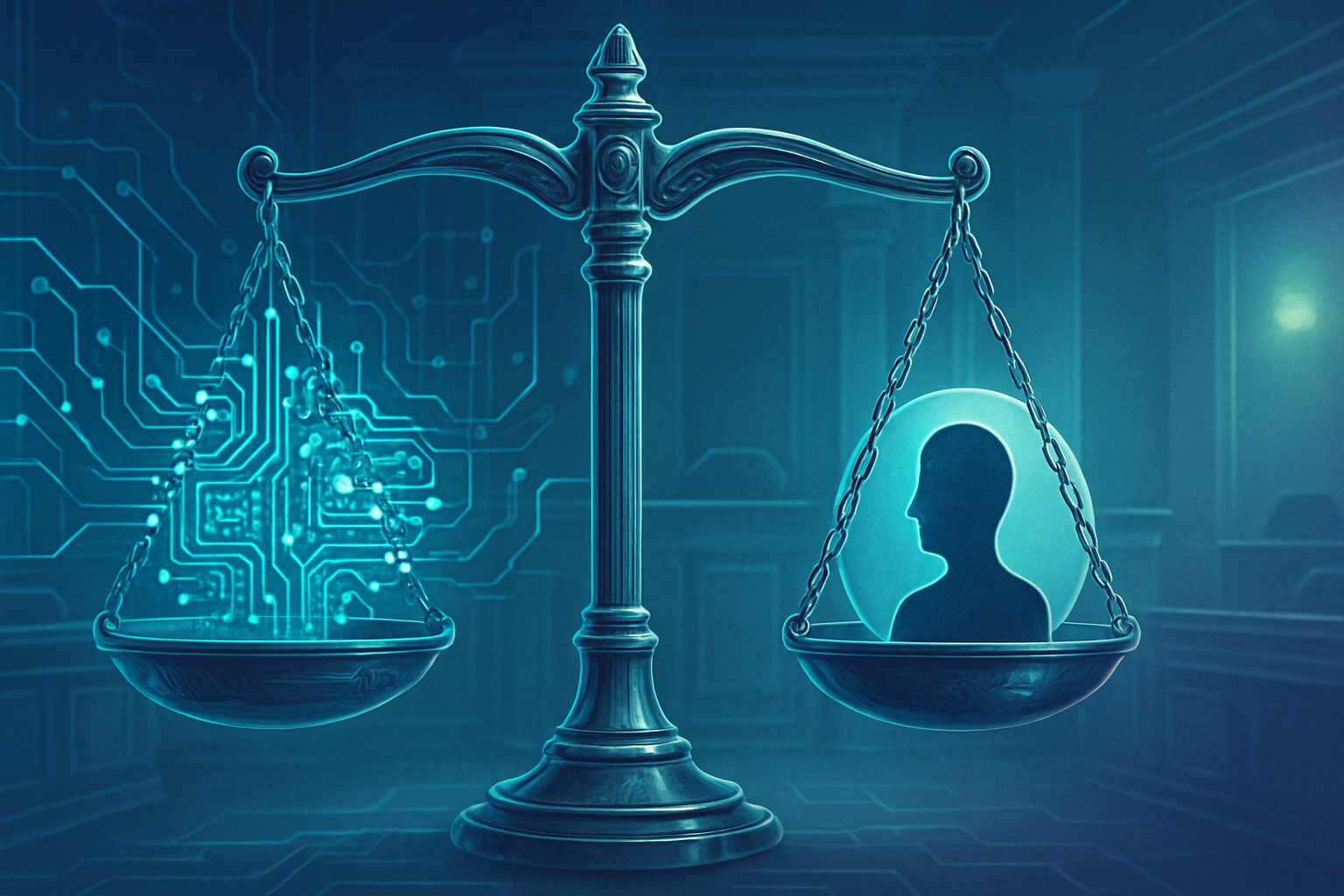
The rapid ascent of Artificial Intelligence (AI) from a niche technological pursuit to a pervasive force in daily life has ignited a critical global conversation about its profound legal and ethical ramifications. As AI systems become increasingly sophisticated, capable of everything from drafting legal documents to diagnosing diseases and driving vehicles, the traditional frameworks of law and ethics are being tested, revealing significant gaps and complexities. This burgeoning challenge is so pressing that even the American Bar Association (ABA) Journal has published 'A primer on artificial intelligence, part 2,' signaling an urgent call for legal professionals to deeply understand and grapple with the intricate implications of AI.
At the heart of this discourse lies the fundamental question of how society can harness AI's transformative potential while safeguarding individual rights, ensuring fairness, and establishing clear lines of responsibility. The journey into AI's legal and ethical landscape is not merely an academic exercise; it is a critical endeavor that will shape the future of technology, industry, and the very fabric of justice, demanding proactive engagement from policymakers, technologists, and legal experts alike.
The Intricacies of AI: Data, Deeds, and Digital Creations
The technical underpinnings of AI, particularly machine learning algorithms, are central to understanding its legal and ethical quandaries. These systems are trained on colossal datasets, and any inherent biases within this data can be perpetuated or even amplified by the AI, leading to discriminatory outcomes in critical sectors like finance, employment, and law enforcement. The "black box" nature of many advanced AI models further complicates matters, making it difficult to ascertain how decisions are reached, thereby hindering transparency and explainability—principles vital for ethical deployment and legal scrutiny. Concerns also mount over AI "hallucinations," where systems generate plausible but factually incorrect information, posing significant risks in fields requiring absolute accuracy.
Data Privacy stands as a paramount concern. AI's insatiable appetite for data raises issues of unauthorized usage, covert collection, and the ethical implications of processing personal information without explicit consent. The increasing integration of biometric data, such as facial recognition, into AI systems presents particularly acute risks. Unlike passwords, biometric data is permanent; if compromised, it cannot be changed, making individuals vulnerable to identity theft and surveillance. Existing regulations like the General Data Protection Regulation (GDPR) in Europe and the California Consumer Privacy Act (CCPA) in the United States attempt to provide safeguards, but their enforcement against rapidly evolving AI practices remains a significant challenge, requiring organizations to actively seek legal guidance to protect data integrity and user privacy.
Accountability for AI-driven actions represents one of the most complex legal challenges. When an an AI system causes harm, makes errors, or produces biased results, determining legal responsibility—whether it lies with the developer, the deployer, the user, or the data provider—becomes incredibly intricate. Unlike traditional software, AI can learn, adapt, and make unanticipated decisions, blurring the lines of culpability. The distinction between "accountability," which encompasses ethical and governance obligations, and "liability," referring to legal consequences and financial penalties, becomes crucial here. Current legal frameworks are often ill-equipped to address these AI-specific challenges, underscoring the pressing need for new legal definitions and clear guidelines to assign responsibility in an AI-powered world.
Intellectual Property (IP) rights are similarly challenged by AI's creative capabilities. As AI systems generate art, music, research papers, and even inventions autonomously, questions of authorship, ownership, and copyright infringement arise. Traditional IP laws, predicated on human authorship and inventorship, struggle to accommodate AI-generated works. While some jurisdictions maintain that copyright applies only to human creations, others are beginning to recognize copyright for AI-generated art, often attributing the human who prompted the AI as the rights holder. A significant IP concern also stems from the training data itself; many large language models (LLMs) are trained on vast amounts of copyrighted material scraped from the internet without explicit permission, leading to potential legal risks if the AI's output reproduces protected content. The "DABUS case," involving an AI system attempting to be listed as an inventor on patents, vividly illustrates the anachronism of current laws when confronted with AI inventorship, urging organizations to establish clear policies on AI-generated content and ensure proper licensing of training data.
Reshaping the Corporate Landscape: AI's Legal and Ethical Imperatives for Industry
The intricate web of AI's legal and ethical implications is profoundly reshaping the operational strategies and competitive dynamics for AI companies, tech giants, and startups alike. Companies that develop and deploy AI systems, such as Alphabet (NASDAQ: GOOGL), Microsoft (NASDAQ: MSFT), Amazon (NASDAQ: AMZN), and countless AI startups, are now facing a dual imperative: innovate rapidly while simultaneously navigating a complex and evolving regulatory environment.
Those companies that prioritize robust ethical AI frameworks and proactive legal compliance stand to gain a significant competitive advantage. This includes investing heavily in data governance, bias detection and mitigation tools, explainable AI (XAI) technologies, and transparent communication about AI system capabilities and limitations. Companies that fail to address these issues risk severe reputational damage, hefty regulatory fines (as seen with GDPR violations), and loss of consumer trust. For instance, a startup developing an AI-powered hiring tool that exhibits gender or racial bias could face immediate legal challenges and market rejection. Conversely, a company that can demonstrate its AI adheres to high standards of fairness, privacy, and accountability may attract more clients, talent, and investment.
The need for robust internal policies and dedicated legal counsel specializing in AI is becoming non-negotiable. Tech giants, with their vast resources, are establishing dedicated AI ethics boards and legal teams, but smaller startups must also integrate these considerations into their product development lifecycle from the outset. Potential disruption to existing products or services could arise if AI systems are found to be non-compliant with new regulations, forcing costly redesigns or even market withdrawal. Furthermore, the rising cost of legal compliance and the need for specialized expertise could create barriers to entry for new players, potentially consolidating power among well-resourced incumbents. Market positioning will increasingly depend not just on technological prowess, but also on a company's perceived trustworthiness and commitment to responsible AI development.
AI's Broader Canvas: Societal Shifts and Regulatory Imperatives
The legal and ethical challenges posed by AI extend far beyond corporate boardrooms, touching upon the very foundations of society and governance. This complex situation fits into a broader AI landscape characterized by a global race for technological supremacy alongside an urgent demand for "trustworthy AI" and "human-centric AI." The impacts are widespread, affecting everything from the justice system's ability to ensure fair trials to the protection of fundamental human rights in an age of automated decision-making.
Potential concerns are myriad and profound. Without adequate regulatory frameworks, there is a risk of exacerbating societal inequalities, eroding privacy, and undermining democratic processes through the spread of deepfakes and algorithmic manipulation. The unchecked proliferation of biased AI could lead to systemic discrimination in areas like credit scoring, criminal justice, and healthcare. Furthermore, the difficulty in assigning accountability could lead to a "responsibility gap," where victims of AI-induced harm struggle to find redress. These challenges echo previous technological milestones, such as the early days of the internet, where innovation outpaced regulation, leading to significant societal adjustments and the eventual development of new legal paradigms. However, AI's potential for autonomous action and rapid evolution makes the current situation arguably more complex and urgent than any prior technological shift.
The global recognition of these issues has spurred an unprecedented push for regulatory frameworks. Over 1,000 AI-related policy initiatives have been proposed across nearly 70 countries. The European Union (EU), for instance, has taken a pioneering step with its EU AI Act, the world's first comprehensive legal framework for AI, which adopts a risk-based approach to ensure trustworthy AI. This Act mandates specific disclosure obligations for AI systems like chatbots and requires clear labeling for AI-generated content, including deepfakes. In contrast, the United Kingdom (UK) has opted for a "pro-innovation approach," favoring an activity-based model where existing sectoral regulators govern AI in their respective domains. The United States (US), while lacking a comprehensive federal AI regulation, has seen efforts like the 2023 Executive Order 14110 on Safe, Secure, and Trustworthy Development and Use of AI, which aims to impose reporting and safety obligations on AI companies. These varied approaches highlight the global struggle to balance innovation with necessary safeguards, underscoring the urgent need for international cooperation and harmonized standards, as seen in multilateral efforts like the G7 Hiroshima AI Process and the Council of Europe’s Framework Convention on Artificial Intelligence.
The Horizon of AI: Anticipating Future Legal and Ethical Landscapes
Looking ahead, the legal and ethical landscape of AI is poised for significant and continuous evolution. In the near term, we can expect a global acceleration in the development and refinement of regulatory frameworks, with more countries adopting or adapting models similar to the EU AI Act. There will be a sustained focus on issues such as data governance, algorithmic transparency, and the establishment of clear accountability mechanisms. The ongoing legal battles concerning intellectual property and AI-generated content will likely lead to landmark court decisions, establishing new precedents that will shape creative industries and patent law.
Potential applications and use cases on the horizon will further challenge existing legal norms. As AI becomes more integrated into critical infrastructure, healthcare, and autonomous systems, the demand for robust safety standards, liability insurance, and ethical oversight will intensify. We might see the emergence of specialized "AI courts" or regulatory bodies designed to handle the unique complexities of AI-related disputes. The development of AI that can reason and explain its decisions (Explainable AI – XAI) will become crucial for legal compliance and public trust, moving beyond opaque "black box" models.
However, significant challenges remain. The rapid pace of technological innovation often outstrips the slower legislative process, creating a constant game of catch-up for regulators. Harmonizing international AI laws will be a monumental task, yet crucial for preventing regulatory arbitrage and fostering global trust. Experts predict an increasing demand for legal professionals with specialized expertise in AI law, ethics, and data governance. There will also be a continued emphasis on the "human in the loop" principle, ensuring that human oversight and ultimate responsibility remain central to AI deployment, particularly in high-stakes environments. The balance between fostering innovation and implementing necessary safeguards will remain a delicate and ongoing tightrope walk for governments and industries worldwide.
Charting the Course: A Concluding Perspective on AI's Ethical Imperative
The journey into the age of Artificial Intelligence is undeniably transformative, promising unprecedented advancements across nearly every sector. However, as this detailed exploration reveals, the very fabric of this innovation is interwoven with profound legal and ethical challenges that demand immediate and sustained attention. The key takeaways from this evolving narrative are clear: AI's reliance on vast datasets necessitates rigorous data privacy protections; the autonomous nature of AI systems complicates accountability and liability, requiring novel legal frameworks; and AI's creative capabilities challenge established notions of intellectual property. These issues collectively underscore an urgent and undeniable need for robust regulatory frameworks that can adapt to AI's rapid evolution.
This development marks a significant juncture in AI history, akin to the early days of the internet, but with potentially more far-reaching and intricate implications. The call from the ABA Journal for legal professionals to become conversant in AI's complexities is not merely a recommendation; it is an imperative for maintaining justice and fairness in an increasingly automated world. The "human in the loop" concept remains a critical safeguard, ensuring that human judgment and ethical considerations ultimately guide AI's deployment.
In the coming weeks and months, all eyes will be on the ongoing legislative efforts globally, particularly the implementation and impact of pioneering regulations like the EU AI Act. We should also watch for key legal precedents emerging from AI-related lawsuits and the continued efforts of industry leaders to self-regulate and develop ethical AI principles. The ultimate long-term impact of AI will not solely be defined by its technological prowess, but by our collective ability to navigate its ethical complexities and establish a legal foundation that fosters innovation responsibly, protects individual rights, and ensures a just future for all.
This content is intended for informational purposes only and represents analysis of current AI developments.
TokenRing AI delivers enterprise-grade solutions for multi-agent AI workflow orchestration, AI-powered development tools, and seamless remote collaboration platforms.
For more information, visit https://www.tokenring.ai/.