
Tag: Acquisitions

  • NVIDIA Seals the Inference Era: The $20 Billion Groq Deal Redefines the AI Hardware Race

    NVIDIA Seals the Inference Era: The $20 Billion Groq Deal Redefines the AI Hardware Race

    In a move that has sent shockwaves through Silicon Valley and global financial markets, NVIDIA (NASDAQ: NVDA) has effectively neutralized its most potent architectural rival. As of January 16, 2026, details have emerged regarding a landmark $20 billion licensing and "acqui-hire" agreement with Groq, the startup that revolutionized real-time AI with its Language Processing Unit (LPU). This strategic maneuver, executed in late December 2025, represents a decisive pivot for NVIDIA as it seeks to extend its dominance from the model training phase into the high-stakes, high-volume world of AI inference.

    The deal is far more than a simple asset purchase; it is a calculated effort to bypass the intense antitrust scrutiny that has previously plagued large-scale tech mergers. By structuring the transaction as a massive $20 billion intellectual property licensing agreement coupled with a near-total absorption of Groq’s engineering talent—including founder and CEO Jonathan Ross—NVIDIA has effectively integrated Groq’s "deterministic" compute logic into its own ecosystem. This acquisition of expertise and IP marks the beginning of the "Inference Era," where the speed of token generation is now the primary metric of AI supremacy.

    The Death of Latency: Why the LPU Architecture Changed the Game

    The technical core of this $20 billion deal lies in Groq’s fundamental departure from traditional processor design. While NVIDIA’s legendary H100 and Blackwell GPUs were built on a foundation of massive parallel processing—ideal for training models on gargantuan datasets—they often struggle with the sequential nature of Large Language Model (LLM) inference. GPUs rely on High Bandwidth Memory (HBM), which, despite its name, creates a "memory wall" where the processor must wait for data to travel from off-chip storage. Groq’s LPU bypassed this entirely by utilizing on-chip SRAM (Static Random-Access Memory), which is nearly 100 times faster than the HBM found in standard AI chips.

    Furthermore, Groq introduced the concept of deterministic execution. In a traditional GPU environment, scheduling and batching of requests can cause "jitter," or inconsistent response times, which is a significant hurdle for real-time applications like voice-based AI assistants or high-frequency trading bots. The Groq architecture uses a single-core "assembly line" approach where every instruction’s timing is known to the nanosecond. This allowed Groq to achieve speeds of over 500 tokens per second for models like Llama 3, a benchmark that was previously thought impossible for commercial-grade hardware.

    Industry experts and researchers have reacted with a mix of awe and apprehension. While the integration of Groq’s tech into NVIDIA’s upcoming Rubin architecture promises a massive leap in consumer AI performance, the consolidation of such a disruptive technology into the hands of the market leader has raised concerns. "NVIDIA didn't just buy a company; they bought the solution to their only real weakness: latency," remarked one lead researcher at the AI Open Institute. By absorbing Groq’s compiler stack and hardware logic, NVIDIA has effectively closed the performance gap that startups were hoping to exploit.

    Market Consolidation and the "Inference Flip"

    The strategic implications for the broader semiconductor industry are profound. For the past three years, the "training moat"—NVIDIA’s total control over the chips used to build AI—seemed unassailable. However, as the industry matured, the focus shifted toward inference, the process of actually running those models for end-users. Competitors like Advanced Micro Devices, Inc. (NASDAQ: AMD) and Intel Corporation (NASDAQ: INTC) had begun to gain ground by offering specialized inference solutions. By securing Groq’s IP, NVIDIA has successfully front-run its competitors, ensuring that the next generation of AI "agents" will run almost exclusively on NVIDIA-powered infrastructure.

    The deal also places significant pressure on other ASIC (Application-Specific Integrated Circuit) startups such as Cerebras and SambaNova. With NVIDIA now controlling the most efficient inference architecture on the market, the venture capital appetite for hardware startups may cool, as the barrier to entry has just been raised by an order of magnitude. For cloud providers like Microsoft (NASDAQ: MSFT) and Alphabet Inc. (NASDAQ: GOOGL), the deal is a double-edged sword: they will benefit from the vastly improved inference speeds of the NVIDIA-Groq hybrid chips, but their dependence on NVIDIA’s hardware stack has never been deeper.

    Perhaps the most ingenious aspect of the deal is its regulatory shielding. By allowing a "shell" of Groq to continue operating as an independent entity for legacy support, NVIDIA has created a complex legal buffer against the Federal Trade Commission (FTC) and European regulators. This "acqui-hire" model allows NVIDIA to claim it is not technically a monopoly through merger, even as it moves 90% of Groq’s workforce—the primary drivers of the innovation—onto its own payroll.

    A New Frontier for Real-Time AI Agents and Global Stability

    Beyond the corporate balance sheets, the NVIDIA-Groq alliance signals a shift in the broader AI landscape toward "Real-Time Agency." We are moving away from chatbots that take several seconds to "think" and toward AI systems that can converse, reason, and act with zero perceptible latency. This is critical for the burgeoning field of Sovereign AI, where nations are building their own localized AI infrastructures. With Groq’s technology, these nations can deploy ultra-fast, efficient models that require significantly less energy than previous GPU clusters, addressing growing concerns over the environmental impact of AI data centers.

    However, the consolidation of such power is not without its critics. Concerns regarding "Compute Sovereignty" are mounting, as a single corporation now holds the keys to both the creation and the execution of artificial intelligence at a global scale. Comparisons are already being drawn to the early days of the microprocessor era, but with a crucial difference: the pace of AI evolution is logarithmic, not linear. The $20 billion price tag is seen by many as a "bargain" if it grants NVIDIA a permanent lock on the hardware layer of the most transformative technology in human history.

    What’s Next: The Rubin Architecture and the End of the "Memory Wall"

    In the near term, all eyes are on NVIDIA’s Vera Rubin platform, expected to ship in late 2026. This new hardware line is predicted to natively incorporate Groq’s deterministic logic, effectively merging the throughput of a GPU with the latency-free performance of an LPU. This will likely enable a new class of "Instant AI" applications, from real-time holographic translation to autonomous robotic systems that can react to environmental changes in milliseconds.

    The challenges ahead are largely integration-based. Merging Groq’s unique compiler stack with NVIDIA’s established CUDA software ecosystem will be a Herculean task for the newly formed "Deterministic Inference" division. If successful, however, the result will be a unified software-hardware stack that covers every possible AI use case, from training a trillion-parameter model to running a lightweight agent on a handheld device. Analysts predict that by 2027, the concept of "waiting" for an AI response will be a relic of the past.

    Summary: A Historic Milestone in the AI Arms Race

    NVIDIA’s $20 billion move to absorb Groq’s technology and talent is a definitive moment in tech history. It marks the transition from an era defined by "bigger models" to one defined by "faster interactions." By neutralizing its most dangerous architectural rival and integrating a superior inference technology, NVIDIA has solidified its position not just as a chipmaker, but as the foundational architect of the AI-driven world.

    Key Takeaways:

    • The Deal: A $20 billion licensing and acqui-hire agreement that effectively moves Groq’s brain trust to NVIDIA.
    • The Tech: Integration of deterministic LPU architecture and SRAM-based compute to eliminate inference latency.
    • The Strategy: NVIDIA’s pivot to dominate the high-volume inference market while bypassing traditional antitrust hurdles.
    • The Future: Expect the "Rubin" architecture to deliver 500+ tokens per second, making real-time AI agents the new industry standard.

    In the coming months, the industry will watch closely as the first "NVIDIA-powered Groq" clusters go online. If the performance gains match the hype, the $20 billion spent today may be remembered as the most consequential investment of the decade.


    This content is intended for informational purposes only and represents analysis of current AI developments.

    TokenRing AI delivers enterprise-grade solutions for multi-agent AI workflow orchestration, AI-powered development tools, and seamless remote collaboration platforms.
    For more information, visit https://www.tokenring.ai/.
  • Nvidia Secures the Inference Era: Inside the $20 Billion Acquisition of Groq’s AI Powerhouse

    Nvidia Secures the Inference Era: Inside the $20 Billion Acquisition of Groq’s AI Powerhouse

    In a move that has sent shockwaves through Silicon Valley and the global semiconductor industry, Nvidia (NASDAQ: NVDA) finalized a landmark $20 billion asset and talent acquisition of the high-performance AI chip startup Groq in late December 2025. Announced on Christmas Eve, the deal represents one of the most significant strategic maneuvers in Nvidia’s history, effectively absorbing the industry’s leading low-latency inference technology and its world-class engineering team.

    The acquisition is a decisive strike aimed at cementing Nvidia’s dominance as the artificial intelligence industry shifts its primary focus from training massive models to the "Inference Era"—the real-time execution of those models in consumer and enterprise applications. By bringing Groq’s revolutionary Language Processing Unit (LPU) architecture under its wing, Nvidia has not only neutralized its most formidable technical challenger but also secured a vital technological hedge against the ongoing global shortage of High Bandwidth Memory (HBM).

    The LPU Breakthrough: Solving the Memory Wall

    At the heart of this $20 billion deal is Groq’s proprietary LPU architecture, which has consistently outperformed traditional GPUs in real-time language tasks throughout 2024 and 2025. Unlike Nvidia’s current H100 and B200 chips, which rely on HBM to manage data, Groq’s LPUs utilize on-chip SRAM (Static Random-Access Memory). This fundamental architectural difference eliminates the "memory wall"—a bottleneck where the processor spends more time waiting for data to arrive from memory than actually performing calculations.

    Technical specifications released during the acquisition reveal that Groq’s LPUs deliver nearly 10x the throughput of standard GPUs for Large Language Model (LLM) inference while consuming approximately 90% less power. This deterministic performance allows for the near-instantaneous token generation required for the next generation of interactive AI agents. Industry experts note that Nvidia plans to integrate this LPU logic directly into its upcoming "Vera Rubin" chip architecture, scheduled for a 2026 release, marking a radical evolution in Nvidia’s hardware roadmap.

    Strengthening the Software Moat and Neutralizing Rivals

    The acquisition is as much about software as it is about silicon. Nvidia is already moving to integrate Groq’s software libraries into its ubiquitous CUDA platform. This "dual-stack" strategy will allow developers to use a single programming environment to train models on Nvidia GPUs and then deploy them for ultra-fast inference on LPU-enhanced hardware. By folding Groq’s innovations into CUDA, Nvidia is making its software ecosystem even more indispensable to the AI industry, creating a formidable barrier to entry for competitors.

    From a competitive standpoint, the deal effectively removes Groq from the board as an independent entity just as it was beginning to gain significant traction with major cloud providers. While companies like Advanced Micro Devices, Inc. (NASDAQ: AMD) and Intel Corporation (NASDAQ: INTC) have been racing to catch up to Nvidia’s training capabilities, Groq was widely considered the only startup with a credible lead in specialized inference hardware. By paying a 3x premium over Groq’s last private valuation, Nvidia has ensured that this technology—and the talent behind it, including Groq founder and TPU pioneer Jonathan Ross—stays within the Nvidia ecosystem.

    Navigating the Shift to the Inference Era

    The broader significance of this acquisition lies in the changing landscape of AI compute. In 2023 and 2024, the market was defined by a desperate "land grab" for training hardware as companies raced to build foundational models. However, by late 2025, the focus shifted toward the economics of running those models at scale. As AI moves into everyday devices and real-time assistants, the cost and latency of inference have become the primary concerns for tech giants and startups alike.

    Nvidia’s move also addresses a critical vulnerability in the AI supply chain: the reliance on HBM. With HBM production capacity frequently strained by high demand from multiple chipmakers, Groq’s SRAM-based approach offers Nvidia a strategic alternative that does not depend on the same constrained manufacturing processes. This diversification of its hardware portfolio makes Nvidia’s "AI Factory" vision more resilient to the geopolitical and logistical shocks that have plagued the semiconductor industry in recent years.

    The Road Ahead: Real-Time Agents and Vera Rubin

    Looking forward, the integration of Groq’s technology is expected to accelerate the deployment of "Agentic AI"—autonomous systems capable of complex reasoning and real-time interaction. In the near term, we can expect Nvidia to launch specialized inference cards based on Groq’s designs, targeting the rapidly growing market for edge computing and private enterprise AI clouds.

    The long-term play, however, is the Vera Rubin platform. Analysts predict that the 2026 chip generation will be the first to truly hybridize GPU and LPU architectures, creating a "universal AI processor" capable of handling both massive training workloads and ultra-low-latency inference on a single die. The primary challenge remaining for Nvidia will be navigating the inevitable antitrust scrutiny from regulators in the US and EU, who are increasingly wary of Nvidia’s near-monopoly on the "oxygen" of the AI economy.

    A New Chapter in AI History

    The acquisition of Groq marks the end of an era for AI hardware startups and the beginning of a consolidated phase where the "Big Three" of AI compute—Nvidia, and to a lesser extent, the custom silicon efforts of Microsoft (NASDAQ: MSFT) and Alphabet Inc. (NASDAQ: GOOGL)—vye for total control of the stack. By securing Jonathan Ross and his team, Nvidia has not only bought technology but also the visionary leadership that helped define the modern AI era at Google.

    As we enter 2026, the key takeaway is clear: Nvidia is no longer just a "graphics" or "training" company; it has evolved into the definitive infrastructure provider for the entire AI lifecycle. The success of the Groq integration will be the defining story of the coming year, as the industry watches to see if Nvidia can successfully merge two distinct hardware philosophies into a single, unstoppable AI powerhouse.


    This content is intended for informational purposes only and represents analysis of current AI developments.

    TokenRing AI delivers enterprise-grade solutions for multi-agent AI workflow orchestration, AI-powered development tools, and seamless remote collaboration platforms.
    For more information, visit https://www.tokenring.ai/.
  • Google’s $4.75B Power Play: Acquiring Intersect to Fuel the AI Revolution

    Google’s $4.75B Power Play: Acquiring Intersect to Fuel the AI Revolution

    In a move that underscores the desperate scramble for energy to fuel the generative AI revolution, Alphabet Inc. (NASDAQ: GOOGL) announced on December 22, 2025, that it has entered into a definitive agreement to acquire Intersect, the data center and power development division of Intersect Power. The $4.75 billion all-cash deal represents a paradigm shift for the tech giant, moving Google from a purchaser of renewable energy to a direct owner and developer of the massive infrastructure required to energize its next-generation AI data center clusters.

    The acquisition is a direct response to the "power crunch" that has become the primary bottleneck for AI scaling. As Google deploys increasingly dense clusters of high-performance GPUs—many of which now require upwards of 1,200 watts per chip—the traditional reliance on public utility grids has become a strategic liability. By bringing Intersect’s development pipeline and expertise in-house, Alphabet aims to bypass years of regulatory delays and ensure that its computing capacity is never throttled by a lack of electrons.

    The Technical Shift: Co-Location and Grid Independence

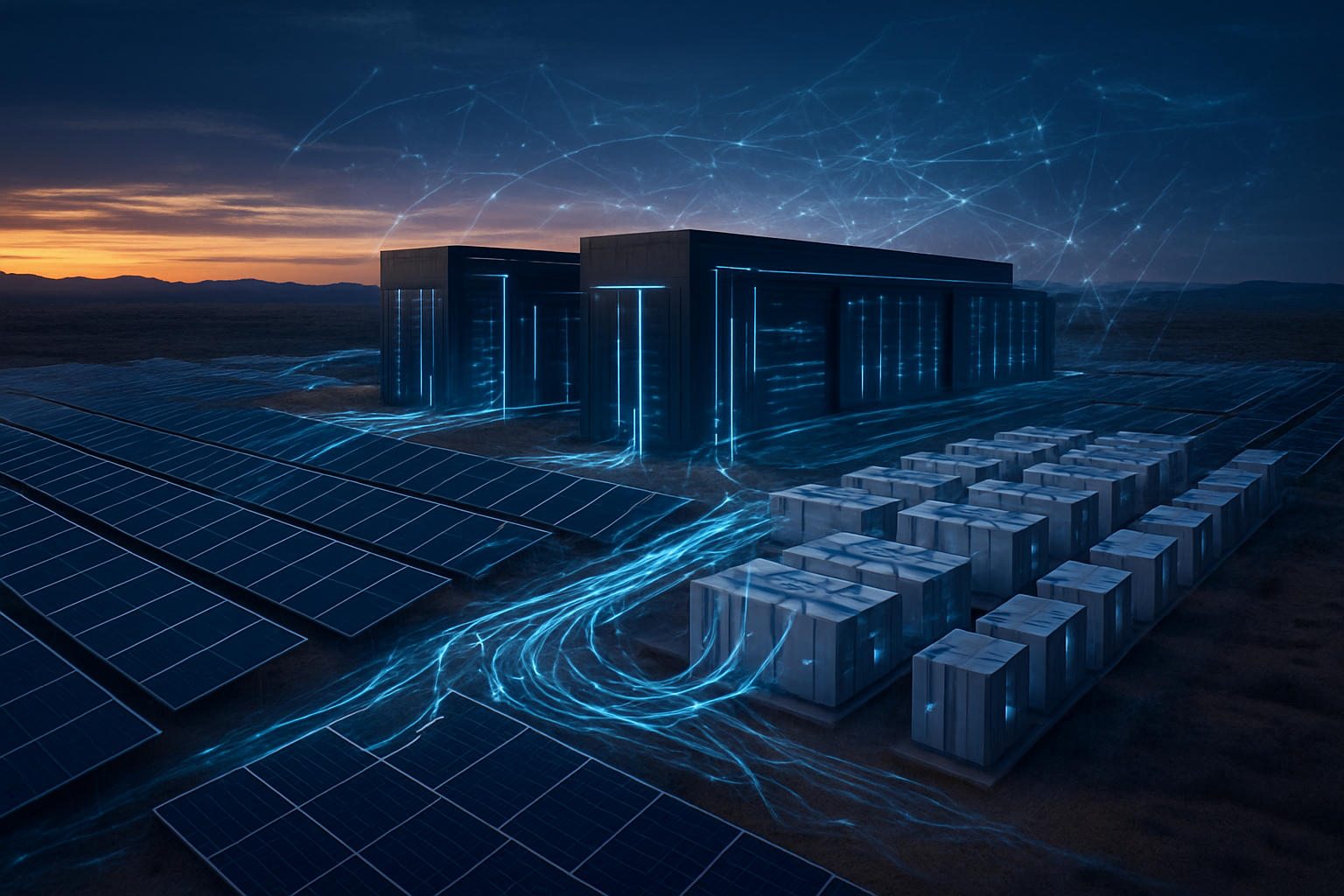
    At the heart of this acquisition is Intersect’s pioneering "co-location" model, which integrates data center facilities directly with dedicated renewable energy generation and massive battery storage. The crown jewel of the deal is a massive project currently under construction in Haskell County, Texas. This site features a 640 MW solar park paired with a 1.3 GW battery energy storage system (BESS), creating a self-sustaining ecosystem where the data center can draw power directly from the source without relying on the strained Texas ERCOT grid.

    This approach differs fundamentally from the traditional Power Purchase Agreement (PPA) model that tech companies have used for the last decade. Previously, companies would sign contracts to buy "green" energy from a distant wind farm to offset their carbon footprint, but the physical electricity still traveled through a congested public grid. By owning the generation assets and the data center on the same site, Google eliminates the "interconnection queue"—a multi-year backlog where new projects wait for permission to connect to the grid. This allows Google to build and activate AI clusters in "lockstep" with its energy supply.

    Furthermore, the acquisition provides Google with a testbed for advanced energy technologies that go beyond standard solar and wind. Intersect’s engineering team will now lead Alphabet’s efforts to integrate advanced geothermal systems, long-duration iron-air batteries, and carbon-capture-enabled natural gas into their power mix. This technical flexibility is essential for achieving "24/7 carbon-free energy," a goal that becomes exponentially harder as AI workloads demand constant, high-intensity power regardless of whether the sun is shining or the wind is blowing.

    Initial reactions from the AI research community suggest that this move is viewed as a "moat-building" exercise. Experts at the Frontier AI Institute noted that while software optimizations can reduce energy needs, the physical reality of training trillion-parameter models requires raw wattage that only a direct-ownership model can reliably provide. Industry analysts have praised the deal as a necessary evolution for a company that is transitioning from a software-first entity to a massive industrial power player.

    Competitive Implications: The New Arms Race for Electrons

    The acquisition of Intersect places Google in a direct "energy arms race" with other hyperscalers like Microsoft Corp. (NASDAQ: MSFT) and Amazon.com Inc. (NASDAQ: AMZN). While Microsoft has focused heavily on reviving nuclear power—most notably through its deal to restart the Three Mile Island reactor—Google’s strategy with Intersect emphasizes a more diversified, modular approach. By controlling the development arm, Google can rapidly deploy smaller, distributed energy-plus-compute nodes across various geographies, rather than relying on a few massive, centralized nuclear plants.

    This move potentially disrupts the traditional relationship between tech companies and utility providers. If the world’s largest companies begin building their own private microgrids, utilities may find themselves losing their most profitable customers while still being expected to maintain the infrastructure for the rest of the public. For startups and smaller AI labs, the barrier to entry just got significantly higher. Without the capital to spend billions on private energy infrastructure, smaller players may be forced to lease compute from Google or Microsoft at a premium, further consolidating power in the hands of the "Big Three" cloud providers.

    Strategically, the deal secures Google’s supply chain for the next decade. Intersect had a projected pipeline of over 10.8 gigawatts of power in development by 2028. By folding this pipeline into Alphabet, Google ensures that its competitors cannot swoop in and buy the same land or energy rights. In the high-stakes world of AI, where the first company to scale their model often wins the market, having a guaranteed power supply is now as important as having the best algorithms.

    The Broader AI Landscape and Societal Impact

    The Google-Intersect deal is a landmark moment in the transition of AI from a digital phenomenon to a physical one. It highlights a growing trend where "AI companies" are becoming indistinguishable from "infrastructure companies." This mirrors previous industrial revolutions; just as the early automotive giants had to invest in rubber plantations and steel mills to secure their future, AI leaders are now forced to become energy moguls.

    However, this development raises significant concerns regarding the environmental impact of AI. While Google remains committed to its 2030 carbon-neutral goals, the sheer scale of the energy required for AI is staggering. Critics argue that by sequestering vast amounts of renewable energy and storage capacity for private data centers, tech giants may be driving up the cost of clean energy for the general public and slowing down the broader decarbonization of the electrical grid.

    There is also the question of "energy sovereignty." As corporations begin to operate their own massive, private power plants, the boundary between public utility and private enterprise blurs. This could lead to new regulatory challenges as governments grapple with how to tax and oversee these "private utilities" that are powering the most influential technology in human history. Comparisons are already being drawn to the early 20th-century "company towns," but on a global, digital scale.

    Looking Ahead: SMRs and the Geothermal Frontier

    In the near term, expect Google to integrate Intersect’s development team into its existing partnerships with firms like Kairos Power and Fervo Energy. The goal will be to create a standardized "AI Power Template"—a blueprint for a data center that can be dropped anywhere in the world, complete with its own modular nuclear reactor or enhanced geothermal well. This would allow Google to expand into regions with poor grid infrastructure, further extending its global reach.

    The long-term vision includes the deployment of Small Modular Reactors (SMRs) alongside the solar and battery assets acquired from Intersect. Experts predict that by 2030, a significant portion of Google’s AI training will happen on "off-grid" campuses that are entirely self-sufficient. The challenge will be managing the immense heat generated by these facilities and finding ways to recycle that thermal energy, perhaps for local industrial use or municipal heating, to improve overall efficiency.

    As the transaction heads toward a mid-2026 closing, all eyes will be on how the Federal Energy Regulatory Commission (FERC) and other regulators view this level of vertical integration. If approved, it will likely trigger a wave of similar acquisitions as other tech giants seek to buy up the remaining independent power developers, forever changing the landscape of both the energy and technology sectors.

    Summary and Final Thoughts

    Google’s $4.75 billion acquisition of Intersect marks a definitive end to the era where AI was seen purely as a software challenge. It is now a race for land, water, and, most importantly, electricity. By taking direct control of its energy future, Alphabet is signaling that it views power generation as a core competency, just as vital as search algorithms or chip design.

    The significance of this development in AI history cannot be overstated. It represents the "industrialization" phase of artificial intelligence, where the physical constraints of the real world dictate the pace of digital innovation. For investors and industry watchers, the key metrics to watch in the coming months will not just be model performance or user growth, but gigawatts under management and interconnection timelines.

    As we move into 2026, the success of this acquisition will be measured by Google's ability to maintain its AI scaling trajectory without compromising its environmental commitments. The "power crunch" is real, and with the Intersect deal, Google has just placed a multi-billion dollar bet that it can engineer its way out of it.


    This content is intended for informational purposes only and represents analysis of current AI developments.

    TokenRing AI delivers enterprise-grade solutions for multi-agent AI workflow orchestration, AI-powered development tools, and seamless remote collaboration platforms.
    For more information, visit https://www.tokenring.ai/.