
Tag: Advanced Manufacturing

  • Navigating the Nanometer Frontier: TSMC’s 2nm Process and the Shifting Sands of AI Chip Development

    Navigating the Nanometer Frontier: TSMC’s 2nm Process and the Shifting Sands of AI Chip Development

    The semiconductor industry is abuzz with speculation surrounding Taiwan Semiconductor Manufacturing Company's (TSMC) (NYSE: TSM) highly anticipated 2nm (N2) process node. Whispers from within the supply chain suggest that while N2 represents a significant leap forward in manufacturing technology, its power, performance, and area (PPA) improvements might be more incremental than the dramatic generational gains seen in the past. This nuanced advancement has profound implications, particularly for major clients like Apple (NASDAQ: AAPL) and the burgeoning field of next-generation AI chip development, where every nanometer and every watt counts.

    As the industry grapples with the escalating costs of advanced silicon, the perceived moderation in N2's PPA gains could reshape strategic decisions for tech giants. While some reports suggest this might lead to less astronomical cost increases per wafer, others indicate N2 wafers will still be significantly pricier. Regardless, the transition to N2, slated for mass production in the second half of 2025 with strong demand already reported for 2026, marks a pivotal moment, introducing Gate-All-Around (GAAFET) transistors and intensifying the race among leading foundries like Samsung and Intel to dominate the sub-3nm era. The efficiency gains, even if incremental, are critical for AI data centers facing unprecedented power consumption challenges.

    The Architectural Leap: GAAFETs and Nuanced PPA Gains Define TSMC's N2

    TSMC's 2nm (N2) process node, slated for mass production in the second half of 2025 following risk production commencement in July 2024, represents a monumental architectural shift for the foundry. For the first time, TSMC is moving away from the long-standing FinFET (Fin Field-Effect Transistor) architecture, which has dominated advanced nodes for over a decade, to embrace Gate-All-Around (GAAFET) nanosheet transistors. This transition is not merely an evolutionary step but a fundamental re-engineering of the transistor structure, crucial for continued scaling and performance enhancements in the sub-3nm era.

    In FinFETs, the gate controls the current flow by wrapping around three sides of a vertical silicon fin. While a significant improvement over planar transistors, GAAFETs offer superior electrostatic control by completely encircling horizontally stacked silicon nanosheets that form the transistor channel. This full encirclement leads to several critical advantages: significantly reduced leakage current, improved current drive, and the ability to operate at lower voltages, all contributing to enhanced power efficiency—a paramount concern for modern high-performance computing (HPC) and AI workloads. Furthermore, GAA nanosheets offer design flexibility, allowing engineers to adjust channel widths to optimize for specific performance or power targets, a feature TSMC terms NanoFlex.

    Despite some initial rumors suggesting limited PPA improvements, TSMC's official projections indicate robust gains over its 3nm N3E node. N2 is expected to deliver a 10% to 15% speed improvement at the same power consumption, or a 25% to 30% reduction in power consumption at the same speed. The transistor density is projected to increase by 15% (1.15x) compared to N3E. Subsequent iterations like N2P promise even further enhancements, with an 18% speed improvement and a 36% power reduction. These gains are further bolstered by innovations like barrier-free tungsten wiring, which reduces resistance by 20% in the middle-of-line (MoL).

    The AI research community and industry experts have reacted with "unprecedented" demand for N2, particularly from the HPC and AI sectors. Over 15 major customers, with about 10 focused on AI applications, have committed to N2. This signals a clear shift where AI's insatiable computational needs are now the primary driver for cutting-edge chip technology, surpassing even smartphones. Companies like NVIDIA (NASDAQ: NVDA), AMD (NASDAQ: AMD), Apple (NASDAQ: AAPL), Qualcomm (NASDAQ: QCOM), and others are heavily invested, recognizing that N2's significant power reduction capabilities (30-40%) are vital for mitigating the escalating electricity demands of AI data centers. Initial defect density and SRAM yield rates for N2 are reportedly strong, indicating a smooth path towards volume production and reinforcing industry confidence in this pivotal node.

    The AI Imperative: N2's Influence on Next-Gen Processors and Competitive Dynamics

    The technical specifications and cost implications of TSMC's N2 process are poised to profoundly influence the product roadmaps and competitive strategies of major AI chip developers, including Apple (NASDAQ: AAPL) and Qualcomm (NASDAQ: QCOM). While the N2 node promises substantial PPA improvements—a 10-15% speed increase or 25-30% power reduction, alongside a 15% transistor density boost over N3E—these advancements come at a significant price, with N2 wafers projected to cost between $30,000 and $33,000, a potential 66% hike over N3 wafers. This financial reality is shaping how companies approach their next-generation AI silicon.

    For Apple, a perennial alpha customer for TSMC's most advanced nodes, N2 is critical for extending its leadership in on-device AI. The A20 chip, anticipated for the iPhone 18 series in 2026, and future M-series processors (like the M5) for Macs, are expected to leverage N2. These chips will power increasingly sophisticated on-device AI capabilities, from enhanced computational photography to advanced natural language processing. Apple has reportedly secured nearly half of the initial N2 production, ensuring its premium devices maintain a cutting edge. However, the high wafer costs might lead to a tiered adoption, with only Pro models initially featuring the 2nm silicon, impacting the broader market penetration of this advanced technology. Apple's deep integration with TSMC, including collaboration on future 1.4nm nodes, underscores its commitment to maintaining a leading position in silicon innovation.

    Qualcomm (NASDAQ: QCOM), a dominant force in the Android ecosystem, is taking a more diversified and aggressive approach. Rumors suggest Qualcomm intends to bypass the standard N2 node and move directly to TSMC's more advanced N2P process for its Snapdragon 8 Elite Gen 6 and Gen 7 chipsets, expected in 2026. This strategy aims to "squeeze every last bit of performance" for its on-device Generative AI capabilities, crucial for maintaining competitiveness against rivals. Simultaneously, Qualcomm is actively validating Samsung Foundry's (KRX: 005930) 2nm process (SF2) for its upcoming Snapdragon 8 Elite 2 chip. This dual-sourcing strategy mitigates reliance on a single foundry, enhances supply chain resilience, and provides leverage in negotiations, a prudent move given the increasing geopolitical and economic complexities of semiconductor manufacturing.

    Beyond these mobile giants, the impact of N2 reverberates across the entire AI landscape. High-Performance Computing (HPC) and AI sectors are the primary drivers of N2 demand, with approximately 10 of the 15 major N2 clients being HPC-oriented. Companies like NVIDIA (NASDAQ: NVDA) for its Rubin Ultra GPUs and AMD (NASDAQ: AMD) for its Instinct MI450 accelerators are poised to leverage N2 for their next-generation AI chips, demanding unparalleled computational power and efficiency. Hyperscalers such as Google (NASDAQ: GOOGL), Amazon (NASDAQ: AMZN), and OpenAI are also designing custom AI ASICs that will undoubtedly benefit from the PPA advantages of N2. The intense competition also highlights the efforts of Intel Foundry (NASDAQ: INTC), whose 18A (1.8nm-class) process, featuring RibbonFET (GAA) and PowerVia (backside power delivery), is positioned as a strong contender, aiming for mass production by late 2025 or early 2026 and potentially offering unique advantages that TSMC won't implement until its A16 node.

    Beyond the Nanometer: N2's Broader Impact on AI Supremacy and Global Dynamics

    TSMC's 2nm (N2) process technology, with its groundbreaking transition to Gate-All-Around (GAAFET) transistors and significant PPA improvements, extends far beyond mere chip specifications; it profoundly influences the global race for AI supremacy and the broader semiconductor industry's strategic landscape. The N2 node, set for mass production in late 2025, is poised to be a critical enabler for the next generation of AI, particularly for increasingly complex models like large language models (LLMs) and generative AI, demanding unprecedented computational power.

    The PPA gains offered by N2—a 10-15% performance boost at constant power or 25-30% power reduction at constant speed compared to N3E, alongside a 15% increase in transistor density—are vital for extending Moore's Law and fueling AI innovation. The adoption of GAAFETs, a fundamental architectural shift from FinFETs, provides the fundamental control necessary for transistors at this scale, and the subsequent iterations like N2P and A16, incorporating backside power delivery, will further optimize these gains. For AI, where every watt saved and every transistor added contributes directly to the speed and efficiency of training and inference, N2 is not just an upgrade; it's a necessity.

    However, this advancement comes with significant concerns. The cost of N2 wafers is projected to be TSMC's most expensive yet, potentially exceeding $30,000 per wafer—a substantial increase that will inevitably be passed on to consumers. This exponential rise in manufacturing costs, driven by immense R&D and capital expenditure for GAAFET technology and extensive Extreme Ultraviolet (EUV) lithography steps, poses a challenge for market accessibility and could lead to higher prices for next-generation products. The complexity of the N2 process also introduces new manufacturing hurdles, requiring sophisticated design and production techniques.

    Furthermore, the concentration of advanced manufacturing capabilities, predominantly in Taiwan, raises critical supply chain concerns. Geopolitical tensions pose a tangible threat to the global semiconductor supply, underscoring the strategic importance of advanced chip production for national security and economic stability. While TSMC is expanding its global footprint with new fabs in Arizona and Japan, Taiwan remains the epicenter of its most advanced operations, highlighting the need for continued diversification and resilience in the global semiconductor ecosystem.

    Crucially, N2 addresses one of the most pressing challenges facing the AI industry: energy consumption. AI data centers are becoming enormous power hogs, with global electricity use projected to more double by 2030, largely driven by AI workloads. The 25-30% power reduction offered by N2 chips is essential for mitigating this escalating energy demand, allowing for more powerful AI compute within existing power envelopes and reducing the carbon footprint of data centers. This focus on efficiency, coupled with advancements in packaging technologies like System-on-Wafer-X (SoW-X) that integrate multiple chips and optical interconnects, is vital for overcoming the "fundamental physical problem" of moving data and managing heat in the era of increasingly powerful AI.

    The Road Ahead: N2 Variants, 1.4nm, and the AI-Driven Semiconductor Horizon

    The introduction of TSMC's 2nm (N2) process node in the second half of 2025 marks not an endpoint, but a new beginning in the relentless pursuit of semiconductor advancement. This foundational GAAFET-based node is merely the first step in a meticulously planned roadmap that includes several crucial variants and successor technologies, all geared towards sustaining the explosive growth of AI and high-performance computing.

    In the near term, TSMC is poised to introduce N2P in the second half of 2026, which will integrate backside power delivery. This innovative approach separates the power delivery network from the signal network, addressing resistance challenges and promising further improvements in transistor performance and power consumption. Following closely will be the A16 process, also expected in the latter half of 2026, featuring a Superpower Rail Delivery (SPR) nanosheet for backside power delivery. A16 is projected to offer an 8-10% performance boost and a 15-20% improvement in energy efficiency over N2 nodes, showcasing the rapid iteration inherent in advanced manufacturing.

    Looking further out, TSMC's roadmap extends to N2X, a high-performance variant tailored for High-Performance Computing (HPC) applications, anticipated for mass production in 2027. N2X will prioritize maximum clock speeds and voltage tolerance, making it ideal for the most demanding AI accelerators and server processors. Beyond 2nm, the industry is already looking towards 1.4nm production around 2027, with future nodes exploring even more radical technologies such as 2D materials, Complementary FETs (CFETs) that vertically stack transistors for ultimate density, and other novel GAA devices. Deep integration with advanced packaging techniques, such as chiplet designs, will become increasingly critical to continue scaling and enhancing system-level performance.

    These advanced nodes will unlock a new generation of applications. Flagship mobile SoCs from Apple (NASDAQ: AAPL), Qualcomm (NASDAQ: QCOM), and MediaTek (TPE: 2454) will leverage N2 for extended battery life and enhanced on-device AI capabilities. CPUs and GPUs from AMD (NASDAQ: AMD), NVIDIA (NASDAQ: NVDA), and Intel (NASDAQ: INTC) will utilize N2 for unprecedented AI acceleration in data centers and cloud computing, powering everything from large language models to complex scientific simulations. The automotive industry, with its growing reliance on advanced semiconductors for autonomous driving and ADAS, will also be a significant beneficiary.

    However, the path forward is not without its challenges. The escalating cost of manufacturing remains a primary concern, with N2 wafers projected to exceed $30,000. This immense financial burden will continue to drive up the cost of high-end electronics. Achieving consistently high yields with novel architectures like GAAFETs is also paramount for cost-effective mass production. Furthermore, the relentless demand for power efficiency will necessitate continuous innovation, with backside power delivery in N2P and A16 directly addressing this by optimizing power delivery.

    Experts universally predict that AI will be the primary catalyst for explosive growth in the semiconductor industry. The AI chip market alone is projected to reach an estimated $323 billion by 2030, with the entire semiconductor industry approaching $1.3 trillion. TSMC is expected to solidify its lead in high-volume GAAFET manufacturing, setting new standards for power efficiency, particularly in mobile and AI compute. Its dominance in advanced nodes, coupled with investments in advanced packaging solutions like CoWoS, will be crucial. While competition from Intel's 18A and Samsung's SF2 will remain fierce, TSMC's strategic positioning and technological prowess are set to define the next era of AI-driven silicon innovation.

    Comprehensive Wrap-up: TSMC's N2 — A Defining Moment for AI's Future

    The rumors surrounding TSMC's 2nm (N2) process, particularly the initial whispers of limited PPA improvements and the confirmed substantial cost increases, have catalyzed a critical re-evaluation within the semiconductor industry. What emerges is a nuanced picture: N2, with its pivotal transition to Gate-All-Around (GAAFET) transistors, undeniably represents a significant technological leap, offering tangible gains in power efficiency, performance, and transistor density. These improvements, even if deemed "incremental" compared to some past generational shifts, are absolutely essential for sustaining the exponential demands of modern artificial intelligence.

    The key takeaway is that N2 is less about a single, dramatic PPA breakthrough and more about a strategic architectural shift that enables continued scaling in the face of physical limitations. The move to GAAFETs provides the fundamental control necessary for transistors at this scale, and the subsequent iterations like N2P and A16, incorporating backside power delivery, will further optimize these gains. For AI, where every watt saved and every transistor added contributes directly to the speed and efficiency of training and inference, N2 is not just an upgrade; it's a necessity.

    This development underscores the growing dominance of AI and HPC as the primary drivers of advanced semiconductor manufacturing. Companies like Apple (NASDAQ: AAPL), Qualcomm (NASDAQ: QCOM), NVIDIA (NASDAQ: NVDA), and AMD (NASDAQ: AMD) are making strategic decisions—from early capacity reservations to diversified foundry approaches—to leverage N2's capabilities for their next-generation AI chips. The escalating costs, however, present a formidable challenge, potentially impacting product pricing and market accessibility.

    As the industry moves towards 1.4nm and beyond, the focus will intensify on overcoming these cost and complexity hurdles, while simultaneously addressing the critical issue of energy consumption in AI data centers. TSMC's N2 is a defining milestone, marking the point where architectural innovation and power efficiency become paramount. Its significance in AI history will be measured not just by its raw performance, but by its ability to enable the next wave of intelligent systems while navigating the complex economic and geopolitical landscape of global chip manufacturing.

    In the coming weeks and months, industry watchers will be keenly observing the N2 production ramp, initial yield rates, and the unveiling of specific products from key customers. The competitive dynamics between TSMC, Samsung, and Intel in the sub-2nm race will intensify, shaping the strategic alliances and supply chain resilience for years to come. The future of AI, inextricably linked to these nanometer-scale advancements, hinges on the successful and widespread adoption of technologies like TSMC's N2.


    This content is intended for informational purposes only and represents analysis of current AI developments.

    TokenRing AI delivers enterprise-grade solutions for multi-agent AI workflow orchestration, AI-powered development tools, and seamless remote collaboration platforms.
    For more information, visit https://www.tokenring.ai/.

  • Forging the Future: UD-IBM Partnership Ignites Semiconductor Innovation and Workforce Development

    Forging the Future: UD-IBM Partnership Ignites Semiconductor Innovation and Workforce Development

    Dayton, Ohio – November 24, 2025 – In a strategic move poised to significantly bolster the U.S. semiconductor industry, the University of Dayton (UD) and International Business Machines Corporation (IBM) (NYSE: IBM) have announced a landmark decade-long collaboration. This partnership, revealed on November 19-20, 2025, represents a combined investment exceeding $20 million and aims to drive innovation in next-generation semiconductor technologies while simultaneously cultivating a highly skilled workforce crucial for advanced chip manufacturing.

    This academic-industrial alliance comes at a critical juncture for the semiconductor sector, which is experiencing robust growth fueled by AI and high-performance computing, alongside persistent challenges like talent shortages and geopolitical pressures. The UD-IBM initiative underscores the growing recognition that bridging the gap between academia and industry is paramount for maintaining technological leadership and securing domestic supply chains in this foundational industry.

    A Deep Dive into Next-Gen Chip Development and Talent Cultivation

    The UD-IBM collaboration is meticulously structured to tackle both research frontiers and workforce development needs. At its core, the partnership will focus on advanced semiconductor technologies and materials vital for the age of artificial intelligence. Key research areas include advanced AI hardware, sophisticated packaging solutions, and photonics – all critical components for future computing paradigms.

    A cornerstone of this initiative is the establishment of a cutting-edge semiconductor nanofabrication facility within UD's School of Engineering, slated to open in early 2027. IBM is contributing over $10 million in state-of-the-art semiconductor equipment for this facility, which UD will match with comparable resources. This "lab-to-fab" environment will offer invaluable hands-on experience for graduate and undergraduate students, complementing UD's existing Class 100 semiconductor clean room. Furthermore, the University of Dayton is launching a new co-major in semiconductor manufacturing engineering, designed to equip the next generation of engineers and technical professionals with industry-relevant skills. Research projects will be jointly guided by UD faculty and IBM technical leaders, ensuring direct industry engagement and mentorship for students. This integrated approach significantly differs from traditional academic research models by embedding industrial expertise directly into the educational and research process, thereby accelerating the transition from theoretical breakthroughs to practical applications. The initial reactions from the AI research community and industry experts have been overwhelmingly positive, viewing this as a model for addressing the complex demands of modern semiconductor innovation and talent pipelines.

    Reshaping the Semiconductor Landscape: Competitive Implications

    This strategic alliance carries significant implications for major AI companies, tech giants, and startups alike. IBM stands to directly benefit by gaining access to cutting-edge academic research, a pipeline of highly trained talent, and a dedicated facility for exploring advanced semiconductor concepts without the full burden of internal R&D costs. This partnership allows IBM to strengthen its position in critical areas like AI hardware and advanced packaging, potentially enhancing its competitive edge against rivals such as NVIDIA, Intel, and AMD in the race for next-generation computing architectures.

    For the broader semiconductor industry, such collaborations are a clear signal of the industry's commitment to innovation and domestic manufacturing, especially in light of initiatives like the U.S. CHIPS Act. Companies like Taiwan Semiconductor Manufacturing Co. (TSMC), while leading in foundry services, could see increased competition in R&D as more localized innovation hubs emerge. Startups in the AI hardware space could also benefit indirectly from the talent pool and research advancements emanating from such partnerships, fostering a more vibrant ecosystem for new ventures. The potential disruption to existing products or services lies in the accelerated development of novel materials and architectures, which could render current technologies less efficient or effective over time. This initiative strengthens the U.S.'s market positioning and strategic advantages in advanced manufacturing and AI, mitigating reliance on foreign supply chains and intellectual property.

    Broader Significance in the AI and Tech Landscape

    The UD-IBM collaboration fits seamlessly into the broader AI landscape and the prevailing trends of deep technological integration and strategic national investment. As AI continues to drive unprecedented demand for specialized computing power, the need for innovative semiconductor materials, advanced packaging, and energy-efficient designs becomes paramount. This partnership directly addresses these needs, positioning the Dayton region and the U.S. as a whole at the forefront of AI hardware development.

    The impacts extend beyond technological advancements; the initiative aims to strengthen the technology ecosystem in the Dayton, Ohio region, attract new businesses, and bolster advanced manufacturing capabilities, enhancing the region's national profile. Given the region's ties to Wright-Patterson Air Force Base, this collaboration also has significant implications for national security by ensuring a robust domestic capability in critical defense technologies. Potential concerns, however, could include the challenge of scaling academic research to industrial production volumes and ensuring equitable access to the innovations for smaller players. Nevertheless, this partnership stands as a significant milestone, comparable to previous breakthroughs that established key research hubs and talent pipelines, demonstrating a proactive approach to securing future technological leadership.

    The Horizon: Future Developments and Expert Predictions

    Looking ahead, the UD-IBM partnership is expected to yield several near-term and long-term developments. In the near term, the focus will be on the successful establishment and operationalization of the nanofabrication facility by early 2027 and the enrollment of students in the new semiconductor manufacturing engineering co-major. We can anticipate initial research outcomes in advanced packaging and AI hardware designs within the next 3-5 years, potentially leading to published papers and early-stage prototypes.

    Potential applications and use cases on the horizon include more powerful and energy-efficient AI accelerators, novel quantum computing components, and specialized chips for autonomous systems and edge AI. Challenges that need to be addressed include attracting sufficient numbers of students to meet the escalating demand for semiconductor professionals, securing continuous funding beyond the initial decade, and effectively translating complex academic research into commercially viable products at scale. Experts predict that such robust academic-industrial partnerships will become increasingly vital, fostering regional technology hubs and decentralizing semiconductor innovation, thereby strengthening national competitiveness in the face of global supply chain vulnerabilities and geopolitical tensions. The success of this model could inspire similar collaborations across other critical technology sectors.

    A Blueprint for American Semiconductor Leadership

    The UD-IBM collaboration represents a pivotal moment in the ongoing narrative of American semiconductor innovation and workforce development. The key takeaways are clear: integrated academic-industrial partnerships are indispensable for driving next-generation technology, cultivating a skilled talent pipeline, and securing national competitiveness in a strategically vital sector. By combining IBM's industrial might and technological expertise with the University of Dayton's research capabilities and educational infrastructure, this initiative sets a powerful precedent for how the U.S. can address the complex challenges of advanced manufacturing and AI.

    This development's significance in AI history cannot be overstated; it’s a tangible step towards building the foundational hardware necessary for the continued explosion of AI capabilities. The long-term impact will likely be seen in a stronger domestic semiconductor ecosystem, a more resilient supply chain, and a continuous stream of innovation driving economic growth and technological leadership. In the coming weeks and months, the industry will be watching for updates on the nanofabrication facility's progress, curriculum development for the new co-major, and the initial research projects that will define the early successes of this ambitious and crucial partnership.


    This content is intended for informational purposes only and represents analysis of current AI developments.

    TokenRing AI delivers enterprise-grade solutions for multi-agent AI workflow orchestration, AI-powered development tools, and seamless remote collaboration platforms.
    For more information, visit https://www.tokenring.ai/.

  • Fujifilm’s Aquafuze Technology Nabs RadTech Europe Innovation Award 2025: A New Era for Sustainable Industrial Printing

    Fujifilm’s Aquafuze Technology Nabs RadTech Europe Innovation Award 2025: A New Era for Sustainable Industrial Printing

    Fujifilm's groundbreaking Aquafuze Technology has been honored with the prestigious RadTech Europe Innovation Award 2025, marking a pivotal moment for the wide-format inkjet printing industry. This recognition celebrates a decade of intensive research and development, culminating in an ink chemistry that promises to redefine efficiency, sustainability, and versatility in industrial print applications. The award underscores a significant leap forward, addressing long-standing compromises between print quality, durability, and environmental responsibility, setting a new benchmark for advanced manufacturing processes.

    The immediate significance of Aquafuze lies in its ability to bridge the performance gap between traditional water-based and UV-curable inks. By combining the best attributes of both, Fujifilm (TYO: 4901) has delivered a solution that not only enhances operational workflows but also dramatically reduces environmental impact. This innovation is poised to reshape how print service providers approach production, offering a compelling blend of speed, quality, and eco-friendliness that has previously been unattainable.

    The Chemistry of Innovation: Unpacking Aquafuze Technology

    Aquafuze Technology is a proprietary water-based UV LED curing inkjet ink that stands out due to its unique chemical composition. At its core is a meticulously engineered UV-curable emulsion, stabilized within an aqueous system through a custom dispersant. This sophisticated arrangement successfully isolates UV-reactive materials from water until the precise moment of UV curing, overcoming a fundamental incompatibility that has historically plagued ink developers. This breakthrough in materials science allows for the creation of UV-curable aqueous inks that deliver superior performance across a diverse range of substrates, including various PVC types, polyester, backlit films, and materials for interior décor.

    What truly differentiates Aquafuze from previous approaches is its radical hybrid performance. It delivers the instant curing, robust durability, and scratch resistance characteristic of UV inks, while simultaneously offering the flexibility, low odor, and environmental benefits of water-based inks. Unlike traditional solvent inks that demand lengthy outgassing times or latex inks requiring high curing temperatures that can distort media and inflate energy costs, Aquafuze cures instantly at a low temperature of 40-45°C using energy-efficient LED UV lamps. This eliminates bottlenecks, reduces energy consumption, and broadens the range of compatible heat-sensitive substrates. Furthermore, the ink's built-in adhesion properties and high durability negate the need for primers, optimizers, or topcoats, simplifying workflows and reducing material consumption. The print quality is also enhanced by a photopolymer dispersion that minimizes printhead nozzle clogging, ensuring stable ink ejection and consistent, repeatable results with a thin, durable, and glossy film. The technology's recognition with the RadTech Europe Innovation Award 2025, alongside an EDP Award 2025 for "Best Water-Based Inks," highlights the industry's immediate and positive reaction to this radical new approach.

    Reshaping the Landscape for Tech Giants and Startups

    While Aquafuze Technology isn't an AI product in itself, its implications for advanced manufacturing, automation, and smart factory integration are profound, impacting a wide array of companies. Fujifilm, as the innovator, stands to significantly benefit from this award, solidifying its position as a leader in industrial inkjet solutions. The technology's initial launch alongside the Acuity Triton, a 1.6-meter roll-fed printer developed in partnership with Mutoh (TYO: 7999), also positions Mutoh favorably, as they gain a competitive edge by offering cutting-edge, sustainable printing solutions. Print service providers globally, from large enterprises to agile startups, will find immediate advantages in adopting Aquafuze, enabling them to offer faster turnaround times, higher quality, and more environmentally friendly services.

    The competitive implications for major ink and printer manufacturers are substantial. Aquafuze sets a new standard for performance and sustainability, putting pressure on competitors to innovate or risk losing market share. Companies relying on older solvent or latex ink technologies may see their products disrupted as customers increasingly demand more efficient and eco-conscious alternatives. This development could spur a wave of R&D in hybrid ink chemistry across the industry, fostering a new era of innovation. For startups in the print technology space, Aquafuze opens doors for developing new finishing solutions, automated workflows, and software integrations that can further leverage the ink's rapid curing and versatility. The market positioning for Fujifilm is strengthened not just by a superior product, but by an award that validates its long-term commitment to sustainable innovation in a demanding industrial sector.

    Wider Significance: A Nod to Sustainable Manufacturing and Future AI Integration

    Fujifilm's Aquafuze Technology fits squarely into the broader AI and advanced manufacturing landscape, aligning perfectly with the global push for sustainability, efficiency, and automation. The development of such a complex, high-performance material through "proprietary synthesis technology for highly functional materials and particle dispersion technology" is a hallmark of advanced materials science—a field increasingly benefiting from AI-driven research and simulation. While the ink itself isn't AI, its ability to streamline production processes, eliminate manual steps like waiting for outgassing, and operate with low energy consumption makes it an ideal component for future smart factories where AI will orchestrate entire production lines.

    The impacts are multi-faceted: environmentally, the low VOC content (<15%), GHS hazard-free labeling, and Greenguard Gold certification significantly reduce the ecological footprint of industrial printing. Operationally, the immediate readiness for finishing after curing drastically cuts down production times, allowing for greater throughput and agility. Economically, reduced energy consumption and the elimination of primers translate into tangible cost savings. This milestone in sustainable industrial printing can be compared to other breakthroughs that have optimized manufacturing processes through material innovation, paving the way for more automated and intelligent production systems. The potential for AI to further optimize print settings, predict maintenance needs, and manage inventory in a facility leveraging Aquafuze inks is immense, making this a foundational technology for future AI-powered print operations.

    The Horizon: From Hybrid Inks to Intelligent Print Factories

    Looking ahead, the near-term developments will likely see the wider adoption of Aquafuze Technology across the industrial print sector, with Fujifilm integrating it into more of its own printer models and potentially licensing it for broader use. Print service providers will begin to showcase the tangible benefits in terms of project turnaround and sustainability credentials, driving market demand. In the long term, we can expect further advancements in hybrid ink chemistry, potentially leading to even more specialized formulations for niche applications. The efficiency gains facilitated by Aquafuze also lay the groundwork for increasingly automated and intelligent print factories.

    Potential applications and use cases on the horizon include enhanced capabilities for personalized printing, on-demand manufacturing of diverse products, and the expansion into new markets requiring high durability and environmental compliance. Challenges that need to be addressed include scaling production to meet global demand, educating the market on the benefits of this new ink category, and potentially integrating Aquafuze with existing legacy systems. Experts predict that this technology will accelerate the shift towards fully automated, AI-driven print workflows where materials, machines, and software work in perfect synergy to achieve unprecedented levels of precision, efficiency, and sustainability. The focus will increasingly be on holistic solutions that integrate advanced materials like Aquafuze with intelligent process control.

    A Game-Changer for Industrial Printing and Advanced Manufacturing

    Fujifilm's Aquafuze Technology, recognized by the RadTech Europe Innovation Award 2025, represents a significant inflection point for industrial printing and, by extension, advanced manufacturing. The key takeaways are clear: a revolutionary ink chemistry that delivers the best of both water-based and UV-curable systems, unprecedented operational efficiency through instant, low-temperature curing, and a profound commitment to environmental sustainability. This development is not just about a new ink; it's about enabling a more agile, cost-effective, and eco-conscious future for industrial production.

    While not a direct AI breakthrough, its significance in AI history lies in its enabling role for future AI-powered smart factories. By removing critical bottlenecks and streamlining processes, Aquafuze makes the entire print workflow more amenable to automation and AI orchestration. It sets a new standard for how advanced materials can drive efficiency and sustainability, which are core tenets of the ongoing fourth industrial revolution. In the coming weeks and months, the industry will be watching closely for market adoption rates, the emergence of new applications, and how competitors respond to this game-changing innovation. Fujifilm's Aquafuze Technology is poised to be a foundational element in the evolution towards more intelligent and sustainable industrial production.


    This content is intended for informational purposes only and represents analysis of current AI developments.

    TokenRing AI delivers enterprise-grade solutions for multi-agent AI workflow orchestration, AI-powered development tools, and seamless remote collaboration platforms.
    For more information, visit https://www.tokenring.ai/.

  • Bullen Ultrasonics Crowned Innovator of the Year for MicroLucent™: Revolutionizing Precision for the AI Age

    Bullen Ultrasonics Crowned Innovator of the Year for MicroLucent™: Revolutionizing Precision for the AI Age

    DAYTON, OH – November 20, 2025 – In a significant development for advanced manufacturing, Bullen Ultrasonics, a leader in ultrasonic machining, has been honored with the prestigious 2025 Innovator of the Year award by the Dayton Business Journal. The recognition, announced on November 18, 2025, celebrates Bullen's groundbreaking MicroLucent™ technology, an ultrafine laser machining platform poised to revolutionize the precision fabrication of transparent and delicate materials. This breakthrough, coupled with Bullen's aggressive embrace of Industry 4.0 principles and in-house automation, marks a pivotal moment, enabling the creation of next-generation components crucial for the relentless advancement of artificial intelligence and high-tech industries worldwide.

    MicroLucent™ stands out for its ability to achieve micron-level precision without the damaging heat-affected zones (HAZ) typically associated with traditional laser machining or electrical discharge machining (EDM). This non-thermal process preserves the structural integrity and optical quality of materials like quartz, specialty glasses, and sapphire, opening new frontiers for component design and manufacturing. As the demand for sophisticated hardware to power AI continues to surge, technologies like MicroLucent™ become indispensable, laying the foundational physical infrastructure for increasingly complex and powerful AI systems.

    Unpacking the MicroLucent™ Advantage: Precision Beyond Compare

    Bullen Ultrasonics' MicroLucent™ technology represents a significant leap forward in precision manufacturing, offering a proprietary ultrafine laser machining platform specifically engineered for the most challenging materials. This innovative system can precisely machine a diverse array of features, including intricate round, rectangular, and irregular-shaped holes, slots, and cavities. Furthermore, it excels at enabling blind cuts, complex internal geometries, and precision machining of both outside and inside diameters on transparent substrates.

    What sets MicroLucent™ apart from previous approaches is its unique non-thermal processing method. Unlike conventional laser machining, which often introduces thermal stress and micro-cracks, or EDM, which is limited by material conductivity and can leave recast layers, MicroLucent™ operates without generating heat-affected zones. This preserves the intrinsic material properties, preventing changes in refractive index, stress points, or structural degradation. The result is superior material integrity, near-zero depth of damage, and components that meet the most stringent performance requirements for optical clarity and mechanical strength. This level of precision and material preservation is critical for the delicate components found in advanced AI hardware, where even microscopic imperfections can impact performance.

    Initial reactions from the AI research community and industry experts, though not explicitly detailed, can be inferred from the award itself and the technology's capabilities. The ability to produce high-quality, ultra-precise components from traditionally difficult materials at high throughput and without significant non-recurring engineering costs suggests a strong positive reception, particularly in sectors where material integrity and miniaturization are paramount for AI applications.

    Strategic Implications for the AI Ecosystem

    The advent of MicroLucent™ technology carries profound implications for AI companies, tech giants, and burgeoning startups across the globe. Companies heavily invested in the development of cutting-edge AI hardware stand to benefit immensely. This includes manufacturers of advanced semiconductors (e.g., for quartz semiconductor gas distribution plates), developers of sophisticated optical sensors for autonomous vehicles and robotics, creators of high-precision medical devices with integrated AI capabilities, and innovators in the defense and aerospace sectors requiring robust, transparent components for AI-driven systems.

    The competitive landscape for major AI labs and tech companies will undoubtedly be influenced. Those who can quickly adopt and integrate MicroLucent™-enabled components into their product lines will gain a significant strategic advantage. This technology could accelerate the development of more powerful, compact, and reliable AI processors, specialized neural network accelerators, and highly sensitive sensor arrays. For instance, enhanced precision in optical components could lead to breakthroughs in AI vision systems, while superior machining of transparent substrates could enable next-generation display technologies or more efficient cooling solutions for AI data centers.

    Potential disruption to existing products or services is also on the horizon. Traditional precision machining providers that cannot match MicroLucent™'s capabilities in terms of material compatibility, precision, and freedom from HAZ may find their offerings less competitive for high-end applications. Bullen Ultrasonics (BULLEN ULTRASONICS, Private) itself is strategically positioned as a critical enabler for the next wave of AI hardware innovation, offering a foundational technology that underlies the physical evolution of artificial intelligence.

    MicroLucent™ in the Broader AI Landscape: A Foundational Enabler

    MicroLucent™ technology, while not an AI system itself, is a quintessential example of how advancements in manufacturing and materials science are intrinsically linked to the progress of artificial intelligence. It fits squarely into the broader AI landscape by serving as a foundational enabler, allowing for the physical realization of increasingly complex and demanding AI hardware. The precision and material integrity offered by MicroLucent™ are critical for developing the next generation of AI processors, high-fidelity sensors, advanced optics for machine vision, and specialized substrates for emerging computing paradigms like quantum and neuromorphic computing.

    The impacts are far-reaching: it facilitates miniaturization, improves component reliability, and accelerates development cycles for AI-driven products. By enabling the creation of components that were previously difficult or impossible to manufacture with such precision, MicroLucent™ removes a significant bottleneck in hardware innovation. Potential concerns are minimal from an AI ethics standpoint, as the technology is a manufacturing process. However, the specialized nature of the equipment and the expertise required to leverage it might create a demand for new skill sets in the advanced manufacturing workforce.

    Comparing this to previous AI milestones, MicroLucent™ is akin to the advancements in photolithography that enabled the semiconductor revolution, which in turn provided the computational backbone for modern AI. Just as better chip manufacturing led to more powerful processors, MicroLucent™ is poised to enable more sophisticated and robust physical components that will empower future AI systems. It represents a critical step in bridging the gap between theoretical AI breakthroughs and their practical, high-performance implementations.

    The Horizon: Intelligent Manufacturing and Future AI Applications

    Looking ahead, the trajectory of MicroLucent™ technology is deeply intertwined with the ongoing evolution of artificial intelligence and advanced automation. Bullen Ultrasonics has already demonstrated its commitment to Industry 4.0 principles, integrating fully automated robotic machining cells designed in-house. This paves the way for the direct integration of AI into the manufacturing process itself.

    Expected near-term developments include the deployment of AI for predictive maintenance, allowing MicroLucent™ systems to analyze machine data and anticipate potential failures before they occur, thereby maximizing uptime and efficiency. Long-term, Bullen envisions adaptive machining, where AI algorithms make real-time adjustments to cutting paths, speeds, and tooling based on live feedback, optimizing precision and throughput autonomously. AI-driven process optimization will further enhance machine efficiency, schedule optimization, and overall production processes.

    The potential applications and use cases on the horizon are vast. We can expect to see MicroLucent™ facilitating the creation of even more complex micro-structures for advanced photonics, which are critical for optical AI and high-speed data transfer. It will enable next-generation medical implants with seamlessly integrated, highly precise sensors for continuous health monitoring, and contribute to the development of high-performance transparent displays for augmented reality and AI interfaces. Furthermore, more robust and lightweight components for aerospace and defense, including those for space-based AI systems, will become feasible.

    Challenges that need to be addressed include the continued development of sophisticated AI algorithms tailored for manufacturing environments, ensuring seamless integration with existing factory ecosystems, and fostering a workforce capable of operating and maintaining these increasingly intelligent systems. Experts predict a continued convergence of advanced manufacturing techniques with AI and automation, leading to unprecedented levels of precision, efficiency, and material utilization, ultimately accelerating the pace of AI innovation across all sectors.

    A New Era of Precision Enabling AI's Ascent

    Bullen Ultrasonics' recognition as the 2025 Innovator of the Year for its MicroLucent™ technology represents a monumental achievement, signaling a new era in precision manufacturing. The key takeaway is clear: MicroLucent™ is not just an incremental improvement but a breakthrough, enabling the creation of critical, high-precision components from delicate materials with unmatched integrity and efficiency. This foundational technology is poised to significantly accelerate hardware innovation for artificial intelligence, underpinning the development of more powerful, compact, and reliable AI systems.

    In the grand tapestry of AI history, MicroLucent™ will be remembered as a pivotal enabling technology. It stands alongside other critical advancements in materials science and manufacturing that have historically paved the way for technological revolutions. By removing previous manufacturing bottlenecks, it empowers AI researchers and developers to push the boundaries of what's possible, from advanced sensors and optics to next-generation processors and beyond.

    The long-term impact of MicroLucent™ will be felt across virtually every industry touched by AI, fostering greater innovation, driving down costs through improved yields, and enabling the creation of products previously confined to the realm of science fiction. As we move forward, what to watch for in the coming weeks and months includes further announcements from Bullen Ultrasonics regarding the integration of AI into their manufacturing processes, and the increasing adoption of MicroLucent™-enabled components in the next wave of AI products and solutions. This is a testament to how breakthroughs in one field can profoundly impact and accelerate progress in another, particularly in the interconnected world of advanced technology and artificial intelligence.


    This content is intended for informational purposes only and represents analysis of current AI developments.

    TokenRing AI delivers enterprise-grade solutions for multi-agent AI workflow orchestration, AI-powered development tools, and seamless remote collaboration platforms.
    For more information, visit https://www.tokenring.ai/.

  • Aguascalientes Forges Deep Tech Ties with India, Eyeing North American AI and Advanced Manufacturing Hub

    Aguascalientes Forges Deep Tech Ties with India, Eyeing North American AI and Advanced Manufacturing Hub

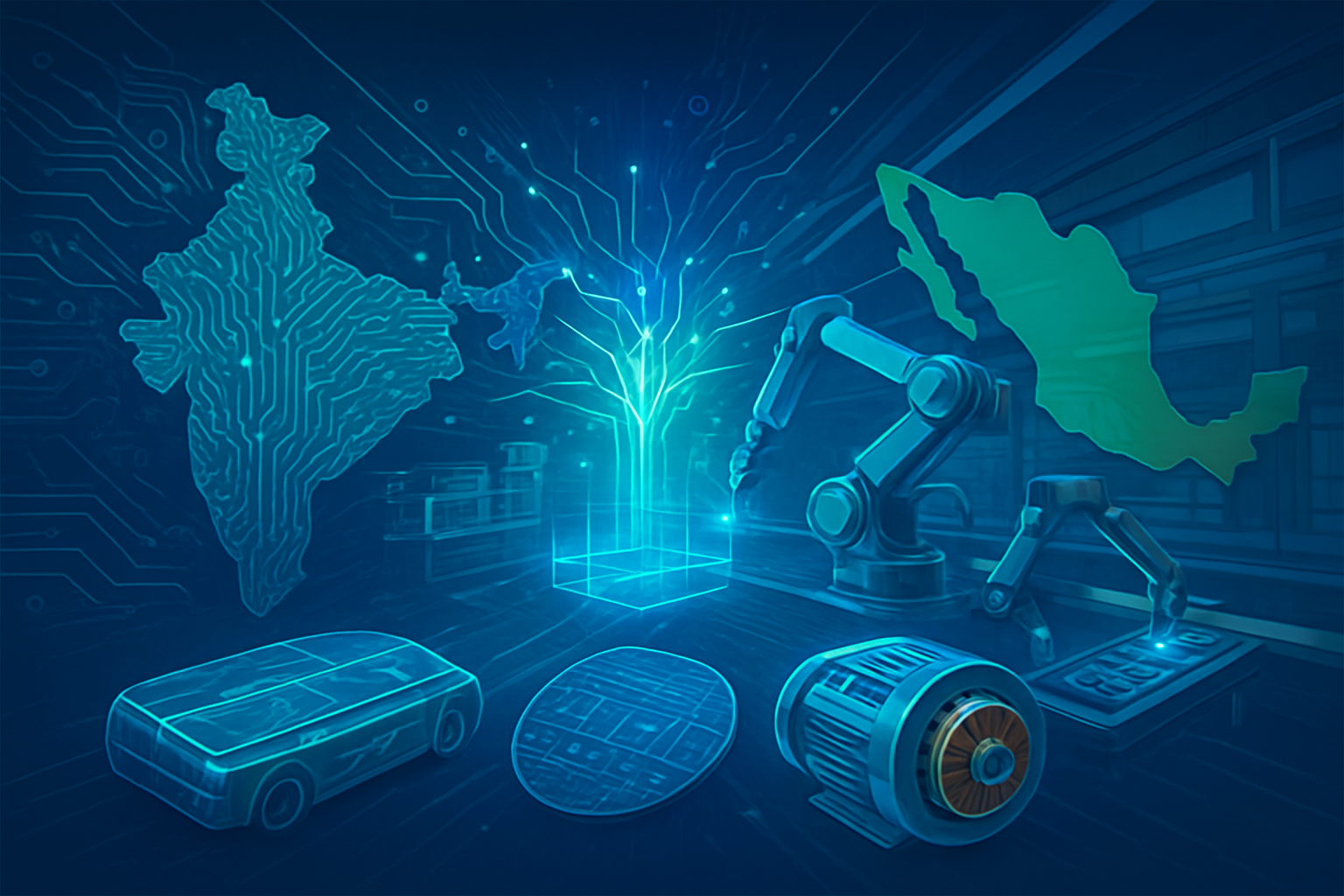
    Aguascalientes, a strategically positioned state in Mexico, is rapidly becoming a pivotal nexus for technology transfer and investment from India, signaling a burgeoning era of cross-border collaboration in advanced manufacturing and emerging technologies. This proactive engagement, driven by a global nearshoring trend and mutual economic interests, aims to integrate Indian technological prowess into North American value chains, particularly in sectors critical to the future of industry and artificial intelligence. The deepening ties signify a concerted effort to foster innovation, create high-value jobs, and establish Aguascalientes as a leading hub for sophisticated technological development and production.

    The collaboration extends beyond traditional trade, focusing on the intricate transfer of technological know-how, joint development projects, and significant foreign direct investment. This strategic alliance is poised to redefine the industrial landscape of Aguascalientes, diversifying its economic base and bolstering its capacity for cutting-edge research and development. For India, it offers a crucial gateway to the North American market, leveraging Mexico's geographical advantage and established manufacturing infrastructure.

    A New Frontier of Technical Collaboration and Investment

    The past year has seen an aggressive push to solidify these ties, marked by high-level diplomatic missions and substantial investment announcements. In November 2025, Aguascalientes Governor Tere Jiménez led a business mission to India, engaging with automotive, agricultural, and industrial giants like RANE, LUCAS TVS, TAFE, and Simpson. The mission underscored the state's ambition to become a critical link in North American supply chains.

    Concrete investments are already materializing, showcasing the tangible outcomes of this collaboration. In September 2025, Indian tractor manufacturer Tractors and Farm Equipment Limited (TAFE) inaugurated a new assembly plant in Aguascalientes, backed by an investment of MX$280 million (approximately US$15.5 million). This facility is set to produce electric tractors, aligning with Mexico's sustainable mobility goals and creating 250 jobs. Prior to this, in March 2024, Brakes India, a major producer of braking systems and iron components, announced a US$70 million investment for a new smelting plant, expected to generate 700 jobs and marking its first foray into Mexico. Earlier, in October 2018, Indian multinational Tech Mahindra (NSE: TECHM) expanded its footprint in Aguascalientes with a US$5 million investment in a second facility, providing technology services across diverse industries and aiming to create around 300 jobs. These investments signify a clear shift towards advanced manufacturing processes, electric vehicle component production, and sophisticated IT service delivery, differentiating them from traditional, lower-tech manufacturing by embedding higher levels of automation, precision, and digital integration. Initial reactions from the local industrial community and tech experts have been overwhelmingly positive, citing the potential for skill upgrading and technological leapfrogging.

    Beyond direct investments, broader bilateral agreements are creating a fertile ground for deeper tech collaboration. A significant technology collaboration agreement was signed between Mexico and India in March 2023, committing US$500,000 each to an accelerator fund for binational development and innovation projects. These projects span critical areas such as water management, low-cost vaccine production, lithium extraction, aerospace, and biotechnology. Furthermore, high-level discussions between Prime Minister Narendra Modi and Mexico's President Claudia Sheinbaum in late 2023/early 2024 have explored cooperation in cutting-edge fields like semiconductors, Artificial Intelligence (AI), Quantum computing, and critical minerals, leveraging Mexico's nearshoring potential to strengthen manufacturing and pharmaceutical supply chains. This comprehensive approach ensures that the collaboration addresses both immediate industrial needs and long-term strategic technological advancements.

    Competitive Implications for the AI and Tech Landscape

    The burgeoning partnership between Aguascalientes and India holds significant competitive implications for AI companies, tech giants, and startups across both regions and North America. Companies like TAFE and Brakes India are gaining a strategic foothold in the North American market, enabling them to bypass some supply chain complexities and tariff issues by producing closer to their end consumers. This "nearshoring" strategy offers a competitive edge, reducing lead times and increasing responsiveness to market demands for automotive components and agricultural machinery.

    For global tech giants and AI labs, Aguascalientes' proactive stance, coupled with Indian tech investments, enhances its appeal as a potential R&D and manufacturing hub. The state's focus on attracting investment in semiconductors, AI, and Quantum technologies positions it to become a key player in these high-growth sectors. This could lead to increased competition for talent and resources in the region, but also foster a more dynamic and innovative ecosystem. Startups in Aguascalientes, particularly those in advanced manufacturing, IT, and green technologies, stand to benefit from the influx of foreign capital, technological expertise, and potential partnerships with established Indian firms. The presence of companies like Tech Mahindra (NSE: TECHM) also provides opportunities for local talent development and exposure to global best practices in IT services and digital transformation.

    The potential disruption to existing products and services lies in the introduction of more technologically advanced and cost-efficient solutions. For instance, TAFE's electric tractor production could accelerate the adoption of sustainable agricultural practices, challenging traditional fossil fuel-dependent machinery. Similarly, enhanced manufacturing capabilities, driven by Indian investment, could lead to more competitive pricing and higher quality components for the North American automotive industry. Aguascalientes' strategic advantage is its commitment to developing a skilled workforce, particularly in STEM fields, and creating a favorable business environment. This market positioning could draw further investment away from other regions, intensifying competition among states and countries vying for foreign direct investment in advanced technology sectors.

    Wider Significance in the Global AI Landscape

    This cross-border collaboration between Aguascalientes and India fits squarely into broader global AI and technology trends, particularly the increasing emphasis on diversified supply chains, regional manufacturing hubs, and the strategic importance of emerging technologies. The nearshoring phenomenon, accelerated by geopolitical shifts and recent supply chain disruptions, is a major driver, with Mexico offering a stable and geographically advantageous alternative for companies aiming to serve the North American market. This partnership exemplifies a growing trend where developing economies are not just recipients of technology but active participants in its transfer and co-creation.

    The impacts are multi-faceted. Economically, these investments are injecting significant capital into Aguascalientes, creating high-value jobs, and diversifying its industrial base beyond traditional sectors. Technologically, the transfer of expertise in areas like electric vehicle manufacturing, advanced IT services, and potentially semiconductors and AI, elevates the state's technological capabilities. Socially, the focus on academic cooperation and workforce development is crucial for human capital development, ensuring a skilled labor force capable of sustaining and advancing these technological initiatives.

    Potential concerns might include the equitable distribution of benefits, ensuring that local small and medium-sized enterprises (SMEs) are integrated into these new supply chains, and managing the environmental impact of increased industrial activity. However, the explicit focus on sustainable technologies like electric tractors suggests a proactive approach to environmental considerations. This collaboration can be compared to previous AI milestones and breakthroughs where international partnerships were crucial for accelerating development and adoption. For instance, the global collaboration in semiconductor manufacturing or aerospace technology has historically demonstrated the power of shared resources and expertise. The current initiative in Aguascalientes, particularly its focus on AI-related manufacturing and digital services, positions it as a key player in the next wave of industrial transformation driven by intelligent automation and data.

    Exploring Future Developments and Horizons

    The trajectory of the Aguascalientes-India tech collaboration points towards several exciting near-term and long-term developments. In the near term, we can expect continued growth in foreign direct investment from India, particularly in the automotive components sector, as more companies seek to establish a North American presence. The focus on electric vehicle components and advanced manufacturing will likely intensify, further cementing Aguascalientes' role in the sustainable mobility ecosystem. The academic partnerships, including student exchanges and technology-focused education, are expected to bear fruit, producing a highly skilled workforce tailored to the demands of Industry 4.0 and AI-driven industries.

    Looking further ahead, the explicit mention of cooperation in semiconductors, AI, and Quantum technologies in national-level agreements suggests a strategic pivot towards high-tech R&D and manufacturing. Aguascalientes is actively positioning itself as a leader in semiconductor supply chains, which could lead to significant investments in chip design, fabrication, or packaging facilities. Potential applications and use cases on the horizon include the development of AI-powered manufacturing processes, smart city solutions, and advanced agricultural technologies leveraging IoT and machine learning. The region could become a testing ground for integrated AI solutions in industrial settings, from predictive maintenance in factories to optimized logistics and supply chain management.

    However, challenges remain. Ensuring a continuous supply of highly specialized talent, developing robust digital infrastructure to support advanced AI applications, and navigating complex international intellectual property frameworks will be critical. Experts predict that the success of this collaboration will depend on sustained political will, continued investment in education and infrastructure, and the ability to foster a truly innovative ecosystem that encourages both foreign and domestic tech companies. The next steps will likely involve more detailed feasibility studies for high-tech ventures and the establishment of dedicated innovation centers.

    A Comprehensive Wrap-Up of a Strategic Alliance

    The strategic alliance between Aguascalientes and India represents a significant chapter in the ongoing narrative of global technological integration and economic diversification. Key takeaways include the successful leveraging of the nearshoring trend, the substantial influx of Indian investment into advanced manufacturing and IT services, and the proactive development of human capital through academic partnerships. This collaboration is not merely about attracting capital but about fostering a deeper exchange of technology and expertise, positioning Aguascalientes as a dynamic hub within the North American supply chain for critical and emerging technologies.

    This development's significance in AI history lies in its demonstration of how regional governments can strategically position themselves to attract and integrate advanced technological capabilities from international partners. It underscores the global nature of AI development and deployment, moving beyond traditional tech hubs to new geographical centers of innovation. The focus on AI, semiconductors, and Quantum computing, though still nascent in its direct investment, lays the groundwork for Aguascalientes to play a crucial role in the future of intelligent systems and advanced manufacturing.

    In the long term, this partnership has the potential to transform Aguascalientes into a robust ecosystem for technological innovation, attracting further investment and talent, and serving as a model for other regions seeking to capitalize on global shifts in manufacturing and technology. What to watch for in the coming weeks and months includes further announcements of investment, particularly in the high-tech sectors identified, and the concrete implementation of academic exchange programs aimed at developing the next generation of AI and tech professionals. The sustained momentum of these initiatives will be critical in realizing the full potential of this strategic cross-border collaboration.


    This content is intended for informational purposes only and represents analysis of current AI developments.

    TokenRing AI delivers enterprise-grade solutions for multi-agent AI workflow orchestration, AI-powered development tools, and seamless remote collaboration platforms.
    For more information, visit https://www.tokenring.ai/.
  • Air Shower Market Soars: A Clear Indication of Accelerating Semiconductor Manufacturing Expansion

    Air Shower Market Soars: A Clear Indication of Accelerating Semiconductor Manufacturing Expansion

    The global cleanroom technology market, particularly the critical segment of air showers, is experiencing a robust surge, signaling an unprecedented expansion in global semiconductor manufacturing capabilities. Valued at approximately USD 7.69 billion in 2024 and projected to reach USD 10.82 billion by 2030, the broader cleanroom market is growing at a significant CAGR of 5.9%. More specifically, the semiconductor cleanroom market is set to expand even faster, from USD 8.08 billion in 2025 to USD 11.88 billion by 2030, at an impressive CAGR of 8.0%. This escalating demand underscores the industry's relentless pursuit of ultra-clean environments, indispensable for producing the next generation of advanced microchips.

    Air showers, serving as the frontline defense against particulate contamination, are a cornerstone of this growth. With the global air shower market, estimated at USD 5.50 billion in 2023, expected to reach USD 7.30 billion by 2029, their indispensable role in maintaining the pristine conditions required for modern chip fabrication is undeniable. This vigorous expansion is directly tied to the explosive global demand for advanced semiconductors powering AI, IoT, 5G, electric vehicles, and high-performance computing, all of which necessitate increasingly complex and miniaturized chips produced in environments where even microscopic particles can cause catastrophic defects.

    The Unseen Guardians: How Air Showers Enable Precision Manufacturing

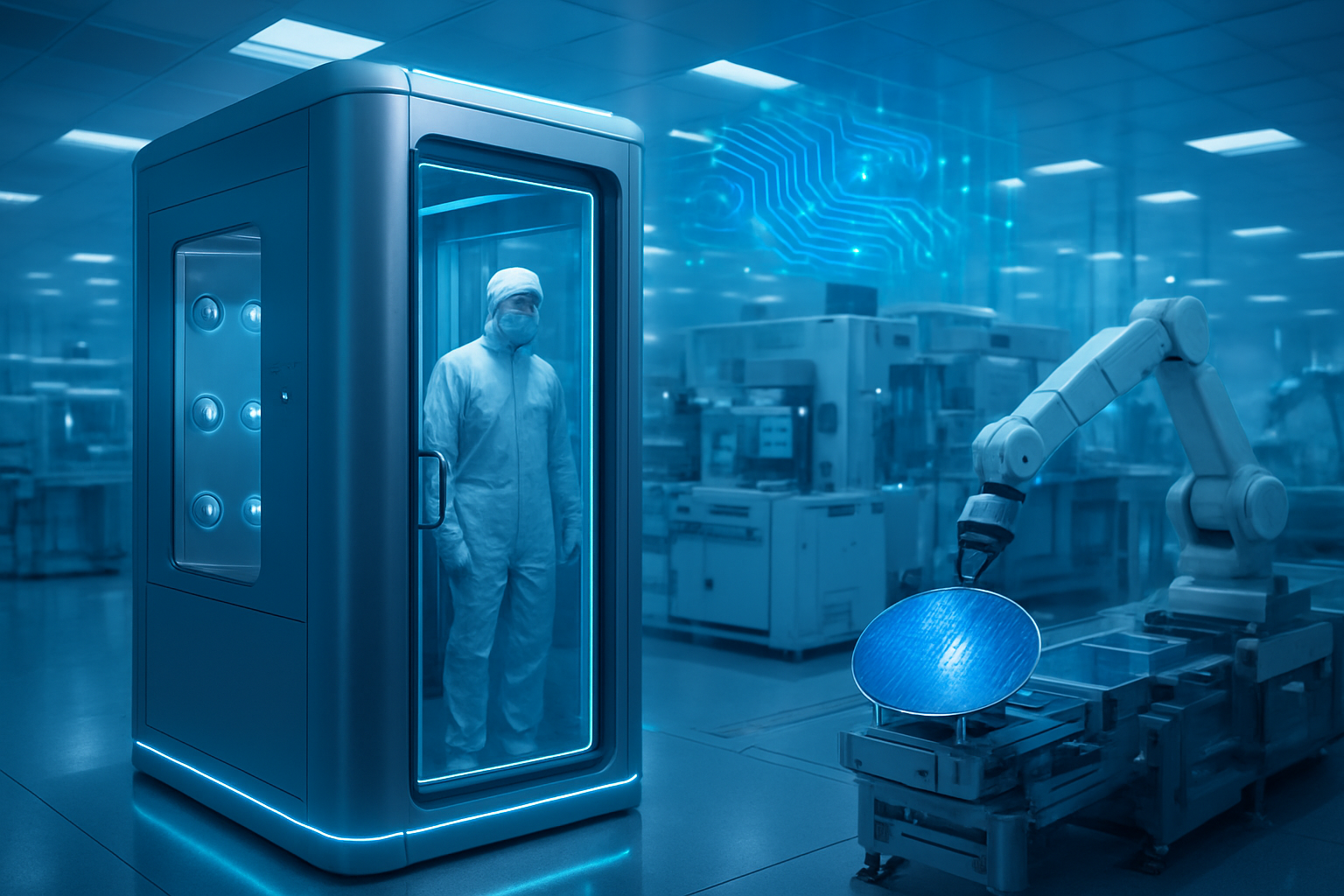
    At the heart of advanced semiconductor manufacturing lies the meticulous control of environmental contamination. Air showers are purpose-built transition chambers positioned at the entry points of cleanrooms, acting as a crucial barrier between less clean areas and the ultra-sensitive fabrication zones. Their function is deceptively simple yet profoundly effective: to forcefully remove particulate matter from personnel and materials before they enter critical processing areas. This is achieved through high-velocity jets of HEPA (High-Efficiency Particulate Air) or ULPA (Ultra-Low Penetration Air) filtered air, which effectively dislodge dust, skin flakes, and other mobile contaminants from cleanroom garments.

    These systems are vital for achieving and maintaining the stringent ISO cleanroom classifications (ee.g., ISO Class 1-5) mandated for advanced semiconductor processes such as photolithography, where even a single 0.3-micron particle can render a microchip unusable. Unlike passive contamination control methods, air showers actively decontaminate, significantly reducing the human-borne particulate load. Modern air showers often integrate smart controls, energy-saving features, and advanced filtration, representing a continuous evolution from simpler designs to highly sophisticated, automated systems that align with Industry 4.0 principles in semiconductor fabs, enhancing operational efficiency and minimizing human interaction.

    The semiconductor industry's consensus is clear: air showers are not merely supplementary equipment but a fundamental requirement for achieving high wafer yields and ensuring device reliability. Their efficacy directly translates into reduced product defects and significant cost savings, as contamination-related yield losses can be staggeringly expensive, with production downtime potentially exceeding $500,000 per hour. This makes the investment in advanced air shower technology a critical component of profit protection and quality assurance for chip manufacturers worldwide.

    A Tailwind for Cleanroom Innovators and Chipmakers Alike

    The accelerating growth in cleanroom technology and air showers presents a significant boon for a specialized cohort of companies. Manufacturers of cleanroom equipment and integrated solutions, such as Cleanroom Technology Holdings Ltd. (HKG: 02337) and Terra Universal, Inc. (Privately held), stand to benefit immensely from the increased demand for new fab construction and upgrades. Similarly, companies specializing in air shower systems, like Airtech Japan, Ltd. (TYO: 6291) or M+W Group (part of Exyte AG, Privately held), will see expanded market opportunities.

    For major semiconductor manufacturers such as Taiwan Semiconductor Manufacturing Company (TSMC) (NYSE: TSM), Samsung Electronics Co., Ltd. (KRX: 005930), and Intel Corporation (NASDAQ: INTC), the availability of advanced cleanroom infrastructure is not just a competitive advantage but an operational imperative. These companies are investing billions in new fabrication plants globally, and the robust growth in cleanroom technology ensures they can meet the stringent environmental demands of cutting-edge chip production. This development reinforces the strategic advantage of regions with strong cleanroom supply chains, potentially influencing future fab location decisions.

    While not a disruption to existing products, the advancements in cleanroom technology enable the disruption of previous manufacturing limitations. By facilitating the production of smaller, more complex chips with higher yields, these technologies empower semiconductor companies to push the boundaries of innovation. The competitive landscape will likely see increased R&D into more energy-efficient, modular, and AI-integrated cleanroom solutions, as companies vie to offer the most cost-effective and high-performance contamination control systems.

    The Foundation of a New Silicon Age

    The surging market for cleanroom technology and air showers is more than just a niche trend; it's a foundational element of the broader global semiconductor expansion, underpinning the very fabric of the emerging "Silicon Age." This growth directly supports geopolitical initiatives like the U.S. CHIPS and Science Act and similar efforts in Europe and Asia, aimed at bolstering domestic chip production and supply chain resilience. Without advanced cleanroom capabilities, the ambitious goals of these initiatives would be unattainable.

    The impacts are far-reaching: higher volumes of advanced chips will fuel innovation across industries, from more powerful AI models and pervasive IoT devices to safer autonomous vehicles and faster 5G networks. This proliferation of cutting-edge technology will, in turn, drive economic growth and enhance global connectivity. However, this expansion also brings potential concerns, primarily the immense capital expenditure required for state-of-the-art cleanroom facilities and their significant energy consumption. The demand for highly specialized talent to design, operate, and maintain these complex environments also presents a challenge.

    In comparison to previous milestones, the current focus on cleanroom technology echoes past breakthroughs in lithography or material science that enabled successive generations of chip miniaturization. Just as advancements in steppers and reticles were crucial for moving from micron-scale to nanometer-scale manufacturing, the sophisticated evolution of cleanroom environments, including air showers, is now indispensable for pushing into sub-5 nanometer nodes and advanced packaging technologies. It highlights a fundamental truth in semiconductor manufacturing: the environment is as critical as the process itself.

    The Horizon: Smarter, Greener Cleanrooms

    Looking ahead, the trajectory for cleanroom technology and air showers points towards increased integration with smart factory concepts and sustainability initiatives. Near-term developments are expected to include more sophisticated IoT sensors for real-time environmental monitoring, coupled with AI-powered analytics for predictive maintenance and optimized contamination control. This will allow for more dynamic adjustments to air flow, filtration, and personnel entry protocols, further enhancing efficiency and yield.

    Long-term, modular cleanroom designs are gaining traction, offering greater flexibility and scalability for rapid deployment and adaptation to evolving manufacturing needs. There will also be a strong emphasis on energy efficiency, with innovations in HVAC systems, fan filter units, and air shower designs aimed at reducing the substantial power footprint of these facilities. Experts predict a continuous drive towards fully automated cleanroom environments, minimizing human intervention and thereby reducing the primary source of contamination.

    The challenges remain significant: maintaining ultra-low contamination levels as chip features shrink further, managing the escalating costs of construction and operation, and developing greener technologies will be paramount. Nevertheless, the relentless pace of semiconductor innovation ensures that the cleanroom technology sector will continue to evolve, finding new ways to create the pristine conditions essential for the microchips of tomorrow.

    The Unseen Foundation of Tomorrow's Tech

    The escalating market growth of cleanroom technology, particularly air showers, stands as a clear and compelling indicator of the vigorous expansion underway in global semiconductor manufacturing. This isn't merely an ancillary market; it's the fundamental enabler for the production of the advanced microchips that power our increasingly digital world. The relentless demand for semiconductors, driven by emerging technologies, necessitates an equally relentless pursuit of pristine manufacturing environments.

    The significance of this development cannot be overstated. It underscores the critical role of contamination control in achieving high yields and quality in chip fabrication, directly impacting the availability and cost of everything from smartphones to supercomputers. As major chipmakers invest unprecedented sums in new fabs across the globe, the cleanroom industry, with air showers at its vanguard, is proving to be an indispensable partner in this ambitious undertaking.

    In the coming weeks and months, industry watchers should keenly observe continued investment trends in cleanroom infrastructure, innovations in energy-efficient designs, and the integration of AI and automation into contamination control systems. These developments will not only shape the future of semiconductor manufacturing but also determine the pace at which next-generation technologies permeate our lives. The humble air shower, often overlooked, is in fact a powerful symbol of humanity's ongoing quest for precision and progress.


    This content is intended for informational purposes only and represents analysis of current AI developments.

    TokenRing AI delivers enterprise-grade solutions for multi-agent AI workflow orchestration, AI-powered development tools, and seamless remote collaboration platforms.
    For more information, visit https://www.tokenring.ai/.
  • TSMC Shatters Records with AI-Driven October Sales, Signals Explosive Growth Ahead

    TSMC Shatters Records with AI-Driven October Sales, Signals Explosive Growth Ahead

    Hsinchu, Taiwan – November 10, 2025 – Taiwan Semiconductor Manufacturing Company (TSMC) (NYSE: TSM), the world's largest contract chipmaker, has once again demonstrated its pivotal role in the global technology landscape, reporting record-breaking consolidated net revenue of NT$367.47 billion (approximately US$11.87 billion) for October 2025. This remarkable performance, representing an 11.0% surge from September and a substantial 16.9% increase year-over-year, underscores the relentless demand for advanced semiconductors, primarily fueled by the burgeoning artificial intelligence (AI) revolution. The company's optimistic outlook for future revenue growth solidifies its position as an indispensable engine driving the next wave of technological innovation.

    This unprecedented financial milestone is a clear indicator of the semiconductor industry's robust health, largely propelled by an insatiable global appetite for high-performance computing (HPC) and AI accelerators. As AI applications become more sophisticated and pervasive, the demand for cutting-edge processing power continues to escalate, placing TSMC at the very heart of this transformative shift. The company's ability to consistently deliver advanced manufacturing capabilities is not just a testament to its engineering prowess but also a critical enabler for tech giants and startups alike vying for leadership in the AI era.

    The Technical Backbone of the AI Revolution: TSMC's Advanced Process Technologies

    TSMC's record October sales are inextricably linked to its unparalleled leadership in advanced process technologies. The company's 3nm and 5nm nodes are currently in high demand, forming the foundational bedrock for the most powerful AI chips and high-end processors. In the third quarter of 2025, advanced nodes (7nm and below) accounted for a dominant 74% of TSMC's total wafer revenue, with the 5nm family contributing a significant 37% and the cutting-edge 3nm family adding 23% to this figure. This demonstrates a clear industry migration towards smaller, more efficient, and more powerful transistors, a trend TSMC has consistently capitalized on.

    These advanced nodes are not merely incremental improvements; they represent a fundamental shift in semiconductor design and manufacturing, enabling higher transistor density, improved power efficiency, and superior performance crucial for complex AI workloads. For instance, the transition from 5nm to 3nm allows for a significant boost in computational capabilities while reducing power consumption, directly impacting the efficiency and speed of large language models, AI training, and inference engines. This technical superiority differs markedly from previous generations, where gains were less dramatic, and fewer companies could truly push the boundaries of Moore's Law.

    Beyond logic manufacturing, TSMC's advanced packaging solutions, such as Chip-on-Wafer-on-Substrate (CoWoS), are equally critical. As AI chips grow in complexity, integrating multiple dies (e.g., CPU, GPU, HBM memory) into a single package becomes essential for achieving the required bandwidth and performance. CoWoS technology enables this intricate integration, and demand for it is broadening rapidly, extending beyond core AI applications to include smartphone, server, and networking customers. The company is actively expanding its CoWoS production capacity to meet this surging requirement, with the anticipated volume production of 2nm technology in 2026 poised to further solidify TSMC's dominant position, pushing the boundaries of what's possible in chip design.

    Initial reactions from the AI research community and industry experts have been overwhelmingly positive, highlighting TSMC's indispensable role. Many view the company's sustained technological lead as a critical accelerant for AI innovation, enabling researchers and developers to design chips that were previously unimaginable. The continued advancements in process technology are seen as directly translating into more powerful AI models, faster training times, and more efficient AI deployment across various industries.

    Reshaping the AI Landscape: Impact on Tech Giants and Startups

    TSMC's robust performance and technological leadership have profound implications for AI companies, tech giants, and nascent startups across the globe. Foremost among the beneficiaries is NVIDIA (NASDAQ: NVDA), a titan in AI acceleration. The recent visit by NVIDIA CEO Jensen Huang to Taiwan to request additional wafer supplies from TSMC underscores the critical reliance on TSMC's fabrication capabilities for its next-generation AI GPUs, including the highly anticipated Blackwell AI platform and upcoming Rubin AI GPUs. Without TSMC, NVIDIA's ability to meet the surging demand for its market-leading AI hardware would be severely hampered.

    Beyond NVIDIA, other major AI chip designers such as Advanced Micro Devices (AMD) (NASDAQ: AMD), Apple (NASDAQ: AAPL), and Qualcomm (NASDAQ: QCOM) are also heavily dependent on TSMC's advanced nodes for their respective high-performance processors and AI-enabled devices. TSMC's capacity and technological roadmap directly influence these companies' product cycles, market competitiveness, and ability to innovate. A strong TSMC translates to a more robust supply chain for these tech giants, allowing them to bring cutting-edge AI products to market faster and more reliably.

    The competitive implications for major AI labs and tech companies are significant. Access to TSMC's leading-edge processes can be a strategic advantage, enabling companies to design more powerful and efficient AI accelerators. Conversely, any supply constraints or delays at TSMC could ripple through the industry, potentially disrupting product launches and slowing the pace of AI development for companies that rely on its services. Startups in the AI hardware space also stand to benefit, as TSMC's foundries provide the necessary infrastructure to bring their innovative chip designs to fruition, albeit often at a higher cost for smaller volumes.

    This development reinforces TSMC's market positioning as the de facto foundry for advanced AI chips, providing it with substantial strategic advantages. Its ability to command premium pricing for its sub-5nm wafers and CoWoS packaging further solidifies its financial strength, allowing for continued heavy investment in R&D and capacity expansion. This virtuous cycle ensures TSMC maintains its lead, while simultaneously enabling the broader AI industry to flourish with increasingly powerful hardware.

    Wider Significance: The Cornerstone of AI's Future

    TSMC's strong October sales and optimistic outlook are not just a financial triumph for one company; they represent a critical barometer for the broader AI landscape and global technological trends. This performance underscores the fact that the AI revolution is not a fleeting trend but a fundamental, industrial transformation. The escalating demand for TSMC's advanced chips signifies a massive global investment in AI infrastructure, from cloud data centers to edge devices, all requiring sophisticated silicon.

    The impacts are far-reaching. On one hand, TSMC's robust output ensures a continued supply of the essential hardware needed to train and deploy increasingly complex AI models, accelerating breakthroughs in fields like scientific research, healthcare, autonomous systems, and generative AI. On the other hand, it highlights potential concerns related to supply chain concentration. With such a critical component of the global tech ecosystem largely dependent on a single company, and indeed a single geographic region (Taiwan), geopolitical stability becomes paramount. Any disruption could have catastrophic consequences for the global economy and the pace of AI development.

    Comparisons to previous AI milestones and breakthroughs reveal a distinct pattern: hardware innovation often precedes and enables software leaps. Just as specialized GPUs powered the deep learning revolution a decade ago, TSMC's current and future process technologies are poised to enable the next generation of AI, including multimodal AI, truly autonomous agents, and AI systems with greater reasoning capabilities. This current boom is arguably more profound than previous tech cycles, driven by the foundational shift in how computing is performed and utilized across almost every industry. The sheer scale of capital expenditure by tech giants into AI infrastructure, largely reliant on TSMC, indicates a sustained, long-term commitment.

    Charting the Course Ahead: Future Developments

    Looking ahead, TSMC's trajectory appears set for continued ascent. The company has already upgraded its 2025 full-year revenue forecast, now expecting growth in the "mid-30%" range in U.S. dollar terms, a significant uplift from its previous estimate of around 30%. For the fourth quarter of 2025, TSMC anticipates revenue between US$32.2 billion and US$33.4 billion, demonstrating that robust AI demand is effectively offsetting traditionally slower seasonal trends in the semiconductor industry.

    The long-term outlook is even more compelling. TSMC projects that the compound annual growth rate (CAGR) of its sales from AI-related chips from 2024 to 2029 will exceed an earlier estimate of 45%, reflecting stronger-than-anticipated global demand for computing capabilities. To meet this escalating demand, the company is committing substantial capital expenditure, projected to remain steady at an impressive $40-42 billion for 2025. This investment will fuel capacity expansion, particularly for its 3nm fabrication and CoWoS advanced packaging, ensuring it can continue to serve the voracious appetite of its AI customers. Strategic price increases, including a projected 3-5% rise for sub-5nm wafer prices in 2026 and a 15-20% increase for advanced packaging in 2025, are also on the horizon, reflecting tight supply and limited competition.

    Potential applications and use cases on the horizon are vast, ranging from next-generation autonomous vehicles and smart cities powered by edge AI, to hyper-personalized medicine and real-time scientific simulations. However, challenges remain. Geopolitical tensions, particularly concerning Taiwan, continue to be a significant overhang. The industry also faces the challenge of managing the immense power consumption of AI data centers, demanding even greater efficiency from future chip designs. Experts predict that TSMC's 2nm process, set for volume production in 2026, will be a critical inflection point, enabling another leap in AI performance and efficiency, further cementing its role as the linchpin of the AI future.

    A Comprehensive Wrap-Up: TSMC's Enduring Legacy in the AI Era

    In summary, TSMC's record October 2025 sales are a powerful testament to its unrivaled technological leadership and its indispensable role in powering the global AI revolution. Driven by soaring demand for AI chips, advanced process technologies like 3nm and 5nm, and sophisticated CoWoS packaging, the company has not only exceeded expectations but has also set an optimistic trajectory for sustained, high-growth revenue in the coming years. Its strategic investments in capacity expansion and R&D ensure it remains at the forefront of semiconductor innovation.

    This development's significance in AI history cannot be overstated. TSMC is not merely a supplier; it is an enabler, a foundational pillar upon which the most advanced AI systems are built. Its ability to consistently push the boundaries of semiconductor manufacturing directly translates into more powerful, efficient, and accessible AI, accelerating progress across countless industries. The company's performance serves as a crucial indicator of the health and momentum of the entire AI ecosystem.

    For the long term, TSMC's continued dominance in advanced manufacturing is critical for the sustained growth and evolution of AI. What to watch for in the coming weeks and months includes further details on their 2nm process development, the pace of CoWoS capacity expansion, and any shifts in global geopolitical stability that could impact the semiconductor supply chain. As AI continues its rapid ascent, TSMC will undoubtedly remain a central figure, shaping the technological landscape for decades to come.


    This content is intended for informational purposes only and represents analysis of current AI developments.

    TokenRing AI delivers enterprise-grade solutions for multi-agent AI workflow orchestration, AI-powered development tools, and seamless remote collaboration platforms.
    For more information, visit https://www.tokenring.ai/.

  • Silicon’s Struggle: A Global Race to Bridge the Semiconductor Skills Gap

    Silicon’s Struggle: A Global Race to Bridge the Semiconductor Skills Gap

    The global semiconductor industry, a foundational pillar of modern technology and a critical enabler for the burgeoning AI revolution, finds itself at a pivotal crossroads in late 2025. While demand for advanced chips soars, fueled by innovations in artificial intelligence, electric vehicles, and data centers, a severe and escalating skills gap threatens to derail this unprecedented growth. Governments and industry leaders worldwide are now engaged in a frantic, multi-faceted effort to cultivate a robust advanced manufacturing workforce, recognizing that a failure to do so could have profound implications for economic competitiveness, national security, and the pace of technological advancement. This concerted push aims not just to fill immediate vacancies but to fundamentally reshape the talent pipeline for an industry projected to reach a trillion-dollar valuation by 2030.

    Unpacking the Workforce Crisis: Technical Solutions and Strategic Shifts

    The semiconductor workforce crisis is characterized by both a quantitative and qualitative deficit. Projections indicate a need for over one million additional skilled workers globally by 2030, with the U.S. alone potentially facing a shortfall of up to 300,000 skilled workers in the same timeframe. This isn't merely a numbers game; the industry demands highly specialized expertise in cutting-edge areas like extreme ultraviolet (EUV) lithography, 3D chip stacking, advanced packaging, and the integration of AI and machine learning into manufacturing processes. Roles from technicians (projected 39% shortfall in the U.S.) to master's and PhD-level engineers (26% shortfall) are acutely affected, highlighting a systemic issue fueled by an aging workforce, an insufficient educational pipeline, intense competition for STEM talent, and the rapid evolution of manufacturing technologies.

    In response, a wave of strategic initiatives and technical solutions is being deployed, marking a significant departure from previous, often fragmented, workforce development efforts. A cornerstone of this new approach in the United States is the CHIPS and Science Act of 2022, which, by 2025, has already allocated nearly $300 million in dedicated workforce funds to support over 25 CHIPS-funded manufacturing facilities across 12 states. Crucially, it has also invested $250 million in the National Semiconductor Technology Center (NSTC) Workforce Center of Excellence. The NSTC, with a symposium expected in September 2025, is establishing a Technical Advisory Board to guide curriculum development and workforce standards, focusing on grants for projects that train technicians—a role accounting for roughly 60% of new positions and requiring less than a bachelor's degree. This targeted investment in vocational and associate-level training represents a significant shift towards practical, job-ready skills, differing from past reliance solely on four-year university pipelines.

    Beyond federal legislation, the current landscape is defined by unprecedented collaboration between industry, academia, and government. Over 50 community colleges have either launched or expanded semiconductor-related programs, often in direct partnership with major chipmakers like Intel Corporation (NASDAQ: INTC), Taiwan Semiconductor Manufacturing Company (NYSE: TSM), Samsung Electronics Co., Ltd. (KRX: 005930), and Micron Technology, Inc. (NASDAQ: MU). These companies, as part of their CHIPS Act awards, have committed substantial funds to workforce development, establishing apprenticeships, "earn-and-learn" programs, and specialized bootcamps. Furthermore, 14 states have collectively committed over $300 million in new funding, often incentivized by the CHIPS Program Office, to foster local talent ecosystems. The integration of AI and automation is also playing a dual role: creating new mission-critical skills requirements while simultaneously being leveraged for recruitment, skills assessment, and personalized training to streamline workforce development and accelerate upskilling, a stark contrast to older, more manual training methodologies. This multi-pronged, collaborative strategy is designed to create a more agile and responsive talent pipeline capable of adapting to the industry's rapid technological advancements.

    Corporate Giants and Nimble Startups: Navigating the Talent Tsunami

    The escalating semiconductor skills gap has profound implications for every player in the tech ecosystem, from established tech giants and major AI labs to burgeoning startups. At its core, the ability to secure and cultivate a highly specialized workforce is rapidly becoming the ultimate strategic advantage in an industry where human capital directly translates into innovation capacity and market leadership.

    Leading semiconductor manufacturers, the very backbone of the digital economy, are at the forefront of this impact. Companies like Intel Corporation (NASDAQ: INTC), Taiwan Semiconductor Manufacturing Company (NYSE: TSM), Samsung Electronics Co., Ltd. (KRX: 005930), Micron Technology, Inc. (NASDAQ: MU), and GlobalFoundries (NASDAQ: GFS) are not merely recipients of government incentives but active participants in shaping the future workforce. Their substantial investments in training programs, collaborations with educational institutions (such as Arizona State University and Maricopa Community Colleges), and establishment of state-of-the-art training facilities are crucial. These efforts, often amplified by funding from initiatives like the U.S. CHIPS and Science Act, provide a direct competitive edge by securing a pipeline of talent essential for operating and expanding new fabrication plants (fabs). Without skilled engineers and technicians, these multi-billion-dollar investments risk underutilization, leading to delayed product development and increased operational costs.

    For major AI labs and tech giants like NVIDIA Corporation (NASDAQ: NVDA), whose dominance in AI hardware is predicated on advanced chip design and manufacturing, the skills gap translates into an intensified talent war. The scarcity of professionals proficient in areas like AI-specific chip architecture, machine learning integration, and advanced process technologies drives up compensation and benefits, raising the barrier to entry for smaller players. Companies that can effectively attract and retain this elite talent gain a significant strategic advantage in the race for AI supremacy. Conversely, startups, particularly those focused on novel AI hardware or specialized silicon, face an existential challenge. Without the deep pockets of their larger counterparts, attracting highly specialized chip designers and manufacturing experts becomes incredibly difficult, potentially stifling groundbreaking innovation at its earliest stages and creating an imbalance where promising AI hardware concepts struggle to move from design to production.

    The potential for disruption to existing products and services is considerable. A persistent talent shortage can lead to significant delays in product development and rollout, particularly for advanced AI applications requiring custom silicon. This can slow the pace of innovation across the entire tech sector. Moreover, the scarcity of talent drives up labor costs, which can translate into higher overall production costs for electronics and AI hardware, potentially impacting consumer prices and profit margins. However, this challenge is also catalyzing innovation in workforce management. Companies are increasingly leveraging AI and automation not just in manufacturing, but in recruitment, skills assessment, and personalized training. This redefines job roles, augmenting human capabilities and allowing engineers to focus on higher-value tasks, thereby enhancing productivity and offering a strategic advantage to those who effectively integrate these tools into their human capital strategies. The market positioning of tech firms is thus increasingly defined not just by their intellectual property or capital, but by their ability to cultivate and leverage a highly skilled workforce, making human capital the new battleground for competitive differentiation.

    Wider Significance: A Geopolitical Imperative and AI's Foundation

    The concerted global effort to bridge the semiconductor skills gap transcends mere industry economics; it represents a critical geopolitical imperative and a foundational challenge for the future of artificial intelligence. Semiconductors are the bedrock of virtually every modern technology, from smartphones and autonomous vehicles to advanced weaponry and the vast data centers powering AI. A robust, domestically controlled semiconductor workforce is therefore inextricably linked to national security, economic sovereignty, and technological leadership in the 21st century.

    This current push fits squarely into a broader global trend of reshoring and regionalizing critical supply chains, a movement significantly accelerated by recent geopolitical tensions and the COVID-19 pandemic. Governments, particularly in the U.S. (with the CHIPS and Science Act) and Europe (with the European Chips Act), are investing hundreds of billions to boost domestic chip production and reduce reliance on a highly concentrated East Asian supply chain. However, these massive capital investments in new fabrication plants will yield little without the human talent to design, build, and operate them. The skills gap thus becomes the ultimate bottleneck, threatening to undermine these strategic national initiatives. Addressing it is not just about producing more chips, but about ensuring that nations have the capacity to innovate and control their technological destiny.

    The implications for the broader AI landscape are particularly profound. The "AI supercycle" is driving unprecedented demand for specialized AI accelerators, GPUs, and custom silicon, pushing the boundaries of chip design and manufacturing. Without a sufficient pool of highly skilled engineers and technicians capable of working with advanced materials, complex lithography, and novel chip architectures, the pace of AI innovation itself could slow. This could lead to delays in developing next-generation AI models, limit the efficiency of AI systems, and potentially restrict the widespread deployment of AI-powered solutions across industries. The skills gap is, in essence, a constraint on the very foundation upon which future AI breakthroughs will be built.

    Potential concerns, however, also accompany these efforts. The intense competition for talent could exacerbate existing inequalities, with smaller companies or less affluent regions struggling to attract and retain skilled workers. There's also the risk that rapid technological advancements, particularly in AI and automation, could create a perpetual cycle of upskilling requirements, making it challenging for workforce development programs to keep pace. Comparisons to previous technological milestones, such as the space race or the early days of the internet, reveal a similar pattern: grand visions require equally grand investments in human capital. However, the current challenge is unique in its global scale and the foundational nature of the technology involved. The ability to successfully bridge this gap will not only dictate the success of national semiconductor strategies but also profoundly shape the future trajectory of AI and its transformative impact on society.

    The Road Ahead: Sustained Investment and Evolving Paradigms

    Looking beyond 2025, the trajectory of the semiconductor industry will be profoundly shaped by its ability to cultivate and sustain a robust, highly skilled workforce. Experts predict that the talent shortage, particularly for engineers and technicians, will intensify further before showing significant signs of improvement, with a global need for over one million additional skilled workers by 2030. This necessitates not just continued investment but a fundamental transformation in how talent is sourced, trained, and retained.

    In the near term (2025-2027), we can expect an accelerated surge in demand for engineers and technicians, with annual demand growth potentially doubling in some areas. This will drive an intensified focus on strategic partnerships between semiconductor companies and educational institutions, including universities, community colleges, and vocational schools. These collaborations will be crucial for developing specialized training programs, fast-track certifications, and expanding apprenticeships and internships. Companies like Intel Corporation (NASDAQ: INTC) are already pioneering accelerated training programs, such as their 10-day Quick Start Semiconductor Technician Training, which are likely to become more prevalent. Furthermore, the integration of advanced technologies like AI, digital twins, virtual reality (VR), and augmented reality (AR) into training methodologies is expected to become commonplace, boosting efficiency and accelerating learning curves for complex manufacturing processes. Government initiatives, particularly the U.S. CHIPS and Science Act and the European Chips Act, will continue to be pivotal, with their allocated funding driving significant workforce development efforts.

    Longer term (2028-2030 and beyond), the industry anticipates a more holistic workforce transformation. This will involve adapting job requirements to attract a wider talent pool and tapping into non-traditional sources. Efforts to enhance the semiconductor industry's brand image and improve diversity, equity, and inclusion (DEI) will be vital to attract a new generation of workers who might otherwise gravitate towards other tech sectors. Educational curricula will become even more tightly integrated with industry needs, ensuring graduates are job-ready for roles in advanced manufacturing and cleanroom operations. Potential applications and use cases for a well-staffed semiconductor sector are vast and critical for global progress: from accelerating breakthroughs in Artificial Intelligence (AI) and Machine Learning (ML), including generative AI chips and high-performance computing, to enabling advancements in electric vehicles, next-generation telecommunications (5G/6G), and the burgeoning Internet of Things (IoT). A skilled workforce is also foundational for cutting-edge fields like quantum computing and advanced packaging technologies.

    However, significant challenges remain. The widening talent gap, exacerbated by an aging workforce nearing retirement and persistent low industry appeal compared to other tech fields, poses a continuous threat. The rapid pace of technological change, encompassing innovations like extreme ultraviolet (EUV) lithography and 3D chip stacking, constantly shifts required skill sets, making it difficult for traditional educational pipelines to keep pace. Competition for talent from other high-growth industries like clean energy and cybersecurity is fierce. Experts predict that strategic workforce planning will remain a top priority for semiconductor executives, emphasizing talent development and retention. AI is seen as a double-edged sword: while driving demand for advanced chips, it is also expected to become a crucial tool for alleviating engineering talent shortages by streamlining operations and boosting productivity. Ultimately, the future success of the semiconductor industry will depend not only on technological advancements but critically on the human capital it can attract, develop, and retain, making the race for chip sovereignty intrinsically linked to the race for talent.

    Wrap-Up: A Defining Moment for AI's Foundation

    The global semiconductor industry stands at a defining juncture, grappling with a profound skills gap that threatens to undermine unprecedented demand and strategic national initiatives. This detailed examination reveals a critical takeaway: the future of artificial intelligence, economic competitiveness, and national security hinges on the urgent and sustained development of a robust advanced manufacturing workforce for semiconductors. The current landscape, marked by significant governmental investment through legislation like the U.S. CHIPS and Science Act, and intensified collaboration between industry and academia, represents a concerted effort to fundamentally reshape the talent pipeline.

    This development is not merely another industry trend; it is a foundational challenge that will dictate the pace of technological progress for decades to come. The ability of major players like Intel Corporation (NASDAQ: INTC), Taiwan Semiconductor Manufacturing Company (NYSE: TSM), Samsung Electronics Co., Ltd. (KRX: 005930), and Micron Technology, Inc. (NASDAQ: MU) to secure and cultivate skilled personnel will directly impact their market positioning, competitive advantage, and capacity for innovation. For AI companies and tech giants, a stable supply of human talent capable of designing and manufacturing cutting-edge chips is as critical as the capital and research itself.

    The long-term impact of successfully bridging this gap will be transformative, enabling continued breakthroughs in AI, advanced computing, and critical infrastructure. Conversely, failure to address this challenge could lead to prolonged innovation bottlenecks, increased geopolitical vulnerabilities, and economic stagnation. As we move into the coming weeks and months, watch for further announcements regarding new educational partnerships, vocational training programs, and strategic investments aimed at attracting and retaining talent. The effectiveness of these initiatives will be a crucial barometer for the industry's health and the broader trajectory of technological advancement. The race for silicon sovereignty is ultimately a race for human ingenuity and skill, and the stakes could not be higher.


    This content is intended for informational purposes only and represents analysis of current AI developments.

    TokenRing AI delivers enterprise-grade solutions for multi-agent AI workflow orchestration, AI-powered development tools, and seamless remote collaboration platforms.
    For more information, visit https://www.tokenring.ai/.

  • Electrified Atomic Vapor Systems: Forging the Future of Nanomaterials and Advanced Semiconductors

    Electrified Atomic Vapor Systems: Forging the Future of Nanomaterials and Advanced Semiconductors

    A groundbreaking advancement in materials science is set to revolutionize the synthesis of nanomaterials, promising unprecedented control over atomic structures and paving the way for novel material mixtures. The emergence of electrified atomic vapor systems marks a significant leap forward, offering a sophisticated platform for engineering materials at the nanoscale with exquisite precision. This technological breakthrough holds immense implications for a diverse range of industries, most notably in the realm of advanced semiconductors, where the demand for ever-smaller, more powerful, and efficient components is relentless. By manipulating atomic and molecular species in a vapor phase using electrical forces, researchers can now design and create materials with tailored properties that were previously unattainable, opening new frontiers in electronics, optics, and beyond.

    Unveiling Atomic Precision: The Technical Core of a Nanomaterial Revolution

    The electrified atomic vapor system is not a singular technology but rather a sophisticated family of vapor-phase synthesis techniques that harness electrical energy to precisely control atomic behavior and deposition processes. These systems build upon established methods like Atomic Layer Deposition (ALD) and Physical Vapor Deposition (PVD), introducing an electrical dimension that elevates control to an atomic level.

    Key technical aspects include:

    • Atomic Layer Deposition (ALD) with Electric Fields/Plasma Enhancement: In this method, electric fields or plasma enhance the sequential, self-limiting reactions of ALD, allowing for atomic-level control over film thickness and composition. This enables the deposition of ultra-thin films with exceptional precision, even on complex, three-dimensional structures. For instance, applying an electric field during plasma-enhanced ALD (PEALD) can significantly improve the properties of silicon dioxide (SiO₂) thin films, making them comparable to those grown by ion beam sputtering.
    • Electron-beam Physical Vapor Deposition (EBPVD): This technique utilizes an electron beam to bombard a target, causing atoms to vaporize and then condense onto a substrate. EBPVD offers high deposition rates (0.1 to 100 µm/min) at relatively low substrate temperatures and achieves very high material utilization. Systems can incorporate multiple electron beam guns, allowing for the deposition of multi-layer coatings from different materials in a single run.
    • Electrophoretic Deposition (EPD): EPD employs an electric field to drive charged precursor particles in a suspension towards a substrate, resulting in uniform deposition. It's a cost-effective and versatile method applicable to ceramic, metallic, and polymeric substrates.
    • Electrical Explosion of Wires (EEW): This method involves rapidly heating and vaporizing a fine metallic wire with a pulsed current, followed by quenching in a liquid medium. The ultrafast heating and cooling (10⁹ to 10¹⁰ K/s) produce nanoparticles, with the applied voltage influencing their average size.
    • Electric Field-Confined Synthesis (e.g., DESP Strategy): Techniques like the dual electrospinning-electrospraying (DESP) strategy use electric fields to confine and guide synthesis. This enables the fabrication of high-performance three-dimensional (3D) porous electrodes with ultrahigh electrochemical active surface area and single-atom catalysts, allowing for the in-situ generation and assembly of single atomic species within complex networks.

    This differs significantly from previous approaches by offering enhanced control and precision over atomic and molecular interactions. Electric fields can directly influence energy transfer, reaction pathways, and deposition kinetics at the atomic scale, providing a level of granularity that purely thermal or chemical methods often lack. This enables the creation of novel material structures and properties, such as conformal coatings on intricate 3D objects or the precise integration of single-atom catalysts. Furthermore, electrified methods can achieve higher deposition rates at lower temperatures and, in some cases, offer more environmentally friendly synthesis routes by avoiding chemical precursors.

    Initial reactions from the materials science and broader AI research communities, while not always explicitly addressing a unified "electrified atomic vapor system," are highly positive regarding the underlying principles. There is a strong industry promise for vapor-phase synthesis due to its ability to produce pure and scalable nanomaterials. The AI research community is actively developing "self-driving labs" that use AI to optimize material growth, and systems offering fine-grained control, like these electrified methods, are seen as ideal candidates for AI-driven optimization and autonomous discovery of new nanomaterials. The emphasis on control, precision, and sustainability aligns perfectly with current research and industrial demands, particularly in high-tech fields.

    Corporate Beneficiaries and Market Dynamics

    The advent of electrified atomic vapor systems is poised to create a significant ripple effect across the technology landscape, with several key sectors and companies standing to gain substantial competitive advantages. The global nanotechnology market, already experiencing robust growth, is projected to reach well over $100 billion in the coming years, underscoring the immense industrial appetite for advanced materials.

    Major Tech Giants will be significant beneficiaries, as they continually push the boundaries of computing, artificial intelligence, and advanced electronics. Companies like 3M (NYSE: MMM), known for its extensive portfolio of advanced materials and nano-coatings, could leverage this technology for next-generation energy-efficient surfaces and optical films. Similarly, tech giants adopting "chiplet" and 3D stacking techniques will find atomic-scale manufacturing invaluable for developing components for quantum computing, advanced sensors, high-density storage, and more efficient AI hardware. The ability to create novel nanomaterial mixtures could lead to breakthroughs in device performance, energy efficiency, and entirely new product categories.

    The Semiconductor Industry is perhaps the most direct beneficiary. With modern chips featuring transistors merely a few nanometers wide, precision at the atomic scale is paramount. Major players such as TSMC (NYSE: TSM) and Samsung (KRX: 005930) are already heavily invested in advanced deposition techniques. Equipment manufacturers like Applied Materials (NASDAQ: AMAT), Lam Research (NASDAQ: LRCX), ASM International NV (AMS: ASM), Tokyo Electron (TYO: 8035), ASML (NASDAQ: ASML), Onto Innovation (NYSE: ONTO), Veeco Instruments (NASDAQ: VECO), and AIXTRON SE (ETR: AIXA) are constantly innovating in deposition tools. Electrified atomic vapor systems promise even greater control over film uniformity, purity, and adhesion, critical for producing high-performance materials in microelectronics. This translates to smaller, more powerful electronic devices, enhanced scaling of 3D NAND and Gate-All-Around (GAA) transistor technologies, increased transistor density, reduced power leakage, and improved electrical connectivity between stacked layers. Pure-play nanotechnology semiconductor companies like Atomera Inc. (NASDAQ: ATOM), NVE Corporation (NASDAQ: NVEC), and Weebit Nano (ASX: WBT) would also see direct benefits.

    Materials Science Companies are fundamental to this revolution. Global chemical producers and advanced materials specialists such as Merck Group (ETR: MRK), BASF (ETR: BAS), and PPG Industries Inc. (NYSE: PPG) develop specialized materials, polymers, and catalysts. Companies focused on graphene and other nanomaterials, including Graphene Nanochem, Advanced Nanomaterials, Accelerated Materials, TruSpin, CARBON FLY, NanoResearch Elements, HydroGraph (CSE: HG), Zentek Ltd. (CVE: ZEN), Nano One Materials (CVE: NANO), and NanoXplore Inc. (TSX: GRA) would find EAVS invaluable. This technology enables the precise control of composition, morphology, and properties, leading to customized materials for energy storage, medical devices, aerospace components, and advanced coatings.

    Competitively, early adopters of EAVS will gain a significant first-mover advantage, leading to an intellectual property race in material synthesis methods and new material compositions. Products incorporating these nanomaterials will likely offer superior performance, creating market disruption and potentially rendering less precise traditional methods obsolete. While initial investments may be high, long-term cost efficiencies through improved precision and reduced waste are anticipated. The complexity and capital intensity of EAVS could also raise barriers to entry, consolidating power among established players. Companies will need to focus on R&D leadership, strategic partnerships, targeting high-value applications, ensuring scalability, and emphasizing sustainability for effective market positioning.

    A Broader Canvas: AI, Quantum, and Sustainable Futures

    The wider significance of electrified atomic vapor systems extends far beyond individual product enhancements, touching upon the very fabric of the AI landscape, quantum technologies, and the global push for sustainable manufacturing. This technology acts as a critical enabler, providing the foundational tools for future breakthroughs.

    In the AI landscape, these systems contribute primarily by enhancing sensory capabilities and laying groundwork for quantum AI. Electrified atomic vapor systems are central to developing next-generation quantum sensors, including highly sensitive magnetometers, atomic clocks, and Rydberg-based electrometers. For AI, this translates into richer, more accurate data for autonomous navigation, medical diagnostics, and environmental monitoring, allowing AI algorithms to build more reliable models. The ability to measure subtle electric and magnetic fields with unprecedented precision opens new types of data for AI processing, potentially leading to breakthroughs in understanding complex physical or biological phenomena. Long-term, the role of atomic vapors in quantum information science (QIS) is crucial. As platforms for quantum memories and interfaces, advancements here could fundamentally transform AI by enabling quantum computing, solving currently intractable problems in complex optimization, drug discovery, and advanced materials design. This would represent a future paradigm shift for AI, driven by quantum AI algorithms.

    For materials science trends, EAVS offers a transformative approach to material synthesis, characterization, and device integration. It enables novel nanomaterial mixtures, creating highly pure and scalable materials and specialized coatings vital for electronics, optics, and quantum technologies. The precision in thin-film deposition, such as with electron-beam evaporation, leads to materials with unprecedented precision for specific optical and electrical properties. The miniaturization and integration of microfabricated atomic vapor cells, often using MEMS technology, aligns with the broader trend of creating highly functional, miniaturized components for quantum sensors and atomic clocks. This also drives research into novel cell materials that maintain atomic coherence, pushing the boundaries of material engineering for quantum applications.

    However, several potential concerns accompany this advancement. The technological complexity and manufacturing hurdles in achieving and maintaining precise quantum control, especially at room temperature, are significant. The specialized fabrication processes for vapor cells may face scalability issues. Environmental and resource considerations related to specialized materials and energy consumption also need careful management. Ethical implications arise from highly sensitive electric and magnetic field sensors, potentially used for advanced surveillance, necessitating robust ethical guidelines. Economic barriers, due to high R&D costs and specialized expertise, could limit accessibility.

    Comparing this to previous AI milestones, EAVS is more of an enabler than a direct, foundational shift like the invention of neural networks or deep learning. Its impact is akin to how advanced camera technology improved computer vision, providing superior data inputs for existing and future AI. However, if atomic vapor research leads to practical quantum computers, its significance for AI would be comparable to the invention of the transistor for classical computing, representing a foundational paradigm shift. In materials science, the precision and atomic-scale engineering offered by EAVS rival breakthroughs like graphene synthesis or advanced semiconductor fabrication. The miniaturization of vapor cells is comparable to the invention of the integrated circuit, driving a similar wave of integration. Its contribution to quantum materials aligns with discoveries like high-temperature superconductors, pushing the boundaries of materials engineered for unique quantum mechanical properties.

    The Horizon: Anticipated Developments and Future Frontiers

    The trajectory of electrified atomic vapor systems points towards a future defined by increasing precision, miniaturization, and seamless integration, unlocking new frontiers in quantum technologies and advanced material engineering.

    In the near term, significant progress is expected in optimizing vapor cells. This includes miniaturization through MEMS fabrication for chip-scale quantum sensing platforms and enhanced RF field control, with simulations showing potential power increases exceeding 8x in structured all-glass cells. Improving the robustness and lifetime of MEMS atomic vapor cells is also a critical focus, with efforts to mitigate rubidium consumption and develop leak-proof configurations. Refinements in Electromagnetically Induced Transparency (EIT) in atomic vapors will continue to improve the detection of transparency windows and explore slow light phenomena, requiring precise control of magnetic fields.

    Long-term developments promise transformative impacts. Electrified atomic vapor systems are expected to be central to advanced quantum computing and communication, particularly in achieving strong coupling in atom-cavity systems for miniaturization and scalability of quantum networks. Sensing technologies will be revolutionized, with Rydberg atoms enabling highly precise field measurements across a wide frequency range (1 GHz to 1 THz), leading to advanced electrometers, magnetometers, and atomic clocks. In material synthesis, the ability to create new nanomaterial mixtures with unprecedented precision, literally atom by atom, will redefine applications in electronics, optics, aerospace, and energy, with a long-term vision of real-time, atom-by-atom material design. Furthermore, integration with AI and machine learning is expected to lead to "self-driving" labs that autonomously design and grow materials.

    Potential applications and use cases on the horizon are vast. In quantum sensing, high-resolution spatial distribution of microwave electric fields using Rydberg atoms in vapor cells will offer sub-wavelength resolution for precise electric field detection. Miniaturized atomic vapor cells are crucial for chip-scale atomic clocks, atomic gyroscopes, and scalar magnetic field sensors. The precise nanomaterial creation will impact next-generation electronics and optics, while fundamental research will continue to explore quantum phenomena. There's even potential for these systems to play a role in industrial decarbonization by enabling or monitoring related technologies.

    However, several challenges must be addressed. Optimizing material and geometry for vapor cells is crucial for RF field distribution and coupling efficiency. Scaling and commercialization from lab prototypes to viable products require overcoming manufacturing, cost reduction, and long-term stability hurdles. Environmental factors like thermal motion, Doppler broadening, and collisional decoherence in atomic vapor systems need careful management. A deeper fundamental understanding of complex charge transfer phenomena, such as the triboelectric effect, is also critical for robust system design.

    Experts predict a continuous trajectory of innovation. There will be an increased focus on chip-scale quantum technologies, making quantum devices compact and portable. The unique capabilities of Rydberg atom-based systems will be further exploited across an even broader frequency range. Advancements in vapor cell engineering will become more pronounced, paving the way for advanced devices. Finally, synergy with other advanced technologies, like physical vapor deposition and artificial intelligence for system design and control, will accelerate development.

    A New Era of Atomic Engineering Dawns

    The electrified atomic vapor system represents a pivotal moment in the evolution of materials science and its intersection with artificial intelligence and quantum technologies. The ability to precisely manipulate matter at the atomic level, guiding individual atoms to form novel structures and mixtures, is a testament to human ingenuity and the relentless pursuit of technological mastery.

    The key takeaway is the unprecedented level of control this technology offers, enabling the creation of materials with tailored properties for specific applications. This precision is not merely an incremental improvement but a foundational shift, particularly for advanced semiconductors, where every atom counts. Its significance in AI history lies in its role as a powerful enabler, providing superior sensory inputs for current AI systems and laying critical groundwork for the quantum AI of the future.

    Looking ahead, the long-term impact will be transformative, leading to devices and functionalities that are currently in the realm of science fiction. The challenges, though considerable, are being met with concerted research and development efforts. In the coming weeks and months, watch for further breakthroughs in vapor cell miniaturization, enhanced sensor sensitivity, and early applications in specialized high-value sectors. The journey from the lab to widespread industrial adoption will be complex, but the promise of an atomically engineered future, powered by electrified vapor systems, is undeniably bright.


    This content is intended for informational purposes only and represents analysis of current AI developments.

    TokenRing AI delivers enterprise-grade solutions for multi-agent AI workflow orchestration, AI-powered development tools, and seamless remote collaboration platforms.
    For more information, visit https://www.tokenring.ai/.

  • TSMC’s Price Hikes Signal a New Era for AI and Advanced Semiconductors

    TSMC’s Price Hikes Signal a New Era for AI and Advanced Semiconductors

    Taiwan Semiconductor Manufacturing Company (NYSE: TSM) (TSMC), the undisputed leader in advanced chip manufacturing, is implementing significant pricing adjustments for its cutting-edge semiconductor processes, a strategic move set to redefine the economics of the tech industry from late 2024 into early 2025 and beyond. These increases, primarily affecting the most advanced nodes crucial for artificial intelligence (AI) and high-performance computing (HPC), are driven by soaring production costs, monumental investments in next-generation technologies and global manufacturing facilities, and the insatiable demand for the chips powering the AI revolution.

    This shift marks a pivotal moment in semiconductor history, signaling the potential end of an era characterized by predictably declining costs per transistor. For decades, Moore's Law underpinned technological progress by promising exponential power increases alongside decreasing costs. However, the immense capital expenditures and the extreme complexities of manufacturing at the angstrom scale mean that for the first time in a major node transition, the cost per transistor is expected to rise, fundamentally altering how companies approach innovation and product development.

    The Escalating Cost of Cutting-Edge Chips: A Technical Deep Dive

    TSMC's pricing adjustments reflect the exponentially increasing complexity and associated costs of advanced manufacturing technologies, particularly Extreme Ultraviolet (EUV) lithography. The company is projected to raise prices for its advanced manufacturing processes by an average of 5-10% starting in 2026, with some reports suggesting annual increases ranging from 3% to 5% for general advanced nodes and up to 10% for AI-related chips. This follows earlier anticipated hikes of up to 10% in 2025 for some advanced nodes.

    The most substantial adjustment is projected for the upcoming 2nm node (N2), slated for high-volume production in late 2025. Initial estimates suggest 2nm wafers will cost at least 50% more than 3nm wafers, potentially exceeding $30,000 per wafer. This is a significant jump from the current 3nm wafer cost, which is in the range of $20,000 to $25,000. For 4nm and 5nm nodes (N4/N5), particularly those used for AI and HPC customers like Advanced Micro Devices (NASDAQ: AMD), NVIDIA Corporation (NASDAQ: NVDA), and Intel Corporation (NASDAQ: INTC), price hikes of up to 10% in 2025 are anticipated. Beyond wafer fabrication, advanced chip-on-wafer-on-substrate (CoWoS) packaging, critical for high-bandwidth memory in AI accelerators, is expected to see price increases of up to 20% over the next two years.

    These increases are directly tied to the astronomical costs of developing and deploying advanced nodes. Each ASML (NASDAQ: ASML) EUV machine, essential for these processes, costs around $350 million, with newer High-NA EUV machines priced even higher. Building a cutting-edge semiconductor fabrication plant capable of 3nm production costs between $15 billion and $20 billion. Furthermore, manufacturing costs at TSMC's new Arizona plant are reportedly 15-30% higher than in Taiwan, contributing to a projected dilution of gross margins by 2-4% from 2025 onward. This multi-year, consecutive price hike strategy for advanced nodes represents a significant departure from TSMC's traditional approach, which historically maintained greater pricing stability. Industry experts describe this as a "structural correction" driven by higher capital, labor, and material costs, rather than purely an opportunistic move.

    Seismic Shifts: Impact on AI Companies, Tech Giants, and Startups

    TSMC's pricing adjustments will profoundly reshape the competitive landscape for AI companies, tech giants, and startups. Major clients, heavily reliant on TSMC's advanced nodes, will face increased manufacturing costs, ultimately impacting product pricing and strategic decisions.

    NVIDIA (NASDAQ: NVDA), a cornerstone client for its cutting-edge GPUs essential for AI and data centers, will face significant cost increases for advanced nodes and CoWoS packaging. While NVIDIA's dominant position in the booming AI market suggests it can likely pass some of these increased costs onto its customers, the financial burden will be substantial. Apple Inc. (NASDAQ: AAPL), expected to be among the first to adopt TSMC's 2nm process for its next-generation A-series and M-series chips, will likely see higher manufacturing costs translate into increased prices for its premium consumer products. Similarly, Advanced Micro Devices (NASDAQ: AMD), whose Zen and Instinct series processors are critical for HPC and AI, will also be impacted by higher wafer and packaging costs, competing with NVIDIA for limited advanced node capacity. Qualcomm Incorporated (NASDAQ: QCOM), transitioning its flagship mobile processors to 3nm and 2nm, will face elevated production costs, likely leading to price adjustments for high-end Android smartphones. For startups and smaller AI labs, the escalating costs of advanced AI chips and infrastructure will raise the barrier to entry, potentially stifling emergent innovation and leading to market consolidation among larger, well-funded players.

    Conversely, TSMC's pricing strategy could create opportunities for competitors. While Intel Corporation (NASDAQ: INTC) continues to rely on TSMC for specific chiplets, its aggressive ramp-up of its own foundry services (Intel Foundry) and advanced nodes (e.g., 18A, comparable to TSMC's 2nm) could make it a more attractive alternative for some chip designers seeking competitive pricing or supply diversification. Samsung Electronics Co., Ltd. (KRX: 005930), another major foundry, is also aggressively pursuing advanced nodes, including 2nm Gate-All-Around (GAA) products, and has reportedly offered 2nm wafers at a lower price than TSMC to gain market share. Despite these competitive pressures, TSMC's unmatched technological leadership, superior yield rates, and approximately 70-71% market share in the global pure-play wafer foundry market ensure its formidable market positioning and strategic advantages remain largely unassailable in the near to mid-term.

    The Broader Tapestry: Wider Significance and Geopolitical Implications

    TSMC's pricing adjustments signify a profound structural shift in the broader AI and tech landscape. The "end of cheap transistors" means that access to the pinnacle of semiconductor technology is now a premium service, not a commodity. This directly impacts AI innovation, as the higher cost of advanced chips translates to increased expenditures for developing and deploying AI systems, from sophisticated large language models to autonomous systems. While it could slow the pace of AI innovation for smaller entities, it also reinforces the advantage of established giants who can absorb these costs.

    The ripple effects will be felt across the digital economy, leading to costlier consumer electronics as chip costs are passed on to consumers. This development also has significant implications for national technology strategies. Geopolitical tensions, particularly the "chip war" between the U.S. and China, are driving nations to seek greater technological sovereignty. TSMC's investments in overseas facilities, such as the multi-billion-dollar fabs in Arizona, are partly influenced by national security concerns and a desire to reduce reliance on foreign suppliers. However, this diversification comes at a significant cost, as chips produced in TSMC's Arizona fabs are estimated to be 5-20% more expensive than those made in Taiwan.

    Concerns also arise regarding increased barriers to entry and market concentration. TSMC's near-monopoly in advanced manufacturing (projected to reach 75% of the global foundry market by 2026) grants it substantial pricing power and creates a critical reliance for the global tech industry. Any disruption to TSMC's operations could have far-reaching impacts. While TSMC is diversifying its manufacturing footprint, the extreme concentration of advanced manufacturing in Taiwan still introduces geopolitical risks, indirectly affecting the stability and affordability of the global tech supply chain. This current situation, driven by the extraordinary financial and technical challenges of pushing to the physical limits of miniaturization, strategic geopolitical costs, and unprecedented AI demand, makes these pricing adjustments a structural shift rather than a cyclical fluctuation.

    The Road Ahead: Future Developments and Expert Predictions

    Looking ahead, TSMC is poised for continued technological advancement and strategic growth, predominantly fueled by the AI supercycle. In the near term (late 2025-2026), TSMC's N2 (2nm-class) process, utilizing Gate-All-Around (GAA) nanosheet transistors, is on track for volume production in the second half of 2025. This will be followed by the N2P and A16 (1.6nm-class) nodes in late 2026, with A16 introducing Super Power Rail (SPR) technology for backside power delivery, particularly beneficial for data center AI and HPC applications. TSMC is also aggressively expanding its advanced packaging capacity, with CoWoS capacity growing at an over 80% compound annual growth rate (CAGR) from 2022 to 2026 and fully booked until 2025.

    Longer-term (beyond 2026), the A14 (1.4nm-class) process is targeted for volume production in 2028, with construction of its fab beginning ahead of schedule in October 2025. By 2027, TSMC plans to introduce System on Wafer-X (SoW-X), a wafer-scale integration technology combined with CoWoS, aiming for a staggering 40 times the current computing power for HPC applications. These advancements are predominantly driven by and tailored for the exponential growth of AI, enabling next-generation AI accelerators, smarter smartphones, autonomous vehicles, and advanced IoT devices.

    However, significant challenges remain. The rising production costs, particularly at overseas fabs, and the complexities of global expansion pose persistent financial and operational hurdles. Geopolitical tensions, intense competition from Samsung and Intel, and global talent shortages further complicate the landscape. Experts generally maintain a bullish outlook for TSMC, anticipating strong revenue growth, persistent market share dominance in advanced nodes (projected to exceed 90% in 2025), and continued innovation. The global shortage of AI chips is expected to continue through 2025 and potentially ease into 2026, indicating sustained high demand for TSMC's advanced capacity.

    A Comprehensive Wrap-Up: The New Paradigm of Chipmaking

    TSMC's pricing adjustments represent more than just a financial decision; they signify a fundamental shift in the economics and geopolitics of advanced semiconductor manufacturing. The key takeaway is the undeniable rise in the cost of cutting-edge chips, driven by the extreme technical challenges of scaling, the strategic imperative of global diversification, and the explosive demand from the AI era. This effectively ends the long-held expectation of perpetually declining transistor costs, ushering in a new paradigm where access to the most advanced silicon comes at a premium.

    This development's significance in the context of AI history cannot be overstated. As AI becomes increasingly sophisticated, its reliance on specialized, high-performance, and energy-efficient chips grows exponentially. TSMC, as the indispensable foundry for major AI players, is not just manufacturing chips; it is setting the pace for the entire digital economy. The AI supercycle is fundamentally reorienting the industry, making advanced semiconductors the bedrock upon which all future AI capabilities will be built.

    The long-term impact on the tech industry and global economy will be multifaceted: higher costs for end-users, potential profit margin pressures for downstream companies, and an intensified push for supply chain diversification. The shift from a cost-driven, globally optimized supply chain to a geopolitically influenced, regionally diversified model is a permanent change. As of late 2024 to early 2025, observers should closely watch the ramp-up of TSMC's 2nm production, the operational efficiency of its overseas fabs, and the reactions of major clients and competitors. Any significant breakthroughs or competitive pricing from Samsung or Intel could influence TSMC's future adjustments, while broader geopolitical and economic conditions will continue to shape the trajectory of this vital industry. The interconnected factors will determine the future of the semiconductor industry and its profound influence on the global technological and economic landscape in the coming years.


    This content is intended for informational purposes only and represents analysis of current AI developments.

    TokenRing AI delivers enterprise-grade solutions for multi-agent AI workflow orchestration, AI-powered development tools, and seamless remote collaboration platforms.
    For more information, visit https://www.tokenring.ai/.