
Tag: Advanced Materials

  • Fujifilm Unveils Advanced Semiconductor Material Facility, Igniting Next-Gen AI Hardware Revolution

    Fujifilm Unveils Advanced Semiconductor Material Facility, Igniting Next-Gen AI Hardware Revolution

    In a pivotal move set to redefine the landscape of artificial intelligence hardware, Fujifilm (TYO: 4901) has officially commenced operations at its cutting-edge semiconductor material manufacturing facility in Shizuoka, Japan, as of November 2025. This strategic expansion, a cornerstone of Fujifilm's multi-billion yen investment in advanced materials, marks a critical juncture for the semiconductor industry, promising to accelerate the development and stable supply of essential components for the burgeoning AI, 5G, and IoT sectors. The facility is poised to be a foundational enabler for the next generation of AI chips, pushing the boundaries of computational power and efficiency.

    This new facility represents a significant commitment by Fujifilm to meet the unprecedented global demand for high-performance semiconductors. By focusing on critical materials like advanced resists for Extreme Ultraviolet (EUV) lithography and high-performance polyimides for advanced packaging, Fujifilm is directly addressing the core material science challenges that underpin the advancement of AI processors. Its immediate significance lies in its capacity to speed up innovation cycles for chipmakers worldwide, ensuring a robust supply chain for the increasingly complex and powerful silicon required to fuel the AI revolution.

    Technical Deep Dive: Powering the Next Generation of AI Silicon

    The new Shizuoka facility, a substantial 6,400 square meter development, is the result of an approximate 13 billion yen investment, part of a broader 20 billion yen allocation across Fujifilm's Shizuoka and Oita sites, and over 100 billion yen planned for its semiconductor materials business from fiscal years 2025-2026. Operational since November 2025, it is equipped with state-of-the-art evaluation equipment housed within high-cleanliness cleanrooms, essential for the meticulous development and quality assurance of advanced materials. Notably, Fujifilm has integrated AI image recognition technology for microscopic particle inspection, significantly enhancing analytical precision and establishing an advanced quality control system. A dedicated Digital Transformation (DX) department within the facility further leverages AI and other digital technologies to optimize manufacturing processes, aiming for unparalleled product reliability and a stable supply. The building also incorporates an RC column-head seismic isolation structure and positions its cleanroom 12 meters above ground, robust features designed to ensure business continuity against natural disasters.

    Fujifilm's approach at Shizuoka represents a significant differentiation from previous methodologies, particularly in its focus on materials for sub-2nm process nodes. The facility will accelerate the development of advanced resists for EUV, Argon Fluoride (ArF), and Nanoimprint Lithography (NIL), including environmentally conscious PFAS-free materials. Fujifilm's pioneering work in Negative Tone Imaging (NTI) for ArF lithography is now being evolved for EUV resists, optimizing circuit pattern formation for sub-10nm nodes with minimal residual material and reduced resist swelling. This refinement allows for sharper, finer circuit patterns, crucial for dense AI chip architectures. Furthermore, the facility strengthens the development and mass production of polyimides, vital for next-generation semiconductor packaging. As AI chips become larger and more complex, these polyimides are engineered to handle higher heat dissipation and accommodate more intricate interconnect layers, addressing critical challenges in advanced chip architectures that previous materials struggled to meet.

    Initial reactions from the AI research community and industry experts have been overwhelmingly positive, highlighting the strategic foresight of Fujifilm's investment. Experts acknowledge this expansion as a direct response to the "unprecedented pace" of growth in the semiconductor market, propelled by AI, 5G, and IoT. The explicit focus on materials for AI chips and high-performance computing underscores the facility's direct relevance to AI development. News outlets and industry analysts have recognized Fujifilm's move as a significant development, noting its role in accelerating EUV resist development and other critical technologies. The internal application of AI for quality control within Fujifilm's manufacturing processes is also seen as a forward-thinking approach, demonstrating how AI itself is being leveraged to improve the production of its own foundational components.

    Industry Ripple Effect: How AI Companies Stand to Gain

    Fujifilm's advancements in semiconductor material manufacturing are set to create a significant ripple effect across the AI industry, benefiting a wide spectrum of companies from chipmakers to hyperscalers and innovative startups. The core benefit lies in the accelerated availability and enhanced quality of materials like EUV resists and advanced polyimides, which are indispensable for fabricating the next generation of powerful, energy-efficient, and compact AI hardware. This means faster AI model training, more complex inference capabilities, and the deployment of AI in increasingly sophisticated applications across various domains.

    Semiconductor foundries and manufacturers such as Taiwan Semiconductor Manufacturing Company (TSMC) (NYSE: TSM), Samsung (KRX: 005930), Intel Corporation (NASDAQ: INTC), SK Hynix (KRX: 000660), and Micron Technology (NASDAQ: MU) are among the primary beneficiaries. These companies, at the forefront of producing advanced logic chips and High-Bandwidth Memory (HBM) using EUV lithography, will gain from a more stable and advanced supply of crucial materials, enabling them to push the boundaries of chip performance. AI hardware developers like NVIDIA Corporation (NASDAQ: NVDA), Advanced Micro Devices (NASDAQ: AMD), and hyperscalers such as Alphabet (NASDAQ: GOOGL) (Google) with its Tensor Processing Units (TPUs), will leverage these superior materials to design and manufacture AI accelerators that surpass current capabilities in speed and efficiency.

    The competitive implications for major AI labs and tech companies are substantial. The improved availability and quality of these materials will intensify the innovation race, potentially shortening the lifecycle of current-generation AI hardware and driving continuous upgrades. Fujifilm's expanded global footprint also contributes to a more resilient semiconductor material supply chain, reducing reliance on single regions and offering greater stability for chip manufacturers and, consequently, AI companies. This move strengthens Fujifilm's market position, potentially increasing competitive pressure on other material suppliers. Ultimately, AI labs and tech companies that can swiftly integrate and optimize their software and services to leverage these newly enabled, more efficient chips will gain a significant competitive advantage in terms of performance and cost.

    This development is also poised to disrupt existing products and services. Expect a rapid obsolescence of older AI hardware as more advanced chips become available, optimized for more efficient manufacturing processes. Existing AI services will become significantly more powerful, faster, and energy-efficient, leading to a wave of improvements in natural language processing, computer vision, and predictive analytics. The ability to embed more powerful AI capabilities into smaller, lower-power devices will further drive the adoption of edge AI, potentially reducing the need for constant cloud connectivity for certain applications and enabling entirely new categories of AI-driven products and services previously constrained by hardware limitations. Fujifilm reinforces its position as a critical, strategic supplier for the advanced semiconductor market, aiming to double its semiconductor sector sales by fiscal 2030, leveraging its comprehensive product lineup for the entire manufacturing process.

    Broader Horizons: Fujifilm's Role in the AI Ecosystem

    Fujifilm's new semiconductor material manufacturing facility, operational since November 2025, extends its significance far beyond immediate industrial gains, embedding itself as a foundational pillar in the broader AI landscape and global technological trends. This strategic investment is not just about producing materials; it's about enabling the very fabric of future AI capabilities.

    The facility aligns perfectly with several prevailing AI development trends. The insatiable demand for advanced semiconductors, fueled by the exponential growth of AI, 5G, and IoT, is a critical driver. Fujifilm's plant is purpose-built to address this urgent need for next-generation materials, especially those destined for AI data centers. Furthermore, the increasing specialization in AI hardware, with chips tailored for specific workloads, directly benefits from Fujifilm's focus on advanced resists for EUV, ArF, and NIL, as well as Wave Control Mosaic™ materials for image sensors. Perhaps most interestingly, Fujifilm is not just producing materials for AI, but is actively integrating AI into its own manufacturing processes, utilizing AI image recognition for quality control and establishing a dedicated Digital Transformation (DX) department to optimize production. This reflects a broader industry trend of AI-driven smart manufacturing.

    The wider implications for the tech industry and society are profound. By providing critical advanced materials, the facility acts as a fundamental enabler for the development of more intelligent and capable AI systems, accelerating innovation across the board. It also significantly strengthens the global semiconductor supply chain, a critical concern given geopolitical tensions and past disruptions. Japan's dominant position in semiconductor materials is further reinforced, providing a strategic advantage in the global tech ecosystem. Beyond AI data centers, these materials will power faster 5G/6G communication, enhance electric vehicles, and advance industrial automation, touching nearly every sector. While largely positive, potential concerns include ongoing supply chain vulnerabilities, rising manufacturing costs, and the environmental footprint of increased chip production. Moreover, as these advanced materials empower more powerful AI, society must continue to grapple with broader ethical considerations like algorithmic bias, data privacy, and the societal impact of increasingly autonomous systems.

    In terms of historical impact, Fujifilm's advancement in semiconductor materials represents a foundational leap, akin to significant hardware breakthroughs that previously revolutionized AI. This isn't merely an incremental upgrade; it's a fundamental re-imagining of how microchips are built, providing the "next quantum leap" in processing power and efficiency. Just as specialized GPUs once transformed deep learning, these new materials are poised to enable future AI architectures like neuromorphic computing and advanced packaging techniques (e.g., chiplets, 2.5D, and 3D stacking). This era is increasingly being viewed as a "materials race," where innovations in novel materials beyond traditional silicon are fundamentally altering chip design and capabilities. Fujifilm's investment positions it as a key player in this critical materials innovation, directly underpinning the future progress of AI, much like early breakthroughs in transistor technology laid the groundwork for the digital age.

    The Road Ahead: Anticipating Future AI Hardware Innovations

    Fujifilm's new Shizuoka facility, operational since November 2025, is not merely a production site but a launchpad for both near-term and long-term advancements in AI hardware and material science. In the immediate future (2025-2027), we can expect accelerated material development cycles and even more rigorous quality control, thanks to the facility's state-of-the-art cleanrooms and integrated AI inspection systems. This will lead to faster innovation in advanced resists for EUV, ArF, and NIL, along with the continued refinement of PFAS-free materials and WAVE CONTROL MOSAIC™ technology. The focus on polyimides for next-generation packaging will also yield materials capable of handling the increasing heat and interconnect density of advanced AI chips. Furthermore, Fujifilm's planned investments of over 100 billion yen from FY2025 to FY2026, including expansions for CMP slurry production in South Korea by spring 2027, signal a significant boost in overall production capacity to meet booming AI demand.

    Looking further ahead (2028 and beyond), Fujifilm's strategic positioning aims to capitalize on the projected doubling of the global advanced semiconductor market by 2030, heavily driven by AI data centers, 5G/6G, autonomous driving, and the metaverse. Long-term material science developments will likely explore beyond traditional silicon, delving into novel semiconductor materials, superconductors, and nanomaterials to unlock even greater computational power and energy efficiency. These advancements will enable high-performance AI data centers, sophisticated edge AI devices capable of on-device processing, and potentially revolutionize emerging computing paradigms like neuromorphic and photonic computing. Crucially, AI itself will become an indispensable tool in material discovery, with algorithms accelerating the design, prediction, and optimization of novel compositions, potentially leading to fully autonomous research and development labs.

    However, the path forward is not without its challenges. Hardware bottlenecks, particularly the "memory wall" where data processing outpaces memory bandwidth, remain a significant hurdle. The extreme heat generated by increasingly dense AI chips and skyrocketing power consumption necessitate a relentless focus on energy-efficient materials and architectures. Manufacturing complexity, the transition to new fabrication tools, and the inherent challenges of material science—such as dealing with small, diverse datasets and integrating physics into AI models—will require continuous innovation. Experts, like Zhou Shaofeng of Xinghanlaser, predict that the next phase of AI will be defined by breakthroughs in physical systems—chips, sensors, optics, and control hardware—rather than just bigger software models. They foresee revolutionary new materials like silicon carbide, gallium nitride, nanomaterials, and superconductors fundamentally altering AI hardware, leading to faster processing, miniaturization, and reduced energy loss. The long-term potential for AI to fundamentally reimagine materials science itself is "underrated," with a shift towards large materials science foundation models expected to yield substantial performance improvements.

    Conclusion: A Foundational Leap for Artificial Intelligence

    Fujifilm's new semiconductor material manufacturing facility in Shizuoka, operational since November 2025, represents a critical and timely investment that will undeniably shape the future of artificial intelligence. It underscores a fundamental truth: the advancement of AI is inextricably linked to breakthroughs in material science and semiconductor manufacturing. This facility is a powerful testament to Fujifilm's strategic vision, positioning the company as a foundational enabler for the next wave of AI innovation.

    The key takeaways are clear: Fujifilm is making massive, strategic investments—over 200 billion yen from FY2021 to FY2026—driven directly by the escalating demands of the AI market. The Shizuoka facility is dedicated to accelerating the development, quality assurance, and stable supply of materials crucial for advanced and next-generation semiconductors, including EUV resists and polyimides for advanced packaging. Furthermore, AI technology is not merely the beneficiary of these materials; it is being actively integrated into Fujifilm's own manufacturing processes to enhance quality control and efficiency, showcasing a synergistic relationship. This expansion builds on significant growth, with Fujifilm's semiconductor materials business sales expanding approximately 1.7 times from FY2021 to FY2024, propelled by the AI, 5G, and IoT booms.

    In the grand tapestry of AI history, this development, while not a direct AI algorithm breakthrough, holds immense significance as a foundational enabler. It highlights that the "AI industry" is far broader than just software, encompassing the entire supply chain that provides the physical building blocks for cutting-edge processors. This facility will be remembered as a key catalyst for the continued advancement of AI hardware, facilitating the creation of more complex models and faster, more efficient processing. The long-term impact is expected to be profound, ensuring a more stable, higher-quality, and innovative supply of essential semiconductor materials, thereby contributing to the sustained growth and evolution of AI technology. This will empower more powerful AI data centers, enable the widespread adoption of AI at the edge, and support breakthroughs in fields like autonomous systems, advanced analytics, and generative AI.

    As we move into the coming weeks and months, several key indicators will be crucial to watch. Keep an eye out for further Fujifilm investments and expansions, particularly in other strategic regions like South Korea and the United States, which will signal continued global scaling. Monitor news from major AI chip manufacturers for announcements detailing the adoption of Fujifilm's newly developed or enhanced materials in their cutting-edge processors. Observe the broader semiconductor materials market for shifts in pricing, availability, and technological advancements, especially concerning EUV resists, polyimides for advanced packaging, and environmentally friendly PFAS-free alternatives. Any public statements from Fujifilm or industry analysts detailing the impact of the new facility on product quality, production efficiency, and overall market share in the advanced semiconductor materials segment will provide valuable insights. Finally, watch for potential collaborations between Fujifilm and leading research institutions or chipmakers, as such partnerships will be vital in pushing the boundaries of semiconductor material science even further in support of the relentless march of AI.


    This content is intended for informational purposes only and represents analysis of current AI developments.

    TokenRing AI delivers enterprise-grade solutions for multi-agent AI workflow orchestration, AI-powered development tools, and seamless remote collaboration platforms.
    For more information, visit https://www.tokenring.ai/

  • AI Ignites a New Era: Revolutionizing Semiconductor Manufacturing and Advanced Materials

    AI Ignites a New Era: Revolutionizing Semiconductor Manufacturing and Advanced Materials

    Artificial intelligence (AI) is orchestrating a profound transformation across the semiconductor manufacturing and advanced materials sectors, heralding a new epoch for the digital age. This symbiotic relationship, where AI not only demands increasingly powerful chips but also revolutionizes their creation and the discovery of novel materials, is positioning AI as a foundational technology for future technological progress. The integration of AI is not merely an incremental improvement; it's a fundamental paradigm shift essential for fueling the innovations that underpin our increasingly interconnected and AI-driven world.

    The immediate significance of AI's pervasive influence is multifold. In semiconductor manufacturing, AI is driving what industry experts are calling a "silicon supercycle," redefining how chips are designed, produced, and utilized. The escalating global demand for high-performance chips—fueled by generative AI, autonomous systems, edge computing, and the Internet of Things (IoT)—necessitates faster, smaller, and more energy-efficient processors. AI is critical in meeting these demands by accelerating innovation cycles and optimizing complex manufacturing processes that traditional methods can no longer sustain. Simultaneously, in advanced materials science, AI is overcoming the historically time-consuming and costly trial-and-error methods of material discovery and design. It enables researchers to rapidly explore vast datasets, identify patterns, and simulate new materials with specific, desired properties at an unprecedented pace, vital for addressing global challenges from energy to healthcare.

    AI's Technical Prowess: Reshaping the Core of Hardware Innovation

    The technical advancements propelled by AI in semiconductor manufacturing are nothing short of revolutionary, fundamentally altering every stage from design to quality control. AI-driven Electronic Design Automation (EDA) tools, for instance, are automating complex and repetitive tasks like layout generation, logic synthesis, and verification with unprecedented efficiency. Machine learning algorithms embedded within these tools can predict chip performance, identify bottlenecks, and optimize power, performance, and area (PPA) much faster and more accurately than traditional simulation methods. This allows engineers to explore a far wider range of design options and accelerate time-to-market, significantly compressing development cycles for next-generation chips.

    Beyond design, AI's impact extends deeply into the manufacturing floor. AI-driven systems monitor processes in real-time, leveraging sophisticated data analysis and pattern recognition to detect anomalies and predict potential defects before they occur. This enhances precision automation, where AI-powered visual inspection systems now routinely outperform human inspectors in accuracy and consistency, drastically reducing waste and maximizing manufacturing yield. Predictive maintenance, enabled by AI analyzing sensor data from machinery, forecasts equipment failures with high precision, minimizing costly downtime and ensuring continuous operation—a critical factor in capital-intensive semiconductor fabs. This contrasts sharply with previous reactive or scheduled maintenance approaches, which often led to unexpected stoppages or unnecessary service.

    In advanced materials, AI's technical capabilities are equally transformative. Generative AI models can now hypothesize novel material structures and combinations, rapidly screen thousands of candidates, and predict their properties with remarkable accuracy before any physical synthesis. This "materials informatics" approach, powered by machine learning and deep learning, significantly speeds up the identification of promising materials for specific applications. Unlike traditional methods that relied on painstaking empirical experimentation, AI can navigate vast chemical and structural spaces, identifying non-obvious correlations and optimal compositions. For example, AI is facilitating the adoption of new materials, such as Molybdenum (Mo), which offers significantly lower resistance in nanoscale interconnects, leading to faster, more efficient chips—a discovery process that would have taken years, if not decades, using conventional techniques. Initial reactions from the AI research community and industry experts highlight the shift from a data-sparse, intuition-driven materials science to a data-rich, AI-accelerated discipline, promising a new era of material discovery.

    Corporate Beneficiaries and Competitive Realignment in the AI Hardware Race

    The transformative impact of AI on semiconductor manufacturing and advanced materials is creating clear winners and losers, reshaping the competitive landscape for major tech giants, specialized AI labs, and nimble startups. Companies at the forefront of AI-driven EDA and manufacturing stand to gain immensely. Chip design software providers like Synopsys (NASDAQ: SNPS) and Cadence Design Systems (NASDAQ: CDNS) are heavily investing in AI integration, offering tools that leverage machine learning to optimize chip layouts, verify designs, and accelerate development cycles. Their early adoption and continuous innovation in AI-powered design flows give them a significant competitive advantage, making their platforms indispensable for chipmakers navigating increasing design complexity.

    Semiconductor manufacturing giants, particularly foundry leaders like Taiwan Semiconductor Manufacturing Company (NYSE: TSM) and Samsung Electronics (KRX: 005930), are leveraging AI to optimize their highly complex and capital-intensive fabrication processes. AI-driven predictive maintenance, yield optimization, and real-time process control are directly translating into improved efficiency, reduced waste, and higher throughput. These operational efficiencies are crucial for maintaining their leading positions in a market characterized by razor-thin margins and intense competition. Furthermore, companies developing advanced materials for next-generation chips and sustainable technologies, such as those focusing on novel battery materials or high-performance composites, are seeing accelerated development cycles thanks to AI, enabling them to bring innovative products to market faster.

    The competitive implications extend to major AI labs and tech giants like NVIDIA (NASDAQ: NVDA), Intel (NASDAQ: INTC), and Google (NASDAQ: GOOGL), which are not only developing AI hardware but also investing in AI for hardware development. NVIDIA, for instance, uses AI to design its own GPUs and is a major proponent of accelerated computing for materials science research. Intel is integrating AI into its manufacturing processes to enhance its foundry capabilities. This internal adoption of AI for hardware development creates a virtuous cycle, where better AI helps build better chips, which in turn run AI more efficiently. Startups specializing in AI-powered materials discovery or novel manufacturing optimization algorithms are also emerging as potential disruptors, offering bespoke solutions that can significantly reduce R&D costs and time for their clients, potentially challenging established players with more agile, AI-first approaches.

    Broader Significance: Fueling the Future, Addressing Challenges

    The integration of AI into semiconductor manufacturing and advanced materials marks a critical juncture in the broader AI landscape, signifying a shift from purely software-centric AI advancements to a hardware-software co-evolution. This development is not merely about making existing processes incrementally better; it's about unlocking entirely new possibilities for what AI can achieve by providing the underlying physical infrastructure. The ability to rapidly design more powerful, energy-efficient chips and discover novel materials with tailored properties directly fuels the next generation of AI applications, from ubiquitous edge AI devices to more powerful data centers supporting massive generative AI models. It addresses a fundamental bottleneck: the physical limitations of current hardware in meeting the insatiable computational demands of advanced AI.

    The impacts are far-reaching. Economically, AI's role in accelerating chip development and material discovery can stimulate significant growth, creating new industries and high-value jobs. Geopolitically, countries and regions that master AI-driven hardware innovation will gain a strategic advantage in the global tech race. However, potential concerns also arise, including the increasing complexity of AI systems in design and manufacturing, which could create new vulnerabilities or require specialized expertise that is in short supply. Ethical considerations regarding the environmental impact of increased chip production, even with AI-driven efficiencies, also remain a critical area for scrutiny. This milestone can be compared to the advent of automated design tools in the early days of microelectronics, but with AI, the level of autonomy and predictive power is exponentially greater, promising a far more profound and rapid transformation.

    Furthermore, the precision and speed offered by AI in materials science are critical for addressing global challenges. AI is unlocking the advanced materials required for next-generation green technologies, such as more efficient solar cells, higher-capacity batteries (by assisting in the discovery of better electrolytes), and critical carbon capture technologies, accelerating the path to carbon neutrality. It also aids in developing new materials for aerospace, defense, and medical applications like biocompatible implants, which are essential for human progress. The ability of AI to optimize raw material usage and minimize waste during production also contributes to more sustainable manufacturing practices, aligning technological advancement with environmental responsibility.

    The Horizon: Near-Term Innovations and Long-Term Visions

    Looking ahead, the trajectory of AI in semiconductor manufacturing and advanced materials promises a cascade of near-term and long-term developments. In the immediate future, we can expect to see further integration of generative AI into chip design, allowing for even more autonomous exploration of design spaces and potentially self-optimizing chip architectures. The adoption of AI-powered digital twins—virtual replicas of physical assets, production lines, or entire factories—will become more pervasive, providing invaluable insights for continuous improvement in efficiency and productivity. Furthermore, AI will play an increasingly crucial role in innovations for advanced packaging techniques, including 3D chip stacking and silicon photonics, which are vital for increasing chip density, reducing latency, and lowering power consumption.

    On the horizon, experts predict that AI will enable the discovery of truly novel materials with properties currently beyond human imagination, potentially leading to breakthroughs in quantum computing materials, room-temperature superconductors, or entirely new forms of energy storage. The "closed-loop" materials discovery process, where AI designs, synthesizes, tests, and refines materials with minimal human intervention, is a long-term goal that could dramatically accelerate scientific progress. Challenges that need to be addressed include the development of more robust and interpretable AI models for complex physical systems, overcoming data scarcity issues in niche material science domains, and establishing standardized frameworks for AI-driven material characterization and validation.

    What experts predict will happen next is a deepening synergy between AI and robotics in manufacturing, leading to fully autonomous "lights-out" fabs that operate with unprecedented precision and efficiency. In materials science, the focus will shift towards AI-accelerated inverse design, where desired material properties are input, and AI outputs the atomic structures and synthesis pathways. This future promises not just incremental improvements, but a fundamental redefinition of how we create the building blocks of technology, paving the way for innovations that are currently unimaginable.

    A New Foundation for the Digital Age: The Enduring Impact of AI in Hardware

    In summary, AI's transformative impact on semiconductor manufacturing and advanced materials represents a pivotal shift, moving beyond optimizing software to fundamentally reshaping the hardware upon which the digital age is built. Key takeaways include AI's ability to drastically accelerate chip design, enhance manufacturing precision and yield, and revolutionize the discovery and optimization of advanced materials. This convergence is not just an efficiency gain; it's a strategic imperative that directly fuels the next generation of AI applications and addresses critical global challenges from energy to healthcare.

    This development's significance in AI history cannot be overstated. It marks a maturation of AI, demonstrating its capability to impact not just the digital realm but the physical world at a foundational level. By enabling the creation of faster, smaller, more efficient, and more sustainable hardware, AI is essentially building the very infrastructure it needs to thrive and evolve further. The long-term impact will be a sustained acceleration of technological progress across nearly every industry, underpinned by innovations in silicon and materials that would be impossible without AI.

    What to watch for in the coming weeks and months includes further announcements from major chipmakers and EDA companies regarding new AI-powered design tools and manufacturing processes. Keep an eye on breakthroughs in AI-driven materials discovery, particularly in areas like battery technology, sustainable materials, and quantum computing components. The interplay between AI hardware and AI software will continue to intensify, creating a dynamic feedback loop that will define the pace of technological advancement for decades to come.


    This content is intended for informational purposes only and represents analysis of current AI developments.

    TokenRing AI delivers enterprise-grade solutions for multi-agent AI workflow orchestration, AI-powered development tools, and seamless remote collaboration platforms.
    For more information, visit https://www.tokenring.ai/.

  • Beyond Silicon: A New Era of Advanced Materials Ignites Semiconductor Revolution

    Beyond Silicon: A New Era of Advanced Materials Ignites Semiconductor Revolution

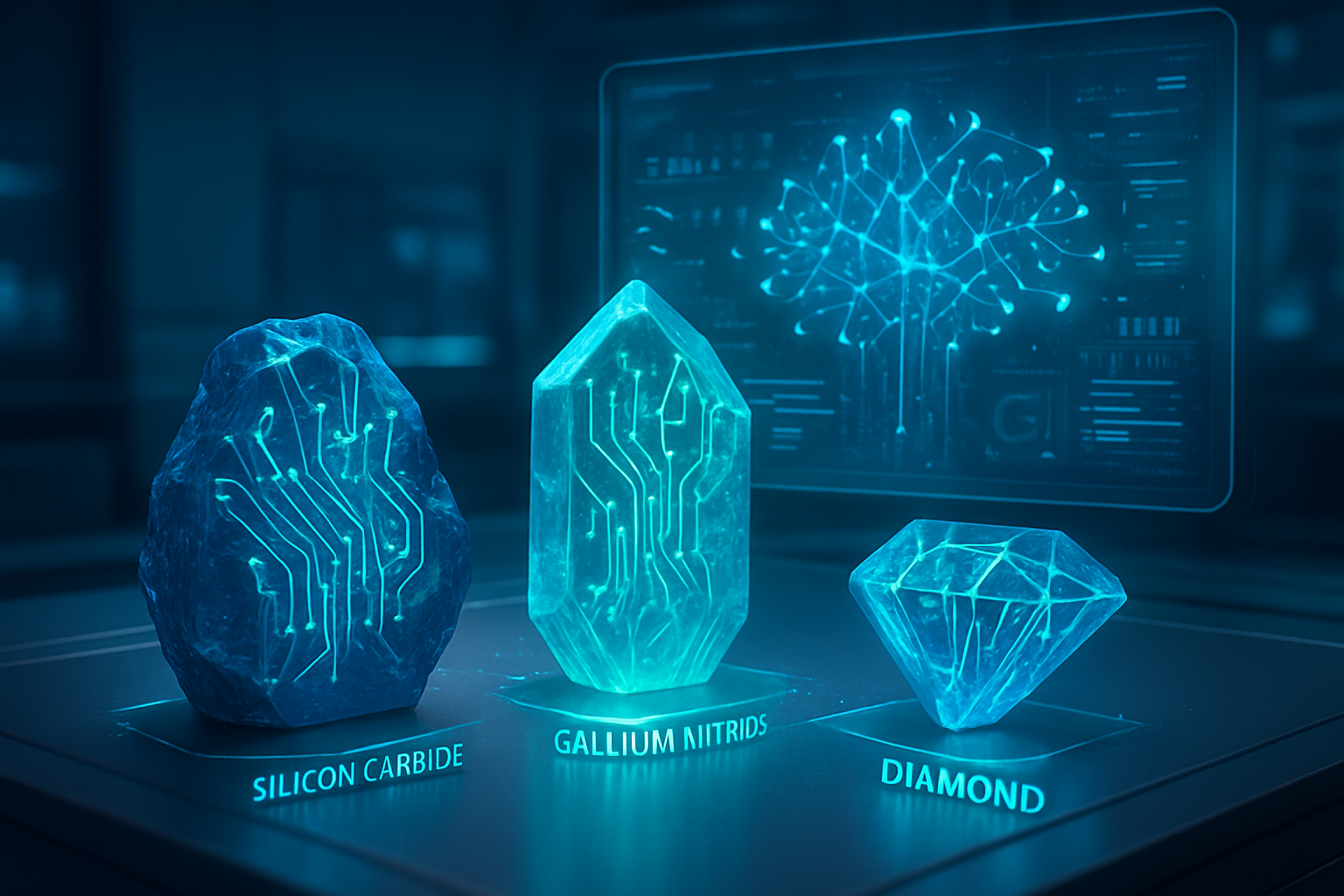
    The foundational material of the digital age, silicon, is encountering its inherent physical limits, prompting a pivotal shift in semiconductor manufacturing. While Silicon Carbide (SiC) has rapidly emerged as a dominant force in high-power applications, a new wave of advanced materials is now poised to redefine the very essence of microchip performance and unlock unprecedented capabilities across various industries. This evolution signifies more than an incremental upgrade; it represents a fundamental re-imagining of how electronic devices are built, promising to power the next generation of artificial intelligence, electric vehicles, and beyond.

    This paradigm shift is driven by an escalating demand for chips that can operate at higher frequencies, withstand extreme temperatures, consume less power, and deliver greater efficiency than what traditional silicon can offer. The exploration of materials like Gallium Nitride (GaN), Diamond, Gallium Oxide (Ga₂O₃), and a diverse array of 2D materials promises to overcome current performance bottlenecks, extend the boundaries of Moore's Law, and catalyze a new era of innovation in computing and electronics.

    Unpacking the Technical Revolution: A Deeper Dive into Next-Gen Substrates

    The limitations of silicon, particularly its bandgap and thermal conductivity, have spurred intensive research into alternative materials with superior electronic and thermal properties. Among the most prominent emerging contenders are wide bandgap (WBG) and ultra-wide bandgap (UWBG) semiconductors, alongside novel 2D materials, each offering distinct advantages that silicon struggles to match.

    Gallium Nitride (GaN), already achieving commercial prominence, is a wide bandgap semiconductor (3.4 eV) excelling in high-frequency and high-power applications. Its superior electron mobility and saturation drift velocity allow for faster switching speeds and reduced power loss, making it ideal for power converters, 5G base stations, and radar systems. This directly contrasts with silicon's lower bandgap (1.12 eV), which limits its high-frequency performance and necessitates larger components to manage heat.

    Diamond, an ultra-wide bandgap material (>5.5 eV), is emerging as a "game-changing contender" for extreme environments. Its unparalleled thermal conductivity (approximately 2200 W/m·K compared to silicon's 150 W/m·K) and exceptionally high breakdown electric field (30 times higher than silicon, 3 times higher than SiC) position it for ultra-high-power and high-temperature applications where even SiC might fall short. Researchers are also keenly investigating Gallium Oxide (Ga₂O₃), specifically beta-gallium oxide (β-Ga₂O₃), another UWBG material with significant potential for high-power devices due to its excellent breakdown strength.

    Beyond these, 2D materials like graphene, molybdenum disulfide (MoS₂), and hexagonal boron nitride (h-BN) are being explored for their atomically thin structures and tunable properties. These materials offer avenues for novel transistor designs, flexible electronics, and even quantum computing, allowing for devices with unprecedented miniaturization and functionality. Unlike bulk semiconductors, 2D materials present unique quantum mechanical properties that can be exploited for highly efficient and compact devices. Initial reactions from the AI research community and industry experts highlight the excitement around these materials' potential to enable more efficient AI accelerators, denser memory solutions, and more robust computing platforms, pushing past the thermal and power density constraints currently faced by silicon-based systems. The ability of these materials to operate at higher temperatures and voltages with lower energy losses fundamentally changes the design landscape for future electronics.

    Corporate Crossroads: Reshaping the Semiconductor Industry

    The transition to advanced semiconductor materials beyond silicon and SiC carries profound implications for major tech companies, established chip manufacturers, and agile startups alike. This shift is not merely about adopting new materials but about investing in new fabrication processes, design methodologies, and supply chains, creating both immense opportunities and competitive pressures.

    Companies like Infineon Technologies AG (XTRA: IFX), STMicroelectronics N.V. (NYSE: STM), and ON Semiconductor Corporation (NASDAQ: ON) are already significant players in the SiC and GaN markets, and stand to benefit immensely from the continued expansion and diversification into other WBG and UWBG materials. Their early investments in R&D and manufacturing capacity for these materials give them a strategic advantage in capturing market share in high-growth sectors like electric vehicles, renewable energy, and data centers, all of which demand the superior performance these materials offer.

    The competitive landscape is intensifying as traditional silicon foundries, such as Taiwan Semiconductor Manufacturing Company (TSMC) (NYSE: TSM) and Samsung Electronics Co., Ltd. (KRX: 005930), are also dedicating resources to developing processes for GaN and SiC, and are closely monitoring other emerging materials. Their ability to scale production will be crucial. Startups specializing in novel material synthesis, epitaxy, and device fabrication for diamond or Ga₂O₃, though currently smaller, could become acquisition targets or key partners for larger players seeking to integrate these cutting-edge technologies. For instance, companies like Akhan Semiconductor are pioneering diamond-based devices, demonstrating the disruptive potential of focused innovation.

    This development could disrupt existing product lines for companies heavily reliant on silicon, forcing them to adapt or risk obsolescence in certain high-performance niches. The market positioning will increasingly favor companies that can master the complex manufacturing challenges of these new materials while simultaneously innovating in device design to leverage their unique properties. Strategic alliances, joint ventures, and significant R&D investments will be critical for maintaining competitive edge and navigating the evolving semiconductor landscape.

    Broader Horizons: Impact on AI, IoT, and Beyond

    The shift to advanced semiconductor materials represents a monumental milestone in the broader AI landscape, enabling breakthroughs that were previously unattainable with silicon. The enhanced performance, efficiency, and resilience offered by these materials are perfectly aligned with the escalating demands of modern AI, particularly in areas like high-performance computing (HPC), edge AI, and specialized AI accelerators.

    The ability of GaN and SiC to handle higher power densities and switch faster directly translates to more efficient power delivery systems for AI data centers, reducing energy consumption and operational costs. For AI inferencing at the edge, where power budgets are tight and real-time processing is critical, these materials allow for smaller, more powerful, and more energy-efficient AI chips. Beyond these, materials like diamond and Ga₂O₃, with their extreme thermal stability and breakdown strength, could enable AI systems to operate in harsh industrial environments or even space, expanding the reach of AI applications into new frontiers. The development of 2D materials also holds promise for novel neuromorphic computing architectures, potentially mimicking the brain's efficiency more closely than current digital designs.

    Potential concerns include the higher manufacturing costs and the nascent supply chains for some of these exotic materials, which could initially limit their widespread adoption compared to the mature silicon ecosystem. Scalability remains a challenge for materials like diamond and Ga₂O₃, requiring significant investment in research and infrastructure. However, the benefits in performance, energy efficiency, and operational longevity often outweigh the initial cost, especially in critical applications. This transition can be compared to the move from vacuum tubes to transistors or from germanium to silicon; each step unlocked new capabilities and defined subsequent eras of technological advancement. The current move beyond silicon is poised to have a similar, if not greater, transformative impact.

    The Road Ahead: Anticipating Future Developments and Applications

    The trajectory for advanced semiconductor materials points towards a future characterized by unprecedented performance and diverse applications. In the near term, we can expect continued refinement and cost reduction in GaN and SiC manufacturing, leading to their broader adoption across more consumer electronics, industrial power supplies, and electric vehicle models. The focus will be on improving yield, increasing wafer sizes, and developing more sophisticated device architectures to fully harness their properties.

    Looking further ahead, research and development efforts will intensify on ultra-wide bandgap materials like diamond and Ga₂O₃. Experts predict that as manufacturing techniques mature, these materials will find niches in extremely high-power applications such as next-generation grid infrastructure, high-frequency radar, and potentially even in fusion energy systems. The inherent radiation hardness of diamond, for instance, makes it a prime candidate for electronics operating in hostile environments, including space missions and nuclear facilities.

    For 2D materials, the horizon includes breakthroughs in flexible and transparent electronics, opening doors for wearable AI devices, smart surfaces, and entirely new human-computer interfaces. The integration of these materials into quantum computing architectures also remains a significant area of exploration, potentially enabling more stable and scalable qubits. Challenges that need to be addressed include developing cost-effective and scalable synthesis methods for high-quality single-crystal substrates, improving interface engineering between different materials, and establishing robust testing and reliability standards. Experts predict a future where hybrid semiconductor devices, leveraging the best properties of multiple materials, become commonplace, optimizing performance for specific application requirements.

    Conclusion: A New Dawn for Semiconductors

    The emergence of advanced materials beyond traditional silicon and the rapidly growing Silicon Carbide marks a pivotal moment in semiconductor history. This shift is not merely an evolutionary step but a revolutionary leap, promising to dismantle the performance ceilings imposed by silicon and unlock a new era of innovation. The superior bandgap, thermal conductivity, breakdown strength, and electron mobility of materials like Gallium Nitride, Diamond, Gallium Oxide, and 2D materials are set to redefine chip performance, enabling more powerful, efficient, and resilient electronic devices.

    The key takeaways are clear: the semiconductor industry is diversifying its material foundation to meet the insatiable demands of AI, electric vehicles, 5G/6G, and other cutting-edge technologies. Companies that strategically invest in the research, development, and manufacturing of these advanced materials will gain significant competitive advantages. While challenges in cost, scalability, and manufacturing complexity remain, the potential benefits in performance and energy efficiency are too significant to ignore.

    This development's significance in AI history cannot be overstated. It paves the way for AI systems that are faster, more energy-efficient, capable of operating in extreme conditions, and potentially more intelligent through novel computing architectures. In the coming weeks and months, watch for announcements regarding new material synthesis techniques, expanded manufacturing capacities, and the first wave of commercial products leveraging these truly next-generation semiconductors. The future of computing is no longer solely silicon-based; it is multi-material, high-performance, and incredibly exciting.


    This content is intended for informational purposes only and represents analysis of current AI developments.

    TokenRing AI delivers enterprise-grade solutions for multi-agent AI workflow orchestration, AI-powered development tools, and seamless remote collaboration platforms.
    For more information, visit https://www.tokenring.ai/.

  • Japan’s Material Maestros: Fueling the 2nm Chip Revolution and AI’s Future

    Japan’s Material Maestros: Fueling the 2nm Chip Revolution and AI’s Future

    In a significant strategic pivot, Japan's semiconductor materials suppliers are dramatically ramping up capital expenditure, positioning themselves as indispensable architects in the global race to mass-produce advanced 2-nanometer (nm) chips. This surge in investment, coupled with robust government backing and industry collaboration, underscores Japan's renewed ambition to reclaim a pivotal role in the semiconductor supply chain, a move that carries profound implications for the future of artificial intelligence (AI) and the broader tech industry.

    The immediate significance of this development cannot be overstated. As the world grapples with persistent supply chain vulnerabilities and escalating geopolitical tensions, Japan's concentrated effort to dominate the foundational materials segment for next-generation chips offers a critical pathway towards greater global resilience. For AI developers and tech giants alike, the promise of 2nm chips—delivering unprecedented processing power and energy efficiency—is a game-changer, and Japan's material prowess is proving to be the silent engine driving this technological leap.

    The Microscopic Frontier: Japan's Advanced Materials Edge

    The journey to 2nm chip manufacturing is not merely about shrinking transistors; it demands an entirely new paradigm in material science and advanced packaging. Japanese companies are at the forefront of this microscopic frontier, investing heavily in specialized materials crucial for processes like 3D chip packaging, which is essential for achieving the density and performance required at 2nm. This includes the development of sophisticated temporary bonding adhesives, advanced resins compatible with complex back-end production, and precision equipment for removing microscopic debris that can compromise chip integrity. The alliance JOINT2 (Jisso Open Innovation Network of Tops 2), a consortium of Japanese firms including Renosac and Ajinomoto Fine-Techno, is actively collaborating with the government-backed Rapidus and the Leading-Edge Semiconductor Technology Center (LSTC) on these advanced packaging technologies.

    These advancements represent a significant departure from previous manufacturing approaches, where the focus was primarily on lithography and front-end processes. At 2nm, the intricate interplay of materials, their purity, and how they interact during advanced packaging, including Gate-All-Around (GAA) transistors, becomes paramount. GAA transistors, which surround the gate on all four sides of the channel, are a key innovation for 2nm, offering superior gate control and reduced leakage compared to FinFETs used in previous nodes. This technical shift necessitates materials with unparalleled precision and consistency. Initial reactions from the AI research community and industry experts highlight the strategic brilliance of Japan's focus on materials and equipment, recognizing it as a pragmatic and high-impact approach to re-enter the leading edge of chip manufacturing.

    The performance gains promised by 2nm chips are staggering: up to 45% faster or 75% lower power consumption compared to 3nm chips. Achieving these metrics relies heavily on the quality and innovation of the underlying materials. Japanese giants like SUMCO (TYO: 3436) and Shin-Etsu Chemical (TYO: 4063) already command approximately 60% of the global silicon wafer market, and their continued investment ensures a robust supply of foundational elements. Other key players like Nissan Chemical (TYO: 4021), Showa Denko (TYO: 4004), and Sumitomo Bakelite (TYO: 4203) are scaling up investments in everything from temporary bonding adhesives to specialized resins, cementing Japan's role as the indispensable material supplier for the next generation of semiconductors.

    Reshaping the AI Landscape: Beneficiaries and Competitive Shifts

    The implications of Japan's burgeoning role in 2nm chip materials ripple across the global technology ecosystem, profoundly affecting AI companies, tech giants, and nascent startups. Global chipmakers such as Taiwan Semiconductor Manufacturing Company (TSMC) (TPE: 2330), Samsung Electronics (KRX: 005930), and Intel (NASDAQ: INTC), all vying for 2nm production leadership, will heavily rely on the advanced materials and equipment supplied by Japanese firms. This dependency ensures that Japan's material suppliers are not merely participants but critical enablers of the next wave of computing power.

    Within Japan, the government-backed Rapidus consortium, comprising heavyweights like Denso (TYO: 6902), Kioxia, MUFG Bank (TYO: 8306), NEC (TYO: 6701), NTT (TYO: 9432), SoftBank (TYO: 9984), Sony (TYO: 6758), and Toyota (TYO: 7203), stands to be a primary beneficiary. Their collective investment in Rapidus aims to establish domestic 2nm chip manufacturing by 2027, securing a strategic advantage for Japanese industries in AI, automotive, and high-performance computing. This initiative directly addresses competitive concerns, aiming to prevent Japanese equipment and materials manufacturers from relocating overseas and consolidating the nation's technological base.

    The competitive landscape is set for a significant shift. Japan's strategic focus on the high-value, high-barrier-to-entry materials segment diversifies the global semiconductor supply chain, reducing over-reliance on a few key regions for advanced chip manufacturing. This move could potentially disrupt existing product development cycles by enabling more powerful and energy-efficient AI hardware, fostering innovation in areas like edge AI, autonomous systems, and advanced robotics. For startups developing AI solutions, access to these cutting-edge chips means the ability to run more complex models locally, opening up new product categories and services that were previously computationally unfeasible.

    Wider Significance: A Pillar for Global Tech Sovereignty

    Japan's resurgence in semiconductor materials for 2nm chips extends far beyond mere commercial interests; it is a critical component of the broader global AI landscape and a strategic move towards technological sovereignty. These ultra-advanced chips are the foundational bedrock for the next generation of AI, enabling unprecedented capabilities in large language models, complex simulations, and real-time data processing. They are also indispensable for the development of 6G wireless communication, fully autonomous driving systems, and the nascent field of quantum computing.

    The impacts of this initiative are multi-faceted. On a geopolitical level, it enhances global supply chain resilience by diversifying the sources of critical semiconductor components, a lesson painfully learned during recent global shortages. Economically, it represents a massive investment in Japan's high-tech manufacturing base, promising job creation, innovation, and sustained growth. From a national security perspective, securing domestic access to leading-edge chip technology is paramount for maintaining a competitive edge in defense, intelligence, and critical infrastructure.

    However, potential concerns also loom. The sheer scale of investment required, coupled with intense global competition from established chip manufacturing giants, presents significant challenges. Talent acquisition and retention in a highly specialized field will also be crucial. Nevertheless, this effort marks a determined attempt by Japan to regain leadership in an industry it once dominated in the 1980s. Unlike previous attempts, the current strategy focuses on leveraging existing strengths in materials and equipment, rather than attempting to compete directly with foundry giants on all fronts, making it a more focused and potentially more successful endeavor.

    The Road Ahead: Anticipating Next-Gen AI Enablers

    Looking ahead, the near-term developments are poised to be rapid and transformative. Rapidus, with substantial government backing (including an additional 100 billion yen under the fiscal 2025 budget), is on an aggressive timeline. Test production at its Innovative Integration for Manufacturing (IIM-1) facility in Chitose, Hokkaido, is slated to commence in April 2025. The company has already successfully prototyped Japan's first 2nm wafer in August 2025, a significant milestone. Global competitors like TSMC aim for 2nm mass production in the second half of 2025, while Samsung targets 2025, and Intel's (NASDAQ: INTC) 18A (2nm equivalent) is projected for late 2024. These timelines underscore the fierce competition but also the rapid progression towards the 2nm era.

    In the long term, the applications and use cases on the horizon are revolutionary. More powerful and energy-efficient 2nm chips will unlock capabilities for AI models that are currently constrained by computational limits, leading to breakthroughs in fields like personalized medicine, climate modeling, and advanced robotics. Edge AI devices will become significantly more intelligent and autonomous, processing complex data locally without constant cloud connectivity. The challenges, however, remain substantial, particularly in achieving high yield rates, managing the escalating costs of advanced manufacturing, and sustaining continuous research and development to push beyond 2nm to even smaller nodes.

    Experts predict that Japan's strategic focus on materials and equipment will solidify its position as an indispensable partner in the global semiconductor ecosystem. This specialized approach, coupled with strong government-industry collaboration, is expected to lead to further innovations in material science, potentially enabling future breakthroughs in chip architecture and packaging beyond 2nm. The ongoing success of Rapidus and its Japanese material suppliers will be a critical indicator of this trajectory.

    A New Era of Japanese Leadership in Advanced Computing

    In summary, Japan's semiconductor materials suppliers are unequivocally stepping into a critical leadership role in the production of advanced 2-nanometer chips. This strategic resurgence, driven by significant capital investment, robust government support for initiatives like Rapidus, and a deep-seated expertise in material science, is not merely a commercial endeavor but a national imperative. It represents a crucial step towards building a more resilient and diversified global semiconductor supply chain, essential for the continued progress of artificial intelligence and other cutting-edge technologies.

    This development marks a significant chapter in AI history, as the availability of 2nm chips will fundamentally reshape the capabilities of AI systems, enabling more powerful, efficient, and intelligent applications across every sector. The long-term impact will likely see Japan re-established as a technological powerhouse, not through direct competition in chip fabrication across all nodes, but by dominating the foundational elements that make advanced manufacturing possible. What to watch for in the coming weeks and months includes Rapidus's progress towards its 2025 test production goals, further announcements regarding material innovation from key Japanese suppliers, and the broader global competition for 2nm chip supremacy. The stage is set for a new era where Japan's mastery of materials will power the AI revolution.


    This content is intended for informational purposes only and represents analysis of current AI developments.

    TokenRing AI delivers enterprise-grade solutions for multi-agent AI workflow orchestration, AI-powered development tools, and seamless remote collaboration platforms.
    For more information, visit https://www.tokenring.ai/.
  • Beneath the Silicon: MoSi2 Heating Elements Emerge as Critical Enablers for Next-Gen AI Chips

    Beneath the Silicon: MoSi2 Heating Elements Emerge as Critical Enablers for Next-Gen AI Chips

    As the world hurls towards an increasingly AI-driven future, the foundational technologies that enable advanced artificial intelligence are undergoing silent but profound transformations. Among these, the Molybdenum Disilicide (MoSi2) heating element market is rapidly ascending, poised for substantial growth between 2025 and 2032. These high-performance elements, often unseen, are absolutely critical to the intricate processes of semiconductor manufacturing, particularly in the creation of the sophisticated chips that power AI. With market projections indicating a robust Compound Annual Growth Rate (CAGR) of 5.6% to 7.1% over the next seven years, this specialized segment is set to become an indispensable pillar supporting the relentless innovation in AI hardware.

    The immediate significance of MoSi2 heating elements lies in their unparalleled ability to deliver and maintain the extreme temperatures and precise thermal control required for advanced wafer processing, crystal growth, epitaxy, and heat treatment in semiconductor fabrication. As AI models grow more complex and demand ever-faster, more efficient processing, the underlying silicon must be manufactured with unprecedented precision and purity. MoSi2 elements are not merely components; they are enablers, directly contributing to the yield, quality, and performance of the next generation of AI-centric semiconductors, ensuring the stability and reliability essential for cutting-edge AI applications.

    The Crucible of Innovation: Technical Prowess of MoSi2 Heating Elements

    MoSi2 heating elements are intermetallic compounds known for their exceptional high-temperature performance, operating reliably in air at temperatures up to 1800°C or even 1900°C. This extreme thermal capability is a game-changer for semiconductor foundries, which require increasingly higher temperatures for processes like rapid thermal annealing (RTA) and chemical vapor deposition (CVD) to create smaller, more complex transistor architectures. The elements achieve this resilience through a unique self-healing mechanism: at elevated temperatures, MoSi2 forms a protective, glassy layer of silicon dioxide (SiO2) on its surface, which prevents further oxidation and significantly extends its operational lifespan.

    Technically, MoSi2 elements stand apart from traditional metallic heating elements (like Kanthal alloys) or silicon carbide (SiC) elements due to their superior oxidation resistance at very high temperatures and their excellent thermal shock resistance. While SiC elements offer high temperature capabilities, MoSi2 elements often provide better stability and a longer service life in oxygen-rich environments at the highest temperature ranges, reducing downtime and maintenance costs in critical manufacturing lines. Their ability to withstand rapid heating and cooling cycles without degradation is particularly beneficial for batch processes in semiconductor manufacturing where thermal cycling is common. This precise control and durability ensure consistent wafer quality, crucial for the complex multi-layer structures of AI processors.

    Initial reactions from the semiconductor research community and industry experts underscore the growing reliance on these advanced heating solutions. As feature sizes shrink to nanometer scales and new materials are introduced into chip designs, the thermal budgets and processing windows become incredibly tight. MoSi2 elements provide the necessary precision and stability, allowing engineers to push the boundaries of materials science and process development. Without such robust and reliable high-temperature sources, achieving the required material properties and defect control for high-performance AI chips would be significantly more challenging, if not impossible.

    Shifting Sands: Competitive Landscape and Strategic Advantages

    The escalating demand for MoSi2 heating elements directly impacts a range of companies, from material science innovators to global semiconductor equipment manufacturers and, ultimately, the major chipmakers. Companies like Kanthal (a subsidiary of Sandvik Group (STO: SAND)), I Squared R Element Co., Inc., Henan Songshan Lake Materials Technology Co., Ltd., and JX Advanced Metals are at the forefront, benefiting from increased orders and driving innovation in element design and manufacturing. These suppliers are crucial for equipping the fabrication plants of tech giants such as Taiwan Semiconductor Manufacturing Company (TSMC (NYSE: TSM)), Intel Corporation (NASDAQ: INTC), and Samsung Electronics Co., Ltd. (KRX: 005930), which are continuously investing in advanced manufacturing capabilities for their AI chip production.

    The competitive implications are significant. Companies that can provide MoSi2 elements with enhanced efficiency, longer lifespan, and greater customization stand to gain substantial market share. This fosters a competitive environment focused on R&D, leading to elements with improved thermal shock resistance, higher purity, and more complex geometries tailored for specific furnace designs. For semiconductor equipment manufacturers, integrating state-of-the-art MoSi2 heating systems into their annealing, CVD, and epitaxy furnaces becomes a key differentiator, offering their clients superior process control and higher yields.

    This development also reinforces the strategic advantage of regions with robust semiconductor ecosystems, particularly in Asia-Pacific, which is projected to be the fastest-growing market for MoSi2 elements. The ability to produce high-performance AI chips relies heavily on access to advanced manufacturing technologies, and reliable access to these critical heating elements is a non-negotiable factor. Any disruption in the supply chain or a lack of innovation in this sector could directly impede the progress of AI hardware development, highlighting the interconnectedness of seemingly disparate technological fields.

    The Broader AI Landscape: Enabling the Future of Intelligence

    The proliferation and advancement of MoSi2 heating elements fit squarely into the broader AI landscape as a foundational enabler of next-generation computing hardware. While AI itself is a software-driven revolution, its capabilities are intrinsically tied to the performance and efficiency of the underlying silicon. Faster, more power-efficient, and densely packed AI accelerators—from GPUs to specialized NPUs—all depend on sophisticated manufacturing processes that MoSi2 elements facilitate. This technological cornerstone underpins the development of more complex neural networks, faster inference times, and more efficient training of large language models.

    The impacts are far-reaching. By enabling the production of more advanced semiconductors, MoSi2 elements contribute to breakthroughs in various AI applications, including autonomous vehicles, advanced robotics, medical diagnostics, and scientific computing. They allow for the creation of chips with higher transistor densities and improved signal integrity, which are crucial for processing the massive datasets that fuel AI. Without the precise thermal control offered by MoSi2, achieving the necessary material properties for these advanced chip designs would be significantly more challenging, potentially slowing the pace of AI innovation.

    Potential concerns primarily revolve around the supply chain stability and the continuous innovation required to meet ever-increasing demands. As the semiconductor industry scales, ensuring a consistent supply of high-purity MoSi2 materials and manufacturing capacity for these elements will be vital. Comparisons to previous AI milestones, such as the initial breakthroughs in deep learning, highlight that while the spotlight often falls on algorithms and software, the hardware advancements that make them possible are equally transformative. MoSi2 heating elements represent one such silent, yet monumental, hardware enabler, akin to the development of better lithography tools or purer silicon wafers in earlier eras.

    The Road Ahead: Innovations and Challenges on the Horizon

    Looking ahead from 2025, the MoSi2 heating element market is expected to witness continuous innovation, driven by the relentless demands of the semiconductor industry and other high-temperature applications. Near-term developments will likely focus on enhancing element longevity, improving energy efficiency further, and developing more sophisticated control systems for even finer temperature precision. Long-term, we can anticipate advancements in material composites that combine MoSi2 with other high-performance ceramics or intermetallics to create elements with even greater thermal stability, mechanical strength, and resistance to harsh processing environments.

    Potential applications and use cases are expanding beyond traditional furnace heating. Researchers are exploring the integration of MoSi2 elements into more localized heating solutions for advanced material processing, additive manufacturing, and even novel energy generation systems. The ability to create customized shapes and sizes will facilitate their adoption in highly specialized equipment, pushing the boundaries of what's possible in high-temperature industrial processes.

    However, challenges remain. The cost of MoSi2 elements, while justified by their performance, can be higher than traditional alternatives, necessitating continued efforts in cost-effective manufacturing. Scaling production to meet the burgeoning global demand, especially from the Asia-Pacific region's expanding industrial base, will require significant investment. Furthermore, ongoing research into alternative materials that can offer similar or superior performance at comparable costs will be a continuous challenge. Experts predict that as AI's demands for processing power grow, the innovation in foundational technologies like MoSi2 heating elements will become even more critical, driving a cycle of mutual advancement between hardware and software.

    A Foundation for the Future of AI

    In summary, the MoSi2 heating element market, with its projected growth from 2025 to 2032, represents a cornerstone technology for the future of artificial intelligence. Its ability to provide ultra-high temperatures and precise thermal control is indispensable for manufacturing the advanced semiconductors that power AI's most sophisticated applications. From enabling finer transistor geometries to ensuring the purity and integrity of critical chip components, MoSi2 elements are quietly but powerfully driving the efficiency and production capabilities of the AI hardware ecosystem.

    This development underscores the intricate web of technologies that underpin major AI breakthroughs. While algorithms and data capture headlines, the materials science and engineering behind the hardware provide the very foundation upon which these innovations are built. The long-term impact of robust, efficient, and reliable heating elements cannot be overstated, as they directly influence the speed, power consumption, and capabilities of every AI system. As we move into the latter half of the 2020s, watching the advancements in MoSi2 technology and its integration into next-generation manufacturing processes will be crucial for anyone tracking the true trajectory of artificial intelligence.


    This content is intended for informational purposes only and represents analysis of current AI developments.

    TokenRing AI delivers enterprise-grade solutions for multi-agent AI workflow orchestration, AI-powered development tools, and seamless remote collaboration platforms.
    For more information, visit https://www.tokenring.ai/.