
Tag: Advanced Packaging

  • The New Era of Silicon: AI, Advanced Packaging, and Novel Materials Propel Chip Quality to Unprecedented Heights

    The New Era of Silicon: AI, Advanced Packaging, and Novel Materials Propel Chip Quality to Unprecedented Heights

    October 6, 2025 – The semiconductor industry is in the midst of a profound transformation, driven by an insatiable global demand for increasingly powerful, efficient, and reliable chips. This revolution, fueled by the synergistic advancements in Artificial Intelligence (AI), sophisticated packaging techniques, and the exploration of novel materials, is fundamentally reshaping the quality and capabilities of semiconductors across every application, from the smartphones in our pockets to the autonomous vehicles on our roads. As traditional transistor scaling faces physical limitations, these innovations are not merely extending Moore's Law but are ushering in a new era of chip design and manufacturing, crucial for the continued acceleration of AI and the broader digital economy.

    The immediate significance of these developments is palpable. The global semiconductor market is projected to reach an all-time high of $697 billion in 2025, with AI technologies alone expected to account for over $150 billion in sales. This surge is a direct reflection of the breakthroughs in chip quality, which are enabling faster innovation cycles, expanding the possibilities for new applications, and ensuring the reliability and security of critical systems in an increasingly interconnected world. The industry is witnessing a shift where quality, driven by intelligent design and manufacturing, is as critical as raw performance.

    The Technical Core: AI, Advanced Packaging, and Materials Redefine Chip Excellence

    The current leap in semiconductor quality is underpinned by a trifecta of technical advancements, each pushing the boundaries of what's possible.

    AI's Intelligent Hand in Chipmaking: AI, particularly machine learning (ML) and deep learning (DL), has become an indispensable tool across the entire semiconductor lifecycle. In design, AI-powered Electronic Design Automation (EDA) tools, such as Synopsys' (NASDAQ: SNPS) DSO.ai system, are revolutionizing workflows by automating complex tasks like layout generation, design optimization, and defect prediction. This drastically reduces time-to-market; a 5nm chip's optimization cycle, for instance, has reportedly shrunk from six months to six weeks. AI can explore billions of possible transistor arrangements, creating designs that human engineers might not conceive, leading to up to a 40% reduction in power efficiency and a 3x to 5x improvement in design productivity. In manufacturing, AI algorithms analyze vast amounts of real-time production data to optimize processes, predict maintenance needs, and significantly reduce defect rates, boosting yield rates by up to 30% for advanced nodes. For quality control, AI, ML, and deep learning are integrated into visual inspection systems, achieving over 99% accuracy in detecting, classifying, and segmenting defects, even at submicron and nanometer scales. Purdue University's recent research, for example, integrates advanced imaging with AI to detect minuscule defects, moving beyond traditional manual inspections to ensure chip reliability and combat counterfeiting. This differs fundamentally from previous rule-based or human-intensive approaches, offering unprecedented precision and efficiency.

    Advanced Packaging: Beyond Moore's Law: As traditional transistor scaling slows, advanced packaging has emerged as a cornerstone of semiconductor innovation, enabling continued performance improvements and reduced power consumption. This involves combining multiple semiconductor chips (dies or chiplets) into a single electronic package, rather than relying on a single monolithic die. 2.5D and 3D-IC packaging are leading the charge. 2.5D places components side-by-side on an interposer, while 3D-IC vertically stacks active dies, often using through-silicon vias (TSVs) for ultra-short signal paths. Techniques like TSMC's (NYSE: TSM) CoWoS (chip-on-wafer-on-substrate) and Intel's (NASDAQ: INTC) EMIB (embedded multi-die interconnect bridge) exemplify this, achieving interconnection speeds of up to 4.8 TB/s (e.g., NVIDIA (NASDAQ: NVDA) Hopper H100 with HBM stacks). Hybrid bonding is crucial for advanced packaging, achieving interconnect pitches in the single-digit micrometer range, a significant improvement over conventional microbump technology (40-50 micrometers), and bandwidths up to 1000 GB/s. This allows for heterogeneous integration, where different chiplets (CPUs, GPUs, memory, specialized AI accelerators) are manufactured using their most suitable process nodes and then combined, optimizing overall system performance and efficiency. This approach fundamentally differs from traditional packaging, which typically packaged a single die and relied on slower PCB connections, offering increased functional density, reduced interconnect distances, and improved thermal management.

    Novel Materials: The Future Beyond Silicon: As silicon approaches its inherent physical limitations, novel materials are stepping in to redefine chip performance. Wide-Bandgap (WBG) Semiconductors like Gallium Nitride (GaN) and Silicon Carbide (SiC) are revolutionizing power electronics. GaN boasts a bandgap of 3.4 eV (compared to silicon's 1.1 eV) and a breakdown field strength ten times higher, allowing for 10-100 times faster switching speeds and operation at higher voltages and temperatures. SiC offers similar advantages with three times higher thermal conductivity than silicon, crucial for electric vehicles and industrial applications. Two-Dimensional (2D) Materials such as graphene and molybdenum disulfide (MoS₂) promise higher electron mobility (graphene can be 100 times greater than silicon) for faster switching and reduced power consumption, enabling extreme miniaturization. High-k Dielectrics, like Hafnium Oxide (HfO₂), replace silicon dioxide as gate dielectrics, significantly reducing gate leakage currents (by more than an order of magnitude) and power consumption in scaled transistors. These materials offer superior electrical, thermal, and scaling properties that silicon cannot match, opening doors for new device architectures and applications. The AI research community and industry experts have reacted overwhelmingly positively to these advancements, hailing AI as a "game-changer" for design and manufacturing, recognizing advanced packaging as a "critical enabler" for high-performance computing, and viewing novel materials as essential for overcoming silicon's limitations.

    Industry Ripples: Reshaping the Competitive Landscape

    The advancements in semiconductor chip quality are creating a fiercely competitive and dynamic environment, profoundly impacting AI companies, tech giants, and agile startups.

    Beneficiaries Across the Board: Chip designers and vendors like NVIDIA (NASDAQ: NVDA), AMD (NASDAQ: AMD), and Intel (NASDAQ: INTC) are direct beneficiaries, with NVIDIA continuing its dominance in AI acceleration through its GPU architectures (Hopper, Blackwell) and the robust CUDA ecosystem. AMD is aggressively challenging with its Instinct GPUs and EPYC server processors, securing partnerships with cloud providers like Microsoft (NASDAQ: MSFT) and Oracle (NYSE: ORCL). Intel is investing in AI-specific accelerators (Gaudi 3) and advanced manufacturing (18A process). Foundries like TSMC (NYSE: TSM) and Samsung (KRX: 005930) are exceptionally well-positioned due to their leadership in advanced process nodes (3nm, 2nm) and cutting-edge packaging technologies like CoWoS, with TSMC doubling its CoWoS capacity for 2025. Semiconductor equipment suppliers such as ASML (NASDAQ: ASML), Applied Materials (NASDAQ: AMAT), Lam Research (NASDAQ: LRCX), and KLA Corp (NASDAQ: KLAC) are also seeing increased demand for their specialized tools. Memory manufacturers like Micron Technology (NASDAQ: MU), Samsung, and SK Hynix (KRX: 000660) are experiencing a recovery driven by the massive data storage requirements for AI, particularly for High-Bandwidth Memory (HBM).

    Competitive Implications: The continuous enhancement of chip quality directly translates to faster AI training, more responsive inference, and significantly lower power consumption, allowing AI labs to develop more sophisticated models and deploy them at scale cost-effectively. Tech giants like Apple (NASDAQ: AAPL), Google (NASDAQ: GOOGL), and Microsoft are increasingly designing their own custom AI chips (e.g., Google's TPUs) to gain a competitive edge through vertical integration, optimizing performance, efficiency, and cost for their specific AI workloads. This reduces reliance on external vendors and allows for tighter hardware-software co-design. Advanced packaging has become a crucial differentiator, and companies mastering or securing access to these technologies gain a significant advantage in building high-performance AI systems. NVIDIA's formidable hardware-software ecosystem (CUDA) creates a strong lock-in effect, making it challenging for rivals. The industry also faces intense talent wars for specialized researchers and engineers.

    Potential Disruption: Less sophisticated chip design, manufacturing, and inspection methods are rapidly becoming obsolete, pressuring companies to invest heavily in AI and computer vision R&D. There's a notable shift from general-purpose to highly specialized AI silicon (ASICs, NPUs, neuromorphic chips) optimized for specific AI tasks, potentially disrupting companies relying solely on general-purpose CPUs or GPUs for certain applications. While AI helps optimize supply chains, the increasing concentration of advanced component manufacturing makes the industry potentially more vulnerable to disruptions. The surging demand for compute-intensive AI workloads also raises energy consumption concerns, driving the need for more efficient chips and innovative cooling solutions. Critically, advanced packaging solutions are dramatically boosting memory bandwidth and reducing latency, directly overcoming the "memory wall" bottleneck that has historically constrained AI performance, accelerating R&D and making real-time AI applications more feasible.

    Wider Significance: A Foundational Shift for AI and Society

    These semiconductor advancements are foundational to the "AI Gold Rush" and represent a critical juncture in the broader technological evolution.

    Enabling AI's Exponential Growth: Improved chip quality directly fuels the "insatiable hunger" for computational power demanded by generative AI, large language models (LLMs), high-performance computing (HPC), and edge AI. Specialized hardware, optimized for neural networks, is at the forefront, enabling faster and more efficient AI training and inference. The AI chip market alone is projected to surpass $150 billion in 2025, underscoring this deep interdependency.

    Beyond Moore's Law: As traditional silicon scaling approaches its limits, advanced packaging and novel materials are extending performance scaling, effectively serving as the "new battleground" for semiconductor innovation. This shift ensures the continued progress of computing power, even as transistor miniaturization becomes more challenging. These advancements are critical enablers for other major technological trends, including 5G/6G communications, autonomous vehicles, the Internet of Things (IoT), and data centers, all of which require high-performance, energy-efficient chips.

    Broader Impacts:

    • Technological: Unprecedented performance, efficiency, and miniaturization are being achieved, enabling new architectures like neuromorphic chips that offer up to 1000x improvements in energy efficiency for specific AI inference tasks.
    • Economic: The global semiconductor market is experiencing robust growth, projected to reach $697 billion in 2025 and potentially $1 trillion by 2030. This drives massive investment and job creation, with over $500 billion invested in the U.S. chip ecosystem since 2020. New AI-driven products and services are fostering innovation across sectors.
    • Societal: AI-powered applications, enabled by these chips, are becoming more integrated into consumer electronics, autonomous systems, and AR/VR devices, potentially enhancing daily life and driving advancements in critical sectors like healthcare and defense. AI, amplified by these hardware improvements, has the potential to drive enormous productivity growth.

    Potential Concerns: Despite the benefits, several concerns persist. Geopolitical tensions and supply chain vulnerabilities, particularly between the U.S. and China, continue to create significant challenges, increasing costs and risking innovation. The high costs and complexity of manufacturing advanced nodes require heavy investment, potentially concentrating power among a few large players. A critical talent shortage in the semiconductor industry threatens to impede innovation. Despite efforts toward energy efficiency, the exponential growth of AI and data centers still demands significant energy, raising environmental concerns. Finally, as semiconductors enable more powerful AI, ethical implications around data privacy, algorithmic bias, and job displacement become more pressing.

    Comparison to Previous AI Milestones: These hardware advancements represent a distinct, yet interconnected, phase compared to previous AI milestones. Earlier breakthroughs were often driven by algorithmic innovations (e.g., deep learning). However, the current phase is characterized by a "profound shift" in the physical hardware itself, becoming the primary enabler for the "next wave of AI innovation." While previous milestones initiated new AI capabilities, current semiconductor improvements amplify and accelerate these capabilities, pushing them into new domains and performance levels. This era is defined by a uniquely symbiotic relationship where AI development necessitates advanced semiconductors, while AI itself is an indispensable tool for designing and manufacturing these next-generation processors.

    The Horizon: Future Developments and What's Next

    The semiconductor industry is poised for unprecedented advancements, with a clear roadmap for both the near and long term.

    Near-Term (2025-2030): Expect advanced packaging technologies like 2.5D and 3D-IC stacking, FOWLP, and chiplet integration to become standard, driving heterogeneous integration. TSMC's CoWoS capacity will continue to expand aggressively, and Cu-Cu hybrid bonding for 3D die stacking will see increased adoption. Continued miniaturization through EUV lithography will push transistor performance, with new materials and 3D structures extending capabilities for at least another decade. Customization of High-Bandwidth Memory (HBM) and other memory innovations like GDDR7 will be crucial for managing AI's massive data demands. A strong focus on energy efficiency will lead to breakthroughs in power components for edge AI and data centers.

    Long-Term (Beyond 2030): The exploration of materials beyond silicon will intensify. Wide-bandband semiconductors (GaN, SiC) will become indispensable for power electronics in EVs and 5G/6G. Two-dimensional materials (graphene, MoS₂, InSe) are long-term solutions for scaling limits, offering exceptional electrical conductivity and potential for novel device architectures and neuromorphic computing. Hybrid approaches integrating 2D materials with silicon or WBG semiconductors are predicted as an initial pathway to commercialization. System-level integration and customization will continue, and high-stack 3D DRAM mass production is anticipated around 2030.

    Potential Applications: Advanced chips will underpin generative AI and LLMs in cloud data centers, PCs, and smartphones; edge AI in autonomous vehicles and IoT devices; 5G/6G communications; high-performance computing; next-generation consumer electronics (AR/VR); healthcare devices; and even quantum computing.

    Challenges Ahead: Realizing these future developments requires overcoming significant hurdles: the immense technological complexity and cost of miniaturization; supply chain disruptions and geopolitical tensions; a critical and intensifying talent shortage; and the growing energy consumption and environmental impact of AI and semiconductor manufacturing.

    Expert Predictions: Experts predict AI will play an even more transformative role, automating design, optimizing manufacturing, enhancing reliability, and revolutionizing supply chain management. Advanced packaging, with its market forecast to rise at a robust 9.4% CAGR, is considered the "hottest topic," with 2.5D and 3D technologies dominating HPC and AI. Novel materials like GaN and SiC are seen as indispensable for power electronics, while 2D materials are long-term solutions for scaling limits, with hybrid approaches likely paving the way for commercialization.

    Comprehensive Wrap-Up: A New Dawn for Computing

    The advancements in semiconductor chip quality, driven by AI, advanced packaging, and novel materials, represent a pivotal moment in technological history. The key takeaway is the symbiotic relationship between these three pillars: AI not only consumes high-quality chips but is also an indispensable tool in their creation and validation. Advanced packaging and novel materials provide the physical foundation for the increasingly powerful, efficient, and specialized AI hardware demanded today. This trifecta is pushing performance boundaries beyond traditional scaling limits, improving quality through unprecedented precision, and fostering innovation for future computing paradigms.

    This development's significance in AI history cannot be overstated. Just as GPUs catalyzed the Deep Learning Revolution, the current wave of hardware innovation is essential for the continued scaling and widespread deployment of advanced AI. It unlocks unprecedented efficiencies, accelerates innovation, and expands AI's reach into new applications and extreme environments.

    The long-term impact is transformative. Chiplet-based designs are set to become the standard for complex, high-performance computing. The industry is moving towards fully autonomous manufacturing facilities, reshaping global strategies. Novel AI-specific hardware architectures, like neuromorphic chips, will offer vastly more energy-efficient AI processing, expanding AI's reach into new applications and extreme environments. While silicon will remain dominant in the near term, new electronic materials are expected to gradually displace it in mass-market devices from the mid-2030s, promising fundamentally more efficient and versatile computing. These innovations are crucial for mitigating AI's growing energy footprint and enabling future breakthroughs in autonomous systems, 5G/6G communications, electric vehicles, and even quantum computing.

    What to watch for in the coming weeks and months (October 2025 context):

    • Advanced Packaging Milestones: Continued widespread adoption of 2.5D and 3D hybrid bonding for high-performance AI and HPC systems, along with the maturation of the chiplet ecosystem and interconnect standards like UCIe.
    • HBM4 Commercialization: The full commercialization of HBM4 memory, expected in late 2025, will deliver another significant leap in memory bandwidth for AI accelerators.
    • TSMC's 2nm Production and CoWoS Expansion: TSMC's mass production of 2nm chips in Q4 2025 and its aggressive expansion of CoWoS capacity are critical indicators of industry direction.
    • Real-time AI Testing Deployments: The collaboration between Advantest (OTC: ATEYY) and NVIDIA, with NVIDIA selecting Advantest's ACS RTDI for high-volume production of Blackwell and next-generation devices, highlights the immediate impact of AI on testing efficiency and yield.
    • Novel Material Research: New reports and studies, such as Yole Group's Q4 2025 publications on "Glass Materials in Advanced Packaging" and "Polymeric Materials for Advanced Packaging," which will offer insights into emerging material opportunities.
    • Global Investment and Geopolitics: Continued massive investments in AI infrastructure and the ongoing influence of geopolitical risks and new export controls on the semiconductor supply chain.
    • India's Entry into Packaged Chips: Kaynes SemiCon is on track to become the first company in India to deliver packaged semiconductor chips by October 2025, marking a significant milestone for India's semiconductor ambitions and global supply chain diversification.

    This content is intended for informational purposes only and represents analysis of current AI developments.

    TokenRing AI delivers enterprise-grade solutions for multi-agent AI workflow orchestration, AI-powered development tools, and seamless remote collaboration platforms. For more information, visit https://www.tokenring.ai/.

  • Advanced Packaging Market Soars Towards $119.4 Billion by 2032, Igniting a New Era in Semiconductor Innovation

    Advanced Packaging Market Soars Towards $119.4 Billion by 2032, Igniting a New Era in Semiconductor Innovation

    The global Advanced Packaging Market is poised for an explosive growth trajectory, with estimations projecting it to reach an astounding $119.4 billion by 2032. This monumental valuation, a significant leap from an estimated $48.5 billion in 2023, underscores a profound transformation within the semiconductor industry. Far from being a mere protective casing, advanced packaging has emerged as a critical enabler of device performance, efficiency, and miniaturization, fundamentally reshaping how chips are designed, manufactured, and utilized in an increasingly connected and intelligent world.

    This rapid expansion, driven by a Compound Annual Growth Rate (CAGR) of 10.6% from 2024 to 2032, signifies a pivotal shift in the semiconductor value chain. It highlights the indispensable role of sophisticated assembly and interconnection technologies in powering next-generation innovations across diverse sectors. From the relentless demand for smaller, more powerful consumer electronics to the intricate requirements of Artificial Intelligence (AI), 5G, High-Performance Computing (HPC), and the Internet of Things (IoT), advanced packaging is no longer an afterthought but a foundational technology dictating the pace and possibilities of modern technological progress.

    The Engineering Marvels Beneath the Surface: Unpacking Technical Advancements

    The projected surge in the Advanced Packaging Market is intrinsically linked to a wave of groundbreaking technical innovations that are pushing the boundaries of semiconductor integration. These advancements move beyond traditional planar chip designs, enabling a "More than Moore" era where performance gains are achieved not just by shrinking transistors, but by ingeniously stacking and connecting multiple heterogeneous components within a single package.

    Key among these advancements are 2.5D and 3D packaging technologies, which represent a significant departure from conventional approaches. 2.5D packaging, often utilizing silicon interposers with Through-Silicon Vias (TSVs), allows multiple dies (e.g., CPU, GPU, High Bandwidth Memory – HBM) to be placed side-by-side on a single substrate, dramatically reducing the distance between components. This close proximity facilitates significantly faster data transfer rates—up to 35 times faster than traditional motherboards—and enhances overall system performance while improving power efficiency. 3D packaging takes this a step further by stacking dies vertically, interconnected by TSVs, creating ultra-compact, high-density modules. This vertical integration is crucial for applications demanding extreme miniaturization and high computational density, such as advanced AI accelerators and mobile processors.

    Other pivotal innovations include Fan-Out Wafer-Level Packaging (FOWLP) and Fan-Out Panel-Level Packaging (FOPLP). Unlike traditional packaging where the chip is encapsulated within a smaller substrate, FOWLP expands the packaging area beyond the die's dimensions, allowing for more I/O connections and better thermal management. This enables the integration of multiple dies or passive components within a single, thin package without the need for an interposer, leading to cost-effective, high-performance, and miniaturized solutions. FOPLP extends this concept to larger panels, promising even greater cost efficiencies and throughput. These techniques differ significantly from older wire-bonding and flip-chip methods by offering superior electrical performance, reduced form factors, and enhanced thermal dissipation, addressing critical bottlenecks in previous generations of semiconductor assembly. Initial reactions from the AI research community and industry experts highlight these packaging innovations as essential for overcoming the physical limitations of Moore's Law, enabling the complex architectures required for future AI models, and accelerating the deployment of edge AI devices.

    Corporate Chessboard: How Advanced Packaging Reshapes the Tech Landscape

    The burgeoning Advanced Packaging Market is creating a new competitive battleground and strategic imperative for AI companies, tech giants, and startups alike. Companies that master these sophisticated packaging techniques stand to gain significant competitive advantages, influencing market positioning and potentially disrupting existing product lines.

    Leading semiconductor manufacturers and foundries are at the forefront of this shift. Companies like Taiwan Semiconductor Manufacturing Company (TSMC) (NYSE: TSM), Samsung Electronics (KRX: 005930), and Intel Corporation (NASDAQ: INTC) are investing billions in advanced packaging R&D and manufacturing capabilities. TSMC's CoWoS (Chip-on-Wafer-on-Substrate) and InFO (Integrated Fan-Out) technologies, for instance, are critical for packaging high-performance AI chips and GPUs for clients like NVIDIA (NASDAQ: NVDA) and Advanced Micro Devices (NASDAQ: AMD). These investments are not merely about increasing capacity but about developing proprietary intellectual property and processes that differentiate their offerings and secure their role as indispensable partners in the AI supply chain.

    For AI companies and tech giants developing their own custom AI accelerators, such as Google (NASDAQ: GOOGL), Amazon (NASDAQ: AMZN), and Microsoft (NASDAQ: MSFT), access to and expertise in advanced packaging is paramount. It allows them to optimize their hardware for specific AI workloads, achieving unparalleled performance and power efficiency for their data centers and cloud services. Startups focusing on specialized AI hardware also stand to benefit immensely, provided they can leverage these advanced packaging ecosystems to bring their innovative chip designs to fruition. Conversely, companies reliant on older packaging technologies or lacking access to cutting-edge facilities may find themselves at a disadvantage, struggling to meet the performance, power, and form factor demands of next-generation AI applications, potentially leading to disruption of existing products and services. The ability to integrate diverse functionalities—logic, memory, sensors—into a single, compact, and high-performing package is becoming a key differentiator, influencing market share and strategic alliances across the tech industry.

    A New Pillar of the AI Revolution: Broader Significance and Trends

    The ascent of the Advanced Packaging Market to a $119.4 billion valuation by 2032 is not an isolated trend but a fundamental pillar supporting the broader AI landscape and its relentless march towards more powerful and pervasive intelligence. It represents a crucial answer to the increasing computational demands of AI, especially as traditional transistor scaling faces physical and economic limitations.

    This development fits seamlessly into the overarching trend of heterogeneous integration, where optimal performance is achieved by combining specialized processing units rather than relying on a single, monolithic chip. For AI, this means integrating powerful AI accelerators, high-bandwidth memory (HBM), and other specialized silicon into a single, tightly coupled package, minimizing latency and maximizing throughput for complex neural network operations. The impacts are far-reaching: from enabling more sophisticated AI models that demand massive parallel processing to facilitating the deployment of robust AI at the edge, in devices with stringent power and space constraints. Potential concerns, however, include the escalating complexity and cost of these advanced packaging techniques, which could create barriers to entry for smaller players and concentrate manufacturing expertise in a few key regions, raising supply chain resilience questions. This era of advanced packaging stands as a new milestone, comparable in significance to previous breakthroughs in semiconductor fabrication, ensuring that the performance gains necessary for the next wave of AI innovation can continue unabated.

    The Road Ahead: Future Horizons and Looming Challenges

    Looking towards the horizon, the Advanced Packaging Market is set for continuous evolution, driven by the insatiable demands of emerging technologies and the pursuit of even greater integration densities and efficiencies. Experts predict that near-term developments will focus on refining existing 2.5D/3D and fan-out technologies, improving thermal management solutions for increasingly dense packages, and enhancing the reliability and yield of these complex assemblies. The integration of optical interconnects within packages is also on the horizon, promising even faster data transfer rates and lower power consumption, particularly crucial for future data centers and AI supercomputers.

    Long-term developments are expected to push towards even more sophisticated heterogeneous integration, potentially incorporating novel materials and entirely new methods of chip-to-chip communication. Potential applications and use cases are vast, ranging from ultra-compact, high-performance AI modules for autonomous vehicles and robotics to highly specialized medical devices and advanced quantum computing components. However, significant challenges remain. These include the standardization of advanced packaging interfaces, the development of robust design tools that can handle the extreme complexity of 3D-stacked dies, and the need for new testing methodologies to ensure the reliability of these multi-chip systems. Furthermore, the escalating costs associated with advanced packaging R&D and manufacturing, along with the increasing geopolitical focus on semiconductor supply chain security, will be critical factors shaping the market's trajectory. Experts predict a continued arms race in packaging innovation, with a strong emphasis on co-design between chip architects and packaging engineers from the earliest stages of product development.

    A New Era of Integration: The Unfolding Future of Semiconductors

    The projected growth of the Advanced Packaging Market to $119.4 billion by 2032 marks a definitive turning point in the semiconductor industry, signifying that packaging is no longer a secondary process but a primary driver of innovation. The key takeaway is clear: as traditional silicon scaling becomes more challenging, advanced packaging offers a vital pathway to continue enhancing chip functionality, performance, and efficiency, directly enabling the next generation of AI and other transformative technologies.

    This development holds immense significance in AI history, providing the essential hardware foundation for increasingly complex and powerful AI models, from large language models to advanced robotics. It underscores a fundamental shift towards modularity and heterogeneous integration, allowing for specialized components to be optimally combined to create systems far more capable than monolithic designs. The long-term impact will be a sustained acceleration in technological progress, making AI more accessible, powerful, and integrated into every facet of our lives. In the coming weeks and months, industry watchers should keenly observe the continued investments from major semiconductor players, the emergence of new packaging materials and techniques, and the strategic partnerships forming to address the design and manufacturing complexities of this new era of integration. The future of AI, quite literally, is being packaged.

    This content is intended for informational purposes only and represents analysis of current AI developments.

    TokenRing AI delivers enterprise-grade solutions for multi-agent AI workflow orchestration, AI-powered development tools, and seamless remote collaboration platforms.
    For more information, visit https://www.tokenring.ai/.

  • Beyond Moore’s Law: How Advanced Packaging is Unlocking the Next Era of AI Performance

    Beyond Moore’s Law: How Advanced Packaging is Unlocking the Next Era of AI Performance

    The relentless march of Artificial Intelligence demands ever-increasing computational power, blazing-fast data transfer, and unparalleled energy efficiency. As traditional silicon scaling, famously known as Moore's Law, approaches its physical and economic limits, the semiconductor industry is turning to a new frontier of innovation: advanced packaging technologies. These groundbreaking techniques are no longer just a back-end process; they are now at the forefront of hardware design, proving crucial for enhancing the performance and efficiency of chips that power the most sophisticated AI and machine learning applications, from large language models to autonomous systems.

    This shift represents an immediate and critical evolution in microelectronics. Without these innovations, the escalating demands of modern AI workloads—which are inherently data-intensive and latency-sensitive—would quickly outstrip the capabilities of conventional chip designs. Advanced packaging solutions are enabling the close integration of processing units and memory, dramatically boosting bandwidth, reducing latency, and overcoming the persistent "memory wall" bottleneck that has historically constrained AI performance. By allowing for higher computational density and more efficient power delivery, these technologies are directly fueling the ongoing AI revolution, making more powerful, energy-efficient, and compact AI hardware a reality.

    Technical Marvels: The Core of AI's Hardware Revolution

    The advancements in chip packaging are fundamentally redefining what's possible in AI hardware. These technologies move beyond the limitations of monolithic 2D designs to achieve unprecedented levels of performance, efficiency, and flexibility.

    2.5D Packaging represents an ingenious intermediate step, where multiple bare dies—such as a Graphics Processing Unit (GPU) and High-Bandwidth Memory (HBM) stacks—are placed side-by-side on a shared silicon or organic interposer. This interposer is a sophisticated substrate etched with fine wiring patterns (Redistribution Layers, or RDLs) and often incorporates Through-Silicon Vias (TSVs) to route signals and power between the dies. Companies like Taiwan Semiconductor Manufacturing Company (TSMC) (NYSE: TSM) with its CoWoS (Chip-on-Wafer-on-Substrate) and Intel (NASDAQ: INTC) with its EMIB (Embedded Multi-die Interconnect Bridge) are pioneers here. This approach drastically shortens signal paths between logic and memory, providing a massive, ultra-wide communication bus critical for data-intensive AI. This directly addresses the "memory wall" problem and significantly improves power efficiency by reducing electrical resistance.

    3D Stacking takes integration a step further, vertically integrating multiple active dies or wafers directly on top of each other. This is achieved through TSVs, which are vertical electrical connections passing through the silicon die, allowing signals to travel directly between stacked layers. The extreme proximity of components via TSVs drastically reduces interconnect lengths, leading to superior system design with improved thermal, electrical, and structural advantages. This translates to maximized integration density, ultra-fast data transfer, and significantly higher bandwidth, all crucial for AI applications that require rapid access to massive datasets.

    Chiplets are small, specialized integrated circuits, each performing a specific function (e.g., CPU, GPU, NPU, specialized memory, I/O). Instead of a single, large monolithic chip, manufacturers assemble these smaller, optimized chiplets into a single multi-chiplet module (MCM) or System-in-Package (SiP) using 2.5D or 3D packaging. High-speed interconnects like Universal Chiplet Interconnect Express (UCIe) enable ultra-fast data exchange. This modular approach allows for unparalleled scalability, flexibility, and optimized performance/power efficiency, as each chiplet can be fabricated with the most suitable process technology. It also improves manufacturing yield and lowers costs by allowing individual components to be tested before integration.

    Hybrid Bonding is a cutting-edge technique that enables direct copper-to-copper and oxide-to-oxide connections between wafers or dies, eliminating traditional solder bumps. This achieves ultra-high interconnect density with pitches below 10 µm, even down to sub-micron levels. This bumpless connection results in vastly expanded I/O and heightened bandwidth (exceeding 1000 GB/s), superior electrical performance, and a reduced form factor. Hybrid bonding is a key enabler for advanced 3D stacking of logic and memory, facilitating unprecedented integration for technologies like TSMC’s SoIC and Intel’s Foveros Direct.

    The AI research community and industry experts have universally hailed these advancements as "critical," "essential," and "transformative." They emphasize that these packaging innovations directly tackle the "memory wall," enable next-generation AI by extending performance scaling beyond transistor miniaturization, and are fundamentally reshaping the industry landscape. While acknowledging challenges like increased design complexity and thermal management, the consensus is that these technologies are indispensable for the future of AI.

    Reshaping the AI Battleground: Impact on Tech Giants and Startups

    Advanced packaging technologies are not just technical marvels; they are strategic assets that are profoundly reshaping the competitive landscape across the AI industry. The ability to effectively integrate and package chips is becoming as vital as the chip design itself, creating new winners and posing significant challenges for those unable to adapt.

    Leading semiconductor players are heavily invested and stand to benefit immensely. TSMC (NYSE: TSM), as the world’s largest contract chipmaker, is a primary beneficiary, investing billions in its CoWoS and SoIC advanced packaging solutions to meet "very strong" demand from HPC and AI clients. Intel (NASDAQ: INTC), through its IDM 2.0 strategy, is pushing its Foveros (3D stacking) and EMIB (2.5D) technologies, offering these services to external customers via Intel Foundry Services. Samsung (KRX: 005930) is aggressively expanding its foundry business, aiming to be a "one-stop shop" for AI chip development, leveraging its SAINT (Samsung Advanced Interconnection Technology) 3D packaging and expertise across memory and advanced logic. AMD (NASDAQ: AMD) extensively uses chiplets in its Ryzen and EPYC processors, and its Instinct MI300A/X series accelerators integrate GPU, CPU, and memory chiplets using 2.5D and 3D packaging for energy-efficient AI. NVIDIA (NASDAQ: NVDA)'s H100 and A100 GPUs, and its newer Blackwell chips, are prime examples leveraging 2.5D CoWoS technology for unparalleled AI performance, demonstrating the critical role of packaging in its market dominance.

    Beyond the chipmakers, tech giants and hyperscalers like Google (NASDAQ: GOOGL), Meta (NASDAQ: META), Amazon (NASDAQ: AMZN), and Tesla (NASDAQ: TSLA) are either developing custom AI chips (e.g., Google's TPUs, Amazon's Trainium and Inferentia) or heavily utilizing third-party accelerators. They directly benefit from the performance and efficiency gains, which are essential for powering their massive data centers and AI services. Amazon, for instance, is increasingly pursuing vertical integration in chip design and manufacturing to gain greater control and optimize for its specific AI workloads, reducing reliance on external suppliers.

    The competitive implications are significant. The battleground is shifting from solely designing the best transistor to effectively integrating and packaging it, making packaging prowess a critical differentiator. Companies with strong foundry ties and early access to advanced packaging capacity gain substantial strategic advantages. This also leads to potential disruption: older technologies relying solely on traditional 2D scaling will struggle to compete, potentially rendering some existing products less competitive. Faster innovation cycles driven by modularity will accelerate hardware turnover. Furthermore, advanced packaging enables entirely new categories of AI products requiring extreme computational density, such as advanced autonomous systems and specialized medical devices. For startups, chiplet technology could lower barriers to entry, allowing them to innovate faster in specialized AI hardware by leveraging pre-designed components rather than designing entire monolithic chips from scratch.

    A New Foundation for AI's Future: Wider Significance

    Advanced packaging is not merely a technical upgrade; it's a foundational shift that underpins the broader AI landscape and its future trends. Its significance extends far beyond individual chip performance, impacting everything from the economic viability of AI deployments to the very types of AI models we can develop.

    At its core, advanced packaging is about extending the trajectory of AI progress beyond the physical limitations of traditional silicon manufacturing. It provides an alternative pathway to continue performance scaling, ensuring that hardware infrastructure can keep pace with the escalating computational demands of complex AI models. This is particularly crucial for the development and deployment of ever-larger large language models and increasingly sophisticated generative AI applications. By enabling heterogeneous integration and specialized chiplets, it fosters a new era of purpose-built AI hardware, where processors are precisely optimized for specific tasks, leading to unprecedented efficiency and performance gains. This contrasts sharply with the general-purpose computing paradigm that often characterized earlier AI development.

    The impact on AI's capabilities is profound. The ability to dramatically increase memory bandwidth and reduce latency, facilitated by 2.5D and 3D stacking with HBM, directly translates to faster AI training times and more responsive inference. This not only accelerates research and development but also makes real-time AI applications more feasible and widespread. For instance, advanced packaging is essential for enabling complex multi-agent AI workflow orchestration, as offered by TokenRing AI, which requires seamless, high-speed communication between various processing units.

    However, this transformative shift is not without its potential concerns. The cost of initial mass production for advanced packaging can be high due to complex processes and significant capital investment. The complexity of designing, manufacturing, and testing multi-chiplet, 3D-stacked systems introduces new engineering challenges, including managing increased variation, achieving precision in bonding, and ensuring effective thermal management for densely packed components. The supply chain also faces new vulnerabilities, requiring unprecedented collaboration and standardization across multiple designers, foundries, and material suppliers. Recent "capacity crunches" in advanced packaging, particularly for high-end AI chips, underscore these challenges, though major industry investments aim to stabilize supply into late 2025 and 2026.

    Comparing its importance to previous AI milestones, advanced packaging stands as a hardware-centric breakthrough akin to the advent of GPUs (e.g., NVIDIA's CUDA in 2006) for deep learning. While GPUs provided the parallel processing power that unlocked the deep learning revolution, advanced packaging provides the essential physical infrastructure to realize and deploy today's and tomorrow's sophisticated AI models at scale, pushing past the fundamental limits of traditional silicon. It's not merely an incremental improvement but a new paradigm shift, moving from monolithic scaling to modular optimization, securing the hardware foundation for AI's continued exponential growth.

    The Horizon: Future Developments and Predictions

    The trajectory of advanced packaging technologies promises an even more integrated, modular, and specialized future for AI hardware. The innovations currently in research and development will continue to push the boundaries of what AI systems can achieve.

    In the near-term (1-5 years), we can expect broader adoption of chiplet-based designs, supported by the maturation of standards like the Universal Chiplet Interconnect Express (UCIe), fostering a more robust and interoperable ecosystem. Heterogeneous integration, particularly 2.5D and 3D hybrid bonding, will become standard for high-performance AI and HPC systems, with hybrid bonding proving vital for next-generation High-Bandwidth Memory (HBM4), anticipated for full commercialization in late 2025. Innovations in novel substrates, such as glass-core technology and fan-out panel-level packaging (FOPLP), will also continue to shape the industry.

    Looking further into the long-term (beyond 5 years), the semiconductor industry is poised for a transition to fully modular designs dominated by custom chiplets, specifically optimized for diverse AI workloads. Widespread 3D heterogeneous computing, including the vertical stacking of GPU tiers, DRAM, and other integrated components using TSVs, will become commonplace. We will also see the integration of emerging technologies like quantum computing and photonics, including co-packaged optics (CPO) for ultra-high bandwidth communication, pushing technological boundaries. Intriguingly, AI itself will play an increasingly critical role in optimizing chiplet-based semiconductor design, leveraging machine learning for power, performance, and thermal efficiency layouts.

    These developments will unlock a plethora of potential applications and use cases. High-Performance Computing (HPC) and data centers will achieve unparalleled speed and energy efficiency, crucial for the escalating demands of generative AI and LLMs. Modularity and power efficiency will significantly benefit edge AI devices, enabling real-time processing in autonomous systems, industrial IoT, and portable devices. Specialized AI accelerators will become even more powerful and energy-efficient, driving advancements across transformative industries like healthcare, quantum computing, and neuromorphic computing.

    Despite this promising outlook, remaining challenges need addressing. Thermal management remains a critical hurdle due to increased power density in 3D ICs, necessitating innovative cooling solutions like advanced thermal interface materials, lidless chip designs, and liquid cooling. Standardization across the chiplet ecosystem is crucial, as the lack of universal standards for interconnects and the complex coordination required for integrating multiple dies from different vendors pose significant barriers. While UCIe is a step forward, greater industry collaboration is essential. The cost of initial mass production for advanced packaging can also be high, and manufacturing complexities, including ensuring high yields and a shortage of specialized packaging engineers, are ongoing concerns.

    Experts predict that advanced packaging will be a critical front-end innovation driver, fundamentally powering the AI revolution and extending performance scaling. The package itself is becoming a crucial point of innovation and a differentiator for system performance. The market for advanced packaging, especially high-end 2.5D/3D approaches, is projected for significant growth, estimated to reach approximately $75 billion by 2033 from about $15 billion in 2025, with AI applications accounting for a substantial and growing portion. Chiplet-based designs are expected to be found in almost all high-performance computing systems and will become the new standard for complex AI systems.

    The Unsung Hero: A Comprehensive Wrap-Up

    Advanced packaging technologies have emerged as the unsung hero of the AI revolution, providing the essential hardware infrastructure that allows algorithmic and software breakthroughs to flourish. This fundamental shift in microelectronics is not merely an incremental improvement; it is a pivotal moment in AI history, redefining how computational power is delivered and ensuring that the relentless march of AI innovation can continue beyond the limits of traditional silicon scaling.

    The key takeaways are clear: advanced packaging is indispensable for sustaining AI innovation, effectively overcoming the "memory wall" by boosting memory bandwidth, enabling the creation of highly specialized and energy-efficient AI hardware, and representing a foundational shift from monolithic chip design to modular optimization. These technologies, including 2.5D/3D stacking, chiplets, and hybrid bonding, are collectively driving unparalleled performance enhancements, significantly lower power consumption, and reduced latency—all critical for the demanding workloads of modern AI.

    Assessing its significance in AI history, advanced packaging stands as a hardware milestone comparable to the advent of GPUs for deep learning. Just as GPUs provided the parallel processing power needed for deep neural networks, advanced packaging provides the necessary physical infrastructure to realize and deploy today's and tomorrow's sophisticated AI models at scale. Without these innovations, the escalating computational, memory bandwidth, and ultra-low latency demands of complex AI models like LLMs would be increasingly difficult to meet. It is the critical enabler that has allowed hardware innovation to keep pace with the exponential growth of AI software and applications.

    The long-term impact will be transformative. We can anticipate the dominance of chiplet-based designs, fostering a robust and interoperable ecosystem that could lower barriers to entry for AI startups. This will lead to sustained acceleration in AI capabilities, enabling more powerful AI models and broader application across various industries. The widespread integration of co-packaged optics will become commonplace, addressing ever-growing bandwidth requirements, and AI itself will play a crucial role in optimizing chiplet-based semiconductor design. The industry is moving towards full 3D heterogeneous computing, integrating emerging technologies like quantum computing and advanced photonics, further pushing the boundaries of AI hardware.

    In the coming weeks and months, watch for the accelerated adoption of 2.5D and 3D hybrid bonding as standard practice for high-performance AI. Monitor the maturation of the chiplet ecosystem and interconnect standards like UCIe, which will be vital for interoperability. Keep an eye on the impact of significant investments by industry giants like TSMC, Intel, and Samsung, which are aimed at easing the current advanced packaging capacity crunch and improving supply chain stability into late 2025 and 2026. Furthermore, innovations in thermal management solutions and novel substrates like glass-core technology will be crucial areas of development. Finally, observe the progress in co-packaged optics (CPO), which will be essential for addressing the ever-growing bandwidth requirements of future AI systems.

    These developments underscore advanced packaging's central role in the AI revolution, positioning it as a key battlefront in semiconductor innovation that will continue to redefine the capabilities of AI hardware and, by extension, the future of artificial intelligence itself.

    This content is intended for informational purposes only and represents analysis of current AI developments.

    TokenRing AI delivers enterprise-grade solutions for multi-agent AI workflow orchestration, AI-powered development tools, and seamless remote collaboration platforms. For more information, visit https://www.tokenring.ai/.

  • SEMICON West 2025: Phoenix Rises as Microelectronics Nexus, Charting AI’s Next Frontier

    SEMICON West 2025: Phoenix Rises as Microelectronics Nexus, Charting AI’s Next Frontier

    As the global microelectronics industry converges in Phoenix, Arizona, for SEMICON West 2025, scheduled from October 7-9, 2025, the anticipation is palpable. Marking a significant historical shift by moving outside San Francisco for the first time in its 50-year history, this year's event is poised to be North America's premier exhibition and conference for the global electronics design and manufacturing supply chain. With the overarching theme "Stronger Together—Shaping a Sustainable Future in Talent, Technology, and Trade," SEMICON West 2025 is set to be a pivotal platform, showcasing innovations that will profoundly influence the future trajectory of microelectronics and, critically, the accelerating evolution of Artificial Intelligence.

    The immediate significance of SEMICON West 2025 for AI cannot be overstated. With AI as a headline topic, the event promises dedicated sessions and discussions centered on integrating AI for optimal chip performance and energy efficiency—factors paramount for the escalating demands of AI-powered applications and data centers. A key highlight will be the CEO Summit keynote series, featuring a dedicated panel discussion titled "AI in Focus: Powering the Next Decade," directly addressing AI's profound impact on the semiconductor industry. The role of semiconductors in enabling AI and Internet of Things (IoT) devices will be extensively explored, underscoring the symbiotic relationship between hardware innovation and AI advancement.

    Unpacking the Microelectronics Innovations Fueling AI's Future

    SEMICON West 2025 is expected to unveil a spectrum of groundbreaking microelectronics innovations, each meticulously designed to push the boundaries of AI capabilities. These advancements represent a significant departure from conventional approaches, prioritizing enhanced efficiency, speed, and specialized architectures to meet the insatiable demands of AI workloads.

    One of the most transformative paradigms anticipated is Neuromorphic Computing. This technology aims to mimic the human brain's neural architecture for highly energy-efficient and low-latency AI processing. Unlike traditional AI, which often relies on power-hungry GPUs, neuromorphic systems utilize spiking neural networks (SNNs) and event-driven processing, promising significantly lower energy consumption—up to 80% less for certain tasks. By 2025, neuromorphic computing is transitioning from research prototypes to commercial products, with systems like Intel Corporation (NASDAQ: INTC)'s Hala Point and BrainChip Holdings Ltd (ASX: BRN)'s Akida Pulsar demonstrating remarkable efficiency gains for edge AI, robotics, healthcare, and IoT applications.

    Advanced Packaging Technologies are emerging as a cornerstone of semiconductor innovation, particularly as traditional silicon scaling slows. Attendees can expect to see a strong focus on techniques like 2.5D and 3D Integration (e.g., Taiwan Semiconductor Manufacturing Company Limited (NYSE: TSM)'s CoWoS and Intel Corporation (NASDAQ: INTC)'s EMIB), hybrid bonding, Fan-Out Panel-Level Packaging (FOPLP), and the use of glass substrates. These methods enable multiple dies to be placed side-by-side or stacked vertically, drastically reducing interconnect lengths, improving data throughput, and enhancing energy efficiency—all critical for high-performance AI accelerators like those from NVIDIA Corporation (NASDAQ: NVDA). Co-Packaged Optics (CPO) is also gaining traction, integrating optical communications directly into packages to overcome bandwidth bottlenecks in current AI chips.

    The relentless evolution of AI, especially large language models (LLMs), is driving an insatiable demand for High-Bandwidth Memory (HBM) customization. SEMICON West 2025 will highlight innovations in HBM, including the recently launched HBM4. This represents a fundamental architectural shift, doubling the interface width to 2048-bit per stack, achieving up to 2 TB/s bandwidth per stack, and supporting up to 64GB per stack with improved reliability. Memory giants like SK Hynix Inc. (KRX: 000660) and Micron Technology, Inc. (NASDAQ: MU) are at the forefront, incorporating advanced processes and partnering with leading foundries to deliver the ultra-high bandwidth essential for processing the massive datasets required by sophisticated AI algorithms.

    Competitive Edge: How Innovations Reshape the AI Industry

    The microelectronics advancements showcased at SEMICON West 2025 are set to profoundly impact AI companies, tech giants, and startups, driving both fierce competition and strategic collaborations across the industry.

    Tech Giants and AI Companies like NVIDIA Corporation (NASDAQ: NVDA) and Advanced Micro Devices, Inc. (NASDAQ: AMD) stand to significantly benefit from advancements in advanced packaging and HBM4. These innovations are crucial for enhancing the performance and integration of their leading AI GPUs and accelerators, which are in high demand by major cloud providers such as Amazon Web Services, Inc. (NASDAQ: AMZN), Microsoft Corporation (NASDAQ: MSFT) Azure, and Alphabet Inc. (NASDAQ: GOOGL) Cloud. The ability to integrate more powerful, energy-efficient memory and processing units within a smaller footprint will extend their competitive lead in foundational AI computing power. Meanwhile, cloud giants are increasingly developing custom silicon (e.g., Alphabet Inc. (NASDAQ: GOOGL)'s Axion and TPUs, Microsoft Corporation (NASDAQ: MSFT)'s Azure Maia 100, Amazon Web Services, Inc. (NASDAQ: AMZN)'s Graviton and Trainium/Inferentia chips) optimized for AI and cloud computing workloads. These custom chips heavily rely on advanced packaging to integrate diverse architectures, aiming for better energy efficiency and performance in their data centers, leading to a bifurcated market of general-purpose and highly optimized custom AI chips.

    Semiconductor Equipment and Materials Suppliers are the foundational enablers of this AI revolution. Companies like ASMPT Limited (HKG: 0522), EV Group, Amkor Technology, Inc. (NASDAQ: AMKR), Taiwan Semiconductor Manufacturing Company Limited (NYSE: TSM), Broadcom Inc. (NASDAQ: AVGO), Intel Corporation (NASDAQ: INTC), Qnity (DuPont de Nemours, Inc. (NYSE: DD)'s Electronics business), and FUJIFILM Holdings Corporation (TYO: 4901) will see increased demand for their cutting-edge tools, processes, and materials. Their innovations in advanced lithography, hybrid bonding, and thermal management are indispensable for producing the next generation of AI chips. The competitive landscape for these suppliers is driven by their ability to deliver higher throughput, precision, and new capabilities, with strategic partnerships (e.g., SK Hynix Inc. (KRX: 000660) and Taiwan Semiconductor Manufacturing Company Limited (NYSE: TSM) for HBM4) becoming increasingly vital.

    For Startups, SEMICON West 2025 offers a platform for visibility and potential disruption. Startups focused on novel interposer technologies, advanced materials for thermal management, or specialized testing equipment for heterogeneous integration are likely to gain significant traction. The "SEMI Startups for Sustainable Semiconductor Pitch Event" highlights opportunities for emerging companies to showcase breakthroughs in niche AI hardware or novel architectures like neuromorphic computing, which could offer significantly more energy-efficient or specialized solutions, especially as AI expands beyond data centers. These agile innovators could attract strategic partnerships or acquisitions by larger players seeking to integrate cutting-edge capabilities.

    AI's Hardware Horizon: Broader Implications and Future Trajectories

    The microelectronics advancements anticipated at SEMICON West 2025 represent a critical, hardware-centric phase in AI development, distinguishing it from earlier, often more software-centric, milestones. These innovations are not merely incremental improvements but foundational shifts that will reshape the broader AI landscape.

    Wider Impacts: The chips powered by these advancements are projected to contribute trillions to the global GDP by 2030, fueling economic growth through enhanced productivity and new market creation. The global AI chip market alone is experiencing explosive growth, projected to exceed $621 billion by 2032. These microelectronics will underpin transformative technologies across smart homes, autonomous vehicles, advanced robotics, healthcare, finance, and creative content generation. Furthermore, innovations in advanced packaging and neuromorphic computing are explicitly designed to improve energy efficiency, directly addressing the skyrocketing energy demands of AI and data centers, thereby contributing to sustainability goals.

    Potential Concerns: Despite the immense promise, several challenges loom. The sheer computational resources required for increasingly complex AI models lead to a substantial increase in electricity consumption, raising environmental concerns. The high costs and complexity of designing and manufacturing cutting-edge semiconductors at smaller process nodes (e.g., 3nm, 2nm) create significant barriers to entry, demanding billions in R&D and state-of-the-art fabrication facilities. Thermal management remains a critical hurdle due to the high density of components in advanced packaging and HBM4 stacks. Geopolitical tensions and supply chain fragility, often dubbed the "chip war," underscore the strategic importance of the semiconductor industry, impacting the availability of materials and manufacturing capabilities. Finally, a persistent talent shortage in both semiconductor manufacturing and AI application development threatens to impede the pace of innovation.

    Compared to previous AI milestones, such as the early breakthroughs in symbolic AI or the initial adoption of GPUs for parallel processing, the current era is profoundly hardware-dependent. Advancements like advanced packaging and next-gen lithography are pushing performance scaling beyond traditional transistor miniaturization by focusing on heterogeneous integration and improved interconnectivity. Neuromorphic computing, in particular, signifies a fundamental shift in hardware capability rather than just an algorithmic improvement, promising entirely new ways of conceiving and creating intelligent systems by mimicking biological brains, akin to the initial shift from general-purpose CPUs to specialized GPUs for AI workloads, but on a more architectural level.

    The Road Ahead: Anticipated Developments and Expert Outlook

    The innovations spotlighted at SEMICON West 2025 will set the stage for a future where AI is not only more powerful but also more pervasive and energy-efficient. Both near-term and long-term developments are expected to accelerate at an unprecedented pace.

    In the near term (next 1-5 years), we can expect continued optimization and proliferation of specialized AI chips, including custom ASICs, TPUs, and NPUs. Advanced packaging technologies, such as HBM, 2.5D/3D stacking, and chiplet architectures, will become even more critical for boosting performance and efficiency. A significant focus will be on developing innovative cooling systems, backside power delivery, and silicon photonics to drastically reduce the energy consumption of AI workloads. Furthermore, AI itself will increasingly be integrated into chip design (AI-driven EDA tools) for layout generation, design optimization, and defect prediction, as well as into manufacturing processes (smart manufacturing) for real-time process optimization and predictive maintenance. The push for chips optimized for edge AI will enable devices from IoT sensors to autonomous vehicles to process data locally with minimal power consumption, reducing latency and enhancing privacy.

    Looking further into the long term (beyond 5 years), experts predict the emergence of novel computing architectures, with neuromorphic computing gaining traction for its energy efficiency and adaptability. The intersection of quantum computing with AI could revolutionize chip design and AI capabilities. The vision of "lights-out" manufacturing facilities, where AI and robotics manage entire production lines autonomously, will move closer to reality, leading to total design automation in the semiconductor industry.

    Potential applications are vast, spanning data centers and cloud computing, edge AI devices (smartphones, cameras, autonomous vehicles), industrial automation, healthcare (drug discovery, medical imaging), finance, and sustainable computing. However, challenges persist, including the immense costs of R&D and fabrication, the increasing complexity of chip design, the urgent need for energy efficiency and sustainable manufacturing, global supply chain resilience, and the ongoing talent shortage in the semiconductor and AI fields. Experts are optimistic, predicting the global semiconductor market to reach $1 trillion by 2030, with generative AI serving as a "new S-curve" that revolutionizes design, manufacturing, and supply chain management. The AI hardware market is expected to feature a diverse mix of GPUs, ASICs, FPGAs, and new architectures, with a "Cambrian explosion" in AI capabilities continuing to drive industrial innovation.

    A New Era for AI Hardware: The SEMICON West 2025 Outlook

    SEMICON West 2025 stands as a critical juncture, highlighting the symbiotic relationship between microelectronics and artificial intelligence. The key takeaway is clear: the future of AI is being fundamentally shaped at the hardware level, with innovations in advanced packaging, high-bandwidth memory, next-generation lithography, and novel computing architectures directly addressing the scaling, efficiency, and architectural needs of increasingly complex and ubiquitous AI systems.

    This event's significance in AI history lies in its focus on the foundational hardware that underpins the current AI revolution. It marks a shift towards specialized, highly integrated, and energy-efficient solutions, moving beyond general-purpose computing to meet the unique demands of AI workloads. The long-term impact will be a sustained acceleration of AI capabilities across every sector, driven by more powerful and efficient chips that enable larger models, faster processing, and broader deployment from cloud to edge.

    In the coming weeks and months following SEMICON West 2025, industry observers should keenly watch for announcements regarding new partnerships, investment in advanced manufacturing facilities, and the commercialization of the technologies previewed. Pay attention to how leading AI companies integrate these new hardware capabilities into their next-generation products and services, and how the industry continues to tackle the critical challenges of energy consumption, supply chain resilience, and talent development. The insights gained from Phoenix will undoubtedly set the tone for AI's hardware trajectory for years to come.


    This content is intended for informational purposes only and represents analysis of current AI developments.

    TokenRing AI delivers enterprise-grade solutions for multi-agent AI workflow orchestration, AI-powered development tools, and seamless remote collaboration platforms.
    For more information, visit https://www.tokenring.ai/.

  • The New Frontier: Advanced Packaging Technologies Revolutionize Semiconductors and Power the AI Era

    The New Frontier: Advanced Packaging Technologies Revolutionize Semiconductors and Power the AI Era

    In an era where the insatiable demand for computational power seems limitless, particularly with the explosive growth of Artificial Intelligence, the semiconductor industry is undergoing a profound transformation. The traditional path of continually shrinking transistors, long the engine of Moore's Law, is encountering physical and economic limitations. As a result, a new frontier in chip manufacturing – advanced packaging technologies – has emerged as the critical enabler for the next generation of high-performance, energy-efficient, and compact electronic devices. This paradigm shift is not merely an incremental improvement; it is fundamentally redefining how chips are designed, manufactured, and integrated, becoming the indispensable backbone for the AI revolution.

    Advanced packaging's immediate significance lies in its ability to overcome these traditional scaling challenges by integrating multiple components into a single, cohesive package, moving beyond the conventional single-chip model. This approach is vital for applications such as AI, High-Performance Computing (HPC), 5G, autonomous vehicles, and the Internet of Things (IoT), all of which demand rapid data exchange, immense computational power, low latency, and superior energy efficiency. The importance of advanced packaging is projected to grow exponentially, with its market share expected to double by 2030, outpacing the broader chip industry and solidifying its role as a strategic differentiator in the global technology landscape.

    Beyond the Monolith: Technical Innovations Driving the New Chip Era

    Advanced packaging encompasses a suite of sophisticated manufacturing processes that combine multiple semiconductor dies, or "chiplets," into a single, high-performance package, optimizing performance, power, area, and cost (PPAC). Unlike traditional monolithic integration, where all components are fabricated on a single silicon die (System-on-Chip or SoC), advanced packaging allows for modular, heterogeneous integration, offering significant advantages.

    Key Advanced Packaging Technologies:

    • 2.5D Packaging: This technique places multiple semiconductor dies side-by-side on a passive silicon interposer within a single package. The interposer acts as a high-density wiring substrate, providing fine wiring patterns and high-bandwidth interconnections, bridging the fine-pitch capabilities of integrated circuits with the coarser pitch of the assembly substrate. Through-Silicon Vias (TSVs), vertical electrical connections passing through the silicon interposer, connect the dies to the package substrate. A prime example is High-Bandwidth Memory (HBM) used in NVIDIA Corporation (NASDAQ: NVDA) H100 AI chips, where DRAM is placed adjacent to logic chips on an interposer, enabling rapid data exchange.
    • 3D Packaging (3D ICs): Representing the highest level of integration density, 3D packaging involves vertically stacking multiple semiconductor dies or wafers. TSVs are even more critical here, providing ultra-short, high-performance vertical interconnections between stacked dies, drastically reducing signal delays and power consumption. This technique is ideal for applications demanding extreme density and efficient heat dissipation, such as high-end GPUs and FPGAs, directly addressing the "memory wall" problem by boosting memory bandwidth and reducing latency for memory-intensive AI workloads.
    • Chiplets: Chiplets are small, specialized, unpackaged dies that can be assembled into a single package. This modular approach disaggregates a complex SoC into smaller, functionally optimized blocks. Each chiplet can be manufactured using the most suitable process node (e.g., a 3nm logic chiplet with a 28nm I/O chiplet), leading to "heterogeneous integration." High-speed, low-power die-to-die interconnects, increasingly governed by standards like Universal Chiplet Interconnect Express (UCIe), are crucial for seamless communication between chiplets. Chiplets offer advantages in cost reduction (improved yield), design flexibility, and faster time-to-market.
    • Fan-Out Wafer-Level Packaging (FOWLP): In FOWLP, individual dies are diced, repositioned on a temporary carrier wafer, and then molded with an epoxy compound to form a "reconstituted wafer." A Redistribution Layer (RDL) is then built atop this molded area, fanning out electrical connections beyond the original die area. This eliminates the need for a traditional package substrate or interposer, leading to miniaturization, cost efficiency, and improved electrical performance, making it a cost-effective solution for high-volume consumer electronics and mobile devices.

    These advanced techniques fundamentally differ from monolithic integration by enabling superior performance, bandwidth, and power efficiency through optimized interconnects and modular design. They significantly improve manufacturing yield by allowing individual functional blocks to be tested before integration, reducing costs associated with large, complex dies. Furthermore, they offer unparalleled design flexibility, allowing for the combination of diverse functionalities and process nodes within a single package, a "Lego building block" approach to chip design.

    The initial reaction from the semiconductor and AI research community has been overwhelmingly positive. Experts emphasize that 3D stacking and heterogeneous integration are "critical" for AI development, directly addressing the "memory wall" bottleneck and enabling the creation of specialized, energy-efficient AI hardware. This shift is seen as fundamental to sustaining innovation beyond Moore's Law and is reshaping the industry landscape, with packaging prowess becoming a key differentiator.

    Corporate Chessboard: Beneficiaries, Disruptors, and Strategic Advantages

    The rise of advanced packaging technologies is dramatically reshaping the competitive landscape across the tech industry, creating new strategic advantages and identifying clear beneficiaries while posing potential disruptions.

    Companies Standing to Benefit:

    • Foundries and Advanced Packaging Providers: Giants like TSMC (NYSE: TSM), Intel Corporation (NASDAQ: INTC), and Samsung Electronics Co., Ltd. (KRX: 005930) are investing billions in advanced packaging capabilities. TSMC's CoWoS (Chip-on-Wafer-on-Substrate) and SoIC (System on Integrated Chips), Intel's Foveros (3D stacking) and EMIB (Embedded Multi-die Interconnect Bridge), and Samsung's SAINT technology are examples of proprietary solutions solidifying their positions as indispensable partners for AI chip production. Their expanding capacity is crucial for meeting the surging demand for AI accelerators.
    • AI Hardware Developers: Companies such as NVIDIA Corporation (NASDAQ: NVDA) and Advanced Micro Devices, Inc. (NASDAQ: AMD) are primary drivers and beneficiaries. NVIDIA's H100 and A100 GPUs leverage 2.5D CoWoS technology, while AMD extensively uses chiplets in its Ryzen and EPYC processors and integrates GPU, CPU, and memory chiplets using advanced packaging in its Instinct MI300A/X series accelerators, achieving unparalleled AI performance.
    • Hyperscalers and Tech Giants: Alphabet Inc. (NASDAQ: GOOGL – Google), Amazon (NASDAQ: AMZN – Amazon Web Services), and Microsoft (NASDAQ: MSFT), which are developing custom AI chips or heavily utilizing third-party accelerators, directly benefit from the performance and efficiency gains. These companies rely on advanced packaging to power their massive data centers and AI services.
    • Semiconductor Equipment Suppliers: Companies like ASML Holding N.V. (NASDAQ: ASML), Lam Research Corporation (NASDAQ: LRCX), and SCREEN Holdings Co., Ltd. (TYO: 7735) are crucial enablers, providing specialized equipment for advanced packaging processes, from deposition and etch to inspection, ensuring the high yields and precision required for cutting-edge AI chips.

    Competitive Implications and Disruption:

    Packaging prowess is now a critical competitive battleground, shifting the industry's focus from solely designing the best chip to effectively integrating and packaging it. Companies with strong foundry ties and early access to advanced packaging capacity gain significant strategic advantages. This shift from monolithic to modular designs alters the semiconductor value chain, with value creation migrating towards companies that can design and integrate complex, system-level chip solutions. This also elevates the role of back-end design and packaging as key differentiators.

    The disruption potential is significant. Older technologies relying solely on 2D scaling will struggle to compete. Faster innovation cycles, fueled by enhanced access to advanced packaging, will transform device capabilities in autonomous systems, industrial IoT, and medical devices. Chiplet technology, in particular, could lower barriers to entry for AI startups, allowing them to innovate faster in specialized AI hardware by leveraging pre-designed components.

    A New Pillar of AI: Broader Significance and Societal Impact

    Advanced packaging technologies are more than just an engineering feat; they represent a new pillar supporting the entire AI ecosystem, complementing and enabling algorithmic advancements. Its significance can be compared to previous hardware milestones that unlocked new eras of AI development.

    Fit into the Broader AI Landscape:

    The current AI landscape, dominated by massive Large Language Models (LLMs) and sophisticated generative AI, demands unprecedented computational power, vast memory bandwidth, and ultra-low latency. Advanced packaging directly addresses these requirements by:

    • Enabling Next-Generation AI Models: It provides the essential physical infrastructure to realize and deploy today's and tomorrow's sophisticated AI models at scale, breaking through bottlenecks in computational power and memory access.
    • Powering Specialized AI Hardware: It allows for the creation of highly optimized AI accelerators (GPUs, ASICs, NPUs) by integrating multiple compute cores, memory interfaces, and specialized accelerators into a single package, essential for efficient AI training and inference.
    • From Cloud to Edge AI: These advancements are critical for HPC and data centers, providing unparalleled speed and energy efficiency for demanding AI workloads. Concurrently, modularity and power efficiency benefit edge AI devices, enabling real-time processing in autonomous systems and IoT.
    • AI-Driven Optimization: AI itself is increasingly used to optimize chiplet-based semiconductor designs, leveraging machine learning for power, performance, and thermal efficiency layouts, creating a virtuous cycle of innovation.

    Broader Impacts and Potential Concerns:

    Broader Impacts: Advanced packaging delivers unparalleled performance enhancements, significantly lower power consumption (chiplet-based designs can offer 30-40% lower energy consumption), and cost advantages through improved manufacturing yields and optimized process node utilization. It also redefines the semiconductor ecosystem, fostering greater collaboration across the value chain and enabling faster time-to-market for new AI hardware.

    Potential Concerns: The complexity and high manufacturing costs of advanced packaging, especially 2.5D and 3D solutions, pose challenges, particularly for smaller enterprises. Thermal management remains a significant hurdle as power density increases. The intricate global supply chain for advanced packaging also introduces new vulnerabilities to disruptions and geopolitical tensions. Furthermore, a shortage of skilled labor capable of managing these sophisticated processes could hinder adoption. The environmental impact of energy-intensive manufacturing processes is another growing concern.

    Comparison to Previous AI Milestones:

    Just as the development of GPUs (e.g., NVIDIA's CUDA in 2006) provided the parallel processing power for the deep learning revolution, advanced packaging provides the essential physical infrastructure to realize and deploy today's sophisticated AI models at scale. While Moore's Law drove AI progress for decades through transistor miniaturization, advanced packaging represents a new paradigm shift, moving from monolithic scaling to modular optimization. It's a fundamental redefinition of how computational power is delivered, offering a level of hardware flexibility and customization crucial for the extreme demands of modern AI, especially LLMs. It ensures the relentless march of AI innovation can continue, pushing past physical constraints that once seemed insurmountable.

    The Road Ahead: Future Developments and Expert Predictions

    The trajectory of advanced packaging technologies points towards a future of even greater integration, efficiency, and specialization, driven by the relentless demands of AI and other cutting-edge applications.

    Expected Near-Term and Long-Term Developments:

    • Near-Term (1-5 years): Expect continued maturation of 2.5D and 3D packaging, with larger interposer areas and the emergence of silicon bridge solutions. Hybrid bonding, particularly copper-copper (Cu-Cu) bonding for ultra-fine pitch vertical interconnects, will become critical for future HBM and 3D ICs. Panel-Level Packaging (PLP) will gain traction for cost-effective, high-volume production, potentially utilizing glass interposers for their fine routing capabilities and tunable thermal expansion. AI will become increasingly integrated into the packaging design process for automation, stress prediction, and optimization.
    • Long-Term (beyond 5 years): Fully modular semiconductor designs dominated by custom chiplets optimized for specific AI workloads are anticipated. Widespread 3D heterogeneous computing, with vertical stacking of GPU tiers, DRAM, and other components, will become commonplace. Co-Packaged Optics (CPO) for ultra-high bandwidth communication will be more prevalent, enhancing I/O bandwidth and reducing energy consumption. Active interposers, containing transistors, are expected to gradually replace passive ones, further enhancing in-package functionality. Advanced packaging will also facilitate the integration of emerging technologies like quantum and neuromorphic computing.

    Potential Applications and Use Cases:

    These advancements are critical enablers for next-generation applications across diverse sectors:

    • High-Performance Computing (HPC) and Data Centers: Powering generative AI, LLMs, and data-intensive workloads with unparalleled speed and energy efficiency.
    • Artificial Intelligence (AI) Accelerators: Creating more powerful and energy-efficient specialized AI chips by integrating CPUs, GPUs, and HBM to overcome memory bottlenecks.
    • Edge AI Devices: Supporting real-time processing in autonomous systems, industrial IoT, consumer electronics, and portable devices due to modularity and power efficiency.
    • 5G and 6G Communications: Shaping future radio access network (RAN) architectures with innovations like antenna-in-package solutions.
    • Autonomous Vehicles: Integrating sensor suites and computing units for processing vast amounts of data while ensuring safety, reliability, and compactness.
    • Healthcare, Quantum Computing, and Neuromorphic Computing: Leveraging advanced packaging for transformative applications in computational efficiency and integration.

    Challenges and Expert Predictions:

    Key challenges include the high manufacturing costs and complexity, particularly for ultra-fine pitch hybrid bonding, and the need for innovative thermal management solutions for increasingly dense packages. Developing new materials to address thermal expansion and heat transfer, along with advanced Electronic Design Automation (EDA) software for complex multi-chip simulations, are also crucial. Supply chain coordination and standardization across the chiplet ecosystem require unprecedented collaboration.

    Experts widely recognize advanced packaging as essential for extending performance scaling beyond traditional transistor miniaturization, addressing the "memory wall," and enabling new, highly optimized heterogeneous computing architectures crucial for modern AI. The market is projected for robust growth, with the package itself becoming a crucial point of innovation. AI will continue to accelerate this shift, not only driving demand but also playing a central role in optimizing design and manufacturing. Strategic partnerships and the boom of Outsourced Semiconductor Assembly and Test (OSAT) providers are expected as companies navigate the immense capital expenditure for cutting-edge packaging.

    The Unsung Hero: A New Era of Innovation

    In summary, advanced packaging technologies are the unsung hero powering the next wave of innovation in semiconductors and AI. They represent a fundamental shift from "More than Moore" to an era where heterogeneous integration and 3D stacking are paramount, pushing the boundaries of what's possible in terms of integration, performance, and efficiency.

    The key takeaways underscore its role in extending Moore's Law, overcoming the "memory wall," enabling specialized AI hardware, and delivering unprecedented performance, power efficiency, and compact form factors. This development is not merely significant; it is foundational, ensuring that hardware innovation keeps pace with the rapid evolution of AI software and applications.

    The long-term impact will see chiplet-based designs become the new standard, sustained acceleration in AI capabilities, widespread adoption of co-packaged optics, and AI-driven design automation. The market for advanced packaging is set for explosive growth, fundamentally reshaping the semiconductor ecosystem and demanding greater collaboration across the value value chain.

    In the coming weeks and months, watch for accelerated adoption of 2.5D and 3D hybrid bonding, the continued maturation of the chiplet ecosystem and UCIe standards, and significant investments in packaging capacity by major players like TSMC (NYSE: TSM), Intel Corporation (NASDAQ: INTC), and Samsung Electronics Co., Ltd. (KRX: 005930). Further innovations in thermal management and novel substrates, along with the increasing application of AI within packaging manufacturing itself, will be critical trends to observe as the industry collectively pushes the boundaries of integration and performance.

    This content is intended for informational purposes only and represents analysis of current AI developments.

    TokenRing AI delivers enterprise-grade solutions for multi-agent AI workflow orchestration, AI-powered development tools, and seamless remote collaboration platforms.
    For more information, visit https://www.tokenring.ai/.
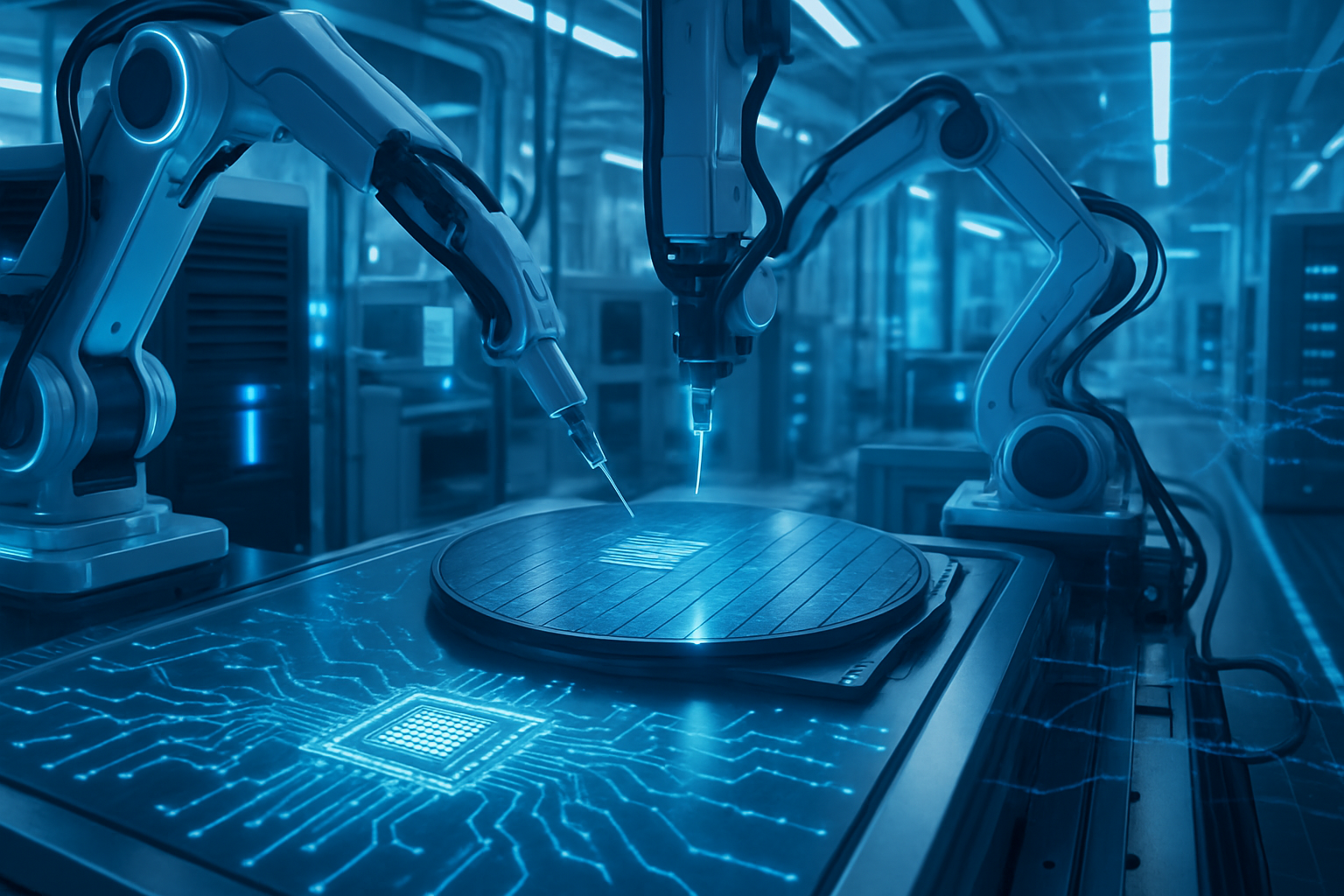
  • Revolutionizing Chip Production: Lam Research’s VECTOR TEOS 3D Ushers in a New Era of Semiconductor Manufacturing

    Revolutionizing Chip Production: Lam Research’s VECTOR TEOS 3D Ushers in a New Era of Semiconductor Manufacturing

    The landscape of semiconductor manufacturing is undergoing a profound transformation, driven by the relentless demand for more powerful and efficient chips to fuel the burgeoning fields of artificial intelligence (AI) and high-performance computing (HPC). At the forefront of this revolution is Lam Research Corporation (NASDAQ: LRCX), which has introduced a groundbreaking deposition tool: VECTOR TEOS 3D. This innovation promises to fundamentally alter how advanced chips are packaged, enabling unprecedented levels of integration and performance, and signaling a pivotal shift in the industry's ability to scale beyond traditional limitations.

    VECTOR TEOS 3D is poised to tackle some of the most formidable challenges in modern chip production, particularly those associated with 3D stacking and heterogeneous integration. By providing an ultra-thick, uniform, and void-free inter-die gapfill using specialized dielectric films, it addresses critical bottlenecks that have long hampered the advancement of next-generation chip architectures. This development is not merely an incremental improvement but a significant leap forward, offering solutions that are crucial for the continued evolution of computing power and efficiency.

    A Technical Deep Dive into VECTOR TEOS 3D's Breakthrough Capabilities

    Lam Research's VECTOR TEOS 3D stands as a testament to advanced engineering, designed specifically for the intricate demands of sophisticated semiconductor packaging. At its core, the tool employs Tetraethyl orthosilicate (TEOS) chemistry to deposit dielectric films that serve as critical structural, thermal, and mechanical support between stacked dies. These films can achieve remarkable thicknesses, up to 60 microns and scalable beyond 100 microns, a capability essential for preventing common packaging failures like delamination in highly integrated chip designs.

    What sets VECTOR TEOS 3D apart is its unparalleled ability to handle severely stressed wafers, including those exhibiting significant "bowing" or warping—a major impediment in 3D integration processes. Traditional deposition methods often struggle with such irregularities, leading to defects and reduced yields. In contrast, VECTOR TEOS 3D ensures uniform gapfill and the deposition of crack-free films, even when exceeding 30 microns in a single pass. This capability not only enhances yield by minimizing critical defects but also significantly reduces process time, delivering approximately 70% faster throughput and up to a 20% improvement in cost of ownership compared to previous-generation solutions. This efficiency is partly thanks to its quad station module (QSM) architecture, which facilitates parallel processing and alleviates production bottlenecks. Furthermore, proprietary clamping technology and an optimized pedestal design guarantee exceptional stability and uniform film deposition, even on the most challenging high-bow wafers. The system also integrates Lam Equipment Intelligence® technology for enhanced performance, reliability, and energy efficiency through smart monitoring and automation. Initial reactions from the semiconductor research community and industry experts have been overwhelmingly positive, recognizing VECTOR TEOS 3D as a crucial enabler for the next wave of chip innovation.

    Industry Impact: Reshaping the Competitive Landscape

    The introduction of VECTOR TEOS 3D by Lam Research (NASDAQ: LRCX) carries profound implications for the semiconductor industry, poised to reshape the competitive dynamics among chip manufacturers, AI companies, and tech giants. Companies heavily invested in advanced packaging, particularly those designing chips for AI and HPC, stand to benefit immensely. This includes major players like Taiwan Semiconductor Manufacturing Company (TSMC) (NYSE: TSM), Samsung Electronics (KRX: 005930), and Intel Corporation (NASDAQ: INTC), all of whom are aggressively pursuing 3D stacking and heterogeneous integration to push performance boundaries.

    The ability of VECTOR TEOS 3D to reliably produce ultra-thick, void-free dielectric films on highly stressed wafers directly addresses a critical bottleneck in manufacturing complex 3D-stacked architectures. This capability will accelerate the development and mass production of next-generation AI accelerators, high-bandwidth memory (HBM), and multi-chiplet CPUs/GPUs, giving early adopters a significant competitive edge. For AI labs and tech companies like NVIDIA Corporation (NASDAQ: NVDA), Advanced Micro Devices (NASDAQ: AMD), and Alphabet Inc. (NASDAQ: GOOGL) (via Google's custom AI chips), this technology means they can design even more ambitious and powerful silicon, confident that the manufacturing infrastructure can support their innovations. The enhanced throughput and improved cost of ownership offered by VECTOR TEOS 3D could also lead to reduced production costs for advanced chips, potentially democratizing access to high-performance computing and accelerating AI research across the board. Furthermore, this innovation could disrupt existing packaging solutions that struggle with the scale and complexity required for future designs, forcing competitors to rapidly adapt or risk falling behind in the race for advanced chip leadership.

    Wider Significance: Propelling AI's Frontier and Beyond

    VECTOR TEOS 3D's emergence arrives at a critical juncture in the broader AI landscape, where the physical limitations of traditional 2D chip scaling are becoming increasingly apparent. This technology is not merely an incremental improvement; it represents a fundamental shift in how computing power can continue to grow, moving beyond Moore's Law's historical trajectory by enabling "more than Moore" through advanced packaging. By facilitating the seamless integration of diverse chiplets and memory components in 3D stacks, it directly addresses the escalating demands of AI models that require unprecedented bandwidth, low latency, and massive computational throughput. The ability to stack components vertically brings processing and memory closer together, drastically reducing data transfer distances and energy consumption—factors that are paramount for training and deploying complex neural networks and large language models.

    The impacts extend far beyond just faster AI. This advancement underpins progress in areas like autonomous driving, advanced robotics, scientific simulations, and edge AI devices, where real-time processing and energy efficiency are non-negotiable. However, with such power comes potential concerns, primarily related to the increased complexity of design and manufacturing. While VECTOR TEOS 3D solves a critical manufacturing hurdle, the overall ecosystem for 3D integration still requires robust design tools, testing methodologies, and supply chain coordination. Comparing this to previous AI milestones, such as the development of GPUs for parallel processing or the breakthroughs in deep learning architectures, VECTOR TEOS 3D represents a foundational hardware enabler that will unlock the next generation of software innovations. It signifies that the physical infrastructure for AI is evolving in tandem with algorithmic advancements, ensuring that the ambitions of AI researchers and developers are not stifled by hardware constraints.

    Future Developments and the Road Ahead

    Looking ahead, the introduction of VECTOR TEOS 3D is expected to catalyze a cascade of developments in semiconductor manufacturing and AI. In the near term, we can anticipate wider adoption of this technology across leading logic and memory fabrication facilities globally, as chipmakers race to incorporate its benefits into their next-generation product roadmaps. This will likely lead to an acceleration in the development of more complex 3D-stacked chip architectures, with increased layers and higher integration densities. Experts predict a surge in "chiplet" designs, where multiple specialized dies are integrated into a single package, leveraging the enhanced interconnectivity and thermal management capabilities enabled by advanced dielectric gapfill.

    Potential applications on the horizon are vast, ranging from even more powerful and energy-efficient AI accelerators for data centers to compact, high-performance computing modules for edge devices and specialized processors for quantum computing. The ability to reliably stack different types of semiconductors, such as logic, memory, and specialized AI cores, will unlock entirely new possibilities for system-in-package (SiP) solutions. However, challenges remain. The industry will need to address the continued miniaturization of interconnects within 3D stacks, the thermal management of increasingly dense packages, and the development of standardized design tools and testing procedures for these complex architectures. What experts predict will happen next is a continued focus on materials science and deposition techniques to push the boundaries of film thickness, uniformity, and stress management, ensuring that manufacturing capabilities keep pace with the ever-growing ambitions of chip designers.

    A New Horizon for Chip Innovation

    Lam Research's VECTOR TEOS 3D marks a significant milestone in the history of semiconductor manufacturing, representing a critical enabler for the future of artificial intelligence and high-performance computing. The key takeaway is that this technology effectively addresses long-standing challenges in 3D stacking and heterogeneous integration, particularly the reliable deposition of ultra-thick, void-free dielectric films on highly stressed wafers. Its immediate impact is seen in enhanced yield, faster throughput, and improved cost efficiency for advanced chip packaging, providing a tangible competitive advantage to early adopters.

    This development's significance in AI history cannot be overstated; it underpins the physical infrastructure necessary for the continued exponential growth of AI capabilities, moving beyond the traditional constraints of 2D scaling. It ensures that the ambition of AI models is not limited by the hardware's ability to support them, fostering an environment ripe for further innovation. As we look to the coming weeks and months, the industry will be watching closely for the broader market adoption of VECTOR TEOS 3D, the unveiling of new chip architectures that leverage its capabilities, and how competitors respond to this technological leap. This advancement is not just about making chips smaller or faster; it's about fundamentally rethinking how computing power is constructed, paving the way for a future where AI's potential can be fully realized.

    This content is intended for informational purposes only and represents analysis of current AI developments.

    TokenRing AI delivers enterprise-grade solutions for multi-agent AI workflow orchestration, AI-powered development tools, and seamless remote collaboration platforms.
    For more information, visit https://www.tokenring.ai/.

  • Advanced Packaging: Unlocking the Next Era of Chip Performance for AI

    Advanced Packaging: Unlocking the Next Era of Chip Performance for AI

    The artificial intelligence landscape is undergoing a profound transformation, driven not just by algorithmic breakthroughs but by a quiet revolution in semiconductor manufacturing: advanced packaging. Innovations such as 3D stacking and heterogeneous integration are fundamentally reshaping how AI chips are designed and built, delivering unprecedented gains in performance, power efficiency, and form factor. These advancements are critical for overcoming the physical limitations of traditional silicon scaling, often referred to as "Moore's Law limits," and are enabling the development of the next generation of AI models, from colossal large language models (LLMs) to sophisticated generative AI.

    This shift is immediately significant because modern AI workloads demand insatiable computational power, vast memory bandwidth, and ultra-low latency, requirements that conventional 2D chip designs are increasingly struggling to meet. By allowing for the vertical integration of components and the modular assembly of specialized chiplets, advanced packaging is breaking through these bottlenecks, ensuring that hardware innovation continues to keep pace with the rapid evolution of AI software and applications.

    The Engineering Marvels: 3D Stacking and Heterogeneous Integration

    At the heart of this revolution are two interconnected yet distinct advanced packaging techniques: 3D stacking and heterogeneous integration. These methods represent a significant departure from the traditional 2D monolithic chip designs, where all components are laid out side-by-side on a single silicon die.

    3D Stacking, also known as 3D Integrated Circuits (3D ICs) or 3D packaging, involves vertically stacking multiple semiconductor dies or wafers on top of each other. The magic lies in Through-Silicon Vias (TSVs), which are vertical electrical connections passing directly through the silicon dies, allowing for direct communication and power transfer between layers. These TSVs drastically shorten interconnect distances, leading to faster data transfer speeds, reduced signal propagation delays, and significantly lower latency. For instance, TSVs can have diameters around 10µm and depths of 50µm, with pitches around 50µm. Cutting-edge techniques like hybrid bonding, which enables direct copper-to-copper (Cu-Cu) connections at the wafer level, push interconnect pitches into the single-digit micrometer range, supporting bandwidths up to 1000 GB/s. This vertical integration is crucial for High-Bandwidth Memory (HBM), where multiple DRAM dies are stacked and connected to a logic base die, providing unparalleled memory bandwidth to AI processors.

    Heterogeneous Integration, on the other hand, is the process of combining diverse semiconductor technologies, often from different manufacturers and even different process nodes, into a single, closely interconnected package. This is primarily achieved through the use of "chiplets" – smaller, specialized chips each performing a specific function (e.g., CPU, GPU, NPU, specialized memory, I/O). These chiplets are then assembled into a multi-chiplet module (MCM) or System-in-Package (SiP) using advanced packaging technologies such as 2.5D packaging. In 2.5D packaging, multiple bare dies (like a GPU and HBM stacks) are placed side-by-side on a common interposer (silicon, organic, or glass) that routes signals between them. This modular approach allows for the optimal technology to be selected for each function, balancing performance, power, and cost. For example, a high-performance logic chiplet might use a cutting-edge 3nm process, while an I/O chiplet could use a more mature, cost-effective 28nm node.

    The difference from traditional 2D monolithic designs is stark. While 2D designs rely on shrinking transistors (CMOS scaling) on a single plane, advanced packaging extends scaling by increasing functional density vertically and enabling modularity. This not only improves yield (smaller chiplets mean fewer defects impact the whole system) but also allows for greater flexibility and customization. Initial reactions from the AI research community and industry experts have been overwhelmingly positive, recognizing these advancements as "critical" and "essential for sustaining the rapid pace of AI development." They emphasize that 3D stacking and heterogeneous integration directly address the "memory wall" problem and are key to enabling specialized, energy-efficient AI hardware.

    Reshaping the AI Industry: Competitive Implications and Strategic Advantages

    The advent of advanced packaging is profoundly reshaping the competitive landscape for AI companies, tech giants, and startups alike. It is no longer just about who can design the best chip, but who can effectively integrate and package it.

    Leading foundries and advanced packaging providers like Taiwan Semiconductor Manufacturing Company (TSMC) (NYSE: TSM), Intel Corporation (NASDAQ: INTC), and Samsung Electronics Co., Ltd. (KRX: 005930) are at the forefront, making massive investments. TSMC, with its dominant CoWoS (Chip-on-Wafer-on-Substrate) and SoIC (System on Integrated Chips) technologies, is expanding capacity rapidly, aiming to become a "System Fab" offering comprehensive AI chip manufacturing. Intel, through its IDM 2.0 strategy and advanced packaging solutions like Foveros (3D stacking) and EMIB (Embedded Multi-die Interconnect Bridge, a 2.5D solution), is aggressively pursuing leadership and offering these services to external customers via Intel Foundry Services (IFS). Samsung is also restructuring its chip packaging processes for a "one-stop shop" approach, integrating memory, foundry, and advanced packaging to reduce production time and offer differentiated capabilities, as seen in its strategic partnership with OpenAI.

    AI hardware developers such as NVIDIA Corporation (NASDAQ: NVDA) and Advanced Micro Devices, Inc. (NASDAQ: AMD) are primary beneficiaries and drivers of this demand. NVIDIA's H100 and A100 series GPUs, and its newer Blackwell chips, are prime examples leveraging 2.5D CoWoS technology for unparalleled AI performance. AMD extensively employs chiplets in its Ryzen and EPYC processors, and its Instinct MI300A/X series accelerators integrate GPU, CPU, and memory chiplets using advanced 2.5D and 3D packaging techniques, including hybrid bonding for 3D V-Cache. Tech giants and hyperscalers like Alphabet Inc. (NASDAQ: GOOGL) (Google), Amazon.com, Inc. (NASDAQ: AMZN), and Microsoft Corporation (NASDAQ: MSFT) are leveraging advanced packaging for their custom AI chips (e.g., Google's Tensor Processing Units or TPUs, Microsoft's Azure Maia 100), gaining significant strategic advantages through vertical integration.

    This shift is creating a new competitive battleground where packaging prowess is a key differentiator. Companies with strong ties to leading foundries and early access to advanced packaging capacities hold a significant strategic advantage. The industry is moving from monolithic to modular designs, fundamentally altering the semiconductor value chain and redefining performance limits. This also means existing products relying solely on older 2D scaling methods will struggle to compete. For AI startups, chiplet technology lowers the barrier to entry, enabling faster innovation in specialized AI hardware by leveraging pre-designed components.

    Wider Significance: Powering the AI Revolution

    Advanced packaging innovations are not just incremental improvements; they represent a foundational shift that underpins the entire AI landscape. Their wider significance lies in their ability to address fundamental physical limitations, thereby enabling the continued rapid evolution and deployment of AI.

    Firstly, these technologies are crucial for extending Moore's Law, which has historically driven exponential growth in computing power by shrinking transistors. As transistor scaling faces increasing physical and economic limits, advanced packaging provides an alternative pathway for performance gains by increasing functional density vertically and enabling modular optimization. This ensures that the hardware infrastructure can keep pace with the escalating computational demands of increasingly complex AI models like LLMs and generative AI.

    Secondly, the ability to overcome the "memory wall" through 2.5D and 3D stacking with HBM is paramount. AI workloads are inherently memory-intensive, and the speed at which data can be moved between processors and memory often bottlenecks performance. Advanced packaging dramatically boosts memory bandwidth and reduces latency, directly translating to faster AI training and inference.

    Thirdly, heterogeneous integration fosters specialized and energy-efficient AI hardware. By allowing the combination of diverse, purpose-built processing units, manufacturers can create highly optimized chips tailored for specific AI tasks. This flexibility enables the development of energy-efficient solutions, which is critical given the massive power consumption of modern AI data centers. Chiplet-based designs can offer 30-40% lower energy consumption for the same workload compared to monolithic designs.

    However, this paradigm shift also brings potential concerns. The increased complexity of designing and manufacturing multi-chiplet, 3D-stacked systems introduces challenges in supply chain coordination, yield management, and thermal dissipation. Integrating multiple dies from different vendors requires unprecedented collaboration and standardization. While long-term costs may be reduced, initial mass-production costs for advanced packaging can be high. Furthermore, thermal management becomes a significant hurdle, as increased component density generates more heat, requiring innovative cooling solutions.

    Comparing its importance to previous AI milestones, advanced packaging stands as a hardware-centric breakthrough that complements and enables algorithmic advancements. Just as the development of GPUs (like NVIDIA's CUDA in 2006) provided the parallel processing power necessary for the deep learning revolution, advanced packaging provides the necessary physical infrastructure to realize and deploy today's sophisticated AI models at scale. It's the "unsung hero" powering the next-generation AI revolution, allowing AI to move from theoretical breakthroughs to widespread practical applications across industries.

    The Horizon: Future Developments and Uncharted Territory

    The trajectory of advanced packaging innovations points towards a future of even greater integration, modularity, and specialization, profoundly impacting the future of AI.

    In the near-term (1-5 years), we can expect broader adoption of chiplet-based designs across a wider range of processors, driven by the maturation of standards like Universal Chiplet Interconnect Express (UCIe), which will foster a more robust and interoperable chiplet ecosystem. Sophisticated heterogeneous integration, particularly 2.5D and 3D hybrid bonding, will become standard for high-performance AI and HPC systems. Hybrid bonding, with its ultra-dense, sub-10-micrometer interconnect pitches, is critical for next-generation HBM and 3D ICs. We will also see continued evolution in interposer technology, with active interposers (containing transistors) gradually replacing passive ones.

    Long-term (beyond 5 years), the industry is poised for fully modular semiconductor designs, dominated by custom chiplets optimized for specific AI workloads. A full transition to widespread 3D heterogeneous computing, including vertical stacking of GPU tiers, DRAM, and integrated components using TSVs, will become commonplace. The integration of emerging technologies like quantum computing and photonics, including co-packaged optics (CPO) for ultra-high bandwidth communication, will further push the boundaries. AI itself will play an increasingly crucial role in optimizing chiplet-based semiconductor design, leveraging machine learning for power, performance, and thermal efficiency layouts.

    These advancements will unlock new potential applications and use cases for AI. High-Performance Computing (HPC) and data centers will see unparalleled speed and energy efficiency, crucial for the ever-growing demands of generative AI and LLMs. Edge AI devices will benefit from the modularity and power efficiency, enabling real-time processing in autonomous systems, industrial IoT, and portable devices. Specialized AI accelerators will become even more powerful and energy-efficient, while healthcare, quantum computing, and neuromorphic computing will leverage these chips for transformative applications.

    However, significant challenges still need to be addressed. Thermal management remains a critical hurdle, as increased power density in 3D ICs creates hotspots, necessitating innovative cooling solutions and integrated thermal design workflows. Power delivery to multiple stacked dies is also complex. Manufacturing complexities, ensuring high yields in bonding processes, and the need for advanced Electronic Design Automation (EDA) tools capable of handling multi-dimensional optimization are ongoing concerns. The lack of universal standards for interconnects and a shortage of specialized packaging engineers also pose barriers.

    Experts are overwhelmingly positive, predicting that advanced packaging will be a critical front-end innovation driver, fundamentally powering the AI revolution and extending performance scaling beyond traditional transistor miniaturization. The package itself will become a crucial point of innovation and a differentiator for system performance. The market for advanced packaging, especially high-end 2.5D/3D approaches, is projected for significant growth, reaching approximately $75 billion by 2033 from an estimated $15 billion in 2025.

    A New Era of AI Hardware: The Path Forward

    The revolution in advanced semiconductor packaging, encompassing 3D stacking and heterogeneous integration, marks a pivotal moment in the history of Artificial Intelligence. It is the essential hardware enabler that ensures the relentless march of AI innovation can continue, pushing past the physical constraints that once seemed insurmountable.

    The key takeaways are clear: advanced packaging is critical for sustaining AI innovation beyond Moore's Law, overcoming the "memory wall," enabling specialized and efficient AI hardware, and driving unprecedented gains in performance, power, and cost efficiency. This isn't just an incremental improvement; it's a foundational shift that redefines how computational power is delivered, moving from monolithic scaling to modular optimization.

    The long-term impact will see chiplet-based designs become the new standard for complex AI systems, leading to sustained acceleration in AI capabilities, widespread integration of co-packaged optics, and an increasing reliance on AI-driven design automation. This will unlock more powerful AI models, broader application across industries, and the realization of truly intelligent systems.

    In the coming weeks and months, watch for accelerated adoption of 2.5D and 3D hybrid bonding as standard practice, particularly for high-performance AI and HPC. Keep an eye on the maturation of the chiplet ecosystem and interconnect standards like UCIe, which will foster greater interoperability and flexibility. Significant investments from industry giants like TSMC, Intel, and Samsung are aimed at easing the advanced packaging capacity crunch, which is expected to gradually improve supply chain stability for AI hardware manufacturers into late 2025 and 2026. Furthermore, innovations in thermal management, panel-level packaging, and novel substrates like glass-core technology will continue to shape the future. The convergence of these innovations promises a new era of AI hardware, one that is more powerful, efficient, and adaptable than ever before.


    This content is intended for informational purposes only and represents analysis of current AI developments.

    TokenRing AI delivers enterprise-grade solutions for multi-agent AI workflow orchestration, AI-powered development tools, and seamless remote collaboration platforms. For more information, visit https://www.tokenring.ai/.

  • Advanced Packaging: The Unsung Hero Powering the Next-Generation AI Revolution

    Advanced Packaging: The Unsung Hero Powering the Next-Generation AI Revolution

    As Artificial Intelligence (AI) continues its relentless march into every facet of technology, the demands placed on underlying hardware have escalated to unprecedented levels. Traditional chip design, once the sole driver of performance gains through transistor miniaturization, is now confronting its physical and economic limits. In this new era, an often- overlooked yet critically important field – advanced packaging technologies – has emerged as the linchpin for unlocking the true potential of next-generation AI chips, fundamentally reshaping how we design, build, and optimize computing systems for the future. These innovations are moving far beyond simply protecting a chip; they are intricate architectural feats that dramatically enhance power efficiency, performance, and cost-effectiveness.

    This paradigm shift is driven by the insatiable appetite of modern AI workloads, particularly large generative language models, for immense computational power, vast memory bandwidth, and high-speed interconnects. Advanced packaging technologies provide a crucial "More than Moore" pathway, allowing the industry to continue scaling performance even as traditional silicon scaling slows. By enabling the seamless integration of diverse, specialized components into a single, optimized package, advanced packaging is not just an incremental improvement; it is a foundational transformation that directly addresses the "memory wall" bottleneck and fuels the rapid advancement of AI capabilities across various sectors.

    The Technical Marvels Underpinning AI's Leap Forward

    The core of this revolution lies in several sophisticated packaging techniques that enable a new level of integration and performance. These technologies depart significantly from conventional 2D packaging, which typically places individual chips on a planar Printed Circuit Board (PCB), leading to longer signal paths and higher latency.

    2.5D Packaging, exemplified by Taiwan Semiconductor Manufacturing Company (TSMC) (NYSE: TSM)'s CoWoS (Chip-on-Wafer-on-Substrate) and Intel (NASDAQ: INTC)'s Embedded Multi-die Interconnect Bridge (EMIB), involves placing multiple active dies—such as a powerful GPU and High-Bandwidth Memory (HBM) stacks—side-by-side on a high-density silicon or organic interposer. This interposer acts as a miniature, high-speed wiring board, drastically shortening interconnect distances from centimeters to millimeters. This reduction in path length significantly boosts signal integrity, lowers latency, and reduces power consumption for inter-chip communication. NVIDIA (NASDAQ: NVDA)'s H100 and A100 series GPUs, along with Advanced Micro Devices (AMD) (NASDAQ: AMD)'s Instinct MI300A accelerators, are prominent examples leveraging 2.5D integration for unparalleled AI performance.

    3D Packaging, or 3D-IC, takes vertical integration to the next level by stacking multiple active semiconductor dies directly on top of each other. These layers are interconnected through Through-Silicon Vias (TSVs), tiny electrical conduits etched directly through the silicon. This vertical stacking minimizes footprint, maximizes integration density, and offers the shortest possible interconnects, leading to superior speed and power efficiency. Samsung (KRX: 005930)'s X-Cube and Intel's Foveros are leading 3D packaging technologies, with AMD utilizing TSMC's 3D SoIC (System-on-Integrated-Chips) for its Ryzen 7000X3D CPUs and EPYC processors.

    A cutting-edge advancement, Hybrid Bonding, forms direct, molecular-level connections between metal pads of two or more dies or wafers, eliminating the need for traditional solder bumps. This technology is critical for achieving interconnect pitches below 10 µm, with copper-to-copper (Cu-Cu) hybrid bonding reaching single-digit micrometer ranges. Hybrid bonding offers vastly higher interconnect density, shorter wiring distances, and superior electrical performance, leading to thinner, faster, and more efficient chips. NVIDIA's Hopper and Blackwell series AI GPUs, along with upcoming Apple (NASDAQ: AAPL) M5 series AI chips, are expected to heavily rely on hybrid bonding.

    Finally, Fan-Out Wafer-Level Packaging (FOWLP) is a cost-effective, high-performance solution. Here, individual dies are repositioned on a carrier wafer or panel, with space around each die for "fan-out." A Redistribution Layer (RDL) is then formed over the entire molded area, creating fine metal traces that "fan out" from the chip's original I/O pads to a larger array of external contacts. This approach allows for a higher I/O count, better signal integrity, and a thinner package compared to traditional fan-in packaging. TSMC's InFO (Integrated Fan-Out) technology, famously used in Apple's A-series processors, is a prime example, and NVIDIA is reportedly considering Fan-Out Panel Level Packaging (FOPLP) for its GB200 AI server chips due to CoWoS capacity constraints.

    The initial reaction from the AI research community and industry experts has been overwhelmingly positive. Advanced packaging is widely recognized as essential for extending performance scaling beyond traditional transistor miniaturization, addressing the "memory wall" by dramatically increasing bandwidth, and enabling new, highly optimized heterogeneous computing architectures crucial for modern AI. The market for advanced packaging, especially for high-end 2.5D/3D approaches, is projected to experience significant growth, reaching tens of billions of dollars by the end of the decade.

    Reshaping the AI Industry: A New Competitive Landscape

    The advent and rapid evolution of advanced packaging technologies are fundamentally reshaping the competitive dynamics within the AI industry, creating new opportunities and strategic imperatives for tech giants and startups alike.

    Companies that stand to benefit most are those heavily invested in custom AI hardware and high-performance computing. Tech giants like Google (NASDAQ: GOOGL), Amazon (NASDAQ: AMZN), and Microsoft (NASDAQ: MSFT) are leveraging advanced packaging for their custom AI chips (such as Google's Tensor Processing Units or TPUs and Microsoft's Azure Maia 100) to optimize hardware and software for their specific cloud-based AI workloads. This vertical integration provides them with significant strategic advantages in performance, latency, and energy efficiency. NVIDIA and AMD, as leading providers of AI accelerators, are at the forefront of adopting and driving these technologies, with NVIDIA's CEO Jensen Huang emphasizing advanced packaging as critical for maintaining a competitive edge.

    The competitive implications for major AI labs and tech companies are profound. TSMC (NYSE: TSM) has solidified its dominant position in advanced packaging with technologies like CoWoS and SoIC, rapidly expanding capacity to meet escalating global demand for AI chips. This positions TSMC as a "System Fab," offering comprehensive AI chip manufacturing services and enabling collaborations with innovative AI companies. Intel (NASDAQ: INTC), through its IDM 2.0 strategy and advanced packaging solutions like Foveros and EMIB, is also aggressively pursuing leadership in this space, offering these services to external customers via Intel Foundry Services (IFS). Samsung (KRX: 005930) is restructuring its chip packaging processes, aiming for a "one-stop shop" approach for AI chip production, integrating memory, foundry, and advanced packaging to reduce production time and offering differentiated capabilities, as evidenced by its strategic partnership with OpenAI.

    This shift also brings potential disruption to existing products and services. The industry is moving away from monolithic chip designs towards modular chiplet architectures, fundamentally altering the semiconductor value chain. The focus is shifting from solely front-end manufacturing to elevating the role of system design and emphasizing back-end design and packaging as critical drivers of performance and differentiation. This enables the creation of new, more capable AI-driven applications across industries, while also necessitating a re-evaluation of business models across the entire chipmaking ecosystem. For smaller AI startups, chiplet technology, facilitated by advanced packaging, lowers the barrier to entry by allowing them to leverage pre-designed components, reducing R&D time and costs, and fostering greater innovation in specialized AI hardware.

    A New Era for AI: Broader Significance and Strategic Imperatives

    Advanced packaging technologies represent a strategic pivot in the AI landscape, extending beyond mere hardware improvements to address fundamental challenges and enable the next wave of AI innovation. This development fits squarely within broader AI trends, particularly the escalating computational demands of large language models and generative AI. As traditional Moore's Law scaling encounters its limits, advanced packaging provides the crucial pathway for continued performance gains, effectively extending the lifespan of exponential progress in computing power for AI.

    The impacts are far-reaching: unparalleled performance enhancements, significant power efficiency gains (with chiplet-based designs offering 30-40% lower energy consumption for the same workload), and ultimately, cost advantages through improved manufacturing yields and optimized process node utilization. Furthermore, advanced packaging enables greater miniaturization, critical for edge AI and autonomous systems, and accelerates time-to-market for new AI hardware. It also enhances thermal management, a vital consideration for high-performance AI processors that generate substantial heat.

    However, this transformative shift is not without its concerns. The manufacturing complexity and associated costs of advanced packaging remain significant hurdles, potentially leading to higher production expenses and challenges in yield management. The energy-intensive nature of these processes also raises environmental impact concerns. Additionally, for AI to further optimize packaging processes, there's a pressing need for more robust data sharing and standardization across the industry, as proprietary information often limits collaborative advancements.

    Comparing this to previous AI milestones, advanced packaging represents a hardware-centric breakthrough that directly addresses the physical limitations encountered by earlier algorithmic advancements (like neural networks and deep learning) and traditional transistor scaling. It's a paradigm shift that moves away from monolithic chip designs towards modular chiplet architectures, offering a level of flexibility and customization at the hardware layer akin to the flexibility offered by software frameworks in early AI. This strategic importance cannot be overstated; it has become a competitive differentiator, democratizing AI hardware development by lowering barriers for startups, and providing the scalability and adaptability necessary for future AI systems.

    The Horizon: Glass, Light, and Unprecedented Integration

    The future of advanced packaging for AI chips promises even more revolutionary developments, pushing the boundaries of integration, performance, and efficiency.

    In the near term (next 1-3 years), we can expect intensified adoption of High-Bandwidth Memory (HBM), particularly HBM4, with increased capacity and speed to support ever-larger AI models. Hybrid bonding will become a cornerstone for high-density integration, and heterogeneous integration with chiplets will continue to dominate, allowing for modular and optimized AI accelerators. Emerging technologies like backside power delivery will also gain traction, improving power efficiency and signal integrity.

    Looking further ahead (beyond 3 years), truly transformative changes are on the horizon. Co-Packaged Optics (CPO), which integrates optical I/O directly with AI accelerators, is poised to replace traditional copper interconnects. This will drastically reduce power consumption and latency in multi-rack AI clusters and data centers, enabling faster and more efficient communication crucial for massive data movement.

    Perhaps one of the most significant long-term developments is the emergence of Glass-Core Substrates. These are expected to become a new standard, offering superior electrical, thermal, and mechanical properties compared to organic substrates. Glass provides ultra-low warpage, superior signal integrity, better thermal expansion matching with silicon, and enables higher-density packaging (supporting sub-2-micron vias). Intel projects complete glass substrate solutions in the second half of this decade, with companies like Samsung, Corning, and TSMC actively investing in this technology. While challenges exist, such as the brittleness of glass and manufacturing costs, its advantages for AI, HPC, and 5G are undeniable.

    Panel-Level Packaging (PLP) is also gaining momentum as a cost-effective alternative to wafer-level packaging, utilizing larger panel substrates to increase throughput and reduce manufacturing costs for high-performance AI packages.

    Experts predict a dynamic period of innovation, with the advanced packaging market projected to grow significantly, reaching approximately $80 billion by 2030. The package itself will become a crucial point of innovation and a differentiation driver for system performance, with value creation migrating towards companies that can design and integrate complex, system-level chip solutions. The accelerated adoption of hybrid bonding, TSVs, and advanced interposers is expected, particularly for high-end AI accelerators and data center CPUs. Major investments from key players like TSMC, Samsung, and Intel underscore the strategic importance of these technologies, with Intel's roadmap for glass substrates pushing Moore's Law beyond 2030. The integration of AI into electronic design automation (EDA) processes will further accelerate multi-die innovations, making chiplets a commercial reality.

    A New Foundation for AI's Future

    In conclusion, advanced packaging technologies are no longer merely a back-end manufacturing step; they are a critical front-end innovation driver, fundamentally powering the AI revolution. The convergence of 2.5D/3D integration, HBM, heterogeneous integration, the nascent promise of Co-Packaged Optics, and the revolutionary potential of glass-core substrates are unlocking unprecedented levels of performance and efficiency. These advancements are essential for the continued development of more sophisticated AI models, the widespread integration of AI across industries, and the realization of truly intelligent and autonomous systems.

    As we move forward, the semiconductor industry will continue its relentless pursuit of innovation in packaging, driven by the insatiable demands of AI. Key areas to watch in the coming weeks and months include further announcements from leading foundries on capacity expansion for advanced packaging, new partnerships between AI hardware developers and packaging specialists, and the first commercial deployments of emerging technologies like glass-core substrates and CPO in high-performance AI systems. The future of AI is intrinsically linked to the ingenuity and advancements in how we package our chips, making this field a central pillar of technological progress.

    This content is intended for informational purposes only and represents analysis of current AI developments.

    TokenRing AI delivers enterprise-grade solutions for multi-agent AI workflow orchestration, AI-powered development tools, and seamless remote collaboration platforms. For more information, visit https://www.tokenring.ai/.

  • The Foundry Frontier: A Trillion-Dollar Battleground for AI Supremacy

    The Foundry Frontier: A Trillion-Dollar Battleground for AI Supremacy

    The global semiconductor foundry market is currently undergoing a seismic shift, fueled by the insatiable demand for advanced artificial intelligence (AI) chips and an intensifying geopolitical landscape. This critical sector, responsible for manufacturing the very silicon that powers our digital world, is witnessing an unprecedented race among titans like Taiwan Semiconductor Manufacturing Company (TSMC) (TPE: 2330), Samsung Foundry (KRX: 005930), and Intel Foundry Services (NASDAQ: INTC), alongside the quiet emergence of new players. As of October 3, 2025, the competitive stakes have never been higher, with each foundry vying for technological leadership and a dominant share in the burgeoning AI hardware ecosystem.

    This fierce competition is not merely about market share; it's about dictating the pace of AI innovation, enabling the next generation of intelligent systems, and securing national technological sovereignty. The advancements in process nodes, transistor architectures, and advanced packaging are directly translating into more powerful and efficient AI accelerators, which are indispensable for everything from large language models to autonomous vehicles. The immediate significance of these developments lies in their profound impact on the entire tech industry, from hyperscale cloud providers to nimble AI startups, as they scramble to secure access to the most advanced manufacturing capabilities.

    Engineering the Future: The Technical Arms Race in Silicon

    The core of the foundry battle lies in relentless technological innovation, pushing the boundaries of physics and engineering to create ever-smaller, faster, and more energy-efficient chips. TSMC, Samsung Foundry, and Intel Foundry Services are each employing distinct strategies to achieve leadership.

    TSMC, the undisputed market leader, has maintained its dominance through consistent execution and a pure-play foundry model. Its 3nm (N3) technology, still utilizing FinFET architecture, has been in volume production since late 2022, with an expanded portfolio including N3E, N3P, and N3X tailored for various applications, including high-performance computing (HPC). Critically, TSMC is on track for mass production of its 2nm (N2) node in late 2025, which will mark its transition to nanosheet transistors, a form of Gate-All-Around (GAA) FET. Beyond wafer fabrication, TSMC's CoWoS (Chip-on-Wafer-on-Substrate) 2.5D packaging technology and SoIC (System-on-Integrated-Chips) 3D stacking are crucial for AI accelerators, offering superior interconnectivity and bandwidth. TSMC is aggressively expanding its CoWoS capacity, which is fully booked until 2025, and plans to increase SoIC capacity eightfold by 2026.

    Samsung Foundry has positioned itself as an innovator, being the first to introduce GAAFET technology at the 3nm node with its MBCFET (Multi-Bridge Channel FET) in mid-2022. This early adoption of GAAFETs offers superior electrostatic control and scalability compared to FinFETs, promising significant improvements in power usage and performance. Samsung is aggressively developing its 2nm (SF2) and 1.4nm nodes, with SF2Z (2nm) featuring a backside power delivery network (BSPDN) slated for 2027. Samsung's advanced packaging solutions, I-Cube (2.5D) and X-Cube (3D), are designed to compete with TSMC's offerings, aiming to provide a "one-stop shop" for AI chip production by integrating memory, foundry, and packaging services, thereby reducing manufacturing times by 20%.

    Intel Foundry Services (IFS), a relatively newer entrant as a pure-play foundry, is making an aggressive push with its "five nodes in four years" plan. Its Intel 18A (1.8nm) process, currently in "risk production" as of April 2025, is a cornerstone of this strategy, featuring RibbonFET (Intel's GAAFET implementation) and PowerVia, an industry-first backside power delivery technology. PowerVia separates power and signal lines, improving cell utilization and reducing power delivery droop. Intel also boasts advanced packaging technologies like Foveros (3D stacking, enabling logic-on-logic integration) and EMIB (Embedded Multi-die Interconnect Bridge, a 2.5D solution). Intel has been an early adopter of High-NA EUV lithography, receiving and assembling the first commercial ASML TWINSCAN EXE:5000 system in its R&D facility, positioning itself to use it for its 14A process. This contrasts with TSMC, which is evaluating its High-NA EUV adoption more cautiously, planning integration for its A14 (1.4nm) process around 2027.

    The AI research community and industry experts have largely welcomed these technical breakthroughs, recognizing them as foundational enablers for the next wave of AI. The shift to GAA transistors and innovations in backside power delivery are seen as crucial for developing smaller, more powerful, and energy-efficient chips necessary for demanding AI workloads. The expansion of advanced packaging capacity, particularly CoWoS and 3D stacking, is viewed as a critical step to alleviate bottlenecks in the AI supply chain, with Intel's Foveros offering a potential alternative to TSMC's CoWoS crunch. However, concerns remain regarding the immense manufacturing complexity, high costs, and yield management challenges associated with these cutting-edge technologies.

    Reshaping the AI Ecosystem: Corporate Impact and Strategic Advantages

    The intense competition and rapid advancements in the semiconductor foundry market are fundamentally reshaping the landscape for AI companies, tech giants, and startups alike, creating both immense opportunities and significant challenges.

    Leading fabless AI chip designers like NVIDIA (NASDAQ: NVDA) and Advanced Micro Devices (AMD) (NASDAQ: AMD) are the primary beneficiaries of these cutting-edge foundry capabilities. NVIDIA, with its dominant position in AI GPUs and its CUDA software platform, relies heavily on TSMC's advanced nodes and CoWoS packaging to produce its high-performance AI accelerators. AMD is fiercely challenging NVIDIA with its MI300X chip, also leveraging advanced foundry technologies to position itself as a full-stack AI and data center rival. Access to TSMC's capacity, which accounts for approximately 90% of the world's most sophisticated AI chips, is a critical competitive advantage for these companies.

    Tech giants with their own custom AI chip designs, such as Alphabet (Google) (NASDAQ: GOOGL) with its TPUs, Microsoft (NASDAQ: MSFT), and Apple (NASDAQ: AAPL), are also profoundly impacted. These companies increasingly design their own application-specific integrated circuits (ASICs) to optimize performance for specific AI workloads, reduce reliance on third-party suppliers, and achieve better power efficiency. Google's partnership with TSMC for its in-house AI chips highlights the foundry's indispensable role. Microsoft's decision to utilize Intel's 18A process for a chip design signals a move towards diversifying its sourcing and leveraging Intel's re-emerging foundry capabilities. Apple consistently relies on TSMC for its advanced mobile and AI processors, ensuring its leadership in on-device AI. Qualcomm (NASDAQ: QCOM) is also a key player, focusing on edge AI solutions with its Snapdragon AI processors.

    The competitive implications are significant. NVIDIA faces intensified competition from AMD and the custom chip efforts of tech giants, prompting it to explore diversified manufacturing options, including a potential partnership with Intel. AMD's aggressive push with its MI300X and focus on a robust software ecosystem aims to chip away at NVIDIA's market share. For the foundries themselves, TSMC's continued dominance in advanced nodes and packaging ensures its central role in the AI supply chain, with its revenue expected to grow significantly due to "extremely robust" AI demand. Samsung Foundry's "one-stop shop" approach aims to attract customers seeking integrated solutions, while Intel Foundry Services is vying to become a credible alternative, bolstered by government support like the CHIPS Act.

    These developments are not disrupting existing products as much as they are accelerating and enhancing them. Faster and more efficient AI chips enable more powerful AI applications across industries, from autonomous vehicles and robotics to personalized medicine. There is a clear shift towards domain-specific architectures (ASICs, specialized GPUs) meticulously crafted for AI tasks. The push for diversified supply chains, driven by geopolitical concerns, could disrupt traditional dependencies and lead to more regionalized manufacturing, potentially increasing costs but enhancing resilience. Furthermore, the enormous computational demands of AI are forcing a focus on energy efficiency in chip design and manufacturing, which could disrupt current energy infrastructures and drive sustainable innovation. For AI startups, while the high cost of advanced chip design and manufacturing remains a barrier, the emergence of specialized accelerators and foundry programs (like Intel's "Emerging Business Initiative" with Arm) offers avenues for innovation in niche AI markets.

    A New Era of AI: Wider Significance and Global Stakes

    The future of the semiconductor foundry market is deeply intertwined with the broader AI landscape, acting as a foundational pillar for the ongoing AI revolution. This dynamic environment is not just shaping technological progress but also influencing global economic power, national security, and societal well-being.

    The escalating demand for specialized AI hardware is a defining trend. Generative AI, in particular, has driven an unprecedented surge in the need for high-performance, energy-efficient chips. By 2025, AI-related semiconductors are projected to account for nearly 20% of all semiconductor demand, with the global AI chip market expected to reach $372 billion by 2032. This shift from general-purpose CPUs to specialized GPUs, NPUs, TPUs, and ASICs is critical for handling complex AI workloads efficiently. NVIDIA's GPUs currently dominate approximately 80% of the AI GPU market, but the rise of custom ASICs from tech giants and the growth of edge AI accelerators for on-device processing are diversifying the market.

    Geopolitical considerations have elevated the semiconductor industry to the forefront of national security. The "chip war," primarily between the US and China, highlights the strategic importance of controlling advanced semiconductor technology. Export controls imposed by the US aim to limit China's access to cutting-edge AI chips and manufacturing equipment, prompting China to heavily invest in domestic production and R&D to achieve self-reliance. This rivalry is driving a global push for supply chain diversification and the establishment of new manufacturing hubs in North America and Europe, supported by significant government incentives like the US CHIPS Act. The ability to design and manufacture advanced chips domestically is now considered crucial for national security and technological sovereignty, making the semiconductor supply chain a critical battleground in the race for AI supremacy.

    The impacts on the tech industry are profound, driving unprecedented growth and innovation in semiconductor design and manufacturing. AI itself is being integrated into chip design and production processes to optimize yields and accelerate development. For society, the deep integration of AI enabled by these chips promises advancements across healthcare, smart cities, and climate modeling. However, this also brings significant concerns. The extreme concentration of advanced logic chip manufacturing in TSMC, particularly in Taiwan, creates a single point of failure that could paralyze global AI infrastructure in the event of geopolitical conflict or natural disaster. The fragmentation of supply chains due to geopolitical tensions is likely to increase costs for semiconductor production and, consequently, for AI hardware.

    Furthermore, the environmental impact of semiconductor manufacturing and AI's immense energy consumption is a growing concern. Chip fabrication facilities consume vast amounts of ultrapure water, with TSMC alone reporting 101 million cubic meters in 2023. The energy demands of AI, particularly from data centers running powerful accelerators, are projected to cause a 300% increase in CO2 emissions between 2025 and 2029. These environmental challenges necessitate urgent innovation in sustainable manufacturing practices and energy-efficient chip designs. Compared to previous AI milestones, which often focused on algorithmic breakthroughs, the current era is defined by the critical role of specialized hardware, intense geopolitical stakes, and an unprecedented scale of demand and investment, coupled with a heightened awareness of environmental responsibilities.

    The Road Ahead: Future Developments and Predictions

    The future of the semiconductor foundry market over the next decade will be characterized by continued technological leaps, intense competition, and a rebalancing of global supply chains, all driven by the relentless march of AI.

    In the near term (1-3 years, 2025-2027), we can expect TSMC to begin mass production of its 2nm (N2) chips in late 2025, with Intel also targeting 2nm production by 2026. Samsung will continue its aggressive pursuit of 2nm GAA technology. The 3nm segment is anticipated to see the highest compound annual growth rate (CAGR) due to its optimal balance of performance and power efficiency for AI, 5G, IoT, and automotive applications. Advanced packaging technologies, including 2.5D and 3D integration, chiplets, and CoWoS, will become even more critical, with the market for advanced packaging expected to double by 2030 and potentially surpass traditional packaging revenue by 2026. High-Bandwidth Memory (HBM) customization will be a significant trend, with HBM revenue projected to soar by up to 70% in 2025, driven by large language models and AI accelerators. The global semiconductor market is expected to grow by 15% in 2025, reaching approximately $697 billion, with AI remaining the primary catalyst.

    Looking further ahead (3-10 years, 2028-2035), the industry will push beyond 2nm to 1.6nm (TSMC's A16 in late 2026) and even 1.4nm (Intel's target by 2027, Samsung's by 2027). A holistic approach to chip architecture, integrating advanced packaging, memory, and specialized accelerators, will become paramount. Sustainability will transition from a concern to a core innovation driver, with efforts to reduce water usage, energy consumption, and carbon emissions in manufacturing processes. AI itself will play an increasing role in optimizing chip design, accelerating development cycles, and improving yield management. The global semiconductor market is projected to surpass $1 trillion by 2030, with the foundry market reaching $258.27 billion by 2032. Regional rebalancing of supply chains, with countries like China aiming to lead in foundry capacity by 2030, will become the new norm, driven by national security priorities.

    Potential applications and use cases on the horizon are vast, ranging from even more powerful AI accelerators for data centers and neuromorphic computing to advanced chips for 5G/6G communication infrastructure, electric and autonomous vehicles, sophisticated IoT devices, and immersive augmented/extended reality experiences. Challenges that need to be addressed include achieving high yield rates on increasingly complex advanced nodes, managing the immense capital expenditure for new fabs, and mitigating the significant environmental impact of manufacturing. Geopolitical stability remains a critical concern, with the potential for conflict in key manufacturing regions posing an existential threat to the global tech supply chain. The industry also faces a persistent talent shortage in design, manufacturing, and R&D.

    Experts predict an "AI supercycle" that will continue to drive robust growth and reshape the semiconductor industry. TSMC is expected to maintain its leadership in advanced chip manufacturing and packaging (especially 3nm, 2nm, and CoWoS) for the foreseeable future, making it the go-to foundry for AI and HPC. The real battle for second place in advanced foundry revenue will be between Samsung and Intel, with Intel aiming to become the second-largest foundry by 2030. Technological breakthroughs will focus on more specialized AI accelerators, further advancements in 2.5D and 3D packaging (with HBM4 expected in late 2025), and the widespread adoption of new transistor architectures and backside power delivery networks. AI will also be increasingly integrated into the semiconductor design and manufacturing workflow, optimizing every stage from conception to production.

    The Silicon Crucible: A Defining Moment for AI

    The semiconductor foundry market stands as the silicon crucible of the AI revolution, a battleground where technological prowess, economic might, and geopolitical strategies converge. The fierce competition among TSMC, Samsung Foundry, and Intel Foundry Services, combined with the strategic rise of other players, is not just about producing smaller transistors; it's about enabling the very infrastructure that will define the future of artificial intelligence.

    The key takeaways are clear: TSMC maintains its formidable lead in advanced nodes and packaging, essential for today's most demanding AI chips. Samsung is aggressively pursuing an integrated "one-stop shop" approach, leveraging its memory and packaging expertise. Intel is making a determined comeback, betting on its 18A process, RibbonFET, PowerVia, and early adoption of High-NA EUV to regain process leadership. The demand for specialized AI hardware is skyrocketing, driving unprecedented investments and innovation across the board. However, this progress is shadowed by significant concerns: the precarious concentration of advanced manufacturing, the escalating costs of cutting-edge technology, and the substantial environmental footprint of chip production. Geopolitical tensions, particularly the US-China tech rivalry, further complicate this landscape, pushing for a more diversified but potentially less efficient global supply chain.

    This development's significance in AI history cannot be overstated. Unlike earlier AI milestones driven primarily by algorithmic breakthroughs, the current era is defined by the foundational role of advanced hardware. The ability to manufacture these complex chips is now a critical determinant of national power and technological leadership. The challenges of cost, yield, and sustainability will require collaborative global efforts, even amidst intense competition.

    In the coming weeks and months, watch for further announcements regarding process node roadmaps, especially around TSMC's 2nm progress and Intel's 18A yields. Monitor the strategic partnerships and customer wins for Samsung and Intel as they strive to chip away at TSMC's dominance. Pay close attention to the development and deployment of High-NA EUV lithography, as it will be critical for future sub-2nm nodes. Finally, observe how governments continue to shape the global semiconductor landscape through subsidies and trade policies, as the "chip war" fundamentally reconfigures the AI supply chain.


    This content is intended for informational purposes only and represents analysis of current AI developments.

    TokenRing AI delivers enterprise-grade solutions for multi-agent AI workflow orchestration, AI-powered development tools, and seamless remote collaboration platforms. For more information, visit https://www.tokenring.ai/.

  • The New Era of Silicon: Advanced Packaging and Chiplets Revolutionize AI Performance

    The New Era of Silicon: Advanced Packaging and Chiplets Revolutionize AI Performance

    The semiconductor industry is undergoing a profound transformation, driven by the escalating demands of Artificial Intelligence (AI) for unprecedented computational power, speed, and efficiency. At the heart of this revolution are advancements in chip packaging and the emergence of chiplet technology, which together are extending performance scaling beyond traditional transistor miniaturization. These innovations are not merely incremental improvements but represent a foundational shift that is redefining how computing systems are built and optimized for the AI era, with significant implications for the tech landscape as of October 2025.

    This critical juncture is characterized by a rapid evolution in chip packaging technologies and the widespread adoption of chiplet architectures, collectively pushing the boundaries of performance scaling beyond traditional transistor miniaturization. This shift is enabling the creation of more powerful, efficient, and specialized AI hardware, directly addressing the limitations of traditional monolithic chip designs and the slowing of Moore's Law.

    Technical Foundations of the AI Hardware Revolution

    The advancements driving this new era of silicon are multifaceted, encompassing sophisticated packaging techniques, groundbreaking lithography systems, and a paradigm shift in chip design.

    Nikon's DSP-100 Digital Lithography System: Precision for Advanced Packaging

    Nikon has introduced a pivotal tool for advanced packaging with its Digital Lithography System DSP-100. Orders for this system commenced in July 2025, with a scheduled release in Nikon's (TYO: 7731) fiscal year 2026. The DSP-100 is specifically designed for back-end semiconductor manufacturing processes, supporting next-generation chiplet integrations and heterogeneous packaging applications with unparalleled precision and scalability.

    A standout feature is its maskless technology, which utilizes a spatial light modulator (SLM) to directly project circuit patterns onto substrates. This eliminates the need for photomasks, thereby reducing production costs, shortening development times, and streamlining the manufacturing process. The system supports large square substrates up to 600x600mm, a significant advancement over the limitations of 300mm wafers. For 100mm-square packages, the DSP-100 can achieve up to nine times higher productivity per substrate compared to using 300mm wafers, processing up to 50 panels per hour. It delivers a high resolution of 1.0μm Line/Space (L/S) and excellent overlay accuracy of ≤±0.3μm, crucial for the increasingly fine circuit patterns in advanced packages. This innovation directly addresses the rising demand for high-performance AI devices in data centers by enabling more efficient and cost-effective advanced packaging.

    It is important to clarify that while Nikon has a history of extensive research in Extreme Ultraviolet (EUV) lithography, it is not a current commercial provider of EUV systems for leading-edge chip fabrication. The DSP-100 focuses on advanced packaging rather than the sub-3nm patterning of individual chiplets themselves, a domain largely dominated by ASML (AMS: ASML).

    Chiplet Technology: Modular Design for Unprecedented Performance

    Chiplet technology represents a paradigm shift from monolithic chip design, where all functionalities are integrated onto a single large die, to a modular "lego-block" approach. Small, specialized integrated circuits (ICs), or chiplets, perform specific tasks (e.g., compute, memory, I/O, AI accelerators) and are interconnected within a single package.

    This modularity offers several architectural benefits over monolithic designs:

    • Improved Yield and Cost Efficiency: Manufacturing smaller chiplets significantly increases the likelihood of producing defect-free dies, boosting overall yield and allowing for the selective use of expensive advanced process nodes only for critical components.
    • Enhanced Performance and Power Efficiency: By allowing each chiplet to be designed and fabricated with the most suitable process technology for its specific function, overall system performance can be optimized. Close proximity of chiplets within advanced packages, facilitated by high-bandwidth and low-latency interconnects, dramatically reduces signal travel time and power consumption.
    • Greater Scalability and Customization: Designers can mix and match chiplets to create highly customized solutions tailored for diverse AI applications, from high-performance computing (HPC) to edge AI, and for handling the escalating complexity of large language models (LLMs).
    • Reduced Time-to-Market: Reusing validated chiplets across multiple products or generations drastically cuts down development cycles.
    • Overcoming Reticle Limits: Chiplets effectively circumvent the physical size limitations (reticle limits) inherent in manufacturing monolithic dies.

    Advanced Packaging Techniques: The Glue for Chiplets

    Advanced packaging techniques are indispensable for the effective integration of chiplets, providing the necessary high-density interconnections, efficient power delivery, and robust thermal management required for high-performance AI systems.

    • 2.5D Packaging: In this approach, multiple components, such as CPU/GPU dies and High-Bandwidth Memory (HBM) stacks, are placed side-by-side on a silicon or organic interposer. This technique dramatically increases bandwidth and reduces latency between components, crucial for AI workloads.
    • 3D Packaging: This involves vertically stacking active dies, leading to even greater integration density. 3D packaging directly addresses the "memory wall" problem by enabling significantly higher bandwidth between processing units and memory through technologies like Through-Silicon Vias (TSVs), which provide high-density vertical electrical connections.
    • Hybrid Bonding: A cutting-edge 3D packaging technique that facilitates direct copper-to-copper (Cu-Cu) connections at the wafer level. This method achieves ultra-fine interconnect pitches, often in the single-digit micrometer range, and supports bandwidths up to 1000 GB/s while maintaining high energy efficiency. Hybrid bonding is a key enabler for the tightly integrated, high-performance systems crucial for modern AI.
    • Fan-Out Packaging (FOPLP/FOWLP): These techniques eliminate the need for traditional package substrates by embedding the dies directly into a molding compound, allowing for more I/O connections in a smaller footprint. Fan-out panel-level packaging (FOPLP) is a significant trend, supporting larger substrates than traditional wafer-level packaging and offering superior production efficiency.

    The semiconductor industry and AI community have reacted very positively to these advancements, recognizing them as critical enablers for developing high-performance, power-efficient, and scalable computing systems, especially for the massive computational demands of AI workloads.

    Competitive Landscape and Corporate Strategies

    The shift to advanced packaging and chiplet technology has profound competitive implications, reshaping the market positioning of tech giants and creating significant opportunities for others. As of October 2025, companies with strong ties to leading foundries and early access to advanced packaging capacities hold a strategic advantage.

    NVIDIA (NASDAQ: NVDA) is a primary beneficiary and driver of advanced packaging demand, particularly for its AI accelerators. Its H100 GPU, for instance, leverages 2.5D CoWoS (Chip-on-Wafer-on-Substrate) packaging to integrate a powerful GPU and six HBM stacks. NVIDIA CEO Jensen Huang emphasizes advanced packaging as critical for semiconductor innovation. Notably, NVIDIA is reportedly investing $5 billion in Intel's advanced packaging services, signaling packaging's new role as a competitive edge and providing crucial second-source capacity.

    Intel (NASDAQ: INTC) is heavily invested in chiplet technology through its IDM 2.0 strategy and advanced packaging technologies like Foveros (3D stacking) and EMIB (Embedded Multi-die Interconnect Bridge, a 2.5D solution). Intel is deploying multiple "tiles" (chiplets) in its Meteor Lake and upcoming Arrow Lake processors, allowing for CPU, GPU, and AI performance scaling. Intel Foundry Services (IFS) offers these advanced packaging services to external customers, positioning Intel as a key player. Microsoft (NASDAQ: MSFT) has commissioned Intel to manufacture custom AI accelerator and data center chips using its 18A process technology and "system-level foundry" strategy.

    AMD (NASDAQ: AMD) has been a pioneer in chiplet architecture adoption. Its Ryzen and EPYC processors extensively use chiplets, and its Instinct MI300 series (MI300A for AI/HPC accelerators) integrates GPU, CPU, and memory chiplets in a single package using advanced 2.5D and 3D packaging techniques, including hybrid bonding for 3D V-Cache. This approach provides high throughput, scalability, and energy efficiency, offering a competitive alternative to NVIDIA.

    TSMC (TPE: 2330 / NYSE: TSM), the world's largest contract chipmaker, is fortifying its indispensable role as the foundational enabler for the global AI hardware ecosystem. TSMC is heavily investing in expanding its advanced packaging capacity, particularly for CoWoS and SoIC (System on Integrated Chips), to meet the "very strong" demand for HPC and AI chips. Its expanded capacity is expected to ease the CoWoS crunch and enable the rapid deployment of next-generation AI chips.

    Samsung (KRX: 005930) is actively developing and expanding its advanced packaging solutions to compete with TSMC and Intel. Through its SAINT (Samsung Advanced Interconnection Technology) program and offerings like I-Cube (2.5D packaging) and X-Cube (3D IC packaging), Samsung aims to merge memory and processors in significantly smaller sizes. Samsung Foundry recently partnered with Arm (NASDAQ: ARM), ADTechnology, and Rebellions to develop an AI CPU chiplet platform for data centers.

    ASML (AMS: ASML), while not directly involved in packaging, plays a critical indirect role. Its advanced lithography tools, particularly its High-NA EUV technology, are essential for manufacturing the leading-edge wafers and interposers that form the basis of advanced packaging and chiplets.

    AI Companies and Startups also stand to benefit. Tech giants like Google (NASDAQ: GOOGL), Amazon (NASDAQ: AMZN), and Microsoft are heavily reliant on advanced packaging and chiplets for their custom AI chips and data center infrastructure. Chiplet technology enables smaller AI startups to leverage pre-designed components, reducing R&D time and costs, and fostering innovation by lowering the barrier to entry for specialized AI hardware development.

    The industry is moving away from traditional monolithic chip designs towards modular chiplet architectures, addressing the physical and economic limits of Moore's Law. Advanced packaging has become a strategic differentiator and a new battleground for competitive advantage, with securing innovation and capacity in packaging now as crucial as breakthroughs in silicon design.

    Wider Significance and AI Landscape Impact

    These advancements in chip packaging and chiplet technology are not merely technical feats; they are fundamental to addressing the "insatiable demand" for scalable AI infrastructure and are reshaping the broader AI landscape.

    Fit into Broader AI Landscape and Trends:
    AI workloads, especially large generative language models, require immense computational resources, vast memory bandwidth, and high-speed interconnects. Advanced packaging (2.5D/3D) and chiplets are critical for building powerful AI accelerators (GPUs, ASICs, NPUs) that can handle these demands by integrating multiple compute cores, memory interfaces, and specialized AI accelerators into a single package. For data center infrastructure, these technologies enable custom silicon solutions to affordably scale AI performance, manage power consumption, and address the "memory wall" problem by dramatically increasing bandwidth between processing units and memory. Innovations like co-packaged optics (CPO), which integrate optical I/O directly to the AI accelerator interface using advanced packaging, are replacing traditional copper interconnects to reduce power and latency in multi-rack AI clusters.

    Impacts on Performance, Power, and Cost:

    • Performance: Advanced packaging and chiplets lead to optimized performance by enabling higher interconnect density, shorter signal paths, reduced electrical resistance, and significantly increased memory bandwidth. This results in faster data transfer, lower latency, and higher throughput, crucial for AI applications.
    • Power: These technologies contribute to substantial power efficiency gains. By optimizing the layout and interconnection of components, reducing interconnect lengths, and improving memory hierarchies, advanced packages can lower energy consumption. Chiplet-based approaches can lead to 30-40% lower energy consumption for the same workload compared to monolithic designs, translating into significant savings for data centers.
    • Cost: While advanced packaging itself can involve complex processes, it ultimately offers cost advantages. Chiplets improve manufacturing yields by allowing smaller dies, and heterogeneous integration enables the use of more cost-optimal manufacturing nodes for different components. Panel-level packaging with systems like Nikon's DSP-100 can further reduce production costs through higher productivity and maskless technology.

    Potential Concerns:

    • Complexity: The integration of multiple chiplets and the intricate nature of 2.5D/3D stacking introduce significant design and manufacturing complexity, including challenges in yield management, interconnect optimization, and especially thermal management due to increased function density.
    • Standardization: A major hurdle for realizing a truly open chiplet ecosystem is the lack of universal standards. While initiatives like the Universal Chiplet Interconnect Express (UCIe) aim to foster interoperability between chiplets from different vendors, proprietary die-to-die interconnects still exist, complicating broader adoption.
    • Supply Chain and Geopolitical Factors: Concentrating critical manufacturing capacity in specific regions raises geopolitical implications and concerns about supply chain disruptions.

    Comparison to Previous AI Milestones:
    These advancements, while often less visible than breakthroughs in AI algorithms or computing architectures, are equally fundamental to the current and future trajectory of AI. They represent a crucial engineering milestone that provides the physical infrastructure necessary to realize and deploy algorithmic and architectural breakthroughs at scale. Just as the development of GPUs revolutionized deep learning, chiplets extend this trend by enabling even finer-grained specialization, allowing for bespoke AI hardware. Unlike previous milestones primarily driven by increasing transistor density (Moore's Law), the current shift leverages advanced packaging and heterogeneous integration to achieve performance gains when silicon scaling limits are being approached. This redefines how computational power is achieved, moving from monolithic scaling to modular optimization.

    The Road Ahead: Future Developments and Challenges

    The future of chip packaging and chiplet technology is poised for transformative growth, driven by the escalating demands for higher performance, greater energy efficiency, and more specialized computing solutions.

    Expected Near-Term (1-5 years) and Long-Term (Beyond 5 years) Developments:
    In the near term, chiplet-based designs will see broader adoption beyond high-end CPUs and GPUs, extending to a wider range of processors. The Universal Chiplet Interconnect Express (UCIe) standard is expected to mature rapidly, fostering a more robust ecosystem for chiplet interoperability. Sophisticated heterogeneous integration, including the widespread adoption of 2.5D and 3D hybrid bonding, will become standard practice for high-performance AI and HPC systems. AI will increasingly play a role in optimizing chiplet-based semiconductor design.

    Long-term, the industry is poised for fully modular semiconductor designs, with custom chiplets optimized for specific AI workloads dominating future architectures. The transition from 2.5D to more prevalent 3D heterogeneous computing will become commonplace. Further miniaturization, sustainable packaging, and integration with emerging technologies like quantum computing and photonics are also on the horizon.

    Potential Applications and Use Cases:
    The modularity, flexibility, and performance benefits of chiplets and advanced packaging are driving their adoption across a wide range of applications:

    • High-Performance Computing (HPC) and Data Centers: Crucial for generative AI, machine learning, and AI accelerators, enabling unparalleled speed and energy efficiency.
    • Consumer Electronics: Powering more powerful and efficient AI companions in smartphones, AR/VR devices, and wearables.
    • Automotive: Essential for advanced autonomous vehicles, integrating high-speed sensors, real-time AI processing, and robust communication systems.
    • Internet of Things (IoT) and Telecommunications: Enabling customized silicon for diverse IoT applications and vital for 5G and 6G networks.

    Challenges That Need to Be Addressed:
    Despite the immense potential, several significant challenges must be overcome for the widespread adoption of chiplets and advanced packaging:

    • Standardization: The lack of a truly open chiplet marketplace due to proprietary die-to-die interconnects remains a major hurdle.
    • Thermal Management: Densely packed multi-chiplet architectures create complex thermal management challenges, requiring advanced cooling solutions.
    • Design Complexity: Integrating multiple chiplets requires advanced engineering, robust testing, and sophisticated Electronic Design Automation (EDA) tools.
    • Testing and Validation: Ensuring the quality and reliability of chiplet-based systems is complex, requiring advancements in "known-good-die" (KGD) testing and system-level validation.
    • Supply Chain Coordination: Ensuring the availability of compatible chiplets from different suppliers requires robust supply chain management.

    Expert Predictions:
    Experts are overwhelmingly positive, predicting chiplets will be found in almost all high-performance computing systems, crucial for reducing inter-chip communication power and achieving necessary memory bandwidth. They are seen as revolutionizing AI hardware by driving demand for specialized and efficient computing architectures, breaking the memory wall for generative AI, and accelerating innovation. The global chiplet market is experiencing remarkable growth, projected to reach hundreds of billions of dollars by the next decade. AI-driven design automation tools are expected to become indispensable for optimizing complex chiplet-based designs.

    Comprehensive Wrap-Up and Future Outlook

    The convergence of chiplets and advanced packaging technologies represents a "foundational shift" that will profoundly influence the trajectory of Artificial Intelligence. This pivotal moment in semiconductor history is characterized by a move from monolithic scaling to modular optimization, directly addressing the challenges of the "More than Moore" era.

    Summary of Key Takeaways:

    • Sustaining AI Innovation Beyond Moore's Law: Chiplets and advanced packaging provide an alternative pathway to performance gains, ensuring the rapid pace of AI innovation continues.
    • Overcoming the "Memory Wall" Bottleneck: Advanced packaging, especially 2.5D and 3D stacking with HBM, dramatically increases bandwidth between processing units and memory, enabling AI accelerators to process information much faster and more efficiently.
    • Enabling Specialized and Efficient AI Hardware: This modular approach allows for the integration of diverse, purpose-built processing units into a single, highly optimized package, crucial for developing powerful, energy-efficient chips demanded by today's complex AI models.
    • Cost and Energy Efficiency: Chiplets and advanced packaging enable manufacturers to optimize cost by using the most suitable process technology for each component and improve energy efficiency by minimizing data travel distances.

    Assessment of Significance in AI History:
    This development echoes and, in some ways, surpasses the impact of previous hardware breakthroughs, redefining how computational power is achieved. It provides the physical infrastructure necessary to realize and deploy algorithmic and architectural breakthroughs at scale, solidifying the transition of AI from theoretical models to widespread practical applications.

    Final Thoughts on Long-Term Impact:
    Chiplet-based designs are poised to become the new standard for complex, high-performance computing systems, especially within the AI domain. This modularity will be critical for the continued scalability of AI, enabling the development of more powerful and efficient AI models previously thought unimaginable. The long-term impact will also include the widespread integration of co-packaged optics (CPO) and an increasing reliance on AI-driven design automation.

    What to Watch for in the Coming Weeks and Months (October 2025 Context):

    • Accelerated Adoption of 2.5D and 3D Hybrid Bonding: Expect to see increasingly widespread adoption of these advanced packaging technologies as standard practice for high-performance AI and HPC systems.
    • Maturation of the Chiplet Ecosystem and Interconnect Standards: Watch for further standardization efforts, such as the Universal Chiplet Interconnect Express (UCIe), which are crucial for enabling seamless cross-vendor chiplet integration.
    • Full Commercialization of HBM4 Memory: Anticipated in late 2025, HBM4 will provide another significant leap in memory bandwidth for AI accelerators.
    • Nikon DSP-100 Initial Shipments: Following orders in July 2025, initial shipments of Nikon's DSP-100 digital lithography system are expected in fiscal year 2026. Its impact on increasing production efficiency for large-area advanced packaging will be closely monitored.
    • Continued Investment and Geopolitical Dynamics: Expect aggressive and sustained investments from leading foundries and IDMs into advanced packaging capacity, often bolstered by government initiatives like the U.S. CHIPS Act.
    • Increasing Role of AI in Packaging and Design: The industry is increasingly leveraging AI for improving yield management in multi-die assembly and optimizing EDA platforms.
    • Emergence of New Materials and Architectures: Keep an eye on advancements in novel materials like glass-core substrates and the increasing integration of Co-Packaged Optics (CPO).

    This content is intended for informational purposes only and represents analysis of current AI developments.

    TokenRing AI delivers enterprise-grade solutions for multi-agent AI workflow orchestration, AI-powered development tools, and seamless remote collaboration platforms.
    For more information, visit https://www.tokenring.ai/.