
Tag: Advanced Packaging

  • The Dawn of the Modular Era: Advanced Packaging Reshapes Semiconductor Landscape for AI and Beyond

    The Dawn of the Modular Era: Advanced Packaging Reshapes Semiconductor Landscape for AI and Beyond

    In a relentless pursuit of ever-greater computing power, the semiconductor industry is undergoing a profound transformation, moving beyond the traditional two-dimensional scaling of transistors. Advanced packaging technologies, particularly 3D stacking and modular chiplet architectures, are emerging as the new frontier, enabling unprecedented levels of performance, power efficiency, and miniaturization critical for the burgeoning demands of artificial intelligence, high-performance computing, and the ubiquitous Internet of Things. These innovations are not just incremental improvements; they represent a fundamental shift in how chips are designed and manufactured, promising to unlock the next generation of intelligent devices and data centers.

    This paradigm shift comes as traditional Moore's Law, which predicted the doubling of transistors on a microchip every two years, faces increasing physical and economic limitations. By vertically integrating multiple dies and disaggregating complex systems into specialized chiplets, the industry is finding new avenues to overcome these challenges, fostering a new era of heterogeneous integration that is more flexible, powerful, and sustainable. The implications for technological advancement across every sector are immense, as these packaging breakthroughs pave the way for more compact, faster, and more energy-efficient silicon solutions.

    Engineering the Third Dimension: Unpacking 3D Stacking and Chiplet Architectures

    At the heart of this revolution are two interconnected yet distinct approaches: 3D stacking and chiplet architectures. 3D stacking, often referred to as 3D packaging or 3D integration, involves the vertical assembly of multiple semiconductor dies (chips) within a single package. This technique dramatically shortens the interconnect distances between components, a critical factor for boosting performance and reducing power consumption. Key enablers of 3D stacking include Through-Silicon Vias (TSVs) and hybrid bonding. TSVs are tiny, vertical electrical connections that pass directly through the silicon substrate, allowing stacked chips to communicate at high speeds with minimal latency. Hybrid bonding, an even more advanced technique, creates direct copper-to-copper interconnections between wafers or dies at pitches below 10 micrometers, offering superior density and lower parasitic capacitance than older microbump technologies. This is particularly vital for applications like High-Bandwidth Memory (HBM), where memory dies are stacked directly with processors to create high-throughput systems essential for AI accelerators and HPC.

    Chiplet architectures, on the other hand, involve breaking down a complex System-on-Chip (SoC) into smaller, specialized functional blocks—or "chiplets"—that are then interconnected on a single package. This modular approach allows each chiplet to be optimized for its specific function (e.g., CPU cores, GPU cores, I/O, memory controllers) and even fabricated using different, most suitable process nodes. The Universal Chiplet Interconnect Express (UCIe) standard is a crucial development in this space, providing an open die-to-die interconnect specification that defines the physical link, link-level behavior, and protocols for seamless communication between chiplets. The recent release of UCIe 3.0 in August 2025, which supports data rates up to 64 GT/s and includes enhancements like runtime recalibration for power efficiency, signifies a maturing ecosystem for modular chip design. This contrasts sharply with traditional monolithic chip design, where all functionalities are integrated onto a single, large die, leading to challenges in yield, cost, and design complexity as chips grow larger. The industry's initial reaction has been overwhelmingly positive, with major players aggressively investing in these technologies to maintain a competitive edge.

    Competitive Battlegrounds and Strategic Advantages

    The shift to advanced packaging technologies is creating new competitive battlegrounds and strategic advantages across the semiconductor industry. Foundry giants like TSMC (NYSE: TSM), Intel (NASDAQ: INTC), and Samsung (KRX: 005930) are at the forefront, heavily investing in their advanced packaging capabilities. TSMC, for instance, is a leader with its 3DFabric™ suite, including CoWoS® (Chip-on-Wafer-on-Substrate) and SoIC™ (System-on-Integrated-Chips), and is aggressively expanding CoWoS capacity to quadruple output by the end of 2025, reaching 130,000 wafers per month by 2026 to meet soaring AI demand. Intel is leveraging its Foveros (true 3D stacking with hybrid bonding) and EMIB (Embedded Multi-die Interconnect Bridge) technologies, while Samsung recently announced plans to restart a $7 billion advanced packaging factory investment driven by long-term AI semiconductor supply contracts.

    Chip designers like AMD (NASDAQ: AMD) and NVIDIA (NASDAQ: NVDA) are direct beneficiaries. AMD has been a pioneer in chiplet-based designs for its EPYC CPUs and Ryzen processors, including 3D V-Cache which utilizes 3D stacking for enhanced gaming and server performance, with new Ryzen 9000 X3D series chips expected in late 2025. NVIDIA, a dominant force in AI GPUs, heavily relies on HBM integrated through 3D stacking for its high-performance accelerators. The competitive implications are significant; companies that master these packaging technologies can offer superior performance-per-watt and more cost-effective solutions, potentially disrupting existing product lines and forcing competitors to accelerate their own packaging roadmaps. Packaging specialists like Amkor Technology and ASE (Advanced Semiconductor Engineering) are also expanding their capacities, with Amkor breaking ground on a new $7 billion advanced packaging and test campus in Arizona in October 2025 and ASE expanding its K18B factory. Even equipment manufacturers like ASML are adapting, with ASML introducing the Twinscan XT:260 lithography scanner in October 2025, specifically designed for advanced 3D packaging.

    Reshaping the AI Landscape and Beyond

    These advanced packaging technologies are not merely technical feats; they are fundamental enablers for the broader AI landscape and other critical technology trends. By providing unprecedented levels of integration and performance, they directly address the insatiable computational demands of modern AI models, from large language models to complex neural networks for computer vision and autonomous driving. The ability to integrate high-bandwidth memory directly with processing units through 3D stacking significantly reduces data bottlenecks, allowing AI accelerators to process vast datasets more efficiently. This directly translates to faster training times, more complex model architectures, and more responsive AI applications.

    The impacts extend far beyond AI, underpinning advancements in 5G/6G communications, edge computing, autonomous vehicles, and the Internet of Things (IoT). Smaller form factors enable more powerful and sophisticated devices at the edge, while increased power efficiency is crucial for battery-powered IoT devices and energy-conscious data centers. This marks a significant milestone comparable to the introduction of multi-core processors or the shift to FinFET transistors, as it fundamentally alters the scaling trajectory of computing. However, this progress is not without its concerns. Thermal management becomes a significant challenge with densely packed, vertically integrated chips, requiring innovative cooling solutions. Furthermore, the increased manufacturing complexity and associated costs of these advanced processes pose hurdles for wider adoption, requiring significant capital investment and expertise.

    The Horizon: What Comes Next

    Looking ahead, the trajectory for advanced packaging is one of continuous innovation and broader adoption. In the near term, we can expect to see further refinement of hybrid bonding techniques, pushing interconnect pitches even finer, and the continued maturation of the UCIe ecosystem, leading to a wider array of interoperable chiplets from different vendors. Experts predict that the integration of optical interconnects within packages will become more prevalent, offering even higher bandwidth and lower power consumption for inter-chiplet communication. The development of advanced thermal solutions, including liquid cooling directly within packages, will be critical to manage the heat generated by increasingly dense 3D stacks.

    Potential applications on the horizon are vast. Beyond current AI accelerators, we can anticipate highly customized, domain-specific architectures built from a diverse catalog of chiplets, tailored for specific tasks in healthcare, finance, and scientific research. Neuromorphic computing, which seeks to mimic the human brain's structure, could greatly benefit from the dense, low-latency interconnections offered by 3D stacking. Challenges remain in standardizing testing methodologies for complex multi-die packages and developing sophisticated design automation tools that can efficiently manage the design of heterogeneous systems. Industry experts predict a future where the "system-in-package" becomes the primary unit of innovation, rather than the monolithic chip, fostering a more collaborative and specialized semiconductor ecosystem.

    A New Era of Silicon Innovation

    In summary, advanced packaging technologies like 3D stacking and chiplets are not just incremental improvements but foundational shifts that are redefining the limits of semiconductor performance, power efficiency, and form factor. By enabling unprecedented levels of heterogeneous integration, these innovations are directly fueling the explosive growth of artificial intelligence and high-performance computing, while also providing crucial advancements for 5G/6G, autonomous systems, and the IoT. The competitive landscape is being reshaped, with major foundries and chip designers heavily investing to capitalize on these capabilities.

    While challenges such as thermal management and manufacturing complexity persist, the industry's rapid progress, evidenced by the maturation of standards like UCIe 3.0 and aggressive capacity expansions from key players, signals a robust commitment to this new paradigm. This development marks a significant chapter in AI history, moving beyond transistor scaling to architectural innovation at the packaging level. In the coming weeks and months, watch for further announcements regarding new chiplet designs, expanded production capacities, and the continued evolution of interconnect standards, all pointing towards a future where modularity and vertical integration are the keys to unlocking silicon's full potential.


    This content is intended for informational purposes only and represents analysis of current AI developments.

    TokenRing AI delivers enterprise-grade solutions for multi-agent AI workflow orchestration, AI-powered development tools, and seamless remote collaboration platforms.
    For more information, visit https://www.tokenring.ai/.

  • The Unseen Architects: How Semiconductor Equipment Makers Are Powering the AI Revolution

    The Unseen Architects: How Semiconductor Equipment Makers Are Powering the AI Revolution

    The global artificial intelligence (AI) landscape is undergoing an unprecedented transformation, driven by an insatiable demand for more powerful, efficient, and sophisticated chips. At the heart of this revolution, often unseen by the broader public, are the semiconductor equipment makers – the foundational innovators providing the advanced tools and processes necessary to forge these cutting-edge AI silicon. As of late 2025, these companies are not merely suppliers; they are active partners in innovation, deeply embedding AI, machine learning (ML), and advanced automation into their own products and manufacturing processes to meet the escalating complexities of AI chip production.

    The industry is currently experiencing a significant rebound, with global semiconductor manufacturing equipment sales projected to reach record highs in 2025 and continue growing into 2026. This surge is predominantly fueled by AI-driven investments in data centers, high-performance computing, and next-generation consumer devices. Equipment manufacturers are at the forefront, enabling the production of leading-edge logic, memory, and advanced packaging solutions that are indispensable for the continuous advancement of AI capabilities, from large language models (LLMs) to autonomous systems.

    Precision Engineering Meets Artificial Intelligence: The Technical Core

    The advancements spearheaded by semiconductor equipment manufacturers are deeply technical, leveraging AI and ML to redefine every stage of chip production. One of the most significant shifts is the integration of predictive maintenance and equipment monitoring. AI algorithms now meticulously analyze real-time operational data from complex machinery in fabrication plants (fabs), anticipating potential failures before they occur. This proactive approach dramatically reduces costly downtime and optimizes maintenance schedules, a stark contrast to previous reactive or time-based maintenance models.

    Furthermore, AI-powered automated defect detection and quality control systems are revolutionizing inspection processes. Computer vision and deep learning algorithms can now rapidly and accurately identify microscopic defects on wafers and chips, far surpassing the speed and precision of traditional manual or less sophisticated automated methods. This not only improves overall yield rates but also accelerates production cycles by minimizing human error. Process optimization and adaptive calibration also benefit immensely from ML models, which analyze vast datasets to identify inefficiencies, optimize workflows, and dynamically adjust equipment parameters in real-time to maintain optimal operating conditions. Companies like ASML (AMS: ASML), a dominant player in lithography, are at the vanguard of this integration. In a significant development in September 2025, ASML made a strategic investment of €1.3 billion in Mistral AI, with the explicit goal of embedding advanced AI capabilities directly into its lithography equipment. This move aims to reduce defects, enhance yield rates through real-time process optimization, and significantly improve computational lithography. ASML's deep reinforcement learning systems are also demonstrating superior decision-making in complex manufacturing scenarios compared to human planners, while AI-powered digital twins are being utilized to simulate and optimize lithography processes with unprecedented accuracy. This paradigm shift transforms equipment from passive tools into intelligent, self-optimizing systems.

    Reshaping the Competitive Landscape for AI Innovators

    The technological leadership of semiconductor equipment makers has profound implications for AI companies, tech giants, and startups across the globe. Companies like Applied Materials (NASDAQ: AMAT) and Tokyo Electron (TSE: 8035) stand to benefit immensely from the escalating demand for advanced manufacturing capabilities. Applied Materials, for instance, launched its "EPIC Advanced Packaging" initiative in late 2024 to accelerate the development and commercialization of next-generation chip packaging solutions, directly addressing the critical needs of AI and high-performance computing (HPC). Tokyo Electron is similarly investing heavily in new factories for circuit etching equipment, anticipating sustained growth from AI-related spending, particularly for advanced logic ICs for data centers and memory chips for AI smartphones and PCs.

    The competitive implications are substantial. Major AI labs and tech companies, including those designing their own AI accelerators, are increasingly reliant on these equipment makers to bring their innovative chip designs to fruition. The ability to access and leverage the most advanced manufacturing processes becomes a critical differentiator. Companies that can quickly adopt and integrate chips produced with these cutting-edge tools will gain a strategic advantage in developing more powerful and energy-efficient AI products and services. This dynamic also fosters a more integrated ecosystem, where collaboration between chip designers, foundries, and equipment manufacturers becomes paramount for accelerating AI innovation. The increased complexity and cost of leading-edge manufacturing could also create barriers to entry for smaller startups, though specialized niche players in design or software could still thrive by leveraging advanced foundry services.

    The Broader Canvas: AI's Foundational Enablers

    The role of equipment makers fits squarely into the broader AI landscape as foundational enablers. The explosive growth in AI demand, particularly from generative AI and large language models (LLMs), is the primary catalyst. Projections indicate that global AI in semiconductor devices market size will grow by over $112 billion by 2029, at a CAGR of 26.9%, underscoring the critical need for advanced manufacturing capabilities. This sustained demand is driving innovations in several key areas.

    Advanced packaging, for instance, has emerged as a "breakout star" in 2024-2025. It's crucial for overcoming the physical limitations of traditional chip design, enabling the heterogeneous integration of separately manufactured chiplets into a single, high-performance package. This is vital for AI accelerators and data center CPUs, allowing for unprecedented levels of performance and energy efficiency. Similarly, the rapid evolution of High-Bandwidth Memory (HBM) is directly driven by AI, with significant investments in manufacturing capacity to meet the needs of LLM developers. The relentless pursuit of leading-edge nodes, such as 2nm and soon 1.4nm, is also a direct response to AI's computational demands, with investments in sub-2nm wafer equipment projected to more than double from 2024 to 2028. Beyond performance, energy efficiency is a growing concern for AI data centers, and equipment makers are developing technologies and forging alliances to create more power-efficient AI solutions, with AI integration in semiconductor devices expected to reduce data center energy consumption by up to 45% by 2025. These developments mark a significant milestone, comparable to previous breakthroughs in transistor scaling and lithography, as they directly enable the next generation of AI capabilities.

    The Horizon: Autonomous Fabs and Unprecedented AI Integration

    Looking ahead, the semiconductor equipment industry is poised for even more transformative developments. Near-term expectations include further advancements in AI-driven process control, leading to even higher yields and greater efficiency in chip fabrication. The long-term vision encompasses the realization of fully autonomous fabs, where AI, IoT, and machine learning orchestrate every aspect of manufacturing with minimal human intervention. These "smart manufacturing" environments will feature predictive issue identification, optimized resource allocation, and enhanced flexibility in production lines, fundamentally altering how chips are made.

    Potential applications and use cases on the horizon include highly specialized AI accelerators designed with unprecedented levels of customization for specific AI workloads, enabled by advanced packaging and novel materials. We can also expect further integration of AI directly into the design process itself, with AI assisting in the creation of new chip architectures and optimizing layouts for performance and power. Challenges that need to be addressed include the escalating costs of developing and deploying leading-edge equipment, the need for a highly skilled workforce capable of managing these AI-driven systems, and the ongoing geopolitical complexities that impact global supply chains. Experts predict a continued acceleration in the pace of innovation, with a focus on collaborative efforts across the semiconductor value chain to rapidly bring cutting-edge technologies from research to commercial reality.

    A New Era of Intelligence, Forged in Silicon

    In summary, the semiconductor equipment makers are not just beneficiaries of the AI revolution; they are its fundamental architects. Their relentless innovation in integrating AI, machine learning, and advanced automation into their manufacturing tools is directly enabling the creation of the powerful, efficient, and sophisticated chips that underpin every facet of modern AI. From predictive maintenance and automated defect detection to advanced packaging and next-generation lithography, their contributions are indispensable.

    This development marks a pivotal moment in AI history, underscoring that the progress of artificial intelligence is inextricably linked to the physical world of silicon manufacturing. The strategic investments by companies like ASML and Applied Materials highlight a clear commitment to leveraging AI to build better AI. The long-term impact will be a continuous cycle of innovation, where AI helps build the infrastructure for more advanced AI, leading to breakthroughs in every sector imaginable. In the coming weeks and months, watch for further announcements regarding collaborative initiatives, advancements in 2nm and sub-2nm process technologies, and the continued integration of AI into manufacturing workflows, all of which will shape the future of artificial intelligence.


    This content is intended for informational purposes only and represents analysis of current AI developments.

    TokenRing AI delivers enterprise-grade solutions for multi-agent AI workflow orchestration, AI-powered development tools, and seamless remote collaboration platforms.
    For more information, visit https://www.tokenring.ai/.

  • Lam Research’s Robust Q1: A Bellwether for the AI-Powered Semiconductor Boom

    Lam Research’s Robust Q1: A Bellwether for the AI-Powered Semiconductor Boom

    Lam Research Corporation (NASDAQ: LRCX) has kicked off its fiscal year 2026 with a powerful first quarter, reporting earnings that significantly surpassed analyst expectations. Announced on October 22, 2025, these strong results not only signal a healthy and expanding semiconductor equipment market but also underscore the company's indispensable role in powering the global artificial intelligence (AI) revolution. As a critical enabler of advanced chip manufacturing, Lam Research's performance serves as a key indicator of the sustained capital expenditures by chipmakers scrambling to meet the insatiable demand for AI-specific hardware.

    The company's impressive financial showing, particularly its robust revenue and earnings per share, highlights the ongoing technological advancements required for next-generation AI processors and memory. With AI workloads demanding increasingly complex and efficient semiconductors, Lam Research's leadership in critical etch and deposition technologies positions it at the forefront of this transformative era. Its Q1 success is a testament to the surging investments in AI-driven semiconductor manufacturing inflections, making it a crucial bellwether for the entire industry's trajectory in the age of artificial intelligence.

    Technical Prowess Driving AI Innovation

    Lam Research's stellar Q1 fiscal year 2026 performance, ending September 28, 2025, was marked by several key financial achievements. The company reported revenue of $5.32 billion, comfortably exceeding the consensus analyst forecast of $5.22 billion. U.S. GAAP EPS soared to $1.24, significantly outperforming the $1.21 per share analyst consensus and representing a remarkable increase of over 40% compared to the prior year's Q1. This financial strength is directly tied to Lam Research's advanced technological offerings, which are proving crucial for the intricate demands of AI chip production.

    A significant driver of this growth is Lam Research's expertise in advanced packaging and High Bandwidth Memory (HBM) technologies. The re-acceleration of memory investment, particularly for HBM, is vital for high-performance AI accelerators. Lam Research's advanced packaging solutions, such as its SABRE 3D systems, are critical for creating the 2.5D and 3D packages essential for these powerful AI devices, leading to substantial market share gains. These solutions allow for the vertical stacking of memory and logic, drastically reducing data transfer latency and increasing bandwidth—a non-negotiable requirement for efficient AI processing.

    Furthermore, Lam Research's tools are fundamental enablers of leading-edge logic nodes and emerging architectures like gate-all-around (GAA) transistors. AI workloads demand processors that are not only powerful but also energy-efficient, pushing the boundaries of semiconductor design. The company's deposition and etch equipment are indispensable for manufacturing these complex, next-generation semiconductor device architectures, which feature increasingly smaller and more intricate structures. Lam Research's innovation in this area ensures that chipmakers can continue to scale performance while managing power consumption, a critical balance for AI at the edge and in the data center.

    The introduction of new technologies further solidifies Lam Research's technical leadership. The company recently unveiled VECTOR® TEOS 3D, an inter-die gapfill tool specifically designed to address critical advanced packaging challenges in 3D integration and chiplet technologies. This innovation explicitly paves the way for new AI-accelerating architectures by enabling denser and more reliable interconnections between stacked dies. Such advancements differentiate Lam Research from previous approaches by providing solutions tailored to the unique complexities of 3D heterogeneous integration, an area where traditional 2D scaling methods are reaching their physical limits. Initial reactions from the AI research community and industry experts have been overwhelmingly positive, recognizing these tools as essential for the continued evolution of AI hardware.

    Competitive Implications and Market Positioning in the AI Era

    Lam Research's robust Q1 performance and its strategic focus on AI-enabling technologies carry significant competitive implications across the semiconductor and AI landscapes. Companies positioned to benefit most directly are the leading-edge chip manufacturers (fabs) like Taiwan Semiconductor Manufacturing Company (TSMC: TPE) and Samsung Electronics (KRX: 005930), as well as memory giants such as SK Hynix (KRX: 000660) and Micron Technology (NASDAQ: MU). These companies rely heavily on Lam Research's advanced equipment to produce the complex logic and HBM chips that power AI servers and devices. Lam's success directly translates to their ability to ramp up production of high-demand AI components.

    The competitive landscape for major AI labs and tech companies, including NVIDIA (NASDAQ: NVDA), Google (NASDAQ: GOOGL), Microsoft (NASDAQ: MSFT), and Amazon (NASDAQ: AMZN), is also profoundly affected. As these tech giants invest billions in developing their own AI accelerators and data center infrastructure, the availability of cutting-edge manufacturing equipment becomes a bottleneck. Lam Research's ability to deliver advanced etch and deposition tools ensures that the supply chain for AI chips remains robust, enabling these companies to rapidly deploy new AI models and services. Its leadership in advanced packaging, for instance, is crucial for companies leveraging chiplet architectures to build more powerful and modular AI processors.

    Potential disruption to existing products or services could arise if competitors in the semiconductor equipment space, such as Applied Materials (NASDAQ: AMAT) or Tokyo Electron (TYO: 8035), fail to keep pace with Lam Research's innovations in AI-specific manufacturing processes. While the market is large enough for multiple players, Lam's specialized tools for HBM and advanced logic nodes give it a strategic advantage in the highest-growth segments driven by AI. Its focus on solving the intricate challenges of 3D integration and new materials for AI chips positions it as a preferred partner for chipmakers pushing the boundaries of performance.

    From a market positioning standpoint, Lam Research has solidified its role as a "critical enabler" and a "quiet supplier" in the AI chip boom. Its strategic advantage lies in providing the foundational equipment that allows chipmakers to produce the smaller, more complex, and higher-performance integrated circuits necessary for AI. This deep integration into the manufacturing process gives Lam Research significant leverage and ensures its sustained relevance as the AI industry continues its rapid expansion. The company's proactive approach to developing solutions for future AI architectures, such as GAA and advanced packaging, reinforces its long-term strategic advantage.

    Wider Significance in the AI Landscape

    Lam Research's strong Q1 performance is not merely a financial success story; it's a profound indicator of the broader trends shaping the AI landscape. This development fits squarely into the ongoing narrative of AI's insatiable demand for computational power, pushing the limits of semiconductor technology. It underscores that the advancements in AI are inextricably linked to breakthroughs in hardware manufacturing, particularly in areas like advanced packaging, 3D integration, and novel transistor architectures. Lam's results confirm that the industry is in a capital-intensive phase, with significant investments flowing into the foundational infrastructure required to support increasingly complex AI models and applications.

    The impacts of this robust performance are far-reaching. It signifies a healthy supply chain for AI chips, which is critical for mitigating potential bottlenecks in AI development and deployment. A strong semiconductor equipment market, led by companies like Lam Research, ensures that the innovation pipeline for AI hardware remains robust, enabling the continuous evolution of machine learning models and the expansion of AI into new domains. Furthermore, it highlights the importance of materials science and precision engineering in achieving AI milestones, moving beyond just algorithmic breakthroughs to encompass the physical realization of intelligent systems.

    Potential concerns, however, also exist. The heavy reliance on a few key equipment suppliers like Lam Research could pose risks if there are disruptions in their operations or if geopolitical tensions affect global supply chains. While the current outlook is positive, any significant slowdown in capital expenditure by chipmakers or shifts in technology roadmaps could impact future performance. Moreover, the increasing complexity of manufacturing processes, while enabling advanced AI, also raises the barrier to entry for new players, potentially concentrating power among established semiconductor giants and their equipment partners.

    Comparing this to previous AI milestones, Lam Research's current trajectory echoes the foundational role played by hardware innovators during earlier tech booms. Just as specialized hardware enabled the rise of personal computing and the internet, advanced semiconductor manufacturing is now the bedrock for the AI era. This moment can be likened to the early days of GPU acceleration, where NVIDIA's (NASDAQ: NVDA) hardware became indispensable for deep learning. Lam Research, as a "quiet supplier," is playing a similar, albeit less visible, foundational role, enabling the next generation of AI breakthroughs by providing the tools to build the chips themselves. It signifies a transition from theoretical AI advancements to widespread, practical implementation, underpinned by sophisticated manufacturing capabilities.

    Future Developments and Expert Predictions

    Looking ahead, Lam Research's strong Q1 performance and its strategic focus on AI-enabling technologies portend several key near-term and long-term developments in the semiconductor and AI industries. In the near term, we can expect continued robust capital expenditure from chip manufacturers, particularly those focusing on AI accelerators and high-performance memory. This will likely translate into sustained demand for Lam Research's advanced etch and deposition systems, especially those critical for HBM production and leading-edge logic nodes like GAA. The company's guidance for Q2 fiscal year 2026, while showing a modest near-term contraction in gross margins, still reflects strong revenue expectations, indicating ongoing market strength.

    Longer-term, the trajectory of AI hardware will necessitate even greater innovation in materials science and 3D integration. Experts predict a continued shift towards heterogeneous integration, where different types of chips (logic, memory, specialized AI accelerators) are integrated into a single package, often in 3D stacks. This trend will drive demand for Lam Research's advanced packaging solutions, including its SABRE 3D systems and new tools like VECTOR® TEOS 3D, which are designed to address the complexities of inter-die gapfill and robust interconnections. We can also anticipate further developments in novel memory technologies beyond HBM, and advanced transistor architectures that push the boundaries of physics, all requiring new generations of fabrication equipment.

    Potential applications and use cases on the horizon are vast, ranging from more powerful and efficient AI in data centers, enabling larger and more complex large language models, to advanced AI at the edge for autonomous vehicles, robotics, and smart infrastructure. These applications will demand chips with higher performance-per-watt, lower latency, and greater integration density, directly aligning with Lam Research's areas of expertise. The company's innovations are paving the way for AI systems that can process information faster, learn more efficiently, and operate with greater autonomy.

    However, several challenges need to be addressed. Scaling manufacturing processes to atomic levels becomes increasingly difficult and expensive, requiring significant R&D investments. Geopolitical factors, trade policies, and intellectual property disputes could also impact global supply chains and market access. Furthermore, the industry faces the challenge of attracting and retaining skilled talent capable of working with these highly advanced technologies. Experts predict that the semiconductor equipment market will continue to be a high-growth sector, but success will hinge on continuous innovation, strategic partnerships, and the ability to navigate complex global dynamics. The next wave of AI breakthroughs will be as much about materials and manufacturing as it is about algorithms.

    A Crucial Enabler in the AI Revolution's Ascent

    Lam Research's strong Q1 fiscal year 2026 performance serves as a powerful testament to its pivotal role in the ongoing artificial intelligence revolution. The key takeaways from this report are clear: the demand for advanced semiconductors, fueled by AI, is not only robust but accelerating, driving significant capital expenditures across the industry. Lam Research, with its leadership in critical etch and deposition technologies and its strategic focus on advanced packaging and HBM, is exceptionally well-positioned to capitalize on and enable this growth. Its financial success is a direct reflection of its technological prowess in facilitating the creation of the next generation of AI-accelerating hardware.

    This development's significance in AI history cannot be overstated. It underscores that the seemingly abstract advancements in machine learning and large language models are fundamentally dependent on the tangible, physical infrastructure provided by companies like Lam Research. Without the sophisticated tools to manufacture ever-more powerful and efficient chips, the progress of AI would inevitably stagnate. Lam Research's innovations are not just incremental improvements; they are foundational enablers that unlock new possibilities for AI, pushing the boundaries of what intelligent systems can achieve.

    Looking towards the long-term impact, Lam Research's continued success ensures a healthy and innovative semiconductor ecosystem, which is vital for sustained AI progress. Its focus on solving the complex manufacturing challenges of 3D integration and leading-edge logic nodes guarantees that the hardware necessary for future AI breakthroughs will continue to evolve. This positions the company as a long-term strategic partner for the entire AI industry, from chip designers to cloud providers and AI research labs.

    In the coming weeks and months, industry watchers should keenly observe several indicators. Firstly, the capital expenditure plans of major chipmakers will provide further insights into the sustained demand for equipment. Secondly, any new technological announcements from Lam Research or its competitors regarding advanced packaging or novel transistor architectures will signal the next frontiers in AI hardware. Finally, the broader economic environment and geopolitical stability will continue to influence the global semiconductor supply chain, impacting the pace and scale of AI infrastructure development. Lam Research's performance remains a critical barometer for the health and future direction of the AI-powered tech industry.


    This content is intended for informational purposes only and represents analysis of current AI developments.

    TokenRing AI delivers enterprise-grade solutions for multi-agent AI workflow orchestration, AI-powered development tools, and seamless remote collaboration platforms.
    For more information, visit https://www.tokenring.ai/.

  • Vanguard Deepens Semiconductor Bet: Increased Stakes in Amkor Technology and Silicon Laboratories Signal Strategic Confidence

    Vanguard Deepens Semiconductor Bet: Increased Stakes in Amkor Technology and Silicon Laboratories Signal Strategic Confidence

    In a significant move signaling strategic confidence in the burgeoning semiconductor sector, Vanguard Personalized Indexing Management LLC has substantially increased its stock holdings in two key players: Amkor Technology (NASDAQ: AMKR) and Silicon Laboratories (NASDAQ: SLAB). The investment giant's deepened commitment, particularly evident during the second quarter of 2025, underscores a calculated bullish outlook on the future of semiconductor packaging and specialized Internet of Things (IoT) solutions. This decision by one of the world's largest investment management firms highlights the growing importance of these segments within the broader technology landscape, drawing attention to companies poised to benefit from persistent demand for advanced electronics.

    While the immediate market reaction directly attributable to Vanguard's specific filing was not overtly pronounced, the underlying investments speak volumes about the firm's long-term conviction. The semiconductor industry, a critical enabler of everything from artificial intelligence to autonomous systems, continues to attract substantial capital, with sophisticated investors like Vanguard meticulously identifying companies with robust growth potential. This strategic positioning by Vanguard suggests an anticipation of sustained growth in areas crucial for next-generation computing and pervasive connectivity, setting a precedent for other institutional investors to potentially follow.

    Investment Specifics and Strategic Alignment in a Dynamic Sector

    Vanguard Personalized Indexing Management LLC’s recent filings reveal a calculated and significant uptick in its holdings of both Amkor Technology and Silicon Laboratories during the second quarter of 2025, underscoring a precise targeting of critical growth vectors within the semiconductor industry. Specifically, Vanguard augmented its stake in Amkor Technology (NASDAQ: AMKR) by a notable 36.4%, adding 9,935 shares to bring its total ownership to 37,212 shares, valued at $781,000. Concurrently, the firm increased its position in Silicon Laboratories (NASDAQ: SLAB) by 24.6%, acquiring an additional 901 shares to hold 4,571 shares, with a reported value of $674,000.

    The strategic rationale behind these investments is deeply rooted in the evolving demands of artificial intelligence (AI), high-performance computing (HPC), and the pervasive Internet of Things (IoT). For Amkor Technology, Vanguard's increased stake reflects the indispensable role of advanced semiconductor packaging in the era of AI. As the physical limitations of Moore's Law become more pronounced, heterogeneous integration—combining multiple specialized dies into a single, high-performance package—has become paramount for achieving continued performance gains. Amkor stands at the forefront of this innovation, boasting expertise in cutting-edge technologies such as high-density fan-out (HDFO), system-in-package (SiP), and co-packaged optics, all critical for the next generation of AI accelerators and data center infrastructure. The company's ongoing development of a $7 billion advanced packaging facility in Peoria, Arizona, backed by CHIPS Act funding, further solidifies its strategic importance in building a resilient domestic supply chain for leading-edge semiconductors, including GPUs and other AI chips, serving major clients like Apple (NASDAQ: AAPL) and NVIDIA (NASDAQ: NVDA).

    Silicon Laboratories, on the other hand, represents Vanguard's conviction in the burgeoning market for intelligent edge computing and the Internet of Things. The company specializes in wireless System-on-Chips (SoCs) that are fundamental to connecting millions of smart devices. Vanguard's investment here aligns with the trend of decentralizing AI processing, where machine learning inference occurs closer to the data source, thereby reducing latency and bandwidth requirements. Silicon Labs’ latest product lines, such as the BG24 and MG24 series, incorporate advanced features like a matrix vector processor (MVP) for faster, lower-power machine learning inferencing, crucial for battery-powered IoT applications. Their robust support for a wide array of IoT protocols, including Matter, OpenThread, Zigbee, Bluetooth LE, and Wi-Fi 6, positions them as a foundational enabler for smart homes, connected health, smart cities, and industrial IoT ecosystems.

    These investment decisions also highlight Vanguard Personalized Indexing Management LLC's distinct "direct indexing" approach. Unlike traditional pooled investment vehicles, direct indexing offers clients direct ownership of individual stocks within a customized portfolio, enabling enhanced tax-loss harvesting opportunities and granular control. This method allows for bespoke portfolio construction, including ESG screens, factor tilts, or industry exclusions, providing a level of personalization and tax efficiency that surpasses typical broad market index funds. While Vanguard already maintains significant positions in other semiconductor giants like NXP Semiconductors (NASDAQ: NXPI) and Taiwan Semiconductor Manufacturing Company (NYSE: TSM), the direct indexing strategy offers a more flexible and tax-optimized pathway to capitalize on specific high-growth sub-sectors like advanced packaging and edge AI, thereby differentiating its approach to technology sector exposure.

    Market Impact and Competitive Dynamics

    Vanguard Personalized Indexing Management LLC’s amplified investments in Amkor Technology and Silicon Laboratories are poised to send ripples throughout the semiconductor industry, bolstering the financial and innovative capacities of these companies while intensifying competitive pressures across various segments. For Amkor Technology (NASDAQ: AMKR), a global leader in outsourced semiconductor assembly and test (OSAT) services, this institutional confidence translates into enhanced financial stability and a lower cost of capital. This newfound leverage will enable Amkor to accelerate its research and development in critical advanced packaging technologies, such as 2.5D/3D integration and high-density fan-out (HDFO), which are indispensable for the next generation of AI and high-performance computing (HPC) chips. With a 15.2% market share in the OSAT industry in 2024, a stronger Amkor can further solidify its position and potentially challenge larger rivals, driving innovation and potentially shifting market share dynamics.

    Similarly, Silicon Laboratories (NASDAQ: SLAB), a specialist in secure, intelligent wireless technology for the Internet of Things (IoT), stands to gain significantly. The increased investment will fuel the development of its Series 3 platform, designed to push the boundaries of connectivity, CPU power, security, and AI capabilities directly into IoT devices at the edge. This strategic financial injection will allow Silicon Labs to further its leadership in low-power wireless connectivity and embedded machine learning for IoT, crucial for the expanding AI economy where IoT devices serve as both data sources and intelligent decision-makers. The ability to invest more in R&D and forge broader partnerships within the IoT and AI ecosystems will be critical for maintaining its competitive edge against a formidable array of competitors including Texas Instruments (NASDAQ: TXN), NXP Semiconductors (NASDAQ: NXPI), and Microchip Technology (NASDAQ: MCHP).

    The competitive landscape for both companies’ direct rivals will undoubtedly intensify. For Amkor’s competitors, including ASE Technology Holding Co., Ltd. (NYSE: ASX) and other major OSAT providers, Vanguard’s endorsement of Amkor could necessitate increased investments in their own advanced packaging capabilities to keep pace. This heightened competition could spur further innovation across the OSAT sector, potentially leading to more aggressive pricing strategies or consolidation as companies seek scale and advanced technological prowess. In the IoT space, Silicon Labs’ enhanced financial footing will accelerate the race among competitors to offer more sophisticated, secure, and energy-efficient wireless System-on-Chips (SoCs) with integrated AI/ML features, demanding greater differentiation and niche specialization from companies like STMicroelectronics (NYSE: STM) and Qualcomm (NASDAQ: QCOM).

    The broader semiconductor industry is also set to feel the effects. Vanguard's increased stakes serve as a powerful validation of the long-term growth trajectories fueled by AI, 5G, and IoT, encouraging further investment across the entire semiconductor value chain, which is projected to reach a staggering $1 trillion by 2030. This institutional confidence enhances supply chain resilience and innovation in critical areas—advanced packaging (Amkor) and integrated AI/ML at the edge (Silicon Labs)—contributing to overall technological advancement. For major AI labs and tech giants such as Google (NASDAQ: GOOGL), Apple (NASDAQ: AAPL), Microsoft (NASDAQ: MSFT), and Nvidia (NASDAQ: NVDA), a stronger Amkor means more reliable access to cutting-edge chip packaging services, which are vital for their custom AI silicon and high-performance GPUs. This improved access can accelerate their product development cycles and reduce risks of supply shortages.

    Furthermore, these investments carry significant implications for market positioning and could disrupt existing product and service paradigms. Amkor’s advancements in packaging are crucial for the development of specialized AI chips, potentially disrupting traditional general-purpose computing architectures by enabling more efficient and powerful custom AI hardware. Similarly, Silicon Labs’ focus on integrating AI/ML directly into edge devices could disrupt cloud-centric AI processing for many IoT applications. Devices with on-device intelligence offer faster responses, enhanced privacy, and lower bandwidth requirements, potentially shifting the value proposition from centralized cloud analytics to pervasive edge intelligence. For startups in the AI and IoT space, access to these advanced and integrated chip solutions from Amkor and Silicon Labs can level the playing field, allowing them to build competitive products without the massive upfront investment typically associated with custom chip design and manufacturing.

    Wider Significance in the AI and Semiconductor Landscape

    Vanguard's strategic augmentation of its holdings in Amkor Technology and Silicon Laboratories transcends mere financial maneuvering; it represents a profound endorsement of key foundational shifts within the broader artificial intelligence landscape and the semiconductor industry. Recognizing AI as a defining "megatrend," Vanguard is channeling capital into companies that supply the critical chips and infrastructure enabling the AI revolution. These investments are not isolated but reflect a calculated alignment with the increasing demand for specialized AI hardware, the imperative for robust supply chain resilience, and the growing prominence of localized, efficient AI processing at the edge.

    Amkor Technology's leadership in advanced semiconductor packaging is particularly significant in an era where the traditional scaling limits of Moore's Law are increasingly apparent. Modern AI and high-performance computing (HPC) demand unprecedented computational power and data throughput, which can no longer be met solely by shrinking transistor sizes. Amkor's expertise in high-density fan-out (HDFO), system-in-package (SiP), and co-packaged optics facilitates heterogeneous integration – the art of combining diverse components like processors, High Bandwidth Memory (HBM), and I/O dies into cohesive, high-performance units. This packaging innovation is crucial for building the powerful AI accelerators and data center infrastructure necessary for training and deploying large language models and other complex AI applications. Furthermore, Amkor's over $7 billion investment in a new advanced packaging and test campus in Peoria, Arizona, supported by the U.S. CHIPS Act, addresses a critical bottleneck in 2.5D packaging capacity and signifies a pivotal step towards strengthening domestic semiconductor supply chain resilience, reducing reliance on overseas manufacturing for vital components.

    Silicon Laboratories, on the other hand, embodies the accelerating trend towards on-device or "edge" AI. Their secure, intelligent wireless System-on-Chips (SoCs), such as the BG24, MG24, and SiWx917 families, feature integrated AI/ML accelerators specifically designed for ultra-low-power, battery-powered edge devices. This shift brings AI computation closer to the data source, offering myriad advantages: reduced latency for real-time decision-making, conservation of bandwidth by minimizing data transmission to cloud servers, and enhanced data privacy and security. These advancements enable a vast array of devices – from smart home appliances and medical monitors to industrial sensors and autonomous drones – to process data and make decisions autonomously and instantly, a capability critical for applications where even milliseconds of delay can have severe consequences. Vanguard's backing here accelerates the democratization of AI, making it more accessible, personalized, and private by distributing intelligence from centralized clouds to countless individual devices.

    While these investments promise accelerated AI adoption, enhanced performance, and greater geopolitical stability through diversified supply chains, they are not without potential concerns. The increasing complexity of advanced packaging and the specialized nature of edge AI components could introduce new supply chain vulnerabilities or lead to over-reliance on specific technologies. The higher costs associated with advanced packaging and the rapid pace of technological obsolescence in AI hardware necessitate continuous, heavy investment in R&D. Moreover, the proliferation of AI-powered devices and the energy demands of manufacturing and operating advanced semiconductors raise ongoing questions about environmental impact, despite efforts towards greater energy efficiency.

    Comparing these developments to previous AI milestones reveals a significant evolution. Earlier breakthroughs, such as those in deep learning and neural networks, primarily centered on algorithmic advancements and the raw computational power of large, centralized data centers for training complex models. The current wave, underscored by Vanguard's investments, marks a decisive shift towards the deployment and practical application of AI. Hardware innovation, particularly in advanced packaging and specialized AI accelerators, has become the new frontier for unlocking further performance gains and energy efficiency. The emphasis has moved from a purely cloud-centric AI paradigm to one that increasingly integrates AI inference capabilities directly into devices, enabling miniaturization and integration into a wider array of form factors. Crucially, the geopolitical implications and resilience of the semiconductor supply chain have emerged as a paramount strategic asset, driving domestic investments and shaping the future trajectory of AI development.

    Future Developments and Expert Outlook

    The strategic investments by Vanguard in Amkor Technology and Silicon Laboratories are not merely reactive but are poised to catalyze significant near-term and long-term developments in advanced packaging for AI and the burgeoning field of edge AI/IoT. The semiconductor industry is currently navigating a profound transformation, with advanced packaging emerging as the critical enabler for circumventing the physical and economic constraints of traditional silicon scaling.

    In the near term (0-5 years), the industry will see an accelerated push towards heterogeneous integration and chiplets, where multiple specialized dies—processors, memory, and accelerators—are combined into a single, high-performance package. This modular approach is essential for achieving the unprecedented levels of performance, power efficiency, and customization demanded by AI accelerators. 2.5D and 3D packaging technologies will become increasingly prevalent, crucial for delivering the high memory bandwidth and low latency required by AI. Amkor Technology's foundational 2.5D capabilities, addressing bottlenecks in generative AI production, exemplify this trend. We can also expect further advancements in Fan-Out Wafer-Level Packaging (FOWLP) and Fan-Out Panel-Level Packaging (FOPLP) for higher integration and smaller form factors, particularly for edge devices, alongside the growing adoption of Co-Packaged Optics (CPO) to enhance interconnect bandwidth for data-intensive AI and high-speed data centers. Crucially, advanced thermal management solutions will evolve rapidly to handle the increased heat dissipation from densely packed, high-power chips.

    Looking further out (beyond 5 years), modular chiplet architectures are predicted to become standard, potentially featuring active interposers with embedded transistors for enhanced in-package functionality. Advanced packaging will also be instrumental in supporting cutting-edge fields such as quantum computing, neuromorphic systems, and biocompatible healthcare devices. For edge AI/IoT, the focus will intensify on even more compact, energy-efficient, and cost-effective wireless Systems-on-Chip (SoCs) with highly integrated AI/ML accelerators, enabling pervasive, real-time local data processing for battery-powered devices.

    These advancements unlock a vast array of potential applications. In High-Performance Computing (HPC) and Cloud AI, they will power the next generation of large language models (LLMs) and generative AI, meeting the demand for immense compute, memory bandwidth, and low latency. Edge AI and autonomous systems will see enhanced intelligence in autonomous vehicles, smart factories, robotics, and advanced consumer electronics. The 5G/6G and telecom infrastructure will benefit from antenna-in-package designs and edge computing for faster, more reliable networks. Critical applications in automotive and healthcare will leverage integrated processing for real-time decision-making in ADAS and medical wearables, while smart home and industrial IoT will enable intelligent monitoring, preventive maintenance, and advanced security systems.

    Despite this transformative potential, significant challenges remain. Manufacturing complexity and cost associated with advanced techniques like 3D stacking and TSV integration require substantial capital and expertise. Thermal management for densely packed, high-power chips is a persistent hurdle. A skilled labor shortage in advanced packaging design and integration, coupled with the intricate nature of the supply chain, demands continuous attention. Furthermore, ensuring testing and reliability for heterogeneous and 3D integrated systems, addressing the environmental impact of energy-intensive processes, and overcoming data sharing reluctance for AI optimization in manufacturing are ongoing concerns.

    Experts predict robust growth in the advanced packaging market, with forecasts suggesting a rise from approximately $45 billion in 2024 to around $80 billion by 2030, representing a compound annual growth rate (CAGR) of 9.4%. Some projections are even more optimistic, estimating a growth from $50 billion in 2025 to $150 billion by 2033 (15% CAGR), with the market share of advanced packaging doubling by 2030. The high-end performance packaging segment, primarily driven by AI, is expected to exhibit an even more impressive 23% CAGR to reach $28.5 billion by 2030. Key trends for 2026 include co-packaged optics going mainstream, AI's increasing demand for High-Bandwidth Memory (HBM), the transition to panel-scale substrates like glass, and the integration of chiplets into smartphones. Industry momentum is also building around next-generation solutions such as glass-core substrates and 3.5D packaging, with AI itself increasingly being leveraged in the manufacturing process for enhanced efficiency and customization.

    Vanguard's increased holdings in Amkor Technology and Silicon Laboratories perfectly align with these expert predictions and market trends. Amkor's leadership in advanced packaging, coupled with its significant investment in a U.S.-based high-volume facility, positions it as a critical enabler for the AI-driven semiconductor boom and a cornerstone of domestic supply chain resilience. Silicon Labs, with its focus on ultra-low-power, integrated AI/ML accelerators for edge devices and its Series 3 platform, is at the forefront of moving AI processing from the data center to the burgeoning IoT space, fostering innovation for intelligent, connected edge devices across myriad sectors. These investments signal a strong belief in the continued hardware-driven evolution of AI and the foundational role these companies will play in shaping its future.

    Comprehensive Wrap-up and Long-Term Outlook

    Vanguard Personalized Indexing Management LLC’s strategic decision to increase its stock holdings in Amkor Technology (NASDAQ: AMKR) and Silicon Laboratories (NASDAQ: SLAB) in the second quarter of 2025 serves as a potent indicator of the enduring and expanding influence of artificial intelligence across the technology landscape. This move by one of the world's largest investment managers underscores a discerning focus on the foundational "picks and shovels" providers that are indispensable for the AI revolution, rather than solely on the developers of AI models themselves.

    The key takeaways from this investment strategy are clear: Amkor Technology is being recognized for its critical role in advanced semiconductor packaging, a segment that is vital for pushing the performance boundaries of high-end AI chips and high-performance computing. As Moore's Law nears its limits, Amkor's expertise in heterogeneous integration, 2.5D/3D packaging, and co-packaged optics is essential for creating the powerful, efficient, and integrated hardware demanded by modern AI. Silicon Laboratories, on the other hand, is being highlighted for its pioneering work in democratizing AI at the edge. By integrating AI/ML acceleration directly into low-power wireless SoCs for IoT devices, Silicon Labs is enabling a future where AI processing is distributed, real-time, and privacy-preserving, bringing intelligence to billions of everyday objects. These investments collectively validate the dual-pronged evolution of AI: highly centralized for complex training and highly distributed for pervasive, immediate inference.

    In the grand tapestry of AI history, these developments mark a significant shift from an era primarily defined by algorithmic breakthroughs and cloud-centric computational power to one where hardware innovation and supply chain resilience are paramount for practical AI deployment. Amkor's role in enabling advanced AI hardware, particularly with its substantial investment in a U.S.-based advanced packaging facility, makes it a strategic cornerstone in building a robust domestic semiconductor ecosystem for the AI era. Silicon Labs, by embedding AI into wireless microcontrollers, is pioneering the "AI at the tiny edge," transforming how AI capabilities are delivered and consumed across a vast network of IoT devices. This move toward ubiquitous, efficient, and localized AI processing represents a crucial step in making AI an integral, seamless part of our physical environment.

    The long-term impact of such strategic institutional investments is profound. For Amkor and Silicon Labs, this backing provides not only the capital necessary for aggressive research and development and manufacturing expansion but also significant market validation. This can accelerate their technological leadership in advanced packaging and edge AI solutions, respectively, fostering further innovation that will ripple across the entire AI ecosystem. The broader implication is that the "AI gold rush" is a multifaceted phenomenon, benefiting a wide array of specialized players throughout the supply chain. The continued emphasis on advanced packaging will be essential for sustained AI performance gains, while the drive for edge AI in IoT chips will pave the way for a more integrated, responsive, and pervasive intelligent environment.

    In the coming weeks and months, several indicators will be crucial to watch. Investors and industry observers should monitor the quarterly earnings reports of both Amkor Technology and Silicon Laboratories for sustained revenue growth, particularly from their AI-related segments, and for updates on their margins and profitability. Further developments in advanced packaging, such as the adoption rates of HDFO and co-packaged optics, and the progress of Amkor's Arizona facility, especially concerning the impact of CHIPS Act funding, will be key. On the edge AI front, observe the market penetration of Silicon Labs' AI-accelerated wireless SoCs in smart home, industrial, and medical IoT applications, looking for new partnerships and use cases. Finally, broader semiconductor market trends, macroeconomic factors, and geopolitical events will continue to influence the intricate supply chain, and any shifts in institutional investment patterns towards critical mid-cap semiconductor enablers will be telling.


    This content is intended for informational purposes only and represents analysis of current AI developments.

    TokenRing AI delivers enterprise-grade solutions for multi-agent AI workflow orchestration, AI-powered development tools, and seamless remote collaboration platforms.
    For more information, visit https://www.tokenring.ai/.

  • Semiconductor’s New Frontier: Fan-Out Wafer Level Packaging Market Explodes, Driven by AI and 5G

    Semiconductor’s New Frontier: Fan-Out Wafer Level Packaging Market Explodes, Driven by AI and 5G

    The global semiconductor industry is undergoing a profound transformation, with advanced packaging technologies emerging as a pivotal enabler for next-generation electronic devices. At the forefront of this evolution is Fan-Out Wafer Level Packaging (FOWLP), a technology experiencing explosive growth and projected to dominate the advanced chip packaging market by 2025. This surge is fueled by an insatiable demand for miniaturization, enhanced performance, and cost-efficiency across a myriad of applications, from cutting-edge smartphones to the burgeoning fields of Artificial Intelligence (AI) and 5G communication.

    FOWLP's immediate significance lies in its ability to transcend the limitations of traditional packaging methods, offering a pathway to higher integration levels and superior electrical and thermal characteristics. As Moore's Law, which predicted the doubling of transistors on a microchip every two years, faces physical constraints, FOWLP provides a critical solution to pack more functionality into ever-smaller form factors. With market valuations expected to reach approximately USD 2.73 billion in 2025 and continue a robust growth trajectory, FOWLP is not just an incremental improvement but a foundational shift shaping the future of semiconductor innovation.

    The Technical Edge: How FOWLP Redefines Chip Integration

    Fan-Out Wafer Level Packaging (FOWLP) represents a significant leap forward from conventional packaging techniques, addressing critical bottlenecks in performance, size, and integration. Unlike traditional wafer-level packages (WLP) or flip-chip methods, FOWLP "fans out" the electrical connections beyond the dimensions of the semiconductor die itself. This crucial distinction allows for a greater number of input/output (I/O) connections without increasing the die size, facilitating higher integration density and improved signal integrity.

    The core technical advantage of FOWLP lies in its ability to create a larger redistribution layer (RDL) on a reconstructed wafer, extending the I/O pads beyond the perimeter of the chip. This enables finer line/space routing and shorter electrical paths, leading to superior electrical performance, reduced power consumption, and improved thermal dissipation. For instance, high-density FOWLP, specifically designed for applications requiring over 200 external I/Os and line/space less than 8µm, is witnessing substantial growth, particularly in application processor engines (APEs) for mid-to-high-end mobile devices. This contrasts sharply with older flip-chip ball grid array (FCBGA) packages, which often require larger substrates and can suffer from longer interconnects and higher parasitic losses. The direct processing on the wafer level also eliminates the need for expensive substrates used in traditional packaging, contributing to potential cost efficiencies at scale.

    Initial reactions from the semiconductor research community and industry experts have been overwhelmingly positive, recognizing FOWLP as a key enabler for heterogeneous integration. This allows for the seamless stacking and integration of diverse chip types—such as logic, memory, and analog components—onto a single, compact package. This capability is paramount for complex System-on-Chip (SoC) designs and multi-chip modules, which are becoming standard in advanced computing. Major players like Taiwan Semiconductor Manufacturing Company (TSMC) (TPE: 2330) have been instrumental in pioneering and popularizing FOWLP, particularly with their InFO (Integrated Fan-Out) technology, demonstrating its viability and performance benefits in high-volume production for leading-edge consumer electronics. The shift towards FOWLP signifies a broader industry consensus that advanced packaging is as critical as process node scaling for future performance gains.

    Corporate Battlegrounds: FOWLP's Impact on Tech Giants and Startups

    The rapid ascent of Fan-Out Wafer Level Packaging is reshaping the competitive landscape across the semiconductor industry, creating significant beneficiaries among established tech giants and opening new avenues for specialized startups. Companies deeply invested in advanced packaging and foundry services stand to gain immensely from this development.

    Taiwan Semiconductor Manufacturing Company (TSMC) (TPE: 2330) has been a trailblazer, with its InFO (Integrated Fan-Out) technology widely adopted for high-profile applications, particularly in mobile processors. This strategic foresight has solidified its position as a dominant force in advanced packaging, allowing it to offer highly integrated, performance-driven solutions that differentiate its foundry services. Similarly, Samsung Electronics Co., Ltd. (KRX: 005930) is aggressively expanding its FOWLP capabilities, aiming to capture a larger share of the advanced packaging market, especially for its own Exynos processors and external foundry customers. Intel Corporation (NASDAQ: INTC), traditionally known for its in-house manufacturing, is also heavily investing in advanced packaging techniques, including FOWLP variants, as part of its IDM 2.0 strategy to regain technological leadership and diversify its manufacturing offerings.

    The competitive implications are profound. For major AI labs and tech companies developing custom silicon, FOWLP offers a critical advantage in achieving higher performance and smaller form factors for AI accelerators, graphics processing units (GPUs), and high-performance computing (HPC) chips. Companies like NVIDIA Corporation (NASDAQ: NVDA) and Advanced Micro Devices, Inc. (NASDAQ: AMD), while not direct FOWLP manufacturers, are significant consumers of these advanced packaging services, as it enables them to integrate their high-performance dies more efficiently. Furthermore, Outsourced Semiconductor Assembly and Test (OSAT) providers such as Amkor Technology, Inc. (NASDAQ: AMKR) and ASE Technology Holding Co., Ltd. (TPE: 3711) are pivotal beneficiaries, as they provide the manufacturing expertise and capacity for FOWLP. Their strategic investments in FOWLP infrastructure and R&D are crucial for meeting the surging demand from fabless design houses and integrated device manufacturers (IDMs).

    This technological shift also presents potential disruption to existing products and services that rely on older, less efficient packaging methods. Companies that fail to adapt to FOWLP or similar advanced packaging techniques may find their products lagging in performance, power efficiency, and form factor, thereby losing market share. For startups specializing in novel materials, equipment, or design automation tools for advanced packaging, FOWLP creates a fertile ground for innovation and strategic partnerships. The market positioning and strategic advantages are clear: companies that master FOWLP can offer superior products, command premium pricing, and secure long-term contracts with leading-edge customers, reinforcing their competitive edge in a fiercely competitive industry.

    Wider Significance: FOWLP in the Broader AI and Tech Landscape

    The rise of Fan-Out Wafer Level Packaging (FOWLP) is not merely a technical advancement; it's a foundational shift that resonates deeply within the broader AI and technology landscape, aligning perfectly with prevailing trends and addressing critical industry needs. Its impact extends beyond individual chips, influencing system-level design, power efficiency, and the economic viability of next-generation devices.

    FOWLP fits seamlessly into the overarching trend of "More than Moore," where performance gains are increasingly derived from innovative packaging and heterogeneous integration rather than solely from shrinking transistor sizes. As AI models become more complex and data-intensive, the demand for high-bandwidth memory (HBM), faster interconnects, and efficient power delivery within a compact footprint has skyrocketed. FOWLP directly addresses these requirements by enabling tighter integration of logic, memory, and specialized accelerators, which is crucial for AI processors, neural processing units (NPUs), and high-performance computing (HPC) applications. This allows for significantly reduced latency and increased throughput, directly translating to faster AI inference and training.

    The impacts are multi-faceted. On one hand, FOWLP facilitates greater miniaturization, leading to sleeker and more powerful consumer electronics, wearables, and IoT devices. On the other, it enhances the performance and power efficiency of data center components, critical for the massive computational demands of cloud AI and big data analytics. For 5G infrastructure and devices, FOWLP's improved RF performance and signal integrity are essential for achieving higher data rates and reliable connectivity. However, potential concerns include the initial capital expenditure required for advanced FOWLP manufacturing lines, the complexity of the manufacturing process, and ensuring high yields, which can impact cost-effectiveness for certain applications.

    Compared to previous AI milestones, such as the initial breakthroughs in deep learning or the development of specialized AI accelerators, FOWLP represents an enabling technology that underpins these advancements. While AI algorithms and architectures define what can be done, advanced packaging like FOWLP dictates how efficiently and compactly it can be implemented. It's a critical piece of the puzzle, analogous to the development of advanced lithography tools for silicon fabrication. Without such packaging innovations, the physical realization of increasingly powerful AI hardware would be significantly hampered, limiting the practical deployment of cutting-edge AI research into real-world applications.

    The Road Ahead: Future Developments and Expert Predictions for FOWLP

    The trajectory of Fan-Out Wafer Level Packaging (FOWLP) indicates a future characterized by continuous innovation, broader adoption, and increasing sophistication. Experts predict that FOWLP will evolve significantly in the near-term and long-term, driven by the relentless pursuit of higher performance, greater integration, and improved cost-efficiency in semiconductor manufacturing.

    In the near term, we can expect further advancements in high-density FOWLP, with a focus on even finer line/space routing to accommodate more I/Os and enable ultra-high-bandwidth interconnects. This will be crucial for next-generation AI accelerators and high-performance computing (HPC) modules that demand unprecedented levels of data throughput. Research and development will also concentrate on enhancing thermal management capabilities within FOWLP, as increased integration leads to higher power densities and heat generation. Materials science will play a vital role, with new dielectric and molding compounds being developed to improve reliability and performance. Furthermore, the integration of passive components directly into the FOWLP substrate is an area of active development, aiming to further reduce overall package size and improve electrical characteristics.

    Looking further ahead, potential applications and use cases for FOWLP are vast and expanding. Beyond its current strongholds in mobile application processors and network communication, FOWLP is poised for deeper penetration into the automotive sector, particularly for advanced driver-assistance systems (ADAS), infotainment, and electric vehicle power management, where reliability and compact size are paramount. The Internet of Things (IoT) will also benefit significantly from FOWLP's ability to create small, low-power, and highly integrated sensor and communication modules. The burgeoning field of quantum computing and neuromorphic chips, which require highly specialized and dense interconnections, could also leverage advanced FOWLP techniques.

    However, several challenges need to be addressed for FOWLP to reach its full potential. These include managing the increasing complexity of multi-die integration, ensuring high manufacturing yields at scale, and developing standardized test methodologies for these intricate packages. Cost-effectiveness, particularly for mid-range applications, remains a key consideration, necessitating further process optimization and material innovation. Experts predict a future where FOWLP will increasingly converge with other advanced packaging technologies, such as 2.5D and 3D integration, forming hybrid solutions that combine the best aspects of each. This heterogeneous integration will be key to unlocking new levels of system performance and functionality, solidifying FOWLP's role as an indispensable technology in the semiconductor roadmap for the next decade and beyond.

    FOWLP's Enduring Legacy: A New Era in Semiconductor Design

    The rapid growth and technological evolution of Fan-Out Wafer Level Packaging (FOWLP) mark a pivotal moment in the history of semiconductor manufacturing. It represents a fundamental shift from a singular focus on transistor scaling to a more holistic approach where advanced packaging plays an equally critical role in unlocking performance, miniaturization, and power efficiency. FOWLP is not merely an incremental improvement; it is an enabler that is redefining what is possible in chip design and integration.

    The key takeaways from this transformative period are clear: FOWLP's ability to offer higher I/O density, superior electrical and thermal performance, and a smaller form factor has made it indispensable for the demands of modern electronics. Its adoption is being driven by powerful macro trends such as the proliferation of AI and high-performance computing, the global rollout of 5G infrastructure, the burgeoning IoT ecosystem, and the increasing sophistication of automotive electronics. Companies like TSMC (TPE: 2330), Samsung (KRX: 005930), and Intel (NASDAQ: INTC), alongside key OSAT players such as Amkor (NASDAQ: AMKR) and ASE (TPE: 3711), are at the forefront of this revolution, strategically investing to capitalize on its immense potential.

    This development's significance in semiconductor history cannot be overstated. It underscores the industry's continuous innovation in the face of physical limits, demonstrating that ingenuity in packaging can extend the performance curve even as traditional scaling slows. FOWLP ensures that the pace of technological advancement, particularly in AI, can continue unabated, translating groundbreaking algorithms into tangible, high-performance hardware. Its long-term impact will be felt across every sector touched by electronics, from consumer devices that are more powerful and compact to data centers that are more efficient and capable, and autonomous systems that are safer and smarter.

    In the coming weeks and months, industry observers should closely watch for further announcements regarding FOWLP capacity expansions from major foundries and OSAT providers. Keep an eye on new product launches from leading chip designers that leverage advanced FOWLP techniques, particularly in the AI accelerator and mobile processor segments. Furthermore, advancements in hybrid packaging solutions that combine FOWLP with other 2.5D and 3D integration methods will be a strong indicator of the industry's future direction. The FOWLP market is not just growing; it's maturing into a cornerstone technology that will shape the next generation of intelligent, connected devices.


    This content is intended for informational purposes only and represents analysis of current AI developments.

    TokenRing AI delivers enterprise-grade solutions for multi-agent AI workflow orchestration, AI-powered development tools, and seamless remote collaboration platforms.
    For more information, visit https://www.tokenring.ai/.

  • AI’s Silicon Forge: Semiconductor Equipment Innovations Powering the Next Computing Revolution

    AI’s Silicon Forge: Semiconductor Equipment Innovations Powering the Next Computing Revolution

    The semiconductor manufacturing equipment industry finds itself at the epicenter of a technological renaissance as of late 2025, driven by an insatiable global demand for advanced chips that are the bedrock of artificial intelligence (AI) and high-performance computing (HPC). This critical sector is not merely keeping pace but actively innovating, with record-breaking sales of manufacturing tools and a concerted push towards more efficient, automated, and sustainable production methodologies. The immediate significance for the broader tech industry is profound: these advancements are directly fueling the AI revolution, enabling the creation of more powerful and efficient AI chips, accelerating innovation cycles, and laying the groundwork for a future where intelligent systems are seamlessly integrated into every facet of daily life and industry.

    The current landscape is defined by transformative shifts, including the pervasive integration of AI across the manufacturing lifecycle—from chip design to defect detection and predictive maintenance. Alongside this, breakthroughs in advanced packaging, such as heterogeneous integration and 3D stacking, are overcoming traditional scaling limits, while next-generation lithography, spearheaded by ASML Holding N.V. (NASDAQ: ASML) with its High-NA EUV systems, continues to shrink transistor features. These innovations are not just incremental improvements; they represent foundational shifts that are directly enabling the next wave of technological advancement, with AI at its core, promising unprecedented performance and efficiency in the silicon that powers our digital world.

    The Microscopic Frontier: Unpacking the Technical Revolution in Chip Manufacturing

    The technical advancements in semiconductor manufacturing equipment are nothing short of revolutionary, pushing the boundaries of physics and engineering to create the minuscule yet immensely powerful components that drive modern technology. At the forefront is the pervasive integration of AI, which is transforming the entire chip fabrication lifecycle. AI-driven Electronic Design Automation (EDA) tools are now automating complex design tasks, from layout generation to logic synthesis, significantly accelerating development cycles and optimizing chip designs for unparalleled performance, power efficiency, and area. Machine learning algorithms can predict potential performance issues early in the design phase, compressing timelines from months to mere weeks.

    Beyond design, AI is a game-changer in manufacturing execution. Automated defect detection systems, powered by computer vision and deep learning, are inspecting wafers and chips with greater speed and accuracy than human counterparts, often exceeding 99% accuracy. These systems can identify microscopic flaws and previously unknown defect patterns, drastically improving yield rates and minimizing material waste. Furthermore, AI is enabling predictive maintenance by analyzing sensor data from highly complex and expensive fabrication equipment, anticipating potential failures or maintenance needs before they occur. This proactive approach to maintenance dramatically improves overall equipment effectiveness (OEE) and reliability, preventing costly downtime that can run into millions of dollars per hour.

    These advancements represent a significant departure from previous, more manual or rules-based approaches. The shift to AI-driven optimization and control allows for real-time adjustments and precise command over manufacturing processes, maximizing resource utilization and efficiency at scales previously unimaginable. The semiconductor research community and industry experts have largely welcomed these developments with enthusiasm, recognizing them as essential for sustaining Moore's Law and meeting the escalating demands of advanced computing. Initial reactions highlight the potential for not only accelerating chip development but also democratizing access to cutting-edge manufacturing capabilities through increased automation and efficiency, albeit with concerns about the immense capital investment required for these advanced tools.

    Another critical area of technical innovation lies in advanced packaging technologies. As traditional transistor scaling approaches physical and economic limits, heterogeneous integration and chiplets are emerging as crucial strategies. This involves combining diverse components—such as CPUs, GPUs, memory, and I/O dies—within a single package. Technologies like 2.5D integration, where dies are placed side-by-side on a silicon interposer, and 3D stacking, which involves vertically layering dies, enable higher interconnect density and improved signal integrity. Hybrid bonding, a cutting-edge technique, is now entering high-volume manufacturing, proving essential for complex 3D chip structures and high-bandwidth memory (HBM) modules critical for AI accelerators. These packaging innovations represent a paradigm shift from monolithic chip design, allowing for greater modularity, performance, and power efficiency without relying solely on shrinking transistor sizes.

    Corporate Chessboard: The Impact on AI Companies, Tech Giants, and Startups

    The current wave of innovation in semiconductor manufacturing equipment is reshaping the competitive landscape, creating clear beneficiaries, intensifying rivalries, and posing significant strategic advantages for those who can leverage these advancements. Companies at the forefront of producing these critical tools, such as ASML Holding N.V. (NASDAQ: ASML), Applied Materials, Inc. (NASDAQ: AMAT), Lam Research Corporation (NASDAQ: LRCX), and KLA Corporation (NASDAQ: KLAC), stand to benefit immensely. Their specialized technologies, from lithography and deposition to etching and inspection, are indispensable for fabricating the next generation of AI-centric chips. These firms are experiencing robust demand, driven by foundry expansions and technology upgrades across the globe.

    For major AI labs and tech giants like NVIDIA Corporation (NASDAQ: NVDA), Intel Corporation (NASDAQ: INTC), Taiwan Semiconductor Manufacturing Company Limited (NYSE: TSM), and Samsung Electronics Co., Ltd. (KRX: 005930), access to and mastery of these advanced manufacturing processes are paramount. Companies like TSMC and Samsung, as leading foundries, are making massive capital investments in High-NA EUV, advanced packaging lines, and AI-driven automation to maintain their technological edge and attract top-tier chip designers. Intel, with its ambitious IDM 20.0 strategy, is also heavily investing in its manufacturing capabilities, including novel transistor architectures like Gate-All-Around (GAA) and backside power delivery, to regain process leadership and compete directly with foundry giants. The ability to produce chips at 2nm and 1.4nm nodes, along with sophisticated packaging, directly translates into superior performance and power efficiency for their AI accelerators and CPUs, which are critical for their cloud, data center, and consumer product offerings.

    This development could potentially disrupt existing products and services that rely on older, less efficient manufacturing nodes or packaging techniques. Companies that fail to adapt or secure access to leading-edge fabrication capabilities risk falling behind in the fiercely competitive AI hardware race. Startups, while potentially facing higher barriers to entry due to the immense cost of advanced chip design and fabrication, could also benefit from the increased efficiency and capabilities offered by AI-driven EDA tools and more accessible advanced packaging solutions, allowing them to innovate with specialized AI accelerators or niche computing solutions. Market positioning is increasingly defined by a company's ability to leverage these cutting-edge tools to deliver chips that offer a decisive performance-per-watt advantage, which is the ultimate currency in the AI era. Strategic alliances between chip designers and equipment manufacturers, as well as between designers and foundries, are becoming ever more crucial to secure capacity and drive co-optimization.

    Broader Horizons: The Wider Significance in the AI Landscape

    The advancements in semiconductor manufacturing equipment are not isolated technical feats; they are foundational pillars supporting the broader AI landscape and significantly influencing its trajectory. These developments fit perfectly into the ongoing "Generative AI Supercycle," which demands unprecedented computational power. Without the ability to manufacture increasingly complex, powerful, and energy-efficient chips, the ambitious goals of advanced machine learning, large language models, and autonomous systems would remain largely aspirational. The continuous refinement of lithography, packaging, and transistor architectures directly enables the scaling of AI models, allowing for greater parameter counts, faster training times, and more sophisticated inference capabilities at the edge and in the cloud.

    The impacts are wide-ranging. Economically, the industry is witnessing robust growth, with semiconductor manufacturing equipment sales projected to reach record highs in 2025 and beyond, indicating sustained investment and confidence in future demand. Geopolitically, the race for semiconductor sovereignty is intensifying, with nations like the U.S. (through the CHIPS and Science Act), Europe, and Japan investing heavily to reshore or expand domestic manufacturing capabilities. This aims to create more resilient and localized supply chains, reducing reliance on single regions and mitigating risks from geopolitical tensions. However, this also raises concerns about potential fragmentation of the global supply chain and increased costs if efficiency is sacrificed for self-sufficiency.

    Compared to previous AI milestones, such as the rise of deep learning or the introduction of powerful GPUs, the current manufacturing advancements are less about a new algorithmic breakthrough and more about providing the essential physical infrastructure to realize those breakthroughs at scale. It's akin to the invention of the printing press for the spread of literacy; these tools are the printing presses for intelligence. Potential concerns include the environmental footprint of these energy-intensive manufacturing processes, although the industry is actively addressing this through "green fab" initiatives focusing on renewable energy, water conservation, and waste reduction. The immense capital expenditure required for leading-edge fabs also concentrates power among a few dominant players, potentially limiting broader access to advanced manufacturing capabilities.

    Glimpsing Tomorrow: Future Developments and Expert Predictions

    Looking ahead, the semiconductor manufacturing equipment industry is poised for continued rapid evolution, driven by the relentless pursuit of more powerful and efficient computing for AI. In the near term, we can expect the full deployment of High-NA EUV lithography systems by companies like ASML, enabling the production of chips at 2nm and 1.4nm process nodes. This will unlock even greater transistor density and performance gains, directly benefiting AI accelerators. Alongside this, the widespread adoption of Gate-All-Around (GAA) transistors and backside power delivery networks will become standard in leading-edge processes, providing further leaps in power efficiency and performance.

    Longer term, research into post-EUV lithography solutions and novel materials will intensify. Experts predict continued innovation in advanced packaging, with a move towards even more sophisticated 3D stacking and heterogeneous integration techniques that could see entirely new architectures emerge, blurring the lines between chip and system. Further integration of AI and machine learning into every aspect of the manufacturing process, from materials discovery to quality control, will lead to increasingly autonomous and self-optimizing fabs. Potential applications and use cases on the horizon include ultra-low-power edge AI devices, vastly more capable quantum computing hardware, and specialized chips for new computing paradigms like neuromorphic computing.

    However, significant challenges remain. The escalating cost of developing and acquiring next-generation equipment is a major hurdle, requiring unprecedented levels of investment. The industry also faces a persistent global talent shortage, particularly for highly specialized engineers and technicians needed to operate and maintain these complex systems. Geopolitical factors, including trade restrictions and the ongoing push for supply chain diversification, will continue to influence investment decisions and regional manufacturing strategies. Experts predict a future where chip design and manufacturing become even more intertwined, with co-optimization across the entire stack becoming crucial. The focus will shift not just to raw performance but also to application-specific efficiency, driving the development of highly customized chips for diverse AI workloads.

    The Silicon Foundation of AI: A Comprehensive Wrap-Up

    The current era of semiconductor manufacturing equipment innovation represents a pivotal moment in the history of technology, serving as the indispensable foundation for the burgeoning artificial intelligence revolution. Key takeaways include the pervasive integration of AI into every stage of chip production, from design to defect detection, which is dramatically accelerating development and improving efficiency. Equally significant are breakthroughs in advanced packaging and next-generation lithography, spearheaded by High-NA EUV, which are enabling unprecedented levels of transistor density and performance. Novel transistor architectures like GAA and backside power delivery are further pushing the boundaries of power efficiency.

    This development's significance in AI history cannot be overstated; it is the physical enabler of the sophisticated AI models and applications that are now reshaping industries globally. Without these advancements in the silicon forge, the computational demands of generative AI, autonomous systems, and advanced machine learning would outstrip current capabilities, effectively stalling progress. The long-term impact will be a sustained acceleration in technological innovation across all sectors reliant on computing, leading to more intelligent, efficient, and interconnected devices and systems.

    In the coming weeks and months, industry watchers should keenly observe the progress of High-NA EUV tool deliveries and their integration into leading foundries, as well as the initial production yields of 2nm and 1.4nm nodes. The competitive dynamics between major chipmakers and foundries, particularly concerning GAA transistor adoption and advanced packaging capacity, will also be crucial indicators of future market leadership. Finally, developments in national semiconductor strategies and investments will continue to shape the global supply chain, impacting everything from chip availability to pricing. The silicon beneath our feet is actively being reshaped, and with it, the very fabric of our AI-powered future.


    This content is intended for informational purposes only and represents analysis of current AI developments.

    TokenRing AI delivers enterprise-grade solutions for multi-agent AI workflow orchestration, AI-powered development tools, and seamless remote collaboration platforms.
    For more information, visit https://www.tokenring.ai/.
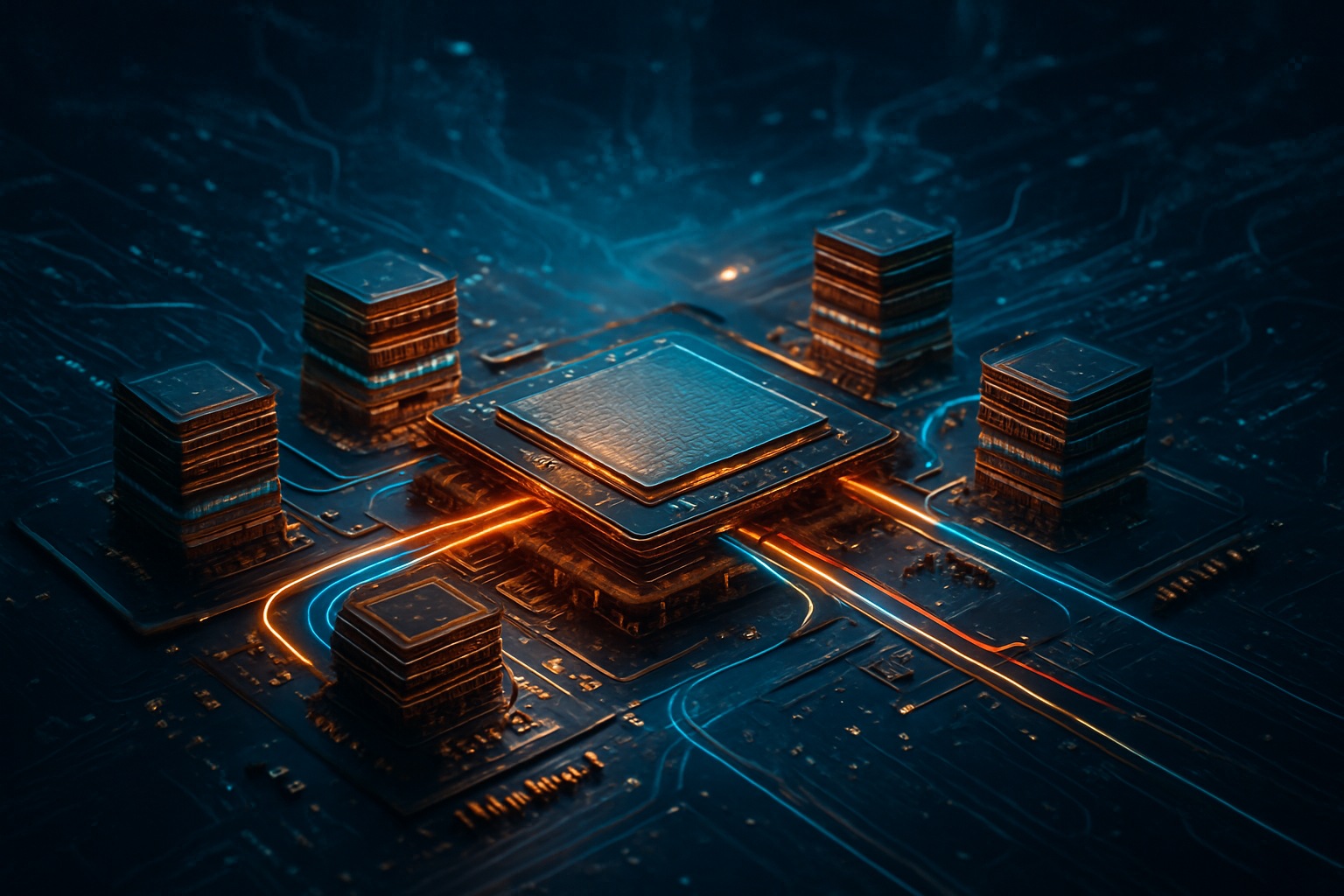
  • India’s Semiconductor Dawn: Kaynes Semicon Dispatches First Commercial Multi-Chip Module, Igniting AI’s Future

    India’s Semiconductor Dawn: Kaynes Semicon Dispatches First Commercial Multi-Chip Module, Igniting AI’s Future

    In a landmark achievement poised to reshape the global technology landscape, Kaynes Semicon (NSE: KAYNES) (BSE: 540779), an emerging leader in India's semiconductor sector, has successfully dispatched India's first commercial multi-chip module (MCM) to Alpha & Omega Semiconductor (AOS), a prominent US-based firm. This pivotal event, occurring around October 15-16, 2025, signifies a monumental leap forward for India's "Make in India" initiative and firmly establishes the nation as a credible and capable player in the intricate world of advanced semiconductor manufacturing. For the AI industry, this development is particularly resonant, as sophisticated packaging solutions like MCMs are the bedrock upon which next-generation AI processors and edge computing devices are built.

    The dispatch not only underscores India's growing technical prowess but also signals a strategic shift in the global semiconductor supply chain. As the world grapples with the complexities of chip geopolitics and the demand for diversified manufacturing hubs, Kaynes Semicon's breakthrough positions India as a vital node. This inaugural commercial shipment is far more than a transaction; it is a declaration of intent, demonstrating India's commitment to fostering a robust, self-reliant, and globally integrated semiconductor ecosystem, which will inevitably fuel the innovations driving artificial intelligence.

    Unpacking the Innovation: India's First Commercial MCM

    At the heart of this groundbreaking dispatch is the Intelligent Power Module (IPM), specifically the IPM5 module. This highly sophisticated device is a testament to advanced packaging capabilities, integrating a complex array of 17 individual dies within a single, high-performance package. The intricate composition includes six Insulated Gate Bipolar Transistors (IGBTs), two controller Integrated Circuits (ICs), six Fast Recovery Diodes (FRDs), and three additional diodes, all meticulously assembled to function as a cohesive unit. Such integration demands exceptional precision in thermal management, wire bonding, and quality testing, showcasing Kaynes Semicon's mastery over these critical manufacturing processes.

    The IPM5 module is engineered for demanding high-power applications, making it indispensable across a spectrum of industries. Its applications span the automotive sector, powering electric vehicles (EVs) and advanced driver-assistance systems; industrial automation, enabling efficient motor control and power management; consumer electronics, enhancing device performance and energy efficiency; and critically, clean energy systems, optimizing power conversion in renewable energy infrastructure. Unlike previous approaches that might have relied on discrete components or less integrated packaging, the MCM approach offers superior performance, reduced form factor, and enhanced reliability—qualities that are increasingly vital for the power efficiency and compactness required by modern AI systems, especially at the edge. Initial reactions from the AI research community and industry experts highlight the significance of such advanced packaging, recognizing it as a crucial enabler for the next wave of AI hardware innovation.

    Reshaping the AI Hardware Landscape: Implications for Tech Giants and Startups

    This development carries profound implications for AI companies, tech giants, and startups alike. Alpha & Omega Semiconductor (NASDAQ: AOSL) stands as an immediate beneficiary, with Kaynes Semicon slated to deliver 10 million IPMs annually over the next five years. This long-term commercial engagement provides AOS with a stable and diversified supply chain for critical power components, reducing reliance on traditional manufacturing hubs and enhancing their market competitiveness. For other US and global firms, this successful dispatch opens the door to considering India as a viable and reliable source for advanced packaging and OSAT services, fostering a more resilient global semiconductor ecosystem.

    The competitive landscape within the AI hardware sector is poised for subtle yet significant shifts. As AI models become more complex and demand higher computational density, the need for advanced packaging technologies like MCMs and System-in-Package (SiP) becomes paramount. Kaynes Semicon's emergence as a key player in this domain offers a new strategic advantage for companies looking to innovate in edge AI, high-performance computing (HPC), and specialized AI accelerators. This capability could potentially disrupt existing product development cycles by providing more efficient and cost-effective packaging solutions, allowing startups to rapidly prototype and scale AI hardware, and enabling tech giants to further optimize their AI infrastructure. India's market positioning as a trusted node in the global semiconductor supply chain, particularly for advanced packaging, is solidified, offering a compelling alternative to existing manufacturing concentrations.

    Broader Significance: India's Leap into the AI Era

    Kaynes Semicon's achievement fits seamlessly into the broader AI landscape and ongoing technological trends. The demand for advanced packaging is skyrocketing, driven by the insatiable need for more powerful, energy-efficient, and compact chips to fuel AI, IoT, and EV advancements. MCMs, by integrating multiple components into a single package, are critical for achieving the high computational density required by modern AI processors, particularly for edge AI applications where space and power consumption are at a premium. This development significantly boosts India's ambition to become a global manufacturing hub, aligning perfectly with the India Semiconductor Mission (ISM 1.0) and demonstrating how government policy, private sector execution, and international collaboration can yield tangible results.

    The impacts extend beyond mere manufacturing. It fosters a robust domestic ecosystem for semiconductor design, testing, and assembly, nurturing a highly skilled workforce and attracting further investment into the country's technology sector. Potential concerns, however, include the scalability of production to meet burgeoning global demand, maintaining stringent quality control standards consistently, and navigating the complexities of geopolitical dynamics that often influence semiconductor supply chains. Nevertheless, this milestone draws comparisons to previous AI milestones where foundational hardware advancements unlocked new possibilities. Just as specialized GPUs revolutionized deep learning, advancements in packaging like the IPM5 module are crucial for the next generation of AI chips, enabling more powerful and pervasive AI.

    The Road Ahead: Future Developments and AI's Evolution

    Looking ahead, the successful dispatch of India's first commercial MCM is merely the beginning of an exciting journey. We can expect to see near-term developments focused on scaling up Kaynes Semicon's Sanand facility, which has a planned total investment of approximately ₹3,307 crore and aims for a daily output capacity of 6.3 million chips. This expansion will likely be accompanied by increased collaborations with other international firms seeking advanced packaging solutions. Long-term developments will likely involve Kaynes Semicon and other Indian players expanding their R&D into even more sophisticated packaging technologies, including Flip-Chip and Wafer-Level Packaging, explicitly targeting mobile, AI, and High-Performance Computing (HPC) applications.

    Potential applications and use cases on the horizon are vast. This foundational capability enables the development of more powerful and energy-efficient AI accelerators for data centers, compact edge AI devices for smart cities and autonomous systems, and specialized AI chips for medical diagnostics and advanced robotics. Challenges that need to be addressed include attracting and retaining top-tier talent in semiconductor engineering, securing sustained R&D investment, and navigating global trade policies and intellectual property rights. Experts predict that India's strategic entry into advanced packaging will accelerate its transformation into a significant player in global chip manufacturing, fostering an environment where innovation in AI hardware can flourish, reducing the world's reliance on a concentrated few manufacturing hubs.

    A New Chapter for India in the Age of AI

    Kaynes Semicon's dispatch of India's first commercial multi-chip module to Alpha & Omega Semiconductor marks an indelible moment in India's technological history. The key takeaways are clear: India has demonstrated its capability in advanced semiconductor packaging (OSAT), the "Make in India" vision is yielding tangible results, and the nation is strategically positioning itself as a crucial enabler for future AI innovations. This development's significance in AI history cannot be overstated; by providing the critical hardware infrastructure for complex AI chips, India is not just manufacturing components but actively contributing to the very foundation upon which the next generation of artificial intelligence will be built.

    The long-term impact of this achievement is transformative. It signals India's emergence as a trusted and capable partner in the global semiconductor supply chain, attracting further investment, fostering domestic innovation, and creating high-value jobs. As the world continues its rapid progression into an AI-driven future, India's role in providing the foundational hardware will only grow in importance. In the coming weeks and months, watch for further announcements regarding Kaynes Semicon's expansion, new partnerships, and the broader implications of India's escalating presence in the global semiconductor market. This is a story of national ambition meeting technological prowess, with profound implications for AI and beyond.


    This content is intended for informational purposes only and represents analysis of current AI developments.

    TokenRing AI delivers enterprise-grade solutions for multi-agent AI workflow orchestration, AI-powered development tools, and seamless remote collaboration platforms.
    For more information, visit https://www.tokenring.ai/.

  • Revolutionizing the Core: Emerging Materials and Technologies Propel Next-Gen Semiconductors to Unprecedented Heights

    Revolutionizing the Core: Emerging Materials and Technologies Propel Next-Gen Semiconductors to Unprecedented Heights

    The foundational bedrock of the digital age, semiconductor technology, is currently experiencing a monumental transformation. As of October 2025, a confluence of groundbreaking material science and innovative architectural designs is pushing the boundaries of chip performance, promising an era of unparalleled computational power and energy efficiency. These advancements are not merely incremental improvements but represent a paradigm shift crucial for the escalating demands of artificial intelligence (AI), high-performance computing (HPC), and the burgeoning ecosystem of edge devices. The immediate significance lies in their ability to sustain Moore's Law well into the future, unlocking capabilities essential for the next wave of technological innovation.

    The Dawn of a New Silicon Era: Technical Deep Dive into Breakthroughs

    The quest for faster, smaller, and more efficient chips has led researchers and industry giants to explore beyond traditional silicon. One of the most impactful developments comes from Wide Bandgap (WBG) Semiconductors, specifically Gallium Nitride (GaN) and Silicon Carbide (SiC). These materials boast superior properties, including higher operating temperatures (up to 200°C for WBG versus 150°C for silicon), higher breakdown voltages, and significantly faster switching speeds—up to ten times quicker than silicon. This translates directly into lower energy losses and vastly improved thermal management, critical for power-hungry AI data centers and electric vehicles. Companies like Navitas Semiconductor (NASDAQ: NVTS) are already leveraging GaN to support NVIDIA Corporation's (NASDAQ: NVDA) 800 VDC power architecture, crucial for next-generation "AI factory" computing platforms.

    Further pushing the envelope are Two-Dimensional (2D) Materials like graphene, molybdenum disulfide (MoS₂), and indium selenide (InSe). These ultrathin materials, merely a few atoms thick, offer superior electrostatic control, tunable bandgaps, and high carrier mobility. Such characteristics are indispensable for scaling transistors below 10 nanometers, where silicon's physical limitations become apparent. Recent breakthroughs include the successful fabrication of wafer-scale 2D indium selenide semiconductors, demonstrating potential for up to a 50% reduction in power consumption compared to silicon's projected performance in 2037. The integration of 2D flash memory chips made from MoS₂ into conventional silicon circuits also signals a significant leap, addressing long-standing manufacturing challenges.

    Memory technology is also being revolutionized by Ferroelectric Materials, particularly those based on crystalline hafnium oxide (HfO2), and Memristive Semiconductor Materials. Ferroelectrics enable non-volatile memory states with minimal energy consumption, ideal for continuous learning AI systems. Breakthroughs in "incipient ferroelectricity" are leading to new memory solutions combining ferroelectric capacitors (FeCAPs) with memristors, forming dual-use architectures highly efficient for both AI training and inference. Memristive materials, which remember their history of applied current or voltage, are perfect for creating artificial synapses and neurons, forming the backbone of energy-efficient neuromorphic computing. These materials can maintain their resistance state without power, enabling analog switching behavior crucial for brain-inspired learning mechanisms.

    Beyond materials, Advanced Packaging and Heterogeneous Integration represent a strategic pivot. This involves decomposing complex systems into smaller, specialized chiplets and integrating them using sophisticated techniques like hybrid bonding—direct copper-to-copper bonds for chip stacking—and panel-level packaging. These methods allow for closer physical proximity between components, shorter interconnects, higher bandwidth, and better power integrity. Taiwan Semiconductor Manufacturing Company (NYSE: TSM) (TSMC)'s 3D-SoIC and Broadcom Inc.'s (NASDAQ: AVGO) 3.5D XDSiP technology for GenAI infrastructure are prime examples, enabling direct memory connection to chips for enhanced performance. Applied Materials, Inc. (NASDAQ: AMAT) recently introduced its Kinex™ integrated die-to-wafer hybrid bonding system in October 2025, further solidifying this trend.

    The rise of Neuromorphic Computing Architectures is another transformative innovation. Inspired by the human brain, these architectures emulate neural networks directly in silicon, offering significant advantages in processing power, energy efficiency, and real-time learning by tightly integrating memory and processing. Specialized circuit designs, including silicon neurons and synaptic elements, are being integrated at high density. Intel Corporation's (NASDAQ: INTC) Loihi chips, for instance, demonstrate up to a 1000x reduction in energy for specific AI tasks compared to traditional GPUs. This year, 2025, is considered a "breakthrough year" for neuromorphic chips, with devices from companies like BrainChip Holdings Ltd. (ASX: BRN) and IBM (NYSE: IBM) entering the market at scale.

    Finally, advancements in Advanced Transistor Architectures and Lithography remain crucial. The transition to Gate-All-Around (GAA) transistors, which completely surround the transistor channel with the gate, offers superior control over current leakage and improved performance at smaller dimensions (2nm and beyond). Backside power delivery networks are also a significant innovation. In lithography, ASML Holding N.V.'s (NASDAQ: ASML) High-NA EUV system is launching by 2025, capable of patterning features 1.7 times smaller and nearly tripling density, indispensable for 2nm and 1.4nm nodes. TSMC anticipates high-volume production of its 2nm (N2) process node in late 2025, promising significant leaps in performance and power efficiency. Furthermore, Cryogenic CMOS chips, designed to function at extremely low temperatures, are unlocking new possibilities for quantum computing, while Silicon Photonics integrates optical components directly onto silicon chips, using light for neural signal processing and optical interconnects, drastically reducing power consumption for data transfer.

    Competitive Landscape and Corporate Implications

    These semiconductor breakthroughs are creating a dynamic and intensely competitive landscape, with significant implications for AI companies, tech giants, and startups alike. NVIDIA Corporation (NASDAQ: NVDA) stands to benefit immensely, as its AI leadership is increasingly dependent on advanced chip performance and power delivery, directly leveraging GaN technologies and advanced packaging solutions for its "AI factory" platforms. Taiwan Semiconductor Manufacturing Company (NYSE: TSM) (TSMC) and Intel Corporation (NASDAQ: INTC) are at the forefront of manufacturing innovation, with TSMC's 2nm process and 3D-SoIC packaging, and Intel's 18A process node (a 2nm-class technology) leveraging GAA transistors and backside power delivery, setting the pace for the industry. Their ability to rapidly scale these technologies will dictate the performance ceiling for future AI accelerators and CPUs.

    The rise of neuromorphic computing benefits companies like Intel with its Loihi platform, IBM (NYSE: IBM) with TrueNorth, and specialized startups like BrainChip Holdings Ltd. (ASX: BRN) with Akida. These companies are poised to capture the rapidly expanding market for edge AI applications, where ultra-low power consumption and real-time learning are paramount. The neuromorphic chip market is projected to grow at approximately 20% CAGR through 2026, creating a new arena for competition and innovation.

    In the materials sector, Navitas Semiconductor (NASDAQ: NVTS) is a key beneficiary of the GaN revolution, while companies like Ferroelectric Memory GmbH are securing significant funding to commercialize FeFET and FeCAP technology for AI, IoT, and embedded memory markets. Applied Materials, Inc. (NASDAQ: AMAT), with its Kinex™ hybrid bonding system, is a critical enabler for advanced packaging across the industry. Startups like Silicon Box, which recently announced shipping 100 million units from its advanced panel-level packaging factory, demonstrate the readiness of these innovative packaging techniques for high-volume manufacturing for AI and HPC. Furthermore, SemiQon, a Finnish company, is a pioneer in cryogenic CMOS, highlighting the emergence of specialized players addressing niche but critical areas like quantum computing infrastructure. These developments could disrupt existing product lines by offering superior performance-per-watt, forcing traditional chipmakers to rapidly adapt or risk losing market share in key AI and HPC segments.

    Broader Significance: Fueling the AI Supercycle

    These advancements in semiconductor materials and technologies are not isolated events; they are deeply intertwined with the broader AI landscape and are critical enablers of what is being termed the "AI Supercycle." The continuous demand for more sophisticated machine learning models, larger datasets, and faster training times necessitates an exponential increase in computing power and energy efficiency. These next-generation semiconductors directly address these needs, fitting perfectly into the trend of moving AI processing from centralized cloud servers to the edge, enabling real-time, on-device intelligence.

    The impacts are profound: significantly enhanced AI model performance, enabling more complex and capable large language models, advanced robotics, autonomous systems, and personalized AI experiences. Energy efficiency gains from WBG semiconductors, neuromorphic chips, and 2D materials will mitigate the growing energy footprint of AI, a significant concern for sustainability. This also reduces operational costs for data centers, making AI more economically viable at scale. Potential concerns, however, include the immense R&D costs and manufacturing complexities associated with these advanced technologies, which could widen the gap between leading-edge and lagging semiconductor producers, potentially consolidating power among a few dominant players.

    Compared to previous AI milestones, such as the introduction of GPUs for parallel processing or the development of specialized AI accelerators, the current wave of semiconductor innovation represents a fundamental shift at the material and architectural level. It's not just about optimizing existing silicon; it's about reimagining the very building blocks of computation. This foundational change promises to unlock capabilities that were previously theoretical, pushing AI into new domains and applications, much like the invention of the transistor itself laid the groundwork for the entire digital revolution.

    The Road Ahead: Future Developments and Challenges

    Looking ahead, the near-term and long-term developments in next-generation semiconductors promise even more radical transformations. In the near term, we can expect the widespread adoption of 2nm and 1.4nm process nodes, driven by GAA transistors and High-NA EUV lithography, leading to a new generation of incredibly powerful and efficient AI accelerators and CPUs by late 2025 and into 2026. Advanced packaging techniques will become standard for high-performance chips, integrating diverse functionalities into single, dense modules. The commercialization of neuromorphic chips will accelerate, finding applications in embedded AI for IoT devices, smart sensors, and advanced robotics, where their low power consumption is a distinct advantage.

    Potential applications on the horizon are vast, including truly autonomous vehicles capable of real-time, complex decision-making, hyper-personalized medicine driven by on-device AI analytics, and a new generation of smart infrastructure that can learn and adapt. Quantum computing, while still nascent, will see continued advancements fueled by cryogenic CMOS, pushing closer to practical applications in drug discovery and materials science. Experts predict a continued convergence of these technologies, leading to highly specialized, purpose-built processors optimized for specific AI tasks, moving away from general-purpose computing for certain workloads.

    However, significant challenges remain. The escalating costs of advanced lithography and packaging are a major hurdle, requiring massive capital investments. Material science innovation must continue to address issues like defect density in 2D materials and the scalability of ferroelectric and memristive technologies. Supply chain resilience, especially given geopolitical tensions, is also a critical concern. Furthermore, designing software and AI models that can fully leverage these novel hardware architectures, particularly for neuromorphic and quantum computing, presents a complex co-design challenge. What experts predict will happen next is a continued arms race in R&D, with increasing collaboration between material scientists, chip designers, and AI researchers to overcome these interdisciplinary challenges.

    A New Era of Computational Power: The Unfolding Story

    In summary, the current advancements in emerging materials and innovative technologies for next-generation semiconductors mark a pivotal moment in computing history. From the power efficiency of Wide Bandgap semiconductors to the atomic-scale precision of 2D materials, the non-volatile memory of ferroelectrics, and the brain-inspired processing of neuromorphic architectures, these breakthroughs are collectively redefining the limits of what's possible. Advanced packaging and next-gen lithography are the glue holding these disparate innovations together, enabling unprecedented integration and performance.

    This development's significance in AI history cannot be overstated; it is the fundamental hardware engine powering the ongoing AI revolution. It promises to unlock new levels of intelligence, efficiency, and capability across every sector, accelerating the deployment of AI from the cloud to the farthest reaches of the edge. The long-term impact will be a world where AI is more pervasive, more powerful, and more energy-conscious than ever before. In the coming weeks and months, we will be watching closely for further announcements on 2nm and 1.4nm process node ramp-ups, the continued commercialization of neuromorphic platforms, and the progress in integrating 2D materials into production-scale chips. The race to build the future of AI is being run on the molecular level, and the pace is accelerating.


    This content is intended for informational purposes only and represents analysis of current AI developments.

    TokenRing AI delivers enterprise-grade solutions for multi-agent AI workflow orchestration, AI-powered development tools, and seamless remote collaboration platforms.
    For more information, visit https://www.tokenring.ai/.

  • The Silicon Frontier: How Advanced Manufacturing is Powering AI’s Unprecedented Ascent

    The Silicon Frontier: How Advanced Manufacturing is Powering AI’s Unprecedented Ascent

    The world of artificial intelligence is undergoing a profound transformation, fueled by an insatiable demand for processing power that pushes the very limits of semiconductor technology. As of late 2025, the advanced chip manufacturing sector is in a state of unprecedented growth and rapid innovation, with leading foundries like Taiwan Semiconductor Manufacturing Company (TSMC) (NYSE: TSM) spearheading massive expansion efforts to meet the escalating needs of AI. This surge in demand, particularly for high-performance semiconductors, is not merely driving the industry; it is fundamentally reshaping it, creating a symbiotic relationship where AI both consumes and enables the next generation of chip fabrication.

    The immediate significance of these developments lies in AI's exponential growth across diverse fields—from generative AI and edge computing to autonomous systems and high-performance computing (HPC). These applications necessitate processors that are not only faster and smaller but also significantly more energy-efficient, placing immense pressure on the semiconductor ecosystem. The global semiconductor market is projected to see substantial growth in 2025, with the AI chip market alone expected to exceed $150 billion, underscoring the critical role of advanced manufacturing in powering the AI revolution.

    Engineering the Future: The Technical Marvels Behind AI's Brains

    At the forefront of current manufacturing capabilities are leading-edge nodes such as 3nm and the rapidly emerging 2nm. TSMC, the dominant foundry, is poised for mass production of its 2nm chips in the second half of 2025, with even more advanced process nodes like A16 (1.6nm-class) and A14 (1.4nm) already on the roadmap for future production, expected in late 2026 and around 2028, respectively. This relentless pursuit of smaller, more powerful transistors is defining the future of AI hardware.

    Beyond traditional silicon scaling, advanced packaging technologies have become critical. As Moore's Law encounters physical and economic barriers, innovations like 2.5D and 3D integration, chiplets, and fan-out packaging enable heterogeneous integration—combining multiple components like processors, memory, and specialized accelerators within a single package. TSMC's Chip-on-Wafer-on-Substrate (CoWoS) is a leading 2.5D technology, with its capacity projected to quadruple by the end of 2025. Similarly, its SoIC (System-on-Integrated-Chips) 3D stacking technology is slated for mass production this year. Hybrid bonding, which uses direct copper-to-copper bonds, and emerging glass substrates further enhance these packaging solutions, offering significant improvements in performance, power, and cost for AI applications.

    Another pivotal innovation is the transition from FinFET (Fin Field-Effect Transistor) to Gate-All-Around FET (GAAFET) technology at sub-5-nanometer nodes. GAAFETs, which encapsulate the transistor channel on all sides, offer enhanced gate control, reduced power consumption, improved speed, and higher transistor density, overcoming the limitations of FinFETs. TSMC is introducing its nanosheet transistor architecture at the 2nm node by 2025, while Samsung (KRX: 005930) is refining its MBCFET-based 3nm process, and Intel (NASDAQ: INTC) plans to adopt RibbonFET for its 18A node, marking a global race in GAAFET adoption. These advancements represent a significant departure from previous transistor designs, allowing for the creation of far more complex and efficient AI chips.

    Extreme Ultraviolet (EUV) lithography remains indispensable for producing these advanced nodes. Recent advancements include the integration of AI and ML algorithms into EUV systems to optimize fabrication processes, from predictive maintenance to real-time adjustments. Intriguingly, geopolitical factors are also spurring developments in this area, with China reportedly testing a domestically developed EUV system for trial production in Q3 2025, targeting mass production by 2026, and Russia outlining its own EUV roadmap from 2026. This highlights a global push for technological self-sufficiency in critical manufacturing tools. Furthermore, AI is not just a consumer of advanced chips but also a powerful enabler in their creation. AI-powered Electronic Design Automation (EDA) tools, such as Synopsys (NASDAQ: SNPS) DSO.ai, leverage machine learning to automate repetitive tasks, optimize power, performance, and area (PPA), and dramatically reduce chip design timelines. In manufacturing, AI is deployed for predictive maintenance, real-time process optimization, and highly accurate defect detection, leading to increased production efficiency, reduced waste, and improved yields. AI also enhances supply chain management by optimizing logistics and predicting material shortages, creating a more resilient and cost-effective network.

    Reshaping the AI Landscape: Corporate Impacts and Competitive Edges

    The rapid evolution in advanced chip manufacturing is profoundly impacting AI companies, tech giants, and startups, creating both immense opportunities and fierce competitive pressures. Companies at the forefront of AI development, particularly those designing high-performance AI accelerators, stand to benefit immensely. NVIDIA (NASDAQ: NVDA), a leader in AI semiconductor technology, is a prime example, reporting a staggering 200% year-over-year increase in data center GPU sales, reflecting the insatiable demand for its cutting-edge AI chips that heavily rely on TSMC's advanced nodes and packaging.

    The competitive implications for major AI labs and tech companies are significant. Access to leading-edge process nodes and advanced packaging becomes a crucial differentiator. Companies like Google (NASDAQ: GOOGL), Microsoft (NASDAQ: MSFT), and Amazon (NASDAQ: AMZN), all heavily invested in AI infrastructure and custom AI silicon (e.g., Google's TPUs, AWS's Inferentia/Trainium), are directly reliant on the capabilities of foundries like TSMC and their ability to deliver increasingly powerful and efficient chips. Those with strategic foundry partnerships and early access to the latest technologies will gain a substantial advantage in deploying more powerful AI models and services.

    This development also has the potential to disrupt existing products and services. AI-powered capabilities, once confined to cloud data centers, are increasingly migrating to the edge and consumer devices, thanks to more efficient and powerful chips. This could lead to a major PC refresh cycle as generative AI transforms consumer electronics, demanding AI-integrated applications and hardware. Companies that can effectively integrate these advanced chips into their product lines—from smartphones to autonomous vehicles—will gain significant market positioning and strategic advantages. The demand for next-generation GPUs, for instance, is reportedly outstripping supply by a 10:1 ratio, highlighting the scarcity and strategic importance of these components. Furthermore, the memory segment is experiencing a surge, with high-bandwidth memory (HBM) products like HBM3 and HBM3e, essential for AI accelerators, driving over 24% growth in 2025, with HBM4 expected in H2 2025. This interconnected demand across the hardware stack underscores the strategic importance of the entire advanced manufacturing ecosystem.

    A New Era for AI: Broader Implications and Future Horizons

    The advancements in chip manufacturing fit squarely into the broader AI landscape as the fundamental enabler of increasingly complex and capable AI models. Without these breakthroughs in silicon, the computational demands of large language models, advanced computer vision, and sophisticated reinforcement learning would be insurmountable. This era marks a unique inflection point where hardware innovation directly dictates the pace and scale of AI progress, moving beyond software-centric breakthroughs to a symbiotic relationship where both must advance in tandem.

    The impacts are wide-ranging. Economically, the semiconductor industry is experiencing a boom, attracting massive capital expenditures. TSMC alone plans to construct nine new facilities in 2025—eight new fabrication plants and one advanced packaging plant—with a capital expenditure projected between $38 billion and $42 billion. Geopolitically, the race for advanced chip manufacturing dominance is intensifying. U.S. export restrictions, tariff pressures, and efforts by nations like China and Russia to achieve self-sufficiency in critical technologies like EUV lithography are reshaping global supply chains and manufacturing strategies. Concerns around supply chain resilience, talent shortages, and the environmental impact of energy-intensive manufacturing processes are also growing.

    Compared to previous AI milestones, such as the advent of deep learning or the transformer architecture, these hardware advancements are foundational. They are not merely enabling incremental improvements but are providing the raw horsepower necessary for entirely new classes of AI applications and models that were previously impossible. The sheer power demands of AI workloads also emphasize the critical need for innovations that improve energy efficiency, such as GAAFETs and novel power delivery networks like TSMC's Super Power Rail (SPR) Backside Power Delivery Network (BSPDN) for A16.

    The Road Ahead: Anticipating AI's Next Silicon-Powered Leaps

    Looking ahead, expected near-term developments include the full commercialization of 2nm process nodes and the aggressive scaling of advanced packaging technologies. TSMC's Fab 25 in Taichung, targeting production of chips beyond 2nm (e.g., 1.4nm) by 2028, and its five new fabs in Kaohsiung supporting 2nm and A16, illustrate the relentless push for ever-smaller and more efficient transistors. We can anticipate further integration of AI directly into chip design and manufacturing processes, making chip development faster, more efficient, and less prone to errors. The global footprint of advanced manufacturing will continue to expand, with TSMC accelerating its technology roadmap in Arizona and constructing new fabs in Japan and Germany, diversifying its geographic presence in response to geopolitical pressures and customer demand.

    Potential applications and use cases on the horizon are vast. More powerful and energy-efficient AI chips will enable truly ubiquitous AI, from hyper-personalized edge devices that perform complex AI tasks locally without cloud reliance, to entirely new forms of autonomous systems that can process vast amounts of sensory data in real-time. We can expect breakthroughs in personalized medicine, materials science, and climate modeling, all powered by the escalating computational capabilities provided by advanced semiconductors. Generative AI will become even more sophisticated, capable of creating highly realistic and complex content across various modalities.

    However, significant challenges remain. The increasing cost of developing and manufacturing at advanced nodes is a major hurdle, with TSMC planning to raise prices for its advanced node processes by 5% to 10% in 2025 due to rising costs. The talent gap in semiconductor manufacturing persists, demanding substantial investment in education and workforce development. Geopolitical tensions could further disrupt supply chains and force companies to make difficult strategic decisions regarding their manufacturing locations. Experts predict that the era of "more than Moore" will become even more pronounced, with advanced packaging, heterogeneous integration, and novel materials playing an increasingly critical role alongside traditional transistor scaling. The emphasis will shift towards optimizing entire systems, not just individual components, for AI workloads.

    The AI Hardware Revolution: A Defining Moment

    In summary, the current advancements in advanced chip manufacturing represent a defining moment in the history of AI. The symbiotic relationship between AI and semiconductor technology ensures that breakthroughs in one field immediately fuel the other, creating a virtuous cycle of innovation. Key takeaways include the rapid progression to sub-2nm nodes, the critical role of advanced packaging (CoWoS, SoIC, hybrid bonding), the shift to GAAFET architectures, and the transformative impact of AI itself in optimizing chip design and manufacturing.

    This development's significance in AI history cannot be overstated. It is the hardware bedrock upon which the next generation of AI capabilities will be built. Without these increasingly powerful, efficient, and sophisticated semiconductors, many of the ambitious goals of AI—from true artificial general intelligence to pervasive intelligent automation—would remain out of reach. We are witnessing an era where the physical limits of silicon are being pushed further than ever before, enabling unprecedented computational power.

    In the coming weeks and months, watch for further announcements regarding 2nm mass production yields, the expansion of advanced packaging capacity, and competitive moves from Intel and Samsung in the GAAFET race. The geopolitical landscape will also continue to shape manufacturing strategies, with nations vying for self-sufficiency in critical chip technologies. The long-term impact will be a world where AI is more deeply integrated into every aspect of life, powered by the continuous innovation at the silicon frontier.


    This content is intended for informational purposes only and represents analysis of current AI developments.

    TokenRing AI delivers enterprise-grade solutions for multi-agent AI workflow orchestration, AI-powered development tools, and seamless remote collaboration platforms.
    For more information, visit https://www.tokenring.ai/.

  • TSMC: The Indispensable Architect of the AI Revolution – An Investment Outlook

    TSMC: The Indispensable Architect of the AI Revolution – An Investment Outlook

    The Taiwan Semiconductor Manufacturing Company (NYSE: TSM), or TSMC, stands as an undisputed titan in the global semiconductor industry, now finding itself at the epicenter of an unprecedented investment surge driven by the accelerating artificial intelligence (AI) boom. As the world's largest dedicated chip foundry, TSMC's technological prowess and strategic positioning have made it the foundational enabler for virtually every major AI advancement, solidifying its indispensable role in manufacturing the advanced processors that power the AI revolution. Its stock has become a focal point for investors, reflecting not just its current market dominance but also the immense future prospects tied to the sustained growth of AI.

    The immediate significance of the AI boom for TSMC's stock performance is profoundly positive. The company has reported record-breaking financial results, with net profit soaring 39.1% year-on-year in Q3 2025 to NT$452.30 billion (US$14.75 billion), significantly surpassing market expectations. Concurrently, its third-quarter revenue increased by 30.3% year-on-year to NT$989.92 billion (approximately US$33.10 billion). This robust performance prompted TSMC to raise its full-year 2025 revenue growth outlook to the mid-30% range in US dollar terms, underscoring the strengthening conviction in the "AI megatrend." Analysts are maintaining strong "Buy" recommendations, anticipating further upside potential as the world's reliance on AI chips intensifies.

    The Microscopic Engine of Macro AI: TSMC's Technical Edge

    TSMC's technological leadership is rooted in its continuous innovation across advanced process nodes and sophisticated packaging solutions, which are critical for developing high-performance and power-efficient AI accelerators. The company's "nanometer" designations (e.g., 5nm, 3nm, 2nm) represent generations of improved silicon semiconductor chips, offering increased transistor density, speed, and reduced power consumption.

    The 5nm process (N5, N5P, N4P, N4X, N4C), in volume production since 2020, offers 1.8x the transistor density of its 7nm predecessor and delivers a 15% speed improvement or 30% lower power consumption. This allows chip designers to integrate a vast number of transistors into a smaller area, crucial for the complex neural networks and parallel processing demanded by AI workloads. Moving forward, the 3nm process (N3, N3E, N3P, N3X, N3C, N3A), which entered high-volume production in 2022, provides a 1.6x higher logic transistor density and 25-30% lower power consumption compared to 5nm. This node is pivotal for companies like NVIDIA (NASDAQ: NVDA), Advanced Micro Devices (NASDAQ: AMD), and Apple (NASDAQ: AAPL) to create AI chips that process data faster and more efficiently.

    The upcoming 2nm process (N2), slated for mass production in late 2025, represents a significant leap, transitioning from FinFET to Gate-All-Around (GAA) nanosheet transistors. This shift promises a 1.15x increase in transistor density and a 15% performance improvement or 25-30% power reduction compared to 3nm. This next-generation node is expected to be a game-changer for future AI accelerators, with major customers from the high-performance computing (HPC) and AI sectors, including hyperscalers like Google (NASDAQ: GOOGL) and Amazon (NASDAQ: AMZN), lining up for capacity.

    Beyond manufacturing, TSMC's advanced packaging technologies, particularly CoWoS (Chip-on-Wafer-on-Substrate), are indispensable for modern AI chips. CoWoS is a 2.5D wafer-level multi-chip packaging technology that integrates multiple dies (logic, memory) side-by-side on a silicon interposer, achieving better interconnect density and performance than traditional packaging. It is crucial for integrating High Bandwidth Memory (HBM) stacks with logic dies, which is essential for memory-bound AI workloads. TSMC's variants like CoWoS-S, CoWoS-R, and the latest CoWoS-L (emerging as the standard for next-gen AI accelerators) enable lower latency, higher bandwidth, and more power-efficient packaging. TSMC is currently the world's sole provider capable of delivering a complete end-to-end CoWoS solution with high yields, distinguishing it significantly from competitors like Samsung and Intel (NASDAQ: INTC). The AI research community and industry experts widely acknowledge TSMC's technological leadership as fundamental, with OpenAI's CEO, Sam Altman, explicitly stating, "I would like TSMC to just build more capacity," highlighting its critical role.

    Fueling the AI Giants: Impact on Companies and Competitive Landscape

    TSMC's advanced manufacturing and packaging capabilities are not merely a service; they are the fundamental enabler of the AI revolution, profoundly impacting major AI companies, tech giants, and nascent startups alike. Its technological leadership ensures that the most powerful and energy-efficient AI chips can be designed and brought to market, shaping the competitive landscape and market positioning of key players.

    NVIDIA, a cornerstone client, heavily relies on TSMC for manufacturing its cutting-edge GPUs, including the H100, Blackwell, and future architectures. CoWoS packaging is crucial for integrating high-bandwidth memory in these GPUs, enabling unprecedented compute density for large-scale AI training and inference. Increased confidence in TSMC's chip supply directly translates to increased potential revenue and market share for NVIDIA's GPU accelerators, solidifying its competitive moat. Similarly, AMD utilizes TSMC's advanced packaging and leading-edge nodes for its next-generation data center GPUs (MI300 series) and EPYC CPUs, positioning itself as a strong challenger in the High-Performance Computing (HPC) market. Apple leverages TSMC's 3nm process for its M4 and M5 chips, which power on-device AI, and has reportedly secured significant 2nm capacity for future chips.

    Hyperscale cloud providers such as Google (NASDAQ: GOOGL), Amazon (NASDAQ: AMZN), Meta Platforms (NASDAQ: META), and Microsoft (NASDAQ: MSFT) are increasingly designing custom AI silicon (ASICs) to optimize performance for their specific workloads, relying almost exclusively on TSMC for manufacturing. OpenAI is strategically partnering with TSMC to develop its own in-house AI chips, leveraging TSMC's advanced A16 process to meet the demanding requirements of AI workloads, aiming to reduce reliance on third-party chips and optimize designs for inference. This ensures more stable and potentially increased availability of critical chips for their vast AI infrastructures. TSMC's comprehensive AI chip manufacturing services, coupled with its willingness to collaborate with innovative startups, provide a competitive edge by allowing TSMC to gain early experience in producing cutting-edge AI chips. The market positioning advantage gained from access to TSMC's cutting-edge process nodes and advanced packaging is immense, enabling the development of the most powerful AI systems and directly accelerating AI innovation.

    The Wider Significance: A New Era of Hardware-Driven AI

    TSMC's role extends far beyond a mere supplier; it is an indispensable architect in the broader AI landscape and global technology trends. Its significance stems from its near-monopoly in advanced semiconductor manufacturing, which forms the bedrock for modern AI innovation, yet this dominance also introduces concerns related to supply chain concentration and geopolitical risks. TSMC's contributions can be seen as a unique inflection point in tech history, emphasizing hardware as a strategic differentiator.

    The company's advanced nodes and packaging solutions are directly enabling the current AI revolution by facilitating the creation of powerful, energy-efficient chips essential for training and deploying complex machine learning algorithms. Major tech giants rely almost exclusively on TSMC, cementing its role as the foundational hardware provider for generative AI and large language models. This technical prowess directly accelerates the pace of AI innovation.

    However, TSMC's near-monopoly, holding over 90% of the most advanced chips, creates significant concerns. This concentration forms high barriers to entry and fosters a centralized AI hardware ecosystem. An over-reliance on a single foundry, particularly one located in a geopolitically sensitive region like Taiwan, poses a vulnerability to the global supply chain, susceptible to natural disasters, trade blockades, or conflicts. The ongoing US-China trade conflict further exacerbates these risks, with US export controls impacting Chinese AI chip firms' access to TSMC's advanced nodes.

    In response to these geopolitical pressures, TSMC is actively diversifying its manufacturing footprint beyond Taiwan, with significant investments in the US (Arizona), Japan, and planned facilities in Germany. While these efforts aim to mitigate risks and enhance global supply chain resilience, they come with higher production costs. TSMC's contribution to the current AI era is comparable in importance to previous algorithmic milestones, but with a unique emphasis on the physical hardware foundation. The company's pioneering of the pure-play foundry business model in 1987 fundamentally reshaped the semiconductor industry, providing the necessary infrastructure for fabless companies to innovate at an unprecedented pace, directly fueling the rise of modern computing and subsequently, AI.

    The Road Ahead: Future Developments and Enduring Challenges

    TSMC's roadmap for advanced manufacturing nodes is critical for the performance and efficiency of future AI chips, outlining ambitious near-term and long-term developments. The company is set to launch its 2nm process node later in 2025, marking a significant transition to gate-all-around (GAA) nanosheet transistors, promising substantial improvements in power consumption and speed. Following this, the 1.6nm (A16) node is scheduled for release in 2026, offering a further 15-20% drop in energy usage, particularly beneficial for power-intensive HPC applications in data centers. Looking further ahead, the 1.4nm (A14) process is expected to enter production in 2028, with projections of up to 15% faster speeds or 30% lower power consumption compared to N2.

    In advanced packaging, TSMC is aggressively expanding its CoWoS capacity, aiming to quadruple output by the end of 2025 and reach 130,000 wafers per month by 2026. Future CoWoS variants like CoWoS-L are emerging as the standard for next-generation AI accelerators, accommodating larger chiplets and more HBM stacks. TSMC's advanced 3D stacking technology, SoIC (System-on-Integrated-Chips), is planned for mass production in 2025, utilizing hybrid bonding for ultra-high-density vertical integration. These technological advancements will underpin a vast array of future AI applications, from next-generation AI accelerators and generative AI to sophisticated edge AI, autonomous driving, and smart devices.

    Despite its strong position, TSMC confronts several significant challenges. The unprecedented demand for AI chips continues to strain its advanced manufacturing and packaging capabilities, leading to capacity constraints. The escalating cost of building and equipping modern fabs, coupled with the immense R&D investment required for each new node, is a continuous financial challenge. Maintaining high and consistent yield rates for cutting-edge nodes like 2nm and beyond also remains a technical hurdle. Geopolitical risks, particularly the concentration of advanced fabs in Taiwan, remain a primary concern, driving TSMC's costly global diversification efforts in the US, Japan, and Germany. The exponential increase in power consumption by AI chips also poses significant energy efficiency and sustainability challenges.

    Industry experts overwhelmingly view TSMC as an indispensable player, the "undisputed titan" and "fundamental engine powering the AI revolution." They predict continued explosive growth, with AI accelerator revenue expected to double in 2025 and achieve a mid-40% compound annual growth rate through 2029. TSMC's technological leadership and manufacturing excellence are seen as providing a dependable roadmap for customer innovations, dictating the pace of technological progress in AI.

    A Comprehensive Wrap-Up: The Enduring Significance of TSMC

    TSMC's investment outlook, propelled by the AI boom, is exceptionally robust, cementing its status as a critical enabler of the global AI revolution. The company's undisputed market dominance, stellar financial performance, and relentless pursuit of technological advancement underscore its pivotal role. Key takeaways include record-breaking profits and revenue, AI as the primary growth driver, optimistic future forecasts, and substantial capital expenditures to meet burgeoning demand. TSMC's leadership in advanced process nodes (3nm, 2nm, A16) and sophisticated packaging (CoWoS, SoIC) is not merely an advantage; it is the fundamental hardware foundation upon which modern AI is built.

    In AI history, TSMC's contribution is unique. While previous AI milestones often centered on algorithmic breakthroughs, the current "AI supercycle" is fundamentally hardware-driven, making TSMC's ability to mass-produce powerful, energy-efficient chips absolutely indispensable. The company's pioneering pure-play foundry model transformed the semiconductor industry, enabling the fabless revolution and, by extension, the rapid proliferation of AI innovation. TSMC is not just participating in the AI revolution; it is architecting its very foundation.

    The long-term impact on the tech industry and society will be profound. TSMC's centralized AI hardware ecosystem accelerates hardware obsolescence and dictates the pace of technological progress. Its concentration in Taiwan creates geopolitical vulnerabilities, making it a central player in the "chip war" and driving global manufacturing diversification efforts. Despite these challenges, TSMC's sustained growth acts as a powerful catalyst for innovation and investment across the entire tech ecosystem, with the global AI chip market projected to contribute over $15 trillion to the global economy by 2030.

    In the coming weeks and months, investors and industry observers should closely watch several key developments. The high-volume production ramp-up of the 2nm process node in late 2025 will be a critical milestone, indicating TSMC's continued technological leadership. Further advancements and capacity expansion in advanced packaging technologies like CoWoS and SoIC will be crucial for integrating next-generation AI chips. The progress of TSMC's global fab construction in the US, Japan, and Germany will signal its success in mitigating geopolitical risks and diversifying its supply chain. The evolving dynamics of US-China trade relations and new tariffs will also directly impact TSMC's operational environment. Finally, continued vigilance on AI chip orders from key clients like NVIDIA, Apple, and AMD will serve as a bellwether for sustained AI demand and TSMC's enduring financial health. TSMC remains an essential watch for anyone invested in the future of artificial intelligence.


    This content is intended for informational purposes only and represents analysis of current AI developments.

    TokenRing AI delivers enterprise-grade solutions for multi-agent AI workflow orchestration, AI-powered development tools, and seamless remote collaboration platforms.
    For more information, visit https://www.tokenring.ai/.