Tag: Aerospace

  • David S. Hall Unveils Cam-Lidar: A New Era for AI-Powered Drone Defense and Aerospace Security

    David S. Hall Unveils Cam-Lidar: A New Era for AI-Powered Drone Defense and Aerospace Security

    November 10, 2025 – In a landmark announcement poised to redefine national security and aerospace technology, David S. Hall, the visionary inventor behind automotive lidar and founder of Velodyne Lidar Inc. (NASDAQ: VLDR), today unveiled Cam-Lidar technology. This groundbreaking system, the inaugural product from his new venture Hall Lidar Inc. (HLi), promises fail-safe detection and predictive tracking of high-speed aerial objects, leveraging an unprecedented integration of lidar, camera, and artificial intelligence. Hall himself declared Cam-Lidar to be "more important than the lidar invention for autonomous driving," signaling a pivotal moment in the rapidly evolving drone defense sector.

    The debut of Cam-Lidar arrives amidst escalating global concerns over drone proliferation and the urgent need for sophisticated counter-drone measures. HLi's solution offers a robust, real-time defense against aerial threats, from small, elusive drones to objects traveling at near-supersonic speeds. This innovation is set to significantly enhance the capabilities of federal agencies and security forces, providing a critical advantage in protecting national interests and critical infrastructure against increasingly sophisticated aerial intrusions.

    Unpacking the Technical Brilliance of Cam-Lidar

    At its core, Cam-Lidar represents a paradigm shift in sensor fusion, meticulously integrating advanced lidar systems with high-performance camera optics and state-of-the-art artificial intelligence. This synergy enables the system to synchronize lidar and camera feeds at an impressive 60 frames per second, creating a real-time 3D spatial visualization and object targeting capability that is both rapid and remarkably accurate. The AI component is crucial, providing predictive capabilities that allow for robust detection, tracking, and navigation even in the most challenging environmental conditions, significantly reducing false positives often associated with less integrated systems.

    The technical specifications of Cam-Lidar are equally impressive, setting new benchmarks for drone defense. The system is capable of detecting and tracking high-speed drones at distances up to two kilometers, identifying objects as small as a laptop. Crucially, it can track objects traveling at speeds approaching Mach 1, the speed of sound, in real time. Hall Lidar Inc. asserts that Cam-Lidar offers repeatable accuracy, a capability previously unseen in either commercial or defense-grade systems. The physical unit itself is described as a "binocular-like unit," suggesting a compact and potentially deployable form factor suitable for various security applications.

    This integrated approach starkly contrasts with previous drone detection methods, which often rely on disparate radar, optical, or acoustic systems that are slower, less reliable, and prone to environmental interference or blind spots. Traditional radar systems, while effective for larger objects, often struggle with small, low-flying drones, while standalone optical systems can be hampered by adverse weather or low light. Cam-Lidar's fusion of active (lidar) and passive (camera) sensing, augmented by AI, provides a comprehensive, resilient solution that overcomes these limitations, offering consistent, real-time monitoring and supporting automation for perimeter security and beyond. The initial reaction from the AI research community and industry experts, while not yet fully articulated publicly beyond Hall's own strong statements, is anticipated to be one of profound interest and validation, given the urgent demand for such advanced capabilities.

    Strategic Implications for the AI and Aerospace Industries

    The introduction of Cam-Lidar by Hall Lidar Inc. (HLi) is poised to create significant ripples across the AI, aerospace, and defense sectors. Primarily, HLi stands to benefit immensely, establishing itself as a frontrunner in a critical and rapidly expanding market. The company's strategic advantage lies in its founder's pedigree and the demonstrable technological leap Cam-Lidar represents. Beyond HLi, traditional defense contractors and aerospace giants, particularly those involved in surveillance, reconnaissance, and counter-UAS (Unmanned Aerial Systems) solutions, will likely seek partnerships or develop competing technologies. Companies specializing in AI for computer vision, sensor fusion, and real-time data processing could see increased demand for their expertise and components.

    The competitive implications for major AI labs and tech companies are substantial. Those already investing in advanced robotics, autonomous systems, and security applications will need to evaluate how Cam-Lidar redefines the performance benchmarks. Existing products and services in perimeter security, air traffic control, and intelligence gathering could face significant disruption if they cannot match Cam-Lidar's precision and speed. The ability to accurately track objects at Mach 1 and identify small drones at 2 km represents a formidable challenge to current offerings.

    Market positioning will be key, and HLi, with David S. Hall at its helm, enjoys a strong initial advantage due to its pioneering technology. This development could spur a new wave of innovation and investment in integrated sensor platforms, forcing competitors to accelerate their R&D efforts in AI-enhanced lidar and camera systems. Startups focused on advanced analytics for sensor data or specialized AI models for object classification and prediction in complex aerial environments could also find new avenues for growth and collaboration within this evolving landscape.

    Wider Significance in the Broader AI Landscape

    Cam-Lidar's emergence fits perfectly within the broader AI landscape's trend towards increasingly sophisticated sensor fusion and real-time intelligent systems. It highlights the growing importance of AI in transforming raw sensor data into actionable intelligence, particularly in high-stakes security applications. This development underscores the shift from mere data collection to intelligent data interpretation and prediction, a hallmark of advanced AI. It also emphasizes the critical role of robust, real-time processing capabilities for AI models operating in dynamic environments.

    The impacts of this technology are far-reaching. On a national security level, it offers an unprecedented layer of defense against state-sponsored and rogue drone threats, safeguarding critical infrastructure such as airports, military installations, government buildings, and power grids. For civilian airspace, it could pave the way for safer integration of drones by providing superior air traffic monitoring and collision avoidance capabilities. However, with such powerful surveillance technology come potential concerns regarding privacy and the ethical deployment of advanced tracing systems. The ability to track individuals or vehicles with such precision from a distance raises questions about data collection, storage, and potential misuse, necessitating robust regulatory frameworks.

    Comparisons to previous AI milestones are apt; just as AI in autonomous driving revolutionized perception for vehicles, Cam-Lidar aims to do the same for aerial domain awareness. It stands alongside other breakthroughs in computer vision and machine learning that have enabled real-time object recognition and tracking, but its integration with lidar at such high speeds and accuracy sets a new standard for mission-critical applications where milliseconds matter. This represents a significant step forward in the ongoing effort to imbue machines with human-like, and even superhuman, perceptual abilities.

    The Horizon: Future Developments and Applications

    Looking ahead, the near-term developments for Cam-Lidar will likely involve extensive testing and integration with existing defense and security protocols. Military and government agencies are expected to be early adopters, deploying the technology for perimeter defense, border security, and counter-terrorism operations. As the technology matures and potentially scales, we can anticipate its application in broader commercial sectors. Long-term, Cam-Lidar could become an indispensable component of smart city infrastructure, providing advanced monitoring for public safety, or even aiding in complex air traffic management systems for urban air mobility (UAM) initiatives.

    Potential applications extend beyond direct drone defense. Imagine Cam-Lidar systems providing enhanced situational awareness for search and rescue operations, precision guidance for autonomous aerial vehicles, or detailed environmental monitoring that detects minute changes indicative of security breaches. Experts predict that this technology will catalyze a new generation of integrated security platforms, where AI-powered sensor arrays work in concert to create an impenetrable digital shield over critical areas. Challenges, however, remain. The cost of such advanced systems, while justified for high-security applications, may need to decrease for widespread commercial adoption. Scalability of manufacturing and deployment, as well as developing robust counter-measures against potential jamming or spoofing attempts, will be ongoing concerns. Regulatory bodies will also need to address how to govern the use of such powerful surveillance tools to balance security needs with civil liberties.

    A New Guardian in the Skies

    David S. Hall's announcement of Cam-Lidar marks a pivotal moment in the convergence of AI, lidar, and aerospace innovation. The technology’s ability to provide fail-safe, predictive tracking of high-speed aerial objects, from small drones to near-Mach 1 threats, represents a significant leap forward in defense and security capabilities. By seamlessly integrating lidar, camera, and AI, HLi has introduced a solution that promises to enhance national security, protect critical infrastructure, and redefine the standards for aerial domain awareness.

    This development solidifies AI's role not just as an analytical tool, but as an active, real-time participant in safeguarding our skies. Its significance in AI history will be measured by its ability to reliably address the growing complexities of aerial threats and its potential to spawn a new generation of intelligent security systems. In the coming weeks and months, the industry will be closely watching HLi's market entry, the initial deployments of Cam-Lidar, and the responses from competitors as they scramble to match this new benchmark. The era of truly intelligent, proactive drone defense has arrived, and with it, a new guardian in the skies.


    This content is intended for informational purposes only and represents analysis of current AI developments.

    TokenRing AI delivers enterprise-grade solutions for multi-agent AI workflow orchestration, AI-powered development tools, and seamless remote collaboration platforms.
    For more information, visit https://www.tokenring.ai/.
  • Powering the Cosmos: How Advanced Semiconductors Are Propelling Next-Generation Satellites

    Powering the Cosmos: How Advanced Semiconductors Are Propelling Next-Generation Satellites

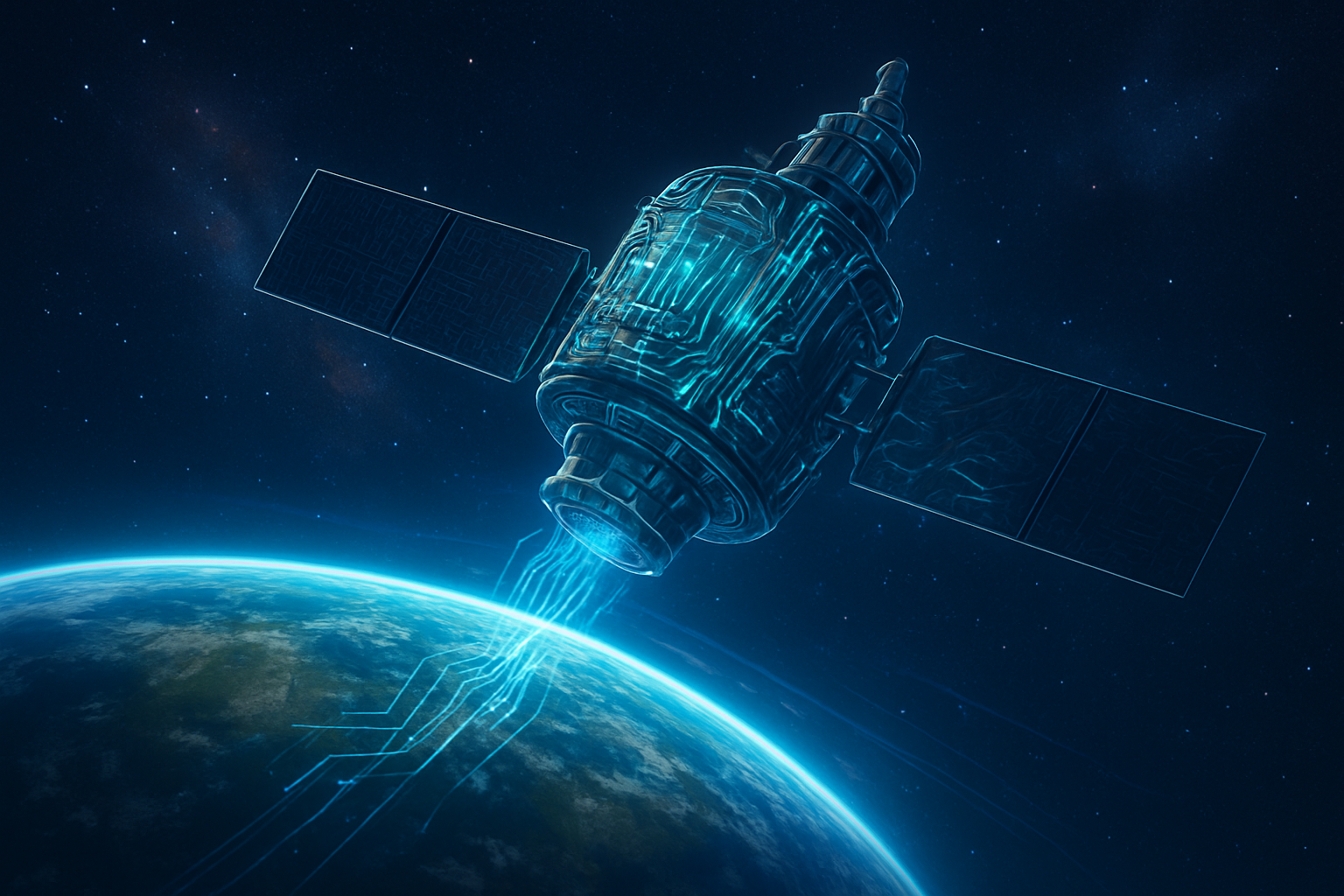
    In the vast expanse of space, where extreme conditions challenge even the most robust technology, semiconductors have emerged as the unsung heroes, silently powering the revolution in satellite capabilities. These tiny, yet mighty, components are the bedrock upon which next-generation communication, imaging, and scientific research satellites are built, enabling unprecedented levels of performance, efficiency, and autonomy. As the global space economy expands, fueled by the demand for ubiquitous connectivity and critical Earth observation, the role of advanced semiconductors is becoming ever more critical, transforming our ability to explore, monitor, and connect from orbit.

    The immediate significance of these advancements is profound. We are witnessing the dawn of enhanced global connectivity, with constellations like SpaceX's (NASDAQ: TSLA) Starlink and OneWeb (a subsidiary of Eutelsat Communications S.A. (EPA: ETL)) leveraging these chips to deliver high-speed internet to remote corners of the globe, bridging the digital divide. Earth observation and climate monitoring are becoming more precise and continuous, providing vital data for understanding climate change and predicting natural disasters. Furthermore, radiation-hardened and energy-efficient semiconductors are extending the lifespan and autonomy of spacecraft, allowing for more ambitious and long-duration missions with less human intervention. This miniaturization also leads to more cost-effective space missions, democratizing access to space for a wider array of scientific and commercial endeavors.

    The Microscopic Engines of Orbital Innovation

    The technical prowess behind these next-generation satellites lies in a new breed of semiconductor materials and sophisticated hardening techniques that far surpass the limitations of traditional silicon. Leading the charge are wide-bandgap (WBG) semiconductors like Gallium Nitride (GaN) and Silicon Carbide (SiC), alongside advanced Silicon Germanium (SiGe) alloys.

    GaN, with its wide bandgap of approximately 3.4 eV, offers superior performance in high-frequency and high-power applications. Its high breakdown voltage, exceptional electron mobility, and thermal conductivity make it ideal for RF amplifiers, radar systems, and high-speed communication modules operating in the GHz range. This translates to faster switching speeds, higher power density, and reduced thermal management requirements compared to silicon. SiC, another WBG material with a bandgap of about 3.3 eV, excels in power electronics due to its higher critical electrical field and three times greater thermal conductivity than silicon. SiC devices can operate at temperatures well over 400°C, crucial for power regulation in solar arrays and battery charging in extreme space environments. Both GaN and SiC also boast inherent radiation tolerance, a critical advantage in the harsh cosmic radiation belts.

    Silicon Germanium (SiGe) alloys offer a different set of benefits, particularly in radiation tolerance and high-frequency performance. SiGe heterojunction bipolar transistors (HBTs) can withstand Total Ionizing Dose (TID) levels exceeding 1 Mrad(Si), making them highly resistant to radiation-induced failures. They also operate stably across a broad temperature range, from cryogenic conditions to over 200°C, and achieve cutoff frequencies above 300 GHz, essential for advanced space communication systems. These properties enable increased processing power and efficiency, with SiGe offering four times faster carrier mobility than silicon.

    Radiation hardening, a multifaceted approach, is paramount for ensuring the longevity and reliability of these components. Techniques range from "rad-hard by design" (inherently resilient circuit architectures, error-correcting memory) and "rad-hard by processing" (using insulating substrates like Silicon-on-Insulator (SOI) and specialized materials) to "rad-hard by packaging" (physical shielding with heavy metals). These methods collectively mitigate the effects of cosmic rays, solar flares, and trapped radiation, which can otherwise cause data corruption or catastrophic system failures. Unlike previous silicon-centric approaches that required extensive external shielding, these advanced materials offer intrinsic radiation resistance, leading to lighter, more compact, and more efficient systems.

    The AI research community and industry experts have reacted with significant enthusiasm, recognizing these semiconductor advancements as foundational for enabling sophisticated AI capabilities in space. The superior performance, efficiency, and radiation hardness are critical for deploying complex AI models directly on spacecraft, allowing for real-time decision-making, onboard data processing, and autonomous operations that reduce latency and dependence on Earth-based systems. Experts foresee a "beyond silicon" era where these next-gen semiconductors power more intelligent AI models and high-performance computing (HPC), even exploring in-space manufacturing of semiconductors to produce purer, higher-quality materials.

    Reshaping the Tech Landscape: Benefits, Battles, and Breakthroughs

    The proliferation of advanced semiconductors in space technology is creating ripples across the entire tech industry, offering immense opportunities for semiconductor manufacturers, tech giants, and innovative startups, while also intensifying competitive dynamics.

    Semiconductor manufacturers are at the forefront of this boom. Companies like Advanced Micro Devices (NASDAQ: AMD), Texas Instruments (NASDAQ: TXN), Infineon Technologies AG (ETR: IFX), Microchip Technology (NASDAQ: MCHP), STMicroelectronics N.V. (NYSE: STM), and Teledyne Technologies (NYSE: TDY) are heavily invested in developing radiation-hardened and radiation-tolerant chips, FPGAs, and SoCs tailored for space applications. AMD, for instance, is pushing its Versal Adaptive SoCs, which integrate AI capabilities for on-board inferencing in a radiation-tolerant form factor. AI chip developers like BrainChip Holdings Ltd (ASX: BRN), with its neuromorphic Akida IP, are designing energy-efficient AI solutions specifically for in-orbit processing.

    Tech giants with significant aerospace and defense divisions, such as Lockheed Martin (NYSE: LMT), The Boeing Company (NYSE: BA), and Northrop Grumman Corporation (NYSE: NOC), are major beneficiaries, integrating these advanced semiconductors into their satellite systems and spacecraft. Furthermore, cloud computing leaders and satellite operators like SpaceX (NASDAQ: TSLA) are leveraging these chips for their rapidly expanding constellations, extending global internet coverage and data services. This creates new avenues for tech giants to expand their cloud infrastructure beyond terrestrial boundaries.

    Startups are also finding fertile ground in this specialized market. Companies like AImotive are adapting automotive AI chips for cost-effective Low Earth Orbit (LEO) satellites. More ambitiously, innovative ventures such as Besxar Space Industries and Space Forge are exploring and actively developing in-space manufacturing platforms for semiconductors, aiming to leverage microgravity to produce higher-quality wafers with fewer defects. This burgeoning ecosystem, fueled by increasing government and private investment, indicates a robust environment for new entrants.

    The competitive landscape is marked by significant R&D investment in radiation hardening, miniaturization, and power efficiency. Strategic partnerships between chipmakers, aerospace contractors, and government agencies are becoming crucial for accelerating innovation and market penetration. Vertical integration, where companies control key stages of production, is also a growing trend to ensure supply chain robustness. The specialized nature of space-grade components, with their distinct supply chains and rigorous testing, could also disrupt existing commercial semiconductor supply chains by diverting resources or creating new, space-specific manufacturing paradigms. Ultimately, companies that specialize in radiation-hardened solutions, demonstrate expertise in AI integration for autonomous space systems, and offer highly miniaturized, power-efficient packages will gain significant strategic advantages.

    Beyond Earth's Grasp: Broader Implications and Future Horizons

    The integration of advanced semiconductors and AI in space technology is not merely an incremental improvement; it represents a paradigm shift with profound wider significance, influencing the broader AI landscape, societal well-being, environmental concerns, and geopolitical dynamics.

    This technological convergence fits seamlessly into the broader AI landscape, acting as a crucial enabler for "AI at the Edge" in the most extreme environment imaginable. The demand for specialized hardware to support complex AI algorithms, including large language models and generative AI, is driving innovation in semiconductor design, creating a virtuous cycle where AI helps design better chips, which in turn enable more powerful AI. This extends beyond space, influencing heterogeneous computing, 3D chip stacking, and silicon photonics for faster, more energy-efficient data processing across various sectors.

    The societal impacts are largely positive, promising enhanced global connectivity, improved Earth observation for climate monitoring and disaster management, and advancements in navigation and autonomous systems for deep space exploration. For example, AI-powered systems on satellites can perform real-time cloud masking or identify natural disasters, significantly improving response times. However, there are notable concerns. The manufacturing of semiconductors is resource-intensive, consuming vast amounts of energy and water, and generating greenhouse gas emissions. More critically, the exponential growth in satellite launches, driven by these advancements, exacerbates the problem of space debris. The "Kessler Syndrome" – a cascade of collisions creating more debris – threatens active satellites and could render parts of orbit unusable, impacting essential services and leading to significant financial losses.

    Geopolitical implications are also significant. Advanced semiconductors and AI in space are at the nexus of international competition, particularly between global powers. Control over these technologies is central to national security and military strategies, leading to concerns about an arms race in space, increased military applications of AI-powered systems, and technological sovereignty. Nations are investing heavily in domestic semiconductor production and imposing export controls, disrupting global supply chains and fostering "techno-nationalism." The increasing autonomy of AI in space also raises profound ethical questions regarding data privacy, decision-making without human oversight, and accountability for AI-driven actions, straining existing international space law treaties.

    Comparing this era to previous milestones, the current advancements represent a significant leap from early space semiconductors, which focused primarily on material purity. Today's chips integrate powerful processing capabilities, radiation hardening, miniaturization, and energy efficiency, allowing for complex AI algorithms to run on-board – a stark contrast to the simpler classical computer vision algorithms of past missions. This echoes the Cold War space race in its competitive intensity but is characterized by a "digital cold war" focused on technological decoupling and strategic rivalry over critical supply chains, a shift from overt military and political competition. The current dramatic fall in launch costs, driven by reusable rockets, further democratizes access to space, leading to an explosion in satellite deployment unprecedented in scale.

    The Horizon of Innovation: What Comes Next

    The trajectory for semiconductors in space technology points towards continuous, rapid innovation, promising even more robust, efficient, and intelligent electronics to power future space exploration and commercialization.

    In the near term, we can expect relentless focus on refining radiation hardening techniques, making components inherently more resilient through advanced design, processing, and even software-based approaches. Miniaturization and power efficiency will remain paramount, with the development of more integrated System-on-a-Chip (SoC) solutions and Field-Programmable Gate Arrays (FPGAs) that pack greater computational power into smaller, lighter, and more energy-frugal packages. The adoption of new wide-bandgap materials like GaN and SiC will continue to expand beyond niche applications, becoming core to power architectures due to their superior efficiency and thermal resilience.

    Looking further ahead, the long-term vision includes widespread adoption of advanced packaging technologies like chiplets and 3D integrated circuits (3D ICs) to achieve unprecedented transistor density and performance, pushing past traditional Moore's Law scaling limits. The pursuit of smaller process nodes, such as 3nm and 2nm technologies, will continue to drive performance and energy efficiency. A truly revolutionary prospect is the in-space manufacturing of semiconductors, leveraging microgravity to produce higher-quality wafers with fewer defects, potentially transforming global chip supply chains and enabling novel architectures unachievable on Earth.

    These future developments will unlock a plethora of new applications. We will see even larger, more sophisticated satellite constellations providing ubiquitous connectivity, enhanced Earth observation, and advanced navigation. Deep space exploration and lunar missions will benefit from highly autonomous spacecraft equipped with AI-optimized chips for real-time decision-making and data processing at the "edge," reducing reliance on Earth-based communication. The realm of quantum computing and cryptography in space will also expand, promising breakthroughs in secure communication, ultra-fast problem-solving, and precise quantum navigation. Experts predict the global space semiconductor market, estimated at USD 3.90 billion in 2024, will reach approximately USD 6.65 billion by 2034, with North America leading the growth.

    However, significant challenges remain. The extreme conditions of radiation, temperature fluctuations, and vacuum in space demand components that are incredibly robust, making manufacturing complex and expensive. The specialized nature of space-grade chips often leads to a technological lag compared to commercial counterparts. Moreover, managing power efficiency and thermal dissipation in densely packed, resource-constrained spacecraft will always be a critical engineering hurdle. Geopolitical influences on supply chains, including trade restrictions and the push for technological sovereignty, will continue to shape the industry, potentially driving more onshoring of semiconductor design and manufacturing.

    A New Era of Space Exploration and Innovation

    The journey of semiconductors in space technology is a testament to human ingenuity, pushing the boundaries of what is possible in the most demanding environment. From enabling global internet access to powering autonomous rovers on distant planets, these tiny components are the invisible force behind a new era of space exploration and commercialization.

    The key takeaways are clear: advanced semiconductors, particularly wide-bandgap materials and radiation-hardened designs, are indispensable for next-generation satellite capabilities. They are democratizing access to space, revolutionizing Earth observation, and fundamentally enabling sophisticated AI to operate autonomously in orbit. This development is not just a technological feat but a significant milestone in AI history, marking a pivotal shift towards intelligent, self-sufficient space systems.

    In the coming weeks and months, watch for continued breakthroughs in material science, further integration of AI into onboard processing units, and potentially, early demonstrations of in-space semiconductor manufacturing. The ongoing competitive dynamics, particularly between major global powers, will also dictate the pace and direction of innovation, with a strong emphasis on supply chain resilience and technological sovereignty. As we look to the stars, it's the microscopic marvels within our spacecraft that are truly paving the way for our grandest cosmic ambitions.


    This content is intended for informational purposes only and represents analysis of current AI developments.

    TokenRing AI delivers enterprise-grade solutions for multi-agent AI workflow orchestration, AI-powered development tools, and seamless remote collaboration platforms.
    For more information, visit https://www.tokenring.ai/.
  • India Soars: IIT Madras Achieves Breakthrough in VTOL Hybrid Rocket Technology

    India Soars: IIT Madras Achieves Breakthrough in VTOL Hybrid Rocket Technology

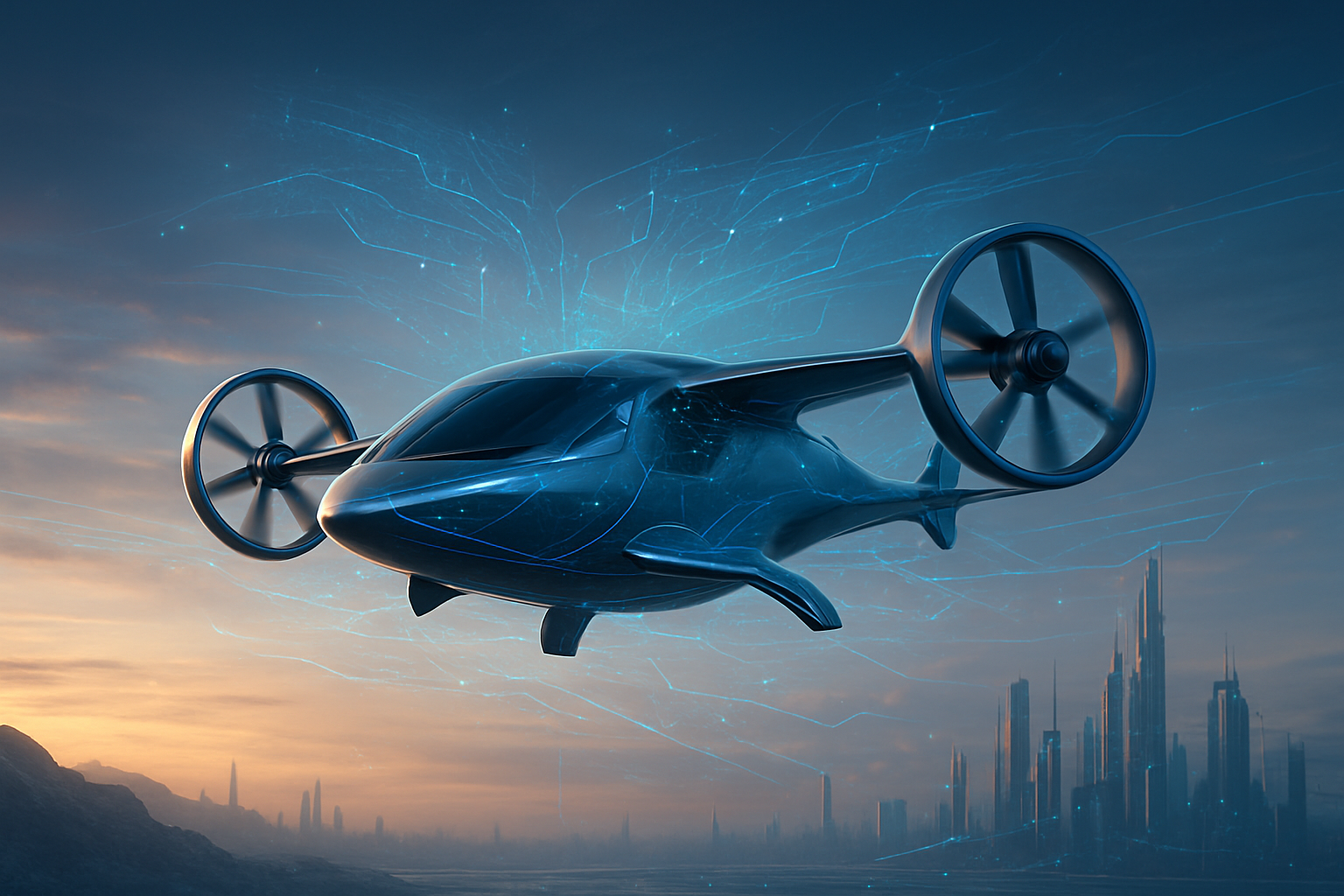
    The Indian Institute of Technology (IIT) Madras has announced a significant leap forward in Vertical Take-Off and Landing (VTOL) technology, successfully demonstrating a hybrid rocket thruster capable of achieving the crucial velocity required for a "soft landing." This groundbreaking achievement, detailed in the International Journal of Aeronautical and Space Sciences, promises to redefine next-generation aviation by offering a safer, simpler, and more controllable propulsion system for VTOL aircraft and Unmanned Aerial Vehicles (UAVs). This development positions India as a key player in advanced air mobility, with profound implications for decentralized air transport, logistics, defense, and potentially, space exploration.

    Unpacking the Engineering Marvel: Hybrid Rockets for Soft Landings

    The core of IIT Madras's breakthrough lies in its innovative hybrid rocket thruster system. Unlike conventional liquid or solid rocket engines, hybrid rockets combine the advantages of both, offering inherent safety due to the separate storage of fuel and oxidizer, simplicity in design, and excellent throttling capabilities for precise thrust modulation. A standout feature of this research is the development of a unique hybrid rocket fuel that utilizes readily available compressed air as the oxidizer. This eliminates the need for complex, exotic chemicals or cryogenic liquids, significantly enhancing the system's safety and simplifying its integration into aerospace vehicles.

    In a sophisticated experiment, the IIT Madras team employed a unique Hardware-in-the-Loop Simulation (HILS) framework. This framework is not merely a simulation; it directly integrated a live-firing hybrid rocket motor with a virtual simulation. This approach ensures an incredibly accurate and realistic testing environment, bridging the gap between theoretical development and a functional prototype. Through this HILS setup, the researchers successfully demonstrated the ability to achieve a safe touchdown velocity of just 0.66 meters per second, a critical metric for "soft landing" capabilities essential for various applications, from planetary exploration modules to terrestrial VTOL aircraft. A landing algorithm based on velocity tracking and a Proportional-Integral-Derivative (PID) controller was instrumental in monitoring and correcting the velocity profile for a seamless landing process.

    This approach significantly differs from previous VTOL technologies. While electric VTOLs (eVTOLs) are gaining traction, the hybrid rocket thruster offers distinct advantages in terms of range, payload capacity, and potentially, faster refueling times compared to battery-dependent systems. Compared to traditional helicopters, which currently serve in remote terrains, the IIT Madras VTOL system promises superior speed, range, and efficiency, addressing long-standing limitations. The simplified oxidizer and the robust HILS framework represent a departure from more complex, high-maintenance liquid-engine VTOL systems, offering a more practical pathway to widespread adoption. Initial reactions from the broader aerospace community, while not explicitly detailed for this specific announcement, indicate a strong interest in IIT Madras's contributions to advanced air mobility, with experts noting the "game-changer" potential for both civil and military aviation.

    Reshaping the Landscape: Impact on AI and Tech Companies

    The IIT Madras VTOL hybrid rocket thruster breakthrough carries significant implications for AI companies, tech giants, and startups across various sectors, from aerospace and logistics to defense and urban air mobility.

    Companies poised to benefit include traditional aerospace manufacturers such as Airbus (Euronext: AIR), Bell Textron Inc. (NYSE: TXT), Boeing (NYSE: BA), Lockheed Martin (NYSE: LMT), and Israel Aerospace Industries, who could integrate this technology into their next-generation VTOL designs. The simplified propulsion system and enhanced safety could accelerate their development cycles and expand their market reach. Logistics giants like Amazon (NASDAQ: AMZN) and UPS (NYSE: UPS), along with specialized cargo VTOL developers such as Elroy Air, could leverage this technology for more efficient, reliable, and cost-effective drone delivery and air cargo services, especially for reaching remote or underserved areas. The inherent safety and simpler maintenance of the hybrid thruster could make widespread autonomous cargo VTOL operations more feasible.

    For tech giants with interests in cloud computing and AI research, such as Google (NASDAQ: GOOGL), Microsoft (NASDAQ: MSFT), and Amazon Web Services (AWS), the management of large fleets of autonomous VTOLs will generate vast amounts of flight data and require robust cloud infrastructure and advanced AI capabilities. This will likely lead to increased demand for their cloud services and AI development platforms. Startups in the Urban Air Mobility (UAM) space, including Joby Aviation (NYSE: JOBY), Archer Aviation (NYSE: ACHR), EHang Holdings (NASDAQ: EH), Vertical Aerospace (NYSE: EVTL), and Lilium (NASDAQ: LILM), currently focused on eVTOLs, might explore integrating this hybrid rocket technology for enhanced performance, range, and safety, potentially accelerating the widespread adoption of air taxis.

    The competitive landscape will also shift. While current eVTOL development heavily focuses on electric propulsion, this breakthrough shifts emphasis to AI capable of managing the unique dynamics and thrust modulation of rocket-powered VTOLs. This will drive specialized AI research for rocket propulsion control, potentially creating new competitive niches for AI labs. Major tech and aerospace companies may strategically partner with or acquire startups and research entities that successfully integrate AI with this new thruster technology, securing an early advantage. The "holy grail" for defense AI—the ability to operate VTOL aircraft without runways—is a significant strategic advantage that will intensify competition among defense AI labs to develop highly autonomous, survivable, and adaptable VTOL systems. The technology could disrupt the traditional helicopter market by offering superior speed, range, and efficiency, and reduce reliance on expensive runway infrastructure for certain military and logistics applications.

    Broader Horizons: Significance in the AI Landscape and Beyond

    While primarily an aerospace engineering feat, the IIT Madras VTOL hybrid rocket thruster breakthrough holds crucial, albeit indirect, significance within the broader AI landscape and ongoing technological trends. It serves as a foundational hardware innovation that will accelerate the development and deployment of advanced AI-driven autonomous aerial systems.

    The integration of sophisticated control algorithms, like the PID controller used for soft landing, is inherently linked to AI. Future iterations of this technology will undoubtedly leverage more advanced AI for greater precision, adaptability, and full autonomy in flight control, navigation, obstacle avoidance, and real-time decision-making. Furthermore, the aerospace industry is increasingly adopting AI for the design and optimization of propulsion systems, suggesting that future enhancements to this hybrid thruster could themselves be products of AI-driven engineering. This makes the breakthrough an enabler for future AI milestones in aerospace and robotics.

    The broader impacts are transformative. The potential for decentralized air mobility is immense, allowing access to remote and rugged terrains previously inaccessible to conventional aircraft. This could revolutionize logistics, emergency services, and regional connectivity. For defense, the strategic advantages are staggering, enabling aircraft to operate from diverse, unprepared locations without vulnerable airbases. The "soft landing" capability also has direct applications in space exploration for planetary landers. The inherent safety, simplicity, and lower maintenance of hybrid rockets promise more cost-effective and sustainable aerial mobility solutions.

    However, potential concerns exist. As a dual-use technology, its application in both civil and military contexts raises questions about proliferation and misuse, particularly concerning autonomous weapon systems. Regulatory frameworks will need to evolve rapidly to accommodate these novel VTOLs, especially for autonomous operations, covering certification, air traffic management, and safety protocols. Public acceptance and potential noise pollution in urban air mobility scenarios also remain challenges. Moreover, highly autonomous VTOLs relying on AI could be vulnerable to cyberattacks, necessitating robust security measures.

    Compared to direct AI milestones like the Deep Learning Revolution or breakthroughs in autonomous driving, the IIT Madras achievement is a critical enabling technology. It provides the robust, controllable propulsion system that the next generation of AI-powered aerial vehicles will depend on, much like advanced microprocessors enabled the AI revolution. It's a testament to how hardware innovation can catalyze and accelerate progress in AI applications, pushing the boundaries of what autonomous systems can achieve.

    The Flight Path Ahead: Future Developments and Expert Predictions

    The journey for IIT Madras's VTOL hybrid rocket thruster technology is far from over, with clear near-term and long-term developments on the horizon.

    In the near term, researchers are intensely focused on achieving attitude stabilization for experimental VTOL platforms equipped with multiple thrusters. This is a critical step, as maintaining the aircraft's orientation during all phases of flight is paramount for practical application. Following this, the team plans to conduct more advanced hardware-in-the-loop simulations that account for landing without the assumption of an already attitude-stabilized system, further validating their control strategies. The initial implementation of this VTOL technology is expected to be extended to fixed-wing Unmanned Aerial Vehicles (UAVs), serving as a vital proof-of-concept for broader aerospace applications.

    The long-term vision, as articulated by Professor P. A. Ramakrishna of IIT Madras, is for this VTOL system to reach a Technology Readiness Level (TRL) suitable for widespread commercial and military deployment. He predicts it will be a "game-changer" by fundamentally decentralizing air transport, freeing aircraft from the constraints of traditional runway infrastructure. This opens up unprecedented possibilities for accessing remote locations, transforming logistics, emergency services, and regional connectivity. The "soft landing" capability also positions it for future planetary landing missions, extending its reach beyond Earth's atmosphere.

    However, several challenges need to be addressed. While the hybrid rocket design aims for simplicity, achieving robust attitude stabilization with multiple thrusters in unpredictable real-world conditions is complex. Refining precise thrust control for various mission requirements, including emergency shutdowns and restarts, is crucial. Historically, hybrid rocket engines faced challenges with poor fuel regression rates, though IIT Madras has made strides in addressing this with innovative methods. Experts like Dr. Joel George Manathara emphasize the uniqueness of using hybrid rocket thrusters for VTOL and the precision offered by their HILS framework. The consensus is that this work paves the way for moving beyond conventional approaches, balancing safety, simplicity, and control, and placing India among the elite nations developing advanced aerospace propulsion systems.

    A New Era of Flight: Wrapping Up the Revolution

    The IIT Madras breakthrough in VTOL hybrid rocket technology marks a pivotal moment in aviation history, signaling a new era of decentralized and highly adaptable air transport. The key takeaways are the successful demonstration of a hybrid rocket thruster capable of soft landings, its innovative use of compressed air as an oxidizer for enhanced safety and simplicity, and the development of a unique live-firing Hardware-in-the-Loop Simulation framework that accelerates practical development. This advancement promises to address the complexities and maintenance demands of existing VTOL systems, paving the way for more robust and efficient aerial platforms.

    While not an AI breakthrough in itself, this development holds profound significance in AI history as a crucial enabler for next-generation autonomous aerial systems. The reliable and controllable propulsion it offers is a prerequisite for the sophisticated AI necessary to pilot fully autonomous VTOL aircraft, from complex urban air mobility scenarios to critical defense operations and ambitious space missions. The interplay between advanced propulsion and AI autonomy, as seen in projects like Shield AI's X-BAT, underscores the deep synergy between these fields.

    The long-term impact is truly transformative. This technology has the potential to fundamentally alter civil and military aviation by eliminating reliance on runways, opening up vast new operational possibilities. It can foster new paradigms in urban air mobility, emergency response, and logistics, while offering unparalleled strategic flexibility in defense. The inherent safety and potential for lower maintenance costs of hybrid thrusters could also lead to more sustainable and economically viable aerial solutions.

    In the coming weeks and months, the world will be watching for several key developments from IIT Madras. Progress on attitude stabilization for multi-thruster platforms, advanced experimental studies of landing platforms with multiple degrees of freedom, and the advancement of the technology through higher Technology Readiness Levels will be critical indicators. Furthermore, any announcements regarding initial implementation in fixed-wing UAVs or potential industry partnerships will signal the accelerating trajectory of this groundbreaking Indian innovation.


    This content is intended for informational purposes only and represents analysis of current AI developments.

    TokenRing AI delivers enterprise-grade solutions for multi-agent AI workflow orchestration, AI-powered development tools, and seamless remote collaboration platforms.
    For more information, visit https://www.tokenring.ai/.
  • Carpenter Technology Soars: Aerospace Demand Fuels Record Performance and Stock Surge

    Carpenter Technology Soars: Aerospace Demand Fuels Record Performance and Stock Surge

    Carpenter Technology Corporation (NYSE: CRS), a global leader in high-performance specialty alloy-based materials, is experiencing unprecedented growth, with its stock price surging by over 92% in the last year. The company's exceptional performance is primarily driven by robust, multi-year demand from the aerospace and defense sectors, coupled with stellar fiscal results that have consistently exceeded analyst expectations. This surge reflects Carpenter Technology's critical role as a foundational supplier of advanced materials essential for the next generation of aircraft and defense systems.

    The specialty materials provider's stock made headlines on October 23, 2025, when it jumped by an impressive 21.1%, adding $51.64 to reach $296.43, even touching an all-time high of $291.36 during the day. This significant leap followed the release of a strong first-quarter fiscal year 2026 earnings report, which showcased a 21.75% increase in pre-market trading. With a "Strong Buy" consensus rating from Wall Street analysts and an average 12-month price target suggesting further upside, Carpenter Technology's trajectory underscores the indispensable nature of its highly engineered products in critical industries.

    Engineering Excellence: The Technical Foundation of Carpenter Technology's Success

    Carpenter Technology's market leadership is firmly rooted in its profound metallurgical and manufacturing expertise, honed over more than 130 years. The company specializes in developing and producing high-performance specialty alloys that are crucial for applications demanding extreme strength, corrosion resistance, and high-temperature performance—qualities paramount in the aerospace and defense industries. Unlike conventional metals, Carpenter's materials are engineered at a microstructural level to withstand the harshest operating environments, enabling lighter, more durable, and more efficient components.

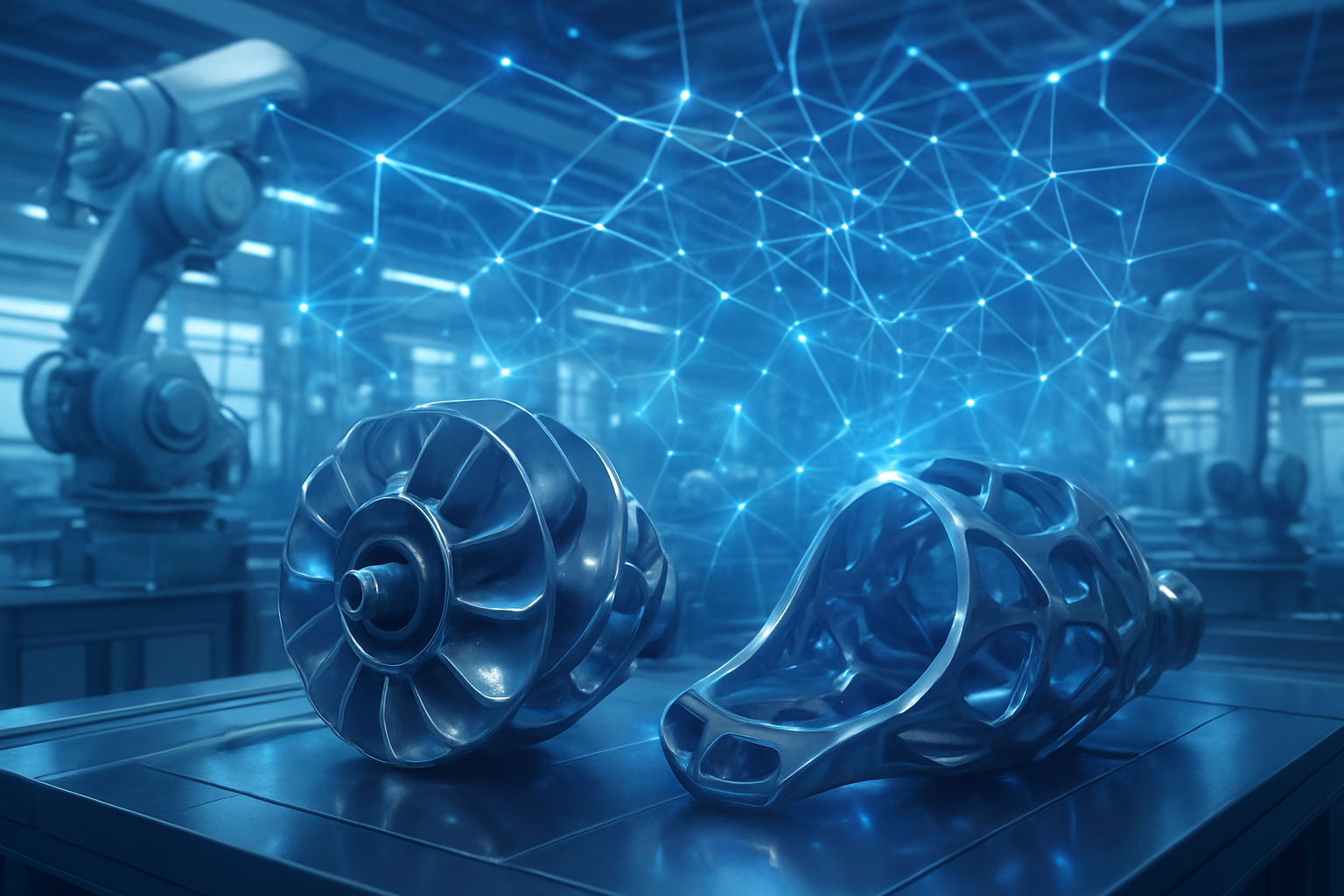
    The company's extensive product portfolio includes a diverse range of advanced materials such as titanium alloys, nickel and cobalt-based superalloys, specialty stainless steels, and advanced powder metals. These materials are not just commodities; they are custom-engineered solutions vital for aerospace applications, including engine components (casings, rings, vanes), landing gear, airframe fasteners, and auxiliary power units (APUs). For instance, its superalloys are indispensable for jet engine hot sections, where temperatures can exceed 1,000 degrees Celsius. Furthermore, Carpenter Technology is at the forefront of materials for additive manufacturing (AM), developing specialized powder alloys that enable complex, lightweight geometries previously unattainable, pushing the boundaries of aerospace design and manufacturing. This technical differentiation and continuous innovation set Carpenter Technology apart from standard material suppliers, making it a preferred partner for aerospace OEMs.

    Market Dominance and Industry Ripple Effects

    Carpenter Technology's soaring success has significant implications for both its direct competitors and the broader aerospace supply chain. As a key enabler of advanced aerospace and defense platforms, its robust performance signals a healthy and expanding market for high-performance materials. Aerospace and defense alone account for over 60% of the company's revenue, making its fortunes closely tied to the sector's growth. The company's ability to consistently deliver superior materials gives it a distinct competitive advantage, creating high barriers to entry for potential rivals due to the stringent qualification processes and technical expertise required in aerospace.

    The company's strong bookings, which saw a 23% sequential rise in the Aerospace & Defense sector in Q1 FY26, directly benefit its customers—major aerospace manufacturers like Boeing and Airbus, and their tiered suppliers. By providing reliable access to critical, high-quality materials, Carpenter Technology helps these companies meet their production targets and develop more advanced aircraft. Competitors in the specialty metals space, while also potentially benefiting from overall industry growth, face a formidable challenge in matching Carpenter's established reputation, extensive product range, and deep-seated customer relationships. The company's strategic investments in expanding melt capacity further solidify its market position, ensuring it can meet future demand and potentially outpace rivals in scaling production.

    Broader Significance in the AI and Tech Landscape

    While Carpenter Technology's core business is in advanced materials rather than direct AI development, its trajectory is indicative of broader trends within the technology and industrial sectors, where AI and advanced manufacturing increasingly intersect. The demand for lighter, stronger, and more durable materials is amplified by the drive for fuel efficiency and performance in aerospace, which itself is becoming increasingly reliant on AI for design optimization, predictive maintenance, and autonomous systems. Carpenter's advanced materials, particularly those for additive manufacturing, enable the creation of complex geometries that can be optimized using AI-driven design tools, bridging the gap between digital innovation and physical realization.

    The company's consistent profitability and strategic investments highlight the critical importance of foundational industries in supporting high-tech advancements. Without the specialized alloys provided by companies like Carpenter Technology, many of the performance breakthroughs in aerospace—and indeed, in other high-tech sectors like medical and power generation—would be impossible. Potential concerns include the cyclical nature of the aerospace industry and broader economic downturns, which could impact demand. However, the current multi-year outlook for aerospace and defense remains exceptionally strong, mitigating these risks in the near term. Carpenter Technology's sustained growth mirrors the broader industry's push for innovation, drawing parallels to previous milestones where material science breakthroughs enabled entirely new technological paradigms.

    Future Developments and Horizons

    Looking ahead, Carpenter Technology is poised for continued expansion, driven by several key factors. The ongoing recovery and expansion of commercial aerospace, coupled with sustained investment in defense programs globally, will continue to fuel demand for its specialty materials. The company's focus on developing materials for next-generation technologies, including advanced engine designs and lightweight airframes, ensures its relevance in a rapidly evolving industry. Furthermore, its investments in additive manufacturing materials position it to capitalize on the growing adoption of 3D printing for critical components, opening up new market segments and applications.

    Management's optimistic outlook reinforces these projections, with anticipated operating income for fiscal year 2026 projected to be between $660 million and $700 million, a significant increase over fiscal year 2025. They are even targeting $765 million to $800 million in adjusted operating income for fiscal year 2027. Challenges will include managing supply chain complexities, integrating new production capacities efficiently, and continuing to innovate to stay ahead of evolving material requirements. Experts predict that Carpenter Technology will further solidify its position as a critical, high-value supplier, with potential for expansion into new high-performance material applications beyond its current core markets.

    A Cornerstone of Industrial Innovation

    Carpenter Technology Corporation's recent stock surge is a powerful testament to its strategic importance and operational excellence. The company's unwavering commitment to providing high-performance specialty materials for the demanding aerospace and defense industries has positioned it for sustained growth and profitability. Key takeaways include its exceptional fiscal performance, driven by strong market demand, operational efficiencies, and strategic investments in capacity and innovation. This development underscores the vital role of foundational material science in enabling advancements across high-tech sectors.

    As Carpenter Technology continues to deliver record financial results and expand its capabilities, it remains a crucial player in the global industrial landscape. Investors and industry observers should watch for continued strong bookings in aerospace and defense, the successful integration of new melt capacity, and further advancements in materials for additive manufacturing. The company's enduring legacy of innovation, combined with a robust market outlook, suggests that Carpenter Technology will continue to be a cornerstone of industrial progress for years to come, influencing the very fabric of modern engineering and technology.


    This content is intended for informational purposes only and represents analysis of current AI developments.

    TokenRing AI delivers enterprise-grade solutions for multi-agent AI workflow orchestration, AI-powered development tools, and seamless remote collaboration platforms.
    For more information, visit https://www.tokenring.ai/.
  • Elon Musk’s ‘Bakery’ Forges the Future of Space Travel with Mass-Produced Starship Heat Shields

    Elon Musk’s ‘Bakery’ Forges the Future of Space Travel with Mass-Produced Starship Heat Shields

    BOCA CHICA, TX – October 17, 2025 – In a development poised to revolutionize space exploration, Elon Musk’s aptly named 'Bakery' in Florida is in full swing, mass-producing advanced ceramic heat shield tiles that are critical to the rapid reusability of SpaceX (NASDAQ:SPCX) Starship. This highly automated facility represents a pivotal shift in aerospace manufacturing, moving from bespoke, handcrafted components to industrial-scale production, a key enabler for Starship’s ambitious mission to make humanity a multiplanetary species.

    The immediate significance of this innovation cannot be overstated. The 'Bakery' is not just producing tiles; it's baking the foundation for Starship's rapid reusability, aiming for an aircraft-like operational tempo with minimal turnaround time between flights. This industrial-scale efficiency is designed to drastically drive down the cost of space missions, transforming the economic equation of space exploration and making frequent journeys to the Moon, Mars, and beyond a tangible reality.

    Engineering Resilience: The Starship Heat Shield's Technical Edge

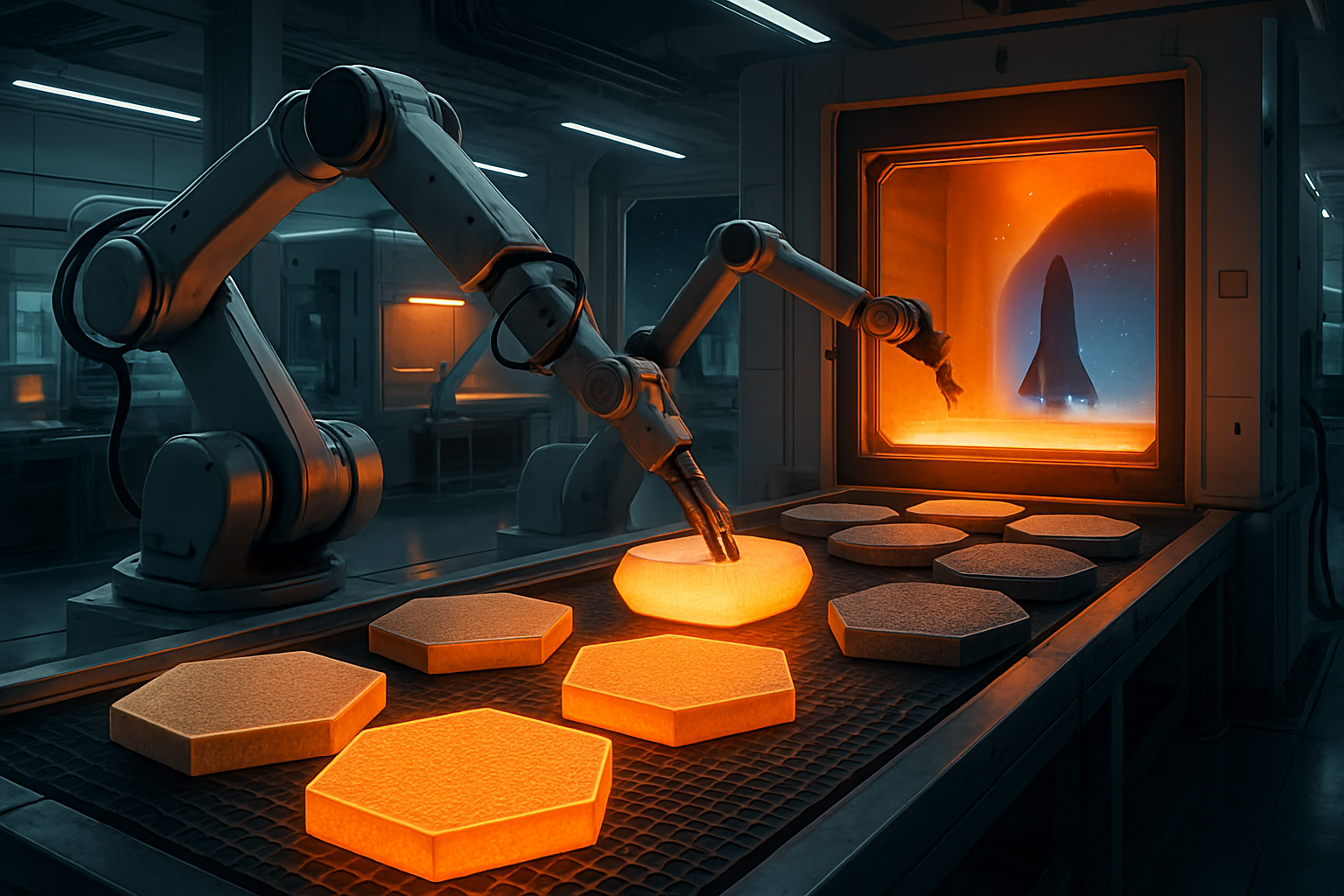
    Starship's thermal protection system (TPS) is a marvel of modern engineering, comprising approximately 18,000 hexagonal ceramic heat shield tiles that cover over 50% of its surface. These tiles, made from advanced silica-based ceramics and often coated with black borosilicate glass, are designed to endure extreme atmospheric reentry temperatures exceeding 1,400°C (2,500°F). Their hexagonal shape, precise pin-mounted attachments, and small expansion gaps allow them to flex and absorb immense thermal and aerodynamic stresses without cracking, a significant improvement over previous designs. Recent innovations like "Crunchwrap Tiles" and "Vulcan felt" further enhance their protective capabilities against plasma leaks.

    The 'Bakery' manufacturing process stands in stark contrast to historical approaches, most notably NASA’s Space Shuttle program. While the Space Shuttle relied on thousands of uniquely shaped, handcrafted tiles that required extensive, months-long refurbishment, SpaceX's facility is a high-tech, automated production center capable of churning out thousands of uniform tiles daily – some reports indicate up to 7,000 tiles per day, with one tile every 13 seconds. This rapid, consistent production, with each tile taking approximately 40 hours from raw material to finished product, is crucial for achieving Starship's goal of near-immediate reflight. Initial reactions from the aerospace community, while acknowledging the immense innovation and scale, have also highlighted the persistent technical challenges of ensuring the long-term durability and rapid refurbishment of these tiles, a hurdle even Elon Musk identifies as "the biggest technology challenge remaining for Starship."

    Reshaping the Aerospace Industry: Competitive Shifts and Market Advantages

    SpaceX's advancements in heat shield manufacturing are sending ripples across the aerospace industry, creating both opportunities and competitive pressures. SpaceX (NASDAQ:SPCX) itself stands as the primary beneficiary, as enhanced heat shield technology directly underpins Starship's rapid reusability and significantly reduced launch costs, solidifying its strategic advantage in the burgeoning commercial space sector. Suppliers of advanced ceramic materials and specialized stainless steel alloys, as well as providers of automation and manufacturing technology, could also see increased demand as the industry strives to match SpaceX's production cadence.

    For established aerospace giants like Boeing (NYSE:BA) and Lockheed Martin (NYSE:LMT), and even national space agencies, Starship's projected low-cost, high-frequency launch capabilities necessitate a re-evaluation of current product offerings and business models. The traditional paradigm of expensive, expendable rockets is facing significant disruption. This forces a shift in R&D focus towards more durable, rapidly reusable, and cost-effective thermal protection systems. Smaller aerospace startups and "New Space" companies, however, stand to benefit immensely from the drastically reduced cost of access to space, which could unlock new markets in space manufacturing, tourism, and resource utilization. SpaceX's vertically integrated "Bakery" model also grants it greater control over quality, intellectual property, and production schedules, reducing reliance on external suppliers for a critical component and further cementing its market leadership.

    A New Era of Space Exploration: Broader Implications and Concerns

    The Starship reusable heat shield technology is not merely an engineering feat; it's a foundational element for a new era of space exploration, fitting squarely into the broader trend towards greater reusability and accessibility. By dramatically lowering launch costs—potentially to under $100 per kilogram to orbit—and enabling unprecedented launch frequency, Starship aims to make ambitious missions to the Moon, Mars, and beyond economically viable within existing budgets. This capability is critical for establishing large satellite constellations, space stations, and permanent lunar or Martian bases, including its role as the Human Landing System for NASA's (NASDAQ:NASA) Artemis program.

    However, significant concerns and challenges persist. The technical hurdles of ensuring the heat shield's long-term durability against extreme temperatures (up to 2,600°F) and the violent shaking of reentry remain paramount. Early test flights have seen tiles fall off or sections of the heat shield burn through, underscoring the ongoing need for refinement. The complexity of rapid refurbishment for thousands of tiles, coupled with the intricate process of in-orbit refueling for deep-space missions, adds further operational challenges. Environmentally, concerns regarding sonic booms and ecological disruption from frequent launches continue to draw scrutiny. Compared to the Space Shuttle's notoriously fragile and labor-intensive tiles, Starship's standardized, mass-produced design represents a major leap, aiming to overcome the Shuttle's limitations in turnaround time and maintenance, thereby pushing the boundaries of what is possible in reusable spaceflight.

    The Road Ahead: Future Developments and Expert Predictions

    In the near term, SpaceX is relentlessly focused on iterative improvements and rigorous testing of its heat shield. This includes continuous refinements to tile materials and designs, the strategic integration of ablative sublayers for secondary protection, and enhanced gap sealing techniques like the "crunch wrap." The "Bakery" itself will continue to evolve, integrating new material and design changes into its automated production lines. Long-term developments could see more radical innovations, though the immediate focus remains on perfecting the existing tiled system. While concepts like transpiration cooling for metallic heat shields have been explored, their complexity has deferred their implementation, but the ongoing experimentation with metallic tiles signifies a commitment to pushing material science boundaries.

    Experts predict an aggressive development and testing timeline for Starship. SpaceX aims for a significantly accelerated flight cadence, with internal plans suggesting up to 25 launches in a single year by 2026, and eventually even hourly launches for the Super Heavy booster during optimal Mars transfer windows. Elon Musk himself has stated that, barring major setbacks, SpaceX aims to demonstrate full reusability of Starship within the next year, delivering over 100 tons to a functional orbit. The heat shield remains a primary focus, with ongoing innovation in material science and design crucial for achieving rapid reusability without extensive refurbishment. Key milestones to watch include perfecting the booster catch with the launch tower arms and demonstrating reliable in-orbit refueling, both essential for Starship's full operational capability and deep-space missions. Furthermore, the transition to Starship Version 3 (V3) prototypes, expected to fly next year, will incorporate further design improvements, including revised flap positions to enhance heat shield performance.

    A Transformative Trajectory: The Enduring Impact of Starship's Heat Shield

    The advancements in Starship's heat shield technology, forged in the automated ovens of Elon Musk's 'Bakery,' represent a transformative moment in aerospace history. The key takeaway is clear: this is not just about protecting a spacecraft; it's about unlocking a new era of space travel. By enabling rapid and full reusability, SpaceX is poised to democratize access to space, drastically reduce costs, and accelerate human exploration beyond Earth.

    The long-term impact will be profound, facilitating the establishment of permanent lunar bases, Martian settlements, and extensive orbital infrastructure, bringing humanity closer to becoming a multi-planetary species. The iterative development philosophy applied to the heat shield will likely inspire entirely new thermal protection system designs across the industry. In the coming weeks and months, the aerospace community will be closely watching the data from recent flight tests, the effectiveness of new gap-sealing technologies, and the continued progress of the "Starfactory" in Florida. The success of Starship's heat shield is not merely a technical achievement; it is the linchpin for a future where frequent, affordable, and sustainable access to space is a reality, fundamentally reshaping our relationship with the cosmos.


    This content is intended for informational purposes only and represents analysis of current AI developments.

    TokenRing AI delivers enterprise-grade solutions for multi-agent AI workflow orchestration, AI-powered development tools, and seamless remote collaboration platforms.
    For more information, visit https://www.tokenring.ai/.

  • NVIDIA Fuels Starship Dreams: Jensen Huang Delivers Petaflop AI Supercomputer to SpaceX

    NVIDIA Fuels Starship Dreams: Jensen Huang Delivers Petaflop AI Supercomputer to SpaceX

    October 15, 2025 – In a move poised to redefine the intersection of artificial intelligence and space exploration, NVIDIA (NASDAQ: NVDA) CEO Jensen Huang personally delivered a cutting-edge 128GB AI supercomputer, the DGX Spark, to Elon Musk at SpaceX's Starbase facility. This pivotal moment, occurring amidst the advanced preparations for Starship's rigorous testing, signifies a strategic leap towards embedding powerful, localized AI capabilities directly into the heart of space technology development. The partnership between the AI hardware giant and the ambitious aerospace innovator is set to accelerate breakthroughs in autonomous spaceflight, real-time data analysis, and the overall efficiency of next-generation rockets, pushing the boundaries of what's possible for humanity's multi-planetary future.

    The immediate significance of this delivery lies in providing SpaceX with unprecedented on-site AI computing power. The DGX Spark, touted as the world's smallest AI supercomputer, packs a staggering petaflop of AI performance and 128GB of unified memory into a compact, desktop-sized form factor. This allows SpaceX engineers to prototype, fine-tune, and run inference for complex AI models with up to 200 billion parameters locally, bypassing the latency and costs associated with constant cloud interaction. For Starship's rapid development and testing cycles, this translates into accelerated analysis of vast flight data, enhanced autonomous system refinement for flight control and landing, and a truly portable supercomputing capability essential for a dynamic testing environment.

    Unpacking the Petaflop Powerhouse: The DGX Spark's Technical Edge

    The NVIDIA DGX Spark is an engineering marvel, designed to democratize access to petaflop-scale AI performance. At its core lies the NVIDIA GB10 Grace Blackwell Superchip, which seamlessly integrates a powerful Blackwell GPU with a 20-core Arm-based Grace CPU. This unified architecture delivers an astounding one petaflop of AI performance at FP4 precision, coupled with 128GB of LPDDR5X unified CPU-GPU memory. This shared memory space is crucial, as it eliminates data transfer bottlenecks common in systems with separate memory pools, allowing for the efficient processing of incredibly large and complex AI models.

    Capable of running inference on AI models up to 200 billion parameters and fine-tuning models up to 70 billion parameters locally, the DGX Spark also features NVIDIA ConnectX networking for clustering and NVLink-C2C, offering five times the bandwidth of PCIe. With up to 4TB of NVMe storage, it ensures rapid data access for demanding workloads. Its most striking feature, however, is its form factor: roughly the size of a hardcover book and weighing only 1.2 kg, it brings supercomputer-class performance to a "grab-and-go" desktop unit. This contrasts sharply with previous AI hardware in aerospace, which often relied on significantly less powerful, more constrained computational capabilities, or required extensive cloud-based processing. While earlier systems, like those on Mars rovers or Earth-observing satellites, focused on simpler algorithms due to hardware limitations, the DGX Spark provides a generational leap in local processing power and memory capacity, enabling far more sophisticated AI applications directly at the edge.

    Initial reactions from the AI research community and industry experts have been a mix of excitement and strategic recognition. Many hail the DGX Spark as a significant step towards "democratizing AI," making petaflop-scale computing accessible beyond traditional data centers. Experts anticipate it will accelerate agentic AI and physical AI development, fostering rapid prototyping and experimentation. However, some voices have expressed skepticism regarding the timing and marketing, with claims of chip delays, though the physical delivery to SpaceX confirms its operational status and strategic importance.

    Reshaping the AI Landscape: Corporate Impacts and Competitive Dynamics

    NVIDIA's delivery of the DGX Spark to SpaceX carries profound implications for AI companies, tech giants, and startups, reshaping competitive landscapes and market positioning. Directly, SpaceX gains an unparalleled advantage in accelerating the development and testing of AI for Starship, autonomous rocket operations, and satellite constellation management for Starlink. This on-site, high-performance computing capability will significantly enhance real-time decision-making and autonomy in space. Elon Musk's AI venture, xAI, which is reportedly seeking substantial NVIDIA GPU funding, could also leverage this technology for its large language models (LLMs) and broader AI research, especially for localized, high-performance needs.

    NVIDIA's (NASDAQ: NVDA) hardware partners, including Acer (TWSE: 2353), ASUS (TWSE: 2357), Dell Technologies (NYSE: DELL), GIGABYTE, HP (NYSE: HPQ), Lenovo (HKEX: 0992), and MSI (TWSE: 2377), stand to benefit significantly. As they roll out their own DGX Spark systems, the market for NVIDIA's powerful, compact AI ecosystem expands, allowing these partners to offer cutting-edge AI solutions to a broader customer base. AI development tool and software providers, such as Google (NASDAQ: GOOGL), Microsoft (NASDAQ: MSFT), and Meta (NASDAQ: META), are already optimizing their platforms for the DGX Spark, further solidifying NVIDIA's comprehensive AI stack. This democratization of petaflop-scale AI also empowers edge AI and robotics startups, enabling smaller teams to innovate faster and prototype locally for agentic and physical AI applications.

    The competitive implications are substantial. While cloud AI service providers remain crucial for massive-scale training, the DGX Spark's ability to perform data center-level AI workloads locally could reduce reliance on cloud infrastructure for certain on-site aerospace or edge applications, potentially pushing cloud providers to further differentiate. Companies offering less powerful edge AI hardware for aerospace might face pressure to upgrade their offerings. NVIDIA further solidifies its dominance in AI hardware and software, extending its ecosystem from large data centers to desktop supercomputers. Competitors like Intel (NASDAQ: INTC) and AMD (NASDAQ: AMD) will need to continue rapid innovation to keep pace with NVIDIA's advancements and the escalating demand for specialized AI hardware, as seen with Broadcom's (NASDAQ: AVGO) recent partnership with OpenAI for AI accelerators.

    A New Frontier: Wider Significance and Ethical Considerations

    The delivery of the NVIDIA DGX Spark to SpaceX represents more than a hardware transaction; it's a profound statement on the trajectory of AI, aligning with several broader trends in the AI landscape. It underscores the accelerating democratization of high-performance AI, making powerful computing accessible beyond the confines of massive data centers. This move echoes NVIDIA CEO Jensen Huang's 2016 delivery of the first DGX-1 to OpenAI, which is widely credited with "kickstarting the AI revolution" that led to generative AI breakthroughs like ChatGPT. The DGX Spark aims to "ignite the next wave of breakthroughs" by empowering a broader array of developers and researchers. This aligns with the rapid growth of AI supercomputing, where computational performance doubles approximately every nine months, and the notable shift of AI supercomputing power from public sectors to private industry, with the U.S. currently holding the majority of global AI supercomputing capacity.

    The potential impacts on space exploration are revolutionary. Advanced AI algorithms, powered by systems like the DGX Spark, are crucial for enhancing autonomy in space, from optimizing rocket landings and trajectories to enabling autonomous course corrections and fault predictions for Starship. For deep-space missions to Mars, where communication delays are extreme, on-board AI becomes indispensable for real-time decision-making. AI is also vital for managing vast satellite constellations like Starlink, coordinating collision avoidance, and optimizing network performance. Beyond operations, AI will be critical for mission planning, rapid data analysis from spacecraft, and assisting astronauts in crewed missions.

    In autonomous systems, the DGX Spark will accelerate the training and validation of sophisticated algorithms for self-driving vehicles, drones, and industrial robots. Elon Musk's integrated AI strategy, aiming to centralize AI across ventures like SpaceX, Tesla (NASDAQ: TSLA), and xAI, exemplifies how breakthroughs in one domain can rapidly accelerate innovation in others, from autonomous rockets to humanoid robots like Optimus. However, this rapid advancement also brings potential concerns. The immense energy consumption of AI supercomputing is a growing environmental concern, with projections for future systems requiring gigawatts of power. Ethical considerations around AI safety, including bias and fairness in LLMs, misinformation, privacy, and the opaque nature of complex AI decision-making (the "black box" problem), demand robust research into explainable AI (XAI) and human-in-the-loop systems. The potential for malicious use of powerful AI tools, from cybercrime to deepfakes, also necessitates proactive cybersecurity measures and content filtering.

    Charting the Cosmos: Future Developments and Expert Predictions

    The delivery of the NVIDIA DGX Spark to SpaceX is not merely an endpoint but a catalyst for significant near-term and long-term developments in AI and space technology. In the near term, the DGX Spark will be instrumental in refining Starship's autonomous flight adjustments, controlled descents, and intricate maneuvers. Its on-site, real-time data processing capabilities will accelerate the analysis of vast amounts of telemetry, optimizing rocket performance and improving fault detection and recovery. For Starlink, the enhanced supercomputing power will further optimize network efficiency and satellite collision avoidance.

    Looking further ahead, the long-term implications are foundational for SpaceX's ambitious goals of deep-space missions and planetary colonization. AI is expected to become the "neural operating system" for off-world industry, orchestrating autonomous robotics, intelligent planning, and logistics for in-situ resource utilization (ISRU) on the Moon and Mars. This will involve identifying, extracting, and processing local resources for fuel, water, and building materials. AI will also be vital for automating in-space manufacturing, servicing, and repair of spacecraft. Experts predict a future with highly autonomous deep-space missions, self-sufficient off-world outposts, and even space-based data centers, where powerful AI hardware, potentially space-qualified versions of NVIDIA's chips, process data in orbit to reduce bandwidth strain and latency.

    However, challenges abound. The harsh space environment, characterized by radiation, extreme temperatures, and launch vibrations, poses significant risks to complex AI processors. Developing radiation-hardened yet high-performing chips remains a critical hurdle. Power consumption and thermal management in the vacuum of space are also formidable engineering challenges. Furthermore, acquiring sufficient and representative training data for novel space instruments or unexplored environments is difficult. Experts widely predict increased spacecraft autonomy and a significant expansion of edge computing in space. The demand for AI in space is also driving the development of commercial-off-the-shelf (COTS) chips that are "radiation-hardened at the system level" or specialized radiation-tolerant designs, such as an NVIDIA Jetson Orin NX chip slated for a SpaceX rideshare mission.

    A New Era of AI-Driven Exploration: The Wrap-Up

    NVIDIA's (NASDAQ: NVDA) delivery of the 128GB DGX Spark AI supercomputer to SpaceX marks a transformative moment in both artificial intelligence and space technology. The key takeaway is the unprecedented convergence of desktop-scale supercomputing power with the cutting-edge demands of aerospace innovation. This compact, petaflop-performance system, equipped with 128GB of unified memory and NVIDIA's comprehensive AI software stack, signifies a strategic push to democratize advanced AI capabilities, making them accessible directly at the point of development.

    This development holds immense significance in the history of AI, echoing the foundational impact of the first DGX-1 delivery to OpenAI. It represents a generational leap in bringing data center-level AI capabilities to the "edge," empowering rapid prototyping and localized inference for complex AI models. For space technology, it promises to accelerate Starship's autonomous testing, enable real-time data analysis, and pave the way for highly autonomous deep-space missions, in-space resource utilization, and advanced robotics essential for multi-planetary endeavors. The long-term impact is expected to be a fundamental shift in how AI is developed and deployed, fostering innovation across diverse industries by making powerful tools more accessible.

    In the coming weeks and months, the industry should closely watch how SpaceX leverages the DGX Spark in its Starship testing, looking for advancements in autonomous flight and data processing. The innovations from other early adopters, including major tech giants like Google (NASDAQ: GOOGL), Microsoft (NASDAQ: MSFT), and Meta (NASDAQ: META), and various research institutions, will provide crucial insights into the system's diverse applications, particularly in agentic and physical AI development. Furthermore, observe the product rollouts from NVIDIA's OEM partners and the competitive responses from other chip manufacturers like AMD (NASDAQ: AMD). The distinct roles of desktop AI supercomputers like the DGX Spark versus massive cloud-based AI training systems will also continue to evolve, defining the future trajectories of AI infrastructure at different scales.


    This content is intended for informational purposes only and represents analysis of current AI developments.

    TokenRing AI delivers enterprise-grade solutions for multi-agent AI workflow orchestration, AI-powered development tools, and seamless remote collaboration platforms.
    For more information, visit https://www.tokenring.ai/.