Tag: AGI

  • OpenAI Shatters Reasoning Records: The Dawn of the o3 Era and the $200 Inference Economy

    OpenAI Shatters Reasoning Records: The Dawn of the o3 Era and the $200 Inference Economy

    In a move that has fundamentally redefined the trajectory of artificial general intelligence (AGI), OpenAI has officially transitioned its flagship models from mere predictive text generators to "reasoning engines." The launch of the o3 and o3-mini models marks a watershed moment in the AI industry, signaling the end of the "bigger is better" data-scaling era and the beginning of the "think longer" inference-scaling era. These models represent the first commercial realization of "System 2" thinking, allowing AI to pause, deliberate, and self-correct before providing an answer.

    The significance of this development cannot be overstated. By achieving scores that were previously thought to be years, if not decades, away, OpenAI has effectively reset the competitive landscape. As of early 2026, the o3 model remains the benchmark against which all other frontier models are measured, particularly in the realms of advanced mathematics, complex coding, and visual reasoning. This shift has also birthed a new economic model for AI: the $200-per-month ChatGPT Pro tier, which caters to a growing class of "power users" who require massive amounts of compute to solve the world’s most difficult problems.

    The Technical Leap: System 2 Thinking and the ARC-AGI Breakthrough

    At the heart of the o3 series is a technical shift known as inference-time scaling, or "test-time compute." While previous models like GPT-4o relied on "System 1" thinking—fast, intuitive, and often prone to "hallucinating" the first plausible-sounding answer—o3 utilizes a "System 2" approach. This allows the model to utilize a hidden internal Chain of Thought (CoT), exploring multiple reasoning paths and verifying its own logic before outputting a final response. This deliberative process is powered by large-scale Reinforcement Learning (RL), which teaches the model how to use its "thinking time" effectively to maximize accuracy rather than just speed.

    The results of this architectural shift are most evident in the record-breaking benchmarks. The o3 model achieved a staggering 88% on the Abstractions and Reasoning Corpus (ARC-AGI), a benchmark designed to test an AI's ability to learn new concepts on the fly rather than relying on memorized training data. For years, the ARC-AGI was considered a "wall" for LLMs, with most models scoring in the single digits. By reaching 88%, OpenAI has surpassed the average human baseline of 85%, a feat that many AI researchers, including ARC creator François Chollet, previously believed would require a total paradigm shift in AI architecture.

    In the realm of mathematics, the performance is equally dominant. The o3 model secured a 96.7% score on the AIME 2024 (American Invitational Mathematics Examination), missing only a single question on one of the most difficult high school math exams in the world. This is a massive leap from the 83.3% achieved by the original o1 model and the 56.7% of the o1-preview. The o3-mini model, while smaller and faster, also maintains high-tier performance in coding and STEM tasks, offering users a "reasoning effort" toggle to choose between "Low," "Medium," and "High" compute intensity depending on the complexity of the task.

    Initial reactions from the AI research community have been a mix of awe and strategic recalibration. Experts note that OpenAI has successfully demonstrated that "compute at inference" is a viable scaling law. This means that even without more training data, an AI can be made significantly smarter simply by giving it more time and hardware to process a single query. This discovery has led to a massive surge in demand for high-performance chips from companies like Nvidia (NASDAQ: NVDA), as the industry shifts its focus from training clusters to massive inference farms.

    The Competitive Landscape: Pro Tiers and the DeepSeek Challenge

    The launch of o3 has forced a strategic pivot among OpenAI’s primary competitors. Microsoft (NASDAQ: MSFT), as OpenAI’s largest partner, has integrated these reasoning capabilities across its Azure AI and Copilot platforms, targeting enterprise clients who need "zero-defect" reasoning for financial modeling and software engineering. Meanwhile, Alphabet Inc. (NASDAQ: GOOGL) has responded with Gemini 2.0, which focuses on massive 2-million-token context windows and native multimodal integration. While Gemini 2.0 excels at processing vast amounts of data, o3 currently holds the edge in raw logical deduction and "System 2" depth.

    A surprising challenger has emerged in the form of DeepSeek R1, an open-source model that utilizes a Mixture-of-Experts (MoE) architecture to provide o1-level reasoning at a fraction of the cost. The presence of DeepSeek R1 has created a bifurcated market: OpenAI remains the "performance king" for mission-critical tasks, while DeepSeek has become the go-to for developers looking for cost-effective, open-source reasoning. This competitive pressure is likely what drove OpenAI to introduce the $200-per-month ChatGPT Pro tier. This premium offering provides "unlimited" access to the highest-compute versions of o3, as well as priority access to Sora and the "Deep Research" tool, effectively creating a "Pro" class of AI users.

    This new pricing tier represents a shift in how AI is valued. By charging $200 a month—ten times the price of the standard Plus subscription—OpenAI is signaling that high-level reasoning is a premium commodity. This tier is not intended for casual chat; it is a professional tool for engineers, PhD researchers, and data scientists. The inclusion of the "Deep Research" tool, which can perform multi-step web synthesis to produce near-doctoral-level reports, justifies the price point for those whose productivity is multiplied by these advanced capabilities.

    For startups and smaller AI labs, the o3 launch is both a blessing and a curse. On one hand, it proves that AGI-level reasoning is possible, providing a roadmap for future development. On the other hand, the sheer amount of compute required for inference-time scaling creates a "compute moat" that is difficult for smaller players to cross. Startups are increasingly focusing on niche "vertical AI" applications, using o3-mini via API to power specialized agents for legal, medical, or engineering fields, rather than trying to build their own foundation models.

    Wider Significance: Toward AGI and the Ethics of "Thinking" AI

    The transition to System 2 thinking fits into the broader trend of AI moving from a "copilot" to an "agent." When a model can reason through steps, verify its own work, and correct errors before the user even sees them, it becomes capable of handling autonomous workflows that were previously impossible. This is a significant step toward AGI, as it demonstrates a level of cognitive flexibility and self-awareness (at least in a mathematical sense) that was absent in earlier "stochastic parrot" models.

    However, this breakthrough also brings new concerns. The "hidden" nature of the Chain of Thought in o3 models has sparked a debate over AI transparency. While OpenAI argues that hiding the CoT is necessary for safety—to prevent the model from being "jailbroken" by observing its internal logic—critics argue that it makes the AI a "black box," making it harder to understand why a model reached a specific conclusion. As AI begins to make more high-stakes decisions in fields like medicine or law, the demand for "explainable AI" will only grow louder.

    Comparatively, the o3 milestone is being viewed with the same reverence as the original "AlphaGo" moment. Just as AlphaGo proved that AI could master the complex intuition of a board game through reinforcement learning, o3 has proved that AI can master the complex abstraction of human logic. The 88% score on ARC-AGI is particularly symbolic, as it suggests that AI is no longer just repeating what it has seen on the internet, but is beginning to "understand" the underlying patterns of the physical and logical world.

    There are also environmental and resource implications to consider. Inference-time scaling is computationally expensive. If every query to a "reasoning" AI requires seconds or minutes of GPU-heavy thinking, the carbon footprint and energy demands of AI data centers will skyrocket. This has led to a renewed focus on energy-efficient AI hardware and the development of "distilled" reasoning models like o3-mini, which attempt to provide the benefits of System 2 thinking with a much smaller computational overhead.

    The Horizon: What Comes After o3?

    Looking ahead, the next 12 to 24 months will likely see the democratization of System 2 thinking. While o3 is currently the pinnacle of reasoning, the "distillation" process will eventually allow these capabilities to run on local hardware. We can expect future "o-series" models to be integrated directly into operating systems, where they can act as autonomous agents capable of managing complex file structures, writing and debugging code in real-time, and conducting independent research without constant human oversight.

    The potential applications are vast. In drug discovery, an o3-level model could reason through millions of molecular combinations, simulating outcomes and self-correcting its hypotheses before a single lab test is conducted. In education, "High-Effort" reasoning models could act as personal Socratic tutors, not just giving students the answer, but understanding the student's logical gaps and guiding them through the reasoning process. The challenge will be managing the "latency vs. intelligence" trade-off, as users decide which tasks require a 2-second "System 1" response and which require a 2-minute "System 2" deep-dive.

    Experts predict that the next major breakthrough will involve "multi-modal reasoning scaling." While o3 is a master of text and logic, the next generation will likely apply the same inference-time scaling to video and physical robotics. Imagine a robot that doesn't just follow a script, but "thinks" about how to navigate a complex environment or fix a broken machine, trying different physical strategies in a mental simulation before taking action. This "embodied reasoning" is widely considered the final frontier before true AGI.

    Final Assessment: A New Era of Artificial Intelligence

    The launch of OpenAI’s o3 and o3-mini represents more than just a seasonal update; it is a fundamental re-architecting of what we expect from artificial intelligence. By breaking the ARC-AGI and AIME records, OpenAI has demonstrated that the path to AGI lies not just in more data, but in more deliberate thought. The introduction of the $200 ChatGPT Pro tier codifies this value, turning high-level reasoning into a professional utility that will drive the next wave of global productivity.

    In the history of AI, the o3 release will likely be remembered as the moment the industry moved beyond "chat" and into "cognition." While competitors like DeepSeek and Google (NASDAQ: GOOGL) continue to push the boundaries of efficiency and context, OpenAI has claimed the high ground of pure logical performance. The long-term impact will be felt in every sector that relies on complex problem-solving, from software engineering to theoretical physics.

    In the coming weeks and months, the industry will be watching closely to see how users utilize the "High-Effort" modes of o3 and whether the $200 Pro tier finds a sustainable market. As more developers gain access to the o3-mini API, we can expect an explosion of "reasoning-first" applications that will further integrate these advanced capabilities into our daily lives. The era of the "Thinking Machine" has officially arrived.


    This content is intended for informational purposes only and represents analysis of current AI developments.

    TokenRing AI delivers enterprise-grade solutions for multi-agent AI workflow orchestration, AI-powered development tools, and seamless remote collaboration platforms.
    For more information, visit https://www.tokenring.ai/.

  • The Speed of Light: Silicon Photonics and the End of the Copper Era in AI Data Centers

    The Speed of Light: Silicon Photonics and the End of the Copper Era in AI Data Centers

    As the calendar turns to 2026, the artificial intelligence industry has arrived at a pivotal architectural crossroads. For decades, the movement of data within computers has relied on the flow of electrons through copper wiring. However, as AI clusters scale toward the "million-GPU" milestone, the physical limits of electricity—long whispered about as the "Copper Wall"—have finally been reached. In the high-stakes race to build the infrastructure for Artificial General Intelligence (AGI), the industry is officially abandoning traditional electrical interconnects in favor of Silicon Photonics and Co-Packaged Optics (CPO).

    This transition marks one of the most significant shifts in computing history. By integrating laser-based data transmission directly onto the silicon chip, industry titans like Broadcom (NASDAQ:AVGO) and NVIDIA (NASDAQ:NVDA) are enabling petabit-per-second connectivity with energy efficiency that was previously thought impossible. The arrival of these optical "superhighways" in early 2026 signals the end of the copper era in high-performance data centers, effectively decoupling bandwidth growth from the crippling power constraints that threatened to stall AI progress.

    Breaking the Copper Wall: The Technical Leap to CPO

    The technical crisis necessitating this shift is rooted in the physics of 224 Gbps signaling. At these speeds, the reach of traditional passive copper cables has shrunk to less than one meter, and the power required to force electrical signals through these wires has skyrocketed. In early 2025, data center operators reported that interconnects were consuming nearly 30% of total cluster power. The solution, arriving in volume this year, is Co-Packaged Optics. Unlike traditional pluggable transceivers that sit on the edge of a switch, CPO brings the optical engine directly into the chip's package.

    Broadcom (NASDAQ:AVGO) has set the pace with its 2026 flagship, the Tomahawk 6-Davisson switch. Boasting a staggering 102.4 Terabits per second (Tbps) of aggregate capacity, the Davisson utilizes TSMC (NYSE:TSM) COUPE technology to stack photonic engines directly onto the switching silicon. This integration reduces data transmission energy by over 70%, moving from roughly 15 picojoules per bit (pJ/bit) in traditional systems to less than 5 pJ/bit. Meanwhile, NVIDIA (NASDAQ:NVDA) has launched its Quantum-X Photonics InfiniBand platform, specifically designed to link its "million-GPU" clusters. These systems replace bulky copper cables with thin, liquid-cooled fiber optics that provide 10x better network resiliency and nanosecond-level latency.

    The AI research community has reacted with a mix of relief and awe. Experts at leading labs note that without CPO, the "scaling laws" of large language models would have hit a hard ceiling due to I/O bottlenecks. The ability to move data at light speed across a massive fabric allows a million GPUs to behave as a single, coherent computational entity. This technical breakthrough is not merely an incremental upgrade; it is the foundational plumbing required for the next generation of multi-trillion parameter models.

    The New Power Players: Market Shifts and Strategic Moats

    The shift to Silicon Photonics is fundamentally reordering the semiconductor landscape. Broadcom (NASDAQ:AVGO) has emerged as the clear leader in the Ethernet-based merchant silicon market, leveraging its $73 billion AI backlog to solidify its role as the primary alternative to NVIDIA’s proprietary ecosystem. By providing custom CPO-integrated ASICs to hyperscalers like Meta (NASDAQ:META) and OpenAI, Broadcom is helping these giants build "hardware moats" that are optimized for their specific AI architectures, often achieving 30-50% better performance-per-watt than general-purpose hardware.

    NVIDIA (NASDAQ:NVDA), however, remains the dominant force in the "scale-up" fabric. By vertically integrating CPO into its NVLink and InfiniBand stacks, NVIDIA is effectively locking customers into a high-performance ecosystem where the network is as inseparable from the GPU as the memory. This strategy has forced competitors like Marvell (NASDAQ:MRVL) and Cisco (NASDAQ:CSCO) to innovate rapidly. Marvell, in particular, has positioned itself as a key challenger following its acquisition of Celestial AI, offering a "Photonic Fabric" that allows for optical memory pooling—a technology that lets thousands of GPUs share a massive, low-latency memory pool across an entire data center.

    This transition has also created a "paradox of disruption" for traditional optical component makers like Lumentum (NASDAQ:LITE) and Coherent (NYSE:COHR). While the traditional pluggable module business is being cannibalized by CPO, these companies have successfully pivoted to become "laser foundries." As the primary suppliers of the high-powered Indium Phosphide (InP) lasers required for CPO, their role in the supply chain has shifted from assembly to critical component manufacturing, making them indispensable partners to the silicon giants.

    A Global Imperative: Energy, Sustainability, and the Race for AGI

    Beyond the technical and market implications, the move to Silicon Photonics is a response to a looming environmental and societal crisis. By 2026, global data center electricity usage is projected to reach approximately 1,050 terawatt-hours, nearly the total power consumption of Japan. In tech hubs like Northern Virginia and Ireland, "grid nationalism" has become a reality, with local governments restricting new data center permits due to massive power spikes. Silicon Photonics provides a critical "pressure valve" for these grids by drastically reducing the energy overhead of AI training.

    The societal significance of this transition cannot be overstated. We are witnessing the construction of "Gigafactory" scale clusters, such as xAI’s Colossus 2 and Microsoft’s (NASDAQ:MSFT) Fairwater site, which are designed to house upwards of one million GPUs. These facilities are the physical manifestations of the race for AGI. Without the energy savings provided by optical interconnects, the carbon footprint and water usage (required for cooling) of these sites would be politically and environmentally untenable. CPO is effectively the "green technology" that allows the AI revolution to continue scaling.

    Furthermore, this shift highlights the world's extreme dependence on TSMC (NYSE:TSM). As the only foundry currently capable of the ultra-precise 3D chip-stacking required for CPO, TSMC has become the ultimate bottleneck in the global AI supply chain. The complexity of manufacturing these integrated photonic/electronic packages means that any disruption at TSMC’s advanced packaging facilities in 2026 could stall global AI development more effectively than any previous chip shortage.

    The Horizon: Optical Computing and the Post-Silicon Future

    Looking ahead, 2026 is just the beginning of the optical revolution. While CPO currently focuses on data transmission, the next frontier is optical computation. Startups like Lightmatter are already sampling "Photonic Compute Units" that perform matrix multiplications using light rather than electricity. These chips promise a 100x improvement in efficiency for specific AI inference tasks, potentially replacing traditional electrical transistors in the late 2020s.

    In the near term, the industry is already pathfinding for the 448G-per-lane standard. This will involve the use of plasmonic modulators—ultra-compact devices that can operate at speeds exceeding 145 GHz while consuming less than 1 pJ/bit. Experts predict that by 2028, the "Copper Era" will be a distant memory even in consumer-level networking, as the cost of silicon photonics drops and the technology trickles down from the data center to the edge.

    The challenges remains significant, particularly regarding the reliability of laser sources and the sheer complexity of field-repairing co-packaged systems. However, the momentum is irreversible. The industry has realized that the only way to keep pace with the exponential growth of AI is to stop fighting the physics of electrons and start harnessing the speed of light.

    Summary: A New Architecture for a New Intelligence

    The transition to Silicon Photonics and Co-Packaged Optics in 2026 represents a fundamental decoupling of computing power from energy consumption. By shattering the "Copper Wall," companies like Broadcom, NVIDIA, and TSMC have cleared the path for the million-GPU clusters that will likely train the first true AGI models. The key takeaways from this shift include a 70% reduction in interconnect power, the rise of custom optical ASICs for major AI labs, and a renewed focus on data center sustainability.

    In the history of computing, we will look back at 2026 as the year the industry "saw the light." The long-term impact will be felt in every corner of society, from the speed of AI breakthroughs to the stability of our global power grids. In the coming months, watch for the first performance benchmarks from xAI’s million-GPU cluster and further announcements from the OIF (Optical Internetworking Forum) regarding the 448G standard. The era of copper is over; the era of the optical supercomputer has begun.


    This content is intended for informational purposes only and represents analysis of current AI developments.

    TokenRing AI delivers enterprise-grade solutions for multi-agent AI workflow orchestration, AI-powered development tools, and seamless remote collaboration platforms. For more information, visit https://www.tokenring.ai/.

  • The $500 Billion Frontier: Project Stargate Begins Its Massive Texas Deployment

    The $500 Billion Frontier: Project Stargate Begins Its Massive Texas Deployment

    As 2025 draws to a close, the landscape of global computing is being fundamentally rewritten by "Project Stargate," a monumental $500 billion infrastructure initiative led by OpenAI and Microsoft (NASDAQ: MSFT). This ambitious venture, which has transitioned from a secretive internal proposal to a multi-national consortium, represents the largest capital investment in a single technology project in human history. At its core is the mission to build the physical foundation for Artificial General Intelligence (AGI), starting with a massive $100 billion "Gigacampus" currently rising from the plains of Abilene, Texas.

    The scale of Project Stargate is difficult to overstate. While early reports in 2024 hinted at a $100 billion supercomputer, the initiative has since expanded into a $500 billion global roadmap through 2029, involving a complex web of partners including SoftBank Group Corp. (OTC: SFTBY), Oracle Corporation (NYSE: ORCL), and the Abu Dhabi-based investment firm MGX. As of December 31, 2025, the first data hall in the Texas deployment is coming online, marking the official transition of Stargate from a blueprint to a functional powerhouse of silicon and steel.

    The Abilene Gigacampus: Engineering a New Era of Compute

    The centerpiece of Stargate’s initial $100 billion phase is the Abilene Gigacampus, located at the Lancium Crusoe site in Texas. Spanning 1,200 acres, the facility is designed to house 20 massive data centers, each approximately 500,000 square feet. Technical specifications for the "Phase 5" supercomputer housed within these walls are staggering: it is engineered to support millions of specialized AI chips. While NVIDIA Corporation (NASDAQ: NVDA) Blackwell and Rubin architectures remain the primary workhorses, the site increasingly integrates custom silicon, including Microsoft’s Azure Maia chips and proprietary OpenAI-designed processors, to optimize for the specific requirements of distributed AGI training.

    Unlike traditional data centers that resemble windowless industrial blocks, the Abilene campus features "human-centered" architecture. Reportedly inspired by the aesthetic of Studio Ghibli, the design integrates green spaces and park-like environments, a request from OpenAI CEO Sam Altman to make the infrastructure feel integrated with the landscape rather than a purely industrial refinery. Beneath this aesthetic exterior lies a sophisticated liquid cooling infrastructure capable of managing the immense heat generated by millions of GPUs. By the end of 2025, the Texas site has reached a 1-gigawatt (GW) capacity, with plans to scale to 5 GW by 2029.

    This technical approach differs from previous supercomputers by focusing on "hyper-scale distributed training." Rather than a single monolithic machine, Stargate utilizes a modular, high-bandwidth interconnect fabric that allows for the seamless orchestration of compute across multiple buildings. Initial reactions from the AI research community have been a mix of awe and skepticism; while experts at the Frontier Model Forum praise the unprecedented compute density, some climate scientists have raised concerns about the sheer energy density required to sustain such a massive operation.

    A Shift in the Corporate Power Balance

    Project Stargate has fundamentally altered the strategic relationship between Microsoft and OpenAI. While Microsoft remains a lead strategic partner, the project’s massive capital requirements led to the formation of "Stargate LLC," a separate entity where OpenAI and SoftBank each hold a 40% stake. This shift allowed OpenAI to diversify its infrastructure beyond Microsoft’s Azure, bringing in Oracle to provide the underlying cloud architecture and data center management. For Oracle, this has been a transformative moment, positioning the company as a primary beneficiary of the AI infrastructure boom alongside traditional leaders.

    The competitive implications for the rest of Big Tech are profound. Amazon.com, Inc. (NASDAQ: AMZN) has responded with its own $125 billion "Project Rainier," while Meta Platforms, Inc. (NASDAQ: META) is pouring $72 billion into its "Hyperion" project. However, the $500 billion total commitment of the Stargate consortium currently dwarfs these individual efforts. NVIDIA remains the primary hardware beneficiary, though the consortium's move toward custom silicon signals a long-term strategic advantage for Arm Holdings (NASDAQ: ARM), whose architecture underpins many of the new custom AI chips being deployed in the Abilene facility.

    For startups and smaller AI labs, the emergence of Stargate creates a significant barrier to entry for training the world’s largest models. The "compute divide" is widening, as only a handful of entities can afford the $100 billion-plus price tag required to compete at the frontier. This has led to a market positioning where OpenAI and its partners aim to become the "utility provider" for the world’s intelligence, essentially leasing out slices of Stargate’s massive compute to other enterprises and governments.

    National Security and the Energy Challenge

    Beyond the technical and corporate maneuvering, Project Stargate represents a pivot toward treating AI infrastructure as a matter of national security. In early 2025, the U.S. administration issued emergency declarations to expedite grid upgrades and environmental permits for the project, viewing American leadership in AGI as a critical geopolitical priority. This has allowed the consortium to bypass traditional bureaucratic hurdles that often delay large-scale energy projects by years.

    The energy strategy for Stargate is as ambitious as the compute itself. To power the eventual 20 GW global requirement, the partners have pursued an "all of the above" energy policy. A landmark 20-year deal was signed to restart the Three Mile Island nuclear reactor to provide dedicated carbon-free power to the network. Additionally, the project is leveraging off-grid renewable solutions through partnerships with Crusoe Energy. This focus on nuclear and dedicated renewables is a direct response to the massive strain that AI training puts on public grids, a challenge that has become a central theme in the 2025 AI landscape.

    Comparisons are already being made between Project Stargate and the Manhattan Project or the Apollo program. However, unlike those government-led initiatives, Stargate is a private-sector endeavor with global reach. This has sparked intense debate regarding the governance of such a powerful resource. Potential concerns include the environmental impact of such high-density power usage and the concentration of AGI-level compute in the hands of a single private consortium, even one with a "capped-profit" structure like OpenAI.

    The Horizon: From Texas to the World

    Looking ahead to 2026 and beyond, the Stargate initiative is set to expand far beyond the borders of Texas. Satellite projects have already been announced for Patagonia, Argentina, and Norway, sites chosen for their access to natural cooling and abundant renewable energy. These "satellite gates" will be linked via high-speed subsea fiber to the central Texas hub, creating a global, decentralized supercomputer.

    The near-term goal is the completion of the "Phase 5" supercomputer by 2028, which many experts predict will provide the necessary compute to achieve a definitive version of AGI. On the horizon are applications that go beyond simple chat interfaces, including autonomous scientific discovery, real-time global economic modeling, and advanced robotics orchestration. The primary challenge remains the supply chain for specialized components and the continued stability of the global energy market, which must evolve to meet the insatiable demand of the AI sector.

    A Historical Turning Point for AI

    Project Stargate stands as a testament to the sheer scale of ambition in the AI industry as of late 2025. By committing half a trillion dollars to infrastructure, Microsoft, OpenAI, and their partners have signaled that they believe the path to AGI is paved with massive amounts of compute and energy. The launch of the first data hall in Abilene is not just a construction milestone; it is the opening of a new chapter in human history where intelligence is treated as a scalable, industrial resource.

    As we move into 2026, the tech world will be watching the performance of the Abilene Gigacampus closely. Success here will validate the consortium's "hyper-scale" approach and likely trigger even more aggressive investment from competitors like Alphabet Inc. (NASDAQ: GOOGL) and xAI. The long-term impact of Stargate will be measured not just in FLOPs or gigawatts, but in the breakthroughs it enables—and the societal shifts it accelerates.


    This content is intended for informational purposes only and represents analysis of current AI developments.

    TokenRing AI delivers enterprise-grade solutions for multi-agent AI workflow orchestration, AI-powered development tools, and seamless remote collaboration platforms.
    For more information, visit https://www.tokenring.ai/.

  • The Half-Trillion Dollar Bet: SoftBank Liquidates Global Assets to Fuel OpenAI’s AGI Ambitions

    The Half-Trillion Dollar Bet: SoftBank Liquidates Global Assets to Fuel OpenAI’s AGI Ambitions

    In a series of high-stakes financial maneuvers that have sent shockwaves through global markets, SoftBank Group (OTC: SFTBY) is aggressively liquidating billions of dollars in blue-chip assets to fulfill a monumental $22.5 billion funding commitment to OpenAI. This capital injection, the largest single investment in the history of the artificial intelligence sector, is the cornerstone of a $30 billion "all-in" strategy orchestrated by SoftBank CEO Masayoshi Son. As the December 31, 2025, deadline for the payment approaches, the move has effectively catapulted OpenAI’s valuation to a staggering $500 billion, cementing its position as the most valuable private technology company in the world.

    The liquidation spree marks a dramatic pivot for SoftBank, which has shifted from a broad venture capital approach to a singular, concentrated bet on the realization of Artificial General Intelligence (AGI). By offloading its remaining stake in Nvidia (NASDAQ: NVDA) and leveraging its massive holdings in Arm Holdings (NASDAQ: ARM), SoftBank is providing OpenAI with the necessary "war chest" to fund "Stargate"—a $500 billion infrastructure initiative designed to build the world’s most advanced AI data centers. This unprecedented flow of capital signifies a new era in the AI race, where the cost of entry is no longer measured in billions, but in hundreds of billions.

    The Technical Moat: Funding the "Stargate" Infrastructure

    The technical impetus behind this $22.5 billion commitment is OpenAI’s transition from a research-focused entity into a massive infrastructure and product powerhouse. Following its successful conversion to a fully for-profit corporate structure in October 2025, OpenAI has moved to address the primary bottleneck of modern AI: compute density. The funding is specifically earmarked for the "Stargate" project, an ambitious roadmap to construct a series of massive, nuclear-powered data centers across the United States. These facilities are designed to house millions of next-generation AI accelerators, providing the exascale computing power required to train models far beyond the capabilities of GPT-5.

    Unlike previous iterations of AI infrastructure, Stargate represents a paradigm shift in how compute is architected. It moves away from traditional cluster designs toward a unified, hyper-integrated system that minimizes latency across hundreds of thousands of interconnected nodes. This hardware-software co-design is intended to facilitate "continuous learning" models that do not require discrete training phases, a key requirement for achieving AGI. Industry experts suggest that the sheer scale of this project is what necessitated the $500 billion valuation, as the physical assets and energy contracts alone represent a significant portion of the company’s enterprise value.

    The AI research community has reacted with a mixture of awe and trepidation. While many celebrate the acceleration of AGI research, others express concern over the centralization of such immense power. Dr. Elena Rodriguez, a senior AI ethics researcher, noted that "OpenAI is no longer just a software company; they are becoming a sovereign-level infrastructure provider." This shift differs from existing technology trends where software scales with minimal marginal cost; in the current AI era, scaling is directly proportional to physical infrastructure and energy consumption, a reality that Masayoshi Son has embraced more aggressively than any other investor.

    Competitive Fallout: A New Hierarchy in Big Tech

    The implications for the competitive landscape are profound. By securing such a massive commitment from SoftBank, OpenAI has gained a significant strategic advantage over rivals like Alphabet (NASDAQ: GOOGL) and Meta (NASDAQ: META). While these tech giants have their own internal compute resources, OpenAI’s dedicated focus on AGI infrastructure, backed by SoftBank’s liquidity, allows it to move with a level of agility and capital intensity that is difficult for public companies with diverse business interests to match. This development effectively raises the "compute moat," making it nearly impossible for smaller startups to compete at the frontier of LLM development without massive corporate backing.

    SoftBank itself has undergone a radical transformation to make this possible. To raise the $22.5 billion, the firm sold its entire $5.8 billion stake in Nvidia in October and offloaded nearly $9 billion in T-Mobile US (NASDAQ: TMUS) shares. Furthermore, SoftBank has tapped into $11.5 billion in margin loans secured against its stake in Arm Holdings. This concentration of risk is unprecedented; if OpenAI fails to deliver on the promise of AGI, the fallout could threaten the very existence of SoftBank. However, Masayoshi Son appears undeterred, viewing the current market as an "AI Supercycle" where the winner takes all.

    Other major players are also feeling the ripple effects. Amazon (NASDAQ: AMZN), which has been in talks to lead a separate funding round for OpenAI at valuations nearing $900 billion, may find itself in a bidding war for influence. Meanwhile, specialized AI chipmakers and energy providers stand to benefit immensely from the Stargate project. The demand for specialized silicon and modular nuclear reactors (SMRs) to power these data centers is expected to create a secondary market boom, benefiting companies that can provide the physical components of the AGI dream.

    The Global AI Landscape: From Algorithms to Infrastructure

    This event is a defining moment in the broader AI landscape, signaling the end of the "model-centric" era and the beginning of the "infrastructure-centric" era. For years, the industry focused on algorithmic breakthroughs; now, the focus has shifted to the sheer physical scale required to run those algorithms. The $500 billion valuation of OpenAI is a testament to the belief that AI is not just another software vertical, but the foundational utility of the 21st century. It mirrors the massive infrastructure investments seen during the build-out of the railroad and telecommunications networks, but at a significantly compressed timeframe.

    However, the magnitude of this investment raises serious concerns regarding market stability and the "AI bubble" narrative. With OpenAI projected to lose $14 billion in 2026 alone and facing a $207 billion funding gap by 2030, the reliance on SoftBank’s asset liquidations highlights a precarious financial tightrope. Critics argue that the valuation is based on future AGI capabilities that have yet to be proven, drawing comparisons to the dot-com era’s "burn rate" culture. If the transition to AGI takes longer than expected, the financial strain on SoftBank and OpenAI could lead to a systemic correction in the tech sector.

    Comparing this to previous milestones, such as Microsoft’s (NASDAQ: MSFT) initial $10 billion investment in OpenAI in 2023, the scale has increased by an order of magnitude. What was once considered a "massive" investment is now seen as a mere down payment. This escalation reflects a growing consensus among elite investors that the first entity to achieve AGI will capture value that dwarfs the current market caps of today’s largest corporations. The "Stargate" initiative is effectively a moonshot, and SoftBank is the primary financier of the mission.

    Future Horizons: The Road to 2026 and Beyond

    Looking ahead, the near-term focus will be on SoftBank’s ability to finalize its remaining liquidations. The delayed IPO of the Japanese payment app PayPay, which was pushed to Q1 2026 due to the recent U.S. government shutdown, remains a critical piece of the puzzle. If SoftBank can successfully navigate these final hurdles, the $22.5 billion infusion will allow OpenAI to break ground on the first Stargate facilities by mid-2026. These data centers are expected to not only power OpenAI’s own models but also provide the backbone for a new generation of enterprise-grade AI applications that require massive real-time processing power.

    In the long term, the success of this investment hinges on the technical viability of AGI. Experts predict that the next two years will be critical for OpenAI to demonstrate that its "scaling laws" continue to hold true as compute power increases by 10x or 100x. If OpenAI can achieve a breakthrough in reasoning and autonomous problem-solving, the $500 billion valuation may actually look conservative in hindsight. However, challenges regarding energy procurement, regulatory scrutiny over AI monopolies, and the sheer complexity of managing $500 billion in infrastructure projects remain significant hurdles.

    A Legacy in the Making

    The liquidation of SoftBank’s assets to fund OpenAI is more than just a financial transaction; it is a declaration of intent for the future of humanity. By committing $22.5 billion and pushing OpenAI toward a half-trillion-dollar valuation, Masayoshi Son has effectively bet the house on the inevitability of AGI. The key takeaways are clear: the AI race has moved into a phase of massive industrialization, the barriers to entry have become insurmountable for all but a few, and the financial risks are now systemic.

    As we move into 2026, the industry will be watching closely to see if this colossal investment translates into the promised leap in AI capabilities. The world is witnessing a historical pivot where the digital and physical worlds converge through massive infrastructure projects. Whether this bet results in the dawn of AGI or serves as a cautionary tale of over-leverage, its impact on the technology sector will be felt for decades. For now, all eyes are on OpenAI and the final wire transfers that will solidify its place at the center of the AI universe.


    This content is intended for informational purposes only and represents analysis of current AI developments.

    TokenRing AI delivers enterprise-grade solutions for multi-agent AI workflow orchestration, AI-powered development tools, and seamless remote collaboration platforms.
    For more information, visit https://www.tokenring.ai/.

  • The $800 Billion AI Moonshot: OpenAI and Nvidia Forge a $100 Billion Alliance to Power the AGI Era

    The $800 Billion AI Moonshot: OpenAI and Nvidia Forge a $100 Billion Alliance to Power the AGI Era

    In a move that signals the dawn of a new era in industrial-scale artificial intelligence, OpenAI is reportedly in the final stages of a historic $100 billion fundraising round. This capital infusion, aimed at a staggering valuation between $750 billion and $830 billion, positions the San Francisco-based lab as the most valuable private startup in history. The news, emerging as the tech world closes out 2025, underscores a fundamental shift in the AI landscape: the transition from software development to the massive, physical infrastructure required to achieve Artificial General Intelligence (AGI).

    Central to this expansion is a landmark $100 billion strategic partnership with NVIDIA Corporation (NASDAQ: NVDA), designed to build out a colossal 10-gigawatt (GW) compute network. This unprecedented collaboration, characterized by industry insiders as the "Sovereign Compute Pact," aims to provide OpenAI with the raw processing power necessary to deploy its next-generation reasoning models. By securing its own dedicated hardware and energy supply, OpenAI is effectively evolving into a "self-hosted hyperscaler," rivaling the infrastructure of traditional cloud titans.

    The technical specifications of the OpenAI-Nvidia partnership are as ambitious as they are resource-intensive. At the heart of the 10GW initiative is Nvidia’s next-generation "Vera Rubin" platform, the successor to the Blackwell architecture. Under the terms of the deal, Nvidia will invest up to $100 billion in OpenAI, with capital released in $10 billion increments for every gigawatt of compute that successfully comes online. This massive fleet of GPUs will be housed in a series of specialized data centers, including the flagship "Project Ludicrous" in Abilene, Texas, which is slated to become a 1.2GW hub of AI activity by late 2026.

    Unlike previous generations of AI clusters that relied on existing cloud frameworks, this 10GW network will utilize millions of Vera Rubin GPUs and specialized networking gear sold directly by Nvidia to OpenAI. This bypasses the traditional intermediate layers of cloud providers, allowing for a hyper-optimized hardware-software stack. To meet the immense energy demands of these facilities—10GW is enough to power approximately 7.5 million homes—OpenAI is pursuing a "nuclear-first" strategy. The company is actively partnering with developers of Small Modular Reactors (SMRs) to provide carbon-free, baseload power that can operate independently of the traditional electrical grid.

    Initial reactions from the AI research community have been a mix of awe and trepidation. While many experts believe this level of compute is necessary to overcome the current "scaling plateaus" of large language models, others worry about the environmental and logistical challenges. The sheer scale of the project, which involves deploying millions of chips and securing gigawatts of power in record time, is being compared to the Manhattan Project or the Apollo program in its complexity and national significance.

    This development has profound implications for the competitive dynamics of the technology sector. By selling directly to OpenAI, NVIDIA Corporation (NASDAQ: NVDA) is redefining its relationship with its traditional "Big Tech" customers. While Microsoft Corporation (NASDAQ: MSFT) remains a critical partner and major shareholder in OpenAI, the new infrastructure deal suggests a more autonomous path for Sam Altman’s firm. This shift could potentially strain the "coopetition" between OpenAI and Microsoft, as OpenAI increasingly manages its own physical assets through "Stargate LLC," a joint venture involving SoftBank Group Corp. (OTC: SFTBY), Oracle Corporation (NYSE: ORCL), and the UAE’s MGX.

    Other tech giants, such as Alphabet Inc. (NASDAQ: GOOGL) and Amazon.com, Inc. (NASDAQ: AMZN), are now under immense pressure to match this level of vertical integration. Amazon has already responded by deepening its own chip-making efforts, while Google continues to leverage its proprietary TPU (Tensor Processing Unit) infrastructure. However, the $100 billion Nvidia deal gives OpenAI a significant "first-mover" advantage in the Vera Rubin era, potentially locking in the best hardware for years to come. Startups and smaller AI labs may find themselves at a severe disadvantage, as the "compute divide" widens between those who can afford gigawatt-scale infrastructure and those who cannot.

    Furthermore, the strategic advantage of this partnership extends to cost efficiency. By co-developing custom ASICs (Application-Specific Integrated Circuits) with Broadcom Inc. (NASDAQ: AVGO) alongside the Nvidia deal, OpenAI is aiming to reduce the "power-per-token" cost of inference by 30%. This would allow OpenAI to offer more advanced reasoning models at lower prices, potentially disrupting the business models of competitors who are still scaling on general-purpose cloud infrastructure.

    The wider significance of a $100 billion funding round and 10GW of compute cannot be overstated. It represents the "industrialization" of AI, where the success of a company is measured not just by the elegance of its code, but by its ability to secure land, power, and silicon. This trend is part of a broader global movement toward "Sovereign AI," where nations and massive corporations seek to control their own AI destiny rather than relying on shared public clouds. The regional expansions of the Stargate project into the UK, UAE, and Norway highlight the geopolitical weight of these AI hubs.

    However, this massive expansion brings significant concerns. The energy consumption of 10GW of compute has sparked intense debate over the sustainability of the AI boom. While the focus on nuclear SMRs is a proactive step, the timeline for deploying such reactors often lags behind the immediate needs of data center construction. There are also fears regarding the concentration of power; if a single private entity controls the most powerful compute cluster on Earth, the societal implications for data privacy, bias, and economic influence are vast.

    Comparatively, this milestone dwarfs previous breakthroughs. When GPT-4 was released, the focus was on the model's parameters. In late 2025, the focus has shifted to the "grid." The transition from the "era of models" to the "era of infrastructure" mirrors the early days of the oil industry or the expansion of the railroad, where the infrastructure itself became the ultimate source of power.

    Looking ahead, the next 12 to 24 months will be a period of intense construction and deployment. The first gigawatt of the Vera Rubin-powered network is expected to be operational by the second half of 2026. In the near term, we can expect OpenAI to use this massive compute pool to train and run "o2" and "o3" reasoning models, which are rumored to possess advanced scientific and mathematical problem-solving capabilities far beyond current systems.

    The long-term goal remains AGI. Experts predict that the 10GW threshold is the minimum requirement for a system that can autonomously conduct research and improve its own algorithms. However, significant challenges remain, particularly in cooling technologies and the stability of the power grid. If OpenAI and Nvidia can successfully navigate these hurdles, the potential applications—from personalized medicine to solving complex climate modeling—are limitless. The industry will be watching closely to see if the "Stargate" vision can truly unlock the next level of human intelligence.

    The rumored $100 billion fundraising round and the 10GW partnership with Nvidia represent a watershed moment in the history of technology. By aiming for a near-trillion-dollar valuation and building a sovereign infrastructure, OpenAI is betting that the path to AGI is paved with unprecedented amounts of capital and electricity. The collaboration between Sam Altman and Jensen Huang has effectively created a new category of enterprise: the AI Hyperscaler.

    As we move into 2026, the key metrics to watch will be the progress of the Abilene and Lordstown data center sites and the successful integration of the Vera Rubin GPUs. This development is more than just a financial story; it is a testament to the belief that AI is the defining technology of the 21st century. Whether this $100 billion gamble pays off will determine the trajectory of the global economy for decades to come.


    This content is intended for informational purposes only and represents analysis of current AI developments.

    TokenRing AI delivers enterprise-grade solutions for multi-agent AI workflow orchestration, AI-powered development tools, and seamless remote collaboration platforms.
    For more information, visit https://www.tokenring.ai/.

  • The Horizon is Here: Why AGI Timelines are Collapsing in 2025

    The Horizon is Here: Why AGI Timelines are Collapsing in 2025

    As of December 18, 2025, the debate over Artificial General Intelligence (AGI) has shifted from "if" to a very imminent "when." In a year defined by the transition from conversational chatbots to autonomous reasoning agents, the consensus among the world’s leading AI labs has moved forward with startling speed. What was once considered a goal for the mid-2030s is now widely expected to arrive before the end of the decade, with some experts signaling that the foundational "Minimal AGI" threshold may be crossed as early as 2026.

    The acceleration of these timelines is not merely a product of hype but a reaction to a series of technical breakthroughs in late 2024 and throughout 2025. The emergence of "System 2" reasoning—where models can pause to "think" and self-correct—has shattered previous performance ceilings on complex problem-solving. As we stand at the end of 2025, the industry is no longer just scaling data; it is scaling intelligence through inference-time compute, bringing the era of human-equivalent digital labor into immediate focus.

    The Rise of Reasoning and the Death of the "Stall" Narrative

    The primary driver behind the compressed AGI timeline is the successful implementation of large-scale reasoning models, most notably OpenAI’s o3 and the recently released GPT-5.2. Unlike previous iterations that relied on rapid-fire pattern matching, these new architectures utilize "test-time compute," allowing the model to allocate minutes or even hours of processing power to solve a single problem. This shift has led to a historic breakthrough on the ARC-AGI benchmark, a test designed by Francois Chollet to measure an AI's ability to learn new skills and reason through novel tasks. In late 2024, OpenAI (partnered with Microsoft (NASDAQ: MSFT)) achieved an 87.5% score on ARC-AGI, and by late 2025, newer iterations have reportedly surpassed the 90% mark—effectively matching human-level fluid intelligence.

    Technically, this represents a move away from "System 1" thinking (intuitive, fast, and error-prone) toward "System 2" (deliberative, logical, and self-verifying). This evolution allows AI to handle "out-of-distribution" scenarios—problems it hasn't seen in its training data—which was previously the "holy grail" of human cognitive superiority. Furthermore, the integration of "Agentic Loops" has allowed these models to operate autonomously. Instead of a user prompting an AI for a single answer, the AI now acts as an agent, using tools, writing code, and iterating on its own work to complete multi-week projects in software engineering or scientific research without human intervention.

    The AI research community, which was skeptical of "scaling laws" throughout early 2024, has largely been silenced by these results. Initial reactions to the o3 performance were of shock; researchers noted that the model’s ability to "self-play" through logic puzzles and coding challenges mirrors the way AlphaGo mastered board games. The consensus has shifted: we are no longer limited by the amount of text on the internet, but by the amount of compute we can feed into a model's reasoning process.

    The Trillion-Dollar Race for Minimal AGI

    The compression of AGI timelines has triggered a massive strategic realignment among tech giants. Alphabet Inc. (NASDAQ: GOOGL), through its Google DeepMind division, has pivoted its entire roadmap toward "Project Astra" and the Gemini 2.0 series, focusing on real-time multimodal reasoning. Meanwhile, Anthropic—heavily backed by Amazon.com, Inc. (NASDAQ: AMZN)—has doubled down on its "Claude 4" architecture, which prioritizes safety and "Constitutional AI" to ensure that as models reach AGI-level capabilities, they remain steerable and aligned with human values.

    The market implications are profound. Companies that once provided software-as-a-service (SaaS) are finding their business models disrupted by "Agentic AI" that can perform the tasks the software was designed to manage. NVIDIA Corporation (NASDAQ: NVDA) remains the primary beneficiary of this shift, as the demand for inference-grade hardware has skyrocketed to support the "thinking time" required by reasoning models. The strategic advantage has moved to those who can secure the most energy and compute; the race for AGI is now as much a battle over power grids and data center real estate as it is over algorithms.

    Startups are also feeling the heat. The "wrapper" era is over; any startup not integrating deep reasoning or autonomous agency is being rendered obsolete by the core capabilities of frontier models. Meta Platforms, Inc. (NASDAQ: META) continues to play a wildcard role, with its Llama-4 open-source releases forcing the closed-source labs to accelerate their release schedules to maintain a competitive moat. This "arms race" dynamic is a key reason why timelines have compressed; no major player can afford to be second to AGI.

    Societal Shifts and the "Agentic Workforce"

    The broader significance of AGI arriving in the 2026–2028 window cannot be overstated. We are witnessing the birth of the "Agentic Workforce," where AI agents are beginning to take on roles in legal research, accounting, and software development. Unlike the automation of the 20th century, which replaced physical labor, this shift targets high-level cognitive labor. While this promises a massive surge in global GDP and productivity, it also raises urgent concerns about economic displacement and the "hollowing out" of entry-level white-collar roles.

    Societal concerns have shifted from "hallucinations" to "autonomy." As AI agents gain the ability to move money, write code, and interact with the physical world via computer interfaces, the potential for systemic risk increases. This has led to a surge in international AI governance efforts, with many nations debating "kill switch" legislation and strict licensing for models that exceed certain compute thresholds. The comparison to previous milestones, like the 1969 moon landing or the invention of the internet, is increasingly common, though many experts argue AGI is more akin to the discovery of fire—a fundamental shift in the human condition.

    The "stagnation" fears of 2024 have been replaced by a "velocity" crisis. The speed at which these models are improving is outpacing the ability of legal and educational institutions to adapt. We are now seeing the first generation of "AI-native" companies that operate with a fraction of the headcount previously required, signaling a potential decoupling of economic growth from traditional employment.

    The Road to 2027: What Comes Next?

    Looking toward the near term, the industry is focused on "Embodied AI." While cognitive AGI is nearing the finish line, the challenge remains in giving these "brains" capable "bodies." We expect 2026 to be the year of the humanoid robot scaling law, as companies like Tesla (NASDAQ: TSLA) and Figure AI attempt to apply the same transformer-based reasoning to physical movement and manipulation. If the "reasoning" breakthroughs of 2025 can be successfully ported to robotics, the timeline for a truly general-purpose robot could collapse just as quickly as the timeline for digital AGI did.

    The next major hurdle is "recursive self-improvement." Experts like Shane Legg and Dario Amodei are watching for signs that AI models can significantly improve their own architectures. Once an AI can write better AI code than a human team, we enter the era of the "Intelligence Explosion." Most predictions suggest this could occur within 12 to 24 months of reaching the "Minimal AGI" threshold, potentially placing the arrival of Superintelligence (ASI) in the early 2030s.

    Challenges remain, particularly regarding energy consumption and the "data wall." However, the move toward synthetic data and self-play has provided a workaround for the lack of new human-generated text. The focus for 2026 will likely be on "on-device" reasoning and reducing the cost of inference-time compute to make AGI-level intelligence accessible to everyone, not just those with access to massive server farms.

    Summary of the AGI Horizon

    As 2025 draws to a close, the consensus is clear: AGI is no longer a distant sci-fi fantasy. The transition from GPT-4’s pattern matching to GPT-5.2’s deliberative reasoning has proven that the path to human-level intelligence is paved with compute and architectural refinement. With experts like Sam Altman and Dario Amodei pointing toward the 2026–2028 window, the window for preparation is closing.

    The significance of this moment in AI history is unparalleled. We are transitioning from a world where humans are the only entities capable of complex reasoning to one where intelligence is a scalable, on-demand utility. The long-term impact will touch every facet of life, from how we solve climate change and disease to how we define the value of human labor.

    In the coming weeks and months, watch for the results of the first "Agentic" deployments in large-scale enterprise environments. As these systems move from research labs into the real-world economy, the true velocity of the AGI transition will become undeniable. The horizon is no longer moving away; it has arrived.


    This content is intended for informational purposes only and represents analysis of current AI developments.

    TokenRing AI delivers enterprise-grade solutions for multi-agent AI workflow orchestration, AI-powered development tools, and seamless remote collaboration platforms.
    For more information, visit https://www.tokenring.ai/.
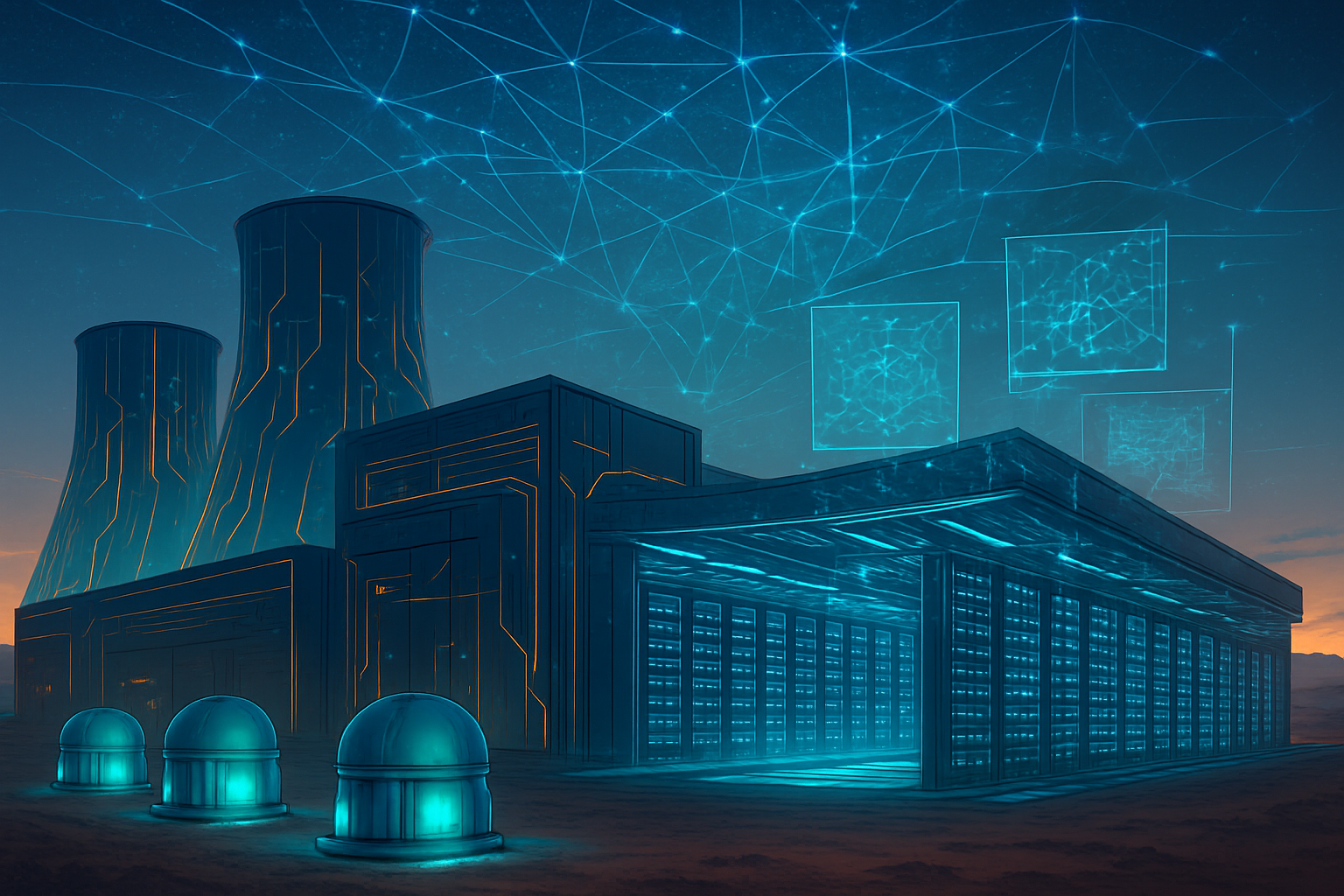
  • OpenAI’s Grand Vision: Integrating AI as a Universal Utility for Human Augmentation

    OpenAI’s Grand Vision: Integrating AI as a Universal Utility for Human Augmentation

    OpenAI, a leading force in artificial intelligence research and development, is charting a course far beyond the creation of isolated AI applications. The company envisions a future where AI is not merely a tool but a foundational utility, seamlessly interwoven into the fabric of daily life, much like electricity or clean water. This ambitious outlook, championed by CEO Sam Altman, centers on the development of Artificial General Intelligence (AGI) and even superintelligence, with the ultimate goal of augmenting human capabilities across all facets of existence. The immediate significance of this vision is already palpable, as current AI models are rapidly transforming work and personal life, setting the stage for an era where intelligent systems act as pervasive cognitive partners.

    This transformative perspective posits AI as an enhancer of human potential, rather than a replacement. OpenAI's philosophy emphasizes safety, ethical development, and broad societal benefit, aiming to ensure that advanced AI empowers individuals, fosters creativity, and solves complex global challenges. The company's ongoing efforts to scale, refine, and deploy foundational models, alongside exploring AI-native products and agentic AI, underscore a commitment to making this future a present reality, necessitating a proactive approach to responsible deployment and governance.

    The Technical Blueprint: From Conversational AI to Cognitive Partners

    OpenAI's technical strategy for pervasive AI integration is a multi-pronged approach, moving beyond mere conversational agents to embed AI deeply into everyday interactions. At its core, this involves developing highly capable, multimodal, and efficient AI models, coupled with an API-first deployment strategy and a burgeoning interest in dedicated hardware solutions. The company's vision is to create a "suite of superpowers" that fundamentally redefines how humans interact with technology and the world.

    Recent advancements underscore this ambition. Models like GPT-4o ("omni" for multimodal) and the newer GPT-5 series represent significant leaps, capable of processing and generating content across text, audio, images, and video. GPT-4o, released in May 2024, can seamlessly act as a real-time translator or math tutor, demonstrating a fluidity in human-computer interaction previously unseen. The even more advanced GPT-5, launched in August 2025, is natively multimodal, trained from scratch on diverse data types simultaneously, leading to superior reasoning capabilities across modalities. This shift from solely scaling models to emphasizing reasoning and efficiency is also evident in approaches like "test-time compute" (seen in models like 'o1' and GPT-5.1), which allows for real-time evaluation of solutions, mimicking human-like problem-solving.

    This strategy diverges significantly from previous AI paradigms. While earlier AI focused on specialized tasks or siloed applications, OpenAI aims for deep, ubiquitous integration via robust APIs that allow developers to embed advanced AI into countless applications. Furthermore, their foray into consumer hardware, notably the acquisition of Jony Ive's AI device startup io and commissioning custom AI processors from Broadcom (NASDAQ: AVGO), signals a unique move to integrate AI directly into physical, contextually aware devices. These pocket-sized, screenless gadgets, designed to augment rather than replace existing tech, represent a profound departure from software-centric AI development. The AI research community and industry experts have met these developments with a mixture of awe and caution. While acknowledging the revolutionary capabilities of models like GPT-4o and GPT-5, concerns persist regarding AI safety, ethical implications, potential for misinformation, and job displacement. The intense competition from rivals like Alphabet (NASDAQ: GOOGL) (with Gemini) and Anthropic (with Claude) further highlights the critical balance OpenAI must strike between rapid innovation and responsible development.

    Competitive Landscape: Shifting Tides for Tech Giants and Startups

    OpenAI's audacious vision for ubiquitous AI integration is fundamentally reshaping the competitive landscape across the technology sector, creating both immense opportunities and significant challenges for established tech giants and agile startups alike. The drive to embed AI seamlessly into every facet of daily life has intensified the race to control the "agentic layer"—the primary interface through which humans will interact with digital services.

    Tech giants are responding with a mix of deep partnerships and aggressive internal development. Microsoft (NASDAQ: MSFT), a major investor in OpenAI, has deeply integrated its models into Azure services and Microsoft 365 through Copilot, aiming to be the premier platform for AI-powered business solutions. Alphabet (NASDAQ: GOOGL), initially caught off guard, has accelerated its own advanced AI, Gemini, leveraging its vast data and Android ecosystem to ensure widespread AI exposure. Apple (NASDAQ: AAPL) has forged a "discreet yet powerful" partnership with OpenAI, integrating ChatGPT into iOS 18 to enhance "Apple Intelligence" across its devices, providing OpenAI access to a massive consumer base. Meanwhile, Oracle (NYSE: ORCL) is integrating OpenAI models into its cloud infrastructure, and Amazon (NASDAQ: AMZN) continues to compete through its Bedrock platform and investments in Anthropic. This fierce competition extends to securing massive compute resources, with OpenAI reportedly making colossal infrastructure commitments to partners like Samsung and SK, and NVIDIA (NASDAQ: NVDA) benefiting as the leading AI chip provider.

    For startups, OpenAI's vision presents a double-edged sword. On one hand, accessible APIs and tools lower the barrier to entry, enabling rapid prototyping and reduced development costs. OpenAI actively supports early-stage companies through its $100 million Startup Fund and accelerator programs. On the other hand, the "winner-takes-all" dynamic in foundational models means startups must find niche markets and build highly differentiated, scalable platforms. The commoditization of basic AI execution necessitates a focus on unique value propositions and strong brand positioning to stand out amidst the giants. This era is poised to disrupt numerous existing products and services. AI-powered browsers like OpenAI's Atlas and Perplexity AI's Comet threaten traditional search engines by offering direct answers and multi-step task completion. Productivity suites face disruption as AI agents automate report generation, spreadsheet manipulation, and presentation creation. Customer service, digital marketing, content creation, and even industry-specific software are being transformed by increasingly capable AI, leading to a scramble for strategic advantages rooted in ecosystem control, infrastructure ownership, and the ability to attract top AI talent.

    Broader Implications: Reshaping Society and Economy

    OpenAI's unwavering vision for ubiquitous AI integration, particularly its relentless pursuit of Artificial General Intelligence (AGI), represents a profound and potentially transformative shift in the technological landscape, aiming to embed AI into nearly every facet of human existence. This ambition extends far beyond specific applications, positioning AI as a foundational utility that will redefine society, the economy, and human capabilities.

    This fits squarely within the broader AI landscape's long-term trend towards more generalized and autonomous intelligence. While much of the recent AI revolution has focused on "narrow AI" excelling in specific tasks, OpenAI is at the forefront of the race for AGI—systems capable of human-level cognitive abilities across diverse domains. Many experts predict AGI could arrive within the next five years, signaling an unprecedented acceleration in AI capabilities. OpenAI's strategy, with its comprehensive integration plans and massive infrastructure investments, reflects a belief that AGI will not just be a tool but a foundational layer of future technology, akin to electricity or the internet.

    The societal impacts are immense. Ubiquitous AI promises enhanced productivity, an improved quality of life, and greater efficiency across healthcare, education, and climate modeling. AI could automate repetitive jobs, freeing humans for more creative and strategic pursuits. However, this pervasive integration also raises critical concerns regarding privacy, ethical decision-making, and potential societal biases. AI systems trained on vast internet datasets risk perpetuating and amplifying existing stereotypes. The economic impacts are equally profound, with AI projected to add trillions to the global GDP by 2030, driven by increased labor productivity and the creation of new industries. Yet, this transformation carries the risk of widespread job displacement, with estimates suggesting AI could automate 50-70% of existing jobs by 2040, exacerbating wealth inequality and potentially leading to social instability.

    In terms of human capabilities, OpenAI envisions AGI as a "force multiplier for human ingenuity and creativity," augmenting intelligence and improving decision-making. However, concerns exist about potential over-reliance on AI diminishing critical thinking and independent decision-making. The ethical considerations are multifaceted, encompassing bias, transparency, accountability, and the "black box" nature of complex AI. Safety and security concerns are also paramount, including the potential for AI misuse (disinformation, deepfakes) and, at the extreme, the loss of human control over highly autonomous systems. OpenAI acknowledges these "catastrophic risks" and has developed frameworks like its "Preparedness Framework" to mitigate them. This pursuit of AGI represents a paradigm shift far exceeding previous AI milestones like early expert systems, the machine learning revolution, or even the deep learning breakthroughs of the last decade. It signifies a potential move from specialized tools to a pervasive, adaptable intelligence that could fundamentally alter human society and the very definition of human capabilities.

    The Road Ahead: Anticipating Future Developments

    OpenAI's ambitious trajectory towards ubiquitous AI integration promises a future where artificial intelligence is not merely a tool but a foundational, collaborative partner, potentially serving as the operating system for future computing. This journey is characterized by a relentless pursuit of AGI and its seamless embedding into every facet of human activity.

    In the near term (1-3 years), significant advancements are expected in autonomous AI agents. OpenAI CEO Sam Altman predicts that by 2025, AI agents will "join the workforce," fundamentally altering company output by performing complex tasks like web browsing, code execution, project management, and research without direct human supervision. OpenAI's "Operator" agent mode within ChatGPT is an early manifestation of this. Enhanced multimodal capabilities will continue to evolve, offering sophisticated video understanding, real-time context-aware audio translation, and advanced spatial reasoning. Future models are also expected to incorporate hybrid reasoning engines and persistent context memory, allowing for long-term learning and personalized interactions. OpenAI is aggressively expanding its enterprise focus, with the Apps SDK enabling ChatGPT to integrate with a wide array of third-party applications, signaling a strategic shift towards broader business adoption. This will be underpinned by massive infrastructure build-outs, including custom hardware partnerships with companies like Broadcom, NVIDIA, and AMD, and next-generation data centers through initiatives like "Project Stargate."

    Looking further ahead (5+ years), the attainment of AGI remains OpenAI's foundational mission. CEOs of OpenAI, Alphabet's DeepMind, and Anthropic collectively predict AGI's arrival within the next five years, by 2029 at the latest. The impact of superhuman AI within the next decade is expected to be enormous, potentially exceeding that of the Industrial Revolution. OpenAI anticipates having systems capable of making significant scientific discoveries by 2028 and beyond, accelerating progress in fields like biology, medicine, and climate modeling. The long-term vision includes AI becoming the core "operating system layer" for future computing, providing ubiquitous AI subscriptions and leading to a "widely-distributed abundance" where personalized AI enhances human lives significantly. Generative AI is also expected to shift to billions of edge devices, creating pervasive assistants and creators.

    However, the path to ubiquitous AI is fraught with challenges. Ethical and safety concerns, including the potential for misinformation, deepfakes, and the misuse of generative AI, remain paramount. Job displacement and economic transition due to AI automation will necessitate "changes to the social contract." Transparency and trust issues, exacerbated by OpenAI's growing commercial focus, require continuous attention. Technical hurdles for deploying state-of-the-art generative models on edge devices, along with astronomical infrastructure costs and scalability, pose significant financial and engineering challenges. Experts predict a rapid workforce transformation, with AI acting as a "multiplier of effort" but also posing an "existential threat" to companies failing to adapt. While some experts are optimistic, others, though a minority, warn of extreme existential risks if superintelligent AI becomes uncontrollable.

    Final Assessment: A New Era of Intelligence

    OpenAI's unwavering vision for ubiquitous AI integration, centered on the development of Artificial General Intelligence (AGI), marks a pivotal moment in AI history. The company's mission to ensure AGI benefits all of humanity drives its research, product development, and ethical frameworks, fundamentally reshaping our understanding of AI's role in society.

    The key takeaways from OpenAI's strategy are clear: a commitment to human-centric AGI that is safe and aligned with human values, a dedication to democratizing and broadly distributing AI's benefits, and an anticipation of transformative economic and societal impacts. This includes the proliferation of multimodal and agentic AI, capable of seamless interaction across text, audio, and vision, and the emergence of "personal AI agents" that can perform complex tasks autonomously. OpenAI's journey from a non-profit to a "capped-profit" entity, backed by substantial investment from Microsoft (NASDAQ: MSFT), has not only pushed technical boundaries but also ignited widespread public engagement and accelerated global conversations around AI's potential and perils. Its unique charter pledge, even to assist competing AGI projects if they are closer to beneficial AGI, underscores a novel approach to responsible technological advancement.

    The long-term impact of this ubiquitous AI vision could be revolutionary, ushering in an era of unprecedented human flourishing. AGI has the potential to solve complex global challenges in health, climate, and education, while redefining work and human purpose by shifting focus from mundane tasks to creative and strategic endeavors. However, this future is fraught with profound challenges. The economic transition, with potential job displacement, will necessitate careful societal planning and a re-evaluation of fundamental socioeconomic contracts. Ethical concerns surrounding bias, misuse, and the concentration of power will demand robust global governance frameworks and continuous vigilance. Maintaining public trust through transparent and ethical practices will be crucial for the long-term success and acceptance of ubiquitous AI. The vision of AI transitioning from a mere tool to a collaborative partner and even autonomous agent suggests a fundamental re-shaping of human-technology interaction, demanding thoughtful adaptation and proactive policy-making.

    In the coming weeks and months, the AI landscape will continue to accelerate. All eyes will be on OpenAI for the rumored GPT-5.2 release, potentially around December 9, 2025, which is expected to significantly enhance ChatGPT's performance, speed, and customizability in response to competitive pressures from rivals like Alphabet's (NASDAQ: GOOGL) Gemini 3. Further advancements in multimodal capabilities, enterprise AI solutions, and the development of more sophisticated autonomous AI agents are also anticipated. Any updates regarding OpenAI's reported venture into designing its own AI chips and developments in its safety and ethical frameworks will be critical to watch. The coming period is poised to be one of intense innovation and strategic maneuvering in the AI space, with OpenAI's developments continuing to shape the global trajectory of artificial intelligence.


    This content is intended for informational purposes only and represents analysis of current AI developments.

    TokenRing AI delivers enterprise-grade solutions for multi-agent AI workflow orchestration, AI-powered development tools, and seamless remote collaboration platforms.
    For more information, visit https://www.tokenring.ai/.

  • AI Takes Center Stage: Bosphorus Summit Illuminates AI’s Indispensable Role in Global Business

    AI Takes Center Stage: Bosphorus Summit Illuminates AI’s Indispensable Role in Global Business

    Istanbul, a city at the crossroads of continents, has once again served as a pivotal hub for global discourse, with the recent Bosphorus Summit and related high-profile AI conferences firmly establishing Artificial Intelligence as the undeniable central pillar of global business strategy. As the world grapples with unprecedented technological acceleration, these gatherings have underscored a critical shift: AI is no longer a futuristic concept but a present-day imperative, redefining operations, driving innovation, and shaping the competitive landscape across every industry. The discussions highlighted a profound evolution in how businesses and nations perceive and integrate AI, moving beyond theoretical admiration to pragmatic implementation and strategic foresight.

    The series of events, including the 8th Artificial Intelligence Summit in October 2025, the upcoming Bosphorus Summit on November 6-7, 2025, and other significant forums, collectively painted a vivid picture of AI's transformative power. Experts from various fields converged to dissect AI's implications, emphasizing its role in fostering efficiency, creating new business models, and enhancing customer experiences. This period marks a critical juncture where the practical application of AI is paramount, with a clear focus on actionable strategies that leverage its capabilities to achieve tangible business outcomes and sustainable growth.

    The Dawn of "AI by Default": Strategic Imperatives and Technical Deep Dives

    The core of the discussions at these recent summits revolved around AI's maturation from a niche technology to a foundational business utility. The 8th Artificial Intelligence Summit, organized by the Türkiye Artificial Intelligence Initiative (TRAI) on October 23-24, 2025, was particularly illustrative, bringing together over 1,500 attendees to explore AI's practical applications. Halil Aksu, founder of TRAI, articulated a prevailing sentiment: businesses must transition from merely acknowledging AI to actively harnessing its power to optimize processes, innovate business models, and elevate customer engagement. This signifies a departure from earlier, more speculative discussions about AI, towards a concrete focus on implementation and measurable impact.

    Technically, the emphasis has shifted towards integrating AI deeply into operational philosophies, moving organizations from a "digital by default" mindset to an "AI by default" paradigm. This involves designing systems, workflows, and decision-making processes with AI at their core. Discussions also underscored the indispensable nature of high-quality, reliable data, as highlighted by Prof. Dr. Hüseyin Şeker at the 17th Digital Age Tech Summit in May 2024. Without robust data management and security, the efficacy of AI systems in critical sectors like healthcare remains severely limited. Furthermore, the advent of Generative AI (GenAI) was frequently cited as a game-changer, promising to enable businesses to "do less with more impact," thereby freeing up human capital for more strategic and creative endeavors.

    This contemporary approach differs significantly from previous iterations of AI adoption, which often treated AI as an add-on or an experimental project. Today's strategy is about embedding AI into the very fabric of an enterprise, leveraging advanced machine learning models, natural language processing, and computer vision to create intelligent automation, predictive analytics, and personalized experiences at scale. Initial reactions from the AI research community and industry experts indicate broad consensus on this strategic pivot, with a shared understanding that competitive advantage in the coming decade will largely be determined by an organization's ability to effectively operationalize AI.

    Reshaping the Corporate Landscape: Beneficiaries and Competitive Dynamics

    The profound emphasis on AI's central role in global business strategy at the Bosphorus Summit and related events has significant implications for companies across the spectrum, from established tech giants to nimble startups. Companies that stand to benefit most are those actively investing in AI research and development, integrating AI into their core product offerings, and building AI-first cultures. Tech giants such as Meta (NASDAQ: META), whose regional head of policy programs, Aanchal Mehta, spoke at the 8th Artificial Intelligence Summit, are well-positioned due to their extensive data infrastructure, vast computing resources, and ongoing investment in AI models and platforms. Similarly, companies like OpenAI, Anthropic, CoreWeave, and Figure AI, which have received early-stage investments from firms like Pankaj Kedia's 2468 Ventures (mentioned at the BV A.I. Summit in October 2025), are at the forefront of driving innovation and stand to capture substantial market share.

    The competitive implications are stark: companies that fail to adopt an "AI by default" strategy risk being disrupted. Traditional industries, from finance and healthcare to manufacturing and logistics, are seeing their products and services fundamentally re-engineered by AI. This creates both immense opportunities for new entrants and significant challenges for incumbents. Startups with agile development cycles and specialized AI solutions can rapidly carve out niches, while established players must accelerate their AI transformation initiatives to remain competitive. The market positioning will increasingly favor those who can demonstrate not just AI capability, but also responsible and ethical AI deployment. The discussions highlighted that nations like Türkiye, with a young workforce and a growing startup ecosystem aiming for 100 unicorns by 2028, are actively fostering environments for AI innovation, creating new competitive landscapes.

    This strategic shift means potential disruption to existing business models that rely on manual processes or less intelligent automation. For example, the assertion that "AI will not replace radiologists, but radiologists that lean in and use AI will replace the radiologist that doesn't" encapsulates the broader impact across professions, emphasizing augmentation over outright replacement. Companies that empower their workforce with AI tools and foster continuous learning will gain a strategic advantage, creating a dynamic where human ingenuity is amplified by artificial intelligence.

    Beyond the Algorithm: Wider Significance and Ethical Frontiers

    The Bosphorus Summit's focus on AI transcends mere technological advancement, placing it firmly within the broader context of global trends and societal impact. AI is increasingly recognized as the defining technology of the Fourth Industrial Revolution, fundamentally altering economic structures, labor markets, and geopolitical dynamics. The discussions at the 10th Bosphorus Summit in 2019, where Talal Abu Ghazaleh envisioned AI dividing humanity into "superior" and "inferior" based on AI leverage, foreshadowed the current urgency to address equitable access and responsible development.

    One of the most significant shifts highlighted is the growing emphasis on "responsible AI adoption" and the centrality of "trust" as a determinant of AI success. The 8th Artificial Intelligence Summit in October 2025 repeatedly stressed this, underscoring that the benefits of AI cannot be fully realized without robust ethical frameworks and governance. The upcoming Beneficial AGI Summit & Unconference 2025 in Istanbul (October 21-23, 2025) further exemplifies this by focusing on Artificial General Intelligence (AGI), ethics, and the collaborative efforts needed to manage the transition from narrow AI to AGI responsibly, preventing uncontrolled "super AI." This proactive engagement with potential concerns, from algorithmic bias to data privacy and the existential risks of advanced AI, marks a crucial evolution in the global AI conversation.

    Comparisons to previous AI milestones, such as the rise of the internet or mobile technology, reveal a similar trajectory of rapid adoption and profound societal transformation, but with an added layer of complexity due to AI's cognitive capabilities. The potential impacts are far-reaching, from enhancing sustainable development through smart city initiatives and optimized resource management (as discussed for tourism by the World Tourism Forum Institute in August 2025) to raising complex questions about job displacement, surveillance, and the nature of human decision-making. Governments are urged to be pragmatic, creating necessary "guardrails" for AI while simultaneously fostering innovation, striking a delicate balance between progress and protection.

    Charting the Course: Future Developments and Expert Predictions

    Looking ahead, the insights from the Bosphorus Summit and its parallel events paint a clear picture of expected near-term and long-term developments in AI. In the near term, we can anticipate a continued surge in specialized AI applications across various sectors, driven by advancements in foundation models and readily available AI-as-a-service platforms. The "Artificial Intelligence Strategy for Business Professionals" conference (November 9-13, 2025, Istanbul) is indicative of the immediate need for business leaders to develop sophisticated AI strategies, focusing on practical implementation and ROI. We will likely see more widespread adoption of Generative AI for content creation, personalized marketing, and automated customer service, further streamlining business operations and enhancing customer experiences.

    In the long term, the trajectory points towards increasingly autonomous and intelligent systems, potentially leading to the development of Artificial General Intelligence (AGI). The discussions at the Beneficial AGI Summit highlight the critical challenges that need to be addressed, including the ethical implications of AGI, the need for robust safety protocols, and the establishment of global governance frameworks to ensure AGI's development benefits all of humanity. Experts predict a future where AI becomes an even more integrated co-pilot in human endeavors, transforming fields from scientific discovery to creative arts. However, challenges such as data quality and bias, explainable AI, regulatory fragmentation, and the digital skills gap will need continuous attention and investment.

    The horizon also includes the proliferation of AI in edge devices, enabling real-time processing and decision-making closer to the source of data, further reducing latency and enhancing autonomy. The drive for national AI strategies, as seen in Türkiye's ambition, suggests a future where geopolitical power will be increasingly tied to AI prowess. What experts predict next is a relentless pace of innovation, coupled with a growing imperative for collaboration—between governments, industry, and academia—to navigate the complex opportunities and risks that AI presents.

    A New Era of Intelligence: The Bosphorus Summit's Enduring Legacy

    The Bosphorus Summit and its associated AI conferences in 2024 and 2025 mark a pivotal moment in the ongoing narrative of artificial intelligence. The key takeaway is unequivocal: AI is no longer an optional enhancement but a strategic imperative, fundamental to competitive advantage and national prosperity. The discussions highlighted a collective understanding that the future of global business will be defined by an organization's ability to not only adopt AI but to integrate it responsibly, ethically, and effectively into its core operations.

    This development's significance in AI history lies in its clear articulation of a shift from exploration to execution. It underscores a maturation of the AI field, where the focus has moved beyond the "what if" to the "how to." The emphasis on "responsible AI," "trust," and the proactive engagement with ethical dilemmas and governance frameworks for AGI demonstrates a growing collective consciousness regarding the profound societal implications of this technology.

    As we move forward, the long-term impact will be a fundamentally re-architected global economy, driven by intelligent automation and data-informed decision-making. What to watch for in the coming weeks and months is the translation of these high-level discussions into concrete policy changes, increased corporate investment in AI infrastructure and talent, and the emergence of new industry standards for AI development and deployment. The Bosphorus Summit has not just reported on the rise of AI; it has actively shaped the discourse, pushing the global community towards a more intelligent, albeit more complex, future.


    This content is intended for informational purposes only and represents analysis of current AI developments.

    TokenRing AI delivers enterprise-grade solutions for multi-agent AI workflow orchestration, AI-powered development tools, and seamless remote collaboration platforms.
    For more information, visit https://www.tokenring.ai/.

  • Meta Makes Multi-Billion Dollar Bet on Scale AI, Signaling Intensified ‘Superintelligence’ Push

    Meta Makes Multi-Billion Dollar Bet on Scale AI, Signaling Intensified ‘Superintelligence’ Push

    Meta's reported $14.3 billion investment for a 49% stake in Scale AI, coupled with the strategic recruitment of Scale AI's founder, Alexandr Wang, to lead Meta's "Superintelligence Labs," marks a significant turning point in the fiercely competitive artificial intelligence landscape. This move underscores Meta's pivot from its metaverse-centric strategy to an aggressive, vertically integrated pursuit of advanced AI, aiming to accelerate its Llama models and ultimately achieve artificial general intelligence.

    The immediate significance of this development lies in Meta's enhanced access to Scale AI's critical data labeling, model evaluation, and LLM alignment expertise. This secures a vital pipeline for high-quality training data, a scarce and invaluable resource in AI development. However, this strategic advantage comes at a cost: Scale AI's prized neutrality has been severely compromised, leading to the immediate loss of major clients like Google and OpenAI, and forcing a reshuffling of partnerships across the AI industry. The deal highlights the intensifying talent war and the growing trend of tech giants acquiring not just technology but also the foundational infrastructure and human capital essential for AI leadership.

    In the long term, this development could cement Meta's position as a frontrunner in the AGI race, potentially leading to faster advancements in its AI products and services. Yet, it also raises substantial concerns about market consolidation, potential antitrust scrutiny, and the ethical implications of data neutrality and security. The fragmentation of the AI data ecosystem, where top-tier resources become more exclusive, could inadvertently stifle broader innovation while benefiting a select few.

    What to watch for in the coming weeks and months includes the full impact of client defections on Scale AI's operations and strategic direction, how Meta manages the integration of new leadership and talent within its AI divisions, and the pace at which Meta's "Superintelligence Labs" delivers tangible breakthroughs. Furthermore, the reactions from antitrust regulators globally will be crucial in shaping the future landscape of AI acquisitions and partnerships. This bold bet by Meta is not just an investment; it's a declaration of intent, signaling a new, more aggressive era in the quest for artificial intelligence dominance.


    This content is intended for informational purposes only and represents analysis of current AI developments.

    TokenRing AI delivers enterprise-grade solutions for multi-agent AI workflow orchestration, AI-powered development tools, and seamless remote collaboration platforms.
    For more information, visit https://www.tokenring.ai/.

  • USC Breakthrough: Artificial Neurons That Mimic the Brain’s ‘Wetware’ Promise a New Era for Energy-Efficient AI

    USC Breakthrough: Artificial Neurons That Mimic the Brain’s ‘Wetware’ Promise a New Era for Energy-Efficient AI

    Los Angeles, CA – November 5, 2025 – Researchers at the University of Southern California (USC) have unveiled a groundbreaking advancement in artificial intelligence hardware: artificial neurons that physically replicate the complex electrochemical processes of biological brain cells. This innovation, spearheaded by Professor Joshua Yang and his team, utilizes novel ion-based diffusive memristors to emulate how neurons use ions for computation, marking a significant departure from traditional silicon-based AI and promising to revolutionize neuromorphic computing and the broader AI landscape.

    The immediate significance of this development is profound. By moving beyond mere mathematical simulation to actual physical emulation of brain dynamics, these artificial neurons offer the potential for orders-of-magnitude reductions in energy consumption and chip size. This breakthrough addresses critical challenges facing the rapidly expanding AI industry, particularly the unsustainable power demands of current large AI models, and lays a foundational stone for more sustainable, compact, and potentially more "brain-like" artificial intelligence systems.

    A Glimpse Inside the Brain-Inspired Hardware: Ion Dynamics at Work

    The USC artificial neurons are built upon a sophisticated new device known as a "diffusive memristor." Unlike conventional computing, which relies on the rapid movement of electrons, these artificial neurons harness the movement of atoms—specifically silver ions—diffusing within an oxide layer to generate electrical pulses. This ion motion is central to their function, closely mirroring the electrochemical signaling processes found in biological neurons, where ions like potassium, sodium, or calcium move across membranes for learning and computation.

    Each artificial neuron is remarkably compact, requiring only the physical space of a single transistor, a stark contrast to the tens or hundreds of transistors typically needed in conventional designs to simulate a single neuron. This miniaturization, combined with the ion-based operation, allows for an active region of approximately 4 μm² per neuron and promises orders of magnitude reduction in both chip size and energy consumption. While silver ions currently demonstrate the proof-of-concept, researchers acknowledge the need to explore alternative ionic species for compatibility with standard semiconductor manufacturing processes in future iterations.

    This approach fundamentally differs from previous artificial neuron technologies. While many existing neuromorphic chips simulate neural activity using mathematical models on electron-based silicon, USC's diffusive memristors physically emulate the analog dynamics and electrochemical processes of biological neurons. This "physical replication" enables hardware-based learning, where the more persistent changes created by ion movement directly integrate learning capabilities into the chip itself, accelerating the development of adaptive AI systems. Initial reactions from the AI research community, as evidenced by publication in Nature Electronics, have been overwhelmingly positive, recognizing it as a "major leap forward" and a critical step towards more brain-faithful AI and potentially Artificial General Intelligence (AGI).

    Reshaping the AI Industry: A Boon for Efficiency and Edge Computing

    The advent of USC's ion-based artificial neurons stands to significantly disrupt and redefine the competitive landscape across the AI industry. Companies already deeply invested in neuromorphic computing and energy-efficient AI hardware are poised to benefit immensely. This includes specialized startups like BrainChip Holdings Ltd. (ASX: BRN), SynSense, Prophesee, GrAI Matter Labs, and Rain AI, whose core mission aligns perfectly with ultra-low-power, brain-inspired processing. Their existing architectures could be dramatically enhanced by integrating or licensing this foundational technology.

    Major tech giants with extensive AI hardware and data center operations will also find the energy and size advantages incredibly appealing. Companies such as Intel Corporation (NASDAQ: INTC), with its Loihi processors, and IBM (NYSE: IBM), a long-time leader in AI research, could leverage this breakthrough to develop next-generation neuromorphic hardware. Cloud providers like Alphabet (NASDAQ: GOOGL) (Google), Amazon (NASDAQ: AMZN) (AWS), and Microsoft (NASDAQ: MSFT) (Azure), who heavily rely on custom AI chips like TPUs, Inferentia, and Trainium, could see significant reductions in the operational costs and environmental footprint of their massive data centers. While NVIDIA (NASDAQ: NVDA) currently dominates GPU-based AI acceleration, this breakthrough could either present a competitive challenge, pushing them to adapt their strategies, or offer a new avenue for diversification into brain-inspired architectures.

    The potential for disruption is substantial. The shift from electron-based simulation to ion-based physical emulation fundamentally changes how AI computation can be performed, potentially challenging the dominance of traditional hardware in certain AI segments, especially for inference and on-device learning. This technology could democratize advanced AI by enabling highly efficient, small AI chips to be embedded into a much wider array of devices, shifting intelligence from centralized cloud servers to the "edge." Strategic advantages for early adopters include significant cost reductions, enhanced edge AI capabilities, improved adaptability and learning, and a strong competitive moat in performance-per-watt and miniaturization, paving the way for more sustainable AI development.

    A New Paradigm for AI: Towards Sustainable and Brain-Inspired Intelligence

    USC's artificial neuron breakthrough fits squarely into the broader AI landscape as a pivotal advancement in neuromorphic computing, addressing several critical trends. It directly confronts the growing "energy wall" faced by modern AI, particularly large language models, by offering a pathway to dramatically reduce the energy consumption that currently burdens global computational infrastructure. This aligns with the increasing demand for sustainable AI solutions and a diversification of hardware beyond brute-force parallelization towards architectural efficiency and novel physics.

    The wider impacts are potentially transformative. By drastically cutting power usage, it offers a pathway to sustainable AI growth, alleviating environmental concerns and reducing operational costs. It could usher in a new generation of computing hardware that operates more like the human brain, enhancing computational capabilities, especially in areas requiring rapid learning and adaptability. The combination of reduced size and increased efficiency could also enable more powerful and pervasive AI in diverse applications, from personalized medicine to autonomous vehicles. Furthermore, developing such brain-faithful systems offers invaluable insights into how the biological brain itself functions, fostering a dual advancement in artificial and natural intelligence.

    However, potential concerns remain. The current use of silver ions is not compatible with standard semiconductor manufacturing processes, necessitating research into alternative materials. Scaling these artificial neurons into complex, high-performance neuromorphic networks and ensuring reliable learning performance comparable to established software-based AI systems present significant engineering challenges. While previous AI milestones often focused on accelerating existing computational paradigms, USC's work represents a more fundamental shift, moving beyond simulation to physical emulation and prioritizing architectural efficiency to fundamentally change how computation occurs, rather than just accelerating existing methods.

    The Road Ahead: Scaling, Materials, and the Quest for AGI

    In the near term, USC researchers are intensely focused on scaling up their innovation. A primary objective is the integration of larger arrays of these artificial neurons, enabling comprehensive testing of systems designed to emulate the brain's remarkable efficiency and capabilities on broader cognitive tasks. Concurrently, a critical development involves exploring and identifying alternative ionic materials to replace the silver ions currently used, ensuring compatibility with standard semiconductor manufacturing processes for eventual mass production and commercial viability. This research will also concentrate on refining the diffusive memristors to enhance their compatibility with existing technological infrastructures while preserving their substantial advantages in energy and spatial efficiency.

    Looking further ahead, the long-term vision for USC's artificial neuron technology involves fundamentally transforming AI by developing hardware-centric AI systems that learn and adapt directly on the device, moving beyond reliance on software-based simulations. This approach could significantly accelerate the pursuit of Artificial General Intelligence (AGI), enabling a new class of chips that will not merely supplement but significantly augment today's electron-based silicon technologies. Potential applications span energy-efficient AI hardware, advanced edge AI for autonomous systems, bioelectronic interfaces, and brain-machine interfaces (BMI), offering profound insights into the workings of both artificial and biological intelligence. Experts, including Professor Yang, predict orders-of-magnitude improvements in efficiency and a fundamental shift towards AI that is much closer to natural intelligence, emphasizing that ions are a superior medium to electrons for mimicking brain principles.

    A Transformative Leap for AI Hardware

    The USC breakthrough in artificial neurons, leveraging ion-based diffusive memristors, represents a pivotal moment in AI history. It signals a decisive move towards hardware that physically emulates the brain's "wetware," promising to unlock unprecedented levels of energy efficiency and miniaturization. The key takeaway is the potential for AI to become dramatically more sustainable, powerful, and pervasive, fundamentally altering how we design and deploy intelligent systems.

    This development is not merely an incremental improvement but a foundational shift in how AI computation can be performed. Its long-term impact could include the widespread adoption of ultra-efficient edge AI, accelerated progress towards Artificial General Intelligence, and a deeper scientific understanding of the human brain itself. In the coming weeks and months, the AI community will be closely watching for updates on the scaling of these artificial neuron arrays, breakthroughs in material compatibility for manufacturing, and initial performance benchmarks against existing AI hardware. The success in addressing these challenges will determine the pace at which this transformative technology reshapes the future of AI.


    This content is intended for informational purposes only and represents analysis of current AI developments.

    TokenRing AI delivers enterprise-grade solutions for multi-agent AI workflow orchestration, AI-powered development tools, and seamless remote collaboration platforms.
    For more information, visit https://www.tokenring.ai/.