Tag: Agritech

  • BeeHero Soars: How AI-Powered Precision Pollination is Revolutionizing AgriTech and Securing Global Food Futures

    BeeHero Soars: How AI-Powered Precision Pollination is Revolutionizing AgriTech and Securing Global Food Futures

    San Francisco, CA – November 19, 2025 – In a testament to the transformative power of artificial intelligence in agriculture, BeeHero, a pioneer in data-driven precision pollination, has cemented its position as one of the fastest-growing and most innovative companies in the AgriTech landscape. Through a series of prestigious recognitions over the past two years, including being named to TIME's List of the Best Inventions of 2024 and Fast Company's 2024 World Changing Ideas Awards, BeeHero has not only validated its groundbreaking technology but also underscored the critical role AI plays in addressing global food security and environmental sustainability. These accolades highlight the company's remarkable growth trajectory and its profound impact on optimizing crop yields and safeguarding bee health worldwide.

    BeeHero's success story is a compelling narrative of how advanced technology can breathe new life into ancient agricultural practices. By leveraging a sophisticated blend of AI, IoT sensors, and big data analytics, the company has brought unprecedented transparency and efficiency to the traditionally opaque process of commercial crop pollination. This innovative approach is not merely about incremental improvements; it represents a paradigm shift, enabling growers to make real-time, data-backed decisions that lead to significantly higher yields and healthier pollinator populations, a crucial factor in an era of declining bee colonies and increasing food demand.

    Unpacking the Hive: The Technical Brilliance Behind Precision Pollination

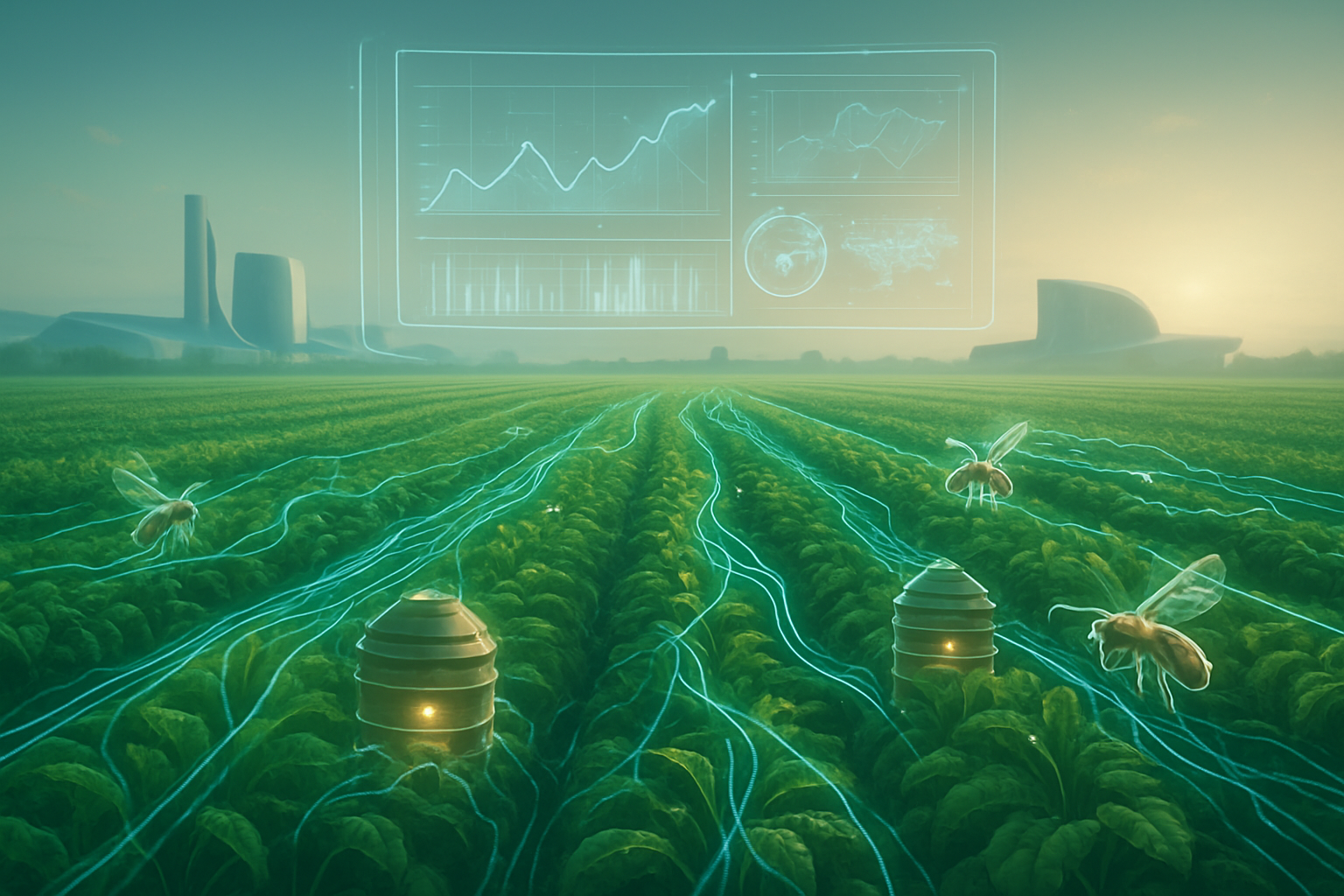
    At the core of BeeHero's revolutionary impact lies its Precision Pollination as a Service (PPaaS) and the Pollination Insight Platform (PIP). This integrated system deploys a network of "plug-and-play" IoT sensors both inside beehives and directly in the agricultural fields. The in-hive sensors meticulously monitor critical parameters such as temperature, humidity, and colony acoustics, offering a granular view of hive strength and health. Simultaneously, redesigned in-field sensors capture real-time data on bee activity and environmental conditions across diverse crop types, utilizing enhanced audio capabilities to precisely detect bee acoustic signatures.

    The true genius of BeeHero's technology emerges as this colossal volume of data—over 25 million hive samples daily from more than 300,000 managed hives globally—is fed into proprietary AI algorithms. BeeHero employs a diverse toolkit of AI techniques, including Linear Regression, Support Vector Machines (SVM), Naive Bayes, K-Nearest Neighbors (KNN), and Neural Networks, each serving as an independent unit for predictive analysis. These algorithms don't just process data; they discern intricate bee behavior patterns and ecosystem dynamics, translating raw sensor inputs into actionable insights and precise recommendations for beekeepers and growers. This data-driven methodology stands in stark contrast to traditional pollination, which often relies on guesswork and historical averages, lacking the real-time adaptability and optimization that BeeHero provides. Initial reactions from the agricultural community have been overwhelmingly positive, with growers reporting up to a 30% increase in crop yields and beekeepers observing a 33% reduction in colony losses compared to national averages.

    Ze'ev Barylka, BeeHero's Chief Sales and Marketing Officer, emphasized the company's unique position, stating, "There are very few companies in the agtech world that are bringing scale — one of the largest challenges for ag technology companies overall." This sentiment is echoed by Omer Davidi, Co-Founder and CEO, who noted that BeeHero's success "reinforces the idea that business success and positive impact can go hand-in-hand," particularly given pollination's essential role in global food security. Yuval Regev, CTO and Co-Founder, highlighted the "profound potential of our innovative technology to revolutionize pollination practices, fostering a sustainable ecosystem that benefits both beekeepers and growers," underscoring the company's pioneering efforts in pollination science.

    Shaking the Orchard: Competitive Implications and Market Dynamics

    BeeHero's meteoric rise and its recognition as a disruptive force in AgriTech carry significant implications for the broader AI and agricultural industries. The company's success serves as a powerful validation for the entire AgriTech sector, demonstrating the immense commercial viability and environmental necessity of applying AI to farming challenges. This will undoubtedly attract more investment and innovation into the space, benefiting other AgriTech startups, sensor manufacturers, and AI development firms.

    For major AI labs and tech giants, BeeHero's achievements highlight the strategic advantage of deep domain-specific AI applications. While not a direct competitor to general-purpose AI models, BeeHero's specialized AI for pollination creates a high barrier to entry for new players and could spark interest from larger entities like Microsoft (NASDAQ: MSFT), Google (NASDAQ: GOOGL), or IBM (NYSE: IBM) in either acquiring similar capabilities or forming strategic partnerships. The competitive landscape for traditional agricultural service providers faces potential disruption, as BeeHero's data-driven approach offers efficiencies and outcomes that conventional methods struggle to match. BeeHero's extensive database of bee and pollination data, the world's largest of its kind, provides a unique market positioning and a significant strategic advantage, allowing for unparalleled insights and predictive capabilities in pollination management.

    A Wider Bloom: AI, Sustainability, and Global Food Security

    BeeHero's impact extends far beyond the immediate gains for growers and beekeepers; it resonates deeply within the broader AI landscape and global sustainability trends. The company exemplifies AI's potential as a force for good, directly contributing to several United Nations Sustainable Development Goals, including zero hunger and life on land. By optimizing pollination and dramatically reducing colony losses—saving at least a quarter of a billion bees in the past year alone—BeeHero is directly bolstering biodiversity and the resilience of agricultural ecosystems, a critical endeavor given that 75% of major food crops rely on pollinators and nearly 40% of managed honeybee colonies in the US were lost between 2021-2022.

    This development fits into a growing trend of AI being deployed to solve complex environmental and resource management challenges, from climate modeling to precision agriculture. While concerns around data privacy and the digital divide for smaller farms remain pertinent in the wider AgriTech conversation, BeeHero's model demonstrates how technology can be deployed responsibly to create a "win-win-win situation for growers, beekeepers, and the planet." Its success can be compared to other AI milestones in specific industries, such as AI-driven drug discovery or predictive maintenance in manufacturing, showcasing how specialized AI can unlock immense value and address pressing societal needs.

    The Nectar of Tomorrow: Future Developments and Expert Predictions

    Looking ahead, BeeHero is poised for continued expansion and innovation. The company has already set its sights on new markets in Europe and Latin America, targeting a broader range of crops including berries, avocados, apples, and canola, with an ambitious goal to become integral to global food production by 2030. Near-term developments will likely focus on refining their AI algorithms for even greater predictive accuracy, perhaps integrating more advanced machine learning techniques to anticipate disease outbreaks or optimize nutrient delivery based on pollinator activity.

    Long-term, we can expect BeeHero and the wider AgriTech sector to explore deeper integrations with other farming technologies, such as autonomous farm equipment and advanced irrigation systems, creating a truly holistic and intelligent agricultural ecosystem. Challenges will undoubtedly include scaling technology to diverse agricultural environments, educating farmers on the benefits and usage of complex AI tools, and navigating varying regulatory landscapes concerning data collection and animal welfare. Experts predict that AI will become an increasingly indispensable component of farming, moving beyond mere efficiency gains to enable entirely new forms of sustainable and resilient food production. Itai Kanot, Co-founder and COO of BeeHero, emphasized the commitment to "expanding transparency for beekeepers and growers through unprecedented data, both within and beyond the hive," highlighting the ongoing pursuit of innovation.

    The Buzzworthy Conclusion: A New Era for Agriculture

    BeeHero's journey from an innovative startup to a recognized fast-growing company underscores a pivotal moment in the history of both artificial intelligence and agriculture. Its pioneering work in precision pollination, powered by a sophisticated blend of AI and IoT, offers a compelling case study of how technology can address critical global challenges like food security and environmental sustainability. The company's achievements are not just about business success; they represent a significant step forward in leveraging AI for tangible, positive impact on our planet and its inhabitants.

    This development's significance in AI history lies in its demonstration of specialized AI's capability to deliver profound ecological and economic benefits, moving beyond general-purpose applications to solve highly specific, yet globally crucial, problems. As BeeHero continues its expansion and innovation, the coming weeks and months will be crucial to watch for further advancements in AgriTech, the adoption of similar AI-driven solutions by other players, and the broader integration of intelligent systems into our food production chains. BeeHero has truly set a new standard, proving that the future of farming is smart, sustainable, and undeniably AI-powered.


    This content is intended for informational purposes only and represents analysis of current AI developments.

    TokenRing AI delivers enterprise-grade solutions for multi-agent AI workflow orchestration, AI-powered development tools, and seamless remote collaboration platforms.
    For more information, visit https://www.tokenring.ai/.
  • The Green Revolution Goes Digital: How AI and Renewable Energy Are Cultivating a Sustainable Future for Food

    The Green Revolution Goes Digital: How AI and Renewable Energy Are Cultivating a Sustainable Future for Food

    The global food system is undergoing a profound transformation, driven by the synergistic convergence of advanced digital technologies and renewable energy solutions. This new era of "smart agriculture," or agritech, is fundamentally reshaping how food is produced, processed, and distributed, promising unprecedented efficiency, sustainability, and resilience. From AI-powered precision farming and autonomous robotics to solar-powered vertical farms and blockchain-enabled traceability, these innovations are addressing critical challenges such as food security, resource scarcity, and climate change, all while striving to meet the demands of a rapidly growing global population. This revolution signifies a pivotal shift towards more productive, environmentally friendly, and economically viable food production systems worldwide, marking a new chapter in humanity's quest for sustainable sustenance.

    At its core, this evolution leverages real-time data, intelligent automation, and clean energy to optimize every facet of the agricultural value chain. The immediate significance lies in the tangible improvements seen across the sector: substantial reductions in water, fertilizer, and pesticide use; lower carbon footprints; enhanced crop yields; and greater transparency for consumers. As the world grapples with escalating environmental concerns and the imperative to feed billions, these technological and energy breakthroughs are not just incremental improvements but foundational changes, laying the groundwork for a truly sustainable and secure food future.

    Agritech's Digital Harvest: Precision, Automation, and Data-Driven Farming

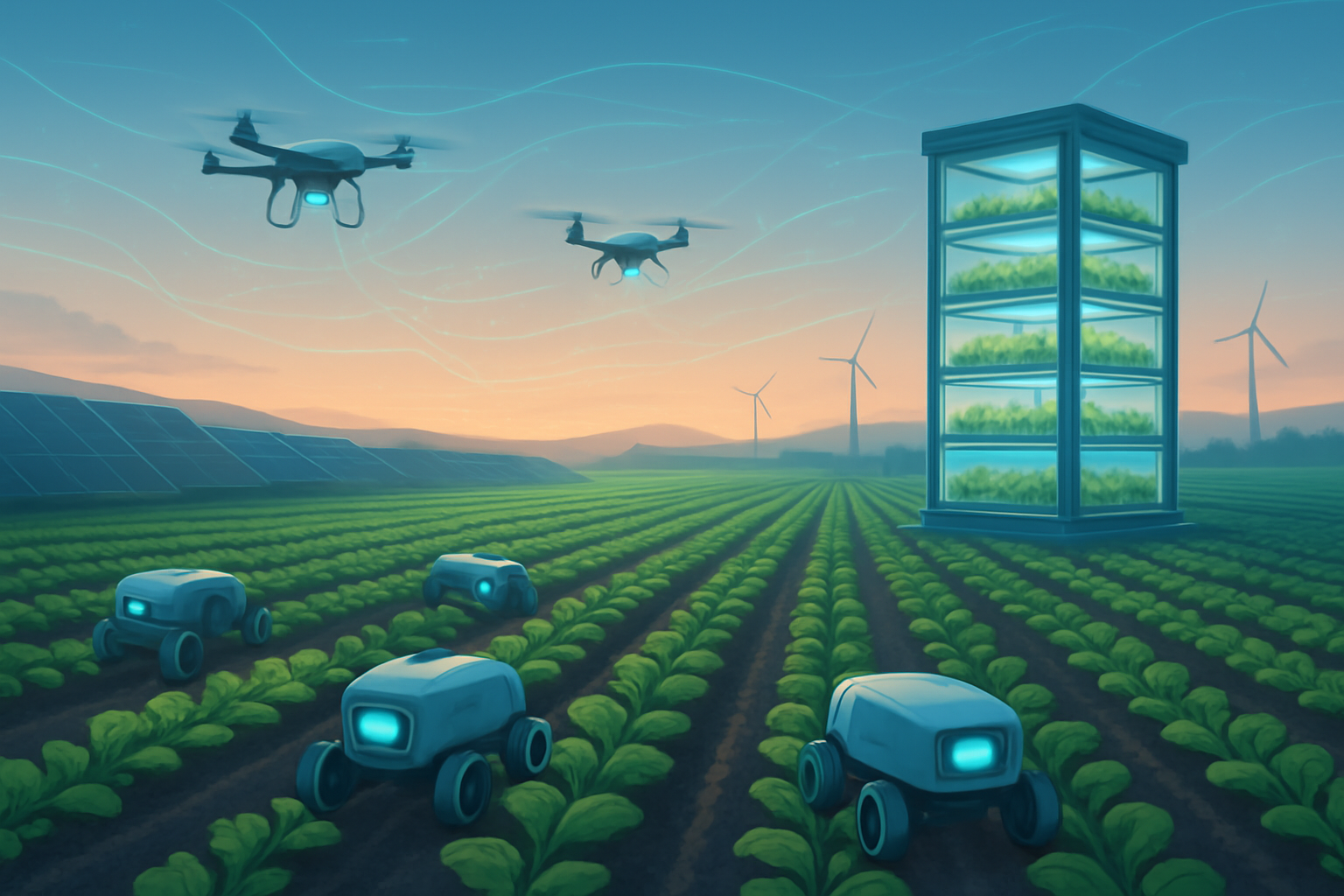
    The technical backbone of this agricultural revolution is an intricate web of digital advancements that empower farmers with unprecedented control and insight. Precision agriculture, a cornerstone of modern agritech, harnesses the power of the Internet of Things (IoT), Artificial Intelligence (AI), and data analytics to tailor crop and soil management to specific needs. IoT sensors embedded in fields continuously monitor critical parameters like soil moisture, temperature, and nutrient levels, transmitting data in real-time. This granular data, when fed into AI algorithms, enables predictive analytics for crop yields, early detection of pests and diseases, and optimized resource allocation. For instance, AI-powered systems can reduce water usage by up to 20% in large-scale operations by precisely determining irrigation needs. Drones and satellite imagery further augment this capability, providing high-resolution aerial views for assessing crop health and targeting interventions with pinpoint accuracy, minimizing waste and environmental impact.

    Automation and robotics are simultaneously addressing labor shortages and enhancing efficiency across the agricultural spectrum. Autonomous equipment, from self-driving tractors to specialized weeding robots, can perform tasks like planting, spraying, and harvesting with extreme precision and tireless dedication. A notable example is Carbon Robotics, whose LaserWeeder utilizes AI deep learning and computer vision to differentiate crops from weeds and eliminate them with high-powered lasers, drastically reducing reliance on chemical herbicides and cutting weed control costs by up to 80%. Robotic harvesters are also proving invaluable for delicate crops, improving quality and reducing post-harvest losses. These robotic systems not only boost productivity but also contribute to more sustainable, regenerative practices by reducing soil compaction and minimizing the use of agricultural inputs.

    Beyond the field, digital technologies are fortifying the food supply chain. Blockchain technology provides a decentralized, immutable ledger that records every step of a food product's journey, from farm to fork. This enhanced transparency and traceability are crucial for combating fraud, building consumer trust, and ensuring compliance with stringent food safety and sustainability standards. In the event of contamination or recalls, blockchain allows for instant tracing of products to their origin, drastically reducing response times and mitigating widespread health risks. Furthermore, Controlled Environment Agriculture (CEA), including vertical farming, leverages IoT and AI to meticulously manage indoor climates, nutrient delivery, and LED lighting, enabling year-round, pesticide-free crop production in urban centers with significantly reduced land and water usage. Initial reactions from the agricultural research community and industry experts are overwhelmingly positive, highlighting the transformative potential of these integrated technologies to create more resilient, efficient, and sustainable food systems globally.

    Corporate Cultivation: Shifting Landscapes for Tech and Agri-Giants

    The burgeoning field of agritech, powered by digital innovation and renewable energy, is creating significant shifts in the competitive landscape for both established tech giants and specialized agricultural companies, while also fostering a vibrant ecosystem for startups. Companies like John Deere (NYSE: DE), a traditional agricultural equipment manufacturer, stand to benefit immensely by integrating advanced AI, IoT, and automation into their machinery, transitioning from hardware providers to comprehensive agritech solution platforms. Their investments in precision agriculture technologies, autonomous tractors, and data analytics services position them to capture a larger share of the smart farming market. Similarly, major cloud providers such as Amazon (NASDAQ: AMZN) Web Services and Microsoft (NASDAQ: MSFT) Azure are becoming critical infrastructure providers, offering the computational power, data storage, and AI/ML platforms necessary for agritech applications to thrive.

    The competitive implications are profound, as traditional agricultural input companies are now competing with technology firms entering the space. Companies specializing in agricultural chemicals and fertilizers may face disruption as precision agriculture and robotic weeding reduce the need for blanket applications. Instead, companies offering biological solutions, data-driven insights, and integrated hardware-software platforms are gaining strategic advantages. Startups like Aerofarms and Plenty, focused on vertical farming, are challenging conventional agricultural models by demonstrating the viability of hyper-efficient, localized food production, attracting significant venture capital investment. Companies developing AI-powered crop monitoring, robotic harvesting, and sustainable energy solutions for farms are carving out lucrative niches.

    This development also fosters strategic partnerships and acquisitions. Tech giants are increasingly looking to acquire agritech startups to integrate their innovative solutions, while traditional agri-businesses are partnering with technology firms to accelerate their digital transformation. The market positioning is shifting towards companies that can offer holistic, integrated solutions that combine hardware, software, data analytics, and sustainable energy components. Those that can effectively leverage AI to optimize resource use, reduce environmental impact, and enhance productivity will gain a significant competitive edge, potentially disrupting existing products and services across the entire food supply chain. The ability to provide traceable, sustainably produced food will also become a key differentiator in a consumer market increasingly valuing transparency and environmental stewardship.

    A New Horizon for Humanity: Broader Implications and Societal Shifts

    The integration of digital technology and renewable energy into food production marks a pivotal moment in the broader AI landscape and global sustainability trends. This convergence positions AI not just as an analytical tool but as a foundational element for tackling some of humanity's most pressing challenges: food security, climate change, and resource depletion. It aligns perfectly with the growing global emphasis on sustainable development goals, demonstrating AI's capacity to drive tangible environmental benefits, such as significant reductions in water consumption (up to 40% in some smart irrigation systems), decreased reliance on chemical inputs, and a lower carbon footprint for agricultural operations. This transformation fits into the broader trend of "AI for Good," showcasing how intelligent systems can optimize complex biological and environmental processes for planetary benefit.

    However, this rapid advancement also brings potential concerns. The increasing reliance on complex digital systems raises questions about data privacy, cybersecurity in critical infrastructure, and the potential for a "digital divide" where smaller farms or developing nations might struggle to access or implement these expensive technologies. There are also concerns about job displacement in traditional agricultural labor sectors due to automation, necessitating retraining and new economic opportunities. Comparisons to previous agricultural milestones, such as the Green Revolution of the 20th century, highlight both the promise and the pitfalls. While the Green Revolution dramatically increased yields, it also led to heavy reliance on chemical fertilizers and pesticides. Today's agritech revolution, by contrast, aims for both increased productivity and enhanced sustainability, seeking to correct some of the environmental imbalances of past agricultural transformations.

    The impacts extend beyond the farm gate, influencing global supply chains, food prices, and even consumer health. With improved traceability via blockchain, food safety can be significantly enhanced, reducing instances of foodborne illnesses. Localized food production through vertical farms, powered by renewables, can reduce transportation costs and emissions, while providing fresh, nutritious food to urban populations. The ability to grow more food with fewer resources, in diverse environments, also builds greater resilience against climate-induced disruptions and geopolitical instabilities affecting food supplies. This technological shift is not merely about growing crops; it's about fundamentally redefining humanity's relationship with food, land, and energy, moving towards a more harmonious and sustainable coexistence.

    Cultivating Tomorrow: The Future Landscape of Agritech

    Looking ahead, the trajectory of digital technology and renewable energy in food production promises even more groundbreaking developments. In the near term, we can expect to see further integration of AI with advanced robotics, leading to highly autonomous farm operations where swarms of specialized robots perform tasks like individualized plant care, selective harvesting, and even disease treatment with minimal human intervention. The proliferation of hyper-spectral imaging and advanced sensor fusion will provide even more detailed and actionable insights into crop health and soil conditions, moving towards truly predictive and preventative agricultural management. Furthermore, the expansion of agrovoltaics, where solar panels and crops co-exist on the same land, will become increasingly common, maximizing land use efficiency and providing dual income streams for farmers.

    On the long-term horizon, experts predict the widespread adoption of fully closed-loop agricultural systems, especially in Controlled Environment Agriculture. These systems will optimize every input—water, nutrients, and energy—to an unprecedented degree, potentially achieving near-zero waste. AI will play a crucial role in managing these complex ecosystems, learning and adapting in real-time to environmental fluctuations and plant needs. The development of AI-driven gene-editing tools, like those based on CRISPR technology, will also accelerate, creating crops with enhanced resilience to pests, diseases, and extreme weather, further boosting food security. Bioreactors and cellular agriculture, while not directly plant-based, will also benefit from AI optimization for efficient production of proteins and other food components, reducing the environmental impact of traditional livestock farming.

    However, several challenges need to be addressed for these future developments to fully materialize. The high initial capital investment for advanced agritech solutions remains a barrier for many farmers, necessitating innovative financing models and government subsidies. The development of robust, secure, and interoperable data platforms is crucial to unlock the full potential of data-driven farming. Furthermore, addressing the digital literacy gap among agricultural workers and ensuring equitable access to these technologies globally will be paramount to prevent exacerbating existing inequalities. Experts predict that the next decade will see a significant democratization of these technologies, driven by decreasing costs and open-source initiatives, making smart, sustainable farming accessible to a broader range of producers. The continuous evolution of AI ethics and regulatory frameworks will also be vital to ensure these powerful technologies are deployed responsibly and equitably for the benefit of all.

    A Sustainable Harvest: AI's Enduring Legacy in Food Production

    The integration of digital technology and renewable energy into food production represents a monumental shift, poised to leave an indelible mark on agricultural history. The key takeaways from this revolution are clear: unprecedented gains in efficiency and productivity, a dramatic reduction in agriculture's environmental footprint, enhanced resilience against global challenges, and a new era of transparency and trust in the food supply chain. From the precision of AI-powered analytics to the sustainability of solar-powered farms and the accountability of blockchain, these advancements are not merely incremental improvements but a fundamental re-imagining of how humanity feeds itself.

    This development's significance in AI history cannot be overstated. It showcases AI moving beyond theoretical models and into tangible, real-world applications that directly impact human well-being and planetary health. It demonstrates AI's capacity to orchestrate complex biological and mechanical systems, optimize resource allocation on a massive scale, and drive us towards a more sustainable future. This is a testament to AI's potential as a transformative force, capable of solving some of the most intricate problems facing society.

    Looking ahead, the long-term impact will likely include more localized and resilient food systems, a significant reduction in food waste, and a healthier planet. The convergence of these technologies promises a future where nutritious food is abundant, sustainably produced, and accessible to all. What to watch for in the coming weeks and months includes further announcements from leading agritech companies regarding new AI models for crop management, breakthroughs in robotic harvesting capabilities, and increased government initiatives supporting the adoption of renewable energy solutions in agriculture. The ongoing evolution of this green and digital revolution in food production will undoubtedly be one of the most compelling stories of our time.


    This content is intended for informational purposes only and represents analysis of current AI developments.

    TokenRing AI delivers enterprise-grade solutions for multi-agent AI workflow orchestration, AI-powered development tools, and seamless remote collaboration platforms.
    For more information, visit https://www.tokenring.ai/.