Tag: AgTech

  • Victoria Embraces the Invisible Fence: A New Era for Livestock Management Dawns

    Victoria Embraces the Invisible Fence: A New Era for Livestock Management Dawns

    Melbourne, Victoria – December 10, 2025 – In a landmark decision set to redefine modern agriculture, the state of Victoria, Australia, has officially approved the use of virtual fencing technology for livestock management. The Allan Labor Government, through an announcement by Minister for Agriculture Ros Spence, has unveiled new regulations under the Prevention of Cruelty to Animals Act 1986, greenlighting a technology that promises to revolutionize how farmers manage their herds. This progressive move, aligning Victoria with most other Australian states, signals a significant shift towards efficiency, enhanced animal welfare, and environmental sustainability in the agricultural sector. The immediate significance lies in empowering Victorian cattle producers with advanced tools to guide and contain livestock without the labor and cost associated with traditional physical fences, offering unprecedented flexibility in grazing patterns and a vital resource for disaster resilience.

    The Invisible Revolution: Unpacking Virtual Fencing Technology

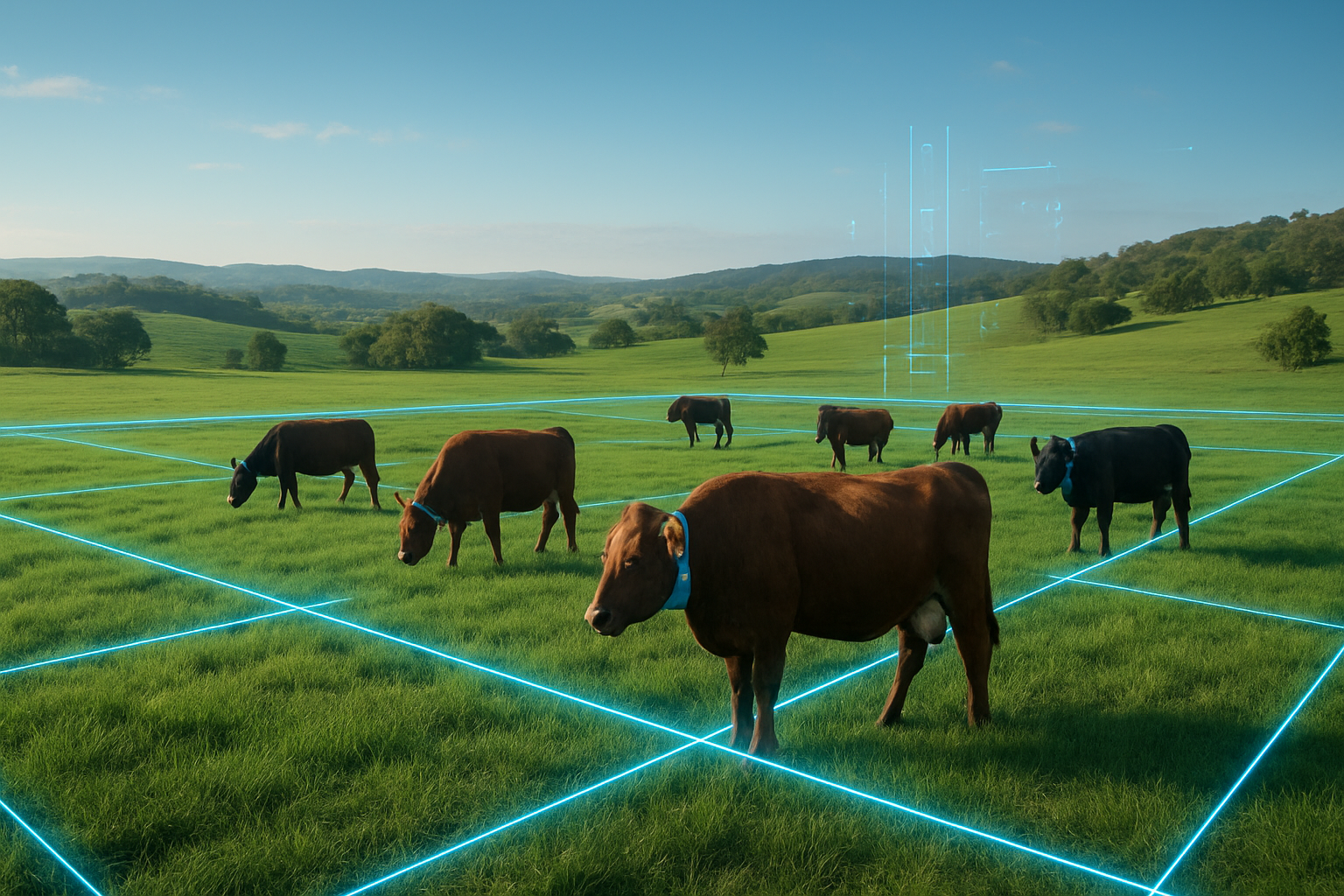
    Victoria's impending full integration of virtual fencing technology marks a paradigm shift in livestock management. At its core, this innovative system relies on GPS-enabled smart collars worn by livestock, which communicate with digital boundaries defined by farmers on a mobile app or computer. As an animal approaches a designated virtual fence line, its collar emits a series of escalating sensory cues: first, auditory warnings (beeps), followed by vibrations, and finally, if the animal persists, a mild electrical pulse. Animals quickly learn to associate the audio cues with the boundary, prompting them to turn back and remain within the designated areas, thereby minimizing the need for physical stimuli.

    This technology, exemplified by systems from companies like Halter and Gallagher (ASX: GAL), which commercializes CSIRO's eShepherd, offers sophisticated capabilities far beyond simple containment. The collars provide real-time monitoring of individual animal location, movement, health indicators, and even reproductive status, feeding valuable data back to farmers. Many are solar-powered for sustained operation and utilize cellular networks or LoRa base stations for connectivity, ensuring functionality even in remote areas. Unlike the static and costly nature of traditional physical fences, virtual boundaries can be created, adjusted, or removed instantly and remotely, offering dynamic control over grazing patterns, crucial for optimizing pasture utilization and responding to environmental changes. Initial reactions from agricultural bodies like the Victorian Farmers Federation (VFF) and United Dairyfarmers of Victoria (UDV) have been overwhelmingly positive, hailing the decision as a "win for common sense" and a vital step towards modernizing farming practices, while also emphasizing the stringent animal welfare safeguards embedded in the new regulations.

    AgTech's New Frontier: Corporate Beneficiaries and Market Shifts

    The Victorian approval of virtual fencing technology opens a fertile new market for a range of AI companies, tech giants, and startups within the burgeoning AgTech sector. Prominent beneficiaries include Halter, the New Zealand-based startup currently trialing its technology at Agriculture Victoria's Ellinbank SmartFarm, and Gallagher (ASX: GAL), the commercial partner for CSIRO's patented eShepherd virtual fencing system. CSIRO, a world leader in virtual fencing R&D since 2005, also benefits through its intellectual property and ongoing partnerships. Tech giants like Microsoft (NASDAQ: MSFT), through collaborations with CSIRO on projects like "SpaceCows" utilizing AI and cloud technologies for feral herd management, demonstrate a clear interest in providing underlying AI services, cloud infrastructure, and data analytics platforms to the sector. Victoria's robust digital technology ecosystem, with its significant AI cluster and university research centers, also provides fertile ground for local startups to innovate and contribute.

    The competitive landscape will see a shift, with increased demand for AI and machine learning expertise to process GPS data, analyze animal behavior, and optimize grazing algorithms. Cloud computing providers like Amazon (NASDAQ: AMZN) (AWS), Microsoft (Azure), and Google (NASDAQ: GOOGL) (Google Cloud) stand to gain from hosting the vast data generated by these systems. Companies offering integrated solutions—combining hardware, software, and data analytics—and those prioritizing animal welfare and sustainability in their AI development will gain a strategic advantage. This development is poised to disrupt the traditional fencing industry, potentially leading to a decline in demand for physical fencing materials and services. It will also necessitate a shift in farm labor skills from manual construction to digital management and data interpretation. New business models, such as subscription-based virtual fencing services, are likely to emerge, lowering the barrier to entry for farmers and further reshaping the market.

    Beyond the Paddock: Wider Implications and Ethical Considerations

    Victoria's embrace of virtual fencing is more than just an agricultural upgrade; it's a testament to the broader integration of AI into critical sectors, aligning with the global "Agriculture 4.0" trend. This precision livestock farming approach leverages AI, IoT, and data analytics to optimize land use, improve environmental outcomes, and enhance food security. Environmentally, virtual fencing offers significant benefits by allowing farmers to exclude livestock from sensitive areas like waterways and regenerating native vegetation, preventing erosion and promoting biodiversity. It facilitates dynamic rotational grazing, improving soil health, increasing plant diversity, and optimizing forage production. Economically, it promises substantial reductions in labor and infrastructure costs associated with traditional fencing, boosting farm productivity and resilience against environmental challenges. Societally, it can improve animal welfare by reducing the stress of traditional herding and enhance farmer well-being by automating demanding tasks.

    However, the technology is not without its concerns. Ethical questions persist regarding the use of mild electrical pulses, despite their design to be less intense than traditional electric fences. Animal welfare groups call for more long-term studies on potential stress levels and behavioral impacts. Privacy concerns are also significant, as the vast amounts of data collected on animal movements and farm operations raise questions about data ownership, security, and potential misuse. Technical limitations include the high initial investment cost, reliance on reliable connectivity in remote areas, and the need for continuous improvements in GPS accuracy and collar durability. Compared to previous AI milestones in agriculture, such as early expert systems or the advent of precision agriculture with GPS/GIS, virtual fencing represents a leap from analytical tools to real-time, dynamic control, actively influencing animal behavior and farm management in a responsive and adaptive manner.

    The Horizon: Future Developments and Expert Predictions

    The future of virtual fencing technology, both in Victoria and globally, is poised for rapid evolution and diversification. In the near term, Victoria's finalized regulations are expected to pave the way for wider commercial adoption, building on trials like the one at Ellinbank SmartFarm. Globally, the virtual fence market is projected for significant growth, driven by increasing connectivity, advanced AI algorithms for animal tracking and behavior monitoring, and improved mobile device integration. Smart collars will become even more refined, with enhanced automated containment, health monitoring, and features like collar-to-collar communication in areas with poor signal. We can expect reduced costs and complexity as the technology matures and competition increases.

    Beyond basic containment, potential applications are vast. Virtual fencing will enable highly dynamic pasture management, allowing for precise rotational and strip grazing to optimize land use and promote environmental health. It will be crucial for environmental protection, creating exclusion zones for sensitive ecosystems and even assisting in firebreak creation through targeted grazing. Enhanced animal welfare and health monitoring will see collars providing 24/7 insights, alerting farmers to potential issues. Experts predict virtual fencing will become a foundational technology for 21st-century livestock management, enabling precision control in response to unpredictable weather and sustainability demands. Challenges such as high initial costs, connectivity in remote areas, and continuous refinement of animal welfare protocols remain. However, continuous R&D, strategic partnerships between tech firms and agribusinesses, and government initiatives are expected to fast-track commercialization and adoption, leading to smarter, more efficient, and environmentally friendly livestock management systems.

    A New Chapter in Agricultural Innovation

    Victoria's approval of virtual fencing technology marks a significant chapter in the ongoing narrative of AI's transformative impact on agriculture. This development underscores a commitment to embracing innovation for greater efficiency, economic resilience, and environmental stewardship. The key takeaways are clear: virtual fencing offers unparalleled flexibility in livestock management, substantial cost and labor savings, and critical tools for sustainable land use and disaster preparedness. While ethical considerations, data privacy, and technical challenges will require ongoing attention and refinement, the long-term impact is expected to be profoundly positive, ushering in an era of precision livestock farming that benefits farmers, animals, and the environment. As the first approved products become available in early 2026, the coming weeks and months will be crucial for observing the initial rollout, farmer adoption rates, and the continued evolution of this invisible revolution in the paddocks of Victoria and beyond.


    This content is intended for informational purposes only and represents analysis of current AI developments.

    TokenRing AI delivers enterprise-grade solutions for multi-agent AI workflow orchestration, AI-powered development tools, and seamless remote collaboration platforms.
    For more information, visit https://www.tokenring.ai/.
  • AI-Powered Agriculture: Revolutionizing the Future of Farming from the Field Up

    AI-Powered Agriculture: Revolutionizing the Future of Farming from the Field Up

    The agricultural sector is on the cusp of a profound transformation, driven by an influx of cutting-edge technological solutions emerging from industry leaders. Recent Organic Grower Summits have served as a critical showcase for these advancements, highlighting how artificial intelligence (AI), robotics, and precision agriculture are poised to revolutionize farming practices, enhance sustainability, and address long-standing challenges in food production. These innovations promise not only to optimize yields and reduce costs but also to significantly lessen the environmental footprint of agriculture, marking a new era for growers worldwide.

    The immediate significance of these developments lies in their potential to fundamentally alter how food is grown, particularly in the organic sector where sustainable and precise methods are paramount. By integrating sophisticated AI and robotic systems, farmers can achieve unprecedented levels of efficiency and accuracy, moving away from broad-spectrum interventions towards highly targeted, plant-level care. This shift is not merely an incremental improvement but a paradigm change, offering tangible benefits from increased profitability for growers to a healthier planet for all.

    Technical Deep Dive: Precision at the Plant Level

    At the forefront of this agricultural revolution are remarkable technical advancements that leverage AI and machine learning to perform tasks with unparalleled precision. Two standout examples from recent summits are Carbon Robotics' LaserWeeder and Niqo Robotics' Niqo Sense AI camera.

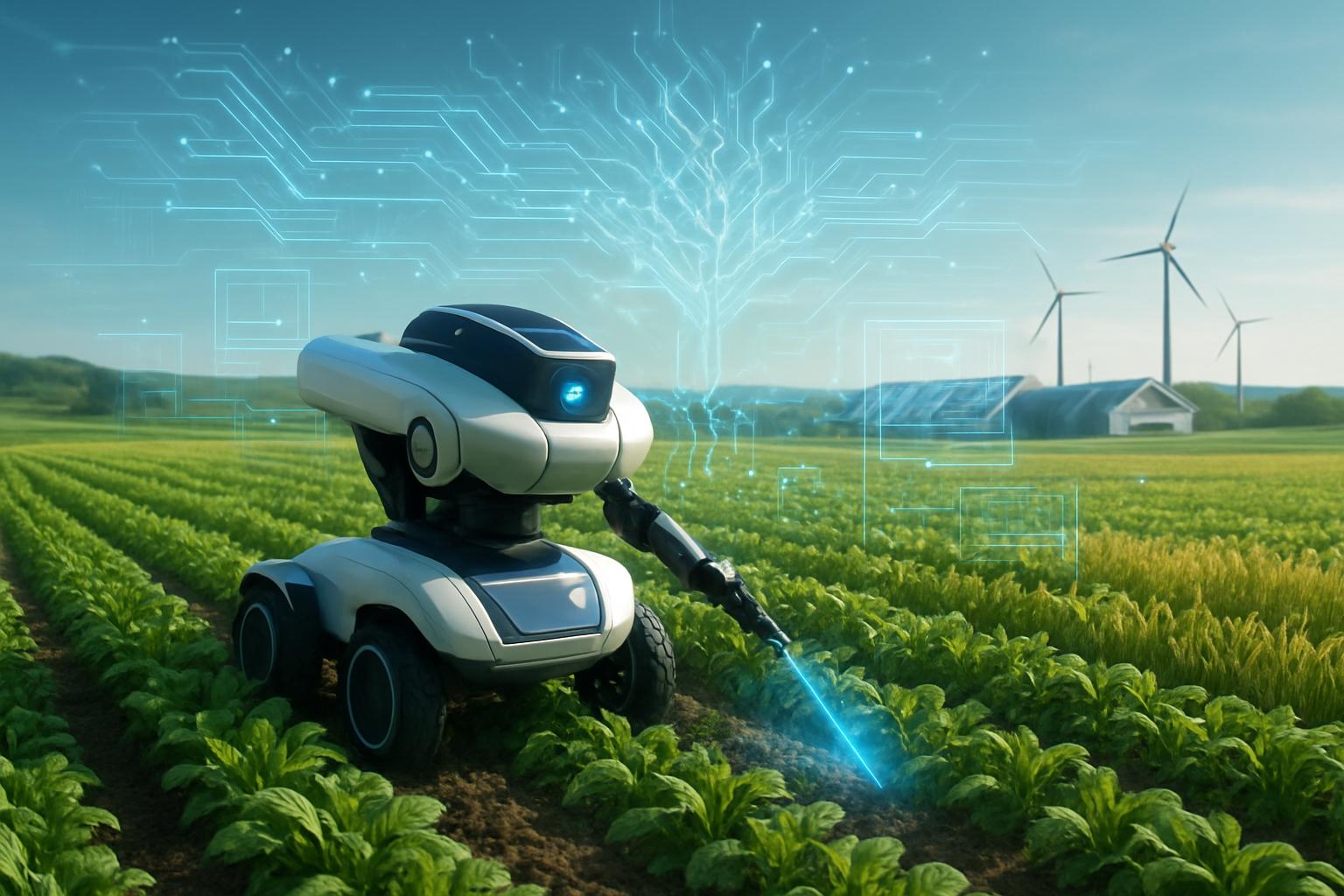
    Carbon Robotics has introduced its LaserWeeder technology, an AI-powered robotic system designed to autonomously identify and eliminate weeds using high-power lasers. The second-generation LaserWeeder G2, for instance, is equipped with 24 diode lasers and 36 high-resolution cameras, all managed by an onboard supercomputer. This sophisticated setup allows it to process up to 10,000 weeds per minute with sub-millimeter accuracy. The system employs advanced computer vision and deep learning algorithms to distinguish between crops and weeds, ensuring only unwanted plants are targeted. This approach drastically reduces the need for manual weeding, which is labor-intensive and costly, and minimizes the use of chemical herbicides, a significant benefit for organic farming and environmental health. Unlike traditional mechanical weeding, which can disturb soil and damage crops, or chemical spraying, which has ecological consequences, laser weeding offers a non-contact, highly selective, and environmentally benign solution. Initial reactions from the agricultural community have been overwhelmingly positive, with growers reporting substantial reductions in weed control costs and improved crop quality.

    Similarly, Niqo Robotics is making strides in precision spraying with its proprietary Niqo Sense AI camera. This technology enables spot spraying of agrochemicals—including pesticides, herbicides, fungicides, and liquid fertilizers—directly at the plant level. By precisely identifying individual plants and their needs, the Niqo Sense system ensures that chemicals are applied only where and when necessary, rather than broadcast across entire fields. This targeted application significantly reduces the overall volume of agrochemicals used, leading to substantial cost savings for farmers and a dramatic reduction in environmental pollution. This differs from previous approaches that relied on uniform application, often leading to chemical waste and runoff. Industry experts view this as a crucial step towards truly sustainable agriculture, allowing for effective pest and disease management with minimal ecological impact.

    Corporate Landscape: Beneficiaries and Competitive Edge

    These AI-driven agricultural solutions are poised to significantly impact a range of companies, from innovative startups to established agribusiness giants. Companies like Carbon Robotics and Niqo Robotics stand to benefit immensely, solidifying their positions as leaders in agricultural robotics and AI. Their proprietary technologies offer a significant competitive advantage, potentially disrupting traditional methods of weed control and crop protection.

    The competitive landscape for major AI labs and tech companies is also shifting. While these specific solutions are currently offered by specialized ag-tech firms, the underlying AI and machine learning capabilities represent a lucrative area for broader tech giants to invest in or acquire. Companies like Wilbur-Ellis Agribusiness, a prominent player in agricultural solutions, are already partnering with growers to deliver tailored solutions in water management, resistance management, and soil health, demonstrating their strategic focus on integrating advanced technologies and sustainable practices. Other notable companies exhibiting at summits, such as Monarch Tractor (focusing on electric, autonomous tractors) and IntelliCulture (providing sustainable innovations), are also well-positioned to capitalize on the growing demand for smart farming tools.

    These developments could potentially disrupt existing product lines for companies heavily invested in conventional agricultural machinery and chemical inputs, pushing them to innovate or risk losing market share. The strategic advantage lies with companies that can seamlessly integrate AI, robotics, and data analytics to offer comprehensive, sustainable, and efficient farming solutions. Market positioning will increasingly favor those who can provide verifiable environmental benefits alongside economic returns for growers.

    Wider Significance: A Shift Towards Intelligent Agriculture

    The emergence of these cutting-edge solutions fits perfectly into the broader AI landscape and the accelerating trend towards intelligent automation across industries. In agriculture, this translates to a profound shift towards precision agriculture and regenerative farming, where data-driven insights and automated systems guide decision-making and execution. These advancements are not isolated; they are part of a larger movement to optimize resource utilization, enhance biodiversity, and build more resilient food systems.

    The impacts are multi-faceted: economically, they offer growers a path to higher profitability through reduced input costs and improved yields; environmentally, they promise a significant reduction in chemical pollution, water consumption, and soil degradation. By enabling more efficient and sustainable practices, these technologies address critical global challenges such as food security and climate change. Potential concerns, however, include the initial capital investment required for these advanced systems, the need for robust connectivity in rural areas, and the potential for a widening digital divide among farmers. Comparisons to previous agricultural milestones, such as the Green Revolution, highlight the transformative potential of AI. While the Green Revolution focused on high-yield crop varieties and synthetic inputs, the AI revolution emphasizes intelligence, precision, and sustainability, aiming for a more harmonious relationship between agriculture and the environment.

    Future Developments: The Horizon of Autonomous Farms

    Looking ahead, the trajectory of agricultural AI suggests an exciting future. Near-term developments are likely to include further refinement of existing technologies, with robots becoming even more adept at complex tasks, and AI systems offering more granular and predictive insights. We can expect to see enhanced integration of various smart farming tools, creating holistic, interconnected farm management systems.

    On the horizon, potential applications and use cases are vast. Fully autonomous farms, where AI-powered robots handle everything from planting and monitoring to harvesting and pest control, are no longer science fiction. AI will play an increasingly critical role in climate-resilient agriculture, predicting weather patterns, optimizing irrigation schedules in response to drought, and identifying disease outbreaks before they become widespread. Challenges that need to be addressed include developing robust and affordable solutions for small and medium-sized farms, ensuring data privacy and security, and fostering a skilled workforce capable of operating and maintaining these advanced systems. Experts predict a future where agriculture is not just more efficient, but also more sustainable, adaptable, and responsive to global demands, with AI as the central nervous system of modern farming.

    Comprehensive Wrap-Up: A New Era for Food Production

    In summary, the cutting-edge AI and robotic solutions showcased by industry leaders at events like the Organic Grower Summit represent a pivotal moment in agricultural history. Key takeaways include the dramatic improvements in precision, efficiency, and sustainability offered by technologies such as AI-powered laser weeding and spot spraying. These developments are not just incremental improvements; they are foundational shifts that will redefine farming practices for decades to come.

    The significance of this development in AI history cannot be overstated. It demonstrates AI's practical application in a critical sector, moving beyond theoretical models to deliver tangible, real-world benefits. The long-term impact will likely include a more resilient food supply, reduced environmental harm, and increased economic viability for farmers, especially those committed to organic and sustainable methods. As we move forward, it will be crucial to watch for further integration of these technologies, the emergence of new AI-driven solutions, and how policymakers and industry stakeholders collaborate to ensure equitable access and training for all growers. The future of food production is becoming intelligently automated, precise, and profoundly sustainable.


    This content is intended for informational purposes only and represents analysis of current AI developments.

    TokenRing AI delivers enterprise-grade solutions for multi-agent AI workflow orchestration, AI-powered development tools, and seamless remote collaboration platforms.
    For more information, visit https://www.tokenring.ai/.