
Tag: AI Avatars

  • The $4 Billion Avatar: How Synthesia is Defining the Era of Agentic Enterprise Media

    The $4 Billion Avatar: How Synthesia is Defining the Era of Agentic Enterprise Media

    In a landmark moment for the synthetic media landscape, London-based AI powerhouse Synthesia has reached a staggering $4 billion valuation following a $200 million Series E funding round. Announced on January 26, 2026, the round was led by Google Ventures (NASDAQ:GOOGL), with significant participation from NVentures, the venture capital arm of NVIDIA (NASDAQ:NVDA), alongside long-time backers Accel and Kleiner Perkins. This milestone is not merely a reflection of the company’s capital-raising prowess but a signal of a fundamental shift in how the world’s largest corporations communicate, train, and distribute knowledge.

    The valuation comes on the heels of Synthesia crossing $150 million in Annual Recurring Revenue (ARR), a feat fueled by its near-total saturation of the corporate world; currently, over 90% of Fortune 100 companies—including giants like Microsoft (NASDAQ:MSFT), SAP (NYSE:SAP), and Xerox (NASDAQ:XRX)—have integrated Synthesia’s AI avatars into their daily operations. By transforming the static, expensive process of video production into a scalable, software-driven workflow, Synthesia has moved synthetic media from a "cool experiment" to a mission-critical enterprise utility.

    The Technical Leap: From Broadcast Video to Interactive Agents

    At the heart of Synthesia’s dominance is its recent transition from "broadcast video"—where a user creates a one-way message—to "interactive video agents." With the launch of Synthesia 3.0 in late 2025, the company introduced avatars that do not just speak but also listen and respond. Built on the proprietary EXPRESS-1 model, these avatars now feature full-body control, allowing for naturalistic hand gestures and postural shifts that synchronize with the emotional weight of the dialogue. Unlike the "talking heads" of 2023, these 2026 models possess a level of physical nuance that makes them indistinguishable from human presenters in 8K Ultra HD resolution.

    Technical specifications of the platform have expanded to support over 140 languages with perfect lip-syncing, a feature that has become indispensable for global enterprises like Heineken (OTCMKTS:HEINY) and Merck (NYSE:MRK). The platform’s new "Prompt-to-Avatar" capability allows users to generate entire custom environments and brand-aligned digital twins using simple natural language. This shift toward "agentic" AI means these avatars can now be integrated into internal knowledge bases, acting as real-time subject matter experts. An employee can now "video chat" with an AI version of their CEO to ask specific questions about company policy, with the avatar retrieving and explaining the information in seconds.

    A Crowded Frontier: Competitive Dynamics in Synthetic Media

    While Synthesia maintains a firm grip on the enterprise "operating system" for video, it faces a diversifying competitive field. Adobe (NASDAQ:ADBE) has positioned its Firefly Video model as the "commercially safe" alternative, leveraging its massive library of licensed stock footage to offer IP-indemnified content that appeals to risk-averse marketing agencies. Meanwhile, OpenAI’s Sora 2 has pushed the boundaries of cinematic storytelling, offering 25-second clips with high-fidelity narrative depth that challenge traditional film production.

    However, Synthesia’s strategic advantage lies in its workflow integration rather than just its pixels. While HeyGen has captured the high-growth "personalization" market for sales outreach, and Hour One remains a favorite for luxury brands requiring "studio-grade" micro-expressions, Synthesia has become the default for scale. The company famously rejected a $3 billion acquisition offer from Adobe in mid-2025, a move that analysts say preserved its ability to define the "interactive knowledge layer" without being subsumed into a broader creative suite. This independence has allowed them to focus on the boring-but-essential "plumbing" of enterprise tech: SOC2 compliance, localized data residency, and seamless integration with platforms like Zoom (NASDAQ:ZM).

    The Trust Layer: Ethics and the Global AI Landscape

    As synthetic media becomes ubiquitous, the conversation around safety and deepfakes has reached a fever pitch. To combat the rise of "Deepfake-as-a-Service," Synthesia has taken a leadership role in the Coalition for Content Provenance and Authenticity (C2PA). Every video produced on the platform now carries "Durable Content Credentials"—invisible, cryptographic watermarks that survive compression, editing, and even screenshotting. This "nutrition label" for AI content is a key component of the company’s compliance with the EU AI Act, which mandates transparency for all professional synthetic media by August 2026.

    Beyond technical watermarking, Synthesia has pioneered "Biometric Consent" standards. This prevents the unauthorized creation of digital twins by requiring a time-stamped, live video of a human subject providing explicit permission before their likeness can be synthesized. This move has been praised by the AI research community for creating a "trust gap" between professional enterprise tools and the unregulated "black market" deepfake generators. By positioning themselves as the "adult in the room," Synthesia is betting that corporate legal departments will prioritize safety and provenance over the raw creative power offered by less restricted competitors.

    The Horizon: 3D Avatars and Agentic Gridlock

    Looking toward the end of 2026 and into 2027, the focus is expected to shift from 2D video outputs to fully realized 3D spatial avatars. These entities will live not just on screens, but in augmented reality environments and VR training simulations. Experts predict that the next challenge will be "Agentic Gridlock"—a phenomenon where various AI agents from different platforms struggle to interoperate. Synthesia is already working on cross-platform orchestration layers that allow a Synthesia video agent to interact directly with a Salesforce (NYSE:CRM) data agent to provide live, visual business intelligence reports.

    Near-term developments will likely include real-time "emotion-sensing," where an avatar can adjust its tone and body language based on the facial expressions or sentiment of the human it is talking to. While this raises new psychological and ethical questions about the "uncanny valley" and emotional manipulation, the demand for personalized, high-fidelity human-computer interfaces shows no signs of slowing. The ultimate goal, according to Synthesia’s leadership, is to make the "video" part of their product invisible, leaving only a seamless, intelligent interface between human knowledge and digital execution.

    Conclusion: A New Chapter in Human-AI Interaction

    Synthesia’s $4 billion valuation is a testament to the fact that video is no longer a static asset to be produced; it is a dynamic interface to be managed. By successfully pivoting from a novelty tool to an enterprise-grade "interactive knowledge layer," the company has set a new standard for how AI can be deployed at scale. The significance of this moment in AI history lies in the normalization of synthetic humans as a primary way we interact with information, moving away from the text-heavy interfaces of the early 2020s.

    As we move through 2026, the industry will be watching closely to see how Synthesia manages the delicate balance between rapid innovation and the rigorous safety standards required by the global regulatory environment. With its Series E funding secured and a massive lead in the Fortune 100, Synthesia is no longer just a startup to watch—it is the architect of a new era of digital communication. The long-term impact will be measured not just in dollars, but in the permanent transformation of how we learn, work, and connect in an AI-mediated world.


    This content is intended for informational purposes only and represents analysis of current AI developments.

    TokenRing AI delivers enterprise-grade solutions for multi-agent AI workflow orchestration, AI-powered development tools, and seamless remote collaboration platforms.
    For more information, visit https://www.tokenring.ai/.
  • Madison Avenue’s New Reality: New York Enacts Landmark AI Avatar Disclosure Law

    Madison Avenue’s New Reality: New York Enacts Landmark AI Avatar Disclosure Law

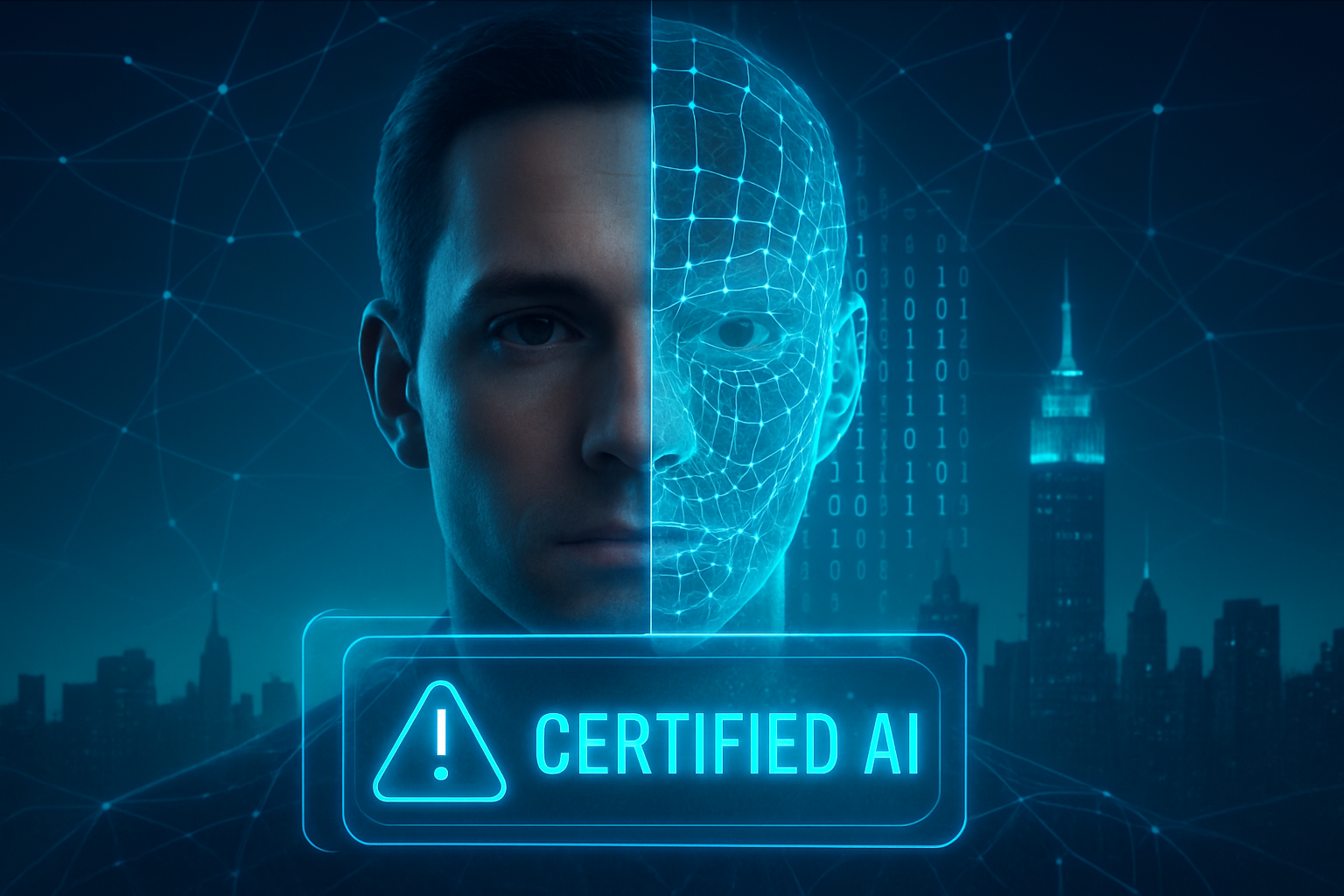
    In a move that signals the end of the "wild west" era for synthetic media, New York Governor Kathy Hochul signed the Synthetic Performer Disclosure Law (S.8420-A / A.8887-B) on December 11, 2025. The legislation establishes the nation’s first comprehensive framework requiring advertisers to clearly label any synthetic human actors or AI-generated people used in commercial content. As the advertising world increasingly leans on generative AI to slash production costs, this law marks a pivotal shift toward consumer transparency, mandating that the line between human and machine be clearly drawn for the public.

    The enactment of this law, coming just weeks before the close of 2025, serves as a direct response to the explosion of "hyper-realistic" AI avatars that have begun to populate social media feeds and television commercials. By requiring a "conspicuous disclosure," New York is setting a high bar for digital honesty, effectively forcing brands to admit when the smiling faces in their campaigns are the product of code rather than DNA.

    Defining the Synthetic Performer: The Technical Mandate

    The new legislation specifically targets what it calls "synthetic performers"—digitally created assets generated by AI or software algorithms intended to create the impression of a real human being who is not recognizable as any specific natural person. Unlike previous "deepfake" laws that focused on the non-consensual use of real people's likenesses, this law addresses the "uncanny valley" of entirely fabricated humans. Under the new rules, any advertisement produced for commercial purposes must feature a label such as "AI-generated person" or "Includes synthetic performer" that is easily noticeable and understandable to the average consumer.

    Technically, the law places the burden of "actual knowledge" on the content creator or sponsor. This means if a brand or an ad agency uses a platform like Synthesia or HeyGen to generate a spokesperson, they are legally obligated to disclose it. However, the law provides a safe harbor for media distributors; television networks and digital platforms like Meta (NASDAQ: META) or Alphabet (NASDAQ: GOOGL) are generally exempt from liability, provided they are not the primary creators of the content.

    Industry experts note that this approach differs significantly from earlier, broader attempts at AI regulation. By focusing narrowly on "commercial purpose" and "synthetic performers," the law avoids infringing on artistic "expressive works" like movies, video games, or documentaries. This surgical precision has earned the law praise from the AI research community for protecting creative innovation while simultaneously providing a necessary "nutrition label" for commercial persuasion.

    Shaking Up the Ad Industry: Meta, Google, and the Cost of Transparency

    The business implications of the Synthetic Performer Disclosure Law are immediate and far-reaching. Major tech giants that provide AI-driven advertising tools, including Adobe (NASDAQ: ADBE) and Microsoft (NASDAQ: MSFT), are already moving to integrate automated labeling features into their creative suites to help clients comply. For these companies, the law presents a dual-edged sword: while it validates the utility of their AI tools, the requirement for a "conspicuous" label could potentially diminish the "magic" of AI-generated content that brands have used to achieve a seamless, high-end look on a budget.

    For global advertising agencies like WPP (NYSE: WPP) and Publicis, the law necessitates a rigorous new compliance layer in the creative process. There is a growing concern that the "AI-generated" tag might carry a stigma, leading some brands to pull back from synthetic actors in favor of "authentic" human talent—a trend that would be a major win for labor unions. SAG-AFTRA, a primary advocate for the bill, hailed the signing as a landmark victory, arguing that it prevents AI from deceptively replacing human actors without the public's knowledge.

    Startups specializing in AI avatars are also feeling the heat. While these companies have seen massive valuations based on their ability to produce "indistinguishable" human content, they must now pivot their marketing strategies. The strategic advantage may shift to companies that can provide "certified authentic" human content or those that develop the most aesthetically pleasing ways to incorporate disclosures without disrupting the viewer's experience.

    A New Era for Digital Trust and the Broader AI Landscape

    The New York law is a significant milestone in the broader AI landscape, mirroring the global trend toward "AI watermarking" and provenance standards like C2PA. It arrives at a time when public trust in digital media is at an all-time low, and the "AI-free" brand movement is gaining momentum among Gen Z and Millennial consumers. By codifying transparency, New York is effectively treating AI-generated humans as a new category of "claim" that must be substantiated, much like "organic" or "sugar-free" labels in the food industry.

    However, the law has also sparked concerns about "disclosure fatigue." Some critics argue that as AI becomes ubiquitous in every stage of production—from color grading to background extras—labeling every synthetic element could lead to a cluttered and confusing visual landscape. Furthermore, the law enters a complex legal environment where federal authorities are also vying for control. The White House recently issued an Executive Order aiming for a national AI standard, creating a potential conflict with New York’s specific mandates.

    Comparatively, this law is being viewed as the "GDPR moment" for synthetic media. Just as Europe’s data privacy laws forced a global rethink of digital tracking, New York’s disclosure requirements are expected to become the de facto national standard, as few brands will want to produce separate, non-labeled versions of ads for the rest of the country.

    The Future of Synthetic Influence: What Comes Next?

    Looking ahead, the "Synthetic Performer Disclosure Law" is likely just the first of many such regulations. Near-term developments are expected to include the expansion of these rules to "AI Influencers" on platforms like TikTok and Instagram, where the line between a real person and a synthetic avatar is often intentionally blurred. As AI actors become more interactive and capable of real-time engagement, the need for disclosure will only grow more acute.

    Experts predict that the next major challenge will be enforcement in the decentralized world of social media. While large brands will likely comply to avoid the $5,000-per-violation penalties, small-scale creators and "shadow" advertisers may prove harder to regulate. Additionally, as generative AI moves into audio and real-time video calls, the definition of a "performer" will need to evolve. We may soon see "Transparency-as-a-Service" companies emerge, offering automated verification and labeling tools to ensure advertisements remain compliant across all 50 states.

    The interplay between this law and the recently signed RAISE Act (Responsible AI Safety and Education Act) in New York also suggests a future where AI safety and consumer transparency are inextricably linked. The RAISE Act’s focus on "frontier" model safety protocols will likely provide the technical backend needed to track the provenance of the very avatars the disclosure law seeks to label.

    Closing the Curtain on Deceptive AI

    The enactment of New York’s AI Avatar Disclosure Law is a watershed moment for the 21st-century media landscape. By mandating that synthetic humans be identified, the state has taken a firm stand on the side of consumer protection and human labor. The key takeaway for the industry is clear: the era of passing off AI as human without consequence is over.

    As the law takes effect in June 2026, the industry will be watching closely to see how consumers react to the "AI-generated" labels. Will it lead to a rejection of synthetic media, or will the public become desensitized to it? In the coming weeks and months, expect a flurry of activity from ad-tech firms and legal departments as they scramble to define what "conspicuous" truly means in a world where the virtual and the real are becoming increasingly difficult to distinguish.


    This content is intended for informational purposes only and represents analysis of current AI developments.

    TokenRing AI delivers enterprise-grade solutions for multi-agent AI workflow orchestration, AI-powered development tools, and seamless remote collaboration platforms.
    For more information, visit https://www.tokenring.ai/.
  • Microsoft Unleashes Human-Centered AI with Transformative Copilot Fall Release

    Microsoft Unleashes Human-Centered AI with Transformative Copilot Fall Release

    Microsoft (NASDAQ: MSFT) is charting a bold new course in the artificial intelligence landscape with its comprehensive "Copilot Fall Release," rolling out a suite of groundbreaking features designed to make its AI assistant more intuitive, collaborative, and deeply personal. Unveiled on October 23, 2025, this update marks a pivotal moment in the evolution of AI, pushing Copilot beyond a mere chatbot to become a truly human-centered digital companion, complete with a charming new avatar, enhanced memory, and unprecedented cross-platform integration.

    At the heart of this release is a strategic pivot towards fostering more natural and empathetic interactions between users and AI. The introduction of the 'Mico' avatar, a friendly, animated character, alongside nostalgic nods like a Clippy easter egg, signals Microsoft's commitment to humanizing the AI experience. Coupled with robust new capabilities such as group chat functionality, advanced long-term memory, and seamless integration with Google services, Copilot is poised to redefine productivity and collaboration, solidifying Microsoft's aggressive stance in the burgeoning AI market.

    A New Face for AI: Mico, Clippy, and Human-Centered Design

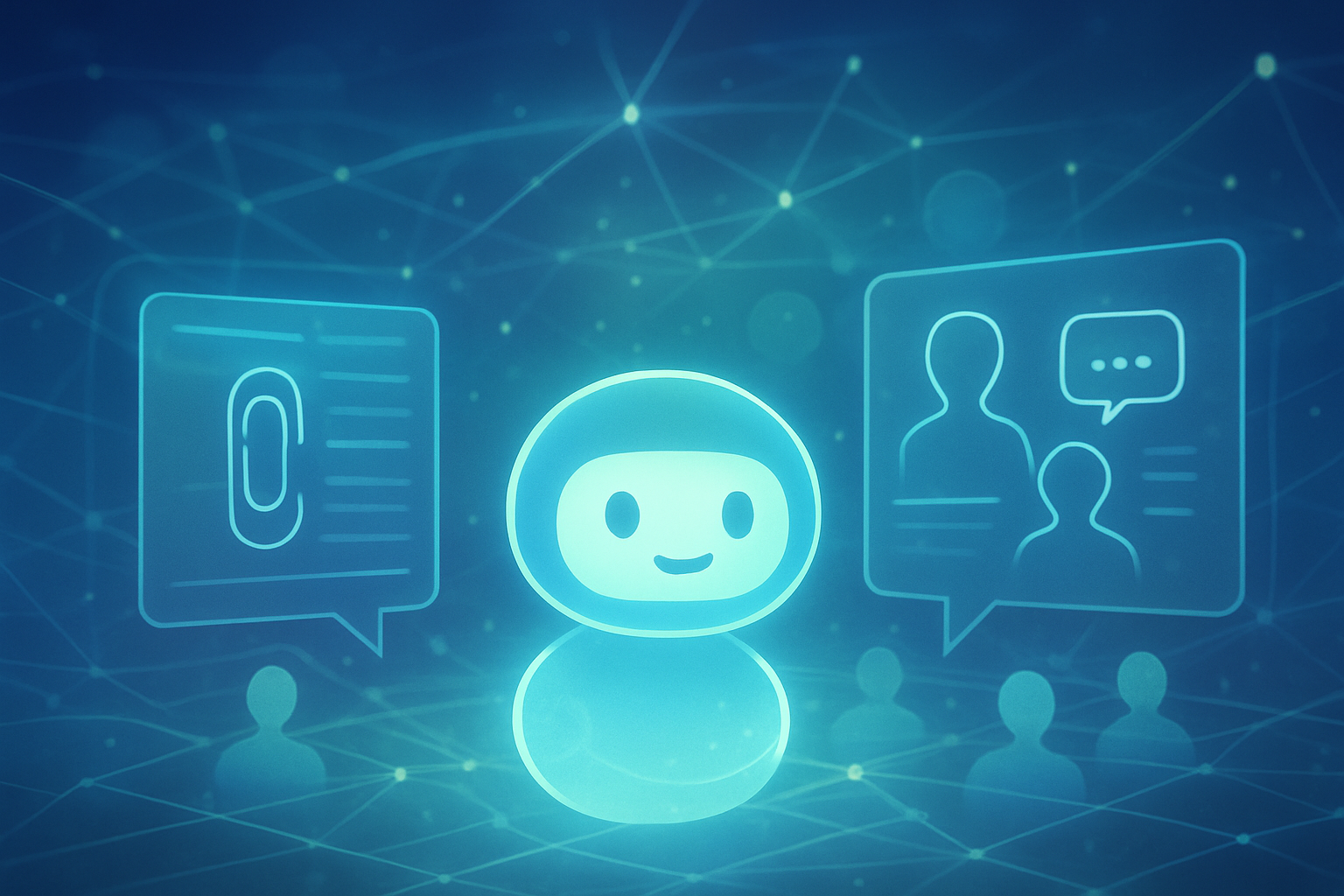
    The "Copilot Fall Release" introduces a significant overhaul to how users interact with their AI assistant, spearheaded by the new 'Mico' avatar. This friendly, customizable, blob-like character now graces the Copilot homepage and voice mode interfaces, particularly on iOS and Android devices in the U.S. Mico is more than just a visual flourish; it offers dynamic visual feedback during voice interactions, employing animated expressions and gestures to make conversations feel more natural and engaging. This move underscores Microsoft's dedication to humanizing the AI experience, aiming to create a sense of companionship rather than just utility.

    Adding a playful touch that resonates with long-time Microsoft users, an ingenious easter egg allows users to transform Mico into Clippy, the iconic (and sometimes infamous) paperclip assistant from older Microsoft Office versions, by repeatedly tapping the Mico avatar. This nostalgic callback not only generates community buzz but also highlights Microsoft's embrace of its history while looking to the future of AI. Beyond these visual enhancements, Microsoft's broader "human-centered AI strategy," championed by Microsoft AI CEO Mustafa Suleyman, emphasizes that technology should empower human judgment, foster creativity, and deepen connections. This philosophy drives the development of distinct AI personas, such as Mico's tutor-like mode in "Study and Learn" and the "Real Talk" mode designed to offer more challenging and growth-oriented conversations, moving away from overly agreeable AI responses.

    Technically, these AI personas represent a significant leap from previous, more generic conversational AI models. While earlier AI assistants often provided static or context-limited responses, Copilot's new features aim for a dynamic and adaptive interaction model. The ability of Mico to convey emotion through animation and for Copilot to adopt specific personas for different tasks (e.g., tutoring) marks a departure from purely text-based or voice-only interactions, striving for a more multimodal and emotionally intelligent engagement. Initial reactions from the AI research community and industry experts have been largely positive, praising Microsoft's bold move to imbue AI with more personality and to prioritize user experience and ethical design in its core strategy, setting a new benchmark for AI-human interaction.

    Redefining Collaboration and Personalization: Group Chats, Long-Term Memory, and Google Integration

    Beyond its new face, Microsoft Copilot's latest release dramatically enhances its functionality across collaboration, personalization, and cross-platform utility. A major stride in teamwork is the introduction of group chat capabilities, enabling up to 32 participants to engage in a shared AI conversation space. This feature, rolling out on iOS and Android, transforms Copilot into a versatile collaborative tool for diverse groups—from friends planning social events to students tackling projects and colleagues brainstorming. Crucially, to safeguard individual privacy, the system intelligently pauses the use of personal memory when users are brought into a group chat, ensuring that private interactions remain distinct from shared collaborative spaces.

    Perhaps the most significant technical advancement is Copilot's new long-term memory feature. This allows the AI to retain crucial information across conversations, remembering personal details, preferences (such as favorite foods or entertainment), personal milestones, and ongoing projects. This persistent memory leads to highly personalized responses, timely reminders, and contextually relevant suggestions, making Copilot feel genuinely attuned to the user's evolving needs. Users maintain full control over this data, with robust options to manage or delete stored information, including conversational deletion requests. In an enterprise setting, Copilot's memory framework in 2025 can process substantial documents—up to 300 pages or approximately 1.5 million words—and supports uploads approaching 512 MB, seamlessly integrating short-term and persistent memory through Microsoft OneDrive and Dataverse. This capacity far surpasses the ephemeral memory of many previous AI assistants, which typically reset context after each interaction.

    Further solidifying its role as an indispensable digital assistant, Microsoft Copilot now offers expanded integration with Google services. With explicit user consent, Copilot can access Google accounts, including Gmail and Google Calendar. This groundbreaking cross-platform capability empowers Copilot to summarize emails, prioritize messages, draft responses, and locate documents and calendar events across both Microsoft and Google ecosystems. This integration directly addresses a common pain point for users operating across multiple tech environments, offering a unified AI experience that transcends traditional platform boundaries. This approach stands in stark contrast to previous, more siloed AI assistants, positioning Copilot as a truly versatile and comprehensive productivity tool.

    Reshaping the AI Landscape: Competitive Implications and Market Dynamics

    The "Copilot Fall Release" has profound implications for the competitive dynamics within the artificial intelligence industry, primarily benefiting Microsoft (NASDAQ: MSFT) as it aggressively expands its AI footprint. By emphasizing a "human-centered" approach and delivering highly personalized, collaborative, and cross-platform features, Microsoft is directly challenging rivals in the AI assistant space, including Alphabet's (NASDAQ: GOOGL) Google Assistant and Apple's (NASDAQ: AAPL) Siri. The ability to integrate seamlessly with Google services, in particular, allows Copilot to transcend the traditional walled gardens of tech ecosystems, potentially winning over users who previously had to juggle multiple AI tools.

    This strategic move places significant competitive pressure on other major AI labs and tech companies. Google, for instance, will likely need to accelerate its own efforts in developing more personalized, persistent memory features and enhancing cross-platform compatibility for its AI offerings to keep pace. Similarly, Apple, which has historically focused on deep integration within its own hardware and software ecosystem, may find itself compelled to consider broader interoperability or risk losing users who prioritize a unified AI experience across devices and services. The introduction of distinct AI personas and the focus on emotional intelligence also set a new standard, pushing competitors to consider how they can make their AI assistants more engaging and less utilitarian.

    The potential disruption to existing products and services is considerable. For companies reliant on simpler, task-specific AI chatbots, Copilot's enhanced capabilities, especially its long-term memory and group chat features, present a formidable challenge. It elevates the expectation for what an AI assistant can do, potentially rendering less sophisticated tools obsolete. Microsoft's market positioning is significantly strengthened by this release; Copilot is no longer just an add-on but a central, pervasive AI layer across Windows, Edge, Microsoft 365, and mobile platforms. This provides Microsoft with a distinct strategic advantage, leveraging its vast ecosystem to deliver a deeply integrated and intelligent user experience that is difficult for pure-play AI startups or even other tech giants to replicate without similar foundational infrastructure.

    Broader Significance: The Humanization of AI and Ethical Considerations

    The "Copilot Fall Release" marks a pivotal moment in the broader AI landscape, signaling a significant trend towards the humanization of artificial intelligence. The introduction of the 'Mico' avatar, the Clippy easter egg, and the emphasis on distinct AI personas like "Real Talk" mode align perfectly with the growing demand for more intuitive, empathetic, and relatable AI interactions. This development fits into the larger narrative of AI moving beyond mere task automation to become a genuine companion and collaborator, capable of understanding context, remembering preferences, and even engaging in more nuanced conversations. It represents a step towards AI that not only processes information but also adapts to human "vibe" and fosters growth, moving closer to the ideal of an "agent" rather than just a "tool."

    The impacts of these advancements are far-reaching. For individuals, the enhanced personalization through long-term memory promises a more efficient and less repetitive digital experience, where AI truly learns and adapts over time. For businesses, group chat capabilities can revolutionize collaborative workflows, allowing teams to leverage AI insights directly within their communication channels. However, these advancements also bring potential concerns, particularly regarding data privacy and the ethical implications of persistent memory. While Microsoft emphasizes user control over data, the sheer volume of personal information that Copilot can now retain and process necessitates robust security measures and transparent data governance policies to prevent misuse or breaches.

    Comparing this to previous AI milestones, the "Copilot Fall Release" stands out for its comprehensive approach to user experience and its strategic integration across ecosystems. While earlier breakthroughs focused on raw computational power (e.g., AlphaGo), language model scale (e.g., GPT-3), or specific applications (e.g., self-driving cars), Microsoft's latest update combines several cutting-edge AI capabilities—multimodal interaction, personalized memory, and cross-platform integration—into a cohesive, user-centric product. It signifies a maturation of AI, moving from impressive demonstrations to practical, deeply integrated tools that promise to fundamentally alter daily digital interactions. This release underscores the industry's shift towards making AI not just intelligent, but also emotionally intelligent and seamlessly woven into the fabric of human life.

    The Horizon of AI: Expected Developments and Future Challenges

    Looking ahead, the "Copilot Fall Release" sets the stage for a wave of anticipated near-term and long-term developments in AI. In the near term, we can expect Microsoft to continue refining Mico's emotional range and persona adaptations, potentially introducing more specialized avatars or modes for specific professional or personal contexts. Further expansion of Copilot's integration capabilities is also highly probable, with potential connections to a broader array of third-party applications and services beyond Google, creating an even more unified digital experience. We might also see the long-term memory become more sophisticated, perhaps incorporating multimodal memory (remembering images, videos, and sounds) to provide richer, more contextually aware interactions.

    In the long term, the trajectory points towards Copilot evolving into an even more autonomous and proactive AI agent. Experts predict that future iterations will not only respond to user commands but will anticipate needs, proactively suggest solutions, and even execute complex multi-step tasks across various applications without explicit prompting. Potential applications and use cases are vast: from hyper-personalized learning environments where Copilot acts as a dedicated, adaptive tutor, to advanced personal assistants capable of managing entire projects, scheduling complex travel, and even offering emotional support. The integration with physical devices and augmented reality could also lead to a seamless blend of digital and physical assistance.

    However, significant challenges need to be addressed as Copilot and similar AI systems advance. Ensuring robust data security and user privacy will remain paramount, especially as AI systems accumulate more sensitive personal information. The ethical implications of increasingly human-like AI, including potential biases in persona development or the risk of over-reliance on AI, will require continuous scrutiny and responsible development. Furthermore, the technical challenge of maintaining accurate and up-to-date long-term memory across vast and dynamic datasets, while managing computational resources efficiently, will be a key area of focus. Experts predict that the next phase of AI development will heavily center on balancing groundbreaking capabilities with stringent ethical guidelines and user-centric control, ensuring that AI truly serves humanity.

    A New Era of Personalized and Collaborative AI

    The "Copilot Fall Release" from Microsoft represents a monumental leap forward in the journey of artificial intelligence, solidifying Copilot's position as a frontrunner in the evolving landscape of AI assistants. Key takeaways include the successful humanization of AI through the 'Mico' avatar and Clippy easter egg, a strategic commitment to "human-centered AI," and the delivery of highly practical features such as robust group chat, advanced long-term memory, and groundbreaking Google integration. These enhancements collectively aim to improve collaboration, personalization, and overall user experience, transforming Copilot into a central, indispensable digital companion.

    This development's significance in AI history cannot be overstated; it marks a clear shift from rudimentary chatbots to sophisticated, context-aware, and emotionally resonant AI agents. By prioritizing user agency, control over personal data, and seamless cross-platform functionality, Microsoft is not just pushing technological boundaries but also setting new standards for ethical and practical AI deployment. It underscores a future where AI is not merely a tool but an integrated, adaptive partner in daily life, capable of learning, remembering, and collaborating in ways previously confined to science fiction.

    In the coming weeks and months, the tech world will be watching closely to see how users adopt these new features and how competitors respond to Microsoft's aggressive play. Expect further refinements to Copilot's personas, expanded integrations, and continued dialogue around the ethical implications of deeply personalized AI. This release is more than just an update; it's a declaration of a new era for AI, one where intelligence is not just artificial, but deeply human-centric.


    This content is intended for informational purposes only and represents analysis of current AI developments.

    TokenRing AI delivers enterprise-grade solutions for multi-agent AI workflow orchestration, AI-powered development tools, and seamless remote collaboration platforms.
    For more information, visit https://www.tokenring.ai/.