
Tag: AI Chips

  • AI’s Silicon Forge: Semiconductor Equipment Innovations Powering the Next Computing Revolution

    AI’s Silicon Forge: Semiconductor Equipment Innovations Powering the Next Computing Revolution

    The semiconductor manufacturing equipment industry finds itself at the epicenter of a technological renaissance as of late 2025, driven by an insatiable global demand for advanced chips that are the bedrock of artificial intelligence (AI) and high-performance computing (HPC). This critical sector is not merely keeping pace but actively innovating, with record-breaking sales of manufacturing tools and a concerted push towards more efficient, automated, and sustainable production methodologies. The immediate significance for the broader tech industry is profound: these advancements are directly fueling the AI revolution, enabling the creation of more powerful and efficient AI chips, accelerating innovation cycles, and laying the groundwork for a future where intelligent systems are seamlessly integrated into every facet of daily life and industry.

    The current landscape is defined by transformative shifts, including the pervasive integration of AI across the manufacturing lifecycle—from chip design to defect detection and predictive maintenance. Alongside this, breakthroughs in advanced packaging, such as heterogeneous integration and 3D stacking, are overcoming traditional scaling limits, while next-generation lithography, spearheaded by ASML Holding N.V. (NASDAQ: ASML) with its High-NA EUV systems, continues to shrink transistor features. These innovations are not just incremental improvements; they represent foundational shifts that are directly enabling the next wave of technological advancement, with AI at its core, promising unprecedented performance and efficiency in the silicon that powers our digital world.

    The Microscopic Frontier: Unpacking the Technical Revolution in Chip Manufacturing

    The technical advancements in semiconductor manufacturing equipment are nothing short of revolutionary, pushing the boundaries of physics and engineering to create the minuscule yet immensely powerful components that drive modern technology. At the forefront is the pervasive integration of AI, which is transforming the entire chip fabrication lifecycle. AI-driven Electronic Design Automation (EDA) tools are now automating complex design tasks, from layout generation to logic synthesis, significantly accelerating development cycles and optimizing chip designs for unparalleled performance, power efficiency, and area. Machine learning algorithms can predict potential performance issues early in the design phase, compressing timelines from months to mere weeks.

    Beyond design, AI is a game-changer in manufacturing execution. Automated defect detection systems, powered by computer vision and deep learning, are inspecting wafers and chips with greater speed and accuracy than human counterparts, often exceeding 99% accuracy. These systems can identify microscopic flaws and previously unknown defect patterns, drastically improving yield rates and minimizing material waste. Furthermore, AI is enabling predictive maintenance by analyzing sensor data from highly complex and expensive fabrication equipment, anticipating potential failures or maintenance needs before they occur. This proactive approach to maintenance dramatically improves overall equipment effectiveness (OEE) and reliability, preventing costly downtime that can run into millions of dollars per hour.

    These advancements represent a significant departure from previous, more manual or rules-based approaches. The shift to AI-driven optimization and control allows for real-time adjustments and precise command over manufacturing processes, maximizing resource utilization and efficiency at scales previously unimaginable. The semiconductor research community and industry experts have largely welcomed these developments with enthusiasm, recognizing them as essential for sustaining Moore's Law and meeting the escalating demands of advanced computing. Initial reactions highlight the potential for not only accelerating chip development but also democratizing access to cutting-edge manufacturing capabilities through increased automation and efficiency, albeit with concerns about the immense capital investment required for these advanced tools.

    Another critical area of technical innovation lies in advanced packaging technologies. As traditional transistor scaling approaches physical and economic limits, heterogeneous integration and chiplets are emerging as crucial strategies. This involves combining diverse components—such as CPUs, GPUs, memory, and I/O dies—within a single package. Technologies like 2.5D integration, where dies are placed side-by-side on a silicon interposer, and 3D stacking, which involves vertically layering dies, enable higher interconnect density and improved signal integrity. Hybrid bonding, a cutting-edge technique, is now entering high-volume manufacturing, proving essential for complex 3D chip structures and high-bandwidth memory (HBM) modules critical for AI accelerators. These packaging innovations represent a paradigm shift from monolithic chip design, allowing for greater modularity, performance, and power efficiency without relying solely on shrinking transistor sizes.

    Corporate Chessboard: The Impact on AI Companies, Tech Giants, and Startups

    The current wave of innovation in semiconductor manufacturing equipment is reshaping the competitive landscape, creating clear beneficiaries, intensifying rivalries, and posing significant strategic advantages for those who can leverage these advancements. Companies at the forefront of producing these critical tools, such as ASML Holding N.V. (NASDAQ: ASML), Applied Materials, Inc. (NASDAQ: AMAT), Lam Research Corporation (NASDAQ: LRCX), and KLA Corporation (NASDAQ: KLAC), stand to benefit immensely. Their specialized technologies, from lithography and deposition to etching and inspection, are indispensable for fabricating the next generation of AI-centric chips. These firms are experiencing robust demand, driven by foundry expansions and technology upgrades across the globe.

    For major AI labs and tech giants like NVIDIA Corporation (NASDAQ: NVDA), Intel Corporation (NASDAQ: INTC), Taiwan Semiconductor Manufacturing Company Limited (NYSE: TSM), and Samsung Electronics Co., Ltd. (KRX: 005930), access to and mastery of these advanced manufacturing processes are paramount. Companies like TSMC and Samsung, as leading foundries, are making massive capital investments in High-NA EUV, advanced packaging lines, and AI-driven automation to maintain their technological edge and attract top-tier chip designers. Intel, with its ambitious IDM 20.0 strategy, is also heavily investing in its manufacturing capabilities, including novel transistor architectures like Gate-All-Around (GAA) and backside power delivery, to regain process leadership and compete directly with foundry giants. The ability to produce chips at 2nm and 1.4nm nodes, along with sophisticated packaging, directly translates into superior performance and power efficiency for their AI accelerators and CPUs, which are critical for their cloud, data center, and consumer product offerings.

    This development could potentially disrupt existing products and services that rely on older, less efficient manufacturing nodes or packaging techniques. Companies that fail to adapt or secure access to leading-edge fabrication capabilities risk falling behind in the fiercely competitive AI hardware race. Startups, while potentially facing higher barriers to entry due to the immense cost of advanced chip design and fabrication, could also benefit from the increased efficiency and capabilities offered by AI-driven EDA tools and more accessible advanced packaging solutions, allowing them to innovate with specialized AI accelerators or niche computing solutions. Market positioning is increasingly defined by a company's ability to leverage these cutting-edge tools to deliver chips that offer a decisive performance-per-watt advantage, which is the ultimate currency in the AI era. Strategic alliances between chip designers and equipment manufacturers, as well as between designers and foundries, are becoming ever more crucial to secure capacity and drive co-optimization.

    Broader Horizons: The Wider Significance in the AI Landscape

    The advancements in semiconductor manufacturing equipment are not isolated technical feats; they are foundational pillars supporting the broader AI landscape and significantly influencing its trajectory. These developments fit perfectly into the ongoing "Generative AI Supercycle," which demands unprecedented computational power. Without the ability to manufacture increasingly complex, powerful, and energy-efficient chips, the ambitious goals of advanced machine learning, large language models, and autonomous systems would remain largely aspirational. The continuous refinement of lithography, packaging, and transistor architectures directly enables the scaling of AI models, allowing for greater parameter counts, faster training times, and more sophisticated inference capabilities at the edge and in the cloud.

    The impacts are wide-ranging. Economically, the industry is witnessing robust growth, with semiconductor manufacturing equipment sales projected to reach record highs in 2025 and beyond, indicating sustained investment and confidence in future demand. Geopolitically, the race for semiconductor sovereignty is intensifying, with nations like the U.S. (through the CHIPS and Science Act), Europe, and Japan investing heavily to reshore or expand domestic manufacturing capabilities. This aims to create more resilient and localized supply chains, reducing reliance on single regions and mitigating risks from geopolitical tensions. However, this also raises concerns about potential fragmentation of the global supply chain and increased costs if efficiency is sacrificed for self-sufficiency.

    Compared to previous AI milestones, such as the rise of deep learning or the introduction of powerful GPUs, the current manufacturing advancements are less about a new algorithmic breakthrough and more about providing the essential physical infrastructure to realize those breakthroughs at scale. It's akin to the invention of the printing press for the spread of literacy; these tools are the printing presses for intelligence. Potential concerns include the environmental footprint of these energy-intensive manufacturing processes, although the industry is actively addressing this through "green fab" initiatives focusing on renewable energy, water conservation, and waste reduction. The immense capital expenditure required for leading-edge fabs also concentrates power among a few dominant players, potentially limiting broader access to advanced manufacturing capabilities.

    Glimpsing Tomorrow: Future Developments and Expert Predictions

    Looking ahead, the semiconductor manufacturing equipment industry is poised for continued rapid evolution, driven by the relentless pursuit of more powerful and efficient computing for AI. In the near term, we can expect the full deployment of High-NA EUV lithography systems by companies like ASML, enabling the production of chips at 2nm and 1.4nm process nodes. This will unlock even greater transistor density and performance gains, directly benefiting AI accelerators. Alongside this, the widespread adoption of Gate-All-Around (GAA) transistors and backside power delivery networks will become standard in leading-edge processes, providing further leaps in power efficiency and performance.

    Longer term, research into post-EUV lithography solutions and novel materials will intensify. Experts predict continued innovation in advanced packaging, with a move towards even more sophisticated 3D stacking and heterogeneous integration techniques that could see entirely new architectures emerge, blurring the lines between chip and system. Further integration of AI and machine learning into every aspect of the manufacturing process, from materials discovery to quality control, will lead to increasingly autonomous and self-optimizing fabs. Potential applications and use cases on the horizon include ultra-low-power edge AI devices, vastly more capable quantum computing hardware, and specialized chips for new computing paradigms like neuromorphic computing.

    However, significant challenges remain. The escalating cost of developing and acquiring next-generation equipment is a major hurdle, requiring unprecedented levels of investment. The industry also faces a persistent global talent shortage, particularly for highly specialized engineers and technicians needed to operate and maintain these complex systems. Geopolitical factors, including trade restrictions and the ongoing push for supply chain diversification, will continue to influence investment decisions and regional manufacturing strategies. Experts predict a future where chip design and manufacturing become even more intertwined, with co-optimization across the entire stack becoming crucial. The focus will shift not just to raw performance but also to application-specific efficiency, driving the development of highly customized chips for diverse AI workloads.

    The Silicon Foundation of AI: A Comprehensive Wrap-Up

    The current era of semiconductor manufacturing equipment innovation represents a pivotal moment in the history of technology, serving as the indispensable foundation for the burgeoning artificial intelligence revolution. Key takeaways include the pervasive integration of AI into every stage of chip production, from design to defect detection, which is dramatically accelerating development and improving efficiency. Equally significant are breakthroughs in advanced packaging and next-generation lithography, spearheaded by High-NA EUV, which are enabling unprecedented levels of transistor density and performance. Novel transistor architectures like GAA and backside power delivery are further pushing the boundaries of power efficiency.

    This development's significance in AI history cannot be overstated; it is the physical enabler of the sophisticated AI models and applications that are now reshaping industries globally. Without these advancements in the silicon forge, the computational demands of generative AI, autonomous systems, and advanced machine learning would outstrip current capabilities, effectively stalling progress. The long-term impact will be a sustained acceleration in technological innovation across all sectors reliant on computing, leading to more intelligent, efficient, and interconnected devices and systems.

    In the coming weeks and months, industry watchers should keenly observe the progress of High-NA EUV tool deliveries and their integration into leading foundries, as well as the initial production yields of 2nm and 1.4nm nodes. The competitive dynamics between major chipmakers and foundries, particularly concerning GAA transistor adoption and advanced packaging capacity, will also be crucial indicators of future market leadership. Finally, developments in national semiconductor strategies and investments will continue to shape the global supply chain, impacting everything from chip availability to pricing. The silicon beneath our feet is actively being reshaped, and with it, the very fabric of our AI-powered future.


    This content is intended for informational purposes only and represents analysis of current AI developments.

    TokenRing AI delivers enterprise-grade solutions for multi-agent AI workflow orchestration, AI-powered development tools, and seamless remote collaboration platforms.
    For more information, visit https://www.tokenring.ai/.

  • Beyond the Silicon Ceiling: Next-Gen AI Chips Ignite a New Era of Intelligence

    Beyond the Silicon Ceiling: Next-Gen AI Chips Ignite a New Era of Intelligence

    The relentless pursuit of artificial general intelligence (AGI) and the explosive growth of large language models (LLMs) are pushing the boundaries of traditional computing, ushering in a transformative era for AI chip architectures. We are witnessing a profound shift beyond the conventional CPU and GPU paradigms, as innovators race to develop specialized, energy-efficient, and brain-inspired silicon designed to unlock unprecedented AI capabilities. This architectural revolution is not merely an incremental upgrade; it represents a foundational re-thinking of how AI processes information, promising to dismantle existing computational bottlenecks and pave the way for a future where intelligent systems are faster, more efficient, and ubiquitous.

    The immediate significance of these next-generation AI chips cannot be overstated. They are the bedrock upon which the next wave of AI innovation will be built, addressing critical challenges such as the escalating energy consumption of AI data centers, the "von Neumann bottleneck" that limits data throughput, and the demand for real-time, on-device AI in countless applications. From neuromorphic processors mimicking the human brain to optical chips harnessing the speed of light, these advancements are poised to accelerate AI development cycles, enable more complex and sophisticated AI models, and ultimately redefine the scope of what artificial intelligence can achieve across industries.

    A Deep Dive into Architectural Revolution: From Neurons to Photons

    The innovations driving next-generation AI chip architectures are diverse and fundamentally depart from the general-purpose designs that have dominated computing for decades. At their core, these new architectures aim to overcome the limitations of the von Neumann architecture—where processing and memory are separate, leading to significant energy and time costs for data movement—and to provide hyper-specialized efficiency for AI workloads.

    Neuromorphic Computing stands out as a brain-inspired paradigm. Chips like Intel's (NASDAQ: INTC) Loihi and IBM's TrueNorth utilize spiking neural networks (SNNs), mimicking biological neurons that communicate via electrical spikes. A key differentiator is their inherent integration of computation and memory, dramatically reducing the von Neumann bottleneck. These chips boast ultra-low power consumption, often operating at 1% to 10% of traditional processors' power draw, and excel in real-time processing, making them ideal for edge AI applications. For instance, Intel's Loihi 2 features 1 million neurons and 128 million synapses, offering significant improvements in energy efficiency and latency for event-driven, sparse AI workloads compared to conventional GPUs.

    In-Memory Computing (IMC) and Analog AI Accelerators represent another significant leap. IMC performs computations directly within or adjacent to memory, drastically cutting down data transfer overhead. This approach is particularly effective for the multiply-accumulate (MAC) operations central to deep learning. Analog AI accelerators often complement IMC by using analog circuits for computations, consuming significantly less energy than their digital counterparts. Innovations like ferroelectric field-effect transistors (FeFET) and phase-change memory are enhancing the efficiency and compactness of IMC solutions. For example, startups like Mythic and Cerebras Systems (private) are developing analog and wafer-scale engines, respectively, to push the boundaries of in-memory and near-memory computation, claiming orders of magnitude improvements in performance-per-watt for specific AI inference tasks. D-Matrix's 3D Digital In-Memory Compute (3DIMC) technology, for example, aims to offer superior speed and energy efficiency compared to traditional High Bandwidth Memory (HBM) for AI inference.

    Optical/Photonic AI Chips are perhaps the most revolutionary, leveraging light (photons) instead of electrons for processing. These chips promise machine learning tasks at the speed of light, potentially classifying wireless signals within nanoseconds—about 100 times faster than the best digital alternatives—while being significantly more energy-efficient and generating less heat. By encoding and processing data with light, photonic chips can perform key deep neural network computations entirely optically on-chip. Lightmatter (private) and Ayar Labs (private) are notable players in this emerging field, developing silicon photonics solutions that could revolutionize applications from 6G wireless systems to autonomous vehicles by enabling ultra-fast, low-latency AI inference directly at the source of data.

    Finally, Domain-Specific Architectures (DSAs), Application-Specific Integrated Circuits (ASICs), and Neural Processing Units (NPUs) represent a broader trend towards "hyper-specialized silicon." Unlike general-purpose CPUs/GPUs, DSAs are meticulously engineered for specific AI workloads, such as large language models, computer vision, or edge inference. Google's (NASDAQ: GOOGL) Tensor Processing Units (TPUs) are a prime example, optimized specifically for AI workloads in data centers, delivering unparalleled performance for tasks like TensorFlow model training. Similarly, Google's Coral NPUs are designed for energy-efficient on-device inference. These custom chips achieve higher performance and energy efficiency by shedding the overhead of general-purpose designs, providing a tailored fit for the unique computational patterns of AI.

    Initial reactions from the AI research community and industry experts are overwhelmingly positive, albeit with a healthy dose of realism regarding the challenges ahead. Many see these architectural shifts as not just necessary but inevitable for AI to continue its exponential growth. Experts highlight the potential for these chips to democratize advanced AI by making it more accessible and affordable, especially for resource-constrained applications. However, concerns remain about the complexity of developing software stacks for these novel architectures and the significant investment required for their commercialization and mass production.

    Industry Impact: Reshaping the AI Competitive Landscape

    The advent of next-generation AI chip architectures is poised to dramatically reshape the competitive landscape for AI companies, tech giants, and startups alike. This shift favors entities capable of deep hardware-software co-design and those willing to invest heavily in specialized silicon.

    NVIDIA (NASDAQ: NVDA), currently the undisputed leader in AI hardware with its dominant GPU accelerators, faces both opportunities and challenges. While NVIDIA continues to innovate with new GPU generations like Blackwell, incorporating features like transformer engines and greater memory bandwidth, the rise of highly specialized architectures could eventually erode its general-purpose AI supremacy for certain workloads. NVIDIA is proactively responding by investing in its own software ecosystem (CUDA) and developing more specialized solutions, but the sheer diversity of new architectures means competition will intensify.

    Tech giants like Google (NASDAQ: GOOGL), Amazon (NASDAQ: AMZN), and Microsoft (NASDAQ: MSFT) are significant beneficiaries, primarily through their massive cloud infrastructure and internal AI development. Google's TPUs have given it a strategic advantage in AI training for its own services and Google Cloud. Amazon's AWS has its own Inferentia and Trainium chips, and Microsoft is reportedly developing its own custom AI silicon. These companies leverage their vast resources to design chips optimized for their specific cloud workloads, reducing reliance on external vendors and gaining performance and cost efficiencies. This vertical integration allows them to offer more competitive AI services to their customers.

    Startups are a vibrant force in this new era, often focusing on niche architectural innovations that established players might overlook or find too risky. Companies like Cerebras Systems (private) with its wafer-scale engine, Mythic (private) with analog in-memory compute, Lightmatter (private) and Ayar Labs (private) with optical computing, and SambaNova Systems (private) with its reconfigurable dataflow architecture, are all aiming to disrupt the market. These startups, often backed by significant venture capital, are pushing the boundaries of what's possible, potentially creating entirely new market segments or offering compelling alternatives for specific AI tasks where traditional GPUs fall short. Their success hinges on demonstrating superior performance-per-watt or unique capabilities for emerging AI paradigms.

    The competitive implications are profound. For major AI labs and tech companies, access to or ownership of cutting-edge AI silicon becomes a critical strategic advantage, influencing everything from research velocity to the cost of deploying large-scale AI services. This could lead to a further consolidation of AI power among those who can afford to design and fabricate their own chips, or it could foster a more diverse ecosystem if specialized startups gain significant traction. Potential disruption to existing products or services is evident, particularly for general-purpose AI acceleration, as specialized chips can offer vastly superior efficiency for their intended tasks. Market positioning will increasingly depend on a company's ability to not only develop advanced AI models but also to run them on the most optimal and cost-effective hardware, making silicon innovation a core competency for any serious AI player.

    Wider Significance: Charting AI's Future Course

    The emergence of next-generation AI chip architectures is not merely a technical footnote; it represents a pivotal moment in the broader AI landscape, profoundly influencing its trajectory and capabilities. This wave of innovation fits squarely into the overarching trend of AI industrialization and specialization, moving beyond theoretical breakthroughs to practical, scalable, and efficient deployment.

    The impacts are multifaceted. Firstly, these chips are instrumental in tackling the "AI energy squeeze." As AI models grow exponentially in size and complexity, their computational demands translate into colossal energy consumption for training and inference. Architectures like neuromorphic, in-memory, and optical computing offer orders of magnitude improvements in energy efficiency, making AI more sustainable and reducing the environmental footprint of massive data centers. This is crucial for the long-term viability and public acceptance of widespread AI deployment.

    Secondly, these advancements are critical for the realization of ubiquitous AI at the edge. The ability to perform complex AI tasks on devices with limited power budgets—smartphones, autonomous vehicles, IoT sensors, wearables—is unlocked by these energy-efficient designs. This will enable real-time, personalized, and privacy-preserving AI applications that don't rely on constant cloud connectivity, fundamentally changing how we interact with technology and our environment. Imagine autonomous drones making split-second decisions with minimal latency or medical wearables providing continuous, intelligent health monitoring.

    However, the wider significance also brings potential concerns. The increasing specialization of hardware could lead to greater vendor lock-in, making it harder for developers to port AI models across different platforms without significant re-optimization. This could stifle innovation if a diverse ecosystem of interoperable hardware and software does not emerge. There are also ethical considerations related to the accelerated capabilities of AI, particularly in areas like autonomous systems and surveillance, where ultra-fast, on-device AI could pose new challenges for oversight and control.

    Comparing this to previous AI milestones, this architectural shift is as significant as the advent of GPUs for deep learning or the development of specialized TPUs. While those were crucial steps, the current wave goes further by fundamentally rethinking the underlying computational model itself, rather than just optimizing existing paradigms. It's a move from brute-force parallelization to intelligent, purpose-built computation, reminiscent of how the human brain evolved highly specialized regions for different tasks. This marks a transition from general-purpose AI acceleration to a truly heterogeneous computing future where the right tool (chip architecture) is matched precisely to the AI task at hand, promising to unlock capabilities that were previously unimaginable due to power or performance constraints.

    The Road Ahead: Future Developments and Expert Predictions

    The trajectory of next-generation AI chip architectures promises a fascinating and rapid evolution in the coming years. In the near term, we can expect a continued refinement and commercialization of the architectures currently under development. This includes more mature software development kits (SDKs) and programming models for neuromorphic and in-memory computing, making them more accessible to a broader range of AI developers. We will likely see a proliferation of specialized ASICs and NPUs for specific large language models (LLMs) and generative AI tasks, offering optimized performance for these increasingly dominant workloads.

    Longer term, experts predict a convergence of these innovative approaches, leading to hybrid architectures that combine the best aspects of different paradigms. Imagine a chip integrating optical interconnects for ultra-fast data transfer, neuromorphic cores for energy-efficient inference, and specialized digital accelerators for high-precision training. This heterogeneous integration, possibly facilitated by advanced chiplet designs and 3D stacking, will unlock unprecedented levels of performance and efficiency.

    Potential applications and use cases on the horizon are vast. Beyond current applications, these chips will be crucial for developing truly autonomous systems that can learn and adapt in real-time with minimal human intervention, from advanced robotics to fully self-driving vehicles operating in complex, unpredictable environments. They will enable personalized, always-on AI companions that deeply understand user context and intent, running sophisticated models directly on personal devices. Furthermore, these architectures are essential for pushing the boundaries of scientific discovery, accelerating simulations in fields like materials science, drug discovery, and climate modeling by handling massive datasets with unparalleled speed.

    However, significant challenges need to be addressed. The primary hurdle remains the software stack. Developing compilers, frameworks, and programming tools that can efficiently map diverse AI models onto these novel, often non-Von Neumann architectures is a monumental task. Manufacturing processes for exotic materials and complex 3D structures also present considerable engineering challenges and costs. Furthermore, the industry needs to establish common benchmarks and standards to accurately compare the performance and efficiency of these vastly different chip designs.

    Experts predict that the next five to ten years will see a dramatic shift in how AI hardware is designed and consumed. The era of a single dominant chip architecture for all AI tasks is rapidly fading. Instead, we are moving towards an ecosystem of highly specialized and interconnected processors, each optimized for specific aspects of the AI workload. The focus will increasingly be on system-level optimization, where the interaction between hardware, software, and the AI model itself is paramount. This will necessitate closer collaboration between chip designers, AI researchers, and application developers to fully harness the potential of these revolutionary architectures.

    A New Dawn for AI: The Enduring Significance of Architectural Innovation

    The emergence of next-generation AI chip architectures marks a pivotal inflection point in the history of artificial intelligence. It is a testament to the relentless human ingenuity in overcoming computational barriers and a clear indicator that the future of AI will be defined as much by hardware innovation as by algorithmic breakthroughs. This architectural revolution, encompassing neuromorphic, in-memory, optical, and domain-specific designs, is fundamentally reshaping the capabilities and accessibility of AI.

    The key takeaways are clear: we are moving towards a future of hyper-specialized, energy-efficient, and data-movement-optimized AI hardware. This shift is not just about making AI faster; it's about making it sustainable, ubiquitous, and capable of tackling problems previously deemed intractable due to computational constraints. The significance of this development in AI history can be compared to the invention of the transistor or the microprocessor—it's a foundational change that will enable entirely new categories of AI applications and accelerate the journey towards more sophisticated and intelligent systems.

    In the long term, these innovations will democratize advanced AI, allowing complex models to run efficiently on everything from massive cloud data centers to tiny edge devices. This will foster an explosion of creativity and application development across industries. The environmental benefits, through drastically reduced power consumption, are also a critical aspect of their enduring impact.

    What to watch for in the coming weeks and months includes further announcements from both established tech giants and innovative startups regarding their next-generation chip designs and strategic partnerships. Pay close attention to the development of robust software ecosystems for these new architectures, as this will be a crucial factor in their widespread adoption. Additionally, observe how benchmarks evolve to accurately measure the unique performance characteristics of these diverse computational paradigms. The race to build the ultimate AI engine is intensifying, and the future of artificial intelligence will undoubtedly be forged in silicon.


    This content is intended for informational purposes only and represents analysis of current AI developments.

    TokenRing AI delivers enterprise-grade solutions for multi-agent AI workflow orchestration, AI-powered development tools, and seamless remote collaboration platforms.
    For more information, visit https://www.tokenring.ai/.

  • AI’s Double-Edged Sword: How the Semiconductor Industry Navigates the AI Boom

    AI’s Double-Edged Sword: How the Semiconductor Industry Navigates the AI Boom

    At the heart of the AI boom is the imperative for ever-increasing computational horsepower and energy efficiency. Modern AI, particularly in areas like large language models (LLMs) and generative AI, demands specialized processors far beyond traditional CPUs. Graphics Processing Units (GPUs), pioneered by companies like Nvidia (NASDAQ: NVDA), have become the de facto standard for AI training due offering parallel processing capabilities. Beyond GPUs, the industry is seeing the rise of Tensor Processing Units (TPUs) developed by Google, Neural Processing Units (NPUs) integrated into consumer devices, and a myriad of custom AI accelerators. These advancements are not merely incremental; they represent a fundamental shift in chip architecture optimized for matrix multiplication and parallel computation, which are the bedrock of deep learning.

    Manufacturing these advanced AI chips requires atomic-level precision, often relying on Extreme Ultraviolet (EUV) lithography machines, each costing upwards of $150 million and predominantly supplied by a single entity, ASML. The technical specifications are staggering: chips with billions of transistors, integrated with high-bandwidth memory (HBM) to feed data-hungry AI models, and designed to manage immense heat dissipation. This differs significantly from previous computing paradigms where general-purpose CPUs dominated. The initial reaction from the AI research community has been one of both excitement and urgency, as hardware advancements often dictate the pace of AI model development, pushing the boundaries of what's computationally feasible. Moreover, AI itself is now being leveraged to accelerate chip design, optimize manufacturing processes, and enhance R&D, potentially leading to fully autonomous fabrication plants and significant cost reductions.

    Corporate Fortunes: Winners, Losers, and Strategic Shifts

    The impact of AI on semiconductor firms has created a clear hierarchy of beneficiaries. Companies at the forefront of AI chip design, like Nvidia (NASDAQ: NVDA), have seen their market valuations soar to unprecedented levels, driven by the explosive demand for their GPUs and CUDA platform, which has become a standard for AI development. Advanced Micro Devices (NASDAQ: AMD) is also making significant inroads with its own AI accelerators and CPU/GPU offerings. Memory manufacturers such as Micron Technology (NASDAQ: MU), which produces high-bandwidth memory essential for AI workloads, have also benefited from the increased demand. Taiwan Semiconductor Manufacturing Company (NYSE: TSM), as the world's leading contract chip manufacturer, stands to gain immensely from producing these advanced chips for a multitude of clients.

    However, the competitive landscape is intensifying. Major tech giants and "hyperscalers" like Amazon (NASDAQ: AMZN), Microsoft (NASDAQ: MSFT), and Google (NASDAQ: GOOGL) are increasingly designing their custom AI chips (e.g., AWS Inferentia, Google TPUs) to reduce reliance on external suppliers, optimize for their specific cloud infrastructure, and potentially lower costs. This trend could disrupt the market dynamics for established chip designers, creating a challenge for companies that rely solely on external sales. Firms that have been slower to adapt or have faced manufacturing delays, such as Intel (NASDAQ: INTC), have struggled to capture the same AI-driven growth, leading to a divergence in stock performance within the semiconductor sector. Market positioning is now heavily dictated by a firm's ability to innovate rapidly in AI-specific hardware and secure strategic partnerships with leading AI developers and cloud providers.

    A Broader Lens: Geopolitics, Valuations, and Security

    The wider significance of AI's influence on semiconductors extends beyond corporate balance sheets, touching upon geopolitics, economic stability, and national security. The concentration of advanced chip manufacturing capabilities, particularly in Taiwan, introduces significant geopolitical risk. U.S. sanctions on China, aimed at restricting access to advanced semiconductors and manufacturing equipment, have created systemic risks across the global supply chain, impacting revenue streams for key players and accelerating efforts towards domestic chip production in various regions.

    The rapid growth driven by AI has also led to exceptionally high valuation multiples for some semiconductor stocks, prompting concerns among investors about potential market corrections or an AI "bubble." While investments in AI are seen as crucial for future development, a slowdown in AI spending or shifts in competitive dynamics could trigger significant volatility. Furthermore, the deep integration of AI into chip design and manufacturing processes introduces new security vulnerabilities. Intellectual property theft, insecure AI outputs, and data leakage within complex supply chains are growing concerns, highlighted by instances where misconfigured AI systems have exposed unreleased product specifications. The industry's historical cyclicality also looms, with concerns that hyperscalers and chipmakers might overbuild capacity, potentially leading to future downturns in demand.

    The Horizon: Future Developments and Uncharted Territory

    Looking ahead, the semiconductor industry is poised for continuous, rapid evolution driven by AI. Near-term developments will likely include further specialization of AI accelerators for different types of workloads (e.g., edge AI, specific generative AI tasks), advancements in packaging technologies (like chiplets and 3D stacking) to overcome traditional scaling limitations, and continued improvements in energy efficiency. Long-term, experts predict the emergence of entirely new computing paradigms, such as neuromorphic computing and quantum computing, which could revolutionize AI processing. The drive towards fully autonomous fabrication plants, powered by AI, will also continue, promising unprecedented efficiency and precision.

    However, significant challenges remain. Overcoming the physical limits of silicon, managing the immense heat generated by advanced chips, and addressing memory bandwidth bottlenecks will require sustained innovation. Geopolitical tensions and the quest for supply chain resilience will continue to shape investment and manufacturing strategies. Experts predict a continued bifurcation in the market, with leading-edge AI chipmakers thriving, while others with less exposure or slower adaptation may face headwinds. The development of robust AI security protocols for chip design and manufacturing will also be paramount.

    The AI-Semiconductor Nexus: A Defining Era

    In summary, the AI revolution has undeniably reshaped the semiconductor industry, marking a defining era of technological advancement and economic transformation. The insatiable demand for AI-specific chips has fueled unprecedented growth for companies like Nvidia (NASDAQ: NVDA), AMD (NASDAQ: AMD), and TSMC (NYSE: TSM), and many others, driving innovation in chip architecture, manufacturing processes, and memory solutions. Yet, this boom is not without its complexities. The immense costs of R&D and fabrication, coupled with geopolitical tensions, supply chain vulnerabilities, and the potential for market overvaluation, create a challenging environment where not all firms will reap equal rewards.

    The significance of this development in AI history cannot be overstated; hardware innovation is intrinsically linked to AI progress. The coming weeks and months will be crucial for observing how companies navigate these opportunities and challenges, how geopolitical dynamics further influence supply chains, and whether the current valuations are sustainable. The semiconductor industry, as the foundational layer of the AI era, will remain a critical barometer for the broader tech economy and the future trajectory of artificial intelligence itself.


    This content is intended for informational purposes only and represents analysis of current AI developments.

    TokenRing AI delivers enterprise-grade solutions for multi-agent AI workflow orchestration, AI-powered development tools, and seamless remote collaboration platforms.
    For more information, visit https://www.tokenring.ai/.

  • Broadcom’s Ascent: A New AI Titan Eyes the ‘Magnificent Seven’ Throne

    Broadcom’s Ascent: A New AI Titan Eyes the ‘Magnificent Seven’ Throne

    In a landscape increasingly dominated by the relentless march of artificial intelligence, a new contender has emerged, challenging the established order of tech giants. Broadcom Inc. (NASDAQ: AVGO), a powerhouse in semiconductor and infrastructure software, has become the subject of intense speculation throughout 2024 and 2025, with market analysts widely proposing its inclusion in the elite "Magnificent Seven" tech group. This potential elevation, driven by Broadcom's pivotal role in supplying custom AI chips and critical networking infrastructure, signals a significant shift in the market's valuation of foundational AI enablers. As of October 17, 2025, Broadcom's surging market capitalization and strategic partnerships with hyperscale cloud providers underscore its undeniable influence in the AI revolution.

    Broadcom's trajectory highlights a crucial evolution in the AI investment narrative: while consumer-facing AI applications and large language models capture headlines, the underlying hardware and infrastructure that power these innovations are proving to be equally, if not more, valuable. The company's robust performance, particularly its impressive gains in AI-related revenue, positions it as a diversified and indispensable player, offering investors a direct stake in the foundational build-out of the AI economy. This discussion around Broadcom's entry into such an exclusive club not only redefines the composition of the tech elite but also emphasizes the growing recognition of companies that provide the essential, often unseen, components driving the future of artificial intelligence.

    The Silicon Spine of AI: Broadcom's Technical Prowess and Market Impact

    Broadcom's proposed entry into the ranks of tech's most influential companies is not merely a financial phenomenon; it's a testament to its deep technical contributions to the AI ecosystem. At the core of its ascendancy are its custom AI accelerator chips, often referred to as XPUs (application-specific integrated circuits or ASICs). Unlike general-purpose GPUs, these ASICs are meticulously designed to meet the specific, high-performance computing demands of major hyperscale cloud providers. Companies like Alphabet Inc. (NASDAQ: GOOGL), Meta Platforms Inc. (NASDAQ: META), and Apple Inc. (NASDAQ: AAPL) are reportedly leveraging Broadcom's expertise to develop bespoke chips tailored to their unique AI workloads, optimizing efficiency and performance for their proprietary models and services.

    Beyond the silicon itself, Broadcom's influence extends deeply into the data center's nervous system. The company provides crucial networking components that are the backbone of modern AI infrastructure. Its Tomahawk switches are essential for high-speed data transfer within server racks, ensuring that AI accelerators can communicate seamlessly. Furthermore, its Jericho Ethernet fabric routers enable the vast, interconnected networks that link XPUs across multiple data centers, forming the colossal computing clusters required for training and deploying advanced AI models. This comprehensive suite of hardware and infrastructure software—amplified by its strategic acquisition of VMware—positions Broadcom as a holistic enabler, providing both the raw processing power and the intricate pathways for AI to thrive.

    The market's reaction to Broadcom's AI-driven strategy has been overwhelmingly positive. Strong earnings reports throughout 2024 and 2025, coupled with significant AI infrastructure orders, have propelled its stock to new heights. A notable announcement in late 2025, detailing over $10 billion in AI infrastructure orders from a new hyperscaler customer (widely speculated to be OpenAI), sent Broadcom's shares soaring, further solidifying its market capitalization. This surge reflects the industry's recognition of Broadcom's unique position as a critical, diversified supplier, offering a compelling alternative to investors looking beyond the dominant GPU players to capitalize on the broader AI infrastructure build-out.

    The initial reactions from the AI research community and industry experts have underscored Broadcom's strategic foresight. Its focus on custom ASICs addresses a growing need among hyperscalers to reduce reliance on off-the-shelf solutions and gain greater control over their AI hardware stack. This approach differs significantly from the more generalized, though highly powerful, GPU offerings from companies like Nvidia Corp. (NASDAQ: NVDA). By providing tailor-made solutions, Broadcom enables greater optimization, potentially lower operational costs, and enhanced proprietary advantages for its hyperscale clients, setting a new benchmark for specialized AI hardware development.

    Reshaping the AI Competitive Landscape

    Broadcom's ascendance and its proposed inclusion in the "Magnificent Seven" have profound implications for AI companies, tech giants, and startups alike. The most direct beneficiaries are the hyperscale cloud providers—such as Alphabet (NASDAQ: GOOGL), Amazon.com Inc. (NASDAQ: AMZN) via AWS, and Microsoft Corp. (NASDAQ: MSFT) via Azure—who are increasingly investing in custom AI silicon. Broadcom's ability to deliver these bespoke XPUs offers these giants a strategic advantage, allowing them to optimize their AI workloads, potentially reduce long-term costs associated with off-the-shelf hardware, and differentiate their cloud offerings. This partnership model fosters a deeper integration between chip design and cloud infrastructure, leading to more efficient and powerful AI services.

    The competitive implications for major AI labs and tech companies are significant. While Nvidia (NASDAQ: NVDA) remains the dominant force in general-purpose AI GPUs, Broadcom's success in custom ASICs suggests a diversification in AI hardware procurement. This could lead to a more fragmented market for AI accelerators, where hyperscalers and large enterprises might opt for a mix of specialized ASICs for specific workloads and GPUs for broader training tasks. This shift could intensify competition among chip designers and potentially reduce the pricing power of any single vendor, ultimately benefiting companies that consume vast amounts of AI compute.

    For startups and smaller AI companies, this development presents both opportunities and challenges. On one hand, the availability of highly optimized, custom hardware through cloud providers (who use Broadcom's chips) could translate into more efficient and cost-effective access to AI compute. This democratizes access to advanced AI infrastructure, enabling smaller players to compete more effectively. On the other hand, the increasing customization at the hyperscaler level could create a higher barrier to entry for hardware startups, as designing and manufacturing custom ASICs requires immense capital and expertise, further solidifying the position of established players like Broadcom.

    Market positioning and strategic advantages are clearly being redefined. Broadcom's strategy, focusing on foundational infrastructure and custom solutions for the largest AI consumers, solidifies its role as a critical enabler rather than a direct competitor in the AI application space. This provides a stable, high-growth revenue stream that is less susceptible to the volatile trends of consumer AI products. Its diversified portfolio, combining semiconductors with infrastructure software (via VMware), offers a resilient business model that captures value across multiple layers of the AI stack, reinforcing its strategic importance in the evolving AI landscape.

    The Broader AI Tapestry: Impacts and Concerns

    Broadcom's rise within the AI hierarchy fits seamlessly into the broader AI landscape, signaling a maturation of the industry where infrastructure is becoming as critical as the models themselves. This trend underscores a significant investment cycle in foundational AI capabilities, moving beyond initial research breakthroughs to the practicalities of scaling and deploying AI at an enterprise level. It highlights that the "picks and shovels" providers of the AI gold rush—companies supplying the essential hardware, networking, and software—are increasingly vital to the continued expansion and commercialization of artificial intelligence.

    The impacts of this development are multifaceted. Economically, Broadcom's success contributes to a re-evaluation of market leadership, emphasizing the value of deep technological expertise and strategic partnerships over sheer brand recognition in consumer markets. It also points to a robust and sustained demand for AI infrastructure, suggesting that the AI boom is not merely speculative but is backed by tangible investments in computational power. Socially, more efficient and powerful AI infrastructure, enabled by companies like Broadcom, could accelerate the deployment of AI in various sectors, from healthcare and finance to transportation, potentially leading to significant societal transformations.

    However, potential concerns also emerge. The increasing reliance on a few key players for custom AI silicon could raise questions about supply chain concentration and potential bottlenecks. While Broadcom's entry offers an alternative to dominant GPU providers, the specialized nature of ASICs means that switching suppliers might be complex for hyperscalers once deeply integrated. There are also concerns about the environmental impact of rapidly expanding data centers and the energy consumption of these advanced AI chips, which will require sustainable solutions as AI infrastructure continues to grow.

    Comparisons to previous AI milestones reveal a consistent pattern: foundational advancements in computing power precede and enable subsequent breakthroughs in AI models and applications. Just as improvements in CPU and GPU technology fueled earlier AI research, the current push for specialized AI chips and high-bandwidth networking, spearheaded by companies like Broadcom, is paving the way for the next generation of large language models, multimodal AI, and even more complex autonomous systems. This infrastructure-led growth mirrors the early days of the internet, where the build-out of physical networks was paramount before the explosion of web services.

    The Road Ahead: Future Developments and Expert Predictions

    Looking ahead, the trajectory set by Broadcom's strategic moves suggests several key near-term and long-term developments. In the near term, we can expect continued aggressive investment by hyperscale cloud providers in custom AI silicon, further solidifying Broadcom's position as a preferred partner. This will likely lead to even more specialized ASIC designs, optimized for specific AI tasks like inference, training, or particular model architectures. The integration of these custom chips with Broadcom's networking and software solutions will also deepen, creating more cohesive and efficient AI computing environments.

    Potential applications and use cases on the horizon are vast. As AI infrastructure becomes more powerful and accessible, we will see the acceleration of AI deployment in edge computing, enabling real-time AI processing in devices from autonomous vehicles to smart factories. The development of truly multimodal AI, capable of understanding and generating information across text, images, and video, will be significantly bolstered by the underlying hardware. Furthermore, advances in scientific discovery, drug development, and climate modeling will leverage these enhanced computational capabilities, pushing the boundaries of what AI can achieve.

    However, significant challenges need to be addressed. The escalating costs of designing and manufacturing advanced AI chips will require innovative approaches to maintain affordability and accessibility. Furthermore, the industry must tackle the energy demands of ever-larger AI models and data centers, necessitating breakthroughs in energy-efficient chip architectures and sustainable cooling solutions. Supply chain resilience will also remain a critical concern, requiring diversification and robust risk management strategies to prevent disruptions.

    Experts predict that the "Magnificent Seven" (or "Eight," if Broadcom is formally included) will continue to drive a significant portion of the tech market's growth, with AI being the primary catalyst. The focus will increasingly shift towards companies that provide not just the AI models, but the entire ecosystem of hardware, software, and services that enable them. Analysts anticipate a continued arms race in AI infrastructure, with custom silicon playing an ever more central role. The coming years will likely see further consolidation and strategic partnerships as companies vie for dominance in this foundational layer of the AI economy.

    A New Era of AI Infrastructure Leadership

    Broadcom's emergence as a formidable player in the AI hardware market, and its strong candidacy for the "Magnificent Seven," marks a pivotal moment in the history of artificial intelligence. The key takeaway is clear: while AI models and applications capture public imagination, the underlying infrastructure—the chips, networks, and software—is the bedrock upon which the entire AI revolution is built. Broadcom's strategic focus on providing custom AI accelerators and critical networking components to hyperscale cloud providers has cemented its status as an indispensable enabler of advanced AI.

    This development signifies a crucial evolution in how AI progress is measured and valued. It underscores the immense significance of companies that provide the foundational compute power, often behind the scenes, yet are absolutely essential for pushing the boundaries of machine learning and large language models. Broadcom's robust financial performance and strategic partnerships are a testament to the enduring demand for specialized, high-performance AI infrastructure. Its trajectory highlights that the future of AI is not just about groundbreaking algorithms but also about the relentless innovation in the silicon and software that bring these algorithms to life.

    In the long term, Broadcom's role is likely to shape the competitive dynamics of the AI chip market, potentially fostering a more diverse ecosystem of hardware solutions beyond general-purpose GPUs. This could lead to greater specialization, efficiency, and ultimately, more powerful and accessible AI for a wider range of applications. The move also solidifies the trend of major tech companies investing heavily in proprietary hardware to gain a competitive edge in AI.

    What to watch for in the coming weeks and months includes further announcements regarding Broadcom's partnerships with hyperscalers, new developments in its custom ASIC offerings, and the ongoing market commentary regarding its official inclusion in the "Magnificent Seven." The performance of its AI-driven segments will continue to be a key indicator of the broader health and direction of the AI infrastructure market. As the AI revolution accelerates, companies like Broadcom, providing the very foundation of this technological wave, will remain at the forefront of innovation and market influence.


    This content is intended for informational purposes only and represents analysis of current AI developments.

    TokenRing AI delivers enterprise-grade solutions for multi-agent AI workflow orchestration, AI-powered development tools, and seamless remote collaboration platforms.
    For more information, visit https://www.tokenring.ai/.

  • A New Dawn for American AI: Nvidia and TSMC Unveil US-Made Blackwell Wafer, Reshaping Global Tech Landscape

    A New Dawn for American AI: Nvidia and TSMC Unveil US-Made Blackwell Wafer, Reshaping Global Tech Landscape

    In a landmark moment for the global technology industry and a significant stride towards bolstering American technological sovereignty, Nvidia (NASDAQ: NVDA) and Taiwan Semiconductor Manufacturing Company (NYSE: TSM), or TSMC, have officially commenced the production of advanced AI chips within the United States. The unveiling of the first US-made Blackwell wafer in October 2025 marks a pivotal turning point, signaling a strategic realignment in the semiconductor supply chain and a robust commitment to domestic manufacturing for the burgeoning artificial intelligence sector. This collaborative effort, spearheaded by Nvidia's ambitious plans to localize its AI supercomputer production, is set to redefine the competitive landscape, enhance supply chain resilience, and solidify the nation's position at the forefront of AI innovation.

    This monumental development, first announced by Nvidia in April 2025, sees the cutting-edge Blackwell chips being fabricated at TSMC's state-of-the-art facilities in Phoenix, Arizona. Nvidia CEO Jensen Huang's presence at the Phoenix plant to commemorate the unveiling underscores the profound importance of this milestone. It represents not just a manufacturing shift, but a strategic investment of up to $500 billion over the next four years in US AI infrastructure, aiming to meet the insatiable and rapidly growing demand for AI chips and supercomputers. The initiative promises to accelerate the deployment of what Nvidia terms "gigawatt AI factories," fundamentally transforming how AI compute power is developed and delivered globally.

    The Blackwell Revolution: A Deep Dive into US-Made AI Processing Power

    NVIDIA's Blackwell architecture, unveiled in March 2024 and now manifesting in US-made wafers, represents a monumental leap in AI and accelerated computing, meticulously engineered to power the next generation of artificial intelligence workloads. The US-produced Blackwell wafer, fabricated at TSMC's advanced Phoenix facilities, is built on a custom TSMC 4NP process, featuring an astonishing 208 billion transistors—more than 2.5 times the 80 billion found in its Hopper predecessor. This dual-die configuration, where two reticle-limited dies are seamlessly connected by a blazing 10 TB/s NV-High Bandwidth Interface (NV-HBI), allows them to function as a single, cohesive GPU, delivering unparalleled computational density and efficiency.

    Technically, Blackwell introduces several groundbreaking advancements. A standout innovation is the incorporation of FP4 (4-bit floating point) precision, which effectively doubles the performance and memory support for next-generation models while rigorously maintaining high accuracy in AI computations. This is a critical enabler for the efficient inference and training of increasingly large-scale models. Furthermore, Blackwell integrates a second-generation Transformer Engine, specifically designed to accelerate Large Language Model (LLM) inference tasks, achieving up to a staggering 30x speed increase over the previous-generation Hopper H100 in massive models like GPT-MoE 1.8T. The architecture also includes a dedicated decompression engine, speeding up data processing by up to 800 GB/s, making it 6x faster than Hopper for handling vast datasets.

    Beyond raw processing power, Blackwell distinguishes itself from previous generations like Hopper (e.g., H100/H200) through its vastly improved interconnectivity and energy efficiency. The fifth-generation NVLink significantly boosts data transfer, offering 18 NVLink connections for 1.8 TB/s of total bandwidth per GPU. This allows for seamless scaling across up to 576 GPUs within a single NVLink domain, with the NVLink Switch providing up to 130 TB/s GPU bandwidth for complex model parallelism. This unprecedented level of interconnectivity is vital for training the colossal AI models of today and tomorrow. Moreover, Blackwell boasts up to 2.5 times faster training and up to 30 times faster cluster inference, all while achieving a remarkable 25 times better energy efficiency for certain inference workloads compared to Hopper, addressing the critical concern of power consumption in hyperscale AI deployments.

    The initial reactions from the AI research community and industry experts have been overwhelmingly positive, bordering on euphoric. Major tech players including Amazon Web Services (NASDAQ: AMZN), Google (NASDAQ: GOOGL), Meta Platforms (NASDAQ: META), Microsoft (NASDAQ: MSFT), Oracle (NYSE: ORCL), OpenAI, Tesla (NASDAQ: TSLA), and xAI have reportedly placed significant orders, leading analysts to declare Blackwell "sold out well into 2025." Experts have hailed Blackwell as "the most ambitious project Silicon Valley has ever witnessed" and a "quantum leap" expected to redefine AI infrastructure, calling it a "game-changer" for accelerating AI development. While the enthusiasm is palpable, some initial scrutiny focused on potential rollout delays, but Nvidia has since confirmed Blackwell is in full production. Concerns also linger regarding the immense complexity of the supply chain, with each Blackwell rack requiring 1.5 million components from 350 different manufacturing plants, posing potential bottlenecks even with the strategic US production push.

    Reshaping the AI Ecosystem: Impact on Companies and Competitive Dynamics

    The domestic production of Nvidia's Blackwell chips at TSMC's Arizona facilities, coupled with Nvidia's broader strategy to establish AI supercomputer manufacturing in the United States, is poised to profoundly reshape the global AI ecosystem. This strategic localization, now officially underway as of October 2025, primarily benefits American AI and technology innovation companies, particularly those at the forefront of large language models (LLMs) and generative AI.

    Nvidia (NASDAQ: NVDA) stands as the most direct beneficiary, with this move solidifying its already dominant market position. A more secure and responsive supply chain for its cutting-edge GPUs ensures that Nvidia can better meet the "incredible and growing demand" for its AI chips and supercomputers. The company's commitment to manufacturing up to $500 billion worth of AI infrastructure in the U.S. by 2029 underscores the scale of this advantage. Similarly, TSMC (NYSE: TSM), while navigating the complexities of establishing full production capabilities in the US, benefits significantly from substantial US government support via the CHIPS Act, expanding its global footprint and reaffirming its indispensable role as a foundry for leading-edge semiconductors. Hyperscale cloud providers such as Amazon (NASDAQ: AMZN), Google (NASDAQ: GOOGL), Microsoft (NASDAQ: MSFT), Oracle (NYSE: ORCL), and Meta Platforms (NASDAQ: META) are major customers for Blackwell chips and are set to gain from improved access and potentially faster delivery, enabling them to more efficiently expand their AI cloud offerings and further develop their LLMs. For instance, Amazon Web Services is reportedly establishing a server cluster with 20,000 GB200 chips, showcasing the direct impact on their infrastructure. Furthermore, supercomputer manufacturers and system integrators like Foxconn and Wistron, partnering with Nvidia for assembly in Texas, and Dell Technologies (NYSE: DELL), which has already unveiled new PowerEdge XE9785L servers supporting Blackwell, are integral to building these domestic "AI factories."

    Despite Nvidia's reinforced lead, the AI chip race remains intensely competitive. Rival chipmakers like AMD (NASDAQ: AMD), with its Instinct MI300 series and upcoming MI450 GPUs, and Intel (NASDAQ: INTC) are aggressively pursuing market share. Concurrently, major cloud providers continue to invest heavily in developing their custom Application-Specific Integrated Circuits (ASICs)—such as Google's TPUs, Microsoft's Maia AI Accelerator, Amazon's Trainium/Inferentia, and Meta's MTIA—to optimize their cloud AI workloads and reduce reliance on third-party GPUs. This trend towards custom silicon development will continue to exert pressure on Nvidia, even as its localized production enhances supply chain resilience against geopolitical risks and vulnerabilities. The immense cost of domestic manufacturing and the initial necessity of shipping chips to Taiwan for advanced packaging (CoWoS) before final assembly could, however, lead to higher prices for buyers, adding a layer of complexity to Nvidia's competitive strategy.

    The introduction of US-made Blackwell chips is poised to unleash significant disruptions and enable transformative advancements across various sectors. The chips' superior speed (up to 30 times faster) and energy efficiency (up to 25 times more efficient than Hopper) will accelerate the development and deployment of larger, more complex AI models, leading to breakthroughs in areas such as autonomous systems, personalized medicine, climate modeling, and real-time, low-latency AI processing. This new era of compute power is designed for "AI factories"—a new type of data center built solely for AI workloads—which will revolutionize data center infrastructure and facilitate the creation of more powerful generative AI and LLMs. These enhanced capabilities will inevitably foster the development of more sophisticated AI applications across healthcare, finance, and beyond, potentially birthing entirely new products and services that were previously unfeasible. Moreover, the advanced chips are set to transform edge AI, bringing intelligence directly to devices like autonomous vehicles, robotics, smart cities, and next-generation AI-enabled PCs.

    Strategically, the localization of advanced chip manufacturing offers several profound advantages. It strengthens the US's position in the global race for AI dominance, enhancing technological leadership and securing domestic access to critical chips, thereby reducing dependence on overseas facilities—a key objective of the CHIPS Act. This move also provides greater resilience against geopolitical tensions and disruptions in global supply chains, a lesson painfully learned during recent global crises. Economically, Nvidia projects that its US manufacturing expansion will create hundreds of thousands of jobs and drive trillions of dollars in economic security over the coming decades. By expanding production capacity domestically, Nvidia aims to better address the "insane" demand for Blackwell chips, potentially leading to greater market stability and availability over time. Ultimately, access to domestically produced, leading-edge AI chips could provide a significant competitive edge for US-based AI companies, enabling faster innovation and deployment of advanced AI solutions, thereby solidifying their market positioning in a rapidly evolving technological landscape.

    A New Era of Geopolitical Stability and Technological Self-Reliance

    The decision by Nvidia and TSMC to produce advanced AI chips within the United States, culminating in the US-made Blackwell wafer, represents more than just a manufacturing shift; it signifies a profound recalibration of the global AI landscape, with far-reaching implications for economics, geopolitics, and national security. This move is a direct response to the "AI Supercycle," a period of insatiable global demand for computing power that is projected to push the global AI chip market beyond $150 billion in 2025. Nvidia's Blackwell architecture, with its monumental leap in performance—208 billion transistors, 2.5 times faster training, 30 times faster inference, and 25 times better energy efficiency than its Hopper predecessor—is at the vanguard of this surge, enabling the training of larger, more complex AI models with trillions of parameters and accelerating breakthroughs across generative AI and scientific applications.

    The impacts of this domestic production are multifaceted. Economically, Nvidia's plan to produce up to half a trillion dollars of AI infrastructure in the US by 2029, through partnerships with TSMC, Foxconn (Taiwan Stock Exchange: 2317), Wistron (Taiwan Stock Exchange: 3231), Amkor (NASDAQ: AMKR), and Silicon Precision Industries (SPIL), is projected to create hundreds of thousands of jobs and drive trillions of dollars in economic security. TSMC (NYSE: TSM) is also accelerating its US expansion, with plans to potentially introduce 2nm node production at its Arizona facilities as early as the second half of 2026, further solidifying a robust, domestic AI supply chain and fostering innovation. Geopolitically, this initiative is a cornerstone of US national security, mitigating supply chain vulnerabilities exposed during recent global crises and reducing dependency on foreign suppliers amidst escalating US-China tech rivalry. The Trump administration's "AI Action Plan," released in July 2025, explicitly aims for "global AI dominance" through domestic semiconductor manufacturing, highlighting the strategic imperative. Technologically, the increased availability of powerful, efficiently produced chips in the US will directly accelerate AI research and development, enabling faster training times, reduced costs, and the exploration of novel AI models and applications, fostering a vertically integrated ecosystem for rapid scaling.

    Despite these transformative benefits, the path to technological self-reliance is not without its challenges. The immense manufacturing complexity and high costs of producing advanced chips in the US—up to 35% higher than in Asia—present a long-term economic hurdle, even with government subsidies like the CHIPS Act. A critical shortage of skilled labor, from construction workers to highly skilled engineers, poses a significant impediment, with a projected shortfall of 67,000 skilled workers in the US by 2030. Furthermore, while the US excels in chip design, it remains reliant on foreign sources for certain raw materials, such as silicon from China, and specialized equipment like EUV lithography machines from ASML (AMS: ASML) in the Netherlands. Geopolitical risks also persist; overly stringent export controls, while aiming to curb rivals' access to advanced tech, could inadvertently stifle global collaboration, push foreign customers toward alternative suppliers, and accelerate domestic innovation in countries like China, potentially counteracting the original intent. Regulatory scrutiny and policy uncertainty, particularly regarding export controls and tariffs, further complicate the landscape for companies operating on the global stage.

    Comparing this development to previous AI milestones reveals its profound significance. Just as the invention of the transistor laid the foundation for modern electronics, and the unexpected pairing of GPUs with deep learning ignited the current AI revolution, Blackwell is poised to power a new industrial revolution driven by generative AI and agentic AI. It enables the real-time deployment of trillion-parameter models, facilitating faster experimentation and innovation across diverse industries. However, the current context elevates the strategic national importance of semiconductor manufacturing to an unprecedented level. Unlike earlier technological revolutions, the US-China tech rivalry has made control over underlying compute infrastructure a national security imperative. The scale of investment, partly driven by the CHIPS Act, signifies a recognition of chips' foundational role in economic and military capabilities, akin to major infrastructure projects of past eras, but specifically tailored to the digital age. This initiative marks a critical juncture, aiming to secure America's long-term dominance in the AI era by addressing both burgeoning AI demand and the vulnerabilities of a highly globalized, yet politically sensitive, supply chain.

    The Horizon of AI: Future Developments and Expert Predictions

    The unveiling of the US-made Blackwell wafer is merely the beginning of an ambitious roadmap for advanced AI chip production in the United States, with both Nvidia (NASDAQ: NVDA) and TSMC (NYSE: TSM) poised for rapid, transformative developments in the near and long term. In the immediate future, Nvidia's Blackwell architecture, with its B200 GPUs, is already shipping, but the company is not resting on its laurels. The Blackwell Ultra (B300-series) is anticipated in the second half of 2025, promising an approximate 1.5x speed increase over the base Blackwell model. Looking further ahead, Nvidia plans to introduce the Rubin platform in early 2026, featuring an entirely new architecture, advanced HBM4 memory, and NVLink 6, followed by the Rubin Ultra in 2027, which aims for even greater performance with 1 TB of HBM4e memory and four GPU dies per package. This relentless pace of innovation, coupled with Nvidia's commitment to invest up to $500 billion in US AI infrastructure over the next four years, underscores a profound dedication to domestic production and a continuous push for AI supremacy.

    TSMC's commitment to advanced chip manufacturing in the US is equally robust. While its first Arizona fab began high-volume production on N4 (4nm) process technology in Q4 2024, TSMC is accelerating its 2nm (N2) production plans in Arizona, with construction commencing in April 2025 and production moving up from an initial expectation of 2030 due to robust AI-related demand from its American customers. A second Arizona fab is targeting N3 (3nm) process technology production for 2028, and a third fab, slated for N2 and A16 process technologies, aims for volume production by the end of the decade. TSMC is also acquiring additional land, signaling plans for a "Gigafab cluster" capable of producing 100,000 12-inch wafers monthly. While the front-end wafer fabrication for Blackwell chips will occur in TSMC's Arizona plants, a critical step—advanced packaging, specifically Chip-on-Wafer-on-Substrate (CoWoS)—currently still requires the chips to be sent to Taiwan. However, this gap is being addressed, with Amkor Technology (NASDAQ: AMKR) developing 3D CoWoS and integrated fan-out (InFO) assembly services in Arizona, backed by a planned $2 billion packaging facility. Complementing this, Nvidia is expanding its domestic infrastructure by collaborating with Foxconn (Taiwan Stock Exchange: 2317) in Houston and Wistron (Taiwan Stock Exchange: 3231) in Dallas to build supercomputer manufacturing plants, with mass production expected to ramp up in the next 12-15 months.

    The advanced capabilities of US-made Blackwell chips are poised to unlock transformative applications across numerous sectors. In artificial intelligence and machine learning, they will accelerate the training and deployment of increasingly complex models, power next-generation generative AI workloads, advanced reasoning engines, and enable real-time, massive-context inference. Specific industries will see significant impacts: healthcare could benefit from faster genomic analysis and accelerated drug discovery; finance from advanced fraud detection and high-frequency trading; manufacturing from enhanced robotics and predictive maintenance; and transportation from sophisticated autonomous vehicle training models and optimized supply chain logistics. These chips will also be vital for sophisticated edge AI applications, enabling more responsive and personalized AI experiences by reducing reliance on cloud infrastructure. Furthermore, they will remain at the forefront of scientific research and national security, providing the computational power to model complex systems and analyze vast datasets for global challenges and defense systems.

    Despite the ambitious plans, several formidable challenges must be overcome. The immense manufacturing complexity and high costs of producing advanced chips in the US—up to 35% higher than in Asia—present a long-term economic hurdle, even with government subsidies. A critical shortage of skilled labor, from construction workers to highly skilled engineers, poses a significant impediment, with a projected shortfall of 67,000 skilled workers in the US by 2030. The current advanced packaging gap, necessitating chips be sent to Taiwan for CoWoS, is a near-term challenge that Amkor's planned facility aims to address. Nvidia's Blackwell chips have also encountered initial production delays attributed to design flaws and overheating issues in custom server racks, highlighting the intricate engineering involved. The overall semiconductor supply chain remains complex and vulnerable, with geopolitical tensions and energy demands of AI data centers (projected to consume up to 12% of US electricity by 2028) adding further layers of complexity.

    Experts anticipate an acceleration of domestic chip production, with TSMC's CEO predicting faster 2nm production in the US due to strong AI demand, easing current supply constraints. The global AI chip market is projected to experience robust growth, exceeding $400 billion by 2030. While a global push for diversified supply chains and regionalization will continue, experts believe the US will remain reliant on Taiwan for high-end chips for many years, primarily due to Taiwan's continued dominance and the substantial lead times required to establish new, cutting-edge fabs. Intensified competition, with companies like Intel (NASDAQ: INTC) aggressively pursuing foundry services, is also expected. Addressing the talent shortage through a combination of attracting international talent and significant investment in domestic workforce development will remain a top priority. Ultimately, while domestic production may result in higher chip costs, the imperative for supply chain security and reduced geopolitical risk for critical AI accelerators is expected to outweigh these cost concerns, signaling a strategic shift towards resilience over pure cost efficiency.

    Forging the Future: A Comprehensive Wrap-up of US-Made AI Chips

    The United States has reached a pivotal milestone in its quest for semiconductor sovereignty and leadership in artificial intelligence, with Nvidia and TSMC announcing the production of advanced AI chips on American soil. This development, highlighted by the unveiling of the first US-made Blackwell wafer on October 17, 2025, marks a significant shift in the global semiconductor supply chain and a defining moment in AI history.

    Key takeaways from this monumental initiative include the commencement of US-made Blackwell wafer production at TSMC's Phoenix facilities, confirming Nvidia's commitment to investing hundreds of billions in US-made AI infrastructure to produce up to $500 billion worth of AI compute by 2029. TSMC's Fab 21 in Arizona is already in high-volume production of advanced 4nm chips and is rapidly accelerating its plans for 2nm production. While the critical advanced packaging process (CoWoS) initially remains in Taiwan, strategic partnerships with companies like Amkor Technology (NASDAQ: AMKR) are actively addressing this gap with planned US-based facilities. This monumental shift is largely a direct result of the US CHIPS and Science Act, enacted in August 2022, which provides substantial government incentives to foster domestic semiconductor manufacturing.

    This development's significance in AI history cannot be overstated. It fundamentally alters the geopolitical landscape of the AI supply chain, de-risking the flow of critical silicon from East Asia and strengthening US AI leadership. By establishing domestic advanced manufacturing capabilities, the US bolsters its position in the global race to dominate AI, providing American tech giants with a more direct and secure pipeline to the cutting-edge silicon essential for developing next-generation AI models. Furthermore, it represents a substantial economic revival, with multi-billion dollar investments projected to create hundreds of thousands of high-tech jobs and drive significant economic growth.

    The long-term impact will be profound, leading to a more diversified and resilient global semiconductor industry, albeit potentially at a higher cost. This increased resilience will be critical in buffering against future geopolitical shocks and supply chain disruptions. Domestic production fosters a more integrated ecosystem, accelerating innovation and intensifying competition, particularly with other major players like Intel (NASDAQ: INTC) also advancing their US-based fabs. This shift is a direct response to global geopolitical dynamics, aiming to maintain the US's technological edge over rivals.

    In the coming weeks and months, several critical areas warrant close attention. The ramp-up of US-made Blackwell production volume and the progress on establishing advanced CoWoS packaging capabilities in Arizona will be crucial indicators of true end-to-end domestic production. TSMC's accelerated rollout of more advanced process nodes (N3, N2, and A16) at its Arizona fabs will signal the US's long-term capability. Addressing the significant labor shortages and training a skilled workforce will remain a continuous challenge. Finally, ongoing geopolitical and trade policy developments, particularly regarding US-China relations, will continue to shape the investment landscape and the sustainability of domestic manufacturing efforts. The US-made Blackwell wafer is not just a technological achievement; it is a declaration of intent, marking a new chapter in the pursuit of technological self-reliance and AI dominance.


    This content is intended for informational purposes only and represents analysis of current AI developments.

    TokenRing AI delivers enterprise-grade solutions for multi-agent AI workflow orchestration, AI-powered development tools, and seamless remote collaboration platforms.
    For more information, visit https://www.tokenring.ai/.

  • Apple’s MacBook Pro Redesign with Touch and Hole-Punch Screen Signals Major AI Chip Revolution

    Apple’s MacBook Pro Redesign with Touch and Hole-Punch Screen Signals Major AI Chip Revolution

    Apple (NASDAQ: AAPL) is reportedly gearing up for a monumental shift in its product strategy, with rumors pointing to a high-end MacBook Pro featuring a touch-enabled OLED display and a sleek hole-punch camera cutout. Expected to launch in late 2026 or early 2027, this development marks a significant departure from Apple's long-standing philosophy of keeping macOS and iOS experiences distinct. Beyond the immediate user experience enhancements, this strategic pivot carries profound implications for the AI chip market, demanding unprecedented on-device AI processing capabilities from Apple's custom silicon to power a new era of interactive and intelligent computing.

    This move is not merely an aesthetic or ergonomic upgrade; it represents Apple's definitive entry into the "AI PC" race, where on-device artificial intelligence is paramount for seamless user interaction, enhanced security, and optimized performance. The integration of a touch interface on a Mac, combined with advanced display technology, will necessitate a substantial leap in the power and efficiency of the Neural Engine within Apple's upcoming M6 chips, setting a new benchmark for what users can expect from their high-performance laptops.

    Technical Evolution: A Deeper Dive into Apple's Next-Gen MacBook Pro

    The rumored MacBook Pro redesign is poised to introduce a suite of cutting-edge technologies that will redefine the laptop experience. Central to this overhaul is the adoption of OLED displays, replacing the current mini-LED technology. These "tandem OLED" panels, likely mirroring the advancements seen in the 2024 iPad Pro, promise superior contrast ratios with true blacks, more vibrant colors, potentially higher brightness levels, and improved power efficiency – crucial for extending battery life in a touch-enabled device.

    The most significant technical departure is the touch screen integration. Historically, Apple co-founder Steve Jobs expressed strong reservations about vertical touchscreens on laptops. However, evolving user expectations, particularly from younger generations accustomed to touch interfaces, have evidently prompted this strategic reconsideration. The touch functionality will complement the existing trackpad and keyboard, offering an additional input method. To mitigate common issues like display wobbling, Apple is reportedly developing "reinforced hinge and screen hardware," alongside utilizing "on-cell touch technology" for a responsive and integrated touch experience. Furthermore, the controversial notch, introduced in 2021, is expected to be replaced by a more streamlined hole-punch camera cutout. Speculation suggests this hole-punch could evolve to incorporate features akin to the iPhone's Dynamic Island, dynamically displaying alerts or background activities, thereby offering a more immersive display and reclaiming valuable menu bar space.

    Beyond the display, the new MacBook Pros are rumored to undergo their first major chassis redesign since 2021, featuring a thinner and lighter build. At the heart of these machines will be Apple's M6 family of chips. These chips are anticipated to be among the first from Apple to leverage TSMC's cutting-edge 2nm manufacturing process, promising substantial advancements in raw speed, computational power, and energy efficiency. This follows the recent release of the M5 chip in October 2025, which already boosted AI performance with a "Neural Accelerator in each GPU core." The M6 is expected to further enhance these dedicated AI components, which are vital for offloading complex machine learning tasks. Initial reactions from the tech community are a mix of excitement for the potential of a touch-enabled Mac and cautious optimism regarding Apple's implementation, given its previous stance.

    Reshaping the AI Chip Landscape and Competitive Dynamics

    Apple's (NASDAQ: AAPL) foray into a touch-enabled MacBook Pro with advanced display technology carries profound implications for the AI chip market and the competitive landscape. The enhanced interactivity of a touchscreen, especially if coupled with a Dynamic Island-like functionality, will necessitate a dramatic increase in on-device AI processing capabilities. This directly translates to an even more powerful and efficient Neural Engine (NPU) within the M6 chip. These dedicated AI components are critical for processing advanced touch and gesture inputs, enabling intelligent handwriting recognition, real-time object manipulation, and more intuitive creative tools directly on the screen, all without relying on cloud processing.

    This strategic move positions Apple to intensify its competition with other major players in the "AI PC" space. Companies like Intel (NASDAQ: INTC), AMD (NASDAQ: AMD), and Qualcomm (NASDAQ: QCOM) are already heavily investing in integrating dedicated NPUs and AI-centric features into their latest processors. Apple's M6 chips, built on a 2nm process and featuring significantly upgraded Neural Engines, will set a formidable benchmark for on-device AI performance, potentially disrupting existing product lines and forcing competitors to accelerate their own AI hardware roadmaps. The ability to run larger and more complex AI models locally on the device, with superior power efficiency, will give Apple a significant strategic advantage in the burgeoning market for AI-powered productivity and creative applications.

    Furthermore, this development could spur innovation among AI software developers and startups. A touch-enabled Mac with robust on-device AI capabilities opens up new avenues for applications that leverage intelligent gesture recognition, real-time machine learning inference, and personalized user experiences. Companies specializing in AI-driven design tools, educational software, and accessibility features stand to benefit, as the new MacBook Pro provides a powerful and intuitive platform for their innovations. The enhanced security features, potentially including AI-enhanced facial recognition and real-time threat detection, will also solidify Apple's market positioning as a leader in secure and intelligent computing.

    Wider Significance: Blurring Lines and Pushing Boundaries

    This strategic evolution of the MacBook Pro fits squarely within the broader AI landscape, signaling a clear trend towards ubiquitous on-device AI. As users demand more immediate, private, and personalized experiences, the reliance on cloud-based AI is increasingly being supplemented by powerful local processing. Apple's move validates this shift, demonstrating a commitment to bringing sophisticated AI capabilities directly to the user's fingertips, literally. The integration of touch on a Mac, long resisted, indicates Apple's recognition that the lines between traditional computing and mobile interaction are blurring, driven by the intuitive nature of AI-powered interfaces.

    The impacts of this development are far-reaching. For users, it promises a more fluid and intuitive interaction with their professional tools, potentially unlocking new levels of creativity and productivity through direct manipulation and intelligent assistance. For developers, it opens up a new frontier for creating AI-powered applications that leverage the unique combination of touch input, powerful M6 silicon, and the macOS ecosystem. However, potential concerns include the anticipated higher pricing due to advanced components like OLED panels and touch integration, as well as the challenge of maintaining Apple's renowned battery life with these more demanding features. AI will play a critical role in dynamic power allocation and system optimization to address these challenges.

    Comparing this to previous AI milestones, Apple's integration of the Neural Engine in its A-series and M-series chips has consistently pushed the boundaries of on-device AI, enabling features like Face ID, computational photography, and real-time voice processing. This new MacBook Pro, with its touch interface and advanced AI capabilities, could be seen as a similar landmark, comparable to the original iPhone's impact on mobile computing, by fundamentally altering how users interact with their personal computers and how AI is woven into the fabric of the operating system. It represents a maturation of the "AI PC" concept, moving beyond mere buzzwords to tangible, user-facing innovation.

    The Horizon: Future Developments and Expert Predictions

    Looking ahead, the introduction of a touch-enabled MacBook Pro with enhanced AI capabilities is merely the first step in a longer evolutionary journey for Apple's computing lineup. Near-term developments will likely focus on refining the software experience to fully leverage the touch interface and the advanced Neural Engine. We can expect significant updates to macOS that integrate touch-optimized gestures, new multi-touch applications, and deeper AI-powered functionalities across native apps. The "hole-punch" display could evolve further, potentially integrating Face ID for enhanced security and more sophisticated augmented reality applications directly on the laptop screen.

    In the long term, the potential applications and use cases are vast. We could see advanced gesture control that goes beyond simple taps and swipes, enabling more nuanced interactions for creative professionals. AI-powered real-time translation, intelligent content creation tools, and hyper-personalized user interfaces that adapt to individual work styles are all on the horizon. The M6 chip's 2nm process and powerful NPU will be foundational for running increasingly complex large language models (LLMs) and diffusion models locally, enabling offline AI capabilities that are both fast and private. Challenges will undoubtedly include optimizing power efficiency for sustained performance with the OLED touch screen and continuously addressing software integration to ensure a seamless and intuitive user experience that avoids fragmentation between touch and non-touch Macs.

    Experts predict that this move will solidify Apple's position as a leader in integrated hardware and AI. Analysts foresee a future where the distinction between Mac and iPad continues to blur, potentially leading to more convertible or modular designs that offer the best of both worlds. The success of this new MacBook Pro will largely depend on Apple's ability to deliver a cohesive software experience that justifies the touch interface and fully harnesses the power of its custom AI silicon. What to watch for in the coming weeks and months, leading up to the expected late 2026/early 2027 launch, will be further leaks and official announcements detailing the specific AI features and software optimizations that will accompany this groundbreaking hardware.

    Comprehensive Wrap-up: A Defining Moment for the AI PC

    Apple's (NASDAQ: AAPL) rumored high-end MacBook Pro with a touch screen and hole-punch display represents a defining moment in the evolution of personal computing and the burgeoning "AI PC" era. The key takeaways are clear: Apple is making a significant strategic pivot towards integrating touch into its Mac lineup, driven by evolving user expectations and the imperative to deliver advanced on-device AI capabilities. This shift will be powered by the next-generation M6 chips, leveraging a 2nm manufacturing process and a substantially enhanced Neural Engine, designed to handle complex AI tasks for intuitive user interaction, advanced security, and optimized performance.

    This development's significance in AI history cannot be overstated. It marks a decisive move by one of the world's most influential technology companies to fully embrace the potential of integrated hardware and AI at the core of its professional computing platform. The long-term impact will likely reshape user expectations for laptops, intensify competition in the AI chip market, and catalyze innovation in AI-powered software. It underscores a future where personal computers are not just tools, but intelligent companions capable of anticipating needs and enhancing human creativity.

    As we look towards late 2026 and early 2027, the tech world will be closely watching how Apple executes this vision. The success of this new MacBook Pro will hinge on its ability to deliver a truly seamless and intuitive experience that leverages the power of its custom AI silicon while maintaining the Mac's core identity. This is more than just a new laptop; it's a statement about the future of computing, where touch and AI are no longer optional but fundamental to the user experience.


    This content is intended for informational purposes only and represents analysis of current AI developments.

    TokenRing AI delivers enterprise-grade solutions for multi-agent AI workflow orchestration, AI-powered development tools, and seamless remote collaboration platforms.
    For more information, visit https://www.tokenring.ai/.
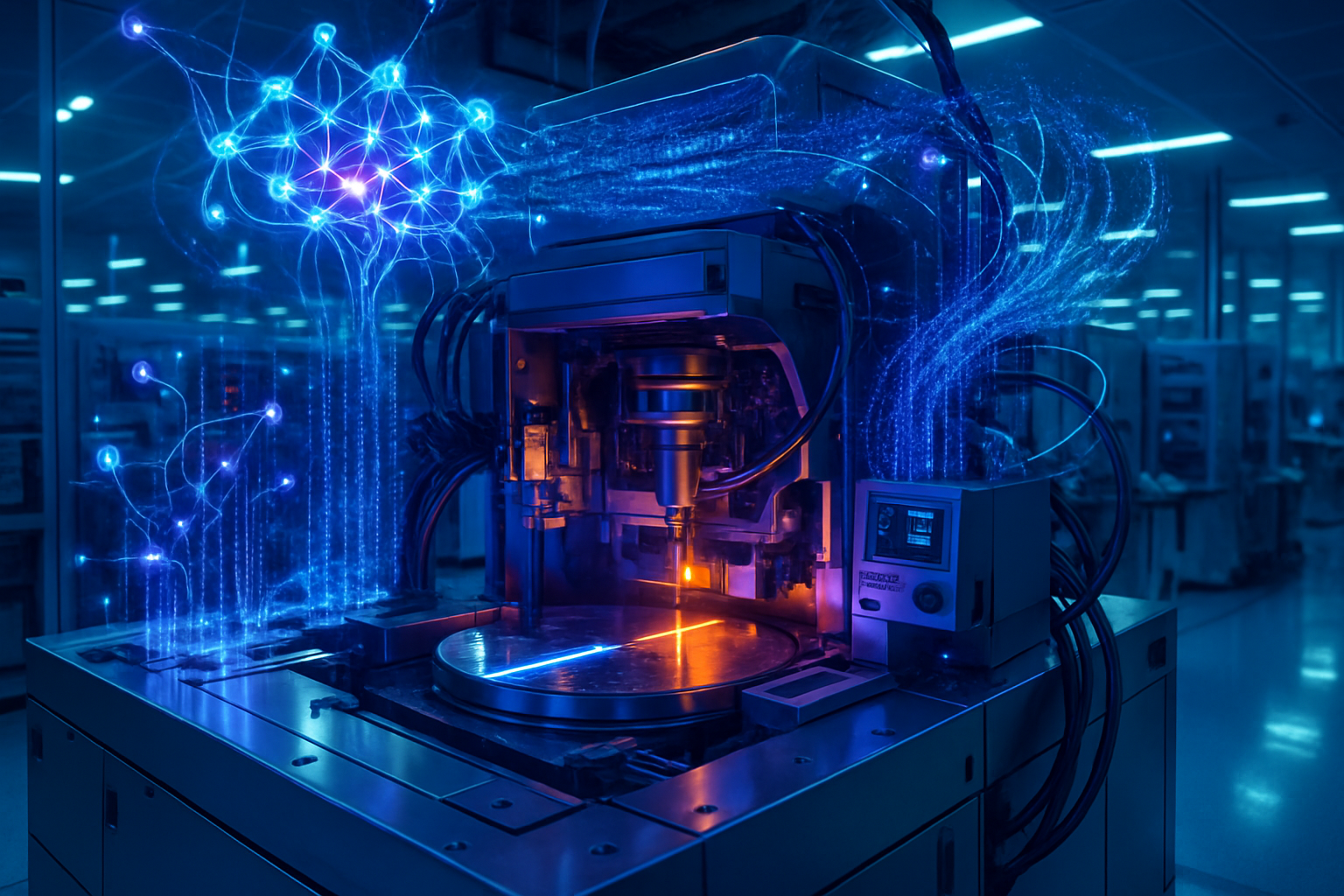
  • Edge of Innovation: How AI is Reshaping Semiconductor Design and Fueling a New Era of On-Device Intelligence

    Edge of Innovation: How AI is Reshaping Semiconductor Design and Fueling a New Era of On-Device Intelligence

    The landscape of artificial intelligence is undergoing a profound transformation, shifting from predominantly centralized cloud-based processing to a decentralized model where AI algorithms and models operate directly on local "edge" devices. This paradigm, known as Edge AI, is not merely an incremental advancement but a fundamental re-architecture of how intelligence is delivered and consumed. Its burgeoning impact is creating an unprecedented ripple effect across the semiconductor industry, dictating new design imperatives and skyrocketing demand for specialized chips optimized for real-time, on-device AI processing. This strategic pivot promises to unlock a new era of intelligent, efficient, and secure devices, fundamentally altering the fabric of technology and society.

    The immediate significance of Edge AI lies in its ability to address critical limitations of cloud-centric AI: latency, bandwidth, and privacy. By bringing computation closer to the data source, Edge AI enables instantaneous decision-making, crucial for applications where even milliseconds of delay can have severe consequences. It reduces the reliance on constant internet connectivity, conserves bandwidth, and inherently enhances data privacy and security by minimizing the transmission of sensitive information to remote servers. This decentralization of intelligence is driving a massive surge in demand for purpose-built silicon, compelling semiconductor manufacturers to innovate at an accelerated pace to meet the unique requirements of on-device AI.

    The Technical Crucible: Forging Smarter Silicon for the Edge

    The optimization of chips for on-device AI processing represents a significant departure from traditional computing paradigms, necessitating specialized architectures and meticulous engineering. Unlike general-purpose CPUs or even traditional GPUs, which were initially designed for graphics rendering, Edge AI chips are purpose-built to execute already trained AI models (inference) efficiently within stringent power and resource constraints.

    A cornerstone of this technical evolution is the proliferation of Neural Processing Units (NPUs) and other dedicated AI accelerators. These specialized processors are designed from the ground up to accelerate machine learning tasks, particularly deep learning and neural networks, by efficiently handling operations like matrix multiplication and convolution with significantly fewer instructions than a CPU. For instance, the Hailo-8 AI Accelerator delivers up to 26 Tera-Operations Per Second (TOPS) of AI performance at a mere 2.5W, achieving an impressive efficiency of approximately 10 TOPS/W. Similarly, the Hailo-10H AI Processor pushes this further to 40 TOPS. Other notable examples include Google's (NASDAQ: GOOGL) Coral Dev Board (Edge TPU), offering 4 TOPS of INT8 performance at about 2 Watts, and NVIDIA's (NASDAQ: NVDA) Jetson AGX Orin, a high-end module for robotics, delivering up to 275 TOPS of AI performance within a configurable power envelope of 15W to 60W. Qualcomm's (NASDAQ: QCOM) 5th-generation AI Engine in its Robotics RB5 Platform delivers 15 TOPS of on-device AI performance.

    These dedicated accelerators contrast sharply with previous approaches. While CPUs are versatile, they are inefficient for highly parallel AI workloads. GPUs, repurposed for AI due to their parallel processing, are suitable for intensive training but for edge inference, dedicated AI accelerators (NPUs, DPUs, ASICs) offer superior performance-per-watt, lower power consumption, and reduced latency, making them better suited for power-constrained environments. The move from cloud-centric AI, which relies on massive data centers, to Edge AI significantly reduces latency, improves data privacy, and lowers power consumption by eliminating constant data transfer. Experts from the AI research community have largely welcomed this shift, emphasizing its transformative potential for enhanced privacy, reduced latency, and the ability to run sophisticated AI models, including Large Language Models (LLMs) and diffusion models, directly on devices. The industry is strategically investing in specialized architectures, recognizing the growing importance of tailored hardware for specific AI workloads.

    Beyond NPUs, other critical technical advancements include In-Memory Computing (IMC), which integrates compute functions directly into memory to overcome the "memory wall" bottleneck, drastically reducing energy consumption and latency. Low-bit quantization and model compression techniques are also essential, reducing the precision of model parameters (e.g., from 32-bit floating-point to 8-bit or 4-bit integers) to significantly cut down memory usage and computational demands while maintaining accuracy on resource-constrained edge devices. Furthermore, heterogeneous computing architectures that combine NPUs with CPUs and GPUs are becoming standard, leveraging the strengths of each processor for different tasks.

    Corporate Chessboard: Navigating the Edge AI Revolution

    The ascendance of Edge AI is profoundly reshaping the competitive landscape for AI companies, tech giants, and startups, creating both immense opportunities and strategic imperatives. Companies that effectively adapt their semiconductor design strategies and embrace specialized hardware stand to gain significant market positioning and strategic advantages.

    Established semiconductor giants are at the forefront of this transformation. NVIDIA (NASDAQ: NVDA), a dominant force in AI GPUs, is extending its reach to the edge with platforms like Jetson. Qualcomm (NASDAQ: QCOM) is a strong player in the Edge AI semiconductor market, providing AI acceleration across mobile, IoT, automotive, and enterprise devices. Intel (NASDAQ: INTC) is making significant inroads with Core Ultra processors designed for Edge AI and its Habana Labs AI processors. AMD (NASDAQ: AMD) is also adopting a multi-pronged approach with GPUs and NPUs. Arm Holdings (NASDAQ: ARM), with its energy-efficient architecture, is increasingly powering AI workloads on edge devices, making it ideal for power-constrained applications. TSMC (Taiwan Semiconductor Manufacturing Company) (NYSE: TSM), as the leading pure-play foundry, is an indispensable player, fabricating cutting-edge AI chips for major clients.

    Tech giants like Google (NASDAQ: GOOGL), Amazon (NASDAQ: AMZN) (with its Trainium and Inferentia chips), and Microsoft (NASDAQ: MSFT) (with Azure Maia) are heavily investing in developing their own custom AI chips. This strategy provides strategic independence from third-party suppliers, optimizes their massive cloud and edge AI workloads, reduces operational costs, and allows them to offer differentiated AI services. Edge AI has become a new battleground, reflecting a shift in industry focus from cloud to edge.

    Startups are also finding fertile ground by providing highly specialized, performance-optimized solutions. Companies like Hailo, Mythic, and Graphcore are investing heavily in custom chips for on-device AI. Ambarella (NASDAQ: AMBA) focuses on all-in-one computer vision platforms. Lattice Semiconductor (NASDAQ: LSCC) provides ultra-low-power FPGAs for near-sensor AI. These agile innovators are carving out niches by offering superior performance per watt and cost-efficiency for specific AI models at the edge.

    The competitive landscape is intensifying, compelling major AI labs and tech companies to diversify their hardware supply chains. The ability to run more complex AI models on resource-constrained edge devices creates new competitive dynamics. Potential disruptions loom for existing products and services heavily reliant on cloud-based AI, as demand for real-time, local processing grows. However, a hybrid edge-cloud inferencing model is likely to emerge, where cloud platforms remain essential for large-scale model training and complex computations, while edge AI handles real-time inference. Strategic advantages include reduced latency, enhanced data privacy, conserved bandwidth, and operational efficiency, all critical for the next generation of intelligent systems.

    A Broader Canvas: Edge AI in the Grand Tapestry of AI

    Edge AI is not just a technological advancement; it's a pivotal evolutionary step in the broader AI landscape, profoundly influencing societal and economic structures. It fits into a larger trend of pervasive computing and the Internet of Things (IoT), acting as a critical enabler for truly smart environments.

    This decentralization of intelligence aligns perfectly with the growing trend of Micro AI and TinyML, which focuses on developing lightweight, hyper-efficient AI models specifically designed for resource-constrained edge devices. These miniature AI brains enable real-time data processing in smartwatches, IoT sensors, and drones without heavy cloud reliance. The convergence of Edge AI with 5G technology is also critical, enabling applications like smart cities, real-time industrial inspection, and remote health monitoring, where low-latency communication combined with on-device intelligence ensures systems react in milliseconds. Gartner predicts that by 2025, 75% of enterprise-generated data will be created and processed outside traditional data centers or the cloud, with Edge AI being a significant driver of this shift.

    The broader impacts are transformative. Edge AI is poised to create a truly intelligent and responsive physical environment, altering how humans interact with their surroundings. From healthcare (wearables for early illness detection) and smart cities (optimized traffic flow, public safety) to autonomous systems (self-driving cars, factory robots), it promises smarter, safer, and more responsive systems. Economically, the global Edge AI market is experiencing robust growth, fostering innovation and creating new business models.

    However, this widespread adoption also brings potential concerns. While enhancing privacy by local processing, Edge AI introduces new security risks due to its decentralized nature. Edge devices, often in physically accessible locations, are more susceptible to physical tampering, theft, and unauthorized access. They typically lack the advanced security features of data centers, creating a broader attack surface. Privacy concerns persist regarding the collection, storage, and potential misuse of sensitive data on edge devices. Resource constraints on edge devices limit the size and complexity of AI models, and managing and updating numerous, geographically dispersed edge devices can be complex. Ethical implications, such as algorithmic bias and accountability for autonomous decision-making, also require careful consideration.

    Comparing Edge AI to previous AI milestones reveals its significance. Unlike early AI (expert systems, symbolic AI) that relied on explicit programming, Edge AI is driven by machine learning and deep learning models. While breakthroughs in machine learning and deep learning (cloud-centric) democratized AI training, Edge AI is now democratizing AI inference, making intelligence pervasive and embedded in everyday devices, operating at the data source. It represents a maturation of AI, moving beyond solely cloud-dependent models to a hybrid ecosystem that leverages the strengths of both centralized and distributed computing.

    The Horizon Beckons: Future Trajectories of Edge AI and Semiconductors

    The journey of Edge AI and its symbiotic relationship with semiconductor design is only just beginning, with a trajectory pointing towards increasingly sophisticated and pervasive intelligence.

    In the near-term (1-3 years), we can expect wider commercial deployment of chiplet architectures and heterogeneous integration in AI accelerators, improving yields and integrating diverse functions. The rapid transition to smaller process nodes, with 3nm and 2nm technologies, will become prevalent, enabling higher transistor density crucial for complex AI models; TSMC (NYSE: TSM), for instance, anticipates high-volume production of its 2nm (N2) process node in late 2025. NPUs are set to become ubiquitous in consumer devices, including smartphones and "AI PCs," with projections indicating that AI PCs will constitute 43% of all PC shipments by the end of 2025. Qualcomm (NASDAQ: QCOM) has already launched platforms with dedicated NPUs for high-performance AI inference on PCs.

    Looking further into the long-term (3-10+ years), we anticipate the continued innovation of intelligent sensors enabling nearly every physical object to have a "digital twin" for optimized monitoring. Edge AI will deepen its integration across various sectors, enabling real-time patient monitoring in healthcare, sophisticated control in industrial automation, and highly responsive autonomous systems. Novel computing architectures, such as hybrid AI-quantum systems and specialized silicon hardware tailored for BitNet models, are on the horizon, promising to accelerate AI training and reduce operational costs. Neuromorphic computing, inspired by the human brain, will mature, offering unprecedented energy efficiency for AI tasks at the edge. A profound prediction is the continuous, symbiotic evolution where AI tools will increasingly design their own chips, accelerating development and even discovering new materials, creating a "virtuous cycle of innovation."

    Potential applications and use cases on the horizon are vast. From enhanced on-device AI in consumer electronics for personalization and real-time translation to fully autonomous vehicles relying on Edge AI for instantaneous decision-making, the possibilities are immense. Industrial automation will see predictive maintenance, real-time quality control, and optimized logistics. Healthcare will benefit from wearable devices for real-time health monitoring and faster diagnostics. Smart cities will leverage Edge AI for optimizing traffic flow and public safety. Even office tools like Microsoft (NASDAQ: MSFT) Word and Excel will integrate on-device LLMs for document summarization and anomaly detection.

    However, significant challenges remain. Resource limitations, power consumption, and thermal management for compact edge devices pose substantial hurdles. Balancing model complexity with performance on constrained hardware, efficient data management, and robust security and privacy frameworks are critical. High manufacturing costs of advanced edge AI chips and complex integration requirements can be barriers to widespread adoption, compounded by persistent supply chain vulnerabilities and a severe global talent shortage in both AI algorithms and semiconductor technology.

    Despite these challenges, experts are largely optimistic. They predict explosive market growth for AI chips, potentially reaching $1.3 trillion by 2030 and $2 trillion by 2040. There will be an intense diversification and customization of AI chips, moving away from "one size fits all" solutions towards purpose-built silicon. AI itself will become the "backbone of innovation" within the semiconductor industry, optimizing chip design, manufacturing processes, and supply chain management. The shift towards Edge AI signifies a fundamental decentralization of intelligence, creating a hybrid AI ecosystem that dynamically leverages both centralized and distributed computing strengths, with a strong focus on sustainability.

    The Intelligent Frontier: A Concluding Assessment

    The growing impact of Edge AI on semiconductor design and demand represents one of the most significant technological shifts of our time. It's a testament to the relentless pursuit of more efficient, responsive, and secure artificial intelligence.

    Key takeaways include the imperative for localized processing, driven by the need for real-time responses, reduced bandwidth, and enhanced privacy. This has catalyzed a boom in specialized AI accelerators, forcing innovation in chip design and manufacturing, with a keen focus on power, performance, and area (PPA) optimization. The immediate significance is the decentralization of intelligence, enabling new applications and experiences while driving substantial market growth.

    In AI history, Edge AI marks a pivotal moment, transitioning AI from a powerful but often remote tool to an embedded, ubiquitous intelligence that directly interacts with the physical world. It's the "hardware bedrock" upon which the next generation of AI capabilities will be built, fostering a symbiotic relationship between hardware and software advancements.

    The long-term impact will see continued specialization in AI chips, breakthroughs in advanced manufacturing (e.g., sub-2nm nodes, heterogeneous integration), and the emergence of novel computing architectures like neuromorphic and hybrid AI-quantum systems. Edge AI will foster truly pervasive intelligence, creating environments that learn and adapt, transforming industries from healthcare to transportation.

    In the coming weeks and months, watch for the wider commercial deployment of chiplet architectures, increased focus on NPUs for efficient inference, and the deepening convergence of 5G and Edge AI. The "AI chip race" will intensify, with major tech companies investing heavily in custom silicon. Furthermore, advancements in AI-driven Electronic Design Automation (EDA) tools will accelerate chip design cycles, and semiconductor manufacturers will continue to expand capacity to meet surging demand. The intelligent frontier is upon us, and its hardware foundation is being laid today.


    This content is intended for informational purposes only and represents analysis of current AI developments.

    TokenRing AI delivers enterprise-grade solutions for multi-agent AI workflow orchestration, AI-powered development tools, and seamless remote collaboration platforms.
    For more information, visit https://www.tokenring.ai/.
  • The Dawn of Hyper-Specialized AI: New Chip Architectures Redefine Performance and Efficiency

    The Dawn of Hyper-Specialized AI: New Chip Architectures Redefine Performance and Efficiency

    The artificial intelligence landscape is undergoing a profound transformation, driven by a new generation of AI-specific chip architectures that are dramatically enhancing performance and efficiency. As of October 2025, the industry is witnessing a pivotal shift away from reliance on general-purpose GPUs towards highly specialized processors, meticulously engineered to meet the escalating computational demands of advanced AI models, particularly large language models (LLMs) and generative AI. This hardware renaissance promises to unlock unprecedented capabilities, accelerate AI development, and pave the way for more sophisticated and energy-efficient intelligent systems.

    The immediate significance of these advancements is a substantial boost in both AI performance and efficiency across the board. Faster training and inference speeds, coupled with dramatic improvements in energy consumption, are not merely incremental upgrades; they are foundational changes enabling the next wave of AI innovation. By overcoming memory bottlenecks and tailoring silicon to specific AI workloads, these new architectures are making previously resource-intensive AI applications more accessible and sustainable, marking a critical inflection point in the ongoing AI supercycle.

    Unpacking the Engineering Marvels: A Deep Dive into Next-Gen AI Silicon

    The current wave of AI chip innovation is characterized by a multi-pronged approach, with hyperscalers, established GPU giants, and innovative startups pushing the boundaries of what's possible. These advancements showcase a clear trend towards specialization, high-bandwidth memory integration, and groundbreaking new computing paradigms.

    Hyperscale cloud providers are leading the charge with custom silicon designed for their specific workloads. Google's (NASDAQ: GOOGL) unveiling of Ironwood, its seventh-generation Tensor Processing Unit (TPU), stands out. Designed specifically for inference, Ironwood delivers an astounding 42.5 exaflops of performance, representing a nearly 2x improvement in energy efficiency over its predecessors and an almost 30-fold increase in power efficiency compared to the first Cloud TPU from 2018. It boasts an enhanced SparseCore, a massive 192 GB of High Bandwidth Memory (HBM) per chip (6x that of Trillium), and a dramatically improved HBM bandwidth of 7.37 TB/s. These specifications are crucial for accelerating enterprise AI applications and powering complex models like Gemini 2.5.

    Traditional GPU powerhouses are not standing still. Nvidia's (NASDAQ: NVDA) Blackwell architecture, including the B200 and the upcoming Blackwell Ultra (B300-series) expected in late 2025, is in full production. The Blackwell Ultra promises 20 petaflops and a 1.5x performance increase over the original Blackwell, specifically targeting AI reasoning workloads with 288GB of HBM3e memory. Blackwell itself offers a substantial generational leap over its predecessor, Hopper, being up to 2.5 times faster for training and up to 30 times faster for cluster inference, with 25 times better energy efficiency for certain inference tasks. Looking further ahead, Nvidia's Rubin AI platform, slated for mass production in late 2025 and general availability in early 2026, will feature an entirely new architecture, advanced HBM4 memory, and NVLink 6, further solidifying Nvidia's dominant 86% market share in 2025. Not to be outdone, AMD (NASDAQ: AMD) is rapidly advancing its Instinct MI300X and the upcoming MI350 series GPUs. The MI325X accelerator, with 288GB of HBM3E memory, was generally available in Q4 2024, while the MI350 series, expected in 2025, promises up to a 35x increase in AI inference performance. The MI450 Series AI chips are also set for deployment by Oracle Cloud Infrastructure (NYSE: ORCL) starting in Q3 2026. Intel (NASDAQ: INTC), while canceling its Falcon Shores commercial offering, is focusing on a "system-level solution at rack scale" with its successor, Jaguar Shores. For AI inference, Intel unveiled "Crescent Island" at the 2025 OCP Global Summit, a new data center GPU based on the Xe3P architecture, optimized for performance-per-watt, and featuring 160GB of LPDDR5X memory, ideal for "tokens-as-a-service" providers.

    Beyond traditional architectures, emerging computing paradigms are gaining significant traction. In-Memory Computing (IMC) chips, designed to perform computations directly within memory, are dramatically reducing data movement bottlenecks and power consumption. IBM Research (NYSE: IBM) has showcased scalable hardware with 3D analog in-memory architecture for large models and phase-change memory for compact edge-sized models, demonstrating exceptional throughput and energy efficiency for Mixture of Experts (MoE) models. Neuromorphic computing, inspired by the human brain, utilizes specialized hardware chips with interconnected neurons and synapses, offering ultra-low power consumption (up to 1000x reduction) and real-time learning. Intel's Loihi 2 and IBM's TrueNorth are leading this space, alongside startups like BrainChip (Akida Pulsar, July 2025, 500 times lower energy consumption) and Innatera Nanosystems (Pulsar, May 2025). Chinese researchers also unveiled SpikingBrain 1.0 in October 2025, claiming it to be 100 times faster and more energy-efficient than traditional systems. Photonic AI chips, which use light instead of electrons, promise extremely high bandwidth and low power consumption, with Tsinghua University's Taichi chip (April 2024) claiming 1,000 times more energy-efficiency than Nvidia's H100.

    Reshaping the AI Industry: Competitive Implications and Market Dynamics

    These advancements in AI-specific chip architectures are fundamentally reshaping the competitive landscape for AI companies, tech giants, and startups alike. The drive for specialized silicon is creating both new opportunities and significant challenges, influencing strategic advantages and market positioning.

    Hyperscalers like Google, Amazon (NASDAQ: AMZN), and Microsoft (NASDAQ: MSFT), with their deep pockets and immense AI workloads, stand to benefit significantly from their custom silicon efforts. Google's Ironwood TPU, for instance, provides a tailored, highly optimized solution for its internal AI development and Google Cloud customers, offering a distinct competitive edge in performance and cost-efficiency. This vertical integration allows them to fine-tune hardware and software, delivering superior end-to-end solutions.

    For major AI labs and tech companies, the competitive implications are profound. While Nvidia continues to dominate the AI GPU market, the rise of custom silicon from hyperscalers and the aggressive advancements from AMD pose a growing challenge. Companies that can effectively leverage these new, more efficient architectures will gain a significant advantage in model training times, inference costs, and the ability to deploy larger, more complex AI models. The focus on energy efficiency is also becoming a key differentiator, as the operational costs and environmental impact of AI grow exponentially. This could disrupt existing products or services that rely on older, less efficient hardware, pushing companies to rapidly adopt or develop their own specialized solutions.

    Startups specializing in emerging architectures like neuromorphic, photonic, and in-memory computing are poised for explosive growth. Their ability to deliver ultra-low power consumption and unprecedented efficiency for specific AI tasks opens up new markets, particularly at the edge (IoT, robotics, autonomous vehicles) where power budgets are constrained. The AI ASIC market itself is projected to reach $15 billion in 2025, indicating a strong appetite for specialized solutions. Market positioning will increasingly depend on a company's ability to offer not just raw compute power, but also highly optimized, energy-efficient, and domain-specific solutions that address the nuanced requirements of diverse AI applications.

    The Broader AI Landscape: Impacts, Concerns, and Future Trajectories

    The current evolution in AI-specific chip architectures fits squarely into the broader AI landscape as a critical enabler of the ongoing "AI supercycle." These hardware innovations are not merely making existing AI faster; they are fundamentally expanding the horizons of what AI can achieve, paving the way for the next generation of intelligent systems that are more powerful, pervasive, and sustainable.

    The impacts are wide-ranging. Dramatically faster training times mean AI researchers can iterate on models more rapidly, accelerating breakthroughs. Improved inference efficiency allows for the deployment of sophisticated AI in real-time applications, from autonomous vehicles to personalized medical diagnostics, with lower latency and reduced operational costs. The significant strides in energy efficiency, particularly from neuromorphic and in-memory computing, are crucial for addressing the environmental concerns associated with the burgeoning energy demands of large-scale AI. This "hardware renaissance" is comparable to previous AI milestones, such as the advent of GPU acceleration for deep learning, but with an added layer of specialization that promises even greater gains.

    However, this rapid advancement also brings potential concerns. The high development costs associated with designing and manufacturing cutting-edge chips could further concentrate power among a few large corporations. There's also the potential for hardware fragmentation, where a diverse ecosystem of specialized chips might complicate software development and interoperability. Companies and developers will need to invest heavily in adapting their software stacks to leverage the unique capabilities of these new architectures, posing a challenge for smaller players. Furthermore, the increasing complexity of these chips demands specialized talent in chip design, AI engineering, and systems integration, creating a talent gap that needs to be addressed.

    The Road Ahead: Anticipating What Comes Next

    Looking ahead, the trajectory of AI-specific chip architectures points towards continued innovation and further specialization, with profound implications for future AI applications. Near-term developments will see the refinement and wider adoption of current generation technologies. Nvidia's Rubin platform, AMD's MI350/MI450 series, and Intel's Jaguar Shores will continue to push the boundaries of traditional accelerator performance, while HBM4 memory will become standard, enabling even larger and more complex models.

    In the long term, we can expect the maturation and broader commercialization of emerging paradigms like neuromorphic, photonic, and in-memory computing. As these technologies scale and become more accessible, they will unlock entirely new classes of AI applications, particularly in areas requiring ultra-low power, real-time adaptability, and on-device learning. There will also be a greater integration of AI accelerators directly into CPUs, creating more unified and efficient computing platforms.

    Potential applications on the horizon include highly sophisticated multimodal AI systems that can seamlessly understand and generate information across various modalities (text, image, audio, video), truly autonomous systems capable of complex decision-making in dynamic environments, and ubiquitous edge AI that brings intelligent processing closer to the data source. Experts predict a future where AI is not just faster, but also more pervasive, personalized, and environmentally sustainable, driven by these hardware advancements. The challenges, however, will involve scaling manufacturing to meet demand, ensuring interoperability across diverse hardware ecosystems, and developing robust software frameworks that can fully exploit the unique capabilities of each architecture.

    A New Era of AI Computing: The Enduring Impact

    In summary, the latest advancements in AI-specific chip architectures represent a critical inflection point in the history of artificial intelligence. The shift towards hyper-specialized silicon, ranging from hyperscaler custom TPUs to groundbreaking neuromorphic and photonic chips, is fundamentally redefining the performance, efficiency, and capabilities of AI applications. Key takeaways include the dramatic improvements in training and inference speeds, unprecedented energy efficiency gains, and the strategic importance of overcoming memory bottlenecks through innovations like HBM4 and in-memory computing.

    This development's significance in AI history cannot be overstated; it marks a transition from a general-purpose computing era to one where hardware is meticulously crafted for the unique demands of AI. This specialization is not just about making existing AI faster; it's about enabling previously impossible applications and democratizing access to powerful AI by making it more efficient and sustainable. The long-term impact will be a world where AI is seamlessly integrated into every facet of technology and society, from the cloud to the edge, driving innovation across all industries.

    As we move forward, what to watch for in the coming weeks and months includes the commercial success and widespread adoption of these new architectures, the continued evolution of Nvidia, AMD, and Google's next-generation chips, and the critical development of software ecosystems that can fully harness the power of this diverse and rapidly advancing hardware landscape. The race for AI supremacy will increasingly be fought on the silicon frontier.


    This content is intended for informational purposes only and represents analysis of current AI developments.

    TokenRing AI delivers enterprise-grade solutions for multi-agent AI workflow orchestration, AI-powered development tools, and seamless remote collaboration platforms.
    For more information, visit https://www.tokenring.ai/.

  • Samsung Ignites India’s AI Ambition with Strategic Chip and Memory R&D Surge

    Samsung Ignites India’s AI Ambition with Strategic Chip and Memory R&D Surge

    Samsung's strategic expansion in India is underpinned by a robust technical agenda, focusing on cutting-edge advancements in chip design and memory solutions crucial for the AI era. Samsung Semiconductor India Research (SSIR) is now a tripartite powerhouse, encompassing R&D across memory, System LSI (custom chips/System-on-Chip or SoC), and foundry technologies. This comprehensive approach allows Samsung to develop integrated hardware solutions, optimizing performance and efficiency for diverse AI workloads.

    The company's aggressive hiring drive in India targets highly specialized roles, including System-on-Chip (SoC) design engineers, memory design engineers (with a strong emphasis on High Bandwidth Memory, or HBM, for AI servers), SSD firmware developers, and graphics driver engineers. These roles are specifically geared towards advancing next-generation technologies such as AI computation optimization, seamless system semiconductor integration, and sophisticated advanced memory design. This focus on specialized talent underscores Samsung's commitment to pushing the boundaries of AI hardware.

    Technically, Samsung is at the forefront of advanced process nodes. The company anticipates mass-producing its second-generation 3-nanometer chips using Gate-All-Around (GAA) technology in the latter half of 2024, a significant leap in semiconductor manufacturing. Looking further ahead, Samsung aims to implement its 2-nanometer chipmaking process for high-performance computing chips by 2027. Furthermore, in June 2024, Samsung unveiled a "one-stop shop" solution for clients, integrating its memory chip, foundry, and chip packaging services. This streamlined process is designed to accelerate AI chip production by approximately 20%, offering a compelling value proposition to AI developers seeking faster time-to-market for their hardware. The emphasis on HBM, particularly HBM3E, is critical, as these high-performance memory chips are indispensable for feeding the massive data requirements of large language models and other complex AI applications.

    Initial reactions from the AI research community and industry experts highlight the strategic brilliance of Samsung's move. Leveraging India's vast pool of over 150,000 skilled chip design engineers, Samsung is transforming India's image from a cost-effective delivery center to a "capability-led" strategic design hub. This not only bolsters Samsung's global R&D capabilities but also aligns perfectly with India's "Semicon India" initiative, aiming to cultivate a robust domestic semiconductor ecosystem. The synergy between Samsung's global ambition and India's national strategic goals is expected to yield significant technological breakthroughs and foster a vibrant local innovation landscape.

    Reshaping the AI Hardware Battleground: Competitive Implications

    Samsung's expanded AI chip and memory R&D in India is poised to intensify competition across the entire AI semiconductor value chain, affecting market leaders and challengers alike. As a vertically integrated giant with strengths in memory manufacturing, foundry services, and chip design (System LSI), Samsung (KRX: 005930) is uniquely positioned to offer optimized "full-stack" solutions for AI chips, potentially leading to greater efficiency and customizability.

    For NVIDIA (NASDAQ: NVDA), the current undisputed leader in AI GPUs, Samsung's enhanced AI chip design capabilities, particularly in custom silicon and specialized AI accelerators, could introduce more direct competition. While NVIDIA's CUDA ecosystem remains a formidable moat, Samsung's full-stack approach might enable it to offer highly optimized and potentially more cost-effective solutions for specific AI inference workloads or on-device AI applications, challenging NVIDIA's dominance in certain segments.

    Intel (NASDAQ: INTC), actively striving to regain market share in AI, will face heightened rivalry from Samsung's strengthened R&D. Samsung's ability to develop advanced AI accelerators and its foundry capabilities directly compete with Intel's efforts in both chip design and manufacturing services. The race for top engineering talent, particularly in SoC design and AI computation optimization, is also expected to escalate between the two giants.

    In the foundry space, TSMC (NYSE: TSM), the world's largest dedicated chip foundry, will encounter increased competition from Samsung's expanding foundry R&D in India. Samsung's aggressive push to enhance its process technology (e.g., 3nm GAA, 2nm by 2027) and packaging solutions aims to offer a strong alternative to TSMC for advanced AI chip fabrication, as evidenced by its existing contracts to mass-produce AI chips for companies like Tesla.

    For memory powerhouses like SK Hynix (KRX: 000660) and Micron (NASDAQ: MU), both dominant players in High Bandwidth Memory (HBM), Samsung's substantial expansion in memory R&D in India, including HBM, directly intensifies competition. Samsung's efforts to develop advanced HBM and seamlessly integrate it with its AI chip designs and foundry services could challenge their market leadership and impact HBM pricing and market share dynamics.

    AMD (NASDAQ: AMD), a formidable challenger in the AI chip market with its Instinct MI300X series, could also face increased competition. If Samsung develops competitive AI GPUs or specialized AI accelerators, it could directly vie for contracts with major AI labs and cloud providers. Interestingly, Samsung is also a primary supplier of HBM4 for AMD's MI450 accelerator, illustrating a complex dynamic of both competition and interdependence. Major AI labs and tech companies are increasingly seeking custom AI silicon, and Samsung's comprehensive capabilities make it an attractive "full-stack" partner, offering integrated, tailor-made solutions that could provide cost efficiencies or performance advantages, ultimately benefiting the broader AI ecosystem through diversified supply options.

    Broader Strokes: Samsung's Impact on the Global AI Canvas

    Samsung's expanded AI chip and memory R&D in India is not merely a corporate strategy; it's a significant inflection point with profound implications for the global AI landscape, semiconductor supply chain, and India's rapidly ascending tech sector. This move aligns with a broader industry trend towards "AI Phones" and pervasive on-device AI, where AI becomes the primary user interface, integrating seamlessly with applications and services. Samsung's focus on developing localized AI features, particularly for Indian languages, underscores a commitment to personalization and catering to diverse global user bases, recognizing India's high AI adoption rate.

    The initiative directly addresses the escalating demand for advanced semiconductor hardware driven by increasingly complex and larger AI models. By focusing on next-generation technologies like SoC design, HBM, and advanced memory, Samsung (KRX: 005930) is actively shaping the future of AI processing, particularly for edge computing and ambient intelligence applications where AI workloads shift from centralized data centers to devices. This decentralization of AI processing demands high-performance, low-latency, and power-efficient semiconductors, areas where Samsung's R&D in India is expected to make significant contributions.

    For the global semiconductor supply chain, Samsung's investment signifies a crucial step towards diversification and resilience. By transforming SSIR into a core global design stronghold for AI semiconductors, Samsung is reducing over-reliance on a few geographical hubs, a critical move in light of recent geopolitical tensions and supply chain vulnerabilities. This elevates India's role in the global semiconductor value chain, attracting further foreign direct investment and fostering a more robust, distributed ecosystem. This aligns perfectly with India's "Semicon India" initiative, which aims to establish a domestic semiconductor manufacturing and design ecosystem, projecting the Indian chip market to reach an impressive $100 billion by 2030.

    While largely positive, potential concerns include intensified talent competition for skilled AI and semiconductor engineers in India, potentially exacerbating existing skills gaps. Additionally, the global semiconductor industry remains susceptible to geopolitical factors, such as trade restrictions on AI chip sales, which could introduce uncertainties despite Samsung's diversification efforts. However, this expansion can be compared to previous AI milestones, such as the internet revolution and the transition from feature phones to smartphones. Samsung executives describe the current shift as the "next big revolution," with AI poised to transform all aspects of technology, making it a commercialized product accessible to a mass market, much like previous technological paradigm shifts.

    The Road Ahead: Anticipating Future AI Horizons

    Samsung's expanded AI chip and memory R&D in India sets the stage for a wave of transformative developments in the near and long term. In the immediate future (1-3 years), consumers can expect significant enhancements across Samsung's product portfolio. Flagship devices like the upcoming Galaxy S25 Ultra, Galaxy Z Fold7, and Galaxy Z Flip7 are poised to integrate advanced AI tools such as Live Translate, Note Assist, Circle to Search, AI wallpaper, and an audio eraser, providing seamless and intuitive user experiences. A key focus will be on India-centric AI localization, with features supporting nine Indian languages in Galaxy AI and tailored functionalities for home appliances designed for local conditions, such as "Stain Wash" and "Customised Cooling." Samsung (KRX: 005930) aims for AI-powered products to constitute 70% of its appliance sales by the end of 2025, further expanding the SmartThings ecosystem for automated routines, energy efficiency, and personalized experiences.

    Looking further ahead (3-10+ years), Samsung predicts a fundamental shift from traditional smartphones to "AI phones" that leverage a hybrid approach of on-device and cloud-based AI models, with India playing a critical role in the development of cutting-edge chips, including advanced process nodes like 2-nanometer technology. Pervasive AI integration will extend beyond current devices, foundational for future advancements like 6G communication and deeply embedding AI across Samsung's entire product portfolio, from wellness and healthcare to smart urban environments. Expert predictions widely anticipate India solidifying its position as a key hub for semiconductor design in the AI era, with the Indian semiconductor market projected to reach USD 100 billion by 2030, strongly supported by government initiatives like the "Semicon India" program.

    However, several challenges need to be addressed. The development of advanced AI chips demands significant capital investment and a highly specialized workforce, despite India's large talent pool. India's current lack of large-scale semiconductor fabrication units necessitates reliance on foreign foundries, creating a dependency on imported chips and AI hardware. Geopolitical factors, such as export restrictions on AI chips, could also hinder India's AI development by limiting access to crucial GPUs. Addressing these challenges will require continuous investment in education, infrastructure, and strategic international partnerships to ensure India can fully capitalize on its growing AI and semiconductor prowess.

    A New Chapter in AI: Concluding Thoughts

    Samsung's (KRX: 005930) strategic expansion of its AI chip and memory R&D in India marks a pivotal moment in the global artificial intelligence landscape. This comprehensive initiative, transforming Samsung Semiconductor India Research (SSIR) into a core global design stronghold, underscores Samsung's long-term commitment to leading the AI revolution. The key takeaways are clear: Samsung is leveraging India's vast engineering talent to accelerate the development of next-generation AI hardware, from advanced process nodes like 3nm GAA and future 2nm chips to high-bandwidth memory (HBM) solutions. This move not only bolsters Samsung's competitive edge against rivals like NVIDIA (NASDAQ: NVDA), Intel (NASDAQ: INTC), TSMC (NYSE: TSM), SK Hynix (KRX: 000660), Micron (NASDAQ: MU), and AMD (NASDAQ: AMD) but also significantly elevates India's standing as a global hub for high-value semiconductor design and innovation.

    The significance of this development in AI history cannot be overstated. It represents a strategic decentralization of advanced R&D, contributing to a more resilient global semiconductor supply chain and fostering a vibrant domestic tech ecosystem in India. The long-term impact will be felt across consumer electronics, smart home technologies, healthcare, and beyond, as AI becomes increasingly pervasive and personalized. Samsung's vision of "AI Phones" and a hybrid AI approach, coupled with a focus on localized AI solutions, promises to reshape user interaction with technology fundamentally.

    In the coming weeks and months, industry watchers should keenly observe Samsung's recruitment progress in India, specific technical breakthroughs emerging from SSIR, and further partnerships or supply agreements for its advanced AI chips and memory. The interplay between Samsung's aggressive R&D and India's "Semicon India" initiative will be crucial in determining the pace and scale of India's emergence as a global AI and semiconductor powerhouse. This strategic investment is not just about building better chips; it's about building the future of AI, with India at its heart.


    This content is intended for informational purposes only and represents analysis of current AI developments.

    TokenRing AI delivers enterprise-grade solutions for multi-agent AI workflow orchestration, AI-powered development tools, and seamless remote collaboration platforms.
    For more information, visit https://www.tokenring.ai/.

  • TSMC: The Indispensable Architect of the AI Revolution – An Investment Outlook

    TSMC: The Indispensable Architect of the AI Revolution – An Investment Outlook

    The Taiwan Semiconductor Manufacturing Company (NYSE: TSM), or TSMC, stands as an undisputed titan in the global semiconductor industry, now finding itself at the epicenter of an unprecedented investment surge driven by the accelerating artificial intelligence (AI) boom. As the world's largest dedicated chip foundry, TSMC's technological prowess and strategic positioning have made it the foundational enabler for virtually every major AI advancement, solidifying its indispensable role in manufacturing the advanced processors that power the AI revolution. Its stock has become a focal point for investors, reflecting not just its current market dominance but also the immense future prospects tied to the sustained growth of AI.

    The immediate significance of the AI boom for TSMC's stock performance is profoundly positive. The company has reported record-breaking financial results, with net profit soaring 39.1% year-on-year in Q3 2025 to NT$452.30 billion (US$14.75 billion), significantly surpassing market expectations. Concurrently, its third-quarter revenue increased by 30.3% year-on-year to NT$989.92 billion (approximately US$33.10 billion). This robust performance prompted TSMC to raise its full-year 2025 revenue growth outlook to the mid-30% range in US dollar terms, underscoring the strengthening conviction in the "AI megatrend." Analysts are maintaining strong "Buy" recommendations, anticipating further upside potential as the world's reliance on AI chips intensifies.

    The Microscopic Engine of Macro AI: TSMC's Technical Edge

    TSMC's technological leadership is rooted in its continuous innovation across advanced process nodes and sophisticated packaging solutions, which are critical for developing high-performance and power-efficient AI accelerators. The company's "nanometer" designations (e.g., 5nm, 3nm, 2nm) represent generations of improved silicon semiconductor chips, offering increased transistor density, speed, and reduced power consumption.

    The 5nm process (N5, N5P, N4P, N4X, N4C), in volume production since 2020, offers 1.8x the transistor density of its 7nm predecessor and delivers a 15% speed improvement or 30% lower power consumption. This allows chip designers to integrate a vast number of transistors into a smaller area, crucial for the complex neural networks and parallel processing demanded by AI workloads. Moving forward, the 3nm process (N3, N3E, N3P, N3X, N3C, N3A), which entered high-volume production in 2022, provides a 1.6x higher logic transistor density and 25-30% lower power consumption compared to 5nm. This node is pivotal for companies like NVIDIA (NASDAQ: NVDA), Advanced Micro Devices (NASDAQ: AMD), and Apple (NASDAQ: AAPL) to create AI chips that process data faster and more efficiently.

    The upcoming 2nm process (N2), slated for mass production in late 2025, represents a significant leap, transitioning from FinFET to Gate-All-Around (GAA) nanosheet transistors. This shift promises a 1.15x increase in transistor density and a 15% performance improvement or 25-30% power reduction compared to 3nm. This next-generation node is expected to be a game-changer for future AI accelerators, with major customers from the high-performance computing (HPC) and AI sectors, including hyperscalers like Google (NASDAQ: GOOGL) and Amazon (NASDAQ: AMZN), lining up for capacity.

    Beyond manufacturing, TSMC's advanced packaging technologies, particularly CoWoS (Chip-on-Wafer-on-Substrate), are indispensable for modern AI chips. CoWoS is a 2.5D wafer-level multi-chip packaging technology that integrates multiple dies (logic, memory) side-by-side on a silicon interposer, achieving better interconnect density and performance than traditional packaging. It is crucial for integrating High Bandwidth Memory (HBM) stacks with logic dies, which is essential for memory-bound AI workloads. TSMC's variants like CoWoS-S, CoWoS-R, and the latest CoWoS-L (emerging as the standard for next-gen AI accelerators) enable lower latency, higher bandwidth, and more power-efficient packaging. TSMC is currently the world's sole provider capable of delivering a complete end-to-end CoWoS solution with high yields, distinguishing it significantly from competitors like Samsung and Intel (NASDAQ: INTC). The AI research community and industry experts widely acknowledge TSMC's technological leadership as fundamental, with OpenAI's CEO, Sam Altman, explicitly stating, "I would like TSMC to just build more capacity," highlighting its critical role.

    Fueling the AI Giants: Impact on Companies and Competitive Landscape

    TSMC's advanced manufacturing and packaging capabilities are not merely a service; they are the fundamental enabler of the AI revolution, profoundly impacting major AI companies, tech giants, and nascent startups alike. Its technological leadership ensures that the most powerful and energy-efficient AI chips can be designed and brought to market, shaping the competitive landscape and market positioning of key players.

    NVIDIA, a cornerstone client, heavily relies on TSMC for manufacturing its cutting-edge GPUs, including the H100, Blackwell, and future architectures. CoWoS packaging is crucial for integrating high-bandwidth memory in these GPUs, enabling unprecedented compute density for large-scale AI training and inference. Increased confidence in TSMC's chip supply directly translates to increased potential revenue and market share for NVIDIA's GPU accelerators, solidifying its competitive moat. Similarly, AMD utilizes TSMC's advanced packaging and leading-edge nodes for its next-generation data center GPUs (MI300 series) and EPYC CPUs, positioning itself as a strong challenger in the High-Performance Computing (HPC) market. Apple leverages TSMC's 3nm process for its M4 and M5 chips, which power on-device AI, and has reportedly secured significant 2nm capacity for future chips.

    Hyperscale cloud providers such as Google (NASDAQ: GOOGL), Amazon (NASDAQ: AMZN), Meta Platforms (NASDAQ: META), and Microsoft (NASDAQ: MSFT) are increasingly designing custom AI silicon (ASICs) to optimize performance for their specific workloads, relying almost exclusively on TSMC for manufacturing. OpenAI is strategically partnering with TSMC to develop its own in-house AI chips, leveraging TSMC's advanced A16 process to meet the demanding requirements of AI workloads, aiming to reduce reliance on third-party chips and optimize designs for inference. This ensures more stable and potentially increased availability of critical chips for their vast AI infrastructures. TSMC's comprehensive AI chip manufacturing services, coupled with its willingness to collaborate with innovative startups, provide a competitive edge by allowing TSMC to gain early experience in producing cutting-edge AI chips. The market positioning advantage gained from access to TSMC's cutting-edge process nodes and advanced packaging is immense, enabling the development of the most powerful AI systems and directly accelerating AI innovation.

    The Wider Significance: A New Era of Hardware-Driven AI

    TSMC's role extends far beyond a mere supplier; it is an indispensable architect in the broader AI landscape and global technology trends. Its significance stems from its near-monopoly in advanced semiconductor manufacturing, which forms the bedrock for modern AI innovation, yet this dominance also introduces concerns related to supply chain concentration and geopolitical risks. TSMC's contributions can be seen as a unique inflection point in tech history, emphasizing hardware as a strategic differentiator.

    The company's advanced nodes and packaging solutions are directly enabling the current AI revolution by facilitating the creation of powerful, energy-efficient chips essential for training and deploying complex machine learning algorithms. Major tech giants rely almost exclusively on TSMC, cementing its role as the foundational hardware provider for generative AI and large language models. This technical prowess directly accelerates the pace of AI innovation.

    However, TSMC's near-monopoly, holding over 90% of the most advanced chips, creates significant concerns. This concentration forms high barriers to entry and fosters a centralized AI hardware ecosystem. An over-reliance on a single foundry, particularly one located in a geopolitically sensitive region like Taiwan, poses a vulnerability to the global supply chain, susceptible to natural disasters, trade blockades, or conflicts. The ongoing US-China trade conflict further exacerbates these risks, with US export controls impacting Chinese AI chip firms' access to TSMC's advanced nodes.

    In response to these geopolitical pressures, TSMC is actively diversifying its manufacturing footprint beyond Taiwan, with significant investments in the US (Arizona), Japan, and planned facilities in Germany. While these efforts aim to mitigate risks and enhance global supply chain resilience, they come with higher production costs. TSMC's contribution to the current AI era is comparable in importance to previous algorithmic milestones, but with a unique emphasis on the physical hardware foundation. The company's pioneering of the pure-play foundry business model in 1987 fundamentally reshaped the semiconductor industry, providing the necessary infrastructure for fabless companies to innovate at an unprecedented pace, directly fueling the rise of modern computing and subsequently, AI.

    The Road Ahead: Future Developments and Enduring Challenges

    TSMC's roadmap for advanced manufacturing nodes is critical for the performance and efficiency of future AI chips, outlining ambitious near-term and long-term developments. The company is set to launch its 2nm process node later in 2025, marking a significant transition to gate-all-around (GAA) nanosheet transistors, promising substantial improvements in power consumption and speed. Following this, the 1.6nm (A16) node is scheduled for release in 2026, offering a further 15-20% drop in energy usage, particularly beneficial for power-intensive HPC applications in data centers. Looking further ahead, the 1.4nm (A14) process is expected to enter production in 2028, with projections of up to 15% faster speeds or 30% lower power consumption compared to N2.

    In advanced packaging, TSMC is aggressively expanding its CoWoS capacity, aiming to quadruple output by the end of 2025 and reach 130,000 wafers per month by 2026. Future CoWoS variants like CoWoS-L are emerging as the standard for next-generation AI accelerators, accommodating larger chiplets and more HBM stacks. TSMC's advanced 3D stacking technology, SoIC (System-on-Integrated-Chips), is planned for mass production in 2025, utilizing hybrid bonding for ultra-high-density vertical integration. These technological advancements will underpin a vast array of future AI applications, from next-generation AI accelerators and generative AI to sophisticated edge AI, autonomous driving, and smart devices.

    Despite its strong position, TSMC confronts several significant challenges. The unprecedented demand for AI chips continues to strain its advanced manufacturing and packaging capabilities, leading to capacity constraints. The escalating cost of building and equipping modern fabs, coupled with the immense R&D investment required for each new node, is a continuous financial challenge. Maintaining high and consistent yield rates for cutting-edge nodes like 2nm and beyond also remains a technical hurdle. Geopolitical risks, particularly the concentration of advanced fabs in Taiwan, remain a primary concern, driving TSMC's costly global diversification efforts in the US, Japan, and Germany. The exponential increase in power consumption by AI chips also poses significant energy efficiency and sustainability challenges.

    Industry experts overwhelmingly view TSMC as an indispensable player, the "undisputed titan" and "fundamental engine powering the AI revolution." They predict continued explosive growth, with AI accelerator revenue expected to double in 2025 and achieve a mid-40% compound annual growth rate through 2029. TSMC's technological leadership and manufacturing excellence are seen as providing a dependable roadmap for customer innovations, dictating the pace of technological progress in AI.

    A Comprehensive Wrap-Up: The Enduring Significance of TSMC

    TSMC's investment outlook, propelled by the AI boom, is exceptionally robust, cementing its status as a critical enabler of the global AI revolution. The company's undisputed market dominance, stellar financial performance, and relentless pursuit of technological advancement underscore its pivotal role. Key takeaways include record-breaking profits and revenue, AI as the primary growth driver, optimistic future forecasts, and substantial capital expenditures to meet burgeoning demand. TSMC's leadership in advanced process nodes (3nm, 2nm, A16) and sophisticated packaging (CoWoS, SoIC) is not merely an advantage; it is the fundamental hardware foundation upon which modern AI is built.

    In AI history, TSMC's contribution is unique. While previous AI milestones often centered on algorithmic breakthroughs, the current "AI supercycle" is fundamentally hardware-driven, making TSMC's ability to mass-produce powerful, energy-efficient chips absolutely indispensable. The company's pioneering pure-play foundry model transformed the semiconductor industry, enabling the fabless revolution and, by extension, the rapid proliferation of AI innovation. TSMC is not just participating in the AI revolution; it is architecting its very foundation.

    The long-term impact on the tech industry and society will be profound. TSMC's centralized AI hardware ecosystem accelerates hardware obsolescence and dictates the pace of technological progress. Its concentration in Taiwan creates geopolitical vulnerabilities, making it a central player in the "chip war" and driving global manufacturing diversification efforts. Despite these challenges, TSMC's sustained growth acts as a powerful catalyst for innovation and investment across the entire tech ecosystem, with the global AI chip market projected to contribute over $15 trillion to the global economy by 2030.

    In the coming weeks and months, investors and industry observers should closely watch several key developments. The high-volume production ramp-up of the 2nm process node in late 2025 will be a critical milestone, indicating TSMC's continued technological leadership. Further advancements and capacity expansion in advanced packaging technologies like CoWoS and SoIC will be crucial for integrating next-generation AI chips. The progress of TSMC's global fab construction in the US, Japan, and Germany will signal its success in mitigating geopolitical risks and diversifying its supply chain. The evolving dynamics of US-China trade relations and new tariffs will also directly impact TSMC's operational environment. Finally, continued vigilance on AI chip orders from key clients like NVIDIA, Apple, and AMD will serve as a bellwether for sustained AI demand and TSMC's enduring financial health. TSMC remains an essential watch for anyone invested in the future of artificial intelligence.


    This content is intended for informational purposes only and represents analysis of current AI developments.

    TokenRing AI delivers enterprise-grade solutions for multi-agent AI workflow orchestration, AI-powered development tools, and seamless remote collaboration platforms.
    For more information, visit https://www.tokenring.ai/.