
Tag: AI Chips

  • South Korea’s “Value-Up” Gambit: Fueling the AI Chip Revolution and Reshaping Global Tech Investment

    South Korea’s “Value-Up” Gambit: Fueling the AI Chip Revolution and Reshaping Global Tech Investment

    South Korea is embarking on an ambitious dual strategy to supercharge its economy and cement its leadership in the global technology landscape. At the heart of this initiative are the "Corporate Value-Up Program," designed to boost the valuation of Korean companies, and an unprecedented surge in direct investment targeting the semiconductor industry. This concerted effort is poised to significantly impact the trajectory of artificial intelligence development, particularly in the crucial realm of AI chip production, promising to accelerate innovation and reshape competitive dynamics on a global scale.

    The immediate significance of these policies lies in their potential to unleash a torrent of capital into the high-tech sector. By addressing the long-standing "Korea Discount" through improved corporate governance and shareholder returns, the "Value-Up Program" aims to make Korean companies more attractive to both domestic and international investors. Simultaneously, direct government funding, reaching tens of billions of dollars, is specifically funneling resources into semiconductor manufacturing and AI research, ensuring that the critical hardware underpinning the AI revolution sees accelerated development and production within South Korea's borders.

    A New Era of Semiconductor Investment: Strategic Shifts and Expert Acclaim

    South Korea's current semiconductor investment strategies mark a profound departure from previous approaches, characterized by a massive increase in direct funding, comprehensive ecosystem support, and a laser focus on AI semiconductors and value creation. Historically, the government often played a facilitating role for foreign investment and technology transfer. Today, it has adopted a proactive stance, committing over $23 billion in support programs, including low-interest loans and a dedicated ecosystem fund for fabless firms and equipment manufacturers. This includes a staggering $450 billion investment plan by 2030 to build a world-class semiconductor supply chain, underpinned by substantial tax deductions for R&D and facility investments.

    This aggressive pivot is not just about expanding memory chip production, an area where South Korean giants like Samsung Electronics (KRX: 005930) and SK Hynix (KRX: 000660) already dominate. The new strategy actively pushes into non-memory (system) semiconductors, fabless design, and explicitly targets AI semiconductors, with an additional $1.01 billion dedicated to supporting domestic AI semiconductor firms. Projects are underway to optimize domestic AI semiconductor designs and integrate them with AI model development, fostering an integrated demonstration ecosystem. This holistic approach aims to cultivate a resilient domestic AI hardware ecosystem, reducing reliance on foreign suppliers and fostering "AI sovereignty."

    Initial reactions from the global AI research community and industry experts have been overwhelmingly positive. Analysts foresee the beginning of an "AI-driven semiconductor supercycle," a long-term growth phase fueled by the insatiable demand for AI-specific hardware. South Korea, with its leading-edge firms, is recognized as being at the "epicenter" of this expansion. Experts particularly highlight the criticality of High-Bandwidth Memory (HBM) chips, where Korean companies are global leaders, for powering advanced AI accelerators. While acknowledging NVIDIA's (NASDAQ: NVDA) market dominance, experts believe Korea's strategic investments will accelerate innovation, create domestic competitiveness, and forge new value chains, though they also stress the need for an integrated ecosystem and swift legislative action like the "Special Act on Semiconductors."

    Reshaping the AI Company Landscape: Beneficiaries and Competitive Shifts

    South Korea's bolstered semiconductor and AI policies are creating a highly favorable environment for a diverse array of AI companies, from established domestic giants to nimble startups, and even international players. Unsurprisingly, Samsung Electronics (KRX: 005930) and SK Hynix (KRX: 000660) stand to benefit most significantly. These two powerhouses are at the forefront of HBM production, a critical component for AI servers, and their market capitalization has soared in response to booming AI demand. Both are aggressively investing in next-generation memory chips and AI-driven processors, with Samsung recently gaining approval to supply NVIDIA with advanced HBM chips. The "Value-Up Program" is also expected to further boost their market value by enhancing corporate governance and shareholder returns.

    Beyond the giants, a new wave of Korean AI startups specializing in AI-specific chips, particularly Neural Processing Units (NPUs), are receiving substantial government support and funding. Rebellions, an AI semiconductor startup, recently secured approximately $247 million in Series C funding, making it one of Korea's largest unlisted startup investments. Its merger with SK Hynix-backed Sapeon created South Korea's first AI chip unicorn, valued at 1.5 trillion won. Other notable players include FuriosaAI, whose "Warboy" chip reportedly outperforms NVIDIA's T4 in certain AI inference tasks, and DeepX, preparing for mass production of its DX-M1 edge AI chip. These firms are poised to challenge established global players in specialized AI chip design.

    The competitive implications for major AI labs and tech companies are substantial. Global AI infrastructure providers like NVIDIA (NASDAQ: NVDA) and AMD (NASDAQ: AMD), which rely heavily on advanced memory chips, will find their supply chains increasingly intertwined with South Korea's capabilities. OpenAI, the developer of ChatGPT, has already forged preliminary agreements with Samsung Electronics and SK Hynix for advanced memory chips for its "Stargate Project." Hyperscalers and cloud providers such as Microsoft (NASDAQ: MSFT), Google (NASDAQ: GOOGL), and Amazon Web Services (NASDAQ: AMZN) will benefit from the increased availability and technological advancements of Korean memory chips for their data centers and AI operations. This strategic reliance on Korean supply will necessitate robust supply chain diversification to mitigate geopolitical risks, especially given the complexities of US export controls impacting Korean firms' operations in China.

    Wider Significance: A National Pivot in a Global AI Race

    South Korea's integrated AI and semiconductor strategy fits squarely into the broader global trend of nations vying for technological supremacy in the AI era. With the global AI market projected to reach $1.81 trillion by 2030, and generative AI redefining industries, nations are increasingly investing in national AI infrastructure and fostering domestic ecosystems. South Korea's ambition to become one of the top three global AI powerhouses by 2030, backed by a planned 3-gigawatt AI data center capacity, positions it as a critical hub for AI infrastructure.

    The wider impacts on the global tech industry are multifaceted. South Korea's reinforced position in memory and advanced logic chips enhances the stability and innovation of the global AI hardware supply chain, providing crucial HBM for AI accelerators worldwide. The "Value-Up Program" could also serve as a governance precedent, inspiring similar corporate reforms in other emerging markets. However, potential concerns loom large. Geopolitically, South Korea navigates the delicate balance of deepening alignment with the US while maintaining significant trade ties with China. US export controls on advanced semiconductors to China directly impact Korean firms, necessitating strategic adjustments and supply chain diversification.

    Ethically, South Korea is proactively developing a regulatory framework, including "Human-centered Artificial Intelligence Ethical Standards" and a "Digital Bill of Rights." The "AI Basic Act," enacted in January 2025, mandates safety reports for "high-impact AI" and watermarks on AI-generated content, reflecting a progressive stance, though some industry players advocate for more flexible approaches to avoid stifling innovation. Economically, while the AI boom fuels the KOSPI index, concerns about a "narrow rally" concentrated in a few semiconductor giants raise questions about equitable growth and potential "AI bubbles." A critical emerging concern is South Korea's lagging renewable energy deployment, which could hinder the competitiveness of its energy-intensive semiconductor and AI industries amidst growing global demand for green supply chains.

    The Horizon: Unveiling Future AI Capabilities and Addressing Challenges

    Looking ahead, South Korea's strategic investments promise a dynamic future for semiconductor and AI hardware. In the near term, a continued surge in policy financing, including over $10 billion in low-interest loans for the chip sector in 2025, will accelerate infrastructure development. Long-term, the $84 billion government investment in AI-driven memory and HPC technologies, alongside the ambitious "K-Semiconductor strategy" aiming for $450 billion in total investment by 2030, will solidify South Korea's position. This includes scaling up 2nm chip production and HBM manufacturing by industry leaders, and continued innovation from AI-specific chip startups.

    These advancements will unlock a plethora of new applications and use cases. AI will transform smart cities and mobility, optimizing traffic, enhancing public safety, and enabling autonomous vehicles. In healthcare, AI will accelerate drug discovery and medical diagnosis. Manufacturing and robotics will see increased productivity and energy efficiency in "smart factories," with plans for humanoid robots in logistics. Public services and governance will leverage AI for resource allocation and emergency relief, while consumer electronics and content will be enhanced by AI-powered devices and creative tools. Furthermore, South Korea aims to develop a "smart military backed by AI technology" and commercialize initial 6G services by 2028, underscoring the pervasive impact of AI.

    However, significant challenges remain. South Korea lags behind competitors like China in basic research and design capabilities across many semiconductor sectors, despite its manufacturing prowess. A persistent talent shortage and the risk of brain drain pose threats to sustained innovation. Geopolitical tensions, particularly the US-China tech rivalry, continue to necessitate careful navigation and supply chain diversification. Crucially, South Korea's relatively slow adoption of renewable energy could hinder its energy-intensive semiconductor and AI industries, as global buyers increasingly prioritize green supply chains and ESG factors. Experts predict continued explosive growth in AI and semiconductors, with specialized AI chips, advanced packaging, and Edge AI leading the charge, but emphasize that addressing these challenges is paramount for South Korea to fully realize its ambitions.

    A Defining Moment for AI: A Comprehensive Wrap-up

    South Korea's "Corporate Value-Up Program" and monumental investments in semiconductors and AI represent a defining moment in its economic and technological history. These policies are not merely incremental adjustments but a comprehensive national pivot aimed at securing a leading, resilient, and ethically responsible position in the global AI-driven future. The key takeaways underscore a strategic intent to address the "Korea Discount," solidify global leadership in critical AI hardware like HBM, foster a vibrant domestic AI chip ecosystem, and integrate AI across all sectors of society.

    This development holds immense significance in AI history, marking a shift from individual technological breakthroughs to a holistic national strategy encompassing hardware, software, infrastructure, talent, and ethical governance. Unlike previous milestones that focused on specific innovations, South Korea's current approach is an "all-out war" effort to capture the entire AI value chain, comparable in strategic importance to historic national endeavors. Its proactive stance on AI ethics and governance, evidenced by the "AI Basic Act," also sets a precedent for balancing innovation with societal responsibility.

    In the coming weeks and months, all eyes will be on the execution of these ambitious plans. Investors will watch for the impact of the "Value-Up Program" on corporate valuations and capital allocation. The tech industry will keenly observe the progress in advanced chip manufacturing, particularly HBM production, and the emergence of next-generation AI accelerators from Korean startups. Geopolitical developments, especially concerning US-China tech policies, will continue to shape the operating environment for Korean semiconductor firms. Ultimately, South Korea's bold gambit aims not just to ride the AI wave but to actively steer its course, ensuring its place at the forefront of the intelligent future.


    This content is intended for informational purposes only and represents analysis of current AI developments.

    TokenRing AI delivers enterprise-grade solutions for multi-agent AI workflow orchestration, AI-powered development tools, and seamless remote collaboration platforms.
    For more information, visit https://www.tokenring.ai/.

  • TSMC: The Indispensable Architect Powering the Global AI Revolution

    TSMC: The Indispensable Architect Powering the Global AI Revolution

    Taiwan Semiconductor Manufacturing Company (NYSE: TSM), or TSMC, stands as the undisputed titan in the global AI chip supply chain, serving as the foundational enabler for the ongoing artificial intelligence revolution. Its pervasive market dominance, relentless technological leadership, and profound impact on the AI industry underscore its critical role. As of Q2 2025, TSMC commanded an estimated 70.2% to 71% market share in the global pure-play wafer foundry market, a lead that only intensifies in the advanced AI chip segment. This near-monopoly position means that virtually every major AI breakthrough, from large language models to autonomous systems, is fundamentally powered by the silicon manufactured in TSMC's fabs.

    The immediate significance of TSMC's role is profound: it directly accelerates the pace of AI innovation by producing increasingly powerful and efficient AI chips, enabling the development of next-generation AI accelerators and high-performance computing components. The company's robust financial and operational performance, including an anticipated 38% year-over-year revenue increase in Q3 2025 and AI-related semiconductors accounting for nearly 59% of its Q1 2025 total revenue, further validates the ongoing "AI supercycle." This dominance, however, also centralizes the AI hardware ecosystem, creating substantial barriers to entry for smaller firms and highlighting significant geopolitical vulnerabilities due to supply chain concentration.

    Technical Prowess: The Engine of AI Advancement

    TSMC's technological leadership is rooted in its continuous innovation across both process technology and advanced packaging, pushing the boundaries of what's possible in chip design and manufacturing.

    At the forefront of transistor miniaturization, TSMC pioneered high-volume production of its 3nm FinFET (N3) technology in December 2022, which now forms the backbone of many current high-performance AI chips. The N3 family continues to evolve with N3E (Enhanced 3nm), already in production, and N3P (Performance-enhanced 3nm) slated for volume production in the second half of 2024. These nodes offer significant improvements in logic transistor density, performance, and power efficiency compared to their 5nm predecessors, utilizing techniques like FinFlex for optimized cell design. The 3nm family represents TSMC's final generation utilizing FinFET technology, which is reaching its physical limits.

    The true paradigm shift arrives with the 2nm (N2) process node, slated for mass production in the second half of 2025. N2 marks TSMC's transition to Gate-All-Around (GAAFET) nanosheet transistors, a pivotal architectural change that enhances control over current flow, leading to reduced leakage, lower voltage operation, and improved energy efficiency. N2 is projected to offer 10-15% higher performance at iso power or 20-30% lower power at iso performance compared to N3E, along with over 20% higher transistor density. Beyond 2nm, the A16 (1.6nm-class) process, expected in late 2026, will introduce the innovative Super Power Rail (SPR) Backside Power Delivery Network (BSPDN), routing power through the backside of the wafer to free up the front side for complex signal routing, maximizing efficiency and density for data center-grade AI processors.

    Beyond transistor scaling, TSMC's advanced packaging technologies are equally critical for overcoming the "memory wall" and enabling the extreme parallelism demanded by AI workloads. CoWoS (Chip-on-Wafer-on-Substrate), a 2.5D wafer-level multi-chip packaging technology, integrates multiple dies like logic (e.g., GPU) and High Bandwidth Memory (HBM) stacks on a silicon interposer, enabling significantly higher bandwidth (up to 8.6 Tb/s) and lower latency. TSMC is aggressively expanding its CoWoS capacity, aiming to quadruple output by the end of 2025 and reach 130,000 wafers per month by 2026. SoIC (System-on-Integrated-Chips) represents TSMC's advanced 3D stacking, utilizing hybrid bonding for ultra-high-density vertical integration, promising even greater bandwidth, power integrity, and smaller form factors for future AI, HPC, and autonomous driving applications, with mass production planned for 2025. These packaging innovations differentiate TSMC by providing an unparalleled end-to-end service, earning widespread acclaim from the AI research community and industry experts who deem them "critical" and "essential for sustaining the rapid pace of AI development."

    Reshaping the AI Competitive Landscape

    TSMC's leading position in AI chip manufacturing and its continuous technological advancements are profoundly shaping the competitive landscape for AI companies, tech giants, and startups alike. The Taiwanese foundry's capabilities dictate who can build the most powerful AI systems.

    Major tech giants and leading fabless semiconductor companies stand to benefit most. Nvidia (NASDAQ: NVDA), a cornerstone client, relies heavily on TSMC for its cutting-edge GPUs like the H100 and upcoming Blackwell and Rubin architectures, with TSMC's CoWoS packaging being indispensable for integrating high-bandwidth memory. Apple (NASDAQ: AAPL) leverages TSMC's 3nm process for its M4 and M5 chips, powering on-device AI capabilities, and has reportedly secured a significant portion of initial 2nm capacity for future A20 and M6 chips. AMD (NASDAQ: AMD) utilizes TSMC's advanced packaging and leading-edge nodes for its next-generation data center GPUs (MI300 series) and EPYC CPUs, positioning itself as a strong contender in the high-performance computing market. Hyperscalers like Alphabet/Google (NASDAQ: GOOGL), Amazon (NASDAQ: AMZN), Meta Platforms (NASDAQ: META), and Microsoft (NASDAQ: MSFT) are increasingly designing their own custom AI silicon (ASICs) and largely rely on TSMC for manufacturing these chips.

    The competitive implications are significant: TSMC's dominant position centralizes the AI hardware ecosystem around a select few players, creating substantial barriers to entry for newer firms or those without significant capital or strategic partnerships to secure access to its advanced manufacturing. This fosters a high degree of dependency on TSMC's technological roadmap and manufacturing capacity for major tech companies. The continuous push for more powerful and energy-efficient AI chips directly disrupts existing products and services that rely on older, less efficient hardware, accelerating obsolescence and compelling companies to continuously upgrade their AI infrastructure to remain competitive. Access to TSMC's cutting-edge technology is thus a strategic imperative, conferring significant market positioning and competitive advantages, while simultaneously creating high barriers for those without such access.

    Wider Significance: A Geopolitical and Economic Keystone

    The Taiwan Semiconductor Manufacturing Company's central role has profound global economic and geopolitical implications, positioning it as a true keystone in the modern technological and strategic landscape.

    TSMC's dominance is intrinsically linked to the broader AI landscape and current trends. The accelerating demand for AI chips signals a fundamental shift in computing paradigms, where AI has transitioned from a niche application to a core component of enterprise and consumer technology. Hardware has re-emerged as a strategic differentiator, with custom AI chips becoming ubiquitous. TSMC's mastery of advanced nodes and packaging is crucial for the parallel processing, high data transfer speeds, and energy efficiency required by modern AI accelerators and large language models. This aligns with the trend of "chiplet" architectures and heterogeneous integration, ensuring that future generations of neural networks have the underlying hardware to thrive.

    Economically, TSMC's growth acts as a powerful catalyst, driving innovation and investment across the entire tech ecosystem. Its capabilities accelerate the iteration of chip technology, compelling companies to continuously upgrade their AI infrastructure, which in turn reshapes the competitive landscape for AI companies. The global AI chip market is projected to skyrocket, with AI and semiconductors expected to contribute more than $15 trillion to the global economy by 2030.

    Geopolitically, TSMC's dominance has given rise to the concept of a "silicon shield" for Taiwan, suggesting that its indispensable importance to the global technology and economic landscape acts as a deterrent against potential aggression, especially from China. The "chip war" between the United States and China centers on semiconductor dominance, with TSMC at its core. The US relies on TSMC for 92% of its advanced AI chips, spurring initiatives like the CHIPS and Science Act to bolster domestic chip production and reduce reliance on Taiwan. While this diversification enhances supply chain resilience for some, it also raises concerns in Taiwan about potentially losing its "silicon shield."

    However, the extreme concentration of advanced chip manufacturing in TSMC, primarily in Taiwan, presents significant concerns. A single point of failure exists due to this concentration, meaning natural disasters, geopolitical events (such as a conflict in the Taiwan Strait), or even a blockade could disrupt the world's chip supply with catastrophic global economic consequences, potentially costing over $1 trillion annually. This highlights significant vulnerabilities and technological dependencies, as major tech companies globally are heavily reliant on TSMC's manufacturing capacity for their AI product roadmaps. TSMC's contribution represents a unique inflection point in AI history, where hardware has become a "strategic differentiator," fundamentally enabling the current era of AI breakthroughs, unlike previous eras focused primarily on algorithmic advancements.

    The Horizon: Future Developments and Challenges

    TSMC is not resting on its laurels; its aggressive technology roadmap promises continued advancements that will shape the future of AI hardware for years to come.

    In the near term, the high-volume production of the 2nm (N2) process node in late 2025 is a critical milestone, with major clients like Apple, AMD, Intel, Nvidia, Qualcomm, and MediaTek anticipated to be early adopters. This will be followed by N2P and N2X variants in 2026. Beyond N2, the A16 (1.6nm-class) technology, expected in late 2026, will introduce the innovative Super Power Rail (SPR) solution for enhanced logic density and power delivery, ideal for datacenter-grade AI processors. Further down the line, the A14 (1.4nm-class) process node is projected for mass production in 2028, leveraging second-generation GAAFET nanosheet technology and new architectures.

    Advanced packaging will also see significant evolution. CoWoS-L, expected around 2027, is emerging as a standard for next-generation AI accelerators. SoIC will continue to enable denser chip stacking, and the SoW-X (System-on-Wafer-X) platform, slated for 2027, promises up to 40 times more computing power by integrating up to 16 large computing chips across a full wafer. TSMC is also exploring Co-Packaged Optics (CPO) for significantly higher bandwidth and Direct-to-Silicon Liquid Cooling to address the thermal challenges of high-performance AI chips, with commercialization expected by 2027. These advancements will unlock new applications in high-performance computing, data centers, edge AI (autonomous vehicles, industrial robotics, smart cameras, mobile devices), and advanced networking.

    However, significant challenges loom. The escalating costs of R&D and manufacturing at advanced nodes, coupled with higher production costs in new overseas fabs (e.g., Arizona), could lead to price hikes for advanced processes. The immense energy consumption of AI infrastructure raises environmental concerns, necessitating continuous innovation in thermal management. Geopolitical risks, particularly in the Taiwan Strait, remain paramount due to the extreme supply chain concentration. Manufacturing complexity, supply chain resilience, and talent acquisition are also persistent challenges. Experts predict TSMC will remain the "indispensable architect of the AI supercycle," with its AI accelerator revenue projected to double in 2025 and grow at a mid-40% CAGR for the five-year period starting from 2024. Its ability to scale 2nm and 1.6nm production while navigating geopolitical headwinds will be crucial.

    A Legacy in the Making: Wrapping Up TSMC's AI Significance

    In summary, TSMC's role in the AI chip supply chain is not merely significant; it is indispensable. The company's unparalleled market share, currently dominating the advanced foundry market, and its relentless pursuit of technological breakthroughs in both miniaturized process nodes (3nm, 2nm, A16, A14) and advanced packaging solutions (CoWoS, SoIC) make it the fundamental engine powering the AI revolution. TSMC is not just a manufacturer; it is the "unseen architect" enabling breakthroughs across nearly every facet of artificial intelligence, from the largest cloud-based models to the most intelligent edge devices.

    This development's significance in AI history is profound. TSMC's unique dedicated foundry business model, pioneered by Morris Chang, fundamentally reshaped the semiconductor industry, providing the infrastructure necessary for fabless companies to innovate at an unprecedented pace. This directly fueled the rise of modern computing and, subsequently, AI. The current era of AI, defined by the critical role of specialized, high-performance hardware, would simply not be possible without TSMC's capabilities. Its contributions are comparable in importance to previous algorithmic milestones, but with a unique emphasis on the physical hardware foundation.

    The long-term impact on the tech industry and society will be characterized by a centralized AI hardware ecosystem, accelerated hardware obsolescence, and a continued dictation of the pace of technological progress. While promising a future where AI is more powerful, efficient, and integrated, TSMC's centrality also highlights significant vulnerabilities related to supply chain concentration and geopolitical risks. The company's strategic diversification of its manufacturing footprint to the U.S., Japan, and Germany, often backed by government initiatives, is a crucial response to these challenges.

    In the coming weeks and months, all eyes will be on TSMC's Q3 2025 earnings report, scheduled for October 16, 2025, which will offer crucial insights into the company's financial health and provide a critical barometer for the entire AI and high-performance computing landscape. Further, the ramp-up of mass production for TSMC's 2nm node in late 2025 and the continued aggressive expansion of its CoWoS and other advanced packaging technologies will be key indicators of future AI chip performance and availability. The progress of its overseas manufacturing facilities and the evolving competitive landscape will also be important areas to watch. TSMC's journey is inextricably linked to the future of AI, solidifying its position as the crucial enabler driving innovation across the entire AI ecosystem.


    This content is intended for informational purposes only and represents analysis of current AI developments.

    TokenRing AI delivers enterprise-grade solutions for multi-agent AI workflow orchestration, AI-powered development tools, and seamless remote collaboration platforms.
    For more information, visit https://www.tokenring.ai/.

  • Neuromorphic Dawn: Brain-Inspired AI Chips Revolutionize Computing, Ushering in an Era of Unprecedented Efficiency

    Neuromorphic Dawn: Brain-Inspired AI Chips Revolutionize Computing, Ushering in an Era of Unprecedented Efficiency

    October 15, 2025 – The landscape of artificial intelligence is undergoing a profound transformation as neuromorphic computing and brain-inspired AI chips move from theoretical promise to tangible reality. This paradigm shift, driven by an insatiable demand for energy-efficient, real-time AI solutions, particularly at the edge, is set to redefine the capabilities and sustainability of intelligent systems. With the global market for neuromorphic computing projected to reach approximately USD 8.36 billion by year-end, these advancements are not just incremental improvements but fundamental re-imaginings of how AI processes information.

    These groundbreaking chips are designed to mimic the human brain's unparalleled efficiency and parallel processing capabilities, directly addressing the limitations of traditional Von Neumann architectures that struggle with the "memory wall" – the bottleneck between processing and memory units. By integrating memory and computation, and adopting event-driven communication, neuromorphic systems promise to deliver unprecedented energy efficiency and real-time intelligence, paving the way for a new generation of AI applications that are faster, smarter, and significantly more sustainable.

    Unpacking the Brain-Inspired Revolution: Architectures and Technical Breakthroughs

    The core of neuromorphic computing lies in specialized hardware that leverages spiking neural networks (SNNs) and event-driven processing, fundamentally departing from the continuous, synchronous operations of conventional digital systems. Unlike traditional AI, which often relies on power-hungry GPUs, neuromorphic chips process information in a sparse, asynchronous manner, similar to biological neurons firing only when necessary. This inherent efficiency leads to substantial reductions in energy consumption and latency.

    Recent breakthroughs highlight diverse approaches to emulating brain functions. Researchers from the Korea Advanced Institute of Science and Technology (KAIST) have developed a frequency switching neuristor device that mimics neural plasticity by autonomously adjusting signal frequencies, achieving comparable performance to conventional neural networks with 27.7% less energy consumption in simulations. Furthermore, KAIST has innovated a self-learning memristor that more effectively replicates brain synapses, enabling more energy-efficient local AI computing. Complementing this, the University of Massachusetts Amherst has created an artificial neuron using protein nanowires, capable of closely mirroring biological electrical functions and potentially interfacing with living cells, opening doors for bio-hybrid AI systems.

    Perhaps one of the most radical departures comes from Cornell University engineers, who, in October 2025, unveiled a "microwave brain" chip. This revolutionary microchip computes with microwaves instead of traditional digital circuits, functioning as a neural network that uses interconnected electromagnetic modes within tunable tunable waveguides. Operating in the analog microwave range, it processes data streams in the tens of gigahertz while consuming under 200 milliwatts of power, making it exceptionally suited for high-speed tasks like radio signal decoding and radar tracking. These advancements collectively underscore a concerted effort to move beyond silicon's traditional limits, exploring novel materials, analog computation, and integrated memory-processing paradigms to unlock true brain-like efficiency.

    Corporate Race to the Neuromorphic Frontier: Impact on AI Giants and Startups

    The race to dominate the neuromorphic computing space is intensifying, with established tech giants and innovative startups vying for market leadership. Intel Corporation (NASDAQ: INTC) remains a pivotal player, continuing to advance its Loihi line of chips (with Loihi 2 updated in 2024) and the more recent Hala Point, positioning itself to capture a significant share of the future AI hardware market, especially for edge computing applications demanding extreme energy efficiency. Similarly, IBM Corporation (NYSE: IBM) has been a long-standing innovator in the field with its TrueNorth and NorthPole chips, demonstrating significant strides in computational speed and power reduction.

    However, the field is also being energized by agile startups. BrainChip Holdings Ltd. (ASX: BRN), with its Akida chip, specializes in low-power, real-time AI processing. In July 2025, the company unveiled the Akida Pulsar, a mass-market neuromorphic microcontroller specifically designed for edge sensor applications, boasting 500 times lower energy consumption and 100 times reduced latency compared to traditional AI cores. Another significant commercial milestone was reached by Innatera Nanosystems B.V. in May 2025, with the launch of its first mass-produced neuromorphic chip, the Pulsar, targeting ultra-low power applications in wearables and IoT devices. Meanwhile, Chinese researchers, notably from Tsinghua University, unveiled SpikingBrain 1.0 in October 2025, a brain-inspired neuromorphic AI model claiming to be 100 times faster and more energy-efficient than traditional systems, running on domestically produced silicon. This innovation is strategically important for China's AI self-sufficiency amidst geopolitical tensions and export restrictions on advanced chips.

    The competitive implications are profound. Companies successfully integrating neuromorphic capabilities into their product lines stand to gain significant strategic advantages, particularly in areas where power consumption, latency, and real-time processing are critical. This could disrupt the dominance of traditional GPU-centric AI hardware in certain segments, shifting market positioning towards specialized, energy-efficient accelerators. The rise of these chips also fosters a new ecosystem of software and development tools tailored for SNNs, creating further opportunities for innovation and specialization.

    Wider Significance: Sustainable AI, Edge Intelligence, and Geopolitical Shifts

    The broader significance of neuromorphic computing extends far beyond mere technological advancement; it touches upon critical global challenges and trends. Foremost among these is the pursuit of sustainable AI. As AI models grow exponentially in complexity and scale, their energy demands have become a significant environmental concern. Neuromorphic systems offer a crucial pathway towards drastically reducing this energy footprint, with intra-chip efficiency gains potentially reaching 1,000 times for certain tasks compared to traditional approaches, aligning with global efforts to combat climate change and build a greener digital future.

    Furthermore, these chips are transforming edge AI capabilities. Their ultra-low power consumption and real-time processing empower complex AI tasks to be performed directly on devices such as smartphones, autonomous vehicles, IoT sensors, and wearables. This not only reduces latency and enhances responsiveness but also significantly improves data privacy by keeping sensitive information local, rather than relying on cloud processing. This decentralization of AI intelligence is a critical step towards truly pervasive and ubiquitous AI.

    The development of neuromorphic computing also has significant geopolitical ramifications. For nations like China, the unveiling of SpikingBrain 1.0 underscores a strategic pivot towards technological sovereignty in semiconductors and AI. In an era of escalating trade tensions and export controls on advanced chip technology, domestic innovation in neuromorphic computing provides a vital pathway to self-reliance and national security in critical technological domains. Moreover, these chips are unlocking unprecedented capabilities across a wide range of applications, including autonomous robotics, real-time cognitive processing for smart cities, advanced healthcare diagnostics, defense systems, and telecommunications, marking a new frontier in AI's impact on society.

    The Horizon of Intelligence: Future Developments and Uncharted Territories

    Looking ahead, the trajectory of neuromorphic computing promises a future brimming with transformative applications and continued innovation. In the near term, we can expect to see further integration of these chips into specialized edge devices, enabling more sophisticated real-time processing for tasks like predictive maintenance in industrial IoT, advanced driver-assistance systems (ADAS) in autonomous vehicles, and highly personalized experiences in wearables. The commercial availability of chips like BrainChip's Akida Pulsar and Innatera's Pulsar signals a growing market readiness for these low-power solutions.

    Longer-term, experts predict neuromorphic computing will play a crucial role in developing truly context-aware and adaptive AI systems. The brain-like ability to learn from sparse data, adapt to novel situations, and perform complex reasoning with minimal energy could be a key ingredient for achieving more advanced forms of artificial general intelligence (AGI). Potential applications on the horizon include highly efficient, real-time cognitive processing for advanced robotics that can navigate and learn in unstructured environments, sophisticated sensory processing for next-generation virtual and augmented reality, and even novel approaches to cybersecurity, where neuromorphic systems could efficiently identify vulnerabilities or detect anomalies with unprecedented speed.

    However, challenges remain. Developing robust and user-friendly programming models for spiking neural networks is a significant hurdle, as traditional software development paradigms are not directly applicable. Scalability, manufacturing costs, and the need for new benchmarks to accurately assess the performance of these non-traditional architectures are also areas requiring intensive research and development. Despite these challenges, experts predict a continued acceleration in both academic research and commercial deployment, with the next few years likely bringing significant breakthroughs in hybrid neuromorphic-digital systems and broader adoption in specialized AI tasks.

    A New Epoch for AI: Wrapping Up the Neuromorphic Revolution

    The advancements in neuromorphic computing and brain-inspired AI chips represent a pivotal moment in the history of artificial intelligence. The key takeaways are clear: these technologies are fundamentally reshaping AI hardware by offering unparalleled energy efficiency, enabling robust real-time processing at the edge, and fostering a new era of sustainable AI. By mimicking the brain's architecture, these chips circumvent the limitations of conventional computing, promising a future where AI is not only more powerful but also significantly more responsible in its resource consumption.

    This development is not merely an incremental improvement; it is a foundational shift that could redefine the competitive landscape of the AI industry, empower new applications previously deemed impossible due to power or latency constraints, and contribute to national strategic objectives for technological independence. The ongoing research into novel materials, analog computation, and sophisticated neural network models underscores a vibrant and rapidly evolving field.

    As we move forward, the coming weeks and months will likely bring further announcements of commercial deployments, new research breakthroughs in programming and scalability, and perhaps even the emergence of hybrid architectures that combine the best of both neuromorphic and traditional digital computing. The journey towards truly brain-inspired AI is well underway, and its long-term impact on technology and society is poised to be as profound as the invention of the microchip itself.


    This content is intended for informational purposes only and represents analysis of current AI developments.

    TokenRing AI delivers enterprise-grade solutions for multi-agent AI workflow orchestration, AI-powered development tools, and seamless remote collaboration platforms.
    For more information, visit https://www.tokenring.ai/.

  • The Dawn of Brain-Inspired AI: Neuromorphic Chips Redefine Efficiency and Power for Advanced AI Systems

    The Dawn of Brain-Inspired AI: Neuromorphic Chips Redefine Efficiency and Power for Advanced AI Systems

    The artificial intelligence landscape is witnessing a profound transformation driven by groundbreaking advancements in neuromorphic computing and specialized AI chips. These biologically inspired architectures are fundamentally reshaping how AI systems consume energy and process information, addressing the escalating demands of increasingly complex models, particularly large language models (LLMs) and generative AI. This paradigm shift promises not only to drastically reduce AI's environmental footprint and operational costs but also to unlock unprecedented capabilities for real-time, edge-based AI applications, pushing the boundaries of what machine intelligence can achieve.

    The immediate significance of these breakthroughs cannot be overstated. As AI models grow exponentially in size and complexity, their computational demands and energy consumption have become a critical concern. Neuromorphic and advanced AI chips offer a compelling solution, mimicking the human brain's efficiency to deliver superior performance with a fraction of the power. This move away from traditional Von Neumann architectures, which separate memory and processing, is paving the way for a new era of sustainable, powerful, and ubiquitous AI.

    Unpacking the Architecture: How Brain-Inspired Designs Supercharge AI

    At the heart of this revolution is neuromorphic computing, an approach that mirrors the human brain's structure and processing methods. Unlike conventional processors that shuttle data between a central processing unit and memory, neuromorphic chips integrate these functions, drastically mitigating the energy-intensive "von Neumann bottleneck." This inherent design difference allows for unparalleled energy efficiency and parallel processing capabilities, crucial for the next generation of AI.

    A cornerstone of neuromorphic computing is the utilization of Spiking Neural Networks (SNNs). These networks communicate through discrete electrical pulses, much like biological neurons, employing an "event-driven" processing model. This means computations only occur when necessary, leading to substantial energy savings compared to traditional deep learning architectures that continuously process data. Recent algorithmic breakthroughs in training SNNs have made these architectures more practical, theoretically enabling many AI applications to become a hundred to a thousand times more energy-efficient on specialized neuromorphic hardware. Chips like Intel's (NASDAQ: INTC) Loihi 2 (updated in 2024), IBM's (NYSE: IBM) TrueNorth and NorthPole chips, and Brainchip's (ASX: BRN) Akida are leading this charge, demonstrating significant energy reductions for complex tasks such as contextual reasoning and real-time cognitive processing. For instance, studies have shown neuromorphic systems can consume two to three times less energy than traditional AI models for certain tasks, with intra-chip efficiency gains potentially reaching 1,000 times. A hybrid neuromorphic framework has also achieved up to an 87% reduction in energy consumption with minimal accuracy trade-offs.

    Beyond pure neuromorphic designs, other advanced AI chip architectures are making significant strides in efficiency and power. Photonic AI chips, for example, leverage light instead of electricity for computation, offering extremely high bandwidth and ultra-low power consumption with virtually no heat. Researchers have developed silicon photonic chips demonstrating up to 100-fold improvements in power efficiency. The Taichi photonic neural network chip, showcased in April 2024, claims to be 1,000 times more energy-efficient than NVIDIA's (NASDAQ: NVDA) H100, achieving performance levels of up to 305 trillion operations per second per watt. In-Memory Computing (IMC) chips directly integrate processing within memory units, eliminating the von Neumann bottleneck for data-intensive AI workloads. Furthermore, Application-Specific Integrated Circuits (ASICs) custom-designed for specific AI tasks, such as those developed by Google (NASDAQ: GOOGL) with its Ironwood TPU and Amazon (NASDAQ: AMZN) with Inferentia, continue to offer optimized throughput, lower latency, and dramatically improved power efficiency for their intended functions. Even ultra-low-power AI chips from institutions like the University of Electronic Science and Technology of China (UESTC) are setting global standards for energy efficiency in smart devices, with applications ranging from voice control to seizure detection, demonstrating recognition with less than two microjoules.

    Reshaping the AI Industry: A New Competitive Landscape

    The advent of highly efficient neuromorphic and specialized AI chips is poised to dramatically reshape the competitive landscape for AI companies, tech giants, and startups alike. Companies investing heavily in custom silicon are gaining significant strategic advantages, moving towards greater independence from general-purpose GPU providers and tailoring hardware precisely to their unique AI workloads.

    Tech giants like Intel (NASDAQ: INTC) and IBM (NYSE: IBM) are at the forefront of neuromorphic research with their Loihi and TrueNorth/NorthPole chips, respectively. Their long-term commitment to these brain-inspired architectures positions them to capture a significant share of the future AI hardware market, especially for edge computing and applications requiring extreme energy efficiency. NVIDIA (NASDAQ: NVDA), while dominating the current GPU market for AI training, faces increasing competition from these specialized chips that promise superior efficiency for inference and specific cognitive tasks. This could lead to a diversification of hardware choices for AI deployment, potentially disrupting NVIDIA's near-monopoly in certain segments.

    Startups like Brainchip (ASX: BRN) with its Akida chip are also critical players, bringing neuromorphic solutions to market for a range of edge AI applications, from smart sensors to autonomous systems. Their agility and focused approach allow them to innovate rapidly and carve out niche markets. Hyperscale cloud providers such as Google (NASDAQ: GOOGL) and Amazon (NASDAQ: AMZN) are heavily investing in custom ASICs (TPUs and Inferentia) to optimize their massive AI infrastructure, reduce operational costs, and offer differentiated services. This vertical integration provides them with a competitive edge, allowing them to offer more cost-effective and performant AI services to their cloud customers. OpenAI's collaboration with Broadcom (NASDAQ: AVGO) on custom AI chips further underscores this trend among leading AI labs to develop their own silicon, aiming for unprecedented performance and efficiency for their foundational models. The potential disruption to existing products and services is significant; as these specialized chips become more prevalent, they could make traditional, less efficient AI hardware obsolete for many power-sensitive or real-time applications, forcing a re-evaluation of current AI deployment strategies across the industry.

    Broader Implications: AI's Sustainable and Intelligent Future

    These breakthroughs in neuromorphic computing and AI chips represent more than just incremental improvements; they signify a fundamental shift in the broader AI landscape, addressing some of the most pressing challenges facing the field today. Chief among these is the escalating energy consumption of AI. As AI models grow in complexity, their carbon footprint has become a significant concern. The energy efficiency offered by these new architectures provides a crucial pathway toward more sustainable AI, preventing a projected doubling of energy consumption every two years. This aligns with global efforts to combat climate change and promotes a more environmentally responsible technological future.

    The ultra-low power consumption and real-time processing capabilities of neuromorphic and specialized AI chips are also transformative for edge AI. This enables complex AI tasks to be performed directly on devices such as smartphones, autonomous vehicles, IoT sensors, and wearables, reducing latency, enhancing privacy by keeping data local, and decreasing reliance on centralized cloud resources. This decentralization of AI empowers a new generation of smart devices capable of sophisticated, on-device intelligence. Beyond efficiency, these chips unlock enhanced performance and entirely new capabilities. They enable faster, smarter AI in diverse applications, from real-time medical diagnostics and advanced robotics to sophisticated speech and image recognition, and even pave the way for more seamless brain-computer interfaces. The ability to process information with brain-like efficiency opens doors to AI systems that can reason, learn, and adapt in ways previously unimaginable, moving closer to mimicking human intuition.

    However, these advancements are not without potential concerns. The increasing specialization of AI hardware could lead to new forms of vendor lock-in and exacerbate the digital divide if access to these cutting-edge technologies remains concentrated among a few powerful players. Ethical considerations surrounding the deployment of highly autonomous and efficient AI systems, especially in sensitive areas like surveillance or warfare, also warrant careful attention. Comparing these developments to previous AI milestones, such as the rise of deep learning or the advent of large language models, these hardware breakthroughs are foundational. While software algorithms have driven much of AI's recent progress, the limitations of traditional hardware are becoming increasingly apparent. Neuromorphic and specialized chips represent a critical hardware-level innovation that will enable the next wave of algorithmic breakthroughs, much like the GPU accelerated the deep learning revolution.

    The Road Ahead: Next-Gen AI on the Horizon

    Looking ahead, the trajectory for neuromorphic computing and advanced AI chips points towards rapid evolution and widespread adoption. In the near term, we can expect continued refinement of existing architectures, with Intel's Loihi series and IBM's NorthPole likely seeing further iterations, offering enhanced neuron counts and improved training algorithms for SNNs. The integration of neuromorphic capabilities into mainstream processors, similar to Qualcomm's (NASDAQ: QCOM) Zeroth project, will likely accelerate, bringing brain-inspired AI to a broader range of consumer devices. We will also see further maturation of photonic AI and in-memory computing solutions, moving from research labs to commercial deployment for specific high-performance, low-power applications in data centers and specialized edge devices.

    Long-term developments include the pursuit of true "hybrid" neuromorphic systems that seamlessly blend traditional digital computation with spiking neural networks, leveraging the strengths of both. This could lead to AI systems capable of both symbolic reasoning and intuitive, pattern-matching intelligence. Potential applications are vast and transformative: fully autonomous vehicles with real-time, ultra-low-power perception and decision-making; advanced prosthetics and brain-computer interfaces that interact more naturally with biological systems; smart cities with ubiquitous, energy-efficient AI monitoring and optimization; and personalized healthcare devices capable of continuous, on-device diagnostics. Experts predict that these chips will be foundational for achieving Artificial General Intelligence (AGI), as they provide a hardware substrate that more closely mirrors the brain's parallel processing and energy efficiency, enabling more complex and adaptable learning.

    However, significant challenges remain. Developing robust and scalable training algorithms for SNNs that can compete with the maturity of backpropagation for deep learning is crucial. The manufacturing processes for these novel architectures are often complex and expensive, requiring new fabrication techniques. Furthermore, integrating these specialized chips into existing software ecosystems and making them accessible to a wider developer community will be essential for widespread adoption. Overcoming these hurdles will require sustained research investment, industry collaboration, and the development of new programming paradigms that can fully leverage the unique capabilities of brain-inspired hardware.

    A New Era of Intelligence: Powering AI's Future

    The breakthroughs in neuromorphic computing and specialized AI chips mark a pivotal moment in the history of artificial intelligence. The key takeaway is clear: the future of advanced AI hinges on hardware that can emulate the energy efficiency and parallel processing prowess of the human brain. These innovations are not merely incremental improvements but represent a fundamental re-architecture of computing, directly addressing the sustainability and scalability challenges posed by the exponential growth of AI.

    This development's significance in AI history is profound, akin to the invention of the transistor or the rise of the GPU for deep learning. It lays the groundwork for AI systems that are not only more powerful but also inherently more sustainable, enabling intelligence to permeate every aspect of our lives without prohibitive energy costs. The long-term impact will be seen in a world where complex AI can operate efficiently at the very edge of networks, in personal devices, and in autonomous systems, fostering a new generation of intelligent applications that are responsive, private, and environmentally conscious.

    In the coming weeks and months, watch for further announcements from leading chip manufacturers and AI labs regarding new neuromorphic chip designs, improved SNN training frameworks, and commercial partnerships aimed at bringing these technologies to market. The race for the most efficient and powerful AI hardware is intensifying, and these brain-inspired architectures are undeniably at the forefront of this exciting evolution.


    This content is intended for informational purposes only and represents analysis of current AI developments.

    TokenRing AI delivers enterprise-grade solutions for multi-agent AI workflow orchestration, AI-powered development tools, and seamless remote collaboration platforms.
    For more information, visit https://www.tokenring.ai/.

  • Securing the AI Frontier: JPMorgan’s $1.5 Trillion Gambit on Critical Minerals and Semiconductor Resilience

    Securing the AI Frontier: JPMorgan’s $1.5 Trillion Gambit on Critical Minerals and Semiconductor Resilience

    New York, NY – October 15, 2025 – In a move set to redefine the global landscape of technological supremacy, JPMorgan Chase (NYSE: JPM) has unveiled a monumental Security & Resiliency Initiative, a 10-year, $1.5 trillion commitment aimed at fortifying critical U.S. industries. Launched on October 13, 2025, this ambitious program directly addresses the increasingly fragile supply chains for essential raw materials, particularly those vital for advanced semiconductor manufacturing and the burgeoning artificial intelligence (AI) chip production. The initiative underscores a growing recognition that the future of AI innovation is inextricably linked to the secure and stable access to a handful of indispensable critical minerals.

    This massive investment signals a strategic shift from financial institutions towards national security and industrial resilience, acknowledging that the control over AI infrastructure, from data centers to the very chips that power them, is as crucial as geopolitical territorial control. For the rapidly expanding AI sector, which relies on ever-more powerful and specialized hardware, JPMorgan's initiative offers a potential lifeline against the persistent threats of supply disruptions and geopolitical leverage, promising to stabilize the bedrock upon which future AI breakthroughs will be built.

    JPMorgan's Strategic Play and the Unseen Foundations of AI

    JPMorgan's Security & Resiliency Initiative is a multifaceted undertaking designed to inject capital and strategic support into industries deemed critical for U.S. economic and national security. The $1.5 trillion plan includes up to $10 billion in direct equity and venture capital investments into select U.S. companies. Its scope is broad, encompassing four strategic areas: Supply Chain and Advanced Manufacturing (including critical minerals, pharmaceutical precursors, and robotics); Defense and Aerospace; Energy Independence and Resilience; and Frontier and Strategic Technologies (including AI, cybersecurity, quantum computing, and semiconductors). The explicit goal is to reduce U.S. reliance on "unreliable foreign sources of critical minerals, products and manufacturing," a sentiment echoed by CEO Jamie Dimon. This directly aligns with federal policies such as the CHIPS and Science Act, aiming to restore domestic industrial resilience and leadership.

    At the heart of AI chip production lies a complex tapestry of critical minerals, each contributing unique properties that are currently irreplaceable. Silicon (Si) remains the foundational material, but advanced AI chips demand far more. Copper (Cu) provides essential conductivity, while Cobalt (Co) is crucial for metallization processes in logic and memory. Gallium (Ga) and Germanium (Ge) are vital for high-frequency compound semiconductors, offering superior performance over silicon in specialized AI applications. Rare Earth Elements (REEs) like Neodymium, Dysprosium, and Terbium are indispensable for the high-performance magnets used in AI hardware, robotics, and autonomous systems. Lithium (Li) powers the batteries in AI-powered devices and data centers, and elements like Phosphorus (P) and Arsenic (As) are critical dopants. Gold (Au), Palladium (Pd), High-Purity Alumina (HPA), Tungsten (W), Platinum (Pt), and Silver (Ag) all play specialized roles in ensuring the efficiency, durability, and connectivity of these complex microchips.

    The global supply chain for these minerals is characterized by extreme geographic concentration, creating significant vulnerabilities. China, for instance, holds a near-monopoly on the production and processing of many REEs, gallium, and germanium. The Democratic Republic of Congo (DRC) accounts for roughly 70% of global cobalt mining, with China dominating its refining. This concentrated sourcing creates "single points of failure" and allows for geopolitical leverage, as demonstrated by China's past export restrictions on gallium, germanium, and graphite, explicitly targeting parts for advanced AI chips. These actions directly threaten the ability to innovate and produce cutting-edge AI hardware, leading to manufacturing delays, increased costs, and a strategic vulnerability in the global AI race.

    Reshaping the AI Industry: Beneficiaries and Competitive Shifts

    JPMorgan's initiative is poised to significantly impact AI companies, tech giants, and startups by creating a more secure and resilient foundation for hardware development. Companies involved in domestic mining, processing, and advanced manufacturing of critical minerals and semiconductors stand to be primary beneficiaries. This includes firms specializing in rare earth extraction and refinement, gallium and germanium production outside of China, and advanced packaging and fabrication within the U.S. and allied nations. AI hardware startups, particularly those developing novel chip architectures or specialized AI accelerators, could find more stable access to essential materials, accelerating their R&D and time-to-market.

    The competitive implications are profound. U.S. and allied AI labs and tech companies that secure access to these diversified supply chains will gain a substantial strategic advantage. This could lead to a decoupling of certain segments of the AI hardware supply chain, with companies prioritizing resilience over sheer cost efficiency. Major tech giants like Alphabet (NASDAQ: GOOGL), Microsoft (NASDAQ: MSFT), Amazon (NASDAQ: AMZN), and Nvidia (NASDAQ: NVDA), which are heavily invested in AI development and operate vast data centers, will benefit from a more stable supply of chips and components, reducing the risk of production halts and escalating hardware costs.

    Conversely, companies heavily reliant on the existing, vulnerable supply chains may face increased disruption, higher costs, and slower innovation cycles if they do not adapt. The initiative could disrupt existing product roadmaps by incentivizing the use of domestically sourced or allied-sourced materials, potentially altering design choices and manufacturing processes. Market positioning will increasingly factor in supply chain resilience as a key differentiator, with companies demonstrating robust and diversified material sourcing gaining a competitive edge in the fiercely contested AI landscape.

    Broader Implications: AI's Geopolitical Chessboard

    This initiative fits into a broader global trend of nations prioritizing technological sovereignty and supply chain resilience, particularly in the wake of recent geopolitical tensions and the COVID-19 pandemic's disruptions. It elevates the discussion of critical minerals from a niche industrial concern to a central pillar of national security and economic competitiveness, especially in the context of the global AI race. The impacts are far-reaching: it could foster greater economic stability by reducing reliance on volatile foreign markets, enhance national security by securing foundational technologies, and accelerate the pace of AI development by ensuring a steady supply of crucial hardware components.

    However, potential concerns remain. The sheer scale of the investment highlights the severity of the underlying problem, and success is not guaranteed. Geopolitical tensions, particularly between the U.S. and China, could escalate further as nations vie for control over these strategic resources. The long lead times required to develop new mines and processing facilities (often 10-15 years) mean that immediate relief from supply concentration is unlikely, and short-term vulnerabilities will persist. While comparable to past technological arms races, this era places an unprecedented emphasis on raw materials, transforming them into the "new oil" of the digital age. This initiative represents a significant escalation in the efforts to secure the foundational elements of the AI revolution, making it a critical milestone in the broader AI landscape.

    The Road Ahead: Innovation, Investment, and Independence

    In the near term, we can expect to see JPMorgan's initial investments flow into domestic mining and processing companies, as well as ventures exploring advanced manufacturing techniques for semiconductors and critical components. There will likely be an increased focus on developing U.S. and allied capabilities in rare earth separation, gallium and germanium production, and other critical mineral supply chain segments. Experts predict a surge in R&D into alternative materials and advanced recycling technologies to reduce reliance on newly mined resources. The establishment of JPMorgan's external advisory council and specialized research through its Center for Geopolitics will provide strategic guidance and insights into navigating these complex challenges.

    Longer-term developments could include the successful establishment of new domestic mines and processing plants, leading to a more diversified and resilient global supply chain for critical minerals. This could foster significant innovation in material science, potentially leading to new generations of AI chips that are less reliant on the most geopolitically sensitive elements. However, significant challenges remain. The environmental impact of mining, the cost-effectiveness of domestic production compared to established foreign sources, and the need for a skilled workforce in these specialized fields will all need to be addressed. Experts predict that the strategic competition for critical minerals will intensify, potentially leading to new international alliances and trade agreements centered around resource security.

    A New Dawn for AI Hardware Resilience

    JPMorgan's $1.5 trillion Security & Resiliency Initiative marks a pivotal moment in the history of AI. It is a resounding acknowledgment that the future of artificial intelligence, often perceived as purely digital, is deeply rooted in the physical world of critical minerals and complex supply chains. The key takeaway is clear: secure access to essential raw materials is no longer just an industrial concern but a strategic imperative for national security and technological leadership in the AI era. This bold financial commitment by one of the world's largest banks underscores the severity of the current vulnerabilities and the urgency of addressing them.

    This development's significance in AI history cannot be overstated. It represents a proactive and substantial effort to de-risk the foundation of AI hardware innovation, moving beyond mere policy rhetoric to concrete financial action. The long-term impact could be transformative, potentially ushering in an era of greater supply chain stability, accelerated AI hardware development within secure ecosystems, and a rebalancing of global technological power. What to watch for in the coming weeks and months will be the specific projects and companies that receive funding, the progress made on domestic mineral extraction and processing, and the reactions from other global players as the battle for AI supremacy increasingly shifts to the raw material level.


    This content is intended for informational purposes only and represents analysis of current AI developments.

    TokenRing AI delivers enterprise-grade solutions for multi-agent AI workflow orchestration, AI-powered development tools, and seamless remote collaboration platforms.
    For more information, visit https://www.tokenring.ai/.

  • China Unveils 90GHz Oscilloscope, Supercharging AI Chip Development and Global Tech Race

    China Unveils 90GHz Oscilloscope, Supercharging AI Chip Development and Global Tech Race

    Shenzhen, China – October 15, 2025 – In a significant stride towards technological self-reliance and leadership in the artificial intelligence (AI) era, China today announced the successful development and unveiling of a homegrown 90GHz ultra-high-speed real-time oscilloscope. This monumental achievement shatters a long-standing foreign technological blockade in high-end electronic measurement equipment, positioning China at the forefront of advanced semiconductor testing.

    The immediate implications of this breakthrough are profound, particularly for the burgeoning field of AI. As AI chips push the boundaries of miniaturization, complexity, and data processing speeds, the ability to meticulously test and validate these advanced semiconductors becomes paramount. This 90GHz oscilloscope is specifically designed to inspect and test next-generation chip process nodes, including those at 3nm and below, providing a critical tool for the development and validation of the sophisticated hardware that underpins modern AI.

    Technical Prowess: A Leap in High-Frequency Measurement

    China's newly unveiled 90GHz real-time oscilloscope represents a remarkable leap in high-frequency semiconductor testing capabilities. Boasting a bandwidth of 90GHz, this instrument delivers a staggering 500 percent increase in key performance compared to previous domestically made oscilloscopes. Its impressive specifications include a sampling rate of up to 200 billion samples per second and a memory depth of 4 billion sample points. Beyond raw numbers, it integrates innovative features such as intelligent auto-optimization and server-grade computing power, enabling the precise capture and analysis of transient signals in nano-scale chips.

    This advancement marks a crucial departure from previous limitations. Historically, China faced a significant technological gap, with domestic models typically falling below 20GHz bandwidth, while leading international counterparts exceeded 60GHz. The jump to 90GHz not only closes this gap but potentially sets a new "China Standard" for ultra-high-speed signals. Major international players like Keysight Technologies (NYSE: KEYS) offer high-performance oscilloscopes, with some specialized sampling scopes exceeding 90GHz. However, China's emphasis on "real-time" capability at this bandwidth signifies a direct challenge to established leaders, demonstrating sustained integrated innovation across foundational materials, precision manufacturing, core chips, and algorithms.

    Initial reactions from within China's AI research community and industry experts are overwhelmingly positive, emphasizing the strategic importance of this achievement. State broadcasters like CCTV News and Xinhua have highlighted its utility for next-generation AI research and development. Liu Sang, CEO of Longsight Tech, one of the developers, underscored the extensive R&D efforts and deep collaboration across industry, academia, and research. The oscilloscope has already undergone testing and application by several prominent institutions and enterprises, including Huawei, indicating its practical readiness and growing acceptance within China's tech ecosystem.

    Reshaping the AI Hardware Landscape: Corporate Beneficiaries and Competitive Shifts

    The emergence of advanced high-frequency testing equipment like the 90GHz oscilloscope is set to profoundly impact the competitive landscape for AI companies, tech giants, and startups globally. This technology is not merely an incremental improvement; it's a foundational enabler for the next generation of AI hardware.

    Semiconductor manufacturers at the forefront of AI chip design stand to benefit immensely. Companies such as NVIDIA (NASDAQ: NVDA), Intel (NASDAQ: INTC), and Advanced Micro Devices (NASDAQ: AMD), which are driving innovation in AI accelerators, GPUs, and custom AI silicon, will leverage these tools to rigorously test and validate their increasingly complex designs. This ensures the quality, reliability, and performance of their products, crucial for maintaining their market leadership. Test equipment vendors like Teradyne (NASDAQ: TER) and Keysight Technologies (NYSE: KEYS) are also direct beneficiaries, as their own innovations in this space become even more critical to the entire AI industry. Furthermore, a new wave of AI hardware startups focusing on specialized chips, optical interconnects (e.g., Celestial AI, AyarLabs), and novel architectures will rely heavily on such high-frequency testing capabilities to validate their groundbreaking designs.

    For major AI labs, the availability and effective utilization of 90GHz oscilloscopes will accelerate development cycles, allowing for quicker validation of complex chiplet-based designs and advanced packaging solutions. This translates to faster product development and reduced time-to-market for high-performance AI solutions, maintaining a crucial competitive edge. The potential disruption to existing products and services is significant: legacy testing equipment may become obsolete, and traditional methodologies could be replaced by more intelligent, adaptive testing approaches integrating AI and Machine Learning. The ability to thoroughly test high-frequency components will also accelerate innovation in areas like heterogeneous integration and 3D-stacking, potentially disrupting product roadmaps reliant on older chip design paradigms. Ultimately, companies that master this advanced testing capability will secure strong market positioning through technological leadership, superior product performance, and reduced development risk.

    Broader Significance: Fueling AI's Next Wave

    The wider significance of advanced semiconductor testing equipment, particularly in the context of China's 90GHz oscilloscope, extends far beyond mere technical specifications. It represents a critical enabler that directly addresses the escalating complexity and performance demands of AI hardware, fitting squarely into current AI trends.

    This development is crucial for the rise of specialized AI chips, such as TPUs and NPUs, which require highly specialized and rigorous testing methodologies. It also underpins the growing trend of heterogeneous integration and advanced packaging, where diverse components are integrated into a single package, dramatically increasing interconnect density and potential failure points. High-frequency testing is indispensable for verifying the integrity of high-speed data interconnects, which are vital for immense data throughput in AI applications. Moreover, this milestone aligns with the meta-trend of "AI for AI," where AI and Machine Learning are increasingly applied within the semiconductor testing process itself to optimize flows, predict failures, and automate tasks.

    While the impacts are overwhelmingly positive – accelerating AI development, improving efficiency, enhancing precision, and speeding up time-to-market – there are also concerns. The high capital expenditure required for such sophisticated equipment could raise barriers to entry. The increasing complexity of AI chips and the massive data volumes generated during testing present significant management challenges. Talent shortages in combined AI and semiconductor expertise, along with complexities in thermal management for ultra-high power chips, also pose hurdles. Compared to previous AI milestones, which often focused on theoretical models and algorithmic breakthroughs, this development signifies a maturation and industrialization of AI, where hardware optimization and rigorous testing are now critical for scalable, practical deployment. It highlights a critical co-evolution where AI actively shapes the very genesis and validation of its enabling technology.

    The Road Ahead: Future Developments and Expert Predictions

    The future of high-frequency semiconductor testing, especially for AI chips, is poised for continuous and rapid evolution. In the near term (next 1-5 years), we can expect to see enhanced Automated Test Equipment (ATE) capabilities with multi-site testing and real-time data processing, along with the proliferation of adaptive testing strategies that dynamically adjust conditions based on real-time feedback. System-Level Test (SLT) will become more prevalent for detecting subtle issues in complex AI systems, and AI/Machine Learning integration will deepen, automating test pattern generation and enabling predictive fault detection. Focus will also intensify on advanced packaging techniques like chiplets and 3D ICs, alongside improved thermal management solutions for high-power AI chips and the testing of advanced materials like GaN and SiC.

    Looking further ahead (beyond 5 years), experts predict that AI will become a core driver for automating chip design, optimizing manufacturing, and revolutionizing supply chain management. Ubiquitous AI integration into a broader array of devices, from neuromorphic architectures to 6G and terahertz frequencies, will demand unprecedented testing capabilities. Predictive maintenance and the concept of "digital twins of failure analysis" will allow for proactive issue resolution. However, significant challenges remain, including the ever-increasing chip complexity, maintaining signal integrity at even higher frequencies, managing power consumption and thermal loads, and processing massive, heterogeneous data volumes. The cost and time of testing, scalability, interoperability, and manufacturing variability will also continue to be critical hurdles.

    Experts anticipate that the global semiconductor market, driven by specialized AI chips and advanced packaging, could reach $1 trillion by 2030. They foresee AI becoming a fundamental enabler across the entire chip lifecycle, with widespread AI/ML adoption in manufacturing generating billions in annual value. The rise of specialized AI chips for specific applications and the proliferation of AI-capable PCs and generative AI smartphones are expected to be major trends. Observers predict a shift towards edge-based decision-making in testing systems to reduce latency and faster market entry for new AI hardware.

    A Pivotal Moment in AI's Hardware Foundation

    China's unveiling of the 90GHz oscilloscope marks a pivotal moment in the history of artificial intelligence and semiconductor technology. It signifies a critical step towards breaking foreign dependence for essential measurement tools and underscores China's growing capability to innovate at the highest levels of electronic engineering. This advanced instrument is a testament to the nation's relentless pursuit of technological independence and leadership in the AI era.

    The key takeaway is clear: the ability to precisely characterize and validate the performance of high-frequency signals is no longer a luxury but a necessity for pushing the boundaries of AI. This development will directly contribute to advancements in AI chips, next-generation communication systems, optical communications, and smart vehicle driving, accelerating AI research and development within China. Its long-term impact will be shaped by its successful integration into the broader AI ecosystem, its contribution to domestic chip production, and its potential to influence global technological standards amidst an intensifying geopolitical landscape. In the coming weeks and months, observers should watch for widespread adoption across Chinese industries, further breakthroughs in other domestically produced chipmaking tools, real-world performance assessments, and any new government policies or investments bolstering China's AI hardware supply chain.


    This content is intended for informational purposes only and represents analysis of current AI developments.

    TokenRing AI delivers enterprise-grade solutions for multi-agent AI workflow orchestration, AI-powered development tools, and seamless remote collaboration platforms.
    For more information, visit https://www.tokenring.ai/.
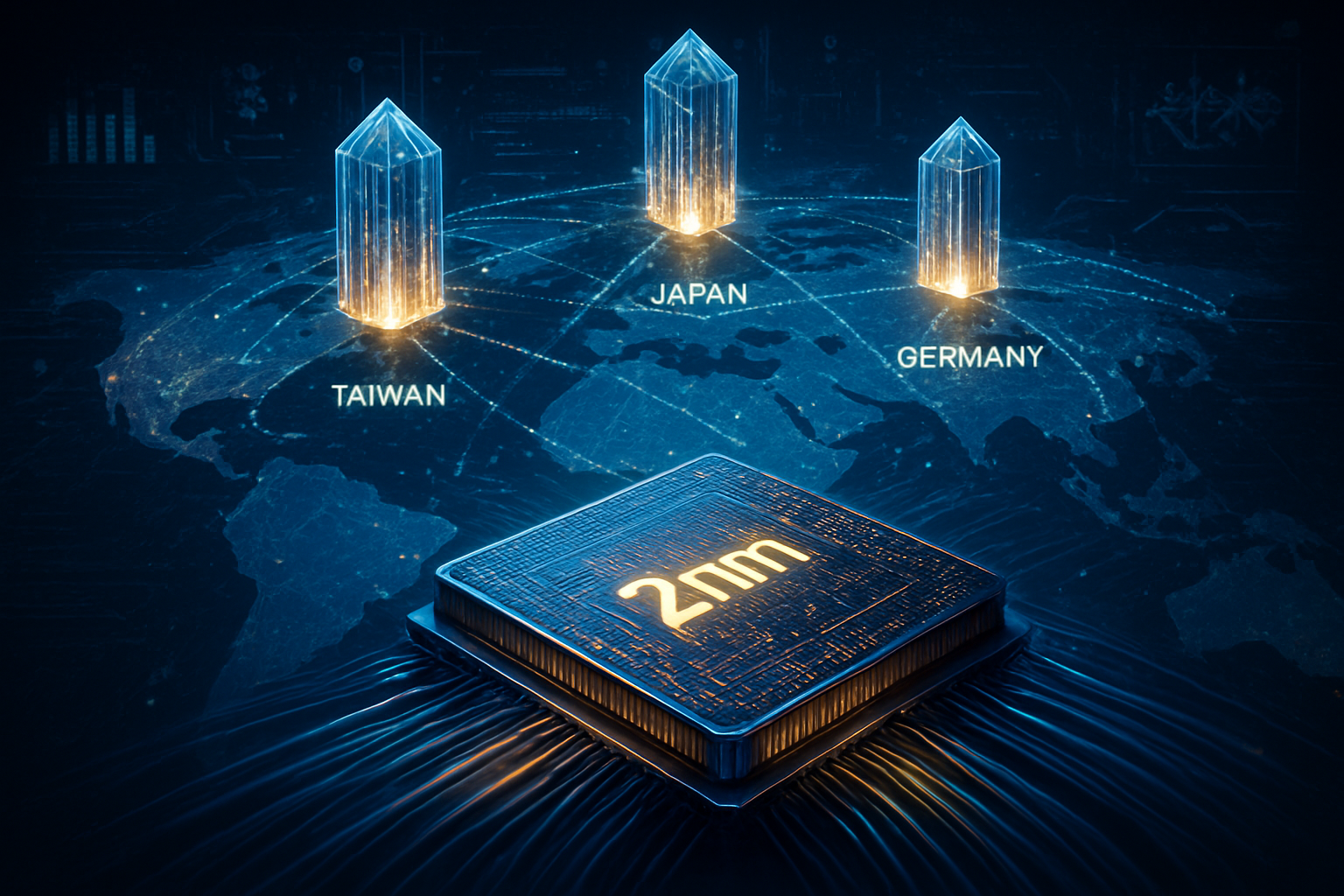
  • Beyond the GPU: Specialized AI Chips Ignite a New Era of Innovation

    Beyond the GPU: Specialized AI Chips Ignite a New Era of Innovation

    The artificial intelligence landscape is currently experiencing a profound transformation, moving beyond the ubiquitous general-purpose GPUs and into a new frontier of highly specialized semiconductor chips. This strategic pivot, gaining significant momentum in late 2024 and projected to accelerate through 2025, is driven by the escalating computational demands of advanced AI models, particularly large language models (LLMs) and generative AI. These purpose-built processors promise unprecedented levels of efficiency, speed, and energy savings, marking a crucial evolution in AI hardware infrastructure.

    This shift signifies a critical response to the limitations of existing hardware, which, despite their power, are increasingly encountering bottlenecks in scalability and energy consumption as AI models grow exponentially in size and complexity. The emergence of Application-Specific Integrated Circuits (ASICs), neuromorphic chips, in-memory computing (IMC), and photonic processors is not merely an incremental upgrade but a fundamental re-architecture, tailored to unlock the next generation of AI capabilities.

    The Architectural Revolution: Diving Deep into Specialized Silicon

    The technical advancements in specialized AI chips represent a diverse and innovative approach to AI computation, fundamentally differing from the parallel processing paradigms of general-purpose GPUs.

    Application-Specific Integrated Circuits (ASICs): These custom-designed chips are purpose-built for highly specific AI tasks, excelling in either accelerating model training or optimizing real-time inference. Unlike the versatile but less optimized nature of GPUs, ASICs are meticulously engineered for particular algorithms and data types, leading to significantly higher throughput, lower latency, and dramatically improved power efficiency for their intended function. Companies like OpenAI (in collaboration with Broadcom [NASDAQ: AVGO]), hyperscale cloud providers such as Amazon (NASDAQ: AMZN) with its Trainium and Inferentia chips, Google (NASDAQ: GOOGL) with its evolving TPUs and upcoming Trillium, and Microsoft (NASDAQ: MSFT) with Maia 100, are heavily investing in custom silicon. This specialization directly addresses the "memory wall" bottleneck that can limit the cost-effectiveness of GPUs in inference scenarios. The AI ASIC chip market, estimated at $15 billion in 2025, is projected for substantial growth.

    Neuromorphic Computing: This cutting-edge field focuses on designing chips that mimic the structure and function of the human brain's neural networks, employing "spiking neural networks" (SNNs). Key players include IBM (NYSE: IBM) with its TrueNorth, Intel (NASDAQ: INTC) with Loihi 2 (upgraded in 2024), and Brainchip Holdings Ltd. (ASX: BRN) with Akida. Neuromorphic chips operate in a massively parallel, event-driven manner, fundamentally different from traditional sequential processing. This enables ultra-low power consumption (up to 80% less energy) and real-time, adaptive learning capabilities directly on the chip, making them highly efficient for certain cognitive tasks and edge AI.

    In-Memory Computing (IMC): IMC chips integrate processing capabilities directly within the memory units, fundamentally addressing the "von Neumann bottleneck" where data transfer between separate processing and memory units consumes significant time and energy. By eliminating the need for constant data shuttling, IMC chips offer substantial improvements in speed, energy efficiency, and overall performance, especially for data-intensive AI workloads. Companies like Samsung (KRX: 005930) and SK Hynix (KRX: 000660) are demonstrating "processing-in-memory" (PIM) architectures within DRAMs, which can double the performance of traditional computing. The market for in-memory computing chips for AI is projected to reach $129.3 million by 2033, expanding at a CAGR of 47.2% from 2025.

    Photonic AI Chips: Leveraging light for computation and data transfer, photonic chips offer the potential for extremely high bandwidth and low power consumption, generating virtually no heat. They can encode information in wavelength, amplitude, and phase simultaneously, potentially making current GPUs obsolete. Startups like Lightmatter and Celestial AI are innovating in this space. Researchers from Tsinghua University in Beijing showcased a new photonic neural network chip named Taichi in April 2024, claiming it's 1,000 times more energy-efficient than NVIDIA's (NASDAQ: NVDA) H100.

    Initial reactions from the AI research community and industry experts are overwhelmingly positive, with significant investments and strategic shifts indicating a strong belief in the transformative potential of these specialized architectures. The drive for customization is seen as a necessary step to overcome the inherent limitations of general-purpose hardware for increasingly complex and diverse AI tasks.

    Reshaping the AI Industry: Corporate Battles and Strategic Plays

    The advent of specialized AI chips is creating profound competitive implications, reshaping the strategies of tech giants, AI labs, and nimble startups alike.

    Beneficiaries and Market Leaders: Hyperscale cloud providers like Google, Microsoft, and Amazon are among the biggest beneficiaries, using their custom ASICs (TPUs, Maia 100, Trainium/Inferentia) to optimize their cloud AI workloads, reduce operational costs, and offer differentiated AI services. Meta Platforms (NASDAQ: META) is also developing its custom Meta Training and Inference Accelerator (MTIA) processors for internal AI workloads. While NVIDIA (NASDAQ: NVDA) continues to dominate the GPU market, its new Blackwell platform is designed to maintain its lead in generative AI, but it faces intensified competition. AMD (NASDAQ: AMD) is aggressively pursuing market share with its Instinct MI series, notably the MI450, through strategic partnerships with companies like Oracle (NYSE: ORCL) and OpenAI. Startups like Groq (with LPUs optimized for inference), Tenstorrent, SambaNova Systems, and Hailo are also making significant strides, offering innovative solutions across various specialized niches.

    Competitive Implications: Major AI labs like OpenAI, Google DeepMind, and Anthropic are actively seeking to diversify their hardware supply chains and reduce reliance on single-source suppliers like NVIDIA. OpenAI's partnership with Broadcom for custom accelerator chips and deployment of AMD's MI450 chips with Oracle exemplify this strategy, aiming for greater efficiency and scalability. This competition is expected to drive down costs and foster accelerated innovation. For tech giants, developing custom silicon provides strategic independence, allowing them to tailor performance and cost for their unique, massive-scale AI workloads, thereby disrupting the traditional cloud AI services market.

    Disruption and Strategic Advantages: The shift towards specialized chips is disrupting existing products and services by enabling more efficient and powerful AI. Edge AI devices, from autonomous vehicles and industrial robotics to smart cameras and AI-enabled PCs (projected to make up 43% of all shipments by the end of 2025), are being transformed by low-power, high-efficiency NPUs. This enables real-time decision-making, enhanced privacy, and reduced reliance on cloud resources. The strategic advantages are clear: superior performance and speed, dramatic energy efficiency, improved cost-effectiveness at scale, and the unlocking of new capabilities for real-time applications. Hardware has re-emerged as a strategic differentiator, with companies leveraging specialized chips best positioned to lead in their respective markets.

    The Broader Canvas: AI's Future Forged in Silicon

    The emergence of specialized AI chips is not an isolated event but a critical component of a broader "AI supercycle" that is fundamentally reshaping the semiconductor industry and the entire technological landscape.

    Fitting into the AI Landscape: The overarching trend is a diversification and customization of AI chips, driven by the imperative for enhanced performance, greater energy efficiency, and the widespread enablement of edge computing. The global AI chip market, valued at $44.9 billion in 2024, is projected to reach $460.9 billion by 2034, growing at a CAGR of 27.6% from 2025 to 2034. ASICs are becoming crucial for inference AI chips, a market expected to grow exponentially. Neuromorphic chips, with their brain-inspired architecture, offer significant energy efficiency (up to 80% less energy) for edge AI, robotics, and IoT. In-memory computing addresses the "memory bottleneck," while photonic chips promise a paradigm shift with extremely high bandwidth and low power consumption.

    Wider Impacts: This specialization is driving industrial transformation across autonomous vehicles, natural language processing, healthcare, robotics, and scientific research. It is also fueling an intense AI chip arms race, creating a foundational economic shift and increasing competition among established players and custom silicon developers. By making AI computing more efficient and less energy-intensive, technologies like photonics could democratize access to advanced AI capabilities, allowing smaller businesses to leverage sophisticated models without massive infrastructure costs.

    Potential Concerns: Despite the immense potential, challenges persist. Cost remains a significant hurdle, with high upfront development costs for ASICs and neuromorphic chips (over $100 million for some designs). The complexity of designing and integrating these advanced chips, especially at smaller process nodes like 2nm, is escalating. Specialization lock-in is another concern; while efficient for specific tasks, a highly specialized chip may be inefficient or unsuitable for evolving AI models, potentially requiring costly redesigns. Furthermore, talent shortages in specialized fields like neuromorphic computing and the need for a robust software ecosystem for new architectures are critical challenges.

    Comparison to Previous Milestones: This trend represents an evolution from previous AI hardware milestones. The late 2000s saw the shift from CPUs to GPUs, which, with their parallel processing capabilities and platforms like NVIDIA's CUDA, offered dramatic speedups for AI. The current movement signifies a further refinement: moving beyond general-purpose GPUs to even more tailored solutions for optimal performance and efficiency, especially as generative AI pushes the limits of even advanced GPUs. This is analogous to how AI's specialized demands moved beyond general-purpose CPUs, now it's moving beyond general-purpose GPUs to even more granular, application-specific solutions.

    The Horizon: Charting Future AI Hardware Developments

    The trajectory of specialized AI chips points towards an exciting and rapidly evolving future, characterized by hybrid architectures, novel materials, and a relentless pursuit of efficiency.

    Near-Term Developments (Late 2024 and 2025): The market for AI ASICs is experiencing explosive growth, projected to reach $15 billion in 2025. Hyperscalers will continue to roll out custom silicon, and advancements in manufacturing processes like TSMC's (NYSE: TSM) 2nm process (expected in 2025) and Intel's 18A process node (late 2024/early 2025) will deliver significant power reductions. Neuromorphic computing will proliferate in edge AI and IoT devices, with chips like Intel's Loihi already being used in automotive applications. In-memory computing will see its first commercial deployments in data centers, driven by the demand for faster, more energy-efficient AI. Photonic AI chips will continue to demonstrate breakthroughs in energy efficiency and speed, with researchers showcasing chips 1,000 times more energy-efficient than NVIDIA's H100.

    Long-Term Developments (Beyond 2025): Experts predict the emergence of increasingly hybrid architectures, combining conventional CPU/GPU cores with specialized processors like neuromorphic chips. The industry will push beyond current technological boundaries, exploring novel materials, 3D architectures, and advanced packaging techniques like 3D stacking and chiplets. Photonic-electronic integration and the convergence of neuromorphic and photonic computing could lead to extremely energy-efficient AI. We may also see reconfigurable hardware or "software-defined silicon" that can adapt to diverse and rapidly evolving AI workloads.

    Potential Applications and Use Cases: Specialized AI chips are poised to revolutionize data centers (powering generative AI, LLMs, HPC), edge AI (smartphones, autonomous vehicles, robotics, smart cities), healthcare (diagnostics, drug discovery), finance, scientific research, and industrial automation. AI-enabled PCs are expected to make up 43% of all shipments by the end of 2025, and over 400 million GenAI smartphones are expected in 2025.

    Challenges and Expert Predictions: Manufacturing costs and complexity, power consumption and heat dissipation, the persistent "memory wall," and the need for robust software ecosystems remain significant challenges. Experts predict the global AI chip market could surpass $150 billion in 2025 and potentially reach $1.3 trillion by 2030. There will be a growing focus on optimizing for AI inference, intensified competition (with custom silicon challenging NVIDIA's dominance), and AI becoming the "backbone of innovation" within the semiconductor industry itself. The demand for High Bandwidth Memory (HBM) is so high that some manufacturers have nearly sold out their HBM capacity for 2025 and much of 2026, leading to "extreme shortages." Leading figures like OpenAI's Sam Altman and Google's Sundar Pichai warn that current hardware is a significant bottleneck for achieving Artificial General Intelligence (AGI), underscoring the need for radical innovation.

    The AI Hardware Renaissance: A Concluding Assessment

    The ongoing innovations in specialized semiconductor chips represent a pivotal moment in AI history, marking a decisive move towards hardware tailored precisely for the nuanced and demanding requirements of modern artificial intelligence. The key takeaway is clear: the era of "one size fits all" AI hardware is rapidly giving way to a diverse ecosystem of purpose-built processors.

    This development's significance cannot be overstated. By addressing the limitations of general-purpose hardware in terms of efficiency, speed, and power consumption, these specialized chips are not just enabling incremental improvements but are fundamental to unlocking the next generation of AI capabilities. They are making advanced AI more accessible, sustainable, and powerful, driving innovation across every sector. The long-term impact will be a world where AI is seamlessly integrated into nearly every device and system, operating with unprecedented efficiency and intelligence.

    In the coming weeks and months (late 2024 and 2025), watch for continued exponential market growth and intensified investment in specialized AI hardware. Keep an eye on startup innovation, particularly in analog, photonic, and memory-centric approaches, which will continue to challenge established players. Major tech companies will unveil and deploy new generations of their custom silicon, further solidifying the trend towards hybrid computing and the proliferation of Neural Processing Units (NPUs) in edge devices. Energy efficiency will remain a paramount design imperative, driving advancements in memory and interconnect architectures. Finally, breakthroughs in photonic chip maturation and broader adoption of neuromorphic computing at the edge will be critical indicators of the unfolding AI hardware renaissance.


    This content is intended for informational purposes only and represents analysis of current AI developments.

    TokenRing AI delivers enterprise-grade solutions for multi-agent AI workflow orchestration, AI-powered development tools, and seamless remote collaboration platforms.
    For more information, visit https://www.tokenring.ai/.

  • MIT Spinout Vertical Semiconductor Secures $11M to Revolutionize AI Power Delivery with Vertical GaN Chips

    MIT Spinout Vertical Semiconductor Secures $11M to Revolutionize AI Power Delivery with Vertical GaN Chips

    MIT spinout Vertical Semiconductor has announced a significant milestone, securing $11 million in a seed funding round led by Playground Global. This substantial investment is earmarked to accelerate the development of its groundbreaking AI power chip technology, which promises to address one of the most pressing challenges in the rapidly expanding artificial intelligence sector: power delivery and energy efficiency. The company's innovative approach, centered on vertical gallium nitride (GaN) transistors, aims to dramatically reduce heat, shrink the physical footprint of power systems, and significantly lower energy costs within the intensive AI infrastructure.

    The immediate significance of this funding and technological advancement cannot be overstated. As AI workloads become increasingly complex and demanding, data centers are grappling with unprecedented power consumption and thermal management issues. Vertical Semiconductor's technology offers a compelling solution by improving efficiency by up to 30% and enabling a 50% smaller power footprint in AI data center racks. This breakthrough is poised to unlock the next generation of AI compute capabilities, allowing for more powerful and sustainable AI systems by tackling the fundamental bottleneck of how quickly and efficiently power can be delivered to AI silicon.

    Technical Deep Dive into Vertical GaN Transistors

    Vertical Semiconductor's core innovation lies in its vertical gallium nitride (GaN) transistors, a paradigm shift from traditional horizontal semiconductor designs. In conventional transistors, current flows laterally along the surface of the chip. However, Vertical Semiconductor's technology reorients this flow, allowing current to travel perpendicularly through the bulk of the GaN wafer. This vertical architecture leverages the superior electrical properties of GaN, a wide bandgap semiconductor, to achieve higher electron mobility and breakdown voltage compared to silicon. A critical aspect of their approach involves homoepitaxial growth, often referred to as "GaN-on-GaN," where GaN devices are fabricated on native bulk GaN substrates. This minimizes crystal lattice and thermal expansion mismatches, leading to significantly lower defect density, improved reliability, and enhanced performance over GaN grown on foreign substrates like silicon or silicon carbide (SiC).

    The advantages of this vertical design are profound, particularly for high-power applications like AI. Unlike horizontal designs where breakdown voltage is limited by lateral spacing, vertical GaN scales breakdown voltage by increasing the thickness of the vertical epitaxial drift layer. This enables significantly higher voltage handling in a much smaller area; for instance, a 1200V vertical GaN device can be five times smaller than its lateral GaN counterpart. Furthermore, the vertical current path facilitates a far more compact device structure, potentially achieving the same electrical characteristics with a die surface area up to ten times smaller than comparable SiC devices. This drastic footprint reduction is complemented by superior thermal management, as heat generation occurs within the bulk of the device, allowing for efficient heat transfer from both the top and bottom.

    Vertical Semiconductor's vertical GaN transistors are projected to improve power conversion efficiency by up to 30% and enable a 50% smaller power footprint in AI data center racks. Their solutions are designed for deployment in devices requiring 100 volts to 1.2kV, showcasing versatility for various AI applications. This innovation directly addresses the critical bottleneck in AI power delivery: minimizing energy loss and heat generation. By bringing power conversion significantly closer to the AI chip, the technology drastically reduces energy loss, cutting down on heat dissipation and subsequently lowering operating costs for data centers. The ability to shrink the power system footprint frees up crucial space, allowing for greater compute density or simpler infrastructure.

    Initial reactions from the AI research community and industry experts have been overwhelmingly optimistic. Cynthia Liao, CEO and co-founder of Vertical Semiconductor, underscored the urgency of their mission, stating, "The most significant bottleneck in AI hardware is how fast we can deliver power to the silicon." Matt Hershenson, Venture Partner at Playground Global, lauded the company for having "cracked a challenge that's stymied the industry for years: how to deliver high voltage and high efficiency power electronics with a scalable, manufacturable solution." This sentiment is echoed across the industry, with major players like Renesas (TYO: 6723), Infineon (FWB: IFX), and Power Integrations (NASDAQ: POWI) actively investing in GaN solutions for AI data centers, signaling a clear industry shift towards these advanced power architectures. While challenges related to complexity and cost remain, the critical need for more efficient and compact power delivery for AI continues to drive significant investment and innovation in this area.

    Reshaping the AI Industry: Impact on Companies and Competitive Dynamics

    Vertical Semiconductor's innovative AI power chip technology is set to send ripples across the entire AI ecosystem, offering substantial benefits to companies at every scale while potentially disrupting established norms in power delivery. Tech giants deeply invested in hyperscale data centers and the development of high-performance AI accelerators stand to gain immensely. Companies like NVIDIA (NASDAQ: NVDA), AMD (NASDAQ: AMD), and Intel (NASDAQ: INTC), which are at the forefront of AI chip design, could leverage Vertical Semiconductor's vertical GaN transistors to significantly enhance the performance and energy efficiency of their next-generation GPUs and AI accelerators. Similarly, cloud behemoths such as Google (NASDAQ: GOOGL), Microsoft (NASDAQ: MSFT), and Amazon (NASDAQ: AMZN), which develop their custom AI silicon (TPUs, Azure Maia 100, Trainium/Inferentia, respectively) and operate vast data center infrastructures, could integrate this solution to drastically improve the energy efficiency and density of their AI services, leading to substantial operational cost savings.

    The competitive landscape within the AI sector is also likely to be reshaped. As AI workloads continue their exponential growth, the ability to efficiently power these increasingly hungry chips will become a critical differentiator. Companies that can effectively incorporate Vertical Semiconductor's technology or similar advanced power delivery solutions will gain a significant edge in performance per watt and overall operational expenditure. NVIDIA, known for its vertically integrated approach from silicon to software, could further cement its market leadership by adopting such advanced power delivery, enhancing the scalability and efficiency of platforms like its Blackwell architecture. AMD and Intel, actively vying for market share in AI accelerators, could use this technology to boost the performance-per-watt of their offerings, making them more competitive.

    Vertical Semiconductor's technology also poses a potential disruption to existing products and services within the power management sector. The "lateral" power delivery systems prevalent in many data centers are increasingly struggling to meet the escalating power demands of AI chips, resulting in considerable transmission losses and larger physical footprints. Vertical GaN transistors could largely replace or significantly alter the design of these conventional power management components, leading to a paradigm shift in how power is regulated and delivered to high-performance silicon. Furthermore, by drastically reducing heat at the source, this innovation could alleviate pressure on existing thermal management systems, potentially enabling simpler or more efficient cooling solutions in data centers. The ability to shrink the power footprint by 50% and integrate power components directly beneath the processor could lead to entirely new system designs for AI servers and accelerators, fostering greater density and more compact devices.

    Strategically, Vertical Semiconductor positions itself as a foundational enabler for the next wave of AI innovation, fundamentally altering the economics of compute by making power delivery more efficient and scalable. Its primary strategic advantage lies in addressing a core physical bottleneck – efficient power delivery – rather than just computational logic. This makes it a universal improvement that can enhance virtually any high-performance AI chip. Beyond performance, the improved energy efficiency directly contributes to the sustainability goals of data centers, an increasingly vital consideration for tech giants committed to environmental responsibility. The "vertical" approach also aligns seamlessly with broader industry trends in advanced packaging and 3D stacked chips, suggesting potential synergies that could lead to even more integrated and powerful AI systems in the future.

    Wider Significance: A Foundational Shift for AI's Future

    Vertical Semiconductor's AI power chip technology, centered on vertical Gallium Nitride (GaN) transistors, holds profound wider significance for the artificial intelligence landscape, extending beyond mere performance enhancements to touch upon critical trends like sustainability, the relentless demand for higher performance, and the evolution of advanced packaging. This innovation is not an AI processing unit itself but a fundamental enabling technology that optimizes the power infrastructure, which has become a critical bottleneck for high-performance AI chips and data centers. The escalating energy demands of AI workloads have raised alarms about sustainability; projections indicate a staggering 300% increase in CO2 emissions from AI accelerators between 2025 and 2029. By reducing energy loss and heat, improving efficiency by up to 30%, and enabling a 50% smaller power footprint, Vertical Semiconductor directly contributes to making AI infrastructure more sustainable and reducing the colossal operational costs associated with cooling and energy consumption.

    The technology seamlessly integrates into the broader trend of demanding higher performance from AI systems, particularly large language models (LLMs) and generative AI. These advanced models require unprecedented computational power, vast memory bandwidth, and ultra-low latency. Traditional lateral power delivery architectures are simply struggling to keep pace, leading to significant power transmission losses and voltage noise that compromise performance. By enabling direct, high-efficiency power conversion, Vertical Semiconductor's technology removes this critical power delivery bottleneck, allowing AI chips to operate more effectively and achieve their full potential. This vertical power delivery is indispensable for supporting the multi-kilowatt AI chips and densely packed systems that define the cutting edge of AI development.

    Furthermore, this innovation aligns perfectly with the semiconductor industry's pivot towards advanced packaging techniques. As Moore's Law faces physical limitations, the industry is increasingly moving to 3D stacking and heterogeneous integration to overcome these barriers. While 3D stacking often refers to vertically integrating logic and memory dies (like High-Bandwidth Memory or HBM), Vertical Semiconductor's focus is on vertical power delivery. This involves embedding power rails or regulators directly under the processing die and connecting them vertically, drastically shortening the distance from the power source to the silicon. This approach not only slashes parasitic losses and noise but also frees up valuable top-side routing for critical data signals, enhancing overall chip design and integration. The demonstration of their GaN technology on 8-inch wafers using standard silicon CMOS manufacturing methods signals its readiness for seamless integration into existing production processes.

    Despite its immense promise, the widespread adoption of such advanced power chip technology is not without potential concerns. The inherent manufacturing complexity associated with vertical integration in semiconductors, including challenges in precise alignment, complex heat management across layers, and the need for extremely clean fabrication environments, could impact yield and introduce new reliability hurdles. Moreover, the development and implementation of advanced semiconductor technologies often entail higher production costs. While Vertical Semiconductor's technology promises long-term cost savings through efficiency, the initial investment in integrating and scaling this new power delivery architecture could be substantial. However, the critical nature of the power delivery bottleneck for AI, coupled with the increasing investment by tech giants and startups in AI infrastructure, suggests a strong impetus for adoption if the benefits in performance and efficiency are clearly demonstrated.

    In a historical context, Vertical Semiconductor's AI power chip technology can be likened to fundamental enabling breakthroughs that have shaped computing. Just as the invention of the transistor laid the groundwork for all modern electronics, and the realization that GPUs could accelerate deep learning ignited the modern AI revolution, vertical GaN power delivery addresses a foundational support problem that, if left unaddressed, would severely limit the potential of core AI processing units. It is a direct response to the "end-of-scaling era" for traditional 2D architectures, offering a new pathway for performance and efficiency improvements when conventional methods are faltering. Much like 3D stacking of memory (e.g., HBM) revolutionized memory bandwidth by utilizing the third dimension, Vertical Semiconductor applies this vertical paradigm to energy delivery, promising to unlock the full potential of next-generation AI processors and data centers.

    The Horizon: Future Developments and Challenges for AI Power

    The trajectory of Vertical Semiconductor's AI power chip technology, and indeed the broader AI power delivery landscape, is set for profound transformation, driven by the insatiable demands of artificial intelligence. In the near-term (within the next 1-5 years), we can expect to see rapid adoption of vertical power delivery (VPD) architectures. Companies like Empower Semiconductor are already introducing integrated voltage regulators (IVRs) designed for direct placement beneath AI chips, promising significant reductions in power transmission losses and improved efficiency, crucial for handling the dynamic, rapidly fluctuating workloads of AI. Vertical Semiconductor's vertical GaN transistors will play a pivotal role here, pushing energy conversion ever closer to the chip, reducing heat, and simplifying infrastructure, with the company aiming for early sampling of prototype packaged devices by year-end and a fully integrated solution in 2026. This period will also see the full commercialization of 2nm process nodes, further enhancing AI accelerator performance and power efficiency.

    Looking further ahead (beyond 5 years), the industry anticipates transformative shifts such as Backside Power Delivery Networks (BPDN), which will route power from the backside of the wafer, fundamentally separating power and signal routing to enable higher transistor density and more uniform power grids. Neuromorphic computing, with chips modeled after the human brain, promises unparalleled energy efficiency for AI tasks, especially at the edge. Silicon photonics will become increasingly vital for light-based, high-speed data transmission within chips and data centers, reducing energy consumption and boosting speed. Furthermore, AI itself will be leveraged to optimize chip design and manufacturing, accelerating innovation cycles and improving production yields. The focus will continue to be on domain-specific architectures and heterogeneous integration, combining diverse components into compact, efficient platforms.

    These future developments will unlock a plethora of new applications and use cases. Hyperscale AI data centers will be the primary beneficiaries, enabling them to meet the exponential growth in AI workloads and computational density while managing power consumption. Edge AI devices, such as IoT sensors and smart cameras, will gain sophisticated on-device learning capabilities with ultra-low power consumption. Autonomous vehicles will rely on the improved power efficiency and speed for real-time AI processing, while augmented reality (AR) and wearable technologies will benefit from compact, energy-efficient AI processing directly on the device. High-performance computing (HPC) will also leverage these advancements for complex scientific simulations and massive data analysis.

    However, several challenges need to be addressed for these future developments to fully materialize. Mass production and scalability remain significant hurdles; developing advanced technologies is one thing, but scaling them economically to meet global demand requires immense precision and investment in costly fabrication facilities and equipment. Integrating vertical power delivery and 3D-stacked chips into diverse existing and future system architectures presents complex design and manufacturing challenges, requiring holistic consideration of voltage regulation, heat extraction, and reliability across the entire system. Overcoming initial cost barriers will also be critical, though the promise of long-term operational savings through vastly improved efficiency offers a compelling incentive. Finally, effective thermal management for increasingly dense and powerful chips, along with securing rare materials and a skilled workforce in a complex global supply chain, will be paramount.

    Experts predict that vertical power delivery will become indispensable for hyperscalers to achieve their performance targets. The relentless demand for AI processing power will continue to drive significant advancements, with a sustained focus on domain-specific architectures and heterogeneous integration. AI itself will increasingly optimize chip design and manufacturing processes, fundamentally transforming chip-making. The enormous power demands of AI are projected to more than double data center electricity consumption by 2030, underscoring the urgent need for more efficient power solutions and investments in low-carbon electricity generation. Hyperscale cloud providers and major AI labs are increasingly adopting vertical integration, designing custom AI chips and optimizing their entire data center infrastructure around specific model workloads, signaling a future where integrated, specialized, and highly efficient power delivery systems like those pioneered by Vertical Semiconductor are at the core of AI advancement.

    Comprehensive Wrap-Up: Powering the AI Revolution

    In summary, Vertical Semiconductor's successful $11 million seed funding round marks a pivotal moment in the ongoing AI revolution. Their innovative vertical gallium nitride (GaN) transistor technology directly confronts the escalating challenge of power delivery and energy efficiency within AI infrastructure. By enabling up to 30% greater efficiency and a 50% smaller power footprint in data center racks, this MIT spinout is not merely offering an incremental improvement but a foundational shift in how power is managed and supplied to the next generation of AI chips. This breakthrough is crucial for unlocking greater computational density, mitigating environmental impact, and reducing the operational costs of the increasingly power-hungry AI workloads.

    This development holds immense significance in AI history, akin to earlier breakthroughs in transistor design and specialized accelerators that fundamentally enabled new eras of computing. Vertical Semiconductor is addressing a critical physical bottleneck that, if left unaddressed, would severely limit the potential of even the most advanced AI processors. Their approach aligns with major industry trends towards advanced packaging and sustainability, positioning them as a key enabler for the future of AI.

    In the coming weeks and months, industry watchers should closely monitor Vertical Semiconductor's progress towards early sampling of their prototype packaged devices and their planned fully integrated solution in 2026. The adoption rate of their technology by major AI chip manufacturers and hyperscale cloud providers will be a strong indicator of its disruptive potential. Furthermore, observing how this technology influences the design of future AI accelerators and data center architectures will provide valuable insights into the long-term impact of efficient power delivery on the trajectory of artificial intelligence. The race to power AI efficiently is on, and Vertical Semiconductor has just taken a significant lead.


    This content is intended for informational purposes only and represents analysis of current AI developments.

    TokenRing AI delivers enterprise-grade solutions for multi-agent AI workflow orchestration, AI-powered development tools, and seamless remote collaboration platforms.
    For more information, visit https://www.tokenring.ai/.

  • OpenAI and Arm Forge Alliance to Reshape AI Chip Landscape

    OpenAI and Arm Forge Alliance to Reshape AI Chip Landscape

    In a groundbreaking strategic move set to redefine the future of artificial intelligence infrastructure, OpenAI, the leading AI research and deployment company, has embarked on a multi-year collaboration with Arm Holdings PLC (NASDAQ: ARM) and Broadcom Inc. (NASDAQ: AVGO) to develop custom AI chips and advanced networking hardware. This ambitious initiative, first reported around October 13, 2025, signals OpenAI's determined push to gain greater control over its computing resources, reduce its reliance on external chip suppliers, and optimize its hardware stack for the increasingly demanding requirements of frontier AI models. The immediate significance of this partnership lies in its potential to accelerate AI development, drive down operational costs, and foster a more diversified and competitive AI hardware ecosystem.

    Technical Deep Dive: OpenAI's Custom Silicon Strategy

    At the heart of this collaboration is a sophisticated technical strategy aimed at creating highly specialized hardware tailored to OpenAI's unique AI workloads. OpenAI is taking the lead in designing a custom AI server chip, reportedly dubbed "Titan XPU," which will be meticulously optimized for inference tasks crucial to large language models (LLMs) like ChatGPT, including text generation, speech synthesis, and code generation. This specialization is expected to deliver superior performance per dollar and per watt compared to general-purpose GPUs.

    Arm's pivotal role in this partnership involves developing a new central processing unit (CPU) chip that will work in conjunction with OpenAI's custom AI server chip. While AI accelerators handle the heavy lifting of machine learning workloads, CPUs are essential for general computing tasks, orchestration, memory management, and data routing within AI systems. This move marks a significant expansion for Arm, traditionally a licensor of chip designs, into actively developing its own CPUs for the data center market. The custom AI chips, including the Titan XPU, are slated to be manufactured using Taiwan Semiconductor Manufacturing Company Limited (NYSE: TSM) (TSMC)'s advanced 3-nanometer process technology, featuring a systolic array architecture and high-bandwidth memory (HBM). For networking, the systems will utilize Ethernet-based solutions, promoting scalability and vendor neutrality, with Broadcom pioneering co-packaged optics to enhance power efficiency and reliability.

    This approach represents a significant departure from previous strategies, where OpenAI primarily relied on off-the-shelf GPUs, predominantly from NVIDIA Corporation (NASDAQ: NVDA). By moving towards vertical integration and designing its own silicon, OpenAI aims to embed the specific learnings from its AI models directly into the hardware, enabling unprecedented efficiency and capability. This strategy mirrors similar efforts by other tech giants like Alphabet Inc. (NASDAQ: GOOGL)'s Google with its Tensor Processing Units (TPUs), Amazon.com Inc. (NASDAQ: AMZN) with Trainium, and Meta Platforms Inc. (NASDAQ: META) with MTIA. Initial reactions from the AI research community and industry experts have been largely positive, viewing this as a necessary, albeit capital-intensive, step for leading AI labs to manage escalating computational costs and drive the next wave of AI breakthroughs.

    Reshaping the AI Industry: Competitive Dynamics and Market Shifts

    The OpenAI-Arm-Broadcom collaboration is poised to send ripples across the entire AI industry, fundamentally altering competitive dynamics and market positioning for tech giants, AI companies, and startups alike.

    Nvidia, currently holding a near-monopoly in high-end AI accelerators, stands to face the most direct challenge. While not an immediate threat to its dominance, OpenAI's move, coupled with similar in-house chip efforts from other major players, signals a long-term trend of diversification in chip supply. This will likely pressure Nvidia to innovate faster, offer more competitive pricing, and potentially engage in deeper collaborations on custom solutions. For Arm, this partnership is a strategic triumph, expanding its influence in the high-growth AI data center market and supporting its transition towards more direct chip manufacturing. SoftBank Group Corp. (TYO: 9984), a major shareholder in Arm and financier of OpenAI's data center expansion, is also a significant beneficiary. Broadcom emerges as a critical enabler of next-generation AI infrastructure, leveraging its expertise in custom chip development and networking systems, as evidenced by the surge in its stock post-announcement.

    Other tech giants that have already invested in custom AI silicon, such as Google, Amazon, and Microsoft Corporation (NASDAQ: MSFT), will see their strategies validated, intensifying the "AI chip race" and driving further innovation. For AI startups, the landscape presents both challenges and opportunities. While developing custom silicon remains incredibly capital-intensive and out of reach for many, the increased demand for specialized software and tools to optimize AI models for diverse custom hardware could create new niches. Moreover, the overall expansion of the AI infrastructure market could lead to opportunities for startups focused on specific layers of the AI stack. This push towards vertical integration signifies that controlling the hardware stack is becoming a strategic imperative for maintaining a competitive edge in the AI arena.

    Wider Significance: A New Era for AI Infrastructure

    This collaboration transcends a mere technical partnership; it signifies a pivotal moment in the broader AI landscape, embodying several key trends and raising important questions about the future. It underscores a definitive shift towards custom Application-Specific Integrated Circuits (ASICs) for AI workloads, moving away from a sole reliance on general-purpose GPUs. This vertical integration strategy, now adopted by OpenAI, is a testament to the increasing complexity and scale of AI models, which demand hardware meticulously optimized for their specific algorithms to achieve peak performance and efficiency.

    The impacts are profound: enhanced performance, reduced latency, and improved energy efficiency for AI workloads will accelerate the training and inference of advanced models, enabling more complex applications. Potential cost reductions from custom hardware could make high-volume AI applications more economically viable. However, concerns also emerge. While challenging Nvidia's dominance, this trend could lead to a new form of market concentration, shifting dependence towards a few large companies with the resources for custom silicon development or towards chip fabricators like TSMC. The immense energy consumption associated with OpenAI's ambitious target of 10 gigawatts of computing power by 2029, and Sam Altman's broader vision of 250 gigawatts by 2033, raises significant environmental and sustainability concerns. Furthermore, the substantial financial commitments involved, reportedly in the multi-billion-dollar range, fuel discussions about the financial sustainability of such massive AI infrastructure buildouts and potential "AI bubble" worries.

    This strategic pivot draws parallels to earlier AI milestones, such as the initial adoption of GPUs for deep learning, which propelled the field forward. Just as GPUs became the workhorse for neural networks, custom ASICs are now emerging as the next evolution, tailored to the specific demands of frontier AI models. The move mirrors the pioneering efforts of cloud providers like Google with its TPUs and establishes vertical integration as a mature and necessary step for leading AI companies to control their destiny. It intensifies the "AI chip wars," moving beyond a single dominant player to a more diversified and competitive ecosystem, fostering innovation across specialized silicon providers.

    The Road Ahead: Future Developments and Expert Predictions

    The OpenAI-Arm AI chip collaboration sets a clear trajectory for significant near-term and long-term developments in AI hardware. In the near term, the focus remains on the successful design, fabrication (via TSMC), and deployment of the custom AI accelerator racks, with initial deployments expected in the second half of 2026 and continuing through 2029 to achieve the 10-gigawatt target. This will involve rigorous testing and optimization to ensure the seamless integration of OpenAI's custom AI server chips, Arm's complementary CPUs, and Broadcom's advanced networking solutions.

    Looking further ahead, the long-term vision involves OpenAI embedding even more specific learnings from its evolving AI models directly into future iterations of these custom processors. This continuous feedback loop between AI model development and hardware design promises unprecedented performance and efficiency, potentially unlocking new classes of AI capabilities. The ambitious goal of reaching 26 gigawatts of compute capacity by 2033 underscores OpenAI's commitment to scaling its infrastructure to meet the exponential growth in AI demand. Beyond hyperscale data centers, experts predict that Arm's Neoverse platform, central to these developments, could also drive generative AI capabilities to the edge, with advanced tasks like text-to-video processing potentially becoming feasible on mobile devices within the next two years.

    However, several challenges must be addressed. The colossal capital expenditure required for a $1 trillion data center buildout targeting 26 gigawatts by 2033 presents an enormous funding gap. The inherent complexity of designing, validating, and manufacturing chips at scale demands meticulous execution and robust collaboration between OpenAI, Broadcom, and Arm. Furthermore, the immense power consumption of such vast AI infrastructure necessitates a relentless focus on energy efficiency, with Arm's CPUs playing a crucial role in reducing power demands for AI workloads. Geopolitical factors and supply chain security also remain critical considerations for global semiconductor manufacturing. Experts largely agree that this partnership will redefine the AI hardware landscape, diversifying the chip market and intensifying competition. If successful, it could solidify a trend where leading AI companies not only train advanced models but also design the foundational silicon that powers them, accelerating innovation and potentially leading to more cost-effective AI hardware in the long run.

    A New Chapter in AI History

    The collaboration between OpenAI and Arm, supported by Broadcom, marks a pivotal moment in the history of artificial intelligence. It represents a decisive step by a leading AI research organization to vertically integrate its operations, moving beyond software and algorithms to directly control the underlying hardware infrastructure. The key takeaways are clear: a strategic imperative to reduce reliance on dominant external suppliers, a commitment to unparalleled performance and efficiency through custom silicon, and an ambitious vision for scaling AI compute to unprecedented levels.

    This development signifies a new chapter where the "AI chip race" is not just about raw power but about specialized optimization and strategic control over the entire technology stack. It underscores the accelerating pace of AI innovation and the immense resources required to build and sustain frontier AI. As we look to the coming weeks and months, the industry will be closely watching for initial deployment milestones of these custom chips, further details on the technical specifications, and the broader market's reaction to this significant shift. The success of this collaboration will undoubtedly influence the strategic decisions of other major AI players and shape the trajectory of AI development for years to come, potentially ushering in an era of more powerful, efficient, and ubiquitous artificial intelligence.


    This content is intended for informational purposes only and represents analysis of current AI developments.

    TokenRing AI delivers enterprise-grade solutions for multi-agent AI workflow orchestration, AI-powered development tools, and seamless remote collaboration platforms.
    For more information, visit https://www.tokenring.ai/.

  • TSMC’s Q3 2025 Earnings Propel AI Revolution Amid Bullish Outlook

    TSMC’s Q3 2025 Earnings Propel AI Revolution Amid Bullish Outlook

    Taipei, Taiwan – October 14, 2025 – Taiwan Semiconductor Manufacturing Company (NYSE: TSM), the undisputed titan of the semiconductor foundry industry, is poised to announce a blockbuster third quarter for 2025. Widespread anticipation and a profoundly bullish outlook are sweeping through the tech world, driven by the insatiable global demand for artificial intelligence (AI) chips. Analysts are projecting record-breaking revenue and net profit figures, cementing TSMC's indispensable role as the "unseen architect" of the AI supercycle and signaling a robust health for the broader tech ecosystem.

    The immediate significance of TSMC's anticipated Q3 performance cannot be overstated. As the primary manufacturer of the most advanced processors for leading AI companies, TSMC's financial health serves as a critical barometer for the entire AI and high-performance computing (HPC) landscape. A strong report will not only validate the ongoing AI supercycle but also reinforce TSMC's market leadership and its pivotal role in enabling the next generation of technological innovation.

    Analyst Expectations Soar Amidst AI-Driven Demand and Strategic Pricing

    The financial community is buzzing with optimism for TSMC's Q3 2025 earnings, with specific forecasts painting a picture of exceptional growth. Analysts widely anticipated TSMC's Q3 2025 revenue to fall between $31.8 billion and $33 billion, representing an approximate 38% year-over-year increase at the midpoint. Preliminary sales data confirmed a strong performance, with Q3 revenue reaching NT$989.918 billion ($32.3 billion), exceeding most analyst expectations. This robust growth is largely attributed to the relentless demand for AI accelerators and high-end computing components.

    Net profit projections are equally impressive. A consensus among analysts, including an LSEG SmartEstimate compiled from 20 analysts, forecast a net profit of NT$415.4 billion ($13.55 billion) for the quarter. This would mark a staggering 28% increase from the previous year, setting a new record for the company's highest quarterly profit in its history and extending its streak to a seventh consecutive quarter of profit growth. Wall Street analysts generally expected earnings per share (EPS) of $2.63, reflecting a 35% year-over-year increase, with the Zacks Consensus Estimate adjusted upwards to $2.59 per share, indicating a 33.5% year-over-year growth.

    A key driver of this financial strength is TSMC's improving pricing power for its advanced nodes. Reports indicate that TSMC plans for a 5% to 10% price hike for advanced node processes in 2025. This increase is primarily a response to rising production costs, particularly at its new Arizona facility, where manufacturing expenses are estimated to be at least 30% higher than in Taiwan. However, tight production capacity for cutting-edge technologies also contributes to this upward price pressure. Major clients such as Apple (NASDAQ: AAPL), Advanced Micro Devices (NASDAQ: AMD), and Nvidia (NASDAQ: NVDA), who are heavily reliant on these advanced nodes, are expected to absorb these higher manufacturing costs, demonstrating TSMC's indispensable position. For instance, TSMC has set the price for its upcoming 2nm wafers at approximately $30,000 each, a 15-20% increase over the average $25,000-$27,000 price for its 3nm process.

    TSMC's technological leadership and dominance in advanced semiconductor manufacturing processes are crucial to its Q3 success. Its strong position in 3-nanometer (3nm) and 5-nanometer (5nm) manufacturing nodes is central to the revenue surge, with these advanced nodes collectively representing 74% of total wafer revenue in Q2 2025. Production ramp-up of 3nm chips, vital for AI and HPC devices, is progressing faster than anticipated, with 3nm lines operating at full capacity. The "insatiable demand" for AI chips, particularly from companies like Nvidia, Apple, AMD, and Broadcom (NASDAQ: AVGO), continues to be the foremost driver, fueling substantial investments in AI infrastructure and cloud computing.

    TSMC's Indispensable Role: Reshaping the AI and Tech Landscape

    TSMC's strong Q3 2025 performance and bullish outlook are poised to profoundly impact the artificial intelligence and broader tech industry, solidifying its role as the foundational enabler of the AI supercycle. The company's unique manufacturing capabilities mean that its success directly translates into opportunities and challenges across the industry.

    Major beneficiaries of TSMC's technological prowess include the leading players in AI and high-performance computing. Nvidia, for example, is heavily dependent on TSMC for its cutting-edge GPUs, such as the H100 and upcoming architectures like Blackwell and Rubin, with TSMC's advanced CoWoS (Chip-on-Wafer-on-Substrate) packaging technology being indispensable for integrating high-bandwidth memory. Apple relies on TSMC's 3nm process for its M4 and M5 chips, powering on-device AI capabilities. Advanced Micro Devices (NASDAQ: AMD) utilizes TSMC's advanced packaging and leading-edge nodes for its next-generation data center GPUs and EPYC CPUs, positioning itself as a strong contender in the HPC market. Hyperscalers like Alphabet (NASDAQ: GOOGL), Amazon (NASDAQ: AMZN), Meta Platforms (NASDAQ: META), and Microsoft (NASDAQ: MSFT) are increasingly designing their own custom AI silicon (ASICs) and are significant customers for TSMC's advanced nodes, including the upcoming 2nm process.

    The competitive implications for major AI labs and tech companies are significant. TSMC's indispensable position centralizes the AI hardware ecosystem around a select few dominant players who can secure access to its advanced manufacturing capabilities. This creates substantial barriers to entry for newer firms or those without significant capital or strategic partnerships. While Intel (NASDAQ: INTC) is working to establish its own competitive foundry business, TSMC's advanced-node manufacturing capabilities are widely recognized as superior, creating a significant gap. The continuous push for more powerful and energy-efficient AI chips directly disrupts existing products and services that rely on older, less efficient hardware. Companies unable to upgrade their AI infrastructure or adapt to the rapid advancements risk falling behind in performance, cost-efficiency, and capabilities.

    In terms of market positioning, TSMC maintains its undisputed position as the world's leading pure-play semiconductor foundry, holding over 70.2% of the global pure-play foundry market and an even higher share in advanced AI chip production. Its technological prowess, mastering cutting-edge process nodes (3nm, 2nm, A16, A14 for 2028) and innovative packaging solutions (CoWoS, SoIC), provides an unparalleled strategic advantage. The 2nm (N2) process, featuring Gate-All-Around (GAA) nanosheet transistors, is on track for mass production in the second half of 2025, with demand already exceeding initial capacity. Furthermore, TSMC is pursuing a "System Fab" strategy, offering a comprehensive suite of interconnected technologies, including advanced 3D chip stacking and packaging (TSMC 3DFabric®) to enable greater performance and power efficiency for its customers.

    Wider Significance: AI Supercycle Validation and Geopolitical Crossroads

    TSMC's exceptional Q3 2025 performance is more than just a corporate success story; it is a profound validation of the ongoing AI supercycle and a testament to the transformative power of advanced semiconductor technology. The company's financial health is a direct reflection of the global AI chip market's explosive growth, projected to increase from an estimated $123.16 billion in 2024 to $311.58 billion by 2029, with AI chips contributing over $150 billion to total semiconductor sales in 2025 alone.

    This success highlights several key trends in the broader AI landscape. Hardware has re-emerged as a strategic differentiator, with custom AI chips (NPUs, TPUs, specialized AI accelerators) becoming ubiquitous. TSMC's dominance in advanced nodes and packaging is crucial for the parallel processing, high data transfer speeds, and energy efficiency required by modern AI accelerators and large language models. There's also a significant shift towards edge AI and energy efficiency, as AI deployments scale and demand low-power, high-efficiency chips for applications from autonomous vehicles to smart cameras.

    The broader impacts are substantial. TSMC's growth acts as a powerful economic catalyst, driving innovation and investment across the entire tech ecosystem. Its capabilities accelerate the iteration of chip technology, compelling companies to continuously upgrade their AI infrastructure. This profoundly reshapes the competitive landscape for AI companies, creating clear beneficiaries among major tech giants that rely on TSMC for their most critical AI and high-performance chips.

    However, TSMC's centrality to the AI landscape also highlights significant vulnerabilities and concerns. The "extreme supply chain concentration" in Taiwan, where over 90% of the world's most advanced chips are manufactured by TSMC and Samsung (KRX: 005930), creates a critical single point of failure. Escalating geopolitical tensions in the Taiwan Strait pose a severe risk, with potential military conflict or economic blockade capable of crippling global AI infrastructure. TSMC is actively trying to mitigate this by diversifying its manufacturing footprint with significant investments in the U.S. (Arizona), Japan, and Germany. The U.S. CHIPS Act is also a strategic initiative to secure domestic semiconductor production and reduce reliance on foreign manufacturing. Beyond Taiwan, the broader AI chip supply chain relies on a concentrated "triumvirate" of Nvidia (chip designs), ASML (AMS: ASML) (precision lithography equipment), and TSMC (manufacturing), creating further single points of failure.

    Comparing this to previous AI milestones, the current growth phase, heavily reliant on TSMC's manufacturing prowess, represents a unique inflection point. Unlike previous eras where hardware was more of a commodity, the current environment positions advanced hardware as a "strategic differentiator." This "sea change" in generative AI is being compared to fundamental technology shifts like the internet, mobile, and cloud computing, indicating a foundational transformation across industries.

    Future Horizons: Unveiling Next-Generation AI and Global Expansion

    Looking ahead, TSMC's future developments are characterized by an aggressive technology roadmap, continued advancements in manufacturing and packaging, and strategic global diversification, all geared towards sustaining its leadership in the AI era.

    In the near term, TSMC's 3nm (N3 family) process, already in volume production, will remain a workhorse for current high-performance AI chips. However, the true game-changer will be the mass production of the 2nm (N2) process node, ramping up in late 2025. Major clients like Apple, Advanced Micro Devices (NASDAQ: AMD), Intel (NASDAQ: INTC), Nvidia (NASDAQ: NVDA), Qualcomm (NASDAQ: QCOM), and MediaTek are expected to utilize this node, which promises a 25-30% reduction in power consumption or a 10-15% increase in performance compared to 3nm chips. TSMC projects initial 2nm capacity to reach over 100,000 wafers per month in 2026. Beyond 2nm, the A16 (1.6nm-class) technology is slated for production readiness in late 2026, followed by A14 (1.4nm-class) for mass production in the second half of 2028, further pushing the boundaries of chip density and efficiency.

    Advanced packaging technologies are equally critical. TSMC is aggressively expanding its CoWoS (Chip-on-Wafer-on-Substrate) advanced packaging capacity, aiming to quadruple its output by the end of 2025 and further increase it to 130,000 wafers per month by 2026 to meet surging AI demand. Innovations like CoWoS-L (expected 2027) and SoIC (System-on-Integrated-Chips) will enable even denser chip stacking and integration, crucial for the complex architectures of future AI accelerators.

    The ongoing advancements in AI chips are enabling a vast array of new and enhanced applications. Beyond data centers and cloud computing, there is a significant shift towards deploying AI at the edge, including autonomous vehicles, industrial robotics, smart cameras, mobile devices, and various IoT devices, demanding low-power, high-efficiency chips like Neural Processing Units (NPUs). AI-enabled PCs are expected to constitute 43% of all shipments by the end of 2025. In healthcare, AI chips are crucial for medical imaging systems with superhuman accuracy and powering advanced computations in scientific research and drug discovery.

    Despite the rapid progress, several significant challenges need to be overcome. Manufacturing complexity and cost remain immense, with a new fabrication plant costing $15B-$20B. Design and packaging hurdles, such as optimizing performance while reducing immense power consumption and managing heat dissipation, are critical. Supply chain and geopolitical risks, particularly the concentration of advanced manufacturing in Taiwan, continue to be a major concern, driving TSMC's strategic global expansion into the U.S. (Arizona), Japan, and Germany. The immense energy consumption of AI infrastructure also raises significant environmental concerns, making energy efficiency a crucial area for innovation.

    Industry experts are highly optimistic, predicting TSMC will remain the "indispensable architect of the AI supercycle," with its market dominance and growth trajectory defining the future of AI hardware. The global AI chip market is projected to skyrocket to an astonishing $311.58 billion by 2029, or around $295.56 billion by 2030, with a Compound Annual Growth Rate (CAGR) of 33.2% from 2025 to 2030. The intertwining of AI and semiconductors is projected to contribute more than $15 trillion to the global economy by 2030.

    A New Era: TSMC's Enduring Legacy and the Road Ahead

    TSMC's anticipated Q3 2025 earnings mark a pivotal moment, not just for the company, but for the entire technological landscape. The key takeaway is clear: TSMC's unparalleled leadership in advanced semiconductor manufacturing is the bedrock upon which the current AI revolution is being built. The strong revenue growth, robust net profit projections, and improving pricing power are all direct consequences of the "insatiable demand" for AI chips and the company's continuous innovation in process technology and advanced packaging.

    This development holds immense significance in AI history, solidifying TSMC's role as the "unseen architect" that enables breakthroughs across every facet of artificial intelligence. Its pure-play foundry model has fostered an ecosystem where innovation in chip design can flourish, driving the rapid advancements seen in AI models today. The long-term impact on the tech industry is profound, centralizing the AI hardware ecosystem around TSMC's capabilities, accelerating hardware obsolescence, and dictating the pace of technological progress. However, it also highlights the critical vulnerabilities associated with supply chain concentration, especially amidst escalating geopolitical tensions.

    In the coming weeks and months, all eyes will be on TSMC's official Q3 2025 earnings report and the subsequent earnings call on October 16, 2025. Investors will be keenly watching for any upward revisions to full-year 2025 revenue forecasts and crucial fourth-quarter guidance. Geopolitical developments, particularly concerning US tariffs and trade relations, remain a critical watch point, as proposed tariffs or calls for localized production could significantly impact TSMC's operational landscape. Furthermore, observers will closely monitor the progress and ramp-up of TSMC's global manufacturing facilities in Arizona, Japan, and Germany, assessing their impact on supply chain resilience and profitability. Updates on the development and production scale of the 2nm process and advancements in critical packaging technologies like CoWoS and SoIC will also be key indicators of TSMC's continued technological leadership and the trajectory of the AI supercycle.


    This content is intended for informational purposes only and represents analysis of current AI developments.

    TokenRing AI delivers enterprise-grade solutions for multi-agent AI workflow orchestration, AI-powered development tools, and seamless remote collaboration platforms.
    For more information, visit https://www.tokenring.ai/.