
Tag: AI Data Centers

  • Solidion Technology Secures DOE Grant: Propelling Sustainable Battery Innovation and American Energy Independence

    Solidion Technology Secures DOE Grant: Propelling Sustainable Battery Innovation and American Energy Independence

    Solidion Technology Inc. (NASDAQ: STI) has been awarded a pivotal grant from the U.S. Department of Energy (DOE) through its Advanced Research Projects Agency-Energy (ARPA-E) OPEN program. Announced on November 21, 2025, this significant funding aims to accelerate the research and commercialization of electrochemical technologies, particularly focusing on the innovative production of high-performance graphite from biomass-derived carbon. This initiative is a crucial step towards fostering American energy independence, reducing reliance on foreign critical energy materials, and championing environmentally sustainable manufacturing within the rapidly evolving battery industry.

    The grant underscores Solidion's commitment to pioneering next-generation battery solutions, building upon its already robust intellectual property portfolio. This strategic investment by the DOE not only validates Solidion's cutting-edge approach but also highlights the urgent global demand for greener, more secure, and domestically sourced battery components essential for the electrification of transportation, grid modernization, and the burgeoning energy needs of artificial intelligence infrastructure.

    Technical Deep Dive: E-GRIMS and Biomass-Derived Graphite

    At the core of Solidion's DOE-backed initiative is the Electrochemical Graphitization in Molten Salts (E-GRIMS) technology, a breakthrough developed in partnership with Oak Ridge National Laboratory (ORNL). This innovation, which earned the prestigious 2025 R&D 100 Award, is hailed as a "game-changing approach" to graphite production. Unlike conventional methods that rely on energy-intensive processes and fossil fuel derivatives, E-GRIMS promises an energy-efficient, scalable, and environmentally sustainable pathway to produce graphite anode materials.

    The technical focus of this grant is on leveraging sustainable biomass-derived carbon to create high-performance graphite suitable for battery anodes. Solidion aims for these synthetic graphite anode materials to achieve technical standards of 300-350 mAh/g with over 90% efficiency by 2025. This process is designed to significantly reduce the carbon footprint of lithium-ion battery manufacturing, with studies indicating an 83% reduction compared to synthetic graphite from petroleum coke, and even potential for net-negative CO2 emissions and primary energy consumption. Furthermore, by utilizing low-cost waste feedstock, E-GRIMS could reduce production expenses by up to 80%, making bio-graphite cost-competitive with, or even cheaper than, fossil-based synthetic graphite.

    This approach starkly contrasts with existing graphite production methods, particularly in its sourcing and environmental impact. Traditional graphite, whether natural or synthetic, often involves environmentally damaging mining or carbon-intensive processes. With China dominating over 70% of the global graphite supply and 90-93% of battery anode materials, Solidion's biomass-derived solution offers a critical domestic alternative. The company plans to establish a production facility in the Southeast United States with an initial capacity of 10,000 metric tons per annum (MTA) by late 2026, scaling to approximately 180,000 MTA by 2030, directly addressing the projected global graphite deficit. Initial reactions from the research community, as evidenced by the R&D 100 Award, have been highly positive, recognizing the transformative potential of E-GRIMS. Industry experts and investors also reacted favorably, with Solidion Technology's stock (NASDAQ: STI) surging by 83.4% following the R&D 100 announcement, reflecting increased confidence in its technological leadership, despite some financial analysts noting ongoing profitability challenges.

    Market Implications: Reshaping the Battery and AI Landscape

    Solidion Technology's advancements, particularly in biomass-derived graphite, carry significant implications for a wide array of companies, from electric vehicle (EV) manufacturers to major tech giants and AI data center operators.

    Solidion Technology Inc. (NASDAQ: STI) itself stands to benefit immensely, strengthening its position as an "IP leader" in next-generation battery materials. Its extensive patent portfolio, encompassing high-capacity silicon anodes, advanced solid-state, and lithium-sulfur technologies, will be further bolstered. AI companies and data center operators, including industry behemoths like Alphabet (NASDAQ: GOOGL), Amazon (NASDAQ: AMZN), Microsoft (NASDAQ: MSFT), and Apple (NASDAQ: AAPL), are poised to benefit from more sustainable, efficient, and potentially safer energy storage systems. Solidion's recently introduced PEAK Series Uninterruptible Power Supply (UPS) system, specifically designed for AI data centers, offers space and cost efficiencies, directly addressing the soaring energy demands of AI infrastructure.

    The competitive landscape for major tech companies will be significantly impacted. Companies that integrate domestically sourced and sustainable materials, such as Solidion's biomass-derived graphite, will gain a strategic advantage in supply chain stability and security, particularly in light of recent graphite export restrictions by China. Furthermore, adopting "green" battery solutions will enhance their Environmental, Social, and Governance (ESG) profiles, attracting environmentally conscious consumers and investors. The performance enhancement for AI hardware, driven by batteries with higher energy density, faster charging, and improved safety, is crucial for the continuous operation and evolution of AI applications, giving companies deploying superior power management solutions a distinct edge.

    Potential disruptions to existing products and services are considerable. The shift towards biomass-derived graphite could render traditional, carbon-intensive graphite production methods less competitive. Moreover, Solidion's "in situ solidification" technology for solid-state batteries allows for the conversion of existing lithium-ion battery manufacturing facilities, accelerating the adoption of solid-state technology without massive capital investments. This could significantly enhance the performance and lifespan of products from consumer electronics to electric vehicles, where current battery limitations are often a bottleneck. More efficient UPS systems, like Solidion's PEAK Series, could also lead to reduced operational costs and energy consumption in power-hungry AI data centers. Solidion's market positioning is bolstered by its leadership in sustainable battery materials, offering a compelling "green" differentiator and accelerated time-to-market for solid-state batteries, which could allow rapid market penetration compared to competitors requiring entirely new manufacturing infrastructure.

    Wider Significance: A Milestone for Sustainable Energy and AI

    Solidion Technology's grant and its advancements in biomass-derived graphite production represent a critical milestone in the broader energy and AI landscapes, aligning with global trends towards sustainability, energy independence, and advanced technological infrastructure.

    The global demand for graphite is projected to quadruple by 2030, driven primarily by the electric vehicle and energy storage sectors. Solidion's sustainable approach directly addresses this escalating demand while simultaneously mitigating environmental concerns. The E-GRIMS technology's ability to achieve an 83% reduction in carbon footprint compared to traditional methods, and even net-negative CO2 emissions, positions it as a significant contributor to global decarbonization efforts. Economically, the potential 80% reduction in production costs for bio-graphite could make EV batteries more affordable, accelerating EV adoption and creating new economic opportunities in agricultural communities. Geopolitically, with China's dominance in graphite supply, Solidion's domestic production facility offers a crucial ex-China source, enhancing American energy independence and reducing supply chain vulnerabilities, a strategic imperative highlighted by measures like the Inflation Reduction Act.

    While the outlook is promising, potential concerns remain. The scalability of biomass feedstock, ensuring a consistent and uniform supply at an industrial scale, is a challenge that Solidion's ambitious expansion plans (180,000 MTA by 2030) will test. Economic viability, particularly the significant upfront capital investment required for integrated biorefineries, also needs careful management. Market acceptance by major battery manufacturers, who have historically favored synthetic graphite for its consistency, will require demonstrating long-term reliability and performance of biomass-derived alternatives.

    Comparing this to previous milestones, Solidion's work echoes the impact of earlier breakthroughs in renewable energy and battery technology. Just as utility-scale solar and wind offered sustainable alternatives to fossil fuels, biomass-derived graphite provides a green alternative to traditional graphite production. Its advancements in more efficient and safer battery materials, including solid-state and silicon-carbon anodes, parallel the initial commercialization of lithium-ion batteries. Furthermore, Solidion's development of the PEAK Series UPS for AI data centers is an early, significant response to the massive energy demands of AI, akin to how innovations in power electronics became critical for early supercomputing and internet infrastructure. This multi-faceted approach positions Solidion as a key player in the ongoing global energy transition and the sustainable powering of the AI revolution.

    Future Developments: A Glimpse into Tomorrow's Power Solutions

    Solidion Technology's grant and its comprehensive suite of battery innovations paint a vivid picture of future developments across multiple critical sectors.

    In the near-term, Solidion plans to construct its biomass-derived graphite production facility in the Southeast United States, aiming for an initial capacity of 10,000 MTA by late 2026, with an aggressive expansion to 180,000 MTA by 2030. This expansion is crucial to address the anticipated global graphite deficit. Simultaneously, the commercial launch of Solidion's PEAK Series UPS system for AI data centers is expected in early 2026, a critical step towards providing high-performance, reliable power for the rapidly expanding AI infrastructure. The company also intends to commercialize a new pouch cell battery for industrial and military drones in the second quarter of 2026, diversifying its market reach.

    Long-term, Solidion's patented "in situ solidification" process for solid-state batteries holds immense promise. This technology allows for the conversion of existing lithium-ion battery manufacturing facilities to produce solid-state batteries, significantly reducing capital expenditure and accelerating commercialization within 2-3 years through strategic partnerships. Its Bipolar Electrode-to-Pack (BEEP) technology could further simplify EV battery pack design, enabling ranges exceeding 900 miles. Potential applications span a wide spectrum, from safer, faster-charging batteries for electric vehicles (cars, drones, eVTOL aircraft) to flame-resistant energy storage systems for smart grids and renewable energy integration.

    However, challenges persist. Solidion currently faces significant financial difficulties, including negative profitability margins and limited revenue, as it is largely in a pre-commercial stage. While the in-situ solidification process addresses manufacturing infrastructure, the broader solid-state battery industry still grapples with high production costs and integration challenges in EVs. The highly competitive battery sector, dominated by giants like LG Energy Solution (KRX: 051910), Contemporary Amperex Technology Co. Limited (CATL) (SHE: 300750), and Panasonic (TYO: 6752), presents a formidable competitive landscape. Experts view Solidion's technologies with a mix of optimism and caution, recognizing the breakthrough potential of its in-situ solidification process and its strong intellectual property foundation, but also categorizing it as a "high-risk, high-reward" and "solidly speculative" investment due to its current financial state. Nevertheless, long-term trends in EVs, energy storage, and supportive government incentives are expected to drive demand for Solidion's advanced battery solutions.

    Comprehensive Wrap-up: Charting a Sustainable Energy Future

    Solidion Technology's grant from the U.S. Department of Energy represents a pivotal moment in the quest for sustainable energy solutions and a secure domestic supply chain for critical battery materials. The core takeaway is the validation and acceleration of Solidion's innovative Electrochemical Graphitization in Molten Salts (E-GRIMS) technology, poised to produce high-performance graphite from biomass-derived carbon. This initiative directly addresses the escalating global demand for graphite while offering a significantly reduced carbon footprint and fostering American energy independence.

    This development holds profound significance in AI and energy history. It marks a decisive step towards decarbonizing battery manufacturing and establishing a circular economy for energy storage. By providing a sustainable, domestically sourced alternative to traditionally carbon-intensive or geopolitically sensitive graphite, Solidion contributes to a more resilient and environmentally responsible energy future. Furthermore, the company's broader portfolio, including the PEAK Series UPS for AI data centers and advancements in solid-state batteries, underscores a holistic approach to powering the next generation of technology sustainably. The long-term impact could be transformative, reshaping the battery materials industry, accelerating EV adoption, and enabling the robust, green infrastructure required for advanced AI.

    In the coming weeks and months, several key indicators will be crucial to watch. Keep an eye out for announcements regarding the progress and specific results from the collaborative research with Oak Ridge National Laboratory. Updates on the commercialization roadmap for biomass-derived graphite, particularly concerning the construction and scaling of the new production facility, will be vital. The commercial launch of the PEAK Series UPS system in early 2026, along with initial sales figures and partnerships in the AI infrastructure space, will provide crucial insights into Solidion's market penetration. Finally, the company's ability to secure additional strategic partnerships and demonstrate improvements in its financial health will be key determinants of its long-term success in this highly competitive and rapidly evolving landscape.


    This content is intended for informational purposes only and represents analysis of current AI developments.

    TokenRing AI delivers enterprise-grade solutions for multi-agent AI workflow orchestration, AI-powered development tools, and seamless remote collaboration platforms.
    For more information, visit https://www.tokenring.ai/.

  • ON Semiconductor Unleashes $6 Billion Share Buyback: A Bold Statement on Valuation and Future Strategy

    ON Semiconductor Unleashes $6 Billion Share Buyback: A Bold Statement on Valuation and Future Strategy

    Phoenix, AZ – November 18, 2025 – ON Semiconductor (NASDAQ: ON), a leading provider of intelligent power and sensing technologies, today announced a new and expansive $6 billion share repurchase program. This significant financial maneuver, set to commence on January 1, 2026, and run for three years through December 31, 2028, effectively doubles the company's previous $3 billion authorization. The announcement, made concurrently with the current date, signals a strong vote of confidence from management in the company's financial health, long-term strategic direction, and a belief that its shares are currently undervalued.

    The immediate significance of this colossal buyback is multi-faceted. It represents a substantial commitment of capital, amounting to approximately one-third of the company's current market capitalization of $18.34 billion. Thad Trent, ON Semiconductor's Executive Vice President and CFO, underscored that doubling the authorization demonstrates a dedication to disciplined capital management and creating long-term shareholder value. This move also highlights the company's robust liquidity, with a current ratio of 5.23, and a history of aggressive share repurchases, having utilized nearly 100% of its free cash flow in 2025 for buybacks under the expiring program.

    Financial Power Play: Unpacking the $6 Billion Share Repurchase

    The $6 billion share repurchase program is a clear signal of ON Semiconductor's financial strength and its strategic approach to capital allocation. The program offers flexibility, allowing repurchases through various methods, including open market purchases, privately negotiated transactions, or Rule 10b5-1 trading plans, with timing dependent on market conditions and stock prices. This flexibility allows the company to opportunistically acquire shares.

    This new authorization significantly expands upon a prior $3 billion program that is set to expire on December 31, 2025. Under the previous program, ON Semiconductor had already repurchased $2.1 billion of its common stock over the preceding three years, including a notable allocation of approximately 100% of its free cash flow in 2025 to share repurchases. This aggressive approach indicates a consistent strategy of returning capital to shareholders. Historically, ON Semiconductor has also focused on transforming its business by divesting from legacy, low-growth segments and investing heavily in higher-growth, higher-margin industries like automotive and industrial, particularly in advanced power solutions such as Silicon Carbide (SiC) and Gallium Nitride (GaN). This "Fab Right" strategy aims to optimize manufacturing for higher-value products and expand gross margins.

    The financial implications of such a large buyback are substantial. Primarily, it is expected to boost Earnings Per Share (EPS) by reducing the number of outstanding shares. Assuming constant or growing net income, fewer shares mean a larger slice of earnings for each remaining share. This can make the stock more attractive to investors and potentially lead to a higher stock valuation. Management's decision to repurchase shares often signals their belief that the stock is undervalued, projecting confidence in future earnings and the company's prospects. This is particularly relevant given that ON Semiconductor shares were trading down approximately 27% year-to-date and appeared undervalued by some estimates prior to the announcement. On the balance sheet, the buyback will reduce cash holdings and total assets, simultaneously decreasing shareholders' equity. However, this can also improve metrics like Return on Equity (ROE), making the company appear more efficient. Crucially, ON Semiconductor's strong liquidity and moderate debt levels suggest it can fund this buyback without undue financial strain.

    Market Responds Positively as Investors Eye Long-Term Value

    The market's reaction to ON Semiconductor's (NASDAQ: ON) $6 billion share buyback announcement was immediately positive. Following the news, ON Semiconductor's shares experienced an uplift, trading higher in extended hours. This positive movement came as the stock had been trading lower year-to-date, suggesting that the buyback could serve as a significant catalyst for a rebound, especially given independent assessments of the company's undervaluation.

    Financial analysts largely viewed the substantial share repurchase program favorably. A Capital Allocation Analyst expressed a positive outlook, noting the doubling of the buyback authorization. Analysts generally interpret such significant buybacks as a strong signal of management's confidence in the company's future performance and cash flow visibility. This confidence, combined with the EPS boost from a reduced share count, is seen as supportive of the stock's valuation. InvestingPro highlighted ON Semiconductor's aggressive share buyback strategy as a key characteristic of its management. While some analysts, like Piper Sandler, had recently adjusted price targets due to broader industry multiples, the overall sentiment around the buyback itself was positive, affirming a commitment to shareholder value.

    For current investors, the $6 billion share buyback signifies a strong dedication to returning capital, potentially leading to increased EPS and a higher stock valuation. It reinforces management's belief in the company's intrinsic value and future prospects, serving as a positive indicator of long-term value creation and financial stability. Prospective investors might view the buyback as an opportune moment, suggesting that management considers the stock undervalued. The commitment to consistent capital returns, coupled with ON Semiconductor's strategic focus on high-growth sectors like automotive, industrial automation, and AI data centers through investments in SiC and GaN technologies, could make it an attractive option for those seeking companies with disciplined financial management and exposure to future market trends. However, prospective investors should also weigh the potential impact of significant capital allocation to buybacks on the scale of future direct investments in R&D or other growth initiatives.

    Strategic Reinforcement: Aligning Buybacks with Growth Ambitions

    ON Semiconductor's (NASDAQ: ON) $6 billion share repurchase program is not merely a financial transaction; it's a strategic maneuver that reinforces the company's long-term vision and disciplined approach to growth. The program, commencing in 2026, underscores management's unwavering confidence in its financial health, consistent cash flow generation, and its strategic pivot towards high-growth, high-margin markets.

    The buyback aligns directly with ON Semiconductor's stated long-term goals of creating shareholder value and maintaining disciplined capital allocation. CEO Hassane El-Khoury emphasized that the increased program reflects confidence in the company's strategic direction. This capital management strategy is supported by ambitious financial targets, including a goal of achieving a 53% non-GAAP gross margin by 2027 and a revenue compound annual growth rate (CAGR) of 10-12% from 2022 to 2027, outpacing the broader semiconductor market. Furthermore, ON Semiconductor aims to convert approximately 25% of its revenue into free cash flow by 2025.

    Crucially, the share buyback program does not signal a retreat from strategic investments in critical technologies. ON Semiconductor remains committed to advancing its differentiated power and sensing technologies, particularly in Silicon Carbide (SiC) and Gallium Nitride (GaN). These advanced materials are foundational for next-generation power solutions and are central to the company's growth strategy in electric vehicles (EVs), sustainable energy grids, industrial automation, and AI data centers. The company is actively ramping up its SiC production to support long-term supply agreements and aims to capture 40% market share in the SiC segment by 2027 through strategic brownfield investments. While navigating recent headwinds in the EV market, the long-term outlook for SiC demand remains robust. The buyback demonstrates management's confidence in its cash generation capabilities even while making significant capital expenditures to scale SiC capacity.

    ON Semiconductor is strategically focused on high-growth megatrends. Its pivotal role in providing analog and power solutions for vehicle electrification, industrial automation, and AI data centers is solidified through partnerships, such as with Volkswagen Group, utilizing ON Semiconductor's EliteSiC technology in electric vehicles. The company's emphasis on onshore production also provides a competitive advantage and a "derisked" partnership for global automakers. Any perceived "shifts" in strategic focus are more accurately described as strategic optimizations. The company is undergoing restructuring and cost reduction initiatives through non-cash impairment and accelerated depreciation charges as part of its "Fab Right" strategy. This aims to optimize its manufacturing footprint for greater efficiency and improved return on invested capital, prioritizing high-growth areas rather than redirecting its strategic path.

    Broader Implications: A Semiconductor Industry Trend

    ON Semiconductor's (NASDAQ: ON) $6 billion share buyback program is a significant event that resonates within the broader semiconductor industry landscape, reflecting current trends in corporate finance and capital allocation. This substantial capital return program, representing a sizable portion of the company's market capitalization, signals a clear commitment to shareholder value and management's confidence in its future cash flow generation.

    The buyback fits into an industry landscape characterized by cyclical shifts and increasing capital allocation to emerging technologies. After a challenging 2023, the semiconductor market is poised for a rebound in 2024 and significant growth in 2025, driven by megatrends like artificial intelligence (AI), electric vehicles (EVs), and industrial automation—areas where ON Semiconductor is strategically positioned. While global semiconductor capital expenditure saw a dip, a rebound is anticipated, particularly for AI chips. However, share buybacks have become a prevalent feature across the tech sector, with a sharp uptick expected in 2024 and 2025, fueled by strong cash generation and, in some cases, investor pressure for direct returns.

    A common concern raised with large buyback programs is their potential impact on critical long-term investments, such as Research and Development (R&D) and capital expenditures. Critics argue that such programs can divert resources from innovation. However, ON Semiconductor's management has explicitly emphasized its continued investment in "differentiated technologies across power and sensing that will define the next generation of intelligent, energy-efficient systems." The company's focus on ramping silicon carbide capacity and its "Fab Right" restructuring efforts suggest a strategy of optimizing operations and investing in high-growth areas while simultaneously returning capital to shareholders. Some research even suggests that share repurchases can promote R&D expenditure rather than reduce it in the high-tech industry. The challenge for companies like ON Semiconductor is to strike a balance between rewarding shareholders and ensuring sufficient investment for long-term competitiveness.

    ON Semiconductor's buyback is not an isolated incident. Many major players in the semiconductor industry have engaged in similar or even larger capital return programs. Intel (NASDAQ: INTC), for instance, spent over $30 billion on buybacks from 2019 to 2023, even while receiving substantial CHIPS Act subsidies for manufacturing expansion. Advanced Micro Devices (NASDAQ: AMD) recently announced a $6 billion buyback, adding to an existing authorization, bringing its total to $10 billion. Analog Devices (NASDAQ: ADI) also spent $9 billion on buybacks between 2019 and 2023. This trend reflects a broader industry shift where strong financial positions are being used for both direct shareholder remuneration and strategic growth initiatives, often in response to strong cash flows and investor demands.

    Future Horizons: Sustained Growth and Emerging Challenges

    Following the substantial $6 billion share buyback authorization, ON Semiconductor (NASDAQ: ON) is strategically positioned for significant future developments, capitalizing on its strengths in intelligent power and sensing technologies. The buyback program, while a strong commitment to shareholder value, is complementary to the company's aggressive pursuit of growth in critical market segments.

    In the near term, ON Semiconductor is navigating a mixed market landscape. While facing a current slowdown in the Electric Vehicle (EV) market due to elevated interest rates and inventory adjustments, a recovery is anticipated. The company is actively monitoring demand and has secured key design wins in China's EV ecosystem, with product ramps expected in the second half of 2025. The industrial segment, which experienced an earlier decline, is expected to rebound sooner, with ON Semiconductor planning to broaden its analog/mixed-signal product lineup and introduce new image sensors in 2025. Furthermore, the company is undergoing restructuring and cost-reduction initiatives as part of its "Fab Right" strategy, aiming to reduce costs by 30% by 2026. Management expects the second quarter of 2025 to mark the bottom for the automotive market, with overall signs of recovery emerging.

    Long-term developments for ON Semiconductor are centered on capitalizing on several megatrends. Continued emphasis on automotive electrification and safety will drive demand for SiC technology to improve battery efficiency, extend range, and enable smaller, lighter power conversion systems. The global EV market is projected to reach 30% of passenger vehicle sales by 2030. The company will also see ongoing investment and expansion in industrial automation, robotics, machine vision, smart cities/buildings, and sustainable energy grids. Significant growth is anticipated in AI data centers and cloud infrastructure, driven by demand for intelligent power and sensing solutions, with the company's Hyperlux ID sensors and vertical GaN technology being key enablers. Strategic partnerships, such as with Nvidia (NASDAQ: NVDA), are expected to further enhance ON Semiconductor's capabilities in AI and industrial applications. Management aims to convert approximately 25% of its revenue into free cash flow by 2025 and forecasts revenue growth of 10-12% CAGR from 2022 through 2027, targeting a gross margin of 53% by 2027.

    Potential applications and use cases on the horizon span across its core markets: in automotive, this includes EVs, Advanced Driver-Assistance Systems (ADAS), autonomous driving, and EV charging stations; in industrial, it encompasses industrial automation, robotics, sustainable energy grids, and medical imaging; and in AI/Cloud, it involves AI data centers, cloud infrastructure power management, and 5G infrastructure.

    Despite the optimistic outlook, ON Semiconductor faces several challenges. High exposure to the automotive sector makes it vulnerable to cyclical downturns and EV adoption rate fluctuations. The industry is also currently dealing with excess inventory, impacting near-term revenue. Intense competition, particularly in the SiC market, and broader geopolitical and supply chain risks also pose challenges. Furthermore, execution risks associated with ramping SiC production and the "Fab Right" transition could impact margin targets.

    Experts generally maintain a positive outlook, predicting a strong recovery for ON Semiconductor, with expected earnings growth of 29% by 2026 as the automotive market stabilizes and AI-related demand increases. Many analyses suggest the stock is currently undervalued, presenting an attractive entry point. Some foresee ON Semiconductor positioned for a semiconductor "supercycle" driven by increasing AI adoption, with long-term forecasts projecting substantial stock price increases, reflecting confidence in the company's alignment with irreversible megatrends like electrification and automation.

    Comprehensive Wrap-Up: A Confident Stride into the Future

    ON Semiconductor's (NASDAQ: ON) announcement of a new $6 billion share repurchase program marks a pivotal moment in the company's financial and strategic trajectory. This aggressive move, doubling its previous authorization and commencing in January 2026, underscores a robust commitment to returning capital to shareholders and signals profound confidence in its financial resilience and long-term strategic vision.

    Key takeaways from this development include the substantial capital commitment, a continuation of ON Semiconductor's aggressive share repurchase strategy, and a clear demonstration of management's belief in the company's intrinsic value. The program's flexible execution methods allow for opportunistic share acquisitions, further emphasizing a disciplined approach to capital management.

    In the context of corporate finance, this buyback signifies a strategic prioritization of capital returns, aiming to enhance shareholder value through increased EPS and potentially a stronger stock valuation. Within the semiconductor industry, it highlights ON Semiconductor's unique position in high-growth, high-margin areas like automotive, industrial, and AI data centers, particularly with its differentiated Silicon Carbide (SiC) and Gallium Nitride (GaN) technologies. This move reflects a balanced strategy of investing in innovation while simultaneously rewarding shareholders, aligning with a broader industry trend where strong cash-generating companies are increasingly utilizing buybacks.

    The long-term impact is expected to be positive for shareholders, potentially leading to sustained stock price appreciation and reinforcing ON Semiconductor's image as a company dedicated to both disciplined capital management and strategic growth. This dual focus is crucial for strengthening its competitive position in the rapidly evolving power and sensing technology landscape.

    What to watch for in the coming weeks and months includes the actual pace and magnitude of the buyback execution, the company's ability to maintain strong free cash flow, and the performance of its strategic initiatives in core growth markets. Investors should also closely monitor quarterly financial results and guidance for insights into revenue growth, margin trends, and the anticipated 2026 rebound. The impact of recently disclosed asset impairments on near-term earnings and the broader semiconductor market conditions will also be crucial indicators for ON Semiconductor's continued success.


    This content is intended for informational purposes only and represents analysis of current AI developments.

    TokenRing AI delivers enterprise-grade solutions for multi-agent AI workflow orchestration, AI-powered development tools, and seamless remote collaboration platforms.
    For more information, visit https://www.tokenring.ai/.

  • Wedbush Boosts Tower Semiconductor Price Target to $85 Amidst Soaring AI Demand and Silicon Photonics Growth

    Wedbush Boosts Tower Semiconductor Price Target to $85 Amidst Soaring AI Demand and Silicon Photonics Growth

    New York, NY – November 11, 2025 – In a significant vote of confidence for the semiconductor industry, Wedbush Securities has dramatically increased its price target for Tower Semiconductor (NASDAQ: TSEM) to an impressive $85, up from its previous $60. This optimistic revision, issued on October 27, 2025, reflects a bullish outlook driven by Tower's robust performance in analog solutions, strategic partnerships, and a pivotal role in the burgeoning Artificial Intelligence (AI) data center and Silicon Photonics (SiPh) markets. The move underscores a growing market recognition of Tower Semiconductor's critical position in supplying the foundational technologies powering the next wave of AI innovation.

    The substantial price target hike comes as the global demand for high-performance analog and mixed-signal semiconductors continues its upward trajectory, particularly fueled by the insatiable appetite for AI processing capabilities. Wedbush's analysis points to Tower Semiconductor's strong execution and strategic focus on high-growth segments as key differentiators, positioning the company for sustained expansion well into the latter half of the decade. Investors are keenly watching the company's trajectory, especially in light of its recent positive financial results and promising forward guidance, which collectively paint a picture of a semiconductor powerhouse on the rise.

    Tower's Technical Prowess Propels Growth in AI and Beyond

    Wedbush's confidence in Tower Semiconductor stems from a deep dive into the company's technical strengths and market positioning. A core driver of this optimistic outlook is Tower's exceptional performance and leadership in RF Infrastructure and Silicon Photonics (SiPh) technologies. The firm specifically highlighted a "clear line of sight" into strong SiPh trends extending into 2027, indicating a sustained period of growth. Silicon Photonics is a critical technology for high-speed data transmission in data centers, which are the backbone of modern AI computations and cloud services. As AI models become larger and more complex, the demand for faster, more efficient interconnects skyrockets, making SiPh an indispensable component.

    Tower Semiconductor's approach differs from many traditional chip manufacturers by focusing on specialized foundry services for analog, mixed-signal, RF, and power management ICs. This specialization allows them to cater to niche, high-value markets where performance and reliability are paramount. Their expertise in SOI (Silicon-on-Insulator) technology has garnered industry recognition, further solidifying their reputation as a trusted supplier. SOI wafers offer superior performance characteristics for high-frequency and low-power applications, which are essential for advanced RF and AI-related chip designs. This technological edge provides a significant competitive advantage over general-purpose foundries, enabling Tower to capture a substantial share of the growing analog and mixed-signal market.

    Initial reactions from the AI research community and industry experts have been largely positive, recognizing the foundational role that companies like Tower Semiconductor play in enabling AI advancements. While much attention often goes to the AI model developers or GPU manufacturers, the underlying infrastructure, including specialized analog and RF chips, is equally vital. Tower's ability to deliver high-performance components for AI data centers and RF mobile recovery positions it as a silent enabler of the AI revolution, providing the critical building blocks for advanced AI systems.

    Competitive Implications and Market Positioning in the AI Era

    This development has significant competitive implications for major AI labs, tech giants, and startups alike. Companies heavily invested in AI infrastructure, such as cloud service providers and AI hardware developers, stand to benefit from Tower Semiconductor's robust and technologically advanced offerings. As the demand for custom AI accelerators and high-speed data transfer solutions escalates, Tower's foundry services become increasingly attractive for companies looking to design specialized chips without the prohibitive costs of building their own fabrication plants.

    From a competitive standpoint, Tower Semiconductor's strategic focus on high-value analog semiconductor solutions and its leadership in SiPh technology provide a strong market position. While giants like TSMC (NYSE: TSM) and Samsung (KRX: 005930) dominate the leading-edge digital logic foundry space, Tower carves out its niche by excelling in areas critical for power efficiency, RF performance, and mixed-signal integration – all crucial for AI edge devices, specialized AI accelerators, and data center interconnects. This specialization reduces direct competition with the largest foundries and allows Tower to command better margins in its segments.

    The potential disruption to existing products or services comes from the continuous evolution of AI hardware. As AI applications demand more efficient and powerful chips, companies that can provide specialized foundry services, like Tower Semiconductor, will gain strategic advantages. Their ability to innovate in areas like SiPh directly impacts the scalability and performance of AI data centers, potentially leading to the obsolescence of less efficient copper-based interconnect solutions. This strategic advantage allows Tower to deepen partnerships with key players in the AI ecosystem, solidifying its role as an indispensable partner in the AI era.

    Wider Significance in the Broader AI Landscape

    Tower Semiconductor's rising prominence, highlighted by Wedbush's optimistic outlook, fits seamlessly into the broader AI landscape and current technological trends. The shift towards more distributed AI, edge AI, and increasingly powerful AI data centers necessitates advancements in diverse semiconductor technologies beyond just CPUs and GPUs. Analog, mixed-signal, and RF components are crucial for power management, sensor integration, high-speed communication, and efficient data conversion – all essential for real-world AI applications. Tower's focus on these areas directly addresses fundamental requirements for scaling AI infrastructure.

    The impacts of Tower's strong performance extend to the overall efficiency and capability of AI systems. For instance, enhanced SiPh solutions enable faster data transfer within and between data centers, directly translating to quicker training times for large AI models and more responsive AI inference services. This acceleration is vital for driving progress in fields like autonomous vehicles, natural language processing, and advanced robotics. Potential concerns, though not directly tied to Tower's specific technology, revolve around the broader supply chain resilience and geopolitical stability, which can affect any semiconductor manufacturer. However, Tower's diverse customer base and foundry model offer some insulation against single-point failures.

    Comparing this to previous AI milestones, such as the initial breakthroughs in deep learning, Tower's contribution represents the essential underlying hardware enablement. While the software and algorithmic advancements capture headlines, the physical infrastructure that makes these algorithms runnable and scalable is equally critical. Tower's specialization in foundational components ensures that the AI industry has the necessary building blocks to continue its rapid evolution, much like how specialized memory or networking chips were crucial for the internet's expansion.

    Exploring Future Developments and Applications

    Looking ahead, Tower Semiconductor is poised for continued growth fueled by several expected near-term and long-term developments. The ongoing expansion of AI data centers and the increasing adoption of AI across various industries will sustain the demand for their specialized analog and mixed-signal solutions. Experts predict a continued surge in Silicon Photonics adoption as data center bandwidth requirements escalate, positioning Tower at the forefront of this critical technological shift. Furthermore, the recovery in the RF Mobile market, coupled with the rollout of 5G and future 6G networks, will drive demand for their RF infrastructure components, many of which are essential for AI-powered mobile devices and edge computing.

    Potential applications and use cases on the horizon include more sophisticated AI at the edge, requiring highly integrated and power-efficient chips for devices ranging from smart sensors to autonomous drones. Tower's expertise in power management and RF could play a crucial role here. Additionally, their foundry services could become instrumental for startups developing highly specialized AI accelerators for specific industry verticals, offering them a path to market without massive capital expenditure on fabs.

    Challenges that need to be addressed include the continuous need for R&D investment to stay ahead of rapidly evolving technological demands, managing geopolitical risks in the semiconductor supply chain, and attracting top talent. However, Wedbush's upward revisions in earnings per share (EPS) estimates—lifting Q4 2026 EPS to $0.88 and FY2026 earnings estimate to $2.86 per share—signal strong confidence in the company's ability to navigate these challenges and capitalize on future opportunities. Experts predict that Tower Semiconductor's strategic focus on high-growth, high-margin analog and SiPh segments will allow it to continue outperforming the broader semiconductor market.

    A Comprehensive Wrap-Up: Tower Semiconductor's Enduring Significance

    In summary, Wedbush's significant price target boost for Tower Semiconductor (NASDAQ: TSEM) to $85 reflects a strong belief in the company's foundational role in the accelerating AI revolution. Key takeaways include Tower's robust performance in analog solutions, its strategic positioning in Silicon Photonics and AI data center infrastructure, and its ability to secure major partnerships. The company's recent strong financial results, including outstanding Q2 2025 earnings and promising Q3 guidance, underpin this optimistic outlook.

    This development underscores Tower Semiconductor's growing significance in AI history. While often operating behind the scenes, its specialized foundry services provide the critical analog, mixed-signal, and RF components that are indispensable for enabling the high-performance, power-efficient AI systems of today and tomorrow. Its leadership in SiPh, in particular, positions it as a key enabler for the future of AI data centers.

    In the long term, Tower Semiconductor is set to benefit from the relentless demand for AI processing power and high-speed data transfer. Its focus on niche, high-value markets, combined with technological prowess in areas like SOI, provides a durable competitive advantage. What to watch for in the coming weeks and months will be the company's Q3 2025 earnings call (scheduled for November 10, 2025) and its fourth-quarter guidance, which will provide further insights into its growth trajectory and market outlook. Continued progress in securing new partnerships and expanding its SiPh offerings will also be crucial indicators of sustained success.


    This content is intended for informational purposes only and represents analysis of current AI developments.

    TokenRing AI delivers enterprise-grade solutions for multi-agent AI workflow orchestration, AI-powered development tools, and seamless remote collaboration platforms.
    For more information, visit https://www.tokenring.ai/.

  • Powering Progress: Analog and Industrial Semiconductors Drive the Next Wave of Innovation

    The foundational components of our increasingly intelligent and electrified world, analog and industrial semiconductors, are undergoing a profound transformation. Far from the spotlight often cast on advanced digital processors, these critical chips are quietly enabling revolutionary advancements across electric vehicles (EVs), artificial intelligence (AI) data centers, the Industrial Internet of Things (IIoT), and renewable energy systems. Recent breakthroughs in materials science, packaging technologies, and novel computing architectures are dramatically enhancing efficiency, power density, and embedded intelligence, setting new benchmarks for performance and sustainability. This continuous wave of innovation is not merely incremental; it is fundamental to unlocking the full potential of next-generation technologies and addressing pressing global challenges like energy consumption and computational demands.

    At the forefront of this evolution, companies like ON Semiconductor (NASDAQ: ON) are driving significant advancements. Their latest offerings, including cutting-edge wide-bandgap (WBG) materials like Silicon Carbide (SiC) and Gallium Nitride (GaN), alongside sophisticated power management and sensing solutions, are crucial for managing power, converting energy, and interpreting real-world data with unprecedented precision and efficiency. The immediate significance of these developments lies in their ability to dramatically reduce energy loss, shrink device footprints, and empower intelligence closer to the data source, thereby accelerating the deployment of sustainable and smart technologies across virtually every industry.

    Technical Deep Dive: SiC, GaN, and the Rise of Analog Intelligence

    The core of the current revolution in analog and industrial semiconductors lies in the strategic shift towards wide-bandgap (WBG) materials, primarily Silicon Carbide (SiC) and Gallium Nitride (GaN). These materials possess superior electrical properties compared to traditional silicon, allowing for operation at higher temperatures, voltages, and frequencies with significantly reduced energy losses and heat generation. This inherent advantage translates directly into more efficient power conversion, faster charging capabilities for EVs, and smaller, lighter power systems across industrial applications.

    Specific details of these advancements are impressive. ON Semiconductor (NASDAQ: ON), for instance, has introduced its M3e EliteSiC MOSFETs, 1200V SiC devices that leverage planar technology to achieve industry-leading specific on-resistance while maintaining robust short-circuit capability. This pushes the boundaries of power density and efficiency, crucial for high-power applications. Similarly, their new Field Stop 7 (FS7) IGBT technology, integrated into 1200V half-bridge QDual3 IGBT modules, boasts a 33% increase in current density. This allows for the design of smaller, lighter, and more cost-effective power systems for demanding applications such as central solar inverters, energy storage, and heavy-duty commercial vehicles. Beyond power, ON Semiconductor's Hyperlux SG image sensors and Hyperlux ID family are revolutionizing indirect Time-of-Flight (iToF) depth sensing, extending accurate distance measurements and providing precise depth data on moving objects, vital for advanced robotics and autonomous systems.

    A groundbreaking development from ON Semiconductor is their vertical GaN (vGaN) power semiconductors, built on novel GaN-on-GaN technology. Unlike traditional lateral GaN devices, vGaN conducts current vertically, setting new benchmarks for power density, efficiency, and ruggedness. This innovation can reduce energy loss by almost 50% and is particularly crucial for the demanding power requirements of AI data centers, EVs, renewable energy infrastructure, and industrial automation. This vertical architecture fundamentally differs from previous lateral approaches by enabling higher operating voltages and faster switching frequencies, overcoming some of the limitations of earlier GaN implementations and offering a direct path to higher performance and greater energy savings. The initial reactions from the industry and research community highlight the transformative potential of these WBG materials and vertical architectures, recognizing them as critical enablers for the next generation of high-power and high-frequency electronics.

    The emergence of novel analog computing architectures, such as Analog Machine Learning (AnalogML), further distinguishes this wave of innovation. Companies like Aspinity are pioneering AnalogML platforms for ultra-low-power edge devices, enabling real-time data processing directly at the sensor level. This drastically reduces the need for extensive digital computation and data transfer, extending battery life and reducing latency in wearables, smart home devices, and industrial sensors. Furthermore, research into new analog processors that perform calculations directly within physical circuits, bypassing energy-intensive data transfers, is showing promise. A notable development from Peking University claims an analog AI chip capable of outperforming high-end GPUs by up to 1,000 times for certain AI tasks, while consuming significantly less energy. This "software programmable analog processor" addresses previous challenges of precision and programmability in analog systems, offering a potentially revolutionary approach to AI model training and future communication networks like 6G. These analog approaches represent a significant departure from purely digital processing, offering inherent advantages in power efficiency and speed for specific computational tasks, particularly at the edge.

    Competitive Landscape and Market Dynamics

    The ongoing advancements in analog and industrial semiconductors are reshaping the competitive landscape, creating new opportunities and challenges for tech giants, specialized AI labs, and burgeoning startups. Companies that heavily invest in and successfully deploy wide-bandgap (WBG) materials, advanced packaging, and novel analog computing solutions stand to gain significant strategic advantages.

    Major players like ON Semiconductor (NASDAQ: ON), Infineon Technologies (ETR: IFX), STMicroelectronics (NYSE: STM), Texas Instruments (NASDAQ: TXN), and Analog Devices (NASDAQ: ADI) are poised to benefit immensely. ON Semiconductor, with its strong portfolio in SiC, vGaN, and sensing solutions, is particularly well-positioned to capitalize on the booming markets for EVs, AI data centers, and industrial automation. Their focus on high-efficiency power management and advanced sensing directly addresses critical needs in these high-growth sectors. Similarly, Infineon's investments in SiC and their collaboration with NVIDIA (NASDAQ: NVDA) on 800V DC power delivery for AI data centers highlight the strategic importance of these foundational technologies. Texas Instruments, a long-standing leader in analog, continues to expand its manufacturing capacity, particularly with new 300mm fabs, to meet the surging demand across industrial and automotive applications.

    This development also has significant competitive implications. Companies that lag in adopting WBG materials or fail to innovate in power management and sensor integration may find their products less competitive in terms of efficiency, size, and cost. The superior performance of SiC and GaN, for instance, can render older silicon-based power solutions less attractive for new designs, potentially disrupting established product lines. For AI labs and tech companies, access to highly efficient power management solutions and innovative analog computing architectures is crucial. The ability to power AI data centers with reduced energy consumption directly impacts operational costs and sustainability goals. Furthermore, the rise of AnalogML and edge AI, enabled by these semiconductors, could shift some processing away from centralized cloud infrastructure, potentially disrupting traditional cloud-centric AI models and empowering a new generation of intelligent edge devices.

    Market positioning is increasingly defined by a company's ability to offer integrated, high-performance, and energy-efficient solutions. Strategic partnerships, like Analog Devices' expanded collaboration with General Motors (NYSE: GM) for EV battery management systems, underscore the importance of deep industry integration. Companies that can provide comprehensive solutions, from power conversion to sensing and processing, will command a stronger position. The increasing complexity and specialization within the semiconductor industry also mean that startups focusing on niche areas, such as advanced analog computing for specific AI tasks or ultra-low-power edge processing, can carve out significant market shares by offering highly specialized and optimized solutions that complement the broader offerings of larger players.

    Wider Significance: Fueling the Intelligent and Electric Future

    The advancements in analog and industrial semiconductors represent more than just incremental improvements; they are foundational to the broader technological landscape and critical enablers for the most significant trends shaping our future. This wave of innovation fits perfectly into the overarching drive towards greater energy efficiency, pervasive intelligence, and sustainable electrification.

    The impact is far-reaching. In the context of the global energy transition, these semiconductors are indispensable. Wide-bandgap materials like SiC and GaN are directly contributing to the efficiency of electric vehicles, making them more practical and accessible by extending range and accelerating charging times. In renewable energy, they optimize power conversion in solar inverters and wind turbines, maximizing energy capture and integration into smart grids. For AI, the ability to power data centers with significantly reduced energy consumption is paramount, addressing a major environmental concern associated with the exponential growth of AI processing. Furthermore, the development of AnalogML and novel analog computing architectures is pushing intelligence to the very edge of networks, enabling real-time decision-making in IIoT devices and autonomous systems without relying on constant cloud connectivity, thereby enhancing responsiveness and data privacy.

    Potential concerns, however, include the complexity and cost associated with transitioning to new materials and manufacturing processes. The supply chain for SiC and GaN, while maturing, still faces challenges in scaling to meet exploding demand. Geopolitical tensions and the increasing strategic importance of semiconductor manufacturing also raise concerns about supply chain resilience and national security. Compared to previous AI milestones, where the focus was often on algorithmic breakthroughs or increases in computational power through traditional silicon, this current wave highlights the critical role of the underlying hardware infrastructure. It underscores that the future of AI is not solely about software; it is deeply intertwined with the physical limitations and capabilities of the chips that power it. These semiconductor innovations are as significant as past breakthroughs in processor architecture, as they unlock entirely new paradigms for power efficiency and localized intelligence, which are essential for the widespread deployment of AI in the real world.

    The Road Ahead: Anticipating Future Developments

    Looking ahead, the trajectory of analog and industrial semiconductors promises continued evolution and groundbreaking applications. Near-term developments are expected to focus on further refinements of wide-bandgap (WBG) materials, with ongoing research aimed at increasing voltage capabilities, reducing manufacturing costs, and improving the reliability and robustness of SiC and GaN devices. We can anticipate more integrated power modules that combine multiple WBG components into compact, highly efficient packages, simplifying design for engineers and accelerating adoption across industries.

    In the long term, the field will likely see a deeper convergence of analog and digital processing, especially at the edge. The promise of fully programmable analog AI chips, moving beyond specialized functions to more general-purpose analog computation, could revolutionize how AI models are trained and deployed, offering unprecedented energy efficiency for inference and even training directly on edge devices. Research into new materials beyond SiC and GaN, and novel device architectures that push the boundaries of quantum effects, may also emerge, offering even greater performance and efficiency gains.

    Potential applications and use cases on the horizon are vast. Beyond current applications, these advancements will enable truly autonomous systems that can operate for extended periods on minimal power, intelligent infrastructure that self-optimizes, and a new generation of medical devices that offer continuous, unobtrusive monitoring. The enhanced precision and reliability of industrial sensors, coupled with edge AI, will drive further automation and predictive maintenance in factories, smart cities, and critical infrastructure. Challenges that need to be addressed include the standardization of new manufacturing processes, the development of robust design tools for complex analog-digital hybrid systems, and the education of a workforce capable of designing and implementing these advanced technologies. Supply chain resilience will remain a critical focus, with continued investments in regional manufacturing capabilities.

    Experts predict that the relentless pursuit of energy efficiency and distributed intelligence will continue to be the primary drivers. The move towards "more than Moore" – integrating diverse functionalities beyond just logic – will see analog, power, and sensing capabilities increasingly co-packaged or integrated onto single chips. What experts predict will happen next is a continued acceleration in the adoption of SiC and GaN across all power-hungry applications, coupled with significant breakthroughs in analog computing that allow AI to become even more pervasive, efficient, and embedded into the fabric of our physical world.

    Comprehensive Wrap-Up: A Foundation for Future Innovation

    The current wave of innovation in analog and industrial semiconductors represents a pivotal moment in technological advancement. Key takeaways include the transformative power of wide-bandgap materials like Silicon Carbide and Gallium Nitride in achieving unprecedented energy efficiency and power density, the critical role of advanced packaging and vertical architectures in miniaturization and performance, and the emerging potential of novel analog computing to bring ultra-low-power intelligence to the edge. Companies such as ON Semiconductor (NASDAQ: ON) are not just participating in this shift; they are actively shaping it with their breakthrough technologies in power management, sensing, and material science.

    This development's significance in AI history, and indeed in the broader history of technology, cannot be overstated. It underscores that the advancements in AI are inextricably linked to the underlying hardware that powers them. Without these efficient and intelligent semiconductor foundations, the ambitious goals of widespread AI deployment, sustainable electrification, and pervasive connectivity would remain largely out of reach. These innovations are not merely supporting existing technologies; they are enabling entirely new paradigms of operation, making previously impossible applications feasible.

    Final thoughts on the long-term impact point to a future where technology is not only more powerful but also significantly more sustainable and integrated into our daily lives. Reduced energy consumption in data centers and EVs will have a tangible positive impact on climate change efforts, while distributed intelligence will lead to safer, more efficient, and more responsive autonomous systems and industrial operations. The continuous push for miniaturization and efficiency will also drive innovation in personal electronics, medical devices, and smart infrastructure, making technology more accessible and less intrusive.

    In the coming weeks and months, we should watch for continued announcements regarding new product launches utilizing SiC and GaN in automotive and industrial sectors, further investments in manufacturing capacity by key players, and the emergence of more concrete applications leveraging analog AI at the edge. The synergy between these semiconductor advancements and the rapidly evolving fields of AI, IoT, and electrification will undoubtedly continue to generate exciting and impactful developments that reshape our technological landscape.


    This content is intended for informational purposes only and represents analysis of current AI developments.

    TokenRing AI delivers enterprise-grade solutions for multi-agent AI workflow orchestration, AI-powered development tools, and seamless remote collaboration platforms.
    For more information, visit https://www.tokenring.ai/.
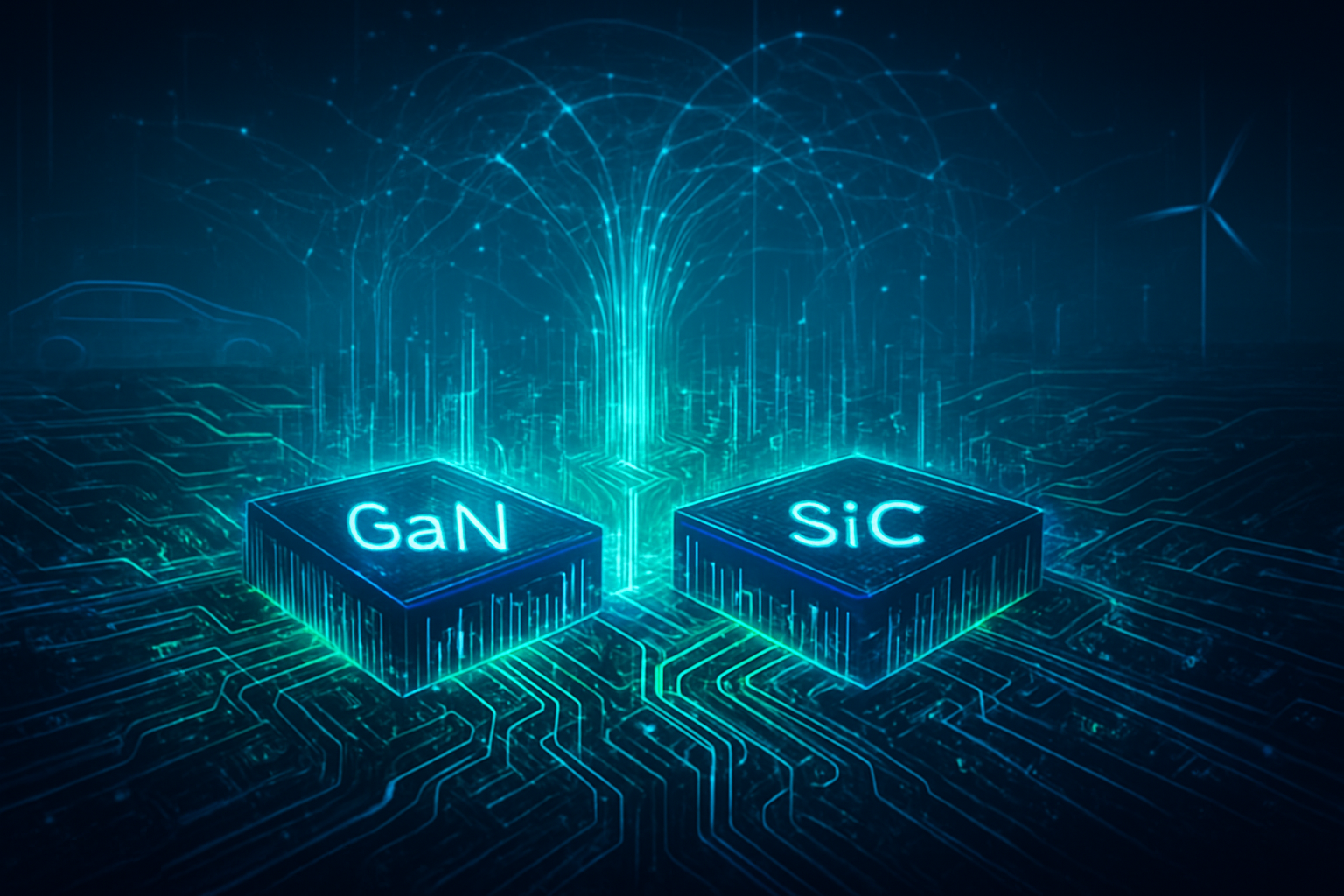
  • Navitas Semiconductor Stock Skyrockets on AI Chip Buzz: GaN Technology Powers the Future of AI

    Navitas Semiconductor Stock Skyrockets on AI Chip Buzz: GaN Technology Powers the Future of AI

    Navitas Semiconductor (NASDAQ: NVTS) has experienced an extraordinary surge in its stock value, driven by intense "AI chip buzz" surrounding its advanced Gallium Nitride (GaN) and Silicon Carbide (SiC) power technologies. The company's recent announcements, particularly its strategic partnership with NVIDIA (NASDAQ: NVDA) to power next-generation AI data centers, have positioned Navitas as a critical enabler in the escalating AI revolution. This rally, which saw Navitas shares soar by as much as 36% in after-hours trading and over 520% year-to-date by mid-October 2025, underscores a pivotal shift in the AI hardware landscape, where efficient power delivery is becoming as crucial as raw processing power.

    The immediate significance of this development lies in Navitas's ability to address the fundamental power bottlenecks threatening to impede AI's exponential growth. As AI models become more complex and computationally intensive, the demand for clean, efficient, and high-density power solutions has skyrocketed. Navitas's wide-bandgap (WBG) semiconductors are engineered to meet these demands, enabling the transition to transformative 800V DC power architectures within AI data centers, a move far beyond legacy 54V systems. This technological leap is not merely an incremental improvement but a foundational change, promising to unlock unprecedented scalability and sustainability for the AI industry.

    The GaN Advantage: Revolutionizing AI Power Delivery

    Navitas Semiconductor's core innovation lies in its proprietary Gallium Nitride (GaN) technology, often complemented by Silicon Carbide (SiC) solutions. These wide bandgap materials offer profound advantages over traditional silicon, particularly for the demanding requirements of AI data centers. Unlike silicon, GaN possesses a wider bandgap, enabling devices to operate at higher voltages and temperatures while switching up to 100 times faster. This dramatically reduces switching losses, allowing for much higher switching frequencies and the use of smaller, more efficient passive components.

    For AI data centers, these technical distinctions translate into tangible benefits: GaN devices exhibit ultra-low resistance and capacitance, minimizing energy losses and boosting efficiency to over 98% in power conversion stages. This leads to a significant reduction in energy consumption and heat generation, thereby cutting operational costs and reducing cooling requirements. Navitas's GaNFast™ power ICs and GaNSense™ technology integrate GaN power FETs with essential control, drive, sensing, and protection circuitry on a single chip. Key offerings include a new 100V GaN FET portfolio optimized for lower-voltage DC-DC stages on GPU power boards, and 650V GaN devices with GaNSafe™ protection, facilitating the migration to 800V DC AI factory architectures. The company has already demonstrated a 3.2kW data center power platform with over 100W/in³ power density and 96.5% efficiency, with plans for 4.5kW and 8-10kW platforms by late 2024.

    Initial reactions from the AI research community and industry experts have been overwhelmingly positive. The collaboration with NVIDIA (NASDAQ: NVDA) has been hailed as a pivotal moment, addressing the critical challenge of delivering immense, clean power to AI accelerators. Experts emphasize Navitas's role in solving AI's impending "power crisis," stating that without such advancements, data centers could literally run out of power, hindering AI's exponential growth. The integration of GaN is viewed as a foundational shift towards sustainability and scalability, significantly mitigating the carbon footprint of AI data centers by cutting energy losses by up to 30% and tripling power density. This market validation underscores Navitas's strategic importance as a leader in next-generation power semiconductors and a key enabler for the future of AI hardware.

    Reshaping the AI Industry: Competitive Dynamics and Market Disruption

    Navitas Semiconductor's GaN technology is poised to profoundly impact the competitive landscape for AI companies, tech giants, and startups. Companies heavily invested in high-performance computing, such as NVIDIA (NASDAQ: NVDA), Alphabet (NASDAQ: GOOGL), Microsoft (NASDAQ: MSFT), Amazon (NASDAQ: AMZN), and Meta (NASDAQ: META), which are all developing vast AI infrastructures, stand to benefit immensely. By adopting Navitas's GaN solutions, these tech giants can achieve enhanced power efficiency, reduced cooling needs, and smaller hardware form factors, leading to increased computational density and lower operational costs. This translates directly into a significant strategic advantage in the race to build and deploy advanced AI.

    Conversely, companies that lag in integrating advanced GaN technologies risk falling behind in critical performance and efficiency metrics. This could disrupt existing product lines that rely on less efficient silicon-based power management, creating a competitive disadvantage. AI hardware manufacturers, particularly those designing AI accelerators, portable AI platforms, and edge inference chips, will find GaN indispensable for creating lighter, cooler, and more energy-efficient designs. Startups focused on innovative power solutions or compact AI hardware will also benefit, using Navitas's integrated GaN ICs as essential building blocks to bring more efficient and powerful products to market faster.

    The potential for disruption is substantial. GaN is actively displacing traditional silicon-based power electronics in high-performance AI applications, as silicon reaches its limits in meeting the demands for high-current, stable power delivery with minimal heat generation. The shift to 800V DC data center architectures, spearheaded by companies like NVIDIA (NASDAQ: NVDA) and enabled by GaN/SiC, is a revolutionary step up from legacy 48V systems. This allows for over 150% more power transport with the same amount of copper, drastically improving energy efficiency and scalability. Navitas's strategic advantage lies in its pure-play focus on wide-bandgap semiconductors, its strong patent portfolio, and its integrated GaN/SiC offerings, positioning it as a leader in a market projected to reach $2.6 billion by 2030 for AI data centers alone. Its partnership with NVIDIA (NASDAQ: NVDA) further solidifies its market position, validating its technology and securing its role in high-growth AI sectors.

    Wider Significance: Powering AI's Sustainable Future

    Navitas Semiconductor's GaN technology represents a critical enabler in the broader AI landscape, addressing one of the most pressing challenges facing the industry: escalating energy consumption. As AI processor power consumption is projected to increase tenfold from 7 GW in 2023 to over 70 GW by 2030, efficient power solutions are not just an advantage but a necessity. Navitas's GaN solutions facilitate the industry's transition to higher voltage architectures like 800V DC systems, which are becoming standard for next-generation AI data centers. This innovation directly tackles the "skyrocketing energy requirements" of AI, making GaN a "game-changing semiconductor material" for energy efficiency and decarbonization in AI data centers.

    The overall impacts on the AI industry and society are profound. For the AI industry, GaN enables enhanced power efficiency and density, leading to more powerful, compact, and energy-efficient AI hardware. This translates into reduced operational costs for hyperscalers and data center operators, decreased cooling requirements, and a significantly lower total cost of ownership (TCO). By resolving critical power bottlenecks, GaN technology accelerates AI model training times and enables the development of even larger and more capable AI models. On a societal level, a primary benefit is its contribution to environmental sustainability. Its inherent efficiency significantly reduces energy waste and the carbon footprint of electronic devices and large-scale systems, making AI a more sustainable technology in the long run.

    Despite these substantial benefits, challenges persist. While GaN improves efficiency, the sheer scale of AI's energy demand remains a significant concern, with some estimates suggesting AI could consume nearly half of all data center energy by 2030. Cost and scalability are also factors, though Navitas is addressing these through partnerships for 200mm GaN-on-Si wafer production. The company's own financial performance, including reported unprofitability in Q2 2025 despite rapid growth, and geopolitical risks related to production facilities, also pose concerns. In terms of its enabling role, Navitas's GaN technology is akin to past hardware breakthroughs like NVIDIA's (NASDAQ: NVDA) introduction of GPUs with CUDA in 2006. Just as GPUs enabled the growth of neural networks by accelerating computation, GaN is providing the "essential hardware backbone" for AI's continued exponential growth by efficiently powering increasingly demanding AI systems, solving a "fundamental power bottleneck that threatened to slow progress."

    The Horizon: Future Developments and Expert Predictions

    The future of Navitas Semiconductor's GaN technology in AI promises continued innovation and expansion. In the near term, Navitas is focused on rapidly scaling its power platforms to meet the surging AI demand. This includes the introduction of 4.5kW platforms combining GaN and SiC, pushing power densities over 130W/in³ and efficiencies above 97%, with plans for 8-10kW platforms by the end of 2024 to support 2025 AI power requirements. The company is also advancing its 800 VDC power devices for NVIDIA's (NASDAQ: NVDA) next-generation AI factory computing platforms and expanding manufacturing capabilities through a partnership with Powerchip Semiconductor Manufacturing Corp (PSMC) for 200mm GaN-on-Si wafer production, with initial 100V family production expected in the first half of 2026.

    Long-term developments include deeper integration of GaN with advanced sensing and control features, leading to smarter and more autonomous power management units. Navitas aims to enable 100x more server rack power capacity by 2030, supporting exascale computing infrastructure. Beyond data centers, GaN and SiC technologies are expected to be transformative for electric vehicles (EVs), solar inverters, energy storage systems, next-generation robotics, and high-frequency communications. Potential applications include powering GPU boards and the entire data center infrastructure from grid to GPU, enhancing EV charging and range, and improving efficiency in consumer electronics.

    Challenges that need to be addressed include securing continuous capital funding for growth, further market education about GaN's benefits, optimizing cost and scalability for high-volume manufacturing, and addressing technical integration complexities. Experts are largely optimistic, predicting exponential market growth for GaN power devices, with Navitas maintaining a leading position. Wide bandgap semiconductors are expected to become the standard for high-power, high-efficiency applications, with the market potentially reaching $26 billion by 2030. Analysts view Navitas's GaN solutions as providing the essential hardware backbone for AI's continued exponential growth, making it more powerful, compact, and energy-efficient, and significantly reducing AI's environmental footprint. The partnership with NVIDIA (NASDAQ: NVDA) is expected to deepen, leading to continuous innovation in power architectures and wide bandbandgap device integration.

    A New Era of AI Infrastructure: Comprehensive Wrap-up

    Navitas Semiconductor's (NASDAQ: NVTS) stock surge is a clear indicator of the market's recognition of its pivotal role in the AI revolution. The company's innovative Gallium Nitride (GaN) and Silicon Carbide (SiC) power technologies are not merely incremental improvements but foundational advancements that are reshaping the very infrastructure upon which advanced AI operates. By enabling higher power efficiency, greater power density, and superior thermal management, Navitas is directly addressing the critical power bottlenecks that threaten to limit AI's exponential growth. Its strategic partnership with NVIDIA (NASDAQ: NVDA) to power 800V DC AI factory architectures underscores the significance of this technological shift, validating GaN as a game-changing material for sustainable and scalable AI.

    This development marks a crucial juncture in AI history, akin to past hardware breakthroughs that unleashed new waves of innovation. Without efficient power delivery, even the most powerful AI chips would be constrained. Navitas's contributions are making AI not only more powerful but also more environmentally sustainable, by significantly reducing the carbon footprint of increasingly energy-intensive AI data centers. The long-term impact could see GaN and SiC becoming the industry standard for power delivery in high-performance computing, solidifying Navitas's position as a critical infrastructure provider across AI, EVs, and renewable energy sectors.

    In the coming weeks and months, investors and industry observers should closely watch for concrete announcements regarding NVIDIA (NASDAQ: NVDA) design wins and orders, which will validate current market valuations. Navitas's financial performance and guidance will provide crucial insights into its ability to scale and achieve profitability in this high-growth phase. The competitive landscape in the wide-bandgap semiconductor market, as well as updates on Navitas's manufacturing capabilities, particularly the transition to 8-inch wafers, will also be key indicators. Finally, the broader industry's adoption rate of 800V DC architectures in data centers will be a testament to the enduring impact of Navitas's innovations. The leadership of Chris Allexandre, who assumed the role of President and CEO on September 1, 2025, will also be critical in navigating this transformative period.


    This content is intended for informational purposes only and represents analysis of current AI developments.

    TokenRing AI delivers enterprise-grade solutions for multi-agent AI workflow orchestration, AI-powered development tools, and seamless remote collaboration platforms.
    For more information, visit https://www.tokenring.ai/.

  • Navitas Semiconductor: Driving the GaN Power IC Revolution for AI, EVs, and Sustainable Tech

    Navitas Semiconductor: Driving the GaN Power IC Revolution for AI, EVs, and Sustainable Tech

    In a rapidly evolving technological landscape where efficiency and power density are paramount, Navitas Semiconductor (NASDAQ: NVTS) has emerged as a pivotal force in the Gallium Nitride (GaN) power IC market. As of October 2025, Navitas is not merely participating but actively leading the charge, redefining power electronics with its integrated GaN solutions. The company's innovations are critical for unlocking the next generation of high-performance computing, particularly in AI data centers, while simultaneously accelerating the transition to electric vehicles (EVs) and more sustainable energy solutions. Navitas's strategic focus on integrating GaN power FETs with crucial control and protection circuitry onto a single chip is fundamentally transforming how power is managed, offering unprecedented gains in speed, efficiency, and miniaturization across a multitude of industries.

    The immediate significance of Navitas's advancements cannot be overstated. With global demand for energy-efficient power solutions escalating, especially with the exponential growth of AI workloads, Navitas's GaNFast™ and GaNSense™ technologies are becoming indispensable. Their collaboration with NVIDIA (NASDAQ: NVDA) to power advanced AI infrastructure, alongside significant inroads into the EV and solar markets, underscores a broadening impact that extends far beyond consumer electronics. By enabling devices to operate faster, cooler, and with a significantly smaller footprint, Navitas is not just optimizing existing technologies but is actively creating pathways for entirely new classes of high-power, high-efficiency applications crucial for the future of technology and environmental sustainability.

    Unpacking the GaN Advantage: Navitas's Technical Prowess

    Navitas Semiconductor's technical leadership in GaN power ICs is built upon a foundation of proprietary innovations that fundamentally differentiate its offerings from traditional silicon-based power semiconductors. At the core of their strategy are the GaNFast™ power ICs, which monolithically integrate GaN power FETs with essential control, drive, sensing, and protection circuitry. This "digital-in, power-out" architecture is a game-changer, simplifying power system design while drastically enhancing speed, efficiency, and reliability. Compared to silicon, GaN's wider bandgap (over three times greater) allows for smaller, faster-switching transistors with ultra-low resistance and capacitance, operating up to 100 times faster.

    Further bolstering their portfolio, Navitas introduced GaNSense™ technology, which embeds real-time, autonomous sensing and protection circuits directly into the IC. This includes lossless current sensing and ultra-fast over-current protection, responding in a mere 30 nanoseconds, thereby eliminating the need for external components that often introduce delays and complexity. For high-reliability sectors, particularly in advanced AI, GaNSafe™ provides robust short-circuit protection and enhanced reliability. The company's strategic acquisition of GeneSiC has also expanded its capabilities into Silicon Carbide (SiC) technology, allowing Navitas to address even higher power and voltage applications, creating a comprehensive wide-bandgap (WBG) portfolio.

    This integrated approach significantly differs from previous power management solutions, which typically relied on discrete silicon components or less integrated GaN designs. By consolidating multiple functions onto a single GaN chip, Navitas reduces component count, board space, and system design complexity, leading to smaller, lighter, and more energy-efficient power supplies. Initial reactions from the AI research community and industry experts have been overwhelmingly positive, with particular excitement around the potential for Navitas's technology to enable the unprecedented power density and efficiency required by next-generation AI data centers and high-performance computing platforms. The ability to manage power at higher voltages and frequencies with greater efficiency is seen as a critical enabler for the continued scaling of AI.

    Reshaping the AI and Tech Landscape: Competitive Implications

    Navitas Semiconductor's advancements in GaN power IC technology are poised to significantly reshape the competitive landscape for AI companies, tech giants, and startups alike. Companies heavily invested in high-performance computing, particularly those developing AI accelerators, servers, and data center infrastructure, stand to benefit immensely. Tech giants like NVIDIA (NASDAQ: NVDA), a key partner for Navitas, are already leveraging GaN and SiC solutions for their "AI factory" computing platforms. This partnership highlights how Navitas's 800V DC power devices are becoming crucial for addressing the unprecedented power density and scalability challenges of modern AI workloads, where traditional 54V systems fall short.

    The competitive implications are profound. Major AI labs and tech companies that adopt Navitas's GaN solutions will gain a significant strategic advantage through enhanced power efficiency, reduced cooling requirements, and smaller form factors for their hardware. This can translate into lower operational costs for data centers, increased computational density, and more compact, powerful AI-enabled devices. Conversely, companies that lag in integrating advanced GaN technologies risk falling behind in performance and efficiency metrics, potentially disrupting existing product lines that rely on less efficient silicon-based power management.

    Market positioning is also shifting. Navitas's strong patent portfolio and integrated GaN/SiC offerings solidify its position as a leader in the wide-bandgap semiconductor space. Its expansion beyond consumer electronics into high-growth sectors like EVs, solar/energy storage, and industrial applications, including new 80-120V GaN devices for 48V DC-DC converters, demonstrates a robust diversification strategy. This allows Navitas to capture market share in multiple critical segments, creating a strong competitive moat. Startups focused on innovative power solutions or compact AI hardware will find Navitas's integrated GaN ICs an essential building block, enabling them to bring more efficient and powerful products to market faster, potentially disrupting incumbents still tied to older silicon technologies.

    Broader Significance: Powering a Sustainable and Intelligent Future

    Navitas Semiconductor's pioneering work in GaN power IC technology extends far beyond incremental improvements; it represents a fundamental shift in the broader semiconductor landscape and aligns perfectly with major global trends towards increased intelligence and sustainability. This development is not just about faster chargers or smaller adapters; it's about enabling the very infrastructure that underpins the future of AI, electric mobility, and renewable energy. The inherent efficiency of GaN significantly reduces energy waste, directly impacting the carbon footprint of countless electronic devices and large-scale systems.

    The impact of widespread GaN adoption, spearheaded by companies like Navitas, is multifaceted. Environmentally, it means less energy consumption, reduced heat generation, and smaller material usage, contributing to greener technology across all applications. Economically, it drives innovation in product design, allows for higher power density in confined spaces (critical for EVs and compact AI servers), and can lead to lower operating costs for enterprises. Socially, it enables more convenient and powerful personal electronics and supports the development of robust, reliable infrastructure for smart cities and advanced industrial automation.

    While the benefits are substantial, potential concerns often revolve around the initial cost premium of GaN technology compared to mature silicon, as well as ensuring robust supply chains for widespread adoption. However, as manufacturing scales—evidenced by Navitas's transition to 8-inch wafers—costs are expected to decrease, making GaN even more competitive. This breakthrough draws comparisons to previous AI milestones that required significant hardware advancements. Just as specialized GPUs became essential for deep learning, efficient wide-bandgap semiconductors are now becoming indispensable for powering increasingly complex and demanding AI systems, marking a new era of hardware-software co-optimization.

    The Road Ahead: Future Developments and Predictions

    The future of GaN power IC technology, with Navitas Semiconductor at its forefront, is brimming with anticipated near-term and long-term developments. In the near term, we can expect to see further integration of GaN with advanced sensing and control features, making power management units even smarter and more autonomous. The collaboration with NVIDIA is likely to deepen, leading to specialized GaN and SiC solutions tailored for even more powerful AI accelerators and modular data center power architectures. We will also see an accelerated rollout of GaN-based onboard chargers and traction inverters in new EV models, driven by the need for longer ranges and faster charging times.

    Long-term, the potential applications and use cases for GaN are vast and transformative. Beyond current applications, GaN is expected to play a crucial role in next-generation robotics, advanced aerospace systems, and high-frequency communications (e.g., 6G infrastructure), where its high-speed switching capabilities and thermal performance are invaluable. The continued scaling of GaN on 8-inch wafers will drive down costs and open up new mass-market opportunities, potentially making GaN ubiquitous in almost all power conversion stages, from consumer devices to grid-scale energy storage.

    However, challenges remain. Further research is needed to push GaN devices to even higher voltage and current ratings without compromising reliability, especially in extremely harsh environments. Standardizing GaN-specific design tools and methodologies will also be critical for broader industry adoption. Experts predict that the market for GaN power devices will continue its exponential growth, with Navitas maintaining a leading position due to its integrated solutions and diverse application portfolio. The convergence of AI, electrification, and sustainable energy will be the primary accelerators, with GaN acting as a foundational technology enabling these paradigm shifts.

    A New Era of Power: Navitas's Enduring Impact

    Navitas Semiconductor's pioneering efforts in Gallium Nitride (GaN) power IC technology mark a significant inflection point in the history of power electronics and its symbiotic relationship with artificial intelligence. The key takeaways are clear: Navitas's integrated GaNFast™, GaNSense™, and GaNSafe™ technologies, complemented by its SiC offerings, are delivering unprecedented levels of efficiency, power density, and reliability. This is not merely an incremental improvement but a foundational shift from silicon that is enabling the next generation of AI data centers, accelerating the EV revolution, and driving global sustainability initiatives.

    This development's significance in AI history cannot be overstated. Just as software algorithms and specialized processors have driven AI advancements, the ability to efficiently power these increasingly demanding systems is equally critical. Navitas's GaN solutions are providing the essential hardware backbone for AI's continued exponential growth, allowing for more powerful, compact, and energy-efficient AI hardware. The implications extend to reducing the massive energy footprint of AI, making it a more sustainable technology in the long run.

    Looking ahead, the long-term impact of Navitas's work will be felt across every sector reliant on power conversion. We are entering an era where power solutions are not just components but strategic enablers of technological progress. What to watch for in the coming weeks and months includes further announcements regarding strategic partnerships in high-growth markets, advancements in GaN manufacturing processes (particularly the transition to 8-inch wafers), and the introduction of even higher-power, more integrated GaN and SiC solutions that push the boundaries of what's possible in power electronics. Navitas is not just building chips; it's building the power infrastructure for an intelligent and sustainable future.


    This content is intended for informational purposes only and represents analysis of current AI developments.

    TokenRing AI delivers enterprise-grade solutions for multi-agent AI workflow orchestration, AI-powered development tools, and seamless remote collaboration platforms.
    For more information, visit https://www.tokenring.ai/.

  • Jericho Energy Ventures and Smartkem Forge Alliance to Power Next-Gen AI Infrastructure

    Jericho Energy Ventures and Smartkem Forge Alliance to Power Next-Gen AI Infrastructure

    In a strategic move poised to redefine the landscape of AI computing, Jericho Energy Ventures (TSX: JEV) and Smartkem (NASDAQ: SMTK) have announced a proposed all-stock business combination. This ambitious partnership, formalized through a non-binding Letter of Intent (LOI) dated October 6, 2025, and publicly announced on October 7, 2025, aims to create a vertically integrated, U.S.-owned and controlled AI infrastructure powerhouse. The combined entity is setting its sights on addressing the burgeoning demand for high-performance, energy-efficient AI data centers, a critical bottleneck in the continued advancement of artificial intelligence.

    This collaboration signifies a proactive step towards building the foundational infrastructure necessary for scalable AI. By merging Smartkem's cutting-edge organic semiconductor technology with Jericho Energy Ventures' robust energy platform, the companies intend to develop solutions that not only enhance AI compute capabilities but also tackle the significant energy consumption challenges associated with modern AI workloads. The timing of this announcement, coinciding with an exponential rise in AI development and deployment, underscores the immediate significance of specialized, sustainable infrastructure in the race for AI supremacy.

    A New Era for AI Semiconductors and Energy Integration

    The core of this transformative partnership lies in the synergistic integration of two distinct yet complementary technologies. Smartkem brings to the table its patented TRUFLEX® organic semiconductor platform. Unlike traditional silicon-based semiconductors, Smartkem's technology utilizes organic semiconductor polymers, enabling low-temperature printing processes compatible with existing manufacturing infrastructure. This innovation promises to deliver low-cost, high-performance components crucial for advanced computing. In the context of AI, this platform is being geared towards advanced AI chip packaging designed to significantly reduce power consumption and heat generation—two of the most pressing issues in large-scale AI deployments. Furthermore, it aims to facilitate low-power optical data transmission, enabling faster and more efficient interconnects within sprawling data centers, and conformable sensors for enhanced environmental monitoring and operational resilience.

    Jericho Energy Ventures complements this with its scalable energy platform, which includes innovations in clean hydrogen technologies. The vision is to integrate Smartkem's advanced organic semiconductor technology directly into Jericho's resilient, low-cost energy infrastructure. This holistic approach aims to create energy-efficient AI data centers engineered from the ground up for next-generation workloads. The departure from previous approaches lies in this vertical integration: instead of simply consuming energy, the infrastructure itself is designed with energy efficiency and resilience as foundational principles, leveraging novel semiconductor materials at the component level. While initial reactions from the broader AI research community are still forming, experts are keenly observing how this novel material science approach will translate into tangible performance and efficiency gains compared to the incremental improvements seen in conventional silicon architectures.

    Reshaping the Competitive Landscape for AI Innovators

    The formation of this new AI-focused semiconductor infrastructure company carries profound implications for a wide array of entities within the AI ecosystem. Companies heavily reliant on massive computational power for training large language models (LLMs), developing complex machine learning algorithms, and running sophisticated AI applications stand to benefit immensely. This includes not only major AI labs and tech giants like Google (NASDAQ: GOOGL), Microsoft (NASDAQ: MSFT), and Amazon (NASDAQ: AMZN) but also a multitude of AI startups that often face prohibitive costs and energy demands when scaling their operations. By offering a more energy-efficient and potentially lower-cost computing foundation, the Smartkem-Jericho partnership could democratize access to high-end AI compute, fostering innovation across the board.

    The competitive implications are significant. If successful, this venture could disrupt the market dominance of established semiconductor manufacturers by introducing a fundamentally different approach to AI hardware. Companies currently focused solely on silicon-based GPU and CPU architectures might face increased pressure to innovate or adapt. For major AI labs, access to such specialized infrastructure could translate into faster model training, reduced operational expenditures, and a competitive edge in research and development. Furthermore, by addressing the energy footprint of AI, this partnership could position early adopters as leaders in sustainable AI, a growing concern for enterprises and governments alike. The strategic advantage lies in providing a complete, optimized stack from energy source to chip packaging, which could offer superior performance-per-watt metrics compared to piecemeal solutions.

    Broader Significance and the Quest for Sustainable AI

    This partnership fits squarely into the broader AI landscape as a crucial response to two overarching trends: the insatiable demand for more AI compute and the urgent need for more sustainable technological solutions. As AI models grow in complexity and size, the energy required to train and run them has skyrocketed, leading to concerns about environmental impact and operational costs. The Smartkem-Jericho initiative directly addresses this by proposing an infrastructure that is inherently more energy-efficient through advanced materials and integrated power solutions. This aligns with a growing industry push towards "Green AI" and responsible technological development.

    The impacts could be far-reaching, potentially accelerating the development of previously compute-bound AI applications and making advanced AI more accessible. Potential concerns might include the scalability of organic semiconductor manufacturing to meet global AI demands and the integration challenges of a novel energy platform with existing data center standards. However, if successful, this could be compared to previous AI milestones that involved foundational hardware shifts, such as the advent of GPUs for parallel processing, which unlocked new levels of AI performance. This venture represents a potential paradigm shift, moving beyond incremental improvements in silicon to a fundamentally new material and architectural approach for AI infrastructure.

    The Road Ahead: Anticipating Future Developments

    Looking ahead, the immediate focus for the combined entity will likely be on finalizing the business combination and rapidly progressing the development and deployment of their integrated AI data center solutions. Near-term developments could include pilot projects with key AI partners, showcasing the performance and energy efficiency of their organic semiconductor-powered AI chips and optical interconnects within Jericho's energy-resilient data centers. In the long term, we can expect to see further optimization of their TRUFLEX® platform for even higher performance and lower power consumption, alongside the expansion of their energy infrastructure to support a growing network of next-generation AI data centers globally.

    Potential applications and use cases on the horizon span across all sectors leveraging AI, from autonomous systems and advanced robotics to personalized medicine and climate modeling, where high-throughput, low-latency, and energy-efficient compute is paramount. Challenges that need to be addressed include achieving mass production scale for organic semiconductors, navigating regulatory landscapes for energy infrastructure, and ensuring seamless integration with diverse AI software stacks. Experts predict that such specialized, vertically integrated infrastructure will become increasingly vital for maintaining the pace of AI innovation, with a strong emphasis on sustainability and cost-effectiveness driving the next wave of technological breakthroughs.

    A Critical Juncture for AI Infrastructure

    The proposed business combination between Jericho Energy Ventures and Smartkem marks a critical juncture in the evolution of AI infrastructure. The key takeaway is the strategic intent to create a U.S.-owned, vertically integrated platform that combines novel organic semiconductor technology with resilient energy solutions. This aims to tackle the twin challenges of escalating AI compute demand and its associated energy footprint, offering a pathway to more scalable, efficient, and sustainable AI.

    This development holds significant potential to be assessed as a pivotal moment in AI history, especially if it successfully demonstrates a viable alternative to traditional silicon-based architectures for high-performance AI. Its long-term impact could reshape how AI models are trained and deployed, making advanced AI more accessible and environmentally responsible. In the coming weeks and months, industry watchers will be keenly observing the finalization of this merger, the initial technical benchmarks of their integrated solutions, and the strategic partnerships they forge to bring this vision to fruition. The success of this venture could well determine the trajectory of AI hardware development for the next decade.

    This content is intended for informational purposes only and represents analysis of current AI developments.

    TokenRing AI delivers enterprise-grade solutions for multi-agent AI workflow orchestration, AI-powered development tools, and seamless remote collaboration platforms.
    For more information, visit https://www.tokenring.ai/.