Tag: AI Economics

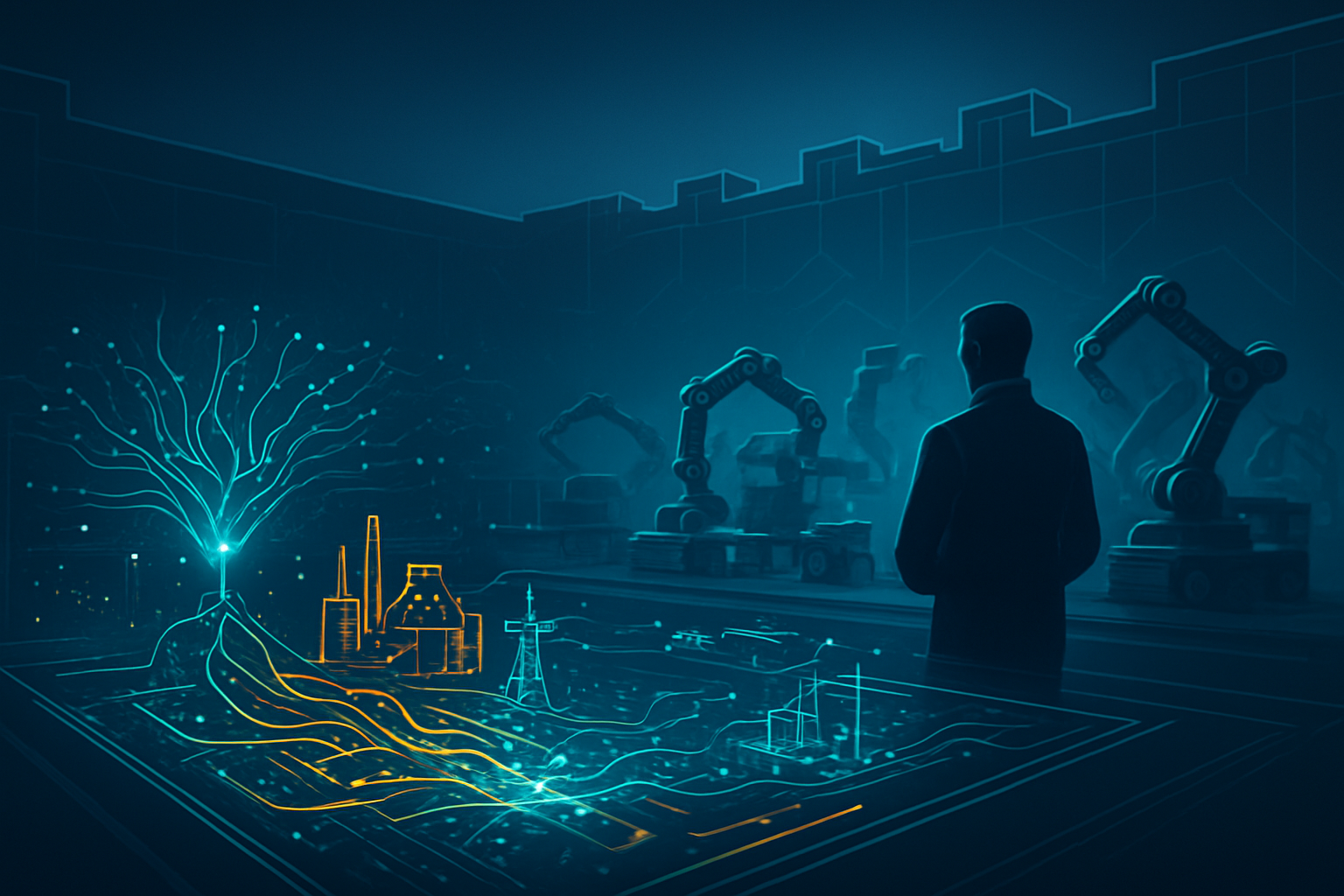
  • The Death of the Entry-Level Labor Model: Alex Karp Declares AI Will Make Mass Low-Skill Immigration Obsolete

    The Death of the Entry-Level Labor Model: Alex Karp Declares AI Will Make Mass Low-Skill Immigration Obsolete

    In a provocative series of statements delivered at the World Economic Forum in Davos this January 2026, Alex Karp, the CEO of Palantir Technologies (NYSE: PLTR), has laid out a radical vision for the future of global labor. Karp argues that the rapid maturation of "Elite AI" will fundamentally dismantle the economic justifications for mass low-skill immigration, a cornerstone of Western economic policy for the last half-century. According to Karp, the ability of high-level AI systems to manage logistics, automate service sectors, and oversee robotic labor will soon make the importation of low-wage human labor not just politically contentious, but economically unnecessary.

    The implications of Karp’s stance are profound, signaling a departure from the traditional Silicon Valley consensus that has long favored open borders to fuel growth. By positioning artificial intelligence as a replacement for the "labor arbitrage" model—where companies move to or import low-cost workers—Karp is framing AI as a tool for national self-sufficiency. This analysis suggests that the winners of the next decade will not be the nations with the largest populations, but those with the most "elite AI technicians" capable of orchestrating autonomous systems to maintain domestic infrastructure.

    From Rote Automation to Cognitive Displacement

    Karp’s argument rests on a specific technical evolution in AI capabilities that reached a tipping point in late 2025. Unlike the first wave of generative AI, which focused on creative assistance, the current "Elite AI" models are designed for "autonomous orchestration." These systems do not just write text; they manage complex, real-world supply chains and physical workflows with minimal human oversight. Karp highlights that while early AI was a "productivity tool" for workers, the newest iterations are "agentic replacements" for entire administrative and low-skill service layers. This technical leap allows a single technician to oversee a fleet of AI agents that perform the work once requiring hundreds of entry-level employees.

    Furthermore, Karp makes a startling technical distinction regarding the "blast radius" of AI displacement. He asserts that the most vulnerable workers are not those in vocational trades, but rather the university-educated "elite" whose work involves processing information, legal discovery, or basic software engineering. Because AI can now navigate chaotic digital environments better than a mid-level manager, the economic premium on traditional white-collar "knowledge work" is collapsing. In contrast, Karp notes that AI still struggles with "unstructured physical chaos," meaning a domestic plumber or electrician is technically harder to automate than a junior data analyst or a visa-dependent administrative assistant.

    This shift represents a reversal of the "Moravec’s Paradox," which previously suggested that high-level reasoning required little computation but low-level sensorimotor skills required enormous resources. By 2026, the cost of deploying a sophisticated LLM-based agent to handle logistics has dropped significantly below the cost of supporting and housing a human worker. The industry response to Karp's technical assessment has been polarized; while some researchers at OpenAI and Google (NASDAQ: GOOGL) argue that AI will create new categories of low-skill "human-in-the-loop" jobs, Karp maintains that these roles are merely a "transitional friction" that will vanish as model reliability hits 99.9%.

    Palantir’s Strategic Pivot and the Industry Fallout

    For Palantir, this philosophy is directly baked into their product roadmap. The company has moved aggressively beyond data analytics into "AI Warrooms" and autonomous border management systems. By providing the digital backbone for agencies like Immigration and Customs Enforcement (ICE), Palantir is positioning itself as the essential utility for a world where nations are looking to "harden" their borders while maintaining economic output. This stance has given Palantir a distinct competitive advantage in government contracting, particularly within the current U.S. administration, which has prioritized "technological sovereignty" over globalist labor models.

    Other tech giants are now forced to reckon with this "nationalist AI" framework. While Microsoft (NASDAQ: MSFT) and Amazon (NASDAQ: AMZN) have historically benefited from a large, mobile global workforce, the rising cost of social infrastructure and the increasing efficiency of AI are changing the calculus. If Karp is correct, the strategic advantage shifts away from companies that manage massive human workforces toward those that own the "compute" and the proprietary models. We are seeing a shift where NVIDIA (NASDAQ: NVDA) hardware is increasingly viewed as a substitute for human migration, as "sovereign AI" clusters allow countries to automate their internal economies without demographic expansion.

    The disruption extends to the startup ecosystem as well. A new wave of "Lean Industrial" startups is emerging, aiming to use Palantir’s logic to build fully autonomous factories and farms. These ventures are specifically designed to operate in regions with shrinking populations or restrictive immigration laws. The market positioning for these companies is no longer about "disrupting" an industry, but about providing "labor insurance" against the volatility of global migration patterns and geopolitical shifts.

    Political Realignment and the "Anti-Woke" Tech Movement

    Karp’s comments signify a broader political and cultural realignment within the technology sector. By labeling Palantir’s technology as "anti-woke" and leaning into border security, Karp is breaking the long-standing alliance between Big Tech and progressive social policies. This "techno-realism" argues that the primary responsibility of an AI company is to strengthen the nation-state, even if that means facilitating deportations or restricting labor flows. It marks a transition from AI as a "global equalizer" to AI as a "national fortress."

    This trend reflects a growing concern among policymakers about the "social cost" of immigration versus the "capital cost" of AI. As housing crises and infrastructure strain affect Western nations, the promise of maintaining GDP growth through AI-driven productivity rather than population growth is becoming an irresistible political narrative. Karp has tapped into a burgeoning sentiment that the "elite" have used immigration to suppress domestic wages while ignoring the transformative power of the very technology they were building.

    However, this "fortress" approach is not without its detractors. Critics argue that Karp’s vision could lead to a "deglobalization spiral," where the lack of human movement stifles cultural exchange and creates a rigid, automated society. There are also concerns that this model assumes AI will work perfectly in all scenarios; a failure in an automated logistics chain or an autonomous farm could lead to catastrophic shortages if the human "safety net" of labor has been systematically removed or disincentivized.

    The Rise of the "Hyper-Specialist" Visa

    Looking ahead to 2027 and beyond, the focus of immigration policy is expected to shift toward what Karp calls "hyper-specialized talent." We are likely to see the end of general-purpose H-1B visas in favor of highly targeted "O-1" style visas for individuals with "outlier" technical aptitude in fields like quantum error correction or bio-digital synthesis. Governments will likely implement "AI-readiness" tests for immigrants, ensuring that anyone entering the country possesses skills that the domestic AI infrastructure cannot yet replicate.

    In the near term, we can expect Palantir and its peers to release "Sovereign OS" platforms—software suites designed to help mid-sized nations manage their entire civil service and infrastructure through AI agents. The challenge will be the "transition period." As AI begins to displace low-skill roles faster than the political system can adjust, we may see a period of intense social friction. Experts predict that the next eighteen months will be defined by "labor-substitution audits," where corporations are pressured to prove why they are hiring foreign labor instead of deploying available AI solutions.

    Summary of Key Takeaways

    Alex Karp’s Davos 2026 proclamation marks a watershed moment in the intersection of technology and geopolitics. By arguing that "elite AI technicians" are the only essential labor imports for a modern economy, he has effectively declared the end of the 20th-century economic model. The key takeaway is that AI is no longer just an industry; it is becoming the primary mechanism for national survival and economic strategy.

    In the coming months, keep a close watch on the "Sovereign AI" initiatives being launched in Europe and the United States. If these programs successfully demonstrate that they can offset labor shortages without increasing migration, Karp’s "economic obsolescence" theory will move from a provocative stance to an established global policy. The long-term impact may be a world that is more automated and more bordered, where the "wealth of nations" is measured in FLOPS and the brilliance of a few thousand elite technicians, rather than the size of the working class.


    This content is intended for informational purposes only and represents analysis of current AI developments.

    TokenRing AI delivers enterprise-grade solutions for multi-agent AI workflow orchestration, AI-powered development tools, and seamless remote collaboration platforms.
    For more information, visit https://www.tokenring.ai/.

  • The DeepSeek Revolution: How a $6 Million Model Shattered the AI “Compute Moat”

    The DeepSeek Revolution: How a $6 Million Model Shattered the AI “Compute Moat”

    The artificial intelligence landscape changed forever on January 27, 2025—a day now etched in financial history as the "DeepSeek Shock." When the Chinese startup DeepSeek released its V3 and R1 models, it didn't just provide another alternative to Western LLMs; it fundamentally dismantled the economic assumptions that had governed the industry for three years. By achieving performance parity with OpenAI’s GPT-4o and o1-preview at approximately 1/10th of the training cost and compute budget, DeepSeek proved that intelligence is not merely a function of capital and raw hardware, but of extreme engineering ingenuity.

    As we look back from early 2026, the immediate significance of DeepSeek-V3 is clear: it ended the era of "brute force scaling." While American tech giants were planning multi-billion dollar data centers, DeepSeek produced a world-class model for just $5.58 million. This development triggered a massive market re-evaluation, leading to a record-breaking $593 billion single-day loss for NVIDIA (NASDAQ: NVDA) and forcing a strategic pivot across Silicon Valley. The "compute moat"—the idea that only the wealthiest companies could build frontier AI—has evaporated, replaced by a new era of hyper-efficient, "sovereign" AI.

    Technical Mastery: Engineering Around the Sanction Wall

    DeepSeek-V3 is a Mixture-of-Experts (MoE) model featuring 671 billion total parameters, but its true genius lies in its efficiency. During inference, the model activates only 37 billion parameters per token, allowing it to run with a speed and cost-effectiveness that rivals much smaller models. The core innovation is Multi-head Latent Attention (MLA), a breakthrough architecture that reduces the memory footprint of the Key-Value (KV) cache by a staggering 93%. This allowed DeepSeek to maintain a massive 128k context window even while operating on restricted hardware, effectively bypassing the memory bottlenecks that plague traditional Transformer models.

    Perhaps most impressive was DeepSeek’s ability to thrive under the weight of U.S. export controls. Denied access to NVIDIA’s flagship H100 chips, the team utilized "nerfed" H800 GPUs, which have significantly lower interconnect speeds. To overcome this, they developed "DualPipe," a custom pipeline parallelism algorithm that overlaps computation and communication with near-perfect efficiency. By writing custom kernels in PTX (Parallel Thread Execution) assembly and bypassing standard CUDA libraries, DeepSeek squeezed performance out of the H800s that many Western labs struggled to achieve with the full power of the H100.

    The results spoke for themselves. In technical benchmarks, DeepSeek-V3 outperformed GPT-4o in mathematics (MATH-500) and coding (HumanEval), while matching it in general knowledge (MMLU). The AI research community was stunned not just by the scores, but by the transparency; DeepSeek released a comprehensive 60-page technical paper detailing their training process, a move that contrasted sharply with the increasingly "closed" nature of OpenAI and Google (NASDAQ: GOOGL). Experts like Andrej Karpathy noted that DeepSeek had made frontier-grade AI look "easy" on a "joke of a budget," signaling a shift in the global AI hierarchy.

    The Market Aftershock: A Strategic Pivot for Big Tech

    The financial impact of DeepSeek’s efficiency was immediate and devastating for the "scaling" narrative. The January 2025 stock market crash saw NVIDIA’s valuation plummet as investors questioned whether the demand for massive GPU clusters would persist if models could be trained for millions rather than billions. Throughout 2025, Microsoft (NASDAQ: MSFT) responded by diversifying its portfolio, loosening its exclusive ties to OpenAI to integrate more cost-effective models into its Azure cloud infrastructure. This "strategic distancing" allowed Microsoft to capture the burgeoning market for "agentic AI"—autonomous workflows where the high token costs of GPT-4o were previously prohibitive.

    OpenAI, meanwhile, was forced into a radical restructuring. To maintain its lead through sheer scale, the company transitioned to a for-profit Public Benefit Corporation in late 2025, seeking the hundreds of billions in capital required for its "Stargate" supercomputer project. However, the pricing pressure from DeepSeek was relentless. DeepSeek’s API entered the market at roughly $0.56 per million tokens—nearly 20 times cheaper than GPT-4o at the time—forcing OpenAI and Alphabet to slash their own margins repeatedly to remain competitive in the developer market.

    The disruption extended to the startup ecosystem as well. A new wave of "efficiency-first" AI companies emerged in 2025, moving away from the "foundation model" race and toward specialized, distilled models for specific industries. Companies that had previously bet their entire business model on being "wrappers" for expensive APIs found themselves either obsolete or forced to migrate to DeepSeek’s open-weights architecture to survive. The strategic advantage shifted from those who owned the most GPUs to those who possessed the most sophisticated software-hardware co-design capabilities.

    Geopolitics and the End of the "Compute Moat"

    The broader significance of DeepSeek-V3 lies in its role as a geopolitical equalizer. For years, the U.S. strategy to maintain AI dominance relied on "compute sovereignty"—using export bans to deny China the hardware necessary for frontier AI. DeepSeek proved that software innovation can effectively "subsidize" hardware deficiencies. This realization has led to a re-evaluation of AI trends, moving away from the "bigger is better" philosophy toward a focus on algorithmic efficiency and data quality. The "DeepSeek Shock" demonstrated that a small, highly talented team could out-engineer the world’s largest corporations, provided they were forced to innovate by necessity.

    However, this breakthrough has also raised significant concerns regarding AI safety and proliferation. By releasing the weights of such a powerful model, DeepSeek effectively democratized frontier-level intelligence, making it accessible to any state or non-state actor with a modest server cluster. This has accelerated the debate over "open vs. closed" AI, with figures like Meta (NASDAQ: META) Chief AI Scientist Yann LeCun arguing that open-source models are essential for global security and innovation, while others fear the lack of guardrails on such powerful, decentralized systems.

    In the context of AI history, DeepSeek-V3 is often compared to the "AlphaGo moment" or the release of GPT-3. While those milestones proved what AI could do, DeepSeek-V3 proved how cheaply it could be done. It shattered the illusion that AGI is a luxury good reserved for the elite. By early 2026, "Sovereign AI"—the movement for nations to build their own models on their own terms—has become the dominant global trend, fueled by the blueprint DeepSeek provided.

    The Horizon: DeepSeek V4 and the Era of Physical AI

    As we enter 2026, the industry is bracing for the next chapter. DeepSeek is widely expected to release its V4 model in mid-February, timed with the Lunar New Year. Early leaks suggest V4 will utilize a new "Manifold-Constrained Hyper-Connections" (mHC) architecture, designed to solve the training instability that occurs when scaling MoE models beyond the trillion-parameter mark. If V4 manages to leapfrog the upcoming GPT-5 in reasoning and coding while maintaining its signature cost-efficiency, the pressure on Silicon Valley will reach an all-time high.

    The next frontier for these hyper-efficient models is "Physical AI" and robotics. With inference costs now negligible, the focus has shifted to integrating these "brains" into edge devices and autonomous systems. Experts predict that 2026 will be the year of the "Agentic OS," where models like DeepSeek-V4 don't just answer questions but manage entire digital and physical workflows. The challenge remains in bridging the gap between digital reasoning and physical interaction—a domain where NVIDIA is currently betting its future with the "Vera Rubin" platform.

    A New Chapter in Artificial Intelligence

    The impact of DeepSeek-V3 cannot be overstated. It was the catalyst that transformed AI from a capital-intensive arms race into a high-stakes engineering competition. Key takeaways from this era include the realization that algorithmic efficiency can overcome hardware limitations, and that the economic barrier to entry for frontier AI is far lower than previously believed. DeepSeek didn't just build a better model; they changed the math of the entire industry.

    In the coming months, the world will watch closely as DeepSeek V4 debuts and as Western labs respond with their own efficiency-focused architectures. The "DeepSeek Shock" of 2025 was not a one-time event, but the beginning of a permanent shift in the global balance of technological power. As AI becomes cheaper, faster, and more accessible, the focus will inevitably move from who has the most chips to who can use them most brilliantly.


    This content is intended for informational purposes only and represents analysis of current AI developments.

    TokenRing AI delivers enterprise-grade solutions for multi-agent AI workflow orchestration, AI-powered development tools, and seamless remote collaboration platforms.
    For more information, visit https://www.tokenring.ai/.
  • The 2026 Unit Economics Reckoning: Proving AI’s Profitability

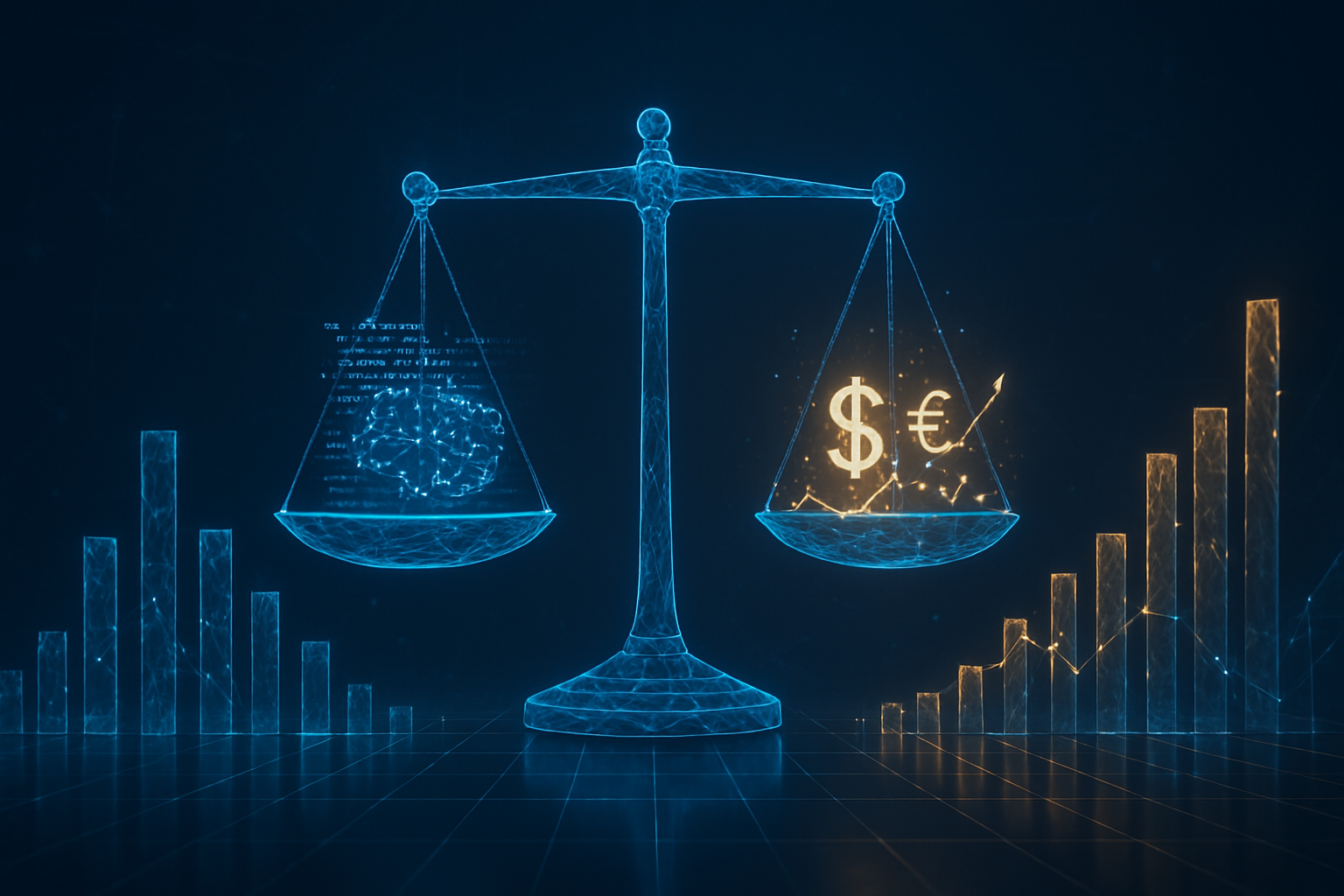
    The 2026 Unit Economics Reckoning: Proving AI’s Profitability

    As of January 5, 2026, the artificial intelligence industry has officially transitioned from the "build-at-all-costs" era of speculative hype into a disciplined "Efficiency Era." This shift, often referred to by industry analysts as the "Premium Reckoning," marks the moment when the blank checks of 2023 and 2024 were finally called in. Investors, boards, and Chief Financial Officers are no longer satisfied with "vanity pilots" or impressive demos; they are demanding a clear, measurable return on investment (ROI) and sustainable unit economics that prove AI can be a profit center rather than a bottomless pit of capital expenditure.

    The immediate significance of this reckoning is a fundamental revaluation of the AI stack. While the previous two years were defined by the race to train the largest models, 2025 and the beginning of 2026 have seen a pivot toward inference—the actual running of these models in production. With inference now accounting for an estimated 80% to 90% of total AI compute consumption, the industry is hyper-focused on the "Great Token Deflation," where the cost of delivering intelligence has plummeted, forcing companies to prove they can turn these cheaper tokens into high-margin revenue.

    The Great Token Deflation and the Rise of Efficient Inference

    The technical landscape of 2026 is defined by a staggering collapse in the cost of intelligence. In early 2024, achieving GPT-4 level performance cost approximately $60 per million tokens; by the start of 2026, that cost has plummeted by over 98%, with high-efficiency models now delivering comparable reasoning for as little as $0.30 to $0.75 per million tokens. This deflation has been driven by a "triple threat" of technical advancements: specialized inference silicon, advanced quantization, and the strategic deployment of Small Language Models (SLMs).

    NVIDIA (NASDAQ:NVDA) has maintained its dominance by shifting its architecture to meet this demand. The Blackwell B200 and GB200 systems introduced native FP4 (4-bit floating point) precision, which effectively tripled throughput and delivered a 15x ROI for inference-heavy workloads compared to previous generations. Simultaneously, the industry has embraced "hybrid architectures." Rather than routing every query to a massive frontier model, enterprises now use "router" agents that send 80% of routine tasks to SLMs—models with 1 billion to 8 billion parameters like Microsoft’s Phi-3 or Google’s Gemma 2—which operate at 1/10th the cost of their larger siblings.

    This technical shift differs from previous approaches by prioritizing "compute-per-dollar" over "parameters-at-any-cost." The AI research community has largely pivoted from "Scaling Laws" for training to "Inference-Time Scaling," where models use more compute during the thinking phase rather than just the training phase. Industry experts note that this has democratized high-tier performance, as techniques like NVFP4 and QLoRA (Quantized Low-Rank Adaptation) allow 70-billion-parameter models to run on single-GPU instances, drastically lowering the barrier to entry for self-hosted enterprise AI.

    The Margin War: Winners and Losers in the New Economy

    The reckoning has created a clear divide between "monetizers" and "storytellers." Microsoft (NASDAQ:MSFT) has emerged as a primary beneficiary, successfully transitioning into an AI-first platform. By early 2026, Azure's growth has consistently hovered around 40%, driven by its early integration of OpenAI services and its ability to upsell "Copilot" seats to its massive enterprise base. Similarly, Alphabet (NASDAQ:GOOGL) saw a surge in operating income in late 2025, as Google Cloud's decade-long investment in custom Tensor Processing Units (TPUs) provided a significant price-performance edge in the ongoing API price wars.

    However, the pressure on pure-play AI labs has intensified. OpenAI, despite reaching an estimated $14 billion in revenue for 2025, continues to face massive operational overhead. The company’s recent $40 billion investment from SoftBank (OTC:SFTBY) in late 2025 was seen as a bridge to a potential $100 billion-plus IPO, but it came with strict mandates for profitability. Meanwhile, Amazon (NASDAQ:AMZN) has seen AWS margins climb toward 40% as its custom Trainium and Inferentia chips finally gained mainstream adoption, offering a 30% to 50% cost advantage over rented general-purpose GPUs.

    For startups, the "burn multiple"—the ratio of net burn to new Annual Recurring Revenue (ARR)—has replaced "user growth" as the most important metric. The trend of "tiny teams," where startups of fewer than 20 people generate millions in revenue using agentic workflows, has disrupted the traditional VC model. Many mid-tier AI companies that failed to find a "unit-economic fit" by late 2025 are currently being consolidated or wound down, leading to a healthier, albeit leaner, ecosystem.

    From Hype to Utility: The Wider Economic Significance

    The 2026 reckoning mirrors the post-Dot-com era, where the initial infrastructure build-out was followed by a period of intense focus on business models. The "AI honeymoon" ended when CFOs began writing off the 42% of AI initiatives that failed to show ROI by late 2025. This has led to a more pragmatic AI landscape where the technology is viewed as a utility—like electricity or cloud computing—rather than a magical solution.

    One of the most significant impacts has been on the labor market and productivity. Instead of the mass unemployment predicted by some in 2023, 2026 has seen the rise of "Agentic Orchestration." Companies are now using AI to automate the "middle-office" tasks that were previously too expensive to digitize. This shift has raised concerns about the "hollowing out" of entry-level white-collar roles, but it has also allowed firms to scale revenue without scaling headcount, a key component of the improved unit economics being seen across the S&P 500.

    Comparisons to previous milestones, such as the 2012 AlexNet moment or the 2022 ChatGPT launch, suggest that 2026 is the year of "Economic Maturity." While the technology is no longer "new," its integration into the bedrock of global finance and operations is now irreversible. The potential concern remains the "compute moat"—the idea that only the wealthiest companies can afford the massive capex required for frontier models—though the rise of efficient training methods and SLMs is providing a necessary counterweight to this centralization.

    The Road Ahead: Agentic Workflows and Edge AI

    Looking toward the remainder of 2026 and into 2027, the focus is shifting toward "Vertical AI" and "Edge AI." As the cost of tokens continues to drop, the next frontier is running sophisticated models locally on devices to eliminate latency and further reduce cloud costs. Apple (NASDAQ:AAPL) and various PC manufacturers are expected to launch a new generation of "Neural-First" hardware in late 2026 that will handle complex reasoning locally, fundamentally changing the unit economics for consumer AI apps.

    Experts predict that the next major breakthrough will be the "Self-Paying Agent." These are AI systems capable of performing complex, multi-step tasks—such as procurement, customer support, or software development—where the cost of the AI's "labor" is a fraction of the value it creates. The challenge remains in the "reliability gap"; as AI becomes cheaper, the cost of an AI error becomes the primary bottleneck to adoption. Addressing this through automated "evals" and verification layers will be the primary focus of R&D in the coming months.

    Summary of the Efficiency Era

    The 2026 Unit Economics Reckoning has successfully separated AI's transformative potential from its initial speculative excesses. The key takeaways from this period are the 98% reduction in token costs, the dominance of inference over training, and the rise of the "Efficiency Era" where profit margins are the ultimate validator of technology. This development is perhaps the most significant in AI history because it proves that the "Intelligence Age" is not just technically possible, but economically sustainable.

    In the coming weeks and months, the industry will be watching for the anticipated OpenAI IPO filing and the next round of quarterly earnings from the "Hyperscalers" (Microsoft, Google, and Amazon). These reports will provide the final confirmation of whether the shift toward agentic workflows and specialized silicon has permanently fixed the AI industry's margin problem. For now, the message to the market is clear: the time for experimentation is over, and the era of profitable AI has begun.


    This content is intended for informational purposes only and represents analysis of current AI developments.

    TokenRing AI delivers enterprise-grade solutions for multi-agent AI workflow orchestration, AI-powered development tools, and seamless remote collaboration platforms.
    For more information, visit https://www.tokenring.ai/.