Tag: AI Energy Crisis

  • The Brain-Inspired Breakthrough: How Intel’s ‘Hala Point’ is Solving AI’s Looming Energy Crisis

    The Brain-Inspired Breakthrough: How Intel’s ‘Hala Point’ is Solving AI’s Looming Energy Crisis

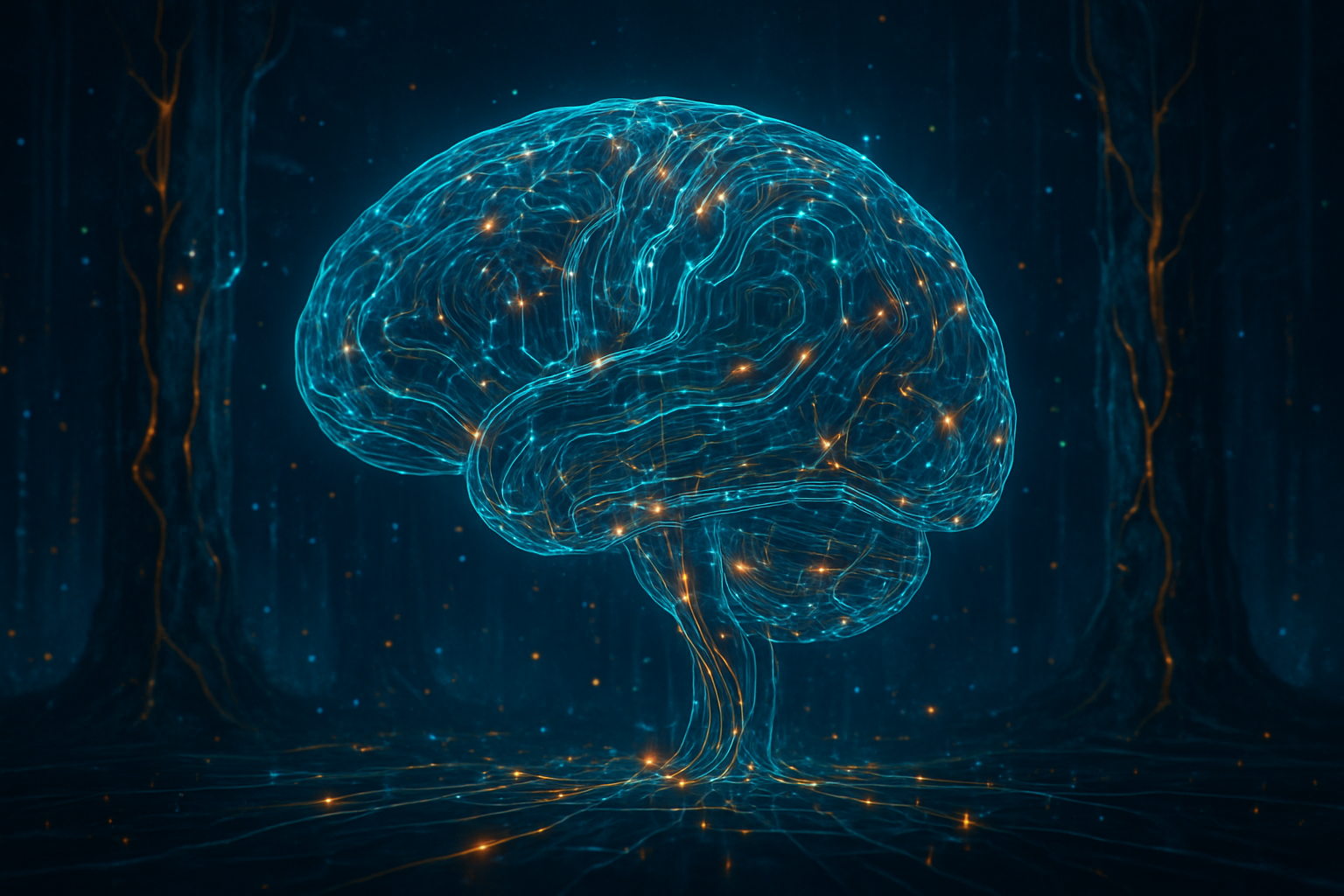
    As the global demand for artificial intelligence continues to spiral, the industry has hit a formidable roadblock: the "energy wall." With massive Large Language Models (LLMs) consuming megawatts of power and pushing data center grids to their breaking point, the race for a more sustainable computing architecture has moved from the fringes of research to the forefront of corporate strategy. At the center of this revolution is Intel Corporation (NASDAQ: INTC) and its groundbreaking "Hala Point" system, a neuromorphic computer that mimics the efficiency of the human brain to process data at a fraction of the energy cost of traditional chips.

    Unveiled as the world’s largest integrated neuromorphic system, Hala Point represents a fundamental shift in how we build intelligent machines. By moving away from the "Von Neumann" architecture—which has defined computing for nearly 80 years—and embracing "brain-inspired" hardware, engineers are proving that the future of AI isn't just about more power, but about smarter architecture. As of early 2026, the success of systems like Hala Point is forcing a re-evaluation of the dominance of the traditional GPU and signaling a new era of "Hybrid AI" where efficiency is the ultimate metric of performance.

    The Architecture of a Digital Brain: Scaling Loihi 2

    Hala Point is built on Intel’s second-generation neuromorphic research chip, Loihi 2, and represents a staggering 10-fold increase in neuron capacity over its predecessor, Pohoiki Springs. Manufactured on the Intel 4 process node, the system packs 1,152 Loihi 2 processors into a chassis roughly the size of a microwave oven. The technical specifications are unprecedented: it supports up to 1.15 billion artificial neurons and 128 billion synapses—roughly the neural complexity of an owl’s brain. This is achieved through 140,544 neuromorphic processing cores, capable of 20 quadrillion operations per second (20 petaops).

    What sets Hala Point apart from traditional hardware is its use of Spiking Neural Networks (SNNs) and in-memory computing. In a standard GPU, such as those produced by NVIDIA (NASDAQ: NVDA), energy is wasted constantly moving data between a separate processor and memory unit. In contrast, Hala Point integrates memory directly into the neural cores. Furthermore, its "event-driven" nature means neurons only consume power when they "fire" or spike in response to data, mirroring biological efficiency. Initial benchmarks have shown that for specific optimization and sensory tasks, Hala Point is up to 100 times more energy-efficient than traditional GPUs while operating 50 times faster.

    The AI research community has reacted to Hala Point with a mix of cautious optimism and strategic pivot. While traditional GPUs remain the "muscle" for training massive transformers, experts note that Hala Point is the "brain" for real-time inference and sensory perception. High-profile labs, including Sandia National Laboratories, have already begun using the system to solve complex scientific modeling problems that were previously too energy-intensive for even the most advanced supercomputers. The shift is clear: the industry is no longer just looking for raw FLOPs; it is looking for "brain-scale" efficiency.

    The Strategic Shift: Disruption in the Data Center

    The emergence of neuromorphic breakthroughs is creating a new competitive landscape for tech giants. While NVIDIA (NASDAQ: NVDA) continues to dominate the training market with its Blackwell and upcoming Rubin architectures, the high cost of running these chips is driving cloud providers like Microsoft (NASDAQ: MSFT), Amazon (NASDAQ: AMZN), and Alphabet (NASDAQ: GOOGL) to explore neuromorphic alternatives. Analysts project that by late 2026, the market for neuromorphic computing could reach nearly $10 billion, driven by the need for "Hybrid AI" data centers that use specialized chips for different parts of the AI lifecycle.

    This development poses a strategic challenge to the established GPU-centric order. For edge computing—such as autonomous drones, robotics, and "always-on" industrial sensors—neuromorphic hardware offers a decisive advantage. Startups like BrainChip (ASX: BRN) and the Sam Altman-backed Rain AI are already competing to bring neuromorphic "Synaptic Processing Units" to market, aiming to displace traditional silicon in battery-operated devices. Even IBM (NYSE: IBM) has entered the fray with its NorthPole chip, which claims to be 25 times more efficient than standard GPUs for vision-based AI tasks.

    For the major AI labs, the arrival of Hala Point-scale systems means a shift in research priorities. Instead of simply scaling model parameters, researchers are now focusing on "sparsity" and "temporal dynamics"—mathematical concepts that allow AI to run efficiently on neuromorphic hardware. This has the potential to disrupt the current SaaS model of AI; if high-performance inference can be done locally on low-power neuromorphic chips, the reliance on massive, centralized cloud clusters may begin to wane, giving a strategic advantage to hardware manufacturers who can integrate these "digital brains" into consumer devices.

    Beyond the Energy Wall: The Wider Significance for Society

    The significance of Hala Point extends far beyond a simple hardware upgrade; it is a critical response to a global sustainability crisis. As of 2026, the energy consumption of AI data centers has become a primary concern for climate goals, with some estimates suggesting AI could account for nearly 4% of global electricity demand by 2030. Neuromorphic computing offers a "green" path forward, enabling the continued growth of AI capabilities without a corresponding explosion in carbon emissions. By achieving "human-brain-like" efficiency, Intel is demonstrating that the path to Artificial General Intelligence (AGI) may require a biological blueprint.

    This transition also addresses the "latency gap" in real-world AI applications. Traditional AI systems often struggle with real-time adaptation because they rely on batch processing. Neuromorphic systems, however, support "continuous learning," allowing an AI to update its knowledge in real-time as it interacts with the world. This has profound implications for medical prosthetics that can "feel" and react with human-like speed, or autonomous vehicles that can navigate unpredictable environments with lower power overhead.

    However, the shift is not without its hurdles. The "software gap" remains the biggest challenge. Most existing AI software is designed for the linear, predictable flow of GPUs, not the asynchronous, spiking nature of neuromorphic chips. While Intel’s open-source Lava framework is gaining traction as a standard for neuromorphic programming, the transition requires a massive re-skilling of the AI workforce. Despite these challenges, the broader trend is undeniable: we are moving toward a world where the distinction between "artificial" and "biological" computation continues to blur.

    The Future of Neuromorphic: Toward Loihi 3 and AGI

    Looking ahead, the roadmap for neuromorphic computing is accelerating. Intel has already begun teasing its third-generation neuromorphic chip, Loihi 3, which is expected to debut in late 2026 or early 2027. Preliminary reports suggest a 4x increase in synaptic density and, perhaps most importantly, native support for "transformer-like" attention mechanisms. This would allow neuromorphic hardware to run Large Language Models directly, potentially slashing the energy cost of running tools like ChatGPT by orders of magnitude.

    In the near term, we expect to see more "Hybrid" systems where a traditional GPU handles the heavy lifting of initial training, while a neuromorphic system like Hala Point handles the continuous learning and real-time interaction. We are also likely to see the first commercial deployments of neuromorphic-integrated robotics in logistics and healthcare. Experts predict that within the next five years, neuromorphic "accelerators" will become as common in smartphones as image processors are today, providing "always-on" intelligence that doesn't drain the battery.

    A New Chapter in Computational History

    Intel’s Hala Point is more than just a milestone for the company; it is a milestone for the entire field of computer science. By successfully scaling brain-inspired architecture to over a billion neurons, Intel has provided a viable solution to the energy crisis that threatened to stall the AI revolution. It represents a pivot from the "brute force" era of AI to an era of "architectural elegance," where the constraints of physics and biology guide the next generation of digital intelligence.

    As we move through 2026, the industry should keep a close eye on the adoption rates of the Lava framework and the results of pilot programs at Sandia and other research institutions. The "energy wall" was once seen as an insurmountable barrier to the future of AI. With the engineering breakthroughs exemplified by Hala Point, that wall is finally starting to crumble.


    This content is intended for informational purposes only and represents analysis of current AI developments.

    TokenRing AI delivers enterprise-grade solutions for multi-agent AI workflow orchestration, AI-powered development tools, and seamless remote collaboration platforms.
    For more information, visit https://www.tokenring.ai/.
  • From Earth to Orbit: Jeff Bezos Unveils Radical Space-Based Solution to AI’s Looming Energy Crisis

    From Earth to Orbit: Jeff Bezos Unveils Radical Space-Based Solution to AI’s Looming Energy Crisis

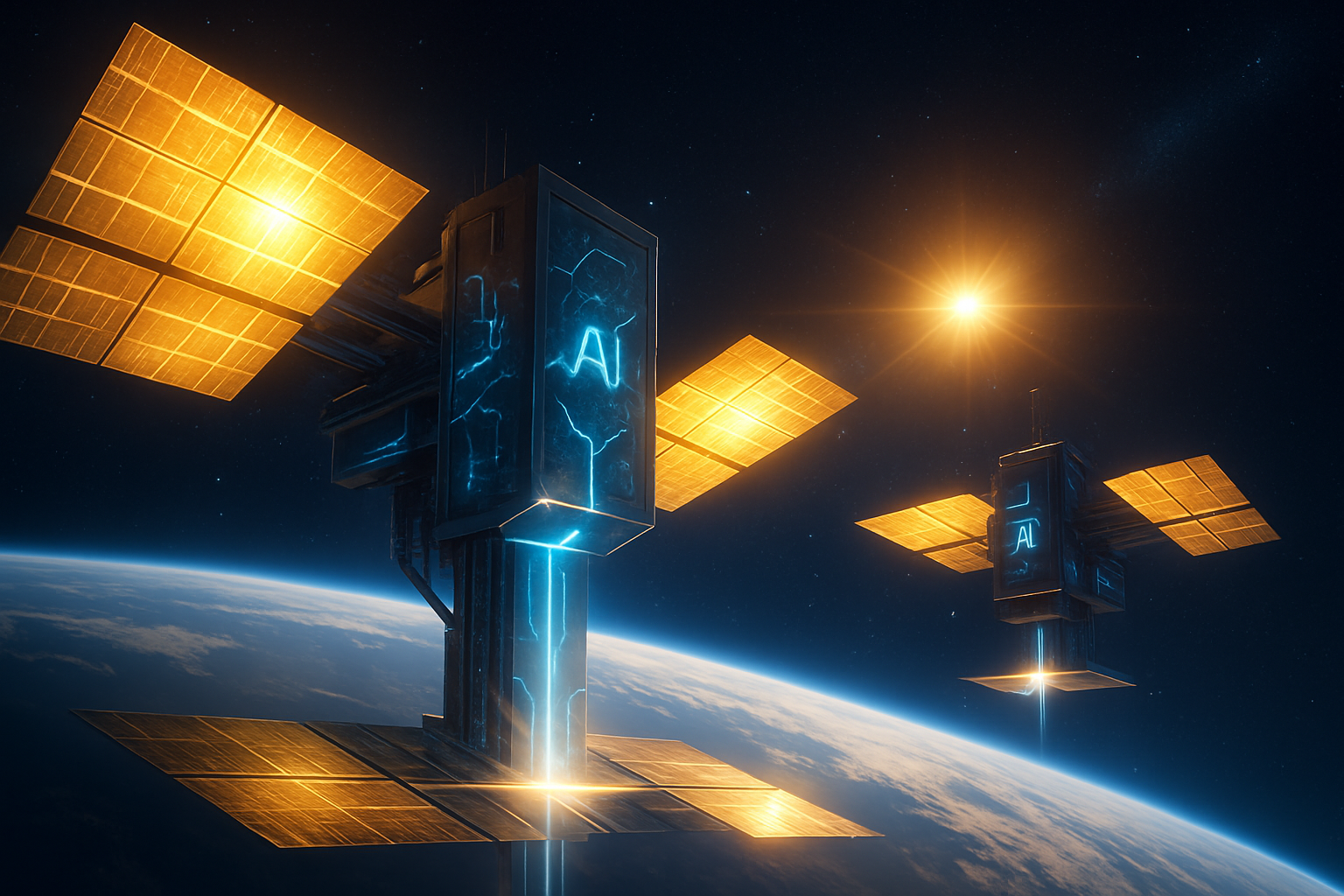
    During a pivotal address at Italian Tech Week in Turin, between October 3-6, 2025, Amazon (NASDAQ: AMZN) founder Jeff Bezos presented an audacious vision to confront one of artificial intelligence's most pressing challenges: its insatiable energy demands. His proposal, which outlines the development of gigawatt-scale, solar-powered data centers in space within the next 10 to 20 years, marks a significant conceptual leap in sustainable infrastructure for the burgeoning AI industry. Bezos's plan not only offers a potential remedy for the environmental strain imposed by current AI operations but also provides a fascinating glimpse into the future of humanity's technological expansion beyond Earth.

    Bezos's core message underscored the urgent need for a paradigm shift, asserting that the exponential growth of AI is rapidly pushing terrestrial energy grids and environmental resources to their breaking point. He highlighted the escalating issues of pollution, water scarcity, and increased electricity prices stemming from the construction of colossal, ground-based AI data centers. By advocating for a move towards extraterrestrial infrastructure, Bezos envisions a future where the most energy-intensive AI training clusters and data centers can harness continuous solar power in orbit, operating with unparalleled efficiency and environmental responsibility, thereby safeguarding Earth from the spiraling energy costs of an AI-driven future.

    Technical Blueprint for an Orbital AI Future

    Bezos's vision for space-based AI data centers, unveiled at Italian Tech Week, outlines gigawatt-scale facilities designed to host the most demanding AI workloads. While specific architectural blueprints remain conceptual, the core technical proposition centers on leveraging the unique advantages of the space environment to overcome the critical limitations faced by terrestrial data centers. These orbital hubs would primarily serve as "giant training clusters" for advanced AI model development, large-scale data processing, and potentially future in-orbit manufacturing operations. The "gigawatt-scale" designation underscores an unprecedented level of power requirement and computational capacity, far exceeding typical ground-based facilities.

    The fundamental differences from current terrestrial data centers are stark. Earth-bound data centers grapple with inconsistent access to clean power, susceptible to weather disruptions and grid instability. In contrast, space-based centers would tap into continuous, uninterrupted solar power 24/7, free from atmospheric interference, enabling significantly higher solar energy collection efficiency—potentially over 40% more than on Earth. Crucially, while terrestrial data centers consume billions of gallons of water and vast amounts of electricity for cooling, space offers a natural, extremely cold vacuum environment (ranging from -120°C in direct sunlight to -270°C in shadow). This facilitates highly efficient radiative cooling, virtually eliminating the need for water and drastically reducing energy expenditure on thermal management.

    Beyond power and cooling, the environmental footprint would be dramatically reduced. Space deployment bypasses terrestrial land-use issues, local permitting, and contributes to near-zero water consumption and carbon emissions from power generation. While acknowledging the significant engineering, logistical, and cost challenges—including the complexities of in-orbit maintenance and the high price of rocket launches—Bezos expressed strong optimism. He believes that within a couple of decades, space-based facilities could achieve cost-competitiveness, with some estimates suggesting operational costs could be up to 97% lower than on Earth, dropping from approximately 5 cents per kilowatt-hour (kWh) to about 0.1 cents per kWh, even accounting for launch expenses. Initial reactions from the AI community, while acknowledging the ambitious nature and current commercial unviability, note a growing interest among tech giants seeking sustainable alternatives, with advancements in reusable rocket technology making the prospect increasingly realistic.

    Reshaping the AI Industry: Competitive Shifts and New Frontiers

    Bezos's radical proposal for space-based AI data centers carries profound implications for the entire technology ecosystem, from established tech giants to nimble startups. Hyperscale cloud providers with existing space ventures, particularly Amazon (NASDAQ: AMZN) through its Amazon Web Services (AWS) arm and Blue Origin, stand to gain a significant first-mover advantage. If AWS can successfully integrate orbital compute resources with its vast terrestrial cloud offerings, it could provide an unparalleled, sustainable platform for the most demanding AI workloads, solidifying its leadership in cloud infrastructure and AI services. This would put immense competitive pressure on rivals like Google (NASDAQ: GOOGL), Microsoft (NASDAQ: MSFT), and Meta Platforms (NASDAQ: META), compelling them to either develop their own space infrastructure or forge strategic alliances with other space companies such as SpaceX.

    The competitive landscape for major AI labs would be dramatically reshaped. Companies like OpenAI, Google DeepMind, and Meta AI, constantly pushing the boundaries of large model training, could see the constraints on model size and training duration lifted, accelerating breakthroughs that are currently infeasible due to terrestrial power and cooling limitations. Early access to gigawatt-scale, continuously powered orbital data centers would grant a decisive lead in training the next generation of AI models, translating into superior AI products and services across various industries. This could centralize the most resource-intensive AI computations in space, shifting the center of gravity for foundational AI research and development.

    This development also presents both immense opportunities and formidable challenges for startups. While the capital-intensive nature of space ventures remains a high barrier to entry, a new ecosystem of specialized startups could emerge. These might focus on radiation-hardened AI hardware, space-optimized software, advanced thermal management solutions for vacuum environments, in-orbit maintenance robotics, or specialized optical communication systems for high-bandwidth data transfer. Companies already exploring "space-based edge computing," such as Lumen Orbit, Exo-Space, and Ramon.Space, could find their niche expanding rapidly, enabling real-time processing of satellite imagery and other data directly in orbit, reducing latency and bandwidth strain on Earth-bound networks.

    Ultimately, the market positioning and strategic advantages for early adopters would be substantial. Beyond potential long-term cost leadership for large-scale AI operations, these pioneers would define industry standards, attract top-tier AI and aerospace engineering talent, and secure critical intellectual property. While terrestrial cloud computing might shift its focus towards latency-sensitive applications or standard enterprise services, the most extreme AI training workloads would likely migrate to orbit, heralding a new era of hybrid cloud infrastructure that blends Earth-based and space-based computing for optimal performance, cost, and sustainability.

    Broader Implications: Sustainability, Governance, and the New Space Race

    The wider significance of Jeff Bezos's space-based AI data center plan extends far beyond mere technological advancement; it represents a bold conceptual framework for addressing the escalating environmental and resource challenges posed by the AI revolution. The current AI boom's insatiable hunger for computational power translates directly into massive electricity and water demands, with data centers projected to double their global electricity consumption by 2026. Bezos's vision directly confronts this unsustainable trajectory by proposing facilities that leverage continuous solar power and the natural cooling of space, aiming for a "zero-carbon" computing solution that alleviates strain on Earth's grids and water systems. This initiative aligns with a growing industry trend to seek more sustainable infrastructure as AI models become increasingly complex and data-intensive, positioning space as a high-efficiency tier for the largest training runs.

    This ambitious undertaking carries potential impacts on global energy policies, environmental concerns, and the burgeoning space industry. By demonstrating a viable path for large-scale, clean energy computation, space-based AI could influence global energy strategies and even foster the development of space-based solar power systems capable of beaming energy back to Earth. Environmentally, the elimination of water for cooling and the reliance on continuous solar power directly contribute to net-zero emission goals, mitigating the greenhouse gas emissions and resource depletion associated with terrestrial data centers. For the space industry, it marks a logical next step in infrastructure evolution, spurring advancements in reusable rockets, in-orbit assembly robotics, and radiation-hardened computing hardware, thereby unlocking a new space economy and shifting the "battleground" for data and computational power into orbit.

    However, this grand vision is not without its concerns. The deployment of massive server facilities in orbit dramatically increases the risk of space debris and collisions, raising the specter of the Kessler Syndrome—a cascading collision scenario that could render certain orbits unusable. Furthermore, accessibility to these advanced computing resources could become concentrated in the hands of a few powerful nations or corporations due to high launch costs and logistical complexities, leading to questions about data jurisdiction, export controls, and equitable access. There are also significant concerns regarding the potential weaponization of space, as orbital data centers could host critical intelligence databases and AI is increasingly integrated into military space operations, raising fears of instability and conflicts over strategic space assets in the absence of robust international governance.

    Comparing this to previous AI milestones, Bezos likens the current AI boom to the internet surge of the early 2000s, anticipating widespread societal benefits despite speculative bubbles. While past breakthroughs like IBM's Deep Blue or DeepMind's AlphaGo showcased AI's intellectual prowess, Bezos's plan addresses the physical and environmental sustainability of AI's existence. It pushes the boundaries of engineering, demanding breakthroughs in cost-effective heavy-lift launch, gigawatt-scale thermal management, and fault-tolerant hardware. This initiative signifies a shift from AI merely as a tool for space exploration to an increasingly independent actor and a central component of future space-based infrastructure, with profound societal implications for climate change mitigation and complex ethical dilemmas regarding AI autonomy in space.

    The Horizon: Anticipated Developments and Persistent Challenges

    Jeff Bezos's audacious prediction of gigawatt-scale AI data centers in Earth's orbit within the next 10 to 20 years sets a clear long-term trajectory for the future of AI infrastructure. In the near term, foundational work is already underway. Companies like Blue Origin are advancing reusable rocket technology (e.g., New Glenn), crucial for launching and assembling massive orbital structures. Amazon's (NASDAQ: AMZN) Project Kuiper is deploying a vast low Earth orbit (LEO) satellite broadband network with laser inter-satellite links, creating a high-throughput communication backbone that could eventually support these orbital data centers. Furthermore, entities such as Axiom Space are planning to launch initial orbiting data center nodes by late 2025, primarily for processing Earth observation satellite data with AI, demonstrating a nascent but growing trend towards in-space computing.

    Looking further ahead, the long-term vision involves these orbital facilities operating with unprecedented efficiency, driven by continuous solar power. This sustained, clean energy source would allow for 24/7 AI model training and operation, addressing the escalating electricity demands that currently strain terrestrial grids. Beyond pure data processing, Bezos hints at expanded applications such as in-orbit manufacturing and specialized research requiring extreme conditions, suggesting a broader industrialization of space technology. These space-based centers could revolutionize how massive AI models are trained, transform global cloud services by potentially reducing long-term operational costs, and enable real-time processing of vast Earth observation data directly in orbit, providing faster insights for disaster response, environmental monitoring, and autonomous space operations.

    However, realizing this vision necessitates overcoming formidable challenges. High launch costs, despite advancements in reusable rocket technology, remain a significant hurdle. The complexities of in-orbit maintenance and upgrades demand highly reliable robotic servicing capabilities, as human access will be severely limited. Crucially, the immense heat generated by high-performance computing in space, where heat can only dissipate through radiation, requires the development of colossal radiator surfaces—potentially millions of square meters for gigawatt-scale facilities—posing a major engineering and economic challenge. Additionally, robust radiation shielding for electronics, low-latency data transfer between Earth and orbit, and modular designs for in-orbit assembly are critical technical hurdles that need to be addressed.

    Experts, including Bezos himself, predict that the societal benefits of AI are real and long-lasting, and orbital data centers could accelerate this transformation by providing vast computational resources. While the concept is technically feasible, current commercial viability is constrained by immense costs and complexities. The convergence of reusable rocket technology, the urgent need for sustainable power, and the escalating demand for AI compute is making space-based solutions increasingly attractive. However, critics rightly point to the immense thermal challenges as a primary barrier, indicating that current technologies might not yet be sufficient to manage the gigawatt-scale heat rejection required for such an ambitious undertaking, underscoring the need for continued innovation in thermal management and materials science.

    A New Frontier for AI: Concluding Thoughts

    Jeff Bezos's bold proclamation at Italian Tech Week regarding space-based AI data centers represents a pivotal moment in the ongoing narrative of artificial intelligence. The core takeaway is a radical solution to AI's burgeoning energy crisis: move the most demanding computational loads off-planet to harness continuous solar power and the natural cooling of space. This vision promises unprecedented efficiency, sustainability, and scalability, fundamentally altering the environmental footprint and operational economics of advanced AI. It underscores a growing industry recognition that the future of AI cannot be divorced from its energy consumption and environmental impact, pushing the boundaries of both aerospace and computing.

    In the annals of AI history, this initiative could be seen as a defining moment akin to the advent of cloud computing, but with an extraterrestrial dimension. It doesn't just promise more powerful AI; it promises a sustainable pathway to that power, potentially unlocking breakthroughs currently constrained by terrestrial limitations. The long-term impact could be transformative, fostering global innovation, creating entirely new job markets in space-based engineering and AI, and enabling technological progress on an unprecedented scale. It signifies a profound shift towards industrializing space, leveraging it not merely for exploration, but as a critical extension of Earth's infrastructure to enhance life on our home planet.

    As we look to the coming weeks and months, several key indicators will signal the momentum behind this ambitious endeavor. Watch for progress on Blue Origin's heavy-lift New Glenn rocket development and its launch cadence, as these are crucial for transporting the necessary infrastructure to orbit. Monitor the continued deployment of Amazon's Project Kuiper satellites and any announcements regarding their integration with AWS, which could form the vital communication backbone for orbital data centers. Furthermore, keep an eye on technological breakthroughs in radiation-hardened electronics, highly efficient heat rejection systems for vacuum environments, and autonomous robotics for in-orbit construction and maintenance. The evolution of international regulatory frameworks concerning space debris and orbital resource governance will also be crucial to ensure the long-term viability and sustainability of this new frontier for AI.

    This content is intended for informational purposes only and represents analysis of current AI developments.

    TokenRing AI delivers enterprise-grade solutions for multi-agent AI workflow orchestration, AI-powered development tools, and seamless remote collaboration platforms.
    For more information, visit https://www.tokenring.ai/.