
Tag: AI for Good

  • Bridging Divides: CityServe’s Groundbreaking Tech and E-Bike Initiatives Pave Way for Future AI Integration

    Bridging Divides: CityServe’s Groundbreaking Tech and E-Bike Initiatives Pave Way for Future AI Integration

    In a significant stride towards digital inclusion and sustainable urban mobility, CityServe, in partnership with Grand Canyon University (GCU) CityServe, is making headlines today, December 2, 2025, with its impactful initiatives to dismantle tech and transportation barriers. Through the strategic distribution of refurbished laptops and e-bikes, CityServe is empowering communities, fostering digital literacy, and providing vital access to resources for thousands. While the direct implementation of these programs currently relies on robust human-driven processes and a sophisticated supply chain, the underlying challenges and solutions present a fertile ground for future artificial intelligence applications that could dramatically amplify their reach and efficiency.

    These community-focused programs underscore a critical need for accessible technology and transportation, addressing gaps that profoundly affect education, employment, and social connectivity. The sheer scale of CityServe's operations, having distributed approximately $13 million worth of goods and impacting an estimated 50,000 families in Arizona through its laptop program alone, highlights the substantial societal benefit. As the tech world increasingly leans on AI for optimization and personalization, CityServe's work serves as a powerful reminder of how foundational technology, even without explicit AI integration at present, can transform lives, while simultaneously illuminating pathways for AI to enhance such humanitarian efforts.

    The Mechanics of Empowerment: Laptops, E-Bikes, and Community Collaboration

    CityServe's initiatives are built on a foundation of strategic partnerships and community engagement. The laptop program, which expanded significantly in 2021, sees GCU CityServe collaborating with Arizona Students Refurbishing Used Technology (AZStRUT). This partnership is instrumental in the meticulous refurbishment process of donated Chromebooks and other laptops, which are then distributed to nonprofit organizations and families in need. Around 3,000 devices have been reconditioned, enabling distance learning, resume building, job applications, and crucial email communication. This hands-on approach also provides valuable experience for College of Engineering and Technology students at GCU, who assist AZStRUT in data wiping and reconditioning. The program's reach has even extended internationally, with laptops sent to an orphanage in Mexico.

    Complementing this digital empowerment is the e-bike initiative, a recent development highlighted today, December 2, 2025. This program directly confronts transportation hurdles by providing e-bikes to individuals for whom traditional commuting methods are challenging. Operating from CityServe's headquarters within GCU's business complex, the program has already made a tangible difference, exemplified by providing an e-bike to a man in recovery for his 16-mile daily commute and a 20-year-old with autism who struggled with the sensory overload of public buses. Sophomore student workers, such as Brooklyn Johnson, are actively involved in the technical aspects, including salvaging parts from damaged Lectric e-bikes. While the current model emphasizes practical, human-led logistics and refurbishment, the scale and impact of these operations suggest significant potential for AI to enhance efficiency, predictive maintenance, and personalized distribution, aspects not yet explicitly integrated but ripe for future exploration.

    Market Implications and the Untapped Potential for AI Solutions

    While CityServe's primary mission is humanitarian, its initiatives inadvertently carve out potential market opportunities and strategic considerations for various sectors within the tech industry. Companies specializing in refurbished technology, like those providing enterprise-level refurbishment services or developing secure data-wiping solutions, could find a growing market in supporting similar large-scale donation and redistribution programs. E-mobility companies, particularly manufacturers of affordable and durable e-bikes such as Lectric e-bikes, stand to benefit from increased demand and brand exposure through philanthropic partnerships. Furthermore, logistics and supply chain technology providers, especially those offering AI-driven optimization platforms, could see a burgeoning need for their services to streamline the distribution of goods-in-kind across vast networks of "HUBs" and "PODs," as utilized by CityServe.

    For major AI labs and tech giants, these initiatives present a compelling case study for applying AI to social impact. Imagine AI algorithms optimizing collection routes for donated equipment, predicting demand for specific tech devices in underserved areas, or even personalizing educational software packages on distributed laptops based on recipient needs. Startups focused on "tech for good" or sustainable urban solutions could leverage AI to develop predictive maintenance systems for e-bikes, extending their lifespan and ensuring consistent accessibility. The current absence of explicit AI integration in CityServe's direct program implementation highlights an untapped frontier for AI companies to develop and deploy solutions that not only generate revenue but also contribute significantly to social equity and environmental sustainability, potentially disrupting traditional philanthropic models by injecting unprecedented levels of efficiency and data-driven decision-making.

    Broader Significance in the AI Landscape and Societal Impact

    CityServe's work with laptops and e-bikes resonates deeply within the broader AI landscape and global societal trends. It directly confronts the digital divide, a persistent challenge exacerbated by rapid technological advancement, ensuring that even basic access to computing is not a luxury. Simultaneously, the e-bike program champions sustainable transportation, aligning with global efforts to reduce carbon footprints and promote healthier, more accessible urban environments. These initiatives underscore the fundamental importance of equitable access to technology and mobility, foundational elements that, when addressed, can unlock human potential and foster economic growth.

    The current approach, while highly effective, also serves as a benchmark against which future AI-powered social programs might be measured. Previous AI milestones have often focused on complex problem-solving or efficiency gains in commercial sectors. CityServe's model, however, demonstrates the profound impact of practical, distributed technology. The comparison begs the question: how much more impactful could such initiatives be with AI-driven insights? Imagine AI predicting which communities face the most severe tech barriers, optimizing the allocation of specific types of laptops, or even using natural language processing to tailor support resources for e-bike recipients. The potential concerns around AI – data privacy, algorithmic bias, and job displacement – become less pertinent when AI is applied to augment human-led efforts in a transparent and ethical manner, serving as a powerful tool for social good rather than purely commercial gain.

    Charting the Future: AI's Role in Scaling Social Impact

    Looking ahead, the evolution of initiatives like CityServe's will undoubtedly intersect more deeply with artificial intelligence. In the near term, we can anticipate AI being deployed to optimize the logistics and supply chain of goods-in-kind distribution. Predictive analytics could forecast demand for laptops and e-bikes in specific demographics, allowing for more proactive and targeted outreach. AI-powered inventory management systems could streamline the refurbishment process, identifying optimal repair strategies and sourcing spare parts more efficiently.

    Longer term, the applications are even more transformative. Imagine AI-driven platforms that personalize digital literacy training for laptop recipients, adapting content to individual learning styles and needs. For the e-bike program, AI could be used for predictive maintenance, alerting users to potential mechanical issues before they arise, thereby extending the lifespan of the bikes and ensuring continuous mobility. Furthermore, AI could analyze usage patterns to inform urban planning and infrastructure development, identifying areas where e-bike lanes or charging stations are most needed. Experts predict a future where AI acts as a force multiplier for social impact, enabling organizations to serve more people with greater efficiency and precision, overcoming challenges that currently require immense human capital. The key challenge will be developing ethical, robust, and user-friendly AI solutions that integrate seamlessly with existing community-focused operations.

    A Blueprint for Empowerment: Reflecting on CityServe's Legacy and AI's Promise

    CityServe's current initiatives, highlighted today, December 2, 2025, stand as a powerful testament to the transformative potential of addressing fundamental barriers to technology and transportation. The distribution of refurbished laptops and e-bikes is not merely about providing devices; it's about opening doors to education, employment, and independent mobility, profoundly impacting thousands of lives. The key takeaway is the immense value of practical, community-driven solutions in bridging societal divides.

    While these specific programs, as detailed today, do not yet explicitly leverage advanced AI, their operational scale and profound societal impact present a compelling blueprint for how AI can be integrated into future humanitarian efforts. This development's significance in AI history lies not in an AI breakthrough itself, but in illustrating a critical area where AI's analytical and optimization capabilities could dramatically enhance and scale existing, successful human-led initiatives. It serves as a call to action for AI developers and researchers to focus on "AI for good," designing solutions that are accessible, ethical, and directly address pressing societal needs. In the coming weeks and months, the tech community should watch for increased partnerships between non-profits and AI solution providers, as organizations seek to leverage intelligent systems to amplify their impact and navigate the complexities of large-scale social programs.


    This content is intended for informational purposes only and represents analysis of current AI developments.

    TokenRing AI delivers enterprise-grade solutions for multi-agent AI workflow orchestration, AI-powered development tools, and seamless remote collaboration platforms.
    For more information, visit https://www.tokenring.ai/.
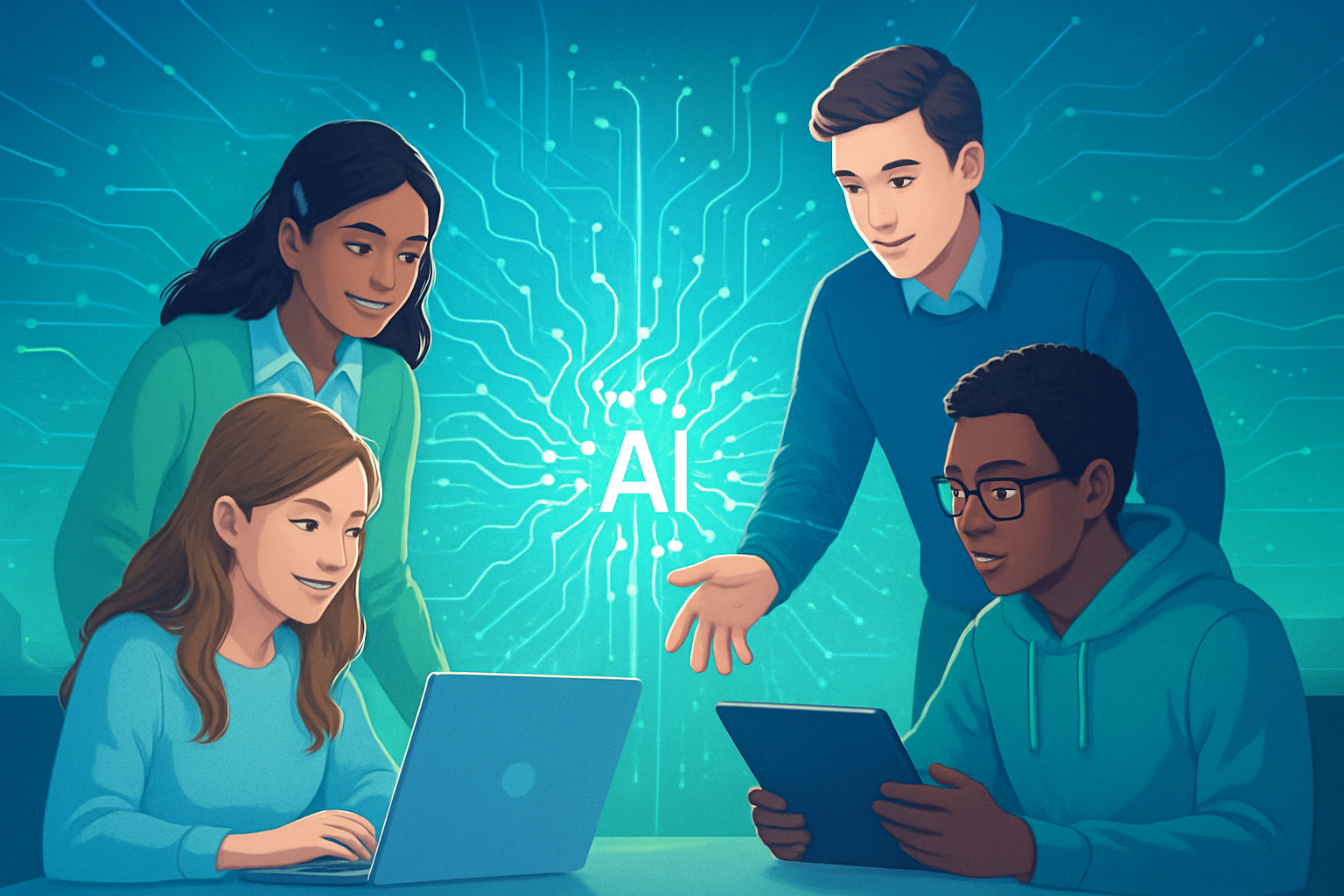
  • New England Pioneers ‘AI for the Common Good,’ Forging a Path for Ethical Innovation and Societal Impact

    New England Pioneers ‘AI for the Common Good,’ Forging a Path for Ethical Innovation and Societal Impact

    In a landmark collaborative effort, New England's academic institutions, government bodies, and burgeoning tech sector are rallying behind the 'AI for the Common Good' initiative. This movement is galvanizing students from diverse backgrounds—from engineering to liberal arts—to design and deploy artificial intelligence solutions that prioritize human values, civic purpose, and widespread societal benefit. Far from the traditional pursuit of profit-driven AI, this regional endeavor is cultivating a new generation of AI developers committed to ethical frameworks, transparency, and addressing critical global challenges, setting a precedent for how AI can genuinely serve humanity.

    Deep Dive into New England's Ethical AI Ecosystem

    The 'AI for the Common Good' initiative in New England is characterized by its interdisciplinary approach and hands-on student engagement. A prime example is the "Hack for Human Impact," an innovation sprint co-hosted by Worcester Polytechnic Institute (WPI) and the College of the Holy Cross. This event brings together students from across the Northeast, providing them with enterprise-grade data tools to tackle open civic datasets related to issues like water quality and environmental sustainability. The aim is to transform these insights into data-driven prototypes that offer tangible local solutions, emphasizing ethical innovation alongside creativity and collaboration.

    Further solidifying this commitment, the Healey-Driscoll Administration in Massachusetts has partnered with UMass Amherst to recruit students for experiential AI projects within state agencies. These initiatives, spearheaded by UMass Amherst's Manning College of Information and Computer Sciences (CICS) and Northeastern University (NASDAQ: NU) Burnes Center for Social Change, place undergraduate students in 16-week paid internships. Projects range from developing AI-powered permitting navigators for the Executive Office of Energy and Environmental Affairs (EEA) to streamlining grant applications for underserved communities (GrantWell) and accelerating civil rights case processing (FAIR). A critical technical safeguard involves conducting these projects within secure AI "sandboxes," virtual environments where generative AI (GenAI) tools can be utilized without the risk of public models being trained on sensitive state data, ensuring privacy and ethical data handling.

    This approach significantly diverges from previous AI development paradigms. While earlier AI applications often prioritized efficiency or commercial gain, the 'AI for the Common Good' movement embeds ethical and human-centered design principles from inception. It fosters interdisciplinary collaboration, integrating technical expertise with liberal arts and social understanding, rather than purely technical development. Crucially, it focuses on public sector and non-profit challenges, applying cutting-edge GenAI for social impact in areas like customer support for government services, a marked shift from its more common commercial applications. Initial reactions from the AI research community and industry experts are largely positive, acknowledging the transformative potential while also emphasizing the need for robust ethical frameworks to mitigate biases and ensure responsible deployment.

    Shifting Tides: Impact on AI Companies, Tech Giants, and Startups

    The 'AI for the Common Good' initiative is reshaping the competitive landscape for AI companies. Both established tech giants and nascent startups that actively embrace these principles stand to gain significant strategic advantages. Companies like IBM (NYSE: IBM), Microsoft (NASDAQ: MSFT), and Google (NASDAQ: GOOGL) are already heavily investing in ethical AI frameworks, governance structures, and dedicated ethics boards. This not only enhances their brand reputation and builds trust with stakeholders but also serves as a crucial differentiator in a crowded market. Their vast resources allow them to lead in setting ethical standards and developing tools for responsible AI deployment, such as transparency reports and open-source communities.

    For startups, particularly those focused on "AI for Good," this movement offers a unique opportunity to attract impact investors who prioritize social and environmental value alongside financial returns. These social ventures can also cultivate stronger customer loyalty from consumers increasingly demanding ethical practices. By focusing on shared common good objectives, startups can foster beneficial collaborations with diverse stakeholders, including NGOs and government agencies, opening up new market segments and partnership avenues. However, concerns persist that the immense computing capacity and data access of tech giants could potentially exacerbate their market dominance, making it harder for smaller players to compete.

    The emphasis on ethical AI also introduces potential disruptions. Companies will increasingly need to audit existing AI systems for bias, transparency, and accountability, potentially necessitating re-engineering or even discontinuing products found to be harmful. Failure to address these ethical concerns can lead to severe reputational damage, customer loss, and legal repercussions. While integrating ethical considerations can increase development costs, the strategic advantages—enhanced brand perception, access to new markets, improved talent acquisition and retention, and fostering collaborative ecosystems—outweigh these challenges. The 'AI for the Common Good' initiative is making ethical considerations a strategic imperative, driving innovation towards human-centered, fair, and transparent systems.

    A Broader Canvas: AI for Humanity's Future

    The 'AI for the Common Good' initiative is more than a regional trend; it represents a critical maturation of the broader AI landscape. It signifies a collective shift from merely asking "Can we build it?" to "Should we build it, and how will this impact people?" This movement aligns with global trends towards Responsible AI, Ethical AI, and Human-Centered AI, recognizing that AI, while transformative, carries the risk of exacerbating existing inequalities if not guided by strong ethical principles. International bodies like the UN, ITU, and UNESCO are actively fostering cooperation and developing governance frameworks to ensure AI benefits all of humanity, contributing to the 17 UN Sustainable Development Goals (SDGs).

    The potential societal impacts are vast. In healthcare, AI can revolutionize diagnostics and drug discovery, especially in underserved regions. For justice and inclusion, AI-powered tools can simplify legal processes for marginalized groups and help eliminate bias in hiring. In education, AI can provide personalized learning and enhance accessibility. Environmentally, AI is crucial for climate modeling, biodiversity monitoring, and optimizing renewable energy. However, significant concerns remain, including the potential for biased algorithms to perpetuate inequalities, risks to privacy and data security, and the "black box" nature of some AI systems hindering transparency and accountability. The rapid advancement of generative AI has intensified these discussions, highlighting the urgent need for robust ethical guidelines to prevent misinformation and address potential job displacement.

    This initiative is not a technical breakthrough in itself but rather a crucial framework for guiding the application of current and future AI milestones. It reflects a shift in focus from purely computational power to a more holistic consideration of societal impact, moving beyond historical AI milestones that primarily focused on task-specific performance. The urgency for this framework has been amplified by the advent of highly capable generative AI tools, which have brought both the immense benefits and potential risks of AI more directly into public consciousness.

    The Road Ahead: Navigating AI's Ethical Horizon

    Looking ahead, the 'AI for the Common Good' initiative in New England and beyond is poised for significant evolution. In the near term, AI, especially large language models and chatbots, will continue to enhance productivity and efficiency across sectors, accelerating scientific progress in medicine and climate science. The automation of repetitive tasks will free up human resources for more creative endeavors. Long-term, experts predict the rise of "agentic AI" capable of autonomous action, further augmenting human creativity and impact. There is also speculation about the advent of Artificial General Intelligence (AGI) within the next five years, which could profoundly transform society, though the precise nature of these changes remains uncertain.

    Potential applications on the horizon are diverse and impactful. In healthcare, AI will further enhance vaccine research, clinical trials, and diagnostic accuracy. For disaster response and climate action, AI will be critical for advanced flood forecasting, tropical cyclone prediction, and designing resilient infrastructure. Education will see more personalized learning tools and enhanced accessibility for individuals with disabilities. In social justice, AI can help identify human rights violations and streamline government services for underserved communities. Challenges remain, particularly around ethical guidelines, preventing bias, ensuring privacy, and achieving true accessibility and inclusivity. The very definition of "common good" within the AI context needs clearer articulation, alongside addressing concerns about job displacement and the potential for AI-driven social media addiction.

    Experts emphasize that AI's ultimate value hinges entirely on how it is used, underscoring the critical need for a human-centered and responsible approach. They advocate for proactive focus on accessibility, investment in digital infrastructure, inclusive design, cross-sector collaboration, and the development of international standards. New England, with its robust research community and strong academic-government-industry partnerships, is uniquely positioned to lead these efforts. Initiatives like the Massachusetts AI Hub and various university programs are actively shaping a future where AI serves as a powerful force for equitable, sustainable, and collective progress. What happens next will depend on continued dedication to ethical development, robust governance, and fostering a diverse generation of AI innovators committed to the common good.


    This content is intended for informational purposes only and represents analysis of current AI developments.

    TokenRing AI delivers enterprise-grade solutions for multi-agent AI workflow orchestration, AI-powered development tools, and seamless remote collaboration platforms.
    For more information, visit https://www.tokenring.ai/.

  • San Francisco’s ‘Hack for Social Impact’ Unleashes AI for Homelessness and Justice

    San Francisco’s ‘Hack for Social Impact’ Unleashes AI for Homelessness and Justice

    San Francisco's tech community is once again rallying its formidable expertise for a cause greater than profit, as the 'Hack for Social Impact' hackathon prepares for its 2025 iteration, building on the profound success of its inaugural event last year. Scheduled for November 8-9, 2025, just days from now, this innovative gathering brings together top engineers and AI talent to develop groundbreaking artificial intelligence solutions for critical social challenges: combating homelessness and accelerating justice for the wrongfully convicted. This initiative underscores a growing movement within the tech industry to channel advanced AI capabilities directly into public service, demonstrating how machine learning and large language models can be powerful tools for tangible social change.

    The hackathon serves as a vital bridge between cutting-edge technology and the urgent needs of non-profit organizations, which often lack the resources to harness the latest AI advancements. By focusing on specific, real-world problems presented by partner non-profits, participants are tasked with creating viable, impactful solutions that can be implemented to improve lives. The event not only fosters innovation but also cultivates a sense of collective responsibility within the tech sector, proving that the same technologies driving economic growth can also be leveraged to address some of society's most intractable issues.

    AI's Precision Strike Against Social Injustice

    The 'Hack for Social Impact' hackathon leverages the transformative power of generative AI and large language models (LLMs) to tackle complex societal problems with unprecedented precision. The inaugural event on November 9-10, 2024, at Digital Garage US, saw over 150 participants lay the groundwork for solutions that are now poised for further development in the upcoming 2025 hackathon.

    For homelessness, the focus has been on streamlining processes that often exacerbate the crisis. One significant project from the 2024 event, Comply.ai (now bild.ai), a second-place winner, developed an AI-powered tool for automated architectural plan review for building code compliance. This innovation directly addresses the complexity and cost associated with developing affordable housing by systematically analyzing and comparing building codes across jurisdictions, a challenge presented by UC Berkeley's Terner Center for Housing Innovation. The upcoming 2025 hackathon aims to further this by developing a unified fundraising hub for Project Homeless Connect to address critical funding gaps and design trauma-informed AI intake tools for the California Homeless Youth Project, allowing young people to articulate their needs once and access care more swiftly. These AI applications differ significantly from previous manual or less sophisticated digital approaches by offering rapid, data-driven analysis and personalized interaction, thereby reducing bureaucratic hurdles and increasing efficiency.

    In the realm of justice, particularly for wrongful convictions, AI offers a beacon of hope. While the 2024 event included projects like the Tenant Case Navigator—a third-place winner that created a searchable database with AI-driven insights for tenant rights advocates in partnership with Community Legal Services in East Palo Alto (CLSEPA)—the 2025 hackathon explicitly targets wrongful convictions. A planned project in partnership with The Innocence Center aims to utilize AI to automate structured case files. This is a critical advancement, as the manual review of extensive legal documents and evidence is a time-consuming bottleneck in the exoneration process. By automating this, AI can significantly accelerate the identification of key discrepancies and evidence, potentially freeing innocent individuals much faster than traditional methods. The initial reactions from the AI research community and legal experts highlight the immense potential of these tools to democratize access to justice and streamline legal aid processes, marking a significant departure from labor-intensive human review.

    Reshaping Corporate Responsibility and AI Innovation

    The 'Hack for Social Impact' hackathon profoundly impacts AI companies, tech giants, and startups by setting a new benchmark for corporate social responsibility and fostering innovation in the "AI for Good" sector. Companies like Google (NASDAQ: GOOGL), a sponsor for the 2025 event, are increasingly recognizing the strategic advantages of aligning their technological prowess with societal needs. This development encourages major AI labs to dedicate resources not just to commercial applications but also to philanthropic endeavors, potentially leading to the establishment of more specialized "AI for Good" divisions or grants.

    For startups, the hackathon acts as a powerful incubator. Projects like Comply.ai (now bild.ai) demonstrate a clear pathway from hackathon idea to viable product with social impact. This can inspire a new generation of entrepreneurs to build companies explicitly focused on solving social problems using AI, attracting impact investors and creating a new market segment. The competitive implications for major AI labs are significant; demonstrating a commitment to social impact can enhance public perception, attract top talent driven by purpose, and potentially open doors to government and non-profit partnerships. Furthermore, the solutions developed, such as automated building code analysis or legal document processing, could disrupt existing service models by offering more efficient and cost-effective alternatives, pushing traditional service providers to integrate AI or risk becoming obsolete. This market positioning not only offers strategic advantages in terms of brand reputation but also in developing novel AI applications that might have broader commercial utility in the future.

    AI for Good: A New Frontier in Societal Impact

    The 'Hack for Social Impact' hackathon fits squarely into the broader AI landscape as a powerful testament to the growing "AI for Good" movement. This initiative underscores a significant trend where the ethical application of AI is moving from theoretical discussions to practical, implementable solutions. It highlights a shift in focus from purely profit-driven AI development to models that prioritize societal welfare, addressing urgent global challenges like poverty, health, and justice.

    The impacts are potentially far-reaching. By developing AI tools that streamline housing development, enhance legal aid, and accelerate the exoneration of the wrongfully convicted, the hackathon directly contributes to reducing suffering and fostering a more equitable society. However, like all powerful technologies, AI for social impact also presents potential concerns. Issues such as data privacy for vulnerable populations, the potential for algorithmic bias in legal or social service applications, and the need for robust oversight mechanisms remain critical. Comparisons to previous AI milestones, such as early successes in medical diagnosis or scientific research, suggest that these social impact applications could mark a similar turning point, demonstrating AI's capacity to deliver profound human benefits beyond commercial gains. The hackathon serves as a crucial proving ground for these ethical AI applications, pushing the boundaries of what AI can achieve when guided by a humanitarian mission.

    The Road Ahead: Scaling Solutions and Addressing Challenges

    Looking ahead, the 'Hack for Social Impact' hackathon promises to be a catalyst for sustained innovation in AI for social good. Expected near-term developments from the upcoming November 2025 event include refined prototypes and potentially pilot programs for the unified fundraising hub for Project Homeless Connect and the trauma-informed AI intake tools for the California Homeless Youth Project. For The Innocence Center, the AI-driven automation of structured case files could move closer to real-world deployment, significantly impacting the rate of exonerations.

    Long-term developments will likely focus on scaling these solutions beyond San Francisco, adapting them for use in diverse communities and legal systems. Potential applications on the horizon include predictive analytics for identifying areas at high risk for homelessness, AI-powered legal research tools for public defenders, and intelligent systems for connecting individuals with social services based on their specific needs. However, significant challenges need to be addressed. These include securing ongoing funding for maintenance and development, ensuring the ethical deployment of AI to avoid exacerbating existing inequalities, and building trust among the communities these technologies aim to serve. Experts predict a future where AI becomes an indispensable tool in the social sector, but only if these challenges are met with careful consideration and collaborative effort. The success of these hackathon projects will largely depend on their ability to integrate seamlessly into existing non-profit workflows and demonstrate measurable positive outcomes.

    A Watershed Moment for AI with a Conscience

    The 'Hack for Social Impact' hackathon represents a watershed moment in the narrative of artificial intelligence, underscoring its profound potential as a force for good. The key takeaway is clear: when directed with purpose and collaboration, AI can transcend its commercial applications to tackle some of humanity's most pressing challenges. From streamlining affordable housing development to accelerating justice for the wrongfully convicted, the solutions emerging from this initiative demonstrate AI's capacity to deliver tangible, life-altering benefits.

    This development's significance in AI history lies in its powerful demonstration of ethical AI in action, moving beyond theoretical discussions to practical, implementable projects. It solidifies the "AI for Good" movement as a vital and growing segment of the tech industry, challenging companies and developers to consider the broader societal implications of their work. The long-term impact could be transformative, fostering a more compassionate and equitable application of advanced technology. In the coming weeks and months, the tech world will be watching closely to see how the projects from the 2025 hackathon evolve, how they are implemented by partner non-profits, and what further innovations they inspire. This initiative is a powerful reminder that the future of AI is not just about what it can do, but what it can do for us.


    This content is intended for informational purposes only and represents analysis of current AI developments.

    TokenRing AI delivers enterprise-grade solutions for multi-agent AI workflow orchestration, AI-powered development tools, and seamless remote collaboration platforms.
    For more information, visit https://www.tokenring.ai/.