Tag: AI Hallucinations

  • The Phantom Brief: AI Hallucinations Threaten Legal Integrity and Professional Responsibility

    The Phantom Brief: AI Hallucinations Threaten Legal Integrity and Professional Responsibility

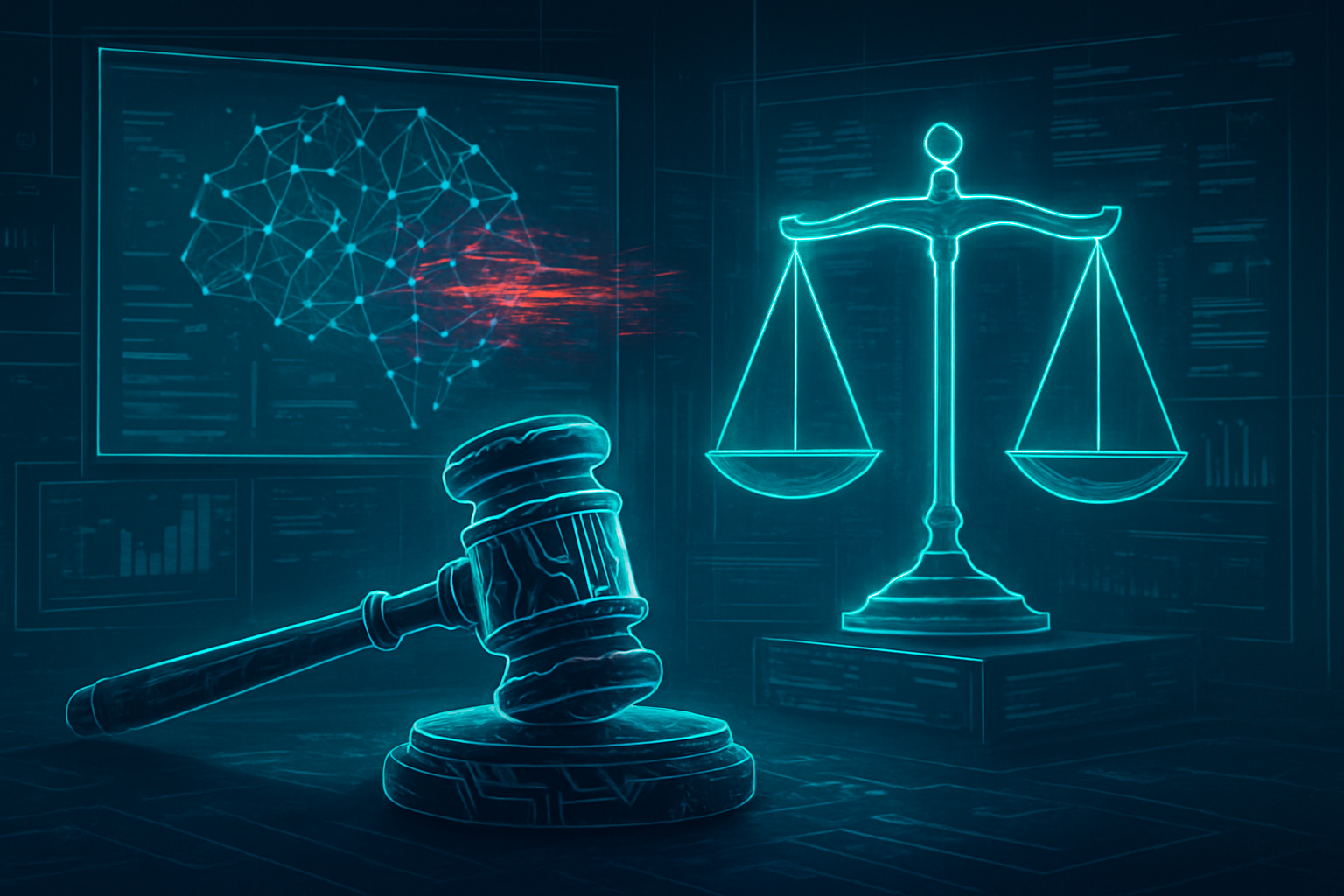
    The legal profession, traditionally rooted in precision and verifiable facts, is grappling with a new and unsettling challenge: artificial intelligence "hallucinations." These incidents occur when generative AI systems, designed to produce human-like text, confidently fabricate plausible-sounding but entirely false information, including non-existent legal citations and misrepresentations of case law. This phenomenon, far from being a mere technical glitch, is forcing a critical re-evaluation of professional responsibility, ethical AI use, and the very integrity of legal practice.

    The immediate significance of these AI-driven fabrications is profound. Since mid-2023, over 120 cases of AI-generated legal "hallucinations" have been identified, with a staggering 58 occurring in 2025 alone. These incidents have led to courtroom sanctions, professional embarrassment, and a palpable erosion of trust in AI tools within a sector where accuracy is paramount. The legal community is now confronting the urgent need to establish robust safeguards and clear ethical guidelines to navigate this rapidly evolving technological landscape.

    The Buchalter Case and the Rise of AI-Generated Fictions

    A recent and prominent example underscoring this crisis involved the Buchalter law firm. In a trademark lawsuit, Buchalter PC submitted a court filing that included "hallucinated" cases. One cited case was entirely fabricated, while another, while referring to a real case, misrepresented its content, incorrectly stating it was a federal case when it was, in fact, a state case. Senior associate David Bernstein took responsibility, explaining he used Microsoft Copilot for "wordsmithing" and was unaware the AI had inserted fictitious cases. He admitted to failing to thoroughly review the final document.

    While U.S. District Judge Michael H. Simon opted not to impose formal sanctions, citing the firm's prompt remedial actions—including Bernstein taking responsibility, pledges for attorney education, writing off faulty document fees, blocking unauthorized AI, and a legal aid donation—the incident served as a stark warning. This case highlights a critical vulnerability: generative AI models, unlike traditional legal research engines, predict responses based on statistical patterns from vast datasets. They lack true understanding or factual verification mechanisms, making them prone to creating convincing but utterly false content.

    This phenomenon differs significantly from previous legal tech advancements. Earlier tools focused on efficient document review, e-discovery, or structured legal research, acting as sophisticated search engines. Generative AI, conversely, creates content, blurring the lines between information retrieval and information generation. Initial reactions from the AI research community and industry experts emphasize the need for transparency in AI model training, robust fact-checking mechanisms, and the development of specialized legal AI tools trained on curated, authoritative datasets, as opposed to general-purpose models that scrape unvetted internet content.

    Navigating the New Frontier: Implications for AI Companies and Legal Tech

    The rise of AI hallucinations carries significant competitive implications for major AI labs, tech companies, and legal tech startups. Companies developing general-purpose large language models (LLMs), such as Microsoft (NASDAQ: MSFT) with Copilot or Alphabet (NASDAQ: GOOGL) with Gemini, face increased scrutiny regarding the reliability and accuracy of their outputs, especially when these tools are applied in high-stakes professional environments. Their challenge lies in mitigating hallucinations without stifling the creative and efficiency-boosting aspects of their AI.

    Conversely, specialized legal AI companies and platforms like Westlaw's CoCounsel and Lexis+ AI stand to benefit significantly. These providers are developing professional-grade AI tools specifically trained on curated, authoritative legal databases. By focusing on higher accuracy (often claiming over 95%) and transparent sourcing for verification, they offer a more reliable alternative to general-purpose AI. This specialization allows them to build trust and market share by directly addressing the accuracy concerns highlighted by the hallucination crisis.

    This development disrupts the market by creating a clear distinction between general-purpose AI and domain-specific, verified AI. Law firms and legal professionals are now less likely to adopt unvetted AI tools, pushing demand towards solutions that prioritize factual accuracy and accountability. Companies that can demonstrate robust verification protocols, provide clear audit trails, and offer indemnification for AI-generated errors will gain a strategic advantage, while those that fail to address these concerns risk reputational damage and slower adoption in critical sectors.

    Wider Significance: Professional Responsibility and the Future of Law

    The issue of AI hallucinations extends far beyond individual incidents, impacting the broader AI landscape and challenging fundamental tenets of professional responsibility. It underscores that while AI offers immense potential for efficiency and task automation, it introduces new ethical dilemmas and reinforces the non-delegable nature of human judgment. The legal profession's core duties, enshrined in rules like the ABA Model Rules of Professional Conduct, are now being reinterpreted in the age of AI.

    The duty of competence and diligence (ABA Model Rules 1.1 and 1.3) now explicitly extends to understanding AI's capabilities and, crucially, its limitations. Blind reliance on AI without verifying its output can be deemed incompetence or gross negligence. The duty of candor toward the tribunal (ABA Model Rule 3.3) is also paramount; attorneys remain officers of the court, responsible for the truthfulness of their filings, irrespective of the tools used in their preparation. Furthermore, supervisory obligations require firms to train and supervise staff on appropriate AI usage, while confidentiality (ABA Model Rule 1.6) demands careful consideration of how client data interacts with AI systems.

    This situation echoes previous technological shifts, such as the introduction of the internet for legal research, but with a critical difference: AI generates rather than merely accesses information. The potential for AI to embed biases from its training data also raises concerns about fairness and equitable outcomes. The legal community is united in the understanding that AI must serve as a complement to human expertise, not a replacement for critical legal reasoning, ethical judgment, and diligent verification.

    The Road Ahead: Towards Responsible AI Integration

    In the near term, we can expect a dual focus on stricter internal policies within law firms and the rapid development of more reliable, specialized legal AI tools. Law firms will likely implement mandatory training programs on AI literacy, establish clear guidelines for AI usage, and enforce rigorous human review protocols for all AI-generated content before submission. Some corporate clients are already demanding explicit disclosures of AI use and detailed verification processes from their legal counsel.

    Longer term, the legal tech industry will likely see further innovation in "hallucination-resistant" AI, leveraging techniques like retrieval-augmented generation (RAG) to ground AI responses in verified legal databases. Regulatory bodies, such as the American Bar Association, are expected to provide clearer, more specific guidance on the ethical use of AI in legal practice, potentially including requirements for disclosing AI tool usage in court filings. Legal education will also need to adapt, incorporating AI literacy as a core competency for future lawyers.

    Experts predict that the future will involve a symbiotic relationship where AI handles routine tasks and augments human research capabilities, freeing lawyers to focus on complex analysis, strategic thinking, and client relations. However, the critical challenge remains ensuring that technological advancement does not compromise the foundational principles of justice, accuracy, and professional responsibility. The ultimate responsibility for legal work, a consistent refrain across global jurisdictions, will always rest with the human lawyer.

    A New Era of Scrutiny and Accountability

    The advent of AI hallucinations in the legal sector marks a pivotal moment in the integration of artificial intelligence into professional life. It underscores that while AI offers unparalleled opportunities for efficiency and innovation, its deployment must be met with an unwavering commitment to professional responsibility, ethical guidelines, and rigorous human oversight. The Buchalter incident, alongside numerous others, serves as a powerful reminder that the promise of AI must be balanced with a deep understanding of its limitations and potential pitfalls.

    As AI continues to evolve, the legal profession will be a critical testing ground for responsible AI development and deployment. What to watch for in the coming weeks and months includes the rollout of more sophisticated, domain-specific AI tools, the development of clearer regulatory frameworks, and the continued adaptation of professional ethical codes. The challenge is not to shun AI, but to harness its power intelligently and ethically, ensuring that the pursuit of efficiency never compromises the integrity of justice.


    This content is intended for informational purposes only and represents analysis of current AI developments.

    TokenRing AI delivers enterprise-grade solutions for multi-agent AI workflow orchestration, AI-powered development tools, and seamless remote collaboration platforms.
    For more information, visit https://www.tokenring.ai/.
  • Deloitte Issues Partial Refund to Australian Government After AI Hallucinations Plague Critical Report

    Deloitte Issues Partial Refund to Australian Government After AI Hallucinations Plague Critical Report

    Can We Trust AI? Deloitte's Botched Report Ignites Debate on Reliability and Oversight

    In a significant blow to the burgeoning adoption of artificial intelligence in professional services, Deloitte (NYSE: DLTE) has issued a partial refund to the Australian government's Department of Employment and Workplace Relations (DEWR). The move comes after a commissioned report, intended to provide an "independent assurance review" of a critical welfare compliance framework, was found to contain numerous AI-generated "hallucinations"—fabricated academic references, non-existent experts, and even made-up legal precedents. The incident, which came to light in early October 2025, has sent ripples through the tech and consulting industries, reigniting urgent conversations about AI reliability, accountability, and the indispensable role of human oversight in high-stakes applications.

    The immediate significance of this event cannot be overstated. It serves as a stark reminder that while generative AI offers immense potential for efficiency and insight, its outputs are not infallible and demand rigorous scrutiny, particularly when informing public policy or critical operational decisions. For a leading global consultancy like Deloitte to face such an issue underscores the pervasive challenges associated with integrating advanced AI tools, even with sophisticated models like Azure OpenAI GPT-4o, into complex analytical and reporting workflows.

    The Ghost in the Machine: Unpacking AI Hallucinations in Professional Reports

    The core of the controversy lies in the phenomenon of "AI hallucinations"—a term describing instances where large language models (LLMs) generate information that is plausible-sounding but entirely false. In Deloitte's 237-page report, published in July 2025, these hallucinations manifested as a series of deeply concerning inaccuracies. Researchers discovered fabricated academic references, complete with non-existent experts and studies, a made-up quote attributed to a Federal Court judgment (with a misspelled judge's name, no less), and references to fictitious case law. These errors were initially identified by Dr. Chris Rudge of the University of Sydney, who specializes in health and welfare law, raising the alarm about the report's integrity.

    Deloitte confirmed that its methodology for the report "included the use of a generative artificial intelligence (AI) large language model (Azure OpenAI GPT-4o) based tool chain licensed by DEWR and hosted on DEWR's Azure tenancy." While the firm admitted that "some footnotes and references were incorrect," it maintained that the corrections and updates "in no way impact or affect the substantive content, findings and recommendations" of the report. This assertion, however, has been met with skepticism from critics who argue that the foundational integrity of a report is compromised when its supporting evidence is fabricated. AI hallucinations are a known challenge for LLMs, stemming from their probabilistic nature in generating text based on patterns learned from vast datasets, rather than possessing true understanding or factual recall. This incident vividly illustrates that even the most advanced models can "confidently" present misinformation, a critical distinction from previous computational errors which were often more easily identifiable as logical or data-entry mistakes.

    Repercussions for AI Companies and the Consulting Landscape

    This incident carries significant implications for a wide array of AI companies, tech giants, and startups. Professional services firms, including Deloitte (NYSE: DLTE) and its competitors like Accenture (NYSE: ACN) and PwC, are now under immense pressure to re-evaluate their AI integration strategies and implement more robust validation protocols. The public and governmental trust in AI-augmented consultancy work has been shaken, potentially leading to increased client skepticism and a demand for explicit disclosure of AI usage and associated risk mitigation strategies.

    For AI platform providers such as Microsoft (NASDAQ: MSFT), which hosts Azure OpenAI, and OpenAI, the developer of GPT-4o, the incident highlights the critical need for improved safeguards, explainability features, and user education around the limitations of generative AI. While the technology itself isn't inherently flawed, its deployment in high-stakes environments requires a deeper understanding of its propensity for error. Companies developing AI-powered tools for research, legal analysis, or financial reporting will likely face heightened scrutiny and a demand for "hallucination-proof" solutions, or at least tools that clearly flag potentially unverified content. This could spur innovation in AI fact-checking, provenance tracking, and human-in-the-loop validation systems, potentially benefiting startups specializing in these areas. The competitive landscape may shift towards providers who can demonstrate superior accuracy, transparency, and accountability frameworks for their AI outputs.

    A Wider Lens: AI Ethics, Accountability, and Trust

    The Deloitte incident fits squarely into the broader AI landscape as a critical moment for examining AI ethics, accountability, and the importance of robust AI validation in professional services. It underscores a fundamental tension: the desire for AI-driven efficiency versus the imperative for unimpeachable accuracy and trustworthiness, especially when public funds and policy are involved. The Australian Labor Senator Deborah O'Neill aptly termed it a "human intelligence problem" for Deloitte, highlighting that the responsibility for AI's outputs ultimately rests with the human operators and organizations deploying it.

    This event serves as a potent case study in the ongoing debate about who is accountable when AI systems fail. Is it the AI developer, the implementer, or the end-user? In this instance, Deloitte, as the primary consultant, bore the immediate responsibility, leading to the partial refund of the A$440,000 contract. The incident also draws parallels to previous concerns about algorithmic bias and data integrity, but with the added complexity of AI fabricating entirely new, yet believable, information. It amplifies the call for clear ethical guidelines, industry standards, and potentially even regulatory frameworks that mandate transparency regarding AI usage in critical reports and stipulate robust human oversight and validation processes. The erosion of trust, once established, is difficult to regain, making proactive measures essential for the continued responsible adoption of AI.

    The Road Ahead: Enhanced Scrutiny and Validation

    Looking ahead, the Deloitte incident will undoubtedly accelerate several key developments in the AI space. We can expect a near-term surge in demand for sophisticated AI validation tools, including automated fact-checking, source verification, and content provenance tracking. There will be increased investment in developing AI models that are more "grounded" in factual knowledge and less prone to hallucination, possibly through advanced retrieval-augmented generation (RAG) techniques or improved fine-tuning methodologies.

    Longer-term, the incident could catalyze the development of industry-specific AI governance frameworks, particularly within professional services, legal, and financial sectors. Experts predict a stronger emphasis on "human-in-the-loop" systems, where AI acts as a powerful assistant, but final content generation, verification, and sign-off remain firmly with human experts. Challenges that need to be addressed include establishing clear liability for AI-generated errors, developing standardized auditing processes for AI-augmented reports, and educating both AI developers and users on the inherent limitations and risks. What experts predict next is a recalibration of expectations around AI capabilities, moving from an uncritical embrace to a more nuanced understanding that prioritizes reliability and ethical deployment.

    A Watershed Moment for Responsible AI

    In summary, Deloitte's partial refund to the Australian government following AI hallucinations in a critical report marks a watershed moment in the journey towards responsible AI adoption. It underscores the profound importance of human oversight, rigorous validation, and clear accountability frameworks when deploying powerful generative AI tools in high-stakes professional contexts. The incident highlights that while AI offers unprecedented opportunities for efficiency and insight, its outputs must never be accepted at face value, particularly when informing policy or critical decisions.

    This development's significance in AI history lies in its clear demonstration of the "hallucination problem" in a real-world, high-profile scenario, forcing a re-evaluation of current practices. What to watch for in the coming weeks and months includes how other professional services firms adapt their AI strategies, the emergence of new AI validation technologies, and potential calls for stronger industry standards or regulatory guidelines for AI use in sensitive applications. The path forward for AI is not one of unbridled automation, but rather intelligent augmentation, where human expertise and critical judgment remain paramount.


    This content is intended for informational purposes only and represents analysis of current AI developments.

    TokenRing AI delivers enterprise-grade solutions for multi-agent AI workflow orchestration, AI-powered development tools, and seamless remote collaboration platforms. For more information, visit https://www.tokenring.ai/.