
Tag: AI Hardware

  • Teradyne’s Q3 2025 Results Underscore a New Era in AI Semiconductor Testing

    Teradyne’s Q3 2025 Results Underscore a New Era in AI Semiconductor Testing

    Boston, MA – October 15, 2025 – The highly anticipated Q3 2025 earnings report from Teradyne (NASDAQ: TER), a global leader in automated test equipment, is set to reveal a robust performance driven significantly by the insatiable demand from the artificial intelligence sector. As the tech world grapples with the escalating complexity of AI chips, Teradyne's recent product announcements and strategic focus highlight a pivotal shift in semiconductor testing – one where precision, speed, and AI-driven methodologies are not just advantageous, but absolutely critical for the future of AI hardware.

    This period marks a crucial juncture for the semiconductor test equipment industry, as it evolves to meet the unprecedented demands of next-generation AI accelerators, high-performance computing (HPC) architectures, and the intricate world of chiplet-based designs. Teradyne's financial health and technological breakthroughs, particularly its new platforms tailored for AI, serve as a barometer for the broader industry's capacity to enable the continuous innovation powering the AI revolution.

    Technical Prowess in the Age of AI Silicon

    Teradyne's Q3 2025 performance is expected to validate its strategic pivot towards AI compute, a segment that CEO Greg Smith has identified as the leading driver for the company's semiconductor test business throughout 2025. This focus is not merely financial; it's deeply rooted in significant technical advancements that are reshaping how AI chips are designed, manufactured, and ultimately, brought to market.

    Among Teradyne's most impactful recent announcements are the Titan HP Platform and the UltraPHY 224G Instrument. The Titan HP is a groundbreaking system-level test (SLT) platform specifically engineered for the rigorous demands of AI and cloud infrastructure devices. Traditional component-level testing often falls short when dealing with highly integrated, multi-chip AI modules. The Titan HP addresses this by enabling comprehensive testing of entire systems or sub-systems, ensuring that complex AI hardware functions flawlessly in real-world scenarios, a critical step for validating the performance and reliability of AI accelerators.

    Complementing this, the UltraPHY 224G Instrument, designed for the UltraFLEXplus platform, is a game-changer for verifying ultra-high-speed physical layer (PHY) interfaces. With AI chips increasingly relying on blisteringly fast data transfer rates, supporting speeds up to 224 Gb/s PAM4, this instrument is vital for ensuring the integrity of high-speed data pathways within and between chips. It directly contributes to "Known Good Die" (KGD) workflows, essential for assembling multi-chip AI modules where every component must be verified before integration. This capability significantly accelerates the deployment of high-performance AI hardware by guaranteeing the functionality of the foundational communication layers.

    These innovations diverge sharply from previous testing paradigms, which were often less equipped to handle the complexities of angstrom-scale process nodes, heterogeneous integration, and the intense power requirements (often exceeding 1000W) of modern AI devices. The industry's shift towards chiplet-based architectures and 2.5D/3D advanced packaging necessitates comprehensive test coverage for KGD and "Known Good Interposer" (KGI) processes, ensuring seamless communication and signal integrity between chiplets from diverse process nodes. Initial reactions from the AI research community and industry experts have been overwhelmingly positive, recognizing these tools as indispensable for maintaining the relentless pace of AI chip development. Stifel, for instance, raised Teradyne's price target, acknowledging its expanding and crucial role in the compute semiconductor test market.

    Reshaping the AI Competitive Landscape

    The advancements in semiconductor test equipment, spearheaded by companies like Teradyne, have profound implications for AI companies, tech giants, and burgeoning startups alike. Companies at the forefront of AI chip design, such as NVIDIA (NASDAQ: NVDA), AMD (NASDAQ: AMD), and Google (NASDAQ: GOOGL) with its Tensor Processing Units (TPUs), stand to benefit immensely. Faster, more reliable, and more comprehensive testing means these companies can accelerate their design cycles, reduce development costs, and bring more powerful, error-free AI hardware to market quicker. This directly translates into a competitive edge in the fiercely contested AI hardware race.

    Teradyne's reported capture of approximately 50% of non-GPU AI ASIC designs highlights its strategic advantage and market positioning. This dominance provides a critical bottleneck control point, influencing the speed and quality of AI hardware innovation across the industry. For major AI labs and tech companies investing heavily in custom AI silicon, access to such cutting-edge test solutions is paramount. It mitigates the risks associated with complex chip designs and enables the validation of novel architectures that push the boundaries of AI capabilities.

    The potential for disruption is significant. Companies that lag in adopting advanced testing methodologies may find themselves at a disadvantage, facing longer development cycles, higher defect rates, and increased costs. Conversely, startups focusing on specialized AI hardware can leverage these sophisticated tools to validate their innovative designs with greater confidence and efficiency, potentially leapfrogging competitors. The strategic advantage lies not just in designing powerful AI chips, but in the ability to reliably and rapidly test and validate them, thereby influencing market share and leadership in various AI applications, from cloud AI to edge inference.

    Wider Significance in the AI Epoch

    These advancements in semiconductor test equipment are more than just incremental improvements; they are foundational to the broader AI landscape and its accelerating trends. As AI models grow exponentially in size and complexity, demanding ever-more sophisticated hardware, the ability to accurately and efficiently test these underlying silicon structures becomes a critical enabler. Without such capabilities, the development of next-generation large language models (LLMs), advanced autonomous systems, and groundbreaking scientific AI applications would be severely hampered.

    The impact extends across the entire AI ecosystem: from significantly improved yields in chip manufacturing to enhanced reliability of AI-powered devices, and ultimately, to faster innovation cycles for AI software and services. However, this evolution is not without its concerns. The sheer cost and technical complexity of developing and operating these advanced test systems could create barriers to entry for smaller players, potentially concentrating power among a few dominant test equipment providers. Moreover, the increasing reliance on highly specialized testing for heterogeneous integration raises questions about standardization and interoperability across different chiplet vendors.

    Comparing this to previous AI milestones, the current focus on testing mirrors the critical infrastructure developments that underpinned earlier computing revolutions. Just as robust compilers and operating systems were essential for the proliferation of software, advanced test equipment is now indispensable for the proliferation of sophisticated AI hardware. It represents a crucial, often overlooked, layer that ensures the theoretical power of AI algorithms can be translated into reliable, real-world performance.

    The Horizon of AI Testing: Integration and Intelligence

    Looking ahead, the trajectory of semiconductor test equipment is set for even deeper integration and intelligence. Near-term developments will likely see a continued emphasis on system-level testing, with platforms evolving to simulate increasingly complex real-world AI workloads. The long-term vision includes a tighter convergence of design, manufacturing, and test processes, driven by AI itself.

    One of the most exciting future developments is the continued integration of AI into the testing process. AI-driven test program generation and optimization will become standard, with algorithms analyzing vast datasets to identify patterns, predict anomalies, and dynamically adjust test sequences to minimize test time while maximizing fault coverage. Adaptive testing, where parameters are adjusted in real-time based on interim results, will become more prevalent, leading to unparalleled efficiency. Furthermore, AI will enhance predictive maintenance for test equipment, ensuring higher uptime and optimizing fab efficiency.

    Potential applications on the horizon include the development of even more robust and specialized AI accelerators for edge computing, enabling powerful AI capabilities in resource-constrained environments. As quantum computing progresses, the need for entirely new, highly specialized test methodologies will also emerge, presenting fresh challenges and opportunities. Experts predict that the future will see a seamless feedback loop, where AI-powered design tools inform AI-powered test methodologies, which in turn provide data to refine AI chip designs, creating an accelerating cycle of innovation. Challenges will include managing the ever-increasing power density of chips, developing new thermal management strategies during testing, and standardizing test protocols for increasingly fragmented and diverse chiplet ecosystems.

    A Critical Enabler for the AI Revolution

    In summary, Teradyne's Q3 2025 results and its strategic advancements in semiconductor test equipment underscore a fundamental truth: the future of artificial intelligence is inextricably linked to the sophistication of the tools that validate its hardware. The introduction of platforms like the Titan HP and instruments such as the UltraPHY 224G are not just product launches; they represent critical enablers that ensure the reliability, performance, and accelerated development of the AI chips that power our increasingly intelligent world.

    This development holds immense significance in AI history, marking a period where the foundational infrastructure for AI hardware is undergoing a rapid and necessary transformation. It highlights that breakthroughs in AI are not solely about algorithms or models, but also about the underlying silicon and the robust processes that bring it to fruition. The long-term impact will be a sustained acceleration of the AI revolution, with more powerful, efficient, and reliable AI systems becoming commonplace across industries. In the coming weeks and months, industry observers should watch for further innovations in AI-driven test optimization, the evolution of system-level testing for complex AI architectures, and the continued push towards standardization in chiplet testing, all of which will shape the trajectory of AI for years to come.


    This content is intended for informational purposes only and represents analysis of current AI developments.

    TokenRing AI delivers enterprise-grade solutions for multi-agent AI workflow orchestration, AI-powered development tools, and seamless remote collaboration platforms.
    For more information, visit https://www.tokenring.ai/.
  • Breakthrough in Photonics: Ultrafast Optical Gating Unlocks Instantaneous Readout from Microcavities

    Breakthrough in Photonics: Ultrafast Optical Gating Unlocks Instantaneous Readout from Microcavities

    October 15, 2025 – In a significant leap forward for photonic technologies, scientists have unveiled a revolutionary method employing ultrafast optical gating in a lithium niobate microcavity, enabling the instantaneous up-conversion of intra-cavity fields. This groundbreaking development promises to fundamentally transform how information is extracted from high-finesse optical microcavities, overcoming long-standing limitations associated with slow readout protocols and paving the way for unprecedented advancements in quantum computing, high-speed sensing, and integrated photonics.

    The core innovation lies in its ability to provide an "on-demand" snapshot of the optical field stored within a microcavity. Traditionally, the very nature of high-finesse cavities—designed to confine light for extended periods—makes rapid information retrieval a challenge. This new technique circumvents this bottleneck by leveraging nonlinear optics to convert stored light to a different, higher frequency, which can then be detected almost instantaneously. This capability is poised to unlock the full potential of microcavities, transitioning them from passive storage units to actively controllable and readable platforms critical for future technological paradigms.

    The Mechanics of Instantaneous Up-Conversion: A Deep Dive

    The technical prowess behind this breakthrough hinges on the unique properties of lithium niobate (LN) and the precise application of ultrafast optics. At the heart of the system is a high-quality (high-Q) microcavity crafted from thin-film lithium niobate, a material renowned for its exceptional second-order nonlinear optical coefficient (χ(2)) and broad optical transparency. These characteristics are vital, as they enable efficient nonlinear light-matter interactions within a confined space.

    The process involves introducing a femtosecond optical "gate" pulse into the microcavity. This gate pulse, carefully tuned to a wavelength where the cavity mirrors are transparent, interacts with the intra-cavity field—the light stored within the microcavity. Through a nonlinear optical phenomenon known as sum-frequency generation (SFG), photons from the intra-cavity field combine with photons from the gate pulse within the lithium niobate. This interaction produces new photons with a frequency that is the sum of the two input frequencies, effectively "up-converting" the stored signal. Crucially, because the gate pulse is ultrafast (on the femtosecond scale), this up-conversion occurs nearly instantaneously, capturing the precise state of the intra-cavity field at that exact moment. The resulting upconverted signal then exits the cavity as a short, detectable pulse.

    This method stands in stark contrast to conventional readout techniques, which often rely on waiting for the intra-cavity light to naturally decay or slowly couple out of the cavity. Such traditional approaches are inherently slow, often leading to distorted measurements when rapid readouts are attempted. The ultrafast gating technique bypasses these temporal constraints, offering a direct, time-resolved, and minimally perturbative probe of the intra-cavity state. Initial reactions from the AI research community and photonics experts have been overwhelmingly positive, highlighting its potential to enable real-time observation of transient phenomena and complex dynamics within optical cavities, a capability previously thought to be extremely challenging.

    Reshaping the Landscape for Tech Innovators and Giants

    This advancement in ultrafast optical gating is poised to create significant ripples across the tech industry, benefiting a diverse range of companies from established tech giants to agile startups. Companies heavily invested in quantum computing, such as IBM (NYSE: IBM), Google (NASDAQ: GOOGL) (Alphabet Inc.), and Microsoft (NASDAQ: MSFT), stand to gain immensely. The ability to rapidly and precisely read out quantum information stored in photonic microcavities is a critical component for scalable and fault-tolerant quantum computers, potentially accelerating the development of robust quantum processors and memory.

    Beyond quantum applications, firms specializing in high-speed optical communication and sensing could also see a transformative impact. Companies like Cisco Systems (NASDAQ: CSCO), Lumentum Holdings (NASDAQ: LITE), and various LiDAR and optical sensor manufacturers could leverage this technology to develop next-generation sensors capable of unprecedented speed and accuracy. The instantaneous readout capability eliminates distortions associated with fast scanning in microcavity-based sensors, opening doors for more reliable and higher-bandwidth data acquisition in autonomous vehicles, medical imaging, and industrial monitoring.

    The competitive landscape for major AI labs and photonics companies could shift dramatically. Those who can rapidly integrate this ultrafast gating technology into their existing research and development pipelines will secure a strategic advantage. Startups focusing on integrated photonics and quantum hardware are particularly well-positioned to disrupt markets by offering novel solutions that leverage this instantaneous information access. This development could lead to a new wave of innovation in chip-scale photonic devices, driving down costs and increasing the performance of optical systems across various sectors.

    Wider Significance and the Future of AI

    This breakthrough in ultrafast optical gating represents more than just a technical achievement; it signifies a crucial step in the broader evolution of AI and advanced computing. By enabling instantaneous access to intra-cavity fields, it fundamentally addresses a bottleneck in photonic information processing, a domain increasingly seen as vital for AI's future. The ability to rapidly manipulate and read quantum or classical optical states within microcavities aligns perfectly with the growing trend towards hybrid AI systems that integrate classical and quantum computing paradigms.

    The impacts are wide-ranging. In quantum AI, it could significantly enhance the fidelity and speed of quantum state preparation and measurement, critical for training quantum neural networks and executing complex quantum algorithms. For classical AI, particularly in areas requiring high-bandwidth data processing, such as real-time inference at the edge or ultra-fast data center interconnects, this technology could unlock new levels of performance by facilitating quicker optical signal processing. Potential concerns, however, include the complexity of integrating such delicate optical systems into existing hardware architectures and the need for further miniaturization and power efficiency improvements for widespread commercial adoption.

    Comparing this to previous AI milestones, this development resonates with breakthroughs in materials science and hardware acceleration that have historically fueled AI progress. Just as the advent of GPUs revolutionized deep learning, or specialized AI chips optimized inference, this photonic advancement could similarly unlock new computational capabilities by enabling faster and more efficient optical information handling. It underscores the continuous interplay between hardware innovation and AI's advancement, pushing the boundaries of what's possible in information processing.

    The Horizon: Expected Developments and Applications

    Looking ahead, the near-term developments will likely focus on refining the efficiency and scalability of ultrafast optical gating systems. Researchers will aim to increase the quantum efficiency of the up-conversion process, reduce the power requirements for the gate pulses, and integrate these lithium niobate microcavities with other photonic components on a chip. Expect to see demonstrations of this technology in increasingly complex quantum photonic circuits and advanced optical sensor prototypes within the next 12-18 months.

    In the long term, the potential applications are vast and transformative. This technology could become a cornerstone for future quantum internet infrastructure, enabling rapid entanglement distribution and readout for quantum communication networks. It could also lead to novel architectures for optical neural networks, where instantaneous processing of optical signals could dramatically accelerate AI computations, particularly for tasks like image recognition and natural language processing. Furthermore, its application in biomedical imaging could allow for real-time, high-resolution diagnostics by providing instantaneous access to optical signals from biological samples.

    However, several challenges need to be addressed. Miniaturization of the entire setup to achieve practical, chip-scale devices remains a significant hurdle. Ensuring robustness and stability in diverse operating environments, as well as developing cost-effective manufacturing processes for high-quality lithium niobate microcavities, are also critical. Experts predict that as these challenges are overcome, ultrafast optical gating will become an indispensable tool in the photonics toolkit, driving innovation in both classical and quantum information science.

    A New Era of Photonic Control

    In summary, the development of ultrafast optical gating in lithium niobate microcavities marks a pivotal moment in photonic engineering and its implications for AI. By enabling instantaneous up-conversion and readout of intra-cavity fields, scientists have effectively removed a major barrier to harnessing the full potential of high-finesse optical cavities. This breakthrough promises to accelerate advancements in quantum computing, high-speed sensing, and integrated photonics, offering unprecedented control over light-matter interactions.

    This development's significance in AI history cannot be overstated; it represents a fundamental hardware innovation that will empower future generations of AI systems requiring ultra-fast, high-fidelity information processing. It underscores the critical role that interdisciplinary research—combining materials science, nonlinear optics, and quantum physics—plays in pushing the frontiers of artificial intelligence. As we move forward, the coming weeks and months will undoubtedly bring further research announcements detailing enhanced efficiencies, broader applications, and perhaps even early commercial prototypes that leverage this remarkable capability. The future of photonic AI looks brighter and faster than ever before.


    This content is intended for informational purposes only and represents analysis of current AI developments.

    TokenRing AI delivers enterprise-grade solutions for multi-agent AI workflow orchestration, AI-powered development tools, and seamless remote collaboration platforms.
    For more information, visit https://www.tokenring.ai/.

  • Intel’s ‘Crescent Island’ AI Chip: A Strategic Re-Entry to Challenge AMD and Redefine Inference Economics

    Intel’s ‘Crescent Island’ AI Chip: A Strategic Re-Entry to Challenge AMD and Redefine Inference Economics

    San Francisco, CA – October 15, 2025 – Intel (NASDAQ: INTC) is making a decisive move to reclaim its standing in the fiercely competitive artificial intelligence hardware market with the unveiling of its new 'Crescent Island' AI chip. Announced at the 2025 OCP Global Summit, with customer sampling slated for the second half of 2026 and a full market rollout anticipated in 2027, this data center GPU is not just another product launch; it signifies a strategic re-entry and a renewed focus on the booming AI inference segment. 'Crescent Island' is engineered to deliver unparalleled "performance per dollar" and "token economics," directly challenging established rivals like AMD (NASDAQ: AMD) and Nvidia (NASDAQ: NVDA) by offering a cost-effective, energy-efficient solution for deploying large language models (LLMs) and other AI applications at scale.

    The immediate significance of 'Crescent Island' lies in Intel's clear pivot towards AI inference workloads—the process of running trained AI models—rather than solely focusing on the more computationally intensive task of model training. This targeted approach aims to address the escalating demand from "tokens-as-a-service" providers and enterprises seeking to operationalize AI without incurring prohibitive costs or complex liquid cooling infrastructure. Intel's commitment to an open and modular ecosystem, coupled with a unified software stack, further underscores its ambition to foster greater interoperability and ease of deployment in heterogeneous AI systems, positioning 'Crescent Island' as a critical component in the future of accessible AI.

    Technical Prowess and a Differentiated Approach

    'Crescent Island' is built on Intel's next-generation Xe3P microarchitecture, a performance-enhanced iteration also known as "Celestial." This architecture is designed for scalability and optimized for power-per-watt efficiency, making it suitable for a range of applications from client devices to data center AI GPUs. A defining technical characteristic is its substantial 160 GB of LPDDR5X onboard memory. This choice represents a significant departure from the High Bandwidth Memory (HBM) typically utilized by high-end AI accelerators from competitors. Intel's rationale is pragmatic: LPDDR5X offers a notable cost advantage and is more readily available than the increasingly scarce and expensive HBM, allowing 'Crescent Island' to achieve superior "performance per dollar." While specific estimated performance metrics (e.g., TOPS) are yet to be fully disclosed, Intel emphasizes its optimization for air-cooled data center solutions, supporting a broad range of data types including FP4, MXP4, FP32, and FP64, crucial for diverse AI applications.

    This memory strategy is central to how 'Crescent Island' aims to challenge AMD's Instinct MI series, such as the MI300X and the upcoming MI350/MI450 series. While AMD's Instinct chips leverage high-performance HBM3e memory (e.g., 288GB in MI355X) for maximum bandwidth, Intel's LPDDR5X-based approach targets a segment of the inference market where total cost of ownership (TCO) is paramount. 'Crescent Island' provides a large memory capacity for LLMs without the premium cost or thermal management complexities associated with HBM, offering a "mid-tier AI market where affordability matters." Initial reactions from the AI research community and industry experts are a mix of cautious optimism and skepticism. Many acknowledge the strategic importance of Intel's re-entry and the pragmatic approach to cost and power efficiency. However, skepticism persists regarding Intel's ability to execute and significantly challenge established leaders, given past struggles in the AI accelerator market and the perceived lag in its GPU roadmap compared to rivals.

    Reshaping the AI Landscape: Implications for Companies and Competitors

    The introduction of 'Crescent Island' is poised to create ripple effects across the AI industry, impacting tech giants, AI companies, and startups alike. "Token-as-a-service" providers, in particular, stand to benefit immensely from the chip's focus on "token economics" and cost efficiency, enabling them to offer more competitive pricing for AI model inference. AI startups and enterprises with budget constraints, needing to deploy memory-intensive LLMs without the prohibitive capital expenditure of HBM-based GPUs or liquid cooling, will find 'Crescent Island' a compelling and more accessible solution. Furthermore, its energy efficiency and suitability for air-cooled servers make it attractive for edge AI and distributed AI deployments, where energy consumption and cooling are critical factors.

    For tech giants like Microsoft (NASDAQ: MSFT), Google (NASDAQ: GOOGL), and AWS (NASDAQ: AMZN), 'Crescent Island' offers a crucial diversification of the AI chip supply chain. While Google has its custom TPUs and Microsoft heavily invests in custom silicon and partners with Nvidia, Intel's cost-effective inference chip could provide an attractive alternative for specific inference workloads within their cloud platforms. AWS, which already has a multi-year partnership with Intel for custom AI chips, could integrate 'Crescent Island' into its offerings, providing customers with more diverse and cost-optimized inference services. This increased competition could potentially reduce their reliance on a single vendor for all AI acceleration needs.

    Intel's re-entry with 'Crescent Island' signifies a renewed effort to regain AI credibility, strategically targeting the lucrative inference segment. By prioritizing cost-efficiency and a differentiated memory strategy, Intel aims to carve out a distinct advantage against Nvidia's HBM-centric training dominance and AMD's competing MI series. Nvidia, while maintaining its near-monopoly in AI training, faces a direct challenge in the high-growth inference segment. Interestingly, Nvidia's $5 billion investment in Intel, acquiring a 4% stake, suggests a complex relationship of both competition and collaboration. For AMD, 'Crescent Island' intensifies competition, particularly for customers seeking more cost-effective and energy-efficient inference solutions, pushing AMD to continue innovating in its performance-per-watt and pricing strategies. This development could lower the entry barrier for AI deployment, accelerate AI adoption across industries, and potentially drive down pricing for high-volume AI inference tasks, making AI inference more of a commodity service.

    Wider Significance and AI's Evolving Landscape

    'Crescent Island' fits squarely into the broader AI landscape's current trends, particularly the escalating demand for inference capabilities as AI models become ubiquitous. As the computational demands for running trained models increasingly outpace those for training, Intel's explicit focus on inference addresses a critical and growing need, especially for "token-as-a-service" providers and real-time AI applications. The chip's emphasis on cost-efficiency and accessibility, driven by its LPDDR5X memory choice, aligns with the industry's push to democratize AI, making advanced capabilities more attainable for a wider range of businesses and developers. Furthermore, Intel's commitment to an open and modular ecosystem, coupled with a unified software stack, supports the broader trend towards open standards and greater interoperability in AI systems, reducing vendor lock-in and fostering innovation.

    The wider impacts of 'Crescent Island' could include increased competition and innovation within the AI accelerator market, potentially leading to more favorable pricing and a diverse array of hardware options for customers. By offering a cost-effective solution for inference, it could significantly lower the barrier to entry for deploying large language models and "agentic AI" at scale, accelerating AI adoption across various industries. However, several challenges loom. Intel's GPU roadmap still lags behind the rapid advancements of rivals, and dislodging Nvidia from its dominant position will be formidable. The LPDDR5X memory, while cost-effective, is generally slower than HBM, which might limit its appeal for certain high-bandwidth-demanding inference workloads. Competing with Nvidia's deeply entrenched CUDA ecosystem also remains a significant hurdle.

    In terms of historical significance, while 'Crescent Island' may not represent a foundational architectural shift akin to the advent of GPUs for parallel processing (Nvidia CUDA) or the introduction of specialized AI accelerators like Google's TPUs, it marks a significant market and strategic breakthrough for Intel. It signals a determined effort to capture a crucial segment of the AI market (inference) by focusing on cost-efficiency, open standards, and a comprehensive software approach. Its impact lies in potentially increasing competition, fostering broader AI adoption through affordability, and diversifying the hardware options available for deploying next-generation AI models, especially those driving the explosion of LLMs.

    Future Developments and Expert Outlook

    In the near term (H2 2026 – 2027), the focus for 'Crescent Island' will be on customer sampling, gathering feedback, refining the product, and securing initial adoption. Intel will also be actively refining its open-source software stack to ensure seamless compatibility with the Xe3P architecture and ease of deployment across popular AI frameworks. Intel has committed to an annual release cadence for its AI data center GPUs, indicating a sustained, long-term strategy to keep pace with competitors. This commitment is crucial for establishing Intel as a consistent and reliable player in the AI hardware space. Long-term, 'Crescent Island' is a cornerstone of Intel's vision for a unified AI ecosystem, integrating its diverse hardware offerings with an open-source software stack to simplify developer experiences and optimize performance across its platforms.

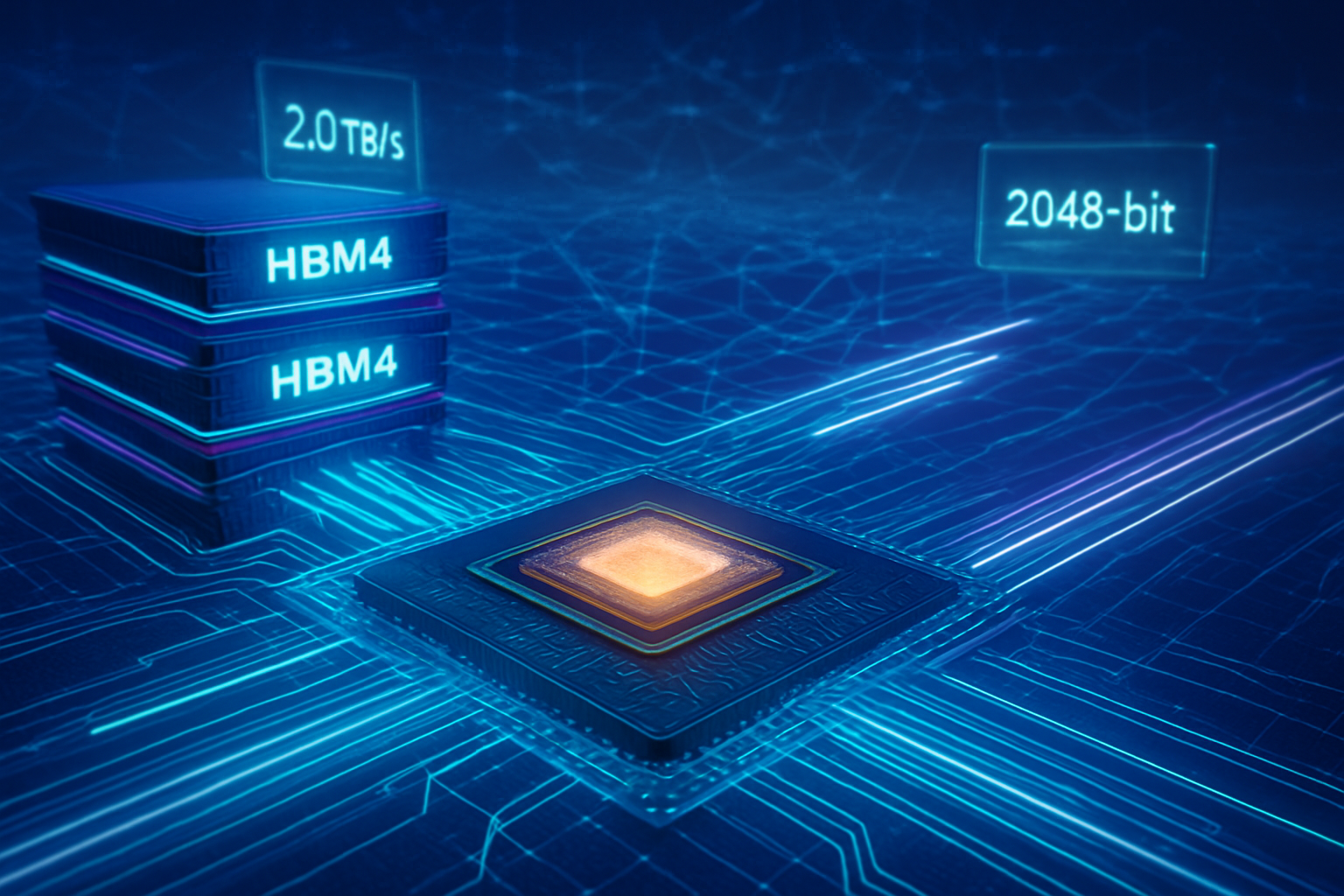
    Potential applications for 'Crescent Island' are vast, extending across generative AI chatbots, video synthesis, and edge-based analytics. Its generous 160GB of LPDDR5X memory makes it particularly well-suited for handling the massive datasets and memory throughput required by large language models and multimodal workloads. Cloud providers and enterprise data centers will find its cost optimization, performance-per-watt efficiency, and air-cooled operation attractive for deploying LLMs without the higher costs associated with liquid-cooled systems or more expensive HBM. However, significant challenges remain, particularly in catching up to established leaders and overcoming perception hurdles, who are already looking to HBM4 for their next-generation processors. The perception of LPDDR5X as "slower memory" compared to HBM also needs to be overcome by demonstrating compelling real-world "performance per dollar."

    Experts predict intense competition and significant diversification in the AI chip market, which is projected to surpass $150 billion in 2025 and potentially reach $1.3 trillion by 2030. 'Crescent Island' is seen as Intel's "bold bet," focusing on open ecosystems, energy efficiency, and an inference-first performance strategy, playing to Intel's strengths in integration and cost-efficiency. This positions it as a "right-sized, right-priced" solution, particularly for "tokens-as-a-service" providers and enterprises. While challenging Nvidia's dominance, experts note that Intel's success hinges on its ability to deliver on promised power efficiency, secure early adopters, and overcome the maturity advantage of Nvidia's CUDA ecosystem. Its success or failure will be a "very important test of Intel's long-term relevance in AI hardware." Beyond competition, AI itself is expected to become the "backbone of innovation" within the semiconductor industry, optimizing chip design and manufacturing processes, and inspiring new architectural paradigms specifically for AI workloads.

    A New Chapter in the AI Chip Race

    Intel's 'Crescent Island' AI chip marks a pivotal moment in the escalating AI hardware race, signaling a determined and strategic re-entry into a market segment Intel can ill-afford to ignore. By focusing squarely on AI inference, prioritizing "performance per dollar" through its Xe3P architecture and 160GB LPDDR5X memory, and championing an open ecosystem, Intel is carving out a differentiated path. This approach aims to democratize access to powerful AI inference capabilities, offering a compelling alternative to HBM-laden, high-cost solutions from rivals like AMD and Nvidia. The chip's potential to lower the barrier to entry for LLM deployment and its suitability for cost-sensitive, air-cooled data centers could significantly accelerate AI adoption across various industries.

    The significance of 'Crescent Island' lies not just in its technical specifications, but in Intel's renewed commitment to an annual GPU release cadence and a unified software stack. This comprehensive strategy, backed by strategic partnerships (including Nvidia's investment), positions Intel to regain market relevance and intensify competition. While challenges remain, particularly in catching up to established leaders and overcoming perception hurdles, 'Crescent Island' represents a crucial test of Intel's ability to execute its vision. The coming weeks and months, leading up to customer sampling in late 2026 and the full market launch in 2027, will be critical. The industry will be closely watching for concrete performance benchmarks, market acceptance, and the continued evolution of Intel's AI ecosystem as it strives to redefine the economics of AI inference and reshape the competitive landscape.


    This content is intended for informational purposes only and represents analysis of current AI developments.

    TokenRing AI delivers enterprise-grade solutions for multi-agent AI workflow orchestration, AI-powered development tools, and seamless remote collaboration platforms.
    For more information, visit https://www.tokenring.ai/.
  • Global Semiconductor R&D Surge Fuels Next Wave of AI Hardware Innovation: Oman Emerges as Key Player

    Global Semiconductor R&D Surge Fuels Next Wave of AI Hardware Innovation: Oman Emerges as Key Player

    The global technology landscape is witnessing an unprecedented surge in semiconductor research and development (R&D) investments, a critical response to the insatiable demands of Artificial Intelligence (AI). Nations and corporations worldwide are pouring billions into advanced chip design, manufacturing, and innovative packaging solutions, recognizing semiconductors as the foundational bedrock for the next generation of AI capabilities. This monumental financial commitment, projected to push the global semiconductor market past $1 trillion by 2030, underscores a strategic imperative: to unlock the full potential of AI through specialized, high-performance hardware.

    A notable development in this global race is the strategic emergence of Oman, which is actively positioning itself as a significant regional hub for semiconductor design. Through targeted investments and partnerships, the Sultanate aims to diversify its economy and contribute substantially to the global AI hardware ecosystem. These initiatives, exemplified by new design centers and strategic collaborations, are not merely about economic growth; they are about laying the essential groundwork for breakthroughs in machine learning, large language models, and autonomous systems that will define the future of AI.

    The Technical Crucible: Forging AI's Future in Silicon

    The computational demands of modern AI, from training colossal neural networks to processing real-time data for autonomous vehicles, far exceed the capabilities of general-purpose processors. This necessitates a relentless pursuit of specialized hardware accelerators, including Graphics Processing Units (GPUs) from companies like NVIDIA (NASDAQ: NVDA), Tensor Processing Units (TPUs), and custom Application-Specific Integrated Circuits (ASICs). Current R&D investments are strategically targeting several pivotal areas to meet these escalating requirements.

    Key areas of innovation include the development of more powerful AI chips, focusing on enhancing parallel processing capabilities and energy efficiency. Furthermore, there's significant investment in advanced materials such as Wide Bandgap (WBG) semiconductors like Silicon Carbide (SiC) and Gallium Nitride (GaN), crucial for the power electronics required by energy-intensive AI data centers. Memory technologies are also seeing substantial R&D, with High Bandwidth Memory (HBM) customization experiencing explosive growth to cater to the data-intensive nature of AI applications. Novel architectures, including neuromorphic computing (chips inspired by the human brain), quantum computing, and edge computing, are redefining the boundaries of what's possible in AI processing, promising unprecedented speed and efficiency.

    Oman's entry into this high-stakes arena is marked by concrete actions. The Ministry of Transport, Communications and Information Technology (MoTCIT) has announced a $30 million investment opportunity for a semiconductor design company in Muscat. Concurrently, ITHCA Group, the tech investment arm of Oman Investment Authority (OIA), has invested $20 million in Movandi, a US-based developer of semiconductor and smart wireless solutions, which includes the establishment of a design center in Oman. An additional Memorandum of Understanding (MoU) with AONH Private Holdings aims to develop an advanced semiconductor and AI chip project in the Salalah Free Zone. These initiatives are designed to cultivate local talent, attract international expertise, and focus on designing and manufacturing advanced AI chips, including high-performance memory solutions and next-generation AI applications like self-driving vehicles and AI training.

    Reshaping the AI Industry: A Competitive Edge in Hardware

    The global pivot towards intensified semiconductor R&D has profound implications for AI companies, tech giants, and startups alike. Companies at the forefront of AI hardware, such as NVIDIA (NASDAQ: NVDA), Intel (NASDAQ: INTC), and AMD (NASDAQ: AMD), stand to benefit immensely from these widespread investments. Enhanced R&D fosters a competitive environment that drives innovation, leading to more powerful, efficient, and cost-effective AI accelerators. This allows these companies to further solidify their market leadership by offering cutting-edge solutions essential for training and deploying advanced AI models.

    For major AI labs and tech companies, the availability of diverse and advanced semiconductor solutions is crucial. It enables them to push the boundaries of AI research, develop more sophisticated models, and deploy AI across a wider range of applications. The emergence of new design centers, like those in Oman, also offers a strategic advantage by diversifying the global semiconductor supply chain. This reduces reliance on a few concentrated manufacturing hubs, mitigating geopolitical risks and enhancing resilience—a critical factor for companies like Taiwan Semiconductor Manufacturing Company (TSMC) (NYSE: TSM) and their global clientele.

    Startups in the AI space can also leverage these advancements. Access to more powerful and specialized chips, potentially at lower costs due to increased competition and innovation, can accelerate their product development cycles and enable them to create novel AI-powered services. This environment fosters disruption, allowing agile newcomers to challenge existing products or services by integrating the latest hardware capabilities. Ultimately, the global semiconductor R&D boom creates a more robust and dynamic ecosystem, driving market positioning and strategic advantages across the entire AI industry.

    Wider Significance: A New Era for AI's Foundation

    The global surge in semiconductor R&D and manufacturing investment is more than just an economic trend; it represents a fundamental shift in the broader AI landscape. It underscores the recognition that software advancements alone are insufficient to sustain the exponential growth of AI. Instead, hardware innovation is now seen as the critical bottleneck and, conversely, the ultimate enabler for future breakthroughs. This fits into a broader trend of "hardware-software co-design," where chips are increasingly tailored to specific AI workloads, leading to unprecedented gains in performance and efficiency.

    The impacts of these investments are far-reaching. Economically, they are driving diversification in nations like Oman, reducing reliance on traditional industries and fostering knowledge-based economies. Technologically, they are paving the way for AI applications that were once considered futuristic, from fully autonomous systems to highly complex large language models that demand immense computational power. However, potential concerns also arise, particularly regarding the energy consumption of increasingly powerful AI hardware and the environmental footprint of semiconductor manufacturing. Supply chain security remains a perennial issue, though efforts like Oman's new design center contribute to a more geographically diversified and resilient supply chain.

    Comparing this era to previous AI milestones, the current focus on specialized hardware echoes the shift from general-purpose CPUs to GPUs for deep learning. Yet, today's investments go deeper, exploring novel architectures and materials, suggesting a more profound and multifaceted transformation. It signifies a maturation of the AI industry, where the foundational infrastructure is being reimagined to support increasingly sophisticated and ubiquitous AI deployments across every sector.

    The Horizon: Future Developments in AI Hardware

    Looking ahead, the ongoing investments in semiconductor R&D promise a future where AI hardware is not only more powerful but also more specialized and integrated. Near-term developments are expected to focus on further optimizing existing architectures, such as next-generation GPUs and custom AI accelerators, to handle increasingly complex neural networks and real-time processing demands more efficiently. We can also anticipate advancements in packaging technologies, allowing for denser integration of components and improved data transfer rates, crucial for high-bandwidth AI applications.

    Longer-term, the horizon includes more transformative shifts. Neuromorphic computing, which seeks to mimic the brain's structure and function, holds the potential for ultra-low-power, event-driven AI processing, ideal for edge AI applications where energy efficiency is paramount. Quantum computing, while still in its nascent stages, represents a paradigm shift that could solve certain computational problems intractable for even the most powerful classical AI hardware. Edge AI, where AI processing happens closer to the data source rather than in distant cloud data centers, will benefit immensely from compact, energy-efficient AI chips, enabling real-time decision-making in autonomous vehicles, smart devices, and industrial IoT.

    Challenges remain, particularly in scaling manufacturing processes for novel materials and architectures, managing the escalating costs of R&D, and ensuring a skilled workforce. However, experts predict a continuous trajectory of innovation, with AI itself playing a growing role in chip design through AI-driven Electronic Design Automation (EDA). The next wave of AI hardware will be characterized by a symbiotic relationship between software and silicon, unlocking unprecedented applications from personalized medicine to hyper-efficient smart cities.

    A New Foundation for AI's Ascendance

    The global acceleration in semiconductor R&D and innovation, epitomized by initiatives like Oman's strategic entry into chip design, marks a pivotal moment in the history of Artificial Intelligence. This concerted effort to engineer more powerful, efficient, and specialized hardware is not merely incremental; it is a foundational shift that will underpin the next generation of AI capabilities. The sheer scale of investment, coupled with a focus on diverse technological pathways—from advanced materials and memory to novel architectures—underscores a collective understanding that the future of AI hinges on the relentless evolution of its silicon brain.

    The significance of this development cannot be overstated. It ensures that as AI models grow in complexity and data demands, the underlying hardware infrastructure will continue to evolve, preventing bottlenecks and enabling new frontiers of innovation. Oman's proactive steps highlight a broader trend of nations recognizing semiconductors as a strategic national asset, contributing to global supply chain resilience and fostering regional technological expertise. This is not just about faster chips; it's about creating a more robust, distributed, and innovative ecosystem for AI development worldwide.

    In the coming weeks and months, we should watch for further announcements regarding new R&D partnerships, particularly in emerging markets, and the tangible progress of projects like Oman's design centers. The continuous interplay between hardware innovation and AI software advancements will dictate the pace and direction of AI's ascendance, promising a future where intelligent systems are more capable, pervasive, and transformative than ever before.


    This content is intended for informational purposes only and represents analysis of current AI developments.

    TokenRing AI delivers enterprise-grade solutions for multi-agent AI workflow orchestration, AI-powered development tools, and seamless remote collaboration platforms.
    For more information, visit https://www.tokenring.ai/.

  • The AI Gold Rush: Semiconductor Stocks Soar on Unprecedented Investor Confidence in Artificial Intelligence

    The AI Gold Rush: Semiconductor Stocks Soar on Unprecedented Investor Confidence in Artificial Intelligence

    The global technology landscape is currently witnessing a historic bullish surge in semiconductor stocks, a rally almost entirely underpinned by the explosive growth and burgeoning investor confidence in Artificial Intelligence (AI). Companies at the forefront of chip innovation, such as Advanced Micro Devices (NASDAQ: AMD) and Nvidia (NASDAQ: NVDA), are experiencing unprecedented gains, with market analysts and industry experts unanimously pointing to the insatiable demand for AI-specific hardware as the primary catalyst. This monumental shift is reshaping the semiconductor sector, transforming it into the crucial bedrock upon which the future of AI is being built.

    As of October 15, 2025, the semiconductor market is not just growing; it's undergoing a profound transformation. The Morningstar Global Semiconductors Index has seen a remarkable 34% increase in 2025 alone, more than doubling the returns of the broader U.S. stock market. This robust performance is a direct reflection of a historic surge in capital spending on AI infrastructure, from advanced data centers to specialized manufacturing facilities. The implication is clear: the AI revolution is not just about software and algorithms; it's fundamentally driven by the physical silicon that powers it, making chipmakers the new titans of the AI era.

    The Silicon Brains: Unpacking the Technical Engine of AI

    The advancements in AI, particularly in areas like large language models and generative AI, are creating an unprecedented demand for specialized processing power. This demand is primarily met by Graphics Processing Units (GPUs), which, despite their name, have become the pivotal accelerators for AI and machine learning tasks. Their architecture, designed for massive parallel processing, makes them exceptionally well-suited for the complex computations and large-scale data processing required to train deep neural networks. Modern data center GPUs, such as Nvidia's H-series and AMD's Instinct (e.g., MI450), incorporate High Bandwidth Memory (HBM) for extreme data throughput and specialized Tensor Cores, which are optimized for the efficient matrix multiplication operations fundamental to AI workloads.

    Beyond GPUs, Neural Processing Units (NPUs) are emerging as critical components, especially for AI inference at the "edge." These specialized processors are designed to efficiently execute neural network algorithms with a focus on energy efficiency and low latency, making them ideal for applications in smartphones, IoT devices, and autonomous vehicles where real-time decision-making is paramount. Companies like Apple and Google have integrated NPUs (e.g., Apple's Neural Engine, Google's Tensor chips) into their consumer devices, showcasing their ability to offload AI tasks from traditional CPUs and GPUs, often performing specific machine learning tasks thousands of times faster. Google's Tensor Processing Units (TPUs), specialized ASICs primarily used in cloud environments, further exemplify the industry's move towards highly optimized hardware for AI.

    The distinction between these chips and previous generations lies in their sheer computational density, specialized instruction sets, and advanced memory architectures. While traditional Central Processing Units (CPUs) still handle overall system functionality, their role in intensive AI computations is increasingly supplemented or offloaded to these specialized accelerators. The integration of High Bandwidth Memory (HBM) is particularly transformative, offering significantly higher bandwidth (up to 2-3 terabytes per second) compared to conventional CPU memory, which is essential for handling the massive datasets inherent in AI training. This technological evolution represents a fundamental departure from general-purpose computing towards highly specialized, parallel processing engines tailored for the unique demands of artificial intelligence. Initial reactions from the AI research community highlight the critical importance of these hardware innovations; without them, many of the recent breakthroughs in AI would simply not be feasible.

    Reshaping the AI Ecosystem: Winners, Losers, and Strategic Plays

    The bullish trend in semiconductor stocks has profound implications for AI companies, tech giants, and startups across the globe, creating a new pecking order in the competitive landscape. Companies that design and manufacture these high-performance chips are the immediate beneficiaries. Nvidia (NASDAQ: NVDA) remains the "undisputed leader" in the AI boom, with its stock surging over 43% in 2025, largely driven by its dominant data center sales, which are the core of its AI hardware empire. Its strong product pipeline, broad customer base, and rising chip output solidify its market positioning.

    However, the landscape is becoming increasingly competitive. Advanced Micro Devices (NASDAQ: AMD) has emerged as a formidable challenger, with its stock jumping over 40% in the past three months and nearly 80% this year. A landmark multi-year, multi-billion dollar deal with OpenAI to deploy its Instinct GPUs, alongside an expanded partnership with Oracle (NYSE: ORCL) to deploy 50,000 MI450 GPUs by Q3 2026, underscore AMD's growing influence. These strategic partnerships highlight a broader industry trend among hyperscale cloud providers—including Microsoft (NASDAQ: MSFT), Meta Platforms (NASDAQ: META), Amazon (NASDAQ: AMZN), and Alphabet (NASDAQ: GOOGL)—to diversify their AI chip suppliers, partly to mitigate reliance on a single vendor and partly to meet the ever-increasing demand that even the market leader struggles to fully satisfy.

    Beyond the direct chip designers, other players in the semiconductor supply chain are also reaping significant rewards. Broadcom (NASDAQ: AVGO) has seen its stock climb 47% this year, benefiting from custom silicon and networking chip demand for AI. ASML Holding (NASDAQ: ASML), a critical supplier of lithography equipment, and Taiwan Semiconductor Manufacturing Co. (NYSE: TSM), the world's largest contract chip manufacturer, are both poised for robust quarters, underscoring the health of the entire ecosystem. Micron Technology (NASDAQ: MU) has also seen a 65% year-to-date increase in its stock, driven by the surging demand for High Bandwidth Memory (HBM), which is crucial for AI workloads. Even Intel (NASDAQ: INTC), a legacy chipmaker, is making a renewed push into the AI chip market, with plans to launch its "Crescent Island" data center AI processor in 2026, signaling its intent to compete directly with Nvidia and AMD. This intense competition is driving innovation, but also raises questions about potential supply chain bottlenecks and the escalating costs of AI infrastructure for startups and smaller AI labs.

    The Broader AI Landscape: Impact, Concerns, and Milestones

    This bullish trend in semiconductor stocks is not merely a financial phenomenon; it is a fundamental pillar supporting the broader AI landscape and its rapid evolution. The sheer scale of capital expenditure by hyperscale cloud providers, which are the "backbone of today's AI boom," demonstrates that the demand for AI processing power is not a fleeting trend but a foundational shift. The global AI in semiconductor market, valued at approximately $60.63 billion in 2024, is projected to reach an astounding $169.36 billion by 2032, exhibiting a Compound Annual Growth Rate (CAGR) of 13.7%. Some forecasts are even more aggressive, predicting the market could hit $232.85 billion by 2034. This growth is directly tied to the expansion of generative AI, which is expected to contribute an additional $300 billion to the semiconductor industry, potentially pushing total revenue to $1.3 trillion by 2030.

    The impacts of this hardware-driven AI acceleration are far-reaching. It enables more complex models, faster training times, and more sophisticated AI applications across virtually every industry, from healthcare and finance to autonomous systems and scientific research. However, this rapid expansion also brings potential concerns. The immense power requirements of AI data centers raise questions about energy consumption and environmental impact. Supply chain resilience is another critical factor, as global events can disrupt the intricate network of manufacturing and logistics that underpin chip production. The escalating cost of advanced AI hardware could also create a significant barrier to entry for smaller startups, potentially centralizing AI development among well-funded tech giants.

    Comparatively, this period echoes past technological milestones like the dot-com boom or the early days of personal computing, where foundational hardware advancements catalyzed entirely new industries. However, the current AI hardware boom feels different due to the unprecedented scale of investment and the transformative potential of AI itself, which promises to revolutionize nearly every aspect of human endeavor. Experts like Brian Colello from Morningstar note that "AI demand still seems to be exceeding supply," underscoring the unique dynamics of this market.

    The Road Ahead: Anticipating Future Developments

    The trajectory of the AI chip market suggests several key developments on the horizon. In the near term, the race for greater efficiency and performance will intensify. We can expect continuous iterations of GPUs and NPUs with higher core counts, increased memory bandwidth (e.g., HBM3e and beyond), and more specialized AI acceleration units. Intel's planned launch of its "Crescent Island" data center AI processor in 2026, optimized for AI inference and energy efficiency, exemplifies the ongoing innovation and competitive push. The integration of AI directly into chip design, verification, yield prediction, and factory control processes will also become more prevalent, further accelerating the pace of hardware innovation.

    Looking further ahead, the industry will likely explore novel computing architectures beyond traditional Von Neumann designs. Neuromorphic computing, which attempts to mimic the structure and function of the human brain, could offer significant breakthroughs in energy efficiency and parallel processing for AI. Quantum computing, while still in its nascent stages, also holds the long-term promise of revolutionizing AI computations for specific, highly complex problems. Expected near-term applications include more sophisticated generative AI models, real-time autonomous systems with enhanced decision-making capabilities, and personalized AI assistants that are seamlessly integrated into daily life.

    However, significant challenges remain. The physical limits of silicon miniaturization, often referred to as Moore's Law, are becoming increasingly difficult to overcome, prompting a shift towards architectural innovations and advanced packaging technologies. Power consumption and heat dissipation will continue to be major hurdles for ever-larger AI models. Experts like Roh Geun-chang predict that global AI chip demand might reach a short-term peak around 2028, suggesting a potential stabilization or maturation phase after this initial explosive growth. What experts predict next is a continuous cycle of innovation driven by the symbiotic relationship between AI software advancements and the hardware designed to power them, pushing the boundaries of what's possible in artificial intelligence.

    A New Era: The Enduring Impact of AI-Driven Silicon

    In summation, the current bullish trend in semiconductor stocks is far more than a fleeting market phenomenon; it represents a fundamental recalibration of the technology industry, driven by the profound and accelerating impact of artificial intelligence. Key takeaways include the unprecedented demand for specialized AI chips like GPUs, NPUs, and HBM, which are fueling the growth of companies like AMD (NASDAQ: AMD) and Nvidia (NASDAQ: NVDA). Investor confidence in AI's transformative potential is translating directly into massive capital expenditures, particularly from hyperscale cloud providers, solidifying the semiconductor sector's role as the indispensable backbone of the AI revolution.

    This development marks a significant milestone in AI history, akin to the invention of the microprocessor for personal computing or the internet for global connectivity. The ability to process vast amounts of data and execute complex AI algorithms at scale is directly dependent on these hardware advancements, making silicon the new gold standard in the AI era. The long-term impact will be a world increasingly shaped by intelligent systems, from ubiquitous AI assistants to fully autonomous industries, all powered by an ever-evolving ecosystem of advanced semiconductors.

    In the coming weeks and months, watch for continued financial reports from major chipmakers and cloud providers, which will offer further insights into the pace of AI infrastructure build-out. Keep an eye on announcements regarding new chip architectures, advancements in memory technology, and strategic partnerships that could further reshape the competitive landscape. The race to build the most powerful and efficient AI hardware is far from over, and its outcome will profoundly influence the future trajectory of artificial intelligence and, by extension, global technology and society.


    This content is intended for informational purposes only and represents analysis of current AI developments.

    TokenRing AI delivers enterprise-grade solutions for multi-agent AI workflow orchestration, AI-powered development tools, and seamless remote collaboration platforms.
    For more information, visit https://www.tokenring.ai/.

  • China Unveils 90GHz Oscilloscope, Supercharging AI Chip Development and Global Tech Race

    China Unveils 90GHz Oscilloscope, Supercharging AI Chip Development and Global Tech Race

    Shenzhen, China – October 15, 2025 – In a significant stride towards technological self-reliance and leadership in the artificial intelligence (AI) era, China today announced the successful development and unveiling of a homegrown 90GHz ultra-high-speed real-time oscilloscope. This monumental achievement shatters a long-standing foreign technological blockade in high-end electronic measurement equipment, positioning China at the forefront of advanced semiconductor testing.

    The immediate implications of this breakthrough are profound, particularly for the burgeoning field of AI. As AI chips push the boundaries of miniaturization, complexity, and data processing speeds, the ability to meticulously test and validate these advanced semiconductors becomes paramount. This 90GHz oscilloscope is specifically designed to inspect and test next-generation chip process nodes, including those at 3nm and below, providing a critical tool for the development and validation of the sophisticated hardware that underpins modern AI.

    Technical Prowess: A Leap in High-Frequency Measurement

    China's newly unveiled 90GHz real-time oscilloscope represents a remarkable leap in high-frequency semiconductor testing capabilities. Boasting a bandwidth of 90GHz, this instrument delivers a staggering 500 percent increase in key performance compared to previous domestically made oscilloscopes. Its impressive specifications include a sampling rate of up to 200 billion samples per second and a memory depth of 4 billion sample points. Beyond raw numbers, it integrates innovative features such as intelligent auto-optimization and server-grade computing power, enabling the precise capture and analysis of transient signals in nano-scale chips.

    This advancement marks a crucial departure from previous limitations. Historically, China faced a significant technological gap, with domestic models typically falling below 20GHz bandwidth, while leading international counterparts exceeded 60GHz. The jump to 90GHz not only closes this gap but potentially sets a new "China Standard" for ultra-high-speed signals. Major international players like Keysight Technologies (NYSE: KEYS) offer high-performance oscilloscopes, with some specialized sampling scopes exceeding 90GHz. However, China's emphasis on "real-time" capability at this bandwidth signifies a direct challenge to established leaders, demonstrating sustained integrated innovation across foundational materials, precision manufacturing, core chips, and algorithms.

    Initial reactions from within China's AI research community and industry experts are overwhelmingly positive, emphasizing the strategic importance of this achievement. State broadcasters like CCTV News and Xinhua have highlighted its utility for next-generation AI research and development. Liu Sang, CEO of Longsight Tech, one of the developers, underscored the extensive R&D efforts and deep collaboration across industry, academia, and research. The oscilloscope has already undergone testing and application by several prominent institutions and enterprises, including Huawei, indicating its practical readiness and growing acceptance within China's tech ecosystem.

    Reshaping the AI Hardware Landscape: Corporate Beneficiaries and Competitive Shifts

    The emergence of advanced high-frequency testing equipment like the 90GHz oscilloscope is set to profoundly impact the competitive landscape for AI companies, tech giants, and startups globally. This technology is not merely an incremental improvement; it's a foundational enabler for the next generation of AI hardware.

    Semiconductor manufacturers at the forefront of AI chip design stand to benefit immensely. Companies such as NVIDIA (NASDAQ: NVDA), Intel (NASDAQ: INTC), and Advanced Micro Devices (NASDAQ: AMD), which are driving innovation in AI accelerators, GPUs, and custom AI silicon, will leverage these tools to rigorously test and validate their increasingly complex designs. This ensures the quality, reliability, and performance of their products, crucial for maintaining their market leadership. Test equipment vendors like Teradyne (NASDAQ: TER) and Keysight Technologies (NYSE: KEYS) are also direct beneficiaries, as their own innovations in this space become even more critical to the entire AI industry. Furthermore, a new wave of AI hardware startups focusing on specialized chips, optical interconnects (e.g., Celestial AI, AyarLabs), and novel architectures will rely heavily on such high-frequency testing capabilities to validate their groundbreaking designs.

    For major AI labs, the availability and effective utilization of 90GHz oscilloscopes will accelerate development cycles, allowing for quicker validation of complex chiplet-based designs and advanced packaging solutions. This translates to faster product development and reduced time-to-market for high-performance AI solutions, maintaining a crucial competitive edge. The potential disruption to existing products and services is significant: legacy testing equipment may become obsolete, and traditional methodologies could be replaced by more intelligent, adaptive testing approaches integrating AI and Machine Learning. The ability to thoroughly test high-frequency components will also accelerate innovation in areas like heterogeneous integration and 3D-stacking, potentially disrupting product roadmaps reliant on older chip design paradigms. Ultimately, companies that master this advanced testing capability will secure strong market positioning through technological leadership, superior product performance, and reduced development risk.

    Broader Significance: Fueling AI's Next Wave

    The wider significance of advanced semiconductor testing equipment, particularly in the context of China's 90GHz oscilloscope, extends far beyond mere technical specifications. It represents a critical enabler that directly addresses the escalating complexity and performance demands of AI hardware, fitting squarely into current AI trends.

    This development is crucial for the rise of specialized AI chips, such as TPUs and NPUs, which require highly specialized and rigorous testing methodologies. It also underpins the growing trend of heterogeneous integration and advanced packaging, where diverse components are integrated into a single package, dramatically increasing interconnect density and potential failure points. High-frequency testing is indispensable for verifying the integrity of high-speed data interconnects, which are vital for immense data throughput in AI applications. Moreover, this milestone aligns with the meta-trend of "AI for AI," where AI and Machine Learning are increasingly applied within the semiconductor testing process itself to optimize flows, predict failures, and automate tasks.

    While the impacts are overwhelmingly positive – accelerating AI development, improving efficiency, enhancing precision, and speeding up time-to-market – there are also concerns. The high capital expenditure required for such sophisticated equipment could raise barriers to entry. The increasing complexity of AI chips and the massive data volumes generated during testing present significant management challenges. Talent shortages in combined AI and semiconductor expertise, along with complexities in thermal management for ultra-high power chips, also pose hurdles. Compared to previous AI milestones, which often focused on theoretical models and algorithmic breakthroughs, this development signifies a maturation and industrialization of AI, where hardware optimization and rigorous testing are now critical for scalable, practical deployment. It highlights a critical co-evolution where AI actively shapes the very genesis and validation of its enabling technology.

    The Road Ahead: Future Developments and Expert Predictions

    The future of high-frequency semiconductor testing, especially for AI chips, is poised for continuous and rapid evolution. In the near term (next 1-5 years), we can expect to see enhanced Automated Test Equipment (ATE) capabilities with multi-site testing and real-time data processing, along with the proliferation of adaptive testing strategies that dynamically adjust conditions based on real-time feedback. System-Level Test (SLT) will become more prevalent for detecting subtle issues in complex AI systems, and AI/Machine Learning integration will deepen, automating test pattern generation and enabling predictive fault detection. Focus will also intensify on advanced packaging techniques like chiplets and 3D ICs, alongside improved thermal management solutions for high-power AI chips and the testing of advanced materials like GaN and SiC.

    Looking further ahead (beyond 5 years), experts predict that AI will become a core driver for automating chip design, optimizing manufacturing, and revolutionizing supply chain management. Ubiquitous AI integration into a broader array of devices, from neuromorphic architectures to 6G and terahertz frequencies, will demand unprecedented testing capabilities. Predictive maintenance and the concept of "digital twins of failure analysis" will allow for proactive issue resolution. However, significant challenges remain, including the ever-increasing chip complexity, maintaining signal integrity at even higher frequencies, managing power consumption and thermal loads, and processing massive, heterogeneous data volumes. The cost and time of testing, scalability, interoperability, and manufacturing variability will also continue to be critical hurdles.

    Experts anticipate that the global semiconductor market, driven by specialized AI chips and advanced packaging, could reach $1 trillion by 2030. They foresee AI becoming a fundamental enabler across the entire chip lifecycle, with widespread AI/ML adoption in manufacturing generating billions in annual value. The rise of specialized AI chips for specific applications and the proliferation of AI-capable PCs and generative AI smartphones are expected to be major trends. Observers predict a shift towards edge-based decision-making in testing systems to reduce latency and faster market entry for new AI hardware.

    A Pivotal Moment in AI's Hardware Foundation

    China's unveiling of the 90GHz oscilloscope marks a pivotal moment in the history of artificial intelligence and semiconductor technology. It signifies a critical step towards breaking foreign dependence for essential measurement tools and underscores China's growing capability to innovate at the highest levels of electronic engineering. This advanced instrument is a testament to the nation's relentless pursuit of technological independence and leadership in the AI era.

    The key takeaway is clear: the ability to precisely characterize and validate the performance of high-frequency signals is no longer a luxury but a necessity for pushing the boundaries of AI. This development will directly contribute to advancements in AI chips, next-generation communication systems, optical communications, and smart vehicle driving, accelerating AI research and development within China. Its long-term impact will be shaped by its successful integration into the broader AI ecosystem, its contribution to domestic chip production, and its potential to influence global technological standards amidst an intensifying geopolitical landscape. In the coming weeks and months, observers should watch for widespread adoption across Chinese industries, further breakthroughs in other domestically produced chipmaking tools, real-world performance assessments, and any new government policies or investments bolstering China's AI hardware supply chain.


    This content is intended for informational purposes only and represents analysis of current AI developments.

    TokenRing AI delivers enterprise-grade solutions for multi-agent AI workflow orchestration, AI-powered development tools, and seamless remote collaboration platforms.
    For more information, visit https://www.tokenring.ai/.

  • Oman’s Ambitious Silicon Dream: A New Regional Hub Poised to Revolutionize Global AI Hardware

    Oman’s Ambitious Silicon Dream: A New Regional Hub Poised to Revolutionize Global AI Hardware

    Oman is making a bold play to redefine its economic future, embarking on an ambitious initiative to establish itself as a regional semiconductor design hub. This strategic pivot, deeply embedded within the nation's Oman Vision 2040, aims to diversify its economy away from traditional oil revenues and propel it into the forefront of the global technology landscape. As of October 2025, significant strides have been made, positioning the Sultanate as a burgeoning center for cutting-edge AI chip design and advanced communication technologies.

    The immediate significance of Oman's endeavor extends far beyond its borders. By focusing on cultivating indigenous talent, attracting foreign investment, and fostering a robust ecosystem for semiconductor innovation, Oman is set to become a critical node in the increasingly complex global technology supply chain. This move is particularly crucial for the advancement of artificial intelligence, as the nation's emphasis on designing and manufacturing advanced AI chips promises to fuel the next generation of intelligent systems and applications worldwide.

    Laying the Foundation: Oman's Strategic Investments in AI Hardware

    Oman's initiative is built on a multi-pronged strategy, beginning with the recent launch of a National Innovation Centre. This center is envisioned as the nucleus of Oman's semiconductor ambitions, dedicated to cultivating local expertise in semiconductor design, wireless communication systems, and AI-powered networks. Collaborating with Omani universities, research institutes, and international technology firms, the center aims to establish a sustainable talent pipeline through advanced training programs. The emphasis on AI chip design is explicit, with the Ministry of Transport, Communications, and Information Technology (MoTCIT) highlighting that "AI would not be able to process massive volumes of data without semiconductors," underscoring the foundational role these chips will play.

    The Sultanate has also strategically forged key partnerships and attracted substantial investments. In February 2025, MoTCIT signed a Memorandum of Understanding (MoU) with EONH Private Holdings for an advanced chips and semiconductors project in the Salalah Free Zone, specifically targeting AI chip design and manufacturing. This was followed by a cooperation program in May 2025 with Indian technology firm Kinesis Semicon, aimed at establishing a large-scale integrated circuit (IC) design company and training 80 Omani engineers. Further bolstering its ecosystem, ITHCA Group, the technology investment arm of the Oman Investment Authority (OIA), invested in US-based Lumotive, leading to a partnership with GS Microelectronics (GSME) to create a LiDAR design and support center in Muscat. GSME had already opened Oman's first chip design office in 2022 and trained over 100 Omani engineers. Most recently, in October 2025, ITHCA Group invested $20 million in Movandi, a California-based developer of semiconductor and smart wireless solutions, which will see Movandi establish a regional R&D hub in Muscat focusing on smart communication and AI.

    This concentrated effort marks a significant departure from Oman's historical economic reliance on oil and gas. Instead of merely consuming technology, the nation is actively positioning itself as a creator and innovator in a highly specialized, capital-intensive sector. The focus on AI chips and advanced communication technologies demonstrates an understanding of future technological demands, aiming to produce high-value components critical for emerging AI applications like autonomous vehicles, sophisticated AI training systems, and 5G infrastructure. Initial reactions from industry observers and government officials within Oman are overwhelmingly positive, viewing these initiatives as crucial steps towards economic diversification and technological self-sufficiency, though the broader AI research community is still assessing the long-term implications of this emerging player.

    Reshaping the AI Industry Landscape

    Oman's emergence as a semiconductor design hub holds significant implications for AI companies, tech giants, and startups globally. Companies seeking to diversify their supply chains away from existing concentrated hubs in East Asia stand to benefit immensely from a new, strategically located design and potential manufacturing base. This initiative provides a new avenue for AI hardware procurement and collaboration, potentially mitigating geopolitical risks and increasing supply chain resilience, a lesson painfully learned during recent global disruptions.

    Major AI labs and tech companies, particularly those involved in developing advanced AI models and hardware (e.g., NVIDIA (NASDAQ: NVDA), Intel (NASDAQ: INTC), AMD (NASDAQ: AMD)), could find new partnership opportunities for R&D and specialized chip design services. While Oman's immediate focus is on design, the long-term vision includes manufacturing, which could eventually offer alternative fabrication options. Startups specializing in niche AI hardware, such as those focused on edge AI, IoT, or specific communication protocols, might find a more agile and supportive ecosystem in Oman for prototyping and initial production runs, especially given the explicit focus on cultivating local talent and fostering innovation.

    The competitive landscape could see subtle shifts. While Oman is unlikely to immediately challenge established giants, its focus on AI-specific chips and advanced communication solutions could create a specialized niche. This could lead to a healthy disruption in areas where innovation is paramount, potentially fostering new design methodologies and intellectual property. Companies like Movandi, which has already partnered with ITHCA Group, gain a strategic advantage by establishing an early foothold in this burgeoning regional hub, allowing them to tap into new talent pools and markets. For AI companies, this initiative represents an opportunity to collaborate with a nation actively investing in the foundational hardware that powers their innovations, potentially leading to more customized and efficient AI solutions.

    Oman's Role in the Broader AI Ecosystem

    Oman's semiconductor initiative fits squarely into the broader global trend of nations striving for technological sovereignty and economic diversification, particularly in critical sectors like semiconductors. It represents a significant step towards decentralizing the global chip design and manufacturing landscape, which has long been concentrated in a few key regions. This decentralization is vital for the resilience of the entire AI ecosystem, as a more distributed supply chain can better withstand localized disruptions, whether from natural disasters, geopolitical tensions, or pandemics.

    The impact on global AI development is profound. By fostering a new hub for AI chip design, Oman directly contributes to the accelerating pace of innovation in AI hardware. Advanced AI applications, from sophisticated large language models to complex autonomous systems, are heavily reliant on powerful, specialized semiconductors. Oman's focus on these next-generation chips will help meet the escalating demand, driving further breakthroughs in AI capabilities. Potential concerns, however, include the long-term sustainability of talent acquisition and retention in a highly competitive global market, as well as the immense capital investment required to scale from design to full-fledged manufacturing. The initiative will also need to navigate the complexities of international intellectual property laws and technology transfer.

    Comparisons to previous AI milestones underscore the significance of foundational hardware. Just as the advent of powerful GPUs revolutionized deep learning, the continuous evolution and diversification of AI-specific chip design hubs are crucial for the next wave of AI innovation. Oman's strategic investment is not just about economic diversification; it's about becoming a key enabler for the future of artificial intelligence, providing the very "brains" that power intelligent systems. This move aligns with a global recognition that hardware innovation is as critical as algorithmic advancements for AI's continued progress.

    The Horizon: Future Developments and Challenges

    In the near term, experts predict that Oman will continue to focus on strengthening its design capabilities and expanding its talent pool. The partnerships already established, particularly with firms like Movandi and Kinesis Semicon, are expected to yield tangible results in terms of new chip designs and trained engineers within the next 12-24 months. The National Innovation Centre will likely become a vibrant hub for R&D, attracting more international collaborations and fostering local startups in the semiconductor and AI hardware space. Long-term developments could see Oman moving beyond design to outsourced semiconductor assembly and test (OSAT) services, and eventually, potentially, even some specialized fabrication, leveraging projects like the polysilicon plant at Sohar Freezone.

    Potential applications and use cases on the horizon are vast, spanning across industries. Omani-designed AI chips could power advanced smart city initiatives across the Middle East, enable more efficient oil and gas exploration through AI analytics, or contribute to next-generation telecommunications infrastructure, including 5G and future 6G networks. Beyond these, the chips could find applications in automotive AI for autonomous driving systems, industrial automation, and even consumer electronics, particularly in edge AI devices that require powerful yet efficient processing.

    However, significant challenges need to be addressed. Sustaining the momentum of talent development and preventing brain drain will be crucial. Competing with established global semiconductor giants for both talent and market share will require continuous innovation, robust government support, and agile policy-making. Furthermore, attracting the massive capital investment required for advanced fabrication facilities remains a formidable hurdle. Experts predict that Oman's success will hinge on its ability to carve out specialized niches, leverage its strategic geographic location, and maintain strong international partnerships, rather than attempting to compete head-on with the largest players in all aspects of semiconductor manufacturing.

    Oman's AI Hardware Vision: A New Chapter Unfolds

    Oman's ambitious initiative to become a regional semiconductor design hub represents a pivotal moment in its economic transformation and a significant development for the global AI landscape. The key takeaways include a clear strategic shift towards a knowledge-based economy, substantial government and investment group backing, a strong focus on AI chip design, and a commitment to human capital development through partnerships and dedicated innovation centers. This move aims to enhance global supply chain resilience, foster innovation in AI hardware, and diversify the Sultanate's economy.

    The significance of this development in AI history cannot be overstated. It marks the emergence of a new, strategically important player in the foundational technology that powers artificial intelligence. By actively investing in the design and eventual manufacturing of advanced semiconductors, Oman is not merely participating in the tech revolution; it is striving to become an enabler and a driver of it. This initiative stands as a testament to the increasing recognition worldwide that control over critical hardware is paramount for national economic security and technological advancement.

    In the coming weeks and months, observers should watch for further announcements regarding new partnerships, the progress of the National Innovation Centre, and the first tangible outputs from the various design projects. The success of Oman's silicon dream will offer valuable lessons for other nations seeking to establish their foothold in the high-stakes world of advanced technology. Its journey will be a compelling narrative of ambition, strategic investment, and the relentless pursuit of innovation in the age of AI.


    This content is intended for informational purposes only and represents analysis of current AI developments.

    TokenRing AI delivers enterprise-grade solutions for multi-agent AI workflow orchestration, AI-powered development tools, and seamless remote collaboration platforms.
    For more information, visit https://www.tokenring.ai/.

  • AI-Fueled Boom Propels Semiconductor Market: Teradyne (NASDAQ: TER) at the Forefront of the Testing Revolution

    AI-Fueled Boom Propels Semiconductor Market: Teradyne (NASDAQ: TER) at the Forefront of the Testing Revolution

    The artificial intelligence revolution is reshaping the global technology landscape, and its profound impact is particularly evident in the semiconductor industry. As the demand for sophisticated AI chips escalates, so too does the critical need for advanced testing and automation solutions. This surge is creating an unprecedented investment boom, significantly influencing the market capitalization and investment ratings of key players, with Teradyne (NASDAQ: TER) emerging as a prime beneficiary.

    As of late 2024 and extending into October 2025, AI has transformed the semiconductor sector from a historically cyclical industry into one characterized by robust, structural growth. The global semiconductor market is on a trajectory to reach $697 billion in 2025, driven largely by the insatiable appetite for AI and high-performance computing (HPC). This explosive growth has led to a remarkable increase in the combined market capitalization of the top 10 global chip companies, which soared by 93% from mid-December 2023 to mid-December 2024. Teradyne, a leader in automated test equipment (ATE), finds itself strategically positioned at the nexus of this expansion, providing the essential testing infrastructure that underpins the development and deployment of next-generation AI hardware.

    The Precision Edge: Teradyne's Role in AI Chip Validation

    The relentless pursuit of more powerful and efficient AI models necessitates increasingly complex and specialized semiconductor architectures. From Graphics Processing Units (GPUs) and Application-Specific Integrated Circuits (ASICs) to advanced High-Bandwidth Memory (HBM), each new chip generation demands rigorous, high-precision testing to ensure reliability, performance, and yield. This is where Teradyne's expertise becomes indispensable.

    Teradyne's Semiconductor Test segment, particularly its System-on-a-Chip (SoC) testing capabilities, has been identified as a dominant growth driver, especially for AI applications. The company’s core business revolves around validating computer chips for diverse applications, including critical AI hardware for data centers and edge devices. Teradyne's CEO, Greg Smith, has underscored AI compute as the primary driver for its semiconductor test business throughout 2025. The company has proactively invested in enhancing its position in the compute semiconductor test market, now the largest and fastest-growing segment in semiconductor testing. Teradyne reportedly captures approximately 50% of the non-GPU AI ASIC designs, a testament to its market leadership and specialized offerings. Recent innovations include the Magnum 7H memory tester, engineered specifically for the intricate challenges of testing HBM – a critical component for high-performance AI GPUs. They also introduced the ETS-800 D20 system for power semiconductor testing, catering to the increasing power demands of AI infrastructure. These advancements allow for more comprehensive and efficient testing of complex AI chips, reducing time-to-market and improving overall quality, a stark difference from older, less specialized testing methods that struggled with the sheer complexity and parallel processing demands of modern AI silicon. Initial reactions from the AI research community and industry experts highlight the crucial role of such advanced testing in accelerating AI innovation, noting that robust testing infrastructure is as vital as the chip design itself.

    Reshaping the AI Ecosystem: Beneficiaries and Competitive Dynamics

    Teradyne's advancements in AI-driven semiconductor testing have significant implications across the AI ecosystem, benefiting a wide array of companies from established tech giants to agile startups. The primary beneficiaries are the major AI chip designers and manufacturers, including NVIDIA (NASDAQ: NVDA), Intel (NASDAQ: INTC), AMD (NASDAQ: AMD), and various custom ASIC developers. These companies rely on Teradyne's sophisticated ATE to validate their cutting-edge AI processors, ensuring they meet the stringent performance and reliability requirements for deployment in data centers, AI PCs, and edge AI devices.

    The competitive landscape for major AI labs and tech companies is also being reshaped. Companies that can quickly and reliably bring high-performance AI hardware to market gain a significant competitive edge. Teradyne's solutions enable faster design cycles and higher yields, directly impacting the ability of its customers to innovate and scale their AI offerings. This creates a virtuous cycle where Teradyne's testing prowess empowers its customers to develop superior AI chips, which in turn drives further demand for Teradyne's equipment. While Teradyne's direct competitors in the ATE space, such as Advantest (TYO: 6857) and Cohu (NASDAQ: COHU), are also vying for market share in the AI testing domain, Teradyne's strategic investments and specific product innovations like the Magnum 7H for HBM testing give it a strong market position. The potential for Teradyne to secure significant business from a dominant player like NVIDIA for testing equipment could further solidify its long-term outlook and disrupt existing product or service dependencies within the supply chain.

    Broader Implications and the AI Landscape

    The ascendance of AI-driven testing solutions like those offered by Teradyne fits squarely into the broader AI landscape's trend towards specialization and optimization. As AI models grow in size and complexity, the underlying hardware must keep pace, and the ability to thoroughly test these intricate components becomes a bottleneck if not addressed with equally advanced solutions. This development underscores a critical shift: the "picks and shovels" providers for the AI gold rush are becoming just as vital as the gold miners themselves.

    The impacts are multi-faceted. On one hand, it accelerates AI development by ensuring the quality and reliability of the foundational hardware. On the other, it highlights the increasing capital expenditure required to stay competitive in the AI hardware space, potentially raising barriers to entry for smaller players. Potential concerns include the escalating energy consumption of AI systems, which sophisticated testing can help optimize for efficiency, and the geopolitical implications of semiconductor supply chain control, where robust domestic testing capabilities become a strategic asset. Compared to previous AI milestones, such as the initial breakthroughs in deep learning, the current focus on hardware optimization and testing represents a maturation of the industry, moving beyond theoretical advancements to practical, scalable deployment. This phase is about industrializing AI, making it more robust and accessible. The market for AI-enabled testing, specifically, is projected to grow from $1.01 billion in 2025 to $3.82 billion by 2032, exhibiting a compound annual growth rate (CAGR) of 20.9%, underscoring its significant and growing role.

    The Road Ahead: Anticipated Developments and Challenges

    Looking ahead, the trajectory for AI-driven semiconductor testing, and Teradyne's role within it, points towards continued innovation and expansion. Near-term developments are expected to focus on further enhancements to test speed, parallel testing capabilities, and the integration of AI within the testing process itself – using AI to optimize test patterns and fault detection. Long-term, the advent of new computing paradigms like neuromorphic computing and quantum computing will necessitate entirely new generations of testing equipment, presenting both opportunities and challenges for companies like Teradyne.

    Potential applications on the horizon include highly integrated "system-in-package" testing, where multiple AI chips and memory components are tested as a single unit, and more sophisticated diagnostic tools that can predict chip failures before they occur. The challenges, however, are substantial. These include keeping pace with the exponential growth in chip complexity, managing the immense data generated by testing, and addressing the ongoing shortage of skilled engineering talent. Experts predict that the competitive advantage will increasingly go to companies that can offer holistic testing solutions, from design verification to final production test, and those that can seamlessly integrate testing with advanced packaging technologies. The continuous evolution of AI architectures, particularly the move towards more heterogeneous computing, will demand highly flexible and adaptable testing platforms.

    A Critical Juncture for AI Hardware and Testing

    In summary, the AI-driven surge in the semiconductor industry represents a critical juncture, with companies like Teradyne playing an indispensable role in validating the hardware that powers this technological revolution. The robust demand for AI chips has directly translated into increased market capitalization and positive investment sentiment for companies providing essential infrastructure, such as advanced automated test equipment. Teradyne's strategic investments in SoC and HBM testing, alongside its industrial automation solutions, position it as a key enabler of AI innovation.

    This development signifies the maturation of the AI industry, where the focus has broadened from algorithmic breakthroughs to the foundational hardware and its rigorous validation. The significance of this period in AI history cannot be overstated; reliable and efficient hardware testing is not merely a support function but a critical accelerator for the entire AI ecosystem. As we move forward, watch for continued innovation in testing methodologies, deeper integration of AI into the testing process, and the emergence of new testing paradigms for novel computing architectures. The success of the AI revolution will, in no small part, depend on the precision and efficiency with which its foundational silicon is brought to life.


    This content is intended for informational purposes only and represents analysis of current AI developments.

    TokenRing AI delivers enterprise-grade solutions for multi-agent AI workflow orchestration, AI-powered development tools, and seamless remote collaboration platforms.
    For more information, visit https://www.tokenring.ai/.

  • Apple’s M5 Chip Ushers in a New Era for On-Device AI on MacBooks and iPad Pros

    Apple’s M5 Chip Ushers in a New Era for On-Device AI on MacBooks and iPad Pros

    Cupertino, CA – October 15, 2025 – In a landmark announcement poised to redefine the landscape of personal computing and artificial intelligence, Apple (NASDAQ: AAPL) today unveiled its latest generation of MacBook Pro and iPad Pro models, powered by the groundbreaking M5 chip. This new silicon, featuring unprecedented advancements in AI processing, marks a significant leap forward for on-device AI capabilities, promising users faster, more private, and more powerful intelligent experiences directly from their devices. The immediate significance of the M5 lies in its ability to supercharge Apple Intelligence features and enable complex AI workflows locally, moving the frontier of AI from the cloud firmly onto consumer hardware.

    The M5 Chip: A Technical Deep Dive into Apple's AI Powerhouse

    The M5 chip, meticulously engineered on a third-generation 3-nanometer process, represents a monumental stride in processor design, particularly concerning artificial intelligence. At its core, the M5 boasts a redesigned 10-core GPU architecture, now uniquely integrating a dedicated Neural Accelerator within each core. This innovative integration dramatically accelerates GPU-based AI workloads, achieving over four times the peak GPU compute performance for AI compared to its predecessor, the M4 chip, and an astonishing six-fold increase over the M1 chip. Complementing this is an enhanced 16-core Neural Engine, Apple's specialized hardware for AI acceleration, which significantly boosts performance across a spectrum of AI tasks. While the M4's Neural Engine delivered 38 trillion operations per second (TOPS), the M5's improved engine pushes these capabilities even further, enabling more complex and demanding AI models to run with unprecedented fluidity.

    Further enhancing its AI prowess, the M5 chip features a substantial increase in unified memory bandwidth, now reaching 153GB/s—a nearly 30 percent increase over the M4 chip's 120GB/s. This elevated bandwidth is critical for efficiently handling larger and more intricate AI models directly on the device, with the base M5 chip supporting up to 32GB of unified memory. Beyond these AI-specific enhancements, the M5 integrates an updated 10-core CPU, delivering up to 15% faster multithreaded performance than the M4, and a 10-core GPU that provides up to a 45% increase in graphics performance. These general performance improvements synergistically contribute to more efficient and responsive AI processing, making the M5 a true all-rounder for demanding computational tasks.

    The technical specifications of the M5 chip diverge significantly from previous generations by embedding AI acceleration more deeply and broadly across the silicon. Unlike earlier approaches that might have relied more heavily on general-purpose cores or a singular Neural Engine, the M5's integration of Neural Accelerators within each GPU core signifies a paradigm shift towards ubiquitous AI processing. This architectural choice not only boosts raw AI performance but also allows for greater parallelization of AI tasks, making applications like diffusion models in Draw Things or large language models in webAI run with remarkable speed. Initial reactions from the AI research community highlight the M5 as a pivotal moment, demonstrating Apple's commitment to pushing the boundaries of what's possible with on-device AI, particularly concerning privacy-preserving local execution of advanced models.

    Reshaping the AI Industry: Implications for Companies and Competitive Dynamics

    The introduction of Apple's M5 chip is set to send ripples across the AI industry, fundamentally altering the competitive landscape for tech giants, AI labs, and startups alike. Companies heavily invested in on-device AI, particularly those developing applications for image generation, natural language processing, and advanced video analytics, stand to benefit immensely. Developers utilizing Apple's Foundation Models framework will find a significantly more powerful platform for their innovations, enabling them to deploy more sophisticated and responsive AI features directly to users. This development empowers a new generation of AI-driven applications that prioritize privacy and real-time performance, potentially fostering a boom in creative and productivity tools.

    The competitive implications for major AI labs and tech companies are profound. While cloud-based AI will continue to thrive for massive training workloads, the M5's capabilities challenge the necessity of constant cloud reliance for inference and fine-tuning on consumer devices. Companies like Google (NASDAQ: GOOGL), Microsoft (NASDAQ: MSFT), and Amazon (NASDAQ: AMZN), which have heavily invested in cloud AI infrastructure, may need to recalibrate their strategies to address the growing demand for powerful local AI processing. Apple's emphasis on on-device AI, coupled with its robust ecosystem, could attract developers who prioritize data privacy and low-latency performance, potentially siphoning talent and innovation away from purely cloud-centric platforms.

    Furthermore, the M5 could disrupt existing products and services that currently rely on cloud processing for relatively simple AI tasks. For instance, enhanced on-device capabilities for photo editing, video enhancement, and real-time transcription could reduce subscription costs for cloud-based services or push them to offer more advanced, computationally intensive features. Apple's strategic advantage lies in its vertical integration, allowing it to optimize hardware and software in unison to achieve unparalleled AI performance and efficiency. This market positioning strengthens Apple's hold in the premium device segment and establishes it as a formidable player in the burgeoning AI hardware market, potentially spurring other chip manufacturers to accelerate their own on-device AI initiatives.

    The Broader AI Landscape: A Shift Towards Decentralized Intelligence

    The M5 chip's debut marks a significant moment in the broader AI landscape, signaling a discernible trend towards decentralized intelligence. For years, the narrative around advanced AI has been dominated by massive cloud data centers and their immense computational power. While these will remain crucial for training foundation models, the M5 demonstrates a powerful shift in where AI inference and application can occur. This move aligns with a growing societal demand for enhanced data privacy and security, as processing tasks are kept local to the user's device, mitigating risks associated with transmitting sensitive information to external servers.

    The impacts of this shift are multifaceted. On one hand, it democratizes access to powerful AI, making sophisticated tools available to a wider audience without the need for constant internet connectivity or concerns about data sovereignty. On the other hand, it raises new considerations regarding power consumption, thermal management, and the overall carbon footprint of increasingly powerful consumer devices, even with Apple's efficiency claims. Compared to previous AI milestones, such as the initial breakthroughs in deep learning or the widespread adoption of cloud AI services, the M5 represents a milestone in accessibility and privacy for advanced AI. It's not just about what AI can do, but where and how it can do it, prioritizing the user's direct control and data security.

    This development fits perfectly into the ongoing evolution of AI, where the focus is broadening from pure computational power to intelligent integration into daily life. The M5 chip allows for seamless, real-time AI experiences that feel less like interacting with a remote server and more like an inherent capability of the device itself. This could accelerate the development of personalized AI agents, more intuitive user interfaces, and entirely new categories of applications that leverage the full potential of local intelligence. While concerns about the ethical implications of powerful AI persist, Apple's on-device approach offers a partial answer by giving users greater control over their data and AI interactions.

    The Horizon of AI: Future Developments and Expert Predictions

    The launch of the M5 chip is not merely an end in itself but a significant waypoint on Apple's long-term AI roadmap. In the near term, we can expect to see a rapid proliferation of AI-powered applications optimized specifically for the M5's architecture. Developers will likely leverage the enhanced Neural Engine and GPU accelerators to bring more sophisticated features to existing apps and create entirely new categories of software that were previously constrained by hardware limitations. This includes more advanced real-time video processing, hyper-realistic augmented reality experiences, and highly personalized on-device language models that can adapt to individual user preferences with unprecedented accuracy.

    Longer term, the M5's foundation sets the stage for even more ambitious AI integrations. Experts predict that future iterations of Apple silicon will continue to push the boundaries of on-device AI, potentially leading to truly autonomous device-level intelligence that can anticipate user needs, manage complex workflows proactively, and interact with the physical world through advanced computer vision and robotics. Potential applications span from intelligent personal assistants that operate entirely offline to sophisticated health monitoring systems capable of real-time diagnostics and personalized interventions.

    However, challenges remain. Continued advancements will demand even greater power efficiency to maintain battery life, especially as AI models grow in complexity. The balance between raw computational power and thermal management will be a constant engineering hurdle. Furthermore, ensuring the robustness and ethical alignment of increasingly autonomous on-device AI will be paramount. Experts predict that the next wave of innovation will not only be in raw performance but also in the development of more efficient AI algorithms and specialized hardware-software co-design that can unlock new levels of intelligence while adhering to strict privacy and security standards. The M5 is a clear signal that the future of AI is personal, powerful, and profoundly integrated into our devices.

    A Defining Moment for On-Device Intelligence

    Apple's M5 chip represents a defining moment in the evolution of artificial intelligence, particularly for its integration into consumer devices. The key takeaways from this launch are clear: Apple is doubling down on on-device AI, prioritizing privacy, speed, and efficiency through a meticulously engineered silicon architecture. The M5's next-generation GPU with integrated Neural Accelerators, enhanced 16-core Neural Engine, and significantly increased unified memory bandwidth collectively deliver a powerful platform for a new era of intelligent applications. This development not only supercharges Apple Intelligence features but also empowers developers to deploy larger, more complex AI models directly on user devices.

    The significance of the M5 in AI history cannot be overstated. It marks a pivotal shift from a predominantly cloud-centric AI paradigm to one where powerful, privacy-preserving intelligence resides at the edge. This move has profound implications for the entire tech industry, fostering innovation in on-device AI applications, challenging existing competitive dynamics, and aligning with a broader societal demand for data security. The long-term impact will likely see a proliferation of highly personalized, responsive, and secure AI experiences that seamlessly integrate into our daily lives, transforming how we interact with technology.

    In the coming weeks and months, the tech world will be watching closely to see how developers leverage the M5's capabilities. Expect a surge in new AI-powered applications across the MacBook and iPad Pro ecosystems, pushing the boundaries of creativity, productivity, and personal assistance. This launch is not just about a new chip; it's about Apple's vision for the future of AI, a future where intelligence is not just powerful, but also personal and private.


    This content is intended for informational purposes only and represents analysis of current AI developments.

    TokenRing AI delivers enterprise-grade solutions for multi-agent AI workflow orchestration, AI-powered development tools, and seamless remote collaboration platforms.
    For more information, visit https://www.tokenring.ai/.

  • The Nanometer Frontier: Next-Gen Semiconductor Tech Unlocks Unprecedented AI Power

    The Nanometer Frontier: Next-Gen Semiconductor Tech Unlocks Unprecedented AI Power

    The silicon bedrock of our digital world is undergoing a profound transformation. As of late 2025, the semiconductor industry is witnessing a Cambrian explosion of innovation in manufacturing processes, pushing the boundaries of what's possible in chip design and performance. These advancements are not merely incremental; they represent a fundamental shift, introducing new techniques, exotic materials, and sophisticated packaging that are dramatically enhancing efficiency, slashing costs, and supercharging chip capabilities. This new era of silicon engineering is directly fueling the exponential growth of Artificial Intelligence (AI), High-Performance Computing (HPC), and the entire digital economy, promising a future of even smarter and more integrated technologies.

    This wave of breakthroughs is critical for sustaining Moore's Law, even as traditional scaling faces physical limits. From the precise dance of extreme ultraviolet light to the architectural marvels of gate-all-around transistors and the intricate stacking of 3D chips, manufacturers are orchestrating a revolution. These developments are poised to redefine the competitive landscape for tech giants and startups alike, enabling the creation of AI models that are orders of magnitude more complex and efficient, and paving the way for ubiquitous intelligent systems.

    Engineering the Atomic Scale: A Deep Dive into Semiconductor's New Horizon

    The core of this manufacturing revolution lies in a multi-pronged attack on the challenges of miniaturization and performance. Extreme Ultraviolet (EUV) Lithography remains the undisputed champion for defining the minuscule features required for sub-7nm process nodes. ASML, the sole supplier of EUV systems, is on the cusp of launching its High-NA EUV system with a 0.55 numerical aperture lens by 2025. This next-generation equipment promises to pattern features 1.7 times smaller and achieve nearly triple the density compared to current EUV systems, making it indispensable for 2nm and 1.4nm nodes. Further enhancements in EUV include improved light sources, optics, and the integration of AI and Machine Learning (ML) algorithms for real-time process optimization, predictive maintenance, and improved overlay accuracy, leading to higher yield rates. Complementing this, leading foundries are leveraging EUV alongside backside power delivery networks for their 2nm processes, projected to reduce power consumption by up to 20% and improve performance by 10-15% over 3nm nodes. While ASML (AMS: ASML) dominates, reports suggest Huawei and SMIC (SSE: 688981) are making strides with a domestically developed Laser-Induced Discharge Plasma (LDP) lithography system, with trial production potentially starting in Q3 2025, aiming for 5nm capability by 2026.

    Beyond lithography, the transistor architecture itself is undergoing a fundamental redesign with the advent of Gate-All-Around FETs (GAAFETs), which are succeeding FinFETs as the standard for 2nm and beyond. GAAFETs feature a gate that completely wraps around the transistor channel, providing superior electrostatic control. This translates to significantly lower power consumption, reduced current leakage, and enhanced performance at increasingly smaller dimensions, enabling the packing of over 30 billion transistors on a 50mm² chip. Major players like Intel (NASDAQ: INTC), Samsung (KRX: 005930), and TSMC (NYSE: TSM) are aggressively integrating GAAFETs into their advanced nodes, with Intel's 18A (a 2nm-class technology) slated for production in late 2024 or early 2025, and TSMC's 2nm process expected in 2025. Supporting this transition, Applied Materials (NASDAQ: AMAT) introduced its Xtera™ system in October 2025, designed to enhance GAAFET performance by depositing void-free, uniform epitaxial layers, alongside the PROVision™ 10 eBeam metrology system for sub-nanometer resolution and improved yield in complex 3D chips.

    The quest for performance also extends to novel materials. As silicon approaches its physical limits, 2D materials like molybdenum disulfide (MoS₂), tungsten diselenide (WSe₂), and graphene are emerging as promising candidates for next-generation electronics. These ultrathin materials offer superior electrostatic control, tunable bandgaps, and high carrier mobility. Notably, researchers in China have fabricated wafer-scale 2D indium selenide (InSe) semiconductors, with transistors achieving electron mobility up to 287 cm²/V·s—outperforming other 2D materials and even exceeding silicon's projected performance for 2037 in terms of delay and energy-delay product. These InSe transistors also maintained strong performance at sub-10nm gate lengths, where silicon typically struggles. While challenges remain in large-scale production and integration with existing silicon processes, the potential for up to 50% reduction in transistor power consumption is a powerful driver. Alongside these, Silicon Carbide (SiC) and Gallium Nitride (GaN) are seeing increased adoption for high-efficiency power converters, and glass substrates are emerging as a cost-effective option for advanced packaging, offering better thermal stability.

    Finally, Advanced Packaging is revolutionizing how chips are integrated, moving beyond traditional 2D limitations. 2.5D and 3D packaging technologies, which involve placing components side-by-side on an interposer or stacking active dies vertically, are crucial for achieving greater compute density and reduced latency. Hybrid bonding is a key enabler here, utilizing direct copper-to-copper bonds for interconnect pitches in the single-digit micrometer range and bandwidths up to 1000 GB/s, significantly improving performance and power efficiency, especially for High-Bandwidth Memory (HBM). Applied Materials' Kinex™ bonding system, launched in October 2025, is the industry's first integrated die-to-wafer hybrid bonding system for high-volume manufacturing. This facilitates heterogeneous integration and chiplets, combining diverse components (CPUs, GPUs, memory) within a single package for enhanced functionality. Fan-Out Panel-Level Packaging (FO-PLP) is also gaining momentum for cost-effective AI chips, with Samsung and NVIDIA (NASDAQ: NVDA) driving its adoption. For high-bandwidth AI applications, silicon photonics is being integrated into 3D packaging for faster, more efficient optical communication, alongside innovations in thermal management like embedded cooling channels and advanced thermal interface materials to mitigate heat issues in high-performance devices.

    Reshaping the AI Battleground: Corporate Impact and Strategic Advantages

    These advancements in semiconductor manufacturing are profoundly reshaping the competitive landscape across the technology sector, with significant implications for AI companies, tech giants, and startups. Companies at the forefront of chip design and manufacturing stand to gain immense strategic advantages. TSMC (NYSE: TSM), as the world's leading pure-play foundry, is a primary beneficiary, with its early adoption and mastery of EUV and upcoming 2nm GAAFET processes cementing its critical role in supplying the most advanced chips to virtually every major tech company. Its capacity and technological lead will be crucial for companies developing next-generation AI accelerators.

    NVIDIA (NASDAQ: NVDA), a powerhouse in AI GPUs, will leverage these manufacturing breakthroughs to continue pushing the performance envelope of its processors. More efficient transistors, higher-density packaging, and faster memory interfaces (like HBM enabled by hybrid bonding) mean NVIDIA can design even more powerful and energy-efficient GPUs, further solidifying its dominance in AI training and inference. Similarly, Intel (NASDAQ: INTC), with its aggressive roadmap for 18A (2nm-class GAAFET technology) and significant investments in its foundry services (Intel Foundry), aims to reclaim its leadership position and become a major player in advanced contract manufacturing, directly challenging TSMC and Samsung. Its ability to offer cutting-edge process technology could disrupt the foundry market and provide an alternative supply chain for AI chip developers.

    Samsung (KRX: 005930), another vertically integrated giant, is also a key player, investing heavily in GAAFETs and advanced packaging to power its own Exynos processors and secure foundry contracts. Its expertise in memory and packaging gives it a unique competitive edge in offering comprehensive solutions for AI. Startups focusing on specialized AI accelerators, edge AI, and novel computing architectures will benefit from access to these advanced manufacturing capabilities, allowing them to bring innovative, high-performance, and energy-efficient chips to market faster. However, the immense cost and complexity of developing chips on these bleeding-edge nodes will create barriers to entry, potentially consolidating power among companies with deep pockets and established relationships with leading foundries and equipment suppliers.

    The competitive implications are stark: companies that can rapidly adopt and integrate these new manufacturing processes will gain a significant performance and efficiency lead. This could disrupt existing products, making older generation AI hardware less competitive in terms of power consumption and processing speed. Market positioning will increasingly depend on access to the most advanced fabs and the ability to design chips that fully exploit the capabilities of GAAFETs, 2D materials, and advanced packaging. Strategic partnerships between chip designers and foundries will become even more critical, influencing the speed of innovation and market share in the rapidly evolving AI hardware ecosystem.

    The Wider Canvas: AI's Accelerated Evolution and Emerging Concerns

    These semiconductor manufacturing advancements are not just technical feats; they are foundational enablers that fit perfectly into the broader AI landscape, accelerating several key trends. Firstly, they directly facilitate the development of larger and more capable AI models. The ability to pack billions more transistors onto a single chip, coupled with faster memory access through advanced packaging, means AI researchers can train models with unprecedented numbers of parameters, leading to more sophisticated language models, more accurate computer vision systems, and more complex decision-making AI. This directly fuels the push towards Artificial General Intelligence (AGI), providing the raw computational horsepower required for such ambitious goals.

    Secondly, these innovations are crucial for the proliferation of edge AI. More power-efficient and higher-performance chips mean that complex AI tasks can be performed directly on devices—smartphones, autonomous vehicles, IoT sensors—rather than relying solely on cloud computing. This reduces latency, enhances privacy, and enables real-time AI applications in diverse environments. The increased adoption of compound semiconductors like SiC and GaN further supports this by enabling more efficient power delivery for these distributed AI systems.

    However, this rapid advancement also brings potential concerns. The escalating cost of R&D and manufacturing for each new process node is immense, leading to an increasingly concentrated industry where only a few companies can afford to play at the cutting edge. This could exacerbate supply chain vulnerabilities, as seen during recent global chip shortages, and potentially stifle innovation from smaller players. The environmental impact of increased energy consumption during manufacturing and the disposal of complex, multi-material chips also warrant careful consideration. Furthermore, the immense power of these chips raises ethical questions about their deployment in AI systems, particularly concerning bias, control, and potential misuse. These advancements, while exciting, demand a responsible and thoughtful approach to their development and application, ensuring they serve humanity's best interests.

    The Road Ahead: What's Next in the Silicon Saga

    The trajectory of semiconductor manufacturing points towards several exciting near-term and long-term developments. In the immediate future, we can expect the full commercialization and widespread adoption of 2nm process nodes utilizing GAAFETs and High-NA EUV lithography by major foundries. This will unlock a new generation of AI processors, high-performance CPUs, and GPUs with unparalleled efficiency. We will also see further refinement in hybrid bonding and 3D stacking technologies, leading to even denser and more integrated chiplets, allowing for highly customized and specialized AI hardware that can be rapidly assembled from pre-designed blocks. Silicon photonics will continue its integration into high-performance packages, addressing the increasing demand for high-bandwidth, low-power optical interconnects for data centers and AI clusters.

    Looking further ahead, research into 2D materials will move from laboratory breakthroughs to more scalable production methods, potentially leading to the integration of these materials into commercial chips beyond 2027. This could usher in a post-silicon era, offering entirely new paradigms for transistor design and energy efficiency. Exploration into neuromorphic computing architectures will intensify, with advanced manufacturing enabling the fabrication of chips that mimic the human brain's structure and function, promising revolutionary energy efficiency for AI tasks. Challenges include perfecting defect control in 2D material integration, managing the extreme thermal loads of increasingly dense 3D packages, and developing new metrology techniques for atomic-scale features. Experts predict a continued convergence of materials science, advanced lithography, and packaging innovations, leading to a modular approach where specialized chiplets are seamlessly integrated, maximizing performance for diverse AI applications. The focus will shift from monolithic scaling to heterogeneous integration and architectural innovation.

    Concluding Thoughts: A New Dawn for AI Hardware

    The current wave of advancements in semiconductor manufacturing represents a pivotal moment in technological history, particularly for the field of Artificial Intelligence. Key takeaways include the indispensable role of High-NA EUV lithography for sub-2nm nodes, the architectural paradigm shift to GAAFETs for superior power efficiency, the exciting potential of 2D materials to transcend silicon's limits, and the transformative impact of advanced packaging techniques like hybrid bonding and heterogeneous integration. These innovations are collectively enabling the creation of AI hardware that is exponentially more powerful, efficient, and capable, directly fueling the development of more sophisticated AI models and expanding the reach of AI into every facet of our lives.

    This development signifies not just an incremental step but a significant leap forward, comparable to past milestones like the invention of the transistor or the advent of FinFETs. Its long-term impact will be profound, accelerating the pace of AI innovation, driving new scientific discoveries, and enabling applications that are currently only conceptual. As we move forward, the industry will need to carefully navigate the increasing complexity and cost of these advanced processes, while also addressing ethical considerations and ensuring sustainable growth. In the coming weeks and months, watch for announcements from leading foundries regarding their 2nm process ramp-ups, further innovations in chiplet integration, and perhaps the first commercial demonstrations of 2D material-based components. The nanometer frontier is open, and the possibilities for AI are limitless.


    This content is intended for informational purposes only and represents analysis of current AI developments.

    TokenRing AI delivers enterprise-grade solutions for multi-agent AI workflow orchestration, AI-powered development tools, and seamless remote collaboration platforms.
    For more information, visit https://www.tokenring.ai/.