
Tag: AI Hardware

  • AI’s Insatiable Memory Appetite Ignites Decade-Long ‘Supercycle,’ Reshaping Semiconductor Industry

    AI’s Insatiable Memory Appetite Ignites Decade-Long ‘Supercycle,’ Reshaping Semiconductor Industry

    The burgeoning field of artificial intelligence, particularly the rapid advancement of generative AI and large language models, has developed an insatiable appetite for high-performance memory chips. This unprecedented demand is not merely a transient spike but a powerful force driving a projected decade-long "supercycle" in the memory chip market, fundamentally reshaping the semiconductor industry and its strategic priorities. As of October 2025, memory chips are no longer just components; they are critical enablers and, at times, strategic bottlenecks for the continued progression of AI.

    This transformative period is characterized by surging prices, looming supply shortages, and a strategic pivot by manufacturers towards specialized, high-bandwidth memory (HBM) solutions. The ripple effects are profound, influencing everything from global supply chains and geopolitical dynamics to the very architecture of future computing systems and the competitive landscape for tech giants and innovative startups alike.

    The Technical Core: HBM Leads a Memory Revolution

    At the heart of AI's memory demands lies High-Bandwidth Memory (HBM), a specialized type of DRAM that has become indispensable for AI training and high-performance computing (HPC) platforms. HBM's superior speed, efficiency, and lower power consumption—compared to traditional DRAM—make it the preferred choice for feeding the colossal data requirements of modern AI accelerators. Current standards like HBM3 and HBM3E are in high demand, with HBM4 and HBM4E already on the horizon, promising even greater performance. Companies like SK Hynix (KRX: 000660), Samsung (KRX: 005930), and Micron (NASDAQ: MU) are the primary manufacturers, with Micron notably having nearly sold out its HBM output through 2026.

    Beyond HBM, high-capacity enterprise Solid State Drives (SSDs) utilizing NAND Flash are crucial for storing the massive datasets that fuel AI models. Analysts predict that by 2026, one in five NAND bits will be dedicated to AI applications, contributing significantly to the market's value. This shift in focus towards high-value HBM is tightening capacity for traditional DRAM (DDR4, DDR5, LPDDR6), leading to widespread price hikes. For instance, Micron has reportedly suspended DRAM quotations and raised prices by 20-30% for various DDR types, with automotive DRAM seeing increases as high as 70%. The exponential growth of AI is accelerating the technical evolution of both DRAM and NAND Flash, as the industry races to overcome the "memory wall"—the performance gap between processors and traditional memory. Innovations are heavily concentrated on achieving higher bandwidth, greater capacity, and improved power efficiency to meet AI's relentless demands.

    The scale of this demand is staggering. OpenAI's ambitious "Stargate" project, a multi-billion dollar initiative to build a vast network of AI data centers, alone projects a staggering demand equivalent to as many as 900,000 DRAM wafers per month by 2029. This figure represents up to 40% of the entire global DRAM output and more than double the current global HBM production capacity, underscoring the immense scale of AI's memory requirements and the pressure on manufacturers. Initial reactions from the AI research community and industry experts confirm that memory, particularly HBM, is now the critical bottleneck for scaling AI models further, driving intense R&D into new memory architectures and packaging technologies.

    Reshaping the AI and Tech Industry Landscape

    The AI-driven memory supercycle is profoundly impacting AI companies, tech giants, and startups, creating clear winners and intensifying competition.

    Leading the charge in benefiting from this surge is Nvidia (NASDAQ: NVDA), whose AI GPUs form the backbone of AI superclusters. With its H100 and upcoming Blackwell GPUs considered essential for large-scale AI models, Nvidia's near-monopoly in AI training chips is further solidified by its active strategy of securing HBM supply through substantial prepayments to memory chipmakers. SK Hynix (KRX: 000660) has emerged as a dominant leader in HBM technology, reportedly holding approximately 70% of the global HBM market share in early 2025. The company is poised to overtake Samsung as the leading DRAM supplier by revenue in 2025, driven by HBM's explosive growth. SK Hynix has formalized strategic partnerships with OpenAI for HBM supply for the "Stargate" project and plans to double its HBM output in 2025. Samsung (KRX: 005930), despite past challenges with HBM, is aggressively investing in HBM4 development, aiming to catch up and maximize performance with customized HBMs. Samsung also formalized a strategic partnership with OpenAI for the "Stargate" project in early October 2025. Micron Technology (NASDAQ: MU) is another significant beneficiary, having sold out its HBM production capacity through 2025 and securing pricing agreements for most of its HBM3E supply for 2026. Micron is rapidly expanding its HBM capacity and has recently passed Nvidia's qualification tests for 12-Hi HBM3E. TSMC (NYSE: TSM), as the world's largest dedicated semiconductor foundry, also stands to gain significantly, manufacturing leading-edge chips for Nvidia and its competitors.

    The competitive landscape is intensifying, with HBM dominance becoming a key battleground. SK Hynix and Samsung collectively control an estimated 80% of the HBM market, giving them significant leverage. The technology race is focused on next-generation HBM, such as HBM4, with companies aggressively pushing for higher bandwidth and power efficiency. Supply chain bottlenecks, particularly HBM shortages and the limited capacity for advanced packaging like TSMC's CoWoS technology, remain critical challenges. For AI startups, access to cutting-edge memory can be a significant hurdle due to high demand and pre-orders by larger players, making strategic partnerships with memory providers or cloud giants increasingly vital. The market positioning sees HBM as the primary growth driver, with the HBM market projected to nearly double in revenue in 2025 to approximately $34 billion and continue growing by 30% annually until 2030. Hyperscalers like Microsoft (NASDAQ: MSFT), Alphabet (NASDAQ: GOOGL), Amazon (NASDAQ: AMZN), and Meta (NASDAQ: META) are investing hundreds of billions in AI infrastructure, driving unprecedented demand and increasingly buying directly from memory manufacturers with multi-year contracts.

    Wider Significance and Broader Implications

    AI's insatiable memory demand in October 2025 is a defining trend, highlighting memory bandwidth and capacity as critical limiting factors for AI advancement, even beyond raw GPU power. This has spurred an intense focus on advanced memory technologies like HBM and emerging solutions such as Compute Express Link (CXL), which addresses memory disaggregation and latency. Anticipated breakthroughs for 2025 include AI models with "near-infinite memory capacity" and vastly expanded context windows, crucial for "agentic AI" systems that require long-term reasoning and continuity in interactions. The expansion of AI into edge devices like AI-enhanced PCs and smartphones is also creating new demand channels for optimized memory.

    The economic impact is profound. The AI memory chip market is in a "supercycle," projected to grow from USD 110 billion in 2024 to USD 1,248.8 billion by 2034, with HBM shipments alone expected to grow by 70% year-over-year in 2025. This has led to substantial price hikes for DRAM and NAND. Supply chain stress is evident, with major AI players forging strategic partnerships to secure massive HBM supplies for projects like OpenAI's "Stargate." Geopolitical tensions and export restrictions continue to impact supply chains, driving regionalization and potentially creating a "two-speed" industry. The scale of AI infrastructure buildouts necessitates unprecedented capital expenditure in manufacturing facilities and drives innovation in packaging and data center design.

    However, this rapid advancement comes with significant concerns. AI data centers are extraordinarily power-hungry, contributing to a projected doubling of electricity demand by 2030, raising alarms about an "energy crisis." Beyond energy, the environmental impact is substantial, with data centers requiring vast amounts of water for cooling and the production of high-performance hardware accelerating electronic waste. The "memory wall"—the performance gap between processors and memory—remains a critical bottleneck. Market instability due to the cyclical nature of memory manufacturing combined with explosive AI demand creates volatility, and the shift towards high-margin AI products can constrain supplies of other memory types. Comparing this to previous AI milestones, the current "supercycle" is unique because memory itself has become the central bottleneck and strategic enabler, necessitating fundamental architectural changes in memory systems rather than just more powerful processors. The challenges extend to system-level concerns like power, cooling, and the physical footprint of data centers, which were less pronounced in earlier AI eras.

    The Horizon: Future Developments and Challenges

    Looking ahead from October 2025, the AI memory chip market is poised for continued, transformative growth. The overall market is projected to reach $3079 million in 2025, with a remarkable CAGR of 63.5% from 2025 to 2033 for AI-specific memory. HBM is expected to remain foundational, with the HBM market growing 30% annually through 2030 and next-generation HBM4, featuring customer-specific logic dies, becoming a flagship product from 2026 onwards. Traditional DRAM and NAND will also see sustained growth, driven by AI server deployments and the adoption of QLC flash. Emerging memory technologies like MRAM, ReRAM, and PCM are being explored for storage-class memory applications, with the market for these technologies projected to grow 2.2 times its current size by 2035. Memory-optimized AI architectures, CXL technology, and even photonics are expected to play crucial roles in addressing future memory challenges.

    Potential applications on the horizon are vast, spanning from further advancements in generative AI and machine learning to the expansion of AI into edge devices like AI-enhanced PCs and smartphones, which will drive substantial memory demand from 2026. Agentic AI systems, requiring memory capable of sustaining long dialogues and adapting to evolving contexts, will necessitate explicit memory modules and vector databases. Industries like healthcare and automotive will increasingly rely on these advanced memory chips for complex algorithms and vast datasets.

    However, significant challenges persist. The "memory wall" continues to be a major hurdle, causing processors to stall and limiting AI performance. Power consumption of DRAM, which can account for up to 30% or more of total data center power usage, demands improved energy efficiency. Latency, scalability, and manufacturability of new memory technologies at cost-effective scales are also critical challenges. Supply chain constraints, rapid AI evolution versus slower memory development cycles, and complex memory management for AI models (e.g., "memory decay & forgetting" and data governance) all need to be addressed. Experts predict sustained and transformative market growth, with inference workloads surpassing training by 2025, making memory a strategic enabler. Increased customization of HBM products, intensified competition, and hardware-level innovations beyond HBM are also expected, with a blurring of compute and memory boundaries and an intense focus on energy efficiency across the AI hardware stack.

    A New Era of AI Computing

    In summary, AI's voracious demand for memory chips has ushered in a profound and likely decade-long "supercycle" that is fundamentally re-architecting the semiconductor industry. High-Bandwidth Memory (HBM) has emerged as the linchpin, driving unprecedented investment, innovation, and strategic partnerships among tech giants, memory manufacturers, and AI labs. The implications are far-reaching, from reshaping global supply chains and intensifying geopolitical competition to accelerating the development of energy-efficient computing and novel memory architectures.

    This development marks a significant milestone in AI history, shifting the primary bottleneck from raw processing power to the ability to efficiently store and access vast amounts of data. The industry is witnessing a paradigm shift where memory is no longer a passive component but an active, strategic element dictating the pace and scale of AI advancement. As we move forward, watch for continued innovation in HBM and emerging memory technologies, strategic alliances between AI developers and chipmakers, and increasing efforts to address the energy and environmental footprint of AI. The coming weeks and months will undoubtedly bring further announcements regarding capacity expansions, new product developments, and evolving market dynamics as the AI memory supercycle continues its transformative journey.


    This content is intended for informational purposes only and represents analysis of current AI developments.

    TokenRing AI delivers enterprise-grade solutions for multi-agent AI workflow orchestration, AI-powered development tools, and seamless remote collaboration platforms. For more information, visit https://www.tokenring.ai/.


  • The Decentralized AI Revolution: Edge Computing and Distributed Architectures Bring Intelligence Closer to Data

    The Decentralized AI Revolution: Edge Computing and Distributed Architectures Bring Intelligence Closer to Data

    The artificial intelligence landscape is undergoing a profound transformation, spearheaded by groundbreaking advancements in Edge AI and distributed computing. As of October 2025, these technological breakthroughs are fundamentally reshaping how AI is developed, deployed, and experienced, pushing intelligence from centralized cloud environments to the very edge of networks – closer to where data is generated. This paradigm shift promises to unlock unprecedented levels of real-time processing, bolster data privacy, enhance bandwidth efficiency, and democratize access to sophisticated AI capabilities across a myriad of industries.

    This pivot towards decentralized and hybrid AI architectures, combined with innovations in federated learning and highly efficient hardware, is not merely an incremental improvement; it represents a foundational re-architecture of AI systems. The immediate significance is clear: AI is becoming more pervasive, autonomous, and responsive, enabling a new generation of intelligent applications critical for sectors ranging from autonomous vehicles and healthcare to industrial automation and smart cities.

    Redefining Intelligence: The Core Technical Advancements

    The recent surge in Edge AI and distributed computing capabilities is built upon several pillars of technical innovation, fundamentally altering the operational dynamics of AI. At its heart is the emergence of decentralized AI processing and hybrid AI architectures. This involves intelligently splitting AI workloads between local edge devices—such as smartphones, industrial sensors, and vehicles—and traditional cloud infrastructure. Lightweight or quantized AI models now run locally for immediate, low-latency inference, while the cloud handles more intensive tasks like burst capacity, fine-tuning, or heavy model training. This hybrid approach stands in stark contrast to previous cloud-centric models, where nearly all processing occurred remotely, leading to latency issues and bandwidth bottlenecks. Initial reactions from the AI research community highlight the increased resilience and operational efficiency these architectures provide, particularly in environments with intermittent connectivity.

    A parallel and equally significant breakthrough is the continued advancement in Federated Learning (FL). FL enables AI models to be trained across a multitude of decentralized edge devices or organizations without ever requiring the raw data to leave its source. Recent developments have focused on more efficient algorithms, robust secure aggregation protocols, and advanced federated analytics, ensuring accurate insights while rigorously preserving privacy. This privacy-preserving collaborative learning is a stark departure from traditional centralized training methods that necessitate vast datasets to be aggregated in one location, often raising significant data governance and privacy concerns. Experts laud FL as a cornerstone for responsible AI development, allowing organizations to leverage valuable, often siloed, data that would otherwise be inaccessible for training due to regulatory or competitive barriers.

    Furthermore, the relentless pursuit of efficiency has led to significant strides in TinyML and energy-efficient AI hardware and models. Techniques like model compression – including pruning, quantization, and knowledge distillation – are now standard practice, drastically reducing model size and complexity while maintaining high accuracy. This software optimization is complemented by specialized AI chips, such as Neural Processing Units (NPUs) and Google's (NASDAQ: GOOGL) Edge TPUs, which are becoming ubiquitous in edge devices. These dedicated accelerators offer dramatic reductions in power consumption, often by 50-70% compared to traditional architectures, and significantly accelerate AI inference. This hardware-software co-design allows sophisticated AI capabilities to be embedded into billions of resource-constrained IoT devices, wearables, and microcontrollers, making AI truly pervasive.

    Finally, advanced hardware acceleration and specialized AI silicon continue to push the boundaries of what’s possible at the edge. Beyond current GPU roadmaps from companies like NVIDIA (NASDAQ: NVDA) with their Blackwell Ultra and upcoming Rubin Ultra GPUs, research is exploring heterogeneous computing architectures, including neuromorphic processors that mimic the human brain. These specialized chips are designed for high performance in tensor operations at low power, enabling complex AI models to run on smaller, energy-efficient devices. This hardware evolution is foundational, not just for current AI tasks, but also for supporting increasingly intricate future AI models and potentially paving the way for more biologically inspired computing.

    Reshaping the Competitive Landscape: Impact on AI Companies and Tech Giants

    The seismic shift towards Edge AI and distributed computing is profoundly altering the competitive dynamics within the AI industry, creating new opportunities and challenges for established tech giants, innovative startups, and major AI labs. Companies that are aggressively investing in and developing solutions for these decentralized paradigms stand to gain significant strategic advantages.

    Microsoft (NASDAQ: MSFT), Amazon (NASDAQ: AMZN) through AWS, and Google (NASDAQ: GOOGL) are at the forefront, leveraging their extensive cloud infrastructure to offer sophisticated edge-cloud orchestration platforms. Their ability to seamlessly manage AI workloads across a hybrid environment – from massive data centers to tiny IoT devices – positions them as crucial enablers for enterprises adopting Edge AI. These companies are rapidly expanding their edge hardware offerings (e.g., Azure Percept, AWS IoT Greengrass, Edge TPUs) and developing comprehensive toolchains that simplify the deployment and management of distributed AI. This creates a competitive moat, as their integrated ecosystems make it easier for customers to transition to edge-centric AI strategies.

    Chip manufacturers like NVIDIA (NASDAQ: NVDA), Intel (NASDAQ: INTC), and Qualcomm (NASDAQ: QCOM) are experiencing an accelerated demand for specialized AI silicon. NVIDIA's continued dominance in AI GPUs, extending from data centers to embedded systems, and Qualcomm's leadership in mobile and automotive chipsets with integrated NPUs, highlight their critical role. Startups focusing on custom AI accelerators optimized for specific edge workloads, such as those in industrial IoT or autonomous systems, are also emerging as key players, potentially disrupting traditional chip markets with highly efficient, application-specific solutions.

    For AI labs and software-centric startups, the focus is shifting towards developing lightweight, efficient AI models and federated learning frameworks. Companies specializing in model compression, optimization, and privacy-preserving AI techniques are seeing increased investment. This development encourages a more collaborative approach to AI development, as federated learning allows multiple entities to contribute to model improvement without sharing proprietary data, fostering a new ecosystem of shared intelligence. Furthermore, the rise of decentralized AI platforms leveraging blockchain and distributed ledger technology is creating opportunities for startups to build new AI governance and deployment models, potentially democratizing AI development beyond the reach of a few dominant tech companies. The disruption is evident in the push towards more sustainable and ethical AI, where privacy and resource efficiency are paramount, challenging older models that relied heavily on centralized data aggregation and massive computational power.

    The Broader AI Landscape: Impacts, Concerns, and Future Trajectories

    The widespread adoption of Edge AI and distributed computing marks a pivotal moment in the broader AI landscape, signaling a maturation of the technology and its deeper integration into the fabric of daily life and industrial operations. This trend aligns perfectly with the increasing demand for real-time responsiveness and enhanced privacy, moving AI beyond purely analytical tasks in the cloud to immediate, actionable intelligence at the point of data generation.

    The impacts are far-reaching. In healthcare, Edge AI enables real-time anomaly detection on wearables, providing instant alerts for cardiac events or falls without sensitive data ever leaving the device. In manufacturing, predictive maintenance systems can analyze sensor data directly on factory floors, identifying potential equipment failures before they occur, minimizing downtime and optimizing operational efficiency. Autonomous vehicles rely heavily on Edge AI for instantaneous decision-making, processing vast amounts of sensor data (Lidar, radar, cameras) locally to navigate safely. Smart cities benefit from distributed AI networks that manage traffic flow, monitor environmental conditions, and enhance public safety with localized intelligence.

    However, these advancements also come with potential concerns. The proliferation of AI at the edge introduces new security vulnerabilities, as a larger attack surface is created across countless devices. Ensuring the integrity and security of models deployed on diverse edge hardware, often with limited update capabilities, is a significant challenge. Furthermore, the complexity of managing and orchestrating thousands or millions of distributed AI models raises questions about maintainability, debugging, and ensuring consistent performance across heterogeneous environments. The potential for algorithmic bias, while not new to Edge AI, could be amplified if models are trained on biased data and then deployed widely across unmonitored edge devices, leading to unfair or discriminatory outcomes at scale.

    Compared to previous AI milestones, such as the breakthroughs in deep learning for image recognition or the rise of large language models, the shift to Edge AI and distributed computing represents a move from computational power to pervasive intelligence. While previous milestones focused on what AI could achieve, this current wave emphasizes where and how AI can operate, making it more practical, resilient, and privacy-conscious. It's about embedding intelligence into the physical world, making AI an invisible, yet indispensable, part of our infrastructure.

    The Horizon: Expected Developments and Future Applications

    Looking ahead, the trajectory of Edge AI and distributed computing points towards even more sophisticated and integrated systems. In the near-term, we can expect to see further refinement in federated learning algorithms, making them more robust to heterogeneous data distributions and more efficient in resource-constrained environments. The development of standardized protocols for edge-cloud AI orchestration will also accelerate, allowing for seamless deployment and management of AI workloads across diverse hardware and software stacks. This will simplify the developer experience and foster greater innovation. Expect continued advancements in TinyML, with models becoming even smaller and more energy-efficient, enabling AI to run on microcontrollers costing mere cents, vastly expanding the reach of intelligent devices.

    Long-term developments will likely involve the widespread adoption of neuromorphic computing and other brain-inspired architectures specifically designed for ultra-low-power, real-time inference at the edge. The integration of quantum-classical hybrid systems could also emerge, with edge devices handling classical data processing and offloading specific computationally intensive tasks to quantum processors, although this is a more distant prospect. We will also see a greater emphasis on self-healing and adaptive edge AI systems that can learn and evolve autonomously in dynamic environments, minimizing human intervention.

    Potential applications and use cases on the horizon are vast. Imagine smart homes where all AI processing happens locally, ensuring absolute privacy and instantaneous responses to commands, or smart cities with intelligent traffic management systems that adapt in real-time to unforeseen events. In agriculture, distributed AI on drones and ground sensors could optimize crop yields with hyper-localized precision. The medical field could see personalized AI health coaches running securely on wearables, offering proactive health advice based on continuous, on-device physiological monitoring.

    However, several challenges need to be addressed. These include developing robust security frameworks for distributed AI, ensuring interoperability between diverse edge devices and cloud platforms, and creating effective governance models for federated learning across multiple organizations. Furthermore, the ethical implications of pervasive AI, particularly concerning data ownership and algorithmic transparency at the edge, will require careful consideration. Experts predict that the next decade will be defined by the successful integration of these distributed AI systems into critical infrastructure, driving a new wave of automation and intelligent services that are both powerful and privacy-aware.

    A New Era of Pervasive Intelligence: Key Takeaways and Future Watch

    The breakthroughs in Edge AI and distributed computing are not just incremental improvements; they represent a fundamental paradigm shift that is repositioning artificial intelligence from a centralized utility to a pervasive, embedded capability. The key takeaways are clear: we are moving towards an AI ecosystem characterized by reduced latency, enhanced privacy, improved bandwidth efficiency, and greater resilience. This decentralization is empowering industries to deploy AI closer to data sources, unlocking real-time insights and enabling applications previously constrained by network limitations and privacy concerns. The synergy of efficient software (TinyML, federated learning) and specialized hardware (NPUs, Edge TPUs) is making sophisticated AI accessible on a massive scale, from industrial sensors to personal wearables.

    This development holds immense significance in AI history, comparable to the advent of cloud computing itself. Just as the cloud democratized access to scalable compute power, Edge AI and distributed computing are democratizing intelligent processing, making AI an integral, rather than an ancillary, component of our physical and digital infrastructure. It signifies a move towards truly autonomous systems that can operate intelligently even in disconnected or resource-limited environments.

    For those watching the AI space, the coming weeks and months will be crucial. Pay close attention to new product announcements from major cloud providers regarding their edge orchestration platforms and specialized hardware offerings. Observe the adoption rates of federated learning in privacy-sensitive industries like healthcare and finance. Furthermore, monitor the emergence of new security standards and open-source frameworks designed to manage and secure distributed AI models. The continued innovation in energy-efficient AI hardware and the development of robust, scalable edge AI software will be key indicators of the pace at which this decentralized AI revolution unfolds. The future of AI is not just intelligent; it is intelligently distributed.

    This content is intended for informational purposes only and represents analysis of current AI developments.

    TokenRing AI delivers enterprise-grade solutions for multi-agent AI workflow orchestration, AI-powered development tools, and seamless remote collaboration platforms.
    For more information, visit https://www.tokenring.ai/.

  • The Dawn of Decentralized Intelligence: Edge AI and Distributed Computing Reshape the Future

    The Dawn of Decentralized Intelligence: Edge AI and Distributed Computing Reshape the Future

    The world of Artificial Intelligence is experiencing a profound shift as specialized Edge AI processors and the trend towards distributed AI computing gain unprecedented momentum. This pivotal evolution is moving AI processing capabilities closer to the source of data, fundamentally transforming how intelligent systems operate across industries. This decentralization promises to unlock real-time decision-making, enhance data privacy, optimize bandwidth, and usher in a new era of pervasive and autonomous AI.

    This development signifies a departure from the traditional cloud-centric AI model, where data is invariably sent to distant data centers for processing. Instead, Edge AI empowers devices ranging from smartphones and industrial sensors to autonomous vehicles to perform complex AI tasks locally. Concurrently, distributed AI computing paradigms are enabling AI workloads to be spread across vast networks of interconnected systems, fostering scalability, resilience, and collaborative intelligence. The immediate significance lies in addressing critical limitations of centralized AI, paving the way for more responsive, secure, and efficient AI applications that are deeply integrated into our physical world.

    Technical Deep Dive: The Silicon and Software Powering the Edge Revolution

    The core of this transformation lies in the sophisticated hardware and innovative software architectures enabling AI at the edge and across distributed networks. Edge AI processors are purpose-built for efficient AI inference, optimized for low power consumption, compact form factors, and accelerated neural network computation.

    Key hardware advancements include:

    • Neural Processing Units (NPUs): Dedicated accelerators like Google's (NASDAQ: GOOGL) Edge TPU ASICs (e.g., in the Coral Dev Board) deliver high INT8 performance (e.g., 4 TOPS at ~2 Watts), enabling real-time execution of models like MobileNet V2 at hundreds of frames per second.
    • Specialized GPUs: NVIDIA's (NASDAQ: NVDA) Jetson series (e.g., Jetson AGX Orin with up to 275 TOPS, Jetson Orin Nano with up to 40 TOPS) integrates powerful GPUs with Tensor Cores, offering configurable power envelopes and supporting complex models for vision and natural language processing.
    • Custom ASICs: Companies like Qualcomm (NASDAQ: QCOM) (Snapdragon-based platforms with Hexagon Tensor Accelerators, e.g., 15 TOPS on RB5 platform), Rockchip (RK3588 with 6 TOPS NPU), and emerging players like Hailo (Hailo-10 for GenAI at 40 TOPS INT4) and Axelera AI (Metis chip with 214 TOPS peak performance) are designing chips specifically for edge AI, offering unparalleled efficiency.

    These specialized processors differ significantly from previous approaches by enabling on-device processing, drastically reducing latency by eliminating cloud roundtrips, enhancing data privacy by keeping sensitive information local, and conserving bandwidth. Unlike cloud AI, which leverages massive data centers, Edge AI demands highly optimized models (quantization, pruning) to fit within the limited resources of edge hardware.

    Distributed AI computing, on the other hand, focuses on spreading computational tasks across multiple nodes. Federated Learning (FL) stands out as a privacy-preserving technique where a global AI model is trained collaboratively on decentralized data from numerous edge devices. Only model updates (weights, gradients) are exchanged, never the raw data. For large-scale model training, parallelism is crucial: Data Parallelism replicates models across devices, each processing different data subsets, while Model Parallelism (tensor or pipeline parallelism) splits the model itself across multiple GPUs for extremely large architectures.

    The AI research community and industry experts have largely welcomed these advancements. They highlight the immense benefits in privacy, real-time capabilities, bandwidth/cost efficiency, and scalability. However, concerns remain regarding the technical complexity of managing distributed frameworks, data heterogeneity in FL, potential security vulnerabilities (e.g., inference attacks), and the resource constraints of edge devices, which necessitate continuous innovation in model optimization and deployment strategies.

    Industry Impact: A Shifting Competitive Landscape

    The advent of Edge AI and distributed AI is fundamentally reshaping the competitive dynamics for tech giants, AI companies, and startups alike, creating new opportunities and potential disruptions.

    Tech Giants like Microsoft (NASDAQ: MSFT) (Azure IoT Edge), Google (NASDAQ: GOOGL) (Edge TPU, Google Cloud), Amazon (NASDAQ: AMZN) (AWS IoT Greengrass), and IBM (NYSE: IBM) are heavily investing, extending their comprehensive cloud and AI services to the edge. Their strategic advantage lies in vast R&D resources, existing cloud infrastructure, and extensive customer bases, allowing them to offer unified platforms for seamless edge-to-cloud AI deployment. Many are also developing custom silicon (ASICs) to optimize performance and reduce reliance on external suppliers, intensifying hardware competition.

    Chipmakers and Hardware Providers are primary beneficiaries. NVIDIA (NASDAQ: NVDA), Intel (NASDAQ: INTC) (Core Ultra processors), Qualcomm (NASDAQ: QCOM), and AMD (NASDAQ: AMD) are at the forefront, developing the specialized, energy-efficient processors and memory solutions crucial for edge devices. Companies like TSMC (NYSE: TSM) also benefit from increased demand for advanced chip manufacturing. Altera (NASDAQ: ALTR) (an Intel (NASDAQ: INTC) company) is also seeing FPGAs emerge as compelling alternatives for specific, optimized edge AI inference.

    Startups are finding fertile ground in niche areas, developing innovative edge AI chips (e.g., Hailo, Axelera AI) and offering specialized platforms and tools that democratize edge AI development (e.g., Edge Impulse). They can compete by delivering best-in-class solutions for specific problems, leveraging diverse hardware and cloud offerings to reduce vendor dependence.

    The competitive implications include a shift towards "full-stack" AI solutions where companies offering both software/models and underlying hardware/infrastructure gain significant advantages. There's increased competition in hardware, with hyperscalers developing custom ASICs challenging traditional GPU dominance. The democratization of AI development through user-friendly platforms will lower barriers to entry, while a trend towards consolidation around major generative AI platforms will also occur. Edge AI's emphasis on data sovereignty and security creates a competitive edge for providers prioritizing local processing and compliance.

    Potential disruptions include reduced reliance on constant cloud connectivity for certain AI services, impacting cloud providers if they don't adapt. Traditional data center energy and cooling solutions face disruption due to the extreme power density of AI hardware. Legacy enterprise software could be disrupted by agentic AI, capable of autonomous workflows at the edge. Services hampered by latency or bandwidth (e.g., autonomous vehicles) will see existing cloud-dependent solutions replaced by superior edge AI alternatives.

    Strategic advantages for companies will stem from offering real-time intelligence, robust data privacy, bandwidth optimization, and hybrid AI architectures that seamlessly distribute workloads between cloud and edge. Building strong ecosystem partnerships and focusing on industry-specific customizations will also be critical.

    Wider Significance: A New Era of Ubiquitous Intelligence

    Edge AI and distributed AI represent a profound milestone in the broader AI landscape, signifying a maturation of AI deployment that moves beyond purely algorithmic breakthroughs to focus on where and how intelligence operates.

    This fits into the broader AI trend of the cloud continuum, where AI workloads dynamically shift between centralized cloud and decentralized edge environments. The proliferation of IoT devices and the demand for instantaneous, private processing have necessitated this shift. The rise of micro AI, lightweight models optimized for resource-constrained devices, is a direct consequence.

    The overall impacts are transformative: drastically reduced latency enabling real-time decision-making in critical applications, enhanced data security and privacy by keeping sensitive information localized, and lower bandwidth usage and operational costs. Edge AI also fosters increased efficiency and autonomy, allowing devices to function independently even with intermittent connectivity, and contributes to sustainability by reducing the energy footprint of massive data centers. New application areas are emerging in computer vision, digital twins, and conversational agents.

    However, significant concerns accompany this shift. Resource limitations on edge devices necessitate highly optimized models. Model consistency and management across vast, distributed networks introduce complexity. While enhancing privacy, the distributed nature broadens the attack surface, demanding robust security measures. Management and orchestration complexity for geographically dispersed deployments, along with heterogeneity and fragmentation in the edge ecosystem, remain key challenges.

    Compared to previous AI milestones – from early AI's theoretical foundations and expert systems to the deep learning revolution of the 2010s – this era is distinguished by its focus on hardware infrastructure and the ubiquitous deployment of AI. While past breakthroughs focused on what AI could do, Edge and Distributed AI emphasize where and how AI can operate efficiently and securely, overcoming the practical limitations of purely centralized approaches. It's about integrating AI deeply into our physical world, making it pervasive and responsive.

    Future Developments: The Road Ahead for Decentralized AI

    The trajectory for Edge AI processors and distributed AI computing points towards a future of even greater autonomy, efficiency, and intelligence embedded throughout our environment.

    In the near-term (1-3 years), we can expect:

    • More Powerful and Efficient AI Accelerators: The market for AI-specific chips is projected to soar, with more advanced TPUs, GPUs, and custom ASICs (like NVIDIA's (NASDAQ: NVDA) GB10 Grace-Blackwell SiP and RTX 50-series) becoming standard, capable of running sophisticated models with less power.
    • Neuromorphic Processing Units (NPUs) in Consumer Devices: NPUs are becoming commonplace in smartphones and laptops, enabling real-time, low-latency AI at the edge.
    • Agentic AI: The emergence of "agentic AI" will see edge devices, models, and frameworks collaborating to make autonomous decisions and take actions without constant human intervention.
    • Accelerated Shift to Edge Inference: The focus will intensify on deploying AI models closer to data sources to deliver real-time insights, with the AI inference market projected for substantial growth.
    • 5G Integration: The global rollout of 5G will provide the ultra-low latency and high-bandwidth connectivity essential for large-scale, real-time distributed AI.

    Long-term (5+ years), more fundamental shifts are anticipated:

    • Neuromorphic Computing: Brain-inspired architectures, integrating memory and processing, will offer significant energy efficiency and continuous learning capabilities at the edge.
    • Optical/Photonic AI Chips: Research-grade optical AI chips, utilizing light for operations, promise substantial efficiency gains.
    • Truly Decentralized AI: The future may involve harnessing the combined power of billions of personal and corporate devices globally, offering exponentially greater compute power than centralized data centers, enhancing privacy and resilience.
    • Multi-Agent Systems and Swarm Intelligence: Multiple AI agents will learn, collaborate, and interact dynamically, leading to complex collective behaviors.
    • Blockchain Integration: Distributed inferencing could combine with blockchain for enhanced security and trust, verifying outputs across networks.
    • Sovereign AI: Driven by data sovereignty needs, organizations and governments will increasingly deploy AI at the edge to control data flow.

    Potential applications span autonomous systems (vehicles, drones, robots), smart cities (traffic management, public safety), healthcare (real-time diagnostics, wearable monitoring), Industrial IoT (quality control, predictive maintenance), and smart retail.

    However, challenges remain: technical limitations of edge devices (power, memory), model optimization and performance consistency across diverse environments, scalability and management complexity of vast distributed infrastructures, interoperability across fragmented ecosystems, and robust security and privacy against new attack vectors. Experts predict significant market growth for edge AI, with 50% of enterprises adopting edge computing by 2029 and 75% of enterprise-managed data processed outside traditional data centers by 2025. The rise of agentic AI and hardware innovation are seen as critical for the next decade of AI.

    Comprehensive Wrap-up: A Transformative Shift Towards Pervasive AI

    The rise of Edge AI processors and distributed AI computing marks a pivotal, transformative moment in the history of Artificial Intelligence. This dual-pronged revolution is fundamentally decentralizing intelligence, moving AI capabilities from monolithic cloud data centers to the myriad devices and interconnected systems at the very edge of our networks.

    The key takeaways are clear: decentralization is paramount, enabling real-time intelligence crucial for critical applications. Hardware innovation, particularly specialized AI processors, is the bedrock of this shift, facilitating powerful computation within constrained environments. Edge AI and distributed AI are synergistic, with the former handling immediate local inference and the latter enabling scalable training and broader application deployment. Crucially, this shift directly addresses mounting concerns regarding data privacy, security, and the sheer volume of data generated by an relentlessly connected world.

    This development's significance in AI history cannot be overstated. It represents a maturation of AI, moving beyond the foundational algorithmic breakthroughs of machine learning and deep learning to focus on the practical, efficient, and secure deployment of intelligence. It is about making AI pervasive, deeply integrated into our physical world, and responsive to immediate needs, overcoming the inherent latency, bandwidth, and privacy limitations of a purely centralized model. This is as impactful as the advent of cloud computing itself, democratizing access to AI and empowering localized, autonomous intelligence on an unprecedented scale.

    The long-term impact will be profound. We anticipate a future characterized by pervasive autonomy, where countless devices make sophisticated, real-time decisions independently, creating hyper-responsive and intelligent environments. This will lead to hyper-personalization while maintaining user privacy, and reshape industries from manufacturing to healthcare. Furthermore, the inherent energy efficiency of localized processing will contribute to a more sustainable AI ecosystem, and the democratization of AI compute may foster new economic models. However, vigilance regarding ethical and societal considerations will be paramount as AI becomes more distributed and autonomous.

    In the coming weeks and months, watch for continued processor innovation – more powerful and efficient TPUs, GPUs, and custom ASICs. The accelerating 5G rollout will further bolster Edge AI capabilities. Significant advancements in software and orchestration tools will be crucial for managing complex, distributed deployments. Expect further developments and wider adoption of federated learning for privacy-preserving AI. The integration of Edge AI with emerging generative and agentic AI will unlock new possibilities, such as real-time data synthesis and autonomous decision-making. Finally, keep an eye on how the industry addresses persistent challenges such as resource limitations, interoperability, and robust edge security. The journey towards truly ubiquitous and intelligent AI is just beginning.

    This content is intended for informational purposes only and represents analysis of current AI developments.

    TokenRing AI delivers enterprise-grade solutions for multi-agent AI workflow orchestration, AI-powered development tools, and seamless remote collaboration platforms.
    For more information, visit https://www.tokenring.ai/.

  • Ceramic Revolution: The Unsung Heroes Powering the Next Generation of Semiconductors

    Ceramic Revolution: The Unsung Heroes Powering the Next Generation of Semiconductors

    The global semiconductor industry, a cornerstone of modern technology, is undergoing a profound transformation, and at its heart lies a less-heralded but critically important innovation: advanced ceramic components. As the relentless march towards miniaturization and enhanced performance continues, these specialized materials are proving indispensable, enabling the intricate and demanding processes required for cutting-edge chip manufacturing. The market for semiconductor ceramic components is experiencing robust growth, with projections indicating a significant expansion over the next decade, underscoring their fundamental importance in shaping the future of electronics.

    Driven by an insatiable demand for more powerful and efficient electronic devices, from advanced smartphones to artificial intelligence accelerators and electric vehicles, the semiconductor ceramic components market is poised to exceed US$3 billion by 2027 for consumable parts alone, with broader market segments reaching well over US$7 billion by 2032. This surge reflects the materials' unique ability to withstand the extreme temperatures, aggressive chemicals, and precise environments inherent in fabricating chips at the nanometer scale. Far from being mere commodities, these ceramics are critical enablers, ensuring the reliability, precision, and performance that define the next era of semiconductor technology.

    The Unseen Architecture: Precision Engineering with Advanced Ceramics

    The intricate world of semiconductor manufacturing relies on materials that can perform under the most unforgiving conditions, and advanced ceramics are rising to this challenge. A diverse array of ceramic materials, each with tailored properties, is employed across various stages of chip fabrication, addressing limitations that traditional materials simply cannot overcome.

    Key ceramic materials include alumina (Al₂O₃), widely used for its excellent electrical insulation, high hardness, and chemical resistance, making it suitable for structural components, insulators, and substrates. Silicon carbide (SiC) stands out for its extreme hardness, high thermal conductivity, and chemical inertness, crucial for plasma etching equipment, wafer carriers, and high-temperature furnace components. Aluminum nitride (AlN) is prized for its exceptional thermal conductivity combined with good electrical insulation, making it ideal for heat sinks, substrates in power electronics, and high-frequency applications where efficient heat dissipation is paramount. Yttria (Y₂O₃), often used as a coating, offers superior plasma resistance, particularly against fluorine-based plasmas, extending the lifespan of critical process chamber components. Other specialized ceramics like silicon nitride (Si₃N₄) and zirconia (ZrO₂) also find niches due to their mechanical strength, wear resistance, and toughness.

    These advanced ceramics fundamentally differ from traditional materials like metals, plastics, and glass in several critical ways. Metals, while conductive, can contaminate highly sensitive processes, corrode under aggressive chemistries, and suffer from thermal expansion that compromises precision. Plastics lack the high-temperature resistance, chemical inertness, and dimensional stability required for wafer processing. Glass, while offering some chemical resistance, is typically brittle and lacks the mechanical strength and thermal properties needed for demanding equipment parts. Ceramics, in contrast, offer an unparalleled combination of properties: exceptional purity to prevent contamination, superior resistance to aggressive plasma gases and corrosive chemicals, remarkable dimensional stability across extreme temperature fluctuations, high mechanical strength and hardness for precision parts, and tailored electrical and thermal properties for specific applications. They are instrumental in overcoming technical challenges such as plasma erosion, thermal stress, chemical attack, and the need for ultra-high precision in environments where layers are measured in mere nanometers.

    Initial reactions from the AI research community and industry experts emphasize the symbiotic relationship between material science and semiconductor advancements. The ability to precisely control material properties at the atomic level allows for the creation of components that not only survive but thrive in the harsh environments of advanced fabrication. Experts highlight that without these specialized ceramics, the continued scaling of Moore's Law and the development of next-generation AI hardware, which demands ever-denser and more efficient chips, would be severely hampered. The focus on high-purity, ultra-dense ceramics with controlled microstructures is a testament to the continuous innovation in this crucial segment.

    Corporate Beneficiaries and Competitive Edge in a Ceramic-Driven Market

    The escalating reliance on advanced ceramic components is reshaping the competitive landscape within the semiconductor industry, creating significant opportunities for specialized materials companies and influencing the strategies of major chip manufacturers and equipment providers.

    Companies specializing in advanced ceramics and precision engineering stand to benefit immensely from this development. Key players in this market include Kyocera Corporation (TYO: 6971), a Japanese multinational ceramics and electronics manufacturer renowned for its wide range of ceramic components for semiconductor equipment, including fine ceramics for wafer processing and packaging. CoorsTek, Inc., a privately held global leader in engineered ceramics, provides high-performance ceramic solutions for etch, deposition, and other critical semiconductor processes. Morgan Advanced Materials plc (LSE: MGAM), a UK-based engineering company, offers advanced ceramic products and systems crucial for thermal management and high-temperature applications in semiconductor manufacturing. Other significant contributors include Hitachi Metals, Ltd. (TYO: 5486), Showa Denko K.K. (TYO: 4004), NGK Insulators, Ltd. (TYO: 5333), and Shin-Etsu Chemical Co., Ltd. (TYO: 4063), all of whom are investing heavily in R&D and manufacturing capabilities for these specialized materials.

    The competitive implications for major AI labs and tech giants are substantial. While they may not directly produce these components, their ability to innovate in chip design and AI hardware is directly tied to the availability and performance of advanced ceramic parts. Companies like Intel Corporation (NASDAQ: INTC), Taiwan Semiconductor Manufacturing Company (TSMC) (NYSE: TSM), and Samsung Electronics Co., Ltd. (KRX: 005930) rely heavily on their equipment suppliers—who, in turn, rely on ceramic component manufacturers—to push the boundaries of fabrication. Strategic partnerships and long-term supply agreements with leading ceramic producers are becoming increasingly vital to secure access to these critical materials, ensuring smooth production cycles and enabling the adoption of advanced manufacturing nodes.

    This development also poses a potential disruption to existing products or services that may not be optimized for the extreme conditions enabled by advanced ceramics. Equipment manufacturers that fail to integrate these superior materials into their designs risk falling behind competitors who can offer more robust, precise, and efficient fabrication tools. The market positioning for ceramic suppliers is strengthening, as their expertise becomes a strategic advantage. Companies that can innovate in ceramic material science, offering higher purity, better plasma resistance, or enhanced thermal properties, gain a significant competitive edge. This drives a continuous cycle of innovation, where advancements in material science directly fuel breakthroughs in semiconductor technology, ultimately benefiting the entire tech ecosystem.

    Wider Significance: Enabling the AI Era and Beyond

    The ascendance of advanced ceramic components in semiconductor manufacturing is not merely a technical footnote; it represents a pivotal trend within the broader AI and technology landscape, underpinning the foundational capabilities required for future innovation. Their significance extends far beyond the factory floor, impacting the performance, efficiency, and sustainability of the digital world.

    This trend fits squarely into the broader AI landscape and ongoing technological shifts. The proliferation of AI, machine learning, and high-performance computing (HPC) demands increasingly complex and powerful processors. These advanced chips, whether for training sophisticated neural networks or deploying AI at the edge, require manufacturing processes that push the limits of physics and chemistry. Ceramic components enable these processes by providing the stable, pure, and extreme-condition-resistant environments necessary for fabricating chips with billions of transistors. Without them, the continued scaling of computational power, which is the engine of AI progress, would face insurmountable material limitations.

    The impacts are far-reaching. On one hand, advanced ceramics contribute to the relentless pursuit of Moore's Law, allowing for smaller, faster, and more energy-efficient chips. This, in turn, fuels innovation in areas like autonomous vehicles, medical diagnostics, quantum computing, and sustainable energy solutions, all of which depend on sophisticated semiconductor technology. On the other hand, there are potential concerns. The specialized nature of these materials and the intricate manufacturing processes involved could lead to supply chain vulnerabilities if production is concentrated in a few regions or companies. Geopolitical tensions, as seen in recent years, could exacerbate these issues, highlighting the need for diversified sourcing and robust supply chain resilience.

    Comparing this development to previous AI milestones reveals its foundational role. While breakthroughs in AI algorithms (e.g., deep learning, transformer architectures) capture headlines, the underlying hardware advancements, enabled by materials like advanced ceramics, are equally critical. Just as the invention of the transistor and the development of silicon purification were foundational milestones, the continuous refinement and application of advanced materials in fabrication are essential for sustaining the pace of innovation. This is not a singular breakthrough but an ongoing evolution in material science that continuously raises the ceiling for what AI hardware can achieve.

    The Horizon: Future Developments and Uncharted Territories

    The journey of advanced ceramic components in semiconductor manufacturing is far from over, with experts predicting a future characterized by even greater material sophistication and integration, driven by the insatiable demands of emerging technologies.

    In the near term, we can expect continued refinement of existing ceramic materials, focusing on enhancing purity, improving plasma erosion resistance, and optimizing thermal management properties. Research is actively exploring novel ceramic composites and coatings that can withstand even more aggressive plasma chemistries and higher temperatures as chip features shrink further into the sub-3nm realm. Long-term developments are likely to involve the integration of AI and machine learning into ceramic material design and manufacturing processes, enabling accelerated discovery of new materials with tailored properties and more efficient production. Additive manufacturing (3D printing) of complex ceramic parts is also on the horizon, promising greater design flexibility and faster prototyping for semiconductor equipment.

    However, challenges remain. The cost of developing and manufacturing these highly specialized ceramics can be substantial, potentially impacting the overall cost of semiconductor production. Ensuring consistent quality and purity across large-scale manufacturing remains a technical hurdle. Furthermore, the industry will need to address sustainability concerns related to the energy-intensive production of some ceramic materials and the responsible disposal or recycling of components at the end of their lifecycle. Experts predict a future where material science becomes an even more central pillar of semiconductor innovation, with cross-disciplinary collaboration between material scientists, process engineers, and chip designers becoming the norm. The emphasis will be on "smart ceramics" that can self-monitor or even adapt to changing process conditions.

    A Foundational Pillar for the AI-Driven Future

    The growth and significance of the semiconductor ceramic components market represent a quiet but profound revolution at the heart of the digital age. These specialized materials are not merely incremental improvements; they are foundational enablers, critically supporting the relentless advancements in chip manufacturing that power everything from our everyday devices to the most sophisticated AI systems.

    The key takeaway is clear: without the unique properties of advanced ceramics—their unparalleled resistance to extreme conditions, their dimensional stability, and their tailored electrical and thermal characteristics—the current pace of semiconductor innovation would be impossible. They are the unsung heroes facilitating the miniaturization, performance enhancement, and reliability that define modern integrated circuits. This development's significance in AI history cannot be overstated; it underpins the hardware infrastructure upon which all algorithmic and software breakthroughs are built. It's a testament to the symbiotic relationship between material science and computational progress.

    Looking ahead, the long-term impact of this ceramic revolution will be the continued acceleration of technological progress across all sectors that rely on advanced electronics. As AI becomes more pervasive, demanding ever-more powerful and efficient processing, the role of these materials will only grow. What to watch for in the coming weeks and months includes further announcements of strategic partnerships between ceramic manufacturers and semiconductor equipment suppliers, new material innovations designed for sub-2nm process nodes, and increased investment in sustainable manufacturing practices for these critical components. The future of AI, in many ways, is being forged in the high-purity crucibles where advanced ceramics are born.

    This content is intended for informational purposes only and represents analysis of current AI developments.

    TokenRing AI delivers enterprise-grade solutions for multi-agent AI workflow orchestration, AI-powered development tools, and seamless remote collaboration platforms.
    For more information, visit https://www.tokenring.ai/.

  • Silicon’s Golden Age: How AI’s Insatiable Hunger is Forging a Trillion-Dollar Chip Empire

    Silicon’s Golden Age: How AI’s Insatiable Hunger is Forging a Trillion-Dollar Chip Empire

    The world is currently in the midst of an unprecedented technological phenomenon: the 'AI Chip Supercycle.' This isn't merely a fleeting market trend, but a profound paradigm shift driven by the insatiable demand for artificial intelligence capabilities across virtually every sector. The relentless pursuit of more powerful and efficient AI has ignited an explosive boom in the semiconductor industry, propelling it towards a projected trillion-dollar valuation by 2028. This supercycle is fundamentally reshaping global economies, accelerating digital transformation, and elevating semiconductors to a critical strategic asset in an increasingly complex geopolitical landscape.

    The immediate significance of this supercycle is far-reaching. The AI chip market, valued at approximately $83.80 billion in 2025, is projected to skyrocket to an astounding $459.00 billion by 2032. This explosive growth is fueling an "infrastructure arms race," with hyperscale cloud providers alone committing hundreds of billions to build AI-ready data centers. It's a period marked by intense investment, rapid innovation, and fierce competition, as companies race to develop the specialized hardware essential for training and deploying sophisticated AI models, particularly generative AI and large language models (LLMs).

    The Technical Core: HBM, Chiplets, and a New Era of Acceleration

    The AI Chip Supercycle is characterized by critical technical innovations designed to overcome the "memory wall" and processing bottlenecks that have traditionally limited computing performance. Modern AI demands massive parallel processing for multiply-accumulate functions, a stark departure from the sequential tasks optimized by traditional CPUs. This has led to the proliferation of specialized AI accelerators like Graphics Processing Units (GPUs), Tensor Processing Units (TPUs), and Application-Specific Integrated Circuits (ASICs), engineered specifically for machine learning workloads.

    Two of the most pivotal advancements enabling this supercycle are High Bandwidth Memory (HBM) and chiplet technology. HBM is a next-generation DRAM technology that vertically stacks multiple memory chips, interconnected through dense Through-Silicon Vias (TSVs). This 3D stacking, combined with close integration with the processing unit, allows HBM to achieve significantly higher bandwidth and lower latency than conventional memory. AI models, especially during training, require ingesting vast amounts of data at high speeds, and HBM dramatically reduces memory bottlenecks, making training more efficient and less time-consuming. The evolution of HBM standards, with HBM3 now a JEDEC standard, offers even greater bandwidth and improved energy efficiency, crucial for products like Nvidia's (NASDAQ: NVDA) H100 and AMD's (NASDAQ: AMD) Instinct MI300 series.

    Chiplet technology, on the other hand, represents a modular approach to chip design. Instead of building a single, large monolithic chip, chiplets involve creating smaller, specialized integrated circuits that perform specific tasks. These chiplets are designed separately and then integrated into a single processor package, communicating via high-speed interconnects. This modularity offers unprecedented scalability, cost efficiency (as smaller dies reduce manufacturing defects and improve yield rates), and flexibility, allowing for easier customization and upgrades. Different parts of a chip can be optimized on different manufacturing nodes, further enhancing performance and cost-effectiveness. Companies like AMD and Intel (NASDAQ: INTC) are actively adopting chiplet technology for their AI processors, enabling the construction of AI supercomputers capable of handling the immense processing requirements of large generative language models.

    Initial reactions from the AI research community and industry experts have been overwhelmingly positive, viewing this period as a transformative era. There's a consensus that the "AI supercycle" is igniting unprecedented capital spending, with annual collective investment in AI by major hyperscalers projected to triple to $450 billion by 2027. However, alongside the excitement, there are concerns about the massive energy consumption of AI, the ongoing talent shortages, and the increasing complexity introduced by geopolitical tensions.

    Nvidia's Reign and the Shifting Sands of Competition

    Nvidia (NASDAQ: NVDA) stands at the epicenter of the AI Chip Supercycle, holding a profoundly central and dominant role. Initially known for gaming GPUs, Nvidia strategically pivoted its focus to the data center sector, which now accounts for over 83% of its total revenue. The company currently commands approximately 80% of the AI GPU market, with its GPUs proving indispensable for the massive-scale data processing and generative AI applications driving the supercycle. Technologies like OpenAI's ChatGPT are powered by thousands of Nvidia GPUs.

    Nvidia's market dominance is underpinned by its cutting-edge chip architectures and its comprehensive software ecosystem. The A100 (Ampere Architecture) and H100 (Hopper Architecture) Tensor Core GPUs have set industry benchmarks. The H100, in particular, represents an order-of-magnitude performance leap over the A100, featuring fourth-generation Tensor Cores, a specialized Transformer Engine for accelerating large language model training and inference, and HBM3 memory providing over 3 TB/sec of memory bandwidth. Nvidia continues to extend its lead with the Blackwell series, including the B200 and GB200 "superchip," which promise up to 30x the performance for AI inference and significantly reduced energy consumption compared to previous generations.

    Beyond hardware, Nvidia's extensive and sophisticated software ecosystem, including CUDA, cuDNN, and TensorRT, provides developers with powerful tools and libraries optimized for GPU computing. This ecosystem enables efficient programming, faster execution of AI models, and support for a wide range of AI and machine learning frameworks, solidifying Nvidia's position and creating a strong competitive moat. The "CUDA-first, x86-compatible architecture" is rapidly becoming a standard in data centers.

    However, Nvidia's dominance is not without challenges. There's a recognized proliferation of specialized hardware and open alternatives like AMD's ROCm. Hyperscalers such as Google (NASDAQ: GOOGL), Amazon (NASDAQ: AMZN), and Microsoft (NASDAQ: MSFT) are increasingly developing proprietary Application-Specific Integrated Circuits (ASICs) to reduce reliance on external suppliers and optimize hardware for specific AI workloads. This trend directly challenges general-purpose GPU providers and signifies a strategic shift towards in-house silicon development. Moreover, geopolitical tensions, particularly between the U.S. and China, are forcing Nvidia and other U.S. chipmakers to design specialized, "China-only" versions of their AI chips with intentionally reduced performance to comply with export controls, impacting potential revenue streams and market strategies.

    Geopolitical Fault Lines and the UAE Chip Deal Fallout

    The AI Chip Supercycle is unfolding within a highly politicized landscape where semiconductors are increasingly viewed as strategic national assets. This has given rise to "techno-nationalism," with governments actively intervening to secure technological sovereignty and national security. The most prominent example of these geopolitical challenges is the stalled agreement to supply the United Arab Emirates (UAE) with billions of dollars worth of advanced AI chips, primarily from U.S. manufacturer Nvidia.

    This landmark deal, initially aimed at bolstering the UAE's ambition to become a global AI hub, has been put on hold due to national security concerns raised by the United States. The primary impediment is the US government's fear that China could gain indirect access to these cutting-edge American technologies through Emirati entities. G42, an Abu Dhabi-based AI firm slated to receive a substantial portion of the chips, has been a key point of contention due to its historical ties with Chinese firms. Despite G42's efforts to align with US tech standards and divest from Chinese partners, the US Commerce Department remains cautious, demanding robust security guarantees and potentially restricting G42's direct chip access.

    This stalled deal is a stark illustration of the broader US-China technology rivalry. The US has implemented stringent export controls on advanced chip technologies, AI chips (like Nvidia's A100 and H100, and even their downgraded versions), and semiconductor manufacturing equipment to limit China's progress in AI and military applications. The US government's strategy is to prevent any "leakage" of critical technology to countries that could potentially re-export or allow access to adversaries.

    The implications for chip manufacturers and global supply chains are profound. Nvidia is directly affected, facing potential revenue losses and grappling with complex international regulatory landscapes. Critical suppliers like ASML (AMS: ASML), a Dutch company providing extreme ultraviolet (EUV) lithography machines essential for advanced chip manufacturing, are caught in the geopolitical crosshairs as the US pushes to restrict technology exports to China. TSMC (NYSE: TSM), the world's leading pure-play foundry, faces significant geopolitical risks due to its concentration in Taiwan. To mitigate these risks, TSMC is diversifying its manufacturing by building new fabrication facilities in the US, Japan, and planning for Germany. Innovation is also constrained when policy dictates chip specifications, potentially diverting resources from technological advancement to compliance. These tensions disrupt intricate global supply chains, leading to increased costs and forcing companies to recalibrate strategic partnerships. Furthermore, US export controls have inadvertently spurred China's drive for technological self-sufficiency, accelerating the emergence of rival technology ecosystems and further fragmenting the global landscape.

    The Broader AI Landscape: Power, Progress, and Peril

    The AI Chip Supercycle fits squarely into the broader AI landscape as the fundamental enabler of current and future AI trends. The exponential growth in demand for computational power is not just about faster processing; it's about making previously theoretical AI applications a practical reality. This infrastructure arms race is driving advancements that allow for the training of ever-larger and more complex models, pushing the boundaries of what AI can achieve in areas like natural language processing, computer vision, and autonomous systems.

    The impacts are transformative. Industries from healthcare (precision diagnostics, drug discovery) to automotive (autonomous driving, ADAS) to finance (fraud detection, algorithmic trading) are being fundamentally reshaped. Manufacturing is becoming more automated and efficient, and consumer electronics are gaining advanced AI-powered features like real-time language translation and generative image editing. The supercycle is accelerating the digital transformation across all sectors, promising new business models and capabilities.

    However, this rapid advancement comes with significant concerns. The massive energy consumption of AI is a looming crisis, with projections indicating a doubling from 260 terawatt-hours in 2024 to 500 terawatt-hours in 2027. Data centers powering AI are consuming electricity at an alarming rate, straining existing grids and raising environmental questions. The concentration of advanced chip manufacturing in specific regions also creates significant supply chain vulnerabilities and geopolitical risks, making the industry susceptible to disruptions from natural disasters or political conflicts. Comparisons to previous AI milestones, such as the rise of expert systems or deep learning, highlight that while the current surge in hardware capability is unprecedented, the long-term societal and ethical implications of widespread, powerful AI are still being grappled with.

    The Horizon: What Comes Next in the Chip Race

    Looking ahead, the AI Chip Supercycle is expected to continue its trajectory of intense innovation and growth. In the near term (2025-2030), we will see further refinement of existing architectures, with GPUs, ASICs, and even CPUs advancing their specialized capabilities. The industry will push towards smaller processing nodes (2nm and 1.4nm) and advanced packaging techniques like CoWoS and SoIC, crucial for integrating complex chip designs. The adoption of chiplets will become even more widespread, offering modularity, scalability, and cost efficiency. A critical focus will be on energy efficiency, with significant efforts to develop microchips that handle inference tasks more cost-efficiently, including reimagining chip design and integrating specialized memory solutions like HBM. Major tech giants will continue their investment in developing custom AI silicon, intensifying the competitive landscape. The growth of Edge AI, processing data locally on devices, will also drive demand for smaller, cheaper, and more energy-efficient chips, reducing latency and enhancing privacy.

    In the long term (2030 and beyond), the industry anticipates even more complex 3D-stacked architectures, potentially requiring microfluidic cooling solutions. New computing paradigms like neuromorphic computing (brain-inspired processing), quantum computing (solving problems beyond classical computers), and silicon photonics (using light for data transmission) are expected to redefine AI capabilities. AI algorithms themselves will increasingly be used to optimize chip design and manufacturing, accelerating innovation cycles.

    However, significant challenges remain. The manufacturing complexity and astronomical cost of producing advanced AI chips, along with the escalating power consumption and heat dissipation issues, demand continuous innovation. Supply chain vulnerabilities, talent shortages, and persistent geopolitical tensions will continue to shape the industry. Experts predict sustained growth, describing the current surge as a "profound recalibration" and an "infrastructure arms race." While Nvidia currently dominates, intense competition and innovation from other players and custom silicon developers will continue to challenge its position. Government investments, such as the U.S. CHIPS Act, will play a pivotal role in bolstering domestic manufacturing and R&D, while on-device AI is seen as a crucial solution to mitigate the energy crisis.

    A New Era of Computing: The AI Chip Supercycle's Enduring Legacy

    The AI Chip Supercycle is fundamentally reshaping the global technological and economic landscape, marking a new era of computing. The key takeaway is that AI chips are the indispensable foundation for the burgeoning field of artificial intelligence, enabling the complex computations required for everything from large language models to autonomous systems. This market is experiencing, and is predicted to sustain, exponential growth, driven by an ever-increasing demand for AI capabilities across virtually all industries. Innovation is paramount, with relentless advancements in chip design, manufacturing processes, and architectures.

    This development's significance in AI history cannot be overstated. It represents the physical infrastructure upon which the AI revolution is being built, a shift comparable in scale to the industrial revolution or the advent of the internet. The long-term impact will be profound: AI chips will be a pivotal driver of economic growth, technological progress, and national security for decades. This supercycle will accelerate digital transformation across all sectors, enabling previously impossible applications and driving new business models.

    However, it also brings significant challenges. The massive energy consumption of AI will place considerable strain on global energy grids and raise environmental concerns, necessitating huge investments in renewable energy and innovative energy-efficient hardware. The geopolitical importance of semiconductor manufacturing will intensify, leading nations to invest heavily in domestic production and supply chain resilience. What to watch for in the coming weeks and months includes continued announcements of new chip architectures, further developments in advanced packaging, and the evolving strategies of tech giants as they balance reliance on external suppliers with in-house silicon development. The interplay of technological innovation and geopolitical maneuvering will define the trajectory of this supercycle and, by extension, the future of artificial intelligence itself.

    This content is intended for informational purposes only and represents analysis of current AI developments.

    TokenRing AI delivers enterprise-grade solutions for multi-agent AI workflow orchestration, AI-powered development tools, and seamless remote collaboration platforms.
    For more information, visit https://www.tokenring.ai/.

  • AI Supercycle Fuels Unprecedented VC Boom: Hardware and Software Startups Attract Billions in a Transformative 2025

    AI Supercycle Fuels Unprecedented VC Boom: Hardware and Software Startups Attract Billions in a Transformative 2025

    As of October 2025, the global artificial intelligence (AI) landscape is witnessing an investment frenzy of historic proportions, with venture capital pouring into startups at an unprecedented rate. This "AI supercycle" is characterized by colossal funding rounds, often reaching into the billions, and a laser focus on foundational AI models, critical AI infrastructure, and specialized applications spanning both the burgeoning hardware and sophisticated software sectors. The sheer volume of capital deployed signals a profound shift in the tech industry, underscoring investor confidence in AI's transformative potential across every facet of the global economy.

    The first three quarters of 2025 alone have seen AI funding figures soar to record highs, with the sector attracting the lion's share of global venture capital. This massive influx is not merely a quantitative increase but a strategic realignment, concentrating capital in fewer, larger deals that are rapidly reshaping the competitive dynamics and future trajectory of AI development. Investors, driven by a palpable "AI FOMO," are placing significant bets on companies poised to define the next generation of intelligent systems, from the silicon powering them to the sophisticated algorithms driving their capabilities.

    The Engines of Innovation: Deep Dive into AI Hardware and Software Investment

    The current investment wave is meticulously carving out niches within the AI ecosystem, with significant capital flowing into specific technical domains across hardware and software. In AI hardware, the insatiable demand for processing power has ignited an unprecedented boom in the semiconductor industry. Venture capitalists are channeling substantial funds into startups developing specialized hardware, including Graphics Processing Units (GPUs), Application-Specific Integrated Circuits (ASICs), high-bandwidth memory (HBM), optical interconnects, and advanced cooling solutions – all critical components for the next generation of AI-optimized data centers. While 2025 has seen some quarterly moderation in the number of hardware deals, the size of these investments remains robust, indicating a strategic focus on foundational infrastructure. Companies like Tenstorrent, which recently closed a $700 million Series D round valuing it at $2.6 billion for its AI processors, and Groq, known for its tensor streaming processors (TSPs), exemplify this trend. Other notable players include Celestial AI, Enfabrica, SambaNova, Hailo, and Lightmatter, all pushing the boundaries of energy-efficient and high-performance AI computation. EnCharge AI also secured $100 million in Series B funding to commercialize its client computing-focused AI accelerator products in 2025.

    On the software front, the investment landscape is even more diverse and dynamic. Horizontal AI platforms, offering broad, adaptable solutions, have captured the largest share of funding, reflecting investor confidence in scalable, cross-industry applications. However, vertical application startups, tailored to specific industries like healthcare, finance, and manufacturing, are leading in deal volume. Foundational models and AI agents are at the epicenter of this software surge. Companies developing large language models (LLMs), edge AI, reasoning models, and multimodal AI are attracting astronomical valuations and funding rounds. Anthropic, for instance, reportedly neared a $170 billion valuation with a $5 billion raise in July 2025, while OpenAI secured an $8.3 billion round at a $300 billion valuation. xAI also garnered significant funding with a $5 billion raise. These investments are fundamentally different from previous approaches, focusing on creating highly versatile, pre-trained models that can be fine-tuned for a multitude of tasks, rather than building bespoke AI solutions from scratch for every application. This shift signifies a maturation of AI development, moving towards more generalized and adaptable intelligence. Initial reactions from the AI research community and industry experts highlight both excitement over the rapid pace of innovation and cautious optimism regarding the responsible deployment and ethical implications of such powerful, generalized AI systems. The sheer scale of these investments suggests a strong belief that these foundational models will become the bedrock for a new era of software development.

    Competitive Implications and Market Realignments

    This unprecedented surge in AI investment is profoundly reshaping the competitive landscape, creating both immense opportunities and significant challenges for established tech giants, emerging AI labs, and nimble startups alike. Companies at the forefront of foundational model development, such as OpenAI, Anthropic, and xAI, stand to benefit immensely, leveraging their massive capital injections to attract top talent, expand research capabilities, and accelerate product development. Their ability to command such valuations and funding rounds positions them as kingmakers in the AI ecosystem, potentially dictating the terms of access and integration for countless downstream applications.

    For major tech companies like Alphabet (NASDAQ: GOOGL), Microsoft (NASDAQ: MSFT), Amazon (NASDAQ: AMZN), and Meta Platforms (NASDAQ: META), these developments present a dual challenge and opportunity. While they possess vast resources and existing infrastructure, they must either acquire or deeply partner with these heavily funded foundational model startups to maintain their competitive edge. The race to integrate advanced AI into their product suites is fierce, with potential disruption to existing services if they fail to keep pace. For instance, AI-powered enterprise search software like Glean, which achieved a $4.6 billion valuation, could challenge traditional enterprise search offerings. Similarly, AI-driven expense management solutions from companies like Ramp, valued at $22.5 billion, threaten to disrupt conventional financial software providers. The market is increasingly valuing companies that can offer AI as a service or embed AI deeply into core business processes, shifting competitive advantage towards those with superior AI capabilities. This strategic positioning is paramount, as companies vie to control key parts of the "AI stack"—from hardware and infrastructure to foundational models and vertical applications.

    Broader Significance and Societal Impact

    The current investment trends in AI startups are not isolated events but integral components of a broader AI landscape undergoing rapid and profound transformation. The focus on foundational models and AI agents signifies a move towards more autonomous and generalized AI systems, capable of understanding and interacting with the world in increasingly sophisticated ways. This fits into the overarching trend of AI moving beyond narrow, task-specific applications to become a pervasive, intelligent layer across all digital and increasingly physical domains. The impacts are far-reaching, promising unprecedented gains in productivity, scientific discovery, and human-computer interaction.

    However, this rapid advancement also brings potential concerns. The concentration of capital and power in a few foundational model developers raises questions about market monopolization, access to advanced AI, and the potential for a few entities to wield disproportionate influence over future technological development. Ethical considerations surrounding bias, transparency, and the responsible deployment of powerful AI systems become even more critical in this context. Comparisons to previous AI milestones, such as the rise of deep learning or the proliferation of cloud computing, suggest that we are at an inflection point. Yet, the current "AI supercycle" feels distinct due to the speed of innovation, the sheer scale of investment, and the immediate, tangible impact on various industries. The shift towards "Physical AI," combining AI software with hardware to enable agents to take action in physical environments, as seen with companies like Figure developing general-purpose humanoid AI robotics, marks a significant departure from purely digital AI, opening up new frontiers and challenges.

    The Road Ahead: Future Developments and Challenges

    Looking ahead, the trajectory of AI investment suggests several key developments on the horizon. In the near term, expect continued consolidation and strategic partnerships between foundational model providers and major tech companies, as well as a heightened focus on specialized AI solutions for underserved vertical markets. The demand for AI infrastructure, particularly advanced semiconductors and cloud computing resources, will only intensify, driving further innovation and investment in companies like CoreWeave Inc., which went public in March 2025 and is a notable player in the AI hardware space. We will also see significant advancements in the capabilities of AI agents, moving beyond simple task automation to more complex reasoning and multi-agent collaboration.

    Long-term developments include the continued evolution towards more generalized and even sentient-like AI, although the timeline for such advancements remains a subject of intense debate among experts. Potential applications and use cases are vast, ranging from fully autonomous scientific research and drug discovery to personalized education and ubiquitous intelligent assistants that seamlessly integrate into daily life. However, several challenges need to be addressed. These include the enormous computational and energy requirements of training and running advanced AI models, the ongoing need for robust AI safety and alignment research, and the development of regulatory frameworks that foster innovation while mitigating risks. Experts predict a continued acceleration of AI capabilities, with a strong emphasis on practical, deployable solutions that demonstrate clear return on investment. The focus on "ML Security" – ensuring the security, reliability, and compliance of AI applications – will also grow in importance.

    A New Era of Intelligence: Wrapping Up the AI Investment Phenomenon

    In summary, the current investment trends in AI startups represent a pivotal moment in AI history, marking an unprecedented infusion of capital driven by the transformative potential of artificial intelligence. The "AI supercycle" is characterized by mega-rounds, a strategic focus on foundational models and AI infrastructure, and the rapid emergence of specialized applications across both hardware and software. This dynamic environment is not only fueling rapid technological advancement but also reshaping competitive landscapes, creating new market leaders, and challenging established paradigms.

    The significance of this development cannot be overstated. We are witnessing the foundational layers of a new intelligent economy being laid, with profound implications for productivity, innovation, and societal structure. The shift towards more generalized AI, coupled with a resurgent interest in specialized AI hardware, indicates a maturing ecosystem poised for widespread deployment. As we move forward, key aspects to watch in the coming weeks and months include the continued evolution of foundational models, the emergence of novel vertical applications, the increasing sophistication of AI agents, and the ongoing efforts to address the ethical and safety challenges inherent in such powerful technologies. The race to build and deploy advanced AI is accelerating, promising a future fundamentally shaped by intelligent machines.

    This content is intended for informational purposes only and represents analysis of current AI developments.

    TokenRing AI delivers enterprise-grade solutions for multi-agent AI workflow orchestration, AI-powered development tools, and seamless remote collaboration platforms.
    For more information, visit https://www.tokenring.ai/.
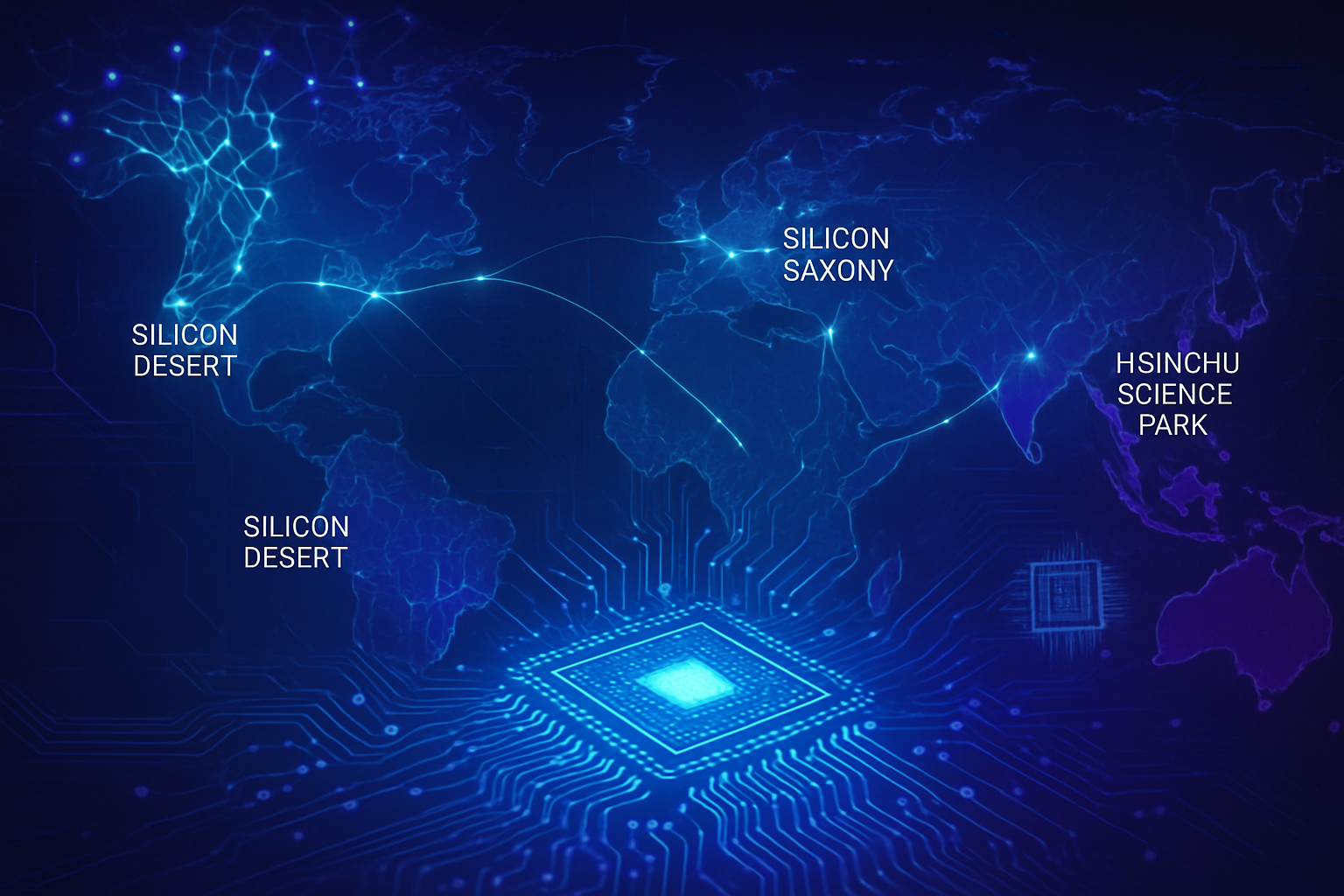
  • Beyond Silicon’s Horizon: How Specialized AI Chips and HBM are Redefining the Future of AI Computing

    Beyond Silicon’s Horizon: How Specialized AI Chips and HBM are Redefining the Future of AI Computing

    The artificial intelligence landscape is undergoing a profound transformation, moving decisively beyond the traditional reliance on general-purpose Central Processing Units (CPUs) and Graphics Processing Units (GPUs). This pivotal shift is driven by the escalating, almost insatiable demands for computational power, energy efficiency, and real-time processing required by increasingly complex and sophisticated AI models. As of October 2025, a new era of specialized AI hardware architectures, including custom Application-Specific Integrated Circuits (ASICs), brain-inspired neuromorphic chips, advanced Field-Programmable Gate Arrays (FPGAs), and critical High Bandwidth Memory (HBM) solutions, is emerging as the indispensable backbone of what industry experts are terming the "AI supercycle." This diversification promises to revolutionize everything from hyperscale data centers handling petabytes of data to intelligent edge devices operating with minimal power.

    This structural evolution in hardware is not merely an incremental upgrade but a fundamental re-architecting of how AI is computed. It addresses the inherent limitations of conventional processors when faced with the unique demands of AI workloads, particularly the "memory wall" bottleneck where processor speed outpaces memory access. The immediate significance lies in unlocking unprecedented levels of performance per watt, enabling AI models to operate with greater speed, efficiency, and scale than ever before, paving the way for a future where ubiquitous, powerful AI is not just a concept, but a tangible reality across all industries.

    The Technical Core: Unpacking the Next-Gen AI Silicon

    The current wave of AI advancement is underpinned by a diverse array of specialized processors, each meticulously designed to optimize specific facets of AI computation, particularly inference, where models apply their training to new data.

    At the forefront are Application-Specific Integrated Circuits (ASICs), custom-built chips tailored for narrow and well-defined AI tasks, offering superior performance and lower power consumption compared to their general-purpose counterparts. Tech giants are leading this charge: Google (NASDAQ: GOOGL) continues to evolve its Tensor Processing Units (TPUs) for internal AI workloads across services like Search and YouTube. Amazon (NASDAQ: AMZN) leverages its Inferentia chips for machine learning inference and Trainium for training, aiming for optimal performance at the lowest cost. Microsoft (NASDAQ: MSFT), a more recent entrant, introduced its Maia 100 AI accelerator in late 2023 to offload GPT-3.5 workloads from GPUs and is already developing a second-generation Maia for enhanced compute, memory, and interconnect performance. Beyond hyperscalers, Broadcom (NASDAQ: AVGO) is a significant player in AI ASIC development, producing custom accelerators for these large cloud providers, contributing to its substantial growth in the AI semiconductor business.

    Neuromorphic computing chips represent a radical paradigm shift, mimicking the human brain's structure and function to overcome the "von Neumann bottleneck" by integrating memory and processing. Intel (NASDAQ: INTC) is a leader in this space with its Hala Point, its largest neuromorphic system to date, housing 1,152 Loihi 2 processors. Deployed at Sandia National Laboratories, Hala Point boasts 1.15 billion neurons and 128 billion synapses, achieving over 15 TOPS/W and offering up to 50 times faster processing while consuming 100 times less energy than conventional CPU/GPU systems for specific AI tasks. IBM (NYSE: IBM) is also advancing with chips like NS16e and NorthPole, focused on groundbreaking energy efficiency. Startups like Innatera unveiled its sub-milliwatt, sub-millisecond latency Spiking Neural Processor (SNP) at CES 2025 for ambient intelligence, while SynSense offers ultra-low power vision sensors, and TDK has developed a prototype analog reservoir AI chip mimicking the cerebellum for real-time learning on edge devices.

    Field-Programmable Gate Arrays (FPGAs) offer a compelling blend of flexibility and customization, allowing them to be reconfigured for different workloads. This adaptability makes them invaluable for accelerating edge AI inference and embedded applications demanding deterministic low-latency performance and power efficiency. Altera (formerly Intel FPGA) has expanded its Agilex FPGA portfolio, with Agilex 5 and Agilex 3 SoC FPGAs now in production, integrating ARM processor subsystems for edge AI and hardware-software co-processing. These Agilex 5 D-Series FPGAs offer up to 2.5x higher logic density and enhanced memory throughput, crucial for advanced edge AI inference. Lattice Semiconductor (NASDAQ: LSCC) continues to innovate with its low-power FPGA solutions, emphasizing power efficiency for advancing AI at the edge.

    Crucially, High Bandwidth Memory (HBM) is the unsung hero enabling these specialized processors to reach their full potential. HBM overcomes the "memory wall" bottleneck by vertically stacking DRAM dies on a logic die, connected by through-silicon vias (TSVs) and a silicon interposer, providing significantly higher bandwidth and reduced latency than conventional DRAM. Micron Technology (NASDAQ: MU) is already shipping HBM4 memory to key customers for early qualification, promising up to 2.0 TB/s bandwidth and 24GB capacity per 12-high die stack. Samsung (KRX: 005930) is intensely focused on HBM4 development, aiming for completion by the second half of 2025, and is collaborating with TSMC (NYSE: TSM) on buffer-less HBM4 chips. The explosive growth of the HBM market, projected to reach $21 billion in 2025, a 70% year-over-year increase, underscores its immediate significance as a critical enabler for modern AI computing, ensuring that powerful AI chips can keep their compute cores fully utilized.

    Reshaping the AI Industry Landscape

    The emergence of these specialized AI hardware architectures is profoundly reshaping the competitive dynamics and strategic advantages within the AI industry, creating both immense opportunities and potential disruptions.

    Hyperscale cloud providers like Google, Amazon, and Microsoft stand to benefit immensely from their heavy investment in custom ASICs. By designing their own silicon, these tech giants gain unparalleled control over cost, performance, and power efficiency for their massive AI workloads, which power everything from search algorithms to cloud-based AI services. This internal chip design capability reduces their reliance on external vendors and allows for deep optimization tailored to their specific software stacks, providing a significant competitive edge in the fiercely contested cloud AI market.

    For traditional chip manufacturers, the landscape is evolving. While NVIDIA (NASDAQ: NVDA) remains the dominant force in AI GPUs, the rise of custom ASICs and specialized accelerators from companies like Intel and AMD (NASDAQ: AMD) signals increasing competition. However, this also presents new avenues for growth. Broadcom, for example, is experiencing substantial growth in its AI semiconductor business by producing custom accelerators for hyperscalers. The memory sector is experiencing an unprecedented boom, with memory giants like SK Hynix (KRX: 000660), Samsung, and Micron Technology locked in a fierce battle for market share in the HBM segment. The demand for HBM is so high that Micron has nearly sold out its HBM capacity for 2025 and much of 2026, leading to "extreme shortages" and significant cost increases, highlighting their critical role as enablers of the AI supercycle.

    The burgeoning ecosystem of AI startups is also a significant beneficiary, as novel architectures allow them to carve out specialized niches. Companies like Rebellions are developing advanced AI accelerators with chiplet-based approaches for peta-scale inference, while Tenstorrent, led by industry veteran Jim Keller, offers Tensix cores and an open-source RISC-V platform. Lightmatter is pioneering photonic computing for high-bandwidth data movement, and Euclyd introduced a system-in-package with "Ultra-Bandwidth Memory" claiming vastly superior bandwidth. Furthermore, Mythic and Blumind are developing analog matrix processors (AMPs) that promise up to 90% energy reduction for edge AI. These innovations demonstrate how smaller, agile companies can disrupt specific market segments by focusing on extreme efficiency or novel computational paradigms, potentially becoming acquisition targets for larger players seeking to diversify their AI hardware portfolios. This diversification could lead to a more fragmented but ultimately more efficient and optimized AI hardware ecosystem, moving away from a "one-size-fits-all" approach.

    The Broader AI Canvas: Significance and Implications

    The shift towards specialized AI hardware architectures and HBM solutions fits into the broader AI landscape as a critical accelerant, addressing fundamental challenges and pushing the boundaries of what AI can achieve. This is not merely an incremental improvement but a foundational evolution that underpins the current "AI supercycle," signifying a structural shift in the semiconductor industry rather than a temporary upturn.

    The primary impact is the democratization and expansion of AI capabilities. By making AI computation more efficient and less power-intensive, these new architectures enable the deployment of sophisticated AI models in environments previously deemed impossible or impractical. This means powerful AI can move beyond the data center to the "edge" – into autonomous vehicles, robotics, IoT devices, and even personal electronics – facilitating real-time decision-making and on-device learning. This decentralization of intelligence will lead to more responsive, private, and robust AI applications across countless sectors, from smart cities to personalized healthcare.

    However, this rapid advancement also brings potential concerns. The "extreme shortages" and significant price increases for HBM, driven by unprecedented demand (exemplified by OpenAI's "Stargate" project driving strategic partnerships with Samsung and SK Hynix), highlight significant supply chain vulnerabilities. This scarcity could impact smaller AI companies or lead to delays in product development across the industry. Furthermore, while specialized chips offer operational energy efficiency, the environmental impact of manufacturing these increasingly complex and resource-intensive semiconductors, coupled with the immense energy consumption of the AI industry as a whole, remains a critical concern that requires careful consideration and sustainable practices.

    Comparisons to previous AI milestones reveal the profound significance of this hardware evolution. Just as the advent of GPUs transformed general-purpose computing into a parallel processing powerhouse, enabling the deep learning revolution, these specialized chips represent the next wave of computational specialization. They are designed to overcome the limitations that even advanced GPUs face when confronted with the unique demands of specific AI workloads, particularly in terms of energy consumption and latency for inference. This move towards heterogeneous computing—a mix of general-purpose and specialized processors—is essential for unlocking the next generation of AI breakthroughs, akin to the foundational shifts seen in the early days of parallel computing that paved the way for modern scientific simulations and data processing.

    The Road Ahead: Future Developments and Challenges

    Looking to the horizon, the trajectory of AI hardware architectures promises continued innovation, driven by an relentless pursuit of efficiency, performance, and adaptability. Near-term developments will likely see further diversification of AI accelerators, with more specialized chips emerging for specific modalities such as vision, natural language processing, and multimodal AI. The integration of these accelerators directly into traditional computing platforms, leading to the rise of "AI PCs" and "AI smartphones," is also expected to become more widespread, bringing powerful AI capabilities directly to end-user devices.

    Long-term, we can anticipate continued advancements in High Bandwidth Memory (HBM), with HBM4 and subsequent generations pushing bandwidth and capacity even further. Novel memory solutions beyond HBM are also on the horizon, aiming to further alleviate the memory bottleneck. The adoption of chiplet architectures and advanced packaging technologies, such as TSMC's CoWoS (Chip-on-Wafer-on-Substrate), will become increasingly prevalent. This modular approach allows for greater flexibility in design, enabling the integration of diverse specialized components onto a single package, leading to more powerful and efficient systems. Potential applications on the horizon are vast, ranging from fully autonomous systems (vehicles, drones, robots) operating with unprecedented real-time intelligence, to hyper-personalized AI experiences in consumer electronics, and breakthroughs in scientific discovery and drug design facilitated by accelerated simulations and data analysis.

    However, this exciting future is not without its challenges. One of the most significant hurdles is developing robust and interoperable software ecosystems capable of fully leveraging the diverse array of specialized hardware. The fragmentation of hardware architectures necessitates flexible and efficient software stacks that can seamlessly optimize AI models for different processors. Furthermore, managing the extreme cost and complexity of advanced chip manufacturing, particularly with the intricate processes required for HBM and chiplet integration, will remain a constant challenge. Ensuring a stable and sufficient supply chain for critical components like HBM is also paramount, as current shortages demonstrate the fragility of the ecosystem.

    Experts predict a future where AI hardware is inherently heterogeneous, with a sophisticated interplay of general-purpose and specialized processors working in concert. This collaborative approach will be dictated by the specific demands of each AI workload, prioritizing energy efficiency and optimal performance. The monumental "Stargate" project by OpenAI, which involves strategic partnerships with Samsung Electronics and SK Hynix to secure the supply of critical HBM chips for its colossal AI data centers, serves as a powerful testament to this predicted future, underscoring the indispensable role of advanced memory and specialized processing in realizing the next generation of AI.

    A New Dawn for AI Computing: Comprehensive Wrap-Up

    The ongoing evolution of AI hardware architectures represents a watershed moment in the history of artificial intelligence. The key takeaway is clear: the era of "one-size-fits-all" computing for AI is rapidly giving way to a highly specialized, efficient, and diverse landscape. Specialized processors like ASICs, neuromorphic chips, and advanced FPGAs, coupled with the transformative capabilities of High Bandwidth Memory (HBM), are not merely enhancing existing AI; they are enabling entirely new paradigms of intelligent systems.

    This development's significance in AI history cannot be overstated. It marks a foundational shift, akin to the invention of the GPU for graphics processing, but now tailored specifically for the unique demands of AI. This transition is critical for scaling AI to unprecedented levels, making it more energy-efficient, and extending its reach from massive cloud data centers to the most constrained edge devices. The "AI supercycle" is not just about bigger models; it's about smarter, more efficient ways to compute them, and this hardware revolution is at its core.

    The long-term impact will be a more pervasive, sustainable, and powerful AI across all sectors of society and industry. From accelerating scientific research and drug discovery to enabling truly autonomous systems and hyper-personalized digital experiences, the computational backbone being forged today will define the capabilities of tomorrow's AI.

    In the coming weeks and months, industry observers should closely watch for several key developments. New announcements from major chipmakers and hyperscalers regarding their custom silicon roadmaps will provide further insights into future directions. Progress in HBM technology, particularly the rollout and adoption of HBM4 and beyond, and any shifts in the stability of the HBM supply chain will be crucial indicators. Furthermore, the emergence of new startups with truly disruptive architectures and the progress of standardization efforts for AI hardware and software interfaces will shape the competitive landscape and accelerate the broader adoption of these groundbreaking technologies.

    This content is intended for informational purposes only and represents analysis of current AI developments.

    TokenRing AI delivers enterprise-grade solutions for multi-agent AI workflow orchestration, AI-powered development tools, and seamless remote collaboration platforms.
    For more information, visit https://www.tokenring.ai/.
  • The New Silicon Frontiers: Regional Hubs Emerge as Powerhouses of Chip Innovation

    The New Silicon Frontiers: Regional Hubs Emerge as Powerhouses of Chip Innovation

    The global semiconductor landscape is undergoing a profound transformation, shifting from a highly centralized model to a more diversified, regionalized ecosystem of innovation hubs. Driven by geopolitical imperatives, national security concerns, economic development goals, and the insatiable demand for advanced computing, nations worldwide are strategically cultivating specialized clusters of expertise, resources, and infrastructure. This distributed approach aims to fortify supply chain resilience, accelerate technological breakthroughs, and secure national competitiveness in the crucial race for next-generation chip technology.

    From the burgeoning "Silicon Desert" in Arizona to Europe's "Silicon Saxony" and Asia's established powerhouses, these regional hubs are becoming critical nodes in the global technology fabric, reshaping how semiconductors are designed, manufactured, and integrated into the fabric of modern life, especially as AI continues its exponential growth. This strategic decentralization is not merely a response to past supply chain vulnerabilities but a proactive investment in future innovation, poised to dictate the pace of technological advancement for decades to come.

    A Mosaic of Innovation: Technical Prowess Across New Chip Hubs

    The technical advancements within these emerging semiconductor hubs are multifaceted, each region often specializing in unique aspects of the chip value chain. In the United States, the CHIPS and Science Act has ignited a flurry of activity, fostering several distinct innovation centers. Arizona, for instance, has cemented its status as the "Silicon Desert," attracting massive investments from industry giants like Intel (NASDAQ: INTC) and Taiwan Semiconductor Manufacturing Co. (TSMC) (NYSE: TSM). TSMC's multi-billion-dollar fabs in Phoenix are set to produce advanced nodes, initially focusing on 4nm technology, a significant leap in domestic manufacturing capability that contrasts sharply with previous decades of offshore reliance. This move aims to bring leading-edge fabrication closer to U.S. design houses, reducing latency and bolstering supply chain control.

    Across the Atlantic, Germany's "Silicon Saxony" in Dresden stands as Europe's largest semiconductor cluster, a testament to long-term strategic investment. This hub boasts a robust ecosystem of over 400 industry entities, including Bosch, GlobalFoundries, and Infineon, alongside universities and research institutes like Fraunhofer. Their focus extends from power semiconductors and automotive chips to advanced materials research, crucial for specialized industrial applications and the burgeoning electric vehicle market. This differs from the traditional fabless model prevalent in some regions, emphasizing integrated design and manufacturing capabilities. Meanwhile, in Asia, while Taiwan (Hsinchu Science Park) and South Korea (with Samsung (KRX: 005930) at the forefront) continue to lead in sub-7nm process technologies, new players like India and Vietnam are rapidly building capabilities in design, assembly, and testing, supported by significant government incentives and a growing pool of engineering talent.

    Initial reactions from the AI research community and industry experts highlight the critical importance of these diversified hubs. Dr. Lisa Su, CEO of Advanced Micro Devices (NASDAQ: AMD), has emphasized the need for a resilient and geographically diverse supply chain to support the escalating demands of AI and high-performance computing. Experts note that the proliferation of these hubs facilitates specialized R&D, allowing for deeper focus on areas like wide bandgap semiconductors in North Carolina (CLAWS hub) or advanced packaging solutions in other regions, rather than a monolithic, one-size-fits-all approach. This distributed innovation model is seen as a necessary evolution to keep pace with the increasingly complex and capital-intensive nature of chip development.

    Reshaping the Competitive Landscape: Implications for Tech Giants and Startups

    The emergence of regional semiconductor hubs is fundamentally reshaping the competitive landscape for AI companies, tech giants, and startups alike. Companies like NVIDIA (NASDAQ: NVDA), a leader in AI accelerators, stand to benefit immensely from more localized and resilient supply chains. With TSMC and Intel expanding advanced manufacturing in the U.S. and Europe, NVIDIA could see reduced lead times, improved security for its proprietary designs, and greater flexibility in bringing its cutting-edge GPUs and AI chips to market. This could mitigate risks associated with geopolitical tensions and improve overall product availability, a critical factor in the rapidly expanding AI hardware market.

    The competitive implications for major AI labs and tech companies are significant. A diversified manufacturing base reduces reliance on a single geographic region, a lesson painfully learned during recent global disruptions. For companies like Apple (NASDAQ: AAPL), Qualcomm (NASDAQ: QCOM), and Google (NASDAQ: GOOGL), which design their own custom silicon, the ability to source from multiple, secure, and geographically diverse fabs enhances their strategic autonomy and reduces supply chain vulnerabilities. This could lead to a more stable and predictable environment for product development and deployment, fostering greater innovation in AI-powered devices and services.

    Potential disruption to existing products or services is also on the horizon. As regional hubs mature, they could foster specialized foundries catering to niche AI hardware requirements, such as neuromorphic chips or analog AI accelerators, potentially challenging the dominance of general-purpose GPUs. Startups focused on these specialized areas might find it easier to access fabrication services tailored to their needs within these localized ecosystems, accelerating their time to market. Furthermore, the increased domestic production in regions like the U.S. and Europe could lead to a re-evaluation of pricing strategies and potentially foster a more competitive environment for chip procurement, ultimately benefiting consumers and developers of AI applications. Market positioning will increasingly hinge on not just design prowess, but also on strategic partnerships with these geographically diverse manufacturing hubs, ensuring access to the most advanced and secure fabrication capabilities.

    A New Era of Geopolitical Chip Strategy: Wider Significance

    The rise of regional semiconductor innovation hubs signifies a profound shift in the broader AI landscape and global technology trends, marking a strategic pivot away from hyper-globalization towards a more balanced, regionalized supply chain. This development is intrinsically linked to national security and economic sovereignty, as governments recognize semiconductors as the foundational technology for everything from defense systems and critical infrastructure to advanced AI and quantum computing. The COVID-19 pandemic and escalating geopolitical tensions, particularly between the U.S. and China, exposed the inherent fragility of a highly concentrated chip manufacturing base, predominantly in East Asia. This has spurred nations to invest billions in domestic production, viewing chip independence as a modern-day strategic imperative.

    The impacts extend far beyond mere economics. Enhanced supply chain resilience is a primary driver, aiming to prevent future disruptions that could cripple industries reliant on chips. This regionalization also fosters localized innovation ecosystems, allowing for specialized research and development tailored to regional needs and strengths, such as Europe's focus on automotive and industrial AI chips, or the U.S. push for advanced logic and packaging. However, potential concerns include the risk of increased costs due to redundant infrastructure and less efficient global specialization, which could ultimately impact the affordability of AI hardware. There's also the challenge of preventing protectionist policies from stifling global collaboration, which remains essential for the complex and capital-intensive semiconductor industry.

    Comparing this to previous AI milestones, this shift mirrors historical industrial revolutions where strategic resources and manufacturing capabilities became focal points of national power. Just as access to steel or oil defined industrial might in past centuries, control over semiconductor technology is now a defining characteristic of technological leadership in the AI era. This decentralization also represents a more mature understanding of technological development, acknowledging that innovation thrives not just in a single "Silicon Valley" but in a network of specialized, interconnected hubs. The wider significance lies in the establishment of a more robust, albeit potentially more complex, global technology infrastructure that can better withstand future shocks and accelerate the development of AI across diverse applications.

    The Road Ahead: Future Developments and Challenges

    Looking ahead, the trajectory of regional semiconductor innovation hubs points towards continued expansion and specialization. In the near term, we can expect to see further massive investments in infrastructure, particularly in advanced packaging and testing facilities, which are critical for integrating complex AI chips. The U.S. CHIPS Act and similar initiatives in Europe and Asia will continue to incentivize the construction of new fabs and R&D centers. Long-term developments are likely to include the emergence of "digital twins" of fabs for optimizing production, increased automation driven by AI itself, and a stronger focus on sustainable manufacturing practices to reduce the environmental footprint of chip production.

    Potential applications and use cases on the horizon are vast. These hubs will be instrumental in accelerating the development of specialized AI hardware, including dedicated AI accelerators for edge computing, quantum computing components, and novel neuromorphic architectures that mimic the human brain. This will enable more powerful and efficient AI systems in autonomous vehicles, advanced robotics, personalized healthcare, and smart cities. We can also anticipate new materials science breakthroughs emerging from these localized R&D efforts, pushing the boundaries of what's possible in chip performance and energy efficiency.

    However, significant challenges need to be addressed. A critical hurdle is the global talent shortage in the semiconductor industry. These hubs require highly skilled engineers, researchers, and technicians, and robust educational pipelines are essential to meet this demand. Geopolitical tensions could also pose ongoing challenges, potentially leading to further fragmentation or restrictions on technology transfer. The immense capital expenditure required for advanced fabs means sustained government support and private investment are crucial. Experts predict a future where these hubs operate as interconnected nodes in a global network, collaborating on fundamental research while competing fiercely on advanced manufacturing and specialized applications. The next phase will likely involve a delicate balance between national self-sufficiency and international cooperation to ensure the continued progress of AI.

    Forging a Resilient Future: A New Era in Chip Innovation

    The emergence and growth of regional semiconductor innovation hubs represent a pivotal moment in AI history, fundamentally reshaping the global technology landscape. The key takeaway is a strategic reorientation towards resilience and distributed innovation, moving away from a single-point-of-failure model to a geographically diversified ecosystem. This shift, driven by a confluence of economic, geopolitical, and technological imperatives, promises to accelerate breakthroughs in AI, enhance supply chain security, and foster new economic opportunities across the globe.

    This development's significance in AI history cannot be overstated. It underpins the very foundation of future AI advancements, ensuring a robust and secure supply of the computational power necessary for the next generation of intelligent systems. By fostering specialized expertise and localized R&D, these hubs are not just building chips; they are building the intellectual and industrial infrastructure for AI's evolution. The long-term impact will be a more robust, secure, and innovative global technology ecosystem, albeit one that navigates complex geopolitical dynamics.

    In the coming weeks and months, watch for further announcements regarding new fab constructions, particularly in the U.S. and Europe, and the rollout of new government incentives aimed at workforce development. Pay close attention to how established players like Intel, TSMC, and Samsung adapt their global strategies, and how new startups leverage these regional ecosystems to bring novel AI hardware to market. The "New Silicon Frontiers" are here, and they are poised to define the future of artificial intelligence.

    This content is intended for informational purposes only and represents analysis of current AI developments.
    TokenRing AI delivers enterprise-grade solutions for multi-agent AI workflow orchestration, AI-powered development tools, and seamless remote collaboration platforms.
    For more information, visit https://www.tokenring.ai/.

  • RISC-V: The Open-Source Revolution Reshaping the Semiconductor Landscape

    RISC-V: The Open-Source Revolution Reshaping the Semiconductor Landscape

    The semiconductor industry, long dominated by proprietary architectures, is undergoing a profound transformation with the accelerating emergence of RISC-V. This open-standard instruction set architecture (ISA) is not merely an incremental improvement; it represents a fundamental shift towards democratized chip design, promising to unleash unprecedented innovation and disrupt the established order. By offering a royalty-free, highly customizable, and modular alternative to entrenched players like ARM and x86, RISC-V is lowering barriers to entry, fostering a vibrant open-source ecosystem, and enabling a new era of specialized hardware tailored for the diverse demands of modern computing, from AI accelerators to tiny IoT devices.

    The immediate significance of RISC-V lies in its potential to level the playing field in chip development. For decades, designing sophisticated silicon has been a capital-intensive endeavor, largely restricted to a handful of giants due to hefty licensing fees and complex proprietary ecosystems. RISC-V dismantles these barriers, making advanced hardware design accessible to startups, academic institutions, and even individual researchers. This democratization is sparking a wave of creativity, allowing developers to craft highly optimized processors without being locked into a single vendor's roadmap or incurring prohibitive costs. Its disruptive potential is already evident in the rapid adoption rates and the strategic investments pouring in from major tech players, signaling a clear challenge to the proprietary models that have defined the industry for generations.

    Unpacking the Architecture: A Technical Deep Dive into RISC-V's Core Principles

    At its heart, RISC-V (pronounced "risk-five") is a Reduced Instruction Set Computer (RISC) architecture, distinguishing itself through its elegant simplicity, modularity, and open-source nature. Unlike complex instruction set computer (CISC) architectures like x86, which feature a large number of specialized instructions, RISC-V employs a smaller, streamlined set of instructions that execute quickly and efficiently. This simplicity makes it easier to design, verify, and optimize hardware implementations.

    Technically, RISC-V is defined by a small, mandatory base instruction set (e.g., RV32I for 32-bit integer operations or RV64I for 64-bit) that is stable and frozen, ensuring long-term compatibility. This base is complemented by a rich set of standard optional extensions (e.g., 'M' for integer multiplication/division, 'A' for atomic operations, 'F' and 'D' for single and double-precision floating-point, 'V' for vector operations). This modularity is a game-changer, allowing designers to select precisely the functionality needed for a given application, optimizing for power, performance, and area (PPA). For instance, an IoT sensor might use a minimal RV32I core, while an AI accelerator could leverage RV64GCV (General-purpose, Compressed, Vector) with custom extensions. This "a la carte" approach contrasts sharply with the often monolithic and feature-rich designs of proprietary ISAs.

    The fundamental difference from previous approaches, particularly ARM Holdings plc (NASDAQ: ARM) and Intel Corporation's (NASDAQ: INTC) x86, lies in its open licensing. ARM licenses its IP cores and architecture, requiring royalties for each chip shipped. x86 is largely proprietary to Intel and Advanced Micro Devices, Inc. (NASDAQ: AMD), making it difficult for other companies to design compatible processors. RISC-V, maintained by RISC-V International, is completely open, meaning anyone can design, manufacture, and sell RISC-V chips without paying royalties. This freedom from licensing fees and vendor lock-in is a powerful incentive for adoption, particularly in emerging markets and for specialized applications where cost and customization are paramount. Initial reactions from the AI research community and industry experts have been overwhelmingly positive, recognizing its potential to foster innovation, reduce development costs, and enable highly specialized hardware for AI/ML workloads.

    Reshaping the Competitive Landscape: Implications for Tech Giants and Startups

    The rise of RISC-V carries profound implications for AI companies, established tech giants, and nimble startups alike, fundamentally reshaping the competitive landscape of the semiconductor industry. Companies that embrace RISC-V stand to benefit significantly, particularly those focused on specialized hardware, edge computing, and AI acceleration. Startups and smaller firms, previously deterred by the prohibitive costs of proprietary IP, can now enter the chip design arena with greater ease, fostering a new wave of innovation.

    For tech giants, the competitive implications are complex. While companies like Intel Corporation (NASDAQ: INTC) and NVIDIA Corporation (NASDAQ: NVDA) have historically relied on their proprietary or licensed architectures, many are now strategically investing in RISC-V. Intel, for example, made a notable $1 billion investment in RISC-V and open-chip architectures in 2022, signaling a pivot from its traditional x86 stronghold. This indicates a recognition that embracing RISC-V can provide strategic advantages, such as diversifying their IP portfolios, enabling tailored solutions for specific market segments (like data centers or automotive), and fostering a broader ecosystem that could ultimately benefit their foundry services. Companies like Alphabet Inc. (NASDAQ: GOOGL) (Google) and Meta Platforms, Inc. (NASDAQ: META) are exploring RISC-V for internal chip designs, aiming for greater control over their hardware stack and optimizing for their unique software workloads, particularly in AI and cloud infrastructure.

    The potential disruption to existing products and services is substantial. While x86 will likely maintain its dominance in high-performance computing and traditional PCs for the foreseeable future, and ARM will continue to lead in mobile, RISC-V is poised to capture significant market share in emerging areas. Its customizable nature makes it ideal for AI accelerators, embedded systems, IoT devices, and edge computing, where specific performance-per-watt or area-per-function requirements are critical. This could lead to a fragmentation of the chip market, with RISC-V becoming the architecture of choice for specialized, high-volume segments. Companies that fail to adapt to this shift risk being outmaneuvered by competitors leveraging the cost-effectiveness and flexibility of RISC-V to deliver highly optimized solutions.

    Wider Significance: A New Era of Hardware Sovereignty and Innovation

    The emergence of RISC-V fits into the broader AI landscape and technological trends as a critical enabler of hardware innovation and a catalyst for digital sovereignty. In an era where AI workloads demand increasingly specialized and efficient processing, RISC-V provides the architectural flexibility to design purpose-built accelerators that can outperform general-purpose CPUs or even GPUs for specific tasks. This aligns perfectly with the trend towards heterogeneous computing and the need for optimized silicon at the edge and in the data center to power the next generation of AI applications.

    The impacts extend beyond mere technical specifications; they touch upon economic and geopolitical considerations. For nations and companies, RISC-V offers a path towards semiconductor independence, reducing reliance on foreign chip suppliers and mitigating supply chain vulnerabilities. The European Union, for instance, is actively investing in RISC-V as part of its strategy to bolster its microelectronics competence and ensure technological sovereignty. This move is a direct response to global supply chain pressures and the strategic importance of controlling critical technology.

    Potential concerns, however, do exist. The open nature of RISC-V could lead to fragmentation if too many non-standard extensions are developed, potentially hindering software compatibility and ecosystem maturity. Security is another area that requires continuous vigilance, as the open-source nature means vulnerabilities could be more easily discovered, though also more quickly patched by a global community. Comparisons to previous AI milestones reveal that just as open-source software like Linux democratized operating systems and accelerated software development, RISC-V has the potential to do the same for hardware, fostering an explosion of innovation that was previously constrained by proprietary models. This shift could be as significant as the move from mainframe computing to personal computers in terms of empowering a broader base of developers and innovators.

    The Horizon of RISC-V: Future Developments and Expert Predictions

    The future of RISC-V is characterized by rapid expansion and diversification. In the near-term, we can expect a continued maturation of the software ecosystem, with more robust compilers, development tools, operating system support, and application libraries emerging. This will be crucial for broader adoption beyond specialized embedded systems. Furthermore, the development of high-performance RISC-V cores capable of competing with ARM in mobile and x86 in some server segments is a key focus, with companies like Tenstorrent and SiFive pushing the boundaries of performance.

    Long-term, RISC-V is poised to become a foundational architecture across a multitude of computing domains. Its modularity and customizability make it exceptionally well-suited for emerging applications like quantum computing control systems, advanced robotics, autonomous vehicles, and next-generation communication infrastructure (e.g., 6G). We will likely see a proliferation of highly specialized RISC-V processors, often incorporating custom AI accelerators and domain-specific instruction set extensions, designed to maximize efficiency for particular workloads. The potential for truly open-source hardware, from the ISA level up to complete system-on-chips (SoCs), is also on the horizon, promising even greater transparency and community collaboration.

    Challenges that need to be addressed include further strengthening the security framework, ensuring interoperability between different vendor implementations, and building a talent pool proficient in RISC-V design and development. The need for standardized verification methodologies will also grow as the complexity of RISC-V designs increases. Experts predict that RISC-V will not necessarily "kill" ARM or x86 but will carve out significant market share, particularly in new and specialized segments. It's expected to become a third major pillar in the processor landscape, fostering a more competitive and innovative semiconductor industry. The continued investment from major players and the vibrant open-source community suggest a bright and expansive future for this transformative architecture.

    A Paradigm Shift in Silicon: Wrapping Up the RISC-V Revolution

    The emergence of RISC-V architecture represents nothing short of a paradigm shift in the semiconductor industry. The key takeaways are clear: it is democratizing chip design by eliminating licensing barriers, fostering unparalleled customization through its modular instruction set, and driving rapid innovation across a spectrum of applications from IoT to advanced AI. This open-source approach is challenging the long-standing dominance of proprietary architectures, offering a viable and increasingly compelling alternative that empowers a wider array of players to innovate in hardware.

    This development's significance in AI history cannot be overstated. Just as open-source software revolutionized the digital world, RISC-V is poised to do the same for hardware, enabling the creation of highly efficient, purpose-built AI accelerators that were previously cost-prohibitive or technically complex to develop. It represents a move towards greater hardware sovereignty, allowing nations and companies to exert more control over their technological destinies. The comparisons to previous milestones, such as the rise of Linux, underscore its potential to fundamentally alter how computing infrastructure is designed and deployed.

    In the coming weeks and months, watch for further announcements of strategic investments from major tech companies, the release of more sophisticated RISC-V development tools, and the unveiling of new RISC-V-based products, particularly in the embedded, edge AI, and automotive sectors. The continued maturation of its software ecosystem and the expansion of its global community will be critical indicators of its accelerating momentum. RISC-V is not just another instruction set; it is a movement, a collaborative endeavor poised to redefine the future of computing and usher in an era of open, flexible, and highly optimized hardware for the AI age.

    This content is intended for informational purposes only and represents analysis of current AI developments.

    TokenRing AI delivers enterprise-grade solutions for multi-agent AI workflow orchestration, AI-powered development tools, and seamless remote collaboration platforms.
    For more information, visit https://www.tokenring.ai/.

  • Neuromorphic Dawn: Brain-Inspired Chips Ignite a New Era for AI Hardware

    Neuromorphic Dawn: Brain-Inspired Chips Ignite a New Era for AI Hardware

    The artificial intelligence landscape is on the cusp of a profound transformation, driven by unprecedented breakthroughs in neuromorphic computing. As of October 2025, this cutting-edge field, which seeks to mimic the human brain's structure and function, is rapidly transitioning from academic research to commercial viability. These advancements in AI-specific semiconductor architectures promise to redefine computational efficiency, real-time processing, and adaptability for AI workloads, addressing the escalating energy demands and performance bottlenecks of conventional computing.

    The immediate significance of this shift is nothing short of revolutionary. Neuromorphic systems offer radical energy efficiency, often orders of magnitude greater than traditional CPUs and GPUs, making powerful AI accessible in power-constrained environments like edge devices, IoT sensors, and mobile applications. This paradigm shift not only enables more sustainable AI but also unlocks possibilities for real-time inference, on-device learning, and enhanced autonomy, paving the way for a new generation of intelligent systems that are faster, smarter, and significantly more power-efficient.

    Technical Marvels: Inside the Brain-Inspired Revolution

    The current wave of neuromorphic innovation is characterized by the deployment of large-scale systems and the commercialization of specialized chips. Intel (NASDAQ: INTC) stands at the forefront with its Hala Point, the largest neuromorphic system to date, housing 1,152 Loihi 2 processors. Deployed at Sandia National Laboratories, this behemoth boasts 1.15 billion neurons and 128 billion synapses across 140,544 neuromorphic processing cores. It delivers state-of-the-art computational efficiencies, achieving over 15 TOPS/W and offering up to 50 times faster processing while consuming 100 times less energy than conventional CPU/GPU systems for certain AI tasks. Intel is further nurturing the ecosystem with its open-source Lava framework.

    Not to be outdone, SpiNNaker 2, a collaboration between SpiNNcloud Systems GmbH, the University of Manchester, and TU Dresden, represents a second-generation brain-inspired supercomputer. TU Dresden has constructed a 5 million core SpiNNaker 2 system, while SpiNNcloud has delivered systems capable of simulating billions of neurons, demonstrating up to 18 times more energy efficiency than current GPUs for AI and high-performance computing (HPC) workloads. Meanwhile, BrainChip (ASX: BRN) is making significant commercial strides with its Akida Pulsar, touted as the world's first mass-market neuromorphic microcontroller for sensor edge applications, boasting 500 times lower energy consumption and 100 times latency reduction compared to conventional AI cores.

    These neuromorphic architectures fundamentally differ from previous approaches by abandoning the traditional von Neumann architecture, which separates memory and processing. Instead, they integrate computation directly into memory, enabling event-driven processing akin to the brain. This "in-memory computing" eliminates the bottleneck of data transfer between processor and memory, drastically reducing latency and power consumption. Companies like IBM (NYSE: IBM) are advancing with their NS16e and NorthPole chips, optimized for neural inference with groundbreaking energy efficiency. Startups like Innatera unveiled their sub-milliwatt, sub-millisecond latency SNP (Spiking Neural Processor) at CES 2025, targeting ambient intelligence, while SynSense offers ultra-low power vision sensors like Speck that mimic biological information processing. Initial reactions from the AI research community are overwhelmingly positive, recognizing 2025 as a "breakthrough year" for neuromorphic computing's transition from academic pursuit to tangible commercial products, backed by significant venture funding.

    Event-based sensing, exemplified by Prophesee's Metavision technology, is another critical differentiator. Unlike traditional frame-based vision systems, event-based sensors record only changes in a scene, mirroring human vision. This approach yields exceptionally high temporal resolution, dramatically reduced data bandwidth, and lower power consumption, making it ideal for real-time applications in robotics, autonomous vehicles, and industrial automation. Furthermore, breakthroughs in materials science, such as the discovery that standard CMOS transistors can exhibit neural and synaptic behaviors, and the development of memristive oxides, are crucial for mimicking synaptic plasticity and enabling the energy-efficient in-memory computation that defines this new era of AI hardware.

    Reshaping the AI Industry: A New Competitive Frontier

    The rise of neuromorphic computing promises to profoundly reshape the competitive landscape for AI companies, tech giants, and startups alike. Companies like Intel, IBM, and Samsung (KRX: 005930), with their deep pockets and research capabilities, are well-positioned to leverage their foundational work in chip design and manufacturing to dominate the high-end and enterprise segments. Their large-scale systems and advanced architectures could become the backbone for next-generation AI data centers and supercomputing initiatives.

    However, this field also presents immense opportunities for specialized startups. BrainChip, with its focus on ultra-low power edge AI and on-device learning, is carving out a significant niche in the rapidly expanding IoT and automotive sectors. SpiNNcloud Systems is commercializing large-scale brain-inspired supercomputing, targeting mainstream AI and hybrid models with unparalleled energy efficiency. Prophesee is revolutionizing computer vision with its event-based sensors, creating new markets in industrial automation, robotics, and AR/VR. These agile players can gain significant strategic advantages by specializing in specific applications or hardware configurations, potentially disrupting existing products and services that rely on power-hungry, latency-prone conventional AI hardware.

    The competitive implications extend beyond hardware. As neuromorphic chips enable powerful AI at the edge, there could be a shift away from exclusive reliance on massive cloud-based AI services. This decentralization could empower new business models and services, particularly in industries requiring real-time decision-making, data privacy, and robust security. Companies that can effectively integrate neuromorphic hardware with user-friendly software frameworks, like those being developed by Accenture (NYSE: ACN) and open-source communities, will gain a significant market positioning. The ability to deliver AI solutions with dramatically lower total cost of ownership (TCO) due to reduced energy consumption and infrastructure needs will be a major competitive differentiator.

    Wider Significance: A Sustainable and Ubiquitous AI Future

    The advancements in neuromorphic computing fit perfectly within the broader AI landscape and current trends, particularly the growing emphasis on sustainable AI, decentralized intelligence, and the demand for real-time processing. As AI models become increasingly complex and data-intensive, the energy consumption of training and inference on traditional hardware is becoming unsustainable. Neuromorphic chips offer a compelling solution to this environmental challenge, enabling powerful AI with a significantly reduced carbon footprint. This aligns with global efforts towards greener technology and responsible AI development.

    The impacts of this shift are multifaceted. Economically, neuromorphic computing is poised to unlock new markets and drive innovation across various sectors, from smart cities and autonomous systems to personalized healthcare and industrial IoT. The ability to deploy sophisticated AI capabilities directly on devices reduces reliance on cloud infrastructure, potentially leading to cost savings and improved data security for enterprises. Societally, it promises a future with more pervasive, responsive, and intelligent edge devices that can interact with their environment in real-time, leading to advancements in areas like assistive technologies, smart prosthetics, and safer autonomous vehicles.

    However, potential concerns include the complexity of developing and programming these new architectures, the maturity of the software ecosystem, and the need for standardization across different neuromorphic platforms. Bridging the gap between traditional artificial neural networks (ANNs) and spiking neural networks (SNNs) – the native language of neuromorphic chips – remains a challenge for broader adoption. Compared to previous AI milestones, such as the deep learning revolution which relied on massive parallel processing of GPUs, neuromorphic computing represents a fundamental architectural shift towards efficiency and biological inspiration, potentially ushering in an era where intelligence is not just powerful but also inherently sustainable and ubiquitous.

    The Road Ahead: Anticipating Future Developments

    Looking ahead, the near-term will see continued scaling of neuromorphic systems, with Intel's Loihi platform and SpiNNcloud Systems' SpiNNaker 2 likely reaching even greater neuron and synapse counts. We can expect more commercial products from BrainChip, Innatera, and SynSense to integrate into a wider array of consumer and industrial edge devices. Further advancements in materials science, particularly in memristive technologies and novel transistor designs, will continue to enhance the efficiency and density of neuromorphic chips. The software ecosystem will also mature, with open-source frameworks like Lava, Nengo, and snnTorch gaining broader adoption and becoming more accessible for developers.

    On the horizon, potential applications are vast and transformative. Neuromorphic computing is expected to be a cornerstone for truly autonomous systems, enabling robots and drones to learn and adapt in real-time within dynamic environments. It will power next-generation AR/VR devices with ultra-low latency and power consumption, creating more immersive experiences. In healthcare, it could lead to advanced prosthetics that seamlessly integrate with the nervous system or intelligent medical devices capable of real-time diagnostics and personalized treatments. Ambient intelligence, where environments respond intuitively to human needs, will also be a key beneficiary.

    Challenges that need to be addressed include the development of more sophisticated and standardized programming models for spiking neural networks, making neuromorphic hardware easier to integrate into existing AI pipelines. Cost-effective manufacturing processes for these specialized chips will also be critical for widespread adoption. Experts predict continued significant investment in the sector, with market valuations for neuromorphic-powered edge AI devices projected to reach $8.3 billion by 2030. They anticipate a gradual but steady integration of neuromorphic capabilities into a diverse range of products, initially in specialized domains where energy efficiency and real-time processing are paramount, before broader market penetration.

    Conclusion: A Pivotal Moment for AI

    The breakthroughs in neuromorphic computing mark a pivotal moment in the history of artificial intelligence. We are witnessing the maturation of a technology that moves beyond brute-force computation towards brain-inspired intelligence, offering a compelling solution to the energy and performance demands of modern AI. From large-scale supercomputers like Intel's Hala Point and SpiNNcloud Systems' SpiNNaker 2 to commercial edge chips like BrainChip's Akida Pulsar and IBM's NS16e, the landscape is rich with innovation.

    The significance of this development cannot be overstated. It represents a fundamental shift in how we design and deploy AI, prioritizing sustainability, real-time responsiveness, and on-device intelligence. This will not only enable a new wave of applications in robotics, autonomous systems, and ambient intelligence but also democratize access to powerful AI by reducing its energy footprint and computational overhead. Neuromorphic computing is poised to reshape AI infrastructure, fostering a future where intelligent systems are not only ubiquitous but also environmentally conscious and highly adaptive.

    In the coming weeks and months, industry observers should watch for further product announcements from key players, the expansion of the neuromorphic software ecosystem, and increasing adoption in specialized industrial and consumer applications. The continued collaboration between academia and industry will be crucial in overcoming remaining challenges and fully realizing the immense potential of this brain-inspired revolution.


    This content is intended for informational purposes only and represents analysis of current AI developments.

    TokenRing AI delivers enterprise-grade solutions for multi-agent AI workflow orchestration, AI-powered development tools, and seamless remote collaboration platforms. For more information, visit https://www.tokenring.ai/.