
Tag: AI Hardware

  • Beyond the Silicon Ceiling: Next-Gen AI Chips Ignite a New Era of Intelligence

    Beyond the Silicon Ceiling: Next-Gen AI Chips Ignite a New Era of Intelligence

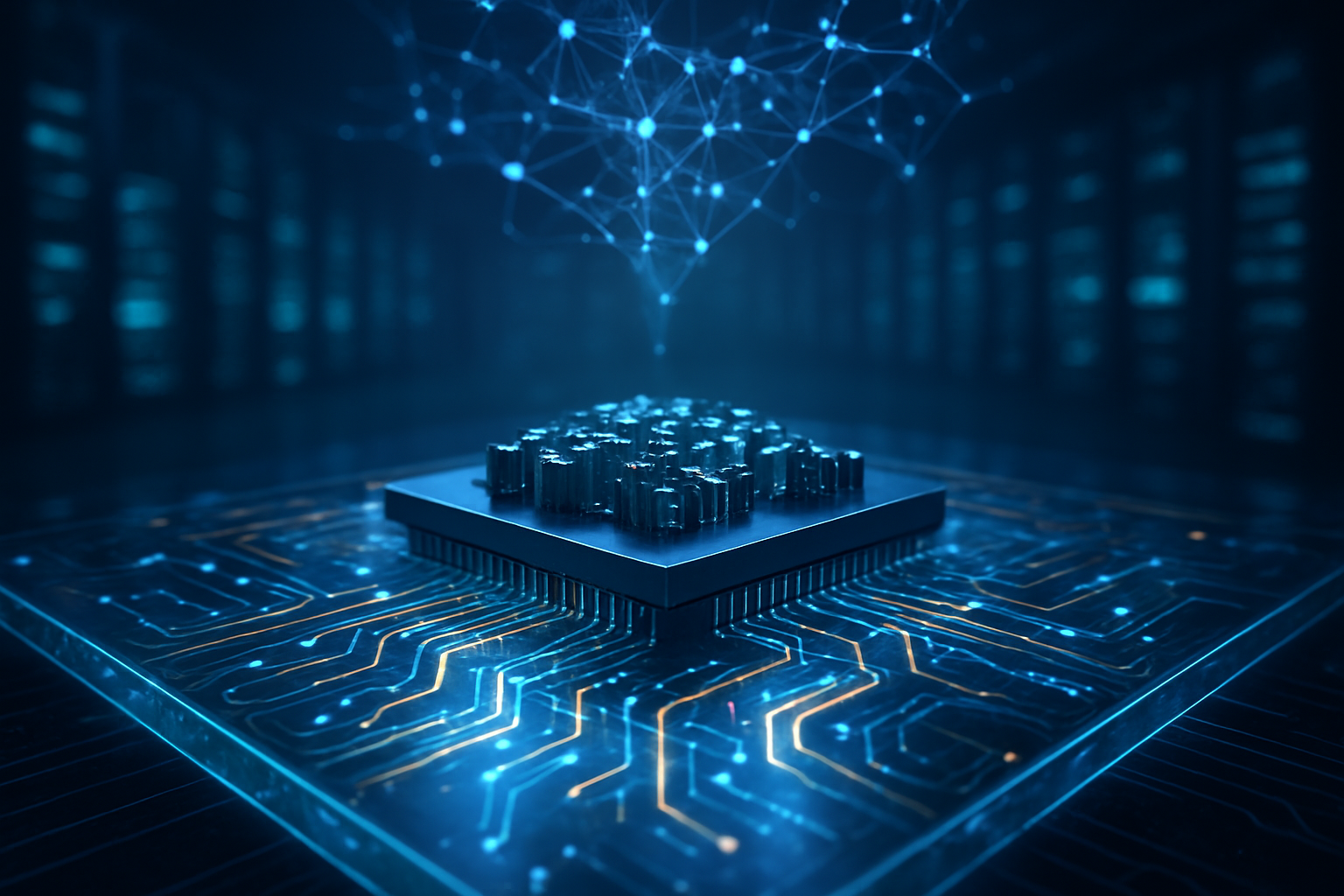
    The relentless pursuit of artificial general intelligence (AGI) and the explosive growth of large language models (LLMs) are pushing the boundaries of traditional computing, ushering in a transformative era for AI chip architectures. We are witnessing a profound shift beyond the conventional CPU and GPU paradigms, as innovators race to develop specialized, energy-efficient, and brain-inspired silicon designed to unlock unprecedented AI capabilities. This architectural revolution is not merely an incremental upgrade; it represents a foundational re-thinking of how AI processes information, promising to dismantle existing computational bottlenecks and pave the way for a future where intelligent systems are faster, more efficient, and ubiquitous.

    The immediate significance of these next-generation AI chips cannot be overstated. They are the bedrock upon which the next wave of AI innovation will be built, addressing critical challenges such as the escalating energy consumption of AI data centers, the "von Neumann bottleneck" that limits data throughput, and the demand for real-time, on-device AI in countless applications. From neuromorphic processors mimicking the human brain to optical chips harnessing the speed of light, these advancements are poised to accelerate AI development cycles, enable more complex and sophisticated AI models, and ultimately redefine the scope of what artificial intelligence can achieve across industries.

    A Deep Dive into Architectural Revolution: From Neurons to Photons

    The innovations driving next-generation AI chip architectures are diverse and fundamentally depart from the general-purpose designs that have dominated computing for decades. At their core, these new architectures aim to overcome the limitations of the von Neumann architecture—where processing and memory are separate, leading to significant energy and time costs for data movement—and to provide hyper-specialized efficiency for AI workloads.

    Neuromorphic Computing stands out as a brain-inspired paradigm. Chips like Intel's (NASDAQ: INTC) Loihi and IBM's TrueNorth utilize spiking neural networks (SNNs), mimicking biological neurons that communicate via electrical spikes. A key differentiator is their inherent integration of computation and memory, dramatically reducing the von Neumann bottleneck. These chips boast ultra-low power consumption, often operating at 1% to 10% of traditional processors' power draw, and excel in real-time processing, making them ideal for edge AI applications. For instance, Intel's Loihi 2 features 1 million neurons and 128 million synapses, offering significant improvements in energy efficiency and latency for event-driven, sparse AI workloads compared to conventional GPUs.

    In-Memory Computing (IMC) and Analog AI Accelerators represent another significant leap. IMC performs computations directly within or adjacent to memory, drastically cutting down data transfer overhead. This approach is particularly effective for the multiply-accumulate (MAC) operations central to deep learning. Analog AI accelerators often complement IMC by using analog circuits for computations, consuming significantly less energy than their digital counterparts. Innovations like ferroelectric field-effect transistors (FeFET) and phase-change memory are enhancing the efficiency and compactness of IMC solutions. For example, startups like Mythic and Cerebras Systems (private) are developing analog and wafer-scale engines, respectively, to push the boundaries of in-memory and near-memory computation, claiming orders of magnitude improvements in performance-per-watt for specific AI inference tasks. D-Matrix's 3D Digital In-Memory Compute (3DIMC) technology, for example, aims to offer superior speed and energy efficiency compared to traditional High Bandwidth Memory (HBM) for AI inference.

    Optical/Photonic AI Chips are perhaps the most revolutionary, leveraging light (photons) instead of electrons for processing. These chips promise machine learning tasks at the speed of light, potentially classifying wireless signals within nanoseconds—about 100 times faster than the best digital alternatives—while being significantly more energy-efficient and generating less heat. By encoding and processing data with light, photonic chips can perform key deep neural network computations entirely optically on-chip. Lightmatter (private) and Ayar Labs (private) are notable players in this emerging field, developing silicon photonics solutions that could revolutionize applications from 6G wireless systems to autonomous vehicles by enabling ultra-fast, low-latency AI inference directly at the source of data.

    Finally, Domain-Specific Architectures (DSAs), Application-Specific Integrated Circuits (ASICs), and Neural Processing Units (NPUs) represent a broader trend towards "hyper-specialized silicon." Unlike general-purpose CPUs/GPUs, DSAs are meticulously engineered for specific AI workloads, such as large language models, computer vision, or edge inference. Google's (NASDAQ: GOOGL) Tensor Processing Units (TPUs) are a prime example, optimized specifically for AI workloads in data centers, delivering unparalleled performance for tasks like TensorFlow model training. Similarly, Google's Coral NPUs are designed for energy-efficient on-device inference. These custom chips achieve higher performance and energy efficiency by shedding the overhead of general-purpose designs, providing a tailored fit for the unique computational patterns of AI.

    Initial reactions from the AI research community and industry experts are overwhelmingly positive, albeit with a healthy dose of realism regarding the challenges ahead. Many see these architectural shifts as not just necessary but inevitable for AI to continue its exponential growth. Experts highlight the potential for these chips to democratize advanced AI by making it more accessible and affordable, especially for resource-constrained applications. However, concerns remain about the complexity of developing software stacks for these novel architectures and the significant investment required for their commercialization and mass production.

    Industry Impact: Reshaping the AI Competitive Landscape

    The advent of next-generation AI chip architectures is poised to dramatically reshape the competitive landscape for AI companies, tech giants, and startups alike. This shift favors entities capable of deep hardware-software co-design and those willing to invest heavily in specialized silicon.

    NVIDIA (NASDAQ: NVDA), currently the undisputed leader in AI hardware with its dominant GPU accelerators, faces both opportunities and challenges. While NVIDIA continues to innovate with new GPU generations like Blackwell, incorporating features like transformer engines and greater memory bandwidth, the rise of highly specialized architectures could eventually erode its general-purpose AI supremacy for certain workloads. NVIDIA is proactively responding by investing in its own software ecosystem (CUDA) and developing more specialized solutions, but the sheer diversity of new architectures means competition will intensify.

    Tech giants like Google (NASDAQ: GOOGL), Amazon (NASDAQ: AMZN), and Microsoft (NASDAQ: MSFT) are significant beneficiaries, primarily through their massive cloud infrastructure and internal AI development. Google's TPUs have given it a strategic advantage in AI training for its own services and Google Cloud. Amazon's AWS has its own Inferentia and Trainium chips, and Microsoft is reportedly developing its own custom AI silicon. These companies leverage their vast resources to design chips optimized for their specific cloud workloads, reducing reliance on external vendors and gaining performance and cost efficiencies. This vertical integration allows them to offer more competitive AI services to their customers.

    Startups are a vibrant force in this new era, often focusing on niche architectural innovations that established players might overlook or find too risky. Companies like Cerebras Systems (private) with its wafer-scale engine, Mythic (private) with analog in-memory compute, Lightmatter (private) and Ayar Labs (private) with optical computing, and SambaNova Systems (private) with its reconfigurable dataflow architecture, are all aiming to disrupt the market. These startups, often backed by significant venture capital, are pushing the boundaries of what's possible, potentially creating entirely new market segments or offering compelling alternatives for specific AI tasks where traditional GPUs fall short. Their success hinges on demonstrating superior performance-per-watt or unique capabilities for emerging AI paradigms.

    The competitive implications are profound. For major AI labs and tech companies, access to or ownership of cutting-edge AI silicon becomes a critical strategic advantage, influencing everything from research velocity to the cost of deploying large-scale AI services. This could lead to a further consolidation of AI power among those who can afford to design and fabricate their own chips, or it could foster a more diverse ecosystem if specialized startups gain significant traction. Potential disruption to existing products or services is evident, particularly for general-purpose AI acceleration, as specialized chips can offer vastly superior efficiency for their intended tasks. Market positioning will increasingly depend on a company's ability to not only develop advanced AI models but also to run them on the most optimal and cost-effective hardware, making silicon innovation a core competency for any serious AI player.

    Wider Significance: Charting AI's Future Course

    The emergence of next-generation AI chip architectures is not merely a technical footnote; it represents a pivotal moment in the broader AI landscape, profoundly influencing its trajectory and capabilities. This wave of innovation fits squarely into the overarching trend of AI industrialization and specialization, moving beyond theoretical breakthroughs to practical, scalable, and efficient deployment.

    The impacts are multifaceted. Firstly, these chips are instrumental in tackling the "AI energy squeeze." As AI models grow exponentially in size and complexity, their computational demands translate into colossal energy consumption for training and inference. Architectures like neuromorphic, in-memory, and optical computing offer orders of magnitude improvements in energy efficiency, making AI more sustainable and reducing the environmental footprint of massive data centers. This is crucial for the long-term viability and public acceptance of widespread AI deployment.

    Secondly, these advancements are critical for the realization of ubiquitous AI at the edge. The ability to perform complex AI tasks on devices with limited power budgets—smartphones, autonomous vehicles, IoT sensors, wearables—is unlocked by these energy-efficient designs. This will enable real-time, personalized, and privacy-preserving AI applications that don't rely on constant cloud connectivity, fundamentally changing how we interact with technology and our environment. Imagine autonomous drones making split-second decisions with minimal latency or medical wearables providing continuous, intelligent health monitoring.

    However, the wider significance also brings potential concerns. The increasing specialization of hardware could lead to greater vendor lock-in, making it harder for developers to port AI models across different platforms without significant re-optimization. This could stifle innovation if a diverse ecosystem of interoperable hardware and software does not emerge. There are also ethical considerations related to the accelerated capabilities of AI, particularly in areas like autonomous systems and surveillance, where ultra-fast, on-device AI could pose new challenges for oversight and control.

    Comparing this to previous AI milestones, this architectural shift is as significant as the advent of GPUs for deep learning or the development of specialized TPUs. While those were crucial steps, the current wave goes further by fundamentally rethinking the underlying computational model itself, rather than just optimizing existing paradigms. It's a move from brute-force parallelization to intelligent, purpose-built computation, reminiscent of how the human brain evolved highly specialized regions for different tasks. This marks a transition from general-purpose AI acceleration to a truly heterogeneous computing future where the right tool (chip architecture) is matched precisely to the AI task at hand, promising to unlock capabilities that were previously unimaginable due to power or performance constraints.

    The Road Ahead: Future Developments and Expert Predictions

    The trajectory of next-generation AI chip architectures promises a fascinating and rapid evolution in the coming years. In the near term, we can expect a continued refinement and commercialization of the architectures currently under development. This includes more mature software development kits (SDKs) and programming models for neuromorphic and in-memory computing, making them more accessible to a broader range of AI developers. We will likely see a proliferation of specialized ASICs and NPUs for specific large language models (LLMs) and generative AI tasks, offering optimized performance for these increasingly dominant workloads.

    Longer term, experts predict a convergence of these innovative approaches, leading to hybrid architectures that combine the best aspects of different paradigms. Imagine a chip integrating optical interconnects for ultra-fast data transfer, neuromorphic cores for energy-efficient inference, and specialized digital accelerators for high-precision training. This heterogeneous integration, possibly facilitated by advanced chiplet designs and 3D stacking, will unlock unprecedented levels of performance and efficiency.

    Potential applications and use cases on the horizon are vast. Beyond current applications, these chips will be crucial for developing truly autonomous systems that can learn and adapt in real-time with minimal human intervention, from advanced robotics to fully self-driving vehicles operating in complex, unpredictable environments. They will enable personalized, always-on AI companions that deeply understand user context and intent, running sophisticated models directly on personal devices. Furthermore, these architectures are essential for pushing the boundaries of scientific discovery, accelerating simulations in fields like materials science, drug discovery, and climate modeling by handling massive datasets with unparalleled speed.

    However, significant challenges need to be addressed. The primary hurdle remains the software stack. Developing compilers, frameworks, and programming tools that can efficiently map diverse AI models onto these novel, often non-Von Neumann architectures is a monumental task. Manufacturing processes for exotic materials and complex 3D structures also present considerable engineering challenges and costs. Furthermore, the industry needs to establish common benchmarks and standards to accurately compare the performance and efficiency of these vastly different chip designs.

    Experts predict that the next five to ten years will see a dramatic shift in how AI hardware is designed and consumed. The era of a single dominant chip architecture for all AI tasks is rapidly fading. Instead, we are moving towards an ecosystem of highly specialized and interconnected processors, each optimized for specific aspects of the AI workload. The focus will increasingly be on system-level optimization, where the interaction between hardware, software, and the AI model itself is paramount. This will necessitate closer collaboration between chip designers, AI researchers, and application developers to fully harness the potential of these revolutionary architectures.

    A New Dawn for AI: The Enduring Significance of Architectural Innovation

    The emergence of next-generation AI chip architectures marks a pivotal inflection point in the history of artificial intelligence. It is a testament to the relentless human ingenuity in overcoming computational barriers and a clear indicator that the future of AI will be defined as much by hardware innovation as by algorithmic breakthroughs. This architectural revolution, encompassing neuromorphic, in-memory, optical, and domain-specific designs, is fundamentally reshaping the capabilities and accessibility of AI.

    The key takeaways are clear: we are moving towards a future of hyper-specialized, energy-efficient, and data-movement-optimized AI hardware. This shift is not just about making AI faster; it's about making it sustainable, ubiquitous, and capable of tackling problems previously deemed intractable due to computational constraints. The significance of this development in AI history can be compared to the invention of the transistor or the microprocessor—it's a foundational change that will enable entirely new categories of AI applications and accelerate the journey towards more sophisticated and intelligent systems.

    In the long term, these innovations will democratize advanced AI, allowing complex models to run efficiently on everything from massive cloud data centers to tiny edge devices. This will foster an explosion of creativity and application development across industries. The environmental benefits, through drastically reduced power consumption, are also a critical aspect of their enduring impact.

    What to watch for in the coming weeks and months includes further announcements from both established tech giants and innovative startups regarding their next-generation chip designs and strategic partnerships. Pay close attention to the development of robust software ecosystems for these new architectures, as this will be a crucial factor in their widespread adoption. Additionally, observe how benchmarks evolve to accurately measure the unique performance characteristics of these diverse computational paradigms. The race to build the ultimate AI engine is intensifying, and the future of artificial intelligence will undoubtedly be forged in silicon.


    This content is intended for informational purposes only and represents analysis of current AI developments.

    TokenRing AI delivers enterprise-grade solutions for multi-agent AI workflow orchestration, AI-powered development tools, and seamless remote collaboration platforms.
    For more information, visit https://www.tokenring.ai/.
  • The Symbiotic Revolution: How Hardware-Software Co-Design is Unleashing AI’s True Potential

    The Symbiotic Revolution: How Hardware-Software Co-Design is Unleashing AI’s True Potential

    In the rapidly evolving landscape of artificial intelligence, a fundamental shift is underway: the increasingly tight integration of chip hardware and AI software. This symbiotic relationship, often termed hardware-software co-design, is no longer a mere optimization but a critical necessity for unlocking the next generation of AI capabilities. As AI models, particularly large language models (LLMs) and generative AI, grow exponentially in complexity and demand unprecedented computational power, the traditional approach of developing hardware and software in isolation is proving insufficient. The industry is witnessing a holistic embrace of co-design, where silicon and algorithms are crafted in unison, forging a path to unparalleled performance, efficiency, and innovation.

    This integrated approach is immediately significant because it addresses the core bottlenecks that have constrained AI's progress. By tailoring hardware architectures to the specific demands of AI workloads and simultaneously optimizing software to exploit these specialized capabilities, developers are achieving breakthroughs in speed, energy efficiency, and scalability. This synergy is not just about incremental gains; it's about fundamentally redefining what's possible in AI, enabling real-time applications, pushing AI to the edge, and fostering the development of entirely new model architectures that were once deemed computationally intractable. The future of AI is being built on this foundation of deeply intertwined hardware and software.

    The Engineering Behind AI's New Frontier: Unpacking Hardware-Software Co-Design

    The technical essence of hardware-software co-design in AI silicon lies in its departure from the general-purpose computing paradigm. Historically, CPUs and even early GPUs were designed with broad applicability in mind, leading to inefficiencies when confronted with the highly parallel and matrix-multiplication-heavy workloads characteristic of deep learning. The co-design philosophy, however, involves a deliberate, iterative process where hardware architects and AI software engineers collaborate from conception to deployment.

    Specific details of this advancement include the proliferation of specialized AI accelerators like NVIDIA's (NASDAQ: NVDA) GPUs, Google's (NASDAQ: GOOGL) Tensor Processing Units (TPUs), and a growing array of Application-Specific Integrated Circuits (ASICs) and Neural Processing Units (NPUs) from companies like AMD (NASDAQ: AMD), Intel (NASDAQ: INTC), and Apple (NASDAQ: AAPL). These chips feature architectures explicitly designed for AI, incorporating vast numbers of processing cores, optimized memory hierarchies (e.g., High-Bandwidth Memory or HBM), and instruction sets tailored for AI operations. Software stacks, from low-level drivers and compilers to high-level AI frameworks like TensorFlow and PyTorch, are then meticulously optimized to leverage these hardware features. This includes techniques such as low-precision arithmetic (INT8, BF16 quantization), sparsity exploitation, and graph optimization, which are implemented at both hardware and software levels to reduce computational load and memory footprint without significant accuracy loss.

    This approach differs significantly from previous methods where hardware was a fixed target for software optimization. Instead, hardware designers now incorporate insights from AI model architectures and training/inference patterns directly into chip design, while software developers adapt their algorithms to best utilize the unique characteristics of the underlying silicon. For instance, Google's TPUs were designed from the ground up for TensorFlow workloads, offering a tightly coupled hardware-software ecosystem. Similarly, Apple's M-series chips integrate powerful Neural Engines directly onto the SoC, enabling highly efficient on-device AI. Initial reactions from the AI research community and industry experts have been overwhelmingly positive, recognizing this trend as indispensable for sustaining the pace of AI innovation. Researchers are increasingly exploring "hardware-aware" AI model design, where model architectures are developed with the target hardware in mind, leading to more efficient and performant solutions.

    Reshaping the AI Competitive Landscape: Winners, Losers, and Strategic Plays

    The trend of tighter hardware-software integration is profoundly reshaping the competitive landscape across AI companies, tech giants, and startups, creating clear beneficiaries and potential disruptors. Companies that possess both deep expertise in chip design and robust AI software capabilities are poised to dominate this new era.

    NVIDIA (NASDAQ: NVDA) stands out as a prime beneficiary, having pioneered the GPU-accelerated computing paradigm for AI. Its CUDA platform, a tightly integrated software stack with its powerful GPUs, has created a formidable ecosystem that is difficult for competitors to replicate. Google (NASDAQ: GOOGL) with its TPUs and custom AI software stack for its cloud services and internal AI research, is another major player leveraging co-design to its advantage. Apple (NASDAQ: AAPL) has strategically integrated its Neural Engine into its M-series chips, enabling powerful on-device AI capabilities that enhance user experience and differentiate its products. Other chipmakers like AMD (NASDAQ: AMD) and Intel (NASDAQ: INTC) are aggressively investing in their own AI accelerators and software platforms, such as AMD's Vitis AI, to compete in this rapidly expanding market.

    The competitive implications are significant. Major AI labs and tech companies that can design or heavily influence custom AI silicon will gain strategic advantages in terms of performance, cost-efficiency, and differentiation. This could lead to a further consolidation of power among the tech giants with the resources to pursue such vertical integration. Startups in specialized AI hardware or software optimization stand to benefit if they can offer unique solutions that integrate seamlessly into existing ecosystems or carve out niche markets. However, those relying solely on general-purpose hardware or lacking the ability to optimize across the stack may find themselves at a disadvantage. Potential disruption to existing products or services includes the accelerated obsolescence of less optimized AI hardware and a shift towards cloud-based or edge AI solutions powered by highly integrated systems. Market positioning will increasingly hinge on a company's ability to deliver end-to-end optimized AI solutions, from the silicon up to the application layer.

    The Broader Canvas: AI's Evolution Through Integrated Design

    This push for tighter hardware-software integration is not an isolated phenomenon but a central pillar in the broader AI landscape, reflecting a maturing industry focused on efficiency and real-world deployment. It signifies a move beyond theoretical AI breakthroughs to practical, scalable, and sustainable AI solutions.

    The impact extends across various domains. In enterprise AI, optimized silicon and software stacks mean faster data processing, more accurate predictions, and reduced operational costs for tasks like fraud detection, supply chain optimization, and personalized customer experiences. For consumer AI, it enables more powerful on-device capabilities, enhancing privacy by reducing reliance on cloud processing for features like real-time language translation, advanced photography, and intelligent assistants. However, potential concerns include the increasing complexity of the AI development ecosystem, which could raise the barrier to entry for smaller players. Furthermore, the reliance on specialized hardware could lead to vendor lock-in, where companies become dependent on a specific hardware provider's ecosystem. Comparisons to previous AI milestones reveal a consistent pattern: each significant leap in AI capability has been underpinned by advancements in computing power. Just as GPUs enabled the deep learning revolution, co-designed AI silicon is enabling the era of ubiquitous, high-performance AI.

    This trend fits into the broader AI landscape by facilitating the deployment of increasingly complex models, such as multimodal LLMs that seamlessly integrate text, vision, and audio. These models demand unprecedented computational throughput and memory bandwidth, which only a tightly integrated hardware-software approach can efficiently deliver. It also drives the trend towards "AI everywhere," making sophisticated AI capabilities accessible on a wider range of devices, from data centers to edge devices like smartphones and IoT sensors. The emphasis on energy efficiency, a direct outcome of co-design, is crucial for sustainable AI development, especially as the carbon footprint of large AI models becomes a growing concern.

    The Horizon of AI: Anticipating Future Developments

    Looking ahead, the trajectory of hardware-software integration in AI silicon promises a future brimming with innovation, pushing the boundaries of what AI can achieve. The near-term will see continued refinement of existing co-design principles, with a focus on even greater specialization and energy efficiency.

    Expected near-term developments include the widespread adoption of chiplets and modular AI accelerators, allowing for more flexible and scalable custom hardware solutions. We will also see advancements in in-memory computing and near-memory processing, drastically reducing data movement bottlenecks and power consumption. Furthermore, the integration of AI capabilities directly into network infrastructure and storage systems will create "AI-native" computing environments. Long-term, experts predict the emergence of entirely new computing paradigms, potentially moving beyond von Neumann architectures to neuromorphic computing or quantum AI, where hardware is fundamentally designed to mimic biological brains or leverage quantum mechanics for AI tasks. These radical shifts will necessitate even deeper hardware-software co-design.

    Potential applications and use cases on the horizon are vast. Autonomous systems, from self-driving cars to robotic surgery, will achieve new levels of reliability and real-time decision-making thanks to highly optimized edge AI. Personalized medicine will benefit from accelerated genomic analysis and drug discovery. Generative AI will become even more powerful and versatile, enabling hyper-realistic content creation, advanced material design, and sophisticated scientific simulations. However, challenges remain. The complexity of designing and optimizing these integrated systems requires highly specialized talent, and the development cycles can be lengthy and expensive. Standardization across different hardware and software ecosystems is also a significant hurdle. Experts predict that the next wave of AI breakthroughs will increasingly come from those who can master this interdisciplinary art of co-design, leading to a golden age of specialized AI hardware and software ecosystems tailored for specific problems.

    A New Era of AI Efficiency and Innovation

    The escalating trend of tighter integration between chip hardware and AI software marks a pivotal moment in the history of artificial intelligence. It represents a fundamental shift from general-purpose computing to highly specialized, purpose-built AI systems, addressing the insatiable computational demands of modern AI models. This hardware-software co-design paradigm is driving unprecedented gains in performance, energy efficiency, and scalability, making previously theoretical AI applications a tangible reality.

    Key takeaways include the critical role of specialized AI accelerators (GPUs, TPUs, ASICs, NPUs) working in concert with optimized software stacks. This synergy is not just an optimization but a necessity for the advancement of complex AI models like LLMs. Companies like NVIDIA (NASDAQ: NVDA), Google (NASDAQ: GOOGL), and Apple (NASDAQ: AAPL), with their vertically integrated hardware and software capabilities, are leading this charge, reshaping the competitive landscape and setting new benchmarks for AI performance. The wider significance of this development lies in its potential to democratize powerful AI, enabling more robust on-device capabilities, fostering sustainable AI development through energy efficiency, and paving the way for entirely new classes of AI applications across industries.

    The long-term impact of this symbiotic revolution cannot be overstated. It is laying the groundwork for AI that is not only more intelligent but also more efficient, accessible, and adaptable. As we move forward, watch for continued innovation in chiplet technology, in-memory computing, and the emergence of novel computing architectures tailored for AI. The convergence of hardware and software is not merely a trend; it is the future of AI, promising to unlock capabilities that will redefine technology and society in the coming weeks and months.


    This content is intended for informational purposes only and represents analysis of current AI developments.

    TokenRing AI delivers enterprise-grade solutions for multi-agent AI workflow orchestration, AI-powered development tools, and seamless remote collaboration platforms.
    For more information, visit https://www.tokenring.ai/.

  • Broadcom: The Unseen Architect Powering the AI Supercomputing Revolution

    Broadcom: The Unseen Architect Powering the AI Supercomputing Revolution

    In the relentless pursuit of artificial intelligence (AI) breakthroughs, the spotlight often falls on the dazzling capabilities of large language models (LLMs) and the generative wonders they unleash. Yet, beneath the surface of these computational marvels lies a sophisticated hardware backbone, meticulously engineered to sustain their insatiable demands. At the forefront of this critical infrastructure stands Broadcom Inc. (NASDAQ: AVGO), a semiconductor giant that has quietly, yet definitively, positioned itself as the unseen architect powering the AI supercomputing revolution and shaping the very foundation of next-generation AI infrastructure.

    Broadcom's strategic pivot and deep technical expertise in custom silicon (ASICs/XPUs) and high-speed networking solutions are not just incremental improvements; they are foundational shifts that enable the unprecedented scale, speed, and efficiency required by today's most advanced AI models. As of October 2025, Broadcom's influence is more pronounced than ever, underscored by transformative partnerships, including a multi-year strategic collaboration with OpenAI to co-develop and deploy custom AI accelerators. This move signifies a pivotal moment where the insights from frontier AI model development are directly embedded into the hardware, promising to unlock new levels of capability and intelligence for the AI era.

    The Technical Core: Broadcom's Silicon and Networking Prowess

    Broadcom's critical contributions to the AI hardware backbone are primarily rooted in its high-speed networking chips and custom accelerators, which are meticulously engineered to meet the stringent demands of AI workloads.

    At the heart of AI supercomputing, Broadcom's Tomahawk series of Ethernet switches are designed for hyperscale data centers and optimized for AI/ML networking. The Tomahawk 5 (BCM78900 Series), for instance, delivered a groundbreaking 51.2 Terabits per second (Tbps) switching capacity on a single chip, supporting up to 256 x 200GbE ports and built on a power-efficient 5nm monolithic die. It introduced advanced adaptive routing, dynamic load balancing, and end-to-end congestion control tailored for AI/ML workloads. The Tomahawk Ultra (BCM78920 Series) further pushes boundaries with ultra-low latency of 250 nanoseconds at 51.2 Tbps throughput and introduces "in-network collectives" (INC) – specialized hardware that offloads common AI communication patterns (like AllReduce) from processors to the network, improving training efficiency by 7-10%. This innovation aims to transform standard Ethernet into a supercomputing-class fabric, significantly closing the performance gap with specialized fabrics like NVIDIA Corporation's (NASDAQ: NVDA) NVLink. The latest Tomahawk 6 (BCM78910 Series) is a monumental leap, offering 102.4 Tbps of switching capacity in a single chip, implemented in 3nm technology, and supporting AI clusters with over one million XPUs. It unifies scale-up and scale-out Ethernet for massive AI deployments and is compliant with the Ultra Ethernet Consortium (UEC).

    Complementing the Tomahawk series is the Jericho3-AI (BCM88890), a network processor specifically repositioned for AI systems. It boasts 28.8 Tbps of throughput and can interconnect up to 32,000 GPUs, creating high-performance fabrics for AI networks with predictable tail latency. Its features, such as perfect load balancing, congestion-free operation, and Zero-Impact Failover, are crucial for significantly shorter job completion times (JCTs) in AI workloads. Broadcom claims Jericho3-AI can provide at least 10% shorter JCTs compared to alternative networking solutions, making expensive AI accelerators 10% more efficient. This directly challenges proprietary solutions like InfiniBand by offering a high-bandwidth, low-latency, and low-power Ethernet-based alternative.

    Further solidifying Broadcom's networking arsenal is the Thor Ultra 800G AI Ethernet NIC, the industry's first 800G AI Ethernet Network Interface Card. This NIC is designed to interconnect hundreds of thousands of XPUs for trillion-parameter AI workloads. It is fully compliant with the open UEC specification, delivering advanced RDMA innovations like packet-level multipathing, out-of-order packet delivery to XPU memory, and programmable congestion control. Thor Ultra modernizes RDMA for large AI clusters, addressing limitations of traditional RDMA and enabling customers to scale AI workloads with unparalleled performance and efficiency in an open ecosystem. Initial reactions from the AI research community and industry experts highlight Broadcom's role as a formidable competitor to NVIDIA, particularly in offering open, standards-based Ethernet solutions that challenge the proprietary nature of NVLink/NVSwitch and InfiniBand, while delivering superior performance and efficiency for AI workloads.

    Reshaping the AI Industry: Impact on Companies and Competitive Dynamics

    Broadcom's strategic focus on custom AI accelerators and high-speed networking solutions is profoundly reshaping the competitive landscape for AI companies, tech giants, and even startups.

    The most significant beneficiaries are hyperscale cloud providers and major AI labs. Companies like Alphabet (NASDAQ: GOOGL) (Google), Meta Platforms Inc. (NASDAQ: META), ByteDance, Microsoft Corporation (NASDAQ: MSFT), and reportedly Apple Inc. (NASDAQ: AAPL), are leveraging Broadcom's expertise to develop custom AI chips. This allows them to tailor silicon precisely to their specific AI workloads, leading to enhanced performance, greater energy efficiency, and lower operational costs, particularly for inference tasks. For OpenAI, the multi-year partnership with Broadcom to co-develop and deploy 10 gigawatts of custom AI accelerators and Ethernet-based network systems is a strategic move to optimize performance and cost-efficiency by embedding insights from its frontier models directly into the hardware and to diversify its hardware base beyond traditional GPU suppliers.

    This strategy introduces significant competitive implications, particularly for NVIDIA. While NVIDIA remains dominant in general-purpose GPUs for AI training, Broadcom's focus on custom ASICs for inference and its leadership in high-speed networking solutions presents a nuanced challenge. Broadcom's custom ASIC offerings enable hyperscalers to diversify their supply chain and reduce reliance on NVIDIA's CUDA-centric ecosystem, potentially eroding NVIDIA's market share in specific inference workloads and pressuring pricing. Furthermore, Broadcom's Ethernet switching and routing chips, where it holds an 80% market share, are critical for scalable AI infrastructure, even for clusters heavily reliant on NVIDIA GPUs, positioning Broadcom as an indispensable part of the overall AI data center architecture. For Intel Corporation (NASDAQ: INTC) and Advanced Micro Devices, Inc. (NASDAQ: AMD), Broadcom's custom ASICs pose a challenge in areas where their general-purpose CPUs or GPUs might otherwise be used for AI workloads, as Broadcom's ASICs often offer better energy efficiency and performance for specific AI tasks.

    Potential disruptions include a broader shift from general-purpose to specialized hardware, where ASICs gain ground in inference due to superior energy efficiency and latency. This could lead to decreased demand for general-purpose GPUs in pure inference scenarios where custom solutions are more cost-effective. Broadcom's advancements in Ethernet networking are also disrupting older networking technologies that cannot meet the stringent demands of AI workloads. Broadcom's market positioning is strengthened by its leadership in custom silicon, deep relationships with hyperscale cloud providers, and dominance in networking interconnects. Its "open ecosystem" approach, which enables interoperability with various hardware, further enhances its strategic advantage, alongside its significant revenue growth in AI-related projects.

    Broader AI Landscape: Trends, Impacts, and Milestones

    Broadcom's contributions extend beyond mere component supply; they are actively shaping the architectural foundations of next-generation AI infrastructure, deeply influencing the broader AI landscape and current trends.

    Broadcom's role aligns with several key trends, most notably the diversification from NVIDIA's dominance. Many major AI players are actively seeking to reduce their reliance on NVIDIA's general-purpose GPUs and proprietary InfiniBand interconnects. Broadcom provides a viable alternative through its custom silicon development and promotion of open, Ethernet-based networking solutions. This is part of a broader shift towards custom silicon, where leading AI companies and cloud providers design their own specialized AI chips, with Broadcom serving as a critical partner. The company's strong advocacy for open Ethernet standards in AI networking, as evidenced by its involvement in the Ultra Ethernet Consortium, contrasts with proprietary solutions, offering customers more choice and flexibility. These factors are crucial for the unprecedented massive data center expansion driven by the demand for AI compute capacity.

    The overall impacts on the AI industry are significant. Broadcom's emergence as a major supplier intensifies competition and innovation in the AI hardware market, potentially spurring further advancements. Its solutions contribute to substantial cost and efficiency optimization through custom silicon and optimized networking, along with crucial supply chain diversification. By enabling tailored performance for advanced models, Broadcom's hardware allows companies to achieve performance optimizations not possible with off-the-shelf hardware, leading to faster training times and lower inference latency.

    However, potential concerns exist. While Broadcom champions open Ethernet, companies extensively leveraging Broadcom for custom ASIC design might experience a different form of vendor lock-in to Broadcom's specialized design and manufacturing expertise. Some specific AI networking mechanisms, like the "scheduled fabric" in Jericho3-AI, remain proprietary, meaning optimal performance might still require Broadcom's specific implementations. The sheer scale of AI infrastructure build-outs, involving multi-billion dollar and multi-gigawatt commitments, also raises concerns about the sustainability of financing these massive endeavors.

    In comparison to previous AI milestones, the shift towards custom ASICs, enabled by Broadcom, mirrors historical transitions from general-purpose to specialized processors in computing. The recognition and address of networking as a critical bottleneck for scaling AI supercomputers, with Broadcom's innovations in high-bandwidth, low-latency Ethernet solutions, is akin to previous breakthroughs in interconnect technologies that enabled larger, more powerful computing clusters. The deep collaboration between OpenAI (designing accelerators) and Broadcom (developing and deploying them) also signifies a move towards tighter hardware-software co-design, a hallmark of successful technological advancements.

    The Horizon: Future Developments and Expert Predictions

    Looking ahead, Broadcom's trajectory in AI hardware is poised for continued innovation and expansion, with several key developments and expert predictions shaping the future.

    In the near term, the OpenAI partnership remains a significant focus, with initial deployments of custom AI accelerators and networking systems expected in the second half of 2026 and continuing through 2029. This collaboration is expected to embed OpenAI's frontier model insights directly into the hardware. Broadcom will continue its long-standing partnership with Google on its Tensor Processing Unit (TPU) roadmap, with involvement in the upcoming TPU v7. The company's Jericho3-AI and its companion Ramon3 fabric chip are expected to qualify for production within a year, enabling even larger and more efficient AI training supercomputers. The Tomahawk 6 will see broader adoption in AI data centers, supporting over one million accelerator chips. The Thor Ultra 800G AI Ethernet NIC will also become a critical component for interconnecting vast numbers of XPUs. Beyond the data center, Broadcom's Wi-Fi 8 silicon ecosystem is designed for AI-era edge networks, including hardware-accelerated telemetry for AI-driven network optimization at the edge.

    Potential applications and use cases are vast, primarily focused on powering hyperscale AI data centers for large language models and generative AI. Broadcom's custom ASICs are optimized for both AI training and inference, offering superior energy efficiency for specific tasks. The emergence of smaller reasoning models and "chain of thought" reasoning in AI, forming the backbone of agentic AI, presents new opportunities for Broadcom's XPUs in inference-heavy workloads. Furthermore, the expansion of edge AI will see Broadcom's Wi-Fi 8 solutions enabling localized intelligence and real-time inference in various devices and environments, from smart homes to predictive analytics.

    Challenges remain, including persistent competition from NVIDIA, though Broadcom's strategy is more complementary, focusing on custom ASICs and networking. The industry also faces the challenge of diversification and vendor lock-in, with hyperscalers actively seeking multi-vendor solutions. The capital intensity of building new, custom processors means only a few companies can afford bespoke silicon, potentially widening the gap between leading AI firms and smaller players. Experts predict a significant shift to specialized hardware like ASICs for optimized performance and cost control. The network is increasingly recognized as a critical bottleneck in large-scale AI deployments, a challenge Broadcom's advanced networking solutions are designed to address. Analysts also predict that inference silicon demand will grow substantially, potentially becoming the largest driver of AI compute spend, where Broadcom's XPUs are expected to play a key role. Broadcom's CEO, Hock Tan, predicts generative AI could significantly increase technology-related GDP from 30% to 40%, adding an estimated $10 trillion in economic value annually.

    A Comprehensive Wrap-Up: Broadcom's Enduring AI Legacy

    Broadcom's journey into the heart of AI hardware has solidified its position as an indispensable force in the rapidly evolving landscape of AI supercomputing and next-generation AI infrastructure. Its dual focus on custom AI accelerators and high-performance, open-standard networking solutions is not merely supporting the current AI boom but actively shaping its future trajectory.

    Key takeaways highlight Broadcom's strategic brilliance in enabling vertical integration for hyperscale cloud providers, allowing them to craft AI stacks precisely tailored to their unique workloads. This empowers them with optimized performance, reduced costs, and enhanced supply chain security, challenging the traditional reliance on general-purpose GPUs. Furthermore, Broadcom's unwavering commitment to Ethernet as the dominant networking fabric for AI, through innovations like the Tomahawk and Jericho series and the Thor Ultra NIC, is establishing an open, interoperable, and scalable alternative to proprietary interconnects, fostering a broader and more resilient AI ecosystem. By addressing the escalating demands of AI workloads with purpose-built networking and custom silicon, Broadcom is enabling the construction of AI supercomputers capable of handling increasingly complex models and scales.

    The overall significance of these developments in AI history is profound. Broadcom is not just a supplier; it is a critical enabler of the industry's shift towards specialized hardware, fostering competition and diversification that will drive further innovation. Its long-term impact is expected to be enduring, positioning Broadcom as a structural winner in AI infrastructure with robust projections for continued AI revenue growth. The company's deep involvement in building the underlying infrastructure for advanced AI models, particularly through its partnership with OpenAI, positions it as a foundational enabler in the pursuit of artificial general intelligence (AGI).

    In the coming weeks and months, readers should closely watch for further developments in the OpenAI-Broadcom custom AI accelerator racks, especially as initial deployments are expected in the latter half of 2026. Any new custom silicon customers or expansions with existing clients, such as rumored work with Apple, will be crucial indicators of market traction. The industry adoption and real-world performance benchmarks of Broadcom's latest networking innovations, including the Thor Ultra NIC, Tomahawk 6, and Jericho4, in large-scale AI supercomputing environments will also be key. Finally, Broadcom's upcoming earnings calls, particularly the Q4 2025 report expected in December, will provide vital updates on its AI revenue trajectory and future outlook, which analysts predict will continue to surge. Broadcom's strategic focus on enabling custom AI silicon and providing leading-edge Ethernet networking positions it as an indispensable partner in the AI revolution, with its influence on the broader AI hardware landscape only expected to grow.


    This content is intended for informational purposes only and represents analysis of current AI developments.

    TokenRing AI delivers enterprise-grade solutions for multi-agent AI workflow orchestration, AI-powered development tools, and seamless remote collaboration platforms.
    For more information, visit https://www.tokenring.ai/.

  • Geopolitical Fault Lines Reshape Global Chip Landscape: Micron’s China Server Chip Exit Signals Deeper Tech Divide

    Geopolitical Fault Lines Reshape Global Chip Landscape: Micron’s China Server Chip Exit Signals Deeper Tech Divide

    The intricate web of the global semiconductor industry is undergoing a profound re-evaluation as escalating US-China tech tensions compel major chipmakers to recalibrate their market presence. This strategic realignment is particularly evident in the critical server chip sector, where companies like Micron Technology (NASDAQ: MU) are making significant shifts, indicative of a broader fragmentation of the technology ecosystem. The ongoing rivalry, characterized by stringent export controls and retaliatory measures, is not merely impacting trade flows but is fundamentally altering long-term investment strategies and supply chain resilience across the AI and high-tech sectors. As of October 17, 2025, these shifts are not just theoretical but are manifesting in concrete business decisions that will shape the future of global technology leadership.

    This geopolitical tug-of-war is forcing a fundamental rethinking of how advanced technology is developed, manufactured, and distributed. For AI companies, which rely heavily on cutting-edge chips for everything from training large language models to powering inference engines, these market shifts introduce both challenges and opportunities. The re-evaluation by chipmakers signals a move towards more localized or diversified supply chains, potentially leading to increased costs but also fostering domestic innovation in key regions. The implications extend beyond economics, touching upon national security, technological sovereignty, and the pace of AI advancement globally.

    Micron's Strategic Retreat: A Deep Dive into Server DRAM and Geopolitical Impact

    Micron Technology's reported decision to exit the server chip business in mainland China marks a pivotal moment in the ongoing US-China tech rivalry. This strategic shift is a direct consequence of a 2023 Chinese government ban on Micron's products in critical infrastructure, citing "cybersecurity risks"—a move widely interpreted as retaliation for US restrictions on China's semiconductor industry. At the heart of this decision are server DRAM (Dynamic Random-Access Memory) chips, which are essential components for data centers, cloud computing infrastructure, and, crucially, the massive server farms that power AI training and inference.

    Server DRAM differs significantly from consumer-grade memory due to its enhanced reliability, error correction capabilities (ECC – Error-Correcting Code memory), and higher density, designed to operate continuously under heavy loads in enterprise environments. Micron, a leading global producer of these advanced memory solutions, previously held a substantial share of the Chinese server memory market. The ban effectively cut off a significant revenue stream for Micron in a critical sector within China. Their new strategy involves continuing to supply Chinese customers operating data centers outside mainland China and focusing on other segments within China, such as automotive and mobile phone memory, which are less directly impacted by the "critical infrastructure" designation. This represents a stark departure from their previous approach of broad market engagement within China's data center ecosystem. Initial reactions from the tech industry have underscored the severity of the geopolitical pressure, with many experts viewing it as a clear signal that companies must increasingly choose sides or at least bifurcate their operations to navigate the complex regulatory landscapes. This move highlights the increasing difficulty for global chipmakers to operate seamlessly across both major economic blocs without facing significant political and economic repercussions.

    Ripple Effects Across the AI and Tech Landscape

    Micron's strategic shift, alongside similar adjustments by other major players, has profound implications for AI companies, tech giants, and startups alike. Companies like NVIDIA (NASDAQ: NVDA), which designs AI accelerators, and major cloud providers such as Amazon (NASDAQ: AMZN) Web Services, Microsoft (NASDAQ: MSFT) Azure, and Alphabet's (NASDAQ: GOOGL) Google Cloud, all rely heavily on a stable and diverse supply of high-performance memory and processing units. The fragmentation of the chip market introduces supply chain complexities and potential cost increases, which could impact the scaling of AI infrastructure.

    While US-based AI companies might see a push towards more secure, domestically sourced components, potentially benefiting companies like Intel (NASDAQ: INTC) with its renewed foundry efforts, Chinese AI companies face an intensified drive for indigenous solutions. This could accelerate the growth of domestic Chinese memory manufacturers, albeit with potential initial performance gaps compared to global leaders. The competitive landscape for major AI labs is shifting, with access to specific types of advanced chips becoming a strategic advantage or bottleneck. For instance, TSMC (NYSE: TSM) diversifying its manufacturing to the US and Europe aims to mitigate geopolitical risks for its global clientele, including major AI chip designers. Conversely, companies like Qualcomm (NASDAQ: QCOM) and ASML (NASDAQ: ASML), deeply integrated into global supply chains, face ongoing challenges in balancing market access with compliance to various national regulations. This environment fosters a "de-risking" mentality, pushing companies to build redundancy and resilience into their supply chains, potentially at the expense of efficiency, but with the long-term goal of geopolitical insulation.

    Broader Implications for the AI Ecosystem

    The re-evaluation of market presence by chipmakers like Micron is not an isolated event but a critical symptom of a broader trend towards technological decoupling between the US and China. This trend fits into the larger AI landscape by creating distinct regional ecosystems, each striving for self-sufficiency in critical technologies. The impacts are multifaceted: on one hand, it stimulates significant investment in domestic semiconductor manufacturing and R&D in both regions, potentially leading to new innovations and job creation. For instance, the US CHIPS Act and similar initiatives in Europe and Asia are direct responses to these geopolitical pressures, aiming to onshore chip production.

    However, potential concerns abound. The bifurcation of technology standards and supply chains could stifle global collaboration, slow down the pace of innovation, and increase the cost of advanced AI hardware. A world with two distinct, less interoperable tech stacks could lead to inefficiencies and limit the global reach of AI solutions. This situation draws parallels to historical periods of technological competition, such as the Cold War space race, but with the added complexity of deeply intertwined global economies. Unlike previous milestones focused purely on technological breakthroughs, this era is defined by the geopolitical weaponization of technology, where access to advanced chips becomes a tool of national power. The long-term impact on AI development could mean divergent paths for AI ethics, data governance, and application development in different parts of the world, leading to a fragmented global AI landscape.

    The Road Ahead: Navigating a Fragmented Future

    Looking ahead, the near-term will likely see further consolidation of chipmakers' operations within specific geopolitical blocs, with increased emphasis on "friend-shoring" and regional supply chain development. We can expect continued government subsidies and incentives in the US, Europe, Japan, and other allied nations to bolster domestic semiconductor capabilities. This could lead to a surge in new fabrication plants and R&D centers outside of traditional hubs. For AI, this means a potential acceleration in the development of custom AI chips and specialized memory solutions tailored for regional markets, aiming to reduce reliance on external suppliers for critical components.

    In the long term, experts predict a more bifurcated global technology landscape. Challenges will include managing the economic inefficiencies of duplicate supply chains, ensuring interoperability where necessary, and preventing a complete divergence of technological standards. The focus will be on achieving a delicate balance between national security interests and the benefits of global technological collaboration. What experts predict is a sustained period of strategic competition, where innovation in AI will be increasingly tied to geopolitical advantage. Future applications might see AI systems designed with specific regional hardware and software stacks, potentially impacting global data sharing and collaborative AI research. Watch for continued legislative actions, new international alliances around technology, and the emergence of regional champions in critical AI hardware and software sectors.

    Concluding Thoughts: A New Era for AI and Global Tech

    Micron's strategic re-evaluation in China is more than just a corporate decision; it is a potent symbol of the profound transformation sweeping through the global technology industry, driven by escalating US-China tech tensions. This development underscores a fundamental shift from a globally integrated semiconductor supply chain to one increasingly fragmented along geopolitical lines. For the AI sector, this means navigating a new era where access to cutting-edge hardware is not just a technical challenge but a geopolitical one.

    The significance of this development in AI history cannot be overstated. It marks a departure from a purely innovation-driven competition to one heavily influenced by national security and economic sovereignty. While it may foster domestic innovation and resilience in certain regions, it also carries the risk of increased costs, reduced efficiency, and a potential slowdown in the global pace of AI advancement due to duplicated efforts and restricted collaboration. In the coming weeks and months, the tech world will be watching for further strategic adjustments from other major chipmakers, the evolution of national semiconductor policies, and how these shifts ultimately impact the cost, availability, and performance of the advanced chips that fuel the AI revolution. The future of AI will undoubtedly be shaped by these geopolitical currents.


    This content is intended for informational purposes only and represents analysis of current AI developments.

    TokenRing AI delivers enterprise-grade solutions for multi-agent AI workflow orchestration, AI-powered development tools, and seamless remote collaboration platforms.
    For more information, visit https://www.tokenring.ai/.

  • The Dawn of Hyper-Specialized AI: New Chip Architectures Redefine Performance and Efficiency

    The Dawn of Hyper-Specialized AI: New Chip Architectures Redefine Performance and Efficiency

    The artificial intelligence landscape is undergoing a profound transformation, driven by a new generation of AI-specific chip architectures that are dramatically enhancing performance and efficiency. As of October 2025, the industry is witnessing a pivotal shift away from reliance on general-purpose GPUs towards highly specialized processors, meticulously engineered to meet the escalating computational demands of advanced AI models, particularly large language models (LLMs) and generative AI. This hardware renaissance promises to unlock unprecedented capabilities, accelerate AI development, and pave the way for more sophisticated and energy-efficient intelligent systems.

    The immediate significance of these advancements is a substantial boost in both AI performance and efficiency across the board. Faster training and inference speeds, coupled with dramatic improvements in energy consumption, are not merely incremental upgrades; they are foundational changes enabling the next wave of AI innovation. By overcoming memory bottlenecks and tailoring silicon to specific AI workloads, these new architectures are making previously resource-intensive AI applications more accessible and sustainable, marking a critical inflection point in the ongoing AI supercycle.

    Unpacking the Engineering Marvels: A Deep Dive into Next-Gen AI Silicon

    The current wave of AI chip innovation is characterized by a multi-pronged approach, with hyperscalers, established GPU giants, and innovative startups pushing the boundaries of what's possible. These advancements showcase a clear trend towards specialization, high-bandwidth memory integration, and groundbreaking new computing paradigms.

    Hyperscale cloud providers are leading the charge with custom silicon designed for their specific workloads. Google's (NASDAQ: GOOGL) unveiling of Ironwood, its seventh-generation Tensor Processing Unit (TPU), stands out. Designed specifically for inference, Ironwood delivers an astounding 42.5 exaflops of performance, representing a nearly 2x improvement in energy efficiency over its predecessors and an almost 30-fold increase in power efficiency compared to the first Cloud TPU from 2018. It boasts an enhanced SparseCore, a massive 192 GB of High Bandwidth Memory (HBM) per chip (6x that of Trillium), and a dramatically improved HBM bandwidth of 7.37 TB/s. These specifications are crucial for accelerating enterprise AI applications and powering complex models like Gemini 2.5.

    Traditional GPU powerhouses are not standing still. Nvidia's (NASDAQ: NVDA) Blackwell architecture, including the B200 and the upcoming Blackwell Ultra (B300-series) expected in late 2025, is in full production. The Blackwell Ultra promises 20 petaflops and a 1.5x performance increase over the original Blackwell, specifically targeting AI reasoning workloads with 288GB of HBM3e memory. Blackwell itself offers a substantial generational leap over its predecessor, Hopper, being up to 2.5 times faster for training and up to 30 times faster for cluster inference, with 25 times better energy efficiency for certain inference tasks. Looking further ahead, Nvidia's Rubin AI platform, slated for mass production in late 2025 and general availability in early 2026, will feature an entirely new architecture, advanced HBM4 memory, and NVLink 6, further solidifying Nvidia's dominant 86% market share in 2025. Not to be outdone, AMD (NASDAQ: AMD) is rapidly advancing its Instinct MI300X and the upcoming MI350 series GPUs. The MI325X accelerator, with 288GB of HBM3E memory, was generally available in Q4 2024, while the MI350 series, expected in 2025, promises up to a 35x increase in AI inference performance. The MI450 Series AI chips are also set for deployment by Oracle Cloud Infrastructure (NYSE: ORCL) starting in Q3 2026. Intel (NASDAQ: INTC), while canceling its Falcon Shores commercial offering, is focusing on a "system-level solution at rack scale" with its successor, Jaguar Shores. For AI inference, Intel unveiled "Crescent Island" at the 2025 OCP Global Summit, a new data center GPU based on the Xe3P architecture, optimized for performance-per-watt, and featuring 160GB of LPDDR5X memory, ideal for "tokens-as-a-service" providers.

    Beyond traditional architectures, emerging computing paradigms are gaining significant traction. In-Memory Computing (IMC) chips, designed to perform computations directly within memory, are dramatically reducing data movement bottlenecks and power consumption. IBM Research (NYSE: IBM) has showcased scalable hardware with 3D analog in-memory architecture for large models and phase-change memory for compact edge-sized models, demonstrating exceptional throughput and energy efficiency for Mixture of Experts (MoE) models. Neuromorphic computing, inspired by the human brain, utilizes specialized hardware chips with interconnected neurons and synapses, offering ultra-low power consumption (up to 1000x reduction) and real-time learning. Intel's Loihi 2 and IBM's TrueNorth are leading this space, alongside startups like BrainChip (Akida Pulsar, July 2025, 500 times lower energy consumption) and Innatera Nanosystems (Pulsar, May 2025). Chinese researchers also unveiled SpikingBrain 1.0 in October 2025, claiming it to be 100 times faster and more energy-efficient than traditional systems. Photonic AI chips, which use light instead of electrons, promise extremely high bandwidth and low power consumption, with Tsinghua University's Taichi chip (April 2024) claiming 1,000 times more energy-efficiency than Nvidia's H100.

    Reshaping the AI Industry: Competitive Implications and Market Dynamics

    These advancements in AI-specific chip architectures are fundamentally reshaping the competitive landscape for AI companies, tech giants, and startups alike. The drive for specialized silicon is creating both new opportunities and significant challenges, influencing strategic advantages and market positioning.

    Hyperscalers like Google, Amazon (NASDAQ: AMZN), and Microsoft (NASDAQ: MSFT), with their deep pockets and immense AI workloads, stand to benefit significantly from their custom silicon efforts. Google's Ironwood TPU, for instance, provides a tailored, highly optimized solution for its internal AI development and Google Cloud customers, offering a distinct competitive edge in performance and cost-efficiency. This vertical integration allows them to fine-tune hardware and software, delivering superior end-to-end solutions.

    For major AI labs and tech companies, the competitive implications are profound. While Nvidia continues to dominate the AI GPU market, the rise of custom silicon from hyperscalers and the aggressive advancements from AMD pose a growing challenge. Companies that can effectively leverage these new, more efficient architectures will gain a significant advantage in model training times, inference costs, and the ability to deploy larger, more complex AI models. The focus on energy efficiency is also becoming a key differentiator, as the operational costs and environmental impact of AI grow exponentially. This could disrupt existing products or services that rely on older, less efficient hardware, pushing companies to rapidly adopt or develop their own specialized solutions.

    Startups specializing in emerging architectures like neuromorphic, photonic, and in-memory computing are poised for explosive growth. Their ability to deliver ultra-low power consumption and unprecedented efficiency for specific AI tasks opens up new markets, particularly at the edge (IoT, robotics, autonomous vehicles) where power budgets are constrained. The AI ASIC market itself is projected to reach $15 billion in 2025, indicating a strong appetite for specialized solutions. Market positioning will increasingly depend on a company's ability to offer not just raw compute power, but also highly optimized, energy-efficient, and domain-specific solutions that address the nuanced requirements of diverse AI applications.

    The Broader AI Landscape: Impacts, Concerns, and Future Trajectories

    The current evolution in AI-specific chip architectures fits squarely into the broader AI landscape as a critical enabler of the ongoing "AI supercycle." These hardware innovations are not merely making existing AI faster; they are fundamentally expanding the horizons of what AI can achieve, paving the way for the next generation of intelligent systems that are more powerful, pervasive, and sustainable.

    The impacts are wide-ranging. Dramatically faster training times mean AI researchers can iterate on models more rapidly, accelerating breakthroughs. Improved inference efficiency allows for the deployment of sophisticated AI in real-time applications, from autonomous vehicles to personalized medical diagnostics, with lower latency and reduced operational costs. The significant strides in energy efficiency, particularly from neuromorphic and in-memory computing, are crucial for addressing the environmental concerns associated with the burgeoning energy demands of large-scale AI. This "hardware renaissance" is comparable to previous AI milestones, such as the advent of GPU acceleration for deep learning, but with an added layer of specialization that promises even greater gains.

    However, this rapid advancement also brings potential concerns. The high development costs associated with designing and manufacturing cutting-edge chips could further concentrate power among a few large corporations. There's also the potential for hardware fragmentation, where a diverse ecosystem of specialized chips might complicate software development and interoperability. Companies and developers will need to invest heavily in adapting their software stacks to leverage the unique capabilities of these new architectures, posing a challenge for smaller players. Furthermore, the increasing complexity of these chips demands specialized talent in chip design, AI engineering, and systems integration, creating a talent gap that needs to be addressed.

    The Road Ahead: Anticipating What Comes Next

    Looking ahead, the trajectory of AI-specific chip architectures points towards continued innovation and further specialization, with profound implications for future AI applications. Near-term developments will see the refinement and wider adoption of current generation technologies. Nvidia's Rubin platform, AMD's MI350/MI450 series, and Intel's Jaguar Shores will continue to push the boundaries of traditional accelerator performance, while HBM4 memory will become standard, enabling even larger and more complex models.

    In the long term, we can expect the maturation and broader commercialization of emerging paradigms like neuromorphic, photonic, and in-memory computing. As these technologies scale and become more accessible, they will unlock entirely new classes of AI applications, particularly in areas requiring ultra-low power, real-time adaptability, and on-device learning. There will also be a greater integration of AI accelerators directly into CPUs, creating more unified and efficient computing platforms.

    Potential applications on the horizon include highly sophisticated multimodal AI systems that can seamlessly understand and generate information across various modalities (text, image, audio, video), truly autonomous systems capable of complex decision-making in dynamic environments, and ubiquitous edge AI that brings intelligent processing closer to the data source. Experts predict a future where AI is not just faster, but also more pervasive, personalized, and environmentally sustainable, driven by these hardware advancements. The challenges, however, will involve scaling manufacturing to meet demand, ensuring interoperability across diverse hardware ecosystems, and developing robust software frameworks that can fully exploit the unique capabilities of each architecture.

    A New Era of AI Computing: The Enduring Impact

    In summary, the latest advancements in AI-specific chip architectures represent a critical inflection point in the history of artificial intelligence. The shift towards hyper-specialized silicon, ranging from hyperscaler custom TPUs to groundbreaking neuromorphic and photonic chips, is fundamentally redefining the performance, efficiency, and capabilities of AI applications. Key takeaways include the dramatic improvements in training and inference speeds, unprecedented energy efficiency gains, and the strategic importance of overcoming memory bottlenecks through innovations like HBM4 and in-memory computing.

    This development's significance in AI history cannot be overstated; it marks a transition from a general-purpose computing era to one where hardware is meticulously crafted for the unique demands of AI. This specialization is not just about making existing AI faster; it's about enabling previously impossible applications and democratizing access to powerful AI by making it more efficient and sustainable. The long-term impact will be a world where AI is seamlessly integrated into every facet of technology and society, from the cloud to the edge, driving innovation across all industries.

    As we move forward, what to watch for in the coming weeks and months includes the commercial success and widespread adoption of these new architectures, the continued evolution of Nvidia, AMD, and Google's next-generation chips, and the critical development of software ecosystems that can fully harness the power of this diverse and rapidly advancing hardware landscape. The race for AI supremacy will increasingly be fought on the silicon frontier.


    This content is intended for informational purposes only and represents analysis of current AI developments.

    TokenRing AI delivers enterprise-grade solutions for multi-agent AI workflow orchestration, AI-powered development tools, and seamless remote collaboration platforms.
    For more information, visit https://www.tokenring.ai/.

  • TSMC Supercharges US 2nm Production to Fuel AI Revolution Amid “Insane” Demand

    TSMC Supercharges US 2nm Production to Fuel AI Revolution Amid “Insane” Demand

    Taiwan Semiconductor Manufacturing Company (TSMC) (NYSE: TSM), the world's leading contract chipmaker, is significantly accelerating its 2-nanometer (2nm) chip production in the United States, a strategic move directly aimed at addressing the explosive and "insane" demand for high-performance artificial intelligence (AI) chips. This expedited timeline underscores the critical role advanced semiconductors play in the ongoing AI boom and signals a pivotal shift towards a more diversified and resilient global supply chain for cutting-edge technology. The decision, driven by unprecedented requirements from AI giants like NVIDIA (NASDAQ: NVDA), AMD (NASDAQ: AMD), Google (NASDAQ: GOOGL), and Amazon (NASDAQ: AMZN), is set to reshape the landscape of AI hardware development and availability, cementing the US's position in the manufacturing of the world's most advanced silicon.

    The immediate implications of this acceleration are profound, promising to alleviate current bottlenecks in AI chip supply and enable the next generation of AI innovation. With approximately 30% of TSMC's 2nm and more advanced capacity slated for its Arizona facilities, this initiative not only bolsters national security by localizing critical technology but also ensures that US-based AI companies have closer access to the bleeding edge of semiconductor manufacturing. This strategic pivot is a direct response to the market's insatiable appetite for chips capable of powering increasingly complex AI models, offering significant performance enhancements and power efficiency crucial for the future of artificial intelligence.

    Technical Leap: Unpacking the 2nm Advantage for AI

    The 2-nanometer process node, designated N2 by TSMC, represents a monumental leap in semiconductor technology, transitioning from the established FinFET architecture to the more advanced Gate-All-Around (GAA) nanosheet transistors. This architectural shift is not merely an incremental improvement but a foundational change that unlocks unprecedented levels of performance and efficiency—qualities paramount for the demanding workloads of artificial intelligence. Compared to the previous 3nm node, the 2nm process promises a substantial 15% increase in performance at the same power, or a remarkable 25-30% reduction in power consumption at the same speed. Furthermore, it offers a 1.15x increase in transistor density, allowing for more powerful and complex circuitry within the same footprint.

    These technical specifications are particularly critical for AI applications. Training larger, more sophisticated neural networks requires immense computational power and energy, and the advancements offered by 2nm chips directly address these challenges. AI accelerators, such as those developed by NVIDIA for its Rubin Ultra GPUs or AMD for its Instinct MI450, will leverage these efficiencies to process vast datasets faster and with less energy, significantly reducing operational costs for data centers and cloud providers. The enhanced transistor density also allows for the integration of more AI-specific accelerators and memory bandwidth, crucial for improving the throughput of AI inferencing and training.

    The transition to GAA nanosheet transistors is a complex engineering feat, differing significantly from the FinFET design by offering superior gate control over the channel, thereby reducing leakage current and enhancing performance. This departure from previous approaches is a testament to the continuous innovation required at the very forefront of semiconductor manufacturing. Initial reactions from the AI research community and industry experts have been overwhelmingly positive, with many recognizing the 2nm node as a critical enabler for the next generation of AI models, including multimodal AI and foundation models that demand unprecedented computational resources. The ability to pack more transistors with greater efficiency into a smaller area is seen as a key factor in pushing the boundaries of what AI can achieve.

    Reshaping the AI Industry: Beneficiaries and Competitive Dynamics

    The acceleration of 2nm chip production by TSMC in the US will profoundly impact AI companies, tech giants, and startups alike, creating both significant opportunities and intensifying competitive pressures. Major players in the AI space, particularly those designing their own custom AI accelerators or relying heavily on advanced GPUs, stand to benefit immensely. Companies like NVIDIA (NASDAQ: NVDA), AMD (NASDAQ: AMD), Google (NASDAQ: GOOGL), Amazon (NASDAQ: AMZN), and OpenAI, all of whom are reportedly among the 15 customers already designing on TSMC's 2nm process, will gain more stable and localized access to the most advanced silicon. This proximity and guaranteed supply can streamline their product development cycles and reduce their vulnerability to global supply chain disruptions.

    The competitive implications for major AI labs and tech companies are substantial. Those with the resources and foresight to secure early access to TSMC's 2nm capacity will gain a significant strategic advantage. For instance, Apple (NASDAQ: AAPL) is reportedly reserving a substantial portion of the initial 2nm output for future iPhones and Macs, demonstrating the critical role these chips play across various product lines. This early access translates directly into superior performance for their AI-powered features, potentially disrupting existing product offerings from competitors still reliant on older process nodes. The enhanced power efficiency and computational density of 2nm chips could lead to breakthroughs in on-device AI capabilities, reducing reliance on cloud infrastructure for certain tasks and enabling more personalized and responsive AI experiences.

    Furthermore, the domestic availability of 2nm production in the US could foster a more robust ecosystem for AI hardware innovation, attracting further investment and talent. While TSMC maintains its dominant position, this move also puts pressure on competitors like Samsung (KRX: 005930) and Intel (NASDAQ: INTC) to accelerate their own advanced node roadmaps and manufacturing capabilities in the US. Samsung, for example, is also pursuing 2nm production in the US, indicating a broader industry trend towards geographical diversification of advanced semiconductor manufacturing. For AI startups, while direct access to 2nm might be challenging initially due to cost and volume, the overall increase in advanced chip availability could indirectly benefit them through more powerful and accessible cloud computing resources built on these next-generation chips.

    Broader Significance: AI's New Frontier

    The acceleration of TSMC's 2nm production in the US is more than just a manufacturing update; it's a pivotal moment that fits squarely into the broader AI landscape and ongoing technological trends. It signifies the critical role of hardware innovation in sustaining the rapid advancements in artificial intelligence. As AI models become increasingly complex—think of multimodal foundation models that understand and generate text, images, and video simultaneously—the demand for raw computational power grows exponentially. The 2nm node, with its unprecedented performance and efficiency gains, is an essential enabler for these next-generation AI capabilities, pushing the boundaries of what AI can perceive, process, and create.

    The impacts extend beyond mere computational horsepower. This development directly addresses concerns about supply chain resilience, a lesson painfully learned during recent global disruptions. By establishing advanced fabs in Arizona, TSMC is mitigating geopolitical risks associated with concentrating advanced manufacturing in Taiwan, a potential flashpoint in US-China tensions. This diversification is crucial for global economic stability and national security, ensuring a more stable supply of chips vital for everything from defense systems to critical infrastructure, alongside cutting-edge AI. However, potential concerns include the significant capital expenditure and R&D costs associated with 2nm technology, which could lead to higher chip prices, potentially impacting the cost of AI infrastructure and consumer electronics.

    Comparing this to previous AI milestones, the 2nm acceleration is akin to a foundational infrastructure upgrade that underpins a new era of innovation. Just as breakthroughs in GPU architecture enabled the deep learning revolution, and the advent of transformer models unlocked large language models, the availability of increasingly powerful and efficient chips is fundamental to the continued progress of AI. It's not a direct AI algorithm breakthrough, but rather the essential hardware bedrock upon which future AI breakthroughs will be built. This move reinforces the idea that hardware and software co-evolution is crucial for AI's advancement, with each pushing the limits of the other.

    The Road Ahead: Future Developments and Expert Predictions

    Looking ahead, the acceleration of 2nm chip production in the US by TSMC is expected to catalyze a cascade of near-term and long-term developments across the AI ecosystem. In the near term, we can anticipate a more robust and localized supply of advanced AI accelerators for US-based companies, potentially easing current supply constraints, especially for advanced packaging technologies like CoWoS. This will enable faster iteration and deployment of new AI models and services. In the long term, the establishment of a comprehensive "gigafab cluster" in Arizona, including advanced wafer fabs, packaging facilities, and an R&D center, signifies the creation of an independent and leading-edge semiconductor manufacturing ecosystem within the US. This could attract further investment in related industries, fostering a vibrant hub for AI hardware and software innovation.

    The potential applications and use cases on the horizon are vast. More powerful and energy-efficient 2nm chips will enable the development of even more sophisticated AI models, pushing the boundaries in areas like generative AI, autonomous systems, personalized medicine, and scientific discovery. We can expect to see AI models capable of handling even larger datasets, performing real-time inference with unprecedented speed, and operating with greater energy efficiency, making AI more accessible and sustainable. Edge AI, where AI processing occurs locally on devices rather than in the cloud, will also see significant advancements, leading to more responsive and private AI experiences in consumer electronics, industrial IoT, and smart cities.

    However, challenges remain. The immense cost of developing and manufacturing at the 2nm node, particularly the transition to GAA transistors, poses a significant financial hurdle. Ensuring a skilled workforce to operate these advanced fabs in the US is another critical challenge that needs to be addressed through robust educational and training programs. Experts predict that the intensified competition in advanced node manufacturing will continue, with Intel and Samsung vying to catch up with TSMC. The industry is also closely watching the development of even more advanced nodes, such as 1.4nm (A14) and beyond, as the quest for ever-smaller and more powerful transistors continues, pushing the limits of physics and engineering. The coming years will likely see continued investment in materials science and novel transistor architectures to sustain this relentless pace of innovation.

    A New Era for AI Hardware: A Comprehensive Wrap-Up

    In summary, TSMC's decision to accelerate 2-nanometer chip production in the United States, driven by the "insane" demand from the AI sector, marks a watershed moment in the evolution of artificial intelligence. Key takeaways include the critical role of advanced hardware in enabling the next generation of AI, the strategic imperative of diversifying global semiconductor supply chains, and the significant performance and efficiency gains offered by the transition to Gate-All-Around (GAA) transistors. This move is poised to provide a more stable and localized supply of cutting-edge chips for US-based AI giants and innovators, directly fueling the development of more powerful, efficient, and sophisticated AI models.

    This development's significance in AI history cannot be overstated. It underscores that while algorithmic breakthroughs capture headlines, the underlying hardware infrastructure is equally vital for translating theoretical advancements into real-world capabilities. The 2nm node is not just an incremental step but a foundational upgrade that will empower AI to tackle problems of unprecedented complexity and scale. It represents a commitment to sustained innovation at the very core of computing, ensuring that the physical limitations of silicon do not impede the boundless ambitions of artificial intelligence.

    Looking to the long-term impact, this acceleration reinforces the US's position as a hub for advanced technological manufacturing and innovation, creating a more resilient and self-sufficient AI supply chain. The ripple effects will be felt across industries, from cloud computing and data centers to autonomous vehicles and consumer electronics, as more powerful and efficient AI becomes embedded into every facet of our lives. In the coming weeks and months, the industry will be watching for further announcements regarding TSMC's Arizona fabs, including construction progress, talent acquisition, and initial production timelines, as well as how competitors like Intel and Samsung respond with their own advanced manufacturing roadmaps. The race for AI supremacy is inextricably linked to the race for semiconductor dominance, and TSMC's latest move has just significantly upped the ante.


    This content is intended for informational purposes only and represents analysis of current AI developments.

    TokenRing AI delivers enterprise-grade solutions for multi-agent AI workflow orchestration, AI-powered development tools, and seamless remote collaboration platforms.
    For more information, visit https://www.tokenring.ai/.
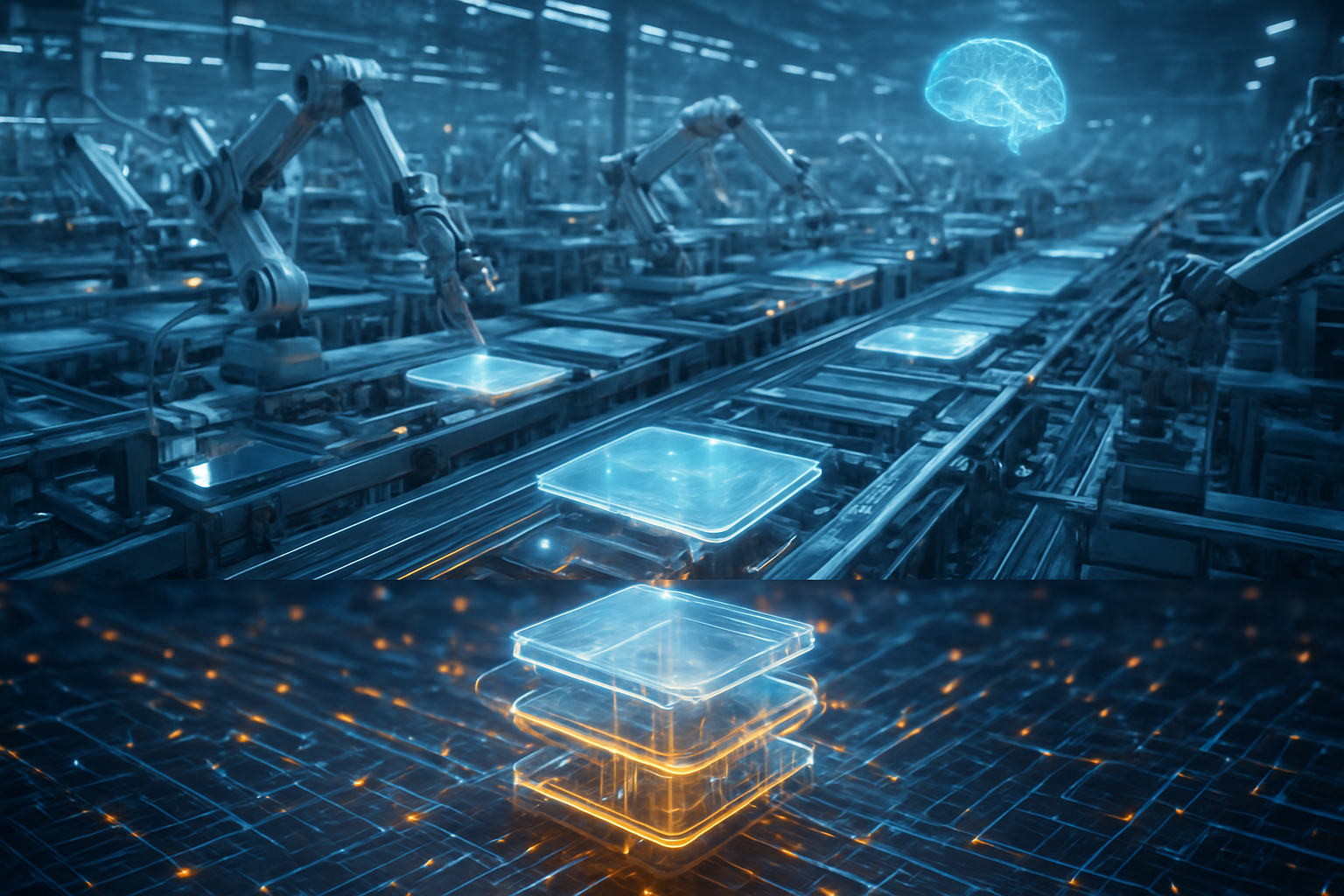
  • Edge AI Unleashed: Specialized Chips Propel Real-Time Intelligence to the Source

    Edge AI Unleashed: Specialized Chips Propel Real-Time Intelligence to the Source

    The artificial intelligence landscape is undergoing a profound transformation as AI processing shifts decisively from centralized cloud data centers to the network's periphery, closer to where data is generated. This paradigm shift, known as Edge AI, is fueled by the escalating demand for real-time insights, lower latency, and enhanced data privacy across an ever-growing ecosystem of connected devices. By late 2025, researchers are calling it "the year of Edge AI," with Gartner predicting that 75% of enterprise-managed data will be processed outside traditional data centers or the cloud. This movement to the edge is critical as billions of IoT devices come online, making traditional cloud infrastructure increasingly inefficient for handling the sheer volume and velocity of data.

    At the heart of this revolution are specialized semiconductor designs meticulously engineered for Edge AI workloads. Unlike general-purpose CPUs or even traditional GPUs, these purpose-built chips, including Neural Processing Units (NPUs) and Application-Specific Integrated Circuits (ASICs), are optimized for the unique demands of neural networks under strict power and resource constraints. Current developments in October 2025 show NPUs becoming ubiquitous in consumer devices, from smartphones to "AI PCs," which are projected to make up 43% of all PC shipments by year-end. The immediate significance of bringing AI processing closer to data sources cannot be overstated, as it dramatically reduces latency, conserves bandwidth, and enhances data privacy and security, ultimately creating a more responsive, efficient, and intelligent world.

    The Technical Core: Purpose-Built Silicon for Pervasive AI

    Edge AI represents a significant paradigm shift, moving artificial intelligence processing from centralized cloud data centers to local devices, or the "edge" of the network. This decentralization is driven by the increasing demand for real-time responsiveness, enhanced data privacy and security, and reduced bandwidth consumption in applications such as autonomous vehicles, industrial automation, robotics, and smart wearables. Unlike cloud AI, which relies on sending data to powerful remote servers for processing and then transmitting results back, Edge AI performs inference directly on the device where the data is generated. This eliminates network latency, making instantaneous decision-making possible, and inherently improves privacy by keeping sensitive data localized. As of late 2025, the Edge AI chip market is experiencing rapid growth, even surpassing cloud AI chip revenues, reflecting the critical need for low-cost, ultra-low-power chips designed specifically for this distributed intelligence model.

    Specialized semiconductor designs are at the heart of this Edge AI revolution. Neural Processing Units (NPUs) are becoming ubiquitous, specifically optimized Application-Specific Integrated Circuits (ASICs) that excel at low-power, high-efficiency inference tasks by handling operations like matrix multiplication with remarkable energy efficiency. Companies like Google (NASDAQ: GOOGL), with its Edge TPU and the new Coral NPU architecture, are designing AI-first hardware that prioritizes the ML matrix engine over scalar compute, enabling ultra-low-power, always-on AI for wearables and IoT devices. Intel (NASDAQ: INTC)'s integrated AI technologies, including iGPUs and NPUs, are providing viable, power-efficient alternatives to discrete GPUs for near-edge AI solutions. Field-Programmable Gate Arrays (FPGAs) continue to be vital, offering flexibility and reconfigurability for custom hardware implementations of inference algorithms, with manufacturers like Advanced Micro Devices (AMD) (NASDAQ: AMD) (Xilinx) and Intel (Altera) developing AI-optimized FPGA architectures that incorporate dedicated AI acceleration blocks.

    Neuromorphic chips, inspired by the human brain, are seeing 2025 as a "breakthrough year," with devices from BrainChip (ASX: BRN) (Akida), Intel (Loihi), and International Business Machines (IBM) (NYSE: IBM) (TrueNorth) entering the market at scale. These chips emulate neural networks directly in silicon, integrating memory and processing to offer significant advantages in energy efficiency (up to 1000x reductions for specific AI tasks compared to GPUs) and real-time learning, making them ideal for battery-powered edge devices. Furthermore, innovative memory architectures like In-Memory Computing (IMC) are being explored to address the "memory wall" bottleneck by integrating compute functions directly into memory, significantly reducing data movement and improving energy efficiency for data-intensive AI workloads.

    These specialized chips differ fundamentally from previous cloud-centric approaches that relied heavily on powerful, general-purpose GPUs in data centers for both training and inference. While cloud AI continues to be crucial for training large, resource-intensive models and analyzing data at scale, Edge AI chips are designed for efficient, low-latency inference on new, real-world data, often using compressed or quantized models. The AI advancements enabling this shift include improved language model distillation techniques, allowing Large Language Models (LLMs) to be shrunk for local execution with lower hardware requirements, as well as the proliferation of generative AI and agentic AI technologies taking hold in various industries. This allows for functionalities like contextual awareness, real-time translation, and proactive assistance directly on personal devices. The AI research community and industry experts have largely welcomed these advancements with excitement, recognizing the transformative potential of Edge AI. There's a consensus that energy-efficient hardware is not just optimizing AI but is defining its future, especially given concerns over AI's escalating energy footprint.

    Reshaping the AI Industry: A Competitive Edge at the Edge

    The rise of Edge AI and specialized semiconductor designs is fundamentally reshaping the artificial intelligence landscape, fostering a dynamic environment for tech giants and startups alike as of October 2025. This shift emphasizes moving AI processing from centralized cloud systems to local devices, significantly reducing latency, enhancing privacy, and improving operational efficiency across various applications. The global Edge AI market is experiencing rapid growth, projected to reach $25.65 billion in 2025 and an impressive $143.06 billion by 2034, driven by the proliferation of IoT devices, 5G technology, and advancements in AI algorithms. This necessitates hardware innovation, with specialized AI chips like GPUs, TPUs, and NPUs becoming central to handling immense workloads with greater energy efficiency and reduced thermal challenges. The push for efficiency is critical, as processing at the edge can reduce energy consumption by 100 to 1,000 times per AI task compared to cloud-based AI, extending battery life and enabling real-time operations without constant internet connectivity.

    Several major players stand to benefit significantly from this trend. NVIDIA (NASDAQ: NVDA) continues to hold a commanding lead in high-end AI training and data center GPUs but is also actively pursuing opportunities in the Edge AI market with its partners and new architectures. Intel (NASDAQ: INTC) is aggressively expanding its AI accelerator portfolio with new data center GPUs like "Crescent Island" designed for inference workloads and is pushing its Core Ultra processors for Edge AI, aiming for an open, developer-first software stack from the AI PC to the data center and industrial edge. Google (NASDAQ: GOOGL) is advancing its custom AI chips with the introduction of Trillium, its sixth-generation TPU optimized for on-device inference to improve energy efficiency, and is a significant player in both cloud and edge computing applications.

    Qualcomm (NASDAQ: QCOM) is making bold moves, particularly in the mobile and industrial IoT space, with developer kits featuring Edge Impulse and strategic partnerships, such as its recent acquisition of Arduino in October 2025, to become a full-stack Edge AI/IoT leader. ARM Holdings (NASDAQ: ARM), while traditionally licensing its power-efficient architectures, is increasingly engaging in AI chip manufacturing and design, with its Neoverse platform being leveraged by major cloud providers for custom chips. Advanced Micro Devices (AMD) (NASDAQ: AMD) is challenging NVIDIA's dominance with its Instinct MI350 series, offering increased high-bandwidth memory capacity for inferencing models. Startups are also playing a crucial role, developing highly specialized, performance-optimized solutions like optical processors and in-memory computing chips that could disrupt existing markets by offering superior performance per watt and cost-efficiency for specific AI models at the edge.

    The competitive landscape is intensifying, as tech giants and AI labs strive for strategic advantages. Companies are diversifying their semiconductor content, with a growing focus on custom silicon to optimize performance for specific workloads, reduce reliance on external suppliers, and gain greater control over their AI infrastructure. This internal chip development, exemplified by Amazon (NASDAQ: AMZN)'s Trainium and Inferentia, Microsoft (NASDAQ: MSFT)'s Azure Maia, and Google's Axion, allows them to offer specialized AI services, potentially disrupting traditional chipmakers in the cloud AI services market. The shift to Edge AI also presents potential disruptions to existing products and services that are heavily reliant on cloud-based AI, as the demand for real-time, local processing pushes for new hardware and software paradigms. Companies are embracing hybrid edge-cloud inferencing to manage data processing and mobility efficiently, requiring IT and OT teams to navigate seamless interaction between these environments. Strategic partnerships are becoming essential, with collaborations between hardware innovators and AI software developers crucial for successful market penetration, especially as new architectures require specialized software stacks. The market is moving towards a more diverse ecosystem of specialized hardware tailored for different AI workloads, rather than a few dominant general-purpose solutions.

    A Broader Canvas: Sustainability, Privacy, and New Frontiers

    The wider significance of Edge AI and specialized semiconductor designs lies in a fundamental paradigm shift within the artificial intelligence landscape, moving processing capabilities from centralized cloud data centers to the periphery of networks, closer to the data source. This decentralization of intelligence, often referred to as a hybrid AI ecosystem, allows for AI workloads to dynamically leverage both centralized and distributed computing strengths. By October 2025, this trend is solidified by the rapid development of specialized semiconductor chips, such as Neural Processing Units (NPUs) and Application-Specific Integrated Circuits (ASICs), which are purpose-built to optimize AI workloads under strict power and resource constraints. These innovations are essential for driving "AI everywhere" and fitting into broader trends like "Micro AI" for hyper-efficient models on tiny devices and Federated Learning, which enables collaborative model training without sharing raw data. This shift is becoming the backbone of innovation within the semiconductor industry, as companies increasingly move away from "one size fits all" solutions towards customized AI silicon for diverse applications.

    The impacts of Edge AI and specialized hardware are profound and far-reaching. By performing AI computations locally, these technologies dramatically reduce latency, conserve bandwidth, and enhance data privacy by minimizing the transmission of sensitive information to the cloud. This enables real-time AI applications crucial for sectors like autonomous vehicles, where milliseconds matter for collision avoidance, and personalized healthcare, offering immediate insights and responsive care. Beyond speed, Edge AI contributes to sustainability by reducing the energy consumption associated with extensive data transfers and large cloud data centers. New applications are emerging across industries, including predictive maintenance in manufacturing, real-time monitoring in smart cities, and AI-driven health diagnostics in wearables. Edge AI also offers enhanced reliability and autonomous operation, allowing devices to function effectively even in environments with limited or no internet connectivity.

    Despite the transformative benefits, the proliferation of Edge AI and specialized semiconductors introduces several potential concerns. Security is a primary challenge, as distributed edge devices expand the attack surface and can be vulnerable to physical tampering, requiring robust security protocols and continuous monitoring. Ethical implications also arise, particularly in critical applications like autonomous warfighting, where clear deployment frameworks and accountability are paramount. The complexity of deploying and managing vast edge networks, ensuring interoperability across diverse devices, and addressing continuous power consumption and thermal management for specialized chips are ongoing challenges. Furthermore, the rapid evolution of AI models, especially large language models, presents a "moving target" for chip designers who must hardwire support for future AI capabilities into silicon. Data management can also become challenging, as local processing can lead to fragmented, inconsistent datasets that are harder to aggregate and analyze comprehensively.

    Comparing Edge AI to previous AI milestones reveals it as a significant refinement and logical progression in the maturation of artificial intelligence. While breakthroughs like the adoption of GPUs in the late 2000s democratized AI training by making powerful parallel processing widely accessible, Edge AI is now democratizing AI inference, making intelligence pervasive and embedded in everyday devices. This marks a shift from cloud-centric AI models, where raw data was sent to distant data centers, to a model where AI operates at the source, anticipating needs and creating new opportunities. Developments around October 2025, such as the ubiquity of NPUs in consumer devices and advancements in in-memory computing, demonstrate a distinct focus on the industrialization and scaling of AI for real-time responsiveness and efficiency. The ongoing evolution includes federated learning, neuromorphic computing, and even hybrid classical-quantum architectures, pushing the boundaries towards self-sustaining, privacy-preserving, and infinitely scalable AI systems directly at the edge.

    The Horizon: What's Next for Edge AI

    Future developments in Edge AI and specialized semiconductor designs are poised for significant advancements, characterized by a relentless drive for greater efficiency, lower latency, and enhanced on-device intelligence. In the near term (1-3 years from October 2025), a key trend will be the wider commercial deployment of chiplet architectures and heterogeneous integration in AI accelerators. This modular approach, integrating multiple specialized dies into a single package, circumvents limitations of traditional silicon-based computing by improving yields, lowering costs, and enabling seamless integration of diverse functions. Neuromorphic and in-memory computing solutions will also become more prevalent in specialized edge AI applications, particularly in IoT, automotive, and robotics, where ultra-low power consumption and real-time processing are critical. There will be an increased focus on Neural Processing Units (NPUs) over general-purpose GPUs for inference tasks at the edge, as NPUs are optimized for "thinking" and reasoning with trained models, leading to more accurate and energy-efficient outcomes. The Edge AI hardware market is projected to reach USD 58.90 billion by 2030, growing from USD 26.14 billion in 2025, driven by continuous innovation in AI co-processors and expanding IoT capabilities. Smartphones, AI-enabled personal computers, and automotive safety systems are expected to anchor near-term growth.

    Looking further ahead, long-term developments will see continued innovation in intelligent sensors, allowing nearly every physical object to have a "digital twin" for optimized monitoring and process optimization in areas like smart homes and cities. Edge AI will continue to deepen its integration across various sectors, enabling applications such as real-time patient monitoring in healthcare, sophisticated control in industrial automation, and highly responsive autonomous systems in vehicles and drones. The shift towards local AI processing on devices aims to overcome bandwidth limitations, latency issues, and privacy concerns associated with cloud-based AI. Hybrid AI-quantum systems and specialized silicon hardware tailored for bitnet models are also on the horizon, promising to accelerate AI training times and reduce operational costs by processing information more efficiently with less power consumption. Experts predict that AI-related semiconductors will see growth approximately five times greater than non-AI applications, with a strong positive outlook for the semiconductor industry's financial improvement and new opportunities in 2025 and beyond.

    Despite these promising developments, significant challenges remain. Edge AI faces persistent issues with large-scale model deployment, interpretability, and vulnerabilities in privacy and security. Resource limitations on edge devices, including constrained processing power, memory, and energy budgets, pose substantial hurdles for deploying complex AI models. The need for real-time performance in critical applications like autonomous navigation demands inference times in milliseconds, which is challenging with large models. Data management at the edge is complex, as devices often capture incomplete or noisy real-time data, impacting prediction accuracy. Scalability, integration with diverse and heterogeneous hardware and software components, and balancing performance with energy efficiency are also critical challenges that require adaptive model compression, secure and interpretable Edge AI, and cross-layer co-design of hardware and algorithms.

    The Edge of a New Era: A Concluding Outlook

    The landscape of artificial intelligence is experiencing a profound transformation, spearheaded by the accelerating adoption of Edge AI and the concomitant evolution of specialized semiconductor designs. As of late 2025, the Edge AI market is in a period of rapid expansion, projected to reach USD 25.65 billion, fueled by the widespread integration of 5G technology, a growing demand for ultra-low latency processing, and the extensive deployment of AI solutions across smart cities, autonomous systems, and industrial automation. A key takeaway from this development is the shift of AI inference closer to the data source, enhancing real-time decision-making capabilities, improving data privacy and security, and reducing bandwidth costs. This necessitates a departure from traditional general-purpose processors towards purpose-built AI chips, including advanced GPUs, TPUs, ASICs, FPGAs, and particularly NPUs, which are optimized for the unique demands of AI workloads at the edge, balancing high performance with strict power and thermal budgets. This period also marks a "breakthrough year" for neuromorphic chips, with devices from companies like BrainChip, Intel, and IBM entering the market at scale to address the need for ultra-low power and real-time processing in edge applications.

    This convergence of Edge AI and specialized semiconductors represents a pivotal moment in the history of artificial intelligence, comparable in significance to the invention of the transistor or the advent of parallel processing with GPUs. It signifies a foundational shift that enables AI to transcend existing limitations, pushing the boundaries of what's achievable in terms of intelligence, autonomy, and problem-solving. The long-term impact promises a future where AI is not only more powerful but also more pervasive, sustainable, and seamlessly integrated into every facet of our lives, from personal assistants to global infrastructure. This includes the continued evolution towards federated learning, where AI models are trained across distributed edge devices without transferring raw data, further enhancing privacy and efficiency, and leveraging ultra-fast 5G connectivity for seamless interaction between edge devices and cloud systems. The development of lightweight AI models will also enable powerful algorithms to run on increasingly resource-constrained devices, solidifying the trend of localized intelligence.

    In the coming weeks and months, the industry will be closely watching for several key developments. Expect announcements regarding new funding rounds for innovative AI hardware startups, alongside further advancements in silicon photonics integration, which will be crucial for improving chip performance and efficiency. Demonstrations of neuromorphic chips tackling increasingly complex real-world problems in applications like IoT, automotive, and robotics will also gain traction, showcasing their potential for ultra-low power and real-time processing. Additionally, the wider commercial deployment of chiplet-based AI accelerators is anticipated, with major players like NVIDIA expected to adopt these modular approaches to circumvent the traditional limitations of Moore's Law. The ongoing race to develop power-efficient, specialized processors will continue to drive innovation, as demand for on-device inference and secure data processing at the edge intensifies across diverse industries.


    This content is intended for informational purposes only and represents analysis of current AI developments.

    TokenRing AI delivers enterprise-grade solutions for multi-agent AI workflow orchestration, AI-powered development tools, and seamless remote collaboration platforms.
    For more information, visit https://www.tokenring.ai/.

  • The Silicon Crucible: Navigating the High-Stakes Race for AI Chip Dominance

    The Silicon Crucible: Navigating the High-Stakes Race for AI Chip Dominance

    The global technology landscape is in the throes of an unprecedented "AI chip supercycle," a fierce competition for supremacy in the foundational hardware that powers the artificial intelligence revolution. This high-stakes race, driven by the insatiable demand for processing power to fuel large language models (LLMs) and generative AI, is reshaping the semiconductor industry, redefining geopolitical power dynamics, and accelerating the pace of technological innovation across every sector. From established giants to nimble startups, companies are pouring billions into designing, manufacturing, and deploying the next generation of AI accelerators, understanding that control over silicon is paramount to AI leadership.

    This intense rivalry is not merely about faster processors; it's about unlocking new frontiers in AI, enabling capabilities that were once the stuff of science fiction. The immediate significance lies in the direct correlation between advanced AI chips and the speed of AI development and deployment. More powerful and specialized hardware means larger, more complex models can be trained and deployed in real-time, driving breakthroughs in areas from autonomous systems and personalized medicine to climate modeling. This technological arms race is also a major economic driver, with the AI chip market projected to reach hundreds of billions of dollars in the coming years, creating immense investment opportunities and profoundly restructuring the global tech market.

    Architectural Revolutions: The Engines of Modern AI

    The current generation of AI chip advancements represents a radical departure from traditional computing paradigms, characterized by extreme specialization, advanced memory solutions, and sophisticated interconnectivity. These innovations are specifically engineered to handle the massive parallel processing demands of deep learning algorithms.

    NVIDIA (NASDAQ: NVDA) continues to lead the charge with its groundbreaking Hopper (H100) and the recently unveiled Blackwell (B100/B200/GB200) architectures. The H100, built on TSMC’s 4N custom process with 80 billion transistors, introduced fourth-generation Tensor Cores capable of double the matrix math throughput of its predecessor, the A100. Its Transformer Engine dynamically optimizes precision (FP8 and FP16) for unparalleled performance in LLM training and inference. Critically, the H100 integrates 80 GB of HBM3 memory, delivering over 3 TB/s of bandwidth, alongside fourth-generation NVLink providing 900 GB/s of bidirectional GPU-to-GPU bandwidth. The Blackwell architecture takes this further, with the B200 featuring 208 billion transistors on a dual-die design, delivering 20 PetaFLOPS (PFLOPS) of FP8 and FP6 performance—a 2.5x improvement over Hopper. Blackwell's fifth-generation NVLink boasts 1.8 TB/s of total bandwidth, supporting up to 576 GPUs, and its HBM3e memory configuration provides 192 GB with an astonishing 34 TB/s bandwidth, a five-fold increase over Hopper. A dedicated decompression engine and an enhanced Transformer Engine with FP4 AI capabilities further cement Blackwell's position as a powerhouse for the most demanding AI workloads.

    Advanced Micro Devices (NASDAQ: AMD) is rapidly emerging as a formidable challenger with its Instinct MI300X and MI300A series. The MI300X leverages a chiplet-based design with eight accelerator complex dies (XCDs) built on TSMC's N5 process, featuring 304 CDNA 3 compute units and 19,456 stream processors. Its most striking feature is 192 GB of HBM3 memory, offering a peak bandwidth of 5.3 TB/s—significantly higher than NVIDIA's H100—making it exceptionally well-suited for memory-intensive generative AI and LLM inference. The MI300A, an APU, integrates CDNA 3 GPUs with Zen 4 x86-based CPU cores, allowing both CPU and GPU to access a unified 128 GB of HBM3 memory, streamlining converged HPC and AI workloads.

    Alphabet (NASDAQ: GOOGL), through its Google Cloud division, continues to innovate with its custom Tensor Processing Units (TPUs). The latest TPU v5e is a power-efficient variant designed for both training and inference. Each v5e chip contains a TensorCore with four matrix-multiply units (MXUs) that utilize systolic arrays for highly efficient matrix computations. Google's Multislice technology allows networking hundreds of thousands of TPU chips into vast clusters, scaling AI models far beyond single-pod limitations. Each v5e chip is connected to 16 GB of HBM2 memory with 819 GB/s bandwidth. Other hyperscalers like Microsoft (NASDAQ: MSFT) with its Azure Maia AI Accelerator, Amazon (NASDAQ: AMZN) with Trainium and Inferentia, and Meta Platforms (NASDAQ: META) with MTIA, are all developing custom Application-Specific Integrated Circuits (ASICs). These ASICs are purpose-built for specific AI tasks, offering superior throughput, lower latency, and enhanced power efficiency for their massive internal workloads, reducing reliance on third-party GPUs.

    These chips differ from previous generations primarily through their extreme specialization for AI workloads, the widespread adoption of High Bandwidth Memory (HBM) to overcome memory bottlenecks, and advanced interconnects like NVLink and Infinity Fabric for seamless scaling across multiple accelerators. The AI research community and industry experts have largely welcomed these advancements, seeing them as indispensable for the continued scaling and deployment of increasingly complex AI models. NVIDIA's strong CUDA ecosystem remains a significant advantage, but AMD's MI300X is viewed as a credible challenger, particularly for its memory capacity, while custom ASICs from hyperscalers are disrupting the market by optimizing for proprietary workloads and driving down operational costs.

    Reshaping the Corporate AI Landscape

    The AI chip race is fundamentally altering the competitive dynamics for AI companies, tech giants, and startups, creating both immense opportunities and strategic imperatives.

    NVIDIA (NASDAQ: NVDA) stands to benefit immensely as the undisputed market leader, with its GPUs and CUDA ecosystem forming the backbone of most advanced AI development. Its H100 and Blackwell architectures are indispensable for training the largest LLMs, ensuring continued high demand from cloud providers, enterprises, and AI research labs. However, NVIDIA faces increasing pressure from competitors and its own customers.

    Advanced Micro Devices (NASDAQ: AMD) is rapidly gaining ground, positioning itself as a strong alternative. Its Instinct MI300X/A series, with superior HBM memory capacity and competitive performance, is attracting major players like OpenAI and Oracle, signifying a genuine threat to NVIDIA's near-monopoly. AMD's focus on an open software ecosystem (ROCm) also appeals to developers seeking alternatives to CUDA.

    Intel (NASDAQ: INTC), while playing catch-up, is aggressively pushing its Gaudi accelerators and new chips like "Crescent Island" with a focus on "performance per dollar" and an open ecosystem. Intel's vast manufacturing capabilities and existing enterprise relationships could allow it to carve out a significant niche, particularly in inference workloads and enterprise data centers.

    The hyperscale cloud providers—Alphabet (NASDAQ: GOOGL), Microsoft (NASDAQ: MSFT), Amazon (NASDAQ: AMZN), and Meta Platforms (NASDAQ: META)—are perhaps the biggest beneficiaries and disruptors. By developing their own custom ASICs (TPUs, Maia, Trainium/Inferentia, MTIA), they gain strategic independence from third-party suppliers, optimize hardware precisely for their massive, specific AI workloads, and significantly reduce operational costs. This vertical integration allows them to offer differentiated and potentially more cost-effective AI services to their cloud customers, intensifying competition in the cloud AI market and potentially eroding NVIDIA's market share in the long run. For instance, Google's TPUs power over 50% of its AI training workloads and 90% of Google Search AI models.

    AI Startups also benefit from the broader availability of powerful, specialized chips, which accelerates their product development and allows them to innovate rapidly. Increased competition among chip providers could lead to lower costs for advanced hardware, making sophisticated AI more accessible. However, smaller startups still face challenges in securing the vast compute resources required for actual-scale AI, often relying on cloud providers' offerings or seeking strategic partnerships. The competitive implications are clear: companies that can efficiently access and leverage the most advanced AI hardware will gain significant strategic advantages, influencing market positioning and potentially disrupting existing products or services with more powerful and cost-effective AI solutions.

    A New Era of AI: Wider Implications and Concerns

    The AI chip race is more than just a technological contest; it represents a fundamental shift in the broader AI landscape, impacting everything from global economics to national security. These advancements are accelerating the trend towards highly specialized, energy-efficient hardware, which is crucial for the continued scaling of AI models and the widespread adoption of edge computing. The symbiotic relationship between AI and semiconductor innovation is creating a powerful feedback loop: AI's growth demands better chips, and better chips unlock new AI capabilities.

    The impacts on AI development are profound. Faster and more efficient hardware enables the training of larger, more complex models, leading to breakthroughs in personalized medicine, climate modeling, advanced materials discovery, and truly intelligent robotics. This hardware foundation is critical for real-time, low-latency AI processing, enhancing safety and responsiveness in critical applications like autonomous vehicles.

    However, this race also brings significant concerns. The immense cost of developing and manufacturing cutting-edge chips (fabs costing $15-20 billion) is a major barrier, leading to higher prices for advanced GPUs and a potentially fragmented, expensive global supply chain. This raises questions about accessibility for smaller businesses and developing nations, potentially concentrating AI innovation among a few wealthy players. OpenAI CEO Sam Altman has even called for a staggering $5-7 trillion global investment to produce more powerful chips.

    Perhaps the most pressing concern is the geopolitical implications. AI chips have transitioned from commercial commodities to strategic national assets, becoming the focal point of a technological rivalry, particularly between the United States and China. Export controls, such as US restrictions on advanced AI chips and manufacturing equipment to China, are accelerating China's drive for semiconductor self-reliance. This techno-nationalist push risks creating a "bifurcated AI world" with separate technological ecosystems, hindering global collaboration and potentially leading to a fragmentation of supply chains. The dual-use nature of AI chips, with both civilian and military applications, further intensifies this strategic competition. Additionally, the soaring energy consumption of AI data centers and chip manufacturing poses significant environmental challenges, demanding innovation in energy-efficient designs.

    Historically, this shift is analogous to the transition from CPU-only computing to GPU-accelerated AI in the late 2000s, which transformed deep learning. Today, we are seeing a further refinement, moving beyond general-purpose GPUs to even more tailored solutions for optimal performance and efficiency, especially as generative AI pushes the limits of even advanced GPUs. The long-term societal and technological shifts will be foundational, reshaping global trade, accelerating digital transformation across every sector, and fundamentally redefining geopolitical power dynamics.

    The Horizon: Future Developments and Expert Predictions

    The future of AI chips promises a landscape of continuous innovation, marked by both evolutionary advancements and revolutionary new computing paradigms. In the near term (1-3 years), we can expect ubiquitous integration of Neural Processing Units (NPUs) into consumer devices like smartphones and "AI PCs," which are projected to comprise 43% of all PC shipments by late 2025. The industry will rapidly transition to advanced process nodes, with 3nm and 2nm technologies delivering further power reductions and performance boosts. TSMC, for example, anticipates high-volume production of its 2nm (N2) process node in late 2025, with major clients already lined up. There will be a significant diversification of AI chips, moving towards architectures optimized for specific workloads, and the emergence of processing-in-memory (PIM) architectures to address data movement bottlenecks.

    Looking further out (beyond 3 years), the long-term future points to more radical architectural shifts. Neuromorphic computing, inspired by the human brain, is poised for wider adoption in edge AI and IoT devices due to its exceptional energy efficiency and adaptive learning capabilities. Chips from IBM (NYSE: IBM) (TrueNorth, NorthPole) and Intel (NASDAQ: INTC) (Loihi 2) are at the forefront of this. Photonic AI chips, which use light for computation, could revolutionize data centers and distributed AI by offering dramatically higher bandwidth and lower power consumption. Companies like Lightmatter and Salience Labs are actively developing these. The vision of AI-designed and self-optimizing chips, where AI itself becomes an architect in semiconductor development, could lead to fully autonomous manufacturing and continuous refinement of chip fabrication. Furthermore, the convergence of AI chips with quantum computing is anticipated to unlock unprecedented potential in solving highly complex problems, with Alphabet (NASDAQ: GOOGL)'s "Willow" quantum chip representing a step towards large-scale, error-corrected quantum computing.

    These advanced chips are poised to revolutionize data centers, enabling more powerful generative AI and LLMs, and to bring intelligence directly to edge devices like autonomous vehicles, robotics, and smart cities. They will accelerate drug discovery, enhance diagnostics in healthcare, and power next-generation VR/AR experiences.

    However, significant challenges remain. The prohibitive manufacturing costs and complexity of advanced chips, reliant on expensive EUV lithography machines, necessitate massive capital expenditure. Power consumption and heat dissipation remain critical issues for high-performance AI chips, demanding advanced cooling solutions. The global supply chain for semiconductors is vulnerable to geopolitical risks, and the constant evolution of AI models presents a "moving target" for chip designers. Software development for novel architectures like neuromorphic computing also lags hardware advancements. Experts predict explosive market growth, potentially reaching $1.3 trillion by 2030, driven by intense diversification and customization. The future will likely be a heterogeneous computing environment, where different AI tasks are offloaded to the most efficient specialized hardware, marking a pivotal moment in AI history.

    The Unfolding Narrative: A Comprehensive Wrap-up

    The "Race for AI Chip Dominance" is the defining technological narrative of our era, a high-stakes competition that underscores the strategic importance of silicon as the fundamental infrastructure for artificial intelligence. NVIDIA (NASDAQ: NVDA) currently holds an unparalleled lead, largely due to its superior hardware and the entrenched CUDA software ecosystem. However, this dominance is increasingly challenged by Advanced Micro Devices (NASDAQ: AMD), which is gaining significant traction with its competitive MI300X/A series, and by the strategic pivot of hyperscale giants like Alphabet (NASDAQ: GOOGL), Microsoft (NASDAQ: MSFT), Amazon (NASDAQ: AMZN), and Meta Platforms (NASDAQ: META) towards developing their own custom ASICs. Intel (NASDAQ: INTC) is also making a concerted effort to re-establish its presence in this critical market.

    This development is not merely a technical milestone; it represents a new computing paradigm, akin to the internet's early infrastructure build-out. Without these specialized AI chips, the exponential growth and deployment of advanced AI systems, particularly generative AI, would be severely constrained. The long-term impact will be profound, accelerating AI progress across all sectors, reshaping global economic and geopolitical power dynamics, and fostering technological convergence with quantum computing and edge AI. While challenges related to cost, accessibility, and environmental impact persist, the relentless innovation in this sector promises to unlock unprecedented AI capabilities.

    In the coming weeks and months, watch for the adoption rates and real-world performance of AMD's next-generation accelerators and Intel's "Crescent Island" chip. Pay close attention to announcements from hyperscalers regarding expanded deployments and performance benchmarks of their custom ASICs, as these internal developments could significantly impact the market for third-party AI chips. Strategic partnerships between chipmakers, AI labs, and cloud providers will continue to shape the landscape, as will advancements in novel architectures like neuromorphic and photonic computing. Finally, track China's progress in achieving semiconductor self-reliance, as its developments could further reshape global supply chain dynamics. The AI chip race is a dynamic arena, where technological prowess, strategic alliances, and geopolitical maneuvering will continue to drive rapid change and define the future trajectory of artificial intelligence.


    This content is intended for informational purposes only and represents analysis of current AI developments.

    TokenRing AI delivers enterprise-grade solutions for multi-agent AI workflow orchestration, AI-powered development tools, and seamless remote collaboration platforms.
    For more information, visit https://www.tokenring.ai/.

  • Beyond Silicon: The Dawn of a New Era in AI Hardware

    Beyond Silicon: The Dawn of a New Era in AI Hardware

    As the relentless march of artificial intelligence continues to reshape industries and daily life, the very foundation upon which these intelligent systems are built—their hardware—is undergoing a profound transformation. The current generation of silicon-based semiconductors, while powerful, is rapidly approaching fundamental physical limits, prompting a global race to develop revolutionary chip architectures. This impending shift heralds the dawn of a new era in AI hardware, promising unprecedented leaps in processing speed, energy efficiency, and capabilities that will unlock AI applications previously confined to science fiction.

    The immediate significance of this evolution cannot be overstated. With large language models (LLMs) and complex AI algorithms demanding exponentially more computational power and consuming vast amounts of energy, the imperative for more efficient and powerful hardware has become critical. The innovations emerging from research labs and industry leaders today are not merely incremental improvements but represent foundational changes in how computation is performed, moving beyond the traditional von Neumann architecture to embrace principles inspired by the human brain, light, and quantum mechanics.

    Architecting Intelligence: The Technical Revolution Underway

    The future of AI hardware is a mosaic of groundbreaking technologies, each offering unique advantages over the conventional GPU (NASDAQ: NVDA) and TPU (NASDAQ: GOOGL) architectures that currently dominate the AI landscape. These next-generation approaches aim to dismantle the "memory wall" – the bottleneck created by the constant data transfer between processing units and memory – and usher in an age of hyper-efficient AI.

    Post-Silicon Technologies are at the forefront of extending Moore's Law beyond its traditional limits. Researchers are actively exploring 2D materials like graphene and molybdenum disulfide (MoS₂), which offer ultrathin structures, superior electrostatic control, and high carrier mobility, potentially outperforming silicon's projected capabilities for decades to come. Ferroelectric materials are poised to revolutionize memory, enabling ultra-low power devices essential for both traditional and neuromorphic computing, with breakthroughs combining ferroelectric capacitors with memristors for efficient AI training and inference. Furthermore, 3D Chip Stacking (3D ICs) vertically integrates multiple semiconductor dies, drastically increasing compute density and reducing latency and power consumption through shorter interconnects. Silicon Photonics is another crucial transitional technology, leveraging light-based data transmission within chips to enhance speed and reduce energy use, already seeing integration in products from companies like Intel (NASDAQ: INTC) to address data movement bottlenecks in AI data centers. These innovations collectively provide pathways to higher performance and greater energy efficiency, critical for scaling increasingly complex AI models.

    Neuromorphic Computing represents a radical departure, mimicking the brain's structure by integrating memory and processing. Chips like Intel's Loihi and Hala Point, and IBM's (NYSE: IBM) TrueNorth and NorthPole, are designed for parallel, event-driven processing using Spiking Neural Networks (SNNs). This approach promises energy efficiency gains of up to 1000x for specific AI inference tasks compared to traditional GPUs, making it ideal for real-time AI in robotics and autonomous systems. Its on-chip learning and adaptation capabilities further distinguish it from current architectures, which typically require external training.

    Optical Computing harnesses photons instead of electrons, offering the potential for significantly faster and more energy-efficient computations. By encoding data onto light beams, optical processors can perform complex matrix multiplications, crucial for deep learning, at unparalleled speeds. While all-optical computers are still nascent, hybrid opto-electronic systems, facilitated by silicon photonics, are already demonstrating their value. The minimal heat generation and inherent parallelism of light-based systems address fundamental limitations of electronic systems, with the first optical processor shipments for custom systems anticipated around 2027/2028.

    Quantum Computing, though still in its early stages, holds the promise of revolutionizing AI by leveraging superposition and entanglement. Qubits, unlike classical bits, can exist in multiple states simultaneously, enabling vastly more complex computations. This could dramatically accelerate combinatorial optimization, complex pattern recognition, and massive data processing, leading to breakthroughs in drug discovery, materials science, and advanced natural language processing. While widespread commercial adoption of quantum AI is still a decade away, its potential to tackle problems intractable for classical computers is immense, likely leading to hybrid computing models.

    Finally, In-Memory Computing (IMC) directly addresses the memory wall by performing computations within or very close to where data is stored, minimizing energy-intensive data transfers. Digital in-memory architectures can deliver 1-100 TOPS/W, representing 100 to 1000 times better energy efficiency than traditional CPUs, and have shown speedups up to 200x for transformer and LLM acceleration compared to NVIDIA GPUs. This technology is particularly promising for edge AI and large language models, where rapid and efficient data processing is paramount.

    Reshaping the AI Industry: Corporate Battlegrounds and New Frontiers

    The emergence of these advanced AI hardware architectures is poised to dramatically reshape the competitive landscape for AI companies, tech giants, and nimble startups alike. Companies investing heavily in these next-generation technologies stand to gain significant strategic advantages, while others may face disruption if they fail to adapt.

    Tech giants like Intel (NASDAQ: INTC) and IBM (NYSE: IBM) are already deeply entrenched in the development of neuromorphic and advanced packaging solutions, aiming to diversify their AI hardware portfolios beyond traditional CPUs. Intel, with its Loihi platform and advancements in silicon photonics, is positioning itself as a leader in energy-efficient AI at the edge and in data centers. IBM continues to push the boundaries of quantum computing and neuromorphic research with projects like NorthPole. NVIDIA (NASDAQ: NVDA), the current powerhouse in AI accelerators, is not standing still; while its GPUs remain dominant, it is actively exploring new architectures and potentially acquiring startups in emerging hardware spaces to maintain its competitive edge. Its significant investments in software ecosystems like CUDA also provide a strong moat, but the shift to fundamentally different hardware could challenge this dominance if new paradigms emerge that are incompatible.

    Startups are flourishing in this nascent field, often specializing in a single groundbreaking technology. Companies like Lightmatter and Longevity are developing optical processors designed specifically for AI workloads, promising to outpace electronic counterparts in speed and efficiency for certain tasks. Other startups are focusing on specialized in-memory computing solutions, offering purpose-built chips that could drastically reduce the power consumption and latency for specific AI models, particularly at the edge. These smaller, agile players could disrupt existing markets by offering highly specialized, performance-optimized solutions that current general-purpose AI accelerators cannot match.

    The competitive implications are profound. Companies that successfully commercialize these new architectures will capture significant market share in the rapidly expanding AI hardware market. This could lead to a fragmentation of the AI accelerator market, moving away from a few dominant general-purpose solutions towards a more diverse ecosystem of specialized hardware tailored for different AI workloads (e.g., neuromorphic for real-time edge inference, optical for high-throughput training, quantum for optimization problems). Existing products and services, particularly those heavily reliant on current silicon architectures, may face pressure to adapt or risk becoming less competitive in terms of performance per watt and overall cost-efficiency. Strategic partnerships between hardware innovators and AI software developers will become crucial for successful market penetration, as the unique programming models of neuromorphic and quantum systems require specialized software stacks.

    The Wider Significance: A New Horizon for AI

    The evolution of AI hardware beyond current semiconductors is not merely a technical upgrade; it represents a pivotal moment in the broader AI landscape, promising to unlock capabilities that were previously unattainable. This shift will profoundly impact how AI is developed, deployed, and integrated into society.

    The drive for greater energy efficiency is a central theme. As AI models grow in complexity and size, their carbon footprint becomes a significant concern. Next-generation hardware, particularly neuromorphic and in-memory computing, promises orders of magnitude improvements in power consumption, making AI more sustainable and enabling its widespread deployment in energy-constrained environments like mobile devices, IoT sensors, and remote autonomous systems. This aligns with broader trends towards green computing and responsible AI development.

    Furthermore, these advancements will fuel the development of increasingly sophisticated AI. Faster and more efficient hardware means larger, more complex models can be trained and deployed, leading to breakthroughs in areas such as personalized medicine, climate modeling, advanced materials discovery, and truly intelligent robotics. The ability to perform real-time, low-latency AI processing at the edge will enable autonomous systems to make decisions instantaneously, enhancing safety and responsiveness in critical applications like self-driving cars and industrial automation.

    However, this technological leap also brings potential concerns. The development of highly specialized hardware architectures could lead to increased complexity in the AI development pipeline, requiring new programming paradigms and a specialized workforce. The "talent scarcity" in quantum computing, for instance, highlights the challenges in adopting these advanced technologies. There are also ethical considerations surrounding the increased autonomy and capability of AI systems powered by such hardware. The speed and efficiency could enable AI to operate in ways that are harder for humans to monitor or control, necessitating robust safety protocols and ethical guidelines.

    Comparing this to previous AI milestones, the current hardware revolution is reminiscent of the transition from CPU-only computing to GPU-accelerated AI. Just as GPUs transformed deep learning from an academic curiosity into a mainstream technology, these new architectures have the potential to spark another explosion of innovation, pushing AI into domains previously considered computationally infeasible. It marks a shift from simply optimizing existing architectures to fundamentally rethinking the very physics of computation for AI.

    The Road Ahead: Anticipating Future Developments

    Looking ahead, the next few years will be critical for the maturation and commercialization of these emerging AI hardware technologies. Near-term developments (2025-2028) will likely see continued refinement of hybrid approaches, where specialized accelerators work in tandem with conventional processors. Silicon photonics will become increasingly integrated into high-performance computing to address data movement, and early custom systems featuring optical processors and advanced in-memory computing will begin to emerge. Neuromorphic chips will gain traction in specific edge AI applications requiring ultra-low power and real-time processing.

    In the long term (beyond 2028), we can expect to see more fully integrated neuromorphic systems capable of on-chip learning, potentially leading to truly adaptive and self-improving AI. All-optical general-purpose processors could begin to enter the market, offering unprecedented speed. Quantum computing will likely remain in the realm of well-funded research institutions and specialized applications, but advancements in error correction and qubit stability will pave the way for more powerful quantum AI algorithms. The potential applications are vast, ranging from AI-powered drug discovery and personalized healthcare to fully autonomous smart cities and advanced climate prediction models.

    However, significant challenges remain. The scalability of these new fabrication techniques, the development of robust software ecosystems, and the standardization of programming models are crucial hurdles. Manufacturing costs for novel materials and complex 3D architectures will need to decrease to enable widespread adoption. Experts predict a continued diversification of AI hardware, with no single architecture dominating all workloads. Instead, a heterogeneous computing environment, where different AI tasks are offloaded to the most efficient specialized hardware, is the most likely future. The ability to seamlessly integrate these diverse components will be a key determinant of success.

    A New Chapter in AI History

    The current pivot towards post-silicon, neuromorphic, optical, quantum, and in-memory computing marks a pivotal moment in the history of artificial intelligence. It signifies a collective recognition that the future of AI cannot be solely built on the foundations of the past. The key takeaway is clear: the era of general-purpose, silicon-only AI hardware is giving way to a more specialized, diverse, and fundamentally more efficient landscape.

    This development's significance in AI history is comparable to the invention of the transistor or the rise of parallel processing with GPUs. It's a foundational shift that will enable AI to transcend current limitations, pushing the boundaries of what's possible in terms of intelligence, autonomy, and problem-solving capabilities. The long-term impact will be a world where AI is not just more powerful, but also more pervasive, sustainable, and integrated into every facet of our lives, from personal assistants to global infrastructure.

    In the coming weeks and months, watch for announcements regarding new funding rounds for AI hardware startups, advancements in silicon photonics integration, and demonstrations of neuromorphic chips tackling increasingly complex real-world problems. The race to build the ultimate AI engine is intensifying, and the innovations emerging today are laying the groundwork for the intelligent future.


    This content is intended for informational purposes only and represents analysis of current AI developments.

    TokenRing AI delivers enterprise-grade solutions for multi-agent AI workflow orchestration, AI-powered development tools, and seamless remote collaboration platforms.
    For more information, visit https://www.tokenring.ai/.
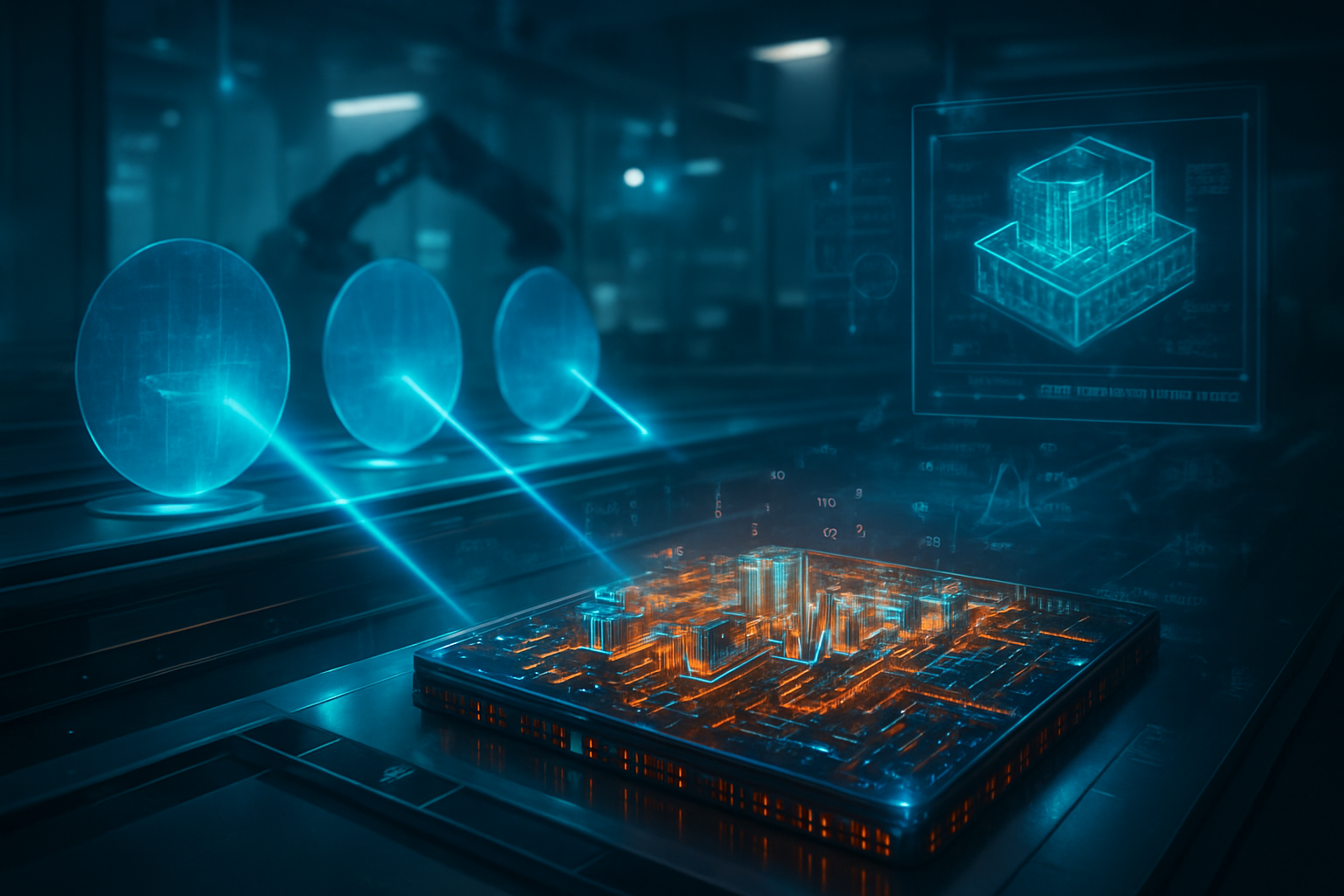
  • FormFactor’s Q3 2025 Outlook: A Bellwether for AI’s Insatiable Demand in Semiconductor Manufacturing

    FormFactor’s Q3 2025 Outlook: A Bellwether for AI’s Insatiable Demand in Semiconductor Manufacturing

    Sunnyvale, CA – October 15, 2025 – As the artificial intelligence revolution continues its relentless march, the foundational infrastructure enabling this transformation – advanced semiconductors – remains under intense scrutiny. Today, the focus turns to FormFactor (NASDAQ: FORM), a leading provider of essential test and measurement technologies, whose Q3 2025 financial guidance offers a compelling glimpse into the current health and future trajectory of semiconductor manufacturing, particularly as it relates to AI hardware. While the full Q3 2025 financial results are anticipated on October 29, 2025, the company's proactive guidance and market reactions paint a clear picture: AI's demand for high-bandwidth memory (HBM) and advanced packaging is not just strong, it's becoming the primary driver of innovation and investment in the chip industry.

    FormFactor's projected Q3 2025 revenue of approximately $200 million (plus or minus $5 million) signals a sequential improvement, underscored by a non-GAAP gross margin forecast of 40% (plus or minus 1.5 percentage points). This optimistic outlook, despite ongoing tariff impacts and strategic investments, highlights the critical role FormFactor plays in validating the next generation of AI-enabling silicon. The company's unique position at the heart of HBM and advanced packaging testing makes its performance a key indicator for the broader AI hardware ecosystem, signaling robust demand for the specialized components that power everything from large language models to autonomous systems.

    The Technical Underpinnings of AI's Ascent

    FormFactor's Q3 2025 guidance is deeply rooted in the escalating technical demands of AI. The company is a pivotal supplier of probe cards for HBM, a memory technology indispensable for high-performance AI accelerators. FormFactor ships in volume to all three major HBM manufacturers – Samsung (KRX: 005930), SK Hynix (KRX: 000660), and Micron Technology (NASDAQ: MU) – demonstrating its entrenched position. In Q2 2025, HBM revenues alone surged by $7.4 million to $37 million, a testament to the insatiable appetite for faster, denser memory architectures in AI, 5G, and advanced computing.

    This demand for HBM goes hand-in-hand with the explosion of advanced packaging techniques. As the traditional scaling benefits of Moore's Law diminish, semiconductor manufacturers are turning to innovations like chiplets, heterogeneous integration, and 3D Integrated Circuits (ICs) to enhance performance and efficiency. FormFactor's analytical probes, probe cards, and test sockets are essential for validating these complex, multi-die architectures. Unlike conventional testing, which might focus on a single, monolithic chip, advanced packaging requires highly specialized, precision testing solutions that can verify the integrity and interconnections of multiple components within a single package. This technical differentiation positions FormFactor as a critical enabler, collaborating closely with manufacturers to tailor test interfaces for the intricate geometries and diverse test environments of these next-gen devices. Initial reactions from the industry, including B. Riley's recent upgrade of FormFactor to "Buy" with a raised price target of $47.00, underscore the confidence in the company's strategic alignment with these technological breakthroughs, despite some analysts noting "non-AI softness" in other market segments.

    Shaping the AI Competitive Landscape

    FormFactor's anticipated strong Q3 2025 performance, driven by HBM and advanced packaging, has significant implications for AI companies, tech giants, and burgeoning startups alike. Companies like NVIDIA (NASDAQ: NVDA), Advanced Micro Devices (NASDAQ: AMD), and Intel (NASDAQ: INTC), which are at the forefront of AI chip design and manufacturing, stand to directly benefit from FormFactor's robust testing capabilities. As these leaders push the boundaries of AI processing power, their reliance on highly reliable HBM and advanced packaging solutions necessitates the kind of rigorous testing FormFactor provides.

    The competitive implications are clear: access to cutting-edge test solutions ensures faster time-to-market for new AI accelerators, reducing development cycles and improving product yields. This provides a strategic advantage for major AI labs and tech companies, allowing them to rapidly iterate on hardware designs and deliver more powerful, efficient AI systems. Startups focused on specialized AI hardware or custom ASICs also gain from this ecosystem, as they can leverage established testing infrastructure to validate their innovative designs. Any disruption to this testing pipeline could severely hamper the rollout of new AI products, making FormFactor's stability and growth crucial. The company's focus on GPU, hyperscaler, and custom ASIC markets as key growth areas directly aligns with the strategic priorities of the entire AI industry, reinforcing its market positioning as an indispensable partner in the AI hardware race.

    Wider Significance in the AI Ecosystem

    FormFactor's Q3 2025 guidance illuminates several broader trends in the AI and semiconductor landscape. Firstly, it underscores the ongoing bifurcation of the semiconductor market: while AI-driven demand for advanced components remains exceptionally strong, traditional segments like mobile and PCs continue to experience softness. This creates a challenging but opportunity-rich environment for companies that can pivot effectively towards AI. Secondly, the emphasis on advanced packaging confirms its status as a critical innovation pathway in the post-Moore's Law era. With transistor scaling becoming increasingly difficult and expensive, combining disparate chiplets into a single, high-performance package is proving to be a more viable route to achieving the computational density required by modern AI.

    The impacts extend beyond mere performance; efficient advanced packaging also contributes to power efficiency, a crucial factor for large-scale AI deployments in data centers. Potential concerns, however, include supply chain vulnerabilities, especially given the concentrated nature of HBM production and advanced packaging facilities. Geopolitical factors also loom large, influencing manufacturing locations and international trade dynamics. Comparing this to previous AI milestones, the current emphasis on hardware optimization through advanced packaging is as significant as the initial breakthroughs in neural network architectures, as it directly addresses the physical limitations of scaling AI. It signifies a maturation of the AI industry, moving beyond purely algorithmic advancements to a holistic approach that integrates hardware and software innovation.

    The Road Ahead: Future Developments in AI Hardware

    Looking ahead, FormFactor's trajectory points to several expected near-term and long-term developments in AI hardware. We can anticipate continued innovation in HBM generations, with increasing bandwidth and capacity, demanding even more sophisticated testing methodologies. The proliferation of chiplet architectures will likely accelerate, leading to more complex heterogeneous integration schemes that require highly adaptable and precise test solutions. Potential applications and use cases on the horizon include more powerful edge AI devices, enabling real-time processing in autonomous vehicles, smart factories, and advanced robotics, all reliant on the miniaturized, high-performance components validated by companies like FormFactor.

    Challenges that need to be addressed include managing the escalating costs of advanced packaging and testing, ensuring a robust and diversified supply chain, and developing standardized test protocols for increasingly complex multi-vendor chiplet ecosystems. Experts predict a continued surge in capital expenditure across the semiconductor industry, with a significant portion directed towards advanced packaging and HBM manufacturing capabilities. This investment cycle will further solidify FormFactor's role, as its test solutions are integral to bringing these new capacities online reliably. The evolution of AI will not only be defined by algorithms but equally by the physical advancements in silicon that empower them, making FormFactor's contributions indispensable.

    Comprehensive Wrap-Up: An Indispensable Link in the AI Chain

    In summary, FormFactor's Q3 2025 guidance serves as a critical barometer for the health and direction of the AI hardware ecosystem. The key takeaways are clear: robust demand for HBM and advanced packaging is driving semiconductor manufacturing, FormFactor is a central enabler of these technologies through its specialized testing solutions, and the broader market is bifurcated, with AI acting as the primary growth engine. This development's significance in AI history cannot be overstated; it underscores that the path to more powerful and efficient AI is as much about sophisticated hardware integration and validation as it is about algorithmic innovation.

    The long-term impact of FormFactor's position is profound. As AI becomes more pervasive, the need for reliable, high-performance, and power-efficient hardware will only intensify, cementing the importance of companies that provide the foundational tools for chip development. What to watch for in the coming weeks and months will be the actual Q3 2025 results on October 29, 2025, to see if FormFactor meets or exceeds its guidance. Beyond that, continued investments in advanced packaging capabilities, the evolution of HBM standards, and strategic collaborations within the semiconductor supply chain will be crucial indicators of AI's continued hardware-driven expansion. FormFactor's journey reflects the broader narrative of AI's relentless progress, where every technical detail, no matter how small, contributes to a monumental technological shift.


    This content is intended for informational purposes only and represents analysis of current AI developments.

    TokenRing AI delivers enterprise-grade solutions for multi-agent AI workflow orchestration, AI-powered development tools, and seamless remote collaboration platforms.
    For more information, visit https://www.tokenring.ai/.