Tag: AI in Agriculture

  • Triplex Set to Revolutionize Crop Nutrition, Crowned Gold Winner Ahead of LAMMA 2026 Launch

    Triplex Set to Revolutionize Crop Nutrition, Crowned Gold Winner Ahead of LAMMA 2026 Launch

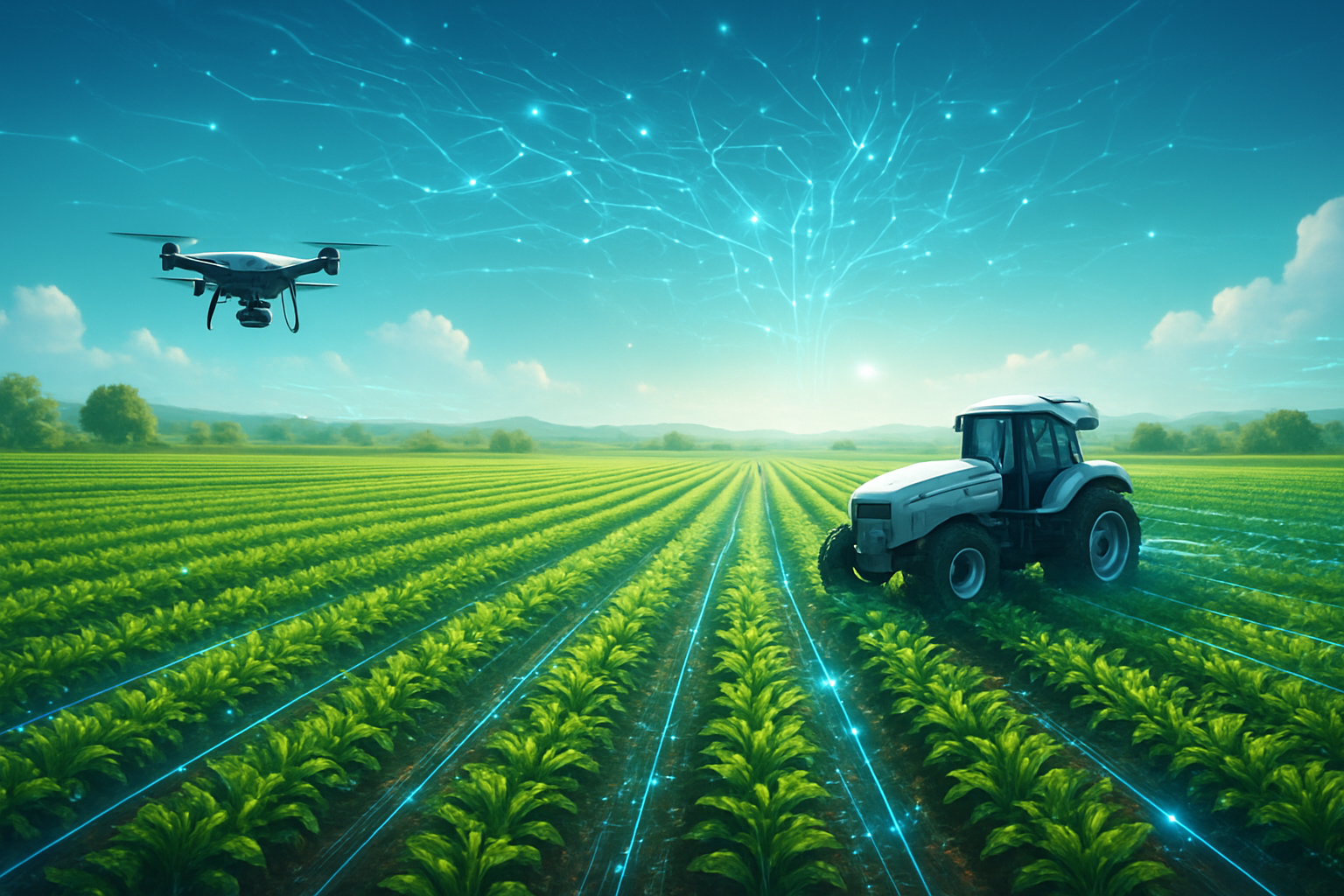
    As the agricultural world eagerly anticipates the new year, a groundbreaking development in crop nutrition technology, Triplex, is poised to reshape farming practices across the globe. Developed by Agro-Vital, part of the Agriton group, Triplex is not just another product; it's an intelligent, data-driven system designed to deliver unparalleled precision and sustainability in nutrient management. Ahead of its official launch at the prestigious LAMMA Show in January 2026, Triplex has already secured the coveted Gold Winner title in the Arable Crop Care Innovation of the Year category at the LAMMA Innovation Awards 2026, signaling its profound potential.

    This revolutionary system, set to debut just weeks from now (as of December 4, 2025), promises a paradigm shift from conventional, often wasteful, broadcast fertilization methods. By leveraging farm-specific data, Triplex aims to create highly adaptable and customized nutrition programs, ensuring that every crop receives precisely what it needs, when it needs it. This targeted approach is expected to significantly enhance nutrient use efficiency, boost crop performance, and crucially, address the increasing pressures on environmental accountability faced by modern farmers.

    The Dawn of Precision: Unpacking Triplex's Technical Edge

    At its core, Triplex crop nutrition technology represents a sophisticated leap forward in agricultural science, moving beyond generalized feeding regimens to embrace hyper-personalization for every field. The system's technical prowess lies in its ability to integrate and analyze farm-specific data – encompassing soil composition, weather patterns, crop type, and growth stage – to formulate bespoke nutrition plans. This data-driven approach allows for the dynamic adjustment of nutrient delivery, making it profoundly adaptable to the unique needs and ever-changing conditions of individual farms and crops.

    What truly differentiates Triplex from existing approaches is its commitment to precision nutrient delivery. Unlike traditional methods where fertilizers are applied uniformly across vast areas, often leading to nutrient runoff and environmental pollution, Triplex ensures that nutrients are supplied exactly where and when they are required. This targeted application minimizes waste, maximizes uptake by the plant, and significantly improves overall nutrient use efficiency. Andrew Sincock, Managing Director at Agriton, aptly summarizes this shift, stating that with escalating environmental pressures and demands for improved crop performance, "nutrition needs to be done differently." Triplex is engineered to meet this imperative by offering a practical, rapid, and sustainable solution, a stark contrast to the less efficient, broadcast applications of the past. The early recognition with the LAMMA Innovation Award underscores the agricultural community's strong initial reaction and anticipation for this technology's impact.

    Competitive Implications and Market Disruption

    The introduction of Triplex crop nutrition technology is poised to create significant ripples across the agricultural technology landscape, with substantial implications for both established players and emerging startups. Agro-Vital, as part of the Agriton group, stands to gain a considerable strategic advantage by being at the forefront of this precision nutrition revolution. Their early recognition and the innovative nature of Triplex could solidify their market positioning as leaders in sustainable and data-driven farming solutions.

    For major agricultural input companies, particularly those specializing in traditional fertilizers and crop care products, Triplex presents both a challenge and an opportunity. Companies like Nutrien Ltd. (NYSE: NTR) or Yara International ASA (OSL: YAR), which have extensive portfolios in crop nutrition, may need to adapt their strategies to integrate similar precision technologies or risk losing market share to more agile competitors. The potential disruption lies in Triplex's ability to reduce the overall volume of fertilizers needed, shifting focus from bulk sales to value-added, data-driven services. This could prompt increased investment in R&D for smart farming solutions and partnerships with agritech innovators. Startups focused on AI, IoT, and data analytics in agriculture could find new avenues for collaboration or competition, as the demand for sophisticated farm management platforms grows in response to technologies like Triplex.

    Broader Significance in the AI and Agricultural Landscape

    Triplex's emergence at LAMMA 2026 is more than just a product launch; it signifies a crucial convergence of artificial intelligence, data analytics, and sustainable agriculture, aligning perfectly with broader AI trends towards hyper-personalization and resource optimization. This technology fits seamlessly into the burgeoning field of precision agriculture, where AI and machine learning are increasingly employed to make farming more efficient, productive, and environmentally sound. It represents a tangible step towards a future where agricultural decisions are guided by real-time data and predictive analytics, rather than generalized assumptions.

    The impacts are multi-faceted: economically, it promises reduced input costs for farmers and potentially higher yields; environmentally, it offers a robust solution for mitigating nutrient runoff, improving soil health, and reducing agriculture's carbon footprint. This focus on sustainability and efficiency addresses critical global challenges such as food security and climate change. While the immediate benefits are clear, potential concerns could include the initial investment required for farmers to adopt such advanced systems, the need for robust data infrastructure, and questions around data privacy and ownership. Nevertheless, Triplex can be compared to previous AI milestones in agriculture, such as the development of autonomous farm machinery or advanced yield prediction models, as it pushes the boundaries of how technology can optimize fundamental farming practices.

    Charting the Course: Future Developments and Predictions

    The launch of Triplex at LAMMA 2026 marks merely the beginning of its journey, with significant near-term and long-term developments anticipated. In the near term, experts predict a rapid uptake among progressive farmers eager to enhance efficiency and meet environmental compliance. The initial operational season in 2026 will be crucial for gathering real-world performance data and refining the system based on diverse agricultural conditions. We can expect to see further integration with existing farm management software and hardware, creating a more seamless ecosystem for precision agriculture.

    Looking further ahead, the potential applications and use cases for Triplex extend beyond basic nutrient delivery. The underlying data-driven platform could evolve to incorporate advanced disease detection, automated irrigation scheduling, and even hyper-localized crop varietal recommendations, all powered by increasingly sophisticated AI algorithms. Challenges that need to be addressed include scaling the technology to a wide range of farm sizes and types, ensuring accessibility and affordability for all farmers, and developing robust educational programs to facilitate adoption. Experts predict that the success of Triplex will likely spur further innovation in AI-driven agricultural inputs, leading to a new generation of smart, responsive farming solutions that continuously adapt to environmental and market dynamics, ultimately fostering more resilient and sustainable food systems.

    A New Era for Sustainable Agriculture: Triplex's Lasting Impact

    The impending launch of Triplex crop nutrition technology at LAMMA 2026, alongside its prestigious LAMMA Innovation Award, heralds a pivotal moment in the evolution of sustainable agriculture. The key takeaway is clear: the future of farming is precise, data-driven, and environmentally conscious. By moving beyond traditional, generalized nutrient application, Triplex offers a sophisticated, adaptable, and sustainable solution that promises to optimize crop performance while significantly reducing environmental impact.

    This development is not just another incremental improvement; it represents a fundamental shift in how we approach crop nutrition, underscoring the growing influence of AI and data analytics in creating more resilient and efficient food systems. Its significance in agricultural history could be likened to the advent of mechanized farming or the green revolution, potentially ushering in an era of "intelligent agriculture." As farmers face increasing pressures from climate change, resource scarcity, and consumer demand for sustainable practices, technologies like Triplex will become indispensable tools. In the coming weeks and months, all eyes will be on the initial trials and adoption rates following the LAMMA 2026 launch, as the industry watches to see how quickly this revolutionary technology transforms the fields and fortunes of farmers worldwide.


    This content is intended for informational purposes only and represents analysis of current AI developments.

    TokenRing AI delivers enterprise-grade solutions for multi-agent AI workflow orchestration, AI-powered development tools, and seamless remote collaboration platforms.
    For more information, visit https://www.tokenring.ai/.
  • AI-Powered Agriculture: Revolutionizing the Future of Farming from the Field Up

    AI-Powered Agriculture: Revolutionizing the Future of Farming from the Field Up

    The agricultural sector is on the cusp of a profound transformation, driven by an influx of cutting-edge technological solutions emerging from industry leaders. Recent Organic Grower Summits have served as a critical showcase for these advancements, highlighting how artificial intelligence (AI), robotics, and precision agriculture are poised to revolutionize farming practices, enhance sustainability, and address long-standing challenges in food production. These innovations promise not only to optimize yields and reduce costs but also to significantly lessen the environmental footprint of agriculture, marking a new era for growers worldwide.

    The immediate significance of these developments lies in their potential to fundamentally alter how food is grown, particularly in the organic sector where sustainable and precise methods are paramount. By integrating sophisticated AI and robotic systems, farmers can achieve unprecedented levels of efficiency and accuracy, moving away from broad-spectrum interventions towards highly targeted, plant-level care. This shift is not merely an incremental improvement but a paradigm change, offering tangible benefits from increased profitability for growers to a healthier planet for all.

    Technical Deep Dive: Precision at the Plant Level

    At the forefront of this agricultural revolution are remarkable technical advancements that leverage AI and machine learning to perform tasks with unparalleled precision. Two standout examples from recent summits are Carbon Robotics' LaserWeeder and Niqo Robotics' Niqo Sense AI camera.

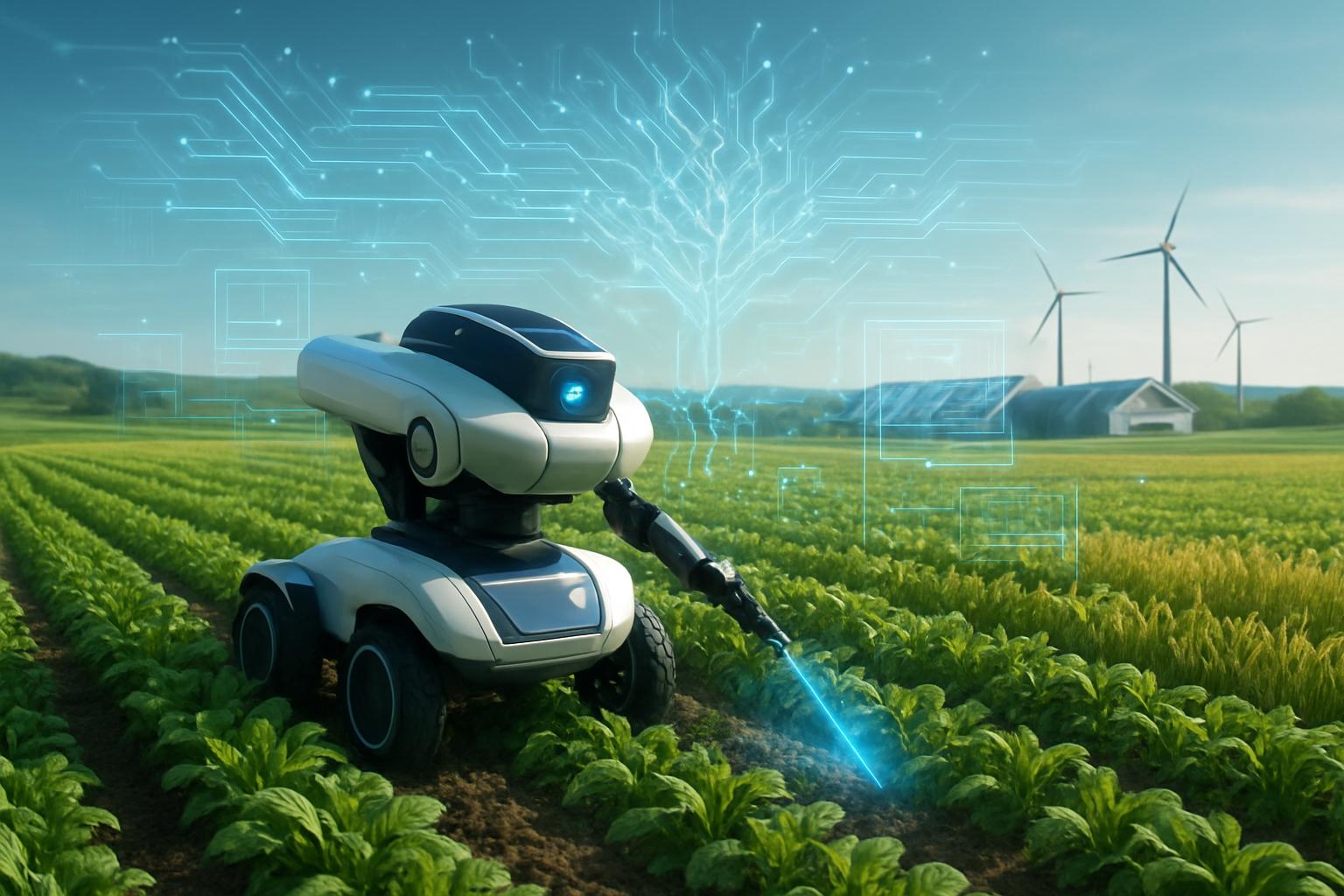
    Carbon Robotics has introduced its LaserWeeder technology, an AI-powered robotic system designed to autonomously identify and eliminate weeds using high-power lasers. The second-generation LaserWeeder G2, for instance, is equipped with 24 diode lasers and 36 high-resolution cameras, all managed by an onboard supercomputer. This sophisticated setup allows it to process up to 10,000 weeds per minute with sub-millimeter accuracy. The system employs advanced computer vision and deep learning algorithms to distinguish between crops and weeds, ensuring only unwanted plants are targeted. This approach drastically reduces the need for manual weeding, which is labor-intensive and costly, and minimizes the use of chemical herbicides, a significant benefit for organic farming and environmental health. Unlike traditional mechanical weeding, which can disturb soil and damage crops, or chemical spraying, which has ecological consequences, laser weeding offers a non-contact, highly selective, and environmentally benign solution. Initial reactions from the agricultural community have been overwhelmingly positive, with growers reporting substantial reductions in weed control costs and improved crop quality.

    Similarly, Niqo Robotics is making strides in precision spraying with its proprietary Niqo Sense AI camera. This technology enables spot spraying of agrochemicals—including pesticides, herbicides, fungicides, and liquid fertilizers—directly at the plant level. By precisely identifying individual plants and their needs, the Niqo Sense system ensures that chemicals are applied only where and when necessary, rather than broadcast across entire fields. This targeted application significantly reduces the overall volume of agrochemicals used, leading to substantial cost savings for farmers and a dramatic reduction in environmental pollution. This differs from previous approaches that relied on uniform application, often leading to chemical waste and runoff. Industry experts view this as a crucial step towards truly sustainable agriculture, allowing for effective pest and disease management with minimal ecological impact.

    Corporate Landscape: Beneficiaries and Competitive Edge

    These AI-driven agricultural solutions are poised to significantly impact a range of companies, from innovative startups to established agribusiness giants. Companies like Carbon Robotics and Niqo Robotics stand to benefit immensely, solidifying their positions as leaders in agricultural robotics and AI. Their proprietary technologies offer a significant competitive advantage, potentially disrupting traditional methods of weed control and crop protection.

    The competitive landscape for major AI labs and tech companies is also shifting. While these specific solutions are currently offered by specialized ag-tech firms, the underlying AI and machine learning capabilities represent a lucrative area for broader tech giants to invest in or acquire. Companies like Wilbur-Ellis Agribusiness, a prominent player in agricultural solutions, are already partnering with growers to deliver tailored solutions in water management, resistance management, and soil health, demonstrating their strategic focus on integrating advanced technologies and sustainable practices. Other notable companies exhibiting at summits, such as Monarch Tractor (focusing on electric, autonomous tractors) and IntelliCulture (providing sustainable innovations), are also well-positioned to capitalize on the growing demand for smart farming tools.

    These developments could potentially disrupt existing product lines for companies heavily invested in conventional agricultural machinery and chemical inputs, pushing them to innovate or risk losing market share. The strategic advantage lies with companies that can seamlessly integrate AI, robotics, and data analytics to offer comprehensive, sustainable, and efficient farming solutions. Market positioning will increasingly favor those who can provide verifiable environmental benefits alongside economic returns for growers.

    Wider Significance: A Shift Towards Intelligent Agriculture

    The emergence of these cutting-edge solutions fits perfectly into the broader AI landscape and the accelerating trend towards intelligent automation across industries. In agriculture, this translates to a profound shift towards precision agriculture and regenerative farming, where data-driven insights and automated systems guide decision-making and execution. These advancements are not isolated; they are part of a larger movement to optimize resource utilization, enhance biodiversity, and build more resilient food systems.

    The impacts are multi-faceted: economically, they offer growers a path to higher profitability through reduced input costs and improved yields; environmentally, they promise a significant reduction in chemical pollution, water consumption, and soil degradation. By enabling more efficient and sustainable practices, these technologies address critical global challenges such as food security and climate change. Potential concerns, however, include the initial capital investment required for these advanced systems, the need for robust connectivity in rural areas, and the potential for a widening digital divide among farmers. Comparisons to previous agricultural milestones, such as the Green Revolution, highlight the transformative potential of AI. While the Green Revolution focused on high-yield crop varieties and synthetic inputs, the AI revolution emphasizes intelligence, precision, and sustainability, aiming for a more harmonious relationship between agriculture and the environment.

    Future Developments: The Horizon of Autonomous Farms

    Looking ahead, the trajectory of agricultural AI suggests an exciting future. Near-term developments are likely to include further refinement of existing technologies, with robots becoming even more adept at complex tasks, and AI systems offering more granular and predictive insights. We can expect to see enhanced integration of various smart farming tools, creating holistic, interconnected farm management systems.

    On the horizon, potential applications and use cases are vast. Fully autonomous farms, where AI-powered robots handle everything from planting and monitoring to harvesting and pest control, are no longer science fiction. AI will play an increasingly critical role in climate-resilient agriculture, predicting weather patterns, optimizing irrigation schedules in response to drought, and identifying disease outbreaks before they become widespread. Challenges that need to be addressed include developing robust and affordable solutions for small and medium-sized farms, ensuring data privacy and security, and fostering a skilled workforce capable of operating and maintaining these advanced systems. Experts predict a future where agriculture is not just more efficient, but also more sustainable, adaptable, and responsive to global demands, with AI as the central nervous system of modern farming.

    Comprehensive Wrap-Up: A New Era for Food Production

    In summary, the cutting-edge AI and robotic solutions showcased by industry leaders at events like the Organic Grower Summit represent a pivotal moment in agricultural history. Key takeaways include the dramatic improvements in precision, efficiency, and sustainability offered by technologies such as AI-powered laser weeding and spot spraying. These developments are not just incremental improvements; they are foundational shifts that will redefine farming practices for decades to come.

    The significance of this development in AI history cannot be overstated. It demonstrates AI's practical application in a critical sector, moving beyond theoretical models to deliver tangible, real-world benefits. The long-term impact will likely include a more resilient food supply, reduced environmental harm, and increased economic viability for farmers, especially those committed to organic and sustainable methods. As we move forward, it will be crucial to watch for further integration of these technologies, the emergence of new AI-driven solutions, and how policymakers and industry stakeholders collaborate to ensure equitable access and training for all growers. The future of food production is becoming intelligently automated, precise, and profoundly sustainable.


    This content is intended for informational purposes only and represents analysis of current AI developments.

    TokenRing AI delivers enterprise-grade solutions for multi-agent AI workflow orchestration, AI-powered development tools, and seamless remote collaboration platforms.
    For more information, visit https://www.tokenring.ai/.