Tag: AI in Defense

  • Dstl Engineer Honored with NATO Award for Pioneering EO/IR Simulation, Pushing Boundaries of Defense AI

    Dstl Engineer Honored with NATO Award for Pioneering EO/IR Simulation, Pushing Boundaries of Defense AI

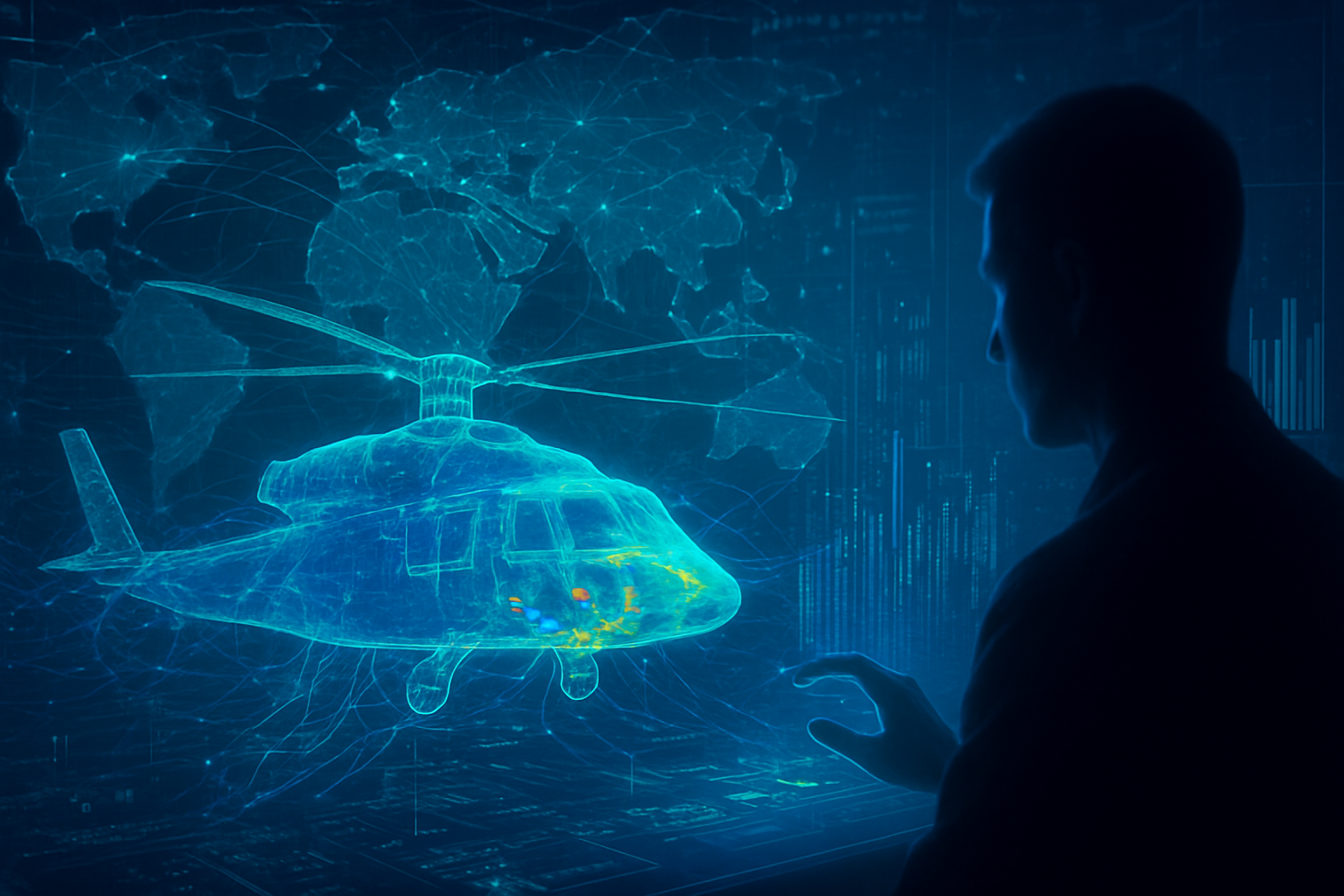
    London, UK – October 30, 2025 – In a significant recognition of cutting-edge contributions to defense technology, Rebecca Findlay, a Principal Engineer at the UK's Defence Science and Technology Laboratory (Dstl), has been awarded the prestigious NATO Early Career Award. The accolade, announced around October 30-31, 2025, celebrates Findlay's exceptional expertise in modeling and simulation, particularly her groundbreaking work in electro-optical/infrared (EO/IR) signatures. This award highlights the critical role of advanced simulation and AI in enhancing the protection and operational effectiveness of NATO forces and allies, marking a pivotal moment in the ongoing integration of artificial intelligence into modern defense capabilities.

    Findlay's work is at the forefront of developing high-fidelity, physics-based modeling and simulation for EO/IR signatures, a field vital for understanding how military assets appear across the electromagnetic spectrum. Her contributions to NATO Science and Technology Organisation (STO) Research Task Groups, focusing on camouflage assessment and multispectral decoys, have been instrumental in bridging the gap between theoretical simulation and real-world field data. This recognition underscores the strategic importance of accurately predicting and managing the detectability of military platforms, directly influencing the survivability and tactical advantage of defense operations in an increasingly complex global security landscape.

    The Invisible Edge: Decoding Electro-Optical/Infrared Simulation

    Electro-optical/infrared (EO/IR) simulation in defense technology is no longer just about rendering virtual scenes; it's a sophisticated, physics-based endeavor that models the intricate interactions between sensors, targets, and their environments across visible and infrared spectra. Unlike older, simpler geometric models, modern EO/IR simulation incorporates detailed radiometric sensor models, comprehensive thermal and optical properties of targets and backgrounds (including diurnal and seasonal variations), and highly-fidelity atmospheric models. This allows for precise predictions of how sensors will detect, track, and identify objects, even in challenging conditions. Technical specifications often delve into angular field of view, focal plane parameters, detection bands, sensitivity metrics like Noise Equivalent Irradiance (NEI), and dynamic range, ensuring unparalleled accuracy.

    The capabilities of these simulations are vast, ranging from signature management for "low observable" platform design to optimizing sensor performance under diverse weather conditions, and generating crucial synthetic data for training machine learning algorithms. This differs markedly from previous approaches that often relied on simplified environmental assumptions or costly physical prototypes and field trials. The current generation of tools provides faster, more accessible, and significantly more accurate analysis, making them indispensable for designing and optimizing everything from thermal control systems for satellites to advanced target acquisition, tracking, and identification (ATI) systems integrated into weapon platforms.

    Initial reactions from the AI research community and industry experts emphasize the growing reliance on such high-fidelity simulations. The ability to generate vast, accurately rendered datasets virtually is seen as a game-changer, especially for training AI in scenarios where real-world data collection is impractical, dangerous, or classified. This acceleration in synthetic data generation is seen as key to overcoming the "data hungry" nature of modern AI algorithms, enabling rapid iteration and refinement of AI models for defense applications. The recognition of Dstl's expertise further solidifies the UK's position at the leading edge of this critical technological domain.

    Shifting Sands: Impact on AI Companies, Tech Giants, and Startups

    Advancements in defense EO/IR simulation and signature management are creating a significant ripple effect across the technology industry, profoundly impacting AI companies, tech giants, and nimble startups alike. Companies specializing in synthetic data generation and AI/ML model training stand to benefit immensely, as high-fidelity simulations become the primary source for the vast, realistic datasets needed to develop robust AI for target recognition, classification, and autonomous navigation. This reduces the dependency on expensive and risky real-world data acquisition. AI companies focused on advanced perception, computer vision, and data fusion technologies will also find their expertise in high demand, as the need to process and interpret complex EO/IR data grows.

    Tech giants with substantial AI, simulation, and hardware capabilities are strategically positioned to expand into defense and dual-use markets. Companies like NVIDIA (NASDAQ: NVDA), with its powerful Blackwell architecture for AI, and Ansys (NASDAQ: ANSS), a leader in simulation software, are prime examples. They can offer integrated solutions, combining their computational prowess with specialized EO/IR simulation and AI software, leveraging their cloud computing infrastructure for managing massive synthetic datasets. This creates competitive implications, as the complexity and specialized nature of this field favor established players with significant R&D budgets, potentially raising barriers to entry for smaller entities.

    However, startups are also finding opportunities by specializing in niche areas, such as developing highly specialized synthetic data generators for unique sensor types or creating novel AI algorithms for specific signature detection or obfuscation tasks. Their agility allows for rapid innovation in areas like new material research for signature reduction or advanced sensor fusion. Successful startups with cutting-edge technologies may become attractive acquisition targets for larger defense contractors like Northrop Grumman (NYSE: NOC) or tech giants looking to bolster their defense capabilities. The overall effect is an intensified technological arms race, where companies that can effectively leverage AI with EO/IR simulation for both superior detection and advanced signature reduction will gain a strategic advantage.

    The Broader Canvas: AI, Ethics, and the Future of Warfare

    The advancements in defense EO/IR simulation and signature management, particularly with integrated AI, represent a critical juncture within the broader AI landscape. This development fits squarely into the global trend of increased investment in defense AI, driving the evolution of autonomous systems and data-driven warfare. It signifies a move towards more generalizable AI models that can adapt to diverse tasks and domains, a departure from earlier, more rigid AI systems. The ability to simulate complex, real-time battlefield scenarios with AI-powered adaptive adversaries is revolutionizing military training and readiness, significantly enhancing situational awareness and decision-making for military leaders.

    However, this rapid integration comes with significant societal impacts and potential concerns. While it promises enhanced national security through improved threat detection and response, it also fuels an AI arms race among global powers, potentially increasing international insecurity. A major ethical dilemma revolves around autonomous weapon systems and the prospect of AI making life-or-death decisions without human intervention, raising questions of accountability and unintended consequences. Cybersecurity vulnerabilities are also heightened, as AI can be exploited by adversaries for more sophisticated attacks, making the integrity of simulation environments paramount.

    Comparatively, while not a singular "Deep Blue beats Kasparov" moment, these advancements represent a continuous evolution of AI capabilities, leveraging breakthroughs in deep learning and machine learning for complex image and spectral data processing. The reliance on synthetic data generation is a notable milestone, mirroring its importance in other AI fields like autonomous vehicles, but adapted for the unique complexities and secrecy of defense. The core challenge remains balancing innovation with responsible deployment, ensuring human oversight, and addressing the dual-use nature of AI technologies to prevent unintended escalations or ethical breaches.

    Horizon Scan: The Road Ahead for Defense AI

    Looking ahead, the field of defense EO/IR simulation and signature management, supercharged by AI, is poised for transformative developments. In the near term, we can expect even more sophisticated synthetic data generation capabilities, with AI continuously refining models based on new data and changing circumstances. This will further accelerate the development and testing of AI/ML algorithms for target recognition and classification, reducing the need for costly and risky physical trials. AI-enhanced image processing will become standard, sharpening images, extending range, and filtering noise in real-time. Automated data processing and analysis, including kinematics and EO/IR signatures, will become increasingly prevalent, reducing human workload and accelerating insights.

    Long-term developments include the emergence of self-learning simulation environments and advanced digital twins, offering highly accurate, real-time representations of military assets and environments for predictive analysis and optimization. Experts predict ubiquitous sensor fusion, where AI seamlessly integrates data from EO/IR, radar, RF, and other sensors to create a comprehensive battlespace picture. Adaptive camouflage, dynamically responding to environmental changes and threats across multiple spectra (visual, IR, radar), is also on the horizon, potentially incorporating concepts like "spectral cloaking" to manipulate light waves for unprecedented concealment.

    Challenges remain, particularly the insatiable data requirements of AI, the need for algorithmic explainability to build trust among military personnel, and mitigating the risk of human skill erosion due to over-reliance on AI. Ethical, legal, and security risks associated with autonomous systems and adversarial AI will demand robust governance frameworks. However, experts predict a continuous drive towards miniaturization, embedding AI directly into sensors for "processing at the edge," leading to more compact, lightweight, and real-time capable EO/IR systems for unmanned platforms and soldier-wearable devices. The focus will also shift to developing counter-AI capabilities to maintain strategic advantage in this evolving technological arms race.

    A New Era of Strategic Advantage and Ethical Responsibility

    Rebecca Findlay's NATO Early Career Award is more than just a personal triumph; it's a powerful affirmation of the indispensable role of advanced modeling and simulation, particularly in electro-optical/infrared signatures, in shaping the future of defense. This development underscores a critical paradigm shift: military advantage is increasingly being forged not just on physical battlefields, but in the virtual realms where AI-powered simulations predict, refine, and optimize the capabilities of tomorrow's defense systems. The ability to generate high-fidelity synthetic data is accelerating AI integration into defense, promising unprecedented levels of situational awareness, precision targeting, and survivability for military assets.

    The significance of this development in AI history lies in its direct contribution to the operationalization of AI for national security. It highlights the maturation of AI from theoretical breakthroughs to practical, high-stakes applications. As we move forward, the emphasis will be on striking a delicate balance between leveraging AI's transformative power for defense and addressing the profound ethical, legal, and societal implications it presents. What to watch for in the coming weeks and months includes further announcements on collaborative defense AI projects, increased investment in specialized AI and simulation startups, and ongoing debates surrounding the governance and responsible deployment of autonomous defense systems. The era of AI-driven defense is not just arriving; it is actively being engineered, one simulation at a time.


    This content is intended for informational purposes only and represents analysis of current AI developments.

    TokenRing AI delivers enterprise-grade solutions for multi-agent AI workflow orchestration, AI-powered development tools, and seamless remote collaboration platforms.
    For more information, visit https://www.tokenring.ai/.
  • The AI Arms Race: Reshaping Global Defense Strategies by 2025

    The AI Arms Race: Reshaping Global Defense Strategies by 2025

    As of October 2025, artificial intelligence (AI) has moved beyond theoretical discussions to become an indispensable and transformative force within the global defense sector. Nations worldwide are locked in an intense "AI arms race," aggressively investing in and integrating advanced AI capabilities to secure technological superiority and fundamentally redefine modern warfare. This rapid adoption signifies a seismic shift in strategic doctrines, operational capabilities, and the very nature of military engagement.

    This pervasive integration of AI is not merely enhancing existing military functions; it is a core enabler of next-generation defense systems. From autonomous weapon platforms and sophisticated cyber defense mechanisms to predictive logistics and real-time intelligence analysis, AI is rapidly becoming the bedrock upon which future national security strategies are built. The immediate implications are profound, promising unprecedented precision and efficiency, yet simultaneously raising complex ethical, legal, and societal questions that demand urgent global attention.

    AI's Technical Revolution in Military Applications

    The current wave of AI advancements in defense is characterized by a suite of sophisticated technical capabilities that are dramatically altering military operations. Autonomous Weapon Systems (AWS) stand at the forefront, with several nations by 2025 having developed systems capable of making lethal decisions without direct human intervention. This represents a significant leap from previous remotely operated drones, which required continuous human control, to truly autonomous entities that can identify targets and engage them based on pre-programmed parameters. The global automated weapon system market, valued at approximately $15 billion this year, underscores the scale of this technological shift. For instance, South Korea's collaboration with Anduril Industries exemplifies the push towards co-developing advanced autonomous aircraft.

    Beyond individual autonomous units, swarm technologies are seeing increased integration. These systems allow for the coordinated operation of multiple autonomous aerial, ground, or maritime platforms, vastly enhancing mission effectiveness, adaptability, and resilience. The U.S. Department of Defense's OFFSET program has already demonstrated the deployment of swarms comprising up to 250 autonomous robots in complex urban environments, a stark contrast to previous single-unit deployments. This differs from older approaches by enabling distributed, collaborative intelligence, where the collective can achieve tasks far beyond the capabilities of any single machine.

    Furthermore, AI is revolutionizing Command and Control (C2) systems, moving towards decentralized models. DroneShield's (ASX: DRO) new AI-driven C2 Enterprise (C2E) software, launched in October 2025, exemplifies this by connecting multiple counter-drone systems for large-scale security, enabling real-time oversight and rapid decision-making across geographically dispersed areas. This provides a significant advantage over traditional, centralized C2 structures that can be vulnerable to single points of failure. Initial reactions from the AI research community highlight both the immense potential for efficiency and the deep ethical concerns surrounding the delegation of critical decision-making to machines, particularly in lethal contexts. Experts are grappling with the implications of AI's "hallucinations" or erroneous outputs in such high-stakes environments.

    Competitive Dynamics and Market Disruption in the AI Defense Landscape

    The rapid integration of AI into the defense sector is creating a new competitive landscape, significantly benefiting a select group of AI companies, established tech giants, and specialized startups. Companies like Anduril Industries, known for its focus on autonomous systems and border security, stand to gain immensely from increased defense spending on AI. Their partnerships, such as the one with South Korea for autonomous aircraft co-development, demonstrate a clear strategic advantage in a burgeoning market. Similarly, DroneShield (ASX: DRO), with its AI-driven counter-drone C2 software, is well-positioned to capitalize on the growing need for sophisticated defense against drone threats.

    Major defense contractors, including General Dynamics Land Systems (GDLS), are also deeply integrating AI. GDLS's Vehicle Intelligence Tools & Analytics & Analytics for Logistics & Sustainment (VITALS) program, implemented in the Marine Corps' Advanced Reconnaissance Vehicle (ARV), showcases how traditional defense players are leveraging AI for predictive maintenance and logistics optimization. This indicates a broader trend where legacy defense companies are either acquiring AI capabilities or aggressively investing in in-house AI development to maintain their competitive edge. The competitive implications for major AI labs are substantial; those with expertise in areas like reinforcement learning, computer vision, and natural language processing are finding lucrative opportunities in defense applications, often leading to partnerships or significant government contracts.

    This development poses a potential disruption to existing products and services that rely on older, non-AI driven systems. For instance, traditional C2 systems face obsolescence as AI-powered decentralized alternatives offer superior speed and resilience. Startups specializing in niche AI applications, such as AI-enabled cybersecurity or advanced intelligence analysis, are finding fertile ground for innovation and rapid growth, potentially challenging the dominance of larger, slower-moving incumbents. The market positioning is increasingly defined by a company's ability to develop, integrate, and secure advanced AI solutions, creating strategic advantages for those at the forefront of this technological wave.

    The Wider Significance: Ethics, Trends, and Societal Impact

    The ascendancy of AI in defense extends far beyond technological specifications, embedding itself within the broader AI landscape and raising profound societal implications. This development aligns with the overarching trend of AI permeating every sector, but its application in warfare introduces a unique set of ethical considerations. The most pressing concern revolves around Autonomous Weapon Systems (AWS) and the question of human control over lethal force. As of October 2025, there is no single global regulation for AI in weapons, with discussions ongoing at the UN General Assembly. This regulatory vacuum amplifies concerns about reduced human accountability for war crimes, the potential for rapid, AI-driven escalation leading to "flash wars," and the erosion of moral agency in conflict.

    The impact on cybersecurity is particularly acute. While adversaries are leveraging AI for more sophisticated and faster attacks—such as AI-enabled phishing, automated vulnerability scanning, and adaptive malware—defenders are deploying AI as their most powerful countermeasure. AI is crucial for real-time anomaly detection, automated incident response, and augmenting Security Operations Center (SOC) teams. The UK's NCSC (National Cyber Security Centre) has made significant strides in autonomous cyber defense, reflecting a global trend where AI is both the weapon and the shield in the digital battlefield. This creates an ever-accelerating cyber arms race, where the speed and sophistication of AI systems dictate defensive and offensive capabilities.

    Comparisons to previous AI milestones reveal a shift from theoretical potential to practical, high-stakes deployment. While earlier AI breakthroughs focused on areas like game playing or data processing, the current defense applications represent a direct application of AI to life-or-death scenarios on a national and international scale. This raises public concerns about algorithmic bias, the potential for AI systems to "hallucinate" or produce erroneous outputs in critical military contexts, and the risk of unintended consequences. The ethical debate surrounding AI in defense is not merely academic; it is a critical discussion shaping international policy and the future of human conflict.

    The Horizon: Anticipated Developments and Lingering Challenges

    Looking ahead, the trajectory of AI in defense points towards even more sophisticated and integrated systems in both the near and long term. In the near term, we can expect continued advancements in human-machine teaming, where AI-powered systems work seamlessly alongside human operators, enhancing situational awareness and decision-making while attempting to preserve human oversight. Further development in swarm intelligence, enabling larger and more complex coordinated autonomous operations, is also anticipated. AI's role in intelligence analysis will deepen, leading to predictive intelligence that can anticipate geopolitical shifts and logistical demands with greater accuracy.

    On the long-term horizon, potential applications include fully autonomous supply chains, AI-driven strategic planning tools that simulate conflict outcomes, and advanced robotic platforms capable of operating in extreme environments for extended durations. The UK's Strategic Defence Review 2025's aim to deliver a "digital targeting web" by 2027, leveraging AI for real-time data analysis and accelerated decision-making, exemplifies the direction of future developments. Experts predict a continued push towards "cognitive warfare," where AI systems engage in information manipulation and psychological operations.

    However, significant challenges need to be addressed. Ethical governance and the establishment of international norms for the use of AI in warfare remain paramount. The "hallucination" problem in advanced AI models, where systems generate plausible but incorrect information, poses a catastrophic risk if not mitigated in defense applications. Cybersecurity vulnerabilities will also continue to be a major concern, as adversaries will relentlessly seek to exploit AI systems. Furthermore, the sheer complexity of integrating diverse AI technologies across vast military infrastructures presents an ongoing engineering and logistical challenge. Experts predict that the next phase will involve a delicate balance between pushing technological boundaries and establishing robust ethical frameworks to ensure responsible deployment.

    A New Epoch in Warfare: The Enduring Impact of AI

    The current trajectory of Artificial Intelligence in the defense sector marks a pivotal moment in military history, akin to the advent of gunpowder or nuclear weapons. The key takeaway is clear: AI is no longer an ancillary tool but a fundamental component reshaping strategic doctrines, operational capabilities, and the very definition of modern warfare. Its immediate significance lies in enhancing precision, speed, and efficiency across all domains, from predictive maintenance and logistics to advanced cyber defense and autonomous weapon systems.

    This development's significance in AI history is profound, representing the transition of AI from a primarily commercial and research-oriented field to a critical national security imperative. The ongoing "AI arms race" underscores that technological superiority in the 21st century will largely be dictated by a nation's ability to develop, integrate, and responsibly govern advanced AI systems. The long-term impact will likely include a complete overhaul of military training, recruitment, and organizational structures, adapting to a future defined by human-machine teaming and data-centric operations.

    In the coming weeks and months, the world will be watching for progress in international discussions on AI ethics in warfare, particularly concerning autonomous weapon systems. Further announcements from defense contractors and AI companies regarding new partnerships and technological breakthroughs are also anticipated. The delicate balance between innovation and responsible deployment will be the defining challenge as humanity navigates this new epoch in warfare, ensuring that the immense power of AI serves to protect, rather than destabilize, global security.


    This content is intended for informational purposes only and represents analysis of current AI developments.

    TokenRing AI delivers enterprise-grade solutions for multi-agent AI workflow orchestration, AI-powered development tools, and seamless remote collaboration platforms.
    For more information, visit https://www.tokenring.ai/.