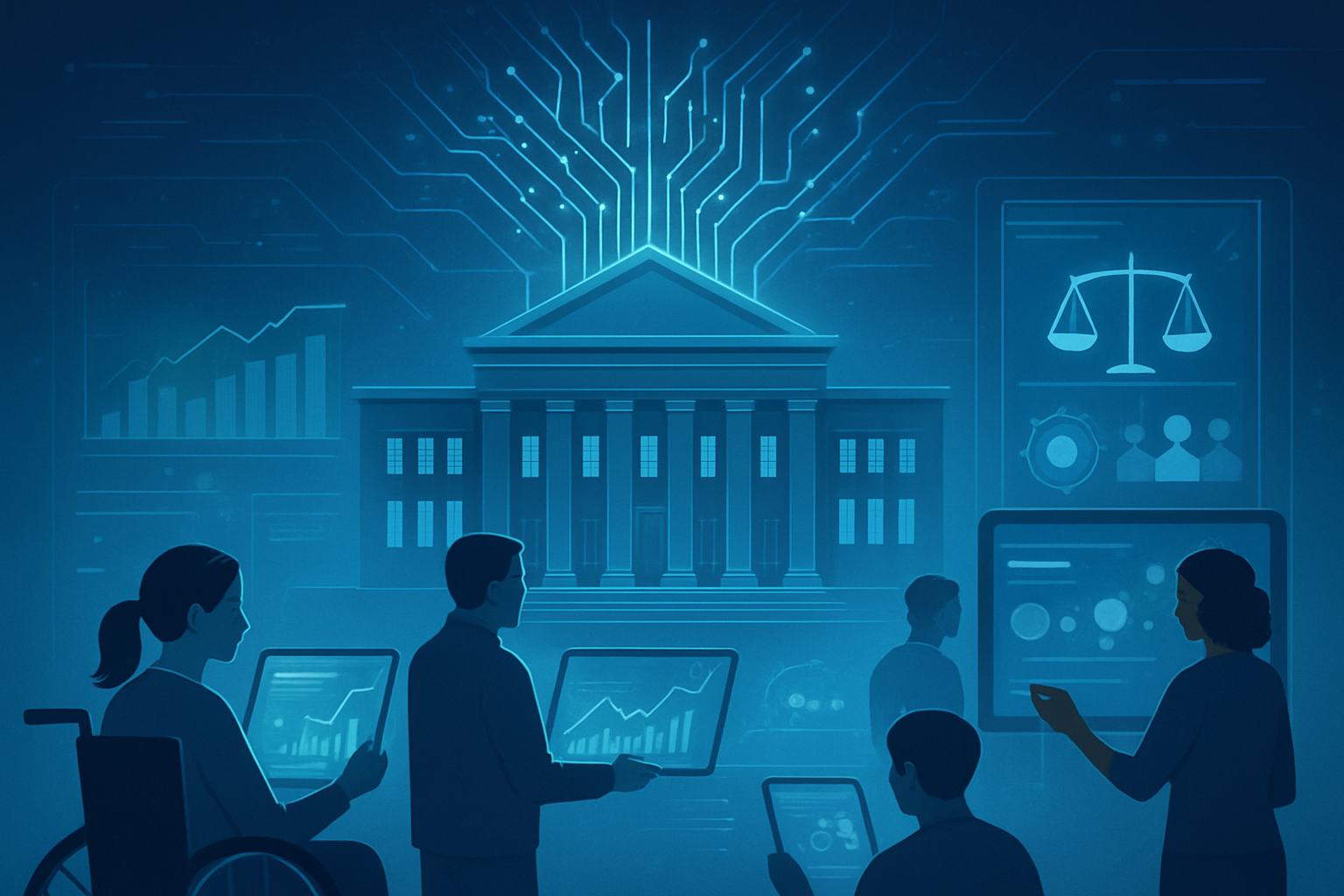
Tag: AI in Government

  • BigBear.ai Fortifies Federal AI Arsenal with Strategic Ask Sage Acquisition

    BigBear.ai Fortifies Federal AI Arsenal with Strategic Ask Sage Acquisition

    In a landmark move set to reshape the landscape of secure artificial intelligence for government entities, BigBear.ai (NYSE: BBAI), a prominent provider of AI-powered decision intelligence solutions, announced on November 10, 2025, its definitive agreement to acquire Ask Sage. This strategic acquisition, valued at approximately $250 million, is poised to significantly bolster BigBear.ai's capabilities in delivering security-centric generative AI and agentic systems, particularly for federal agencies grappling with the complexities of data security and national security imperatives. The acquisition, expected to finalize in late Q4 2025 or early Q1 2026, signals a critical step towards operationalizing trusted AI at scale within highly regulated environments, promising to bridge the gap between innovative AI pilot projects and robust, enterprise-level deployment.

    This timely announcement comes as federal agencies are increasingly seeking advanced AI solutions that not only enhance operational efficiency but also meet stringent security and compliance standards. BigBear.ai's integration of Ask Sage’s specialized platform aims to directly address this demand, offering a secure, integrated AI solution that connects software, data, and mission services in a unified framework. The market, as articulated by BigBear.ai CEO Kevin McAleenan, has been actively seeking such a comprehensive and secure offering, making this acquisition a pivotal development in the ongoing race to modernize government technology infrastructure with cutting-edge artificial intelligence.

    Technical Prowess: A New Era for Secure Generative AI in Government

    The core of this acquisition's significance lies in Ask Sage's specialized technological framework. Ask Sage has developed a generative AI platform explicitly designed for secure deployment of AI models and agentic systems across defense, national security, and other highly regulated sectors. This is a crucial distinction from many general-purpose AI solutions, which often struggle to meet the rigorous security and compliance requirements inherent in government operations. Ask Sage's platform is not only model-agnostic, allowing government agencies the flexibility to integrate various AI models without vendor lock-in, but it is also composable, meaning it can be tailored to specific mission needs while addressing critical issues related to data sensitivity and compliance.

    A cornerstone of Ask Sage's appeal, and a significant differentiator, is its coveted FedRAMP High accreditation. This top-tier government certification for cloud security is paramount for organizations handling classified and highly sensitive information, providing an unparalleled level of assurance regarding data security, integrity, and regulatory compliance. This accreditation immediately elevates BigBear.ai's offering, providing federal clients with a pre-vetted, secure pathway to leverage advanced generative AI. Furthermore, the integration of Ask Sage’s technology is expected to dramatically improve real-time intelligence and automated data processing capabilities for military and national security operations, enabling faster, more accurate decision-making in critical scenarios. This move fundamentally differs from previous approaches by directly embedding high-security standards and regulatory compliance into the AI architecture from the ground up, rather than attempting to retrofit them onto existing, less secure platforms.

    Initial reactions from the AI research community and industry experts have been largely positive, highlighting the strategic foresight of combining BigBear.ai's established presence and infrastructure with Ask Sage's specialized, secure generative AI capabilities. The addition of Nicolas Chaillan, Ask Sage's founder and former Chief Software Officer for both the U.S. Air Force and Space Force, as BigBear.ai's new Chief Technology Officer (CTO), is seen as a major coup. Chaillan’s deep expertise in government IT modernization and secure software development is expected to accelerate BigBear.ai's innovation trajectory and solidify its position as an "AI-first enterprise" within the defense and intelligence sectors.

    Competitive Implications and Market Positioning

    This acquisition carries significant competitive implications, particularly for companies vying for contracts within the highly lucrative and sensitive federal AI market. BigBear.ai (NYSE: BBAI) stands to be the primary beneficiary, gaining a substantial technological edge and a new distribution channel through Ask Sage's application marketplace. The projected $25 million in non-GAAP annual recurring revenue (ARR) for Ask Sage in 2025, representing a sixfold increase from its 2024 performance, underscores the immediate financial upside and growth potential this acquisition brings to BigBear.ai. This move is expected to catalyze rapid growth for the combined entity in the coming years.

    For major AI labs and tech giants, this acquisition by BigBear.ai signals a growing specialization within the AI market. While large players like Amazon (NASDAQ: AMZN), Microsoft (NASDAQ: MSFT), and Google (NASDAQ: GOOGL) offer broad AI services, BigBear.ai's focused approach on "disruptive AI mission solutions for national security" through Ask Sage's FedRAMP High-accredited platform creates a formidable niche. This could disrupt existing products or services that lack the same level of government-specific security certifications and tailored capabilities, potentially shifting market share in critical defense and intelligence sectors.

    Startups in the government AI space will face increased competition, but also potential opportunities for partnership or acquisition by larger players looking to replicate BigBear.ai's strategy. The combined entity's enhanced market positioning and strategic advantages stem from its ability to offer a truly secure, scalable, and compliant generative AI solution for sensitive government data, a capability that few can match. This consolidation of expertise and technology positions BigBear.ai as a leader in delivering real-time, classified data processing and intelligence modeling, making it a preferred partner for federal clients seeking to modernize their operations with trusted AI.

    Wider Significance in the Broader AI Landscape

    BigBear.ai's acquisition of Ask Sage fits squarely into the broader AI landscape's trend towards specialized, secure, and domain-specific applications. As AI models become more powerful and ubiquitous, the critical challenge of deploying them responsibly and securely, especially with sensitive data, has come to the forefront. This move underscores a growing recognition that "general-purpose" AI, while powerful, often requires significant adaptation and certification to meet the unique demands of highly regulated sectors like national security and defense. The emphasis on FedRAMP High accreditation highlights the increasing importance of robust security frameworks in the adoption of advanced AI technologies by government bodies.

    The impacts of this acquisition are far-reaching. It promises to accelerate government modernization efforts, providing federal agencies with the tools to move beyond pilot projects and truly operationalize trusted AI. This can lead to more efficient intelligence gathering, enhanced border security, improved national defense capabilities, and more effective responses to complex global challenges. However, potential concerns revolve around the concentration of advanced AI capabilities within a few key players, raising questions about competition, vendor diversity, and the ethical implications of deploying highly sophisticated AI in sensitive national security contexts. Comparisons to previous AI milestones, such as the initial breakthroughs in deep learning or the rise of large language models, reveal a shift from foundational research to practical, secure, and compliant deployment, particularly in critical infrastructure and government applications. This acquisition marks a significant step in the maturation of the AI industry, moving from theoretical potential to real-world, secure implementation.

    The development also highlights a broader trend: the increasing demand for "agentic AI" systems capable of autonomous or semi-autonomous decision-making, especially in defense. Ask Sage's expertise in this area, combined with BigBear.ai's existing infrastructure, suggests a future where AI systems can perform complex tasks, analyze vast datasets, and provide actionable intelligence with minimal human intervention, all within a secure and compliant framework.

    Exploring Future Developments

    Looking ahead, the integration of BigBear.ai and Ask Sage is expected to unlock a myriad of near-term and long-term developments. In the near term, we can anticipate a rapid expansion of Ask Sage's secure generative AI platform across BigBear.ai's existing federal client base, particularly within defense, intelligence, and homeland security missions. This will likely involve the rollout of new AI applications and services designed to enhance real-time intelligence, automated data analysis, and predictive capabilities for various government operations. The combination of BigBear.ai's existing contracts and delivery scale with Ask Sage's specialized technology is poised to accelerate the deployment of compliant AI solutions.

    Longer term, the combined entity is likely to become a powerhouse in the development of "trusted AI" solutions, addressing the ethical, transparency, and explainability challenges inherent in AI deployments within critical sectors. Potential applications and use cases on the horizon include advanced threat detection and analysis, autonomous decision support systems for military operations, highly secure data fusion platforms for intelligence agencies, and AI-driven solutions for critical infrastructure protection. The integration of Nicolas Chaillan as CTO is expected to drive further innovation, focusing on building a secure, model-agnostic platform that can adapt to evolving threats and technological advancements.

    However, challenges remain. Ensuring the continuous security and ethical deployment of increasingly sophisticated AI systems will require ongoing research, development, and robust regulatory oversight. The rapid pace of AI innovation also necessitates constant adaptation to new threats and vulnerabilities. Experts predict that the future will see a greater emphasis on sovereign AI capabilities, where governments demand control over their AI infrastructure and data, making solutions like Ask Sage's FedRAMP High-accredited platform even more critical. The next phase will likely involve refining the human-AI collaboration paradigm, ensuring that AI augments, rather than replaces, human expertise in critical decision-making processes.

    Comprehensive Wrap-up

    BigBear.ai's strategic acquisition of Ask Sage represents a pivotal moment in the evolution of AI for federal agencies. The key takeaways are clear: the urgent demand for secure, compliant, and specialized AI solutions in national security, the critical role of certifications like FedRAMP High, and the strategic value of integrating deep domain expertise with cutting-edge technology. This development signifies a significant step towards operationalizing trusted generative and agentic AI at scale within the most sensitive government environments.

    This acquisition's significance in AI history lies in its clear focus on the "how" of AI deployment – specifically, how to deploy advanced AI securely and compliantly in high-stakes environments. It moves beyond the hype of general AI capabilities to address the practical, often challenging, requirements of real-world government applications. The long-term impact is likely to be a more secure, efficient, and intelligent federal government, better equipped to face complex challenges with AI-powered insights.

    In the coming weeks and months, industry observers should watch for the successful integration of Ask Sage's technology into BigBear.ai's ecosystem, the rollout of new secure AI offerings for federal clients, and any further strategic moves by competitors to match BigBear.ai's enhanced capabilities. The appointment of Nicolas Chaillan as CTO will also be a key factor to watch, as his leadership is expected to drive significant advancements in BigBear.ai's AI strategy and product development. This acquisition is not just a business transaction; it's a blueprint for the future of secure AI in national security.


    This content is intended for informational purposes only and represents analysis of current AI developments.

    TokenRing AI delivers enterprise-grade solutions for multi-agent AI workflow orchestration, AI-powered development tools, and seamless remote collaboration platforms.
    For more information, visit https://www.tokenring.ai/.

  • From Vision to Reality: AI’s Transformative Grip on Government Services

    From Vision to Reality: AI’s Transformative Grip on Government Services

    Artificial Intelligence (AI), once a futuristic concept largely confined to theoretical discussions and academic papers within government circles, has decisively moved into the realm of practical implementation across a myriad of public sectors and services. This evolution marks a pivotal shift, driven by rapid technological advancements, an exponential increase in data availability, and an urgent imperative for greater efficiency and improved citizen services. Governments worldwide are increasingly leveraging AI to streamline operations, enhance decision-making, and deliver more responsive and personalized public interactions, fundamentally reshaping the landscape of public administration.

    The immediate significance of this transition is profound, offering a dual narrative of immense potential benefits alongside persistent challenges. AI is demonstrably driving increased efficiency by automating repetitive tasks, allowing public servants to focus on higher-value work requiring human judgment and empathy. It facilitates improved, data-driven decision-making, leading to more informed policies and agile responses to crises. Enhanced service delivery is evident through 24/7 citizen support, personalized interactions, and reduced wait times. However, this rapid transformation is accompanied by ongoing concerns regarding data privacy and security, the critical need for ethical AI frameworks to manage biases, and the persistent skills gap within the public sector.

    The Algorithmic Engine: Unpacking AI's Technical Integration in Public Services

    The practical integration of AI into government operations is characterized by the deployment of sophisticated machine learning (ML), natural language processing (NLP), and large language models (LLMs) across diverse applications. This represents a significant departure from previous, often manual or rule-based, approaches to public service delivery and data analysis.

    Specific technical advancements are enabling this shift. In citizen services, AI-powered chatbots and virtual assistants, often built on advanced NLP and LLM architectures, provide instant, 24/7 support. These systems can understand complex queries, process natural language, and guide citizens through intricate government processes, significantly reducing the burden on human staff. This differs from older IVR (Interactive Voice Response) systems which were rigid and menu-driven, lacking the contextual understanding and conversational fluency of modern AI. Similarly, intelligent applications leverage predictive analytics and machine learning to offer personalized services, such as tailored benefit notifications, a stark contrast to generic, one-size-fits-all public announcements.

    In healthcare, AI is transforming care delivery through predictive analytics for early disease detection and outbreak surveillance, as critically demonstrated during the COVID-19 pandemic. AI algorithms analyze vast datasets of patient records, public health information, and environmental factors to identify patterns indicative of disease outbreaks far faster than traditional epidemiological methods. Furthermore, AI assists in diagnosis by processing medical images and patient data, recommending treatment options, and automating medical documentation through advanced speech-to-text and NLP, thereby reducing administrative burdens that previously consumed significant clinician time.

    For urban planning and smart cities, AI optimizes traffic flow using real-time sensor data and machine learning to dynamically adjust traffic signals, a significant upgrade from static timing systems. It aids in urban planning by identifying efficient land use and infrastructure development patterns, often through geospatial AI and simulation models. In public safety and law enforcement, AI-driven fraud detection systems employ anomaly detection and machine learning to identify suspicious patterns in financial transactions, far more effectively than manual audits. AI-enabled cybersecurity measures analyze network traffic and respond to threats in real-time, leveraging behavioral analytics and threat intelligence that continuously learn and adapt, unlike signature-based systems that require constant manual updates. Initial reactions from the AI research community and industry experts have largely been positive, recognizing the potential for increased efficiency and improved public services, but also emphasizing the critical need for robust ethical guidelines, transparency, and accountability frameworks to ensure equitable and unbiased outcomes.

    Corporate Frontlines: AI Companies Navigating the Government Sector

    The burgeoning landscape of AI in government has created a significant battleground for AI companies, tech giants, and nimble startups alike, all vying for lucrative contracts and strategic partnerships. This development is reshaping competitive dynamics and market positioning within the AI industry.

    Tech giants such as Microsoft (NASDAQ: MSFT), Amazon (NASDAQ: AMZN) with its AWS division, Google (NASDAQ: GOOGL), and IBM (NYSE: IBM) stand to benefit immensely. These companies possess the foundational cloud infrastructure, advanced AI research capabilities, and extensive experience in handling large-scale government contracts. Their offerings often include comprehensive AI platforms, secure cloud environments, and specialized AI services tailored for public sector needs, from data analytics and machine learning tools to advanced natural language processing and computer vision solutions. Their established relationships and ability to provide end-to-end solutions give them a significant competitive advantage.

    However, the sector also presents fertile ground for specialized AI startups and mid-sized technology firms that focus on niche government applications. Companies developing AI for specific domains like fraud detection, urban planning, or healthcare analytics can carve out significant market shares by offering highly customized and domain-expert solutions. For instance, firms specializing in explainable AI (XAI) or privacy-preserving AI are becoming increasingly critical as governments prioritize transparency and data protection. This often disrupts traditional government IT contractors who may lack the cutting-edge AI expertise required for these new initiatives.

    The competitive implications are substantial. Major AI labs and tech companies are increasingly investing in dedicated public sector divisions, focusing on compliance, security, and ethical AI development to meet stringent government requirements. This also includes significant lobbying efforts and participation in government AI advisory boards. The potential disruption to existing products or services is evident in areas where AI automates tasks previously handled by human-centric software or services, pushing providers to integrate AI or risk obsolescence. Market positioning is increasingly defined by a company's ability to demonstrate not just technological prowess but also a deep understanding of public policy, ethical considerations, and the unique operational challenges of government agencies. Strategic advantages accrue to those who can build trust, offer transparent and auditable AI solutions, and prove tangible ROI for public funds.

    Beyond the Code: AI's Broader Societal and Ethical Implications

    The integration of AI into government services fits squarely within the broader AI landscape, reflecting a global trend towards leveraging advanced analytics and automation for societal benefit. This movement aligns with the overarching goal of "AI for Good," aiming to solve complex public challenges ranging from climate change modeling to personalized education. However, its widespread adoption also brings forth significant impacts and potential concerns that warrant careful consideration.

    One of the most significant impacts is the potential for enhanced public service delivery and efficiency, leading to better citizen outcomes. Imagine AI systems predicting infrastructure failures before they occur, or proactively connecting vulnerable populations with social services. However, this promise is tempered by potential concerns around bias and fairness. AI systems are only as unbiased as the data they are trained on. If historical data reflects societal inequalities, AI could inadvertently perpetuate or even amplify discrimination in areas like law enforcement, loan applications, or social benefit distribution. This necessitates robust ethical AI frameworks, rigorous testing for bias, and transparent algorithmic decision-making.

    Data privacy and security represent another paramount concern. Governments handle vast quantities of sensitive citizen data. The deployment of AI systems capable of processing and linking this data at scale raises questions about surveillance, data breaches, and the potential for misuse. Strong regulatory oversight, secure data architectures, and public trust-building initiatives are crucial to mitigate these risks. Comparisons to previous AI milestones, such as the early days of big data analytics or the internet's widespread adoption, highlight a recurring pattern: immense potential for good coupled with significant ethical and societal challenges that require proactive governance. Unlike previous milestones, AI's ability to automate complex cognitive tasks and make autonomous decisions introduces new layers of ethical complexity, particularly concerning accountability and human oversight. The "black box" problem, where AI decisions are difficult to interpret, is especially problematic in public sector applications where transparency is paramount.

    The shift also underscores the democratic implications of AI. How much power should be delegated to algorithms in governance? Ensuring public participation, democratic accountability, and mechanisms for redress when AI systems err are vital to maintain trust and legitimacy. The broader trend indicates that AI will become an indispensable tool for governance, but its success will ultimately hinge on society's ability to navigate these complex ethical, privacy, and democratic challenges effectively.

    The Horizon of Governance: Charting AI's Future in Public Service

    As AI continues its rapid evolution, the future of its application in government promises even more sophisticated and integrated solutions, though not without its own set of formidable challenges. Experts predict a near-term acceleration in the deployment of AI-powered automation and advanced analytics, while long-term developments point towards more autonomous and adaptive government systems.

    In the near term, we can expect to see a proliferation of AI-driven tools for administrative efficiency, such as intelligent document processing, automated compliance checks, and predictive resource allocation for public services like emergency response. Chatbots and virtual assistants will become even more sophisticated, capable of handling a wider range of complex citizen queries and offering proactive, personalized assistance. Furthermore, AI will play an increasing role in cybersecurity, with systems capable of real-time threat detection and autonomous response to protect critical government infrastructure and sensitive data. The focus will also intensify on explainable AI (XAI), as governments demand greater transparency and auditability for AI decisions, especially in critical areas like justice and social welfare.

    Long-term developments could see the emergence of highly integrated "smart government" ecosystems where AI orchestrates various public services seamlessly. Imagine AI systems that can model the impact of policy changes before they are implemented, optimize entire urban environments for sustainability, or provide hyper-personalized public health interventions. Generative AI could revolutionize public communication and content creation, while multi-agent AI systems might coordinate complex tasks across different agencies.

    However, several challenges need to be addressed for these future applications to materialize responsibly. The skills gap within the public sector remains a critical hurdle, requiring significant investment in training and recruitment of AI-literate personnel. Developing robust ethical AI governance frameworks that can adapt to rapidly evolving technology is paramount to prevent bias, ensure fairness, and protect civil liberties. Interoperability between diverse legacy government systems and new AI platforms will also be a persistent technical challenge. Furthermore, securing public trust will be crucial; citizens need to understand and have confidence in how AI is being used by their governments. Experts predict that the governments that invest strategically in talent, ethical guidelines, and scalable infrastructure now will be best positioned to harness AI's full potential for the public good in the coming decades.

    A New Era of Governance: AI's Enduring Impact and What's Next

    The journey of Artificial Intelligence within government, from initial aspirational promises to its current practical and pervasive implementation, marks a defining moment in the history of public administration. This transformation underscores a fundamental shift in how governments operate, interact with citizens, and address complex societal challenges.

    The key takeaways from this evolution are clear: AI is no longer a theoretical concept but a tangible tool driving unprecedented efficiency, enhancing decision-making capabilities, and improving the delivery of public services across sectors like healthcare, urban planning, public safety, and defense. The technical advancements in machine learning, natural language processing, and predictive analytics have enabled sophisticated applications that far surpass previous manual or rule-based systems. While major tech companies like Microsoft (NASDAQ: MSFT) and Amazon (NASDAQ: AMZN) are significant players, the landscape also provides fertile ground for specialized startups offering niche solutions, leading to a dynamic competitive environment.

    The significance of this development in AI history cannot be overstated. It represents a maturation of AI from specialized scientific endeavors to a foundational technology for governance, akin to the impact of the internet or big data in previous decades. However, unlike its predecessors, AI's capacity for autonomous decision-making and learning introduces unique ethical, privacy, and societal challenges that demand continuous vigilance and proactive governance. The potential for bias, the need for transparency, and the imperative to maintain human oversight are critical considerations that will shape its long-term impact.

    Looking ahead, the long-term impact will likely see AI becoming deeply embedded in the fabric of government, leading to more responsive, efficient, and data-driven public services. However, this future hinges on successfully navigating the ethical minefield, closing the skills gap, and fostering deep public trust. What to watch for in the coming weeks and months includes new government AI policy announcements, particularly regarding ethical guidelines and data privacy regulations. Keep an eye on significant government contract awards to AI providers, which will signal strategic priorities. Also, observe the progress of pilot programs in areas like generative AI for public communication and advanced predictive analytics for infrastructure management. The ongoing dialogue between policymakers, technologists, and the public will be crucial in shaping a future where AI serves as a powerful, responsible tool for the common good.


    This content is intended for informational purposes only and represents analysis of current AI developments.

    TokenRing AI delivers enterprise-grade solutions for multi-agent AI workflow orchestration, AI-powered development tools, and seamless remote collaboration platforms.
    For more information, visit https://www.tokenring.ai/.
  • Swiftbuild.ai’s SwiftGov Platform: AI-Powered Revolution for Government Permitting and Urban Development

    Swiftbuild.ai’s SwiftGov Platform: AI-Powered Revolution for Government Permitting and Urban Development

    In a significant stride towards modernizing public sector operations, Swiftbuild.ai has introduced its SwiftGov platform, a groundbreaking AI-powered solution designed to overhaul government building and permitting processes. This innovative platform is set to dramatically accelerate housing development, enhance bureaucratic efficiency, and reshape urban planning by leveraging advanced Artificial Intelligence (AI) and Geographic Information System (GIS) technologies. The immediate significance of SwiftGov lies in its ability to tackle long-standing inefficiencies, reduce administrative burdens, and ensure compliance, promising a new era of streamlined and transparent governmental services.

    SwiftGov's launch comes at a critical time when governments nationwide are grappling with the dual challenges of rapidly increasing housing demand and often-outdated permitting systems. By offering a secure, intelligent platform that can expedite approvals and automate complex compliance checks, Swiftbuild.ai is not just improving an existing process; it's fundamentally transforming how communities grow and develop. This move signals a strong shift towards specialized AI applications addressing concrete, real-world bottlenecks in public administration, positioning Swiftbuild.ai as a key player in the evolving GovTech landscape.

    The Technical Backbone: AI and Geospatial Intelligence at Work

    The technical prowess of SwiftGov is rooted in its sophisticated integration of AI and GIS, creating a powerful synergy that addresses the intricate demands of government permitting. At its core, the platform utilizes AI for intelligent plan review, capable of interpreting site and building plans to automatically flag compliance issues against local codes and standards. This automation significantly enhances accuracy and expedites reviews, drastically cutting down the manual effort and time traditionally required. Co-founder Sabrina Dugan, holding multiple patents in AI technology including an AI-driven DWG system for land development code compliance review, underscores the deep technical expertise underpinning the platform's development.

    SwiftGov differentiates itself from previous approaches and existing technologies by offering bespoke AI permitting tools that are highly configurable to specific local codes, forms, and review processes, ensuring tailored implementation across diverse governmental entities. Unlike legacy systems that often rely on manual, error-prone reviews and lengthy paper trails, SwiftGov's AI-driven checks provide unparalleled precision, minimizing costly mistakes and rework. For instance, Hernando County reported a 93% reduction in single-family home review times, from 30 days to just 2 days, while the City of Titusville has seen some zoning reviews completed in under an hour. This level of acceleration and accuracy represents a significant departure from traditional, often unpredictable, permitting cycles.

    The platform also features an AI-driven analytics component, "Swift Analytics," which identifies inefficiencies by analyzing key data points and trends, transforming raw data into actionable insights and recommendations for enhanced compliance and streamlined workflows. Furthermore, SwiftGov integrates GIS and geospatial services to provide clear mapping and property data, simplifying zoning and land use information for both staff and applicants. This unified AI platform consolidates the entire permitting and compliance workflow into a single, secure hub, promoting automation, collaboration, and data-driven decision-making, setting a new benchmark for efficiency in government processes.

    Competitive Implications and Market Positioning

    Swiftbuild.ai's SwiftGov platform is carving out a significant niche in the GovTech sector, creating both opportunities and competitive pressures across the AI industry. As a specialized AI company, Swiftbuild.ai itself stands to benefit immensely from the adoption of its platform, demonstrating the success potential of highly focused AI applications addressing specific industry pain points. For other AI startups, SwiftGov exemplifies how tailored AI solutions can unlock substantial value in complex, bureaucratic domains, potentially inspiring similar vertical-specific AI ventures.

    The platform's deep vertical integration and regulatory expertise pose a unique challenge to larger tech giants and their broader AI labs, which often focus on general-purpose AI models and cloud services. While these giants might offer underlying infrastructure, SwiftGov's specialized knowledge in government permitting creates a high barrier to entry for direct competition. This could compel larger entities to either invest heavily in similar domain-specific solutions or consider strategic acquisitions to gain market share in the GovTech space. SwiftGov's emphasis on secure, in-country data hosting and "Narrow AI" also sets a precedent for data sovereignty and privacy in government contracts, influencing how tech giants structure their offerings for public sector clients.

    Beyond Swiftbuild.ai, the primary beneficiaries include government agencies (local, state, and federal) that gain accelerated permit approvals, reduced administrative burden, and enhanced compliance. Construction companies, developers, and homebuilders also stand to benefit significantly from faster project timelines, simplified compliance, and reduced overall project costs, ultimately contributing to more affordable housing. SwiftGov's disruption potential extends to legacy permitting software systems and traditional consulting services, as its automation reduces the reliance on outdated manual processes and shifts consulting needs towards AI implementation and optimization. The platform's strategic advantages lie in its deep domain specialization, AI-powered efficiency, commitment to cost reduction, secure data handling, and its unified, collaborative approach to government permitting.

    Wider Significance in the AI Landscape

    Swiftbuild.ai's SwiftGov platform represents a pivotal moment in the broader AI landscape, demonstrating the transformative power of applying advanced AI to long-standing public sector challenges. It aligns perfectly with the accelerating trend of "AI in Government" and "Smart Cities" initiatives, where AI is crucial for digital transformation, automating complex decision-making, and enhancing data analysis. The U.S. government's reported surge in AI use cases—over 1,757 in 2024—underscores the rapid adoption SwiftGov is part of.

    The platform's impact on urban planning is profound. By harmoniously blending human expertise with AI and GIS, SwiftGov enables data-driven decision-making, forecasting urban trends, and optimizing land use for economic growth and sustainability. It ensures projects comply with relevant codes, reducing errors and reworks, and supports sustainable development by monitoring environmental factors. For bureaucratic efficiency, SwiftGov significantly reduces administrative overhead by automating routine tasks, freeing staff for more complex issues, and providing actionable insights through Swift Analytics. This translates to faster, smarter, and more accessible public services, from optimizing waste collection to managing natural disaster responses.

    However, the widespread adoption of platforms like SwiftGov is not without its concerns. Data privacy and security are paramount, especially when handling vast amounts of sensitive government and citizen data. While Swiftbuild.ai emphasizes secure, U.S.-based data hosting and "Narrow AI" that assists rather than dictates, the risks of breaches and unauthorized access remain. Potential for algorithmic bias, job displacement due to automation, and the significant cost and infrastructure investment required for AI implementation are also critical considerations. SwiftGov's approach to using "Narrow AI" that focuses on information retrieval and assisting human decision-makers rather than replacing them, coupled with its emphasis on data security, is a step towards mitigating some of these concerns and building public trust in government AI. In comparison to previous AI milestones like Deep Blue or AlphaGo, which showcased AI's strategic prowess, SwiftGov demonstrates the application of sophisticated analytical and generative AI capabilities to fundamentally transform real-world bureaucratic and urban development challenges, building upon the advancements in NLP and computer vision for tasks like architectural plan review.

    Future Horizons and Expert Predictions

    Looking ahead, Swiftbuild.ai's SwiftGov platform is poised for continuous evolution, with both near-term refinements and long-term transformative developments on the horizon. In the near term, we can expect further enhancements to its AI-powered compliance tools, making them even more accurate and efficient in navigating complex regulatory nuances across diverse jurisdictions. The expansion of bespoke AI permitting tools and improvements to "Swift Analytics" will further empower government agencies with tailored solutions and deeper data-driven insights. Enhanced user experience for applicant and staff portals will also be a key focus, aiming for even more seamless submission, tracking, and communication within the permitting process.

    Long-term, SwiftGov's trajectory aligns with the broader vision of AI in the public sector, aiming for comprehensive community development transformation. This includes the expansion towards a truly unified AI platform that integrates more aspects of the permitting and compliance workflow into a single hub, fostering greater automation and collaboration across various government functions. Predictive governance is a significant horizon, where AI moves beyond current analytics to forecast community needs, anticipate development bottlenecks, and predict the impact of policy changes, enabling more proactive and strategic planning. SwiftGov could also become a foundational component of "Smart City" initiatives, optimizing urban planning, transportation, and environmental management through its advanced geospatial and AI capabilities.

    However, the path forward is not without challenges. Data quality and governance remain critical, as effective AI relies on high-quality, organized data, a hurdle for many government agencies with legacy IT systems. Data privacy and security, the persistent AI talent gap, and cultural resistance to change within government entities are also significant obstacles that Swiftbuild.ai and its partners will need to navigate. Regulatory uncertainty in the rapidly evolving AI landscape further complicates adoption. Despite these challenges, experts overwhelmingly predict an increasingly vital and transformative role for AI in public sector services. Two-thirds of federal technology leaders believe AI will significantly impact government missions by 2027, streamlining bureaucratic procedures, improving service delivery, and enabling evidence-based policymaking. SwiftGov, by focusing on a critical area like permitting, is well-positioned to capitalize on these trends, with its success hinging on its ability to address these challenges while continuously innovating its AI and geospatial capabilities.

    A New Dawn for Public Administration

    Swiftbuild.ai's SwiftGov platform marks a watershed moment in the application of artificial intelligence to public administration, offering a compelling vision for a future where government services are efficient, transparent, and responsive. The key takeaways underscore its ability to drastically accelerate permit approvals, reduce administrative overhead, and ensure compliance accuracy through bespoke AI and integrated GIS solutions. This is not merely an incremental upgrade to existing systems; it is a fundamental re-imagining of how urban planning and bureaucratic processes can function, powered by intelligent automation.

    In the grand tapestry of AI history, SwiftGov's significance lies not in a foundational AI breakthrough, but in its powerful demonstration of applying sophisticated AI capabilities to a persistent, real-world governmental bottleneck. By democratizing access to advanced AI for local governments and proving its tangible benefits in accelerating housing development and streamlining complex regulatory frameworks, SwiftGov sets a new standard for efficiency and potentially serves as a blueprint for broader AI adoption in the public sector. Its "Narrow AI" approach, assisting human decision-makers while prioritizing data security and local hosting, is crucial for building public trust in government AI.

    The long-term impact of platforms like SwiftGov promises sustainable urban and economic development, enhanced regulatory environments, and a significant shift towards fiscal responsibility and operational excellence in government. As citizens and businesses experience more streamlined interactions with public bodies, expectations for digital, efficient government services will undoubtedly rise. In the coming weeks and months, it will be crucial to watch for the expansion of SwiftGov's pilot programs, detailed performance metrics from new implementations, and continued feature development. The evolution of the competitive landscape and ongoing policy dialogues around ethical AI use in government will also be critical indicators of this transformative technology's ultimate trajectory.


    This content is intended for informational purposes only and represents analysis of current AI developments.

    TokenRing AI delivers enterprise-grade solutions for multi-agent AI workflow orchestration, AI-powered development tools, and seamless remote collaboration platforms.
    For more information, visit https://www.tokenring.ai/

  • North Dakota Pioneers AI in Government: Legislative Council Adopts Meta AI to Revolutionize Bill Summarization

    North Dakota Pioneers AI in Government: Legislative Council Adopts Meta AI to Revolutionize Bill Summarization

    In a groundbreaking move poised to redefine governmental efficiency, the North Dakota Legislative Council has officially adopted Meta AI's advanced language model to streamline the arduous process of legislative bill summarization. This pioneering initiative, which leverages open-source artificial intelligence, is projected to save the state hundreds of work hours annually, allowing legal staff to redirect their expertise to more complex analytical tasks. North Dakota is quickly emerging as a national exemplar for integrating cutting-edge AI solutions into public sector operations, setting a new standard for innovation in governance.

    This strategic deployment signifies a pivotal moment in the intersection of AI and public administration, demonstrating how intelligent automation can enhance productivity without displacing human talent. By offloading the time-consuming task of drafting initial bill summaries to AI, the Legislative Council aims to empower its legal team, ensuring that legislative processes are not only faster but also more focused on nuanced legal interpretation and policy implications. The successful pilot during the 2025 legislative session underscores the immediate and tangible benefits of this technological leap.

    Technical Deep Dive: Llama 3.2 1B Instruct Powers Legislative Efficiency

    At the heart of North Dakota's AI-driven legislative transformation lies Meta Platforms' (NASDAQ: META) open-source Llama 3.2 1B Instruct model. This specific iteration of Meta's powerful language model has been deployed entirely on-premises, running on secure, local hardware via Ollama. This architectural choice is crucial, ensuring maximum data security and control—a paramount concern when handling sensitive legislative documents. Unlike cloud-based AI solutions, the on-premises deployment mitigates external data exposure risks, providing an ironclad environment for processing critical government information.

    The technical capabilities of this system are impressive. The AI can generate a summary for a draft bill in under six minutes, and for smaller, less complex bills, this process can take less than five seconds. This remarkable speed represents a significant departure from traditional, manual summarization, which historically consumed a substantial portion of legal staff's time. The system efficiently reviewed 601 bills and resolutions during the close of the 2025 legislative session, generating three distinct summaries for each in under 10 minutes. This level of output is virtually unattainable through conventional methods, showcasing a clear technological advantage. Initial reactions from the AI research community, particularly those advocating for open-source AI in public service, have been overwhelmingly positive, hailing North Dakota's approach as both innovative and responsible. Meta itself has lauded the state for "setting a new standard in innovation and efficiency in government," emphasizing the benefits of flexibility and control offered by open-source solutions.

    Market Implications: Meta's Strategic Foothold and Industry Ripple Effects

    North Dakota's adoption of Meta AI's Llama model carries significant implications for AI companies, tech giants, and startups alike. Foremost, Meta Platforms (NASDAQ: META) stands to be a primary beneficiary. This high-profile government deployment serves as a powerful case study, validating the robustness and applicability of its open-source Llama models beyond traditional tech sectors. It provides Meta with a strategic foothold in the burgeoning public sector AI market, potentially influencing other state and federal agencies to consider similar open-source, on-premises solutions. This move strengthens Meta's position against competitors in the large language model (LLM) space, demonstrating real-world utility and a commitment to data security through local deployment.

    The competitive landscape for major AI labs and tech companies could see a ripple effect. As North Dakota showcases the success of an open-source model in a sensitive government context, other states might gravitate towards similar solutions, potentially increasing demand for open-source LLM development and support services. This could challenge proprietary AI models that often come with higher licensing costs and less control over data. Startups specializing in secure, on-premises AI deployment, or those offering customization and integration services for open-source LLMs, could find new market opportunities. While the immediate disruption to existing products or services might be limited to specialized legal summarization tools, the broader implication is a shift towards more accessible and controllable AI solutions for government, potentially leading to a re-evaluation of market positioning for companies like OpenAI, Google (NASDAQ: GOOGL), and Microsoft (NASDAQ: MSFT) in the public sector.

    Wider Significance: AI in Governance and the Path to Responsible Automation

    North Dakota's initiative fits squarely into the broader AI landscape as a compelling example of AI's increasing integration into governmental functions, particularly for enhancing operational efficiency. This move reflects a growing trend towards leveraging AI for administrative tasks, freeing up human capital for higher-value activities. The impact extends beyond mere time savings; it promises a more agile and responsive legislative process, potentially leading to faster policy formulation and better-informed decision-making. By expediting the initial review of thousands of bills, the AI system can contribute to greater transparency and accessibility of legislative information for both lawmakers and the public.

    However, such advancements are not without potential concerns. While the stated goal is to augment rather than replace staff, the long-term impact on employment within government legal departments will require careful monitoring. Accuracy and bias in AI-generated summaries are also critical considerations. Although the Llama model is expected to save 15% to 25% of time per bill summary, human oversight remains indispensable to ensure the summaries accurately reflect the legislative intent and are free from algorithmic biases that could inadvertently influence policy interpretation. Comparisons to previous AI milestones, such as the adoption of AI in healthcare diagnostics or financial fraud detection, highlight a continuous progression towards AI playing a supportive, yet increasingly integral, role in complex societal systems. North Dakota's proactive approach to AI governance, evidenced by legislation like House Bill 1167 (mandating disclosure for AI-generated political content) and Senate Bill 2280 (limiting AI influence in healthcare decisions), demonstrates a thoughtful commitment to navigating these challenges responsibly.

    Future Developments: Expanding Horizons and Addressing New Challenges

    Looking ahead, the success of North Dakota's bill summarization project is expected to pave the way for further AI integration within the state government and potentially inspire other legislative bodies across the nation. In the near term, the system is anticipated to fully free up valuable time for the legal team by the 2027 legislative session, building on the successful pilot during the 2025 session. Beyond summarization, the North Dakota Legislative Council intends to broaden the application of Llama innovations to other areas of government work. Potential applications on the horizon include AI-powered policy analysis, legal research assistance, and even drafting initial legislative language for non-controversial provisions, further augmenting the capabilities of legislative staff.

    However, several challenges need to be addressed as these applications expand. Ensuring the continued accuracy and reliability of AI outputs, particularly as the complexity of tasks increases, will be paramount. Robust validation processes and continuous training of the AI models will be essential. Furthermore, establishing clear ethical guidelines and maintaining public trust in AI-driven governmental functions will require ongoing dialogue and transparent implementation. Experts predict that North Dakota's model could become a blueprint, encouraging other states to explore similar on-premises, open-source AI solutions, leading to a nationwide trend of AI-enhanced legislative processes. The development of specialized AI tools tailored for specific legal and governmental contexts is also an expected outcome, fostering a new niche within the AI industry.

    Comprehensive Wrap-up: A New Era for AI in Public Service

    North Dakota's adoption of Meta AI for legislative bill summarization marks a significant milestone in the history of artificial intelligence, particularly its application in public service. The key takeaway is a clear demonstration that AI can deliver substantial efficiency gains—saving hundreds of work hours annually—while maintaining data security through on-premises, open-source deployment. This initiative underscores a commitment to innovation that empowers human legal expertise rather than replacing it, allowing staff to focus on critical, complex analysis.

    This development's significance in AI history lies in its pioneering role as a transparent, secure, and effective governmental implementation of advanced AI. It serves as a compelling case study for how states can responsibly embrace AI to modernize operations. The long-term impact could be a more agile, cost-effective, and responsive legislative system across the United States, fostering greater public engagement and trust in government processes. In the coming weeks and months, the tech world will be watching closely for further details on North Dakota's expanded AI initiatives, the responses from other state legislatures, and how Meta Platforms (NASDAQ: META) leverages this success to further its position in the public sector AI market. This is not just a technological upgrade; it's a paradigm shift for governance in the AI age.


    This content is intended for informational purposes only and represents analysis of current AI developments.

    TokenRing AI delivers enterprise-grade solutions for multi-agent AI workflow orchestration, AI-powered development tools, and seamless remote collaboration platforms.
    For more information, visit https://www.tokenring.ai/.