Tag: AI in Military

  • Indian Army Soars into the Future: Every Soldier to be a Drone Operator by 2027

    Indian Army Soars into the Future: Every Soldier to be a Drone Operator by 2027

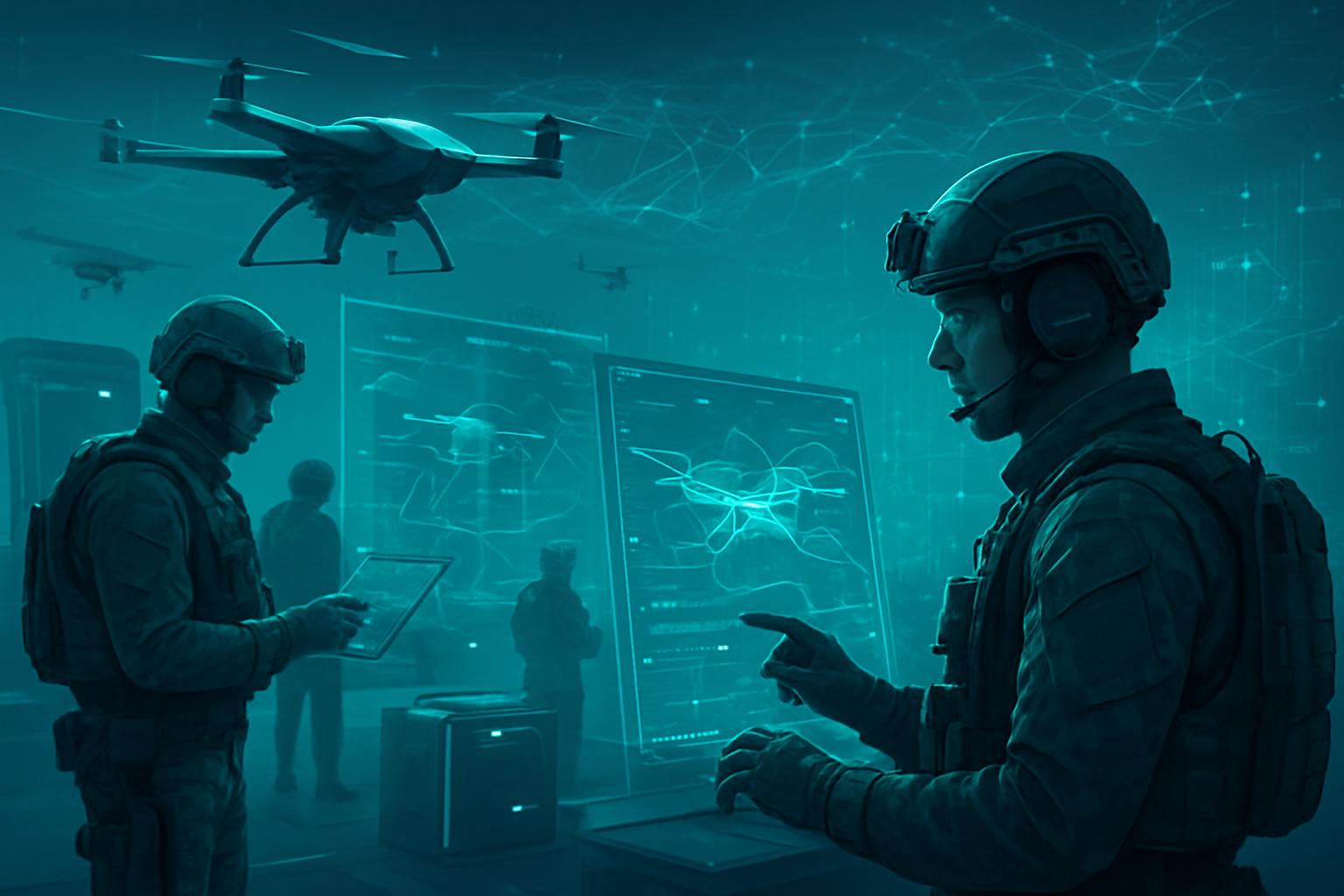
    The Indian Army is embarking on an ambitious and transformative journey, aiming to make every soldier proficient in drone operations and counter-drone strategies by 2027. This monumental undertaking, already well underway with significant milestones in 2025 and further plans for 2026, marks a pivotal shift in India's military doctrine, signaling a deep commitment to integrating cutting-edge technology into its core operational framework. As of November 5, 2025, this initiative is rapidly gaining momentum, positioning the Indian Army at the forefront of modern, technology-driven warfare.

    This strategic pivot is driven by the undeniable impact of unmanned aerial systems (UAS) in contemporary conflicts, where drones have proven to be indispensable assets for reconnaissance, surveillance, target acquisition, and even direct engagement. The Army's comprehensive training program is designed not just to operate drones, but to foster an ecosystem of innovation, self-reliance, and tactical superiority, ensuring its forces are future-ready for hybrid and technology-intensive battlefields.

    The Drone Revolution: Technical Deep Dive and Strategic Integration

    The Indian Army's specialized drone training program is a multi-faceted initiative, encompassing extensive infrastructure development, diverse drone technologies, and a rigorous curriculum. By January 2026, the Army plans to establish 19 dedicated drone training centers at premier military academies across the nation. This is complemented by the recent inauguration of a state-of-the-art drone training laboratory at the Madras Regimental Centre in June 2025, developed in collaboration with Chennai-based Zuppa Geo Navigation Pvt Ltd, and ongoing partnerships with academic powerhouses like IIT Ropar and IIT Guwahati. Furthermore, private entities such as DroneAcharya Aerial Innovations (NSE: DRONEACHARYA) are actively involved, providing specialized training courses for Army officials, as announced in January 2025.

    The training covers an extensive array of drone types, reflecting the diverse operational needs of the modern army. Soldiers are being trained on Nano and Micro Drones for basic piloting skills, Small and Medium Drones for day-and-night surveillance and reconnaissance, and First-Person View (FPV) Drones for both surveillance and "kamikaze-style" (loitering munition) missions. A critical focus is also on Swarm Drones, recognized as potent force multipliers capable of overwhelming enemy air defenses through coordinated assaults, and Kamikaze Drones for precision strikes. The Army is procuring approximately 1,000 drones across these categories, alongside 600 training simulators, highlighting the scale of this technological absorption. Indigenous drones like the DRDO Rustom, Nishant, Netra, Lakshya, and Pawan are central to this initiative, emphasizing the "Atmanirbhar Bharat" (self-reliant India) vision.

    This approach significantly differs from previous, more limited engagements with drone technology. The curriculum is comprehensive, extending beyond mere piloting to include drone creation, maintenance, and repair, as demonstrated by the 'Drone Workshop' launched by the Battle Axe Division in November 2025. Training modules also cover advanced aerial reconnaissance, real-time data interpretation, tactical employment in battlefield conditions, mission planning, and critical counter-drone strategies involving detection, jamming, and kinetic kill methodologies. The inclusion of Directorate General of Civil Aviation (DGCA) certifications within courses, such as the one conducted at IIT Ropar, further underscores the professional and forward-thinking nature of this program, blending military expertise with civilian regulatory standards.

    Internally, the Indian Army's commitment is evident. The year 2024 was declared the "Year of Technology Absorption," setting the stage for this ambitious integration. The Army Training Command (ARTRAC) is spearheading a strategic restructuring to embed UAVs and counter-UAV systems as standard weapon systems at the battalion level across various arms, indicating a deep-seated belief in the transformative power of these unmanned systems.

    Market Dynamics: Reshaping the AI and Defense Industry Landscape

    The Indian Army's aggressive push into drone technology and training is poised to significantly impact the AI and defense industry landscape, particularly within India. Domestic drone manufacturers and technology providers stand to gain immensely from this initiative. Companies like Zuppa Geo Navigation Pvt Ltd and DroneAcharya Aerial Innovations (NSE: DRONEACHARYA) are already benefiting from direct partnerships and training contracts, securing their positions as key players in India's burgeoning military drone ecosystem. The emphasis on indigenous development also provides a robust platform for the Defence Research and Development Organisation (DRDO) and other Indian startups to innovate and scale their offerings.

    This strategic shift has profound competitive implications. By fostering a strong indigenous drone industry, India aims to reduce its reliance on foreign suppliers, thereby enhancing its strategic autonomy and boosting the "Make in India" initiative. This could potentially disrupt traditional defense procurement channels that often favored international vendors. For major global AI labs and tech companies, while direct military contracts might remain within national boundaries, the advancements in drone AI for navigation, object recognition, real-time decision-making, and swarm intelligence developed in India could spill over into civilian applications, creating new market opportunities and competitive pressures.

    The expansion of the military drone market within India creates significant strategic advantages for local companies. It encourages investment in research and development, talent acquisition, and manufacturing capabilities, positioning India as a global hub for military drone technology. This robust domestic demand acts as a catalyst for innovation, potentially leading to breakthroughs that could find dual-use applications and open up new export markets in the future.

    Broader Implications: AI's March into Modern Warfare

    The Indian Army's drone initiative is a stark reflection of a broader global trend: the increasing integration of artificial intelligence and autonomous systems into military operations. Drones, particularly those equipped with advanced AI for real-time data analysis, object recognition, target identification, and autonomous navigation, are becoming central to modern warfare doctrines worldwide. This move by the Indian Army solidifies its commitment to leveraging AI as a critical component for national security.

    The impacts of this integration are multifaceted. It promises enhanced situational awareness for commanders, allowing for quicker and more informed decision-making. Precision strike capabilities are significantly improved with loitering munitions, offering a cost-effective alternative to traditional missiles. Furthermore, drones offer unprecedented logistical support in challenging terrains, delivering supplies to remote outposts and significantly reducing risks to human personnel. This initiative fundamentally modernizes India's warfare capabilities, adapting its forces for conflicts where unmanned systems will play a dominant role.

    However, the widespread adoption of military AI and drone technology also brings potential concerns. Ethical considerations surrounding autonomous weapons systems, the potential for escalation in conflicts, and the critical need for robust cybersecurity measures to protect drone systems from hacking and jamming are paramount. While the research highlights counter-drone training, the evolving nature of cyber threats demands continuous vigilance. This development can be compared to previous AI milestones, such as the early adoption of AI in intelligence analysis or logistics, but its direct integration into front-line combat operations marks a more profound and immediate transformation of the battlefield.

    The Horizon: Future Developments and Expert Predictions

    Looking ahead, the Indian Army's drone program is poised for continuous evolution. The full operationalization of the 19 drone training centers by January 2026 will be a critical near-term milestone, accelerating the pace of soldier proficiency. The long-term vision of universal drone proficiency by 2027 will necessitate sustained investment in training infrastructure, curriculum updates, and the continuous integration of newer drone technologies. The Army's focus on 33 "niche technologies," including cyber warfare, battlefield AI, and electronic warfare systems, indicates a holistic approach to future-proofing its forces.

    Potential applications and use cases on the horizon are vast. Advanced Intelligence, Surveillance, Target Acquisition, and Reconnaissance (ISTAR) capabilities will be crucial for border monitoring and anti-terrorism operations. High-altitude operations, as showcased by events like HIM-DRONE-A-THON in Ladakh, will see further development, crucial for securing challenging mountainous terrains. The emphasis on drone creation and repair also suggests a future where forward operating bases could become self-sufficient in drone maintenance and even rapid prototyping.

    Challenges remain, primarily in maintaining a robust and secure indigenous supply chain for drone components, ensuring continuous research and development to stay ahead of adversarial technologies, and establishing comprehensive ethical and regulatory frameworks for the deployment of increasingly autonomous systems. Experts predict a future battlefield characterized by sophisticated human-AI teaming, where soldiers and autonomous systems collaborate seamlessly. The Indian Army's initiative positions it well to lead in this paradigm shift, with a focus on not just acquiring technology, but deeply embedding it within its human capital.

    A New Era of Military Readiness

    The Indian Army's commitment to making every soldier a drone operator by 2027 represents a monumental leap in its modernization efforts and a definitive embrace of AI-driven warfare. This initiative, characterized by extensive training, indigenous development, and strategic partnerships, underscores a clear vision for a technologically advanced and self-reliant defense force. The establishment of numerous training centers, the diverse array of drones being integrated, and the comprehensive curriculum covering everything from piloting to maintenance and counter-drone strategies, collectively signify a profound transformation.

    This development is not merely an incremental upgrade; it is a fundamental redefinition of military readiness in the 21st century. It positions India as a significant player in the global race for AI and drone supremacy in defense, while simultaneously fostering a vibrant domestic defense technology industry. The long-term impact will be a more agile, responsive, and lethal Indian Army, capable of addressing complex security challenges with precision and innovation.

    As the training centers become fully operational in the coming months and the 2027 proficiency goal draws closer, the world will be watching closely. Key indicators to observe will include the continued pace of indigenous drone development, the effectiveness of integrated drone units in exercises, and the overall impact on India's strategic defense posture. This is more than just a training program; it is the genesis of a new era for the Indian Army, powered by the transformative potential of artificial intelligence and unmanned systems.


    This content is intended for informational purposes only and represents analysis of current AI developments.

    TokenRing AI delivers enterprise-grade solutions for multi-agent AI workflow orchestration, AI-powered development tools, and seamless remote collaboration platforms.
    For more information, visit https://www.tokenring.ai/.
  • AI on the Front Lines: How China, Ukraine, and the US are Redefining Modern Warfare

    AI on the Front Lines: How China, Ukraine, and the US are Redefining Modern Warfare

    The landscape of global military power is undergoing a profound transformation, driven by the rapid integration of artificial intelligence into defense systems. As of late 2025, China, Ukraine, and the United States stand at the forefront of this revolution, each leveraging AI with distinct strategies and immediate strategic implications. From autonomous combat vehicles and drone swarms to advanced intelligence analysis and decision-support systems, AI is not merely enhancing existing military capabilities but fundamentally reshaping the tempo and tools of war. This burgeoning reliance on intelligent systems is accelerating decision-making, multiplying force effectiveness through automation, and intensifying an already fierce global competition for technological supremacy.

    The immediate significance of these deployments is multifaceted: AI enables faster processing of vast data streams, providing commanders with real-time insights and dramatically reducing the time from target identification to operational execution. Autonomous and unmanned systems are increasingly deployed to minimize human exposure in high-risk missions, boosting operational efficiency and preserving human lives. However, this rapid technological advancement is simultaneously fueling an intense AI arms race, reshaping global power dynamics and raising urgent ethical questions concerning autonomy, human control, and accountability in lethal decision-making.

    The Technical Edge: A Deep Dive into Military AI Capabilities

    The technical advancements in military AI across China, Ukraine, and the US reveal distinct priorities and cutting-edge capabilities that are setting new benchmarks for intelligent warfare. These developments represent a significant departure from traditional military approaches, emphasizing speed, data analysis, and autonomous action.

    China's People's Liberation Army (PLA) is aggressively pursuing "intelligentized warfare," aiming for global AI military leadership by 2030. Their advancements include the deployment of autonomous combat vehicles, such as those showcased by state-owned Norinco, which can perform combat-support operations using advanced AI models like DeepSeek. The PLA is also investing heavily in sophisticated drone swarms capable of autonomous target tracking and coordinated operations with minimal human intervention, particularly against challenging "low, slow, small" threats. Furthermore, China is developing AI-enabled Intelligence, Surveillance, and Reconnaissance (ISR) systems that fuse data from diverse sources—satellite imagery, signals intelligence, and human intelligence—to provide unprecedented battlefield situational awareness and rapid target detection. A key technical differentiator is China's development of "command brains" and visually immersive command centers, where AI-powered decision-support tools can assess thousands of battlefield scenarios in mere seconds, a task that would take human teams significantly longer. This focus on "algorithmic sovereignty" through domestic AI models aims to reduce reliance on Western technology and consolidate national control over critical digital infrastructure.

    Ukraine, thrust into a real-world testing ground for AI in conflict, has demonstrated remarkable agility in integrating AI-enabled technologies, primarily to augment human capabilities and reduce personnel exposure. The nation has rapidly evolved its unmanned aerial and ground-based drones from mere reconnaissance tools to potent strike platforms. Significant technical progress has been made in autonomous navigation, including GPS-denied navigation and advanced drone swarming techniques. Ukraine has procured and domestically produced millions of AI-enhanced drones in 2024, demonstrating a rapid integration cycle. AI integration has dramatically boosted the strike accuracy of First-Person View (FPV) drones from an estimated 30-50% to around 80%, a critical improvement in combat effectiveness. Beyond direct combat, AI assists in open-source intelligence analysis, helping to identify and counter disinformation campaigns, and strengthens cybersecurity and electronic warfare operations by enhancing data encryption and enabling swifter responses to cyber threats. Ukraine's approach prioritizes a "human-in-the-loop" for lethal decisions, yet the rapid pace of development suggests that the feasibility of full autonomy is growing.

    The United States is strategically investing in AI-powered military systems to maintain its technological edge and deter aggression. The Pentagon's Replicator program, aiming to deploy thousands of AI-driven drones by August 2025, underscores a commitment to autonomous systems across various platforms. Technically, the US is applying AI to optimize supply chains through predictive logistics, enhance intelligence analysis by recognizing patterns beyond human capacity, and develop advanced jamming and communications disruption capabilities in electronic warfare. In cybersecurity, AI is used for automated network penetration and defense. Collaborations with industry leaders are also yielding results: Northrop Grumman (NYSE: NOC) is leveraging physics-based AI with Luminary Cloud to drastically reduce the design time for complex space systems. IBM (NYSE: IBM) is launching a new large language model (LLM) specifically tailored for defense and national security, trained on domain-specific data, to improve decision-making in air-gapped, classified, and edge environments. The U.S. Army is further accelerating its data maturity strategy by rolling out an enterprise AI workspace and democratizing low-code/no-code platforms, empowering soldiers to develop their own AI systems and automate tasks, indicating a shift towards widespread AI integration at the operational level.

    AI's Shifting Sands: Impact on Tech Giants and Startups

    The escalating military AI race is creating significant ripple effects across the technology industry, influencing the strategies of established tech giants, defense contractors, and agile AI startups alike. The demand for advanced AI capabilities is forging new partnerships, intensifying competition, and potentially disrupting traditional market dynamics.

    Major defense contractors like Lockheed Martin (NYSE: LMT), Raytheon Technologies (NYSE: RTX), and Northrop Grumman (NYSE: NOC) stand to benefit immensely from these developments. Their long-standing relationships with government defense agencies, coupled with their expertise in integrating complex systems, position them as prime beneficiaries for developing and deploying AI-powered hardware and software. Northrop Grumman's collaboration with Luminary Cloud on physics-based AI for space system design exemplifies how traditional defense players are leveraging cutting-edge AI for strategic advantage. These companies are investing heavily in AI research and development, acquiring AI startups, and partnering with commercial AI leaders to maintain their competitive edge in this evolving landscape.

    Beyond traditional defense, commercial AI labs and tech giants like IBM (NYSE: IBM), Google (NASDAQ: GOOGL), Microsoft (NASDAQ: MSFT), and Amazon (NASDAQ: AMZN) are finding their advanced AI research increasingly relevant to national security. IBM's development of a specialized large language model for defense and national security highlights a growing trend of commercial AI technologies being adapted for military use. While many commercial tech giants maintain ethical guidelines against direct involvement in autonomous lethal weapons, their foundational AI research in areas like computer vision, natural language processing, and advanced robotics is indispensable for military applications such as intelligence analysis, logistics, and decision support. This creates a delicate balance between commercial interests and national security demands, often leading to partnerships where commercial firms provide underlying AI infrastructure or expertise.

    The landscape is also ripe for disruption by specialized AI startups. Companies focusing on niche areas like autonomous navigation, drone swarm intelligence, advanced sensor fusion, or secure AI for edge computing are finding significant opportunities. Ukraine's wartime innovations, often driven by agile tech companies and volunteer groups, demonstrate how rapid prototyping and deployment of AI solutions can emerge outside traditional procurement cycles. These startups, often backed by venture capital, can quickly develop and iterate on AI solutions, potentially outpacing larger, more bureaucratic organizations. However, they also face challenges in scaling, securing long-term government contracts, and navigating the stringent regulatory and ethical frameworks surrounding military AI. The competitive implications are clear: companies that can develop robust, secure, and ethically sound AI solutions will gain significant market positioning and strategic advantages in the burgeoning military AI sector.

    Wider Significance: Ethical Crossroads and Global Power Shifts

    The rapid integration of AI into military applications by China, Ukraine, and the US carries profound wider significance, pushing the boundaries of ethical considerations, reshaping global power dynamics, and setting new precedents for future conflicts. This development is not merely an incremental technological upgrade but a fundamental shift in the nature of warfare, echoing the transformative impacts of previous military innovations.

    The most pressing concern revolves around the ethical implications of autonomous lethal weapons systems (LAWS). While all three nations publicly maintain a "human-in-the-loop" or "human-on-the-loop" approach for lethal decision-making, the technical capabilities are rapidly advancing towards greater autonomy. The potential for AI systems to make life-or-death decisions without direct human intervention raises critical questions about accountability, bias in algorithms, and the potential for unintended escalation. The US has endorsed a "blueprint for action" on responsible AI use in military settings, advocating for human involvement, particularly concerning nuclear weapons and preventing AI use in weapons of mass destruction by non-state actors. However, the practical application of these principles in the heat of conflict remains a significant challenge, especially given Ukraine's rapid deployment of AI-enhanced drones. China's pursuit of "intelligentized warfare" and the systematic integration of AI suggest a drive for battlefield advantage that could push the boundaries of autonomy, even as Beijing publicly commits to human control.

    This AI arms race fits squarely into broader AI trends characterized by intense geopolitical competition for technological leadership. The computational demands of advanced AI create critical dependencies on semiconductor production, underscoring the strategic importance of key manufacturing hubs like Taiwan. The US has responded to China's advancements with restrictions on investments in China's AI and semiconductor sectors, aiming to limit its military AI development. However, China is accelerating domestic research to mitigate these effects, highlighting a global race for "algorithmic sovereignty" and self-sufficiency in critical AI components. The impact on international stability is significant, as the development of superior AI capabilities could fundamentally alter the balance of power, potentially leading to increased assertiveness from nations with perceived technological advantages.

    Comparisons to previous AI milestones are instructive. Just as the development of precision-guided munitions transformed warfare in the late 20th century, AI-driven systems are now poised to offer unprecedented levels of precision, speed, and analytical capability. However, unlike previous technologies, AI introduces a layer of cognitive autonomy that challenges traditional command and control structures and international humanitarian law. The current developments are seen as a critical inflection point, moving beyond AI as merely an analytical tool to AI as an active, decision-making agent in conflict. The potential for AI to be used in cyber warfare, disinformation campaigns, and electronic warfare further complicates the landscape, blurring the lines between kinetic and non-kinetic conflict and raising new challenges for international arms control and stability.

    The Horizon of Conflict: Future Developments in Military AI

    The trajectory of military AI suggests a future where intelligent systems will become even more deeply embedded in defense strategies, promising both revolutionary capabilities and unprecedented challenges. Experts predict a continuous escalation in the sophistication and autonomy of these systems, pushing the boundaries of what is technically feasible and ethically permissible.

    In the near term, we can expect continued advancements in autonomous drone swarms, with improved coordination, resilience, and the ability to operate in complex, contested environments. These swarms will likely incorporate more sophisticated AI for target recognition, threat assessment, and adaptive mission planning. The Pentagon's Replicator program is a clear indicator of this immediate focus. We will also see further integration of AI into command and control systems, evolving from decision-support tools to more proactive "AI co-pilots" that can suggest complex strategies and execute tasks with minimal human oversight, particularly in time-critical scenarios. The development of specialized large language models for defense, like IBM's initiative, will enhance intelligence analysis, operational planning, and communication in secure environments.

    Long-term developments are likely to involve the proliferation of fully autonomous weapons systems, even as ethical debates continue. The increasing feasibility demonstrated in real-world conflicts, coupled with the strategic imperative to reduce human casualties and gain battlefield advantage, will exert pressure towards greater autonomy. We could see the emergence of AI-powered "robot soldiers" or highly intelligent, networked autonomous platforms capable of complex maneuver, reconnaissance, and even engagement without direct human input. Beyond kinetic applications, AI will play an increasingly critical role in cyber defense and offense, electronic warfare, and sophisticated disinformation campaigns, creating a multi-domain AI arms race. Predictive logistics and maintenance will become standard, optimizing military supply chains and ensuring equipment readiness through advanced data analytics and machine learning.

    However, significant challenges need to be addressed. Ensuring the ethical deployment of AI, particularly concerning accountability and preventing unintended escalation, remains paramount. The development of robust explainable AI (XAI) is crucial for human operators to understand and trust AI decisions. Cybersecurity threats to AI systems themselves, including adversarial attacks that could manipulate or disable military AI, represent a growing vulnerability. Furthermore, the high computational and data requirements of advanced AI necessitate continuous investment in infrastructure and talent. Experts predict that the nation that masters the ethical and secure integration of AI into its military will gain a decisive strategic advantage, fundamentally altering the global balance of power for decades to come. The coming years will be critical in shaping the norms and rules governing this new era of intelligent warfare.

    The Dawn of Intelligent Warfare: A Concluding Assessment

    The current utilization of military AI by China, Ukraine, and the United States marks a pivotal moment in the history of warfare, ushering in an era of intelligent conflict where technological prowess increasingly dictates strategic advantage. The key takeaways from this analysis underscore a global race for AI supremacy, where each nation is carving out its own niche in the application of advanced algorithms and autonomous systems. China's ambitious pursuit of "intelligentized warfare" through domestic AI models and comprehensive integration, Ukraine's agile, battle-tested innovations in unmanned systems, and the US's strategic investments to maintain technological overmatch collectively highlight AI as the critical differentiator in modern military strength.

    This development's significance in AI history cannot be overstated. It represents a transition from AI as a mere analytical tool to an active participant in military operations, profoundly impacting decision-making cycles, force projection, and the protection of human lives. The ethical quandaries surrounding autonomous lethal weapons, the imperative for human control, and the potential for algorithmic bias are now at the forefront of international discourse, demanding urgent attention and the establishment of robust regulatory frameworks. The intensifying AI arms race, fueled by these advancements, is reshaping geopolitical landscapes and accelerating competition for critical resources like semiconductors and AI talent.

    Looking ahead, the long-term impact of military AI will likely be characterized by a continuous evolution of autonomous capabilities, a blurring of lines between human and machine decision-making, and an increasing reliance on networked intelligent systems for multi-domain operations. What to watch for in the coming weeks and months includes further announcements on drone swarm deployments, the development of new AI-powered decision-support tools, and ongoing international discussions on the governance and responsible use of military AI. The ethical framework, particularly regarding the "human-in-the-loop" principle, will be under constant scrutiny as technical capabilities push the boundaries of autonomy. The interplay between commercial AI innovation and military application will also be a critical area to monitor, as tech giants and startups continue to shape the foundational technologies that underpin this new era of intelligent warfare.


    This content is intended for informational purposes only and represents analysis of current AI developments.

    TokenRing AI delivers enterprise-grade solutions for multi-agent AI workflow orchestration, AI-powered development tools, and seamless remote collaboration platforms.
    For more information, visit https://www.tokenring.ai/.