Tag: AI Networking

  • The End of the Copper Era: Broadcom and Marvell Usher in the Age of Co-Packaged Optics for AI Supercomputing

    The End of the Copper Era: Broadcom and Marvell Usher in the Age of Co-Packaged Optics for AI Supercomputing

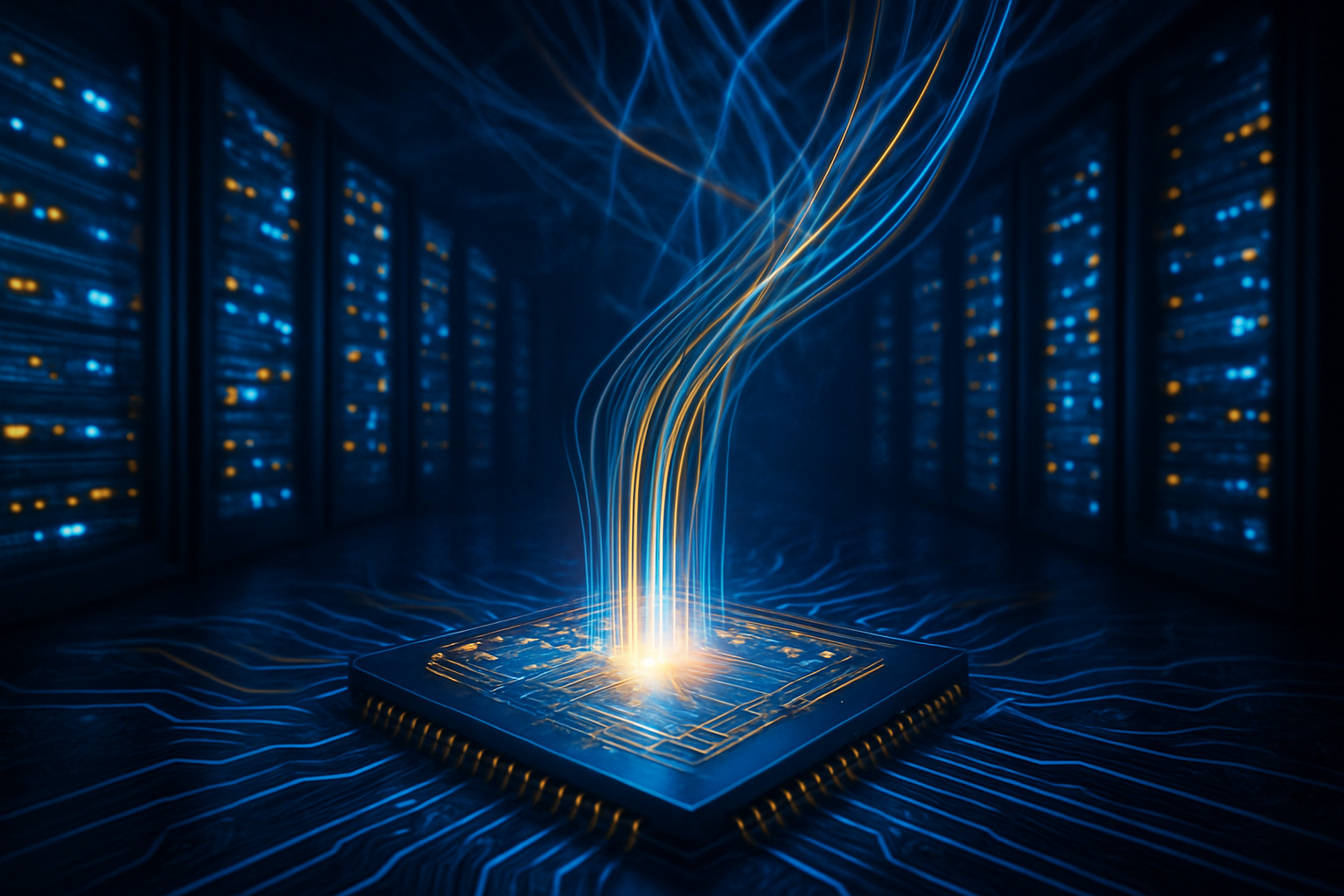
    As artificial intelligence models grow from billions to trillions of parameters, the physical infrastructure supporting them has hit a "power wall." Traditional copper interconnects and pluggable optical modules, which have served as the backbone of data centers for decades, are no longer able to keep pace with the massive bandwidth demands and extreme energy requirements of next-generation AI clusters. In a landmark shift for the industry, semiconductor giants Broadcom Inc. (NASDAQ: AVGO) and Marvell Technology, Inc. (NASDAQ: MRVL) have successfully commercialized Co-Packaged Optics (CPO), a revolutionary technology that integrates light-based communication directly into the heart of the chip.

    This transition marks a pivotal moment in the evolution of data centers. By replacing electrical signals traveling over bulky copper wires with laser-driven light pulses integrated onto the silicon substrate, Broadcom and Marvell are enabling AI clusters to scale far beyond previous physical limits. The move to CPO is not just an incremental speed boost; it is a fundamental architectural redesign that reduces interconnect power consumption by up to 70% and drastically improves the reliability of the massive "back-end" fabrics that link thousands of GPUs and AI accelerators together.

    The Light on the Chip: Breaking the 100-Terabit Barrier

    At the core of this advancement is the integration of Silicon Photonics—the process of manufacturing optical components like lasers, modulators, and detectors using standard CMOS silicon fabrication techniques. Previously, optical communication required separate, "pluggable" modules that sat on the faceplate of a switch. These modules converted electrical signals from the processor into light. However, at speeds of 200G per lane, the electrical signals degrade so rapidly that they require high-power Digital Signal Processors (DSPs) to "clean" the signal before it even reaches the optics. Co-Packaged Optics solves this by placing the optical engine on the same package as the switch ASIC, shortening the electrical path to mere microns and eliminating the need for power-hungry re-timers.

    Broadcom has taken a decisive lead in this space with its third-generation CPO platform, the Tomahawk 6 "Davisson." As of early 2026, the Davisson is the industry’s first 102.4-Tbps switch, utilizing 200G-per-lane optical interfaces integrated via Taiwan Semiconductor Manufacturing Company (NYSE: TSM) and its COUPE (Compact Universal Photonic Engine) technology. This achievement follows the successful field verification of Broadcom’s 51.2T "Bailly" system, which logged over one million cumulative port hours with hyperscalers like Meta Platforms, Inc. (NASDAQ: META). The ability to move 100 terabits of data through a single chip while slashing power consumption is a feat that traditional copper-based architectures simply cannot replicate.

    Marvell has pursued a parallel but specialized strategy, focusing on its "Nova" optical engines and Teralynx switch line. While Broadcom dominates the standard Ethernet switch market, Marvell has pioneered custom CPO solutions for AI accelerators. Their latest "Nova 2" DSPs allow for 1.6-Tbps optical engines that are integrated directly onto the same substrate as the AI processor and High Bandwidth Memory (HBM). This "Optical I/O" approach allows an AI server to communicate across multiple racks with near-zero latency, effectively turning an entire data center into a single, massive GPU. Unlike previous approaches that treated optics as an afterthought, Marvell’s integration makes light an intrinsic part of the compute cycle.

    Realigning the Silicon Power Structure

    The commercialization of CPO is creating a clear divide between the winners and losers of the AI infrastructure boom. Companies like Broadcom and Marvell are solidifying their positions as the indispensable architects of the AI era, moving beyond simple chip design into full-stack interconnect providers. By controlling the optical interface, these companies are capturing value that previously belonged to independent optical module manufacturers. For hyperscale giants like Alphabet Inc. (NASDAQ: GOOGL) and Microsoft Corp. (NASDAQ: MSFT), the shift to CPO is a strategic necessity to manage the soaring electricity costs and thermal management challenges associated with their multi-billion-dollar AI investments.

    The competitive landscape is also shifting for NVIDIA Corp. (NASDAQ: NVDA). While NVIDIA’s proprietary NVLink has long been the gold standard for intra-rack GPU communication, the emergence of CPO-enabled Ethernet is providing a viable, open-standard alternative for "scale-out" and "scale-up" networking. Broadcom’s Scale-Up Ethernet (SUE) framework, powered by CPO, now allows massive clusters of up to 1,024 nodes to communicate with the efficiency of a single machine. This creates a more competitive market where cloud providers are no longer locked into a single vendor's proprietary networking stack, potentially disrupting NVIDIA’s end-to-end dominance in the AI cluster market.

    A Greener, Faster Horizon for Artificial Intelligence

    The wider significance of Co-Packaged Optics extends beyond just speed; it is perhaps the most critical technology for the environmental sustainability of AI. As the world grows concerned over the massive power consumption of AI data centers, CPO offers a rare "free lunch"—higher performance for significantly less energy. By eliminating the "DSP tax" associated with traditional pluggable modules, CPO can save hundreds of megawatts of power across a single large-scale deployment. This energy efficiency is the only way for the industry to reach the 200.0T and 400.0T bandwidth levels expected in the late 2020s without building dedicated power plants for every data center.

    Furthermore, this transition represents a major milestone in the history of computing. Much like the transition from vacuum tubes to transistors, the shift from electrical to optical chip-to-chip communication represents a phase change in how information is processed. We are moving toward a future where "computing" and "networking" are no longer distinct categories. In the CPO era, the network is the computer. This shift mirrors earlier breakthroughs like the introduction of HBM, which solved the "memory wall"; now, CPO is solving the "interconnect wall," ensuring that the rapid progress of AI models is not throttled by the physical limitations of copper.

    The Road to 200T and Beyond

    Looking ahead, the near-term focus will be on the mass deployment of 102.4T CPO systems throughout 2026. Industry experts predict that as these systems become the standard, the focus will shift toward even tighter integration. We are likely to see "Optical Chiplets" where the laser itself is integrated into the silicon, though the current "External Laser" (ELSFP) approach used by Broadcom remains the favorite for its serviceability. By 2027, the industry is expected to begin sampling 204.8T switches, a milestone that would be physically impossible without the density provided by Silicon Photonics.

    The long-term challenge remains the manufacturing yield of these highly complex, heterogeneous packages. Combining high-speed logic, memory, and photonics into a single package is a feat of extreme engineering that requires flawless execution from foundry partners. However, as the ecosystem around the Ultra Accelerator Link (UALink) and other open standards matures, the hurdles of interoperability and multi-vendor support are being cleared. The next major frontier will be bringing optical I/O directly into consumer-grade hardware, though that remains a goal for the end of the decade.

    A Brighter Future for AI Networking

    The successful commercialization of Co-Packaged Optics by Broadcom and Marvell signals the definitive end of the "Copper Era" for high-performance AI networking. By successfully integrating light into the chip package, these companies have provided the essential plumbing needed for the next generation of generative AI and autonomous systems. The significance of this development cannot be overstated: it is the primary technological enabler that allows AI scaling to continue its exponential trajectory while keeping power budgets within the realm of reality.

    In the coming weeks and months, the industry will be watching for the first large-scale performance benchmarks of the TH6-Davisson and Nova 2 systems as they go live in flagship AI clusters. As these results emerge, the shift from pluggable optics to CPO is expected to accelerate, fundamentally changing the hardware profile of the modern data center. For the AI industry, the future is no longer just digital—it is optical.


    This content is intended for informational purposes only and represents analysis of current AI developments.

    TokenRing AI delivers enterprise-grade solutions for multi-agent AI workflow orchestration, AI-powered development tools, and seamless remote collaboration platforms.
    For more information, visit https://www.tokenring.ai/.
  • Broadcom Unleashes Thor Ultra NIC: A New Era for AI Networking with Ultra Ethernet

    Broadcom Unleashes Thor Ultra NIC: A New Era for AI Networking with Ultra Ethernet

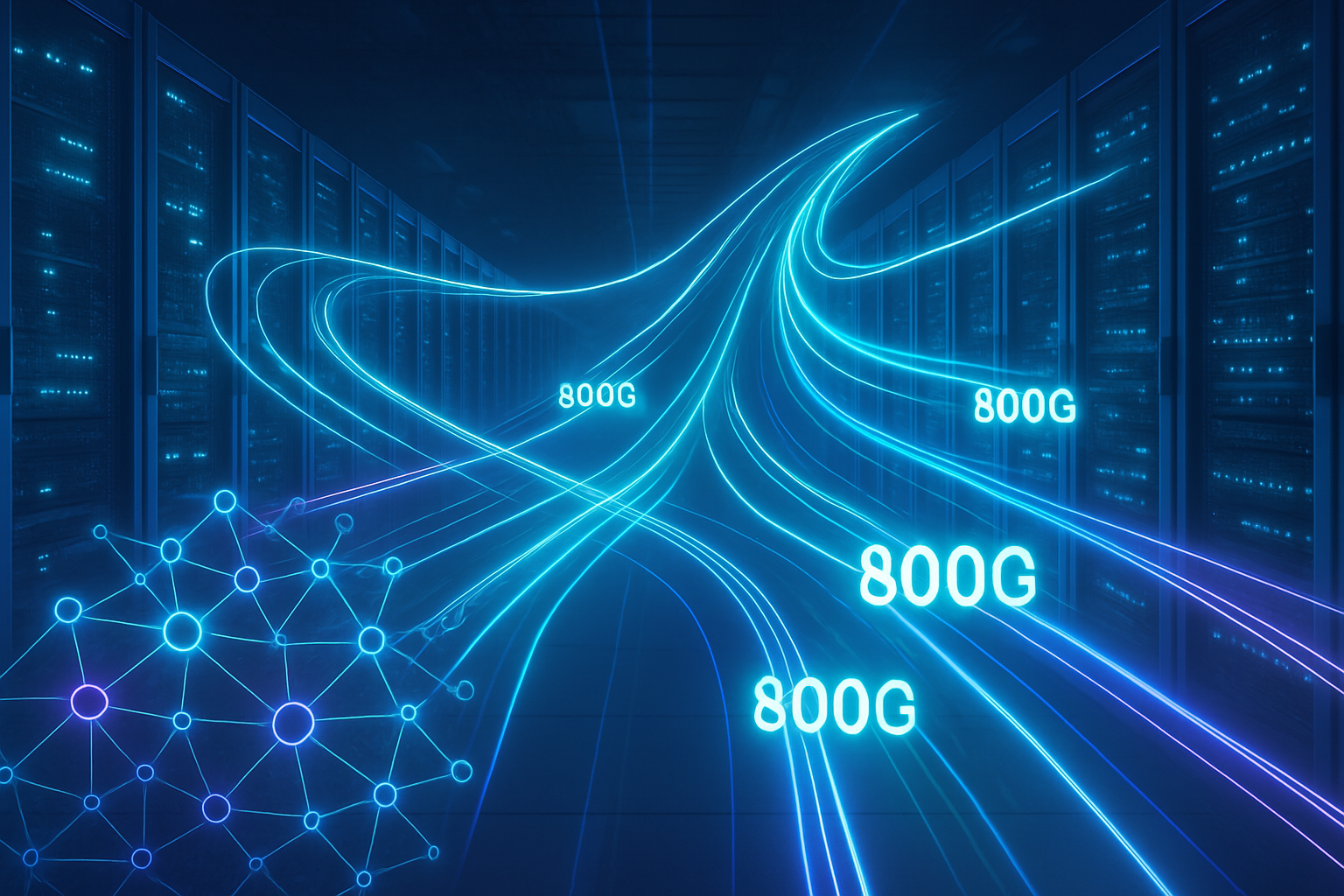
    SAN JOSE, CA – October 14, 2025 – Broadcom (NASDAQ: AVGO) today announced the sampling of its groundbreaking Thor Ultra 800G AI Ethernet Network Interface Card (NIC), a pivotal development set to redefine networking infrastructure for artificial intelligence (AI) workloads. This release is poised to accelerate the deployment of massive AI clusters, enabling the seamless interconnection of hundreds of thousands of accelerator processing units (XPUs) to power the next generation of trillion-parameter AI models. The Thor Ultra NIC's compliance with Ultra Ethernet Consortium (UEC) specifications heralds a significant leap in modernizing Remote Direct Memory Access (RDMA) for the demanding, high-scale environments of AI.

    The Thor Ultra NIC represents a strategic move by Broadcom to solidify its position at the forefront of AI networking, offering an open, interoperable, and high-performance solution that directly addresses the bottlenecks plaguing current AI data centers. Its introduction promises to enhance scalability, efficiency, and reliability for training and operating large language models (LLMs) and other complex AI applications, fostering an ecosystem free from vendor lock-in and proprietary limitations.

    Technical Prowess: Unpacking the Thor Ultra NIC's Innovations

    The Broadcom Thor Ultra NIC is an engineering marvel designed from the ground up to meet the insatiable demands of AI. At its core, it provides 800 Gigabit Ethernet bandwidth, effectively doubling the performance compared to previous generations, a critical factor for data-intensive AI computations. It leverages a PCIe Gen6 x16 host interface to ensure maximum throughput to the host system, eliminating potential data transfer bottlenecks.

    A key technical differentiator is its 200G/100G PAM4 SerDes, which boasts support for long-reach passive copper and an industry-low Bit Error Rate (BER). This ensures unparalleled link stability, directly translating to faster job completion times for AI workloads. The Thor Ultra is available in standard PCIe CEM and OCP 3.0 form factors, offering broad compatibility with existing and future server designs. Security is also paramount, with line-rate encryption and decryption offloaded by a Platform Security Processor (PSP), alongside secure boot functionality with signed firmware and device attestation.

    What truly sets Thor Ultra apart is its deep integration with Ultra Ethernet Consortium (UEC) specifications. As a founding member of the UEC, Broadcom has infused the NIC with UEC-compliant, advanced RDMA innovations that address the limitations of traditional RDMA. These include packet-level multipathing for efficient load balancing, out-of-order packet delivery to maximize fabric utilization by delivering packets directly to XPU memory without strict ordering, and selective retransmission to improve efficiency by retransmitting only lost packets. Furthermore, a programmable congestion control pipeline supports both receiver-based and sender-based algorithms, working in concert with UEC-compliant switches like Broadcom's Tomahawk 5 and Tomahawk 6 to dynamically manage network traffic and prevent congestion. These features fundamentally modernize RDMA, which often lacked the specific capabilities—like higher scale, bandwidth density, and fast reaction to congestion—required by modern AI and HPC workloads.

    Reshaping the AI Industry Landscape

    The introduction of the Thor Ultra NIC holds profound implications for AI companies, tech giants, and startups alike. Companies heavily invested in building and operating large-scale AI infrastructure, such as Dell Technologies (NYSE: DELL), Hewlett Packard Enterprise (NYSE: HPE), and Lenovo (HKEX: 0992), stand to significantly benefit. Their ability to integrate Thor Ultra into their server and networking solutions will allow them to offer superior performance and scalability to their AI customers. This development could accelerate the pace of AI research and deployment across various sectors, from autonomous driving to drug discovery and financial modeling.

    Competitively, this move intensifies Broadcom's rivalry with Nvidia (NASDAQ: NVDA) in the critical AI networking domain. While Nvidia has largely dominated with its InfiniBand solutions, Broadcom's UEC-compliant Ethernet approach offers an open alternative that appeals to customers seeking to avoid vendor lock-in. This could lead to a significant shift in market share, as analysts predict substantial growth for Broadcom in compute and networking AI. For startups and smaller AI labs, the open ecosystem fostered by UEC and Thor Ultra means greater flexibility and potentially lower costs, as they can integrate best-of-breed components rather than being tied to a single vendor's stack. This could disrupt existing products and services that rely on proprietary networking solutions, pushing the industry towards more open and interoperable standards.

    Wider Significance and Broad AI Trends

    Broadcom's Thor Ultra NIC fits squarely into the broader AI landscape's trend towards increasingly massive models and the urgent need for scalable, efficient, and open infrastructure. As AI models like LLMs grow to trillions of parameters, the networking fabric connecting the underlying XPUs becomes the ultimate bottleneck. Thor Ultra directly addresses this by enabling unprecedented scale and bandwidth density within an open Ethernet framework.

    This development underscores the industry's collective effort, exemplified by the UEC, to standardize AI networking and move beyond proprietary solutions that have historically limited innovation and increased costs. The impacts are far-reaching: it democratizes access to high-performance AI infrastructure, potentially accelerating research and commercialization across the AI spectrum. Concerns might arise regarding the complexity of integrating new UEC-compliant technologies into existing data centers, but the promise of enhanced performance and interoperability is a strong driver for adoption. This milestone can be compared to previous breakthroughs in compute or storage, where standardized, high-performance interfaces unlocked new levels of capability, fundamentally altering what was possible in AI.

    The Road Ahead: Future Developments and Predictions

    The immediate future will likely see the Thor Ultra NIC being integrated into a wide array of server and networking platforms from Broadcom's partners, including Accton Technology (TPE: 2345), Arista Networks (NYSE: ANET), and Supermicro (NASDAQ: SMCI). This will pave the way for real-world deployments in hyperscale data centers and enterprise AI initiatives. Near-term developments will focus on optimizing software stacks to fully leverage the NIC's UEC-compliant features, particularly its advanced RDMA capabilities.

    Longer-term, experts predict that the open, UEC-driven approach championed by Thor Ultra will accelerate the development of even more sophisticated AI-native networking protocols and hardware. Potential applications include distributed AI training across geographically dispersed data centers, real-time inference for edge AI deployments, and the creation of truly composable AI infrastructure where compute, memory, and networking resources can be dynamically allocated. Challenges will include ensuring seamless interoperability across a diverse vendor ecosystem and continuously innovating to keep pace with the exponential growth of AI model sizes. Industry pundits foresee a future where Ethernet, enhanced by UEC specifications, becomes the dominant fabric for AI, effectively challenging and potentially surpassing proprietary interconnects in terms of scale, flexibility, and cost-effectiveness.

    A Defining Moment for AI Infrastructure

    The launch of Broadcom's Thor Ultra 800G AI Ethernet NIC is a defining moment for AI infrastructure. It represents a significant stride in addressing the escalating networking demands of modern AI, offering a robust, high-bandwidth, and UEC-compliant solution. By modernizing RDMA with features like out-of-order packet delivery and programmable congestion control, Thor Ultra empowers organizations to build and scale AI clusters with unprecedented efficiency and openness.

    This development underscores a broader industry shift towards open standards and interoperability, promising to democratize access to high-performance AI infrastructure and foster greater innovation. The competitive landscape in AI networking is undoubtedly heating up, with Broadcom's strategic move positioning it as a formidable player. In the coming weeks and months, the industry will keenly watch the adoption rates of Thor Ultra, its integration into partner solutions, and the real-world performance gains it delivers in large-scale AI deployments. Its long-term impact could be nothing less than a fundamental reshaping of how AI models are trained, deployed, and scaled globally.


    This content is intended for informational purposes only and represents analysis of current AI developments.

    TokenRing AI delivers enterprise-grade solutions for multi-agent AI workflow orchestration, AI-powered development tools, and seamless remote collaboration platforms.
    For more information, visit https://www.tokenring.ai/.