Tag: AI PCs

  • Acer’s AI Vision Unveiled: Next@Acer 2025 Charts a New Course for Intelligent Computing

    Acer’s AI Vision Unveiled: Next@Acer 2025 Charts a New Course for Intelligent Computing

    The Next@Acer 2025 event, a dual-stage showcase spanning IFA Berlin in September and a dedicated regional presentation in Sri Lanka in October, has firmly established Acer's aggressive pivot towards an AI-centric future. Concluding before the current date of November 6, 2025, these events unveiled a sweeping array of AI-powered devices and solutions, signaling a profound shift in personal computing, enterprise solutions, and even healthcare. The immediate significance is clear: AI is no longer a peripheral feature but the foundational layer for Acer's next generation of products, promising enhanced productivity, creativity, and user experience across diverse markets, with a strategic emphasis on emerging tech landscapes like Sri Lanka.

    The Dawn of On-Device AI: Technical Prowess and Product Innovation

    At the heart of Next@Acer 2025 was the pervasive integration of artificial intelligence, epitomized by the new wave of Copilot+ PCs. These machines represent a significant leap forward, leveraging cutting-edge processors from Intel (NASDAQ: INTC) and AMD (NASDAQ: AMD) specifically designed for AI workloads. Acer's latest Copilot+ PCs feature Intel's Core Ultra series 2 (Pencil Lake) and AMD's Ryzen AI 7 350 series (Ryzen AI 300), each equipped with powerful Neural Processing Units (NPUs) capable of delivering up to an astonishing 120 Trillions of Operations Per Second (TOPS). This substantial on-device AI processing power enables a suite of advanced features, from real-time language translation and sophisticated image generation to enhanced security protocols and personalized productivity tools, all executed locally without constant cloud reliance.

    Beyond traditional laptops, Acer showcased an expanded AI ecosystem. The Chromebook Plus Spin 514, powered by the MediaTek Kompanio Ultra 910 processor with an integrated NPU, brings advanced Google AI experiences, such as gesture control and improved image generation, to the Chromebook platform. Gaming also received a significant AI injection, with the Predator and Nitro lineups featuring the latest Intel Core Ultra 9 285HX and AMD Ryzen 9 9950X3D processors, paired with NVIDIA (NASDAQ: NVDA) GeForce RTX 50 Series GPUs, including the formidable RTX 5090. A standout was the Predator Helios 18P AI Hybrid, an AI workstation gaming laptop that blurs the lines between high-performance gaming and professional AI development. For specialized AI tasks, the Veriton GN100 AI Mini Workstation, built on the NVIDIA GB10 Grace Blackwell Superchip, offers an astounding 1 petaFLOP of FP4 AI compute, designed for running large AI models locally at the edge. This comprehensive integration of NPUs and dedicated AI hardware across its product lines marks a clear departure from previous generations, where AI capabilities were often cloud-dependent or limited to discrete GPUs, signifying a new era of efficient, pervasive, and secure on-device AI.

    Reshaping the Competitive Landscape: Implications for Tech Giants and Startups

    Acer's aggressive push into the AI PC market positions it as a significant player in a rapidly evolving competitive landscape. Companies like Acer (Taiwan Stock Exchange: 2353) stand to gain substantially by being early movers in delivering integrated AI experiences. This development directly benefits chip manufacturers such as Intel, AMD, and NVIDIA, whose advanced processors and NPUs are the backbone of these new devices. Microsoft (NASDAQ: MSFT) also sees a major win, as its Copilot+ platform is deeply embedded in these new PCs, extending its AI ecosystem directly to the user's desktop.

    The competitive implications for major AI labs and tech companies are profound. As on-device AI capabilities grow, there could be a shift in the balance between cloud-based and edge-based AI processing. While cloud AI will remain crucial for massive training models, the ability to run sophisticated AI locally could reduce latency, enhance privacy, and enable new applications, potentially disrupting existing services that rely solely on cloud infrastructure. Startups focusing on AI applications optimized for NPUs or those developing novel on-device AI solutions could find fertile ground. However, companies heavily invested in purely cloud-centric AI might face pressure to adapt their offerings to leverage the growing power of edge AI. This strategic move by Acer and its partners is poised to redefine user expectations for what a personal computer can do, setting a new benchmark for performance and intelligent interaction.

    A New Horizon for AI: Broader Significance and Societal Impact

    The Next@Acer 2025 showcases represent more than just product launches; they signify a critical inflection point in the broader AI landscape. The emphasis on Copilot+ PCs and dedicated AI hardware underscores the industry's collective move towards "AI PCs" as the next major computing paradigm. This trend aligns with the growing demand for more efficient, personalized, and private AI experiences, where sensitive data can be processed locally without being sent to the cloud. The integration of AI into devices like the Veriton GN100 AI Mini Workstation also highlights the increasing importance of edge AI, enabling powerful AI capabilities in compact form factors suitable for various industries and research.

    The impacts are far-reaching. For individuals, these AI PCs promise unprecedented levels of productivity and creativity, automating mundane tasks, enhancing multimedia creation, and providing intelligent assistance. For businesses, especially in regions like Sri Lanka, the introduction of enterprise-grade AI PCs and solutions like the Acer Chromebook Plus Enterprise Spin 514 could accelerate digital transformation, improve operational efficiency, and foster innovation. Potential concerns, while not explicitly highlighted by Acer, typically revolve around data privacy with pervasive AI, the ethical implications of AI-generated content, and the potential for job displacement in certain sectors. However, the overall sentiment is one of optimism, with these advancements often compared to previous milestones like the advent of graphical user interfaces or the internet, marking a similar transformative period for computing.

    The Road Ahead: Anticipated Developments and Emerging Challenges

    Looking forward, the developments showcased at Next@Acer 2025 are merely the beginning. In the near term, we can expect a rapid proliferation of AI-powered applications specifically designed to leverage the NPUs in Copilot+ PCs and other AI-centric hardware. This will likely include more sophisticated on-device generative AI capabilities, real-time multimodal AI assistants, and advanced biometric security features. Long-term, these foundations could lead to truly adaptive operating systems that learn user preferences and autonomously optimize performance, as well as more immersive mixed-reality experiences powered by local AI processing.

    Potential applications are vast, ranging from hyper-personalized education platforms and intelligent healthcare diagnostics (as hinted by aiMed) to autonomous creative tools for artists and designers. However, several challenges need to be addressed. Software developers must fully embrace NPU programming to unlock the full potential of these devices, requiring new development paradigms and tools. Ensuring interoperability between different AI hardware platforms and maintaining robust security against increasingly sophisticated AI-powered threats will also be crucial. Experts predict a future where AI is not just a feature but an ambient intelligence seamlessly integrated into every aspect of our digital lives, with the capabilities showcased at Next@Acer 2025 paving the way for this intelligent future.

    A Defining Moment in AI History: Concluding Thoughts

    The Next@Acer 2025 event stands as a defining moment, solidifying Acer's vision for an AI-first computing era. The key takeaway is the undeniable shift towards pervasive, on-device AI, powered by dedicated NPUs and sophisticated processors. This development is not just incremental; it represents a fundamental re-architecture of personal computing, promising significant enhancements in performance, privacy, and user experience. For regions like Sri Lanka, the dedicated local showcase underscores the global relevance and accessibility of these advanced technologies, poised to accelerate digital literacy and economic growth.

    The significance of this development in AI history cannot be overstated. It marks a critical step towards democratizing powerful AI capabilities, moving them from the exclusive domain of data centers to the hands of everyday users. As we move into the coming weeks and months, the tech world will be watching closely to see how developers leverage these new hardware capabilities, what innovative applications emerge, and how the competitive landscape continues to evolve. Acer's bold move at Next@Acer 2025 has not just presented new products; it has charted a clear course for the future of intelligent computing.


    This content is intended for informational purposes only and represents analysis of current AI developments.

    TokenRing AI delivers enterprise-grade solutions for multi-agent AI workflow orchestration, AI-powered development tools, and seamless remote collaboration platforms.
    For more information, visit https://www.tokenring.ai/.
  • Intel Unleashes ‘Panther Lake’ AI Chips: A $100 Billion Bet on Dominance Amidst Skepticism

    Intel Unleashes ‘Panther Lake’ AI Chips: A $100 Billion Bet on Dominance Amidst Skepticism

    Santa Clara, CA – October 10, 2025 – Intel Corporation (NASDAQ: INTC) has officially taken a bold leap into the future of artificial intelligence with the architectural unveiling of its 'Panther Lake' AI chips, formally known as the Intel Core Ultra Series 3. Announced on October 9, 2025, these processors represent the cornerstone of Intel's ambitious "IDM 2.0" comeback strategy, a multi-billion-dollar endeavor aimed at reclaiming semiconductor leadership by the middle of the decade. Positioned to power the next generation of AI PCs, gaming devices, and critical edge solutions, Panther Lake is not merely an incremental upgrade but a fundamental shift in Intel's approach to integrated AI acceleration, signaling a fierce battle for dominance in an increasingly AI-centric hardware landscape.

    This strategic move comes at a pivotal time for Intel, as the company grapples with intense competition and investor scrutiny. The success of Panther Lake is paramount to validating Intel's approximately $100 billion investment in expanding its domestic manufacturing capabilities and revitalizing its technological prowess. While the chips promise unprecedented on-device AI capabilities and performance gains, the market remains cautiously optimistic, with a notable dip in Intel's stock following the announcement, underscoring persistent skepticism about the company's ability to execute flawlessly against its ambitious roadmap.

    The Technical Prowess of Panther Lake: A Deep Dive into Intel's AI Engine

    At the heart of the Panther Lake architecture lies Intel's groundbreaking 18A manufacturing process, a 2-nanometer-class technology that marks a significant milestone in semiconductor fabrication. This is the first client System-on-Chip (SoC) to leverage 18A, which introduces revolutionary transistor and power delivery technologies. Key innovations include RibbonFET, Intel's Gate-All-Around (GAA) transistor design, which offers superior gate control and improved power efficiency, and PowerVia, a backside power delivery network that enhances signal integrity and reduces voltage leakage. These advancements are projected to deliver 10-15% better power efficiency compared to rival 3nm nodes from TSMC (NYSE: TSM) and Samsung (KRX: 005930), alongside a 30% greater transistor density than Intel's previous 3nm process.

    Panther Lake boasts a robust "XPU" design, a multi-faceted architecture integrating a powerful CPU, an enhanced Xe3 GPU, and an updated Neural Processing Unit (NPU). This integrated approach is engineered to deliver up to an astonishing 180 Platform TOPS (Trillions of Operations Per Second) for AI acceleration directly on the device. This capability empowers sophisticated AI tasks—such as real-time language translation, advanced image recognition, and intelligent meeting summarization—to be executed locally, significantly enhancing privacy, responsiveness, and reducing the reliance on cloud-based AI infrastructure. Intel claims Panther Lake will offer over 50% faster CPU performance and up to 50% faster graphics performance compared to its predecessor, Lunar Lake, while consuming more than 30% less power than Arrow Lake at similar multi-threaded performance levels.

    The scalable, multi-chiplet (or "tile") architecture of Panther Lake provides crucial flexibility, allowing Intel to tailor designs for various form factors and price points. While the core CPU compute tile is built on the advanced 18A process, certain designs may incorporate components like the GPU from external foundries, showcasing a hybrid manufacturing strategy. This modularity not only optimizes production but also allows for targeted innovation. Furthermore, beyond traditional PCs, Panther Lake is set to extend its reach into critical edge AI applications, including robotics. Intel has already introduced a new Robotics AI software suite and reference board, aiming to facilitate the development of cost-effective robots equipped with advanced AI capabilities for sophisticated controls and AI perception, underscoring the chip's versatility in the burgeoning "AI at the edge" market.

    Initial reactions from the AI research community and industry experts have been a mix of admiration for the technical ambition and cautious optimism regarding execution. While the 18A process and the integrated XPU design are lauded as significant technological achievements, the unexpected dip in Intel's stock price on the day of the architectural reveal highlights investor apprehension. This sentiment is fueled by high market expectations, intense competitive pressures, and ongoing financial concerns surrounding Intel's foundry business. Experts acknowledge the technical leap but remain watchful of Intel's ability to translate these innovations into consistent high-volume production and market leadership.

    Reshaping the AI Landscape: Competitive Implications and Market Dynamics

    Intel's Panther Lake chips are poised to send ripples across the AI industry, fundamentally impacting tech giants, emerging AI companies, and startups alike. The most direct beneficiary is Intel (NASDAQ: INTC) itself, as these chips are designed to be its spearhead in regaining lost ground in the high-end mobile processor and client SoC markets. The emphasis on "AI PCs" signifies a strategic pivot, aiming to redefine personal computing by integrating powerful on-device AI capabilities, a segment expected to dominate both enterprise and consumer computing in the coming years. Edge AI applications, particularly in industrial automation and robotics, also stand to benefit significantly from Panther Lake's enhanced processing power and specialized AI acceleration.

    The competitive implications for major AI labs and tech companies are profound. Intel is directly challenging rivals like Advanced Micro Devices (NASDAQ: AMD), which has been steadily gaining market share with its Ryzen AI processors, and Qualcomm Technologies (NASDAQ: QCOM), whose Snapdragon X Elite chips are setting new benchmarks for efficiency in mobile computing. Apple Inc. (NASDAQ: AAPL) also remains a formidable competitor with its highly efficient M-series chips. While NVIDIA Corporation (NASDAQ: NVDA) continues to dominate the high-end AI accelerator and HPC markets with its Blackwell and H100 GPUs—claiming an estimated 80% market share in Q3 2025—Intel's focus on integrated client and edge AI aims to carve out a distinct and crucial segment of the AI hardware market.

    Panther Lake has the potential to disrupt existing products and services by enabling a more decentralized and private approach to AI. By performing complex AI tasks directly on the device, it could reduce the need for constant cloud connectivity and the associated latency and privacy concerns. This shift could foster a new wave of AI-powered applications that prioritize local processing, potentially impacting cloud service providers and opening new avenues for startups specializing in on-device AI solutions. The strategic advantage for Intel lies in its ambition to control the entire stack, from manufacturing process to integrated hardware and a burgeoning software ecosystem, aiming to offer a cohesive platform for AI development and deployment.

    Market positioning for Intel is critical with Panther Lake. It's not just about raw performance but about establishing a new paradigm for personal computing centered around AI. By delivering significant AI acceleration capabilities in a power-efficient client SoC, Intel aims to make AI an ubiquitous feature of everyday computing, driving demand for its next-generation processors. The success of its Intel Foundry Services (IFS) also hinges on the successful, high-volume production of 18A, as attracting external foundry customers for its advanced nodes is vital for IFS to break even by 2027, a goal supported by substantial U.S. CHIPS Act funding.

    The Wider Significance: A New Era of Hybrid AI

    Intel's Panther Lake chips fit into the broader AI landscape as a powerful testament to the industry's accelerating shift towards hybrid AI architectures. This paradigm combines the raw computational power of cloud-based AI with the low-latency, privacy-enhancing capabilities of on-device processing. Panther Lake's integrated XPU design, with its dedicated NPU, CPU, and GPU, exemplifies this trend, pushing sophisticated AI functionalities from distant data centers directly into the hands of users and onto the edge of networks. This move is critical for democratizing AI, making advanced features accessible and responsive without constant internet connectivity.

    The impacts of this development are far-reaching. Enhanced privacy is a major benefit, as sensitive data can be processed locally without being uploaded to the cloud. Increased responsiveness and efficiency will improve user experiences across a multitude of applications, from creative content generation to advanced productivity tools. For industries like manufacturing, healthcare, and logistics, the expansion of AI at the edge, powered by chips like Panther Lake, means more intelligent and autonomous systems, leading to greater operational efficiency and innovation. This development marks a significant step towards truly pervasive AI, seamlessly integrated into our daily lives and industrial infrastructure.

    However, potential concerns persist, primarily centered around Intel's execution capabilities. Despite the technical brilliance, the company's past missteps in manufacturing and its vertically integrated model have led to skepticism. Yield rates for the cutting-edge 18A process, while reportedly on track for high-volume production, have been a point of contention for market watchers. Furthermore, the intense competitive landscape means that even with a technically superior product, Intel must flawlessly execute its manufacturing, marketing, and ecosystem development strategies to truly capitalize on this breakthrough.

    Comparisons to previous AI milestones and breakthroughs highlight Panther Lake's potential significance. Just as the introduction of powerful GPUs revolutionized deep learning training in data centers, Panther Lake aims to revolutionize AI inference and application at the client and edge. It represents Intel's most aggressive bid yet to re-establish its process technology leadership, reminiscent of its dominance in the early days of personal computing. The success of this chip could mark a pivotal moment where Intel reclaims its position at the forefront of hardware innovation for AI, fundamentally reshaping how we interact with intelligent systems.

    The Road Ahead: Anticipating Future Developments and Challenges

    Looking ahead, the immediate future for Intel's Panther Lake involves ramping up high-volume production of the 18A process node. This is a critical period where Intel must demonstrate consistent yield rates and manufacturing efficiency to meet anticipated demand. We can expect Panther Lake-powered devices to hit the market in various form factors, from ultra-thin laptops and high-performance desktops to specialized edge AI appliances and advanced robotics platforms. The expansion into diverse applications will be key to Intel's strategy, leveraging the chip's versatility across different segments.

    Potential applications and use cases on the horizon are vast. Beyond current AI PC functionalities like enhanced video conferencing and content creation, Panther Lake could enable more sophisticated on-device AI agents capable of truly personalized assistance, predictive maintenance in industrial settings, and highly autonomous robots with advanced perception and decision-making capabilities. The increased local processing power will foster new software innovations, as developers leverage the dedicated AI hardware to create more immersive and intelligent experiences that were previously confined to the cloud.

    However, significant challenges need to be addressed. Intel must not only sustain high yield rates for 18A but also successfully attract and retain external foundry customers for Intel Foundry Services (IFS). The ability to convince major players like Apple (NASDAQ: AAPL) and NVIDIA (NASDAQ: NVDA) to utilize Intel's advanced nodes, traditionally preferring TSMC (NYSE: TSM), will be a true test of its foundry ambitions. Furthermore, maintaining a competitive edge against rapidly evolving offerings from AMD (NASDAQ: AMD), Qualcomm (NASDAQ: QCOM), and other ARM-based competitors will require continuous innovation and a robust, developer-friendly AI software ecosystem.

    Experts predict a fierce battle for market share in the AI PC and edge AI segments. While many acknowledge Intel's technical prowess with Panther Lake, skepticism about execution risk persists. Arm Holdings plc (NASDAQ: ARM) CEO Rene Haas's comments about the challenges of Intel's vertically integrated model underscore the magnitude of the task. The coming months will be crucial for Intel to demonstrate its ability to deliver on its promises, not just in silicon, but in market penetration and profitability.

    A Comprehensive Wrap-Up: Intel's Defining Moment

    Intel's 'Panther Lake' AI chips represent a pivotal moment in the company's history and a significant development in the broader AI landscape. The key takeaway is clear: Intel (NASDAQ: INTC) is making a monumental, multi-billion-dollar bet on regaining its technological leadership through aggressive process innovation and a renewed focus on integrated AI acceleration. Panther Lake, built on the cutting-edge 18A process and featuring a powerful XPU design, is technically impressive and promises to redefine on-device AI capabilities for PCs and edge devices.

    The significance of this development in AI history cannot be overstated. It marks a decisive move by a legacy semiconductor giant to reassert its relevance in an era increasingly dominated by AI. Should Intel succeed in high-volume production and market adoption, Panther Lake could be remembered as the chip that catalyzed the widespread proliferation of intelligent, locally-processed AI experiences, fundamentally altering how we interact with technology. It's Intel's strongest statement yet that it intends to be a central player in the AI revolution, not merely a spectator.

    However, the long-term impact remains subject to Intel's ability to navigate a complex and highly competitive environment. The market's initial skepticism, evidenced by the stock dip, underscores the high stakes and the challenges of execution. The success of Panther Lake will not only depend on its raw performance but also on Intel's ability to build a compelling software ecosystem, maintain manufacturing leadership, and effectively compete against agile rivals.

    In the coming weeks and months, the tech world will be closely watching several key indicators: the actual market availability and performance benchmarks of Panther Lake-powered devices, Intel's reported yield rates for the 18A process, the performance of Intel Foundry Services (IFS) in attracting new clients, and the competitive responses from AMD (NASDAQ: AMD), Qualcomm (NASDAQ: QCOM), and other industry players. Intel's $100 billion comeback is now firmly in motion, with Panther Lake leading the charge, and its ultimate success will shape the future of AI hardware for years to come.


    This content is intended for informational purposes only and represents analysis of current AI developments.

    TokenRing AI delivers enterprise-grade solutions for multi-agent AI workflow orchestration, AI-powered development tools, and seamless remote collaboration platforms.
    For more information, visit https://www.tokenring.ai/.
  • The Dawn of On-Device Intelligence: How AI PCs Are Reshaping the Computing Landscape

    The Dawn of On-Device Intelligence: How AI PCs Are Reshaping the Computing Landscape

    The computing world stands at the precipice of a new era, heralded by the rapid emergence of Artificial Intelligence Personal Computers (AI PCs). These aren't just faster machines; they represent a fundamental shift in how personal computing operates, moving sophisticated AI processing from distant cloud servers directly onto the user's device. This profound decentralization of intelligence promises to redefine productivity, enhance privacy, and unlock a new spectrum of personalized experiences, fundamentally reshaping the personal computing landscape as we know it by late 2025.

    At the heart of this transformation lies the integration of specialized hardware, primarily the Neural Processing Unit (NPU), working in concert with optimized CPUs and GPUs. This dedicated AI acceleration allows AI PCs to execute complex AI workloads locally, offering substantial advantages in performance, efficiency, and data security over traditional computing paradigms. The immediate significance is clear: AI PCs are poised to become the new standard, driving a massive upgrade cycle and fostering an ecosystem where intelligent, responsive, and private AI capabilities are not just features, but foundational elements of the personal computing experience.

    The Engineering Marvel: Diving Deep into AI PC Architecture

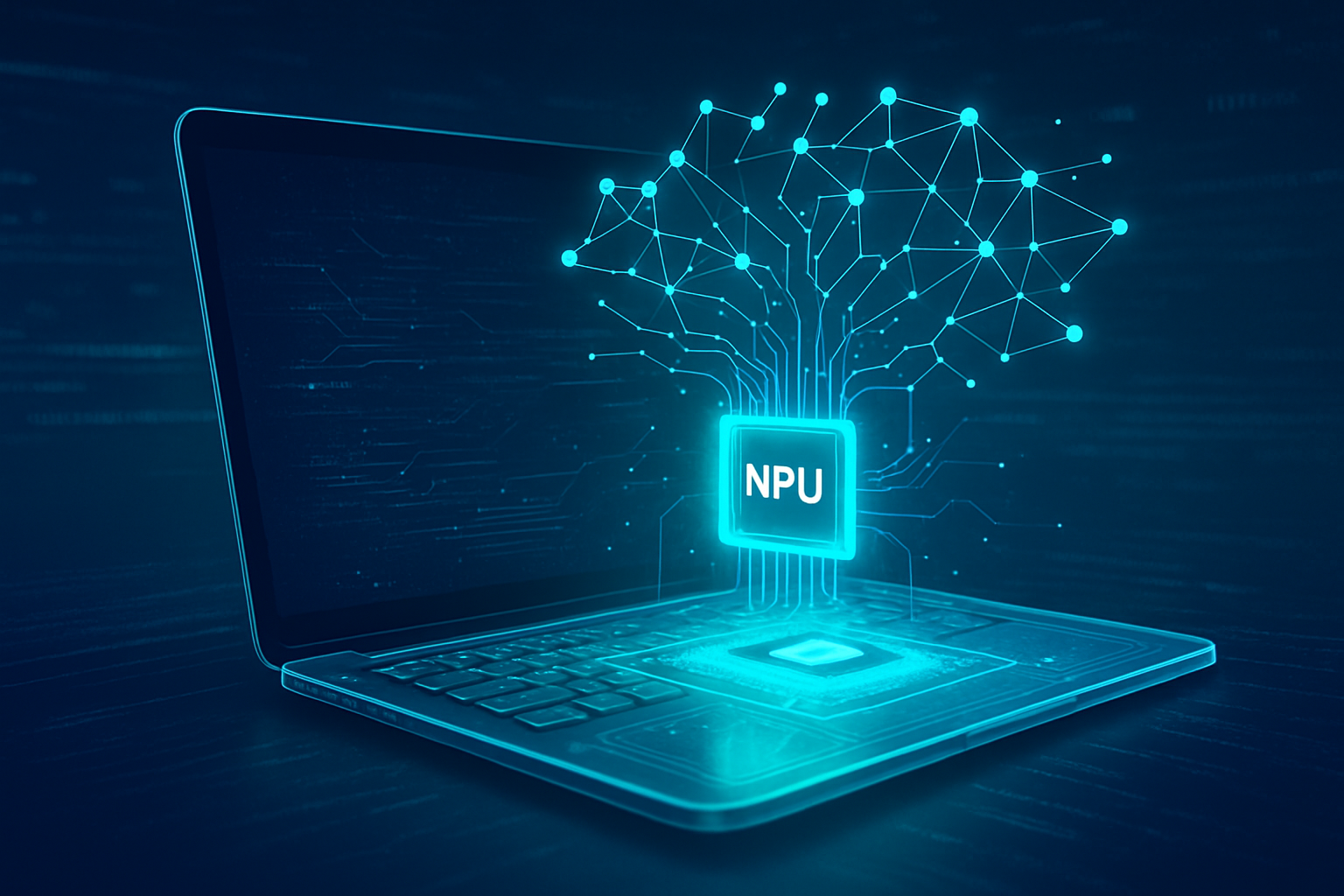
    The distinguishing feature of an AI PC lies in its architectural enhancements, most notably the Neural Processing Unit (NPU). This dedicated chip or component is purpose-built to accelerate machine learning (ML) workloads and AI algorithms with remarkable efficiency. Unlike general-purpose CPUs or even parallel-processing GPUs, NPUs are optimized for the specific mathematical operations vital to neural networks, performing matrix multiplication at extremely low power in a massively parallel fashion. This allows NPUs to handle AI tasks efficiently, freeing up the CPU for multitasking and the GPU for graphics and traditional computing. NPU performance is measured in Trillions of Operations Per Second (TOPS), with Microsoft (NASDAQ: MSFT) mandating at least 40 TOPS for a device to be certified as a Copilot+ PC.

    Leading chip manufacturers are locked in a "TOPS war" to deliver increasingly powerful NPUs. Qualcomm's (NASDAQ: QCOM) Snapdragon X Elite and X Plus platforms, for instance, boast a Hexagon NPU delivering 45 TOPS, with the entire platform offering up to 75 TOPS of AI compute. These ARM-based SoCs, built on a 4nm TSMC process, emphasize power efficiency and multi-day battery life. Intel's (NASDAQ: INTC) Core Ultra Lunar Lake processors, launched in September 2024, feature an NPU 4 architecture delivering up to 48 TOPS from the NPU alone, with a total platform AI performance of up to 120 TOPS. Their upcoming Panther Lake (Core Ultra Series 3), slated for late 2025, promises an NPU 5 with up to 50 TOPS and a staggering 180 platform TOPS. AMD's (NASDAQ: AMD) Ryzen AI 300 series ("Strix Point"), unveiled at Computex 2024, features the XDNA 2 NPU, offering a substantial 50 TOPS of AI performance, a 5x generational gain over its predecessor. These processors integrate new Zen 5 CPU cores and RDNA 3.5 graphics.

    The fundamental difference lies in how these components handle AI tasks. CPUs are versatile but less efficient for parallel AI computations. GPUs excel at parallel processing but consume significant power. NPUs, however, are designed for extreme power efficiency (often 1-10W for AI tasks) and specialized operations, making them ideal for sustained, real-time AI inference on-device. This offloading of AI workloads leads to longer battery life (up to 20-30% longer during AI-enhanced workflows), reduced heat, and improved overall system performance. Initial reactions from the AI research community and industry experts have been overwhelmingly positive, highlighting the transformative potential of on-device AI for enhanced privacy, reduced latency, and the ability to run sophisticated AI models like large language models (LLMs) and diffusion models directly on the PC without cloud reliance. While hardware is rapidly advancing, experts stress the critical need for continued investment in software support and developer tooling to fully leverage NPU capabilities.

    Reshaping the Tech Industry: Competitive Dynamics and Strategic Plays

    The advent of AI PCs is not merely an evolutionary step; it's a disruptive force reshaping competitive dynamics across the tech industry, benefiting established giants and creating fertile ground for innovative startups. The market is projected to grow exponentially, with some forecasts estimating the global AI PC market to reach USD 128.7 billion by 2032 and comprise over half of the PC market by 2026.

    Microsoft (NASDAQ: MSFT) stands as a primary beneficiary, deeply embedding AI into Windows with its Copilot+ PC initiative. By setting stringent hardware requirements (40+ TOPS NPU), Microsoft is driving innovation and ensuring a standardized, high-performance AI experience. Features like "Recall," "Cocreator," and real-time translation are exclusive to these new machines, positioning Microsoft to compete directly with AI advancements from other tech giants and revitalize the PC ecosystem. Its collaboration with various manufacturers and the launch of its own Surface Copilot+ PC models underscore its aggressive market positioning.

    Chipmakers are at the epicenter of this transformation. Qualcomm (NASDAQ: QCOM) has emerged as a formidable contender, with its Snapdragon X Elite/Plus platforms leading the first wave of ARM-based AI PCs for Windows, challenging the traditional x86 dominance with superior power efficiency and battery life. Intel (NASDAQ: INTC) and AMD (NASDAQ: AMD) are vigorously defending their market share, rapidly advancing their Core Ultra and Ryzen AI processors, respectively, with increasing NPU TOPS performance and extensive developer programs to optimize software. NVIDIA (NASDAQ: NVDA), while dominant in data center AI, is also playing a significant role by partnering with PC manufacturers to integrate its RTX GPUs, accelerating AI applications, games, and creative workflows on high-end AI PCs.

    This shift creates a vibrant environment for AI software developers and startups. They can now create innovative local AI solutions, benefiting from enhanced development environments and potentially reducing long-term operational costs associated with cloud resources. However, it also presents challenges, requiring optimization for heterogeneous hardware architectures and adapting to a "hybrid AI" strategy that intelligently distributes workloads between the cloud and the PC. The rise of AI PCs is expected to disrupt cloud-centric AI models by allowing more tasks to be processed on-device, offering enhanced privacy, lower latency, and potential cost savings. It also redefines traditional PC usage, moving beyond incremental upgrades to fundamentally change user interaction through proactive assistance and real-time data analysis, potentially shifting developer roles towards higher-level design and user experience.

    A New Computing Paradigm: Wider Significance and Societal Implications

    The emergence of AI PCs signifies more than just a technological upgrade; it represents a crucial inflection point in the broader AI landscape and holds profound implications for society. By bringing powerful AI capabilities directly to the "edge"—the user's device—AI PCs are central to the growing trend of decentralized intelligence, addressing critical limitations of cloud-centric AI such as network latency, data privacy concerns, and escalating operational costs. This development fosters a "hybrid AI" approach, where on-device AI handles immediate, privacy-sensitive tasks and smaller models, while cloud AI continues to provide the computational power for training large models and managing massive datasets.

    The impacts on society are multifaceted. AI PCs are poised to dramatically enhance productivity, with studies suggesting potential boosts of up to 30% through intelligent automation. They streamline workflows, accelerate creative processes, and enable real-time communication enhancements like live captioning and translation in video calls, all processed locally without taxing core system resources. This democratization of AI makes advanced capabilities more accessible, fostering new applications and personalized user experiences that learn and adapt to individual behavior. Businesses are already reporting significant reductions in device management time and IT visits due to enhanced local AI capabilities for threat detection and automation.

    However, this transformative power comes with potential concerns. While on-device processing generally enhances privacy by keeping sensitive data local, the overall expansion of AI capabilities leads to an unprecedented increase in data collection and analysis, raising questions about data usage and consent. The widespread adoption of AI, even on personal devices, fuels anxieties about job displacement, particularly in roles involving repetitive cognitive and manual tasks. While AI is expected to create new jobs, the transition could disproportionately affect economically disadvantaged groups. Ethical AI considerations—including bias and fairness in algorithms, transparency and explainability of AI decisions, and accountability when AI systems err—become even more critical as AI becomes ubiquitous. Furthermore, the initial higher cost of AI PCs could exacerbate the digital divide, and the rapid refresh cycles driven by AI advancements raise environmental concerns regarding e-waste.

    Historically, the introduction of AI PCs is comparable to the original personal computer revolution, which brought computing power from mainframes to individual desks. It echoes the impact of the GPU, which transformed graphics and later deep learning, by introducing a dedicated hardware accelerator (the NPU) purpose-built for the next generation of AI workloads. Like the internet and mobile computing, AI PCs are making advanced AI ubiquitous and personal, fundamentally altering how we interact with our machines. The year 2025 is widely recognized as "The Year of AI PCs," a turning point where these devices are expected to redefine the fundamental limits of computing, akin to the impact of the graphical user interface or the advent of the internet itself.

    The Horizon of Intelligence: Future Developments and Expert Predictions

    The journey of AI PCs is only just beginning, with both near-term and long-term developments promising to further revolutionize personal computing. In the immediate future (2025-2027), we will see the widespread integration of increasingly powerful NPUs across all device types. Industry projections anticipate AI PCs comprising around 50% of shipments by 2027 and 80% of PC sales by 2028. Hardware advancements will continue to push NPU performance, with next-generation chips targeting even higher TOPS. Memory technologies like LPCAMM2 will evolve to support these complex workloads with greater speed and efficiency.

    On the software front, a "massive mobilization of the PC ecosystem" is underway. Silicon providers like Intel are heavily investing in AI PC acceleration programs to empower developers, aiming to deliver hundreds of new AI features across numerous Independent Software Vendor (ISV) applications. By 2026, experts predict that 60% of new software will require AI hardware for full functionality, signifying a rapid evolution of the application landscape. This will lead to ubiquitous multimodal generative AI capabilities by 2026, capable of creating text, images, audio, and video directly on the device.

    Looking further ahead (beyond 2027), AI PCs are expected to drive a major hardware and semiconductor cycle that could ultimately lead to "Personal Access Points" incorporating quantum computing and neural interfaces, shifting human-computer interaction from keyboards to thought-controlled AR/VR systems. Human-like AI, with intelligence levels comparable to humans, is expected to emerge by 2030, revolutionizing decision-making and creative processes. Potential applications and use cases on the horizon are vast, including hyper-personalized productivity assistants, real-time communication and collaboration tools with advanced translation, sophisticated content creation and media editing powered by on-device generative AI, enhanced security features, and intelligent gaming optimization. Autonomous AI agents, capable of performing complex tasks independently, are also expected to become far more common in workflows by 2027.

    However, several challenges need addressing. Robust software optimization and ecosystem development are crucial, requiring ISVs to rapidly embrace local AI features. Power consumption remains a concern for complex models, necessitating continued advancements in energy-efficient architectures and model optimization techniques (e.g., pruning, quantization). Security and privacy, while enhanced by local processing, still demand robust measures to prevent data breaches or tampering. Furthermore, educating users and businesses about the tangible value of AI PC capabilities is vital for widespread adoption, as some currently perceive them as a "gimmick." Experts largely agree that on-device intelligence will continue its rapid evolution, driven by the clear benefits of local AI processing: better performance, improved privacy, and lower lifetime costs. The future of AI PCs is not just about raw power, but about providing highly personalized, secure, and efficient computing experiences that adapt proactively to user needs.

    A New Chapter in Computing: The Enduring Significance of AI PCs

    The 'Dawn of On-Device Intelligence' ushered in by AI PCs marks a definitive new chapter in the history of personal computing. This paradigm shift, characterized by the integration of dedicated NPUs and optimized hardware, is profoundly transforming how we interact with technology. The key takeaways are clear: AI PCs deliver unparalleled productivity, enhanced security and privacy through local processing, superior performance with longer battery life, and a new generation of advanced, personalized user experiences.

    Assessing its significance, the AI PC era is not merely an incremental upgrade but a foundational re-architecture of computing. It decentralizes AI power, moving sophisticated capabilities from centralized cloud data centers to the individual device. This parallels historic milestones like the advent of the personal computer itself or the transformative impact of GPUs, democratizing advanced AI and embedding it into the fabric of daily digital life. The year 2025 is widely acknowledged as a pivotal moment, with AI PCs poised to redefine the very limits of what personal computing can achieve.

    The long-term impact is set to be transformative. AI PCs are projected to become the new standard, fundamentally altering productivity, personalizing consumer behavior through adaptive intelligence, and seamlessly integrating into smart environments. They are envisioned as devices that "never stop learning," augmenting human capabilities and fostering innovation across all sectors. While challenges such as software optimization, power efficiency, and ethical considerations remain, the trajectory points towards a future where intelligent, responsive, and private AI is an inherent part of every personal computing experience.

    In the coming weeks and months, up to October 2025, several critical developments bear watching. Expect accelerated market growth, with AI PCs projected to capture a significant portion of global PC shipments. Hardware innovation will continue at a rapid pace, with Intel's Panther Lake and other next-generation chips pushing the boundaries of NPU performance and overall platform AI acceleration. The software ecosystem will expand dramatically, driven by Microsoft's Copilot+ PC initiative, Apple Intelligence, and increased investment from software vendors to leverage on-device AI. We will also witness the emergence of more sophisticated AI agents capable of autonomous task execution directly on the PC. Finally, the competitive dynamics between x86 (Intel, AMD) and ARM (Qualcomm) architectures will intensify, shaping the market landscape for years to come. The AI PC is here, and its evolution will be a defining story of our technological age.


    This content is intended for informational purposes only and represents analysis of current AI developments.

    TokenRing AI delivers enterprise-grade solutions for multi-agent AI workflow orchestration, AI-powered development tools, and seamless remote collaboration platforms.
    For more information, visit https://www.tokenring.ai/.
  • The Dawn of On-Device Intelligence: AI PCs Reshape the Computing Landscape

    The Dawn of On-Device Intelligence: AI PCs Reshape the Computing Landscape

    The personal computing world is undergoing a profound transformation with the rapid emergence of "AI PCs." These next-generation devices are engineered with dedicated hardware, most notably Neural Processing Units (NPUs), designed to efficiently execute artificial intelligence tasks directly on the device, rather than relying solely on cloud-based solutions. This paradigm shift promises a future of computing that is more efficient, secure, personalized, and responsive, fundamentally altering how users interact with their machines and applications.

    The immediate significance of AI PCs lies in their ability to decentralize AI processing. By moving AI workloads from distant cloud servers to the local device, these machines address critical limitations of cloud-centric AI, such as network latency, data privacy concerns, and escalating operational costs. This move empowers users with real-time AI capabilities, enhanced data security, and the ability to run sophisticated AI models offline, marking a pivotal moment in the evolution of personal technology and setting the stage for a new era of intelligent computing experiences.

    The Engine of Intelligence: A Deep Dive into AI PC Architecture

    The distinguishing characteristic of an AI PC is its specialized architecture, built around a powerful Neural Processing Unit (NPU). Unlike traditional PCs that primarily leverage the Central Processing Unit (CPU) for general-purpose tasks and the Graphics Processing Unit (GPU) for graphics rendering and some parallel processing, AI PCs integrate an NPU specifically designed to accelerate AI neural networks, deep learning, and machine learning tasks. These NPUs excel at performing massive amounts of parallel mathematical operations with exceptional power efficiency, making them ideal for sustained AI workloads.

    Leading chip manufacturers like Intel (NASDAQ: INTC), AMD (NASDAQ: AMD), and Qualcomm (NASDAQ: QCOM) are at the forefront of this integration, embedding NPUs into their latest processor lines. Apple (NASDAQ: AAPL) has similarly incorporated its Neural Engine into its M-series chips, demonstrating a consistent industry trend towards dedicated AI silicon. Microsoft (NASDAQ: MSFT) has further solidified the category with its "Copilot+ PC" initiative, establishing a baseline hardware requirement: an NPU capable of over 40 trillion operations per second (TOPS). This benchmark ensures optimal performance for its integrated Copilot AI assistant and a suite of local AI features within Windows 11, often accompanied by a dedicated Copilot Key on the keyboard for seamless AI interaction.

    This dedicated NPU architecture fundamentally differs from previous approaches by offloading AI-specific computations from the CPU and GPU. While GPUs are highly capable for certain AI tasks, NPUs are engineered for superior power efficiency and optimized instruction sets for AI algorithms, crucial for extending battery life in mobile form factors like laptops. This specialization ensures that complex AI computations do not monopolize general-purpose processing resources, thereby enhancing overall system performance, energy efficiency, and responsiveness across a range of applications from real-time language translation to advanced creative tools. Initial reactions from the AI research community and industry experts have been overwhelmingly positive, highlighting the potential for greater accessibility to powerful AI models and a significant boost in user productivity and privacy.

    Reshaping the Tech Ecosystem: Competitive Shifts and Strategic Imperatives

    The rise of AI PCs is creating a dynamic landscape of competition and collaboration, profoundly affecting tech giants, AI companies, and startups alike. Chipmakers are at the epicenter of this revolution, locked in an intense battle to develop and integrate powerful AI accelerators. Intel (NASDAQ: INTC) is pushing its Core Ultra and upcoming Lunar Lake processors, aiming for higher Trillions of Operations Per Second (TOPS) performance in their NPUs. Similarly, AMD (NASDAQ: AMD) is advancing its Ryzen AI processors with XDNA architecture, while Qualcomm (NASDAQ: QCOM) has made a significant entry with its Snapdragon X Elite and Snapdragon X Plus platforms, boasting high NPU performance (45 TOPS) and redefining efficiency, particularly for ARM-based Windows PCs. While Nvidia (NASDAQ: NVDA) dominates the broader AI chip market with its data center GPUs, it is also actively partnering with PC manufacturers to bring AI capabilities to laptops and desktops.

    Microsoft (NASDAQ: MSFT) stands as a primary catalyst, having launched its "Copilot+ PC" initiative, which sets stringent minimum hardware specifications, including an NPU with 40+ TOPS. This strategy aims for deep AI integration at the operating system level, offering features like "Recall" and "Cocreator," and initially favored ARM-based Qualcomm chips, though Intel and AMD are rapidly catching up with their own compliant x86 processors. This move has intensified competition within the Windows ecosystem, challenging traditional x86 dominance and creating new dynamics. PC manufacturers such as HP (NYSE: HPQ), Dell Technologies (NYSE: DELL), Lenovo (HKG: 0992), Acer (TWSE: 2353), Asus (TWSE: 2357), and Samsung (KRX: 005930) are actively collaborating with these chipmakers and Microsoft, launching diverse AI PC models and anticipating a major catalyst for the next PC refresh cycle, especially driven by enterprise adoption.

    For AI software developers and model providers, AI PCs present a dual opportunity: creating new, more sophisticated on-device AI experiences with enhanced privacy and reduced latency, while also necessitating a shift in development paradigms. The emphasis on NPUs will drive optimization of applications for these specialized chips, moving certain AI workloads from generic CPUs and GPUs for improved power efficiency and performance. This fosters a "hybrid AI" strategy, combining the scalability of cloud computing with the efficiency and privacy of local AI processing. Startups also find a dynamic environment, with opportunities to develop innovative local AI solutions, benefiting from enhanced development environments and potentially reducing long-term operational costs associated with cloud resources, though talent acquisition and adapting to heterogeneous hardware remain challenges. The global AI PC market is projected for rapid growth, with some forecasts suggesting it could reach USD 128.7 billion by 2032, and comprise over half of the PC market by next year, signifying a massive industry-wide shift.

    The competitive landscape is marked by both fierce innovation and potential disruption. The race for NPU performance is intensifying, while Microsoft's strategic moves are reshaping the Windows ecosystem. While a "supercycle" of adoption is debated due to macroeconomic uncertainties and the current lack of exclusive "killer apps," the long-term trend points towards significant growth, primarily driven by enterprise adoption seeking enhanced productivity, improved data privacy, and cost reduction through reduced cloud dependency. This heralds a potential obsolescence for older PCs lacking dedicated AI hardware, necessitating a paradigm shift in software development to fully leverage the CPU, GPU, and NPU in concert, while also introducing new security considerations related to local AI model interactions.

    A New Chapter in AI's Journey: Broadening the Horizon of Intelligence

    The advent of AI PCs marks a pivotal moment in the broader artificial intelligence landscape, solidifying the trend of "edge AI" and decentralizing computational power. Historically, major AI breakthroughs, particularly with large language models (LLMs) like those powering ChatGPT, have relied heavily on massive, centralized cloud computing resources for training and inference. AI PCs represent a crucial shift by bringing AI inference and smaller, specialized AI models (SLMs) directly to the "edge" – the user's device. This move towards on-device processing enhances accessibility, reduces latency, and significantly boosts privacy by keeping sensitive data local, thereby democratizing powerful AI capabilities for individuals and businesses without extensive infrastructure investments. Industry analysts predict a rapid ascent, with AI PCs potentially comprising 80% of new computer sales by late 2025 and over 50% of laptops shipped by 2026, underscoring their transformative potential.

    The impacts of this shift are far-reaching. AI PCs are poised to dramatically enhance productivity and efficiency by streamlining workflows, automating repetitive tasks, and providing real-time insights through sophisticated data analysis. Their ability to deliver highly personalized experiences, from tailored recommendations to intelligent assistants that anticipate user needs, will redefine human-computer interaction. Crucially, dedicated AI processors (NPUs) optimize AI tasks, leading to faster processing and significantly reduced power consumption, extending battery life and improving overall system performance. This enables advanced applications in creative fields like photo and video editing, more precise real-time communication features, and robust on-device security protocols, making generative AI features more efficient and widely available.

    However, the rapid integration of AI into personal devices also introduces potential concerns. While local processing offers privacy benefits, the increased embedding of AI capabilities on devices necessitates robust security measures to prevent data breaches or unauthorized access, especially as cybercriminals might attempt to tamper with local AI models. The inherent bias present in AI algorithms, derived from training datasets, remains a challenge that could lead to discriminatory outcomes if not meticulously addressed. Furthermore, the rapid refresh cycle driven by AI PC adoption raises environmental concerns regarding e-waste, emphasizing the need for sustainable manufacturing and disposal practices. A significant hurdle to widespread adoption also lies in educating users and businesses about the tangible value and effective utilization of AI PC capabilities, as some currently perceive them as a "gimmick."

    Comparing AI PCs to previous technological milestones, their introduction echoes the transformative impact of the personal computer itself, which revolutionized work and creativity decades ago. Just as the GPU revolutionized graphics and scientific computing, the NPU is a dedicated hardware milestone for AI, purpose-built to efficiently handle the next generation of AI workloads. While historical AI breakthroughs like IBM's Deep Blue (1997) or AlphaGo's victory (2016) demonstrated AI's capabilities in specialized domains, AI PCs focus on the application and localization of such powerful models, making them a standard, on-device feature for everyday users. This signifies an ongoing journey where technology increasingly adapts to and anticipates human needs, marking AI PCs as a critical step in bringing advanced intelligence into the mainstream of daily life.

    The Road Ahead: Evolving Capabilities and Emerging Horizons

    The trajectory of AI PCs points towards an accelerated evolution in both hardware and software, promising increasingly sophisticated on-device intelligence in the near and long term. In the immediate future (2024-2026), the focus will be on solidifying the foundational elements. We will see the continued proliferation of powerful NPUs from Intel (NASDAQ: INTC), Qualcomm (NASDAQ: QCOM), and AMD (NASDAQ: AMD), with a relentless pursuit of higher TOPS performance and greater power efficiency. Operating systems like Microsoft Windows, particularly with its Copilot+ PC initiative, and Apple Intelligence, will become deeply intertwined with AI, offering integrated AI capabilities across the OS and applications. The end-of-life for Windows 10 in 2025 is anticipated to fuel a significant PC refresh cycle, driving widespread adoption of these AI-enabled machines. Near-term applications will center on enhancing productivity through automated administrative tasks, improving collaboration with AI-powered video conferencing features, and providing highly personalized user experiences that adapt to individual preferences, alongside faster content creation and enhanced on-device security.

    Looking further ahead (beyond 2026), AI PCs are expected to become the ubiquitous standard, seamlessly integrated into daily life and business operations. Future hardware innovations may extend beyond current NPUs to include nascent technologies like quantum computing and neuromorphic computing, offering unprecedented processing power for complex AI tasks. A key development will be the seamless synergy between local AI processing on the device and scalable cloud-based AI resources, creating a robust hybrid AI environment that optimizes for performance, efficiency, and data privacy. AI-driven system management will become autonomous, intelligently allocating resources, predicting user needs, and optimizing workflows. Experts predict the rise of "Personal Foundation Models," AI systems uniquely tailored to individual users, proactively offering solutions and information securely from the device without constant cloud reliance. This evolution promises proactive assistance, real-time data analysis for faster decision-making, and transformative impacts across various industries, from smart homes to urban infrastructure.

    Despite this promising outlook, several challenges must be addressed. The current high cost of advanced hardware and specialized software could hinder broader accessibility, though economies of scale are expected to drive prices down. A significant skill gap exists, necessitating extensive training to help users and businesses understand and effectively leverage the capabilities of AI PCs. Data privacy and security remain paramount concerns, especially with features like Microsoft's "Recall" sparking debate; robust encryption and adherence to regulations are crucial. The energy consumption of powerful AI models, even on-device, requires ongoing optimization for power-efficient NPUs and models. Furthermore, the market awaits a definitive "killer application" that unequivocally demonstrates the superior value of AI PCs over traditional machines, which could accelerate commercial refreshes. Experts, however, remain optimistic, with market projections indicating massive growth, forecasting AI PC shipments to double to over 100 million in 2025, becoming the norm by 2029, and commercial adoption leading the charge.

    A New Era of Intelligence: The Enduring Impact of AI PCs

    The emergence of AI PCs represents a monumental leap in personal computing, signaling a definitive shift from cloud-centric to a more decentralized, on-device intelligence paradigm. This transition, driven by the integration of specialized Neural Processing Units (NPUs), is not merely an incremental upgrade but a fundamental redefinition of what a personal computer can achieve. The immediate significance lies in democratizing advanced AI capabilities, offering enhanced privacy, reduced latency, and greater operational efficiency by bringing powerful AI models directly to the user's fingertips. This move is poised to unlock new levels of productivity, creativity, and personalization across consumer and enterprise landscapes, fundamentally altering how we interact with technology.

    The long-term impact of AI PCs is profound, positioning them as a cornerstone of future technological ecosystems. They are set to drive a significant refresh cycle in the PC market, with widespread adoption expected in the coming years. Beyond hardware specifications, their true value lies in fostering a new generation of AI-first applications that leverage local processing for real-time, context-aware assistance. This shift will empower individuals and businesses with intelligent tools that adapt to their unique needs, automate complex tasks, and enhance decision-making. The strategic investments by tech giants like Microsoft (NASDAQ: MSFT), Intel (NASDAQ: INTC), AMD (NASDAQ: AMD), and Qualcomm (NASDAQ: QCOM) underscore the industry's conviction in this new computing era, promising continuous innovation in both silicon and software.

    As we move forward, it will be crucial to watch for the development of compelling "killer applications" that fully showcase the unique advantages of AI PCs, driving broader consumer adoption beyond enterprise use. The ongoing advancements in NPU performance and power efficiency, alongside the evolution of hybrid AI strategies that seamlessly blend local and cloud intelligence, will be key indicators of progress. Addressing challenges related to data privacy, ethical AI implementation, and user education will also be vital for ensuring a smooth and beneficial transition to this new era of intelligent computing. The AI PC is not just a trend; it is the next frontier of personal technology, poised to reshape our digital lives for decades to come.


    This content is intended for informational purposes only and represents analysis of current AI developments.

    TokenRing AI delivers enterprise-grade solutions for multi-agent AI workflow orchestration, AI-powered development tools, and seamless remote collaboration platforms.
    For more information, visit https://www.tokenring.ai/.