Tag: AI Processing

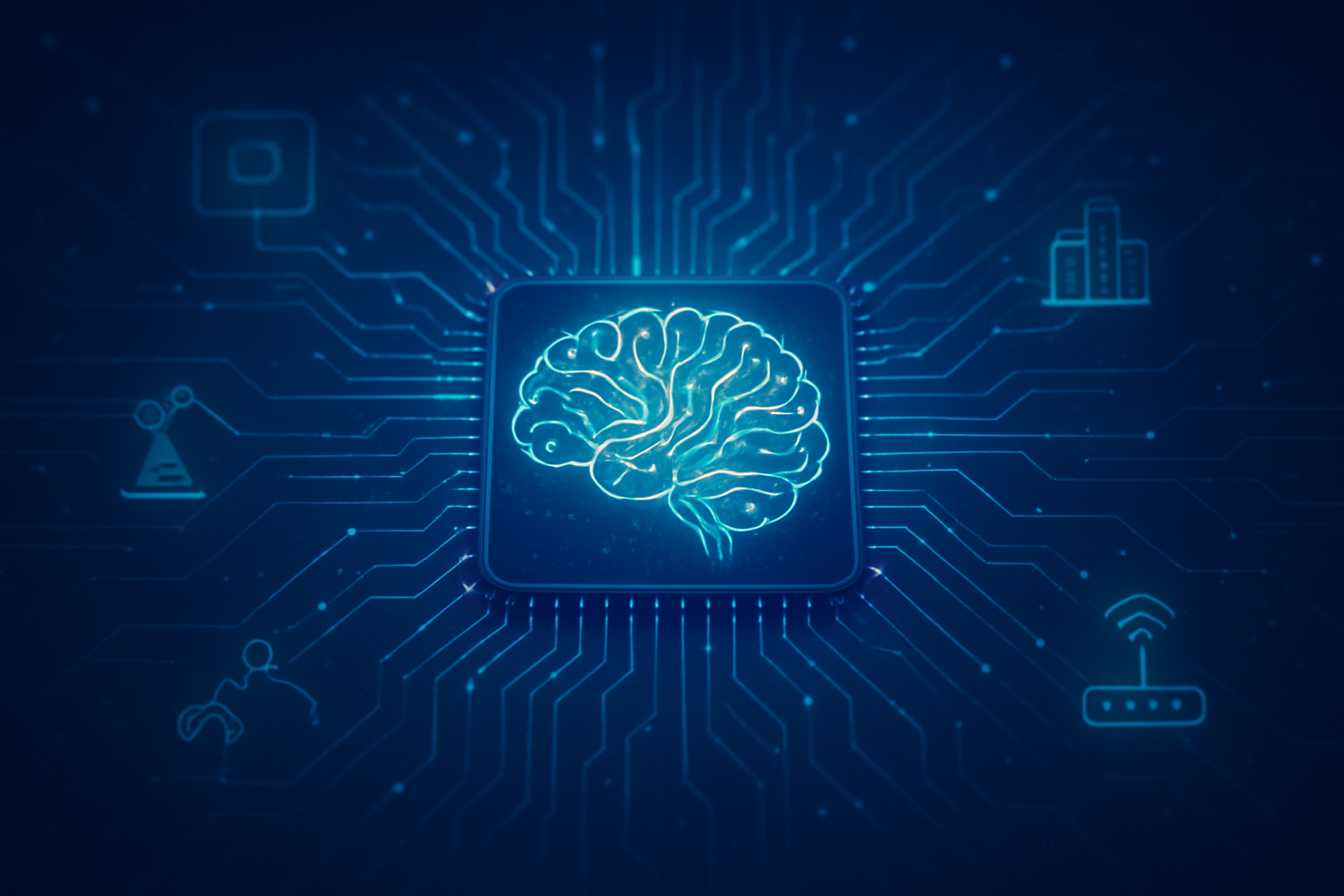
  • The Dawn of Brain-Inspired AI: Neuromorphic Chips Revolutionize Edge Processing

    The Dawn of Brain-Inspired AI: Neuromorphic Chips Revolutionize Edge Processing

    The landscape of artificial intelligence is undergoing a profound transformation with the emergence of neuromorphic chips, a revolutionary class of hardware designed to mimic the human brain's unparalleled efficiency. These innovative chip architectures are poised to fundamentally reshape on-device AI, enabling sophisticated intelligence directly at the edge—where data is generated—with unprecedented energy efficiency and real-time responsiveness. This development marks a significant departure from traditional computing paradigms, promising to unlock new capabilities across a myriad of industries.

    The immediate significance of neuromorphic chips lies in their ability to address the growing computational and energy demands of modern AI. By processing information in an event-driven, parallel manner, much like biological neurons, these chips drastically reduce power consumption and latency, making advanced AI feasible for battery-powered devices and latency-critical applications that were previously out of reach. This shift from power-hungry, cloud-dependent AI to localized, energy-efficient intelligence heralds a new era for autonomous systems, smart devices, and real-time data analysis.

    Brain-Inspired Brilliance: Unpacking Neuromorphic Architecture

    At its core, neuromorphic computing is a paradigm shift inspired by the brain's remarkable ability to process vast amounts of information with minimal energy. Unlike traditional Von Neumann architectures, which separate the central processing unit (CPU) from memory, neuromorphic systems integrate memory and processing units closely together, often within the same "neuron" and "synapse" components. This fundamental difference eliminates the "Von Neumann bottleneck," a major constraint in conventional systems where constant data transfer between CPU and memory leads to significant energy consumption and latency.

    Neuromorphic chips primarily employ Spiking Neural Networks (SNNs), which mimic how biological neurons communicate by transmitting discrete electrical pulses, or "spikes," only when their membrane potential reaches a certain threshold. This event-driven processing means computation is triggered asynchronously only when a significant event occurs, rather than continuously processing data in fixed intervals. This selective activation minimizes unnecessary processing, leading to extraordinary energy efficiency—often consuming 10 to 100 times less power than conventional processors for specific AI workloads. For instance, Intel's Loihi 2 chip can simulate over one million neurons using just 70 milliwatts, and BrainChip's (ASX: BRN) Akida processor achieves 0.3 milliwatts per inference for keyword spotting.

    These chips also boast massive parallelism, distributing computation across numerous small elements (artificial neurons), allowing many operations to occur simultaneously. This is ideal for cognitive tasks like pattern recognition and sensory data interpretation. Real-world applications are already emerging: Prophesee's event-based vision sensors, combined with neuromorphic chips, can detect pedestrians 20ms faster than conventional cameras, crucial for autonomous vehicles. In industrial IoT, Intel's (NASDAQ: INTC) Loihi 2 accelerates defect detection in smart factories, reducing inspection time from 20ms to just 2ms. This capability for real-time, low-latency processing (often under 100 milliseconds, sometimes even less than 1 millisecond) significantly outperforms traditional GPUs and TPUs, which typically experience latency issues due to batch processing overhead. Furthermore, neuromorphic chips support synaptic plasticity, enabling on-chip learning and adaptation directly on the device, a feature largely absent in most traditional edge AI solutions that rely on cloud-based retraining.

    Shifting Sands: Competitive Implications and Market Disruption

    The rise of neuromorphic chips is creating a dynamic competitive landscape, attracting both established tech giants and agile startups. The global neuromorphic computing market, valued at USD 28.5 million in 2024, is projected to reach USD 1,325.2 million by 2030, reflecting an astounding compound annual growth rate (CAGR) of 89.7%. This rapid growth underscores the disruptive potential of this technology.

    Leading the charge are major players like Intel (NASDAQ: INTC), with its Loihi research chips and the recently unveiled Hala Point, the world's largest neuromorphic system boasting 1.15 billion artificial neurons. IBM (NYSE: IBM) is another pioneer with its TrueNorth system. Qualcomm Technologies Inc. (NASDAQ: QCOM), Samsung Electronics Co., Ltd. (KRX: 005930), and Sony Corporation (TYO: 6758) are also actively investing in this space. However, a vibrant ecosystem of specialized startups is driving significant innovation. BrainChip Holdings Ltd. (ASX: BRN) is a prominent leader with its Akida processor, optimized for ultra-low-power AI inference at the edge. SynSense, GrAI Matter Labs, and Prophesee SA are also making strides in event-based vision and sensor fusion solutions. Companies like SK Hynix Inc. (KRX: 000660) and Micron Technology, Inc. (NASDAQ: MU), memory manufacturers, stand to benefit significantly from their research into novel memory technologies crucial for in-memory computing in neuromorphic architectures.

    Neuromorphic chips pose a significant disruptive force to existing AI hardware markets, particularly those dominated by GPUs. While GPUs remain indispensable for training large AI models, neuromorphic chips are challenging their dominance in inference tasks, especially at the edge where power and latency are critical. Their extreme energy efficiency and real-time adaptive learning capabilities reduce reliance on cloud-based processing, addressing critical privacy and latency concerns. This doesn't necessarily mean the outright replacement of GPUs; rather, a future could involve hybrid systems where neuromorphic cores handle specific low-power, real-time tasks, while GPUs or CPUs manage overall system control or heavy training workloads. Industries such as autonomous systems, industrial IoT, healthcare, and smart cities are poised to benefit most, as neuromorphic chips enable new levels of on-device intelligence previously unattainable.

    A New Horizon for AI: Wider Significance and Future Trajectory

    The wider significance of neuromorphic chips extends beyond mere hardware efficiency; it represents a fundamental re-architecture of computing that aligns more closely with biological intelligence. This innovation fits perfectly into the broader AI landscape, addressing critical trends like the demand for more sustainable computing, the proliferation of edge AI, and the need for real-time adaptability in dynamic environments. As traditional Moore's Law scaling faces physical limits, neuromorphic computing offers a viable path to continued computational advancement and energy reduction, directly confronting the escalating carbon footprint of modern AI.

    Technologically, these chips enable more powerful and adaptable AI systems, unlocking new application areas in robotics, autonomous vehicles, advanced neuroprosthetics, and smart infrastructure. Societally, the economic growth spurred by the rapidly expanding neuromorphic market will be substantial. However, potential concerns loom. The remarkable cognitive performance of these chips, particularly in areas like real-time data analysis and automation, could lead to labor displacement. Furthermore, the development of chips that mimic human brain functions raises complex ethical dilemmas, including concerns about artificial consciousness, bias in decision-making, and cybersecurity risks, necessitating careful consideration from policymakers.

    Compared to previous AI milestones, neuromorphic computing signifies a more fundamental hardware-level innovation than many past software-driven algorithmic breakthroughs. While the advent of GPUs accelerated the deep learning revolution, neuromorphic chips offer a paradigm shift by delivering superior performance with a fraction of the power, addressing the "insatiable appetite" of modern AI for energy. This approach moves beyond the brute-force computation of traditional AI, enabling a new generation of AI systems that are inherently more efficient, adaptive, and capable of continuous learning.

    The Road Ahead: Challenges and Expert Predictions

    Looking ahead, the trajectory of neuromorphic computing promises exciting near-term and long-term developments. In the near term, we can expect continued advancements in hardware, with chips featuring millions of neurons and synapses becoming more common. Hybrid systems that combine neuromorphic and traditional architectures will likely become prevalent, optimizing edge-cloud synergy. The exploration of novel materials like memristors and spintronic circuits will also push the boundaries of scalability and density. By 2030, experts predict the market for neuromorphic computing will reach billions of dollars, driven by widespread deployments in autonomous vehicles, smart cities, healthcare devices, and industrial automation.

    Long-term, the vision is to create even more brain-like, efficient computing architectures that could pave the way for artificial general intelligence (AGI). This will involve advanced designs with on-chip learning, adaptive connectivity, and specialized memory structures, potentially integrating with quantum computing and photonic processing for truly transformative capabilities.

    However, significant challenges must be overcome for widespread adoption. The software ecosystem for spiking neural networks (SNNs) is still immature, lacking native support in mainstream AI frameworks and standardized training methods. Manufacturing complexity and high costs associated with specialized materials and fabrication processes also pose hurdles. A lack of standardized benchmarks makes it difficult to compare neuromorphic hardware with traditional processors, hindering trust and investment. Furthermore, a shortage of trained professionals in this nascent field slows progress. Experts emphasize that the co-development of hardware and algorithms is critical for the practical success and widespread use of neuromorphic computing in industry.

    A New Era of Intelligence: Final Thoughts

    The rise of neuromorphic chips designed for efficient AI processing at the edge represents a monumental leap in artificial intelligence. By fundamentally re-architecting how computers process information, these brain-inspired chips offer unparalleled energy efficiency, real-time responsiveness, and on-device learning capabilities. This development is not merely an incremental improvement but a foundational shift that will redefine the capabilities of AI, particularly in power-constrained and latency-sensitive environments.

    The key takeaways are clear: neuromorphic computing is poised to unlock a new generation of intelligent, autonomous, and sustainable AI systems. Its significance in AI history is comparable to the advent of GPU acceleration for deep learning, setting the stage for future algorithmic breakthroughs. While challenges related to software, manufacturing, and standardization remain, the rapid pace of innovation and the immense potential for disruption across industries make this a field to watch closely. In the coming weeks and months, anticipate further announcements from leading tech companies and startups, showcasing increasingly sophisticated applications and advancements that will solidify neuromorphic computing's place at the forefront of AI's next frontier.


    This content is intended for informational purposes only and represents analysis of current AI developments.

    TokenRing AI delivers enterprise-grade solutions for multi-agent AI workflow orchestration, AI-powered development tools, and seamless remote collaboration platforms.
    For more information, visit https://www.tokenring.ai/.
  • Quantum Leap: How Quantum Computing is Poised to Reshape Future AI Semiconductor Design

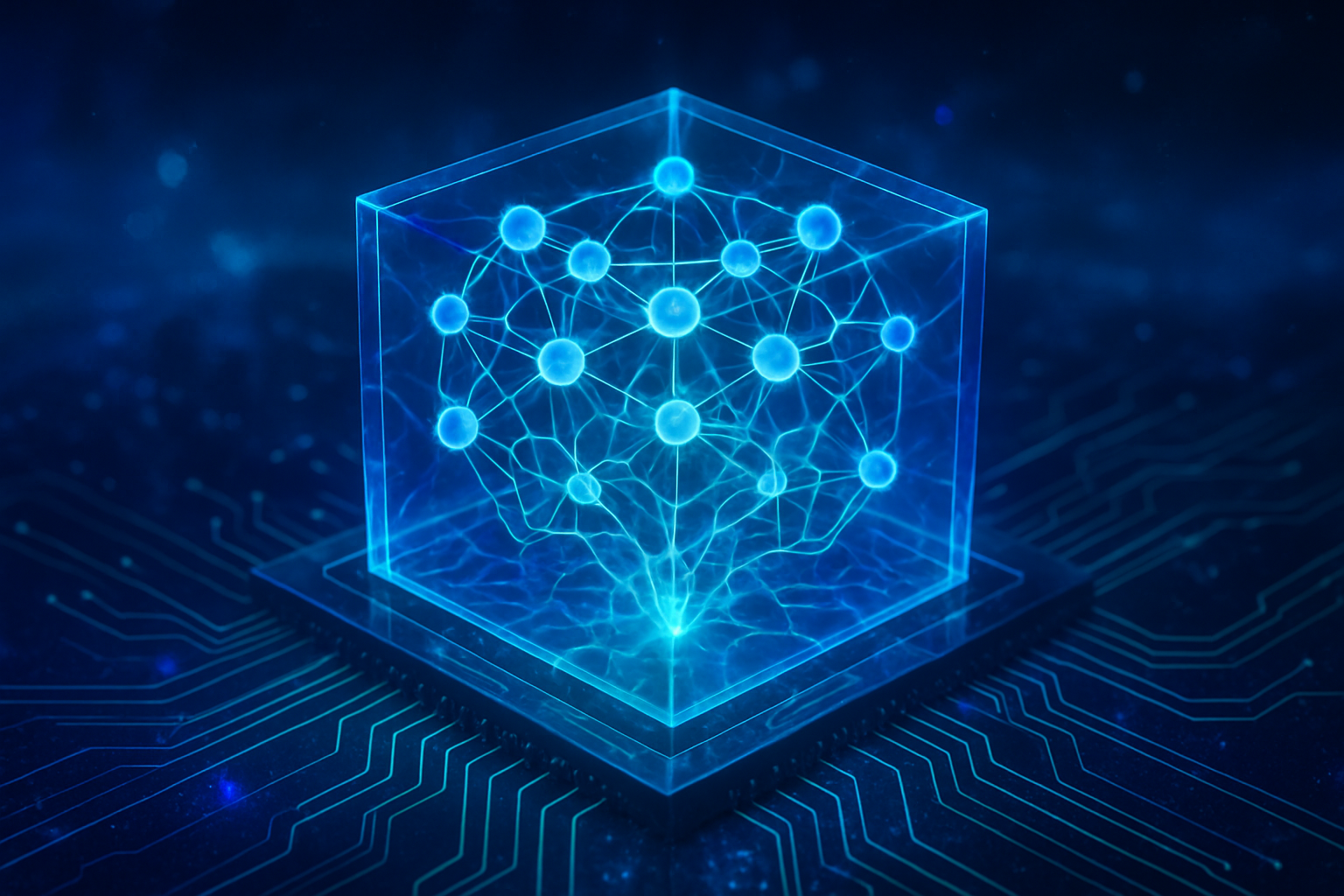
    Quantum Leap: How Quantum Computing is Poised to Reshape Future AI Semiconductor Design

    The landscape of Artificial Intelligence (AI) is on the cusp of a profound transformation, driven not just by advancements in algorithms, but by a fundamental shift in the very hardware that powers it. Quantum computing, once a theoretical marvel, is rapidly emerging as a critical force set to revolutionize semiconductor design, promising to unlock unprecedented capabilities for AI processing and computation. This convergence of quantum mechanics and AI hardware heralds a new era, where the limitations of classical silicon chips could be overcome, paving the way for AI systems of unimaginable power and complexity.

    This article explores the theoretical underpinnings and practical implications of integrating quantum principles into semiconductor design, examining how this paradigm shift will impact AI chip architectures, accelerate AI model training, and redefine the boundaries of what is computationally possible. The implications for tech giants, innovative startups, and the broader AI ecosystem are immense, promising both disruptive challenges and unparalleled opportunities.

    The Quantum Revolution in Chip Architectures: Beyond Bits and Gates

    At the core of this revolution lies the qubit, the quantum equivalent of a classical bit. Unlike classical bits, which are confined to states of 0 or 1, qubits leverage the principles of superposition and entanglement to exist in multiple states simultaneously and become intrinsically linked, respectively. These quantum phenomena enable quantum processors to explore vast computational spaces concurrently, offering exponential speedups for specific complex calculations that remain intractable for even the most powerful classical supercomputers.

    For AI, this translates into the potential for quantum algorithms to more efficiently tackle complex optimization and eigenvalue problems that are foundational to machine learning and AI model training. Algorithms like the Quantum Approximate Optimization Algorithm (QAOA) and Variational Quantum Eigensolver (VQE) could dramatically enhance the training of AI models, leading to faster convergence and the ability to handle larger, more intricate datasets. Future semiconductor designs will likely incorporate various qubit implementations, from superconducting circuits, such as those used in Google's (NASDAQ: GOOGL) Willow chip, to trapped ions or photonic structures. These quantum chips must be meticulously designed to manipulate qubits using precise quantum gates, implemented via finely tuned microwave pulses, magnetic fields, or laser beams, depending on the chosen qubit technology. A crucial aspect of this design will be the integration of advanced error correction techniques to combat the inherent fragility of qubits and maintain their quantum coherence in highly controlled environments, often at temperatures near absolute zero.

    The immediate impact is expected to manifest in hybrid quantum-classical architectures, where specialized quantum processors will work in concert with existing classical semiconductor technologies. This allows for an efficient division of labor, with quantum systems handling their unique strengths in complex computations while classical systems manage conventional tasks and control. This approach leverages the best of both worlds, enabling the gradual integration of quantum capabilities into current AI infrastructure. This differs fundamentally from classical approaches, where information is processed sequentially using deterministic bits. Quantum parallelism allows for the exploration of many possibilities at once, offering massive speedups for specific tasks like material discovery, chip architecture optimization, and refining manufacturing processes by simulating atomic-level behavior and identifying microscopic defects with unprecedented precision.

    The AI research community and industry experts have met these advancements with "considerable excitement," viewing them as a "fundamental step towards achieving true artificial general intelligence." The potential for "unprecedented computational speed" and the ability to "tackle problems currently deemed intractable" are frequently highlighted, with many experts envisioning quantum computing and AI as "two perfect partners."

    Reshaping the AI Industry: A New Competitive Frontier

    The advent of quantum-enhanced semiconductor design will undoubtedly reshape the competitive landscape for AI companies, tech giants, and startups alike. Major players like IBM (NYSE: IBM), Google (NASDAQ: GOOGL), Microsoft (NASDAQ: MSFT), and Intel (NASDAQ: INTC) are already at the forefront, heavily investing in quantum hardware and software development. These companies stand to benefit immensely, leveraging their deep pockets and research capabilities to integrate quantum processors into their cloud services and AI platforms. IBM, for instance, has set ambitious goals for qubit scaling, aiming for 100,000 qubits by 2033, while Google targets a 1 million-qubit quantum computer by 2029.

    This development will create new strategic advantages, particularly for companies that can successfully develop and deploy robust hybrid quantum-classical AI systems. Early adopters and innovators in quantum AI hardware and software will gain significant market positioning, potentially disrupting existing products and services that rely solely on classical computing paradigms. For example, companies specializing in drug discovery, materials science, financial modeling, and complex logistical optimization could see their capabilities dramatically enhanced by quantum AI, leading to breakthroughs that were previously impossible. Startups focused on quantum software, quantum machine learning algorithms, and specialized quantum hardware components will find fertile ground for innovation and significant investment opportunities.

    However, this also presents significant challenges. The high cost of quantum technology, a lack of widespread understanding and expertise, and uncertainty regarding practical, real-world uses are major concerns. Despite these hurdles, the consensus is that the fusion of quantum computing and AI will unlock new possibilities across various sectors, redefining the boundaries of what is achievable in artificial intelligence and creating a new frontier for technological competition.

    Wider Significance: A Paradigm Shift for the Digital Age

    The integration of quantum computing into semiconductor design for AI extends far beyond mere performance enhancements; it represents a paradigm shift with wider societal and technological implications. This breakthrough fits into the broader AI landscape as a foundational technology that could accelerate progress towards Artificial General Intelligence (AGI) by enabling AI models to tackle problems of unparalleled complexity and scale. It promises to unlock new capabilities in areas such as personalized medicine, climate modeling, advanced materials science, and cryptography, where the computational demands are currently prohibitive for classical systems.

    The impacts could be transformative. Imagine AI systems capable of simulating entire biological systems to design new drugs with pinpoint accuracy, or creating climate models that predict environmental changes with unprecedented precision. Quantum-enhanced AI could also revolutionize data security, offering both new methods for encryption and potential threats to existing cryptographic standards. Comparisons to previous AI milestones, such as the development of deep learning or large language models, suggest that quantum AI could represent an even more fundamental leap, enabling a level of computational power that fundamentally changes our relationship with information and intelligence.

    However, alongside these exciting prospects, potential concerns arise. The immense power of quantum AI necessitates careful consideration of ethical implications, including issues of bias in quantum-trained algorithms, the potential for misuse in surveillance or autonomous weapons, and the equitable distribution of access to such powerful technology. Furthermore, the development of quantum-resistant cryptography will become paramount to protect sensitive data in a post-quantum world.

    The Horizon: Near-Term Innovations and Long-Term Visions

    Looking ahead, the near-term future will likely see continued advancements in hybrid quantum-classical systems, with researchers focusing on optimizing the interface between quantum processors and classical control units. We can expect to see more specialized quantum accelerators designed to tackle specific AI tasks, rather than general-purpose quantum computers. Research into Quantum-System-on-Chip (QSoC) architectures, which aim to integrate thousands of interconnected qubits onto customized integrated circuits, will intensify, paving the way for scalable quantum communication networks.

    Long-term developments will focus on achieving fault-tolerant quantum computing, where robust error correction mechanisms allow for reliable computation despite the inherent fragility of qubits. This will be critical for unlocking the full potential of quantum AI. Potential applications on the horizon include the development of truly quantum neural networks, which could process information in fundamentally different ways than their classical counterparts, leading to novel forms of machine learning. Experts predict that within the next decade, we will see quantum computers solve problems that are currently impossible for classical machines, particularly in scientific discovery and complex optimization.

    Significant challenges remain, including overcoming decoherence (the loss of quantum properties), improving qubit scalability, and developing a skilled workforce capable of programming and managing these complex systems. However, the relentless pace of innovation suggests that these hurdles, while substantial, are not insurmountable. The ongoing synergy between AI and quantum computing, where AI accelerates quantum research and quantum computing enhances AI capabilities, forms a virtuous cycle that promises rapid progress.

    A New Era of AI Computation: Watching the Quantum Dawn

    The potential impact of quantum computing on future semiconductor design for AI is nothing short of revolutionary. It promises to move beyond the limitations of classical silicon, ushering in an era of unprecedented computational power and fundamentally reshaping the capabilities of artificial intelligence. Key takeaways include the shift from classical bits to quantum qubits, enabling superposition and entanglement for exponential speedups; the emergence of hybrid quantum-classical architectures as a crucial bridge; and the profound implications for AI model training, material discovery, and chip optimization.

    This development marks a significant milestone in AI history, potentially rivaling the impact of the internet or the invention of the transistor in its long-term effects. It signifies a move towards harnessing the fundamental laws of physics to solve humanity's most complex challenges. The journey is still in its early stages, fraught with technical and practical challenges, but the promise is immense.

    In the coming weeks and months, watch for announcements from major tech companies regarding new quantum hardware prototypes, advancements in quantum error correction, and the release of new quantum machine learning frameworks. Pay close attention to partnerships between quantum computing firms and AI research labs, as these collaborations will be key indicators of progress towards integrating quantum capabilities into mainstream AI applications. The quantum dawn is breaking, and with it, a new era for AI computation.

    This content is intended for informational purposes only and represents analysis of current AI developments.

    TokenRing AI delivers enterprise-grade solutions for multi-agent AI workflow orchestration, AI-powered development tools, and seamless remote collaboration platforms.
    For more information, visit https://www.tokenring.ai/.